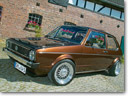
This elaborately modified 1983 Volkswagen Golf I Chocolate Brown won the first place in the Show & Shine competition at the 2012 TÜV Rheinland Tuning Night. In addition to this the lucky winning Volkswagen will become a showcase car for TÜV Rheinland at the Automechanika 2012 in Frankfurt.
Marco Mueller is the name of the owner, and he is proud to demonstrate that spectacular tuning trim. The guy was trained as a master mechanic, so it is not a surprise that he had to deal every day with tuned cars.
He designed this car not with the so much appreciated nowadays prefabricated plastic parts, but instead used the old-fashioned metal work, such as the widened wheel arches.
Furthermore he also utilized chrome parts for the front and rear bumpers and wing mirrors. Additionally, the front optics now benefit from spoiler extension and new grill.
Clear glass headlights and red-tinted tail lights rejuvenate the appearance of the Golf.
The name Chocolate Brown is more than obvious for what it stands. The exterior color of the car has a terrific depth and shines with fascinating reflections. Thanks to the sparkling finish, the Golf I can now show its best side from any perspective observed.
Next, the glossy and compact BBS wheels harmonize with both the upgraded chrome embellishments and the classic feel of the car. In details he used 16-inch wheels with 195/45er Kumho tires.
The driving dynamics were also improved by the stiff suspension and whopping reduction. Other performance parts such as sharp Schrick camshaft, SLS chip, modified throttle, Supersprint exhaust system enhance the performance of four-cylinder barrel organ to an impressive 220 hp (162 kW).
This results in exceptional acceleration from 0 to 100 km/h, which happens in little more than six seconds. The speed limit Marco Mueller estimated at about 220 km/h.
“I’m curious how my colleagues will find the Golf”, says the master mechanic, but we can ensure him that the positive feedback is unquestionable.
Here are the first two pictures of the 2013 Lexus LS 460 F Sport. The car will make its official debut at a special event in San Francisco on Monday, July 30.
The car comes with new headlights, a modified front grille and larger air vents feeding cold air for the huge engine. It will be a 4.6 liter V8 with 385 HP (283 kW) and a hybrid model will be also available – 5.0 liter V8 with 444HP (327 kW) and an electric motor. The model range includes LS 460, LS 460 L, LS 600h L and the all-new LS 460 F SPORT.
The exterior of the new 2013 Lexus LS also features tinted taillights and a dual exhaust system.
The aerodynamics package includes aggressive front and rear bumper, a pair of side skirts and a rear diffuser.
2013 Lexus LS 460 F Sport2013 Lexus LS 460 F Sport
The facelifted 2012 Honda CR-V is the fourth generation of the emblematic model, which has appeared for the first time in 1995. The facelift include modifications on every level of this Honda model.
First of all, the length and height of the car have been reduced by 5mm and 30mm respectively compared with the current model. However, the interior space of the SUV is not reduced.
The new CR-V has more aggressive and aerodynamic stance with deeper sculpting of the bodylines and a bolder nose section. The front bumper’s smooth, flowing lines are joined by a horizontal three-bar grille and deep-set headlights.
Furthermore, the CR-V’s signature vertical rear brake lights are now more three-dimensional style. In addition, the front LED daytime running lights and rear LED lights are other stylish enhancements.
This means that now the vehicle has sleeker proportions. Moreover, the rear seats fold flat, so the boot capacity of the CR-V has grown by 148 litres to 164 litres. This means that the boot of the CR-V can now accommodate two mountain bikes or four sets of golf clubs.
2012 Honda CR-V Facelift
What about the interior of the Honda? Of course, there were made several important modifications.
For instance, the major controls have been further grouped according to their function. Here is the “driver interface zone” which is positioned behind the steering wheel as well as the “information interface zone” in the centre of the cabin.
The materials used of course are only high quality ones and have been carefully chosen for the European market. A lot of attention has been put on the details as well.
The interior enhancements include impressive range of equipment that has been added. It features 5 inch “intelligent” Multi-Information Display (i-MID), which controls the audio, telephone and navigation systems.
Next, the front seats incorporate the new whiplash mitigation system. These seats work in conjunction with the CRV’s Advanced Compatibility Engineering (ACETM) body structure.
The passengers’ seats on the other hand have transformed hip point. They have now been lowered by 38mm compared to the current model, resulting in a more comfortable seating position and increased headroom.
Here is also included for the first time a new design which allows the introduction of Easy Fold-Down 60/40 Split Rear Seats. They now can be folded flat in one movement. Hence, the CR-V can be transformed from a five-seater passenger car into a versatile load-lugger.
More importantly, the aerodynamics is another key area of the new CR-V design. The drag coefficient has been reduced by 6.5% compared with the current model and now benefits from performance, fuel consumption and exhaust emissions.
httpv://youtu.be/lB_sfD3fj5c
Under the bonnet can be seen either a 2.0-litre i-VTEC petrol engine or a 2.2-litre i-DTEC diesel engine, both fitted as a standard with a six-speed manual gearbox.
The power and torque outputs of the i-DTEC engine remain at 150 hp (110 kW) and 350Nm (258 lb-ft) respectively. However, the CO2 emissions fall from 171g/km to 149g/km for the manual version and from 195g/km to 174g/km for models equipped with the five-speed automatic transmission.
On the other hand, the power output of the 2.0-litre i-VTEC engine has risen from 150 hp to 155 hp (114 kW), while the torque has been increased to 192Nm (142 lb-ft). Although there has been increase of the performance, the CO2 emissions have fallen here as well from 192g/km to 173g/km for the manual version, and from 195g/km to 175g/km for the automatic one.
At last, the new CR-V now includes upgrades to the car’s suspension, steering and four-wheel drive system. Here the next generation Motion Adaptive electric power steering system now combines maneuverability with increased feedback and response at higher velocity.
In addition, this sophisticated system includes Advanced Vehicle Stability Assist system, which detects instability in slippery road conditions and automatically initiates steering inputs that prompt the driver to steer in the correct direction.
A wide range of electronic systems are also included: Hill Start Assist, Hill Descent Control, Honda’s Advanced Driver Assist System, Lane Keeping Assist System, Adaptive Cruise Control, Collision Mitigation Braking System, and Emergency Stop System.
In short, the new improved model of 2012 Honda CR-V is now more confident, efficient and functional and successfully builds on the fame of its predecessors.
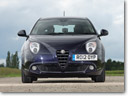
Alfa Romeo MiTo is a sorty supermini vehicle which is now available with the multi-award winning 85 hp (63 kW) TwinAir engine. The latter is an 875cc twin-cylinder turbo powerplant with electro-hydraulic valve control technology, thanks to which the Alfa Romeo has official Combined Cycle fuel economy of 67.3mpg.
Furthermore this engine delivers CO2 output of just 98g/km. This makes the Alfa MiTo TwinAir the cleanest and most economical model in its class. Another new fact around the MiTo TwinAir range is that it will be offered in a new metallic body colour: Ametista Black with a purple hue.
The engine is undoubtedly perfect for driving in the city; however the brand Alfa Romeo is all about sports car dynamics, which makes the car very agile. In addition to that the sporty and environmentally compatible powerplant uses MultiAir technology matched with specific fluid dynamics optimized for maximum fuel efficiency.
The 875cc TwinAir Turbo engine is mated to a six-speed gearbox, generates a maximum of 85 hp (63 kW) at 5,500 rpm and a torque of 145Nm (107 lb-ft) at 2,000 rpm. In addition, due to the Start&Stop device and ‘intelligent’ alternator, the car has the lowest petrol CO2 emissions in its segment at just 98 g/km.
Alfa Romeo MiTo TwinAir
The new Alfa MiTo TwinAir is going to be offered in two trim levels – Sprint and Distinctive. In addition to that the drivers of the new Alfa Romeo model will be enjoying a wide array of standard specification (for Sprint trim): 6-inch sports alloy wheels, cruise control, front fog lights, manual climate control, Alfa D.N.A. (driving mode selector) and Alfa’s Blue&Me™ system with Bluetooth®- hands-free connectivity and USB media system.
The Distinctive trim level also has a lot of standard premium features: 17-inch sports alloy wheels, red painted Brembo brake calipers, rear parking sensors and chrome/aluminium detailing.
Alfa Romeo MiTo TwinAir is priced from £14 150.
Alfa Romeo MiTo TwinAir Interior
Pricing
TwinAir Version
BIK Rate
Total OTR
0-62mph (sec)
Top Speed
Ins. Group
Emissions CO2(g/km)
Combined MPG
875cc TB TwinAir
85 bhp Sprint
10%
£14,150
12.5
108
9
98
67.3
875cc TB TwinAir
85 bhp Distinctive
10%
£15,350
12.5
108
9
98
67.3
Trim Details
SPRINT
Remote central locking
A.B.S. with EBD
Alfa code immobiliser
Manual climate control
Electric front windows with ‘One-Touch’ function
Heated rear window
Adjustable headlight position
Brake Assistance System
(Emergency Braking)
7 airbags – Driver, passenger, front side, window and driver knee airbag
Front Airbag Deactivation on Passenger’s side
Rear headrests
Sprint cloth upholstery
Car radio with audio CD & MP3 player
Trip computer
Fix & Go puncture repair kit
Sensor for external temperature
Start&Stop
Titanium Grey headlight & rear light surrounds
Body-coloured wing mirrors
Anti-Intrusion sensors for electric front windows
Rear window wiper
Interior front lights on ceiling
Front and rear bumpers in body colour
Alarm system with safe lock
VDC (ABS+ASR+Brake Assistant) with Hill Holder and Electronic Q2
16″ Sports alloy wheels with 195/55 R16 tyres / (ECO)
Vehicle’s Dynamic Control switch (D.N.A. system)
Blue&Me™ (Bluetooth® hands-free system with voice recognition and media player with USB port and Aux-in) and steering wheel with remote controls and gear knob in leather
Multifunctional display
Electrically adjustable and heated wing mirrors in body colour
Cruise control
Car radio with audio CD and MP3 player and double aerial
Rear Spoiler
Front fog lights
12V Plug
DISTINCTIVE
As Alfa MiTo Sprint plus:
17″ Sports alloy wheels with 205/45 R17 tyres
Front armrest with storage compartment
Aluminium kickplates
Chrome effect window sills
Sports dials with white illumination
Red painted Brembo brake callipers
Sports rear bumper
Lucid Chrome headlight & rear light surrounds
Lucid Chrome wing mirrors
Driver and passenger lumbar adjustment
Vanity mirror on driver and
passenger sides
Space saver spare wheel
Chrome exhaust tail pipe
Rear parking sensors
Aluminium sports pedals with footrest in metal
Front seat rear pocket
(passenger side only)
Sports seats upholstery
Technical Data
875cc TB TwinAir 85 bhp
No. of cylinders, arrangement
2 in line
Bore x stroke (mm)
80.5 x 86
Displacement (cc)
875
Compression ratio
10.0:1
Max. power output bhp (kW – EC) at rpm
85 (62.5) 5500
Peak torque Nm (kgm – EC) at rpm
145 ( 14.8) 2000
Fuel type
Petrol
Fuel Feed
TwinAir turbo
ELECTRICAL EQUIPMENT (12V)
Battery: Capacity (Ah)/Generator (A)
63/450
TRANSMISSION
Drive
Front
Number of gears
6 + 1R
TYRES
Standard version
195/55 R16
STEERING SYSTEM
Steering diameter kerb-to-kerb (m)
11.25
SUSPENSION
Front
MacPherson independent, front traverse trailing arms; shock absorbers with rebound springs; anti-roll bar
Rear
Torsion beam with C cross-section and high torsional stiffness; slotted bushings with variable stiffness for attaching beam to bodyshell; high-stiffness helical springs; contractive vertical shock absorbers
The acclaimed fastest accelerating hybrid V6 saloon – the Infiniti M line – gets a new version model. It’s the M35h GT: a notch cheaper than the M35h GT Premium. Quite a notch actually, with £3970 in savings.
It is actually cleaner and more economical as an entry level version. It’s bellow the 160 g/km CO2 emission threshold. Nevertheless, you still get 302 hp from the 3.5 V6 power plant and 67 bhp from the electric motor that sends its power through a second clutch to the back axle.
Also, recent customer feedback have prompted the Infiniti people to offer separately the Connectiviti+ navigation system and the 16-speaker Bose surround sound system. Two entities that usually went as a package previously. As an option, you can also get a climate control system which Infiniti have named Forest Air. The seats will also be heated or ventilated, the lights will be bi-Xenon and will veer left and right depending on the steering input and the interior will be garnished with a white ash wood trim that’s been sprinkled with real silver powder.
What you don’t get on the GT but on the Premium GT is Blind Spot Intervention, Intelligent Cruise Control (ICC) and Lane Departure Warning (LDW) and Prevention (LDP).
It’s common knowledge that nowadays, car makers are trying to dominate every segment out there. But some companies are now even changing the rules. With no fields left for dominance, Mercedes-Benz set out to create new categories. The CLS serves to prove that point – a four door coupe. Are you ready for the next step? The Mrecedes-Benz CLS Shooting Brake (see concept) – a five-door, estate coupe. Sound’s ridiculous right? But it looks just as good as it is mad.
It may not be a full blown estate but it is actually bigger than the current E-Class wagon. Still, boot space at the back is inferior to the one of the E-Class, but you can opt to have it all covered in a cherry tree wooden trim… which will not help at all in terms of practically bit it will “underscore the hand-finished nature of the interior”. Most of all, by doing so, you won’t put much strain on the engine since the Shooting Brake engineers have kept it light by installing frameless, completely aluminum doors which are 24 kg lighter than they would be if steel was used. The tailgate, hood, front fenders and other elements of the suspension and engine are aluminum as well.
Mercedes-Benz CLS Shooting Brake
Another coupe feature of the CLS Shooting Brake is it’s shape. Besides soothing the eye, the design also has an aerodynamic perk – a Cd value figure of 0.29. Good news then for the efficiently oriented engine options. Two diesels: One being a four cylinder and the other, a CLS 350 CDI 3.0-liter V6 that develops 265 bhp and returns 47 mpg . Zero to sixty acceleration for that latter one takes 6.6 seconds while the top speed is limited at 155 mph. Both of the engines make use of a 7G-TRONIC PLUS automatic transmission and both have an ECO start/stop system as standard. Another feature that increases the distance between gas station stops is the Electric Power Steering system which is also said to be superior in feedback.
No word on the pricing but our guess is that the end figure will be perfectly sensible with traces of lunacy and dynamism. When AMG get their hands on a CLS Shooting Brake expect full on lunacy and dynamism.
McLaren news (from the road-going sector): As of this October, all the McLaren MP4-12Cs will get some extra power, a bit of a detail revision and a gadget for immature people just like us. We would really like to stress on the “all” part as even owners of previous years will get the upgrade…for free. This is how, Antony Sheriff, McLaren Automotive Managing Director explains the company’s motivation:
“Given our racing heritage, it is in our nature to continuously seek out improvements. The team at McLaren Automotive recognises that our existing and future customers deserve the very best product and service we can offer, and the launch of the enhanced 12C reaffirms its position as the most powerful luxury sports car among its competitor set.”
So, why not improve on the feeble 600PS, 3.8-liter, twin-turbo V8 engine that’s been the driving force of the MP4-12C for almost an year now? (sarcasm included). By some in-house remapping and by tweaking the 7-Speed SSG transmission, the 2013 British supercar now has 625PS and 600Nm of torque delivered in a smooth and crispy tone. And by tone, we don’t mean that just metaphorically – The 12C’s unique Intake Sound Generator (ISG) system, which is responsible for the amount of engine intake sound heard in the cabin, now has settings within the range of three settings… if for some reason, you want your ears to start to bleed. Also, the fuel-conscious…who bought a $217,857 two-seater, will be happy to know that in spite of the buff, the economy stays the same – 24.2 mpg on the combined cycle. The jump in performance figures is not what you’d call staggering (the 0-62 mph run remains at 3.1 seconds) but on the 0-124 mph you do get a tenth of a second down at 8.8 seconds. The most noticeable change however, is on the 0-186 mph time which is 26.5 seconds as opposed to the previos 27.5 seconds. The top speed is up a notch from 205 mph to 207 mph.
McLaren MP4-12C (2013)
Other than that, the climate control will now have an option to run as quiet as possible (all the better to hear that ISG thing, we guess), the touch sensor door “handles” will be dropped and replaced with buttons for customer feedback said so apparently and also every time it starts drizzling, the headlamps will light up.
The option’s list has also had it’s share fare of redesigning – new wheels, new finishes, superior leather and Alcantra interiors, a suspension lift system for speed humps and rough surfaces.
As said, all the techy upgrades for owners of the “older” MP4 generation will be absolutely complementary – the power output increase, the transmission revision, the sound generator settings and the “smart” headlights. You’ve got to hand it to McLaren on their knowledge of how to bond with their customers.
The new 2012 Chrysler 300C retains a unique position in the executive sector. The car offers nice design combined with good material quality and driving dynamics. The European buyers expect a lot, so everything should be at decent level – style, personality and value for money.
The new Chrysler 300C, which will become available here in two versions, promises the perfect power output for the car, with two well-judged specifications.
The engine range includes a new 3.0-litre V6 turbo diesel providing provide a class-leading compromise between effortless power and fuel-saving efficiency.
Whether in Limited or Executive trim level, the Chrysler 300C is a very well equipped car.
Among the standard extras of Limited model you’ll find Rain Brake Support, ventilated front seats and heated rears, the Uconnect infotainment system with Bluetooth, dual-zone climate control, an 8.4-inch touch screen display, mirrors that darken automatically to limit headlight glare, cruise control, and 18” alloy wheels.
The Executive version has a Blind Spot Monitoring (BSM) system, radar Adaptive Cruise Control (ACC) and a two-panel panoramic sunroof as well as the forward collision monitoring system and 20-inch alloy wheels.
The interior boasts high quality materials, Nappa leather seats and real wood panels on the dashboard.
The body is made from a variety of new materials including advanced high resistance and ultra-strong steel. The improved rigidity combined with all-new suspension means the rear-wheel drive Chrysler 300C doesn’t just handle better than ever, it’s also quieter and more refined too.
2012 Chrysler 300C is priced at the price of £39 995.
Check out the full details below!
2012 Chrysler 300C UK
QUALITY: AMBITIOUS TARGETS MET
The new Chrysler 300C has been designed to take on the best cars in the executive sector in terms of quality. Not only is it crammed with standard equipment, some of it a first for this class of car, it is also superbly built.
Even before build began, the American firm studied rival models covering a spectrum of performance attributes including quality, craftsmanship and refinement. The challenge was then to construct a car that matched or exceeded these levels. To help reach such ambitious targets, the 300C was one of the first Fiat-Chrysler Group vehicles to be examined during the digital design process by a special internal team for ‘perceived quality’ from the point of view of the most demanding customers.
Build
Perceived quality is the impression given to someone when they look at and touch things. Whether they’re sitting in a seat, grasping a steering wheel or simply looking at the fascia, the shape of objects, the materials they’re made from and the tactile sensations help people form an opinion of what they see.
In order that the view of the Chrysler 300C would be of a high quality executive car, this internal team worked in close contact with the designers and engineers to improve everything from the assembly and finishes to the quality of the surfaces and materials.
Advanced high-strength steel delivers world-class structural stiffness which leads to exceptional interior quietness, confident handling and outstanding safety performance. Sound suppression inside is further improved thanks to two composite underbody panels that provide more than 2.4 metres of acoustic insulation, a windscreen and front side windows specially designed for their exceptional acoustic performance, triple seals around the doors and special wheel well liners. A laser-braised roof panel and rail sections that deliver a clean, uninterrupted and aerodynamic unibody give further noise reduction.
To ensure this design is implemented in the best possible way, the factory where the 300C is built in Brampton, Toronto, Canada embraces the Fiat Group’s World Class Manufacturing philosophy which has rigorous standards for all plant processes from safety and environment to maintenance, logistics and quality. The goal is to improve production performance and quality continuously with built-in flexibility while gradually eliminating waste.
Interior
The Chrysler 300C’s cabin has been designed to exude luxury. Instrument and door panels are clad with soft-touch materials chosen to meet Chrysler’s strict quality goals. For example, the steering wheel is finished in highly polished walnut and hand-stitched leather. But the stitches have been strategically placed so the driver’s hands come into contact only with smooth surfaces.
The instrument panel is treated with the cast skin technique which appears similar to leather, while the seats are covered in Nappa leather. Real wood inserts on the instrument panel, doors, centre console and steering wheel surround further heighten the upscale appearance. The dashboard is finished with discreet chrome touches to emphasise the 300C’s high quality nature.
All-new seats have been designed to guarantee best-in-class comfort. These feature serpentine spring suspension as their foundation. A stiffer foam material is used in the side upholstery for improved lateral support while less dense foam is used in the lower part of the seats and in the backrest to increase comfort during long journeys. The front seats have four-way lumbar adjustment to suit individual tastes.
To improve rear seat comfort, the front seat backrests have a sculpted shape for about 20cm more knee room. To ensure more foot room, the seat guides are located at the edges of the base.
The interior has a pleasing ambiance thanks to muted Sapphire Blue LEDs. In front of the driver there’s a new instrument cluster with two large faces. Features are accented with raised Sapphire Blue tick marks and chromed rings complete the contemporary and premium feel.
The driver also has the all-new Electronic Vehicle Information Centre (EVIC). Again in Sapphire Blue, this has been designed to be easy to read and logically displayed to keep the driver as informed as possible.
As with all roomy and refined interiors, the secret of the 300C’s success is having plenty of storage. So that the central armrest is suitable for all shapes and sizes of driver, it slides lengthwise. Beneath it is a sliding tray and a compartment that contains the power connectors for USB devices.
All doors feature oversize pockets with bottle supports and there’s a flocked rubber storage compartment with lighting ahead of the gear lever. The roomy glove compartment is split with a shelf and features a centrally mounted light for more uniform light distribution. The two front cup holders, cooled and heated as standard, come with LED lighting that intuitively glows blue when they’re chilled, red when hot. They also feature locking rings so they can take bottles of various sizes. As an example of the trouble Chrysler has taken to get the detail of the 300C exactly right, the roller closing that covers the front cupholders wasn’t just optimised for style and functionality. It was also designed to make a high quality sound when opened and closed.
EQUIPMENT: LUXURY AS STANDARD
Enter ’n Go
As befits a range-topping model, the Chrysler 300C is lavishly equipped, whether in Limited or even more luxuriously appointed Executive trim. And unlike the majority of its rivals the equipment comes as standard.
Everything possible has been done to make the 300C an effortless travelling companion. Keyless Enter ’n Go employs electronic sensors to detect the key fob’s presence. The car unlocks automatically and the engine starts by pushing a button without needing to insert a key.
The steering column, which adjusts forwards and backwards as well as up and down, has a memory function to allow more than one driver to get comfortable quickly. The pedals too can be adjusted for maximum comfort.
The automatic headlights ‘know’ when it’s getting dark and turn themselves on without any driver intervention. They also feature Adaptive Forward Lighting (AFL) which adjusts the headlight beam up to 15 degrees to the left or right depending on which direction the front wheels are pointing.
To comply with current legislation, Daytime Running Lights (DRL) are standard, using efficient LEDs front and rear and High Intensity Discharge (HID) headlights provide lighting that’s three times brighter than regular units. The headlights also employ the SmartBeam system that adapts them to the light in the surrounding environment, ensuring the 300C driver benefits from the maximum light possible without blinding oncoming traffic.
When it rains the automatic windscreen wipers detect drops on the windscreen and start working without the driver telling them to. And the Automatic Temperature Control system measures the humidity inside the vehicle and automatically demists the screen without any driver intervention.
The driver’s side door mirror darkens automatically to reduce any dazzling created by the headlights of vehicles behind, as does the internal mirror. Both side mirrors lower themselves when reverse gear is engaged to give the driver better visibility of the ground, kerbs or other obstacles.
The full length dual pane panoramic sun roof, standard on the Executive, has an auto reverse function that can prevent the roof closing if it senses any obstruction. There’s an automatic sun blind in the rear window that reduces heat inside the passenger compartment and increases privacy. This automatically lowers in reverse for maximum rear visibility.
Presuming that there are certain areas of the car that executive car buyers would prefer not to touch, the traditional fuel cap is a thing of the past on the 300C. Instead the fuel flap opens at the push of a button. A fuel filler pipe opens when the pump nozzle is inserted and closes automatically when refuelling has been completed, helping to protect against theft and vandalism as well as fuel spills and incorrect fuelling.
To avert any danger of breakdown, an Intelligent Battery Sensor continuously measures the flow of current going to and from the battery. If it detects that the battery is running down it disables the less critical electric systems and warns the driver.
Uconnect
The Chrysler 300C features the company’s advanced Uconnect infotainment system of on-board technologies that ensures driver and passengers remain connected, safe and comfortable.
This system displays all the information the driver or passenger requests on an 8.4-inch touch screen, the largest in this car’s class. With its multimedia and portable mobile device connectivity, it is specifically designed to enrich the experience of driving and travelling in the 300C.
For maximum safety and ease of use, audio and connectivity controls are located on the spokes of the steering wheel and can be activated hands-free by voice alone. Uconnect Voice Command with Bluetooth lets the driver manage a Bluetooth compatible phone while keeping both hands on the steering wheel. The first time the phone is synchronised, the phonebook is downloaded on to the car’s hard drive and numbers can be selected simply by saying the corresponding name.
Voice commands can also be used to select the available radio modes. In the arm rest there’s a USB port with iPod control. This lets the driver run an iPod or similar mobile device either through the steering wheel controls or using the touch screen. The USB port allows any USB supplied device to be recharged and will play audio files stored in MP3 and WMA format on a USB drive.
The touch screen controls the single DVD player, an SD card reader, the automatic dual-zone climate control, the radio and the Garmin navigation system. This has clear maps and optional voice instruction along with suggested points of interest, making it easy to find restaurants, shops and hospitals in the area.
There are three levels of audio system. The Limited version’s standard sound system has six speakers with a 276 Watt six-channel amplifier. Two 3.5-inch speakers are in the instrument panel, two 6 x 9-inch speakers are set in the front doors and two are in the rear parcel shelf. A nine-speaker Alpine system is optional. This has an 11 channel amplifier with 506 Watts of power plus digital signal processing with 7.1 surround sound. It features three 3.5-inch speakers in the instrument panel, two 6 x 9-inch speakers in the front doors, two 3.5-inch speakers in the rear doors, two 6 x 9-inch speakers in the rear parcel shelf, plus an 8-inch subwoofer in the rear parcel shelf.
This system is standard on the Executive model, while a 19-speaker Harman Kardon sound system is optional. This sophisticated 900 Watt device has a 12-channel Harman Kardon amplifier. There are six 3.5-inch speakers in the instrument panel, two 6 x 9-inch speakers in the front doors, four 3.5-inch speakers in the rear doors, two 6 x 9-inch speakers, four 3.5-inch speakers and a 10-inch sub woofer in the rear parcel shelf.
ENGINE: EFFORTLESS AND EFFICIENT
The 2012 Chrysler 300C comes with one engine for the UK, an all-new 3.0-litre V6 turbo diesel designed to be big on efficiency, refinement and power, which made its UK debut in the new Jeep Grand Cherokee last year.
Built by VM Motori and developed by Fiat Powertrain, this engine is a new design employing Fiat’s latest MultiJet 2 technology to help reduce consumption, emissions and noise while yielding class-leading pulling power.
The 236bhp unit produces a healthy 540Nm of torque, peaking between 1600 and 2800rpm for effortless progress. A single variable geometry Garrett VGT 2056 turbocharger with intercooler ensures the engine is smooth and responsive at all speeds and yields a 0-62.5mph time of 7.4 seconds and a top speed of 144mph. But the engine is so efficient it can return 39.8mpg on the Combined Cycle and emits 185g/km of CO2.
With a capacity of 2987cc, the engine has a 60-degree V angle giving compact dimensions of just 695mm long, 729mm wide and 697.5mm high. A graphite cast iron block with aluminium cylinder heads and a structural aluminium oil sump in two elements help contribute to a total engine weight of 230kg. The sump has been designed like this to increase the rigidity of the engine for improved quietness. Noise is reduced further thanks to a new crankcase that gives the forged steel crankshaft rigid support to help limit vibrations.
The engine features four valves per cylinder and has a compression ratio of 16.5:1 to give cleaner combustion and more power. The six shell-cast aluminium pistons are lightweight and have been designed to minimise friction. The main bearing supports are lead-free to guarantee less environmental impact both during production and when the engine is recycled after use. Combustion is further optimised thanks to a turbulence control system fitted between the intake system and combustion chamber. This supplies the best flow of air through the combustion chamber to optimise engine efficiency and reduce exhaust emissions.
As with the Fiat Group’s award-winning smaller engines, the 3.0-litre employs the latest second-generation MultiJet turbo diesel technology. The common rail injection system operates at 1800 bar while faster injectors give up to eight injections per cycle, meaning greater speed, flexibility and precision in the various combustion phases. It’s also capable of injection rate shaping – that’s two injections that are so close together they generate a continuous but modulated supply of fuel to the cylinders. This alone reduces consumption and polluting emissions by 2 per cent compared with traditional fuel injection, and also cuts down engine noise.
Improving the combustion process like this reduces particulate and nitrogen oxide (NOx) emissions sufficiently to ensure the engine complies with strict Euro 5 legislation.
The new Chrysler 300C features a five-speed automatic transmission. The tried and tested W5A580 has both full automatic and semi-automatic functions. As with a traditional automatic, once ‘Drive’ has been selected the gearbox can be left to do its own thing. For drivers who want more involvement, the AutoStick function allows them to select higher or lower gears and steering wheel mounted paddles are standard on the Executive. A transmission controller is calibrated to prevent the engine over-revving while an adaptive electronic control increases engine responsiveness.
SAFETY: BUILT IN FROM THE BOTTOM UP
The new Chrysler 300C is one of the safest cars on the road, with a host of standard equipment that ensures driver and passengers travel in maximum security. To guarantee this, the 300C was tested in a variety of accidents including front and side impacts, roll over, pile up and fire. Different impact speeds, different types of obstacle and the different physical characteristics of passengers were also taken into account. The result is a car that combines the latest in active and passive safety devices with one of the safest structures on the road.
Preventative safety
The most important thing when it comes to avoiding an accident is being able to see danger. In designing the Chrysler 300C, the windscreen header was moved back by just under 8cm to improve the driver’s view of road signs and traffic lights. Combined with narrower pillars the result is an improvement in outward visibility of 15 per cent.
But in case the driver doesn’t see hazards, the car has been designed to step in. Adaptive Cruise Control (ACC) on the Executive uses radar to automatically modify the Chrysler 300C’s speed to keep a safe distance when the car approaches another vehicle in the same lane or when another vehicle enters that lane. When the vehicle in front moves out of the way, the cruise control automatically returns to its set speed. It means the driver doesn’t constantly have to alter the cruise control to match prevailing conditions.
The 300C Executive is fitted with Blind Spot Monitoring (BSM). This uses ultra broadband radar sensors to search for vehicles that might be briefly concealed from the driver’s view. Icons illuminate in the mirror and an acoustic warning signal sounds if there is a car in the blind spot.
Forward Collision Warning (FCW) on the Executive employs radar sensors located in the front to check the 300C’s approach speed to vehicles. If it is travelling too quickly the car will alert drivers so they can take the necessary steps to avoid an accident.
Rear Cross Path Detection (RCP) is enabled when reverse gear is engaged. This informs drivers via icons in the mirror and an acoustic signal if traffic is approaching as they reverse out of parking spaces. ParkSense helps detect stationary objects behind the car and warns the driver with an acoustic signal. For further peace of mind the 300C is equipped with the ParkView reversing camera. This offers a wind-angle view of the area immediately behind the vehicle on the navigation screen.
To ensure the driver is never caught out by low pressures, Tyre Pressure Monitoring employs sensor modules in the valve stems of each wheel to send signals to the in-car computer. Proving the Chrysler 300C doesn’t only look after its occupants, it has Active Pedestrian Protection where the rear of the bonnet lifts in a frontal impact to protect the pedestrian’s head from hard points in the engine bay.
Active safety
Obviously the safest thing is to avoid having a crash in the first place. Consequently the Chrysler 300C has been designed not only to have predictable handling but also to compensate for any mistakes that the driver might make.
Standard equipment includes a powerful braking system allied to some of the most sophisticated electronic driver aids available today. High performance brake pads have been designed to give regular, fade-free performance. Vibration dampening springs make the callipers more efficient and there’s a hydraulic pressure compensation system that intervenes by activating the ABS pump to the maximum if it detects a fault in the brake servo.
The Chrysler 300C has an Antilock Braking System (ABS) that detects and prevents wheels locking in extreme braking conditions or on slippery surfaces. It also features bumpy road detection which can sense a rough stretch of road and activates the ABS with slightly different pressure control to compensate for the surface.
The 300C has two new attributes that are exclusive to this class of car. Ready Alert Braking can predict if the driver is starting emergency braking and uses the Electronic Stability Control (ESC) pump to move the brake pads closer to the rotors and reduce the time for the brakes to be applied. Rain Brake Support performs the same function when it’s raining to keep the brake pads dry for improved braking performance.
Stopping is further aided by Braking Assistance which applies maximum braking power in emergency situations. At the same time a signal is sent to the engine computer telling it to reduce power if the accelerator is still being pressed.
The standard ESC helps to increase the amount of control the driver has in all conditions. By monitoring steering inputs whatever the surface, the ESC computer can tell if the car deviates from its intended path and steps in to brake selected wheels. It also controls the Hill Start Assist (HSA) which maintains braking pressure for a brief period after the driver lifts off the brake to ensure the perfect hill start every time. The braking system works to help aid efficient acceleration too. By applying the brakes when it detects wheels are slipping, it ensures maximum power is transmitted to the road.
Passive safety
Inside the new Chrysler 300C there are seven passenger airbags including the latest multi-stage bags that open with more or less force depending on the seriousness of the impact. The driver’s airbag is shaped to reduce the impact force and therefore chest injuries, while the passenger airbag opens at a varying speed depending on how far back the occupant is sitting.
Housed in the roof lining above the side windows are curtain airbags. Each has its own impact sensor for independent activation on the impact side. Beneath the instrument panel is a knee airbag that deploys when the driver’s side airbag goes off. The aim of it is to ensure the driver’s legs are in the best position to minimise injuries in a frontal collision. As with the curtain airbags, the thorax bags installed in the external edge of the front seats have their own impact sensors for independent activation. These are designed to reduce injury to the pelvis and chest in side impacts.
All airbags are governed by the Occupant Retaining Controller. This determines whether an impact is strong enough for the airbags to open and whether first or second stage deployment is required. It also decides whether the side airbags are needed and controls the seatbelt pretensioners.
Driver and front passenger have height adjustable seatbelts for greater comfort and safety and their seatbelts are fitted with pretensioners. Controlled by impact sensors, these tighten the seatbelts before an impact to help minimise injuries. In the milliseconds after impact, Constant Force Restraint checks how tightly occupants are being held by their seatbelts and gradually reduces this in a controlled way. A warning light illuminates and a tone sounds if any passengers don’t fasten their seatbelts. The 300C is fitted with active head restraints which, in a rear impact, move forward to reduce whiplash injuries by decreasing the distance to the occupant’s head. All five passengers have their own head restraint and three-point seatbelts.
Passengers are also protected by a safety cage structure, door protection bars and controlled crumple zones designed to absorb the energy of an impact and reduce the effect it has on passengers. The driver benefits from a new energy absorbing steering column. This uses a calibrated bent element to deform during an impact and direct crash energy away from the driver.
In the immediate aftermath of a crash the Enhanced Accident Response System helps emergency personnel by automatically illuminating the interior lights, engaging the hazard warning lights and unlocking the doors once the airbags have deployed. It also interrupts the flow of fuel going to the engine.
HANDLING: DESIGNED FOR DRIVER APPEAL
Some of the same characteristics that make the Chrysler 300C safe and comfortable also go towards making it an excellent driver’s car. The near 50-50 weight distribution gives the car balance, but drivers can really exploit that thanks to use of advanced steels and nylon composite materials that contribute to greater rigidity and therefore improved control and confidence.
More than 67 per cent of the 300C’s underbody structure and 53 per cent of the upper part of the body is pressed and built with high resistance and advanced high resistance steels. High resistance steel is found in the central tunnel, in the body sides, in the front wheel arch structures and in the crash protection bars. With a tensile strength twice that of high resistance steel, advanced high resistance steel is used for areas of the body that require greater structural rigidity such as the cross members of the seats and the upper rear area behind the back seats.
Hot pressed ultra-strong steel is used for the front pillars, the doors, the upper section of the front rails and windscreen channel. And thanks to its tensile strength the thickness of the pillars and doors was able to be reduced, helping to improve external visibility. Lightweight and thin dual-phase steel is used for the interior of the front crash bars and engine compartment to achieve optimum protection for the 300C’s passengers.
The upper monocoque is built in advanced TRIP (Transformation Induced Plasticity) steel. TRIP steel allows a thinner and lighter weight steel to be used for the areas of the B pillar, while reinforcements in composite nylon have been built into the A and B pillars to provide greater crash protection.
New front and rear suspension geometries are light in weight yet have an ultra rigid assembly in order to guarantee precision and performance. The new front single tube shock absorbers, the new springs and the unique position of the shock absorber and front suspension mounting all contribute to the optimum control, driving and comfort ratings. New high quality hydraulic bushes in the front suspension limit roughness and help transmit braking power to the road.
The rear suspension is characterised by five anchoring points and roll steer geometry for better handling. The new single tube shock absorbers and springs make driving more polished, while high quality urethane compression bump stops, and suspension anchoring with rubber bushes for the shock absorbers, make the passenger compartment quieter. Even the seat springs have new dampers to help isolate passengers from vibrations over bumpy roads.
New geometries for front and rear cambers improve cornering performance and road feel by having the upper part of the wheel tilt inwards in relation to the body. And new large diameter front and rear anti-roll bars give greater agility through corners and limit body roll. The suspension has been tuned specifically for European roads and this combines with load levelling suspension on both versions to ensure unruffled progress.
Revised Electro-Hydraulic Power Steering (EHPS) gives the driver precise feedback from the road, improves steering alignment and reduces steering noise and fuel consumption. The EHPS system analyses steering angle, vehicle speed, engine speed and the chassis control systems 13 times a second to decide how much steering effort is required. When stationary or at low speed, the hydraulic pump increases the power steering to reduce effort. At higher speed, assistance is reduced to give the 300C’s driver more feel. The result of this is lower consumption than a belt pump and a reduction in fuel consumption by 1.5 per cent.
STYLING: AMERICAN BEAUTY
Ever since it was first launched internationally in 2003, the Chrysler 300C has been an iconic design statement, and the new model is no different. Boasting generous dimensions that are 5066mm long, 1488mm high, 1902mm wide and with a wheelbase of 3052mm, the 2012 model builds on the unmistakeable proportions of its predecessor with a more refined and tailored design.
At the centre is Chrysler’s new wing badge which has been remodelled to have a more modern appearance. Its shape is echoed by the grille surround and carries on into the sculpted bonnet. Exterior design details include a dramatically sculpted front bumper and horizontal chrome grille blades. Showing how style and functionality go hand in hand, powerful bi-xenon headlamps are in a stylish ‘key slot’ shape. Beside them, LED Daytime Running Lights (DRL) create a unique C that gives the 300C an unmistakeable presence on the road.
The characteristic silhouette is crisp, clean and refined with the more steeply raked windscreen lending it an aerodynamic appearance. Marked wing lines front and rear that are higher than the bonnet and boot they embrace, emphasise the spaciousness of the passenger compartment. Combined with 20-inch aluminium wheels on the Executive, they give the car a sporty low-to-the-ground appearance. Convex doors are stylishly embellished with chrome-plated door mirrors, while the fixed window on the rear doors helps contribute to improving external visibility.
At the rear, vertical LED tail lamps are connected by a chrome fascia accent. The boot sports a built-in spoiler while the 300C’s performance prowess is hinted at by twin oval tail pipes that are integrated into the rear valance.
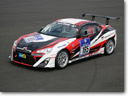
Toyota GT86, in fact four units of it and one of the Lexus LFA are going to compete in the Nuerburgring 24 Hours from 17th till 20th of May. It is a well known fact that the Nürburgring has played an important role in the development of Toyota’s latest generation of high-performance cars.
Hence, it is the perfect time for the demonstration of the powers of those two exceptional models the Lexus LFA and the GT86. At the disposal of the brand for the racing will be Gazoo Racing team. It will field the LFA (in the SP8 class) and two new race-prepared GT86 (SP3 class).
In the team of course are included technicians and drivers, which will take care for the unique racing vehicles and apply their skills and craftsmanship where needed. Furthermore, they will also gain information and experience which will serve as a means of feedback directly into the work developing future vehicles.
Lexus LFA
Gazoo Racing has already achieved much success by winning the two shorter-distance races at the Nuerburgring. There the Lexus LFA won two times in its class and the GT86 showed promising progress.
In addition to this, the Toyota Swiss Racing Team will also be taking part, fielding two GT86 race-prepared by Toyota Motorsport. Those tow sport cars will take part in the competition class (V3) for production models.
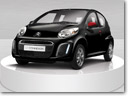
Power to the people! Citroen are going to build a C1 which has been appointed by a committee… on Facebook. Yes, people were asked to submit their suggestions on what the Connexion (that’s how they called it) should be.
On Citroen UK’s wall… or timeline or whatever, a virtual “factory floor” allowed everyone to give their opinion about the special C1‘s features and looks. In the end, the one that got the most votes turned out to be a 3-door incarnation finished in Caladera Black body color and Scarlett Red (to us mortals: black and red) ornaments here and there – a classic sport’s motive. Flashy alloy wheels come pretty much as the obvious choice.
Underneath, the Connexion is a 1.0i C1 with 68 hp and a manual transmission. The equipment trim is based on the VTR one – air-conditioning, electric windows and…. LED daytime running lights (all was looking good up to now).
At the end of the day, Citroen collected more than 24,000 entries from which around 10,000 now have the chance to win the first, fresh from the bakery Citroen C1 Connexion.
Melina Kacherou-Carage, Head of Digital Marketing at Citroën UK, commented: “This project has really captured the enthusiasm of the Facebook community. We’ve had thousands of configurations, so much positive feedback and now the first images of C1 Connexion, which will be ready to go on sale later in the year. You liked it, now we’re making it.”
Most importantly, the whole campaign thing ended up as a win-win venture. During the process, the Citroen UK Facebook page mustered closely to 80,000 newly arrived fans. Besides, when it comers to ideas about future special editions, the company is set for life, isn’t it?
Now, as a follow-up, the public must come up with a badge for the model. Submissions close on the 18th of May 2012. Got any bright suggestions?
Mercedes-Benz G 63 AMG and G 65 AMG are vehicles which are delivering outstanding mix of “more power from less fuel”.
The design of the 2012 Mercedes-Benz G63 AMG is reworked, and now features spray-controlled petrol direct injection, ECO start/stop function and generator management.
It is equipped with AMG 5.5-litre V8 biturbo engine which effortlessly develops a maximum output of 400 kW (544 hp) and a torque of 760 Nm (561 lb-ft).
Therefore it is no surprise that this exceptional vehicle is able to accelerate from 0 to 100 km/h in just 5.4 seconds. Its new top speed is 210 km/h.
Although this vehicle delivers a powerful performance, its fuel consumption is also impressive: just 13.8 litres per 100 kilometres. This is 2.1 litres less than its predecessor model produced. The reduction is a result of the state-of-the-art biturbo eight-cylinder engine, along with the AMG SPEEDSHIFT PLUS 7G-TRONIC automatic transmission system, the generator management system and the ECO start/stop function.
First, the seven-speed automatic gearbox features three drive modes and an automatic double-declutching function for downshifting. Whan it is in “Controlled Efficiency” (C) mode, the ECO start/stop function is active, shutting down the eight-cylinder engine when the vehicle is stationary. In addition, the AMG instrument cluster also includes a green “ECO” symbol, indicating when the ECO start/stop function is on.
There are also two other modes: the Sport (S) and Manual (M) modes. Whan they are on, the ECO start/stop function is off, and the engine-transmission combination displays enhanced agility.
2012 Mercedes-Benz G 63 AMG
The efficiency of the AMG SPEEDSHIFT PLUS 7G-TRONIC automatic transmission system is improved with a new fuel economy converter with centrifugal pendulum, friction-reducing bearing and transmission oil thermal management.
Furthermore, AMG sports exhaust system includes twin tailpipes on both sides at the rear. The suspension/damper settings in the AMG Sports chassis have been modified for the more dynamic handling characteristics.
In addition to these modifications, the wheels and brakes are also completely new. This powerful Mercedes-Benz machine runs on new AMG 5×2 spoke light alloy wheels. They come as standard equipment. The 9.5 x 20 titanium-grey-painted wheels with high-sheen finish are fitted with
275/50 R 20 tyres.
As an option, the vehicle can be fitted with matt-black-painted AMG light alloy wheels with high-sheen rim flanges.
Moreover, this Mercedes-Benz vehicle comes equipped with a new AMG high-performance brakes. They deliver top performance in terms of deceleration, adjustable feed and endurance.
The high-gloss black “twin-blade” radiator Mercedes-Benz grille now comes with four chrome inserts. This actuallt makes it AMG recognizable.
Another new feature is the AMG bumper. In particular it has three generously dimensioned openings as airflow inlets for the cooling module. The vertical high-gloss chrome stainless steel inserts give the G63 AMG powerful stance.
Of course, the interior was also completely transgormed and now includes more innovations in comparison with the predecessor model. There is a new instrument panel and state-of-the-art infotainment and assist systems. In addition to them, G 63 AMG comes with an AMG instrument cluster with colour TFT screen, AMG main menu and separate gear display, plus white-lit AMG sills on all doors.
The cabin looks even more comfortable, thank to the designo leather upholstery with ruffled leather door panelling. There are also other options available for an even more stylish interior.
2012 Mercedes-Benz G 63 AMG Interior
G 63 AMG key specifications:
G 63 AMG
Displacement
5461 cc
Bore x stroke
98.0 x 90.5 mm
Compression ratio
10.0 : 1
Output
400 kW (544 hp) at 5500 rpm
Max. torque
760 Nm at 2000–5000 rpm*
Fuel consumption, NEDC combined
13.8 l/100 km
CO2 emissions
322 g/km
Efficiency class
G
Acceleration 0–100 km/h
5.4
Top speed
210 km/h
2012 Mercedes-Benz G 65 AMG has an autstading performance, it has maximum output of 450 kW (612 hp) and maximum torque of 1000 Nm (738 lb-ft) thank to the V12 engine. Hence, the G 65 AMG accelerates from 0 to 100 km/h in just 5.3 seconds, and has a top speed of 230 km/h.
In fact, this is the first G-Class vehicle which is equipped with the AMG 6.0-litre V12 biturbo engine. The latter includes new exhaust turbochargers with increased spiral cross-section, flow-optimised wastegate channels, multi-spark ignition with twelve double-ignition coils and a higher-power engine control unit.
As a result, the combustion is improved and this leads to smoother running and power delivery. As in the G 63 AMG, the AMG SPEEDSHIFT PLUS 7G TRONIC automatic transmission system is responsible for power transmission to all four wheels.
G 65 AMG key specifications:
G 65 AMG
Displacement
5980 cc
Bore x stroke
82.6 x 93.0 mm
Compression ratio
9.0:1
Output
450 kW (612 hp) at 4300–5600 rpm
Max. torque
1000 Nm at 2300–4300 rpm*
Fuel consumption, NEDC combined
17.0 l/100 km
CO2 emissions
397 g/km
Efficiency class
G
Acceleration 0–100 km/h
5.3
Top speed
230 km/h*
The exterior of the G 65 AMG is distinguished by its high-gloss chrome radiator grille, the 9.5 x 20 AMG five-spoke light alloy wheels, painted titanium grey with high-sheen finish, its 275/50 R 20 tyres and the V12 BITURBO logo on the mudguards.
The interior of the vehicle includes designo leather exclusive upholstery and the leather instrument panel trim. What is especially made for this mode is the distinctively V12 diamond design of the seats, including the impressed AMG medallion on the headrests. This theme is repeated on the door central panels.
A comprehensive range of standard equipment includes black piano lacquer designo trim features and designo Mercedes-Benz mats with a V12 badge.
The 2012 Mercedes-Benz G 63 AMG and G 65 AMG will be launched in june with the following starting prices:
Volvo are raising (or more like lowering) the bar on CO2 emissions with their model year 2013 diesel fleet. More specifically, the Volvo S60, V60, V70 and S80 will all fall into the sub-120 g/km category. Additionally, clever tech like Road Sign Information, Active High Beam and Tunnel Detection will be available on all larger models.
Responsible for the new lower emissions will be the new entry-level 5-cylinder, 2.0-litre turbo diesel engine. It will be available on all the aforementioned models plus the XC60. Branded D3, its power is expected to be 136 hp and 350Nm of torque. The transmission can be either manual or automatic. Also, excluding the XC60, all will come with a stop/start system.
The new diesel engine offer also includes the D2 with 115 hp, the D4 with 163 hp and the D5 with 215 hp. Here’s how the CO2 situation looks:
Model/Engine
D2 (115 hp)
D3 (136 hp)
D4 (163 hp)
D5 (215 hp)
S60
114 g
114 g
114 g
119 g
V60
119 g
119 g
119 g
120 g
V70
119 g
119 g
119 g
126 g
S80
119 g
114 g
114 g
120 g
The D2 engine will remain with these figures, regardless of the available choice between manual and automatic.
Volvo V60 MY 2012
The Volvo S60, V60, XC60, V70, XC70 and S80 can also come with Road Sign Information, Active High beam and Tunnel Detection.
The Road Sign Information feeds your instrument cluster with the relevant road sign images as you go.
The new Active High Beam system knows when to switch between low and high beams automatically
Tunnel Detection means that the lights will be turned on immediately upon entering a tunnel.
The 2013 model year will also see the following updates:
A new 5spoke forged, 18inch aluminium wheel is available for the Volvo S60, V60, V70 and S80.
The 11spoke, 17inch Saga wheel for the Volvo V70 and S80 is updated with black contrast paint on the diamondcut parts.
The Volvo V70 gets an updated grille with glossy black details.
The brushed aluminium décor for the Volvo XC60 will also be available in the S60 and V60.
Sales are expected to kick off before the summer of 2012.
 This elaborately modified 1983 Volkswagen Golf I Chocolate Brown won the first place in the Show & Shine competition at the 2012 TÜV Rheinland Tuning Night. In addition to this the lucky winning Volkswagen will become a showcase car for TÜV Rheinland at the Automechanika 2012 in Frankfurt.


 The facelifted 2012 Honda CR-V is the fourth generation of the emblematic model, which has appeared for the first time in 1995. The facelift include modifications on every level of this


 Alfa Romeo MiTo is a sorty supermini vehicle which is now available with the multi-award winning 85 hp (63 kW) TwinAir engine. The latter is an 875cc twin-cylinder turbo powerplant with electro-hydraulic valve control technology, thanks to which the


 The acclaimed fastest accelerating hybrid V6 saloon – the Infiniti M line – gets a new version model. It’s the


 It’s common knowledge that nowadays, car makers are trying to dominate every segment out there. But some companies are now even changing the rules. With no fields left for dominance,


 The new 2012 Chrysler 300C retains a unique position in the executive sector. The car offers nice design combined with good material quality and driving dynamics. The European buyers expect a lot, so everything should be at decent level – style, personality and value for money.


 Toyota GT86, in fact four units of it and one of the Lexus LFA are going to compete in the Nuerburgring 24 Hours from 17th till 20th of May. It is a well known fact that the Nürburgring has played an important role in the development of Toyota’s latest generation of high-performance cars.


 Power to the people!