The fastest production model ever to be built by Aston Martin made its world debut at the Paris Motor Show on September 23, 2004. With a maximum speed in excess of 200mph (320 km/h) and a 6.0 litre V12 engine developing 520 horsepower, the Vanquish S has been designed to deliver even greater performance, complemented by subtle suspension and steering changes and a number of interior and external style revisions.
The Vanquish S has received subtle but effective changes to complement its elegant muscular body. The famous Aston Martin grille has a new rounded and more open appearance for better cooling, and an aerodynamic splitter improves high-speed stability.
At the rear, a redesigned boot lid featuring a new high mounted stop lamp reduces lift and improves balance and stability, helping to achieve an impressive Cd figure of 0.32.
These differences on the Vanquish S not only improve the appearance but also enhance performance. All the exterior body panels are constructed from aluminium with each individual panel hand tailored to the central structure to ensure a perfect panel fit. Every carefully detailed feature provides graphic evidence of the painstaking craftsmanship and quality, which is invested in its construction at Aston Martin’s Newport Pagnell site in Buckinghamshire.
Aston Martin Vanquish S
Revised steering geometry provides a 20% quicker response, allowing the driver to apply a reduced input for required steering response. This enables the driver to be more precise with inputs – especially on winding roads – and more accurate feedback from the chassis.
The Sports Dynamics suspension, steering and braking package is now standard on the Vanquish S. This includes stiffer springs and dampers and shorter steering arms.
The brakes have been upgraded to incorporate larger six piston calipers and larger grooved and ventilated front discs. The rear discs are 2mm wider for improved heat dissipation. The use of floating discs ensures the driver has consistent pedal feel under heavy braking whilst a new brake pedal assembly reduces travel and enhances pedal feel.
Further development of Aston Martin’s low emissions, all alloy, quad-overhead camshaft, 48 valve, 6.0-litre V12 engine has generated an increase in power from 460 bhp to 520 bhp and torque is boosted to 425 lb ft (577 Nm).
Engine enhancements include new cylinder heads with fully machined inlet ports and combustion chambers to improve airflow, revised engine mapping and new fuel injectors.
The overall interior design is a subtle blend of traditional, classic and modern materials with Bridge of Weir leather upholstery matched to contemporary metal interior fittings and finishes. A number of detailed improvements have been made to the interior of the Vanquish S to enhance the enhance the overall appeal.
“The Vanquish S V12 is a combination of state-of-the-art aerospace technology and hand craftsmanship,” said Dr Bez. “It is the flagship model of a confident and growing company that is proud to display its heritage but is also determined to make the most technologically modern and inspirational sports cars in the world.”
Illustrating Aston Martin’s continuing commitment to customer care Vanquish S customers will be eligible for a complimentary Performance Driving Course. This comprehensive one-to-one driving experience can be taken at one of three proving grounds – Millbrook in the UK, Lommel in Belgium, or Romeo, Michigan, in North America.
With the capacity to continue to turn heads, the design of the Vanquish is already established as a modern classic. Since its launch in 2001, the Vanquish has proved to be a huge success for Aston Martin with over 1500 cars built.
Since its introduction in 2001, the Vanquish has proved to be a success, pioneering the use of advanced technologies and materials such as aluminium and carbon fibre. Furthermore, its on screen appearance in the latest James Bond film ‘Die Another Day’ has ensured the Vanquish has become instantly recognisable to many.
With the capacity to continue to turn heads, the design of the Vanquish is already established as a modern classic. Perfectly proportioned from every aspect, Ian Callum’s design confirms the promise of outstanding “Supercar” performance and the impeccable pedigree of the Vanquish as the flagship model for Aston Martin.
Extending bold, tough, in-your-face Dodge Ram heritage to the Class 4 and 5 commercial market, Dodge expands its commercial presence and sets another commercial standard with the launch of the all-new 2008 Dodge Ram 4500 and 5500 Chassis Cabs. Both chassis cabs were revealed today at the Chicago Auto Show.
“We built the all-new 2008 Dodge Ram 4500 and 5500 Chassis Cabs for heavy-duty chassis cab buyers who want a powerful, capable and versatile commercial-quality vehicle,” said George Murphy, Senior Vice President – Global Brand Marketing, Chrysler Group. “With commercial performance, durability and capability, the 2008 Dodge Ram 4500 and 5500 Chassis Cabs offer dominant powertrain packages, a commercial-grade upfit-friendly chassis, and bold, ‘big-rig’ Ram styling.”
Delivering maximum uptime, the 2008 Dodge Ram 4500 and 5500 Chassis Cabs are the ultimate chassis for the commercial customer looking for a dynamic, capable work-truck. Ram 4500 and 5500 Chassis Cabs feature numerous class-leading attributes including largest standard fuel tank (52 gallons), largest brake rotors (390 mm), largest caliper pistons (66 mm) and best-in-class first-gear launch for optimum acceleration on vehicle take-off.
2008 Dodge Ram 4500
With industry-standard 34-inch frame rail spacing and flat, clean frame rails on a one-piece C-channel rear-frame rail (50,000-psi steel), upfit-friendliness is a primary theme of the Dodge Ram 4500 and 5500 Chassis Cabs. Showcasing an unrivaled upfit-friendly design that reduces costs for body-builders and customers, all chassis components are below the frame surface assuring easy adaptability and versatility for virtually any upfit application. Offered in dual-rear-wheel models, four cab-axle lengths (60, 84, 108 and 120 inches) are available.
The all-new 2008 Dodge Ram 4500 and 5500 Chassis Cabs offer leading commercial performance with a dominant powertrain package. The standard 6.7-liter Cummins High Output Turbo Diesel is loaded with 305 horsepower and 610 lb.-ft. of torque.
Expanding the Dodge Ram portfolio while building on Dodge’s leadership position in the truck market, the all-new 2008 Dodge Ram 4500 and 5500 Chassis Cabs conquer new territory as they charge into the Class 4 and 5 chassis cab segments creating a greater commercial presence for the Dodge brand.
“The commercial vehicle market is essentially white space for the Dodge brand,” said Murphy. “We will continue to fill it with bold, powerful and capable vehicles.”
The Ram 4500 and 5500 Chassis Cabs will compete within the Class 4 and 5 segments with a gross vehicle weight range of 14,000 to 19,500 lbs. Overall industry forecasts for this range of chassis cab vehicles were 140,000 units in 2006 with growth expectations to 156,000 units by 2012. The Class 4-5 chassis cab segment is expecting further growth to 18 percent by 2015.
U.S. sales of Class 3-5 trucks grew 42 percent in 2005 to 261,627. Class 3-5 vehicles have a gross vehicle weight range between 10,001 lbs. to 19,500 lbs.
Targeted at small-business tradesmen, fleet customers and traditional chassis cab users, the Dodge Ram 4500 and 5500 Chassis Cabs expand on a solid commercial foundation and lineup of full-size van, minivan and body-on-frame commercial vehicles joining the Dodge Ram 2500/3500 Box-Off models, Dodge Ram 3500 Chassis Cab, Dodge Sprinter, Dodge Ram pickup, and Dodge Caravan and Grand Caravan cargo vans in the Dodge commercial vehicle lineup.
Powertrain Options Ensure Powerhouse Performance
Dominant commercial performance is assured with the 2008 Dodge Ram 4500 and 5500 Chassis Cabs as commercial customer specialty needs are met with superior capability, durability and performance.
“Delivering premium commercial performance, capability and durability, the all-new 2008 Dodge Ram 4500 and 5500 Chassis Cabs offer the segment’s most potent powertrain combinations in work trucks that get the job done,” said Mike Donoughe, Vice President – Body-on-frame Product Team.
Maintaining its reign at the top of the heavy-duty diesel pickup segment, the standard Cummins engine generates 305 horsepower at 3,000 rpm and 610 lb.-ft. of torque at 1,600 rpm. The legendary engine also delivers superior fuel economy while ensuring durability and low cost of ownership for the commercial customer.
Providing superior trailer towing, acceleration, throttle response and drivability, the 6.7-liter engine is not only more powerful, it’s also cleaner with B5 biodiesel compatibility and a reduction in particulates and nitrogen oxide (NOx) that comply with the 50-state 2007 heavy-duty emission standards. As durable as it is powerful, the Cummins 6.7-liter turbo-diesel engine also has life-to-major overhaul intervals of 350,000 miles.
Completing the dynamic powertrain package, the all-new 2008 Dodge Ram 4500 and 5500 Chassis Cabs offer a six-speed automatic transmission with Power Take Off (PTO) capability or a six-speed manual transmission with PTO capability. An available electronic-shift transfer case is offered and a factory-installed exhaust brake contributes to both safety and superior brake life.
“Job Rated” Commercial-grade Chassis with Superior Suspension System
The Dodge Ram 4500 and 5500 Chassis Cabs lineup of 4×2, 4×4, dual-rear-wheel, regular and Quad Cab models are “Job-rated,” meaning they are designed, engineered, tested and built to meet the rigid standards of commercial truck buyers.
Armed with Dodge Ram Heavy Duty’s superior suspension system, beefed up even more for commercial applications, Dodge Ram 4500 and 5500 Chassis Cabs provide expanded capability and durability with a commercial-grade chassis mated to a one-piece C-channel rear-frame rail (50,000 psi steel).
Two-wheel-drive and four-wheel-drive models feature a recirculating ball system that provides precise response and an on-center steering feel through lower internal friction. Improved power steering lines contribute to the delivery of precise feel and response for better handling. Featuring solid-beam front and rear axles, and a five-link, coil-spring front suspension with beam axle, a front and rear link-type sway bar and heavy-duty tubular shock absorbers are standard.
The rear suspension on two- and four-wheel-drive models is equipped with leaf springs and includes standard two-stage springs as part of the spring design for greater load-carrying capability.
Four cab-axle lengths (60, 84, 108 and 120 inches) are available. Maximum Gross Vehicle Weight Rating (GVWR) for 4500 models is 16,500. For 5500 models, the maximum GVWR is 19,500 lbs. The Gross Combined Weight Rating (GCWR) for both 4500 and 5500 models is 26,000 lbs.
The standard diesel exhaust brake system, together with class-leading brakes and pistons, provides extended brake life and increased driver control while contributing to enhanced safety performance. Standard four-wheel disc brakes with anti-lock braking system (ABS) ensure superior safety and crash-avoidance capability.
Unmatched Versatility and Upfit-Friendliness
Meeting all cab-axle and industry upfitter specifications, the 2008 Dodge Ram 4500 and 5500 Chassis Cabs bring unmatched versatility and upfit-friendliness with an enhanced commercial-grade, user-friendly chassis to the Class 4 and 5 chassis segments. Flat, “clean” frame rails with industry-standard 34-inch frame rail spacing provide versatility for virtually any upfit application. All chassis components are below the frame surface to facilitate after-market upfits or retrofits.
Bolt-on and riveted-on exhaust hanger brackets provide increased upfitter flexibility, and riveted cross-members behind the cab allow for easier modification. The one-piece C-channel frame, shear plate or u-bolt access along the length of the frame, and shear plate mounting locations identified along the frame contribute to the Ram 4500 and 5500 Chassis Cabs’ upfitter friendliness.
The fuel filler is routed through the frame and an optional mid-ship fuel tank frees up more space behind the rear axle for special upfit applications. Fuel and brake lines are routed together on the frame’s left side to make better use of space along the frame, which also has clearance for rear-exhaust routing.
Electrical connections are user-friendly thanks to three-fused battery feeds routed into the cab and on to the rear of the chassis. A high-current 50-amp ground stud is located at the rear of the frame. Upfitter wire circuits and electrical schematics are identified in the body builder guide.
Together, these unique upfit-friendly enhancements provide a streamline assembly process that reduces costs for upfitters, second-stage manufacturers and customers.
Bold, Tough, Dodge Design
Conveying commercial power and vigor, along with instantly recognizable, unmistakable bold Ram styling and design, the all-new 2008 Dodge Ram 4500 and 5500 Chassis Cabs stand out in the Class 4-5 chassis cab segments.
Robust and loaded with a “big-truck” look and feel, its enormous crosshair grille and large headlamps are the dominant focal point of a vehicle that retains the most recognizable design signature of any mid-size truck on the market.
Reinforced by an equally bold hood and fender combination, the dynamic front appearance is anchored by twin, large 7- x 10-inch trailer tow mirrors as standard. Beneath each fender are 19.5-inch wheels. The Ram 4500 and 5500 Chassis Cabs are available in three trim lines: ST, SLT and Laramie.
Comfortable and Convenient Interiors
The 2008 Dodge Ram 4500 and 5500 Chassis Cabs successfully blend full-size interior comfort with commercial convenience. Showcasing an easy-to-navigate instrument panel cluster, the user-friendly wide center stack contains air conditioning, heating, ventilation and audio system controls. Comfortable, oversized seats, including available bucket seats with leather trim, provide relaxing support while adding both a rich appearance and upscale atmosphere to a commercial truck.
Quad Cab models provide seating for six passengers and are equipped with four standard doors and 60/40 folding rear seats. Demonstrating interior functionality and capability, seat cushions fold up to create a tall storage area from floor to ceiling. An optional floor section under the back seat folds open to form a flat-load floor with additional storage in each of the foot wells.
Delivering just as much versatility and flexibility, regular cab models provide generous storage behind the seat and allow for considerable travel use and ease in reclining for both driver and passengers.
The all-new Volvo V70 is the third generation of Volvo’s best-selling estate car. The all-new V70 model offers more of everything; it is more luxurious inside than its predecessor, it is sportier to drive, offers more space for both passengers and luggage, and it integrates a variety of intelligent solutions for flexible usage. Safety is at the highest level and the car also includes a world breakthrough – for the benefit of families with young children.“With the all-new Volvo V70, we want to mark our position in the premium segment even more clearly than before,” says Tomas Ahlborg, Project Director for the all-new V70. “We have seen that estate cars in the upper segment follow the same trend as sedans, that is to say a shift towards more specialised products. We have therefore focused firmly on giving the all-new Volvo V70 just about all the best features. Design, naturally, but we’ve also given top priority to areas such as driving pleasure, flexible function and high comfort – of course alongside safety, both preventive and protective. We know that all these properties are important to Volvo’s customers, who in many cases are highly aware and active families.”
1. Improved child safety with a world innovation
“When we developed the all-new Volvo V70 the aim was that it should be the safest car in its segment,” says Ingrid Skogsmo, Director of Volvo Cars Safety Centre. “The V70 model shares the same sophisticated network of interacting safety systems as the Volvo S80. The patented body structure absorbs energy in a highly efficient way. And the interior safety system includes the latest generation of side airbags and whiplash protection. What is more, we are introducing a world innovation in the field of child safety.”
Volvo V70
Improved child safety with extended IC (Inflatable Curtain) and integrated booster cushions – a world breakthrough
To improve safety for children in the rear seat of the all-new V70 model, Volvo has further developed the Side Impact Protection System (SIPS) with a stronger body structure, extended inflatable curtains and a height-adjustable integrated child booster cushion – the latter a world innovation.
The booster cushion, which is integrated in the rear seat, can be set at two heights, allowing children of different sizes to sit sufficiently high to see out through the windows yet at the same time get the most effective protection possible. The lower setting is intended for children between 115 and 140 cm in height and weighing between 22 and 36 kg, while the upper setting is designed for children measuring 95-120 cm and weighing between 15 and 25 kg. The all-new Volvo V70 can be equipped with integrated child booster cushions in both outer rear seats.
The adjustable booster cushion means the seat belt geometry is optimum irrespective of the child’s height. The integrated booster cushion is also accompanied by safety belts with specially adjusted force limiters. They contribute to the best possible protective effect by restraining the child with just the right amount of tensioning force in a collision.
The inflatable curtains in the all-new Volvo V70 have been extended by 60 mm, which in combination with the height-adjustable booster cushions and the strong body side structure provide more children of different sizes with effective protection in a side impact. Furthermore, the fact that more children are provided with comfortable seating on booster cushions helps create a more harmonious atmosphere in the car and provides better conditions for relaxed driving. The front passenger airbag can be disabled using a key. What is more, the seat can be specified with attachments for rear-facing fitting of a child seat once the front passenger airbag is disabled.
New, stronger side structure
To optimise side-impact protection in the all-new V70 model, not only for children but for all occupants, the body’s entire side structure is both stronger and lighter thanks to a well-balanced combination of high-tensile steel of different grades (High Strength Steel, Extra High Strength Steel and the extremely strong Ultra High Strength Steel). The various components and grades of steel interact to minimise penetration into the passenger compartment. The aim is instead to get the entire car to move sideways – away from the colliding vehicle.
The new type of side-impact airbag which was launched together with the all-new S80 model makes Volvo’s patented SIPS (Side Impact Protection System) into an even more effective safety system. The new side impact airbags have two separate chambers – one for the hip section and one for the chest. Since the hips can withstand greater force than the chest can, the lower chamber inflates with up to five times more pressure than the upper section. The side-impact airbags interact with the inflatable curtains and the body’s network of safety beams to provide the most effective protection.
Crumple zones made using different grades of steel
The patented front body structure in the all-new Volvo V70 is divided into zones, each of which has a different task during the deformation sequence. The outer zones are responsible for most of the deformation. The closer the collision forces get to the passenger compartment, the less the material deforms. In order to give each zone the right properties, different grades of steel are used in different structures, a total of four different grades. Apart from regular body steel, three different grades of high-tensile steel are used: High Strength Steel, Extra High Strength Steel and Ultra High Strength Steel.“With the zone system, we can exploit the material’s properties to the very maximum for the best possible energy absorption,” explains Ingrid Skogsmo. “The aim is that the passenger compartment should be preserved in a predictable way in a variety of collision scenarios.”
ZONE FOR DEFORMATION AT LOW SPEEDS
The front bumper is structured around a cross-member made of aluminium. The attachment points at the body’s longitudinal beams are designed as collapsible “crash boxes”. They help absorb incoming low-speed collision forces without damaging the rest of the body’s beam structure.
ZONE FOR DEFORMATION AT HIGH SPEEDS
The straight sections of the longitudinal beams are made of High Strength Steel, a very tough grade of steel that is optimised for high energy absorption. This zone accounts for most of the deformation.
ZONE FOR BACKUP
The beam section that curves out towards the A-posts serves as a barrier protecting the passenger compartment and also as a backup to reduce deformation. Its shape also helps minimise the risk of the front wheel penetrating into the passenger compartment. Instead, the wheel helps absorb the collision forces. This section is very rigid and is made of Extra High Strength Steel.
THREE-POINT ATTACHMENT
A rigid cross-member links the two A-posts and the lower side-members so that they form a particularly sturdy three-point attachment on each side. This design is particularly effective at protecting the passenger compartment in a severe impact.
Compact transverse engines contribute to collision safety
Like the other models in the Volvo range, the all-new Volvo V70 has a transverse driveline and front-wheel drive. Transverse installation gives the engine more space inside the engine compartment and helps reduce the risk of penetration into the passenger compartment in a frontal impact.
Even the six-cylinder engines have been able to be installed transversely in the all-new V70 model thanks to its extremely compact format and efficient packaging in the engine compartment.
Second-generation WHIPS system
Volvo’s system for avoiding neck injuries – WHIPS (Whiplash Protection System) – is one of the most effective on the market. In the event of a rear-end collision the front seat backrest accompanies the passenger’s initial body movement and dampens the incoming force rather like one’s hand does when catching a ball.
The all-new Volvo V70 features the same generation of WHIPS mechanism as was launched on the all-new S80 model. This generation was further developed to ensure that the damping motion is gentle and to provide good contact between the head and head restraint throughout the impact sequence.
Protection for other road users
Protection for pedestrians and cyclists has also been further developed in the all-new Volvo V70. The front has been given energy-absorbing properties, not least with a generously dimensioned soft structure in front of the bumper that helps reduce the risk of leg injuries. In addition, the spoiler’s lower edge has been reinforced and moved forward, almost on a level with the bumper. The aim is that the area of contact on a pedestrian’s or cyclist’s leg should be distributed across a larger area, thus helping reduce the risk of injury still further.
The bonnet is raised and its underside has a honeycomb structure which similarly spreads the load in the event of an impact, thus helping to absorb the energy and reduce the risk of personal injury.
2. Advanced drive systems contribute to increased safety margins
“The best way to protect the car’s occupants is to avoid accidents,” says Ingrid Skogsmo, Director of the Volvo Cars Safety Centre. “That’s why we’ve developed a number of advanced driving and support systems that interact intelligently to assist the driver in difficult situations, yet without taking over the driving itself or taking over responsibility for safe progress. The task is to assist the driver to take the right decisions, by alerting him or her and in various ways indicating how best to get out of the situation.”
Collision warning with brake support and emergency brake lights
Rear-end collisions are a common type of accident. In many of these cases, the reason is that the driver is distracted and fails to respond in time. Against this background, Volvo Cars has developed a system known as Collision Warning with Brake Support. It is an advanced system with auxiliary functions that aim to avoid rear-end impacts or to minimise their consequences should they nevertheless occur.
The area in front of the car is continuously monitored with the help of a radar sensor. The system is activated in a variety of ways at different stages of the sequence: If the car approaches another vehicle from the rear and the driver does not react, a red warning lamp flashes in the windscreen. At the same time, a warning buzzer sounds. In certain situations this is enough for the driver to respond and take action to avoid the danger.
If the risk of a collision increases despite the warning, the brake support system is activated. In order to shorten the reaction time, the brakes are prepared for action by automatic application of the pads against the discs. In addition, brake pressure is amplified hydraulically, which results in good braking effect even if the driver does not press particularly hard on the brake pedal.
“If the road speed is not too high, brake support helps reduce the consequences of a collision,” says Ingrid Skogsmo. “However, it is always the driver’s reactions that are crucial to the outcome.”
The application of firm braking is signalled to traffic behind the car by the brake lights first flashing (valid for Europe – fixed light for US markets). Once speed drops to below 30 km/h, the hazard warning flashers are also activated.
In order to adapt the warning system to different conditions and individual driving styles, the system’s sensitivity can be adjusted in the car’s setup menu. There is a choice of three settings.
Adaptive cruise control
In order to help the driver stay a safe distance behind the vehicle in front, Volvo Cars has developed Adaptive Cruise Control (ACC). This system should primarily be regarded as a comfort function but it does also contribute to more controlled progress if the rhythm of traffic is uneven. The technology is also used as a basis for several of Volvo’s advanced driving and support systems.
Using a radar sensor, the adaptive cruise control continually monitors the gap to the vehicles in front and automatically adjusts the car’s speed to ensure that this gap does not shrink too much.
The driver activates the cruise control by setting a desired speed between 30 and 200 km/h and then selecting the minimum time gap to the vehicles in front. There are five different time gaps to choose between.
Advanced information systems contribute to better driver control
The all-new Volvo V70 is also equipped with BLIS (Blind Spot Information System) and IDIS (Intelligent Driver Information System), two systems that can help the driver maintain better control over the driving situation.
Using cameras integrated into the door mirrors, BLIS registers whether another vehicle is in the blind spot offset to the rear of the car. If there is a vehicle there, a lamp lights up at the relevant mirror to alert the driver and increase his or her chance of making the appropriate decision.
IDIS is an electronic information system that helps prevent the driver from becoming distracted by irrelevant information in busy situations. By continuously monitoring certain functions in the car such as steering wheel movements, the movement of the accelerator pedal, turn indicator usage and brake application, IDIS can assess the complexity of the current situation. The information is processed and at a certain level of complexity, any information that is not essential to safety is delayed, for instance incoming phone calls or SMS text messages.
Active Bi-Xenon Lights – swivelling headlamp beams
In order to contribute to the best possible visibility during night-time driving on curving and twisting roads, the all-new Volvo V70 can be equipped with Active Bi-Xenon Lights – swivelling headlamps that follow the sweeps and bends of the road. A mini-processor is used to calculate and analyse a number of parameters and optimise the light beam to suit the situation. The headlamps can be swivelled up to 15 degrees in either direction, totalling 30 degrees, and can thus light up a longer stretch of road as it twists and turns. In order to save wear and tear on the system, it is automatically deactivated in daylight conditions.
In order to lower the risk of dazzling oncoming traffic, the headlamps’ height is adjusted depending on how heavily the car is loaded and also on whether the car is accelerating or braking.
The headlamps are cleaned using an electromagnetic high-pressure system that washes one headlamp at a time so as to always provide the best possible illumination under all conditions.
Advanced, interacting braking functions
The all-new Volvo V70 has a highly advanced braking system with a number of functions that interact to ensure the shortest possible braking distance under all circumstances.
HYDRAULIC BRAKE ASSIST (HBA) is a new generation of Volvo’s emergency braking support system. It helps the driver to brake in the shortest possible distance in a panic situation. Unlike the previous system which was only based on vacuum, here brake pressure is also reinforced hydraulically. In an emergency situation where the driver does not press the brake pedal sufficiently quickly and firmly, HBA can help ensure that the ABS system is utilised optimally and the braking distance is reduced.
OPTIMIZED HYDRAULIC BRAKES (OHB) reinforce braking ability under hard braking by utilising hydraulics to compensate for low vacuum pressure in the brake servo.
READY ALERT BRAKES (RAB) can predict rapid braking and apply the brake pads against the discs even before the driver has time to press the brake pedal. The braking system’s response time – and the braking distance – can thus be shortened. The triggering signal for the braking system may be that the accelerator pedal is released suddenly or that the adaptive cruise control registers an obstacle in front of the car.
FADING BRAKE SUPPORT (FBS) utilises the hydraulics to gradually build up braking pressure during long hard braking, thus helping cut the risk of brake fade and maintaining pedal feel.
Personal Car Communicator with heartbeat sensor provides enhanced security
In an increasingly insecure world, it is important to have control over what happens in one’s immediate vicinity, not least when you park your car. This is a matter both of preventing theft of and from the car and also of avoiding situations that may involve personal risks.
Together with the all-new S80 model, Volvo Cars launched the Personal Car Communicator (PCC), an advanced pocket-sized control centre which is now also available on the all-new Volvo V70. The Personal Car Communicator provides information which in some circumstances may be crucial to the car owner’s security and safety.
The Personal Car Communicator is remarkably like a regular remote control but it can do a lot more than just activate the locks and alarm. A simple push of a button can within a few seconds tell the car owner if …
… the car is locked or unlocked …
… if the alarm has been triggered …
… if the alarm has been triggered and someone is inside the car, which can be registered by a highly sensitive heartbeat sensor and an advanced calculation process.
The information is available and up-to-date as long as the distance between the PCC and the car is about 100 metres or less. In addition, the most recent data is logged so the owner can at any time and any place check whether the car really was locked when it was parked.
Laminated glass all round and automatically locked storage unit in the luggage compartment
In order to make break-ins more difficult, the all-new Volvo V70 can be specified with laminated glass in all the windows, including the rear side windows and the tailgate. This means that the luggage compartment too gets effective protection.
The storage system under the luggage compartment floor has a capacity of no less than 46 litres if the car does not have a spare wheel, and it is now lockable. It is locked automatically and conveniently when the tailgate is closed and locked.
3. Upgraded driveline with more cylinders and new turbo technology
• Six-cylinder twin-scroll turbo engine offers an entirely new driving experience
• Six-cylinder normally aspirated engine with dual cam profiles
• Extremely compact transversely installed engines
• Five-cylinder turbo engine with integrated turbocharger
• Energy-efficient turbodiesel from second-generation D5 range
• Wide engine range at the launch of the all-new Volvo V70
• FlexiFuel model powered by renewable bioethanol
• Six-speed Geartronic with Sport mode
“The all-new Volvo V70 generation includes an upgrade of the engines too,” says Tomas Ahlborg. “With more cylinders and new turbo technology, we now offer customers an even more thrilling performance experience allied to high-class ride comfort in one and the same package. It’s a total experience that is premium in every single respect.”
Six-cylinder twin-scroll turbo engine offers an entirely new driving experience
For the first time ever, the Volvo V70 is now available with a six-cylinder performance engine. It is based on the immensely compact 3.2-litre in-line aluminium engine that was first launched in the all-new Volvo S80 in spring 2006. When fitted in the V70, it becomes available not just as a normally aspirated engine but also in a newly developed turbo version with a displacement of 3.0 litres, producing 210 kW (285 hp) and no less than 400 Nm of torque. Maximum torque is on tap from just 1500 rpm and remains available all the way up the rev range, resulting in remarkably quick acceleration and smooth driveability (0-100 km/h in 7,2 seconds – preliminary figure).
The somewhat smaller cylinder displacement of the turbo engine, owing to the slightly narrower cylinder bore and shorter stroke, is compensated by the turbocharger which in this engine takes in exhaust gases in two stages, with the inflow divided into two lots of three cylinders each, a system known as twin-scroll technology. Twin-scroll technology permits use of a more compact and uncomplicated turbocharger and provides extremely swift response, fully on a par with that from twin turbochargers.
“This engine has been optimised to provide a particularly sporty driving experience and it gives the V70 concept an entirely new dimension,” says Tomas Ahlborg. “We have what is virtually the perfect car for the active family, a car that also packs that little extra for the dedicated driving enthusiast. Yet at the same time, the engine has been programmed to provide the highest possible performance with the lowest possible fuel consumption and exhaust emissions.”
Six-cylinder normally aspirated engine with dual cam profiles
The six-cylinder normally aspirated engine producing 175 kW (238 hp) and 320 Nm offers a high-class driving experience. This engine has an advanced valve system with dual cam profiles on the inlet side. With CPS (Cam Profile Switching), as the system is known, the inlet valves can be lifted to two different heights in response to variations in engine revs and load.
In normal driving, with normal throttle activation and low engine revs, fuel consumption is dampened at the same time as there is sufficient torque for good driveability.
In sportier driving, under full acceleration and high revs, the engine is immensely alert to the throttle and powerful at both low and high speeds.
“In principle two engines in one,” explains Tomas Ahlborg, “satisfying both performance-orientated customers and those who prioritise driving comfort and fuel economy.”
In addition, the engine features VIS (Variable Intake System). It consists of two throttle valves that adjust the volume of the inlet manifold to suit the current driving conditions and allow the engine’s capacity to be exploited to the very maximum throughout the rev range.
Extremely compact transversely installed engines
As in the other Volvo models, all the engines are installed transversely, even the six-cylinder units. This has been made possible owing to an extremely compact construction.
“A transversely mounted compact engine is the best way to reduce the risk of penetration into the passenger compartment in the event of a frontal collision, since the engine takes up minimal space in the car’s longitudinal direction,” explains Tomas Ahlborg.
The six-cylinder in-line engine’s compact format has been achieved by positioning ancillaries such as the power steering pump and air conditioning compressor behind the engine in the space above the gearbox. There is therefore no drive system for these ancillaries in front of the engine. Instead, drive is provided via gears on the rear of the crankshaft. This solution is called READ – Rear End Ancillary Drive. The alternator is direct-driven and is fitted onto the engine block. These solutions mean the entire package including the engine and gearbox take up the least possible space, above all in the car’s longitudinal direction.
By designing the drive system in the form of a small “gearbox” with an intermediary shaft inside the driveshaft – a solution known as Shaft In Shaft – the whole package has been able to be made very short. The two shafts are driven by different gears that give them different speeds (one speed for camshaft drive and one for powering the ancillaries).
Even the vibration damper, which compensates for vibrations in the six-cylinder engine’s relatively long crankshaft, has been integrated inside the engine block.
Five-cylinder turbo engine with integrated turbocharger
There will also be a five-cylinder petrol engine as an alternative on the all-new Volvo V70. It is fitted with a light-pressure turbocharger and produces 147 kW (200 hp) and 300 Nm of torque. The engine is very compact, partly because the turbocharger is integrated into the manifold. It is made of high-quality steel that withstands high exhaust temperatures and contributes to efficient combustion and low exhaust emissions.
Energy-efficient turbodiesel from second-generation diesel range
The all-new Volvo V70 can also be specified with Volvo’s in-house manufactured second-generation D5 five-cylinder diesel engine. It is a very powerful and easy to drive turbodiesel which is available in two versions. The more powerful variant offers no less than 400 Nm of torque – and it does so across a particularly wide rev range.
Compared with the first generation, the new D5 engine has been further developed and offers impressive refinement, featuring a new electronically controlled turbocharger, more advanced multi-point injection technology and a particularly powerful engine management system. The improvements have resulted in an entirely new driving experience with far higher performance and improved driveability. At the same time, emissions are noticeably lower.
A service-free particle filter is standard, making the D5 a highly eco-efficient alternative.
All the engines feature four valves per cylinder and double overhead camshafts, promoting alert response and good high-speed properties.
FlexiFuel model powered by renewable bioethanol
FlexiFuel cars are run on E85, which is a blend of 85% renewable ethanol and 15% petrol. Ethanol is an entirely renewable fuel and can in principle be produced from just about any biomass source, such as corn, wheat, sugar-beet and cellulose. If the car is run on E85, emissions of fossil carbon dioxide, a greenhouse gas, drop by up to 80% compared with the same car running only on petrol.
The all-new Volvo V70 will be available in an environmentally optimised FlexiFuel alternative. It is powered by a four-cylinder naturally aspirated engine producing 145 hp. Bioethanol and petrol are both filled in the same tank. The fuel hoses, valves and gaskets have all been modified to withstand the more corrosive properties of ethanol. The injection valves have been reinforced and are also larger, since more fuel is injected into the engine because of the lower energy content of E85 compared with petrol. Moreover, the software calibration is updated for ethanol power. The engine management system precisely monitors the fuel mixture in the fuel tank and automatically adjusts both injection and ignition to suit.
Six-speed Geartronic with Sport mode
The five- and six-cylinder engines can be combined with a six-speed automatic Geartronic transmission. It is designed to handle the immense power of the most powerful turbo engines. With Geartronic it is also possible to change gear manually.
For the T6 engine the six-speed Geartronic gearbox has a Sport mode which provides slightly faster gearshifts and a selection of a lower gear than in Drive mode. Sport mode is selected by moving the gear lever to the right in the Drive mode.
4. Dynamic chassis with advanced drive systems
• Advanced body structure and stable chassis promote controlled ride and roadholding properties
• Active chassis with Four-C – and three settings
• All Wheel Drive with Instant Traction
• Adjustable power steering
• Power Parking Brake is standard
• DSTC is standard
“The all-new Volvo V70 has been further refined in every respect,” says Tomas Ahlborg. “The chassis technology offers high-class driving feel and superb control whatever the situation. All of which helps us further reinforce Volvo’s special position in the estate car premium segment.”
Advanced body structure and stable chassis promote controlled ride and roadholding properties
Not only the driveline but the whole of the car has been developed and balanced to give a first-class driving experience, based largely on pliant ride and secure roadholding allied to high stability. Stability is in fact particularly important when driving with many passengers and a lot of luggage.
The body features a highly advanced structure that contributes to both good deformation properties in the event of a collision and to high torsional rigidity. Thanks to the design of the body structure and the optimised use of different grades of high-strength steel, torsional rigidity has been increased by no less than 15 percent compared to the previous V70 model. Good torsional rigidity is the very basis of the car’s excellent ride and roadholding properties.
The chassis technology has been further developed compared with the previous V70 model to provide even more stable and more controlled road manners. A lot of effort has also gone into features such as the suspension system and engine installation to ensure high-class comfort.
Active chassis with Four-C – and three choices
The all-new Volvo V70 can be optionally specified with an active chassis based on Volvo’s Four-C technology. It is an advanced self-regulating chassis system that uses a number of sensors to continuously monitor the car’s behaviour. The dampers are adjusted to suit the current driving conditions in mere fractions of a second.
Four-C adjusts chassis settings to match the car’s speed. The higher the speed, the firmer the damping. This makes the car easy to control even at high speeds. This technology also reduces the car’s tendency to squat, dip or yaw under hard acceleration, firm braking and quick steering wheel movements.
“With an active chassis, the car’s driving properties improve in all situations,” says Tomas Ahborg. “It becomes both safer and more entertaining to drive.”
Three alternative chassis settings at the touch of a button allow the driver to alter the car’s driving character to suit his or her personal taste.
• COMFORT provides pleasant, comfortable progress with calm, harmonious body movements.
• SPORT provides more controlled body movements, faster steering response and a higher degree of road contact.
• ADVANCED gives minimum damper movement and maximum contact between tyres and road surface. It’s the setting for enthusiastic driving on smooth and flat asphalt.
In a difficult-to-control situation, however, the driver’s choice makes no difference at all: Four-C always responds by helping the driver out of the situation by automatically stabilising the car to maintain control.
All Wheel Drive with Instant Traction
The T6 model of the all-new Volvo V70 is equipped with Volvo’s All Wheel Drive. Using an electronically controlled hydraulic clutch, the AWD system distributes drive between the front and rear wheels to ensure the best possible road grip in all situations. The system features Instant Traction, which shifts drive at lightning speed from the front to the rear wheels when starting on a slippery or loose surface.
Adjustable power steering
Speed-dependent power steering is available as an option. The system delivers more servo assistance at low speeds, for instance to make things easier when parking. Servo assistance is reduced as speed rises, disappearing entirely at higher cruising speeds.
In order to give every driver the most optimum road feedback, servo effect can be adjusted via the car’s information and set-up system. Three levels of servo assistance are available.
Power Parking Brake is standard
In order to assist the driver when starting on an uphill gradient, the all-new Volvo V70 has a smart, electrically operated parking brake system known as Power Parking Brake. This makes things far easier for the driver, especially if the car is fitted with a manual gearbox. If the parking brake is engaged at traffic lights, for instance, it is automatically disengaged when the accelerator is pressed and the car moves off. Please note that the driver’s safety belt must be secured for this function to operate.
The parking brake is engaged by pushing a lever to the left of the steering wheel and disengaged by pulling the lever. To ensure that the parking brake is applied when the car is parked, it is automatically engaged when the key is removed from the ignition switch or, if the car is equipped with Keyless Drive, when the door is opened. This function must be selected initially in the car settings menu.
DSTC is standard
DSTC (Dynamic Stability and Traction Control) is standard in the all-new Volvo V70. This is a stability-enhancing system that when necessary reduces engine torque and applies carefully calculated braking power to reduce the risk of a skid.
“By combining systems such as FOUR-C, AWD and DSTC we can offer a driving experience of extremely high calibre under virtually all operating conditions, even when the car is loaded,” says Tomas Ahlborg. “The fact that the driver can also influence the car’s character via the alternative chassis settings makes the experience and the feeling of control even more highly appreciated.”
5. First-class comfort and versatile function
• Increased legroom
• Ventilated seats
• Clean Zone Interior Package provides enhanced comfort
• Personal comfort settings
• Smart and versatile functionality
• Versatile load compartment floor makes loading easier
• Power-operated tailgate
“By building on a new vehicle architecture base when we designed the all-new V70 model, we have been able to improve both comfort and the scope for utilizing the vehicle in an intelligent way,” says Tomas Ahlborg. “More interior space and more versatile functions make the all-new Volvo V70 a truly multi-functional tool for families, business-owners and others who use their car for a variety of purposes.”
Increased legroom
The all-new Volvo V70 is both more spacious and more comfortable than its predecessor. The distance from front to rear passengers has been extended by 21 millimetres, rear legroom by 48 millimetres and rear knee clearance by 21 millimetres. Large drivers and passengers will be happy to note that width at shoulder height has been increased by 30 millimetres in the front seats.
Ventilated seats
Volvo’s front seats are regarded by many as the very best on the market. They are designed to offer the best possible support and comfort, even on long trips. Power-adjustable seats are available as an option, and they can be equipped with perforated and ventilated leather upholstery. These seats are equipped with fans in the seat and backrest cushions. The temperature in the cushions is swiftly lowered to a pleasant level and contributes to superb seating comfort, especially on hot days and in humid climates.
The opposite effect – heating of the front seats when the weather turns chilly – can be selected at a choice of three temperature settings. The rear seat too can be specified with heating, which includes separate switches for each of the two outer seats and, as in the front seats, three temperature settings.
Clean Zone Interior Package provides enhanced comfort
In order to give particularly sensitive passengers a better interior in-car climate, the all-new Volvo V70 can be equipped with the Clean Zone Interior Package, a system that is based on ECC (Electronic Climate Control) and IAQS (Interior Air Quality System).
When the car is unlocked using the remote control, the passenger compartment is automatically ventilated for about a minute if the outdoor temperature is higher than 10 degrees Celsius. Clean Zone Interior Package creates a passenger environment that has been recommended by the Swedish Asthma and Allergy Association.
The interior trim materials and fittings have been selected to emit minimum levels of harmful substances.
Personal comfort settings
The V70 driver has a wide range of scope for adjusting the car’s comfort functions to suit his or her personal needs and wishes. These settings are altered in the car’s information system. The menu includes the seats, rear-view mirrors, climate unit, audio unit, navigation system and to a certain extent the car’s driving properties. One of the selectable functions is automatic operation of the rear defroster. When this setting is chosen, the defroster is automatically activated when outside temperature is about 9 degrees C. Another example is the speed-dependent power steering. It is an option and can be set at one of three levels via the information system.
“Being able to alter settings oneself gives added comfort,” says Tomas Ahlborg. “However, from the safety viewpoint it is important that we do not spend too much time on the menu system while driving. In order to prevent the driver from losing concentration on the road while driving, certain functions are therefore blocked in the menu after about 20 seconds.”
Smart and versatile functionality
“Flexibility is something of a mark of honour for the all-new Volvo V70,” says Tomas Ahlborg. “Plenty of space, a three-part rear seat and a number of intelligent functions make loading and travel a real pleasure, both with and without luggage.”
The rear seat splits 40/20/40, with two very comfortable seats and a convenient armrest in between. The centre backrest can be folded to make space for long cargo items or raised to provide an additional seat. The backrests can be folded separately to create a larger load compartment with an entirely flat floor. With the foldable backrest in the front passenger seat, the combination possibilities are even greater.
The luggage compartment floor is equipped with aluminium rails and movable anchorage points to secure the load. The anchorage points can be tucked down into the rails when they are not in use so they are entirely out of the way. The side panels also have built-in load anchorage eyelets to keep luggage securely in place. What is more, they can be supplemented with multifunctional rails for a variety of hooks, load-anchoring nets, cargo space dividers and other load-related accessories.
In order to protect the luggage compartment floor there is a wide range of mats, including one that can be folded double for normal use or opened out across the entire luggage compartment floor when the rear backrests are folded down.
Versatile load compartment floor makes loading easier
An extra sliding load floor is available as an accessory. It is fastened simply and quickly in the floor rails and slides out easily over the bumper to permit convenient loading. It is automatically locked into place when the handle is released. When it is not in use, the floor can be folded up against the rear backrest or easily removed from the car altogether.
The sliding floor and complete load system fulfil Volvo’s extremely high demands for safety.
Power-operated tailgate
Loading can be made even more convenient by choosing the optional power-operated tailgate . It is opened by pressing a button on the remote control, and the rest is handled by the car’s hydraulics. Handy when your own hands are full. In order to reduce the risk of accidentally squashing one’s hands or fingers, it is closed from the panel on the tailgate itself. What is more, there is a dual-stage safety function integrated into the tailgate, involving a pinch protection moulding on each side and an emergency stop, which means that the hydraulic system is equipped with a force sensor, stopping immediately if it senses an obstruction during operation.
A wide range of accessories featuring holders for such equipment as bikes, kayaks, skis and snowboards is available for cars with or without rails. Bikes can also be transported inside the car, secured to the floor rails using a special holder.
6. World class audio system
• Digital technology contributes to natural sound profile
• Automatic volume and tone adjustment
• Three performance levels
• Dolby Pro Logic II Surround with adjustable sound pattern
• World-famous loudspeakers from Dynaudio of Denmark
• Optional subwoofer provides richer bass tones
• Plays MP3 format
• Integrated DVD system in the rear seat
• The latest-generation RTI
“Volvo’s audio systems are among the very best in the automotive world today,” says Tomas Ahlborg. “And obviously only the best is good enough in a car of the calibre of the all-new Volvo V70. In cooperation with the foremost audio manufacturers in the world, we have developed a first-class sound system with a digital amplifier from Alpine, Dolby Pro Logic II Surround and excellent loudspeakers from Danish experts Dynaudio. The result is an audio experience of absolute world class.”
Digital technology contributes to natural sound profile
The very latest in digital technology has been used to control and adjust sound reproduction to suit the shape of the passenger compartment and the positioning of the loudspeakers. Using DSP – Digital Signal Processing – the tone curve has been fine-tuned so it contributes to natural audio quality.
Digital technology is also used in Volvo’s modern amplifier, developed in cooperation with Alpine. A digital class D amplifier has extremely low current consumption thanks to its high efficiency rating. This also means that it produces less heat than an analogue amplifier and that it can be made more compact.
Volvo’s amplifier also has a particularly high damping factor thanks to ICEPower® technology from Denmark’s Bang & Olufsen PowerHouse a/s. This technology contributes to crystal-clear yet powerful sound all the way down to the deepest bass tones.
Automatic volume and tone adjustment
Owing to the use of digital technology, the sound can be adjusted to match the driving situation. Not only volume but tone too is adjusted automatically in response to the car’s speed. Furthermore, there is scope for individual preferences. In the car’s menu system with its personal settings the driver can choose by how much the sound should be adjusted in relation to the car’s speed. There are three levels to choose between: low, medium and high.
Three performance levels
For the all-new Volvo V70 there are three levels of sound system to choose between:
• Performance – with a 4×20 W amplifier and six loudspeakers
• High Performance – with a 4×40 W amplifier and eight loudspeakers
• Premium Sound – with a digital 5×130 W amplifier, Dolby® Pro Logic II Surround and twelve Dynaudio loudspeakers. The system can also be supplemented with a subwoofer under the luggage compartment floor. It features an integrated digital 2 x 130 W amplifier.
Dolby Pro Logic II Surround with adjustable sound pattern
Volvo was the first car-maker in the world to factory-fit an audio system with Dolby® Pro Logic Surround sound. The technology was developed to provide authentic multi-channel sound perception and it was introduced in 1997 in the very first Volvo C70 generation.
The system offered on the all-new Volvo V70 is the latest surround-sound generation, Dolby Pro Logic II Surround. It is a 5.1-channel system that provides a broad audio profile in the front seats and authentic stereo effect and full bandwidth in the rear seat. What is more, sound from the front and rear loudspeakers is blended into a natural entity.
In order to further contribute to the best possible individual audio experience, the Premium Sound unit has a special setup facility. The audio profile can be optimised in three different ways – for the best possible clarity from the driver’s seat, from both front seats or from the rear seat. The selection is made via the car’s information system.“A person riding alone in the car can set up the audio profile with unashamed selfishness!” says Tomas Ahlborg. “And if the car owner is riding in the back seat, it’s equally easy to prioritise the audio experience there.”
World-famous loudspeakers from Dynaudio of Denmark The loudspeakers in the Volvo V70 are of consistent high quality. The Premium Sound level features loudspeakers from Danish specialists Dynaudio®, a company with which Volvo has had long in-depth technical cooperation.
There are large three-way loudspeakers integrated into the front doors. The rear doors feature two-way loudspeakers with a tweeter and a mid/woofer. The tweeter diaphragm is made of textile (known as a silk dome tweeter), a Dynaudio speciality that helps create more crystal-clear sound. Each loudspeaker has a passive crossover filter to provide a harmonious total sound experience with the best possible bandwidth and dynamics. Specially developed centre loudspeakers in the instrument panel interact with the door-mounted loudspeakers to create a natural, homogeneous sound.
Optional subwoofer provides richer bass tones
To achieve even deeper, richer bass tones, the Premium Sound and High Performance systems can be complemented with a twelve-litre, dual-chamber subwoofer under the luggage floor, close to the rear seat backrest. The subwoofer, which is developed by Alpine, includes two 6.5” bass elements and an integrated digital 2×130 W amplifier. This subwoofer is able to provide very high-quality bass performance.
Plays MP3 format
With the High Performance and Premium Sound systems, it is now possible to play CDs with music in MP3 or WMA format. This means that the CD changer can store several hundred tracks and give the owner access to large sections of his or her personal musical library in the car. In addition, all the audio units are now equipped with an extra input (AUX) for connecting additional equipment such as a portable MP3 player. In order to boost radio listening quality, the FM radio has no less than three aerials to ensure the best possible reception in a system known as scanning diversity.
Integrated DVD system in the rear seat
It is possible to equip the car with a highly advanced entertainment system designed for passengers in the back seat, known as Rear Seat Entertainment or RSE. An integrated DVD player, seven-inch flat-screen monitors built into the front seat headrests, wireless headphones and remote control are all included in the system. An extra socket makes it possible to connect an additional DVD player, TV game or video camera. The two screens can be used independently of one another.
The latest-generation RTI
Volvo’s RTI (Road and Traffic Information) navigation system is highly efficient. The range of maps has recently been extended, with several new countries added, particularly in Eastern Europe. There are now three DVD discs for Europe and three for the USA, where Hawaii and Canada have been added. The material has also been updated with the latest roads, restaurants and hotels.
The system has been further developed with a new processor, which among other things allows alternative routes to be calculated far faster than before. In addition, new information such as the national flag and facts about the country, speed limits and rules governing the use of mobile phones while driving is shown on the screen when a national border is passed.
Ford Motor Company today unveiled the world’s first drivable fuel cell hybrid electric plug-in that combines an onboard hydrogen fuel cell generator with lithium-ion batteries to deliver more than 41 mpg with zero emissions. The vehicle is built on a flexible powertrain architecture that will enable Ford to use new fuel and propulsion technologies as they develop without redesigning the vehicle.
“This vehicle offers Ford the ultimate in flexibility in researching advanced propulsion technology,” said Gerhard Schmidt, vice president of research and advanced engineering for Ford Motor Company. “We could take the fuel cell power system out and replace it with a down-sized diesel, gasoline engine or any other powertrain connected to a small electric generator to make electricity like the fuel cell does now.”
The new HySeries Drive™ powertrain featured in a Ford Edge uses a real-world version of the powerplant envisioned in the Ford Airstream concept unveiled earlier this month at the 2007 North American International Auto Show in Detroit. The HySeries Drive powertrain delivers a combined city/highway gasoline equivalent fuel economy rating of 41 mpg. For those who drive less than 50 miles each day, the average jumps to more than 80 mpg.
“We wanted to take what was in a ‘gee whiz’ vehicle like the Airstream and connect it with something people are driving on the road today, something that wasn’t just a futuristic concept vehicle,” Schmidt said.
Ford Edge HySeries
The plug-in hybrid is powered by a 336-volt lithium-ion battery pack at all times. The vehicle drives the first 25 miles each day on stored electricity alone, after which the fuel cell begins operating to keep the battery pack charged. This provides another 200 miles of range for a total of 225 miles with zero emissions. Individual experiences will vary widely and can stretch out the time between fill-ups to more than 400 miles: drivers with modest daily needs would need to refuel only rarely, drivers who travel less than 50 miles each day will see fuel economy well over 80 mpg, while those with long daily commutes will see somewhat lower numbers as the fuel cell must run a larger fraction of the time.
The Ford Edge with HySeries Drive can travel at speeds of up to 85 mph. An on-board charger (110/220 VAC) can refresh the battery pack when a standard home outlet is available, making the concept a true plug-in hybrid.
When the battery pack is depleted to approximately 40 percent, the hydrogen fuel cell – supplied by Ford partner Ballard – automatically turns on and begins generating electricity to recharge the batteries. Like a conventional automobile, the Ford Edge with HySeries Drive will go until it runs out of fuel – in this case via a 350-bar hydrogen tank that supplies 4.5 kg of useable hydrogen.
The HySeries Drive name is derived from the powertrain’s structure: a hydrogen fuel-cell-powered series hybrid drivetrain. This highly innovative approach reduces the size, weight, cost and complexity of a conventional fuel cell system by more than 50 percent. It also promises to more than double the lifetime of the fuel cell stack.
This flexible powertrain architecture enables the use of new fuel and propulsion technologies as they develop and become available without the need to redesign the vehicle and its control systems.
Certainly, many significant technical hurdles need to be overcome before a vehicle such as the Edge with HySeries Drive can become a reality. Fuel cell vehicles remain expensive, costing millions of dollars each. And the single biggest hurdle to plug-ins remains the cost of lithium-ion batteries. Much work also needs to be done to make fuel cells more durable and to create a hydrogen infrastructure.
Hydrogen Part of a Broader Effort At Ford
Research into hydrogen, including the Ford Edge with HySeries Drive, is part of Ford’s overall effort to address the challenges of climate change and energy independence. Ford is moving ahead with a range of technology solutions simultaneously, including vehicles such as the Ford Escape Hybrid and Mercury Mariner Hybrid, hydrogen fuel cells, hydrogen internal combustion engines, ethanol, clean diesel and refinements to gasoline fueled engines and advanced transmissions. Some of the technology, such as that seen in Ford’s lineup of hybrid vehicles, represents near-term approaches. Other technology, including hydrogen fell cells, must be viewed as a long-term option.
Ford began working on hydrogen technology in the early 1990s. Ford’s first hydrogen fuel cell vehicle, released in 2001, was based on a lightweight aluminum sedan body, which also was used in the development of the company’s first hydrogen-powered internal combustion engine.
The company currently has a fleet of 30 hydrogen-powered Focus fuel cell vehicles on the road as part of a worldwide, seven-city program to conduct real-world testing of fuel cell technology. The fleet has accumulated more than 300,000 miles since its inception. With this fleet on the road, a great deal of information that can be integrated into future fuel cell vehicle propulsion systems is being generated in different local environmental conditions.
Having the fleet outside the confines of Ford Motor Company also has allowed the team to gain valuable feedback on servicing vehicles in the field. As a hydrogen infrastructure is developed and implemented for the fleet at each location, lessons learned are being generated to ensure that the customer and hydrogen fueling interface is seamless and customer friendly.
The new MINI hatch line-up will soon be complete, when the new MINI One and MINI Cooper D models are unveiled to the public at the International Geneva Motor Show on 8 March 2007. The entry-level One features a perky 95hp 1.4-litre petrol engine, while the Cooper D boasts performance and fuel efficiency from an all-new 1.6-litre 110hp turbodiesel powerplant.
The newly restyled 2008 Dodge Magnum lineup – including SRT8, R/T, SXT and SE models – continues the boldly-styled theme of American muscle, with its unique profile, exceptional versatility, HEMI® power, fuel-saving cylinder deactivation and rear-wheel-drive or all-wheel-drive performance.
Advanced technologies, flexible and functional cargo space and integrated safety and security features combine to provide a powerful, capable family vehicle with the ride and handling of a sports car.
A package unlike any other in the marketplace, the 2008 Dodge Magnum lineup is an evolution of the bold, powerful and street-smart philosophy of the Dodge brand.
2008 Dodge Magnum SRT8
The 2008 Dodge Magnum SRT8 is more menacing than ever with a completely redesigned hood, grille, front fascia and functional performance hood scoop. The 2008 Dodge Magnum SRT8 remains true to the SRT credo of “Race inspired, street legal” with 0–60 mph performance in the low 5-second range while, at the same time, maintaining all of the utility and convenience features the entire 2008 Dodge Magnum lineup has to offer.
Dodge Magnum SRT8 (2008)
“The 2008 Dodge Magnum SRT8 is the ultimate package for drivers seeking complete, sports-car performance without compromising family-vehicle convenience and functionality,” said Mike Accavitti, Director – Dodge Motorsports and SRT Marketing and Product Planning, Chrysler Group.
Aggressive Performance-inspired Exterior and Race-inspired Interior
A redesigned hood, front fascia and new grille highlight the extensive changes on the new 2008 Dodge Magnum SRT8. A functional performance hood scoop has also been added.
The black honeycomb insert of the crosshair grille and air inlet of the front fascia increases brake cooling. The front fascia itself provides an aerodynamic benefit by reducing lift. The 2008 Dodge Magnum SRT8 rides on 20-inch aluminum, SRT-designed wheels wearing 245/45/ZR20 (front) and 255/45/ZR20 (back) F1 Goodyear tires.
Available exterior colors for the 2008 Dodge Magnum SRT8 are Bright Silver Metallic, Brilliant Black Crystal Pearl Coat, Steel Blue Metallic Clear Coat and TorRed.
On the inside, the new 2008 Dodge Magnum SRT8 maintains its race-inspired environment. Enhancements for 2008 include agate-color accent stitching, carbon-fiber leather-trim door handles, and LED lighting in the cup holders and door-map pockets.
The 2008 Dodge Magnum SRT8 continues to feature power-adjustable, deeply sculpted and highly bolstered sport seats with performance suede inserts in the front, an improved grip-enhancing carbon-fiber leather-trim steering wheel, and full-performance instrumentation, including a 180-mph (300-kph) speedometer, a tachometer and a temperature gauge.
“That thing gotta HEMI?”
Under the newly designed hood of the 2008 Dodge Magnum SRT8 is the 6.1-liter HEMI V-8, delivering 425 horsepower (317 kW) and 420 lb.-ft. (569 N•m) of torque, contributing to a performance roster that includes a 0–60 mph time in the low 5-second range and 0–100–0 mph in under 17 seconds.
New for 2008, drivers can receive instant feedback on their personal performance numbers from a newly available ReConfigurable Display (RCD) in the cluster. Power for the SRT 6.1-liter HEMI is channeled through a five-speed automatic transmission with specially calibrated, driver-selectable Auto Stick, which offers fully automatic or manual shifting selection.
All-around SRT Driving Performance
The new 2008 Dodge Magnum SRT8 provides all-around driving performance with SRT-tuned dampers, tailored spring rates and suspension bushings and large-diameter anti-sway bars. For added stability and aerodynamic benefit, the ride height of the Magnum SRT8 is one-half inch lower than the Dodge Magnum R/T, SXT and SE models, while the Electronic Stability Program (ESP) has been specially tuned for the 2008 Dodge Magnum SRT8’s performance-handling characteristics.
Benchmark braking is a hallmark of SRT performance and design. The 2008 Dodge Magnum SRT8 features tried and true Brembo performance calipers, finished in red. Each is equipped with four pistons, gripping 360 mm x 32 mm vented rotors up front, with 350 mm x 26 mm vented rotors in the rear. The results: 60–0 mph stopping distance of approximately 110 feet.
Street and Racing Technology
SRT creates some of the Chrysler Group’s boldest, most distinctive products by single-mindedly following its core vision: Deliver benchmark performance at the lowest price, and deliver it with absolute integrity and credibility.
Every SRT vehicle showcases five key aspects: Exterior styling that resonates with the brand image; race-inspired interiors; world-class ride and handling characteristics across a dynamic range; benchmark braking; and standout powertrain.
2008 Dodge Magnum R/T, SXT and SE
The 2008 Dodge Magnum R/T, SXT and SE charge into the future with a sophistication and refinement noticeable throughout its new bold front exterior design and a brighter, more upscale look and feel to the interior.
“The 2008 Dodge Magnum offers interior and exterior refinements in a boldly-styled package that delivers comfort, functionality and performance,” said Tom Loveless, Director – Dodge Marketing and Global Communications. “Dodge Magnum is a one-of-a-kind family transportation vehicle that continues to defy comparison in the marketplace.”
Refined Exterior Enhancements
Design changes to the 2008 Dodge Magnum R/T, SXT and SE can be seen in the signature Dodge crosshair front grille which has been lowered and stretched horizontally to create a more aggressive look. Chrome elements added to the front fascia and grille and extra detailing around the fog lamps provide additional interest and refinement to the face of the new Magnum.
The Magnum R/T features optional Xenon high intensity discharge (HID) elements in the headlamps for greater visibility while adding a sophisticated, high-tech look to the exterior.
The hood of 2008 Dodge Magnum models features expressive accent lines that run from the leading edge towards the windshield, highlighting its muscular character and hinting at the power beneath. Optional chrome-clad aluminum wheels and 245/45R20 all-season performance tires contribute to the bold, powerful image that is pure Dodge.
More Upscale, Bright Interior
The 2008 Dodge Magnum continues to offer a no-nonsense functional interior with well-appointed upgrades including soft-touch surfaces on the arm rests and the top of the center console, a new cruise control stalk and optional LED lighting, which illuminates the cup holders and door-map pockets. Brighter, chromed highlights have been added to the interior cabin of the R/T and SXT models.
The instrument panel has been redesigned to offer a more driver-oriented layout. The clean lines and easy-to-read gauges are highlighted with chrome bezels to deliver additional interest.
Most Powerful Engine Options in its Class
The 2008 Dodge Magnum R/T is equipped with a modern 5.7-liter HEMI V-8 engine featuring MDS. MDS seamlessly alternates between four-cylinder mode when less power is needed and V-8 mode when more power is demanded, increasing fuel economy as much as 20 percent without sacrificing vehicle performance. Drivers may be informed when four-cylinder mode is active by selecting the new fuel-economy display available through the optional Electronic Vehicle Information Center (EVIC).
The 5-7-liter HEMI V-8 engine provides 340 horsepower (254 kW) @ 5000 rpm and 390 lb.-ft. of torque (525 N•m) @ 4000 rpm and offers an EPA fuel economy rating of 17/25 (city/hwy)*.
Also available in the 2008 Dodge Magnum lineup is the 3.5-liter High Output V-6 engine, which provides 250 horsepower (186 kW) @ 6400 rpm and 250 lb.-ft. of torque (340 N•m) @ 3800 rpm and a fuel economy rating of 19/27 (city/hwy)*.
In addition, the durable 2.7-liter V-6 engine is offered, providing 190 horsepower (142 kW) @ 6400 rpm and 190 lb.-ft. of torque (258 N•m) @ 4000 rpm and a fuel economy rating of 21/28 (city/hwy)*.
Rear-wheel-drive Architecture
The 2008 Dodge Magnum R/T, SXT and SE models come standard with rear-wheel-drive performance.
All-wheel-drive Architecture
The 2008 Dodge Magnum R/T and SXT also are available with all-wheel drive.
Safety and Security
The 2008 Dodge Magnum SRT8, R/T, SXT and SE all have a full range of available active and passive safety systems. In addition to the accident avoidance features including ESP and Brake Assist, all-speed traction control and ABS that help the driver maintain directional stability, enhance mobility and prevent wheel slip, the Dodge Magnum offers myriad crash protection features.
Available auto-reverse windows, power adjustable pedals, self-sealing tires and tire pressure monitor system additionally provide a total package of engineering and technological advancements designed to protect as well as perform.
Entertainment and Communication Technology
The 2008 Dodge Magnum lineup offers the latest entertainment and communication technology available in the automotive industry while maintaining simplicity, safety, freedom and flexibility.
Toyota unveiled the all-new 2007 Tundra CrewMax full-size pickup at a press conference here today at the 2007 North American International Auto Show. CrewMax, arriving at dealers in March, will join the Tundra Regular Cab and Tundra Double Cab models, which arrive in February.Designed, engineered and built in America, the formidable Tundra line-up will set a new standard in the full-size pickup truck segment for performance, capability, standard safety features and styling.
“Tundra brings proven Toyota engineering, quality and durability to an intensely competitive full-size pickup market,” said Jim Lentz, Toyota Motor Sales executive vice president. “The all-new Tundra is a historical launch for Toyota, because we are significantly increasing our production potential and presence in the full-size pickup truck category.”
Larger in every dimension than the model it replaces, the 2007 Toyota Tundra is available in 31 model configurations, with a choice between 4×2 and 4×4 drivetrains. The 2007 Toyota Tundra offers three cab styles, three wheelbases, three bed lengths, three engines, and three trim levels. Tundra has been engineered for “true truckers” and can be configured to serve as a work truck, recreational truck or luxury family truck.
The 2007 Toyota Tundra brings the “power of the fist” design theme of the Toyota FTX Concept Truck to the showroom. From the side, the body’s distinct “barbell” form with pronounced wheel arches conveys the truck’s inherent strength. Character lines and fender flares add dimension and strength as well as an unwavering stance. The SR5 and Limited Grade models stand apart with a bold chrome grille surround.
Tundra backs up its tough new styling with the performance of an available new 381-horsepower 5.7-liter i-Force V8 engine teamed to a new six-speed automatic transmission. The i-Force 5.7 is one of the most powerful engines to be made available in a half-ton full-size pickup.
Toyota Tundra Crewmax
Tundra offers three cab styles: Regular Cab, four-door Double Cab, and the super-sized four-door CrewMax with the segment’s leading rear-seat legroom. Tundra Regular Cab comes in DX trim level and can be upgraded to SR5 with an option package; the Double Cab and CrewMax models come in SR5 and Limited trim levels. Tundra offers high levels of user technology, including available Bluetooth cell phone compatibility, high-end audio and an optional navigation system that integrates a wide-screen rear backup camera.
Power for Big Jobs
The 2007 Tundra offers three levels of power. In Regular and Double Cab models, a standard 4.0-liter V6 produces 236 horsepower at 5,200 rpm and a healthy 266 lb.-ft. of peak torque at 4,000 rpm. The mid-grade option for these models – and standard for the CrewMax models – is an enhanced version of the proven Tundra’s 4.7-liter i-Force V8 producing 271 horsepower at 5,400 rpm and 313 lb.-ft. of peak torque at 3,400 rpm.
Tundra models equipped with the 4.0-liter engine will have city/highway fuel economy ratings of 17/20 mpg. Tundra 4×2 and 4×4 models equipped with the 4.7-liter engine will both have city/highway fuel economy ratings of 15/18 mpg.
Both the V6 and the i-Force 4.7 V8 feature DOHC 4-valve cylinder heads and Variable Valve Timing with intelligence (VVT-i) for responsive power across the engine’s operating range. Both engines are teamed exclusively with a five-speed automatic transmission that offers greater flexibility than competitors’ four-speed automatics.
Updated flex lock-up torque converter control enhances transmission response and efficiency. For added driver control, the Tundra five-speed automatic features uphill / downhill shift logic. All Tundra models feature sequential shift as standard equipment.
i-Force 5.7 – A Force to be Reckoned With
The Tundra’s trump card under the hood is an all-new 5.7-liter i-Force V8 that is available in every model configuration. Specifically designed for full-size pickup applications, the i-Force 5.7 uses a long-stroke configuration (stroke dimension of 4.02 in. is more than the bore width of 3.70 in.). As a result, in addition to its impressive 381 horsepower at 5,600 rpm, the i-Force 5.7 unleashes 401 lb.-ft of peak torque at 3,600 rpm.
Tundra 4×2 and 4×4 models equipped with the 5.7-liter engine will have city/highway fuel economy ratings of 16/20 mpg and 14/18 mpg, respectively.
The i-Force 5.7 V8 uses aluminum for the cylinder block and DOHC heads. This engine’s more advanced Dual VVT-i controls valve timing and overlap on both the intake and exhaust valves, which also helps optimize power, fuel efficiency and emissions.
On all Tundra engines, the Acoustic Control Induction System (ACIS) uses butterfly valves inside intake manifold to switch the length of the intake tract in two stages, based on rpm and throttle angle, to improve torque across the engine speed range. Tubular stainless steel headers flow into a full stainless steel exhaust system with laser-welded, high-capacity mufflers for optimal efficiency and a commanding, powerful sound.
The i-Force 5.7 and 4.7 share a crank-hold electronic starter control that uses a “twist and release” ignition switch. The ECM controls the starter relay to prevent failed starts and “grinding” on a re-start attempt. Both the 5.7- and 4.7-liter Tundra engines meet the Ultra-Low Emissions Vehicle, or ULEV II, emissions certification.
The i-Force 5.7 is teamed exclusively with a new six-speed automatic transmission, which is only slightly larger than the five-speed automatic. Shift logic adapts the transmission’s shift maps to driver input.
Both Tundra transmissions use new Toyota “WS” (world-standard) fluid with a flat viscosity/temperature curve (cold viscosity is close to warm viscosity). This fluid reduces friction and wear, enables faster vehicle warm-up, and never needs to be replaced.
Next year, select 2009 Tundra models equipped with the 5.7-liter V8 will offer flexible fuel capability with E85 ethanol.
Chassis Built for Capability, Control and Ride Quality
The 2007 Tundra is built on a new frame that is optimized for vigorous work duty, impact safety, and ride quality. There are three Tundra wheelbases: 126.8 inches for Regular Cab/standard bed models; 145.7 inches for Regular Cab/long bed, Double Cab/standard bed and CrewMax models, and a massive 164.6 inches for Double Cab/long bed models.
The Tundra’s advanced TripleTech frame uses wide, full-boxed frame rails for the front portion, reinforced C-channel under the cab and an open C-channel underneath the bed to maximize strength, ride quality and durability.
Compared to the previous Tundra, the new model features more reinforced areas, increased high strength steel, increased steel gauge, and higher-rigidity suspension mounts. The engineering pays dividends in both work capability and ride-and-handling.
The double A-arm front suspension uses coil-over spring shock units, and a front-mounted steering rack helps enhance steering feel and response. The Tundra is equipped with the largest standard wheels in the segment – 18 x 8 inches with 255/70 R18 tires. Limited grade models step up to standard 18 x 8-inch aluminum-alloy wheels with wider 275/65 R18 tires. As an option, Limited models can be outfitted with factory-optional 20-inch alloy wheels with 275/55 R20 tires.
Compared to the previous Tundra, an increased tire-turning angle reduces the turning radius. The rear suspension features staggered shocks that are mounted outboard of the leaf springs to improve the shock’s dampening efficiency. Spring rates have been tuned to provide a flat vehicle stance when fully loaded, and the spring “toe-out” mounting improves towing stability. Tuned bump stops improve controllability with large loads.
An optional TRD (Toyota Racing Development) Off-Road Package is available and combines off-road tuned suspension featuring Bilstein gas-charged mono-tube shock absorbers; 275/65 R18 B.F. Goodrich Radial T/A off-road tires on unique 18-inch alloy wheels; fog lamps, and special graphics.
The Segment’s Most Advanced Brakes
Toyota equipped all new-model Tundras with the segment’s most advanced standard braking systems. The four-wheel disc brake system uses large ventilated rotors front and rear: the front rotors measure 13.9 inches in diameter and 1.26-inches thick, with four-piston calipers. The rear discs measure 13.6 x 0.71-inch and use two-piston calipers. Anti-lock brakes (ABS) with Electronic Brake-force Distribution (EBD) and Brake Assist (BA) are standard on all models.
EBD optimizes brake pressure at each wheel for greater control under braking, especially when cornering. The Brake Assist system is designed to determine if the driver is attempting emergency braking. If the driver has not pressed firmly enough on the brake pedal to engage the ABS, the system supplements the applied braking power until pedal pressure is released.
A New Level of Pickup Truck Traction Management
The 2007 Tundra scores another first for the full-size pickup truck segment by equipping every model with the company’s most advanced traction-enhancing dynamic control. First, the standard Automatic Limited-slip Differential (A LSD) provides computer-controlled cross-axle torque management that allows some wheel-spin (necessary for some surfaces). Compared to a conventional mechanical limited slip differential, the A-LSD system helps provide better acceleration in deep sand or mud and on low- or mixed-friction surfaces.
The combination of A-LSD and Vehicle Stability Control (VSC) as standard equipment on every model is a significant first in the segment. In contrast, some competitors restrict these important safety systems to certain models. The Tundra’s VSC system integrates traction control (TRAC) on all models, and enhances traction on or off-road by helping to keep the vehicle going on its intended course. VSC detects front-wheel slide and rear-wheel slide during cornering and attempts to control either condition with throttle intervention and/or by braking individual wheels.
The integration of these technologies also brings with it driver-selectable versatility to tackle just about any road surface or driving condition. “Normal” mode enables all traction and stability capability. “TRAC Off” activates A-LSD, to help extricate the Tundra from extreme conditions. The “VSC Off” mode turns off all of these systems.
4×4 Capability
The combination of A-LSD and VSC gives the two-wheel drive Tundra models far better traction in more situations than could once be expected from a pickup truck. For more demanding conditions, Tundra’s 4×4 configurations offer a part-time, shift-on-the fly four-wheel drive system featuring a six-pinion planetary reduction gearset to provide HIGH and LOW ranges. The driver selects the drive mode using a dial on the dash.
The V6 and i-Force 4.7 V8 Tundra models’ rear differential uses a 9.5-inch ring gear, and the i-Force 5.7 models step up to a 10.5-inch ring gear – one of the largest in the segment. All Tundra differentials are made using new machining technology: “face hob” gear cutting for ring and pinion gears yields stronger tooth form and a greater engagement area for increased torque capacity and reduced gear noise.
Safety
On the safety front, all Tundra models feature the STAR safety system as standard equipment. As a result, Tundra will offer one of the most comprehensive suite of standard safety equipment in the full-size pickup market. The STAR safety system found on all of Toyota’s SUVs includes ABS, Electronic Brakeforce Distribution (EBD), Brake Assist, Vehicle Stability Control (VSC) and Traction Control (TRAC). Tundra is the first full-size pickup to feature standard front and rear seat side and roll-sensing side curtain airbags in all models. Three-point seatbelts and adjustable headrests for all seating positions are likewise firsts in the segment. The front seatbelts integrate pretensioners and force limiters.
Towing Capability
The optional Tow Package for i-Force V8 models increases towing capacity significantly, up to 10,800 pounds, depending on the model and drivetrain (see specification sheet). The Tow Package is available on all V8 models and is standard on Double Cab Long-Bed models.
The Tow Package starts with a one-piece hydro-formed towing receiver integrated into the frame prior to bed installation. The structure attaches to each side of the frame around the rear spring shackles’ frame cross-member with 12 bolts. Tow Package rear springs provide increased full-load rear suspension height and maintain full range of suspension travel. The Tundra stays level even with 1,000 lbs. of tongue weight or payload.
The Tow Package also upgrades Tundra’s cooling and electrical systems. A water-to-oil engine oil cooler speeds engine warm-up and reduces friction at startup. The automatic transmission fluid warmer – first in the segment – warms the fluid quickly under cold ambient conditions, and the instrument panel gains an automatic transmission fluid (ATF) temperature gauge. A power steering fluid cooler is added below the radiator.
Electrical upgrades include an under-dash connector pigtail for a third-party trailer brake controller, both a seven-pin and a four-pin trailer brake connector near the hitch, and a higher output alternator (depending on engine). The final touch is a set of optional telescoping towing mirrors (available on 5.7-liter V8 models only). When the Tow Package is ordered for the 5.7-liter-equipped Tundra, its six-speed automatic transmission gains a TOW/HAUL shift mode, selectable by a dedicated switch. The TOW/HAUL shift mode applies specific logic for transmission upshift and downshift control, favoring and holding lower gears when accelerating or decelerating to enhance driver control and safety.
Three Bed Sizes
Tundra Regular Cab and Double Cab models are offered in standard bed
(78.7-inch) or long bed (97.6-inch) configurations; the CrewMax comes with a short bed (66.7-inch). In all models, the bed measures 22.2 inches deep. The Tundra’s new lockable all-steel tailgate, with tailgate assist, can be effortlessly opened and closed with just two fingers – and it can easily be removed. A standard cargo lamp provides generous illumination at night.
A Deck Rail System, standard on Limited grade models and available on all others, adds to cargo bed versatility. Featuring adjustable tie-down cleats connected to the rails of the all-steel bed, the rail system can be used to secure many types of loads, with a 220 lbs. rating per attachment. The roster of Genuine Toyota Accessories available for the Tundra includes a number of cargo bed enhancements, including a tonneau cover, bed mat, bed liner, bed extender, Deck Rail accessories, storage boxes, cargo divider, tie-downs and utility hooks.
Front Office “Command and Control”
Inside the new Tundra, the driver is surrounded by a U-shaped “command and control” center that helps provide an unobstructed view of the road and gauges, while keeping all knobs, switches and buttons within easy reach. Dash and door panel forms emphasize function yet are far from austere.
Before crafting the Tundra interior, the designers studied “true truckers,” customers who put the greatest demands on their pickups, including ranchers, foremen and construction workers. Because many true truckers wear protective clothing as part of their jobs, the new Tundra features large door handles and easy to turn control knobs that can be operated even while wearing work gloves.
Owners who spend a lot of time on the job site often use their trucks as mobile offices, so the designers gave Tundra increased storage capacity for this usage. The 3.4-liter upper glove box can hold a standard Thermos™ bottle, with additional space available in the 9.5-liter lower glovebox. The massive center console on bucket-seat models can hold a laptop computer or hanging file folder storage – a pickup truck first. For optimal comfort, the center console armrest features a four-inch slide range. The Tundra cockpit provides two 12v DC power outlets – one on the dash and one in the center console. CrewMax models add a third outlet at the rear of the center console. For added convenience, the outlets remain live for up to two hours after the ignition is switched off.
Room and Comfort for the Whole Crew
The Regular Cab offers more behind-the-seat storage than other pickups, and the Double Cab features front-hinged doors that open to 80 degrees for easy passenger access.
The Tundra Double Cab models provide a roomy rear seat with a 22-degree backrest angle and 34.7 inches of rear legroom for comfort on par with some midsize sedans. The Tundra CrewMax lives up to its name, providing a limousine-like best in class rear legroom at 44.5 inches in its rear most position. Moreover, CrewMax rear seat versatility is enhanced with the segment’s only reclining and sliding rear seat. A 10-inch slide range allows the owner to custom-tailor passenger comfort and room for onboard cargo. CrewMax models provide additional storage under the rear seat.
On Double Cab and CrewMax models, the standard power rear windows retract completely into the doors. The Regular and Double Cab models offer a split sliding rear window to enhance interior ventilation, with a power vertical slide-down rear window standard on CrewMax models.
The 2007 Tundra offers four interior colors, including richly textured fabrics and deep-grain leathers available in four colors. As another nod to refinement, CrewMax limited models offer an optional power tilt/sliding moonroof with an automatic variable-position wind deflector.
Interior Storage
Toyota maximized space and added convenience within all Tundra cabs. A concealed compartment to the right of the shift lever can hold a Thomas® guidebook. The built-in toolbox behind the rear seat of all models provides clean, accessible storage for the jack, handle and lug wrench. In Double Cab and CrewMax models, the rear seat backs fold in an easy one-hand operation to provide a flat floor storage area. In all Tundra models, the front doors feature large storage pockets and can also hold two 22-ounce bottles. Rear doors on Double Cab and CrewMax each hold one bottle.
Leave the Job Site Behind Once You Get Inside
Once inside with the doors closed, occupant comfort starts with controlling the temperature. Standard High Solar Energy Absorbing (HSEA) glass helps filter solar heat and most UV (skin-sensitive) light energy entering the vehicle, reducing occupants’ sun exposure, helping to keep the interior cooler and enhancing durability of interior materials. Limited grade models receive standard IR-cut glass, further reducing solar levels from infrared rays.
The Regular Cab DX and all SR5 grade models come standard with a versatile dual-zone manual climate control system with a seven-speed blower, sync-mode and a replaceable dust and pollen filter. In Limited grade models, the standard dual-zone automatic climate control system features a segment-first independent upper/lower temperature control. Its cooling performance reduces cabin-cooling time by five to 10 minutes compared to the previous Tundra.
The four-spoke steering wheel features standard audio controls in Limited grade and on the Double Cab with the optional JBL audio system. The available manual tilt and telescoping steering wheel is a first in the segment, as is the available power tilt and telescoping steering wheel. Showing Toyota’s attention to detail, the rolling-ball telescoping steering shaft improves wheel-tilt feel compared to splined-sliding types.
Tundra Limited models give up none of the work ethic and add more refinement than ever seen on a Toyota pickup. A few more notable features that distinguish the Limited Grade models include: chrome, power-retractable, heated auto-dimming side-view mirrors; leather-trimmed, heated power-adjustable front bucket seats (10-way for driver, 4-way for passenger); an overhead console; rear door privacy glass; Optitron meters and a multi-information center featuring selectable readouts for the clock, outside temperature, and fuel economy; and a user-customizable interface that allows the Tundra owner to set keyless entry feedback; door unlock mode (one press/two press); automatic door locking programming; headlight auto-off timer, and the interior light timer.
Options to Entertain and Inform
The Regular Cab DX model comes with a standard AM/FM/CD stereo with four speakers and an audio input jack; SR5 models add a six-speaker system, and Limited grade models upgrade to a standard JBL AM/FM audio system with six-disc in-dash CD changer, 440-Watt 5.1 channel surround sound, 10 speakers (12 in CrewMax), Bluetooth® compatibility, and steering wheel audio controls. This system (with 10 speakers) is an option for the SR5 grade. All Tundra audio systems can play MP3/WMA formatted CDs.
CrewMax models offer an optional Rear Seat Entertainment (RSE) system that combines a nine-inch wide-screen LCD monitor, DVD player, two sets of wireless headphones and a remote control.
An available DVD navigation system includes a JBL audio system and integrates a rear backup camera. The camera automatically projects an image of what its lens can detect behind the vehicle onto the navigation system’s LCD screen when reverse gear is engaged, excellent when backing up the Tundra to a trailer, or for positioning a boat trailer on a launch ramp.
A multifunction rear view mirror, standard on Limited grade models and optional for others, combines an electrochromic auto-dimming mirror with a digital compass and HomeLink® transceiver.
Playing to win in the growing crossover segment, Ford has joined with another iconic company to showcase how it could further expand its lineup of expressive crossovers with the Ford Airstream Concept.
“Crossovers are an increasingly important part of our business, and Ford is going to continue developing an expressive range of these vehicles,” says Peter Horbury, executive director – Design, The Americas. “The Ford Airstream Concept is a futuristic look at crossovers. It’s the ultimate modern touring vehicle that delivers flexibility and capability with dynamic design that evokes the spirit of the journey.”
The concept is powered by a plug-in hydrogen hybrid fuel cell drivetrain – called HySeries Drive™ – that operates under electric power at all times. This advanced fuel cell system is half the weight and cost of today’s fuel cells and can operate in the dead of winter. That’s a major step forward because today’s fuel cells don’t do well when the mercury dips below freezing.
Natural Intersection
The Ford Airstream Concept captures the sense of optimism and adventure conveyed in American aircraft, spacecraft and the streamlined shape of Airstream trailers. It’s reflected in the crossover concept’s organic, fuselage-inspired form language, unique reflective paint and 12 ceremonial rivets, which pay homage to Airstream’s iconic construction.
“For 75 years, Airstream has been an icon synonymous with the optimism, discovery and wanderlust that’s helped defined America,” said J Mays, group vice president – Design, and chief creative officer. “It seemed only fitting for us to come together through our shared passion for the open road and show a vision for the future of American transportation.”
Much like Ford, Airstream began with one man’s dream. In 1931, Wally Byam began leveraging aircraft-construction methods to make trailers aimed at feeding Americans’ surging desire to travel. “Silver bullets” have been shooting up and down highways ever since, leading a Recreational Vehicle industry that’s realized record profits and revenues in 2005 and the first half of 2006.
“Business for Airstream and the RV industry has been strong, but we want to continue finding options for tomorrow’s road trips. Our success in recent years has come from challenging the conventional thinking about what an Airstream is. The Ford Airstream Concept is a stunning example of just that,” says Bob Wheeler, president and chief executive officer of Airstream. “Plus, a partner like Ford, with its long history as an American icon, made perfect sense for this kind of exploration.”
Ford Airstream Concept
Common Ground
Both companies are influenced by economic and demographic trends – chiefly baby boomers approaching retirement age. In the U.S., 11,000 people turn age 50 every day. These consumers are starting to downsize their lives and their vehicles, opting for more nimble and fuel-efficient models. With their children leaving home and some retiring, they also have more time for travel.
The crossover segment is expected to hit 3 million units by the end of the decade, making it potentially the largest U.S. vehicle segment.
For Airstream, these demographic changes are meaningful as well. RV ownership is highest among retirement-age consumers, and by the end of the decade, 50- to 64-year-old consumers will tally 57 million – a 38 percent increase versus 2000, according to University of Michigan studies. And the number of RV-owning households is expected to grow to 8.5 million during the same period.
Seeing the Future Today
Growing Ford’s crossover share means breaking through the competitive and fragmenting segment, and the company is leveraging bold designs to win customers. Ford’s crossover lineup already features the functional Freestyle, newly launched agile and modern Edge and, in time, will include a more refined full-size crossover based on the Fairlane concept.
Ford designers wanted to push further into the future and tapped inspirations including Airstream’s iconic designs and the optimistic future Stanley Kubrick created and captured in his 1960s cult film 2001: A Space Odyssey. These inspirations are evident – inside and out.
The concept’s bold, futuristic front-end explores a new look for Ford, encapsulating the single-surface grille and headlamps into the same graphic. Each of the concept’s bold orange-trimmed window graphics is a unique shape.
“This reflects the purpose of the vehicle: looking out and remembering that the journey – not the destination – matters most,” said Freeman Thomas, director, North American Strategic Design. “The Ford Airstream Concept is an ultra-modern, optimistic vehicle that allows passengers a pure traveling experience to enjoy with good company, no matter the destination .”
Its doors are asymmetric as well, allowing for easy loading of passengers and cargo. In addition to the driver’s side hatch, the passenger side features a power clamshell door that runs two-thirds the length of the vehicle. A three-door hatch finishes the rear of the crossover.
Futuristic Interior
The futuristic theme and modern form language of the exterior carries through to the concept’s interior. “Through the materials, color palette and technology, the Ford Airstream Concept has distinct cues from the spacecraft and environments portrayed in 2001: A Space Odyssey,” says Thomas. “We’re able to maximize the spaciousness of the interior, creating a lounge atmosphere in contrasting colors of cosmic red and white that provides an inviting experience for the ultimate journey.”
The Ford Airstream Concept features a floating instrument panel with flush-mounted, touch-sensitive controls and a multi-function single gauge display provides the driver all primary information.
A Sharp® dual-view screen centrally mounted on the instrument panel provides a camera view and secondary driver-oriented information, while allowing the front-seat passenger to view DVDs and post mobile blogs. The driver and front-seat passenger will navigate in style in modern, pod-shaped swiveling captain’s chairs that also rotate so they can easily socialize.
In the rear, lounge-like seating is sculptural, creating a continuous cocoon-like environment wrapped in bold red B&B Italia fabric. The focal point of the rear seating area is a 360-degree screen for entertainment and games. The unique screen also creates ambient mood settings, including a modern lava lamp and virtual fire, as well as a live camera feed.
How the Rubber Meets the Road
The new HySeries Drive plug-in hydrogen fuel cell featured in the Ford Airstream Concept is more than a concept. This powertrain is already on the road and driving in a Ford Edge prototype. Ford scientists and engineers created this vehicle with partial funding from the United States Department of Energy. The HySeries Drive delivers the combined city/highway equivalent fuel economy of 41 miles per gallon.
In this application, the fuel cell’s sole function is to recharge the vehicle’s lithium-ion battery pack as needed. This allows it to work like a portable generator, instead of an engine, as had been the case in previous Ford fuel cell vehicles.
The new fuel cell, supplied by Ford partner Ballard, operates in a steady state, allowing a significantly smaller, less expensive fuel cell and drastically improving the durability of the fuel cell. With this system, the fuel cell delivers the power needed to recharge the lithium-ion batteries, rather than to be the primary power source to drive the wheels, as in a typical fuel cell-powered vehicle.
In pure electric mode, the Ford Airstream Concept can travel 25 miles before the fuel cell begins operating to recharge the vehicle’s 336-volt lithium-ion battery pack. With the hydrogen-powered fuel cell, the range increases another 280 miles for a total of 305 miles.
Safe Journeys
Safety belts remain the most important safety technology in vehicles. Ford is researching several new safety belt designs, including four-point safety belts found in the front seats of the Ford Airstream Concept.
“Inside, outside and under the hood, the Ford Airstream Concept speaks to the future,” Mays said. “Ford is looking out onto the horizon and imbuing crossovers with emotion, made even more powerful by our association with Airstream.”
 The fastest production model ever to be built by Aston Martin made its world debut at the Paris Motor Show on September 23, 2004. With a maximum speed in excess of 200mph (320 km/h) and a 6.0 litre V12 engine developing 520 horsepower, the Vanquish S has been designed to deliver even greater performance, complemented by subtle suspension and steering changes and a number of interior and external style revisions.


 Extending bold, tough, in-your-face Dodge Ram heritage to the Class 4 and 5 commercial market,


 The all-new Volvo V70 is the third generation of


 Ford Motor Company today unveiled the world’s first drivable fuel cell hybrid electric plug-in that combines an onboard hydrogen fuel cell generator with lithium-ion batteries to deliver more than 41 mpg with zero emissions. The vehicle is built on a flexible powertrain architecture that will enable Ford to use new fuel and propulsion technologies as they develop without redesigning the vehicle.

 The new MINI hatch line-up will soon be complete, when the new MINI One and MINI Cooper D models are unveiled to the public at the International Geneva Motor Show on 8 March 2007. The entry-level One features a perky 95hp 1.4-litre petrol engine, while the Cooper D boasts performance and fuel efficiency from an all-new 1.6-litre 110hp turbodiesel powerplant.
 The newly restyled 2008 Dodge Magnum lineup – including SRT8, R/T, SXT and SE models – continues the boldly-styled theme of American muscle, with its unique profile, exceptional versatility, HEMI® power, fuel-saving cylinder deactivation and rear-wheel-drive or all-wheel-drive performance.


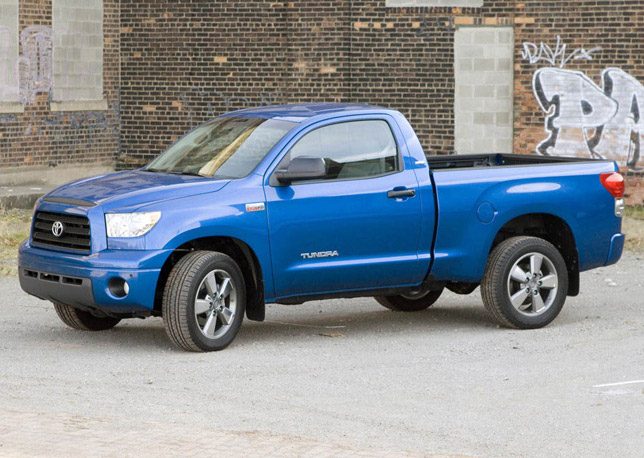


 Playing to win in the growing crossover segment,