Search results for: “feed”

  • Public Feedback Makes Nissan IDx Freeflow IDx NISMO Reality

    2013-Tokyo-Motor-Show-Nissan-IDx-Freeflow-shadow2013-Tokyo-Motor-Show-Nissan-IDx-Freeflow-medium

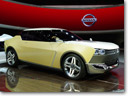
    If you think that the Nissan IDx Freeflow and IDx Nismo on display at the 2013 Tokyo Motor Show are tributes to a long-lost past of boxy cars and general sensibility, you’d be wrong. What you see before you is a product of collaboration between Nissan and the masses. The internet masses that is:

    “It was designed to appeal to “digital natives,” the generation born after 1990, and integrates their feedback into the creation process. Nissan thinks this approach could have real applications in the near future.”

    So no nostalgia was involved in the making of these IDx concepts (ID – identity; x – a “variable representing the new values and dreams born through communication”)? If that really is the case, then we applaud the new age thinking of simple-three box designs and “no nonsense steering wheels”. Let’s face it, these two look brilliant. Nothing too flashy, There isn’t an X-Box bolted to the dashboard and we can’t imagine there is a highly sophisticated vehicle management control somewhere in there that will keep you prisoner for weeks for trying to set the clock. No, in fact, the IDx Freeflow uses an analog clock to tell the time. One thing, however, doesn’t make sense to us – denim covers for the seats, denim patterns here and there? Must have been the work of either hipsters or of someone definitely not born in the 90s. Also, we are not sure what they mean when they say that the cabin has been designed to look like a living room. At 4.1 meters long, just 1.7 meters wide, and 1.3 meters high, the Freeflow is not what a real estate agent would call a bargain. Keep in mind that in addition to four people, the IDx Freeflow needs to accommodate an engine and a gearbox as well. The Nismo Idx, on the other hand is the more racing-oriented twin. An even more simplistic interior is ballenced out by a rather flamboyant exterior that, Nissan admit, has borrowed “liberally from memorable vehicles of yesteryear and the present”. Still, that spirit of the past is said to have come from video games rather then from the real thing.

    Not that it’s relevant (because these are case studies and there are no plans for production), but Nissan say that it would be possible to mate a 1.2-to-1.5L petrol engine to one of their CVT in order to form the IDx base drivetrain – sensible, economically, revvy and smart. ‘Boo’ for not actually doing something about it at this point.

    2013-Tokyo-Motor-Show-Nissan-IDx-Freeflow-medium-2

    Source: Nissan

  • What Makes a Used Car Worth Buying?

    what-makes-a-used-car-worth-buying

    The used car market can be feel more confusing than ever. With its fair share of lemons, hidden gems, and a plethora of opinions on what’s worth buying. When talking about pre-owned vehicles, you might wonder what separates a worthy investment from a headache. With flashier, newer models constantly vying for our attention, it’s sometimes easy to overlook the infinite possibilities found in owning a well-preserved classic. Consider these guiding checkpoints when sifting through used car listings and showrooms.

    The Perks of a Used Car

    Firstly, let’s address an undeniable fact: used cars can save you loads of cash. Buying one might feel like the smarter financial move, avoiding the monstrous depreciation that slashes a new car’s value once it leaves the lot. Why chase brand new when you could have a winner at half the price?

    Moreover, the ongoing expenses associated with a used car tend to be lighter, often due to lower insurance premiums. New car insurance rates typically soar higher because of the vehicle’s current market value, but opting for a used car might mean paying significantly less. This difference can free up a good chunk of change over time.

    Insist on a Test Drive

    No playlist in the world can make up for the tranquility of a smooth ride. Feel every turn, gauge the suspension, and listen to the engine’s steady hum. RX any clanks or screeches. Rattle through city streets or weave through highway traffic; the test drive is a moment of truth. Anything less than silky smooth should warrant a second thought.

    Reliability Over Novelty

    Why should technology bells and whistles cloud your judgment? Recent years proved that reliability trumps flashy designs. A trustworthy used car can go for endless miles with low maintenance costs, if chosen well. Good carmakers have consistently produced reliable models that age like fine wine. So, make reliability part of your non-negotiables.

    Additionally, older models often boast simpler mechanical structures, which means they might be easier and less costly to repair. Cars with complicated electronics can pose challenges when issues arise, but a solid, straightforward engine and system design can keep away exorbitant repair bills. It’s a win for those who value practicality over frill.

    If you are specifically exploring options in or around Decorah, Iowa, you might find a promising selection among used Chevys near Decorah Iowa. These vehicles balance price and performance, serving as an attractive candidate for any prospective buyer.

    Check the Reviews, Trust Your Instincts

    Online reviews are one of our era’s blessings, providing endless information about a model’s performance over time. A car might sparkle under showroom lights, but if drivers assert its propensity for breakdowns, maybe you should second-guess. Filter honest feedback from the embellishments and gather consensus so your journey doesn’t end with buyer’s remorse.

    Remember, your instincts play an invaluable role in this process, too. Use reviews as a supportive tool rather than an ultimate decider. Your gut feelings about the car’s comfort and your lasting impression during the test drive are just as important. Give yourself the space to weigh these elements alongside factual evidence.

    Historical Records Matter

    A good pre-owned choice will have a transparent and positive history. Service history logs, accident reports, title check, and even previous ownership tales give vital clues about the life your potential purchase has lived. A car that’s been regularly attended to or accurately maintained should pique more interest than one with mysterious blanks in its past.

    In particular, former fleet or rental cars might have the advantage of thorough maintenance. Although they might exhibit slightly higher mileage, these cars benefit from rigorous servicing schedules. Such consistency often makes them a reliable choice, despite preconceived notions regarding their prior usage.

    Ownership Costs and Affordability

    Remember: buying doesn’t end at purchase. Consider fuel efficiency, insurance costs, parts availability, and potential repair costs down the line. Look at the bigger picture – owning a car means factoring in all related expenses over the long haul.

    Mind the Mileage

    Mileage plays a key role in used car evaluations. A decent rule of thumb: lower mileage usually means decreased wear and tear. But don’t let these figures dictate your decision entirely. Context is key, especially if you spot a high-mileage gem with a comprehensive service record. A kind owner who cared meticulously for their vehicle might have clocked thousands of miles, but that doesn’t sideline a car’s value.

    Certification: Worth the Hype?

    Certified pre-owned vehicles seemingly offer a gold standard, but not all certification programs guarantee top-tier quality. Research warranties closely. While one dealer’s certification can provide peace of mind, too much reliance on labels can be blinding.

    Conclusively, a used car doesn’t merely offer a more affordable option; it offers lessons in making informed decisions and valuing what matters most, reliability, history, and cost efficiency. While glossy brochures and sales pitches can be compelling, remember that a solid used vehicle can become one’s chariots of independence, adventures, and everyday journeys without burning a hole in your pocket.

  • 4 Tips to Keep Your Taxi Fleet on the Road Year Round

    4-tips-to-keep-your-taxi-fleet-on-the-road-year-round

    Running a taxi business comes with its fair share of challenges. One of the biggest is keeping every vehicle on the road. If taxis are kept off the road, this is going to cause everything from unhappy passengers to lost revenue.

    The issue: running a reliable taxi fleet takes constant attention.

    Harsh winter months, increased summer demand, and the wear and tear of daily city driving – all can hit those reliability efforts. To prevent issues as much as possible, here are four practical ways to keep your vehicles running smoothly through every season.

    Tip #1: Prioritise Preventive Maintenance

    Reactive repairs – aka those that need to be done ASAP – are expensive. Preventive maintenance, on the other hand, can stop small problems from developing into major issues. That’s why implementing a regular service schedule for the likes of oil changes and tyres helps keep your fleet in good health year-round.

    You should also take seasonal needs into account. For example, in winter, it’s wise to inspect battery health and switch to winter tyres. For the summer, you should monitor coolant levels and air conditioning systems.

    Another recommendation: encourage drivers to report dashboard warnings and vehicle noises early. After all, a quick fix today could save you a full breakdown tomorrow.

    Tip #2: Use Telematics to Spot Trouble Early

    It’s easy to think telematics is only about tracking vehicle location. However, that’s certainly not the case. It also supplies vital data about how your vehicles are performing. Engine diagnostics, idling time, and even tyre pressure alerts can support you in identifying when a vehicle might be due for a check-up.

    A company like Radius offers fleet telematics solutions that allow you to:

    • Monitor vehicle health in real time
    • Schedule servicing based on mileage rather than guesswork
    • Get alerts for fault codes before they become serious

    This insight reduces breakdowns and lowers repair costs. Importantly, it also keeps more vehicles on the road where they belong.

    Tip #3: Train Drivers to Protect the Vehicles

    Drivers play a direct role in vehicle wear and tear. Aside from impacting fuel economy, it can be easy to overlook how the likes of harsh braking and excessive idling can accelerate mechanical issues. A well-trained driver avoids such issues and extends the life of your vehicle.

    In terms of training, consider offering seasonal driver refreshers. You can discuss the likes of wet weather braking techniques and how to handle snow, fog, and extreme heat. Pairing this with performance feedback from telematics data encourages both accountability and safer driving habits.

    Tip #4: Have a Contingency Plan for Downtime

    From time to time, even the best-maintained fleet will face unexpected issues. The key is being prepared when that happens. Here’s how you can stay ahead:

    • Partner with a reliable garage for priority repair turnaround.
    • Use tracking tools to quickly reroute nearby drivers to cover missed jobs.
    • Stay connected with mobile and broadband services so dispatchers can react instantly.
    • If budget allows, keep a small reserve fleet to cover emergencies.

    By putting backup systems in place, you reduce disruption to service. This keeps customers satisfied, even when things go wrong behind the scenes.


  • BMW Skytop

    BMW is poised to set pulses racing among fans of exclusive driving pleasure and collectors of automotive masterpieces once again with a strictly limited-run small-series model. Following in the tyre tracks of the BMW 3.0 CSL – revealed in 2022 to mark the 50th birthday of BMW M GmbH – is the BMW Skytop (fuel consumption, combined: 11.6 litres/100 km [24.4 mpg imp]; CO2 emissions, combined: 264 g/km in the WLTP cycle, CO2 class: G; provisional values).
    The BMW Skytop wraps the joy of driving for which the brand is renowned in a timelessly elegant design characterised by precision craftsmanship in every last detail. Initially shown in design study form as the BMW Concept Skytop at the Concorso d’Eleganza Villa d’Este 2024 on the shores of Lake Como, the two-seater roadster sent waves of excitement through the assembled connoisseurs and automotive aficionados. This rapturous response prompted BMW to convert the concept into a strictly limited production run of 50 examples.

    The decision was announced by Adrian van Hooydonk, head of BMW Group Design, at an event hosted by the House of BMW in Milan, Italy, where the highly desired design study was again on display. It was also revealed here that all examples of the BMW Skytop reserved for enthusiasts and collectors found their future owners within a very short space of time. “The BMW Skytop is a truly exotic design and offers a combination of driving dynamics and elegance at the highest level,” said van Hooydonk. “To finally be able to announce that this car will be built is like a dream come true. Thank you for the very positive response around the globe and to the passionate team that worked on the project.”

    Dynamism and elegance continue the tradition of legendary BMW roadsters.
    BMW recently presented the likewise strictly limited-run BMW 3.0 CSL. Production of this exclusive sports car was also capped at 50 cars. In both concept and design, the special edition served as a homage to the legendary BMW 3.0 CSL “Batmobile” of the early 1970s.

    The BMW Skytop is another desirable collector’s item from the Bavarian premium carmaker. The open-top two-seater celebrates BMW’s history of iconic roadsters, among them the BMW 507 and BMW Z8. The sculptural athleticism of its body is constructed from taut, muscular surfaces defined by a few precise lines, the BMW Skytop emitting a powerful sense of dynamism before it even turns a wheel. The pronounced arrow shape of the bonnet, evocative BMW shark-nose design and tightening tail are all carefully chosen references to the BMW Z8.

    Just like its legendary roadster ancestor, the BMW Skytop takes to the road with the most powerful V8 in the brand’s armoury. The 4.4-litre petrol unit generates maximum output of 460 kW/625 hp and teams up with an eight-speed Steptronic Sport transmission. Maximising traction is the BMW xDrive intelligent all-wheel-drive system, which distributes the engine’s power between all four wheels as required, and optimises stability and driving dynamics in any situation. With this drive configuration in place, the handsome two-door will sprint from 0 to 100 km/h (62 mph) in around 3.3 seconds.

    Exclusive materials and traditional craftsmanship.
    The exclusivity of this unique masterpiece of automotive craftsmanship is also reflected in its timelessly elegant appearance. Headlining the exterior design is the pronounced spline that extends from the bonnet to an aluminium bar on the boot lid, emphasising the dynamic flow of the special edition’s form. Winglets discreetly integrated into the door shoulders take the place of conventional door handles and – together with the light-alloy wheels with their intricate fins between the spokes – feed into the car’s clean, graceful appearance. The illuminated BMW kidney grille and the headlights also play their part in the progressive look of the front end. The LED units are positioned on aluminium carriers and have the slimmest profile currently available for automotive headlights. They were custom developed for the BMW Skytop and group together all the lighting functions. The rear lights likewise have an arrestingly slim design and carry the progressive design theme of the BMW Skytop into the rear end.

    Like the leather-covered rollover bar behind the seats, the fully retractable rear window and leather-trimmed soft-top roof generate a pure-bred roadster feeling. The two removable roof sections, which are finished with high-quality synthetic leather, stow away in a special compartment in the luggage area.

    The harmonious colour scheme ensures a smooth visual transition from interior to exterior – both with the soft-top open and closed. At the rear of the car, the reddish-brown of the roof flows into the Floating Sundown Silver exterior paint finish, whose chrome shadow effect gives it impressive visual impact. The elaborate colour gradient was applied by hand by experienced master painters.

    Inimitable ambience, exquisite appointments and high-quality equipment.
    Inside the BMW Skytop, too, precision craftsmanship, handpicked materials and warm, monochrome colour tones create a feel of cosseting luxury and singular elegance. In common with other elements of the interior design, the leather seats, accented by brogue-style decoration, come in the same shade of brown used for the roof. Crystal applications embedded ornately into the cockpit also contribute to the sumptuous on-board ambience.

    The exclusive character of the BMW Skytop is additionally underscored by high-quality equipment features such as a soft-close function for the doors and the stunning Bowers & Wilkins Diamond Surround Sound System. The BMW Live Cockpit Professional includes the full-colour BMW Head-Up Display, which projects driving and navigation information directly into the driver’s field of view.

  • Ferrari 12Cilindri

    There has been a single leitmotif that has been thrilling Prancing Horse enthusiasts since 1947: the naturally-aspirated, mid-front-mounted V12, the very first Ferrari engine to roar its way through the factory gates in Maranello. Unveiled today to public and media against the spectacular backdrop of Miami Beach in celebration of the 70th anniversary of Ferrari’s arrival on the American market, the Ferrari 12Cilindri is the natural evolution of the company’s uncompromising powertrain philosophy, which over the decades has continued to develop without ever straying from its original DNA and the marque’s core values.

    The Ferrari 12Cilindri is inspired by the legendary Grand Tourers of the 1950s and ‘60s, embodying the front-mounted Ferrari V12 two-seater mission with its effortless combination of elegance, versatility, and performance. The car represents the latest evolution in this bloodline and continues that unique legacy, elevating it towards new standards in performance, comfort, and design. Its silhouette exudes sportiness and class: simple yet harmonious lines feature an integrated active aerodynamic device to guarantee peerless performance, a front-hinged bonnet that exalts the view of the engine bay, and the two twin tailpipes that have become a signature of Ferrari’s 12-cylinder cars.

    The Ferrari 12Cilindri’s engine is the latest development of the iconic V12 that laid the foundations for the Maranello legend, in this version unleashing 830 cv and with maximum revs rising to a heady 9500 rpm. The impressive power curve ensures 80% of total torque is already available at just 2500 rpm, resulting in instantaneous pick-up for maximum accelerator response and a feeling of never-ending power all the way to the red line.

    The Ferrari 12Cilindri’s cockpit guarantees superb comfort for both driver and passenger, even on long journeys: its feeling of airiness and space is heightened still further by a glass roof, prestigious materials and a central display in addition to one for the driver and a third ahead of the passenger.

    The Ferrari 12Cilindri is aimed at driving enthusiasts, but also at those who demand new standards of performance, comfort and design: long-standing Ferraristi, loyal to the unique emotions that only the Ferrari V12 can deliver, as well as new clients dreaming of combining comfort and Italian design with exhilarating driving pleasure. The Ferrari 12Cilindri is designed for connoisseurs with a very clear vision of what Ferrari’s DNA has always been, truly making it a car for the few.

    POWERTRAIN

    The F140HD engine equipping the Ferrari 12Cilindri is the new version of the iconic naturally-aspirated Ferrari V12, the purest expression of Ferrari’s soul: its peerless performance, powerful soundtrack and exclusivity make it the worthy heir to the legendary berlinetta sports cars that wrote some of the most glittering chapters in the marque’s history. The engine can unleash up to 830 cv while its max revs have been increased to 9500 rpm by adopting challenging and innovative solutions.

    The engine features modified components and software, some of which were already adopted on the special series 812 Competizione, ensuring it tops its category in terms of performance. To allow the V12 to rev so high, the engineers worked to reduce the weight and inertia of the engine’s components, adopting titanium con rods, which guarantee a saving of 40% in rotating mass compared to steel with the same mechanical resistance. A different aluminium alloy was used for the pistons, making them lighter than on previous applications. Further weight reduction was gained by the adoption of a rebalanced crankshaft which is 3% lighter.

    The valvetrain with sliding finger followers is derived from Ferrari’s unparalleled experience in Formula 1 and was developed specifically for the V12 with the aim of reducing mass and availing of more high-performance valve profiles. The sliding finger follower, which is steel with a Diamond-Like-Carbon (DLC) coating, transmits the action of the cam to the valve using a hydraulic tappet as the pivot for its movement. The use of DLC reduces the coefficient of friction at critical points, significantly improving the mechanical efficiency of the engine.

    Most of the modifications focused on optimising torque delivery in all operating conditions. The result is an engine with exhilaratingly smooth, seamless response, that delivers peak power at the red line.

    The manifold and the plenum layout is now very compact: shortening the length of the tracts and optimising the cam profiles allows power to be unleashed at high revs, while the torque curve is optimised at all engine speeds by a system of variable geometry inlet tracts which enables the length of the intake tract to be continuously varied to maximise the dynamic charge in the cylinder.

    For the very first time on a naturally-aspirated engine, an innovative software strategy was developed that can modify the maximum torque available as a function of the gear selected. This gives the driver the feeling of smooth, progressive pick-up as the transmission ratio increases, another vital factor in making the driving exhilaration delivered by the Ferrari 12Cilindri truly unique.

    A crescendo of never-ending acceleration and power delivery has been a signature of all Ferrari V12s. Now innovative Aspirated Torque Shaping (ATS) has allowed the Maranello engineers to sculpt the torque curve in third and fourth gears using sophisticated electronic control that improves perception of the torque without impinging on acceleration, all to the benefit of driving pleasure. The introduction of new gear ratios furthermore keeps acceleration levels high and allowed the engineers to define a new torque curve shape for an aspirated engine.

    Optimising the engine’s mechanical efficiency and that of the lubrication circuit is critical to delivering blistering performance and low fuel consumption. The calibration of the variable displacement oil pump allows the oil to circulate throughout the entire engine and then be recovered along with the vapours from the sump. A solenoid valve, controlled by the engine ECU in a closed loop, is used to control the pump’s displacement in terms of engine revs and pressure, delivering only the amount of oil required and thereby simultaneously saving a significant amount of energy. The new configuration of the oil tank and pump’s hydraulic circuit reduces losses to a minimum and optimises functionality in all operating conditions.

    The gasoline direct injection system (GDI at 350 bar) comprises two petrol pumps and four rails with pressure sensors that provide feedback to the pressure control system. The electronic injectors can also control up to three injections per engine cycle. The ignition system is constantly monitored by the engine control unit which has a single and a multi-spark function. The ECU also controls combustion in the chamber to ensure that the engine is always working in peak thermodynamic efficiency conditions, using a sophisticated strategy that recognises the octane rating of the fuel in the tank to avoid knocking.

    The new exhaust system, developed to allow the car to comply with the latest emissions requirements (EU6E, China6B and BIN50), introduces a ceramic catalytic converter coupled with a particulate filter. This is the most advanced emissions-reduction technology available and involved lengthy calibration of the software strategies.

    Sound is pivotal to marrying the comfort, luxury and exhilarating driving emotions typical of a Ferrari V12: to this end, every element of the intake and exhaust lines were optimised. Equal-length exhaust tracts, the 6-in-1 manifold for every cylinder bank and the innovative design of the central sections has resulted in Ferrari’s typical V12 howl that comprises all of the noble combustion orders. The perfect integration and calibration of high and low frequencies coming from the intake and exhaust systems respectively also influence the engine’s timbre. The shape of the ducts and the internal fluidynamics of the silencer baffles have been designed to reduce backpressure to a minimum thereby improving power delivery. The geometry of the forms and curves of the exhaust system was also perfected to guarantee the very purest notes of the signature Ferrari sound all the way to the limiter.

    To guarantee that the soundtrack in the cabin is perfectly balanced, the intake tract was modified: modifying the position of the resonators also changed the pressure waves resulting in a richer range, particularly in terms of the middle frequencies. The result is a cleaner, more full sound in the cabin in all driving conditions, but especially in sportier situations.

    The Ferrari 12Cilindri sports the 8-speed DCT (Dual Clutch Transmission) that received such an unanimously rapturous welcome on other cars in the range, starting with the SF90 Stradale. Thanks in part to larger tyres on 21” rims, this solution delivers 5% shorter gear ratios in the lower gears and a 12% increase in torque at the wheels compared to previous V12 applications, all to the benefit of longitudinal performance under acceleration and gear shifting times (30% faster than the previous V12 berlinetta applications).

    Performance under acceleration through the gears has been significantly improved and the introduction of the 8th gear improves range in motorway driving. The eight-speed DCT thus both improves efficiency and is more engaging in all gears.

    DESIGN
    EXTERIOR

    With the Ferrari 12Cilindri, Flavio Manzoni and the Ferrari Styling Centre design team set out to radically transform the stylistic codes of Ferrari’s previous mid-front-engined V12s. The car in fact marks a clear departure from the sculptural language that characterised the 812 Competizione, for example, instead favouring a more sophisticated language that still retains the necessary formal design rigour to achieve a sense of stylistic unity.

    Clean lines dominate the car’s geometry, underscoring the volumes that make up a seamlessly interconnected whole. The ultra-clean flanks sweep back along the entire car from a dihedral section. Although retaining a signature Ferrari sensuality, the wings have been sculpted with extreme geometric precision: all the lines are the result of intersections between the volumes and a more functional approach to form has been taken that echews nostalgia. The muscular rear wing is imposing, yet also perfectly controlled geometrically. On the front wing, that muscular tension extends slightly, coming to rest along the flank and further accentuating the car’s monolithic aesthetic.

    The sculpted bonnet is extremely sleek and incorporates the front wings. Removing the cut lines from the wings gives a smooth, uninterrupted surface to the muscularity of the design, lending the entire bonnet a sense of ultra-clean fluidity, interrupted only by two vents to cool the engine bay. One of the objectives of the Ferrari 12Cilindri was to explore design languages only tangentially related to the car world. The front has thus lost certain signature elements, such as the elongated form of the headlights and the traditional grille shape, in favour of geometries and intersections innate to the car’s design. The headlights are integrated into a single wraparound band from which the DRLs emerge like blades.

    A similar approach has been taken with the rear architecture: once again, rigour is the order of the day with the shape obtained by the subtraction of volume. Consistent with the front of the car the taillights are set into a blade that traverses the entire, concave rear section and also provides what is possibly the Ferrari 12Cilindri’s real signature theme, demonstrating once again how cleverly the Ferrari Styling Centre’s designers are able to meld technical and functional demands with beauty.

    Instead of adopting a rear spoiler, the designers have used two active flaps integrated with the rear screen, creating a signature delta theme. The overall perception is of a seamless whole, creating the idea of a very high-tech form. The development of this concept allowed the designers to treat the Ferrari 12Cilindri’s cabin in a new way, tracing the frame of the surface in body colour to echo the rear screen theme and integrate organically with the rest of the cabin which itself is characterised by a black screen effect.

    The tail section ends in a very clean, monolithic volume in body colour as well. The lower section – in black or carbon fibre – is characterised by the prominent diffuser keels over which the body almost seems to float. This area also includes the sensors and two twin tailpipes. The latter, comprising four elements altogether, also have a completely new shape, with a metal surround to reduce the perception of their size and create a more compact look.

    COCKPIT

    The design of the Ferrari 12Cilindri’s interior sees it split into three different levels: the first, dominated by the upper part of the dash, continues around to blend into the door panel trim. Next is the central area while the third includes the footwells and seats. Each level is clearly defined, heightening the dual-cockpit effect through the colour and material combinations. These are used to create either an elegant or sporty look for the seats and other features. Ferrari’s signature luxury and performance are flanked on the Ferrari 12Cilindri by a focus on environmental sustainability: extensive use has been made of sustainable materials such as Alcantara© containing 65% recycled polyester.

    The interior style takes its inspiration from the Prancing Horse’s dual-cockpit architecture. In recent years, that layout was used for the Ferrari Roma and Roma Spider as well as the Ferrari Purosangue. The Ferrari 12Cilindri’s cabin has an almost-symmetrical structure comprising two modules for driver and passenger and offering an astonishing standard of comfort and involvement in the driving experience.

    The dashboard extends horizontally, a fact underscored by a clear separation between the trimmed volumes in the upper section and the technical functions in the lower section. The upper section features two distinct binnacles dedicated to the driver and passenger instrumentation and to the climate control vents. A deftly elegant colour and material change draws the eye to the two volumes separated by the body of the dash, which seem almost to float, further enhancing the feeling of lightness in this area.

    The panels of the central tunnel extend outward from the dashboard geometries as if they were almost an extension of the latter. The trimmed area features a large sculptural gash emphasised by contrasting materials. The armrest is in the trimmed area of the tunnel and extends into the medallion area, revealing contrasting metallic edging that creates an elegant intersection between the volumes. The side section of the tunnel itself has been scooped out, again recreating that floating feeling. It is trimmed with luxury materials and also features a Y-shaped metal element into which the iconic gate shift has been set.

    On the Ferrari 12Cilindri, the quality of life on board was one of the main drivers for the development of the bespoke interior’s features. A new a new generously-sized tinted glass roof has been incorporated, which significantly improves the airiness of the cabin and thus the feeling of space on board, ensuring optimum thermal efficiency in both summer and winter. In terms of design, the darkened glass roof is perfectly integrated into the upper part of the cabin, giving it an elegant and refined appearance and creating continuity between the windscreen and the rear screen.

    The Ferrari 12Cilindri introduces a new Human Machine Interface (HMI) comprising three displays that raise the Ferrari V12 berlnietta onboard experience to new heights. All of the main functions can be controlled from the central 10.25” touchscreen capacitive display within reach of both driver and passenger. This is flanked by a 15.6” driver display showing all of the driving and vehicle dynamics information. Lastly the passenger is always completely involved in the driving experience thanks to an 8.8” display that ensures they feel like a genuine co-driver.

    The car sports the capacitive steering wheel seen on all of the latest models in the range featuring the indented buttons for ease of use. This means that command activations are more precise, instant and intuitive even in sporty driving conditions. The Ferrari 12Cilindri comes with Apple CarPlay® and Android Auto®-based mobile connectivity systems as standard, both easily controlled from the new central display. A wireless charging mat on the central tunnel (as standard) makes phone charging simple too.

    Available as an optional on the Ferrari 12Cilindri is the high-end audio system developed in collaboration with Burmester®, comprising 15 loudspeakers and unleashing a massive 1600 W for a genuinely unprecedented in-car experience at any volume and any speed. The high frequencies are crystal clear and sparkling, thanks to Ring Tweeter technology which minimises distortion. The powerful dual coil subwoofer guarantees a wonderfully full, rich sound which, thanks to Ultraflat Headliners, is all part of a 360-degree listening experience.

    AERODYNAMICS

    The main objective of the Ferrari 12Cilindri’s aerodynamics was to produce a sober, elegant car without compromising on performance. The 25 nm nolder on the boot lid and the active aero are the two signature elements of the tail section. The former guarantees the recompression required to maintain the car’s aero efficiency when drag is minimal while the flaps permit two different configurations, Low Drag (LD) and High Downforce (HD) respectively.

    In the low drag position, the flaps are flush with the bodywork so that the air runs over it uninterupted, making them invisible to the flow. This configuration is retained until a speed of 60 km when downforce is not very relevant to the performance of the car, something that is also the case over 300 km/h. In between these two speeds, however, downforce plays a central role and the spoilers’ movement depends on the car’s longitudinal and lateral acceleration. In high downforce configuration, the Ferrari 12Cilindri generates maximum downforce and guarantees that the car is aerodynamically balanced.

    The underbody is designed to maximise efficient vertical load generation, also by managing the airflow out of the central radiators. The plan form and profile of the louvres in the central opening of the underbody minimise the impact of the hot air which is not highly energised. Two louvres have been created in the low-pressure area behind the front wheels which, by reducing overpressure inside the engine compartment, increase the efficiency of the radiating masses, lowering drag and increasing downforce generation.

    As was the case with the 812 Competizione, downforce on the front underbody is generated by three pairs of vortex generators optimised in the wind tunnel. The front underbody also contributes to brake cooling by delivering a flow of lower-temperature air from the front splitter.

    The central underbody was designed to correctly channel air flows to retain the available energy all the way to the rear diffuser. To that end, the transmission tunnel opening was reduced to balance the amount of air that would flow inside it. A raised section ahead of the rear wheel shields the tyres and deflects the flow towards the rear.

    The rear underbody sports a pair of vortex generators which are used to produce efficient downforce and channel the flows towards the extractor. In line with Ferrari’s philosophy of transferring innovations from the racing world to the road-going sports cars, the engineers designed an air inlet near the outer edge of the rear fence to provide ventilation for the silencer’s electronics.

    COOLING LAYOUT

    The heat dissipation requirements of the engine and ancillaries demanded a redesign of the car’s entire cooling system which resulted in front underbody evacuation being optimised, with no fewer than seven openings in the front bumper. In particular, the space between the longitudinal elements of the chassis houses the engine coolant radiator and air-con circuit condenser, which are fed by the central opening, while the oil radiator has been split into two separate elements, lying ahead of the front wheels. The two side air intakes are divided in two: the outer part is designed to cool the engine oil radiator while the inner one cools the brakes.

    A generous brake cooling duct is fed by two openings, one between the radiator intakes and the other on the lower part of the front splitter. The entire system is integral to the oil radiator intake to optimise the routing of the front brake intakes. The side intakes are framed by an L-shaped element designed to maximise the amount of air entering the opening whilst simultaneously correctly channelling the flow along the car’s flanks.

    The air in the engine bay exits through two vents on the bonnet which reduce overpressure, improving cooling efficiency. Thanks to the latter, there are fewer openings on the underbody, thereby maximising efficient downforce generation. On the wing behind the front wheels there is also a vent for the air from the wheelarch which minimises overpressure on the underbody caused by the cooling duct for the brakes and front diffusers.

    VEHICLE DYNAMICS AND CHASSIS

    The Ferrari 12Cilindri boasts the very state of the art in front-engined berlinetta dynamic controls. The introduction of brake-by-wire allowed the latest innovations from the range to be adopted, including ABS Evo that debuted on the 296 GTB and the 6D sensor that guarantees optimal precision to the Virtual Short Wheelbase (PCV) 3.0 and Side Slip Control (SSC) 8.0 systems, together with reduced braking distances and a more accurate repeatability of braking. The Aspirated Torque Shaping, an entirely new control logic, also emphasises even further the smoothly linear power delivery from the legendary naturally-aspirated engine, thanks to electronic control.

    The SSC 8.0, a new evolution of the famous Ferrari control unit, allows the systems to talk to each other using a shared language that calculates the optimal operating mode for each one in order to maximise the car’s overall performance. The SSC 8.0 integrates the Ferrari 12Cilindri’s controllers and creates natural synergy with the new ABS Evo.

    The SSC 8.0 is Ferrari’s proprietary system and has been optimised to further improve estimation accuracy and learning speed (+10% compared to previous applications), as well as control on very low grip surfaces. Grip estimation is flanked by the contribution of the grip recognition logic: by using the information from the EPS CPU and the side-slip angle estimated by the SSC 8.0, the Ferrari 12Cilindri can estimate the tyre-road grip level even when steering. Thanks to this approach, the grip can also be estimated in normal use conditions and not just on the limit, making it faster for the system to learn real grip levels.

    The Ferrari 12Cilindri features the four-wheel independent steering (4WS) that debuted on the special series 812 Competizione, which manages the movement of every wheel independently to improve yaw management in cornering and responsiveness during rapid direction changes. The rear-wheel steering has innovative mechanical characteristics that significantly improve precision of control of the position of each single actuator, giving faster axle response time and consequently improved responsiveness through corners. Optimum handling is also ensured thanks to a near-ideal weight distribution – 48.4% front and 51.6% rear and the car’s responsiveness also benefits from the 20-mm reduction in the wheelbase compared to the 812 Superfast.

    TYRES

    The Ferrari 12Cilindri can be fitted with Michelin Pilot Sport S5 or Goodyear Eagle F1 Supersport tyres, both of which were developed in a new size for the Maranello company: 275/35ZR21 at the front and 315/35ZR21 at the rear. Development benefited from physical and virtual sessions, the latter carried out through simulator testing to reduce the number of physical prototypes and, consequently, development times and cycles.

    Performance has been optimised thanks to the adoption of the latest technologies in terms of compounds, tread design concepts and casing characteristics. Extensive testing has led to improved performance, dry grip levels and balance, stability on the limit and stability in the wet, as well as improved comfort and noise characteristics both internally and externally, including a 10% reduction in rolling resistance compared to the previous Ferrari front-engined V12 berlinetta applications.

    CHASSIS

    The Ferrari 12Cilindri’s all-aluminium chassis, featuring a 20-mm reduction in wheelbase compared to the 812 Superfast’s, is completely new: specific attention was focused on the geometry of cast components such as the shock towers and A and C pillars, to improve torsional rigidity whilst simultaneously reducing weight

    The greenhouse topping the new chassis guarantees superb NVH and safety performance in addition to clean load lines which allowed stiffness to be improved without increasing weight compared to previous Ferrari 12-cylinder applications. The result was an increase of 15% in torsional rigidity compared to the 812 Superfast which ensures more predictable dynamic behaviour, with consequent benefits for suspension precision. Lastly, thanks to more extensive use of castings, the number of extruded components requiring assembly has been significantly reduced, making the assembly process more efficient.

    For the first time on a Ferrari production car, a secondary alloy with 100% recycled material has been used to make the shock towers of the gearbox subframe: its introduction allows a reduction in carbon dioxide emissions of 146 kg of CO2 for every car produced. Thanks to an extensive development phase, it was possible to guarantee that the mechanical characteristics are the same as non-recycled alloy, exploiting the slight differences in chemical composition. For the validation of this new alloy, extensive testing was undertaken to assess the static and dynamic behaviour of the components and ensure excellent results in fatigue and crash tests.

    7-YEAR MAINTENANCE

    Ferrari’s unparalleled quality standards and increasing focus on client service underpin the extended seven-year maintenance programme offered with Ferrari 12Cilindri. Available across the entire Ferrari range, the programme covers all regular maintenance for the first seven years of the car’s life. This scheduled maintenance is an exclusive service that allows clients the certainty that their car is being kept at peak performance and safety over the years. This very special service is also available to owners buying pre-owned Ferraris.

    Regular maintenance (at intervals of either 20,000 km or once a year with no mileage restrictions), original spares and meticulous checks by staff trained directly at the Ferrari Training Centre in Maranello using the most modern diagnostic tools are just some of the advantages of the Genuine Maintenance Programme. The service is available on all markets worldwide and from all Dealerships in the Official Dealership network.

    Ferrari 12Cilindri – TECHNICAL SPECIFICATIONS
    POWERTRAIN

    Type V12 – 65° – Dry sump
    Overall displacement 6496 cm3
    Bore and stroke 94 mm x 78 mm
    Max. power output* 830 cv @ 9250 rpm
    Max. torque 678 Nm @ 7250 rpm
    Max. revs 9500 rpm
    Compression ratio 13.5:1
    Specific power output 128 cv/l

    WEIGHTS AND DIMENSIONS

    Length 4733 mm
    Width 2176 mm
    Height 1292 mm
    Wheelbase 2700 mm
    Front track 1686 mm
    Rear track 1645 mm
    Dry weight 1560 kg
    Dry weight-power ratio 1.88 kg/cv
    Weight distribution 48.4% front / 51.6% rear
    Fuel tank capacity 92 litres
    Boot size 270 litres

    TYRES AND WHEELS

    Front 275/35 R21 J10.0
    Rear 315/35 R21 J11.5

    BRAKES

    Front 398 x 223 x 38 mm
    Rear 360 x 233 x 32 mm


    TRANSMISSION AND GEARBOX
    8-speed DCT

    ELECTRONIC CONTROLS
    SSC 8.0: TC, eDiff, SCM, PCV 3.0, FDE 2.0, EPS, ABS-Evo in all Manettino positions, 6D sensor, performance ABS/ABD

    PERFORMANCE

    Max. speed > 340 km/h
    0-100 km/h 2.9 s
    0-200 km/h <7.9 s
    100-0 km/h 31.4 m
    200-0 km/h 122.0 m
  • Facing DUI Charges in Tucson: Legal Pathways and Considerations

    facing-dui-charges-in-tucson-legal-pathways-and-considerations

    Driving under the influence (DUI) is a serious offense that can lead to severe consequences including hefty fines, license suspension, and even imprisonment. In Tucson, Arizona, law enforcement officers are stringent in enforcing DUI laws to ensure road safety. Individuals who find themselves facing DUI charges often seek the services of a DUI lawyer, who specializes in the legal proceedings associated with drinking and driving offenses.

    Tucson DUI lawyers are dedicated legal professionals who provide counsel and representation to those accused of DUI. They have a deep understanding of both state and federal motor vehicle laws, as well as the court system and administrative procedures involved in DUI cases. Their expertise allows them to navigate the complexities of DUI law and to advocate effectively for their clients’ rights throughout the legal process.

    The presence of a proficient DUI lawyer can dramatically influence the outcome of a case. They work diligently to evaluate evidence, challenge the prosecution’s case, negotiate with authorities, and guide clients through the myriad of legal options and possible defenses. Their goal is to mitigate the impact of DUI charges on the client’s life, aiming for reduced penalties or even a dismissal of charges where possible.

    Understanding DUI Law in Tucson

    Tucson DUI laws are strict and emphasize safety. Legal representation understands these complexities and guides individuals through the legal process.

    DUI Charges and Classifications

    Driving under the influence (DUI) in Tucson is a serious offense with varying degrees of severity, depending on specific circumstances. Charges are classified as:

    • Standard DUI: BAC at or above 0.08% but less than 0.15%.
    • Extreme DUI: BAC at or above 0.15% but less than 0.20%.
    • Super Extreme DUI: BAC of 0.20% and higher.

    First offenses carry different penalties than repeat offenses, including fines, jail time, and license suspension.

    Blood Alcohol Content (BAC) Limits

    Tucson enforces the following BAC limits:

    • 21 years or older: 0.08%
    • Commercial drivers: 0.04%
    • Under 21 years: Any detectable amount of alcohol is illegal.

    Penalties escalate with higher BAC levels and prior DUI convictions.

    Implied Consent Law

    Implied consent is a foundational concept in Tucson’s DUI law. Drivers automatically consent to BAC testing when they use the roads. Refusal to comply results in mandatory suspensions:

    • First refusal: 12 months’ license suspension.
    • Subsequent refusal within 84 months: 24 months’ license suspension.

    Those facing DUI charges in Tucson can seek a lawyer experienced in local DUI law for legal assistance.

    Finding the Right Tucson DUI Lawyer

    Choosing the right Tucson DUI lawyer is essential for ensuring a strong defense. It involves considering their experience, client feedback, and communication skills.

    Experience and Specialization

    Experience: A lawyer’s number of years practicing DUI law indicates their level of familiarity with similar cases. Look for attorneys with a significant focus on DUI cases.

    Specialization: Ensure the lawyer has a focus on or specializes in DUI defense. This specialization suggests a deep understanding of DUI laws and defense strategies.

    Client Testimonials and Case Results

    • Client Testimonials: Read through previous clients’ feedback to gauge satisfaction with the lawyer’s services.
    • Case Results: Successful case outcomes provide a track record of the lawyer’s performance in court. Look for a history of reduced or dismissed charges.

    Communication and Legal Strategy

    Communication: A competent lawyer should have clear and regular communication with clients, explaining legal concepts in an understandable manner.

    Legal Strategy: Each DUI case is unique. A proficient lawyer tailors strategies based on the specific details of a case, rather than using a one-size-fits-all approach.


  • Top Gadgets You Should Check Out

    top-gadgets-you-should-check-out

    As we stride further into the digital age, the array of gadgets available to consumers grows exponentially. This year, tech enthusiasts have been spoilt for choice with groundbreaking devices designed to enhance productivity, entertainment, and lifestyle. Here, we delve into some of the year’s must-have gadgets, exploring their features, pricing, and the voices of the consumer community.

    Working Smarter: The Compact Laptop Alternative

    The introduction of a lightweight, ultra-powerful laptop alternative has caught the eye of professionals and creatives alike. With a touch-enabled interface and battery life that stands up to rigorous daily use, this device offers the perfect balance between functionality and portability. While positioned at a higher price point, users argue its capabilities justify the investment.

    Enhancing Your Ride

    Just as essential and innovative gadgets enhance our daily lives within our homes and workplaces, advancements in automotive technology are also noteworthy. Upgrading your vehicle’s lighting system with xenon headlights can significantly improve visibility and safety during night-time driving, and is an example of a simple, yet impactful, modification that employs modern technology for a better driving experience.

    The Sound of Music: Wireless Earbuds

    Wireless earbuds have truly cut the cord this year. Offering excellent sound quality, noise cancellation, and a fit that’s snug enough for the most vigorous activities, these earbuds are music to consumers’ ears. They are competitively priced, and reviews suggest they are giving top brands a run for their money.

    Stay Connected: The Ultra-Fast Wi-Fi Router

    In an era where connectivity is key, the latest ultra-fast Wi-Fi router supports the ever-growing demand for high-speed internet. With its advanced mesh technology and robust security features, it promises a reliable and wide-spanning network. Home users and small businesses have praised its performance boost in handling multiple devices concurrently.

    The Smartest Smartphone

    The latest smartphone model has certainly taken the market by storm. Packed with an ultra-responsive touchscreen, a camera that rivals professional equipment, and battery life that can last days, it’s more than a phone – it’s a lifeline to the digital world. With a price tag that reflects its high-end features, this device has received rave reviews from tech pundits for its innovation.

    Seeing Clearly: Advanced VR Headset

    Virtual reality has been taken to new heights with the latest VR headset. Boasting a high-resolution display and an expansive library of experiences, this device promises to transport you to other worlds. Consumers are enchanted by its immersive capabilities, though premium pricing makes it a luxury gadget for many.

    Home Entertainment Redefined: Streaming Device

    Couch potatoes rejoice! The new streaming device on the block offers 4K streaming capabilities, voice control, and a sleek interface. It’s user-friendly and relatively affordable, making high-quality content accessible to all. Consumer feedback highlights the vast selection of apps and services as a significant win.

    The Drone That Fits in Your Backpack

    Drones have been making headlines for a while, but the new compact model that fits into your backpack is a game-changer for amateur and professional photographers. With impressive flight stability and high-quality camera specs, this flying camera is priced to appeal to a wider audience. Feedback from users has been overwhelmingly positive, with particular praise for its ease of use.

    The Power of Portability: Pocket-sized Projector

    Business presentations and personal entertainment leap forward with this novel pocket-sized projector. Despite its diminutive size, it projects high-quality images up to 120 inches in size, supports wireless connectivity, and has a built-in speaker. Its portability and ease of use have made it a favorite for on-the-go professionals and movie enthusiasts alike.

    For the Health-Conscious: Smart Fitness Tracker

    For those looking to stay fit, the latest smart fitness tracker offers unparalleled biometrics. This gadget not only tracks steps and heart rate but also provides detailed health analytics to your smartphone. It’s like having a personal trainer on your wrist. Price-wise, it’s a middle-ground option that has earned a spot on many wrists, with users confirming improvements in their fitness regimes.

    Integrated Home Assistant

    The smart home trend continues to advance with the latest integrated home assistant devices. Equipped with AI that learns from your preferences and routines, it seamlessly controls lighting, temperature, security, and entertainment systems. The futuristic design and proactive notifications have earned it high marks for both aesthetics and functionality.

    Game On: Revolutionary Gaming Console

    Gaming has leaped forward with a console that offers immersive graphics and gameplay. The console’s innovative design allows it to be used both as a home entertainment system and as a portable gaming device, attracting wide acclaim from the gaming community for its versatility and engaging game titles.

    Final Thoughts

    This year’s gadgets have not only matched the pace of our rapidly evolving tech landscape but have often outstripped it, offering both seamless integration into daily life and splashes of luxury. While some come with hefty price tags, the general consensus suggests that the value they add to our lives is priceless. As we reflect on these top gadgets, we recognize not only the genius of modern engineering but also the endless possibilities that lie ahead in the realm of consumer technology.

     Image Source: Google Images

  • Mercedes-Benz SL63 S AMG E Performance

    Mercedes-AMG crowns the SL series with the new SL 63 S E PERFORMANCE (weighted fuel consumption, combined 7.7 l/100 km; weighted power consumption, combined 11.5 kWh/100 km; weighted CO2 emissions, combined 175 g/km[1]). The 4.0-litre V8 biturbo engine and the AMG Electric Drive Unit together generate a system output of 600 kW (816 hp) and a maximum system torque of up to 1,420 Nm. This makes the new model the most powerful SL of all time. And it is already the fifth series with the AMG-specific E PERFORMANCE hybrid technology. The immediate response of the electric drive, the rapid build-up of torque and the linear power delivery enable an impressive driving experience. The acceleration to 100 km/h in 2.9 seconds and the top speed of 317 km/h underline the confident appearance. Systems such as the AMG ACTIVE RIDE CONTROL suspension with active roll stabilisation and active rear-axle steering ensure a widespread between comfort and driving dynamics.

    “The SL has always been an icon in the Mercedes-Benz portfolio. The latest version of the legendary roadster transfers this status into the future. First and foremost is the new SL 63 S E PERFORMANCE, which, with its innovative technology, is the most powerful member of the SL family. With this unique concept, we offer our customers not only superior performance but also the option of all-electric driving. Extensive equipment options and the high-quality materials used also make the SL one of the most exclusive roadsters on the market – a real dream car.”
    Michael Schiebe, CEO of Mercedes-AMG GmbH and Head of Mercedes-Benz G-Class & Mercedes Maybach divisions

    E PERFORMANCE: Combustion engine at the front, electric motor at the rear

    In the SL 63 S E PERFORMANCE, the AMG 4.0-litre V8 biturbo engine on the front axle is also combined with an electric drive unit on the rear axle. It integrates a 150 kW (204 hp), permanently excited synchronous electric motor with an electrically switched two-speed transmission and a mechanical rear axle limited-slip differential. The lightweight high-performance battery is also located in the rear above the rear axle. This compact design results in numerous advantages. The electric motor acts directly on the rear axle and can therefore convert its power more directly into propulsion. This provides an extra boost when starting off, accelerating, or overtaking. As slip on the rear axle increases, the driving force of the electric motor is also transferred to the front wheels as required. The mechanical connection of the fully variable AMG Performance 4MATIC+ all-wheel drive makes this possible via the cardan shaft and drive shafts of the front wheels. The positioning on the rear axle improves the weight and axle load distribution in the vehicle and thus forms the basis for convincing handling.

    Inspired by Formula 1™, developed in Affalterbach: the AMG High Performance battery

    The development of the lithium-ion energy storage is inspired by technologies proven in the Formula 1™ hybrid racing cars of the Mercedes-AMG Petronas F1 Team. The AMG High Performance battery offers high performance that can often be used one after the other. This increases the overall performance of the SL Roadster. Added to this is the rapid energy consumption and high power density. The high-performance battery offers a capacity of 6.1 kWh, 70 kW continuous power and 150 kW peak power. Charging takes place via the installed 3.7 kW on-board charger with alternating current at a charging station, wallbox or household socket. The battery is designed for fast power delivery and consumption and not for the longest possible range. Nevertheless, 13 kilometres of purely electric travel (EAER) enables a practical operating radius.

    The basis for the high performance of the AMG 400-volt battery is direct cooling: a high-tech coolant flows around all 560 cells and cools them individually. Every battery needs a defined temperature for optimal power delivery. If the energy storage device becomes too cold or too hot, it temporarily loses noticeable power or must be turned down so as not to be damaged if the temperature is too high. A uniform temperature control of the battery therefore has a decisive influence on its performance, service life and safety.

    Operating strategy: electrical power always available

    The basic operating strategy is derived from the hybrid power pack of the Mercedes-AMG Petronas Formula 1 racing car. As in the premier class of motorsport, maximum propulsion is always available when the driver needs it – for example, to be able to accelerate powerfully out of corners or when overtaking. The electrical power can always be accessed and frequently reproduced through high recuperation performance and demand-based recharging. The independent battery concept enables the optimal compromise between maximum driving dynamics and efficiency. All components are perfectly co-ordinated with each other: the increase in performance can be experienced and measured immediately.

    The eight AMG DYNAMIC SELECT driving programmes “Electric”, “Battery Hold”, “Comfort”, “Smoothness”, “Sport”, “Sport+”, “RACE”, and “Individual” are precisely tailored to the new drive technology. They offer a wide range of driving experiences – from efficient to dynamic. The driving programmes adapt important parameters such as the response of the drive and transmission, the steering characteristic, the chassis damping or the sound. The programmes can be selected using the AMG button and the central display in the centre console or the AMG steering wheel buttons.

    The performance hybrid usually starts silently (“Silent Mode”) in the “Comfort” driving programme when the electric motor is switched on. The “Ready” icon in the instrument cluster signals that the vehicle is ready to drive. In addition, a powerful, sonorous, AMG-typical start-up sound is heard as acoustic feedback on the readiness to drive, which is radiated into the interior via the vehicle speakers. A light step on the accelerator pedal is enough and the AMG Performance Hybrid starts moving.

    Recuperation can be selected in four stages

    Because the high-performance battery is always in the optimal temperature window of around 45 degrees thanks to direct cooling, recuperation can also be optimised. Normally, a battery heats up a lot when the recuperation output is high, so energy recovery must be limited. Recuperation begins when the driver takes his foot off the accelerator pedal, i.e. in coasting mode without touching the brake pedal. This charges the battery and creates a braking torque. The wheel brakes are protected or, depending on the recuperation level and traffic situation, do not need to be activated at all.

    The driver can select four different levels of recuperation power using the right AMG steering wheel button. This applies to all driving programmes except for “Smoothness”. In the highest level, so-called “one-pedal” driving is possible. Over 100 kW of power can be fed back into the battery. Another advantage of recuperation: the vehicle does not become faster when driving steeply downhill. The system works like an engine brake.

    Visual modifications indicate the E PERFORMANCE drive

    The exclusive identifying feature of the new top model in the SL series is the rear section. What’s new here is the integrated plug-in loading flap and the model name highlighted in red. There are also grooved trapezoidal twin tailpipe trims on the outside. The “E PERFORMANCE” fender badge on the side indicates the exclusive drive. As with the entire series, numerous paints from the MANUFAKTUR programme are also available for the hybrid version.

    Driver-focused interior with extensive choice options

    The interior serves the sporty target group as well as customers who value maximum comfort. The cockpit design right down to the portrait format display in the centre console is focused on the driver and impresses with a harmonious overall impression. The practical dimensional concept with 2+2 seats offers generous space in the interior.

    One of many highlights in the interior is the electrically adjustable AMG sports seats. They combine good lateral support with high long-distance comfort. The optional AMG performance seats with integrated headrests and ventilation openings in the seat backs are even sportier. Three massage programmes ensure excellent long-distance comfort. The ENERGIZING Package Plus combines seating functions and lighting moods to create relaxing comfort programmes.

    The large selection of seat covers reflects the range from comfortable to performance-oriented features. One- and two-tone Nappa leather is included, as is the particularly elegant MANUFAKTUR upholstery in Nappa leather with diamond quilting.

    MBUX multimedia system with hybrid-specific displays

    The MBUX multimedia system (Mercedes-Benz User Experience) is intuitive to use and capable of learning. The SL 63 S E PERFORMANCE contains numerous AMG and hybrid-specific displays and functions. Exclusive menu items such as “AMG Performance” underline the sporty character. Hybrid technology can also be experienced visually: high-quality graphics visualise the power flow of the drive system. The speed, power, torque and temperature of the electric machine can also be called up.

    Active aerodynamics re-tuned

    The active aerodynamics were also fine-tuned. It is adapted to electrified drive technology. The active aerodynamic element, which is hidden in the underbody in front of the engine, contributes to balanced driving behaviour. It is standard on the SL top model. This carbon profile is an exclusive AMG development and protected by patents. It reacts to the position of the AMG driving programmes and automatically extends downwards by around 40 millimetres at a speed of 80 km/h. This creates the so-called Venturi effect, which additionally sucks the car onto the road and reduces the lift on the front axle.

    Another active component is the extendable rear spoiler seamlessly integrated into the boot lid. It changes its position depending on the driving condition. The AMG aerodynamics team has adapted the control software for the SL 63 S E PERFORMANCE to the higher performance and modified numerous parameters. They include the driving speed, the longitudinal and lateral acceleration, and the steering speed in the calculation. From speeds of 80 km/h, the spoiler adopts five new angular positions to either optimise driving stability or reduce air resistance.

    AMG ACTIVE RIDE CONTROL suspension with semi-active roll stabilisation

    Also standard is the AMG ACTIVE RIDE CONTROL suspension with semi-active roll stabilisation. The displacement dampers, which can be adjusted in rebound and compression, also have semi-active, interconnected hydraulic elements. They replace the conventional torsion bar stabiliser. This technology makes it possible to reduce body roll movements and provide a wide range of driving programmes. The hydraulic connection of the damper chambers on all four wheels takes place via appropriate lines and the control valves within the adaptive dampers.

    The connection of the four spring struts and the pressure regulation of the pump and switching valves allow a very wide roll spring rate while at the same time reducing rolling movements. To put it figuratively: every torsion bar from zero to rigid can be represented automatically. This increases comfort in everyday life because even unevenness on one side is compensated for individually. When cornering dynamically, the hydraulics also actively reduce camber loss. Thanks to the resulting high camber rigidity, the roadster steers very precisely.

    When driving straight ahead, the system opens completely depending on the driving programme and driving situation. The system compensates for one-sided obstacles that would otherwise lead to rolling movements. Drivers and passengers experience a significantly more comfortable driving experience. The reduced rolling movements when cornering contribute equally to comfort and driving dynamics. The characteristics of the driving behaviour in the individual driving programmes can also be further differentiated between comfort and sport.

    Active rear-axle steering combines agility and stability

    The SL 63 S E PERFORMANCE is also equipped with active rear-axle steering as standard. Depending on the speed, the rear wheels steer either in the opposite direction (up to 100 km/h) or in the same direction (faster than 100 km/h) as the front wheels. The system therefore enables both agile and stable driving behaviour. These are characteristics that contrast with each other without rear-axle steering. Further advantages include easier vehicle control at the limit and less steering effort because the front wheel steering ratio is more direct.

    Easy to control and stable: the AMG ceramic high-performance composite brake system

    In keeping with the extreme performance values and the associated performance, the AMG ceramic high-performance composite brake system, with bronze-coloured 6-piston fixed calipers at the front and 1-piston floating calipers at the rear, comes as standard. Compared to AMG models with a pure combustion engine, it is larger in size: the carbon ceramic brake discs on the front axle measure 420 x 40 millimetres and on the rear axle 380 x 32 millimetres. The braking system impresses with very short braking distances as well as maximum stability and fading stability under heavy use. It also scores points with its long service life. The lightweight material saves additional weight and reduces unsprung masses.

    An overview of the data

    Mercedes-AMG SL 63 S E PERFORMANCE
    System performance 600 kW (816 hp)
    System torque 1,080–1,420 Nm
    Internal combustion engine[2] 4.0-litre V8 with direct injection and biturbo charging
    Displacement 3,982 cm3
    Max. power combustion engine 450 kW (612 hp) at 5,750–6,500 rpm
    Max. torque internal combustion engine 850 Nm at 2,500–4,500 rpm
    Max. power electric motor 150 kW (204 hp)
    Max. torque electric motor 320 Nm
    Drive AMG Performance 4MATIC+ all-wheel drive with fully variable moment distribution
    Transmission AMG SPEEDSHIFT MCT 9G
    Weighted fuel consumption, combined 7.7 l/100 km[3]
    Weighted CO2 emissions, combined 175 g/km2
    Power consumption weighted 11.5 kWh/100 km2
    Energy capacity 6.1 kWh
    Electric range 13 km (EAER) km
    Acceleration 0-100 km/h 2.9 s
    Top speed 317 km/h
  • McLaren GTS

    McLaren today reveals the new GTS, which joins the McLaren line-up as a replacement for the GT. The super-lightweight GTS is engineered to delight drivers who demand the dynamic excellence and driving excitement of a McLaren and the ride comfort, refinement and luggage space suited to routine drives and extended journeys.

    “The new McLaren GTS offers an unmatched blend of McLaren driving dynamics and performance, with refinement and practicality. When you want a true supercar driving experience, the GTS delivers that; when you want to relax on a longer journey or with luggage for a weekend away, the GTS is an ideal companion. This is a car that is true to McLaren’s racing DNA but with multiple layers of ability.”
    Michael Leiters, CEO, McLaren Automotive

    Retaining the core McLaren attractions of beautiful yet functional design, class-leading power-to-weight ratio – enabled by lightweight carbon fibre construction centered on a unique monocoque chassis – and unmatched driving dynamics, the new GTS is also visually even more powerful and offers increased choice of exterior and interior specification.

    The elegant exterior lines of the GT remain the basis of the car’s aerodynamic package and profile, but new visual enhancements mean that the GTS is even more assertive. At the front of the GTS, the ‘hammerhead’ signature styling has been updated with a new lower front bumper section. This area of the car features newly sculpted air intakes that are more pronounced, with wider intakes to channel more air into the car’s radiator system. The front intake air blades can be optioned in gloss visual carbon fibre, reflecting McLaren’s racing DNA and giving the GTS a more aggressive look. On the rear fenders, new, taller air scoops – also available in gloss visual carbon fibre – are sited on the car’s shoulders. Like the redesigned front end, the enhancements on the rear fenders are functional, enabling greater airflow into the 4.0-liter twin-turbocharged V8 engine.

    The muscular visuals and surfacing of the GTS include a large rear diffuser and dual exhausts – the latter also part of a package that delivers a raw supercar soundtrack on demand with the optional Sports Exhaust system.

    As standard, the GTS comes with a gloss black finish on the exhaust finisher, mirror caps and window surrounds, for a stealthy appearance by default. New GTS badging, including new side badges, can be tinted with a black finish by selecting the Stealth Badge Pack option. Visual carbon fibre options include an underbody carbon pack, which encompasses the front splitter, side skirts and rear bumper lower and diffuser. Exterior details such as the front air intake blades, the rear fender air intakes and mirror caps can also be finished in carbon fibre.

    The GTS is underpinned by the carbon fibre MonoCell II-T monocoque chassis, which boasts strong, ultra-lightweight construction and the rigidity demanded by a mid-engine McLaren supercar. The standard composite roof is made from recycled carbon fibre, one of many weight saving solutions within the construction of the GTS that contributes towards optimal vehicle performance and dynamics. These choices are instrumental in enabling the GTS to deliver a thrilling lightweight supercar driving experience, without deterioration in ride quality, or unnecessary noise, harshness and vibration.

    At just 3,351lbs (DIN) the GTS is the lightest car in its class and has a segment best power-to-weight ratio of 412bhp-per-ton. The power of the V8 M840TE 4.0-liter twin-turbocharged engine has been elevated to 626bhp at 7,500rpm, the additional 14bhp coming from increased crankshaft torque enabled by more aggressive combustion phasing and revised ignition timing. A launch-control function is standard; when enabled, the GTS hits 0-60mph in only 3.1 seconds and 0-124mph in just 8.9 seconds. The maximum speed of the GTS is 203mph.

    The GTS has a seven-speed SSG transmission that provides smooth, seamless and rapid shifts in default-from-start-up Comfort mode, ensuring relaxing yet brisk acceleration. Beyond this, a driver can enhance their supercar experience with two further driving modes – Sport and Track – via the Active Dynamics Panel. Sport introduces heightened drama and urgency, with momentary ignition-spark-cut technology delivering faster and more aggressive gearshifts. Track mode takes this to a higher level still, maximizing the performance of the gearbox with minimal loss of torque between shifts. Manual control of gearshifts is possible using the steering-wheel-mounted paddle shifters in any of the drive modes.

    The tuning of the electro-hydraulic steering system, the standard-fit suspension featuring adaptive damping with proactive damping control, and the powerful carbon ceramic braking system are all unique to the GTS. These elements optimize the mid-mounted position of the V8 engine and the car’s lightweight construction for an authentic supercar driving experience, with balance and agility prioritized, but not at the expensive of comfort and ride quality when this is beneficial.

    The steering of the GTS delivers a level of feedback and feeling unmatched by rivals. Ultra-precise and accurate, the system automatically increases its level of assistance at low speeds, for ease-of-use during low-speed maneuvers such as parallel or bay parking.

    The McLaren GTS is equipped with 390mm brake discs at the front and 380mm discs at the rear, all carbon ceramic. With lightweight six-piston aluminum calipers (four-piston at the rear), the braking system delivers immense feel and performance, capable of bringing the car to a halt from 62mph in just 105 feet.

    The continuously variable, twin-valve hydraulic dampers from McLaren Automotive’s Official Intelligent Suspension Supplier, Monroe, are a fundamental part of the lightweight, aluminum double-wishbone suspension. Featuring McLaren’s adaptive damper technology, Proactive Damper Control, suspension characteristics alter between the three Active Dynamics modes – Comfort, Sport and Track. This ranges from maximum compliance in Comfort, ideal for more relaxed driving, to much more robust damper control in Track mode, for dynamic drives.

    The GTS is also well within its comfort zone in urban environments. Visibility to the front is excellent, while the large glass tailgate, glazed C-pillars and large rear quarter windows ensure first-class rearward vision. Underbody ground clearance of 4.3in can be increased to 5.1in using the vehicle lift function. Enhanced over the GT’s system, the GTS vehicle lift can now raise or lower the nose in only four seconds – more than twice as fast as before.

    A carbon fibre rear upper structure within the monocoque chassis’ design allows for the creation of a large and versatile luggage space behind the passenger cell. Capacity of 14.8 cubic feet, the cargo area is accessed via a front-hinged, full-length glass tailgate that is electrically operated and incorporates a soft close function. The luggage space is complemented by a 5.3 cubic feet storage within the nose of the car. The total cargo space of 20.1 cubic feet makes the McLaren GTS the most practical new supercar on sale today.

    Aligned with the inherent practicality of the GTS is an interior designed to blend the car’s level of performance with a refined and luxurious space. It is a comfortable cabin for long distance journeys, while it also provides a platform from which the driver can take full advantage of the car’s outstanding dynamic capabilities.

    The refined, high-quality cabin uses a mixture of materials selected to deliver an ambience of performance and luxury. Machine polished and knurled aluminum switches and controls are placed around the interior, including for the steering wheel-mounted gearshift paddles, alongside gloss black surrounds for the infotainment screen, gear-selector on the center console, air vent housings and window switches. Optional visual carbon fibre packs include a satin carbon finish steering wheel clasp and extended gearshift paddles, and interior surrounds, along with sill finishers with McLaren branding.

    As standard, the Comfort seats of the GTS are upholstered with Nappa leather trim alongside a leather trimmed steering wheel. New Performance and TechLux interior schemes introduce a refreshed design. Performance trim is sporty, sharp and technical with seats upholstered in Softgrain Aniline leather and Alcantara© in Jet Black or Barolo, with contrasting piping. Performance also includes Power Adjust Heated Memory Comfort Seats. The new TechLux interior scheme epitomizes classical elegance, albeit with a modern McLaren twist. A choice of Softgrain Aniline Leather interiors feature sophisticated color highlights with a unique and newly introduced double piped pattern on the seats.

    The 10.25-inch digital instrument display, with its crisp and sharp graphics, provides a clear view of vital driver information such as speed, gear selection and engine revs, and integrates with the standard navigation system to provide turn-by-turn directions. The GTS also features a 7-inch central touchscreen infotainment system, portrait in orientation. Sharp and responsive thanks to its powerful 10-core processor, it’s easy to use, with its smartphone-style menu and input method. Satellite navigation with HERE® navigation mapping and real-time traffic information, Bluetooth telephone connectivity and media streaming, plus DAB digital radio reception is standard. A Bowers & Wilkins premium audio system comprising 12-speakers, along with carbon fibre sub-bass woofers and Kevlar mid-range drive units is optionally available.

    Interior illumination by way of hidden-until-lit six-color ambient lighting is offered, while the natural light afforded by a glass panoramic roof is available with an electrochromic glazed panel, which replaces the standard carbon fibre composite gloss black roof. The panel allows a driver to select one of five light transmission levels at the touch of a button. In its darkest setting, the electrochromic roof provides a 0.6% light transmission level.

    Alongside an extended and refreshed palette of exterior paints including new options such as Mantis Green, Tanzanite Blue and Ice White, there is a new color exclusive to the GTS from launch: Lava Grey. This metallic finish incorporates a shimmering red fleck that catches the light to create a distinctive effect that marks it out from other shades of grey.

    Further additions include a new 10-spoke Turbine lightweight forged alloy wheel, available in Silver, Gloss Black, Gloss Black with Diamond Cut effect, and Orum. The standard wheel for the GTS is a 10-twin-spoke forged alloy wheel, also offered in Silver, Gloss Black or Gloss Black Diamond Cut, alongside an exclusive Tungsten option. Both wheel designs can be combined with new optional titanium locking wheel bolts, which are 35 percent lighter than the standard bolts, reducing unsprung mass. McLaren’s technical partner Pirelli supplies P ZERO™ tires developed specially for the GTS, offering high-performance and levels of grip, alongside refinement in equal measure.

    The McLaren GTS comes with a standard three-year vehicle warranty with unlimited mileage, as well as a three-year paint warranty and a ten-year anti-perforation warranty. The GTS is eligible for the McLaren Extended Warranty, which can be purchased in 12- or 24-month periods up to a total warranty of 12 years. Three years of vehicle servicing is included with the McLaren Service Plan.

    An accomplished and functional approach to a lightweight McLaren supercar, the new GTS takes its place in a McLaren line-up that will continue evolving in 2024 and beyond.

    Technical specification: McLaren GTS

    Engine configuration M840TE engine, 4.0-liter twin-turbo V8, 3,994cc
    Drivetrain layout Longitudinal mid-engined, RWD
    Power bhp @ rpm 626 @ 7,500rpm
    Torque lb ft @ rpm 465 @ 5,500-6,500rpm
    Transmission 7 Speed+reverse SSG. Comfort, Sport and Track modes
    Steering Electro-hydraulic; power-assisted
    Chassis Carbon fibre MonoCell II-T monocoque, with carbon fibre rear upper structure and aluminum crash structures front and rear  
    Suspension Double aluminum wishbone; independent adaptive dampers with Proactive Damping Control.

    Comfort, Sport and Track modes

    Brakes Carbon ceramic discs: 390mm (f) 380mm (r); forged aluminum calipers: 6-piston front/4piston rear  
    Wheels (inches) Front: 8J x 20; Rear: 10.5J x 21
    Tires Pirelli P ZERO™ Front: 225/35/R20; Rear: 295/30/R21
    Length, inches 184.4
    Wheelbase, inches 105.3
    Height, inches / with lift 47.8 / 48.6
    Width, with mirrors, inches 82.5
    Width, mirrors folded, inches 80.5
    Track (to contact patch center), inches Front: 65.5; Rear: 63.7
    Lightest dry weight, lbs 3,232
    DIN Kerb weight [fluids + 90% fuel], lbs 3,351
    US Curb weight [fluids + 100% fuel], lbs 3,362
    Weight distribution (% Front/Rear) 42.5/57.5
    Fuel tank capacity, USA gallons 19
    Luggage capacity, cubic feet 20.1 (Front: 5.3; Rear: 14.8)

    Performance data 

    0-60mph 3.1 seconds
    0-62mph 3.2 seconds
    0-124mph 8.9 seconds
    Maximum speed 203mph
    124mph–0 braking, ft 417
    62mph–0 braking, ft 105

    Efficiency 

    Fuel consumption, Federal/United States mpg
    City 15
    Highway 22
    Combined 18
  • 9 Tips for Choosing Your First Car as a Student

    9-tips-for-choosing-your-first-car-as-a-student

    Steering the wheel of your first car is a rush of freedom. It’s the kind of thrill only rivaled by the hum of the engine or the gleam of a freshly waxed hood. Every student dreams of it: that moment when the world becomes a bit more accessible.

    But with this thrill comes a responsibility. Buying a car is no small feat. Especially for a student, every decision counts. It’s not just about the make or model; it’s about reliability, cost, and practicality.

    Diving into this milestone requires thought, research, and a touch of savvy. After all, the road ahead should be smooth and enjoyable.

    Determine Your Budget

    Setting a realistic budget is the cornerstone of any major purchase, and cars are no exception. As a student, every penny counts. Just as one might say, EssayPro write my college essay, to manage academic expenses efficiently, similar prudence is needed when allocating funds for a vehicle.

    It’s not just about the upfront cost of the car. Hidden expenses lurk around the corner: insurance, regular maintenance, fuel, and occasional repairs. These additional costs can add up and should be factored into the initial budget.

    Planning wisely ensures the joy of a new car isn’t dampened by unexpected financial strains.

    Research Fuel Efficiency

    For students often juggling expenses, every drop of fuel counts. A car’s fuel efficiency directly impacts the pocket. The less fuel a car consumes for each mile, the more economical it becomes for daily commutes, weekend getaways, or long road trips.

    But it’s not just about the present. Investing in a fuel-efficient car ensures long-term savings. Over the lifespan of the vehicle, these savings can amount to significant sums, making the initial investment truly worthwhile.

    In essence, fuel efficiency is more than just an eco-friendly choice; it’s a wise financial decision for the forward-thinking student.

    Consider Used Cars

    The allure of a brand-new car is undeniable, but for students, pre-owned vehicles often present a more practical option. Used cars generally come with a lower price tag, reducing the financial strain of that initial purchase.

    However, diving into the used car market requires diligence. It’s essential to check the vehicle’s history, verify its maintenance records, and ensure it hasn’t been involved in any significant accidents. A thorough inspection, ideally by a trusted mechanic, can unveil any potential issues.

    In the end, a well-chosen used car can offer both reliability and value, making it a smart choice for the budget-conscious student.

    Check Insurance Rates

    Insurance rates can be a curveball for many first-time car buyers. It’s surprising to some that certain cars, even if less expensive, might carry heftier insurance premiums due to factors like repair costs, theft rates, or safety records.

    For students, understanding why specific models attract higher insurance can inform a more budget-friendly choice. Factors like the car’s age, engine size, and safety features can influence these rates.

    But it’s not all about the car. Shopping around, comparing quotes from different insurers, and even bundling insurance policies can yield significant savings. A bit of research can lead to both safety and savings.

    Size and Practicality

    When picturing the ideal car, students often grapple with visions of spacious SUVs or sleek sports cars. However, practicality should guide the final choice. Evaluating genuine space needs, like whether there’s frequent passenger or cargo hauling, is essential.

    Compact cars or hatchbacks might be more city-friendly, offering easier parking and maneuverability. On the other hand, larger vehicles might suit those with extensive gear or frequent travel companions.

    The balance lies in matching size with actual needs and foreseeing daily functionality. A car should fit one’s lifestyle, ensuring it’s a reliable companion, whether on daily commutes or cross-country adventures.

    Resale Value

    For the pragmatic student, considering the future is as crucial as evaluating the present. When investing in a car, it’s wise to think about its potential resale value. Some cars depreciate at a slower rate than others, retaining more of their original worth. Brands and models known for their durability, reliability, and timeless appeal often fare better in the resale market. Researching and choosing a vehicle with a strong track record of resale can be a smart long-term strategy. It ensures that when it’s time to upgrade or make a change, you’ll get more bang for your buck from your initial investment.

    Read Reviews and Test Drive

    Diving deep into user reviews is akin to students searching for the best thesis writing services. Just as academic reviews offer insights into quality and reliability, car reviews provide real-world experiences and feedback from actual users.

    It’s not just about professional critiques. Fellow consumers can shed light on the nuances, quirks, and long-term performance of a vehicle.

    But reading alone isn’t enough. There’s an unparalleled value in taking a potential car for a test drive. Feeling the car’s responsiveness, assessing its comfort, and gauging its fit to your lifestyle can be the deciding factors in your final choice.

    Warranty and Service

    A robust warranty is more than just a safety net; it’s a testament to a manufacturer’s confidence in their product. Ensuring your chosen vehicle comes with a comprehensive warranty can save unforeseen costs and offer peace of mind.

    But a warranty is only as good as the service backing it. The accessibility and reliability of service centers are paramount. Whether it’s routine maintenance or addressing specific issues, having accessible service points ensures your car remains in optimal condition.

    Together, a solid warranty and dependable service form a duo that promises smooth rides and fewer headaches for the discerning student.

    Conclusion

    Owning one’s first car is a blend of immense pride and profound responsibility. It’s not just about the thrill of the drive but also about the choices that steer our journey ahead. As students stand on the cusp of this milestone, making informed decisions ensures their vehicle is not just a mode of transport, but a reliable companion. Here’s to embracing the freedom of the open road with wisdom and foresight, ensuring each ride is memorable and safe.

  • Renault Rafale

    Since the campaign to reconquer the C-segment – one of the main goals in the Renaulution strategic plan – is well under way with the Megane E-Tech 100% electric, Arkana E-Tech full hybrid and Austral E-Tech full hybrid success stories, it’s time for Renault to make its next move on the D-segment with a completely new and daring model: the all new Renault Rafale.

    Now that Renault has revamped its arsenal of technology for hybrid powertrains, chassis’, and electronic equipment, it was time to use that engineering knowledge to create a new vehicle born and bred for driving pleasure and launch its new flagship: the all new Renault Rafale.

    Rafale is a French word that derives from natural energy: wind, and is also an aeronautical reference. Aviation has played an important part in Renault’s history: the Caudron-Renault Rafale, which flew at a record-breaking 277 mph in 1934, is only one example.

    The all new Renault Rafale is the first production vehicle entirely designed according to the new visual language that Gilles Vidal has brought in as Head of Design Renault. It is ushering in a new era in Renault’s design: it is visionary, daring, perfectly in tune with its time and tailor-made for a period when everything is moving ever faster.

    The all new Renault Rafale also features up-to-the-minute connectivity and a 200 hp E-Tech full hybrid powertrain that is as efficient as it is frugal and uses recycled materials.

    It was born to take driving pleasure to ever new heights and will be enhanced with technological breakthroughs that will rank it high up in the high-performance automotive universe with a new E-Tech 4×4 300 hp powertrain.

    Renault has crafted its DNA around optimal driving pleasure – but not the self-centred kind; pleasure that the driver enjoys alongside passengers in a “car for life and living.” Driving pleasure is a priority, but never at the expense of passengers, who have plenty of space and amenities to enjoy as well. The all new Renault Rafale is an advanced coupe SUV, it looks as vibrant as it feels when you drive it, and it is an opportunity to share an intense driving experience with friends or children – however grown-up they may be.

    The all new Renault Rafale 200 hp E-Tech full hybrid will reach markets in spring 2024.

    “The all new Renault Rafale is central in the Renaulution, symbolises our move upmarket and shows that we belong in every customer segment. With its captivating coupe SUV design crafted for intense experiences, it provides unprecedented driving pleasure with its hybrid powertrains and a standard-setting chassis brimming with passion and know-how from Renault engineers.” Fabrice Cambolive, CEO, Renault brand

    “The all new Rafale is a powerful illustration of the Renault brand’s new design language. It is in keeping with its DNA through generous curves, treated with great precision, combined with lines of tension and technical details that bring character and sophistication to the whole. With its unprecedented style, quality craftsmanship and proportions, the all new Renault Rafale asserts its power and personality on the road.” Gilles Vidal, VP Design, Renault brand

    EXTERIOR

    The all new Renault Rafale is built on the Alliance’s latest-generation CMF-CD platform. The car’s design is unprecedented, and its designers created its original, bold exterior from a blank sheet of paper. This approach led to a new visual language that captures the brand’s identity and shines freely, with meaning, in a natural yet premium way.

    A powerful status-symbol coupe SUV

    Its slightly raised fastback-style body ranks the all new Renault Rafale in the coupe SUV category.

    The vehicle’s silhouette is vibrant and sporty. Its long horizontal bonnet points to power. The bow beneath it is chiselled and features the new radiator grille and signature light pattern that Renault introduced on New Clio E-Tech full hybrid. The protruding bonnet and sculpted front bumper seem to impel the car forwards.

    The muscular shoulders carry presence around the rear wheels, hinting at the power propelling the car. The skid plate emerging from under the rear bumper also shows the car’s presence while the sloping roofline with one last jut points to speed.

    “To work, design has to be just as powerful and effective if you are standing 50 metres, 10 metres or 50 centimetres away. From a distance, what strikes you is the all new Renault Rafale’s forceful face and proportions. When you draw nearer, it’s the flowing line that wows you. And, close-up, it’s the attention to detail that catches your eye and sparks your interest.” Alexis Martot, Head of Exterior Design, Renault

    Ideal proportions

    The all new Renault Rafale is 4.71 metres long and 1.86 metres wide, squarely placing it in the D-segment. Added to which,  it’s 1.61 metres high, making it a quintessential sporty SUV.

    The car has a long wheelbase at 2.74 metres, while the roofline is flawlessly curved to provide plenty of headroom in the back seats and doesn’t impinge on the rear windscreen.

    The rear windscreen tilts 17 degrees, which is exactly right for aerodynamic efficiency. And it renders rear wipers unnecessary, which keeps the car’s lines pure.

    Meanwhile, its wider wheel track solidly grounds the vehicle and makes the most of the black parts of the wheels both from a vertical perspective (the wheels crop out slightly) and from a horizontal perspective (the 20-inch wheels fill the wheel arches).

    “The all new Renault Rafale is sized to give it a status-symbol aura, its design is vibrant, and it has a powerful personality. So, it naturally stands out as the Renault brand’s new flagship.” Agneta Dahlgren, CMF-CD Design Project Director

    New visual language

    The all new Renault Rafale’s design unfolds the brand’s new visual language by Gilles Vidal, which was first seen through the Scenic Vision concept car in 2022 and first applied to a road-going car, the New Clio, in 2023. It encapsulates Renault models’ DNA in its chiselled shapes and generous curves and features a variety of technical details. This now includes character lines that seem to stretch the skin over the body, creating folds, fanning out and fading into the car’s contours.

    In the all new Rafale, the supple volumes combined with the body colours create an interesting contrast with the fiercely geometric, faceted black surfaces.

    The new lines and ridges in the curves add meticulously calibrated rays of light to the body, which blend into a thoroughly pleasing visual impression.

    “We created surprising effects everywhere we could. Wherever you look on the body, there is always something going on. Everywhere your eye falls, there is a special attraction.” Alexis Martot, Head of Exterior Design, Renault

    A moving radiator grille

    The all new Renault Rafale’s novel radiator grille is built around the brand’s hallmark diamond. It is made up of a constellation of small diamonds that arrange space in three dimensions around the emblem in the middle.

    This diamond black coloured pattern is a nod to the all new Rafale’s premium credentials. It stands out against the iron blue or shadow grey hues (depending on the version) that appear and disappear in the background depending on where you look at it from – like works of optical art in the 1970s. This is Renault tipping its hat to Victor Vasarely, the Op Art movement’s high priest, and to a surname that has left its mark in Renault’s history: Victor’s son Yvaral Vasarely designed the 1972 logo – to which the brand pays a “moving” tribute with its new Nouvel’R logo.

    “The all new Rafale’s grille moves the way clothes move over skin; the interplaying shadows, reflections and colours animate it, it looks like it’s alive.” Alexis Martot, Head of Exterior Design, Renault

    The radiator grille’s design, which has a very complex structure, was created using artificial intelligence in a parametric modelling software application. This technology makes it possible to try out a plethora of patterns and interactions in space, by modifying dimensions, angles, situations, and other parameters.

    This type of software is used extensively in architecture. It for example helped to design the “Bird’s Nest” Olympic stadium in Beijing.

    A new signature light pattern

    The New Clio E-Tech full hybrid was the first vehicle in Renault’s line-up to feature the brand’s new signature lights, and the all new Rafale is the second. The pattern unambiguously points to Renault: it’s diamond-shaped, forceful and robust, and visually enhances the car.

    “There is something jubilant about the way the diamond theme appears, and there’s also a lot of freedom. It’s everywhere in the design. The lights follow the same visual pattern as our logo and the oblique lines naturally bring the brand to mind.” Agneta Dahlgren, CMF-CD Design Project Director

    Expanding lights

    To visually enhance car’s width and add poise, the two rear lights are as far apart as they can be. They look like sculptures embedded in the edges.
    Their shape was inspired by Chinese tangram puzzles (a large square divided into five triangles, a parallelogram, and a smaller square). The micro-optic technology in them makes them spring to life when they are on, and they create a “floating ice-cube” effect when they are off.

    Two new colours

    The all new Renault Rafale will be available in five body colours including two previously unreleased ones: a new satin White Pearl and a new Alpine Blue tone.

    The first adds clarity by directing your gaze to the body’s lines. It uses the same innovative technology as Austral’s Shale Grey Satin, which derives its satin-matte look exclusively from the varnish and makes it resistant to UV rays, carwash rollers and other aggressions the car withstands day after day.

    The all new Rafale is the first Renault brand model to feature Alpine Blue. This tone has never quite stood still in the Dieppe-base brand’s history. And it has changed again, if ever so slightly; on the all new Rafale, it is a shade deeper than on the Alpine A 110.

    The three other colours available for the all new Rafale are Flame Red, Diamond Black and gloss Ceramic Grey.

    THE PLATFORM AND POWERTRAINS : DRIVING PLEASURE AT ITS SOURCE

    The all new Renault Rafale is built on the Alliance’s modular CMF-CD platform, which offers unparalleled possibilities for technological content, across the running gear, powertrains and technological equipment. Its 200 hp E-Tech full hybrid petrol powertrain, combined with its multimode automatic transmission, put its range among the longest and its CO2 emissions among the lowest in its segment. It will soon feature a new high-performance variant E-Tech 4×4 300 hp.

    Chassis: precision for pleasure

    Driving pleasure, one of the overarching goals when Renault was developing the all new Rafale’s running gear, has reached new heights in this car that combines a multi-link rear axle with the latest upgrade to the 4CONTROL Advanced 4-wheel-drive system.

    Multi-link suspension enables the most efficient settings for road holding without hampering comfort, and muffles more of the noise from the undercarriage.

    The 4CONTROL Advanced 4-wheel-drive system significantly improves handling at low speeds, and boosts agility and vigour at average and high speeds.

    When you negotiate a turn at less than 30 mph, the rear wheels turn very slightly (up to 1 degree) in the same direction as the front wheels, reducing the rear wheels’ inertia and improving the car’s stability. At low speeds, the rear wheels turn up to 5 degrees in the opposite direction, providing unrivalled agility and shortening the all new Renault Rafale’s turning radius to 10.4 metres (the same as a city car).

    While the all new Austral E-Tech full hybrid also come with a multi-link rear axle and 4CONTROL Advanced, the all new Rafale additionally features Vehicle Motion Control 2 (VMC 2), an upgraded electronic system governing the rear wheels. It anticipates loss of hold more effectively, so you can negotiate bends faster and know that all four wheels are in the optimal position on uneven and damaged roads. The all new Rafale also has a wider track, wider wheels (245 mm) and specific spring, shock-absorber and roll-bar settings, which optimise comfort as much as verve.

    Lastly, the agility of the chassis – with or without 4CONTROL Advanced – is amplified by the calibration of the steering and its very direct ratio (13), so you can enjoy a thrilling experience from the system’s surgical precision on bends.

    “The all new Renault Rafale is the result of a textbook case. When Luca de Meo took over as Renault’s CEO, he asked us to extract the full potential from each platform. The all new Rafale does exactly that: it makes the most of the CMF-CD platform in terms of the car’s dimensions, technology, and emotional power.” Grégory Launay, Product Performance Leader, Renault Rafale

    Powertrain: hybrid at its highest

    Like the all new Austral, the all new Renault Rafale will launch with the 200 hp E-Tech full hybrid petrol powertrain linked to a clutchless multimode automatic dog box.

    This powertrain is powerful, economical, automatic and self-charging. It provides the best mpg figures in its segment (60.1 mpg and 105 g. CO2/km, pending certification) and a range that makes you want to hit the road (up to 683 miles of range). You can enjoy an optimal driving experience every time, and even enhance it with your own choice of MULTI-SENSE settings.

    “The all new Rafale interlinks two Renault lineages: its motorsports heritage from the high-performance saloons like the R21 Turbo and Safrane Baccara Biturbo on one side, and the innovative spirit that brought about concepts like people carriers, turbo technology and E-Tech hybrid powertrains on the other.” Grégory Launay, Product Performance Leader, Renault Rafale

    High-tech mechanisms

    The 200 hp E-Tech full hybrid powertrain has a “series-parallel” architecture. It encompasses a 3 cylinder 1.2 litre turbocharged 130 hp (96 kW) petrol internal combustion engine delivering 205 Nm of torque, and two electric motors. Even on its own, the internal combustion engine a technological gem, combining a Miller combustion cycle, low-pressure exhaust gas recirculation, a variable-geometry turbocharger and a diesel-engine-like long-stroke architecture. The result is an extraordinary 41% energy efficiency ratio. The main electric motor delivers 50 kW (70 hp) and 205 Nm. It is powered by a 2 kWh/400V lithium-ion battery for full-electric driving. The secondary electric motor is a 25 kW and 50 Nm High-voltage Starter Generator (HSG) that starts the engine and powers gear changes in the clutchless dog box.

    Efficient and long-lasting charges

    With its all-electric ignition and energy regeneration system that kicks in automatically when you slow down or brake, you can drive in electric mode 80% of the time in cities and use 40% less fuel than with an equivalent internal-combustion engine with this E-Tech full hybrid powertrain. You get the whole electric driving experience and none of the charging constraints.

    Charging is managed automatically by the smart gearbox, which taps into the engine and motors to top up the battery. The driver, however, can override the smart gearbox with a choice of four regenerative braking levels, using the paddles on the steering wheel.

    The multimode box

    The multimode automatic dog box derived from Formula 1 technology combines the main electric motor’s two ratios and the internal combustion engine’s four ratios. The 15 possible ways of combining the motors and engine will optimise driving pleasure, consumption or CO2 emissions depending on which you choose.

    The smart multimode box automatically selects the powertrain’s mode, which can be all-electric, all-combustion, dynamic hybrid (the engine and motors move the wheels together), e-drive (the motor moves the wheels and the engine charges the battery) or regeneration (the motor taps into the kinetic energy).

    “Our new 200 hp E-Tech full hybrid powertrain uses the electric motors as much as possible, whatever the circumstances, to optimise consumption. The fact that you can use the electric motor up to 80% of the time in cities ranks the car among the best in its category.” Gwenaël Le Merrer, Head Engineer, Renault Rafale

    A high-performance E-Tech 4×4 300 hp version in the pipeline

    The all new Renault Rafale, which is designed for driving pleasure and performance levels never seen before in Renault’s line-up, will later be enhanced with a substantially upgraded hybrid powertrain with all its settings optimised to unleash 300 hp.

    Optimising a variety of features will help to reach 300 hp, but most of the boost will come from two technical adjustments. The first is an additional electric motor on the rear axle, that will move the wheels directly, making the all new Rafale a 4-wheel-drive coupe-SUV. Then it will be a plug-in hybrid, so you can use the all new Rafale in full-electric mode for practically all your everyday outings and enjoy its ample range on long journeys without a worry in the world – and without missing out on any of the fun behind the wheel.

    In addition to four driving wheels and four turning wheels (with 4CONTROL Advanced), this high-performance E-Tech 4×4 300 hp version of the all new Renault Rafale will come with a chassis fine-tuned for intelligent new-generation undercarriage management.

    LIFE ON BOARD
    A HIGH-TECH PASSENGER COMPARTMENT EVERYONE WILL ENJOY

    Inside, the all new Renault Rafale features the brand-new Solarbay darkening glass roof with cutting-edge technology plus new interface graphics on the two OpenR screens. Additionally, the seats are in a class by itself: they include a high-tech rear armrest for passengers in the back and a trailblazing choice of colours and materials. The cockpit is 100% geared for driving pleasure but the car is nevertheless true to Renault’s DNA and accordingly pampers all its passengers.

    Solarbay, a new darkening glass roof

    The pioneering, spectacular 1,470 mm by 1,117 mm Solarbay panoramic glass roof was developed by Saint-Gobain and the all new Renault Rafale is the first car in the world to use this iteration of it. Its AmpliSky technology replaces standard screens with a full active system that darkens each of its segments on demand, using electric fields to displace molecules. It provides maximum protection from the sun in seconds, and the sequential darkening of the nine segments across the glass surface is exhilarating to watch. This smart glass roof can be voice-controlled via Google Assistant and has a switch by the ceiling light to control it manually.

    The driver and passengers can choose between four roof settings: all light, all dark, light in the front and dark behind, and the reverse. It is more practical than a standard sunshade because the passengers in the back can let the sunlight in even if the people in the front prefer not to. The Solarbay roof also provides an extra 30 mm of headroom, which makes a significant difference – especially for passengers in the rear of a coupe. The car doesn’t feel like a hothouse or icebox: Saint-Gobain’s laminated glass keeps the temperature comfortable in summer and winter, like automatic sunshades. And the glass darkens automatically when you step out of the car.

    Solarbay darkening glass roofs use Polymer Dispersed Liquid Cristal (PDLC) technology derived from the construction industry and tweaked for car occupants. So far, only ultra-premium carmakers have fitted it, plus the all new Renault Rafale is the first car from a full-line automotive manufacturer to use it with the partial roof darkening feature.

    “This Solarbay darkening glass roof is the perfect example of the useful, simple-to-use technology we wanted for the all new Renault Rafale. It is more efficient than a standard sunshade on every score. Plus, it’s smarter and easier to use. And it produces that wow effect!” Gwenaël Le Merrer, Head Engineer, Renault Rafale

    Sporty seats

    The all new Renault Rafale’s completely new seats have reinforced sides to match the car’s dynamic behaviour with thorough lateral and longitudinal support. Among other upsides, they make the chassis’ road holding on turns even more exciting.

    The Alcantara upholstery helps to keep the driver upright, adds to the sporty feel and is eco-friendly (it is the first 61% recycled Alcantara interior).

    “To bolster the Grand Tourisme effect, the side reinforcements on the seats are gadrooned, like the reinforcements on biker jackets.” François Farion, Design Director, Colour & Trim, Renault Group

    A light logo on the seats

    In the all new Renault Rafale’s esprit Alpine trim, the Alcantara on the seats is perforated so you can catch a glimpse of the blue fabric lining and its iridescent effect – which will remind you of the radiator grille. The A-and-Arrow logo at the top of the seat back literally lights up and flashes in synch with a beating human heart – an allegory for the surging excitement you feel when you draw near the car. The lighting adjusts to match the colour you selected in the MULTI-SENSE settings. The lights are embedded in a completely flexible fabric, so they don’t stiffen the seat back in the slightest. This technology is being used for the first time worldwide here.

    “The all new Renault Rafale recognises its driver coming towards it and the lights in the Alpine logo on the seats beat like a heart, signifying the close connection between them. An invitation to driving pleasure has never been expressed with so much passion.” Agneta Dahlgren, CMF-CD Design Project Director

    Three-colour overstitching

    Producing the red, white and blue overstitching in the passenger compartment of the the All new Renault Rafale’s esprit Alpine trim involved building a new three-head machine to sew three threads simultaneously.

    A steering wheel like nothing you have felt before

    The all new Renault Rafale’s steering wheel is derived, with only minor tweaks, from the Megane E-Tech electric’s and Austral’s. Here, the Renault emblem’s oblique lines are smithed into the centre and the bright black medallion is gone. The esprit Alpine trim has an Alcantara inlay inside the lower part of the steering wheel. And Renault has used a TEP-like material (including 34% of recycled material on the reverse side), that feels even better than leather, to replace all animal products without affecting driving pleasure or watering down the tantalising sensation. Renault has reasserted its aim of no longer using leather by 2024.

    Natural, innovative materials

    The all new Renault Rafale is the first car worldwide to include dyed cork and slate in its passenger compartment. In the esprit Alpine trim, the slate evokes the Alpine universe in a very real way. It clads the dashboard on the passenger side and the hand-rest. These extra-thin slate sheets are not rough in the slightest and bend around shapes as effortlessly as a sheet made from wood. The Techno trim has cork dyed black – providing a premium feel – on the dashboard. Besides serving a decorative purpose, it is extremely lightweight and non-reflective.

    Generously sized

    Driving pleasure may be driver-centred, but journeys are more enjoyable with others. The all new Renault Rafale is uncompromising on the former doesn’t cut corners when it comes to indulging passengers: its passenger compartment is generously sized all around. The car’s lengthy 2.74 metre wheelbase opens up a comfortable 302 mm knee radius in the back. The long wheelbase also makes for more headroom under the sloping roof – 880 mm in the back seat – without affecting the coupe silhouette.

    As long journeys often involve lots of luggage, the all new Rafale has a very roomy 647-litre boot.

    “After driving your family around in an SUV or people carrier, the all new Rafale is the car you choose when you want to thoroughly enjoy driving – and seat two young adults comfortably in the back.” Grégory Launay, Product Performance Leader, Renault Rafale

    A high-tech rear armrest

    One example of all the care that went into keeping back-seat passengers comfortable and connected is the all new Renault Rafale’s innovative centre armrest, which is designed for the multimedia devices that make life on board more enjoyable. This high-tech armrest has two USB power outlets, storage space for tablets and smartphones, and two foldout screen stands for comfortable viewing.

    New screen graphics

    The all new Renault Rafale’s OpenR digital cockpit – which was introduced in the Megane E-Tech 100% electric then tweaked for all Austral E-Tech full hybrid, is made up of two adjacent tiles arranged into an L shape: a horizontal TFT 321 sq. cm. 12.3 inch diagonal display on the dashboard (1920 x 720 pixels, landscape format) and a vertical 453 sq. cm. 12 inch diagonal touchscreen in the middle of the console (1250 x 1562 pixels, portrait format).

    OpenR is precisely positioned to be easy to see and reach, so the driver can enjoy the multimedia system without taking their eyes off the road. The navigation experience enhanced by the Google ecosystem has been extensively tried and tested and has emerged as a benchmark in its field. The system’s visual interface is brand new, befits the all new Rafale’s unprecedented, spectacular looks, and underlines the car’s character and technology.

    The user-interface designers created a new, trailblazing visual atmosphere. Like the vehicle’s exterior and interior design, it stems from the brand’s new emblem and captures its visual force. The diamond is there subliminally, in the form of a 28° rising diagonal segment. This diagonal line is everywhere, providing the pattern to display information on the dashboard and centre tile that combine to form the OpenR screen.

    On the dashboard display facing the driver, the usual circle has been replaced by the 28° diagonal line – the speed line – that changes colour when the engine increases in revs or the car speeds up. The new font on the screens is bold and flattened, so the display blends beautifully with the latest digital universes on smartphone and laptop screens. The colours are pop – which the Renault brand loves – with silky shading, made possible by the OpenR screen’s fantastic display.

    The centre display uses Google’s system for natural, intuitive navigation. It looks and feels a lot like browsing around a smartphone. Each MULTI-SENSE setting displays a new dashboard, with its own distinct colours, and the vehicle’s shape on the screen is the same colour as the car’s body.

    “When we introduced the OpenR Link multimedia system on the Megane E-Tech 100% electric, it redefined the driving experience and became a benchmark in its field. On the all new Rafale, we adjusted the style and soundscape to match the car’s compelling personality. The subtle colour shading is not something you see often in human-machine interaction. The experience in this car is bigger than the journey!” Romain Mottier, Head of Experience Design, Renault Group

    An upgraded head-up display

    The all new Renault Rafale pays tribute to its name and to the aviation world with a new, improved and extra-large (9.3 inch) head-up display. The car’s speed, active driver assistance systems, speeding warning and driving directions are projected directly onto the windscreen, for optimal visibility in all circumstances. The driver can thus remain fully focused on the road – for even more intense driving pleasure.

    Adjustable lighting moods

    To enhance the experience in the passenger compartment, the all new Renault Rafale provides a variety of fun and friendly possibilities in its MULTI-SENSE settings. You can for example select the Living Lights colour you prefer, which stretches across the LED strip on the dashboard and door panels.  Meanwhile, for a relaxing experience, the lighting includes an automatic mode that adjusts every 30 minutes to suit your 24-hour circadian clock and the time of day (with cold colours during the day and warm ones at night).

    CONNECTIVITY AND SAFETY
    CUTTING-EDGE AND INTUITIVE TECHNOLOGY

    The all new Renault Rafale comes with the full array of technology for the Alliance’s ultramodern CMF-CD platform – the platform used on the all new Austral E-Tech full hybrid. It includes advanced driver assistance systems (ADASs) and OpenR Link. OpenR Link comes with several new features, and artificial intelligence provides new services for the driver and passengers. Its universe is open and scalable, to always keep the car at the leading edge of technology.

    Seamless connectivity

    With the all new Renault Rafale, there are no borders between your digital life outside and inside the car, and between your smartphone and the car’s OpenR Link multimedia system with built-in Google capabilities.

    The system comes with Google Maps, Google Assistant and many other apps (up to 35 apps for UK markets) from the Google Play catalogue. It’s exactly like using a smartphone. The interface is also fully customisable, connects by wire or wirelessly, and is compatible with smartphones running Android Auto or Apple Carplay.

    In addition to its new design, the OpenR Link multimedia system on the All new Rafale uses Android Automotive 12 (instead of Android Automotive 10), which among other improvements makes it easier to pair devices via Bluetooth and simplifies navigation in some menus. The predictive maintenance feature is also more advanced: it can now warn the driver when the wheels will need aligning and when the air conditioning mechanism will need servicing.

    OpenR Link is scalable and connects to the cloud to automatically download recommended updates using FOTA (Firmware Over The Air) technology. So there’s no need to stop at a garage or dealership to stay up to date.

    Useful artificial intelligence

    There are several AI-powered capabilities inside the all new Renault Rafale, and they are all there to help the driver and passengers. In many cases, the system proactively makes suggestions – for instance to switch off the air conditioning if a window is open or to switch it on if it is too warm inside. These proactive recommendations are based on “routine” patterns that the AI system picks up and analyses as time goes by.

    Added safety without diminishing pleasure

    For optimal, stress-free driving pleasure, the all new Renault Rafale comes with 32 advanced driver assistance systems (ADASs) divided into three categories: driving, safety and parking. And it now includes Intelligent Speed Assist (ISA), a system that automatically alerts the driver if the car’s speed exceeds the limit it reads on road signs.

    What’s more, Safety Score and Safety Coach are there to provide added peace of mind for the driver.

    Smart, efficient lighting

    The all new Renault Rafale’s headlights are powered by technology that optimises them in all circumstances. All versions come with LED Adaptative Vision technology, which adjusts dipped headlights according to driving conditions. With LED Matrix Vision technology, available higher up the range, the driver can keep the full-beam lights on all the time, improving their visual comfort without dazzling drivers in other vehicles.

    The Active Driver Assist system

    This new-generation motorway and traffic assistant equates to Level 2 autonomous driving on all types of roads (no longer only expressways). It does this by combining Adaptive Cruise Control with Lane Keeping Assist and factors in geolocation data and specific maps enabling the car to adapt predictively to the road.

    The Active Driver Assist system’s built-in technology to read traffic signs and warn the driver if they are driving over the speed limit (Over Speed Prevention, OSP) can also be used by itself. For extra peace of mind, the driver can also let OSP take over the car’s cruise control.

    For full control over the Active Driver Assist system, a real-time model of the vehicle’s position in its lane, along with and other people, cars and objects on the road, can also be displayed on the dashboard.

    Other ADASs

    • Driving: Cruise control / Adaptative Cruise Control (ACC) with Stop & Go / Distance Warning (DW) / Around View Monitor (AVM, providing 3D, 360° vision) / Hill Start Assist (HSA)
    • Safety: Active Emergency Braking System (AEBS) and Rear AEB, including cross-traffic warning / Blind Spot Warning (BSW) / Lane Keeping Assist (LKA) / Lane Departure Warning (LDW) / Lane Change Warning (LCW) / Driver Attention Alert (DAA) / Trailer Stability Assist (TSA)
    • Parking: Front, rear and side parking assistance, Rear Cross Traffic Alert (RCTA) / Bird’s Eye View / Occupant Safe Exit Alert (OSE)

    QUALITY
    A TOP PRIORITY THROUGHOUT DEVELOPMENT

    Alongside the Megane E-Tech  100% electric and all new Austral E-Tech full hybrid, the new Rafale is part of the Renault brand’s Renovation in the C and D segments, which centres on extraordinary products offering quality craftsmanship and up-to-the-minute technology.

    Intensive and varied tests

    The all new Renault Rafale is built on the CMF-CD platform, which has been enhanced based on the experience gathered over the two years it has been used by Austral.

    Like all other new Renault models since the Megane E-Tech electric, the all new Rafale will undergo Confirmation Runs, a complementary real-life test-drive protocol introduced under the Quality strategic plan. These tests are conducted in addition to the certification cycles by professional test drivers on the tracks at the Aubevoye Test Centre and external tests in extreme hot and cold weather. The goal with the Confirmation Runs is to anticipate customer feedback by entrusting several vehicles to a large number of Renault Group employees before the model reaches the market. This new process generates a wide array of feedback covering an ample variety of use cases, to identify the final opportunities to fine-tune the car and ensure it meets the highest driving-pleasure, quality and reliability standards.

    Over 100 employees will drive the car in all kinds of weather and cities across Europe, and on all kinds of roads and motorways. Engineering and test drivers will have driven all new Austral E-Tech full hybrid and all new Rafale a total of nearly 2 million miles on these Confirmation Runs. They are tasked with providing precise feedback using an app on their smartphone, so the brand’s engineers and experts can collect and analyse data practically in real time. This way, they can identify possible anomalies long before they occur with a customer behind the wheel, and ensure the car’s lifelong quality, reliability and durability.

    Palencia, a plant at the forefront

    The all new Renault Rafale will be produced at the Palencia plant in Spain. The Group invested substantially in this plant in preparation for the all new Austral E-Tech full hybrid launch. These investments ensure top production and operation quality for the three vehicles and their equipment. Two new ultramodern calibration benches were for example installed to make sure the latest-generation technological equipment works properly and reliably.

    At the Palencia plant, the all new Renault Rafale’s roof is braze-welded onto the car. This weld is completely invisible on the body, so it is an improvement on the usual welding spots (there is no need to add a plastic cover around the roof to hide the spots). Combined with the roof’s extra-slim and extra-modern design, this technique improves the car’s perceived quality. You can also sense the quality inside, for example in the new felt fabric covering the glove compartment and the storage bins in the doors.

    TECHNICAL DATA

    Dimensions and weight

    • Overall length: 4.71 m
    • Overall width: 1.86 m
    • Height: 1.61 m
    • Wheelbase:  2.74 m
    • Front overhang:  942 mm
    • Rear overhang: 1,029 mm
    • Ground clearance: 180 mm
    • Weight: from 1,653 kg
    • Boot volume: 647 litres

    Powertrains

    E-Tech full hybrid 200 hp

    • ICE engine: 1.2 L 96 kW (130 hp) and 205 Nm
    • Electric engines: 50 kW and 205 Nm / 25 kW and 50 Nm
    • Battery: 2 kWh / 400 V
    • Gearbox: multimode automatic dog box


  • Range Rover Sport SV

    The all-new Range Rover Sport SV is the ultimate blend of power, dynamism, and Range Rover excellence. It’s the most powerful and dynamic Range Rover Sport ever created, packed with cutting-edge technologies and a sleek design that sets it apart.

    At the forefront of performance, the Range Rover Sport SV boasts an advanced suspension system and a sensory audio setup with wellness benefits. It takes luxury performance to new heights, pushing the boundaries of sporting attitude, dynamic ability, and commanding presence.

    The high-performance DNA of the Range Rover Sport SV is evident in its exclusive airflow-enhanced design. With lightweight materials and technical choices, it exudes a more assertive and grounded aesthetic. The result is a vehicle that not only looks the part but also delivers exceptional performance.

    Under the hood, you’ll find a brand-new 4.4-liter Twin-Turbo MHEV V8 petrol engine, generating an impressive 635PS and 750Nm of torque. This power plant propels the Range Rover Sport SV from 0-60mph in just 3.6 seconds, with a top speed of 180mph. And despite the impressive performance, CO2 emissions are reduced by 15 percent compared to the previous model.

    The Range Rover Sport SV achieves such remarkable performance thanks to various weight-saving measures, shedding up to 76kg. The world’s first 23-inch Carbon Fibre Wheels, Carbon Ceramic Brakes, and aerodynamic enhancements, including a carbon fiber bonnet, all contribute to the vehicle’s outstanding capabilities.

    Embodying Range Rover’s modern luxury ethos, the Range Rover Sport SV is initially available exclusively to a select group of clients worldwide. The SV EDITION ONE is the ultimate expression of this model, featuring a meticulously curated combination of features, colors, and finishes. Each SV EDITION ONE is marked with exclusive branding, highlighting its uniqueness and desirability.

    Every single Range Rover Sport SV EDITION ONE has already been assigned to a lucky Range Rover client, underscoring its exclusivity and appeal.

    Geraldine Ingham, Managing Director, Range Rover, said: “New Range Rover Sport SV exemplifies Range Rover’s philosophy, not just as a bold evolution beyond its Range Rover Sport SVR predecessor, but also in the personalised approach we are taking with our most discerning clients.”

    REVOLUTIONARY DYNAMICS

    The all-new Range Rover Sport SV features a groundbreaking 6D Dynamics suspension system that sets a new standard in its class. This innovative system combines hydraulic interlinked dampers, height-adjustable air springs, and pitch control, making it the most advanced suspension system available.

    Unlike traditional anti-roll bars, the 6D Dynamics system eliminates the need for them, resulting in a significant reduction in pitch and roll during extreme cornering and acceleration. This maintains a nearly level body position, enhances grip, reduces weight, and improves overall comfort and refinement.

    Depending on the selected drive mode, the Range Rover Sport SV rides between 10mm and 25mm lower than other models in the Range Rover Sport lineup. The 6D Dynamics suspension seamlessly integrates with a suite of advanced chassis and suspension systems. The Intelligent All-Wheel Drive, All-Wheel Steering, Torque Vectoring by Braking, Configurable Dynamics, and Active Locking Rear Differential are all uniquely tuned by SV for a more focused and sporty driving experience, particularly when utilizing the new driver-selectable SV Mode.

    Nick Collins, Executive Director, Vehicle Programmes, JLR, said: “New Range Rover Sport SV delivers an optimum blend of supreme performance, unrivalled desirability, capability and refinement. It’s a visceral addition to the Range Rover Sport line-up that powerfully demonstrates the world-class expertise of our high-performance specialists.”

    The new Range Rover Sport SV comes equipped with specially developed chassis components, including a redesigned rear subframe and revised suspension links with improved geometry and compliance. It also features an electronically power-assisted steering rack with the fastest ratio ever seen in a Range Rover, enhancing agility and responsiveness.

    In a Range Rover first, the rear tires are wider than the front tires, with 305-section rear tires compared to 285-section front tires. This configuration, combined with standard Michelin Pilot Sport All Season 4 tires, creates a rear-biased dynamic setup that enhances grip, stability, and traction. The increased rear roll stiffness contributes to immediate steering responses.

    Thanks to these advanced technologies, the new Range Rover Sport SV is capable of generating lateral acceleration exceeding 1.1G on all-season tires. This represents a 22 percent improvement over the previous generation Range Rover Sport SVR on summer tires and is comparable to track-focused sports cars.

    To further enhance its on-road performance, every new Range Rover Sport SV is equipped with a specially developed high-performance braking system. Clients can choose between standard mixed-metal Dual-Cast brakes or optional Carbon Ceramic brakes. The Carbon Ceramic Brakes (CCB) offer ultimate braking performance with improved resistance to high temperatures, a longer lifespan, and a total weight reduction of 34kg compared to the Dual-Cast iron brake discs fitted as standard. The reduction in mass results in more responsive handling, faster acceleration, and improved ride quality.

    The new Range Rover Sport SV also offers the option of ultra-lightweight 23-inch Carbon Fibre Wheels. These innovative wheels save nearly 9kg per corner, resulting in improvements to overall performance, handling, and ride quality. Despite their lightweight construction, they meet the same durability and robustness standards as Range Rover’s cast or forged alloy wheels.

    To enhance the sporty character of the vehicle, drivers can engage the SV Mode by pressing the dedicated button on the steering wheel. This mode optimizes various aspects, including steering, gearbox, throttle response, exhaust note, and the 6D Dynamics suspension system. It even lowers the ride height by an additional 15mm, providing a more dynamic and engaging driving experience. SV Mode also enables the activation of the track-oriented TracDSC stability control program, allowing drivers to explore the vehicle’s dynamic balance more freely.

    ASSERTIVE DESIGN

    The exterior design of the new Range Rover Sport SV is specifically crafted for high-performance purposes. It showcases an exclusive front-end with enhanced airflow, along with redesigned lower body sides that exude a sporty and dynamic look. The rear of the vehicle is accentuated by functional quad tailpipes, featuring carbon fiber tips for the active exhaust system.

    Carbon fiber detailing is prominently featured throughout the exterior, adding a touch of sophistication and lightweight performance. The Range Rover script, front bumper blades, grille surround, bonnet vents, and side vents all benefit from carbon fiber elements. For an even more striking appearance, clients have the option to expose the center section of the carbon fiber bonnet, emphasizing its unique and sporty character.

    Prof. Gerry McGovern OBE, Chief Creative Officer, JLR, said: “New Range Rover Sport SV’s clean and reductive design amplifies its dramatic proportions and sporting personality.”

    In the sporty cabin, resembling a cockpit, you’ll find exclusive SV Performance Seats with satin carbon fiber backing. These seats boast integrated headrests, enhanced sculpted bolsters, and illuminated SV logos on the backrests. For the interior, there’s the option of a cutting-edge Ultrafabrics™ PU material, featuring a lightweight and seamless “3D Knit to form” textile.

    Adding to the stylish atmosphere, the Range Rover Sport SV introduces world-first translucent edge-lit gear shift paddles discreetly positioned behind the steering wheel. The steering wheel itself is designed with more pronounced thumb grips for improved handling. Additionally, the console gear shifter is crafted from black ceramic, providing a cool-to-touch sensation.

    SENSORY IMMERSION

    Taking the sense of connection to a new level, the New Range Rover Sport SV introduces the innovative Body and Soul Seat (BASS), an audio experience that goes beyond just hearing sound—it allows front seat occupants to feel it. This groundbreaking feature makes it the first production vehicle to incorporate a tactile audio system developed by industry leader SUBPAC™, a technology trusted by top recording artists and composers worldwide.

    With the integration of SUBPAC™ AI optimizing software and strategically positioned transducers aligned to the backs of the front seat occupants, the Body and Soul Seat delivers real-time analysis of media and generates high-fidelity audio vibrations, creating an incredibly immersive in-car audio experience. This system works in harmony with the exceptional 29-speaker, 1430W Meridian Signature Sound System.

    Beyond the enjoyment of music, the Body and Soul Seat offers wellness programs that can positively impact the mental and physiological well-being of the front-seat occupants by influencing heart rate variability (HRV)—the variation in time between each heartbeat. Higher HRV is indicative of lower stress levels and relaxation.

    Developed in collaboration with Coventry University’s National Transport Design Centre and the School of Media and Performing Arts, the Body and Soul Seat includes six specially crafted tracks: Poise, Soothe, Serene, Cool, Tonic, and Glow. Studies have shown that these tracks can potentially affect passengers’ HRV, assisting in reducing anxiety or enhancing cognitive response, thereby contributing to an overall improved well-being during the journey.

    SV INTRODUCTION LEADS ENHANCEMENTS TO RANGE ROVER SPORT LINE-UP

    Alongside the introduction of the impressive New Range Rover Sport SV, the lineup has received a range of updates, including the addition of a new plug-in electric hybrid variant with an extended electric vehicle (EV) range and the integration of the latest Pivi Pro infotainment technology.

    To boost performance and efficiency, the plug-in electric hybrid powertrain has been upgraded. The new P550e replaces the P510e and now offers an extended EV range of up to 121km (75 miles), allowing for smoother and more relaxed journeys. Furthermore, it boasts CO2 emissions as low as 15g/km.

    Joining the extensive powertrain options of the Range Rover Sport, the new P550e electric hybrid combines a 3.0-liter six-cylinder Ingenium petrol engine with an enhanced electric motor. Together, they produce an impressive 550PS of power and 800Nm of torque.

    Thanks to the improvements in the electric motor and transmission, the electric hybrid delivers even more responsiveness, enabling it to reach 100km/h in just 5.0 seconds under pure electric power. When utilizing both power sources, the P550e accelerates from 0-100km/h in 4.9 seconds (0-60mph in 4.7 seconds), an improvement compared to the previous model.

    Additionally, the P530 V8 powertrain now incorporates Mild Hybrid Electric Vehicle (MHEV) technology for the first time. This system enhances efficiency by harnessing energy during deceleration and braking and redeploying it during acceleration, resulting in improved responses and a reduction in CO2 emissions. The start/stop functionality also operates more smoothly with the help of the MHEV system.

    The exquisite and minimalist interior of the Range Rover Sport has also been enriched with new intuitive technologies. The Pivi Pro infotainment system, featuring a sleek 13.1-inch floating glass display, offers seamless connectivity and effortless control of all vehicle functions.

    Convenient sidebars with user-friendly sliders for volume and climate control ensure quick and precise operation of key functions, regardless of the displayed menu screen. Approximately 80% of tasks can be completed within two taps of the home screen, and haptic feedback provides an enhanced level of tactile interaction.

    With integrated Amazon Alexa voice AI and Land Rover voice control systems, drivers can make changes to the cabin environment while keeping their focus on the road. Advanced Software Over The Air (SOTA) capability ensures that the Range Rover Sport always stays up to date with the latest software.

    Introducing a new feature, Country Road Assist technology enhances passenger comfort when using Adaptive Cruise Control. This intelligent system uses navigation data to adjust the target speed automatically, taking into account bends in the road and changes to the speed limit, effortlessly accelerating or decelerating the vehicle as needed.

    The enhanced Range Rover Sport lineup is now available, with prices starting from £83,620 (OTR) in the UK.