BMW has released full specs of the new F10 ActiveHybrid 5. The highly efficient executive saloon has which a combustion engine and electric motor providing perfect dynamics at decent price.
The powertrain includes a BMW TwinPower Turbo six-cylinder in-line engine, an electric drive system and an 8-speed automatic gearbox. The latest generation of BMW ActiveHybrid technology also adds precisely controlled – and therefore extremely effective – intelligent energy management to the mix.
The result is more than satisfying – 340PS (250 kW) and 450Nm (332 lb-ft); from 0 to 100 km/h in 5.9 seconds and a top speed of 250 km/h (155 mph) or 60 km/h (37 mph) only on electric power. The average fuel consumption is 6.4 to 7 liters per 100 km (40-44 mpg imp.) and CO2 emissions: 149 – 163 g/km.
The combustion engine is the famous twin-turbocharged 3.0 liter in-line six-cylinder petrol with 306PS (225 kW), while the electric motor develops 55PS (40 kW), which is supplied by a high-performance lithium-ion battery integrated into the luggage area.
The ActiveHybrid 5 comes with ECO PRO mode including coasting and intelligent energy management. Charging of the high-performance battery primarily takes place during coasting or braking, the electric motor performing the role of a generator feeding energy into the high-voltage battery.
The selection of interior colours, upholstery and interior trim elements reflects the range offered for the other BMW 5 Series Sedan variants. And added to the standard-fitted array of comfort-enhancing features is not only the Navigation system Professional, but also a 4-zone climate control system with stationary air conditioning. A wide range of driver assistance systems and BMW ConnectedDrive mobility services, as well as virtually all the other optional extras available for the conventionally powered BMW 5 Series Sedan, can also be specified for the BMW ActiveHybrid 5.
The BMW ActiveHybrid 5 will be produced at BMW Plant Dingolfing – the BMW Group’s largest production plant worldwide – alongside the other BMW 5 Series models, ensuring that it benefits from the same high standards of quality and production efficiency. The integration into the production process of BMW ActiveHybrid technology is underpinned by the intelligent combination of state-of-the-art automated process engineering and the skilled craftsmanship of specially trained employees.
2012 BMW F10 Active Hybrid 5
2012 BMW F10 ActiveHybrid 5:
Six-cylinder in-line petrol engine, BMW TwinPower Turbo technology with twin-scroll turbocharger, High Precision Direct Injection and VALVETRONIC;
Displacement: 2,979 cc, output: 225 kW/306 hp at 5,800 rpm,
Max. torque: 400 Nm (295 lb-ft) at 1,200 – 5,000 rpm.
Synchronous electric motor; output: 40 kW/55 hp,
Max. torque: 210 Nm (155 lb-ft);
Combined output: 250 kW/340 hp,
Max. combined torque: 450 Nm (332 lb-ft).
Acceleration [0 – 100 km/h (62 mph)]: 5.9 seconds,
Top speed: 250 km/h (155 mph),
Top speed purely on electric power: 60 km/h (37 mph).
Average fuel consumption*: 6.4 – 7.0 litres/100 kilometres (40 – 44 mpg imp), CO2 emissions*: 149 – 163 g/km, exhaust standard: EU5.
*As per the EU test cycle, figures may vary according to the tyre format specified
Last year, Skoda have delivered 879,200 vehicles to budget oriented, sensible customers. That’s 15% more in comparison with 2010 sales. Today Skoda are planing to keep up that pace by expanding to the East. The Qatar Motor Show will see the Skoda MissionL concept for the first time outside European land.
Just for the record, when we say concept we do actually mean an almost-ready-production-car. The MissionL goes on sale in late 2012 and it is designed to fill in the gap between the Fabia and Octavia (a sort of a small family saloon segment). Skoda say that the design features on the MissionL act as a definitive of the company’s future approach on aesthetics. For starters, this concept is among the first proud wearers of the new Skoda badge. The outside lines of the saloon are more simple yet sharper which gives an overall athletic feel. The grille is framed in chrome while consisting of vertical plate fins that attribute to the depth of the whole front end. Daytime running lights and blinkers are mere luminescent bands positioned at the edges of the main headlights as fog lights frame the lower grille. The party piece however, is the tinted yet transparent glass roof that spans over the whole cabin. The interior is a feast of sensibility, neatness and efficiency seasoned with a bit of luxury thanks to the bichrome wheel, control panel and seat covers.
Skoda MissionL Concept (2012)
Skoda has already started its offense on the market with the launch of the Citigo in the Czech Republic and the introduction of the Rapid in India and feedback seems positive. The company’s plan within the near 5 years is to get those annual sales up to 1,5 million. In addition to the MissionL, ŠKODA is displaying Fabia, Octavia, Yeti and Superb at the Qatar Motor Show, all models are available in the local market.
Red Bull Racing is ready to tackle another racing year with its much cherished lineup of drivers Sebastian Vettel, Mark Webber and 23 year old Sebastien Buemi – the team test and reserve driver who has confirmed that he is to stay during 2012. So that makes a trio of skillful racers with the potential of bringing a very serious competition to this year’s season.
Sebastien Buemi said: “It’s good to remain with Red Bull for another year and have this opportunity with the World Championship winning team. I would prefer to be driving at the races of course, but working with Red Bull Racing on the development of their car and providing them with feedback throughout the season is the next best thing.”
Christian Horner commented: “It was entirely logical for Sebastien to continue with Red Bull having been a member of the Junior Team since 2004. He already knows the team well from his time with us in 2008 and has gained significant race experience over the past three years. He will complete important test and simulation work for us throughout the year and will be in attendance at each grand prix.”
Tokyo Auto Salon 2012 is over and Nissan have managed to leave a long lasting impression from their presentations. Along with the Nismo Juke and Nismo LEAF electric car, a Nismo March Concept made a surprise appearance appearance and feedback is turning out to be good.
In comparison to the standard version, the Nismo March Concept is not strikingly different. In fact the only mechanical bit introduced to a tuning kit is the suspension. Other then that the ride is lowered, the wheels are lightweight and the bumpers, sideskirts and door mirrors are sort of new. The inside has underwent some design changes as well but nothing specific. Yet, the overall result is rather pleasant – we have a sporty little bumblebee with nice color patterns and a good road stance.
Nissan Nsimo March Concept
Officials are still not sure if they are going to give the Nismo March a green light unless public response ends up being positive (which it most probably will). It was the same story with the Nismo Juke – last year a concept and this year a production debut.
The Tokyo Auto Salon 2012 ran through Sunday, and featured some 367 exhibitors and 630 vehicles. Nismo and Autech Japan jointly showcased there a booth that looked like a race circuit compleate with audience stands and everything. Other vehicles displayed included the Fairlady Z, various kinds of vans and other icons such as the GT-R.
Honda has just participated in the Tokyo Auto Salon 2012 with models of automobiles, motorcycles, power products, racing vehicles. In the exhibit, Honda has presented a variety of ways to customize a vehicle, while keeping the joy of mobility and the appeal of the motor sport cars.
Firstly, the presented future automobiles include two study models based on currently available production vehicles. The so called HondaFLASH BOX for example is all based on the all-new Honda N BOX Custom minicar, which went on sale in the end of last year. However the FLASH BOX features a special body color, reflective decal sheets and LEDs, which are used as a decorative motive in both exterior and interior. The next vehicle, called the Honda Feed Wa, is based on the Honda Freed Hybrid compact minivan. Here the “spirit” of the vehicle is hidden in the name, in which the word “Wa” comes from Japanese language and refers to the traditional Japanese culture. Hence, we can see all over the exterior the ancient Japanese art of lacquering and in the interior – flowers, which represent the four seasons.
2012 Honda FLASH BOX
2012 Honda FREED Wa
Secondly in the exhibit were included the Freed Spike Transporter Version, on which for example can be loaded off-road motorcycles. Another vehicle to be mentioned is the BEAT Autosalon Special, which included original BEAT accessories and special aerodynamic parts.
2012 Honda FREED Spike Transporter
2012 Honda BEAT Auto Salon Special
Furthermore Honda will also show the NC700S, NC700X and INTEGRA which are the new midsize series bikes; and other production motorcycles such as CB1100, VT1300CX, including genuine aftermarket parts and accessories. Additionally, there will also be exhibited the racing motorcycle RC212V. Another racing vehicle will be on display – this time the racing car the HSV-010 GT.
The electromobility strategy of BMW today has been finally revealed with the delivery of the first all-electric ActiveE model in the US. More importantly BMW are happy to confirm that with the electric vehicles can absolutely serve one’s daily driving needs without compromise. The launch of the new all-electric BMW i model is expected in 2013.
To go further into details, the BMW’s electromobility development strategy began with the MINI E Field Trial in the summer of the year 2009. There were a lot of questions going on along with the launch of the MINI E. For instance, could a private individual live with an electric vehicle on a daily basis without changing their driving habits? The results were spectacular, because not only all of the MINI E pioneers proved without unquestioningly that it could be done, but also that doing so required no change in their daily routine! The only exception and difference was the plugging-in instead of stopping at the gas station.
2012 BMW All-Electric ActiveE
The Moloughneys today became the first dealership who will lease a BMW ActiveE for a two year period. Deliveries will continue over the next several weeks. As already tested – the MINI E provided valuable information about the life with an EV; now is the BMW ActiveE lease period is prepared to be used to gather feedback that will be part of the development of the BMW i3 (the latter will come to market in 2013). More importantly, the ActiveE is the only car that is 100% Electric and 100% BMW. And it will definitely provide the performance and efficiency everyone has come to expect from The Ultimate Driving Machine®. It has an output of 170 hp (125 kW) and maximum torque of 184 lb-ft (250 Nm) from a standstill. Hence, it is possible for the BMW ActiveE to accelerate from 0–60 mph in under nine seconds. Moreover, newly developed lithium-ion batteries facilitate a driving range of up to 100 miles on a full charge.
2012 BMW All-Electric ActiveE
BMW Group makes a big step towards an emission-free, mass-produced electric vehicle with the launch of this BMW ActiveE. Within the framework of project i, the BMW Group is carrying out research and development work on the development of electrically powered vehicles. The next step will be the BMW i3, which is prepared for launching in 2013. The design of the vehicle will meet the demands of a sustainable mobility solution for congested urban areas. Therefore the drive components and battery technology that are going be used in the BMW i3 are now being tested in the BMW ActiveE. However the ongoing field tests involving more than 600 MINI E cars, have already given important information about the demands on future electrically powered production vehicles. Beginning with year in the US, Europe and China, a test fleet of over 1100 BMW ActiveE vehicles, produced at BMW’s Leipzig plant, will provide further valuable insights into the everyday use of the vehicle. Furthermore, the feedback from customers driving the MINI E and the BMW ActiveE will be used directly into series production of the BMW i3.
Hyundai unveiled today the all-new 2013 Veloster Turbo at the North American International Auto Show (NAIAS). Veloster Turbo is armed with 201 horsepower (248 kW). The vehicle is powerful, high-tech and fuel-efficient and all this makes it the ultimate innovation in the sport coupe segment. The 2013 Veloster Turbo will be in dealerships in the summer of 2012 packed with unique sport-tuned steering and suspension hardware set.
The new Veloster Turbo is equipped with 1.6-liter turbocharged GDI four-cylinder engine in which produces 201 horsepower at 6000 rpm and 195 lb-ft (264 Nm) of torque from 1750 – 4500 rpm with regular fuel. More importantly the vehicle is estimated to deliver 27 mpg city and best-in-class 38 mpg highway for manual transmission models! The 1.6-liter Gamma turbocharged engine includes a twin-scroll turbocharger that when combined with the GDI system, results in instantaneous power delivery. Although twin-scroll turbochargers have traditionally been used on more expensive high performance engines, Hyundai has brought this technology down its line-up from the Sonata 2.0T. In particular, twin-scroll turbocharger designs have two exhaust gas inlets divided by split walls inside the turbine housing, with both gas passages controlled by a waste-gate. A twin-scroll turbo recovers even more energy from the exhaust than a single-scroll turbocharger, thanks to a divided manifold. The twin-scroll design separates the cylinders whose exhaust gas pulses interfere with each other, and thus resulting in improved pressure distribution in the exhaust ports and a more efficient delivery of exhaust gas energy to the turbocharger’s turbine. Another important result is the improved pressure distribution in the exhaust ports and a more efficient delivery of exhaust gas energy to the turbocharger’s turbine. This in turn allows greater valve overlap, resulting in an enhanced quality and quantity of the air charge entering each cylinder. Additionally the twin-scroll turbocharger design includes other benefits over traditional, single-scroll turbocharging systems, such as improved combustion efficiency, low engine-speed efficiency, kinetic exhaust gas energy is not wasted or trapped, cooler cylinder temperatures, lower exhaust temperatures, leaner air/fuel ratio, better pressure distribution in the exhaust ports and more efficient delivery of exhaust gas energy to the turbocharger’s turbine. Furthermore Veloster’s twin-scroll turbo has great handling of exhaust gas separation at the turbine leading to improved low-end torque and faster transient torque response. Thanks to the integrated stainless-steel turbine housing with the exhaust manifold, not only is the weight and cost of the casting reduced, but also is the durability of the turbine housing also improved. Moreover heat energy recovery and thus turbo efficiency is significantly improved based on the fact that a traditional two-piece design effectively insulates some of the heat energy at the joint/gasket area.
2012 Hyundai Veloster Turbo
Furthermore the specific GDI fuel delivery system contributes to improved fuel efficiency and lower emissions. The fuel is injected by a camshaft-driven, high pressure pump that operates at pressures up to 2175 psi. Direct injection also utilizes a higher-than-normal 9.5 compression ratios, while achieving a best-in-class 125.6 horsepower-per-liter. The piston heads are “dished” to increase combustion efficiency in the cylinder.
Veloster Turbo’s is uniquely designed. The inspiration was a custom high-performance sport bike. Moreover Hyundai designers have removed the Veloster’s trapezoidal center exhaust and replaced it with two larger free flowing circular pipes. These new pipes and the new intake manifold also allowed engineers to give the engine a more robust sound. Drivers will also appreciate that the Veloster Turbo will be available in a Hyundai first Matte Gray paint. In addition a set of 18-inch gray wheels with chrome inserts completes the Veloster Turbo’s classy style. Another important feature is that Veloster Turbo includes a quicker ratio steering rack and a revised steering calibration to match, which both give drivers precise cornering, feedback and control. All Veloster Turbo’s ride on Kumho Solus KH25 215/40R18 85V tires designed to extract the best performance out of the car without compromising the ride. Good news is that all Velosters are fitted with a McPherson strut front suspension, coil springs, gas shock absorbers and a 24 mm diameter front stabilizer. Additionally, the rear suspension is a light-weight V-torsion beam, a Hyundai-first with an integrated 23 mm stabilizer bar to allow bracing of the arms for greater stiffness and to further control body roll. In order to bring more comfort, the rear suspension also uses monotube shock absorbers. All Velosters feature electric power steering that adjusts assistance instantly to changing driving conditions while improving fuel economy over a conventional steering system. Veloster’s turning diameter of 34.1 feet is better than Mini’s 35.1 feet and Mini Clubman’s 36.1 feet.
And if you wonder about the interior, it features full leather seats with the word “Turbo” stitched into the seatbacks. An exclusive Supervision Cluster offers the driver information in a larger, clearer and more interactive format. This is due to the Supervision Cluster’s two TFT screens located between the tachometer and the speedometer. As a standard there are two heated front seats.
In order to handle the power enhancements Veloster Turbo is paired with a standard six-speed manual transmission or a six-speed automatic transmission. The manual features a wider gear ratio spread (5.71 vs. 5.25) to handle the additional torque output. The high-revving turbo helps during acceleration, especially at highway speeds. The Veloster Turbo is mated to a six-speed automatic transmission with steering wheel-mounted paddle-shifter and and Shiftronic® controls rather than the base Vesloster’s EcoShift DCT. This is due to the increased torque output from the 1.6-liter Turbocharged-GDI engine. The gear ratio spread on the automatic transmission is slightly narrower than the DCT (6.0 vs. 6.38). A narrower spread maintains the engine in the power band when going from one gear to the other. The base Veloster’s EcoShift DCT is tuned for fuel efficiency and not for the performance feel needed for the Veloster Turbo.
At just 2,800 pounds, Veloster sets priority on weight efficiency, whcih allows the car Turbo to deliver a great combination of agility, performance, and fuel efficiency. The overall dimensions of the vehicle are 104.3-inch wheelbase, 167.3 inches long and 71.1 inches wide.
Of course, all Velosters have an exceptional level of standard safety features for the sporty car segment highlighted by a Vehicle Stability Management (VSM) system, which optimally manages ESC (Electronic Stability Control) and the Motor-Driven electric Power Steering (MDPS). First of all, VSM works to control two effects. The first is when a driver accelerates or brakes on a split-mu surface (slippery on one side, dry pavement on the other) and the vehicle wants to pull in one direction. In addition VSM detects this condition and sends a signal to the MDPS to apply steering assist. It counters the pull and automatically provides up to eight Newton meters of counter steering and reacts the same way during sudden lane changes or fast cornering. Further advantages concerning the safety are the six airbags—including dual front, front seat-mounted side-impact, and front and rear side curtain airbags; a state-of-the-art braking package – the package includes four-wheel disc brakes and an Anti-Lock Braking System (ABS) including Brake Assist, which provides maximum braking force when a panic stop is detected; and Electronic Brake-force Distribution (EBD), to automatically adjust the braking force to front and rear axles based on vehicle loading conditions.
The vehicle also comes standard with a multifunction seven-inch touch-screen display, which now makes it more interactive and entertaining. In addition there is included Pandora internet radio , Gracenote MediaVOCS® technology, a standard 450-watt Dimension Premium Audio system with eight speakers including an eight-inch subwoofer, external amplifier and iPod®/USB/auxiliary input jacks; XM Satellite Radio interface; a Bluetooth hands-free phone system with voice recognition, address book download and audio streaming; onboard navigation. And at last but not least it also features the unique Hyundai Blue Link Technology. As part of the Blue Link launch, Hyundai also will provide Blue Link Assurance on Blue Link-equipped vehicles, which include core safety services for an introductory period. These key safety services include: Automatic Crash Notification (ACN) and Assistance, SOS Emergency Assistance, and Enhanced Roadside Assistance.
Eventually Veloster Turbo’s is painted in an exclusive Matte Gray. Later all 2013 Velosters will be available in colors that fit the cars “own-it” attitude and characteristics of a long-distance runner, including Elite White. There will also be interior color choices such as Graphite Black Graphite Black with Blue accents and headliner graphics for non-panoramic sunroof models.
Nissan Canada has announced that now it will be possible for the Canadian people to pre-order the 2012 Nissan LEAF MY12 online. Earlier on only the registered at www.nissan.ca/leaf had the privilege to do so. However reservations are now open to all Canadians who live within the vicinity (65 km) of a certified Nissan LEAF dealer. There are 27 dealers across Canada so quite a few people will have the chance to snatch one.
The first shipment of 40 MY11 LEAFs was ravaged within minutes last summer and the trend has remained as the following 350 units of MY12 LEAFs being reserved this fall. And now numbers are sure to go up as even more people will have the opportunity to order those all-electric rascals .
Here’s what Judy Wheeler, Director of Marketing, Nissan Canada had to say:
“The feedback we’ve received from Nissan LEAF owners in Canada has been incredible with many sharing their journey and experience through social media.” She continues: “As more people live with and share their experience of all-electric mobility, particularly with the Nissan LEAF, more and more Canadians will consider this as an exciting option for their next vehicle. Opening reservations to the broader public is an important step in the roll-out of the car in Canada.”
Nissan LEAF
As of the end of November over 110 Nissan LEAFs have been delivered to customers in Canada and globally, over 20,000 Nissan LEAFs have been sold. Their price starts at $38,395 but buyers will be eligible for tax return which varies depending on their area: $8,500 in Ontario, $8,000 in Quebec and $5,000 in British Columbia
This is how to make a reservation online:
On December 12th online reservations opened to those living within the vicinity of a Nissan LEAF certified dealer at leaf.nissan.ca.
A $99 reservation fee (fully refundable) is required to secure a reservation.
After booking a home-charging assessment, customers will receive an invitation to order a Nissan LEAF.
Customers request a quote from a local Nissan LEAF-certified dealer and will continue through the sales process until they drive away in their own Nissan LEAF.
Since 1968 Ford’s Cobra Jet Mustang has achieved to make a legacy of power, performance and triumph. In 2008 this legacy was made anew with the limited run of the 40th Anniversary Cobra Jet Mustang (of course it quickly sold out). Consequently the models of 2010 and 2012 are as popular as the previous ones, and moreover they are a proof for the continues Evolution of Ford Racing’s Turnkey Race Car Program
On Friday Dec. 2, Ford Racing unveiled their 2013 Cobra Jet Mustang at the Performance Racing Industry show in Orlando, Fla. The 2013 Cobra Jet went through three year period of testing, racing and customer feedback in order to continue the legacy. It was designed for NHRA Stock and Super Stock competition. And we must say that the model is better than ever and features the latest drag racing technology for greater acceleration and consistency.
To be more precise the 2013 Cobra Jet offers two 5.0-liter Ti-VCT engine options. Therefore every individual taste will be met. Namely, clients have the opportunity to choose a naturally aspirated engine with Cobra Jet induction system, CNC ported heads, high-lift cams and low-drag accessory drive, or a 2.9-liter Whipple supercharged version with CNC port-matched manifold and heads, and a proprietary 10-rib supercharger drive system for high-rpm use without belt slip.
Ford Mustang Cobra Jet (2013)
Furthermore, there has been made improvements in the chassis of the 2013 Cobra Jet. What I mean are the modifications in the lightweight body, which give better weight distribution. On the other hand the electric power steering provides better drivability without parasitic horsepower loss. Additionally a new roll cage design has been optimized for safety and chassis rigidity. Not forgetting the brake pedal – its ratio has been revised as well in order to have more modulation and stopping power. The rear suspension geometry delivers faster and more consistent 60-foot times.
And if you wonder about the numbers of the price, the 2013 Cobra Jet is at best value, with an approximate MSRP of $86,000 (for the naturally aspirated engine option) and $93,000 (for the supercharged engine)
As usual, the 2013 Cobra Jet Mustang will be made by the United Auto Workers at the AutoAlliance International plant in Flat Rock, Mich. Production of Cobra Jets will commence in June 2012, with delivery in the middle of the summer of 2012. The components of the vehicle will be available through Ford Performance Parts. This of course will allow racers to upgrade their Mustangs to Cobra Jet specifications.
Unfortunately 2013 Cobra Jet production is limited to only 50 units.
Alpina has announced 2012 B6 Bi-Turbo featuring all-aluminium V8 power plant with two turbochargers delivering stunning amount of power.
2012 Alpina B6 Bi-Turbo has a twin-turbo 4.4 liter V8 with 540PS (397 kW) at 5500RPM and 700Nm (516 lb-ft) of torque at just 3000RPM. Two turbo-chargers configured in parallel, each feeding one of the two cylinder banks, with specially developed large diameter exhaust-turbines allow this engine configuration to provide both exceptional power output and an abundance of torque over an especially broad rpm range while maintaining excellent throttle response at low rpm.
High-performance MAHLE pistons are designed specifically to deal with temperatures and pressures associated with up to 1.0 bar charging and the engine’s 9.2:1 nominal compression ratio. Altogether this results in an impressive specific output of 122.7hp (90kW) per litre and a mean total compression of 20.1 bar. Direct injection and Double-VANOS contribute to the B6 Bi-Turbo’s class-leading consumption and emission figures: 10.5 l/100km and 244 g/km CO2, Combined cycle, measured according to ECE Norm.
The performance is simply astonishing – 0 to 100 km/h in 4.4 seconds, which is exactly the same as the latest M5 F10 and a top speed of 320 km/h.
The engine is mated to SWITCH-TRONIC 8-speed Sport Automatic Transmission by ZF. It offers Sport Shift Mode (S) and Manual Shift Mode (M).
2012 BMW Alpina B6 Bi-Turbo
The suspension comes with specific springs, increased front wheel camber and a subtle adjustment of the toe-in in conjunction with a 20″ wheel-tyre combination all serve to produce a very agile chassis set-up. The lightweight 20″ Alpina CLASSIC wheels, with MICHELIN PILOT SUPER SPORT tyres in the dimensions 255/35 ZR20 front and 285/30 ZR20 rear, contribute significantly to the direct handling and precise steering. Conventional tyres are used to promote ride comfort. There are also Drive Performance Control (electronically adjustable dampers) and Dynamic Drive (active roll stabilization) as standard.
The exterior boasts aerodynamics body kit including a new front spoiler with carbon fiber splitter and a rear spoiler with a rear wing, which is available as an option. All these components also ensure the effective flow of air to various cooler groups, such as the inter-coolers and engine cooling system. One special detail: the high-performance brakes, with a diameter of 374mm front and 345mm rear, are additionally supplied with cooling air by a specially constructed NACA air intake on the front underbody.
The interior comes with blue Alpina instruments with high resolution information display with black panel LCD technology. There are also a sport steering wheel, hand-stitched in LAVALINA leather, blue illuminated entry sills with logo and classic Alpina myrtle wood.
The B6 Bi-Turbo features an extensive range of standard equipment, including leather upholstery, fully adjustable comfort seats with heating system, navigation system with preparation for Bluetooth mobile phone, USB audio interface, Xenon lights and LED fog lights.
Mazda will reveal the new CX-5 at the 42nd Tokyo Motor Show alongside with the Takeri Concept. The SUV adopts adopt the new KODO — Soul of Motion design theme in addition to the full range of Mazda’s breakthrough SKYACTIV Technology.
Developed around SKYACTIV Technology — including all-new petrol and diesel engines, manual and automatic transmissions, bodyshell and chassis — the CX-5 is engineered to deliver precise responses and a high-quality, rewarding ride matched with outstanding environmental and safety performance.
The new CX-5 is the first production model powered by the new-generation, highly-efficient SKYACTIV-D engine. In combination with the SKYACTIV-Drive 6-speed automatic transmission and i-stop idling stop system, SKYACTIV-D realises unprecedented levels of performance to deliver matchless driving pleasure to all customers, along with excellent environmental and safety performance. Despite the exhilaration of the driving experience, CX-5 also offers outstanding fuel economy. Along with its grand-touring performance, this allows for truly enjoyable long-distance driving with confidence and peace of mind.
2013 Mazda CX-5
CX-5 will be introduced to the Japanese market in Spring 2012, further evolving the hallmark Zoom-Zoom driving pleasure that Mazda has pursued over many years, and heralding the new era of Mazda vehicles.
“We aimed to develop a vehicle with a long-term appeal that would delight owners and make them proud for years to come. I think that these were the most important values we had to embody in the CX-5. We wanted to deliver the best of all worlds in order to suit the various lifestyles and life stages of our customers, and satisfy their high expectations over the long term. Specifically, we focused on providing pleasure through the CX-5’s appearance, its insightful functionality, its precise handling, and its desirability. By aiming to achieve the ideal in each area, we also aimed for driving pleasure.”, commented CX-5 Program Manager, Hideaki Tanaka.
Check out the full specs, below!
2013 Mazda CX-5 Interior
Main features of the Mazda CX-5
The first incarnation of ‘KODO — Soul of Motion’
Following the Mazda MINAGI concept car that was unveiled at the Geneva Motor Show in March this year, the CX-5 becomes the first production model to feature Mazda’s new design theme, ‘KODO — Soul of Motion.’ Chief Designer, Masashi Nakayama says:
“With the CX-5, our focus was on expressing a strong sense of vitality and agility. We looked at footage of cheetahs; their agile footwork and how they use their entire body as a spring to accelerate rapidly and change their direction instantly. They emanate great energy throughout their entire body. Inspired by their efficient yet beautiful movements, we aimed to push the SUV appearance to new levels with KODO design language.”
The exterior design features bold styling that simultaneously expresses SUV-like solidity and functionality with Mazda’s characteristic sense of vitality and agility. Inside, Mazda created a driver-oriented cabin with solid styling that reflects the CX-5’s strength and high rigidity.
Exterior
Front view: a new Mazda family face centred on ‘signature wings’ expresses strength and depth.
Rear view: the contrast of prominent rear bumpers and taut rear end conveys toughness and grace that underline its athletic form.
Side view: the prominent front bumpers and sculptured body sides accentuate a sense of power which suggests powerful muscles.
The exterior design also contributes to excellent aerodynamics and a quiet cabin.
Interior
The driver’s side, especially the instrument binnacle, has a deep, longitudinally stretched design that resembles a cockpit and produces a sense of forward momentum. The detailed, high-quality instrument design raises the driver’s anticipation for the journey ahead.
On the passenger side, the dashboard looks and feels solid, with a horizontal design that generates a sense of security.
New soft-touch materials are adopted for the instrument panel and door trim, areas of the cabin that are most often seen and touched.Parts that are used most often, like the steering wheel spokes and inner door handles, have a satin chrome finish, which enhances the high-quality feel of the interior.
Functionality
Concentrate on the essentials to maximise useable space
Highly functional packaging created by a human-centred concept
The development team thoroughly researched what features are needed to deliver comfort and convenience, and focused on providing flexibility that drivers and passengers can enjoy with ease. By thoroughly evaluating and discarding elements of the design that looked convenient but were in fact difficult to use, and eliminating forms and shapes that hindered movement, the development team created a comfortable and user-friendly interior with highly efficient use of space and intelligent functionality. Additionally, the human-machine interface (HMI) presents information in an intuitive and easy-to-understand way that can be read in an instant, minimising the driver’s eye movement and creating a cockpit environment that aids driver concentration.
Spacious, practical and smart:
The 2,700mm wheelbase, one of the segment’s longest*1, enabled streamlined styling and a comfortable cabin.
Class-leading*1 rear seat legroom of 997mm. Spacious rear seats in which adult passengers can ride in comfort with ample knee room.
503 litres of useable luggage space (VDA, including a sub boot) is maximised by removing protrusions.
Smart, easy-to-use KARAKURI functionality. The world’s first*2 40:20:40 split independent rear seats with a remote fold-down function. The rear centre seat creates a large flat luggage space when folded down. The tonneau cover automatically lifts up and down as the rear tailgate is opened and closed.
As well as comfortably accommodating two adults, the 40:20:40 split rear seats enable long objects to be loaded by folding the centre seat down flat, even with two child seats installed on both sides. The rear seats can be folded down remotely with levers located at the back of the luggage area.
CX-5 provides generous storage capacity demanded of an SUV, including a large open space in the centre console that can hold all sorts of items, and front and rear door pockets large enough to take a 1-litre bottle.
The best way to listen to your favourite music in the Mazda CX-5 is on a BOSE® surround-sound system — with a new-generation energy-efficient amplifier and subwoofer — available as an option.
Dynamic Performance
Mazda aimed for predictable and responsive handling, for a more refined and pleasurable driving experience
-Full implementation of SKYACTIV Technology
The key for the evolution of driving enjoyment is dynamic performance. To enhance dynamic performance, Mazda focused particularly on the enjoyment of predictable and responsive handling: in other words, Mazda concentrated on delivering performance to ensure that the car will move exactly as the driver anticipates. The new CX-5 fully implements Mazda’s proprietary SKYACTIV Technology, and through a person-centric approach and the optimisation of the driving environment, Mazda has significantly raised the bar for predictable and responsive handling.
Dynamics developed based on person-centric thinking
Mazda engineers worked to enhance the field-of-view and visibility to maximise ease-of-use in every interface between car and driver, including steering and pedals. This was not just in terms of vehicle behaviour, but also from the perspective of how the driver feels,
In particular, Mazda considered it important to remove any non-desirable car behaviour that might impede the enjoyment of predictable handling, and eliminate the need for corrective driving inputs. To achieve this, the engineers thoroughly analysed the entire process of how the vehicle responds and provides feedback to the driver’s intentions and input, through to how the driver receives that feedback and moves to the next driving action. Mazda was able to achieve the ideal state for predictable and responsive handling by addressing the following three stages.
SKYACTIV chassis and body:
In pursuit of the Jinba Ittai feel, the SKYACTIV-Chassis features newly developed MacPherson strut suspension in the front and a multi-link layout in the rear. The geometry of the suspension links and the bush characteristics are optimised to ensure light, linear steering response at mid-to-low speeds and excellent high-speed stability. The rear dampers also have a forward-tilting layout, increasing comfort even on rough road surfaces.
A newly developed electric power assist steering system offers highly precise control according to vehicle speed. At mid-to-low speeds, it provides natural feedback and linear feeling from small to large angle inputs. At high speeds, it gives firm, confidence-inspiring feedback.
The brakes deliver easily-controllable, precise and assured braking performance at all speeds.
The lightweight yet rigid SKYACTIV-Body framework is optimised for handling stability, low NVH and excellent collision safety performance. High-tensile steel makes up 61 percent of the frame and includes the world’s highest grade 1,800MPa material. It supports the CX-5’s rewarding and high-quality, responsive ride.
Care was taken with NVH to ensure the driver hears necessary feedback while actively eliminating intrusive noises. Noises were initially separated into road noise and engine noise. For each, the unpleasant low-frequency, mid-frequency and high-frequency noises were individually identified and efficiently eradicated, resulting in a quiet cabin environment.
To achieve smooth airflow under the vehicle and suppress eddies forming behind it, exiting air is directed upwards using a new underfloor design. The development team effectively reduced underfloor air resistance and optimised the aerodynamic shape of the upper body to achieve an outstanding Cd of 0.33.
SKYACTIV powertrains:
Models powered by the new-generation, highly efficient, SKYACTIV-G 2.0 direct-injection petrol engine provide abundant torque from low engine speeds, enabling acceleration that precisely matches the driver’s intention, while achieving outstanding fuel economy, precise response and a high-quality, linear and rewarding drive. Featuring a high compression ratio of 13.0:1 and a 4-2-1 exhaust system, the SKYACTIV-G 2.0 delivers maximum torque of 196Nm (20.0kgf-m) at 4,000rpm and maximum power of 114kW (155PS) at 6,000rpm.
Models powered by the new-generation SKYACTIV-D 2.2 have the world’s lowest*2 compression ratio for a diesel engine of 14.0:1, and a highly efficient two-stage turbocharger that delivers spirited and linear acceleration and exhilarating driving dynamics that surpass those of conventional diesel-engine vehicles. The SKYACTIV-D 2.2 delivers maximum torque of 420Nm (42.8kgf-m) at 2,000rpm and maximum power of 175ps (129kW) at 4,500rpm. It also achieves outstanding fuel economy for a compact SUV, with extremely clean emissions that can meet Post New Long-Term Regulations in Japan and the Euro 6 emissions standard without any NOx aftertreatment systems. This powerplant is mated with a SKYACTIV-Drive six-speed automatic transmission, and is the first diesel unit equipped with Mazda’s i-stop idling stop mechanism.
The i-stop system for the SKYACTIV-D 2.2 gives the same smooth and fast restarts and stress-free driving as the SKYACTIV-G 2.0. Common diesel engine idling stop systems begin combustion from the second compression stroke. In contrast, Mazda’s diesel engine i-stop system begins combustion with a single compression stroke to achieve the world’s fastest*2 restart at less than 0.40 seconds.
With the new-generation high-efficiency SKYACTIV-Drive automatic transmission, Mazda has achieved a high degree of balance between the direct feel of a manual transmission, smooth gear shifts and excellent fuel economy. Also, while contributing to enhanced fuel efficiency through a near full-range lock-up, SKYACTIV-Drive offers greatly improved transmission control and coordination with the engine, further providing the CX-5 with a linear and refined shift feel.
Driving support
CX-5 features ‘intelligent-Drive Master (i-DM)’ to encourage improvements in driving. i-DM’s visual displays offer advice both during and after a trip on how to achieve a smooth, confident driving style and improve fuel economy, helping to make every journey fuel-efficient, enjoyable for the driver, and comfortable for passengers.
Environmental performance:
The SKYACTIV-G 2.0 petrol engine model with FWD and six-speed automatic transmission targets 16.0km/L in JC08 mode (17.6km/L in 10-15 mode). The SKYACTIV-D 2.2 diesel engine model with FWD, six-speed automatic transmission aims for 18.6km/L in JC08 mode (20.0km/L in 10-15 mode).
The SKYACTIV-D engine can meet Post New Long-Term Regulations in Japan and the Euro 6 emissions standard without adopting an expensive NOx aftertreatment system such as a urea catalyst and NOx adsorbent catalyst. Powered by this engine, the CX-5 qualifies for tax benefits* in Japan equal to those for hybrid vehicles.
i-stop, Mazda’s idling-stop system previously only available on petrol-engine Mazda vehicles, is now available for both SKYACTIV-G and SKYACTIV-D variants of the CX-5.The new i-stop shuts off the engine more frequently, helping to further improve real-world fuel economy thanks to a newly developed, more advanced control system.
The SKYACTIV-Drive six-speed automatic transmission is offered with both SKYACTIV-G and SKYACTIV-D. Its new clutch achieves lock-up in almost all driving conditions, significantly reducing transmission slip and contributing to greater fuel efficiency.
Single-nanotechnology in the catalyst improves exhaust gas aftertreatment performance and reduces the amount of precious metals required.
The CX-5 is one of the lightest and most aerodynamic vehicles in its class*1, which contributes to its outstanding fuel economy and low CO2emissions.
Safety performance
The interior shape of the A-pillars has been optimised to ensure excellent forward visibility on winding roads and at junctions. The side mirrors are mounted on the doors themselves to create a gap between the mirrors and A-pillars through which drivers can easily check their surroundings.
A host of cutting-edge features are available to support the driver’s own safety checks and hazard awareness:
o Smart City Brake Support (SCBS) is standard for mid and high trim levels (a first in the compact SUV segment) and uses a new laser sensor system to help prevent or reduce the impact of frontal collision at low speed (up to 30 km/h) by automatically braking the vehicle.
o Upgraded Rear Vehicle Monitoring System (RVM) that detects cars approaching from behind or driving in the blind spot and warns the driver (now from 30km/h onwards instead of 60km/h to support safety in urban driving environments).
The new-generation SKYACTIV-Body achieves both light weight and high rigidity, provides excellent collision safety performance, and is expected to secure top ratings in crash tests around the world.
A multi-load path structure and a front end with a cross-shaped cross-section increases crash energy absorption, further improving safety performance in frontal, side and rear-end collisions.
There are two impact beams in the front doors. The upper beam has a round cross-section, and the lower beam has a double-ridged cross-section. The lower rear beam also has a double-ridged cross-section, helping to improve safety.
The anti-whiplash design of the front seats helps to reduce neck injury in the event of a rear-end collision.
There is no doubt that MINI Cooper is one of the best cars on the market. Now, there is a new version, which brings even more pleasure and excitement – 2012 Cooper Roadster. The car is practically the same as the MINI Roadster Concept.
MINI keeps the nice and primary go-kart feeling, but with a number of safety features like bespoke chassis set-up, low centre of gravity, torsionally rigid body and optimised aerodynamic properties. 2012 MINI Roadster comes with Electric Power Steering and DSC as standard. As an option, you can order EDLC – Electronic Differential Lock Control, which is standard in the John Cooper Works version. The new MINI roadster also has roll-over bars in polished stainless steel and active rear spoiler extends automatically at 80 km/h.
The interior is practically the same – center-mounted speedometer, a wide dashboard and circular air vents. But there are also bespoke colour and materials concept for upholstery and trim elements.
2012 MINI Roadster Interior
The standard equipment includes speed-sensitive steering assistance, electrically adjustable exterior mirrors, Park Distance Control, air conditioning and audio system with MP3-compatible CD player and AUX IN connection.
Options list is large, but some of the extras are black headlight housing, xenon Adaptive Headlights, Comfort Access, automatic climate control and the Always Open Timer. There are also wide range of entertainment and communications options: Harman Kardon hi-fi loudspeaker system, MINI navigation system, MINI Connected features including Driving Excitement app, web radio, Google services, RSS news feeds, Mission Control, and in-car use of Facebook and Twitter.
No doubt, that 2012 MINI Cooper Roadster is a brilliant small car, which will bring joy to its owners.
Check out the specifications, below!
2012 MINI Roadster
Specifications:
MINI John Cooper Works Roadster:
Four-cylinder petrol engine with MINI TwinPower Turbo technology and numerous technological details carried over directly from motor sport.
Displacement: 1,598 cc, output: 155 kW/211 hp at 6,000 rpm,
max. torque: 260 Nm/192 lb-ft at 1,850 – 5,600 rpm (280 Nm/207 lb-ft with Overboost at 2,000 – 5,100 rpm). Acceleration 0–100 km/h (62 mph): 6.5 seconds, top speed: 237 km/h (147 mph). Average fuel consumption according to EU: 7.3 litres/100 kilometres (38.7 mpg imp), CO2 emissions: 169 g/km.
MINI Cooper S Roadster:
Four-cylinder petrol engine with
MINI TwinPower Turbo technology. Displacement: 1,598 cc,
output: 135 kW/184 hp at 5,500 rpm, max. torque: 240 Nm/177 lb-ft at 1,600 – 5,000 rpm (260 Nm/192 lb-ft with Overboost at 1,730 – 4,500 rpm). Acceleration 0–100 km/h (62 mph): 7.0 seconds,
top speed: 227 km/h (141 mph). Average fuel consumption according to EU: 6.0 litres/100 kilometres (47.1 mpg imp), CO2 emissions: 139 g/km.
MINI Cooper Roadster:
Four-cylinder petrol engine with fully variable valve management based on the BMW Group’s VALVETRONIC technology. Displacement: 1,598 cc, output: 90 kW/122 hp at 6,000 rpm, max. torque: 160 Nm/118 lb-ft at 4,250 rpm. Acceleration 0–100 km/h (62 mph): 9.2 seconds, top speed: 199 km/h (124 mph). Average fuel consumption according to EU: 5.7 litres/100 kilometres (49.6 mpg imp),
CO2 emissions: 133 g/km.
MINI Cooper SD Roadster:
Four-cylinder turbodiesel with MINI TwinPower Turbo technology. Displacement: 1,995 cc, output: 105 kW/143 hp at 4,000 rpm, max. torque: 305 Nm/225 lb-ft at 1,750 – 2,700 rpm. Acceleration 0–100 km/h (62 mph): 8.1 seconds,
top speed: 212 km/h (132 mph). Average fuel consumption according to EU: 4.5 litres/100 kilometres (62.8 mpg imp), CO2 emissions: 118 g/km.
Exterior dimensions:
Length: 3,734 millimetres (MINI Cooper Roadster: 3,728 millimetres, MINI John Cooper Works Roadster: 3,758 millimetres)
Width: 1,683 millimetres
Height: 1,390 millimetres (MINI Cooper Roadster: 1,384 millimetres, MINI John Cooper Works Roadster: 1,391 millimetres)
Wheelbase: 2,467 millimetres
 BMW has released full specs of the new F10 ActiveHybrid 5. The highly efficient executive saloon has which a combustion engine and electric motor providing perfect dynamics at decent price.


 Last year, Skoda have delivered 879,200 vehicles to budget oriented, sensible customers. That’s 15% more in comparison with 2010 sales. Today Skoda are planing to keep up that pace by expanding to the East. The Qatar Motor Show will see the Skoda MissionL concept for the first time outside European land.


 Tokyo Auto Salon 2012 is over and Nissan have managed to leave a long lasting impression from their presentations. Along with the Nismo Juke and Nismo LEAF electric car, a Nismo March Concept made a surprise appearance appearance and feedback is turning out to be good.


 Nissan Canada has announced that now it will be possible for the Canadian people to pre-order the 2012 Nissan LEAF MY12 online. Earlier on only the registered at www.nissan.ca/leaf had the privilege to do so. However reservations are now open to all Canadians who live within the vicinity (65 km) of a certified Nissan LEAF dealer. There are 27 dealers across Canada so quite a few people will have the chance to snatch one.


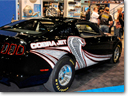 Since 1968 Ford’s Cobra Jet Mustang has achieved to make a legacy of power, performance and triumph. In 2008 this legacy was made anew with the limited run of the 40th Anniversary Cobra Jet Mustang (of course it quickly sold out). Consequently the models of 2010 and 2012 are as popular as the previous ones, and moreover they are a proof for the continues Evolution of Ford Racing’s Turnkey Race Car Program


 Alpina has announced 2012 B6 Bi-Turbo featuring all-aluminium V8 power plant with two turbochargers delivering stunning amount of power.


 Mazda will reveal the new CX-5 at the 42nd Tokyo Motor Show alongside with the Takeri Concept. The SUV adopts adopt the new KODO — Soul of Motion design theme in addition to the full range of Mazda’s breakthrough SKYACTIV Technology.


 There is no doubt that MINI Cooper is one of the best cars on the market. Now, there is a new version, which brings even more pleasure and excitement – 2012 Cooper Roadster. The car is practically the same as the MINI Roadster Concept.


