2013 Hyundai Sanfta Fe model makes its official debut at the New York Auto Show. This is the third generation of the big cross-over as it will be available in three different version: a 5-seat Santa Fe Sport, Santa Fe Sport 2.0T and larger 7-seat LWB Santa Fe.
The standard equipment includes 7 airbags, panoramic sunroof, heated rear seats, heated steering wheel, power seats, sliding second row with 40:20:40 folding and standard Blue Link infotainment, navigation and audio multimedia systems with eight-inch display.
The engine range features three petrol power units – a 2.4 liter direct injected GDI with 193HP (142 kW) and 245Nm (181 lb-ft) and a powerful 2.0 liter turbocharged GDI with 264HP (194 kW) achieving best-in-class power-to-weight ratio and very good fuel consumption of – 31 mpg on the highway. The most powerful variant is the 3.3 liter GDI V6 with 290HP (213 kW), which is available for LWB Santa Fe.
The diesel variants are 2.0 liter with 150HP (110 kW) and 382Nm (282 lb-ft) and a powerful 2.2 liter four-cylinder 16-valve power unit with 200HP (147 kW) and 431Nm (318 lb-ft) at 2000RPM.
The transmission choices are 6-speed manual for the small 2.0 liter diesel, 6-speed manual or 6-speed automatic for the 2.2 liter diesel and other powerunits.
The all-new 2013 Santa Fe Sport will hit the market this summer and the 7-seat variant will be available in the beginning of the next year.
Last week marked the end of the 82nd Geneva Motor Show – one of the biggest automotive exhibitions in the world.
More than 700,000 visitors feasted their eyes upon the creations of some 260 manufacturers while 11,500 media representatives channeled all there was to channel directly to your screens. It was a vibrant two week marathon of motoring nirvana.
There were ups and downs (mostly ups really), there was music, there was dancing…oh, and cars also.
The scale of the whole event does not allow to sum up everything in a single go and yet, we at Automobilesreview.com decided to give our humble opinion about some of the good, the bad and the ugly.
The Lamborghini Aventador Speedster J
HOT: It’s the lunacy that gets you. Gravely controversial, this topless model caused quite a stir among enthusiasts and observers.
Why wouldn’t it? It’s an Avenatador without a windscreen – first class go-kart experience, an Ariel Atom on steroids.
Despite the fact that any human being would look ridiculous inside (more so after a good trashing), nobody would dare to make a joke about it – the person inside should be, by all accounts, a man of steel.
Lamborghini Aventador J
Tata Megapixel
NOT: It’s got all the right features by the look of things: modern and round and crisp. But, even the name suggests, that it is essentially a big square.
Part of the reason why this is not getting too much attention might be because of the brand. Tata have yet to produce a car that has some aesthetic value.
We get that the idea behind the affordability and the fact that it is ideal for the streets of India but that’s just about it.
It’s too soulless and by looking at those side-sliding doors, original as they might be, we can’t help but thinking of a convenience store.
Tata Megapixel
Peugeot GTI Concept
HOT: You didn’t think we would miss a chance to include a hot hatch, did you? And hot it is this one. Peugeot 208 GTI – an audacious take on an almost thirty year old legend: Peugeot 205 GTI.
How do you stand up to the car that was claimed to be the embodiment of the hot hatch concept? How do you challenge Genesis?
At Peugeot think that an RCZ 200bhp 1.6 turbo engine, a wider-than-standard track and a multitude of handling smarts should do the trick.
We would really like to see that on the streets and chances are, we are not alone in this.
Peugeot GTI Concept
Carlsson Smart forTwo
NOT: Bringing a Smart to an autoshow is like bringing a knife to a gunfight.
Carlsson have made an effort to give this little critter some character but at best, they have given it an orange interior.
Power is up by a few figures – thanks to an ECU upgrade we get 110 bhp which is a lot, considering that the ForTwo weighs less than a lady’s handbag.
But unless you stick to driving it in a straight line, all is in vain we suspect as the ForTwo just doesn’t have the wheelbase for the job. It’s too short and understeery.
Carlsson ForTwo Smart
Touring Disco Volante
HOT: No. This is not hot. Hot is too much of a vulgar word to describe it.
It’s a celebration of aesthetics, a cobweb of passion and style and curves a blissful incarnation of beauty itself. It’s a history lesson as well – Conceived in the 50s, the 1900 C52 Alfa Romeo “Flying Saucer” had a profile made to last and today, the Carrozzeria Touring Disco Volante is the living proof of that.
It’s a genuine car this and not just a pretty body with no engine in it. The world would be a better place with this on the streets so peace’s sake, let’s hope the motoring future looks like this.
Touring Disco Volante
Hyundai i20
NOT: Bland, gray and consumer oriented, this ok family car, with an ok engine and ok quality inside and outside might be the right purchase to make…if one does not care about cars in general and is only interested in going from A to B safely.
You know, Hyundai have a perfectly sensible guarantee policies and… not interested?
No… Understandably you are not, because the i20 will never make your hair on your back stand up.
That is of course, you don’t find yourself driving it on the wrong side of the road with oncoming traffic…while being on fire.
Hyundai i20
The Geneva Girls
HOT:…definitely.
Let’s face it. What would the show be without some models…next to the models?
A big gear-head convention with people mooning about, calculating power-to-weight ratios and arguing over naught to sixty times.
We are not saying, that the 2012 Geneva Motor Show wasn’t like that, but at the very least, the girls were there to balance things out.
We also like how this particular model is thematically coordinated with the car represented – the Bertone Nuccio concept. All Seems legitimate.
The Geneva Girls
Mia Electric
NOT: Don’t get us wrong. It’s an interesting idea this – a tubular sort of, 3 seated van.
And anything that can offer a McLaren F1 type of driving position makes us tingle with excitement. It’s called the Mia and it looks like a Smart stretch which by itself sounds ironic.
Sadly, this is where the similarities with the F1 end. Strictly for the urban environment, this French-made “Microbus” gets its power from a 13 bhp electric, but hardly electrifying, engine that has a range of around 80 miles.
True, it weighs no more than 810 kg with the batteries on board but that’s courtesy to its plastic body. Label it “hot” and it might melt.
Mia Electric
Pininfarina Cambiano Concept
HOT: Much like the Disco Volante, this concept deserves an admirable batch of flattering adjectives.
It’s beautifully styled with clean and simple lines, it has some daring features like that roof over there – no doubt eye candy for all present at the unveiling.
But while the Disco Volante is basically an Alfa 8C Competizione underneath, the Cambiano is an ultra complex plug in hybrid that has electric motors on each wheel and a small diesel turbine that can charge the batteries or provide power by itself.
The overall maximum power output reaches 600 kW with torque being 640 Nm and constantly available. Take it out for a spin and by the time the juice runs out, you’d be 800 km away from home. So, clever and sleek – certainly a pageant winner.
Pininfarina Cambiano Concept
Bentley EXP 9 F Concept
NOT: We are gravely sorry, but Bentley should stick to what they do best – making Continentals.
Just because the world has gone mad-crazy about SUV‘s does not mean that there’s a place for everybody on the market table.
Besides, its not really a looker is it? It looks like a Continental with the aerodynamics taken out – anguliar, upright and awkward.
Also, with those overcomplicated headlights and ridiculous wheels, certainly the EXP 9 F is not doing too much to win our hearts. It may appeal a footballer’s heart but that’s as far as it will go.
Bentley EXP 9 F
Gumpert Apollo Enraged
HOT: This Gumpert Apollo in particuliar is not the melt-my-heart kind of hot (the sheer size of that rear wing is hardly endearing).
It’s more like heartburn type of hot – What you are looking at is a V8 lunatic on the loose, angry and out to get you.
If underestimated, this Griffin will trample over your ego with 780 horses (from a V8!!). But you can guess that by yourself, can’t you? The clues are pretty much in how they called it – the Enraged.
What’s more, you most certainly won’t be looking too hot stuck on a speed bump, but when a ride goes that low, chances are you are going to grind over half the streets in your town. On the plus side, it’s quite probable to be an absolute hit on trackdays, leaving behind Porsches and BMW‘s trailing behind.
Hyundai has just released four more images of their hot new product named 2013 Hyundai Santa Fe. These pictures will undoubtedly heighten the interest around Hyundai’s next-generation SUV ahead of its official world premiere in April. The automaker has already revealed two additional images a week ago. The vehicle is based on the design concept “Storm Edge,” which is part of Hyundai’s larger design philosophy of Fluidic Sculpture. As we can see it has strong and dynamic, futuristic and charismatic exterior, in features LED positioning lamps, LED rear combination lamps as well as 19-inch aluminum wheels for better look and feel. They will for sure five a stylish and high-end image to the SUV.
The new Santa Fe also includes series of advanced safety and convenience features, such as Lane Departure Warning System (LDWS), which warns drivers when the vehicle strays from its lane, as well as a 7-airbag system that includes knee airbags. Furthermore, Hyundai’s own technology Blue Link® will be available for the first time on an SUV model. This new advanced system delivers innovative connectivity, convenience and safety services. For instance: remote access features that work with smart devices, voice text messaging and enhanced roadside assistance.
Hyundai Santa Fe (2013)
Additional details around the new 2013 Hyundai Santa Fe will be announced during its official release at the 2012 New York International Auto Show in early April.
Unlike recent teasers, here we can actually see a car. An SUV to be more precise. It’s the all-new Hyundai Santa Fe, codenamed DM in Korea. Expect a debut at this year’s New York International Auto Show early in April.
This will be the third Santa Fe from Hyundai‘s. Ever since production began in the year 2000, the company has shipped around 2.56 million units (Korea: 680,000 / overseas: 1.95 million). Hopes are high that the latest model will keep the trend going.
The design path taken for the Santa Fe has its own name – “Storm Edge”. It’s still incorporates typical Hyundai fluidic patterns but now with more sophisticated and refined lines that accent the otherwise bold and voluminous surfaces. The end result amounts to a more aggressive stance common for many SUVs.
Some highlights for now: a hexagonal grille, a two-tone bulky body bottom and wider front and rear bumpers.
This should be taken as a sample of the future plans of Hyundai when it comes to designing SUVs. The core values here are said to be “Refinement,” ”Smartness” and “Practicality”.
Hyundai Santa Fe (3rd generation)Hyundai Satna Fe (3rd generation)
Hyundai finally unveiled its latest European concept car, which carries the name i-oniq. The debut took place at the 2012 Geneva Motor Show, and included a showcase of new technology and design which present an impression of the company’s future thinking. The concept vehicle is 4,4 meters long and is an electric sports hatchback with a range-extending petrol engine. The design of the car is an evolution of the company’s fluidic sculpture form language. The car has dynamic proportions which create aesthetic and functional body shape. In addition the design conveys premium and athletic qualities evident in both the exterior and interior of the car. Furthermore, unique design elements were included in the car, for instance the “penthouse roof” and LED headlights, which emphasize the advanced technology encased within i-oniq. What is so special about the roof is that it is significant solution which delivers great space for rear passengers and contributes to the overall dynamic appearance. Other fascinating features of the 2012 Hyundai i-oniq are the doors. They open up to the side, thank to weight-optimization. In addition the featured seat kinematics make entering the car’s front and rear seats a simple maneuver. Moreover, the headlights contained in uniquely-shaped polished aluminium frame which forms unique signature light element.
2012 Hyundai i-oniq concept
And what about the interior of the concept car: the cabin layout is driver-oriented, with the dashboard and centre-console geometry based around the driver. In addition, the user-interface components reflect contemporary and future consumer electronics technology. What we can find here is the movement control mounted on the steering wheel, floating instrument cluster with multi-layered projection, and a large background display for navigation, entertainment and other information. At the rear of the cabin has been designed unique lounge area, which ensures maximum occupant comfort. It creates positive contrast to the sports-orientated front area. Of course, the comfort in the car is additionally complemented through the use of luxurious interior materials, as well as futuristic interface components.
To go even further into details, the 2012 Hyundai i-oniq concept vehicle is powered by an innovative 1,0-litre, 3-cylinder petrol engine, which delivers a maximum of 45 kW (61 hp). This unit is mated to an 80 kW (109 hp) lithium-ion electric motor which is powered by a 55 kW generator, via a single ratio gearbox. In electric-only mode, the concept can travel 120 km (74 miles) and up to 700 km (435 miles) with the assistance on the petrol engine, emitting only 45 g/km of CO2emissions! Hyundai i-oniq concept can reach a top speed of 145 km/h.
Hyundai has released pictures of the all-new i20, which will make its official debut at the 2012 Geneva Motor Show.
The new model comes with refreshed styling, enhanced equipment and the lowest CO2 emissions of any conventional powertrain car on sale today.
The engine range includes the new 1.1 litre, 3-cylinder ‘U-II’ diesel engine with 75PS (55 kW). If, you opt for Blue Drive, this engine will emit just 84 g/km of CO2.
The engine was developed at Hyundai’s Diesel Centre of Excellence – part of the European R&D set-up in Rüsselsheim, Germany – and showcases Hyundai’s expertise in clean diesel technology.
There is another power unit with sub-100 g/km emissions – 1.4-litre ‘U-II’ diesel with 90PS (66 kw). When combined with Blue Drive technologies, it emits 96 g/km of CO2.
Dimensions: width – 1710 mm, height – 1490 mm, increased length – 3995 (by 55 mm) and wheelbase – 2525 mm.
“The i20 has been very popular with European buyers since it came to market in 2009, thanks to its combination of efficiency, quality, practicality and value. With an enhanced engine line-up that includes the lowest CO2 emissions for a conventional powertrain, and sharper styling influenced by fluidic sculpture, the All New i20 will appeal to a broader range of buyers, including younger consumers. The assurance of our industry-best, comprehensive Five Year Triple Care package makes the All New i20 an even more attractive proposition.”, said Allan Rushforth, Senior Vice President and Chief Operating Officer of Hyundai Motor Europe.
Hyundai has released the first image of the new i-Oniq concept car, which will showcase feature technology and design. Essentially, it is an electric sports hatchback with a range-extending petrol engine. The idea was well appreciated, because only electric vehicles are not so useful as they appear.
The i-Oniq is intended to convey the latest thinking from Hyundai’s designers and engineers. The car features gentle feature lines and muscular surface treatment, conveying both premium and sporty qualities evident in both the exterior and interior of the car. Other highlights include penthouse roof and LED headlights.
The vehicle measures 4.4 metres in length meaning a lot of inner space for four occupants. High-tech equipment in the driver interface and controls reflects contemporary and future premium consumer electronics technology.
The drivetrain includes a 1.0-litre, 3-cylinder petrol engine, which is mated via a generator, to a lithium ion electric motor which produces 109PS (80 kW). In electric-only mode, i-oniq has a range of 120 km, but the petrol engine extends the range up to 700 km, producing just 45 g/km of CO2 in the process.
“The i-oniq concept has been created to reflect the new thinking that runs through the Hyundai brand. It has a bold design, inside and out, that provokes contemplation on the future of automotive possibilities, and a powertrain that highlights one of the ways in which we could power future products – wrapped in a package that exudes premium qualities.”, commented Senior Vice President and COO of Hyundai Motor Europe, Allan Rushforth.
The Hyundai i-Oniq concept car will be exhibited at the 2012 Geneva Motor Show, next week.
Just few days before the awaited 2012 Geneva Motor Show, the New Generation 2012 Hyundai i30 Wagon has been previewed in the web. The vehicle is going to make its world debut at the aforementioned show. This is the second member of the New Generation i30 family, next to the joins the five-door hatchback. In addition, the classy wagon will also share the engines and the running gear with the well-received New Generation i30 five-door. However, it has a longer body which opens significant increase in trunk space without compromising the model’s dynamic styling. To be more precise, the i30 wagon’s overall length is increased by 185 mm to its five-door sibling, and 10 mm longer than the original i30 wagon. Moreover, the wagon is expanded in trunk space from 378-litres to best-in-class 528-litres. Additionally, when the passenger seats are folded down, the cargo volume increases more than three times: up to 1642-litres.
2013 Hyundai i30 Wagon
Furthermore, the front of the new model can be easily distinguished by Hyundai’s hexagon-shaped grille and jewel-like headlamps. The roofline is extended rearwards over the flexible passenger/cargo area. This adds more dynamism to the car’s stance and keeps up with the fluidic sculpture ethos of a stationary car appearing to be in motion. Additional improvements to the wagon’s dynamic appearance are for example the pronounced swage line which runs horizontally along the sides of the body and rises all the way to the rear lights; or the rear windscreen which wraps around the D-pillars and improves interior luminosity and visibility; or the deep tailgate, which gives the car a clean look and opens to bumper-level for easy loading.
The New Generation 2013 Hyundai i30 Wagon will be available in Europe with the same three petrol direct injection engines and three diesel engines as the five-door hatchback. They produce from 95 hp (70 kW) to 135 hp (100 kW). At last, the New Generation i30 wagon will be unveiled alongside Hyundai’s other newcomers during 2012 Geneva Motor Show.
Hyundai Motor America has just announced the starting price for their completely refreshed version of Azera model. Namely, it is $32 000 for the extremely well-equipped Azera and $36 000 for the range-topping Azera with Technology Package. The new 2012 Hyundai Azera features as a standard: Gasoline Direct Injection (GDI) engine technology, best-in-class combined fuel economy of 23 miles per gallon, 293 horsepower (215 kW), Blue Link telematics system, proximity key with push-button start, heated rear seats,18-inch alloy wheels, SACHS Amplitude Selective Dampers (ASD) for improved ride comfort without compromising handling. The all-new 2012 model of Azera bears Hyundai’s Fluidic Sculpture design language. It is sleek and has sophisticated style that creates the illusion of constant motion. Azera is a representation of a modern approach to the traditional, large sedan segment by offering an advanced powertrain, bold design, premium features and class-leading safety features. Moreover, the 2012 Azera will be offered in just two simple equipment levels, which will go on sale in April this year.
2012 Hyundai Azera
The vehicle’s standard premium features raise the bar for the large sedan segment. It features navigation with rearview backup camera, heated front and rear seats and LED headlight accents. The 2012Hyundai Azera offers excellent seating and comfort for all passengers with leather interior as a standard, power front passenger seats, optional rear side window, rear sunshade and ventilated front seats. The model offers as well best-in-class total interior volume and leads the segment in front head room and front leg room. To go further inot details, the new 2012 Hyundai Azera is powered by the new, more efficient Lambda II 3.3L Gasoline Direct Injection (GDI) engine, mated to a six-speed automatic transmission with SHIFTRONIC®. The powertrain is rated at 293 horsepower (215 kW). More importantly, it delivers best-in-class fuel economy of 20 mpg city, 29 mpg highway and 23 mpg combined. The powertrain of the new sedan model also has an Active Eco system, which modifies engine and transmission control for improved fuel economy that translates into more than five percent improvement in real-world fuel economy.
Furthermore, there are also included premium technology features such as the standard Bluetooth hands-free phone system, and Hyundai’s Blue Link telematics system which combines safety, service and infotainment. Hyundai also has included in the Azera best-in-class standard safety features, including nine airbags and impact-absorbing front seats. The Vehicle Stability Management system links safety features such as ESC, TCS, EBD, and Brake Assist to maximize their effectiveness in potential collision situations.
2012 Hyundai Azera Interior
The new 2012 Hyundai Azera MSRP is $32 000 (excluding transportation price). It includes the following standard equipment: 3.3L GDI DOHC V6 with 293 horsepower (215 kW), six-speed automatic with SHIFTRONIC®, Active ECO system, 18-inch alloy wheels and tires (P245/45VR), Vehicle Stability Management (VSM), Electronic Stability Control (ESC) with Traction Control System (TCS) and Anti-lock Braking System (ABS), Electronic Brake-force Distribution (EBD) with Brake Assist, Impact-absorbing front seats, advanced front airbags, front and rear side airbags, side curtain airbags, and driver’s knee airbag, tire Pressure Monitoring System (TPMS), SACHS ASD suspension, Daytime Running Lights (DRL), automatic headlight control with delay off feature, front fog lights, integrated dual exhaust, chrome insert body side moldings and exterior door handles, heated side mirrors with turn signal indicators, solar control windshield and glass, proximity entry with push-button start, leather seating with heated front and rear seats, power driver seat and front passenger seat, manual tilt and telescopic steering column, leather steering wheel and shift knob, AM/FM/HD Radio/XM/CD/MP3 audio with iPod®/USB and auxiliary input jacks, dimension premium speakers with subwoofer and external amplifier, navigation system with touchscreen display, rearview backup camera, Blue Link Telematics, Dual Automatic Temperature Control, floor console-mounted rear vents, cruise control, Bluetooth hands-free phone system with phonebook transfer, electrochromic mirror with compass and HomeLink®, power windows with front auto up/down, interior door panels with bottle holders in all four doors.
The premium Technology Package has an MSRP price of $4 000 and it includes the following 19-inch alloy wheels and tires (P245/40VR), Panoramic Sunroof, HID Xenon headlights, power rear sunshade, manual side window sunshades, infinity premium speakers with subwoofer and external amplifier, power adjustable tilt and telescopic steering column, Integrated Memory System (IMS): Power driver’s seat, exterior mirrors, and steering column, driver’s seat cushion extension, ventilated front seats, rear parking assistance sensors, interior ambient lighting.
According to “Greener Choices List” for 2012, Hyundai Sonata was recognized for seventh year in a row by the creator of the list, namely – the American Council for an Energy Efficient Economy (ACEEE). In addition, the Sonata will be featured in the ACEEE’s Green Book® Online, which resembles an annual consumers’ guide to environmentally-friendly cars and trucks. This is a great acknowledgement for the vehicle and given that it is given to it for the seventh time, makes the model a class-leading car in fuel-efficiency. In addition, the Sonata offers class-above interior volume compared to its key competitors and provides the best fuel economy in the EPA Large Car segment with the exceptional 28 mpg combined fuel economy rating. The “Greener Choices” list is restricted to widely available gasoline-powered cars and light trucks with automatic transmissions. In this way it highlights the widespread availability of environmentally friendly vehicle choices in many segments of the market.
Furthermore the 2012 Hyundai Sonata achieves even more fuel economy. In addition it incorporates more thoughtful and convenient technology, and includes features which are improving the drivers experience from the vehicle. For instance, the Blue Link®, which is a full-service telematics offering, delivers information and access, which were never before found in a Hyundai. What is more in the Sonata, is the large seven-inch touchscreen navigation with HD Radio Technology®. There is also featured a full panoramic sunroof which offers additional amenities within an already well-equipped vehicle.
Hyundai has just introduced a new sport coupe variant based on the successful Elantra line-up at the 2012 Chicago Auto Show. In particular, it is a two-door coupe model of the Elantra sedan and it will be available for purchase this spring. The new 2013 Elantra Sport Coupe has fluidic design theme which is a characteristic of Hyundai, and brings to live the sporty design language. At the same time it has the eco-efficient powertrain, generous convenience features, exceptional roominess and plenty of safety features.
The 2013 Elantra Coupe is Hyundai’s modern approach to the sporty coupe segment. The “Fluidic Sculpture” design language replicates the interaction of wind with rigid surfaces to create a perception of fluid in motion. The hexagonal front fascia gives Elantra Coupe even sportier look. Looked from the side, Elantra Coupe has a sport coupe silhouette with deeply sculpted surfaces. It sits on five-spoke 17-inch alloy wheels with dark spoke insert, which add even more dynamic presence. On the other hand the fast A- and C-pillar angles frame a sharply tapered greenhouse accentuates the wedge profile.
Below the belt line, a prominent character line carries from the door through to the rear deck. Wheel arch creases give a subtle flared appearance around front and rear wheels. Observed from the behind, a blacked-out rear diffuser valance contrasts with dual chrome-tipped exhaust tips. The body is undeniably highly aerodynamic: the drag coefficient for the Elantra Coupe is an exceptionally low 0.28 Cd, which results in minimal cabin noise intrusion and optimal fuel economy.
Elantra Coupe is powered by 1.8-liter Nu four-cylinder engine with 148 horsepower (109 kW) and 131 lb-ft of torque (178 Nm). Moreover the Elantra Coupe is as clean as many hybrid electric vehicles, without the extra technological complexity and cost. To go further into details, the Nu engine features an aluminum block with a cast-iron cylinder liner, cylinder head and crank. This results in a block that is 30 percent lighter than an iron block, while at the same time still providing equivalent strength. Moreover, the 1.8-liter Nu also offers Dual Continuously Variable Valve Timing (D-CVVT) camshafts and hydraulic engine mounts.
This gives the vehicle optimum power, efficiency and refinement. The result is 2 percent improvement in performance, 2 percent improvement in fuel economy and 30 percent reduction in hydrocarbon emissions. In the valvetrain, roller swing arms and hydraulic lash adjusters reduce valve-driven friction to improve fuel economy. The Nu engine also features a maintenance-free silent timing chain to enhance durability and reduce noise, vibration and harshness (NVH). Furthermore there is also included a plastic two-stage Variable Intake System (VIS), which enables intake air to be directed between long and short intake manifolds, resulting in a 4 percent improvement in performance, a 15 percent reduction in cost and 30 percent reduction in weight.
The electronic throttle control is the technology which replaces the conventional cable and mechanical linkage with instantaneous computerized control. This advanced system precisely regulates air intake and engine torque, improving drivability, response and fuel economy. To even further improve fuel economy, Elantra Coupe features double-pipe plumbing technology to the internal heat exchanger, thus improving cabin cooling efficiency, while minimizing compressor size and reducing fuel consumption. The Nu four-cylinder engine also includes an offset crankshaft design that reduces friction and pressure between the piston and cylinder wall. The estimated fuel economy of this vehicle is 29 mpg city, 40 mpg highway for the six-speed manual transmission, and 28 mpg city, 39 mpg highway for the six-speed automatic transmission.
As an option, Elantra Coupe can be equipped with a six-speed manual (M6CF3-1) or automatic (A6GF1) transaxle with SHIFTRONIC® manual control. This six-speed automatic is to the 1.8-liter Nu engine and helps Elantra Coupe to deliver improved fuel efficiency. Moreover, the Elantra Coupe’s six-speed manual transmission offers positive shift feel and further optimizes powertrain performance.
The Elantra Coupe has 106.3-inch wheelbase, an overall length of 178.7 inches, 69.9-inch width, and 56.5 inch height for uncompromised headroom. Elantra’s total interior volume is 110.2 cubic feet. Therefore the Coupe’s long wheelbase delivers even more comfort levels. More importantly, the Elantra Coupe is fitted with a McPherson strut front suspension, with coil springs and gas shock absorbers. The rear suspension is a lightweight coupled torsion beam rear design for improved steering stability and monotube shock absorbers.
This delivers more driving comfort. In addition to this, Elantra Coupe offers a sportier SE model suspension calibration that is optimized for its lower-profile P215/45R17 tire. Furthermore on all Elantra Coupes is mounted motor-driven electric power steering (MDPS). Its function is to adjust instantly to changing driving conditions while improving fuel economy over a hydraulic steering system. Elantra Coupe offers world-class weight by weighing only 2687 lbs. How about the interior? There is of course included a premium interior packaging, lighting, leading-edge design and craftsmanship.
For the construction of the seats is used lightweight materials and environmentally-friendly foam. The design of the seats in addition provides deeper side bolsters. Heated seats are standard equipment on all Elantra Coupes, while the SE model offers sporty aluminum pedals. Moreover, Elantra Coupe is being offered with two interior color choices: gray and black. Elantra Coupe also offers seven exterior colors, three of which are unique and newly developed: Monaco White, Black Noir Pearl and Volcanic Red.
Elantra Coupe is available with two audio systems. As a standard comes the 172-watt AM/FM/Satellite Radio/CD/MP3 audio system with six-speakers and iPod®/USB/auxiliary input jacks. On the other hand the 360-watt system with external amplifier is an optional one. There is also included a touch-screen navigation, which is available on SE trim and includes a high-resolution 7.0-inch screen and voice-activation by headliner-mounted microphone. Elantra Coupe owners can also get unique features, such as proximity key with push-button start, leather seating surfaces, heated front seats, power sunroof, and dual automatic temperature control with Clean Air Ionizer and auto-defogger.
Vehicle Stability Management (VSM) takes the safety features of Elantra Coupe to the next level. It optimally manages ESC (Electronic Stability Control) and the Motor-Driven electric Power Steering (MDPS). In addition VSM works to control two effects. Firstly, when a driver accelerates or brakes on a split-mu surface (slippery on one side, dry pavement on the other) the VSM detects this condition and sends a signal to the MDPS to apply steering assist. Then the VSM counters the pull and automatically provides eight Newton meters of counter steering force.
VSM reacts the same way during sudden lane changes or fast cornering. In addition the safety features include as well six airbags and state-of-the-art braking package, which includes four-wheel disc brakes, Anti-Lock Braking System (ABS) with Brake Assist, and Electronic Brake-force Distribution (EBD). At last, in terms of passive safety, the Elantra Coupe has strong body construction, which will effectively absorb and dissipate any impact energy away from cabin occupants.
Health and safety officials should be watching carefully because lo and behold, a Hyundai Genesis can perform CPR (Cardiopulmonary resuscitation). See that and many more with the car company’s ad campaign which is set to take over the Super Bowl for a fifth year with five spots this time.
“Think Fast” is the name of the one we really liked. It features a Genesis Coupe R-Spec riding trough a generic wasteland with two individuals inside it – One venerable passenger who obviously knows a thing or two about success in business and a seemingly bored driver which is rather like a subordinate or a step son. Either way, Mr. Jenson (or Bob, the passenger) unwittingly suffers a heart failure much to the distress of the now in panic Anderson (driver). What follows is evident really. We just want to say that we really liked the idea of utilizing sudden bursts of torque to revitalize the human body. Then again, we also enjoyed watching that comedic duo being thrown around in the cabin as the seat belts obviously did their work just fine. So a point for Hyundai there. We also liked the safety annotation at the 0:15 second mark made to discourage people from actually trying out this stunt… unless they are professional drivers, on a closed road…. or at least with a medical degree.
httpv://www.youtube.com/watch?v=Vd_IqOb7pW8
Other spots include some epic singing, motivational motives, manufacturing insights and cheetahs. One can see it all on Hyundai’s YouTube channel right here
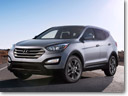 2013 Hyundai Sanfta Fe model makes its official debut at the New York Auto Show. This is the third generation of the big cross-over as it will be available in three different version: a 5-seat Santa Fe Sport, Santa Fe Sport 2.0T and larger 7-seat LWB Santa Fe.


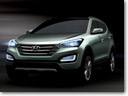 Unlike recent teasers, here we can actually see a car. An SUV to be more precise. It’s the all-new Hyundai Santa Fe, codenamed DM in Korea. Expect a debut at this year’s New York International Auto Show early in April.


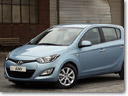 Hyundai has released pictures of the all-new i20, which will make its official debut at the 2012 Geneva Motor Show.


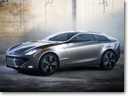 Hyundai has released the first image of the new i-Oniq concept car, which will showcase feature technology and design. Essentially, it is an electric sports hatchback with a range-extending petrol engine. The idea was well appreciated, because only electric vehicles are not so useful as they appear.


 Hyundai has just introduced a new sport coupe variant based on the successful Elantra line-up at the 2012 Chicago Auto Show. In particular, it is a two-door coupe model of the Elantra sedan and it will be available for purchase this spring. The new 2013 Elantra Sport Coupe has fluidic design theme which is a characteristic of Hyundai, and brings to live the sporty design language. At the same time it has the eco-efficient powertrain, generous convenience features, exceptional roominess and plenty of safety features.


 Health and safety officials should be watching carefully because lo and behold, a Hyundai Genesis can perform CPR (Cardiopulmonary resuscitation). See that and many more with the car company’s ad campaign which is set to take over the Super Bowl for a fifth year with five spots this time.