The highly acclaimed Hyundai Santa Fe range is joined in the showroom this August by a limited edition model, Hyundai Santa Fe Limited, offering £900-£1,100 worth of additional equipment over the usual CDX model.
Diesel powered, the Hyundai Santa Fe Limited is available as either a 5 seater for £23,795 or a 7 seater for £24,895; automatic versions are priced at £25,195 and £26,295 respectively. Metallic and Mica paint are an additional £375.00.
This strictly limited edition model includes integrated running boards and wheel arch trims, privacy glass, reversing sensors, sports mesh grille, limited badges and a choice of four colours – Ebony Black, Sleek Silver, Gun Metal and Black Pearl. The highly visual special equipment package would usually cost consumers £1200 for the 5 seater and £900 for the 7 seater.
The Santa Fe range is still receiving plaudits from the media. In July Santa Fe CRTD CDX won a group test in Auto Express beating the newly introduced Chevrolet Captiva and the well established Honda CR-V. In addition What Car? placed the Santa Fe CRTD CDX ahead of the Chevrolet Captiva and Mitsubishi Outlander, praising its spacious cabin, practicality, refinement, comfort and warranty package.
Specification levels for the Hyundai Santa Fe Limited include high levels of safety equipment such as an Electronic Stability Program, ISOfix child seat fittings, side impact bars, traction control, active head restraints, multiple airbags and adjustable head restraints all round.
Inside the new highly specified Santa Fe Limited standard fittings include leather seats, seven speaker audio system with MP3 compatibility, air conditioning, electric driver’s seat and much more.
Fuel consumption is 38.7 mpg on the Combined Cycle, delivering a potential range of over 600 miles.
The new Santa Fe Limited comes with the famous Hyundai warranty package that includes 5 year unlimited mileage warranty, 6 year anti-perforation warranty as well as 3 year Hyundai RAC assistance.
The H-1 (Domestic name: Starex), Hyundai‘s all-new business van, was introduced to members of the media on May 25th in Kyungju, South Korea. The vehicle is available in commercial (cargo) and passenger versions and fitted with the 2.5 Common Rail Diesel Injected A engine. In addition to a Euro-IV compliant engine and turbocharged intercooled engine, Hyundai now offers a gasoline powerplant option, the 2.4-liter Theta engine which delivers 175ps and 23.2kg.m of torque.
Theta can propel the new H-1 to a maximum speed of 185km/h and boasts a fuel economy rating of 7.0 km per litre. Annual sales for the H-1 are projected to reach 115,000 units with the Korean market accounting for 65,500 units of the total.
The Hyundai H-1 enters production in August this year.
Hyundai Coupe SIII, so called because it is the third incarnation of the Coupe, has been completely re-designed outside together with significant changes and enhancements inside.
The entirely new front end features elongated headlights and a more aggressive letterbox like grille and new fog lights. New side air vents now incorporate the indicator repeater lights, while the re-shaped rear features a more sculpted look with fully integrated twin tailpipes (2.0 and V6) and restyled rear light clusters.
New Colours
A range of new colours is designed to show off the Coupe’s lines to best effect. Fresh exterior paintwork colours include solid Shine Red (standard colour) and metallic choices of Sky Blue, Steel Grey, Continental Silver and Mica Stone Black (all £350 optional extra cost).
These vibrant new exterior finishes are accompanied by a choice of sumptuous red or black interior trim, with leather a standard feature on all models. Even the entry-level
1.6 litre model comes with half leather trim.
Both the Steel Grey and Stone Black variants come with red interior finish, while all other colours feature black interior trim.
Blue Instrumentation Illumination
New to the Hyundai Coupe SIII is blue instrumentation illumination, first introduced on Hyundai’s latest generation and award-winning Santa Fe.
New Centre Console Layout and Look
The centre console layout has been redesigned for a cleaner look and easier usage. It also has a sleeker, sportier look and feel with a new metal-look finish, which has been tied in with metal-look finishes on the steering wheel and air vents helping bring the interior together with added sense of quality.
iPod Audio
For music lovers, the new Hyundai Coupe SIII comes with an iPod compatible CD/Radio stereo. The iPod port, found in the centre armrest, is standard on all models in the range.
High Specification as Standard
Hyundai’s Coupe has always featured a high level of specification and the new Hyundai Coupe SIII model builds on this tradition.
The entry-level 1.6 comes with; half leather trim, air-conditioning, a CD/Radio stereo with iPod port, driver, front passenger and side airbags, engine immobiliser, height adjustable seatbelts, remote central locking, leather steering wheel, electric front windows and door mirrors and new 16 inch alloy wheels.
The 2.0 adds; full leather trim, climate control, metal trimmed pedals and footrest, 17 inch alloy wheels, twin exhausts, cruise control and heated front seats.
Aside from the small point of a smooth and sporty V6 petrol engine, meanwhile, the range-topping V6 adds; Thatcham category 1 alarm, automatic headlights, traction control, 6-speed manual gearbox and an automatic dimming rear view mirror.
Styled at Hyundai’s Design and Technical Center at Namyang, the Veloster (codenamed HND-3) coupe is the third in a series of daring concept cars to be developed by the central styling studio in Korea.
The Veloster name, a compound of velocity and roadster evokes the sporty characteristics of a classic two-plus-two. A panoramic glass roof and other futuristic styling cues help project a high-tech image.
Designed to cater to the tastes of the Y-generation, Veloster combines simple, iconic design with good value and robust construction.
“With Veloster, we wanted to try something really different. We’re keenly aware that we need radically new products for the Y-generation, the first-time twenties something buyer,” said Oh Suk-Geun, Hyundai’s vice president of design. “This is really a bold new direction,” he added.
At the Geneva International Motor Show today, Hyundai Motor Co. and GE Plastics presented QarmaQ, a first in the Crossover Coupe segment. The QarmaQ is Hyundai’s Advanced Technology Demonstration Vehicle (ATDV) that showcases over 30 different environmentally progressive technologies led by the innovative “Elastic Front™”, an innovative solution that can help reduce the risk of severe injuries in Crossover Utility Vehicles (CUV) pedestrian collisions.
A European C-segment 5-door hatchback, codenamed FD, a new nomenclature and a concept Crossover Utility Vehicle (CUV) made of alternative materials that help save fuel and offer enhanced pedestrian safety are the highlights to be presented at Hyundai’s press conference at this year’s Geneva Motor Show.
With the FD Hyundai introduces a new model range firmly positioned in the mainstream European C-segment. Cultivated dynamics, a sleek, sophisticated styling, and a generous convenience and safety package are the FD’s main characteristics. A choice of three gasoline and three diesel power options, combined with manual or automatic transmission means the FD can meet virtually every driving, or powertrain preference. It can also match above average occupant space with generous, easy access luggage capacity.
The FD’s styling is a continuation of the recent “wave-like and sculpted” showcar design. Flowing curves, emphasised by strong character lines highlight the broad stance and long wheelbase of the FD. The clearly defined unbroken waistline unifies the classic proportions. The sculpted rear appearance is achieved by a combination of qualified curves that extend the waistline and reflect the curvaceous front and side styling. Says Thomas Bürkle, Hyundai European Chief Designer: “The FD offers a dynamic and sporty styling, although it has kept the chic and elegant touch of the Arnejs concept car.”
Hyundai i30
Hyundai plans to launch the modern understatement FD in summer of 2007. Initially available as a 5-door hatchback and later on as an estate car the FD opens a new chapter for Hyundai in Europe, as it is the first dedicated European C-segment vehicle made by Hyundai.
Along with the FD, Hyundai will launch a new alpha-numerical nomenclature. While in the past, names had been chosen to express the values inherent in or associated with individual Hyundai models, Hyundai is now taking a more holistic approach to its nomenclature. The new nomenclature will display a clearer technology-orientation and be closely linked to Hyundai’s brand promise of “Quality, Self-assurance, and Inspiring”.
A third highlight of its press conference, Hyundai will present a concept Crossover Utility Vehicle (CUV), code-named HED 4. As a joint project with GE Plastics, the HED 4 endowed designers with greater expressive freedom to create complex three-dimensional shapes that could not have been achieved with conventional production methods and materials such as metal and glass.
Current composite technology is usually thought too expensive and too difficult to fabricate to be of use anywhere but the aerospace and motor racing industries. Hyundai’s CUV is physical proof that this need not be so.
The wrap-around GE Lexan™ windscreen and extensive use of GE polycarbonate glazing materials provides a weight saving of up to 50 percent in relation to glass, while simultaneously allowing more adventurous shapes than flat glass. The glazing features a unique technology from Exatec™ which deposits a thin protective layer of glass on the Lexan™ to add protection from scratching and the effects of weathering.
The HED 4 also introduces new curved and moving side glazing in Lexan. As well as allowing such advanced applications, the impact resistance and other properties of this material also helps increase both occupant and pedestrian safety. Improving the latter is of utmost importance to Hyundai, due to its high percentage of European SUV sales.
HED 4’s Elastic Front™ safety system, which encompasses the whole front end of the vehicle, is arguably the world’s first global pedestrian protection solution on a CUV. Three energy-absorbing structures are fully integrated underneath the futuristic styling of the HED 4 and this system takes advantage of several advanced materials that offer inherent energy absorbing properties. The HED 4’s body panels have been designed to work in concert with energy-absorbing systems on the underside of these panels to manage and dissipate the force of a pedestrian/CUV collision. The Elastic Front™ has been engineered to meet EEVC WG17 Phase2, Euro NCAP, and JNCA pedestrian impact requirements and is currently undergoing testing for final validation.
The new Hyundai Veracruz midsize crossover made its North American debut today at the 2007 North American International Auto Show (NAIAS). Just as the Hyundai Azera is altering perceptions about premium sedans, Veracruz breaks new ground in premium crossovers. Hyundai has once again made luxury and performance attainable in previously unthinkable ways: with standard Electronic Stability Control (ESC), upscale amenities and more cargo volume than the full-size Mercedes-Benz GL, Veracruz uniquely blends substance with style.
Veracruz takes on the Honda Pilot and Toyota Highlander and beats them in terms of powertrain performance and standard safety features while adding sophisticated design, high-quality craftsmanship and seating for seven adults.
“Veracruz is an exceptional vehicle at the right time for this developing segment,” said Steve Wilhite, chief operating officer of Hyundai Motor America. “The vehicle’s designers recognized that the needs and desires of traditional SUV buyers weren’t being met and focused on meeting those needs in an elegant and ingenious way. The result is a spacious crossover that delivers both refined style and first-rate performance.”
BOLD AND BEAUTIFUL
The Veracruz continues Hyundai’s product expansion and global design evolution through the continued use of fluid and organic forms to create a refined, and luxurious exterior appearance.
“We are very proud of Veracruz and feel this design will not only reinforce our design direction as a company, but also greatly enhance our escalating brand image on a global basis,” said Joel Piaskowski, chief designer at the Hyundai Design Center in Irvine, Calif. “Fluid lines combined with the integrated headlights and taillights envelop Veracruz to create a unified aesthetic.”
Hyundai Veracruz
Up front, the sculpted bumper creates the appearance of additional height. Three-tiered headlights complement the design. The grille combines a flat-lined upper chrome bezel and a curved lower bezel which houses the Hyundai flying-H logo. Distinctive character lines and a fast profile enhance the stylish yet functional imagery. The vehicle’s seductive beltline ascends from the wraparound headlights and follows the tapering greenhouse to include the prominent taillights. Chrome trim is strategically applied to highlight some of its design features while giving Veracruz an elegant, luxurious presence. The prominent wheel arches house 17- or 18-inch wheels and tires.
Smooth and solid in its stance, the Veracruz even impresses as it departs. The integrated rear fascia has a sculpted section that blends seamlessly into the sides of the taillights. The taillights decisively angle towards the character line highlighting the rounded back glass. Dual chrome exhaust tips, a Hyundai design trademark, allow Veracruz’s 3.8-liter V6 engine to breathe freely. A rear spoiler enhances the sporty profile.
INTELLIGENT INTERIOR
Inside, passengers are coddled in a rich, sophisticated environment that was inspired by boutique hotels. The result is an interior that could be found in the finest luxury sedans thanks to Hyundai’s intelligent ergonomic engineering, intuitive design, and superior craftsmanship. Hyundai has combined space with elegance including conveniences that exceed expectations. For example, although the Veracruz is 9.7 inches shorter than the Mercedes Benz GL, it has more cargo volume.
Every major component of Veracruz has been designed to reduce cabin noise below the whisper-quiet Lexus RX350. To isolate outside noise, Hyundai applies acoustic dampening sheets to the doors and unibody, a steel plate beneath the engine and four layers of carpet padding. Engine noise is reduced through electronically controlled engine mounts, a multi-curvature dash, custom hood insulation and a pillow tripod joint which lessens vibrations from the driveshaft at idle.
Seating for seven adults is made possible thanks to the standard Hyundai Hideaway™ third-row seat. Access to the third row is just a step away with the flip of a lever to slide the second row forward. Available dual-zone climate controls for driver and front-seat passenger further enhance the Veracruz’s luxury credentials. Second- and third-row passengers will enjoy a new level of comfort, thanks to B pillar-mounted adjustable vents, rear HVAC controls and roof-mounted vents.
Hyundai Veracruz Interior
Brushed metal accents and blue backlighting for all interior gauges, switches and buttons highlight the modern, integrated interior design. Even the front cupholders are ringed with blue light to aid nighttime driving, while a soft blue spotlight in the overhead console provides subdued task lighting. Hyundai’s focused attention to detail can be seen throughout the interior – console bins and the glovebox are lined with soft flocking material. Powerpoint caps, seatbelt buckles and cupholder inserts are color-keyed for design harmony. Soft-touch, high-quality materials, low-gloss surfaces and zero-tolerance net-fits are used throughout the interior.
An AM/FM/XM/CD/MP3 audio system that includes an internal amplifier and six speakers comes standard in the Veracruz GLS and SE. The 315-watt Infinity® AM/FM/XM/CD-changer/MP3 audio system with subwoofer and external amplifier is standard on the Limited trim and optional in the SE. Audiophiles with even more demanding tastes will be impressed by the available Infinity AM/FM/XM/CD-changer audio system that includes a 605-watt external amplifer, 10 speakers and Logic 7® surround sound available on the SE and Limited trim levels.
Other thoughtful convenience features include a proximity key, rain-sensing wipers, auto dimming exterior mirrors, mirror-mounted approach lights, adjustable pedals, memory settings for the power mirrors, driver seat and steering wheel, backup warning system, power liftgate, and a rear-seat entertainment system that includes a DVD player and eight-inch overhead screen.
INNER POWER
On the street, the new Veracruz has thrilling performance courtesy of the same 3.8-liter DOHC V6 engine that powers the Azera. It delivers an estimated 260 horsepower and 257 lb-ft. of torque. To maximize the power spread, the engine utilizes Continuously Variable Valve Timing (CVVT) on the intake valves and a Variable Intake System which helps cylinders breathe efficiently at both low and high RPM. The engine uses an aluminum block and cylinder heads for light weight and thermal efficiency, and features timing chains with no scheduled maintenance.
To reduce vibration, the engine rides on newly developed semi-active engine mounts, which consist of three passive mounts integrated with a controllable element, rpm sensor and solenoid valve. The mounts harness engine vacuum to create a dynamic response which offsets engine vibrations. In fact, Veracruz has less idling vibration and noise than the Lexus RX350.
To help put the power to use, the engine is mated to an Aisin six-speed gearbox with SHIFTRONIC® manual control. The transmission offers silky smooth shifts and a wide spread of ratios that ideally suit the engine’s capabilities. Drivers can access the SHIFTRONIC® feature by moving the gear selector into a separate gate. Pushing the selector forward or pulling it rearward will shift the transmission up or down sequentially, adding to driver control. A clear LCD readout on the instrument panel shows the gear that’s in use. The transmission uses an integrated transmission control unit and low noise gears which reduce friction.
All of this powertrain technology is put to efficient use in the Veracruz, with an EPA highway fuel economy estimate of 25 miles per gallon, exceeding the smaller, less powerful Honda Pilot. Veracruz also delivers clean air, with an anticipated Ultra-Low Emissions Vehicle (ULEV) classification.
CHASSIS FEATURES
Hyundai engineers benchmarked the best crossovers in the world before designing Veracruz’s unibody and four-wheel independent suspension system. The rigid chassis and suspension geometry were specifically designed to deliver a supple, confident ride and help isolate the passenger cabin from imperfection in the road. The underpinnings are governed by a MacPherson strut front suspension and multi-link rear suspension system.
Upfront, reverse L-shaped lower control arms and high caster angles provide superior steering feel and excellent straight-line stability. Large subframe bushings improve the ride and isolate unwanted noise, vibration and harshness. All four wheels are controlled by coil springs, fade-resistant, gas-charged dampers and front and rear stabilizer bars. The Veracruz GLS uses 17-inch, five split-spoke aluminum wheels and 245/65R17 tires, while the SE and Limited trims ride on 18-inch, five-spoke aluminum wheels and 245/60R18 tires. Add in rack-and-pinion power steering, with a tighter minimum turning radius than the shorter Lexus RX350 and Nissan Murano, and the end result is a vehicle with precise steering and handling, and a well-controlled yet comfortable ride.
ELECTRONIC ALL-WHEEL DRIVE
Hyundai has added an Intelligent Torque Controlled Coupling All-Wheel Drive (AWD) system to propel Veracruz through the elements. Using wheel speed sensors to monitor the road and the driver, this electronic system can sense when and where more torque is required and route it there automatically. Power is transmitted to the rear wheels through a multi-plate clutch without any extra effort from the driver. An AWD lock mode can be engaged with the touch of a button providing a 50:50 torque ratio when needed.
SOPHISTICATED SAFETY SYSTEMS
“The 2007 Veracruz embraces both active and passive safety with a host of leading-edge technologies,” said John Krafcik, vice president of Strategic Planning and Product Development, Hyundai Motor America. “Electronic Stability Control, six airbags including side curtain airbags protecting all three rows, and active front head restraints are found standard in Veracruz and are some of the industry’s most effective technologies.”
Veracruz’s advanced engineering provides a high level of precision during all aspects of driving, and is anchored by standard Electronic Stability Control (ESC), the industry’s most important new safety technology. By continually analyzing road speed, steering input, throttle position, lateral yaw rate and other factors, an onboard microprocessor determines if the vehicle is starting to understeer or oversteer, and automatically engages one or more brakes. The system also reduces engine output to help the driver maintain the intended path.
In addition, Veracruz adds large four-wheel disc brakes with a 10-inch tandem brake booster and Anti-lock Braking System (ABS) with Electronic Brake-force Distribution (EBD) for impressive stopping distance for a vehicle of its size. Brake Assist maximizes braking force when an emergency stop is detected.
Veracruz’s passive safety features are equally impressive, beginning with six total airbags, including advanced dual front airbags, front seat-mounted side-impact airbags and roof-mounted side curtain airbags for all three rows of seating. In addition, active front head restraints help prevent whiplash. All seating positions feature three-point seatbelts, while the second and third row also have adjustable head restraints. Security is further provided through the standard alarm system and available engine immobilizer.
To absorb impacts to the passenger cabin, Hyundai engineers optimize crumple zones and reinforce the architecture’s rails, side sill frame, floor cross-members and center pillars. These reinforcements have been tested thoroughly in laboratory and computer simulations. Veracruz has been designed and tested to receive the U.S. National Highway Traffic Safety Administration’s (NHTSA) top five-star crash test rating for front and side impacts.
Convenient Lower Anchors and Tethers for Children (LATCH) points allow child seats to be secured in the second-row seats. Additional standard safety equipment includes a Tire Pressure Monitoring System (TPMS), which alerts drivers if one or more tires are under inflated. An illuminated readout on the dash lets drivers know the exact tire needing inflation so corrective action can be taken.
THE DIFFERENCE IS IN THE DETAILS
As with all Hyundai vehicles, Hyundai put a great deal of thought and attention to detail into every aspect of Veracruz. One touch opens and closes the available power tailgate, and the proximity key means no more fishing for keys with groceries in hand. Puddle lamps save your best pair of shoes. An integrated memory system returns the driver’s seat to a default setting. Lining the rear bumper with rear distance warning sensors makes parallel parking a snap. Aerodynamic wiper blades improve visibility, and two-way nozzles, each with four streams of fluid, provide for remarkably clean windshields.
MODEL LINEUP
The Hyundai Veracruz comes in three distinct trim levels: The well-equipped GLS, sporty SE and premium Limited.
VERACRUZ GLS
Veracruz GLS comes well-equipped with a 3.8-liter V6 engine, six-speed automatic transmission, ESC, ABS, rear spoiler, 17-inch alloy wheels and seating for seven. Also standard is an AM/FM/XM/CD/MP3 audio system (including three months of complementary XM service), air conditioning with cabin filter, steering wheel audio/cruise controls, heated power side mirrors with puddle lights and side turn signal repeaters, front solar glass and rear privacy glass, remote keyless entry, and power windows and door locks. Inside are active front head restraints, dual front airbags, front seat side-impact airbags plus side-curtain airbags. Other useful features include a tire pressure monitoring system, a trip computer and a tilt and telescoping steering wheel. The Hyundai Hideaway third-row seat folds flat into the floor and is split 50/50, and the third row includes its own roof-mounted vents. The optional Premium Package adds a power tilt/slide glass sunroof, power driver seat, heated front seats, leather wrapped steering wheel and shift knob, and backup warning system.
VERACRUZ SE – A SPORTIER FLAVOR OF VERACRUZ
The SE features the GLS equipment plus standard 18-inch alloy wheels, power driver seat, electrochromic auto-dimming rearview mirror with compass and HomeLink®, and front fog lights. A streamlined roof rack, center storage console with Cool Box functionality, auto-dimming exterior mirrors and automatic headlights are also standard equipment. An optional Premium & Leather Package adds a power tilt/slide glass sunroof, leather seating surfaces, heated front seats and a 315-watt Infinity™ audio system with CD changer and backup warning system. The available Entertainment Package (requires Premium and Leather Package) features a rear-seat entertainment system with an eight-inch LCD monitor, 605-watt Infinity AM/FM/XM/CD-changer/MP3 audio system with Logic 7 surround sound, 115-volt power outlet and conversation mirror.
VERACRUZ LIMITED – PREMIUM FEATURES, OUTSTANDING VALUE
Veracruz Limited comes standard with all of the equipment found standard on the SE and adds leather seating surfaces, heated front seats, power front passenger seat, automatic temperature control, a 315-watt Infinity™ audio system with CD changer, power tilt & slide glass sunroof, power tailgate, chrome door handles, brushed metal door sill scuff plates, conversation mirror, windshield wiper deicer and backup warning system. For even greater luxury, the available Ultimate Package includes power-adjustable pedals, integrated memory system, power tilt and telescoping steering wheel, blue backlit sill scuff plates, 605-watt Infinity AM/FM/XM/CD-changer/MP3 audio system with Logic 7 surround sound, a rear-seat DVD entertainment system with an eight-inch LCD monitor, 115-volt power outlet, proximity key and rain sensing wipers.

 The highly acclaimed Hyundai Santa Fe range is joined in the showroom this August by a limited edition model, Hyundai Santa Fe Limited, offering £900-£1,100 worth of additional equipment over the usual CDX model.
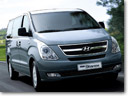
 The H-1 (Domestic name: Starex),


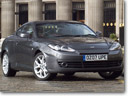
 Hyundai Coupe SIII, so called because it is the third incarnation of the Coupe, has been completely re-designed outside together with significant changes and enhancements inside.


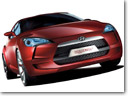
 Styled at


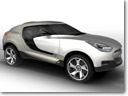
 At the
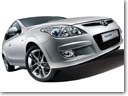 A European C-segment 5-door hatchback, codenamed FD, a new nomenclature and a


 The new Hyundai Veracruz midsize crossover made its North American debut today at the 2007 North American International Auto Show (NAIAS). Just as the Hyundai Azera is altering perceptions about premium sedans, Veracruz breaks new ground in premium crossovers. Hyundai has once again made luxury and performance attainable in previously unthinkable ways: with standard Electronic Stability Control (ESC), upscale amenities and more cargo volume than the full-size


