The 2013 Acura ILX will hit the showrooms in May 22 with a manufacturer’s suggested retail price starting at $25,900. It sounds like a bargain and with three engine setups and two optional packages available there seems to be a great deal of flexibility as well
This 5-passenger, “windswept” saloon will offer a number of new and classy features such as Keyless Access System with smart entry and a start button. The Pandora internet radio is also an option and so is the SMS text message function. As standard equipment, the ILX comes with a power “moonroof”, aluminum wheels and Bluetooh HandsFreeLink.
The base model, the one that costs $25,900 gets 150 hp of power from a 2.0-liter inline 4-cylinder engine. Add to that a Sequential SportShift 5-speed automatic and you have e perfectly decent saloon. Those who think otherwise can then go for the 2.4-liter version ($29,200 with the Premium Package) – 201 hp and a close-ratio, six-speed manual transmission.
For the first time on an ILX, there’s a petrol hybrid alternative as well. Starting at $28,900, the Acura ILX Hybrid uses a 1.5 liter engine and an Integrated Motor Assist electric unit. The power goest trough a Continously Variable Transmission (CVT). As expected, this is the most economical of the bunch with an EPE estimated city/highway/combined fuel economy of 39/38/38 mpg. (strangely constant no matter the environment).
Regardless of trim or setup, the Acura ILX gets front, side and side-curtain airbags, 4-channel anti-lock brakes and Vehicle Stability Assist™ (VSA®). It’s worth noting that the car’s body features the company’s Advanced Compatibility Engineering™ (ACE™) structure so it should do well on carsh tests.
The Premium Package is the mid-range stuff ($3,300, not available on the Hybrid) – leather seating surfaces, heated front seats, a power driver’s seat, an upgraded 360 watt stereo system with XM® radio, HID headlights, foglights, 17-inch aluminium wheels, a multi-view rearview camera and an Active Sound Cancellation for a reduced cabin noise.
The Technology Package is an extension of the Premium one which adds an ELS Surround audio system, AccuraLink Satellite Communication System, a sat nav and all kinds of technology bits that sound too complicated for a mortal to understand them.
The company’s state-of-the-art plant at Greensburg, Indiana will have the noble task to assemble the 2013 Acura ILX. It’s an award winning establishment, being one of three plants in the world honored with a J.D Power and Associates’ 2011 Platinum Award for outstanding product quality. Well done!
With the prices of the petrol rising, I assume that is a good idea to explore some ways on how one can drive any car more fuel-efficiently. The question here is whether it possible for everybody to save money on gasoline, depending on the car they are driving.
Well, believe it or not, the answer is obviously yes. And now is the perfect moment to know how to do this, if you aren’t already aware about it.
The only thing you have to do is to be smart about what makes your car consume more fuel. And this is exactly what I am going to discuss below, offering some practical ways which will save you some money.
However, not everybody can afford buying an expensive new Plug-In Hybrid in order to make this crucial shift in fuel economy. So this is why I think it is advantageous for everyone to know what little adjustments to the present vehicle we have, will make it consume less gasoline.
First and foremost, you should always drive mindfully. Driving mindfully can make your ride more enjoyable and safer. In addition to this, it is important to know that what I call “compulsive driving” – speeding up very fast and braking suddenly – is actually very expensive, because this style of driving demands a lot of gasoline consumption.
Therefore what you can do is to be aware of how you actually drive, and start accelerating carefully as well as braking in the same manner. In fact, keeping up with the ease off the gas pedal and accelerating with moderate throttle makes the engines more efficient.
Secondly, an important fact is of course the speed of driving. Studies show that the most fuel-efficient speed is around 55 mph/ 90 km/h.
Thirdly, what really matters is how much your car weights. What I mean is that the lighter it is the more efficiently it works. It is “simple” physics, according to which, weight is among the major causes of kinetic energy loss. For instance if your car is 45 kg (ca. 100 pounds) lighter it will save you from fuel consumption by one or two percent.
What you can basically do is to get rid of things in the car which you don’t use frequently and won’t need in case of an emergency.
Next, it is important to highlight that efficiency can be found where there are improved aerodynamics. Reducing drag is crucial for how much your vehicle consumes.
Moreover, if you utilize gasoline with the lowest octane level (in short, this is the standard measure of the performance of a motor), then you can save a lot of money without making compromises with the performance of your vehicle.
Furthermore, I am going to suggest something very simple, which can result in a lot of savings. If you are planning your trips wisely and spend few minutes on contemplating where you should go, before getting in the car, then you can drive less and save from driving on the same way several times.
Did you asked yourself recently about the condition of your car? Because if you don’t, I have some news for you! The maintenance and fuel efficiency go together. One of the best ways to keep the fuel efficiency high is to keep your vehicle always “in shape”.
For instance, on of the most important factors which affect the car’s gasoline consumption is the oil. Indeed, it is a crucial element in minimizing the wear made by the friction of the moving parts in the engine. The key to most efficiently performance is the oil to be as clean as possible. So, it is important to remember when the time to change the oil is.
In addition to this it is also substantial to use the right grade of motor oil. This little detail will not only improve your efficiency but also keep your car running effortlessly. For example, if you are utilizing synthetic oil instead of the regular one, this will save you around five percent on gasoline.
Other advantageous change that you can make is to inflate the tires of your car properly. As I’ve said already – it is all about keeping your car in shape. This means that if you are driving without properly inflated tires, your car surely uses more fuel to run. In particular, the air pressure in your tires should be at the manufacturer’s recommended levels.
At last, but not least I will remind you an interesting fact. Did you know that if you park on shade or use a garage, then your fuel consumption will be lower? Yes, staying under the sun makes your fuel evaporate easier and thus making it far more expensive for you.
Making some adjustments to your vehicle and changing your driving habits will definitely reduce the amount of fuel you put in your gas tank. So make a conscious effort to apply some of the suggested changes, and you’ll definitely benefit in terms of fuel consumption and money savings.
2012 Toyota Yaris Hybrid is a breakthrough in the development of technologies. The reasons for this are several, but probably some of the most prominent ones are the low emissions, refined performance and reliability of full hybrid technology.
This hybrid model is available to order now and can be seen on the UK roads, starting from 1st of July this year. Its price starts from £14 995, which makes it Britain’s lowest-priced hybrid car.
What is more important here however is that it is equipped with range of technologies which are significant in terms of improvement on many levels. First, the hybrid system has been made smaller and lighter so that it can be fitted to the Yaris without reducing the space available in both the cabin and the boot.
Secondly, the new development of Toyota’s smooth, quiet and highly efficient Hybrid Synergy Drive system, uses a 1.5-litre VVT-i petrol engine, nickel-metal hydride battery pack and CVT (continuously variable transmission). This results in CO2 emissions of just 79g/km for the T3and T4 models and 85g/km for the T Spirit. The fuel consumption respectively is estimated 80.7mpg and 76mpg.
2012 Toyota Yaris Hybrid
Furthermore, the Yaris Hybrid range offers three grades available: T3, T4 and T Spirit, which all come with five doors.
Key equipment features of each grade:
2012 Toyota Yaris Hybrid T3:
2012 Toyota Yaris Hybrid T4 adds:
2012 Toyota Yaris Hybrid T Spirit adds:
Dual-zone air conditioning
15-inch alloy wheels
16-inch alloy wheels
Front electric windows
Rear privacy glass
Cruise control
ABS with EBD and brake assist
Front fog lams
Smart start system
VSC (switchable) with TRC
Toyota touch audio control
Electric rear windows
Seven airbags, including driver’s knee airbag
Bluetooth
Rain-sensing wipers
Auto dimming rear-view mirror
Dusk-sensing headlights
USB port/Aux-in socket
Ventilated glove box
DAB-ready tuner
Leather parking brake trim
Rear-view camera
Part-leather upholstery
Leather steering wheel and gear knob trim
Passenger seat height adjustment
Color-matched door mirrors and door handles
Front foot-well illumination
Rear spoiler
In addition, four option packs are also at hand for T4 and T Spirit versions of Yaris Hybrid. They give the models more style or enhanced protection. In details, the Protection Pack provides mudflaps, Hybrid-branded floor mats, black side mouldings and a boot liner. Next, the Protection+ Pack provides the same items, plus rear parking sensors and a black rear bumper protector.
On the other hand, the Style Pack offers Hybrid-branded aluminium scuff plates and chrome-finished side sills and tailpipe trim.
Additionally, there can be also added the Toyota Touch system which comes with satellite navigation and advanced Bluetooth features, plus the ability to access Google Local Search and connected services (as live parking and fuel price information and local weather forecasts).
2012 Toyota Yaris Hybrid is available in great range of colours: Cirrus White, Eclipse Black (mica), Glacier Pearl (pearlescent), Tyrol Silver (metallic), Burning Red (metallic), Decuma Grey (metallic), Sintra Blue (metallic) and Deep Aqua (metallic); which can undoubtedly satisfy any customer.
2012 Toyota Yaris Hybrid Interior
On-the-road prices for the range are detailed below. All models are in Band A for Vehicle Excise Duty (road tax), which means a zero annual charge; likewise their sub-100g/km emissions gain exemption from the London congestion charge. For company car drivers the benefit-in-kind tax rate is just 10 per cent. Insurance groups are due to be announced in June.
The exceptional BMW i8 Concept Spyder is an open-top two-seater, which can grab literally any heart! It has the entire necessary characteristic and in addition adds to them with sporting and emotional appearance.
This concept is purposefully built in order to meet the changing needs of customers and transform the understanding of personal mobility. It is equipped with intelligent technologies and definitely has an innovative design, however what is more is that now embraces a philosophy which adopts significant degree by sustainability throughout the value chain.
This is the third BMW i model, which is here to “inform” us what will be the future of cutting-edge and emotionally appealing mobility concepts. It is not only a mixture between sporting design with an open-top two-seater, but is also a combination of lightness, dynamic capability and efficiency with a very special aesthetic value.
What is worth mentioning as well is that it is a blend of intelligent lightweight design and state-of-the-art hybrid technology. This results in exciting sports car performance and driving pleasure combined with exceptional fuel-consumption unmatchable in this segment before.
BMW i8 Concept Spyder has the upward-swivelling, windowless doors and a range of purpose-oriented on-board equipment which features electric kickboards stowed under a transparent tailgate. The concept vehicle is built on the innovative LifeDrive architecture. The latter includes lightweight modular construction and the utilization of high-quality high-tech materials.
BMW i8 Concept Spyder
Furthermore, the BMW i8 Concept Spyder is a plug-in hybrid powered by an eDrive drivetrain. This drivetrain combines the excellent performance of the electric motor and petrol combustion engine, while the lithium-ion battery supplies the motor with power that can be recharged in an extremely short space of time from any domestic power socket. In addition, the car has significantly reduced weight, low centre of gravity and is precisely balance. Everything is combined with a system output of up to 260 kW (354 hp).
Like its Coupe sibling (2+2-seater BMW i8 Concept), the BMW i8 Concept Spyder blends intelligent lightweight design with the leading-edge drivetrain technology eDrive, which delivers extremely low fuel consumption and emissions.
The concept got compact dimensions and specific exterior paintwork. Additionally, it has the upward-swivelling, windowless doors and a transparent glass panel at the rear. How about the interior: a revised material is used and a colour concept provides an extra dose of sportiness.
Moreover BMW i8 Concept Spyder is built around the innovative modular LifeDrive architecture, which comprises of independent functional units. For instance, the carbon-fibre-reinforced plastic (CFRP) Life module gives the car an extremely lightweight passenger cell, while the Drive modules bring together all the car’s operational driving functions, such as the powertrain, chassis and safety structure. And thanks to the intelligent lightweight design and the use of innovative materials, the vehicle delivers great fuel-efficiency. In particular in the LifeDrive architecture the front and rear axle modules are connected by an “energy tunnel”, which houses the hybrid battery, this results in low centre of gravity and ideal balance.
The BMW i8 Concept Spyder’s includes emotion-led design as well which vividly spotlights the car’s qualities, with lightness, dynamic capability and efficiency highlighted to particularly prominent effect. The key elements which contribute for this sporty dynamic stance are the large body panels, a hunkered-down stance and numerous aerodynamic elements such as contact surfaces, spoiler lips, AirCurtains and aeroflaps.
What is more here is that the front end offers a revealing window into the open-top two-seater’s dynamic talent. In addition a spoiler lip on the windscreen frame guides the airflow over the heads of the passengers. Of course there is also featured a two-section folding roof.
Observed from side, the Spyder has short front and rear overhangs and a low-slung silhouette. Additionally, the alluring lines and forms generate a strong forward-surging stance even before the car powers off the line.
Compared to the front end, the rear also is positioned low to the road. Its headline feature is a transparent cover revealing the two folded electric kickboards accommodated below. A rear diffuser, three-dimensional air outlets and the U-shaped rear lights makes the BMW i8 Concept Spyder with extremely wide appearance and further emphasize its sportiness.
Going further, the interior of the BMW i8 Concept Spyder is defined by three levels. Each one has various functions. The interlocking of surfaces and lines for instance, is also one of the stand-out features of the interior design. On the other hand, the outer layer also frames the supporting structure, while the inner “comfort” layer includes seat surfaces and stowage compartments. The third layer is represented by the cockpit, and brings together the instrument panel, steering column and steering wheel with the instrument cluster, central information display and control elements. Of course, the car has a low drivers’ seating position. Moreover, an 8.8-inch (22.4 cm) screen displays the driving information in three-dimensional, high-resolution quality.
BMW i8 Concept Spyder Interior
Furthermore, the Spyder’s interior is a mixture of plastic, carbon and leather, with theoff-white of the outer layer and the bold orange tone of the naturally tanned leather generating a sporting atmosphere.
The BMW i8 Concept Spyder with eDrive means that it is a plug-in hybrid which combines two different power sources: electric motor and combustion engine. First, the electric motor produces 96 kW (131 hp) and it is on the front axle. It works in combination with a turbocharged three-cylinder petrol engine delivering 164 kW (223 hp) through the rear wheels. When combined, both units generate an aggregate system output of 260 kW (354 hp) and peak torque of 550 Nm.
And if you wonder about the acceleration data, well – here’s some: the Spyder accelerates from 0 to 100 km/h (62 mph) in just five seconds. It has a electronically limited top speed of 250 km/h (155 mph). It’s performance in other words is exceptional. However, despite these numbers, the two-seater burns just three litres of petrol per 100 kilometres!
Furthermore, the electric motor gets its energy from a lithium-ion battery which can be fully charged from a domestic power socket in less than two hours. The battery is located in the energy tunnel between the front and rear axle modules.
With its battery fully charged, the BMW i8 Concept Spyder can go up to 30 kilometres (19 miles) only on electric power. And if it is required, a high-voltage alternator hooked up to the combustion engine generates additional power, which is then stored in the hybrid battery.
Additionally, the concept vehicle has as wee the ability to send power through the front, rear or all four wheels at the same time. It has the intelligent control electronics, which ensure that the optimum drive configuration is available for the situation at hand. Next, the electronic systems ensure maximum energy recuperation under braking or when coasting.
BMW i is equipped with new generation of driver assistance systems such as the camera-based proactive Collision Warning system, Parking Assistant and Traffic Jam Assistant. Remote functions accessed via a smartphone are also included, such as the Last Mile Navigation function and the Intermodal Route Planning function.
Two large displays can be found inside the BMW i8 Concept Spyder. They make up the interface between the car, its passengers and the outside world. They are positioned next to the instrument cluster behind the steering wheel. What is innovative here is that all the screens display their information in 3D.
On the other hand the instrument cluster displays important driving and it is positioned alongside the digital speedometer. For example, the efficiency display allows drivers to view how much energy they are currently using, and shows extra navigation details and information on the car’s range as well. If the driver switches to energy-saving ECO PRO mode, the display turns blue in colour to signal the shift in functional emphasis, and the ellipses now also vary in form. By the same token, moving into SPORT mode treats the driver to an emotional orange hue. As well as the changes in colour, the displays also provide information tailored to the driving mode selected and to assisting the driver as effectively as possible.
BMW i8 Concept Spyder Specifications
Length/Height/Width
L 4480 mm, H 1208 mm, W 1922 mm
Wheelbase
2650 mm
No. of seats
2
Kerb weightTop speed
Acceleration
1630 kg250 km/h (155 mph) electr. governed
0-100 km/h (62 mph) 5 s 80-120 km/h (50-75 mph) 4.0 s
System output TwinPower Turbo engineFuel consumption (EU cycle)
Mercedes-Benz is continuing its hybrid philosophy with the all new 2012 Mercedes-Benz E 300 BlueTEC HYBRID model. In fact, this is the world’s most economical luxury-class vehicle with a fuel consumption of just 4.2 l of diesel/100 km, and CO2 emmissions of 109 g/km. At the same time, efficiency champions such as the SLK 250 CDI, S 250 CDI, ML 250 BlueTEC 4MATIC and SL 350 BlueEFFICIENCY are showing that luxury brand aims to tale a leading role in the continuous improvement of vehicles with internal combustion engines in all classes. What bindes all these environmentalfriendly vehciles is their impressive efficiency without compromises.
These premium automobiles from Mercedes-Benz, which are not only economical but also environmentaly compatible, has all the necessaryattributes of a true Mercedes: safety, comfort and serene driving enjoyment. Further to the highly efficient internal combustion engines, add the hybrid drive systems, which are currently rounding off the mix of intelligent, need-related solutions for environmentalfriendly vehicles. The new 2012 Mercedes-Benz E 300 BlueTEC HYBRID is setting new standards for luxury-class business cars. This diesel hybrid will be available in the European market as a Saloon and Estate in the end of the year. Later the E 400 HYBRID powered by an electric motor and a V6 petrol engine will be launched in the American, Japanese and Chinese market.
Furthermore the intelligent, modular hybrid concept has a major advantage: no modifications to the bodyshell are required. In addition to that the hybrid module can be used flexibly in other model series and there will be right-hand drive versions apart from the diesel and petrol models.
What has to be highlighted here is that the vehicle has all the necessary equipment and functions for a hybrid – starting from the ECO start/stop function right up to the purely electrically driveable hybrid. This means that this model is undoubdtedly on its way to the sustainable mobility of the future. Moreover, Mercedes-Benz is also aims to optimize its vehicles with the very latest internal combustion engines: by downsizing, charging, direct injection, low-friction technology and BlueTEC. In addition to that the vehicles themselves are undergoing targeted optimisation with respect to aerodynamics, lightweight construction and energy management (BlueEFFICIENCY).
The 2012 Mercedes-Benz E 300 BlueTEC HYBRID not only delivers best-in-class luxury, but also combines it with outstanding fuel economy of the 4‑cylinder diesel engine over long distances. The reasons are several, but in short – it benefits of an efficient hybrid in city and stop & go traffic. Hence, it delivers impressive efficiency with no compromises. And not forgetting that thank to the compact hybrid concept there are no restrictions in terms of spaciousness, comfort and safety.
What is more important here is the technology used in the E 300 BlueTEC HYBRID. Mercedes-Benz has combined the 2.2-litre four-cylinder diesel engine, which develops 150 kW (204 hp) with a powerful hybrid module. The latter has a 15 kW electric motor, positioned between the internal combustion engine and the 7-speed automatic transmission, and assists the diesel engine when the car is accelerating (boost effect). In alternator mode, it is used for the recuperation of braking energy, although it is also suitable for driving under electric power alone. In summary, it is based on the modular hybrid principle developed by Mercedes-Benz. And the figures a worth mentioning again: the fuel consumption of the E 300 BlueTEC HYBRID is 4.2 litres per 100 kilometres with CO2 emissions of 109 g/km.
Next, in combination with 7G-TRONIC, a wet start-up clutch and the lithium-ion battery, the intelligent modular hybrid system requires little installation space and weighs around 100 kg. Of course, the hybrid components have all the features of the extensive “7-stage safety concept”.
The brand also aims to deliver fuel efficiency and environmental “attitude” to some of its iconic models. Across all the model series Mercedes-Benz offers powerful yet economical petrol and diesel models. They feature turbocharging and direct injection for enhanced performance but lower fuel consumption and CO2 emissions. What is more here is that these vehicles are very suitable for markets with CO2-based vehicle taxation, or for company and fleet customers.
Characteristics of the efficiency champions in brief:
Mercedes-Benz SLK 250 CDI: torque at the level of a V8 muscle-car, the fuel consumption of a compact. The world’s most economical (4.9 l/100 km) and powerful (150 kW/500 Nm) diesel roadster.
Mercedes-Benz S 250 CDI: the “five litres per 100 km S-Class” with serene long-distance comfort.
Mercedes-Benz ML 250 BlueTEC 4MATIC: full-size SUV with full on and off-road performance, a consumption of around six litres per 100 km and CO2 emissions of 158 g /km.
Mercedes-Benz SL 350 BlueEFFICIENCY: consumes 29 percent less fuel than the preceding model, mainly thanks to a BlueDIRECT engine, intelligent lightweight construction (- 140 kg) and outstanding aerodynamics.
The new 2012 Toyota Camry Hybrid Trifecta got its unique name because it has such an exclusive motoring trifecta: combining Power, Economy and Value in one car! The new model has to offer even more equipment and enhanced styling, aerodynamics, interior space, safety, ride comfort, handling and luggage space. And can you believe that although the vehicle has so many significant advances, the starting price for the entry-level Camry H has been lowered to $34,990.
Value has also been improved for high-grade Camry HL at $41,490.
Furthermore, Camry Hybrid debuts a highly revised version of Toyota’s Hybrid Synergy Drive powertrain. In other words this means that it includes 2.5-litre four-cylinder petrol engine and a high-torque electric motor. Furthermore, the system’s combined output has been lifted to 151kW (from 140kW) with power varied between the petrol engine and electric motor, or combined as needed. In addition, the new 2.5-litre engine uses the Atkinson cycle to achieve optimum efficiency while producing more power and torque than the previous engine. All this results in city fuel consumption of jus 5.7 litres/100km. On the other hand, while driving on the highway, the fuel consumption drops to 4.9 litres/100km. All in all, the combined fuel economy is 5.2 litres/100km. Another important fact is that the carbon-dioxide emissions have been cut to 121 grams/km from 142 grams/km. No second thought that the 2012 Camry Hybrid has better fuel economy and lower emissions than many small cars. Moreover, the vehicle uses one-third less fuel on the combined cycle than the already efficient petrol Camry.
In addition, the new model has improvements in the exterior and the interior: exclusive exterior and interior designs and badges differentiate the Camry Hybrid from other Camry models, for instance. Additionally, an exclusive radiator grille with a chrome upper section and a “hybrid blue” Toyota badge is flanked by headlights with blue-accented extensions. Wheen looked at the back, the rear design expresses a solid stance including the hybrid blue Toyota badge and, for the HL grade, a bootlid spoiler and chrome garnish. What about the interior? Inside of the coupe, there can be seem refined touches such as soft-touch padding, quality stitching and a three-dial Optitron instrument panel with chrome-accented outer rings and metallic-blue meter gradations. Not to mention, the hybrid-exclusive brushed silver inserts, which ornament the upper console panels, door-switch bases and gear selector.
2012 Toyota Camry Hybrid Trifecta
In the car s also featured, a comprehensive safety package, which includes stability and traction control, anti-lock brakes with brake assist and a reversing camera with the image displayed on a 6.1-inch touch-screen. In addition, there are also included seven airbags with the addition of a driver’s knee airbag plus seatbelt indicators for all five occupants. What is more, Camry Hybrid can offer quieter engine. Next, the proven nickel-metal hydride battery, located in the boot behind the rear seats, now has improved air cooling.
2012 Camry Hybrid is unique as well, because of the technology which improve the fuel consumption it features. It incorporates several measures to improve fuel economy and lower emissions, in particular the new EV (electric vehicle) drive mode. This mode may allow the driver to operate the car on the electric motor alone for up to 2km at lower speeds. Furthermore, the electric water pump, a roller-rocker type valvetrain and a variable-output oil pump boost economy by helping to reduce internal friction. Next, comes the water-cooled exhaust gas recirculation system, which helps to ensure low emissions at all vehicle speeds and helps improve fuel efficiency. The optimized aerodynamics and the lighter body contribute to the better performance and fuel economy while lower rolling resistance tyres also boost fuel efficiency. Another important feature concerning fuel consumption and CO2 emissions is the ECO drive mode which optimizes throttle response and air-conditioning output to prioritize maximum fuel economy. In addition, there is featured as well a hybrid-exclusive instrument cluster, which has features that help the driver to operate the car as economically as possible. For example, the instantaneous fuel economy is shown with LEDs (light-emitting diodes) around the outside of the average fuel-economy gauge. Applying the brake converts the motor to a generator that captures the kinetic energy from the wheels, storing it in the hybrid battery pack. At last, the new hill-start assist control helps prevent the vehicle from rolling backwards when starting off on an incline when the brake pedal is released.
2012 Toyota Camry Hybrid Trifecta is offered in two variants: Camry H and Camry HL.
Audi R18 e-Tron Quattro is the world’s first LMP1 car to combine a highly-efficient TDI with a hybrid system. The race car will make its official debut on May 5 in the six-hour race at Spa-Francorchamps in Belgium and will compete for overall victory at the famous 24 Hours of Le Mans in France on June 16/17.
“Audi has always consciously selected championships and categories in racing that have a close relationship to production and therefore have technical relevance for the Audi customers,” said Head of Audi Motorsport Dr. Wolfgang Ullrich, who personally drove the new Audi R18 e-tron quattro onto the stage on Wednesday evening during its world premiere in the Audi Training Center at Munich airport – electrically and almost silent.
“Quattro, TFSI and TDI are three excellent examples of how motorsport has stimulated production development. A similar tendency is apparent with the e-tron quattro: we test a completely new technology on the race track before it’s introduced to the Audi production line.”, he added.
The R18 e-tron quattro uses recovered kinetic energy, which is fed as electric into a flywheel accumulator before being retrieved under acceleration again above a speed of 120 km/h. The extremely efficient V6 TDI diesel produces 510PS (375 kW) powering the rear wheels. Both systems complement each other to create the new drive principle e-tron quattro.
“The TDI engine invented by Audi is still the most efficient drive in the world,” said Dr. Wolfgang Ullrich.
“We are convinced that the TDI has even more potential. This is why Audi not only supports the hybrid in motorsport as it does in production, but in parallel also the further development of the conventional drive.”, he added.
Audi Sport Team Joest will field two R18 e-tron quattro and two R18 ultra prototypes in the Le Mans 24 Hours on June 16/17. The two hybrid cars are driven by last year’s winning trio Marcel Fässler (CH), André Lotterer (D) and Benoît Tréluyer (F) as well as Dindo Capello (I), Tom Kristensen (DK) and Allan McNish (GB) who boast a total of 13 Le Mans wins between them. New signing
Toyota has just announced the exclusive news about the official EU CO2 emissions and economy figures for the new 2012 Toyota Prius Plug-In Hybrid and they are exceptional. The vehicle emits 49g/km of CO2 on the combined cycle and travel 134.5 miles on one gallon of petrol. These numbers makes it the most efficient Toyota on the market. The engineers in addition have improved the car’s EV driving range to 15.5 miles. This is an improvement of 24% versus the customer trial vehicle. Another thing which makes it unique is that it takes only 90 minutes to recharge the car, using a conventional plug. When the EV battery is depleted, the 2012 Toyota Prius Plug-In Hybrid automatically switches into HV mode. In this mode, the vehicle delivers CO2 emissions of 85 g/km and economy of 76.4mpg. This is an improvement on the emissions and fuel economy of the standard Prius. This leading performance helps to deliver a total driving range of 769 miles. The car continues to offer the same interior space as the standard Prius, with seating for five and 443 litres of bootspace. 2012 Toyota Prius Plug-In Hybrid will be launched in the summer of 2012.
The new 2013 Ford Fusion Hybrid is expected to be America’s most fuel-efficient non-rechargeable sedan. This success can be traced back to Ford’s electrified vehicle team and the nearly 500 patents Ford now holds for its hybrid technology. Innovations can be found throughout Ford’s transformed lineup, one-third of which will feature a model with 40 mpg or further by giving fuel-efficiency-minded customers the power of choice. Key components such as Ford’s innovative powersplit architecture system are included on vehicles like the new Ford Fusion Hybrid and Fusion Energi plug-in hybrid.
In details the all-new 2013 Ford Fusion Hybrid is expected to deliver 47 mpg city and 44 mpg highway. At the same time, these expectations for the new 2013 Ford Fusion Energi, which arrives this fall in the U.S. dealerships, are more than 100 MPGe. In addition, one patent covers the display system for the Fusion Energi plug-in hybrid that shows how efficiently the power of the car is being used. Fusion Energi is projected to achieve a better miles per gallon. In other words the levels of innovation are set very high for the new upcoming models.
Lexus CT 200h, which is a luxury hybrid hatch, has just received very prominent award given by the respected American business magazine “Forbes”. It is crowned by it as “The Safest Small Cars guide for 2012”. The luxury vehicle is featured in the Forbes guide and had previously achieved the status “Top Safety Pick” by the US-based Insurance Institute for Highway Safety (IIHS), which is a non-profit organization backed by the insurance industry. To achieve this success the car must have the highest rating of “good” in the IIHS’ side, rollover, and rear impact evaluations, and in addition it must be equipped with electronic stability control.
Furthermore the Lexus CT 200h also won high praise from “Forbes” judges for the active and passive safety systems it includes. They help protect occupants and prevent collisions. These awards will definitely influence in a positive manner the customers, because they will now have in mind that they have the highest possible safety, while enjoying the ride in the vehicle. In addition, we have to make the reminder, that the last years CT 200h has also achieved the highest rating of five stars for all-round safety performance. This time the award was given by the Australia’s respected ANCAP crash testing.
Lexus CT 200h
The safest small car – Lexus CT 200h, features standard fitment of eight airbags including driver and front-passenger knee airbags, and whiplash-injury lessening (WIL) front seats. Moreover, it also has an electronically controlled brake system with ABS, Vehicle Stability Control (VSC), Traction Control (TRC), emergency LED brake lights and daytime running lamps as standard. In the models from the Sports Luxury segment, is also featured Active Cruise Control and Pre-Collision Safety technology (PCS), which detects an imminent collision and primes the front seatbelts and emergency braking to reduce the risk of injury and damage.
Lexus has achieved a great success at this year’s prestigious Intellichoiceawards, continuing the tradition and winning in three categories in the 2012 Best Overall Value of the Year (BOVY) section. Lexus CT 200h and Lexus RX 350 were recognized as value leaders in their respective segments. In addition the new CT 200h luxury hybrid hatch won the Premium Compact Passenger Car category. Moreover this same model won its class at 2011 Australia’s Best Car awards. On the other hand the Lexus RX 350 gained the leading ranking in the Premium Crossover/Wagon category for the second year in succession. The Best Overall Value of the Year awards appraise vehicles whose total cost of ownership is far much lower than expected relative to their peer models. Their aim is to help consumers in making better purchase decisions. And undeniably, by receiving these awards Lexus brand shows again their ability to deliver luxury vehicles at more than excellent value.
The award winners are selected after an in-depth, data-driven study that analyses nearly 1800 vehicles in 24 segments. Vehicles are being ranked based on the whole-of-life costs over the first five years of ownership and data obtained from automotive manufacturers, the US government and third-party resources. In addition, the accumulated expenses are taken into consideration, featuring repairs, insurance, depreciation, fees, fuel, financing, and insurance.
The award winning 2011 Lexus CT 200hThe award winning Lexus RX 350 SUV
With the introduction of the Yaris Hybrid, B-segment car fans will now be able to enjoy the low emission, refined Toyota Hybrid Synergy Drive® (HSD). It’s a small packed piece of engineering that offers no compromises in terms of driving experience.
The powertrain is a full hybrid composition consisting of a petrol engine and an electric motor with an end power output of 100 DIN hp. It is an engine that offers clients class leading CO2, NOx and particulate emissions, minimal fuel consumption and low cost of overall running costs.
Downsizing of various components gives the Yaris more efficiency agility and space. (Small Outside, Big Inside are the principles of the Yaris). The 1.5 liter Atkinson Cycle petrol engine in the Yaris, is 16.5 kg lighter and 10% more compact than the 1.8-litre unit found in the Auris Hybrid. The electric motor, the Power Control Unit (PCU) and the transaxle have also been put on a diet resulting in 20% more compactness for the electric motor, 12% less volume for the PCU in comparison with the Auris Hybrid. The transaxle is shorter by 6% and lighter by 11 kg.
Toyota Yaris HSD (2012)
Design also plays a role in the overall hybrid experience in the Yaris. The Nickel Metal Hydride battery and fuel tank have been placed under the rear seats so that there is no need to sacrifice passenger space or cargo area. The Yaris is all about looking like an everyday ordinary car and performing like the ultimate, extraordinary fuel saving machine.
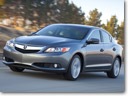 The 2013 Acura ILX will hit the showrooms in May 22 with a manufacturer’s suggested retail price starting at $25,900. It sounds like a bargain and with three engine setups and two optional packages available there seems to be a great deal of flexibility as well


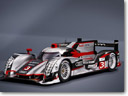 Audi R18 e-Tron Quattro is the world’s first LMP1 car to combine a highly-efficient TDI with a hybrid system. The race car will make its official debut on May 5 in the six-hour race at Spa-Francorchamps in Belgium and will compete for overall victory at the famous 24 Hours of Le Mans in France on June 16/17.


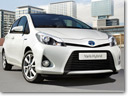 With the introduction of the Yaris Hybrid, B-segment car fans will now be able to enjoy the low emission, refined Toyota Hybrid Synergy Drive® (HSD). It’s a small packed piece of engineering that offers no compromises in terms of driving experience.

