Nowadays the automotive industries enhance further their environmental friendly technologies and work on the development of vehicles which produce less CO2 emissions. The hybrid cars are a consequence of this philosophy. They include two engines – one electric and one fuel powered, and this is how they minimize the fuel consumption in drastic levels. In addition they also include a special system which stores more energy in a battery included in the vehicle. The fact that it includes two engines is probably the most controversial one, and it raises many negative and positive feedbacks in the customers of such vehicles around the world. Can they be considered as car of the future? It is only a matter of time to be understood. However, let’s review the advantages and disadvantages of this technology.
PROs:
First of all the main advantage is that such car is fuel efficient. It effectively spares you a lot of money on fuel. The second one, as you already know, is that hybrid vehicles produce far less toxic emissions and thus are considered as environmentally friendly. Third, with a hybrid, you can enjoy the city driving even more. There are several reasons for this: the mileage ratings of such car are higher in the city. For instance, when you are caught in the traffic and you stop, the battery generates more electricity which can be successfully utilized during the lower speeds. Next to be mentioned is that the hybrid car is unbelievably silent. It is even so silent that when you drive it, some times you doubt that it is working. Yes, you got it – the electric engine is completely soundless. Another benefit that you can get form a hybrid is its battery is durable. Test made on different hybrid vehicles show that after a considerable amount of kilometers driven, the cars battery performance is almost the same. And at last one of the best things about the hybrids is that they need far less maintenance, than an ordinary car. What I have in mind here is that due to the two engines, the gasoline one needs less care. And for example, you need to change the oil in more kilometers traveled, compared to normal car.
CONs:
Now, let us see the other side of the hybrid technologies and review some disadvantages. The general disadvantage of hybrid cars is that their retail price is extremely expensive in comparison to the ordinary cars. Another negative issue here is that those vehicles have far greater weight and the reason for this are the heavy batteries mounted in them. Third, they aren’t as fast as normal cars. However there are also some major disadvantages here, which are concerning some safety factors. Because they are made from lighter materials and store some additional voltage in their batteries, they tend to be very risky in accidents. Furthermore, hybrids are not very convenient, while driving on the highway. What I mean hear is that they have lower highway mileage and compared to some diesel vehicles, they produce the same fuel efficiency.
To sum up, the cars of the future seem to be very beneficial when driving in the city area for example. They also produce less CO2 emission, which nowadays is a major factor that must be taken straightly at hand. Moreover, although their retail price is far greater, compared to an ordinary car, when you make the basic mathematics, the fuel that it consumes during its utilization will spare you a lot. At last, although it is not a convenient car during long traveling, it is the perfect vehicle for an environmentally conscientious person.
Take a look at the hybrid vehicles which, which some popular brands are currently producing:
Infiniti intends to pursue the ultimate driving experience delivered from electricity. They have already proven themselves apt in that field with the Infiniti M hybrid but now they are looking towards the Geneva Motor Show 2012. There they will reveal a yet to be named sports concept that will “minimize the traditional compromise between thrilling performance and sustainable mobility”.
Information is scarce really. All we have is Infiniti’s promise that we are talking about an efficient, sharp, low-emission vehicle with an even greater urban mobility. Infiniti say also that, despite an overall truthfulness to the company’s image and spirit, a new mid-ship design will provide better weight distribution. In other words most of the mechanical bits will be placed somewhere where it is least damaging to the performance of the car.
For more information supposedly, we will have to wait for the Geneva Motor Show which kicks off on the 8th of March this year.
2012 Volkswagen Jetta Hybrid is exhibited at the 2012 North American International Auto Show in Detroit.
The new highly efficient Jetta is powered by astonishing powertrain including a 1.4-litre TSI 150 PS petrol engine and a 27PS (20 kW) electric motor. This result in great improvement of the range – 45 mpg US (54 mpg Imp.) and nice performance – 0 to 60 mph in just below 9 seconds.
Furthermore, the Jetta Hybrid can go up to 2 km on pure electricity with speeds up to 70 km/h (44 mph).
The battery is made up of 60 individual cells, each with an energy capacity of five Ah. Together they produce a nominal voltage of 220 Volts and an energy capacity of 1.1 kWh and weigh 38.5 kg. Cooling is provided by an integrated fan, operated by the battery’s own management system that performs diagnostic, monitoring and safety functions, including disconnecting the battery in the event of an accident.
2012 Volkswagen Jetta Hybrid
The Jetta Hybrid weighs only 100 kg more than the non-hybrid Jetta at less than 1 500 kg in total.
Externally, the Jetta Hybrid can be identified by aerodynamic modifications including a new front spoiler, a rear diffuser and a rear spoiler that help to improve the car’s Cd value by 10 per cent. There are also new headlights with LED running lights, LED rear lights and unique 15-inch alloy wheels with low rolling resistance tyres. ‘Hybrid’ badges adorn the front wings, bootlid and modified front grille, where the Volkswagen logo is presented on a blue background for the first time.
The interior of the Hybrid is very much like that of any other Jetta, although the electric drive, along with a newly designed exhaust system, an acoustic windscreen and thicker front side windows help to make this the quietest vehicle Volkswagen has ever offered in this class.
One key interior difference is in the instruments. If the driver selects the ‘Hybrid’ menu in the multifunction display, the current drive mode is shown, while a meter indicates energy flow via arrows. The same screen also shows the battery charge state. Beneath the energy flow diagram is what is known as the ePower meter, which indicates the power provided by the electric motor.
2012 Volkswagen Jetta Hybrid
The tachometer is replaced by the Power meter, a multifunction display on the left of the instrument cluster. This informs the driver of the operation of the hybrid system: Ready, Charge, Eco, Boost or TSI. The audio system, meanwhile, has a zero emissions menu. This offers a graphical display of the past 30 minutes of driving time, with a bar showing emissions each minute: a full, 100 per cent bar represents no emissions at all.
Standard equipment on SE model features a 2Zone climate control system that works without the TSI engine running, a Premium 8 sound system, Bluetooth phone integration, MDI interface for iPod connectivity and a leather-wrapped multifunction steering wheel. Moving up to SEL1 specification adds 16-inch alloy wheels, a glass sunroof, RNS 315 satellite navigation, electric driver’s seat adjustment, heated front seats and keyless entry. The top SEL2 specification adds to this further, with 17” wheels, fog lights, bi-xenon headlights with cornering function, a reversing camera and a 400-Watt Fender sound system.
The NAIAS in Detroit is now a fact of life. Ford are also aware of this and are there to delight us with a next-generation Ford Fusion (that would be the Mondeo for Europeans later this year). Keeping pace with Ford’s innovative spirit, the Fusion boasts an array of efficient gasoline and hybrid drivetrains, an audacious design and cleverness.
It is no secret that currently Ford is grappling with other car makers for the lead position in global markets when it comes to economic vehicles and the Fusion is the latest example of that. Engine lineup consists of two EcoBoost™ four-cylinder power plants: a 1.6 with a best-in-class, non-hybrid economy returning 26 mpg urban and 37 mpg on the highway. For those that desire a bit more grunt there’s the EcoBoost l4 2.0 mated to a CVT automatic transmission that can send power trough 19 inch alloys and a dynamic all-wheel-drive which can shift torque distribution towards the back end.
The Hybrid division lures economy minded customers with the Fusion Hybrid – a 2.0 liter Atkinson-cycle engine which is not as big as the previous 2.5 one, but performance hasn’t been lost say Ford. In fact, instead of nickel-metal hydride batteries, lithium-ion ones are now used which in turn saves weight and produces more power. The end result is a speed up to 62 mph on electricity alone. The Fusion Energi Plug-in Hybrid however, is the ultimate in efficiency terms with a stunning figure of up to 100 mpg – more efficient than the Volt or Prius. Just like the other big players, Ford is now making use of a stop/start system in its vehicles which really does miracles to fuel-efficiency.
Ford Fusion (2013)
On the outside, the Fusion is not unrecognizable but some visual tweaks do leave an impression: sleeker and smother lines eliminate the “three box design” feel that is commonly present in other mid-sized saloons. The front grille has shrunken and so have the headlights. The wheelbase is longer and the overall height has increased while width is down by 35 mm.
Technological innovation manifests itself within the new multi-link rear suspension, the aerodynamic guards underneath the car which keep the noise down as well. There is also a multitude of handy gizmos that assist newbie drivers and such in every possible aspect – Being vigilant about road lanes will be a thing of the past because of the Fusion’s lane-keeping system which monitors the road ahead and alerts if the car is drifting too close to the lanes and it will even dare to adjust the steering wheel by itself if the driver fails to response. That same system also monitors the traffic ahead and keeps the car at distance from the others. Active park assist quite literally takes parking in its own hands by identifying a suitable parallel parking space, taking measures and doing the steering for you. The BLIS system uses sensors on the rear fenders that can scan otherwise blind spots to drivers and thus prevent a lane-changing disaster.
Inside the cabin distraction is brought down to a minimum with systems like SYNC and MyTouch that allow interaction with the multimedia and control system from a distance (e.x. voice activation). The dashboard has retracted nearer to the windscreen and the seats are thinner so that it is even more roomier than the predecessors.
At the 2012 North American International Auto Show in Detroit, Volvo Car Corporation will reveal an innovative petrol plug-in hybrid, which is going to be a unique blend of petrol and electric power. The project is called Volvo XC60 Plug-in Hybrid Concept and it is an electric car, a highly economical hybrid and a powerful high-performance car. All this comes in one package! The great news is that the driver can choose which one of the options they want to drive, with only one touch: there is a button, with which the driver decides how the available power from the combination of the high-performance petrol engine and the electric motor is to be used.
This is undeniably world-class petrol plug-in hybrid technology. Moreover it features a state-of-the-art four-cylinder engine from the upcoming Volvo Environmental Architecture engine family. However we will have to wait a couple of years to see it reaching the American showrooms. As we have already stated, the driver chooses the driving mode via three buttons on the instrument panel. Through these buttons the car “receives” three different modes: Pure, Hybrid or Power. In the first one, the vehicle is powered solely by its electric motor. The range according to the European certification driving cycle NEDC is 28 miles. In the next, Hybrid mode (which by the way is the standard setting whenever the car is started), the petrol engine and electric motor co-operate to provide maximum driving pleasure with minimum environmental impact. According to the European certification driving cycle NEDC, CO2 emissions are 53 g/km (2.3 l/100 km) – which translates into fuel economy of over 100 mpg. The car has a total operating range of up to 600 miles (960 km). The last mode is a technological optimization which creates the optimum possible power. Here the petrol engine with 280 hp (206 kW) and 380 Nm (280 lb.-ft.) is combined with the electric motor with 70 hp (52 kW) and 200 Nm (148 lb.-ft.). This results in car’s acceleration from 0 to 100 km/h 6.1 seconds.
Volvo XC60 Plug-in Hybrid Concept features three Modes
In addition the front wheels of the XC60 Plug-in Hybrid Concept are powered by a four-cylinder turbocharged petrol engine from the forthcoming VEA (Volvo Environmental Architecture) engine family. This is the engine which produces 280 horsepower (206 kW) and maximum torque of 380 Nm (280 lb.-ft.). Power delivery to the wheels comes via a newly developed eight-speed automatic transmission. Moreover the concept car carries a “T8” badge, which emphasises the combined 350 horsepower of the high-performance four-cylinder engine and the electric motor. The highlight here is that this moves the car into a range previously occupied solely by eight-cylinder engines.
Volvo XC60 Plug-in Hybrid Concept
In details, VEA is a modular range of diesel and petrol engines. To be more precise, the petrol versions come with direct injection, minimised internal losses and balance shafts for maximised comfort. Several levels of turbocharging open up for flexibility that encompasses the whole range from high power and torque variants to extremely fuel-efficient derivatives. In addition certain engines will have added performance via hybrid drive or other spearhead technology. The modular format is based on a standard of 500cc (30 cubic inches) per cylinder for optimum thermodynamics. Additionally, it could also be used to develop three-cylinder engines. What is more important here is that VEA offers several advantages. The first thing to be mentioned is that the number of unique parts is reduced. Therefore this promotes manufacturing efficiency, quality assurance and efficiency of new development projects. Secondly, the new powertrains are considerably lighter weight than the present engines with similar performance. Next, the fuel economy is improved by up to 35 percent, again in comparison to the engines with similar performance. And at last, the modularity and compact transverse design are also ideal for future electrification developments.
In addition the engine in the XC60 Plug-in Hybrid Concept has no conventional starter motor or alternator. On its place there is an Integrated Starter motor and Generator (ISG) connected to the crankshaft, which is located between the engine and the transmission. In details, the ISG is capable of delivering the additional 34 kW (45 hp) during acceleration. Moreover it also charges the battery during braking. Furthermore the rear axle of the XC60 Plug-in Hybrid Concept is driven by an electric motor which produces 70 horsepower (52 kW). It is supplied with power from a 12 kWh lithium-ion battery pack installed under the floor of the load compartment.
Volvo XC60 Plug-in Hybrid Concept
The battery pack can recharged from a regular power outlet, at home or at a parking place. The recharging time varies with the current. If 220V is available, a full charge with 12A takes just 3.5 hours. On the other hand, with the 110V/12A a full charge takes 7.5 hours. In addition it is also possible while recharging the car to heat or cool the passenger compartment. Therefore this also means that more battery power is available to propel the car.
There is no doubt that the car will feature an infotainment system, called Volvo Sensus. It will keep the driver constantly updated on everything that makes the journey simpler, more efficient and more entertaining. For example it can show the best route to a destination depending on whether the driver prioritises low energy consumption, the fastest route or the shortest distance. Moreover it can also show Low Emission Zones where sufficient capacity is needed for running on pure electricity. Next instance is that it provides information about charging stations with access to renewable electricity or locations along the route with access to quick-charging facilities. The driver can also connect to the car via a mobile phone application. Thus way making it possible for the driver to see remotely the battery’s charge level, remaining range, and the location and capacity of the nearest recharging station. Moreover via the app, it is also possible to verify if the charger cable is hooked up and it is also possible to pre-program the car’s interior climate.
The exterior of the Volvo XC60 Plug-in Hybrid Concept is painted in white colour and the 21-inch wheels enhance the muscular appearance. On the other hand the interior includes unique detailing and colours, such as sober dark-blue leather upholstery and inlays of blue-grey wood. The instruments have been tailored to give the driver all the necessary information about petrol and electricity consumption, battery charge level, remaining range and so on.
Volvo XC60 Plug-in Hybrid Concept
Moreover the electric four-wheel drive in this exceptional concept is activated by pressing the AWD (All Wheel Drive) button. Instead of the mechanical power transfer of conventional four-wheel drive, the central control unit distributes power between the petrol-driven front wheels and the electrically driven rear axle. This electric four-wheel drive system has been designed to provide better traction when starting and when driving on slippery roads. The car will be designed in order to give the driver the option to choose to save battery power for later in order to drive on pure electricity later in. For instance while driving in an urban green zone or in the heart of a city. When Save is activated, the generator charges and tops up the battery pack if necessary. The goal is to ensure sufficient battery power for about 12 miles (20 km) of driving on electricity.
HyundaiMotor America has just announced the pricing for the 2012MY Sonata Hybrid, which is featuring the Hybrid Blue Drive technology. The 2012MY Sonata Hybrid will come equipped with standard Blue Link® telematics. The latter provides a host of features accessible through multiple applications. For example you can use it in the car, on your smartphone, or over the web. In addition new for 2012MY is an optional Leather Package which includes leather seating surfaces, leather steering wheel and shift knob, heated front and rear seats, and auto-dimming rearview mirror with HomeLink® and compass. More importantly all 2012MY Sonata Hybrid models deliver a segment-leading 40-mpg highway fuel economy rating, which is higher than any other mid-size sedan, hybrid or non-hybrid! In details, in city driving, Sonata Hybrid delivers 35 mpg, yielding a 37 mpg combined city/highway rating from the EPA.
2012 HYUNDAI SONATA HYBRID
The Sonata Hybrid MSRP costs $25 850. In this price is excluded $760 freight cost, but includes the following standard equipment: 2.4L Atkinson Cycle 4-cylinder hybrid engine, Hybrid starter-generator (HSG), permanent magnet high-power density motor, 270V lithium polymer battery, 6-speed automatic transmission w/ SHIFTRONIC®, electronic stability control with traction control system, ABS with electronic brake-force distribution and brake assist, front active head restraints, front and front seat side and curtain airbags, 16-inch Eco-spoke alloy wheels, headlight LED accents, LED taillights, front fog lights, side mirror-mounted turn signal indicators, tinted chrome front grille, bodyside molding tinted chrome inserts, chrome exterior door handles, proximity entry with push-button start, remote keyless entry, alarm and immobilizer, electroluminescent instrument cluster (Supervision), 4.2-inch TFT multi-function trip computer with hybrid technology display, Steering Wheel Mounted Cruise, Audio & Phone Controls, dual automatic temperature control, floor console mounted rear vents, power driver seat with lumbar support, chrome interior door handles, leatherette interior door panel inserts, tilt and telescopic steering wheel with cruise and audio controls, metalgrain interior accents, AM/FM/SiriusXM/CD/MP3 with iPod®/USB & Aux input jacks, power windows, locks, heated mirrors, integrated Bluetooth® with phonebook transfer, Hyundai Blue Link Telematics system, automatic light control, Virtual Engine Sound System (VESS), solar control glass.
The optional Leather Package costs the additional $1500 and includes leather seating surfaces, heated front seats and rear seat bottom cushions, leather-wrapped steering wheel and shift knob, auto-dimming rearview mirror with HomeLink® and compass.
And if you add the amount of $5500, you will get the Unlimited Package which includes the Leather Package plus the additional extras such as panoramic sunroof with tilt and slide, 17-inch Eco-spoke alloy wheels with unique finish, navigation system with high-resolution touch-screen display, rear backup camera, Infinity® premium speakers, subwoofer and external amplifier (400-watt), HD Radio® Technology with multicasting, SiriusXM, NavTraffic, NavWeather and Sports & Stocks w/ 90-Day Trial, HVAC multi-mode button, Premium door sill plates, Glossy black door surround and outside mirror housing.
Today we have very special and „ecological“ news from one of the most famous luxury brands. Mercedes-Benz launches hybrid offensive, starting with a world’s most economical luxury-class model. Mercedes-Benz is beginning a new chapter in its brand’s core segment, while at the same time making new standards for luxury-class business vehicles. Firstly, there is the E 300 BlueTEC HYBRID, which will be available as a Saloon and Estate. More importantly it impresses with new record values concerning the efficiency. Its consumption levels are 4.2 l/100 km, thank to the impressive performance of the 4-cylinder diesel engine. The engine has 150 kW (204 hp) and 500 Nm (369 lb-ft). In addition it works along with an electric motor producing 20 kW and 250 Nm. Hence this results in a coherent overall concept: the E 300 BlueTEC HYBRID – the most economical luxury-class vehicle in the world!
On the other hand the V6-cylinder petrol engine in the E 400 HYBRID produces 225 kW (306 hp) and 370 Nm (273 lb-ft). Additionally it is enhanced by a further 20 kW and 250 Nm from the electric motor. The consumption figures based on the American CAFE standard are: City 24 mpg, Highway 31 mpg, Combined 27 mpg.
As usual and having in mind that the new vehicles are Mercedes-Benz brand, they offer great comfort for both passengers and driver. There is enough space in terms of the interior or luggage compartment. Moreover there are additional benefits to the intelligent modular hybrid concept, which represents a comprehensive enhancement of the Mercedes-Benz S 400 HYBRID. It has advanced to the position of clear market leader since 2009. In this hybrid model no changes to the vehicle body are required, and the hybrid module is both flexible and modular. Hence, this allows its use in other model series, and in addition to diesel and petrol variants there will also be right-hand drive variants.
The new hybrid models debut at the Detroit Motor Show, which will take place between 14th and 22d of January 2012. Their appearance on the market will be over the course of the year. An important detail here is that the E 300 BlueTEC HYBRID is initially planned to be launched on the European market, while the E 400 HYBRID will be made available on the American market first, followed by other countries such as Japan and China later.
E 300 BlueTEC HYBRID at a glance:
Compact, intelligent and modular hybrid concept: no changes to the body of the base vehicle are necessary
Also available as an Estate
Space, safety and comfort remain unchanged
No compromises in terms of space, safety and comfort
Significant increase in comfort with start/stop operation; noiseless start, complete climatic comfort
Top marks for consumption in the luxury-class business vehicle segment: 4.2 litres/100 km, 109 g CO2/km
Part of the intelligent downsizing strategy of Mercedes-Benz: increase in the engine output of the E 300 BlueTEC HYBRID with 150 kW + 20 kW electric motor/500 Nm + 250 Nm, compared with the E 250 CDI (150 kW/500 Nm), positioning it at the same level as the E 300 CDI (170 kW/540 Nm)
Fuel savings of around 15 percent compared with the E 250 CDI – even in actual road traffic conditions
Impressive hybrid driving experience (start/stop function, regenerative braking, boost effect, purely electric motoring and “sailing” function)
2012 Mercedes-Benz E 300 BlueTEC HYBRID
E 400 HYBRID at a glance:
Compact, intelligent and modular hybrid concept: no changes to the body of the base vehicle are necessary
No compromises in terms of space, safety and comfort
Significant increase in comfort with start/stop operation; noiseless start, complete climatic comfort
Consumption combined (CAFE): 27 mpg
Part of the intelligent downsizing strategy of Mercedes-Benz: increase in the engine output of the E 400 HYBRID by some 20 kW and 250 Nm thanks to the electric motor
Impressive hybrid driving experience (start/stop function, regenerative braking, boost effect, purely electric motoring and “sailing” function)
Ford has announced that two new, super economy MAVs (Multi Activity Vehicles) are set to go on sale during the second half of 2012: So welcome to the C-MAX Energi (spelled correctly) plug-in hybrid and the C-MAX Hybrid. They are both expected to trash their counterparts in terms of economy – The Toyota Prius plug in hybrid and the Toyota Prius v respectively
It is not so much of a surprise that this is the next phase of the company’s plan to target more fuel-efficiency-minded customers. Here is what Amy Machesney, the C-MAX Hybrid and C-MAX Energi Marketing manager had to say:
“The C-MAX Hybrid and C-MAX Energi are designed to meet the needs of customers looking to ‘plus-up’ and optimize their hybrid car experience. These customers are living more environmentally responsible lives and may have bought a hybrid in the past. They are now ready for more hybrid choice, combined with style, better performance and additional versatility.”
See, Ford’s goal for 2012 is to have a third of it’s whole lineup to consist of 40 mpg and above capable vehicles. For that to happen they need to triple production capacity of its electrified vehicle range. In North America, the C-MAX Energi and Hybrid will be only two out of five scheduled electrified debuts.
With many years of experience behind, Ford is not banging rocks together here. They have around 500 patents all relating to hybrid technology and hundreds more waiting in line. They have an abundant stock of data gathered from their Ford Espace plug-in hybrid test fleet. The software and hardware which represent the C-MAX nervous system has had more than 20 years of research and innovation. Everything is done in-house to ensure a perfect, synchronized efficiency system. And now the vessels of that technology are the C-MAX platforms which have been a major success on the European market since their launch in 2010 with over 100 000 units sold. Even the place where they will be making them is a high-tech utopia – Ford’s assembly plant in Wayne, Michigan which is partially powered by the state’s larges solar system.
The C-MAX Hybrid should hit better urban and extra urban mpg than its equivalent, the Toyota Prius v. while the C-MAX Plug-in hybrid will have a driving range of more than 500 miles, more than the Toyota Prius plug-in hybrid or Chevrolet Volt. And it is also claimed that the driving experience will remain exciting.
2013 Ford C-Max Energi
“With C-MAX, you get road-holding capability, sportiness and performance in addition to leading fuel economy, great versatility, great features and great technology in a package designed to exceed customer expectations.” says John Davis, C-MAX chief nameplate engineer. If all that turns out to be true, no doubt that Ford will skyrocket to the leading position of the fuel economy race.
So what wizardry will they employ to achieve this? As expected from hybrids, the power for both of the C-MAX MAVs comes from a combination of a petrol engine and an electric motor. The gasoline unit is an already efficient yet powerful 2.0-liter Atkinson-cycle four-cylinder engine. It is one of Ford’s cleverest naturally aspirated engines ever. The electric motor is powered by lithium-ion (Li-ion) battery packs which can be up to 50 percent lighter and 30 percent smaller than the nickel-metal-hydride (NiMH) ones used in previous generation hybrids.
The C-MAX hybrids utilize Ford’s next generation powersplit system which allows the engine and the motor to work separately or at the same time. Alternatively, the petrol unit can be left to idle independently in order to charge the driving electric motor. Under proper conditions (light load, low speeds), the electric motor alone will be capable to bring power to the wheels.
The C-MAX Hybrid’s battery pack can be recharged while the engine is running and while braking. 95% of the energy, that is usually wasted upon braking, is now channeled towards the battery and hence the difference between the Hybrid and the Energi plug-in. The Energi needs charging in a standard 120-volt outlet or at a 240-volt charging station.
All that technology needs to be converted in figures for the driver to see. This is where gadgets like SYNC® and MyFord Touch® com into place. It is a complex interface system that allows the smooth and efficient operation of things such as climate control, navigation, the entertainment system. It is all very accessible too as the driver can manage all that with voice commands as well as controls on the steering wheel and touch screens and buttons and knobs etc. To further inform abut the mode of driving and economy there is the thing called SmartGauge® which employes EcoGuide – a thingamajig on the dashboard that offers instant fuel economy while there are also indications about average economy. Efficient braking advisory system called Brake Coach helps you optimize the use of the regenerative units by braking as efficiently as possible. In the C-MAX Energi you can even utilize your smartphone or your computer which will then tell you all kinds of information about the remaining charge and distance so you never run out of juice prematurely. Then there’s the standard stuff like active park assist, start button and AM/FM/CD/MP3 Sony® Audio, HD Radio™.
The appeal grows even more as we keep mind that the C-MAXes are practical as well. We get loads of space inside (slightly less in the C-MAX Energi), an overall height of 64 inches for each vehicle so that good for headroom, and seating for five including the split, fold-flat second-row seat. Access to the cargo area is made easy because of an innovative hands-free liftgate. All you need is a key fob to be somewhere near the car (ideally your pocket) so that the cars knows it is okay to open and than a gentle kick under the rear bumper will trigger the door.
Let us not forget to mention that safety has also been addressed with numerous features that come as standard. Seven airbags and a direct line with 911 emergency services vie the SYNC 911 Assist™
program can be very handy in an accident. Should you lend your car to your rebellious teenage kid but worry about speeding. Well worry no more because the MyKey® system allows parents to set a speed limit and restrict radio stations with explicit content. There is also a constant nag system that can tell if someone in the car is not wearing a seat belt. What comes as standard also are the Curve Control, that is designed to slow the vehicle when it’s cornering too fast, the Torque Vectoring Control, which helps accelerate through a turn when necessary. AdvanceTrac® with Roll Stability Control™ (RSC) and electric power-assisted steering (EPAS) are also included.
Probably the new 2012 Volvo V60 Diesel Plug-in Hybrid is the most technically advanced Volvo model ever! And not only comparing to Volvo, but also it is extremely more advanced compared to other hybrids on the market! If you ask why, well the reasons for this are numerous. Firstly, the Volvo V60 Plug-in Hybrid is the world’s first diesel plug-in hybrid. It is a technical achievement because it is an electric car, hybrid car and muscle-car all rolled into one. And here’s the catch: at the mere touch of a button you can choose which of your three cars you want to drive at any given moment in time! Isn’t that almost magical!
The manufacturers have decided that this car will be offered just production in just one colour, which is Electric Silver. If you plan to order this unique Hybrid, you can do it in the start of 2012, and the first cars will be built in the autumn of that year. The hybrid was firstly unveiled at the Geneva Motor Show in 2011, and since then received a lot of attention, due to its spectacular silver colour, exclusive interior and generous standard equipment!
2012 Volvo V60 Plug-in Hybrid
For example the first 1,000 units of the Volvo V60 Plug-in Hybrid are only available in Electric Silver. The vehicle is also distinguished by aero-designed 17-inch wheels, integrated exhaust tailpipes and a number of bodywork features in glossy black, such as the grille and the aerodynamic front spoiler. Moeover, the chromed “Plug-in Hybrid” emblem is found both on the lower part of the tailgate and in a smaller version on the front wings.
To go further into details, the interior of the V60 Plug-in Hybrid is exclusively designed! It features black leather upholstery with contrasting stitching and inlays of blue-grey wood. In addition to make it more distinctive, the interior includes details of a leather-covered steering wheel, specially designed mats and a gear lever knob with integrated indicator. Furthermore in the list of standard equipment have been included features such as speed-dependent power steering, electrically adjustable driver’s seat, parking sensors front and rear, Bluetooth phone link and Volvo on Call. As standard equipment you will also get the High Performance Multimedia DVD audio system with its 4×40 W amplifier, eight loudspeakers and seven-inch screen! And all this in order to have the best drive!
Next to be mentioned is that the V60 Plug-in Hybrid is the first model to be launched with an entirely digital Driver Information Monitor (DIM). Here the conventional analogue gauges have been replaced by a one-piece LED screen with large number of display options. Therefore the driver can choose which information to show via the car’s menu setup. Further innovation is that the driver can communicate with the car via a mobile app, thus giving the owner access to a number of smart functions such as air conditioning, pre-cooling and after-cooling, and a reminder to connect the charge cable if this has not been done by a predetermined time.
Moreover this Volvo is also the first to be “wearing” the D6 badge on its tailgate. The reason is that the combined performance of the five-cylinder turbodiesel and electric motor puts the car firmly within the same horsepower range as the petrol powered T6. In addition the front wheels of the V60 Plug-in Hybrid are powered by a five-cylinder 2.4-litre turbodiesel producing 158 kW (215 hp) and maximum torque is 440 Nm (325 lb-ft). Another detail is that the car has a six-speed automatic transmission. Next o be highlighted about the hybrid is the rear axle, which is powered by an electric motor producing 70 horsepower. Additionally the electric motor is supplied with power from an 11.2 kWh lithium-ion battery pack installed under the floor of the load compartment. To be more precise the sophisticated and exceptionally compact battery pack consists of 10 modules each containing 20 cells. Moreover, an integrated computer monitors the system and compares temperature and charge level in each of the 200 cells. The battery pack also has an integrated water-cooling system driven by the car’s climate unit.
What is very special about the new V60 Plug-in Hybrid is that it offers three driving modes, which makes possible the car to “include” three other cars in itself. This happens when the driver selects the required driving mode via three buttons that give the car three entirely different temperaments: Pure, Hybrid or Power. Through the first mode, the Vehicle is powered solely by its electric motor as much as possible. Note that if the battery pack has been recharged with electricity from renewable sources, its range is up to 50 kilometers! You’ll also go “eco” all the way because of the carbon dioxide emissions which are zero. The electric range varies with terrain, climate and driving style. In the next “Hybrid” mode, which is also the standard setting whenever the car is started, the diesel engine works along with the electric motor and thus way ensuring optimal balance between driving pleasure and environmental footprint. Here CO2 emission (NEDC, mixed driving cycle for certification) is 49g/km, corresponding to diesel consumption of 1.9l/100km. This time the car has a total range of up to 1,000km. The last mode named “Power” is the technological optimization utilized by the manufacturers. The aim was to provide the car with the maximum possible power. Here the diesel engine and electric motor have a total power output of 215+70 horsepower and maximum torque of 440+200Nm. The electric motor’s lightning-quick torque delivery contributes to the car’s acceleration from 0 to 100km/h in 6.2 seconds.
Additional option in the Hybrid concerns the battery, in which the driver can choose to save its power in order to drive on pure electricity later on. For example this is a good idea when one is in an urban green zone or in the heart of a city. When Save is activated, the on-board system ensures that there is always sufficient charge for driving later in “Pure” mode. And of course if it is necessary, the high-tension generator will charge the battery pack so there is sufficient capacity for driving in “Pure” mode. The goal is ensure there is sufficient battery power for about 20 kilometers of driving on electricity alone.
Great news about the V60 Plug-in Hybrid is that it can be recharged from a regular power outlet (230V/6A, 10A or 16A). This can happen at home or in a parking lot, where the recharging time varies with the amperage. For example a full charge with 10A takes 4.5 hours, or 3.5 hours with 16A, while a 6A charge takes 7.5 hours.
Additionally of you want to feel more comfortable, there is an option which is heating or cooling the passenger compartment while recharging the car. This also means that more battery power is used for actually propelling the car. The pre-conditioning function can also cool the batteries. The perfect temperature for the battery pack is 20-30°C. This means that cooling prior to driving is very important in order to maximize battery charge and thus also range. The V60 Plug-in Hybrid has two heating systems: in electric mode the car uses a PTC (Positive Temperature Coefficient) air heater, and on the other hand it also has a diesel-powered heater.
The vehicle has a special AWD button, which activates the electrical four-wheel drive. Instead of the mechanical power transfer of conventional four-wheel drive, the central control unit distributes power between the diesel-driven front wheels and the electrically-driven rear axle. The aim is to be provided a better grip when starting and when driving on slippery roads. Nevertheless, owing to the electric motor’s lower power, torque to the rear wheels is limited and four-wheel drive is active up to 120 km/h. When four-wheel drive is activated, the diesel engine operates continuously and the generator ensures that the charge level in the battery pack is sufficient to supply the rear axle with the necessary power. The electric four-wheel drive is more economically efficient because it is an option which is being activated by the driver when necessary.
At last in the vehicle is included a two-stage braking system. This is another smart feature of the Volvo Plug-in Hybrid. The reason for this is because when the driver presses the brake pedal, the system starts breaking the rear axle’s electric motor. This braking energy is then used to recharge the car’s battery pack. Hence the mechanical brakes are activated only when the situation requires more braking power than the rear axle can provide.
Yes, you haven’t read the title wrong: the brand new 2013 Chevrolet Malibu Eco midsize sedan will start at $25,995. The sales will start from the first quarter of next year, reinforcing the value proposition of the midsize segment’s longest-running nameplate. The stated price will include a $760 destination charge; however it will exclude tax, title, license and dealer fees.
According to the data given from the manufacturers the new 2013 Chevrolet Malibu Eco is the most fuel-efficient Malibu that the brand had ever produced. Can you imagine that you can now own a fuel efficient hybrid car at an absolutely exclusive non-hybrid-like price?! Do go further into details this is also the first Chevrolet that will feature General Motors’ eAssist battery electric/gas propulsion system, which uses unique lithium-ion battery and an electric motor-generator. Both will enable regenerative braking, electric assist and start-stop functionality. Moreover it will deliver a GM-estimated 25 mpg (10,6 km/l) in city driving and 37 mpg (15,7 km/l) on the highway.
2013 Chevrolet Malibu Eco
Chevrolet has prepared a all-new 2013 Malibu lineup, in which the Malibu Eco as Chevrolet’s first global midsize sedan. The aim of the design of the vehicle is to give customers more style, fuel efficiency, content and features, along with the craftsmanship and dynamic capabilities. And compared to some of the most popular hybrids it has more powerful engine – 182 hp/134 kW – than the Fusion (156 hp/116 kW), Camry (178 hp/132 kW) or Passat (140 hp/104 kW).
The design for the North American comes with an expressive exterior with smooth curves and athletic outlook. Moreover the exterior was aerodynamically improved, including underbody aero enhancements and electronically controlled shutters in the lower grille. Their function is to close at higher speeds and push more air over and around the vehicle. To bring more comfort to the passengers Chevrolet has made more spacious interior using premium materials thus making it the quietest in the midsize segment. Another likable detail is the new Chevrolet MyLink connectivity, which integrates online services such as Pandora® Internet radio and Stitcher SmartRadio®. And thinking about the safety ride, this time Chevrolet has included eight standard air bags, ultra-high-strength steel and rearview camera system.
However the most important highlight in this model is the fuel-efficiency, which Chevrolet has achieved through additional fuel-saving features such as eco-specific lightweight components and systems, Eco gauge, seventeen-inch low-rolling-resistance all-season Goodyear tires and the eAssist system. To be more precise, the first of the mentioned includes an aluminum hood, aluminum rear bumper beam, low-mass carpet and dash mat and more, which save approximately 130 pounds (58 kg) over a comparably equipped non-Eco model. In addition the Eco-gauge in the cluster continuously responds to the driving behavior in order to reassure a fuel-efficient driving. An Auto Stop Indicator on the tachometer informs the driver when the engine is in start-stop mode. And at last, the eAssist system is mated to a fuel-efficient 2.4L Ecotec direct-injection four-cylinder engine and next-generation six-speed automatic transmission. First of all to be mentioned here is that this 2.4L engine is a variant of the same engine that was recognized as one of Ward’s Ten Best Engines in 2010. Moreover it is lightweight and features dual-overhead cams, direct injection, continuously variable intake and exhaust timing and electronic throttle control. In addition, it also has a lightweight aluminum cylinder block and cylinder head.
The great news form Chevrolet continues: the new Malibu Eco comes with a five-year/100,000-mile powertrain warranty, as well as a three-year/36,000-mile bumper-to-bumper limited warranty. Furthermore, certain eAssist components are covered by an eight-year/100,000-mile warranty, including the electric motor generator, three-phase electric power cables and high-voltage lithium-ion battery.
And for the every individual taste the Malibu Eco is being offered with cloth or leather seats, in eight exterior (Silver Ice Metallic, Black Granite Metallic, Summit White, Crystal Red Tintcoat, White Diamond Tricoat, Taupe Gray Metallic, Steel Blue Metallic, Champagne Silver Metallic) and three interior color choices(Jet Black, Jet Black/Titanium and Cocoa/Light Neutral). It is well-equipped in standard form and available with four equipment packages: Power Convenience; Premium Audio; Leather; and Navigation. The first one includes all standard equipment eight-way power driver’s seat with lumbar control, rearview backup camera system, remote start, auto-dimming inside rearview mirror, universal garage door opener. The second package – the Premium Audio – includes all content in the first one plus pioneer nine-speaker audio system with high-output amplifier, fog lamps, leather-wrapped shifter knob and steering wheel. The Leather Package includes everything from the second one, plus leather-trimmed seating, eight-way power-adjustable front passenger seat with lumbar control and heated front seats. The last package has it all and in addition includes navigation system, memory seats and mirrors, and auto-up driver’s window.
Kia has a lot of experience producing alternate fuel vehicles. The manufacturer has produced its first electric vehicle (EV) – based on the Besta van – as long ago as 1986, and an electric version of the Sportage in 1999.
At the 2010 Los Angeles International Auto Show, Kia revealed a petrol-electric hybrid version of the new Optima saloon, which is now on sale in both the USA and Korea. It is powered by a a 2.4-litre petrol engine and a 30kW (48 PS) electric motor driving through a hybrid-specific six-speed automatic gearbox. The combined power is 206PS (151 kW) 263Nm (195 lb-ft) of torque.
Optima Hybrid has lithium-ion polymer battery which is 30% lighter than the nickel-metal hydride systems in rivals, but has a higher energy density. It can accelerate to more than 60mph (96 km/h) on battery power alone.
Kia Optima Hybrid returns up to 44mpg – 6.4 litres per 100 km in city and 47mpg – 6.0 litres per 100 km on the highway. There are no apparent features that differentiate it from the Kia Optima except for a badge, different wheel discs and special Light Platinum Graphite paint color.
Four-wheel antilock brakes (ABS), Electronic Stability Control (ESC), Traction Control System (TCS), Brake Assist System (BAS) and Hill Assist Control (HAC) are also standard.
Toyota has announced that will compete in the Le Mans 24 Hours in 2012 with a new hybrid power sports car. The manufacturer will return to the world’s most famous endurance race will be with a new LMP1 chassis designed, developed and produced by Toyota Motorsport in Germany, equipped with a hybrid petrol powertrain engineered by Toyota in Japan.
“Toyota has entered Le Mans before, but by using our hybrid technology this time will be a completely new challenge. We want to write a new chapter in the history of the Le Mans 24 Hours, as in the FIA World Endurance Championship, through our use of hybrid technology.”, commented Tadashi Yamashina, Toyota Motor Corporation Senior Managing Officer and Toyota Motorsport Chairman.
“In addition, we aim to learn from the experience of competing in such a challenging motorsport environment to enhance our production car technology. Le Mans is a legendary race and I would like to thank the ACO and the FIA for their constructive and positive co-operation over the last few months.”, he added.
Toyota last competed in the Le Mans 24 Hours as a manufacturer in the late 1990s racing the GT-One, a car which famously established a new race lap record in 1999.


 Infiniti intends to pursue the ultimate driving experience delivered from electricity. They have already proven themselves apt in that field with the Infiniti M hybrid but now they are looking towards the Geneva Motor Show 2012. There they will reveal a yet to be named sports concept that will “minimize the traditional compromise between thrilling performance and sustainable mobility”.

 2012 Volkswagen Jetta Hybrid is exhibited at the 2012 North American International Auto Show in Detroit.


 The NAIAS in Detroit is now a fact of life. Ford are also aware of this and are there to delight us with a next-generation Ford Fusion (that would be the Mondeo for Europeans later this year). Keeping pace with Ford’s innovative spirit, the Fusion boasts an array of efficient gasoline and hybrid drivetrains, an audacious design and cleverness.


 Ford has announced that two new, super economy MAVs (Multi Activity Vehicles) are set to go on sale during the second half of 2012: So welcome to the C-MAX Energi (spelled correctly) plug-in hybrid and the C-MAX Hybrid. They are both expected to trash their counterparts in terms of economy – The Toyota Prius plug in hybrid and the Toyota Prius v respectively


 Probably the new 2012 Volvo V60 Diesel Plug-in Hybrid is the most technically advanced Volvo model ever! And not only comparing to Volvo, but also it is extremely more advanced compared to other hybrids on the market! If you ask why, well the reasons for this are numerous. Firstly, the Volvo V60 Plug-in Hybrid is the world’s first diesel plug-in hybrid. It is a technical achievement because it is an electric car, hybrid car and muscle-car all rolled into one. And here’s the catch: at the mere touch of a button you can choose which of your three cars you want to drive at any given moment in time! Isn’t that almost magical!


 Yes, you haven’t read the title wrong: the brand new 2013 Chevrolet Malibu Eco midsize sedan will start at $25,995. The sales will start from the first quarter of next year, reinforcing the value proposition of the midsize segment’s longest-running nameplate. The stated price will include a $760 destination charge; however it will exclude tax, title, license and dealer fees.


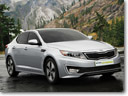 Kia has a lot of experience producing alternate fuel vehicles. The manufacturer has produced its first electric vehicle (EV) – based on the Besta van – as long ago as 1986, and an electric version of the Sportage in 1999.


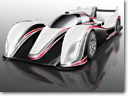 Toyota has announced that will compete in the Le Mans 24 Hours in 2012 with a new hybrid power sports car. The manufacturer will return to the world’s most famous endurance race will be with a new LMP1 chassis designed, developed and produced by Toyota Motorsport in Germany, equipped with a hybrid petrol powertrain engineered by Toyota in Japan.
