Tag: Hybrid

  • 2013 Volkswagen Jetta Hybrid – US Price $24,995

    Volkswagen has announced the new 2013 Jetta Hybrid. The new Jetta Hybrid can go in pure electric mode, and therefore with zero emissions, at speeds of up to 70 km/h (44 mph) and over a distance of 2 km (1.3 miles). It also boasts an extremely low (combined) fuel economy value of 45 mpg.

    2013 Jetta Hybrid is powered by a 1.4-liter TSI and an electric motor. The power is put on the road through to a 7-speed DSG gearbox. The overall power is 170HP (127 kW) and 250Nm (184 lb-ft) of torque. 0-100 km/h in 9 seconds and fuel consumption of just 5.2 liters per 100 km in the combined cycle.

    The petrol engine can be fully disengaged, when the car is in pure electric driving mode or ‘sailing’ mode (coasting / braking). Therefore, during braking, the Jetta Hybrid switches over to a battery regeneration mode, which ‘captures’ kinetic energy and feeds it into the battery as electrical energy.

    The 2013 Volkswagen Jetta Hybrid SE include 15” alloy wheels fitted with all-season, low-rolling resistance tires. The mid-range SEL1 comes with 16” wheels, electric sunroof, electric adjustable driver’s seat, SAT NAV, front heated seats and keyless access. The top of range SEL2 rides on 17” alloys and adds bi-xenon headlights, fog lights and 400 WATTS Fender premium sound system.

    Extensive safety and convenience features

    Electronically stabilised. Standard equipment in the new Jetta Hybrid includes an electronic stabilisation programme (ESP), anti-lock braking system (ABS) and six airbags (driver and front passenger airbags, side airbags in front as well as window airbags, front and rear). This pack can be extended to include rear side airbags as an option.

    SE – specified exterior. Visually, even the base version (SE) of the Jetta Hybrid is distinguished by aerodynamic modifications that include a new front spoiler, a rear diffuser and a rear spoiler that is harmoniously integrated into the design. The results: the car’s Cd value was improved by 10 per cent. In addition, the Jetta Hybrid SE is equipped with a new LED rear lights design and special 15-inch alloy wheels with all-season tyres optimised for low rolling resistance. Hybrid signatures on the front, rear and side body panels identify the new drive version. Other distinguishing features: a special radiator grille where the VW logo is integrated on a blue background for the first time. Exclusively reserved for the Jetta Hybrid is the new body paint ‘Oryx white’.

    SE – upgraded interior. Inside, the car features high-end seat covers in ‘Titan black’ or ‘EcoTech’ design and new accent strips with the ‘Hybrid’ chrome signature, which identify the car as the Jetta Hybrid SE. A 2-zone automatic climate control system (Climatronic) with a new high-voltage air conditioning compressor ensures that the interior can be cooled even without the petrol engine running. Compared to the Climatronic used to date, this system also has the new ‘maxAC’ function, which cools down the interior very quickly at the press of a button. The technology of the Jetta Hybrid SE was perfected by specific instruments that include an energy flow diagram in the Premium 8 audio system, a trip computer, hands-free telephone system (Bluetooth) and interface for iPod and other multimedia sources as well as a multifunction leather-wrapped steering wheel.

    SEL1 and SEL2 are high-end. In the mid-level equipment version, the SEL1, standard features of the new Volkswagen are extended with such details as 16-inch alloy wheels, a tilt/slide glass sunroof, RNS 315 navigation system, electric driver’s seat adjustment, seat heating in front, and the Keyless Access system for door locking and engine starting via a Start button. Customers who order the top version, the SEL2, can also enjoy details such as 17-inch alloy wheels, newly developed bi-xenon headlights with dynamic cornering lights and automatic motorway lights, fog lights, reversing camera and a new Fender sound system with 400 Watts of output power. And that is how it should be. After all, who says that maximum sustainability cannot be fun as well?

    Source: Volkswagen

  • Kepler Motion Supercar – 800HP Hybrid [video]

    Kepler Motors has officially announced the Motion Hybrid Super car at the 2009 Dubai Motor Show. The first deliveries of this monster were scheduled for the end of 2011, but that not happened. Still, the manufacturer has released a new promo video of their model.

    Kepler Motion Super car is powered by a modified twin-turbo 3.5 liter V6 EcoBoost engine with 550HP (410 kW) driving the rear wheels and the front wheels are driven by a mighty 250HP (186 kW) electric motor. This means a combined power of 800HP (597 kW), so the performance is exceptional – 0-100 km/h in 2.5 seconds and a top speed of over 322 km/h (200 mph).

    Motion is a real hyper car like Zonda R and Veyron. It features a carbon fiber monocoque chassis, active aerodynamics and active suspension. There are also StopTech Continuous Carbon Ceramic AeroRotors and a programmable track assistant system.

    Check out the video below!

    httpv://www.youtube.com/watch?v=sUNtwqyhu_A

    Source: Kepler via Youtube

  • Volkswagen Jetta Hybrid – Speed Record at Bonneville

    After becoming the world’s fastest hybrid at Bonneville in August, the Volkswagen Jetta Hybrid LSR returned to the Salt Flats on October 5th to break the Southern California Timing Association’s (SCTA) H/PS land speed record. The class is for production cars with engines of less than 1.5 liters that use forced induction.

    Motor Trend Associate Road Test Editor Carlos Lago averaged 186.313 mph over two runs during the SCTA’s World Finals event, eclipsing the previous record by 18.8 mph. In the course of making his second run, Lago averaged 187.147 mph for the last mile, beating the magical 300 km/h mark. This is also the fastest run recorded by a hybrid, beating the185.394 mph set by the same car back in August.

    “We’re very proud that the Jetta Hybrid has not only posted the fastest speed for a hybrid at Bonneville, but that it has gone out and broken an SCTA land speed record as well,” said Jonathan Browning, CEO and President, Volkswagen Group of America. “Achieving this record at Bonneville shows that the all-new 2013 Jetta Hybrid is a distinctly different offering in the compact hybrid class, offering excellent fuel economy while retaining the fun-to-drive nature expected from a Volkswagen.”

    Lago drove a Jetta Hybrid specially modified to run in the SCTA’s H/PS class. The all-new 2013 Jetta Hybrid marries a 1.4-liter turbocharged, direct-injection four-cylinder TSI® gasoline engine with a seven-speed DSG® dual-clutch automatic transmission and an electric motor. The combined output of the engine and electric motor is 170 horsepower, along with 184 pound-feet of torque.

    Because the Jetta Hybrid runs in a production-car class, modifications are strictly controlled by the SCTA. The suspension was lowered, special Salt Flat wheels and tires fitted, and the interior was stripped and outfitted with full safety equipment, such as a rollcage, racing seat and harness, and a full fire suppression system. The powertrain is the area with the most freedom under the rules and was modified by Volkswagen R&D in Wolfsburg, Germany, in order to make the kind of horsepower needed to run at such high speeds at Bonneville-in this case, somewhere around 300 hp.

    Project integration and other modifications to enable the car to run safely on the salt were handled by A-Salt Racing and Advanced Product Engineering, based in Camarillo, California. The implementation and final calibration of the drivetrain in the car was supported by the engineers from the Volkswagen Test Center California in Oxnard, CA.

    “We are really proud that our new Jetta Hybrid has taken the land speed record for its class,” said Marc Trahan, Executive Vice President, Group Quality. “This was a fascinating project for our engineering team in Wolfsburg, who had to integrate the complex hybrid elements and generate a lot of additional power in a very short period of time in order to take the record. The Jetta Hybrid LSR project shows both the sporty nature of our hybrid offering and the technical excellence of our engineers in Wolfsburg and the Test Center California.”

    Volkswagen chose to partner with Motor Trend because it is one of the premier automotive enthusiast outlets in the world, with 1.1 million subscribers to the magazine, 5.5 million unique visitors to motortrend.com per month, and an increasingly popular YouTube channel that has 405,000 subscribers. Carlos Lago, who drove the Jetta, said: “It was an honor to drive the car on the Salt-and also pretty exciting. Driving in a straight line may look easy, but it’s a real art to get the power down on the salt and you had better be paying attention to crosswinds, as they can really blow the car off course. Now I have the bug, I really want to become a member of the exclusive 200-mph club at Bonneville. Maybe next year?”

    Source: Volkswagen

  • BMW test driver crashes in a 3-Series F30 Hybrid

    Horrible accident happened on the Autobahn in Germany. A BMW 3-Series Hybrid Prototype crashed severely in a truck. The driver of the car had no passengers, but he is not alive. The crash was on September 21 on the A92 near the automaker’s Dingolfing factory.The test driver obviously was running the 3-Series Hybrid at high speeds while passing several trucks and one of them pulled out. Despite the reaction of the driver, he didn’t manage to safe himself and the impact was inevitable. The car went under the rear trailer and he had no chance (check the pictures).The A92 was closed for several hours due to the difficulties of recovering the crashed car.Of course, there is ongoing investigation which will explain how this terrible accident happened.May the driver rest in peace.

  • The Honda CR-Z

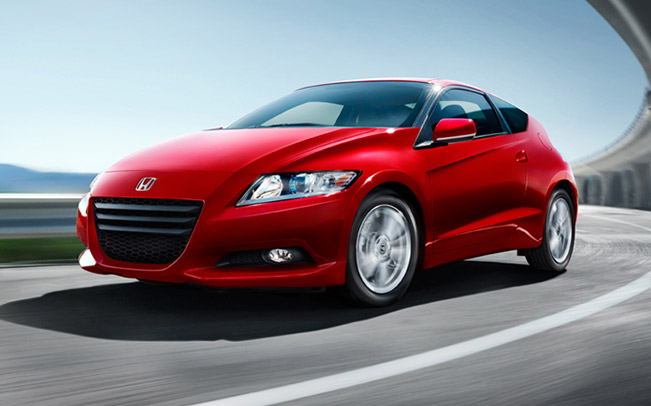
    2010 Honda CR-ZLaunched in 2010 Honda’s CR-Z was widely considered a ground-breaking sporting hybrid from one of the world’s leading car manufacturers. “Hybrid” and “sporting” are problematic concepts when put together: in nature a hybrid car is usually heavy due to the presence of two separate motors and a hefty battery pack. Sports cars, on the other hand, need to be light in order to be fast, and their need for speed often compromises on the ecological economy required in a hybrid. Honda’s CR-Z however, married the two in a successful vehicle.

    Weighing 132lb the honda crz’s electric motor, measuring just two inches across, fits snugly between the car’s engine and its six-speed manual transmission. Beneath the floor of the boot is concealed its nick-metal hydride battery and power electronics provided by Panasonic. The electric motor adds a bit of oomph to the wheels when the driver accelerates rapidly, and can even act as a generator during overrun or when the car brakes. The results? The sporty coupe goes from 0 to 62 in 9.9 seconds, hits a top speed of 124mph and delivers 56.6mpg in its Combined cycle.

    Since its launch two years ago the CR-Z has been a big success for Honda and a major step in their journey towards total fuel economy. Although it was met with steep competition at the time from the likes of Renault’s Megane Coupe 1.5 dCi 86 and the BMW 118d Couple the CR-Z continued to attract drivers and now it looks set for an overhaul as Honda have recently revealed tantalising images suggesting an update to their hybrid success story.

    Exactly what this reissue will entail is not yet clear, but Honda have been known to continually improve on their most popular vehicles by responding to the feedback and criticisms of their customers.

  • Mercedes-Benz E 300 BlueTEC Hybrid – 4.2 l/100 km and 109 g/km of CO2

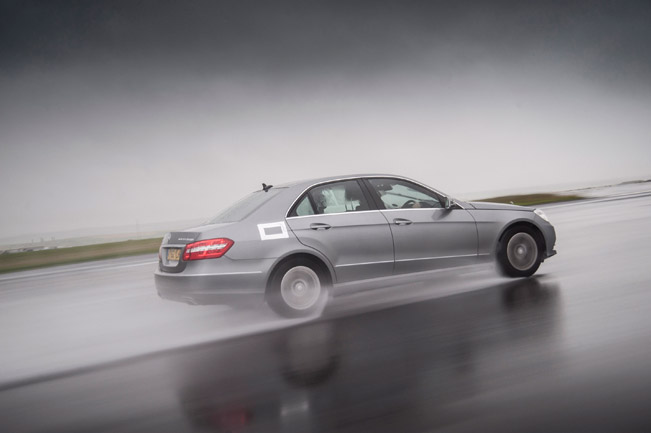
    Mercedes-Benz E 300 BlueTEC HYBRID has been put on a challenge in order to test the theory in the real-world. The very first example of the car to arrive in the UK set out on an economy run – with a twist – to prove that driving fun and efficiency can be combined. The stated data is sensational – 0-100 km/h in 7.5 seconds and a top speed of 242 km/h (150 mph). What is more, the big family saloon can achieve a fuel consumption of just 4.2 liters per 100 km with emission of 109 g/km of CO2.

    First, driving duties were handed over to ex-rally driver Mick Linford. Next, the E 300 BlueTEC HYBRID started its economy run in the unlikely surroundings of the main runway at Newquay Cornwall Airport – the most southern active airport in mainland Britain. Here the car accelerated from rest to 62 mph in a little over seven seconds before achieving a peak speed of 136 mph.

    The car was then driven entirely normally the 830-miles north to its counterpart in Scotland – Wick Airport – the most northern airport in mainland Britain. Over the course of the two-day journey it encountered real-world driving conditions, including heavy traffic, diversions and challenging weather.

    On arrival at Wick Airport the E 300 BlueTEC HYBRID achieved a maximum speed of 120 mph down the runway, which was 911 metres shorter than at Newquay.

    The engineering team behind the E 300 BlueTEC HYBRID aimed to strike a balance between delivering everyday economy and performance, when required. Over a distance of 830-miles and two days, the car achieved a peak speed of 136 mph. It returned economy of 67.3 mpg.

    The entire trip was carried out on a single tank of fuel – of which a quarter remained on its arrival in Wick. Had the car carried on driving it would have achieved a theoretical range in excess of 1,100-miles.

    This extraordinary economy is made possible through a hybrid system linked to the efficient four-cylinder diesel engine – an electric motor is mounted within the 7G-TRONIC PLUS automatic transmission. The gearbox substitutes a torque converter for a wet clutch system, therefore allowing for the internal combustion engine to be disengaged entirely via the clutch and for electric-only drive to be maintained for short periods, boosting economy. The system is intricately packaged within the vehicle so as not to impact on the load capacity of the E-Class in any way.

    The new E 300 BlueTEC HYBRID is now available on the market in both saloon and estate models. Prices start at £39,645 OTR for the saloon and £41,435 OTR for the estate.

    Source: Mercedes-Benz

  • Affordable Infiniti M35h GT

    Infiniti-M35h-GT-thumbThe acclaimed fastest accelerating hybrid V6 saloon – the Infiniti M line – gets a new version model. It’s the M35h GT: a notch cheaper than the M35h GT Premium. Quite a notch actually, with £3970 in savings.
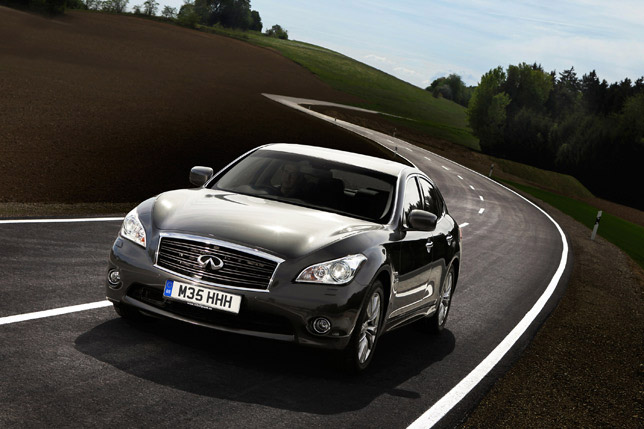
    It is actually cleaner and more economical as an entry level version. It’s bellow the 160 g/km CO2 emission threshold. Nevertheless, you still get 302 hp from the 3.5 V6 power plant and 67 bhp from the electric motor that sends its power through a second clutch to the back axle.

    Also, recent customer feedback have prompted the Infiniti people to offer separately the Connectiviti+ navigation system and the 16-speaker Bose surround sound system. Two entities that usually went as a package previously. As an option, you can also get a climate control system which Infiniti have named Forest Air. The seats will also be heated or ventilated, the lights will be bi-Xenon and will veer left and right depending on the steering input and the interior will be garnished with a white ash wood trim that’s been sprinkled with real silver powder.

    What you don’t get on the GT but on the Premium GT is Blind Spot Intervention, Intelligent Cruise Control (ICC) and Lane Departure Warning (LDW) and Prevention (LDP).

    Infiniti M35h GT
    Infiniti M35h GT

    Source: Infiniti

  • Toyota TS030 Hybrid at the Le Mans

    Toyota-TS030-Hybrid-THUMBToyota TS030 Hybrid is the model with which the Japanese automaker will return to the Le Mans 24-hour race the forthcoming week. On the race track we will see not one but two of these competing hybrids.

    Toyota aims with these hybrid vehicles to write a new page in the history of the legendary twice-around-the-clock enduro, with the help with their unique technologies. Both TS030 Hybrids display their new Toyota hybrid-blue livery.

    Furthermore, both racecars are equipped with the 2012 THS-R (Toyota Hybrid System – Racing) powertrain. The latter is designed to deliver optimum performance and includes theall-new V8 3.4-litre normally-aspirated petrol engine and hybrid system with capacitor storage.

    Toyota TS030 Hybrid
    Toyota TS030 Hybrid

    Of course, being a true Toyota’s full hybrid road car, the TS030’s energy is regenerated under braking and the vehicle can work in electric-only mode, thus achieving zero emissions and zero fuel consumption.

    This means that it either delivers faster lap times through improving speed on the exit of corners, or one chooses to save fuel by using the internal combustion engine less on corner exit and allowing the hybrid system to compensate.

    Few days more to go and we will eventually understand whether the goal of Toyota is achievable, and it is to show that the TS030 Hybrid is the fastest hybrid car on the grid.

    Toyota TS030 Hybrid
    Toyota TS030 Hybrid
    Technical Specifications
    Designation TS030 HYBRID
    Type Le Mans Prototype (LMP1)
    Bodywork Carbon fibre composite
    Windscreen Polycarbonate
    Gearbox Transversal with 6 gears sequential
    Gearbox casing Aluminium
    Driveshafts Constant velocity tripod plunge-joint driveshafts
    Clutch Multidisc
    Differential Viscous mechanical locking differential
    Suspension Independent front and rear double wishbone, pushrod-system
    Springs Torsion bars
    Anti roll bars Front and rear
    Steering Hydraulically assisted
    Brakes Dual circuit hydraulic braking system, mono-block light-alloy brake callipers front and rear
    Discs Ventilated front and rear in carbon
    Rims Magnesium forged wheels
    Front rims 14.5 x 18 inch
    Rear rims 14.5 x 18 inch
    Tyres Michelin radial
    Front tyres 36/71-18
    Rear tyres 37/71-18
    Length 4650mm
    Width 2000mm
    Height 1030mm
    Fuel capacity 73 litres
    Powertrain Toyota Hybrid System – Racing (THS-R)
    Engine 90° V8 normally aspirated engine
    Fuel Petrol
    Engine Capacity 3.4l
    Valves 4
    Air restrictors 1 x 43.3mm
    Capacitor Nisshinbo
    Front Hybrid Motor Aisin AW
    Rear Hybrid Motor Denso

    Source: Toyota

  • Seat Leon TwinDrive Hybrid and Seat e-Altea XL to conquer Barcelona

    Seat-THUMbSeat Leon TwinDrive Hybrid and Seat e-Altea XL will be proudly used by the officials at Barcelona City Hall. The latter will be testing these vehicles in its municipal car fleet for an initial six-month trial period.

    The aim of this is to gather information and assess performance prior to mass production of electric vehicles. In fact, Seat e-Altea XL is the first electric car produced by the Spanish brand; hence the data is much needed.

    Seat is developing two different technologies through the hybrid and electric vehicles and by this action is trying to stay in accordance with the demands of the market.

    In addition to this event, Seat has also loaned one e-Altea XL to Endesa, and another to the Catalan Energy Institute (ICAEN). Further two TwinDrive Hybrids will also go to these organisations mentioned.

    It is obvious that the company is immersed in the first stage of the introduction of an electric car. Their vision will include a further loan of vehicles to different governmental departments, institutions, and private companies interested in eco-friendly fleets over the forthcoming months.

    Seat Leon TwinDrive Hybrid and Seat e-Altea XL
    Seat Leon TwinDrive Hybrid and Seat e-Altea XL

    To go further into details, Seat Altea XL Electric Ecomotive and Seat Leon TwinDrive Ecomotive are two vehicles with different but complementary technologies.

    The Altea XL has a range of 135 kilometres, a power output of 115 hp (85kW) and engine torque of 270 Nm (200 lb-ft). Its top speed is 135 kph. Furthermore, there are several innovative features that can be found on it. For instance, the battery location is under the rear seats and the boot. This had basically lead to no reduction in passenger compartment space.

    Another interesting technology is the photovoltaic panels on the roof. They serve as means to cut energy requirements for the vehicle’s air-conditioning.

    On the other hand the Seat Leon TwinDrive Ecomotive features the benefits of emission-free driving to the range of a conventional petrol-engine car. Being a true hybrid, this vehicle allows all-electric or hybrid driving. The conclusion is that no change in driving habits or life style is required.

    In particular, it has a range of 52 kilometres in electric mode, with a top speed of 120 kmh. In mixed mode, which is called electric and combustion, the consumption of fuel is 1.7 litres, while the emissions are under 39 g/km. The top speed of the hybrid is 170 kph.

    Seat Leon TwinDrive Hybrid and Seat e-Altea XL
    Seat Leon TwinDrive Hybrid and Seat e-Altea XL

    Source: Seat

  • 2012 Lexus GS 450h features 254kW Atkinson cycle hybrid drivetrain

    2012-lexus-gs-450h-full-hybrid-THUMB2012 Lexus GS 450h is the most efficient GS ever created by the brand. It includes an advanced petrol-electric hybrid drivetrain which will contribute the model to become of the most efficient vehicles in its class.
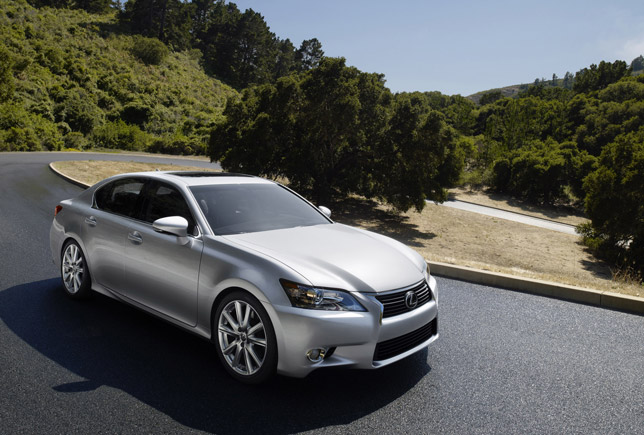
    Thank to its unique hybrid system, the Lexus’ efficient hybrid powerplant consumes just 6.3 litres of fuel per 100km. This means in fact that the new customers will save circa twenty percent from fuel in comparison to the outgoing model. At the same the CO2 emissions have been also reduced significantly to the number of 147g/km.

    The performance of this Lexus hybrid vehicle is reassured by a combined power output of 254kW. Thank to it, the 450h can accelerate from 0-100km/h in just 5.9 seconds.

    What is more here, compared to its predecessor, the GS 450h also offers greater space and onboard technology. This is mainly due to the redesigned chassis. There is also forty-five percent more boot space which now is increase from 320 to 465 litres.

    2012 Lexus GS 450h
    2012 Lexus GS 450h

    Another interesting fact here is that the GS 450h is actually the first hybrid vehicle, which comes equipped with all-wheel steering. And in particular, it is the first one to include an Atkinson cycle engine driving the rear wheels, and the first Atkinson cycle engine to feature direct and port injection.

    In terms of security and safety features, there are some innovations included, such as: an advanced Pre-Collision safety System (PCS), a Driver Fatigue Monitor camera, and a complementary Adaptive Cruise Control system (ACC). The latter now operates at all speeds down to 0km/h.

    Additionally, the safety suite is enhanced by a Blind Spot Monitor, which now comes as a standard to detect vehicles in adjacent lanes, and an expanded Head Up Display (HUD) unit. This unit shows the road speed, cruise control, gear position, turn-by turn navigation and tachometer.

    GS 450h models will be offered in three trim levels: Luxury, F Sport and Sports Luxury, which are expected to be launched in June this year.

    2012 Lexus GS 450h Technical Specifications:

    Engine
    Engine type 2GR-FXE 3.5L V6
    Capacity (cm3) 3.456
    Cylinders/valves V6/24
    Engine configuration Atkinson cycle, six cylinders, V-formation, 24-valve, DOHC, four valves per cylinderand alloy cylinder block. Featuring direct and port injection
    Bore x stroke (mm) 94.0 x 83.0
    Compression ratio 13.0
    Max. combined output 254kW
    Max. engine output 215kW @ 6,000rpm
    Max. engine torque 352Nm @ 4,500rpm
    Hybrid battery type Nickel-Metal Hydride (Ni-MH)
    voltage 650V
    Max. motor output 147kW
    Max. motor torque 275Nm
    Transmission
    Type Six-step E-CVT (Electronic Controlled Continuously Variable Transmission) with paddleshift
    Steering
    Turning diameter (m@body) 11.2, or 10.8 with rear steer
    Luxury Rack and pinion, Electric Power Steering (EPS)
    F Sport Rack and pinion EPS with Variable Gear Ratio Steering and Dynamic Rear Steering
    Sports Luxury Rack and pinion EPS
    Seating capacity
    No of seats 5
    Exterior dimensions (mm)
    Overall length 4,850
    Width 1,840
    Height 1,455
    Wheelbase 2,850
    Interior dimensions (mm)
    Front to rear couple distance 945
    Front legroom 1,075
    Rear legroom 935
    Driven wheels
    Type of drive Rear-wheel drive
    Wheels and tyres
    Luxury 18 x 8J alloy (F/R) Dunlop 235/45 R18 94Y (F/R)
    F Sport 19 x 8J (F), 19 x 9J (R) alloy Bridgestone 235/40 R19 96Y (F) 265/35 R19 94Y (R)
    Sports Luxury 18 x 8J (F/R) alloy Dunlop 235/45 R18 94Y (F/R)
    Brake type
    Ventilated front and rear disc with Anti-lock Braking System (ABS), Electronic Brake-forceDistribution (EBD), Brake Assist (BA) and Vehicle Dynamics Integrated Managementsystem (VDIM)
    Luxury 334 x 30mm front 310 x 18mm rear
    F Sport 356 x 30mm front 310 x 18mm rear (Two-piece rotors front with four piston calipers)
    Sports Luxury 334 x 30mm front 310 x 18mm rear
    Performance
    0 – 100km/h (s) 5.9
    Max. speed (km/h) 250 (limited)
    Fuel consumption (L/100 km)*
    Combined 6.3
    Urban 6.9
    Highway 5.8
    * Fuel consumption will vary depending on driving conditions/style,vehicle conditions and options/accessories. Source of fuel consumption data: ADR81/02 combined cycle.
    CO2 emissions (g/km)
    Combined 147

    Source: Lexus

  • 2013 Nissan Cima delivers comfort and luxury

    2013-nissan-cima-THUMB2013 Nissan Cima has been launched today and will go on sale in less than a month – on 21st of May. The new version of the model delivers excellent driving performance, advanced equipment and latest technologies.

    This in fact is the fifth generation of the model, which is going to be released. Although it continues the design language of its predecessor, it also features a lot of distinguish enhancements.

    Moreover, it is promised to combine exceptional engine performance with superior environmental performance. Of course, high levels of comfort and safety is its attributes as well.

    The exterior design of the vehicle now includes a large grille and bumper, long wheelbase of over 3 meters and flowing side view.

    In addition, the Nissan vehicle is providing great ride comfort and quietness thanks to its refined comfort suspension, sound-absorbing tires and Active Noise Control. In the rear seats are featured best-in-class knee room and a range of comfort equipment. This equipment includes 7-inch wide display integrated with the front seat headrest, overhead reading light, vanity mirror and sunshade.

    More importantly, the new Cima achieves 20% improvement in terms of fuel economy. The car in addition is based on the two-pillar strategy “zero emissions” and PURE DRIVE, which help reduce the CO2emissions. In fact, the new Cima is one of the PURE DRIVE vehicles equipped with Nissan’s original hybrid system.

    Exterior Design of the CIma delivers Premium Feeling and Strong Presence. It includes distinctive front mask featuring a large grille with solid, three-dimensional frame and plating molding bumper. Its flowing silhouette further emphasizes the harmonic exterior and beauty in proportions. The car will be available in five exterior colors, carefully chosen to emphasize the elegant bodylines.

    2013 Nissan Cima
    2013 Nissan Cima

    Next, the Hybrid System included in the car Utilizes Nissan’s “Intelligent Dual Clutch Control”. This is a one-motor two-clutch parallel hybrid system offering an optimal balance of direct response, superb driving feel and low fuel consumption.

    Furthermore, the Cima cmbines a hybrid VQ35HR engine with maximum power of 225kW(306PS)/6800rpm and maximum torque of 350N•m(35.7kgf•m)/5000rpm) with an advanced ‘HM34’ electric motor with maximum power output of 50kW(68PS) and maximum torque of 270N•m(27.5kgf•m)and high-output lithium-ion battery with a quick charge/discharge function, highly-efficient and powerful driving is realized under various driving conditions.

    The engine is mated to an electronic 7-speed hybrid transmission with manual shift mode. Next, the Electro-Hydraulic Power Steering system generates hydraulic pressure and the Electric Driven Intelligent Brake comes with applied electric-type booster.

    Moreover, the Nissan, come equipped with regenerative braking system, meter display that shows various information, including operating conditions of the hybrid system (Energy Monitor), battery remaining capacity, Accelerator Guide, ECO-drive Indicator and a liquid-crystal odometer/twin trip meter (with an EV mode travel distance display function).

    The Advanced Safety Technologies included in the car are: Intelligent Control Assist (Distance Control Assist); Intelligent Cruise Control; Intelligent Brake Assist/Emergency Brake Operated Pre-crash Front Seat Belts; LDP (Lane Departure Prevention)/LDW (Lane Departure Warning)/ FCW (Forward Collision Warning); VDC (Vehicle Dynamic Control including Traction Control System).

    Next, the key features and enhancements of the interior are the following: the 2013 Cima comes with a long wheelbase of over 3 meters, It delivers comfortable and enhanced luxury feeling which is expressed through the use of soft, premium semi-aniline leather and wood grain panels coated with genuine silver powder.

    2013 Nissan Cima Interior
    2013 Nissan Cima Interior

    A lot of attention is put on the rear seats where the passengers will find a lot of comfort. First to be mentioned is the Private Theater System powered by a Bose® 5.1 Surround Sound System with 16 strategically placed speakers.

    Additionally, there are the high-definition 7-inch VGA display installed in the front seat headrests, providing high-quality clear images and enjoy for the rear passengers. Other features include: overhead reading light for rear seats; rear seat personal light and illuminated vanity mirror; electrically operated rear window sunshade; rear door sunshades; DC 12V power sockets on and inside the center console; front passenger seat control switch for adjusting front passenger power seat;

    Source: Nissan

  • 2013 Audi Q5 – the updated high-performance SUV

    2013-Audi-Q5-SUV-THUMB2013 Audi Q5 SUV is all about sportiness and comfort. It is multifunctional and spacious, and now even more efficient. The model comes with updated design, infotainment system, chassis and engines.

    For instance, the 2013 Audi Q5 Hybrid Quattro is the fist hybrid model which the brand is producing. It draws its power from a powerful V6 engine, which however delivers fuel economy of a four cylinder one.

    First, let’s review the engine choice. The upgraded Audi model comes with five engine options: three TDI and two TFSI engines. No matter of the type of the engine, all combine direct fuel injection with charging, and a start-stop system as a standard.

    In addition to this it is important to mention that the engines now are with lower fuel consumption in comparison to the previous model.

    In fact, the most efficient one is the 2.0 TDI engine, which is offered in two versions: the first one is four-cylinder engine in combination with manual transmission and front-wheel drive, which produces 105 kW (143 hp) and 320 Nm (236.02 lb-ft) of torque. It has an average fuel consumption of 5.3 liters of diesel per 100 km (44.38 US mpg) – and a CO2 equivalent of 139 grams per km (223.70 g/mile).

    The second one is with 130 kW (177 hp) and 380 Nm (280.27 lb-ft) of torque (with S tronic and quattro drive) and has a fuel consumption value of 6.0 liters per 100 km (39.20 US mpg).

    The third available engine is the 3.0 TDI, which delivers 180 kW (245 hp) and 580 Nm (427.79 lb-ft) of torque. It comes with V6 diesel engine and is mounted to a seven-speed S tronic and quattro drive system.

    This engine helps the Q5 to accelerate from 0 to 100 km/h (62.14 mph) in 6.5 seconds and has a top speed of 225 km/h (139.81 mph). The figure of its combined fuel consumption is just 6.4 liters of fuel per 100 km (36.75 US mpg).

    Furthermore, in the engine range are also included gasoline engines, which feature the highlight of the TFSI engine line-up. Namely, it is the new two-liter, four-cylinder engine which includes innovations such as in the control of valves and their stroke, innovative thermal management, the fuel injection system, turbocharger and integration of the exhaust manifold in the cylinder head.

    Next the new 2.0 TFSI outputs 165 kW (225 hp) and 350 Nm (258.15 lb-ft). Its fuel consumption is 7.6 liters per 100 km (30.95 US mpg).

    More impressive in terms of performance is the new 3.0 TFSI – the three-liter V6 engine with supercharging. This one replaces the 3.2-liter engine. It deliver 200 kW (272 hp) of power and 400 Nm (295.02 lb-ft) of torque.

    The acceleration from 0 to 100 km/h (62.14 mph) for this one is possible in 5.9 seconds. With it the car has a top speed of 234 km/h (145.40 mph), and combined fuel consumption of 8.5 liters per 100 km (27.67 US mpg).

    Important changes in the Audi SUV have been made in terms of transmission as well. Each of the models now comes with an optimal transmission system.

    For instance, the four-cylinder engine works with a manual six-speed transmission. This is the standard equipment of the engine.

    On the other hand the eight-speed tiptronic is available as an option for the 2.0 TFSI with 165 kW (225 hp). This one comes as standard in the 3.0 TFSI.

    Next, the sporty seven-speed S tronic is standard transmission in the 3.0 TDI. It is optionally available in the 2.0 TDI with 130 kW (177 hp).

    What comes also as a standard on all versions (except for the 2.0 TDI engine) of the Q5 is the quattro permanent all-wheel drive system.

    Additional changes have been made to the chassis, which now comes with new refinement and comfort in the characteristics of the springs, shock absorbers and stabilizers. The new electro¬mechanical power steering system gives the driver a better feel for the road with direct gearing.

    Furthermore, 2013 Audi Q5 runs on 17-inch aluminum wheels and size 235/65 tires.

    Another exceptional feature in the Audi Q5 is the Audi drive select system. It allows the driver vary the characteristic of the accelerator pedal, the shift points of the automatic transmission, amount of power steering assist and operation of the automatic air conditioning system via four modes.

    2013 Audi Q5 SUV
    2013 Audi Q5 SUV

    As you can clearly see the Audi Q5’s exterior is progressive and sporty, spacious and functional. It has a coupe-like roof line and wrap-around tailgate. The interior design of the headlights has been modified; the LED daytime running lights of the optional xenon plus units are shaped as curved bands that surround the headlights.

    The high-gloss black Singleframe grille has beveled upper edges; its vertical chrome struts and the Audi rings have a sculpted look. In addition, bumpers are modified and integrate air inlets with high-gloss black inserts and fog lights with chrome rings.

    The new Audi Q5 is available in wide range of fifteen colors, four of which are new.

    In terms of upgrades in dimensions, the SUV is now 4.63 meters (15.19 feet) long, 1.90 meters (6.23 feet) wide and 1.65 meters (5.41 feet) tall. Its drag coefficient is 0.33 and its frontal area is 2.65 m2 (28.52 square feet); the curb weight of the base version is 1,755 kg (3,869.11 lb).

    The interior of the Audi Q5 has also been restyled. For example, many of the user controls have narrow chrome trim; the steering column control stalks, ignition key and instruments were as well modified. Additionally, the narrow panels of the center console are high-gloss black.

    Other refinements have been made to the controls for the seat heating, air conditioning system, Audi drive select system and the multifunction steering wheel.

    Of course, throughout the interior can be seen a lot of efforts put in terms of details. All this has been done with high-quality of craftsmanship and precise selections of materials, colors and upholstery fabrics.

    Moreover, the interior now comes in three new interior colors, three fabric and three leather qualities.

    Audi delivers a wide selection of infotainment systems in the upgraded Q5: the Bang & Olufsen sound system, MMI navigation plus with a large hard drive, seven-inch color monitor, 3D graphics and DVD player.

    2013 Audi Q5 SUV Interior
    2013 Audi Q5 SUV Interior

    2013 Audi Q5 Hybrid Quattro is a version of the model which in fact is the first hybrid model from Audi. It is highly efficient and yet powerful. It draws its power from the 2.0 TFSI engine which produces 155 kW (211 hp) and 350 Nm (258.15 lb-ft) of torque as well as an electric motor with a peak output of 40 kW (54 hp) and peak torque of 210 Nm (154.89 lb-ft).

    Combined, the two power sources can output a system power of 180 kW (245 hp) and a system torque of 480 Nm (354.03 lb-ft).

    In particular, this make possible for the hybrid to accelerate from 0 to 100 km/h (62.14 mph) in 7.1 seconds and to reach a top speed of 225 km/h (139.81 mph).

    Another important fact is that in pure electric mode, it can cover up to three kilometers (1.86 miles) at a constant speed of 60 km/h (37.28 mph). In this mode, its top speed is 100 km/h (62.14 mph), while its combined fuel consumption is just 6.9 liters per 100 km (34.09 US mpg).

    Furthermore, the Q5 hybrid comes equipped with an eight-speed tiptronic transmission which transfers engine power to the drivetrain without requiring a torque converter.

    Here, driver switches between the three driving modes with the help of a button and a tiptronic gear selection lever. The EV characteristic map prioritizes the electric drive. The D mode controls both the internal combustion engine and electric motor. At last, the S mode and the manual shift gate of the tiptronic are stand for more sporty style of driving.

    The 2013 Audi Q5 Hybrid Quattro can be recognized by its siblings by its entirely painted bumpers and by the hybrid-specific ten-arm turbine design of its wheels. It runs on 19-inch wheels are standard.

    The new 2013 Audi Q5 SUV will be available at dealerships this summer with a starting price of 39,900 euros.

    Source: Audi