 The Volvo ReCharge Concept on display at the Paris Motor Show is a groundbreaking plug-in hybrid. The specially designed Volvo C30 features individual electric wheel motors and batteries that can be charged via a regular electrical outlet. (more…)
Tag: Hybrid
-
Groundbreaking plug-in hybrid – the Volvo ReCharge concept
-
Honda Insight Concept Hybrid Vehicle Revealed at Paris Motor Show
 Honda today revealed a concept version of its new small hybrid vehicle, named Insight, at the 2008 Paris Motor Show. The new Insight Concept shares styling cues with the Honda FCX Clarity fuel cell vehicle and provides an early look at the highly anticipated five-passenger hybrid vehicle. (more…)
-
Fifth generation BMW 7 series breaks cover
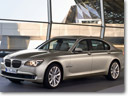 It looks a lot like the outgoing model, but BMW says the fifth-generation 7 Series is all new.
The car, which will make its world premiere at the Paris motor show this fall, takes styling cues from the CS concept BMW showed in Shanghai in 2007, though the new 7 can best be described as evolutionary rather than revolutionary as the last generation was. (more…)
-
2009 Ford Escape

 2009 Ford Escape, equipped with a 2.5-liter four-cylinder engine and six-speed automatic transmission, is the coveted fuel economy leader among all small SUVs.
With fuel prices at record highs, the 2009 Ford Escape with front-wheel drive is the smart choice for SUV customers, thanks to its 28 highway/20 city mpg, fun-to-drive performance.
“With gas prices rising, we want to offer our customers even more fuel-efficient vehicles,” says David Finnegan, Escape marketing manager. “At the same time, we don’t want to compromise performance. The 2009 Escape proves that we can provide customers best-in-class fuel economy without asking them to sacrifice.”
“Escape has it all – more horsepower, a smoother, more refined ride and class-leading fuel economy,” Finnegan added. “Coupled with the fact that we offer the Escape Hybrid, the most fuel-efficient SUV on the planet, the story can’t get much better for small SUV customers.”
Power of the Powertrain
The Escape’s 2.5-liter I-4 engine produces 171 hp, an 11 percent increase in power output versus the 2.3-liter version it replaces. The engine uses intake variable cam timing (iVCT) technology to optimize valve timing, creating a broad torque curve that helps deliver the increased power along with the improved efficiency.
The powertrain also incorporates electronic throttle control (ETC), dual-mode crankshaft damping and intake and exhaust manifolds, which refine performance and contribute to greater fuel efficiency.
Pairing the engine with the optional six-speed automatic transmission further drives Escape’s competitive advantage, contributing up to a 6 percent increase in fuel efficiency.
Gearing efficiencies and calibration changes help drive the significant gains as well, said Derek Bier, Escape Vehicle Engineering supervisor.
Six-speed transmission, for example, is calibrated for fuel efficiency while cruising in sixth gear – without sacrificing launch feel and performance feel in lower gears. It also has an adaptive shift feature that learns shift patterns and optimizes for each vehicle and driver style.
In addition, the six-speed has an integral cold-weather bypass for quicker warm-ups, lubricating the engine faster at each turn of the ignition key. This delivers real-world fuel economy gains.
“Typically, you have to choose performance or fuel economy. Escape, it’s an ‘and’ proposition, not an ‘or,’ ” Bier said of the powertrain and six-speed automatic transmission package. “A 2009 I-4 is as fast as a 2008 Escape V-6. In turn, a 2009 Escape V-6 delivers the same fuel economy as a 2008 Escape I-4.”


Aero and More
Two seemingly subtle aerodynamic changes also play a part in the Escape’s fuel economy story.
Front chin spoiler and rear tire spoilers help reduce wind drag. These modifications account for a 17-count aero improvement, said Bier. This means customers gain 0.75 mpg when travelling at 70 mph.
Escape also features low-rolling-resistance tires. Developed in cooperation with Michelin, the 16-inch Latitude Tour tires have a unique mold design, reduced weight and tread pattern that all work together to produce less friction with the road, reducing fuel consumption.
The tires also contribute to Escape’s refined performance. “The tires improve braking, deliver more precise handling, responsive steering and reduce noise,” said Bier.
The 3.0-liter V-6
The improved 3.0-liter V-6 available on the 2009 Escape is writing its own important chapter in Ford’s fuel economy story.
The V-6 delivers 40 more horsepower than its 2008 predecessor for a total of 240 horsepower, and paired with the six-speed automatic transmission, this more powerful engine is producing a 2 mpg improvement on the highway for both front-wheel and all-wheel drive configurations – delivering 26 mpg and 24 mpg, respectively.
The 3.0-liter debuts an industry-first Cam Torque Actuated (CTA) iVCT technology that uses available camshaft torsional energy rather than pressurized oil to phase the camshafts. This allows for a smaller displacement oil pump over traditional hydraulic VCT systems for improved fuel economy.
“With this technology, we are taking energy that is in your engine today – energy that was previously wasted – and using it to make an engine more efficient,” said Steve Wilkie, supervisor of Cam Drive/VCT Design.
“As we launch the Escape, we are touting performance and fuel economy,” he added. “The cam torque actuated technology is a significant player in the 3.0-liter’s ability to provide customers both.”
This innovative method uses torsional energy to move the camshafts similar to the way a hydraulic ratchet works. The system takes oil from one side of the phaser and channels it to the other side, rather than draining one side and filling the other as with a traditional hydraulic system. This allows the CTA system to work more efficiently at all engine speeds and it requires a smaller oil pump, which equates to lower parasitic energy loss.
CTA, in this case, reduces oil pump flow requirements by 25 percent, producing a fuel economy benefit up to 0.4 percent.
In addition, the CTA-based system responds more quickly than a traditional hydraulic oil actuated VCT system, improving tip-in performance feel and contributing to horsepower gains.
Hybrids
Escape Hybrid continues to deliver fuel economy gains as well, strengthening its title as the most fuel-efficient and environmentally friendly SUV on the planet. For 2009, the Hybrid achieved a 1 mpg improvement on the highway, for 34 city/31 highway mpg.
The upgraded Hybrid model will use 2.5-liter I-4 designed to run on the Atkinson combustion cycle. Engine processor enables nearly imperceptible transitions between gas and electric vehicle mode. Plus, control system enhancements offer customers more electric mode driving, switching over from gas at 35 mph rather than 25 mph with the previous model.
The Escape Hybrid also features powertrain damping system to reduce vibrations and feedback to the driver and other occupants.
BETTER FUEL ECONOMY, ENHANCED POWER DRIVEFORD ESCAPE, MERCURY MARINER MODELS FOR 2009
Powertrain lineup, with a more powerful and fuel-efficient 2.5-liter I-4 engine and six-speed automatic transmission, leads the list of enhancements for the 2009 Ford Escape and Mercury Mariner models.
Ford Escape and Mercury Mariner, the popular compact SUVs, boast better fuel economy, thanks to a combination of engine and fuel-saving six-speed transmission. Other fuel-efficiency measures, such as refined aerodynamics and low-rolling-resistance tires, also enhance fuel economy while contributing to a quieter, more refined cabin environment.
Escape and Mariner for 2009 also introduce Easy Fuel™ capless refueling, ambient lighting and standard cruise control. A 3.0-liter V-6 engine with 20 percent more horsepower and a 1 mpg fuel economy improvement also is available.
Standard on all Escape and Mariner models are an anti-lock braking system and Ford’s exclusive AdvanceTrac® with RSC® (Roll Stability Control). The only available electronic stability control system with two gyroscopic effect sensors, AdvanceTrac with RSC measures vehicle motion about both the yaw and roll axes.
Ford Motor Company today has more than 80 patents worldwide for this innovative system, which features roll-rate sensing and stability enhancement capability, offering assistance to the driver in maintaining vehicle control during extreme maneuvers. The system automatically engages counter measures to help the driver maintain maximum control and reduce the risk of rollover.“We’re offering customers more power with better fuel efficiency and comfort,” said David Finnegan, Ford Escape marketing manager. “The 2009 Escape and Mariner also have a quieter ride and better handling. They’re engaging and fun to drive.”
2.5-liter I-4 Engine Debuts
The 2009 Ford Escape and Mercury Mariner offer 171-hp, 2.5-liter four-cylinder engine with intake variable cam timing (i-VCT) for enhanced fuel economy and performance.
Engine is expected to gain 1 mpg in both city and highway fuel economy when equipped with six-speed transmission, as compared to the previous model’s smaller-displacement 2.3-liter engine and four-speed automatic.
Engine offers an 11 percent increase in power output versus the 2.3-liter (153 hp). This gives Ford Escape and Mercury Mariner a 1.7-second improvement in 0-60 mph acceleration.
“With gas prices rising, we want to offer our customers even more fuel-efficient vehicles,” says Ron Razzano, Escape/Mariner vehicle engineering manager. “But more fuel efficiency doesn’t need to reduce performance. We tried to give our customers more of both, so there wouldn’t be any compromise with Escape and Mariner.”
Responsive with its peak 171 lb.-ft. of torque at 4500 rpm, the engine also is refined, with dual-mode crankshaft damping, electronic throttle control and PowerPC engine electronic control. Key elements of the engine design include intake and exhaust manifolds, camshafts, pistons and bore size.
The i-VCT technology optimizes the valve timing for performance and efficiency, creating a broad torque curve and delivering increased power and improved fuel efficiency at the same time.
The powertrain also incorporates electronic throttle control (ETC). This technology replaces the manual linkage between accelerator and throttle with a control unit that calculates the optimal throttle position from a number of sensors. ETC is a form of the state-of-the-art, drive-by-wire technology.
Escape Hybrid and Mercury Hybrid also will feature a version of engine that uses the fuel-efficient Atkinson Cycle for combustion.
Six-Speed Transmission Saves Fuel
I-4 engine’s full fuel efficiency potential is enhanced when it is equipped with the optional 6F-mid-range six-speed automatic transmission. A five-speed manual transmission is standard equipment.
“The introduction of the six-speed is a big enhancement for Escape and Mariner,” Razzano said. “A taller top gear reduces engine speed while cruising and shifting at lower rpms in each gear help make the six-speed 4 to 6 percent more fuel efficient than the four-speed it replaces.”
Six-speed is calibrated for cruising fuel efficiency without sacrificing launch feel and performance feel in lower gears. A wider range of gear ratios is key to the six-speed transmission’s ability to deliver this combination of performance and fuel economy.
Other Fuel Efficiency Improvements
Beyond the major technology upgrades, the 2009 Escape and Mariner development team focused on key details such as tire technology and aerodynamic efficiency to deliver an overall 1 mpg fuel economy improvement, helping make each tank full go farther.
- Escape and Mariner feature low-rolling-resistance tires, developed in cooperation with Michelin.
16-inch Michelin Latitude Tour design features a unique mold design, reduced weight and a new-generation tread pattern optimized for reduced fuel consumption. - Aerodynamic refinements that account for increased fuel efficiency include a redesigned front bumper spoiler and rear tire spoilers, the first application on a Ford SUV.
- Additionally, Electric Power Assist Steering (EPAS) is featured on both the standard and hybrid models of Escape and Mariner. EPAS replaces the traditional hydraulic power steering pump. Because it operates only when required for steering assistance, it contributes to lower fuel consumption than the hydraulic pump, which operated constantly during engine operation.
Improved Fuel Efficiency, Performance to 3.0-liter V-6 Engine
Escape and Mariner’s 3.0-liter V-6 engine also improves for 2009, leveraging 10.3:1 compression ratio to gain 40 hp compared with the 2008 3.0-liter.
The 240-hp V-6 is equipped with i-VCT and ETC along with cylinder heads, intake and exhaust cams, injectors, intake and exhaust manifolds, and pistons. This engine uses Ford’s six-speed transmission exclusively in place of the four-speed automatic used previously.
Enhanced Dynamics, Ride Comfort
The 2009 Ford Escape and Mercury Mariner feature a series of chassis system upgrades that improve dynamic capability, steering response and ride comfort.
The vehicles’ suspension has been revised and retuned, with the addition of rear stabilizer bar and revised shock absorber tuning, helping to deliver a balance of enhanced ride comfort and handling confidence. The steering system also has been retuned for better control and tighter cornering capabilities.
“When it comes to steering, it’s about finding the proper balance between tire performance and steering dynamics,” Razzano says. “With Escape and Mariner, we found that balance, giving optimal car-like drivability and increased responsiveness.”
The braking system of the Escape and Mariner also incorporates improvements. The development team’s efforts focused on enhancing initial braking system responsiveness and making further fine-tuning calibrations for the ABS, resulting in better brake feel and shorter stopping distances.
Hybrid Models Enhanced, Too
Fresh from their most successful sales year, the Escape Hybrid and Mariner Hybrid for 2009 bring an array of features and technologies to strengthen their claim as America’s most fuel-efficient and environmentally friendly SUVs.
Hybrid versions of Escape and Mariner saw combined sales up approximately 10 percent last year.
For 2009, the Hybrid models will use 2.5-liter I-4 designed to run on the Atkinson combustion cycle. Engine processor enables nearly imperceptible transitions between gas and electric vehicle mode. The hybrid models also feature powertrain damping system to reduce vibrations and feedback to the driver and other vehicle occupants.
The Hybrids’ braking system also has been refined. Engineers achieved a more seamless transition from electric regenerative braking system to traditional braking operation. Brake pedal sensor is at the heart of the improvements.
With the introduction of the 2009 models, the Escape Hybrid adds model, the Escape Limited Hybrid. Along with its gas counterpart, the Escape Limited Hybrid features 16-inch, six-spoke bright machined aluminum wheels and exterior chrome accents, a standard AM-FM/six-CD changer, chrome and ebony interior touches and a luxury and convenience package that includes ambient lighting, heated front leather seating surfaces, a power moonroof and retractable cargo area cover.
Escape Limited Hybrid models also offer standard SecuriCode™ keyless entry.
The introduction of Escape Limited comes as result of continued dialogue with customers who have asked to receive all the accessories and equipment expected in higher-specification versions of the base vehicle, Finnegan said.
Sustainable Comfort
The 2009 Escape and Mariner score in both comfort and sustainability with the addition of comfort-designed seats. The seats include soy-based foam that substitutes for petroleum-based products to conserve limited resources and reduce CO2 emissions.
Eco-friendly seat fabrics also are offered on Escape made from post-industrial 100 percent recycled materials.
“These vehicles show that we can combine performance with sustainability,” said Finnegan. “Customers can be environmentally responsible and still have a vehicle that provides the utility of an SUV and is fun to drive.”
Escape/Mariner Safety Technologies
The 2009 Ford Escape and Mercury Mariner feature an array of safety technologies, including:
- AdvanceTrac® with RSC®
- Safety Canopy™, a side air curtain technology offering protection for the first and second seating rows
- Personal Safety System®, a suite of seven safety technologies, including dual-stage front air bags for the driver and front-seat passenger, side air bags and a front passenger sensor system
- Tire Pressure Monitoring System
- LATCH (Lower Anchors and Tethers for Children) system on rear seating positions
Features and Connectivity
Earth-friendly and high-end amenities go hand-in-hand on the 2009 Escape and Mariner Hybrids.Both feature:
- SYNC – Developed by Ford and Microsoft, this award-winning in-car communications and entertainment platform allows users to control most MP3 players and Bluetooth®-enabled mobile phones hands-free using voice commands. Standard on Escape Limited and Escape Hybrid, and on Mariner Premier, Premier V-6 and Mariner Hybrid models. SYNC is optional on all other models.
- SIRIUS® Satellite Radio – Escape XLT and Limited, Mariner Premier and Premier V-6 and all hybrid models are equipped with SIRIUS® satellite radio, with the receiver module and roof-mounted antenna. Customers receive an initial six-month SIRIUS® subscription.
- Voice-Activated Navigation with SIRIUS® Travel Link™ – Escape and Mariner offer an optional voice-activated navigation system, which includes an AM-FM/six-disc in-dash changer, seven speakers and a subwoofer.
- Ambient Lighting is standard on Escape Limited and Escape Limited Hybrid as well as Mariner Premier and Premier V-6.
- Steering wheel audio controls are standard on all Mariner models.
- An auxiliary input jack in the instrument panel center stack is offered as standard equipment for the ease of connecting MP3 players to the audio system.
- All 2009 Escape and Mariner hybrid models feature a standard 110V AC power outlet.
SPECIAL FEATURES
TIRE HELPS ROLL BETTER FUEL ECONOMY INTO FORD ESCAPE, MERCURY MARINER FOR 2009 MODEL YEAR
The 2009 Ford Escape and 2009 Mercury Mariner are rolling out set of tires for improved fuel economy.
These two fuel-efficient and environmentally friendly SUVs boast a projected 1 mpg fuel economy improvement for both four- and six-cylinder models, thanks in part to set of 16-inch Michelin Latitude Tour low-rolling-resistance tires.
Ford and Michelin collaborated to optimize the tires’ mold design and implement a new-generation tread stock for Latitude Tour tire. Low-rolling-resistance tires are part of a multifaceted Ford approach to improving fuel economy. Other initiatives include the introduction of energy-efficient, six-speed automatic transmissions and more fuel efficient engine technologies.
The P235/70R16 tires are standard for all Escape and Mariner models, including hybrids.
A five-spoke, 16-inch by-7-inch cast aluminum wheel design is offered as standard equipment on Escape XLS and XLT. Hybrid models have a unique design with a different five-spoke pattern. Higher specification models, such as Escape Limited and Escape Limited Hybrid, feature a standard bright machined aluminum wheel in a six-spoke, 16-inch by-7-inch design.
Mercury Mariner I-4 and V-6 models feature a six-spoke, 16-inch by-7-inch painted aluminum wheel, while Premier and Premier V-6 models offer a 12-spoke machined aluminum wheel design.
In addition to improved fuel economy, tire is quieter, and Ford engineers say it delivers more precise handling, responsive steering and helps shorten braking distances. Escape and Mariner drivers also will notice reduced road noise and tire wear as well as better performance in wet and snow conditions.
Because tires are the only part of the vehicle in direct contact with the road surface, they need to be specifically designed for each vehicle, providing optimum balance between vehicle dynamics and tire performance.
Developing tires is a lengthy process, as improvements to one feature, such as wear, will affect another, such as steering. Tire design for Escape and Mariner is the result of extensive development and testing. By the end of this process, Ford and Michelin had developed a tire that could meet Ford’s stringent targets, including the main goal of lowering rolling resistance.
The technical partnership between Ford and Michelin highlights a mutual corporate goal: becoming more sustainable within the auto industry.
TECHNICAL SPECIFICATIONS
2009 FORD ESCAPE TECHNICAL SPECIFICATIONS
BODY Construction Unitized welded steel body Final Assembly Location KCAP POWERTRAIN AND CHASSIS ENGINE Duratec 25, I-4 Duratec 30, V-6 Type 2.5-liter 3.0-liter Configuration Aluminum block and aluminum heads Aluminum block and aluminum heads Valvetrain DOHC, 4 valves per cylinder DOHC, 4 valves per cylinder Bore x stroke 3.5 x 3.94 in. 3.50 x 3.13 in. / 89 x 79.5 mm Displacement 152 cu. in. / 2488 cc 181cu. in. / 2,976 cc Compression ratio 9.7:1 10.3:1 Horsepower 171 @ 6000 rpm 240 @ 6550 rpm Horsepower per liter 68.4 80 Torque 171 lb.-ft. @ 4500 rpm 223 lb.-ft @ 4300 rpm Recommended fuel 87 octane unleaded 87 octane unleaded Fuel capacity 16.5 gallons 16.5 gallons Fuel Injection Sequential multi-port electronic Sequential multi-port electronic Oil Capacity 5.0 quarts with filter 6.0 quarts with filter Coolant Capacity 5.3 quarts(manual) / 6.9 quarts (automatic) 10.6 quarts DRIVETRAIN Layout Front-wheel drive / Intelligent 4WD Front-wheel drive / Intelligent 4WD TRANSMISSION Standard 5-speed manual overdrive (XLS)6 speed auto a?? all other 6 -speed automatic overdrive Gear Ratios 1st 3.500:1 4.584:1 2nd 1.944:1 2.964:1 3rd 1.258:1 1.912:1 4th 0.947:1 1.446:1 5th 0.809:1 1.00:1 6th 0.746:1 Reverse 3.374 2.310:1 Final Drive Automatic 3.51:1 (FWD & 4WD) 3.51:1 (FWD & 4WD) Manual 4.13:1 (FWD) SUSPENSION Front Independent MacPherson struts, coil springs and stabilizer bar Rear Independent double lateral, semi-trailing arm design and rear stabilizer bar STEERING Type Rack and pinion with electric power assist Ratio 17.5:1 Turning circle curb-to-curb 36.7 ft (16″ wheel) BRAKES Type Four wheel power brakes with standard 4-sensor, 4-channel anti lock braking system (ABS) Front 11.9-in vented disc 11.9-in vented disc Rear 10.0-in drum 10.0-in drum Power assist Dual Diaphragm WHEELS AND TIRES Base 16-inch aluminum, P235/70R16 Largest 17-inch chrome clad,P225/65R17 DIMENSIONS (inches unless otherwise noted) EXTERIOR Wheelbase 103.1 Length 174.7 Width
(Excluding mirrors)
(Including mirrors)
(Mirrors folded)71.1
81.3
77.9Height a??
4×2/4×4 [w/o options]
XLS a?? no rack; XLT, LTD with options67.9/67.8;
70.0/70.0Minimum Ground Clearance 4×2/4×4 8.4 Track, front/rear 60.7/60.2 INTERIOR Seating capacity 5 passenger Headroom Front row 40.4 Second row 39.2 Legroom Front row 41.6 Second row 35.6 Shoulder room Front row 56.6 Second row 55.9 Hip room Front row 53.3 Second row 49.1 WEIGHTS AND CAPACITIES (pounds unless otherwise noted) SAE passenger volume 4×2 99.4 cu. ft. Cargo Volume 4×2 66.3 cu. ft. (Behind First Row)
29.2 cu. ft. (Behind Second Row)Maximum towing capacity (properly equipped) 1,500 3,500 w/Towing Pkg. Base curb weight 3299 manual FWD
3355 auto FWD
3504 auto 4WD3421 FWD
3578 4WDFUEL ECONOMY (city/hwy) FWD 4WD 6 -speed Automatic, 2.5-liter I-4 20/28 19/25 5 -speed Manual, 2.5-liter I-4 22/28 6 -speed Automatic, 3.0-liter V-6 18/26 17/24 WARRANTY INFORMATION Warranty 3-year, 36,000-mile bumper-to-bumper 5-year / 60,000 powertrain Specifications subject to change.
STEERING AND SUSPENSION
2009 FORD ESCAPE, MERCURY MARINER MORE FUN TO DRIVE
The Ford Escape and Mercury Mariner are more engaging to drive than ever.
For 2009, the compact SUVs combine improved performance and responsiveness with fuel-economy savings. Improvements include powertrain upgrades, low-rolling-resistance tires and aerodynamics refinements – all of which contribute to a more dynamic, fun-to-drive experience.
Engine technology is at the heart of the fuel economy and performance enhancements for the 2009 Escape and Mariner. Retuned suspensions and steering along with set of tires provide a harmonious balance between performance and handling.
2.5-liter I-4 engine boasts a 1.7-second improvement in 0-60-mph acceleration. An optional, 3.0-liter V-6 engine is offered with a 40-hp increase to 240 hp. The additional power helps Escape and Mariner V-6 models cut 1.7 seconds from their 0-60 mph acceleration times.
Both engines are expected to achieve an estimated 1 mpg improvement versus the outgoing models.
On hybrid models, I-4 engine also has been adapted to the Atkinson Cycle. Advancements in engine processor technology enable a nearly imperceptible transition from gas to electric mode.
On the road, suspension and other chassis changes allow these small SUVs to offer a driving dynamic performance that feels more like a car than a truck.
For example, the steering system of the Escape and Mariner has been retuned for better control and tighter cornering capability. Also improving handling are 18.5 mm rear stabilizer bar and revised suspension tuning.
“When it comes to steering, it’s about finding the proper balance between tire performance and steering dynamics,” says Ron Razzano, Escape/Mariner vehicle engineering manager. “With Escape and Mariner, we found that balance, giving optimal car-like drivability and increased responsiveness.”
Braking improvements focused on increasing initial braking response and further fine-tuning the vehicle’s anti-lock braking system (ABS).
Driving comfort was another focal point with redesigned eco-friendly front seats to substantially increase driver and passenger comfort and improve overall driving experience. The Escape-Mariner engineering team also strove to reduce noise intrusion with features such as underhood air induction system for V-6 models.On hybrid models, brake system also provides a more seamless transition from electric regenerative braking to traditional braking, with pedal sensor for better driver feedback. Damper system has been developed to reduce feedback and vibrations.
- Escape and Mariner feature low-rolling-resistance tires, developed in cooperation with Michelin.
-
Volkswagen working on high-performance energy storage
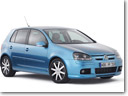

Dynamic partnership between the Volkswagen Group and Sanyo
Agreement has been reached on a co-operation which sees Volkswagen joining forces with Sanyo, one of the world’s leading developers of rechargeable batteries, to work on new and extremely efficient high-performance storage systems based on lithium-ion technology.
“Our focus in future,” says Prof Martin Winterkorn, CEO of the Volkswagen Group, “will be directed more strongly at making electrically powered automobiles alongside ones driven by more efficient combustion engines. Drivetrain electrification is the way forward if we wish to secure mobility in tomorrow’s world. This will involve energy recovery.
The whole idea will be to no avail, however, as long as we do not have powerful energy storage systems at our disposal and as long as vehicle operations are not in tune with customer demands. This cooperation is an important step for us,” Winterkorn adds.
Emissions-free travel in an all-electric operating modus is already possible today, though only at limited speeds and over short distances. That makes it all the more important to develop new accumulators with the capacity, size, weight and cost attributes which will enable them to be used more efficiently in tomorrow’s automobiles.
Lithium-ion technology, already very successfully used in communications electronics and portable computers, has the potential to satisfy even the particularly exacting demands placed on electro-traction systems in motor vehicles.
Back in March, at the Geneva Motor Show, Volkswagen showcased its Golf TDI Hybrid design study, which demonstrated just how much potential for energy reduction there is when you combine high-tech-diesel, electric-drive and 7-speed-DSG technology.
Conceived as a powerful full-hybrid vehicle, the Golf TDI Hybrid can be operated using combustion-engine power only or using a combination of combustion and electric drive or using E-drive – i.e. the powerful and energy-efficient combination of TDI technology and an electric motor.
The A1 project quattro presented by Audi at the most recent Tokyo Motor Show features a powertrain already designed to cover a distance of 100 km using this innovative storage method. The Group hopes to be able to employ lithium-ion technology in its first vehicles by 2010.
-
Ford Escape hybrid delivers total package for los angeles county ocean lifeguards
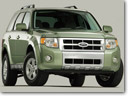 Ford Motor Company is teaming up with the Los Angeles County Lifeguards, a division of the Los Angeles County Fire Department, to help save lives while protecting the environment. Today, Ford presented the squad with the first 10 of a fleet of 45 eco-friendly Escape Hybrids with Intelligent four-wheel-drive, specially equipped for use on rescue patrol along 72 miles of Southern California coastline. (more…)
-
Opel Corsa Hybrid
 Opel presents a range of especially economical and low-emission vehicles at the IAA in Frankfurt (September 13 – 23, 2007). The current models showcase how automotive technology will look in the near future: the Corsa Hybrid concept car uses innovative technology with starter generator and stop/start automatic transmission which contributes to an average consumption of about 3.6 liters of diesel per 100 km (95 g CO2/km). The Vectra Flexpower with a 2.0-liter turbo engine designed for operation with bioethanol/gasoline mix also makes its debut at the IAA. (more…)
-
Citroen C-Cactus

 Citroen is unveiling C-Cactus at the 2007 Frankfurt Motor Show. This ingenious concept is a new take on vehicle design, centered on essential values. The Marque’s ambitious aim is to market an ecological hatchback with cheerful, attractive styling, equipped with a hybrid HDi drivetrain and sold at the same price as an entry-level C4.
To square this complex equation, Citroen is exploring new forms of design. It has decided to abandon features that are not essential to comfort and to focus instead on technology, styling and equipment that are positive, ecological and valued by users.
Essential, intelligent and ecologically aware
C-Cactus is an ecological car. It includes a significant proportion of recycled or recyclable materials and, like the plant it is named after, it is low on consumption. Weighing just 1,306 kg and featuring a hybrid HDi drivetrain, C-Cactus consumes 3.4 l/100 km for CO2 emissions of 78 g/km. At the same time, C-Cactus is no more expensive than a mid-range family car. Its low production cost can be attributed to the use of new materials and to a rational design process using a smaller number of parts. The cabin is made up of just over 200 parts, i.e. almost half the number used by a conventional hatchback of identical size.


An attractive and modern vehicle
C-Cactus is an essential car, with sharp styling and attractive features. Its curves give it a fun look and strong appeal, while the angles and rounded lines of the bodywork underline its dynamic character. C-Cactus sets high standards of onboard comfort with a roomy interior that is worthy of a family car. It is 4.2 metres long and 1.8 metres wide with a wide range of equipment including air conditioning with automatic temperature control, a high-quality audio system, a panoramic glass sunroof, cruise control and a speed limiter.
The economic and ingenious solutions adopted for C-Cactus keep production costs down and make it possible to fit a diesel hybrid drivetrain, all for the price of an entry-level C4. To achieve this result, C-Cactus places the emphasis on equipment that is essential to passenger comfort. At the same time, it explores new design processes in order to show that economy and ecology need not be synonymous with a rough ride.
New avenues in design
C-Cactus is the result of an intelligent design process pursuing new objectives. By exploring new forms of expression and new technical solutions, Citroën’s engineers cut the number of parts required to build the car.
The dashboard has gone, and its usual functions are now grouped on the central console and the fixed hub of the steering wheel. The central console thus includes the active loudspeakers, gearbox controls and tactile screen giving access to the onboard computer, navigation system and air conditioning controls. The controls for the indicators, lights, wipers, horn and cruise control/speed limiter are on the fixed hub of the steering wheel, as are the tachometer and lights for the indicators, headlamps and warning signals.
Another example of simplification: the part used for the front bumper, which includes the headlamps and chevrons is the same as the part making up the lower part of the tailgate at the rear. This contributes to the assertive design of C-Cactus while bringing economies of scale in production.
This simplicity is also reflected in the design of the front end, which comprises just two parts: a fixed bonnet comprising the front wings, and a flap giving access to the vehicle maintenance functions (oil, windscreen washer, etc.).
Reflecting a similar approach, using the air conditioning makes it virtually unnecessary to open the windows. A simple sliding mechanism is therefore provided, since this is sufficient in normal use. Engineers were thus able to get rid of both the window frames and the opening mechanism.
At the same time, a number of monoblock units are used for C-Cactus to reduce the overall number of parts.
The door panels, for example, are made of two parts, compared with twelve in a conventional hatchback.
The seats also comprise two parts: a highly comfortable, moulded, coloured, integral-skin foam part for the seat, and a solid monoblock frame to hold the foam in place and fix the seat to the floor rails. The ergonomics are excellent and – here again – the number of components is limited.Advanced ecological features
To achieve real environmental impact, Citroen’s objective has always been to market technologies and vehicles that are affordable to the greatest number. The objective with C-Cactus is to go one step further, by bringing out a car whose hybrid HDi drivetrain makes it truly ecological car, but that can be sold at the same price as an entry-level family car.
With its diesel hybrid drivetrain combining a 70 bhp DIN HDi diesel engine with a particulate filter and an electric motor providing additional power of 30 bhp DIN, C Cactus consumes just 3.4l/100 km with CO2 emission levels of 78 g/km over a combined cycle. In urban use, ZEV (Zero Emission Vehicle) mode provides silent, all-electric operation. On journeys involving successive acceleration and deceleration, the hybrid system limits fuel consumption by using both types of energy.
Other points also help to make C-Cactus a car that respects the environment.
The solutions adopted for the design of C-Cactus also contribute to bringing down fuel consumption and CO2 emissions. Using fewer parts makes the vehicle 15% lighter than a C4 Hybride HDi for a total weight of 1,306 kg.
The tyre width has also been kept down (205/45 R21) on C-Cactus, which adds to environmental performance.Fewer parts also means smaller quantities of raw materials. In additon, a significant part of the materials used are recycled or recyclable. The windscreen and windows, for example, are made of recyclable glass. The tyres are also recyclable, as is the crude steel used for the door panels. This metal is unpainted and unvarnished but has been treated for corrosion.
The protective mats are made of recycled leather, taken from leather cut-offs that cannot be used by conventional tanneries. Many parts are made of cork, a natural material made from the bark of oak trees. The felt used for the door panels and fascia stowage compartments is made from wool. This material uses no chemical additives and is both recyclable and biodegradable.
The top speed of C-Cactus has deliberately been capped at 150 kph. This choice not only contributes to the car’s good environmental performance, it also reflects Citroën’s efforts to develop a green vehicle illustrating a new approach to the car, in which the motorist is in harmony with his/her surrounding environment.
Through this attractive concept with its appealing offbeat styling, Citroën has developed a new take on the economical and ecological car. A vehicle at ease with its original and ingenious design. At the same time, this is a car that brings the occupants all the features essential for their comfort.
Looking for simplicity: intelligent, fun exterior design
C-Cactus has a unique personality: appealing, modern and offbeat, with its simple shapes and mix of round, curving lines. The original styling also reflects ingenious design choices. Throughout the design process, the focus was very much on simplicity. This led to the development of ingenious solutions that contribute to the attractive offbeat design of C-Cactus.
At the front, the headlamps of C-Cactus give the vehicle an appealing air with their rounded and slightly angular forms. They are underlined by two cylindrical air intakes cut out of the bumper, above an air intake grille of modern design which, while contributing to the vehicle’s rounded forms, also adds a muscular energetic touch. The raised bonnet and two air intakes also contribute to the dynamic looks of C Cactus.
The vehicle’s rounded forms are reflected in its profile. The dynamic design lines are accentuated by the forward flowing roof line and the asymmetric doors made of crude steel that has been treated for corrosion.
The doors feature an original cut-out since the fixed windows remove a number of the constraints that usually apply to design. Shaped to provide easy access to the interior, they give C-Cactus a curving, sleekly muscled appearance. The use of crude steel treated for corrosion, but without paint or varnish, contributes to savings in production costs while giving a strong, contemporary look.The high waistline and 21-inch wheels also underline the strong character of C Cactus.
The wheels were the focus of particular attention. Large-diameter wheels and low-profile tyres have become key styling features in vehicles of strong, contemporary design.
Citroën worked with Michelin on the development of low-profile tyres with a large diameter and limited width. The low ground friction area limits fuel consumption and, at the same time, tyre production costs are kept under control since the manufacturing process requires only a small amount of rubber. For new and even more original styling, these specially designed tyres feature a green pattern on a white background printed inside a wide groove spanning the entire tread.
The same styling codes can be seen at the rear, where a combination of curves and taut lines illustrate the car’s dynamic and appealing personality. The chevrons identify this car as a Citroën. The name “Cactus” appears in relief on the bottom of the tailgate, in a young, smooth, modern printface.
The rear lights, which resemble the headlamps in shape, boast an innovative feature: cut-outs in the interior plastic that let the driver see through. This innovation considerably increases the driver’s field of vision and may be particularly useful in manoeuvres, for example.Fewer features for greater impact: a welcoming, attractive and cleverly designed interior
C-Cactus is also an original and ingenious car on the inside. The design cut-outs, choice of materials, patterns and colours give the cabin a minimalist, attractive and airy look.
The cabin materials reflect innovative choices. Their quality is immediately visible. Looking beyond their appearance, they are also economical and ecological. For example, cork is used for many decorative parts, as well as for the air vents and air conditioning panel. The floor features a pattern in recycled leather. The white lacquer finish of some parts and the visual effects created by the materials used contribute to the original design and perceived quality of the cabin.
Another key idea was to enhance the offbeat styling of C-Cactus by reducing the number of parts and the quantity of materials used for the decor.
Non-essential parts, such as the dashboard, are absent, while some of the parts that are usually hidden have been included in the decor. This is the case, for example, of the steering column, air conditioning ducts and the grid for fore-and-aft adjustment of the front seats. These features add a modern and original touch to the cabin. The refill for the scented air freshener is also visible. It contributes to the attractive appearance of the cabin, while enabling the driver to see how much is left.
The decor has not been put in. It has been created by removing material. This idea of decorating “in a vacuum” is reflected in the patterns present on the door panels and seat frames. The patterns cut-out in the door panels show the apple green felt inserted between panel and metal. The main role of this part is to soundproof the vehicle, but its colour and cut-outs make it an integral part of the décor.
The same flower, plant and butterfly patterns – symbolising the environment, purity and well-being – are also found on several other cabin features. They are cut out, for example, in the white lacquer seat frame. These cut-outs show the coloured foam used for the seat cushions and give it a decorative quality.Pertinent choices for an easy and enjoyable ride
C-Cactus boasts advanced equipment, optimised on-board space and modular design at an affordable price. Passengers have all the comfort essential to their well-being.
First, the ignition key of C-Cactus is a portable MP3 player with a touch screen. When it is plugged into the fixed hub of the steering wheel, it is recognised by the vehicle which can then be started.
The fixed-hub steering wheel includes a wide variety of functions. In addition to the usual controls, it also includes the speedometer, which is of an unusual design. The figures, placed in relief around the hub, rotate according to speed and are positioned with respect to a fixed point.A second touch screen on the central console includes a navigation system to guide the driver on the road. It also serves as an onboard computer. This equipment endows C-Cactus with high-tech advanced features while also keeping costs down, since functions are grouped together.
The central console features two powerful high-quality active loudspeakers that provide C-Cactus with an excellent sound system. Their ingenious layout limits both wiring and installation costs.
Generous interior space ensures passenger comfort. C-Cactus boasts the dimensions of a family car (4.2 metres long and 1.8 metres wide) with a generous and modular boot (between 500 and 1,100 litres).
The rear seat, placed on a rail, slides up against the front seats. The floor pan, which is integral with the rear bench, also slides forward to reveal a subfloor. This reveals a virtually flat surface area to load bulky objects.Another ingenious feature is a clip-on bag on the passenger side. This replaces the glovebox and can be used to carry objects outside the car.
For comfort and styling, C-Cactus features a panoramic glass sunroof that lets the light flood into the cabin.
-
Honda Small Hybrid Sports Concept
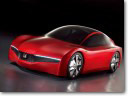 Honda has unveiled a concept model which represents its interpretation of how a future hybrid model might appear. Honda Small Hybrid Sports Concept, a design study model, demonstrates a unique fusion of advanced environmental technology, exciting styling and fun-to-drive characteristics. This is its world premiere for the model, which has been penned by the design studio at Honda R&D Europe based in Offenbach, Germany. (more…)
-
Mazda Tribute Hybrid SUV
Showing its commitment to improving the world’s air quality, Mazda North American Operations (MNAO) will unveil the all-new 2008 Mazda Tribute Hybrid-Electric Vehicle (HEV) at the 2007 North American International Auto Show. With a hydrogen-powered version of the RX-8 and a hydrogen-powered hybrid version of the MAZDA5 undergoing extensive testing in Japan, the Tribute HEV is the latest environmentally friendly vehicle to join the Mazda lineup.
Tribute HEV will debut in mid-2007, as a 2008 model-year vehicle. Mazda will provide more details – exact timing, pricing, distribution, sales volumes, etc. – closer to the launch date.
“With virtually all new Mazda vehicles sold in the U.S. earning either Low Emission Vehicle (LEV) or Ultra Low Emission Vehicle (ULEV) status, protecting the global environment is a long-standing concern of ours,” said Robert Davis, senior vice president, Quality, Research and Development, MNAO. “The Tribute HEV is the next step towards strengthening Mazda’s environmental efforts.”
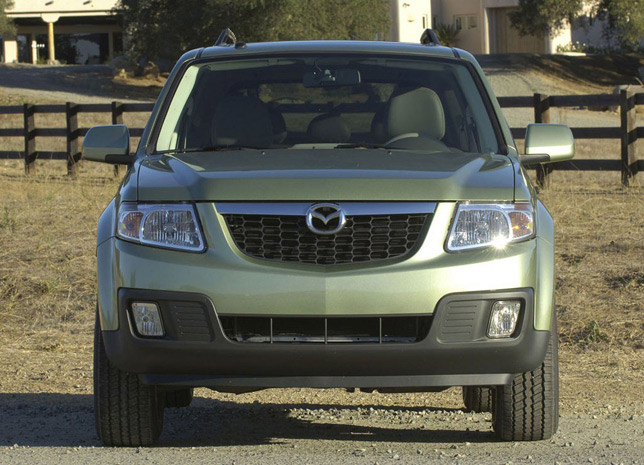
Mazda Tribute Hybrid SUV 


A “full” hybrid, the Tribute HEV can run on 100 percent electric power up to approximately 25 mph, maximizing in-city fuel economy and making it one of the least-polluting vehicles sold. Still, the Tribute HEV stays true to the Zoom-Zoom Mazda owners have come to expect by delivering the performance required by SUV owners. The Tribute HEV provides plenty of power yet meets California’s strict Advanced Technology Partial Zero Emissions Vehicle (AT-PZEV) requirements by achieving Super Ultra Low Emissions Vehicle II (SULEVII) standards, plus zero evaporative emissions standards – the strictest emission regulations a gasoline-fueled vehicle can meet.
The Tribute HEV offers superior environmental performance with its MZR 2.3-liter gasoline engine, which has been modified to run on the Atkinson combustion cycle for superior fuel efficiency. The Atkinson cycle modifies the timing of the closing of the valves, enabling the engine to realize more power with cleaner emissions. At low speeds or in low-load situations, drive is provided by a permanent magnet AC synchronous electric motor, producing 70 kW @ 5,000 rpm and 330 V maximum voltage.
When additional power is required, the Tribute HEV’s 2.3-liter DOHC 16-valve Atkinson cycle four-cylinder engine seamlessly engages, contributing 133 horsepower at 6,000 rpm and 124 lb.-ft of torque at 4,250 rpm. As a result, the Tribute HEV pushes out a combined 155-hp, with 0-60 times comparable to a 200-horsepower V-6 engine, while increasing city-driving fuel economy by nearly 75-percent. The Tribute HEV is equipped with a smooth-shifting, electronically controlled Continuously Variable Transmission (CVT) that realizes seamless, highly efficient adjustment of the gear ratio under electronic control.
Once the vehicle reaches speeds above 25 mph, or vehicle load exceeds a certain threshold (such a fully-laden vehicle or a “jack-rabbit” start), the motor supplements the gasoline engine, providing extra torque as needed. During deceleration, it charges the battery by working as a generator. The generator-motor also provides power boosts during heavy load situations, helping Tribute HEV accelerate briskly to speed. In addition to fuel-free operation, electric motors deliver maximum torque at low rpm, so they are an ideal complement to gasoline engines that generate peak power at higher rpm.
The transition through four modes – all-electric, gas-electric, gas-only and charging the battery pack – is seamless, and the only clue to the mode in which the vehicle is operating is the “charge/assist” gauge on the dashboard.
An electronic vehicle system-controller manages charging, drive-assist and engine-starting functions. This device shuts the engine down during coasting and at stoplights to save fuel. It also enables the traction motor to convert to a generator to provide engine-braking and recharge the batteries.
Equipped with standard front-wheel-drive or optional electronic four-wheel-drive, Tribute HEV is offered in two trim levels, Touring and Grand Touring. Mirroring design cues shared by its gasoline-powered sibling, Tribute HEV offers a bold, rugged exterior set off by 16″ alloy wheels and new front and rear fascias, hood, liftgate, body-side molding, power side view mirrors, headlamps, taillamps and standard fog lights – features that can all be found on the redesigned conventional 2008 Tribute as well.
Like all good SUVs, the Tribute HEV has a commanding driving position, great visibility, good ground clearance, a tall roof and large cargo area. The elevated seating position and superb visibility mean drivers get a better view of the road when weather conditions are bad, such as heavy driving rain. The vehicle seats five adults in comfort. Storage compartments in both front doors provide easily accessible storage options. In addition, a center console storage compartment with removable bins offers enough space to store a laptop. There is 29.2 cubic feet of carrying space behind the rear seat when it’s up, and 66 cubic feet when the seatback is reclined. The rear seat is asymmetrically split 60:40, which improves carrying versatility. For extra practicality, the tailgate features a rear window that lifts separately, ideal for loading less heavy objects.
Safety is a priority. The all-steel unibody construction is not only very rigid, it is also enormously strong. The crumple zones and ‘Triple H’ construction are designed to absorb and redirect energy away from the passenger cabin. ‘Triple H’ refers to the H-shaped structures in the sides, floor and roof that provide a rigid cell around the cockpit. Side impact door beams are also fitted, further to improve safety in a side impact.
The Tribute HEV comes with advanced front airbags that use various sensors to deploy each front airbag with exactly the right amount of force to deal with the impact. Sensors measure the weight of the seat occupant, the force of the impact and the seat distance from the steering wheel. Side airbags, fitted into the seats rather than the doors – so they work equally effectively, irrespective of seat position – are standard. Front side-impact airbags, side-impact air curtains, independent multilink rear suspension and four-wheel Anti-lock Braking System (ABS) are also standard. Front three-point seat belts have pre-tensioners to reduce slack in the early moments of a frontal impact. In the rear, all three seats have three-point belts and adjustable head restraints for extra safety. Providing additional safety and security, a tire pressure monitoring system is standard.


