Tag: Hybrid

  • Porsche Demonstrates Three Models, That Will Compete in 2015 Le Mans Race

    The official Pre-test for the 2015 Le Mans 24-race will finally see what Porsche has to offer: three 919 Hybrid models, that will be colored in red, black and white. And of course, every color represents something, that Porsche team believes in. Let’s see what.

    The red prototype represents Tradition and it will race under number 17 with drivers Timo Bernhard (Germany), Brendon Hartley (New Zealand) and Mark Webber (Australia). In fact, the car number and the color red are a special tribute to the Porsche vehicle, that, back in 1970, won a total of 16 races in Le Mans.

    SEE ALSO: Porsche Boxster and Cayman with new Engines In 2016

    The black prototype LMP1 with number 18 represents Technology. This number is, in fact, a symbol for the technical relationship between the 919 Hybrid model and the 918 Spyder sports car. Furthermore, a black 918 model set a record for fastest lap back in 2013, as the vehicle travelled more than 20 kilometers in 6 minutes and 57 seconds. The brave driver was Marc Lieb (GER), who will also be competing this year again and he will use one more time the 919 model. The other drivers are Romain Dumas (France) and Neel Jani (Switzerland)

    And the third car is a symbol of a Return and will proudly bear number 19. The white color represents the return after a long, 16-year absence. The color will also be used with the two Porsche 911 RSR vehicles, that will compete in the GTE Pro Class. In this year’s Le Mans the 919 Hybrid will be driven by Earl Bamber (New Zealand), Nico Hülkenberg (Germany) and Nick Tandy (Great Britain)

    We all know how tough the Le Mans race is and that it contains lots of science, unseen by ordinary people and we hope, that the three Porsche vehicles will not only represent tradition, technology and return, but also success and victory!

    Source: Porsche


  • 2015 Toyota Prius Plug-In Hybrid

    2015-Toyota-Prius-Plugin-t2015-Toyota-Prius-Plugin-651

    The 2015 Toyota Prius Plug-in Hybrid continue into the new year with some updates and changes. The Toyota Prius shape is well established after 12 years and its instantly recognizable. The five-door hatchback has a vertical tale and a smooth front with minimum. Its size allows four to five people to fit in along with their luggage.

    The cabin looks incredible. The two-level dashboard layout  now looks dated-through the interior design appearing futuristic, compared to its launch in 2009. With interior surfaces clad entirely in hard plastics, of various textures and patterns. The first thing to catch you eye is a console that sweeps down from the top dashboard. There are additional features that include:

    • Heated seats
    • Bluetooth Connectivity
    • SiriusXM Radio
    • Digital Audio Output
    • Steering wheel controls and automatic climate control
    • Tilt and telescopic steering wheel
    • Navigation system and Cruise control

    Toyota made sure they made this car as safe as possible with curtain head airbags, side airbags, brake assist, traction, anti-lock brakes and stability control passenger airbags etc. While its striking visually, in practice the storage space under it is largely invisible and hard to reach. Four adults will fit comfortably, with some efforts put in, five adults can also fit in and the EPA defines the Prius as a mid-size car based on interior volume. The 2015 Toyota Prius power train remains unchanged, with total output of 134 hp(99 kW) from the 1.8-liter four cylinder engine and a pair of electric motor generators. They provide electric torque to supplement torque from the engine, recharge the battery during regenerative braking or engine overrun and can power the car solely on electricity at speeds up to 30 mph (48 km/h).

    Toyota has more experienced building hybrids than any other maker, and its blending of regenerative braking with the conventional friction brakes is outstanding. But if you need more than leisurely performance, 0-60 mph (0-100 km/h) is just under 10 sec you will quickly hear the engine revering up to high speeds.

    Source: Toyota

  • 2014 Mercedes-Benz E 300 BlueTEC Hybrid – 1,968 km on a Single Tank of Fuel

    Although the extremely-efficient 2014 Mercedes-Benz E 300 BlueTEC Hybrid didn’t set a world record on a single tank of fuel, it managed to complete an epic journey from Africa to the UK.

    The travel took Andrew Frankel (a British journalist) from Tangier in Northern Africa to the UK. He visited two continents, four countries and three time zones in a total time of 27 hours on the road, which he shared with a relief driver. Andrew arrived at Goodwood in time for its appearance at the Festival of Speed. He covered a total of 1,968 km (1,223 miles) without refueling.

    What is more, on arriving the fuel gauge was yet to register empty, the car estimated an available range of 160 km (100 miles). This results in a range of 2,129 km (1,323 miles) on a single tank of fuel.

    2014 Mercedes-Benz E 300 BlueTEC Hybrid is powered by a 2.1 liter four-cylinder diesel – 204HP (150 kW) at 4,200RPM and 500Nm (370 lb-ft) of torque at 1,600RPM. There is also an electric motor mounted within the 7G-TRONIC PLUS automatic transmission (26HP). The combined power is 230HP (169 kW). 0-100 km/h in 7.5 seconds and a top speed of 242 km/h (150 mph). The big family saloon can achieve a fuel consumption of just 4.2 liters / 100 km with emission of 109 g/km of CO2. The curb weight is 1,845 kg (4,068 lbs).

    The E 300 BlueTEC HYBRID is available as a Saloon or an Estate with prices starting from £39,880.

    httpv://www.youtube.com/watch?v=EITiqurE8dc

    Source: Mercedes-Benz

  • Volkswagen Delivered The First XL1 to a Customer

    Volkswagen has finally delivered the first  XL1 to a German customer. The remarkable engineering achievement (XL1) took years of development. Still, it has been whipped by a lot of eco-friendly vehicles, which cost significantly less than €110,000.

    The manufacturer didn’t comment anything interesting about the significant event. The car boasts an onyx white exterior and a titan black and pearl gray interior.

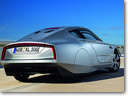
    Volkswagen XL1 is powered by a plug-in hybrid powertrain including a 0.8 liter two-cylinder TDI engine with 48HP (35 kW) and a 27HP (20 kW) electric motor and a 5.5 kWh lithium-ion battery. The car features special lightweight carbon fiber reinforced plastic construction and incredible aerodynamics. It adopts the classic “tear drop” shape and utilizes innovations such as removing traditional wing mirrors and replacing them with small cameras called e-Mirrors which transmit exterior images to interior displays.

    The result of all this technology is awesome – 0.9 liters / 100 km, which is 313.8 mpg UK or 261.3 mpg US. Volkswagen XL1 can travel up to 50 km (31 miles) only on electricity.

    The XL1 is handcrafted using small series production processes.  An initial production run of 250 XL1 vehicles will be made.

    Source: Volkswagen

  • Toyota TS040 Hybrid Race Car

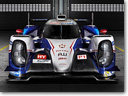
    Toyota Racing has unveiled the new 2014 TS040 Hybrid Race Car, which will compete in FIA World Endurance Championship. The new car, revealed today at the Paul Ricard circuit in the South of France, represents the most advanced hybrid technology in modern racing. Tomorrow it will begin an official championship test session, prior to making its competition debut at the season-opening Six Hours of Silverstone race on 20 April.

    The drivetrain includes a 480HP (353 kW) all-wheel drive hybrid boost and 520HP (383 kW) 3.7 liter V8 petrol engine. The overall power is exactly 1,000HP (736 kW), so the rival manufacturers Audi and Porsche should be very concerned.

    The new powertrain has been developed in line with revised WEC technical regulations, which put an emphasis on fuel economy. Teams are required to use 25% less fuel than in 2013, with savings achieved through changes to powertrains, aerodynamics and driving style. By adopting more road-relevant technology, the WEC will increase the possibilities for the transfer of Toyota’s race-bred technical know-how to its production cars, strengthening is status as the world’s leading manufacturer of hybrid vehicles.

    Toyota Racing have made gains in efficiency and performance by using specialist lubricants they have developed with their official partner, Total. The more open regulations have also allowed the team to engineer a major increase in hybrid power, using a new motor-generator on the front axle in addition to the unit at the rear. Under deceleration, these motor generators apply braking force in combination with the traditional mechanical brakes to harvest energy, which is then transferred via an inverter to a super-capacitor. When the car accelerates, the motor-generators reverse their function, delivering a power boost to all four wheels.

    2014 FIA World Endurance Championship Calendar:

    20 Apr Six Hours of Silverstone (GB)
    3 May Six Hours of Spa-Francorchamps (Bel)
    14 Jun Le Mans 24 Hours (Fra)
    20 Sep Six Hours of Circuit of the Americas (USA)
    12 Oct Six Hours of Fuji (Jpn)
    2 Nov Six Hours of Shanghai (Chi)
    15 Nov Six Hours of Bahrain
    30 Nov Six Hours of Sao Paulo (Bra)

    Source: Toyota

  • Porsche 919 Hybrid V4 2.0 liter Turbo Engine

    Porsche 919 is officially unveiled in Geneva, which means that the manufacturer is actually returning in Le Mans competition. The LMP1 car packs all latest technologies as well as extremely powerful and economical drivetrain and super lightweight chassis.

    The drivetrain consists of a newly developed single-turbo V4 2.0-liter direct-injection gasoline engine working with a front axle-mounted electric motor and a lithium-ion battery pack. The V4 engine revs up to 9,000RPM and sends the power to the rear wheels, while the electric motor provides momentum for the front ones, which means a temporary AWD.

    There are also two energy recovery systems – a brake energy recovery and a thermal energy recovery system incorporated in the exhaust system. This means an 8 MJ (megajoule) / lap energy recovery boost function. Actually, this is the maximum allowed under current LMP1 regulations.

    According to the race regulations, the Porsche 919 Hybrid must not exceed a length of 4,650 mm and a height of 1,050 mm, and vehicle width must be between 1,800 and 1,900 mm. The car’s aerodynamics have been fine-tuned in over 2,000 hours of wind tunnel testing since February 2012. Aerodynamics make an important contribution to the overall efficiency of the race car and reduce air drag while supplying the increased cooling air needed for the hybrid drive and the downforce needed for high cornering speeds. The aerodynamic design of the Porsche 919 Hybrid can be modified for different course characteristics.

    Source: Porsche

  • 2014 BYD Qin Hybrid – 1.6 liters / 100 km

    The Chinese automotive manufacturer BYD has announced the 2014 Qin Hybrid. The automaker practically copy a lot of elements from BMW and some of their models are completely identical (outside).

    The Qin Hybrid was actually presented at the 2012 Beijing Motor Show and now the model is officially on sale in China. It is described as a “high tech, performance-based hybrid car”.

    2014 Qin Hybrid is powered by a 1.5 liter petrol engine – 151HP (113 kW) and 240Nm (177 lb-ft) and an electric motor – 147HP (110 kw) and 250Nm (184 lb-ft). The total power is 291HP (217 kW) and 479Nm (353 lb-ft), which is actually pretty good result. 0-100 km/h in 5.9 seconds and a top speed of 195 km/h (115 mph) – electronically limited. The Qin Hybrid can go up to 70 km (44 miles) only on electricity and can return 177MPGe – 1.6 liters / 100 km.

    There are four driving modes – EV+ECO, EV+SPORT, HEV+ECO and HEV+SPORT.

    BYD also plans to introduced the model in Europe, next year and in the US by late 2015.

    httpv://www.youtube.com/watch?v=dshFP1lYpE4
    BYD QIN – SPECIFICATION FOR CHINESE MARKET


    Engine type BYD 476ZQA 1.5Ti
    Engine rated power kW/rpm 113/5200
    Engine max. torque Nm/rpm 240/1750-3500
    Motor max. power kW/BHP 110/148
    Motor max. torque Nm 250
    Total power kW/BHP 217/291
    Total torque Nm 479
    Acceleration 0-100kmh (62 mph) Sec 5.9
    Fuel consumption under normal conditions L/100kmMPG 1.6177
    Top speed KMHMPH 185115
    Tank capacity LitresGallon 5011
    Range in EV mode KMMiles 7044

    Source: BYD

  • Peugeot 208 HYbrid FE Concept [video]

    Peugeot 208 HYbrid FE Concept - Front Angle

    Peugeot has announced the 208 Hybrid FE Concept. The manufacturer has released a new video clip of the super-efficient hatchback capable of doing 134 mpg UK or 112 mpg US – 2.1 litres / 100 km with CO2 emissions of 46 g/km.

    The 1.2 liter VTi three-cylinder engine and the electric motor have combined power of 108HP (80 kW). 0-100 km/h in 8.0 seconds, which is decent performance for such type of vehicle.

    208 Hybrid FE Concept boasts composite body panels, carbon fiber components, a polycarbonate windshield and a lightweight suspension. There is also a new namic grille, a rear spoiler and 19” wheels with specially developed “Tall & Narrow” Michelin tires. Thanks to all these modifications, the hybrid 208 has Cd of less than 0.25.

    httpv://www.youtube.com/watch?v=VSPuEBPAewY

    Source: Peugeot

  • Toyota Will Premiere Fuel Cell Hybrid Vehicle In Frankfurt

    Toyota FCV-R Concept - Front AngleAt the 2013 Frankfurt Motor Show Toyota will premiere its new Fuel Cell Hybrid Vehicle Concept with the aim to offer one of the best solutions to the challenges of energy sources and emissions. In these terms the hydrogen is the ideal and ultra-clean fuel.

    Another goal that the brand has achieved with this model is to offer a driving range and performance comparable to conventional petrol and diesel engines. The advantage here however is that there is no harmful tailpipe emissions.

    In the vehicle has been utilized Hybrid Synergy Drive technology which is also used in the famous Prius and other full hybrid production models. At first the Toyota FCV-R Concept was unveiled at the 2011 Tokyo Motor Show. Now the brand continues to make progress towards its planned introduction of an affordable FCHV saloon model by 2015.

    The FCV-R concept is 4,745mm long, 1,510mm high and 1,790mm wide. It achieves a maximum driving range of about 420 miles and doesn’t produce any emissions. The only by-product of the hydrogen fuel cell is water vapour. The twin fuel tanks and the fuel cell stack are positioned beneath the floor. This of course results in no impact on the cabin and load space.

    Toyota FCV-R Concept

    Toyota aims that its FCHVs will be in a mass-market production during the 2020s. In addition, this commercialization will be supported by the wider roll-out of fuel cell vehicle technology as well as the development of hydrogen refueling infrastructure.

    The fuel cell which is going to be utilized in Toyota’s production FCHV achieves the world’s highest power output density at 3kW per litre. In addition, it also delivers improved range of the vehicle from about 205 miles to more than 350 miles. What is more, the fuel cell has a greater operating range, with the help of materials in its construction making cold start possible at temperatures around -30°C.

    Toyota’s FCHV has currently a price around US $108 367, however the brand is planning to significantly reduce the cost and make it more affordable.

    Source: Toyota

  • 2014 Ford C-Max Hybrid – 6.6 liters / 100 km

    Ford has announced the all-new 2014 C-Max Hybrid which will improve customers’ on-road fuel economy, especially at highway speeds.

    “Ford is absolutely committed to being a leader in the hybrid market and to top fuel efficiency across our lineup. We are taking actions with our popular C-MAX Hybrid so that customers are even more satisfied with the vehicle’s on-road fuel efficiency performance.” commented Raj Nair, group vice president, global product development.

    In addition to improving the vehicle itself, Ford is changing the way it generates the miles-per-gallon label for C-MAX Hybrid going forward. Previously – and consistent with EPA’s General Label rules – testing of the Fusion Hybrid was used to generate fuel economy labels for a family of vehicles, including both Fusion Hybrid and C-MAX Hybrid. The result was the same fuel economy label values for both vehicles.

    The revised 2014 Ford C-MAX Hybrid label will carry a class-leading EPA combined fuel economy value of 43 mpg – topping the combined label value of 42 mpg for the Toyota Prius v.

    Customers who purchased their vehicle will receive a check from Ford for $550. Customers who leased their vehicle will receive a check for $325.

    Source: Ford

  • 2014 Honda Fit Hybrid – 2.7 liters / 100

    Honda has announced that the 2014 Fit/Jazz Hybrid is going to achieve a fuel economy of 2.7 liters / 100 km (102.8 mpg UK or 85.6 mpg US). The all-new Fit Hybrid is scheduled to be introduced and go on sale in Japan this September.

    The all-new Fit Hybrid will be the first model to be equipped with the SPORT HYBRID*3 Intelligent Dual Clutch Drive (i-DCD), Honda’s lightweight and compact one-motor hybrid system suited for small-sized vehicles. Although this is a one motor hybrid system, this system realized the EV drive by disengaging the engine and motor. The SPORT HYBRID i-DCD is one of the Earth Dreams Technology, Honda’s new-generation powertrain technologies which realize both the fun of driving and excellent fuel economy at a high level.

    It offers three driving modes: EV, Hybrid and Engine, meaning it can run as a zero-emission electric car, as a hybrid or as a conventionally-powered vehicle.

    Featuring the highest fuel economy among all hybrid models in Japan, acceleration g-force more powerful than conventional models and rhythmic and linear acceleration feel, the SPORT HYBRID i-DCD realizes fun driving.

    Source: Honda

  • 2013 Volkswagen Golf VII Plug-in Hybrid – 1.5 liters per 100 km

    Volkswagen has announced the new Golf Plug-in Hybrid, which is based on the 7th generation of the hatchback. It is expected to hit the market in the beginning of the next year.

    The Golf VII Plug-in Hybrid is powered by a 1.4 liter TFSI with 150HP (110 kW) and a 102HP (75 kW) electric motor coupled to a dual-clutch S-tronic 6-speed gearbox. The powertrain is the same as in Audi A3 e-Tron Plug-in Hybrid. The total power is 204HP (150 kW) and 350Nm (258 lb-ft) of torque.

    0-100 km/h in 7.6 seconds and a staggering fuel consumption of 188 mpg UK (156.5 mpg US) – 1.5 liters / 100 km with CO2 emissions of 35 g/km. What is more, the Plug-in Hybrid Golf is capable of travelling up to 50 km (31 miles) in electric mode with speeds up to 130 km/h (81 mph).