Tag: Hybrid

  • Hyundai Kona and Kona N Line

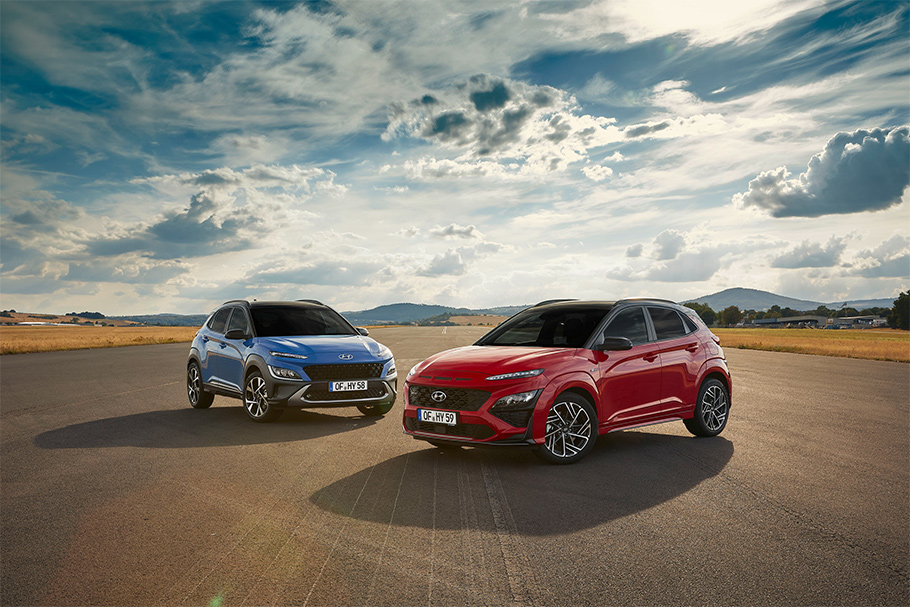
    2021 Kona and Kona N Line1

    Hyundai UK has confirmed pricing and specifications for its comprehensively updated Kona sub-compact SUV, which now includes for the first time a sporty N Line trim, as well as a full hybrid option and 48-volt mild hybrid technology on all other variants.

    The Kona’s design has been enhanced inside and out. Revised suspension and new connectivity and in-car convenience features make it even more comfortable and enjoyable for driver and passengers alike.

    With the all-new N Line version the Kona wears its sporty dynamics on its sleeve, thanks to unique design features front and rear, bespoke diamond-cut wheel design, and comprehensive interior styling enhancements.

    The 2021 Kona range starts from £21,060 on-the-road for the Kona SE Connect 1.0 T-GDi 48-volt MHEV. The dynamic new N Line specification is available from £23,590 on-the-road.

    The Kona is equipped with Hyundai’s 1.0-litre T-GDi Smartstream petrol engine with 48-volt mild hybrid technology and six-speed Intelligent Manual Transmission (6iMT).

    Hybrid versions of the Kona are equipped with a Kappa 1.6-litre GDI petrol four-cylinder engine and an electric motor linked to a 1.56 kWh lithium ion polymer battery pack. Transmission is via a six-speed Dual Clutch Transmission (6DCT).

    First seen in the new i30 and the all-new i20, the iMT’s clutch operates electronically, decoupling the engine from the transmission after the driver releases the accelerator, saving fuel by switching off the engine and activating ‘coasting’ mode. The engine restarts in the same gear as soon as the driver presses either the brake or the accelerator pedals, thanks to the power provided by the Mild Hybrid Starter Generator.

    Specification overview

    The Kona range starts with the SE Connect, priced from £21,060 on-the-road, offering a high level of standard equipment. Its exterior is distinguished by its 17-inch alloy wheels, body-coloured door mirrors, LED daytime running lights, roof rails and rear spoiler with integrated LED brake light.

    Inside there is manual air conditioning, 60/40 split-folding rear seats, electric windows front and rear, a 10.25-inch Driver’s Digital Supervision Instrument Cluster, USB port, automatic activation for the headlights, plus an 8-inch touchscreen Display Audio with rear-view camera and Smart Device Integration with Apple CarPlay™ and Android Auto™. New for the model is front passenger-seat height adjustment, allowing occupants to ensure a commanding view out.

    All models in the new Kona range are equipped with a range of new or enhanced safety and driving assist features for added peace of mind. For example, Leading Vehicle Departure Alert (LVDA) alerts the driver if they do not react fast enough when the vehicle ahead of them starts moving. Another is Lane Following Assist (LFA), which automatically adjusts steering to assist the driver to keep in the centre of the lane. Forward Collision-Avoidance Assist with pedestrian detection (FCA) is now standard. Rear Seat Alert (RSA) alerts the driver if someone or something is in the back seat when they go to exit the vehicle. In addition, all new Kona models are now available with eCall, a feature which automatically alerts emergency services if the airbags are deployed or the e-Call button is pushed.

    The sporty new Kona N Line trim starts at £23,590 (on-the-road), and features unique front- and rear-end styling and 18-inch alloy diamond-cut wheels. In contrast to other Kona models, the entire front bumper and the wheel-arch claddings are in body colour. Instead of a rugged front skid plate there is an N-style aerodynamic lip with corner fins to accentuate the car’s road-hugging stance. At the rear there are LED lights, and a large central aerodynamic diffusor in a contrast colour flanked by sharply creased lines and N-style fins that aid airflow.

    For the cabin, the new N Line Kona is equipped with unique detailing including distinctive red stitching, metal pedals, and N logos on the gear shift and on the seats – all contributing to a sportier look and feel.

    Compared to the entry-level SE Connect, the N Line boasts a range of additional comfort and convenience features. For example, in place of air conditioning there is climate control, and comfort is further boosted by an automatic dimming rear-view mirror, automatic windscreen wipers, USB ports for rear-seat occupants, rear parking sensors, and interior ambient lighting. The driver can also fold the door mirrors at the touch of a button.

    The centre console display increases from 8-inch to 10.25-inch and incorporates Touchscreen Satellite Navigation with Mapcare and LIVE Services. Also added is Hyundai’s Bluelink® (free-of-charge for the first five years) – a smartphone app-based connected car service that enables drivers to carry out a number of different functions whilst away from their vehicle, including remote central locking activation and vehicle parked location information. The sound system is upgraded to KRELL Premium Audio with eight speakers, external amplifier and subwoofer.

    The Kona Premium is available from £23,660 (on-the-road) and adds anthracite body garnish to the exterior and distinctive 18-inch alloy wheels. Inside there are heated front seats, electric parking brake and front parking sensors, and the active safety features are augmented with Intelligent Speed Limit Warning (ISLW).

    The top-of-the-range Kona Ultimate starts at £25,960 (on-the-road). In addition to all of the features available with Premium spec, Ultimate adds LED headlights, electric front seat adjustment, and an electric tilt and slide sunroof. Added to the active safety systems are Blind Spot Collision Warning (BCW), Rear Cross Traffic Collision Warning (RCCW), and the new Safe Exit Warning (SEW) system, which prevents passengers from exiting the vehicle if it is not yet safe to do so.

    Prices for the Kona Hybrid start from £23,750 (on-the-road). It is available in SE Connect, Premium or Ultimate trim. The Hybrid is available with two dedicated hybrid-only alloy wheels designs, 16-inch on the SE Connect and 18-inch on the Premium and Ultimate trims.

    Design and chassis upgrades

    Alongside the all-new N Line model which has its own unique styling, all Kona 2021 models benefit from extensive exterior enhancements, with updates front and rear and new wheel designs for an even more sleek, sophisticated appearance.

    The interior gains a rugged yet refined new look, with the console area now appearing to be disconnected from the instrument panel to stress the horizontal layout. The dashboard appears wide and airy to create a generous, spacious atmosphere.

    The new Kona has been subject to a series of tuning updates for a smoother ride compared to its predecessor. The suspension has been retuned in order to improve driving comfort, and the stabilizer bars are modified for better ride comfort and isolation.

    Ashley Andrew, Managing Director, Hyundai Motor UK, commented, “The new Kona has already received positive reviews for both its styling and dynamics, and it offers a range of standard-fit features and technologies to exceed customer expectations in the segment. The efficient hybrid system, as well as the new 48V mild hybrid powertrain, will deliver a strong balance between economy and performance, and the new N Line model creates a sense of added sporting character.”

    All new Kona models come with Hyundai’s industry-leading 5 Year Unlimited Mileage Warranty, Roadside Assistance package, 5 Year Annual Health Check, and 12 Year Anti Corrosion Warranty.

    The comprehensively enhanced Kona range goes on sale in the UK from 18 January 2021.

  • Hyundai Tucson compact SUV

    2021 Hyundai Tucson compact SUV1

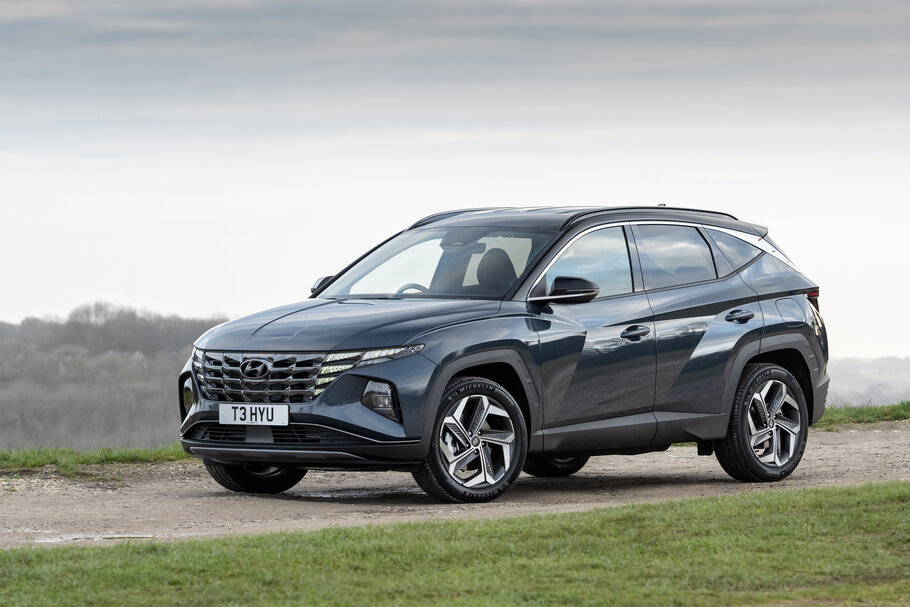
    Hyundai Motor UK has announced pricing and specifications for its all-new, fourth generation Tucson compact SUV. More than seven million Tucsons have been sold since the first-generation model launched in 2004, making it the company’s bestselling SUV globally.

    The all-new Tucson is a design revolution for Hyundai offering an elevated design experience combined with state-of-the-art technology. Thanks to sportier and more dynamic proportions made possible by the new platform, the all-new Tucson achieves a very progressive look without compromising functionality.

    The look is enhanced with the use of Parametric Jewel Hidden Lights – a design innovation which seamlessly incorporates state-of-the-art lighting technology into the Tucson’s parametric jewel pattern grille which forms the car’s striking light architecture.

    The all-new Tucson also offers more electrified powertrain options than any rival in the compact SUV segment, with hybrid and mild hybrid propulsion available from launch, and a plug-in hybrid option from next spring. All use Hyundai’s 1.6-litre petrol ‘SmartStream’ efficient turbocharged internal combustion engine.

    The new Tucson range comprises three high-specification models: SE Connect, Premium and Ultimate. The SE Connect costs from £28,495 when equipped with the 1.6-litre T-GDi 150ps 6MT, and is also available with a 1.6-litre T-GDi 150ps 48-volt Mild Hybrid powertrain with 6iMT or 7DCT, or a 1.6-litre T-GDi 230ps Hybrid powertrain with 6AT.

    SE Connect trim includes 17-inch alloy wheels, privacy glass, and body-coloured bumpers. Interior features include a leather steering wheel and gear knob, dual-zone air conditioning, cruise control, heated and folding door mirrors, rear parking sensors and a rear-view camera. A comprehensive range of active safety systems include Forward Collision Assist (FCA) – with car, pedestrian and cycle detection, Intelligent Speed Limit Assist (ISLA), Lane Follow Assist (LFA), Lane Keep Assist (LKA), Manual Speed Limit Assist (MSLA), Multi Collision Braking (MCA), and tyre pressure monitoring with individual tyre display.

    The all-new Tucson is equipped with a 10.25-inch supervision cluster and 10.25-inch AVN screen, through which the driver can access Hyundai’s Bluelink connected car services that encompass Connected Routing, Last Mile Navigation and a new User Profile feature. Drivers can also locate their vehicle, lock and unlock it remotely, or view the car’s fuel level remotely, via the Bluelink app.

    The Premium Tucson is available from £30,195 in 1.6 T-GDi 150ps 6MT guise. The trim line is also available with a 1.6 T-GDi 150ps 48-volt Mild Hybrid with 6iMT or 7DCT or a 1.6 T-GDi 230ps Hybrid powertrain with a 6AT. It builds on SE Connect specification with the addition of 18-inch alloy wheels (19-inch on Hybrid models). Other upgrades include LED headlamps, ambient interior lighting, heated front seats and heated steering wheel, smart adaptive cruise control with stop go function (DCT and Hybrid models), front and rear parking sensors with rear-view camera, and smart key with keyless entry and engine start/stop button.

    It also includes a KRELL premium audio system with eight-speakers and a subwoofer, as well as a wireless smartphone charging pad. Additional safety equipment includes Blind Spot Collision Warning (BCW) with additional Blind Spot Collision Avoidance Assist (BCA) on Hybrid models, Forward Collision Avoidance Assist (FCA) with additional Junction Turning assist on DCT and Hybrid models, as well as Rear Cross Traffic Collision Warning (RCCW) and Safe Exit Warning.

    The range topping Ultimate trim starts at £32,895 for a 1.6 T-GDi 150ps 6MT. It is also available with a 1.6-litre T-GDi 150ps 48-volt Mild Hybrid with 6iMT or 7DCT, a 1.6 T-GDi 230ps Hybrid with a 6AT and a 1.6-litre T-GDi 180ps 48-volt mild hybrid powertrain with a 7DCT and 4WD. Upgrades include 19-inch wheels, satin chrome door mouldings, leather seat trim with electric adjustment to driver and front passenger seats – both with heat and ventilation function, and driver’s seat position memory function.

    Ultimate trim also includes heated rear seats, three-zone climate control with separate rear-seat control, panoramic sunroof with front section electric tilt and slide function, and a smart electric tailgate. Additional safety equipment includes Blind Spot Collision Avoidance Assist (BCA), Highway Drive Assist (HDA), and Rear Cross Traffic Collision Avoidance (RCCA) on all powertrains.

    Also available is a ‘Tech Pack’ option that includes Electronic Control Suspension (ECS), Around View Monitor (AVM) and Blind Spot View Monitor (BVM). On Hybrid models, the Tech Pack also includes Remote Smart Park Assist to aid parking in confined or difficult spaces.

    The all-new Tucson is available in nine colour finishes: Polar White, Engine Red, Phantom Black, Dark Knight, Shimmering Silver, Silky Bronze, Amazon Grey, Sunset Red and Teal.

    An efficient Tucson Plug-in Hybrid and Tucson N Line specification will be introduced in early 2021. The plug-in model will be equipped with a powerful and efficient powertrain based on the third-generation 1.6-litre T-GDi ‘Smartstream’ engine paired with a 66.9 kW electric motor with a maximum torque of 304 Nm and a 13.8 kWh lithium polymer battery. Combined, the gasoline engine and electric motor deliver 265 PS maximum power and 350 Nm maximum torque.

    Ashley Andrew, Managing Director, Hyundai Motor UK, commented, “We have taken a radical new direction with the styling of the all-new Tucson highlighted by its unique light architecture, but this compact SUV retains the characteristics that made its forebears so popular. There are many new technologies to enhance comfort and safety, as standard. The much-anticipated plug-in hybrid variant and sporty N Line trim will arrive next year, helping the Tucson retain its status as one of our most popular models.”

    All new Tucson models come with Hyundai’s industry leading 5 Year Unlimited Mileage Warranty, Roadside Assistance package, 5 Year Annual Health Check, and 12 Year Anti Corrosion Warranty.

  • SEAT Leon e-HYBRID

    2021 SEAT Leon e-HYBRID1

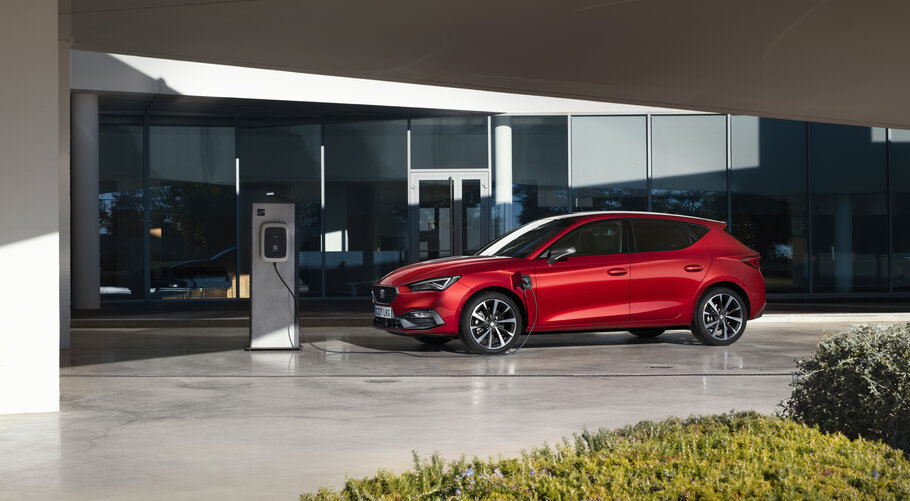
    The SEAT Leon e-HYBRID, a plug-in hybrid which recently opened for order, has been confirmed to benefit from a Benefit in Kind (BiK) rating of just six per cent and ultra-competitive total cost of ownership.

    The ultra-low BiK rating, applicable to plug-in hybrids with an electric-only range of at least 40 miles, is available with Leon e-HYBRID FR and XCELLENCE.

    It is anticipated that this low BiK rating will prove attractive for fleet and company car buyers alike, giving the Leon a Total Cost of Ownership (TCO) of just 30.0p per mile and a strong residual value of 40 per cent after 3 years and 60,000 miles.

    The P11D value for Leon e-HYBRID starts from £30,915 (P11D) for the FR trim which benefits from FR styling, digital cockpit, full-link smart phone integration, connected car technology, wireless phone charging, three zone climate control and Park Assist.

    Leon e-HYBRID XCELLENCE has a P11D value of £32,905 and adds a host of luxury features such as Microsuede upholstery, heated front seats, heated steering wheel, rear view camera, Advanced keyless entry and start, and Lane Assist.

    The e-HYBRID drivetrain combines a 1.4-litre TSI petrol engine with an electric motor and six-speed DSG transmission, resulting in a total power output of 204PS and a 0-62mph time of 7.5 seconds.

    Both Leon e-HYBRID FR and XCELLENCE produce CO2 emissions of 27g/km and a combined WLTP fuel consumption figure of 217.3-235.4mpg.

    Power is supplied to the electric motor via a 13kWh lithium-ion battery back which is recharged via a 3.6kW AC inlet. This enables Leon e-HYBRID to be fully charged from 0% in less than 3.5 hours.

    The new Leon e-HYBRID is the first of a number of new plug-in hybrid vehicles from both the SEAT and CUPRA brands as part of an electrification offensive. The CUPRA Leon e-HYBRID and CUPRA Formentor e-HYBRID will arrive in the UK in the first quarter of 2021, followed by the SEAT Tarraco e-HYBRID in the second half of the year.

    The all-new Leon is designed, developed and built at SEAT’s facilities in Martorell, Barcelona.

  • 2021 Honda CR-V Hybrid increases style, efficiency, and comfort

    2021 Honda CR-V Hybrid1

    Honda UK has today announced details of the revised and updated 2021MY CR-V Hybrid. Available in dealerships from the start of December the midsized SUV is now solely available as a hybrid; built around Honda’s innovative i-MMD system for unparalleled levels of efficiency and refinement. A number of revisions and styling tweaks, inside and out, refresh and align the CR-V more clearly with Honda’s other e:TECHNOLOGY products.

    Priced from £30,180, all models of the 2021 CR-V gain blue-ringed H badges and e:HEV nomenclature to highlight their electrified credentials. Other revisions include a new silver finish applied to key visual elements on the centre console, doors cards and dashboard accents. Other updates include a new 18” alloy wheel design for all grades and privacy glass from SE models upwards. The range topping EX grade CR-V also gains wireless smartphone charging for improved seamless connectivity.

    Mechanically, the CR-V retains Honda’s responsive and highly efficient advanced hybrid powertrain technology, which is built around two electric motors, an Atkinson-cycle petrol engine, and an innovative fixed-gear transmission.

    On the WLTP combined cycle, this fuel-efficient hybrid system produces CO2 emissions of just 151g/km and fuel economy of 42.2mpg on front-wheel drive models, and 161g/km and 39.2mpg for all-wheel drive models.

    Further under skin revisions include tweaks to the suspension that has been retuned for more linear handling responses and to provide increased low longitudinal rigidity for optimised ride compliance. The Dual pinion variable-ratio electric power-assisted rack-and-pinion steering has been refined for improved low-speed manoeuvrability.

    Ensuring safety for all occupants, the CR-V’s platform design incorporates Honda’s exclusive next-generation ACE™ (Advanced Compatibility Engineering) body structure design technology. This employs a network of connected structural elements to distribute crash energy more evenly. In line with Honda’s ‘Safety for Everyone’ philosophy, the CR-V’s class-leading suite of passive and active safety systems continue to be available as standard for all variants. The Honda Sensing package is among the most comprehensive suites of active safety and driver-assistive technologies in the class, combining radar and camera information to assist the driver.

    Rebecca Stead, Head of Automobile at Honda UK, commented: “The CR-V is such an iconic part of Honda’s range and history it is only fitting that the revised 2021 model is ready to take on a changing and challenging market place, equipped with the latest technologies and equipment to make consumer’s lives that little bit easier.”

  • All-new Artura confirmed as McLaren’s next-generation high-performance hybrid supercar

    McLaren Hybrid1

    McLaren Automotive will bring the full force of its expertise in hybrid powertrain engineering to the supercar class next year with the introduction of the new Artura, a High-Performance Hybrid (HPH) developed with the benefit of more than half a century of McLaren knowledge, experience and engineering achievements in race and road cars.

    All-new in every respect, the Artura marks the beginning of a new era for the pioneering British company. Building on the expertise in electrification first showcased in the McLaren P1TM hybrid hypercar unveiled in 2012 and more recently the Speedtail Hyper-GT, which entered production this year as McLaren’s fastest ever car with a top speed of 403km/h (250mph), the Artura is McLaren’s first High-Performance Hybrid series production supercar.

    “Every element of the Artura is all-new – from the platform architecture and every part of the High-Performance Hybrid powertrain, to the exterior body, interior and cutting-edge driver interface – but it draws on decades of McLaren experience in pioneering super-lightweight race and road car technologies to bring all of our expertise in electrification to the supercar class.”
    Mike Flewitt, Chief Executive Officer, McLaren Automotive

    The new Artura marks the debut of an all-new compact twin-turbocharged V6 petrol engine, designed to combine with an electric motor in a new lightweight High-Performance Hybrid powertrain that retains the performance benefits of McLaren’s larger capacity V8 engines and has the additional attraction of improved torque response at low engine speeds to deliver scintillating acceleration. The Artura can also run on electric power alone for everyday emission-free urban journeys.

    The first car to be built on an all-new, platform architecture optimised for electrification and designed and manufactured in the UK at the McLaren Composites Technology Centre, the Artura furthers McLaren’s commitment to super-lightweight engineering principles that have their roots in motorsport. The additional mass of the High-Performance Hybrid system, for example, has been largely offset by the application of weight-saving technologies throughout the chassis, body and powertrain. Additionally, the McLaren Carbon Lightweight Architecture (MCLA) at the heart of the Artura not only enables the car’s class-leading weight advantage, it is also the base for the dynamic excellence inherent in every McLaren.

  • All-new Renault Captur e-tech plug-in hybrid – press kit now available

    2021 Renault Captur PHEV1

    Renault has introduced an E-TECH plug-in hybrid powertrain into its most popular car in the UK: the Captur. It gives buyers of this best-selling model more choice than ever with a broad choice of engine and powertrain options, with an E-TECH hybrid version also following in 2021.

    The Captur is a strong competitor in the UK. Since it went on sale in 2013, is has become the best-selling Renault model in the country with more than 150,000 sales.

    Comprehensively redesigned for its second generation, the All-New Captur comes with a range of petrol, hybrid and plug-in hybrid powertrains across several trim levels. This offers crossover buyers an enticing family car with flexible, high-quality interior, strong performance and low running costs.

    Further enhancing the appeal of the Captur are its advanced new E-TECH powertrains, introducing plug-in hybrid power to the Renault range for the first time, with a full hybrid joining the range in 2021.

    Debuting advanced technology inspired by the Renault DP World F1 team for energy optimisation and brake regeneration, all models fitted with E-TECH technology offer customers strong performance with low running costs, enhancing the driving experience and refinement of Captur models.

    Renault’s best-selling model in the UK now features the latest technology to boost performance and efficiency. It comes in three high-specification trim levels: S Edition, Launch Edition and R.S Line.

    Powertrain
    The electrification of Renault models has been easy thanks to the versatile CMF-B modular architecture that was designed from the start to accept electric capabilities.

    The advanced E-TECH powertrain has been created with knowledge gained from the Renault DP World F1 team, inspiring the energy use and recovery systems that are key in ensuring all Renault E-TECH hybrid and E-TECH plug-in hybrid vehicles are as efficient and effective as possible.

    Technology that’s found in an E-TECH powertrain can be broken down into two categories; the first is the way in which energy use and recovery can be optimised, while the other is the application of an innovative multi-mode dog gearbox for the first time in a production vehicle.

    E-TECH powertrains are designed to use the optimal energy output to recharge the battery whenever the energy created is more than the required power. Then, kinetic energy recovered during deceleration or braking can be transformed into electrical energy to recharge the battery. The electrical energy is then in reserve to assist with acceleration, or for all-electric operation at lower speeds in urban areas, later in a journey.

    The E-TECH powertrain architecture is paired with a multi-mode dog gearbox. In operation, it allows the vehicle to start in 100 per cent electric mode, significantly reducing the gap in acceleration during gear changes. This means a smoother, more refined drive in production vehicles, as well as better performance.

    The Captur’s plug-in hybrid powertrain offers three levels of energy regeneration and regenerative braking:

    Battery regeneration during deceleration: When the driver lifts their foot off the accelerator and the gear selector is in D (Drive), the main electric motor works as a generator by recovering kinetic energy produced by the deceleration, turning it into electrical energy that is sent back to the battery.

    B Mode: To recover more energy, the gear selector can be put into B (Brake) mode by nudging the gear selector backwards, allowing one pedal driving when driving in full electric mode, increasing the level of regeneration allowed by the battery, up to an idling speed of around 4mph.

    Regenerative braking: When the brake pedal is depressed, braking is triggered electrically, with mechanical braking support from the brake pads if necessary. The electric motor provides additional braking here, recovering excess energy and returning it to the battery that can be deployed again later on.

    Using the same 1.6-litre petrol engine as the All-New Clio E-TECH Hybrid, and two electric motors, the Captur E-TECH Plug-in hybrid also features a higher capacity 9.8kWh (400V) battery.

    Like all E-TECH powertrains, the Captur E-TECH Plug-in hybrid starts up in all-electric mode for optimum efficiency and immediately available torque, making it a perfect compact SUV for use in town.

    Model Maximum power (hp) Torque (Nm) Acceleration (0-62mph) Fuel economy (mpg) CO2 emissions (g/km) Electric range (miles)
    E-TECH Plug-in Hybrid 160 Auto 160 144 (Engine)205 (Electric Motors) 10.1 188.3 34 31


    Performance, economy
     and driving
    The most powerful in the range, the E-TECH plug-in hybrid powertrain delivers 160hp and 144Nm (engine) and 205Nm (electric motor) of torque that, in combination, deliver a 0-62mph time of 10.1 seconds and a top speed of 108mph (84mph in electric mode).

    The E-TECH powertrain boasts CO2 emissions of as little as 34g/km with fuel economy of up to 188.3mpg.

    MULTI-SENSE driving mode selection is standard on all E-TECH-equipped models, to alter the driving experience to the situation.

    The following modes are available:

    Pure: A new mode for the CAPTUR E-TECH Plug-in hybrid, Pure engages all-electric mode (when there’s enough battery charge) via the screen selection or a dedicated EV button on the centre console. This is the default mode when the vehicle is first switched on.

    MySense: The standard driving mode, MySense automatically adapts the hybrid powertrain to the driver’s inputs and driving conditions, operating in the most efficient and suitable way necessary for the situation by intelligently switching between electric power and the engine.

    Sport: Sport makes use of the powertrain’s full potential, engaging the petrol engine and both electric motors for the most responsive drive when the accelerator pedal is fully depressed.

    A dedicated E-Save function is available too. By selecting this mode, the E-TECH system limits the use of the electric motor and uses the petrol engine to power the vehicle, saving at least 40 per cent of battery charge that can be used at another time, for example when driving in more urban areas at a later point in the journey to reduce emissions in built-up areas. This can be selected via MULTI-SENSE menus.

    Fitted to all Captur E-TECH Plug-in hybrids with EASY LINK navigation, the E-NAV function is selected via the same MULTI-SENSE menus as E-Save. E-NAV analyses the route in the navigation system and decides the most appropriate driving mode for the journey.

    By anticipating the journey and factors such as live traffic, the E-TECH powertrain is constantly operating in the most efficient way possible – using the Pure electric mode in the most appropriate situations and as often as possible.

    The Captur E-TECH Plug-in hybrid majors on fuel efficiency and economy. It can run for up to 31 miles on electric power alone which, if charged regularly, is enough for most urban journeys, making it a compelling proposition for those living in urban areas with regular access to charging.

    Captur E-TECH Plug-in hybrid retail buyers also receive a free home charging wallbox, so charging is quick and easy at each end of the journey, meaning the E-TECH powertrain can be utilised as effectively as possible. Charging from zero to 100 per cent takes approximately three hours using the wallbox, ideal for use overnight.

    Provided by BP Chargemaster, the complimentary wallbox is sleek and unobtrusive with key access for security. Both a domestic charging cable and Type 2 charger cable are provided on all Captur models, with space beneath the boot floor to tidy them away out of sight.

    The charging port is located on the right-hand side of the vehicle on the opposite side to the fuel filler flap. An LED indicator light shows the state of charge: blue (charging), green (charged), orange (waiting) and red (no charge).

    Charging times, heating and ventilation (while the car is plugged in) can be scheduled via the EASY LINK touchscreen, or via the MY Renault app, giving customers ultimate convenience to schedule charging and check the status of the vehicle from anywhere.

    Safety and Driver Assistance
    All-New Captur has been awarded the maximum 5-star Euro NCAP safety test rating.

    For a safe and reassuring driving experience, All-New Captur is equipped with the latest suite of safety and driver assistance technologies.

    Adaptive Cruise Control with Stop & Go: All-New Captur maintains a safe following distance from the vehicle in front. In traffic jams, the vehicle stops and restarts when the traffic lane starts moving again.

    360-degree camera: With its panoramic view, the 360-degree camera helps to guide the driver into the tightest spots.

    Renault Pure Vision LED headlights with automatic high/low beam: The Pure Vision full LED headlights and automatic high and low beam improve safety and visibility at night. All-New Captur will automatically switch to low beam as the driver enters a built-up area or approaches another vehicle.

    Traffic and Motorway Assistance: Active from 0 to 100mph, the system regulates speed and maintains a safe following distance from the vehicle in front, while ensuring the car is kept in the centre of the lane. This system lets the driver stop and restart automatically within three seconds without any input from the driver.

    Blind Spot Warning: An indicator light located in each of the door mirrors warns the driver when a vehicle is in their blind spot, for example when changing lanes on the motorway.

    Lane Departure Warning and Lane Keeping Assist: All-New Captur alerts the driver and corrects their trajectory in the event of a lane departure without using the indicator. This is standard across the range.

    Automatic Emergency Braking System: All-New Captur watches over the driver and the surroundings. If there is sharp braking ahead or a pedestrian crossing the road, the car warns the driver and can automatically perform emergency braking if they do not.

    Traffic Sign Recognition: A camera constantly monitors and reads traffic signs to inform the driver of the speed on that road, so the driver can always adapt their speed accordingly.

    Warranty
    All new Renault cars are covered by a five-year warranty. It features an unlimited mileage limit in the first two years and up to 100,000 miles in the remaining three. E-TECH models are covered by an additional eight-year and 100,000-mile traction battery warranty for extra peace of mind.

    Manufacturing
    The Captur – using the same modular CMF-B platform as the latest Clio – is manufactured at Renault’s Valladolid facility in Spain. In 2019, the 1,500,000th Captur rolled off the production line ahead of the All-New Captur arriving in showrooms, but the facility has a long history dating back to the 1950s where production of the Renault 4CV began in 1953. Alongside the All-New Captur, the Renault Twizy is also produced at the Valladolid plant.

    Model history

    2011
    Renault presents the Captur concept car at the Geneva Motor Show. A design study created under the leadership of Laurens van den Acker, it featured carbon fibre bodywork, 21-inch wheels and butterfly-action doors.

    2013
    Renault announces production version of the Captur in January, a new urban crossover that sustains the company’s reputation for innovation. The production car is revealed to the public at the Geneva Motor Show in March, and features advanced connectivity, intelligent packaging and wide market appeal.

    2014
    A range-topping Signature Nav trim joins the existing Captur line-up, alongside the existing choice of models.

    2015
    1.5-litre dCi engines with EDC transmission become available, while Renault’s MediaNav and R-LINK infotainment systems are updated to include DAB radio, Bluetooth streaming, TMC traffic information and SIRI Eyes-Free for compatible iPhones.

    In December, the Captur becomes the best-selling B-SUV in Europe for 2015, with 194,720 sales.

    2017
    Captur receives an update with tweaked styling, and the addition of a new range-topping Signature S Nav specification.

    2018
    Line-up adjusted to comprise Play, Iconic and GT Line specifications.

    2019
    Style-focused Captur S Edition is added to the line-up, becoming the fourth trim level for buyers to choose from.

    2020
    Customers take first deliveries of the second-generation Captur in March. It’s based on the new CMF-B modular platform and debuts a new look and revolutionary interior.

    Standard features

    Driving Assistance

    • Full C-shape LED front signature lighting (daytime running lights)
    • Automatic high beam headlights
    • Font and rear parking sensor with rear view camera
    • Blind Spot Warning
    • Electronic parking brake with auto-hold function
    • Auto-dimming rear view mirror

    Exterior

    • 17-inch Bahamas diamond cut alloy wheels with grey inserts
    • Shark fin antenna

    Interior

    • Black and grey cloth upholstery with synthetic leather and grey stitching

    Communication and On-board Technology

    • EASY LINK : 9.3” portrait touchscreen with, Bluetooth, DAB radio, USB ports and compatible with Apple CarPlay™ & Android Auto™
    • MULTI-SENSE: 3 driving modes and 8 ambient lighting
    • 7” TFT Driver information display
    • Wireless phone charger

    E-TECH Plug-in specific equipments

    • Exterior E-TECH badge on B-Pillarand tailgate
    • Interior E-TECH badge on central console
    • 10” TFT Driver information display
    • Flying console with e-shifter
    • Type 2 (mode 3) charging cable
    • 3-pin socket charging cable
    • EV button to activate ‘PURE’ mode (100% electric drive)

    Captur E-TECH Plug-in hybrid Launch Edition, includes:

    • 18-inch Pasadena alloy wheels with grey inserts and copper and blue detail
    • Exterior blue and copper details on front bumper, front wing and c-pillar
    • Cloth upholstery with blue stitching
    • Specific white dashboard insert with blue line

    Optionally available on S Edition models are range of exterior colour packs in orange or grey as well as blue or red interior colour packs or a Luxury Pack with black heated leather seats and steering wheel. A useful Parking Pack Premium composed of 360-degree around view monitor and hands-free parking is also available to aid with parking manoeuvres.

    Specific exterior design enhancements include E-TECH plug-in hybrid badges located on the boot-lid and B-pillar to denote the PHEV powertrain, while the 10-inch Smart Cockpit features E-TECH-specific details and personalisation options to display eco features.

    Standard on all models fitted with E-TECH powertrain is an e-shifter gear selector with a Brake function allowing one pedal driving when driving in full electric mode to adjust the level of regenerative braking to conserve energy. The specification of the Launch Edition can be enhanced further with a BOSE® premium audio upgrade and the Parking Pack Premium.

  • All-new Renault Clio e-tech hybrid – press kit now available

    2021 Renault Clio E-TECH1

    Renault has introduced an advanced E-TECH powertrain to one of its most successful models ever, giving buyers of the best-selling Clio more choice than ever with a broad spectrum of engine and powertrain options.

    The Clio, Renault’s popular supermini, is the definition of a success story with 30 years of providing excellent value, comfort and enjoyment. More than 650,000 Clios have been sold in the UK in the last 30 years, and the latest All-New Clio is the most advanced yet with a choice of efficient petrol, diesel and hybrid engines, a five-star Euro NCAP crash safety rating and a broad range of well-equipped specifications.

    The first Renault to be built on the modular CMF-B platform, the All-New Clio boasts evolutionary exterior design with a revolutionary interior featuring premium materials and the latest technology – including 9.3-inch EASY LINK touchscreen and crisp TFT Driver Information Display.

    Further enhancing the appeal of the Clio is the advanced new E-TECH powertrain, introducing hybrid power to the Renault range for the first time. Debuting technology inspired by the Renault F1 team for energy optimisation and brake regeneration, all models fitted with E-TECH technology offer customers strong performance with low running costs, enhancing the driving experience and refinement of existing Clio models.

    Powertrain
    The All-New Clio range has expanded with the new E-TECH hybrid powertrain, making full use of the expertise gained from the Renault Formula 1 Team in its application.

    Available across all Clio trim levels, the E-TECH hybrid powertrain offers a flexible option to customers looking for both efficiency and performance.

    Technology that’s found in an E-TECH powertrain can be broken down into two categories; the first is the way in which energy use and recovery can be optimised, while the other is the application of an innovative multi-mode dog gearbox for the first time in a production vehicle.

    The electrification of Clio has been easy thanks to the versatile CMF-B modular architecture that was designed from the start to accept electric capabilities. In addition, the compact E-TECH powertrain can also be mounted in the engine compartment of the Clio E-TECH Hybrid, ensuring there’s no compromise in practicality elsewhere.

    The hybrid series-parallel architecture ensures there’s a wide range of combinations relating to engine operations and the most effective CO2 gains while in use on the road. All E-TECH powertrains offer three levels of energy regeneration and regenerative braking.

    The Clio E-TECH Hybrid makes use of a new-generation 1.6-litre petrol engine accompanied by two electric motors – an “e-motor” and a High-voltage Starter Generator (HSG) with aninnovative multi-mode clutchless gearbox. This revolutionary combination provides smoother gear changes that results in superior fuel efficiency.

    A 1.2kWh (230V) lithium-ion battery also features, allowing significant reductions in fuel consumption and CO2 emissions, delivering the ability to complete 80 per cent of urban journeys in 100 per cent electric mode – selected via the MULTI-SENSE driving modes or a dedicated ‘EV’ button positioned on the dashboard.

    The E-TECH powertrain automatically starts the car in electric mode, as the gearbox is clutchless – this means the engine does not need to be engaged when starting the vehicle. On start-up, the All-New Clio E-TECH Hybrid is responsive and refined with maximum torque but also maximum efficiency operating in electric mode.

    The All-New Clio E-TECH Hybrid’s powertrain automatically adapts to the driving conditions and the way in which it is being driven – managing its power supply accordingly, as well as the battery regeneration opportunities.

    The change from one mode to another is barely noticeable and requires no input from the driver – the E-TECH powertrain automatically decides the most appropriate mode for the situation to optimise efficiency and emissions, while continuing to deliver responsive and enjoyable driving.

    Performance, economy and driving
    Compared with an internal combustion engine, the All-New Clio E-TECH Hybrid saves up to 40 per cent in fuel and is capable of travelling up to 80 per cent of the time in electric mode.

    This makes it an ideal companion for urban journeys as it will travel at speeds of up to around 27mph in electric mode. Emitting as little as 98g/km of CO2 (WLTP), the All-New Clio E-TECH Hybrid returns fuel economy of up to 64.2mpg.

    A total output of 140hp makes this the most powerful All-New Clio in the range, completing the 0-62mph sprint in 9.9 seconds. A choice of modes selectable via the MULTI-SENSE menus, or buttons on the centre console,allow the driver to tweak the driving experience to one of the following modes:

    • MySense: Best for everyday use, My Sense offers the best compromise in terms of performance and economy, using as much electric power as possible, but in the most efficient way.
    • Eco: Uses a more measured mapping of the accelerator pedal and adapted gear changing for the most economical drive.
    • Sport: Engages the full system’s potential all the time for faster responses and the most rapid performance.

    Information is constantly fed back to the driver via the main EASY LINK touchscreen display as well as the instrument panel showing the energy flow to the drive system. A power meter on the driver display shows how aggressively the power is being requested – and by what means – while the battery meter on the other side shows the charge level in real time along with consumption figures.

    All-New Clio retains the model’s trademark agility and driving fun. For starters, the steering has been made more responsive thanks to a reduction in ratio from 15.2 to 14.4, while the electrical assistance has been calibrated to provide more natural feedback. There’s also a more solid and stable mounting of the front suspension that helps boost steering accuracy, while a reduction in the turning circle from 10.8 to 10.5 metres improves agility around town.

    What’s more, the overall chassis balance and location of the torsion beam rear axle have been improved for greater high-speed stability, promoting agile and assured handling. At the same time, optimised suspension travel means a more controlled ride with less bouncing around for passengers. Brake pedal travel has also been reduced for improved vehicle response.

    Exterior
    The All-New Clio E-TECH Hybrid is available across all main trim levels: Play, Iconic, S Edition and R.S. Line, plus an exclusive Launch Edition. That means buyers have ultimate choice over the level of equipment they desire.

    However, all Clio E-TECH Hybrid models offer some unique features to mark it out from the rest of the range.

    On top of the Clio’s distinctive, evolutionary exterior, features specific to those with an E-TECH powertrain under the bonnet include E-TECH badging on the B-pillar and boot-lid, plus the option of a Hybrid Blue pack that features blue detailing to exterior – such as across the front grille, on the lower edges of the doors and rear bumper and the centre of the alloy wheels. A unique graphic below the front fog lights distinguishes the E-TECH Launch Edition models.

    Interior
    E-TECH-specific features extend to the interior of Clio models fitted with the new hybrid powertrain, with subtle blue detailing running the width of the cabin in the air vents, around the gearlever, plus E-TECH badging. A unique light cabin environment is also available on S Edition and Launch Edition spec.

    As with the rest of the Clio range, E-TECH Hybrid comes with the revolutionary interior that sets new standards in the supermini class with large, crisp display screens and premium finishes.

    The Clio strikes a fine balance of comfort, technology and practicality, with eye-catching features. These include the large 9.3-inch EASY LINK touchscreen display, enveloping seats and striking ambient lighting in a choice of eight colours, with an ergonomic layout and driving position, enabling the driver to benefit from the superior refinement on offer.

    All-New Clio E-TECH Hybrid models also come with a 7.0-inch TFT Driver Information Display, complemented by a 7.0- or 9.3-inch EASY LINK touchscreen display, dependent on trim level. The digital instrument cluster is unique to Clio E-TECH Hybrid models, displaying specific hybrid animations such as battery levels and energy flow, with a larger 10-inch version available. Everything from economy information to the full navigation map function can be displayed, giving the driver various options to personalise the interior experience.

    The quality of materials is the best ever in the Clio, with a soft-touch dashboard top with a customisable centre panel that can be selected in a choice of colour packs. Premium materials for the heating and ventilation controls are found with satin finishes, while piano key buttons running along the bottom of the touchscreen give an upmarket lift and ease of access to key functions. A floating centre console gives the Clio’s interior a modern look with practicality benefits, housing a wireless smartphone charger and storage areas beneath.

    The advanced hybrid’s clever packaging does not impede on the car’s overall practicality. The boot remains a versatile 300 litres, the rear bench folds flat and there’s room for a spare wheel too.

    Technologies
    For the best part of three decades the Renault Clio has been leading the way for high specification and cutting-edge technology. More often than not the Clio has been the first car in its class to include features that had previously been the preserve of larger and more expensive models.

    All-New Clio is no exception in this regard, delivering a raft of technologies aimed at making driving safer, simpler and more enjoyable. From advanced driver assistance systems through to three different infotainment options and a powerful BOSE hi-fi system, All-New Clio is packed with premium touches rarely seen on a B-segment model.

    Renault is committed to delivering the latest connectivity and online services to its vehicles, and on Play models All-New Clio benefits from its tried and tested R&GO infotainment system, which allows drivers a straightforward and intuitive link between their smartphone and the car.

    Using a universal cradle and a free-to-download app, owners can quickly access the four most frequently used functions – navigation, phone, multimedia and trip computer functions. In addition, there’s Bluetooth connectivity for phone and music streaming, plus both USB and aux-in sockets.

    For All-New Clio Iconic, S-Edition and R.S. Line versions there’s the latest EASY LINK infotainment system. Boasting a seven-inch touchscreen display on the Iconic, and an even larger 9.3-inch portrait screen on the other versions, the EASY LINK screen is mounted centrally on the dashboard, within easy reach of both the driver and front seat passenger.

    Grouping a number of connected services, platforms and apps, including Android Auto and Apple CarPlay, the system simplifies connected mobility by offering remote vehicle management, more precise and easily configurable sat-nav routes, and simpler in-car integration of the connected worlds of the driver and passengers.

    At its heart is an all-new smartphone-inspired interface that is user-friendly and functional, users are able to customise various screens using widgets to directly access their favourite functions. Crisp and clear graphics make it easy to view information at a glance, while intuitive pinch and swipe functionality offers quick and simple operation on the move. Of course, there’s always the voice control option for some of the programmes, allowing drivers to keep both hands on the wheel and their eyes on the road.

    There’s also 3D sat-nav mapping for even clearer route-finding. It works in conjunction with the seven-inch TFT display in the instrument cluster to beam useful information, such as sat-nav directions, directly into the eye line of the driver for even safer use on the move. The optional 10-inch Smart Cockpit instrument pack offers even greater opportunities for customisation of the data the driver can access.

    On top of this the EASY LINK platform offers 4G connection to directly integrate services, including an automatic emergency call in the event of an accident. It also allows for a constantly refreshed platform of automatic updates, navigation integrating real-time information on traffic and danger areas provided by TomTom, as well as new functions such as Google Places. There’s also an electronic ecosystem of familiar services that are updated and continually enhanced by our partners including Google, TomTom and Coyote.

    Safety and driver assistance
    Once again All-New Clio leads the way for pioneering safety, with both a five-star Euro NCAP rating and a range of hi-tech driver assistance systems that are more usually seen on bigger and far more expensive models. With everything from semi-autonomous driving functionality to a simple speed limiter, All-New Clio puts the safety of its occupants and other road users front and centre.

    Leading the charge is the Traffic and Motorway Assistance Pack – a Level 2 autonomous driving aid, which is a first in this sector. This system combines adaptive cruise control (with Stop & Go) and lane centering. Active from 0 to 100 mph, the system controls the speed of the vehicle and maintains safe distances with vehicles ahead while keeping the vehicle centred in its lane. Particularly useful in heavy traffic, the driver assistance system also stops and starts All-New Clio automatically if the driver does not respond within three seconds.

    Across the rest of the range the level of standard safety equipment is incredibly high. All models get lane departure warning and lane keep assist, plus traffic sign recognition with speed alert is also included, as is cruise control with a speed limiter function. Active Emergency Braking is also featured and is bolstered by the latest cyclist and pedestrian detection functionality.

    Front, rear and side parking assist is standard on S Edition and R.S. Line models, as is a rear-view camera and automatic high and low beam for the LED headlamps. R.S. Line versions can be ordered with a Techno Pack that includes a 360-degree camera, wireless smartphone charging and Easy Park Assist, which automatically scans the side of the road for a parking space then takes control of the wheel for stress-free parking.

    Warranty
    All new Renault cars are covered by a five-year warranty. It features an unlimited mileage limit in the first two years and up to 100,000 miles in the remaining three. E-TECH models are covered by an additional eight-year and 100,000-mile traction battery warranty for extra peace of mind.

    Manufacturing
    The Clio is manufactured at the cutting-edge factory in Bursa, Turkey and was the first Renault model to benefit from new processes that make the company the number one large scale manufacturer for quality. Advanced computer modelling enabled prototypes to be closer to production form than ever before, while new technologies were introduced to improve the quality of the vehicle, including invisible chassis welds and extensive use of lasers for greater attention to detail and more accurate measurements. There were more validation tests for electronic components than previous Clios, while over 930,000 development miles ensure a rigorous and extensive development programme.

    30 Years of Clio
    This year marks the 30th anniversary of the iconic Renault Clio supermini, the company’s most successful model and best-selling French car of all time.

    The Clio was first shown in 1990 at the Paris Motor Show as the replacement to the successful and popular Renault 5. Light, efficient, spacious and comfortable, the Clio’s arrival marked a pivotal moment for Renault and would go on to become a multiple award-winner spanning five generations.

    More than 15 million Clios have left production lines around the world over the last 30 years, with more than 1.2 million making their way to UK roads and into the hearts of drivers and passengers alike. It’s not just the UK, though – the Clio is the second
    best-selling car in Europe and has been France’s most popular car for 21 of its years on sale.

    Over the last 30 years, the Clio has been enhanced with every generation delivering greater comfort, more space, stronger performance, improved efficiency and the latest advanced technology. What’s remained consistent is the Clio’s distinct identity – providing the kind of refinement and appeal of a larger car but delivered in a small package.

    The first-generation Clio will bring back memories for many of the iconic Papa and Nicole TV adverts. The first ever Clio brought a new level of French flair and sophistication to small car buyers, and immediately became a hit thanks to its clever packaging and the kind of comfort many would expect from a much larger vehicle. It – along with every model that has followed it – reached such a large number of drivers, passengers, individuals and families who would all go on to have some kind of Clio experience or memory. It’s a story that our latest Clio advert explored with a hugely emotional response as a result.

    The second-generation Clio arrived a more rounded design that was befitting the late 1990s. It grew in size and continued to offer all Clio hallmarks of comfort, space and refinement.

    Of particular note for this model were power steering and fingertip controls for the stereo, while a range of airbags made it safer too. It had its work cut out as the previous model was a sales hit. No problem, the second-generation model received several updates and had its biggest sales year of any Clio in 2002 with more than 86,000 sales in the UK alone.

    By the Clio III, there were high standards to maintain. The previous Clio II went through several updates and was a huge success. Luckily, the same approach was made as last time with a new look, a more spacious interior and advances in technology and interior quality. Another hit, the third-generation Clio was awarded European Car of the Year in 2006, 15 years after the original Clio received the same award. In fact, the Clio was the first car to ever drive off with the prestigious title twice.

    The Clio IV was a striking departure for Clio design, inspired by the DeZir concept car which stole the show at the 2010 Paris Motor Show, introducing a new design language to the brand. The fourth-gen model featured attractive styling and majored on personalisation – owners could specify a range of colour packs for the interior and exterior. Inside, an entirely new interior layout debuted with Renault’s R-Link touchscreen media system and a world-first bass reflex sound system.

    Such was the success of the Clio IV’s design; its replacement features an evolutionary style that adds Renault’s latest design touches with C-shaped lights and full LED lighting for even more emotion. Inside, a revolution has taken place with a new digital experience including a large 9.3-inch portrait screen complemented by the availability of a 10-inch Driver Information Display. As always, the Clio’s refinement and interior quality has been enhanced for the new generation, bringing higher levels of driver comfort and advanced technology to supermini buyers, with all the makings of a great vehicle – just like the original.

    Standard features
    The All-New Clio E-TECH Hybrid specifications are as follows:

    Clio Play:
    • Multimedia system with Bluetooth, DAB and USB connection
    • Advanced Driver Assistance Systems (ADAS) with lane departure warning, lane keep assist, autonomous emergency braking and traffic sign recognition
    • Full LED headlamps with automatic illumination
    • Air-conditioning
    • Cruise control and speed limiter
    • Flex 16-inch wheels
    • Body coloured door handles and mirrors with automatic folding mirrors

    Clio Iconic adds:
    • 16-inch diamond cut alloy wheels with black inserts
    • 7-inch Easy Link touchscreen with sat-nav, Apple CarPlay and Android Auto
    • Handsfree key card
    • Rear parking sensors
    • Front LED fog lights
    • Tinted rear windows

    Clio S Edition builds on this with:
    • 17-inch Viva Stella grey alloy wheels
    • 9.3-inch infotainment screen with satellite navigation, Apple CarPlay and Android Auto
    • Front parking sensors and rear-view camera
    • Automatic high and low beam with automatic wipers
    • Climate control • Full C-shape signature lighting
    • 7-inch TFT driver information display
    • Vision Grey interior styling

    Clio R.S. Line gives a sportier look and feel with:
    • 17-inch R.S. diamond cut alloys with grey inserts
    • R.S. Line exterior pack with specific front bumper with F1 blade painted gunmetal and beehive lower grille, chrome badges with R.S. Line signature
    • Gunmetal grey lower door protectors and rear spoiler
    • R.S. interior trim
    • Perforated leather steering wheel

    Finally, the Clio E-TECH Hybrid Edition features some unique extras to mark it out, including a central armrest with storage, with electric parking brake with auto hold and the option of adding the Tech Pack. This adds 360-degree Around View Monitor with handsfree parking and wireless phone charging. There’s also an optional BOSE® premium audio upgrade available. Standard features Grey fabric upholstery with blue stitching.
  • Mitsubishi outlander PHEV: still the UK’s best selling plug-in hybrid SUV and one of Europe’s Favourites too

    mitsubishi1

    The Mitsubishi Outlander PHEV is still the UK’s best-selling plug-in hybrid SUV, with 3,167 sales from January to the end of October 2020. The pioneering model also remains one of Europe’s favourites, amassing 20,339 sales across the continent in the first three quarters of 2020 (Jato).

    In the UK, sales of PHEVs have nearly doubled compared to the same period last year to 50,052 (SMMT), with the Outlander topping the SUV charts and still on the podium across all plug-in hybrid competitors. Demand for PHEV technology is surging across Europe too, with more competitors than ever coming to the segment leading to some 340,000 registrations in the first nine months of the year – almost treble the number registered during the same period in 2019.

    The Mitsubishi Outlander PHEV was in second place overall across Europe at the end of September, hot on the heels of the Ford Kuga which was only 660 units ahead at the time.

    The increasing popularity of PHEVs is understandable. Across Europe governments are incentivising the technology to lower emissions and accelerate the move to full electrification, tackling the natural reluctance to give up familiar internal combustion technology for one around which there are still many uncertainties, not least driving range and how and where to recharge.

    And, of course, EVs are still expensive compared to equivalent petrol or diesel cars, with those at the more affordable end of the market not yet capable of offering enough driving range where people feel comfortable having that as the main or only household vehicle. That’s where PHEVs come in.

  • Suzuki introduces the new Across

    2021 Suzuki Across Hybrid1

    Suzuki is launching the new Across in Autumn 2020, a robust and sporty SUV equipped with a sophisticated Plug-in Hybrid system and E-Four electronic 4×4, delivering uncompromising performance and efficiency with the capability and styling of a full-fledged modern SUV.

    The Across is the first model supplied from Toyota Motor Corporation under the collaborative business agreement between Toyota and Suzuki. UK sales are set to start in November 2020 and followed soon after by the second new collaborative model, Swace, which is based on the Corolla Estate Hybrid and manufactured in the UK.

    STRIKING SUV DESIGN
    The bold and sporty design of the Across conveys confidence from every angle. Robust polygonal motifs across the body form a bold physique that is further highlighted by characteristic SUV wheel arch mouldings, a sporty large open grille and a front bumper with a prominent silver under garnish that helps to express the car’s all-round capabilities.

    Further key features include sophisticated LED headlamps with a bi-beam projector (combining low and high beams) and an LED DRL. Premium quality 19-inch alloy wheels are fitted as standard with black gloss coating and distinctive polished face.

    Storage space
    While cabin space is designed for ample comfort in both the first and second rows, there has been no compromise in luggage space. The large 490-litre* luggage compartment provides plenty of space to store luggage for a wide range of lifestyles and purposes. For added versatility, the right-hand side of the luggage compartment is equipped with a mains voltage (220V) electrical outlet and 12V accessory socket.

    Body colours
    The Across is available in six different colours – White Pearl Crystal Shine, Silver Metallic,  Attitude Black Mica, Sensual Red Mica, Grey Metallic and Dark Blue Mica.

    CUTTING-EDGE PLUG-IN HYBRID PERFORMANCE
    The Plug-in Hybrid system in the Across provides unparalleled fuel economy and smooth acceleration, with CO₂ emissions of just 22g/km**.

    At the core of the Plug-in Hybrid system is a powerful front electric motor that delivers vigorous torque at low speeds and combines with a powerful 2.5-litre petrol engine for rapid acceleration at higher speeds.

    With maximum output of 134kW and 270Nm of torque, the front electric motor draws its energy from an 18.1kWh (50.9 Ah) high capacity lithium-ion battery mounted beneath the floor. This provides a class leading EV range of 75km (46.6 miles).

    Engine
    Paired to the electric motor is the A25A-FXS Dynamic Force engine, which functions as a charger for the battery and provides power assistance to the electric motor during high-speed driving if required. Designed to deliver both high output and excellent fuel efficiency, the engine features a long stroke and high compression ratio, and both direct cylinder fuel injection (DI) and port fuel injection (PFI) that vary depending on driving conditions to raise output and fuel efficiency while lowering emissions.

    The Plug-in Hybrid system is equipped with four modes which are: Default EV mode, Auto EV/HV mode, HV mode, and battery charger mode which the driver can select depending on driving conditions and battery status. In EV Mode the vehicle is driven entirely by the power of the electric motor even under full acceleration. When in Auto EV/HV mode and HV mode, the engine contributes to power delivery when required, such as when the accelerator is pressed strongly. To store electricity for EV mode when the charge is low, the battery charger mode runs the engine to fully re-charge the battery. The powerful lithium-ion battery has 96 cells, voltage of 355V and a capacity of 50.9 Ah.

    ADVANCED 4X4 CAPABILITY
    The state-of-the-art E-Four electronic 4×4 system in the Across provides drivers with genuine 4×4 performance as well as maintaining superior fuel efficiency.

    The system features an independent 40kW rear motor that works in conjunction with the front motor to provide front : rear torque variation ranging from 100:00 to 20:80. Benefits of this system include enhanced stability during take-off on slippery surfaces such as snow covered roads, and confident handling when cornering on varying road surfaces.

    AWD Integrated Management (AIM)
    Central to the E-Four system is the highly sophisticated AWD Integrated Management (AIM), which controls not only drive force distribution, but also engine throttle control, transmission shift scheduling, Electric Power Steering (EPS) assistance and braking, according to the driving conditions.

    Trail Mode
    Trail Mode is an automatic limited slip differential control feature that ensures the best possible grip and control on slippery surfaces. The system works by applying the brakes to the wheels that begin to lose grip and redirects torque to wheels that maintain grip. The feature also adjusts the throttle and transmission shift pattern to keep the vehicle moving.

    ADVANCED SAFETY AND TECHNOLOGY FEATURES
    Fully equipped with the latest smart safety features, the Across offers confidence and peace of mind for both driver and passengers on every journey. Some of the key safety features include driving assist functions such as Pre-Collision System (PCS), Lane Tracing Assist (LTA) and Dynamic Radar Cruise Control (DRCC), which use a millimeter-wave radar and monocular camera.

  • Another far-reaching change for the Audi A3 Sportback – the new 40 TFSI e plug-in hybrid

    2021 Audi A3 Sportback 40 TFSI1

    A little ‘e’ goes a long way in the latest Audi A3 Sportback – it means that this new TFSI e-version of the high-tech compact hatchback can travel effortlessly, economically and environmentally soundly under purely electric power for up to 41 miles, and then for hundreds more when its powerful and frugal TFSI engine takes up the task. The new Audi A3 Sportback 40 TFSI e plug-in hybrid will be available to order in the UK later this week in Sport or S line specification with prices starting from £33,060 OTR, and will reach its first customers here towards the end of the year.

    “Compact hatchbacks are of course particularly well suited to urban environments, as are electric vehicles, so combining the two formats in a state-of-the-art package displaying all the essential Audi hallmarks naturally creates an attractive proposition for daily commuting and city driving,“ says Director of Audi UK Andrew Doyle. “The beauty of the new A3 Sportback TFSI e is that it can also reach the city limits well before it reaches its own  – it can travel far further afield impressively efficiently and then be refueled and recharged quickly and conveniently. It’s a consummate all-rounder.“

    With the A3 Sportback 40 TFSI e, Audi is continuing its electrification offensive, which has already brought plug-in hybrid versions of the A6, A7, A8, Q5, and Q7 models to market. Now, the compact models are following suit. The A3 Sportback 40 TFSI e brings the concept first employed in its successful predecessor, the A3 Sportback e-tron, right up to date, and it will be followed in the near future by a more powerful variant with an even greater emphasis on performance.

    TFSI engine plus electric motor: drive, power transmission, and battery
    A 1.4 TFSI serves as the combustion engine for the compact plug-in hybrid model. The four-cylinder petrol engine offers a peak power of 150PS and makes more than 250 Nm (184.4 lb-ft) of torque available in the range between 1,550 and 3,500 rpm. It works with a permanently excited synchronous electric motor which is lighter and more compact than its predecessor and has a greater power density. It produces 80 kW and 330 Nm (243.4 lb-ft) of torque, and as before is integrated into the housing of the six-speed S tronic transmission.

    Together, the 1.4 TFSI and the electric motor deliver a system output of 204PS. When they join forces to deliver maximum boost, system torque reaches 350 Nm (258.1 lb-ft). The compact plug-in hybrid model sprints from rest to 62mph in 7.6 seconds on its way to a top speed of 141mph. In the WLTP test cycle, it proves capable of returning up to 282.5 mpg with a CO2 output of no more than 31g/km. A six-speed S tronic transfers the output from the engine and motor to the front axle. The dual-clutch transmission is equipped with an electric oil pump that maintains oil supply and enables gear changes to continue even when the TFSI is deactivated temporarily.

    The lithium-ion battery is located below the vehicle underbody in the area of the rear
    seats of the A3 Sportback 40 TFSI e. Its 96 prismatic cells store 13.0 kWh of energy, around 48 percent more than the installation in the A3 Sportback e-tron due to improved cell chemistry. A separate cooling circuit controls the temperature of the battery. It can also be coupled with the air conditioning system, if necessary. This allows customers to drive on electric power even at higher outside temperatures.

    Efficiency takes priority: drive management
    Optimal efficiency is always the target for the drive management system, which is supplied with a large volume of data by the navigation and assistance systems and the network of vehicle sensors. The new A3 Sportback 40 TFSI e always starts electrically, up to a temperature of -28 °C, and if required the driver can then ensure that electric drive is always prioritized throughout the journey using the EV button. WLTP test data confirms that up to 41 miles can be covered using the electric motor alone, meaning that the majority of everyday journeys can be completed with zero local emissions.

    Fully electric travel is possible at speeds of up to 87mph, while at the other end of the scale the statutory e-sound of what is known as the Acoustic Vehicle Alert System is emitted at low speeds to warn surrounding pedestrians and other road users that the vehicle is approaching.

    When the A3 PHEV is in hybrid mode, the two power sources divide the work intelligently. In the interest of efficiency, the drive management system selects freewheeling with deactivated TFSI in most situations when decelerating, allowing the car to coast. Two special modes can be selected via the MMI operating system: “Battery hold” and “Battery charge.” In “hold” mode, the available battery charge is held at the current level. In “charge” mode, as much electricity as possible is supplied to the battery.

    Dynamic mode and S gear: full force acceleration
    To influence how the drive system and other features such as the power steering and S tronic operate in the new A3 Sportback 40 TFSI e, the driver can also use Audi drive select, which is a standard feature and offers selectable Comfort, Auto, Dynamic, and Individual profiles. If the S tronic is set to S gear in the Dynamic mode, the hybrid drive exerts its maximum force on kick down, releasing the full boost torque for up to ten seconds. As soon as pressure on the accelerator pedal eases, the electric motor automatically switches to recuperation. The resulting deceleration creates a true one-pedal feeling.

    While braking, the electric motor performs the deceleration alone up to around 0.3 g, which is sufficient to take care of the vast majority of braking applications in everyday driving. The hydraulic wheel brakes only come into play if the driver presses the pedal more forcefully. The transition is virtually imperceptible, and recuperation remains active. While braking, the electric motor can recover up to 40 kW of energy.

    Sport and S line versions of the A3 Sportback 40 TFSI e are factory fitted with 17-inch and 18-inch alloy wheels respectively, but as wheel size can bring about minor variations in the compact hatchback’s electric-only driving range customers have the option to go up or down in size depending on their preferences. Thus the S line can be fitted with a 17-inch wheel as a no-cost option so business users can still qualify for the six per cent BIK banding,  The wheels are carefully controlled by a sophisticated multi-link suspension system combining refined ride comfort that complements the plug-in hybrid’s hushed electric-only cruising with excellent stability and composure for occasions when the full 204PS output is put to good use on more challenging roads.

    Charging at home and on the road: a full charge from a conventional socket in just four hours
    When the time comes to charge the new A3 Sportback 40 TFSI e it can be plugged into a domestic AC wall box using the Type 2 cable supplied. A full recharge of a completely empty battery takes a little more than four hours, and the driver can decide when this takes place by using the myAudi app to define activation and deactivation times, meaning that cheaper off-peak electricity supply periods can be factored in. The app can also be used to remotely activate and modulate the climate control via a smartphone or tablet so that the driver can return to a car that is not only fully charged but also perfectly temperate inside. When outside temperatures are low, electric heating elements warm up the interior, while the electrically powered air conditioning cools the interior down when outside temperatures are high.

    Charging is of course also possible at public charging points, and the myAudi app can also help here by pinpointing their location across the country and also facilitating their usage by highlighting those that are available to subscribers to the e-tron charging service. The service enables owners of Audi e-tron and TFSI e models to activate and pay for charging at numerous public charging points operated by a total of 18 suppliers across the UK using one RFID payment card that pools all costs incurred into one simple monthly invoice.

    Typically Audi A3: driving pleasure and great everyday utility
    With its concave flanks, heavily slanted C-pillars, pronounced shoulder line, and accentuated Quattro blisters the A3 Sportback 40 TFSI e has an athletic stance, particularly in S line form with its exclusive styling treatment. LED headlamps to flank the wide, hexagonal Singleframe in both versions, and can be optionally upgraded to Matrix LED units. Their digital daytime running lights, a pixel array consisting of 15 LED segments, generate an e-shaped light signature – the symbol of the plug-in hybrid drive.

    The interior with its crisply defined dashboard, striking air vents, attractively sculpted door handles and new compact gear shifter has the same purposeful air. It seats five comfortably while providing up to 280 liters of capacity for their luggage. To access the compartment, an electric tailgate that can be opened and closed easily with a foot motion is available as an option. When the rear seats aren’t required, capacity can be increased to 1,100 liters by folding the seatbacks.

    The cabin design neatly and discreetly integrates a central 10.1-inch MMI Touch screen and a 10.25-inch fully digital Audi virtual cockpit. The primary 10.1-inch touch-screen display gives access to all media, navigation and internet-based Audi connect functions and includes handwriting detection as well as natural language voice control. In the TFSI e models, it also displays information on the energy flow between the various components of the hybrid system. In addition to its wide range of functions, the Audi virtual cockpit in the TFSI e models also features a power meter that displays the system’s output, the drive system status, the recuperation activity, the battery’s state of charge, and the range.

    Intelligent and versatile: connectivity and equipment
    Like all new A3 models, the compact plug-in hybrid is equipped with the third-generation modular infotainment platform delivering ten times more computing power than its predecessor.

    MMI navigation plus offering flexible and intelligent route guidance with satellite images from Google Earth and predictions on the development of the traffic situation is standard, as is Audi connect, which performs all its connectivity tasks at LTE Advanced speed and includes an integrated Wi-Fi hotspot. A connection between the car and the user’s smartphone is easy to establish via the standard Audi smartphone interface and myAudi app, and the optional Audi Phone Box can link the device to the vehicle aerial and charge it inductively.

    Audi connect makes a broad spread of web-based services available, including online traffic information, news, weather, and additional resources such as local fuel pricing, opening times, and user reviews relating to points of interest. In the longer term, it will also be able to make use of the swarm intelligence of the Audi fleet to provide Car-to-X features such as lane-by-lane information on traffic flow, alerts for upcoming hazards such as slippery roads and fog, and an assistant that will make it easier to find an on-street parking space in selected cities.

    As well as the sophisticated infotainment technology that features as standard, equipment highlights for the A3 Sportback 40 TFSI e-Sport include dual-zone electronic climate control, twin leather upholstery and the assistance systems Audi pre sense front, lane departure warning, turn to assist, and swerve assist.

    Over and above their larger wheels and exclusive styling, S line models add LED rear lights with dynamic rear indicators, privacy glass, front sport seats with S-embossing and contrast stitching, and upgraded interior inlays.

    New option highlights include a panoramic glass sunroof, and Ambient Lighting Pack offering a choice of 30 interior lighting colors adjustable via Audi drive select, and a Comfort and Sound Pack bringing on board upgraded Bang & Olufsen audio, and enhanced parking system, and front-seat heating. In the driver aids section, the adaptive cruise assist system is also a stand-out – it assists the driver in many situations with steering, accelerating, and braking within the limits of what is currently legally permissible, and is available as part of the Driving Assistance Pack.

  • Land Rover Range Rover Velar

    2021 Range Rover Velar1

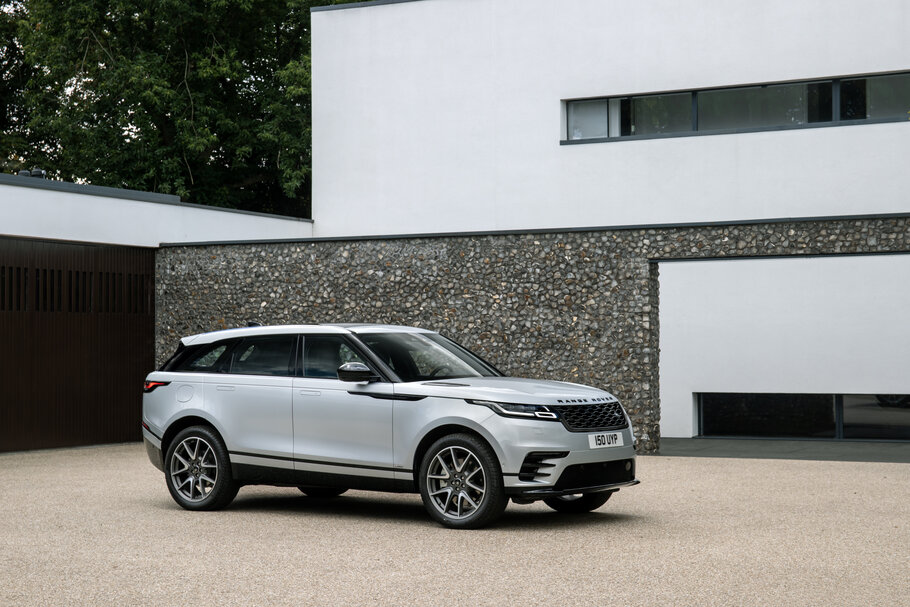
    The Range Rover Velar is now even more desirable, sustainable and intelligent with the introduction of an electric plug-in hybrid option, advanced new infotainment technology, an elegant new design features.

    The mid-size luxury SUV, which sits between the Range Rover Evoque and Range Rover Sport in the family line-up, offers customers the perfect balance of design and technology – now with electric power. The new 2.0-liter four-cylinder P400e plug-in hybrid offers a smooth and refined drive, producing a combined 404PS and 640Nm of torque from its 300PS petrol engine and 105kW electric motor, with an impressive 0-60mph in 5.1 seconds (0-100km/h in 5.4 seconds). A 17.1Wh lithium-ion battery, located under the boot floor, can be charged to 80 percent in just 30 minutes†† using a fast DC charge point, or 1 hour 40 minutes using a standard 7kW wall box. With zero tailpipe emissions in electric mode, an impressive real-world all-electric range of 33 miles (53km), the fuel economy of up to 130.2mpg (2.2 litres/100km), and CO2 emissions from just 49g/km*, the Range Rover Velar is now even more sustainable by design.

    A new family of 3.0-litre straight-six Ingenium engines is also introduced to the Range Rover Velar for the first time. The latest generation of smooth and efficient petrol and diesel engines are available with 48-volt mild hybrid electric vehicle (MHEV) technology for reduced fuel consumption and heightened refinement. The new straight-six engines developed in-house, are available as D300 (300PS diesel) and P400 (400PS) petrol all-wheel-drive variants, each fitted with air suspension as standard for signature Range Rover comfort.

    The new engines are available with mild-hybrid electric vehicle technology (MHEV) in addition to the latest engine technologies, for efficient performance. The MHEV system uses a Belt integrated Starter Generator (BiSG) in the engine bay to harvest energy usually lost under deceleration, which is then stored in a 48V lithium-ion battery located beneath the rear loadspace. It is able to redeploy the stored energy to assist the engine when accelerating away, while also delivering a more refined and responsive stop/start system.

    The new P400 straight-six engine generates 550Nm torque and delivers an impressive 0-60mph time of 5.2 seconds (0-100km in 5.5 seconds.) The engine features an electric supercharger supported by a twin-scroll turbocharger and Continuous Variable Valve Lift (CVVL), for refined performance.

    The D300 diesel generates 650Nm torque, offering 0-60mph in 6.1 seconds (0-100km/h in 6.5 seconds) with a fuel economy of up to 37.2mpg (6.3litres/100km) and CO2 from 199g/km. Series sequential turbos and an advanced after-treatment system make it one of the world’s leading clean diesel engines.

    The new in-line Ingenium diesel engine designs meet Real Driving Emissions Step 2 (RDE2) standards and Euro 6d-final real-world driving compliance with 48V Mild-Hybrid Electric Vehicle (MHEV) technology boosting responses and fuel economy. As a result, the new Ingenium diesel unit – also now available in the Range Rover and Range Rover Sport – is one of the world’s leading clean diesel engines.

    Additionally, the next-generation four-cylinder Ingenium D200 (204PS diesel) is introduced on the Range Rover Velar, offering more power, lower CO2, and improved fuel economy. The engine is offered with the same 48-volt mild-hybrid technology as the rest of the range, with CO2 from 165g/km and fuel economy of up to 44.9mpg (6.3 litres/100km)*.

    Velar features a reductive design emphasized with beautifully integrated digital screens that are now fitted with Land Rover’s state-of-the-art infotainment system, Pivi, and Pivi Pro. The intelligent and intuitive system, offered as Pivi ProΔ from an S-specification pack, transforms the digital experience inside Velar.

    Pivi is designed around ease of use, with a simple interface reducing the number of interactions to enhance safety. Crisp new graphics and super-fast responsiveness are enabled with a new electrical architecture under the surface, ensuring the screens and navigation system are ready to go in seconds, thanks also to a dedicated power source. Customers can access software updates ‘over-the-air’ reducing the need to visit a retailer. An embedded data connection means customers have access to the latest maps, apps, and vehicle software modules with updates scheduled via the touchscreen at a time to suit them.

    Streaming music and media has never been simpler. Spotify is integrated directly within the infotainment menu for the first time, with data included ΔΔ, while there’s Bluetooth connectivity for two phones at once.

    Nick Rogers, Executive Director, Product Engineering at Jaguar Land Rover, said: “The Range Rover Velar’s name and bloodline date back to the code name of the original Range Rover prototypes. It has been fifty years since the introduction of the pioneering Range Rover in 1970, and now every family member is electrified with our awesome plug-in hybrid technology. Electrified powertrains and cleaner mild-hybrid diesel engines mean the Velar is an even more efficient and sustainable option for our customers. Jaguar Land Rover’s new Electrical Vehicle Architecture – EVA 2.0 – supports the new Pivi and Pivi Pro infotainment, as well as Software-Over-The-Air (SOTA), and a whole suite of advanced driver assistance systems, cameras, and clean-air technology, making the Range Rover Velar cleaner, safer and smarter than ever before and one of the most technologically advanced luxury SUVs in the world.”

    The experience inside the Range Rover Velar is now an even calmer sanctuary with the addition of Active Road Noise Cancellation***. The intelligent technology works like a pair of high-end noise cancellation headphones, constantly monitoring vibrations from the road surface and calculating the opposite phase sound wave needed to remove the noise heard by the occupants. The effect is subtle, but the minimum reduction of 4 decibels ensures an even more refined and calming interior space. The system is even able to adjust the level and position of sounds played into the cabin based on the number of passengers and their position inside the vehicle by using the seatbelt sensors. This advanced system delivers a more serene experience inside Velar, even reducing driver tiredness, which can be brought about by extended exposure to low-frequency sound on long journeys.

    A new Cabin Air Filtration system enhances the relaxing and clean sanctuary inside Velar, reducing levels of harmful particulates, pollen, and even odors. The new system – introduced in addition to the existing Cabin Air Ionisation feature – filters out fine particulate matter, allergens, pollen, and even strong smells. Activated via a ‘Purify’ button in the lower touchscreen, it is capable of filtering ultrafine particulates (up to and even below PM2.5). Drivers and passengers can be assured the air they breathe inside the Range Rover Velar is cleaner than the air outside.

    Also available is the new second-generation wearable Activity Key, which can totally replace the traditional key fob when necessary. The water-resistant and shock-proof wrist device now incorporates an LCD watch and allows customers to start, stop, lock, and unlock the vehicle, with no need to take a traditional key fob out with them.

    Additional new design features introduced on Velar include a new steering wheel design which has integrated smart buttons ready to receive the latest ADAS software updates over-the-air. A tactile new Drive Selector also replaces the rotary gear selector.

    The ‘Range Rover Velar Edition’ provides even more customer choice and features a combination of exterior and interior upgrades. Based on the R-Dynamic SE specification□, enhancements include a black contrast roof and matching 20-inch black alloy wheels, for sophisticated presence. The distinctive new special edition model is available exclusively in Lantau Bronze metallic paint, as well as the new Hakuba Silver, Santorini Black or Eiger Grey.

  • Volvo XC40 Recharge

    2021-Volvo-XC40-Recharge1

    Volvo’s progressive and wide-ranging electrification program has delivered a second plug-in petrol-electric hybrid powertrain for the multi-award-winning XC40 compact SUV. The introduction of the new XC40 Recharge Plug-in Hybrid T4 increases customer choice and opens the highly efficient plug-in hybrid technology to a wider market.

    At the same time, two new mild-hybrid petrol options have been added to the range, in the form of the new XC40 B4 and B5.

    With first UK deliveries of the new XC40 Recharge Pure Electric P8 scheduled for early 2021, the XC40 offers customers an exceptional choice of electrified powertrains: full battery-electric, petrol-electric plug-in hybrid, and mild-hybrid electrified petrol.

    XC40 Recharge Plug-in Hybrid T4
    The new plug-in hybrid system combines a 129hp 1.5-liter petrol engine, an 82hp electric motor, and 10.7kWh rechargeable lithium-ion battery to deliver an all-electric driving range of up to 27 miles, meaning typical commuting journeys can be completed with zero tailpipe emissions and no petrol consumption. Its seven-speed automatic transmission helps make driving the XC40 Recharge T4 easy, smooth, and refined, while official WLTP data records CO2 emissions from just 47g/km and fuel economy of up to 134.5mpg.

    This efficiency underpins the XC40 Recharge T4’s low day-to-day running costs, while sub-£40,000 on-the-road prices mean it doesn’t attract the additional £325 Vehicle Excise Duty payable from years two to six. For business motorists, the low CO2 emissions further attract competitive benefit-in-kind rates for company car tax. A rate of just 12% means a 20% taxpayer would pay as little as £78 a month.

    The new powertrain joins the established Recharge Plug-in Hybrid T5 in the XC40 range and is available in R-Design and Inscription equipment grades, with front-wheel drive. Respective on-the-road prices are £39,130 and £39,475. The new versions are on sale now and first deliveries to customers are expected in October 2020.

    New B4 and B5 mild-hybrid petrol powertrains
    The XC40 is also newly available in two mild-hybrid versions, which feature a 48-volt battery to support a 2.0-liter petrol engine. A kinetic energy recovery system and an integrated starter generator add to the overall efficiency.

    The new B4 produces 197hp and is available with front- or all-wheel drive, while the 250hp B5 comes exclusively with all-wheel drive. An eight-speed automatic transmission is standard on both.

    The new powertrains replace the previous T4 and T5 petrol engines in the XC40 lineup. On-the-road prices are from £32,760 for the B4 (Momentum FWD) and £37,865 for the B5 (R-Design).

    Kristian Elvefors, Volvo Car UK Managing Director, said: “The addition of a second plug-in hybrid powertrain and the introduction of our first mild-hybrid patrols to the XC40 range is the latest step in Volvo Cars’ ambitious electrification strategy. Combined with the XC40’s existing strengths of striking design, ingenious packaging, and advanced safety technology, these new powertrains make an already desirable car even more desirable.”