Blog

  • Ford Evos Concept

    Making its global debut at the 2011 Frankfurt Motor Show in September, the Ford Evos Concept represents the ultimate expression of Ford’s new global design language, and explores key future powertrain and vehicle technologies.

    Created as a bespoke concept vehicle, the fastback introduces Ford’s first truly global design language as the momentum of the company’s One Ford product plan continues to build.

    “The Ford Evos Concept unites three key elements which are at the core of our One Ford global product strategy: outstanding design, smart technologies and fuel economy leadership,” said Derrick Kuzak, group vice president of Global Product Development.

    “With its compelling design and innovative technology experience, this is a clear demonstration of the exciting vision we have for the Ford brand. While you will never see this car on the road, the next generation of Ford products around the world will display many of the distinctive design ideas and advanced technologies it showcases.”

    Technology vision for enriched customer experience

    Ford Evos Concept is not just a design-led exercise. It also embodies the global Ford product development team’s move to design and develop vehicles as more than just an interior and exterior, or a collection of attributes.

    “Our goal is to focus on enriching a customer’s every experience with their vehicle – by personalising it, adapting it, and creating unique, unexpected features that surprise and delight them,” said Kuzak. “In the Ford Evos Concept, this objective is explored and extended to the area of connectivity, where the intent is not to convert the vehicle into a smartphone, but rather to provide personalised and safe connection to the outside world in an enriching manner designed totally for the vehicle context.”

    Ford’s global Research and Innovation team, led by Paul Mascarenas, was tasked with building Evos Concept around a technology experience as visionary as the design. The result signals how Ford intends to build on the momentum of innovations like the SYNC in-car connectivity system.

    Ford Evo Concept
    Ford Evo Concept

    “At Ford, the future of technology in the car will be defined by the experience that it delivers to the driver and passengers,” said Paul Mascarenas, chief technical officer and vice president of Ford Research and Innovation. “We see technology as more than just an impressive list of microprocessors, sensors and software; it’s about the application of that technology to create an experience that enhances the driver’s time behind the wheel.”

    The concept’s technology experience embraces a new generation of driver interaction and awareness currently under development in the Ford Research and Innovation laboratories.  Seamless connectivity between the vehicle and the driver’s ‘personal cloud’ of information is at the heart of the vision for its capabilities.

    “The possibilities are fascinating when we explore how to enable a seamless lifestyle between home, office and car linked by access to the driver’s personal information,” Mascarenas said.

    With information from the cloud, the vehicle can provide the same connected lifestyle the driver experiences at home or office. The car knows the driver, and automatically adapts handling, steering and engine controls to deliver an exceptionally dynamic driving experience.

    Ford researchers are focusing their efforts in this area to deliver on four key customer benefits: personalisation, seamless enhancement of the driving experience, looking after the driver’s well-being and delivering smart electrified powertrain optimisation.

    The personalised, cloud-connected lifestyle

    While today’s Ford products provide drivers with many personalisation options, cloud connectivity will enable future Ford vehicles to take the experience to the next level.

    Drawing from a detailed understanding of the driver’s preferences and driving habits, the Ford Evos Concept combines this personal information with additional data from the cloud, such as the driver’s work schedule and local traffic or weather conditions. This information provides a personalised and seamless experience as the driver transitions in and out of the car.

    “We’re researching how we can use patterns or preferences set by the driver to make life simpler,” said Mascarenas. “The car gets to know you and can act as a personal assistant to handle some of the usual routines of a daily commute.”

    It could automatically play the same music or news program that was just streaming at home, or heat or cool the interior to an ideal temperature before the driver gets in without having to be requested by predicting departure time based on his calendar. Wirelessly communicating with devices in the home, it could close the garage door and switch off the lights automatically as it pulls away.

    “This cloud-connected vision shows the enormous potential of tailoring the driving experience to suit the exact personal tastes and moods of the driver,” said Mascarenas. “From recommending a great driving road from friends on your social networks or resetting your alarm clock to let you sleep in when a morning meeting gets cancelled!”

    Enhanced driving experience

    Ford Evos Concept explores adaptive vehicle technologies to redefine the driving experience.

    Current technology requires vehicle chassis settings to be defined based upon the abilities and tastes of a cross-section of drivers and the topography of typical roads. The concept foresees tuning handling and performance to the road ahead and the specific individual behind the wheel.

    Learning driver habits and capabilities, the technology can overlay map and weather data sourced from the cloud to adjust powertrain, steering, suspension and braking systems for optimum enjoyment, comfort and safety.  Because the vehicle is adaptive and honed to maximum performance based on the situation, it takes driving engagement to a new level.

    Driver wellness

    Ford researchers have already developed technologies focused on driver wellness, such as the heart-rate monitoring seat and certified allergy-free interiors. With a seamless connection to the cloud, the Ford Evos Concept monitors the physical state and workload of the driver and adjusts the driving experience accordingly.

    “Our wellness research and technologies are focused on relieving driver stress and enhancing their situational awareness,” said Mascarenas. “Drivers around the world are spending more time behind the wheel, and the car should not be another stress point in their lives.”

    The Ford Evos Concept is also equipped with advanced air quality sensors and filtration systems to help allergy sufferers. Location aware, it can access air quality data from the cloud and proactively suggest a healthier route to the destination.

    In dynamic driving situations, the vehicle may simplify the appearance of the instrument panel to display only necessary gauge information and switch the driver’s connected smartphone to “Do Not Disturb” mode to help keep the focus of attention on the road.

    Cloud-optimised hybrid powertrain

    Completing the vision for the Ford Evos Concept is a state-of-the-art lithium-ion plug-in hybrid (PHEV)powertrain providing the same next-generation performance and fuel economy as the Ford C-MAX Energi scheduled for introduction in North America in 2012 and Europe in 2013.

    Ford ‘powersplit’ hybrid architecture allows the electric motor and petrol engine to work together or separately to maximise efficiency. The advanced powertrain typically runs in all-electric mode before switching to charge-sustaining hybrid mode for continued optimal fuel efficiency.

    Cloud connectivity would provide further opportunities to enhance performance and efficiency by selecting the optimum combination of powertrain modes for any given journey.

    “Access to historical driver behaviour and travel patterns allows us to calculate the optimal fuel and energy efficiency by predicting the destination,” said Mascarenas. “Our researchers are working to increase understanding of driver behaviour, develop accurate protocols to predict it and enhance the trip by providing the smartest use of fuel or battery for the situation.”

    The cloud-optimised powertrain would automatically ‘know’ when to save energy and switch modes, using information about the vehicle’s predicted travel route, any emission zone restrictions during the journey and current weather conditions.

    In the future, communities may place firm restrictions on the types of vehicles allowed to use certain roads or highway lanes, and some city centres may choose to be open only to full electric vehicles. Helping drivers comply with such regulations could therefore be among the benefits of this technology. For example, the French government is considering creating zones mandating lower emissions, while cities such as London, Berlin, and Stockholm already have them in place.

    This capability would further enhance the performance of Ford’s advanced PHEV technology, which offers an overall driving range of more than 500 miles (800 kilometres) using the battery and engine – more than any other plug-in or extended-range electric vehicle.

    “With its leading-edge ‘cloud-optimised’ PHEV powertrain offering outstanding efficiency and range with supreme driving enjoyment, the Ford Evos Concept highlights our vision for greener, smarter vehicles with outstanding customer appeal,” said Kuzak.

    Ford’s new design direction

    The Ford Evos Concept was specifically developed to introduce the new Ford design direction.  Key design elements will be applied to forthcoming Ford vehicles.

    The new global design DNA provides the company’s worldwide design teams with a common framework to guide the creation of new products, enabling them to shape a coherent family of distinctive vehicles sharing the same fundamental design character.

    “We wanted the Ford Evos Concept to give a clear message about where Ford design is heading – shaping vehicles that are fun to drive, have a strong premium visual appeal, and above all, are stunningly beautiful,” said J Mays, group vice president, Design and chief creative officer.

    “Our exciting new design DNA has been developed and refined by an intensive effort by all of our talented global design team,” said Mays.  “As a team, we wanted to create a more technical design vocabulary to help communicate the smart technology that is now core to the Ford brand.  In addition, we worked particularly hard on meeting the high-expectations of a new generation of buyers – a group of consumers who have grown up surrounded by beautiful, premium design work on even the most affordable products.”

    Dramatic fastback design with unique proportions

    To provide a fitting vehicle to introduce the new design language, the Ford Evos Concept was conceived as a dramatic fastback concept, combining a striking new profile with innovative proportions. Attention-grabbing lines conceal a unique new format, with a four-door, four-seat layout which combines dynamic appearance with surprising practicality.

    “This is an exciting new interpretation of the fastback bodystyle, with a really innovative silhouette as well as dramatic and very modern proportions,” Mays said.

    With the length of a typical C-car, but with width of a CD-car, the Ford Evos Concept has a powerful, sporting stance. The forward position of the cowl, the strongly rounded front screen and the A-pillars set further to the rear enabled the designers to create the impression of a classic GT car, but with a very contemporary feel.

    The concept’s spectacular hinged gullwing-style doors, both front and rear, provide outstanding access to the spacious four-seat cabin.

    The concept car measures 4.50m (177in) long, 1.97m (77in) wide and 1.36m (53in) high, with a wheelbase of 2.74m (108in).

    Distinctive evolution

    Shaped as the ultimate expression of the new design DNA, the Ford Evos Concept highlights key elements of Ford’s distinctive new global design language.

    “The new design DNA marks a bold evolution of the kinetic design language featured on existing global Ford products and is characterised by a number of important elements that will contribute to an unmistakable future Ford look,” said Mays.

    From the front, the Ford Evos Concept immediately signals the arrival of something new – a new face for Ford featuring the signature trapezoidal grille mounted higher on the car and creating a confident, more premium look.

    Bold, technical shapes, such as the extremely slim ‘laser cut’ front lamps or the dramatic graphic created by the front and rear screens connected by the thin glazed section of the roof, add a distinctive character to the design.  Sculptured flanks highlight attention to detail on the surfacing, which lends a refined quality and a tauter, more muscular character.

    “The Ford Evos Concept embodies the core elements of the new global design language, while capturing the dynamic, fun-to-drive spirit which is central to the Ford DNA,” said executive design director Martin Smith.  “Most notable is the brand new ‘face of Ford’, with its higher mounted trapezoidal grille, and the design is characterised by the use of very bold, technical graphics.  We have also created much more refined and precise surfacing, and these elements together give a strong visual sense of premium quality.

    The vehicle was sculpted with the same purity of surface sculpture and attention to detail which characterise premium vehicles.  Around the world, a new generation of buyers have come to expect premium design in all products, regardless of the purchase price.

    Built around the driver

    Reflecting the fun-to-drive spirit of its exterior design, the interior of the Ford Evos Concept is built around the driver.  A stylish and innovative cockpit promises new levels of driving pleasure and driver interaction.

    The interior architecture features clean and simple surfaces, with a muscular, athletic character to the slim upper instrument panel, enhanced by bold trapezoidal cut-outs.  Contrasting these muscular forms, curvaceous cockpit display surfaces sweep down either side of the driver, providing secondary information about vehicle and infotainment systems.

    The concept features a bold red driver’s seat and the vision of unprecedented driver interaction via an advanced driver interface. The two rear seat passengers get an equally special experience, with dedicated touch-screen displays to interact with the vehicle and individually adjustable sports seats.

    “Both the exterior and interior of the Ford Evos Concept clearly communicate that this is a driver’s car, so that as soon as people see the vehicle, they will immediately want to get in and drive,” said executive design director Moray Callum.

    Source: Ford

  • Porsche 911 (991) 7-speed manual layout – first looks

    When Porsche released the information about their new 7-speed manual gearbox, which they are introducing with the long-awaited 911 replacement, reactions were pretty much split between disbelief and annoyance. After all, in many cases even 6 speeds could be a handful and, in a car of the 911’s breed, it is kind of important to be able to work the shifter with the same ease you slice through mom’s freshly-baked pie.

    Therefore, initially there was disbelief, which grew into concern about the usability of a seven-speed manual in a car traditionally touted for its German practicality, utilitarianism, and efficiency. Still, Porsche have moved ahead with their production plans and we are about to see the official presentation of the newest 911 at the Frankfurt Auto Show (September 15-30, 2011). Shortly before, however, we are finally able to see the shifting layout of the transmission, which the guys at CarEnvy.ca have posted on their Facebook page.

    Porsche 911: 7-speed manual layout

    Judging by the picture, using the shifter would not be an issue, at least for those who managed just fine with its 6-speed predecessor in the current model generation. Seventh gear is ‘squeezed in’ just beside sixth, which does not change anything about the layout of the other gears – no surprises for Porsche drivers. In addition, Porsche’s claim has been that the top gear is added with the sole purpose of reducing engine noise and fuel consumption and is to be used only on occasions, such as leisurely cruising, so this should happen rarely enough.

    All of this is supposed to do away with the practicality/efficiency doubts. In fact, Porsche estimates that the 991 (as is the factory designation of this 911 generation) should be around 15% more fuel efficient than the current car, which is already extremely frugal by supercar standards. Of course, we will have to wait and see the official unveiling of the new 911, in order to be sure, but so far it appears that more is still better.

  • Infiniti FX50 Performance Concept

    Infiniti will exhibit FX50 Performance Concept at the Frankfurt Motor Show on September 13. The vehicle is designed with contributions from Formula One World Champion Sebastian Vettel.

    The vehicle is based on the FX50 facelift, which is powered by a 5.0 liter V8 with 390PS (287 kW) and 500Nm (369 lb-ft) of torque.

    FX50 Performance Concept boasts revised front bumper with integrated LED daytime running lights, carbon fiber side skirts, a roof spoiler and different rear bumper.

    The crossover stands on enormous wheels in new design fitted with low profile tires.

    There are no roof rails, which is a part of enhanced aerodynamics.

    Stay tuned for more information!

    Infiniti FX50 Performance Concept FrontSide
    Infiniti FX50 Performance Concept FrontSide

    Source: Infiniti

  • Alfa 4C Concept

    Alfa Romeo 4C Concept will be also presented at the 64th International Motor Show in Frankfurt next month. It now boasts fluid metal exterior colour that dynamically enhances the smooth lines of the car.

    4C Concept has a total weight of 850 kilos and a power unit with more than 200BHP, which means less than 4kg per HP, not bad at all.

    The Alfa 4C Concept uses technology and materials derived from the 8C Competizione – carbon, aluminium, rear-wheel drive – and technology from Alfa Romeo models currently on sale: the 1750 turbo petrol engine with direct injection, the ALFA TCT twin dry clutch transmission; and all the best of Alfa’s DNA technology, obviously including the Alfa DNA dynamic control selector.

    Other cars on display will be – Giulietta and MiTo.

    The Giulietta is equipped with the next generation ALFA TCT twin dual dry clutch semi-automatic transmission. This innovative transmission ensures greater driving comfort and a sportier feel than conventional automatic gearboxes, combined with improved efficiency and lower fuel consumption levels. The ALFA TCT transmission will be available with a choice of two engines : the 1.4 TB MultiAir 170BHP engine and the 2.0 JTDM-2 170BHP diesel engine.

    The MiTo will showcase two new engines – a revolutionary 0.9 TwinAir TB 85bhp and a new 1.3 JTDM 85bhp .  The award winning TwinAir engine developed by Fiat Powertrain, develops 85 bhp at 5,500 rpm and torque of 145Nm at 2,000 rpm. By using the Start&Stop device and the smart alternator, the MiTo Twin Air engine has the lowest value of CO2 emissions with petrol engines in its class : 98g/km.

    Alfa 4C Concept RearSide
    Alfa 4C Concept RearSide

    Source: Alfa Romeo

  • Peugeot RCZ Asphalt HDi

    Peugeot RCZ Asphalt Limited Edition will be also available with diesel powered engine. The petrol version with 1.6 liter turbocharged power unit was introduced an year ago and now it is turn to the more economical variant.

    Peugeot RCZ Asphalt HDi is powered by a 2.0 liter diesel engine with 200PS (147 kw) and a lot of torque. The engine is well-known with its qualities and low fuel consumption.

    The limited edition RCZ boasts matt black exterior, sleek 10-spoke 19-inch lightweight alloys wrapped in high-performance Continental tires, as well as special ‘Asphalt’ badging.

    No further information is released, but the car will be introduced at the Frankfurt IAA in September.

    Stay tuned!

    2010 Peugeot RCZ Asphalt Rear
    2010 Peugeot RCZ Asphalt Rear

    Source: Peugeot

  • 2012 Acura TSX Special Edition

    2012 Acura TSX Special edition will be exhibited at the Orange County International Auto Show. The model is created to celebrate the 25th anniversary of the popular sports sedan. It will add even more sportiness to the TSX lineup thanks to numerous exterior and interior upgrades for Acura’s entry-level sedan.

    The aerodynamics package includes a new front bumper, revised rear bumper, a pair of new side skirts and nice 17 alloy wheels fitted with low profile performance tires.

    The interior boasts exclusive seating surfaces with perforated black Lux Suede® inserts with red backing. There is also red lighting for the instrument cluster gauges, overhead lighting and footwell lighting.

    The saloon is powered by a 2.4 liter four-cylinder petrol with 204PS (150 kW) and 230Nm (170 lb-ft) of torque. It is mated to a 6-speed manual or a 5-speed automatic gearbox.

    “The Acura TSX has long been known for its high-revving 4-cylinder engines and sporty driving nature,” said Jeff Conrad, vice president of Acura sales.

    “With the new Special Edition, the TSX becomes even more youthful and sporty in character, furthering its appeal to performance-minded buyers.”, he finished.

    2012 Acura TSX Special Edition FrontSide
    2012 Acura TSX Special Edition FrontSide

    Source: Acura

  • 2012 Peugeot 508 RHX

    Diesel-electric hybrid and distinctive ‘high-end’ appeal combine to offer an original view of the world of all-wheel drive vehicles with enhanced driving pleasure: introducing the new Peugeot 508 RXH.

    RXH demonstrates the modern, enhanced ‘top-of-the-range’ vision for Peugeot, and has its world premiere at the Frankfurt Motor Show. The style of the 508 RXH and its innovative HYbrid4 drive unit provide features that allow it to combine new levels of driving freedom and pleasure in a form not seen before in its segment:

    • 200 bhp
    • ZEV – 100% electric mode
    • Four-wheel drive
    • CO2 emissions of 109 g/km

    After the successful launch of the 508 Saloon and SW in spring 2011, where they were highly acclaimed for their styling elegance, on-the-road presence, high levels of build quality and attention to detail, the 508 RXH further elevates the profile of the entire Peugeot brand reinforcing its technological and environmental leadership.

    The 508 RXH has a road presence and specific design that immediately places it in the environment of ‘top-level’ all road vehicles.  Unique, refined, higher and wider, it is also distinguished by a singular visual identity, characterised by its distinctive LED daytime running lights that give an impression of having three vertical ‘lion claws’ on each side of its ‘floating’ grille, the combined style of which is all the more striking.

    To reinforce its exclusive character, the interior of the 508 RXH benefits from special features with distinctive colours and the use of luxurious materials.

    Its unique level of finish and equipment is coherent with the ‘top-of-the-range’ and technological positioning of the vehicle. Richly equipped as standard with electric front seats, head up display, 18″ wheels, panoramic glass roof, dark-tinted acoustic laminated side windows, half leather trim, head up display, latest generation audio and satellite navigation RXH welcomes its occupants with care, refinement and a high level of comfort features.

    Equipped with the 2.0 l HDi FAP HYbrid4 powertrain, a world first when featured in the 3008 HYbrid4, the diesel-electric hybrid in the 508 RXH extends driving freedom and pleasure to traverse all roads. With a maximum power of 147 kW (200 bhp), four-wheel drive and a maximum torque of 450 Nm, the 508 RXH has been designed to adapt to all uses, in a wide spectrum of conditions. Furthermore, it opens up new perspectives in the segment, offering a ZEV (100% electric) mode, ideal for driving in town and capable of delivering, in the Combined Drive Cycle, 67.2 mpg with CO2 emissions of 109 g/km.

    Following the launch of the 3008 HYbrid4 in the autumn, the Peugeot Marque continues its innovative strategy, combining enhanced driving sensations and advanced environmental developments by extending HYbrid4 technology to other models.

    The 508 RXH will be unveiled as a world premiere at the Frankfurt International Motor Show in September 2011, and goes on sale in spring 2012.

    2012 Peugeot 508 RHX
    2012 Peugeot 508 RHX

    Peugeot 508 RXH
    The 508 RXH represents the new, up market positioned Peugeot.It sees the launch of an identity that combines the traditional designation of Peugeot models, incorporating the central zero, and three letters that characterise the Marques specialist vehicles. This new model both heads up and extends the 508 range, with an original design silhouette, justifying its exclusive designation – RXH.

    A distinctive appeal
    The 508 RXH styling has its own distinctive character within the 508 range. Its elegance and style place it immediately in an exclusive world that combines premium-positioning, technology with the ability to experience adventure and promises of a new and unparalleled driving experience.

    With a 40 mm wider track and its height increased by 50 mm, this new Peugeot has an individual stance, without sacrificing the characteristics of the 508 range – poise, elegance and status. The use of new, 18” forged wheel rims allowed designers to create a very fine wheel design with an internal diameter increased by 10 mm in comparison with conventional wheel rims. The result is a dynamic and elegantly enhanced body style.

    Its adventurous side profile is illustrated through the bodywork extensions in satin stealth grey that envelope the lower body of the car. From the bottom of the front bumper, the line extends over the wheel arches, along the sill panels to meet the rear bumper. The choice of the satin trim finishers contribute to position this estate car within a refined world, as do the satin chrome inserts, with ‘HYbrid4’ badging, that adorns the sill panel, and front and rear protective trims.  Fully integrated, they reflect the integrity applied to the cohesive design of the 508 RXH.

    This individual personality is more striking at the front end, which has become even more expressive while maintaining the strength of the brand’s new style aesthetics. Accompanying a wider and taller body silhouette, the grille is extended on its lower edge. More strikingly, the new grille accentuates the illusion that it is ‘floating’ within the aperture. To achieve this, designers have taken influence from aviation reference points, notably taking inspiration from aircraft jet engine cowls. The air therefore seems to be well-channelled around the grille, which stands out distinctly from the bonnet line.

    Its distinctive style lines give the 508 RXH a very individual visual identity. It is the first Peugeot to use the iconic theme of the ‘claw’ on the front. Its LED daytime running lights illuminate to form three ‘lion claws’, instantly recognisable by day and by night to reinforce the characteristic ‘feline’ appearance of the head lamps. This unique and dynamic signature is complemented with the illumination of seven orange LEDs, from within the LED tube that is an original directional indicator function.

    Like the 508 SW, the lines flow together in a harmonious and dynamic manner, falling back to a rear that is well seated on its haunches. The extensive panoramic glass roof has the benefit of being a continuation of the windscreen, with the profiled aluminium roof bars merging with the bodywork to enhance the exclusivity of the car. In this spirit, there are flush surfaces, highlighted by its high build quality finish. At the rear, the lights portray an elegant red band that glows brightly when the lights are on.

    Refined interior styling and technology
    The styling of the dashboard is centred heavily around the qualities evoked by the exterior design of the vehicle, with continued illustrations of high quality, purity, elegance, etc. Its design supports a multiplex centre console with switchgear that is equipped with technology designed to provide easy control to a host of features.

    This purity and simplicity of design and integration is best demonstrated on the HYbrid4 drive mode selection knob and the gear selector lever. It has the design that combines the traditional gear selector lever and a computer mouse called the ‘manettino’ – it fits perfectly into this pure and technological environment.

    White backlighting is available throughout the 508 RXH interior (on the instrument panel, displays and the various lighting zones within the car), showing great care in detail and finish. It is this and the attention to detail that illustrates the hallmarks of the latest Peugeot range.

    The car’s internal trim and decor have been created in harmony, evoking elegance without ostentation. The use of natural materials and colours, sometimes exclusively, enhance the distinctive character of the 508 RXH. Brushed aluminium and shaded lacquers are used on the dashboard for the first time in this way. A spectacular treatment in keeping with the electricity supplied by HYbrid4 technology, this decor is specified in tinted shades of copper. This theme, again unprecedented, is subtly continued throughout the interior with matching trim stitching in this copper shade. The exterior is also themed with a copper colour theme through the colouring of the lock tumblers in Calern Brown, a shade exclusive to the 508 RXH.

    The choice of light-coloured alcantara leather and an innovative laser-printed fabric creates a two-tone upholstery that reinforces the refined image of the car. Depending on preference, the customer may opt for full leather or half-leather upholstery.

    A generously-proportioned, high-quality boot
    In keeping with the vehicle’s interior, the boot of the 508 RXH has been fitted out with care, using materials that continue to reflect a high level of quality with the materials specified. The aluminium rails and four solid chrome hooks elegantly decorate the functional boot floor, while a loading sill guard in the same material offers protection for the rugged ‘adventurer’ potential of this new Peugeot.

    The 508 RXH boot has a capacity of 423 litres beneath the parcel shelf (or 400 dm3 in accordance with the VDA 210 standard). Its rectangular shape, with motorised tailgate and the storage compartments located under the flat floor (11 litres) make it easy to use. It is also possible to compartmentalise the boot using partition bars available as accessories, which attach to the aluminium rails inside the boot.

    Finally, the loading volume can be increased easily by folding the 1/3 – 2/3 split rear bench seat in a single movement.

    Enhancement through technological equipment
    The 508 RXH is offered in a single trim finish, generously-equipped, in accordance with its distinctive high-end positioning. All of the high-tech equipment available either as standard or as an option accentuates its exclusive character: ‘Open and Go’ Stop Start, Colour Head Up Display (that includes the  display of the navigation system information), main beam head lamps assistance, automatic electric parking brake, new telematics, JBL hi-fi stereo, Peugeot Connect SOS and Assistance, Xenon lights, etc.

    A high level of comfort
    Quality of comfort aboard the 508 RXH has been the focus of particular care to ensure that each passenger can benefit from individual treatment. In addition to the generous space given to each seat, notably in the rear with excellent leg room and the panoramic glass roof, dedicated equipment allows everyone to have a high-level of comfort: with quad-zone air conditioning, driver’s seat electric lumbar massage, electrically-adjustable driver and passenger seats with adjustable cushion edge and laminated acoustic rear side windows for road noise reduction, etc.

    Benchmark for road handling
    The suspension and wheel design also contribute to onboard comfort: with a Pseudo-McPherson type front axle and specific HYbrid4 technology, modular multi-arm rear axle. While cleverly incorporating the hybrid architecture and taking into account a new weight distribution, the Peugeot engineers have retained the recognised dynamic characteristics of the 508 range with an excellent synthesis of suspension comfort, light steering and good handling. The 508 RXH is one of the latest generation of vehicles that expresses driving pleasure, due to its Peugeot chassis ‘genetics’ and full diesel hybrid technology.

    HYbrid4 technology: A logical combination
    Offering the 508 RXH with a HYbrid4 technology powertrain that combines diesel and electric motors, is a logical choice primarily because it provides a level of functionality that is perfectly matched to the various customer expectations in this segment:

    High performance combined with first-rate handling;
    Freedom to travel on all roads with confidence, with all-wheel drive;
    Ease of use with four unique drive modes available (Zero Emission Vehicle, 4WD, Sport, Auto) and battery charging which is carried out automatically;
    Quiet operation, with the ability to drive in the all-electric (ZEV) mode.

    The next generation enhances driving emotion

    HYbrid4 technology also opens up new perspectives in the segment with a breakthrough in improved fuel consumption – 67.2 mpg and CO2 emissions of less than 109 g/km in the Combined Drive Cycle with a completely silent electric mode with zero emissions; ideal for driving around town efficiently.

    In terms of performance, 508 RXH benefits from the efficiency and power of its internal combustion engine combined with the electric motor during acceleration phases for an immediate increase in power (the ‘boost’ function maximises performance and available power in the Sport mode). The maximum combined power can reach 147 kW (200bhp) by combining the 120 kW (163 bhp) from the 2.0 l HDi FAP diesel engine and the ‘on-demand’ peak power of the 27 kW (37 bhp) electric motor. Up to 300 Nm of torque is delivered to the front wheels by the HDi diesel unit and up to 200 Nm to the rear wheels with the electric motor. The maximum combined value however is 450 Nm at lower road speeds, which guarantees excellent traction in most driving conditions including low-grip surfaces like snow and dirt roads, providing customers of this all-wheel drive estate car to comfortably go much further than ever before.

    Source: Peugeot

  • Peugeot Hx1 Concept

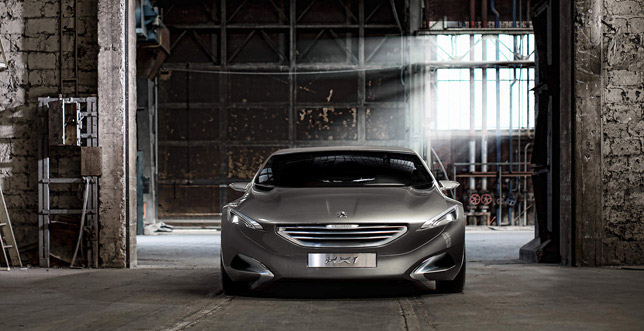
    The HX1 Concept Car gives Peugeot the opportunity to once again illustrate the marque’s ability to reflect on new ideas, learn how to evolve and to continually reinvent itself.

    The brief for this concept was to produce a vehicle for up to six people, offering strong styling, that is sporty and efficient and at the same time giving a unique driving sensation.

    To achieve this, the HX1 transcends the notions of adaptability in all areas, with its extreme aerodynamics (‘flaps’ are deployed to optimise aero efficiency according to vehicle speed), its tapered, low MPV architecture and its HYbrid4 power plant integrating ‘plug-in’ technology.

    A unique and transformable concept, aiming for maximum efficiency

    Adaptive

    The HX1 is a prospective concept designed to help envisage future solutions in numerous fields: architecture, aerodynamics, modularity, equipment, interior materials and the environment, not forgetting, of course, powerplants. These considerations have led to very strong bias that breaks from the norm and guided by a theme: ‘Metamorphosis’, to give the vehicle the capability to adapt itself to its environment, to life’s conditions, driving conditions, etc. and at any time.

    Architecture

    To meet specifications, the HX1 has been designed with an MPV architecture with unique dimensions: low (1.373 m) and wide (1.990 m overall) and with a length of 4.954 m.

    This allows for a volume suited to pure, elegant and sleek lines that delivers a low Cd figure for maximum overall efficiency.

    Four reverse-opening ‘half-scissor’ doors can be opened wide for ease of access to the HX1 passenger compartment. These kinematics have also been researched in terms of practicality and to allow accessibility under all circumstances.

    The passenger compartment is structured so as to offer maximum comfort for the two passengers in the rear row and maximum sensation for the occupants of the first row. If required, two retractable seats can be configured in a centre row due to a clever system of “pull-out seats”, based on the same principle used on the HR1 Concept Car (First shown at the 2010 Paris Motor Show); these additional seats are integrated behind the front seats.

    Peugeot Hx1 Concept
    Peugeot Hx1 Concept

    Aerodynamics

    Designers have taken aerodynamics to the extreme with HX1. When stationary and at low speeds the HX1’s styling makes it appear sculpted from a solid form as the moving parts have been adapted to optimise air flow and to enhance the car’s environmental performance. The seven ‘spokes’ in each wheel rim spike, fashioned like a turbine blade, open to create a flat disc surface. At the same time, a spoiler and two side skirts located at the top of the tailgate are deployed above 62.1mph.  When moving, the HX1 therefore adapts itself ‘physically’ to its environment.

    The vehicle has a Cd of 0.28; an outstanding value for a vehicle with an MPV silhouette.

    All of these aerodynamic devices have evolved thanks to the free rein given to the immense creativity of Stylists.

    Styling not restricted by norms

    Futuristic exterior styling, sculpted through aerodynamics

    The HX1 is a vehicle that is pure in style; sculptured, upmarket and exuding dynamism and exclusivity. Aerodynamic, its sleek, elegant and fluid lines seem to have been tailored by the wind itself. They subtly underline the athletic, even muscular, character of the vehicle. Each surface is sculpted with precision, each detail is crafted intricately: mirrors with integral rear view cameras, brushed aluminium window surrounds, millimetre-perfect panel gaps and flush fittings, etc.

    At the front, the HX1 enhances Peugeot’s latest design identity. The theme of a unique ‘floating’ front grille, which appears ‘detached’ from the bodywork has been designed to harmonise with the car’s tapered lines. The precisely-carved feline head lamps give it an appearance that is evocative of the Marque’s badge and history: the lion, proudly displayed on the front of the bonnet. This look is refined by an LED lighting signature, easily recognisable in the daytime or at night. This visual signature is also found in the rear lights, the boomerang shape of which follows the lines of the rear design.

    A high-tech and range-topping interior that refines the ‘Motion & Emotion’ brand signature
    The pure and futuristic design of the dashboard and seats, the materials used (floor and fittings in natural oak with inlaid fibre optics, brushed metal, leather, etc.), existing equipment (digital displays, touch-sensitive screens, etc.), designed lighting (LED spotlights, strips backlit by the natural lighting on the headlining, etc.); all of these contribute to create an environment where modernity meets refinement, natural materials meet technology, and so on. This all symbolises the Marque’s vision of an upmarket, range-topping interior.

    The passenger compartment reflects the Peugeot signature:

    ‘Emotion’

    The front has been designed to provide the driver with maximum sensation. The environment is very sensory and high-tech, with its use of brushed metal and digital components. Here again, the vehicle will adapt itself in the real life situation of the driver. Indeed, the steering column can be moved backwards and forwards electrically in line with the seat adjustment for complete ease of access. The steering wheel movement loads up automatically when the car is put into ‘cruising’ mode for enhanced driver stability and comfort. Finally, the central multifunctional display can be adjusted, leaving only the essential information visible on its edge.

    The instrument panel is designed to create the experience of having complete control over the vehicle, like the ‘head-up display’ which presents all of the information to the driver without them having to take their eyes off the road ahead.

    “Motion”
    At the rear, maximum attention is dedicated to ‘added value’ of features and passenger comfort. The environment and the materials used are bright and natural, a mixture of folded and stitched leather. The two sculpted rear seats recline, a set of controls are grouped in the centre armrest. The centre console includes a minibar and a coffee machine, a discreet acknowledgement to the extensive history of Peugeot products. This console is adorned with white Carrare marble, specially milled ‘by hand’, which contributes to the exclusive and modern environment.

    HYbrid4 ‘plug-in’ power plant: even better suited to its surroundings

    The HX1 integrates HYbrid4 technology, an innovative modular architecture that figures in the Peugeot range on the 3008 HYbrid4, the first diesel hybrid in the world; technology which will also be present on the 508 RXH in 2012.

    The principle behind HYbrid4 is clever, yet simple: With an internal combustion diesel engine at the front (powering the front wheels) and an electric motor to the rear (powering the rear wheels), this technology enables all four wheels to be driven when the engine and motor work together, for increased safety and traction in extreme conditions. It also enables the vehicle to be driven at low speeds powered just by the electric motor in ‘Zero Emissions Vehicle’ mode.

    Under the bonnet of the HX1 the engine is a 204 bhp, 2.2 litre HDi diesel, linked to an automatic

    6-speed gearbox; the same powertrain as that used on the 508’s range-topping GT version. Coupled with a 70 kW (95 bhp) electric motor, the combined output can develop a potential 220 kW (299 bhp).

    However, one of Peugeot’s priorities is to maintain its position as environmental leader in the years to come. The HX1 therefore takes us one step further. It is equipped with ‘plug-in’ functionality: the lithium-ion batteries can be recharged by ‘plugging in’ the vehicle to a standard 240V mains electric socket. This means that it can have a longer ‘ZEV’ range, i.e.: it can cover up to 18.6 miles in all-electric drive mode.  The HX1 thus obtains a combined fuel consumption of 88.2mpg with CO2 emissions of 83 g/km.

  • NOVITEC Alfa Romeo Giulietta

    Power is no sin and thus NOVITEC now also offers custom-tailored versions of its tried and proven POWERJET 2 tuning modules for the turbocharged gasoline models of the Giulietta. After the plug-and-play installation of the auxiliary control module the 1.4 TB 16V model produces 141 hp / 104 kW of power, up from standard 120 hp / 88 kW. Power output of the NOVITEC-tuned MultiAir engine with identical displacement jumps from 170 hp / 125 kW to a powerful 195 hp / 141 kW.

    NOVITEC engine tuning is also available for the 1.8-liter turbocharged engine of the Giulietta. The POWERJET 2 module bumps power output of the four-valve, four-cylinder engine by 26 hp / 19 kW and boosts peak torque to 386 Nm. Thus equipped the Italian speedster produces 261 hp / 192 kW and sprints from rest to 100 km/h in just 6.5 seconds on the way to a new top speed of 251 km/h. Despite its outstanding efficiency the engine tuning is a great bargain at just EUR 419.

    NOVITEC power tuning is also available for the three turbodiesel engines of the Giulietta. The POWERRAIL 5 module, which also installs easily by means of a plug connector, lends the 1.6 JTD 16V model an extra 15 hp / 11 kW of power.

    NOVITEC Alfa Romeo Giulietta
    NOVITEC Alfa Romeo Giulietta

    In the 2.0 JTD 16V model with a standard power output of 140 hp / 103 kW the auxiliary control unit unleashes an extra 20 hp / 14.7 kW. Power output of the also available 170-hp diesel model with custom-calibrated NOVITEC auxiliary control unit jumps to 195 hp / 143 kW while peak torque grows by 50 Nm to 400 Nm. The NOVITEC POWERRAIL 5 modules are available for EUR 335.

    With or without engine tuning: the NOVITEC stainless-steel sport rear mufflers, available in various designs with two or four tailpipes, lend all models a sportier exhaust note.

    Another focal point of the NOVITEC tuning program for the Giulietta lies in the handling. The measures include custom-tailored alloy wheels with diameters of 18, 19 or 20 inches. The king-sized version features NOVITEC N10 20-inch wheels, available with a silver or matte-black finish. In size 8.5Jx20 and shod with size 235/50 R 20 Pirelli P Zero tires they perfectly fill the wheel wells.

    The perfect complement to these wheels and tires are either NOVITEC sport springs, which lower the ride height of the Giulietta by some 35 millimeters, or the stainless-steel coil-over suspension with adjustable ride height and damper rates. It lends the Alfa Romeo a firmer setup and provides infinitely variable ride-height lowering between 35 and 75 millimeters.

    The NOVITEC body kit offers sporty design at its best in combination with efficient aerodynamic function.

    The front of the vehicle undergoes an exciting facelift with the help of EUR 167 spoiler corners that attach to the left and right side of the front fascia, and the centrally mounted cup spoiler for EUR 83. But that’s not all: together these components also further reduce lift on the front axle.

    The NOVITEC side skirts for EUR 234 give the Giulietta a lower, sleeker appearance. The rear of the vehicle receives some added profile with the help of the rear fascia with diffuser look. This component is available for EUR 167 in different versions with precise cutouts for the various exhaust tip variants of the NOVITEC sport rear muffler.

    The NOVITEC components come with general operating certificates, thus saving customers costly and time-intensive individual technical inspections. They also eliminate the need to register the body components in the vehicle registration documents.

    Source: NOVITEC

  • 5 Most Aerodynamic Family Saloons on the Market

    BMW E90 3 Series - Front Angle View

    We have all heard the idiom “This … has the aerodynamics of a brick” at one time or another and it is not by accident that the expression has become universally popular among automotive enthusiasts. It turns out, in fact, that when it comes to aerodynamics (which in a car determines a number of characteristics, including but not limited to top speed, fuel consumption, and noise inside) you pretty much cannot do any worse. How do we know? Well, some really smart people invented the ‘drag coefficient’, which is a useful number to measure the frontal area resistance of a solid object in air or liquid. When this solid object is a brick, the number equals 2.

    Back to cars, ever since people recognized that cars and carriages are not the same thing, car manufacturers started to pay more attention to aerodynamics as part of their efforts to make their cars go faster, be more stable, and look better (although the latter turned out to be way more than a function of wind resistance). All in all, in the last half a century aerodynamics has had a crucial role in shaping our concept about the attributes of a car’s exterior.

    So what are the 5 cars of today, which are most brick-un-like in terms of their Cd (the accepted designation of drag coefficient)?

    5. Opel Insignia

    So it is not only beautiful but also efficient in the way it slips through the air. The 2009 European ‘Car of the Year’ award winner has been a total hit so far with its sales in Europe and is well-received on the US market, as well, where it appears with a Buick badge. Of course, the Insignia has its faults – the scarce rear passenger leg room is something the vast majority of automotive journalists who have tested the car agree on. Another thing they agree on, however, is its successful design, which is not only pleasing to the eye but also responsible for a Cd of only 0.27.

    4. BMW E90 3 Series

    In our minds, BMW’s have never won people over through their aerodynamic design – something which has been the reserved territory of brands, such as Citroen for example. Still, despite the fact that the little bimmer is quite different to look at when compared to the renaissance-like shapes of the Insignia, it has the same Cd value of 0.27 as the Opel. That is, only if it bears a 318i/320i badge  – the reason is that larger wheels and fatter tires, as well as a few other exterior tweaks, increase the Cd number slightly in the name of better stability and driving security.

    1-3. Japanese Wedges versus the Three-Pointed Star: A Three-Way Tie!

    There are three cars, which occupy the top of this ranking: the Mercedes-Benz E-Class, the Toyota Prius, and the Honda Insight. They all share a drag coefficient of just 0.25 and two of them – the Prius and the Insight – also share a largely similar design concept. In fact, to use the word ‘share’ would not be entirely correct because the Insight came in 2008 in response to the Prius’ considerable market success and stole its silhouette in an attempt to steal its sales. Nowadays, however, we are all quite used to automotive anonymity and other such examples abound, so it is hardly scandalous. While the two cars have the same Cd value, the Honda needs it a bit more to compensate for the smaller gasoline engine it packs (1.5 vs. 1.8 liters).

    Unlike the above two cars, whose hybrid nature and green marketing obligations force them to be as aerodynamic as possible, the E-Class Mercedes is built around the idea of comfort and luxury. It is the most prestigious and expensive car in this ranking and has the most conventional visual profile of the lot. Therefore, we consider it a small miracle that it manages to equal the achievement of the Japanese ‘eco-wedges’. Hat tip to Mercedes, therefore, as they have found a way to win in one more category without giving up any of their traditional qualities!

  • Vilner Land Rover Defender Experience – “The Twins”

    Land Rover Defenders are commonly valued for their unmatched off-road capabilities and extreme toughness. People who buy these iconic machines usually apply their qualities in exotic adventures or work in heavy terrain conditions. There are probably also people who see Land Rovers as accommodating and functional too, but never luxurious.

    However, there are wealthy people who are not ready to sacrifice their comfort and luxurious surroundings, in order to experience the Defender in its element. They typically go off and buy one of the new-age ‘soft’ off-roaders.

    Some of them, however, choose another route and seek the assistance of specialized experts, such as the Bulgarian-based tuning and customization studio Vilner. Such is the case with a Russian oligarch, who wished to have his identity remain undisclosed. The challenge he presented the Vilner team with was to completely revamp two Land Rover Defenders, which are set to be used in the client’s private hunting grounds and entertain both him and his exclusive guests.

    The guys at Vilner took up to the challenge and wasted no time in turning the harsh off-roaders into world-class luxury machines, without spoiling their ability to reach the Earth’s most distant and inaccessible spots. They named the project “The Twins”.

    Vilner Land Rover Defender Experiance
    Vilner Land Rover Defender Experience

    To start with, the team added to the Defender’s sound insulation, which in its standard trim is practically non-existent, in order to significantly decrease noise and vibrations inside the saloon. They continued by dressing the door panels in a combination of Alcantara and Nappa leather (with the latter being the same as the one used by Bentley in their interiors). Finally, they completed the interior by garnishing the seats and headliner with a combination of brown Alcantara and brown-and-black leather.

    In keeping with the luxurious theme, and to provide the client and his guests with high-quality entertainment, the Vilner team installed a 600-watt audio and navigation system. It is linked to a 15-inch roof-mounted LCD screen, whose sole responsibility is the amusement of the passengers on the back seat. The whole interior is illuminated by ambient lighting, while the dashboard dials are painted in a matching brown shade and are LED-lit.

    Sometimes hunting and fishing lovers, such as the Russian owner of “The Twins”, like to continue with their activities after sunset. To aid this desire, the Vilner guys have installed additional xenon and day lights.

    Source: Vilner

  • 2012 Aston Martin V12 Zagato

    Aston Martin V12 Zagato will be appearing in September at the 64th IAA International Motor Show at Frankfurt. Along with the largest display of contemporary Aston Martins ever seen at a Motor Show, two V12 Zagatos, both having completed their engineering sign-off at the Nurburgring 24 hour race, will be shown for the first time at a mainstream event.

    Hand assembled at the company’s global headquarters in Gaydon, England, the V12 Zagato is based on the highly acclaimed V12 Vantage and features a beautiful ’handcrafted‘ aluminium and carbon fibre body. Combining traditional craftsmanship and high technology, the V12 Zagato also boasts Aston Martin’s most dynamic bonded aluminium platform and the power of the company’s acclaimed 6.0-litre V12 engine producing 510 bhp (380 kW / 517 PS), and 570 Nm (420 lb ft) of torque.

    Following extremely positive initial customer reaction, the V12 Zagato is being offered for sale at £330,000 GBP (excluding local taxes) and will go into strictly limited production of up to 150 cars in summer 2012. 50 years on from the introduction of the iconic DB4GT Zagato, Aston Martin and Zagato have collaborated to create this modern interpretation which remains true to the focus of craftsmanship, performance and exclusivity which underpinned the original collaboration.

    2012 Aston Martin V12 Zagato
    2012 Aston Martin V12 Zagato

    Launched successfully in late May at the famous Villa D’Este Concours on Lake Como, Italy, the V12 Zagato saw off tough competition to be awarded the coveted Design Award for the concept and prototypes class. Just a week later, the V12 Zagato made its racing debut at the 53rd ADAC ACAS H&R-Cup VLN race at the historic Nurburgring racetrack in Germany. Following other appearances in the series, both prototypes of the V12 Zagato were entered into the gruelling 39th ADAC Nurburgring 24 Hour on 25/26 June, successfully amassing a combined 230 laps and over 3,700 miles of intense durability testing – both taking the chequered flag to maintain Aston Martin’s 100% finish record in the race.

    The first of the two V12 Zagatos being shown at the Frankfurt Motor Show, finished in its distinctive green livery is the full endurance race car concept specification as campaigned at the Nurburgring. The car, nicknamed ‘Zig’ by the factory team features a full aerodynamic package including front splitter, dive planes, large rear diffuser and spoiler designed to make the most of the Nurburgring’s multitude of corners and lengthy straights.

    The second of the cars, nicknamed ‘Zag’, was originally shown at the Villa D’Este before being converted into the same full racing specification as the sister car. Since the 24 hour race, Zag, has been returned to its original show specification which, although showing a racing car interior, has an exterior more representative of the exclusive road car currently offered for order. In addition to this, Aston Martin today releases the first conceptual illustrations of the road car variant that will go into production from mid 2012.

    The pair of V12 Zagatos will join the Aston Martin stand at Frankfurt in September alongside the stunning One-77 supercar and the recently launched Virage and Vantage S.

    Source: Aston Martin