The launch of the 2012 Honda Insight at Frankfurt Motor Show (IAA) 2011 in September reaffirms Honda’s commitment to reducing CO2 emissions.
The 2012 Insight is now even more environmentally friendly producing just 96 g/km* of CO2. Fuel economy and emissions have been improved by means of enhanced aerodynamics and powertrain efficiency. Reduced engine friction , Continuous Variable Transmission (CVT) and better air conditioning, benefiting from a new cold storage system, all contribute to lower fuel consumption.
The Insight also receives a fresh exterior design including a new front grille. The slimmed tail spolier allows for a wider rear glass area, and combining this with a modified tail gate garnish and a reduction in the size of the wiper motor unit results in overall increased rear visibility.
Adjustments have been made to the engine and suspension for an overall improvement to ride comfort and stability. The features within the interior have also been enhanced for a superior quality.
With the electric-only powertrain of the A2 concept, Audi is offering another peek into the future of electric mobility at the 64th International Motor Show (IAA) in Frankfurt. The technical study features a classic, premium-standard space concept that offers plenty of room for four people.
The Audi A2 concept is just 3.80 meters (12.47 ft) long, 1.69 meters (5.54 ft) wide and 1.49 meters (4.89 ft) high; even so, it makes an elegant, powerful and sporty impression on the street. Its clean appearance concentrates on the essentials; all details are subtle but shaped for visual impact. The dark glass roof of the white-painted show car switches to transparency with the push of a button.
With its headlights, Audi is presenting the next phase in LED technology, known as matrix beam. A package of LEDs and microreflectors generate a high-resolution and non-glaring high-beam light. Delicate daytime running light fibers frame the highly efficient LED low-beam light module. Intelligent tail lights adapt their illumination to the visibility conditions. The rear fog light, produced by laser diodes, is seen as a beam of light in fog and projects a red triangle onto the road as a warning.
The dynamic light runs below the edge of the window from the front to the rear of the A2 concept – a band of light that contains a multitude of innovative, dynamic light functions. Integrated approach sensors detect the owner and unlock the doors via gesture control. While driving, the dynamic light functions as a continuous side marker light. If the car’s indicator is activated, light impulses run throughout the entire band of light.
Audi A2 Concept
In addition, a red bar of light flows forward from the tail lights when braking and demonstrates the strength of the brakes intuitively for other road users.
The dynamic light is also located in the cockpit area of the show car, structured in two separate arches. Like the entire interior, the dash panel has a light and clean look and intuitive controls. The driver manages many important features via touch-control areas on the inside of the steering wheel. Two additional control surfaces fold up at the driver’s right when starting the vehicle. An open profile serves as the steering column; a seven-inch display and two secondary displays are located at its end.
The Audi A2 concept has a flat interior floorboard. The center console is attached to the driver’s seat; the rear console extends forward between the two rear seats. The four individual seats add lightness, and there is storage space under the fold-up seat cushions. There is room between the rear seats for a city bicycle with its front wheel removed. The load area has two levels; a frame with functional nets creates the upper level.
The colors and materials in the interior support the impression of lightness and functionality. The large areas from the door top shoulders to the floor bear a new and innovative covering material made of polyurethane with a neoprene surface feel; a ribbed material made from recycled polyester covers the central floor area. The seat shells are made with a plastic blow molding technique. Aluminum elements create highlights the cockpit.
NILS, a single-seat electric concept vehicle that offers a glimpse of a new form of minimalist mobility, has been unveiled ahead of its public debut at the Frankfurt Motor Show later this month. This concept car – which features an aluminium space frame, wing doors and free-standing wheels – has the dynamic performance of a sports car, yet travels silently, and with zero emissions.
The NILS project is supported by the German Federal Ministry of Transport, Building and Urban Development, and is designed to be both technically realistic and economically supportable.
‘NILS anticipates the future. The goal of the NILS project is to research a technically concrete and economically feasible vehicle concept for micromobility which restructures individual transportation to make it more efficient and environmentally compatible based on electric drive technology,’ said Dr Ulrich Hackenberg, member of the Board of Management and Head of Development for the Volkswagen Brand.
With a range of 65 kilometres (40 miles) and a top speed of 130 km/h (80 mph) NILS would be the ideal vehicle for the majority of commuters in Germany. According to the German Bureau of Statistics, 73.9 per cent of all commuters residing between Berlin and Munich cover less than 25 kilometres (15.5 miles) on their way to work.
Volkswagen NILS Concept
Cars have always been mirrors of their times – their design styles and technological standards reflecting a particular era – and NILS is no different. It uses emissions-reducing electric drive technology to fulfil the specific requirements of commuters. In Germany, for example, about 60 per cent of all commuters travel by car, according to the Federal Bureau of Statistics; of these over 90 per cent travel alone. Zero-emissions vehicles like NILS will offer these frequent drivers a new eco-friendly mobility solution.
NILS is a very compact car that requires extremely little space in traffic. It is only 3.04 metres long – making it about 50 cm shorter than the new Volkswagen up! – just 0.39 metres wide from wheel to wheel, and a mere 1.2 metres tall.
NILS has the same basic layout as a Formula 1 race car, with the driver in the middle, the engine in back, and free-standing outboard wheels. The 17-inch alloy wheels are equipped with 115/80 (front) and 125/80 (rear) tyres optimised for low rolling resistance.
Though its inspiration may come from Formula 1, the styling has its origins at the Volkswagen Design Centre in Potsdam, Berlin. Designer Thomas Ingenlath, the centre’s director, said: ‘NILS was designed to make a visual statement and transport a vision of the automotive future to the present. I am especially pleased that we managed to implement the concept of the two glass wing doors. This allowed us to create large transparent surfaces and simultaneously to make entering and exiting the vehicle very comfortable, even in the most cramped of parking spaces.’
Because NILS is so compact and lightweight (460 kg), it is a lot of fun to drive. It has a top speed of 130 km/h, and can accelerate to 100 km/h in less than 11 seconds. This is achieved using an electric motor with a reasonably small 15 kW nominal power and short-term peak power of 25 kW. A lithium-ion battery supplies the electric motor with energy. The battery capacity (5.3 kWh) enables driving ranges of up to 65 km, depending on the style of driving. A battery of this size is relatively inexpensive, and can be charged either via a conventional 230-volt electrical outlet (maximum charging time two hours) or at an electric vehicle charging station. The socket is located at the back underneath the rear lighting module.
The centrepiece of the electric drive system is the lightweight 19 kg electric motor together with its transmission and battery. Energy management is via a high-voltage pulse inverter, which – together with the 12-Volt DC/DC converter for the vehicle electrical system and the charger – forms an integral drive unit. All drive unit components are located compactly in an aluminium housing at the rear of NILS; drive is to the rear wheels.
The motor, battery and all other components are so compact that there is still space for a small but practical bootspace. The body-coloured area above the rear lighting module swings upward, revealing space suitable for items such as a case of drinks and a bag.
Optimal weight distribution helps to ensure that NILS allows drivers not only to commute with zero emissions, but also to have fun while doing so. The lightweight NILS drives like a go-kart. The steering is purely mechanical (the low weight means power assistance is unnecessary), while the electric motor produces its maximum torque of 130 Nm from standstill, via a one-speed transmission. Suspension is by double wishbones front and rear; while ESP (Electronic Stabilisation Programme) helps to tame any over-exuberance on the part of the driver.
Safety is of course even more important than fun, and NILS is fitted with an automatic distance control system. This uses radar sensors to scan the space in front of the vehicle over a distance of about 200 metres and uses brake interventions to ensure that the distance to vehicles in traffic in front of the car does not drop below a specified minimum value. The system can even automatically brake the car to a stop, depending on the situation. Not only are the four disc brakes used to brake; electric traction by electric motor and battery regeneration can be used to brake as well. Last but not least, Front Assist is integrated in the automatic distance control system. This continually active system warns the driver of a potential collision; at speeds below 30 km/h (18 mph), automatic braking can avoid a collision under some circumstances.
The instrument cluster is a seven-inch TFT display. The vehicle’s speed is shown digitally in the middle, while energy flow is represented by bars. Another graphic display offers information on the driving range. The second central instrument is a mobile multifunctional device like the one used in the new up!: the Portable Infotainment Device (PID). It is snapped into theA-pillar to the right of the instrument cluster. Via touchscreen, the driver controls functions related to Navigation, Radio, Media, Telephone, Trip computer and – to preconfigure the driving range – ‘Eco. The PID computes the expected driving range, then it not only displays the route on the map display, but also the radius and thereby the destinations that can be reached using the current battery charge.
To save on weight and costs, certain functional elements and controls do without electrical assistance. The side mirrors, for example, are adjusted manually. The heating and ventilation system has full electronic control, and there is seat heating. Located to the right of the steering column is the motor start-stop switch; this round switch is also used to select D, N or R.
The aluminium space frame body was designed to be a highly effective safety cell. The body in white is produced from extruded aluminium, cast aluminium and sheet aluminium. The roof frame together with the door mounts, a roll bar, the bootspace and the front bulkhead consist of high-strength sheet aluminium. Extruded aluminium is used in the side sills, the transverse profiles and the front and rear car sections. The front and rear side body are aluminium. Parts made of high-strength plastic include the bumpers and the trim panels on the side sills.
The frames of the wing doors consist of three main elements: an inner section, a crash reinforcement section and an exterior part. When closed, they offer optimal crash safety. The door windows are made of lightweight, scratch-resistant, layered polycarbonate, while the front window is made of laminated safety glass.
The headlights are striking bi-xenon modules, while the indicator lights and daytime running lights are white and yellow LEDs. In the acrylic glass of the rear lights – integrated in the rear section like small wings – the light generated by LEDs is routed via transparent semiconductors which (appropriately for an electric vehicle) consume minimal amounts of power.
Smart Forvision concept is an interesting project accomplished with the help of BASF. The joint concept vehicle presented at the 2011 International Motor Show in Frankfurt combines a futuristic design with technologies relating to energy efficiency, lightweight design and temperature management.
The extremely lightweight design features sophisticated plastics used on the wheel of a volume car. The use of such materials enables a weight saving of more than 50% to be achieved compared with steel, or 30% compared with aluminium. Thanks to short hardening times the resin systems from BASF are also suitable for producing larger volumes.
The total of all technologies integrated in the concept vehicle make a perceptible contribution to increasing the range.
This is always at the centre of discussions relating to battery-electric driven vehicles. With maximum energy efficiency, intelligent temperature management and consistent lightweight construction it is possible to increase the range by up to 20 percent. An additional bonus for electric mobility of the future.
Alpina B6 Bi-Turbo Convertible is on its way. The vehicle is based on open-top 6-Series with 4.4 liter twin-turbo V8. The stylish convertible received both styling and performance upgrades.The engine is boosted to staggering 507PS (373 kW) at 5500RPM and 700Nm (516 lb-ft) at 3000RPM. This is an improvement of 100PS and 100Nm over the stock 650i Convertible. 0 to 100 km/h in 4.8 seconds and a top speed of 311 km/h (193 mph). Still, the engine is not thirsty at all – 10.9 liters per 100 km on combined cycle and 225 g/km of CO2.The exterior package includes modified front bumper, perhaps a bit different rear one and some badging.Alpina B6 Bi-Turbo Convertible will be exhibited at the 2012 Geneva Motor Show.Alpina B6 Bi-Turbo Convetible
ABT Sportsline has announced a special tuning program for the hot hatch – Audi RS3.
The tuned vehicle is powered by a 2.5 liter five-cylinder turbocharged petrol engine with 470PS (346 kW) and 630Nm, instead of 340PS (250 kW) and 450Nm. The results are thanks to a new ABT turbocharger and a modified motor management.
However, the tuning company offers slightly less powerful version – 420PS (309 kW) for a lot less money.
Furthermore, you can order the 2-pipe stainless steel ABT exhaust system, ABT light alloy wheels – 19” fitted with 255/30 R19 on the front axle, 225/35 R19 on the rear one.
New BMW 1 M Coupe should logically be named M 1, but of course it can’t have such a name because M 1 usually refers to super sport cars made by BMW in 1980-s and expected new variants are excluded.
APP Europe adopted the 1 M Coupe in Igling, Bavaria which was called the most “uncompromisingly intensive” BMW and designed a car for everyday use with a unique combination of performance characteristics and light construction; this car is suitable for both track events and personal use and pleasure.
Basic parameters were aimed at lightweight construction and suitability for everyday use, better performance characteristics and good handling. In cooperation with System and Technology APP was able to create a new hit.
MR. Car Design from Erfstadt is responsible for “received” power increase from 340 hp (production cars) to 410 hp. Larger intercooler, silicon tires as well as appropriate software make it possible. Undoubtedly, a crucial role in the power increase is played by the lightweight titanium exhaust system with a new muffler inlet pipe, Metallkats with larger diameter. 50% weight saving compared to mass production is a good example of effectiveness of the abovementioned system.
APP Europe BMW 1 M
The steam hammer is equipped with 6 piston cramps of disk wheel braking system on the front axle and 4 piston cramps on the rear axle due to the optimization of the weight of the braking system Movit Cer Ceramic and therefore it is able for the forced braking power which is evident.
ATS super light wheel rims with a set of P Zero tires by Pirelli perfectly fit into the whole picture and contribute to the weight savings and better maneuverability.
A new car Variante 3 + suspension system with the direct digital control from iPhone/iPod touch App – muffler creates a link between daily comfort and absolute suitability for fast driving. An interesting processing of the tires with foil which repeats the interior color (orange, black and gray) is made by ZFZ Weilheim.
The interior design offers lightweight seats covered with BMW-Performance artificial leather and BMW-Performance steering wheel with a display. Thanks to APP Company the car was manufactured without any hustle or time economy. It is inevitable that this car is faster than similar production models but it can comfortably be used for everyday driving. An outstanding maneuverability has been reached due to the savings made by reducing chassis especially of bare masses.
Conversion costs without brakes: 14.000 Euro
Brake: 20.000 Euro
The fastest and most efficient production Jaguars ever created go on-sale today.
The new XF 2.2, capable of travelling in excess of 800-miles on a single tank of diesel while emitting just 149 g/km of CO2 is joined by the XKR-S – a car that can accelerate from rest to 100 mph in 8.7 seconds before reaching an electronically limited 186 mph.
Each model forms part of the new Jaguar 12MY programme of upgrades and improvements that sees the XF take on an elegant new look with extensive panel changes including the bonnet, front and rear lights and bumpers, front wings and improvements to the interior switchgear, the navigation system and seats. The relentless programme of engineering and design enhancements help ensure the XF, named ‘Car of the Decade’ by owners contributing to the Auto Express Driver Power survey, remains highly competitive in its class.
Similarly, the XK range benefits from a series of changes. A new, larger front grille is framed by a set of slim new headlight units, new horizontal front wing vents, new wheel designs and changes to the rear lights. For the first time bucket seats will be offered on the car while the interior features new trim finishes to further raise the levels of comfort and refinement.
2012 Jaguar XK
The highly successful XJ also benefits from subtle revisions. A rear-seat comfort option pack has been introduced that includes reclining seats, four-way adjustment for the lower back, a massage feature, footrests and winged headrests.
The new 12MY range is launched at an exciting time for Jaguar as it prepares to unveil the next stage in its bold, product-led strategy for growth at the Frankfurt Motor Show.
EcoVelocity visitors can be among the first in the world to experience future travel in a hydrogen-powered car, with passenger rides available in the ix35 FCEV. The vehicle is Hyundai’s third-generation FCEV and it demonstrates the company’s work on cutting-edge alternative fuels.
Boasting the same convenience as today’s vehicles powered by traditional internal combustion engines, the ix35 FCEV has a driving range of 360miles (580 Km), a maximum speed of 100 mph and zero-to-62mph time of 12.8 seconds. The fuel cell stack can operate at sub-zero temperatures as low as -25 degrees Celsius, and unlike a combustion-engined car, the ix35’s only emissions are water vapour.
This vehicle moves Hyundai closer to the commercialisation of fuel cell electric vehicles, and the aim is to bring an FCEV to market in the next few years.
Earlier this year, the Hyundai Motor Group signed a memorandum of understanding with four Northern European countries to operate test fleets of FCEVs. Test drives have already been carried out in Korea and Copenhagen.
Hyundai ix35 FCEV
Hyundai UK’s managing director, Tony Whitehorn, commented: “We are extremely excited to be showcasing the ix35 FCEV in the UK for the first time at EcoVelocity. Hyundai is a world leader in the development of hydrogen-powered technology and is constantly researching and developing modes of transportation that use alternative fuels at the Eco-technology research institute in Mabuk, Korea.
“The ultimate goal would be to see zero-emission vehicles on UK roads within the next few years; however, the market and local infrastructure will be the real determinant of this. In the interim, Hyundai is working hard to make internal combustion engines as efficient as possible.”
Also featuring on the Hyundai stand will be the sub-100g/km CO2 i10 Blue and the recently launched i20 Blue. The i10 Blue is powered by a 1.0-litre Kappa three-cylinder petrol engine returning an impressive 67.3mpg combined. The i20 Blue is powered by a 1.4-litre CRDi four-cylinder engine with76.4mpg on a combined cycle. Due to their low emissions, both vehicles offer exemption from VED and the London Congestion Charge.
Visitors will also be able to see Hyundai’s two newest models on the stand – the all-new i40 Tourer, due to go on-sale on September 8 and the Veloster coupe due to launch later this year.
EcoVelocity will run from September 8 -11th at Battersea Power Station and will feature the latest green models, including electric, hybrid and low CO2-emitting cars, as well as providing test drives on a specially-constructed circuit in the shadow of the famous power station.
The new Mercedes-Benz CL63 AMG – C216 received another tuning package, but this time from VATH. The tuner offers both – styling and performance upgrades.
The V63S package includes an ECU re-map and a sport exhaust system, which boost the mighty 5.5 liter twin-turbo V8 to whopping 630PS (463 kW) and 930Nm (685 lb-ft) of torque, which is an increase of 86 PS (63 kW) and 130 Nm (96 lb-ft). Not bad at all. This reflects to 4.3 seconds to 100 km/h and a top speed of over 330 km/h (206 mph).
Other performance upgrades are a sport suspension module and a high-performance braking system.
The styling boasts – 20” alloy wheels fitted with ultra-low profile high-performance tires and a carbon fiber styling package.
Also, the leather interior gives the car a prestigious looks. By the way, the carbon or precious wood lining is available in accordance with your desire.
Honda has officially revealed the eight-passenger SUV – 2012 Pilot, which come with a sleeker front-end design, enhanced interior features and an EPA highway fuel economy rating of 25 mpg.
The exterior modifications include a three-bar grille and restyled headlights. There are also a new windshield and big 18” alloy wheels fitted with all-terrain tires.
The interior boasts revised instrument cluster, new dashboard, power windows and locks, a 7-speaker premium audio system and 4-way air conditioning.
The SUV comes in four different trim levels – LX, EX, EX-L and Touring.
Standard comfort and convenience features on the Pilot LX include a front and rear air conditioning system with air-filtration system, keyless entry with simplified operation, tilt and telescope steering column, cruise control, power windows with auto-up/down driver’s and passenger’s window, power door and tailgate locks, AM/FM/CD stereo system with seven speakers including a subwoofer and Radio Data System (RDS), trip computer, heat-rejecting tinted glass, integrated Class III towing receiver, and more. For 2012, the Pilot LX adds AAC audio file playback capability from data discs to the CD player.
2012 Honda Pilot Interior
Pilot EX
The Pilot EX adds a tri-zone automatic climate control system with humidity control and air filtration, a power driver’s seat with 10-way power adjustment with lumbar support, security system, XM Radio®5, body-colored side mirrors and door handles, alloy wheels, roof rails, fog lights, exterior temperature indicator, HomeLink® Remote System, and more. For 2012, the Pilot EX now also features Bluetooth HandsFreeLink (previously exclusive to EX-L with Navi and above models), Bluetooth audio streaming and a new 2 GB CD Library (CD-L) replaces the previous 6-disc CD changer.
Pilot EX-L
Additional Pilot EX-L features include leather-trimmed seating surfaces, heated front seats, 4-way power front passenger’s seat, one-touch power moonroof, an automatic-dimming rearview mirror and the availability of either the Honda Satellite-Linked Navigation SystemTM2 or the Honda DVD Rear Entertainment System with a 9-inch screen. The addition of either the navigation or the entertainment system also adds a 115-volt power outlet. New for 2012 is the addition of a power tailgate to the Pilot EX-L, a USB Audio Interface, and an intelligent Multi-Information Display (i-MID) with QVGA resolution. The i-MID includes a rearview camera display, iPod album artwork display and a user-loadable wallpaper function.
Pilot EX-L with Navigation
The Pilot EX-L with Navigation adds an upgraded navigation system with higher VGA resolution replacing the previous QVGA display and an internal hard drive that replaces the previous model’s DVD-based system. New features include FM Traffic, Song by VoiceTM, rearview camera with a 3-mode display and a Multi-Information Display in the center of the gauge cluster.
Pilot Touring
The top-of-the-line Pilot Touring includes the Honda Satellite-Linked Navigation SystemTM2 with rearview camera, a Premium Audio System with 10 speakers, Bluetooth HandsFreeLink4 and Audio Streaming (with selected phones), the Honda DVD Rear Entertainment System, two-position memory seats, roof rails, corner and backup sensors, side-mirror integrated turn indicators and more.Colors available for 2012 include Alabaster Silver Metallic, Bali Blue Pearl, Crystal Black Pearl, Dark Cherry Pearl, Polished Metal Metallic, Taffeta White, White Diamond Pearl, new Dark Amber Metallic (replaces Mocha Metallic) and new Glacier White (Pilot Touring). Fabric and leather interior color choices, which are matched to selected exterior colors, include beige, black or gray.
2012 Pilot comes with 3.5 liter V6 petrol engine delivering 253PS (186 kW) and 343Nm (253 lb-ft) of torque. The engine manages to return up to 18 mpg in the city and 25 mpg on the highway on two-wheel drive. If you have 4WD – 17 mpg in the city and 24 mpg on the highway.
Land Rover will exhibit the DC100 Concept at the 2011 Frankfurt Motor Show. The manufacturer also confirmed, that production of a new Defender is intended for 2015.
The Land Rover DC100 concept builds upon the essential elements of the car’s character and allows Land Rover to open the debate and inspire people to dream about the Defenders of the future.
“Replacing the iconic Defender is one of the biggest challenges in the automotive design world; it is a car that inspires people worldwide. This isn’t a production-ready concept but the beginning of a four-year journey to design a relevant Defender for the 21st century.”, commented Gerry McGovern, Director of Design, Land Rover.
“Loved the world over for its simple, honest and distinctive design, we are determined that the new Defender will be true to its heritage, while meeting the requirements of a changing global market.”, added John Edwards, Global Brand Director, Land Rover.
We plan to engage with existing and potential customers to help us finalise the details of the new vehicle. One thing’s for sure, it’s going to be an exciting journey, and we can’t wait to get going.”, Mr. Edwards finished.
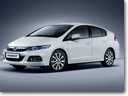 The launch of the 2012 Honda Insight at Frankfurt Motor Show (IAA) 2011 in September reaffirms Honda’s commitment to reducing CO2 emissions.

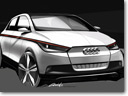 With the electric-only powertrain of the A2 concept, Audi is offering another peek into the future of electric mobility at the 64th International Motor Show (IAA) in Frankfurt. The technical study features a classic, premium-standard space concept that offers plenty of room for four people.


 NILS, a single-seat electric concept vehicle that offers a glimpse of a new form of minimalist mobility, has been unveiled ahead of its public debut at the Frankfurt Motor Show later this month. This concept car – which features an aluminium space frame, wing doors and free-standing wheels – has the dynamic performance of a sports car, yet travels silently, and with zero emissions.


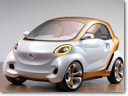 Smart Forvision concept is an interesting project accomplished with the help of BASF. The joint concept vehicle presented at the 2011 International Motor Show in Frankfurt combines a futuristic design with technologies relating to energy efficiency, lightweight design and temperature management.


 Alpina B6 Bi-Turbo Convertible is on its way. The vehicle is based on open-top 6-Series with 4.4 liter twin-turbo V8. The stylish convertible received both styling and performance upgrades.The engine is boosted to staggering 507PS (373 kW) at 5500RPM and 700Nm (516 lb-ft) at 3000RPM. This is an improvement of 100PS and 100Nm over the stock 650i Convertible. 0 to 100 km/h in 4.8 seconds and a top speed of 311 km/h (193 mph). Still, the engine is not thirsty at all – 10.9 liters per 100 km on combined cycle and 225 g/km of CO2.The exterior package includes modified front bumper, perhaps a bit different rear one and some badging.Alpina B6 Bi-Turbo Convertible will be exhibited at the 2012 Geneva Motor Show.

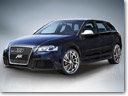 ABT Sportsline has announced a special tuning program for the hot hatch – Audi RS3.


 New BMW 1 M Coupe should logically be named M 1, but of course it can’t have such a name because M 1 usually refers to super sport cars made by BMW in 1980-s and expected new variants are excluded.


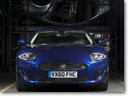 The fastest and most efficient production Jaguars ever created go on-sale today.


 EcoVelocity visitors can be among the first in the world to experience future travel in a hydrogen-powered car, with passenger rides available in the ix35 FCEV. The vehicle is Hyundai’s third-generation FCEV and it demonstrates the company’s work on cutting-edge alternative fuels.

 The new Mercedes-Benz CL63 AMG – C216 received another tuning package, but this time from VATH. The tuner offers both – styling and performance upgrades.


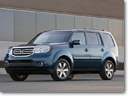 Honda has officially revealed the eight-passenger SUV – 2012 Pilot, which come with a sleeker front-end design, enhanced interior features and an EPA highway fuel economy rating of 25 mpg.


