Blog

  • 2012 Mercedes-Benz B-Class

    Substantially more agile and efficient, but as comfortable and spacious as ever – the new B-Class from Mercedes-Benz is a winner on all fronts. The vehicle’s lower height and more upright seat position provide for a first impression that hints at the compact sports tourer’s dynamic credentials.

    With a new four-cylinder petrol engine featuring direct injection and turbocharging, a new diesel engine, a new dual clutch transmission, a new manual transmission and new assistance systems, the front-wheel-drive car also rings in a new technological era for compact cars from Mercedes-Benz. “No model change in the history of Mercedes-Benz has ever seen so many new developments introduced in one fell swoop,” stresses Dr. Thomas Weber, Member of the Board of Management responsible for Group Research and Head of Development, Mercedes-Benz Cars. “Future B-Class customers will benefit from this quantum leap in terms of higher fuel consumption and lower CO2 emissions combined with driving pleasure, plenty of space and the highest standard of safety that has ever been available in this class.”

    The world premiere of the new B-Class (length/width/height: 4359/1786/1557 millimetres) will take place at the Frankfurt International Motor Show (13 to 25 September 2011). It will be making its way to the UK in March 2012 .

    The exterior design: perfect space in a most attractive guise

    The new B-Class is a typical Mercedes sports tourer, offering plenty of space combined with impressive dynamic performance as a hatchback saloon. The character lines of the exterior design indicate both of these attributes: the front and rear feature width-emphasizing design, with a wide, prominent grille and headlamps extending along the sides at the front while the rear end features a wide rear window, two-piece tail lights and a large tailgate with low loading sill.

    The new sporty lines and the outstanding aerodynamics are particularly evident in the side line: the bonnet flows seamlessly into the A-pillar and the roof line descends sleekly to the striking roof spoiler. The roof features a contoured line which lends the vehicle a longer appearance. The pronounced wheel arches offset by dynamic feature lines under the beltline are a sporty interpretation of the current design line from Mercedes-Benz. The bottom edge of the body features dynamic side skirts which add a light touch to the vehicle’s appearance. Refined details such as the exquisitely designed headlamps with the new spotlight element confirm the brand’s unmistakable premium credentials which shine through in the compact segment, too.

    2012 Mercedes-Benz B-Class
    2012 Mercedes-Benz B-Class

    Outstanding aerodynamics: astounding cd value

    An outstanding drag coefficient of cd = 0.26 places the new B-Class at the forefront of its market segment. As well as the aerodynamic exterior design, numerous optimisation measures on points of detail such as the air flow around the front wheels, the underbody design and the cooling air flow are also crucial contributory factors to this excellent aerodynamic performance. Patents are pending for innovative details such as the serrated wheel arch spoiler.

    New concept: lower overall height but more space inside

    The new vehicle concept underscores the dynamic aspirations of the new B-Class. The most striking aspect is the reduced height: at 1557 millimetres, the new model crouches almost five centimetres lower on the road than its predecessor. The seat height in relation to the road has also been reduced (minus 86 mm) in order to facilitate getting in and out of the car easily, while maintaining a clear overview of the vehicle’s contours when driving.

    In response to requests from many customers, the sitting position is more upright, however. At the same time, the headroom has been further improved. With maximum headroom of 1047 mm at the front (without sliding roof), the B-Class is among the most spacious cars in its segment in this discipline, too. The ergonomically expedient more upright sitting position in combination with a lowering of the vehicle’s floor at the rear leads to a segment-leading degree of legroom (976 mm) which even surpasses that of the S- and E-Class.

    The B-Class is optionally available with the EASY-VARIO-PLUS system. This enables simple reorganisation of the interior so as to enable the transportation of bulky items. Features of the EASY-VARIO-PLUS system include fore/aft adjustment of the rear seats by up to 140 millimetres (thereby increasing the luggage compartment volume from 488 to 666 litres) and a front passenger seat whose backrest can be folded forward onto the seat cushion.

    The interior design: superior quality in a new dimension

    High-quality materials and finely structured surfaces, stylish details, precision workmanship and a new spaciousness – the interior of the B-Class defines a whole new benchmark in the compact segment.

    Many features have been the reserve of higher classes of vehicle to date and embody Mercedes-Benz‘s special definition of quality and aesthetics. The dashboard is optionally available in ARTICO man-made leather finish and features stitching, for example. Four equipment packages (Chrome, Sports, Exclusive and Night package) enable individualisation according to personal tastes.

    On the inside the large, three-dimensional trim covering the entire dashboard first strikes the eye. It is available in four variants, covering a broad spectrum from modern through sporty to classic. Common to all versions is a high-class appeal combining an attractive look and feel with easy care and durability.

    2012 Mercedes-Benz B-Class Interior
    2012 Mercedes-Benz B-Class Interior

    The three large round vents in the middle and their uniquely designed cruciform nozzles add a sporty attribute to the interior’s emotional design idiom. The display, which is available in two sizes (5.8- and 7-inch) appears to hover over the vents. With its stylish design – the trim frame with galvanised finish contrasting with the piano black of the front panel – and slender lines, the colour display (TFT) is a highly attractive feature in the cockpit.

    The 3-spoke leather trimmed steering wheel, which always incorporates a silver chrome insert in the middle spoke, the instrument cluster with four analogue round dials and suspended pointers in the 6 o’clock position and the seats with contrasting stitching underscore the sporty character.

    The drive: designed for maximum efficiency

    The new B-Class features new petrol and diesel engines as well as new manual and automatic transmissions. All transmissions and engines have been developed in-house, with production taking place at the plants in Stuttgart-Unterturkheim and -Hedelfingen, Rastatt/Baden, Gaggenau/Baden and Kolleda/Thuringia. The simultaneous development process enabled perfect coordination of engines and transmissions, e.g. with regard to implementation of the ECO start/stop function which features as standard on all B-Class models.

    Common features of the new drive systems are the use of state-of-the-art technologies for maximum efficiency, very smooth running, high tractive power right from low revs, sustainability in terms of impending emissions standards and low weight. For the purposes of transverse installation the engines, all of which are turbocharged, and the two transmissions are very compactly designed, providing the B-Class with an exemplary small turning circle for a front-wheel drive vehicle of eleven metres. The engine and transmission suspension consists of a four-point mounting system comprising engine mount, transmission mount and two self-aligning supports. This suspension system has been designed specifically to meet the requirements of the high-torque engines with regard to minimum noise levels.  The hydraulic damping integrated in the transmission mount is a key contributory factor to the exceptionally high ride comfort.

    The new four-cylinder petrol engines (internal designation M270) mark the launch of a completely new engine series. The combustion process is based on the third-generation Mercedes-Benz direct injection system which was introduced last year with the BlueDIRECT V6 and V8 engines. Its use in the B-Class marks this technology’s debut in the compact segment. The new four-cylinder engines have been designed for both transverse and longitudinal installation. In the new B-Class they are initially available with a displacement of 1.6 litres, as the B 180 rated at 122 hp and the B 200 with an output of 156 hp. Their maximum torque of 200 and 250 Nm respectively is available from an engine speed of 1250 rpm.

    The new four-cylinder diesel engine is a further development of the OM651 deployed in the C- to the S-Class, a common rail direct-injection engine of the third generation. With its displacement scaled down to 1.8 litres and numerous optimised points of detail, this is the first time that the compression-ignition engine has been mounted transversely in a Mercedes-Benz car. The B 180 CDI generates 109 hp of power, while the B 200 CDI has an output of 136 hp. The maximum torque stands at 250 Nm from 1400 rpm for the 80 kW variant and 300 Nm from 1600 rpm for the 100 kW variant.

    Another Mercedes-Benz premiere is the new 7G-DCT dual clutch transmission in the B-Class. This transmission is extremely compact, extremely variable with regard to adaptation of the engine speed thanks to seven gears, features an electric oil pump for start/stop capability, shifts gear without any interruptions in tractive power and combines the comfort of an automatic with the efficiency of a manual transmission.

    The new 6-speed manual transmission designed along similarly compact lines as a three-shaft transmission is a close relative of the DCT. Extremely easy gear shifting, low shift forces, low internal friction and a low weight are among its most important characteristics.

    The chassis and suspension: refined sportiness now for the sports tourer, too

    “Fantastically agile” is the assessment of all test drivers who have put the new B-Class through its paces to date. Three factors are instrumental to the substantially enhanced dynamic performance in comparison to its predecessor, which does not come at the cost of any compromises on comfort: the lowered centre of gravity, the new four-link rear axle and the upgraded ESP®Electronic Stability Programme. A sports suspension is optionally available for further enhanced agility. The centre of gravity has been lowered by a further 20 mm and the suspension additionally features sports dampers with amplitude-selective damping and a Direct-Steer system will be standard on the Sport model line.

    Steering: mechanical with electric assistance

    The electromechanical steering of the B-Class has been redesigned. The electric motor of the servo assistance system is now located directly on the steering gear as a dual pinion EPS system, thereby optimising the package as a whole. The steering ratio becomes noticeably more direct at greater steering angles, enhancing the vehicle’s handling and agility substantially. The electromechanical steering system makes an important contribution to the vehicle’s overall efficiency, as the steering assist function only requires energy when steering actually takes place.

    New assistance and braking system reduces the risk of rear-end collisions

    As a world first in the compact segment, the B-Class features a radar-based collision warning system with adaptive Brake Assist as standard, which lowers the risk of rear-end collisions. The COLLISION PREVENTION ASSIST system outputs a visual and acoustic warning to alert a possibly distracted driver to identified obstacles, and prepares Brake Assist for the most precise possible braking response. This is initiated as soon as the driver emphatically operates the brake pedal.

    In contrast to systems currently on the market in the compact class, the new COLLISION PREVENTION ASSIST brake assist feature is not merely a system intended to minimise minor damage in urban traffic. Rather, this innovative solution is aimed at protecting motorists from typical rear-end collisions in dangerous traffic situations. Mercedes-Benz expects the new safety system to have a significant positive effect on accident statistics.

    The area of safety also encompasses an array of other assistance systems which have been adopted into the B-Class from the larger model series. These include:

    • Adaptive Headlamp Assist
    • Blind Spot Assist and Lane Keeping Assist
    • ATTENTION ASSIST (standard)
    • Speed Limit Assist (speed limit sign recognition)
    • Active Parking Assist(standard)
    • Brake HOLD function (standard with 7G-DCT)
    • Hill Hold function (standard)
    • LINGUATRONIC
    • Reversing camera
    • DISTRONIC PLUS

    Premiere in the compact class: PRE-SAFE® available for the first time

    The PRE-SAFE® preventive occupant protection system which features in the B-Class is available for the first time in this vehicle category.  This represents a further step in the ongoing implementation of this innovation, which was premiered in the S-Class in 2002. Core features of PRE-SAFE® are reversible belt tensioning, the closing of side windows and sliding sunroof in case of critical lateral dynamics and adjustment of the fully electric front passenger seat with memory function to an ideal position for maximum effectiveness of the restraint systems. PRE-SAFE® is always activated in response to critical longitudinal and lateral dynamics and may also be triggered upon intervention by certain assistance functions.

    he scope of restraint facilities takes special account of the B-Class’ use as a family car. Great importance has been attached to the safety of the rear occupants. Belt tensioners, belt-force limiters and belt height adjusters come as standard on the outer seats. Rear sidebags are optionally available. Integrated child seats and automatic child seat recognition are available as in the predecessor. Driver and co-driver are provided with new pelvis bags which are able to cover the pelvis and the entire upper part of the body. For head protection, a windowbag is fitted as standard.

    COMAND Online multimedia system with internet access

    Internet access, the convenient LINGUATRONIC voice control system, two navigation solutions tailored to different budgets, connection for mobile audio devices and an intuitive operating concept – the information and communication systems in the B-Class offers excellent user-friendliness and a superior level of functionality which has been the reserve of higher categories of vehicle to date. It is the new multimedia generation from Mercedes-Benz which delivers these standards. The operating concept featuring the turn/push control in front of the armrest and the control knob on the head unit is also familiar from other Mercedes model series.

    The COMAND Online multimedia system offers internet access. Customers can either surf the web as they wish while the car is stationary or call up a Mercedes-Benz app whose particularly fast page loading and simple operation make it suitable for use while driving. Integrated apps include Google™ Local Search and Weather, and the facility for downloading a route which has previously been configured on a PC using Google Maps and transmitted to the car.

    All set for the future: modular “Energy Space” concept

    The modular “Energy Space” concept means that the new B-Class is already designed to accommodate versions with an alternative drive: appropriate interfaces in the body shell enable the main floor panel to be modified and a step to be produced for the versions with alternative drive. An underfloor compartment covering part of the area under the rear bench seat offers space for alternative energy accumulators.

    Source: Mercedes-Benz
  • Audi Confirms A8 Hybrid For Series Production

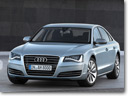
    Luxury class grandeur meets compact class efficiency in the Audi A8 hybrid, which this week has been given the green light for series production beginning in 2012, and will reach the UK late next year. Employing a four-cylinder petrol engine for the first time in an Audi model at this level, the Vorsprung durch Technik brand’s latest paragon of economy will offer performance befitting its 245PS and 480Nm outputs, despite delivering  more uncharacteristic sub-148g/km CO2 output and all-electric, completely local emissions-free running at speeds of up to 62mph.

    The Audi flagship model is designed as a highly efficient parallel hybrid. Its 2.0-litre TFSI engine, which has been modified in some areas, generates an output of 211PS and makes a 350 Nm torque peak available between 1,500 and 4,200 rpm. The combustion engine works together with a disc-shaped electric motor which generates 40 kW (54 PS) and 210 Nm.

    The permanent magnet synchronous motor is mounted in the space usually occupied by the torque converter in front of the modified eight-speed tiptronic transmission. A multi-plate clutch that operates in an oil bath connects or disconnects the electric motor and the TFSI engine, and does so ultra-precisely and gently in all situations. The smooth and fast-shifting hybrid transmission guides the torque to the front wheels, and its wide gear spread contributes to the efficiency of the Audi A8 hybrid.

    2012 Audi A8 Hybrid
    2012 Audi A8 Hybrid

    The short-term system output of 245PS and the system torque of 480 Nm serve to provide impressively strong response. According to the provisional figures generated by early-stage tests, the Audi A8 hybrid will be capable of reaching 62mph from rest in 7.7 seconds and continuing to a top speed of 146mph while returning in excess of 44mpg in the EU combined cycle test, along with CO2 emissions of less than 148 g/km.

    The Audi A8 hybrid can drive at up to 62mph purely on electric power and has a range of up to 1.86 miles at a constant 37mph. This gives the driver the choice of three modes: The ‘EV’ setting gives priority to the electric drive, while the ‘D’ option efficiently controls both the engine and the electric motor. The ‘S’ mode and the tiptronic gate place the emphasis on optimal acceleration. The hybrid saloon has five operating states: with the TFSI engine alone, with electric drive only or in hybrid mode; recuperation and boosting are also possible. Two displays show the driver all operating modes in detail.

    The lithium-ion battery, which weighs 36.7 kilograms, is located in a crash-proof area in the boot. It provides 1.3 kWh of nominal energy and up to 40 kW of power. Two different methods are used to air-cool the battery, depending on need: air is either blown from the passenger compartment by a fan or via a separate cooling circuit coupled to the automatic air conditioning system. The battery is thus kept within the temperature window required for it to perform to its full potential over a wide range. The electric motor and the compact power electronics which serve as a controller between the electric motor and the battery are water-cooled.

    In visual terms, the Audi A8 hybrid is distinguishable by subtle details such as its 18-inch or optional 19-inch ten spoke alloy wheels which resemble turbine blades, hybrid badges and an exclusive Arctic Silver paint finish. The metallic paint finish is a standard feature, as are three-zone automatic air conditioning, LED headlights and a BOSE sound system.

    Thanks to the brand’s ultra-lightweight construction expertise, the Audi A8 hybrid will be one of the lightest saloons in its category. Its ASF (Audi Space Frame) body is made almost entirely of aluminium, with ultra-high-strength steel used only for the B –pillars to optimise rigidity. Weighing just 231 kilograms, it is roughly 40 per cent lighter than a comparable steel construction.

    Source: Audi

  • 2012 Aston Martin V12 Vantage GT3

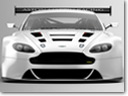
    Aston Martin confirms today the specification of the 2012 Vantage GT3 race car. As the natural successor to the enormously successful DBRS9, the new Vantage GT3 will offer customers the latest in race-car technology to ensure the Vantage GT3 has the credentials to compete with the most recent new product offerings from other manufacturers.

    The Vantage GT3 features a modified version of Aston Martin’s production 6.0 litre V12 engine found in the marque’s highly acclaimed sports cars. The dry-sumped engine is expected to produce 600 bhp with 700 Nm of torque and its position has been optimised further to improve weight balance. A carbon fibre propshaft mates the engine to a Xtrac 6 speed sequential transmission with semi-automatic paddle shift gear change.

    The Vantage GT3 benefits from Aston Martin’s V/H architecture philosophy, the modular chassis uses aerospace bonding techniques to create a light and immensely stiff aluminium and composite structure which not only aids handling on Aston Martin’s road cars but is also an ideal base for competitive race cars.

    2012 Aston Martin V12 Vantage GT3
    2012 Aston Martin V12 Vantage GT3

    Most dramatic of all, are the new aerodynamics, contributing to a muscular and purposeful stance while maintaining the overall beauty of the V12 Vantage. The shorter wheel base and lower engine position over its predecessor will contribute to enhanced handling and performance. The new car will also provide enhanced driveability with the latest race-developed ABS and Traction Control systems which are fitted to the V12 Vantage GT3 as standard.

    The Vantage GT3 will be eligible for numerous race series around the world including the FIA GT3 Championship, ADAC Masters, Nurburgring VLN, Blancpain Endurance Series, British GT, Belcar and Open GT among others.

    Aston Martin remains the only manufacturer to offer a race car for every GT class firmly cementing it as a global forerunner in race car production. The new Vantage GT3 is being developed to replicate and indeed surpass the superb track record of the DBRS9.

    Aston Martin has sold 24 DBRS9s and customer teams have accumulated many race podiums and victories over the past six years including 2009 Winner Teams Championship, and Winner Manufacturers Championship for Hexis Racing and as recently as a 2011 GT Open race win at Spa for Villois Racing.

    Testing of the new car will commence in October, where the Vantage GT3 will undergo a comprehensive sign-off durability test including a 10,000 km test programme. Deliveries of the first cars will commence in early 2012. Prices start from £298,000.

    V12 Vantage GT3 Specification

    Engine

    • Lightweight V12
    • Dry sump oil system
    • Engine repositioned to optimise weight distribution
    • Target power 600 bhp
    • Target torque 700 Nm

    Transmission

    • Xtrac 6 speed sequential transmission
    • Racing clutch
    • Limited slip ramp/plate differential
    • Easily accessible drop gears
    • Semi-automatic paddle shift gear change
    • Carbon fibre propshaft

    Chassis

    • Lightweight aluminium chassis
    • Steel roll cage to FIA safety standards
    • High speed pneumatic jack system

    Steering

    • Hydraulic power assisted steering
    • Quick release steering wheel

    Suspension

    • Double wishbone suspension arms front and rear with uniball bearings
    • 2-way adjustable dampers front and rear
    • Optimsed geometry for lower race ride height

    Fuel system

    • 110 litre fuel cell to FIA safety standards
    • Twin quick release couplings
    • Fuel cell location optimised for performance and safety

    (behind the driver’s seat, inside the safety roll cage)

    Brakes

    • 6 pot front calipers
    • Ventilated front brake disc
    • 4 pot rear caliper
    • Ventilated rear brake disc
    • Floor mounted pedal box
    • Manually adjustable front/rear brake bias
    • Adjustable motorsport ABS

    Wheels

    • 12.5″ x 18″ front
    • 13″ x 18″ rear

    Tyres

    • Front 30/68-18
    • Rear 31/71-18

    Cockpit

    • Steering wheel mounted controls
    • Driver display / data logger / shift lights / beacon
    • 6-point safety harness
    • Adjustable steering position
    • Adjustable seat position
    • Adjustable pedal box position
    • Light weight battery
    • Carbon fibre dash
    • Fire extinguisher system

    Aerodynamics

    • Front splitter
    • Adjustable full width carbon fibre rear wing
    • Aerodynamically optimised bumpers, fenders and sills

    Weight

    • Target dry weight 1250kg

    Source: Aston Martin

  • 2012 Bentley Continental GTC

    The second generation of Bentley’s iconic Continental GTC convertible will debut at next month’s International Automobile Exhibition (IAA) in Frankfurt.

    Taking cues from its GT coupe sibling launched last year, the new Continental GTC builds on the highly successful foundation of the previous cabriolet, which premiered in 2006. Bentley’s design and engineering teams have improved virtually every aspect of the iconic convertible with an uncompromising focus on quality.

    While the first Continental GTC was elegant and understated, the sharper radii and assertive stance of the new model delivers a more contemporary and muscular presence. Advanced manufacturing techniques produce aluminium front wings without the need for seams or welds creating the look and feel of a coach-built car. Twenty-inch wheels are now standard with three styles of 21-inch wheel, a first for GTC, available as an option, reinforcing the distinctive, sporting stance of the new Bentley.

    The four-seater luxury convertible features a new, even more spacious and sumptuous hand-crafted cabin, with soft-touch leather hides, an extensive range of wood veneers, cool-touch metals and deep-pile carpets. There are 17 standard soft-touch leather hide colours with six colour split combinations, complemented by a range of seven veneers, all produced by Bentley’s talented craftsmen and women.

    2012 Bentley Continental GTC

    The GTC’s renowned coupe-like refinement is also enhanced. The tailored, multi-layered fabric hood is complemented by acoustic glass and under-body panels, for optimum noise isolation.

    Superb everyday practicality for a luxury convertible was a hallmark of the original GTC and much valued by its customers. The cabin of the new GTC is now even more practical, with additional rear legroom, new storage solutions and innovative features such as touch-screen infotainment, automatic seat-belt presenters and a Bentley-designed Neck Warmer for comfortable roof-down motoring whatever the temperature.

    A wider track, front and rear, sharper steering and retuned suspension provides a more exhilarating and class-leading drive. Bentley’s advanced all-wheel drive system features a new 40:60 rear torque bias (compared with 50:50 of the original GTC) minimising understeer during hard cornering and allowing the spirited driver to manage the car’s line and balance via precise throttle control.

    This compelling dynamic package is combined with a more powerful 6.0-litre, twin-turbocharged W12 engine as well as a new QuickShift transmission enabling faster gear changes than ever before. Power output is raised from 560PS to 575PS (567bhp/423kW) and the famed Bentley ‘wave of torque’ has been increased by a further 50Nm to 700Nm (516lb ft).

    Pricing Information

    POUNDS STERLING £149,350
    US DOLLAR $212,800 MSRP
    EURO €170,060
    RENMINBI RMB 3,838,000
    YEN ¥26,400,000

    Pounds Sterling inclusive of 20% VAT.
    Euro price does not include individual market taxation rates.
    US Dollar pricing is exclusive of individual state taxes.

    2012 Bentley Continental GTC – AT A GLANCE

    Sculpted exterior design

    • Advanced production techniques such as aluminium Super Forming (front wings) allow for a more sculpted body and sharp ‘power lines.’
    • Unique jewelled headlamps with LED daytime-running lights.
    • More upright matrix radiator grille and new ‘double horseshoe’ rear profile first shown on the flagship Bentley Mulsanne.

    Luxurious, practical, hand-crafted cabin with class-leading infotainment

    • New interior with a bold, sweeping dashboard and instrument panel finished in premium soft-touch leather.
    • Choice of 17 hide colours, six colour split combinations and seven veneers.
    • Distinctive ‘cobra style’ seats for added comfort and enhanced rear cabin space.
    • A new touchscreen, 30GB infotainment system introduces advanced satellite navigation with dynamic route guidance, seven-digit postcode entry and Google Map compatibility (market specific).
    • Audio systems feature the latest wide-frequency Balance Mode Radiator speakers as standard.
    • Revolutionary Dirac Dimensions™ DSP for exceptional sound reproduction (Naim for Bentley premium audio).

    More powerful 6-litre W12 engine with FlexFuel capability

    • 6-litre W12 engine twin-turbocharged engine produces 575PS (567bhp/423kW) and 700Nm (516lb ft) of torque.
    • FlexFuel capability – runs on E85 biofuel, petrol or any combination of the two.
    • 0 – 60mph 4.5 secs (0-100 km/h 4.8 secs).
    • 0 – 100mph 10.9 secs (0 – 160km/h 10.9 secs).
    • Top speed 195 mph (314 km/h).

    Dynamic Bentley driving experience

    • ZF 6HP28 transmission with ‘Quickshift’ system that cuts shift times by up to 50% and enables double downshifts.
    • New 40:60 rear-biased torque split for the all-wheel drive system reduces understeer when powering out of bends and provides for better modulation of line and attitude by ‘throttle steering.’
    • Increased front and rear track improves grip and stability.
    • Advanced ESC system fully exploits the potential of the more powerful W12 engine and improved chassis.
    • 20” ‘Five Spoke’ alloy wheels with optional 21” wheels in ‘Five Spoke Two-Piece’, ‘Seven Spoke Elegant’ and ‘Ten Spoke Propeller’ designs.

    TECHNICAL SPECIFICATION

    ENGINE

    • Type: 6-litre twin-turbocharged W12
    • Max Power: 567bhp / 423kW / 575PS @ 6000 rev/min
    • Max Torque: 700Nm / 516lb/ft @ 1700 rev/min

    TRANSMISSION

    • ZF 6-speed automatic with quickshift and steering wheel-mounted paddleshift
    • Driveline: Continuous all-wheel drive (40:60 rear bias)

    Ratios:

    • 1st. 4.17
    • 2nd. 2.34
    • 3rd. 1.52
    • 4th. 1.14
    • 5th. 0.87
    • 6th 0.69
    • Final drive: 3.526

    BODY CONSTRUCTION

    • Steel monocoque

    BRAKES

    • Front: 405mm ventilated discs (optional 420mm Carbon Silicon Carbide, cross drilled)
    • Rear: 335mm ventilated discs (optional 356mm, Carbon Silicon Carbide, cross drilled)

    WHEELS AND TYRES

    • 9.5J x 20” (optional 9.5J x 21”)
    • Pirelli P Zero 275/40ZR 20 (optional 275/35 ZR21)

    STEERING

    • Type: rack & pinion, power assisted, speed-sensitive ZF servotronic
    • Turns lock to lock: 2.6 turns
    • Turning circle: 11.3m

    SUSPENSION

    • Front: Four link double wishbones, computer controlled self-levelling air suspension, with anti roll-bar.
    • Rear: Trapezoidal multi-link, computer-controlled self-levelling air suspension, with anti roll-bar.
    • Damping: Continuous Damping Control, tuned for dynamic performance.


    DIMENSIONS

    • Wheelbase 2746mm
    • Overall Length 4806mm
    • Width (across body) 1943mm
    • Width (including mirrors) 2227mm
    • Overall Height 1403mm
    • Fuel Tank 90 litres
    • Boot Volume 260 litres
    • Kerb Weight (EU) 2495 kg / 5501 lb
    • Gross Vehicle Weight 2900 kg / 6393 lb

    PERFORMANCE

    • Top Speed: 195 mph (314 km/h)
    • 0 – 60 mph: 4.5 secs (0 – 100 km/h: 4.8 secs)
    • 0 – 100 mph: 10.9 secs (0 – 160 km/h: 10.9 secs)
    • 30 – 50 mph: 2.0 secs (60 – 100 km/h: 2.5 secs)
    • 50 – 70 mph: 2.4 secs (80 – 120 km/h: 3.1 secs)

    FUEL CONSUMPTION (EU Cycle) *

    • Urban 11.1 mpg (25.4 l/100km)
    • Extra Urban 24.9 mpg (11.4 l/100km)
    • Combined 17.1 mpg (16.5 l/100km)
    • CO2 emissions 384g/km

    * Fuel consumption figures are provisional and subject to Type Approval

    • FUEL CONSUMPTION (EPA Cycle) **
    • City Driving 11 mpg (US)
    • Highway Driving 19 mpg (US)
    • Combined 14 mpg (US)

    ** Fuel consumption figures are provisional and subject to EPA certification.

    EMISSIONS CONTROLS
    EU 5 and US LEV 11

    Source: Bentley

  • TECHART Porsche Cayenne Aerodynamic Kit I

    TECHART presents the all-new Aerodynamic Kit I for the Porsche Cayenne. For an individual touch, that lends the sporty SUV an elegant new look – with TECHART’s typical and unmistakable design. The second level of individualization for the Porsche Cayenne in addition to the TECHART MAGNUM will be unveiled to the public in Frankfurt in combination with a second TECHART performance kit.

    TECHART Aerodynamic Kit I

    Exciting, sporty and markedly elegant – the contour of the three-piece front spoiler is a clear statement regarding the SUV’s newly acquired TECHART gene and sets an attractive visual highlight. Integrated air ducts also ensure an optimized cooling of the brake system. The multifunctional daytime running light system, the TECHART lighting packages with LED technology or halogen headlights are available as an option for the Porsche Cayenne Turbo.

    The TECHART daytime running light system does not only serve as a sophisticated design feature. Like TECHART’s lighting packages, it also makes a significant contribution to improving road safety. The LED system unit combines daytime running light, side lighting, parking lighting and turn signal lights in one common housing and blends in perfectly with the design of the Cayenne’s front end. The luminous intensity of the lights automatically adapts depending on the day light setting selected. In addition to that, the daytime running lights are dimmed when the vehicle is turning to ensure that the turn signals stand out. Typical for TECHART – the system is ECE approved and fulfills all prerequisites of the ECE regulation R87 for daytime running lights.

    TECHART Porsche Cayenne Aerodynamic Kit
    TECHART Porsche Cayenne Aerodynamic Kit

    Fitting side skirt panels underline the elegant and sporty look of the SUV when viewed from the side. TECHART original equipment quality: only high-quality polyurethane RIM is used for all exterior components of the aerodynamic kit. The material ensures at the same time ease of painting, installation and maintenance, including trouble-free installation at every Porsche center and every authorized service center.

    The elegant design of the aerodynamic kit can also be recognized here when viewing the rear end of the vehicle. Visually and technically, the TECHART roof spoiler and the TECHART rear apron with integrated diffuser and two subtle reflectors on the sides of the tailgate underline the SUV’s driving dynamics. Discrete design highlight: the two pieces of trim lend the taillights of the Porsche Cayenne a dynamic look. Matched trimming and exterior styling packages in paint or carbon fibre allow for almost unlimited possibilities to realize personal style.

    The aerodynamic kit is not only impressive visually. Thanks to TECHART’s sport exhaust system with EC type approval, the Cayenne complements its sporty look with an impressive sound. TECHART’s dual tail pipes with embossed lettering complete the TECHART look of the Cayenne’s rear end.

    Furthermore there are Formula and Formula II light alloy wheels in dimensions of 20- to 23-inch or 22- and 23-inch as well as Formula III forged light alloy wheels in 21- and 22-inch available. Besides the attractive standard colours, individualized colour combinations are available to suit the taste of the customer.

    Performance Kits for Cayenne Diesel and Cayenne Turbo

    There are altogether three performance kits delivering a significant improvement of driving dynamics and acceleration of the Porsche Cayenne models. For instance, the TA 058/D1 performance kit provides the Cayenne Diesel with an additional 29 kW (40 hp) and 70 Nm torque, helping the SUV to accelerate to 100 km/h from standstill in 7.2 seconds and reach 160 km/h in just 18.9 seconds. The TA 058/T1 performance kit for the Turbo version of the Porsche Cayenne is also impressive. 412 kW (560 hp), a maximum torque of 780 Nm and accelerating to 100 km/h or 160 km/h in 4.4 and 9.9 seconds respectively are the results of the first level of customization. The heart of both kits is the intelligent TECHART engine management system called TECHTRONIC. Once installed, the engine control system provides just as much additional power as needed for every driving situation at the push of the standard sport button located in the center console. Up to full boost for maximum acceleration.

    Successful double pass – thanks to the intelligent networking and communication between the engine management system and TECHTRONIC, the performance kits are impressive due to optimized output values in all areas and a balanced torque in terms of performance. The standard engine electronics remain untouched without affecting vehicle diagnostics or servicing. In addition to the two-year warranty, TECHART offers a warranty for engine and transmission problems in accordance with TECHART’s warranty provisions.

    World Premiere – TECHART performance kit TA 058/T2

    During the IAA, TECHART will also present the world premiere of the TA 058/T2 performance kit for the Porsche Cayenne Turbo. The demand of TECHART customers for dynamic performance and driving pleasure is satisfied with a total output of over 440 kW (600 hp) and a maximum torque of more than 900 Nm.

    Handmade Masterpieces – TECHART interior individualization

    Perfect craftsmanship: TECHART produces customized masterpieces every day at its own manufactory, such as complete leather interiors with matching decorative stitching. TECHART upholsterers and master upholsterers fulfill every request with regard to interior appointments at highest level of craftsmanship – for an elegant and unique atmosphere and highest demands on comfort and individuality. Another highlight: the wide variety of entertainment options for the Cayenne such as TECHART’s W2 entertainment package with two screens integrated in the headrests of the front seats. In addition to innovative entertainment, TECHART offers exclusive comfort in the rear passenger compartment of the SUV with folding individual seats and a elegant center console unit, equipped with 12 V outlet, a spacious bar and storage compartment and covered with fine Alcantara.

    TECHNICAL DETAILS

    TECHART Aerodynamic Kit I for the Porsche Cayenne

    Consisting of:

    • Front Spoiler, with integrated air ducts for optimized brake ventilation
    • Side Skirt panels
    • Roof Spoiler
    • Rear Apron, with integrated Diffuser
    • Headlamp trims
    • Two Taillight trims on each side
    • TECHART Aero-Hood
    • TECHART Exterior Styling Package
    • TECHART Ambient lighting
    • TECHART multifunctional daytime running light system in black and chrome
    • TECHART Lighting packages for the Porsche Cayenne Turbo
    • consisting of twin headlight units
    • TECHART Exhaust system „Sport“
    • TECHART Sport tailpipes
    • TECHART engine styling package

    Wheels

    • TECHART Formula 5-spoke light alloy wheel in 20-, 21-, 22- and 23-inch
    • TECHART Formula II 5-spoke light alloy wheel in 22- and 23-inch
    • TECHART Formula III forged 5-spoke light alloy wheel in 21- and 22-inch

    TECHART Power kit TA 058/T1 for Porsche Cayenne Turbo

    • Power increase of 44 kW (60 hp) and 80 Nm
    • Based on 4.8 l, 368 kW (500 hp) and 700 Nm
    • Performance data:
    • Top speed: 287 km/h
    • 0 – 100 km/h: 4.4 sec
    • 0 – 160 km/h: 9.8 sec

    TECHART power kit TA 058/D1 for Porsche Cayenne Diesel

    • Power increase of 29 kW (40 hp) and 70 Nm
    • Based on 3.0l, 176 kW (240 hp) and 550 Nm

    Performance data:

    • Top speed: 233 km/h
    • 0-100 km/h: 7.2 sec
    • 0-160 km/h: 18.9 sec

    Interior

    • TECHART 3-spokes PDK sport steering wheel with paddle shifters in custom colour
    • TECHART full leather interior in custom colour
    • TECHART decorative stitching in custom colour
    • TECHART trims in custom colour, carbon fibre or precious wood
    • TECHART Instrument dials in custom colour
    • TECHART Floor mats in custom colour and TECHART logotype
    • TECHART Aluminum sport pedals
    • TECHART Aluminum foot rest
    • TECHART Illuminated door entry guards with illuminated TECHART logotype
    • TECHART Loadspace floor mat in custom colour and TECHART logotype
    • TECHART Entertainment Kit W2
    • Two seats version with 6 DVD changer
    • Infrared remote control, 2 wireless headphones
    • 2 TECHART display consoles in leather located at the front seats with integrated 7-inch displays
    • Carpet finished media Center in the luggage compartment
    • TECHART roof mounted Entertainment Kit
    • Roof mounted media console in leather/Alcantara
    • with adjustable 10.2-inch screen
    • DVD-/Media player integrated in the media console
    • Integrated USB host, Infrared remote control, 2 wireless headphones
    • TECHART Rear single seats, foldable
    • TECHART Rear center console unit
    • 12V outlet
    • Cup holder
    • Spacious storage compartment
    • Cooler or ski bag

    Source: TECHART

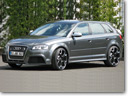
  • B&B Audi RS3 – up to 510PS / 680Nm

    The latest development from B&B is the current Audi RS3, for the B&B retrofit program has now been completed. The engine power increases in the strongest expansion phase up to 510 hp and 680 Nm. Hereby performance values on super sports car level are achieved: 0-100km/h 3.5 sec – 0-200km/h 12.5 seconds – top speed 310km/h.
    The 4-stage B&B engine program begins with a change in the electronics and a slight increase in boost pressure to raise the power of the 2.5ltr. TFSI engine for only 1,950€ to 410 hp and 560 Nm.

    In Stage 2 for 2950.- € 425 hp and 580 Nm are reached. Here, the air induction, airflows and charge air cooling will be optimized, the boost pressure is increased by about 0.25bar and the electronic injection code fields are adjusted to these changes.

    Level 3 (450 hp / 600 Nm / 7.950.- €) includes in addition to Level 2 a special sport exhaust system to decrease the exhaust back pressure and exhaust temperature. Furthermore, a special charge air cooling system is installed. This results in a higher power output while reducing the thermal load of the engine and exhaust gas turbocharger is achieved.

    B&B Audi RS3
    B&B Audi RS3

    To reach the final performance in Stage 4 to 510 hp and 680 Nm of torque, the technicians from B&B in addition to Level 3 change the exhaust gas turbocharger to a larger special turbocharger. In addition to this, the installation of a racing exhaust system with metal catalysts, a high pressure pump and a special sports clutch is made. Finally, adjustments in the intake and engine management are carried out. The price of the power stage 4 is 15.950.- €.

    In order to reduce exhaust back pressure and exhaust temperature and improve the sound, B&B built a sports exhaust system made ??of solid stainless steel, which causes an additional power increase of approximately 6-8 horsepower. By using this sport exhaust system with a higher power output is achieved while reducing the thermal load of the engine and exhaust gas turbocharger.

    In addition to the increased performance, are 20mm lower sports suspension springs (398 – €) and adjustable coilover suspension, in comfort or sport setup (from € 1.298.-), as well as exclusive wheels in 19 “and 20” (from € 2998.-) available.

    For the high performance a special 4 – or 6-piston high performance brake system (from € 4698.-) provides corresponding delay, which gives the Audi RS3 driver each time a comforting feeling of superior security.

    Source: B&B

  • 2012 Ferrari 458 Spider

    The new 458 Spider joins the 458 Italia, widening the range of Ferrari’s mid-rear engined V8s and offering the same uncompromising technological solutions, handling and performance in a refined open-top configuration. It is equipped with a Ferrari patented, fully retractable hard top, a world first for a sports car with this lay-out.

    The 458 Spider is powered by Ferrari’s naturally-aspirated, direct-injection 4.5 litre V8 which was nominated as the 2011 International Engine of the Year for its engineering excellence in terms of driveability, performance, economy and refinement. The power is transferred to the road by Ferrari’s class-leading dual-clutch F1 paddle-shift transmission through the sophisticated E-Diff, itself integrated with the F1-Trac traction control and high-performance ABS for maximum handling dynamics.

    Certain features, such as its accelerator pedal mapping and the damping of the multilink suspension, have been calibrated to guarantee maximum sportiness and absolute driving pleasure with the top down, in line with Maranello’s exclusive spider tradition. Even the engine soundtrack has been honed to ensure that the car’s occupants are completely captivated by the drop-top driving experience.

    2012 Ferrari 458 Spider
    2012 Ferrari 458 Spider

    Entirely in aluminium, the hard-top solution adopted for the 458 Spider offers a number of advantages over the traditional folding soft-top, including a reduction of 25 kg in weight and a deployment time of just 14 seconds. Fully integrated into the styling of the car, the hard-top was engineered to fit neatly ahead of the engine bay without compromising aerodynamics or the performance of the car. The small space needed to house the roof enables the designers to include a generous rear bench for luggage behind the seats.

    The rear of the car is characterised by innovative forms with the buttresses designed to optimise the flow of air to the engine intakes and the clutch and gearbox oil radiators. For maximum comfort whilst driving top down the 458 Spider features a generously-sized adjustable electric wind stop. The design was perfected to slow and diffuse the air in the cockpit, enabling normal conversation to be held even at speeds over 200 km/h.

    New technical solutions adopted for the chassis guarantee identical levels of structural rigidity with the roof up or down. The result is a car that is truly exciting to drive, blending extreme performance with the responsiveness that has always characterised Ferrari’s open-top berlinettas.

    458 Spider technical specifications

    Dimensions
    Length 4527 mm (178.2 in.)
    Width 1937 mm (76.3 in.)
    Height 1211 mm (47.7 in.)
    Wheelbase 2650 mm (104.3 in.)
    Dry weight 1430 kg (3153 lbs)*
    Weight/power ratio 2.51 kg/CV (7.42 lbs/kW)
    Weight distribution fr/r 42%/58%
    Engine
    Type 90° V8
    Displacement 4499 cc (274.5 cu in.)
    Maximum power 570 CV (425 kW)** @ 9000 rpm
    Maximum torque 540 Nm (398 lbs/ft) @ 6000 rpm
    Specific power output 127 CV/l
    Compression ratio 12.5:1
    Tyres
    Front 235/35 ZR20 8.5”
    Rear 295/35 ZR20 10.5”
    Performance
    Maximum speed >320 km/h (>198 mph)
    0-100 km/h <3.4 s
    Fuel consumption + emissions
    Fuel consumption*** 11.8 l/100 km
    Emissions*** 275 g CO2/km
    Gearbox
    Dual-clutch, 7-speed F1
    Electronics
    E-Diff3, F1-Trac, high-performance ABS

    * With forged wheels and Racing seats

    ** Including 5 CV of ram effect

    *** Combined cycle with HELE system (ECE+EUDC)

    Source: Ferrari

  • Maserati Grancabrio Fendi Debuts At Frankfurt Motorshow

    The Maserati GranCabrio Fendi designed by Silvia Venturini Fendi was born from the union of two iconic brands of the made in Italy, which share common values such as craftsmanship and tradition.

    A masterpiece of technology and craftsmanship, the Maserati GranCabrio Fendi will be introduced at the Frankfurt MotorShow in September 2011.

    The Maserati GranCabrio Fendi is crafted at the historical Maserati headquarters in Modena, with exclusive materials bespokely created in various colours for this project.

    The three-layered body colour named Grigio Fiamma Fendi is a special dark grey with an iridescent golden finish on the surface. The wood trim Pergamena Fendi runs across the width of the dashboard, on the doors and on the top of the gear lever, all in the iconic FENDI yellow, like the brake callipers and the embroidered yellow trident on the headrests.

    Adding a stronger yet elegant character to the GranCabrio is FENDI’s unmistakable double F-logo, stitched on the seat, also appearing in the centre of the 19-inch Trident design alloy wheels, and the FENDI logo along the rocker panel.

    Maserati Grancabrio Fendi
    Maserati Grancabrio Fendi

    Cuoio Romano, Fendi’s most precious leather of its Selleria line, has been used for such details as the instrument cluster cover, for the gear lever and for the profiles of the floor mats. It also features in the Limited Edition Travel Set of luggage and accessories.

    The Maserati GranCabrio Fendi represents a perfect marriage between the art of a handmade product with the ultimate technology and research of its 4.7-litre V8 engine coupled with automatic transmission, which brings out to life a unique roar, music to the ears of car connoisseurs.

    Silvia Venturini Fendi’s specially crafted logo seals this collaboration. A silver oval plaque with the engraving of the Maserati trident, Fendi logo and the 5-digit series number (five being an iconic number for Fendi) is located on the dashboard, in front of the passenger seat, and on both sides of the black cloth folding roof.

    A special black car cover with a ton-sur-ton double F logo dresses the GranCabrio, hiding this marvellous secret from indiscreet eyes until the very last moment.

    Source: Maserati

  • 2012 Porsche 911 Carrera To Debut At Frankfurt Show

    Porsche is proud to present the new 911 Carrera, a completely new generation of the iconic coupe that has been acclaimed as one of the world’s benchmark sports cars since its launch in 1963.

    Tradition meets modernity
    True to the 911 tradition, the distinctive Porsche design language exudes power and elegance. The unmistakable silhouette still catches the eye while incorporating new, exciting contours and precisely designed details; a 100mm longer wheelbase for improved stability and greater interior space; front and rear overhangs are shorter, maintaining the compact footprint that has been a longstanding 911 attribute; the sporting stance is emphasised by the lower roof line and a wider front track increases on-road presence further still while raising the renowned chassis dynamics.

    The rear-mounted, flat six cylinder engine is an equally symbolic component of the 911 identity; and behind the rear axle of the new car lies an uprated range of powerful, efficient and evocative ‘boxer’ engines. The 911 Carrera is powered by a new 3.4-litre engine developing 350 hp, and the Carrera S features a 400 hp version of the familiar 3.8-litre. These new engines offer performance improvements for both models. The 3.4-litre Carrera with PDK accelerates from 0-62mph in 4.6 sec, 0.1 sec quicker than the prior model. Pressing the Sport Plus button on the optional Sport Chrono Pack cuts that to 4.4 sec. The 3.8-litre Carrera S with PDK can accelerate from 0- 62 mph in 4.3 sec (Sport Plus 4.1 sec), 0.2sec quicker than its predecessor.

    All-new lightweight body
    Principle among the innovative steps forwards is the all-new, lightweight body, featuring intelligent aluminium-steel composite construction. It is responsible for a significant proportion of the vehicle weight reduction of up to 45 kg. The body structure also delivers significantly greater rigidity, and aerodynamic optimisation – including a wider, variably extending rear spoiler – has reduced the lift generated by the new 911 Carrera while retaining an impressive overall drag factor.

    Innovative chassis technology
    That the new 911 offers better acceleration in a straight line goes without saying, but it also offers top performance at an unprecedented level across the entire dynamic repertoire. In addition to the longer wheelbase, the greater agility, precision and driving stability are based, among other things, on the wider front track, a new rear axle and new electro-mechanical power steering.

    Depending on the model, there are other standard or optional active control systems available as well that further enhance the driving dynamics. That is especially true for the Porsche Dynamic Chassis Control (PDCC) active roll stabilisation system, available for the first time on the 911 Carrera S. The system reduces body roll when cornering, with the result that the tyres are always in the optimal position relative to the road surface and thus able to transmit higher lateral forces. Consequently, maximum cornering speeds are increased, and even faster lap times on racing circuits are possible.

    Exterior design
    The familiar athletic appearance of the 911 is given further dynamism with a 100mm longer wheelbase, reduced height, and up to 20-inch diameter alloy wheels. At the same time, the typically compact exterior dimensions have been retained. Seen from the front, the eye is drawn to the trademark wide-arched wings, emphasising the wider front track and making the new 911 Carrera models adopt a particularly sporting stance on the road. The redesigned exterior mirrors are now mounted on the upper edge of the door and not as before on the mirror triangle. Not only is this aerodynamically advantageous, it also emphasises the new design line and visual impression of width.

    2012 Porsche 911 Carrera
    2012 Porsche 911 Carrera

    Interior design
    To complement the modern exterior, the Porsche designers created an interior style which takes its cue from that of the Porsche Carrera GT. The driver is now even more closely integrated with the cockpit thanks to the centre console rising up to the front with the high-mounted shift lever – or PDK gear selector – located close to the steering wheel in typical motorsport fashion. Classic Porsche style elements are also to be found inside, just as they are on the outside. For example, the instrument cluster with five round instruments, with the central dial naturally the rev counter. On the right is a new, high resolution multi-function screen, just one of the comfort features added to meet evolving customer demands.

    2012 Porsche 911 Carrera Interior
    2012 Porsche 911 Carrera Interior

    Porsche Intelligent Performance
    Setting the standard in its class, as it has for generations, the new 911 Carrera and Carrera S raise the performance and efficiency standard to new levels. Fuel consumption and emissions of all versions are up to 16 per cent lower compared with its predecessors. Among other things, this is achieved by systems and functions such as auto start/stop, thermal management, electrical system recuperation, the world’s first seven-speed manual transmission and – in conjunction with the Porsche-Doppelkupplungsgetriebe (PDK) – a ‘coasting’ function that decouples the engine for enhanced fuel efficiency when the throttle is closed.

    The new electro-mechanical power steering system offers not only the typical precision and feedback expected of a Porsche, but also helps to increase efficiency and reduce fuel consumption. For example, the 911 Carrera with the new 350 hp (257 kW) 3.4-litre direct injection engine and optional PDK returns 34.4mpg Combined based on the New European Driving Cycle (NEDC) – 6mpg less than its predecessor. Also, at 194 g/km CO2, it is the first Porsche sports car to sit below 200 g/km CO2. In the case of the Carrera S, with its 400 hp 3.8-litre direct injection engine, economy when paired with the optional PDK is increased by 14 per cent, or 5 mpg, to 32.4mpg Combined despite 15 hp more power. That equates to CO2 emissions of 205 g/km.

    Evidently, it has therefore been possible in the new 911 Carrera to extend yet further the span of apparently contradictory attributes such as performance and efficiency, sportiness and everyday usability that has always typified the Porsche 911. It could be said that the new 911 Carrera is thus more of a 911 than ever.

    In the UK from December 2011
    The new Porsche 911 Carrera celebrates its world premiere at the 2011 IAA Frankfurt Motor Show and the new 911 models will be in UK Porsche Centres from December 17 2011.

    The 911 Carrera is priced from ?71,449 and the 911 Carrera S is priced from ?81,242. Standard equipment on all models is leather interior, sports seats, automatic climate control, Bi-Xenon headlights, 7-inch colour touch-screen Porsche Communication Management with satellite navigation, a universal audio interface offering MP3 connectivity, Porsche Stability Management (PSM) and a three year warranty.

    The Carrera S adds 20-inch alloy wheels, Porsche Active Suspension Management (PASM) and Porsche Torque Vectoring (PTV) with rear limited slip differential, in addition to the power advantage of the larger 3.8-litre engine.

    Fitted to every 911 is a Porsche Vehicle Tracking System (VTS), a sophisticated vehicle security package approved to Thatcham Category 5 standard, and customers will also be able to explore the potential of their new car by participating in a complimentary course at the Porsche Experience Centre, Silverstone.

    Source: Porsche

  • Vorsteiner Ferrari 599-VX

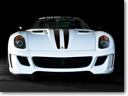
    The debut of the Ferrari 599-VX marks Vorsteiner’s first official foray into the Ferrari line of cars. This 599 will only be the very beginning of what is to come for our product applications for Ferrari models.

    The concept for the 599-VX project was to create a comprehensive conversion package that encompasses the perfect marriage between lightweight aerodynamics, performance exhaust and wheels.

    In typical Vorsteiner fashion, our designers set out to create something that would not take away from the existing bodylines of the Ferrari, but rather to enhance it and take it one step closer to a race car without compromising any functionality, quality and performance.

    The 599-VX aerodynamic package is not only aesthetically pleasing, but is also fiercely technologically advanced. It is 70% lighter than the factory pieces which basically consists of a front fascia, louvered racing hood, side sill extension blades, rear fender intake covers, rear deck lid wing and finally a rear bumper with diffuser.

    All of the 599-VX aerodynamic components will be made from our latest pre preg autoclave carbon technology for incredible weight savings and uncompromising quality.

    Vorsteiner Ferrari 599-VX
    Vorsteiner Ferrari 599-VX

    The 599-VX package also includes a limited edition 1-Piece Forged Monoblock wheel that is specifically manufactured for this car. It is a twin 7-spoke racing mesh face that features a true I-Beam spoke profile in conjunction with our latest under cutting pocketing to yield maximum weight savings without any compromise in strength.

    The entire exterior skin of the body has been re-masked courtesy of Meguiars & Wraptivo. It consists of the latest in flex vinyl film technology in matte glacier white color with contrasting matte black roof line with red racing accents to pay homage to the grass roots race cars of Ferrari.

    Lastly, the 599-VX exhaust was a joint venture between Vorsteiner and BBI and was developed from the ground up in order for it to work harmoniously with our fully redesigned 599-VX rear bumper replacement.

    Source: Vorsteiner

  • JE Design Seat Ibiza 6J Gold

    JE DESIGN gives the Seat Ibiza (model 6J) an air of sporty self-confidence. The car tuner from the town of Leingarten in Baden-Württemberg has made improvements to all versions of the Spanish car with its new aerodynamics package, filigree alloy wheels and stylish interior.

    As usual, the new aerokit displays the two JE DESIGN hallmarks: design and quality. The bodykit elements don’t just give the Seat Ibiza a sporty appearance; they’re also distinguished by their first-class workmanship and perfect fit. Using high-quality ABS or composite materials, JE DESIGN manufactures the CNC-milled attachments to OEM standards. The fact that the tuned cars have passed the pedestrian protection test is further evidence of the high quality standards.

    The racy look of the JE DESIGN Ibiza is due largely to its new front. The front apron with the sports radiator grille (without the Seat logo), available for EUR 654.50 including VAT, frame the car’s striking LED daytime running lights, each with six light emitting diodes at each side (EUR 238 for the complete set). The cleaning system for the headlamps retains its full functionality. In addition, the headlamp covers (available for EUR 89) give the Seat that menacing appearance. The curved side skirts (available for EUR 299) and the rear apron attachment (also available for EUR 299) complete the car’s aerodynamics package, the components of which can also be fitted individually. The body parts can be purchased for all Seat Ibiza versions, in other words for the 3-door, 5-door and Estate ST models as well as for the sports versions, the FR and the Cupra.

    JE Design Seat Ibiza 6J Gold
    JE Design Seat Ibiza 6J Gold

    In keeping with the car’s sporty appearance, the suspension lowering springs (available for EUR 149) lower the Ibiza by around 35 millimetres, giving the Multispoke alloy wheels a particularly dynamic looking edge. The complete wheel sets are available from JE DESIGN either in size 7 x 17 inches ET 35 with sports tyres of size 215/40 or in size 7.5 x 18 inches ET 35 with tyres of size 215/35. The wheels’ surface comes in either Shadow Silver or in Matte Black with silver wheel rims. Complete wheel sets cost EUR 1,809 (for the 17-inch versions) or EUR 2,260 (for the 18-inch versions).

    The car’s sporty transformation by JE DESIGN is not just about appearances though. The power of the 1.6 TDI CR engine for example is boosted from 105 hp (77 kW) to 121 hp (89 kW). This is made possible by the additional electronics box (available for EUR 1,399), which is connected by way of a plug-and-play system and reduces the time taken for the car to go from 0 to 100 km/h from 10.9 to 10.2 seconds. With torque of 282 instead of 250 Newton metres, the JE DESIGN tuned Seat Ibiza can attain a maximum speed of 194 km/h (compared with 188 km/h in the standard models).

    The car’s interior is first rate too. The Elegance leather upholstery (available for EUR 1,599) rarefies the Ibiza’s interior with its exclusive luxury. The steering wheel (EUR 399), the gear lever and the handbrake sleeve (available together for EUR 179) are also covered with fine rawhide. The colour of the stitching and of the leather can be chosen by the customer at no extra charge from JE DESIGN. If desired, JE DESIGN can even add an individualised, stitched on logo to the backrests of the front seats for EUR 79. The Ibiza can be made really comfortable with the two-level heating system for the seats (available for EUR 379), the electrically adjustable lumbar support system for backache-free driving (available for EUR 319) and the massage system with its 12 different programmes.

    Source: JE Design

  • 2013 Infiniti IPL G Convertible Concept

    Infiniti today announced that it will double its Infiniti Performance Line lineup of premium performance vehicles in spring 2012 with the addition of a new 2013 IPL G Convertible. More than just focusing on engine power and acceleration, the Infiniti Performance Line, or IPL, product design philosophy focuses on “total vehicle performance,” including unique driving attributes and exclusive exterior and interior features at highly attractive price points.

    The IPL G Convertible announcement was made by Infiniti Americas Vice President Ben Poore at the Pebble Beach Concours d’Elegance where the IPL G Convertible Concept is currently on display. The IPL G Convertible Concept features unique aerodynamic styling, the dynamic performance of an IPL-tuned V6, exhaust and suspension, 19-inch IPL aluminum-alloy wheels, three-piece retractable hardtop and a unique red leather-appointed interior set against a Malbec Black exterior – a level of equipment and performance modification expected to be shared with the production IPL G Convertible.

    2013 Infiniti IPL G Convertible Concept
    2013 Infiniti IPL G Convertible Concept

    “The Infiniti Performance Line, as demonstrated by our first offering, the IPL G Coupe, challenges the concept of an ultra-high cost sports series. IPL pushes the premium performance envelope for buyers seeking a higher level of exclusivity and driving exhilaration, but does so with an Infiniti twist,” said Poore. “The IPL G Convertible will deliver the goods, just like the current IPL G Coupe does. Plus, the new IPL G Convertible offers the added pleasure of open-air motoring.”

    The new IPL G Convertible is based on the foundation of the Infiniti G37 Convertible, which features an advanced 3.7-liter V6 and three-piece power retractable hardtop that’s designed to look as good with the top up as it does down.

    “Like every Infiniti, the new IPL G Convertible will take a different path from its established competitors,” added Poore. “It’s a terrific addition to the Infiniti Performance Line, taking the dramatic Infiniti G Convertible to an even higher level.”

    Additional information on the 2013 IPL G Convertible will be available during the production version debut at the Los Angeles Auto Show in November.

    Source: Infiniti