Blog

  • 2023 Honda CR-V Gets a Sophisticated and Rugged Design

    2023 Honda CR-V - Front Angle

    America’s best-selling SUV of the past quarter century just raised the stakes, as the all-new 2023 Honda CR-V debuts with a rugged and sophisticated design, along with a new, more advanced 4th-generation hybrid-electric system for a fuel-efficient, sporty and more capable driving experience. CR-V hybrid models are positioned as the top of the CR-V lineup and will represent about 50 percent of sales for this 6th generation, a key step in the Honda electrification strategy. The 2023 CR-V is launching this summer, with the Hybrid model launching later in the year.

    Perfect for daily life or weekend escapes, the new CR-V is longer and wider with premium proportions and a significantly broader stance, further advancing the new Honda design direction with a low horizontal beltline and a long, powerful front end. Honda’s most popular SUV backs up its strong new looks with a more fun-to-drive personality, more confident and refined dynamics, and increased torque and capability.

    CR-V is available in four trim levels, including the new hybrid-powered and more boldly styled CR-V Sport and Sport Touring as the new top of the CR-V model line. With 247 lb.-ft of torque from the new generation two-motor hybrid system, they are the most powerful CR-Vs ever.

    Inside, the new sporty and modern interior brings fine craftsmanship, high-quality feel of materials and must-have tech features. It’s also more quiet and more comfortable, with new front Body Stabilizing Seats to reduce fatigue and improve posture, and the most cabin and cargo space in CR-V history. Standard class-leading safety features include a new Honda Sensing® safety and driver-assistive technology with a new wide-view camera and radar, next-gen front airbags, as well as new rear side-impact and knee airbags.

    “As America’s outright best-selling SUV of the past 25 years the Honda CR-V has played a critical role in our past, but what’s significant about the all-new CR-V is the important role it will play in our future – with the CR-V hybrid to represent about 50 percent of sales,” said Mike Kistemaker, assistant vice president of Honda sales at American Honda. “More stylish, more rugged, more tech and more fun-to-drive, this 6th generation CR-V will be best in class in a large segment where that really matters.”

    https://www.youtube.com/watch?v=ZjUi6usz_y4

    Key CR-V Features:

    • Rugged and sophisticated exterior design
    • All-new 4th-generation two-motor hybrid system (Sport, Sport Touring) is more powerful, makes CR-V more fun to drive and adds towing capability
    • Distinctive bolder styling for hybrid-powered Sport and Sport Touring trims
    • Sporty, modern, more spacious and comfortable interior
    • Standard digital instrumentation
    • 9-inch HD touchscreen with wireless Apple CarPlay® & Android Auto™ compatibility (EX-L and Sport Touring)
    • Standard 7-inch touchscreen with Apple CarPlay® & Android Auto™ compatibility (EX and Sport)
    • Enhanced global Honda Architecture
    • Updated 1.5-liter Turbo engine (EX, EX-L)
    • Retuned Real Time All-Wheel Drive with Intelligent Control™
    • New Hill Descent Control
    • New Snow driving mode
    • Standard Honda Sensing® system with new wide-view camera and radar, plus new Traffic Jam Assist (TJA), Low-Speed Braking Control and Traffic Sign Recognition system (TSR)
    • Next-gen front airbags
    • New standard knee and rear passenger side-impact airbags

    Rugged and Sophisticated Styling
    The 2023 CR-V features all-new rugged and sophisticated styling that further advances Honda’s rugged exterior design direction for its light trucks, taking inspiration from the recently redesigned Ridgeline and Passport TrailSport. A strong horizontal beltline highlights its increased overall length (+2.7 inches longer), while a 1.6-inch longer wheelbase and 0.4 inches of additional width give it a stronger, more aggressive presence.

    The radical repositioning of its windshield pillars is key to CR-V’s new sportier proportions and improved visibility. The base of these A-pillars has moved 4.7 inches rearward, 2.8 inches outward and 1.4 inches lower. Together with new door-mounted side mirrors, these changes radically improve outward visibility.

    Emphasizing the strong new styling is a large, upright grille, a long hood and standard LED headlights. EX and EX-L feature a gloss black grille mesh with a chrome trim, body-color side mirrors with integrated turn signals and standard 18-inch 10-spoke alloy wheels. A sleek body-color roof spoiler and a new, all-LED interpretation of signature vertical taillights make the 6th-generation CR-V instantly recognizable from the rear.

    The more powerful Sport and Sport Touring hybrid models feature even bolder styling. More aggressive front and rear facias and grille mesh are highlighted with a gloss black accent, and Sport and Sport Touring are the only trims with rectangular exhaust finishers. The unique lower bumper design is gloss black on Sport and platinum on Sport Touring. The underside of the rear spoiler is matte black on Sport, and gloss black on Sport Touring.

    CR-V Sport rides on grade-specific Berlina Black 18-inch 10-spoke alloy wheels, while Sport Touring features black 19-inch split 5-spoke alloys.

    Sporty, Modern and Spacious Interior
    With clean surfacing, high-quality feel of materials and upscale touches, the all-new sporty and modern interior builds on the new Honda design direction. CR-V is also more comfortable and more spacious than ever, with a notably larger front-to-rear-seat couple distance and more rear seat legroom (+0.6 inches). The rear seats now feature eight angles of recline for increased comfort.

    The top of the instrument panel has been designed with minimal cutlines to reduce windshield reflections and other potential visual distractions. A striking metal honeycomb mesh spanning the dash serves both form and function, concealing the air vents that would otherwise mar the uncluttered and harmonious design.

    New front Body Stabilizing Seats reduce fatigue over long drives and the steering wheel angle is more sedan-like for a more comfortable, sportier driving position. Between the front seats is the largest center console bin in its class with nine liters of space.

    The 2023 CR-V has the most cargo room in the model’s history with 36.3 cu.-ft. available behind the rear seats in both turbocharged (+1.2 cu.-ft.) and hybrid (+3.1 cu.-ft.) models. In EX and EX-L, the rear load floor can be lowered, expanding the cargo space to 39.3 cu.-ft. With the 60/40-split rear seatbacks folded flat, cargo space expands to 76.5 cu.-ft.

    CR-V EX features gray or black cloth upholstery with an 8-way power driver’s seat and black trim on the dash. EX-L adds gray or black leather seating surfaces, a 4-way power passenger seat and piano black dash trim.

    CR-V Sport comes with exclusive black cloth upholstery and black dash trim, while the Sport Touring comes with either black or gray leather seating surfaces and piano-black dash trim. Both Sport and Sport Touring come standard with a black headliner and orange contrast stitching on the seats (black leather or cloth), console, steering wheel and shifter.

    Smart Technology
    Technology has been smartly integrated into CR-V’s new cabin with a focus on the driver, including a digital instrument display and a notably larger standard touchscreen with standard Apple CarPlay® and Android Auto™ compatibility.

    The 7-inch digital instrument panel features an all-digital tachometer on EX and EX-L, or a digital power flow meter on Sport and Sport Touring, on the left and a physical speedometer on the right side. The 7-inch multi-information display features user-selectable functions such as Honda Sensing® settings, vehicle information and more.

    A new 7-inch touchscreen audio system is standard on EX and Sport with physical knobs for volume and tuning, and a simplified menu structure. The storage area in front of the shifter is wide enough to accommodate two smartphones side-by side, accompanied by two illuminated USB ports, a 2.5A USB-A and 3.0A USB-C that are standard. For rear seat passengers, two illuminated 3.0A USB-C charging ports are standard on Sport and Sport Touring.

    CR-V EX-L and Sport Touring have a standard 9-inch touchscreen with a physical volume knob, wireless Apple CarPlay® and Android Auto™ compatibility and a simplified navigation structure with fewer menus. Qi-compatible 15W wireless smartphone charging is also standard.

    CR-V Sport Touring comes with a 12-speaker Bose premium audio system custom-engineered for the new interior. Featuring Bose Centerpoint technology and SurroundStage digital signal processing, the new system places all passengers in the middle of the music, regardless of their seating position, with a clear and spacious listening experience.

    Sporty, Yet Comfortable Dynamics
    A sportier and more engaging driving experience was created through a revised chassis and a significantly stronger structure.

    Based on Honda’s enhanced global architecture, CR-V’s wheelbase has been extended to 106.3 inches (+1.6 inches) for a smoother ride and greater stability. Significantly wider tracks (+0.4 inches in the front and the rear) also improve stability. A 15 percent torsionally-stiffer body further supports improvements in ride, handling and overall refinement.

    Suspension and steering updates make CR-V more fun to drive, while simultaneously improving ride quality. Its MacPherson strut front suspension and variable-ratio steering now mount to a new stiffer subframe that repositions the steering rack to improve feel and accuracy. Handling is further improved with a stiffer rear subframe for the retuned multilink suspension which features 15-percent higher spring rate for the upper spring mount.

    New More Powerful, More Capable Hybrid Models
    For a sportier driving feel, CR-V Sport and Sport Touring feature an all-new 4th-generation two-motor hybrid-electric system with a newly refined 2.0-liter Atkinson cycle 4-cylinder engine that adds direct fuel injection and is mated to a pair of electric motors that are now mounted side-by-side. This new configuration allows for the use of a larger propulsion motor with increased torque output. Combined system output is 2041 hp (a 3 hp increase, ISO net), while the traction-motor peak torque rises to 247 lb.-ft. of torque (up 15 lb.-ft.).

    The hybrid-electric system is more refined at highway speeds and for the first time offers up to 1,000 pounds of towing capacity. Linear Shift Control elevates the driving experience by mimicking the vehicle speed-linked rev feel associated with a conventional drivetrain shifting gears at wide open throttle. The new hybrid-electric system also allows for a substantial increase in continuous maximum speed—which climbs from 86 mph to 115 mph.

    Under the hood of the CR-V EX and EX-L is an updated 1.5-liter turbo engine with additional refinement, improved emissions performance and 190 horsepower (SAE net at 6,000 rpm). Enhancements include a new high-efficiency, high-response turbocharger and 4-2 exhaust port cylinder head that help the 4-cylinder engine maintain peak power over a broader range of rpm. Its torque peak of 179 lb.-ft. also arrives 300-rpm earlier, from 1,700-5,000 rpm, improving response. Engine noise also has been reduced significantly.

    The continuously variable automatic transmission (CVT) for the 1.5-liter turbo has been updated to reduce noise and vibration. Significant drivability and performance improvements include Step-Shift programming that simulates gear changes at full throttle.

    An updated Real Time AWD with Intelligent Control System™ improves traction management in slippery conditions, like snow and mud. Available on all grades, and standard on Sport Touring, the system can now send up to 50 percent of engine torque to the rear wheels.

    For the first time CR-V features Hill Descent Control. Standard across the lineup, the system increases off-road capability with more control on steep, slippery declines. Drivers can select speeds between 2 and 12 mph.

    Three standard selectable drive modes optimize the driving experience for various conditions. In addition to Normal and Econ modes, a new Snow mode maximizes available traction and performance is slick snowy conditions. Sport and Sport Touring models add a Sport mode.

    Safety Performance and Feature Leadership Among Compact SUVs
    The 6th-generation CR-V is a leader in compact SUV safety features and performance thanks to advanced active and passive safety technology that comes standard on every CR-V. This includes the latest version of Advanced Compatibility Engineering™ (ACE™) architecture that has been enhanced for even better compatibility with larger vehicles.

    This was achieved with a new upper A-pillar structure, side frame and lower firewall structure – all designed to route crash energy around the cabin. Side impact protection also has been improved, with stiffer structures in the roof, side sill and B-pillar, doors, and the rear wheel arch and C-pillar. Targeting today’s Top Safety Pick+ and NHTSA 5-star ratings, CR-V is designed to meet anticipated future standards as well.

    First introduced on the new Civic, new driver and passenger front airbags were designed to minimize the potential for severe brain trauma associated with angled frontal collisions. The new front driver’s airbag uses an innovative donut-shaped structure to cradle and hold the head to reduce rotation. The passenger-side front airbag uses a three-chamber design to achieve a similar result, with two outer chambers designed to cradle the head and minimize rotation. For the first time, CR-V features standard knee and rear-passenger side impact airbags.

    A new Honda Sensing® suite of safety and driver assistive technologies integrates a new wide-angle camera and millimeter-wave radar. The new camera features a 90-degree field of view, while the radar has a 120-degree field of view. This wide angle improves collision prevention performance via improved ability to recognize attributes of objects, such as a vehicles or pedestrians, as well as white lines, road boundaries like curbs, other vehicles, pedestrians, bicyclists, motorcycles, and road signs. The wide angle also enables expanded control range for CR-V at intersections.

    Blind spot information (BSI) is now standard. Also new are Traffic Jam Assist (TJA), Low-Speed Braking Control and Traffic Sign Recognition (TSR), as well as more natural responses for existing features, such as Adaptive Cruise Control (ACC) with Low-Speed Follow, and Lane Keeping Assist (LKAS).

    CR-V now features a Driver Attention Monitor, which issues a warning on the dash when it senses the driver is becoming inattentive. Standard Rear Seatbelt Reminder and Rear Seat Reminder are new to CR-V; the latter notifies drivers to check the rear seating area for children, pets or other precious cargo when exiting the vehicle.

    CR-V Manufacturing
    Speaking to the importance of CR-V in the Honda lineup, the new 6th-generation CR-V will be built in three plants in North America*, including the East Liberty Auto Plant in Ohio, the Indiana Auto Plant, and Honda of Canada Mfg., continuing the 40-year legacy of Honda’s commitment to build products close to the customer. Since 2006, Honda has produced more than 5 million CR-Vs in North America, with roughly half of those built in the U.S.

    2023 CR-V Key Specifications and Features

    ENGINEERING EX EX-L Sport Sport Touring
    Engine Type 1.5-liter turbocharged inline 4-cylinder 2.0-liter inline 4-cylinder and two-motor hybrid system
    Displacement 1498 cc 1993 cc
    Horsepower 190 hp (SAE net @ 6000 rpm) 204 hp1 (combined system, ISO net)
    Torque 179 lb.-ft. (SAE net @ 1700-5000 rpm 247 lb.-ft. (@ 0-2000 rpm)
    Drive Modes ECON / Normal / Snow ECON / Normal / Sport / Snow
    Transmission CVT Two-motor hybrid system
    w/two-stage lockup
    Ratio Range 2.645-0.405 N/A
    Final Drive 5.640 4.438
    Suspension – Front / Rear MacPherson Strut / Multi-Link
    Wheels 18-inch alloy, silver 18-inch alloy, Berlina Black 19-inch alloy, black
    Tires (all-season) 235 / 60R18 103H 235 / 55R19 101H
    EXTERIOR MEASUREMENTS EX EX-L Sport Sport Touring
    Wheelbase (in.) 106.3
    Length (in.) 184.8
    Height (in., front/rear) 66.2 / 66.6
    Width (in.) 73.4
    Track (in., front/rear) 63.4 / 64.0
    KEY FEATURES EX EX-L Sport Sport Touring
    Honda Sensing® •
    Advanced Compatibility Engineering™ (ACE™) Body Structure •
    10 Airbags, Including Next-Generation Driver and Front Passenger Front Airbags •
    7-inch Driver Information Interface Screen •
    Apple CarPlay® and Android Auto™ Integration • Wireless • Wireless
    Wireless Charging • •
    7-Inch Color Touchscreen with Volume and Tuning Knobs • •
    9-inch HD Color Touchscreen with Volume Knob, Customizable Feature Settings and Smart Shortcuts • •
  • The 2022 Audi RS 7 exclusive edition ups the exclusivity ante

    2022 Audi RS 7 exclusive edition- front

    The RS 7 exclusive edition joins the Audi Sport portfolio featuring tailored design cues and standout performance. Limited to 23 units, the RS 7 exclusive edition is characterized by refined design elements on both the exterior and interior while maintaining the visceral performance capabilities of any Audi Sport product.

    Exclusive performance

    Powering the RS 7 exclusive edition is the Audi 4.0-liter TFSI® bi-turbo V8 engine delivering 591 horsepower and 590 lb-ft of torque that sprints from 0-60 mph in just 3.5 seconds. The standard Sport exhaust elevates the visceral symphony of the V8 engine by amplifying the sound quotient and heightens an element of performance oriented design with black-finished exhaust tips. The special edition RS 7 can reach an electronically controlled top track speed of 190 mph thanks to the addition of 439mm (17.3”) Audi front and 371mm (14.6”) Audi rear Ceramic brakes with blue painted calipers.

    An exclusive exterior

    The most powerful expression of the Audi Sportback showcases a striking silhouette style equipped with a distinctive collection of Audi exclusive components. The exterior is painted in the exclusive Mamba Black pearl effect that presents as a sophisticated bold black paint with undertones of blue.

    An exterior Carbon optic package reinforces the exclusive model’s pinnacle performance position and extends to a Black optic exterior including Black Audi rings and badges, Carbon exterior mirrors, front spoiler, and rear diffuser elements. Shod with 22” 5 V-spoke gloss anthracite wheels wrapped in 285/30 ZR22 summer performance tires, the exclusive edition evokes aggressive performance cues. Standard Audi laser lights supplement the LED high beam headlights for the driver by projecting a low and wide beam of light on the road ahead and can be identified by a blue light signature in the headlight housing.

    An exclusive interior

    The distinctly refined interior of the 23 exclusive edition units includes RS brand accents and bespoke Audi exclusive details. Black leather and dinamica treatments are complemented by Sepang blue stitching woven throughout the interior.

    2022 Audi RS 7 exclusive edition - Interior

    The Audi exclusive extended leather package extends the premium material to door armrests, center console trim, upper door panels, and the upper dashboard all finished in black leather with Sepang blue stitching, while Audi exclusive controls are also braided in Sepang blue stitching. Front passenger seats are treated to an Audi exclusive low side trim in black leather with Sepang blue stitching while Audi exclusive floor mats are offered with black leather edges and finished with Sepang blue stitching. Finally, a black Dinamica headliner traces the interior of the striking Sportback design of the RS 7 exclusive edition.

    Limited availability

    The 2022 Audi RS 7 exclusive edition will be available in limited production to just 23 units and will be available in the late summer timeframe.

    MSRP pricing detail

    Model
    2022 Audi RS 7 exclusive edition $165,400

    Price excludes $1,095 destination charge, taxes, title, options, and dealer charges. Dealer sets actual price.


  • Pick-up improved in every area: 2023 Volkswagen Amarok

    2023 Volkswagen Amarok - Front Angle View

    Volkswagen Commercial Vehicles presents the world premiere of the new Amarok. The on- and off-road all-rounder has been designed and conceived in Germany and Australia; it is being produced in South Africa. A premium pick-up for Australia and New Zealand, numerous countries of Africa, the Middle East and Europe.

    Charismatically designed, cleverly conceived. Its well thought-out set of features, over 20 new driver assist systems, mobile online services, engines that are both efficient and high-torque, two all-wheel drive technologies, tailor-made accessories and clear Volkswagen design DNA make the new Amarok one of the most versatile and well-balanced pick-ups in the world. Slogan: ‘No matter what’. The premium pick-up will come onto the market in the first few countries from the end of the year.

    Volkswagen Commercial Vehicles (VWCV) sold over 830,000 units of the first-generation Amarok in Europe, Australia, New Zealand, Africa, North Asia and South and Central America. Now comes the second generation.

    Everything is new. But the Volkswagen design makes it immediately clear: this is an Amarok. It has become bigger, more powerful, more athletic and more charismatic. “For the new generation we have significantly modified the Amarok’s archetypal design. It is now unambiguously more expressive and even more impressive”, says Albert Kirzinger, Head of Design at Volkswagen Commercial Vehicles. Making a statement in itself is the new front section of the pick-up, which is launching in the specification variants ‘Amarok’, ‘Life’ and ‘Style’, as well as the top versions ‘PanAmericana’ (off-road styling) and ‘Aventura’ (exclusive styling). Striking: the straight and very upright bonnet with unambiguous Volkswagen DNA. The same applies to the bars running horizontally across the radiator grille with the concisely integrated LED headlights, which come as standard on all versions. On the Amarok PanAmericana, Aventura and Style the headlights used will be ‘IQ.Light – LED matrix headlights’ which interactively light up the road as bright as day and have an unmistakable light design. Below the transverse bars, the radiator grille unit merges depending on version into a further horizontal level of the front section or – in the case of the PanAmericana and Aventura – into an X-shaped design. Embossed above the number plate holder is the word ‘Amarok’.

    The new Amarok is being launched with a four-door double cab (DoubleCab) and two-door single cab (SingleCab). In silhouette the wheel arches, which are half-round as before, are especially striking on both versions. In contrast to many other pick-ups the upper termination of the wheel arches forms a practically straight rather than a circular line – a typical Amarok design feature. The wings above the up to 21-inch alloy wheels have a powerful look and around the wheel arches are clad with robust plastic. The shape of the panels creates a look of the Amarok slightly flexing its muscles. The new pick-up is striking from the back too. Beneath the large VW symbol the word ‘Amarok’ is embossed across almost the entire width of the tailgate.

    The outer frame of the rear section is formed by the C-shaped tail lights, which reach far into the silhouette. On the PanAmericana and Aventura versions they too use LED technology.

    Long wheelbase enhances proportions and off-road qualities

    At 5,350 millimetres, the new Amarok is 96 mm longer than its predecessor. A wheelbase of 3,270 mm represents an increase of 173 mm. That provides more room, especially on the double cab’s second row of seats. The wheelbase has thus grown much more than the total length. And that shortens the body overhangs. The result: sharper proportions and improved off-road capability thanks to better approach angles. The off-road capabilities of the Amarok, which will have all-wheel drive as standard in many markets, are also enhanced by much greater fording depth for driving through watery terrain. Previously it was 500 mm, now it’s 800 mm.

    High-quality Volkswagen interior for professional tasks

    With its self-explanatory and digital displays, the interior has been configured by the Volkswagen Commercial Vehicles design team in a very functional and high-quality way. The spectrum of display units is made up of digital 8.0-inch instruments (‘Digital Cockpit’, fully digital and 12.0-inch in size on the Style and above) and a highly modern touchscreen in tablet format (10.0-inch in size; on the Style and above 12.0-inch as standard) for the infotainment system. Volkswagen Commercial Vehicles has implemented a mix of digital functions and ergonomically configured buttons and/or push/rotary switches in the Amarok that are intuitive to use. The infotainment system’s volume and all-wheel drive system’s settings are, for instance, controlled via such hard keys. Dependent on specification, these both robust and premium-looking features are framed in aluminium.

    Further features such as the sound system from Harman Kardon – as standard in the Amarok PanAmericana and Ventura and available as an option for other specification lines – fit well into this scene of high-quality detail. It is a system being used exclusively in the Amarok. Likewise included as standard in the Amarok PanAmericana and Aventura: a leather-look instrument panel with elegant contrast stitching. The vehicle’s premium positioning is also matched by the new seating: the Amarok’s driver and front-seat passenger sit on ergonomically designed seats, which in the higher specifications can be electrically adjusted into multiple positions. The rear of the DoubleCab also offers plenty of space and comfort for three adult passengers to enjoy the journey. The seats of the Style version have ArtVelours covers as standard, while in the Amarok PanAmericana and Aventura Volkswagen Commercial Vehicles uses high-quality leather.

    Ample room in the cargo box for payloads of up to 1.16 tonnes

    It is also strikingly spacious behind the double or single cab: in what is known as the cargo box. As was the case on the predecessor model, the cargo bed between the wheel arches has enough room for a Euro pallet loaded in sideways. The single cab version can even take two pallets loaded in sideways. The load is strapped down via eye rings on the cargo bed, which can each take a load of up to 500 kilograms. In line with this high load capability, the maximum payload has gone up from a good tonne to now 1.16 tonnes. The cargo box can also be secured using an electrically operated roll cover. This roll cover can be opened and closed from the cargo box itself, from inside the vehicle or by remote control via the vehicle key.

    New range of accessories fulfils all requirements

    An interesting fact for globetrotters is that the static roof load capacity is 350 kg – sufficient, for instance, for a four-person roof tent that will be available as an accessory. Either ex-factory or in the range of accessories, there will also be features such as alloy wheels up to 21-inch in size, all- terrain tyres (up to 18-inch) and a diverse array of trailer mounts. Further features available for the cargo box will include a bike holder, a multifunction carrier system, a manual version of the roll cover and a very diverse range of styling bars. There will once again be a hardtop for the cargo bed, with which the pick-up effectively transforms itself into an SUV with the load capacity of a van. The off-road qualities, meanwhile, can be further optimised by a bull bar, underbody protection elements, all-terrain running gear, eye rings for hauling, and a snorkel attached on the outside to the left-side A-pillar for supplying the engine with fresh air when driving through water.

    Five turbocharged engines, individually tailored to the world’s markets

    Four turbo diesel (TDI) engines and one turbocharged petrol (TSI) engine have been developed for the new Amarok. Qualities common to all five engines are efficiency and high levels of torque. On the African market, for instance, it is the base specification engine that is being used: a four- cylinder, 2.0-litre TDI delivering 110 kW (150 PS). In terms of power output the next engine for many markets of the world is a 2.0-litre four-cylinder TDI delivering 125 kW (170 PS). As the third level, Volkswagen Commercial Vehicles will be offering a four-cylinder TDI engine with 2.0 litres of cubic capacity and bi-turbocharging; it develops 150 kW (204 PS) or 154 kW (209 PS) dependent on the market. The engine used as the new top TDI is a 3.0- litre V6. It provides power output of 177 kW (241 PS) or 184 kW (250 PS) dependent on the market. A 222 kW (302 PS) 2.3-litre turbocharged petrol engine has also been designed specifically for the traditional petrol engine markets.

    New 10-speed automatic transmission and 4MOTION systems

    As of a power output of 154 kW all Amarok versions will come onto the market as standard with a new 10-speed automatic gearbox served via a (by wire) e-shifter. For the 150-kW version this automatic transmission will be available as an option. The new 10-speed gearbox replaces the 8-speed automatic transmission of the predecessor model. In addition, there will be 6-speed automatic transmission and manual 6- or 5-speed gearboxes for various engines.

    In many markets the Amarok is being supplied with all-wheel drive (4MOTION) as standard. Depending on region and engine there will be two different 4MOTION systems here: one with selectable all-wheel drive based on the given situation, and one with permanent all-wheel drive. The drive system technology ensures that the new Amarok too is able to master any terrain and depending on engine version is permitted to tow up to 3.5 tonnes.

    Over 20 new driver assist systems make driving even more effortless

    ‘No matter what’: up to six different driving profiles (Drive Modes) assist the driver in a variety of situations – for instance, when driving on slippery surfaces or on demanding off-road terrain. The new Amarok is also made easier to drive by a whole armada of driver assist systems. More than 20 of these systems – for example ACC+ Adaptive Cruise Control (incorporates road signs into the automatic control of speed via camera scans) and ‘IQ.LIGHT – LED matrix headlights’ – are new on the Amarok and make the Volkswagen more effortless to drive than almost any other pick-up on the world market.

    EXTERIOR IN DETAIL – DESIGN AND DIMENSIONS

    The Volkswagen’s design makes it immediately clear: this is an Amarok. And yet every millimetre of the pick-up has been rethought, redefined and redesigned. The dimensions alone already show that the all-rounder has been significantly further developed: at 5,350, the new Amarok is 96 mm longer than the predecessor model. A wheelbase of 3,270 mm also equates to an increase of 173 mm. That provides more space. As the new Amarok’s wheelbase has grown more than the pick-up’s total length, the body overhangs are now shorter. The new model is 1,910 mm wide, including wing mirrors it’s 2,204 mm. Compared to the predecessor generation the usable body width has increased. Dependent on wheel/tyre combination, the Amarok’s height is up to 1,888 mm.

    Off-road capability has also been improved. The fording depth for driving through water, for example, has increased from 500 to 800 mm. Thanks to the now shorter bodywork overhangs, the off-road qualities have also been improved by optimised approach angles: for the front angle of approach the figure is 29 degrees and for the back 21 degrees. The ramp angle between the axles is also exactly 21 degrees.

    2023 Volkswagen Amarok - Side View

    Charismatic Volkswagen design

    The exterior of the Volkswagen pick-up has a very powerful look. “For the new generation we have significantly modified the Amarok’s archetypal design. It is now unambiguously more expressive and even more impressive”, says Albert Kirzinger, Head of Design at Volkswagen Commercial Vehicles, summarising the result.

    The new front section is a statement in itself. Striking: the firm, towering bonnet with its unambiguous Volkswagen DNA. Charismatic: the horizontal, upper radiator grille crossbars with the concisely integrated, narrow LED headlights, which are standard for all versions. Fitted as standard on the Amarok PanAmericana, Aventura and Style: ‘IQ.LIGHT – LED matrix headlights’. The high-end headlights bathe the night-time road ahead of the pick-up in light as bright as day without dazzling oncoming traffic. They also create an unmistakable light design. Below the transverse bars, the radiator grille unit merges into a horizontal division of the front section or – in the case of the PanAmericana and Aventura – into an X-shaped design.

    Embossed above the number plate is the word ‘Amarok’.

    Particularly pronounced in silhouette: the half-round wheel arches as on the previous model. In contrast to many other pick-ups the top of the arches forms a practically straight rather than circular line – a typical Amarok characteristic. The wings above the up to 21-inch alloy wheels and all- terrain tyres (up to 18-inch; standard specification for the PanAmericana), which are available for the first time, have a powerful look and the wheel arches are clad with robust, black, plastic elements.

    The design of Volkswagen Commercial Vehicles’ new pick-up is striking at the back too. Framing the wide tailgate are the C-shaped rear lights (in LED technology on the PanAmericana and Aventura), which extend way into the silhouette. Embossed across practically the entire width of the tailgate is the word ‘Amarok’. The tailgate itself is now integrated into the central locking system on the Life version and above. The cargo box can also be secured with an electrically opening and closing roll cover. There will in addition be a hardtop and a wide spectrum of further features available for the cargo box (see Accessories section).

    There will be eight colours to choose from in the Amarok configurator: the ‘Clear White’ single-colour paintwork finish, plus the metallic shades ‘Midnight Black’, ‘Bright Blue’, Light Grey’, ‘Dark Grey’, ‘Deep Red’, ‘Bright Beige’ and ‘Mid Blue’.

    INTERIOR IN DETAIL – FEATURES AND DIMENSIONS

    Perfectly connected and intuitive to use

    Volkswagen Commercial Vehicles has given the new Amarok an interior concept that is both systematically functional and high in quality. The features include digital 8.0-inch instruments (‘Digital Cockpit’, fully digital and 12.0-inch in size on the Style and above) and a highly modern infotainment system with a display in tablet format (10.0-inch screen as standard, 12-inch on the Style and above). Always included in the systems: Android Auto (Google) and CarPlay (Apple) for integrating smart phone apps into the infotainment system, mobile Volkswagen online services and two USB ports. Typical of Volkswagen Commercial Vehicles: the self-explanatory controls – from the standard specification Volkswagen multifunction steering wheel all the way to the Keyless Access lock and ignition system or the electric parking brake for the all-wheel drive versions (Life and above). Also fitted as standard in the Amarok PanAmericana and Aventura is a high- end sound system from Harman Kardon.

    In fact, Volkswagen Commercial Vehicles is using a mix of digital functions and ergonomically configured buttons and/or push/rotary switches in the Amarok that are especially intuitive to use. The infotainment system’s volume and all-wheel drive’s settings are, for instance, controlled via such hard keys. On the higher specification models these both robust and premium-looking features are all framed in aluminium. The seat system has also been completely redesigned. It provides passengers with the customary Volkswagen comfort; in the top versions the seats feature electric, 10-way adjustment. The back of the double-cab Amarok also offers plenty of space and comfort for three adult passengers to enjoy the journey.

    2023 Volkswagen Amarok Interior

    Up to 20 compartments and trays document a love for detail

    In the latest generation too the Amarok is a vehicle that functions like a perfect tool – tailored just as uncompromisingly to private adventures as to everyday life and work. Dozens of places for storing things simplify life on board. It begins in the Amarok at the front with a roof console for items like sunglasses (Life and above); the sun visors meanwhile can take toll tickets or vehicle documents (driver’s side only on the base version); a large compartment on the dashboard serves as a shelf; on the front passenger side there is not one but two glove compartments; the front centre console underneath the infotainment system houses a compartment with an optional inductive charging function for smart phones (as standard on the Style and above); in the back of the centre console there are two cup holders, a bin for small items like coins and a roomy compartment under the centre armrest for larger things like a tablet; large bins in the front doors inclusive of bottle holder (up to 1.5 litres) and a practical storage compartment under the front seats (Life version and above) round off the array of storage options. In the back, map/tablet pockets in the backrests of the front seats, small smart phone pockets in the backrests of the leather versions, a centre armrest with two cup holders, bins in the door panels and relatively large storage space behind the seats add to the array of compartments and trays in the interior of the Amarok, which, depending on specification, totals up to 20.

    Multifunctional and roomy cargo box

    A cargo bed measuring 1,544 mm long and 1,224 mm wide opens up behind the cab (DoubleCab version). The maximum width between the wheel arches is 1,206 mm. Once again, a Euro pallet (1,200 x 800 mm) thus fits on the cargo bed sideways. The cargo box of the single-cab Amarok is 2,305 mm long and 1,224 mm wide; it provides space for two Euro pallets loaded in sideways one behind the other. The space height is 529 mm in all versions. Pallets and other objects can be secured on the cargo bed via robust lashing rings; each ring can take a tensile load of up to 500 kg. The specification-dependent maximum load capacity of up to 1.16 tonnes can thus be fully utilised and secured.

    ENGINES, GEARBOXES, ALL-WHEEL DRIVE – TDI, TSI, 4MOTION

    The Amarok will launch, varying by market, with four efficient turbo diesel engines (TDI) and one turbocharged petrol engine (TSI). In numerous countries – for example, the European markets – all versions will be shipped as standard combined with all-wheel drive (4MOTION).

    Turbo diesel engines from 110 kW to 184 kW

    The spectrum of diesel engines begins with three four-cylinder engines, in each case with 2.0 litres of cubic capacity. The base version specially developed for various African markets builds up 110 kW (150 PS) of power output and maximum torque of 350 Nm. This engine version is equipped with a manual 5-speed gearbox and rear-wheel drive.

    Following one level up comes a 125 kW (170 PS) TDI with maximum torque of 405 Nm, selectable all-wheel drive and manual 6-speed gearbox. In numerous countries this engine will be available, dependent on market and model specification, with pure rear-wheel drive and likewise selectable all- wheel drive as well. Alternatively there will also be a 6-speed automatic transmission available there.

    The most powerful four-cylinder TDI has a bi-turbocharger and – in markets such as Europe – puts top power output of 150 kW (204 PS) and supreme maximum torque of 500 Nm at the driver’s disposal. In many countries this engine will launch in this power output class with permanent all-wheel drive (4MOTION) and 6- or 10-speed automatic transmission; in each case power is distributed between front and rear axle via an additional electromechanical transfer box. In other countries this TDI will be available as a 154-kW version (209 PS) in combination with selectable all-wheel drive and 10-speed automatic transmission.

    As outlined above, the 125 and 150 kW TDI engines relay their power as standard to a 6-speed manual gearbox. As an option, it will also be possible to order the 150-kW TDI with the newly developed (by-wire) e-shifter 10- speed automatic transmission (154-kW version will come with 10-speed automatic transmission as standard).

    The engine used as the top TDI is a 3.0-litre V6; the six-cylinder engine develops, for example in Europe, power output of 177 kW (241 PS). In some markets different emissions stipulations result in a power output of 184 kW (250 PS). At both power output levels the maximum torque of 600 Nm is always transferred by the six-cylinder engine to a standard-specification 10- speed automatic gearbox. The gearbox is coupled to permanent 4MOTION all-wheel drive.

    One turbocharged petrol engine delivering 222 kW

    In some markets Volkswagen Commercial Vehicles will also offer the Amarok with a petrol engine. This will be a turbocharged, 2.3-litre four- cylinder engine, providing power output of 222 kW (302 PS). 452 Nm is the maximum torque. The turbocharged petrol engine will likewise be shipped with 10-speed automatic transmission and permanent all-wheel drive.

    Like the predecessor model, all versions of the Amarok have an 80-litre fuel tank. The possible range figures will be correspondingly high, dependent, of course, on load and trailer load. The capacity of the TDI models’ AdBlue tank has gone up by 6.3 to 19.3 litres, an increase of almost 50 per cent.

    Two 4MOTION systems for all conceivable uses

    In Europe and some other markets the Amarok is being supplied with all- wheel drive (4MOTION) as standard. The same applies worldwide for all engine variants delivering 154 kW or more. Depending on market and engine there will be two different 4MOTION systems here: one with permanent all-wheel drive and one with all-wheel drive that can be selected in any relevant situation.

    The permanent all-wheel drive system is fitted with an additional electromechanical 2-speed transfer box, which is flanged onto the manual or automatic gearbox. It engages on demand. The 4MOTION system with permanent all-wheel drive is being used for the higher power versions as of 150 kW and offers a wide range of drive variations. The driver can select four different modes via the 4MOTION switch on the centre console: The default mode is permanent all-wheel drive. In this mode the system distributes the drive force variably between the four wheels based on grip and acceleration. In the second mode, 4H, the 4MOTION drive system relays the engine power to the wheels at a reduced ratio in order for example to pass perfectly along snow-covered stretches of road (high traction at normal speed). In addition, the 4L mode is available as a third mode for off- road use (high torque at low speed). The Amarok is especially efficient in the fourth mode: 2H; here – primarily on dry roads – power is sent only to the rear axle.

    The second 4MOTION system is a temporarily selectable all-wheel drive system. It provides three modes and utilises an electronic transfer box that likewise connects to the main gears and transfers the torque when necessary to the rear and front wheels. The default mode here is rear-wheel drive, i.e., 2H. Modes 4H (on-road) and 4L (off-road) are also used to master demanding stretches of road or terrain. No matter with which all-wheel drive system the pick-up is equipped, the supreme technology ensures that the Amarok is able to master any terrain and depending on engine version is permitted within a much bigger spectrum to tow trailers weighing up to 3.5 tonnes.

    SPECIFICATIONS – AMAROK, LIFE, STYLE, PANAMERICANA, AVENTURA

    The new Amarok will come onto the market in five specification variants. The entry-level version is the ‘Amarok’. It is followed by the ‘Life’ and ‘Style’. Launching as equal top versions will be the PanAmericana (accentuated off- road character) and Aventura (high-end specification with on-road character).

    Guaranteeing greatly increased levels of effortless driving are the Amarok’s more than 30 driver assist systems, of which over 20 are new in the now unveiled Amarok. These include interactive ‘IQ.LIGHT – LED matrix headlights’, ACC Adaptive Cruise Control, Traffic Jam Assist and the Front Assist area monitoring system. Many of the driver assist systems, such as the ACC Adaptive Cruise Control, are part of the standard specification.

    Amarok base version in detail

    Even the ‘Amarok’ base version is already equipped with exterior features such as LED headlights, electric fold-in wing mirrors, tracks with lashing rings in the cargo box and a cab rear wall protector. The ‘Amarok’ line is launching with 16-inch steel wheels.

    Like the exterior, the interior of the ‘Amarok’ version is also already comprehensively equipped. The standard array of features includes digital instruments with 8.0-inch display, an infotainment system with 10.0-inch touchscreen plus digital radio reception (DAB+), online connectivity, four loudspeakers, multifunction steering wheel and height adjustment for the driver’s seat.

    The ‘Amarok’ version’s functional features include systems such as ACC Adaptive Cruise Control (with integrated speed limiter), Dynamic Road Sign Display, Intelligent Speed Assist (integrates road sign recognition), Lane Assist, the Rear View reversing camera and the Front Assist surrounding area monitoring system. Parking is also made easier by the Park Distance Control function at the back.

    Amarok Life in detail

    On the Amarok Life, extra exterior features at launch will include LED fog lights, the front bumper painted in the vehicle body colour and heated, fold- in wing mirrors with surrounding area illumination. The Life version is further enhanced by 17-inch alloy wheels.

    In the interior the Amarok Life differentiates itself from the base version via among other features the seat covers. The front seats also have 8-way adjustment (including lumbar support). The rim of the multifunction steering wheel is covered with leather, and the front windows have a dark tint for privacy. The Life version’s extended range of functional features additionally includes Park Distance Control for the front, the integration of the tailgate into the central locking system, a rain sensor, automatic running light activation and an automatic anti-dazzle rear-view mirror. Enhanced sound is provided by a total of six loudspeakers.

    Amarok Style in detail

    The features of the Amarok Style are even more comprehensive. On the exterior it is distinguished by the standard ‘IQ.LIGHT – LED matrix headlights’. The rear bumper is also clad with chrome elements and the cargo space with robust plastic. In addition, the Amarok Style leaves the factory in South Africa with black-painted 18-inch alloy wheels.

    The Amarok Style is equipped with fully digital 12.0-inch instruments, a 12.0-inch touchscreen for the infotainment display and a telephone interface for inductive smart phone charging. It is also fitted with a 230V socket. The seats are covered in ArtVelours. The gear knob in leather. Added comfort and convenience are provided by heated seats in the front, two- zone automatic air conditioning (left/right), an insulated glass windscreen, 10-way electrically adjustable driver’s seat and the ‘Keyless Access’ lock and ignition system. Effortless driving is enhanced by further electronic systems, such as Blind Spot Detection (lane change assistance).

    Amarok PanAmericana and Aventura

    Following as the top versions come the PanAmericana and Aventura. The Amarok PanAmericana is the globetrotter of this product line; the name ‘PanAmericana’ has a long tradition at Volkswagen Commercial Vehicles. In the case of the new Amarok it is also a tribute to the predecessor model, which accomplished the complete Panamericana from Alaska to Argentina in 2019 in just ten days, thus setting a new world record.

    Amarok PanAmericana in detail

    Exterior features that distinguish the new Amarok PanAmericana from the Style version include a front bumper in the X design, LED rear lights, high- sheen 18-inch wheels, plus styling bar and step treads in black. In comparison with the Style, the Amarok PanAmericana gains added elegance in the interior from ‘Cricket’ leather, which matches the globetrotter character of this top version. Both front seats can also be electrically adjusted to any of 10 settings. Another distinguishing feature of the PanAmericana is the instrument panel, which is upholstered in soft-touch, premium-look faux leather with integrated contrast stitching. Likewise as standard: the navigation function, the sound system from Harman Kardon featuring eight loudspeakers, and ambient lighting. Also equipped with lighting is the cargo box. In addition, the Amarok PanAmericana also comes with ACC+ Adaptive Cruise Control including Intelligent Speed Assist (via Dynamic Road Sign Display), Park Assist and Area View (360-degree camera). Last but not least, the permanent 4MOTION four-wheel drive has a mechanical differential lock as standard.

    Amarok Aventura in detail

    The Amarok Aventura’s trim level is particularly exclusive. In contrast to the Amarok Style, it has high-sheen 20-inch aluminium wheel rims as standard. Like the Amarok PanAmericana, the Aventura too is equipped with the ‘IQ.LIGHT – LED matrix headlights’ and LED rear lights. It also shares the X- design front bumper with the PanAmericana. The Aventura differentiates itself from all other versions on the exterior via chrome-trimmed wing mirror caps and door handles, a sports bar painted in the vehicle body colour and chrome trim strips in the step treads. Likewise chrome-trimmed is the rear bumper.

    As in the PanAmericana, the instrument panel in the Aventura is also covered in a soft-touch leather look; decorative stitching provides an additional elegant contrast. For the seats and door inserts Volkswagen Commercial Vehicles uses in this case elegant, genuine ‘Savona’ leather. Further comfort and functional features include, as in the PanAmericana, the navigation function, the Harman Kardon sound system with eight loudspeakers, the ambient lighting and the cargo box lighting. The Aventura likewise has ACC+ Adaptive Cruise Control with Intelligent Speed Assist, Park Assist and Area View on board. Another driver assist system provided as standard on the Amarok Aventura is Lane Assist with lane centring.

    Six intelligent driving profiles assist the driver

    Up to six different intelligent driving profiles assist the driver, making driving the Amarok even more effortless. Depending on specification version the profiles are Normal, Eco, Slippery, Snow/Sand, Mud/Rut and Tow/Haul. Thus equipped, the Amarok can take on practically every challenge that it may encounter in everyday pick-up life.

    ACCESSORIES – TAILOR-MADE DETAILED SOLUTIONS

    The Amarok can be further individualised using a wide range of accessories. The range includes various different wheel/tyre combinations, such as 21- inch ‘Varberg’ alloy wheels (tyres: 275/45) and – for the first time ex-factory – all-terrain tyres too (up to 18-inch). In addition to this there will be specific pick-up accessories, with which the Amarok can be tailored to its uses for leisure activities, long trips and everyday work. It all starts up top on the roof: thanks to a specific roof load capacity of 350 kg, a four-person roof tent will be available for the first time as an accessory, which can be set up on the pick-up’s carrier system.

    For the cargo box, features such as a drawer system, a toolbox, a bike holder and a multi-function carrier system will also be available. In addition to that a manual and electric roll cover, a hardtop with windows, cladding for the floor and inside walls and a lighting system will be offered for the cargo box, plus a protector for the front section of the bonnet. It goes without saying that the accessories range also includes a wide variety of versions of the styling bar. The range is supplemented by electric winches and trailer couplings, and by small yet important details such as protective grilles for the rear lights. The Amarok can also be made ready for bigger off- road adventures via a bull bar, underbody protection elements, all-terrain running gear with 20 mm extra ground clearance, eye rings for hauling (front and back), and a snorkel rising up on the side of the front section for supplying the engine with fresh air when driving through water.

  • Leasing Vans the Simple Way


    Whether you are going to lease a van for personal use or getting multiple for an entire company, understanding the basics behind leasing as a whole should be your first step. It doesn’t matter why you are looking to lease a van: the best way to do it is usually over the internet. But why does leasing vans online make such a difference compared to the older ways of leasing?

    Choosing a Van

    Vans come in all shapes and sizes, and this will matter to some people more than others. Aside from the capacity of the van itself, which can often be important when you are using it to move large loads around, the style and visual design can matter more than you might think.

    For example, if you are deciding how to create an awesome Instagram video about van leasing (or something else that needs a certain ‘look’), then you might need to choose a van that has a particular shape or color. In some cases, this might make it harder to find exactly what you are looking for, but in others, it might actually help you narrow down a certain van that fits your needs perfectly.

    Sometimes, sorting by manufacturers or looking at popular options can be enough, especially when you are only using your van for a single job. Moving furniture from point A to point B doesn’t usually take anything special, so you have more freedom with what you can choose.

    Finding Your Options

    The best way to find vans that are available for leasing is through internet searches. Some sites allow you to get a full list of vans in a particular area or of a certain type, which can make it much easier to compare finance options, leasing prices, and overall vehicle details without having to juggle multiple listings from different places.

    In many cases, sites will also let you filter through different modifications or upgrades, allowing you to choose a van that has been upgraded to fill a certain role. This can make it far easier to find a van for passenger transport, camping, hauling, off-road driving, or carrying a built-in fridge and freezer system. Even better, this can help you narrow down the vans according to your own finance options, and you can get quotes or estimated prices with far more certainty.

    Leasing vs. Buying

    Another great reason to use websites like this is the fact that they are focused on properly leasing the vehicle to you. While you can lease a van from a person you know in real life, there might not be any kind of formal document involved, which can cause problems if something goes seriously wrong. Leasing sites are also far less likely to push a purchase on you, especially if they don’t offer the option of buying a van outright.

    Delivery

    While delivery and collection methods vary by company, most online sites will serve areas beyond their local one. This usually means that they will have an option for the van to be delivered by a driver, sometimes even to your front door, which can make the process much easier if you don’t have a lot of free time.

    If you are leasing vans for a business, you can have them drive to the business premises rather than needing to take a day off and meet with the leaser yourself. Even if this isn’t an option, most professional leasing companies will make it easy for you to collect the vehicle, usually by having it stored at their nearest property.

    Finance Options

    Compared to an individual person who is renting out their personal vans, a leasing company can have a range of finance options to help you afford both the vans and the upgrades they come with. This can be invaluable to smaller businesses or sole traders, giving you a way to make the payments easier without necessarily having to downgrade the vehicle you are using. This can even include options like lease purchases or the ability to pre-approve full van purchases using a credit limit.

    Some of these options will only be helpful to people who are planning on buying the van at some point, but others can benefit everybody and might make it easier to get hold of a van that you otherwise wouldn’t be able to completely buy right away.

  • 1,109 horsepower for the Ferrari SF90 Stradale

    2022 NOVITEC Ferrari SF90 Stradale - front view

    Its hybrid drive featuring a four-liter, twin-turbo V8 internal combustion engine and three electric motors make the Ferrari SF90 Stradale a hi-tech super sports car in a class of its own already ex-factory. And thus the perfect basis for NOVITEC, the world’s leading refinement specialist for the sports cars from Maranello, for enhancing the fascination of this mid-engined fireball even further with a sophisticated refinement range.

    This naturally also includes a performance boost for the turbocharged eight-cylinder engine. Modified engine controls and a high-performance exhaust system with metal catalysts deliver an increase in output by 80 kW / 109 hp. In concert with the electric drive, this results in a system output of 816 kW / 1,109 hp.

    With this much power, the all-wheel-drive two-seater catapults itself from zero to 100 km/h in a mere 2.4 seconds and reaches 200 km/h in a scant 6.3 seconds. The top speed increase to over 340 km/h.

    Aerodynamic efficiency and thrilling racing looks distinguish the naked-carbon bodywork components developed by the NOVITEC designers for the SF90 Stradale.

    Another specialty of the German automotive tuner are custom wheels such as the 21-inch hi-tech forged wheels developed in cooperation with US manufacturer Vossen.

    Sports springs and exclusive interior design are further available options in the range.

    The NOVITEC power unit engineers have specialized for decades in making high-performance engines even more powerful. They also brilliantly accomplished their mission on the four-liter, twin-turbo V8 internal combustion engine of the SF90 Stradale’s hybrid drive system. To this end, two plug-and-play NOVITEC N-TRONIC control modules are adapted to the engine electronics. They supply the engine controls with reprogrammed maps for injection and ignition, and raise the electronic boost pressure limitation.

    In order to let the combustion engine breathe more freely and generate an even sportier exhaust note, NOVITEC developed high-performance exhaust systems available in different variants. They come with or without electronic sound management by means of actively controlled butterfly valves in the exhaust and offer a choice of different materials. All of them feature thermal insulation to reduce the temperatures in the engine bay. Variants with 999 fine gold plating are also available for maximum heat dissipation. If desired, this also visually exceptional option is available for the two 112-millimeter stainless tailpipes with carbon embellishers as well and gives the rear end a very special exclusive touch.

    In order to optimize the power delivery even further, NOVITEC additionally offers 100-cell sport catalysts with thermal insulation. What is more: They can also be ordered with gold plating.

    When all NOVITEC high-performance components are installed, the combustion engine produces 80 kW / 109 hp more than in stock configuration and thus develops 654 kW / 889 hp at 7,300 rpm. Peak torque grows from 800 Nm to 918 Nm at 6,100 rpm. In concert with the three unmodified electric motors, this NOVITEC upgrade delivers a system output of 816 kW / 1,109 hp.

    The performance of the all-wheel-drive hybrid athlete is accordingly phenomenal. The two-seater slings itself to 100 km/h in just 2.4 seconds and reaches the 200-km/h mark after a mere 6.3 seconds. The top speed increases to over 340 km/h.

    However, the fascination of the NOVITEC performance boost for the Ferrari SF90 Stradale lies in more than just the further optimized driving performance. Equally fascinating is the even more instant throttle response and the even more powerful in-gear acceleration in any driving situation.

    The bodywork can also be trimmed for racing to match the tremendous driving performance. To this end, NOVITEC went into the wind tunnel to develop naked-carbon components that give the two-seater even more spectacular looks and above all generate even more aerodynamic downforce.

    For the front fascia, the designers sculpted a combination of NOVITEC spoiler and detachable side sections, which in concert with the center section made from that same composite material gives the SF90 an even more distinctive face. In addition, it also ensures even greater handling stability at high speeds. The carbon front flaps at the left and right precisely route the airstream past the front wheel arches. The front hood can also be given a racing-look upgrade with the two tailor-made carbon trim elements for the lower air outlet and the section in front of the windshield.

    In addition, the front fenders can be replaced with special NOVITEC Race specimen. They are made entirely from carbon and thanks to their air outlets above the tires also improve venting of the air in the wheel wells heated by the brakes.

    NOVITEC rocker panels are available to give the two-door car an even sportier appearance from the sides as well. Furthermore, the upper parts of the side mirrors and the triangles at the windows of the two doors can be upgraded with NOVITEC carbon elements.

    The NOVITEC designers shaped special air deflectors for the intakes in the quarter panels, which route the airstream even more precisely into the engine bay. In order to also generate more downforce at the rear axle, NOVITEC designed a large ducktail rear wing made from carbon. The roof spoiler is made from the same material and routes the air purposefully to the rear spoiler. The rear fascia is fitted with a carbon diffuser

    Further sporty and highly sophisticated NOVITEC features are carbon trim elements for the rear hood, the engine bay and the luggage compartment in the front end.

    Of course, the tailor-made hi-tech forged wheels also have a decisive impact on the thrilling NOVITEC look for the Ferrari SF90 Stradale. NOVITEC was able to secure the services of renowned US manufacturer Vossen as development and production partner.

    The vehicle pictured here is fitted with NOVITEC NF10 forged rims with five twin-spokes and stylized centerlock for full-blooded racing looks. The largest possible option is a combination of size 9.5Jx21 wheels at the front and size 12Jx21 rims on the rear axle. NOVITEC chose high-performance tires of sizes 255/30 ZR 21 and 325/25 ZR 21 as the optimal solution.

    The extensive NOVITEC range for the SF90 Stradale also includes further exclusive rims with diameters of 20 and 21 inches.

    The NOVITEC sport springs are available for lowering the ride height of the powerful hybrid sports car by 30 millimeters at the front and by 25 millimeters at the rear axle. They ensure even more spectacular looks and thanks to the lowered center of gravity also contribute to further optimized handling. A front lift system controlled from the cockpit is available as an option as well. It allows raising the front of the bodywork by about 40 millimeters for driving over obstacles. When this function is not active, the SF90 rides lower than with the production suspension.

    NOVITEC also offers individuality in its purest form for the vehicle interior. The cockpit can be refined with leather and Alcantara in any desired color and upholstery design.

  • All-electric Citroen e-C4 X to launch in the UK

    2023 Citroen e-C4 X

    Citroën proudly revealed the all-electric New ë-C4 X. Following in the footsteps of the stylish New Citroën C5 X, the design of New ë-C4 X offers customers a cross-segment design that combines the elegant silhouette of a fastback with the modern attitude of an SUV, whilst maintaining the timeless refinement and spaciousness of a four-door model.

    With a 100kW powertrain, New ë-C4 X is capable of a range up to 223 miles (WLTP-certified), whilst allowing drivers to benefit from advanced ë-comfort – thanks to the virtual silence of electric powertrain – and saloon car spaciousness, with a 510-litre boot that is ideal for everyday use, especially for families.

    Vincent Cobée, Citroën Global CEO, said: “Many customers have told us they want an affordable, responsible and elegant alternative to the mass of hatchback and SUV offerings in the volume compact car segment, and this is our best interpretation of that need – a forward-looking, distinctive cross design that delivers all the comfort, technology, safety and value you expect from Citroën, but also outstanding roominess and limousine versatility, with the benefit of zero-emission, all-electric power”.

    The 100kW full-electric drivetrain is powerful and energetic, with 136hp and 260Nm of torque that is instantly available, a 0-62 mph time of 9.5-seconds in Sport mode and a top speed of 93 mph (where legally permitted). Furthermore, regenerative braking enables the driver to partially re-charge the 50kWh battery pack and increase range while on the move.

    Three driving modes are available – Eco, Normal or Sport – activated by a mode selector on the centre console. Eco mode offers the highest levels of efficiency, Sport mode offers the highest levels of performance, while Normal mode balances the two.

    Drivers can charge New ë-C4 X at public charging stations and at home. From a 7.4kW Wallbox, charging takes 7½ hours with a single-phase supply or as little as 5 hours with a three-phase electricity supply and the optional 11kW onboard charger. From a 100kW rapid public charger, the battery can charge from 0% to 80% in just 30 minutes.

    Vehicle charging and pre-conditioning can be pre-programmed using the car’s MyCitroën Drive Plus touchscreen interface or via the MyCitroën app. For added customer peace of mind, the battery warranty for New ë-C4 X is eight years or 100,000 miles, for 70% of the original charge capacity.

    NEXT-GENERATION CONNECTIVITY
    New ë-C4 X benefits from Citroën’s new-generation infotainment interface, which was first seen on New Citroën C5 X. MyCitroën Drive Plus offers a highly intuitive new interface using a 10-inch HD screen that can be fully personalised by customers.

    The new interface also features natural speech recognition – with a digital assistant prompted by the command “Hello Citroën” – to answer questions and carry out vocal instructions. The natural voice recognition system can understand 20 languages, provide visual feedback and respond to commands relating to vehicle systems, such as the climate control, audio media, phone and connected speech services.

    Advanced Profile Management means the system can store up to eight profiles, with each profile paired with up to two smartphones. The system will wirelessly identify smartphone profiles when they enter the car. The system also features Over-The-Air Map Updates via TomTom, which ensures navigation maps are automatically updated monthly to provide the latest information to drivers. This service is provided free of charge for three years.

    New Citroën ë-C4 X comes fully equipped with up to four USB sockets for easy phone or tablet recharging – two in the lower centre console and two in the rear of the centre console for easy access by rear-seat passengers. In each case, one USB type A and one USB type C socket is fitted.

    Connected Services
    For added comfort and safety, a package of Citroën Connect Services is available, which complements the MyCitroën Drive Plus interface:

    MyCitroën Assist: provides peace of mind with free geolocated emergency calls and an assistance service that customers can access 24-7, whether that is in case of emergency or needing technical assistance. MyCitroën Assist also enables drivers to use the MyCitroën App on their smartphone as an e-remote control system to manage their vehicle remotely.

    MyCitroën Drive: offers real-time traffic information through TomTom Traffic, including the location of points of interest, weather information and the location of electric charging stations to facilitate trip planning. It can show a visual representation of the radius of the car’s range depending on the charge level. Drivers will also benefit from visible and audible Danger Zone alerts.

    MyCitroën Play Plus: allows drivers and passengers to safely enjoy their favourite smartphone apps. The service offers wireless connectivity and is compatible with Apple CarPlay (including SIRI voice control) and Android Auto. Compatible apps are displayed directly on the central touchscreen so that they can be accessed safely with drivers not needing to take their eyes off the road.

    CALM, COMFORTABLE AND SPACIOUS

    CITROËN ADVANCED COMFORT PROGRAMME®
    Whenever drivers and passengers climb into New Citroën ë-C4 X, they can expect a supremely comfortable, stress-free and calming experience, thanks to Citroën’s Advanced Comfort Programme®, which exists to provide the best possible feeling of well-being for everyone onboard.

    New Citroën ë-C4 X features the brand’s exclusive Advanced Comfort® Seats. Wide and welcoming, they feature an extra 15mm layer of special memory foam for a unique blend of visual, postural and dynamic support. High-density foam at the core of the seats ensures optimal comfort, particularly on longer journeys, The wide front seat backrests in New ë-C4 X have reinforced support, lumbar and height adjustment, and the availability of electric adjustment. Citroën’s innovative and exclusive Advanced Comfort® Suspension provides further comfort and serenity with a ‘magic carpet’ ride effect when out on the road.

    REAR SPACE
    One benefit of the Citroën Advanced Comfort Programme® is particularly noticeable when riding in the rear. Best-in-class 198mm of second-row knee room and a more reclined (27-degree) rear seatback, plus an exterior width of 1,800mm, means three people can comfortably sit side-by-side across the rear bench, with a total of 1,380mm of width at the shoulders and 1,440mm at the elbows.

    Along with the 510-litre boot, additional space below the floor is provided for carrying extra items, and for neatly housing the charging cables. The rear seat backrests also fold forwards for additional carrying capacity, and a ‘ski hatch’ in the fold-down armrest allows for loading of particularly long objects so they can extend into the cabin. Up to 16 open and closed compartments add a total storage volume of 39-litres throughout the cabin.

    THE PERFECT TEMPERATURE
    To make sure all occupants are comfortable, even in the most extreme conditions, a comprehensive climate control package is available. This includes a dual-zone automatic climate control system with dual controls for ease of use, along with heated front seats as well as a heated steering wheel. Rear seat passengers can control airflow through vents located in the rear of the centre console.

    LIGHT AND TRANQUILITY
    Inside New ë-C4 X, the emphasis is on creating a tranquil, positive atmosphere with warm materials and a generous glass area, which includes small rear quarter side windows to maximise the amount of light for occupants. Light-coloured roof lining and interior pillar trim add further brightness and warmth. Customers may wish to specify the large electric opening panoramic sunroof, which is available as an option on New ë-C4 X.

    At night, the atmosphere inside is equally pleasant and reassuring, thanks to LED ambient lighting on the digital instrument panel, which is designed to match seamlessly with the front and rear interior lights, and the onboard comfort functions.

    Front passengers benefit from access to Citroën’s Smart Pad Support™, a retractable tablet holder built directly into the dashboard, which enables the front passenger to make the most of time spent on the move. Below this is a Dashboard Tray, a large sliding drawer with a cushioned action.

    Rear passengers can relax or work, with access to cup holders and storage space for smaller items in the central rear-seat foldaway armrest. There are useful document pockets on the backs of the front seats, and all passengers have access to wide and deep door bins.

    UNIQUE AND DISTINCTIVE DESIGN
    New Citroën ë-C4 X is designed to stand out from the crowd and offers something new and unique for customers looking for stylish alternatives to the mass of existing hatchback and SUV body styles already available.

    With an overall length of 4,600mm, New ë-C4 X slots neatly into the Citroën line-up between the C4 hatchback at 4,360mm long, and New C5 X at 4,800mm. Its wheelbase at 2.67m, is the same as a C4 hatchback, both use the same ‘Common Modular Platform’ (CMP).

    Aerodynamic efficiency is optimised through the body’s sleek, crisp roofline, which results in an impressive drag coefficient of cd 0.29, which benefits the all-electric range. When viewed in profile, the car’s dynamic roofline flows effortlessly and seamlessly, while the rear overhang cleverly disguises the length required to package the large 510-litre boot.

    Distinctive new LED taillights carry through into the sculpted lines of the boot lid, pushing around the corners and along the sides of the car, complementing the distinctive front lamps and finishing in an arrow shape before the rear doors, which further amplifies the silhouette’s dynamic appearance.

    Large, 690mm diameter wheels combined with a short front overhang give the car a raised ride height that results in an elevated driving position, reassuring drivers with excellent visibility over the road ahead. Matt black protective wheel arches and lower body skirts, featuring Airbump® panels with coloured inserts, enhance the feeling of robustness and protection.

    The familiar front end incorporates Citroën’s assertive rounded design signature. The high, horizontal bonnet features concave indentations. Trademark chrome chevrons stretch across the width of the body, connecting with double-height front lamps using Citroën LED Vision lighting technology to reinforce the vehicle’s high-tech credentials and to provide maximum visibility for drivers.

    The matt black lower skirt on the front bumper links to the side and rear protective elements, while air intake grilles use a ‘macro chevron’ pattern similar to that used for the Citroën AMI One and 19-19 concept vehicles. The hexagonal lower grille is flanked on each side by distinctive fog lamp bezels.

    ADVANCED TECHNOLOGIES FOR DRIVER ASSISTANCE
    Up to 20 Citroën Advanced Driver Assistance Systems are available on New Citroën ë-C4 X to help improve safety while driving and to make life behind the wheel or inside the cabin less stressful.

    Advanced Driver Assistance Systems include:

    • Active Safety Brake
    • Collision Risk Alert and Post Collision Safety Brake
    • Highway Driver Assist: Level 2 semi-autonomous driving aid, which combines Adaptive Cruise Control with Stop & Go and Active Lane Positioning
    • Adaptive Cruise Control with Stop & Go.

    Additionally available technologies are:

    • Blind Spot Monitoring System
    • Active Lane Departure Warning System
    • Coffee Break Alert
    • Driver Attention Alert
    • Intelligent Beam Headlights
    • Extended Traffic Sign Recognition and Recommendation.

    The suite of Citroën technologies designed to enhance comfort and reduce stress includes:

    • Colour Head-up Display
    • Reversing camera with Top Rear vision
    • 360-degree vision
    • Additionally available – Proximity Keyless Entry and Start, Park Assist, Hill Start Assist, Static Cornering Light Function, Automatic Electric Parking Brake and Lateral Parking Sensors.

    This latest Citroën model will be launched in selected markets with petrol, Diesel and battery-electric powertrains. In the UK, customers will be able to order the all-electric New Citroën ë-C4 X early in 2023.

  • Hyundai Ioniq 6

    2023 Hyundai Ioniq 6

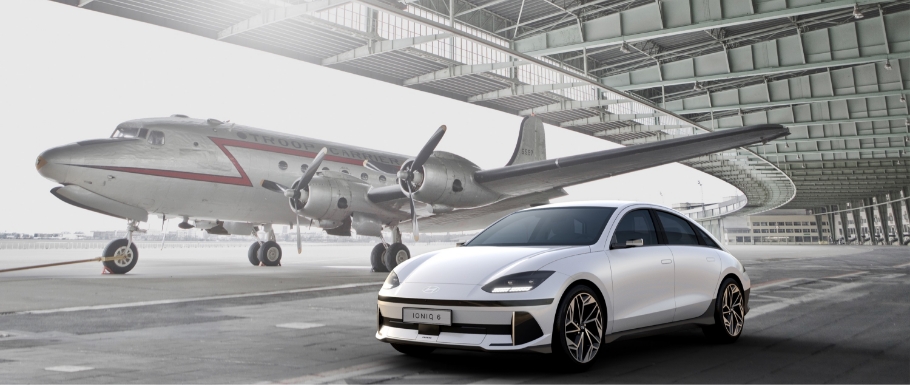
    Hyundai Motor Company today revealed the streamlined and timeless design of the highly anticipated IONIQ 6, the second model in its IONIQ dedicated all-electric-vehicle line-up brand. IONIQ 6, which Hyundai describes as an Electrified Streamliner, is aerodynamically sculpted and makes innovative use of sustainable materials to reflect today’s EV customers’ values.

    Inspired by Hyundai’s Prophecy EV Concept, IONIQ 6 is characterised by clean, simple lines and a pure aerodynamic form that Hyundai designers describe as Emotional Efficiency. IONIQ 6’s electrified streamliner typology and mindful cocoon-like interior embody a silhouette for the new era of electric mobility, while the overall design theme of Ethical Uniqueness reflects Hyundai’s customer-centric commitment to energy efficiency and environmental responsibility.

    “IONIQ 6 connects an emotional convergence of functionality with aesthetics,” said SangYup Lee, Executive Vice President and Head of Hyundai Design Centre. “The distinctive streamlined design is the result of close cooperation between engineers and designers, with obsessive attention to detail and customer-centric values at the core. We have created the IONIQ 6 as a mindful cocoon that offers personalised place for all.”

    IONIQ 6’s human-centric design is both ethical and unique

    IONIQ 6 demonstrates ethical and unique design through energy efficiency and sustainable material usage. IONIQ 6 design was human-centric from the start, with the interior space developed simultaneously with the exterior form. Efforts were made to maximize and optimise the interior space, stretching it at the front and rear, resulting in a unique streamliner silhouette and spacious interior.

    Like the award-winning IONIQ 5 before it, IONIQ 6 implements the Hyundai Look design strategy that gives each model a unique appearance, like chess pieces. By taking a customer-centric direction, Hyundai designs with diverse lifestyles in mind rather than with a one-style-fits-all approach.

    Single-curved streamliner with sleek yet functional aesthetics

    IONIQ 6 is an electrified streamliner that realises the idea of Emotional Efficiency by simultaneously satisfying the customer’s aesthetic and functional needs. The aerodynamically sculpted silhouette with simple yet sensuous curves offer a new typology for the EV mobility era.

    IONIQ 6 has an ultra-low drag coefficient of just 0.21, assisted by its low nose, active air flaps at the front, wheel gap reducers, and optional slim digital side mirrors[2]. Further aiding IONIQ 6’s enviable aerodynamic aptitude is its elliptical wing-inspired spoiler with winglet, slight boat-tail structure, and separation traps on both sides of the rear bumper. Even underneath the car, the endeavour to achieve better aerodynamics is evident in the full cover of the undercarriage, optimized deflectors and reduced wheel-arch gap.

    IONIQ 6 also integrates over 700 Parametric Pixels in various places, such as headlamps, rear combination lamps, front lower sensors, air vent garnishes and centre console indicator, to reinforce the IONIQ brand’s identity throughout the vehicle.

    The rear wing’s Parametric Pixel High-Mounted Stop Lamp (HMSL) delivers an eye-catching light execution when the brakes are applied. To further highlight IONIQ 6’s uniqueness, the newly designed Hyundai ‘H’ badge is applied on the front and rear of the vehicle.

    Cocoon-inspired interior accommodates a mindful personal space on wheels

    IONIQ 6’s cocoon-shaped interior serves as both a comfortable hideaway and personal space, replete with practical features and sustainable materials to facilitate a mindful, eco-friendly mobility experience and lifestyle.

    Hyundai Motor Group’s Electric Global Modular Platform (E-GMP) enabled the designers to stretch the interior, front and rear, to create optimized legroom and spaciousness that lets passengers stay comfortable in the vehicle. The Platform also allows for a completely flat floor, giving expansive feeling.

    The user-centric interior architecture is exemplified by an ergonomically designed control unit that is centrally located to reduce distraction and spur safe, intuitive driving. The modular touchscreen dashboard integrates a 12-inch full-touch infotainment display and 12-inch digital cluster. A bridge-type centre console provides convenient and generous in-car storage.

    Dual Colour Ambient Lighting provides overall illumination for IONIQ 6 interior. Users can choose from a spectrum of 64 colours and six dual colour themes developed by colour experts to help drivers and passengers feel relaxed and comfortable. The 4-dot Interactive Pixel Lights on the steering wheel enable easy communication between the driver and vehicle.

    The removal of buttons from the front doors provided more breathing room and more storage. Transparent accents on the crash pad garnish, door map pocket and console lower cover further accentuate the sense of spaciousness and uniqueness.

    Eco-friendly materials applied to various touchpoints for sustainability

    In line with IONIQ 6’s Ethical Uniqueness theme and inspired by today’s eco-conscious consumers, the designers applied sustainable materials to the exterior, including recycled pigment paint from end-of-life tires to the cladding and bamboo charcoal pigment paint to the body.

    IONIQ 6’s interior is also trimmed in sustainable materials and colours. Depending on the trim level, these include eco-process leather (seats), recycled PET fabric (seats), bio TPO skin (dashboard), bio PET fabric (headliner), bio paint derived from vegetable oils (doors), and recycled fishing net carpet — the latter is a first for the IONIQ brand.

    IONIQ 6 on digital billboard and World Premiere

    Upon the design reveal, Hyundai Motor releases immersive and impactful design 3D digital film at three global landmark billboard sites simultaneously. The film, featuring IONIQ 6’s streamlined design and flexible interior space, can be viewed at K-POP Square in Seoul, Piccadilly Circus in London, and the Big Kahuna in New York Times Square.

    The IONIQ 6 world premiere will take place in July, when Hyundai will reveal the full specifications, including the electrified streamliner’s features and advanced technologies.

  • Lamborghini Espada

    1968 Lamborghini Espada

    In 2022 Lamborghini is celebrating the V12: the legendary 12-cylinder engine that has powered its most iconic cars for almost 60 years. They include the Espada 400 GT, which was the first four-seat vehicle by Lamborghini and was its biggest selling model for years. Encapsulating an exceptional approach to technical innovation, thanks to the front-mounted 4-liter Lamborghini V12 engine it was always an extremely fast grand tourer despite the step up in size.

    The “pure” V12 combustion engine in its final form will go out of production before the end of 2022, when the last Aventador Ultimae is made. From next year, the heir to the Aventador will be fitted with a new plug-in hybrid version of the V12 engine.

    Ferruccio Lamborghini aimed to produce the fastest, most luxurious and comfortable grand tourer

    Ever since the start of his venture into automobile manufacturing, company founder Ferruccio Lamborghini stated his objective very clearly. He wanted to make the best grand tourer around: a sports car that was not only fast but also comfortable and luxuriously finished. Presented at the Geneva Motor Show in March 1968, the Espada 400 GT perfectly embodied this idea for over a decade. The Espada could comfortably seat four adults and had more space for both luggage and passengers than the 400 GT 2+2 (its predecessor) and the Islero 400 GT 2+2. In addition, the Espada featured truly outstanding finishing, with generous amounts of leather and other refined materials, as well as the option of fitting air conditioning. Power steering was introduced as an option in 1969 and it was included as standard from 1972 onwards. A version with automatic transmission was available from 1974.

    Taking the V12 engine to 4 liters

    The technical cornerstone of the Espada was the 60° V12 engine that was first produced in 1963 with a displacement of 3.5 liters, which had already been increased to 4 liters (3929 cc) in 1964. It is a remarkable example of engine development technologies, and it was capable of delivering 325 hp at 7200 rpm when it was first fitted in the Espada. This increased to 350 hp at 7500 rpm in the Espada Series II, which was presented in 1970.

    Fed by six Weber 40 DCOE side-draft carburetors, the V12 had a compression ratio of 9.5:1 (which increased to 10.7:1 from the Series II onwards) and two chain-driven overhead camshafts per bank. It weighed just 232 kg thanks to substantial use of aluminum to make not only the cylinder head but also the crankcase and the pistons. It was front-mounted in a position that was slightly further forward compared to the previous Lamborghini 350/400 GT engines, in order to make the interior roomier. Thanks to the large opening below the aluminum hood, it was easily accessible.

    The chassis was based on that of the 400 GT but it was lengthened so that the wheelbase reached 2650 mm and it was also widened, with the wheel track increasing to 149 cm. It had four-wheel independent suspension, with double wishbones and coil springs. In November 1968, an Espada “Lancomat” with hydropneumatic suspension went on display at the Turin Motor Show. The system was made available on demand, but in the end it was chosen by very few owners.

    The Espada was an extremely fast grand tourer that was capable of reaching a top speed of between 245 and 260 km/h and keeping up with the sportier Miura in most conditions.

    The Espada’s commercial success

    When it was first unveiled, the Espada was the fastest four-seat car in the world.  Featuring boxy shapes as part of a highly innovative design by Carrozzeria Bertone, it proved to be a long-lasting commercial success. Its versatility and roomy interiors – despite a height of just 119 cm – meant that it was suitable for much more frequent use, thus significantly expanding the customer base. A total of 1226 cars were produced across the three series: 176 of the Espada 400 GT Series 1 between 1968 and 1969, 578 of the Espada 400 GTE Series II between 1970 and 1972, and 472 of the Espada 400 GTS Series III between 1972 and 1978.

    The Espada VIP with a mini-bar and a Brionvega television

    The Espada VIP was presented in 1971. It was based on the Espada 400 GTE Series II and just 12 of the vehicles were made. The first models in this special series of cars came in a special orange hue and had orange and black leather upholstery. Later vehicles were made in other color combinations. Inside, the Espada VIP had a mini-bar and a refrigerator in the rear side panels and a Brionvega Algol 11 television on top of the transmission tunnel to keep the passengers in the rear seats entertained. The VIP is one of the most sought-after models among Espada collectors today.          

    Paul McCartney’s Espada made a splash

    One of the most famous Lamborghini Espada owners is Sir Paul McCartney. The former Beatle was a Lamborghini enthusiast and he bought a right-hand-drive 1972 Espada Series III with manual transmission, red paintwork and a red leather interior. His wife Linda often drove the car, but one time it rolled into a nearby pond after she left it in neutral and forgot to put on the handbrake. It was hauled out of the water after three days and later sold to new owners, who went on to use it for a number of years. Subsequently, it ended up being part of the “decor” in an English pub. It was sold to an unknown enthusiast in 2005 and it is thought that it may now be in Austria.

    From VIP owners to the silver screen

    Many celebrities have expressed their fondness for the Espada over the years. For example, since 1986 the famous American television host Jay Leno – who has always been a car enthusiast – has owned one of the very first Espada Series 2 models, which was made in 1969. EVO magazine founder Harry Metcalfe has also owned an Espada for many years. It is a right-hand-drive 1970 Series II and he took part with it in the Espada and Islero 50th Anniversary initiative organized by Automobili Lamborghini Polo Storico in 2018.

    There have been numerous films featuring an Espada, including around 50 significant titles. The most famous among fans of the model is the 1973 Italian movie “Flatfoot” starring Carlo Pedersoli, who was better known as Bud Spencer. Largely filmed in Naples and the surrounding area, it sees the protagonist pursuing an Espada uphill around a series of hairpin bends in a long chase sequence that ends outside the Church of Sant’Antonio a Posillipo.

  • Volkswagen’s first fully-electric sedan: world premiere of the ID. AERO

    2022 Volkswagen ID.Aero Concept

    With today’s world premiere of the ID. AERO1 concept car in China, Volkswagen is providing a foretaste of the brand’s first global fully-electric sedan. The future model will be positioned in the premium mid-size sedan segment. Its progressive, stylish and aerodynamic design also allows for generous interior space. The production version for China is expected to go on sale in the second half of 2023. Volkswagen is also planning to start production of a European series version in Emden in 2023.

    “With the ID. AERO show car, we are revealing a preview of the next member of our electric vehicle family. It’s a car with an emotional and at the same time extremely aerodynamic design, a range of more than 600 kilometers, an extraordinary amount of space and a premium interior,” says Ralf Brandstätter, Chief Executive Officer of Volkswagen Passenger Cars. “With our ACCELERATE strategy, we are intensively driving forward the electrification of our model range. Following the ID.4, this model will be our next global car for Europe, China and the U.S.”

    The concept vehicle is almost five meters (more than 16 feet) long and was designed based on aerodynamic principles. The roof slopes elegantly to the rear like a coupe’s and contributes to achieving an excellent drag coefficient of 0.23. Volkswagen’s modular electric drive matrix (MEB) additionally permits short overhangs, a long wheelbase and an exceptionally spacious vehicle interior. The ID. AERO is equipped with a powerful lithium-ion battery with a net energy content of 77 kWh. Thanks to the interaction of the efficient drive system and the excellent aerodynamic properties, the ID. AERO achieves WLTP ranges of up to 620 kilometers (385 miles) 2, making it suitable for long distances.

    Electric offensive in China:  With the close-to-production ID. AERO concept car, Volkswagen is stepping up its electric offensive in China as part of the ACCELERATE strategy. The production version of the ID. AERO will be the fourth fully-electric model series in China, with expected availability in the second half of 2023. Two versions are planned there—one for each Volkswagen joint venture. Based on its regional strategy, Volkswagen is aiming to become the leading supplier of sustainable vehicles in China. As early as 2030, it is planned that at least every second vehicle sold in China will be an electric vehicle.

    Volkswagen is driving forward its electric offensive worldwide on the Way to ZERO. As the new flagship model of the electric vehicle family, the ID. AERO will therefore be offered globally in future—in Europe and North America in addition to China.

    The ID. AERO transfers the design language of Volkswagen’s electric vehicles to a premium mid-size sedan for the first time. The aerodynamically designed front end and roof ensure that air flows optimally over the vehicle. The air flow is calmed by the slightly drawn-in rear end designed to separate the airflow. The sporty 22-inch two-tone wheels are integrated flush into the wheel housings. Classic door handles are replaced by illuminated touch surfaces, which reduce the drag even further. At the top of the side profile, the bold tornado line and downward sloping roof line are highlights. The powerful shoulder section of the ID. AERO is located above the tornado line. These lines make the electric sedan appear lower and give it a dynamic look.

    The ID. AERO concept vehicle has a Polar Light Blue Metallic paintwork—a light metallic color with pigments that create a golden shimmer in appropriate light conditions. The roof is painted in a high-gloss black to contrast with the vehicle body.

    The front end is characterized by the honeycomb motifs typical for Volkswagen’s electric vehicle family. The front is horizontally split into two at the bumper and is a defining design element for the ID. AERO design. Another distinctive feature that makes the ID. AERO stand out from the crowd is a narrow light strip extending horizontally across the front that wraps into the fenders and side panels. This light strip is continued visually to the rear end with a few interruptions. The dominant rear end features a striking dark light strip and LED taillight clusters with a honeycomb structure.

    The ID. AERO demonstrates the flexibility of Volkswagen’s purely electric MEB architecture, which can be adapted for vehicles of different shapes and sizes. The MEB can be used across segments—from compact crossover or SUV and minibus through to spacious sedan. The MEB also fully exploits the possibilities of electric mobility, allowing long ranges, a maximum of digital connectivity and over-the-air update capability.

    It is expected that the production version of the ID. AERO for Europe will roll off the assembly line in the Emden plant in 2023. With volume production of electric vehicles, Emden will be one of the first Volkswagen plants of this kind in Lower Saxony and will make a decisive contribution to electrifying the model range and reducing the CO2 emissions of the overall new vehicle fleet.

  • DS 7: Refinement is a journey

    2023 DS 7 - front angle

    The new DS 7 is an evolution of the first 100 per cent DS Automobiles design revealed in 2017, DS 7 CROSSBACK, which projected a new spirit of the avant-garde. Acclaimed for its unparalleled interiors, its remarkable refinement and its cutting-edge technology, DS 7 CROSSBACK opened the way for new developments, now embodied by New DS 7.

    “At the same time as respecting the personality and elegance of the existing shape, we’ve injected an additional touch of dynamism with sharp features. New DS 7’s character is given a boost, particularly at the front and rear, while its design still fits into the current DS Automobiles range. It’s the result of co-operation between DS DESIGN STUDIO PARIS, the technical team who’ve brought a great deal of technology and our manufacturing team who’ve succeeded in producing new features. Styling touches added to the interior enhance the consistency throughout.”
    Thierry Metroz, Design Director

    A design enhanced by sharp lines and lit up by DS PIXEL LED VISION 3.0 and DS LIGHT VEIL

    The character of the new DS 7 is formed from several stunning details. Always elegant, new DS 7 brings more dynamism with sharper, more structural lines and a coherent design.

    The completely new front stands out with sharper lines to develop the balance of each feature. The DS DESIGN STUDIO PARIS team worked closely with the production team at the Mulhouse, France factory to achieve exceptional results in terms of quality and solidity.

    The light signature is developing with an even more expressive look. The combination of new slimmer DS PIXEL LED VISION 3.0 headlamps and DS LIGHT VEIL daytime running lights is seamless and carried out in the spirit of high fashion. The DS WINGS and the grille are larger and the valance has been redesigned with a range of colours depending on the model.

    The slimmer scale-like LED rear lights with a vortex effect have also been redesigned with a dark metallic finish. They emphasise the unique expression of new DS 7. The boot lid and badge have been reworked with sharper lines, while DS AUTOMOBILES lettering replaces the previous ‘CROSSBACK’ to sign off the visually stretched rear of new DS 7.

    The wheels play a part in the profile’s character with new 19-inch alloy wheels, which are more aerodynamic and feature a design aimed at amplifying the impression of size, and exclusive 21-inch alloy wheels, with a carved technical design, exclusive to the new DS 7 E-TENSE 4×4 360.

    The window surrounds and roof bars are offered with a Gloss Black variant to emphasise the dynamism of the silhouette.

    DS PIXEL LED VISION 3.0

    DS PIXEL LED VISION 3.0 introduces a new technology that adds an extra dimension to the model. The PIXEL modules on new DS 7 optimise the management of light output, while maintaining three identifying modules that feature on the entire range. The PIXEL function provides optimum lighting as the light flow is more powerful, more regular and has an increased range of up to 380m on the main beam. In town the width of the beam is up to 65m. On the inner edge, two dipped headlight/sidelight modules illuminate together while the outer edge PIXEL main beam module features 84 LEDs in three rows. Lighting in corners is controlled by the intensity of the PIXEL module’s exterior LEDs which is altered by the angle of the steering.

    DS LIGHT VEIL

    The daytime running lights were inspired by work on DS X E-TENSE and DS AERO SPORT LOUNGE.. DS LIGHT VEIL is made up of a daytime running light and four vertical luminous features made up of 33 LEDs. This innovation comes from the manufacturing process where the laser etched polycarbonate surface is painted on the inside, to give the impression of light travelling through the bodywork, alternating between light and parts that are body coloured. It creates an effect of depth and brightness like a piece of jewellery. DS LIGHT VEIL illuminates and goes out when the car is locked and unlocked.

    The best French expertise for lovers of beautiful materials

    Just like the largest Paris fashion houses, DS Automobiles bestows special care on the choice of materials and how they are treated. Through upholstery interior surroundings in the new DS 7 were created to make each journey different.

    The height of refinement, new DS 7 OPERA is offered with two Nappa leather colours: Basalt Black and Pearl Grey. Over wider expanses, the highest quality part of the hide adds a natural and enchanting touch to the interior.

    New upholstery introduces an engaging, visible and tactile result, specifically draped Nappa leather on the dashboard and door panels. Without seams or joins they keep the feel and appearance of natural leather. The hide is further elevated by embossing with lines reminiscent of the DS LIGHT VEIL signature.

    The attention to detail of this interior is also shown by the pearl stitching offered in the new white and Zephyr colours, a steering wheel in full grain leather with a leather covered airbag, ‘Clous de Paris’ embossed inserts ‑ synonymous with DS Automobiles ‑ and watchstrap upholstery offered for the first time in Pearl Grey.

    Refinement also features in the RIVOLI interior which introduces a Basalt Black colour and has a stitched padded trim that has been combined with Claudia leather upholstery, which has a more pronounced leather grain.

    The PERFORMANCE LINE interior features a deeper black colour with the microfibre textile Alcantara® throughout and gold and carmine touches that emphasise the dynamic appearance.

    The BASTILLE interior has been refreshed with a new DS Canvas finish and a Basalt Black grain inspired by the scales on fish skin.

    All these interiors are enhanced with ambient lighting that can be personalised and a new pattern based on ‘Clous de Paris’ embossed inserts.

    DS AUTOMOBILES NAPPA LEATHER

    Drawing inspiration from the metal bracelet of a luxury watch, made of a multitude of parts fitted together, the DS Automobiles team created a seat base and back from a single piece of leather and without a bead of stitching, to create incredible comfort. The seat is made of high-density foam with more material than traditionally used for a classic seat. The high-quality Nappa leather comes from cows raised for their meat, living in fields without barbed wire. Only the highest quality leather is used and dyed with a special colour in Basalt Black or Pearl Grey.

    “New DS 7 embodies our vision of the art of travel French style. Beyond the basics of the segment, we are introducing some truly differentiating attributes, specifically to our interiors and the choice of our materials, and our purely automotive expertise with a chassis that’s as safe as it is light and power units that are highly powerful and efficient. This combination brings to life the comfort and dynamism demanded by DS Automobiles.”
    Agnès Tesson Faget, Product Director

    HIGH PERFORMANCE PETROL/ELECTRIC HYBRID AND MULTI-ENERGY POWER UNITS

    As the multi-energy brand with the lowest CO2 emissions in Europe for the last two years and multiple Formula E champion, DS Automobiles has chosen to offer new DS 7 with a range of power units, including three plug-in hybrids with 225hp, 300hp and 360hp.

    New DS 7 E-TENSE 225 has a PureTech 180 petrol engine and a 110hp electric motor fitted to the eight-speed automatic gearbox, with a two-wheel drive transmission.

    New DS 7 E-TENSE 4×4 300 and DS 7 E-TENSE 4×4 360 introduce a four-wheel drive transmission with a PureTech 200 motor as well as 110hp and 112hp electric motors on each of the axles. The 360 model is tuned by DS Performance. A 130 BlueHDi power unit will also be available.

    A new 14.2 kWh battery gives up to 65km with zero emissions on the WLTP mixed cycle and up to 81km on the urban cycle. Charging time is about two hours on a 7.4kW charger.

    In keeping with the outstanding attributes of the entire DS Automobiles range, new DS 7 remains one of the most efficient cars in its class, specifically because of its well-controlled weight.

    NEW DS 7 E-TENSE 4X4 360

    The spirit of grand touring by DS Automobiles is embodied in new DS 7 E-TENSE 4×4 360. To go with the rush of power (200hp engine, front electric motor with 110hp and rear electric motor with 112hp), new DS 7 E-TENSE 4×4 360 enjoys special tuning by DS PERFORMANCE to optimise its energy management. It has a DS ENERGY COACH application that supports the driver improve energy recovery through braking. The chassis is lowered by 15mm, the track is wider (+24mm at the front, +10mm at the rear) and the front brakes are 380mm in diameter with callipers by DS PERFORMANCE. New 21-inch BROOKLYN wheels are added to a new Lacquered Grey colour which highlights the special curves and charisma of this model. Acceleration from zero to 62mph is achieved in 5.6 seconds and 1,000m start-stop is accomplished in 25.4 seconds.

    TECHNOLOGY AT THE HEART OF THE WHOLE NEW DS 7 OFFERING

    The infotainment system is one of the biggest changes for new DS 7 with the inclusion of DS IRIS SYSTEM. This new solution introduces a totally reworked interface, that is completely configurable, reactive and seamless and supported by natural voice recognition.

    The redesigned 12-inch high-resolution touch screen features a menu made up of widgets for accessing all its functions with a single movement: for controlling the connected navigation, the ventilation, the digital audio sources and journey information. This big screen also enables views front and rear to be displayed, provided by new high-resolution digital cameras, and access to the Mirror Screen function over wi-fi.

    A new large 12-inch digital instrument panel, with displays that can be changed and personalised, features refreshed graphics with all the vital information such as energy flow on plug-in hybrid versions. 

    UNIQUE TECHNOLOGY FOR THE SEGMENT

    New DS 7 also offers technology for more comfort and relaxation such as DS ACTIVE SCAN SUSPENSION and DS NIGHT VISION. DS ACTIVE SCAN SUSPENSION is a camera-controlled damping system that is completely unique in its class. It adjusts each wheel independently according to imperfections in the carriageway. With DS NIGHT VISION, an infrared camera sweeps the carriageway and its edges to detect cyclists, pedestrians and animals at distances up to 100m. The driver receives the information in the new high resolution digital instrument display, reinforced by a special warning in the event of danger.

    Safety is optimised with DS DRIVER ATTENTION MONITORING and DS DRIVE ASSIST level 2 semi-autonomous driving.  DS DRIVER ATTENTION MONITORING analyses the driver’s level of attention with two cameras. The first checks the behaviour of the car in its surroundings and the second, positioned facing the driver, diagnoses where they are looking and their face and eyelid movement which translates to the level of sleepiness and attention. This is unprecedented in the segment. New DS 7 is equipped with DS DRIVE ASSIST, adaptive cruise control that can initiate stopping and restarting without the driver intervening and an aid that enables the driver to keep the car either where it is or where they position it in the lane.

    New DS 7 E-TENSE 4×4 360 LA PREMIÈRE

    A limited edition new DS 7 E-TENSE 4×4 360 LA PREMIÈRE is being offered at launch. Based on the new DS 7 E-TENSE 4×4 360 OPÉRA, it introduces a new Gloss Black front bumper blade, black monograms and badges and a gloss black finish on the DS WINGS, the grille, the window surrounds and roof bars. The interior is available in Basalt Black and Pearl Grey. It will be offered in a choice of four colours: Lacquered Grey, Perla Nera Black, Platinum Grey and Crystal Pearl.

  • BMW M3 Touring

    2023 BMW M3 Touring - Front View

    The BMW M GmbH model offensive continues in its 50th anniversary year with the addition of a fourth model type to the BMW M3/M4 range alongside the Sedan, Coupé and Convertible. The BMW M3 Touring will celebrate its world premiere at the Goodwood Festival of Speed in June 2022. Orders for the new BMW M3 Touring can be taken from September 2022, ahead of a market launch that will get underway with the start of production in November 2022. The BMW M3 Touring will be produced alongside the BMW M3 Sedan at BMW Group Plant Munich.

    Standalone vehicle concept with extravagant design.

    The first BMW M3 Touring goes to particularly impressive lengths to deliver on the traditional M promise of dynamic flair, agility and precision combined with unrestricted everyday practicality and mile-covering ability. Extravagant exterior design shines a particularly vivid spotlight on its unique vehicle concept, ensuring clear differentiation within the line-up and a dynamic aura unmatched by any rival.Cleanly designed surfaces and athletic forms signal the standout performance potential of the BMW M3 Touring, as do the M-specific design cues firmly invested in the functional requirements of cooling air routing and aerodynamic balance.

    Chief among these are the vertically arranged, frameless BMW kidney grille, large side air intakes, powerfully sculpted wheel arches and prominently extended side skirts which, together with the attachment parts for the front and rear aprons, form a Black high-gloss band around the whole of the car. Other distinctive features are the M gills in the front side panels and the exhaust tailpipes integrated into the rear apron to the left and right of centre.Whatever exterior colour is specified for the BMW M3 Touring, its roof will be finished as standard in Black high-gloss. The standard roof rails and the model-specific Gurney air-directing flap on the roof spoiler are painted in the same shade. The roof can also be finished in body colour as an option, and an M Carbon exterior package can also be found on the options list.

    High-revving six-cylinder in-line engine.

    The version of the six-cylinder in-line engine with M TwinPower Turbo technology developed for the Competition models in the BMW M3/M4 line-up produces maximum output of 375 kW/510 hp and peak torque of 650 Nm (479 lb-ft). Distinguished by the appetite for revs for which M engines are renowned, plus linear power delivery sustained into high load ranges, the 3.0-litre straight-six forms the basis for the unit in the new BMW M4 GT3 endurance racing car. Its cooling and oil supply systems are designed to handle extremely high longitudinal and lateral dynamic forces on the track.

    And the M-specific exhaust system with electrically controlled flaps generates an emotionally arresting soundtrack that brings an extra layer to the performance experience.The engine joins forces with an eight-speed M Steptronic transmission with Drivelogic, which offers three gearshift programs and can be operated using shift paddles on the steering wheel. The engine’s power is channelled through to the road via the M xDrive all-wheel-drive system, which teams up with the Active M Differential at the rear axle. The need-based distribution of power across all four wheels optimises the traction of the BMW M3 Competition Touring with M xDrive, as well as its agility and directional stability. Acceleration from 0 to 100 km/h (62 mph) takes 3.6 seconds and the sprint from 0 to 200 km/h (124 mph) requires just 12.9 seconds.

    Opting for the M Driver’s Package increases the electronically limited top speed from 250 km/h (155 mph) to 280 km/h (174 mph).As well as the basic 4WD setting, the driver can also select 4WD Sport mode via the Setup menu. This provides an even more intense experience of the M xDrive system’s rear-biased tuning. Switching off DSC (Dynamic Stability Control) brings 2WD mode – a.k.a. pure rear-wheel drive – into play.

    Ideal balance of performance and long-distance comfort.

    Chassis technology tuned both to the performance profile of the powertrain and to the specific vehicle concept of the BMW M3 Touring creates an ideal balance of sports performance and majestic ride comfort in everyday use and over longer-distance journeys. Detailed fine-tuning has been carried out as part of intensive testing on race circuits, country roads and urban routes. The high torsional stiffness of the body structure and chassis mountings imbues the car with even greater agility, dynamics and precision, and is further enhanced by model-specific bracing elements in the underfloor section and load compartment.Both the double-joint spring strut front axle and the five-link rear axle have M-specific kinematics and combine lightweight design with particularly high rigidity.

    Adaptive M suspension with electronically controlled shock absorbers and M Servotronic steering with a variable ratio come as standard on the BMW M3 Touring. The integrated braking system offers two settings for pedal feel. Optional M Carbon ceramic brakes can be ordered as an alternative to the standard M Compound braking system. Meanwhile, forged M light-alloy wheels in 19-inch (front) and 20-inch (rear) format are fitted as standard and can be specified with track tyres as an option.The DSC system includes wheel slip limitation integrated into the engine control unit.

    As well as M Dynamic Mode, the BMW M3 Touring also has the M Traction Control function as standard. In the M xDrive system’s 2WD mode, the driver can adjust the intervention thresholds for wheel slip limitation through ten stages in order to carefully approach the physical limits under hard cornering on the track.

    Racing feeling in the cockpit, highly versatile rear compartment.

    The BMW Curved Display will be fitted as standard in the BMW M3 Touring from launch. It provides a fresh interpretation of the cockpit design focused on providing an intense performance experience. The fully digital screen grouping is made up of a 12.3-inch information display and a control display with a screen diagonal of 14.9 inches. It is positioned behind a single glass surface that is angled towards the driver. The information display behind the steering wheel presents all relevant driving information with new graphics and in an M-specific style.

    M-specific widgets with information on the car setup and tyre condition can be shown on the control display’s home screen. A BMW Head-Up Display with M-specific content is offered as an option.Electrically adjustable M Sport seats with memory function and seat heating plus Merino leather trim come as standard in the BMW M3 Touring. The optional M Carbon bucket seats for the driver and front passenger offer a unique symbiosis of motor sport feeling, lightweight design, sumptuous workmanship and long-distance comfort.

    The use of carbon-fibre-reinforced plastic (CFRP) in the structural elements of the seat cushion and backrest, together with cut-outs in the side bolsters and below the head restraints, saves 9.6 kilograms over the standard M Sport seats.

    The rear compartment of the BMW M3 Touring has three full-size seats. The rear-seat backrest can be split 40 : 20 : 40. Folding down individual seat sections or all of them at the same time allows the car’s load capacity to be expanded from 500 litres to a maximum 1,510 litres, as required.

    Automatic tailgate operation and the separately opening rear window are both standard. A storage compartment underneath the boot floor provides space for the luggage compartment cover and boot partition net. Anti-slip rails that rise up automatically from the boot floor can be ordered as an option. These prevent items of luggage from sliding around in dynamic driving situations.

    M Drive Professional and BMW Maps navigation system as standard.

    Comfort-enhancing features fitted as standard in the BMW M3 Touring include three-zone automatic climate control, the BMW Live Cockpit Plus including BMW Maps navigation system, ambient lighting, the hi-fi speaker system, and the interior and exterior mirror package. Customers can also benefit from a broad selection of automated driving and parking systems. Front Collision Warning, Speed Limit Display with no-overtaking indicator, Lane Departure Warning and Park Distance Control come as standard.

    Among the available options are the Driving Assistant Professional with Steering and Lane Control Assistant, Active Cruise Control with Stop&Go function, traffic light detection and Active Navigation, plus the Parking Assistant with Reversing Assistant.The M-specific control/operation system includes the Setup button, which provides direct access to the settings options for the engine, chassis, steering, braking system and M xDrive. Two overall vehicle setups can be stored and called up using the M buttons on the steering wheel.

    As well as M Traction Control, the likewise standard M Drive Professional also contains the M Drift Analyser and the M Laptimer.The M Mode button on the centre console can be used to adjust the responses of the driver assistance systems and the content shown in the information display and Head-Up Display. BMW M3 Touring drivers can also choose from the ROAD, SPORT and TRACK settings.The latest-generation BMW iDrive vehicle experience system in the BMW M3 Touring represents the embodiment of progressive digitalisation.

    It is based on BMW Operating System 8 and, together with the BMW Intelligent Personal Assistant and BMW Curved Display, has been designed squarely to deliver intuitive interaction between the driver and car using natural speech and touch control. The new BMW iDrive enables personalisation via the BMW ID and My BMW App, plus in-car use of the Personal eSIM.

    Smartphone integration for using CarPlay® and Android Auto™ is also part of standard specification. A 5G-compatible antenna system provides optimised connectivity.

    CO2 emissions & consumption.

    The first-ever BMW M3 Touringfuel consumption combined: 10.4 – 10.1 l/100 km [27.2 – 28.0 mpg imp]; CO2 emissions combined: 235 – 229 g/km in the WLTP cycle; NEDC figures: –

  • Mercedes-AMG GLE “Edition 55” – four special models to mark the “55 years of AMG” anniversary

    2023 Mercedes-AMG GLE 'Edition 55' - Front Angle

    Mercedes-AMG is celebrating its 55th anniversary with four “Edition 55” special models based on the 2023 AMG GLE SUV and AMG GLE Coupe. Exquisite equipment and details, including Obsidian Black Metallic or MANUFAKTUR Diamond White Metallic paint, special contrasting foil, 22-inch AMG forged wheels and unique interior touches, underscore the exclusive design. For the U.S. market, 55 units of each model will be available at U.S. dealerships later this year.

    As a special identifying feature of the “Edition 55,” both sides of the vehicle feature special contrasting foil highlighting the AMG crest on each side of the vehicle. Further exciting contrasts are provided by the 22-inch forged AMG cross-spoke wheels finished in matte grey with a high-sheen rim flange. “Edition 55” lettering and laurel wreath adorning the wheel center caps testify to the superb attention to detail.

    With the AMG Night Package, select exterior elements are finished in high-gloss black. Depending on the specific paint color, this results in bold contrasts or fluid transitions. High-gloss black is used for the front splitter and the trim strip of the AMG front fascia, exterior mirror housings, window surrounds and trim strip of the AMG rear fascia. Added to this are heat-insulating dark-tinted glass aft of the B-pillar and two black chrome twin tailpipe trims.

    Another exclusive detail is the unique fuel filler cap in silver chrome with AMG lettering, which is only revealed once the fuel filler door is opened.

    The interior is characterized by the contrast of black and red. Stainless steel door sill trims with red illuminated AMG lettering welcome driver and passengers. To match, the black AMG floor mats feature red contrasting stitching and “Edition 55” lettering woven in red. The AMG Performance steering wheel wrapped in microfiber also commemorates the anniversary with “AMG” and “Edition 55” badges and underscores the exclusivity of the anniversary models. The seats are upholstered in two-tone Classic Red/Black Nappa leather. This color combination also extends to the door panels and center console. The palm rest in the center console is enhanced with an embossed AMG crest. The luxurious, sporty ambience of the interior is rounded off with AMG trim elements in matte carbon black.

    Each AMG GLE SUV and AMG GLE Coupe “Edition 55” model includes a tailor-made AMG Indoor Car Cover featuring breathable outer paneling made of tear-resistant synthetic fiber fabric and an antistatic inner fabric made of flannel.

    At a Glance

    Mercedes-AMG GLE 53 SUV Mercedes-AMG GLE 63 S SUV
    Engine AMG-enhanced 3.0L Inline-6 Turbo with 48-Volt Mild Hybrid System and Electric Auxiliary Compressor Handcrafted AMG 4.0L V8 Biturbo with 48-Volt Mild Hybrid System
    Displacement (cc) 2,999 3,982
    Performance 429 hp (ICE) @ 6,100 rpm (+21 hp from ISG)
    384 lb-ft (ICE) @ 1,800 – 5,800 rpm
    (+184 lb-ft from ISG)
    603 hp @ (ICE) 5,750 – 6,500 rpm
    (+21 hp from ISG)
    627 lb-ft (ICE) @ 2,500 – 4,500 rpm
    (+184 lb-ft from ISG)
    Drive Config. AMG Performance 4MATIC+ all- wheel drive with fully variable torque distribution AMG Performance 4MATIC+ all- wheel drive with fully variable torque distribution
    Transmission AMG SPEEDSHIFT® TCT 9G
    transmission
    AMG SPEEDSHIFT® TCT 9G
    transmission
    0-60 mph (sec) 5.2 (est.) 3.7 (est.)
    Top Speed (mph) 155 (electronically limited) 174 (electronically limited)


    Mercedes-AMG GLE 53 Coupe Mercedes-AMG GLE 63 S Coupe
    Engine AMG-enhanced 3.0L Inline-6 Turbo with 48-Volt Mild Hybrid System and Electric Auxiliary Compressor Handcrafted AMG 4.0L V8 Biturbo with 48-Volt Mild Hybrid System
    Displacement (cc) 2,999 3,982
    Performance 429 hp (ICE) @ 6,100 rpm (+21 hp from ISG)
    384 lb-ft (ICE) @ 1,800 – 5,800 rpm
    (+184 lb-ft from ISG)
    603 hp @ (ICE) 5,750 – 6,500 rpm
    (+21 hp from ISG)
    627 lb-ft (ICE) @ 2,500 – 4,500 rpm
    (+184 lb-ft from ISG)
    Drive Config. AMG Performance 4MATIC+ all- wheel drive with fully variable torque distribution AMG Performance 4MATIC+ all- wheel drive with fully variable torque distribution
    Transmission AMG SPEEDSHIFT® TCT 9G
    transmission
    AMG SPEEDSHIFT® TCT 9G
    transmission
    0-60 mph (sec) 5.2 (est.) 3.7 (est.)
    Top Speed (mph) 155 (electronically limited) 174 (electronically limited)