Blog

  • Bugatti Chiron L’Ébé – Bugatti honors Ettore’s daughter with a special edition

    2023 Bugatti Chiron L’Ébé - Front View

    L’Ébé Bugatti, Ettore Bugatti’s daughter and eldest child, was very close to him, like a soul mate. Bugatti is now honoring L’Ébé with a very special small series of three cars. For the final delivery of the Chiron1 and Chiron Sport2 in Europe, Bugatti’s designers developed a Chiron and two Chiron Sport with the name L’Ébé. All three hand-crafted hyper sports cars are bearing unique details in the Art Deco style.

    As the eldest child of Ettore and Barbara Bugatti, L’Ébé, born in 1903, had more insight into the extraordinary rise of Bugatti than anyone else. Ettore even chose to hide his own initials “EB” in her first name, so L’Ébé would not have to forgo the Bugatti surname even after marriage. In her later book “The Story of Bugatti”, a biography of Ettore, she gave invaluable details into the history of the brand and her father himself.

    Now, L’Ébé herself also becomes an important part of Bugatti history. The Chiron and Chiron Sport L’Ébé draw inspiration from her love of Art Deco style. Chiron’s character lines are mostly echoed in the famous Bugatti Type 57 G Tank that won Le Mans in 1937 – here on the L’Ébé those lines are accented in gold, shimmering against the exposed blue-tinted carbon body. Gold highlights also adorn the “EB” badging, the famous horseshoe grille and parts of the 8.0-liter W16 engine cover. Even the wheels come with an understated gold tint.

    L’Ébé’s signature logo hides subtly on the underside of the retractable rear spoiler, as well as on the treadplates and hand-stitched into the headrests of the seats. The cabin subtly mirrors the exterior, with exposed blue-tinted carbon visible throughout and a light versus dark theme, hinting at L’Ébé’s dark blue body and gold highlights. The door panel on the driver’s side is finished predominantly in “Silk” leather with “Lake Blue” highlights. The passenger’s, meanwhile, reverses the colour scheme. Each door panel features a motif of the visual evolution of Bugatti’s most iconic cars, from early Grand Prix racers through to EB110, Veyron and Chiron. L’Ébé’s numerous bespoke touches perfectly showcase Bugatti’s limitless creativity and craftsmanship when it comes to exclusive tailor-made projects.

    Christophe Piochon, President of Bugatti Automobiles, said: “L’Ébé Bugatti’s biography of her father consists of numerous diary entries by Ettore himself, letters from his early employees, customers, business partners and her own experiences. It helps a lot to understand Ettore’s personality, his goals and the appreciation everyone had for him and his products. With this knowledge we could transmit the Bugatti DNA into the present time maintaining the essence, grade of perfection and quality standards up to this very day. Through this unique configuration and use of her name for the final Chiron and Chiron Sport, we wanted to honor her with the status she deserves in our brand’s history.”

    The Bugatti Chiron, introduced to the world in 2016, was the first production car to deliver 1,500 PS of power, creating an entirely new sector of hyper sports car performance. Its 8.0-liter W16 quad-turbocharged engine, advanced four-wheel-drive system and lightweight chassis set new standards not just for acceleration, top speed and handling but also for comfort, usability and reliability.

    It has since become the template for a number of different evolutions of the Bugatti hyper sports car, including Chiron Sport, Chiron Pur Sport and Chiron Super Sport. The three exclusive Bugatti Chiron L’Ébé mark the end of Chiron and Chiron Sport in Europe. The Chiron L’Ébé and a Chiron L’Ébé Sport have already been delivered and the third model will be delivered by the end of the month.


    • 1 CHIRON: WLTP fuel consumption, l/100 km: low phase 44.56 / medium phase 24.80 / high phase 21.29 / extra high phase 21.57 / combined 25.19; CO2 emissions combined, g/km: 571.64; efficiency class: GPDF
    • 2 CHIRON SPORT: WLTP fuel consumption, l/100 km: low phase 44.56 / medium phase 24.80 / high phase 21.29 / extra high phase 21.57 / combined 25.19; CO2 emissions combined, g/km: 571.64; efficiency class: GPDF
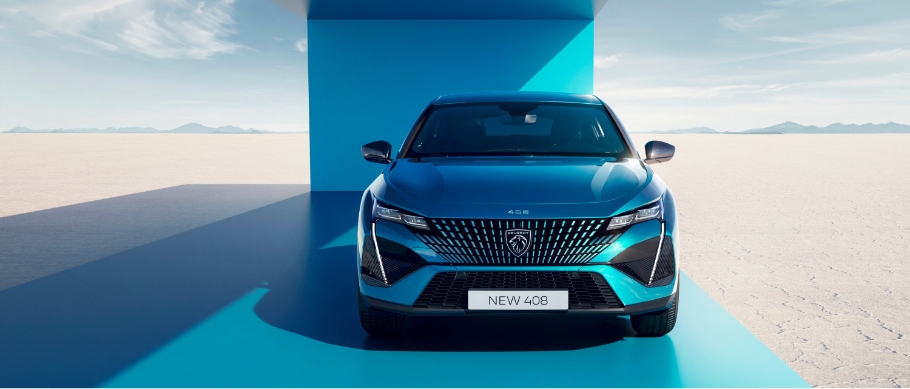
  • PEUGEOT 408

    2023 PEUGEOT 408 - Front View

    The new PEUGEOT 408 is the first of its kind – a new fastback silhouette at the top of the C segment. This new age PEUGEOT combines a unique design and feline stance with engineering excellence focused on efficiency and intelligent electrification, with cutting-edge technologies dedicated to creating an instinctive driving experience.

    The mould-breaking PEUGEOT 408 stands out first and foremost for its dynamic fastback silhouette and unmistakable style. The feline stance is typical of the latest PEUGEOT models, with its sharp lines and colour-coded grille, the latter of which blends in perfectly with the front end and showcases the new PEUGEOT emblem.

    At the front, a distinctive fang-shaped light signature brings the 408 into line with the rest of the PEUGEOT family, as do the three-claw LED lights at the rear. An inverted cut-out in the rear bumper also gives the profile a distinctive look.

    With a height of 1.48m, a length of 4.69m and a long wheelbase of 2.79m, the new PEUGEOT 408 provides spacious second row seats with 188mm of knee room. The boot is also generously sized, with a maximum volume of 536 litres, which can be increased to 1,611 litres with the rear seats folded down.

    For its driver and passengers, the new 408 offers the latest generation PEUGEOT i-Cockpit®, recognisable by its compact steering wheel, which is dedicated to driving pleasure and controlled agility. Emphasis is placed on the quality of the interior space and on connectivity, with the latest technologies making the driving and travelling experience more intuitive and rewarding.

    Powered by six cameras and nine radars, a suite of 30 advanced driver assistance systems provide peace of mind and safety. These include:

    • Adaptive Cruise Control with Stop and Go function
    • Night Vision, which warns of animals, pedestrians or cyclists in the lane before they appear in the high beam
    • Long-range blind spot monitoring (75 metres)
    • Rear Traffic Alert, which warns of potential hazards when reversing

    The PEUGEOT 408 will be available with a range of powertrains, including two rechargeable Plug-in Hybrids with 180 and 225hp respectively, as well as a PureTech 130 hp petrol version. All three are coupled to an eight-speed EAT8 automatic gearbox. An all-electric 408 will follow.

    Efficiency was a key concern for the designers of the new PEUGEOT 408, since the combination of efforts in terms of aerodynamics, weight reduction (from 1396kg) and low-emission engines means that the vehicle can now boast remarkably low average energy consumptions (under homologation), both for the hybrids as well as for the 130bhp petrol version.

    The new PEUGEOT 408 will hit showrooms at the beginning of 2023 and will be sold in global markets. Initially it will be produced for the European market, at the Mulhouse production facility in France, and subsequently in the Chengdu factory, in China, for the local market.

    Linda Jackson, CEO of PEUGEOT, said: “At PEUGEOT, we believe that life is better with allure. With its unique looks, innovative fastback silhouette and unbridled elegance, the new 408 is the perfect expression of PEUGEOT’s philosophy and inventiveness. Unexpected from every angle, it has been designed for lovers of cars and of life, who want to break free from the traditional while seeking responsible pleasure. It encompasses all of PEUGEOT’s technological demands – controlled efficiency and a connected digital experience – and all the emotions associated with instinctive driving pleasure and a peaceful journey.”

    1. Efficiency, connectivity and instinctive driving pleasure: the market and customers

    The new 408 completes PEUGEOT’s line-up in the highly strategic C segment of compact family vehicles and is positioned at the top end of the C-segment saloon range. PEUGEOT has taken a leading position in this segment over the last few years, with the success of the 3008 and 5008 and three generations of 308 hatchbacks and 308 SW estate cars, the latest of which has just been launched.

    The new PEUGEOT 408 addresses the values and concerns of a population at the cutting edge of modernity: dynamic and hyper-connected, it contributes to the energy transition, without sacrificing fun. Customers here are looking for uniqueness, appreciate creativity and the audacity of new combinations that break away from established categories.

    Most of the new PEUGEOT 408’s customers will be active couples, who will use their car for personal and professional purposes. Some will want to move upmarket within the C-segment and buy a larger, more spacious car. Others will be looking for a more original and innovative silhouette than a more common or family-oriented compact SUV. And others will appreciate the stature of a large car. All of them will be looking for a contemporary motoring experience, whether for everyday use or for long, comfortable and peaceful journeys with others.

    2. Dynamic and innovative fastback design

    Combined with PEUGEOT’s feline characteristics, the design language of the new 408 is perfectly in keeping with its innovative concept as a top-of-the-range C-segment fastback. It is characterised by a particularly sharp treatment of the surfaces, which is particularly noticeable at the rear, at the end of the roof, the boot lid and at the base of the wings, creating a multifaceted design that plays with the light.

    The 408 is based on PEUGEOT’s multi-energy EMP2 V3 (Efficient Modular Platform) architecture, with a long wheelbase of 2.787m providing generous rear seat space. Its overall length is 4.690m and the 408 measures 1.859m wide, with the mirrors folded in.

    The tracks are wide, measuring 1.599m at the front and 1.604m at the rear, with rim sizes up to 20 inches. Although raised, the PEUGEOT 408 nevertheless has a slim and sporty profile, thanks to a height of just 1.48m.

    At the front, the long bonnet is set between raised wings, which is characteristic of the latest PEUGEOT models. This stylistic choice reinforces the look at the front end while streamlining the profile. It also simplifies the outline of the bonnet, allowing the body parts to fit with absolute precision.

    Advanced Matrix LED lighting technology has made it possible to design very slim headlights, while guaranteeing a very high level of performance. The light signature extends downwards with two strips of LEDs in the shape of fangs that plunge into the bumper.

    The grille is focused around the new PEUGEOT emblem, which conceals the radar required for many of the driving assistance systems and is a sign of the 408’s identity. The body-colour treatment “hides” the grille by blending into the overall volume of the bumper – a sign of a generational change and of the electrification of the PEUGEOT range.

    Large black scoops characterise the graphic theme of the front end, visually accentuating its width and robustness. They surround and protect the light fangs by joining the black protections that encircle the body and enhance the distinctive light signature

    The profile of the new PEUGEOT 408 is characterised by a clever division between the black and painted body parts, designed to refine its silhouette and add dynamism. It also emphasises the generosity of the passenger compartment, particularly in the side window design, which highlights the fastback shape behind the rear door.

    The body and wheel arch side guards extend into a black rear bumper which, by cutting the body colour at an angle, accentuates the inverted effect of the tail. It also helps to visually absorb the rear overhang, which provides a large luggage compartment.

    Disruptively styled 20-inch wheels (optional on GT Hybrid versions only) feature a geometric shape that is striking when stationary and creates a dramatic visual effect at low speeds. Their unusual design is in keeping with the new 408’s distinctive design.

    The rear of the roof is a particularly aerodynamically sensitive area. Here, the air flow is optimised and guided by two “cat ears” which optimise airflow towards the boot lid spoiler. The angular elements enhance efficiency and are distinctive hallmarks of the new PEUGEOT 408’s style.

    The new PEUGEOT 408 will come in a choice of six colours:

    • Obsession Blue (new colour, selected to mark the launch of the model)
    • Titanium Grey (new colour)
    • Cumulus Grey (Allure trim only)
    • Elixir Red
    • Pearl White
    • Nera Black

    3.  Exciting driving experience: PEUGEOT i-Cockpit®

    For a decade, the PEUGEOT i-Cockpit® has been refined and improved with each new generation. With the new PEUGEOT 408, it sets new standards for ergonomics, quality, practicality and technology using a new infotainment system – PEUGEOT i-Connect®.

    A compact steering wheel is a feature of the PEUGEOT i-Cockpit® and increases driving pleasure by enhancing the sense of agility and providing precision of movement. The steering wheel of the new 408 has been ergonomically optimised to accommodate controls for the multimedia system (radio, telephone, music playback) and selected driving aids, and is available with heating for ultimate comfort in cold conditions.

    Located close to eye level, just above the steering wheel, the new digital instruments incorporate a 10-inch digital screen from Allure level. In GT trim, it is available with 3D technology. The digital cluster can be fully customised and has several display modes (TomTom Connected Navigation, Radio/Media, Driving Aids, Energy Flow, etc.) that can be changed directly from the control panel, so drivers can personalise the driving experience to suit an individual journey.

    The construction of the new PEUGEOT 408’s dashboard is based on a “high wind” architecture, which places the air vents in raised positions, at face level, to improve comfort.

    This architecture also allows the central 10-inch touchscreen, which is positioned slightly lower than the digital instruments, to be brought closer to the driver. The system features fully configurable i-toggle switches, which are arranged below the central screen like an open book and provide an aesthetic and level of technology unique in the segment. Each i-toggle is a touch-sensitive shortcut to climate settings, a phone contact, a radio station, an application launch – these can be set to the user’s preference.

    One of the objectives of PEUGEOT’s Interior Design team when designing the passenger compartment of the new 408 was to balance the space between the two front occupants. The PEUGEOT i-Cockpit® is faithful to the principle of a “driver-oriented” central screen, which optimises driving ergonomics without excluding the passenger.

    The centre console is deliberately open towards the passenger so they can access media and navigation controls, while the car’s dynamic controls are grouped together in an arch on the driver’s side. The driver can choose between the various modes (Reverse, Neutral and Drive) provided by the eight-speed EAT8 automatic gearbox with a single touch.

    Two remote buttons complete the functions:

    Parking (P), puts the gearbox in park

    • For hybrid engines, the Brake button (B) activates regenerative braking. For the petrol version, it is replaced by a Manual button (M), which allows the gear to be selected manually using the shift paddles located behind the steering wheel.
    • In addition, there is a Driving Mode selector, which allows the driver to select different modes (Electric, Eco, Hybrid, Normal and Sport) depending on the engine

    4. Connected excellence: PEUGEOT i-Connect Advanced

    New PEUGEOT 408 offers a comprehensively connected experience. Its new infotainment system is ergonomically optimised and intuitive in everyday use, offering each driver the best of the smartphone and automotive worlds combined. Each driver can define, maintain and select his or her own display, cabin atmosphere and setting preferences using one of the eight profiles that can be stored in the system.

    The mirroring function wirelessly connects smartphones to the infotainment system, and it is now possible to connect two phones via Bluetooth at the same time for added convenience. Four USB-C sockets complete the PEUGEOT 408’s connected set-up.

    The high-definition 10-inch central touchscreen is fully and easily customisable, with multiple windows and intuitive widgets or shortcuts that respond just like a tablet. It’s easy to swipe through the different menus from left to right, or up and down for notifications, or with a three-finger tap to bring up the application wall.

    Just like on a smartphone, it is easy to return to the homepage at any time by pressing the touch-sensitive “Home” button.  At the top of the screen, a permanent banner displays outdoor temperature information, air conditioning settings, connectivity data and notifications.

    PEUGEOT i-Connect Advanced provides the ultimate infotainment experience. It is equipped with a powerful and efficient TomTom connected navigation system. The map is displayed on the entire 10-inch screen to make it easy to read and the system is updated “over the air”, directly by transmitting the data via the telecoms network, so updates can be installed without the need to visit a PEUGEOT retailer.

    The “OK PEUGEOT” natural language voice recognition improves safety and is easy to use. It provides access to all infotainment functions. To assist users and answer their questions, the system includes on-board documentation and tutorials.

    5. Efficiency at its heart

    Efficiency has been at the heart of the new PEUGEOT 408’s design and development to minimise fuel consumption and CO₂ emissions.

    Particular attention has been paid to the aerodynamics. Every body part has been optimised thanks to close collaboration between PEUGEOT’s designers and aerodynamics engineers, from the bumpers, boot flap and diffuser to the body pillars, mirrors and underbody screens. In the same vein, the design of the wheels allows for superior aerodynamic efficiency and contributes significantly to the car’s overall performance. These measures, combined with its low stance, contribute to a reduced frontal area (SCx) of 0.654 m2 and a low drag coefficient of 0.28.

    Body rigidity has been optimised by bonding the structural elements to improve vibration comfort. Driving pleasure is part of the new PEUGEOT 408’s DNA, with exemplary road holding, top-of-the-range ride comfort, rewarding driving dynamics and perfect handling in town, made possible by a compact turning radius between kerbs of 11.18m.

    Wheels sizes on the new PEUGEOT 408 range from 17 to 20 inches while the tyres are Class A rated to improve efficiency by reducing rolling resistance, without sacrificing PEUGEOT’s instinctive handling and benchmark road holding.

    Two plug-in electric hybrid powertrains are available on the new PEUGEOT 408:

    • HYBRID 225 e-EAT8: Combination of a 180 hp (132 kW) PureTech engine and an 81 kW electric motor coupled with the e-EAT8 eight-speed automatic gearbox (currently undergoing homologation)
    • HYBRID 180 e-EAT8: Combination of a 150 hp PureTech engine (110kW) and an 81 kW electric motor coupled with the eight-speed e-EAT8 automatic gearbox (currently under homologation)

    The Li-ion battery on both plug-in hybrid versions has a capacity of 12.4kWh and an output of 102kW. Two types of on-board charger are available: a 3.7kW single-phase charger as standard and an optional 7.4 kW single-phase charger.

    Estimated charging times are as follows:

    • From a 7.4kW Wall Box (32 A) with the optional 7.4kW single-phase on-board charger – fully charged in 1 hour 55 minutes
    • From a 7.4kW Wall Box (32 A) with the standard 3.7kW single-phase on-board charger – fully charged in 3 hours 50 minutes
    • From a domestic 3-pin socket using an accessory charging cable and with the standard 3.7kW single-phase on-board charger – fully charged in approximately 7.5 hours

    PEUGEOT’s 130hp 1.2-litre PureTech three-cylinder petrol engine is also available. It complies with the latest Euro 6.4 emissions regulations and combines with the eight-speed EAT8 automatic gearbox and a Start & Stop system.

    All the engines of the new PEUGEOT 408 are equipped with the eight-speed automatic gearbox, a guarantee of peace of mind and efficiency.

    6. Technological excellence

    The new PEUGEOT 408 features a comprehensive range of 30 state-of-the-art driving assistance systems, fed by information gathered by a network of six cameras and nine radars, to make driving, manoeuvring and travelling smoother and safer.

    These include:

    • Adaptive Cruise Control with Stop and Go function and adjustable distance setting
    • Automatic emergency braking with collision warning: detects pedestrians and cyclists, day and night, from 4mph (7km/h) and up to 87mph (140 km/h) depending on version
    • Active lane departure warning with lane correction
    • Driver Attention Alert, which detects impaired alertness over long periods of driving and at speeds of over 40mph (65 km/h), by analysing the micro-movements of the steering wheel
    • Extended recognition and display of road signs in the instrument cluster: stop signs, one-way signs, no overtaking signs and end of overtaking signs, in addition to the usual speed-related signs
    • Night Vision system, which detects pedestrians and animals ahead of the vehicle at night or in poor visibility. The range of the system ensures detection up to 200-250m, beyond the range of the high beam, with a central infrared vision display in the instrumentation located directly in the driver’s field of vision
    • Long-range blind spot monitoring (75m)
    • Rear traffic alert. When reversing, alerts the driver to a nearby hazard
    • 180° high-definition reversing camera with integrated cleaning nozzle
    • 360° parking assistance with four high-definition cameras (front, rear and side)
    • Mirror indexing when engaging reverse gear
    • Matrix LED headlamps for maximum use of high beam power without dazzling preceding or approaching vehicles
    • Automatic high beam switching

    The Drive Assist 2.0 package is a further step towards semi-autonomous driving, which will be available later this year. It comprises Adaptive Cruise Control with Stop and Go and Lane Keeping Assist and adds two new functions, which are available on dual carriageways:

    • Semi-automatic lane change, which allows the driver to overtake vehicles ahead and then return to the original lane position, operational at speeds from 43 to 112mph (70 to 180 km/h)
    • Anticipated speed recommendation, which suggests when the driver should adapt their speed (acceleration or deceleration) according to the speed limit signs

    Other equipment is available to enhance every journey in the new PEUGEOT 408:

    • Hands-free entry
    • Automated motion-activated boot opening
    • Fully defrostable heated windscreen and heated steering wheel
    • Perimeter and volumetric alarm with deadlocking
    • Electric parking brake as standard
    • Panoramic electric sunroof with manual sunshade blind, available as an option

    Lastly, the new PEUGEOT 408 is equipped with the e-call assistance system:

    • E-call+ emergency call with information on the number of passengers and location including the vehicle’s direction on the road

    7. Calm, peaceful and relaxing journeys

    The new PEUGEOT 408 is a top-of-the-range C-segment fastback that offers a wide range of equipment to enhance every journey.

    The driver‘s seat has been awarded the AGR (Aktion für Gesunder Rücken) label by an independent German association of ergonomics and back health experts. The label recognises both the ergonomics and the range of adjustment provided on this seat.

    The seats are also available with 10-way power adjustment with two memory settings for the driver, six-way power adjustment for the passenger, as well as an eight-pocket air massage with five different programs and seat heating.

    Their design highlights the quality of the materials, which include mottled fabric, technical mesh, Alcantara, embossed leather and coloured Nappa leather. On GT versions, the seats are adorned with a signature Adamite-coloured thread, which also features on the dashboard, door panels and centre console.

    Between the front seats, the arch of the centre console extends to a wireless phone charging pad. The rest of the console is entirely dedicated to storage and practicality, with an armrest, two USB-C sockets (for charging and data connectivity), two large-diameter cup holders and up to 34 litres of miscellaneous storage.

    Rear space is particularly generous, thanks to the long wheelbase of 2.787m, which makes the new 408 the most spacious PEUGEOT for rear passengers: with 188mm of knee room. The rear footwell provides space for passengers to stretch their legs under the front seats and is designed to maximise freedom of movement; the design of the seats and the seat angle are intended to give passengers the opportunity to make the most of their space for optimum comfort on long journeys.

    Two USB-C charging sockets at the rear of the centre console provide additional connectivity from Allure level.

    The new PEUGEOT 408 features a two-part bench seat (split 60/40) equipped with a ski hatch as standard. On GT models, the two sections can be folded down immediately using controls easily accessible at the sides of the boot.

    The luggage compartment of the new 408 is particularly spacious. When both rear seatbacks are folded, the load capacity increases from 536 to 1,611 litres (including 36 litres of storage space under the boot floor for the 130bhp PureTech petrol model). And with the backrests folded, objects up to 1.89m long can be loaded.

    For everyday practicality, the boot area is equipped with a 12V socket on the right-hand side, LED lighting, a storage net, strap and bag hooks. The boot shelf is directly attached to the boot lid, making it easy to load and an unload luggage.

    The boot lid is automated for easy access carrying items in both hands and can be activated in the following ways:

    • By sweeping your foot under the rear bumper
    • By pressing the button on the remote-control key
    • By pressing the external control of the tailgate
    • By pressing a push button on the dashboard

    Inside the new 408, ambient LED lighting (eight colours to choose from) releases a soft light and contributes to the sophisticated atmosphere. The same light extends to the door panels, which are either covered in fabric, Alcantara® or made up of genuine pressed aluminium parts depending on trim level.

    The new PEUGEOT 408’s temperature and acoustic comfort is enhanced by the technologies used in the design and construction of its windows:

    • Windscreen is fully heated, as an option
    • Increased front and rear window thickness (3.85 mm)
    • Laminated front side windows (from the Allure Pack level) for better sound insulation and increased safety (3.96 mm)

    The air conditioning system also contributes to comfort. The vents that deliver fresh air to the cabin are located high up in the front, while rear passengers benefit from two air vents located at the rear of the centre console.  To ensure a healthy inside atmosphere, the new PEUGEOT 408 is equipped with an AQS (Air Quality System), which constantly monitors the quality of the air entering the passenger compartment and is capable of automatically activating air recycling. From GT level upwards, this is complemented by Clean Cabin – an air treatment system that filters out polluting gases and particles. The air quality is displayed on the central touchscreen.

    Developed in partnership with Focal, a French audio specialist, the FOCAL® Premium Hi-Fi system in the new PEUGEOT 408 is the result of more than three years of co-design work. Complete with ARKAMYS digital sound processing, the FOCAL® Premium Hi-Fi system includes 10 speakers with exclusive patented technologies:

    • 4x TNF aluminium inverted dome tweeters,
    • 4x woofers/mediums with Polyglass membrane and 165mm TMD (Tuned Mass Damper) suspension
    • 1x Polyglass centre channel
    • 1x Power Flower™ triple coil ovoid subwoofer

    They are connected to a new 12-channel 690W amplifier. The PEUGEOT and Focal teams worked together to establish the optimum location for each speaker, in order to offer all passengers an immersive sound experience. On board, the soundscape is stable and precise, voices are clear and detailed, and the bass is deep and impactful.

    8. Everyday enjoyment: services

    The new PEUGEOT 408 will be available to purchase online, for a 100% digital purchasing experience using PEUGEOT Buy Online. Customers can purchase, trade-in their old car and finance their new vehicle all from the comfort of their own home or office using a smartphone, tablet or PC. Customers can also opt to have their vehicle delivered to their home.

    In order to support its customers in the energy transition, the PEUGEOT brand offers a range of services based on several pillars:

    PEUGEOT Easy-Charge provides easy access to different charging solutions:

    • A range of home or workplace charging solutions using a range of options (reinforced socket, Wall box, Smart Wall box, etc.), a diagnosis to assess the electrical installation and the best charging solution, as well as the final installation, using recommended partners
    • A public recharging offer via Free2Move eSolutions, providing access to a network of more than 260,000 charging points across Europe: selection of charging points according to distance, speed and recharging price

    PEUGEOT Easy-care is designed to reassure and help customers enjoy their car with complete peace of mind with:

    • New simulators and digital journeys to help uncover the secrets of electric mobility on PEUGEOT websites
    • Adapted service contracts and roadside assistance, which can be included in a single financing package to allow customers to enjoy their vehicle with complete peace of mind
    • A battery capacity certificate after a service to make it easier to resell an electrified vehicle by guaranteeing the level of capacity of its battery
    • Battery guarantee for eight years or 100,000 miles (160,000 km)

    Finally, from the smartphone application MyPeugeot® or from the central screen, it is possible to:

    • Launch or schedule cabin pre-conditioning. Beyond comfort, this feature optimises the range (achieves the desired cabin temperature prior to start-up without depleting the battery) by anticipating the optimal temperature of the battery when it is plugged in
    • Check, schedule, launch or defer the battery charge

    The new PEUGEOT 408 will be the latest model to contribute towards the brand’s aim of providing an electrified variant for every model in the range by 2024.

  • All-new McLaren Artura GT4 to make global public debut this week at the Goodwood Festival of Speed

    2023 McLaren Artura GT4 - Side View

    McLaren Motorsport today reveals the new Artura GT4 race car, ahead of its global public debut at the Goodwood Festival of Speed, Sussex, England on June 23-26. Based on the all-new McLaren Artura luxury supercar, the Artura GT4 builds on the huge successes of the multi-championship-winning 570S GT4 and 720S GT3 competition cars.

    The new Artura GT4 shares much of its technology with the all-new McLaren Artura road car, which debuts the McLaren Carbon Lightweight Architecture featuring a carbon fibre monocoque at its core. This motorsport-inspired chassis design and construction is the ideal platform for a race car, as a rigid structure enables a wider setup envelope for the driver as well as providing a strong and extremely safe driving environment.

    The minimisation of weight is a key element of the Artura road car, and this philosophy continues in the race car – with a compact V6 engine and ancillaries including the exhaust system all weight-optimised, the new GT4 car is more than 100Kg lighter than the outgoing 570S GT4.

    The Artura road car has a hybrid powertrain with an all-new, compact twin-turbo 120-degree V6 petrol engine, allied to an Axial Flux E-Motor located in the transmission. The V6 engine alone generates more than enough output for the tightly-controlled GT4 racing requirements, where regulations do not permit hybrid powertrains. The lack of hybrid components delivers a weight-saving of 130kg on an already super-lightweight car, while the space within the carbon monocoque for the hybrid battery of the road car now houses the fuel cell and ancillary drive system, keeping weight central and low down.

    The new V6 engine features fast-responding twin turbochargers situated within the engine vee and the unit has been designed to offer improved throttle response and fuel economy compared to the older M838 V8 used in the 570S GT4, even without electrification. Considerably lighter and smaller than the older unit, the new V6 engine further improves power-to-weight, lowers the car’s centre of gravity and benefits weight distribution.

    The V6 engine is controlled by a Bosch Motorsport ECU to fine-tune Balance of Performance management, essential for competing in the GT4 category. The Artura GT4 also features a modular motorsport wiring harness for serviceability, reducing repair times and costs. This interfaces with a motorsport electrical system for enhanced versatility, with the benefit of more robust and variable control systems.

    Power is delivered through a seven-speed gearbox with an improved set of ratios optimised for performance and the transmission system has onboard diagnostic software. The unit is not the same as the Artura road car’s eight-speed seamless shift gearbox as this employs the E-motor for reversing; GT4 regulations demand that the car must have a reverse gear.

    The Artura road car carries the McLaren design principles of ‘everything for a reason’ and accordingly has high aerodynamic efficiency. The GT4 iteration extends this further with an aerodynamic package that offers greater downforce than the outgoing 570S GT4 particularly at the front end, which features a bespoke splitter, dive planes and bespoke bonnet duct. At the rear a high efficiency wing incorporates seven angle settings to cover a wide spectrum of circuit types.

    Track excellence is an important part of the GT4 equation, but the Artura GT4 is designed to race in a category governed by Balance of Performance technical regulations that are intended to equalise a wide range of supercars and GTs with differing chassis layouts, power outputs and weights. Much attention, therefore, has been paid to the accessibility and safety of the Artura GT4 to both drivers and race teams.

    Drivers of McLaren Automotive road and race cars have always enjoyed excellent visibility for both placing the car on track and in the intensity of wheel-to-wheel racing and the Artura GT4 further improves upon the 570S GT4 in this regard. Ingress and egress is also better, important for swift driver changes mid-race. Safety levels are on a par with the 720S GT3, including the fixed FIA 8862 spec driver’s seat with adjustable pedals for reach and the steering wheel is also inspired by the GT3 car with illuminated buttons for competition in all conditions at both day and night. The cockpit also features a new Bosch DDU instrument display, with enhanced graphics.

    Suspension and handling is enhanced over the 570S GT4 with the front wheel width increased for more grip and less tyre degradation with development carried out in conjunction with tyre partner Pirelli. At the rear a mechanical Limited Slip Differential offers increased grip and performance with the benefit of improved rear brake wear, performance and reduced fuel consumption over the 570S GT4’s Electronic Stability Program system. Damping has also been improved, as has brake cooling efficiency. Driver aids include motorsport-specific Anti-lock Braking and Traction Control systems with adjustment for different grip conditions.

    The Artura GT4 has also been built with bespoke motorsport-specific components to enhance performance, durability and serviceability for the extreme conditions of racing at the most demanding circuits. All of these components have been subjected to rigorous assessment to ensure that they have an increased lifing schedule.

    Serviceability improvements include a removeable bonnet for ease of access and a 110-litre fuel cell with two motorsport lift pumps and a main pump for increased reliability and performance. The rear wing is mounted to the chassis using a new ‘G-Pylon’ design that means the rear bodywork can be removed without having to dismantle the wing. In the interests of robustness in the heat of battle, the Low Temperature Radiators have been moved inboard while the high-level exhaust system is now solely mounted to the powertrain; sound volume is recorded at 105dB static.

    Purchasers of the Artura GT4 will also be able to order from a comprehensive list of options to support a range of competition and track environments. These include the fitting of a passenger seat and harness. Both seats can be specified in a variety of sizes.

    Additional driver aids available to purchase include a Tyre Pressure Monitoring System, V-Box telemetry and a Collision Avoidance System radar, and a data pack is available with laser ride height sensors, damper potentiometers and brake Infra-Red sensors. Endurance racing options include additional lights for night racing and a drinks system, while left-hand fuel fill and air jack lance are available for differing pit-lane demands.

    “The Artura GT4 is the second race car to be built from the ground-up by McLaren Automotive’s Motorsport division. Based on the revolutionary new McLaren Artura, it represents a significant step up from the outgoing 570S GT4, itself a hugely successful competition car which has achieved many race and championship wins with our customer racing teams. With lighter weight, extremely precise handling characteristics and enhanced durability – as well as the packaging and efficiency advantages and all-round serviceability for mechanics of the new V6 powertrain – the Artura GT4 will set new class standards, as we are already seeing from our extensive test and development programme.”
    Ian Morgan, Director of Motorsport, McLaren Automotive

    The Artura GT4 will make its global public debut at the Goodwood Festival of Speed on June 23-26, where visitors will be able to see it in action on the hill ahead of its competitive debut. At the wheel will be McLaren Factory Driver Rob Bell, winner of last year’s Timed Shootout Final in the McLaren 720S GT3X.

    McLaren Automotive’s motorsport division will continue an intensive test and development programme ahead of the 2023 season when the first customer cars will compete. Customers can register interest in the new Artura GT4 now, through McLaren Motorsport Retailers.

  • The swiftest, most dynamic and most luxurious Continental GT yet created

    2023 Bentley Continental GT Mulliner - Front Angle

    Bentley’s refreshed model portfolio is being crowned with a new ultimate version of the Continental GT Mulliner to sit at the pinnacle of the Continental family and two-door grand tourers. With enhancements to both its W12 engine and its advanced chassis shared with the GT Speed, the GT Mulliner W12 becomes the most powerful, fastest, most dynamic and most luxurious Continental GT yet created.

    The new GT Mulliner W12 takes the best of all worlds to create the ultimate Continental GT combining the performance and dynamism of the Speed, the comfort of the recently-announced Azure and the magic touch and artistic flair of Mulliner handcraftsmanship.  Its W12 TFSI engine, handcrafted at Bentley’s carbon neutral factory in Crewe, delivers 659 PS (650 bhp) resulting in a top speed of 208 mph (335 km/h) and 0-60 mph in 3.5 seconds (0-100 km/h in 3.6 seconds).  Electronic All-Wheel Steering enhances the dynamic nature of the Continental GT Mulliner W12 in each of the driving modes.  The Mulliner-unique 22” wheel design features self-levelling badges which ensure the Bentley ‘B’ remains vertical at all times.

    The cabin of the Continental GT Mulliner W12 is one defined by luxury, and showcases a level of choice and customisation that only Mulliner can provide. A unique colour split is exclusive to the car, with a new combination of primary and secondary hide joined by a third colour through a flowing design line.  Eight different three-colour combinations are proposed by Mulliner, using Bentley’s palette of hides and threads to create striking yet elegant contrast throughout the cabin. A choice of 88 Piano wood veneers encourage further personalisation.  “Diamond in Diamond” quilting to the seats, door trims and rear quarter panels is made up of almost 400,000 stitches with each diamond containing exactly 712 individual stitches. Naturally these are available in a spectrum of coloured threads, too.

    To the outside, a suite of exclusive exterior design features separate the Continental GT Mulliner from the rest of the family.  At the front, the new ‘Double Diamond’ matrix grille defines the new Mulliner signature style, complemented by matching front fender vents echoing the same silver and black design and with Mulliner branding. All of these features are available either with a bright chrome or with the more contemporary gloss black appeal of Mulliner Blackline Specification. Approaching and opening either door reveals the other Mulliner design features – mirror caps in either satin silver or black with Mulliner Welcome Lamps beneath, and illuminated outer door sills with Mulliner text.

    The GT family now spans a range of models each with a different emphasis, to make customer choice easier. The Azure range  is for those prioritising wellbeing and on-board comfort, while those customers wishing to concentrate on driving pleasure can specify the new V8-powered GT S. Going one step further, the W12-powered Speed is the pure drivers car, delivering exceptional dynamic performance and no expense to grand touring ability. Above all these sits the Mulliner.

    The new GT Mulliner W12 will be on display at this year’s Goodwood Festival of Speed, where it will take to the hill along with three members of the new S range. Joining these modern road-going products on the hillclimb will be the first car in Bentley’s Blower Continuation Series, Blower Car Zero.

    Physics-Bending Performance

    The Continental GT Mulliner W12 is equipped with an uprated version of Bentley’s renowned 6.0-litre W12 TSI engine, delivering 659 PS (650 bhp) – a 4 per cent increase of 24 PS over the standard W12 model – whilst maintaining an extraordinary 900 Nm (664 lb.ft) of torque.

    With exceptional handling, this results in a top speed of 208 mph (335 km/h) and 0-60 mph in 3.5 seconds (0-100 km/h in 3.6 seconds), a reduction of 0.1 seconds. A combination of four chassis technologies give the new Mulliner model a level of agility, performance and ride quality that has been stretched to new levels.

    Bentley Dynamic Ride and three-chamber active air suspension with adaptive damping play a key role in the balance of the car and provide a formidable foundation to build upon.  The optional and newly-developed Carbon Ceramic Brakes, Variable Electronic Stability Control, All Wheel Steering, and an Electronic Limited Slip Differential bolster the agility and performance even further.

    Combining the new systems delivers Bentley’s philosophy that a vehicle should feel progressive and secure, yet still be dynamic. To achieve this philosophy in BENTLEY and COMFORT mode, overall grip is balanced between the front and rear wheels, while in SPORT this mode has been calibrated with a more rear-biased torque–split in all driving scenarios.

    The Best of Both Worlds

    Whether travelling across continents or over mountain passes, Bentley’s three-chamber active air suspension with adaptive damping, and Bentley Dynamic Ride provide control and comfort in abundance. The 48V active anti-roll control system was originally pioneered on the Bentayga and third-generation Continental GT and now tuned even further with the knowledge and learning since the systems introduction.

    This innovative system features powerful electric motors within each anti-roll bar to resist body roll. In their firmest setting, the motors can deliver 1300 Nm in 0.3 seconds to counteract cornering forces and keep the body level.

    Dynamic Ability

    The Electronic All-Wheel Steering enhances the dynamic nature of the Continental GT Mulliner W12 in each of the driving modes. This is even more apparent in SPORT mode, as the steering combines with Bentley Dynamic Ride and the electronic limited slip differential for a level of agility unlike any other Bentley road car, utilising up to 4° of steering lock on the rear wheels.

    At low and medium speeds, the GT Mulliner’s rear wheels are steered in the opposite direction to the front wheels to aid a rapid change of direction, noticeably increasing the feeling of nimbleness. The steering feels sharper and with a quicker ratio, and a commensurate increase in steering feel provides even more driver confidence. At high speeds, the rear wheels steer in the same direction as the front, to improve stability.

    The eLSD allows true active torque vectoring across the rear axle, which is then fine-tuned with torque-vectoring by brake systems. Together, these technologies improve turn-in and provide exception traction on corner exit – and, of course, allow the keen driver to induce slip angles and to balance the car on the throttle.

    Unrivalled Luxury And Attention To Detail

    The cabin of the Continental GT Mulliner is one defined by luxury, and showcases a level of choice and customisation that only Mulliner can provide. A unique colour split is exclusive to the car, with a new combination of primary and secondary hide joined by a third colour through a flowing design line.

    Eight different three-colour combinations are proposed by Mulliner, using Bentley’s palette of hides and threads to create striking yet elegant contrast throughout the cabin. A customer can, of course, choose their own set of colours or specify the cabin colours and materials from the full suite of Bentley hide colours, veneers and stitching.

    The Mulliner Driving Specification is fitted as standard, bringing the “Diamond in Diamond” quilting to the seats, doors trims and rear quarter panels, now with both contrast and accent stitching running through the diamonds design.

    It takes almost 400,000 stitches to deliver this quilting across the cabin of the car, with each diamond containing exactly 712 individual stitches – each one precisely aligned to point to the centre of the diamond it creates. Developing the embroidery process to deliver this process alone took 18 months.

    The seats themselves are finished with embroidered Mulliner logos. The floor mats are edged with micro-piping to match the rest of the colour theme of the interior and chrome Bentley ‘B’ retention caps are an example of the fine details that separate the Continental GT Mulliner.

    The roof of the cabin is trimmed along its full length with indented hide, or smooth hide to match the seat backs if the fixed glass roof is selected.

    The centre console is dressed in a unique diamond milled technical finish that uses precision machining to form a perfect pattern of facets, flanked either side by Grand Black walnut veneer with chrome overlays. A unique Breitling clock sits in the centre of the console, while the passenger side fascia is finished with a silhouette of the car’s exterior profile and the Mulliner logo. The veneer flows into the doors, where it is completed by a discreet Bentley ‘B’ motif.

    For the driver, the brushed-metal finish of the Breitling clock is carried through from the physical world to the digital, with a unique design to the main gauges of the LED main instruments cluster where careful skeuomorphic design and the application of digital textures makes the virtual dials look like real metal.
    The Continental GT Mulliner W12 truly is the ultimate combination of craftsmanship and performance. Available as both a coupe and a convertible, the car is the pinnacle definition of everything Bentley knows about making the best grand tourers in the world. For those wanting the luxury and comfort of a Mulliner model but with the character of a V8, the Continental GT Mulliner V8 remains available.

    Continental GT Mulliner W12 – WLTP drive cycle: fuel consumption, mpg (l/100km) – Combined 20.6 (13.7). Combined CO₂ – 311g/km.

  • Presentation of the new BMW M4 GT4 with BMW M Motorsport design heralds sales phase

    2023 BMW M4 GT4 - Front View

    With the official presentation in the run-up to the SRO race weekend at the VIRginia International Raceway (USA), BMW M Motorsport has rung in the sales phase of the new BMW M4 GT4, which is set to continue its predecessor’s run of success in the internationally established GT4 category as of the 2023 season. The car was on display with the BMW M Motorsport design for the first time on Friday, having previously successfully completed a test race in camouflage livery at the Nürburgring-Nordschleife (GER). The new BMW M4 GT4 goes on sale with plenty of technical highlights and at a net price of 187,000 euros. Production is set to start in October 2022, to allow the first cars to be delivered to teams in time for the start of the 2023 season.

    “We took on the challenge to develop a successor to the highly successful first-generation BMW M4 GT4”, said Franciscus van Meel, CEO of BMW M. “Using a wide range of customer feedback, our experienced development team and the new sixth generation BMW M4 based production car has led to a faster, reliable and very emotional all new BMW M4 GT4.”

    The new BMW M4 GT4 was developed to win races and titles, just like its predecessor. To this end, the latest key technologies from the production model have been combined with a range of components from its big brother, the BMW M4 GT3. The developers focussed on four key areas: performance, reliability, cost efficiency and maintainability. In addition, further developments in ergonomics and electronics have considerably improved the customer experience. These include the M Track Cockpit, which makes many vehicle settings and checks possible directly via the control elements, thereby minimising the more time-consuming connection to a laptop.

    When developing the new BMW M4 GT4, BMW M Motorsport had the backing of support from strong partners. Bcomp, H&R, PUMA, RAVENOL and RECARO shared valuable expertise in their areas, and in doing so made an important contribution to the success of the project.

    After the presentation in the USA, the BMW M4 GT4 is entering the final phase of testing. This will include the car taking part in the next race of the Nürburgring Endurance Series and in the 24 Hours of Portimão (POR). Production for delivery to customers is due to start in October 2022. The net price of the BMW M4 GT4 has been set at 187,000 euros. Thanks to near-production development and the pending SRO homologation, the car can be used in all GT4 race series around the world.

    Technical highlights and specifications of the BMW M4 GT4.

    Dimensions:

    Length (incl. splitter and rear wing): 4,863 mm (191.5 inches)

    Width (incl. mirrors): 2,093 mm (82.4 inches)

    Height: 1,368 mm (53.9 inches) variable

    Wheelbase: 2,857 mm (112.5 inches)

    Drivetrain:

    Engine: Six-cylinder in-line with M TwinPower turbo technology, four valves per cylinder, direct injection, Valvetronic

    Capacity: 2,993 cc

    Output: Up to 550 hp & 650 Nm (479 lb-ft) torque (depending on regulations)

    Engine management: Production-ECU, power for BoP management adjustable

    Transmission: 7-speed automatic gearbox by ZF with motorsport software, DREXLER limited slip differential with separate temperature controlled auxiliary cooling, motorsport optimised driveshafts

    Further technical highlights:

    • Air conditioning, heated windscreen as standard
    • M Track cockpit and laptop-less functions
    • FANATEC GT4 illuminated steering wheel with various controls
    • 10-step traction control
    • Purpose-built RECARO safety-seat with ventilation, fixed position and BMW M4 GT4 badge
    • Interior and exterior made from lightweight natural fibre by Bcomp, engine bonnet with aero designed louvres
    • GT3 lightweight roof (CFK)
    • Adjustable GT3 concept Motorsport rear wing (natural fibre)
    • Focus on ease of maintenance
    • Five-level adjustable motorsport anti-roll bar front and rear
    • Purpose-built KW 2-way Motorsport shock absorbers with
    • Three different H&R spring rates
    • Front camber adjustable with shims
    • Rear toe and camber adjustable with shims
    • Double-flow brake air cooling
  • Pagani Huayra Codalunga, Grandi Complicazioni On Wheels

    2022 Pagani Huayra Codalunga - Front View

    Automobili is delighted to present the latest bespoke creation from Horacio Pagani: the Huayra Codalunga, a limited edition of just five vehicles, produced in close collaboration with clients. Beneath the elegant and sinuous shape lies state-of-the-art Pagani mechanical engineering. Approved for road use all over the world, the price of this new hypercar starts from € 7 million.

    A collaborative project, bringing together many hearts and minds…

    “A client is not someone who only buys from you once. A real client comes back again and again” – Horacio Pagani, Founder & Chief Designer, Pagani Automobili.

    In 2018, two Pagani collectors asked Horacio to produce a long-tail version of the Pagani Huayra Coupé, with the idea of creating an elegant hypercar with a clean and streamlined design, a model which would feel at home on the roads as well as on display at international Concours events.

    The clients, who had been actively involved in the development of the project, liaised directly with Pagani Grandi Complicazioni, the re-branded Special Projects division, that focuses on creating one-offs and few-offs vehicles.

    “There are virtually infinite possibilities for designing and customizing these vehicles. Each project is the culmination of a long and thorough journey, working with the client to interpret their preferences and desires, with a shared ambition and combined effort from everyone to create a work of art befitting the Pagani name. A cross-functional team has supported the project meticulously from creation through design and development, to help us realize our clients’ vision.” Lorenzo Kerkoc – Head of Pagani Grandi Complicazioni.

    A considerable undertaking

    Even though the project is limited to just five units, significant resources have been deployed to create a hypercar that would comply with global regulatory requirements and be fully certified.

    In line with the Pagani philosophy, the Huayra Codalunga was designed down to the smallest detail in accordance with the creative principles of the great polymath Leonardo da Vinci, an inexhaustible source of inspiration, according to which Art and Science can exist in perfect harmony.

    It took two years of working closely with the client to finalize the styling concept. Two models were built, one at 1:4 scale and the other full size, used for the latest considerations with clients and last refinements before starting production of all necessary components.

    “All Pagani projects are born from visions and dreams, and some of the most iconic and exclusive Pagani cars stem from the vision and dreams of clients. In 2009, this led to one of the most iconic Zonda models, the Zonda Cinque. Pagani Automobili is capable of developing these bespoke projects for single clients, much like the Coachbuilders in the ‘60s, but in compliance with today’s international homologation requirements. Specifically, one of the five cars will be certified for the U.S. market*. Pagani Grandi Complicazioni is able to deliver series production quality for ultra-exclusive pieces.” Hannes Zanon – Commercial Director

    “Less is more”

    “We decided to use the simple linear style of the Huayra Coupé as the starting point. We made the Huayra Codalunga longer and smoother, as if it had been caressed and molded by the wind, to design lines that were even more elegant than the coupe. We drew inspiration from the long tails of the 1960s that raced at Le Mans, which had very clean lines. The Huayra Codalunga comprises very few essential elements; we have taken away rather than added. Simplifying is not at all straightforward, and this vehicle is, above all, the result of a complex pursuit of simple ideas.” – Horacio Pagani.

    The coachbuilders of the ‘60s were inspired by aircraft designs and, in a relentless quest for speed and low drag, created some of the most iconic shapes in the automotive history. At the time, large body panels created by hand in aluminum alloy were the result. Today, Pagani uses its know-how in advanced composite materials to create a bodywork that follows this inspiration.

    The rear engine cover, which has a footprint of more than 3.7 m2, and is 360 mm longer than the one of the Huayra Coupé, conceals a mechanical prodigy: the Pagani V12, which, on this series, is capable of developing 840 HP with 1,100 Nm of torque.

    The lack of rear grilles makes space for an unobstructed view of the Codalunga’s exhaust system, which is made from titanium and weighs only 4.4 kg (9.7 lb). The special ceramic coating completes the homage to the racing cars of Le Mans and the symphony that emanates from the signature four tailpipes is a tribute to automotive passion.

    The work “to take away rather than add” resulted in a record weight of just 1,280 kg  (2,822 lb) and extremely high aerodynamic efficiency, helped by the car’s shape and extra length. The four flaps with variable profiles represent the very latest in active aerodynamics, a feature which had its world preview in 2011 and which has been subsequently refined with each model.

    Trim

    “The colors and materials also recall the cars of the 1960s. The paint on the outside blends into elements of the cockpit while structural parts retain their exposed carbon fiber finish. The artisan touch can also be seen on the internal finishes with woven aged suede leathers.” – Alberto Piccolo, Concept and Interior Designer, Pagani Automobili.

    On this special model, the choice was made to use neutral colors and semi-matte or fully matte paints, to evoke the shades of the past and to bring out the simplicity of the car’s design. This concept also plays a fundamental role on the inside, where the seats are finished with a woven leather/nubuck upholstery and aluminum components are machined from a single block. This recalls the manual techniques of the past, when the artisan would polish each element by hand. Work which is still performed today, a tradition kept alive by the experts in the center of the world sports car industry, Italy’s Motor Valley.

    https://www.youtube.com/watch?v=TtbQxdghrvw

    Technical Specifications

    ENGINE Pagani V12 60° 36 valves 5,980 CC, twin turbo
    POWER 840 CV (618 kW) at 5,900 rpm
    TORQUE 1,100 Nm from 2,000 rpm to 5,600 rpm
    TRANSMISSION Pagani by Xtrac, transverse mounted 7-speed sequential
    BRAKES Pagani by Brembo carbon-ceramic self-ventilated disc brakes: diameter 410 x 38 mm with 6-piston one-piece calliper at the front; diameter 390 x 34 mm with 4-piston one-piece calliper at the rear
    WHEELS One-piece APP Tech in forged Avional, 20” at the front and 21” at the rear
    TYRES Pirelli PZero Corsa 265/30 R20 at the front and 355/25 R21 at the rear; Pirelli SottoZero for driving in low temperatures
    SUSPENSION Active forged aluminium alloy, independent double wishbone with variable-pitch helical springs and coaxial dampers
    CHASSIS Carbon-Titanium HP62 G2 and Carbon-Triax HP62 monocoque
    DRY WEIGHT 1,280 kg (2,822 lb)
  • Alpine A110 Tour de Corse 75 : a limited-edition rally icon

    2022 Alpine A110 Tour de Corse 75 Limited Edition

    Inspired by the legendary Alpine A110 that competed in the 1975 Tour de Corse, this new limited edition car boasts an iconic design and a unequivocally sporty cockpit. Built for rallying, the Alpine A110 Tour de Corse 75 combines agility and performance thanks to its chassis and its 300hp engine, thus immersing its passengers in the sensations of the Tour de Corse, the rally of 10,000 corners.

    The yellow bodywork contrasts with the deep black bonnet and roof. The iconic two-tone black and yellow livery is complemented by distinctive black and white graphics on the ‘Tour de Corse 75’. The ‘Tour de Corse 75’ signature on the front left fender is matched by an iconic motif on the doors, a white border on the bonnet, and the number 7 subtly stamped on the rear as a reference to the Berlinette rally car of the time. The Sabelt® Racing bucket seats are embroidered with Tour de Corse 75 and can be fitted with a competition harness. On the outside, the 18-inch gloss white Grand Prix wheels and orange Brembo® brake callipers highlight the competitive spirit of this limited edition.

    There will be just 150 units of the Alpine A110 Tour de Corse 75, with numbered plaques from 1 to 150. This limited edition also features the new Alpine multimedia system with AndroidAuto™ and Apple Carplay™ connectivity. In the UK, customers can register their interest at their local Alpine centre from Friday 17 June at 09:00am. Prices start from £66,855 OTR.

    HISTORY AT YOUR FINGERTIPS

    On the road, the A110 Tour de Corse 75 limited edition takes over from an iconic vehicle on the legendary Corsican tarmac route as the exciting history of the 1975 edition can be felt behind the wheel of this limited edition.

    Inaugurated in 1956, the Tour de Corse is one of the most emblematic events in motorsport, particularly in rallying. In 1967, the event became part of the French Rally Championship, and in 1973 it became the marquee French round of the World Rally Championship. Two years later, 77 crews took to the Corsican asphalt, but only 22 finished, a clear indicator of the rally’s degree of difficulty as the 1975 edition was the scene of many surprises.

    The Alpine A110 and Lancia Stratos HF fought hard for the win, and it all came down to the final special stage. The A110 trailed between 5 and 30 seconds before the last timed sector but both set identical times in this final battle as the Alpine came within 32 seconds of the highest step of the podium.

  • Subaru debuts refreshed 2023 Ascent 3-row SUV

    2023 Subaru Ascent - front angle
    Subaru of America Inc. today announced the 2023 Ascent 3-row family SUV with updated styling as well as new safety and in-vehicle technologies.  Also new for 2023, the Onyx Edition trim level receives new exterior and interior accents and a comprehensive option package.The 2023 Ascent is available in Base, Premium, Onyx Edition, Limited, and Touring trim levels and arrives in Subaru retailers this Fall.For 2023 model year, Ascent receives a bolder look thanks to a new front fascia incorporating a more prominent grille; redesigned LED headlights; and a more aggressive front bumper cover. The new front bumper cover features new lower-edge air ducts to improve aerodynamic flow under the vehicle. At the back of the vehicle, updated Konoji (C-shaped) taillights further exemplify the SUV’s fresh new look for 2023.The 2023 Ascent comes standard with the latest version of EyeSight Driver Assist Technology. The enhanced system operates more smoothly and under a greater range of conditions. These improvements are thanks to a wider field of view, updated control software, and the addition of an electric brake booster. Also standard across the model line is a Wide-Angle Mono Camera that works together with the dual-camera EyeSight system. The additional camera further expands the field of view to recognize pedestrians and bicycles sooner when the vehicle enters an intersection at low speed. EyeSight gives an alert to the driver, and, when necessary, applies brakes to avoid collisions with crossing bicycles and pedestrians.

    On models equipped with Blind-Spot Detection with Lane Change Assist and Rear Cross-Traffic Alert, EyeSight includes Automatic Emergency Steering. The new feature works in conjunction with the Pre-Collision Braking System to help steer the vehicle to avoid a collision when travelling at speeds less than 50 mph.

    New Cabin Connect improves communication from the driver or front passenger to the third-row occupants. When activated, the feature picks up the driver or front passenger’s voice by the overhead console microphone and then transmits through the rear speakers. Cabin Connect is available on trim levels equipped with Harman Kardon® QuantumLogic™ surround sound speaker system.

    For better all-around situational awareness while parking, an available Surround View Monitor offers a 360-degree overhead view of the vehicle. The new system uses images from four vehicle cameras and combines them to create a single image that allows the area around the entire vehicle to be observed from a bird’s-eye view.

    On all 2023 Ascent models, a newly standard tablet-style 11.6-inch Full HD center information display offers direct touch controls for multimedia, climate control, X-MODE, and vehicle configuration settings. Wireless Apple CarPlay and wireless Android Auto are standard. Every Ascent also features Steering Responsive LED headlights with High Beam Assist for improved nighttime visibility. Additionally, a Seat Belt Reminder for each seat helps ensure all passengers are buckled up.

    Onyx Edition Adds More Luxury and Capability

    The Ascent Onyx Edition is equipped with exclusive black-finish exterior elements, badging, and 20-inch black-finish aluminum alloy wheels. The seats are wrapped in Subaru StarTex® water-repellant material with new contrasting green stitching.

    The Onyx Edition gains a standard panoramic power moonroof, which features a tilt/slide glass panel over the front seats, a fixed glass panel over the middle row, and a power sunshade. This impressive glass roof remains standard for the Touring and optional for the Limited trims.

    Enhancing all-weather and trail capability, the 2023 Ascent Onyx Edition, Limited and Touring gain standard dual-function X-MODE® with Hill Descent Control. X-MODE functions include SNOW/DIRT and DEEP SNOW/MUD settings to optimize all-wheel drive performance for difficult weather or road conditions.

    A newly available comprehensive option package for Onyx Edition includes the SUBARU STARLINK 11.6-inch Multimedia Navigation system with Harman Kardon® QuantumLogic™ surround sound speaker system featuring new Cabin Connect. Additional features added to the package are a 12-way power driver’s seat with 4-way power lumbar and two-position memory; adjustable driver’s seat cushion extension; 4-way power front passenger seat; second row sunshades and outboard heated seat positions. A high-grade instrument combination meter with color LCD and dual illuminated front center-console cupholders are also included with this option package.

    Driver assist technologies included in the option package are new Surround View Monitor and DriverFocus® Distraction Mitigation System.

    Smart and Strong Foundation

    Built on the Subaru Global Platform, the Ascent delivers an unparalleled driving experience with a spacious interior offering comfortable and flexible seating options. The U.S.-built Ascent is the most versatile Subaru ever with 8-person seating or available captain’s chairs in the second row for 7-person seating. Two rows of 60/40 split flat-folding seats offer up to 75.6 cubic feet of cargo space when folded.

    All Ascent trim levels come standard with Subaru’s legendary Symmetrical All-Wheel Drive and X-MODE® with Hill Descent Control for exceptional all-weather and trail-driving capability. Active Torque Vectoring is also standard on all trim levels. The 3-row SUV’s 8.7 inches of ground clearance, which is greater than many SUVs, delivers capability while maintaining a comfortably low step-in height for passenger entry.

    Powered by a 260 horsepower 2.4-liter turbocharged SUBARU BOXER® engine, the Ascent comes standard with Subaru’s high-torque Lineartronic® CVT (continuously variable transmission) featuring an 8-speed manual mode function and steering wheel paddle shifters to give the driver added control. This powertrain allows up to 5,000-lb.towing capacity with standard Trailer Stability Assist.

    Five Trim Levels for the Family-focused SUV

    The 2023 Ascent provides an extensive roster of standard amenities including tri-zone front and rear automatic climate control; 18-inch aluminum-alloy wheels; automatic power door locks; power windows and side mirrors; multi-function display; security system with engine immobilizer; rear vision camera; USB-A and USB-C input/charge ports in the front and rear sections of the center console; raised roof rails; and 19 cupholders. New for this year, the standard rear vison camera includes a washer to ensure a clear view while backing up.

    The Premium trim adds Blind-Spot Detection with Lane Change Assist and Rear Cross-Traffic Alert; rear window privacy glass; 8-way power driver seat; leather-wrapped steering wheel and shift lever handle; second-row independent automatic climate control; body-color side mirrors with integrated turn signals, and the All-Weather Package with heated exterior mirrors, heated front seats, and windshield wiper de-icer.

    The Premium trim’s in-vehicle technology has available Wi-Fi and STARLINK Connected Services (subscriptions necessary). An option package for Premium includes Keyless Access with Push-Button Start; Power Rear Gate; Auto-Dimming Mirror with HomeLink®; and Reverse Automatic Braking. The Premium trim offers a choice between second-row bench seating or captain’s chairs at no additional charge.

    The Onyx Edition builds upon the 7-seat Premium trim and adds standard convenience features including Power Moonroof; Reverse Automatic Braking; Power Rear Gate, and Keyless Access with Push-Button Start. The Onyx Edition stands out among the other trim levels with exclusive exterior and interior accents and unique 20-inch black-finish aluminum alloy wheels.

    The well-equipped Limited includes all Premium features and adds Reverse Automatic Braking; DriverFocus; Keyless Access with Push-Button Start; and Power Rear Gate with automatic lock button for gate and doors.

    The Limited interior features leather-trimmed upholstery; 12-way power driver seat with lumbar support and seat bottom cushion extension; 4-way power front passenger seat; and second-row retractable sunshades. A new USB-A charge port has been added to the third row. Limited models also include heated second-row seating and a heated steering wheel (360 degree). Also, customers have the choice between second-row bench seating or captain chairs at no additional charge.
    The exterior of the Limited is distinguished by LED fog lights; lower door cladding with chrome accents; and new 20-inch aluminum-alloy wheels in dark gray with machine finish.

    The top-of-the-line Ascent Touring is equipped with all the features of the Limited and adds an exclusive high gloss black grille; chrome door handles; and satin chrome power-folding exterior mirrors with integrated turn signals. The unique interior includes woodgrain-pattern matte finish accent trim and either Slate Black or Java Brown perforated leather-trimmed upholstery. Three-mode ventilated driver and front passenger seats are also standard on Touring.

    The Touring comes standard with the SUBARU STARLINK 11.6-inch Multimedia Navigation system; Harman Kardon QuantumLogic surround sound system with new Cabin Connect; Power Moonroof; and Rain-Sensing Wipers. Standard Surround View Monitor System, Smart Rear-View Mirror, and 180-degree front-view camera greatly enhance all-around visibility.

    SUBARU IN-VEHICLE TECHNOLOGY

    The 2023 Ascent comes standard with the latest version of the STARLINK 11.6-inch Multimedia Plus system with wireless Apple CarPlay® and wireless Android Auto™ with full screen display. The system features an 11.6-inch high-resolution touchscreen with combination meter integration and improved on-screen controls for audio, climate control, X-MODE and vehicle features. Additional standard features include new Valet Mode; Bluetooth® hands-free phone and audio streaming connectivity; AM/FM stereo; rear vision camera; SiriusXM® All-Access Radio and SiriusXM Travel Link® (4-month free subscriptions); HD Radio®; and over-the-air updates.The available 11.6-inch STARLINK Multimedia Navigation system includes voice-activated navigation powered by the latest version of TomTom® and SiriusXM Travel Link (3-year free subscription). New for 2023, the navigation system has integrated what3words (W3W), an innovative location technology that provides a simple way to communicate precise locations using just three simple words.The Ascent is built at Subaru of Indiana Automotive (SIA), a Zero-Landfill Facility in Lafayette, Indiana, along with the Impreza, Legacy, and Outback.
  • SKODA FABIA RS Rally2: Next chapter in the success story

    2023 Skoda Fabia RS Rally2 - Front Angle

    Clear the way for the new ŠKODA FABIA RS Rally2: ŠKODA Motorsport presents the successor to the FABIA Rally2 evo. The new rally model from Mladá Boleslav is based on the fourth-generation ŠKODA FABIA and follows on from the most successful Rally2 vehicle of recent years. ŠKODA Motorsport has developed a new engine for the FABIA RS Rally2, as well as improving the handling, powertrain and electronics and enhancing the safety features for the driver and co-driver. The new FABIA RS Rally2 has demonstrated its capabilities in a demanding test series on asphalt, gravel and ice as well as in a wide range of weather conditions and is ideally equipped to claim victories and titles in the hands of customer teams in the future.

    Michal Hrabánek, Head of ŠKODA Motorsport, says: “Standing still means going backwards, and this is especially true in motorsport. That’s why, in developing the new FABIA RS Rally2, we applied the experience we gained from the predecessor model and optimised every detail. The aim was to improve the most successful rally car in the world. I’m proud of the entire ŠKODA Motorsport team who have pursued this goal with great dedication. I would also like to thank our colleagues in Series Development; the fourth-generation FABIA provided us with a perfect basis for the FABIA RS Rally2.”

    The all-new ŠKODA FABIA RS Rally2 is a rally vehicle for the Rally2 category and benefits from the best-in-class aerodynamics and exceptionally stiff bodywork of the production model. Compared to the successful predecessor model, the ŠKODA Motorsport team have optimised the powertrain in particular, as well as the electronics, safety and handling. The engineers also developed a new 1.6-litre turbocharged engine based on the 2.0 TSI from the EA888 engine series, which is used in the RS models, among others. ŠKODA’s new motorsport paintwork highlights the close ties to the sporty RS series models; the Hyper Green colourway echoes the OCTAVIA vRS and the ENYAQ Coupé iV vRS.

    Demanding test series under a range of weather conditions

    To prepare the new ŠKODA FABIA RS Rally2 optimally for action on the rally track, ŠKODA Motorsport subjected the newcomer to extensive tests on asphalt, gravel and snow for almost a year. This included trials in the Czech Republic, France, Italy, Croatia, Germany, Belgium and Spain, as well as under extreme winter conditions in northern Finland since the summer of 2021.

    Overview: Technical highlights of the new rally car

    • Wider body and longer wheelbase for improved weight distribution
    • Motorsport braking system with exceptionally powerful braking and efficient cooling
    • Durable suspension components designed to withstand extreme conditions
    • Roll cage made of 35.8 metres of steel tubing and highly protected fuel tank

    ŠKODA Motorsport has incorporated a host of components optimised for rally use in the new FABIA RS Rally2. A special braking system and a precisely balanced chassis deliver valuable tenths of a second on the track. The roll cage, consisting of 35.8 meters of steel tubing and a specially protected fuel tank, ensures a high level of safety on board. In addition, the electronics and controls meet the exact requirements of the driver and co-driver during a rally.

    Some of the components used in rally vehicles differ significantly from their counterparts in production vehicles. Instead of having up to nine airbags and numerous electronic assistance systems like those found in the production FABIA, the new ŠKODA FABIA RS Rally2 relies purely on mechanics in many aspects. It also features specialised components, such as a roll cage and specially protected fuel tank. Unlike the production FABIA, the rally version only uses sensors for engine management and displaying the brake pressure, steering wheel position and fuel. The sensors merely provide information; in contrast to the production model, they do not perform any control functions. Only the engine control unit uses sensor data to ensure that it functions optimally in all driving modes and various weather conditions.

    Different front-axle brake discs for asphalt and gravel tests

    In a rally vehicle, the braking system can save valuable tenths of a second in the fight against the clock. The stronger the deceleration, the later the drivers can brake into a bend. In hard braking manoeuvres, the brake discs easily reach temperatures of more than 700 degrees Celsius. To ensure efficient cooling at all times, the FABIA RS Rally2’s brake discs are internally ventilated, and an optimised brake cooling system is also available for gravel and asphalt stages. The brake discs for asphalt have a diameter of 355 millimetres at the front and 300 millimetres at the rear, requiring 18-inch wheels with a rim size of 8×18. The brakes for use on gravel measure 300 millimetres at both the front and rear. In this case, 15-inch wheels with a size of 7×15 are used.

    Special fuel tank for 100% sustainable petrol or for fossil racing fuel

    The FABIA RS Rally2 has a special fuel tank and shock-resistant rubber in line with the FIA World Automobile Federation’s regulations. Its volume is 82.5 litres. A special foam filling prevents fuel from leaking. Additional protection is provided by a Carbon/Kevlar composite cover and an absorbent layer on the underside. Throughout the 2022 season, 100% sustainable petrol will be used in the FIA World Rally Championship (WRC). This is based on modern raw materials and high-purity renewable components. The bio-fuels are derived from biological waste and synthetic e-fuels. These are produced using renewable energies that enable electrolysis from ‘green’ hydrogen as well as CO2, which is extracted from the air and industrial processes. The 100% renewable petrol is then mixed in a laboratory without any fossil-fuel components.

    35.8 metres of steel tubing protect the crew

    ŠKODA Motorsport engineers have developed a roll cage for the new FABIA RS Rally2, which consists of a total of 35.8 metres of high-strength chrome-molybdenum steel tubing and is welded to the chassis during body construction. The side panels and roof are then mounted. This procedure allows for even greater manufacturing precision, as well as a better fit and connection to the body.

    Special rally chassis and longer service life of components

    The chassis of the FABIA RS Rally2 is also engineered to meet the demands of rallying. Compared to the previous model, the suspension stroke of the dampers is now longer and the MacPherson struts are stiffer. In addition, the designers reduced the friction in the dampers. The longer wheelbase also prompted the development of new suspension kinematics. In addition to the design of the differential, the shift characteristics of the transmission and the durability of various components have also been optimised.

    Easy operation using touchpad and steering wheel buttons

    The FABIA RS Rally2’s larger main display, which can even play back video information, allows for intuitive operation during a rally. The interior also features a new central control panel with a touch screen and integrated intercom. The driver can access numerous functions directly using buttons on the steering wheel, and the engine start button is also integrated into the steering wheel, where it can be quickly accessed if, for example, the engine stalls after a spin.

    Enhanced weight distribution thanks to wider body and longer wheelbase

    The chassis, based on the current generation of the ŠKODA FABIA production model, allowed the engineers to further optimise the rally car’s driving characteristics. The FABIA RS Rally2 benefits from the longer wheelbase of the fourth-generation FABIA, making the car quieter while ensuring a more stable rear. Compared to the ŠKODA FABIA Rally2, the fuel tank has been repositioned and the additional space in the engine compartment has been used for a larger intercooler.

    Drive: Newly developed turbo engine, sequential gearbox and all-wheel drive

    • ŠKODA FABIA RS Rally2 features new engine based on the 2.0 TSI from EA888 engine series, delivering approx. 214 kW (289 hp)
    • Sequential 5-speed transmission allows gear changes in milliseconds
    • Front-rear axle separation clutch now operated hydraulically

    ŠKODA Motorsport has developed a new engine for the FABIA RS Rally2 and further optimised the time-proven powertrain. The FABIA RS Rally2’s 1.6-litre turbo engine is based on the 2.0 TSI from the EA888 engine series with an output of around 214 kW (289 hp). The maximum 430-Nm torque is distributed across all four wheels via a 5-speed sequential gearbox and two differentials.

    The Rally2 regulations of the Fédération Internationale de l’Automobile (FIA) stipulate a 1.6-litre turbo engine based on a production engine for vehicles in this category. When developing the powertrain for the new ŠKODA FABIA RS Rally2, ŠKODA Motorsport opted to base it on the 2.0 TSI with an integrated exhaust manifold from the EA888 engine series, which is used in the brand’s RS models, among others. Compared to the FABIA Rally2 evo engine, the newly developed four-cylinder features redesigned intake and exhaust ports, optimised pistons and combustion chambers, variable valve timing and a redesigned lubrication system for a significantly enhanced combustion process. The engineers also revised the exhaust system, which has a new turbocharger, and developed an innovative intercooler and cooling circuit with greater cooling capacity. The FABIA RS Rally2 also features new engine management software. The diameter of the air restrictor is 32 millimetres, in line with the FIA’s technical regulations for the Rally2 category. This translates to an engine output of around 214 kW (289 hp) and a maximum torque of 430 Nm.

    Power transmission via five-speed gearbox and two differentials across all four wheels

    The sequential 5-speed transmission, specially designed for rally use, enables the driver to change gears in milliseconds using the gear stick alone. Although the FABIA RS Rally2 has a mechanical clutch, it is only used for starting, parking or when driving slowly. For optimum acceleration on tight, winding rally stages, the FABIA RS Rally2 has a relatively short gear ratio, offering a top speed of around 200 km/h (124mph).

    The FABIA RS Rally2’s drive concept differs considerably from the production model, not least due to the all-wheel drive. Since the FIA’s technical regulations prohibit the use of electronic driving aids to improve traction, only mechanical differential locks on the front and rear axles are allowed; an additional centre differential is not permitted. The separating clutch between the front and rear axles, which is activated when the handbrake is applied, assists when turning into bends on the rally track. The suspension features MacPherson struts on both axles, which are designed to handle extreme loads.


    Design and Aerodynamics: Production model offers the perfect basis

    • FABIA RS Rally2 benefits from the fourth-generation FABIA’s best-in-class aerodynamics
    • Downforce almost doubled compared to predecessor model
    • Emotive design language; paint finish in the RS colour Hyper Green

    The new ŠKODA FABIA RS Rally2 brings the emotive design language of the fourth-generation FABIA to the international racing tracks. The new rally vehicle benefits from the production model’s aerodynamics. ŠKODA Motorsport developed a highly efficient aerodynamic package based on the FABIA’s best-in-class drag coefficient. As a result, the new FABIA RS Rally2 generates almost twice as much downforce as its predecessor. ŠKODA Motorsport’s new Hyper Green paintwork ties in with the sporty vRS series models OCTAVIA vRS and ENYAQ Coupé iV vRS.

    The new FABIA RS Rally2 rally model translates the fourth-generation FABIA’s design language to the world of motorsport. In addition to the longer roof spoiler with lateral finlets, the rally model also features the production vehicle’s flat, sharply contoured front headlights that extend right up to the large, hexagonal ŠKODA grille. The front and rear lights set visual accents with LED technology. The Rally FABIA also differs from its production counterpart with significantly wider front and rear wings and numerous air outlets on the body. The Hyper Green paintwork references ŠKODA’s vRS family, echoing the OCTAVIA vRS and the ENYAQ Coupé iV vRS.

    Downforce values practically doubled

    The production version of the ŠKODA FABIA has the best drag coefficient in its class. The experts at ŠKODA Motorsport used this perfect foundation to develop the aerodynamics package for the FABIA RS Rally2. Paying meticulous attention to detail, the team managed to almost double the downforce compared to its predecessor – an enormous advantage on the track, as greater downforce facilitates higher cornering speeds. For regulatory reasons, the engineers did not include active aerodynamic parts such as the radiator louvre from the production FABIA.

    Lukáš Vojík, an aerodynamics specialist from Technical Development at ŠKODA AUTO, explains: “Some aerodynamic elements from the production model have also proven their worth in the rally car. With this model, we have paid more attention to the aerodynamics than we did with its predecessor, and we’ve closely examined every detail. Our goal: Greater downforce for higher cornering speeds and improved handling, while at the same time increasing the vehicle’s aerodynamic efficiency.”

    The air curtains in the front bumpers of the production FABIA guide the airstream closely and aerodynamically over the body and wheels. These are also used in the FABIA RS Rally2. They increase the downforce in combination with new side skirts, which prevent air from flowing under the vehicle from the side. Incorporating a front splitter across the entire lower edge of the front bumper, they ensure optimum aerodynamic efficiency at the front. The splitter also reduces the amount of air flowing under the vehicle, thus ensuring faster airflow and lower pressure under the vehicle, which increases the downforce.

    Aerodynamic components typical of a rally car

    Several aerodynamic components have been specially developed for the FABIA RS Rally2. In addition to the wider front and rear fenders, the newly developed rear wing increases the downforce. The dimensions and position comply with the regulations for the vehicle’s width and height. A small spoiler lip, the so-called Gurney flap, serves as a tear-off edge and also improves the downforce. The airflow over the roof is optimised thanks to a centrally positioned air scoop, which simultaneously supplies fresh air to the cockpit. On a production model, this air intake is located below the windscreen, but on rally cars, this area is very susceptible to dust or water.

    Cooling air for engine and brakes

    The engine and brakes require more cooling air during racing. This is supplied via special aerodynamic components in the FABIA RS Rally2. Two large, central air inlets at the front allow fresh air for the radiator to be directed to the upper section of the engine compartment and to the turbocharger intercooler, which is positioned lower down. Openings on both sides of the bonnet vent the hot air. In addition, cooling air flows directly onto the front brake callipers via two inlets in the front apron and small ventilation pipes.

    Safety: Even better protection for driver and co-driver

    • Rally2 car’s safety equipment exceeds FIA’s strict technical regulations
    • Side impact protection made of carbon fibre, Kevlar and energy-absorbing foam

    The engineers at ŠKODA Motorsport have introduced numerous measures to protect the driver and co-driver in the FABIA RS Rally2 even better in the event of a collision. One priority was safety in the event of a side impact, and comprehensive analyses of accidents provided important information on this issue.

    The measures and equipment to protect the occupants in a rally vehicle differ significantly from those in a production model. The airbags installed in the fourth-generation production FABIA cannot be used in rallying because the sensors and electronic control systems react too sensitively to the high G-forces during asphalt stages, on gravel tracks or in long jumps. The safety concept, therefore, relies on mechanical solutions such as a roll cage and side protection made of carbon fibre and energy-absorbing foam. Six-point harnesses and racing seats with integrated head protection also come into play.

    Roll cage made of high-strength chromoly steel

    In designing the new model, the engineers at ŠKODA Motorsport used analysis data from previous rally accidents. The roll cage for the new FABIA RS Rally2, made of 35.8 metres of high-strength chromium-molybdenum steel, consists of longitudinal, transverse and diagonal tubes in the door openings, under the vehicle roof, around the windscreen and behind the seats. The dimensions and material of the safety cell are defined by the Fédération Internationale de l’Automobile’s (FIA) technical regulations. ŠKODA Motorsport goes far beyond these requirements with the new Rally FABIA. The gusset plates that are relevant in the event of a side impact are also more robust than stipulated in the regulations.

    Designed with the aid of computer calculations, the roll cage secures the survival space of the driver and co-driver in the event of an accident, even if the bodywork is badly damaged. It also forms an integral part of the chassis, to which it is hand-welded by certified professionals. This significantly increases the torsional rigidity of the body, which is already stiffer thanks to the MQB-A0 platform. Every FABIA RS Rally2 is assembled exclusively at ŠKODA Motorsport in Mladá Boleslav.

    Side impact protection made of carbon fibre, Kevlar and energy-absorbing foam

    In a rally car, the driver and front passenger are particularly vulnerable in the event of a side impact. While the production FABIA is protected by a combination of B-pillars, door reinforcements and airbags, the rally version is protected by a roll cage with two door pillars and gusset plates. In addition, the FABIA RS Rally2 has an energy-absorbing structure made of foam between the outer door skin and the interior, as well as door panels made of composite materials. The structure of the composite panels is predefined: Five layers of carbon 280 and one layer of Kevlar 300. The Kevlar layer is closest to the driver and co-driver and protects them from sharp carbon fragments in the event of an accident. The absorbing foam must be approved by the FIA and have the minimum volume specified in the regulations in order to reduce the impact energy and thus the force on the human body. In the FABIA RS Rally2, special racing seats, six-point harnesses and personal equipment, including the mandatory head-and-neck support system (HANS) on the helmet with restraint straps also contribute to effectively mitigating the impact forces. This system protects the crew’s heads from sudden and violent movements.

    To better distribute the forces generated in a side impact, both body sides of the FABIA RS Rally2 are joined by the seat bracket structure and an additional rail. The door crosses of the roll cage are even more robust and exceed the FIA’s requirements. To optimise the strength of the shoulder belt attachment points, the FABIA RS Rally2 has been fitted with an additional cage tube on each side of the vehicle.

    Automatic fire extinguishing system on board

    The FABIA RS Rally2’s polycarbonate side windows can be easily removed in accordance with FIA regulations. In addition, the on-board safety equipment includes a fire extinguishing system, comprising an automatic system with nozzles in the cockpit and engine compartment and a manual fire extinguisher in the co-driver’s footwell. The system can also be activated externally.

  • 2023 Porsche 911 Carrera GTS Cabriolet America edition announced

    2023 Porsche 911 Carrera GTS Cabriolet America

    Porsche will offer a special, market-specific sports car with the “America” moniker. The new 2023 Porsche 911 Carrera GTS Cabriolet America will reach showrooms in late 2022 as part of the 2023 model year. A very limited number will be created, making this one of the rarest Type 992 models.

    Its arrival marks the continuance of a tradition that began in 1952: offering an open top, enthusiast-focused sports car made specifically for the North American market. The new model – revealed during the 2022 Porsche Parade in Poconos, Pa. – is based on the 911 Carrera GTS Cabriolet, and features the same high performance chassis and powertrain as that model. Emphasizing its focus on driving pleasure, it is exclusively available with a seven-speed manual transmission and rear-wheel drive.

    “Passion for driving a Porsche runs deep in the United States. In particular, there is something special about hitting the road in an open top 911 with a manual transmission that fits perfectly here,” said Kjell Gruner, President and CEO of Porsche Cars North America Inc. “This is also the perfect time to add another ‘America’ model to our story as we look back on 70 years since the 356 America Roadster and 30 years since the 964 America Roadster.”

    A high performance sports car for open top driving enthusiasts
    The new 911 Carrera GTS Cabriolet America uses a twin-turbocharged 3.0-liter boxer six-cylinder engine to generate 473 hp and 420 lb.-ft. of torque. Porsche Active Suspension Management (PASM) Sport is standard equipment, and lowers the ride height by 10 mm while adding helper springs to the rear axle. Sport Exhaust and the Sport Chrono Package are also both standard equipment. Rear axle steering and Porsche Ceramic Composite Brakes (PCCB) are available as added cost options. The standard cast iron brake rotors measure 408 mm (16 inch) in front with six-piston aluminum fixed calipers and 380 mm (14.9 inch) rotors in the rear with four-piston fixed aluminum calipers finished in black.

    Styling by Porsche Exclusive Manufaktur

    Aesthetic changes applied by Porsche Exclusive Manufaktur make this a striking sports car both from a distance and up close. The exterior color, Azure Blue 356, was inspired by the 1953 356 America Roadster. Through Paint to Sample Plus, the color is revived and reserved for this special vehicle in the 2023 model year. The windshield frame is finished in Satin Black. RS Spyder Design Wheels are specially-finished with the interior portion of the spokes in white, the outermost flat surfaces in silver and a Guards Red pinstripe along the edge of the rim.

    Along the doors, decals in white with Guards Red accents read “America” while the model designation on the rear features “911 Carrera” in white and “GTS” in Guards Red.

    Cross stitching in Guards Red with surrounding stitching in Pebble Grey continue the color combination through the cabin, including along the upper dashboard and door panels. Two-tone stitching in Guards Red and Pebble Grey continue the contrast on the center console armrest where “America” is embossed in the leather. Unique illuminated door sill plates commemorating the 70th anniversary of the 356 America Roadster are also included as standard equipment, along with a leather interior in black, seat belts in Guards Red, the tachometer and instrument cluster in white and a heated GT Sport steering wheel.

    An optional extended interior package continues this theme with a 12 o’clock marking in Guards Red to the steering wheel and Guards Red cross stitching on the inside edge of the wheel. This package also adds two-tone stitching to the shift boot and adds a gear pattern on the manual lever in Guards Red. Sport Seats Plus with double stitching in Guards Red and Pebble Grey with “911” stitching on the headrests in Guards Red and the leather backrest release loops in the same color. The floor mats also gain the same two-tone stitching in Guards Red and Pebble Grey. Finally, the vehicle key is painted in Azure Blue 356 to match the car, and a leather key pouch with two-tone stitching and “America” embossment completes the package.

    Pricing and Availability

    The 2023 911 Carrera GTS Cabriolet America is expected to arrive at U.S. dealers in late 2022 and will carry a starting MSRP of $184,920 excluding $1,450 for delivery, processing, and handling. Including the extended interior package, MSRP is $192,430 also excluding $1,450 for delivery, processing and handling.

  • Cadillac Reveals Project GTP Hypercar

    2022 Cadillac Project GTP Hypercar

    Cadillac today revealed the Project GTP Hypercar that previews the third-generation prototype race car from the American luxury brand. In 2023, Cadillac will contest the IMSA WeatherTech SportsCar Championship and the FIA World Endurance Championship, including the 24 Hours of Le Mans.

    “Cadillac will be competing again on the world racing stage, and we are all thrilled to return to Le Mans after 20 years,” said Global Cadillac Vice President Rory Harvey. “By competing in both the 2023 IMSA and WEC championships, Cadillac Racing has the opportunity to demonstrate its capability, craftsmanship and technology.”

    Codeveloped by Cadillac Design, Cadillac Racing and Dallara, the Project GTP Hypercar incorporates key brand design characteristics. Elements of the brand’s heritage such as vertical lighting and floating blades are present throughout and connect the Project GTP Hypercar to the future of Cadillac.

    https://www.youtube.com/watch?v=KWWCJe8Fwqc

    “The Project GTP Hypercar is a unique convergence of form and function and showcases Cadillac’s future performance aesthetic,” said Chris Mikalauskas, lead exterior creative designer, Cadillac. “We have plenty more to come, from the upcoming race car to amazing production vehicles.”

    Since 2017, Cadillac has been competing at the forefront of American sports car racing in the IMSA manufacturers championship achieving numerous wins, podiums and championships in the Cadillac DPi-V.R.

    “Competing for the overall win at Le Mans with an iconic American brand like Cadillac is an honor,” said Laura Wontrop Klauser, GM sports car racing program manager. “The entire team is excited to continue building Cadillac’s racing legacy by competing against the very best internationally and in the world’s toughest race.”

    The new race car will be powered by an all-new 5.5L DOHC V-8 that will be paired to the LMDh common hybrid system.

    Cadillac’s commitment to performance is embodied in the V-Series portfolio. Its recent expansion includes the CT4-V and CT5-V sport sedans, Escalade-V as well as the track-capable CT4-V Blackwing1 and CT5-V Blackwing1.

    The race car will begin on-track testing this summer and first race at the Rolex 24 at Daytona in 2023.

    Recent Cadillac Racing achievements include:

    • Winning the IMSA WeatherTech SportsCar Championship three times: 2021, 2018 and 2017
    • Winning the Rolex 24 at Daytona four times in a row: 2020, 2019, 2018 and 2017
    • Winning the Michelin North American Endurance Cup four times: 2020, 2019, 2018 and 2017
    • Prior to competing in the IMSA WeatherTech SportsCar Championship, Cadillac competed in the Pirelli World Challenge Championship, earning five Manufacturer’s Championships (2014, 2013, 2012, 2007, 2005), and five Driver’s Championships (2015, 2014, 2013, 2012, 2005).

    1Limited availability

  • 2022 Ram 1500 TRX Sandblast Edition Joins Ram Lineup

    2022 Ram 1500 TRX Sandblast Edition

    Ram today announced it is expanding its light-duty lineup with the addition of the exclusive new 2022 Ram 1500 TRX Sandblast Edition, offering performance truck buyers an even wider selection of exterior and interior appointments and content.

    “Our customers want to stand out from the crowd and the new Ram 1500 TRX Sandblast Edition allows them to do just that, while offering the segment’s best combination of performance, capability and technology,” said Mike Koval Jr., Ram brand CEO – Stellantis. “We’re constantly expanding and exploring new ideas to meet the needs and fuel the imagination of our passionate customers, and this is the latest example of how Ram trucks deliver features that will continue to win over more and more buyers.”

    The new 2022 Ram 1500 TRX Sandblast Edition expands the light-duty lineup that already features the quickest, fastest, most powerful and most fuel-efficient trucks on the road today. The Ram Truck lineup steps forward with the full force of modern capability providing confidence-inspiring features and class-exclusive vehicle safety.

    Ram worked with well-known racing enthusiast Ken Block to reveal the vehicle to his millions of fans across his social channels.  Block, who owns a Ram 1500 TRX, put the truck through its paces last week in Johnson Valley, Calif.

    Ram 1500 Sandblast Edition

    The Ram 1500 TRX Sandblast Edition offers performance truck buyers an even wider selection of unique content for even greater personalization and features a unique combination of technology, graphics, performance and exterior appearance straight from the factory.

    The Ram 1500 TRX Sandblast Edition enhances the well-appointed TRX Level 2 Equipment Group and includes a unique Mojave Sand exterior color and graphics, unique 18-inch all-black beadlock capable wheels, dual pane panoramic sunroof, spray-in bedliner, cargo tie-downs, bed step and an LED cab-mounted brake light. Inside, the TRX Sandblast Edition includes Light Frost accent stitching, an embroidered “TRX” seat back logo, unique carbon fiber accents, a leather and carbon-fiber flat-bottom steering wheel, unique center console badge, Head-up Display and a driver’s screen that features TRX in Mojave Sand. Safety features include adaptive cruise control, Lane Keep Assist and pedestrian emergency braking.

    The 2022 Ram 1500 TRX Sandblast Edition offers the proven and reliable high-performance 6.2-liter supercharged HEMI® V-8 engine, delivering top output for extended driving sessions without degradation in performance.

    Ram 1500 TRX Sandblast Edition manufacturer’s suggested retail price (MSRP) starts at $98,285, plus $1,795 destination.

    New 2022 Ram 1500 TRX Sandblast Edition models go on sale this summer.

    Ram Truck Brand

    In 2009, the Ram Truck brand launched as a stand-alone division, focused on meeting the demands of truck buyers and delivering benchmark-quality vehicles. With a full lineup of trucks, the Ram 1500, 2500/3500 Heavy Duty, 3500/4500/5500 Chassis Cab, ProMaster and ProMaster City, the Ram brand builds trucks that get the hard work done and families where they need to go.

    Ram is the number one brand in new vehicle quality and is the only truck-exclusive brand to ever finish first in J.D. Power’s Initial Quality Study (2021), which tracks new vehicle performance over the first three months of ownership. In the same study, Ram Heavy Duty models also scored best, making Ram the number-one truck brand in new vehicle quality among large heavy-duty pickups.

    In addition, the latest J.D. Power APEAL study – which rates the emotional bond between customers and their vehicles – named the 2021 Ram 1500 as the best vehicle in the large light-duty pickup category. This marks the second straight year Ram 1500 has received top honors.

    The 2022 Ram 1500 lineup includes the Know & Go mobile app featuring an immersive experience for customers who want to learn more about their vehicles.

    Ram continues to outperform the competition and sets the benchmarks for:

    • 1,075 lb.-ft. of torque with Cummins Turbo Diesel
    • Towing capacity of 37,090 lbs. with Ram 3500
    • Segment first 1,000 lb.-ft of torque with Cummins Turbo Diesel
    • Payload of 7,680 lbs. with Ram 3500
    • Most luxurious: Ram Limited with real wood, real leather and 12-inch Uconnect touchscreen
    • Best ride and handling with exclusive link coil rear and auto-level air suspensions
    • Most interior space with Ram Mega Cab
    • The most cargo space available in any traditional full size cargo van
    • Most capable full-size off-road pickup – Ram Power Wagon
    • Ram 1500, America’s most powerful half-ton diesel pickup with 480 lb.-ft. of torque, achieves an unsurpassed 33 mpg highway and delivers up to 1,000 miles of range on a single tank of fuel
    • Ram 1500 TRX is the quickest, fastest and most powerful mass-produced pickup truck in the world
    • Most awarded light-duty truck in America
    • Highest owner loyalty of any half-ton pickup