Category: Auto News

Auto news – automobile industry news. Articles about all the latest car models and concepts. Breaking news, uncovered secrets.

  • Presentation of the new BMW M4 GT4 with BMW M Motorsport design heralds sales phase

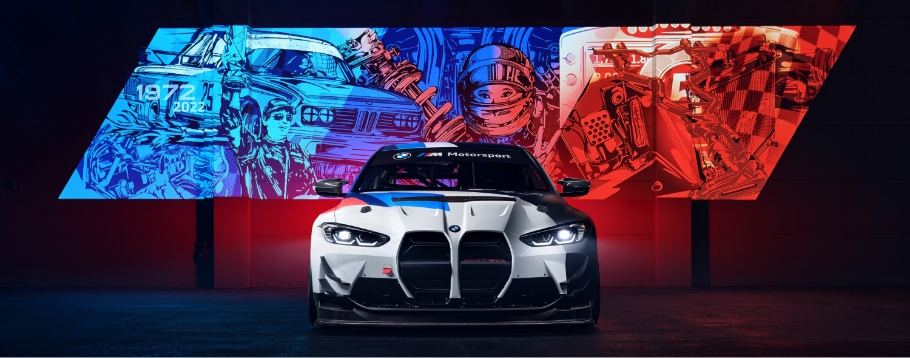
    2023 BMW M4 GT4 - Front View

    With the official presentation in the run-up to the SRO race weekend at the VIRginia International Raceway (USA), BMW M Motorsport has rung in the sales phase of the new BMW M4 GT4, which is set to continue its predecessor’s run of success in the internationally established GT4 category as of the 2023 season. The car was on display with the BMW M Motorsport design for the first time on Friday, having previously successfully completed a test race in camouflage livery at the Nürburgring-Nordschleife (GER). The new BMW M4 GT4 goes on sale with plenty of technical highlights and at a net price of 187,000 euros. Production is set to start in October 2022, to allow the first cars to be delivered to teams in time for the start of the 2023 season.

    “We took on the challenge to develop a successor to the highly successful first-generation BMW M4 GT4”, said Franciscus van Meel, CEO of BMW M. “Using a wide range of customer feedback, our experienced development team and the new sixth generation BMW M4 based production car has led to a faster, reliable and very emotional all new BMW M4 GT4.”

    The new BMW M4 GT4 was developed to win races and titles, just like its predecessor. To this end, the latest key technologies from the production model have been combined with a range of components from its big brother, the BMW M4 GT3. The developers focussed on four key areas: performance, reliability, cost efficiency and maintainability. In addition, further developments in ergonomics and electronics have considerably improved the customer experience. These include the M Track Cockpit, which makes many vehicle settings and checks possible directly via the control elements, thereby minimising the more time-consuming connection to a laptop.

    When developing the new BMW M4 GT4, BMW M Motorsport had the backing of support from strong partners. Bcomp, H&R, PUMA, RAVENOL and RECARO shared valuable expertise in their areas, and in doing so made an important contribution to the success of the project.

    After the presentation in the USA, the BMW M4 GT4 is entering the final phase of testing. This will include the car taking part in the next race of the Nürburgring Endurance Series and in the 24 Hours of Portimão (POR). Production for delivery to customers is due to start in October 2022. The net price of the BMW M4 GT4 has been set at 187,000 euros. Thanks to near-production development and the pending SRO homologation, the car can be used in all GT4 race series around the world.

    Technical highlights and specifications of the BMW M4 GT4.

    Dimensions:

    Length (incl. splitter and rear wing): 4,863 mm (191.5 inches)

    Width (incl. mirrors): 2,093 mm (82.4 inches)

    Height: 1,368 mm (53.9 inches) variable

    Wheelbase: 2,857 mm (112.5 inches)

    Drivetrain:

    Engine: Six-cylinder in-line with M TwinPower turbo technology, four valves per cylinder, direct injection, Valvetronic

    Capacity: 2,993 cc

    Output: Up to 550 hp & 650 Nm (479 lb-ft) torque (depending on regulations)

    Engine management: Production-ECU, power for BoP management adjustable

    Transmission: 7-speed automatic gearbox by ZF with motorsport software, DREXLER limited slip differential with separate temperature controlled auxiliary cooling, motorsport optimised driveshafts

    Further technical highlights:

    • Air conditioning, heated windscreen as standard
    • M Track cockpit and laptop-less functions
    • FANATEC GT4 illuminated steering wheel with various controls
    • 10-step traction control
    • Purpose-built RECARO safety-seat with ventilation, fixed position and BMW M4 GT4 badge
    • Interior and exterior made from lightweight natural fibre by Bcomp, engine bonnet with aero designed louvres
    • GT3 lightweight roof (CFK)
    • Adjustable GT3 concept Motorsport rear wing (natural fibre)
    • Focus on ease of maintenance
    • Five-level adjustable motorsport anti-roll bar front and rear
    • Purpose-built KW 2-way Motorsport shock absorbers with
    • Three different H&R spring rates
    • Front camber adjustable with shims
    • Rear toe and camber adjustable with shims
    • Double-flow brake air cooling
  • Pagani Huayra Codalunga, Grandi Complicazioni On Wheels

    2022 Pagani Huayra Codalunga - Front View

    Automobili is delighted to present the latest bespoke creation from Horacio Pagani: the Huayra Codalunga, a limited edition of just five vehicles, produced in close collaboration with clients. Beneath the elegant and sinuous shape lies state-of-the-art Pagani mechanical engineering. Approved for road use all over the world, the price of this new hypercar starts from € 7 million.

    A collaborative project, bringing together many hearts and minds…

    “A client is not someone who only buys from you once. A real client comes back again and again” – Horacio Pagani, Founder & Chief Designer, Pagani Automobili.

    In 2018, two Pagani collectors asked Horacio to produce a long-tail version of the Pagani Huayra Coupé, with the idea of creating an elegant hypercar with a clean and streamlined design, a model which would feel at home on the roads as well as on display at international Concours events.

    The clients, who had been actively involved in the development of the project, liaised directly with Pagani Grandi Complicazioni, the re-branded Special Projects division, that focuses on creating one-offs and few-offs vehicles.

    “There are virtually infinite possibilities for designing and customizing these vehicles. Each project is the culmination of a long and thorough journey, working with the client to interpret their preferences and desires, with a shared ambition and combined effort from everyone to create a work of art befitting the Pagani name. A cross-functional team has supported the project meticulously from creation through design and development, to help us realize our clients’ vision.” Lorenzo Kerkoc – Head of Pagani Grandi Complicazioni.

    A considerable undertaking

    Even though the project is limited to just five units, significant resources have been deployed to create a hypercar that would comply with global regulatory requirements and be fully certified.

    In line with the Pagani philosophy, the Huayra Codalunga was designed down to the smallest detail in accordance with the creative principles of the great polymath Leonardo da Vinci, an inexhaustible source of inspiration, according to which Art and Science can exist in perfect harmony.

    It took two years of working closely with the client to finalize the styling concept. Two models were built, one at 1:4 scale and the other full size, used for the latest considerations with clients and last refinements before starting production of all necessary components.

    “All Pagani projects are born from visions and dreams, and some of the most iconic and exclusive Pagani cars stem from the vision and dreams of clients. In 2009, this led to one of the most iconic Zonda models, the Zonda Cinque. Pagani Automobili is capable of developing these bespoke projects for single clients, much like the Coachbuilders in the ‘60s, but in compliance with today’s international homologation requirements. Specifically, one of the five cars will be certified for the U.S. market*. Pagani Grandi Complicazioni is able to deliver series production quality for ultra-exclusive pieces.” Hannes Zanon – Commercial Director

    “Less is more”

    “We decided to use the simple linear style of the Huayra Coupé as the starting point. We made the Huayra Codalunga longer and smoother, as if it had been caressed and molded by the wind, to design lines that were even more elegant than the coupe. We drew inspiration from the long tails of the 1960s that raced at Le Mans, which had very clean lines. The Huayra Codalunga comprises very few essential elements; we have taken away rather than added. Simplifying is not at all straightforward, and this vehicle is, above all, the result of a complex pursuit of simple ideas.” – Horacio Pagani.

    The coachbuilders of the ‘60s were inspired by aircraft designs and, in a relentless quest for speed and low drag, created some of the most iconic shapes in the automotive history. At the time, large body panels created by hand in aluminum alloy were the result. Today, Pagani uses its know-how in advanced composite materials to create a bodywork that follows this inspiration.

    The rear engine cover, which has a footprint of more than 3.7 m2, and is 360 mm longer than the one of the Huayra Coupé, conceals a mechanical prodigy: the Pagani V12, which, on this series, is capable of developing 840 HP with 1,100 Nm of torque.

    The lack of rear grilles makes space for an unobstructed view of the Codalunga’s exhaust system, which is made from titanium and weighs only 4.4 kg (9.7 lb). The special ceramic coating completes the homage to the racing cars of Le Mans and the symphony that emanates from the signature four tailpipes is a tribute to automotive passion.

    The work “to take away rather than add” resulted in a record weight of just 1,280 kg  (2,822 lb) and extremely high aerodynamic efficiency, helped by the car’s shape and extra length. The four flaps with variable profiles represent the very latest in active aerodynamics, a feature which had its world preview in 2011 and which has been subsequently refined with each model.

    Trim

    “The colors and materials also recall the cars of the 1960s. The paint on the outside blends into elements of the cockpit while structural parts retain their exposed carbon fiber finish. The artisan touch can also be seen on the internal finishes with woven aged suede leathers.” – Alberto Piccolo, Concept and Interior Designer, Pagani Automobili.

    On this special model, the choice was made to use neutral colors and semi-matte or fully matte paints, to evoke the shades of the past and to bring out the simplicity of the car’s design. This concept also plays a fundamental role on the inside, where the seats are finished with a woven leather/nubuck upholstery and aluminum components are machined from a single block. This recalls the manual techniques of the past, when the artisan would polish each element by hand. Work which is still performed today, a tradition kept alive by the experts in the center of the world sports car industry, Italy’s Motor Valley.

    https://www.youtube.com/watch?v=TtbQxdghrvw

    Technical Specifications

    ENGINE Pagani V12 60° 36 valves 5,980 CC, twin turbo
    POWER 840 CV (618 kW) at 5,900 rpm
    TORQUE 1,100 Nm from 2,000 rpm to 5,600 rpm
    TRANSMISSION Pagani by Xtrac, transverse mounted 7-speed sequential
    BRAKES Pagani by Brembo carbon-ceramic self-ventilated disc brakes: diameter 410 x 38 mm with 6-piston one-piece calliper at the front; diameter 390 x 34 mm with 4-piston one-piece calliper at the rear
    WHEELS One-piece APP Tech in forged Avional, 20” at the front and 21” at the rear
    TYRES Pirelli PZero Corsa 265/30 R20 at the front and 355/25 R21 at the rear; Pirelli SottoZero for driving in low temperatures
    SUSPENSION Active forged aluminium alloy, independent double wishbone with variable-pitch helical springs and coaxial dampers
    CHASSIS Carbon-Titanium HP62 G2 and Carbon-Triax HP62 monocoque
    DRY WEIGHT 1,280 kg (2,822 lb)
  • Alpine A110 Tour de Corse 75 : a limited-edition rally icon

    2022 Alpine A110 Tour de Corse 75 Limited Edition

    Inspired by the legendary Alpine A110 that competed in the 1975 Tour de Corse, this new limited edition car boasts an iconic design and a unequivocally sporty cockpit. Built for rallying, the Alpine A110 Tour de Corse 75 combines agility and performance thanks to its chassis and its 300hp engine, thus immersing its passengers in the sensations of the Tour de Corse, the rally of 10,000 corners.

    The yellow bodywork contrasts with the deep black bonnet and roof. The iconic two-tone black and yellow livery is complemented by distinctive black and white graphics on the ‘Tour de Corse 75’. The ‘Tour de Corse 75’ signature on the front left fender is matched by an iconic motif on the doors, a white border on the bonnet, and the number 7 subtly stamped on the rear as a reference to the Berlinette rally car of the time. The Sabelt® Racing bucket seats are embroidered with Tour de Corse 75 and can be fitted with a competition harness. On the outside, the 18-inch gloss white Grand Prix wheels and orange Brembo® brake callipers highlight the competitive spirit of this limited edition.

    There will be just 150 units of the Alpine A110 Tour de Corse 75, with numbered plaques from 1 to 150. This limited edition also features the new Alpine multimedia system with AndroidAuto™ and Apple Carplay™ connectivity. In the UK, customers can register their interest at their local Alpine centre from Friday 17 June at 09:00am. Prices start from £66,855 OTR.

    HISTORY AT YOUR FINGERTIPS

    On the road, the A110 Tour de Corse 75 limited edition takes over from an iconic vehicle on the legendary Corsican tarmac route as the exciting history of the 1975 edition can be felt behind the wheel of this limited edition.

    Inaugurated in 1956, the Tour de Corse is one of the most emblematic events in motorsport, particularly in rallying. In 1967, the event became part of the French Rally Championship, and in 1973 it became the marquee French round of the World Rally Championship. Two years later, 77 crews took to the Corsican asphalt, but only 22 finished, a clear indicator of the rally’s degree of difficulty as the 1975 edition was the scene of many surprises.

    The Alpine A110 and Lancia Stratos HF fought hard for the win, and it all came down to the final special stage. The A110 trailed between 5 and 30 seconds before the last timed sector but both set identical times in this final battle as the Alpine came within 32 seconds of the highest step of the podium.

  • Subaru debuts refreshed 2023 Ascent 3-row SUV

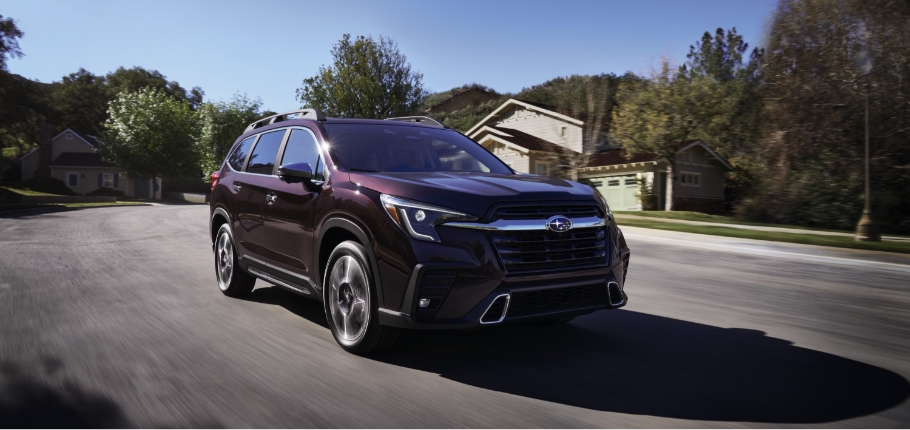
    2023 Subaru Ascent - front angle
    Subaru of America Inc. today announced the 2023 Ascent 3-row family SUV with updated styling as well as new safety and in-vehicle technologies.  Also new for 2023, the Onyx Edition trim level receives new exterior and interior accents and a comprehensive option package.The 2023 Ascent is available in Base, Premium, Onyx Edition, Limited, and Touring trim levels and arrives in Subaru retailers this Fall.For 2023 model year, Ascent receives a bolder look thanks to a new front fascia incorporating a more prominent grille; redesigned LED headlights; and a more aggressive front bumper cover. The new front bumper cover features new lower-edge air ducts to improve aerodynamic flow under the vehicle. At the back of the vehicle, updated Konoji (C-shaped) taillights further exemplify the SUV’s fresh new look for 2023.The 2023 Ascent comes standard with the latest version of EyeSight Driver Assist Technology. The enhanced system operates more smoothly and under a greater range of conditions. These improvements are thanks to a wider field of view, updated control software, and the addition of an electric brake booster. Also standard across the model line is a Wide-Angle Mono Camera that works together with the dual-camera EyeSight system. The additional camera further expands the field of view to recognize pedestrians and bicycles sooner when the vehicle enters an intersection at low speed. EyeSight gives an alert to the driver, and, when necessary, applies brakes to avoid collisions with crossing bicycles and pedestrians.

    On models equipped with Blind-Spot Detection with Lane Change Assist and Rear Cross-Traffic Alert, EyeSight includes Automatic Emergency Steering. The new feature works in conjunction with the Pre-Collision Braking System to help steer the vehicle to avoid a collision when travelling at speeds less than 50 mph.

    New Cabin Connect improves communication from the driver or front passenger to the third-row occupants. When activated, the feature picks up the driver or front passenger’s voice by the overhead console microphone and then transmits through the rear speakers. Cabin Connect is available on trim levels equipped with Harman Kardon® QuantumLogic™ surround sound speaker system.

    For better all-around situational awareness while parking, an available Surround View Monitor offers a 360-degree overhead view of the vehicle. The new system uses images from four vehicle cameras and combines them to create a single image that allows the area around the entire vehicle to be observed from a bird’s-eye view.

    On all 2023 Ascent models, a newly standard tablet-style 11.6-inch Full HD center information display offers direct touch controls for multimedia, climate control, X-MODE, and vehicle configuration settings. Wireless Apple CarPlay and wireless Android Auto are standard. Every Ascent also features Steering Responsive LED headlights with High Beam Assist for improved nighttime visibility. Additionally, a Seat Belt Reminder for each seat helps ensure all passengers are buckled up.

    Onyx Edition Adds More Luxury and Capability

    The Ascent Onyx Edition is equipped with exclusive black-finish exterior elements, badging, and 20-inch black-finish aluminum alloy wheels. The seats are wrapped in Subaru StarTex® water-repellant material with new contrasting green stitching.

    The Onyx Edition gains a standard panoramic power moonroof, which features a tilt/slide glass panel over the front seats, a fixed glass panel over the middle row, and a power sunshade. This impressive glass roof remains standard for the Touring and optional for the Limited trims.

    Enhancing all-weather and trail capability, the 2023 Ascent Onyx Edition, Limited and Touring gain standard dual-function X-MODE® with Hill Descent Control. X-MODE functions include SNOW/DIRT and DEEP SNOW/MUD settings to optimize all-wheel drive performance for difficult weather or road conditions.

    A newly available comprehensive option package for Onyx Edition includes the SUBARU STARLINK 11.6-inch Multimedia Navigation system with Harman Kardon® QuantumLogic™ surround sound speaker system featuring new Cabin Connect. Additional features added to the package are a 12-way power driver’s seat with 4-way power lumbar and two-position memory; adjustable driver’s seat cushion extension; 4-way power front passenger seat; second row sunshades and outboard heated seat positions. A high-grade instrument combination meter with color LCD and dual illuminated front center-console cupholders are also included with this option package.

    Driver assist technologies included in the option package are new Surround View Monitor and DriverFocus® Distraction Mitigation System.

    Smart and Strong Foundation

    Built on the Subaru Global Platform, the Ascent delivers an unparalleled driving experience with a spacious interior offering comfortable and flexible seating options. The U.S.-built Ascent is the most versatile Subaru ever with 8-person seating or available captain’s chairs in the second row for 7-person seating. Two rows of 60/40 split flat-folding seats offer up to 75.6 cubic feet of cargo space when folded.

    All Ascent trim levels come standard with Subaru’s legendary Symmetrical All-Wheel Drive and X-MODE® with Hill Descent Control for exceptional all-weather and trail-driving capability. Active Torque Vectoring is also standard on all trim levels. The 3-row SUV’s 8.7 inches of ground clearance, which is greater than many SUVs, delivers capability while maintaining a comfortably low step-in height for passenger entry.

    Powered by a 260 horsepower 2.4-liter turbocharged SUBARU BOXER® engine, the Ascent comes standard with Subaru’s high-torque Lineartronic® CVT (continuously variable transmission) featuring an 8-speed manual mode function and steering wheel paddle shifters to give the driver added control. This powertrain allows up to 5,000-lb.towing capacity with standard Trailer Stability Assist.

    Five Trim Levels for the Family-focused SUV

    The 2023 Ascent provides an extensive roster of standard amenities including tri-zone front and rear automatic climate control; 18-inch aluminum-alloy wheels; automatic power door locks; power windows and side mirrors; multi-function display; security system with engine immobilizer; rear vision camera; USB-A and USB-C input/charge ports in the front and rear sections of the center console; raised roof rails; and 19 cupholders. New for this year, the standard rear vison camera includes a washer to ensure a clear view while backing up.

    The Premium trim adds Blind-Spot Detection with Lane Change Assist and Rear Cross-Traffic Alert; rear window privacy glass; 8-way power driver seat; leather-wrapped steering wheel and shift lever handle; second-row independent automatic climate control; body-color side mirrors with integrated turn signals, and the All-Weather Package with heated exterior mirrors, heated front seats, and windshield wiper de-icer.

    The Premium trim’s in-vehicle technology has available Wi-Fi and STARLINK Connected Services (subscriptions necessary). An option package for Premium includes Keyless Access with Push-Button Start; Power Rear Gate; Auto-Dimming Mirror with HomeLink®; and Reverse Automatic Braking. The Premium trim offers a choice between second-row bench seating or captain’s chairs at no additional charge.

    The Onyx Edition builds upon the 7-seat Premium trim and adds standard convenience features including Power Moonroof; Reverse Automatic Braking; Power Rear Gate, and Keyless Access with Push-Button Start. The Onyx Edition stands out among the other trim levels with exclusive exterior and interior accents and unique 20-inch black-finish aluminum alloy wheels.

    The well-equipped Limited includes all Premium features and adds Reverse Automatic Braking; DriverFocus; Keyless Access with Push-Button Start; and Power Rear Gate with automatic lock button for gate and doors.

    The Limited interior features leather-trimmed upholstery; 12-way power driver seat with lumbar support and seat bottom cushion extension; 4-way power front passenger seat; and second-row retractable sunshades. A new USB-A charge port has been added to the third row. Limited models also include heated second-row seating and a heated steering wheel (360 degree). Also, customers have the choice between second-row bench seating or captain chairs at no additional charge.
    The exterior of the Limited is distinguished by LED fog lights; lower door cladding with chrome accents; and new 20-inch aluminum-alloy wheels in dark gray with machine finish.

    The top-of-the-line Ascent Touring is equipped with all the features of the Limited and adds an exclusive high gloss black grille; chrome door handles; and satin chrome power-folding exterior mirrors with integrated turn signals. The unique interior includes woodgrain-pattern matte finish accent trim and either Slate Black or Java Brown perforated leather-trimmed upholstery. Three-mode ventilated driver and front passenger seats are also standard on Touring.

    The Touring comes standard with the SUBARU STARLINK 11.6-inch Multimedia Navigation system; Harman Kardon QuantumLogic surround sound system with new Cabin Connect; Power Moonroof; and Rain-Sensing Wipers. Standard Surround View Monitor System, Smart Rear-View Mirror, and 180-degree front-view camera greatly enhance all-around visibility.

    SUBARU IN-VEHICLE TECHNOLOGY

    The 2023 Ascent comes standard with the latest version of the STARLINK 11.6-inch Multimedia Plus system with wireless Apple CarPlay® and wireless Android Auto™ with full screen display. The system features an 11.6-inch high-resolution touchscreen with combination meter integration and improved on-screen controls for audio, climate control, X-MODE and vehicle features. Additional standard features include new Valet Mode; Bluetooth® hands-free phone and audio streaming connectivity; AM/FM stereo; rear vision camera; SiriusXM® All-Access Radio and SiriusXM Travel Link® (4-month free subscriptions); HD Radio®; and over-the-air updates.The available 11.6-inch STARLINK Multimedia Navigation system includes voice-activated navigation powered by the latest version of TomTom® and SiriusXM Travel Link (3-year free subscription). New for 2023, the navigation system has integrated what3words (W3W), an innovative location technology that provides a simple way to communicate precise locations using just three simple words.The Ascent is built at Subaru of Indiana Automotive (SIA), a Zero-Landfill Facility in Lafayette, Indiana, along with the Impreza, Legacy, and Outback.
  • SKODA FABIA RS Rally2: Next chapter in the success story

    2023 Skoda Fabia RS Rally2 - Front Angle

    Clear the way for the new ŠKODA FABIA RS Rally2: ŠKODA Motorsport presents the successor to the FABIA Rally2 evo. The new rally model from Mladá Boleslav is based on the fourth-generation ŠKODA FABIA and follows on from the most successful Rally2 vehicle of recent years. ŠKODA Motorsport has developed a new engine for the FABIA RS Rally2, as well as improving the handling, powertrain and electronics and enhancing the safety features for the driver and co-driver. The new FABIA RS Rally2 has demonstrated its capabilities in a demanding test series on asphalt, gravel and ice as well as in a wide range of weather conditions and is ideally equipped to claim victories and titles in the hands of customer teams in the future.

    Michal Hrabánek, Head of ŠKODA Motorsport, says: “Standing still means going backwards, and this is especially true in motorsport. That’s why, in developing the new FABIA RS Rally2, we applied the experience we gained from the predecessor model and optimised every detail. The aim was to improve the most successful rally car in the world. I’m proud of the entire ŠKODA Motorsport team who have pursued this goal with great dedication. I would also like to thank our colleagues in Series Development; the fourth-generation FABIA provided us with a perfect basis for the FABIA RS Rally2.”

    The all-new ŠKODA FABIA RS Rally2 is a rally vehicle for the Rally2 category and benefits from the best-in-class aerodynamics and exceptionally stiff bodywork of the production model. Compared to the successful predecessor model, the ŠKODA Motorsport team have optimised the powertrain in particular, as well as the electronics, safety and handling. The engineers also developed a new 1.6-litre turbocharged engine based on the 2.0 TSI from the EA888 engine series, which is used in the RS models, among others. ŠKODA’s new motorsport paintwork highlights the close ties to the sporty RS series models; the Hyper Green colourway echoes the OCTAVIA vRS and the ENYAQ Coupé iV vRS.

    Demanding test series under a range of weather conditions

    To prepare the new ŠKODA FABIA RS Rally2 optimally for action on the rally track, ŠKODA Motorsport subjected the newcomer to extensive tests on asphalt, gravel and snow for almost a year. This included trials in the Czech Republic, France, Italy, Croatia, Germany, Belgium and Spain, as well as under extreme winter conditions in northern Finland since the summer of 2021.

    Overview: Technical highlights of the new rally car

    • Wider body and longer wheelbase for improved weight distribution
    • Motorsport braking system with exceptionally powerful braking and efficient cooling
    • Durable suspension components designed to withstand extreme conditions
    • Roll cage made of 35.8 metres of steel tubing and highly protected fuel tank

    ŠKODA Motorsport has incorporated a host of components optimised for rally use in the new FABIA RS Rally2. A special braking system and a precisely balanced chassis deliver valuable tenths of a second on the track. The roll cage, consisting of 35.8 meters of steel tubing and a specially protected fuel tank, ensures a high level of safety on board. In addition, the electronics and controls meet the exact requirements of the driver and co-driver during a rally.

    Some of the components used in rally vehicles differ significantly from their counterparts in production vehicles. Instead of having up to nine airbags and numerous electronic assistance systems like those found in the production FABIA, the new ŠKODA FABIA RS Rally2 relies purely on mechanics in many aspects. It also features specialised components, such as a roll cage and specially protected fuel tank. Unlike the production FABIA, the rally version only uses sensors for engine management and displaying the brake pressure, steering wheel position and fuel. The sensors merely provide information; in contrast to the production model, they do not perform any control functions. Only the engine control unit uses sensor data to ensure that it functions optimally in all driving modes and various weather conditions.

    Different front-axle brake discs for asphalt and gravel tests

    In a rally vehicle, the braking system can save valuable tenths of a second in the fight against the clock. The stronger the deceleration, the later the drivers can brake into a bend. In hard braking manoeuvres, the brake discs easily reach temperatures of more than 700 degrees Celsius. To ensure efficient cooling at all times, the FABIA RS Rally2’s brake discs are internally ventilated, and an optimised brake cooling system is also available for gravel and asphalt stages. The brake discs for asphalt have a diameter of 355 millimetres at the front and 300 millimetres at the rear, requiring 18-inch wheels with a rim size of 8×18. The brakes for use on gravel measure 300 millimetres at both the front and rear. In this case, 15-inch wheels with a size of 7×15 are used.

    Special fuel tank for 100% sustainable petrol or for fossil racing fuel

    The FABIA RS Rally2 has a special fuel tank and shock-resistant rubber in line with the FIA World Automobile Federation’s regulations. Its volume is 82.5 litres. A special foam filling prevents fuel from leaking. Additional protection is provided by a Carbon/Kevlar composite cover and an absorbent layer on the underside. Throughout the 2022 season, 100% sustainable petrol will be used in the FIA World Rally Championship (WRC). This is based on modern raw materials and high-purity renewable components. The bio-fuels are derived from biological waste and synthetic e-fuels. These are produced using renewable energies that enable electrolysis from ‘green’ hydrogen as well as CO2, which is extracted from the air and industrial processes. The 100% renewable petrol is then mixed in a laboratory without any fossil-fuel components.

    35.8 metres of steel tubing protect the crew

    ŠKODA Motorsport engineers have developed a roll cage for the new FABIA RS Rally2, which consists of a total of 35.8 metres of high-strength chrome-molybdenum steel tubing and is welded to the chassis during body construction. The side panels and roof are then mounted. This procedure allows for even greater manufacturing precision, as well as a better fit and connection to the body.

    Special rally chassis and longer service life of components

    The chassis of the FABIA RS Rally2 is also engineered to meet the demands of rallying. Compared to the previous model, the suspension stroke of the dampers is now longer and the MacPherson struts are stiffer. In addition, the designers reduced the friction in the dampers. The longer wheelbase also prompted the development of new suspension kinematics. In addition to the design of the differential, the shift characteristics of the transmission and the durability of various components have also been optimised.

    Easy operation using touchpad and steering wheel buttons

    The FABIA RS Rally2’s larger main display, which can even play back video information, allows for intuitive operation during a rally. The interior also features a new central control panel with a touch screen and integrated intercom. The driver can access numerous functions directly using buttons on the steering wheel, and the engine start button is also integrated into the steering wheel, where it can be quickly accessed if, for example, the engine stalls after a spin.

    Enhanced weight distribution thanks to wider body and longer wheelbase

    The chassis, based on the current generation of the ŠKODA FABIA production model, allowed the engineers to further optimise the rally car’s driving characteristics. The FABIA RS Rally2 benefits from the longer wheelbase of the fourth-generation FABIA, making the car quieter while ensuring a more stable rear. Compared to the ŠKODA FABIA Rally2, the fuel tank has been repositioned and the additional space in the engine compartment has been used for a larger intercooler.

    Drive: Newly developed turbo engine, sequential gearbox and all-wheel drive

    • ŠKODA FABIA RS Rally2 features new engine based on the 2.0 TSI from EA888 engine series, delivering approx. 214 kW (289 hp)
    • Sequential 5-speed transmission allows gear changes in milliseconds
    • Front-rear axle separation clutch now operated hydraulically

    ŠKODA Motorsport has developed a new engine for the FABIA RS Rally2 and further optimised the time-proven powertrain. The FABIA RS Rally2’s 1.6-litre turbo engine is based on the 2.0 TSI from the EA888 engine series with an output of around 214 kW (289 hp). The maximum 430-Nm torque is distributed across all four wheels via a 5-speed sequential gearbox and two differentials.

    The Rally2 regulations of the Fédération Internationale de l’Automobile (FIA) stipulate a 1.6-litre turbo engine based on a production engine for vehicles in this category. When developing the powertrain for the new ŠKODA FABIA RS Rally2, ŠKODA Motorsport opted to base it on the 2.0 TSI with an integrated exhaust manifold from the EA888 engine series, which is used in the brand’s RS models, among others. Compared to the FABIA Rally2 evo engine, the newly developed four-cylinder features redesigned intake and exhaust ports, optimised pistons and combustion chambers, variable valve timing and a redesigned lubrication system for a significantly enhanced combustion process. The engineers also revised the exhaust system, which has a new turbocharger, and developed an innovative intercooler and cooling circuit with greater cooling capacity. The FABIA RS Rally2 also features new engine management software. The diameter of the air restrictor is 32 millimetres, in line with the FIA’s technical regulations for the Rally2 category. This translates to an engine output of around 214 kW (289 hp) and a maximum torque of 430 Nm.

    Power transmission via five-speed gearbox and two differentials across all four wheels

    The sequential 5-speed transmission, specially designed for rally use, enables the driver to change gears in milliseconds using the gear stick alone. Although the FABIA RS Rally2 has a mechanical clutch, it is only used for starting, parking or when driving slowly. For optimum acceleration on tight, winding rally stages, the FABIA RS Rally2 has a relatively short gear ratio, offering a top speed of around 200 km/h (124mph).

    The FABIA RS Rally2’s drive concept differs considerably from the production model, not least due to the all-wheel drive. Since the FIA’s technical regulations prohibit the use of electronic driving aids to improve traction, only mechanical differential locks on the front and rear axles are allowed; an additional centre differential is not permitted. The separating clutch between the front and rear axles, which is activated when the handbrake is applied, assists when turning into bends on the rally track. The suspension features MacPherson struts on both axles, which are designed to handle extreme loads.


    Design and Aerodynamics: Production model offers the perfect basis

    • FABIA RS Rally2 benefits from the fourth-generation FABIA’s best-in-class aerodynamics
    • Downforce almost doubled compared to predecessor model
    • Emotive design language; paint finish in the RS colour Hyper Green

    The new ŠKODA FABIA RS Rally2 brings the emotive design language of the fourth-generation FABIA to the international racing tracks. The new rally vehicle benefits from the production model’s aerodynamics. ŠKODA Motorsport developed a highly efficient aerodynamic package based on the FABIA’s best-in-class drag coefficient. As a result, the new FABIA RS Rally2 generates almost twice as much downforce as its predecessor. ŠKODA Motorsport’s new Hyper Green paintwork ties in with the sporty vRS series models OCTAVIA vRS and ENYAQ Coupé iV vRS.

    The new FABIA RS Rally2 rally model translates the fourth-generation FABIA’s design language to the world of motorsport. In addition to the longer roof spoiler with lateral finlets, the rally model also features the production vehicle’s flat, sharply contoured front headlights that extend right up to the large, hexagonal ŠKODA grille. The front and rear lights set visual accents with LED technology. The Rally FABIA also differs from its production counterpart with significantly wider front and rear wings and numerous air outlets on the body. The Hyper Green paintwork references ŠKODA’s vRS family, echoing the OCTAVIA vRS and the ENYAQ Coupé iV vRS.

    Downforce values practically doubled

    The production version of the ŠKODA FABIA has the best drag coefficient in its class. The experts at ŠKODA Motorsport used this perfect foundation to develop the aerodynamics package for the FABIA RS Rally2. Paying meticulous attention to detail, the team managed to almost double the downforce compared to its predecessor – an enormous advantage on the track, as greater downforce facilitates higher cornering speeds. For regulatory reasons, the engineers did not include active aerodynamic parts such as the radiator louvre from the production FABIA.

    Lukáš Vojík, an aerodynamics specialist from Technical Development at ŠKODA AUTO, explains: “Some aerodynamic elements from the production model have also proven their worth in the rally car. With this model, we have paid more attention to the aerodynamics than we did with its predecessor, and we’ve closely examined every detail. Our goal: Greater downforce for higher cornering speeds and improved handling, while at the same time increasing the vehicle’s aerodynamic efficiency.”

    The air curtains in the front bumpers of the production FABIA guide the airstream closely and aerodynamically over the body and wheels. These are also used in the FABIA RS Rally2. They increase the downforce in combination with new side skirts, which prevent air from flowing under the vehicle from the side. Incorporating a front splitter across the entire lower edge of the front bumper, they ensure optimum aerodynamic efficiency at the front. The splitter also reduces the amount of air flowing under the vehicle, thus ensuring faster airflow and lower pressure under the vehicle, which increases the downforce.

    Aerodynamic components typical of a rally car

    Several aerodynamic components have been specially developed for the FABIA RS Rally2. In addition to the wider front and rear fenders, the newly developed rear wing increases the downforce. The dimensions and position comply with the regulations for the vehicle’s width and height. A small spoiler lip, the so-called Gurney flap, serves as a tear-off edge and also improves the downforce. The airflow over the roof is optimised thanks to a centrally positioned air scoop, which simultaneously supplies fresh air to the cockpit. On a production model, this air intake is located below the windscreen, but on rally cars, this area is very susceptible to dust or water.

    Cooling air for engine and brakes

    The engine and brakes require more cooling air during racing. This is supplied via special aerodynamic components in the FABIA RS Rally2. Two large, central air inlets at the front allow fresh air for the radiator to be directed to the upper section of the engine compartment and to the turbocharger intercooler, which is positioned lower down. Openings on both sides of the bonnet vent the hot air. In addition, cooling air flows directly onto the front brake callipers via two inlets in the front apron and small ventilation pipes.

    Safety: Even better protection for driver and co-driver

    • Rally2 car’s safety equipment exceeds FIA’s strict technical regulations
    • Side impact protection made of carbon fibre, Kevlar and energy-absorbing foam

    The engineers at ŠKODA Motorsport have introduced numerous measures to protect the driver and co-driver in the FABIA RS Rally2 even better in the event of a collision. One priority was safety in the event of a side impact, and comprehensive analyses of accidents provided important information on this issue.

    The measures and equipment to protect the occupants in a rally vehicle differ significantly from those in a production model. The airbags installed in the fourth-generation production FABIA cannot be used in rallying because the sensors and electronic control systems react too sensitively to the high G-forces during asphalt stages, on gravel tracks or in long jumps. The safety concept, therefore, relies on mechanical solutions such as a roll cage and side protection made of carbon fibre and energy-absorbing foam. Six-point harnesses and racing seats with integrated head protection also come into play.

    Roll cage made of high-strength chromoly steel

    In designing the new model, the engineers at ŠKODA Motorsport used analysis data from previous rally accidents. The roll cage for the new FABIA RS Rally2, made of 35.8 metres of high-strength chromium-molybdenum steel, consists of longitudinal, transverse and diagonal tubes in the door openings, under the vehicle roof, around the windscreen and behind the seats. The dimensions and material of the safety cell are defined by the Fédération Internationale de l’Automobile’s (FIA) technical regulations. ŠKODA Motorsport goes far beyond these requirements with the new Rally FABIA. The gusset plates that are relevant in the event of a side impact are also more robust than stipulated in the regulations.

    Designed with the aid of computer calculations, the roll cage secures the survival space of the driver and co-driver in the event of an accident, even if the bodywork is badly damaged. It also forms an integral part of the chassis, to which it is hand-welded by certified professionals. This significantly increases the torsional rigidity of the body, which is already stiffer thanks to the MQB-A0 platform. Every FABIA RS Rally2 is assembled exclusively at ŠKODA Motorsport in Mladá Boleslav.

    Side impact protection made of carbon fibre, Kevlar and energy-absorbing foam

    In a rally car, the driver and front passenger are particularly vulnerable in the event of a side impact. While the production FABIA is protected by a combination of B-pillars, door reinforcements and airbags, the rally version is protected by a roll cage with two door pillars and gusset plates. In addition, the FABIA RS Rally2 has an energy-absorbing structure made of foam between the outer door skin and the interior, as well as door panels made of composite materials. The structure of the composite panels is predefined: Five layers of carbon 280 and one layer of Kevlar 300. The Kevlar layer is closest to the driver and co-driver and protects them from sharp carbon fragments in the event of an accident. The absorbing foam must be approved by the FIA and have the minimum volume specified in the regulations in order to reduce the impact energy and thus the force on the human body. In the FABIA RS Rally2, special racing seats, six-point harnesses and personal equipment, including the mandatory head-and-neck support system (HANS) on the helmet with restraint straps also contribute to effectively mitigating the impact forces. This system protects the crew’s heads from sudden and violent movements.

    To better distribute the forces generated in a side impact, both body sides of the FABIA RS Rally2 are joined by the seat bracket structure and an additional rail. The door crosses of the roll cage are even more robust and exceed the FIA’s requirements. To optimise the strength of the shoulder belt attachment points, the FABIA RS Rally2 has been fitted with an additional cage tube on each side of the vehicle.

    Automatic fire extinguishing system on board

    The FABIA RS Rally2’s polycarbonate side windows can be easily removed in accordance with FIA regulations. In addition, the on-board safety equipment includes a fire extinguishing system, comprising an automatic system with nozzles in the cockpit and engine compartment and a manual fire extinguisher in the co-driver’s footwell. The system can also be activated externally.

  • 2023 Porsche 911 Carrera GTS Cabriolet America edition announced

    2023 Porsche 911 Carrera GTS Cabriolet America

    Porsche will offer a special, market-specific sports car with the “America” moniker. The new 2023 Porsche 911 Carrera GTS Cabriolet America will reach showrooms in late 2022 as part of the 2023 model year. A very limited number will be created, making this one of the rarest Type 992 models.

    Its arrival marks the continuance of a tradition that began in 1952: offering an open top, enthusiast-focused sports car made specifically for the North American market. The new model – revealed during the 2022 Porsche Parade in Poconos, Pa. – is based on the 911 Carrera GTS Cabriolet, and features the same high performance chassis and powertrain as that model. Emphasizing its focus on driving pleasure, it is exclusively available with a seven-speed manual transmission and rear-wheel drive.

    “Passion for driving a Porsche runs deep in the United States. In particular, there is something special about hitting the road in an open top 911 with a manual transmission that fits perfectly here,” said Kjell Gruner, President and CEO of Porsche Cars North America Inc. “This is also the perfect time to add another ‘America’ model to our story as we look back on 70 years since the 356 America Roadster and 30 years since the 964 America Roadster.”

    A high performance sports car for open top driving enthusiasts
    The new 911 Carrera GTS Cabriolet America uses a twin-turbocharged 3.0-liter boxer six-cylinder engine to generate 473 hp and 420 lb.-ft. of torque. Porsche Active Suspension Management (PASM) Sport is standard equipment, and lowers the ride height by 10 mm while adding helper springs to the rear axle. Sport Exhaust and the Sport Chrono Package are also both standard equipment. Rear axle steering and Porsche Ceramic Composite Brakes (PCCB) are available as added cost options. The standard cast iron brake rotors measure 408 mm (16 inch) in front with six-piston aluminum fixed calipers and 380 mm (14.9 inch) rotors in the rear with four-piston fixed aluminum calipers finished in black.

    Styling by Porsche Exclusive Manufaktur

    Aesthetic changes applied by Porsche Exclusive Manufaktur make this a striking sports car both from a distance and up close. The exterior color, Azure Blue 356, was inspired by the 1953 356 America Roadster. Through Paint to Sample Plus, the color is revived and reserved for this special vehicle in the 2023 model year. The windshield frame is finished in Satin Black. RS Spyder Design Wheels are specially-finished with the interior portion of the spokes in white, the outermost flat surfaces in silver and a Guards Red pinstripe along the edge of the rim.

    Along the doors, decals in white with Guards Red accents read “America” while the model designation on the rear features “911 Carrera” in white and “GTS” in Guards Red.

    Cross stitching in Guards Red with surrounding stitching in Pebble Grey continue the color combination through the cabin, including along the upper dashboard and door panels. Two-tone stitching in Guards Red and Pebble Grey continue the contrast on the center console armrest where “America” is embossed in the leather. Unique illuminated door sill plates commemorating the 70th anniversary of the 356 America Roadster are also included as standard equipment, along with a leather interior in black, seat belts in Guards Red, the tachometer and instrument cluster in white and a heated GT Sport steering wheel.

    An optional extended interior package continues this theme with a 12 o’clock marking in Guards Red to the steering wheel and Guards Red cross stitching on the inside edge of the wheel. This package also adds two-tone stitching to the shift boot and adds a gear pattern on the manual lever in Guards Red. Sport Seats Plus with double stitching in Guards Red and Pebble Grey with “911” stitching on the headrests in Guards Red and the leather backrest release loops in the same color. The floor mats also gain the same two-tone stitching in Guards Red and Pebble Grey. Finally, the vehicle key is painted in Azure Blue 356 to match the car, and a leather key pouch with two-tone stitching and “America” embossment completes the package.

    Pricing and Availability

    The 2023 911 Carrera GTS Cabriolet America is expected to arrive at U.S. dealers in late 2022 and will carry a starting MSRP of $184,920 excluding $1,450 for delivery, processing, and handling. Including the extended interior package, MSRP is $192,430 also excluding $1,450 for delivery, processing and handling.

  • Cadillac Reveals Project GTP Hypercar

    2022 Cadillac Project GTP Hypercar

    Cadillac today revealed the Project GTP Hypercar that previews the third-generation prototype race car from the American luxury brand. In 2023, Cadillac will contest the IMSA WeatherTech SportsCar Championship and the FIA World Endurance Championship, including the 24 Hours of Le Mans.

    “Cadillac will be competing again on the world racing stage, and we are all thrilled to return to Le Mans after 20 years,” said Global Cadillac Vice President Rory Harvey. “By competing in both the 2023 IMSA and WEC championships, Cadillac Racing has the opportunity to demonstrate its capability, craftsmanship and technology.”

    Codeveloped by Cadillac Design, Cadillac Racing and Dallara, the Project GTP Hypercar incorporates key brand design characteristics. Elements of the brand’s heritage such as vertical lighting and floating blades are present throughout and connect the Project GTP Hypercar to the future of Cadillac.

    https://www.youtube.com/watch?v=KWWCJe8Fwqc

    “The Project GTP Hypercar is a unique convergence of form and function and showcases Cadillac’s future performance aesthetic,” said Chris Mikalauskas, lead exterior creative designer, Cadillac. “We have plenty more to come, from the upcoming race car to amazing production vehicles.”

    Since 2017, Cadillac has been competing at the forefront of American sports car racing in the IMSA manufacturers championship achieving numerous wins, podiums and championships in the Cadillac DPi-V.R.

    “Competing for the overall win at Le Mans with an iconic American brand like Cadillac is an honor,” said Laura Wontrop Klauser, GM sports car racing program manager. “The entire team is excited to continue building Cadillac’s racing legacy by competing against the very best internationally and in the world’s toughest race.”

    The new race car will be powered by an all-new 5.5L DOHC V-8 that will be paired to the LMDh common hybrid system.

    Cadillac’s commitment to performance is embodied in the V-Series portfolio. Its recent expansion includes the CT4-V and CT5-V sport sedans, Escalade-V as well as the track-capable CT4-V Blackwing1 and CT5-V Blackwing1.

    The race car will begin on-track testing this summer and first race at the Rolex 24 at Daytona in 2023.

    Recent Cadillac Racing achievements include:

    • Winning the IMSA WeatherTech SportsCar Championship three times: 2021, 2018 and 2017
    • Winning the Rolex 24 at Daytona four times in a row: 2020, 2019, 2018 and 2017
    • Winning the Michelin North American Endurance Cup four times: 2020, 2019, 2018 and 2017
    • Prior to competing in the IMSA WeatherTech SportsCar Championship, Cadillac competed in the Pirelli World Challenge Championship, earning five Manufacturer’s Championships (2014, 2013, 2012, 2007, 2005), and five Driver’s Championships (2015, 2014, 2013, 2012, 2005).

    1Limited availability

  • 2022 Ram 1500 TRX Sandblast Edition Joins Ram Lineup

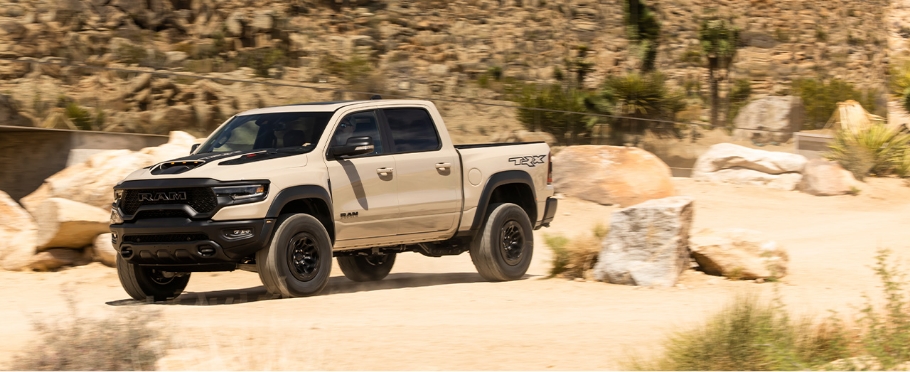
    2022 Ram 1500 TRX Sandblast Edition

    Ram today announced it is expanding its light-duty lineup with the addition of the exclusive new 2022 Ram 1500 TRX Sandblast Edition, offering performance truck buyers an even wider selection of exterior and interior appointments and content.

    “Our customers want to stand out from the crowd and the new Ram 1500 TRX Sandblast Edition allows them to do just that, while offering the segment’s best combination of performance, capability and technology,” said Mike Koval Jr., Ram brand CEO – Stellantis. “We’re constantly expanding and exploring new ideas to meet the needs and fuel the imagination of our passionate customers, and this is the latest example of how Ram trucks deliver features that will continue to win over more and more buyers.”

    The new 2022 Ram 1500 TRX Sandblast Edition expands the light-duty lineup that already features the quickest, fastest, most powerful and most fuel-efficient trucks on the road today. The Ram Truck lineup steps forward with the full force of modern capability providing confidence-inspiring features and class-exclusive vehicle safety.

    Ram worked with well-known racing enthusiast Ken Block to reveal the vehicle to his millions of fans across his social channels.  Block, who owns a Ram 1500 TRX, put the truck through its paces last week in Johnson Valley, Calif.

    Ram 1500 Sandblast Edition

    The Ram 1500 TRX Sandblast Edition offers performance truck buyers an even wider selection of unique content for even greater personalization and features a unique combination of technology, graphics, performance and exterior appearance straight from the factory.

    The Ram 1500 TRX Sandblast Edition enhances the well-appointed TRX Level 2 Equipment Group and includes a unique Mojave Sand exterior color and graphics, unique 18-inch all-black beadlock capable wheels, dual pane panoramic sunroof, spray-in bedliner, cargo tie-downs, bed step and an LED cab-mounted brake light. Inside, the TRX Sandblast Edition includes Light Frost accent stitching, an embroidered “TRX” seat back logo, unique carbon fiber accents, a leather and carbon-fiber flat-bottom steering wheel, unique center console badge, Head-up Display and a driver’s screen that features TRX in Mojave Sand. Safety features include adaptive cruise control, Lane Keep Assist and pedestrian emergency braking.

    The 2022 Ram 1500 TRX Sandblast Edition offers the proven and reliable high-performance 6.2-liter supercharged HEMI® V-8 engine, delivering top output for extended driving sessions without degradation in performance.

    Ram 1500 TRX Sandblast Edition manufacturer’s suggested retail price (MSRP) starts at $98,285, plus $1,795 destination.

    New 2022 Ram 1500 TRX Sandblast Edition models go on sale this summer.

    Ram Truck Brand

    In 2009, the Ram Truck brand launched as a stand-alone division, focused on meeting the demands of truck buyers and delivering benchmark-quality vehicles. With a full lineup of trucks, the Ram 1500, 2500/3500 Heavy Duty, 3500/4500/5500 Chassis Cab, ProMaster and ProMaster City, the Ram brand builds trucks that get the hard work done and families where they need to go.

    Ram is the number one brand in new vehicle quality and is the only truck-exclusive brand to ever finish first in J.D. Power’s Initial Quality Study (2021), which tracks new vehicle performance over the first three months of ownership. In the same study, Ram Heavy Duty models also scored best, making Ram the number-one truck brand in new vehicle quality among large heavy-duty pickups.

    In addition, the latest J.D. Power APEAL study – which rates the emotional bond between customers and their vehicles – named the 2021 Ram 1500 as the best vehicle in the large light-duty pickup category. This marks the second straight year Ram 1500 has received top honors.

    The 2022 Ram 1500 lineup includes the Know & Go mobile app featuring an immersive experience for customers who want to learn more about their vehicles.

    Ram continues to outperform the competition and sets the benchmarks for:

    • 1,075 lb.-ft. of torque with Cummins Turbo Diesel
    • Towing capacity of 37,090 lbs. with Ram 3500
    • Segment first 1,000 lb.-ft of torque with Cummins Turbo Diesel
    • Payload of 7,680 lbs. with Ram 3500
    • Most luxurious: Ram Limited with real wood, real leather and 12-inch Uconnect touchscreen
    • Best ride and handling with exclusive link coil rear and auto-level air suspensions
    • Most interior space with Ram Mega Cab
    • The most cargo space available in any traditional full size cargo van
    • Most capable full-size off-road pickup – Ram Power Wagon
    • Ram 1500, America’s most powerful half-ton diesel pickup with 480 lb.-ft. of torque, achieves an unsurpassed 33 mpg highway and delivers up to 1,000 miles of range on a single tank of fuel
    • Ram 1500 TRX is the quickest, fastest and most powerful mass-produced pickup truck in the world
    • Most awarded light-duty truck in America
    • Highest owner loyalty of any half-ton pickup
  • All-New Honda 2023 HR-V Boasts Sportier Design

    Honda 2023 HR-V

    Stylish and sporty with a roomy, feature-rich interior, the all-new 2023 Honda HR-V gains aspirational qualities beyond its segment. A larger, more responsive engine, an all-new platform with a smooth-riding independent rear suspension, and a clean, high-tech interior with standard digital instrumentation display and Apple CarPlay® and Android Auto™ compatibility, take HR-V to a new level. The new HR-V will begin arriving at dealerships in early June.

    The new second-generation HR-V was designed and engineered without compromise. Longer and wider, it’s more comfortable yet also sportier and more fun-to-drive than its predecessor, while featuring more rear seat legroom and one of the largest cargo areas in its class. For a smoother ride, HR-V’s wheelbase has been extended and its tracks are significantly wider, creating an athletic stance and improving stability. Class-leading safety features include standard Honda Sensing®, next-gen front airbags, as well as standard side-impact and front occupant knee airbags.

    ‘The new Honda HR-V is just the right size for young, active buyers looking for a sporty driving experience, and plenty of space and utility for an adventurous weekend escape,’ said Michael Kistemaker, assistant vice president, Honda National Sales, American Honda Motor Co., Inc. ‘This new HR-V will welcome a new generation of customers to Honda, and we look to grow its position as the segment leader with young buyers, first-time buyers, and multicultural customers.’

    Key HR-V Features:

    • Clean, sporty and upscale exterior and interior styling
    • Standard 7-inch digital instrumentation includes the tachometer, digital speedometer and multi-information display (separate analog speedometer included)
    • Standard 7-inch color touchscreen with Apple CarPlay® & Android Auto™ compatibility
    • Available HD 9-inch color touchscreen with wireless Apple CarPlay® & Android Auto™ compatibility (EX-L)
    • Based on the new Honda global architecture, like the new 11th-generation Civic
    • New fully independent rear suspension
    • Larger, more responsive 2.0-liter engine
    • Available Real Time AWD with Intelligent Control™
    • New Hill Descent Control feature standard across the lineup
    • Standard Honda Sensing® system with new front wide-view camera, new Traffic Jam Assist (TJA) and Traffic Sign Recognition (TSR)
    • Standard front occupant knee and rear passenger side-impact airbags
    2023 HR-V Pricing and EPA Fuel Economy Ratings – City/Hwy/Comb.1
    Trim MSRP MSRP Plus $1,245 Destination Charge EPA Mileage Rating
    City/Hwy/Comb
    LX (FWD) $23,650 $24,895 26 / 32 / 28
    LX (AWD) $25,150 $26,395 25 / 30 / 27
    Sport (FWD) $25,650 $26,895 26 / 32 / 28
    Sport (AWD) $27,150 $28,395 25 / 30 / 27
    EX-L (FWD) $27,450 $28,695 26 / 32 / 28
    EX-L (AWD) $28,950 $30,195 25 / 30 / 27

    Expressive Exterior Styling

    HR-V’s all-new design features a low horizontal beltline that begins with the extended hood and continues over the swell of the rear fenders, adding stature to

    HR-V’s sleek flowing forms. Wide-set LED headlights and taillights highlight HR-V’s increased width (2.6 inches wider) and broad-shouldered stance. Overall length has grown by 9.4 inches.

    In front, an expressive grille is flanked by air curtain inlets that route air through the bumper and around the front wheels, improving aerodynamic efficiency. For a cleaner upscale look, laser-brazing technology eliminates the need for unsightly roof moldings and HR-V’s windshield wipers hide under the hood line when not in use.

    In the rear, the sculpted hatch and standard tailgate spoiler highlight HR-V’s sporty proportions, and the outer edge of the taillights have been shaped to improve aerodynamics.

    Each HR-V grade features distinct design details. HR-V LX is highlighted by a matte-finish on its honeycomb-style grille, and the lower section of its front and rear bumpers. Large 17-inch alloy silver-painted wheels are standard.

    HR-V Sport gets an even more aggressive horizontal-themed grille mesh, a gloss-black rear spoiler, and a chrome exhaust finisher. The lower portion of the rear bumper is painted gunmetal metallic, and the HR-V Sport’s exclusive 18-inch split 5-spoke wheels are finished in gloss Berlina Black.

    For a distinctly upscale character, the HR-V EX-L features a unique gloss-black version of the honeycomb grille, gloss black door pillars, and gloss black trim on the front and rear bumpers. EX-L also rides on 17-inch alloy wheels, painted Shark Gray with an exclusive machined finish.

    HR-V will be available in seven different colors, including two all-new colors exclusive to HR-V: Nordic Forest Pearl and Urban Gray Pearl.

    Simple, Sporty and Spacious Interior

    HR-V’s clean and sporty interior is a fresh take on Honda’s new ‘simplicity and something’ design direction introduced with the 2022 Civic. Outward visibility is improved thanks to HR-V’s low cowl, expansive greenhouse and outside mirrors that have been positioned away from the windshield pillars.

    Further improving visibility is the top of the HR-V’s wide instrument panel, which has been designed with minimum cutlines to reduce windshield reflections and visual distractions. A striking metal honeycomb mesh accent stretches from door to door across the dash. It serves both form and function, creating a dramatic visual dividing line between the audio, information displays and the climate controls, while the intricate flow-through design conceals the air vents that might otherwise mar the uncluttered and harmonious look of the dash.

    Premium materials are used throughout the interior, with close attention paid to the operation of all switchgear and controls, including the click and heft of knobs, stalks and switches. HR-V’s center console is uniquely curved and richly upholstered with French stitching. A clever pass-through complete with USB charging ports is ideal storage for small items, such as a smartphone.

    All-new Body Stabilizing Seats firmly hold the body, reducing fatigue and enhancing comfort on long drives. The rear seat area is wider to better accommodate three-passengers. It also features thoughtful touches, such as a rear tray for placing a smartphone.

    HR-V’s standard cargo area (behind rear seat) has been enlarged to 24.4 cu.-ft. (all trims), and its low lift-over height of just over 27 inches makes loading large or heavy items easy. The standard 60/40 split rear seatbacks fold easily to a flat floor, expanding the space to 55.1 cu.-ft. The lower door panels and side panels of the cargo area have been designed with an attractive wavy pattern that better hides scratches and scuffs.

    Driver-Focused Technology

    Technology has been smartly integrated into the HR-V cabin. For the first time, HR-V features a digital instrument display, while gaining notably larger standard and available color touchscreens featuring standard Apple CarPlay® and Android Auto™ compatibility.

    All HR-V grades are equipped with a 7-inch color LCD instrument display. An all-digital speedometer and tachometer are on the left side of the instrument panel, while a physical speedometer dial occupies the right side. The 7-inch multi-information display also features user-selectable functions such as Honda Sensing® settings, vehicle information and more.

    A new 7-inch color touchscreen is standard on LX and Sport models. It features physical knobs for audio system volume and station tuning, buttons along the bottom for switching modes, and a simplified menu structure.

    HR-V EX-L comes with a large 9-inch color touchscreen with wireless Apple CarPlay® and Android Auto™ compatibility, plus a Qi-compatible wireless charging pad and an upgraded audio system with eight speakers for crisp, clear sound quality. The new touchscreen features a physical volume knob, large, easy-to-recognize icons, and a simplified navigation structure with fewer embedded menus. On the left are hard buttons for Home and Back functions. Other mode selections are at the bottom of the touchscreen, with a 0.8-inch finger rest making it easier to use the touchscreen by providing a stable surface to rest your hand.

    Fun-to-Drive

    For a sportier driving experience, the new HR-V features a significantly stronger structure, a new independent rear suspension and a larger, more responsive engine.

    Based on the new Honda global architecture, like the new 11th-generation Civic, HR-V’s new architecture supports improvements in ride, handling and overall refinement. A new fully independent suspension features MacPherson struts in front and a new multilink arrangement in the rear, engineered with low-friction components to improve ride quality, while delivering improved response and a sporty driving feel.

    HR-V’s wheelbase has been extended to 104.5 inches (+1.7 inches) for a smoother ride and significantly wider tracks (+2.0 inches in the front and +2.5 inches in the rear) increase stability on the road.

    Similar to the critically acclaimed steering found on the 11th-generation Civic, the HR-V features a honed steering column and special tuning to the electronics for improved straight-line stability and excellent feel. New larger brakes increase stopping power, while a low-drag caliper design aids fuel efficiency.

    Powering every 2023 HR-V is a larger 2.0-liter 4-cylinder engine producing 158-horsepower (SAE net @ 6,500 rpm) and 138 lb.-ft. of torque (SAE net @ 4,200 rpm). Compared to the 1.8-liter 4-cylinder in the first-generation HR-V, the new engine is more powerful (+17 hp and +11 lb.-ft. of torque), while delivering improved drivability, refinement, and lower emissions.

    The standard continuously variable automatic transmission (CVT) has been reengineered for improved power delivery, refinement and engine sound. This new transmission also features a more naturally responsive feel thanks to improved G-Design programming and the addition of Honda’s ‘Step-Shift’ programming, which simulates gear changes when accelerating at full throttle.

    For better traction management in slick snowy conditions, HR-V’s available Real Time AWD with Intelligent Control™ has been re-tuned to send more engine torque to the rear wheels when things get slippery.

    Increasing HR-V’s capability and debuting for the first time in a Honda SUV is Hill Descent Control for more control on steep, slippery declines. With the press of a button on the center console, drivers can select a speed between 2 and 12 mph using the brake or gas pedal. Once the pedal is released, HR-V will maintain that set speed, allowing the driver to concentrate on steering for as long as the Hill Descent Control is active.

    HR-V drivers can customize the driving experience for different conditions using the drive mode switch on the center console. HR-V features three driving modes, Normal, Eco, and a new Snow mode that alters the drive ratios and throttle mapping to maximize available traction and performance in slick snowy conditions. Eco mode reduces throttle and transmission sensitivity, as well as air conditioning output to help preserve fuel efficiency.

    Small Crossover Safety Performance Leadership

    The second-generation HR-V is a leader in crossover safety performance thanks to advanced active and passive safety technology that is standard equipment. HR-V features the latest version of Honda’s Advanced Compatibility Engineering™ (ACE™) architecture, specifically designed to meet present and anticipated future collision standards, while minimizing additional weight. This is achieved with the extensive use of lightweight materials, such as aluminum and various grades of high-strength steel, as well as an expanded application of structural adhesives.

    Honda’s latest driver and passenger front airbag technology is now applied to HR-V, designed to cradle the head and offer enhanced protection. For the first time,

    HR-V features standard front occupant knee and rear-passenger side impact airbags.

    HR-V features the new single-camera Honda Sensing® suite of safety and driver assistive systems first introduced on the 11th-generation Civic. The new system features a 100-degree field of view which is twice as wide as the camera-and-radar setup of the previous system. It can detect feature points of a target and recognize attributes of objects such as a vehicles or pedestrians, as well as white lines, road boundaries such as curbs, other vehicles, pedestrians, bicyclists and road signs.

    New for HR-V are Traffic Jam Assist (TJA) and Traffic Sign Recognition (TSR), as well as more natural responses for existing features, such as Adaptive Cruise Control (ACC) with Low-Speed Follow and Lane Keeping Assist (LKAS).

    Additional driver assistive technologies include blind spot information (BSI) for the first time on HR-V. EX-L grades feature four sonar sensors on the front and rear bumpers, which enable Low-Speed Braking Control and front and rear false-start prevention, reducing the likelihood of low-speed collisions.

    HR-V now features a Driver Attention Monitor, which issues a warning on the dash if it senses the driver is becoming inattentive. A standard Rear Seat Reminder notifies drivers when exiting the car to check the rear seating area for children, pets or other precious cargo.

    2023 HR-V Key Specifications and Features

    ENGINEERING LX Sport EX-L
    Engine Type 16-Valve DOHC i-VTEC® In-Line 4-Cylinder
    Displacement 1,996 cc
    Horsepower (SAE net)1 158 @ 6,500 rpm
    Torque (SAE net)2 138 lb.-ft. @ 4,200 rpm
    Redline 6,800 rpm
    3-Mode Drive System (ECON/Normal/Sport/) •
    Continuously Variable Transmission •
    Ratio Range 2.526~0.408
    Reverse 2.706~1.552
    Final Drive 3.941
    MacPherson Strut Front Suspension plus Multi-Link Rear Suspension •
    Wheels 17-in. Shark Gray Alloys 18-in. Berlina Black alloys 17-in. Shark Gray alloys with machined finish
    Tires (all-season) 215/60R17 225/55R18 215/60R17
    EXTERIOR MEASUREMENTS LX Sport EX-L
    Wheelbase 104.5
    Length 179.8
    Height 63.4 63.8 63.4
    Width 72.4
    KEY FEATURES LX Sport EX-L
    Honda Sensing® •
    Advanced Compatibility EngineeringTM (ACETM) Body Structure •
    10 Airbags, Including Next-Generation Driver and Front Passenger Front Airbags •
    Blind Spot Information System (BSI) – • •
    Apple CarPlay® and Android Auto™ Compatibility • • Wireless
    7-Inch Color Touchscreen with Volume and Tuning Knobs • • –
    9-Inch HD Color Touchscreen with Volume Knob, Customizable Feature Settings and Smart Shortcuts – – •
    Driver Information Interface Screen 7.0 in
  • New Continental GT and GTC S – a sharper edge

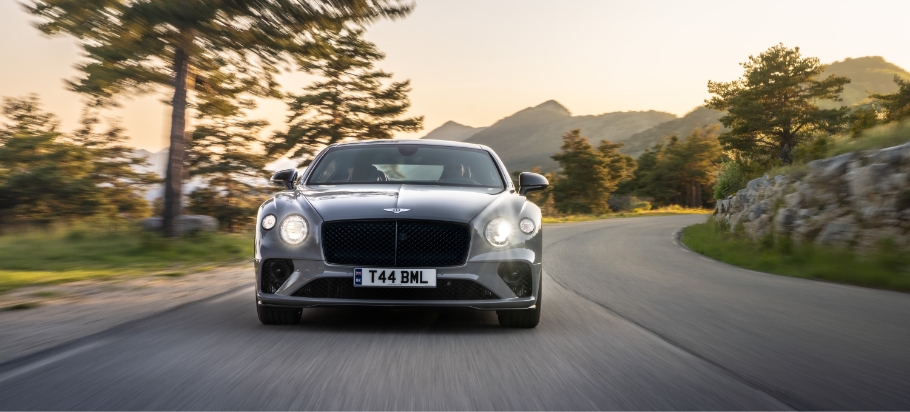
    2023 Bentley Continental GTC S - front view

    Bentley is bringing contrast and depth to its Continental GT family with the launch of a new S range, focused on driving performance and visual presence. Through a multitude of enhancements to the exterior design, interior specification and dynamic system, the new S range adjusts the Bentley grand touring recipe to center on the pleasure of driving – an opposing yet complementary emphasis to the “Wellbeing behind the Wheel” concept of the recent, comfort-centric Azure range launch.

    Owners of Bentley’s two-door models long appreciated the breadth of choice available to them, from the towering performance of the 6.0-liter W12 Continental GT Speed to the characterful beat of the 4.0-liter Continental GT V8. Now, with the arrival of the Continental GT and GTC S, owners can choose to emphasize the sporting character of the 4.0-liter V8-powered Bentley Continental GT, thanks to a package of performance-focused design and engineering features.

    Agile and Exhilarating

    The new S range retains the 542 bhp (550 PS) and 568 lb.ft (770 Nm) 4.0-liter V8 engine that’s proved incredibly popular with customers around the world, delivering a time of just 4.0 seconds for 0-62 mph (100 km/h). For the GT and GTC S, the engine is enhanced by the fitment as standard of a Sports Exhaust to amplify the crossplane V8 beat.

    The eager, free-revving and lighter 4.0-liter V8 engine gives the Continental GT S models a responsive and agile character, and this is amplified by Bentley Dynamic Ride – the advanced 48 V electric active anti-roll control system first pioneered by Bentley. By generating up 959 lb.ft (1300 Nm) in 0.3 seconds, motors within the anti-roll bars actively compensate for cornering forces to minimize body roll under hard cornering, while also improving ride comfort at cruising speeds by decoupling the left- and right-hand wheels from each other.

    Exterior Design: Assertive and Purposeful

    From the black gloss radiator grille and black brightware to distinctive S badging on the front fenders, the new S models make an instant and dramatic impact. Headlamps and rear lights are dark tinted, while all exterior brightware is specified in gloss black – with only the winged Bentley badge and lettering being finished in bright chrome. Gloss black wing build on the darker exterior look. The effect of these features is dramatic, giving the GT and GT S a more assertive stance regardless of the limitless choice of exterior colors they’re paired with.

    The S range is offered with an all-new 22” wheel option, with five Y-shaped spokes finished in gloss black and also available in a new Pale Brodgar Satin finish. Red-painted brake calipers sit behind the wheels to provide a perfect sporting contrast.

    A second wheel option for the S models is a 21” tri-spoke wheel design that combines gloss black and bright machined finishes – also unique to S.

    Finishing touches for the exterior include S badging on the front fenders, quad exhaust tailpipes (in black, naturally) and sill extenders in black as featured on the Continental GT Speed.

    Interior Design: Tactile, Dramatic and Individual

    Complementing the dynamic and purposeful exterior design is an interior that’s striking and performance-focused, with a two-tone color split that’s unique to the S models.

    In the early days of Bentley, competitors at Brooklands and Le Mans would wrap steering wheels in cord for extra cushioning and a more secure grip. Today’s sporting Bentley drivers are rather better served, with the suede-like properties of Dinamica proving ideal for the steering wheel, gear lever, seat cushion and seat backrest of the Continental GT and GTC S range. Leather hide is employed on the seat bolsters, door pads, along the instrument panel and around the console. The pairing of Dinamica with Bentley’s incomparable leather brings an interior that offers the tactile contrast of smooth hide and the soft napped finish of Dinamica.

    Driver instrumentation continues the sporting theme with the same performance-focused graphics as the Continental GT Speed. The S design seats are fluted, with quilting available as an option, and the ‘S’ emblem is embroidered on the headrest of each seat; embroidered Bentley wings are a no-cost alternative. Finishing touches include a metal S signature badge on the fascia and illuminated Bentley treadplates with the ‘S’ device replacing the Bentley Motors Ltd plaque.

    Customer Choice – Sports and Wellness in Differing Blends

    The combination of striking design, performance and agility gives the Continental GT S and Continental GTC S strong appeal for all those who love powerful, extrovert performance cars. With the recent launch of the wellness-focused Azure range alongside the S models, Bentley is providing customers with easier ways to choose the emphasis of their Bentley – centering on either onboard comfort and wellbeing through Azure, or dynamic performance and visual presence through the S and Speed options.

  • Bugatti Type 59 Sports – Sporting the Battle Scars of Early Grand Prix Racing

    1934 Bugatti Type 59 Sports

    The first of the six existing Type 59 Sports racing cars – produced back in the 1930s – still exists today in near-original condition and is considered an invaluable surviving specimen of Bugatti’s successful racing history.

    Scuffed leather seats and a steering wheel bearing the battle scars of racing drivers’ heroic efforts. Traces of hard duels and high-speed attrition can be seen on the paintwork. If this Bugatti Type 59 Sports could talk, it would have many a story to tell about its time being pushed to the limit around the world.

    Victory is what defines the Type 59 Sports. This open-top two-seater was built in 1934 as a Type 59 Sports with a Type 57 chassis. A short time later, it received a special new chassis for the next series of Grand Prix races, where it would be driven by Bugatti’s courageous racing drivers.

    Its racing history is fully documented – just like its famous owners and drivers are. René Dreyfus, top driver of the pre-war period and a hero of the French Resistance, took to the wheel in the mid-1930s, as did racing drivers Robert Benoist and Jean Pierre Wimille. One of the later owners of the sports car was King Leopold III of Belgium – an avid Bugatti fan himself.

    Recently, the Type 59 Sports was awarded the prestigious FIVA Trophy for “Best Preserved Pre-War Car” as the world-famous Concorso d’Eleganza at Villa d’Este in Italy, in competition with some of the finest classic automobiles from fellow marques.

    A True Thoroughbred

    Bugatti presented the Type 59 Sports for the first time on September 24, 1933, at the San Sebastian Grand Prix. A marvel of engineering both powerful and delicate. Beneath its sleek and low lines, the supercharged inline eight-cylinder engine fit almost perfectly. The wheels with piano wire spokes minimized unsprung mass enormously, and, with new sophisticated shock absorbers, ensured balanced handling with an unusually high level of comfort for a racing car. The Type 59 Sports is as elegant as it is fast. It is proof of Ettore Bugatti’s constant striving for more performance and better driving characteristics.

    Bugatti first used this factory Type 59 Sports with a 3.3-liter eight-cylinder engine (No. 5) in the 1934/1935 season. Driver René Dreyfus drove straight to third place at the Monaco Grand Prix in April 1934. Robert Benoist crossed the finish line in fourth place at the French Grand Prix in Montlhéry in July of the same year, and likewise a few weeks later at the Belgian Grand Prix in Spa-Francorchamps. At the Spanish Grand Prix in September, Jean-Pierre Wimille finished sixth. Ettore Bugatti – used to winning – retires from Grand Prix racing with the Type 59 Sports and sells four vehicles to British enthusiasts. One of them was transformed into a racing car by the company itself, in Molsheim. It is a first for Bugatti – until today. The Type 59 Sports remains the only Grand Prix car to be converted into a sports car at the factory and exists today in virtually unrestored original condition as a perfect witness to the period in which it thrived.

    The engineers removed the supercharger from the engine compartment and integrated a new oil tank with two-pump lubrication and a four-speed dry sump fully synchronized transmission with central shifting. They also re-tailored the bodywork: small motorcycle mudguards, a small windshield, small headlights positioned far down and side doors – with the new chassis number 57248.

    A two-seater car not only for the streets, but also for the racetrack, that is where Jean-Pierre Wimille increasingly used the Type 59 Sports sports car from 1935 in the new 750-kilogram class. In the 1937 sports car season, this Type 59 Sports with Wimille at the wheel won the Grand Prix de Pau and de Tunis and de Marseille, among others. Affectionately called “La Grand Mère” (Grandmother) by the mechanics in Molsheim, the sports car took part in races in Africa and won the last edition of the Algerian Grand Prix. In July 1937, Jean-Pierre Wimille won a Grand Prix for the last time with the Type 59 Sports: the Grand Prix de la Marne on the race track in Reims – over three minutes ahead of the runner-up. The fast and superior Bugatti caused a sensation on the scene. At the end of the season, a long-time Bugatti customer bought this exceptional sports car with a successful racing history: King Leopold III of Belgium between 1934 and 1951.

    Ettore Bugatti had the previously blue car specially repainted for the King in the King’s favorite color of black, decorated with a yellow stripe reminiscent of the Belgian racing colors. How the King used the powerful sports car in the years to come is not known. The Bugatti would have likely been put into storage in the run-up to the war and used little for time. Leopold III and his wife were deported to Saxony in June 1944, and after the war the family initially went into exile in Switzerland. It was not until 1959 that the ex-monarch moved with his family to Argenteuil Castle in the province of Brabant-Wallonia – with the Bugatti as part of the inventory.

    In 1967, the former King sold the Bugatti to a Belgian collector, who kept it for around 20 years, not restoring it and certainly not polishing it. In 1989, the historic racing car passed to an American Bugatti enthusiast, who also leaves it in its original condition and merely restores the car’s technology. After that, the sports car moved to two other garages owned by well-known collectors, who continued to respect the car’s past and left the body untouched. Over 80 years old, this invaluable witness with a successful racing history is now owned by a Bugatti enthusiast who recently had the incredible patina preserved as an important milestone in automotive history. The areas of paintwork that were still in good condition but already patinated were conserved in a sealed manner, while the damaged areas were only gently repaired. What remains: scuffed leather seats and scars in the wooden steering wheel.

  • Mercedes-Benz GLC

    The new Mercedes-Benz GLC is even more dynamic, powerful and sustainable. It is available only as a hybrid: either as a plug-in hybrid or as a mild hybrid with 48-volt technology and integrated starter generator. The plug-in hybrids offer a range of more than 100 kilometres (WLTP). The GLC thus sets new standards in the all-wheel drive SUV segment. Systematic electrification of the GLC, the company’s best-selling model series, makes a significant contribution to reducing the CO2 balance over the entire lifecycle. The new GLC is on the way to climate-neutral mobility, which is the goal of “Ambition 2039”. The technical highlights of the GLC also include special equipment such as DIGITAL LIGHT, rear-axle steering and new assistance systems. Its pronounced off-road suitability is underlined by features such as electric off-road driving in the plug-in hybrids, or the “transparent bonnet”. The GLC will be in the showrooms of our western European sales partners from autumn 2022.

    The new GLC is immediately recognisable as a member of the Mercedes-Benz SUV family. Standard equipment includes the AVANTGARDE Exterior line with Chrome package and 18-inch light-alloy wheels. This adds striking design features and enhances the unique proportions of the vehicle.

    Exterior design: Expressive highlights

    One of the defining design highlights of the GLC is the redesigned front end, with headlamps that connect directly to the radiator grille to emphasise the vehicle’s width. DIGITAL LIGHT headlamps with additional daytime driving light ellipses and new blue trim, plus active ground lighting, also in blue, are available as optional extras. The typical Mercedes SUV radiator grille with redesigned cut-out has a chrome surround. This frames a sporty louvre in matt grey with chrome trim and the grille with vertical louvres in high-gloss black. From AMG Line upwards, a radiator grille with Mercedes-Benz pattern is available: a three-dimensional star pattern with high-gloss chrome surfaces. The new simulated underguard in chrome at the front emphasises the vehicle’s width and accentuates the off-road look.

    The body design is characterised by a full, spanned surface design enriched with precisely shaped edges in the sides. These emphasise the proportions as well as the muscular wheel arches, and also create a balance between elegance and off-road performance. Wheel arch liners in the vehicle colour are available from AMG Line upwards for the first time. These accentuate the sportiness of AMG Line. Also available as an optional extra are easy-entry running boards and the Night package.

    Other features of the sporty, confident appearance are the wide track and flush wheels in 18 to 20-inch size. Several of the wheels available ex factory not only feature a modern design with a high-sheen finish and bicolour surfaces, but are also aerodynamically optimised.

    The new two-section rear lights with a handle strip in high-gloss black emphasise the width of the rear. Their interior has a three-dimensional look, and as an optional extra they are available with an animation. The rear end also has a simulated chrome underguard, which encases the simulated chrome-look tailpipes.

    Interior design: modern, sporty luxury

    Welcome to the modern, sporty luxury of Mercedes-Benz: this is the message the interior of the new GLC with AVANTGARDE line already sends out in its standard configuration. It continues the familiar, successful concept, adopting highlights and developing them further with its own keynotes.

    The dashboard is clearly structured: the upper section has a wing-like profile with new, flattened round nozzles reminiscent of the engine nacelles of an aircraft. The lower section has a generous trim area that flows harmoniously into the curved centre console. Its orientation towards the driver contributes to sportiness: the dashboard is slightly angled towards the driver by six degrees.

    There is a free-standing, high-resolution LCD screen in front of the driver. It appears to float in front of the wing profile and trim area. This sets the driver’s display apart from traditional cockpits with classic dial instruments. It has a size of 12.3 inches (31.2 centimetres).

    A high-quality chrome insert divides the centre console into a rear, softly padded area for the armrest and a front area in glossy deep black. The central display rises seamlessly and seemingly without joints from this three-dimensional surface. It appears to float above the trim area.

    The central display also makes the paradigm shift towards digitisation clear: the vehicle functions can be controlled using the high-quality touchscreen. Its portrait orientation is particularly advantageous for navigation. Like the dashboard, the screen surface is slightly angled towards the driver. The central display has a screen diagonal of 11.9 inches (30.2 centimetres). Ergonomically located below the central display is a fingerprint scanner. A colour head-up display can be ordered as optional equipment.

    The modern, highly reduced design of door panels frames both ends of the dashboard. The door centre panel with integrated armrest evolves from a vertical surface into a horizontal orientation. Reflecting the design of the centre console, the front section takes the form of a metallic high-tech element. It can be used as a grab or closing handle, and houses the power window controls. Another highlight is the floating control cluster, into which the door opener and seat adjustment controls are integrated.

    The avant-garde seat design of the new GLC plays with layers and contoured surfaces, lending them visual lightness. The head restraints and their connection to the backrest with an enclosed cover have been redesigned. The new GLC is available with a leather-lined dashboard with nappa-look beltlines (optional, standard for AMG Line). Some trim elements have innovative surfaces. These include new interpretations of open-pored veneers in brown tones, as well as an open-pored, black wood veneer featuring fine, form-following inlays in real aluminium. On request, direct ambience lighting with light guides replaces the standard indirect ambience lighting.

    Intuitively operated and learn-capable: Latest generation of MBUX

    After the S-Class and C-Class, the new GLC also has the second generation of the MBUX (Mercedes-Benz User Experience) infotainment system. The vehicle interior becomes even more digital and intelligent, as both the hardware and software have made great strides: On the LCD screens, brilliant images make it easy to control vehicle and comfort functions.

    The driver and central display offer a holistic, aesthetic experience. The information is presented in a clearly structured way. The appearance can be individualised with a total of three display styles (classic, sporty, discreet) and three modes (navigation, assistance, service). In addition, the GLC offers the off-road mode.

    • In “Classic” style, the driver is welcomed with a familiar display environment. The proven display of two tubes and alternating content in between provides all driving-related information.
    • In “sporty”, the colour red dominates and the central rev counter is dynamically presented.
    • In “discreet” style, the content is reduced to what is essential. In addition, both screens can be shown in seven colour schemes with the ambience lighting. This creates an impressive colour experience in the interior.
    • The “assistance mode” displays the traffic situation in real time and supplements it with important display information.
    • The new “off-road mode” makes specific content such as gradient, inclination, compass and steering angle visually tangible and, in conjunction with the optional 360-degree camera, offers the “transparent bonnet” function.

    The full-screen navigation offers the driver the best possible guidance while driving. Augmented Video is available as optional equipment. A camera registers the surroundings in front of the vehicle. The central display shows the moving images and also superimposes virtual objects, information and markers. These include, e.g. traffic signs, directional arrows, lane-change recommendations and house numbers. This can make navigation much easier, especially in urban areas.

    Hey Mercedes: the increasingly sharp voice assistant

    The voice assistant “Hey Mercedes” becomes more interactive and capable of learning by activating online services in the Mercedes me App. Moreover, certain actions can be performed even without the activation keyword “Hey Mercedes”. These include taking a telephone call, for example. “Hey Mercedes” also explains vehicle functions with the voice command “Help”, and provides assistance e.g. when wanting to connect a smartphone via Bluetooth or looking for the first-aid kit. Hey Mercedes even recognises vehicle occupants by their voices.

    Tourguide: audio travel guide in MBUX

    As part of the “MBUX Voice Assistant” from Mercedes me, the audio “Tourguide” adds an interesting and entertaining feature to the previous travel information functions. In response to the voice command “Hey Mercedes, start Tourguide”, the MBUX infotainment system reads out extensive information about points of interest along the route. The system responds to the approximately 3400 brown signs along German motorways. The new audio Travelguide is initially available exclusively in Germany, but will later be rolled out in other countries.

    Smart Home: Mobile intelligence for maximum operating convenience from a distance

    With the MBUX Smart Home function, the GLC now becomes a mobile control centre for the home. Because Smart Home refers to WLAN, sensors and actuators making the home increasingly intelligent and communicative: temperature and lights, shutters and electrical appliances can be remotely monitored and controlled. Motion detectors and window contacts inform the user of welcome or unwelcome visitors.

    “Hey Mercedes, is there anybody in my home right now?” “I checked. The last movement detected was in the kitchen one hour ago.” In future, for example, dialogues can be conducted via the MBUX (Mercedes-Benz User Experience) voice assistant between the driver or passenger in the GLC and the user’s smart home. At the market launch, the MBUX Smart Home function will support numerous devices offered by important smart home providers – corresponding contracts have already been concluded with Bosch Smart Home and Samsung SmartThings. Further providers will follow, and be announced at a later stage. Right from the start, Hey Mercedes understands questions and commands in four languages (German, Chinese, US and British English). Lamps, sockets, thermostats, shutters and blinds, motion detectors, door and window contacts and temperature sensors can be addressed. So the system can also answer this question: “Did I remember to turn the heating down?” Depending on the response and the thermostats installed in the home, it is possible to change the setting: “Set the temperature to 18 degrees in the whole house!” It also enhances comfort, because the heating can also be remotely turned up again in good time.

    Music: Streaming and sound systems

    With the “Online Music” service, Mercedes-Benz has fully integrated the largest music streaming providers into the MBUX infotainment system. MBUX allows seamless access to the personal user profile at the linked music provider. In this way, customers not only have convenient access to their favourite songs and their own playlists, but also the opportunity to discover millions of songs and curated playlists. Operation is intuitive using the MBUX voice assistant, touch controls on the steering wheel or directly on the central display. In addition to the standard sound system with a front bass woofer and four mid-range speakers, optional extras are available:

    • Advanced Sound System. This comprises nine speakers – five midrange, two tweeters, two front bass speakers with 2 x 50 watts from an auxiliary amplifier and a total output power of 225 watts.
    • Burmester® surround sound system, specially configured for the GLC by this sound specialist. It comes with a total of 15 premium speakers: seven 50-watt midrange speakers, four 20-watt tweeters, two 20-watt 3D speakers and two premium front bass speakers at 120 watts each. A 15-channel amplifier drives all speakers fully actively with a total output of 710 watts. In addition, high-quality sound presets, optimisation via a digital signal processor, individual sound settings and staged operation bring the system to life. The metal speaker grilles bear the Burmester® lettering.

    Further highlights: Head-up display and fingerprint sensor

    A colour head-up display can be ordered as optional equipment. The driver is presented with a virtual image measuring 9 x 3 inches (around 23 x 8 centimetres) floating a good 3 metres ahead of the bonnet. This is roughly equivalent to a 25-inch monitor. The head-up display consists of a full-colour display module with a native resolution of 800 x 480 pixels, illuminated by high-power LEDs. A mirror optics unit projects the virtual image onto the windscreen and into the driver’s field of vision. Sensor-controlled, the display brightness automatically adjusts to the outside conditions.

    With the fingerprint scanner, users can log in to MBUX quickly, conveniently and securely. Because personal settings and data such as favourites, last destinations, behaviour-based predictions, professional calendar entries or emails are protected. Payment processes via Mercedes me are also restricted to authenticated users.

    “Over-the-air” (OTA) updates: The very latest software

    As soon as a new software update is available from Mercedes-Benz, a message appears in MBUX. Download and installation take place in the background. The user must then explicitly agree to activation of the update. This means that the vehicle always remains up to date. New features can also be uploaded to already sold vehicles by over-the-air updates. For data transmission, Mercedes-Benz relies on the high security standard provided by mobile radio technology and the communication module installed in the vehicle.

    Another way to an updated and improved user experience is to add new features in the Mercedes me Store, such as music streaming or in-car office functions. Subscription services can also be renewed or rebooked directly online via the Mercedes me Store.


    Powertrain: More electric than ever

    The new GLC is available only as a hybrid: either as a plug-in hybrid or as a mild hybrid with 48-volt technology and integrated starter generator. The engine range has four-cylinder units from the current FAME (Family of Modular Engines) Mercedes-Benz engine family. Accordingly, the engine range plays a major role in the flexibility of the international production network, with needs-based electrification. The power spectrum of the four-cylinder engines ranges up to 190 kW and 400 Nm of torque in the petrol models, and up to 195 kW and 550 Nm in the diesel models, each plus up to 17 kW and 200 Nm of electrical support from the ISG.

    Systematic electrification means:

    • All the drive systems available for the GLC are hybrids.
    • Four of these are mild-hybrid units, which receive intelligent support in the low rpm range with a second-generation integrated starter-generator (ISG) in conjunction with a 48-volt electrical system.
    • Three further engine variants are plug-in hybrids, including an all-electric driving mode and a range of more than 100 kilometres.

    The integrated starter-generator with the petrol and diesel engines provides intelligent support in the low rpm range. In combination with turbocharging, this ensures excellent power delivery. The system includes the 48-volt electrical system, which enables functions such as “gliding”, boost or recuperation and thus significant fuel savings. In addition, the engines start very quickly and comfortably with the help of the ISG, so that the start-stop function is almost imperceptible to the driver, as is the transition from “gliding” with the engine stationary to powerful propulsion with engine power. When idling, the intelligent interaction between the ISG and the combustion engine ensures outstandingly smooth running.

    Transmission: Automatic is standard equipment

    The 9G-TRONIC automatic transmission is standard equipment in all GLC models. This has been developed further for ISG adaptation: the electric motor and the power electronics are accommodated in the transmission housing, and thermal management of both components is carried out via the transmission cooling system. Previously necessary lines are therefore no longer required, which offers advantages in terms of installation space and weight. In addition, the gearbox has a higher efficiency. Among other things, optimised interaction with the electric auxiliary oil pump reduces the delivery volume of the mechanical pump by 30 percent compared to its predecessor – good for efficiency. Furthermore, it uses a new generation of the fully integrated transmission control with multi-core processor and new design and connectivity technology. In addition to the increased computing power, the number of electrical interfaces has been drastically reduced.

    All-wheel drive: Mercedes-Benz 4MATIC

    All models of the new GLC come with the latest 4MATIC all-wheel drive system. The new front-axle drive allows higher torque levels to be transferred, with an ideal axle load distribution for driving dynamics. This also has a considerable weight advantage compared to the axle drive of the preceding series. The longitudinal transfer case, which is also new, further reduces friction losses. It also has a closed oil circuit and does not require any additional cooling measures.

    Diesel with integrated second-generation starter-generator

    The OM 654 M with integrated second-generation starter-generator and 48-volt onboard power supply is at the forefront of efficient drive technology. Recuperation and the possibility to “glide” with the engine switched off further increase efficiency. Apart from electrification including an electric refrigerant compressor for the air conditioning system, these are the most important changes for the output of up to 198 kW plus a boost of 17 kW by the ISG:

    • Stroke of 94.3 millimetres and displacement of 1993 cc (previously: 92.3 and 1950) thanks to new crankshaft.
    • 2700 bar injection pressure (previously 2500).
    • Particularly fast response and smooth power delivery thanks to two water-cooled turbochargers, now both with variable turbine geometry.
    • Cooling channel in the steel piston filled with sodium for effective reduction of temperature peaks in the piston crown.

    These are the exhaust aftertreatment components for the diesel:

    • A close-coupled NOx storage catalytic converter to reduce nitrogen oxides.
    • A diesel particulate filter (DPF) with special coating, also to reduce the nitrogen oxides.
    • A near-engine mounted SCR (Selective Catalytic Reduction) catalytic converter with metered injection of AdBlue®).
    • an additional SCR catalytic converter in the vehicle’s underbody, with a separately metered injected quantity of AdBlue®

    Four-cylinder petrol engine with second-generation ISG.

    After the C-Class, the new GLC is the second Mercedes-Benz model series to receive the four-cylinder M 254 petrol engine with integrated second-generation starter-generator (ISG). The ISG provides up to 17 kW of additional power and 200 Nm more torque, can recuperate higher electrical outputs than a belt-driven starter generator, shifts the load point of the combustion engine and allows hybrid functions such as “gliding” with the engine switched off, boosting and recuperation. This makes the petrol engines very efficient. In the M 254, Mercedes-Benz has also combined all the innovations of the modular engine family of four and six-cylinder petrol and diesel engines in a single unit. They include NANOSLIDE® cylinder coating, CONICSHAPE® cylinder honing (trumpet honing) and the exhaust aftertreatment system positioned directly at the engine. All the engines are characterised by superior power delivery, smooth running and excellent noise comfort.

    The segmented dual-flow turbocharger has been completely redeveloped as a further development of the twin-scroll technology, for an even more spontaneous response. This turbocharger is the result of collaboration between Mercedes-Benz turbocharger development and the Mercedes-AMG Petronas Formula 1 team. The technology transfer to series production sets new standards in terms of performance combined with maximum efficiency.

    Plug-in hybrids: more than 100 kilometres electric range (WLTP)

    The GLC also receives the fourth-generation plug-in hybrid drive in three power levels. Using the identical basic engines, electrification has taken another big step. With an electric drive power of up to 280 kW (381 hp) and an all-electric range of more than 100 kilometres (WLTP), the plug-in hybrid models of the GLC will in many cases and on many days be on the road purely electrically, without the use of the combustion engine. Whether with one of the two petrol engines or the diesel: as plug-ins, they are not only very efficient but also extremely dynamic on the road.

    The new high-voltage system is more compact and more powerful. The number of high-voltage interfaces is significantly reduced. Integration of the power electronics into the transmission housing reduces the required installation space and simplifies assembly processes in production. In addition, a higher system voltage increases the drive power without the need for larger cable cross-sections.

    The high power density of the hybrid drive unit comes courtesy of a permanently excited internal rotor synchronous motor. The 440 Nm peak torque of the electric motor is ready to go right from the start, resulting in high agility when moving off, along with dynamic driving performance. The full electric power is available up to 140 km/h.

    The high-voltage battery is an in-house development by Mercedes-Benz. In particular, the total capacity of 31.2 kWh in combination with more efficient recuperation and improved aerodynamics allow an all-electric range of more than 100 kilometres. To accommodate the high power density, the high-voltage battery has an internal cooling system. The thermal management system can therefore control the operating temperature irrespective of the climate control in the vehicle interior. In addition to continuous operation in hot and cold regions, this also allows quick charging with direct current.

    Even when the battery is completely discharged, it can be fully charged in around 30 minutes with the optional 60 kW DC charger. A standard-fit 11 kW charger (depending on the market) is available for three-phase charging at a Wallbox connected to the domestic AC mains. The standard charging cable can be stored within easy reach in a floor compartment just behind the tailgate.

    Charging at public charging points becomes a pleasant secondary matter with Mercedes me Charge. The charging network with around 300,000 charging points in Europe offers three charging tariffs that are tailored to the individual driving distances. This makes charging with Mercedes me Charge even easier and more transparent. Drivers of a plug-in hybrid from Mercedes Benz receive an exclusive price advantage for public charging, with fixed price rates per kilowatt hour of electricity in the first year after registration. In addition, the monthly standing charge of 4.90 euros in the M tariff is waived in the first year for new car buyers. This appeals to city commuters, for example.

    Mercedes me Charge gives customers access to a wide range of public charging stations located in cities and in places like shopping centres, hotels or service stations. The Mercedes me App indicates the exact position, current availability and price at the selected charging station in advance.

    Recuperate instead of braking

    Also thanks to improved recuperation, the new GLC offers significantly higher overall efficiency of the hybrid system compared to its predecessor: The amount of recovered electrical energy has increased significantly.

    Recuperation recovers electricity for the e-drive from the vehicle’s kinetic energy. It is based on an interlocking interaction between the components: while the electric motor receives electrical energy during acceleration to generate mechanical energy, it is mechanically driven by the vehicle’s kinetic energy on the overrun and during deceleration, thus working as a generator and generating electrical energy. This is fed into the vehicle’s high-voltage battery and is available for the drive system.

    A decisive factor for efficiency in recuperation is the interaction of the hydraulic service brake with the electric motor. In addition, the automatic transmission performs several gearchanges during deceleration. The use of a vacuum-independent braking system in the new GLC has significantly optimised the entire interaction. Depending on the driving situation and the driver’s braking requirements, this braking system automatically controls the flexible transition between hydraulic braking and recuperation. This allows the maximum recuperation power of up to 100 kW to be achieved more frequently, and over a longer period of time. For this purpose, the system variably reduces the braking power of the hydraulic brake, even at constant pedal pressure, so that the high recuperation power is maintained as speed decreases. A further, pleasant effect for the driver is that he/she does not perceive this automatic transition.

    The graph below illustrates the advantages of the hybrid drive in the new GLC.

    The curves in the diagram compare example braking of the new GLC and its predecessor from 100 km/h to standstill with constant deceleration. The diagram clearly shows that the initial braking power is significantly higher than the maximum recuperation power. The recuperation time with maximum recuperation power is significantly longer in the new GLC, as the new system can flexibly reduce the contribution made by hydraulic braking. This is where the new GLC scores: significantly higher recovery of electrical energy from kinetic energy than in the preceding model. This has a positive effect on the electric range.

    The optimised driving modes of the new GLC plug-in hybrid support the management of recuperation and optimal use of the available electrical energy. Based on the information from the route guidance of the navigation system, the hybrid driving programme provides the electric driving mode for the most appropriate route sections in each case. Electric driving is prioritised on journeys in urban areas, for example.

    A driver wishing to influence the energy recovery rate can do so directly in three stages controlled by rocker switches behind the steering wheel. This is possible in all driving modes except SPORT. In the driving mode  D-, for example, the driver can experience the “one-pedal feeling”: when the driver takes his/her foot off the accelerator, the vehicle slows down purely electrically to the extent that the hydraulic operating brake is often not needed. In addition the operating strategy communicates with the sensors of the assistance systems, efficiently supporting the driver in many situations.

    Two driving modes allow the driver to use the possibilities of the plug-in drive in a particularly targeted manner:

    BATTERY HOLD: Priority is given to preserving the charge state of the high-voltage battery, for example when planning to drive in a city centre or low emission zone later on. The hybrid drive system selects the appropriate drive depending on the driving situation and distance.

    ELECTRIC: Electric driving up to 140 km/h, activation of the combustion engine via the pressure point of the accelerator pedal.

    If the route-based operating strategy is activated, data on the expected route is evaluated when route guidance is active. This takes into account factors such as navigation data, topography, speed limits and the traffic conditions for the entire planned route. With the route-based operating strategy, the two forms of energy of the hybrid vehicle can be distributed in the best possible way. The drive control automatically selects the most suitable operating mode so that the state of charge of the high-voltage battery can be specifically influenced. For example, electrical energy can be saved for e-driving so as to drive all-electrically in inner-city areas or in environmental zones later on.

    In the HYBRID and ELECTRIC driving modes, as well as in BATTERY HOLD, the ECO Assistant also evaluates the route data and supports the greatest possible efficiency and recuperation energy according to the route. If the navigation map or sensors and cameras detect e.g. a roundabout ahead, a hairpin bend, a tight bend, a T-junction, a gradient, a vehicle in front or a speed limit, the ECO Assistant calculates the optimum vehicle speed from the distance, speed and gradient. For any necessary deceleration, the hybrid system primarily uses the electrical resistance of the electric motor for recuperation.

    The plug-in hybrid variants of the new GLC have a haptic accelerator pedal module. In the ELECTRIC driving mode, this signals the change from electric driving to driving with the combustion engine by means of a perceptible pressure point. If the pressure point is exceeded, the combustion engine is switched on and provides additional drive torque.

    All in all, driving with the new GLC plug-in hybrid becomes significantly more electric. Thanks to the increase in electric range to more than 100 kilometres, everyday journeys can largely be covered purely electrically.

    The mild hybrid model range:

    GLC 200 4MATIC GLC 300 4MATIC GLC 220 d 4MATIC GLC 300 d 4MATIC
    Displacement cc 1999 1999 1993 1993
    Output kW/hp 150/204 190/258 145/197 198/269
    Add. output (boost effect) kW/hp 17/23 17/23 17/23 17/23
    Peak torque Nm 320 400 440 550
    Add. torque (boost effect) Nm 200 200 200 200
    Combined fuel consumption (WLTP)[1] l/100 km 8.2-7.3 8.2-7.3 5.9-5.2 6.2-5.6[2]
    Combined CO2 emissions (WLTP)1 g/km 186-167 186-167 155-136 163-1462
    Acceleration
    0-100 km/h
    s 7.8 6.2 8.0 6.3
    Top speed km/h 221 240 219 243
    Price from [3] euros 57,631.70 68,240.55* 60,237.80 n.n.

    [1] The figures shown are the WLTP CO2 figures measured according to Art. 2 No. 3 of Implementing Regulation (EU) 2017/1153. The fuel consumption figures were calculated on the basis of these figures.
    [2] Figures for fuel consumption and CO2 emissions are provisional and were obtained in accordance with the WLTP test procedure. EC type approval and a certificate of conformity with official figures are not yet available. Differences between the stated figures and the official figures are possible.
    [3] Recommended retail price in Germany including 19% VAT.

    The model range of plug-in hybrids:

    GLC 300 e 4MATIC GLC 400 e 4MATIC GLC 300 de 4MATIC
    Petrol engines Diesel
    Displacement cc 1999 1999 1993
    Rated output petrol/diesel engine kW/hp 150/204 185/252 145/197
    at rpm 6100 5800 3600
    Rated torque petrol/diesel engine Nm 320 400 440
    at rpm 2000-4000 2000-3200 1800-2800
    Rated output, electric motor kW 100 100 100
    Rated torque, electric motor Nm 440 440 440
    System output kW/hp 230/313 280/381 245/335
    System torque Nm 550 650 750
    Rated battery capacity kWh 31.2 31.2 31.2
    Top speed km/h 218 237 217
    Top speed, electric km/h 140 140 140
    Acceleration
    0-100 km/h
    s 6.7 5.6 6.4
    Combined consumption, weighted (WLTP)[4] l/100 km 0.6-0.5 0.6-0.5 0.5-0.4
    Combined CO2 emissions, weighted (WLTP)4 g/km 15-12 15-12 14-11
    Combined power consumption, weighted (WLTP)4,[5] kWh/100 km 22.5-20.4 22.5-20.4 22.9-20.5
    All-electric range (combined EAER) (WLTP)4,5 km 118-130 118-130 112-128

    [4] Figures for fuel consumption, CO2 emissions, power consumption and range are provisional and were obtained in accordance with the WLTP test procedure. EC type approval and a certificate of conformity with official figures are not yet available. Differences between the stated figures and the official figures are possible.
    [5] Power consumption [and range] was [were] determined on the basis of Directive 692/2008/EC.

    Suspension: comfort and agility

    Key components of the GLC’s dynamically designed suspension system are a new four-link suspension at the front and a multi-link independent rear suspension mounted to a subframe. The standard suspension already provides a high level of suspension, ride and noise comfort, agile handling and driving enjoyment. It is equipped with an amplitude-dependent damping system.

    As an option, the new GLC is available with the Engineering package which includes AIRMATIC air suspension and rear-axle steering. AIRMATIC is equipped with variably adjustable damping for compression and rebound. The plug-in hybrids have air suspension and level control at the rear axle as standard. Another optional extra is the Offroad Engineering package, which increases ground clearance by 20 millimetres and has an underride guard at the front and underbody protection. In conjunction with AMG Line Exterior, the GLC has a sport suspension.

    Rear-axle steering: more agile and dynamic

    The new GLC is particularly agile and stable with the optional rear-axle steering combined with a more direct steering ratio at the front axle. The steering angle at the rear axle is up to 4.5 degrees. This reduces the turning circle by 90 centimetres to 10.9 metres. The driver also needs fewer turns of the steering wheel from lock to lock.

    At speeds of less than 60 km/h, the rear wheels steer in the opposite direction to the front wheels – when parking, by up to 4.5 degrees counter to the front axle angle. Depending on the situation, this virtually shortens the wheelbase, and the vehicle is more light-footed and agile as a result. When the speed reaches 60 km/h or more, the rear wheels steer in the same direction as the front wheels by up to 4.5 degrees. The resulting, virtually extended wheelbase offers noticeable advantages in handling stability and driving safety at high speeds, and during fast lane changes or sudden evasive manoeuvres.

    In addition, during dynamic manoeuvres such as driving on a country road, significantly less steering movement is required – and the vehicle responds more directly to steering commands. This is supported by the integrated dynamic control function of ESP®.

    Driving assistance systems: stress-relief and support in hazardous situations

    The latest generation of the Driving Assistance package Plus contains additional and improved functions. These reduce driver workload in day-to-day situations for more comfortable and safe driving. When danger threatens, the assistance systems are able to respond to impending collisions as the situation demands. The operating principle of the systems is visualised on the driver display by a new display concept.

    Further improved assistance systems – some examples:

    • On all types of roads – motorways, country roads or in town – Active Distance Assist DISTRONIC can automatically maintain a preset distance from vehicles in front. A new feature is the ability to react to stationary vehicles on the road at speeds up to 100 km/h (previously: 60 km/h).
    • Active Steering Assist helps the driver to stay in lane at speeds up to 210 km/h. New features: lane detection using an additional 360-degree camera, with particular advantages in the low speed range, for example when forming an emergency lane; significantly increased availability and cornering performance on country roads; increased lane centring on motorways.
    • In addition to conventionally posted speed limits, Traffic Sign Assist recognises signs on overhead gantries and at roadworks. The system recognises even conditional signs, for example “in wet conditions”, by evaluating all vehicle sensors. The stop sign and red traffic light warning functions (as part of the Driving Assistance package Plus) are new.
    • The new Parking package with 360-degree camera offers the best all-round visibility and facilitates the parking process e.g. with assisted parking and unparking. The “transparent bonnet” now included as a new function makes slow manoeuvring easier, and makes for more precise driving on rough terrain.

    Sophisticated parking systems: Support during slow manoeuvres

    Thanks to more powerful environment sensors, the parking systems can better support the driver when manoeuvring, thus improving safety and comfort. Integration into MBUX makes operation more intuitive and is supported by the visual display. The optional rear-axle steering is integrated into the parking assistants, and calculation of the lanes (trajectories) is coordinated accordingly. Emergency braking functions also serve to protect other road users, and can increase road safety.

    The Parking package with 360-degree camera and “transparent bonnet” and the functions of Active Parking Assist with PARKTRONIC is available as an optional extra. It offers the best possible all-round visibility and facilitates the parking process. The central display clearly shows the direct vehicle surroundings during the parking or manoeuvring process. The display is composed of four individual camera images from the front, rear and both sides of the vehicle, and includes a virtual bird’s eye view. In addition, the display shows different viewing angles such as front, rear or trailer mode. The driver decides whether to park manually or hand control over to Active Parking Assist.

    Over hill and dale: Off-road with the GLC

    Like its predecessor, the new GLC is explicitly designed for driving on rough terrain: it is prepared for this use in numerous details, and also offers several new features and systems. Standard equipment includes an off-road driving mode and DSR (Downhill Speed Regulation). The new off-road screen has easier operation, there is clearer information thanks to the “transparent bonnet” and outstanding traction and handling safety by virtue of improved control systems. With the plug-in hybrid models, purely electric off-road operation is possible even over long distances. With these, the driver can choose between off-road driving with purely electric or conventional drive.

    The new off-road screen uses both displays for clearly arranged information. Among other things, the driver’s display shows, inclination, gradient, topographical altitude, geo-coordinates and a compass, as well as road speed and engine speed when operating with an internal combustion engine. The central display additionally shows e.g. the current position of the SUV on the terrain with uphill/downhill gradient and inclination, the steering angle of the front wheels and, if rear-wheel steering is available, the steering direction of the rear wheels as well as – with AIRMATIC – the current suspension level and the current wheel deflection. It also shows the tyre pressure, tyre temperature, current torque and output, and the engine and transmission oil temperature.

    The Engineering package (optional) with AIRMATIC air suspension including level control and rear-axle steering also brings its comfort advantages to bear when off-road, where it offers additional benefits. For example, AIRMATIC allows a high ground clearance off-road, regardless of the load, and a long suspension travel for the best possible traction. The rear-axle steering increases off-road manoeuvrability even further. Alternatively, the off-road suspension (part of the Offroad Engineering package) with 20 millimetres more ground clearance is also available as an optional extra.

    If the vehicle is equipped with DIGITAL LIGHT, an off-road light is also included. This provides maximum, wide illumination when driving in rough terrain, and makes for accurate and safe manoeuvring around obstacles in unfamiliar environments.

    View beneath the vehicle: “Transparent bonnet”

    The GLC also offers a “transparent bonnet”: when the off-road mode is active, the central display shows a virtual view under the front of the vehicle, including the front wheels and their steering position. The view is composed of the images from the 360-degree camera. There are two views: under the vehicle and looking ahead. At speeds up to 8 km/h the “transparent bonnet”, i.e. the view under the vehicle, is shown. From 8 to 20 km/h the system shows the view ahead. The camera image is switched off at higher speeds. The “transparent bonnet” is extremely helpful: it enables the driver to recognise obstacles such as large stones or deep potholes in the vehicle’s path at an early stage. The optional Parking package with 360-degree camera is a prerequisite for the “transparent bonnet”.

    Off-road electric: Very powerful and efficient

    The plug-in models of the new GLC already offer a driving experience of the future: all-electric off-road driving. This has many advantages: since the electric motor’s full torque of 440 Nm is available from the very first engine revolution, its power is very easy to control at all times. This allows highly precise, controlled driving even in difficult terrain. In addition, because the electric motor only consumes energy when it is actually moving the vehicle, and the power demand is comparatively low when driving slowly as is usual when off-road, a long all-electric driving time is possible even in demanding terrain. In keeping with the nature of the electric drive, noise emissions are also very low when driving slowly. All this makes for a completely new off-road experience.

    Trailer menu and towing route planner

    The GLC is a popular towing vehicle, and the new edition is specifically designed for this purpose. The new trailer menu and the towing route planner in MBUX are two highlights of the GLC for towing operations. The aim of these and numerous further advanced functions for operation as a towing vehicle is to make towing as safe and pleasant as possible. Moreover, the 4MATIC all-wheel drive provides outstanding traction on any surface. In trailer mode, the ESP® trailer stabilisation is activated: This can compensate for dynamic instabilities while driving.

    in the central display, routes can be planned that are suitable for driving with the previously defined trailer. The system also takes into account e.g. passage widths and passage heights. As soon as the ballhead is engaged and an electrical connection exists, the system inquires about the intended use of the trailer coupling: Is it a small trailer? Or something larger, such as a caravan or horsebox? Or is a bicycle carrier installed? The towing route planner takes the information into account.

    The trailer hitch (optional equipment) has a fully electrically swivelling ball head. The socket is located in the trailer hitch. The image from the reversing camera includes the trailer coupling and the area directly behind it, so that the hitching process can be observed on the central display.

    The enhanced Trailer Manoeuvring Assist (optional) in the new GLC makes manoeuvring with a trailer even easier, more comfortable and safer. The system automatically regulates the steering angle of the towing vehicle up to a speed of 5 km/h and an uphill gradient of up to 15 percent. It is also integrated into MBUX and can be operated intuitively. In addition to stabilising the combination when reversing, the system can for the first time also guide it around freely selectable bends of up to 90 degrees. The steering of the towing vehicle is operated automatically so that the selected angle is maintained. This allows more precise positioning of the trailer. The driver can also select the “pull straight” function once the trailer has reached the desired direction and needs to reverse in a straight line. The entire manoeuvring process can be followed from different camera perspectives on the central display. Dynamic guide lines show the trajectory and the vehicle width.

    Weight specifications for towing operations:

    GLC 200 4MATIC GLC 300 4MATIC GLC 220 d 4MATIC GLC 300 d 4MATIC
    Tongue weight (kg) 100 100 100 100
    Towing capacity
    (kg, braked)
    2400 2400 2500 2500

    High passive safety

    The GLC is available on all continents. Whether in right or left-hand drive, with petrol engine, diesel engine or as a plug-in hybrid: When it comes to crash safety, all models meet the typically high Mercedes safety standards.

    Together with the familiar PRE-SAFE® protection concepts for frontal and rear impacts, PRE-SAFE® Impulse Side (available in conjunction with the Driving Assistance package Plus) forms a virtual crumple zone around the vehicle. As only a limited crumple zone is available in a side impact, PRE-SAFE® Impulse Side (availability depending on selected equipment) can move the affected driver or front passenger away from the danger even before the crash as soon as the system detects that a side collision is immediately imminent. For this purpose, air chambers in the side bolsters of the front seat backrest are inflated in fractions of a second.

    All in all, the GLC’s safety concept is based on an intelligently designed body with a particularly rigid passenger cell, selectively deformable crash structures and situational interaction between the seat belts, belt tensioners and airbag systems. In addition to legal requirements, the vehicle also fulfils internal Mercedes-Benz test requirements and test criteria that are derived from real accidents.

    Extensive crash simulations were used to configure the vehicle structure in such a way that the occupants are particularly well protected in the event of a crash. The bodyshell concept incorporates all areas – front structure, passenger cell, side walls and floor assembly. It is implemented through the design and construction of the body components, a stress-related material mix and appropriate wall thicknesses in highly stressed areas. The overall concept leads to homogeneous load distributions and high energy absorption with moderate deceleration acting on the occupants. In addition, sufficient protective space can be provided for the occupants.

    Aerodynamics: Now Cd = 0.29

    From around 60 km/h, air resistance exceeds the total of all other driving resistances and is a main control factor for saving fuel and reducing CO2 emissions. The air resistance is significantly influenced by the drag coefficient (Cd) and the frontal area (A). The noise level in the vehicle is also increasingly dominated by wind noise at higher speeds. Optimisation of the vehicle with respect to aerodynamic drag and wind noise was carried out with the help of extensive digital flow simulations (CFD – Computational Fluid Dynamics), as well as tests with real vehicles in the aeroacoustic wind tunnel.

    In its aerodynamically most favourable configuration, the minimal drag coefficient of the GLC is Cd = 0.29. This makes it two hundredths better than its predecessor (Cd = 0.31) – a notable advance for an SUV with conventional drive. The frontal area is 2.60 square metres. Purely battery-electric vehicles have more possibilities for an even lower level in terms of aerodynamics. Among other things, they have a different cooling air concept for the powertrain, so that an airflow through the bodywork can be largely avoided.

    Many factors contribute to the improved aerodynamics of the new GLC. The most important measures include the following:

    • air control system with two levels (radiator grille and front apron) with aerodynamically optimised basic ventilation position for maximum aerodynamic performance
    • ideally positioned and aerodynamically/aeroacoustically optimised beltline mirror
    • aerodynamic design of the roof spoiler and integrated side spoilers
    • side spoiler lips in the rear lights
    • optimised wheel spoilers at front and rear
    • aerodynamic cladding on the spring control arms (if steel suspension)
    • an optimised underbody panelling concept that is as uniform as possible for the different engine variants
    • aerodynamically optimised wheels
    • aerodynamically optimised suspension lowering in Eco driving mode

    Noise comfort: Quiet and pleasant acoustics

    The electrification of vehicles means that wind noise is increasingly noticeable, as it is no longer masked by noise from a combustion engine. The influence of wind noise on homogeneous acoustics in the vehicle interior is therefore increasing. An optimised airflow around the outer skin of the vehicle, plus high-quality seals and sound insulation, are key factors in reducing wind noise.

    The new GLC is a pleasantly quiet vehicle with a serene sound signature and very low rolling and wind noise. This was achieved with acoustic optimisation of the bodyshell and sophisticated sound insulation. An acoustic membrane in the windscreen is standard equipment, for example. The optionally available, acoustically effective thermal insulation glass meets even higher comfort expectations. The driver’s door window is of acoustically effective laminated glass. Detailed fine-tuning further enhances the level of “Noise – Vibration – Harshness” (NVH). All the acoustic measures jointly contribute to the “welcome home” atmosphere that is typical of Mercedes-Benz. Three examples:

    • Large parts of the upper bodyshell structure are filled with very light and highly effective acoustic foam. Elimination of the cavities noticeably reduces the noise level compared to the preceding model.
    • The metal sheets of the drive tunnel cover and flanks are lined with acoustic material. This NVH technology in the bodyshell particularly reduces noise from the drive system.
    • The development work on the bodyshell particularly focussed on rigidity and strength. Among other things, the proportion of ultra-high-strength and hot-formed steels and sheet blanks with variable wall thicknesses (tailored rolled blanks) has been increased compared to the preceding series.

    Discreet acoustic feedback indicating the current power delivery additionally enhances the harmonious character of the vehicle. The low, well-balanced exterior noise as well as the acoustics in the interior underline the high perceived value of the new GLC.

    General noise optimisation, especially in the high-frequency range, was also achieved through numerous detailed measures. A few examples: modified door and window seal sections; flexible inner door cavity struts for optimum contact with the adjacent window guide rail; reduction of component vibrations in the doors by increasing the structural rigidity of the door body.

    Spotlight The new exterior mirror

    As a particularly good example, the exterior mirror illustrates the high development standard of the new GLC with respect to aerodynamics and aeroacoustics. The GLC now has beltline mirrors instead of the previous door mirrors. The most favourable mirror position on the exterior door panel was identified, and the mirror base was aerodynamically and aeroacoustically improved. The effects are manifold: the air flows around the vehicle with even less turbulence, which improves the Cd figure. In addition, the wind noise at the new exterior mirror is lower, so that the side acoustics in the interior are even more pleasant.

    What sounds simple as a result required extensive consultations about every detail between the departments involved, for example design, material choice, position and sealing. Right from the early development phase, simulations made a major contribution and provided findings that were directly adopted in the hardware design. Further improvements to the weather seals were made by computer tomography when prototype vehicles became available. The aim was to offer the smallest possible surface to the slipstream, and therefore ensure significantly better overall aerodynamics and aeroacoustics compared to the preceding model.

    DIGITAL LIGHT: Extremely powerful with optional projection functions

    The new GLC has LED High Performance headlamps as standard. DIGITAL LIGHT is available as an optional extra. This revolutionary headlamp technology allows new functions such as the projection of auxiliary markings and warning symbols onto the road. DIGITAL LIGHT contains a light module in each headlamp, with three extremely powerful light-emitting diodes (LEDs) whose light is refracted and directed with the help of 1.3 million micro-mirrors. This corresponds to a total resolution of more than 2.6 million pixels.

    With its dynamics and precision, DIGITAL LIGHT creates almost unlimited possibilities for high-resolution and targeted light distribution according to the ambient conditions. The technology in the headlamp is controlled highly dynamically depending on the situation. Camera and sensor systems in the vehicle recognise other road users, while powerful computers evaluate the data and digital maps in milliseconds and give DIGITAL LIGHT the commands for adapted light distribution in all situations. The result is excellent visibility for the driver, without impairing that of other road users or dazzling oncoming traffic. This also applies to the ULTRA RANGE high beam. The aim here is not to set new records for headlamp range, but to achieve the best possible visibility and brilliance without glare thanks to an innovative overall concept.

    DIGITAL LIGHT with projection function is available as an option. This innovation offers extra safety for the driver, especially when driving at night, and allows communication with other road users. A few examples:

    • DIGITAL LIGHT can make driving safer by projecting guidance lines, symbols and animations, and e.g. project two guiding lines when passing through roadworks. This marking approximately indicates the width of the vehicle, enabling the driver to negotiate the narrowed lane more easily.
    • The intelligent technology highlights pedestrians in the danger zone with a spotlight function and clarifies their position with projected direction points.
    • Customers driving the wrong way on motorway entry ramps or in one-way streets are warned by a symbol.
    • The same warning symbol appears before running red lights or stop signs.

    The DIGITAL LIGHT projection functions that are allowed in different countries can vary. The integrated geofencing helps the driver to comply with legal regulations in every country. When the vehicle crosses a national border, the functions of DIGITAL LIGHT are automatically adapted to the applicable regulations. While the corresponding projections can still be activated in the multimedia system, the function is suppressed while the vehicle remains in that country.

    DIGITAL LIGHT’s digital intelligence also communicates with the driver. For example, when unlocking the vehicle the driver is greeted with a light display by the headlamps and rear lights (“Coming home”), and when locking the vehicle it bids him/her farewell (“Leaving home”). The customer can switch the animation function on and off via MBUX, and choose between different animations.

    DIGITAL LIGHT also offers a special function for off-road driving. When driving off-road, an off-road light automatically switches on to illuminate the way ahead as broadly as possible to better detect obstacles. It is activated as soon as the off-road driving mode is selected.

    Comfort appointments: Improvements in many details

    The massage function in the optional multicontour seat has been extended and covers the entire back area: Eight inflatable air chambers in the backrest provide an improved deep-massage effect. A vibration massage is also possible on the driver’s side, and the cushion contains four corresponding motors. Up to six massage programmes are available. Three-stage seat heating for the rear seats is another new feature.

    The holistic “Fit & Healthy” approach of the optional ENERGIZING package Plus makes it possible to experience the various comfort systems at the touch of a button or by voice command, and bundles them into worlds of experience in up to seven comfort programmes. At the same time, the system creates a matching atmosphere in the interior – for example, invigorating in case of fatigue or relaxing in case of an elevated stress level. The ENERGIZING COACH suggests an appropriate fitness or wellness program based on vehicle and trip data. It also factors the information about sleep quality and stress level into its intelligent algorithm if the driver has a suitable wearable. In conjunction with the plug-in hybrids, the “Power Nap” programme is available as a useful function e.g. during a break at a service station or when charging the battery en route. The programme has three phases – falling asleep, sleeping, waking – and can increase performance and provide new energy.

    The AIR-BALANCE package is also part of the ENERGIZING package Plus. It offers an individual, subtle fragrancing experience in the interior – according to personal preference and depending on the mood. The fragrance intensity can be regulated in three stages, and different aromas are available. Thanks to refreshing ionisation and purifying filtration of the outside and inside air, the AIR-BALANCE package simultaneously contributes to improved air quality on board and to an increased sense of well-being. Active ionisation is modelled on the natural oxygen ionisation of the ambient air, for example by the earth’s magnetic field. This can inactivate certain viruses, bacteria and spores, and therefore increase well-being. The fine particle filter based on a fleece with activated carbon can reduce exposure to e.g. pollen or gaseous emissions.

    The optional ENERGIZING AIR CONTROL intelligently monitors the air quality of the vehicle interior. It uses air quality and fine particle sensors for this purpose. If defined limits are exceeded, it switches the air conditioning to air recirculation mode. If the values fall below the limit values, the system switches back to fresh air operation. A two-stage filter concept can additionally filter fine dust and a large proportion of pollutants from the air.

    The ambience lighting available for the GLC creates an individual feel-good atmosphere in the vehicle interior by day and night. New functions improve comfort and safety compared to the preceding model. Standard equipment includes premium ambience lighting with optical fibres. The functions also include the following:

    • high-quality interior light, for example after unlocking the vehicle
    • dimming of the interior light when opening a door, to allow for the different brightness perceptions of passengers
    • ambience lighting extending from the dashboard to the rear doors
    • 64 colours
    • ten brightness levels
    • three brightness zones
    • additional variations using programmes, colour themes and effects
    • ambience lighting in conjunction with ENERGIZING COMFORT

    The optional Premium Plus ambience lighting also provides direct ambience lighting. In contrast to indirect lighting, no surfaces are illuminated here, as precise light lines emphasise the contour of the corresponding area.

    The new GLC is available with a new panoramic sunroof as an optional extra. The lined cross-strut is slimmer than in the previous version, providing an almost uninterrupted view through the larger glass roof area. If required, the panoramic sunroof can be covered with a roller blind.

    Standard equipment: significantly upgraded

    Based on the luxury strategy of Mercedes-Benz, the standard equipment of the new GLC has been significantly upgraded, and offers the customer a highly attractive vehicle right from the start. The AVANTGARDE line is standard, for example, as are popular features such as the large displays, Smartphone Integration, wireless charging and heated front seats.

    In addition, the packaging logic has been considerably simplified to reduce the effort of choosing from numerous individual options. functional features that are frequently ordered together are now bundled into equipment packages on the basis of actual buyer behaviour. There are only very few functional options available beyond this. Where design options such as paint finish, upholstery, trim and wheels are concerned, customers can configure their vehicles individually as before.

    GUARD 360°: Intelligent vehicle protection

    The GUARD 360° vehicle protection package provides all-round monitoring. It comprises an anti-theft alarm system plus tow-away protection which is able to detect changes in position. Movement in the vehicle interior also triggers visual and acoustic warnings. Mercedes me theft and parking collision detection informs the owner via an app. GUARD 360° vehicle protection Plus also includes vehicle locating in the event of theft, as well as emergency key deactivation.

    Dimensional concept and practical details: great day-to-day operating convenience

    The key dimensions of the new GLC emphasise the SUV’s even more dynamic and powerful appearance. With a length of 4716 mm, it is 60 mm longer and 4 mm lower than its predecessor. The track widths have been increased by 6 mm at the front (now 1627 mm) and 23 mm at the rear (now: 1640 mm). The increased vehicle length benefits the wheelbase (plus 15 mm to 2888 mm) and the overhangs at the front (plus 12 mm) and rear (plus 33 mm).

    The vehicle width has remained the same at 1890 mm. The new beltline exterior mirrors make a major contribution to overall vehicle aerodynamics. The minimum drag coefficient of the GLC in its aerodynamically best configuration is now Cd = 0.29, two hundredths better than its predecessor (Cd = 0.31).

    The luggage capacity benefits from the larger rear overhang and has increased significantly to 620 litres (+ 70 litres compared to the preceding model). This is noticeable in day-to-day driving, also during holiday journeys with the family or for everyday transport requirements. The rear seat backrest can be split-folded in a 40:20:40 ratio. Electrically operated unlocking of the rear seat backrest is done by push-button switches on the left and right side of the rear seat backrest, or via controls in the load compartment. After unlocking, the backrest sections can be folded forward. They can then be folded back into the sitting position by hand. In addition, the rear seat backrests can be adjusted to a 10-degree steeper cargo position. In conjunction with the optional Load Comfort package, the rear seat backrests can be folded electrically and the load compartment roller blind can be opened and closed electrically

    The GLC has the EASY-PACK tailgate as standard. This opens or closes conveniently at the touch of a button: using the button on the ignition key, the switch in the driver’s door or the unlocking handle on the tailgate. More operating convenience: as in the preceding model, the roller blind and the dividing net are in two sections. The roller blind can now be stowed under the load compartment floor and the folded dividing net in a bag.

    Key dimensions:

    GLC X 254 Preceding model Difference
    Exterior dimensions (mm)
    Length 4716 4656 +60
    Width 1890 1890   0
    Width incl. exterior mirrors 2075 2096 -21
    Height 1640 1644 -4
    Wheelbase 2888 2873 +15
    Track, front 1627 1621 +6
    Track, rear 1640 1617 +23
    Interior dimensions (mm)
    Max. headroom, front, driver 1048 1064 -16
    Headroom, rear 1.007 1006 +1
    Legroom, front 1036 1037 -1
    Legroom, rear 950 948 +2
    Elbow room, front 1499 1499   0
    Elbow room, rear 1480 1474 +6
    Shoulder room, front 1456 1455 +1
    Shoulder room, rear 1438 1436 +2
    Luggage capacity acc. to VDA (l) 620 550 +70