Tag: Volkswagen

  • World Record: Volkswagen Passat Covers 1626 Miles on a Single Tank of Fuel

    Volkswagen-Passat-TDI-SE-Clean-Diesel-thumbWe often get figures from car makers that, from time to time beggar belief. Especially when we are talking about estimated mpg data. It goes without saying then, that nothing beats a real life test to see exactly what’s what. That’s exactly what record breaking duo John and Helen Taylor have done – travel 1626.1 miles on a single tank of fuel (a record breaking distance). The car of choice was a 2012, manual Volkswagen Passat TDI SE Clean Diesel.

    It was a three day journey with a starting point at Houston Texas. The tank was brimmed up with a batch of ultra-low sulfur diesel and the fuel cap was then sealed by officials. And when we are talking real life, we mean real life – 120 pounds of luggage was stuffed at the back and the driving was done only during daytime hours so that the traffic could also contribute as a factor. On the third day of the journey, after 1626.1 miles, the couple reached Sterling, Virginia where the world record was confirmed – 99.5 miles better than the previous record holder (a Volkswagen Passat 1.6 BlueMotion diesel). The average consumption of the TDI Clean Diesel turned out to be 84.1 mpg.

    That’s pretty impressive when we take into account that the 2.0-liter engine inside it generates 140 hp and 236 pound-feet of torque. The given EPA estimated fuel economy for it stands at 43 mpg at the highway. Every single state is quite happy about the Passat’s emissions as it has been fitted with a Selective Catalytic Reduction System (SCR) – some sort of which craft that makes rainbows and butterflies come out from the exhaust.

    “The Passat was engineered and designed to be a comfortable yet fun to drive alternative in the midsize segment. The TDI Clean Diesel version unites driving dynamics and fuel efficiency that isn’t found in the competitive set,” said Rainer Michel, Vice President of Product Strategy, Volkswagen of America, Inc. “We’re honored that the Taylors chose the 2012 Passat TDI as the vehicle to set this outstanding distance record. Their record shows just how economical the Passat TDI can be in the right hands.”

    This is not Taylor’s first efficiency venture. They are in fact renown for independently researching various ways of efficient driving, holding workshops globally. Their collected data from drivers around the globe is as vast as their ambitions.

    John and Helen Taylor next to the Volkswagen Passat TDI SE Clean Diesel
    John and Helen Taylor next to the Volkswagen Passat TDI SE Clean Diesel

    Source: Volkwsagen

  • 2012 Volkswagen Passat R-Line – Price €30 225

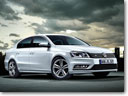
    Volkswagen has unveiled the new 2012 Passat R-Line, which is available from €30 225 in Germany. The R-line is based on the Euro-spec model and comes with complete aerodynamics package and some other nice upgrades.

    The exterior package includes a new front and rear bumpers, a pair of revised side skirts and a gloss black rear diffuser. The front grille features R-Line logo. The vision is further enhanced by a body-color roof spoiler and silver anodized roof railing for touring version.

    The features of the Passat R-Line, the dynamically tuned sports suspension, lowering the suspension by 15 mm belong (except for vehicles with DCC) and the 17” alloy wheels type “Mallory” in titanium silver with 235 mobility tires. An 18” set is available as an option.

    The interior features a lot of R-Line equipment – sports seats in design “Kyalami” the decorative inserts in “titanium silver” in the dashboard, door panels and center console. There is also a ts leather steering wheel and stainless steel elements on the pedals and the front door sill plates with R-Line logo.

    For the Passat and Passat Variant, there is now also an optional “R line package design” (for Comfortline and Highline). It includes the R-line bumper, the rear or roof spoiler in body color, newly designed side sills in styling as well as the R-R-Line logo on the radiator grille.

    The design package for the Passat and Passat Variant is a price of €990.

    2012 Volkswagen Passat R-Line
    2012 Volkswagen Passat R-Line

    Source: Volkswagen

  • 2012 Volkswagen Golf GTI Cabriolet combines open-air motoring and great performance

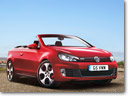
    The-Golf-GTI-Cabriolet-THUMB2012 Volkswagen Golf GTI Cabriolet is officially available to order at the brands retailers. This particular model is being on the top of the Golf Cabriolet range.

    This means that it combines the pleasures of practical and safe open-air motoring with great performance and on-road dynamics.

    What is more, the 2012 Volkswagen Golf GTI Cabriolet comes equipped with all the classic design cues. For instance, the radiator grille has a honeycomb structure with red edging and GTI badge. At the same time the front bumper embodies a deep honeycomb air dam and distinctive fog lights.

    In addition to all this are the side sill extensions which give the GTI Cabrio a wide and confidents stance. And the rear diffuser is framed by a chrome tailpipe on either side.

    Next, the LED tail lights complete the look and make the cabriolet model even more appealing. For the great visual contribute the standard 18-inch ‘Monza Shadow’ alloy wheels.

    What about the interior? Inside, one can four seats covered in the classic tartan “Jacara” cloth upholstery. This one comes as standard, while the “Vienna” leather upholstery is optional.

    Moreover, the bespoke GTI multifunction steering wheel, the handbrake and gear lever gaiter are wrapped in leather. All are finished with contrasting red stitching.

    It is also good to mention that the pedals have brushed stainless steel caps, while there are black ‘Edge’ decorative inlays on the doors and facia.

    More importantly, the hood can be folded away in only 9.5 seconds. It has a black lining, while the roof pillar trims are also finished in black.

    2012 Volkswagen Golf GTI Cabriolet
    2012 Volkswagen Golf GTI Cabriolet

    The engine information here is nothing surprising, because the GTI Cabrio comes equipped with the same 2.0-litre turbocharged four-cylinder petrol engine. The latter is mated to a standard six-speed manual gearbox as a standard. There is also a choice of an optional six-speed dual-clutch DSG gearbox, which produces 210 hp (155 kW).

    Given these facts, the acceleration from 0 to 100 km/h is achieved in only 7.3 seconds with either transmission. This Volkswagen comes with top speed of 147 mph and combined fuel consumption – 37.2 mpg (36.7 DSG). The CO2 emissions number is 177 g/km.

    To go further into details, the maximum torque that this vehicle can achieve is 206 lbs ft (280 Nm) and it is available from just 1,700 rpm to 5,300 rpm.

    The safety of the passengers and the driver is delivered by a comprehensive list of standard specification: automatic rollover protection, front and side head/thorax airbags and a driver’s knee airbag as standard.

    In fact, the model got a five-star (96 per cent) rating for adult occupancy in Euro NCAP crash tests.

    2012 Volkswagen Golf GTI Cabriolet is currently available to order with a starting price of £29 310.

    Source: Volkswagen

  • 2012 Volkswagen Polo R-Line – Price £15 815

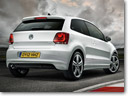
    Volkswagen Polo R-Line is based on the Match model and adds a lot of nice upgrades to make the small city car even more exclusive.

    The unique styling packa includes new front and rear bumpers, a black gloss radiator grille with R Line badging, deeper side sills and 16-inch ‘Mallory’ alloy wheels.  From the B-pillars back, the glass is dark-tinted and 65%  light-absorbing, while the standard front foglights also include a static cornering function.

    There are also scuff plates with R Line logos, sports seats with ‘Kyalami’ cloth upholstery and an R Line logo on the headrests, along with a leather-trimmed three-spoke steering wheel with R Line logo and aluminium-capped pedals, while the roof lining is finished in black cloth.

    The Polo R-Line is powered by a 1.2 liter 105HP TSI petrol mated to a 6-speed manual gearbox. 0-100 km/h in 9.7 seconds and a top speed of 190 km/h (118 mph). Fuel consumption is 53.3 mpg on the combined cycle, and CO2emissions are 124 g/km.

    The standard equipment includes an RCD 310 radio/CD player with six speakers and multi-device interface, for plugging in an iPod or other compatible device, ‘Climatic’ semi-automatic air conditioning, a multifunction trip computer, electric windows (including in the rear on five-door models), height-adjustable front seats, a split-folding rear-seat backrest, electrically operated and heated door mirrors, illuminated vanity mirrors, front and rear reading lights, a tyre pressure monitor and, of course, remote central locking.

    2012 Volkswagen Polo R-Line is priced at £15 815.

    Polo R-line
    Polo R-line

    Source: Volkswagen

  • 2013 Volkswagen Lavida with a world debut

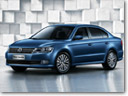
    2013-Volkswagen-Lavida-THUMB2013 Volkswagen Lavida is showcased for the first time at Auto China 2012. At the auto show it made its firs global appearance with its clean design and sharp body lines.

    The styling of this Volkswagen vehicle fully incorporates powerful, contemporary and sporty design philosophy. The Lavida is going to be offered in three engine versions and four equipment lines.

    The engine choices will be the 2.0-liter, 1.6-liter and a 1.4-liter turbo motor. The last one is able to develop 140 horsepower (103 kW).

    In addition, all versions of this model will come with a front-wheel drive. The transmition included will be either the manual six-speed gear-box or Volkswagen’s famous seven-speed dual-clutch system.

    In particular, the base version comes with standard safety features as ABS, ESP and front airbags. Of course, it also offers a timeless design, spaciousness and high-quality craftsmanship.

    However, additional details on specification, price lease or official launch of the new model, haven’t been yet released.

    More information is expected to come out prior to the launch of the 2013 Volkswagen Lavida, which will happen probably later this year.

    2013 Volkswagen Lavida
    2013 Volkswagen Lavida

    Source: Volkswagen

  • ABT 2012 Volkswagen Beetle – style and power

    ABT Sportsline has announced the new tuned Beetle, which comes with full exterior package as well as some performance modifications.

    The 2.0 liter turbocharged petrol is boosted to 240HP (176 kW) – an increase of 40HP. The exhaust system includes two oval ABT rear mufflers. An ABT Beetle is an everyday athlete and makes driving a real pleasure. The design elements turn this unusual car into a cheeky and dynamic sports car before you have even started the engine.

    The exterior features carbon-look highlighting the car’s charming individuality. The headlight covers make it look more aggressive. Rear light covers and a license plate insert lend the rear end more originality. The front spoiler signals that this beautiful sports car will never get off the ground.

    There are also sets of ABT wheels in DR or CR designs. These wheels are available from 18’’ to 20’’ and also in conjunction with the right sport tyres. This visual unit is completed by the ABT brake system, which you can tell by its black painted callipers bearing the ABT Logo.

    This turns the Beetle’s base into an eye-catcher, too.

    Finally, ABT adds sport springs for better handling and stance.

    ABT 2012 Volkswagen Beetle
    ABT 2012 Volkswagen Beetle

    Source: ABT

  • 2012 Volkswagen E-Bugster Concept makes debut in Beijing

    Volkswagen-E-Bugster-concept-THUMB2012 Volkswagen E-Bugster Concept is the successor of the emblematic Beetle and it will be exhibited for the first time in Asia during Auto China in Beijing. There it will show how sportiness can also be transferred to a Beetle with pure electric drive.

    The Concept vehicle is a two-seat Beetle speedster, 85 kW in power, and able to accelerate from 0 to 100 km/h in 10.8 seconds. The surprise here is that it is able to produce zero emissions.

    To go further into details, the central electric module of this Volkswagen has an innovative design. It weighs just 80 kg. The electric motor produces energy which is stored in a lithium-ion battery whose modules are housed in a space-saving location behind the front seats.

    The battery has an energy capacity of 28.3 kWh. In kilometers this means that the vehicle is able to cover the range of at least 180 km in the urban world.

    In addition, Volkswagen has included its special quick charging function, thank to which the battery can be ‘refuelled’ within 35 minutes at suitable charging stations. Of course, this battery can be charged at the convenience of the home environment through a conventional electric outlet.

    The interface for the charge cable is located behind the normal ‘fuel door’ near the C-pillar. Due to the new Combined Charging System it is possible now for the E-Bugster to be ‘filled up’ flexibly via one interface using any available charging modalities, such as single-phase charging with AC current or ultra-fast DC charging at charging stations (quick charge).

    Exactly how much energy the driver is requesting with the ‘electric pedal’ can be observed in a power display. In addition, there are also featured instruments which include a driving range indicator and a display showing the current charge state of the battery.

    Furthermore, there is also an instrument in the new Bugster, which shows the intensity of battery regeneration. What this means in short is that the regeneration actually is the recovery of braking energy. When the driver’s foot leaves the accelerator pedal and/or brakes, kinetic energy is transformed into electricity, which in turn is collected in the battery.

    This serves as a means to increase the driving range of the E-Bugster.

    2012 Volkswagen E-Bugster Concept
    2012 Volkswagen E-Bugster Concept

    Furthermore, the 2012 Volkswagen E-Bugster is in fact a sports car. This is due to its height of less than 1,400 mm, which is about 90 mm less than that of the hard top Beetle. In details, the E-Bugster’s width (1,838 mm) grew by 30 mm, while its length (4,278) remained the same as that of the production car.

    Another highlight here is that the E-Bugster has unique dynamic styling, due to a lot of new styling elements included in the model.

    Looked from the front, it is the swept-back and wide windscreen that catches the eye. The E-Bugster’s glass extends to a point above the A-pillars.

    In addition it includes LED headlights, highly customized, daytime running lights to the left and right of the central air intake as bands of LED lights in a C-shape. All these styling elements can be seen again in a transformed form as reflectors in the rear bumper.

    The rear windscreen of the E-Bugster is extremely wide as well.

    On the other hand a side view of the Bugster gives the observer the image of swept-back windows and a low roof. In addition, the designers lengthened the chrome strip of the lower window border towards the rear and it now runs once around the car, from A-pillar to A-pillar.

    Moreover, this electrified Volkswagen runs on 20-inch ‘Twister’ wheels, which are equipped with 235/35 R 20 tyres.

    What is left is of course the interior, which is spectacular. First of all it includes a combination of high-tech equipment. Secondly the dynamic performance reflected through the sport seats and a continuous centre tunnel in body colour.

    The door handles and the belt guides are made of aluminium, and in addition to this the lightweight construction styling of the steering wheel also creates a direct connection between the exterior and interior.

    Through the Start button, the driver not only activates the drive system but also puts a light show into motion. What happens is basically this: first, the interior is bathed in a white light, which eventually is substituted with blue light.

    Next, it begins as a light pulse in the instrument cluster, from which the light emanates as a thin line of light. The latter is just one millimetre wide and courses into the door window sills and around the air nozzles.

    Source: Volkswagen

  • ABT 2012 Volkswagen T5 Multivan

    ABT Sportsline has released their tuning program for the new Volkswagen T5 Multivan.

    “The car can manage a lot of (shopping) baskets and is fast and agile despite its XXL size.”, said Dirk Nowitzki, the world’s famous basketball player.

    The ABT T5 comes with complete aerodynamics package including a new front grille, a new front spoiler, a pair of modified side skirts and a new rear bumper.

    All components are perfectly matched; rear skirt and rear spoiler form a harmonious unit in combination with the exhaust system with its two double tail pipes, typical for the ABT Sportsline premium brand.

    Suspension is also revised in order to handle the additional power and to deliver more comfort in sporty driving.

    The exterior is completed by a set of new 19” DR sport rims wrapped in performance low-profile tires.

    There are also some performance packages for the whole range of engines: The 2.0 liter TDI with 84HP (62 kW) is boosted to 110HP (81 kW) and the 102HP (75 kW) version now delivers 130HP (96 kW). The powerful 140HP (103 kW) is boosted to 170HP (125 kW) and 400Nm (295 lb-ft) of torque.

    Last is the powerful 2.0 liter turbocharged TSI petrol having 240HP (176 kW) and 400Nm (295 lb-ft) of torque. 0-100 km/h in 9.4 seconds, which is pretty fast for a VAN.

    ABT 2012 Volkswagen T5
    ABT 2012 Volkswagen T5

    Source: ABT

  • Superchips ECU Volkswagen Polo GTI 1.4 TSI Twincharge

    Superchips-ECU-Volkswagen-Polo-GTi-1-4-TSI-THUMBYou might be not familiar with the fact that Superchips is the official Volkswagen Racing Tuning Partner in the United Kingdom for more than ten years now. For this reason the company has upgraded a model from the Polo Line-up, boosting its performance with ECU remap.

    The result is the Superchips ECU Volkswagen Polo GTI 1.4 TSI Twincharge.

    Being a standard Polo model, this VW delivers an excellent combination of light weight, small size and an economical, 1.4-litre, direct injection, petrol turbo / supercharged twincharge engine. More importantly this engine delivers the 180 hp (132 kW).

    However, now this clasic Volkswagen Polo GTI 180PS 1.4 TSI Twincharge has better performance due to the exceptional tuning from the Superchips specialists.

    In particular, the Buckingham based electronics experts have named this tuning package “ECU remap”. In general, the Superchips ECU remap gives the Volkswagen Polo GTI 1.4 TSI twincharge a healthy torque boosted from 2400 rpm upwards, which in addition now offers a maximum gain of 35Nm at 4315 rpm.

    Hence, the performance of the tuned car is now sportier, considerably livelier than the standard model, and significantly more responsive to the throttle.

    Superchips ECU Volkswagen Polo GTI 1.4 TSI Twincharge
    Superchips ECU Volkswagen Polo GTI 1.4 TSI Twincharge

    Source: Superchips

  • BBM Motorsport Volkswagen Scirocco

    BBM Motorsport is specializing in chip tuning, although the company is just five years old, they have a lot of experience in this field. The BBM Motorsport company is stemmed from Björn Berlemann (owner of the BB Chiptuning) and Marcel Wiechmann (co- owner of the ARTEVO Performance).

    BBS offers engine optimization software for premium brands like , BMW, Mercedes, Porsche, Seat, Skoda and Volkswagen. They also offer a wide range of tuning spare parts tools and accessories for the improvement of performance.

    The company also offers big brake system in order to grant additional safety. Those who prefer to change the outside appearance will find a wide range of BBM wheels or will get an advice on car wrapping foil for greater optic changes. All items are offered for direct purchase and can include installment.

    An interesting option is that the customers can test the offered improvement of performance by BBM for three days with no strings attached, and in case of eventual withdrawal pay a low administration fee.

    A new master shop for wear and tear repairs is the BBM Motorsport’s new support. Each customer’s vehicle is supervised here by Dorian Beer, a master of car bodywork who optimally carries out the inspection or specific repair works.

    Marcel Wiechmann and Björn Berlemann’s team is available workdays – 10:00 to 18:00, and also on Saturdays upon request.

    BBM Scirocco
    BBM Scirocco

    Source: BBM

  • 2012 Volkswagen CC UK – Price £24 200

    Volkswagen UK has released full price list of their latest four-door coupe – CC model. It starts at just £24 200 OTR for the entry-level with 1.8 liter TSI engine and goes up to £30 100 OTR for the top-of-range GT 2.0 liter TDI equipped with DSG and BlueMotion Technology.

    The standard equipment is very generous though. That includes RNS 315 touchscreen satellite navigation system, DAB digital radio, iPod and Bluetooth connectivity, 2Zone climate control, 17-inch alloy wheels, bi-xenon headlights and brake energy recuperation.

    Safety features are also at good level – a driver alert system, ESP electronic stabilisation programme and four-way adjustable front head restraints, to reduce the risk of whiplash.

    The top of range GT trim adds heated front seats, full Nappa leather upholstery, three-mode adaptive chassis control, cruise control, front and rear parking sensors, 18-inch alloy wheels, front fog lights and heat insulating tinted glass from the B-pillar back.

    The options list can make you CC unique. It includes High Beam Assist, which automatically controls dipping of the headlights; Side Assist, which monitors the vehicle’s blind spot; Lane Assist and adaptive cruise control with City Emergency Braking function; a rear-view camera; front climate seats with massage function; and an electrically deployed towbar.

    There is no doubt that the new 2012 CC is a good choice, if you seek something different on the car market.

    Check out the price list below!

    2012-Volkswagen CC UK
    2012-Volkswagen CC UK

    Volkswagen CC model line-up and pricing

    Trim
    level
    Engine
    derivative
    CO2,
    g/km
    Combined
    mpg
    Price, £
    RRP OTR
    CC 1.8-litre TSI 160 PS 6 spd manual 165 39.8 24,200
    CC 1.8-litre TSI 160 PS 7 spd DSG 167 39.2 25,760
    CC 2.0-litre TDI 140 PS 6 spd manual BMT* 125 60.1 25,345
    CC 2.0-litre TDI 140 PS 6 spd DSG BMT 139 53.3 26,810
    GT 2.0-litre TSI 210 PS 6 spd manual 171 38.7 28,285
    GT 2.0-litre TSI 210 PS 6 spd DSG 182 36.2 29,685
    GT 2.0-litre TDI 140 PS 6 spd manual BMT 125 60.1 27,570
    GT 2.0-litre TDI 140 PS 6 spd DSG BMT 139 53.3 29,035
    GT 2.0-litre TDI 170 PS 6 spd manual BMT 129 57.6 28,620
    GT 2.0-litre TDI 170 PS 6 spd DSG BMT 144 51.4 30,100

    * BMT denotes BlueMotion Technology
    Source: Volkswagen

  • Turbochargers Explained

    Turbocharged-badge-thumbEver wondered how WRC cars manage to deliver 300 bhp and above from an engine that, by rule, cannot exceed 2.0 liters of displacement? How on earth do the heavy, low-revving diesel engines in cars today stay competitive? Or what is it that makes it possible for the Bugatti Veyron to break the 1000 bhp threshold? Well, it certainly isn’t witchcraft. By means of “forced induction”, turbochargers today boost the automotive industry to a new direction of smaller, more-efficient and bloody good fun engines.
    Volkswagen like to brand their most successful turbo diesel range as TDI while Porsche, being more plain about it, call their turbocharged cars, Porsche (insert model here) Turbo. BMW, on the other hand, would never hesitate to utter their own terms like “bitrubo” or “TwinPower” whenever describing the latest M5 engine. The variety of depicting turbocharged cars is bountiful, but essentially the principles of work remain the same in every case.

    Beware reader, as I am now going to get technical:

    In order to understand how a centrifugal turbocharger works, one must also have some basic knowledge on how four-stroke, piston engines work. We have an engine block that contains the cylinders, right? Inside each cylinder, a piston moves up and down. Every movement made is a phase, a stroke. First we have intake – a mixture of fuel and air is sucked into the cylinder. Compression is the second stroke where the cylinder moves up and…well…compresses the molecules in the mixture. The next ignition stroke is downwards as the piston experiences pressure coming from the combustion of the mixture. The exhaust stroke has the job to expel the remaining gases through the exhaust valve. Then the intake valve lets in a new batch of fuel mixture and thus the process is repeated.

    However, as far as turbochargers are concerned, exhaust gases are not exactly throw-away material. Put simply, the turbocharger utilizes the energy of exhaust to compress the the newly arrived batch of air which is to be shoved in the cylinder. More air molecules means that more fuel can be injected into the mixture and more fuel means more power.

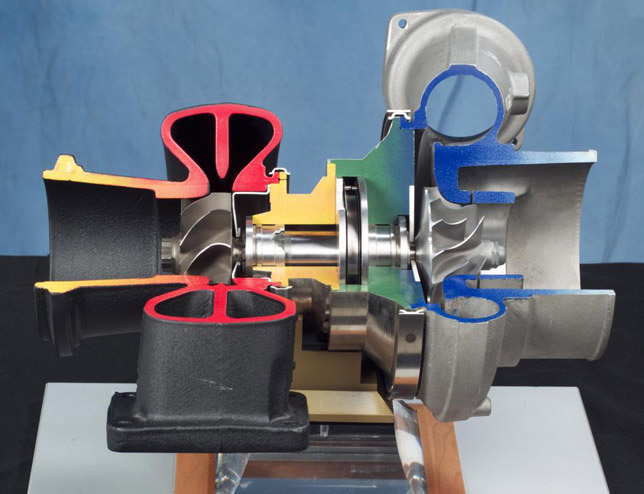
    Before those exhaust gasses reach the exhaust system they go trough a turbine connected to a shaft. The more exhaust that goes through the turbine blades, the faster they spin. On the other end of the shaft we find a compressor which welcomes fresh air from the atmosphere, compresses it using the force of the turbine and then feeds it into the engine. To further increase the efficiency of the turbocharging system, an intercooler is added – it looks much like a car radiator but instead of containing cooling fluid, it holds the compressed air from the compressor. Air is denser when cooler and that’s exactly what the intercooler does – it cools the incoming air.

    Cut-away view of a turbocharger held by a foil-bearing
    Cut-away view of a turbocharger held by a foil-bearing

    There are issues however. First of all, a turbine amidst the flow of exhaust is essentially an obstacle. The exhaust stroke has to deal with more back-pressure thus being slightly less efficient. A functional turboshaft has to handle extreme forces (speeds go up to 150 000 rpm within the turbocharger) so a special kind of baring is needed – liquid ones or state-of-the-art ball bearings. The latter is more efficient but more expensive. Then there’s the dreaded turbo lag. The problem here is that when you put your foot down, the response is far from electric. The turbine needs some time to kick off and start spinning the compressor blades. That’s why at low engine rpm one can’t really tell if the car has a turbo or not.

    There are various ways to tackle this nuisance. Make things smaller and lighter. Tiny turbochargers will grant you that off-the-line jolt but won’t be too good on the upper rpm range. Besides, if too much exhaust starts going through a relatively small turbine things may get hot and disbalanced. Usually however, there’s the wastegate in most turbines – a valve that knows how much exhaust passes through and regulates the flow by simply diverting some of the gases away from the turbine. Some companies have started putting more than one turbochargers in their cars. One small and the other, big. The small one guarantees a more immediate response while the big one takes over at higher speeds.

    Essentially, that’s the story with turbochargers. We can further dive into numbers and calculations about pressure and efficiency but this, I think, is already nerdy enough. Hopefully some of you learned something new while others refreshed their memory on how the turbocharger brings easy power to our everyday lives.