One of Volkswagen‘s most practical and fuel-sipping cars is now available with the best possible efficiency setup. Introducing the Up! BlueMotion with two engine variants. However, to prevent the scales from tipping over too much to the “blue” side of things, the company has also introduced two exciting new options – A panoramic sliding sunroof and a thing called the “leatherette pack”
First stop, the engines. We have two 1.0 liter engines that develop 60 bhp and 75 bhp respectively. They already sound frugal enough but now with the introduction of the BlueMotion package it is claimed that they both have a combined fuel consumption of 4,1 l/100 km and 4,2 l/100km. Really? A tenth of a liter more overall consumption for the prize of 15 horsepowers? Who is going to buy the less-powerful version? It’s the same story with the CO2 emissions – 96 g (60 PS) and 98 g (75 PS).
The BlueMotion technology manifests itself through the presence of a Stop/Start function, a battery regeneration system and also, both of the cars are more slippery by being 15 mm lower than usual. It’s not rocket science, I’ll have to admit. But the combination of all these tweaks gives an astonishing end result. And the price for this whole BluePackage is only 400 euros ($537).
The panoramic sliding sunroof on the other side, with its electric adjust ability and overall flexibility allows some fresh air to come in and clear your head from all those economy figures. It is a playful, ambiance inducing feature that costs an additional sum of 880 euros ($1183). In the mean time, the leatherette package provides a leather steering wheel, hand brake lever and gear shift grip also in leather and heated front seats in leather look with white decorative stitching – 760 euros ($1022) if one has the move up! trim line or above.
2012 Volkswagen Golf Cabriolet will be presented at the Geneva Motor Show, next week. It features four-seats, electrically powered fabric roof, performance and practicality.
The Golf GTI Cabriolet features all performance GTI design cues including radiator grille has a honeycomb structure with red edging and the GTI badge, a new front bumper incorporating incorporates a deep honeycomb air dam and distinctive vertical fog lights. There are also side sill extensions, a bespoke rear diffuser with a chrome tailpipe on either side. Last, but not least, the smoked LED tail lights complete the aggressive look. The ride is lowered and sits on 17” Monza alloy wheels.
The interior boats classic tartan Jacara cloth upholstery, while the Vienna leather is optional. There is a bespoke GTI multifunction steering wheel wrapped in leather as well as the handbrake and gear lever gaiter, all finished with contrasting red stitching. The pedals are in brushed aluminum and the doors and facia have black Edge decorative inlays.
The new GTI Cabrio is powered by the same 2.0 litre turbocharged four-cylinder engine found in the GTI hatchback. It is mated to a 6-speed manual as standard and there is an option for 6-speed dual-clutch DSG gearbox. The engine produces 210PS (154 kW) at 5300RPM and 280Nm (207 lb-ft) at 1700RPM. 0-100 km/h in 7.3 seconds and a top speed of 237 km/h (147 mph).
A standard EDS electronic differential lock and XDS transverse differential lock help to ensure that the power is easily transferred to the road and the driver has maximum traction at every conditions.
Like all Golf Cabriolet models, the GTI comes with automatically deploying rollover protection, front and side head/thorax airbags and a driver’s knee airbag as standard, all of which helped it to achieve a five-star (96%) rating for adult occupancy in Euro NCAP crash tests.
2012 Golf GTI Cabriolet will hit the UK market in the second half of the year.
Volkswagen has announced the new Caddy Match Special Edition, which is already available at the UK market. The pricing starts at £14 110 for the entry level Caddy Match 1.6 litre TDI 75PS and goes up to £17 960 for the Caddy Maxi Match 2.0 litre TDI 140PS.
The Caddy Match adds equipment for £1 750 over the normal model. It includes AC, Bluetooth connectivity, electric windows, electrically operated and heated door mirrors, cruise control, trip computer, body-coloured bumpers and door mirrors, plus exclusive wheel trims. The options list includes DSG dual-clutch gearbox.
Volkswagen Commercial Vehicles also offers fixed-price service plans from £250 (plus VAT) for three years or 30 000 miles.
2013 Volkswagen Beetle TDI will be revealed at this year’s Chicago Auto Show.
The new diesel powered Beetle does not have any exterior modifications except “TDI” badge, some more chrome and 17” alloys. Inside, there is a new instrument cluster with a stopwatch, oil temperature and turbo boost gauges.
The model line-up includes three trim levels: TDI, TDI with Sunroof and TDI with Sunroof, Sound, and Navigation. Standard equipment includes power windows, cruise control, V-Tex Leatherette seating, the kaeferfach secondary glovebox, Bluetooth®, a leather-wrapped multifunction steering wheel with audio controls, three auxiliary gauges, Keyless entry with push-button start, and a Media Device Interface with iPod® cable.
The base TDI has 17” alloy wheels, and an interior and exterior chrome package. The standard RCD310 audio system has an AM/FM radio, CD player, Bluetooth®, and eight speakers.
TDI with Sunroof adds a panoramic tilt/slide sunroof that is fully 80 percent larger than the one fitted to the New Beetle. The model’s Premium VIII audio system has a full-color touchscreen display, a six-disc CD changer, and an SD card reader.
TDI with Sunroof, Sound and Navigation is the top-of-range model. It has the RNS 315 NAV system with a 5” touchscreen display. The Fender® Premium audio system that offers concert quality sound is also standard. This has an additional subwoofer, proprietary Panasonic® speaker technology that covers the cabin with directional sound, and 400 watts of output power.
2013 Beetle TDI is powered by a turbocharged 2.0-liter diesel engine with 140 PS (103 kW) and 320Nm (236 lb-ft). It is available with a choice of 6-speed manual or dual-clutch DSG transmissions.
The 2013 Beetle TDI will hit the US market this summer.
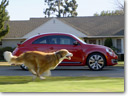
Volkswagen of America Inc. have revealed their third consecutive ad campaign project for the Super Bowl. On their YouTube channel we can watch a 0:75 extended commercial that is due to air on Game Day in a 0:60 second form.
“This is a perfect opportunity for Volkswagen to celebrate with the fans that have made 2011 such a record-setting year for the company,” said Tim Mahoney, Chief Product and Marketing Officer, Volkswagen of America, Inc. “This year’s commercial will build on Volkswagen’s ability to tell human stories simply while continuing to build on the brand’s momentum in the year ahead.”
All formalities aside, VW seem reluctant to drop the Star Wars theme despite the fact that the one now, seemingly has nothing to do with drones and Darth Vader. If you remember last year’s commercial, “The Force” spot, features a young Darth Vader who seems determined to make something work with “the Force”. Needless to say that with a little help of the father in the house, the youngster manages to fire up a VW Passat. The commercial went on to become a viral hit with almost 7 million views on YouTube.
This year, VW released a teaser with an ensemble of dogs that bark out the “Imperial March” and now we have a fully revealed commercial. It features an obese dog which for some reason is unable to get out of the house (supposedly opening the door is not an option). After realizing that there is a good chance of having the opportunity to run along a VW Beetle just for the fun of it, the dog goes on a strict diet and engages in an intense workout. Then there is the Star Wars intermission – the commercial is being watched in the iconic Cantina introduced in Star Wars Episode IV where a rather grown up Darth Vader makes a cameo. We also have that loopy tune from the alien jazz band stuck in our head now.
The newest VW Beetle is funky, hip and image laden. So one might think there is no real need to further personalize. Accessory house JE Design however, thing they can push the boundaries of individualism even more.
The Beetle’s chassis for example has underwent JE specialty tuning by replacing the springs with ones that are more stiff so that body roll is reduced to minimum. Despite being shorter (around 30-35 millimeters) than the standard springs, no shock absorber change is needed, The JE Design spring kit is available for 219 euros ($289) in Germany.
8 x 19 inch, exclusive black “Tornado” Volkswagen, multi-spoke alloys can be provided by JE Design. They can be fitted with the standard 235/40 R19 or to do the honor of those 16-spoke wheels one can fit them with even lower profile tires (235/35 R19). Four finishes are available for the rims: black mat spokes and a mat silver rim flange, graphite mat silver spokes with a mat silver rim flange, shadow silver and black shiny spokes with a shiny silver rim flange. The complete JE Design wheel set has a starting price of 2,810 euros ($3,702).
Other distinctive features include a sporty apron insert (476 euros/$627) that comes with a diffuser and a centered air duct. Another thing is the steel muffler developed for the VW Beetle, with a round 90 millimeter large twin tailpipe as a four pipe design and is compatible with all gasoline and diesel motors. That will send you back further 952 euros ($1,254). Needless to say that all JE Design components come with TÜV certificates.
For the VW Beetle Sport which already has 200HP2.0 Golf GTI TFSI engine can also be tweaked by JE Design with an engine management module that kicks it up a notch to 240 HP while torque peaks at 310 newton meters. The time for a zero to sixty sprint stands at 6.9 seconds and top speed reaches 230 km/h. That privilege costs another 1,280 euros ($1,686). After the upgrade emission status remains the same so no road legal issues should follow. All is again TÜV certified.
Can you believe that at first the now so popular Volkswagen Beetle was firstly intended to be a mass-production car, which can be afforded by an average person? Well, the beginning of the story of the famous car started just like that in pre Second World War period. The history of the emblematic car began in 1934, when Hitler himself, announced his vision for a “peoples car”. To be more precise the literal meaning of Volkswagen is “peoples car”, this is how the brand actually got its name. The most famous car designer at that time – Ferdinand Porsche – was entrusted to construct the vehicle. However, Hitler insisted on his own vision of the car, which must carry two adults and three children and have a low consumption of gasoline. However, the most prominent factor had to be the price – 1000 Reichmarks, which for Ferdinand Porsche seemed to be unreasonably low.
The first prototypes called “Type 60” came out in the 1935, and included one saloon model and one convertible. These vehicles were made from alluminium mounted on wooden frameworks. All this represented the body. A year later the bodies were mounted on steel floor panels. The top speed of the car was estimated around 105 km/h. As expected, this provoked a huge interest among Germans, and everyone wanted to buy a car. Hence, this led to the construction of factory in 1938. Nowadays this same factory is the biggest factory in the world. The name for the future Beelte was chosen by Hitler himself, and meant literally “Strength through Joy Car” – KDF Wagen (or Kraft Durch Freude Wagen). However, as we all are familiar, in 1939 the Second World War began, and hence the production changed its purpose. Now it was for military vehicles.
1938 Volkswagen Beetle Original
The war eventually ended in 1945, but the production of the Volkswagen continued. However, it was much slower than the pre-war. Cars were put together with the last materials left from the bombardment and stored in the basement. In contrast just a year later, the production of the vehicles was 1000 a month. It is almost unbelievable that the numbers of the manufactured cars went to 19 000 in 1948, and the astonishing 46.000 in the next year. In this year the range of the produced Volkswages was extended. It now featured two different convertibles, one with two seats and one with four.
The 1000th Volkswagen Beetle built in 1946 coming from Assembly Line
The 50’s was a prominent decade for the famous vehicle, where the tradition was established. Moreover there were so many additional changes added, which improved the performance of the car. One example is that there were included hydraulic brakes. Another good instance is the 15×5 inch tires, or the taillight of each rear fender. However, probably one of the most important changes in the design that has been made during the 50’s the single oval rear window which took the place of the two-piece one, and thus improving the visibility. In this decade the engine grew to a full 1.2 liters one. Interesting information to be shared is that during 1955 and 1956 there was a Beetle Deluxe, which was the only model of the vehicle exported to the U.S. Although there were a lot of modifications made further throughout these ten years, the Volkswagen remained a slow car, which was considered a huge problem. In the 1956 for example the car acceleration from 0 to 50 km/h was made in 7.5 second, the top speed was just 110 km/h. Nonetheless, people bought the car with eagerness. At the end of the year of 1959 there were in total 575 407 cars sold. Furthermore, 120 442 Beetles of these were sold only in the U.S.
The great success achieved in the 50’s is what made the Volkswagen Beetle and Icon in the next decade. The elements of the new 60’s Beetle were even more enhanced: new steering wheel, better seats design, and plastic headliner. Moreover the fuel tank was redesigned to make more space for the luggage. More importantly, during the first years of the decade there was included a conventional fuel gauge and bigger taillights. In the mid of the decade there was included a new powerful motor and by the end of the 60’s there’s a new 1.5-liter engine, making 53 HP (39 kW). However the car was still not fast enough, although the acceleration form 0 to 50 km/h went to 5.9 seconds. A huge innovation in technical terms was the introduction of the new optional Automatic Stick Shift semiautomatic transmission in 1968. It allowed the driver not to press the clutch pedal while shifting the gear.
However, in the 1970’s the picture weren’t that much successful as was the previous decade. There were several reasons for that, but probably most significant is the presence of other competitor companies like Renault and Toyota on the market. So during the 70’s the fame of the Beetle slowly began fading away. Of course there were a lot of innovations included in the car during these years. In the beginning of it the engine grew to 1.6 liter and now produced 60 HP (44 kW). But again the acceleration was literally disappointing. In the ext years, the Beetle got another significant change that has to be marked – this time in suspension. It adopted MacPherson strut front suspension. This was the beginning of the model, called “Super Beetle”. Of course during those years the car underwent a lot of modifications in order to keep with the trend. Unfortunately, the start of the end of an era was marked with the closure of the VW’s plant in New Zeland in the beginning of the 70’s. Another important factor for the waning fame is the start of the production of the replacement of the Beetle, which was named Volkswagen Golf. This led to more factories which didn’t produce more Beetles and slowly it’s popularity due to lack of innovations and improvements of technology began fading away.
1970 Volkswagen Beetle
In the eighties the production of the iconic vehicles continued, however strongly narrowed to only one plant on Mexico. In addition this plant stopped exporting vehicles for Europe and it was used mainly as a taxicab in Mexico. This plant continued producing Beetles till the first years of the 90’s too. And more interestingly it even produced the 21st million Beetle. However the end was near and the plant ceased working. In the end of the 90’s the designers from Volkswagen decided to revitalize the iconic car. Thus in 1998 was produced (again in the plant in Mexico) a more stylish variant of the vehicle. It now produced the 115 HP (84 kW), had 2.0 liter engine, five-speed manual or four-speed automatic transmissions, and independent suspension. At the end of the 1999 the Beetle included ABS brakes, 150 HP (111 kW) turbocharged 1.8 liter engine.
The beginning of the new Millennium was successful too. In the 2002, there was made a sporty model, called Beetle Turbo S, with venerable 1.8T turbocharged engine, which made the total 180 HP (133 kW) at 5,500 rpm and 173 pound-feet of torque from 1,950 rpm to 5,000 rpm. Due to these numbers in the model was included for the first time a six-speed manual transmission. However there was still something missing, and this time it was something which had to remind the customers for the original Beetle. In 2003 Volkswagen launched a brand new redesigned Beetle Cabriolet with 2.0-liter and 1.8T engines. Since then the brand continued producing the emblematic vehicle further enhanced and improved. In 2006 the brand revealed its “new” Beetle (including a convertible model) which had a subtle but stylish new look that fashionably updates. Yet, it maintained the core emotional appeal of the iconic Beetle design. It got the 2.5 liter, five-cylinder engine which creates 150 HP (84 kW). Another significant technical update here was the standard traction control with Electronic Stabilization Program (ESP).
Now, in 2012, we are about to see the coming of two Beetle versions. The first one is, to say so, a regular one, with improved design, aerodynamics, modern interior and appealing exterior. The second one, in my opinion, is a pure development of the iconic car. Moreover it matches the “demands of the times” and is purely … electric! It is named Volkswagen E-Bugster, and although it is still in a concept mode, it is electrifying! This concept vehicle was revealed at the 2012 North American International Auto Show in Detroit. The new two-seated E-Bugster continues Beetle’s sporty theme, but is powered by an electric motor which provides 85 kWh of power.
2012 Volkswagen Beetle
2012 Volkswagen E-Bugster Concept
To sum up, the Volkswagen Beetle has almost 80 years old history and more importantly – it continues it nowadays successfully. Although it remained mostly unpopular with its original name, which is Volkswagen Type 1, the Beetle remains the longest-running and most-manufactured car of a single design platform. In the world all-in-all there are over 21 million manufactured models of the emblematic Volkswagen.
Volkswagen brought the Middle East some German engineering by presenting the VW Passat at the Qatar Motor Show. Although, widely popular in Europe and North America, the Passat made its debut on Middle Eastern soil.
“The Passat is an important component of our model strategy in the Middle East region where classic saloons define the street scene. That is because the Passat delivers top levels of safety and comfort and offers more space for rear passengers due to its long wheelbase,” explained Dr. Ulrich Hackenberg, Head of Development and member of the Board of Management of the Volkswagen Brand.
The version showed there was actually the North American make (slightly bigger than the European sister car). Power comes from the 125 kW/170 PS five-cylinder petrol engine that bares an essence of German sensibility and efficiency. Even the base model is bundled with neat luxuries that bring comfort to both driver and passengers – a 6.5-inch TFT touchscreen, CD-radio, Bluetooth telephone system, electric windows, air conditioning, heat insulating glass and cruise control. Safety standard equipment also make a handful with ABS/ESP, brake assist and six airbags.
VW Passat at Qatar Motor Show (2012)VW Passat US Version (2012)
Other notable appearances include the Amarok with a faster, more economical 8-speed autobox and the 228 kW/310 PSTouareg Magic Morning – a road going version (despite the still present safety cage) of the original Race Touareg 3 that has been to the Dakar Racing.
VOGTLAND is a company with a long lasting experience in suspension tuning and coil-spring production. Now they have a new product exclusively for vehicles with air-suspension chassis as standard. It is an electric module that basically overrides the function of whatever the air suspension and the user has a more viable access to vehicle height control.
The benefits that can come out of this are in favor of the dynamics. Suspensions can be lowered by up to 40 millimeters and as we all know the lower the center of gravity, the better the handling. Besides it just looks more cooler the lower it gets.
Installation depends on model of the vehicle but it is generally easy and seamless. Just pluging in all the connecting cables to the steering electronics of the on-board power supply will do the trick. The module is 100% compatible with standard equipment so any other systems that the chassis might have, can function without a problem. Deinstallation is just as easy, taking up only minutes of the customer’s time. Various cars, SUV’s and such, made by Audi, Bentley, Land Rover, Mercedes-Benz, Porsche and Volkswagen can be fitted with VOGTLAND‘s module in question, For more information you can check out their website at: www.vogtland.com
Volkswagen begins the year with the release of the all-new 2012 Volkswagen Passat CC, which now delivers more luxury, style and new technologies. The model of the Volkswagen has made its first appearance last November at the Los Angeles Auto Show. However, until now it wasn’t presented to the European Market. The launch of the avant-garde four-door begins with the international driving presentation in Southern France. And if you wonder when exactly the car will be possible for purchase – the new Volkswagen CC will be in dealerships at the beginning of February. Firstly it will be available in Germany and Luxembourg, and then across Europe at the end of February. Additionally in the spring of 2012, this Volkswagen will then launch globally – included are America, Russia and Asia.
To go back in time, the Volkswagen CC made its debut in 2008. Then it won the audience, firstly because it was the world’s first four-door coupe in the 30,000 to 40,000 dollar and euro class. For this reason the segment quickly grew: up to date, nearly 320,000 people around the world have chosen the saloon with the stylish lines of a sports car. Private customers enjoy the alternative to the classic saloon as much as business customers who drive a lot of miles who made the Volkswagen CC the new ‘business class’ soon after it launched. A year later the CC also won some important awards: the ‘iF Product Design Award’ (iF Industrie Forum Hannover), the ‘red dot Design Award’ (Design Centre of Nordrhein Westphalia, Essen) and the Australian ‘Design Award’ (Australian International Design Awards, Sydney). Obviously the design of the model and the style it delivers made an excellent impression on the experts.
2012 Volkswagen Passat CC
The new 2012 CC received a completely redesigned front and rear sections, in order to give them more precision and adapt them to Volkswagen ‘design DNA’. Hence all this results in even more sophisticated and dynamic overall appearance of the vehicle. Moreover range of standard equipment is now extended and includes features such as bi-xenon headlights with static cornering lights; a new LED rear lighting design; fatigue detection; RCD 310 radio-CD system; stainless steel door sill plates and front comfort head restraints with additional front-rear adjustment. The multifunction leather-wrapped steering wheel comes also as a standard but only for German customers. Furthermore, new assistance systems are now available on the Volkswagen CC. In details, they include optional technologies such as Dynamic Light Assist (automatic main beam control) and a camera based traffic sign detection system. For the first time on a Volkswagen there is featured the Side Assist Plus including Lane Assist, which warns of vehicles in blind spots and supports the driver via steering intervention. Meanwhile, the optional climate seat with integrated massage function optimizes the comfort.
2012 Volkswagen Passat CC
To go further into details the new 2012 Volkswagen Passat CC is going to be offered with the variety of six engine choices. The CC will be powered by innovative petrol and diesel direct-injection engines. All of the diesels (TDI) are equipped with a Stop/Start system and battery regeneration mode (which recovers braking energy) as standard equipment. All petrol engines also have battery regeneration functionality. Moreover, the TDI engines have outputs of 103 kW / 140 PS and 125 kW / 170 PS. The third turbodiesel to be offered in the Volkswagen CC is a BlueTDI which also has an output of 103 kW / 140 PS. More importantly this is one of the few engines in the world that already meets the Euro-6 emissions standard. How about the petrol engines of the European CC versions? They develop an impressive 118 kW / 160 PS, 155 kW / 210 PS and 220 kW / 300 PS of power. Another highlight to be mentioned is that all engines up to 210 PS may be paired with a dual clutch gearbox (DSG) as an option. In conjunction with the 103 kW TDI (manual gearbox version) and the 125 kW TDI (DSG version), the Volkswagen CC will also be offered with the optional 4MOTION all-wheel drive at a later time. Furthermore the six-cylinder version (300 PS) will be delivered with DSG and 4MOTION all-wheel drive as standard equipment. Of course, the TDI engines with DSG also have a free-wheeling function. The latter function decouples the engine as soon as the driver’s foot leaves the accelerator pedal. In the design of the engines, the aim of the engineers was to maximize efficiency. For instance take the 140 PS TDI: in the standard version with a manual 6-speed gearbox, it consumes just 4.7 l/100 km (equivalent to 125 g/km CO2). These numbers show that the vehicle consumes very little fuel for a long-range saloon that can go at 214 km/h.
Need more stance! Obviously the Volkswagen Caddy is not the best eye-catcher in its factory version. That’s why, the company MR Car Design from Erftstadt has virtually transformed the high roof combi into something unique and low… very low!
The tuned Caddy is fitted with air suspension on the front and rear axle, which can be adjusted either remotely or automatically. Each axle can be height adjusted separately, so if you want you can lower only the front end or the rear one. The result is really impressive and the Caddy III has unique stance.
In addition, this version is made for craftsmen with extreme load because of the leveling. To get the Caddy a little from the truck corner, the Erftstadt have sensibly used Rotiform-alloy wheels in dimensions 8.5J x 19” fitted with 225/35 R19 tires.
This Caddy associated with the current VW face since a facelift for summer 2010 – at least as it now stands in front of the inclined viewer thanks to MR Car Design – wants more, especially because a number of engine variants is available , depending on the intended replacement option.
Volkswagen managed to get four awards from the prestigious What Car? contest. The famous 2012 Volkswagen Up! claimed Car of the Year as well as the best City Car award. Other two victories are for Small Family Car – Volkswagen Golf VI and the coveted Safety Award.
“The Volkswagen up! sets new standards for a car at £10,000. It’s a city car that can seat four adults, while offering new levels of refinement, quality and maturity at this price; none of its rivals feels quite so grown-up. Buyers will be looking for even more for their money than ever in 2012, so the up! is a worthy winner of the What Car? Car of the Year.”, said What Car? editor-in-chief Chas Hallett.
The Safety Award was in large part the result of the availability of Volkswagen’s innovative City Emergency Braking system on the Up!. Although safety features are no longer the preserve of larger, more expensive models, the judges were impressed by this particular example of ‘big car’ technology filtering down to a smaller model. The system uses sensors to scan the space ahead, then applies the brakes automatically if it detects that the car is about to hit an object in front. City Emergency Braking costs from just £225.
The Up! is available to order now, with prices starting at £7 995 (RRP OTR) and with the first models arriving in showrooms in March.
 One of Volkswagen‘s most practical and fuel-sipping cars is now available with the best possible efficiency setup. Introducing the Up! BlueMotion with two engine variants. However, to prevent the scales from tipping over too much to the “blue” side of things, the company has also introduced two exciting new options – A panoramic sliding sunroof and a thing called the “leatherette pack”


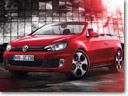 2012 Volkswagen Golf Cabriolet will be presented at the Geneva Motor Show, next week. It features four-seats, electrically powered fabric roof, performance and practicality.


 Volkswagen has announced the new Caddy Match Special Edition, which is already available at the UK market. The pricing starts at £14 110 for the entry level Caddy Match 1.6 litre TDI 75PS and goes up to £17 960 for the Caddy Maxi Match 2.0 litre TDI 140PS.

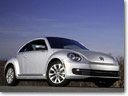 2013 Volkswagen Beetle TDI will be revealed at this year’s Chicago Auto Show.


 Volkswagen of America


 The newest VW Beetle is funky, hip and image laden. So one might think there is no real need to further personalize. Accessory house JE Design however, thing they can push the boundaries of individualism even more.


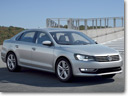 Volkswagen brought the Middle East some German engineering by presenting the VW Passat at the Qatar Motor Show. Although, widely popular in Europe and North America, the Passat made its debut on Middle Eastern soil.


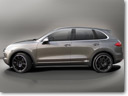 VOGTLAND is a company with a long lasting experience in suspension tuning and coil-spring production. Now they have a new product exclusively for vehicles with air-suspension chassis as standard. It is an electric module that basically overrides the function of whatever the air suspension and the user has a more viable access to vehicle height control.


 Need more stance! Obviously the Volkswagen Caddy is not the best eye-catcher in its factory version. That’s why, the company MR Car Design from Erftstadt has virtually transformed the high roof combi into something unique and low… very low!


 Volkswagen managed to get four awards from the prestigious What Car? contest. The famous 2012 Volkswagen Up! claimed Car of the Year as well as the best City Car award. Other two victories are for Small Family Car – Volkswagen Golf VI and the coveted Safety Award.


