Tag: Concept

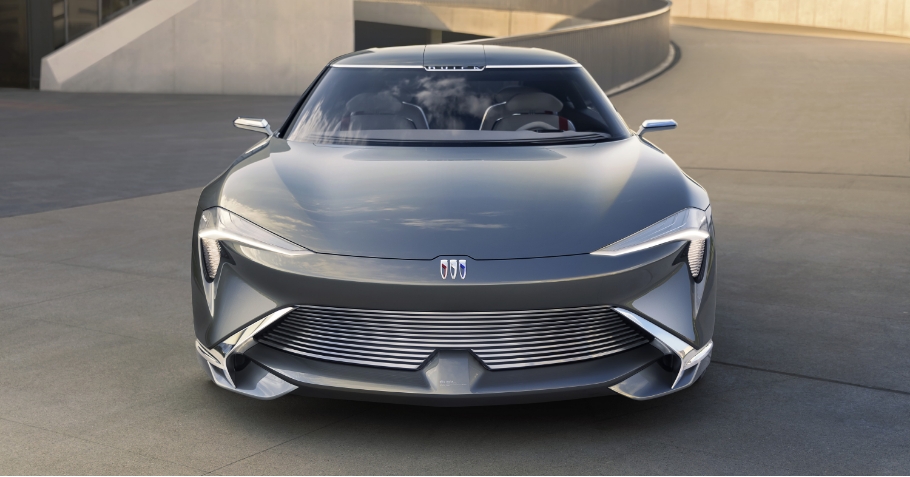
  • Buick Unleashes Wildcat EV Concept

    2022 Buick Wildcat EV Concept

    Buick today unveiled the Wildcat EV concept — an expressive vision of the brand’s new design direction as it transitions to an all-electric future.

    The Wildcat was developed to convey the all-new design language that will influence Buick production models for the foreseeable future. Buick’s new tri-shield logo, mounted prominently on the body front and rear, symbolizes the design transformation and new production models will wear it starting next year.

    “The Wildcat EV concept represents the real design future for the brand,” said Sharon Gauci, executive director, Global Buick and GMC Design. “Buick has always been forward looking and this expression is a glimpse of where we’re going, and the optimism we have for the limitless possibilities of an electric future.”

    https://www.youtube.com/watch?v=WjrZvFab8u4

    The Wildcat EV concept also introduces a new, expressive face for Buick, distinguished by a bold, forward-leaning front-end appearance that features a low-mounted, trapezoidal grille. Sharp, high-mounted and horizontal check mark-shaped lighting flanks the vehicle, while the outer edges of the grille house primary lighting. The lighting elements are configured to create a unique welcome choreography when the driver approaches.

    Further, the vehicle — a 2+2 coupe — strikes a powerful, expressive presence, with an all-new, laid-back proportion complemented by a low, wide stance. The windshield wraps around and flows into the side glass, which tapers dramatically with the fast roofline to accentuate the aggressive profile.

    “From every angle, the vehicle looks like it’s ready to pounce,” said Bob Boniface, director, Global Buick Design. “It’s the result of careful attention to the proportions and sculptural beauty derived from the intersection of forms, not lines.”

    Additional exterior design highlights include:

    • Distinctive semi-swing doors for easy entry and exit.
    • Unique aluminum trim that appears to flow seamlessly into the interior seat structures.
    • Micro-LED lighting technology and thin-beam projector lenses for the front lighting.
    • Blade-style taillights embedded in the roof’s sail panels, culminating in check mark-style horizontal lamps that echo the front lighting signature.
    • An external “state of charge” indicator visible in the exterior hatchback glass.
    • Jet Age-inspired 18-spoke “turbine” wheels.

    “The more you look at the Wildcat EV concept, the more the details reveal themselves,” said Boniface. “Its timeless proportions acknowledge the brand’s rich design legacy, while our latest technology moves you forward.”

    A blend of modernity and warmth

    Inside, the Wildcat EV concept’s cabin has an inner glow that is inviting and comforting, all while integrating new technologies designed to make the riding experience more enjoyable.

    “It’s a space intended to strike an emotional chord,” said Therese Pinazzo, Buick exterior and interior design manager. “It is defined by simple, graceful forms that convey balance, harmony and a feeling of warmth.”

    The 2+2 configuration, delineated by a prominent console that extends from the base of the instrument panel to the rear seating area, uses unique graphic and color contrasts to create the perception of visually floating elements intended to accentuate the cabin’s lightweight feel and spaciousness.

    Color plays an important role in the warmth and comfort the interior conveys. Legato Green flows through the cabin and is accented with brushed or polished aluminum trim. Lively orange elements, including the seat belts, also add visual distinction.

    Additional interior design elements include cockpit-style seats with cantilevered headrests that appear to be floating, and a lightweight, flat-bottom steering wheel.

    When it comes to technology integration and infotainment interaction, a sweeping touchscreen is the access point on the instrument panel, along with a complementing screen on the console.

    The Wildcat EV concept is built to be a platform for futuristic features such as artificial intelligence, biometrics and aromatherapy. The vehicle is designed to detect an elevation in driver heart rate and automatically adjust vehicle settings to calm them down. For example, when Zen Mode is activated, it will dim the cabin lights, disperse calming aromatherapy scents and activate massaging seats.

    Everything about the concept is intended to convey what’s possible — in design, technology and the transformative experience of EV mobility.

    “We are on the cusp of true change, and this concept is a tangible vision of it,” said Gauci. “It inaugurates the next chapter in Buick’s design heritage, as we make the crucial transition to our all-electric future.”

  • Vision AMG show car offers glimpse of all-electric future of Mercedes-AMG

    2022 Mercedes-Benz Vision AMG Concept

    Spectacular proportions defined by a long wheelbase and emphasised by short overhangs, powerful shoulders, large wheels, a distinctive rear spoiler and star-shaped headlamp signature – the Vision AMG makes an emotional statement from every perspective. This extraordinary show car from Mercedes-AMG offers a glimpse of the all-electric future of AMG Driving Performance. Beneath the breath-taking exterior design of the four-door coupé is the equally extraordinary dedicated AMG.EA platform, which is currently under development in Affalterbach for all-electric performance models.

    “AMG is reinventing itself. As was once the case with our founding fathers, there has been an amazing feeling of new beginnings here in Affalterbach for quite some time now. The course has been well and truly set for an electrified future, and we’ve set the bar high. That’s because our customers expect something very special from all-electric cars. We have already well and truly proven our expertise in this regard with the SLS AMG Electric Drive, our own E PERFORMANCE hybrid technology and the first Mercedes-EQ derivatives. With this study, we are now offering a first glimpse of how we are transferring the AMG DNA into the all-electric future, starting in 2025. Gorden and his team are pointing the way from a visual perspective with this extraordinary design. At AMG, we have always stood for that extra shot of emotion, driving fun, handling, ingenious aerodynamic features and other innovative solutions. And that’s what we continue to stand for with our first BEV developed entirely in Affalterbach. We’re developing everything from scratch, from the dedicated AMG.EA platform to the revolutionary drivetrain technology with which we will take performance electric mobility to a whole new level,” says Philipp Schiemer, CEO of Mercedes-AMG GmbH.

    “The Vision AMG shows in spectacular style what electrification could look like at Mercedes-AMG, while staying true to the brand aesthetic. The study’s extreme proportions create fascination and passion for performance – that’s what AMG is all about. The Vision AMG is an impressive embodiment of the brand’s dual polarity – the interplay of beauty and the extraordinary. At the same time, elements from the future, such as the light signatures with the illuminated high-tech grille, underscore the progressive evolution of our design language of Sensual Purity,” says Gorden Wagener, Chief Design Officer of Mercedes-Benz Group AG. “With its contrasting modern surfacing and radical proportions, this car showcases the next design step, building on the VISION EQXX and moving further towards performance luxury. The seamless flow of beautifully formed surfaces and the monolithic sculpture complete the powerful aesthetic of the Vision AMG. The result is an electric supercar, a style icon that stimulates desire – and that’s exactly what sets a luxury sports car apart.”

    Monolithic sculpture and radical proportions

    The concept car is characterised by flowing, beautifully formed surfaces. Joints and shut lines are reduced to a minimum, and the rear and side windows are painted in the same Alubeam silver as the car itself. The result is an overall look that reinforces the impression of a monolithic sculpture.

    The sporty proportions are particularly evident from the side, and are defined by the technical layout – long wheelbase, sharply raked A-pillar positioned far forward, short front overhang and slightly longer, aerodynamically optimised rear overhang. It clearly expresses the design language of Sensual Purity with distinctive sports car cues such as the widely flared wheel arches and broad, muscular shoulders at the rear.

    The graceful greenhouse is integrated into the flowing overall form and blends seamlessly into the low-lying silhouette. The roof tapers as its line drops elegantly towards the rear, flowing directly into the rear spoiler. The overall effect is a visually fascinating and aerodynamically advantageous teardrop form, not unlike that of the VISION EQXX. The sensual surfacing and the powerfully defined sculpture are representative of the hallmark Mercedes design language. Similarly, the brand’s aspiration to the extraordinary is realised through the radical proportions and sharply chiselled shark nose. The Vision AMG is thus an impressive example of the dual polarity of the brand’s design approach embracing “Beauty & the Extraordinary”.

    The sharply angled tear-off edge at the rear incorporates an active spoiler, elongating the side view while at the same time improving the aerodynamics. It is framed by a precisely cut band of light that accommodates a variety of different light installations, providing an effective contrast with the large black AMG logo on the rear of the car.

    Breathtaking technology for hallmark performance

    The technology of the Vision AMG tributes the spectacular design in many ways. All of its drivetrain components are developed entirely from scratch: not only the AMG.EA platform itself, but also the dedicated high-performance high-voltage battery and the revolutionary drive technology. The powerful heart of the Vision AMG is its innovative Axial Flux Motor developed by Mercedes-Benz’ wholly owned subsidiary YASA. With its compact and lightweight design it delivers substantially more power than conventional electric motors.

    Closed-off AMG grille with illuminated bars

    The AMG-specific grille with vertical bars is retained as a distinctive brand feature – despite the fact that an all-electric drivetrain does not require a classic radiator at the front. The high-tech development of the grille is therefore closed off, painted in body colour and fully integrated into the front end. As the visual focal point, the grille emphasises the futuristic look of the Vision AMG with its illuminated bars and three-dimensional exterior contour. The three-pointed star is positioned prominently on the bonnet – as on the Mercedes-AMG Project ONE.

    Extraordinary star-shaped light signature

    The headlamp light signature points directly into the future. Three LED elements form a stylised, three-dimensional Mercedes star, ensuring the Mercedes and AMG branding is immediately apparent and unmistakable by night and day. The two headlamps are visually connected via the horizontal band of light above the grille. This light band can display a variety of animations – ranging from a welcome signature to constant light.

    The round lights at the rear have a light design that is new yet familiar. On each side, three LED rings are positioned in cylindrical tubes. Here, too, small stars offer a nod to the Mercedes brand. By way of contrast, the expressive rear diffuser is painted deep black.

    Connection to Formula 1 through form and colour cues

    The direct connection to the successful Mercedes-AMG Petronas F1 team is evident in further visual details. These include the silver paintwork with a large-format star pattern across the shoulders and rear wings, functional elements in exposed carbon-fibre, the aerodynamic design of the 22-inch wheels with aero claddings, the AMG logo and elements on the sills and diffuser in the Petronas colours.

    The sporty high-tech seamless design and the breath-taking proportions give the Vision AMG a futuristic character. The four-door configuration also makes clear that the show car offers a taste of a functional all-Mercedes-Benz Vision AMG Conceptelectric sports car of the future. Despite the battery pack in the floor of the car between the axles, the study sits considerably lower than the EQS and, thanks to its intelligently designed interior floor, offers plenty of space for four.

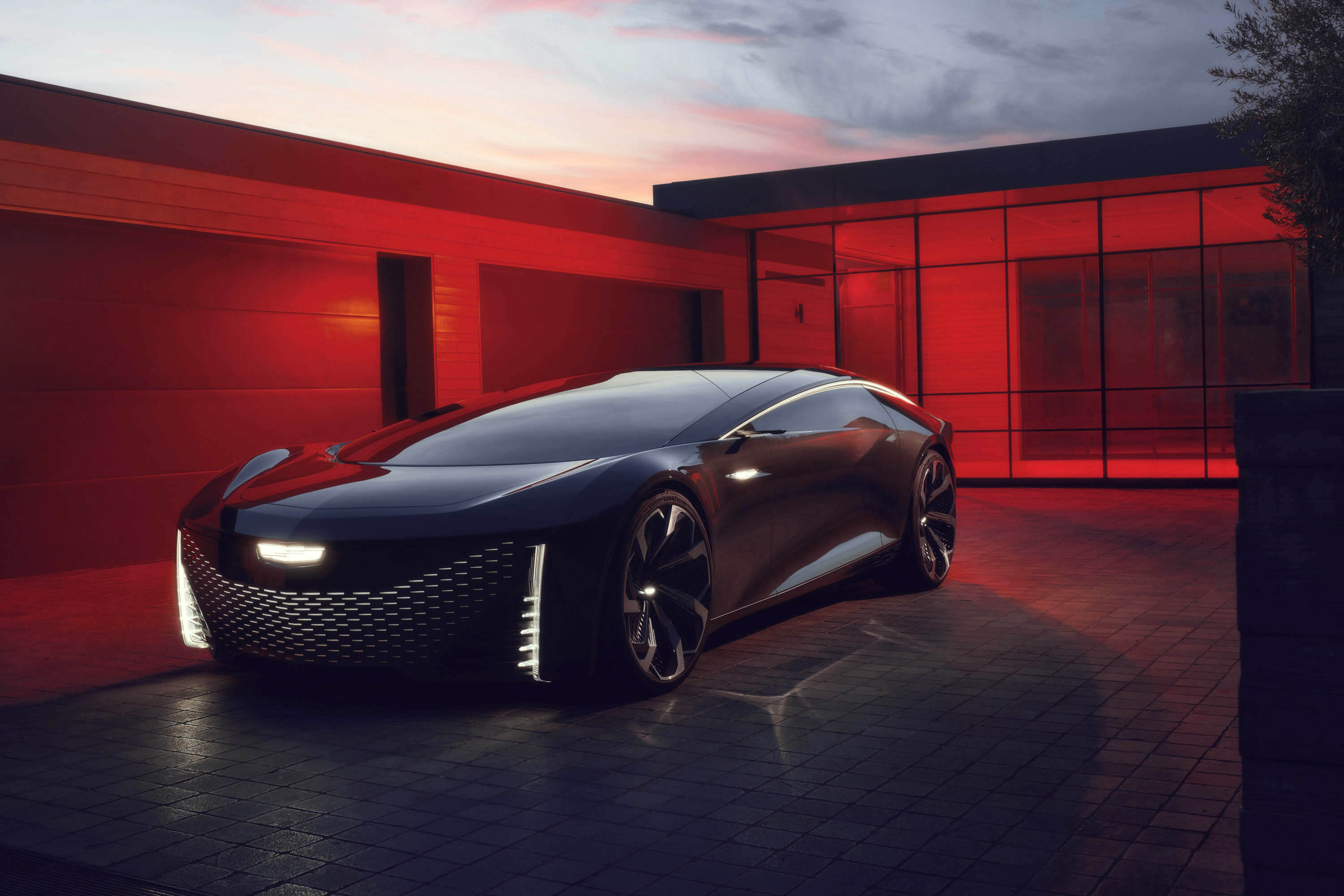
  • Global Debut Of Lincoln Star Concept

    2022 Lincoln star concept

    With a sleek, aerodynamic silhouette and connected cabin experience, the Lincoln Star Concept debuts globally today, hinting at the brand’s design language for its future electric vehicles.

    “This is a shining example of what happens when we combine Lincoln luxury with flexible electrical architecture to create unimaginable experiences for customers,” said Jim Farley, president and CEO, Ford Motor Company. “We can truly revolutionize how people engage with the brand and scale it across an exciting lineup of products that catapult Lincoln into the digital, connected age.”

    Inside and out, the Lincoln Star concept introduces new design language, with Lincoln’s core tenets of beauty, human, gliding and sanctuary on full display. These tenets will help guide Lincoln’s future design, and by mid-decade, Lincoln plans to deliver three new fully electric vehicles, meaning that more than half of its global volume will be zero emissions vehicles, and it will add a fourth by the end of 2026.

    As Lincoln moves toward an electric future, it is equally focused on keeping its current portfolio fresh and introducing new clients to the brand. Lincoln reported its best annual global sales in 21 years, up 7% over 2021, and plans to build on its momentum with the recent launches of the all-new Zephyr in China and the new Navigator in North America.

    “As Lincoln enters the next chapter in our transition to a zero-emissions future, the Lincoln Star Concept will lead the way for our portfolio of fully electric vehicles,” said Joy Falotico, president, Lincoln. “It is an excellent example of how we are redefining luxury for the next generation as we work to transform the vehicle into a third space – a true place of sanctuary – for our clients.”

    A guiding star for Lincoln

    Both on and off the road, thoughtful design details, connected experiences and clever solutions create the ultimate sanctuary for clients in the Lincoln Star Concept, while delivering a more modern aesthetic and intelligent, intuitive features.

    “Electrification is removing many traditional vehicle design constraints, allowing us to reimagine what a vehicle can be,” said Anthony Lo, chief design officer, Ford Motor Company. “The Lincoln Star is a study of experiences and themes that push the boundaries of Lincoln design – and it’s just the start.”

    In a nod to the evolved design language of Lincoln, the silhouette is sleek and dynamic, and is expanded to create a striking effect. Whether stationary or in motion, the concept uses design, light, displays, scents and sounds to create an immersive experience for clients. Intelligent technology that enhances comfort, productivity and entertainment is deployed throughout to bring the romance of travel back in a uniquely Lincoln way.

    Designers worked to create harmony throughout by using light in a modern new way. Illuminated crystallines, plus backlit doors, seats and exterior features elevate the architectural space to create the ultimate sanctuary. The new Lincoln star on the fascia lights up like a jewel – greeting clients upon approach while giving new meaning to the Lincoln Embrace welcome sequence.

    The company’s rear- and all-wheel-drive flexible battery electric architecture and next-generation Lincoln Intelligence System enable the new design thinking and connected experiences the Star Concept offers. The flexible architecture means engineers and designers could reimagine the additional interior space in new and exciting ways to create a unique Lincoln experience.

    The new Lincoln Intelligence System takes the definition of “digital assistant” to a new dimension, enabling experiences such as connected vehicle-to-vehicle and infrastructure capabilities, as well as next-generation leading driver-assist features such as Help Me See and Park for Me.

    A reimagined sanctuary

    Both in design and color composition, the interior is uniquely partitioned into first- and second-row areas. The entire cabin experience in the first and second row is premium, with extra-spacious wraparound seating, reclined lounge posture, individual lounge leg rests and curated storage for devices and slippers, controls for rejuvenation moods and a luxurious glass beverage chiller integrated between the back seats.

    The feeling of spaciousness is enhanced with 3D-printed metal latticework on the A-pillar along the windshield and the D-pillar at the back window of the Lincoln Star Concept – visible from the inside out. These transparent pillars, along with a full skylight with digital shade, invites natural light in to enhance the open, airy feel of the space.

    A coast-to-coast curved horizontal display creates a digital panorama in which content flows seamlessly into an integrated center control screen, then into the second-row screen, creating a unique experience for all passengers. New materials such as leather and chrome alternatives and several unique finishes – work in harmony to create a modern, luxurious experience.

    Three rejuvenation moods join a new Lincoln Embrace sequence harmonizing audio, scenting and lighting throughout the cabin. A symphonic orchestration with crisp, high-resolution animations on the displays creates an immersive digital sanctuary. Whether stuck in traffic or just enjoying a few quiet moments after work, the rejuvenation moods provide a true sanctuary in a third space:

    • Coastal Morning uses gentle, oceanic sounds, a fragrance of sea mist and the soft, warm glow of the sun with dynamic lighting throughout to replicate a stroll on the beach at sunrise
    • Mindful Vitality is meant to reenergize the senses, with invigorating, upbeat audio, dynamic abstract artwork, soft, glowing lighting and a flowery fragrance throughout
    • Evening Chill mirrors dusk using a calming night soundtrack coordinated with night sky video and an evergreen fragrance

    The three moods are built around the body’s natural circadian rhythm of morning, day and evening. With the help of connected technology, the moods will offer content updates and ways for clients to personalize their settings into the future.

    Using the area no longer occupied by a gas engine, a front trunk allows for ample storage, expanding the feeling of spaciousness inside. With electro-chromatic glass that changes from transparent to opaque, the front trunk is instantly recognizable, allowing light in when the vehicle is in motion and darkening to hide stored valuables when parked. Under the front trunk, illuminated first-row floors flow uninterrupted into the interior, creating an airy, open cabin.

    A wing-shaped floating instrument panel, inspired by aircraft ailerons, emphasizes horizontal balance and equilibrium, while Lincoln one-touch pedal allows for effortless operation. The interior also features Lincoln Attaché, a digital briefcase concept with a hidden compartment in the rear coach door that not only provides safe storage of tablets and laptops, but does double duty as a charge pad for devices and can seamlessly detect incoming wireless content for clients. Finally, a reimagined rear cargo space features a lounge mode that transforms into a cozy, indulgent outdoor seat to bring the destination closer.

    “The Lincoln Star Concept has been a true labor of love for our team and provides us with a platform to share and test our experiences and design philosophy with clients as we evolve our Quiet Flight DNA,” said Kemal Curic, global design director, Lincoln. “Signifying transcendence through both space and time, the concept creates a sense of peace and serenity within an electric experience and previews what is to come from Lincoln.”

    https://www.youtube.com/watch?v=rkxrzcj359I

  • Space travel through the megacity

    2022 Audi Urbansphere Concept - front view

    Systematically designed from the inside out – Audi is presenting the Audi urbansphere concept car. Designers and engineers have created the Audi urbansphere primarily for use in traffic of Chinese megacities. In these metropolitan areas, where personal space is in particularly short supply, the concept car offers the largest interior space of any Audi to date. In addition, it intelligently coordinates this with technologies and digital services that appeal to all the senses and thus offer a new quality of experience.

    The development process took place in close collaboration between Audi’s design studios in Beijing and its headquarters in Ingolstadt. For the first time, potential customers in China also took part, contributing their own desires and experiences to the development process (known as “co-creation”).

    The result of this process can be seen in the Audi urbansphere concept, above all in the interior. As such, the spacious automobile acts as a lounge on wheels and mobile office – the vehicle serves as a third living space during the hours spent in traffic. To this end, the Audi urbansphere combines the luxury of complete privacy with a comprehensive range of high-tech features on board, even during the daily rush hour. Level 4 automated driving technology transforms the interior without a steering wheel, pedals, or displays into a mobile interactive space that opens up to the offerings of a comprehensive digital ecosystem.

    Audi sphere – first class to the power of three

    Audi skysphere, Audi grandsphere, and Audi urbansphere are the three concept cars that the brand with the four rings is using to showcase its vision of the premium mobility of tomorrow. Audi is creating a vehicle experience that goes far beyond the purpose of merely spending time in a car to get from point A to point B.

    In August 2021, Audi debuted the electrically-powered skysphere concept roadster – the spectacular vision of an autonomous GT that transforms itself into a self-driving sports car with a variable wheelbase.

    Just a few weeks later, Audi unveiled the second model in the sphere series, the Audi grandsphere concept, at the IAA 2021. This large, prestigious four-seater saloon exemplified the brand’s ambition to define the future of progressive luxury.

    What both concept cars have in common with the Audi urbansphere is that the entire concept is derived from the ability to drive in a level 4 autonomous vehicle. This is a technology that Audi is working towards introducing in the second half of the decade together with CARIAD, the Volkswagen Group’s software think tank.

    Interior size

    en at first glance, the Audi urbansphere concept reveals itself as the largest model in the sphere family, indeed of all Audi concept cars to date. Its grand dimensions – 5,510mm long, 2,010mm wide, and 1,780mm tall – place it in the upper echelons of the automotive world, yet the Audi urbansphere concept radically breaks with the conventions of the segment.

    This is because it has been systematically designed from the inside out, as it were, around its passengers. Consequently, the most important dimension for passengers is the unrivalled wheelbase of 3,400mm. The interior of the Audi urbansphere is not subject to the conventional maxim of squeezing as many seats, storage compartments, and functional elements as possible into a space limited by the physics of driving. Instead, it primarily responds to the passengers’ need to be able to experience generous space as a distinctive element of comfort.

    The Audi urbansphere not only frees the driver from the burden of driving whenever possible, but at the same time offers everyone on board a wide variety of options to use this freedom to enjoy customizable experiences – communication or relaxation, work, or a retreat into a private sphere when desired. The Audi urbansphere concept itself also transforms from merely an automobile into a platform for groundbreaking experiences.

    Thanks to Audi’s own options and the ability to integrate digital services from other providers, the possibilities are nearly endless. These can be used to access a wide range of services related to the current trip. The vehicle also takes care of everyday tasks that go beyond the ride itself – such as making dinner reservations or shopping online from the car. In addition, the autonomous Audi urbansphere concept picks up its passengers at home and independently takes care of finding a parking space and charging the battery.

    Customized infotainment offerings are also available, such as the seamless integration of onboard streaming from music and video providers the customer already uses. In an additional step, Audi will make personalized and exclusive options available in the future – concerts, cultural events, or even sporting events that customers will be invited to.

    The architecture – from the inside out

    The word “sphere” in the name already suggests that the focus of the Audi skysphere, grandsphere, and urbansphere concept cars is on the inner space, the interior. It is no longer the powertrain or the driving dynamics that are at the top of the list of requirements for this new generation of cars. Instead, the interior becomes the foundation for design and technology. And this means that it transforms into the passenger’s sphere of life and experience on the road.

    Their needs and desires shape this space, its architecture, and all of the integrated functions. As a result of this shift, the design process itself also changes. At the beginning of all discussions, the focus is on the interior. Only then are the package, exterior lines and proportions designed, which, together with the technological specifications, turn the automobile into a complete work of art.

    Surface, form, function – the interior

    The doors of the Audi urbansphere concept are counter-hinged at the front and the rear; there is no B-pillar. As a result, the whole world of the interior opens up to passengers as soon as they climb in. Seats that swivel outward and a red carpet of light projected onto the ground next to the vehicle transform the simple act of entering the car into an experience of comfort.

    A wheelbase of 3,400mm and a vehicle width of 2,010mm delineate what is a more than stately footprint, even for a luxury-class automobile. Together with 1,780mm of headroom and expansive glass surfaces, these dimensions result in an exceptionally spacious experience of the interior – both subjectively and objectively.

    Four individual seats in two rows offer passengers luxurious first-class comfort. The seats in the rear offer particularly generous dimensions and a wide range of adjustment options. In Relax and Entertain modes, the backrest can be tilted up to 60 degrees while leg rests extend at the same time. The centre-mounted armrests integrated into the sides of the seats and their counterparts in the doors create a comforting feeling of security.

    The seats also cater to the changing social needs of passengers in a variety of ways. While conversing, passengers can turn to face each other on their swivelling seats. On the other hand, those who want some seclusion can conceal their head area from the person next to them using a privacy screen mounted behind the headrest. In addition, each seat has its own sound zone with speakers in the headrest area. Individual monitors are also built into the backs of the front seats.

    When passengers want to use the infotainment system together, on the other hand, there is a large-format and transparent OLED screen that pivots vertically from the roof area into the zone between the rows of seats. Using this “cinema screen,” which occupies the entire width of the interior, the two passengers in the back row can take part in a video conference together or watch a movie. Even split-screen use is possible. When the screen is not in use, it offers a clear view to the front thanks to its transparent design –or when folded upwards –also through the glass roof area to the sky.

    Like in the Audi grandsphere concept, the interior of the urbansphere blends space and architecture, digital technology, and authentic materials into a single entity. The lines emphasize the vehicle’s horizontal proportions.

    The open, wide interior supports the impression of a one-of-a-kind space. The steering wheel, pedals, and conventional dashboard can be hidden during automated driving, which enhances the feeling of transparency and spaciousness.

    The seating surfaces and backs of the two seats with integrated seat belts are visually separate. Between the rear seats – normally locked in place in a low position – is a centre console that swivels upwards. It contains a water dispenser and glasses – another testament to the Audi urbansphere concept’s first-class credentials.

    The Audi urbansphere also qualifies as a wellness zone thanks to innovative digital options that emerged in no small part as a result of the input from the co-creation process with Chinese customers. Stress detection is a prime example – this adaptive program uses facial scans and voice analysis to determine how passengers are feeling and offers each of them individual ways to relax, for example with a meditation app that can be used via the personal screen and the private sound zone in the headrests.

    Less is more –displays and operation

    In the Audi urbansphere, simplicity has become a design principle. Neither batteries of circular instruments nor black screens for virtual display concepts are visible before activating the driving functions.

    Instead, passengers find clearly structured and calm zones composed of materials of the highest quality. Wood and wool as well as synthetic textile fabrics serve as panelling, seat coverings, and floor carpets, all of which have a high-quality feel and are pleasant to the touch.

    Soft beige and grey tones structure the interior horizontally. A dark, toned-down green serves as the colour of the seat shells and soothes the eye. The interior colour zones become lighter from top to bottom and, together with the natural light entering the space, create a homogeneous, wide interior.

    It almost comes as a surprise that, when the vehicle comes to life at a simple tap of the finger, there are displays at all – albeit in the form of projections on the wooden surfaces below the windshield. Depending on the driving status – whether manual with a steering wheel or level 4 – they are either distributed across the entire width of the interior or segmented for the driver and front seat passenger. All the information needed during the journey can be viewed in ultra-fine resolution.

    In addition, a sensor bar is integrated under the projection surfaces for quick switching between content – for instance, for music or navigation. It shows all the functions and applications that are active in the car. Icons flash for the different menus.

    One particular, extremely innovative control element is located near the door cut-out on the interior cladding: the MMI touchless response. If the driver or passenger is sitting in the upright position, far forward in his or her respective area, they can use this element to physically select various function menus via a rotating ring and buttons and click their way through the individual levels. A simple, intuitive operation.

    If, on the other hand, the seatback is reclined far back, passengers still do not have to forgo the use of this convenient feature. This is because in this position, they can use a combination of eye-tracking and gesture control. A sensor directed at the eye detects the line of sight when the control unit is to be engaged. And the passenger only needs to make analogous hand motions – without leaning over – that are similar to physical operation and can use the system just as well that way – without touching a thing.

    When it comes to all operating modes, including eye-tracking, gesture or voice control, and touch, the Audi urbansphere concept adapts to the respective user and learns their preferences as well as frequently used functions – and on this basis can not only usefully supplement rudimentary commands, but also make individual suggestions to the user itself.

    Control panels are even integrated into the armrests on the doors. That way, the car always offers passengers invisible touch surfaces using an optic indicator to show its position. At the same time, there are VR glasses in the armrests on the left and right doors that can be used in conjunction with infotainment options – for instance for the Holoride system.

    Sustainability as a guiding principle

    Many of the materials in the interior of the Audi urbansphere concept, such as the hornbeam veneers, come from sustainable sources. This wood makes it possible to use wood that has grown close to the site, and the entire trunk can be utilized. During processing, the manufacturers do not use any chemicals.

    The seat padding is made of ECONYL®, a recycled polyamide. This material can also be recycled after its use in the automobile – without any loss of quality. The fact that the respective materials are installed separately also plays an important role in the ability to recycle them, as mixing them would drastically reduce the potential for recycling.

    Bamboo viscose fabric is used in the armrests and the rear of the vehicle. Bamboo grows faster than ordinary wood, sequesters a great deal of carbon, and doesn’t require herbicides or pesticides to grow.

    Space concept for the luxury class – exterior design

    A grand, and undoubtedly self-assured, appearance – one’s first encounter with the Audi urbansphere concept is certain to leave an impression. A length of five and a half metres, its height of almost 1,780mm, and its width of more than two metres are undoubtedly prestigious enough to rub shoulders with the automotive elite.

    The flowing silhouette of the vehicle body features traditional Audi shapes and elements, but are combined here to create a new composition – the distinctive Singleframe with the digital eyes of the adjacent lighting units. Viewed from the side, is the widely curved, dynamic roof arch, a massive sill that conceals the battery unit, and large 24-inch wheels. They reference an icon of the 90s – the Audi Avus concept car. The six double spokes simultaneously convey lightweight design and stability, reminiscent of functional motorsport wheels and the Bauhaus tradition of the brand’s design.

    The implied wedge shape of the vehicle body is emphasized by the large, flat windshield. At the front and also at the rear, there are large digital lighting surfaces that leave their mark on the design and at the same time serve as communication elements.

    The Audi urbansphere defies classification into conventional vehicle categories. Nevertheless, it reveals itself to be a typical Audi at first glance. The similarities to the Audi grandsphere concept are particularly eye-catching. The monolithic design of the vehicle body is common to these two concept cars, as is the sculpted, soft shape of the wheel arches. A long wheelbase of well over three metres and short overhangs indicate that this is an electric vehicle. Elegance, dynamism, an organic design language – these are the attributes that immediately spring to mind despite the stately proportions of the Audi urbansphere, just as they do in the significantly flatter grandsphere.

    Visible technology – light

    The front end features an innovative interpretation of the Singleframe that defines Audi’s look – it is shaped like a large octagon. Even though the grille has lost its original function as an air intake on the EV, it still remains prominent as an unmistakable signature of the brand. The digital light surface lies behind a slightly tinted, transparent visor that covers a large area of the front. The three-dimensional light structure itself is arranged in dynamically condensed pixel areas. The upper and lower edges of the Singleframe are still made of aluminium, the vertical connections are formed by the LEDs as part of the light surface.

    The entire surface of the Singleframe becomes a stage or canvas (known as the “Audi Light Canvas”) and can be used for communication – with dynamic lighting effects to clearly signal to other road users in order to improve road safety.  Low beams and high beams are implemented via light segments in the outer sections of the Singleframe.  A similarly functioning matrix LED surface is located in the rear.

    The lighting units to the right and left of the Singleframe look narrow, like focused eyes. These digital lighting units, known as Audi Eyes, echo the logo of the brand with the four rings, as they enlarge and isolate the intersection of two rings to form a pupil – a new, unmistakable digital light signature.

    The illuminated surfaces – and therefore the expression of the eyes – can be adapted to the traffic situation, environment, or even the mood of the passengers. As a daytime running light, the gaze can be focused or open, and the iris can be narrow or wide. A digitally created eyebrow also functions as a dynamic turn signal when required. Thanks to their outstanding visibility, they make an unmistakable statement in favour of safety.

    A special tribute to China,  is a luminous accessory that passengers can take with them when they leave their Audi urbansphere – the Audi Light Umbrella, a self-illuminating umbrella. Inspired by traditional Chinese umbrellas, this one acts as a protective companion and multifunctional light source – the inner skin of the umbrella is made of reflective material, so the entire surface acts as a glare-free lighting unit.

    The Audi Light Umbrella not only gives users a better view of their path, but they also become more visible – when crossing a street or in dangerous situations, it activates a rhythmic flashing of the luminous cone by means of artificial intelligence and sophisticated sensor technology.

    And the Light Umbrella also literally places its wearer in the best possible light, because it evenly illuminates their face for perfect selfies whenever needed.

    Drive system and charging

    The technology platform of the Audi urbansphere – the Premium Platform Electric or PPE – was designed exclusively for battery-electric drive systems and therefore takes full advantage of all the benefits of this technology. The key element of the PPE is a battery module between the axles, which – as in the Audi grandsphere –holds around 120 kWh of energy. Audi has succeeded in achieving a flat layout for the battery by using almost the entire base of the vehicle between the axles.

    Together with the large 24-inch wheels, this produces basic proportions that are perfect not only from a design perspective. The core benefits include a long interior and therefore legroom in both rows of seats. Additionally, the absence of a gearbox cover and a cardan tunnel increases spatial comfort in electric cars.

    The Audi urbansphere concept’s two electric motors are capable of delivering a total output of 295 kW (401ps) and a system torque of 690Nm. These are impressive figures that are often not fully utilized when driving as part of a convoy in urban traffic. Nevertheless, the Audi urbansphere is still equipped with quattro permanent four-wheel drive – an essential feature for the brand’s high-performance models.

    The concept car has one electric motor each on the front and rear axles which, by means of electronic coordination, implement the permanently available all-wheel drive as required and, above all, with a view to economy and range. An innovative feature is that the motor on the front axle can be deactivated as required in order to reduce friction and thus energy consumption when coasting.

    Fast charging, high range

    The heart of the drive system is the 800-volt charging technology. It ensures that the battery can be charged with up to 270 kW at fast-charging stations in the shortest possible time. As such, charging times are approaching those of a conventional stop to refuel a car powered by an internal combustion engine, as just 10 minutes are enough to charge the battery to a level sufficient to power the car more than 300 kilometres (186 miles). In addition, the battery, which holds more than 120 kWh, can be charged from 5 to 80 percent in less than 25 minutes. This means that a range of up to 750 kilometres (466 miles) can be expected acing to the WLTP standard –and even when used for more energy-intensive city and short-distance trips, it is generally possible to avoid making unexpected stops to charge.

    Air suspension for maximum comfort

    The front wheels are connected via a five-link axle that has been specially optimized for electric vehicles. In the rear, there is a multi-link axle that, like the front, is made of lightweight aluminium. Despite the long 3,400mm wheelbase, the steerable rear wheels provide excellent manoeuvrability. The Audi urbansphere concept, like its closest relative the grandsphere, features Audi adaptive air suspension –a single-chamber air suspension with semi-active damper control. It offers outstanding comfort not only on city highways but even on the uneven, often patched asphalt of downtown streets with no noticeable body movement.
  • Chrysler Airflow Graphite Concept at 2022 NYIAS

    2022 Chrysler Airflow Graphite Concept - Front Angle

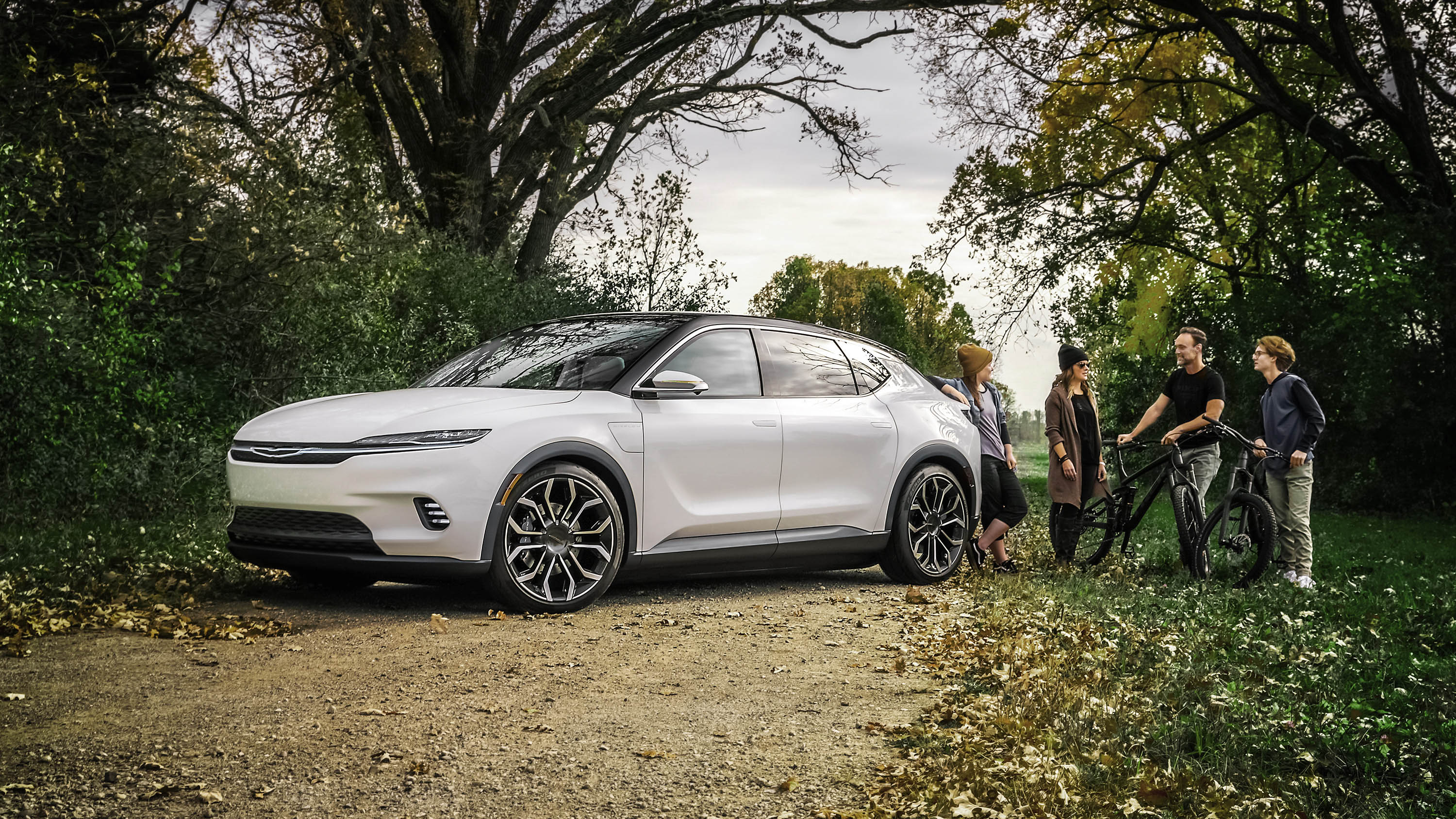
    Chrysler today unveiled a Graphite variation of its all-electric Airflow Concept at the 2022 New York International Auto Show.

    The Chrysler Airflow Concept originally debuted at the 2022 Consumer Electronics Show (CES) in Las Vegas, but with the new Graphite, Chrysler offers a reimagined look at the brand’s journey to a fully electric future.

    The Chrysler Airflow Graphite Concept features a new Galaxy Black exterior and Cyprus Copper interior and exterior accents to bring out a sleek, refined new personality for the Airflow Concept’s official global auto show debut.

    Chrysler also announced in January at CES that the brand will launch its first battery-electric vehicle (BEV) by 2025 and offer an all-electric Chrysler vehicle lineup by 2028.

    “The Chrysler Airflow Graphite Concept, the latest version of our all-electric concept, represents the many possibilities on our brand’s road to an all-electric future,” said Chris Feuell, Chrysler brand CEO – Stellantis. “This new persona of the Airflow highlights the flexibility of the Chrysler brand’s future design direction and our ability to create personalities reflective of our diverse customers. As our brand evolves to offer a full battery-electric vehicle portfolio, we are completely rethinking and reinventing the customer experience. Project Ingenuity is an initiative in which we collaborate with customers on our future innovations and services, offering uniquely personalized and delightful customer experiences throughout the purchase, service and ownership journey.”

    Chrysler Airflow Graphite Concept

    The early development of the Airflow included several potential design expressions for the all-electric concept, including the Chrysler Airflow Graphite Concept.

    The Chrysler Airflow Graphite Concept features a Galaxy Black exterior body color, inspired by a sophisticated urban mindset that feels at home navigating amid big city skylines. The Galaxy Black hue also provides a vivid contrast to the Arctic White exterior previously shown on the Airflow Concept at CES.

    The Galaxy Black exterior unites with Cyprus Copper accents both inside and out to imprint the latest Airflow iteration with its own refined, sophisticated design. Cyprus Copper accents highlight the top of the panoramic glass roof as well as select surfaces of the 22-inch wheels.

    The Chrysler Airflow Graphite Concept interior is modern and spacious, integrating the lightness of Ice Grey and warmth of Cyprus Copper accents to achieve a rich interior feel. Evoking the appeal of a first-class lounge that delivers a comfortable space between home and work, the interior boasts premium features and finishes, using sustainable materials and a calming color palette, creating a greater feeling of spaciousness and comfort.

    Future of the Chrysler Brand

    The Chrysler Airflow Graphite Concept represents the future direction of the Chrysler brand, highlighting the dynamic design, advanced technologies and seamless connectivity that characterize the brand’s all-electric transformation. The concept is designed as a space to bring people together, both physically and virtually.

    Enabled by STLA Brain and STLA SmartCockpit, the user experience in the Airflow Concept is agile, intuitive and always fresh. The interior showcases ideas for giving every passenger a personalized experience that seamlessly connects them with their digital lives.

    The Airflow Concept unifies these advanced technologies, communicating through advanced visualization and thoughtful interaction. The Airflow Concept user experience employs multi-layered, high-contrast graphics and thoughtful details to provide a clean, sophisticated appearance that is safe, easy to use and easy to understand.

    Using a menu-based format, screens throughout the Airflow interior can be personalized, simplified and organized based on individuals and interests. Information on the screens can be shared with all passengers by swiping.

    Each screen is a personalized space to access the digital world via connected entertainment, apps and downloads. And each seat also features a built-in camera, enabling occupants to participate in a group video conference call from the comfort of the Airflow cabin.

    Over-the-air (OTA) updates keep Airflow Concept services current and let passengers quickly and easily add new and innovative features. That functionally keeps the vehicle fresh, exciting and capable and enhances the overall ownership experience.

    The backbone of the Airflow Concept user experience is the new electrical/electronic (E/E) and software architecture, STLA Brain. This architecture is highly flexible, breaking today’s bond between hardware and software generations. It enables software developers to create and update features and services quickly, taking advantage of capabilities built into the cockpit without waiting for a new hardware launch.

    The STLA SmartCockpit, demonstrated in the Airflow Concept and built on top of STLA Brain architecture, seamlessly integrates with the digital lives of vehicle occupants to deliver AI-based applications such as navigation, voice assistance, e-commerce marketplace and payment services.

    Fully Electrified + Fully Connected

    Along with the fully connected user experience, the Chrysler Airflow Graphite Concept previews the brand’s commitment to deliver a fully electric vehicle lineup by 2028, produced using clean manufacturing processes and made with recyclable and renewable materials. Through the use of industry-first technologies, the Chrysler brand will delight customers and influence the industry to make the world better, cleaner and safer.

    The Chrysler Airflow Concept is equipped with STLA AutoDrive, which delivers Level 3 autonomous driving capabilities and will be upgradable via OTA updates.

    The concept features all-wheel-drive capability and is powered by two 150 kW electric drive motors (EDMs), one in the front and one in the rear. The concept is designed to accommodate larger capacity EDMs, offering the potential for future high-performance applications. Drive motors are located toward the front and rear of the vehicle, maximizing interior space and enabling the large wheel size and wide stance of the Airflow Concept. The battery is designed to achieve up to 400 miles of range on a single charge.

    Dynamic Design Language

    The sculptural, expressive design of the Chrysler Airflow Graphite Concept envisions the next generation of premium transportation and user experience. The concept reimagines a first-class travel experience that balances technological needs within a serene environment.

    The Airflow Concept features a streamlined, dynamic design proportion that achieves an elegant, athletic profile while increasing EV range. A long wheelbase and wide track, along with large 22-inch wheels and tires, are enhanced visually with accent color cladding. The design elements work together to enable a dramatic stance and deliver confident, spirited handling and performance dynamics.

    The Airflow’s silent electric ride harmoniously supports the design aesthetic, with the concept’s dramatic expression completed by the sleek Galaxy Black exterior. Up front, the Airflow announces its electric aesthetic with the Chrysler wing logo tied into a cross-car grille light blade illuminated with crystal LED lighting. A crystal LED taillight runs the full width of the vehicle, accentuating the wide stance. The Airflow Concept features welcome, departure and animated lighting, including a unique aqua that signifies the vehicle is charging. The diffuser shape of the lower rear fascia highlights the aerodynamic, smooth underbody, a key to achieving optimum driving range.

    Technology is integrated seamlessly into the interior in the form of dark glass sculptures. The central control area integrates individualized climate controls near the C-shaped air slots. Crystalized textures throughout the vehicle add a sense of precision, providing an intricate transition from the exterior and aligning with the advanced interior design highlighted by premium refinement.

    The Airflow Graphite Concept redefines interior touchpoints and combines illusionary weightlessness and grounding metals to provide contemporary, comforting spaces. Soft leather-wrapped seats help achieve a lighter, smoother atmosphere. Materials, including vegetable-tanned leather, as well as floor mats, fabric and carpeting made of recycled materials, imagine a future of sustainable design.

    Infotainment screens seamlessly integrate technology within the overall interior composition. Seating uses a unique slim structure that rests on a pedestal base, enhancing comfort and roominess while allowing for maximum legroom, shoulder space and personal storage for each passenger.

  • The storage champ – Audi A6 Avant e-tron concept

    Audi A6 Avant e-tron concept - Front View

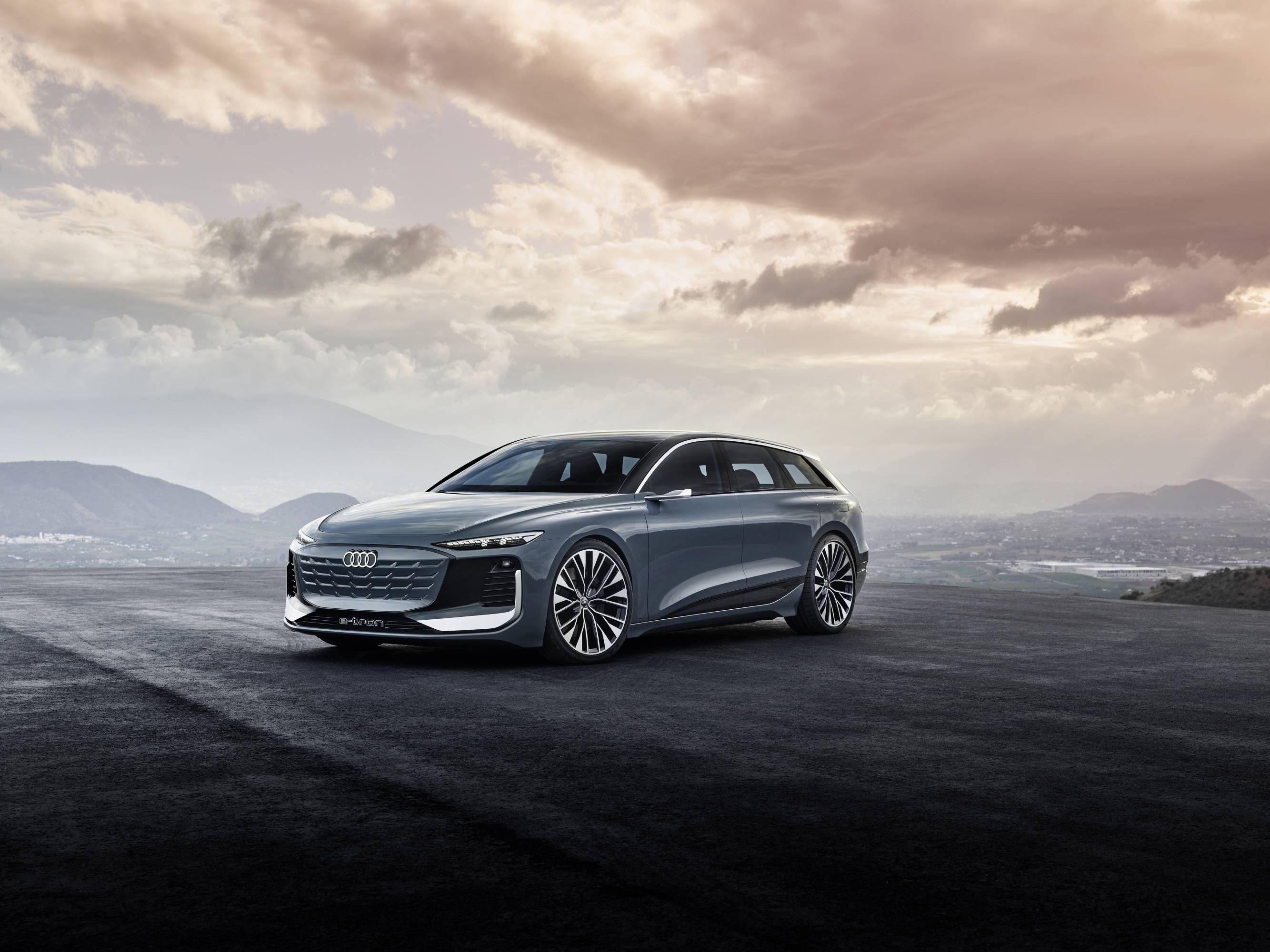
    Audi A6 e-tron concept, the second: as part of its 2022 Annual Media Conference, Audi is presenting the next model in its future electrically-powered A6 Luxury Class: the Avant. The company with the four rings introduced the Audi A6 Sportback with an electric drive system almost a year ago at the Shanghai Auto Show in April 2021. The production-oriented A6 Avant e-tron concept car now illustrates the synthesis of pioneering drive technology and Audi’s traditional design world: the Avant.

    Like the Audi A6 e-tron concept that was exhibited in 2021, the A6 Avant also has an exclusively electric drive system based on the forward-looking PPE platform, developed under Audi’s leadership. At the same time, it represents a new design concept with the same dimensions as the A6 Sportback e-tron. At 4,960mm (16.3 ft.) long, 1,960mm (6.4 ft.) wide, and 1,440mm (4.7 ft.) tall, its proportions put it in the luxury class. Its lines are a consistent development in Audi’s contemporary formal language. Significant elements like the closed Singleframe and the continuous strip of lights in the rear emphasize its kinship with the other electrically powered Audis in the e-tron fleet.

    The Audi A6 Avant e-tron concept exterior model that is making its debut in March 2022 is not just a simple design exercise. Its lines and elegant proportions preview future Audi production models and offer clues about how dynamic and elegant the electrically-powered luxury class will look.

    “With the Audi A6 Avant e-tron concept, we are offering a completely tangible look at future production models on our new PPE technology platform,” says Audi Board Member for Technical Development Oliver Hoffmann. “We’re not just electrifying the Avant’s successful 45-year history. What we want most of all is to use technical skills to add an exclamation point. In particular, this includes powerful 800-volt technology, 270 kW of charging capacity, and a WLTP range of up to 700 kilometres (435 miles).”

    Sporting the A6 emblem, the concept car underscores its place in the brand’s business class. This family has represented the brand in one of the world’s highest-volume segments since 1968 (until 1994, as the Audi 100). There have been Avant models in the series since 1977 – a revolutionary, very emotionally designed reinterpretation of the station wagon class.

    With the Avant, whose dynamic lines combine with a high degree of variability, the company created a new kind of car that has often been copied by the competition. Avant, a term derived from avant-garde and a 1995 Audi ad slogan, is a word that has taken off: beautiful station wagons are called Avant.

    For its part, the PPE technology will ensure that what the car’s lines imply is translated into a standard of dynamic driving performance and everyday suitability befitting use for long drives. That means that, in the future, an Audi A6 e-tron will deliver up to 700 kilometres (435 miles) of range (under the WLTP standard), depending on the drive system and model variant. And the strongest representatives of the series will sprint from 0-62mph in less than four seconds. The values of the Sportback and the Avant only deviate slightly from one another.

    The Audi A6 Avant’s back end, which is as beautiful as it is spacious, is by no means the only thing that qualifies it as the storage champ – the drive system and battery technology also justify that title. With its 800-volt system and a charging capacity of up to 270 kW, it can take in enough energy in just 10 minutes at a fast-charging station to drive about 300 kilometres (186 miles).

    Unmistakable e-tron: the design

    Based on its dimensions, the Audi A6 Avant e-tron concept represents the upscale segments – 4,960mm (16.3 feet) in length, 1,960mm (6.4 feet) in width, and 1,440mm (4.7 feet) tall, the same as the current models in the Audi A6/A7 series. With its dynamic proportions and elegant lines, including the Avant back end typical of the brand, it’s obvious at first glance that this vehicle was conceived in a wind tunnel.

    Aerodynamics has always played a key role in Audi’s long history of success in the luxury class. The cW value of the Audi 100 / C3 – the aerodynamics world champion of all classes in its day – is legendary: with its cW value of 0.30, Audi was already far outperforming its competitors as early as 1982 and continued to do so for many years thereafter.

    Now the electrically-powered family of the Audi A6 e-tron concept is writing a new chapter in this success story, proving once again that the brand always combines form and function in perfect symbiosis. The Sportback’s cW value of just 0.22 is unprecedented in the electrified C-segment. With its expansive roofline, the Avant’s cW value is just 0.02 units above that. In layman’s terms, this means the car exhibits minimal aerodynamic drag – which initially translates into lower energy consumption and therefore extended range. At the same time, the fine-tuning in the wind tunnel has once again resulted in an organic design with exceptional elegance and harmony down to the last detail.

    Large 22-inch wheels and short overhangs, the flat cabin, and a dynamic roof arch give the Avant proportions that are distinctly reminiscent of a sports car. The absence of hard edges results in smooth transitions between convex and concave surfaces throughout the body, as well as in soft shadows. The Audi A6 e-tron concept appears monolithic, as if from a single mould – particularly when viewed from the side.

    The gently backward sloping roof arch with the slanted D-pillar is a typical feature of Audi Avant window design; the D-pillar rises from the stable base of the vehicle’s back end in an especially streamlined manner. The eye-catching quattro wheel arches effectively accentuate the width of the body and are simultaneously integrated organically into the side surfaces.

    The wheel arches are connected by the specially sculpted battery area above the rocker panel, which is highlighted with a black inlay – a design element that is now a hallmark of the Audi brand’s fleet of electric vehicles. Also typical of Audi e-tron models are the sleek, camera-based virtual exterior mirrors at the base of the A-pillar.


    Audi A6 Avant e-tron concept (2022) - Side Angle

    Looking at the front, it is immediately apparent that the Audi A6 e-tron concept is an electric-powered representative of the brand with the four rings. A characteristic feature is the large enclosed Singleframe grille, which is bordered at the bottom by deep air intakes for cooling the drivetrain, battery, and brakes. The flat headlight bezels extend far into the sides of the laterally sweeping front end, underscoring the horizontally aligned architecture of the vehicle body.

    The influence of the wind tunnel on the rear end is unmistakable. The upper rear end is shaped to create an aerodynamically functional and circumferential breakaway edge. The rear spoiler with coloured trim visually emphasizes the elongated, horizontally oriented silhouette of the A6 Avant e-tron concept. It also does important work with airflow to improve aerodynamics.

    And in the lower section, the rear diffuser’s two generously sized air outlets are integrated into the bumper area. These components, which also have coloured trim, channel the air that flows under the vehicle in a manner that reduces turbulence – a perfect combination of reduced aerodynamic drag and minimized lift.

    The showcar’s sporty silhouette is emphasized by its warm shade of grey called Neptune Valley. While the paint has a modern, understated look when it is in the shadows, its full effect opens up in the sun, draping the showcar in shades of softly iridescent gold with its effect pigments.

    Illuminating from every perspective – light technology

    The flat headlights and taillights are slim and flush with the overall composition of the lines. Digital Matrix LED and digital OLED technology make it possible to achieve maximum brightness and a wide range of features even with a minimal surface area, while at the same time offering customizable light signatures. The team of Audi lighting designers and developers has once again done an amazing job – this concept car packs a host of new features and personalization options into its lighting units.

    Three small, high-resolution LED projectors are built into each side of the body, transforming the ground beneath them into a stage when the doors are opened – small, extended, dynamic lighting effects greet the occupants with messages in their own language.

    The combination of safety features and aesthetic design is particularly important to Audi. That’s why the small, high-resolution projectors also display warning symbols on the ground – to warn a bike rider that the car door is about to open, for example.

    Another four high-resolution LED projectors – inconspicuously integrated into the corners of the vehicle – generate turn signal projections. The design of these projections can be modified to address different markets and approval regions as required.

    The Digital Matrix LED front headlights deliver almost cinematic quality. If, for example, the Audi A6 Avant e-tron concept is parked in front of a wall during a break to recharge the battery, the driver and passengers can pass the time playing a video game projected onto it. Instead of on a small screen in the cockpit, they’ll see their current game’s virtual landscapes projected onto the wall in XXL format – and all this via the Digital Matrix LED headlights.

    The rear end of the concept car features a new generation of digital OLED elements that, as a continuous strip of lights, act as a display. They can also be used to create almost unlimited customizable variations of digital light signatures and dynamic lighting displays that can be adapted to the customer’s taste.

    One new feature in the taillights is the three-dimensional architecture of the digital OLED elements, that – adapted to the shape of the body – makes it possible to perfectly integrate the night design into the overall look. This makes it possible to experience the dynamic light show not only in two dimensions – as was previously the case – but with an impressive, 3D spatial effect.

    The combination taillights, like the headlights, meet their developers’ requirements when it comes to the traditional functions of vehicle lighting, namely seeing and being seen – in the front, a clearly and brightly illuminated road with headlights that intelligently adapt to the traffic situation, weather, and surroundings, as well as communicate with other road users. In the rear, the ultrabright, homogeneous, and high-contrast digital OLED combination taillights can particularly and significantly increase the level of safety on the roads of the future.

    In addition, the projections around the vehicle allow its communication range to be extended beyond the vehicle for the first time. With the help of intelligent connectivity in the vehicle, the A6 e-tron concept provides information to other road users with visual signals.

    PPE – high ground clearance and low ride height

    The PPE is designed exclusively for battery-electric drive systems and can therefore take full advantage of all the benefits of this technology. The key element of the future PPE fleet is a battery module between the axles that holds around 100kWh of energy in the Avant version of the A6 e-tron concept. Using the entire vehicle base makes it possible to achieve a relatively flat layout for the battery. This means that it will be possible to use this single platform both for vehicles with high ground clearance and vehicles with a decidedly dynamic, flat architecture – such as the Audi A6 Avant* – without any changes to the basic architecture.

    The battery size and wheelbase of PPE vehicles are scalable, making them suitable for use in different market segments. However, the proportions of a fairly long wheelbase and very short overhangs are something they will all have in common and this, together with the large wheels, results in basic proportions that are simply perfect – and not just in terms of design. This is because the occupants of the future PPE models will also benefit from the long wheelbase, which translates into a longer interior and more legroom in both rows of seats – a key benefit across all segments. In addition, electric vehicles are also generally more spacious thanks to the absence of a transmission tunnel, which is simply not needed due to the technology.

    But even without the transmission tunnel, Audi customers will not have to give up the brand’s trademark quattro drive system. The future range of PPE models will include versions with one electric motor each mounted to the front and rear axles that use electronic coordination to deliver all-wheel drive on demand and achieve a perfect balance between driving dynamics and energy efficiency. In addition, the e-tron family will also include basic versions optimized for minimum consumption and maximum range – in this case, propulsion will come from a single electric motor mounted to the rear axle.

    The Audi A6 Avant e-tron concept’s two electric motors are capable of delivering 350kW (469ps) of total output and 800Nm of torque.

    The front wheels of the Audi A6 e-tron concept are connected via a five-link axle specially optimized for electric vehicles with a multi-link axle in the rear. The concept car features Audi air suspension with adaptive dampers.

    A6 Avant e-tron – the storage champ

    The heart of the Audi A6 Avant e-tron concept’s drive technology – and that of all future PPE models – will be the 800-volt charging technology. Like the Audi e-tron GT quattro* before it, this ensures that the battery can be charged with up to 270kW in a very short time at fast-charging stations. This revolutionary technology will enter the high-volume mid-range and luxury segments with the PPE for the very first time.

    Thus, the A6 Avant will become the storage champ in a double sense – not only because of its spacious back end. The PPE technology enables charging times that come close to a conventional stop to refuel a car powered by a combustion engine. Just 10 minutes is enough time to charge the battery to a level sufficient to power the car for more than 300 kilometres (186 miles). And in less than 25 minutes, you can charge the Audi A6 Avant e-tron concept’s 100kWh battery from 5 to 80 percent.

    Together with a range of up to 700 kilometres (435 miles) – depending on the selected drive system and power output – the models in the Audi A6 e-tron family are uncompromisingly suitable for long trips. Furthermore, their range and charging speed keep pace with those of combustion engines, making them perfect universal cars for everyday needs, from short trips to the store to longer road trips when going on vacation.

    In terms of dynamic qualities, the Audi A6 e-tron concept – as is typical for an electric car – truly outshines its rivals with combustion engines. Thanks to its high torque right from the first revolution, even entry-level models designed for efficiency will accelerate from 0-62mph in less than seven seconds. And in the top-of-the-line, high-performance models, this sprint can even be reduced to well under four seconds.

    PPE – versatile, variable, electric

    2018 saw the debut of Audi’s first fully electric production vehicle – the Audi e-tron*. Since then the brand has systematically and rapidly pushed ahead with the widespread introduction of electric mobility across its entire product range. Following the Audi e-tron* SUV and e-tron Sportback*, the highly dynamic e-tron GT quattro* – based on a new technology platform developed jointly with Porsche AG – made its debut in February 2021. And just two months later, the Audi Q4 e-tron* and Q4 Sportback e-tron* premiered – two extremely unique SUVs in the compact segment with a common technological platform, the Volkswagen Group’s MEB.

    The Audi A6 e-tron Sportback and Avant concept cars are now the first members of a family of vehicles – initially in the C-segment and later also in the B- and D-segments – to be based on another innovative technology platform: the Premium Platform Electric, or PPE for short. This modular system is being developed under Audi’s leadership together with Porsche AG. The first Audi production vehicles built on the PPE platform will be successively unveiled starting in 2023.

    The PPE is the first platform designed to accommodate an unprecedented range of high-volume automobiles – including SUVs and CUVs with high ground clearance as well as cars with a low ride height that are part of Audi’s core product range, such as the Audi A6 series. But there are also plans to expand the PPE range into the B-segment, which has been the highest-volume market segment for Audi for decades. And even when it comes to the top-of-the-line D-segment, the PPE is an excellent technological platform to build on.

    With the PPE, electric vehicles will now also be attractive to customers who prefer automobile concepts beyond the SUV segment – like an Avant, for example, which is characteristic of the brand.

    As a result, Audi can effectively expand the range of electric vehicles in its portfolio – via the high-volume B- and C-segments. In addition, economies of scale will allow luxury-class technology and different model versions to be incorporated into a wide-ranging lineup of models that is unrivalled in the premium market.

  • Polestar O2 concept envisions new age for electric roadsters

    Polestar O2 concept - front angle

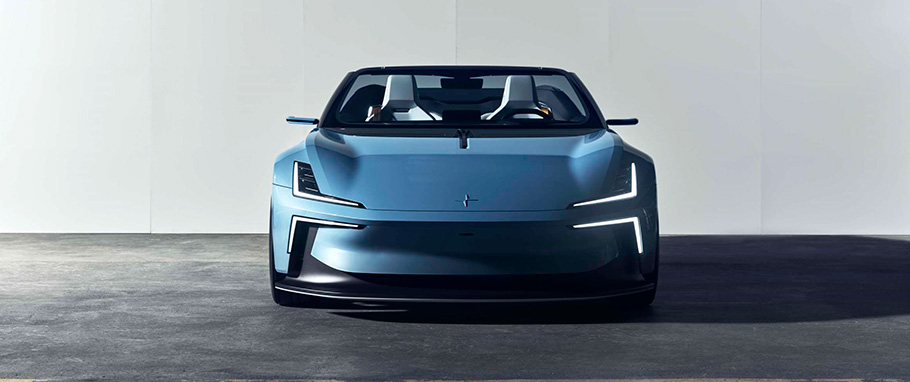
    Polestar, the pure play electric performance car brand, has revealed a new concept car that redefines sports roadsters for the electric age. Named Polestar O2, the hard-top convertible is Polestar’s vision of open-top performance and a thrilling driving experience – with all the benefits of electric mobility.

    “Polestar O2 is the hero car for our brand,” comments Thomas Ingenlath, Polestar CEO. “It opens the door to our secret chamber of future potential. This is a taste of what we can design and engineer with the talent and technology we have in-house. It looks incredible, and being able to lower the roof and not hear an engine promises a superb sensation.”

    Dynamics

    Maximilian Missoni, Polestar’s Head of Design, says: “Polestar O2 is our vision of a new era for sports cars. By mixing the joy of open top driving with the purity of electric mobility, it unlocks a new mix of emotions in a car. But as with all our cars, we are about more than just straight line sprints. It’s when you turn the steering wheel that the true fun begins.”

    The driving experience in the Polestar O2 is designed to be lively, light and full of confidence. Predictability and playfulness are core to exciting, spirited driving. Tight body control, high rigidity and intuitive dynamics are inherent benefits of the bespoke bonded aluminium platform which is adapted from the Polestar 5, developed in-house by Polestar’s R&D team in the UK.

    The high quality and rigidity of the bonded aluminium platform are geared towards heightened dynamic response. Handling dynamics are taut thanks also to small roll angles and high roll damping, and the agile, direct steering feel is linear, with great steering torque build-up.

    Design

    Clearly related to the Polestar Precept concept car but with its own distinct character, the look of Polestar O2 shows how Polestar’s evolving design language can be adapted to different body styles with a strong family resemblance. The low and wide body with an assertive stance, compact 2+2 cabin design, minimal overhangs and a long wheelbase, embody classic sports car proportions but with a clearly modern, electric feel.

    “This car is a meeting point between technology and art, between precision and sculpture, with a determined but not aggressive stance,” continues Maximilian Missoni.

    Aerodynamics are manipulated to maximise range thanks to disguised design features like integrated ducts that improve laminar air flow over the wheels and body sides, and the rear lights that function as air blades to reduce turbulence behind the car.

    Sustainability and technology

    Polestar O2 also showcases advances in sustainability and technology. A new thermoplastic mono-material features extensively in the interior. The term “mono-material” describes the use of a single base material to manufacture different components.

    In Polestar O2, recycled polyester is the sole material used for all the soft components of the interior: foam, adhesive, 3D knit fibres and non-woven lamination. This simplifies recycling and is a significant step towards greater circularity, while also reducing weight and waste.

    Polestar sustainability teams believe that materials should be recycled, not downcycled. In Polestar O2, they have integrated a new method of controlling recycled content and improving circularity of metal components. Different grades of aluminium are used throughout the chassis to help deliver a thrilling driving experience.

    These different grades are labelled, allowing them to be recycled more effectively and for their properties to be retained. High grade aluminium remains high grade, while other grades maintain their varied characteristics, allowing for greater material efficiency and a lower requirement for virgin aluminium.

    Innovation

    In a world increasingly driven by social media, the Polestar O2 features an autonomous cinematic drone integrated behind the rear seats. Developed in collaboration with Aerofugia’s consumer electronics brand Hoco Flow, the concept drone can be deployed while the car is moving, to record the perfect driving sequence.

    Polestar engineers have developed a specialised aerofoil that raises behind the rear seats to create a calm area of negative pressure that allows the drone to take off when the car is on the move. The drone operates autonomously, automatically following the car at speeds up to 90 km/h, and the driver can choose between an atmospheric sequence – great for a coastline cruise – or a more action-filled sequence with a sportier expression. After filming, the drone can autonomously return to the car. Video clips can be edited and shared directly from the 15-inch centre display when the car is parked.

    “We wanted to emphasise the experience you can have with a car like the Polestar O2 in new and unusual ways,” continues Maximilian Missoni. “Integrating an autonomous cinematic drone was something that allowed us to push the boundaries on the innovation front. Not needing to stop and off-load the drone before filming, but rather deploying it at speed, is a key benefit to this innovative design.”

    Polestar O2 continues the strong foundations laid by Polestar Precept as a vision of the company’s future design, technology and sustainability ambitions. Polestar plans to launch three new cars over the coming three years, starting in 2022, each of which has potential to gradually realise some of the ideas presented by these concept cars.

    Polestar also intends to list on the Nasdaq in a proposed business combination with Gores Guggenheim, Inc. (Nasdaq: GGPI, GGPIW, and GGPIU), which is expected to close in the first half of 2022.

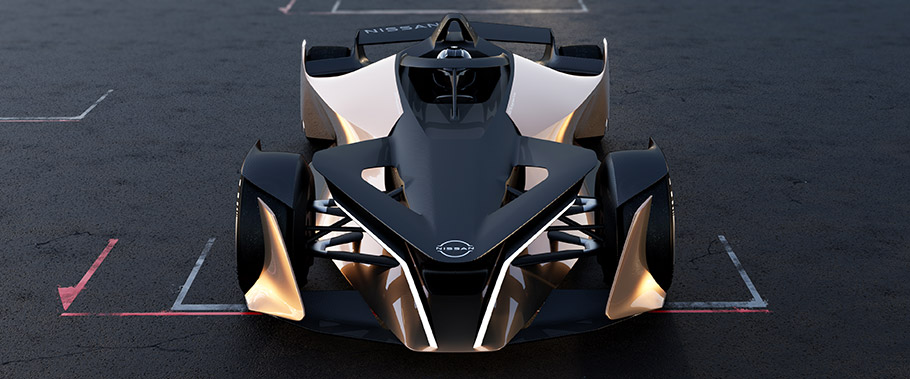
  • DS E-TENSE PERFORMANCE: Driving Future

    DS E-Tense Performance Concept (2022) - Front Angle

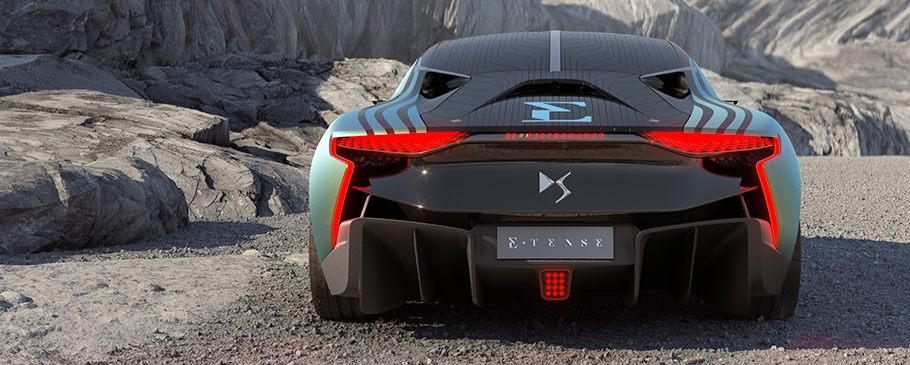
    DS Automobiles presents the DS E-TENSE PERFORMANCE prototype, conceived as a high-performance laboratory to accelerate the development of technology for the future of DS Automobiles design.

    Devised, developed and created by DS Performance, after lifting the Formula E teams’ and drivers’ titles for two consecutive seasons, it is based on a carbon monocoque, features twin electric motors with 600 kW (815hp) and a four-wheel drive transmission. The chassis, power unit and battery introduce innovative solutions, fueling the development of future generations of 100 per cent electric E-TENSE production models.

    To maintain a leading position in the electrification market, DS Automobiles draws on the expertise of DS PERFORMANCE, its motorsport division, with the development of a prototype aimed at testing different innovations to build into the brand’s next designs.

    “Our objective is to apply the experience acquired in Formula E and the expertise that we’ve taken from our international titles to a project which predicts the high-performance electric car of tomorrow. It is a laboratory that we will use to analyse the behaviour of components and to develop them with a view to future manufacturing. The idea is also to find solutions to lower costs, make them easier to manufacture and explore implementations in production models. The next generations of the E-TENSE range will benefit from these developments.”
    Thomas Chevaucher, DS PERFORMANCE Director.

    DS E-TENSE PERFORMANCE introduces a carbon monocoque with a drivetrain taken from a Formula E single seater. The suspension geometry is able to guarantee the best possible grip on roads, like on often-bumpy urban race tracks, and in any weather condition.

    The powertrain is made up of two electric motors giving a combined power of 600 kW (250 kW at the front and 350 kW at the back) corresponding to 815hp and torque of 8,000Nm at the wheels. Taken straight from DS PERFORMANCE developments for Formula E, these two electric motors display exceptional returns. With an unprecedented regeneration capacity of 600 kW, the DS E-TENSE PERFORMANCE powertrain prioritises the best use of energy. If, physically, DS E-TENSE PERFORMANCE keeps a braking system with discs and pads for safety, only the regeneration system is used for braking.

    The battery is one of the fundamental parts of the very high-performance DS E-TENSE PERFORMANCE laboratory. It is compact and housed in a carbon-aluminium composite envelope designed by DS PERFORMANCE. This is in a central rear position for optimum weight distribution. The battery in the DS E-TENSE PERFORMANCE was inspired by electric car racing and developed jointly with TotalEnergies and its subsidiary Saft. The result of research by this partner, it hides an innovative chemistry and an immersive cooling system for cells, at odds with current technology – thanks to a bespoke design of Quartz EV Fluid solution. This battery permits phases of acceleration and regeneration of up to 600 kW, enabling the exploration of new avenues for future generations of production vehicle.

    The sketch of a future DS Automobiles design language

    A very high-performance laboratory, DS E-TENSE PERFORMANCE is also an area of exploration for DS DESIGN STUDIO PARIS.

    The front reveals a new surface for expression in place of the grille. Already suggested by DS AERO SPORT LOUNGE, this treatment combines the DS Automobiles logo with a three-dimensional effect – such a shop window – with a special welcome sequence.

    On either side, new daytime lights combine technology and design with unprecedented thinness to give a wide span of light. Altogether these are made up of 800 LEDs. Two cameras, positioned instead of headlamps, complete DS E-TENSE PERFORMANCE’s visual identity, while enabling useful data to be collected by this driving laboratory.

    To go with the aerodynamic line, the body introduces a beetle-effect interference colour. Depending on exterior conditions and the angle you look at it from, the perception of the colour changes and gives a striking contrast against the gloss black surfaces stretching to the bonnet. The 21-inch wheels introduce an aerodynamic profile with unique inserts.

    The cockpit has been conceived to gather data. Bucket seats and a Formula E steering wheel create an ambiance devoted to high performance. Comfort and attention to detail is also encompassed with the special trim insert in black leather.

    To go with DS E-TENSE PERFORMANCE, Focal have produced an in-car FOCAL Utopia sound system and with a pair of exclusive Scala Utopia Evo speakers in prototype colours. Made with the best components these pieces of French silverware give a unique signature sound.

    Very high-performance laboratory in action

    From February 2022, the DS PERFORMANCE team is organising the first tests with DS E-TENSE PERFORMANCE. Jean-Éric Vergne, E-TENSE ambassador, and Antonio Felix da Costa, both Formula E champions, will take the wheel of the prototype to finalise its development, before beginning tests on tracks and open roads. The real performance data from DS E-TENSE PERFORMANCE will then be revealed.

    DS E-Tense Performance Concept (2022) - Rear View

    DS E-TENSE PERFORMANCE to be driven in NFT

    A one-off prototype in physical terms, DS E-TENSE PERFORMANCE will also be available in NFT form. Four different series will be offered between 7 February and 23 October, 2022 from the prototype’s unveiling until the Paris Motor Show.

    From 7 February, 100 DS E-TENSE PERFORMANCE “100’ Series – 100% Electric” – one NFT sold per day will power DS Automobiles into this world. The same day, a 50-day auction will start on a DS E-TENSE PERFORMANCE version limited to two examples “100’ Series – 0-100kph in 2s”.

    Developed by GOATi Entertainment, the DS E-TENSE PERFORMANCE NFTs will be available and driveable on the Pavillion platform.

    Since its launch in 2014, DS Automobiles has put electrification at the heart of its strategy. As the first premium manufacturer to be involved in Formula E, the brand has taken advantage of its success in the 100 per cent electric championship to support its research and development into more sustainable mobility. Since 2019, DS Automobiles has been showcasing a 100 per cent electric range to become, from 2020, the multi-energy brand with the lowest CO2 emissions in Europe. The transition is accelerating: from 2024, every new DS Automobiles design will be only 100 per cent electric.

  • Chrysler Unveils Airflow Concept

    2022 Chrysler Airflow Concept - Side View

    The Chrysler brand revealed today the Chrysler Airflow Concept at CES 2022, giving a glimpse at the leading-edge drive-system technology, fully connected customer experiences and advanced mobility features, wrapped in inspiring, dynamic design, which will fuel the Chrysler brand’s future.

    Chrysler also announced that the brand’s transformation will include the launch of its first battery-electric vehicle (BEV) by 2025 and a future all-electric Chrysler vehicle lineup.

    “The Chrysler Airflow Concept represents the future direction of the Chrysler brand, providing a peek at the dynamic design, advanced technologies and seamless connectivity that will characterize the full-electric portfolio we plan to reach by 2028,” said Chris Feuell, Chrysler brand CEO – Stellantis. “Chrysler is an iconic American automotive brand, with a heritage in creating new advanced technologies and product segments. Our brand will serve at the forefront as Stellantis transforms to deliver clean mobility and connected customer experiences.”

    Through more than 96 years, the Chrysler brand has earned a reputation for innovative engineering, groundbreaking style and affordable luxury. One recent innovation, the Chrysler Pacifica Hybrid, the first and only plug-in hybrid minivan, served as a springboard to the brand’s electrified future.

    The new connected vehicle isn’t simply about moving from point A to point B. The Chrysler Airflow Concept reinvents the customer experience by integrating the STLA Brain platform and STLA SmartCockpit to deliver seamless connectivity to transform the experience for driver and passengers. The concept creates a connected hub that brings a consumer’s digital lifestyle into the vehicle, using advanced technology to create a customized space for each occupant.

    “The Chrysler Airflow Concept represents the start of the brand’s journey toward a fully electrified future. It is the result of a thoughtful synthesis of the full arsenal of Stellantis’ connected vehicle technology – inside and out,” said Ralph Gilles, chief design officer – Stellantis. “The design features a decisively elegant aerodynamic exterior and a modern, sophisticated interior that takes the customer on a new level of digital delight.”

    Seamless Connectivity Optimizing Customer Experiences

    The Chrysler Airflow Concept is designed as a space to bring people together, both physically and virtually.

    Enabled by STLA Brain and STLA SmartCockpit, the user experience in the Airflow Concept is agile, intuitive and always fresh. The interior showcases ideas for giving every passenger a personalized experience that seamlessly connects them with their digital lives, as well as the other passengers.

    The Airflow Concept unifies these advanced technologies, communicating through advanced visualization and thoughtful interaction. The Airflow Concept user experience employs multi-layered, high-contrast graphics and thoughtful details to provide a clean, sophisticated appearance that is safe, easy to use and easy to understand.

    Using a menu-based format, screens throughout the Airflow interior can be personalized, simplified and grouped based on individuals and interests. Information on the screens can be shared with all passengers by swiping. Customization and personalization are key, whether driving or acting as a co-pilot.

    Each screen is a personalized space to access the digital world via connected entertainment, apps and downloads. Each seat also features a built-in camera, enabling occupants to participate in a group video conference call from the comfort of the Airflow cabin.

    Over-the-air (OTA) updates keep Airflow Concept services current and let passengers quickly and easily add new and innovative features. That functionally keeps the vehicle fresh, exciting and capable, enhancing the overall ownership experience.

    The backbone of the Airflow Concept user experience is the new electrical/electronic (E/E) and software architecture, STLA Brain. This architecture is highly flexible, breaking today’s bond between hardware and software generations. It enables software developers to create and update features and services quickly, taking advantage of capabilities built into the cockpit without waiting for a new hardware launch.

    The STLA SmartCockpit, demonstrated in the Airflow Concept and built on top of STLA Brain architecture, seamlessly integrates with the digital lives of vehicle occupants to deliver AI-based applications, such as navigation, voice assistance, e-commerce marketplace and payment services.

    Fully Electrified + Fully Connected

    Along with the fully connected ultimate user experience, the Chrysler Airflow Concept previews the brand’s commitment to delivering a fully electric vehicle lineup by 2028, produced using clean manufacturing processes and made with recyclable and renewable materials. Through the use of industry-first technologies, the Chrysler brand will delight customers and influence the industry to make the world better, cleaner and safer.

    The Chrysler Airflow Concept is equipped with STLA AutoDrive, which delivers Level 3 autonomous driving capabilities and will be upgradable via OTA updates.

    The concept features all-wheel-drive capability and is powered by two 150 kW electric drive motors (EDMs), one in the front and one in the rear. The concept is designed to accommodate larger capacity EDMs, offering the potential for future high-performance applications. Drive motors are located toward the front and rear of the vehicle, maximizing interior space and enabling the large wheel size and wide stance of the Airflow Concept. The battery is designed to achieve between a 350- and 400-mile range on a single charge.

    Dynamic Design Language

    The sculptural, expressive design of the Chrysler Airflow Concept envisions the next generation of premium transportation and user experience. The concept reimagines how the driver and passengers interact with advanced technologies while delivering a first-class travel experience that balances technological needs within a serene environment.

    The Airflow Concept features a dynamic design proportion, with a low ride height and streamlined, two-tone roof line that achieves an elegant yet athletic profile while increasing EV range. A long wheelbase and wide track, along with large 22-inch wheels and tires, are enhanced visually with Celestial Blue accent color cladding. The design elements work together to enable a dramatic stance and deliver excellent handling and performance dynamics.

    The Airflow’s silent electric ride harmoniously supports the sleek design aesthetic, with the concept’s dramatic expression completed by an Arctic White body color that conveys a sense of calm and serenity. Up front, the Airflow announces its electric aesthetic with the Chrysler wing logo tied into a cross-car grille/light blade illuminated with crystal LED lighting. A crystal LED taillight runs the full width of the vehicle, accentuating the wide stance. The Airflow Concept features welcome, departure and animated lighting, including a unique aqua that signifies the vehicle is charging. The diffuser shape of the lower rear fascia highlights the aerodynamic, smooth underbody, a key to achieving optimum driving range.

    The modern and spacious interior is also accented by a light and calming color palette, evoking an open, airy lounge area that delivers a comfortable space between home and work. The interior design is made to sooth and relax occupants, surrounding those inside with flowing lines that move throughout the space, creating a greater feeling of spaciousness and comfort. Technology is integrated seamlessly into the interior in the form of dark glass sculptures. The central control area integrates individualized climate controls near the C-shaped air slots. Crystalized textures throughout the vehicle add a sense of precision, providing an intricate transition from the exterior and aligning with the advanced interior design highlighted by premium refinement.

    Redefined interior touchpoints support ideas of tranquil, serene comforting spaces and combine illusionary weightlessness and grounding metals to give the Airflow Concept a dynamic, dreamy design. Soft leather-wrapped seats help achieve a lighter, smoother atmosphere. Materials, including vegetable-tanned leather, as well as floor mats, fabric and carpeting made of recycled materials, imagine a future of sustainable design.

    Infotainment screens appear as gloss black sculptures, seamlessly integrating technology within the overall interior composition. Seating uses a unique slim structure that rests on a pedestal base, enhancing comfort and roominess while allowing for maximum legroom, shoulder space and personal storage for each passenger.

    Functional and ambient lighting helps the driver and passengers create a personalized inner sanctum, augmented by the Airflow Concept’s panoramic roof that allows daylight to stream into the cabin. The ambient lighting reveals itself in direct lines, adding modernity, and indirectly through perforations in the upper door bolsters and a cascade of light spilling out from under the armrests in all four doors. The lighting syncs to the mood of the interior and changes based on the passengers’ preferences and the content on the displays. Subtle design choices create an overall feeling of serenity with craftsman-like attention to detail in accent points, such as the perforation and embossed pattern on the seats, unifying the refined interior.

  • Cadillac Introduces InnerSpace Autonomous Concept

    2022 Cadillac InnerSpace Concept - Front Angle View

    Two-person electric luxury concept offers vision of future personal mobility focused on elevating the passenger experience, grows Cadillac Halo Concept Portfolio

    Today, Cadillac expanded its vision of personal autonomous future mobility with the InnerSpace concept — a dramatic, two-passenger electric and autonomous luxury vehicle.

    Leveraging cutting-edge technologies designed to enhance the passenger experience along with the increased personal time enabled by fully autonomous mobility, InnerSpace grows the Cadillac Halo Concept Portfolio of vehicles envisioned to not only move passengers in a luxurious environment but enhance their well-being. The Cadillac Halo Concept Portfolio represents future possibilities with a range of personal autonomous options and advanced connected vehicle features.

    “The vehicles of the Cadillac Halo Concept Portfolio are designed to provide effortless travel through extraordinary means,” said Bryan Nesbitt, GM executive director, Global Advanced Design and Global Architecture Studio. “They are visions for the next decade and beyond, showing the possibilities enabled by General Motors’ comprehensive approach to autonomous drive technology with the goal of a world with zero crashes, zero emissions and zero congestion.”

    Cadillac introduced the first two Halo concepts last year at CES: the PersonalSpace, a single-seat, personal vertical takeoff and landing concept designed to literally move its passenger above the din and congestion of ground traffic, and the SocialSpace, a roomy, autonomous vehicle for up to six, designed to help passengers relax and recharge.

    Conceptually, the portfolio repurposes how passengers use their time while traveling, providing a space for solace and respite. Full autonomy relinquishes the responsibility of vehicle control while dramatic design and advanced technologies maintain the sensation of arriving in a Cadillac.

    In fact, technologies such as biometric input and AI machine learning are harnessed and complement Cadillac’s signature luxury environment to support unique wellness experiences. Through software-defined features and advanced vehicle connectivity, the Cadillac Concept Halo Portfolio could offer each passenger a truly personalized experience made possible by GM’s Ultifi software platform. Ultifi enables seamless delivery of software updates to customers over the air. The experiences showcased within the Halo Portfolio demonstrate the potential as both Ultifi and autonomous technology continue to evolve.

    The PersonalSpace and SocialSpace will join the InnerSpace in GM’s virtual CES experience this week, along with a video glimpse of future luxury travel with another concept — the OpenSpace — to be introduced later.

    “Electrification and autonomous driving will fundamentally change the role of vehicles and the experiences customers have with them,” said Nesbitt. “We’re exploring where that will go with these innovative concepts, envisioning mobility as an ally of wellness, giving customers the ultimate luxury, more personal time rather than taking it.”

    Reimagining the luxury experience

    Early in Cadillac’s history, compact and personal Runabout models enabled customers to explore new and wider horizons. The new InnerSpace concept reimagines that vision, with a fully autonomous experience that allows two passengers to focus on their journey and not driving.

    The vehicle’s fully autonomous capability means they could explore more of the world around them, as well as inside the vehicle, with more personal and tailored experiences that add new dimensions to Cadillac’s signature luxury experience. AI-driven biometric input and interfaces, accessible via a large, immersive and panoramic SMD LED display, allow passengers to select from Augmented Reality Engagement, Entertainment and Wellness Recovery themes for their drive. Thanks to Ultifi, Cadillac engineers and authorized third parties will be able to innovate additional themes and features that can be added over the air.

    With the Ultium Platform’s wireless battery management system, the battery modules are spread about the concept vehicle, which allowed designers to optimize the cabin for spaciousness and serenity. This design freedom also allowed for a low-profile floor, providing an extremely low, sports car-like seating position.

    On the exterior, the dramatically designed InnerSpace features expansive, panoramic glass on the roof and part of the body sides for almost unimpeded views. The roof opens with the doors for more comfortable entry and egress, and the seats also pivot outward when the doors are opened, enhancing the effect.

    Even the InnerSpace’s tires are designed to contribute to its solace. Developed by Goodyear for electrified vehicles, they feature SoundComfort technology designed to help mitigate soundwave resonance within the tire for a quiet ride, while soybean oil and rice husk-based silica replaces petroleum-based oil as a key ingredient in their construction. And because autonomous driving takes away some of the driver’s connection with the road, Goodyear SightLine, Goodyear’s tire intelligence technology, conveys important information about pressure, temperature, load and other performance factors.


  • Lexus unveils hydrogen-powered ROV concept

    2021-lexus-rov-concept

    Lexus has revealed a new ROV (Recreational Off-highway Vehicle) Concept, a unique hydrogen-powered vehicle offering near zero-emissions driving combined with extreme off-road capability. It reflects a commitment by Lexus to ensure exhilarating driving can co-exist with a carbon-free society centred on responsible mobility.

    Adventurous looks inspired by bold Lexus design

    For the Lexus ROV Concept, the design team developed a vehicle that would look good in all kinds of natural environments. The car bears all the true hallmarks of an off-road vehicle with its exposed suspension, protective cage and chunky off-road tyres for driving along muddy tracks. Dimensions are: 3,120 mm (length), 1,725 mm (width), 1,800 mm (height).

    With the Lexus’ “human centred” philosophy as their starting point, the design team wanted to create the kind of vehicle people would expect from a luxury carmaker yet without losing the rugged performance of an ROV. They designed a body that could protect passengers, incorporate the iconic Lexus signature grille and preserve enough travel for the front suspension. In addition, the front fenders were conceived to offer protection against any stray rocks and mud.

    The suspension cover, connected to the rear hydrogen fuel tank, protects functional parts as well as conveying the sense of durability inherited from Lexus SUVs. The dark bronze paint is carefully crafted along with a lightweight body and suspension designed for both comfort and fun off-road driving. Lexus ‘L’-motif front and rear lights and the rear LEXUS badge express the latest Lexus design language.

    Inside, based on the Tazuna concept, it has a simple meter that instantly reads the information the driver needs while the driver concentrates on driving.

    Feel the Lexus quality and craftsmanship

    The new concept showcases outstanding build quality with the luxury feel of Lexus craftsmanship in both the interior and exterior, as never been seen before in a ROV. Luxury details include a leather steering wheel and a sculpted shift knob and seats which feature suspension elements that smooth bumps out of the ride. The seats are upholstered in hard-wearing synthetic leather. For demanding off-road driving, the first Lexus hydrogen ICE will meet all the carmaker’s stringent requirements for QDR (Quietness, Durability, Reliability).

    Clean yet exciting hydrogen power

    While tackling its carbon neutrality goals, Lexus is passionate about the enjoyment of driving cars. This ROV Concept embodies the exciting sound of an ICE and the responsive rise in torque that comes from the fast combustion speed of hydrogen, which Lexus believe is highly compatible with the ROV.

    This hydrogen powered ROV concept is the result of Lexus’ desire to preserve true off-road pleasure in tomorrow’s low carbon society. To power this off-road fun, the 1.0-litre hydrogen engine works just like a petrol engine, but with a high-pressure tank for compressed hydrogen which is delivered precisely by a direct hydrogen injector. Importantly, Lexus’ new hydrogen engine produces close to zero emissions, with a negligible amount of engine oil burned during driving.

    Developed with its own ‘Lexus Driving Signature’

    With a lightweight body composed of a strong pipe frame and suspension that boasts a large amount of travel, the driver will enjoy the car’s natural movements, the distinctive ‘Lexus Driving Signature’ and the possibility to go anywhere they desire. Designed for dynamic and comfortable driving, the agile design and the responsiveness of the hydrogen engine make the Lexus ROV a fun vehicle to drive with exceptional off-road capability.

    Spiros Fotinos, Head of Lexus Europe, comments: “The Lexus ROV is our response to the growing passion for the outdoors and adventurous spirit of luxury consumers. As a concept, it fuses our desire to also develop lifestyle-oriented products with our ongoing research into new technologies that contribute to carbon neutrality. As well as delivering a concept that is thrilling to drive, it has near zero emissions thanks to its hydrogen powered engine.”

    Source: Lexus

  • Nissan reveals Ariya Single Seater Concept

    2021 Nissan Ariya Single Seater Concept - Front View

    Nissan revealed today its exciting new Nissan Ariya Single Seater Concept – a high-performance exploration, development and demonstration project of how the all-electric Nissan Ariya road car powertrain could be used in a bespoke single seater racing car chassis.

    The concept was presented at the Nissan Futures event by Alfonso Albaisa, Nissan senior vice president for global design, and Juan Manuel Hoyos, Nissan global marketing divisional general manager for brand and engagement.

    “We are delighted to present the Nissan Ariya Single Seater Concept from our Nissan Futures event,” said Hoyos. “At Nissan, we dare to do what others don’t. With this concept we want to showcase the high-performance potential of the Ariya’s powertrain in a motorsports-inspired package that not only hints at the design and styling of the road car that inspired it, but that also demonstrates a new and efficient EV performance language. Acting as a testbed for future technological evolution, this project can help bring excitement from the road to the race track, and also demonstrate Nissan’s expertise in transferring knowledge and technology from the race track to the road.”

    The Ariya Single Seater Concept explores what a future electrified performance style for Nissan could look like.

    Albaisa said: “As we began to shape our Nissan Ambition 2030 long-term vision, we continued to build on our Timeless Japanese Futurism design language. We are now drawing inspiration from the Japanese words shun, meaning to run fast and effortlessly, and sho, meaning to soar with power and grace. The Ariya Single Seater Concept is the perfect expression of this new language. Leveraging the Ariya’s EV powertrain in a motorsports-inspired package allowed our international team to capture this new sense of speed, technology and artistry.”

    Design cues from the all-new Nissan Ariya all-electric SUV can be seen across the Ariya Single Seater Concept. At the front of the vehicle is the electrified and illuminated “V” motion, familiar from Nissan’s current road car design language. At the side view, inspiration has been taken from the Ariya’s fluid and efficient surfaces, exaggerated to a maximum in carbon fiber. Overall, the Nissan Ariya Single Seater Concept describes a form that, as with the Ariya, looks like it was shaped by the air itself.

    Nissan’s participation in the ABB FIA Formula E World Championship also played a key role in inspiring the Nissan Ariya Single Seater Concept. Nissan races in the all-electric world championship to bring the excitement and fun of zero-emission electric vehicles to a global audience, and to be at the cutting edge of EV research and design.

    “Nissan competes in Formula E not only to race on track, but also to support the development of compelling electric vehicles for customers,” said Tommaso Volpe, Nissan global motorsports director. “Our EV programs inform our Formula E program and vice versa, allowing for road-to-track technology transfer as well as track-to-road. The Nissan Ariya Single Seater Concept explores the combination of the all-electric powertrain, dual motors and revolutionary all-wheel drive system of the Ariya with a pure single seat racing chassis – a powerful demonstration of just how thrilling electric vehicles could be.”