Tag: Concept

  • Jaguar XF

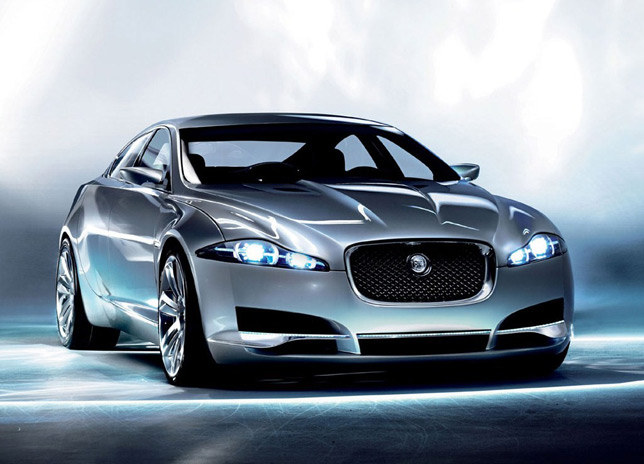
    The all-new Jaguar C-XF concept car, a stunning four-door sedan that blends dynamic, modern features with classic, heritage cues, will make its debut at the 2007 North American International Auto Show in Detroit, Mich. This concept, which boasts a 4.2-liter supercharged V8 engine, signifies a new era for the company and is a clear indication of the design direction for the company’s next-generation of sport sedans.

    Headed by Jaguar Director of Design Ian Callum and Head of Advanced Design Julian Thomson, the concept was designed by the same team that produced the award-winning 2007 Jaguar XK Coupe and Convertible. The team looked to create a vehicle that presents a confident statement of design purity. In doing so, the C-XF possesses a sense of latent power through a look that is dynamic and athletic.

    “The Jaguar C-XF concept is the most dynamic and modern four-door car that Jaguar has ever created, a design showcase heralding the next generations of our sports saloon models,” says Ian Callum. “It signals a future for Jaguar that is as exciting as the C-XF itself.”

    The concept sedan features single, slim-wedged headlamps which have evolved from the twin-lamp motif seen on past Jaguars. The lights are thin and angular, producing an aggressive look for the car’s front profile. Running from the headlamps to the rear wheel haunch is an unbroken, main feature line that gives the car a sense of power and movement. Furthering the vehicles aggressive appearance are the muscular bonnet, side power vents, tapered tail and deeply recessed front grille.
    Jaguar XF
    Jaguar XF

    The vehicle’s modern, sports design philosophy is applied to the cabin as well, with the emphasis tailored toward performance as opposed to luxury. Inside are lightweight, sculpted bucket-style front seats and twin individual rear bucket seats. Running in between the seats is a tall, central transmission tunnel that gives the occupants a sense of sitting deep within a futuristic cockpit. In addition, a brushed aluminum fascia wraps around the cabin, producing a dynamic linear graphic that instills a sense of velocity. Design Director Ian Callum describes the cabin of the all-new C-XF concept car as “one of the most exciting interiors Jaguar has ever done.”

    Enhancing the cabin experience is the introduction of the vehicle’s new technologies that blend simplicity of design with practical innovation. JaguarSense, a prototype technology which employs motion detecting sensors to activate certain vehicle features, reacts to the sweep of a hand, making it advance yet intuitive. Also, the C-XF has a jewel-like Power button that pulses like a heartbeat on the center console and once pushed, aluminum rings lower from the center console to reveal the gear shift knob. As the engine starts, a blue light sweeps around the cabin, the entire roofline illuminates with a muted blue light and a final blue light shines from the front grille, signifying the car’s ignition.

    The C-XF is not just another concept car – it is much more than that. Its dynamic styling and modern design offer a glimpse to the future for Jaguar. The exterior is pure and athletic, the interior striking and contemporary while the technology innovative and practical. The C-XF is the new direction of Jaguar design.

    From its beginning as a manufacturer of motorcycle sidecars in 1922, Jaguar Cars has grown to become one of the world’s premier manufacturers of luxury sedans and sports cars and with that, one of the most recognized commercial brands. The company’s vision is simple: To produce beautiful fast cars that are desired the world over. The company operates two manufacturing plants in the United Kingdom and is fully engaged in environmental programs, community work and brand awareness exercises such as motorsports.
  • Lincoln MKR Concept

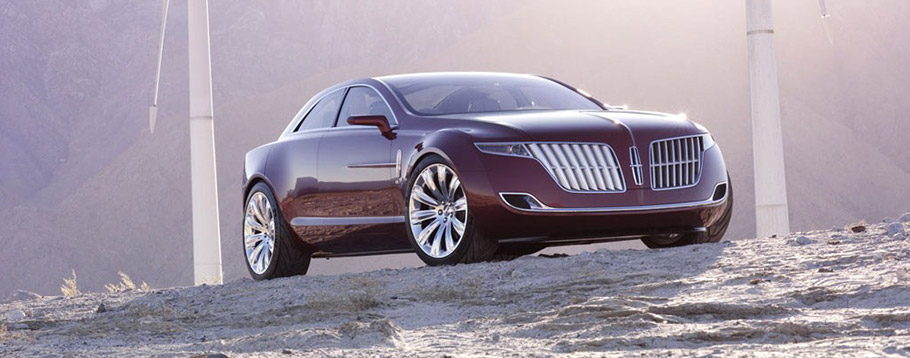
    Lincoln MKR Concept - Front Angle View

    Lincoln is pulling the wraps off a head-turning new concept car at the North American International Auto Show next week, signaling its design strategy for the next-generation of premium American vehicles and launching a new engine family.

    The Lincoln MKR concept introduces a new design language of “elegant simplicity” on a four-door coupe that also features environmentally friendly amenities and fuel-saving technology, including its TwinForce™ engine. The concept’s 3.5-liter gasoline twin-turbocharged direct-injection V-6 performs comparably or better than V-8 engines, delivering 415 horsepower and 400 lb.-ft. of torque on renewable E-85 ethanol.

    The Team

    The Lincoln MKR concept was developed by the following team members, led by J Mays, group vice president – Design, and chief creative officer:

    A New Era of Lincoln Design

    The new design – created by a team led by Peter Horbury, executive director, Design, The Americas – showcases the visual elements that will influence a new generation of Lincoln products.

    “We’ve reinterpreted the best of Lincoln designs over time, preserving the restraint and elegance synonymous with the brand,” says Horbury. “The Lincoln MKR concept is sophisticated and modern, resembling an athlete – extremely strong and fit but looks elegant in a tuxedo.

    “This romantic, sporting coupe should turn heads at the show. And, ultimately, this new design language will help lead us forward in the growing premium segment.”

    Three or four of these design elements are likely to appear on future production Lincolns, including the concept’s most dramatic feature: the double-wing grille inspired by the 1941 Lincoln Continental Cabriolet. The split grille is designed to resemble the bow of a boat cutting through the water, giving the oversize Lincoln star a proper home on which to stand proud.

    The Lincoln MKR concept’s four doors and body side remain characteristically clean. A button concealed in the chrome door trim springs open the four ‘winged’ doors, slightly inclined for additional sophistication and a touch of drama.

    From the rear, the coupe concept is instantly recognizable as a Lincoln, thanks to full-width LED taillamps stretching from side to side.

    From above, this Lincoln proudly showcases its brand heritage with a large structural Lincoln star that punctuates the glass roof spanning the top of the car.

    Modern, ‘Guilt-free’ Luxury Touches

    Inside, the Lincoln MKR concept defines a new direction for modern luxury, with ambient lighting and contrasting colors and materials that offer both a new look and philosophy for future Lincoln interiors.

    “The concept’s interior builds on the success of earlier Lincolns but stretches the boundaries even further,” said Gordon Platto, chief designer of the Lincoln MKR concept. “This unique combination of materials gives the Lincoln MKR a rich interior but features the environmentally friendly amenities that luxury buyers expect in premium goods, including vehicles.”

    A black oak instrument panel engineered from recycled wood stretches from side to side and carries through to a twin-level floating center console that extends into the rear of the cabin.

    This expansive ‘T-shaped’ panel houses the passenger information display system seamlessly disguised by the flush touch screen control surfaces and a navigation screen that can be concealed by a powered door.

    The instrument cluster provides a jewelry-like focal point. Chrome-trimmed gauges illuminated with Ice Blue lighting can be easily viewed in harmony with the concave spoke steering wheel that includes retractable paddle shifters.

    “Lighting is an important design element,” Platto said. “We know customers are paying more attention to the lighting in their homes than ever before, and we wanted to leverage it to create even more ambiance and drama inside the concept.”

    Ice Blue lighting is carried throughout the high-contrast interior, emitting from the door panels, mohair-carpeted foot wells, seats, center console and perhaps most dramatically from the large Lincoln star above which is easily viewed from each of the Lincoln MKR concept’s four seats.

    Each soy-foam based seat stands alone, looking as if suspended in air, wrapped in a creamy cashmere leather made through a more environmentally friendly chromium-free process. Seatbacks are finished with high-gloss, ceramic-looking shells.

    The concept also features the THX II Certified Car Audio System, Lincoln’s signature audio system, which produces sound quality comparable to home theater systems.

    Innovative TwinForce™ Powertrain

    Under the Lincoln MKR’s sculpted hood is the exquisitely detailed TwinForce engine, finished in chrome and accented in the cranberry red metallic paint that dresses the rest of the modern exterior.

    This marks the birth of the new TwinForce engine family that will power production versions of a range of future Ford and Lincoln products.

    TwinForce uses direct injection technology and turbocharging. These technologies are common in diesel engines but have only recently been combined together in gasoline engines.

    The Lincoln MKR’s engine also is flex fuel capable, providing the driver with the flexibility to switch back and forth between gasoline and E-85 ethanol. Combining the high octane found in E-85 or premium gasoline with TwinForce technology allows the MKR’s V-6 to deliver 415 horsepower and 400 pound-feet of torque – an impressive 118 horsepower per liter.

    To achieve this type of performance from a V-8 would require an engine displacement of 6.0-liter or larger, nearly double the size of the 3.5-liter in the Lincoln MKR. As a result of the smaller V-6, the Lincoln MKR concept delivers 15 percent better fuel economy than a V-8 with similar performance.

    The concept’s engine is mated to a six-speed transmission, and the concept features independent rear suspension for more refined road manners. The car sits on 21-inch chrome aluminum wheels fitted with unique Michelin tires that feature the Lincoln star in its treads.

    “The Lincoln MKR concept is important because it marks a new era for the brand,” Horbury said. “This is a showcase of modern design that marries power, performance and, essentially, ‘guilt-free’ luxury.”

  • Wiesmann GT 2006

    The success of the Roadster concept is based on a successful synthesis of classic design and state-of-the-art engineering. This encouraged Friedhelm and Martin Wiesmann to develop a new, similarly fascinating, sports car on the basis of the Roadster, the Wiesmann GT.

    The two-seater coupé celebrated its premiere as a production vehicle at the IAA 2005 in Frankfurt, to be acclaimed by the motoring experts. (more…)

  • Yes! Roadster 3.2

    The new Yes! Roadster 3.2 is the perfect conceptual advancement of the yes! and sticks to its own principles: pure driving pleasure.

    A powerful 3.2-liter-V6-engine with 255 HP produces an uncompromising driving machine, one that is powerful, vibrant in its performance and supercharged with passion. if 255 BHP is just not enough you can specify the optional power upgrade to 285 BHP! the result is an heir honouring its legacy yet adopting trendsetting shapes and technology – simply a revolutionary evolution!

    Further more the Yes! Roadster 3.2 has been honoured as „best new car design of the year 2006” by the jury of the chicago athenaeum’s good design award , one of the most prestigues design prices world wide.

    Compared to its predecessor, the new Yes! has grown significantly. Larger engines and a longer wheelbase have resulted in more overhang at the front as well as the rear leading to a more stretched and full of suspense appearance of the roadster. The wedge-shaped ascending side line and the racy accentuated wings in the front and rear do remain the striking attributes.

    For the Yes! Roadster 3.2 Turbo the concept was taken one step further: an especially developed rear wing spoiler assures the necessary down force, to bring 355 HP safely onto the street.

    The Yes! Roadster 3.2 Turbo is a driving machine that relocates limits.

    With a power to weight ratio of  381 BHP per ton and 485 Nm torque and a 0-62 mph in 3.9 seconds and a top speed of 175 mph, the Yes! Roadster turbo requires your total concentration! there is an optional upgrade to in crease the power even further equivalent to 446 BHP per ton with a 0-62 mph of 3.4 seconds. The Yes! Roadster and Turbo both pride them selves with precise and tactile handling. The power is transferred to the wheels with very little transmission losses onto the road. Rewarded with a unique and sensational sense of driving. An experience you will never forget!

    Interior

    The high-strength aluminium-space-frame takes care of the passive safety. Also, driver and passenger are protected by driver and passenger airbags. High-quality materials combined with chrome and leather applications turn the interior into a sporty yet welcoming place to be. Optional equipment and accessories are available, for example the modern multimedia navigation system and the three-way sound system.

    Engine

    With variable camshaft settings the renowned V6 four valve engine equipped with 3,189 cm3 of engine displacement — in the naturally aspirated as well as in the turbo version — combined with a max. Torque already at 2,001 1/min has virtually an easy job with the 890 and 930 kg respectively of the Yes! Roadster 3.2 and 3.2 Turbo. In doing so, the fuel consumpti on is only at 25.3 mpg (Yes! Roadster 3.2) and 22.8 mpg (Yes! Roadster 3.2 Turbo).

    Transmission

    A 6-speed-manual transmission or alternatively the 5-speed-automatic transmission (optional, only roadster 3.2) together with a mid engined power train taking care of the power drive is provided to the rear wheels. Gear changes require little shifting effort. Gear changes are precise, short shifting travels allow fast and exact gear changes.

    Chassis / Axle / Steering

    Light double wishbones at the front and rear axle, adopted from race use, provide in combination with the adjustable spring and damper elements a high responsiveness and precise wheel guidance (optional sports suspension – after sales option). The steering is also adjustable for reach and height to find your perfect driving position.

    Airbag

    In addition to the usual high level of passive safety, full-size driver’s and passenger’s airbag are included for the Yes! Roadster 3.2 and 3.2 Turbo.

    Brakes /ABS

    Ventilated brake discs on the front axle as well as on the rear axle provide a maximum deceleration and well balanced and stable braking power. The braking power is transferred by 4-piston fixed callipers onto the brake discs. The pedal force is transferred by a multi-channel abs-system which is directly derived from racing.

    Exhaust system

    The exhaust system, consisting of two exhaust pipes made of high-quality steel, does not only release a powerful and individual sound via its two shape integrated pipe ends but also meets the demanding emission standards (lev 1 in the u.s.a, euro 4 in europe.). Optionally, you can obtain a stainless steel-version. Engine with variable camshaft settings and the renowned V6 24 valve engine equipped with 3,189 cm3 of engine displacement — in the naturally aspirated as well as in the turbo version.