Search results for: “feed”

  • Vision EQXX – taking electric range and efficiency to an entirely new level

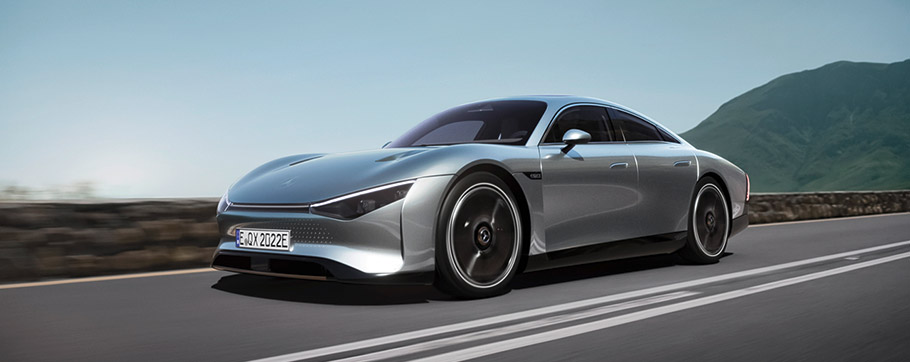
    2022 Mercedes-Benz Vision EQXX Concept

    Range and efficiency are set to define the electric era. Exceptional range will make electric cars suitable for every journey and help to increase overall adoption. Reduced battery size and weight will improve efficiency, allowing us to go further with less. Mercedes-Benz is determined to lead the way. We are already leading the way in terms of real-world range with the EQS with 245 kW, as evidenced by the recent Edmunds test where an EQS 450+ travelled 422 miles on one charge, 77 miles further than any other car previously tested.

    However, Mercedes-Benz is not stopping there. Driven by the idea of zero impact on our planet and a highly responsible use of green energy, we encouraged our engineers to go above and beyond. They are working intensively to take range and efficiency to a completely new level. The VISION EQXX is the result of a mission we set to break through technological barriers and lift energy efficiency to new heights. It demonstrates the gains that are possible through rethinking the fundamentals from the ground up. This includes advances across all elements of its cutting-edge electric drivetrain as well as the use of lightweight engineering and sustainable materials. Complete with a barrage of innovative and intelligent efficiency measures, including advanced software, the VISION EQXX allows us to explore new frontiers of efficiency.

    “The Mercedes-Benz VISION EQXX is how we imagine the future of electric cars. Just one-and-a-half years ago, we started this project leading to the most efficient Mercedes-Benz ever built – with an outstanding energy consumption of less than 10 kWh per 100 kilometers. It has a range of more than 1,000 kilometers (620 miles) on a single charge using a battery that would fit even into a compact vehicle. The VISION EQXX is an advanced car in so many dimensions – and it even looks stunning and futuristic. With that, it underlines where our entire company is headed: We will build the world’s most desirable electric cars.” Ola Källenius, Chairman of the Board of Management of Daimler AG and Mercedes-Benz AG.

    VISION EQXX – designed for the road trip to electromobility

    There’s a reason why road trips have been a cultural benchmark for at least 70 years, telling stories from the highway in books, movies and music. The road trip defines freedom, individuality, the very spirit of the automobile and the passing world. Stick a pin in the map – and drive. Be in tune with the road, and with the car. This urge to explore, discover and revel in the world beyond our horizon is part of what it is to be human. It’s the pioneering spirit that pairs vision with the tenacity to make it happen.

    The journey to electric mobility is a road trip; as exhilarating as it is challenging, as unknown as it is certain. The Mercedes-Benz VISION EQXX is a vehicle designed for that road trip. It answers the progressive demands of a modern generation of customers for and emotionality through innovation. Part of an advanced technology program, this software-defined research prototype was engineered by women and men with the creativity, ingenuity and determination to deliver one of the planet’s most efficient cars – in every respect.

    They did so using the latest digital technology, the agility of a start-up and the speed of Formula 1.

    The result is an efficiency masterpiece that, based on internal digital simulations in real-life traffic conditions, will be capable of exceeding 1,000 kilometers (620 miles) on a single charge with an outstanding energy consumption of less than 10 kWh per 100 kilometers (efficiency of more than 6 miles per kWh).

    By ripping up the automotive engineering rulebook, Mercedes-Benz has built a software-driven electric car that re-imagines the road trip for the electric era. At the same time, it presents a highly progressive interpretation of the fundamental Mercedes-Benz principles of modern luxury and Sensual Purity. Rather than simply increasing the size of the battery, the cross-functional, international team focused on maximizing long- distance efficiency. They pulled out all the stops in drivetrain efficiency, energy density, aerodynamics and lightweight design.

    “The technology program behind the VISION EQXX will define and enable future Mercedes-Benz models and features,” says Markus Schäfer, Member of the Board of Management of Daimler AG and

    Mercedes-Benz AG, Chief Technology Officer responsible for Development and Procurement. “As a halo car, the VISION EQXX firmly establishes Mercedes-Benz as the brand that pairs luxury with technology in the automotive world and beyond. And the way we developed it is as revolutionary as the vehicle itself. VISION EQXX has seen the best minds from our R&D centers work together with engineers from our Formula 1 and Formula E programs. They are proving that innovations from motorsport – where powertrains are already highly electrified – have immediate relevance for road car development. We are challenging current development processes with innovative spirit and outside-the-box thinking. This truly is the way forward.”

    The VISION EQXX is an exciting, inspirational, yet completely realistic way forward for electric vehicle technology. In addition to its groundbreaking energy efficiency, it offers meaningful answers to pressing issues. For instance, sustainable materials throughout decreases the carbon footprint considerably. Its UI/UX features a radical new one-piece display that comes to life with responsive real-time graphics and spans the entire width of the vehicle. Other elements of the UI/UX help the car and driver work together as one, and even use technology that mimics the workings of the human brain. And the software-led development process that delivered it revolutionizes the way electric cars are designed.

    This car is one outcome of an ongoing program that is delivering a blueprint for the future of automotive engineering. Many of its features and developments are already being integrated into production, including the next generation of the MMA – the Mercedes-Benz Modular Architecture for compact and medium-sized cars.

    VISION EQXX: main points at a glance

    A car with a mission – the most efficient Mercedes-Benz ever built

    Efficiency means achieving more from less. The VISION EQXX is packed with efficiency improvements that push the envelope with a mixture of advanced technology and talented teamwork. The outcome will be a road-legal research prototype that delivers more range from less energy, more tangible luxury and convenience with less impact on the environment, and more electric mobility with less waste. A raft of digital tools and a software-led approach also delivered more car in less time.

    #EnergyWizard: Across the board, efficiency engineering achievements delivered an astounding energy consumption of less than 10 kWh per 100 km (efficiency of more than 6 miles per kWh)

    #ElectricDrive: Radical new system designed and built in-house – it achieves benchmark efficiency of 95% from battery to wheels

    #RangeBuster: More than 1,000 km (over 620 miles)   on a single charge on public roads puts an end to range anxiety

    #EnergyDensity: With expert engineering and Formula 1 thinking, our battery chemists squeezed the energy of the EQS into the dimensions of a compact car. The battery pack in the VISION EQXX holds almost 100 kWh of energy yet has 50% less volume and is 30% lighter than the already benchmark pack in EQS.

    #AeroChamp: Exterior designers and aerodynamicists delivered a #benchmark drag coefficient of cd 0.17

    #SustainableMaterials: Innovative recycled and plant-based materials remove waste from landfill and lower carbon footprint

    #UpliftMindset: A pioneering team of Mercedes-Benz engineers worked with the world’s fastest race lab at High Performance Powertrains (HPP) and Mercedes-Benz Grand Prix (MGP) to engineer a highly efficient and compact electric drivetrain and lightweight battery case

    #BionicEngineering: Inspired by natural forms and in partnership with innovative start-ups, engineers used advanced digital tools to lower weight and reduce waste by removing excess material assisted by 3D printing

    #RollingEfficiency: Ultra-low-rolling-resistance tires with optimized aerodynamic geometry combine with lightweight magnesium wheels for increased range

    #BrakingLightly: Lightweight brake discs made from aluminum alloy are a great fit for the VISION EQXX and help keep weight down

    #EfficiencyOnTheRoad: Electric-only chassis with lightweight F1 subframe brings racing efficiency to the road

    #SolarPower: Ultra-thin roof panels feed the battery system for up to 25 km of extra range

    #HumanMachineMerge: Intuitive and intelligent user interface and user experience with guidance and assistance for efficient driving brings even closer harmony for the electric age

    #SensualPurity: Totally focused EV exterior/interior design ethos underlines role as halo car for the all- electric future. Mercedes-Benz will build the most desirable cars

    #FastTechProg: From clean sheet to on the road in just 18 months. The VISION EQXX is part of a technology program that can adapt innovative technologies for series production faster than ever before

    #Transformation: VISION EQXX demonstrates Mercedes-Benz transformation into an all-electric and software-driven company

    #SoftwareDriven: Software-driven approach key to success in achieving efficiency goals and a rapid development process, including groundbreaking battery management system.

    #GlobalResponsibleLeadership: VISION EQXX accelerates Mercedes-Benz goal to “Lead in Electric” and set benchmarks in sustainable mobility.

    VISION EQXX: key technical data at a glance

    Battery energy content, usable kWh <100
    Max. system voltage Volts >900
    Energy consumption kWh/100 km
    (miles/kWh)
    <10
    (>6)
    cd value 0.177
    Max. power output kW ~150
    Wheelbase in 110
    Gross vehicle weight lbs ~3,858

    Efficiency is the new currency

    At its heart, efficiency means achieving more from less. For Mercedes-Benz, this is nothing new – Mercedes-Benz has always strived for efficiency in its vehicles, achieving massive technological strides over the decades. These have benefitted consumers through consistent improvements in fuel consumption, comfort and convenience. However, the imperatives of electric mobility and sustainability have shifted the framework for efficiency.

    The most familiar expression of automotive efficiency is that of fuel consumption or fuel economy. This is expressed in different ways depending on where we are in the world (i.e., liters per 100 kilometers, miles per gallon or kilometers per liter). Regardless of convention, they all relate units of fuel (energy) with units of distance. Electric mobility is no different in that respect.

    By making efficiency the new currency, Mercedes-Benz has created a common denominator for quantifying technological development across the board – beyond fuel efficiency alone. Meaning, more range from less energy, it also means more tangible luxury and convenience with less impact on nature, and more electric mobility with less waste.

    The VISION EQXX demonstrates that this is all within reach in a real-world vehicle that pushes the envelope on all fronts. It gives Mercedes-Benz customers a clear insight into what premium efficiency for the electric and digital era looks like and feels like. Beautiful design and intuitive operation enhanced by advanced digital technologies deliver sustainable, long-haul electric mobility that has Mercedes-Benz written all over it.

    “The XX suffix augments the Mercedes-Benz brand with the X-factor of electric mobility that thinks beyond limitations, and an agile, X-divisional collaborative development approach,” explains Markus Schäfer,”This enhances the breadth and depth of development skills within Mercedes-Benz AG with highly advanced digital tools as well as industry-leading expertise from a diverse array of partner companies, start- ups and institutions around the world.”

    From its innovative drivetrain to its lightweight “bionic” structure, and from its ingenious thermal management to its serenely slipstreaming exterior, the efficiency engineering in every single detail adds up to the remarkable energy consumption and real-world range of the VISION EQXX.

    “Electric range sounds easy but is a complex technical challenge. The easiest way is to put a bigger battery in the car. However, this leads to diminishing returns due to size and weight. This is definitely not the smartest route and it’s also not the best use of scarce resources. With the VISION EQXX, we’re presenting the results of an extraordinary challenge: we pushed efficiency to a totally new level. And we explored new ways to increase the range of an electric car.” Joerg Bartels, Vice President for Vehicle Engineering and Overall Vehicle Functions.

    This remarkable project went from white paper to completed vehicle in just 18 months. It drew talent not only from Stuttgart but also from Formula 1 and a diverse array of start-ups, partners and institutions from around the world into a cross-functional, multi-disciplinary team. Sparring with one another, they applied the latest technologies and thinking to develop advanced, high-efficiency solutions with real-world potential for the near future.

    Pioneering drivetrain for the electric era – waste not, want not

    On any road trip, it’s the car that does the work – soaking up the miles and leaving the driver and passengers to experience the journey. In the long-haul mindset that makes the VISION EQXX so special, efficiency is king.

    With output of around 150 kW, the super-efficient electric drivetrain (encompassing everything from battery to electric drive unit to wheels) in the VISION EQXX provides the power and stamina underpinning this exceptional long-distance runner. More than a composition of individual parts, it is a work of engineering art in its own right. Tasked with a very clear and specific set of targets, the team set out to create an electric drivetrain with a world-beating combination of efficiency, energy density and lightweight engineering. So, let’s throw in a figure here – 95% efficiency. That means up to 95% of the energy from the battery ends up at the wheels – pure and simple. Compare that to just 30% from even the most efficient ICE drivetrain or around 50% from an average human long-distance runner.

    The Formula 1 experts at Mercedes-AMG High Performance Powertrains (HPP) in Brixworth (United Kingdom) know a thing or two about making every kilojoule of energy count. In an intense collaboration, Mercedes-Benz R&D worked with them hand-in-hand to redesign the drivetrain and slash the system losses.

    “One of the best ways to improve efficiency is to reduce losses,” explains Eva Greiner, chief engineer of the electric drive system at Mercedes-Benz. “We worked on every part of the system to reduce energy consumption and losses through system design, material selection, lubrication and heat management. And our fantastic simulation tools helped us find out quickly what works and what doesn’t.”

    The electric drive unit in the VISION EQXX is a dedicated unit consisting of the electric motor, transmission and power electronics featuring a new generation of silicon carbides. The power electronics unit is based on the upcoming Mercedes-AMG Project ONE hypercar.

    Battery development at its best in collaboration with HPP

    Rather than simply increasing the size of the battery, Mercedes-Benz and the HPP team developed a completely new battery pack for the VISION EQXX, achieving a remarkable energy density of close to 400 Wh/l. This benchmark figure is what made it possible to fit a battery pack with just under 100 kWh of usable energy into the compact dimensions of the VISION EQXX.

    “In effect, we fitted the energy of the EQS into the vehicle dimensions of a compact car,” says Adam Allsopp, Advanced Technology Director from HPP. “The battery has almost the same amount of energy but is half the size and 30% lighter. The battery management system and power electronics have been designed with an absolute focus on reducing losses. In achieving this efficiency milestone, we learned a lot that will flow into future development programs.”

    The substantial increase in energy density comes in part from significant progress in the chemistry of the anodes. Their higher silicon content and advanced composition mean they can hold considerably more energy than commonly used anodes. Another feature that contributed to the impressive energy density is the high level of integration in the battery pack. This platform, developed jointly by Mercedes-Benz R&D and HPP, created more room for cells and helped reduce the overall weight. The separate compartment for the electrical and electronic (EE) components, called the OneBox, likewise made more room for cells, with added benefits for installation and removal. The OneBox also incorporates novel safety devices with energy efficient operations that consume significantly less energy than the equivalent component in a production EV.

    Tasked with pushing the envelope of technical feasibility on all levels, the battery development team also decided to experiment with an unusually high voltage. Increasing the voltage to more than 900 volts proved an extremely useful research tool for the development of the power electronics. The team was able to gather a great deal of valuable data and is currently assessing the potential benefits and implications for future series production.

    Several more aspects of the battery design add to its exceptional efficiency. For instance, its lightweight lid was engineered jointly by Mercedes-AMG HPP and their chassis partners at Mercedes-Grand Prix. The lid is made from a unique, sustainable composite material derived from sugar-cane waste, reinforced with carbon fiber, as used in Formula 1. The battery also features active cell balancing, which means drawing the energy evenly from the cells while the car is driving – in effect, giving it greater stamina. Overall, the battery weighs around 1,091 lbs, including the OneBox.

    Taking the heat – the innovative thermal management system

    Those who paid attention in physics class will know that heat is an energy form in a new guise. The VISION EQXX has an advanced thermal-management system that preserves the thermal energy and significantly reduces cooling drag. Both contribute to maximum efficiency.

    How? The Mercedes-Benz “cooling-on-demand” concept has been further developed for the VISION EQXX not only for optimal cooling based on the prevailing circumstances. The exceptional efficiency of the electric drive unit means it generates only minimal waste heat. This helped keep the thermal management system extremely small and lightweight. The carefully engineered interaction of aero-shutters, coolant valves and water pumps ensures the electric drive unit, comprising the power electronics, electric motor and transmission, maintains the most efficient temperature balance at minimum energy cost. Technically, this system is a combination of an innovative air-flow management system and a cooling plate.

    The cooling plate is installed in the vehicle floor, enabling it to take advantage of the air flowing along the underside of the VISION EQXX. This is the most aerodynamically efficient way of keeping the electric drive unit cool under normal conditions, allowing the vehicle to gain about 20 kilometers (12 miles) of range in the most aerodynamic mode.

    Only when the weather is hot, or the driving style is “lively” does the cooling system ramp up a notch. Shutters that are normally closed at the front of the VISION EQXX open when things heat up and send extra cooling air along a system of air guides. The inlets for these air guides are cleverly located along the front bumper’s highest-pressure zone. Conversely, the outlets are in low-pressure zones along the top of the hood.

    The beauty of this “cooling-on-demand” approach is that when the shutters are open, it adds only seven points (0.007) to the drag coefficient. If cooling is required when the vehicle is at a standstill, a backup cooling fan kicks in (thermal-efficiency mode).

    Keeping the heat – a heat pump makes the most of ambient and waste heat

    The innovative heat pump in the VISION EQXX sucks up heat generated by the drive system and from the ambient air outside to keep the cabin cozy. Its impressive efficiency is a major boost for battery range in colder parts of the world.

    This multi-source heat pump recovers waste heat from the drivetrain and has an external heat exchanger that draws heat from the ambient air. Not available in previous Mercedes-Benz heat pumps, this feature increases the operating temperature range. This is especially handy for heating up the cabin quickly and is highly effective at lower temperatures. And to squeeze out every last bit of heat, it even uses the “evaporator enthalpy” when dehumidifying moist ambient air. Enthalpy is the latent energy released as heat when water vapor in the air changes state from gas to water.

    Let the sunshine in – more range thanks to solar power

    The sun is the original source of all energy on Earth, but it can take a very circuitous path. So, it made perfect sense for the Mercedes-Benz development engineers to cut out the “middleman” and go straight to the big boiler in the sky for some extra oomph.

    The electric system that powers many of the ancillaries in the VISION EQXX draws additional energy from 117 solar cells on the roof. It was developed in collaboration with the Fraunhofer Institute for Solar Energy Systems ISE – Europe’s largest solar energy research institute. The net result of reducing the energy drain on the high-voltage system is an increase in range. On a single day and under ideal conditions, this can add up to 25 km (15 miles) of range on long-distance journeys.

    The solar energy is stored in a lightweight lithium-iron-phosphate battery, which supplies a climate blower, the lights, the infotainment system and other ancillaries. Mercedes-Benz and its partners are working towards using solar power to charge the high-voltage system, too.

    Design and aerodynamics – a masterclass in conflict resolution

    Over long distances on the open road, one of the biggest obstacles to efficiency is staring us in the face – yet we can’t see it. The air may be fresh and inviting, but it wants to hold us in its grasp. Aerodynamic drag can have a big impact on range. On a regular long-distance drive, a typical electric vehicle dedicates almost two- thirds of its battery capacity to cutting its way through the air ahead, which is why the VISON EQXX has an ultra-sleek and slippery drag coefficient of 0.17.

    However, the disciplines of aerodynamics and design often have opposing interests as Gorden Wagener, Chief Design Officer Daimler AG and Mercedes-Benz AG explains: „The VISION EQXX is a vision of the future that embodies the desire for the next level of luxury from Mercedes. As designers, we always think in terms of technology and aesthetics. The aerodynamics of the VISION EQXXembodythisfusionof tech andaesthetic for us as designers. In line with our philosophy of Sensual Purity, we created spectacular proportions that combine beauty with efficiency. Theresultingbody flow delivers revolutionary aerodynamics. Thefactthat the end result is as beautiful as it is bears testament to the skill of our design team working in close collaboration with the aerodynamics experts.”

    The team at Mercedes-Benz has a long tradition of working closely together to achieve stunning design with class-leading aerodynamics, from the W 125 in 1937 and the 1938 540K Streamliner to the Concept C111 from the 1970s to the current EQS. Another prime example is the Concept IAA of 2015, which provided significant inspiration for the VISION EQXX. It was, for instance, the first Mercedes-Benz vehicle to make extensive use of active aerodynamic features to achieve notable improvements in drag coefficient paired with the distinctively elegant lines of Mercedes-Benz design.

    A huge amount of work went into integrating the painstaking passive and active aerodynamic features into the external form of the VISION EQXX. The remarkable result was achieved on an impressively short timescale.

    The inter-disciplinary team used advanced digital modeling techniques to reach a compromise that reduces drag while retaining the sensual purity of the Mercedes-Benz design language and the practicalities of a road car.

    “It usually takes around a year to finalize the form,” says head of aerodynamics at Mercedes-Benz Teddy Woll. “We had less than half of that for the VISION EQXX. Lean, agile processes and mature digital tools make collaborative work far easier, with faster decision-making and more nimble compromises. We also needed fewer models and less time in the wind tunnel.”

    Despite the practical challenges and the compressed timescale, the success of the collaboration is evident in the sophistication and poise of the exterior design. The surfaces of the VISION EQXX run smoothly from the front, developing powerful yet sensual shoulders above the rear wheel arches. This natural flow concludes with a cleanly defined, aerodynamically effective tear-off edge accentuated by a gloss-black end trim, punctuated by the rear light clusters.

    Painted in a striking Mercedes-Benz alubeam silver appearance, the body of the VISION EQXX cradles the smooth dome of the greenhouse as it flows elegantly like a water droplet towards the rear. The retractable rear diffuser is a powerful example of the collaboration between design, aerodynamics and engineering – deploying only at higher speeds when the air becomes a considerably tougher opponent. When retracted, it fits seamlessly into the bodywork, preserving the balance, proportions and lightweight aesthetic of the rear end.

    However, it presented a significant engineering challenge. Standing toe-to-toe with the laws of physics, the development engineers working on it had to ensure this seemingly simple mechanism ticked a number of boxes. As well as functioning in all conditions, it also had to weigh next-to-nothing and instantly retract in event of a rear-ender.

    The VISION EQXX has a number of less visually obvious, but equally important, active and passive aerodynamic details, such as its small frontal area. It is actually less than that of today’s CLA or even the vehicles from smart. And how many would notice that the rear track is 2 inches less than at the front?

    Another is the air curtain at the front bumper. This ingenious layout pairs with the wheel covers to remove almost every last whisper of aerodynamic separation from the front wheels. And while all that is going on, air pathways guide additional cooling air over the hood, opening the cooling shutters if necessary. This reduces the interference drag around the mirrors and lowers overall drag compared with a conventional outlet into the underbody.

    Despite its small frontal area, the front of the VISION EQXX packs a big design punch. A band of light above the gloss-black grille with rose-gold highlights flows effortlessly into the energy-efficient headlights, reminiscent of those from the EQS. Each headlight consists of two star-shaped elements, the larger one housing both the low-beam and high-beam light arrays behind a glossy center lens. This arrangement, paired with the 2D star pattern on the front bumper, offers a preview of front-end design detailing that will feature in future Mercedes-Benz models.

    Efficient wheels and tires – optimized for rolling resistance and aerodynamics

    On every car, it is the tires that form the all-important interface with the road. For the VISION EQXX Mercedes-Benz engineers worked in cooperation with Bridgestone. Together, they took advantage of Bridgestone’s Turanza Eco tire combined with lightweight and environmentally friendly ENLITEN and ologic technology enabling ultra-low-rolling-resistance.

    The tire design also features aerodynamically optimized sidewalls to match the covers mounted on the 20-inch, lightweight, forged-magnesium wheels. The semi-transparent double-spoke design of these covers meets all aerodynamic requirements while at the same time retaining a view of the rose-gold accents adorning the wheels.

    The beautiful simplicity of lightweight interior design


    Marking the launch of a new, super-purist design style, the VISION EQXX represents a new expression of efficiency in interior design. In a departure from the conventional design approach, the interior layout focuses

    on just a few modules and the beautiful simplicity of lightweight design. This is expressed through the absence of complex shapes and the integration of lightweight structures into the interior aesthetic in a wholly organic way, making traditional trim elements unnecessary.

    From mushrooms to vegan silk, nature’s influence continues when we step inside the VISION EQXX. The lightweight luxury feel of the interior comes from extensive use of lightweight, sustainable materials and organic-inspired design detailing. The basic principle is maximum comfort and style with minimum weight – and absolutely no animal-derived products.

    The interior features a large number of innovative materials sourced from start-ups around the world. For example, the door pulls are made from AMsilk’s Biosteel fiber. This high-strength, biotechnology-based and certified-vegan silk-like fabric comes from the inventor of biofabricated (nature-identical) fiber. Combining revolutionary science with true environmental integrity, its use here marks a first in the automotive sector.

    Another sustainable material gracing the interior of the VISION EQXX is MyloTM, a verified vegan leather alternative made from mycelium, which is the underground rootlike structure of mushrooms. It is certified bio-based, which means it is made predominantly from renewable ingredients found in nature. This completely new material category created by the power of biotechnology is designed to be less harmful to the environment and is used for details of the seat cushions in the VISION EQXX.

    The animal-free leather alternative called Deserttex® is a sustainable cactus-based biomaterial made from cactus fibers combined with a sustainable bio-based polyurethane matrix. In this combination, the leather alternative has an exceptionally supple finish that is extremely soft to the touch. Forthcoming versions have a higher cactus content, giving this material the potential to halve the ecological footprint associated with conventional artificial leathers.

    On the floor, the carpets in the VISION EQXX are made from 100% bamboo fiber. In addition to being fast- growing and renewable, this natural raw material offers an extremely luxurious look and feel. Mercedes-Benz chose these sustainable, innovative, high-performance materials because they, and others like them, have the potential to replace all sorts of petroleum- and animal-based products currently used in automotive applications. Together, they show a way forward for luxury design that conserves resources and is in balance with nature.

    Elsewhere, the VISION EQXX makes extensive use of recycled waste materials, such as the recycled PET bottles used in a shimmering textile to enhance the floor area and door trim. Higher up in the interior, the designers used Dinamica made from 38% recycled PET to create a wrap-around effect linking the upper edge of the screen with the doors and headliner. The interior also features UBQ material, a sustainable plastic substitute made from household and municipal landfill waste.

    “Working with these innovative, sustainable materials to design the interior of the VISION EQXX was a hugely liberating and exhilarating experience,” says Gorden Wagener, Chief Design Officer Mercedes-Benz AG. “They open up completely new avenues of creativity, and the visual and tactile finishes are exquisite. The upscale feel of the interior through the use of ambient lighting as well as silver, rose-gold and gloss black accents is a highly progressive interpretation of modern luxury for the all-electric era.”

    Body-in-white – intelligent, efficient and sustainable through bionic engineering and advanced materials When it comes to lightweight engineering, the best on Earth is Mother Nature. No one else comes close. Over millions of years, she has honed the finest examples of high-efficiency long-distance travelers – from the Monarch butterfly to the Arctic Tern.

    With a considerably shorter timescale for the VISION EQXX, Mercedes-Benz engineers drew inspiration from her creations and pulled in some lateral-thinking external expertise to assist. The result is a weight efficient design derived from engineering excellence paired with a sustainable combination.

    This intelligent use of sustainable advanced materials and methods inspired by nature is dubbed bionic engineering and was facilitated by a digital process called bionic mesh design. Mercedes-Benz has a long history of applying bionic engineering techniques dating back to its “bionic car” concept study from 2005.

    BIONEQXXTM casting

    Currently the largest aluminum structural casting at Mercedes-Benz, BIONEQXX is the major structural component at the rear end of the VISION EQXX – the rear floor. It was developed in-house by Mercedes-Benz using entirely digital techniques and a software approach that is utterly unique within the automotive sector. The result is optimum functionality packaged within the compact dimensions of the available space. Furthermore, the team created this impressive and manufacturable one-part casting in just four months.

    Taking their cues from organic forms, the development engineers sought to use material only where necessary for structural function, i.e., where loads are exerted. In line with the laws of nature, where there is no load there is no need for material.

    The most important of the structural criteria is the need for very high rigidity and excellent crash performance. The beauty of the one-part BIONEQXX casting is the ability to pair this with functional integration within an extremely lightweight single component rather than an assembly of multiple parts joined together.

    Bionic simulation with a touch of Hollywood magic

    So, how did they achieve this in such a short time? By applying a completely digital vertical process that provides a blueprint for the future development of production vehicles. In addition to classic optimization techniques, the team also applied a unique collaboration model that included graphics and polygonal modeling tools used in the 3D gaming industry and Hollywood animations.

    Used by Mercedes-Benz engineers in the automotive context, these tools help identify stresses and load paths in a component. All of this happens digitally, before anything is cast in metal, speeding up the development process considerably, and enabling a bionic shell structure to be created in half the time.

    The resulting one-part casting has a web-like appearance with gaps where there is no need for structural elements. However, the rear floor of a vehicle is subject to more than just physical loads in everyday use. It has to withstand attempts by nature to get inside the car in the form of water and dirt. To address this, Mercedes-Benz engineers turned once more to external partner UBQ Materials. The sustainable plastic substitute developed by the Israel-based start-up is made from the kind of waste that typically ends up in landfill. This includes food and garden waste as well as mixed plastics, cardboard and even baby diapers. Two pounds of UBQ removes 3 lbs of trash from landfill, of which around 0.6 lbs is water. The cooperation between Mercedes and UBQ won the Sustainability Award in Automotive 2021 in the “best start- up” category. UBQ is not just suitable for prototype applications; it also offers very strong potential for transfer into series production in the near future.

    The openings in the BIONEQXX rear-floor casting were closed using patches made from UBQ produced on a 3D printer. A total of 42 UBQ patches were designed using shape optimization to achieve extremely high stiffness and sound-dampening qualities. Once inserted into the BIONEQXX casting using a special bonding process, the final unit is fully sealed against the effects of water and dirt. The resulting part indicates that this innovative engineering approach has the potential to achieve weight savings of between 15 and 20% compared to a conventionally produced component. It marks a milestone in lightweight design that meets the exacting Mercedes-Benz quality requirements.

    BIONICASTTM damper dome

    BIONICAST is a Mercedes-Benz registered trademark applied to structural castings engineered according to the principles of nature. In addition to the BIONEQXX rear-floor casting, another BIONICAST component that features in the VISION EQXX is the damper domes which accommodate the suspension components at the front of the car. Like the BIONEQXX casting, they too contribute significantly to keeping weight to a minimum, saving around 9 lbs compared with conventional pressed domes. The bracket carrying the windshield wipers and motor on the VISION EQXX was likewise designed using principles of bionic engineering. Here, too, the pioneering technique proved invaluable in keeping weight to a minimum while maximizing functionality within the tight packaging constraints.

    This technology has already been transferred to Mercedes-Benz production models. For instance, the chassis components in the new EQS have been modified to reduce weight by increasing stiffness.

    Advanced bodyshell materials deliver progress in lightweight design, safety and sustainability

    The VISION EQXX features a raft of advanced materials that deliver practical functionality and safety to exacting Mercedes-Benz standards. Several of these materials are currently being used in the development of future production models.

    The MS1500 ultra-high strength martensitic steel used in the VISION EQXX marks a first for a Mercedes-Benz body-in-white application. The exceptional strength of this material offers excellent occupant protection in the event of a crash, while keeping weight to a minimum.

    The body-in-white of the VISION EQXX is one of the first Mercedes-Benz applications of low-CO2 flat steel produced with 100% scrap using an electric-arc furnace technique. These low-CO2 steel grades have been introduced recently in Mercedes-Benz production vehicles and represent a blueprint for future models. In fact, the cooperation between Mercedes-Benz AG and Salzgitter Flachstahl GmbH won the MATERIALICA Design + Technology Gold-Award 2021 in the category “CO2-Efficiency”.

    The doors of the VISION EQXX are made from a hybrid of CFRP and GFRP (carbon- and glass-fiber reinforced plastics) components with aluminum reinforcements. As well as the weight benefits, this design also achieves a careful balance of stiffness and ductility in the event of a crash. Meanwhile, a new polyamide foam reinforces the lower edge of the door and optimizes energy absorption in a side-on collision.

    Lightweight design thinking was applied throughout the VISION EQXX. On the chassis, aluminum brake discs reduce the mass significantly compared with cast steel discs. As well as being completely corrosion-free, this brake system designed by Mercedes-Benz Advanced Engineering also reduces brake dust emissions by up to 90% thanks to an innovative coating. Meanwhile, new advanced glass-fiber-reinforced plastic springs developed in partnership with Rheinmetall Automotive remove further weight compared with conventional coil springs.

    Neuromorphic computing – a car that thinks like you

    Another key efficiency feature of the VISION EQXX that takes its cue from nature is the way it thinks. It uses an innovative form of information processing called neuromorphic computing. The hardware runs spiking neural networks. Information is coded in discrete spikes and energy is only consumed when a spike occurs, which reduces energy consumption by orders of magnitude. Working with California-based artificial intelligence experts BrainChip, Mercedes-Benz engineers developed systems based on BrainChip’s Akida hardware and software. The example in the VISION EQXX is the “Hey Mercedes” key-word detection. Structured along neuromorphic principles, it is five to ten times more efficient than conventional voice control.

    Although neuromorphic computing is still in its infancy, systems like these will be available on the market in just a few years. When applied on scale throughout a vehicle, they have the potential to radically reduce the energy needed to run the latest AI technologies.

    UI/UX in the VISION EQXX – the non-judgmental road trip sidekick

    On a road trip, it’s good to have someone along for the ride. A road trip sidekick helps with the navigation. They might be in charge of the music selection. Or perhaps they’re clutching the travel guide, pointing out places of interest and fascinating nuggets of information along the way. They might even offer the occasional “tip” on driving style. Admittedly, however, this kind of “help” can also be a source of friction. In the VISION EQXX, all of this and more is handled by the car, allowing the driver and passenger to relax and enjoy each other’s company.

    The VISION EQXX shows us the potential of game-engine-powered interfaces, with graphics as they’ve never been seen before and a highly adaptive design. The UI demonstrates how real-time graphics enables new digital worlds which instantly respond to the driver’s needs and bring the real-world into the car.

    The user interface and user experience inside the VISION EQXX catapults us into a highly responsive, intelligent and software-driven future. Stunning to look at, intuitive to work with and in tune with the human mind, the first ever completely seamless display in a Mercedes-Benz spans 47.5 inches from one A-pillar to the other. With an 8K (7680×660 pixels) resolution, the thin, lightweight mini-LED display acts as a portal connecting the driver and occupants with the car and the world outside. A star-cloud avatar, reminiscent of our name-sake Mercedes Jelinek, is the ethereal guide. Shape-shifting in response to the driver’s needs and taking care of the passengers, she makes the journey into a luxury experience. The system manages information to ensure the driver has what they need when they need it – on their terms.

    The Mercedes-Benz team worked with navigation experts NAVIS Automotive Systems, inc. (NAVIS-AMS) to develop the first real-time 3D navigation system on a screen of this size. It performs seamless zoom and scroll functions from satellite view down to a height of 33 feet in the 3D city representation. Executed on the one-piece display, it offers the user stunningly clear, accurate and intuitive route guidance.

    The road trip sidekick in the VISION EQXX is also fun to talk to. The further development of the “Hey Mercedes” voice assistant is emotional and expressive thanks to a collaboration between Mercedes-Benz engineers and the voice synthesis experts from Sonantic. With the help of machine learning, the team has given “Hey Mercedes” its own distinctive character and personality. As well as sounding impressively real, the emotional expression places the conversation between driver and car on a completely new level that is more natural and intuitive, underscoring the progressive feel of the modern luxury conveyed by the UI/UX in the VISION EQXX.

    Efficient use of energy and information
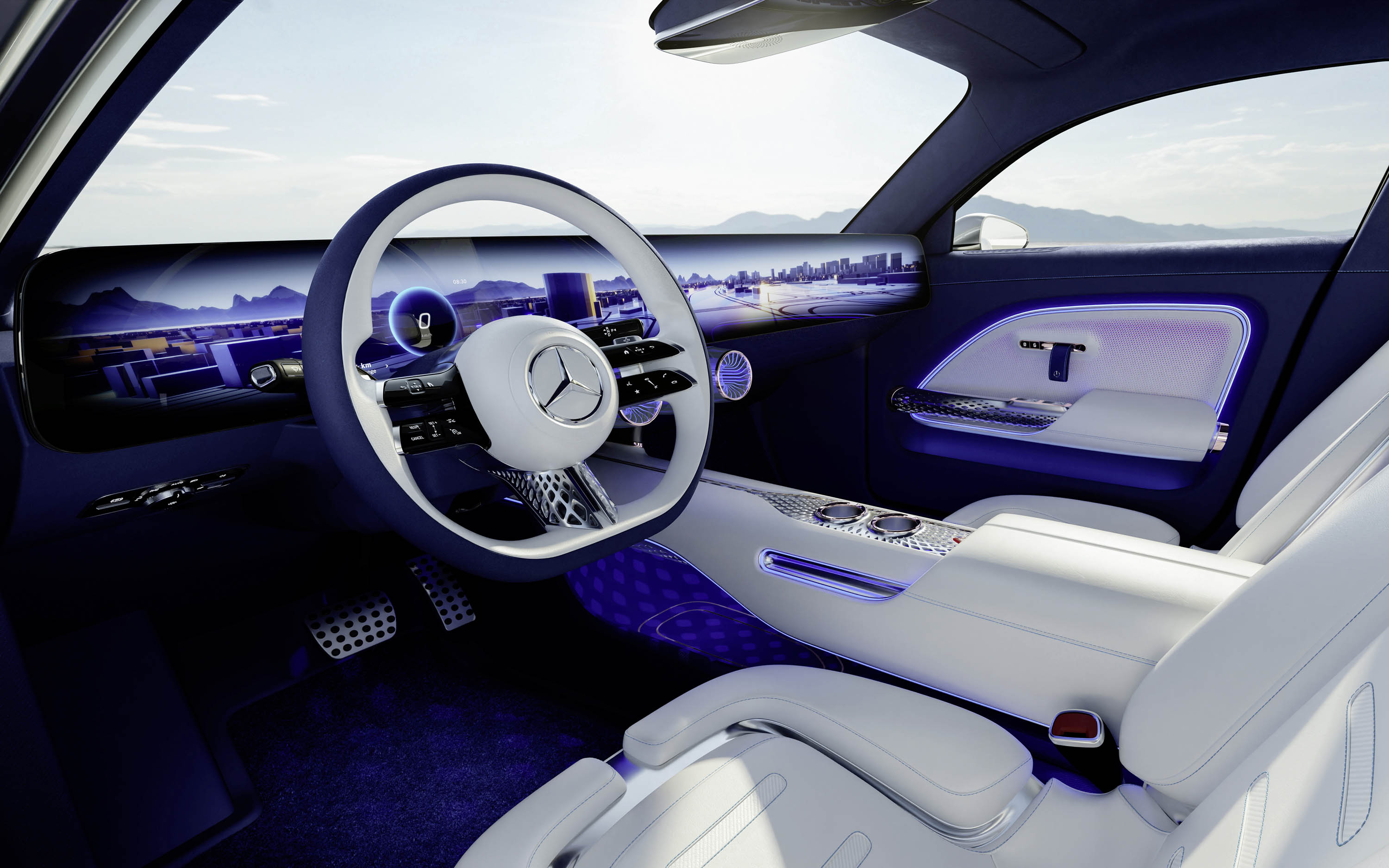
    2022 Mercedes-Benz Vision EQXX Concept Interior

    The one-piece display is also highly energy efficient. Its mini-LED backlight consists of more than 3000 local dimming zones, meaning it consumes power only as and when needed in specific parts of the screen.

    The 3D navigation screen adapts to the type of content being shown. For instance, if you’re driving in an urban area, abstract visualization of the surrounding buildings helps provide orientation amid densely packed streets. However, if you are traveling on the highway or open road, the level of detail diminishes to provide a clearer overview of the journey. This has the added efficiency benefit of reducing the energy consumption of the display.

    As well as providing seamless navigation, the intelligence in the VISION EQXX can mine for data based on the car’s route, with the avatar on hand to function as an intelligent tour guide. It can even help you manage your music library and offer local suggestions.

    There is also a system to help you drive more efficiently. From energy flow to terrain, battery status and even the direction and intensity of the wind and sun, the efficiency assistant curates all the available information and suggests the most efficient driving style. This actually enhances the driver’s own senses by providing input on external conditions that the driver themselves is unable to feel directly – in the way that, for instance, a cyclist can feel the force of the wind or the extra effort involved to pedal uphill. This sensorial support is further augmented by the ability of the VISION EQXX to use the map data to “see into the future”, anticipating what lies ahead to help the driver take advantage of it in a way that maximizes efficiency. A cool orb graphic in the display provides an instinctive overview, underpinned if desired by sound.

    And if more detailed information is what you want, a series of screens will tell you all you need to know with easy-to-follow visuals and infographics. The influence of current acceleration, gradient, wind and rolling resistance on energy consumption are shown in real time. If it’s a full analysis you want – you got it. Equally, if you’re someone who prefers to travel on a “need to know” basis, the VISION EQXX will remain silent.

    The simplicity of the interface is a further development of the Zero Layer concept first used in the EQS, which eases driver-vehicle interaction by removing submenus. The interface is efficient and effective, thanks to intelligence and personalization. Highly proactive, it shows you what you need when you need it, with an intuitive zoom feature providing access to all functions. Your human road trip sidekick has their own dedicated zoom feature and entertainment zone. And if you prefer to travel alone, this part of the display powers down to save energy.

    Weaving sound into the equation

    Lastly, the sound system in the VISION EQXX is interwoven into the UI/UX to deliver an impressive 4D experience with exceptional energy efficiency. A typical sound system can be a significant energy consumer, so Mercedes-Benz engineers looked closely at how to optimize the sound experience while minimizing energy consumption. This can be done by reducing the degradation that sound waves experience when they are absorbed by or bounce off interior surfaces.

    Reducing the overall number of speakers and positioning them very close to the individual occupants dramatically reduces the distance the sound travels. Two broadband speakers installed in each headrest are paired with a bass exciter in each seat. The VISION EQXX uses the exciters for regular audio output as well as for vehicle sounds, haptic feedback and auditory warning. The efficient pairing of sound and haptic feedback is a energy-efficient way of increasing perception and awareness through the use of more stimuli.

    As well as reducing energy consumption, the layout of sound system in the VISION EQXX also facilitates multiple different sound zones. The efficiency assistant takes advantage of the sound system to communicate its recommendations to the driver via a series of intuitive audio “cues”. These were inspired by the cues used by Formula E motor racing to help the drivers perform more efficiently.

    The development and testing process – a digital journey driven by software

    The global road trip to electric mobility is fueled by advanced software and digital processes. The highways and byways are many and varied, the attractions and connections along the way inspiring.

    Pulling together such a diverse array of expertise and innovative ideas from around the world to create the VISION EQXX in half the time was a masterclass in software management. The team made extensive use of open-source technology, augmented by elements created in-house. Agile working practices and monthly release planning ensured a continuous flow of end-to-end functions and early integration of solutions.

    The scale of the digital development work involved in designing and engineering the VISION EQXX is truly groundbreaking. Highly advanced digital tools such as augmented and virtual reality dispensed with the need for time-consuming physical mock-ups. It also facilitated simultaneous development work by remote teams working in different parts of the world – from Stuttgart (Germany) to Bangalore (India) and from Brixworth (UK) to Sunnyvale (California). This massive uplift in digital power slashed the time spent in the wind tunnel from more than 100 hours to just 32. It also meant more than 186,411 miles of test driving was covered virtually.

    The digital development made extensive use of Software in the Loop (SiL) systems. This kept the commissioning phases with the real hardware extremely short and enabled us to drive large-scale tests early on in the project. Using this approach, the team was able to install the drive unit, flash the software and get the wheels turning on the VISION EQXX within the space of just two hours. This extremely nimble, efficient and responsive teamwork was made possible by a combination of a motorsport mindset and intelligent use of the comprehensive testing options at Mercedes-Benz.

    This highly effective and efficient digital development approach means that many of the innovations in the VISION EQXX could be quickly adapted for production applications.

    DID YOU KNOW, THAT THE VISION EQXX…

    …achieves more with less

    Being efficient is all about cutting waste to an absolute minimum to make the most of what you have, be that energy, time or resources. In the Mercedes-Benz VISION EQXX, efficiency means more range from less energy, more tangible luxury and convenience with less impact on nature, and more electric mobility with less waste. It also means radically shorter development times through the application of advanced digital tools and cross-functional teamwork.

    …can get from Berlin to Paris on a single charge

    A single charge of the VISION EQXX would take you from Berlin to Paris, from New York City to Cincinnati, Ohio, or from Beijing to Nanjing. Not because it has a big battery, but because it’s highly efficient. Based on average distances driven per year, a driver in the U.S. or China would have to fully recharge the VISION EQXX only twice per month and in Europe just once per month

    …is the electric equivalent of a “1-litre car”

    The VISION EQXX uses less than 10 kWh of electrical energy to travel 100 km. That equates to traveling 6 miles on 1 kWh of electrical energy. But what does that mean? Translated into fossil-fuel consumption, this is around the golden figure of 1 liter per 100 kilometers (235 mpg).

    Here are a few examples of what 10 kWh of energy delivers in other areas of life:

    • Run a tumble dryer for just over 3 hours
    • Run an average domestic air conditioner for around 3 hours
    • Use an iron for 5 hours
    • Watch a 50-inch LED TV for 100 hours
    • Run the conventional (non-LED) floodlights at a major sports stadium for around 3 minutes

    …is more aerodynamic than a football

    On a long-distance journey, a typical EV uses around two-thirds of its energy just pushing its way through the air. At 0.17, the ground-breaking cd figure of the VISION EQXX can make a big difference at highway cruising speeds. A reduction of just 0.01 adds around 2.5% to the range. Let’s put that into context with a few other drag coefficients:

    1. Penguin – 0.05
    2. VISION EQXX – 0.17
    3. EQS – 0.20
    4. Football – 0.18 to 0.2
    5. Cyclist –0.6 to >0.8
    6. Person – 0.8 to 1.2
    7. Parachute – 1.1 to 1.3
  • 2022 Porsche 718 Cayman GT4 RS Clubsport

    2022 Porsche 718 Cayman GT4 RS Clubsport

    Porsche has revealed the new 718 Cayman GT4 RS Clubsport at the Los Angeles Auto Show. The mid-engine race car from Weissach is based on the new, and recently revealed, 718 Cayman GT4 RS road car.

    As with its road-going sibling, the new 718 Cayman GT4 RS Clubsport is equipped with a mighty 4.0 liter six-cylinder boxer engine. This high-revving power plant is taken directly from the 911 GT3 Cup race car and develops 500 hp in the 718 Cayman GT4 RS Clubsport – 75 hp more than the previous GT4 Clubsport model.

    Fitted as standard is a seven-speed dual-clutch transmission (PDK), replacing the GT4 Clubsport’s six-speed version. All gears feature shorter ratios than on the GT4 Clubsport.

    The homologated 718 Cayman GT4 RS Clubsport is track-ready from the factory and can be used in SRO racing series around the world without further modifications. The starting price of the new 718 Cayman GT4 RS Clubsport, which will be sold and distributed through Porsche Motorsport North America in the U.S., is $229,000, not including tax.

    “We thrive on competition, and will always push for improvements,” said Volker Holzmeyer, President and CEO of Porsche Motorsport North America. “This is what our customer teams expect of us and what we demand of ourselves at Porsche. Acting on their feedback, we’ve made the new 718 Cayman GT4 RS Clubsport more capable than ever. It’s quicker, even more rewarding and confidence inspiring to drive – exactly what drivers competing in the IMSA Michelin Pilot Challenge and SRO series need to be successful.“

    Porsche began offering the Cayman GT4 Clubsport of the 981 generation in 2016, entering into this new customer racing format early with a competitive car, and 421 units were built up to 2018. In 2019, the next generation model debuted based on the 718 Cayman GT4. It was also a success: Around 500 units have been produced to date. The strong demand for these vehicles is also due to the low running costs. The use of proven series production technology combined with racing-specific components reduces the cost for customer teams.

    “The GT4 Clubsport has a special place in my heart,” adds Holzmeyer. “As I’ve been deeply involved with the car from the start, ever since it first began development. Therefore, it’s also a personal ambition for me to continuously improve it, to make it better and better.”

    The 718 Cayman GT4 RS Clubsport in detail

    The 500 hp 4.0 liter six-cylinder boxer engine is taken directly from the current 911 GT3 Cup racing car and is 18 percent more powerful than the 3.8 liter engine used in the previous model – the 718 GT4 Clubsport. Thanks to an optimized air intake, maximum power is achieved at 8,300 rpm – 800 rpm higher than previously. The new engine can rev up to 9,000 rpm and develops 343 lb.-ft. at 6,000 rpm, while the previous engine generated 313 lb.-ft. at 6,600 rpm. The result is a much wider, more usable power band of the new engine, improving the drivability of the car for pro-racers as well as amateur drivers alike.

    The suspension of the 718 Cayman GT4 RS Clubsport was also extensively enhanced. The damper technology was revised from the ground up to offer an optimized responsiveness and a further improvement in body control, making a significant impact on track performance and handling. Two-way racing adjustable shock absorbers with further improved valve characteristics as well as adjustable double-blade anti-roll bars, front and rear, are among the updates. Ride height, camber and toe are also adjustable. Additionally, three different spring rates for front and rear axle are available. Special NACA ducts in the front lid feed air efficiently to the large race braking system with 380 mm multi-piece rotors that are vented and slotted. The Porsche Stability Management-System (PSM) is programmed specifically for the track and includes a switch for traction control, ABS and an updated stability control programming.

    The aerodynamics of the 718 Cayman GT4 RS Clubsport have also been enhanced in great detail. Front dive planes as well as an enlarged front spoiler lip increase downforce at the front axle. Fender vents inspired by the 911 GT3 R and special air curtains calm the air flow around the front wheels, while the enclosed underbody optimizes air flow to the diffusor at the rear of the car. The swan neck rear wing has been fitted with a 20 millimeter long Gurney flap and gains two further stages of adjustability.

    The previous 718 Cayman GT4 Clubsport was the first series production race car to use body panels made of sustainable natural fiber composites. This material is being used even more extensively on the new GT4 RS Clubsport. In addition to the doors and the rear wing, the front lid, fenders, aerodynamic components at the front and the steering wheel consist of this material. The use of this flax-based fiber as an alternative to carbon-fiber composite can be tested in racing for a potential future use in road cars. Porsche has been using motorsport as a test bed for technology, processes and materials potentially capable of being used in road cars for more than 70 years.

    The 718 Cayman GT4 RS Clubsport is equipped to compete straight out of the box. This begins with the welded-in roll cage, as well as the longitudinally-adjustable Recaro racing seat, and extends to six-point harnesses with 2023 FIA standard, all the way to the fire extinguisher system and built-in air jack system with three jacks. The new foam on the driver’s side meets the international requirements of the SRO racing series. The FT3 fuel cell can accommodate up to 115 liters (30.4 gallons) of fuel, making it suitable for endurance racing. Additionally, Porsche offers two different exhaust systems, allowing the GT4 RS Clubsport to compete at tracks with stricter noise limits. Special Fitment preparations for homologated additional headlights or openings in the front lid for quick refueling allow a quick conversion to suit nighttime endurance racing.

  • 2022 Mercedes-Benz AMG SL

    2022 Mercedes-Benz AMG SL

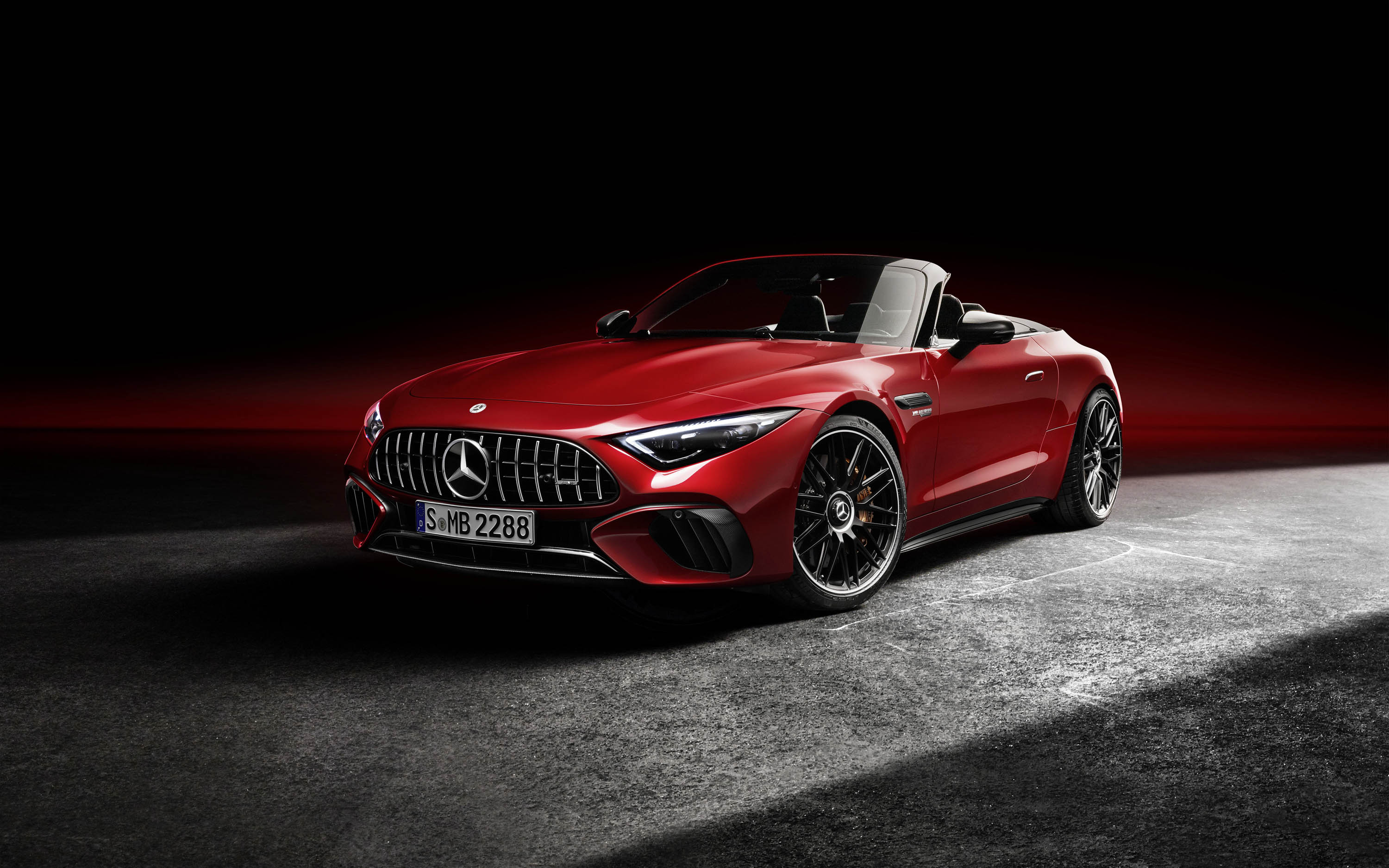
    The new Mercedes-AMG SL, the new edition of an icon, returns to its roots with a classic soft top and sporty character. At the same time, the luxurious roadster as a 2+2 seater is particularly suitable for everyday use and puts its power down on the road with all-wheel drive for the first time. High-tech components such as the AMG ACTIVE RIDE CONTROL suspension with active anti-roll stabilisation, rear-axle steering, the optionally available AMG ceramic high-performance composite brake system and the standard-fit DIGITAL LIGHT with projection function sharpen the sporty profile. In combination with the AMG 4.0-litre V8 biturbo engine, this results in a driving experience of the highest order. As a consistent Performance Luxury model, Mercedes-AMG in Affalterbach has developed the SL completely independently. Two models with AMG V8 engines will kick off the market launch.

    Almost 70 years ago, a sports car launched in Stuttgart immediately became a legend. The vision of expanding the potential of the Mercedes-Benz brand through motor racing successes produced the first SL as a result – a road-going racing sports car. Shortly after its début in 1952, the 300 SL (internal designation W 194) reaped success after success on the race tracks of the world. In its first year, it achieved, among other things, a spectacular one-two victory in the legendary 24 Hours of Le Mans and even took the first four places in the Nürburgring Grand Jubilee Prize for sports cars. Its successes quickly make the SL a legend.

    The successful racing car was followed in 1954 by the 300 SL production sports car (W 198), which is called the “Gullwing” because of its unusual doors. In 1999, a jury of motoring journalists voted it the “Sports Car of the Century”. Other highlights of the model history include the “Pagoda” (W 113, 1963-1971), the evergreen R 107 (1971-1989), which was built for 18 years, and its successor, the R 129, which is considered an automotive sculpture because of its striking wedge shape. The abbreviation “SL” to this day thus stands for one of the few genuine automotive icons in the world.

    In the decades-long development history from full-blooded racing car to open-top luxury sports car, the new Mercedes-AMG SL now sets another milestone. It combines the sportiness of the original SL with the unique luxury and technological excellence that characterise modern Mercedes models.

    “The SL is an icon: For almost 70 years, the distinctive sports car has delighted Mercedes customers of every generation around the world. With the rebirth of the roadster from Mercedes-AMG, the new SL more than ever remains the symbol of this timeless fascination”, says Britta Seeger, Member of the Board of Management of Daimler AG and Mercedes-Benz AG, responsible for Mercedes-Benz Cars Marketing and Sales.

    “The new SL combines the sporty genes of the original SL with the driving performance typical of AMG. At the same time, it offers luxury and comfort at the absolute top level. This combination is unique in the sports car segment and is also reflected in the interior – where the highest levels of comfort and quality meet the right helping of sportiness. The high-quality combination of analogue world and state-of-the-art digital equipment makes it clear that the new SL is the rebirth of an icon for the modern era”, says Philipp Schiemer, Chairman of the Board of Management of Mercedes-AMG GmbH.

    “With the new SL, we have created a repositioning of the iconic SL design. The expressively modelled exterior conveys a light and purist impression and brings sensual beauty and extravagant design into perfect harmony”, says Gorden Wagener, Chief Design Officer Daimler Group. 

    “We at Mercedes-AMG consider it a great honour to have had the privilege to develop the new edition of this sports car icon. When we were tasked with the overall development of the new SL, we were able to start from scratch without building on an existing structure. We are proud of the result, which once again demonstrates the high level of engineering expertise in Affalterbach. The new 2+2 concept combines agile driving dynamics with a high level of comfort and unrestricted suitability for everyday use”, says Jochen Hermann, Chief Technical Officer of Mercedes-AMG GmbH. 

    With its exciting design, state-of-the-art technology and outstanding driving characteristics, the new Mercedes-AMG SL sets standards in the luxury sports car segment. The exterior design fascinates with a perfect triad: It combines the modern Mercedes-Benz design philosophy of sensual purity with the sportiness typical of AMG and characteristic details. The two power bulges on the bonnet are just one of numerous reminiscences of the first SL generation. The interplay of light and shadow makes the overall appearance visually light and low. So it is clear at first glance that the new SL has returned to its sporty roots.

    Exterior design: balanced design with sporty genes

    Characteristic features of the body design are the long wheelbase, the short overhangs, the long bonnet, the passenger compartment set back with a strongly raked windscreen and the powerful rear end. This results in the typical SL proportions. Together with the voluminously sculpted wheel arches and the large alloy wheels flush with the outer skin, they give the roadster its powerful, dynamic appearance. When closed, the seamlessly integrated soft top underscores the purist, sporty impression.

    The AMG-specific radiator grille emphasises the effect of width of the front and, with its 14 vertical slats, cites the ancestor of all SL models, the legendary 300 SL racing sports car of 1952. Other distinctive design elements include the slim, sharply outlined DIGITAL LIGHT LED headlamps and the equally extremely slim LED rear lamps.

    Interior design: Performance Luxury with “hyperanalogue” cockpit

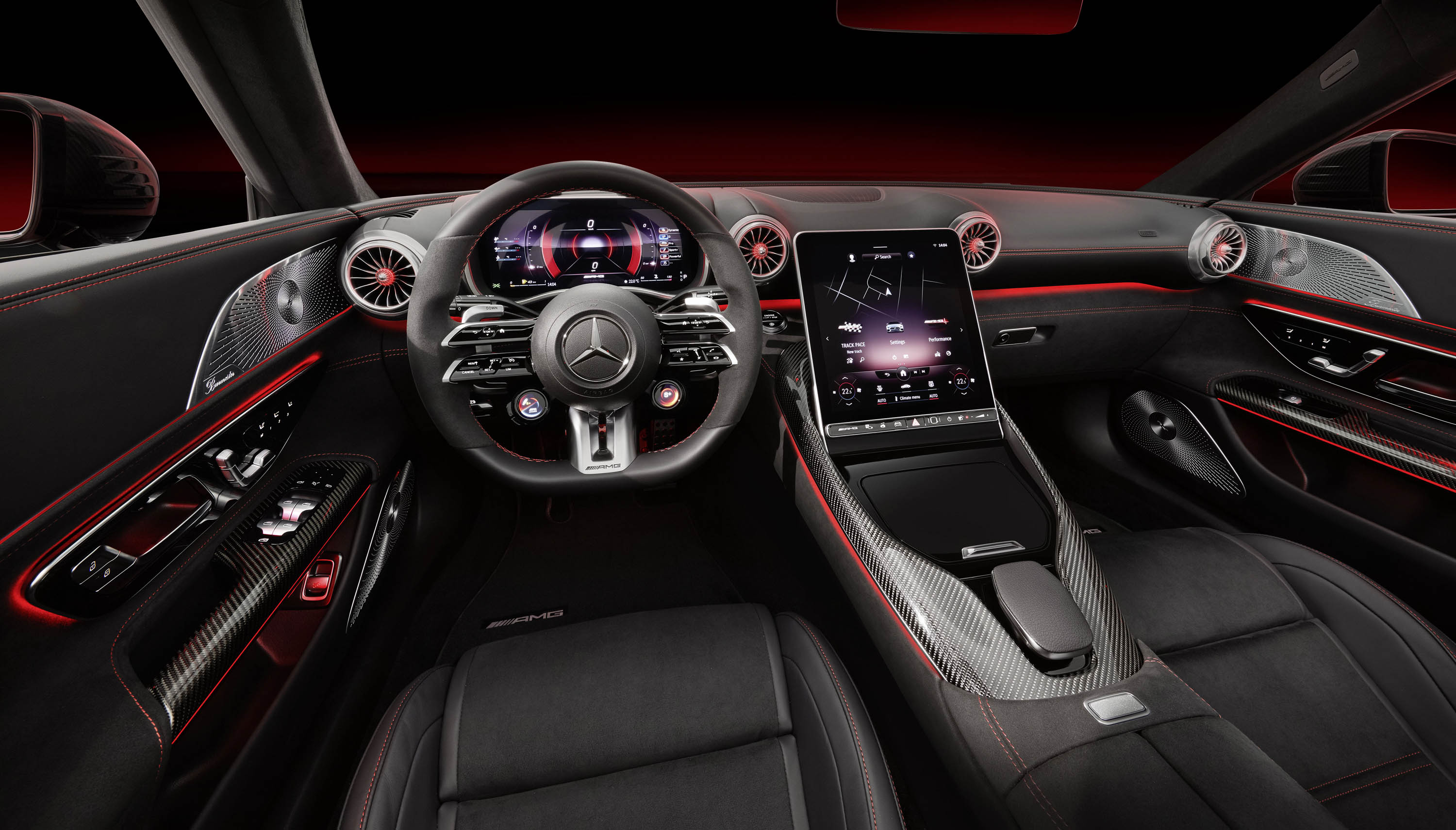
    The interior of the new Mercedes-AMG SL transforms the tradition of the first 300 SL Roadster into the modern era. The new edition perfectly combines sporting virtues and luxury. Fine materials and meticulous workmanship underline the standard of the highest level of comfort. The cockpit design, right down to the adjustable central display in the centre console, is focused on the driver. At the same time, the completely new interior space concept with 2+2 seats offers more room and functionality than before. The rear seats increase the daily practicality and offer space for people up to 1.50 metres tall.

    The minimalist interior of the 300 SL Roadster, equipped with high-quality materials, inspired the designers in the interior design of the new model: The result is an exciting combination of analogue geometry and digital world – called “hyperanalogue”. This is exemplified by the fully digital instrument cluster, which is integrated into a three-dimensional visor. The standard MBUX infotainment system offers a choice of several specific display styles and different modes.

    2022 Mercedes-Benz AMG SL Interior

    One of many highlights in the interior of the new SL is the sculptural seat design of the standard, electrically adjustable AMG sports seats. The head restraints are integrated into the backrest and emphasise the sporty character. The AIRSCARF is on board as standard: Warm air flows into the passenger compartment from air outlets in the head restraints and wraps around the head and neck area of the driver and front passenger like a scarf. Perfect ergonomics and various progressive seam and quilting patterns complete the symbiosis of high-tech, performance and luxury. AMG Performance seats are available as an option.

    The latest generation MBUX (Mercedes-Benz User Experience) is intuitive to operate and capable of learning. It offers numerous functional contents and the operating structure of the second-generation MBUX system, which debuted in the new Mercedes-Benz S-Class. In the SL, AMG-specific content is added extensively in five display styles. Exclusive menu items such as “AMG Performance” or “AMG TRACK PACE” also emphasise the sporty character.

    Body shell: new roadster architecture with composite aluminium structure

    The 2021 SL is based on a completely new 2+2-seater vehicle architecture developed by Mercedes-AMG. The chassis is designed as a lightweight composite aluminium structure and consists of an aluminium space frame with a self-supporting structure. The design guarantees maximum rigidity and is thus the perfect basis for precise driving dynamics, high comfort, optimal packaging and sporty body proportions. The new body shell was created – as with the first SL in 1952 – literally on a blank sheet of paper: Not a single component comes from the predecessor SL or any other model such as the AMG GT Roadster.

    The aim of the body shell architecture is to realise the driving performance typical of AMG with a focus on lateral and longitudinal dynamics, while at the same time meeting the high standards on comfort and safety. In the new SL, the intelligent material mix enables the highest possible rigidity at a low weight. Optimised material cross-sections and sophisticated component shapes create space for the comprehensive comfort and safety features as well as the soft top. The materials used include aluminium, magnesium, fibre composites and steel, from which the windscreen frame, for example, is made. This serves as roll-over protection in conjunction with the roll bar system behind the rear seats, which can be extended at lightning speed when needed.

    Compared to the previous model series, the torsional rigidity of the body shell structure increased by 18 percent. The transverse rigidity is 50 percent higher than the already outstanding value of the AMG GT Roadster. The longitudinal rigidity is 40 percent higher. The weight of the plain body shell is around 270 kilograms. Together with the low centre of gravity, the targeted lightweight construction ensures outstanding driving dynamics.

    Active aerodynamics: for perfect balance and high efficiency

    A key development focus of the new SL was high aerodynamic efficiency, specifically: a perfect balance between low drag and reduced lift. Here, the luxurious roadster benefits from Mercedes-AMG’s wide-ranging motorsport expertise and from extensive active aerodynamic elements at the front and rear. All streamlining elements are seamlessly integrated into the exterior design. Further detailed measures reduce the drag coefficient to Cd 0.31 – an excellent figure for open-top sports cars.

    The SL’s aerodynamics meet the complex requirements of handling stability, drag, cooling and wind noise. Regardless of whether the top is down or up, the vehicle character and driving characteristics remain unchanged. The even aerobalance helps to defuse critical driving situations, such as a sudden evasive manoeuvre at high speed.

    AIRPANEL air control system: two-piece for the first time

    A technical highlight in the aero development: the two-piece, active air control system AIRPANEL. The first piece operates with vertical louvres hidden behind the lower air intake in the front apron. The second piece is located behind the upper air intake and has horizontal louvres. Normally all louvres are closed. This position reduces drag and allows the air to be directed specifically towards the underbody. This further reduces front lift. Only when certain temperatures on predefined components are reached and the demand for cooling air is particularly high do the louvres open (the second system only from 180 km/h) and allow maximum cooling air to flow to the heat exchangers.

    Another active component is the retractable rear spoiler seamlessly integrated into the boot lid. It changes its position depending on the driving status. In doing so, the control software takes into account numerous parameters: It factors the driving speed, the longitudinal and lateral acceleration and the steering speed into the calculation. The spoiler assumes five different angular positions from 80 km/h to either optimise handling stability or reduce drag.

    The optional active aerodynamic element, which is hidden in the underbody in front of the engine, also contributes to the improved handling. This carbon profile, which weighs around two kilograms, reacts to the setting of the AMG driving modes and automatically extends downwards by around 40 millimetres at a speed of 80 km/h. The AMG driving modes are then activated. This creates the so-called Venturi effect, which sucks the car additionally to the road surface and reduces front-axle lift. The driver feels this positively in the steering: The SL can be steered even more precisely into bends and tracks even more stably.

    A range of aerodynamically optimised alloy wheels with diameters of 19, 20 or 21 inches is available for the SL, reducing drag through less turbulence. Particularly sophisticated are 20-inch wheels with plastic aero rings, which also save weight.

    The soft top: less weight and low centre of gravity

    The sportier positioning of the new SL also suggested the decision for an electric soft top instead of the previous metal vario roof. The 21-kilogram reduction in weight and the resulting lower centre of gravity have a positive effect on driving dynamics and handling. The space- and weight-saving Z-fold makes it possible to dispense with a conventional soft-top compartment cover. The front roof cap ensures that the open soft top is flush with the surface in its final position. At the same time, the developers were faced with the task of maintaining the high suitability for everyday use and the exemplary noise comfort. The three-layer design consists of a tightly stretched outer shell, precisely crafted roof liner and the acoustic mat made of high-quality 450 g/m² material inserted in between.

    Opening and closing takes only about 15 seconds and is possible up to a speed of 60 km/h. The soft top is operated using the switch panel in the centre console or the multimedia touchscreen, on which an animation shows how the process is progressing.

    Engine, transmission and all-wheel drive: great variety and more choice than ever before

    At market launch, the new SL starts with two output levels of the AMG 4.0-litre V8 biturbo engine. The engines are assembled purely by hand at the company’s site in Affalterbach according to the “One Man, One Engine” principle. In the top model SL 63 4MATIC+ (combined fuel consumption 12.7-11.8 l/100 km, combined CO2 emissions 288-268 g/km)[1] the engine develops 430 kW (585 hp) and provides a maximum torque of 800 Nm over a wide rev range from 2500 to 4500 rpm. Accelerating from 0 to 100 km/h takes only 3.6 seconds, the top speed is 315 km/h. In the SL 55 4MATIC+ (combined fuel consumption 12.7-11.8 l/100 km, combined CO2 emissions 288-268 g/km), the V8 unit develops an output of 350 kW (476 hp) and a peak torque of 700 Nm. The sprint from standstill to 100 km/h takes 3.9 seconds, the top speed is 295 km/h.

    For use in the SL, the engine received a new oil pan, repositioned intercoolers and active crankcase ventilation. The intake and exhaust ducts have been optimised for even more effective gas exchange, and the exhaust gas routing for the catalytic converter box and petrol particulate filter has been enlarged. The developers achieved the increased output of the SL 63 4MATIC+ primarily through higher boost pressure and greater air flow, as well as modified engine software. To sum up, the eight-cylinder engine thrills with its exceptional power delivery and powerful acceleration in all engine speed ranges combined with maximum efficiency for low consumption and emission values.

    Performance hybrid in development

    At a later date, we will also offer the SL as a powerful Performance hybrid drive. The AMG E PERFORMANCE drive strategy is based on the guiding principle of offering an electrified powertrain that further enhances driving dynamics while also being highly efficient.

    Wet start-up clutch for the transmission

    The AMG SPEEDSHIFT MCT 9G transmission combines an emotionally appealing gearshift experience with extremely short shift times and is specially adapted to the requirements of the new SL. A wet start-off clutch replaces the torque converter. It reduces weight and, thanks to its lower inertia, optimises response to accelerator pedal commands, especially during spurts and load changes.

    More traction and handling stability: fully variable AMG Performance 4MATIC+ all-wheel drive

    For the first time in its almost 70-year history, the SL is available with a drive system acting on all four wheels. The two V8 models are equipped with AMG Performance 4MATIC+ all-wheel drive technology as standard. This intelligent system combines the advantages of different drive concepts: the fully variable torque distribution to the front and rear axles ensures optimal traction right up to the physical limit. The driver is also able to rely on high handling stability and a high level of safety under all conditions.

    Suspension and brakes: Multi-link front axle, active anti-roll stabilisation and optimal deceleration

    The SL 55 4MATIC+ is equipped as standard with a newly developed AMG RIDE CONTROL steel suspension with particularly capable aluminium shock absorbers and lightweight coil springs. For the first time, a series-production Mercedes-AMG vehicle is fitted with a multi-link front axle with five links arranged entirely within the rim. This significantly improves the kinematics. At the rear axle, a 5-link design likewise controls the wheels.

    The innovative AMG ACTIVE RIDE CONTROL suspension with active, hydraulic anti-roll stabilisation makes its début in the SL 63 4MATIC+. Biggest innovation: Active hydraulic elements replace the conventional mechanical anti-roll bars and compensate for rolling movements of the new SL in fractions of a second. The system enables optimal steering and load-change behaviour with AMG-typical driving characteristics in terms of dynamics, precision and feedback for the driver. At the same time, it increases ride comfort when driving in a straight line and over bumps.

    The newly developed AMG high-performance composite braking system guarantees excellent deceleration values and precise control. It impresses with short braking distances, sensitive response and high stability – even under extreme stress. The new composite brake discs are lighter than before and take up less space, which is used for even better brake cooling. The directional perforation is also new: In addition to the additional weight saving and better heat dissipation, this solution scores points with a faster response in wet conditions as well as better pad cleaning after braking manoeuvres.

    Active rear-axle steering: combines agility and stability

    For the first time in its long history, the SL is equipped with active rear-axle steering as standard. Depending on the speed, the rear wheels steer either in the opposite direction (up to 100 km/h) or in the same direction (faster than 100 km/h) as the front wheels. The system thus enables both agile and stable handling – characteristics that are in contrast to each other without rear-axle steering. Other advantages include easier vehicle control at the limits and less steering effort because the front-wheel steering ratio is more direct.

    Six driving modes and AMG DYNAMICS: from comfortable to dynamic

    The six AMG DYNAMIC SELECT driving modes “Slippery”, “Comfort”, “Sport”, “Sport +”, “Individual” and “RACE” (standard for SL 63 4MATIC+, included in the optional AMG DYNAMIC PLUS package for SL 55 4MATIC+) enable a wide spread of vehicle characteristics from comfortable to dynamic. The individual driving modes offer an individual driving experience, precisely tailored to different driving conditions. As a feature of the AMG DYNAMIC SELECT driving modes, the SL models also feature AMG DYNAMICS. This integrated vehicle dynamics control extends the stabilising functions of ESP® with agility-enhancing intervention in the all-wheel control, steering characteristics and additional ESP® functions. When cornering at speed, for example, brief braking intervention at the inner rear wheel generates a defined yawing motion around the vertical axis for responsive and precise entry into the bend. The spectrum ranges from extremely stable to highly dynamic.

    SL range of equipment: great variety for an individual appearance

    The equipment details and the numerous options offer a wide range of individualisation for the most diverse customer wishes – from sporty-dynamic to luxurious-elegant. Twelve paint colours including the two exclusive SL paints Hyper Blue metallic and MANUFAKTUR Monza Grey magno, three roof colour variants and numerous new wheel designs make the choice a pleasure. Three exterior design packages are available to further sharpen the look and make it either more elegant or more dynamic. The SL 55 4MATIC+ runs on 19-inch AMG multi-spoke alloy wheels as standard, optionally in silver or matt black. The SL 63 4MATIC+ sits on 20-inch AMG 5-twin-spoke alloy wheels. The range of wheels includes a total of nine different variants. They include two aerodynamically optimised 20-inch options in 5-twin-spoke or multi-spoke design. The range is rounded off with 21-inch AMG alloy wheels in a 10-spoke design and 21-inch AMG forged wheels in a 5-twin-spoke design, both in two colour variants.

    Driving assistance systems and MBUX: intelligent helpers in the background

    With the help of numerous sensors, cameras and radar, the driving assistance systems observe the traffic and the surroundings of the new roadster. If necessary, the intelligent helpers can intervene at lightning speed. As in the current generations of the Mercedes C-Class and S-Class, the driver is supported by numerous new or enhanced systems – in everyday situations, for example, by assistance for speed adaptation, distance control, steering and lane changes. When danger threatens, the assistance systems are able to respond to impending collisions as the situation demands. The functioning of the systems is visualised by a new display concept in the instrument cluster.

    The new assistance display in the instrument cluster shows comprehensibly and transparently how the driving assistance systems work in a full-screen view. The driver can see their car, lanes, lane markings and other road users such as cars, trucks and two-wheelers in an abstracted 3D way there. The system status and operation of the assistants are visualised in this depiction of the surroundings. The new animated assistance display is based on a 3-D scene generated in real time. This dynamic, high-quality representation makes the operation of the driving assistance systems transparent as a tangible augmented reality experience.

  • 2022 Toyota GR86 Price Starts At $27,700

    2022 Toyota GR86

    With more horsepower and torque, a redesigned interior and exterior and a starting Manufacturer’s Suggested Retail Price (MSRP) of just $27,700, the all-new 2022 GR86 is priced to thrill. Arriving at Toyota dealerships in December and available in two grades, GR86 and GR86 Premium, the new generation of Toyota’s driver’s car brings affordable sports car fun, all with a larger 2.4 liter engine that delivers nearly 18% more horsepower and 11% more torque.

    The GR86 Premium grade rides on standard 18-inch, 10-spoke black aluminum alloy wheels with Michelin Pilot Sport 4® tires and a large duckbill spoiler on the back. On the inside, black and silver accented six-way adjustable front seats feature two-level heating and perforated UltraSuede upholstery with leather side bolsters. Black and silver accents continue through to the leather steering wheel, shift boot and hand brake. A new 8-inch touchscreen multimedia system with eight-speakers brings connectivity and tunes to drivers.

    The GR86 grade sits on 17-inch, 10-spoke machined-finish aluminum alloy wheels wrapped in Michelin Primacy HP® tires. Interior features include six-way adjustable black G-embossed fabric with sport fabric side bolsters with textured vinyl and sport fabric trim on the dash, doors and steering wheel. The new 8-inch touchscreen multimedia system with six-speakers comes standard.

    Available in a choice of manual or paddle shifted automatic transmission, it comes in a choice of seven exterior colors: Track bRED, Halo White, Steel Silver, Pavement Grey, Raven Black and Neptune or Trueno Blue. The new generation also marks its evolution to Gazoo Racing lineup with a new, angular GR86 logo paired with Toyota’s GR badge. Models are expected to arrive at Toyota dealerships this December.

    Power & Design for a New Generation

    The Gazoo Racing team engineered more horsepower and torque into the new GR86 by utilizing a larger, naturally aspirated 2.4-liter, horizontally opposed four-cylinder engine. With 228 hp., up from 205, and 184 lb.-ft. of torque, up from 156, it’s now tuned so peak torque arrives far earlier in the powerband at 3,700 RPM, versus 6,600 RPM. Thanks to a larger engine bore diameter, now at 94 mm. (previously 86 mm.) displacement bumps up to 2,387 cc. from 1,998 cc.

    Thanks to these changes, the new GR86 provides a responsive and powerful driving experience – especially when coming out of the curves and onto the straightaways. The bigger engine improves zero-to-60 times from 7.0 to 6.1 seconds for the MT and from 8.0 to 6.6 seconds for the AT. Fuel economy comes in at an EPA estimated 20 City/27 Hwy/22 Combined MPG (6-Speed M/T) and 21 City/31 Hwy/25 Combined MPG (6-Speed A/T).

    Toyota’s D-4S dual injection technology is also re-tuned to deliver more aggressive throttle input. This system combines direct fuel injection and port-injection technologies. The direct-injection system provides a cooling effect in the cylinders, which allows the engine to use a very high 12.5:1 compression ratio for maximum power. The port fuel injectors come into play during light- and medium-load conditions to help maximize combustion efficiency.

    The intake manifold’s port diameter and length have been optimized to support linear torque and acceleration and the air intake has also been redesigned to maximize airflow. The fuel system has a new pump design and wider transfer tube for a steady fuel flow during cornering. The cooling system gets a new high-speed water pump, five-level water-cooled oil cooler and a new high-capacity 200W radiator output motor. The exhaust’s larger 5.6L center pipe capacity delivers a satisfying growl, with augmented engine sound in the cabin from an Active Sound Control system.

    Highly Rigid Body Structure

    The GR team also reworked the chassis and body to complement GR86’s increase in power. Building upon the nimble attributes of the prior generation 86 chassis, the GR team added front cross-members to the joints between the front suspension and frame. The hood also adds an internal diagonal frame for stability.

    A new full-ring rear frame ties the upper and lower chassis together and a combination of high-strength steel, hot-stamped steel and aluminum is strategically used throughout the frame to bring drivers a balance of roll and pitch that maximizes control. For additional reinforcement, structural adhesives and high-strength fasteners throughout the underbody creates a taut, connected frame.

    Curb weight on the GR86 was also kept down for maximum controllability. Weighing in it at just 2,811 pounds on the MT (2,851 pounds in the AT), the GR86 ranks among the lightest sports cars on the market. Pair that nimble weight with a low center of gravity (COG) from the combination of the compact flat-four engine, low-slung 51.6-inch overall height and near perfect 53 front:47 rear balance, and the result is a pure driver’s car.

    Driven by Control

    GR86’s three-spoked steering wheel puts drivers in direct control of its agile handling. With a 13.5 overall ratio that requires just 2.5 turns clock to clock for tight maneuverability, it features a new Electronic Power Steering (EPS) system with a column-mounted integrated motor and control unit that reduces both weight and space. GR engineers even changed the steering gear box mount, making it more rigid with a hard rubber bushing and reshaped mounting bolt washer.

    Sport-tuned independent MacPherson® front struts feature refined damping performance and gain new rebound springs to enhance handling characteristics. A double wishbone style multi-link rear suspension features a Torsen® limited-slip rear differential for improved traction while cornering.

    To complement GR86’s increased torque, the rear axle offers additional reinforcement and the strut stabilizer bar is now connected directly to the subframe for maximum stability. Sport-tuned rear shock absorbers feature stiffer springs to provide planted, predictable handling for the front-engine, rear-wheel drive coupe. Both grades come with power-assisted 11.6-inch front and 11.4-inch rear ventilated disc brakes.

    Manual or Automatic — You Choose

    Sports car purists will love GR86’s six-speed manual transmission. With the push of a button, MT drivers can engage Track mode or switch off Vehicle Stability Control (VSC). The shape of the shift lever was optimized for smooth, enjoyable shifting, whether you’re moving from 2nd to 3rd or downshifting from 5th to 4th. Additionally, a carbon synchronizer was added to improve shifting into 4th gear. The MT uses new low-viscosity oil and bearings for smooth shifting operability with the higher torque output of the 2.4L boxer engine.

    For the Automatic Transmission (AT), steering-wheel-mounted paddle shifters offer enthusiasts a dynamic driving experience. Drivers can choose between Normal, Sport, Snow or Track modes. When in Sport mode, the AT senses brake and accelerator operation and vehicle behavior to automatically shift into the optimal gear, bringing drivers the control they want. Additional clutch discs and a new high-capacity torque converter allow for smooth delivery of the engine’s added power.

    Purist Sports Car Design, Track Ready Aerodynamics

    First introduced in 2012, the first-generation 86 was a tribute to the fun-to-drive, AE-86 Corollas of the 1980s. The new GR86 keeps that spirit alive with its focus on sporty design and weight management.

    Parabola-shaped transparent lens components give its LED headlights a fearless look, with the same sweeping, internal L-shape as the GR Supra. A GR sports car exclusive G-mesh-shaped matrix grille feeds air to the intake, and functional molding on the front bumper features a textured shark skin-inspired design to reduce drag.

    On the side, its front fender and large rocker molding form side sill spoilers with integrated air outlets, improving aerodynamics at the door drop. The air outlets allow air inside the front wheel arch to escape, reducing wheel well turbulence and supporting stability. Along the doorline, a low, horizontally aligned underbody combines with the accentuated fender tops to express a strong front-rear posture. Black side mirrors add contrast and are slightly larger than the previous generation, with a curved shape to maximize airflow.

    At the rear, inverted wheel arches express a wide stance and arch fins control air flow. Aerodynamic fins have been added to the lower rear bumper for further stability. On the Premium grade a large, duckbill spoiler sweeps up from the rear deck for increased downforce. The license plate holder has been dropped down to the rear bumper, simplifying the trunk opening and contributing to its low center of gravity. Three-dimensional rear taillights wrap around the rear deck and blend into trim molding along the trunk line to form a wide, connected rear.

    GR engineers also stretched their creativity in seeking weight savings on the GR86. The front fenders and roof panel are now constructed of aluminum, in addition to an already-aluminum hood. Other examples of weight-shaving ingenuity come from the use of structural adhesives in the underbody, a resin fuel door, new light-weight front seat frames, the redesigned EPS and changes to the driveline and engine block.

    Driver-Focused Tech & Comfort

    GR86 features Toyota’s Smart Key System that functions on both the driver and passenger door. Once inside, drivers will find a horizontally configured instrument panel for a clean field of view. A push-button start fires up a boxer-inspired GR-logo animation on its 7-inch Thin Film Transistor (TFT) multi-information display. Display content varies based on whether drivers are in Normal, Sport, Snow or Track mode (MT offers Track mode only). Sport Mode throws a red ring around the speedometer for an aggressive look. Track Mode was developed with race driver input and prominently displays an RPM-band in the center, oil and water coolant temperatures and lap timer.

    The HVAC system has added independent left/right temperature adjustments and new, large LED dials and piano-key switches are arranged on the center console for easy operation. A leather-wrapped steering wheel has integrated controls for the audio system, hands-free calling, voice-recognition system, display meters and cruise control; AT adds an ACC display option button. The Premium grade gains aluminum sport pedals and footrest. Power windows come with auto up/down and pinch protection.

    A split opening center console provides two cup holders or storage as needed, with one auxiliary audio and two USB connections inside. The AT version has an open storage area in the center as well. Door armrests have a long pull-handle with easy access to in-door storage space.

    An 8-inch touchscreen multimedia system with a six-speaker audio system comes on the GR86 grade; that increases to an eight-speaker system on the Premium. The eight-speaker system now adds a “powerful” mode to the equalizer function for an acoustic effect that emphasizes low and high tones. For those who want even more rumble, a dealer or factory-installed 10-inch, 200W subwoofer is available for either grade. Either system comes complete with Wired Apple CarPlay® and Android Auto™ compatibility, Bluetooth® for hands-free phone capability, a SiriusXM® 3-month Platinum Plan trial and a trial access to a suite of available connected services (with additional subscription).

    New Era Customized

    Drivers who want even more from their GR86 can tap into an all-new line of Toyota Gazoo Racing accessories.

    For some extra growl, there’s a dual cat-back GR performance exhaust with stainless steel bent pipes, black chrome tips and debossed GR logo. There’s also a GR performance cold air intake kit, with a larger airbox and performance air filter. A bolt-on GR strut tie brace and GR performance stabilizer bars are also available.

    MT aficionados can split seconds between gears with a GR quick shifter kit. A GR etched logo shift knob is available for MT or AT. GR front brake pads are also available, and for added style, there’s forged 18-inch black or 17-inch bronze aluminum GR wheels.

    Gloss black, larger GR logoed fender vent inserts add a touch of shine. Add a clear film paint protection kit for the hood, fender and front bumper or paint-matched door edge guards to keep dings away. All-weather GR branded floor mats and cargo tray or carpet GR floor mats help protect the interior. And for drivers looking to make a statement, there’s a vinyl GR graphic for the side rocker and a rear bumper applique.

    Complimentary 1-year NASA Membership

    Every 2022 GR86 comes with a complimentary 1-year membership to the National Auto Sport Association (NASA). GR86 owners will enjoy a host of benefits, including one free High Performance Driving Event (HPDE) and discounted admission to NASA-sanctioned events.

    GR86 Safety & Connected Services

    The Automatic Transmission GR86 comes with a standard active safety system that includes Pre-Collision Braking, Adaptive Cruise Control, Pre-Collision Throttle Management, Lane Departure Warning, Sway Warning, Lead Vehicle Start Alert and High Beam Assist. An anti-theft system with engine immobilizer and alarm are also standard.

    All grades of the GR86 come with the following standard safety systems: Vehicle Stability Control (VSC), Traction Control (TRAC), Anti-lock Brake System (ABS), Electronic Brake-force Distribution (EBD) and Brake Assist (BA). It also includes Smart Stop Technology® (SST), Vehicle Stability Control (VSC), Track Mode and Hill Start Assist Control (HAC). Additional safety features include LATCH (Lower Anchors and Tethers for Children) with lower anchors on outboard rear seats and tether anchors on all rear seats and a Tire Pressure Monitor System (TPMS). Seven airbags are standard on all models, now including a driver’s knee airbag for 2022.

    Remote services are now available for enhanced safety and security. Available services include:

    Remote Connect (Requires Subscription)

    • Engine Starter
    • Advanced Climate Control
    • Vehicle Locator
    • Lock/Unlock, Hazards/Lights
    • Diagnostic Alert
    • Monthly Vehicle Health Reports
    • Service Usage Report
    • Geo Fencing, Speed Alert, Curfew
    • Horn

    Safety Connect (Requires Subscription)

    • Enhanced Roadside Assistance
    • SOS Emergency Assistance
    • Automatic Collision Notification
    • Stolen Vehicle Recovery Service

    Maintenance Included, Limited Warranty & Price

    Toyota’s 36-month/36,000 mile basic new-vehicle warranty applies to all components other than normal wear and maintenance items. Additional 60-month warranties cover the powertrain for 60,000 miles, and corrosion with no mileage limitation.

    Standard ToyotaCare is a no additional cost plan covering normal factory-scheduled maintenance for 2 years or 25,000 miles, whichever comes first, and 24-hour roadside assistance for two years, unlimited mileage.

    2022 Toyota GR86 Pricing*

    No matter the grade, GR86 offers everyday drivability and sports car performance in an affordable package. With two grades and a choice of manual or automatic transmission, the 2022 GR86 is ready to thrill at every turn.

    Grade Drive MSRP
    GR86 6-speed MT $27,700
    GR86 6-speed AT $29,200
    GR86 Premium 6-speed MT $30,300
    GR86 Premium 6-speed AT $31,800

    * MSRP does not include Dealer Processing and Handling Fee

  • 2021 Rolls-Royce Black Badge Ghost

    2021 Rolls-Royce Black Badge Ghost - Front Angle

    Rolls-Royce Motor Cars has a unique fluency in its clients. Its close relationship with the women and men who patronise the marque affords the company’s decision-makers an unparalleled understanding of the super-luxury consumer: their aesthetic preferences, uncompromising lifestyle requirements and changing taste patterns. Only with this understanding, and briefings supplied by the brand’s Luxury Intelligence Unit, is the marque able to create an accurate product response. Black Badge is a vivid example of this.

    Rolls-Royce Motor Cars has always attracted subversive clients – rebellious women and men who built their success by breaking rules, taking risks and challenging conventions. In the 2020s, these women and men engage with luxury products on their own terms. They reject suits for streetwear, use blockchain not banks and influence the analogue world through their digital endeavours. In doing so, they have created new codes of luxury that resonate with their sensibilities: darker in aesthetic, assertive in character and bold in design.

    Their approach to Rolls-Royce products is no different. The marque has responded accordingly, developing new colour palettes, more technical surface treatments and even more powerful driving experiences without ever compromising the effortless sensibilities that have drawn this bold group of clients to the Rolls-Royce brand.

    Black Badge, the highly successful alter ego of Rolls-Royce, now represents more than 27% of commissions worldwide and is codified by the mathematical symbol that represents a potential infinity, which is found within the motor car’s interior. This graphic, also known as the Lemniscate, was applied to Sir Malcolm Campbell’s record-breaking Rolls-Royce-powered Blue Bird K3 hydroplane and the marque’s designers nominated this hallmark for Black Badge motor cars to reflect their own unrelenting pursuit of power.

    Rolls-Royce debuted Black Badge with Wraith and Ghost in 2016, followed by Dawn in 2017 then Cullinan in 2019. Today, a new, Post Opulent expression of Black Badge joins the family. The purest and most technologically advanced Black Badge motor car yet, Black Badge Ghost.

    THE DARK SIDE OF POST OPULENCE

    Conceived in response to a group of clients who requested a Rolls-Royce that was agile, discreet, highly connected and free of any superfluous design, the new Ghost is not just the most technologically advanced Rolls-Royce yet, but also the most aesthetically pure. In the twelve months since this motor car has been available, it has become one of the fastest-selling products in the marque’s history, representing more than 3,500 commissions worldwide.

    This motor car also started a new design conversation in its relentless pursuit of minimalism and purity. Named ‘Post Opulence’ by Rolls-Royce designers, this aesthetic movement is characterised by reduction and substance. In service to this, exceptional materials are selected and celebrated while overt design is limited, intelligent and unobtrusive.

    However, within this group of clients – who celebrate minimalism and material substance – a rebellious subset sought to create a disruptive expression of Ghost by permanently cloaking it in a shade so pure that its very classification as a colour remains a subject of debate: black. Black Badge Ghost reflects these clients’ desires. It is the dark side of Post Opulence: minimalism in extremis.

    EXTERIOR

    Clients are free to select any of the marque’s 44,000 ‘ready-to-wear’ colours or create their own entirely unique Bespoke hue. However, the overwhelming majority of women and men who requested this darker expression of Ghost have selected the signature Black. To create what is the motor car industry’s darkest black, 100lbs (45kg) of paint is atomised and applied to an electrostatically charged body in white before being oven dried. The motor car then receives two layers of clear coat before being hand-polished by a team of four craftsman to produce the marque’s signature high-gloss piano finish.

    At between three and five hours in duration, this operation is entirely unknown in mass production, creating an intensity simply unattainable elsewhere in the automotive industry. It is this depth of darkness that serves as the perfect canvas for clients to add a high-contrast, hand-painted Coachline, which has done much to create the Black Badge ‘black and neon’ aesthetic that has come to characterise this vivid family of Rolls-Royce motor cars.

    2021 Rolls-Royce Black Badge Ghost Exterior

    To match this dramatic coachwork, the marque’s Bespoke Collective of designers, engineers and craftspeople collaborated to create an entirely customisable process that allows Rolls-Royce hallmarks such as the high-polished Spirit of Ecstasy and Pantheon Grille to be subverted. Instead of simply painting these components, a specific chrome electrolyte is introduced to the traditional chrome plating process that is co-deposited on the stainless-steel substrate, darkening the finish. Its final thickness is just one micrometre – around one hundredth of the width of a human hair. Each of these components is precision-polished by hand to achieve a mirror-black chrome finish before it is fitted to the motor car.

    The exterior treatment resolves with a Bespoke 21-inch composite wheelset. Designed in the Black Badge house style and reserved for Black Badge Ghost, the barrel of each wheel is made up of 22 layers of carbon fibre laid on three axes, then folded back on themselves at the outer edges of the rim, forming a total of 44 layers of carbon fibre for greater strength. A 3D-forged aluminium hub is bonded to the rim using aerospace-grade titanium fasteners and finished with the marque’s hallmark Floating Hubcap, ensuring the Double R monogram remains upright at all times. To celebrate the material substance and remarkable surface effect, a lightly tinted lacquer is applied to protect the finish but still allow clients to observe the technical complexity of the wheels unique carbon fibre construction.

    INTERIOR

    Advanced luxury materials have been meticulously created and crafted for a unique ambience in the interior suite. While recalling the dramatic mechanical intent of Black Badge Ghost, the materials are true to Ghost’s Post Opulent design philosophy – one defined by authenticity and material substance rather than overt statement. In this spirit, a complex but subtle weave that incorporates a deep diamond pattern rendered in carbon and metallic fibres has been created by the marque’s craftspeople.

    Multiple wood layers are pressed onto the interior component substrates, using black Bolivar veneer for the uppermost base layer. This forms a dark foundation for the Technical Fibre layers that follow. Leaves woven from resin-coated carbon and contrasting metal-coated thread laid in a diamond pattern are applied by hand to the components in perfect alignment, creating a three-dimensional effect. To secure this extraordinary veneer, each component is cured for one hour under pressure at 100°C. This is then sand-blasted to create a keyed surface for six layers of lacquer, which is hand-sanded and polished before being incorporated into the motor car.

    If specified in the client’s commission, the Technical Fibre ‘Waterfall’ section of the individual rear seats receives the Black Badge family motif: the mathematical symbol that represents potential infinity known as a Lemniscate. Rendered in aerospace-grade aluminium on the lid of Black Badge Ghost’s Champagne cooler, it is applied between the third and fourth layer of a total of six layers of subtly tinted lacquer, creating the illusion that the symbol is floating above the Technical Fibre veneer.

    2021 Rolls-Royce Black Badge Ghost interior

    Aesthetes from the marque’s design team elected to further enhance the noir ambience of Black Badge Ghost by subduing the brightwork. Air vent surrounds on the dashboard and in the rear cabin are darkened using physical vapour deposition, one of the few methods of colouring metal that ensures parts will not discolour or tarnish over time or through repeated use. The Post Opulent principles of simplicity have also been applied to dramatic effect in the Black Badge Ghost timepiece design: only the tips of the hands and the twelve, three, six and nine o’clock markers are picked out, in a subdued chrome finish, creating a remarkably minimal clock. Additional timepieces are available within Black Badge Ghost to suit the client’s aesthetic preference.

    The timepiece is flanked by a world-first Bespoke innovation that debuted with Ghost: the Illuminated Fascia, which displays an ethereal glowing Lemniscate, surrounded by more than 850 stars. Located on the passenger side of the dashboard, the constellation and motif are completely invisible when the interior lights are not in operation. As in Ghost, the Lemniscate motif is illuminated via 152 LEDs mounted above and beneath the fascia, each meticulously colour-matched to the cabin’s clock and instrument dial lighting. To ensure the Lemniscate is lit evenly, a 2mm-thick light guide is used, featuring more than 90,000 laser-etched dots across the surface. This not only disperses the light evenly but creates a twinkling effect as the eye moves across the fascia, echoing the subtle sparkle of the Shooting Star Starlight Headliner.

    ENGINEERING

    Black Badge is not just an aesthetic – it is an experience. The clients who requested this motor car demanded that the Bespoke treatment of Black Badge Ghost extend from the design atelier into the marque’s engineering department. In doing so, the Bespoke Collective of designers, engineers and craftspeople collaborated to create a vivid driving personality that matched Black Badge Ghost’s visual intent without compromising the marque’s effortless ride proclivities and exhaustive acoustic tuning.

    Key to its potent character is the Architecture of Luxury, Rolls-Royce’s proprietary all-aluminium spaceframe architecture that debuted with Phantom. This sub-structure not only delivers extraordinary body stiffness, but its flexibility and scalability allowed Ghost to be equipped with all-wheel drive, four-wheel steering and the award-winning Planar Suspension system. For Black Badge, these peerless engineering qualities have been comprehensively re-engineered, including the fitting of more voluminous air springs to alleviate body roll under more assertive cornering.

    The capacity of the Rolls-Royce twin-turbocharged 6.75-litre V12 engine was deemed sufficient. However, the flexibility of this celebrated power plant has been exploited to generate an extra 29PS, creating a total output of 600PS. The sense of a single infinite gear has also been dramatised with the addition of a further 50NM of torque, for a total of 900NM. The powertrain has also received Bespoke transmission and throttle treatments to further enhance the engine’s increased power reserves. The ZF eight-speed gear box and both front- and rear-steered axles work collaboratively to adjust the levels of feedback to the driver, depending on throttle and steering inputs.

    2021 Rolls-Royce Black Badge Ghost Engine

    As with all products in the marque’s Black Badge portfolio, the ‘Low’ button situated on the gear selection stalk unlocks Black Badge Ghost’s full suite of technologies. This is asserted by the amplification of the motor car’s engine through an entirely new exhaust system, subtly announcing its potency. All 900NM of torque is available from just 1700rpm and, once underway in Low Mode, gearshift speeds are increased by 50% when the throttle is depressed to 90%, delivering Black Badge Ghost’s abundant power reserves with dramatic immediacy.

    To bolster confidence when exploiting Black Badge Ghost, the braking bite point has been raised and pedal travel decreased. Non-Black Badge Ghost is provisioned with a robust braking hardware package that was deemed more than ample under extreme conditions, even accounting for the Black Badge alter ego’s increased power output. However, a new suite of bold high-temperature brake calliper paint colours has been developed in preparation for forthcoming Black Badge Ghost commissions.

    Black Badge Ghost is available to commission now.

    CO2 EMISSIONS & CONSUMPTION.

    Black Badge Wraith: NEDCcorr (combined) CO2 emission: 367 g/km; Fuel consumption: 17.5 mpg / 16.1 l/100km; WLTP (combined) CO2 emission: 370-365 g/km; Fuel consumption: 17.2-17.4 mpg / 16.4-16.2 l/100km.

    Black Badge Dawn: NEDCcorr (combined) CO2 emission: 371 g/km; Fuel consumption: 17.3 mpg / 16.3 l/100km WLTP (combined) CO2 emission: 382-380 g/km; Fuel consumption: 16.7-16.9 mpg / 16.9-16.8 l/100km.

    Black Badge Cullinan: NEDCcorr (combined) CO2 emission: 341 g/km; Fuel consumption: 18.8 mpg / 15.0 l/100km WLTP (combined) CO2 emission: 377-355 g/km; Fuel consumption: 17.0-18.1 mpg / 16.62-15.6 l/100km.

    Black Badge Ghost: NEDCcorr (combined) CO2 emission: 359 g/km; Fuel consumption: 15.8 mpg / 18.0 l/100km. WLTP (combined) CO2 emission: 359 g/km; Fuel consumption: 17.9 mpg / 15.8 l/100km.

  • Range Rover

    2022 range rover

    The elegant New Range Rover defines modern luxury, providing more refinement, customer choice and scope for personalization than ever before.

    Range Rover is the original luxury SUV and has led by example for 50 years, combining serene comfort and composure with incredible capability. The New Range Rover is the most desirable yet, mixing breathtaking modernity and aesthetic grace with technological sophistication and seamless connectivity.

    2022 Range Rover US Models and MSRP2

    Trim Level Powertrain MSRP2
    Range Rover P400 SE Mild Hybrid 3.0L Turbocharged I6 (395hp / 406 lb-ft) $104,000
    Range Rover P400 SE (LWB 7-Seat) Mild Hybrid 3.0L Turbocharged I6 (395hp / 406 lb-ft) $110,000
    Range Rover P530 SE 4.4L Twin Turbocharged V8 (523hp / 553 lb-ft) $118,700
    Range Rover P530 SE (LWB 7-Seat) 4.4L Twin Turbocharged V8 (523hp / 553 lb-ft) $124,700
    Range Rover P530 Autobiography 4.4L Twin Turbocharged V8 (523hp / 553 lb-ft) $152,000
    Range Rover P530 Autobiography (LWB 7-Seat) 4.4L Twin Turbocharged V8 (523hp / 553 lb-ft) $154,000
    Range Rover P530 Autobiography (LWB) 4.4L Twin Turbocharged V8 (523hp / 553 lb-ft) $156,000
    Range Rover P530 First Edition 4.4L Twin Turbocharged V8 (523hp / 553 lb-ft) $158,200
    Range Rover P530 First Edition (LWB) 4.4L Twin Turbocharged V8 (523hp / 553 lb-ft) $163,500

    With a suite of efficient mild hybrid and plug-in hybrid powertrain (available at 2023 model year) – and a pure-electric Range Rover set to join the line-up in 2024 – plus a choice of four, five or seven-seat interiors available across Standard and Long Wheelbase body designs, the New Range Rover is at home in any environment.

    Thierry Bolloré, Chief Executive Officer, Jaguar Land Rover, said, “The New Range Rover is a superb manifestation of our vision to create the world’s most desirable luxury vehicles, for the most discerning of customers. It writes the next chapter in the unique story of pioneering innovation that has been a Range Rover hallmark for more than 50 years.”

    The Land Rover brand’s new flexible Modular Longitudinal Architecture, MLA-Flex, underpins every aspect of this luxury SUV, from its incredible capability and agile handling to its peerless refinement.

    The new luxury SUV is available in SE and Autobiography models. A First Edition will be available throughout the first year of production, based on the Autobiography and featuring a unique specification. It is exclusively available in a Sunset Gold Satin finish, among a choice of five exterior colors. Both Standard (SWB) or Long Wheelbase (LWB) body designs are available with five seats, while the New Range Rover LWB model is available with a third row for extended comfort for up to seven adults.

    The new Range Rover SV, arriving at 2023 model year, is an exquisite interpretation of Range Rover luxury and personalization from the experts at Special Vehicle Operations. The SV model is available in both SWB and LWB body designs, with exclusive features including new SV Serenity and SV Intrepid design themes and a four-seat SV Signature Suite configuration.

    Breathtaking modernity

    The fifth-generation luxury SUV takes the Land Rover brand’s modernist design philosophy to the next level, with a contemporary interpretation of its trademark profile to create an incredible design statement. It continues to lead, bringing breathtaking modernity, aesthetic grace and sophistication to the latest flagship.

    Prof Gerry McGovern OBE, Chief Creative Officer, Jaguar Land Rover, said, “The New Range Rover is a vehicle with a peerless character, from the impeccable restraint of its exterior to the flawless tranquil sanctuary of its cabin. Informed by creative intellect and a desire for perfection, it doesn’t follow fashion or trend, but by a modernist design philosophy, combined with over 50 years of evolution, it is quite simply the most desirable Range Rover ever created.”

    The New Range Rover is defined by three lines that can trace their origins back through the generations; the falling roofline, strong waistline and rising sill line. These trademark features combine with a characteristically short front overhang and a distinctive new boat tail rear – complete with practical split tailgate – to create an elegant profile that conveys peerless presence of the Range Rover.

    The unbroken waistline showcases the Land Rover brand’s attention to detail as the rounded edge of the door meets the glass in a simple, clean finish thanks to a specially engineered hidden waist finisher. The design-enabling technology combines with flush glazing, hidden-until-lit lighting and precise detailing to create the impression that the vehicle has been milled from solid.

    The luxurious interior is underpinned by modern, intuitive and relevant technologies, designed to work harmoniously with the finest materials and wellbeing innovations to create a calm sanctuary for all occupants – turning every trip into an experience to savor.

    The exterior color palette elevates the elegant proportions and clean surfaces of the New Range Rover while the interior options are more sustainable, responsible and progressive than ever. Customers have a wider choice of materials and finishes, including innovative textiles and tactile Ultrafabrics™ with a continuation of the Land Rover brand’s pioneering relationship with Kvadrat™ – Europe’s leading manufacturer of premium textiles.

    Peerless refinement

    The New Range Rover makes every journey an occasion to be remembered, combining advanced technology with modern luxury to deliver peerless refinement for every occupant, including those in the new optional third-row seats. By eliminating unwanted noises, vibrations and distractions – and reducing the cognitive load on the driver and passengers – occupants will arrive at their destination feeling refreshed.

    Advanced speaker technology builds on the fundamental refinement provided by the MLA-Flex body architecture to deliver serene cabin calmness – ensuring passengers enjoy a first-class experience. It uses the 1,600W Meridian™ Signature Sound System (not available on SE; standard on Autobiography and First Edition models) to create one of the quietest vehicle interiors on the road, with additional 20W speakers in the four main headrests for the most immersive sound experience.

    Included with the Meridian™ Signature Sound System, the third-generation Active Noise Cancellation system monitors wheel vibrations, tire noise and engine sounds transmitted into the cabin and generates a cancelling signal, which is played through the system’s 35 speakers. These include a pair of 60mm diameter speakers in the headrests for each of the four main cabin occupants, which create personal quiet zones similar to the effect when using high-end headphones.

    The Range Rover was the first luxury SUV to feature Electronic Air Suspension in 1992. The New Range Rover continues this pioneering approach with Dynamic Response Pro and pre-emptive suspension that uses eHorizon Navigation data to read the road ahead and prime the suspension to provide appropriate responses.7

    The intelligent technology also works in conjunction with the Adaptive Cruise Control with Steering Assist to smooth out body movements resulting from sudden changes in speed.7 Fully independent suspension underpins the luxurious ride and features the Land Rover brand’s first ever five-link rear axle, which isolates the cabin from surface imperfections more effectively than ever using advanced air springs.

    The New Range Rover is also the first Land Rover vehicle to feature optional Power Assisted Doors – available at 2023 model year – with integrated hazard detection and anti-pinch features, which enhance its Soft Door Close capability and ensure every trip begins and ends with effortless refinement and sophistication. All four passenger doors are power assisted – also controlled via the Pivi Pro6 screen – for elegant entry and exit, including at angles of up to 10 degrees while off-road. Advanced hazard detection means the doors can automatically pause until the sweep of the door is cleared7. The practical two-piece split tailgate that has been a Range Rover hallmark since 1970 is updated for 2022, with a series of new technologies providing greater versatility and convenience.

    Inside, the new optional Versatile Loadspace Floor protects luggage and enhances convenience. Its clever floor panel can be raised forward, across the width of the load area around its mid-point, forming a partition to contain smaller items and keep them within easy reach when unloading. It can also pivot backwards along its leading edge to serve as a backrest when using the lower tailgate as outdoor seating. The new optional Tailgate Event Suite takes the Versatile Loadspace Floor backrest concept to new heights, combining additional lighting, audio features and tailored leather cushions to create the perfect vantage point for outdoor relaxation.

    Five-seat models debut a new Auto-Folding Loadspace Cover. Combining the practicality of a rigid cover with the convenience of a retractable design, it elegantly retreats when the upper tailgate is opened to provide unrestricted access to the load area, without opening the lower tailgate.

    Seamless technology

    The New Range Rover maintains its rich bloodline of pioneering innovation with a suite of technologies designed to effortlessly enhance convenience, efficiency, refinement and safety. The latest Electrical Vehicle Architecture (EVA 2.0) on Land Rover vehicles, is the enabler-in-chief and includes Software-Over-The-Air (SOTA) updates for more than 70 electronic modules, meaning the New Range Rover will constantly evolve, improve and remain up to date as it matures.

    The New Range Rover revolutionizes the in-car experience with seamlessly integrated Amazon Alexa1. Using intuitive natural voice commands goes one step beyond touchscreen or button interfaces in helping reduce cognitive load, providing a sense of effortless modern luxury. In this way, Alexa capabilities allow customers to manage everything from favorite infotainment features and music track selection to navigation or phone contacts – all while keeping their hands on the wheel, and eyes on the road.8

    Alexa1 voice AI is embedded within the New Range Rover, so users experience seamless interactivity and next-level convenience. Alexa capabilities also allow customers to check the news, weather and for any scheduled meetings using simple voice commands.8 The system can even turn on your lights at home and connect to other Alexa-enabled devices.

    Alexa1 works in addition to Wireless Apple CarPlay® and Wireless Android Auto™ and can be initiated either by saying “Alexa” or pressing the Alexa button on the central touchscreen4. It does not need a phone or external device to operate – only details of a customer’s Amazon account and an internet connection – while wireless charging for Qi compatible smartphones keeps devices topped up.

    SiriusXM with 360L3 debuts on 2022 Range Rover, offering an extensive and personalized radio experience on the road. The advanced in-car technology guides users through the largest in-car catalogue of SiriusXM channels, shows and exclusive content for a ride that’s unique to the driver. Users will enjoy a variety of ad-free music, plus sports, news and talk — and for the first time, experience SiriusXM’s on-demand content, ad-free personalized Pandora stations and curated recommendations for each vehicle.

    Nick Rogers, Executive Director, Product Engineering, Jaguar Land Rover, said, “The New Range Rover combines supreme on-road and all-terrain capability with electrified propulsion and new levels of connected capability. In the quest for comfort, we have been obsessed with human science and understanding brain activity to minimize cognitive impact and ensure these advanced technologies work in absolute harmony, creating a truly effortless driving experience. It’s an engineer’s duty to make people’s lives better, and that’s exactly what the New Range Rover will do for you.”

    The New Range Rover elevates the Land Rover brand’s award-winning Pivi Pro infotainment technology6 with its largest ever touchscreen. The 13.1-inch curved, floating screen embodies the architectural lightness of the interior with a minimalist frame design. It provides intuitive control of all the major vehicle functions, using the latest consumer technology to deliver a smartphone-inspired interface, allied to convenient hard switches for the climate control.

    Pivi Pro6 works in harmony with an elegant new semi-floating 13.7-inch Interactive Driver Display, which features new high-definition graphics based around a three-panel layout that intuitively reflects the design of the Pivi Pro homescreen. Customers can choose from a variety of configurations, including a conventional analogue layout, using the steering wheel controls.

    For the first time in a Land Rover vehicle, the central display will provide haptic feedback when customers touch and press the screen. Allowing users to feel a positive confirmation without the need to glance at the screen, it reduces the need to look away from the road and makes Pivi Pro even more intuitive6.

    Rear passengers can enjoy a new optional Rear Seat Entertainment system, which provides adjustable 11.4-inch HD touchscreens mounted on the rear of the front seatbacks. They can be operated independently and support the connection of most devices with an HDMI port, while using Wi-Fi hotspot9 capability means rear-seat passengers can enjoy smart TV entertainment on the move. The available eight-inch Rear Seat Touchscreen Controller mounted in the center armrest of Executive Class Rear Seats provides quick and intuitive control for the perfect seating position, elevating the luxurious rear-seat experience.

    New Maneuvering Lights help drivers complete low-speed maneuvers in dimly lit surroundings with complete confidence, by creating a blanket of light around the perimeter of the vehicle, working with the 3D Surround Camera system to provide maneuverability7.

    Serene capability and composure

    The flagship of the Land Rover family represents the pinnacle of refined capability thanks to advanced hardware and software systems working in complete harmony, enabled by the new MLA-Flex body architecture. This unrivalled breadth of dynamic capability is governed by the brand’s Integrated Chassis Control – a single control system for a suite of advanced technologies that tailor the vehicle dynamics to suit every mile of every journey, to pre-emptively and reactively fine-tune the driving characteristics.

    Rory O’Murchu, Vehicle Line Director, Jaguar Land Rover, said, “The New Range Rover combines advanced hardware with a pioneering toolkit of digital technologies and software, all enabled by our advanced electrical architecture – moving Range Rover from a mechanical world to a mechatronic ecosystem that delivers an intuitive drive. Our new Integrated Chassis Control system is a prime example of this philosophy and co-ordinates a suite of predictive and reactive technologies, that make this the most comfortable and agile Range Rover ever produced.”

    Every New Range Rover features All-Wheel Steering for an effortless drive with heightened stability at speed and improved maneuverability at low speeds, ensuring it is equally at home on the open road and negotiating tight urban streets7.

    The electrically operated rear axle provides up to seven degrees of steering angle and, at low speeds, turns out-of-phase of the front wheels, giving the New Range Rover a turning circle of 36 feet – the smallest of any Land Rover vehicle. At higher speeds the rear axle turns in phase with the front wheels for enhanced stability and comfort.

    The New Range Rover is also the first Land Rover vehicle to feature Dynamic Response Pro. The powerful new active 48-volt electronic roll control system is faster-acting and more efficient than a hydraulic set-up, with a torque capacity of over 1,000 lb-ft fed into the rollover protection system to keep body movements under control7.

    Fully independent air suspension isolates the cabin from surface imperfections more effectively than ever, for serene composure. It combines air springs volumes with twin-valve dampers – all managed by in-house-developed Adaptive Dynamics control software7.

    The intelligent All-Wheel Drive (iAWD) transmission is controlled by the Land Rover brand’s Intelligent Driveline Dynamics (IDD) system, which monitors grip levels and driver inputs 100 times a second to predictively distribute torque between the front and rear axles, and across the rear axle, for optimum traction on and off-road7.

    Every Range Rover also features an Active Locking Rear Differential. This optimizes traction from the rear axle during cornering, on slippery surfaces and during off-road wheel articulation, delivering enhanced capability and driver confidence7.

    All of this technology feeds into the Land Rover brand’s award-winning Terrain Response® 2 system, which harnesses the various chassis systems to automatically provide the perfect settings for the surroundings, from a choice of six driving modes, to minimize driver workload across various terrains. Alternatively, the driver can select the most appropriate setting manually or, use Configurable Terrain Response® to create a bespoke chassis set-up7.

    Electrified efficiency

    The New Range Rover maintains its compelling combination of effortless performance and peerless refinement with a comprehensive line-up of advanced six- and eight-cylinder powertrains. Spearheading the Land Rover brand’s Reimagine strategy, a pure-electric model will join the family in 2024, bringing full-time zero tailpipe emissions driving to the Range Rover for the first time.

    Available at 2023 model year, the new extended-range plug-in hybrid (PHEV) combines the inherent refinement of the Land Rover brand’s inline six-cylinder Ingenium engine with a 38.2kWh lithium-ion battery – with usable capacity of 31.8kWh – and a 105kW electric motor integrated with the transmission. Together, the powertrain provides up to 62 miles10 of near-silent pure-electric driving.

    The 434hp PHEV can reach up to 87mph5 without the use of the gasoline engine allowing customers to enjoy pure-electric driving for most journeys in town and country. The clever packaging of the battery, beneath the vehicle and within the wheelbase, ensures both luggage space and all-terrain capability are uncompromised.

    The use of advanced eHorizon navigation data also allows the hybrid system to optimize energy usage across a journey, to provide a peaceful arrival at a destination on electric power, while also optimizing EV usage.

    The six-cylinder Ingenium engine features the latest 48-volt mild hybrid technology. The system’s clever belt-integrated starter motor ensures more responsive and refined operation of the stop-start system and provides extra assistance to the engine when accelerating.

    Exquisite personalization

    The New Range Rover SV will provide an exquisite interpretation of Range Rover luxury and personalization, giving customers even more scope to create a truly individual vehicle with a choice of exclusive design themes, details and material choices from SV.

    This hand-crafted model will be the first Land Rover vehicle to carry the new ceramic SV roundel and simplified naming strategy – known simply as SV. The SV roundel represents the distillation of Special Vehicle Operations design and engineering passion for modern luxury, performance and capability. The SV roundel will identify all new Land Rover vehicles launched by Special Vehicle Operations in the future.

    Michael van der Sande, Managing Director, Special Vehicle Operations, said, “Special Vehicle Operations exists to amplify the core characteristics of Land Rover vehicles, obsessing over every detail with a passion for quality. In the case of Range Rover, that means injecting even more luxury into every part of the car. With more choice than ever before, our customers will be able to create a new Range Rover SV that truly reflects their personality, their dreams, their desires. That is how we interpret modern luxury.”

    Both Standard and Long Wheelbase body designs – including a five-seat LWB configuration for the first time – are available with specially curated SV Serenity and SV Intrepid design themes, which introduce two-tone front-to-rear contrasting colorways to Range Rover. Exclusive materials include lustrous plated metals, smooth ceramics, intricate mosaic marquetry and soft near-aniline leather, as well as sustainable non-leather Ultrafabrics™.

    The sumptuous new SV Signature Suite option on LWB models epitomizes the heightened luxury and craftsmanship of Range Rover SV, providing a peerless travelling environment for its most discerning customers. Its uniquely cosseting seats feature 24-way adjustment with massage functionality, while an elegant electrically deployable Club Table rises theatrically from the fixed full-length center console on beautifully engineered supports to provide a convenient workspace when required.

    The Range Rover SV will be available with the refined new 523hp twin turbocharged V8 powertrain.

    New quality benchmark

    The New Range Rover has been designed, developed and engineered in the UK and, during this process, Land Rover has filed no fewer than 125 patents covering everything from its pioneering chassis technologies to its PHEV battery. Land Rover engineers used motorsport-derived simulation technology to put the vehicle through its paces in the virtual world more comprehensively and intensively than ever, completing more than 140,000 hours of computational analysis prior to physical testing.

    A fleet of prototypes then embarked on a punishing global test and development program, taking in extreme temperatures ranging from the 100°F + heat of the desert to the -20°F cold of the Arctic.

    The New Range Rover will be produced exclusively at the Solihull Manufacturing Facility in the UK, using a state-of-the-art production line housed in the building used to produce early Series Land Rover vehicles. The historic building is the spiritual home of Land Rover and its reimagining as a new, ultra-modern center for Range Rover production showcases the way the company protects its heritage.

    The New Range Rover is available to order now, priced from $104,0002 in the U.S.

    Dimensions

      SWB LWB
    Wheelbase (in) 118 126
    Overall Length (in) 199 207
    Overall Width with Mirrors (in) 87 87
    Overall Width with Mirrors Folded (in) 81 81
    Overall Height (in) 74 74
    Curb Weight (lb) P400: 5,240P530: 5,530 P400: 5,385 – 5,600 (7-Seat)P530: 5,620 – 5,840 (7-Seat)
    Gross Vehicle Weight (lb) 7,385 7,385 – 7,560
    Turning Circle – Curb-to-Curb (ft) 36 37.8
    Standard Tire Size 255/60 R18 255/50 R20
    Loadspace Volume – Behind First Row (ft3) 83.5 92.9
    Loadspace Volume – Behind Second Row (ft3) 40.7 40.9 (5-Seat)43.1 (7-Seat)
    Loadspace Volume – Behind Third Row (ft3) N/A 8.7
    Legroom – Behind First Row (in) 40 40
    Legroom – Behind Second Row (in) 40 48 (5-Seat)40.4 (7-Seat)
    Legroom – Behind Third Row (in) N/A 34
    Wading Depth (in) 35.4 35.4
  • A special 1979 Ford Escort RS2000 is offered from Richard Hammond and The Smallest Cog team

    1979 Ford Escort RS 2000 Mk2Classic Car Auctions offer a special 1979 Ford Escort RS2000 Mk2. This is an exceptional example and is supplied directly from Richard Hammon and his partners at “The Smallest Cog”. The vehicle was originally shipped to the UK, but then spent time in the Isle of Man before becoming a part of a collection in the Republic of Ireland.

    Earlier this year, Richard and his team took the car to The London Classic Car Show before recommissioning.

    Since then, the example has been recommissioned and prepared for this sale and recently was seen at the Hampton Court Concours D’Elegance where it received mainly positive feedback. The vehicle is recommissioned to exceptionally high standards and is presented in its vibrant Midnight Blue color.

    Gary Dunne, CCA’s Sales Manager commented: We are absolutely delighted to once again be offering a spectacular car from Richard Hammond. Not only have The Smallest Cog team transformed the car but it will feature as part of the all-important original docuseries airing on the discovery+ UK later this year.

    The recommissioning work includes new interior work done by the renowned Aldridge Trimmers as well as new front suspension and front/rear brakes – further details can be found on CCA’s condition report. The car is sensibly guided at £35,000 – 40,000.

    SEE ALSO: GM Defense will create a lineup of Heavy-Duty Surburbans for U.S. Government Agencies

    Classic Car Auctions will start their sale at 11 am with viewing days available on Wednesday 22nd – Friday 24th September as well as on the morning of the sale.

  • Volkswagen ID.3 makes its Chinese debut today

    2021 Volkswagen ID.3Volkswagen team boosts its e-offensive in China, as part of the brand’s ACCELERATE strategy. The ID.3, one of the best-selling cars in Europe, will also be available on the world’s largest market. In fact, the compact EV car celebrates its Chinese premiere today at the Chengdu Motor Show.

    Volkswagen’s global electrification offensive is rapidly gaining further momentum. After the ID.43 and the ID.6, we are now launching the ID.3 as the third all-electric model series in China within a mere six months. We are thus underscoring our ambition to occupy a leading position in the market for electric vehicles in China as well as Europe, Volkswagen CEO Ralf Brandstätter said.

    Following the debut, Chinese customers will be able to have their ID.3 via a pre-booking system prior to the market launch later this year. As VW witnesses a wide demand for the brand’s electric lineup of vehicles, the production is also boosted – As a result, deliveries of vehicles from the ID. family have doubled in the past three months from 1,500 units in May to some 3,000 in June and 5,800 in July. By year-end, 80,000 to 100,000 vehicles from the ID. models will be delivered to China.

    SEE ALSO: SKODA Octavia celebrates its 25th anniversary

    Volkswagen China CEO Stephan Wöllenstein said: With the ID.4 and ID.6 we have successfully launched two strong model series in recent months. Feedback from our customers is promising, delivery figures meet our expectations. With the ID.3, we are now offering our customers a product in the important compact segment and, in combination with the other ID. models, are able to cover a large share of the market.


  • Volkswagen Jetta: a quick overview of 7 generations of convenience

    1981 Volkswagen JettaFor seven generations the Volkswagen Jetta has delivered a neat mix of European handling and a four-door convenience in a single package. The model is so popular that about 18 million units are sold globally and about 3.2 are sold in the US. As the latest model arrives later this year, we take a closer look at some of the most notable vehicles in the lineup.
    Influenced by the Golf, the original Jetta was introduced to America back in 1979. The first models were assembled at the Wolfsburg factory in Germany, and the first models delivered a total of 76hp and offered ample space for that era. Also, the Jetta was considered a bit more luxurious than other VW models at the time.

    The debut was met with positive feedback and a new model was introduced in 1985 – the Mk2, with an output of 100hp and some more sophistication regarding the interior and exterior. Also, the new Jetta was bigger compared to the first model and had ample space for up to 5 passengers and their luggage. This model was offered in two- and four-door variants, and came with some neat drivetrain system upgrades.

    During the 90s, Jetta evolved both in size and performance rates. The 1993 model came with a narrow-angle V6 unit with a total of 172hp and with some exclusive safety features, as well as some premium goodies like interior appointments and more.

    Then came the Mk4 in 1999, which showcased more of the Bauhaus-style visual influences from the larger Passat rather than the smaller Golf. Also, Jetta now featured a wagon model.

    The fifth iteration of the model was introduced in 2005 at the Los Angeles Auto Show, which showcased some dramatic rework. Even wider and longer, the revised Jetta offered even more space and some next-gen technologies. Such included electric power steering, dual-zone automatic climate control, active head restraints, and optional seat-mounted rear-sided and emergency brake assist.

    Then came the Jetta Mk6 in 2011 and was the first in the lineup to be offered with a hybrid power unit. The 2011 model featured a lowered sporty suspension, rear spoiler, and a two-tone heated seat set. All this was complemented by a 1.8-liter four-cylinder engine that generated a total of 170hp.

    SEE ALSO: Lynk & Co showcases the brand’s latest model at the 2021 Chengdu Motor Show

    Seven years later, in 2018 VW unveiled the new Jetta at the Detroit show. This was a rather special model, because of its advanced MQB platform, 1.4-liter TSI engine, and tons of infotainment features.

    For the upcoming 2022 model, Volkswagen has prepared tons of surprises. The latest Jetta model will come with a 1.5-liter turbocharged and direct-injection EA211 engine, a revised drivetrain platform, and many new smart technologies that make the drive even more rewarding and pleasurable.


  • Suzuki celebrates high positions in the 2021 What Car? Reliability Survey

    2021 Suzuki SwiftSuzuki celebrates its extremely positive feedback and positive results of the 2021 What Car? Reliability Survey in which about 16,300 readers shared their ownership experience from owning a new and up to five years old Suzuki vehicles.
    Of all the 30 brands that were evaluated, Suzuki managed to rank in the third overall position with a total of 97.1 percent. The total sample of Suzuki owners was measured at 178 different models across the industry.

    Interestingly, or not, the Swift model was ranked in the top three models in the small car class with owners reporting 99.3 percent reliability during their ownership period.

    Editor of What Car? magazine Steve Huntingford comments: The Suzuki Swift majors on value for money, but that’s not at the expense of dependability. In fact, the Swift is one of the most dependable small cars you can buy according to owners of cars up to five years old.

    SEE ALSO: GMC reveals the new Canyon AT4 OVRLANDX concept machine

    Also, all Swift Hybrid models, including the Suzuki Swift Sport, are available with some exclusive offerings and buyers can get the popular 1.2-liter SZ-L for pretty good money. Additionally, the Ignis Hybrid lineup is also available with exclusive offers and can be purchased with ample customer savings benefits.

  • Citroen reveals details about the new C4 SpaceTourer range

    2021-Citroen-C4-SpaceTourer-910Citroen has revealed details for the new and updated Grand C4 SpaceTourer seven-seater MPV. The vehicle confidently steps on the heritage of the previous model that has been named DieselCar & EcoCar ‘Best MPV’ 2021, and ‘Best Used MPV’ in the What Car? Used Car of the Year Awards 2021, and offers neat new gadgets and refined systems.
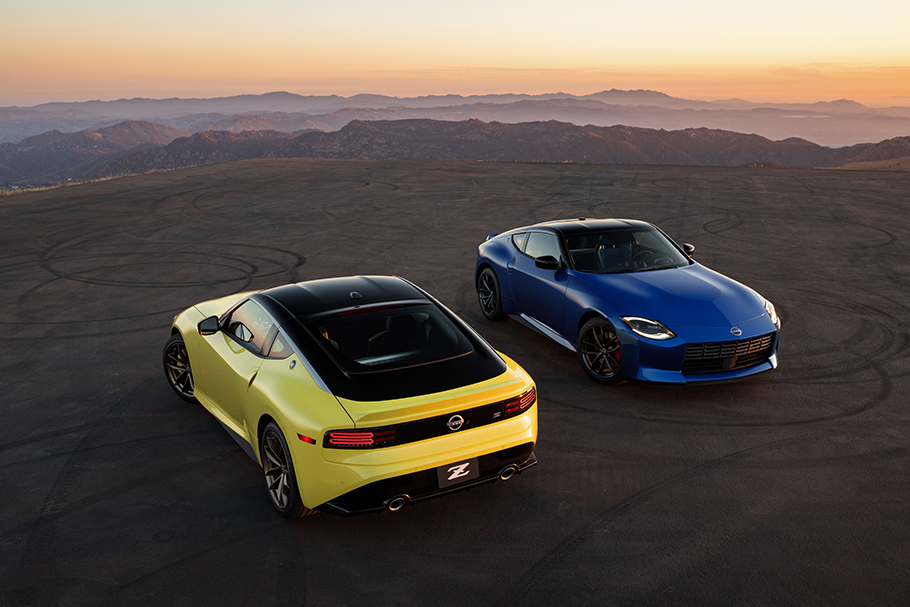
    What shaped the most the image and features of the newcomer were mainly the customer demand and their opinions and feedback about how should the model be designed and equipped. Following these recommendations, Citroen team managed to create two trim levels, Sense and Shine, each with its individual characteristics.

    The Sense lineup comes with 17-inch ‘Shamal’ alloy wheels, dark tinted side windows and integrated aluminium roof bars, 3D-effect rear lights, as well as a reversing camera for added ease of driving. For the inside, engineers included a 12-inch Panoramic HD central display and a 7-inch Touch Drive interface with Android Auto and Apple CarPlay as standard. Sense models can also be specified with Citroën Connect Nav with three-years of live traffic updates.

    On the other hand, the Shine trim level adds a panoramic sunroof and black door mirrors to the exterior styling, as well as Xenon Intelligent Beam headlights, which automatically dip to prevent dazzling oncoming road users.

    SEE ALSO: Junior Concours of Elegance returns with full force in 2021!

    Shine models also benefit from an active lane-departure warning system, active cruise control with speed limiter, and braking function for semi-autonomous motorway driving. A blind-spot monitoring system helps reduce accidents even further, while a park assist function can take over parking duties in difficult situations.


  • The all-new 2023 Nissan Z is about to make its world debut [VIDEO]

    2023-Nissan-Z-910Nissan announced details for the all-new 2023 Z sports car via a global broadcast from Brooklyn’s Duggal Greenhouse, not very far from where the original 1970 Datsun 240Z was first unveiled back in 1969.

    When we introduced the Z in 1969, the Z was a revolution. Since then, for more than 50 years, Nissan has brought style, speed, reliability and so much more to millions of enthusiasts around the world, said Ashwani Gupta, representative executive officer, and chief operating officer, Nissan Motor Co., Ltd.

    There are six previous generations of Nissan’s famous sports car and all of them have impressed the audiences and received mainly positive feedback.

    As for the newcomer, the 2023 Z showcases a sleek and attractive exterior design with a silhouette that resembles the original design with a long hood and low rear stance. The interior is characterized by a driver-focused cockpit with a 12.3-inch customizable racing-inspired display, leather sports seats and an 8-speaker audio system.

    All 2023 Z models are geared with a 400-hp 3.0-liter V6 twin-turbo power unit and a 6-speed manual gearbox with a sporty EXDY high-performance clutch.

    SEE ALSO: Four Hyundai models receive places in the prestigious Best New Cars for Teens list

    The Z has always been an accessible sports car – always placed at the intersection of aspiration and attainability – of dreams and reality. This latest iteration is now ready to thrill Z enthusiasts, and create a whole new generation of Z fans as well, when it comes to market here in the U.S. early next year, said Gupta.

    The 2023 Z is offered in Sport and Performance grade levels and a special “Proto Spec” edition, which is limited to 240 units.

    https://youtu.be/rcw9K7n5sJ0