Search results for: “feed”

  • Ford Mustang Dark Horse

    With sinister looks and a specially modified 5.0-liter V8 – the most powerful 5.0-liter V8 ever, projecting 500 horsepower – Mustang Dark Horse expands the lineup and sets a new benchmark for American street and track performance that could only come in a Mustang.

    A special team of Ford engineers, designers and experts worked for more than three years to create Mustang Dark Horse, a street and track-capable performance Mustang with striking visual cues and all the capability sports car lovers expect, right down to the available carbon fiber wheels from Carbon Revolution (late availability). Mustang Dark Horse is the first new performance name for the brand since Mustang Bullitt was introduced in 2001.

    “For decades, Mustang has competed against the most premium brands on the greatest world stages and won,” said Jim Farley, CEO of Ford Motor Company. “We surprised everyone, and we’re going to surprise them again with a track-capable Mustang that puts a new level of performance, styling and American engineering in the hands of everyday customers who still want the thrill and excitement of a V8 sports car.”

    Unique 5.0-liter V8 with Even More Athletic Performance

    The foundation for Mustang Dark Horse starts with the all-new 2024 Mustang, which has been transformed with a digitally immersive cockpit, new engines and styling to make it the most exhilarating and fun-to-drive Mustang ever.

    “We’ve taken the all-new Mustang, the best of our new 5.0-liter V8 performance, and added power, improved the aero, tires, steering and provided an interactive cockpit to create a Mustang that goes beyond any 5.0-liter Mustang before it,” said Ed Krenz, Ford Mustang chief nameplate engineer.

    The heart of Mustang Dark Horse is its unique 5.0-liter Coyote V8 engine, specially modified with piston connecting rods first introduced in the 760-horsepower Ford Performance Mustang Shelby GT500. Mustang Dark Horse will deliver the highest level of performance in the all-new Mustang family.

    Visually differentiated from any 5.0-liter V8 before it, Mustang Dark Horse includes a dual throttle-body intake design to improve engine breathing, accentuated by the open nostrils in the front grille.

    Mustang Dark Horse comes standard with a unique six-speed TREMEC manual transmission that connects to the driver through a standard 3D-printed titanium shift ball. The manual also includes a special Mustang Dark Horse transmission oil cooler. Drivers also have the option to choose Ford’s advanced 10-speed automatic transmission with sport paddle shifters for fast and precise shifting – from the highway to the race circuit.

    Additional powertrain enhancements were made for performance at the track. Mustang Dark Horse includes brake cooling NACA ducts, an auxiliary engine oil cooler, a rear axle cooler and a unique and lighter-weight radiator with improved cooling capability and more powerful cooling fans to improve endurance and recovery.

    The Mustang Dark Horse provides unique chassis tuning, larger rear sway bars and heavy-duty front shocks. Stopping is courtesy of 19-inch Brembo front 6 piston brakes with 13.9-inch rotors. Steering response and grip is further enhanced with a new lightweight Ford Performance-designed strut tower brace and K-brace for even better handling and feedback from Mustang Dark Horse. Mustang Dark Horse puts the torque down without losing traction through a Torsen® rear differential and standard Pirelli P ZERO™ (PZ4) tires with staggered fitting wheels (19-inch-by-9.5-inch front and 19-inch-by-10-inch rear wheels).

    Mustang Dark Horse offers standard MagneRide® shocks capable of monitoring wheel and tire movement 1,000 times per second, optimizing performance based on driving surface or driving mode.

    For ultimate street-legal and track performance, the available Handling Package improves aerodynamics even further with the most downforce of any all-new Mustang thanks to a unique rear wing that includes an integrated Gurney Flap, similar to that of the Ford GT. The Handling Package also adds stiffer springs, larger front and rear sway bars and wider Pirelli Trofeo tires and 19-inch-by-10.5-inch front and 19-inch-by-11-inch rear wheels.

    Finally, for no compromise track performance, customers can equip Mustang Dark Horse with lightweight carbon fiber wheels from Carbon Revolution (late availability). It’s the first time carbon fiber wheels have been available for a Mustang beyond Shelby® GT350® and GT500.®

    Driver-Focused Immersive Digital Cockpit

    The Mustang Dark Horse infuses even more performance style and functionality into the all-new seventh-generation car’s technologically advanced, driver-centric cockpit.

    A thicker, flat-bottomed steering wheel wrapped in suede and finished with Bright Indigo Blue accent stitching incorporates anodized silver paddle shifters on models ordered with the 10-speed automatic transmission and a dedicated drive mode button is at thumb’s reach, allowing drivers to quickly choose the desired driving setup. This sits in front of a 12.4-inch digital instrument cluster with customizable screens including a variety of drive modes.

    This digital instrument cluster flows seamlessly into a 13.2-inch SYNC® 4 center stack behind the same piece of integrated glass, angled towards the driver. Together, these screens create a fully immersive digital experience that emulates a fighter jet cockpit – but in a real-world sports car.

    Contrasting blue stitching across the door panels and seats, gear shift gaiter and center console lift the ambiance of the cabin, enhanced further by unique blue seatbelts. The Mustang Dark Horse Appearance Pack adds Deep Indigo Blue seats with a unique seat perforation, emitting further hints of blue below the surface.

    Interior trim, bezels and vents are finished in Black Alley – a dark metallic gloss replacing the familiar bright silver shades of other Mustang trim levels.

    Mustang Dark Horse also comes with the latest B&O® Sound System, providing crisp audio through 12 speakers and a subwoofer.

    Sophisticated and Sinister Functional Styling

    Mustang Dark Horse carries the most striking visual cues of any new road-going Mustang.

    “It’s more than a new name. Dark Horse brings a new design language to Mustang that is refined yet perfectly suited to its dual purpose of street and track performance,” said Joel Piaskowski, global director, Ford Design. “The visual changes, both inside and out, message that Dark Horse has a directed performance focus. The mechanical changes reinforce the purpose of Dark Horse, providing the driver with increased confidence and competence.”

    At the front, a bold, shadow graphic surrounds the darkened LED headlamps, which compliments a unique, gloss black grille with trapezoidal nostrils and Mustang Dark Horse-unique lower front bumper with high gloss ‘fangs.’ Lower side skirts and, to the rear, a fixed rear wing, new race-inspired diffuser and darkened quad exhaust tips demonstrate the car’s track-focused design cues.

    New Mustang Dark Horse badges were designed for this performance version of Mustang to visually separate it from other models. The badges are placed on the fenders, trunk and door sills, while a dark, anodized version of the famous pony stays on the front. Inside, unique Mustang Dark Horse badging is featured on the instrument panel and digital display screens, and each car features an individual chassis number.

    “This is the first time for Mustang that we’ve ever had a forward-facing horse,” Piaskowski said. “It’s aggressive, a bit sinister and it’s coming from the shadows head-on to win.”

    Unique to Mustang Dark Horse is Blue Ember metallic paint, a cool, dark shade that emits a warm glow when it catches the light, setting the tone for the car’s overall look. A choice of applied or painted feature graphics along the roof and down the hood are also available in a variety of colors and styles. The optional Appearance Package includes dark Notorious Blue Brembo brake calipers with a brighter Grabber Blue logo.

    Dark Horse and the Future of Global Ford Motorsports

    Ford Mustang was born to race. The introduction of Mustang Dark Horse is part of a broader launch of six new racing Mustangs that will compete globally in a variety of series, including GT3, GT4, NASCAR and NHRA Factory X racing.

    Two dedicated, track-only Dark Horse Mustangs powered by 5.0-liter V8 engines will only be available for racers and non-street use. Mustang Dark Horse S is designed for the weekend track day enthusiast while Mustang Dark Horse R has been developed for racing.

    “We’re taking this all-new Mustang to competition racing and the very definition of a Dark Horse is the perfect fit to introduce this vehicle to the Mustang brand,” said Mark Rushbrook, global director, Ford Performance Motorsports. “With our race program development underway, we’re confident we have the right car for success.”

    Mustang Dark Horse S is built uniquely for motorsports as a stripped-down version of the street-legal Mustang Dark Horse production vehicle. All non-essential parts and trim pieces have been removed for Mustang Dark Horse S. Inside is a full FIA-certified safety cage, safety nets, a race seat with safety belts and a race steering wheel with quick disconnect. Other safety items include electrical disconnects and a fire suppression system.

    Driver controls are contained within a central panel, which houses switches and knobs for the headlamps, side indicators, windshield wipers, mirror adjusters and rain light. Also included for Dark Horse S is a pit speed limiter and a data and acquisition display system. A single passenger seat is optional, allowing drivers to share their experience with others and to receive feedback from ride-along instructors.

    The exterior of Mustang Dark Horse S features hood pins, front and rear tow hooks, an adjustable rear wing for added downforce and a full exhaust system to help round out the foundation for a unique and fun-to-drive track car. Mustang Dark Horse S will be painted from the factory and ready for individual vehicle liveries.

    While Mustang Dark Horse S has the same wheels as the street-legal Mustang Dark Horse, the upgraded brake system provides even further robustness to meet track demands. Multimatic DSSV dampers support driver tunability in addition to the adjustable ride height and camber settings.

    Mustang Dark Horse R raises the track-focused intensity, featuring all Mustang Dark Horse S content, as well as special serialization that approves it for racing. It will come standard with strategic seam welding, a fuel cell for increased range, and Ford Performance Parts wheels.

    “Both Dark Horse S and R have been further enhanced for performance and stripped of almost every unneeded comfort, keeping only what is needed to provide better performance,” said Krenz.

    Beyond Mustang Dark Horse S and Dark Horse R, the brand will continue to compete globally in a variety of race series, and enthusiasts will see those roll out over the next year.

    Ford is returning to factory-backed GT3 racing with an all-new Mustang GT3 IMSA race car that will also be available for customers, starting with 24 Hours of Daytona in 2024. Created by Ford Performance and Multimatic, the Ford Mustang GT3, powered by a 5.4-liter Coyote-based V8 engine, will deliver the full endurance racing potential of a Ford Mustang for customers globally.

    A new Mustang GT4 available for customers will also debut in the 2023 season and will be available for global GT4 classes in IMSA, SRO and FIA GT.

    A new version of the Mustang will debut next season in the Australian Supercars series, and in coming years newly designed models will debut in the NASCAR Cup series and NHRA Factory X racing.

  • Ferrari Purosangue

    After years of anticipation by the international automotive fraternity, Ferrari today unveiled the Purosangue, the first ever four-door, four-seater car in the Prancing Horse’s 75-year history, in the magnificently atmospheric surroundings of the Teatro del Silenzio in Lajatico (Pisa).

    Since the marque’s earliest years, 2+2 cars (i.e. with two front and two smaller back seats) have played a significant role in its strategy. Many Ferraris have made combining benchmark performance with first class comfort one of the pillars of their success. Now, in the culmination of 75 years of leading-edge research, Ferrari has created a car that is unique on the world stage: not only do performance, driving pleasure and comfort coexist in perfect harmony, but it is also a peerless encapsulation of the Prancing Horse’s iconic DNA. This is the reason why the name Purosangue, Italian for ‘thoroughbred’, was chosen.

    To enable the company to achieve the ambitious goals set for this project and create a car worthy of a place in its range, a completely different layout and innovative proportions compared to modern GT archetypes (so-called crossovers and SUVs) were adopted. The average modern GT’s engine is mounted forwards in the car, almost straddling the front axle with the gearbox coupled directly to it; this results in less than optimal weight distribution that delivers driving dynamics and driving pleasure well short of the standards of excellence to which Prancing Horse clients and enthusiasts have become accustomed.

    The Purosangue, on the other hand, has a mid-front-mounted engine with the gearbox at the rear to create a sporty transaxle layout. The Power Transfer Unit (PTU) is coupled in front of the engine to provide a unique 4×4 transmission. This delivers exactly the 49:51% weight distribution that Maranello’s engineers deem optimal for a mid-front-engined sports car.

    The Purosangue stands head and shoulders above the rest of the market thanks to its performance and comfort. It is the only car with these proportions to sport a mid-front-mounted, naturally-aspirated V12. Maranello’s most iconic engine debuts in this brand new configuration to ensure the car unleashes more power than any other in the segment (725 cv) whilst guaranteeing the most enthralling Ferrari engine soundtrack. Furthermore, it can deliver 80% torque even at low revs for unique driving pleasure at all times.

    The Purosangue’s aero development focused on making the bodywork, underbody and rear diffuser as efficient as possible. New solutions include synergy between the front bumper and wheelarch trim which generates an air curtain that aerodynamically seals the front wheels, preventing turbulent transverse air flows being generated.

    Ferrari has also given the Purosangue the very latest iterations of the vehicle dynamic control systems introduced on its most powerful and exclusive sports cars, including independent four-wheel steering and ABS ‘evo’ with the 6-way Chassis Dynamic Sensor (6w-CDS). Making its world debut is the new Ferrari active suspension system. This very effectively controls body roll in corners as well as the tyre contact patch over high-frequency bumps to deliver the same performance and handling response as in one of the marque’s sports cars.

    The all-new chassis has a carbon-fibre roof as standard to keep weight down and lower the centre of gravity. Redesigning the bodyshell from scratch also meant the designers could incorporate rear-hinged back doors (welcome doors) to make ingress and egress easier while keeping the car as compact as possible. The cabin has four generous heated electric seats that will comfortably accommodate four adults. The boot is the largest ever seen on a Ferrari and the rear seats fold to increase the luggage space. Naturally enough, the Purosangue has a more commanding driving position than other Ferraris, but the configuration is the same as on every other Ferrari. As a result, the driving position is still intimate and close to the floor to provide greater connection to the car’s dynamic capabilities.

    The Purosangue offers class-leading performance figures (from 0 to 100 km/h in 3.3 s and from 0 to 200 in 10.6 s); the driving position and the heady, naturally-aspirated V12 soundtrack deliver an entirely new yet also entirely Ferrari driving experience. The fact that a vast array of comfort-focused content is provided as standard, such as the Burmester© audio system, and that the many optional extras including the brand-new Alcantara® upholstery, derived from certified recycled polyester, make the Purosangue the most complete four-door, four-seater in the segment.

    POWERTRAIN

    The Purosangue’s engine (code-named F140IA) maintains the architecture that made the Prancing Horse’s most recent 12-cylinders so successful i.e. a 65° angle between its cylinder banks, a 6.5-litre capacity, dry sump and high-pressure direct injection. It was designed, however, to produce the highest amount of torque at low revs possible without losing the feeling of linear, never-ending power typical of Ferrari’s naturally-aspirated V12s. 80% of the maximum torque is on tap at just 2100 rpm and it peaks at 716 Nm at 6250 rpm. Maximum power of 725 cv is reached at 7750 rpm and throttle response is characteristic of a real sports car.

    Intake, timing and exhaust systems have been completely redesigned, while the cylinder heads are derived from the 812 Competizione. Huge attention was lavished on improving mechanical and combustion efficiency, employing Formula 1-inspired calibration concepts. The result is that the most powerful engine ever developed by Ferrari for a four-seater car is also the most powerful in its segment, as well as the only one capable of delivering that instantly recognisable Ferrari V12 soundtrack.

    To guarantee maximum mechanical efficiency, the rotating masses have been redesigned. The nitrided steel crankshaft was modified to lengthen the stroke and the internal oil passageways have been redesigned to improve oil flow to the big-end bearings. Lower bearing clearance tolerances improve consumption. The coolant and oil pump assembly was also redesigned focussing on the scavenge section to reduce friction and mass thanks to the adoption of smaller diameter rotors and optimising the inlets and outlets as well as the rotor seals.

    The valve train timing is all new, while the new finishing process for the camshafts has considerably reduced the surface roughness and the friction coefficient between the lobes, the shafts themselves and the hydraulic tappets.

    To optimise the torque curve and ensure a continual increase across the rev range, the geometry of the intake ducts and plenums was revised. The geometry of the exhaust system was also optimised to increase permeability reduce back pressure. There are specific pistons with a redesigned crown to increase combustion efficiency.

    The engine’s direct injection system comprises two high-pressure fuel pumps (350 bar) that deliver petrol to the injectors in the combustion chambers. The ignition system, comprising 12 coils and spark plugs, is constantly monitored by the ECU which has an ion-sensing system that measures ionising currents to control ignition timing. It has a single- and a multi-spark function to make the combustion as efficient as possible at all revs. The ECU also controls combustion in the chamber to ensure that the engine is always working at peak thermodynamic efficiency, thanks to a sophisticated strategy that recognises the octane rating (RON) of the fuel in the tank and adjusting the advance to suit. The engine strategy includes a new patented function derived from Ferrari’s Formula expertise that optimises the torque during transient acceleration manoeuvres in the low and mid-range.

    The F140IA’s soundtrack is a superb example of integration between the glorious symphony created by the engine’s combustion sequence and Ferrari’s ability to control the acoustics in the cabin. The equal-length exhaust manifolds are tuned to guarantee the 12 cylinders are in perfect harmony. The new plenum with optimised intake duct accompanies the V12’s high notes with the body of the medium frequencies. The two progressive silencers, the response of which is now included in the Manettino settings, cater for in-town and performance driving. The resulting soundtrack is typical Ferrari, with that unmistakable V12 harmonics that are present, yet subtle, until the driver accelerates hard: as the engine approaches the 8250 rpm red-line, there’s an enthralling crescendo that reaches its pinnacle at the kind of high revs only Ferrari’s engines can deliver.

    The layout of the 8-speed, oil-bath dual-clutch transmission was optimised through the adoption of a dry sump and a significantly more compact clutch assembly, shaving 15 mm off the installed height in the car which, in turn, lowers the centre of gravity by the same amount. The new clutch’s performance is 35% higher, transmitting up to 1200 Nm in dynamic torque during gear shifts. Thanks to new-generation actuation hydraulics, clutch fill times are now faster so that total gear shift times have been reduced compared to the previous 7-speed DCT. New gear ratios mean that the spacings are shorter and very progressive, and a longer top ratio is geared for greater economy in motorway driving. Down shifts have been calibrated to optimise smooth shifting with a specific focus on driving pleasure and emphasising the sound of the new V12 engine.

    CHASSIS AND BODY

    The Purosangue’s chassis is completely new and was designed from scratch with the aim of producing a structure of uncompromising rigidity. The lower chassis structure is made entirely from high-strength aluminium alloy and draws on Ferrari’s enormous experience in the optimal use of these light alloys. Together with the structural elements of the upper body, it makes up a spaceframe chassis comprised of closed-section extrusions connected by castings into which load-bearing aluminium sheet metal elements are integrated.

    The chassis is thus lighter than Ferrari’s previous four-seaters’ despite being larger. Improved torsional rigidity (+30%) and beam stiffness (+25%) figures are both fundamental in improving NVH characteristics and thus comfort by smoothly and silently absorbing asperities in road surfaces as well as providing an exceptional feeling of structural integrity.

    The extensive use of hollow castings with thin walls – made using internal cores – helped optimise the structure, maximising performance and guaranteeing improved continuity in the stress lines which, in turn, guarantees all-important occupant safety requirements. Furthermore, this particular technology improves assembly quality thanks to more precise integration, fewer components and the consequent reduction in weld lines.

    The bodyshell is made from materials ranging from aluminium to carbon-fibre, with the introduction of high-strength steel in important areas and flanking the mechanical joins with structural adhesive. Combining these different materials guaranteed maximum strength where required and also light weight in areas not subject to stress.

    High-strength steel is used for the anti-intrusion bars, the reinforcements on the main nodes and the B-pillar. Our meticulous attention to detail at the design stage also resulted in the use of different materials within individual components. One example is the single rear door hinge: the fixed part is an aluminium casting while the mobile part is constructed from hot-stamped steel.

    The single-shell carbon-fibre roof with integrated soundproofing is completely new and delivers rigidity levels on a par with a glass roof while weighing 20% less than an aluminium roof with soundproofing. From an ergonomic perspective, we focused on offering as much ingress space as possible whilst still keeping the wheelbase compact. To do this, we opted for traditional opening for the front doors with a 63-degree opening (five degrees wider than on our other models) – combined with a brand-new electric, rear-hinged back door with a 79-degree opening. Aside from referencing the bonnet opening on the Ferrari Monza SP1/SP2 and other legendary Ferraris from the past, the Purosangue’s front-hinged bonnet also allowed us to craft extreme forms in the A-pillar area. The gooseneck hinge assembly for the bonnet is made from aluminium for solidity and stability when being opened.

    The aluminium rear hatch is electrically activated: two electric Stabilus tailgate lifters allow it to be opened to 73 degrees for easy access to the boot, and to make loading and unloading even the largest of luggage simple. The gooseneck hinge assemblies allowed us to craft unconventional aesthetic forms in the upper spoiler area.

    AERODYNAMICS

    The very different volumes and constraints of the truly unique Purosangue posed a completely new challenge for Ferrari’s aerodynamic department, so a radical rethink of both methods and solutions was demanded. The extremely ambitious drag reduction target, the specific usability and accessibility demands of this particular model, and the need to cool the imposing V12 and ancillaries demanded hundreds of hours in the wind tunnel and thousands of CFD (Computational Fluid Dynamics) simulations. The kind of development work dedicated to the fastest and most powerful sports cars in the range, in fact.

    The primary focus of the Purosangue’s aero design was the car’s centreline section, essential to both the air flow design and to reduce the drag coefficient (Cd), as well as minimising the frontal surface area. The car’s front silhouette was designed to create the most seamless continuity of profile possible between the area of maximum curvature of the bonnet and the windscreen header rail. The rear area of the roof, the rear screen and the spoiler, on the other hand, demanded most work because it is fundamental to managing flow separations and pressure fields.

    The best possible compromise between the need for the smoothest design possible for the roof-rear screen line and the need to reduce the height of the tail itself was achieved by using two elements that complete the aero package for the rear of the car: the suspended spoiler and the nolder on the lip of the boot. While the suspended spoiler helps neutralise the curvature of the roof downstream of the area over the heads of the rear-seat passengers, the nolder, which is barely 7mm high, channels the wake vortices to create a slight recompression at the tail of the car.

    Moving from the centreline section to the rear volume, a scoop can be seen starting at the rear of the roof and extending onto the rear screen which creates two crests, one on each side of it. This solution helps to maintain the headspace required for the rear-seat passengers whilst still correctly separating the flows from the upper part of the roof and those along the greenhouse area.

    Also important to the aero development of the Purosangue was the wake from the wheels: several aero solutions were implemented to tackle this issue, including integrating louvres into the floating wheelarch trim front and rear. The most complex system, however, is at the front where both the bumper and louvre work in synergy to create a powerful air curtain that aerodynamically seals the front wheels, preventing the generation of transverse turbulence. A duct has been created between the front bumper on the outside of the side air intakes and the vertical fin. This duct is calibrated to accelerate the flow towards the blown area in the louvre and create an energised blade of air at an angle to the outer shoulder of the tyre. The outer surface of the louvre then deflects the flow along the flank.

    At the rear of the front wheelarch trim there is a further duct that is profiled to maximise air extraction from inside the wheel housing. The same solution is adopted on the rear wheelarches with a vent in the rear wheelarch trim. Its exterior surface has also been profiled to optimise the management of the rear detachment point of the flow, which runs along the flanks and wheels.

    The suspended wing on the bonnet, just ahead of the A-pillar, dubbed the aerobridge in reference to a similar element introduced on the F12berlinetta, plays a very different role to its namesake. While the latter’s aerobridge deflected the air flow from the bonnet downwards to boost downforce, the one on the Purosangue is designed to reduce drag.

    The air passing under the wing on the bonnet is energised locally to reduce the negative impact of the vortex at the base of the windscreen, and to accelerate the flow to increase the amount of air being evacuated from a vent hidden by the aerobridge, which is part of a complex system of air ducts fed by the intake located over the headlights. This mass of air is channelled towards the front wheelarch. These flows coming from the front of the car are naturally vented through the louvres at the top of the front wheel housing, and then continue on into the engine compartment until they reach the vent under the aerobridge. Similarly, to reduce overpressure inside the rear wheel housing, a vent has been added just beneath the taillights (in an area of natural suction) that leads from a duct inside the rear wheelarch.

    A blown channel from the lower part of the front bumper towards the underbody reduces the areas naturally under compression on the front bumper, maximising the quantity of air being channelled towards the underbody, an element already used on other Ferraris. In this case, however, it is put to a different use: the energised flow channelled along the underbody by the blown area meets the surfaces of the underbody specifically designed to generate suction near the evacuation point of the central radiators on the front underbody. This maximises cooling of the central radiating masses as efficiently as possible and also allowed the design of a much smaller radiator intake. The Purosangue’s higher ground clearance means that the exposed area of the wheels makes a significant contribution to drag: as a result, negative ramps were integrated ahead of the front wheels to maximise the car’s downforce.

    The curves of the body’s surfaces were designed to fair in the front wheels and wishbones, thereby limiting the amount of air entering the wheelarch as much as possible. Pivotal to this effect is a small flap fitted on the lower suspension wishbone. The low pressure areas that occur naturally behind the front wheels were used to create two areas of evacuation that boost the efficiency of radiating masses by reducing overpressure in the engine compartment and reduce drag.

    The rear diffuser design is, once again, the result of in-depth optimisation that focused principally on the synergy between the diffuser itself, the upper body and the rear bumper. The air flow that strikes the diffuser is gradually expanded and controlled. At the end of this expansion, a subtle nolder detaches the flow after slightly recompressing it. This boosts the system’s efficiency, simultaneously maximising hot air extraction from the area around the gearbox and exhaust system compartments.

    The Purosangue doesn’t have a rear windscreen wiper, so the rear screen is cleaned by the air flow along the glass surfaces at the rear. The lower surface of the suspended spoiler is curved to guarantee the air flow is at the right speed and direct it towards the rear screen. There are two pairs of vortex generators at each end of the lower surface of the spoiler, which optimise the uniformity of the scrubbing. These counteract the vorticity naturally caused by the C-pillar, and also work in synergy with the specific shape of the rear screen itself.

    The unconventional location of the headlights made it possible to create two air intakes above and below the DRL. The upper one is used to channel air into the complex blown system which vents underneath the front aerobridge. The lower one, on the other hand, is used to channel air to the brake cooling system. The design of the vertical outside surfaces of both air intakes includes an air-catcher which maximises the quantity of air channelled through them.

    Lower down are the intakes for the radiating masses. Seen from the front, the one on the right is the radiator for the active dampers, which guarantee superb occupant comfort even on very rough surfaces, while the one on the left feeds air into the radiator for the Power Transfer Unit (PTU) circuit, a torque vectoring electronic differential. Lastly, the central intake cools both the condenser for the air conditioning circuit, to guarantee optimally comfortable cabin temperatures, and the iconic, naturally-aspirated V12’s oil and coolant radiators.

    VEHICLE DYNAMICS

    Development of the Purosangue’s dynamic performance focused on creating a car that was completely unprecedented on the world stage: a model offering usability and comfort standards that would position it at the very top of the market as well as delivering signature Ferrari vehicle dynamics and performance on a par with the rest of the range.

    The Purosangue boasts a unique, innovative system that is a world first: Ferrari active suspension technology enabled by Multimatic’s True Active Spool Valve (TASV) System. Compared to other solutions on the market, this new suspension architecture offers numerous advantages by combining electric motor actuation with a high-precision spool valve hydraulic damper into one fully integrated system. The electric motor ensures that body and wheels can be controlled actively with more force authority and at higher frequencies than traditional adaptive or semi-active systems.

    One advantage of Ferrari’s active suspension system is the speed at which the TASV 48-volt motor actuators apply force in the direction of the damper’s stroke. The high-power density, three-phase brushless electric motor was co-developed for this application by Ferrari. The motor uses “slotless” stator winding technology to minimize radial dimensions and maximize power density. From a mechanical point of view, the motor force is transmitted in a novel way via a twin-lead ball screw connected directly to the hydraulic damper piston rod which enables high-frequency response and reduces friction, inertia and package space.

    The active suspension system uses accelerometers and position sensors on each suspension corner and interfaces with the Side Slip Control (SSC) 8.0 and the 6w-CDS sensor. Ferrari’s proprietary control logic, together with the TASV dampers supplied by Multimatic, electronically manages every performance element of the fully active suspension system.

    This technology optimises maximum cornering performance thanks to the variable and continual distribution of roll stiffness and the actively lowered roll centre (reduced by up to 10mm), to the benefit of the side force acting on the tyres and the balance between over and understeer. The high-frequency control regulates both body motion and wheel movement, thus reducing roll and pitch as well as absorbing road surface irregularities.

    As well as the active suspension technology, the Purosangue is equipped with a new generation front semi-virtual, high wishbone suspension where the lower wishbone has two attachment points on the hub carrier. This solution means the virtual lower kingpin attachment point created by the two arms is very close to the wheel centre, thereby drastically reducing the scrub radius, i.e. the distance between the point of intersection of the extension of the kingpin axis and the centre of the tyre contact patch at ground level. This makes the steering wheel less sensitive to road irregularities and braking.

    The Purosangue is equipped with the new ABS ‘evo’ controller co-designed with Bosch® and integrated with the brake-by-wire system that debuted on the 296 GTB. For the Purosangue its function has been further developed to cope with low grip surfaces and in all Manettino settings, thus optimising performance and repeatability in all road conditions. This new controller uses information from the Electronic Stability Control (ESC) to much more precisely estimate the car’s speed in order to determine the slip target for the four wheels under braking. This improved accuracy means that the longitudinal force of the four tyres can be better exploited while more accurate estimation also means that repeatability of the manoeuvre around its target value can be maximised, reducing dispersion due to natural variations caused, for instance, by the condition of the tarmac.

    The EPS-based grip estimation system, originally developed for the 296 GTB, has also been honed for driving in the snow or on other low-grip surfaces. Using the data in the ECU and the slip angle calculated by the SSC 8.0, the logic can calculate the level of grip between the contact patch of the tyre and the road during steering inputs. This provides an accurate estimation even when the car is not being driven on the limit, thus making the self-learning function of grip faster and the grip estimation in all grip conditions more precise.

    On the Purosangue, the 4RM-S system developed for the GTC4Lusso has been further evolved and now inherits the innovations made to the control logic developed for the SF90 Stradale’s 4WD system, coupled with the new independent 4WS seen on the 812 Competizione. Yaw management in cornering when accelerating is therefore optimised by a combination of Torque Vectoring on the front axle, distribution of torque to the rear tyres by the E-Diff and the generation of lateral force by the 4WS. The new electronic management delivers a significant increase in performance in relation to precision of control of the position of each single actuator, faster axle response time and consequent improved precision of the lateral force generated.

    All the above technologies are incorporated in the 8.0 version of the Side Slip Angle Control which feeds a shared language to all the controllers to identify the best way to maximise performance. The SSC 8.0 in fact integrates all the car’s controls (steering, traction and vertical control) active on all four corners of the car and creates a natural synergy with the new ABS evo.

    Particular emphasis has been placed on new objective longitudinal indicators of driving thrills specific to the Purosangue’s performance targets. Alongside traditional constantly increasing acceleration figures and reduced response times, in-gear acceleration when in manual has been honed to emphasise the superb elasticity and pick-up that are most definitely unique to the Purosangue.

    The Purosangue exploits the new 8-speed DCT’s potential from all angles: mechanical, power and control. The ratios are the same as on the SF90 Stradale and 296 GTB. With larger tyres, this solution gives ratios that are shorter than on previous Ferrari 4-seaters to the benefit of more progressive performance under acceleration. The eighth gear is designed for a more relaxed experience in long-distance driving.

    The transmission’s software control benefits both in terms of performance contents (reduction in Up and Down shift times of around 18%) and the “Sailing” function which allows the engine and gearbox to be automatically decoupled to guarantee greater smoothness in driving situations where traction isn’t required (and thus also under braking). The Purosangue’s Manettino strategies were also redesigned to suit the project’s specifications.

    The Purosangue offers an impressive array of driver assistance (ADAS) features as standard, many of which were developed in collaboration with Bosch®, including Adaptive Cruise Control (ACC), Automatic Emergency Brake System (AEB), Auto High Beam (HBA/HBAM), Lane Departure Warning (LDW), Lane Keeping Assist (LKA), Blind Spot Detection (BSD), Rear Cross Traffic Alert (RCTA), Traffic Sign Recognition (TSR), Driver Drowsiness and Attention (DDA), and rear-view parking camera (NSW).

    A function being made available for the first time on a Ferrari is HDC (Hill Descent Control), which helps the driver to maintain and control the car’s speed, shown on the dash, on steep descents. When HDC is activated, it controls the braking system to guarantee that the car’s speed does not exceed that set on the display. It can, however, be manually overridden by using the accelerator pedal.

    STYLING

    The Purosangue has created a new market segment in which the Prancing Horse opens entirely unprecedented new frontiers. Thanks to its unique modern architecture, the Purosangue is a versatile car that melds unparalleled comfort with Ferrari’s signature performance and driving pleasure. Translating Prancing Horse DNA into a car that is not only innovative for Maranello, but the entire automotive world, was a huge but exhilarating challenge for the Ferrari Styling Centre headed by Flavio Manzoni.

    The Purosangue name beautifully describes the car’s architecture. Its sleek, athletic exterior sets it apart from other four-door, four-seater cars on the market, and the mid-front-mounted naturally-aspirated V12 combine with a sublimely comfortable, luxuriously roomy and impeccably appointed cabin. This is not just an incredibly fast, agile car but it also offers the space on board to ensure exceptional comfort for all four occupants.

    EXTERIOR

    The Purosangue’s bodywork has been deftly sculpted and chiselled to create its unique shape. The design features two separate and distinct levels: the lower more technical underbody and the gloriously sinuous, imposing upperbody. This division is underscored by the fact that the upper volume seems to float on the wheelarches.

    Despite the fact that the Purosangue’s volumes are more imposing than Ferrari’s most powerful sports cars, the way the height is treated stylistically creates an impression of overall lightness. At the same time, to give the Purosangue a powerful stance of its own, the Ferrari Styling Centre opted to craft boldly original forms.

    The Purosangue’s form was conceived as a sculpture that showcases and heightens its stunning aerodynamic development. Physical evidence of this lies in various details including, for instance, the pontoon effect of the aerobridge between front and flanks. Every single aero element was seen as an opportunity to further hone that original sculptural look, underscoring the car’s stylistic message. The concept of lightness and compactness was also applied to the roof with its characteristics emphasised by the imposing rear wings which give the car’s silhouette its unique proportions.

    The front of the car flows back seamlessly into the flanks and develops on several levels developing a dynamic, horizontal language. The Purosangue doesn’t have a front grille – this is been replaced by a dihedral suspended on the lower section delivering a more technical aesthetic. Two shells create a suspended disc form with a slot that houses the camera and parking sensors, so that they are integrated seamlessly into the car’s shape. At each side of the bonnet are the DLRs which are set between two pairs of air intakes which meld into the upper part of the flanks, underscoring the styling theme. The result is that the Purosangue’s front styling is dominated by blown aero ducts rather than headlights.

    The upper section of the disc is supported by an element comprising a central area that cools the engine radiator and two side sections that encircle the central splitter. Above the technical radiator grille treatment, the long sculpted bonnet extends, rippling with gently rounded muscles which flow into wing-profile surfaces. These aerobridges create a sense of continuity between bonnet and flanks.

    The aerobridge theme characterises the flanks as the form runs along the side, becoming the main styling theme and creating a dihedral shape which ends in the imposing rear muscle. The wheelarch trim treatment reveals the Purosangue’s second skin beneath the bodywork. The functional and technical elements become a second visual layer and this creates the impression almost of a floating coupé.

    When the front and rear doors are opened together, the interior seems bigger than imagined when they are closed, thanks to the meticulous work lavished on keeping the roof proportions compact.

    The rear muscles dive into the tail where a horizontal cut line incorporates the taillights at its tips. Beneath the latter, two scoops converge into two vents. An imposing diffuser and the large rear wings combine to make the tail look impressively wide with the sporty cabin sitting low over this volume. Its compact dimensions were pivotal to lending the car a sporty bearing without sacrificing occupant space and comfort. The cabin profile is characterised by the slanted windscreen and the A-pillars arches flowing into the rear spoiler beneath which are two very distinctive crests, a theme that carries over onto the rear screen.

    Specific forged wheels were designed for the Purosangue based on the same aero concept as those on the SF90 Stradale, in which radial elements on the outer channel facilitate hot air extraction from the wheelarch. These aero appendages emerge from three-dimensional surfaces and are highlighted with an elegant diamond-cut finish.

    CABIN

    The Purosangue’s cabin demanded absolutely meticulous design of both the space and furnishings as well as careful selection of the materials used to offer unprecedented occupant space and comfort for a Ferrari four-seater. The cabin looks and feels like an extremely elegant, sporty lounge. When the doors are opened, a surprisingly generous amount of space is revealed. Equally surprising is the sophisticated luxury of the interior which exudes a sense of both elegance and modernity. Modern design languages harmoniously combine with Ferrari’s signature GT sports car aesthetic. All of the forms are deliberately compact to optimise both the available space and its ergonomics.

    The driver’s cockpit is inspired by the SF90 Stradale and is almost exactly mirrored on the passenger side. This creates an unparalleled feeling of emotional engagement for the front passenger, aided and abetted by a 10.2” display that provides all the information required to help them participate in the driving experience. The Purosangue features the entirely digital interface already adopted for the rest of the range.

    The Purosangue’s interior architecture is based on the dual cockpit dashboard concept which has been extended and replicated in the back of the car, creating four areas quite distinct in terms of their functionality, volumes, materials and colours. This principle drove the cabin’s composition which develops horizontally and seamlessly between the furnishings, making the space seem larger and keeping the volumes light and dynamic.

    The wraparound forms converge towards the centre embracing the occupants and, through the dialogue between the upholstered volumes and the functional technical areas, underscore the dual cockpit concept both at the front and at the rear. Comfort-related controls are located on a hideaway rotary interface in the central section of the dash, and the rear passengers have access to the same functions via a second rotary interface.

    The tunnel, which has been given a luxury trim, is combined with a Y-shaped structural element dominated by the metal gear-shift gate. Less obvious but equally well-designed elements are the window lifter buttons, the rather elegant double cup holder made of glass and the key compartment combined with the wireless device charging zone. The lower area has small oddments compartments and, thanks its colours and materials, creates a sense of seamless continuity with the floor. The cockpit extension elements, from the iconic shell shape, integrate and highlight the most powerful audio system ever offered by Ferrari. The comfort-focused upholstered areas integrate armrests and door handles.

    For the first time in Ferrari history, the cabin has four separate and independently adjustable seats. The integration of comfort-focused components, the use of variable density foams, and the new suspension system mean that the Purosangue delivers unprecedented occupant comfort and a layout that exudes the sportiness and elegance typical of Ferrari’s design language. The heated backseats can be adjustable and reclined independently. When fully raked forwards, they significantly increase the Purosangue’s luggage capacity.

    Ferrari’s pursuit of luxury did not distract it for a second from its environmental and sustainability responsibilities. Sustainable materials have been used extensively throughout the Purosangue, opening up the possibility for new combinations. In fact, 85% of the launch trim for the car was sustainably produced: the fabric roof-lining is recycled polyester, the carpet is made from polyamide recycled from fishing nets retrieved from the oceans and newly formulated Alcantara®, also derived from recycled polyester. In fact, the Purosangue is the very first car in the world to use this special version of Alcantara® made of 68% of post-consumer recycled polyester. For this version of the material, Alcantara obtained the Recycled Claim Standard (RCS) certification from ICEA, a leading international standard that verifies recycled material and tracks it from the source to the final product.

    Instead of the traditional carpeting or leather used to trim the floor, owners can opt for a high-strength fabric used in military uniforms, because of its exceptional toughness and durability. A new very elegant and contemporary dark brown semi-aniline leather has also been introduced. Lastly, trim sporting the optional new carbon-fibre weave integrating very fine copper wire offers a highly sophisticated take on traditional carbon-fibre.

    The Burmester® 3D High-End Surround Sound System also makes its debut in a Ferrari vehicle as standard equipment. This audio system delivers ultimate performance from low to high frequencies, achieved by innovative technologies. The ribbon tweeter makes its first appearance in any production car, and the subwoofer is housed in its own closed cabinet for ultimate bass clarity, power and speed combined with breathtakingly low frequencies. 3D sound, plus additional pre-sets, offers an immersive, exciting and high-quality sound experience that mirrors the car’s unique character and thus the very essence of the automotive masterpieces produced in Maranello.

    Among the launch colours, Nero Purosangue was developed specifically for this car using pigments that, in certain lighting conditions, create very intense red reflections that beautifully enhance the car’s volumes.

    OPTIONAL EQUIPMENT AND PERSONALISATION

    The Purosangue offers a vast range of optional content and personalisation choices that will allow every owner to strike the perfect balance between comfort and performance. Aside from a huge array of exterior and interior colours, including some specific to the model, further innovative solutions have been introduced that are new to the Ferrari range or indeed the market as a whole.

    In a Ferrari first, owners are being offered the opportunity to personalise the roof of their car: they can opt for a full-length electrochromic glass roof instead of the carbon-fibre version offered as standard. The glass is coated on its lower surface with an electro-sensitive film. When a small electric current is passed through the film, it changes its tint level to either flood the cabin with sunlight or provide shade where necessary.

    The massaging front seats feature 10 air bags that deliver a relaxing, targeted massage with a choice of five different types of massage and three levels of intensity.

    In an absolute first for the Ferrari range, the Purosangue also has an air quality sensor that can check the air outside the car and improve quality in the cabin by smart air recirculation control and use of filters that can prevent particles of up to PM2.5 from entering the car.

    For the first time the car also offers compatibility with Android Auto and Apple CarPlay systems as standard. These substitute the traditional built-in navigation system.

    7-YEAR MAINTENANCE

    Ferrari’s unparalleled quality standards and increasing focus on client service underpin the extended seven-year maintenance programme offered with the Purosangue. Available across the entire range, the latter covers all regular maintenance for the first seven years of the car’s life. This scheduled maintenance programme for Ferraris is an exclusive service that allows clients the certainty that their car is being kept at peak performance and safety over the years. This very special service is also available to owners of pre-owned Ferraris.

    Regular maintenance (at intervals of either 20,000 km or once a year with no mileage restrictions), original spares and meticulous checks by staff trained directly at the Ferrari Training Centre in Maranello using the most modern diagnostic tools are just some of the advantages of the Genuine Maintenance Programme. The service is available on all markets worldwide and from all Dealerships on the Official Dealership Network.

    The Genuine Maintenance programme further extends the wide range of after-sales services offered by Ferrari to meet the needs of clients wishing to preserve the performance and excellence that are the signatures of all cars built in Maranello.

    TECHNICAL SPECIFICATIONS

    POWERTRAIN

    • Type : V12 – 65° – dry sump
    • Overall displacement: 6496 cc
    • Bore and stroke:  94 mm x 78 mm
    • Max. power output*: 725 cv at 7750 rpm
    • Max. torque: 716 Nm at 6250 rpm
    • Max. revs: 8250 rpm
    • Compression ratio: 13.6:1
    • Specific power output: 111 cv/l

    DIMENSIONS AND WEIGHT

    • Length: 4973 mm
    • Width: 2028 mm
    • Height: 1589 mm
    • Wheelbase: 3018 mm
    • Front track: 1737 mm
    • Rear track: 1720 mm
    • Dry weight**: 2033 kg
    • Dry/power ratio: 2.80 kg/cv
    • Weight distribution:  49% front / 51% rear
    • Fuel tank capacity: 100 litres
    • Boot capacity: 473 litres

    TYRES AND WHEELS

    • Front: 255/35 R22 J9.0
    • Rear: 315/30 R23 J11.0

    BRAKES

    • Front: 398 x 38 mm
    • Rear: 380 x 34 mm

    TRANSMISSION AND GEARBOX

    • 8-speed F1 DCT

    ELECTRONIC CONTROLS

    • SSC 8.0: 4RM-S evo, Ferrari active suspension technology, F1-Trac, ABS ‘EVO’ with Grip Estimation 2.0, ECS

    PERFORMANCE

    • Max. speed: > 310 km/h
    • 0-100 km/h: 3.3 s
    • 0-200 km/h: 10.6 s
    • 100-0 km/h: 32.8 m
    • 200-0 km/h: 129 m

    FUEL CONSUMPTION AND CO2 EMISSIONS

    • Under homologation

    * with 98 RON petrol, including 5 cv of dynamic ram
    ** With optional lightweight content

  • Volkswagen ID Xtreme Concept

    Volkswagen presents the ID. XTREME in Ticino, an exceptional off-road concept car that will generate an enthusiastic response among the many electric mobility fans at the event. The fully electric concept car with all-wheel drive system is based on the ID.4 GTX and combines the strengths of a modern SUV with the sense of adventure embodied by a rugged off-road vehicle.

    The ID. XTREME01 from Volkswagen stands for maximum emotion and a desire for adventure. The concept vehicle was created by the team of Andreas Reckewerth (Head of overall vehicle MEB) in the Volkswagen Development department. “The modular electric drive matrix (MEB) has enormous technical potential,” says Silke Bagschik, Head of the MEB Product Line. “For many of our customers, vehicles are much more than just a means of transport. With the ID. XTREME, we are raising electric mobility from VW to a new performance level.” The result of the project is a unique off-road vehicle that impresses with its rugged appearance and outstanding power. A high-performance drive on the rear axle and software adaptations in the drive control unit increase the system power of the concept car by 65 kW to 285 kW compared with the ID.4 GTX02 – in other words, by about 30 percent. “The ID. XTREME is made by enthusiasts at Volkswagen for ID. enthusiasts here in Locarno. We are really eager to find out how the fans of electromobility react to the vehicle. Based on the feedback from our community, we will decide how to proceed with the project,” adds Silke Bagschik.

    The exterior of the VW ID. XTREME01 also shows that the vehicle is ready for every off-road adventure. Raised rally running gear, 18-inch off-road wheels, a modified crash member with additional front bumper, and 50 mm-wider wings manufactured by 3D printing combine to give the concept vehicle an authentic off-road look. The roof carrier with additional LED lights and the completely closed aluminium underbody also equip the fully electric all-wheel drive vehicle for excursions away from paved roads.

    Acoustically also, the ID. XTREME01 has something special to offer: the driving noise was developed together with Volkswagen Design especially for the concept vehicle and is output to the outside via a sound generator in the wheel housing. In the interior, the concept car impresses with various highlights, including numerous Alcantara applications, revamped seats and elements in the accent colour orange. And it goes without saying that the ID. XTREME is sustainable: a no longer required test vehicle from production development and a used 82 kWh battery were taken as the basis for the concept vehicle.

    Volkswagen is presenting the ID. XTREME01 to the public for the first time at the ID. Treffen in Locarno. The event by and for fans of electric mobility is taking place for the second time this year and could become the green and sustainable event for electric mobility modelled on the GTI meeting at Lake Wörth (Austria). This year, ID. enthusiasts from the whole of Europe are meeting up on the shore of Lago Maggiore from 6 to 10 September to share their experiences with electric mobility.

    Initiated and organized by private members of the ID. Drivers Club the ID. Treffen is supported by Volkswagen as part of its commitment to the way to ZERO. Together with experts from the company the team of the Volkswagen Drivers Club is attending the event to provide insights into the current developments in the area of sustainable mobility. Alongside the ID. XTREME01, Volkswagen is also presenting other models from the ID. family in Locarno.

  • Toyota GR Corolla

    The first-ever 2023 GR Corolla might be the newest member of TOYOTA’S GAZOO Racing sports car family, but this hot hatch is ready to make a big impression on North American streets. Rooted in rally, developed under the scrutiny of master driver Akio Toyoda and inspired by Toyota’s sports car lineage, GR Corolla looks to rocket to the top of driver wish lists as it debuts at dealerships later this year.

    Powered by the lightweight, compact-yet-powerful G16E-GTS turbocharged, three-cylinder engine that pumps out an impressive 300 horsepower, GR Corolla will come in three grades: the Core grade, Circuit Edition and the limited, track-focused, MORIZO Edition. >GR Corolla Core grade is expected to arrive at dealership lots in the Fall of 2022. The MORIZO Edition is expected in Winter 2023 and Circuit Edition is expected in Spring 2023.

    GR Corolla’s impressive output is thanks in part to a unique triple exhaust that reduces back-pressure for maximum power delivery. The Core grade and Circuit Edition push out 300 hp and 273 lb.-ft. of torque, while the MORIZO Edition hits 295 lb.-ft. High strength engine components and a turbocharger also help GR Corolla punch above its weight. With a max boost of 25.2 PSI on the GR Corolla Core grade and Circuit Edition and 26.3 PSI on the MORIZO Edition, GR Corolla models have a manufacturer estimated 0-60 mph time of about five seconds.

    Peak torque output on the Core grade and Circuit Edition hits between 3,000-5,500 rpm, with max horsepower at 6,500 rpm. TOYOTA GAZOO Racing engineers have aggressively tuned the G16E engine for additional power on the MORIZO Edition, with peak torque coming in between 3,250-4,600 rpm. Regardless of the model, drivers will find satisfying torque across the powerband.

    Exclusively available with an intelligent Manual Transmission (iMT), GR Corolla’s short throw shifter and moderately tuned clutch keep drivers engaged with hands-on thrills. iMT is off by default for drivers who prefer finding the rev on their own but is easily turned on by the push of a button to the left of the steering wheel. For further responsiveness customization, Eco, Sport, Track and Custom drive mode selector comes standard on all grades.

    Toyota’s GR-FOUR All-Wheel-Drive (AWD) drivetrain brings rally-inspired engineering to the GR Corolla. With the twist of a dial or a push for Track mode, drivers can adjust the GR-FOUR system to fit a variety of road conditions and driving styles with 60-40, 50-50 or 30-70 torque distribution to the front and rear wheels.

    The GR Corolla is built on Toyota’s GA-C platform, with enhanced frame reinforcements developed specifically for GR Corolla at the GR Factory at Toyota Motomachi plant.

    Available Core grade colors include Ice Cap, Black and Supersonic Red, all paired with a color keyed roof and rear lip spoiler, GR-FOUR stamped side rockers and wide-fender flares. On the inside, seating for five will come with GR-logoed fabric sport seats.

    The Circuit Edition will be a limited-run model available for 2023 only. Standard colors are Ice Cap, Supersonic Red and Heavy Metal with the same GR-FOUR stamped side rockers and wide fenders as the Core grade. It adds a forged carbon fiber roof, vented bulge hood, a sporty rear spoiler, Brin-Naub® suede and synthetic leather-trimmed trimmed sport seats with red accents and a leather wrapped MORIZO signed shift knob.

    The MORIZO Edition sheds the back seat in the name of weight savings and will be available in Windchill Pearl and a MORIZO Edition exclusive NEW matte finished Smoke gray color. It also comes equipped with a forged carbon fiber roof, rear lip spoiler, vented bulge hood, Brin-Naub® and synthetic leather-trimmed sport seats with red stitching, red mesh inserts and Ultrasuede® wrapped MORIZO signed shift knob.

    All grades come equipped with Toyota’s all-new, US-developed multimedia system with an 8-inch touchscreen standard. Toyota Safety Sense 3.0 (TSS 3.0) will also come standard.

    Inspired Engineering

    In 2007, Akio Toyoda wanted to expand the company’s racing experience in its car development activities. As a starting point, he chose to compete in the 24 Hours of Nürburgring, the grueling endurance race held on the famous track winding through the German forest. It was an unofficial Toyota activity at the time, so the team was called GAZOO Racing and was made up of employees, including Akio Toyoda driving under the alias of MORIZO.

    With a limited budget, the newly named team entered the race with two second-hand Altezzas. Despite adversity, both cars finished the challenging race, and a new era of Toyota motorsports and product development, one founded on a spirit of challenge aimed at instilling change, began.

    As TOYOTA GAZOO Racing’s first wholly developed and manufactured model for the North American market, the GR Corolla carries this spirit forward.

    With professional drivers, experts and MORIZO at the wheel, GR Corolla was tested repeatedly at some of Japan’s leading circuits, including Fuji Speedway, Suzuka and Tsukuba Circuit. In addition, the GR team carried out heavy duty dirt and snow driving with a Japanese Rally Championship driver. No road was left untested in the process, so engineers and technicians could sharpen acceleration and control worthy of the GR name.

    GR Factory

    To help meet the performance goals for the GR Corolla, Toyota has established a dedicated GR Factory at its production facility in Motomachi, Japan. It is the birthplace of legends such as the Lexus LFA and Supra A80 and is now home to the first GR production line, where GR Corolla and GR Yaris are assembled.

    The body and component assembly lines comprise several different cells connected by automatic guided vehicles (AGVs) rather than the conveyors featured in conventional car plants. This fully flexible method of working, with many manual assembly techniques, enables precise body and suspension alignment, with variations in vehicle dimensions and weight kept to a minimum.

    Being assembled by experts means that each GR Corolla takes longer than a conventional mass-produced car. The assembly line has been streamlined for precision, with elements such as body alignment and weld checks to ensure that each GR Corolla is crafted with meticulous care and attention.

    TOYOTA GAZOO Racing has brought together highly skilled technicians from throughout the company to work on the GR Corolla. This team not only serves to assemble every GR Corolla but also helps to enhance the technical skills of other workers across Toyota facilities when learning is shared. It is a philosophy that’s part of the overall GR mission at Toyota, developing people, growing the automotive enthusiast and motorsport community and making ever better cars.

    The GR-FOUR System

    With all TOYOTA GAZOO Racing sports cars firmly rooted in motorsports, it only makes sense that the GR Corolla’s drivetrain was born from the rigors of rally racing.

    At the heart of the new GR Corolla is the GR-FOUR All-Wheel-Drive system, Toyota’s first sports all-wheel-drive system in over 20 years. Developed in collaboration with the TOYOTA GAZOO Racing World Rally Team and honed by WRC drivers, it delivers exceptional levels of traction and control with engineering designed to optimize drive power to each wheel, while remaining simple and lightweight.

    Inspired by rally driving, the GR-FOUR system is designed for a variety of conditions. Whether the driver is looking to adjust performance for dirt, rain or snow, or just in the mood for a different feel, the GR-FOUR system offers settings to match.

    With a twist of the dial, GR Corolla adjusts its four-wheel drive performance to fit the driver’s needs. For everyday situations, drivers can set a front/rear torque distribution of 60:40. For sporty driving, balance can shift to the rear, with 30:70 distribution for a fun-to-drive quality on winding roads and circuits. For maximum stability, a 50:50 setting can be used for fast, competitive track driving on circuits or special stages. In each mode, the torque balance will automatically adjust in response to the driver’s inputs, vehicle behavior and road or track conditions.

    The GR Corolla Circuit and MORIZO Editions are also equipped with front and rear Torsen® Limited-Slip Differentials (LSD), which offer enhanced cornering performance and grip with control of left and right-hand drive torque distribution on the front and rear axles. The Core grade comes with AWD open differentials standard, with the dual LSD available as part of the Performance Package on the Core grade.

    Revolutionary Three-Cylinder Turbo Engine

    For GR Corolla, Toyota engineers took the same turbocharged G16E-GTS powerplant used in the GR Yaris and boosted its output for performance you will feel. Thanks to a three-pipe exhaust system, GR Corolla produces 300 hp and a satisfying exhaust note without any augmented engine noise. For the pure joy of its rumble, the center pipe is open while idling and up to 20 mph, where it will then close. At 4,500 RPM’s the pipe reopens, reducing exhaust backpressure for powerful acceleration.

    The G16E also benefits from motorsport technologies that maximize performance, including multi-oil jet piston cooling, large-diameter exhaust valves and a part-machined intake port. Displacing 1,618 cubic centimeters, it produces a maximum power of 300 hp and 273 lb-ft. of torque on the Core grade and Circuit Edition and 295 pound-feet of torque in the MORIZO Edition model.

    Compact and lightweight, the DOHC 12-valve engine features a single-scroll ball-bearing turbo and is matched to a 6-speed intelligent Manual Transmission (iMT) with rev-matching engineered to accommodate high torque levels. The turbocharger is integrated in the exhaust manifold, reducing weight, while control of wastegate bypass gases is used to improve the catalyst’s warm-up efficiency.

    Combustion is fed by Toyota’s D-4S direct and port fuel injection system, which operates at high pressure for maximum fuel dispersion, for a manufacturer’s estimated 21 city/28 highway/24 combined mpg rating.

    Wide, Rigid and Designed to Handle

    To achieve control worthy of the GR badge, a highly rigid body was specially constructed for GR Corolla. Based off the GA-C platform, GR Corolla is designed for handling performance that rewards the driver.

    Enhanced rigidity comes from significantly more weld points in the frame, particularly to strengthen joints, with 349 more spot welds. Further gains are made through extensive use of structural adhesive, which increases the joint rigidity between component parts. There are just over nine additional feet of adhesive on the Core grade/Circuit Edition and nearly 20 more feet on the MORIZO than the Corolla Hatch.

    Additional structural support includes underfloor tunnel and rear wheelhouse braces. The MORIZO Edition adds two braces that span the rear of the cabin for structural support. The brace also serves as an in-car “tire rack” that allows a spare set to be vertically placed for a track day.

    The front suspension is a MacPherson-type strut design that is light weight and maximizes the tires’ grip potential. Made up of circuit-tuned coil springs, shock absorbers and stabilizer bars, the front suspension is designed to maximize power delivery to the wheels and provide optimum cornering capability on all surfaces. The rear suspension uses a double-wishbone type multilink assembly that accommodates the AWD system’s goal of maximum agility and stability. The MORIZO Edition tweaks the suspension with a stiffer spring rate on the circuit-tuned coils and red-painted monotube shock absorbers.

    Wide tread tires ensure high cornering performance while maintaining the excellent high-speed stability of the GR Corolla’s 103.9-inch-long wheelbase. The Core grade and Circuit Edition wear 235/40R18 Michelin Pilot Sport 4 tires and come equipped with 18-in. gloss-black 15-spoke cast alloy wheels. The MORIZO Edition wears 245/40R18 Michelin Pilot Sport Cup 2 tires that are mounted on 18-in. forged alloy wheels.

    Stopping power comes from opposed, fixed-caliper disc brakes with 14-inch x 1.1-inch ventilated and slotted rotors outfitted with 4-piston aluminum calipers on all grades. At the rear, 11.7-in. x 0.7-in. ventilated rotors with 2-piston aluminum fixed-caliper disc brakes come standard on the Core grade. Red-painted GR logoed calipers are standard on the Circuit and MORIZO Editions. The red-painted front and rear calipers are available with the Performance Package on the Core grade.

    Lightweight and Aerodynamic

    Throughout GR Corolla, there has been a focus on saving weight to maximize the performance potential without compromising strength and safety. This rigorous approach is particularly evident in the car’s construction, with extensive use of lightweight metals and materials used in key areas.

    On the Circuit and MORIZO Editions, the roof is made of a forged carbon sheet molding compound. This lightweight, highly rigid material is lighter than steel, helping lower the car’s center of gravity.

    Aluminum is used for the hood while front door panels are steel on all grades, with light and strong high-tensile steel in critical areas designed so that the car’s structure can help safely absorb and dissipate impact forces.

    The MORIZO Edition takes weight savings a few steps further. The removal of the back seat, use of forged wheels and ounce-cutting measures like no rear door speakers, no rear window regulator or rear wiper, makes the MORIZO Edition about 100-pounds lighter difference than the Circuit Edition.

    Curb weight for the Core grade comes in at 3,252 pounds (3,262 pounds when equipped with the dual LSD option), Circuit at 3,285 pounds, and MORIZO at 3,186 pounds.

    GR Corolla’s 0.35 coefficient of drag is partially attributed to GR Corolla’s ascending nose and tapering roof line. Wind flow is directed onto the rear lip spoiler to reduce drag. As with rally cars, the shaping of the front and rear canards and GR-FOUR stamped lower rockers efficiently channel airflow down the sides of the vehicle and a flat underfloor helps reduce drag and improve stability.

    Rally Ready Hot Hatch Style

    The wide stance and broad hatchback design of GR Corolla projects a strong, attack-ready style with its black GR badged functional matrix grille. The dynamic exterior includes functional air ducts flanking both sides on the Core grade and MORIZO Edition, and a stylish front grille featuring integrated LED fog lamps and GR badge comes standard on all models. Auto on/off LED headlamps and LED DRLs are also standard on all grades.

    All grades feature wide front and rear fender-flares. The Circuit and MORIZO Edition have a bulge hood with functional air ducts. The forged carbon fiber roof on the Circuit and MORIZO Editions are matched with a matte black roof-mounted shark fin antenna. The Core grade features an aluminum hood with a color-keyed roof and matching shark fin antenna, gloss black power outside mirrors with turn signal indicators and gloss black window molding. The Circuit Edition comes with heated side mirrors standard, which are available with the Cold Weather Package on the Core grade. Side, front and rear GR Corolla badges are standard on all models.

    At the rear, all models feature a rear lower bumper cover with functional air vents, which come in gloss black on the Circuit Edition. The tapering of the roof and rear pillars are complimented by a high mounted black rear sport spoiler on the Circuit Edition and a color matched rear-lip spoiler on the Core grade and MORIZO Edition. The wide track and flaring of the rear fenders emphasize the car’s wide, low silhouette, with a ground clearance of 5.3 inches on the Core grade and Circuit Edition and 5.1 inches on the MORIZO Edition.

    Race Inspired Interior

    The design of the GR Corolla’s interior reflects the car’s performance, especially around the driver’s cockpit.

    Incorporating the feedback of professional drivers, a GR Full TFT meter was newly developed with a 12.3-inch color Multi-Information Display (MID) that shows 4WD mode, turbo pressure, gear position indicator and tachometer. The brightly lit display is designed for easy viewing in any condition and even features a start-up GR animation.

    The shift lever is designed for a quick throw between gears. Positioned where the driver’s arm is naturally lowered from steering, the action is light with short shift strokes, adding to GR Corolla’s performance quality. GR Corolla uses a pull type mechanical parking brake.

    The Core grade’s cabin is finished with black and silver details. Drivers and passengers will find fabric trimmed sport seats with gray stitching and GR badged headrests; 6-way adjustable driver’s seat with suede covered sheet seatback pocket; 4-way adjustable front passenger seat with seatback pocket are standard on the Core grade.

    The Circuit Edition’s interior is finished in black with red trim details around the door handles, center console, steering wheel and side air vents. For an added touch, a leather wrapped “Morizo” signed shift knob comes on the launch year Circuit Edition. Drivers and front passengers are cradled by Brin-Naub® suede and synthetic leather-trimmed sport seats with red stitching, red mesh inserts, seat back pockets and GR badged headrests. The driver’s seat is 6-way adjustable, and passenger’s seats are 4-way adjustable.

    The MORIZO Edition offers exclusive red and black trim and details, including a red seat belt strap and a GR Ultrasuede®-wrapped, tilt/telescopic sport steering wheel with red sight line. The limited-edition model comes with Brin-Naub® and synthetic leather-trimmed semi bucket sport seats with red stitching, red mesh inserts and GR badged headrests; 6-way adjustable driver’s seat; and a 4-way adjustable front passenger seat. Ultrasuede is also wrapped around the MORIZO signature shift knob.

    Single zone automatic climate control and power windows with one-touch auto up/down function is standard on all grades. Heated front seats and heated steering wheel are standard on the Circuit and MORIZO Editions and are available with the Cold Weather package option on Core grade.

    A GR leather-trimmed tilt/telescopic sport steering wheel with audio, Multi-Information Display, Bluetooth® hands-free phone and voice-command controls comes standard on the Circuit Edition.

    Standard on all models is a push button GR engine start/stop button, aluminum sport pedals, two USB Type C charging ports, one 12V auxiliary power outlet, lighted foot wells, front console tray and rear console box. Qi-compatible wireless smartphone charging with full charge indicator light is standard on the Circuit Edition and available with the Technology package on the Core grade.

    Toyota Audio Multimedia 

    All GR Corollas feature Toyota’s all-new, North American developed Audio Multimedia system. Displayed on an 8-inch touchscreen, the system offers an improved user experience and a wide range of enhanced connectivity and convenience features, including Connected Services trials. Users can interact with the new system’s design through touch and voice activation. And with Intelligent Assistant available with an active Drive Connect trial or subscription, simple phrases like “Hey Toyota” awaken the system for voice-activated commands to search for directions, find Points of Interest (POI), adjust audio controls, change the cabin temperatures and more.

    The cloud-based native navigation system offered through and active Drive Connect trial or subscription allows for real-time Over-the-Air updates for mapping and Points of Interest (POI), and Google POI data is integrated to ensure up-to-date search capability.

    Toyota Audio Multimedia allows for simultaneous dual Bluetooth phone connectivity with support for wireless Apple CarPlay® and Android Auto™ capability. An active Wi-Fi Connect trial or subscription offers 4G connectivity through AT&T for up to five devices and enables the new Integrated Streaming feature, providing the ability to link separate Apple Music® and Amazon Music subscriptions to the vehicle for onboard control. Adding to the already robust offering of audio multimedia features, the GR Corolla has playback ability with HD Radio, USB data and a SiriusXM® Platinum Plan three-month trial subscription.

    The Circuit Edition offers an enhanced audio experience with an available eight speaker JBL® Premium Audio system including an eight-channel, 800-watt amplifier.

    The GR Corolla comes with a host of additional standard Connected Services. Safety Connect includes an Emergency Assistance Button (SOS), 24/7 Enhanced Roadside Assistance, Automatic Collision Notification, Stolen Vehicle Locator and Collision Assistance with up to a 10-year trial service. Service Connect offering drivers the capability of receiving Vehicle Health Reports, Maintenance Alerts and reminders with up to a 10-year trial.

    Safety & Other Technology

    All GR Corolla models come standard with Toyota Safety Sense 3.0 (TSS 3.0), which includes enhancements made possible by system sensors with advanced detection capability. The Pre-Collision System with Pedestrian Detection is also capable of detecting motorcyclists and bicyclists in certain conditions. When making a turn or approaching an intersection, the system is designed to detect forward or laterally approaching oncoming vehicles and provides audio/visual alerts and automatic braking in certain conditions.

    Lane Departure Alert with Steering Assist is designed to notify the driver via audible and visual alerts and slight steering force if it senses the vehicle is leaving the lane without engaging a turn signal. GR Corolla will be equipped with Dynamic Radar Cruise Control (DRCC), which is designed to detect the preceding vehicle and adjust speed in order to maintain a preset distance. And when DRCC is set and engaged, and Lane Tracing Assist is activated, this system uses sensors to detect the lane or a preceding vehicle and provides steering support to help keep the vehicle centered in its lane while improved lane recognition delivers refined performance of Lane Departure Alert with Steering Assist and Lane Tracing Assist.

    Automatic High Beams are designed to detect preceding or oncoming vehicles and automatically switch between high beam and low beam headlights. Road Sign Assist is designed to recognize certain road sign information using a forward-facing camera and display them on the multi-information display (MID).

    In addition to the TSS 3.0 system, other standard safety features on the GR Corolla include Blind Spot Monitor (BSM), which is designed to help detect and warn when vehicles are approaching or positioned in the adjacent lanes. Rear Cross Traffic Alert (RCTA) helps detect vehicles approaching from either side while backing out and provide a visual and audible warning. Toyota’s Rear Seat Reminder comes standard on the GR Corolla Core grade and Circuit Edition. The feature can note whether a rear door was opened within 10 minutes of the vehicle being turned on, or at any time after the vehicle has been turned on, with a reminder message in the instrument cluster after the engine is turned off, accompanied by multitone chimes. Hill Start Assist Control (HAC) also comes standard on all GR Corolla models and helps improve control by reducing backward movement when starting from a stop going uphill.

    Option Packages

    GR Corolla Core grade is available with the following packages:

    • Performance package: Includes front and rear Torsen® Limited Slip Differentials (LSD), 4-piston aluminum fixed-caliper disc brakes, red-painted calipers with GR logo; 14-in. x 1.1-in. ventilated and slotted rotors (front), and 2-piston aluminum fixed-caliper disc brakes with red-painted calipers and GR logo; 11.7-in. x 0.7-in. ventilated rotors (rear).
    • Technology package: Includes Premium Audio with Dynamic Navigation and JBL® w/Clari-Fi® and Qi-compatible wireless smartphone charging.
    • Cold Weather Package: Includes heated front seats and heated steering wheel.

    Manufacturer’s Suggested Retail Price (MSRP)

    GR Corolla Core
    grade
    GR Corolla
    Circuit Edition
    GR Corolla
    MORIZO Edition
    MSRP* $35 900 $42 900 $49 900
    Packages/MSRP Performance: $1,180
    Technology: $770
    Cold Weather: $500
    NA NA
    Available
    Colors/Premium
    Paint MSRP
    Supersonic Red: $425
    Ice Cap
    Black
    Supersonic Red:
    $425
    Heavy Metal: $425
    Ice Cap
    Smoke (matte finish):
    $1,645
    Windchill Pearl: $425

    GR Corolla Core grade will arrive at dealership lots in the Fall of 2022. The MORIZO Edition will arrive in Winter 2023 and Circuit Edition will arrive in Spring 2023.

  • Lexus RX [US]

    Lexus has undertaken a complete reinvention of the RX large luxury SUV, building on the model’s great heritage and breaking new design and technology boundaries to increase the breadth of its capabilities and its appeal to an even wider customer base.

    In 1998, the original RX model founded the market segment for luxury-focused SUVs. Since then, it has continuously evolved, notably becoming the first electrified model in the premium market with the launch of the RX 400h in 2005. Today, it is firmly established as a global core model for Lexus with 3.5 million sales – 300,000 of these in Europe. The all-new fifth generation model range will strengthen this position and Lexus’ reputation for design and technology excellence.

    Koji Sato, President of Lexus International, said: “For the all-new RX we were determined to keep the Lexus DNA of supreme quality, ride comfort and refinement, and elevate the driving experience to the next level, delivering a unique Lexus Driving Signature.”

    Together with the recently launched NX and the upcoming RZ all-electric model, the RX will help build the “Next Chapter” of the Lexus brand. These three models will give the company its most comprehensive coverage yet of the D/E premium SUV market, the heart of Lexus’ business.

    Lexus has developed its new Next Chapter design language for the new RX, including a new ‘spindle body,‘ achieved by integrating the signature spindle grille concept into the entire front of the vehicle. The RX team also drew inspiration from the model’s rich design heritage to produce a car that is instantly recognisable as RX, but with a more dynamic, elegant and confident character.

    Inside, the driver-centred ‘Tazuna’ cockpit focuses on giving the driver direct, intuitive control of the vehicle, following the principal of ‘hands on the wheel, eyes on the road’. It also improves the driving experience, with its intuitive and clean layout, enhanced by the new Lexus Link Multimedia system with the “Hey Lexus“ onboard assistant, a 14-inch touchscreen and remote functions that can be accessed using the Lexus Link smartphone app.

    To craft the new RX’s ‘Lexus Driving Signature’, Lexus optimised the SUV’s fundamentals such as the centre of gravity, inertia specifications, weight reduction, rigidity, and powertrain to create a more natural dialogue between car and driver. The improved handling and responsiveness are founded on a development of Lexus‘ GA-K platform that delivers excellent body rigidity and a low centre of gravity.

    The new RX comes with a line-up of three different electrified powertrains in Europe. At the core of the brand’s offering in Western Europe, the RX 450h+ is the first RX to adopt Lexus‘ plug-in hybrid technology. The RX 350h hybrid electric is positioned as an efficient alternative to lower displacement diesel and petrol powertrains. And for customers seeking more exhilarating performance, Lexus is introducing its first performance-focused turbocharged hybrid, the RX 500h, which comes with DIRECT4 drive force control.

    For Eastern markets, alongside the RX 500h performance hybrid, Lexus is also offering the RX 350 with a new 2.4-litre turbocharged petrol engine, delivering higher performance than the current 3.5-litre model.

    Leveraging Lexus’ world-class safety technology, the RX benefits from the third generation Lexus Safety System +, with an improved Pre-Collision System, new Proactive Driving Assist and optional Extended Safety Package. It is also available with Lexus’ Safe Exit Assist; linked to an electronic door release system, it prevents doors being opened into the path of vehicles or cyclists approaching from the rear.

    DESIGN AND PACKAGING

    • Sleek and powerful Next Chapter design gives the RX stand-out road presence
    • New global architecture platform allows for a longer wheelbase and more spacious cabin with the same overall length as the current model
    • Luxury expressed in simplicity of interior design
    • Focused driver’s cockpit, using Lexus’ Tazuna design concept
    • Exclusive styling features for F SPORT models

    Next Chapter Lexus design

    The mission for the exterior design team was to give the new RX a unique identity with proportions born from its dynamic driving experience. This approach marks further development of the “Next Chapter” Lexus design, introduced with the new generation NX model, through which the styling directly communicates the car’s performance and the quality of the driving experience.

    At the same time as the designers could look to the future, there was also a requirement to project the quality of Lexus as a global luxury brand and for the new model to be recognisably an RX, with details that reference its heritage.

    These diverse qualities are witnessed in a car that projects a powerful road presence and performance potential, with a bold appearance and firmly planted stance. The sense of “newness” is immediate and strong, giving the car visual impact to match the quality of its three new electrified powertrains.

    Next Chapter design has taken the spindle shape from the signature Lexus grille to create a new spindle body effect, integrating the shape into the entire front of the vehicle. The grille itself has been reinterpreted as a seamless unit that integrates with the body along its edges. The new slim headlight units and a front track that is wider by 15 mm add emphasis to the car’s lower centre of gravity and planted look.

    In side-on view, a horizontal posture was created by raising the front of the bonnet and lowering the bottom edge of the rear window, compared to the current RX. This compresses the area above the wheels, creating a solid, well-grounded look.

    While the new RX has the same overall length as the current model, the bonnet has been elongated, with the A-pillar moved further back, and the wheelbase has been extended by 60 mm. Sculpted surfaces on the door panels, flared rear wings and 21-inch wheels add a sense of powerful traction and dynamism.

    The RX’s characteristic “floating roof” effect created by a blacked-out rear-pillar is retained but given a stronger three-dimensional appearance. The rear of the car communicates a sense of power with a shorter overhang, wider track (+45 mm) and a sweeping transition from the wings round to the tail lights. The rear combination lights are set in a light bar that spans the width of the car and wraps around the corners to heighten the wider look.

    Nine exterior colours are available, including a new Sonic Copper – one of several options using Lexus’ advanced sonic paint technology for a more lustrous finish with deep contrasts. The wheel choices include new 21-inch alloys – larger rims than previously for the RX, adding to the model’s dynamic look and powerful stance.

    Lighting

    Slim, three-projector LED headlights are featured on the new RX mid-grade and, with a BladeScan Adaptive High-beam System (AHS) on the Luxury grade and F SPORT Performance model; other versions use bi-Beam LED design. These sit above daytime running lights with surface illumination that have a stronger three-dimensional look and silhouette; those on higher grade models have elegant “fade-in” illumination. Quality is further expressed in turn indicators with light guides, giving a seamless lighting effect.

    The front fog lights and cornering lights are discreet units, incorporated in bezels set low in the front bumper

    At the rear, the combination lights are set in an L-shaped light bar with a single lens that spans the full width of the vehicle and wraps around the corners, emphasising the powerful design and underlining the new LEXUS logo.

    Aerodynamics

    The visual appeal of the exterior design is matched by its aerodynamic efficiency. Effective details include the precise calculation of the rear spoiler shape and position,  a belt moulding that is flush with the bodywork and the addition of a fin on the bottom edge of the rear bumper which suppresses air flow turbulence behind the rear wheels.

    Beneath the car there is an engine undercover with a dimpled surface that creates air vortices as the car moves, enhancing the feeling of it being in firm contact with the road. Across the range, each model has a larger area of flat undercover and flat-surfaced heat insulators, creating a flat floor for smoother air flow.

    F SPORT design features

    The RX 350 is also available in F SPORT grade, while the RX 500h is introduced exclusively as an F SPORT Performance model, with additional performance engineering features (details in the powertrain and dynamic performance sections below).

    In design terms, the F SPORT models are distinguished by exclusive styling touches inside and out. The exterior details include dedicated 10-spoke 21-inch alloy wheels with a matt black finish, black roof rails and door mirrors, a seamless grille with a specific piano black mesh pattern, F SPORT front and rear bumpers, black F SPORT badging on the front wing and additional black stainless steel mouldings on the doors and bumpers. Six exterior colours are available for the F SPORT Performance, including the new Sonic Copper.

    As well as style additions there are also extra aero features: the lower edge of the front bumper is shaped to generate higher downforce and additional wheel arch mouldings serve to release the pressure inside the bumper and to regulate air flow around the front wheels.

    Inside, the F SPORT features include the steering wheel and shift lever with perforated leather trim, the meter display, aluminium sports pedals and trim details, F SPORT-branded scuff plates and sports front seats upholstered in Black or Dark Rose leather with Ultrasuede bolsters. Trim inserts are in a new Dark Spin aluminium with a horizontal line pattern that gives the surface shading and texture.

    Interior design

    The RX’s interior expresses luxury through simplicity. This “less is more” approach dispenses with superfluous details in favour of a cool, contemporary look with clean, uncluttered surfaces. The effect of this Lexus design evolution is an immediate sense of space, well-being, refinement and comfort.

    The cabin retains elements that display Lexus’ Takumi hand-crafted luxury and appeal to all the senses. Even the opening and closing feel and sound of the doors came under close scrutiny.

    The new design simplicity can be seen in the way the dashboard sweeps in a clean, continuous form, taking in the meter hood, instrument panel and the door trims.  Equipping the car with the new e-latch electronic door release system has allowed the interior handles to be moved lower down and the upper section of the door panels to be carved out, creating a natural extension of the instrument panel.

    The RX is available with a new, larger panoramic roof with an opening front section. To give the best possible view from the rear seats, the centre frame has the thinnest possible cross-section without compromising collision safety.

    Tazuna driver’s cockpit

    The theme of simplicity complements Lexus’ Tazuna concept for the driver’s cockpit, which rationalises the location and ease of use of the controls and information sources, so that attention is focused on the job of driving.

    The design allows the driver to have a deeper, more intuitive connection with the car, making it easier for them to control it as they intend. The Tazuna approach can be seen in details such as the new multimedia system: the large, 14-inch touchscreen and the provision of physical buttons for frequently used functions help minimise driver head movement. The modular design and positioning of the principal information sources – the meters, centre console display and optional head-up display – mean only smooth, small changes in the driver’s line of sight are required to view them.

    SUV packaging

    The interior packaging is that of a true SUV, delivering the necessary practicality, convenience and flexibility. Basic advantages are drawn from the GA-K platform, including the lower centre of gravity (-15 mm), increased wheelbase (2,850 mm – +60 mm) and wider tracks (front +15 mm, rear +50 mm), achieved within an overall length that is the same as the current RX (4,890 mm).

    The driver’s field of view is increased to provide top-class visibility for safer and more comfortable driving. This is helped by a new ergonomic design for the area around the front pillars to give a better sight-line when cornering. Accurate line-tracing is also helped by raising the front edge of the bonnet, so that it is easier to judge the vehicle corners, and optimising the height of the central bonnet bulge. Similarly, thinner rear quarter pillars give a better rearward view for the driver, for example when merging onto a highway.

    The design provides more knee room for rear seat passengers and a better view both to the side and ahead, helped by the car’s lower belt line and the wider forward field of vision. Access has been made easier with a lower hip-point and adjustment of the easy access power adjustment.

    The rear load compartment matches the current RX for capacity, despite the new model having a shorter rear overhang. This is thanks to clever design solutions, including a thinner back door and a lower loading height. The VDA volume is 612 litres with the rear seats in place, above the deckboard. This gives enough space to carry four 9.5-inch golf bags or two 77-litre and two 63-litre suitcases. There is extra space beneath the deck for tools and smaller items and roof rails are available so that accessories such as roof boxes and cycle carriers can be fitted. The roof bars are compatible for use with the optional panoramic roof.

    Upholsteries and trims

    The new RX is Lexus’ first model to be offered with a leather-like upholstery that uses no animal products, featured on the seats, steering wheel and shift lever in the Comfort grade models.

    Smooth leather colour options for Executive grade include new Dark Sepia, Ammonite Sand and Hazel, with black inlays. These are also available for the semi-aniline leather on Luxury grade models with Ash Sumi Black and new Dark Bamboo option wood grain trim detailing.

    The door panels and seat shoulders have a new embossed L-motif pattern that creates a shadow effect, inspired by the traditional Japanese Kageri  (dark shadow) aesthetic.

    DYNAMIC PERFORMANCE AND THE LEXUS DRIVING SIGNATURE

    • New model marks a major leap forward in terms of dynamic performance
    • Lexus Driving Signature strengthens the driver’s connection with the vehicle, giving confidence, comfort and control at all times
    • Handling, responsiveness and comfort supported by increased body rigidity, a lower centre of gravity, weight-saving measures and improved inertia specifications

    An essential element in the Lexus “Next Chapter” is the enabling of a natural connection between driver and car, a “dialogue” in which the vehicle responds exactly as the driver intends and where the driver always feels confident, comfortable and in control. This is the Lexus Driving Signature, a dynamic performance hallmark of all new Lexus models which the RX achieves through the strengthening of its fundamental qualities and refinement of its drive control.

    The adoption of Lexus’ Global Architecture GA-K platform is the foundation for achieving lower centre of gravity, improved inertia specifications, weight reduction (by up to 90 kg compared to the current model) and increased body rigidity – elements that play a central role in taking the model’s dynamic performance to a higher level.

    Body rigidity

    The inherent rigidity of the GA-K platform translates directly into ride quality, reassuring responsiveness, faithful, agile handling and comfort.

    Although this platform also underpins the new Lexus NX, it has been significantly redesigned for use in the RX. The changes have allowed for an increase in the wheelbase and the installation of an additional cross-member and additional suspension braces. This strengthens the body rigidity and allows for more accurate suspension tuning.

    Measures to secure a greater torsional stiffness also include a seamless ring frame at the rear. Structural joints have been strengthened with more extensive use of adhesives (an extra 2.6 m compared to the current RX), laser screw welding and new short pitch welding. In total the welding length has been increased by 7.4 m. Using high-rigidity foam around the back door aperture provides lightweight but effective reinforcement.

    Following the innovation introduced on the all-new NX, the RX adopts a twin-latch mechanism for the bonnet. This allows the bonnet to contribute to the overall rigidity of the car’s front end, while also giving quieter performance with less vibration when travelling at speed.

    Weight-saving measures

    Lexus has introduced new materials into the car’s construction to reduce vehicle weight without compromising the integrity of the structure or performance.

    Notably, the thickness of the side members and the door assemblies has been reduced and high tensile strength and hot-stamped steels have been adopted for certain components, including the centre pillar.

    Further weight savings have been achieved by changing the front wings from steel to aluminium – a measure that has helped improve the car’s front/rear weight distribution. No detail is too small: the covers for the fuel filler and the RX 450h+ charging port have been switched from steel to resin.

    Noise and vibration countermeasures

    Producing a cabin that’s comfortable and quiet at all times was a priority development goal for the new RX. Particular targets were to achieve a pleasant door closing sound, with no unwanted noise; a reduction in booming when the drivetrain is idling; and less transmission of road noise, particularly when there is a change in surface.

    To produce the ideal door closing sound, unwanted high frequency noise has been eliminated through detailed design changes and the use of high-damping material. Booming has been controlled by measures to suppress vibration of the windscreen and back door, while the use of high-damping mastic on the roof and side door panels has reduced the level of road noise experience inside the vehicle.

    Further use of noise-proofing material to absorb and insulate sound has contributed to a quieter interior where conversation can be enjoyed with clarity during cruising. Elsewhere, steps have been taken to reduce wind noise generated around the front pillars and door mirrors.

    Suspension

    The aim of the suspension design was to support delivery of good steering feel, stability and a ground-hugging, flat vehicle posture that isn’t affected by external disturbances.

    The new MacPherson system at the front is optimised for ride comfort and linear response to the driver’s steering inputs, with better absorption of shock and vibration from uneven road surfaces. This entailed a comprehensive refinement of all the key components, including the layout and performance characteristics of the arms, bushes and shock absorbers.

    At the rear there is a new multi-link set-up that is engineered for better lateral stability and handling higher levels of torque. A focus on improved component rigidity has contributed to better steering response and giving the driver a sense of the rear of the car having a secure, planted feel at all times.

    Adaptive Variable Suspension

    The Adaptive Variable Suspension (AVS), featured as standard on Luxury and F SPORT/F SPORT Performance grades, provides independent damping control at each wheel, giving a more comfortable ride on uneven surfaces, higher damping force when turning and flat ride stability.

    Compared to the system on the current RX, the damping force range has been increased, so AVS is effective on an even wider range of surface quality and in different driving operations. Finer adjustment of the damping force gives smoother response the changes in road quality and response is quick, giving better control and reducing body roll.

    The driver can choose between two damping force control modes. ‘Normal’ gives a high balance between steering response and ride comfort while ‘Sport’ prioritises steering response and a flat ride, with more frequent use of hard/high damping force.

    Braking system

    The new RX hybrid electric models adopt a new AHB-G electronically controlled brake system, a pressure-on-demand system that uses a high-performance pump motor, giving a natural braking feel, controllability and responsiveness. Front-rear brake force distribution is controlled by independent pressure regulation, helping the vehicle maintain a stable posture under braking. The system’s refinement is also reflected in a new damping mechanism for the brake pedal, giving smooth operation and controllability.

    The F SPORT model is equipped with larger, 400 mm diameter ventilated front discs and new opposed six-piston aluminium monoblock callipers. The new callipers – painted black and bearing the Lexus logo – are highly rigid. They provide a greater brake pad surface area and uniform pressure. The driver will notice the benefits in linear, direct and stable braking and fade-resistant performance.

    The RX 350 gasoline models are fitted with a vacuum brake system with optimised booster and master cylinder characteristics to give superior braking force, control and response.

    Vehicle Braking Posture Control

    Vehicle Braking Posture Control is a Lexus world-first, providing reassuring performance that communicates a linear braking feel to the driver and a sense of all four wheels being in secure contact with the road.

    Provided on the RX 450h+ and RX 350h, this varies the front/rear brake force distribution, according to the driver’s pressure on the brake pedal and the vertical suspension movements. This reduces pitching to maintain a stable vehicle posture.

    On the RX 500h, the DIRECT4 drive force control system is used to control vehicle posture as well.

    Dynamic Rear Steering

    The RX 500h F SPORT Performance uses a Dynamic Rear Steering (DRS) system which automatically calculates the optimum steering angle for the rear wheels, in line with vehicle speed and direction.

    The maximum rear wheel turning angle has been increased to four degrees. This improves low-speed manoeuvrability and helps maintain stability at high speeds.

    At low and mid-speeds, the rear wheels turn counter to the front wheels while at high speeds they turn in phase with the front axle. The DRS angle is also optimally controlled as part of the Vehicle Dynamics Integrated Management (VDIM) operation.

    Trail Mode

    Trail Mode is provided on the Lexus RX for the first time, integrating control of the all-wheel drive system, braking and drive force to prevent wheel-slip when driving on slippery or uneven roads. This allows maximum drive force to be used, even when driving on rough road surfaces.

    POWERTRAINS AND PERFORMANCE

    • New electrified powertrains give Lexus complete coverage of the large premium SUV segment
    •  Ground-breaking new RX 500h turbocharged performance hybrid with DIRECT4
    • RX 450h+, the first plug-in hybrid electric RX model
    • RX 350h the new entry point to the electrified RX range

    The all-new RX provides more comprehensive segment coverage in terms of powertrain choice than any previous generation. Lexus has brought to bear more than 15 years’ experience in electrified powertrain technology to embrace the evolution of the sector and provide a choice that includes the first plug-in hybrid electric RX, an accessible and efficient full hybrid electric model and, for the first time, a completely new performance hybrid, aimed at customers seeking a higher level of dynamic performance.

    Alongside the new, all-electric RZ 450e battery electric model, this expansion of the RX line-up gives more customers the chance to choose their ideal electrified option.

    RX 500h: a game-changing performance hybrid with DIRECT4

    • 2.4-litre turbo hybrid engine with six-speed automatic transmission and DIRECT4
    • Output: 371 DIN hp/273 kW
    • 0-100 km/h: 6.2 sec *
    • CO2: 182-189 g/km *
    • Fuel consumption: 8.0-8.3 l/100 km *

    The RX 500h marks a breakthrough in hybrid electric technology that sets it apart from any hybrid model that has gone before. Lexus has successfully shifted the focus from optimum efficiency to produce a model with a genuine performance edge, raising the RX’s appeal with customers who want high-end electrified performance.

    It uses a completely new parallel hybrid architecture, featuring a turbocharged 2.4-litre turbo petrol engine and six-speed transmission, integrated front motor and power control unit, hybrid battery and a compact 76 kW rear e-axle. Total system output is 371 DIN hp/273 kW with 550 Nm of torque, giving 0-100 km/h acceleration in 6.2 seconds.

    Parallel hybrid system

    The front electric motor is positioned between the engine and the transmission (which has a clutch on both sides), enabling great flexibility in power delivery and the ability for the vehicle to run in all-electric EV mode. The hybrid control system automatically switches between parallel and EV modes according to the driving situation, giving both powerful acceleration and fuel efficiency. While performance is at a level typical for a 3.0-litre V6 petrol model, the RX 500h’s hybrid system can deliver around a 20% improvement in fuel economy.

    The driver experiences powerful performance and drivability characterised by a direct, “torqueful” feel with minimal delay between pressing the accelerator and drive force being delivered to all four wheels.

    Battery technology

    The RX 500h uses a new low-resistance nickel-metal hydride (Ni-MH) battery unit that delivers high output while supporting fuel economy. It has a bipolar structure and adopts new high-output components. It is installed beneath the car’s rear seat, avoiding loss of cabin or load space and is quieter, thanks to refinement of its air cooling system.

    DIRECT4

    Power delivery is controlled by DIRECT4, an exclusive new Lexus drive force technology that is also featured in the new RZ 450e battery electric SUV.

    This intelligent all-wheel drive system uses a separate electric motor and inverter to constantly balance the power and torque between the front and rear axles in any driving situation. It automatically and seamlessly adjusts the level the drive force between the two axles – more quickly and precisely than any mechanical system could.

    DIRECT4 communicates a better feel between the road and steering wheel and delivers improved handling stability and driving dynamics at high speed. Importantly for the RX 500h, it also enhances ride comfort with instant torque that helps control body movement.

    Its benefits are experienced in different driving scenarios:

    • Starting off – drive force is securely delivered to all four wheels
    • Straight line driving – vehicle remains steady at all times
    • Entering a bend – change of direction is smooth
    • Steering through a bend – steering provides good feedback
    • Accelerating out of a bend – easy for the driver to trace a faithful line
    • Exiting a bend – confident, direct acceleration

    The balance of front/rear drive torque is adjusted to achieve ideal performance, with the front/rear balance adjusting between 100:0 and 20:80, according to the driving scenario. When pulling away and in straight-line driving the system controls the ratio at between 60:40 and 40:60, suppressing pitching and giving a direct acceleration feel. When cornering, the system uses information such as vehicle speed and steering angle to determine the drive force distribution and secure handling stability. Drive force is weighted towards the front axle (70:30 to 50:50) at the start of a turn, then more biased to the rear (50:50 to 20:80) when exiting the corner, giving good traction and maintaining stability.

    RX 450h+: the first plug-in hybrid electric RX

    • 2.5-litre plug-in hybrid electric powertrain
    • Output: 309 DIN hp/227 kW
    • 0-100 km/h: 6.5 sec *
    • CO2: 24-26 g/km *
    • Fuel consumption: 1.1-1.2 l/100 km *

    The plug-in hybrid system deployed in the RX 450h+ is the same as that which Lexus debuted to great success in the all-new NX.

    It features a four-cylinder Atkinson cycle 2.5-litre hybrid engine and a rechargeable lithium-ion battery with 18.1 kWh capacity. An additional rear electric motor enables Lexus E-Four full-time all-wheel drive.

    While it offers similar power to the outgoing RX 450h, it produces more torque and faster acceleration. Total output is 309 DIN hp, which is expected to enable 0-100 km/h acceleration in 6.5 seconds.

    The battery’s size and capacity and Lexus’s electrification know-how combine to deliver significantly lower fuel consumption and emissions. Lexus’ target CO2 emissions (WLTP combined cycle) are below 26 g/km with fuel economy of less than 1.2 l/100 km. An EV driving range of more than 65 kilometres is expected, with all-electric driving possible at speeds up to 130 km/h.

    The Lexus plug-in hybrid system offers a critical benefit that sets the RX 450h+ apart from its rivals. When the battery charge is depleted, the vehicle switches seamlessly to its self-charging hybrid system, maintaining high fuel and emissions efficiency. This is in contrast to most other manufacturers’ systems, where the powertrain defaults to its internal combustion engine.

    Lexus expects the RX 450h+ will be its core RX model, a logical step-up for many of its current RX 450h customers and consequently the best-selling RX in Western and Central Europe.

    Hybrid system drive modes

    EV electric running is the default mode – the car will run on electric power to the limit of is range, regardless of how hard the driver uses the accelerator. With the contribution of the lithium-ion battery maximised and more power coming from the electric motors, driving feels effortless yet refined.

    The driver also has the option of Auto EV/HV mode, which automatically brings the hybrid engine into play when extra power is needed, then returning to EV operation immediately afterwards. The driver can also select HV mode to maximise efficient operation, automatically maintaining the battery’s state of charge.

    Battery charging mode starts the engine to restore the battery charge level, helping ensure more battery power is available when EV driving is required, for example prior to entering a zero or low emissions zone.

    Sequential Shiftmatic transmission

    The driver can use paddle controls to operate the Shiftmatic transmission in a series of shift ranges, selecting “S” with the shift lever. This delivers engine braking force in six steps with a shift feel similar to a manual transmission. A low shift range enables high engine speed control for sharp acceleration response, increasing driver rewards.

    Hybrid system components

    The plug-in hybrid system uses a new transaxle that achieves a top-level balance of fuel economy and driving performance. The inclusion of a rear transaxle, with E-Four all-wheel drive, adds to driver confidence with stable performance assured in day-to-day driving.

    The front transaxle is a compact unit thanks to a multi-axis design that located the electric motor/generators side by side instead of in line with each. The rear transaxle as a three-axis, two-stage reduction system, which reduces weight and operating losses. The gear train is engineered to be quieter and to give good pulling-away and acceleration performance on low-friction, slippery road surfaces.

    The power control unit (PCU) is also new, designed to handle the higher output of the PHEV system while still supporting efficient fuel consumption. It is mounted in the same way as in the full hybrid electric system in the RX 350h, and is only slightly larger in size. It includes a boost converter, while the DC/DC converter is relocated beneath the rear seat.

    The new, high-capacity lithium-ion battery is compact and housed beneath the cabin floor, avoiding intrusion in cabin and load space. Its reliable performance and high output – qualities secured through Lexus’ long experience in battery technology – are central to the car’s good EV driving range. Using a boost converter increases the voltage, so the hybrid system can draw more power from the battery.

    The RX 450h+ is fitted with a 6.6 kw/h on-board charger. With a 230 V/32 A connection, a full battery recharge can be accomplished in about 2.5 hours.

    RX 350h: efficient fourth generation self-charging hybrid

    • 2.5-litre self-charging hybrid electric powertrain
    • Output: 250 DIN hp/184 kW
    • 0-100 km/h: 7.9 sec *
    • CO2: 142-149 g/km *
    • Fuel consumption: 6.3-6.6 l/100 km *

    The new RX 350h is characterised by the improved smoothness and efficiency of its fourth-generation self-charging hybrid electric system. This 2.5-litre petrol drivetrain provides 250 DIN hp and 0-100 km/h acceleration in 7.9 seconds, performance comparable with the current RX 450h, while at the same time producing lower emissions.

    It benefits from the same programme of hybrid component improvements featured in the RX 450h+, including a new hybrid transaxle with a more compact design, lighter weight (~22% mass reduction) and reduced friction losses and a smaller (~ 9% volume reduction) and more efficient PCU. It is equipped with e-Four electric all-wheel drive as standard.

    The RX 350h is a strong alternative to competitor models powered by small-displacement engines and ideal for customers who prioritise comfort and efficiency.

    Battery technology

    Like the RX 500h, the RX 350h uses a new low-resistance nickel-metal hydride (Ni-MH) battery unit, designed to give good drivability and a high level of both output and fuel economy. Compared to the battery featured in the previous RX 450h, it has fewer cells (216 vs 240), but delivers equivalent output. These are arranged in a more compact, integrated unit, replacing the previous three-part unit, installed beneath the car’s rear seat.

    RX 350

    • 2.4-litre turbocharged gasoline engine with eight-speed automatic transmission
    • Output: 279 DIN hp/205 kW
    • Max. torque: 430 Nm
    • 0-100 km/h: 7.6 sec *
    • CO2: 197 g/km *
    • Fuel consumption: 8.8 l/100 km *

    Offered exclusively in Eastern Europe, the new RX 350 is powered by a 2.4-litre turbocharged four cylinder gasoline unit that develops 279 DIN hp (249 DIN hp in certain markets) and 430 Nm of torque, which is substantially higher performance than previously. Its strength is matched by the rapid response of a Direct Shift eight-speed automatic transmission with shorter ratios.

    A brand-new, electronically controlled, permanent all-wheel drive system ensures power is effectively transmitted in low-grip conditions such as gravel tracks. Torque allocation between the front and rear axles can be adjusted from 75:25 to 50:50 according to the driving conditions.

    MULTIMEDIA AND CONNECTIVITY

    New Lexus Link Multimedia system

    The new RX delivers advanced connectivity that is both faster and more stable, providing the latest multimedia technology, “always connected” services and the convenience of over-the-air updates. With smartphone, navigation, vehicle commands and multimedia functions, there are about 100 ways for the driver to interact with their vehicle.

    A 14-inch touchscreen, one of the largest in the RX’s class, is fitted as standard. As well as the anti-glare screen there are physical buttons to access the most frequently used functions. Graphics are presented in HD for excellent visibility in all lighting conditions, while the system’s CPU operates 3.6 times faster than that in the previous system, giving a much quicker response to user inputs.

    In Western and Central Europe, all RX versions are equipped with an embedded navigation system.  In Eastern European markets, customers can choose the 14-inch touchscreen without navigation. The car’s DCM (Data Communication Module) provides always-on connectivity, with access to live information on traffic events, accidents and road conditions. New RX models sold in western and central Europe come with a four-year data subscription package as standard; there are no additional charges and no phone pairing is required to access the cloud-based services.

    The DCM also allows software updates for the car’s multimedia and safety systems to be conveniently delivered over-the-air, avoiding the need for a service appointment.

    Audio system

    The standard audio system for the new RX is a premium 12-speaker package that is engineered for smoothly resonant high tones and rich, crisp low tones, to give a realistic live performance atmosphere. The array includes a 20 cm box subwoofer, set in the side of the luggage deck.

    The amplifier enables playback of high-resolution sound sources that contain more audio information than a standard compact disc. Compressed sound sources are converted to produce playback quality equivalent to high-resolution audio.

    Mark Levinson Surround Sound system

    Lexus’ exclusive audio partner Mark Levinson has produced a new 21-speaker Premium Surround Sound system, designed and engineered specifically for the RX. It is optimised for the car’s internal architecture and takes into account any transmission of external noise that occurs during driving.

    The system uses Mark Levinson’s Pure Play concept to produce an accurate, full-bodied sound stage, with sound reproduction that is as close to the original as possible. The design brings the speakers as close as possible to the listeners’ ears, to there is the least obstruction in the flow of sound.

    Audio streaming

    The multimedia system includes a new audio streaming function, via a Lexus-approved service provider. After setting up their personal account, the customer can stream the music of their choice, without having to link to their smartphone.

    Smartphone integration

    Easy smartphone integration is provided as standard – wireless for Apple CarPlay and with a wired connection for Android Auto. A wireless charging tray is available, with charging performance that’s 50% stronger than before.

    Connections

    A USB-A port is provided for high-resolution audio playback, located in the front console box and illuminated for easy access. There two USB-C charging ports on the front console, two on the console’s rear end panel and a further one inside the console box.

    My Setting

    The vehicle can store the preferred multimedia settings for up to three different users, including audio and navigation functions. This is in addition to personalised settings for the driving position, cabin illumination, meter display and Lexus Safety System + functions.

    Lexus Link App

    RX owners can use the Lexus Link app on their smartphone for a number of useful functions, including remote locking and unlocking of their car – useful, for example, if they want the vehicle to be used for a delivery drop-off. It can also activate the air conditioning system to warm or cool the cabin prior to a starting a journey.

    On the RX 450h+, Lexus Link can help the driver programme charging operations and check the battery level.

    Lexus Link can also be used to organise servicing and maintenance appointments and to monitor the owner’s hybrid driving performance.

    LIFE ON BOARD

    • Lexus Omotenashi principles deliver highest levels of comfort and ease of use
    • Driver’s instrumentation designed for quick, intuitive use, true to the Tazuna cockpit concept
    • An even quieter and more refined cabin environment

    Omotenashi hospitality

    Lexus’ Omotenashi hospitality is the basic principle defining how the RX cares for all occupants, making them feel welcome, safe and comfortable at all times. This extends from a welcoming illumination sequence as you approach the vehicle and the animation graphics on the multimedia and multi-information displays as you prepare to drive off. Once the driver’s key has been registered, the sequence can be personalised with their name.

    Meters, touch tracer switches and head-up display

    The driver can customise the RX’s meter display to suit their preference, prioritising the tachometer, hybrid system indicator or speedometer. The design also changes in line with the drive mode that has been selected (Normal, Eco or Sport). F SPORT models have an exclusive racing-style read-out that adds to the model’s performance-focused feel.

    Using technology first applied in the new Lexus NX, the RX has touch tracer switches on the steering wheel. A key part of the Tazuna cockpit concept, these can be used to change or update the contents of the multi-information display, without the driver having to look away from the road. They can be customised to operate the driver’s preferred functions, with details of operation confirmed in the head-up display or multi-information display. Although the switches use touch sensors, they have the haptic “click” feel of physical controls.

    The colour head-up display has three modes showing different levels of information: the full mode includes the status of Lexus Safety System + safety and driver assistance features; standard mode summarises key information at the lower edge of the display; and minimum mode shows only the speed. It can be adjusted for position, rotation and brightness, with details saved on models with driver-personalised memory settings.

    Heating and ventilation

    The RX uses a new air conditioning unit that is more energy efficient and more compact and lightweight, helping Lexus realise a slimmer instrument panel.

    The RX 450h+ uses an energy-saving heat pump which draws thermal energy from air outside the car to heat the cabin, so there is less impact on the car’s EV driving range when using the air conditioning system. It also has a humidity sensor, to help prevent windscreen misting.

    On all RX models, the Lexus Climate Concierge ensures each occupant enjoys their ideal temperature, co-ordinating operation of the front seat heaters, heated steering wheel and triple-zone climate control. Lexus’ S-FLOW control detects which seats are occupied and adjusts air conditioning performance accordingly, saving fuel while ensuring those on board are comfortable.

    Using the Lexus Link smartphone app, RX owners can operate their vehicle’s climate control system remotely, warming up or cooling their vehicle before starting a journey.

    Seating

    The front seats have been redesigned to offer easy access, excellent support and heating and ventilation. Using a “deep hung” construction for the seat upholstery and a new global architecture seat frame improves body holding performance and the seat sides have a concave shape that improves support for the occupant’s waist. The shape of the seat cushion has been revised so that it is comfortable for a wider range of body shapes and sizes. Comfort is further increased on Luxury grade models with an increase in the range of front cushion extension, and elimination of any gap between the front of the seat and main part of the cushion.

    The integrated seat heaters now provide warmth across the entire seats rather than at specific points and the memory system for power seat adjustment has a new control which provides simultaneous adjustment of the slide, lift and recline position, giving quicker operation and avoiding any uncomfortable knee contact or torso compression.

    The easy access system has also been revised, adding an automatic lift-down function in addition to the previous slide away and return, making it easier to enter and exit the front seats.

    According to model grade, the rear seats have manual or power reclining and folding functions and optional integrated heating and ventilation.

    Ambient lighting

    An expression of the Lexus Omotenashi hospitality, the Lexus Mood Selector allows the RX’s ambient interior lighting to be adjusted to suit the mood or the drive from a palette of 64 colours and 14 bespoke themes that evoke different emotions and atmospheres.

    The indirect lighting is featured across the instrument panel, the door switches, footwells and door pockets and creates an embracing feel when travelling at night.

    SAFETY AND DRIVER ASSISTANCE

    • Latest generation of Lexus Safety System +, with even greater functionality to detect accident risks and support the driver in avoiding them
    • Optional Extended Safety Package featuring Lane Change Assistance, Front Cross-Traffic Alert and Emergency Steering Assist with Active Support
    • Lexus’ e-latch with Safe Exit Assist

    The new RX benefits from next-level active safety and driver assistance systems featured in the latest generation of Lexus Safety System + with upgraded functions and increased scope for accident risk detection and prevention. Moreover, their functionality can be kept up-to-date with convenient over-the-air software updates, with no need for the customer to take their vehicle to Lexus workshop.

    Pre-Collision System

    Further expansion of the Pre-Collision System enables it to now detect motorcycles during daytime, and other objects in the car’s path. It can also recognise head-on collision risks with oncoming traffic or crossing pedestrians when making a left or right turn at a junction.

    Its detection response is quicker, and it now provides Emergency Steering Assist. When the driver initiates an evasive steering manoeuvre to avoid another vehicle or obstacle in the RX’s traffic lane, this system provides extra steering torque to help maintain vehicle stability and prevent the car from leaving its lane.

    Adaptive Cruise Control

    Enhancements have been made to the Adaptive Cruise Control so that it now more quickly recognises traffic cutting in in front and, in conjunction with upgrades to Lane Trace Assist, follows a more natural line through bends. The ACC has also been expanded to respond to more signs and commands, including warning signs and STOP signs.

    Proactive Driving Assist

    Proactive Driving Assist (PDA) improves safety and reduces the burden on the driver when travelling at lower speeds in urban traffic. It provides three functions: Obstacle Anticipation Assist, Deceleration Assist and Steering Assist.

    Using the car’s front camera, Obstacle Anticipation Assist will spot a hazard such as pedestrians about to cross the road or walking along the road margin, cyclists and parked cars. If there is a collision risk, it will provide braking and steering to avoid the obstacle, while keeping within the traffic lane. It differs from the RX’s Pre-Collision System in recognising an accident risk earlier and initiating assistance so that the risk does not increase.

    Deceleration Assist supports smooth slowing of the car when the driver takes their foot off the accelerator, for example when approaching another vehicle or a bend ahead*. If the system determines that normal engine braking will not slow the car sufficiently, it applies extra conventional/regenerative braking.

    Steering Assist helps keep the vehicle in its traffic lane when driving through a bend. The system will detect road markings for a curve ahead, calculate the radius and adjust the steering assistance for a correct line. If the steering angle is in insufficient, extra steering assistance is provided to make it easier for the driver to turn the wheel in the right direction. In straight-line driving, the system reduces the level of steering assistance, making it easier to keep the car in a neutral position.

    *At speeds above 20 km/h.

    Driver Monitor

    The Driver Monitor uses a camera mounted above the steering wheel to constantly check the condition of the driver, recognising if they have become distracted, or lost concentration through tiredness or being unwell. If the driver fails to respond to alerts, the system will bring the car to a gentle standstill and call for help.

    Other Lexus Safety System + features

    The Lexus Safety System + package also equips the car with Automatic High-beam or Adaptive High-beam System, Lane Tracing Assist with Lane Departure Alert and Road Sign Assist.

    Extended Safety Package

    While Lexus Safety System + is fitted as standard on all European models, owners of higher-grade models can specify an Extended Safety Package option.

    It introduces Lane Change Assistance (LCA) which provides automatic lane change steering, when the turn indicators are used in highway driving.

    It also adds Front Cross-Traffic Alert which uses radar monitoring to detect and warn the driver of traffic approaching from either side when emerging from a junction at low speed. An animation of the direction of the approaching vehicle is shown in the colour head-up display and if the system judges the driver is about to pull out, it will prompt them to slow down with a warning display and buzzer.

    The Extended Safety Package also includes Emergency Steering Assist with Active support. With this additional Active support function, if the driver doesn’t steer the car in avoidance after the pre-collision warning, the system will apply gentle braking and steer around the hazard, while keeping the car within its lane.

    Lexus e-latch with Safe Exit Assist

    The RX’s e-latch electronic door release system is linked to the car’s Blind Spot Monitor to provide a Lexus-exclusive Safe Exit Assist function. This prevents the door from being opened if cars or cyclists are detected, approaching from the rear.

    Lexus estimates this system can help prevent more than 95% of the accidents caused by inadvertent door opening.

    Advanced driver support

    Lexus introduces many advanced human-centred technologies in the new RX to enhance comfort, convenience and life on board, reinforcing the spirit of omotenashi hospitality.

    The RX can be specified with a digital rear-view mirror which gives the driver a wide, unobstructed field of vision, using real-time images from the car’s reversing camera.

    For easier driving in confined spaces, the Digital Panoramic View Monitor uses cameras to capture a live 360° view around and a pre-recorded view under the car (the cameras now benefit from automatic cleaners). It also creates a virtual 3D image of the RX, showing the vehicle as if seen from above.

    An Advanced Park system is also available, which provides automated control of the steering, shift operation and braking. It uses the car’s array of four cameras and 12 ultrasonic sensors to gain an all-round picture of the immediate surroundings. It will also recognise up to three regularly used parking spots.

    Passive safety

    A full complement of SRS airbags is provided in the RX, including front centre and front passenger seat cushion airbags. The vehicle’s robust structure is engineered to safely absorb and channel impact forces in a collision while maintaining the integrity of the cabin. Performance has been improved with enlarged front side members; the addition of second member below the side members; and a new cross member in the floor, connecting the centre pillar and transmission tunnel. The new high-tensile steel frame at the rear of the vehicle gives better performance in a rear impact.

    SPECIFICATIONS

    DIMENSIONS NEW RX DIFFERENCE vs CG RX
    Overall length (mm) 4,890 0
    Overall width (mm) 1,920 +25
    Overall height (mm) 1,695 0
    Wheelbase (mm) 2,850 +60
    Front track (mm) 1,655 +15
    Rear track (mm) 1,695 +45
    Front overhang (mm) 1,080 0
    Rear overhang (mm) 960 -60
    POWERTRAINS RX 350h RX 450h+ RX 500h RX 350
    Type HEV PHEV HEV Petrol ICE
    Engine 2.5-litrein-line 4-cylinder 2.5-litrein-line 4-cylinder 2.4-litrein-line 4-cylinder turbocharged 2.4-litrein-line 4-cylinder turbocharged
    Battery type Nickel-metal hydride Lithium-ion Nickel-metal hydride –
    Max power (DIN hp/kW) 250/184 309/227 371/273 279/205
    Transmission Hybrid transaxle Hybrid transaxle 6AT 8AT
    Drivetrain E-Four E-Four DIRECT4 AWD
    Acceleration 0-100 km/h (sec)* 7.9 6.5 6.2 7.6
    CO2
    (WLTP combined – g/km)*
    142-149 24-26 182-189 197
    Fuel consumption
    (WLTP combined – l/100km)*
    6.3-6.6 1.1-1.2 8.0-8.3 8.8

    * All data are tentative and subject to homologation
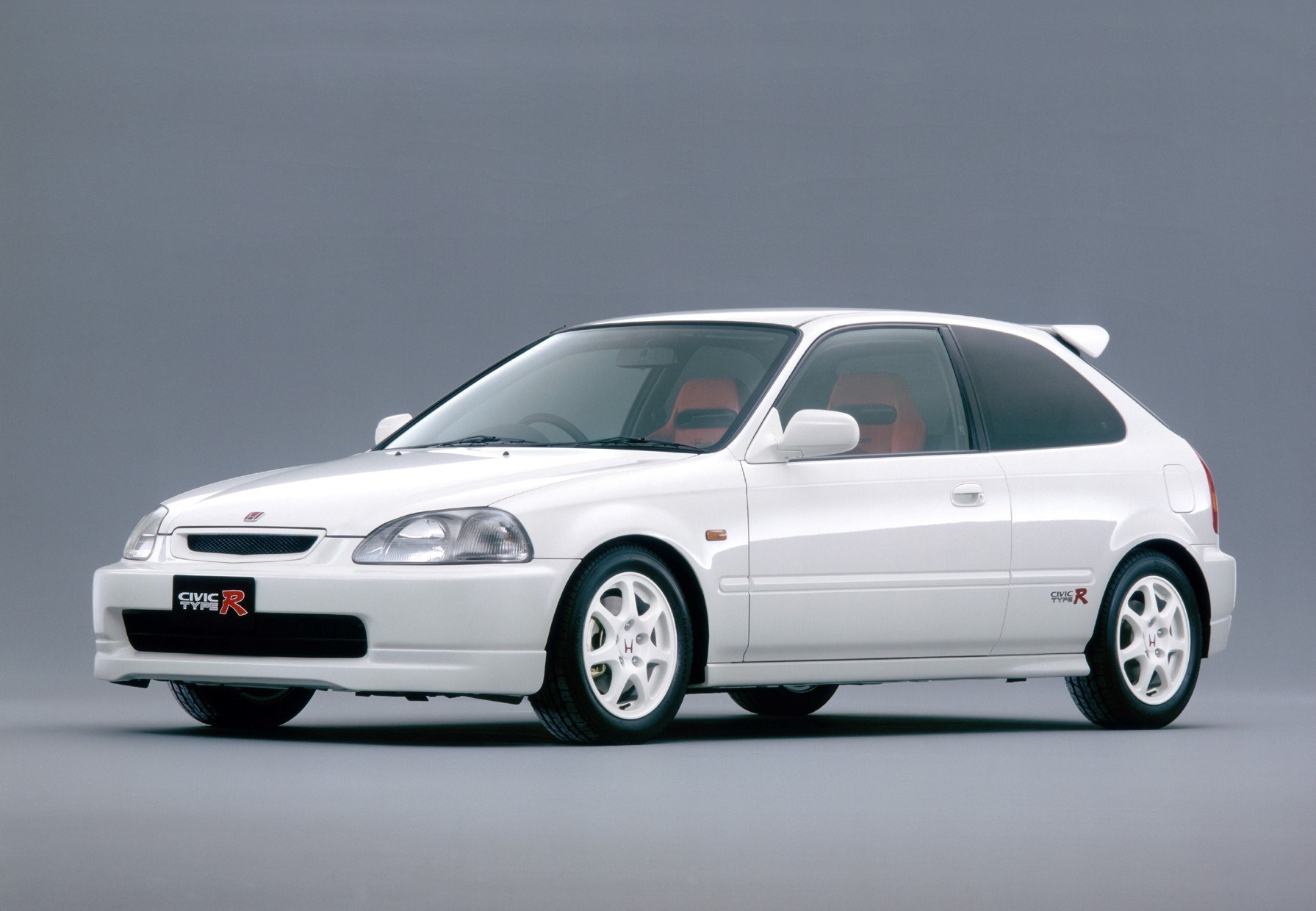
  • Honda celebrates 25 years of the Civic Type R

    Honda’s iconic Civic is celebrating two anniversaries this year: 50 years of continuous production and 25 years of the high-performance, race-derived Type R variant, which rewrote the rulebook on what a hot hatch should be. Despite being born as the more attainable Type R, the Civic variants embody the Type R philosophy the maximum thanks to exquisite engineering and engaging dynamics. Over six generations, the formula has evolved to deliver the ultimate front engine, front wheel drive performance hatchback to customers. One that can comfortably handle the daily commute from Monday to Friday, before tackling the circuit at weekends.

    EK9 (1997-2000): An affordable, accessible Type R for all

    EK9 (1997-2000) Honda Civic Type R

    The Type R nameplate can be traced back to the 1992 Honda NSX Type R, which raised the bar on performance and dynamic ability, but was only available in extremely limited numbers. Applying the Type R philosophy to the Civic followed a similar engineering ethic to the Integra and NSX to offer an engaging, rewarding drive. The EK9 was offered to the Japanese market only and had a high-end specification; including a hand-ported 1.6-liter DOHC VTEC engine that produced a highly impressive 116bhp-per—litre, a lightweight seam-welded shell that contributed to a total vehicle weight of just 1050kg, paired with a helical Limited Slip Differential (LSD), and unique suspension components to completely transform the driving experience. Launched to outstanding reviews, the EK9 set in motion the pursuit of the ultimate front-engine, front wheel drive performance hatchback.

    EP3 (2001 – 2005) A European take on the Type R

    EP3 (2001–2005) Honda Civic Type R

    As a result of the overwhelming success of the first-generation car, the second-generation was offered across Europe; thanks, in part, to now being manufactured in the United Kingdom. The new car introduced an all-new, and now iconic 2.0-liter DOHC i-VTEC ‘K’ series engine that redefined what a normally aspirated two-litre engine could do. It too featured uprated brakes, a precise, close-ratio six-speed transmission and a shell that made extensive use of high-tensile steel to increase torsional static rigidity by 80% over the EK9. Toe-control link strut suspension in the front and reactive-link double-wishbone suspension at the rear combined with new electric power steering (EPS) and variable gear ratio (VGR) for highly rewarding steering feel and feedback.

    FN2/ FD2 (2007-2011) Type R – two ways

    FN2-FD2 (2007-2011) Honda Civic Type R

    The third generation Civic Type R was unique in that the European and Japanese models differed dramatically. Europe received the FN2-based hatchback, which retained the proven 2.0-liter engine, but introduced a new chassis that moved the fuel tank beneath the front seats to improve interior space and flexibility. Japanese customers were instead offered the FD2 saloon, which offered an even more focused driving experience thanks to additional items such as a more powerful K20A engine, a helical LSD and powerful Brembo brakes. The saloon’s increased weight was countered by extensive use of structural adhesives instead of welding, and aluminium in both the chassis and panels.

    FK2 (2015-2017) Introducing the VTEC TurboA

    FK2 (2015-2017) Honda Civic Type R

    As market and regulatory expectations shifted, the move toward turbocharging was inevitable. Honda engineers worked meticulously to develop the K20C1 turbocharged 2.0-liter engine that offered explosive performance thanks to a 310PS output. In order to better control that significant increase in power, Honda introduced its Dual Axis Strut Suspension paired with a limited-slip differential to counter the torque-steer encountered in high output front wheel drive cars. The 2015 Civic Type-R sprinted from 0-100km/h in just 5.7 seconds and came equipped with large diameter (351mm) front discs that formed part of the high-performance Brembo braking system. The FK2 proved a formidable base for a competition car, winning several TCR Touring Car titles across the globe.

    FK8 (2017-2022) The Ultimate Sports hatchback

    FK8 (2017-2022) Honda Civic Type R

    Arriving in 2017, the FK8 was the ultimate evolution of the Civic Type R. A significant evolution of the FK2, the new car gained a host of new mechanical features such as adaptive dampers, and further revisions to the K20C1 engine to boost power to 320PS. The model also introduced downforce to the equation for an even more intense drive; the external aerodynamic package worked in unison with an advanced, almost flat underfloor, to actively contribute to negative lift. The model also made its debut in the United States, with the region leading global sales for the car.

    FL5 (2022-) Ultimate Sports 2.0

    FL5 (2022) Honda Civic Type R

    Launching later this year, the all-new generation car further evolves, matures, and refines technologies that have been developed over several generations. Whilst new technologies and refined aerodynamics have helped set the bar higher once again, a clear lineage can be traced back to the FD2 generation with the incremental revisions resulting in the fastest, most rewarding and addictive Civic Type R ever built. Already the track record holder at Suzuka, the 2022 Civic Type R is a fitting way to celebrate 30 years of the Type R nameplate.

  • Ford Mustang Shelby GT500 Code Red

    Shelby American, a wholly owned subsidiary of Carroll Shelby International Inc. (CSBI:PK), made history today at the Michigan Woodward Dream Cruise when it unveiled the limited-edition Shelby GT500 CODE RED with a twin turbocharged V8 pumping out up to 1,300 horsepower. For the first time in its history, the company turned an experimental car into a limited edition vehicle. In addition to the replacement of the factory supercharger with a twin turbo setup, each hand-built CODE RED Shelby GT500 will receive suspension, braking, cooling and aesthetic upgrades.

    • CODE RED pumps out 1,000+ horsepower and 780-foot pounds of torque on 93 octane pump gas with up to 1,300 horsepower and 1,000-foot pounds of torque on E85 Ethanol
    • Only 10 total worldwide per model year for 2020-2022 Shelby GT500s will be built
    • Shelby GT500 CODE RED is the first twin turbo limited edition car offered by Shelby American

    “Shelby American has built cutting-edge experimental versions of the Shelby GT500 since the model was launched in 1967,” said Joe Conway, CEO of Shelby American. “While these testbeds for innovation never became production cars at the time, they helped make our vehicles better. For the first time in our 60-year history, we’re turning an experimental car into a limited-edition vehicle. The enormous demand for a CODE RED edition is an opportunity to demonstrate our capabilities, as well as the enormous potential of Ford Motor Company’s marvelous Shelby GT500 as a dedicated straight-line performer.”

    Famous “EXP” experimental cars have included the Green Hornet, the Super Snake, Little Red and the 2008 twin turbo CODE RED. Shelby’s ’67 GT500 Super Snake had a 427-race engine while the Green Hornet was an experimental ’68 hardtop used to test fuel injection and independent rear suspension. The 1967 Little Red had twin superchargers and a host of other innovations.

    Shelby American replaced the supercharger with a pair of turbos on the experimental 2008 CODE RED Shelby GT500. The 5.4-liter V8 re-engineered by Nelson’s Racing Engines had a dual-feed fuel system that blended in high-octane racing gas as needed. Shelby American enhanced the cooling capacity to handle the heat and worked with AMS to develop a speed-sensitive boost controller for the car.

    Along the way, the drivetrain was reworked to include a new transmission that could withstand all the power, a one-piece aluminum driveshaft, Currie 9-inch rear end, Air Locker differential and 35-spline axles. The car boasted Shelby/Eibach adjustable suspension, Shelby/Baer brakes and rotors, 20-inch wheels shod with Pirelli P Zeros on front and stickier Nitto NY555R drag radials at the rear.

    However, the high cost of the car and its extreme nature meant it was not viable for production.

    “CODE RED is designed to be the pinnacle of Shelby Mustangs,” said Gary Patterson, president of Shelby American. “While we never put it into production during 2008, many were keen to own one. The current generation Shelby GT500 is so robust and spectacular that many of the issues we encountered 14 years ago no longer exist. It’s so perfect for CODE RED transformation that we began quietly building a few for insiders who asked. Though we did not initially intend to offer a formal edition, demand was so strong that we elected to build a very small number of them.”

    Based on the 2020-2022 Ford Shelby GT500, the new CODE RED edition is truly a horse of a different color than the Shelby Super Snake and Shelby GT500KR. Only 10 per model year (2020-22) will be built.

    “The unique nature of this new car required us to pour in lessons learned from extreme vehicles like the 2008 CODE RED, Shelby 1000 and 2020 Shelby GT500 Dragon Snake concept,” said Vince LaViolette, Shelby American Vice President of Operations and Chief of R&D. “All of the massive horsepower and torque we develop with the new CODE RED car required us to focus on optimizing traction. That is why CODE RED is more of a straight-line performer than a road course warrior. While not street legal, it’s very capable at moderate speeds in most any curve. But when the turbos spool up, the car is best enjoyed moving straight ahead.”

    Over the past 60 years, Shelby has worked with some of the biggest names in the business, such as Ford Performance Brembo, Michelin, Borla, Recaro and Tremec. CODE RED’s drivetrain was engineered in collaboration with Fathouse Performance, an official development partner of Shelby American.

    “We worked closely with Shelby American to develop a robust, powerful and reliable package based on our 50 years of combined experience in the high-performance auto industry,” said Ben Stoner, vice president of Fathouse Performance. “The 5.2L engine now features all-new high-performance components boosted by an intercooled premium twin turbo system, a new fuel system, engine management system and more. CODE RED boasts 1,000+ horsepower and 780-foot pounds of torque on 93 octane pump gas with up to 1,300 horsepower and 1,000-foot pounds of torque on E85 Ethanol.”

    CODE RED is far more than just a drivetrain upgrade. It also features the widebody package with new wheels, tires, axles, suspension tuning, interior, badges, carbon fiber hood, and more. Shelby American has spent countless hours testing the car. Both LaViolette (chief test driver) and Patterson (senior test driver) worked hard to refine and tame CODE RED.

    Each CODE RED Shelby GT500 includes membership in Team Shelby, the worldwide club Carroll Shelby established in 2008, and will be documented in the official Shelby Registry. The package MSRP starts at $209,995, not including the base car. Production has begun in Las Vegas and owners of 2020-2022 model year Shelby GT500s can contact Shelby American about transforming their car into a CODE RED edition.

    Package MSRP starts at $209,995

    Standard Features

    Powertrain Features

    • Shelby by FHP Twin Turbo System
      • Xona 7869S Dual Ball Bearing Turbos
      • Stainless Steel Tial Vband Exhaust Housings
      • PTP Titanium Turbo Blankets
      • PTP Titanium Turbo Manifold Blankets
      • Tial MVS Wastegates
      • Custom High Flow Air Filters
      • 3″ Stainless Steel Turbo Downpipes
      • Stainless Steel Tubular Turbo Headers with Billet Collectors and Merges
      • 3″ Stainless Active Exhaust
      • ARP Header Bolt Kit
    • Engine Upgrade
      • Custom Manley Pistons 10.5:1 CR
      • Manley I Beam Rods
      • ARP Main Studs
      • ARP Head Studs
      • Oil Squirter Block Offs
      • PAC Valve Springs
      • Ferrea Competition Valves
      • HD Secondary Timing Chains
      • Ford Performance Oil Pump Gear and Crank Sprocket
      • Amsoil 5w50 Signature Oil
      • NGK Spark Plugs
      • Billet Anodized Coil Cover Set with Shelby Logo
    • Intake and Intercooler System:
      • Fathouse Performance Intake Manifold/ A2W Intercooler
      • Fathouse Performance Billet Throttle Body Adapter and Coupler
      • Fathouse Performance Ice Tank with Reservoir
      • Coated Aluminum Intercooler Piping
      • Tial Blow Off Valve
      • Upgraded Heat Exchanger
      • Custom Turbo Scavenge System
      • Fathouse Performance Race Oil Catch Can
      • Fathouse Valve Cover Adapter Fittings
      • BMRS High Temp Polymer Hose Plumbing
    • Fuel System
      • ID1300x Injectors
      • Billet Fuel Rails
      • Return Style Fuel System
      • BMRS Line Kit
      • Fore fittings, Fuel Pressure Reg, and Fuel Filter
      • Upgraded fuel pumps
    • MoTeC M150 Engine Management Package:
      • MoTeC M150 ECU
      • Plug and Play Mil-Spec Wiring Harness
      • Power Adjustment via Factory Drive Mode Controls (650hp-1200hp)
      • Advanced Traction Control (9 Different Levels)
      • Boost-by-Gear
      • Rolling Anti-Lag
      • Flex Fuel 93/E85 System Automatically Adjusts Power Based on Ethanol Content
      • Ghost Cam Feature (Activated in Drag Mode)
      • Advanced Launch Control
      • Engine Protection Features
      • Level 3 Advanced Data Logging (Captures Data Automatically)

    Performance Features

    • Shelby Widebody package
    • Performance half-shafts
    • Ride-height adjustable front and rear springs
    • Ford Performance front and rear sway bars
    • MagneRide®> suspension recalibration
    • Caster camber plates
    • Shelby forged aluminum wheels
      • One-piece 6061-T6 forged aluminum
      • 20×11 front
      • 20×13 rear
    • Performance spec 305/30/20 front tire
    • Performance spec 345/30/20 rear tire
    • Extended and hardened wheel studs

    Exterior and Interior features

    • Shelby carbon fiber hood
    • Carbon fiber front splitter
    • Carbon fiber rear diffuser
    • Carbon fiber pedestal wing
    • Shelby rocker panels
    • Carbon fiber rocker wings
    • Billet engine caps
    • 60th Anniversary Badging (2022 MY only)
    • Code Red badging
    • Leather seat recovers
    • Shelby rocker stripes
    • CSM numbered engine and dash plate
    • Door sill plates
    • Rear seat delete and harness bar

    Optional Features

    • Le Mans style over the top stripes
    • Painted stripes
  • Bugatti W16 Mistral

    Ever since the Veyron was introduced in 2005, the W16 engine has been the beating heart of every Bugatti. The roadgoing car that brings the W16 era to an end was always destined to be special: exclusive, elegant and powerful. It must be the very best of its kind. This is W16 Mistral: the ultimate roadster.

    Mate Rimac, Bugatti Rimac CEO, said: “For the final roadgoing appearance of Bugatti’s legendary W16 engine, we knew we had to create a roadster. Well over 40% of all Bugatti vehicles ever created have been open-top in design, establishing a long lineage of performance icons that – to this day – are revered the world over. In the Chiron* era there had, to-date, been no roadster, so the introduction of W16 Mistral continues this legacy, driven by enormous demand from our clients for an all-new way to experience the mighty performance of our iconic engine. The W16 Mistral opens the next chapter in the Bugatti roadster story, inspired by over a century of open top legends.”

    For a car as evocative and important as this, great consideration went into the badge it should wear. Far more than simply a development of the Chiron, the roadster needed a name associated with freedom, elegance and speed. Inspiration came from the mistral, a powerful wind that blows from the Rhône River valley, through the chic towns of the Côte d’Azur in southern France and into the Mediterranean. And with the engine so central to this roadster’s character, it stands side-by-side with this mighty wind: W16 Mistral.

    Built around the definitive 1,600 PS incarnation of the W16 engine, first used in the Chiron Super Sport 300+*, the W16 Mistral offers performance unlike any open top car that has gone before. In its design and engineering it is completely bespoke; the existing monocoque is not simply cut off above the A-pillars to make way for the new open-top design but has been reengineered and reshaped to create a more rounded silhouette without compromising performance.

    Achim Anscheidt, Bugatti Design Director, said: “We know the W16 Mistral will always have significance in the story of Bugatti, marking the last time that perhaps the greatest ever automotive powertrain is used in a roadgoing production car. We, as a design team, felt enormous pressure to deliver styling that immediately conveyed this landmark moment, drawing inspiration from some of the most beautiful roadsters in Bugatti history.”

    Their muse would be the 1934 Bugatti Type 57 Roadster Grand Raid, a sporting roadster that represents the pinnacle of elegant design. Marked out by its dual aerodynamic headrests, flowing backwards into the bodywork, and a cut down V-shaped windscreen, this particular Grand Raid – on display at the Louwman Museum in Den Haag – is effortlessly sophisticated with an understated sportiness. Finished in a duo-tone black and yellow livery, it would provide the perfect inspiration for this watershed moment in the Bugatti story.

    The W16 Mistral debuts in colors inspired by the Bugatti Type 57 Roadster Grand Raid; a warm black with hints of truffle brown and subtle yellow accents throughout. Not only is it an homage to the iconic coachbuilt body, but also to Ettore Bugatti, who chose the black and yellow combination for many of his personal cars, including his Type 41 Royale. To enthusiasts of the brand, it is a timeless visual pairing.

    The W16 Mistral captures the essence of the Grand Raid’s V-shaped windscreen and evolves it into a modern-day work of art. A curving windscreen that seemingly wraps around the A-pillars, blending seamlessly into the side windows and creating a ‘visor’ effect that hints at the motorsport levels of performance W16 Mistral offers. The windscreen itself is a marvel of engineering, curved just enough to create the rounded visor design, without distorting the driver’s vision.

    The top line of the windscreen and side windows flows purposefully around the side air intakes. This character line then flows back underneath the side glass to shoot through all the way to the front horseshoe grill creating a new three-dimensional character for the famous Bugatti C-line introduced on Chiron. To keep the body side section slim, but also allow for optimum airflow to the W16, the oil cooler intakes on the side were deliberately separated from the engine air intakes, which now sit on the roof, just behind the occupants. The two-new roof-mounted engine air scoops are a nod to the Type 57 Roadster Grand Raid, as well as the first open top Bugatti of the modern era: the Veyron 16.4 Grand Sport. Tighter, more powerful and appearing to leap forwards, W16 Mistral exhibits an entirely different character.

    Anscheidt continues: “To reflect the W16 Mistral’s new character, we also totally reinvented its frontal appearance, in line with the vertical layout of our unique or few-off models like Divo* and La Voiture Noire*. It’s immediately imbued with a sense of exclusivity; the vertically stacked headlights are completely bespoke and the famous horseshoe grille is reimagined to be much more three-dimensional; both deeper and wider. At the rear, we challenged ourselves to create a striking but also more elegant iteration of Bolide’s* X-theme taillight motif, which forever left its mark on the world of automotive design.”

    To design a car like the W16 Mistral requires careful practice of Bugatti’s ‘Form Follows Performance’ design mantra, with each component penned not just to set new standards for beauty, but to also play a role in achieving completely new levels of performance.

    Frank Heyl, Bugatti Deputy Design Director, said: “The headlights themselves are intricately shaped, incorporating a four-light signature that subtly nods to the W16 Mistral’s four-wheel-drive and four turbochargers. But their three-dimensional surface also functions as an aerodynamic aid that funnels air through the light and out through the wheel arch to improve aerodynamic drag. The wider horseshoe grille allows the high temperature engine radiator to be fully fed purely from one intake, leaving the two side intakes to focus only on providing air to the intercoolers.

    “The X-taillight, meanwhile, serves the function of venting the side oil coolers through ducts connecting the triangular negative space in between the X beams to the side radiators. Therefore, a pressure drop is created between the side intakes and the outlets at the back of the W16 Mistral which helps to manage the mid-temperature cooling circuit of the mighty W16 most effectively.”

    But the functional design highlights don’t end there. The new ram induction air scoops behind the headrests were developed from the very beginning with stringent rollover tests in mind, so each is made from a bespoke carbon fiber structure that can support the whole weight of the car in case of a roll over. This new intake layout also enriches the driver’s W16 experience, emphasizing the orchestra between the low down, mighty, rumbling 8-liter displacement intake noise at throttle on and the blow off valve whistle from the four turbo chargers at throttle lift. It is an unmatched aural sensation in the automotive world.

    To develop incomparable levels of elegance and excitement, the W16 Mistral features the very latest engineering innovations. Bugatti’s advanced composite materials are paired with cutting-edge titanium and aluminum 3D-printing to ensure striking design, ultimate performance and robust reliability. A detailed analysis of the W16 Mistral’s dynamic stiffness allowed engineers to develop lightweight solutions that would ensure optimum handling and performance under the most extreme conditions.

    The W16 Mistral’s interior takes its lead from Chiron, carefully honed to deliver an experience that’s both elegant and luxurious, but also functional enough to ensure all information is easily visible at up to 420 km/h.  The dedication to material quality remains a hallmark of Bugatti design; advanced, lightweight titanium, aluminum components milled from a solid block and soft, blemish-free leathers. But in this swansong to the W16, there are also brand new design flourishes.

    There is an intricate woven leather used on newly designed door panels, meticulously tested and produced to Bugatti quality standards with a vision of regular use over a hundred years into the future. And in a nod to the W16 Mistral’s illustrious forebears, the gear shifter – machined from a solid block of aluminum – features a touch of wood and an amber insert with Rembrandt Bugatti’s famous ‘dancing elephant’ sculpture locked within. Iterations of this sculpture adorned the bonnet of the legendary Type 41 Royale; the most luxurious roadster ever created.

    Underneath the gargantuan side opening hood of the Royale was an ambitious 12.7-liter straight-eight engine, the likes of which the world had never seen before. And the W16 Mistral’s engine is equally ambitious – the only W16 powertrain in automotive use today.

    When Bugatti’s last roadster, the Veyron 16.4 Grand Sport Vitesse set a world speed record of 254.04 mph (408.84 km/h) in 2013, its 8.0-liter quad-turbo W16 had 1,200 PS. The W16 Mistral has 1,600 PS, making use of the same power unit that propelled the Chiron Super Sport 300+ to a world-record-breaking speed of 304.773 mph in 2019. There can only be one goal in mind: to become the fastest roadster in the world once more.

    Mate Rimac, Bugatti Rimac CEO, said: “The union of a roadster format and our W16 powertrain is absolute perfection. With the roof removed, and a pair of large air intakes directly behind your head feeding around 70,000 liters of air through the engine every minute at full bore, driving the W16 Mistral connects you to the intricate workings of this revolutionary powertrain like no other Bugatti to date.

    “What we also continue with W16 Mistral is a legacy of Bugatti roadsters, each of them incomparable in design, performance and rarity, which stretches right back to the genesis of Bugatti. The Type 40, Type 41 Royale, Type 55 Roadster, Type 57 Roadster Grand Raid that inspired this car, or even the incredible elegance of the Type 57SC Corsica Roadster – Bugatti has always been associated with the purity of open top driving. So even though the legacy of the roadgoing W16 ends with the W16 Mistral, we continue the legacy of the roadster, first established by Ettore Bugatti more than a century ago.”

    Only 99 examples of the W16 Mistral will be built, priced at 5 million euros net, with deliveries due to begin in 2024. The entire production run of W16 Mistral is already sold out.

  • McLaren Solus GT

    McLaren Automotive today reveals the McLaren Solus GT, the stunning realization of a concept car from the screens of virtual racing into an extreme expression of track driving engagement that will exhilarate in the real world.

    A special commission for just 25 customers – with all cars already sold – the single-seat, closed-cockpit track car was unveiled during Monterey Car Week in California by Michael Leiters, McLaren Automotive Chief Executive Officer.

    Engineered to reality by drawing on the full range of McLaren’s experience and expertise across the highest levels of motorsport and supercar and hypercar development, the Solus GT brings to life the futuristic McLaren concept that featured in the Gran Turismo SPORT video game.

    At less than 2,205lbs in weight and with aerodynamic performance including downforce in excess of 2,645lbs, the Solus GT – which is powered by a naturally aspirated 5.2-liter V10 engine – is capable of the fastest lap times of any McLaren outside of single-seater racing and delivers a driving experience close to the engagement and sensation of driving a Formula 1 car.

    “The McLaren Solus GT is the realization of a radical McLaren concept vehicle originally created for the world of virtual racing. Engineered free of any restrictions from road or race regulations, but with the full spectrum of McLaren’s expertise to bring it to reality, it epitomizes our pioneering spirit.”
    Michael Leiters, Chief Executive Officer, McLaren Automotive

    The striking exterior design, which is remarkably faithful to its virtual inspiration, is based on proven aerodynamic principles and McLaren’s ‘everything for a reason’ design ethos, honed by additional CFD (Computational Fluid Dynamics) and wind-tunnel aerodynamic research.

    The list of distinctive external features is lengthy, with the sliding canopy above the single, central seat being one of the most striking. The wheels are shrouded in aerodynamic pods and located by suspension arms. A large front splitter feeds air into ground-effect tunnels before it exits the car via a full diffuser. A motorsport-inspired intake above the cockpit integrated into the design of the roll hoop cover feeds cold air into the engine, while also providing an engaging induction sound. Race car design also inspired the sidepods which house the Solus GT’s radiators.

    A twin-element, fixed rear wing is key to a downforce figure that exceeds the overall weight of the car. The downforce to drag ratio is also optimized, aiding straight-line performance as well as enhancing cornering abilities.

    The Solus GT experience begins even before the engine is started, with the driver opening the distinctive cockpit canopy that slides forward through a shallow arc to allow access. This is nothing like a conventional car door, or even the signature dihedral doors of other McLaren cars, rather more like stepping into a jet fighter plane.

    The means of getting into the car adds to the sense of occasion provided by the single seat that dominates an interior focused solely on the driver and performance. The seat position is fixed – the 25 Solus GT owners experience their own motorsport-style ‘seat fitting’ – with the pedal box adjustable as in a race car, although with the convenience of a remote system operated from the seating position.

    The steering wheel – the design of which is unique among McLaren production cars – takes its inspiration from Formula 1, with dash display and essential controls integrated to suit the tight confines of a single-seater track car. Beyond the steering wheel is a view through the glass ‘bubble’, with integrated halo-style cockpit protection – mounted to which is a rear-view display fed by a wide-angle camera placed within the roll hoop. The perfectly symmetrical 180-degree line of sight provided by the central driving position is further aided by the dramatically styled wheel pods in helping the driver to position the car on a track.

    To further enhance the exhilaration for Solus GT customers, McLaren is offering a full ‘racing driver experience’. This includes a driving seat molded to the driver’s individual body shape; an FIA-homologated race suit, helmet and HANS device bespoke to each owner, and radio-enabled ear inserts. A full driver-development coaching program will also be available to help customers fully exploit the potential of their new track hypercar.

    The Solus GT is powered by a unique 5.2-liter V10, constructed using low-volume, machined components, that revs to more than 10,000rpm and delivers extreme performance and thrilling driver engagement. The engine’s responsiveness is enhanced by the use of barrel-driven throttles for each cylinder – a system only suitable for track application – and is entirely gear-driven, with no chains or belts for camshaft or ancillary systems.

    In addition to having power and torque outputs in excess respectively of 829bhp and 479lb ft, the engine was also chosen for its structural qualities; for the first time in a McLaren production car, the engine is an integral part of the chassis. Conventional practice in race car construction, this design approach optimizes weight reduction by negating the need for additional chassis structures or subframes behind the carbon fibre monocoque.

    The race-derived seven-speed sequential gearbox, which features a bespoke casting and casing – the latter manufactured from aluminum with magnesium panels – is mounted to the back of the engine with the rear suspension fixed to the gearbox casing. Internally, straight-cut gears engaged via a multi-plate carbon fibre clutch are ideally suited to the aggressive shifts demanded in a track application. The system is fully automated and software controlled, removing the need for the driver to operate the clutch, aiding pit-lane pull-away.

    In common with every McLaren since 1981, the Solus GT is based around a carbon-fibre monocoque, in this case one created using specialist low-volume production methods including a carbon ‘pre-preg’ process for higher structural strength and a high uniformity of finish to the material. The front and rear chassis structures are also made from carbon fibre, with the engine and gearbox forming the rest of the chassis.

    Carbon fibre is not the only high-value material in the Solus GT. Further embracing technologies used in the top tiers of motorsport, 3D-printed titanium components have been used for the halo cockpit protection structure and roll hoop. This is the first time the approach has been adopted for structural elements in a McLaren production car, allowing a tailored design as well reducing weight.

    The suspension system incorporates double wishbones with inboard torsion bar damping, operated via pushrods at the front and pullrods at the rear. Both axles are linked by anti-roll bars, with tuning options available to the driver. Fabricated from steel for enhanced durability, the front suspension links are encased in aerodynamic carbon fibre shrouds similar to the approach in Formula 1.

    Housed within the distinctive wheel pods are 18-inch forged aluminum wheels with center locking nuts, shod with Le Mans Prototype-specification tires available in both slick and wet compounds. Braking is provided by 6-piston monobloc machined aluminum calipers and carbon brake discs and pads. Bias between the front and rear brakes can be adjusted in the cockpit by the driver.

    Traditional performance metrics are not as relevant for a track car, but with a target time of 2.5 seconds for 0-62mph acceleration and a maximum speed of more than 200mph – in combination with the car’s light weight and strong aerodynamic abilities – the McLaren Solus GT has the performance credentials needed for an extreme track machine.

    In incorporating every element that has made McLaren a world-beating automotive force, the Solus GT is also a showcase for the craftmanship available to McLaren customers from McLaren Special Operations (MSO). With a project such as this, the MSO service goes beyond the car itself to a level of luxury customer engagement and accessibility unique to McLaren. A bespoking process ensures every Solus GT is unique and regular updates on the development program, including access to prototype drive sessions that can influence the driving characteristics of the car ahead of production, are offered.

    Solus GT track events are planned, and all cars will be delivered with a flight case to allow owners to support their own track activities. This includes a comprehensive set of tools, vehicle jacks, stands, radio sets and a coolant pre-heater.

    The McLaren Solus GT is currently at the track-testing stage of its development process. The first of 25 customer cars – all of which are sold – will be delivered in 2023.

    The McLaren Solus GT in detail

    A concept for the virtual world becomes reality

    • Originally a virtual concept driven by millions in the Gran Turismo SPORT video game; now a reality as the astonishing McLaren Solus GT
    • Striking single, center-seat cockpit and strong focus on aerodynamic principles throughout
    • Showcases McLaren signature design features, including ‘hammerhead’ front, teardrop-shaped cabin and ‘shrink-wrapped’ bodywork

    The roots of the McLaren Solus GT are in a stunning concept that featured in the  Gran Turismo SPORT video game.

    From the original design sketches through to the virtual gaming triumph and now the astonishing machine that an exclusive few customers will enjoy on track, this is a car that epitomizes the ‘everything for a reason’ design philosophy and relentless pursuit of engineering excellence within every McLaren. From the outset, the concept was based on proven aerodynamic principles, with a sports-prototype racecar package as its foundation.

    The bodywork is very much a technical sculpture, shrink-wrapped over the high-performance engineering package and the two full-length ground effect tunnels. These contain distinctive air intakes at the front and a NACA duct – a low-drag air inlet – which also acts as a step, accelerating the airflow into the radiators.

    From the front, the distinctive McLaren ‘hammerhead’ nose helps to separate airflow from the underbody ground effects and the full-length diffuser. The visibility from the wraparound canopy screen of the teardrop cockpit is outstanding, with an uncluttered, 180-degree view of a track. The wheel pods in each corner are not only a dominating design feature, they also allow overall weight-reduction and individually ‘work’ the airflow with a distinctive tear-drop shape that ends in a dramatic blade-like rear edge to calm the turbulent air in the wake of each tire and mitigate pressure build-up within the wheel well.

    The rear of the car features a full clam that provides easy access to the engine bay, with super-low trailing bodywork edges that employ the same principles as the Speedtail in order to minimize base pressure across the back of the car, reducing drag.

    Engineering a virtual design into extreme reality

    • Naturally-aspirated V10 engine chosen to optimize performance, driver engagement and packaging
    • Aerodynamic performance integrated into bodywork surfaces to preserve overall shape using CFD and wind-tunnel research
    • Heavily optimized structural work includes monocoque geometry

    The original engineering brief for the McLaren Solus GT was to turn a prestigious virtual gaming concept into an extremely powerful and highly exclusive McLaren hypercar. This was to be a track-only car, with motorsport engineering expertise and a V10 powertrain coming together to deliver the supreme driver engagement demanded for a no-compromises experience.

    The racing-derived engine was chosen for reasons of packaging as well as performance; a pared-down track car with minimal weight and shrink-wrapped bodywork meant having the engine as part of the chassis was a natural choice. This construction technique is rarely seen in production cars for NVH (Noise, Vibration, Harshness) reasons, but in a focused track car it gives many benefits, not least added feedback and exhilarating engagement for the driver.

    Once the program parameters were set, the engineering team faced the challenge of integrating real-world aerodynamic performance into the original design surfaces. This was resolved with extensive CFD and wind-tunnel work to prove the aerodynamic, cooling and efficiency properties of the concept.

    Racing-inspired chassis design and construction

    • Bespoke monocoque structure employs Formula 1 chassis technologies, with front and rear carbon structures
    • Low-volume, carbon ‘pre-preg’ process provides strength, rigidity and quality of finish
    • Engine and gearbox are stressed chassis members; carbon crash structure is incorporated into gearbox
    • 3D printing techniques used for structural components – titanium halo protection and rollover bar

    Like every McLaren built in the last 40 years, the Solus GT features a carbon-fibre monocoque at its heart. However, the single-seat cockpit and production-based engineering processes demanded a bespoke approach embracing the differing disciplines of competition and road car construction and the resulting design takes greater inspiration from motorsport than other McLaren Automotive products, with the monocoque using Formula 1 and sportscar racing chassis technologies. The front and rear impact structures are made from carbon fibre – traditionally McLaren Automotive chassis structures feature aluminum structures fixed to the passenger cell – and with the engine and gearbox both stressed chassis members, there is no requirement for a rear subframe.

    The construction of the chassis employs specialist low-volume production methods including a carbon ‘pre-preg’ process whereby the carbon fibre is pre-impregnated with a resin system that simplifies the curing process. The material is ready to lay into the mold before heat and pressure treatment is applied, allowing the higher structural strength demanded by a track-only car. The process also allows a high uniformity of finish to the material that enhances visual appeal.

    The chassis of the Solus GT also features 3D-printed titanium components, including the halo cockpit protection structure and roll hoop. While previously used by McLaren Automotive– notably for the exhaust system of the Elva – this is the first use of the technology for structural components in a McLaren production car and demonstrates the absolute focus applied to finding the best solutions for the Solus GT.

    Refined and optimized bodywork and aerodynamics

    • Carbon fibre bodywork incorporates aerodynamic surfaces including front splitter, individual wheel pods, structural floor with ground-effect tunnels and fixed, twin-element, high-downforce rear wing
    • Huge downforce generated – at 2,645lbs, greater than the weight of the car – with drag penalty minimized for straight-line speed
    • Formula 1-inspired, carbon fibre suspension aero shrouds, air intakes and sidepod-mounted radiators

    Despite the freedom the development team enjoyed in exploring the boundaries of possibilities for the Solus GT as a track car, the exterior design of the virtual reality concept did impose restrictions on what could be done if the real car was to retain the ‘wow factor’ of the car that featured in Gran Turismo SPORT.

    As befits an ultra-lightweight track-only car, the bodywork of Solus GT is made from carbon fibre; the complex shapes and swooping lines achieved without the weight penalties that would come from the use of conventional metal panels. The form of these has been finely honed – ironically in virtual reality – to ensure stability and maximize aerodynamic efficiency for both straight line-speed and downforce.

    A large front splitter feeds air into ground-effect tunnels in the full structural floor, which has been designed to accept high aerodynamic loads. The air exits the car via a full diffuser. The front wheels are outboard of the main bodywork, with the suspension wishbones exposed to the airflow and shrouded in aerodynamically-shaped carbon fibre that directs air towards the sidepod-mounted radiators. The sidepod-siting of the high-temperature radiators is directly inspired by motorsport, providing a direct cooling solution for engine fluids and reducing frontal surface area.

    A motorsport-inspired air intake above the cockpit, which is integrated into the design of the roll hoop cover, takes in cold and flow-conditioned air above the car while also creating a pleasingly engaging engine induction sound.

    The twin-element, fixed rear wing is one of the more distinctive visual features of Solus GT. Designed to maximize downforce over the rear of the car, it works alongside the combination of high-downforce ground effect and low pitch sensitivity from the motorsport-derived suspension system, to negate the need for active front or rear wings and so help to keep weight down.

    Overall, the aerodynamic package downforce exceeds the total weight of the car, but the downforce to drag ratio is also optimized, aiding straight-line performance and enhancing cornering speeds.

    Unique, single central seat interior

    • Driver enters car via sliding canopy incorporating Formula 1-style halo cockpit protection device
    • Single-seat cockpit with fixed seat and adjustable pedals
    • Main driver controls and TFT instrument display mounted on carbon-fibre-structured steering wheel
    • Rear wide-angle camera located above roll-hoop, linked to driver view screen

    The Solus GT McLaren driving experience begins even before the V10 engine is started – simply stepping into the cockpit is an event in itself. Instead of signature McLaren dihedral doors, a sliding canopy – more akin to that of a fighter jet – is opened using a mechanical lever. The spring-loaded canopy moves through a shallow arc, lifting clear of the cockpit and sliding forwards to allow easy access to the driving seat.

    Recent technological safety innovations from the top tiers of motorsport are integrated in the design, with the canopy reinforced by a halo-style structure to protect the driver. An escape hatch is also built into the canopy to allow safe departure from the cockpit should the sliding mechanism be obstructed.

    The interior is purpose-built for extreme track performance; an owner can specify their car with an entirely bespoke environment, but it will remain focused on the driving experience. The molded seat is fitted with a 6-point harness and is fixed in position; instead, the pedal box is adjustable as in a race car, but with the convenience of being able to be operated from a sitting position.

    To ensure the single seat is a perfect fit for the customer, MSO has adopted a process taken from motorsport which is yet another example of the full range of McLaren expertise being available for the Solus GT. A phenolic resin-based system with advanced micro-bead technology is used to create a mold from which the seat is created, ensuring in turn that the driver remains comfortable in the car throughout the most intense track driving sessions.

    Almost all controls are concentrated on the steering wheel, which is constructed from carbon fibre. Inspired directly by motorsport, all essential functions are easily reached with both hands on the wheel. A full HVAC air system also keeps the driver fully alert throughout the driving experience.

    Above the driver’s head are switches for vehicle ignition and the fully plumbed-in emergency fire extinguisher. This area also houses the rear-view display, streamed in real-time from a camera located on the roll hoop behind the driver’s head. The wide-angle camera provides a comprehensive rear view of the track to allow traffic to pass on a slowing-down lap or aid pit-lane maneuvering.

    Powertrain with a proven motorsport pedigree

    • Motorsport-derived, naturally-aspirated 5.2 liter V10 engine that revs to over 10,000rpm
    • McLaren-specific engine, with crank, cylinder capacity, air intake and exhaust system all bespoke to Solus GT
    • Gear-driven camshaft and ancillary systems, with no chains or belts in the engine
    • Barrel throttles for individual cylinders sharpen throttle response

    The 5.2-liter V10 engine specified to power the McLaren Solus GT is incorporated into the vehicle chassis structure. The engine capacity is unique to the Solus GT, as are the air intake and exhaust system. The induction system directs air towards barrel throttles that are individual to each cylinder – a technology that is not suitable for road use but offers clear advantages in engine performance, including improved throttle response.

    The engine also incorporates low-volume machined components optimized for performance and is entirely gear-driven; there are no chains or belts for ancillary systems. Output is greater than 829bhp, with the full benefit of the ram effect provided by the high air intake and the engine revving past 10,000rpm. Maximum torque is in excess of 479lb ft.

    The resulting performance is a target acceleration time of 2.5 seconds from standstill to 62mph and a maximum speed in excess of 200mph, despite the Solus GT generating downforce that exceeds its weight.

    Competition gearbox

    • Seven-speed sequential gearbox
    • Incorporates bespoke casting and aluminum casing with magnesium panels; rear suspension locates to gearbox
    • Uses motorsport-derived straight-cut gears
    • Carbon fibre clutch with automated software control for combination of both aggressive shift strategy and user-friendly operation

    The Solus GT has a seven-speed sequential gearbox, with race-proven internals located within a bespoke casting and casing, designed as a mounting point for the rear suspension. The casing is made from aluminum, with magnesium panels optimizing weight.

    Originally designed for LMP sportscar applications, the gearbox internals include straight-cut gears, a technology not usually incorporated in production cars for reasons of NVH refinement but acknowledged as providing greater efficiency than helical-cut gears in a high-performance track car.

    The gearbox is engaged by a carbon fibre clutch, designed to complement aggressive gearshift strategy demanded in a track application. It is though also fully automated and controlled by software – removing the need for a pedal or lever-operated clutch control – to aid the driver when pulling away from the pit-lane.

    Track-focused suspension design

    • Formula 1-inspired suspension design incorporates double wishbones and front pushrod and rear pullrod activated torsion bars
    • Manually adjustable four-way dampers
    • Incorporates anti-roll bars, ride-height springs and a heave spring and damper system

    The McLaren Solus GT was designed from the outset as a track-only car and its suspension follows the principles of motorsport engineering, starting with the wheels located via double wishbones. With the front wheels mounted outboard of the main body, the front damping is inboard with pushrods operating torsion bars and corner dampers. At the rear, the bars are linked to pullrods, and the rear suspension is mounted to the gearbox casing.

    The wishbones and rods are fabricated from steel for enhanced durability, but the front suspension links are encased in carbon fibre shrouds for aerodynamic efficiency. The system also incorporates ride height springs and a heave spring and damper system. This is employed to provide stiffness at speed by limiting vertical movement, the effect of this is to create a more aerodynamically stable profile, making the car’s dynamic behavior at speed more predictable and therefore increasing driver confidence on high-speed tracks.

    Housed within the distinctive wheel pods are 18-inch forged aluminum wheels with center locking nuts, shod with Le Mans Prototype-specification tires available in both slick and wet compounds. Braking is provided by 6-piston monobloc machined aluminum calipers with carbon brake discs and pads. Bias between the front and rear brakes can be adjusted by the driver in the cockpit.

    Each axle is linked by anti-roll bars, which are connected via drop links. Both bars are adjustable.

    The complete – and bespoke – MSO customer journey

    • Complete customer journey includes involvement in product development
    • Fully bespoke product – each car is unique
    • Full racing driver experience available, including bespoke driver-wear and tailored seat

    Solus GT showcases the level of craftmanship available to McLaren customers through McLaren Special Operations.

    From the beginning of the development process, individual presentations were given to customers wishing to secure one of the 25 cars available. This has previously taken place only for purchasers of the McLaren Sabre, a car homologated for the US market only, whereas with Solus GT being a track-only product, the customer base is global.

    The 25 Solus GT depositors have also been involved throughout in the finer details of the car’s development from the virtual world to the real world, with new, MSO-developed software at the core of realizing the vision of each customer. This bespoke, individual approach reflects an intimate accessibility to McLaren that goes beyond even the usual levels of luxury experience and engagement.

  • Lamborghini Urus Performante

    Automobili Lamborghini announces the Urus Performante, raising the bar on Super SUV sportiness and performance with design emphases that reflect the new Urus’ prowess on street, track and loose surfaces. The Urus Performante establishes itself on first sight with a new level of powerful styling that asserts the super sports engineering within.

    Ahead of its premiere the Urus Performante set a new record in the production SUV category on the Pikes Peak International Hill Climb Road, crossing the finish line at 4302 meters (14,115 ft) in 10:32.064 and beating the previous 2018 record of 10:49.902.

    “The Urus Performante takes the supreme performance and distinctive looks of Lamborghini’s ground-breaking Super SUV to the next level, retaining its luxurious versatility and delivering the most engaging driving experience: not only on road but in every environment, distinguished through an alluring design that denotes new benchmarks for driving dynamism in what is already a remarkable car,” says Stephan Winkelmann, Lamborghini Chairman and CEO. “The Urus set a new standard at its launch, taking Lamborghini’s design DNA and technological talent and delivering the world’s first Super SUV for a new era: the Urus Performante sets the bar even higher for the SUV segment.”

    Designed for performance

    The Urus Performante resounds with bold, aeronautical dynamism, from first glance, at every angle: it’s not just from the front that the Performante commands the road. A pure, sharper, more prominent bonnet and bumper design immediately highlights the Performante’s super sports genetics yet retains the Urus’ innate elegance. The Urus Performante’s extensive use of composite materials makes it the car with the highest number of carbon fiber parts in its segment.

    “The Urus Performante’s very bold and characterful design perfectly integrates the improved aerodynamics incorporating the front bumper’s air curtain, with significant visual differentiation including the new lightweight carbon fiber engine bonnet and extensive use of carbon fiber throughout reminding of its ‘Performante’ heritage. This benchmarking Urus is designed as a unique driver-oriented Super SUV,” says Mitja Borkert, Head of Design.

    With deep cuts in the hood lines down to the new front bumper, the bonnet including air outlet is forged from lightweight carbon fiber in body colour or partially visible carbon fiber as an option. A roof in optional carbon fiber references Lamborghini super sports models such as Huracán Performante and Super Trofeo.

    The front bumper and splitter in carbon fiber sport assertive new lines: new black front air-intakes deliver increased engine cooling and maximum expression of the SUV’s super sports heritage. A new air curtain draws airflow over the front wheels, within an aerodynamic design theme that decreases drag the new bonnet’s air outlet contribute to the overall aerodynamics efficiency and helps the engine cooling. The newly-designed rear spoiler, increases rear downforce of the Urus Performante by 38%.

    New steel springs lower the Performante’s chassis by 20 mm, with a wheel track that is broader by 16 millimeters, over which wider carbon fiber wheel arches embrace new optional 23” or forged 22” lightweight wheels with titanium bolts and specially developed Pirelli tires.

    In profile, the Urus Performante’s lowered stance is accented by its prominent front, and rear wing and bumper, increasing its overall length by 25 mm. The rear of the Urus Performante is equally distinctive by its purposeful high-performance design. A rear spoiler with carbon fiber fins takes design inspiration from the Aventador SVJ and contributes to the increased downforce.

    The lower rear bumper and diffuser is also in carbon fiber with a lightweight titanium Akrapovič sports exhaust as standard, developing its characteristic Lamborghini resonance depending on the drive mode selected. The bi-color livery scheme accentuates the dynamism of this Performante model: against the body color, features such as black painted door handles, CFK air outlets over the bonnet and CFK spoiler lip.

    Inside, the cockpit features Nero Cosmus black Alcantara as standard with a new hexagonal seat stitching design, the “Performante trim”, and further options including a leather interior. Dedicated color and trim options include extension of the Performante trim on doors, roof-lining, seat backrest and rear wall, with further Ad Personam customization including interior matt carbon fiber details, red door handles, and a customized kickplate with Ad Personam logo. The black Alcantara/leather steering wheel is trimmed in matt black as well as the Aluminum interior trim in black anodized. With the optional “Dark Package”, the matt black treatment can be extended to other interior details including the lever of the Urus’ central ‘TAMBURO’, hosting controls such as the start/stop button and drive mode selector. A new HMI graphic, with a dedicated design for the Urus Performante, features on both the center console screen and in a large arc across the main display.

    Engineered for driving

    “The Urus Performante takes to the road as a lightweight, honed athlete. Its muscular stance, distinctive design, V8 twin turbo powerplant and lightweight sports exhaust establish it through sight, sound and experience as the most exciting contender on every road, track and loose surface. This is a super sports car driver’s SUV,” says Rouven Mohr, Chief Technical Officer.

    The Performante’s power is increased by 16 CV to 666 CV, and its weight reduced by 47 kg, giving it a best-in-class weight-to-power ratio of 3,2. Accelerating from 0-100 km/h in just 3.3 seconds, and braking from 100 km to standstill in 32.9 m, the Urus Performante produces 850 Nm of torque at 2,300 to 4,500 rpm, with its benchmarking longitudinal abilities including a top speed of 306 km/h matched by its responsiveness, handling and stability. Aerodynamic efficiency is improved, and overall downforce increases by 8%. Torque distribution is optimized thanks to a new differential, delivering a ratio increase from 3.16 to 3.4 in drive conditions and from 3.02 to 3.33 when coasting.

    The tires Pirelli P Zero (sizes 285/40 R22 and 325/35 R22) come alongside with an evolution of the Urus Pirelli P Zero Trofeo R: for the first time, the Pirelli semi-slick tire has been developed to meet the characteristics of an SUV, with this particular variant developed in co-operation with Lamborghini. The result of the collaboration is a tire with increased versatility, returning high performance both on dry asphalt with high ambient temperatures and on wet surfaces with colder temperatures.

    At the wheel, the Urus Performante allows the driver a new intimacy with the road beneath him, with enhanced agility, feedback and sports orientation. A recalibration of the front wheel steering enhances connection with the road with precise inputs and direct feedback. The rear-wheel steering’s faster intervention increases turn-in agility complemented by torque vectoring of the rear differential both on-road and in off-road mode.

    The re-engineered drive modes allow the Urus Performante pilot to select the perfect set-up for every environment: in STRADA, the Urus provides a comfortable and luxurious ride with smooth damping. In SPORT mode the driver enjoys enhanced throttle response, with the rear-wheel steering more agile at low speeds and stable at high speed, with oversteer fun-to-drive characteristics and a faster gear-shift: the sportier chassis set-up including new stiffer steel springs and specific dampers’ tuning, maximizes feedback to engage the pilot in serious driving fun.

    In CORSA, the Urus Performante’s race car persona is let loose with supreme handling: high-speed stability, flat cornering supported by the active anti-roll bars and maximum damping, while the sports exhaust reminds those inside and out that this is a Lamborghini built on super sports heritage.

    Alongside the standard drive modes, the Urus Performante introduces a new RALLY selection, elevating the Super SUV’s fun-to-drive sportiness to a thrilling new level on dirt tracks. Its oversteer character is amplified with anti-roll and damping systems optimized for steel springs on rough and more extreme surfaces, raising the bar for a new level of Super SUV performance.

    The Chinese market will enjoy the technical upgrades delivered by the new Urus Performante, with engine power set at 640 CV for homologation reasons.

    Prices without taxes and delivery

    First delivery to customer within end of 2022

    Italy 215,261 €
    UK 170.260 GBP
    Europe 218,487 €
    USA 260,676 $
    China 3,297,290 RMB (including VAT)


    Technical Data

    CHASSIS AND BODY
    Chassis Integral lightweight body in aluminum composite design
    Body shell Outer skin made from aluminium and composite material
    Suspension Multi-link front and rear
    Springs and dampers Steel springs and dampers, electromechanical active roll stabilization, electronic damper control
    Electronic Stability Control (ESC) ESC/ABS characteristics can be adjusted via TAMBURO, ESC can be deactivated
    Steering Electromechanical power steering, steering gear with different servotronic characteristics and Lamborghini Rear-wheel Steering (LRS), managed by the Tamburo drive modes
    Steering wheel ratio 13.3:1
    Brakes Front and Rear carbon-ceramic brakes discs with front monoblock aluminum 10 piston brake calipers and rear cast iron floating 1 piston brake calipers with integrated electric parking brake
    Brake discs Carbon ceramic discs, ventilated Ø 440 x 40 mm front Ø 370 x 30 mm rear
    Tires (standard) PIRELLI PZERO 285/40 ZR22 (front) – 325/35 ZR22 (rear)
    Wheels (standard) 10Jx22″ ET20 (front) 11,5Jx22″ ET14 (rear)
    Mirrors Electrically controlled exterior mirrors
    Airbags Up to 8 Airbags: front driver and passengers airbag, front and rear side airbags, curtain airbag for head protection
    Type Eight -cylinder V, 90°
    Displacement 3.996 cm3
    Bore / stroke Ø 86 mm x 86 mm
    Valve control Intake and exhaust camshafts with continually variable adjustment
    Turbocharger Bi-turbo twin-scroll
    Compression 9.7: 1
    Max. power 490 kW / 666 CV at 6,000 rpm
    Max. torque 850 Nm at 2,300-4,500 rpm
    Emissions class EURO 6
    Exhaust treatment 4 catalyst with lambda regulation
    Cooling system Water cross flow cooling
    Engine Management Bosch
    DRIVETRAIN
    Type 4WD with integrated front differential, central differential (Torsen) and active torque vectoring rear differential
    Transmission 8-speed automatic gearbox, characteristic depending on TAMBURO drive mode
    PERFORMANCE
    Top Speed 306 km/h
    0–100 km/h 3.3 s
    0–200 km/h 11.5 s
    Braking (100-0 km/h) 32.9 m
    DIMENSIONS
    Wheelbase 3,006 mm
    Length 5,137 mm
    Width 2,026 mm
    Width
    (incl. ext. mirrors)
    2,181 mm
    Height 1,618 mm
    Track front 1,711 mm
    Track rear 1,718 mm
    Kerb-to-kerb turning circle 11.8 m – average value, variable due to dynamic condition, thanks to Lamborghini Rear-wheel Steering (LRS)
    Weight (DIN) 2,150 kg
    Weight/power 3.23 kg/CV
    Weight Distribution 58% (front) – 42% (rear)
    CAPACITIES
    Fuel 85 liters
    Trunk 616 liters
    CONSUMPTION The vehicle is not yet offered for sale and is therefore not subject to Directive 1999/94/EC. The fuel consumption and emissions data are in the type of approval stage
  • Acura ARX-06 Racecar

    Acura Motorsports today released the first official images and details for the all-new, electrified Acura ARX-06 prototype sports car, which will make its competition debut next January at the Rolex 24 at Daytona.

    The latest in a line of successful Acura endurance racing prototypes, the ARX-06 features Acura-specific bodywork and aerodynamics based around an all-new ORECA LMDh chassis which utilizes an electrified hybrid power unit featuring an equally new, bespoke twin-turbocharged 2.4 liter V6 internal combustion engine designed, developed and manufactured by Honda Performance Development [HPD] the racing arm for Acura Motorsports in North America.

    The public unveiling will take place Friday, August 19, at The Quail, a Motorsports Gathering, in Carmel, California.

    “Precision Crafted Performance is at the heart of everything Acura does,” said Jon Ikeda, vice president and Acura brand officer.  “If you’re a performance brand, you have to go racing. It’s that simple.  Both the existing ARX-05 prototype and our production-based NSX GT3 have proven to be race- and championship-winning designs on tracks all across North America.  Now, with the introduction of the new, electrified Acura ARX-06, we look forward to facing off against other premium automotive brands from around the world – and continuing our winning ways.”

    “HPD has 30 years of race-winning and championship-winning history,” said David Salters, HPD President and Technical Director.  “Not only in endurance sports car racing, but in developing championship-winning Honda Civic-based racing cars, the powertrain for the Baja Ridgeline race truck, Formula Regional Americas and Formula 4 powertrains with the Type R engine, and of course the Indy 500 and the IndyCar Series.

    “We are HPD.  We race, we develop our engineers and technology through racing.  We have an amazing and unique racing legacy, both past and present. It’s what we do as Acura’s – and Honda’s – North American racing organization. We are looking forward to the challenge of racing Porsche, BMW and GM in IMSA’s pinnacle GTP championship.  We are very cognizant this is a big step for us.  We have a lot to learn, but that is why race.”

    “The new Acura ARX-06 has elements of our Indy-winning technology, Honda Formula One technology and Rolex 24-winning technology in it.  This was achieved using HPD’s world-class simulation, design, development and manufacturing technologies; that our own engineers have developed, tested and validated.  We are very proud of that.  Now the challenge and hard work really starts, including grueling 24 hour simulations, and learning how to maximize all aspects of performance.”

    Powertrain

    The Acura AR24e power unit was developed by Honda Performance Development to bring electrification to the Precision Crafted Performance of Acura’s endurance sports car racing program.  The complete hybrid power unit is based around the Acura AR24e internal combustion engine (ICE), an all-new bespoke 2.4-lliter, twin-turbocharged direct injection racing V6 that was designed, developed and manufactured by HPD.

    At 2.4 liters, this is the smallest displacement ICE conceived by HPD for endurance racing, yet still meets the performance target of 500 kW as measured at the rear axle by torque meters.  It features a 90-degree V-angle to reduce its center of gravity and polar moment of inertia. In addition, the combustion chamber has been designed to run on sustainable low-carbon fuel.

    The hybrid power plant includes an IMSA-specified electric Bosch Motor Generator Unit (MGU) and Williams Advanced Engineering battery pack.  The MGU is contained in a common transmission casing and gearbox internals provided by Xtrac.  The battery, within the chassis survival cell, is built by Williams Advanced Engineering. The HPD Electrical Group completed both hardware and software development to best match the spec MGU and battery pack to the Acura ICE.

    “We’ve taken the challenge presented by this new rule package from IMSA, and developed what we believe is a very competitive solution,” said Pierre Descamps, who led HPD’s powertrain design team for the ARX-06.  “We’ve gone in a new direction for HPD in the design of the ICE.  It is still a V6, which of course for Honda is well-known, but we have incorporated several new elements which we believe will make best use of the electric MGU and battery pack. Our new engine will rev to the maximum 10,000 rpm set by the rules, so it also makes a wonderful sound!”

    Chassis

    Both IMSA in North America and FIA World Endurance Championship rules require manufacturers to use one of four approved prototype chassis, fitted with IMSA-homologated, manufacturer-designed and branded bodywork and engines.

    In the case of the ARX-06, HPD and Acura have elected to continue their successful relationship with ORECA [ORganisation Exploitation Compétition Automobiles].  Since moving into chassis design and construction in 2007, ORECA has produced a series of winning sports prototypes, including the Acura ARX-05.

    “We’re extremely pleased with our relationship with ORECA,” said Mark Crawford, HPD Large Project Leader for the ARX-06.  They’ve been great partners throughout both our ARX-05 DPi program and now with the ARX-06.  The GTP [Grand Touring Prototype] project has brought with it a new set of challenges and, while you certainly can see the Acura ‘family resemblance’ to our previous collaboration, the ARX-06 is an entirely new design.”

    HPD’s Vehicle Performance Group worked closely with the ORECA design team and engineers to simulate chassis layout geometries and lap time optimization studies.  They also “coded” the new car into HPD’s static and dynamic Driver in the Loop simulators to begin development of the car’s vehicle dynamics and vehicle dynamic control systems.

    Critical to the projects was a clean sheet hybrid powertrain control system, brake-by-wire and vehicle dynamics control system – all written in-house at HPD.  This control system architecture was implemented on a Formula 1-spec ECU hardware platform.  HPD also utilizes its custom, in-house developed ultra-high speed data logging system.

    Salters praised the ORECA-HPD relationship during the development process.  “I would like to note the stand-out collaboration between the ORECA and HPD engineering groups. Working with the extremely talented ORECA engineers on chassis and aero design and powertrain installation has been a real pleasure. Both groups have put their heart and soul into this intense project and sophisticated race car,” he said.

    Bodywork and Aerodynamics

    Exterior styling of the Acura ARX-06 was led by the Acura Design Studio in Los Angeles, California, in conjunction with HPD and chassis-supplier ORECA, one of the chassis suppliers approved for prototype competition in both the IMSA WeatherTech SportsCar Championship and the World Endurance Championship.

    HPD’s aerodynamics engineers and in-house CFD aero engineers worked with the Acura styling studio and chassis builder ORECA to help develop the styling and maximize the aerodynamic performance envelope of the ARX-06, while keeping it within the homologation boxes as specified by IMSA and the FIA.

    “The process we used in creating the exterior design for the Acura ARX-06 is exactly the same as how we create a new Acura passenger vehicle,” said Dave Marek, Acura Executive Creative Director.

    “As part of our Precision Crafted Performance Brand Promise, we treated it as an integral part of our lineup.  The same world-class stylists that lead Acura production car design created initial sketches, then pared those down to several potential designs. Next, we created a scale model, did aero and wind tunnel model testing, and brought HPD and our partner teams in for their feedback,” Marek recounted. “The design continued to be refined throughout the testing and evaluation process, until we came up with a final treatment that met our performance goals while maintaining all-important Acura styling cues. It’s been an exciting process.”

    Driver and team input was also sought throughout the design process. One effective change was a revision to the placement of the rearview mirrors – a seemingly minor adjustment that in fact has a large effect on vehicle aerodynamics. Using VR headsets, the drivers were able to sit in the car virtually and recommend a much lower placement for the side mirrors, improving both the aero efficiency of the ARX-06 and visibility for the drivers.

    Partner Teams

    Acura will continue its partnerships with the proven, race- and championship-winning Wayne Taylor Racing and Meyer Shank Racing organizations to campaign a pair of hybrid-powered Acura ARX-06 entries in the featured GTP category of the 2023 IMSA WeatherTech SportsCar Championship, North America’s premier endurance sports car racing championship.

    In addition to sweeping all three major IMSA prototype titles in both 2019 and 2020 – for Manufacturers’, Drivers’ and Teams – Acura has won the Rolex 24 at Daytona in both 2021 and ’22, including a 1-2 finish for the manufacturer at this year’s twice-around-the-clock endurance classic.  Additional podiums at Sebring, Watkins Glen and the Petit Le Mans in 2021 resulted in a sweep of IMSA Michelin Endurance Cup titles for Acura and partner Wayne Taylor Racing.

    This season, Wayne Taylor Racing has recorded four wins and a second to rank lead the IMSA Drivers’ and Teams’ championships heading into the final race of the season at Road Atlanta in October.  Meanwhile, Meyer Shank Racing started off 2022 with a second consecutive Acura victory in the Rolex 24 at Daytona and five second-place finishes in eight races to rank second in both the drivers’ and teams’ standings.

    These results have unofficially clinched the 2022 IMSA Manufacturers’ Championship for Acura; while the Drivers’ and Teams’ titles will go to either Meyer Shank Racing or Wayne Taylor Racing.

    Acura ARX-06 Development Timeline 

    “We started with the rule book, a challenging spirit and an open mind,” said Salters. “Then our engineers got to work, utilizing all of the vehicle performance, powertrain simulation and development tools we have at HPD to address the critical areas for performance, including weight, power, packaging, center of gravity, etc.”  Here is a timeline of the development process for the Acura ARX-06:

    • The HPD Vehicle Performance Group used simulation tools to determine the overall vehicle envelope and key requirements that would need to be met to maximize performance.  Efficiency, power, weight distribution, aero balance, center of gravity, tire energy, hybrid management and chassis stiffness were some of the parameters included in determining the core architecture guidelines.
    • This process determined the key architecture for the Internal Combustion Engine [ICE], displacement, fuel injection and turbocharging strategy, and the intercooler layout.
    • The Design Group then schemed different concepts and weight aspects over a three-week evaluation period.
    • The Acura ARX-06 concept was then finalized in a single meeting of HPD technical leaders, who then signed off on the project.
    • Prototype parts were designed and produced for testing in HPD’s in-house single cylinder research engine. These parts were manufactured within 4 weeks.
    • The HPD Development Group tested these concepts, analyzing performance, efficiency, combustion characteristics, heat rejection etc.  Results were analyzed and compared to the initial simulations – the simulation results were spot-on and validated.
    • Simulation work also was carried out for a novel intercooler packaging and anti-tune induction concept to reach the performance targets while allowing the downsized engine to meet the 500Kw rules target without damaging combustion “events”.
    • Next, parts were designed and built for the V6 internal combustion engine, including machined from billet sump, block, front cover and ancillary parts made using in-house agile manufacturing techniques.  Five months after the initial simulation and concept study, the Acura V6 ICE ran on the dyno and met all performance targets.
    • The complete control system – written jointly by HPD’s Electrical Control Systems group, Vehicle Performance and Performance Application groups – was prototyped in HPD’s Hardware-In-the-Loop and Driver-In-the-Loop simulator systems.
    • The control system was then taken to the state-of-the art transient dyno facility at HPD where engineers tested the complete hybrid powertrain – ICE-Hybrid MGU-Gearbox. This system simulates key aspects of the cars during track running and the durability cycle, including running complete “laps” of a circuit, including 12- and 24-hour endurance runs with shifting, acceleration and braking all reproduced on the dyno.
    • The Aerodynamic Group at HPD made use of its in-house CFD capability during the design phase to optimize aerodynamic and cooling performance.  The group worked closely with ORECA on the overall aerodynamic concept of the ARX-06.  This has been recently validated in a full-scale wind tunnel test.  HPD aerodynamists, using advanced simulation techniques, are working with IMSA to ensure the safety of the racing car, and that it satisfies stringent flip-over criteria for high speed prototype sportscars.

    Acura ARX-06 Details

    • Will compete in the 2023 IMSA WeatherTech SportsCar Championship
    • Carbon fiber monocoque chassis manufactured by ORECA
    • Acura-specific bodywork, aerodynamics and cooling systems
    • Double wishbone, pushrod suspension front and rear, Penske dampers
    • FIA-specified roll cage structure, carbon fiber driver’s seat shell, six-point safety harness, fresh air intake system, on-board fire suppression system
    • Bespoke Acura 2.4-liter, twin-turbocharged, direct injected V6 internal combustion engine designed, developed and manufactured by HPD, mated to IMSA-specified electric Bosch Motor Generator Unit (MGU) and Williams Advanced Engineering battery pack
    • IMSA-specified XTrac six-speed, sequential, paddle-operated transmission, rear-wheel drive
    • Chassis dimensions:  5100mm length x 2000mm width x 1060mm height (above reference plane); 3148mm wheelbase
  • 2023 Dodge Durango SRT Hellcat — Most Powerful SUV Ever

    Dodge Durango SRT Hellcat (2023)
    The Dodge Durango SRT Hellcat is back for 2023 model year and ready to reclaim its rightful mantle as the most powerful SUV on the planet.

    The 2023 Dodge Durango SRT Hellcat loses nothing in its rebirth, once again fueled by the supercharged 6.2-liter HEMI® Hellcat V-8 engine producing 710 horsepower and 645 lb.-ft. of torque. The Durango SRT Hellcat, first introduced as a one-year-only model for 2021, storms back to life thanks to enthusiast demand and remains the perfect choice for SUV muscle enthusiasts with families.

    “The Dodge Durango SRT Hellcat has generated a crazy amount of enthusiasm and demand since it was introduced in 2020 — we even extended its initial production run — so it seemed appropriate to bring back the most powerful SUV ever as part of our historic 2023 model-year Dodge lineup,” said Tim Kuniskis, Dodge brand chief executive officer – Stellantis. “Muscle enthusiasts also have families, and the 2023 Dodge Durango SRT Hellcat can get those families where they want to go and has the ability to tow 8,700 pounds.”

    The 2023 Dodge Durango SRT Hellcat was revealed at M1 Concourse in Pontiac, Michigan, during the first day of the three-day Dodge Speed Week event, featuring announcements on current Dodge products. Dodge Speed Week will include additional announcements on Dodge Gateway Muscle and Future Muscle products on August 16 and August 17, respectively.

    The 2023 Dodge Durango SRT Hellcat has numbers to back up its performance claims: the Hellcat can move from 0 to 60 mph in 3.5 seconds, click off a National Hot Rod Association (NHRA)-certified quarter-mile elapsed time of 11.5 seconds and reach a top speed of 180 mph.

    Dodge Durango once again joins Dodge Challenger and Dodge Charger in offering SRT Hellcat models. The Durango SRT Hellcat also expands the Durango lineup to six models, joining the Durango SXT, GT, R/T, Citadel and SRT 392.

    Orders for the 2023 Dodge Durango SRT Hellcat will open in September 2022, with the Hellcat scheduled to arrive in dealerships in early 2023.

    Heart of a Hellcat — Revived

    The 2023 Dodge Durango SRT Hellcat remains Dodge to its core, starting under the hood where the heart of a Hellcat continues to beat. SRT engineers developed and tested the supercharged 6.2-liter HEMI V-8 Hellcat engine to optimize it for the Durango. As with the previous Durango SRT Hellcat, key engine performance features and components include:

    • Dedicated cooling circuit for the charge air coolers integrated in the supercharger housing, including a pump, coolant reservoir and heat exchanger, designed to keep air flowing into the engine cooler than 140 degrees Fahrenheit
    • Twin-screw rotors in the supercharger set close to minimize air leakage and ensure maximum performance
    • Integrated electronic bypass valve regulates boost pressure to a maximum of 11.6 psi (80 kPa); the 2.38-liter supercharger uses a drive ratio of 2.36:1 and has a maximum speed of 14,600 rpm
    • Cast-iron engine block with water jackets between the cylinders for optimal cooling
    • Forged-steel crankshaft with induction-hardened bearing surfaces
    • Specially tuned crankshaft damper, burst tested to 13,000 rpm
    • High-strength, forged-alloy pistons
    • Powder-forged connecting rods with high-load-capacity bushings and diamond-like, carbon-coated piston pins
    • Piston-cooling oil jets
    • Heat-treated aluminum-alloy cylinder heads
    • Sodium-cooled exhaust valves, hollow-stem intake valves and steel-alloy heads that stand up to temperatures as high as 1,652 degrees Fahrenheit (900 degrees Celsius)
    • Cold-air scoop in lower front fascia helps feed the supercharger and the Hellcat engine’s 92-mm throttle body
    • Exhaust system tuned to deliver a throaty Dodge DNA sound
    • TorqueFlite 8HP95 eight-speed automatic transmission includes steering-wheel-mounted paddles for manual-style shifting and has seven available Drive modes – Auto, Sport, Track, Snow, Tow, Eco and Valet.

    The Durango SRT Hellcat inherits distinct Dodge DNA, with bold styling including a front fascia featuring a chin splitter, engine oil cooler duct, air guide and snorkel for cold air induction. The rear spoiler provides aerodynamic balance and a significant measure of rear downforce of 140 lbs. @ 180 mph.

    Durango’s forward-leaning profile includes LED low/high headlamps, LED daytime running lamp (DRL) signatures and a sculpted hood and grille. The front end creates a wide cross-car read. SRT Hellcat fender badges stamp the Durango as a Hellcat.

    Inside, the driver-oriented cockpit is refined, upscale and high-tech throughout, featuring an available 10.1-inch touchscreen angled 7 degrees toward the driver. Unique to the SRT Hellcat are red-accented gauges and standard heated and ventilated Nappa leather with suede front seats with an embroidered SRT logo.

    2023 Dodge Durango SRT Hellcat

    Additional Durango SRT Hellcat model highlights include:

    • Standard electric power steering (EPS) with selectable steering tuning for increased grip
    • EPS and SRT drive modes accessible via the 10.1-inch Uconnect infotainment screen, allowing drivers to choose their behind-the-wheel experience by controlling inputs such as shift speeds, steering, paddle shifters, traction, all-wheel drive (AWD) and suspension
    • Unique Uconnect features for Durango SRT models include:
      • “Smoke Show” start-up animation
      • Climate control page features Dodge stripe adjustable climate control icon and “Mode person” with race helmet
      • Unique Serpentine font used throughout the Durango display system
      • Vehicle icon on the home page “category bar” features Durango graphic with SRT logo
    • SRT Drive modes with settings for Street (Auto), Sport and Track, and a Custom setting so drivers can choose individual preferences
    • Launch Control feature is easily accessed from a toggle switch in the cockpit, managing tire slip while launching the vehicle to allow the driver to achieve consistent straight-line acceleration
    • Launch Assist uses wheel speed sensors to watch for driveline-damaging wheel hop at launch and in milliseconds adjusts engine torque to regain full grip
    • Excellent braking performance thanks to massive Brembo high-performance six-piston, two-piece (front) and four-piston (rear) calipers, and vented rotors at all four corners measuring 15.75 inches (front) and 13.8 inches (rear)
    • Durango-specific tuning, weight distribution, wheelbase and reduced understeer equals more grip and improved cornering

    Customize the Cat

    Enthusiasts will have more options to personalize the 2023 Dodge Durango SRT Hellcat with available Plus and Premium packages that deliver even more content. The Plus package for the Durango SRT Hellcat includes high-performance Laguna leather seats, trailer tow group, a power sunroof and adaptive and advanced safety features.

    The Premium package adds to the Plus features with red seatbelts, a leather-wrapped instrument panel, carbon fiber interior accents and a Harman Kardon 19-speaker sound system.

    The Durango SRT Hellcat revealed at M1 Concourse showcases the available Blacktop package, which includes Gloss Black badging, Gloss Black mirror caps and 20-inch Black Noise wheels.