Wiesmann and Michelin have just presented in Geneva a project which is a result of their work of collaboration: the unique 2012 Wiesmann Roadster MF3 “Scuba Mobil”, which carries the project name “Pure Driving Adventure”. This individualization of the unique Wiesmann sportscar adds more to the driving pleasure. In other words, no other sports car can offer the driver such skilled precision work, breathtaking driving experience, and classic design. The project “Pure driving Adventure” is one special Wiesmann Roadster MF3 from the “final edition” equipped with an exclusive dream combination of extras that cannot be bought. These additional extras will be provided by the sports car manufacturer from Dülmen (Germany) in conjunction with tyre manufacturer Michelin. And if you happen to be in Geneva between 8th and 18th of March, you can see the “Pure Driving Adventure” project yourself. The buyer of this sports car will receive a year’s special admission to a total of more than 50 top-class events and exquisite experiences with both of the partners. What is necessary however is that the driver must travel to these events in their sports car. And the Roadster MF3 will be their ticket alone to the most thrilling motorsport events. Only one example of this package of exclusive experiences will be available at the Geneva Motor Show, and all of the extras will be included with the purchase of this automobile. More importantly, this project will not cost any more than any other car in the series.
The 2012 Wiesmann Roadster MF3 “Scuba Mobil” will offer its customer the unique opportunity to attend the history and future of sports cars at Goodwood, to follow the endurance battles at the 24h in Le Mans from the pit lane, or to visit one of the spectacular rally events that take place in the World Rally Championship. Michelin VIP tickets will be ready and waiting for the driver and their companion and will be offered a behind the scenes deep dive as an invited guest of honor.
The work of collaboration between Wiesmann and Michelin lead to the birth of many projects, including this one. The 2012 Wiesmann Roadster MF3 “Scuba Mobil” sports vehicle is a model of the “final edition by SIEGER”, and has been given a special makeover by Wiesmann. It includes the latest high-revving inline 6-cylinder engine wrapped in an exquisite blue and yellow exterior. The performance and driving characteristics of the car reach the highest levels. In addition, the combination of a lightweight body and the immense performance capability of the rev-happy straight-6 engine (252 kW/343 hp) provide the Roadster with exceptional driving dynamics and impressive propulsion.
Hyundai finally unveiled its latest European concept car, which carries the name i-oniq. The debut took place at the 2012 Geneva Motor Show, and included a showcase of new technology and design which present an impression of the company’s future thinking. The concept vehicle is 4,4 meters long and is an electric sports hatchback with a range-extending petrol engine. The design of the car is an evolution of the company’s fluidic sculpture form language. The car has dynamic proportions which create aesthetic and functional body shape. In addition the design conveys premium and athletic qualities evident in both the exterior and interior of the car. Furthermore, unique design elements were included in the car, for instance the “penthouse roof” and LED headlights, which emphasize the advanced technology encased within i-oniq. What is so special about the roof is that it is significant solution which delivers great space for rear passengers and contributes to the overall dynamic appearance. Other fascinating features of the 2012 Hyundai i-oniq are the doors. They open up to the side, thank to weight-optimization. In addition the featured seat kinematics make entering the car’s front and rear seats a simple maneuver. Moreover, the headlights contained in uniquely-shaped polished aluminium frame which forms unique signature light element.
2012 Hyundai i-oniq concept
And what about the interior of the concept car: the cabin layout is driver-oriented, with the dashboard and centre-console geometry based around the driver. In addition, the user-interface components reflect contemporary and future consumer electronics technology. What we can find here is the movement control mounted on the steering wheel, floating instrument cluster with multi-layered projection, and a large background display for navigation, entertainment and other information. At the rear of the cabin has been designed unique lounge area, which ensures maximum occupant comfort. It creates positive contrast to the sports-orientated front area. Of course, the comfort in the car is additionally complemented through the use of luxurious interior materials, as well as futuristic interface components.
To go even further into details, the 2012 Hyundai i-oniq concept vehicle is powered by an innovative 1,0-litre, 3-cylinder petrol engine, which delivers a maximum of 45 kW (61 hp). This unit is mated to an 80 kW (109 hp) lithium-ion electric motor which is powered by a 55 kW generator, via a single ratio gearbox. In electric-only mode, the concept can travel 120 km (74 miles) and up to 700 km (435 miles) with the assistance on the petrol engine, emitting only 45 g/km of CO2emissions! Hyundai i-oniq concept can reach a top speed of 145 km/h.
The Lamborghini Aventador Jthat is currently on a stand at the Geneva Motor Show is without question a magnificent looking roadster. Powerful too, with 700 BHP to play with. But, its mad looks and the fact that it has no windshield render it a bit silly. It shouldn’t be taken as a joke in any case, it can still shed your face off, but it’s all a bit of fun, it relies on flamboyancy and spunk. It beats its chest that it is what it is – a Lamborghini titan of hypercars.
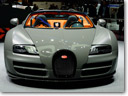
However, the Aventador J does not, in any possible way, overshadow that other roadster at the show. I am talking about the god of hypercars (with a haircuts) – Bugatti Veyron 16.4 Grand Sport Vitesse.
As far as the figures are concerned, today this is the fastest open-top in the world. The Vitesse builds on the success of the previous Grand Sport that had “mere” 1001 ponies at its disposal. Now, by overhauling the four turbos and intercoolers, Bugatti have made the Vitesse more Super Sport-worthy. Let’s sum it up: a 7.9 liter W16 engine that brings 1,200 BHP and 1500 Nm of torque to all four wheels. The top speed is 410 kph or 255 mph (limited to 375 kph/233 mph). A zero to sixty time – 2.6 seconds. Yikes!
Bugatti Veyron Grand Sport Vitesse
That new-found power has triggered an inevitable chain reaction that jolts trough the whole Veyron construction. Bugatti has promptly reinforced all drivetrain components in order to safely transfer the immense forces at any given moment. The bits within the 7-speedDSG gearbox have been specially modified to cope fairly with the new stresses. The same goes for the airflow that used to run through the components of the previous Grand Sport. It has now been further optimized. Ironically, somehow with the more power, the fuel economy has also been improved.
The chassis has had some work done. New, “quick-responding” dampers have been fitted which literally obliterate the possibility of body roll or pitching during braking or accelerating. The ESP has been revised to “lag” just a little bit after shooting out form a corner so that you can have that millisecond of slipperishness. Additionally, the brakes are now being cooled more efficiently in order for them to cope with the increased power.
Many aerodynamic components from the Super Sport have been picked off, redesigned and stuck to the Grand Sport Vitesse. At the front, bigger air intakes around the center grille, slashed with a line horizontally, give the car some identity. The bottom air vent stretches sideways into the wheel housing and gives this exceptional sports car an extremely masterful appearance. Further down, there is a newly made front spoiler. The Headlights, with their black frames are also new. The rear end also comes from the Super Sport but with two diffusers and two tailpipes clustered in the middle. All-new, lighter 20-inch “Vitesse”-type alloy wheels complete the picture
The two highest points of the car are the air scoops on the engine cover. Familiar from the Grand Sport, these are now again redesigned for the Vitesse and also act as components of an anti-roll protection system. Needless to say, that just like its predecessor, the Vitesse is virtually made all from carbon fiber.
Since you can go your way with the customization process, the end products may vary. That is why at the Geneva Motor Show there are two Vitesse configurations – one is in a strikingly blue, exposed carbon fiber finish and the other in “JetGrey” coating with an orange interior and black rims and grille. For the more conventional Veyron fans there’s also a classic Grand Sport version present just to remind you that it still exists.
The sports car manufacturer Gumpert celebrates two world premieres in Geneva named GUMPERT apollo r, a purebred race car with the brute thrust of up to 860 hp (632 kW), and GUMPERT apollo enraged. In the process of development, numerous modifications were required to extract up to 860 hp from the 4.2 litre V8 engine. What the engineers did was to include higher supercharging pressure, ignition and control time adjustments, optimization of the intake air ducts and a special racing exhaust system. The engine and transmission cooling system was also enhanced. In addition, the spur-toothed dog ring transmission is controlled by rocker switches on the steering wheel but without a clutch pedal. A central digital dashboard supplies the driver with essential information. Furthermore, the chassis was extended with a titanium blade stabilizer on the rear axle. Additional optimization measures lead to the decrease of the weight of the car, which now is 1 100 kg. Now, the apollo r is more powerful and lighter than any other apollo. At the exhibition stand in Geneva, the apollo r will be shown in a black-red-gold foil dress. The driver and passenger doors are each graced by a griffin, a cross between an eagle and lion and therefore the lord of the air as well as the earth. The heraldic animal of GUMPERT, the griffon, also decorates the distinctive swing doors of the apollo enraged. The mythical creature visually emphasizes the link between the enraged and the apollo r.
Gumpert apollo r
The limited special edition of the Apollo enraged delivers 780 hp (574 kW) and a reduction of the dry weight to 1 175 kg. Next to the flag design embroidery on the seat and headrest, the digital LCD instrument panel is the most noticeable special feature on the interior. This version embodies the philosophy an understanding of “pure German speed”, according to Gumpert.
Gumpert apollo enraged
Gumpert appolo r specifications:
Engine
Type: V8-cylinder Twin-turboenginewith90°cylinderangle, 5 valves per cylinder, 4 over head camshafts, hydraulic valve clearance compensation, Turbo aircirculation valves(2-way), 2-flow exhaust system r with reduced drag, dry sumplubrication, traction control system (ASR) variable adjustable from 0-25% with switch-off function
Cubic Capacity: 4,163 cm³
Nominal Output: up to 860 hp / 633 kW at 6,000 rev/min
Max.Torque: up to 980 Nm at 4,000 rev/min
Max. Rev: 7,400 rev/min
Gearbox
Race dog ring transmission, TT40e electronic gear system, twin plate clutch configuration, differential self-locking by Torsen
Carbody
Two-seater super sports car with midengine arrangement, tube frame and integrated carbon/kevlarsafety cell, carbon carbody, carbon/aluminium sandwich underbody, Makrolonside windows, kill switches, aero dynamic package for optimized down force: carbon rear wing, carbon louvers for wheel ventilation front; air-box r for reinforced RAM Air effect, air lift system Airjack
Chassis and Wheel
Long double wishbones, competition chassis fully adjustable in bump and rebound rates (low and high-speed), ride-height adjustable between 40 an 120mm (via pushrods), anti roll bar (front) and titanium blade-type anti roll bar (rear) 378 mm internally ventilated brake disks with fixed 6-piston calliperson both axles;18“/18“ aluminium alloy wheels with central locking and Michelin slicks
Iterior
Alcantara, 6 point safety belts (including H.A.N.S. System®), Fire extinguishing system, 2D-BigDash display, data recorder, centerconsole r
Dimension and weight
Wheel base 2,700 mm, wheel gauge front 1,670 mm / rear 1,598 mm, length 4,460 mm, width 1,998 mm, height (without air intake) 1,114 mm; operating weight 1,100 kg (Weight reduction caused by optimized wire harness milled components and underbody construction as well as lithium battery and Makrolonside windows.)
Performance Figures
Top Speed: 308 km/h
0-100 km/h: 2.9 seconds
0-200 km/h: 8.6 seconds
Gumpert appolo enraged specifications:
Engine
Type: V8-cylinder Twin-turboenginewith90°cylinderangle, 5 valves per cylinder, 4 over head camshafts, hydraulic valve clearance compensation, Turbo aircirculation valves(2-way), 2-flow exhaust system r with reduced drag, dry sumplubrication, traction control system (ASR) variable adjustable from 0-25% with switch-off function
Cubic Capacity: 4,163 cm³
Nominal Output: up to 780 hp / 574 kW at 6,000 rev/min
Max.Torque: up to 920 Nm at 4,000 rev/min
Max. Rev: 7,200 rev/min
Gearbox
Fully synchronised7-speed-transmission, automatic TT40e electronic gear system with paddle shift (2 selectable gear modes), twin plate clutch configuration, differential self-locking by Torsen, S1000 reinforced transmission with optimized cooling system
Carbody
two-seater super sports car with mid engine arrangement, tube frame and integrated carbon/Kevlarsafety cell, carbon carbody, carbon/aluminiums and wichunderbody, aerodynamic package for optimized downforce: Vortex Generators, carbon rearwing, carbon louvers for wheel ventilation front; airboxF1 for reinforced RAM Air effect, airliftsystemAirjack, LED day time running lights„enraged“, special design varnishing„enraged
Chassis and Wheel
Long double wishbones, competition chassis fully adjustable in bump and rebound rates (low and high-speed), ride-height adjustable between 40 an 120mm (via pushrods), anti roll bar (front) and titanium blade-type anti roll bar (rear), automatic ride-height control system 396 mm internally ventilated ceramic brake disks with fixed 6-piston calliperson both axles forgedGUMPERT aluminiumalloywheelswithcentrelock, Michelin Pilot Super Sport: 265/35ZR19 -345/30ZR20
Iterior
Alcantara anthracite with “enraged” design, 4 point safety belts, Fire extinguishing system, Climate control , digital LCD dashboard, DVD-Moniceiver (including Navigation system, rear view camera, rear view function when driving, Bluetooth handsfree set, ipodcontrol)
Dimension and weight
Wheel base 2,700 mm, wheel gauge front 1,670 mm / rear 1,598 mm, length 4,460 mm, width 1,998 mm, height (without air intake) 1,114 mm, 120 litretank capacity dry weight 1,175 kg (Weight reduction caused by optimized milled components and underbody construction, lithium battery, control unit box instead of trunk, ceramic brake system.)
2012 RUF Porsche Panamera RXL sedan is very special model witch is an extended wheelbase version of the Porsche Panamera sedan and features the iconic RUF 5-spoke, 22 inch alloy wheels and engine performance upgrades. Moreover, RUF will present the new CTR 3 Clubsport model, which features significant styling enhancements in Carbon-Fibre. With the introduction of the Porsche 991 platform, all RUF models based on the 911 will be built on the new platform and will carry over all Porsche 997 based improvements. And next, as a tribute to RUF’s 35 years of history and success with Turbo engines, RUF introduces theRt 35 Anniversary, which is an original 1977 RUF Turbo 3.3. The new generation RGT 8 is based on the Porsche 991, with its RUF V8. All vehicles will be on display in Geneva.
2012 RUF Porsche Panamera RXL
The first vehicle to be presented in Geneva is RUF CTR 3 Clubsport. The styling of the CTR 3 evokes the mid-engine Le Mans Coupes of the 1950s. It features Carbon-Fibre enhancements to the fenders, door sills, rear deck lid and the roof mounted air-duct; and afunctional rigid rear spoiler.
Technical Data CTR 3
Power at
750ps /552kW @ 7100
Torque at
960 Nm @ 4000 1/min
Displacement
3746 cm³
Transmission
6-speed sequential
Top Speed
370 km/h
Fuel consumption
Urban
20 l/100 km
Non-urban
9,9 l/100 km
Combined
13,5 l/100 km
CO2 emissions
311g/km
Next comes the RUF Rt 35 Anniversary models, which is based on the Porsche 991. Its Turbo power-train is offered only in rear wheel drive. Furthermore, the engine produces 630 hp (463 kW) and is available with the PDK transmission delivering outstanding performance.
Technical Data Rt 35 Anniversary
Power at
630ps/464kW @ 6500
Torque at
825 Nm @ 3000 1/min
Displacement
3800 cm³
Transmission
Double clutch gearbox
Top Speed
330 km/h
Fuel consumption
Urban
16,7 l/100 km
Non-urban
8,2 l/100 km
Combined
11,5 l/100 km
CO2 emissions
268 g/km
The third vehicle to be on display is RUF RGT 8, which was firstly introduced in Geneva in 2010. However, now it is available based on the new Porsche 991 platform. The vehicle includes the naturally aspirated V8 which produces 550 hp (404 kW). The flexibility of the V8 engine delivers extraordinary performance and a sound track that only a high‑revving, flat‑crank V8 can produce. The RGT 8 is available with only a six-speed manual transmission powering the rear wheels.
Technical Data RGT 8
Power at
550ps/405kW @ 8500
Torque at
500 Nm @ 4000 1/min
Displacement
4499 cm³
Transmission
6-speed manual
Top Speed
318 km/h
Fuel consumption
Urban
19,7 l/100 km
Non-urban
9,8 l/100 km
Combined
12,9 l/100 km
CO2 emissions
298 g/km
The RUF RXL was developed based on the Porsche Panamera. Here the RXL front bumper creates an aggressive front profile and the light weight wheels are iconic five-spoke 22 inches in diameter. The extended wheelbase totals an additional 400 millimetres, 250 millimetres at the B‑pillar and 150 millimetres at the rear door, distinguishing it from the standard sedan. The interior is further improved by special leather and includes a foldable multipurpose table.
Volvo Car Corporation has just officially revealed its all-new five-door 2012 Volvo V40 Hatchback in Geneva Motorshow today (6th March). First of all the new model has classic V-shaped bonnet which is further enhanced by bolder expressive lines. In addition, the high-gloss grille is low and wide thus creating a sporty look. The sculptured corners add character and direct the airflow to improve the aerodynamics. Daytime Running Lights are set into the lower corners of the front end, sweeping upward if viewed directly from the front. The V40also features wide shoulder line which stretches back from the headlamp with a sharp line to echo the rising beltline. The highlight continues rearward into a very full powerful section that leads into the tail lamps. The car is finished with a dynamically sculpted rear.
The customer of the new model has the option to further personalize it in terms of exterior accessory styling kit. The kit creates an exclusive, sporty aura and improves aerodynamic efficiency. It includes: deflectors, a twin-coloured rear diffuser, a striping kit and enlarged rectangular, chromed twin tail pipes; diamond-cut 18-inch alloy wheels with contrasting grey detailing; roof spoiler can be added separately. Light Emitting Diodes (LED) give the car an individual style and a high-technological look. In details, LED is used in the following areas: front position lights; turn indicators in the door mirrors; rear position lights; rear number plate illumination; high positioned brake light; daytime Running Lights (DRL). The all-new 2012 Volvo V40 is available with a fixed panorama glass roof that stretches from the front windscreen to the backrest of the rear seats. What does the panorama roof is to improve the feeling of spaciousness inside the car. In addition, an electrically controlled fabric curtain is located under the roof and it opens from the rear. This means that the passengers can enjoy the light of the sun while the driver and front passenger are still shaded.
The interior of the Volvo is created with strong accent on ergonomics, comfort and an engaging driving experience. For instance, the wide instrument panel, together with the fluidity of the door design, creates a spacious, “large-car” feeling. For further comfort, electrical heating is available in both the front seats and the outer rear seats. The interior is offered in three main colour themes: Charcoal, Charcoal/Blond, or Espresso/Blond. Leather seats are also available in a new Azure Blue accent colour. Another highlight in the interior is the frameless interior rear-view mirror, inspired by modern smartphone design. Below the armrest is a storage compartment suitable for CDs and other small items. Two cup holders and a 12V power outlet are integrated in the console in front of the armrest. Furthermore, the glove compartment includes space for two soft-drinks cans or bottles that are kept cool with cold air from the Electronic Climate Control system. Furthermore, the interior lighting is created with the goal to give a “theatre lighting” feel. This was achieved thank to the LED lamps, which were used to light up strategic areas. The driver can enjoy a red-to-blue setting that adapts the light to the interior temperature – or choose between another seven mood themes.
2012 Volvo V40
The V40 can be equipped with an “extra” floor in the load compartment. It makes the floor flat when the rear seat is folded. In addition, the front passenger seat can be folded forward to create even more space.
The new and highly technological Volvo Sensus infotainment system delivers driver-centric approach, which is enhanced by fully graphic instrument cluster that allows the driver to personalize instrument layout and the information provided. The fully graphic instrument cluster is an active TFT (Thin Film Transistor) crystal display that brings the interaction between car and driver into a new dimension.
The V40 has the most advanced audio unit: class D digital 5x130W amplifier, Dolby Digital in combination with Dolby Pro Logic II Surround, the latest MultEQ from Audyssey Laboratories and 10 loudspeakers.
Another innovation is the mobile application which allows the driver to stay in touch with the parked car via a smart phone. The mobile application is designed to offer the owner an intuitive, easy-to-use relationship with the car from a distance. It includes a number of features: Car locator – the location of the car is shown on a map; there is also a digital compass that points the driver in the right direction; Remote door lock – the status of all doors and windows is displayed – and the driver can lock and unlock the car with a push on the touch screen; Vehicle dashboard – this feature gives the driver access to a wide range of information: fuel level, remaining range to empty tank, average fuel consumption, average speed, odometer reading and trip meter reading; Car check – the mobile app performs a “health” check of the car; displaying information about lights, brake fluid level, coolant level, oil level and oil pressure; Driving journal – detailed data of each trip during the last 40 days can be downloaded and stored; it is also possible to extract the data as an Excel file – a perfect feature for company car owners; Vehicle information – basic car data such as model, registration number and VIN number are stored and can be displayed; Theft notification – if the car alarm is triggered, the driver is alerted via the mobile app.
The chassis of the V40 has been designed to offer the agile, connected experience that creates driving pleasure. The engine CO2 emissions begin at just 94 g/km to the turbocharged T5 petrol engine with 254 hp (187 kW) and acceleration from 0 to 62 mph in 6.7 seconds. All engine versions have start-stop and braking energy regeneration, no matter whether they are fitted with a manual or automatic gearbox.
The all-new 2012 Volvo V40 has two different chassis setups: the Dynamic chassis which comes as a standard and the Sport chassis, which is lowered 10 mm compared with the Dynamic chassis. The steering column’s thick tubing and stiff insulator increase torsional rigidity. This also contributes to the enhanced feeling of direct contact with the wheels and the road. Optional on the V40 is the Electrical Power Assist Steering (EPAS) which uses an electrical motor to support the steering rack. The Electrical Power Assist Steering enables integration of safety and driver support functions that involve the steering, such as Lane Keeping Aid and Park Assist Pilot. Furthermore, the Dynamic Stability and Traction Control (DSTC) system includes several sophisticated features that offer a unique blend of driving pleasure and safety. Advanced Stability Control uses a roll angle sensor that makes it possible to identify any skidding tendency at a very early stage. On the other hand the Engine Drag Control prevents the wheels from locking during engine braking on a slippery surface. Additional innovative feature is the Corner Traction Control that uses torque vectoring so the car corners even more smoothly. The car’s inner driven wheel is braked, causing more power to be transmitted to the outer driven wheel. This allows the driver to corner more tightly while reducing any tendency to understeer.
To go even further into details, the engine range comprises of several diverse engine, The firs one is the five-cylinder 2.5-litre turbocharged T5 engine with power output of 254 hp (187 kW) and 400 Nm (295 lb-ft) of torque. The T5 comes with automatic transmission and acceleration from 0-62 mph takes 6.7 seconds. Fuel consumption is 35.8 mpg (EU Combined). The mid-range offer includes two versions of a 1.6-litre GTDi engine: T4 with 180 horsepower (132 kW) and T3 with 150 horsepower (110 kW). The 180 hp engine offers maximum torque of 270 Nm (199 lb-ft) and the 150 horsepower T3 engine offers 240 Nm (177 lb-ft) of torque. Volvo’s engine experts have managed to bring fuel consumption down to 48.7 mpg. This corresponds to CO2 emissions of 134 g/km. Furthermore, the T5 version comes with a six-speed automatic gearbox, while the T4 is available in combination with the automatic six-speed Powershift transmission or a six-speed manual gearbox. The T3 comes with a manual gearbox. What has to be highlighted here is that the five-cylinder 2.0-litre D4 turbodiesel has been optimized for fuel-efficient driving pleasure. This engine delivers 177 hp (130 kW) and has torque of 400 Nm (295 lb-ft) across a wide rpm range. Acceleration from 0-62 mph takes 8.3 seconds with the automatic gearbox (8.6 sec with manual). Fuel consumption and CO2 emissions is 62.8 mpg (119 g/km) with a manual gearbox and 53.3 mpg (139 g/km) with the automatic (EU Combined). In addition there is the 2.0-litre D3 producing 150 hp (110 kW) and 350 Nm (258 lb-ft) of torque. Both turbodiesels are available with a six-speed automatic transmission or six-speed manual gearbox. The star of the low emissions is the D2 version of the Volvo V40, which comes with CO2 emissions as low as 94 g/km – corresponding to fuel consumption of just 78.8 mpg. The 1.6-litre diesel engine has 115 hp and 285 Nm of torque, including 15 Nm overboost. The D2 engine is combined with a six-speed manual gearbox and start/stop function. The 1.6-litre diesel engine can also be mated to the six-speed Powershift gearbox.
Volvo has added several new high-tech features to the safety and support systems such as Pedestrian Airbag Technology, Lane Keeping Aid with haptic auto steering, an ingenious Park Assist Pilot, automatic Road Sign Information, Active High Beam and a Cross Traffic Alert radar system at the rear. The groundbraking here is the Pedestrian Detection technology, which has full auto brake; and the further developed City Safety low-speed collision avoidance system which now operates at speeds up to 31 mph. In addition to all this, the new 2012 Volvo V40 also features world-class crash safety including a safety cage with effective deformation zones and various grades of high-strength steel. Safety belt pre-tensioners are standard in the front and outer rear seats and the front seats are equipped with whiplash protection (WHIPS) to help prevent neck injuries. Both the driver and front seat passenger seat have dual stage airbags. There are also side airbags integrated in the front seat backrests.
At last, the V40 is available with a Personal Car Communicator remote, which enables keyless drive. In addition to this the remote can also transmit and receive signals, thus providing the driver with locking and alarm information.
2012 G-Power BMW M5 F10 has just arrived at the show room with all the enhancements and customizations delivered by the tuning company G-POWER. Although the new BMW is already very fast, the tuner from G-POWER made it even faster. The G-POWER Bi-Tronik III pushes the factory 560 hp (412 kW)/ 680 Nm (502 lb-ft) to 640 hp (471 kW)/ 777 Nm (573 lb-ft). In addition, to make the transformation of the vehicle complete, there were also included 21 inch G-POWER “SILVERSTONE RS” and “SILVERSTONE CLUBSPORT” alloy wheels with MICHELIN Pilot Super Sport tyres in the dimension 265/30 ZR 21 and 305/25 ZR 21, G-POWER coil-over suspension, stainless steel sport rear muffler featuring the legendary G-POWER “DEEPTONE” technology and the G-POWER Ceramic Braking System. All this makes the BMW M5 F10 even sportier and more adorable.
In order to make the car faster, the G-POWER engineers transferred its experience from the area of supercharging to the turbocharged BMW 4.4l V8 engine. The basis for the electronic output increase is the fact that G-POWER used individual solution for the engine. Among others, the parameters for the amount of fuel and the ignition timing are modified depending on the product variance of the engine. In addition, the boost level is moderately increased too. Based on the competence and knowledge coming from the up to 800 hp (588 kW) strong BMW M5 HURRICANE versions, G-POWER has limited the torque figures during the shifting process and thus – reduces the stress for the transmission.
2012 G-Power BMW M5 F10
Next, the G-POWER Bi-Tronik III pushed the BMW M5’s standard output of 560 hp (412 kW)/ 680 Nm (502 lb-ft) to 640 hp (471 kW)/ 777 Nm (573 lb-ft) of torque. Of course, this means that the acceleration time will be enhanced too. It takes only 3.9 seconds for the empowered BMW to cover 0 to 100 km/h with a top speed of 315 km/h. The sound of the BMW M5 F10 was improved too. The full stainless steel G-POWER 4-trim sport rear muffler with its 4 x 100 mm tailpipes gives the BMW M5 a deep, throaty sound that turns heads but is at now time annoying, thanks to the patented G-POWER “DEEPTONE” technology.
To go further, the vehicle is equipped with 21 inch G-POWER SILVERSTONE RS and SILVERSTONE CLUBSPORT forged wheels, wrapped with tyres from the G-POWER’s technology partner MICHELIN in the dimensions 265/30 ZR 21 and 305/25 ZR 21. The double spokes, highlight the elegant design of the new BMW M5. More importantly, the G-POWER SILVERSTONE CLUBSPORT wheel is with weight-optimized design that enables a low rim weight with the same stability. The continuously height-adjustable G-POWER coil-over suspension GM5-RS with nine selectable settings each for bound and rebound also improve the suspension. In the car is also featured the G-POWER Braking System, which includes up to six brake pistons and up to 420 mm brake disc diameter for the front axle and 380 mm for the rear axle. The system enables a substantially higher brake force than the standard braking system. The G-POWER brake package is completed by brake pads with a larger pad area, higher friction rate as well as metal-coated brake lines. The result is maximum brake force and precise braking point.
The cost for the 21 inch G-POWER SILVERSTONE DIAMOND and SILVERSTONE CLUBSPORT complete wheel set including MICHELIN Pilot Sport tyres in the dimension 265/30 ZR 21 and 305/25 ZR 21 is 8.325,00 €, the G-POWER coil-over suspension GM5-RS is 2.179,83,00 € and the G-POWER Ceramic braking system for the front axle is 14.460,50 Euro and 11.778,15 for the rear axle. The output increase with the help of the G-POWER BI-TRONIK III is 3.920,17,00 € including the individual adjustment of to the specific customer car.
Volkswagen Amarok has proven itself as very reliable and well appreciated utility vehicle. However, the manufacturer introduced a new special version of the pick-up truck at the Geneva International Motor Show. The name of the project is Amarok Canyon Concept, which will show how versatile pick-up configurations can be created.
“We are using this extreme concept to illustrate one of the many diverse uses of the Amarok. By tuning its design to an extreme sport, we are bringing the original DNA of the Amarok into focus,” said Dr Wolfgang Schreiber, spokesperson for the Board of Management for the Volkswagen Brand and Head of Development at Volkswagen Commercial Vehicles.
The concept vehicle is very different than the regular Amarok. It was raised by 40 mm with a body lift kit; and when the tyres are included, the concept is a full 85 mm taller than the production model.
The freestyle pick-up also has auxiliary headlights mounted on its roof, and additional visual accents are provided by the smoked rear lights and the colour-contrasting underbody protection. Two electrically deployed tread plates make it easy for all occupants to step into and out of the vehicle, despite the raised ride height.
Volkswagen Amarok Canyon Concept
The wheel housings were widened by 35 mm on each side to make room for the big AT tyres, size 275/65 R 18, mounted on ‘Durban’ type wheels painted in ‘High Gloss Adamantium Dark’.
The two carbon fibre kayaks are securely mounted to the cargo floor: at the rear, the floor is designed with two formed cut-outs with soft padding, while the kayak bows are mounted on a styling bar in ‘High Gloss Adamantium Dark’ with straps for firmly securing the boats. The paddles are firmly latched in place on the inside surface of the easy-to-operate tailgate, ready to grab. All other gear – white-water helmets, flotation devices and rafting shoes – are also stowed securely: the helmets in nets on the front wall of the cargo bed, and the rest of the gear in smaller boxes that can be locked with watertight lids.
The interior features a special colour scheme was used with many details and new accents. The leather seats have two-tone styling: the seating surfaces are in ‘sterling’ colour, while the head restraints and side supports are elegantly offset in ‘adamant’ colour. The decorative seams on the seats take on the orange-red colour of the body. This colour is also reflected in numerous other details such as in the seams of the three-spoke steering wheel and gear shift lever trim, the safety belts and the air outlets. Housed in a cowl in the cockpit are three auxiliary instruments. They show the climbing and tilt angles of the Amarok, which gives the driver key information for extra safety on extreme off-road drives.
Amarok Concept is powered by the new 2.0 TDI bi-turbo with 180 PS and 400Nm at 1500RPM. The switchable 4MOTION all-wheel drive system – together with a reduction gearbox and differential lock at the rear axle – ensures effective power transfer to the wheels even in the toughest off-road conditions.
2012 Nissan Hi-Cross Concept is the new dramatic concept car from Nissan and its world premiere is at 2012 Geneva Motor Show. Hi-Cross is a concept crossover which looks like a possible expansion of the current Juke-Qashqai-Murano portfolio. The vehicle is compact yet roomy, elegant yet purposeful. Hi-Cross Concept has a highly space efficient interior with three rows of seats for seven passengers. Its hybrid drive train includes an electric motor – powered by a Nissan-developed compact lithium-ion battery – in combination with a 2.0-litre direct injection petrol engine. Both provide the performance potential of a 2.5-litre with the economy and emissions expected from a much smaller unit. The HEV drivetrain is based on new technology developed by Nissan for front-wheel drive models. However, it was modified to provide four-wheel drive. Nissan’s new generation XTRONIC system is also included and it delivers continuously variable transmission which by itself achieves a 10 per cent improvement in fuel economy over comparable previous generation CVTs. The battery technology has high output, fast-charging compact lithium-ion battery, linked to high-level motor control technology. It provides acceleration assist when needed and permits downsizing of the petrol engine for optimum economy and emissions. In city driving, for instance, the presence of the electric motor and lithium-ion battery allow the engine to be turned off frequently. It can also be disengaged completely with the clutch, and energy can be recovered effectively when braking.
2012 Nissan Hi-Cross Concept
Furthermore, 2012 Nissan Hi-Cross Concept sits on a 2780mm wheelbase. It is 4660mm long, 1850mm wide and 1670mm tall, with 21-inch alloy wheels. The front has a characteristic V-shaped grille set off by distinctive lighting signatures provided by stylish new headlamps. At the rear it has distinctive lighting signatures provided by stylish rear combination lamps echoing with headlamp lighting signature. Inside, the seven-seat cockpit is dominated by a new T-wing shaped dashboard. This is a pure concept car, which explores the potential ideas for the future. It is a high-riding crossover, therefore no wonder where the name came from.
2012 Nissan Hi-Cross Concept Interior
Rolls-Royce has announced Phantom Saloon, Phantom Drophead Coupe, Phantom Coupe and Extended Wheelbase models at the 2012 Geneva Motor Show.
“From launch in 2003, the Rolls-Royce Phantom established itself as the benchmark in automotive luxury, a reputation it has held ever since. “These cars are timeless in their appeal, but technology moves rapidly and we cannot afford to stand still.” said Torsten Müller-Ötvös, CEO of Rolls-Royce Motor Cars.
“Today I am delighted to present Phantom Series II, a family of models that feature significant improvements in design, drive-train and technology. As a consequence of these changes, we will continue to present with pride the best motor cars in the world, which re-confirm Rolls-Royce’s position at the very pinnacle of the ultra-luxury goods marketplace.”, he added.
Rolls-Royce Phantom Series II
The new models come with striking front-end, with re-styled bumpers and rectangular light apertures. Rolls-Royce is the first to include full LED headlamps as standard on a production car. As well as delivering a characteristic whiter light, augmenting safety and preventing driver tiredness, these allow for the introduction of new technologies that better control lighting.
Curve light functionality, for example, uses electronically-controlled reflectors to focus headlamp beams in the direction of travel, providing greater illumination of the road ahead when cornering. Adaptive headlamps change the cone of light projected onto a road – effortlessly of course – in response to different driving speeds.
Rolls-Royce Phantom Extetnded Wheelbase Series II
The new SAT NAV system has been fully updated with functions that include 3D maps with landscape topography, guided tours and enhanced points of interest, as well as composite route planning.
Information, maps and video content are presented on Phantom’s larger 8.8” control centre display, a feature underlined by eight programmable bookmarks presenting access to key functions at a driver’s fingertips. Front, rear and top-view camera systems further augment ease of manoeuvring. When reverse parking, for example, rear path prediction automatically deploys on the screen.
The new Phantom Series II come with a V12 direct injection engine paired to a new 8-speed automatic gearbox and rear differential. Fuel consumption is improved by 10% on the combined cycle and CO2 emissions fall to 347 g/km.
What happens when you cross mad lunacy with refinement and sensibility? Obviously and epic lovechild that has the best of both worlds. In our case that’s the VW Polo BlueGT (no, it’s not a sad GTI). It’s a super fun 140 PSPolo that has the looks and feel of a GTI and the metabolism of a BlueMotion. Today, on a stand at the Geneva Motor Show and within months, on to the European roads.
A system described as “ACT cylinder deactivation” is at the core of the BlueGT ideology. The second and third cylinders are automatically shut down within the 1,250 and 4,000 rpm. range and when torque output is between 25 and 100 Nm. If the driver decides to give it the beans, reactivation of the cylinders happens seamlessly in a matter of milliseconds but the dashboard will tell you nevertheless. That gives the 1.4 turbocharged, 140 PS engine the upper edge in fuel economy. Its combined cycle of fuel consumption amounts to 4.7 litres per 100 km (around 60 mpg). CO2 emissions equal to 108 g/km. Opt for the DSG transmission and you’ll get even more frugality. At the same time the top speed is at 210 kmh (130 mph) and zero to 62 mph takes 7.9 seconds.
For the styling of the BlueGT, Volkswagen have gone the “Frankinstain’s monster” way – GTI strains account for the front and rear bumpers, the rear spoiler, the instruments inside, the sports seasts and the leather steering wheel.The BlueGT is also 15 mm closer to the ground and sits on 17-inch multi-spoked alloys. The side sills and front windscreen rain channels, on the other hand, are from a Polo BlueMotion. This particular model is also the typical BlueMotion shade and the badges are all blue. Unlike the Frankinstain story however, the BlueGT might turn out to be a success rather than a tragedy. In fact, the BlueGT carries the first of Volkswagen‘s EA211 series of engines – a line that will underpin most of the models in the company’s production future.
Hopefully, shipments are going to start in July within mainland Europe. Whether there’s going to be a production for the UK, is still not announced.
Here’s a preview of Ford’s new Fiesta ST. It’s at Geneva at the moment with plans to go on sale in the UK early next year. It has been four years since the last Fiesta ST and recently the fan base has started feeling uneasy. Now everyone can calm down as this little fellow here is meet their needs.
A four year gap between the two models can only mean one thing: massive improvements in terms of performance. The numbers speak for themselves – 180PS 1.6-litre EcoBoost, 240Nm of torque, 0-62mph in under seven seconds, and top speed of more than 136mph. All the while, CO2 emissions are down by 20 percent in comparison to the old ST.
Hopefully the new Fiesta will have the handling to match the performance. The guys at Team RS have put a lot of their WRC know how in use while working on the chassis which leaves the ST15mm lower than a standard Fiesta. The car’s Torque Vectoring Control system and three Electronic Stability Control modes have all been rigorously developed and tested at the Nurburgring.
Inside, Recaro sports seats will provide support for the enthusiastic drive for the first time in a Ford Fiesta. There’s something for the novice drivers as well – the car will be fitted with Ford’s MyKey solution which can limit the car’s power and speed to a certain degree thus effectively preventing your kids to end up in a ditch.
The Fiesta ST is sure to come to Europe, but Ford are considering other markets as well:
“We’re delighted to be bringing a new generation Fiesta ST to our European enthusiasts in 2013 and we’ll have more to say about our plans for other markets in the near future,” said Jost Capito, Ford’s director of Global Performance Vehicles.
 Wiesmann and Michelin have just presented in Geneva a project which is a result of their work of collaboration: the unique 2012 Wiesmann Roadster MF3 “Scuba Mobil”, which carries the project name “Pure Driving Adventure”. This individualization of the unique Wiesmann sportscar adds more to the driving pleasure. In other words, no other sports car can offer the driver such skilled precision work, breathtaking driving experience, and classic design. The project “Pure driving Adventure” is one special Wiesmann Roadster MF3 from the “final edition” equipped with an exclusive dream combination of extras that cannot be bought. These additional extras will be provided by the sports car manufacturer from Dülmen (Germany) in conjunction with tyre manufacturer Michelin. And if you happen to be in Geneva between 8th and 18th of March, you can see the “Pure Driving Adventure” project yourself. The buyer of this sports car will receive a year’s special admission to a total of more than 50 top-class events and exquisite experiences with both of the partners. What is necessary however is that the driver must travel to these events in their sports car. And the Roadster MF3 will be their ticket alone to the most thrilling motorsport events. Only one example of this package of exclusive experiences will be available at the Geneva Motor Show, and all of the extras will be included with the purchase of this automobile. More importantly, this project will not cost any more than any other car in the series.


 The





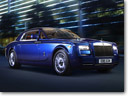 Rolls-Royce has announced Phantom Saloon, Phantom Drophead Coupe, Phantom Coupe and Extended Wheelbase models at the 2012 Geneva Motor Show.


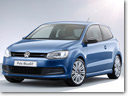 What happens when you cross mad lunacy with refinement and sensibility? Obviously and epic lovechild that has the best of both worlds. In our case that’s the VW Polo BlueGT (no, it’s not a sad GTI). It’s a super fun 140 PS Polo that has the looks and feel of a GTI and the metabolism of a BlueMotion. Today, on a stand at the Geneva Motor Show and within months, on to the European roads.


 Here’s a preview of Ford’s new Fiesta ST. It’s at Geneva at the moment with plans to go on sale in the UK early next year. It has been four years since the last Fiesta ST and recently the fan base has started feeling uneasy. Now everyone can calm down as this little fellow here is meet their needs.


