Blog

  • 2023 Chevrolet Tahoe RST Performance Edition with more horsepower, speed

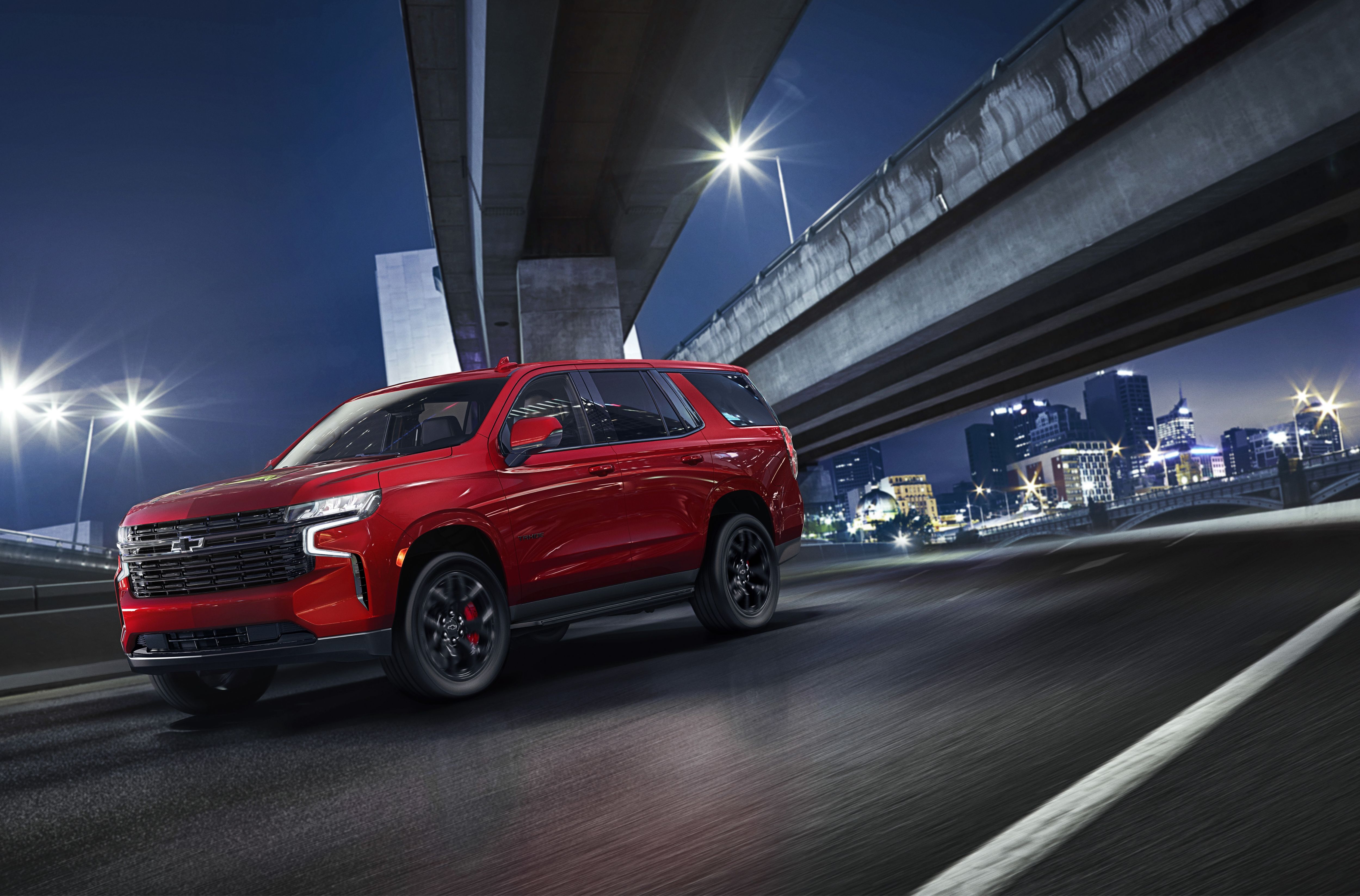
    Chevrolet Tahoe RST Performance Edition (2023)

    Chevrolet’s most popular full-size SUV has been specially tuned for performance with the new 2023 Tahoe RST Performance Edition. With more horsepower and speed than ever before for retail customers, this special edition four-wheel-drive Tahoe is ready to impress performance enthusiasts who still want to sport around town in a full-size SUV.

    “The 2023 Tahoe RST Performance Edition is designed for those who want the best of both worlds — the everyday comfort and capability of a full-size SUV along with the driving excitement of a true performance vehicle,” said Scott Bell, Chevrolet vice president. “It leverages the proven capability of Chevy’s pursuit-rated police vehicle packages and motorsports success to offer a confident, engaging driving experience for our customers.”

    In fact, the new Tahoe RST Performance Edition leverages a number of chassis, suspension and other elements from the pursuit-rated Tahoe PPV package for police, with many of the vehicle’s dynamics calibrated by the same engineering team.

    Chevrolet delivers more power than any other Tahoe by introducing Chevrolet Performance induction and exhaust systems to this package that increase output of the standard 6.2L V-8 to 433 horsepower and 467 lb-ft of torque. That’s an increase of 13 hp and 7 lb-ft over the current RST’s available 6.2L engine. On the special edition, the 6.2L V-8 engine continues to be exclusively paired with the 10-speed automatic transmission.

    https://www.youtube.com/watch?v=z4l3-SDqsVk

    Standard components the RST Performance Edition borrowed from the pursuit-rated Tahoe include:

    • Police-spec springs, retuned dampers and police-spec chassis calibrations
    • Police-spec lower ride height of 0.4 inch (10 mm) in front and 0.8 inch (20 mm) in the rear
    • Brembo® front and rear brakes with unique Torch Red calipers. The front brake rotors are nearly 25% larger in diameter than the standard RST system
    • Performance-calibrated brake pedal feel
    • Police-spec Firestone Firehawk Pursuit 275/55R20 tires with specific 20-inch aluminum wheels in black

    “We have carefully tuned this vehicle to handle speed with confidence and control that is immediately apparent behind the wheel,” said Dominique Lester, chief engineer. “The pursuit-rated driving dynamics inspire excitement and confidence on the road, and we’re proud to have achieved this level of ride and handling in a full-size SUV largely through performance calibration and tuning.”

    The RST Performance Edition also has the numbers1 to back up its carefully calibrated systems:

    • 0-60 mph in 5.78 seconds (compared to 5.95 seconds on base RST)
    • Quarter mile in 14.2 seconds at 97 mph on the test track (compared to 14.4 seconds at 97 mph on base RST)
    • 60-0 mph braking in 133 feet (compared to 139.4 feet on base RST)
    • Top speed of 124 mph on the test track (compared to 112 mph on base RST)

    That performance does not come at the expense of true SUV capability, as the Performance Edition offers the same 7,600-pound trailering capacity2 as the base RST when equipped with the 6.2L engine.

    In addition to the unique powertrain, chassis and suspension upgrades, the Tahoe RST Performance Edition comes standard with the Luxury Package, which includes a host of active safety features3 and driver convenience features.

    The special edition Tahoe will sport a black “RST” badge on the rear tailgate. On the interior, standard sport pedals elevate the performance look and feel.

    The Tahoe RST Performance Edition will make its public debut at the North American International Auto Show in Detroit. The package is priced at a starting MSRP4 of $8,525 and will be exclusively available on the 2023 Tahoe RST with the 6.2L V-8 engine. Production begins in Q4 2022 with U.S. and globally sourced parts at GM’s Arlington Assembly in Texas.

  • Ford Mustang Dark Horse

    With sinister looks and a specially modified 5.0-liter V8 – the most powerful 5.0-liter V8 ever, projecting 500 horsepower – Mustang Dark Horse expands the lineup and sets a new benchmark for American street and track performance that could only come in a Mustang.

    A special team of Ford engineers, designers and experts worked for more than three years to create Mustang Dark Horse, a street and track-capable performance Mustang with striking visual cues and all the capability sports car lovers expect, right down to the available carbon fiber wheels from Carbon Revolution (late availability). Mustang Dark Horse is the first new performance name for the brand since Mustang Bullitt was introduced in 2001.

    “For decades, Mustang has competed against the most premium brands on the greatest world stages and won,” said Jim Farley, CEO of Ford Motor Company. “We surprised everyone, and we’re going to surprise them again with a track-capable Mustang that puts a new level of performance, styling and American engineering in the hands of everyday customers who still want the thrill and excitement of a V8 sports car.”

    Unique 5.0-liter V8 with Even More Athletic Performance

    The foundation for Mustang Dark Horse starts with the all-new 2024 Mustang, which has been transformed with a digitally immersive cockpit, new engines and styling to make it the most exhilarating and fun-to-drive Mustang ever.

    “We’ve taken the all-new Mustang, the best of our new 5.0-liter V8 performance, and added power, improved the aero, tires, steering and provided an interactive cockpit to create a Mustang that goes beyond any 5.0-liter Mustang before it,” said Ed Krenz, Ford Mustang chief nameplate engineer.

    The heart of Mustang Dark Horse is its unique 5.0-liter Coyote V8 engine, specially modified with piston connecting rods first introduced in the 760-horsepower Ford Performance Mustang Shelby GT500. Mustang Dark Horse will deliver the highest level of performance in the all-new Mustang family.

    Visually differentiated from any 5.0-liter V8 before it, Mustang Dark Horse includes a dual throttle-body intake design to improve engine breathing, accentuated by the open nostrils in the front grille.

    Mustang Dark Horse comes standard with a unique six-speed TREMEC manual transmission that connects to the driver through a standard 3D-printed titanium shift ball. The manual also includes a special Mustang Dark Horse transmission oil cooler. Drivers also have the option to choose Ford’s advanced 10-speed automatic transmission with sport paddle shifters for fast and precise shifting – from the highway to the race circuit.

    Additional powertrain enhancements were made for performance at the track. Mustang Dark Horse includes brake cooling NACA ducts, an auxiliary engine oil cooler, a rear axle cooler and a unique and lighter-weight radiator with improved cooling capability and more powerful cooling fans to improve endurance and recovery.

    The Mustang Dark Horse provides unique chassis tuning, larger rear sway bars and heavy-duty front shocks. Stopping is courtesy of 19-inch Brembo front 6 piston brakes with 13.9-inch rotors. Steering response and grip is further enhanced with a new lightweight Ford Performance-designed strut tower brace and K-brace for even better handling and feedback from Mustang Dark Horse. Mustang Dark Horse puts the torque down without losing traction through a Torsen® rear differential and standard Pirelli P ZERO™ (PZ4) tires with staggered fitting wheels (19-inch-by-9.5-inch front and 19-inch-by-10-inch rear wheels).

    Mustang Dark Horse offers standard MagneRide® shocks capable of monitoring wheel and tire movement 1,000 times per second, optimizing performance based on driving surface or driving mode.

    For ultimate street-legal and track performance, the available Handling Package improves aerodynamics even further with the most downforce of any all-new Mustang thanks to a unique rear wing that includes an integrated Gurney Flap, similar to that of the Ford GT. The Handling Package also adds stiffer springs, larger front and rear sway bars and wider Pirelli Trofeo tires and 19-inch-by-10.5-inch front and 19-inch-by-11-inch rear wheels.

    Finally, for no compromise track performance, customers can equip Mustang Dark Horse with lightweight carbon fiber wheels from Carbon Revolution (late availability). It’s the first time carbon fiber wheels have been available for a Mustang beyond Shelby® GT350® and GT500.®

    Driver-Focused Immersive Digital Cockpit

    The Mustang Dark Horse infuses even more performance style and functionality into the all-new seventh-generation car’s technologically advanced, driver-centric cockpit.

    A thicker, flat-bottomed steering wheel wrapped in suede and finished with Bright Indigo Blue accent stitching incorporates anodized silver paddle shifters on models ordered with the 10-speed automatic transmission and a dedicated drive mode button is at thumb’s reach, allowing drivers to quickly choose the desired driving setup. This sits in front of a 12.4-inch digital instrument cluster with customizable screens including a variety of drive modes.

    This digital instrument cluster flows seamlessly into a 13.2-inch SYNC® 4 center stack behind the same piece of integrated glass, angled towards the driver. Together, these screens create a fully immersive digital experience that emulates a fighter jet cockpit – but in a real-world sports car.

    Contrasting blue stitching across the door panels and seats, gear shift gaiter and center console lift the ambiance of the cabin, enhanced further by unique blue seatbelts. The Mustang Dark Horse Appearance Pack adds Deep Indigo Blue seats with a unique seat perforation, emitting further hints of blue below the surface.

    Interior trim, bezels and vents are finished in Black Alley – a dark metallic gloss replacing the familiar bright silver shades of other Mustang trim levels.

    Mustang Dark Horse also comes with the latest B&O® Sound System, providing crisp audio through 12 speakers and a subwoofer.

    Sophisticated and Sinister Functional Styling

    Mustang Dark Horse carries the most striking visual cues of any new road-going Mustang.

    “It’s more than a new name. Dark Horse brings a new design language to Mustang that is refined yet perfectly suited to its dual purpose of street and track performance,” said Joel Piaskowski, global director, Ford Design. “The visual changes, both inside and out, message that Dark Horse has a directed performance focus. The mechanical changes reinforce the purpose of Dark Horse, providing the driver with increased confidence and competence.”

    At the front, a bold, shadow graphic surrounds the darkened LED headlamps, which compliments a unique, gloss black grille with trapezoidal nostrils and Mustang Dark Horse-unique lower front bumper with high gloss ‘fangs.’ Lower side skirts and, to the rear, a fixed rear wing, new race-inspired diffuser and darkened quad exhaust tips demonstrate the car’s track-focused design cues.

    New Mustang Dark Horse badges were designed for this performance version of Mustang to visually separate it from other models. The badges are placed on the fenders, trunk and door sills, while a dark, anodized version of the famous pony stays on the front. Inside, unique Mustang Dark Horse badging is featured on the instrument panel and digital display screens, and each car features an individual chassis number.

    “This is the first time for Mustang that we’ve ever had a forward-facing horse,” Piaskowski said. “It’s aggressive, a bit sinister and it’s coming from the shadows head-on to win.”

    Unique to Mustang Dark Horse is Blue Ember metallic paint, a cool, dark shade that emits a warm glow when it catches the light, setting the tone for the car’s overall look. A choice of applied or painted feature graphics along the roof and down the hood are also available in a variety of colors and styles. The optional Appearance Package includes dark Notorious Blue Brembo brake calipers with a brighter Grabber Blue logo.

    Dark Horse and the Future of Global Ford Motorsports

    Ford Mustang was born to race. The introduction of Mustang Dark Horse is part of a broader launch of six new racing Mustangs that will compete globally in a variety of series, including GT3, GT4, NASCAR and NHRA Factory X racing.

    Two dedicated, track-only Dark Horse Mustangs powered by 5.0-liter V8 engines will only be available for racers and non-street use. Mustang Dark Horse S is designed for the weekend track day enthusiast while Mustang Dark Horse R has been developed for racing.

    “We’re taking this all-new Mustang to competition racing and the very definition of a Dark Horse is the perfect fit to introduce this vehicle to the Mustang brand,” said Mark Rushbrook, global director, Ford Performance Motorsports. “With our race program development underway, we’re confident we have the right car for success.”

    Mustang Dark Horse S is built uniquely for motorsports as a stripped-down version of the street-legal Mustang Dark Horse production vehicle. All non-essential parts and trim pieces have been removed for Mustang Dark Horse S. Inside is a full FIA-certified safety cage, safety nets, a race seat with safety belts and a race steering wheel with quick disconnect. Other safety items include electrical disconnects and a fire suppression system.

    Driver controls are contained within a central panel, which houses switches and knobs for the headlamps, side indicators, windshield wipers, mirror adjusters and rain light. Also included for Dark Horse S is a pit speed limiter and a data and acquisition display system. A single passenger seat is optional, allowing drivers to share their experience with others and to receive feedback from ride-along instructors.

    The exterior of Mustang Dark Horse S features hood pins, front and rear tow hooks, an adjustable rear wing for added downforce and a full exhaust system to help round out the foundation for a unique and fun-to-drive track car. Mustang Dark Horse S will be painted from the factory and ready for individual vehicle liveries.

    While Mustang Dark Horse S has the same wheels as the street-legal Mustang Dark Horse, the upgraded brake system provides even further robustness to meet track demands. Multimatic DSSV dampers support driver tunability in addition to the adjustable ride height and camber settings.

    Mustang Dark Horse R raises the track-focused intensity, featuring all Mustang Dark Horse S content, as well as special serialization that approves it for racing. It will come standard with strategic seam welding, a fuel cell for increased range, and Ford Performance Parts wheels.

    “Both Dark Horse S and R have been further enhanced for performance and stripped of almost every unneeded comfort, keeping only what is needed to provide better performance,” said Krenz.

    Beyond Mustang Dark Horse S and Dark Horse R, the brand will continue to compete globally in a variety of race series, and enthusiasts will see those roll out over the next year.

    Ford is returning to factory-backed GT3 racing with an all-new Mustang GT3 IMSA race car that will also be available for customers, starting with 24 Hours of Daytona in 2024. Created by Ford Performance and Multimatic, the Ford Mustang GT3, powered by a 5.4-liter Coyote-based V8 engine, will deliver the full endurance racing potential of a Ford Mustang for customers globally.

    A new Mustang GT4 available for customers will also debut in the 2023 season and will be available for global GT4 classes in IMSA, SRO and FIA GT.

    A new version of the Mustang will debut next season in the Australian Supercars series, and in coming years newly designed models will debut in the NASCAR Cup series and NHRA Factory X racing.

  • Ford Mustang

    Ford once again sounds a wake-up call for sports car lovers around the world with the introduction of the all-new Ford Mustang. The seventh generation is the most exhilarating and visceral yet, from its fighter jet-inspired digital cockpit to new advanced turbocharged and naturally aspirated engines to its edgier yet timeless exterior design.

    “Investing in another generation of Mustang is a big statement at a time when many of our competitors are exiting the business of internal combustion vehicles,” said Jim Farley, CEO of Ford Motor Company. “Ford, however, is turbocharging its ICE growth plan, adding connected technology, opinionated derivatives, and hybrid options to our most profitable and popular cars – all in the Ford Blue family – on top of investing $50 billion in electric vehicles through 2026.”

    The new Mustang adds another chapter to an icon, delivering the looks, sound and appeal of the world’s best-selling sports coupe for seven years running*. Whether convertible or coupe, V8 or turbocharged 4-cylinder, manual or automatic, Mustang has options at multiple price points and performance levels.

    A completely rethought interior

    Behind the chiseled exterior silhouette of the seventh-generation Mustang lies the most technologically advanced, driver-centric cockpit of any Mustang to date. The fighter jet-inspired cockpit offers the driver two flowing and curved displays that can be quickly customized to show information the driver wants or needs to see.

    The car’s 12.4-inch digital instrument cluster can be customized to display different animated designs and new drive-mode dependent visuals. Based on the same Unreal Engine 3D creation tool used in modern video games, when choosing personalized drive mode settings, the car’s current setup is displayed on the center stack as real-time graphical renderings. Settings can be adjusted by simply swiping the graphic to rotate the car virtually in a true gamified style

    “We’re taking advantage of every pixel,” said Craig Sandvig, Ford Mustang interaction design manager. “We can be creative in showing necessary driving information and give the driver control of selecting colors, classic Mustang gauges or even a ‘calm’ screen where only minimal details are displayed.”

    Mustang’s default instrument gauge setting has shifted from traditional, cool blue and light grey tones to an ultra-modern, copper appearance theme also shared with Mustang Mach-E. From there, almost everything in the displays – and the ambient interior lighting – can be configured to selected tones, while instrument clusters adapt to drive mode selection.

    When choosing personalized drive mode settings, the car’s current setup is displayed on the center stack as real-time graphical renderings. Settings can be adjusted by simply swiping the graphic to rotate the car virtually in true gamified style.

    This digital instrument cluster can be optionally configured to flow seamlessly into a 13.2-inch SYNC® 4 center stack behind a single piece of integrated glass that’s angled toward the driver.

    “We knew what customers wanted and designed the most digital Mustang ever while retaining the all-important driver-focused cockpit,” said Ricardo Garcia, Ford interior design manager. “Removing some of these physical buttons, such as radio and climate control, and integrating them into a digital display was popular in research with Millennials, Gen-Z and traditional Mustang drivers alike.”

    Beyond the screen, an all-new race-inspired flat-bottomed steering wheel provides more space when getting seated.

    Outside the vehicle, animated welcome lighting greets drivers as they approach and, upon entry, Mustang splash screens come to life. And for those who enjoy the sound of a revving engine, Mustang introduces Remote Rev, providing the ability to rev the car’s engine remotely using the key fob.

    Mustang has a standard cloth interior featuring all-cloth seats with optional Micro Suede vinyl inserts and black seat belts, while Premium models benefit from upgraded wrapped and accent stitched across the instrument panel and door trim. EcoBoost models feature Ford’s ‘ActiveX’ synthetic leather upholstery with multiple color options, while GT models gain leather seat inserts.

    Higher series models offer an upgraded, full-leather steering wheel, as well as a choice of color accent stitching and a unique upholstery perforation across the seat inserts, complemented by color-coordinated, asymmetric accent striping on the seat belts.

    The center console can also incorporate an available wireless mobile phone charging pad while new overhead USB ports are installed above the cockpit, conveniently placed for track cameras and other devices, helping prevent wires from draping across the cabin.

    The available B&O Sound System is optimized for the car’s interior, contributing to the visceral experience of Mustang ownership. Customers can share the ultimate driving playlist through Apple CarPlay and Android Auto, both of which are fully compatible with SYNC 4.

    Amazon Alexa Built-In with Ford Streaming allows music and podcasts to be played with simple voice commands. Like the all-electric Mustang Mach-E SUV, the all-new Mustang features Ford Power-Up software update capability.

    Edgier design with timeless Mustang cues, plus more customization

    The seventh generation adds modern chiseled looks to its heritage-inspired design, which sets out to appeal to the broadest Mustang customer mindset yet.

    Its low, horizontal brow across the front emphasizes overall frontal width, while the upper grille design shape is influenced by the original 1960s design. The Tri-Bar LED headlamps continue the Mustang’s classic lighting signature. Its sleek roofline, broad sprinting stance and shortened rear overhang are also true to the authentic proportions of the first generation, while the widened rear haunches point to the power over the wheels in true Mustang style.

    The roofline is optimized for driver entry and exit without removing their helmet on the track, and an extended rear deck houses a new crisp signature tri-bar lighting and redesigned diffuser for improved aerodynamic balance in the rear.

    Each model in the Mustang lineup carries its own unique front end. GT is differentiated from EcoBoost models by larger, more aggressive grille openings, engineered to allow increased airflow, reflecting the increase in power and performance. The car’s aerodynamics are optimized further with the addition of new hood vents and redesigned front splitter.

    “Both the EcoBoost and Mustang GT have unique styling cues that deliver on their promise of Mustang Performance,” said Christopher Walter, Ford Mustang design manager. “The new Mustang is more chiseled and edgier, leaning into Mustang’s classic brawniness and timelessness.”

    Mustang convertible continues its drop-top legacy offering maximum open-air freedom. A simple, one-touch activation with a single-handle center latch opens and closes the fully lined and insulated fabric roof. The compact roof design and independent rear suspension also contribute toward segment-leading trunk space that can accommodate up to two golf bags.

    The all-new Mustang launches with 11 exterior color options including two new shades, Vapor Blue and Yellow Splash, complemented by new stripe colors and designs. Customers also can choose from three Brembo brake caliper color options: Black, Red and Grabber Blue, plus an all-new lineup of alloy wheels, ranging from 17-inch standard size on base models to 19-inch for GT with optional 20-inch alloy wheels.

    New for the 2024 model year is the Mustang Design Series, providing further customization options straight from the factory. The Bronze Design Series Appearance Package adds Sinister Bronze alloy wheels with bronze badges, and is available on both EcoBoost and GT models, with or without the optional Performance Pack.

    Most Advanced and Athletic Engines Ever

    The way Mustang looks, drives and sounds is key to the experience that makes customers want to get in the driver’s seat and hit the road. The all-new Mustang delivers an even more exciting drive experience with new and advanced engine technologies.

    It starts with Mustang GT, now powered by an advanced, 5.0-liter Coyote V8 engine. The fourth-generation 5.0-liter is set to deliver the most naturally aspirated horsepower of any Mustang GT thanks to an innovative dual air intake box and dual-throttle body design, that helps minimize induction loss by enabling higher air flow rates.

    “This is the most athletic and confidence-inspiring Mustang EcoBoost and GT to drive yet,” said Ed Krenz, Ford Mustang chief nameplate engineer. “Whether driving an automatic or manual transmission, thanks to drive modes combined with fine-tuned digital engine, suspension and steering controls, we’re now able to give drivers peak performance everywhere, from their favorite roads to their local track.”

    Ford has saved the manual transmission for a new generation and the 5.0-liter V8 continues to offer a standard six-speed manual transmission for customers who want an uncompromised connection to eight-cylinder power. Ford’s advanced 10-speed automatic transmission is available, and it almost instantaneously reconfigures its shift patterns to match the selected drive mode.

    Customers who desire Mustang’s fun-to-drive feeling with fuel efficiency benefits can opt for the EcoBoost model, powered by an all-new, four-cylinder turbocharged 2.3-liter powertrain.

    The feeling of freedom and confidence Mustang instills in its drivers is amplified when they take control of how the car behaves.

    On a twisty back road or a weekend track day, the driver can quickly adjust steering effort, engine response, and transmission and electronic stability control settings through six available Drive Modes to create the perfect Mustang at any time. These are Normal, Sport, Slippery, Drag, Track plus a customizable setting with up to six individual profiles, tailored to the driver’s view ahead of them. As each mode is selected, high-fidelity graphics in the digital instrument panel bring the mode to life.

    Mustang GT and EcoBoost models are both available with an optional Performance Pack, which adds a host of track-focused features, including a front Tower Brace, Torsen® Limited Slip differential and optional MagneRide active suspension, wider rear wheels and tires, and larger, 390-millimeter front and 355-millimeter rear Brembo brakes. The GT Performance Pack adds brake ducts for even more enhanced cooling and a standard auxiliary engine oil cooler. Performance Pack also offers optional Recaro® seats and active exhaust.

    Mustang GT with manual transmission includes standard rev-matching that helps hold engine RPM when the clutch is engaged. This retains peak torque between manual gear changes, delivering even more precision, thrill and better refinement.

    Quicker steering ratios and minimal compliance from steering wheel to tire significantly enhances the car’s cornering dynamics, with increased straight-line power.

    A segment-first electronic drift brake takes new technology to the racetrack, unlocking the rear-wheel-drive drifting capability of Mustang with the visual appeal and functionality of a traditional, mechanical hand brake. The Performance Electronic Parking Brake comes standard with the Performance Pack on all Mustang models, engineered for novice drivers to learn and improve their drift skills while also providing expert drivers with a competition-ready system.

    More Available Advanced Driver Assistance Technologies

    The new Mustang comes equipped with Ford Co-Pilot360™ features, including Speed Sign Recognition, Intelligent Adaptive Cruise Control with Stop-and-Go, Lane Centering Assist, Evasive Steer Assist and Reverse Brake Assist. Another key feature is Active Pothole Mitigation, included with the Performance Package, which continually monitors suspension, body, steering and braking input and adjusts suspension response accordingly.

    Owners can stay connected with their car via the FordPass™ app in other ways, utilizing free remote features such as remote vehicle start and stop, door locking and unlocking, scheduling a start time, locating the vehicle, and vehicle health and status checks. The FordPass app provides important vehicle information available to users, including fuel and oil levels, service history and warranty information.

    The all-new Mustang goes on sale in the U.S. starting in the summer of 2023 and is assembled at Flat Rock Assembly Plant in Flat Rock, Mich.

  • Ferrari Purosangue

    After years of anticipation by the international automotive fraternity, Ferrari today unveiled the Purosangue, the first ever four-door, four-seater car in the Prancing Horse’s 75-year history, in the magnificently atmospheric surroundings of the Teatro del Silenzio in Lajatico (Pisa).

    Since the marque’s earliest years, 2+2 cars (i.e. with two front and two smaller back seats) have played a significant role in its strategy. Many Ferraris have made combining benchmark performance with first class comfort one of the pillars of their success. Now, in the culmination of 75 years of leading-edge research, Ferrari has created a car that is unique on the world stage: not only do performance, driving pleasure and comfort coexist in perfect harmony, but it is also a peerless encapsulation of the Prancing Horse’s iconic DNA. This is the reason why the name Purosangue, Italian for ‘thoroughbred’, was chosen.

    To enable the company to achieve the ambitious goals set for this project and create a car worthy of a place in its range, a completely different layout and innovative proportions compared to modern GT archetypes (so-called crossovers and SUVs) were adopted. The average modern GT’s engine is mounted forwards in the car, almost straddling the front axle with the gearbox coupled directly to it; this results in less than optimal weight distribution that delivers driving dynamics and driving pleasure well short of the standards of excellence to which Prancing Horse clients and enthusiasts have become accustomed.

    The Purosangue, on the other hand, has a mid-front-mounted engine with the gearbox at the rear to create a sporty transaxle layout. The Power Transfer Unit (PTU) is coupled in front of the engine to provide a unique 4×4 transmission. This delivers exactly the 49:51% weight distribution that Maranello’s engineers deem optimal for a mid-front-engined sports car.

    The Purosangue stands head and shoulders above the rest of the market thanks to its performance and comfort. It is the only car with these proportions to sport a mid-front-mounted, naturally-aspirated V12. Maranello’s most iconic engine debuts in this brand new configuration to ensure the car unleashes more power than any other in the segment (725 cv) whilst guaranteeing the most enthralling Ferrari engine soundtrack. Furthermore, it can deliver 80% torque even at low revs for unique driving pleasure at all times.

    The Purosangue’s aero development focused on making the bodywork, underbody and rear diffuser as efficient as possible. New solutions include synergy between the front bumper and wheelarch trim which generates an air curtain that aerodynamically seals the front wheels, preventing turbulent transverse air flows being generated.

    Ferrari has also given the Purosangue the very latest iterations of the vehicle dynamic control systems introduced on its most powerful and exclusive sports cars, including independent four-wheel steering and ABS ‘evo’ with the 6-way Chassis Dynamic Sensor (6w-CDS). Making its world debut is the new Ferrari active suspension system. This very effectively controls body roll in corners as well as the tyre contact patch over high-frequency bumps to deliver the same performance and handling response as in one of the marque’s sports cars.

    The all-new chassis has a carbon-fibre roof as standard to keep weight down and lower the centre of gravity. Redesigning the bodyshell from scratch also meant the designers could incorporate rear-hinged back doors (welcome doors) to make ingress and egress easier while keeping the car as compact as possible. The cabin has four generous heated electric seats that will comfortably accommodate four adults. The boot is the largest ever seen on a Ferrari and the rear seats fold to increase the luggage space. Naturally enough, the Purosangue has a more commanding driving position than other Ferraris, but the configuration is the same as on every other Ferrari. As a result, the driving position is still intimate and close to the floor to provide greater connection to the car’s dynamic capabilities.

    The Purosangue offers class-leading performance figures (from 0 to 100 km/h in 3.3 s and from 0 to 200 in 10.6 s); the driving position and the heady, naturally-aspirated V12 soundtrack deliver an entirely new yet also entirely Ferrari driving experience. The fact that a vast array of comfort-focused content is provided as standard, such as the Burmester© audio system, and that the many optional extras including the brand-new Alcantara® upholstery, derived from certified recycled polyester, make the Purosangue the most complete four-door, four-seater in the segment.

    POWERTRAIN

    The Purosangue’s engine (code-named F140IA) maintains the architecture that made the Prancing Horse’s most recent 12-cylinders so successful i.e. a 65° angle between its cylinder banks, a 6.5-litre capacity, dry sump and high-pressure direct injection. It was designed, however, to produce the highest amount of torque at low revs possible without losing the feeling of linear, never-ending power typical of Ferrari’s naturally-aspirated V12s. 80% of the maximum torque is on tap at just 2100 rpm and it peaks at 716 Nm at 6250 rpm. Maximum power of 725 cv is reached at 7750 rpm and throttle response is characteristic of a real sports car.

    Intake, timing and exhaust systems have been completely redesigned, while the cylinder heads are derived from the 812 Competizione. Huge attention was lavished on improving mechanical and combustion efficiency, employing Formula 1-inspired calibration concepts. The result is that the most powerful engine ever developed by Ferrari for a four-seater car is also the most powerful in its segment, as well as the only one capable of delivering that instantly recognisable Ferrari V12 soundtrack.

    To guarantee maximum mechanical efficiency, the rotating masses have been redesigned. The nitrided steel crankshaft was modified to lengthen the stroke and the internal oil passageways have been redesigned to improve oil flow to the big-end bearings. Lower bearing clearance tolerances improve consumption. The coolant and oil pump assembly was also redesigned focussing on the scavenge section to reduce friction and mass thanks to the adoption of smaller diameter rotors and optimising the inlets and outlets as well as the rotor seals.

    The valve train timing is all new, while the new finishing process for the camshafts has considerably reduced the surface roughness and the friction coefficient between the lobes, the shafts themselves and the hydraulic tappets.

    To optimise the torque curve and ensure a continual increase across the rev range, the geometry of the intake ducts and plenums was revised. The geometry of the exhaust system was also optimised to increase permeability reduce back pressure. There are specific pistons with a redesigned crown to increase combustion efficiency.

    The engine’s direct injection system comprises two high-pressure fuel pumps (350 bar) that deliver petrol to the injectors in the combustion chambers. The ignition system, comprising 12 coils and spark plugs, is constantly monitored by the ECU which has an ion-sensing system that measures ionising currents to control ignition timing. It has a single- and a multi-spark function to make the combustion as efficient as possible at all revs. The ECU also controls combustion in the chamber to ensure that the engine is always working at peak thermodynamic efficiency, thanks to a sophisticated strategy that recognises the octane rating (RON) of the fuel in the tank and adjusting the advance to suit. The engine strategy includes a new patented function derived from Ferrari’s Formula expertise that optimises the torque during transient acceleration manoeuvres in the low and mid-range.

    The F140IA’s soundtrack is a superb example of integration between the glorious symphony created by the engine’s combustion sequence and Ferrari’s ability to control the acoustics in the cabin. The equal-length exhaust manifolds are tuned to guarantee the 12 cylinders are in perfect harmony. The new plenum with optimised intake duct accompanies the V12’s high notes with the body of the medium frequencies. The two progressive silencers, the response of which is now included in the Manettino settings, cater for in-town and performance driving. The resulting soundtrack is typical Ferrari, with that unmistakable V12 harmonics that are present, yet subtle, until the driver accelerates hard: as the engine approaches the 8250 rpm red-line, there’s an enthralling crescendo that reaches its pinnacle at the kind of high revs only Ferrari’s engines can deliver.

    The layout of the 8-speed, oil-bath dual-clutch transmission was optimised through the adoption of a dry sump and a significantly more compact clutch assembly, shaving 15 mm off the installed height in the car which, in turn, lowers the centre of gravity by the same amount. The new clutch’s performance is 35% higher, transmitting up to 1200 Nm in dynamic torque during gear shifts. Thanks to new-generation actuation hydraulics, clutch fill times are now faster so that total gear shift times have been reduced compared to the previous 7-speed DCT. New gear ratios mean that the spacings are shorter and very progressive, and a longer top ratio is geared for greater economy in motorway driving. Down shifts have been calibrated to optimise smooth shifting with a specific focus on driving pleasure and emphasising the sound of the new V12 engine.

    CHASSIS AND BODY

    The Purosangue’s chassis is completely new and was designed from scratch with the aim of producing a structure of uncompromising rigidity. The lower chassis structure is made entirely from high-strength aluminium alloy and draws on Ferrari’s enormous experience in the optimal use of these light alloys. Together with the structural elements of the upper body, it makes up a spaceframe chassis comprised of closed-section extrusions connected by castings into which load-bearing aluminium sheet metal elements are integrated.

    The chassis is thus lighter than Ferrari’s previous four-seaters’ despite being larger. Improved torsional rigidity (+30%) and beam stiffness (+25%) figures are both fundamental in improving NVH characteristics and thus comfort by smoothly and silently absorbing asperities in road surfaces as well as providing an exceptional feeling of structural integrity.

    The extensive use of hollow castings with thin walls – made using internal cores – helped optimise the structure, maximising performance and guaranteeing improved continuity in the stress lines which, in turn, guarantees all-important occupant safety requirements. Furthermore, this particular technology improves assembly quality thanks to more precise integration, fewer components and the consequent reduction in weld lines.

    The bodyshell is made from materials ranging from aluminium to carbon-fibre, with the introduction of high-strength steel in important areas and flanking the mechanical joins with structural adhesive. Combining these different materials guaranteed maximum strength where required and also light weight in areas not subject to stress.

    High-strength steel is used for the anti-intrusion bars, the reinforcements on the main nodes and the B-pillar. Our meticulous attention to detail at the design stage also resulted in the use of different materials within individual components. One example is the single rear door hinge: the fixed part is an aluminium casting while the mobile part is constructed from hot-stamped steel.

    The single-shell carbon-fibre roof with integrated soundproofing is completely new and delivers rigidity levels on a par with a glass roof while weighing 20% less than an aluminium roof with soundproofing. From an ergonomic perspective, we focused on offering as much ingress space as possible whilst still keeping the wheelbase compact. To do this, we opted for traditional opening for the front doors with a 63-degree opening (five degrees wider than on our other models) – combined with a brand-new electric, rear-hinged back door with a 79-degree opening. Aside from referencing the bonnet opening on the Ferrari Monza SP1/SP2 and other legendary Ferraris from the past, the Purosangue’s front-hinged bonnet also allowed us to craft extreme forms in the A-pillar area. The gooseneck hinge assembly for the bonnet is made from aluminium for solidity and stability when being opened.

    The aluminium rear hatch is electrically activated: two electric Stabilus tailgate lifters allow it to be opened to 73 degrees for easy access to the boot, and to make loading and unloading even the largest of luggage simple. The gooseneck hinge assemblies allowed us to craft unconventional aesthetic forms in the upper spoiler area.

    AERODYNAMICS

    The very different volumes and constraints of the truly unique Purosangue posed a completely new challenge for Ferrari’s aerodynamic department, so a radical rethink of both methods and solutions was demanded. The extremely ambitious drag reduction target, the specific usability and accessibility demands of this particular model, and the need to cool the imposing V12 and ancillaries demanded hundreds of hours in the wind tunnel and thousands of CFD (Computational Fluid Dynamics) simulations. The kind of development work dedicated to the fastest and most powerful sports cars in the range, in fact.

    The primary focus of the Purosangue’s aero design was the car’s centreline section, essential to both the air flow design and to reduce the drag coefficient (Cd), as well as minimising the frontal surface area. The car’s front silhouette was designed to create the most seamless continuity of profile possible between the area of maximum curvature of the bonnet and the windscreen header rail. The rear area of the roof, the rear screen and the spoiler, on the other hand, demanded most work because it is fundamental to managing flow separations and pressure fields.

    The best possible compromise between the need for the smoothest design possible for the roof-rear screen line and the need to reduce the height of the tail itself was achieved by using two elements that complete the aero package for the rear of the car: the suspended spoiler and the nolder on the lip of the boot. While the suspended spoiler helps neutralise the curvature of the roof downstream of the area over the heads of the rear-seat passengers, the nolder, which is barely 7mm high, channels the wake vortices to create a slight recompression at the tail of the car.

    Moving from the centreline section to the rear volume, a scoop can be seen starting at the rear of the roof and extending onto the rear screen which creates two crests, one on each side of it. This solution helps to maintain the headspace required for the rear-seat passengers whilst still correctly separating the flows from the upper part of the roof and those along the greenhouse area.

    Also important to the aero development of the Purosangue was the wake from the wheels: several aero solutions were implemented to tackle this issue, including integrating louvres into the floating wheelarch trim front and rear. The most complex system, however, is at the front where both the bumper and louvre work in synergy to create a powerful air curtain that aerodynamically seals the front wheels, preventing the generation of transverse turbulence. A duct has been created between the front bumper on the outside of the side air intakes and the vertical fin. This duct is calibrated to accelerate the flow towards the blown area in the louvre and create an energised blade of air at an angle to the outer shoulder of the tyre. The outer surface of the louvre then deflects the flow along the flank.

    At the rear of the front wheelarch trim there is a further duct that is profiled to maximise air extraction from inside the wheel housing. The same solution is adopted on the rear wheelarches with a vent in the rear wheelarch trim. Its exterior surface has also been profiled to optimise the management of the rear detachment point of the flow, which runs along the flanks and wheels.

    The suspended wing on the bonnet, just ahead of the A-pillar, dubbed the aerobridge in reference to a similar element introduced on the F12berlinetta, plays a very different role to its namesake. While the latter’s aerobridge deflected the air flow from the bonnet downwards to boost downforce, the one on the Purosangue is designed to reduce drag.

    The air passing under the wing on the bonnet is energised locally to reduce the negative impact of the vortex at the base of the windscreen, and to accelerate the flow to increase the amount of air being evacuated from a vent hidden by the aerobridge, which is part of a complex system of air ducts fed by the intake located over the headlights. This mass of air is channelled towards the front wheelarch. These flows coming from the front of the car are naturally vented through the louvres at the top of the front wheel housing, and then continue on into the engine compartment until they reach the vent under the aerobridge. Similarly, to reduce overpressure inside the rear wheel housing, a vent has been added just beneath the taillights (in an area of natural suction) that leads from a duct inside the rear wheelarch.

    A blown channel from the lower part of the front bumper towards the underbody reduces the areas naturally under compression on the front bumper, maximising the quantity of air being channelled towards the underbody, an element already used on other Ferraris. In this case, however, it is put to a different use: the energised flow channelled along the underbody by the blown area meets the surfaces of the underbody specifically designed to generate suction near the evacuation point of the central radiators on the front underbody. This maximises cooling of the central radiating masses as efficiently as possible and also allowed the design of a much smaller radiator intake. The Purosangue’s higher ground clearance means that the exposed area of the wheels makes a significant contribution to drag: as a result, negative ramps were integrated ahead of the front wheels to maximise the car’s downforce.

    The curves of the body’s surfaces were designed to fair in the front wheels and wishbones, thereby limiting the amount of air entering the wheelarch as much as possible. Pivotal to this effect is a small flap fitted on the lower suspension wishbone. The low pressure areas that occur naturally behind the front wheels were used to create two areas of evacuation that boost the efficiency of radiating masses by reducing overpressure in the engine compartment and reduce drag.

    The rear diffuser design is, once again, the result of in-depth optimisation that focused principally on the synergy between the diffuser itself, the upper body and the rear bumper. The air flow that strikes the diffuser is gradually expanded and controlled. At the end of this expansion, a subtle nolder detaches the flow after slightly recompressing it. This boosts the system’s efficiency, simultaneously maximising hot air extraction from the area around the gearbox and exhaust system compartments.

    The Purosangue doesn’t have a rear windscreen wiper, so the rear screen is cleaned by the air flow along the glass surfaces at the rear. The lower surface of the suspended spoiler is curved to guarantee the air flow is at the right speed and direct it towards the rear screen. There are two pairs of vortex generators at each end of the lower surface of the spoiler, which optimise the uniformity of the scrubbing. These counteract the vorticity naturally caused by the C-pillar, and also work in synergy with the specific shape of the rear screen itself.

    The unconventional location of the headlights made it possible to create two air intakes above and below the DRL. The upper one is used to channel air into the complex blown system which vents underneath the front aerobridge. The lower one, on the other hand, is used to channel air to the brake cooling system. The design of the vertical outside surfaces of both air intakes includes an air-catcher which maximises the quantity of air channelled through them.

    Lower down are the intakes for the radiating masses. Seen from the front, the one on the right is the radiator for the active dampers, which guarantee superb occupant comfort even on very rough surfaces, while the one on the left feeds air into the radiator for the Power Transfer Unit (PTU) circuit, a torque vectoring electronic differential. Lastly, the central intake cools both the condenser for the air conditioning circuit, to guarantee optimally comfortable cabin temperatures, and the iconic, naturally-aspirated V12’s oil and coolant radiators.

    VEHICLE DYNAMICS

    Development of the Purosangue’s dynamic performance focused on creating a car that was completely unprecedented on the world stage: a model offering usability and comfort standards that would position it at the very top of the market as well as delivering signature Ferrari vehicle dynamics and performance on a par with the rest of the range.

    The Purosangue boasts a unique, innovative system that is a world first: Ferrari active suspension technology enabled by Multimatic’s True Active Spool Valve (TASV) System. Compared to other solutions on the market, this new suspension architecture offers numerous advantages by combining electric motor actuation with a high-precision spool valve hydraulic damper into one fully integrated system. The electric motor ensures that body and wheels can be controlled actively with more force authority and at higher frequencies than traditional adaptive or semi-active systems.

    One advantage of Ferrari’s active suspension system is the speed at which the TASV 48-volt motor actuators apply force in the direction of the damper’s stroke. The high-power density, three-phase brushless electric motor was co-developed for this application by Ferrari. The motor uses “slotless” stator winding technology to minimize radial dimensions and maximize power density. From a mechanical point of view, the motor force is transmitted in a novel way via a twin-lead ball screw connected directly to the hydraulic damper piston rod which enables high-frequency response and reduces friction, inertia and package space.

    The active suspension system uses accelerometers and position sensors on each suspension corner and interfaces with the Side Slip Control (SSC) 8.0 and the 6w-CDS sensor. Ferrari’s proprietary control logic, together with the TASV dampers supplied by Multimatic, electronically manages every performance element of the fully active suspension system.

    This technology optimises maximum cornering performance thanks to the variable and continual distribution of roll stiffness and the actively lowered roll centre (reduced by up to 10mm), to the benefit of the side force acting on the tyres and the balance between over and understeer. The high-frequency control regulates both body motion and wheel movement, thus reducing roll and pitch as well as absorbing road surface irregularities.

    As well as the active suspension technology, the Purosangue is equipped with a new generation front semi-virtual, high wishbone suspension where the lower wishbone has two attachment points on the hub carrier. This solution means the virtual lower kingpin attachment point created by the two arms is very close to the wheel centre, thereby drastically reducing the scrub radius, i.e. the distance between the point of intersection of the extension of the kingpin axis and the centre of the tyre contact patch at ground level. This makes the steering wheel less sensitive to road irregularities and braking.

    The Purosangue is equipped with the new ABS ‘evo’ controller co-designed with Bosch® and integrated with the brake-by-wire system that debuted on the 296 GTB. For the Purosangue its function has been further developed to cope with low grip surfaces and in all Manettino settings, thus optimising performance and repeatability in all road conditions. This new controller uses information from the Electronic Stability Control (ESC) to much more precisely estimate the car’s speed in order to determine the slip target for the four wheels under braking. This improved accuracy means that the longitudinal force of the four tyres can be better exploited while more accurate estimation also means that repeatability of the manoeuvre around its target value can be maximised, reducing dispersion due to natural variations caused, for instance, by the condition of the tarmac.

    The EPS-based grip estimation system, originally developed for the 296 GTB, has also been honed for driving in the snow or on other low-grip surfaces. Using the data in the ECU and the slip angle calculated by the SSC 8.0, the logic can calculate the level of grip between the contact patch of the tyre and the road during steering inputs. This provides an accurate estimation even when the car is not being driven on the limit, thus making the self-learning function of grip faster and the grip estimation in all grip conditions more precise.

    On the Purosangue, the 4RM-S system developed for the GTC4Lusso has been further evolved and now inherits the innovations made to the control logic developed for the SF90 Stradale’s 4WD system, coupled with the new independent 4WS seen on the 812 Competizione. Yaw management in cornering when accelerating is therefore optimised by a combination of Torque Vectoring on the front axle, distribution of torque to the rear tyres by the E-Diff and the generation of lateral force by the 4WS. The new electronic management delivers a significant increase in performance in relation to precision of control of the position of each single actuator, faster axle response time and consequent improved precision of the lateral force generated.

    All the above technologies are incorporated in the 8.0 version of the Side Slip Angle Control which feeds a shared language to all the controllers to identify the best way to maximise performance. The SSC 8.0 in fact integrates all the car’s controls (steering, traction and vertical control) active on all four corners of the car and creates a natural synergy with the new ABS evo.

    Particular emphasis has been placed on new objective longitudinal indicators of driving thrills specific to the Purosangue’s performance targets. Alongside traditional constantly increasing acceleration figures and reduced response times, in-gear acceleration when in manual has been honed to emphasise the superb elasticity and pick-up that are most definitely unique to the Purosangue.

    The Purosangue exploits the new 8-speed DCT’s potential from all angles: mechanical, power and control. The ratios are the same as on the SF90 Stradale and 296 GTB. With larger tyres, this solution gives ratios that are shorter than on previous Ferrari 4-seaters to the benefit of more progressive performance under acceleration. The eighth gear is designed for a more relaxed experience in long-distance driving.

    The transmission’s software control benefits both in terms of performance contents (reduction in Up and Down shift times of around 18%) and the “Sailing” function which allows the engine and gearbox to be automatically decoupled to guarantee greater smoothness in driving situations where traction isn’t required (and thus also under braking). The Purosangue’s Manettino strategies were also redesigned to suit the project’s specifications.

    The Purosangue offers an impressive array of driver assistance (ADAS) features as standard, many of which were developed in collaboration with Bosch®, including Adaptive Cruise Control (ACC), Automatic Emergency Brake System (AEB), Auto High Beam (HBA/HBAM), Lane Departure Warning (LDW), Lane Keeping Assist (LKA), Blind Spot Detection (BSD), Rear Cross Traffic Alert (RCTA), Traffic Sign Recognition (TSR), Driver Drowsiness and Attention (DDA), and rear-view parking camera (NSW).

    A function being made available for the first time on a Ferrari is HDC (Hill Descent Control), which helps the driver to maintain and control the car’s speed, shown on the dash, on steep descents. When HDC is activated, it controls the braking system to guarantee that the car’s speed does not exceed that set on the display. It can, however, be manually overridden by using the accelerator pedal.

    STYLING

    The Purosangue has created a new market segment in which the Prancing Horse opens entirely unprecedented new frontiers. Thanks to its unique modern architecture, the Purosangue is a versatile car that melds unparalleled comfort with Ferrari’s signature performance and driving pleasure. Translating Prancing Horse DNA into a car that is not only innovative for Maranello, but the entire automotive world, was a huge but exhilarating challenge for the Ferrari Styling Centre headed by Flavio Manzoni.

    The Purosangue name beautifully describes the car’s architecture. Its sleek, athletic exterior sets it apart from other four-door, four-seater cars on the market, and the mid-front-mounted naturally-aspirated V12 combine with a sublimely comfortable, luxuriously roomy and impeccably appointed cabin. This is not just an incredibly fast, agile car but it also offers the space on board to ensure exceptional comfort for all four occupants.

    EXTERIOR

    The Purosangue’s bodywork has been deftly sculpted and chiselled to create its unique shape. The design features two separate and distinct levels: the lower more technical underbody and the gloriously sinuous, imposing upperbody. This division is underscored by the fact that the upper volume seems to float on the wheelarches.

    Despite the fact that the Purosangue’s volumes are more imposing than Ferrari’s most powerful sports cars, the way the height is treated stylistically creates an impression of overall lightness. At the same time, to give the Purosangue a powerful stance of its own, the Ferrari Styling Centre opted to craft boldly original forms.

    The Purosangue’s form was conceived as a sculpture that showcases and heightens its stunning aerodynamic development. Physical evidence of this lies in various details including, for instance, the pontoon effect of the aerobridge between front and flanks. Every single aero element was seen as an opportunity to further hone that original sculptural look, underscoring the car’s stylistic message. The concept of lightness and compactness was also applied to the roof with its characteristics emphasised by the imposing rear wings which give the car’s silhouette its unique proportions.

    The front of the car flows back seamlessly into the flanks and develops on several levels developing a dynamic, horizontal language. The Purosangue doesn’t have a front grille – this is been replaced by a dihedral suspended on the lower section delivering a more technical aesthetic. Two shells create a suspended disc form with a slot that houses the camera and parking sensors, so that they are integrated seamlessly into the car’s shape. At each side of the bonnet are the DLRs which are set between two pairs of air intakes which meld into the upper part of the flanks, underscoring the styling theme. The result is that the Purosangue’s front styling is dominated by blown aero ducts rather than headlights.

    The upper section of the disc is supported by an element comprising a central area that cools the engine radiator and two side sections that encircle the central splitter. Above the technical radiator grille treatment, the long sculpted bonnet extends, rippling with gently rounded muscles which flow into wing-profile surfaces. These aerobridges create a sense of continuity between bonnet and flanks.

    The aerobridge theme characterises the flanks as the form runs along the side, becoming the main styling theme and creating a dihedral shape which ends in the imposing rear muscle. The wheelarch trim treatment reveals the Purosangue’s second skin beneath the bodywork. The functional and technical elements become a second visual layer and this creates the impression almost of a floating coupé.

    When the front and rear doors are opened together, the interior seems bigger than imagined when they are closed, thanks to the meticulous work lavished on keeping the roof proportions compact.

    The rear muscles dive into the tail where a horizontal cut line incorporates the taillights at its tips. Beneath the latter, two scoops converge into two vents. An imposing diffuser and the large rear wings combine to make the tail look impressively wide with the sporty cabin sitting low over this volume. Its compact dimensions were pivotal to lending the car a sporty bearing without sacrificing occupant space and comfort. The cabin profile is characterised by the slanted windscreen and the A-pillars arches flowing into the rear spoiler beneath which are two very distinctive crests, a theme that carries over onto the rear screen.

    Specific forged wheels were designed for the Purosangue based on the same aero concept as those on the SF90 Stradale, in which radial elements on the outer channel facilitate hot air extraction from the wheelarch. These aero appendages emerge from three-dimensional surfaces and are highlighted with an elegant diamond-cut finish.

    CABIN

    The Purosangue’s cabin demanded absolutely meticulous design of both the space and furnishings as well as careful selection of the materials used to offer unprecedented occupant space and comfort for a Ferrari four-seater. The cabin looks and feels like an extremely elegant, sporty lounge. When the doors are opened, a surprisingly generous amount of space is revealed. Equally surprising is the sophisticated luxury of the interior which exudes a sense of both elegance and modernity. Modern design languages harmoniously combine with Ferrari’s signature GT sports car aesthetic. All of the forms are deliberately compact to optimise both the available space and its ergonomics.

    The driver’s cockpit is inspired by the SF90 Stradale and is almost exactly mirrored on the passenger side. This creates an unparalleled feeling of emotional engagement for the front passenger, aided and abetted by a 10.2” display that provides all the information required to help them participate in the driving experience. The Purosangue features the entirely digital interface already adopted for the rest of the range.

    The Purosangue’s interior architecture is based on the dual cockpit dashboard concept which has been extended and replicated in the back of the car, creating four areas quite distinct in terms of their functionality, volumes, materials and colours. This principle drove the cabin’s composition which develops horizontally and seamlessly between the furnishings, making the space seem larger and keeping the volumes light and dynamic.

    The wraparound forms converge towards the centre embracing the occupants and, through the dialogue between the upholstered volumes and the functional technical areas, underscore the dual cockpit concept both at the front and at the rear. Comfort-related controls are located on a hideaway rotary interface in the central section of the dash, and the rear passengers have access to the same functions via a second rotary interface.

    The tunnel, which has been given a luxury trim, is combined with a Y-shaped structural element dominated by the metal gear-shift gate. Less obvious but equally well-designed elements are the window lifter buttons, the rather elegant double cup holder made of glass and the key compartment combined with the wireless device charging zone. The lower area has small oddments compartments and, thanks its colours and materials, creates a sense of seamless continuity with the floor. The cockpit extension elements, from the iconic shell shape, integrate and highlight the most powerful audio system ever offered by Ferrari. The comfort-focused upholstered areas integrate armrests and door handles.

    For the first time in Ferrari history, the cabin has four separate and independently adjustable seats. The integration of comfort-focused components, the use of variable density foams, and the new suspension system mean that the Purosangue delivers unprecedented occupant comfort and a layout that exudes the sportiness and elegance typical of Ferrari’s design language. The heated backseats can be adjustable and reclined independently. When fully raked forwards, they significantly increase the Purosangue’s luggage capacity.

    Ferrari’s pursuit of luxury did not distract it for a second from its environmental and sustainability responsibilities. Sustainable materials have been used extensively throughout the Purosangue, opening up the possibility for new combinations. In fact, 85% of the launch trim for the car was sustainably produced: the fabric roof-lining is recycled polyester, the carpet is made from polyamide recycled from fishing nets retrieved from the oceans and newly formulated Alcantara®, also derived from recycled polyester. In fact, the Purosangue is the very first car in the world to use this special version of Alcantara® made of 68% of post-consumer recycled polyester. For this version of the material, Alcantara obtained the Recycled Claim Standard (RCS) certification from ICEA, a leading international standard that verifies recycled material and tracks it from the source to the final product.

    Instead of the traditional carpeting or leather used to trim the floor, owners can opt for a high-strength fabric used in military uniforms, because of its exceptional toughness and durability. A new very elegant and contemporary dark brown semi-aniline leather has also been introduced. Lastly, trim sporting the optional new carbon-fibre weave integrating very fine copper wire offers a highly sophisticated take on traditional carbon-fibre.

    The Burmester® 3D High-End Surround Sound System also makes its debut in a Ferrari vehicle as standard equipment. This audio system delivers ultimate performance from low to high frequencies, achieved by innovative technologies. The ribbon tweeter makes its first appearance in any production car, and the subwoofer is housed in its own closed cabinet for ultimate bass clarity, power and speed combined with breathtakingly low frequencies. 3D sound, plus additional pre-sets, offers an immersive, exciting and high-quality sound experience that mirrors the car’s unique character and thus the very essence of the automotive masterpieces produced in Maranello.

    Among the launch colours, Nero Purosangue was developed specifically for this car using pigments that, in certain lighting conditions, create very intense red reflections that beautifully enhance the car’s volumes.

    OPTIONAL EQUIPMENT AND PERSONALISATION

    The Purosangue offers a vast range of optional content and personalisation choices that will allow every owner to strike the perfect balance between comfort and performance. Aside from a huge array of exterior and interior colours, including some specific to the model, further innovative solutions have been introduced that are new to the Ferrari range or indeed the market as a whole.

    In a Ferrari first, owners are being offered the opportunity to personalise the roof of their car: they can opt for a full-length electrochromic glass roof instead of the carbon-fibre version offered as standard. The glass is coated on its lower surface with an electro-sensitive film. When a small electric current is passed through the film, it changes its tint level to either flood the cabin with sunlight or provide shade where necessary.

    The massaging front seats feature 10 air bags that deliver a relaxing, targeted massage with a choice of five different types of massage and three levels of intensity.

    In an absolute first for the Ferrari range, the Purosangue also has an air quality sensor that can check the air outside the car and improve quality in the cabin by smart air recirculation control and use of filters that can prevent particles of up to PM2.5 from entering the car.

    For the first time the car also offers compatibility with Android Auto and Apple CarPlay systems as standard. These substitute the traditional built-in navigation system.

    7-YEAR MAINTENANCE

    Ferrari’s unparalleled quality standards and increasing focus on client service underpin the extended seven-year maintenance programme offered with the Purosangue. Available across the entire range, the latter covers all regular maintenance for the first seven years of the car’s life. This scheduled maintenance programme for Ferraris is an exclusive service that allows clients the certainty that their car is being kept at peak performance and safety over the years. This very special service is also available to owners of pre-owned Ferraris.

    Regular maintenance (at intervals of either 20,000 km or once a year with no mileage restrictions), original spares and meticulous checks by staff trained directly at the Ferrari Training Centre in Maranello using the most modern diagnostic tools are just some of the advantages of the Genuine Maintenance Programme. The service is available on all markets worldwide and from all Dealerships on the Official Dealership Network.

    The Genuine Maintenance programme further extends the wide range of after-sales services offered by Ferrari to meet the needs of clients wishing to preserve the performance and excellence that are the signatures of all cars built in Maranello.

    TECHNICAL SPECIFICATIONS

    POWERTRAIN

    • Type : V12 – 65° – dry sump
    • Overall displacement: 6496 cc
    • Bore and stroke:  94 mm x 78 mm
    • Max. power output*: 725 cv at 7750 rpm
    • Max. torque: 716 Nm at 6250 rpm
    • Max. revs: 8250 rpm
    • Compression ratio: 13.6:1
    • Specific power output: 111 cv/l

    DIMENSIONS AND WEIGHT

    • Length: 4973 mm
    • Width: 2028 mm
    • Height: 1589 mm
    • Wheelbase: 3018 mm
    • Front track: 1737 mm
    • Rear track: 1720 mm
    • Dry weight**: 2033 kg
    • Dry/power ratio: 2.80 kg/cv
    • Weight distribution:  49% front / 51% rear
    • Fuel tank capacity: 100 litres
    • Boot capacity: 473 litres

    TYRES AND WHEELS

    • Front: 255/35 R22 J9.0
    • Rear: 315/30 R23 J11.0

    BRAKES

    • Front: 398 x 38 mm
    • Rear: 380 x 34 mm

    TRANSMISSION AND GEARBOX

    • 8-speed F1 DCT

    ELECTRONIC CONTROLS

    • SSC 8.0: 4RM-S evo, Ferrari active suspension technology, F1-Trac, ABS ‘EVO’ with Grip Estimation 2.0, ECS

    PERFORMANCE

    • Max. speed: > 310 km/h
    • 0-100 km/h: 3.3 s
    • 0-200 km/h: 10.6 s
    • 100-0 km/h: 32.8 m
    • 200-0 km/h: 129 m

    FUEL CONSUMPTION AND CO2 EMISSIONS

    • Under homologation

    * with 98 RON petrol, including 5 cv of dynamic ram
    ** With optional lightweight content
  • Land Rover Defender 75th Limited Edition

    In 1948 the Series I was introduced at the Amsterdam Motor Show. Land Rover is marking the anniversary with the Defender 75th Limited Edition.

    Available in 90 or 110 body designs, the Defender 75th Limited Edition has an exclusive exterior design theme with unique detailing, finished in iconic Grasmere Green paint with complementing wheels and interior finishes.

    The exterior finish introduces Grasmere Green to the Defender line-up for the first time – a hue reserved exclusively for the 75th Limited Edition – with 20-inch alloy wheels also in Grasmere Green with matching centre caps. Completing the exterior enhancements are a unique 75Years graphic, Ceres Silver bumpers and Privacy Glass.

    Defender’s durable and versatile interior has received similar treatment, with the Cross Car Beam finished in brushed Grasmere Green Powder Coat and laser-etched detailing on Cross Car Beam end caps. The seats are finished in Resist Ebony, with the hockey stick on the centre console featuring Robustec material – the most robust fabric available on Defender.

    Stuart Frith, Lifecycle Chief Engineer Defender, said: “Since revealing the new Defender, customers around the globe have fallen in love with it and demand remains extremely strong. This new Limited Edition captures the spirit of the past 75 years, with its colour and detailing, and fuses it with innovative new technology such as Hybrid Electric power, Configurable Terrain Response, software over the air updates and unrivalled all-terrain capability.”

    The Limited Edition is based on the high-specification HSE, with comprehensive standard equipment. Innovative technology includes 3D Surround Camera, Configurable Terrain Response, Meridian Sound System, Matrix LED front lighting, 11.4-inch Pivi Pro infotainment system, Head-Up Display and Wireless Device Charger.

    All 75th Limited Edition models also feature a Folding Fabric Roof or the option of a Sliding Panoramic Roof, while superior comfort is provided by 14-way driver and passenger heated electric memory seats, heated steering wheel and Three Zone Climate Control. An Electrically Deployable Tow Bar and All-Season tyres can be added as options for enhanced capability.

    Powertrain choices include the powerful and efficient P400e plug-in electric hybrid (PHEV) on 110 models, in addition to P400 and D300 Ingenium petrol and diesel options*, both utilising Mild Hybrid Electric Vehicle (MHEV) technology to optimise power delivery and fuel economy by harnessing energy normally lost under deceleration and braking.

    The uniqueness of the Limited Edition ensures its place as a highly collectible Defender, revealed alongside a new range of Land Rover lifestyle goods celebrating this historic moment.

    The Lifestyle Collection shares the Grasmere Green colour theme and features a comprehensive range of goods including a minimalist unique watch featuring two straps, a functional backpack and clothing with unique 75 Years graphics and detail.

    Defender has won more than 50 global awards, including Top Gear’s 2020 Car of the Year, MotorTrend’s 2021 SUV of the Year and Autocar’s Best SUV 2020 as well as a 5 Star Euro NCAP Safety Rating.

    Land Rover was born with the launch of a single vehicle. Today our family of SUVs is testament to the pioneering spirit of innovation that has characterised Land Rover for more than seven decades. Our Defender, Discovery and Range Rover brand families provide unrivalled capability, versatility and luxury – the perfect foundation for another 75 years of success.

    New Defender 75th Limited Edition starts at £85,995 for the 90, and £89,995 for the 110.

  • Chrysler 300C

    Chrysler brand is commemorating the nearly 70-year legacy of the Chrysler 300 with the 2023 Chrysler 300C, powered by a 6.4L HEMI® engine with 485 horsepower. The 2023 Chrysler 300C was revealed this evening near the Spirit of Detroit statue in downtown Detroit on the eve of media day for the 2022 North American International Auto Show.

    The 6.4L HEMI-powered 2023 Chrysler 300C pays tribute to the Chrysler 300 and the end of an era — Chrysler 300 production will end following the 2023 model year. First introduced in 1955 and reborn in 2005, the Chrysler 300 has represented iconic American luxury and performance for decades.

    “We’re celebrating the Chrysler 300 and it’s iconic legacy in the automotive world,” said Chris Feuell, Chrysler brand chief executive officer. “The Chrysler 300 changed the automotive world in so many ways, and we will carry that spirit of ingenuity forward as we transform Chrysler with a fully electrified future and breakthrough customer experiences.”

    6.4L HEMI-powered 2023 Chrysler 300C

    The 2023 Chrysler 300C honors the 300 model with a special, limited-production run — only 2,000 units will be offered in the U.S. with another 200 available in Canada.

    The 6.4L V-8 HEMI engine makes the final version of America’s big, bold sedan even bigger and bolder, generating 485 horsepower and 475 lb.ft. of torque and driving the 300C from 0 to 60 mph in just 4.3 seconds. The 2023 Chrysler 300 can cover the quarter-mile in 12.4 seconds and can reach a top speed of 160 mph.

    The 392-cu.-in., naturally aspirated engine is paired with a TorqueFlite eight-speed transmission that optimizes fuel economy while offering maximum performance with 160-millisecond shifts. Additional performance features include red four-piston Brembo brakes, a 3.09 limited slip differential, active damping suspension and black, rounded exhaust tips that accent an active exhaust system that delivers a muscular, throaty sound.

    A new iteration of the tri-color 300C badge ​dresses up the exterior on the grille and rear decklid, and the 300C rides on 20-by-9-inch forged wheels​ with all-season performance tires. The exterior carries black chrome accents on the grille and lower fascia, plus black headlamp and taillamp bezels. Three exterior colors are available for the 300C: Gloss Black, Velvet Red and Bright White.

    Inside, black Laguna leather front seats are embossed with the new 300C logo and further accented with unique silver stitching. Silver stitching also reaches the doors and leather instrument panel, with carbon fiber and Piano Black touches on the interior bezels.

    The 300C packs a premium 19-speaker Harman Kardon audio system, and the 8.4-inch Uconnect infotainment system, as well as Android Auto and Apple CarPlay, comes standard. Advanced brake assist, Lane Departure Warning Plus and Full Speed Collision Warning Plus are just a few of the standard safety features, while comfort features include a heated steering wheel and heated and ventilated front seats​.

    The 2023 Chrysler 300C comes fully equipped with a U.S. manufacturer’s suggested retail price (MSRP) of $55,000.

  • Pagani Utopia

    Horacio Pagani’s company is now in its third decade, and here is its third creation. The C8 project, the Zonda, began to establish the legend. The C9 project, the Huayra, built upon this on a global scale, integrating the use of active aerodynamics and Carbo-Titanium. What then, could its third model, codenamed C10, add? More power, increased performance, a better structure and aerodynamics? Absolutely, but what else? Above all, you need a goal.

    AIMS AND AMBITIONS

    The alchemy of pleasure, the equation of beauty … What would be important for the next Pagani hypercar? Horacio Pagani certainly had his own ideas, but he asked his closest clients, those who eagerly await each of his creations, to express their wishes. They already had exceptionally fast and beautiful cars, what were they still missing? Three terms stood out almost each time they replied: simplicity, lightness and the pleasure of driving. In its development, the C10 project therefore went against the main trends of the time. No heavy batteries, no hybrid power, just a wonderful V12; no dual-clutch system, just a pure seven-speed manual or automated transmission. All this to ensure that the car would respond better than ever to its driver’s every action and work with them to be the purest form of driving, a ‘classic’ experience defined in new ways.

    With a brief like this and such high ambitions, what name could be chosen for the car that would embody these principles? Utopia… For the philosopher Thomas More in 1516, Utopia was a place that did not exist, and ever since the name has been given to the idealized places of which we dream. But for those who make their own future, for creators, utopia exists, it is ‘merely’ a case of finding it!

    WHAT WE SEE

    Every Pagani begins with an aesthetic shock. Utopia radiates simplicity. It asserts itself straightaway, affirms and imposes its lines, which are so typical of Pagani but at the same time it is so different from anything they have offered us before. A shape that is more flowing and curvaceous. From the windscreen, with its rounded upper edges, to the details of its wings and bonnet, its softer contours give it a new expression, a new outline. A shape smoothed and refined over a long time, but which sticks in your memory from the first time you see it. The most difficult part of the process for Pagani has been to follow as closely as possible the original intention of creating a timeless design object, instead of one that follows the fashion of the period.

    The new car has very few aerodynamic add-ons yet is more efficient than ever. Where some hypercars have a multitude of spoilers, Utopia incorporates the function of these appendices into its overall shape, achieving greater downforce and reduced drag solely by means of its design.

    The details of its styling are few in number, but each is so carefully executed that it can be admired in its own right: technologically advanced, their shape is inspired by objects from the 1950s like the streamlined headlamps of Vespa scooters or the fittings of Riva speedboats. The forged wheels have a turbine-shaped carbon fiber extractor which draws hot air away from the brakes and reduces turbulence under the body. Mounted on carbon-ceramic discs, the brake calipers have a new, lightened design.

    The role of Pirelli tires is to transfer the exuberant torque to the ground efficiently and bring the finishing touches to the car’s exceptional road feel, thanks to the unusually large 21” wheels in the front and 22” wheels in the rear, which triggered new creativity and distinguishing design freedom on the surrounding bodywork. The silhouette of Utopia can be seen on their sidewalls, demonstrating just how much they have been specially developed for this car.

    The side mirrors, as if suspended in mid-air, thanks to the airfoil-shaped support are set apart from the body for better aerodynamic penetration, showing the meticulous optimization that was carried out on them in the wind tunnel. The rear lights float at the sides of the rear wings, set into the air extractors. Each part of them, so beautifully crafted, could be displayed in the window of a jeweler’s shop.

    The titanium quad exhaust, a personal monument and signature of the brand, is still present. It has a ceramic coating, in order to dissipate the heat efficiently, but still sets the weight just above 6 kilograms for the complete system.

    A GLANCE TO THE FUTURE, A TRIBUTE TO THE PAST

    A car may be compared to a sculpture, but opening the door changes everything; a sculpture, yes, but one you can sit in. The interior of Utopia is even more original, if that is possible, than its exterior shape.

    Neither modern nor retro, it is timeless. There are no screens apart from the minimal display in front of the driver; big screens would have been easier to fit and would have saved a lot of effort in the design, but it would have taken away much of the beauty. All the instruments are purely analog and each of the easy-to-read dials subtly reveals part of its mechanism as if it were revealing the skeleton movement.

    For Pagani, every component needed for the car to function is an opportunity to be creative. Even the steering wheel has been reinvented: it is fashioned from a solid aluminum block, from the spokes and hollow rim to the steering column boss, which contains the airbag. The pedals are also made from a single block of metal, while the gear lever mechanism is still exposed but more sophisticated than ever. All this with proper obsession paid to ergonomics, efficiency and ease of access.

    WHAT MAKES IT WHAT IT IS

    To reach this very simple final shape, the process has never been as complex. For six years, from the first sketches and computer calculations until the definitive shape was frozen for the carbon fiber molds, its internal airflows were perfected through endless hours of research in the wind tunnel and countless changes, one touch at a time. Utopia takes advantage of the mysteries of aerodynamics to maximize sure-footed handling and stability at any speed, however high. Its active aerodynamics, combined with the electronically controlled shock absorbers, ensure the optimum dynamic behavior in all driving conditions. The double-wishbone suspension, made from aerospace aluminum alloy, benefits from the lengthy development work carried out on the R, the track-only version of the Huayra. But Utopia, a car designed for road use, can cope with surfaces for daily use.

    The carbon monocoque used on previous Pagani models sets the standard in terms of its strength, lightness and build quality. Pagani has chosen to consolidate its existing strengths, to improve how its fibers are woven and to constantly invent new composite materials such as Carbo-Titanium and Carbo-Triax. On top of that, a new type of A-class carbon fiber has been developed specifically for aesthetic applications such as the bodywork, providing 38% of additional stiffness with the same density.

    A high-performance car must not only please its buyer, but support them and provide all the safety they require, without their need to ask or worry about it. Many exemptions are granted to very low-volume manufacturers, but Pagani made it a point of honor – once again – to build its cars and meet the most stringent regulations in the world, in every respect, starting with safety. Utopia passed more than 50 severe crash tests, from development to pre-tests and homologation approval, to reach its global certification.

    AT YOUR SERVICE

    The Pagani V12 engine, a 6-liter biturbo specially built by Mercedes-AMG for Pagani, is the result of an enormous development work: it delivers 864 bhp and, above all, a prodigious 1100 Nm of torque. It revs higher and is both more flexible and more powerful while meeting the most stringent emissions regulations, including those in force in California.

    For the transmission the choice was a philosophical one. It would not be a dual-clutch transmission which is efficient, but heavy and robs the driver of the ability to set the pace of the car’s acceleration. Instead, Pagani turned to the most prestigious motorsport and high performance automotive transmission manufacturer, Xtrac, to develop the quickest shifting gearbox with helical gears possible. It is compact, light and transversely mounted for an optimized center of gravity.

    Moreover, in order to best match the wishes expressed by Pagani enthusiasts, its aficionados, a virtual manual would not be acceptable so a real seven-speed manual transmission has been developed. It was not an easy task to design such a gearbox with synchronizer rings and a mechanism able to handle 1100 Nm of torque adequate for a pure manual application, but it was an essential requirement for Utopia.

    However intelligent automatic transmissions may have become, nothing can replace the driver’s own mastery of the gearchanges: the prevailing logic is his alone, each change up or down is totally unique and depends solely on his decision and good judgment, the exact combination of circumstances, the nature of the road and the mood of the moment.

    THE STARTING POINT

    As we discover his latest work, it is the path taken by its creator that fascinates us. Horacio Pagani builds the cars he has dreamt of. And it is to fulfill his highest aspirations, those closest to the impossible, that, as a very conscientious engineer, he seeks to serve the dreamer. In the land of dreams, you need a guide: the great Leonardo da Vinci has always been a crucial figure for Pagani. It is under Leonardo’s aegis that he has always believed that it is possible to combine art and technology.

    Can you think of any more demanding mentor? An artist and an inventor, Leonardo, one of the greatest portrait painters of all time, was also interested in anatomy. It is not the case for Horacio to compare himself to the Florentine genius but of following his path: Leonardo constantly combined technical inspiration with his love of beautiful shapes.

    Horacio Pagani is an artist, the car is his preferred way of expressing himself. When he draws something, however beautiful it is, the shape he creates is the result of the function it will perform. For him, a shape cannot be elegant if it is technically incorrect. And when the technical difficulty has been overcome, its beauty can be found in its solution.

    Horacio has always gone about things in the same way, that is just how he is: the creativity and the act of solving real problems, take the shape in him of an expression of painting or poetic harmony. He has always been a composer, and for a long time as a designer he was a soloist, but now he has become a conductor and has learned to see his ideas carried out by his team – young men and women who will then contribute with their own ideas to the common masterpiece, and on which he can put his signature with pride.

    NEW STRENGTHS

    From its origin, the situation has changed considerably; the firm was self-sufficient in 1999, with just 25 employees in total and so much to be done; but this is no longer appropriate. Pagani, a function-focused company, remains essentially a family-sized business but today employs 180 staff. Engineers specializing in all fields, designers and highly qualified technicians occupy the Art & Science Research Center, where the Zondas originally came into being, whereas the new facility is home to the production process. Turning out 50 cars a year, it is closer to a sartorial atelier than an assembly line.

    Nearly 25 years ago, the Zonda was designed and built by a very small team with few resources. Imagine what an intuition can grow into, nurtured and developed by the new strengths Pagani Automobili now possesses. Whatever the decision, whatever the direction its creative ideas may take, this little company is capable of realizing them, quickly and well, with an unrivaled standard of quality. Its design, prototyping, development and production work is worthy of the top racing teams, but at the service of limited-production cars. The first series of Utopia coupés, which have already been assigned to privileged enthusiasts, will be built in 99 units.

    TECHNICAL SPECIFICATIONS

    DRY WEIGHT 1.280 Kg (2822 lb)
    POWER 864 HP (635 kW) at 6000 RPM at 18 °C
    TORQUE 1100 Nm from 2800 RPM to 5900 RPM
    ENGINE Pagani V12 60° 5980 cc twin turbochargers, developed on a bespoke basis by Mercedes-AMG
    GEARBOX Pagani by Xtrac 7-speed transversal AMT (Automated Manual Transmission) or pure manual, with electro-mechanical differential
    CHASSIS Monocoque in Pagani Carbo-Titanium HP62 G2 and Carbo-Triax HP62 with front and rear tubular subframes in CrMo alloy steel
    SUSPENSIONS Forged aluminum alloy independent double wishbone with helical springs and electronically controlled shock absorbers
    BRAKES Pagani by Brembo 4 ventilated carbon-ceramic discs brake unit, 410×38 mm with 6 pistons monolithic calipers at the front
    and 390×34 mm with 4 pistons monolithic calipers at the rear
    WHEELS APP forged monolithic aluminum alloy, 21” at the front and 22” at the rear
    TYRES Pirelli PZero Corsa 265/35 R21 at the front and 325/30 R22 at the rear; Pirelli SottoZero for driving in low temperatures

    Engine

    • New Pagani V12 60° 5980 cc twin turbochargers, developed on a bespoke basis exclusively for Pagani by Mercedes-AMG
    • 864 HP / 852 BHP (635 kW) at 6000 RPM
    • Max torque of 1100 Nm from 2800 RPM to 5900 RPM
    • New valvetrain system to take the limiter to 6700 RPM
    • Dry weight: 262 kg / 577 lb
    • 3 vehicle prototypes dedicated to the engine development for almost 2 years
    • Compliant to all global emissions regulations

    Trasmission

    • Pagani by Xtrac 7-speed transversal gearbox, to transfer all the power and the exceptional responsiveness of the Pagani V12 to the road
    • Specific gear ratios for the driving dynamics of Utopia
    • New triple plate clutch system with increased diameter for a better torque transfer, an electronically managed differential and a racing derived tripod- axis drive shaft system
    • The transversal architecture contributes both to the overall weight reduction, as well as to the reduction of the polar inertia to significantly limit the unwanted oversteer, a dangerous behavior typical of mid-engine cars
    • Also available in a manual version for a driving experience in the name of mechanical purity

    Aerodynamics

    • Preliminary evaluations, both overall as well as in detail via CFD analysis, getting to analyze hundreds of numerical configurations
    • Wind tunnel model with fully working suspension, consisting of almost 700 individual components
    • Numerous wind tunnel sessions to acquire and validate CFD data, in order to optimize the handling of the car in various set-up conditions
    • Without the need for aerodynamic add-ons, Utopia incorporates the function of these typical appendices into its overall shape for greater downforce and a reduced aerodynamic drag coefficient
    • Aerodynamic balance of 46-54% throughout the entire speed envelope
    • Front splitter developed to generate downforce through a dedicated airfoil profile
    • Aerodynamic ducts perfectly integrated within the bodywork components
    • Cooling solutions for the highly energized flow braking system for discs, calipers and pads, hence allowing repeatability of braking performance for an extended period of time
    • Rear extractor to generate downforce with minimum resistance
    • Active suspended aero on the rear, integrated within the elliptical design of the bonnet and combined with the electronically controlled suspension, to gain maximum stability in every driving condition
    • Goal to achieve a predictive handling, by reducing the sensitivity to the ground clearance in order to increase driving safety

    Chassis

    • Monocoque chassis made with the latest generation of composite materials including Carbo-Titanium HP62 G2 and Carbo-Triax HP62, complete with a perfectly integrated rollover bar imbedded within the roof structure
    • Unique design to provide a spacious environment and integrate the dashboard
    • Torsional rigidity increased by +10,5% compared to previous Pagani road legal vehicles
    • Front and rear tubular subframes in Chromium- Molybdenum alloy steel (CrMo)

    Suspension

    • Developed with optimized elasto-kinematic for the road and intensively tested thanks to the laboratory that is the Huayra R, to ensure the maximum driving stability
    • Made of forged aluminum alloy, with independent double wishbone with helical springs and coaxial shock absorbers
    • Semi-active shock absorbers designed to attack curbs and be rigid under braking conditions on the circuit, but at the same time comfortable when driving on the road thanks to the different driving modes
    • Integrated vehicle dynamic control unit for the simultaneous management of all active controls, including the electro-assisted steering box

    Brakes

    • Braking excellence guaranteed by the newly developed ventilated carbon-ceramic discs system by Brembo
    • Cooling with highly energized air flow for the discs, calipers and pads, so as to allow repeatability of braking for an extended period of time
    • Diameter 410 x 38 mm with 6-piston monolithic caliper at the front
    • Diameter 390 x 34 mm with 4-piston monolithic caliper at the rear
    • Combined with the latest generation ESP 9.3 system developed with Bosch

    Wheels and Tires

    • APP Tech monolithic rims made from forged aluminum alloy, with dimensions 21’’ on the front and 22’’ on the rear
    • Unique dimensions, which triggered a distinguishing design freedom on the surrounding bodywork
    • Exclusive tires developed with Pirelli, through state of the art simulation and construction processes to transfer the exuberant torque output to the ground efficiently
    • Pirelli PZero Corsa 265/35 R21 on the front and 325/30 R22 on the rear, to offer the comfort of a driving on the road and a balanced grip for high performance conditions at the same time
    • Pirelli SottoZero 265/35 R21 on the front and 325/30 R22 on the rear for driving in winter conditions

    Interior

    • Meticulousness of details inversely proportional to the size of the elements; large simple pieces, small pieces full of refinements to be discovered over time
    • A philosophy that goes against the main trends of the time, there are no digital screens apart from the minimal display in front of the driver
    • Instruments purely analog and each of the easy-to- read dials subtly reveals part of its mechanism as if it were revealing the skeleton movement
    • Steering wheel machined from a single block of aluminum: simplification and reduction of components, with a display of construction technologies and uniqueness
    • References to technical and aesthetic solutions of the ‘50s and ‘60s, both from the world of leather goods and horology
    • Integration of a luminous aura that creates a pleasant and relaxing environment, while at the same time, emphasizes the components as works of art
  • Lincoln Corsair

    The new 2023 Lincoln Corsair makes its debut with segment-first features, including available Lincoln ActiveGlide 1.2** hands-free features for speeds up to 80 mph, delivering an even more intuitive and effortless experience. With the addition of Lincoln ActiveGlide, Lincoln clients will enjoy even more capability and functionality in the new Corsair.

    “Corsair is artistically crafted and expertly designed to attract younger Lincoln clients and give them the luxury experience they desire,” said Michael Sprague, North America director, Lincoln. “We want the drive experience to be even more effortless and personal and the new Corsair will deliver that with advanced technology and new features.”

    Connected technology, refined

    The new 2023 Corsair is the first vehicle in the segment to get advanced, hands-free ADAS features*** for highway driving. Lincoln ActiveGlide 1.2 introduces new available features to Corsair, including:

    • Lane Change Assist can help drivers move through traffic on the freeway with more confidence while using ActiveGlide. The system will perform a hands-free lane change when the driver taps the turn signal, and it can even suggest a lane change in slow-moving traffic.
    • Predictive Speed Assist automatically and smoothly adjusts the speed as drivers approach a sharp curve and will signal the driver ahead of time when a speed change is about to occur.
    • In-Lane Repositioning makes the hands-free highway driving experience feel more natural, keeping the vehicle in its lane while subtly shifting it away from vehicles in adjacent lanes – especially helpful when next to bigger vehicles.
    • Intersection Assist 2.0 helps clients avoid potential collisions with pedestrians while turning. Corsair will also debut Blind Spot Assist, which will alert the driver with a light on the sideview mirror, applying a nudge in the steering system to help caution against an unsafe action in a case where the driver has missed warnings from the Blind Spot Information System. This feature will detect other vehicles and motorcyclists in Corsair’s blind spots.

    Available Auto Air Refresh is a holistic air filtration and active air monitoring system. Using Corsair’s standard cabin particulate and odor filter, Auto Air Refresh helps clean the cabin air by filtering out particles caused by atmospheric dust, tobacco smoke, smog and some allergens, including pollen.

    Meanwhile, an enhanced interior places an emphasis on the brand’s horizontal, signature design. The center stack screen grows to an impressive 13.2 inches, and features SYNC®4**** technology and Lincoln Enhance software updates. The driver’s 12.3-inch LCD cluster will also come standard, with the Lincoln-unique Constellation digital interface.

    Corsair will also offer the Alexa Built-in hands-free experience with complimentary connectivity to Alexa for three years. Clients can use Alexa to listen to music, navigate, control smart home devices, add items to a shopping list and more, using voice commands such as “Alexa, find the closest gas station,” or “Alexa, play my road trip playlist.”

    New design, inside and out

    A new and larger grille and wing-shaped daytime running lamps give Corsair a fresh face and a more dynamic, youthful presence.

    The Corsair Grand Touring grille features a sundown satin metallic foil with blue accents that give a warmer tone. Coupled with new, available wheel options that enhance personalization, the new Corsair boasts a sleek, modern exterior look.

    “Evolving the design of the popular Corsair was an exciting challenge, and our team accomplished this in a dynamic way,” said Kemal Curic, global design director, Lincoln. “With the new Corsair we are offering a glimpse into Lincoln’s new exterior design language and introducing new and more youthful colors and materials that allow our clients make their vehicle their own.”

    Two new interior themes will be available on Corsair:

    • Smoked Truffle is a mid-tone, neutral space with medium-dark soft trim accents to create a warmer, rich environment. Smoked Truffle creates a restorative color space for clients – intended to be both contemporary and familiar.
    • Eternal Red is the tasteful new color that creates a more youthful, fresh look. Pista aluminum accents, exclusive to the Eternal Red theme, will also be introduced on the 2023 Corsair. Lincoln’s take on this red space is deeper and richer, providing a sense of warmth and calm, while still providing energy to the interior.

    Two new exterior colors are also available – Crystal Red and, new to Lincoln, Whisper Blue. The Jet Appearance Package is also available on Corsair.

    A streamlined lower instrument cluster below the center stack screen creates a spacious front row, making placing and accessing items in the media bin effortless. A new available backlit applique shines light through a perforated star light pattern, providing Lincoln’s signature constellation effect.

    “Color plays a major role in complementing Corsair’s beautiful design,” said Liam Butler, color and materials designer, Lincoln. “Refreshing colors and themes create an ambiance that shift the mood of the interior, creating a warm environment and a luxurious experience that is uniquely Lincoln.”

    Corsair will be available in both 2.0-liter turbocharged four-cylinder gas engine with a 250-horsepower rating*****, and as the 2.5-liter plug-in hybrid Corsair Grand Touring with a 266 combined horsepower rating. The intelligent all-wheel drive system allows for enhanced all-weather capabilities and bold performance, optimizing efficiency by seamlessly switching between front-and-all-wheel drive, depending on road conditions.

    Drivers can further customize Corsair with Lincoln’s signature drive modes: Normal, Excite, Slippery and Conserve. Two additional modes enhance the plug-in hybrid electric driving experience:

    • Preserve EV saves the battery power while continuing to use both engine and motor.
    • Pure EV is designed to keep the driver in all-electric mode in many conditions. The hybrid engine seamlessly engages to provide additional power if needed.

    The Corsair is built at Louisville Assembly Plant in Louisville, Kentucky.

  • Hagerty to display ultra-rare 1954 Pegaso Saoutchik Coupe at 2022 Goodwood Revival

    1954 Pegaso Saoutchik Coupe - Front

    Hagerty returns to the Goodwood Revival in style for 2022 with one of the rarest cars of the event due to be the star of the Hagerty stand.

    The stunning 1954 Pegaso was built in the old Hispano-Suiza factory and features an all-alloy 90-degree V8 with four overhead camshafts. The V8 revs to 9000rpm, and a variety of carburetion set-ups was offered from new, including a single Weber for touring, twin carburetters for amateur competition, or a race specification with four carburetters.

    The glamorous Z-102B on display is one of 18 cars bodied by Saoutchik between 1952 and 1954, a coachbuilder which had a long tradition of creating some of the most spectacular-looking automobiles. Founded by Jacques Saoutchik, a cabinet-maker turned coachbuilder, the company made its mark in the 1930s with a succession of designs for the likes of Hispano-Suiza, Mercedes-Benz and Bucciali.

    The Hagerty display car is chassis 0146, originally shown at the 1954 Paris Salon in the Grand Palais, where it was purchased by Jean-Claude Lamy. Lamy subsequently entered the car into several competitions including the ’54 Rallye PanArmoricaine and the Rallye Sablé-Solesmes. Later, the Saoutchik coupe found its way to America, eventually being sold to Bill Harrah, who added the Pegaso to his ever-growing collection in Reno, Nevada. Harrah kept the highly original Z-102B in his 1450-car museum until his death in 1978. Then, the Pegaso was acquired by Ralph Engelstad for the Imperial Palace Auto Collection in Las Vegas. In February 2019, 65 years after its debut in the Grand Palais, the Saoutchik coupe returned to Paris to appear at the Rétromobile event.

    In addition to the wonderful Pegaso, the Hagerty stand, situated ‘over the road’ at the 2022 Goodwood Revival Meeting, will also feature a Hagerty lounge and bar, a racing simulator and members of the Hagerty team available to offer advice and guidance on their range of specialist insurance and membership products.

    Mark Roper, Hagerty International Managing Director, said, “What a privilege it is to be custodians of such a rare and beautiful car for the duration of the 2022 Goodwood Revival. Not only will our stand offer a relaxed environment for guests to explore our enthusiast-led products and services, but it will also provide a rare opportunity to see the Pegaso Saoutchik Coupe up close, where every detail can be savoured. I look forward to welcoming guests to our stand throughout the Revival weekend and presenting this special car.”

    Pegaso Saoutchik Coupe (1954) 1954 Pegaso Saoutchik Coupe - Side 1954 Pegaso Saoutchik Coupe - Engine 1954 Pegaso Saoutchik Coupe 1954 Pegaso Saoutchik Coupe - Wheels / Rims 1954 Pegaso Saoutchik Coupe - Interior

  • Volkswagen ID Xtreme Concept

    Volkswagen presents the ID. XTREME in Ticino, an exceptional off-road concept car that will generate an enthusiastic response among the many electric mobility fans at the event. The fully electric concept car with all-wheel drive system is based on the ID.4 GTX and combines the strengths of a modern SUV with the sense of adventure embodied by a rugged off-road vehicle.

    The ID. XTREME01 from Volkswagen stands for maximum emotion and a desire for adventure. The concept vehicle was created by the team of Andreas Reckewerth (Head of overall vehicle MEB) in the Volkswagen Development department. “The modular electric drive matrix (MEB) has enormous technical potential,” says Silke Bagschik, Head of the MEB Product Line. “For many of our customers, vehicles are much more than just a means of transport. With the ID. XTREME, we are raising electric mobility from VW to a new performance level.” The result of the project is a unique off-road vehicle that impresses with its rugged appearance and outstanding power. A high-performance drive on the rear axle and software adaptations in the drive control unit increase the system power of the concept car by 65 kW to 285 kW compared with the ID.4 GTX02 – in other words, by about 30 percent. “The ID. XTREME is made by enthusiasts at Volkswagen for ID. enthusiasts here in Locarno. We are really eager to find out how the fans of electromobility react to the vehicle. Based on the feedback from our community, we will decide how to proceed with the project,” adds Silke Bagschik.

    The exterior of the VW ID. XTREME01 also shows that the vehicle is ready for every off-road adventure. Raised rally running gear, 18-inch off-road wheels, a modified crash member with additional front bumper, and 50 mm-wider wings manufactured by 3D printing combine to give the concept vehicle an authentic off-road look. The roof carrier with additional LED lights and the completely closed aluminium underbody also equip the fully electric all-wheel drive vehicle for excursions away from paved roads.

    Acoustically also, the ID. XTREME01 has something special to offer: the driving noise was developed together with Volkswagen Design especially for the concept vehicle and is output to the outside via a sound generator in the wheel housing. In the interior, the concept car impresses with various highlights, including numerous Alcantara applications, revamped seats and elements in the accent colour orange. And it goes without saying that the ID. XTREME is sustainable: a no longer required test vehicle from production development and a used 82 kWh battery were taken as the basis for the concept vehicle.

    Volkswagen is presenting the ID. XTREME01 to the public for the first time at the ID. Treffen in Locarno. The event by and for fans of electric mobility is taking place for the second time this year and could become the green and sustainable event for electric mobility modelled on the GTI meeting at Lake Wörth (Austria). This year, ID. enthusiasts from the whole of Europe are meeting up on the shore of Lago Maggiore from 6 to 10 September to share their experiences with electric mobility.

    Initiated and organized by private members of the ID. Drivers Club the ID. Treffen is supported by Volkswagen as part of its commitment to the way to ZERO. Together with experts from the company the team of the Volkswagen Drivers Club is attending the event to provide insights into the current developments in the area of sustainable mobility. Alongside the ID. XTREME01, Volkswagen is also presenting other models from the ID. family in Locarno.

  • Toyota GR Corolla

    The first-ever 2023 GR Corolla might be the newest member of TOYOTA’S GAZOO Racing sports car family, but this hot hatch is ready to make a big impression on North American streets. Rooted in rally, developed under the scrutiny of master driver Akio Toyoda and inspired by Toyota’s sports car lineage, GR Corolla looks to rocket to the top of driver wish lists as it debuts at dealerships later this year.

    Powered by the lightweight, compact-yet-powerful G16E-GTS turbocharged, three-cylinder engine that pumps out an impressive 300 horsepower, GR Corolla will come in three grades: the Core grade, Circuit Edition and the limited, track-focused, MORIZO Edition. >GR Corolla Core grade is expected to arrive at dealership lots in the Fall of 2022. The MORIZO Edition is expected in Winter 2023 and Circuit Edition is expected in Spring 2023.

    GR Corolla’s impressive output is thanks in part to a unique triple exhaust that reduces back-pressure for maximum power delivery. The Core grade and Circuit Edition push out 300 hp and 273 lb.-ft. of torque, while the MORIZO Edition hits 295 lb.-ft. High strength engine components and a turbocharger also help GR Corolla punch above its weight. With a max boost of 25.2 PSI on the GR Corolla Core grade and Circuit Edition and 26.3 PSI on the MORIZO Edition, GR Corolla models have a manufacturer estimated 0-60 mph time of about five seconds.

    Peak torque output on the Core grade and Circuit Edition hits between 3,000-5,500 rpm, with max horsepower at 6,500 rpm. TOYOTA GAZOO Racing engineers have aggressively tuned the G16E engine for additional power on the MORIZO Edition, with peak torque coming in between 3,250-4,600 rpm. Regardless of the model, drivers will find satisfying torque across the powerband.

    Exclusively available with an intelligent Manual Transmission (iMT), GR Corolla’s short throw shifter and moderately tuned clutch keep drivers engaged with hands-on thrills. iMT is off by default for drivers who prefer finding the rev on their own but is easily turned on by the push of a button to the left of the steering wheel. For further responsiveness customization, Eco, Sport, Track and Custom drive mode selector comes standard on all grades.

    Toyota’s GR-FOUR All-Wheel-Drive (AWD) drivetrain brings rally-inspired engineering to the GR Corolla. With the twist of a dial or a push for Track mode, drivers can adjust the GR-FOUR system to fit a variety of road conditions and driving styles with 60-40, 50-50 or 30-70 torque distribution to the front and rear wheels.

    The GR Corolla is built on Toyota’s GA-C platform, with enhanced frame reinforcements developed specifically for GR Corolla at the GR Factory at Toyota Motomachi plant.

    Available Core grade colors include Ice Cap, Black and Supersonic Red, all paired with a color keyed roof and rear lip spoiler, GR-FOUR stamped side rockers and wide-fender flares. On the inside, seating for five will come with GR-logoed fabric sport seats.

    The Circuit Edition will be a limited-run model available for 2023 only. Standard colors are Ice Cap, Supersonic Red and Heavy Metal with the same GR-FOUR stamped side rockers and wide fenders as the Core grade. It adds a forged carbon fiber roof, vented bulge hood, a sporty rear spoiler, Brin-Naub® suede and synthetic leather-trimmed trimmed sport seats with red accents and a leather wrapped MORIZO signed shift knob.

    The MORIZO Edition sheds the back seat in the name of weight savings and will be available in Windchill Pearl and a MORIZO Edition exclusive NEW matte finished Smoke gray color. It also comes equipped with a forged carbon fiber roof, rear lip spoiler, vented bulge hood, Brin-Naub® and synthetic leather-trimmed sport seats with red stitching, red mesh inserts and Ultrasuede® wrapped MORIZO signed shift knob.

    All grades come equipped with Toyota’s all-new, US-developed multimedia system with an 8-inch touchscreen standard. Toyota Safety Sense 3.0 (TSS 3.0) will also come standard.

    Inspired Engineering

    In 2007, Akio Toyoda wanted to expand the company’s racing experience in its car development activities. As a starting point, he chose to compete in the 24 Hours of Nürburgring, the grueling endurance race held on the famous track winding through the German forest. It was an unofficial Toyota activity at the time, so the team was called GAZOO Racing and was made up of employees, including Akio Toyoda driving under the alias of MORIZO.

    With a limited budget, the newly named team entered the race with two second-hand Altezzas. Despite adversity, both cars finished the challenging race, and a new era of Toyota motorsports and product development, one founded on a spirit of challenge aimed at instilling change, began.

    As TOYOTA GAZOO Racing’s first wholly developed and manufactured model for the North American market, the GR Corolla carries this spirit forward.

    With professional drivers, experts and MORIZO at the wheel, GR Corolla was tested repeatedly at some of Japan’s leading circuits, including Fuji Speedway, Suzuka and Tsukuba Circuit. In addition, the GR team carried out heavy duty dirt and snow driving with a Japanese Rally Championship driver. No road was left untested in the process, so engineers and technicians could sharpen acceleration and control worthy of the GR name.

    GR Factory

    To help meet the performance goals for the GR Corolla, Toyota has established a dedicated GR Factory at its production facility in Motomachi, Japan. It is the birthplace of legends such as the Lexus LFA and Supra A80 and is now home to the first GR production line, where GR Corolla and GR Yaris are assembled.

    The body and component assembly lines comprise several different cells connected by automatic guided vehicles (AGVs) rather than the conveyors featured in conventional car plants. This fully flexible method of working, with many manual assembly techniques, enables precise body and suspension alignment, with variations in vehicle dimensions and weight kept to a minimum.

    Being assembled by experts means that each GR Corolla takes longer than a conventional mass-produced car. The assembly line has been streamlined for precision, with elements such as body alignment and weld checks to ensure that each GR Corolla is crafted with meticulous care and attention.

    TOYOTA GAZOO Racing has brought together highly skilled technicians from throughout the company to work on the GR Corolla. This team not only serves to assemble every GR Corolla but also helps to enhance the technical skills of other workers across Toyota facilities when learning is shared. It is a philosophy that’s part of the overall GR mission at Toyota, developing people, growing the automotive enthusiast and motorsport community and making ever better cars.

    The GR-FOUR System

    With all TOYOTA GAZOO Racing sports cars firmly rooted in motorsports, it only makes sense that the GR Corolla’s drivetrain was born from the rigors of rally racing.

    At the heart of the new GR Corolla is the GR-FOUR All-Wheel-Drive system, Toyota’s first sports all-wheel-drive system in over 20 years. Developed in collaboration with the TOYOTA GAZOO Racing World Rally Team and honed by WRC drivers, it delivers exceptional levels of traction and control with engineering designed to optimize drive power to each wheel, while remaining simple and lightweight.

    Inspired by rally driving, the GR-FOUR system is designed for a variety of conditions. Whether the driver is looking to adjust performance for dirt, rain or snow, or just in the mood for a different feel, the GR-FOUR system offers settings to match.

    With a twist of the dial, GR Corolla adjusts its four-wheel drive performance to fit the driver’s needs. For everyday situations, drivers can set a front/rear torque distribution of 60:40. For sporty driving, balance can shift to the rear, with 30:70 distribution for a fun-to-drive quality on winding roads and circuits. For maximum stability, a 50:50 setting can be used for fast, competitive track driving on circuits or special stages. In each mode, the torque balance will automatically adjust in response to the driver’s inputs, vehicle behavior and road or track conditions.

    The GR Corolla Circuit and MORIZO Editions are also equipped with front and rear Torsen® Limited-Slip Differentials (LSD), which offer enhanced cornering performance and grip with control of left and right-hand drive torque distribution on the front and rear axles. The Core grade comes with AWD open differentials standard, with the dual LSD available as part of the Performance Package on the Core grade.

    Revolutionary Three-Cylinder Turbo Engine

    For GR Corolla, Toyota engineers took the same turbocharged G16E-GTS powerplant used in the GR Yaris and boosted its output for performance you will feel. Thanks to a three-pipe exhaust system, GR Corolla produces 300 hp and a satisfying exhaust note without any augmented engine noise. For the pure joy of its rumble, the center pipe is open while idling and up to 20 mph, where it will then close. At 4,500 RPM’s the pipe reopens, reducing exhaust backpressure for powerful acceleration.

    The G16E also benefits from motorsport technologies that maximize performance, including multi-oil jet piston cooling, large-diameter exhaust valves and a part-machined intake port. Displacing 1,618 cubic centimeters, it produces a maximum power of 300 hp and 273 lb-ft. of torque on the Core grade and Circuit Edition and 295 pound-feet of torque in the MORIZO Edition model.

    Compact and lightweight, the DOHC 12-valve engine features a single-scroll ball-bearing turbo and is matched to a 6-speed intelligent Manual Transmission (iMT) with rev-matching engineered to accommodate high torque levels. The turbocharger is integrated in the exhaust manifold, reducing weight, while control of wastegate bypass gases is used to improve the catalyst’s warm-up efficiency.

    Combustion is fed by Toyota’s D-4S direct and port fuel injection system, which operates at high pressure for maximum fuel dispersion, for a manufacturer’s estimated 21 city/28 highway/24 combined mpg rating.

    Wide, Rigid and Designed to Handle

    To achieve control worthy of the GR badge, a highly rigid body was specially constructed for GR Corolla. Based off the GA-C platform, GR Corolla is designed for handling performance that rewards the driver.

    Enhanced rigidity comes from significantly more weld points in the frame, particularly to strengthen joints, with 349 more spot welds. Further gains are made through extensive use of structural adhesive, which increases the joint rigidity between component parts. There are just over nine additional feet of adhesive on the Core grade/Circuit Edition and nearly 20 more feet on the MORIZO than the Corolla Hatch.

    Additional structural support includes underfloor tunnel and rear wheelhouse braces. The MORIZO Edition adds two braces that span the rear of the cabin for structural support. The brace also serves as an in-car “tire rack” that allows a spare set to be vertically placed for a track day.

    The front suspension is a MacPherson-type strut design that is light weight and maximizes the tires’ grip potential. Made up of circuit-tuned coil springs, shock absorbers and stabilizer bars, the front suspension is designed to maximize power delivery to the wheels and provide optimum cornering capability on all surfaces. The rear suspension uses a double-wishbone type multilink assembly that accommodates the AWD system’s goal of maximum agility and stability. The MORIZO Edition tweaks the suspension with a stiffer spring rate on the circuit-tuned coils and red-painted monotube shock absorbers.

    Wide tread tires ensure high cornering performance while maintaining the excellent high-speed stability of the GR Corolla’s 103.9-inch-long wheelbase. The Core grade and Circuit Edition wear 235/40R18 Michelin Pilot Sport 4 tires and come equipped with 18-in. gloss-black 15-spoke cast alloy wheels. The MORIZO Edition wears 245/40R18 Michelin Pilot Sport Cup 2 tires that are mounted on 18-in. forged alloy wheels.

    Stopping power comes from opposed, fixed-caliper disc brakes with 14-inch x 1.1-inch ventilated and slotted rotors outfitted with 4-piston aluminum calipers on all grades. At the rear, 11.7-in. x 0.7-in. ventilated rotors with 2-piston aluminum fixed-caliper disc brakes come standard on the Core grade. Red-painted GR logoed calipers are standard on the Circuit and MORIZO Editions. The red-painted front and rear calipers are available with the Performance Package on the Core grade.

    Lightweight and Aerodynamic

    Throughout GR Corolla, there has been a focus on saving weight to maximize the performance potential without compromising strength and safety. This rigorous approach is particularly evident in the car’s construction, with extensive use of lightweight metals and materials used in key areas.

    On the Circuit and MORIZO Editions, the roof is made of a forged carbon sheet molding compound. This lightweight, highly rigid material is lighter than steel, helping lower the car’s center of gravity.

    Aluminum is used for the hood while front door panels are steel on all grades, with light and strong high-tensile steel in critical areas designed so that the car’s structure can help safely absorb and dissipate impact forces.

    The MORIZO Edition takes weight savings a few steps further. The removal of the back seat, use of forged wheels and ounce-cutting measures like no rear door speakers, no rear window regulator or rear wiper, makes the MORIZO Edition about 100-pounds lighter difference than the Circuit Edition.

    Curb weight for the Core grade comes in at 3,252 pounds (3,262 pounds when equipped with the dual LSD option), Circuit at 3,285 pounds, and MORIZO at 3,186 pounds.

    GR Corolla’s 0.35 coefficient of drag is partially attributed to GR Corolla’s ascending nose and tapering roof line. Wind flow is directed onto the rear lip spoiler to reduce drag. As with rally cars, the shaping of the front and rear canards and GR-FOUR stamped lower rockers efficiently channel airflow down the sides of the vehicle and a flat underfloor helps reduce drag and improve stability.

    Rally Ready Hot Hatch Style

    The wide stance and broad hatchback design of GR Corolla projects a strong, attack-ready style with its black GR badged functional matrix grille. The dynamic exterior includes functional air ducts flanking both sides on the Core grade and MORIZO Edition, and a stylish front grille featuring integrated LED fog lamps and GR badge comes standard on all models. Auto on/off LED headlamps and LED DRLs are also standard on all grades.

    All grades feature wide front and rear fender-flares. The Circuit and MORIZO Edition have a bulge hood with functional air ducts. The forged carbon fiber roof on the Circuit and MORIZO Editions are matched with a matte black roof-mounted shark fin antenna. The Core grade features an aluminum hood with a color-keyed roof and matching shark fin antenna, gloss black power outside mirrors with turn signal indicators and gloss black window molding. The Circuit Edition comes with heated side mirrors standard, which are available with the Cold Weather Package on the Core grade. Side, front and rear GR Corolla badges are standard on all models.

    At the rear, all models feature a rear lower bumper cover with functional air vents, which come in gloss black on the Circuit Edition. The tapering of the roof and rear pillars are complimented by a high mounted black rear sport spoiler on the Circuit Edition and a color matched rear-lip spoiler on the Core grade and MORIZO Edition. The wide track and flaring of the rear fenders emphasize the car’s wide, low silhouette, with a ground clearance of 5.3 inches on the Core grade and Circuit Edition and 5.1 inches on the MORIZO Edition.

    Race Inspired Interior

    The design of the GR Corolla’s interior reflects the car’s performance, especially around the driver’s cockpit.

    Incorporating the feedback of professional drivers, a GR Full TFT meter was newly developed with a 12.3-inch color Multi-Information Display (MID) that shows 4WD mode, turbo pressure, gear position indicator and tachometer. The brightly lit display is designed for easy viewing in any condition and even features a start-up GR animation.

    The shift lever is designed for a quick throw between gears. Positioned where the driver’s arm is naturally lowered from steering, the action is light with short shift strokes, adding to GR Corolla’s performance quality. GR Corolla uses a pull type mechanical parking brake.

    The Core grade’s cabin is finished with black and silver details. Drivers and passengers will find fabric trimmed sport seats with gray stitching and GR badged headrests; 6-way adjustable driver’s seat with suede covered sheet seatback pocket; 4-way adjustable front passenger seat with seatback pocket are standard on the Core grade.

    The Circuit Edition’s interior is finished in black with red trim details around the door handles, center console, steering wheel and side air vents. For an added touch, a leather wrapped “Morizo” signed shift knob comes on the launch year Circuit Edition. Drivers and front passengers are cradled by Brin-Naub® suede and synthetic leather-trimmed sport seats with red stitching, red mesh inserts, seat back pockets and GR badged headrests. The driver’s seat is 6-way adjustable, and passenger’s seats are 4-way adjustable.

    The MORIZO Edition offers exclusive red and black trim and details, including a red seat belt strap and a GR Ultrasuede®-wrapped, tilt/telescopic sport steering wheel with red sight line. The limited-edition model comes with Brin-Naub® and synthetic leather-trimmed semi bucket sport seats with red stitching, red mesh inserts and GR badged headrests; 6-way adjustable driver’s seat; and a 4-way adjustable front passenger seat. Ultrasuede is also wrapped around the MORIZO signature shift knob.

    Single zone automatic climate control and power windows with one-touch auto up/down function is standard on all grades. Heated front seats and heated steering wheel are standard on the Circuit and MORIZO Editions and are available with the Cold Weather package option on Core grade.

    A GR leather-trimmed tilt/telescopic sport steering wheel with audio, Multi-Information Display, Bluetooth® hands-free phone and voice-command controls comes standard on the Circuit Edition.

    Standard on all models is a push button GR engine start/stop button, aluminum sport pedals, two USB Type C charging ports, one 12V auxiliary power outlet, lighted foot wells, front console tray and rear console box. Qi-compatible wireless smartphone charging with full charge indicator light is standard on the Circuit Edition and available with the Technology package on the Core grade.

    Toyota Audio Multimedia 

    All GR Corollas feature Toyota’s all-new, North American developed Audio Multimedia system. Displayed on an 8-inch touchscreen, the system offers an improved user experience and a wide range of enhanced connectivity and convenience features, including Connected Services trials. Users can interact with the new system’s design through touch and voice activation. And with Intelligent Assistant available with an active Drive Connect trial or subscription, simple phrases like “Hey Toyota” awaken the system for voice-activated commands to search for directions, find Points of Interest (POI), adjust audio controls, change the cabin temperatures and more.

    The cloud-based native navigation system offered through and active Drive Connect trial or subscription allows for real-time Over-the-Air updates for mapping and Points of Interest (POI), and Google POI data is integrated to ensure up-to-date search capability.

    Toyota Audio Multimedia allows for simultaneous dual Bluetooth phone connectivity with support for wireless Apple CarPlay® and Android Auto™ capability. An active Wi-Fi Connect trial or subscription offers 4G connectivity through AT&T for up to five devices and enables the new Integrated Streaming feature, providing the ability to link separate Apple Music® and Amazon Music subscriptions to the vehicle for onboard control. Adding to the already robust offering of audio multimedia features, the GR Corolla has playback ability with HD Radio, USB data and a SiriusXM® Platinum Plan three-month trial subscription.

    The Circuit Edition offers an enhanced audio experience with an available eight speaker JBL® Premium Audio system including an eight-channel, 800-watt amplifier.

    The GR Corolla comes with a host of additional standard Connected Services. Safety Connect includes an Emergency Assistance Button (SOS), 24/7 Enhanced Roadside Assistance, Automatic Collision Notification, Stolen Vehicle Locator and Collision Assistance with up to a 10-year trial service. Service Connect offering drivers the capability of receiving Vehicle Health Reports, Maintenance Alerts and reminders with up to a 10-year trial.

    Safety & Other Technology

    All GR Corolla models come standard with Toyota Safety Sense 3.0 (TSS 3.0), which includes enhancements made possible by system sensors with advanced detection capability. The Pre-Collision System with Pedestrian Detection is also capable of detecting motorcyclists and bicyclists in certain conditions. When making a turn or approaching an intersection, the system is designed to detect forward or laterally approaching oncoming vehicles and provides audio/visual alerts and automatic braking in certain conditions.

    Lane Departure Alert with Steering Assist is designed to notify the driver via audible and visual alerts and slight steering force if it senses the vehicle is leaving the lane without engaging a turn signal. GR Corolla will be equipped with Dynamic Radar Cruise Control (DRCC), which is designed to detect the preceding vehicle and adjust speed in order to maintain a preset distance. And when DRCC is set and engaged, and Lane Tracing Assist is activated, this system uses sensors to detect the lane or a preceding vehicle and provides steering support to help keep the vehicle centered in its lane while improved lane recognition delivers refined performance of Lane Departure Alert with Steering Assist and Lane Tracing Assist.

    Automatic High Beams are designed to detect preceding or oncoming vehicles and automatically switch between high beam and low beam headlights. Road Sign Assist is designed to recognize certain road sign information using a forward-facing camera and display them on the multi-information display (MID).

    In addition to the TSS 3.0 system, other standard safety features on the GR Corolla include Blind Spot Monitor (BSM), which is designed to help detect and warn when vehicles are approaching or positioned in the adjacent lanes. Rear Cross Traffic Alert (RCTA) helps detect vehicles approaching from either side while backing out and provide a visual and audible warning. Toyota’s Rear Seat Reminder comes standard on the GR Corolla Core grade and Circuit Edition. The feature can note whether a rear door was opened within 10 minutes of the vehicle being turned on, or at any time after the vehicle has been turned on, with a reminder message in the instrument cluster after the engine is turned off, accompanied by multitone chimes. Hill Start Assist Control (HAC) also comes standard on all GR Corolla models and helps improve control by reducing backward movement when starting from a stop going uphill.

    Option Packages

    GR Corolla Core grade is available with the following packages:

    • Performance package: Includes front and rear Torsen® Limited Slip Differentials (LSD), 4-piston aluminum fixed-caliper disc brakes, red-painted calipers with GR logo; 14-in. x 1.1-in. ventilated and slotted rotors (front), and 2-piston aluminum fixed-caliper disc brakes with red-painted calipers and GR logo; 11.7-in. x 0.7-in. ventilated rotors (rear).
    • Technology package: Includes Premium Audio with Dynamic Navigation and JBL® w/Clari-Fi® and Qi-compatible wireless smartphone charging.
    • Cold Weather Package: Includes heated front seats and heated steering wheel.

    Manufacturer’s Suggested Retail Price (MSRP)

    GR Corolla Core
    grade
    GR Corolla
    Circuit Edition
    GR Corolla
    MORIZO Edition
    MSRP* $35 900 $42 900 $49 900
    Packages/MSRP Performance: $1,180
    Technology: $770
    Cold Weather: $500
    NA NA
    Available
    Colors/Premium
    Paint MSRP
    Supersonic Red: $425
    Ice Cap
    Black
    Supersonic Red:
    $425
    Heavy Metal: $425
    Ice Cap
    Smoke (matte finish):
    $1,645
    Windchill Pearl: $425

    GR Corolla Core grade will arrive at dealership lots in the Fall of 2022. The MORIZO Edition will arrive in Winter 2023 and Circuit Edition will arrive in Spring 2023.

  • Jeep Recon Concept

    One of the first all-new electric SUVs that will launch in North America is the Jeep Recon.

    This all-new vehicle is aimed at those who love to explore extreme adventures in near silence with a rugged, fully electric vehicle package.

    The Jeep Recon is designed from the ground up to be 100% Jeep 4×4 and 100% zero emission. This SUV will be offered exclusively as a BEV, and it will enhance off-roading adventures with:

    • True trail-rated capability with Jeep Selec-Terrain traction management system, e-locker axle technology, under-body protection, tow hooks and aggressive off-road tires
    • Authentic Jeep open-air freedom with a one-touch powertop, removable doors and glass
    • The latest generation Uconnect system, including detailed travel guides of the most notable off-road trails

    “The all-new, all-electric Jeep Recon has the capability to cross the mighty Rubicon Trail, one of the most challenging off-road trails in the U.S., and reach the end of the trail with enough range to drive back to town and recharge,” said Meunier.

    This global SUV will be displayed to the public next year and production will start in 2024 in North America. Customers in the U.S. will be able to make a reservation for the new Jeep Recon BEV SUV in early 2023. The Jeep Recon will be sold in major markets around the world, including Europe.