Blog

  • Mercedes-Benz C63 S AMG E Performance F1 Edition

    The new Mercedes-AMG C 63 S E PERFORMANCE (combined fuel consumption, weighted: 6.9 l/100 km; combined CO2 emissions, weighted: 156 g/km; combined electric energy consumption, weighted: 11.7 kWh/100 km) is a real gamechanger in the 55-year history of AMG. With know-how from Formula 1™, it brings state-of-the-art technologies from motorsport to the road. The innovative hybrid concept with an electric motor and AMG high-performance battery on the rear axle combines a superior system output of 500 kW (680 hp) with impressive driving dynamics and high efficiency. This makes the Mercedes-AMG C 63 S E PERFORMANCE the perfect ambassador for the Future of Driving Performance. With the exclusive exterior and interior features of the special “F1 Edition” model, Mercedes-AMG is now making the electrified future even more visible.

    The “F1 Edition” is available for the Saloon and Estate for one year from the start of sales. The exclusive MANUFAKTUR alpine grey uni paint finish is a striking distinguishing feature. It is combined with foiling on the vehicle flanks consisting of the AMG logo and colour gradient from grey to black. Red trim lines on the sides and front and rear aprons add further colour accents. The 20-inch AMG forged wheels in a 5-twin-spoke design are painted matt black. The red rim flanges provide an attractive contrast and thus follow the colour scheme of the wheels of the Official FIA F1 Medical Car™ from Mercedes-AMG.

    The AMG Aerodynamics Package, developed in the wind tunnel, improves handling characteristics at high speeds and enhances the dynamic visual impression. The aerodynamic elements include the larger front splitter, the spoiler lip on the boot lid (Saloon only), the redesigned trim on the side members and the additional diffuser board.

    The AMG Night Package I and the AMG Night Package II also enhance the motorsport appearance of the “F1 Edition”. The front splitter, the trim elements in the front wings, the outside mirror housings, the beltline trim strip and the window surrounds are all finished in high-gloss black. In addition, the radiator grille louvres, the trim strip in the rear apron, the twin tailpipe trims of the AMG exhaust system and the model badge on the boot lid are all finished in black chrome. The AMG fuel filler cap in silver chrome with “AMG” lettering also emphasises the special status of the edition.

    The interior is characterised by the contrast of black and red. The AMG Performance seats are particularly refined with upholstery in Exclusive black nappa leather with red decorative topstitching and embossed AMG emblems in the front head restraints. They follow the sporty look just like the seat belts in red and the exclusive AMG carbon trim elements with red thread. The AMG Performance steering wheel in nappa leather / DINAMICA microfibre with red decorative topstitching and the AMG door sill trims with red illuminated “AMG” lettering are a perfect match. The finishing touches are the exclusive Edition badge in the interior and specific AMG floor mats with red decorative topstitching and F1 logo.

    To protect the valuable vehicle, each customer receives a customised AMG Indoor Car Cover with F1 logo. With its breathable outer panelling made of tear-resistant synthetic fibre fabric and antistatic inner fabric made of flannel, it protects the vehicle in the garage from dust and scratches.

  • Skoda Enyaq RS iV

    ŠKODA AUTO is expanding its vRS family to include another all-electric model – the ENYAQ iV vRS. Just like the ENYAQ COUPÉ iV vRS, the Czech carmaker has opted for two motors with a total system output of 299 PS (220 kW) and all-wheel drive for the top version of the SUV. Thanks to an exceptional drag coefficient of cw 0.265, the ENYAQ iV vRS has a range of over 310 miles (500 kilometres) in the WLTP cycle.

    A new addition to ŠKODA’s range: The Czech car manufacturer’s sporty vRS line-up has been expanded to include a second all-electric model – the new ENYAQ iV vRS. The SUV features all‑wheel drive and two electric motors with a system output of 299 PS (220 kW) as does the ENYAQ COUPÉ iV vRS. This makes the two vRS versions of the ENYAQ iV family the most powerful vehicles in ŠKODA’s portfolio. The ENYAQ iV family is based on the Volkswagen Group’s Modular Electrification Toolkit (MEB) and rolls off the production line at ŠKODA’s main plant in Mladá Boleslav. The ENYAQ iV and ENYAQ COUPÉ iV are the only MEB models to be manufactured in Europe outside Germany. ŠKODA AUTO has announced that in the coming days, the 100,000th car from the ENYAQ iV family will roll off the production line. This figure includes both the ENYAQ iV SUV and the ENYAQ COUPÉ iV series in all their respective variants, such as the sporty vRS and SportLine versions. Alongside all-electric models, the car manufacturer also offers customers a ŠKODA iV ecosystem, which includes wallboxes for convenient at-home charging and the POWERPASS, a charging card that can be used throughout Europe.

    The ENYAQ iV vRS has a dynamic appearance, with sports suspension as standard, large 20- or 21-inch wheels and distinctive vRS features, to make it instantly recognisable as a vRS model. With a top speed of 111 mph (180 km/h), it is 12 mph (20 km/h) faster than the other ENYAQ iV models, as is the coupé variant. Locally emission-free, the vehicle sprints from 0 to 62 mph in 6.5 seconds and boasts a maximum torque of 460 Nm, which is available from standstill, as is typical for an e-vehicle. Its 82 kWh battery, high energy efficiency and drag coefficient of cw 0.265 give the model a maximum range of over 310 miles (500 kilometres) in the WLTP cycle. Thanks to a maximum charging power of 135 kW, the ENYAQ iV vRS’s lithium-ion high-voltage battery can be charged from 10% to 80% in just 36 minutes at fast-charging stations.

    ENYAQ RS iV offers excellent driving dynamics and generous space

    Besides its sporty look and dynamic handling, the new ŠKODA ENYAQ iV vRS offers a generous amount of space for up to five people. The SUV is 4,653 millimetres long, 1,879 millimetres wide and 1,605 millimetres high, with a wheelbase of 2,768 millimetres. At 585 litres, the boot capacity is 15 litres larger than the ENYAQ COUPÉ iV vRS and can be expanded to up to 1,710 litres by folding down the rear seat backrests.

    vRS-specific exterior, full LED Matrix headlights and Crystal Face as standard

    The ENYAQ iV vRS sports a particularly dynamic exterior with numerous vRS-specific details: The frame of the ŠKODA grille is in high-gloss black, as are the window frames, exterior mirror covers and rear diffuser, as well as the ŠKODA wordmark and model designation at the rear. The front apron sports high-gloss black accents on the air curtain surrounds, which are E-shaped on the vRS model. The side skirts are painted in the body colour and the red reflector in the rear apron runs across the entire width of the vehicle – a distinguishing feature of all ŠKODA vRS models. The front wings bear exclusive green vRS logos, and the ENYAQ iV vRS comes with the Crystal Face as standard; 131 LEDs illuminate the vertical ribs as well as the horizontal bar of the ŠKODA grille. They combine with the full LED Matrix headlights and full LED rear lights, both of which come as standard on the vRS model, to create an animated welcome effect.

    Large wheels, lower body and outstanding aerodynamics

    Underlining the ENYAQ iV vRS’s dynamic appearance, the standard sports suspension lowers the body by 15 millimetres at the front axle and 10 millimetres at the rear axle. This ensures excellent aerodynamics, with a drag coefficient of cw 0.265. The streamlined plastic aero inserts on the large wheels also have a positive influence on the aerodynamics. As standard, the ENYAQ iV vRS comes with black 20-inch Taurus wheels, while anthracite-coloured 21-inch Vision wheels are available as an option. The solid paint finish in eye-catching Hyper Green is exclusive to the vRS models, and all other colours offered for the series are also available. Another option for the ENYAQ iV vRS is a large panoramic sunroof, which can be opened halfway at the front.

    Sporty interior with vRS details and two exclusive Design Selections

    The interior, which is predominantly black with generous space for up to five passengers, is characterised by a sporty ambience typical of the vRS series. The ENYAQ iV vRS’s comprehensive standard equipment includes carbon-look decorative trim on the dashboard and door panels as well as aluminium design pedal covers and heated sports seats with integrated headrests, bearing the vRS logo. A 3-zone climate control system, LED ambient lighting that also illuminates the dashboard and door panels, as well as the Phone Box for inductive smartphone charging also come as standard. The 585-litre boot can be accessed easily thanks to the factory-fitted electric tailgate with virtual pedal. Customers also have a choice of two Design Selections exclusive to the ENYAQ iV vRS models. The black seats in the vRS-series-standard Lounge design selection are upholstered in Suedia microfibre and feature lime-coloured piping and contrast stitching. Contrast stitching in the same colour is also featured on the heated multifunction sports leather steering wheel, bearing the vRS badge and the Suedia-trimmed dashboard. The optional Design Selection vRS Suite offers black perforated leather seat upholstery with grey piping and contrast stitching, which is also found on the multifunction sports leather steering wheel. The dashboard sports a leather-look finish with contrasting stitching.

    Two digital displays, head-up display with Augmented Reality available as options

    The ENYAQ iV family has the largest central display currently available in a ŠKODA production model, with a screen diagonal of 13 inches. The displays are customisable and can be controlled by touch function including touch slider, multi-touch gestures, gesture control or with the help of the online digital voice assistant Laura, who understands 15 languages. Added to this is a 5.3-inch Digital Cockpit, which presents information on speed, driving data, navigation and assistance systems clearly in four different layouts. The data displayed, as well as numerous vehicle functions and assistance systems, can be controlled using the multifunction steering wheel. The optional head-up display with augmented reality projects additional information into the driver’s field of vision. In addition, the CANTON sound system with twelve speakers and digital equaliser is available as an option to create an immersive sound world.

    Permanent Internet connectivity and ŠKODA Connect functions for electric vehicles

    ŠKODA ensures that the ENYAQ iV vRS’s software is always up to date thanks to a permanent online connection via an integrated eSIM, which also allows the driver to download additional apps or activate new functions in the infotainment system. The latest ME3 vehicle software includes updates for the displays as well as optimised climate control and improved battery management with battery care mode. The Internet connection supports numerous functions, including traffic information, route planning and searching for parking spaces with real-time data, and enables a wider range of voice control functions. Some of the comprehensive ŠKODA Connect mobile online services have been specially developed for all-electric vehicles. For example, the MyŠKODA app can be used to control battery charging remotely, and the air conditioning can be switched on and scheduled before the start of a journey. The navigation system will identify charging stations nearby or along a planned route. In addition, the MyŠKODA app can prompt the driver to switch on the heating or start a charging cycle if the temperature outdoors is too low at the ENYAQ iV vRS’s location for the battery to be used efficiently.

    Highest-performance powertrain in ŠKODA’s model range

    The ŠKODA ENYAQ iV vRS is based on the Volkswagen Group’s Modular Electrification Toolkit (MEB) and, like the ENYAQ COUPÉ iV vRS, boasts the highest-performance powertrain in the current model portfolio. One electric motor sits on the front axle while the second is on the rear axle. The ENYAQ iV vRS benefits from all-wheel drive, with a system output of 299 PS (220 kW) and a maximum torque of 460 Nm.

    Comparison of the ENYAQ iV vRS to other ŠKODA models from the ENYAQ iV family:

    ENYAQ iV vRS ENYAQ COUPÉ iV vRS ENYAQ iV 80x
    Output 220 kW / 299 PS 220 Kw / 299 PS 195 kW / 265 PS
    Max. torque 460 Nm 460 Nm 425 Nm
    Acceleration
    0-62 mph
    6.5 s 6.5 s 6.9 s
    Max. speed 111 mph / 180 km/h 111 mph / 180 km/h 99 mph / 160 km/h
    Drive All-wheel drive, dual-motor configuration

    Sporty chassis and 82 kWh battery for long range

    Delivering the energy for a maximum range of over 310 miles (500 kilometres) in the WLTP cycle is an 82 kWh high-voltage battery, the largest battery in the range. It can be charged at DC fast charging points with a charging power of up to 135 kW and at AC wallboxes at up to 11 kW. The ‘Plug & Charge’ function is new. This makes it possible to start the charging process at suitable charging points stored in the POWERPASS app simply by connecting the charging cable; the vehicle is identified at the charging point and the charging session is billed automatically.

    The centre of gravity in the ŠKODA ENYAQ iV vRS is very low thanks to the battery being mounted in the underbody. This, in combination with the sports suspension and progressive steering as standard, makes for particularly dynamic handling. Adaptive Chassis Control (DCC) is available as an option. It constantly monitors the situation on the road and automatically adjusts the damping. Drive Mode Select offers the predefined profiles Eco, Comfort, Normal and Sport, while a custom slider allows the driver to adjust the settings to their own preferences. The ENYAQ iV vRS also offers the additional driving profile Traction. This is ideal for driving on unpaved roads or slippery surfaces, offering constant all-wheel drive at speeds of up to 12 mph (20 km/h).

    Excellent active and passive safety as well as numerous assistance systems

    The ENYAQ iV vRS offers a high level of active and passive safety. The base model ENYAQ iV achieved the highest rating of five stars in the 2021 Euro NCAP test, scoring 94% for adult passenger protection and 89% for child passenger protection. In addition, the ENYAQ iV was awarded the safest vehicle in its class in the 2021 test year with the best rating for an electric SUV up until that point. The ENYAQ iV vRS comes with up to nine airbags, with driver and front passenger airbags, front side airbags and two head airbags as standard, which also cover the side windows in the first and second rows of seats. A central airbag between the front seats prevents the front passengers from hitting each other in the event of a collision. There is also an option for two side airbags on the outer rear seats. Proactive Occupant Protection, included as standard, tightens the seat belts and closes the windows in the event of an imminent collision, emergency braking, or risk of skidding or tipping over. All the assistance systems ŠKODA currently offers are available for the ENYAQ iV vRS. Travel Assist provides comprehensive support, for example with longitudinal and lateral vehicle guidance. In addition to Adaptive Cruise Control (ACC), it also includes Adaptive Lane Keeping Assist with Roadworks Detection, Traffic Jam Assist and Emergency Assist. Online access to current traffic data enables the assistance systems to perform even more accurately. In addition to Front Assist with predictive pedestrian and cyclist protection, which comes as standard, Blind Spot detect including Rear Traffic Alert is available, as well as Collision Avoidance Assist, Turn Assist and Exit Warning. The optional Parking Assist also offers the Trained Parking function, where the system records the path to a frequently used parking space, for example through a narrow, winding driveway. The vehicle can then repeat this path at any time as required.

    The full LED Matrix headlights and the head-up display with augmented reality also improve safety. With 24 individually controllable LEDs in each high beam module, the matrix technology makes it possible to keep the high beam on permanently without dazzling other road users. As soon as the camera on the windscreen detects vehicles, people or objects that reflect light, the beam is automatically adjusted to eliminate any glare. The optional head-up display projects information onto two fields on the windscreen so that the driver can keep their eyes on the road at all times. In the augmented reality projection, for example, direction arrows from the navigation system are displayed as larger symbols and projected virtually onto the road in front of the vehicle.

    Maximum electrical power 220 kW: Maximum power determined in accordance with UN-GTR.21, that can be engaged for a maximum of 30 seconds. The power available in individual driving situations depends on various factors, including the temperature outdoors, the temperature of the high-voltage battery, and its charging status, condition and physical ageing. The maximum power is only available if the temperature of the high-voltage battery is between 23 and 50°C and its charge level exceeds 88%. If these parameters are not met, the maximum power may be reduced or unavailable. The battery temperature can to a certain degree be influenced indirectly via the stationary air conditioning function, and the charge level can be set in the vehicle. The currently available power is shown on the vehicle’s driving performance screen. To optimally maintain the capacity of the high-voltage battery, a charging target of 80% is recommended for everyday use (this can be changed to 100% before long-distance journeys, for example).

  • Mazda CX-60 diesel | UK specification and pricing announced

    2023 Mazda CX-60 Takumi Front

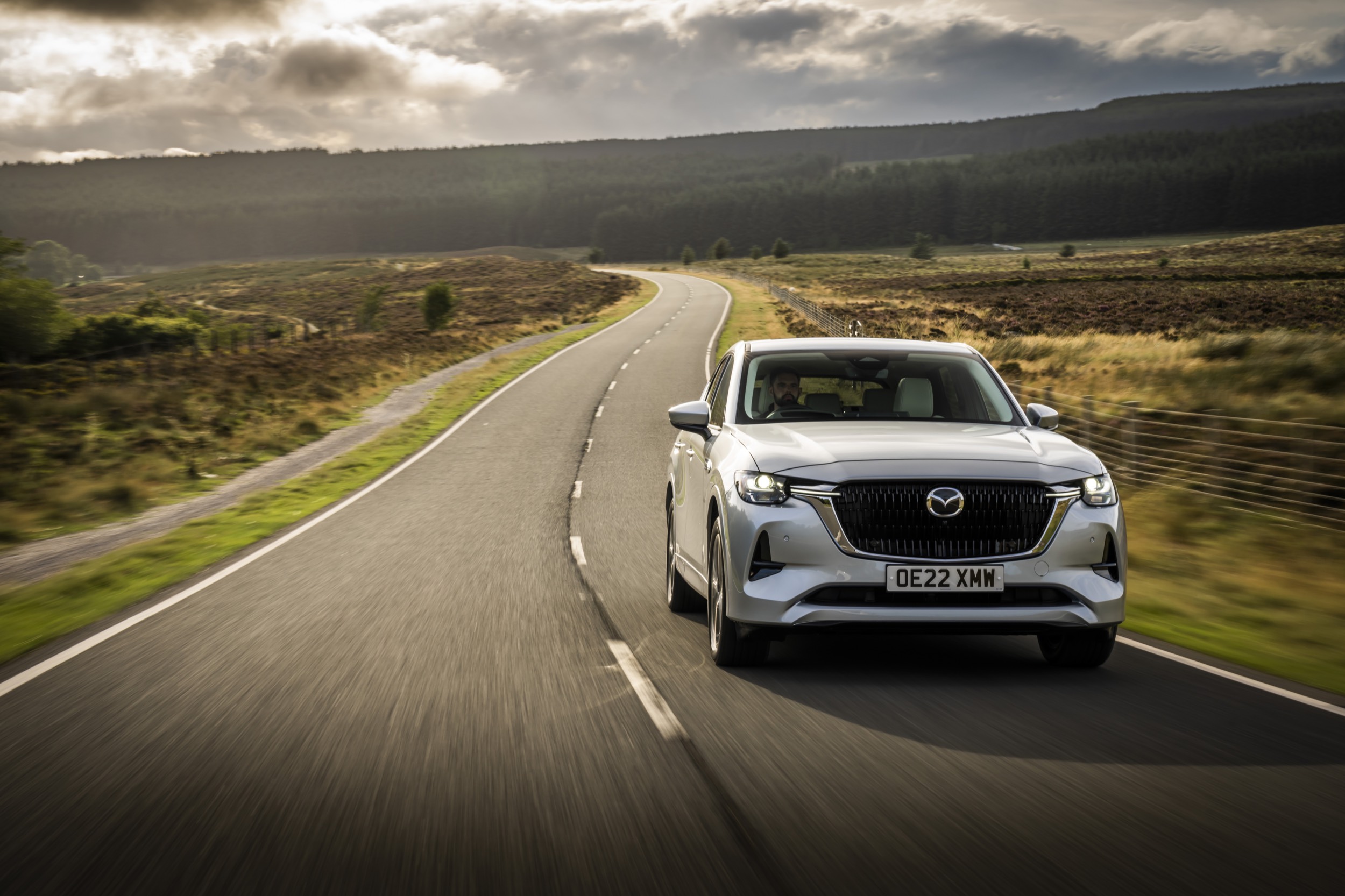
    Arriving in the UK early next year the all-new Mazda CX-60 e-Skyactiv D MHEV is available to order now. Powered by a powerful, clean and efficient all-new e-Skyactiv D diesel engine, the new model will be offered in the same Exclusive-Line, Homura and Takumi grades as the recently launched PHEV version.

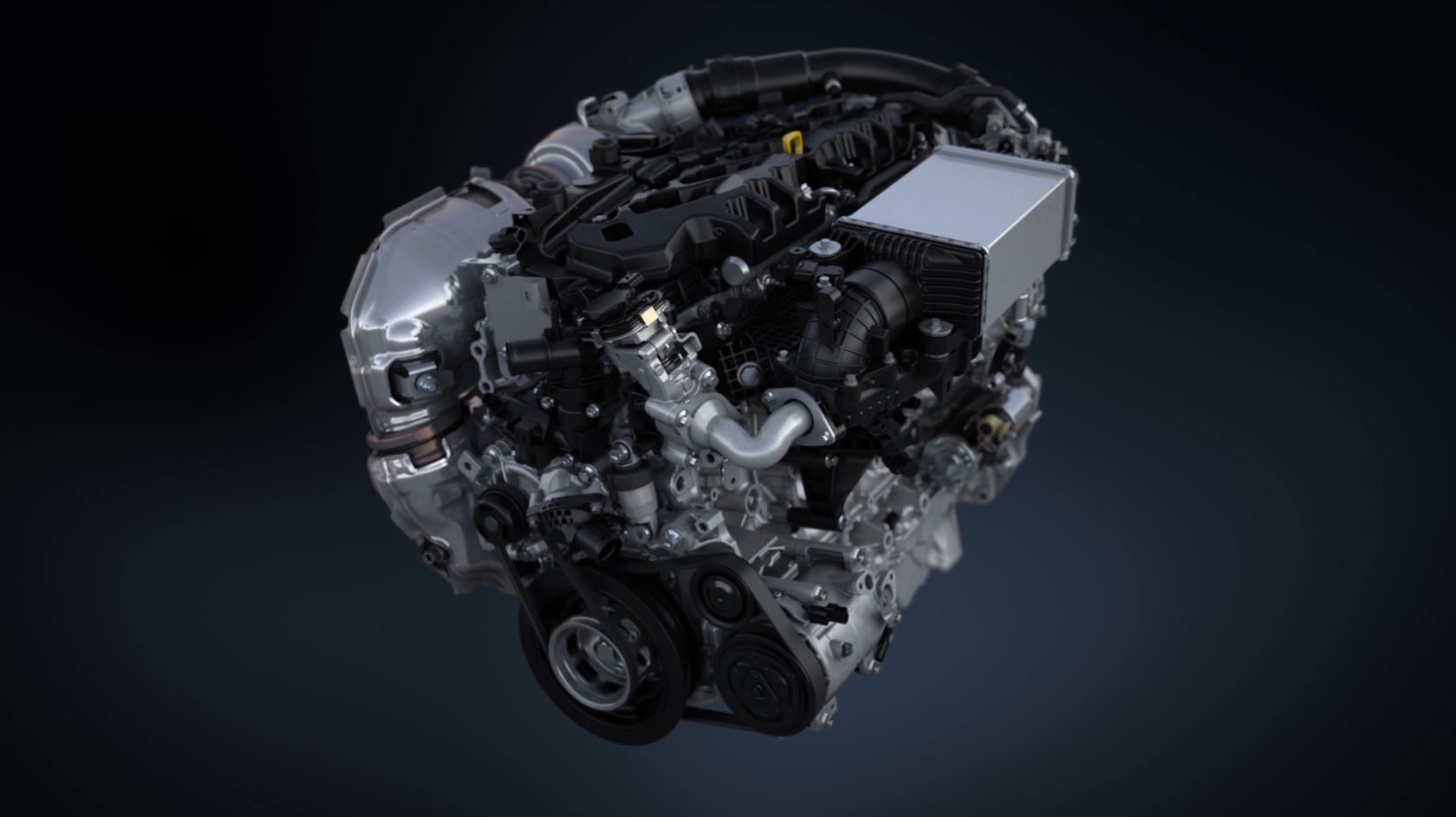
    The new diesel powertrain that will make its debut in the CX-60 is a Mazda first – a 3.3-litre in-line six-cylinder e-Skyactiv D diesel engine that features Distribution-Controlled Partially Premixed Compression Ignition (DCPCI) Technology. This highly innovative advanced combustion technology makes the new e-Skyactiv D unit one of the cleanest diesel engines in the world, achieving a thermal efficiency of over 40%.

    Developed using the ‘right sizing’ concept which optimises displacement to improve both fuel and power efficiency, the all-new 3,283cc longitudinally installed common rail electric direct injection six-cylinder e-Skyactiv D unit will be offered with a choice of two power outputs: 200ps with rear-wheel drive and 254ps with Mazda i-Activ AWD (all-wheel drive). Featuring a new 48v Mazda M Hybrid Boost system, the all-new diesel engine combines high output with excellent fuel economy. The new DCPCI technology improves engine efficiency, emissions and fuel economy. The combination of DCPCI and Mazda M Hybrid technologies contribute significantly to the CX-60’s outstanding driving range, performance, frugal fuel consumption and low emissions.

    With an entry price of £42,990, the 200ps output engine is singularly offered in Exclusive-Line trim where it is matched to rear-wheel drive, additionally Exclusive-Line can also be specified with the higher-output 254ps version of the new engine for £45,630 and here features all-wheel drive. All Exclusive-Line CX-60s can be specified with the £1,400 Comfort Pack and £1,900 Convenience and Driver Assistance Pack ensuring there’s plenty of opportunity to tailor your CX-60.  The £48,380 Homura is offered exclusively with the 254ps AWD drivetrain, as is the range-topping £50,730 Takumi grade – these cars can be specified with the optional Convenience and Driver Assistance Pack, while a Panoramic Roof is optional on Homura and standard on Takumi.

    As you’d expect from a Mazda, the new e-Skyactiv D powered CX-60 delivers an impressive blend of performance and efficiency, alongside the driver focused handling, impressive comfort and high-quality found across the CX-60 range.

    2023 Mazda CX-60 E-Skyactiv Technical Image

    The 200ps engine returns a WLTP average fuel consumption of 56.5mpg with CO2 emissions of only 129g/km in rear-wheel drive Exclusive-Line guise, while the AWD 254ps Exclusive Line, Homura and Takumi WLTP average fuel consumption is 53.3mpg with CO2 emissions from 137g/km.

    Refinement was also a key development goal of the all-new Mazda CX-60 e-Skyactiv D diesel and the in-line six-cylinder configuration produces less vibration due to its characteristic ‘perfect balance’, for a smooth and quiet engine tone, whilst delivering a clean and engaging sound. The engine’s high torque delivery gives the CX-60 a 2,500kg trailer weight towing capacity, while as a result of its lightweight construction, the engine weighs similar to the 2.2-litre Mazda Skyactiv D four-cylinder diesel engine used in the Mazda CX-5, which helps handling balance.

    Commenting on the forthcoming Mazda CX-60 e-Skyactiv D, Mazda Motors UK, Managing Director, Jeremy Thomson, said: “another demonstration of Mazda’s ‘Multi-Solution Approach’, the new diesel is designed to meet the needs of customers who want an efficient, long distance driving car with great towing capacity. The company’s multi-solution strategy offers different products and technologies – including more efficient internal combustion engines and a wide range of electrified powertrains, that best suit the local market and society’s demand for sustainability”

    Adding, “while the PHEV will be the biggest selling CX-60 in the UK, the new six-cylinder diesel is a fantastic example of Mazda’s long-standing reputation for engine innovation and it will be a superb choice for many retail customers looking for a high-quality large premium SUV with a clean and efficient diesel engine”.

    2023 Mazda CX-60 Six Cylinder Diesel Engine

    Additionally, an in-line straight-six 3.0-litre e-Skyactiv petrol engine will join the e-Skyactiv D and e-Skyactiv PHEV to complete the Mazda CX-60 powerplant line-up at a later date – offering customers the wide choice of technologically advanced, highly efficient powertrains appropriate to the outstanding levels of craftsmanship and on-board technology offered by the CX-60 model range.

    With the launch of the CX-60, Mazda takes another important step in its fleet’s emission reduction on its way to become entirely carbon neutral by 2050. In all, Mazda is launching five new electrified products in the next three years that feature its multi-solution platform architecture. After 2025, the company will launch its brand new Skyactiv EV Scalable Architecture, which will allow Mazda to efficiently build electric cars of all sizes using one common platform.

    In 2023, the company will launch a new model, the Mazda CX-80, which is larger than the Mazda CX-60 and features three rows of seating. With the Mazda CX-60 PHEV in dealerships now with strong current availability, the all-new Mazda CX-60 diesel will arrive in the UK in the first quarter of 2023.

  • Toyota bZ3

    Toyota Motor Corporation (Toyota) has announced the Toyota bZ3, the second model in its bZ series. The bZ3 is a battery electric sedan jointly developed for the Chinese market by BYD TOYOTA EV TECHNOLOGY CO., LTD. (BTET)―a joint venture established by Toyota and BYD Company Ltd. (BYD)―and FAW Toyota Motor Co. Ltd. (FAW Toyota). It will be produced by and sold through the FAW Toyota dealer network.

    Jointly developed in three-company collaboration

    In developing the bZ3, Toyota, BTET, and FAW Toyota worked closely to provide the best products to customers in China, the world’s largest battery EV (BEV) market. Over 100 Toyota engineers from the design, production, engineering, and quality control departments participated in the development, working in unison with engineers from BYD and FAW Toyota.

    Toyota, the world’s first mass producer of hybrid electric vehicles (HEV), has sold over 20 million electrified vehicles globally to date. Customers worldwide appreciate Toyota cars for the company’s wide array of advanced electrification technologies―with everything from HEVs to fuel cell electric vehicles―and fun-to-drive designs built on its long-honed QDR performance. The Toyota bZ3 carries on such DNA, following the Toyota bZ4X.

    BYD has specialized in batteries and other core technologies for electrified vehicles, including its e-Platform 3.0, since its establishment in 1995. The ever-growing company offers comprehensive solutions in the new energy field and has earned the trust of customers worldwide with its highly efficient development system and advanced electrification technologies. For the Toyota bZ3, BYD and its partners provide advanced, safe, and reliable battery technology.

    FAW Toyota has provided ever-better products and services to customers in China since its founding in 2000. The company is well-known for its extensive product lineup and one-stop capability encompassing production, sales, and service. To date, FAW’s cumulative sales volume has reached ten million units. Based on its world-class facilities and technologies, the company now produces high-quality new energy products, including the Toyota bZ series.

    Toyota bZ3 is born out of the three companies’ collaboration and synergy in development, car manufacturing, and battery technology. The combined strengths of each member have resulted in unprecedented new value and new experiences for customers.

    All-new structure and design for “new freedom, new experiences”

    Toyota bZ3 offers customers a novel automotive experience based on three keywords: electrified, dynamic, and enjoyable.

    ElectrifiedAchieving 600 km+ cruising range with an advanced electrification system

    The electrification system combines BYD’s lithium-ion LFP battery using lithium iron phosphate and Toyota’s extensive electrification technologies honed through long-standing HEV development, achieving a maximum cruising range of over 600 km. The battery structure, cooling, control, and safety monitoring systems were all newly designed for this car, making its high-quality electrification system efficient, advanced, safe, and reliable.

    Furthermore, Toyota has leveraged its electrification expertise to reduce battery degradation, with the development goal of ensuring 90% capacity even after ten years, for customer peace of mind.

    DynamicAchieving fun-to-drive through e-TNGA

    Toyota bZ3 uses the e-TNGA vehicle platform to achieve more pleasant driving, including more responsive performance, with a low center of gravity and excellent handling stability. The driving position is configured to minimize muscle strain, reduce fatigue over long distances, and create an enjoyable driving experience. Moving, turning, and stopping have been finely tuned utilizing Toyota’s expertise honed over its decades of experience in car-making and motorsports. The result is a more comfortable ride for both the driver and passengers.

    EnjoyableDelivering a comfortable riding experience

    The Toyota bZ3’s development concept is the Family Lounge, based on the idea that cars provide a space to enjoy time with family and friends, rather than merely being a means of transportation. With a people-centered focus, Toyota emphasizes a coherent and comfortable interior space with enhanced digital features perfectly integrated inside the cabin to suit customer preferences.

    The vehicle features the Toyota bZ series’ hammerhead shark-like design format. It has a relaxed silhouette, combining the long wheelbase of a BEV-specific package with the long cabin of a fastback. Moreover, the exterior exudes stability and power and features a highly modulated and elegant profile that hints at a linear sense of speed. The corners of the bumper emphasize air guides and air curtains that consider airflow, while the flat door handles, aluminum wheels, and rear bumper shaped to reduce air resistance result in class-leading aerodynamics with a Cd value of 0.218.

    The interior features the Digital Island system that integrates a large vertical center display with a tray-type console. In addition to wireless charging, it integrates functions for linking smartphones and multimedia, providing a new experience for customers. Air conditioning, music, trunk release, and other controls are also integrated into the large display, and voice control greatly advances convenience and innovation.

    Toyota bZ3 Main Specifications

    Length 4,725 mm
    Width 1,835 mm
    Height 1,475 mm
    Wheelbase 2,880 mm
    Cd value 0.218
    Seating capacity 5
    Battery type Lithium-ion Battery (first use of LFP cathode)
  • GMC Sierra EV

    GMC’s introduction of the first-ever Sierra EV marks a turning point for the premium truck brand, as it expands its portfolio of all-electric trucks. Led by the 2024 Sierra EV Denali Edition 1, it offers uncompromising pickup capability, a GM-estimated 400 miles of range on a full charge and unique features made possible only by its dedicated EV truck platform.

    “This is the Denali of EVs — and a truck that is every bit a GMC,” said Duncan Aldred, vice president of Global Buick and GMC. “That means it leaves nothing on the table when it comes to hauling, towing and overall power while unlocking even more possibilities around what a GMC pickup can offer.”

    GMC will be the only brand to offer three all-electric trucks, with the Sierra EV joining the popular GMC HUMMER EV Pickup and SUV. Underpinning these three trucks is GM’s groundbreaking Ultium Platform, which enables incredible versatility and optimal performance in an all-electric truck.

    The 2024 Sierra EV Denali Edition 1 will be available at launch in early 2024. GMC will introduce the Sierra EV AT4 and Elevation trims in the 2025 model year.

    “The 2024 Sierra EV Denali Edition 1 is just the beginning,” said Aldred. “It will offer customers our very latest in technology, capability and luxury delivered in a way only GMC can do — with much more to come. From the HUMMER EV supertruck to the first-ever Sierra EV, GMC continues to write the next chapter in its future as a premium truck and SUV brand.”

    The 2024 Sierra EV Denali Edition 1 breaks new ground for GMC in four key areas:

    Next-Gen Power

    • GM-estimated range of 400 miles (640 km) on a full charge
    • GM-estimated 754 horsepower and 785 lb-ft of torque in Max Power mode
    • Onboard Power Station Pro turns Sierra EV Denali into a mobile power source, with up to 10.2kW of off-board power that can be used in a variety of situations
    • 800 Volt DC Public Fast Charging capable at up to 350kW, enabling up to 100 miles of range in approximately 10 minutes — the best charging capability in the EV truck segment

    Purposeful Technology

    • 16.8-inch-diagonal freeform infotainment touchscreen — the largest ever in a Sierra
    • Trailering-capable Super Cruise hands-free driver assistance technology on more than 400,000 miles of compatible roads in the U.S. and Canada
    • Customizable drive modes, including Max Power mode, which enables 0-60 mph acceleration in less than 4.5 seconds (GM estimate)
    • Air Ride Adaptive Suspension that both enables a more comfortable ride as well as the ability to raise or lower the truck by approximately 2 inches
    • EV-enabled propulsion technologies including Regen on Demand Braking, One-Pedal Driving and 4-Wheel Steer with CrabWalk

    “Grille-to-Gate” Versatility

    • Versatility and next-generation GMC functional design enabled by the Ultium Platform
    • GMC-first MultiPro Midgate™ expandable bed offers room for hauling longer items, while still enabling room for a rear-seat passenger
    • eTrunk™ increases cargo room capability with lockable, weatherproof compartment at the front of the vehicle
    • Up to 9,500 pounds (4,309 kg) max towing capacity

    Modern Luxurious Appointments

    • Authentic premium materials including grain-matched open-pore wood (including a wood veneer induction wireless charger), aluminum, etched stainless steel and more that customers have come to expect from the Denali name
    • Bold, all-new design features including a panoramic fixed glass roof
    • A sleek, modern interior crafted with exceptional attention to detail — from seat stitching that invokes the bold lines of the truck’s profile to a streamlined dashboard — lays the foundation for the future of the brand

    “This truck is everything customers know about the Sierra, but is so much more,” said Nichole Kraatz, chief engineer, GM Battery Electric Trucks. “Leveraging GM’s dedicated Ultium pickup platform, it takes the Sierra franchise to new benchmarks of capability, versatility and luxury — all in a zero-tailpipe-emissions package.”

    NEXT-GEN POWER

    The 2024 Sierra EV Denali Edition 1’s Ultium battery pack enables its GM-estimated driving range of 400 miles on a full charge. It is also a structural element of the vehicle, which contributes to its overall strength, durability and performance. Furthermore, the placement of the battery pack lowers the truck’s center of gravity, while enhancing ride comfort and driving confidence on and off the road.

    Front and rear electric drive units channel a GM-estimated 754 horsepower and 785 lb-ft of torque to the wheels via an e4WD system in Max Power mode, giving the truck exceptional traction and capability in almost every driving scenario.

    The foundation of the all-new Sierra EV’s range, performance and capabilities is the revolutionary Ultium Platform, first seen on the GMC HUMMER EV supertruck. After the launch of the Sierra EV Denali Edition 1, GMC will introduce additional trims with a selection of ranges and trailering ratings.

    Additionally, the 2024 Sierra EV Denali Edition 1’s Power Station Pro allows the truck to be used as a mobile power source in multiple situations. With the available Ultium Power Bar accessory, the 2024 Sierra EV offers 10.2kW of off-board power through up to 10 outlets that can help power tools and other accessories on the trail or at a campsite, as needed. When properly equipped, the Sierra EV Denali’s Power Station Pro can even power another EV.

    This off-board power capability means that with the right configuration, such as a bi-directional charger and additional products and services offered through GM Energy’s Ultium Home line, the Sierra EV Denali Edition 1 can power a home’s essential necessities, for up to 21 days collectively.

    When it comes to charging performance, the 2024 Sierra EV Denali includes a 19.2kW onboard AC charging module for home and public charging. It also features 800V DC Public Fast Charging capability of up to 350kW, enabling approximately 100 miles of range to be added in only 10 minutes.

    Owners also have access to Ultium Charge 360, GM’s holistic approach to EV charging, designed to help simplify the overall charging experience, including access to more than 110,000 publicly available charging points in the U.S. and Canada.

    PURPOSEFUL TECHNOLOGY

    The Sierra EV offers the brand’s latest charging, infotainment and propulsion technologies that work holistically to help enhance and optimize every drive.

    It all starts when the driver enters the vehicle. With Hands-Free Start, the vehicle turns on after the driver enters with a key fob. Once in the vehicle, the driver simply has to put their foot on the brake and put the vehicle into gear and they are ready to go. Simple and intuitive.

    The driver is also welcomed by the bold animation of the Sierra EV Denali Edition 1’s multiple high-resolution display screens, the center point of which is a large, 16.8-inch-diagonal freeform touchscreen. It’s the first portrait-oriented screen for GMC.

    The touchscreen offers a user-friendly, freeform, customizable experience where icons can be organized similar to a smartphone, while keeping common buttons easily accessible. The screen can also be “split” to operate up to three apps simultaneously. And with GM’s Ultifi vehicle software platform, new features, apps and experiences can be downloaded over the air for greater personalization.

    Additionally, in the 2024 Sierra EV Denali Edition 1, the central 16.8-inch-diagonal screen is paired with an 11-inch-diagonal reconfigurable driver information center and a multi-color Head Up Display offering 14 diagonal inches of view. It all adds up to more than 40 diagonal inches of digital displays providing ease of use and confident command for the driver. Further supporting that confidence are up to 14 available camera views to enhance visibility around the vehicle.

    When it comes time for long trips, the Sierra EV Denali Edition 1 includes Super Cruise, the industry’s first true hands-free driver assistance technology, allowing drivers to travel hands-free on more than 400,000 miles of compatible roads across the U.S. and Canada, even when towing.

    Customers have even more control over their driving experience with technologies enabled by the versatility of the Ultium Platform, including:

    • Customizable Drive Modes enable the driver to adjust steering, suspension, propulsion, sound and power settings for the ultimate personalized driving experience. These modes include:
      • Standard
      • Tow/Haul
      • Off-Road – for when the pavement ends
      • My Mode – a fully customizable experience for the driver
      • Max Power – a thrilling amount of EV torque enables 0-to-60 mph acceleration in under 4.5 seconds (GM estimate)
    • 4-Wheel Steer enables all four wheels to work together for a smaller turning circle and improved maneuverability
    • CrabWalk, a GMC-exclusive diagonal-drive feature that, at low speeds, turns the rear wheels in unison and at the same angle as the front wheels, allowing diagonal movement of the vehicle
    • Variable Regen on Demand Braking converts the kinetic energy of the vehicle’s forward momentum into electricity that’s stored in the battery pack to help improve driving range
    • One-Pedal Driving, which can slow the vehicle to a full stop, using only the accelerator

    ‘GRILLE-TO-GATE’ VERSATILITY

    Functional innovations enabled by the Ultium Platform provide unprecedented flexibility and versatility for hauling and cargo stowage never before available in a Sierra.

    “Without the need to work around a conventional propulsion system, there was an exciting opportunity to reimagine the Sierra EV with a refined yet bold, next-generation modern style and functionality,” said Sharon Gauci, executive director, Buick and GMC Design. “The Ultium Platform allowed us to design what a truck can offer differently when it comes to appearance, spaciousness and capability. It was an important goal for Sierra EV to be visually distinctive yet maintain the essence of GMC and this can be seen in many elements inside and out. For example, the powerful front shield and strong, continuous body side with machined detailing.”

    The 2024 Sierra EV Denali Edition 1 has a bold, forward-looking, and ultra-premium aesthetic that announces a new era for the brand’s design language, including a new interpretation of the GMC grille, which serves as an integral part of the sophisticated approach lighting animations, including perimeter grille lighting. Additionally, the Ultium Platform is integrated into the truck’s body structure, which enables more expressive overall design and a confident stance.

    The Sierra EV Denali Edition 1 will be offered exclusively in a Crew Cab model with an integrated 5-foot, 11-inch cargo bed. Its storage capacity is maximized with the innovative MultiPro Midgate™, which provides 9 feet of storage between the cab and the tailgate, when the Midgate is open.

    A 60/40-split second-row seat offers four configurations that allow users to haul gear or equipment while still accommodating a passenger, and an available tonneau cover allows longer items such as a kayak or windsurfing board to be stowed under a lockable, weatherproof cover.

    GMC’s popular MultiPro Tailgate is also standard on the 2024 Sierra EV Denali Edition 1. When this innovative tailgate is down, the maximum load floor length extends to nearly 11 feet with the MidGate down and the MultiPro Tailgate’s load-stop open.

    At the front of the vehicle, the spacious eTrunk offers lockable weatherproof cargo space with two drains where the engine would be in a traditional truck, along with a 120-volt power outlet. The flat floor enables more storage space in the cab, including a modular center console.

    GMC trucks are made to be used, and the Sierra EV is no exception. When it comes to the all-important task of towing, the 2024 Sierra EV Denali Edition 1 delivers with up to 9,500 pounds (4,309 kg) of trailering capacity and up to 1,300 pounds of payload. A trailering package comes standard on the Sierra EV Denali Edition 1.

    MODERN LUXURIOUS APPOINTMENTS

    Distinguished by distinctive interiors, next-level materials, exclusive features and technologies, Denali has always represented the pinnacle of luxury done the GMC way. In the new 2024 Sierra EV Denali Edition 1, that signature experience delivers the height of premium in an all-electric truck.

    One of those expressions is the all-new, panoramic fixed glass roof that stretches above both rows of the cabin, creating an open-air ambience and a greater sense of spaciousness. The roof is infrared reflective and has a UV coating to help keep the cabin comfortable.

    The interior accentuates openness, with attention to detail that shepherds in a modern and clean aesthetic. While distinctive quilting and the embroidered Denali logo on the front seat backs will be familiar to customers, the Sierra EV Denali introduces a new rich quilting pattern invocative of the vehicle’s bold front end. This attention to detail and premium materials is carried throughout the interior from the precise finishing on the doors to sweeping lines of authentic open-pore wood on the instrument panel. Also new is an inductive wireless charger finished in the same open-pore wood, creating the modern feel of uninterrupted lines and surfaces.

    The wood décor is complemented with aluminum accents and even etched stainless steel on the speaker grilles of the Bose audio system. Additionally, the electric vehicle sound enhancement technology, developed with Bose, elevates the driver’s sensory experience.

    COMING IN EARLY 2024

    Deliveries of the 2024 GMC Sierra EV Denali Edition 1 are expected to begin in early 2024, with a starting MSRP of $107,000 (plus DFC).

  • Aston Martin V8

    It’s 1972, and Aston Martin is undergoing one of its periodic seismic changes. Sir David Brown, the talented industrialist who steered the business through some of its most memorable 20th Century moments, has sold the firm to a new owner, Company Developments Ltd, and a fresh spirit of optimism takes hold.

    Enter the AM V8. A car that, while launched early in the tenure of Company Developments was firmly rooted in the engineering and design ethos of the David Brown era. Replacing the DBS V8, which had itself championed the use of Aston Martin’s first V8, and the first new engine for more than ten years, the AM V8 was essentially a styling exercise – replacing the angular nose of the DBS with a more curvaceous, purposeful front end that, together with some subtle styling changes elsewhere, gave the new car a much more muscular look. Key to that new nose was the arrival of two seven-inch quartz iodine headlamps and a black mesh grille.

    The return of a small open ‘power bulge’ on the bonnet; the ‘Coke-bottle’ flanks; and the use of Aston Martin V8 side strake badges completed the exterior styling revisions. That this same William Towns’ shape, in essence, would represent the Aston Martin ‘look’ for almost two decades – the last AM V8 styling-inspired cars only ending production in 1989 – shows not only the importance of its 1972 debut, but also the appeal of a styling silhouette that is utterly unmistakable today as a product of the marque’s Newport Pagnell era.

    This first iteration of the 5.3-litre engined AM V8 retained the Bosch fuel injection system from the DBS V8, and while power and torque figures were not commonly quoted, it is believed that these cars were good for as much as 320 bhp, with around 360 lbs/ft of torque. Mated to a ZF five-speed manual gearbox, or optional Chrysler Torqueflite 3-speed auto, that was ample urge to carry this early ‘70s sports car from rest to 60 mph in around six seconds with a top speed of circa 160 mph.

    As was often the case in Aston Martin history, production numbers of these early cars were incredibly small by today’s standards. A mere 289 AM V8 models of this iteration were built between April 1972 and July ’73. They were succeeded by cars with less complex Weber carburetion, the later cars also featuring larger bonnet scoops.

    Numerous iterations of the AM V8 followed over the years – the 1978 ‘Oscar India’ cars with closed bonnet scoop among their changes being among the most plentiful – along with the arrival of Volante versions in June 1978 for those seeking open top motoring. What united the cars, though, aside from their style, performance and exclusivity, was their luxury. The finest Connolly hides, sumptuous Wilton carpeting and, from the arrival of the ‘Oscar India’ cars, the use of burr walnut dashboard trim, were among the many features that marked out these cars as luxury models.

    V8 Vantage

    No AM V8 retrospective would be complete without reference to the original Aston Martin V8 Vantage. It was hailed at its 1977 introduction as “Britain’s first supercar”. It could outrun a Ferrari Daytona in the 0-60 mph sprint, and if pushed to the limit it could record a top speed of 170 mph thanks to its use of high-performance camshafts, an increased compression ratio, larger inlet valves and bigger carburettors mounted on new manifolds for increased output.

    A true British bruiser, the V8 Vantage’s performance belied its significant heft. Critical to the huge performance leap of this Vantage was a significant upgrade to the V8 engine, thereby triggering the ‘Vantage’ moniker, of course.

    The carburettors were changed to the larger 48 IDF Weber which were fitted to revised inlet manifolds. Together with larger valves, revised exhaust manifolds, revised camshafts and a higher compression ratio, once run-in, the engines were capable of 380bhp. At the time, though, and with true British modesty, the power output was described by Aston Martin simply as “adequate”.

    The V8 Vantage’s chassis was stiffened with adjustable Koni dampers, shortened springs and a larger front anti-roll bar. Wider 255/60 VR15 Pirelli CN12 tyres were fitted together with spacers to widen the track.

    External modifications were clear, and aerodynamic in nature. It was easily distinguished for the standard AM V8 by the front air dam, twin Cibie H4 driving lights within the blanked off grille (cooling air for the radiator being drawn in from beneath the bumper) and a boot lid spoiler at the rear. All of these aerodynamic additions were essential to reduce lift. Another feature was the use of a sealed bonnet bulge to cover a larger airbox above the down draught carburettors.

    The V8 Vantage evolved significantly over the course of its reign – which spanned two decades and only ended in 1989 with final deliveries of the last 5.3-litre ‘X-Pack’ car. It even provided the basis for a shorter, radical, and hyper rare, V8 Vantage Zagato saloon.

    Throughout its build period this iteration of Vantage remained the jewel in Aston Martin’s burnished crown.

    Bond is back

    Towards the end of its reign the AM V8 saloon, and corresponding V8 Volante, played another important part in Aston Martin history by reuniting the marque with its most famous ‘owner’ – James Bond.

    In the 1987 film The Living Daylights, which featured Timothy Dalton as 007, producers EON took the decision to return Bond to his familiar position behind the wheel of an Aston Martin using a V8 Volante that, through the magic of the movies, is ‘winterised’ into a V8 saloon by Q branch.

    Bristling with gadgets including a jet engine booster rocket, retractable outriggers for use on snow and ice, and twin heat-seeking missiles, the ‘Oscar India’ saloon has become a regular display piece and, indeed, so iconic was the car’s appearance that, in the most recent film No Time To Die, James Bond (Daniel Craig) is once again seen behind the wheel of his beloved V8.

    Sports car racing

    Naturally enough, AM V8 saloons also had a proud club racing history and cars were campaigned by enthusiast owners across the UK, and far beyond.

    Perhaps the most famous of these weekend warriors was the car that came to be known, affectionately, as ‘The Muncher’ by virtue of its apparently insatiable appetite for brake discs.

    Admittedly this car was developed from a DBS V8 but very quickly acquired the revised front end of the AM V8 as it went through numerous design and aerodynamic developments, some of which were very much an acquired taste!

    The car was the brainchild of Aston Martin enthusiast, service agent and one-time distributor, Robin Hamilton.

    Early club racing success spurred Hamilton on to push the V8 into Le Mans 24 Hours competition at a time when the brand itself was not prioritising its motorsport activity. RHAM/1 as it was called shocked not only the French spectators but also, perhaps, the competition by notching up a highly creditable 17th overall in the 1977 running of the famous 24-hour race, before further developments – including the addition of twin turbochargers – saw it achieve an outrageous peak power output of 800 bhp.

    Reflecting on the enduring appeal of the AM V8 in all its many forms over almost two decades of production Aston Martin Works President, Paul Spires, said: “The 1970s were, in many ways, a testing time with social and economic unrest rife. Yet, through it all, we created the AM V8 which, today, is rightly seen as one of the jewels in our illustrious history. That so many of these big, brutish sports cars survive and thrive today is testament not only to their enduring appeal but also to the legion of owners, past and present, who have worked so hard with us to keep the cars running.

    “As all things ‘70s seem, once again, to be back in fashion it’s only right that, today, we mark the 50th anniversary of one of our most desirable heritage models.”

  • Hyundai Grandeur

    Hyundai Motor Company today unveiled the bold new design of its seventh-generation Grandeur, badged as Azera in markets outside Korea, flagship sedan. The all-new model comes six years after the sixth generation launched in 2016.

    Since its original debut as Hyundai’s high-end sedan in 1986, Grandeur has led the Korean sedan market, with design and innovations that stand for success and premium quality. The seventh-generation Grandeur has evolved into a model with a new level of refinement and sophistication, full of innovative design cues and high-tech details, which reflects the great transformation happening in the mobility sector without losing sight of the model’s tremendous heritage.

    “The seventh-generation Grandeur expresses our respect for the past and commitment to move on to the future,” said SangYup Lee, Executive Vice President and Head of Hyundai Design Center. “We are creating a new standard for the premium sedan market through emotive design and a refined customer experience.”

    Creating an exterior design that perfectly fuses art and technology

    The All-New Grandeur’s exterior design takes inspiration from previous models and applies Hyundai Motor’s philosophy to reflect on its past while setting a course for the future.

    One of the model’s most prominent aspects is its pure volume and excellent sense of proportions that balance premium and dynamic styling attributes. The All-New Grandeur is defined by a Seamless Horizon Lamp inspired by the first light of dawn, accentuating the model’s wide stance and harmonizing with its parametric jewel grill. The Seamless Horizon Lamp is a perfect fusion of technology and art and characterizes Grandeur’s future-focused design sensibility.

    The large sedan’s pure volume is accentuated by a single character line that runs smoothly and horizontally from the headlamps to the rear combination lamp over clean, uncluttered body sides with frameless doors and auto-flush handles that reflect the model’s contemporary style and refinement.

    Grandeur’s stretched wheelbase harmonizes with the boldly receding cowl point and C-pillar to provide an excellent sense of spaciousness as well as dynamic and sporty proportions.

    The ‘Seamless Horizon’ design is also applied to the signature combination lamp that spans the taut rear end, emphasizing the model’s slim yet confident stance.

    An interior that serves as an oasis for relaxation and recovery

    For the All-New Grandeur, Hyundai Motor created a wrap-around interior space trimmed in premium and sustainable materials to provide a clean, comfortable respite for busy lives.

    The ambient mood lighting spreads softly across the door trim and the front of the dashboard, and interactive lighting on the upper right of the integrated display provides a new user experience. The pattern details on the door trim are designed with a delicate Korean aesthetic. Together, these elements provide passengers a calming space for relaxation and recovery.

    The steering wheel was also inspired by the single-spoke design of the first-generation Grandeur and reborn in its current form by integrating and rearranging controls to provide a more optimized layout for the driver. With the gear knob moved to the steering wheel, the console space provides neat and clean storage conveniences and wireless charging tailored for diverse customer lifestyles and connectivity needs.

    On the sleekly styled interior surfaces, designers applied real wood, aluminum and naturally dyed Napa leather quilted in a traditional Korean pattern to provide further differentiation and refinement. The sedan’s interior and exterior abound with sustainable materials. In addition to eco-process Napa leather, there is hygienic, anti-bacterial leather applied to various touchpoints.

  • Mitsubishi XFC Concept

    Mitsubishi Motors Corporation (hereafter, Mitsubishi Motors) today held the world premiere of the Mitsubishi XFC Concept, a compact SUV concept car, in Ho Chi Minh City, Vietnam. The car will be on display at Vietnam Motor Show 2022 to be held from October 26 to 30.

    With the concept of being the “best-suited buddy for an exciting life,” the Mitsubishi XFC Concept is a next-generation compact SUV that offers the powerful and imposing design of an SUV, utility such as ease of handling and an ample cargo space, comfort including a class-leading interior space, and safe, secure road handling even on rough surfaces or roads flooded by heavy rains.

    “We will launch the new compact SUV sequentially in the ASEAN markets including Vietnam in fiscal year 2023*,” said Takao Kato, president and chief executive officer, Mitsubishi Motors. “In the future, we plan to add an electrified variant to the lineup and to also roll it out in regions outside ASEAN. We hope to grow the model from a vehicle for the ASEAN market to a global strategic vehicle, making it a core model like the sales-leading Xpander crossover MPV.”

    The Mitsubishi XFC Concept is a compact SUV that is not part of the current ASEAN lineup. It complements Mitsubishi Motors’ wide range of products tailored to the ASEAN market — the Triton pickup truck and its derivative, the Pajero Sport midsize SUV; the Outlander and Outlander PHEV midsize SUVs; the Xpander and Xpander Cross crossover MPVs; and the Mirage compact hatchback and its variant, the Attrage sedan.

    Powerful and imposing design

    In line with Mitsubishi Motors’ design philosophy of Robust & Ingenious, the Mitsubishi XFC Concept combines a compact yet powerful and imposing aura of an SUV with a sleek surface that forms one continuous flow, starting from the three-diamond emblem on the front and extending to the sides and rear. This gives it a stylish and sporty profile to match the cityscapes of the ASEAN region. In addition, with enhanced road handling on rough surfaces thanks to ample ground clearance and large-diameter wheels, the Mitsubishi XFC Concept expresses both toughness and agility while featuring an authentic SUV styling that stands out in outdoor scenes.

    At the front, the Dynamic Shield concept, which expresses both performance and protection, has evolved in line with the concept. The L-shaped headlight in the headlight unit’s upper portion combines with the louver-like daytime running lights (DRL) below to light up in an iconic T-shape, which shows a sense of broadness. The sides of the body are composed of rich, muscular surfaces, with sculpted front and rear fender flares and character lines expressing the power and dynamism of an SUV. Like the front, the rear also features T-shaped tail lights to create a rear styling that accentuates wideness and stability.

    The interior offers ease of operation and comfortableness, which are essential for an SUV. For the instrument panel, a horizontally themed design is adopted, making it easier to sense changes in the vehicle’s posture when driving on rough surfaces while also improving forward visibility. Meanwhile, the dynamic design extending from the instrument panel to the door trim, along with a series of soft padding, give a sense of enclosure and protection to create a secure and comfortable interior.

    Utility provided by ease of handling and ample cargo space

    The Mitsubishi XFC Concept is designed for ease of operation, providing good forward visibility, easy perception of the vehicle’s dimensions, and smooth handling. The instrument panel features a large display panel integrating a full digital driver display and a center display that can show three separate information such as navigation, road surface conditions, and other information necessary for driving on one screen to provide a safe and comfortable driving environment while also expressing a sense of advanced design. Despite its compact body size, the Mitsubishi XFC Concept is also designed for utility with ample cargo space.

    Comfort provided by class-leading interior space

    Although it is a compact SUV, the Mitsubishi XFC Concept comes with spacious cabin area. In particular, with its generous legroom in the rear seats, it offers top-level comfort in its class. Moreover, everyone on board can feel safe and reassured, with vehicle stability control in slippery road conditions and high-quality ride comfort.

    Safe and reliable driving on rough and flooded roads

    With plenty of ground clearance and four drive modes — Normal, Wet, Gravel and Mud — the Mitsubishi XFC Concept offers a fun, safe and secure ride in various weather and road conditions. The Wet mode, introduced for the first time in a Mitsubishi vehicle, is designed with use in ASEAN countries in mind, such as enabling safe driving even on roads flooded by sudden showers.

  • Porsche 911 Carrera T

    Porsche is adding to the 911 family with the lightweight sports car, the 911 Carrera T. The letter “T” stands for touring and describes models that offer a purist driving experience with exceptionally sporty equipment.

    The standard 911 T features a seven-speed manual gearbox. An eight-speed PDK is also available. The rear seats are omitted. Featuring a PASM sports suspension with 10-mm-lowering and reduced insulation, the new 911 Carrera T is the epitome of purism and exhilarating driving pleasure. You can feel it on winding mountain and country roads – and you can hear it too. The sound of the six-cylinder boxer engine is now an even more striking presence in the interior.

    Standard with PASM sports suspension and Sport Chrono package

    The new 911 Carrera T slots in between the 911 Carrera and the 911 Carrera S. The Carrera T takes its biturbo engine with 283 kW (385 PS; 911 Carrera T models: Fuel consumption* combined (WLTP) 10.9 – 10.3 l/100 km, CO₂ emissions* combined (WLTP) 247 – 233 g/km, Fuel consumption* combined (NEDC) 10.2 – 9.5 l/100 km, CO₂ emissions* combined (NEDC) 232 – 217 g/km) and 450 Newton metres of torque, and which accelerates the sports car from zero to 100 km/h in 4.5 seconds and to a top speed of 291 km/h, from the entry-level 911. The standard equipment from the Carrera S with a manual transmission is augmented by Porsche Torque Vectoring (PTV) with a mechanical rear differential lock.

    The 911 Carrera T also comes standard with the Sport Chrono package and the PASM sports suspension (-10 mm) – features that only the Carrera T offers in combination with the 385-PS engine. This is available as an option in the 911 Carrera S. On request, the Carrera T can also be ordered with the optional rear-axle steering, which is also normally reserved for models from the Carrera S and up.

    T-specific equipment features include 20- and 21-inch Titanium Grey Carrera S wheels in front and back, respectively, with 245/35 (front) and 305/30 (rear) sized tyres. The 911 Carrera T also comes standard with the GT sports steering wheel, sports exhaust system and Sports Seats Plus (four-way, electric). Weighing just 1,470 kg, the 911 Carrera T with a manual transmission is the lightest series 911 with the entry-level engine, coming in 35 kg lighter than the 911 Carrera with a standard eight-speed PDK. In the 911 Carrera, the manual transmission is no longer available. Beyond the omitted back seats and reduced insulation, lightweight glass and a lightweight battery shave off even more weight.

    Touring car concept successful across several model lines

    The “T” in the model designation of the Porsche 911 Carrera T stands for touring and traces its history back to the homologation of the 911 T as a touring car in 1968. This first 911 T was offered until 1973, and in 2017 Porsche revived the purist 911 variant with the 911 Carrera T of the 991 model line. Since then, the concept of the stripped-down, yet exceptionally sporty setup has been successfully brought to other model lines with the 718 Cayman T, the 718 Boxster T and the Macan T.

    Exclusive details inside and out

    On the exterior, the Porsche 911 Carrera T stands out from the rest of the model line with Dark Grey accentuating details. Contrasting elements such as the top and bottom trim on the exterior mirrors, the new door logos and the rear logos, and the trim strips on the rear lid grille feature Agate Grey. The windscreen also features a grey top tint. The tailpipes of the sports exhaust system are in high-gloss black. It all gives the new 911 Carrera T an even more extroverted and dynamic look.

    The car’s sportiness is underscored in the interior by the standard four-way Sports Seats Plus. Decorative trim in matte black and decorative inlays in high-gloss black round off the T interior. Customers seeking even more distinctiveness can choose the optional Carrera T interior package. In this case, they receive additional safety belts in the contrasting colours Slate Grey or Lizard Green.

    The same goes for the decorative stitching, the 911 logo embossed in the headrests and the stripes down the seat centres. The floor mats also offer the logo and stitching in the contrasting colours of Lizard Green and Slate Grey as an option.

    Small but exquisite selection of options and colours

    The 911 Carrera T offers optional Adaptive Sports Seats Plus (18-way, electric) as well as the even sportier and exceptionally lightweight full bucket seats featuring Race Tex seat centres. The Carrera T interior package is offered with an optional extended leather interior. The armrests on the door panels and centre console are also in leather, along with the upper parts of the dashboard and door panel trim.

    The new 911 Carrera T is available in the four solid colours Black, White, Guards Red and Racing Yellow as well as in the four metallic finishes Deep Black, Gentian Blue, Ice Grey and GT Silver. Available special colours are Chalk, Ruby Star Neo, Carmine Red, Shark Blue and Python Green. Buyers of the 911 Carrera T also have the option of using the Paint to Sample programme, which offers paintwork in over 110 available colour tones.

  • BBR unveils stunning Supercharger kits for Mazda MX-5 ND – up to 250 bhp available

    BBR Mazda MX-5 ND - Front Angle

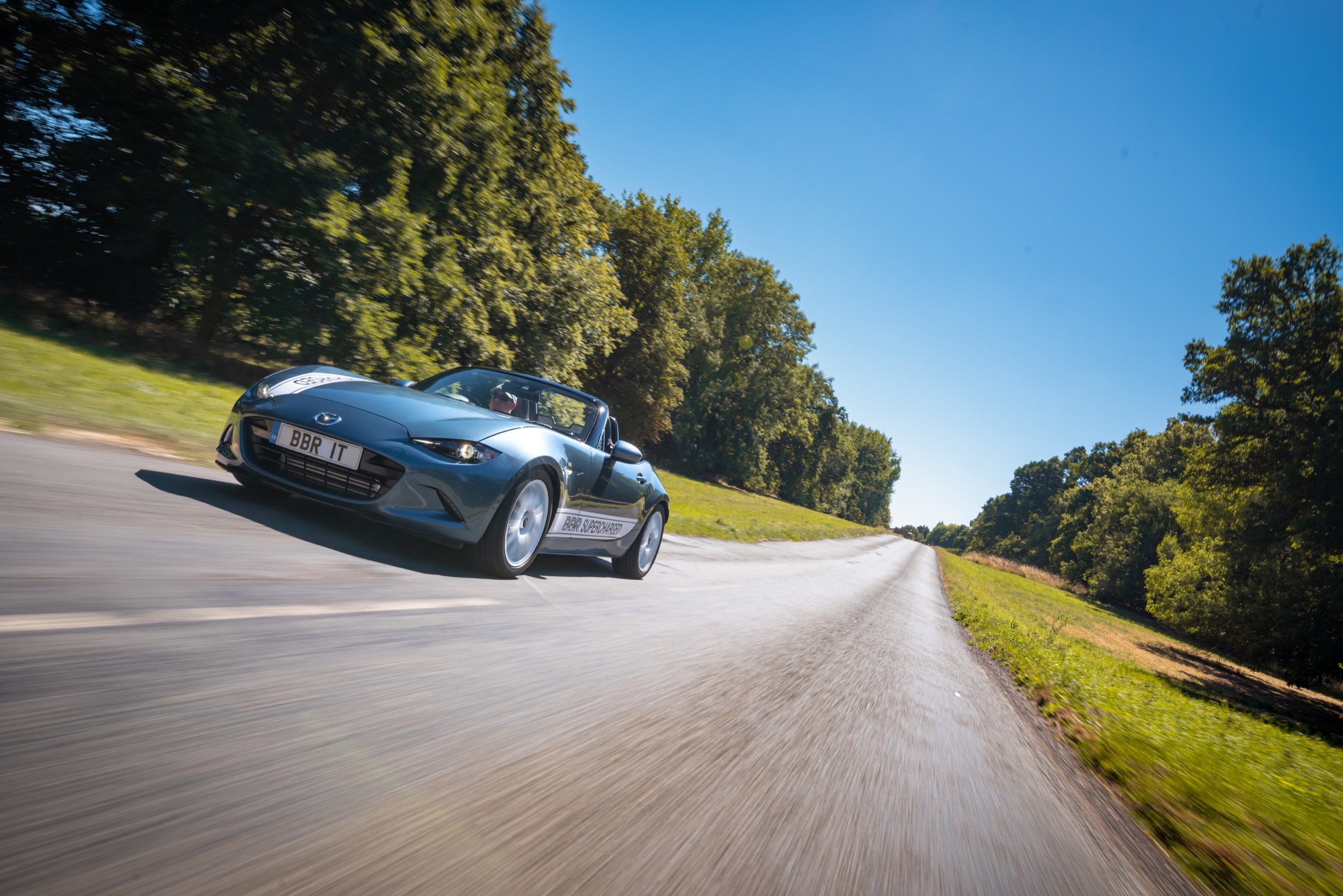
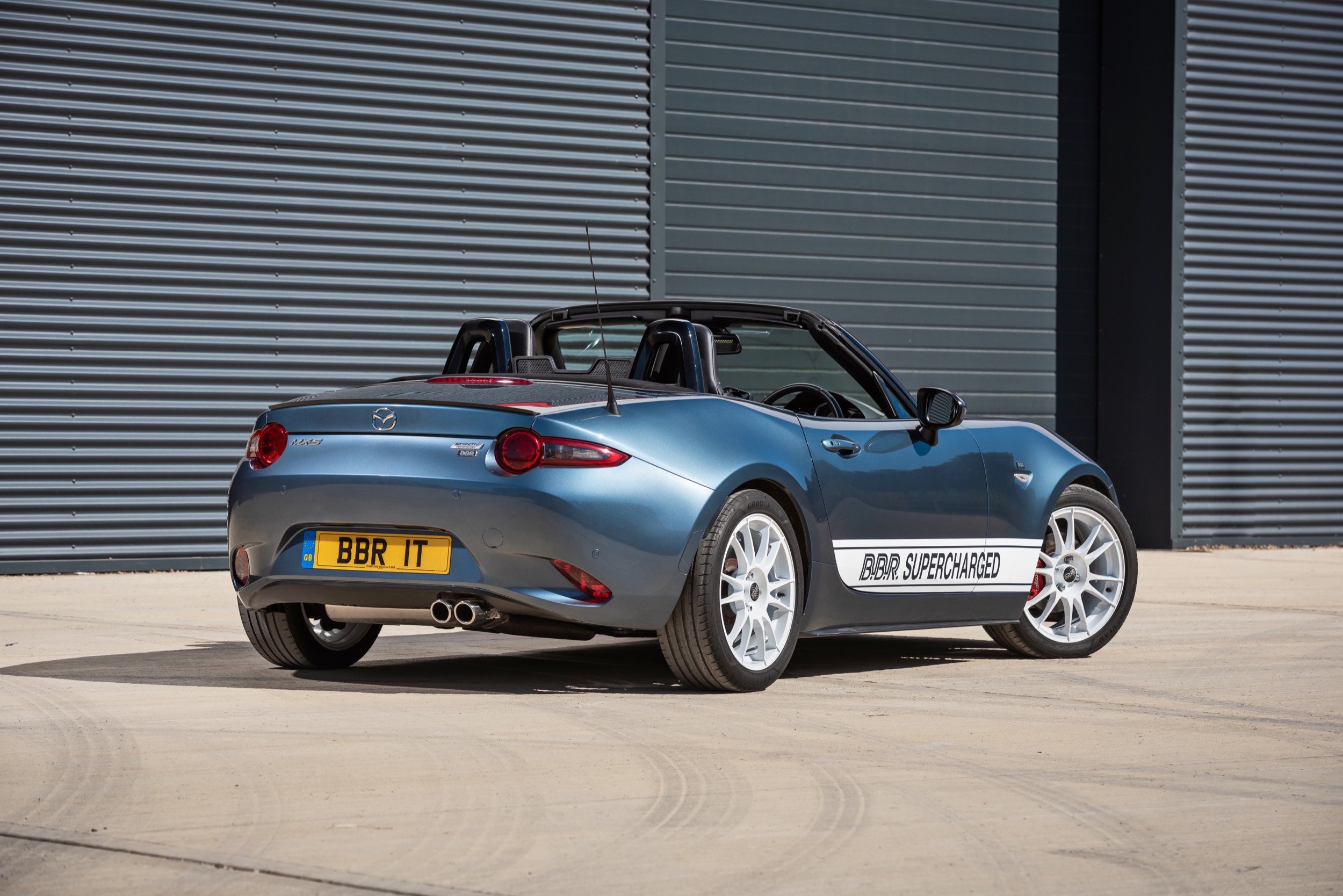
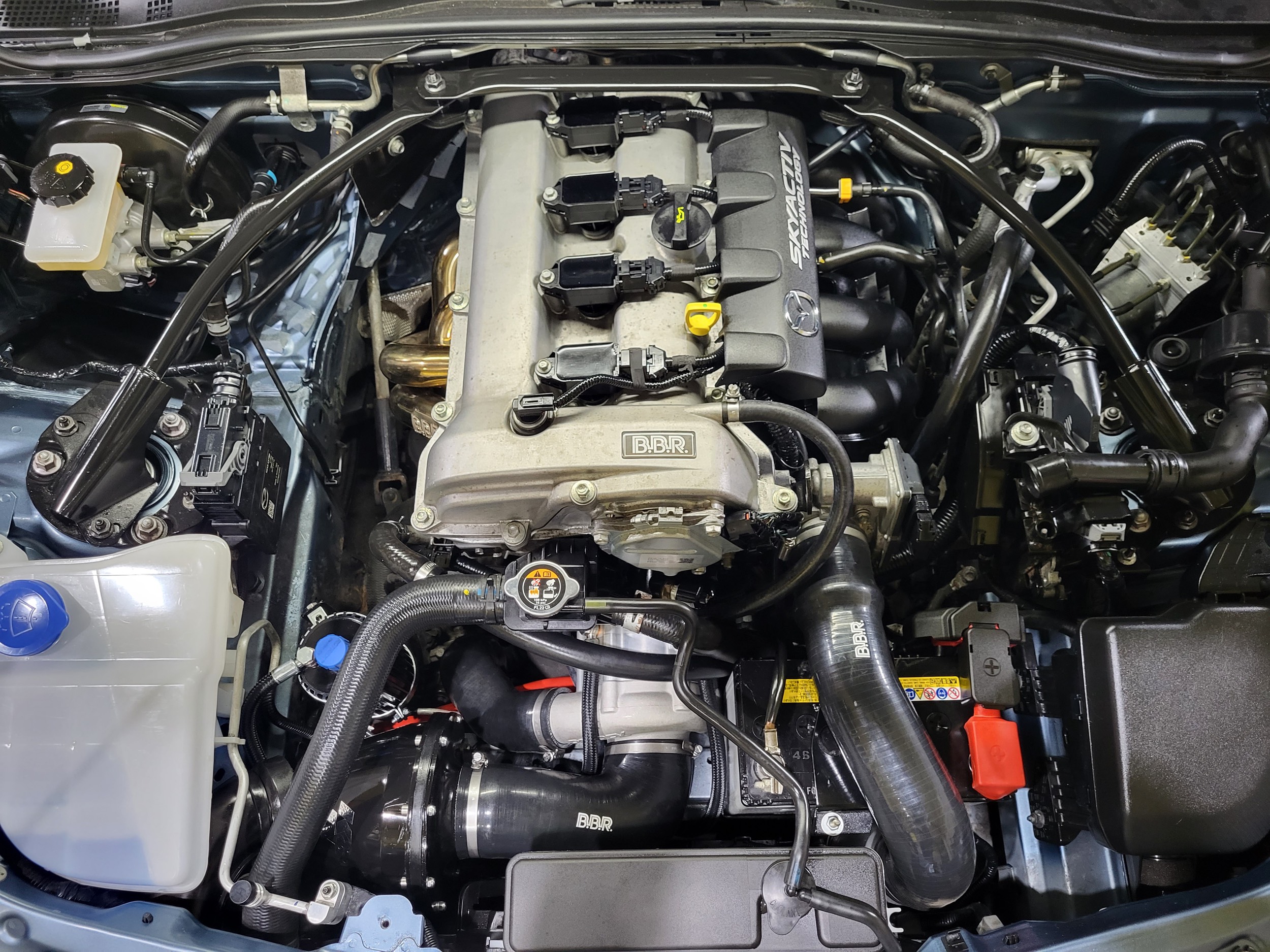
    The autumn temperatures may be starting to cool, but renowned Mazda tuning specialist BBR is heating things up again for MX-5 owners. That’s because BBR is delighted to launch two all-new supercharger tuning packages for the 2.0-litre Mazda MX-5 ND models (MY2015-2019,) with up to 250 bhp available.

    Using the proven and reliable Rotrex supercharger unit, both BBR’s Stage 1 and Stage 2 packages have been designed to install without intrusive mechanical alterations onto the 1998cc SkyActiv-G engine and the under bonnet appearance remains OEM-like and discrete.

    Despite the subtle visuals the BBR supercharger packages’ gains are significant – aside from the 225bhp peak power figure, the Stage One upgrade offers a highly useable 200 lb.ft plus of torque between 3750 rpm and 5750 rpm, making it highly responsive and ideal for fast road use for the performance orientated driver.

    Initial performance testing with the Stage One supercharger upgrade indicates a 0-60 mph time shaved from a factory 7.3 seconds to a supercar rivalling 5.3 seconds, enabling the BBR Stage One equipped Mazda MX-5 to scalp for more expensive machinery via its impressive power to weight ratio of 217 bhp per ton.

    Stage Two concentrates on improving flow, not boost pressure. Utilising BBR’s fully TIG welded stainless steel 2.5 inch bore high flow exhaust enables further power to be released without additional stress on the SkyActiv-G engine. In addition, an optional Forge Motorsport intercooler upgrade is available to ensure that the inlet charge temperatures remain optimal even in the most demanding conditions. This releases up to 250 bhp at peak, allied to 220lb.ft of torque, resulting in a 0-60 mph sprint in just 5.1 seconds.

    Proven Engineering

    BBR has extensive experience of enhancing the Mazda MX-5 since the late 1980’s and called upon its considerable in-house engineering expertise to develop a forced induction package for the SkyActiv-G engine, a process that began back in 2015 with early development conducted on a Mazda 3 test vehicle.

    Throughout development BBR’s technical team has paid significant attention to both supercharger oil and intake temperature cooling, ensuring that the complete packages deliver full performance as consistently as possible, irrespective of road conditions and ambient temperatures.

    “BBR has undertaken many, many months of both in-house dyno and road validation during the development of both the Stage One and Stage Two packages for the ND model of the MX-5,” comments BBR’s Neil Mckay. “This has resulted in a pair of supercharger upgrades that are feature rich with BBR specific components, each designed to enhance performance while retaining ultimate reliability,” he continues. “Opting for the Rotrex supercharger enables BBR’s most straightforward forced induction install to date, meaning that it is well within the capabilities of most DIY mechanics and easy for any professional,” concludes Mckay.

    BBR Mazda MX-5 ND - Rear Angle

    BBR Stage One Supercharger Package Technical Details:

    • C30-94 Rotrex Supercharger
    • Rotrex Oil reservoir
    • BBR Oil Cooler
    • BBR High Quality Anodised CNC Rotrex brackets
    • BBR High Quailty Anodised CNC Tensioner brackets
    • BBR spec revised ancillary belt and tensioner
    • BBR 250BHP intake restrictor
    • BBR high flow K&N Typhoon induction kit
    • BBR Front mounted intercooler
    • BBR branded Intercooler silicone hoses
    • BBR billet aluminium black anodised MAF mount
    • BBR / Bosch MAP / Temperature sensor
    • BBR Recirculating piston type dump valve in factory black finish
    • BBR lightweight aluminium battery tray in factory black finish inc battery stay & connection extension
    • BBR Starchip EcuTek calibration software
    • Optional hardware only and BBR Software/EcuTek programming cable choices for DIY clients

    BBR Stage Two Supercharger Package Technical Details:

    • BBR 4-1 Stainless steel exhaust manifold
    • BBR high flow 2.5″ Stainless Steel centre section including sports catalyst
    • BBR high flow 2.5″ Stainless Steel Grand Tourer rear silencer – Super Sport option available
    • Optional track spec Forge Motorsport intercooler – an increased core size with higher efficiency keeping inlet temperatures to a minimum under the most testing conditions.

    BBR Mazda MX-5 ND - Engine

    Pricing and Availability:

    The BBR Stage One supercharger conversion is available now for all 2.0-litre 2015-2019 MX-5 (ND) models at a cost of £4795* on a fully fitted ‘drive-in, drive-out’ basis from BBR’s Brackley facility. The DIY version, intended for export purposes and competent mechanics, is also available as hardware only for £3895, including comprehensive instructions and technical support, or including BBR software with either EcuTek ProEcu or ECU Connect programming cables stating at £4490.

    Stage Two starts at £6495* on a fully fitted ‘drive-in, drive-out’ basis from BBR. The DIY version, intended for export and competent mechanics, is also available as hardware only £5395, including comprehensive instructions and technical support, or including BBR software with either EcuTek ProEcu or ECU Connect programming cables stating at £5990.

    Both BBR supercharger conversion packages carry a 12-month warranty.

    *Standard vehicles will require an EcuTek tuning licence

  • Rolls-Royce Spectre

    In 1900, Rolls-Royce co-founder, Charles Rolls, prophesised an electric future for the motor car. Having acquired an electric vehicle named The Columbia Electric Carriage, he foresaw its suitability as a clean, noiseless alternative to the internal combustion engine – providing there was sufficient infrastructure to support it. Today, more than 120 years later, the time has come for Rolls-Royce Motor Cars to fulfil the prophecy of its founding father.

    This prophecy could not have been fulfilled without a more recent promise, when Rolls-Royce CEO, Torsten Müller-Ötvös, made a public commitment to electrification by announcing that he would bring a fully-electric Rolls-Royce to market within the current decade. Charles Rolls’ prophecy and Torsten Müller-Ötvös’ promise led to an historic moment. In September 2021, the marque confirmed that it had commenced testing of Spectre, the first Rolls-Royce to be conceived and engineered from the very beginning as an electric car.

    To ensure that this transformative motor car was sufficiently prepared for the most demanding consumer in the world – the Rolls-Royce client – the marque devised the most exhaustive testing programme it had ever conceived. Spectre is being subjected to a journey of more than 2.5 million kilometres, simulating more than 400 years of use for a Rolls-Royce. On its completion in 2023, Spectre will represent a prophecy fulfilled, a promise kept and an undertaking completed.

    Spectre is not only an historic moment for Rolls-Royce, but also an historic moment for electrification – with Spectre, the marque confirms that the technology has reached a standard that can contain the Rolls-Royce experience. To that end, Rolls-Royce has confirmed that by the end of 2030 its entire product portfolio will be fully-electric.

    THE FUTURE BEGINS

    Spectre is more than a motor car. It is a statement of intent and a symbol of a bright, bold future as Rolls-Royce progresses into an all-electric era. This commitment to an all-electric powertrain will only enhance the Rolls-Royce experience – instant torque, silent running and the sense of one imperceptible gear have defined the characteristics of an extraordinary canon of products dating back to the very first Rolls-Royce, the 1904 10 H.P.

    With Spectre, Rolls-Royce has harnessed a revolutionary ‘Decentralised Intelligence’ system that allows for the free and direct exchange of information between more than 1,000 vehicle functions, further elevating the marque’s celebrated quality of ride. Its designers have captured a contemporary yet timeless aesthetic that significantly progresses the brand’s iconography as it embarks on its electric age. Its craftspeople have created a suite of contemporary prêt-à-porter personalisation possibilities, including Starlight Doors and Illuminated Fascia, inspiring clients to realise their own Bespoke visions.

    DESIGN

    In unveiling Spectre, Rolls-Royce sets a new precedent in the creation of an entirely original class of motor car: the Ultra-Luxury Electric Super Coupé. This designation refers to Spectre’s indulgent proportions, specified in response to a commitment that there is no greater luxury than that of space.

    The marque’s designers are deeply rooted in the context occupied by their motor cars. Therefore, their inspiration is drawn from worlds far beyond automotive, including haute couture, modernist sculpture, nautical design, tailoring and contemporary art. In conceiving the principal sketches for Spectre, the marque’s creatives were drawn to modern yacht concepts, specifically the clarity and precision of line, intelligent use of reflection and application of taper to emotionalise silhouettes.

    From the front, Spectre’s split headlight treatment is intersected by the widest grille ever bestowed on a Rolls-Royce. The vanes of the Pantheon grille are now smoother in section and a flusher fit, designed to help guide the air around the motor car’s front.

    The relaxed angle and polished stainless steel finish of the grille does much to enhance Spectre’s presence using environmental reflection. Along with an aero-tuned Spirit of Ecstasy figurine – itself the product of 830 combined hours of design modelling and wind tunnel testing – the grille enhances the motor car’s unprecedented drag coefficient, which at just 0.25cd makes Spectre Rolls-Royce’s most aerodynamic motor car, ever.

    This intelligent treatment has been married to the iconography of Spectre’s spiritual predecessor, the Phantom Coupé. Spectre clearly acknowledges its forebear with its generous proportions and split headlight treatment – a contemporary Rolls-Royce design tenet. Spectre’s sharp daylight running lights emphasise the motor car’s imperious two-metre width and are offset with lower lamp clusters that appear darkened, at first glance, but hide jewellery box-like darkened chromium housings for the headlights. To affirm Spectre’s expression after dark, the grille is softly illuminated, with 22 LEDs lighting up the sandblasted rear side of each of the vanes, their gentle glow reflected in the polished front surfaces for a subtle and three-dimensional night signature.

    In profile, the sharp, vertical bow line at the front of Spectre draws the eye rearward to its monolithic flanks. The lower line – known as the ‘waft line’ – borrows directly from yacht design. Instead of exaggerating movement with busy detailing or appliqués, Spectre’s coachwork gently tucks into the sill, lightening the surfacing and creating an uncomplicated sense of motion by reflecting the road passing beneath it, much as the hull of a racing yacht reflects the ocean as it cuts through water. This ‘waft line’ is the visual representation of the ‘magic carpet ride’ and its upwards sweep toward the front is inspired by the gently lifting bow of an accelerating power boat.

    The silhouette’s most dramatic feature is Spectre’s fastback, which recalls the most evocative motor cars and watercraft in history. The seamlessness of the greenhouse surfacing significantly contributes to achieving the lowest drag coefficient ever for a Rolls-Royce. Following the roofline back, the tail lamps are set into the largest single body panel ever produced for a Rolls-Royce, which extends from the A-pillar to the luggage compartment. The jewel-like vertical tail lamps themselves are colourless for neutrality, in anticipation of the myriad of colourways selected by clients during the commissioning process. Their precision and reduced dimension complement the generous flow of the bodywork from the muscular shoulders backwards into the tail section with its characteristic tapering plan view.

    The proportional demands of Spectre’s scale required Rolls-Royce to embolden its wheel strategy. Spectre is the first production two-door coupé to be equipped with 23-inch wheels in almost one hundred years.

    Inside, Spectre is provisioned with the most technologically advanced Bespoke features yet, drawing inspiration from the timeless mystique of the night’s sky. For the first time on a series production Rolls-Royce, Spectre is available with Starlight Doors, which incorporate 4,796 softly illuminated ‘stars’. The coach doors can also be commissioned with a backdrop of wood Canadel Panelling, which takes its name from the cove in the South of France where Sir Henry Royce and his design team spent their winters.

    The ethereal night-time theme continues with Spectre’s Illuminated Fascia. Developed over the course of two years and more than 10,000 collective hours, it incorporates the Spectre nameplate surrounded by a cluster of over 5,500 stars. Located on the passenger side of the dashboard, the illuminations are completely invisible when the motor car is not in operation.

    Alongside the extraordinary, illuminated surfaces, Spectre is equipped with a completely redesigned digital architecture of luxury named SPIRIT, presented in quintessential Rolls-Royce style. Not only will SPIRIT manage the motor car’s functions, but it is seamlessly integrated into the marque’s Whispers application, allowing clients to interact with their car remotely, and receive live information curated by the marque’s luxury intelligence specialists.

    For the first time ever, clients are now able to extend their Bespoke commission beyond the physical world and into the digital architecture that underpins SPIRIT. Inspired by the marque’s clients’ love of bespoke timepieces, the colour of the dials can now complement the interior hue of the motor car.

    As with all Rolls-Royce motor cars, Spectre’s interior suite offers clients near-infinite Bespoke possibilities. The all-new front seat design has been inspired by British tailoring, with lapel sections that can be rendered in contrasting or matching colours to the main base. Bespoke stitching, embroidery and intricate piping has, as ever, been considered in their inception.

    ALL-ALUMINIUM ARCHITECTURE OF LUXURY

    2003 saw the first Goodwood-era Phantom, built upon its own Bespoke architecture. This renaissance of the brand was Rolls-Royce 1.0. Following this, the ‘Architecture of Luxury’ was conceived – a new, highly flexible all-aluminium spaceframe architecture, and visionary feat of engineering, that could be tailored for electric drive, as well as today’s Phantom, Cullinan and Ghost models, and Coachbuild projects. This expansion of the marque’s offering was Rolls-Royce 2.0. The ability to tailor the Architecture of Luxury for electric drive was a fundamental consideration when it was first conceived. However, it is only now that electric drive technology is advanced enough to fulfil the Rolls-Royce experience. The introduction of a fully-electric powertrain and Decentralised Intelligence into the marque’s portfolio represents Rolls-Royce 3.0 and the beginning of the bold new all-electric era.

    By ensuring from the outset that the Architecture of Luxury could be tailored to the requirements of an all-electric Rolls-Royce, the marque’s engineers ensured the continuity of experience from its current portfolio, each evolution of which has done much to secure the brand’s ongoing global success. Indeed, the inherent flexibility of the architecture and ease of integration of an electric powertrain has freed engineers, designers and craftspeople to focus on the quality of experience, authenticity of design and innovation in Bespoke.

    For Spectre, Rolls-Royce engineers have unlocked further benefits. The sophisticated extruded aluminium sections and integration of the battery into the structure of the motor car enable it to be 30% stiffer than any previous Rolls-Royce. The flexibility of the architecture has also allowed engineers to place the floor halfway between the sill structures rather than on top or underneath them. A channel has been created for wiring and climate control pipework between the battery and the floor, with the battery mounted underneath, providing a perfectly smooth underfloor profile. This not only creates a low seating position and enveloping cabin but realises a secondary function for the battery – almost 700kg of sound deadening.

    DIGITAL ENGINEERING

    For Spectre, Rolls-Royce’s engineers have seen much of their discipline pivot from the workshop to the digital space. Spectre is the most connected Rolls-Royce in history, and in harnessing the power of the motor car’s remarkable Decentralised Intelligence processing capabilities there is more requirement than ever for expert human experience.

    To ensure the continuity of the Rolls-Royce experience, as well as its progression, the marque selected the most experienced test and development engineers to lead the project, some of whom have been with the marque for more than two decades and were responsible for creating the first ‘Goodwood-era’ Phantom. These engineers describe the experience offered by Spectre as akin to “Rolls-Royce in high definition” on account of the speed and accuracy of the motor car’s response to a worldwide spread of road and weather conditions.

    For this to be realised, a dedicated control has been handmade for each of the 141,200 sender-receiver variables, and in nearly all cases engineers have designed several more sub-variables for variations in climate, ground speed, road type, vehicle status and driving style. These have been crafted over the course of Spectre’s 2.5 million kilometre testing programme both on advanced proving grounds and on real roads around the world.

    PLANAR SUSPENSION

    In testing Spectre, the process includes extreme driving conditions – development of the motor car began just 55km from the arctic circle in Arjeplog, Sweden, at temperatures as low as -40 degrees centigrade, and it will continue across Southern Africa, in temperatures of up to 55 degrees centigrade. Yet, 55% of testing is taking place on the very roads that many production Spectres will be driven on. Of particular significance was the French Riviera. It was on the Côte d’Azur that Spectre’s digitally integrated evolution of the renowned Planar suspension system was finalised.

    Planar suspension is an orchestra of systems with precisely defined responses to driver inputs and road conditions, made possible by the latest software and hardware developments, delivering Rolls-Royce’s hallmark ‘magic carpet ride’.

    Using a suite of new hardware components and leveraging Spectre’s high-speed processing capabilities, the Planar system can decouple the car’s anti-roll bars allowing each wheel to act independently, preventing the rocking motion that occurs when one side of a vehicle hits an undulation in the road. This also reduces high-frequency ride imperfections caused by shortcomings in road surface quality.

    Once a corner is identified as imminent, the Planar system recouples the components and stiffens the dampers, the four-wheel steering system is then prepared for activation to ensure effortless entry and exit. Under cornering, 18 sensors are monitored, and steering, braking, power delivery and suspension parameters are adjusted so that Spectre remains stable. The result is effortless control.

    POWER, RANGE AND DIMENSIONS

    The final power, acceleration and range figures are still being refined, as the extraordinary undertaking of finessing Spectre enters its final phase before concluding in the second quarter of 2023. Preliminary data shows that Spectre is expected to have an all-electric range of 320 miles/520 kilometres WLTP and offer 900Nm of torque from its 430kW powertrain. It is anticipated to achieve 0-60mph in 4.4 seconds (0-100km/h in 4.5 seconds).

    With many months of testing and optimisation of Spectre still ahead, these figures are subject to change ahead of official confirmation prior to market launch in Q4 2023.

    SPECTRE DIMENSIONS: 
    Number of doors / seats
    Vehicle length
    Vehicle width
    Vehicle height (unladen)
    Wheelbase
    Turning circle
    Kerb weight
    2 doors / 4 seats
    5453 mm / 214.685 in
    2080 mm / 81.889 in
    1559 mm / 61.377 in
    3210 mm / 126.378 in
    12.7 m
    2975 kg
  • Toyota Corolla Hatchback

    The Toyota Corolla Hatchback takes all the reliable hardware from the Corolla Sedan and mixes it with a bit of mischievous fun to make a stylish yet practical sporty machine. For 2023, the Corolla Hatchback shares all the safety and multimedia upgrades from the Sedan and adds a few of its own.

    Starting with the look, Corolla Hatch’s striking design is revved up for 2023 with an updated front grill and rear bumper with available silver accents. The new premium large daytime running light (DRL) headlights and taillights are borrowed from the new GR Corolla super hatch. The SE model features new-design 10-spoke 16-inch aluminum wheels, while the XSE gets new 18-inch graphite-colored aluminum wheels.

    All 2023 Corolla models upgrade to new Toyota Safety Sense 3.0 with new Proactive Driving Assist, including Obstacle Anticipation Assist and Deceleration Assist. The SE grade joins the XSE in featuring standard Smart Key, while both grades add enhanced Sport driving mode tuning and red interior accents replacing blue.

    The new 8-inch Toyota Audio Multimedia system offers more versatility than ever, including standard wireless Apple CarPlay® and Android Auto™ compatibility. Both model grades also gain two rear-seat USB-C ports, bringing the total in the car to four. The XSE piles on the value by making Qi-compatible wireless device charging standard, along with the sonically stunning JBL Premium Audio with an 800-watt 8-speaker System. What’s more, all 2023 Corolla models deliver added value with Safety Connect and Service Connect with up to a 10-year trial subscription.

    The Many Colors of Fun

    In tandem with styling updates for 2023 come two standout new colors for the Corolla Hatchback. Blue Crush Metallic replaces Galactic Aqua Mica, while Inferno replaces Blue Flame. Colors that carry over from 2022 include Midnight Black Metallic, Classic Silver Metallic, Finish Line Red, Magnetic Gray Metallic, Wind Chill Pearl and Ice Cap. Two-tone color combinations using a Midnight Black Metallic roof are available to further heat up Corolla Hatch’s striking good looks.

    Solid Core, Dynamic Lines

    Corolla Hatchback’s bold look begins with a rounded, muscular physique accented by chiseled character lines and simple, condensed three-dimensional highlights. Combined with the 16- or 18-inch wheels, the shape gives the Hatchback an active, well-planted attitude. Slim, aggressive LED headlamps, updated for 2023, wrap deeply into the front fenders and give Corolla Hatchback a distinct expression. The LED taillamps feature a diffusing inner lens designed to highlight the Hatchback’s stout stance. The XSE adds LED fog lights to the front fascia accented by chrome fog bezels.

    Naturally, the Hatchback is practical, starting with the hatch itself. Made from TSOP (Toyota Super Olefin Polymer) and ABS (Acrylonitrile Butadiene Styrene), the car’s lightweight hatch is easy to open and close. The available Enhanced Cargo Space option adds six cubic feet of space by lowering the cargo floor, made possible by switching out the spare tire for a tire repair kit.


    Tech + Comfort

    The standard 4.2-inch display is located between the tachometer and speedometer. The available 7-in Fully Digital Gauge Cluster allows the driver to choose between multiple digital speedometer styles customizing their driving experience.

    Featuring rich graphics, the easy-to-read MID can be custom configured by the driver and offers intuitive operation to access information for the audio and multimedia systems. This includes hands-free phone operation, navigation and vehicle information including fuel efficiency and tire pressure and TSS 3.0 functions. Other important parameters and system settings are also available, and the driver can operate the system via steering wheel-mounted controls and voice command.

    The Corolla Hatchback cabin is equal parts sporty, elegant and, as always, Corolla-comfortable and durable. Minimized gaps between buttons and switches and consistency in all materials and elements’ shape, color, grain and gloss help maximize continuity and aesthetic quality. High-gloss materials are paired with matte elements – silver accents with Piano Black and available contrast stitching – to accentuate a premium look and feel.

    The center console incorporates a tray ahead of the gearshift that can hold small items such as a smartphone or wallet. When the car is so equipped, the tray serves as the Qi wireless device charging area. A 5.5-inch smartphone can easily fit inside the center console box.

    Seating comfort, always a Toyota strength, is optimized in the Corolla Hatchback to provide a natural body posture and position. Ample front door storage includes cup holders that can fit 24-ounce bottles. Rear seat passengers have upper door cup holders that hold 16-ounce bottles.

    The Corolla Hatchback SE grade comes standard with single-zone automatic climate control, an electronic parking brake, automatic up/down power windows and two front and two rear USB ports.

    Both the XSE and SE grades come with Paddle Shifters standard. The XSE grade comes with dual-zone climate control, fabric/SofTex trimmed seating, unique stitching on the instrument panel and doors, heated front seats and an eight-way power driver’s seat standard.


    A Driver’s Hatchback

    Toyota designed the Corolla Hatchback as a complete driver’s package, with a seamless combination of comfort and sporty controllability that begins at its TNGA-C platform. The structure employs extensive use of aluminum and high- and ultra-high tensile steel. A mixture of adhesives, spot welding and additional bracing – top to bottom, side to side – to create a super-strong, super-tight platform for ride comfort and handling agility.

    The MacPherson strut front suspension employs sophisticated techniques, including a strut bearing mounted coaxially with the kingpin axis. This feature allows smoother upward suspension travel, especially while traversing bumps, resulting in a more comfortable steering feel. The multi-link rear suspension is highly adept at comfortably absorbing bumps while prioritizing agility. The result: A Corolla Hatchback that delivers an uncanny blend of balance, composure and feel that invites the driver to seek out twisty roads.

    Powertrain and road noise are hushed thanks to drivetrain efficiencies and the widespread deployment of sound-absorbing materials, including Thinsulate®, sealants, foams and silencer pads. As one example, the floor silencer pad is one large piece, instead of many smaller elements. The TNGA structure employs additional seals in body gaps to insulate noise penetration and enhance air-sealing performance. Even Corolla Hatchback’s Aero Stabilizing Fins on the taillights help by combatting wind drone.

    Dynamic-Force Engine Aptly Named

    The 2.0-liter Dynamic-Force direct-injection inline four-cylinder engine delivers exuberant performance from 169 horsepower at 6,600 rpm and 151 lb-ft. peak torque at 4,800 rpm. Its features read like those of a sports car: very high compression ratio (13:1), ultra-low internal friction, Toyota D4-S fuel injection combining direct injection and secondary port injectors, high-speed combustion and VVT-iE intelligent variable valve-timing on the intake side and VVT-i on the exhaust. (VVT-iE uses an electric motor instead of oil pressure to control the variable valve timing.)

    Features like a rigid crank case with integrated stiffener, a lightweight resin camshaft cover and a ribbed oil pan help to make the engine a smooth operator. With all the fun comes the bonus of low fuel consumption, with EPA-estimated 32 city / 41 highway / 35 combined MPG for SE grade with CVT and 30 city / 38 highway / 33 combined for XSE grade with CVT. Automatic Stop/Start reduces fuel usage in urban driving.

    A continuously variable-capacity oil pump and a variable cooling system with electric water pump help maximize engine performance and efficiency. The 2.0-liter Dynamic Force engine can achieve 40% thermal efficiency, among the highest in the world for a gas-fueled passenger vehicle engine and a true measure of how well the engine converts fuel to energy.


    Next-Gen Multimedia

    All 2023 Corolla models debut a new standard next generation 8-inch Toyota Audio Multimedia system designed and engineered by Toyota’s Texas-based Connected Technologies team. The new system provides a wide range of enhanced connectivity and convenience features and is Over-the-Air (OTA) updatable.

    Users can interact with the new system’s design through intuitive touch and voice activation controls. With available Drive Connect, users have access to Intelligent Assistant, Cloud Navigation and Destination Assist (Active Drive Connect trial or subscription required).

    With Intelligent Assistant, speaking simple phrases like “Hey Toyota” awaken the system for voice activated commands to search for driving directions, find Points of Interest (POI), adjust audio controls, change the cabin temperature and more. Cloud Navigation is the available onboard navigation solution that utilizes the cloud to download the latest available map, traffic and routing information.

    To ensure the most up-to-date search capabilities, POI search is provided by Google Points-of-Interest data. Destination Assist also gives access to 24/7 live agent assistance to locate your next destination.

    The new Toyota Audio Multimedia system allows dual Bluetooth phone connectivity, with support for standard wireless Apple CarPlay® and Android Auto™ compatibility. An available Wi-Fi Connect subscription offers 4G connectivity for up to five devices, turning the car into an AT&T Hotspot, along with the ability to link customers’ separate Apple Music® and Amazon Music subscriptions to the vehicle with the new Integrated Streaming feature. This augments the already robust audio playback ability that includes HD Radio, USB data and a SiriusXM® Platinum Plan 3-month trial subscription.

    The SE audio system includes six speakers. The audio experience goes to a higher level with the JBL® Premium Audio system with 8 speakers including an 800-watt amplifier. For 2023, it’s made standard for the XSE.

    All Corolla models offer a host of Connected Services available on all grades (trial or subscription required1). Safety Connect™, now with up to a 10-year trial subscription for 2023, includes an Emergency Assistance Button (SOS), 24/7 Enhanced Roadside Assistance, Automatic Collision Notification, Stolen Vehicle Locator and Collision Assistance. Service Connect, also with up to a 10-year trial subscription for 2023, offers drivers the capability of receiving Vehicle Health Reports, Maintenance Alerts and reminders. With the Toyota app, users can stay connected to their Toyota with the available Remote Connect service.

    Standard Smart Key System with Push Button Start works on the front doors and hatch and also for remote keyless entry with lock, two-stage unlock, panic and trunk-release functions.


    14G network dependent. Certain features include a trial period at no additional cost upon original date of new vehicle purchase or lease. After the trial period ends, a paid subscription is required. More details on trial periods and subscription-based features can be found at https://www.toyota.com/connected-services/.

    Upgraded Safety Tech: TSS 3.0

    Toyota became an early leader in equipping its vehicles with safety systems featuring automatic emergency braking. For 2023, Toyota Safety Sense technology in Corolla evolves to version 3.0 and includes enhanced versions of the following:

    • Pre-Collision System with Pedestrian Detection (PCS w/PD)
    • Lane Departure Alert with Steering Assist (LDA w/SA)
    • Dynamic Radar Cruise Control (DRCC)
    • Lane Tracing Assist (LTA)
    • Road Sign Assist (RSA)
    • Automatic High Beams (AHB)

    New features are Proactive Driving Assist, Obstacle Anticipation Assist and Deceleration Assist. In addition, Blind Spot Monitor (BSM) is standard on XSE and available on SE.

    The 2023 Corolla Hatchback has 10 standard airbags and Toyota’s Star Safety System, which includes Enhanced Vehicle Stability Control, Traction Control, Electronic Brake-force Distribution, Brake Assist, Anti-lock Braking System and Smart Stop Technology. Corolla Hatchback also comes equipped with a standard backup camera.