 TechArt revealed the first renderings of its new GTstreet model based on the 911 Turbo of the latest 997 series. A direct inheritor of the 2001 TechArt GTstreet based on the Porsche 911 Turbo of the 996 model series, the new beast boasts 630 hp / 463 kW at 6,800 rpm, up from standard 480 hp / 353 kW, the peak torque is increased to 820 Nm at 4,500 rpm.
Blog
-
TechArt GT Street – based on Porsche 911 Turbo
-
Oettinger TT
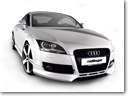 As opposed to many others, at OETTINGER’s in Friedrichsdorf they have not succumbed to the temptation of over-loading the new development of the Audi design star by adding the usual pretentious add-ons with air intakes widely ajar and huge spoiler-works supposed to enhance the impression of sportive power. (more…)
-
ROUSH Stage 3 BlackJack
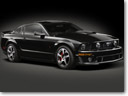 If Batman owned a Mustang, the new 2007 ROUSH Stage 3 BlackJack would most certainly be the ride of choice for the Caped Crusader. This menacing 430 horsepower tone-on-tone limited edition pony car comes straight from the mind of Jack Roush himself and is set to stalk the streets of Gotham City, and the rest of the country.
Jack Roush had the vision, and the ROUSH Stage 3 BlackJack Mustang is the result. He personally developed the content of this black-on-black car, and a prototype build was his vehicle of choice while at many of the NASCAR Nextel Cup events during the 2006 season. That particular Mustang recently ended up on the Barrett-Jackson auction block as an extremely collectible one-of-a-kind car. Now, ROUSH Performance is set to offer a limited edition run of 100 ROUSH Stage 3 BlackJack Mustangs, all of which have been pre-sold through their ROUSH-authorized Ford dealer base.
“I am involved with all the vehicles that ROUSH Performance builds, but the Stage 3 BlackJack is really the first one which was entirely my design and I am quite proud of how well it turned out,” said Jack Roush. “When I drove the prototype around the NASCAR tracks last season it got a lot of attention, mainly due to the intimidating theme of the car. Of course, the distinctive rumble of a ROUSHchargedTM V-8 engine turns a lot of heads, too. ”

ROUSH Stage 3 BlackJack Jack Roush’s heritage as the winningest name in racing reverberates throughout the vehicle, starting with the powertrain which is what ROUSH Performance is so well known for. The polished ROUSHchargerTM system with a smaller pulley boosts the horsepower to 430 (with 400 lb.-ft. torque) which is the most in the history of the company. This system includes a Roots-style M90 supercharger, 38 lb.-hr. fuel injectors, ROUSH-designed intake manifold, intercooler assembly with radiator and a custom ROUSH ECM calibration to maximize optimal fuel and spark.
Aesthetics were also a big part of Roush’s vision for the Stage 3 BlackJack, starting with the matte black 21-inch stripe across the center of the black paint and the addition of the seven-piece ROUSH aerobody kit. Polished billet aluminum accessories, such as radiator, oil and strut tower caps, can be found throughout the engine compartment which contributes to the exciting package for street or track driving. Enthusiast drivers will immediately notice the handling of the vehicle has been improved by the addition of the Stage 3 suspension package which swaps out the stock front struts, rear shocks, front and rear springs, front and rear sway bar and jounce bumpers for ROUSH-engineered high performance versions.
Roush was also adamant about including the new ROUSH wheel hop reduction kit to help the rear wheel performance in low traction conditions. This is the only wheel hop kit on the market with a minimal NVH (noise, vibration and harshness) hit and no reduction in bushing life. Other manufacturers trade off anti-hop for a lot of noise, harshness and poor durability of the joints. The stopping rate is greatly improved with the addition of the ROUSH brake kit, a 14-inch, two-piece slotted rotor with four-piston calipers on the front and slotted rear rotors.
Interior upgrades include charcoal leather seating with an embroidered Stage 3 BlackJack logo, white electroluminescent gauges, billet aluminum pedal kit and short throw shifter with black shifter ball. The car comes standard with the ROUSH carbon fiber design dash trim kit and embroidered floor mats. Even the door sills have been upgraded in this model.
A ROUSH Stage 3 BlackJack serialized badge is riveted to the engine compartment, along with a Stage 3 signature badge which is personally engraved with the signature of the ROUSH Performance technician which hand-assembled the vehicle in the company’s Livonia, Mich., facility. To further validate the 100 cars, each will come with a Certificate of Authenticity signed by Jack Roush.
Once you get behind the wheel you will immediately see why we claim that ” Between a race car and a road car… Is a ROUSH car.”
-
Chevrolet N2A 789 by Kanter Concepts
 Chevrolet N2A 789 by Kanter Concepts is a car to speak of. You can take a look at the pictures but if you need more reasons I’ll give you some. First of all, the 789 combines the classic design elements from different models Chevy has released through the fifties. It actually mixes the designs of Chevys from the ’57. ’58 and ’59. Then the look of this particular model is so iconic that it can’t be mistaken with any other else.
Let’s talk about it in details now. The car has been built on a 2005-2007 Corvette C6 chassis. If this does not speak anything to you, then you should know that this is regarded one of the best performance chassis ever produced by Chevrolet. In addition, the 789 has the “hooded eyes” and chrome grille bar of a ’57 Bel Air model. It has been mixed with a mid-section and tri-toned interior that is reminiscent of the Impala from the 1958. The “bird in flight” rear tailfins are taken from the distant 1959.
The benefit of the 789 is that it isn’t a car form the fifties but it can hit the 190 mph within an instant and still use around 25 miles per gallon on the highway.


Another advantage here is that each and singe car produced will be unique. How will this happen? There won’t be any two identical paint scheme or colors, and the interior combinations are more than 10,000! This is how you will make sure that all eyes are on your vehicle.
The design process began with sketches first and then hand made clay models. The experts at Kanter Concepts find it really important to make everything the old-fashioned way so that they can keep the spirit of the fifties alive.
If you ask how much it would cost you to own this car, the answer is $135,000USD. For this amount of money you will get a machine capable of 400 horsepower produced by its aluminum block V8 engine, the abundant equipment of the Corvette, custom Borla exhaust system (each car gets a different one), PST high performance anti-sway bars and great wheel/tire combination. Optionally, anyone can opt for turbocharging or ceramic brakes, 1000 watt stereo or ostrich leather interior, at an additional pricing, of course.
https://www.youtube.com/watch?v=QqcpwibhaKw
Source: Kanter Concepts
-
Locus Phletore
 Having more than 22 years of experience in the fiber reinforced composite materials and in the exception car building, working, repairing and modifying Lamborghinis and other prestigious models, Luc Chartrand launched out into the design of a car that would represent perfection to him in terms of esthetics and mechanics.
After more than two years, he finally found a quite impressive concept. Inspired by other designers, he imagined a car that would stand out from others: with a really advanced interior and a quite large rear, an enormous air intake on each side, the LOCUS has no cause to be envious of any other cars in her class.
Often encouraged by friends, themselves Lamborghini owners, to get involved in the making of a prototype, Luc finally decided to produce one. The making goes well and the prototype that will serve as the mother mold is almost finished. The enthusiasm of people for this model is already noticeable


STANDARD EQUIPMENT
- Suspension: air-electronic
- Adjustable steering column: electric and manual adjustment
- Driver’s seat: electric
- Mirrors: electric (memory)
- Windows: electric
- Air conditioning: auto climate control
- Interior: leather, 3 seats, central driving
- Audio equipment: 5.1 sound system, cd dvd, 7 speaker, GSS
- Door closing and opening: automatic, electric, manual and remote control
- Interior mirror: retrovision (camera LCD screen)
- Proximity sensor: front, back and lateral
- Tire pressure detector: 4 wheels
ENGINE
- Disposal: longitudinal and central
- Nameplate: GM
- Architecture: V8
- Capacity: 8,2 liters
- Power: 550 hp – 1000 hp
- Torque: 565 lb.
TRANSMISSION
- Architecture: rear wheel drive
- Gearbox: 6 speed Tremec manual (aluminum)
- Differential: locking Getrag (aluminum)
RUNNING GEAR
- Disposal: power-assisted rack and pinion
- Suspension: independent wheel double wishbone suspension, shock absorber LOCUS systems
- Brakes: AP racing front, 15 inch ventilated disks, aluminum 6 piston-caliper
- Rear: 14 inch ventilated disks, aluminum 4 piston-caliper
SIZE
- Wheelbase: 115 ¾ in or 294 cm
- Length: 178 inch or 452 cm
- Width: 87 ½ inch or 222 cm
- Height: 44 inch or 112 cm
- Weight: 1250 kg
- Tires: Michelin pilot sport
- Front: 255/40 zr/18
- Rear: 415/30 zr/18 (future availability 400/30zr/18)
- Rim: aluminum 3 parts
- Front: 18/9
- Rear: 18/13
-
Renault Scenic Conquest
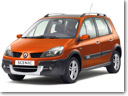 Scenic Conquest has been designed to help owners make the most of their leisure time. Its rugged front and rear styling resembles that of an off-roader.
With its raised ride height and strengthened suspension, the chassis has been adapted to suit all kinds of terrain. Renault Scenic Conquest is available with a choice of 2.0 16V 135hp petrol or 1.9 dCi 130hp diesel power (plus, in some markets, the 1.6 16V 110hp petrol and 1.5 dCi 105hp diesel).
Its extensive range of standard equipment includes rear parking proximity sensors, alloy wheels, longitudinal roof bars and, on 2.0 16V and 1.9 dCi versions, an electronic stability program (ESP).

Renault Scenic Conquest 


-
Maserati Gran Turismo
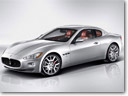 The new Maserati GranTurismo, styled by Pininfarina, makes its worldwide debut at the Geneva Motorshow. The Maserati GranTurismo is a muscular and sporty car, that can be enjoyed every day and a the same time is engaging for the driver. Its excellent handling and sportiveness makes it a point of reference in its category. The Maserati GranTurismo is built with particular attention to comfort, choice of materials and details and with enough room for four people, as only Maserati can do.
The new Maserati GranTurismo is a high-performance sports car, exciting to drive with a 4.2 liter V8 engine, delivering 405 HP, and a weight distribution of 49% at the front and 51% at the rear. It is fitted with an automatic gearbox and equipped with an adaptive control system which adjusts the gear-shifting mode to the driving style and the driving conditions.
Maserati’s tradition of the Gran Turismo concept dates back to 1947 when the Trident Company, following its clients’ demand, unveiled at the Geneva Auto Show its first Gran Turismo. It was designed by the great Pininfarina, and based on the racing chassis of the A6. It was the first Maserati road car and was produced in 58 units. The car was acclaimed by the automotive press for its advanced technical content and for its avant-garde style solutions.

Maserati Gran Turismo 


The new model name – Maserati GranTurismo – is not incidental. Once again, the partnership between Maserati and Pininfarina gives birth to a car that is able to generate emotions and sets itself apart from competitors, due to the technique with which it is built and its unique style.
The new Maserati GranTurismo represents a further step towards the completion of the Trident product range, following the worldwide launch of the Quattroporte Automatic at the 2007 North American International Auto Show in Detroit.
-
Nissan 350Z
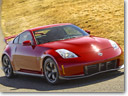 Nissan will be unveiling for the first time anywhere in the world a new model which will reinforce the company’s profit and growth aspirations in Europe. Carlos Tavares, Nissan’s Executive Vice President for Corporate Strategy and Product Planning, will present the new model at Nissan’s press conference at 1115 on Tuesday 6th March (1st press day). No further details will be released until the press conference.
As well as the world premiere, Nissan will also be showing the new, updated 350Z which will reinforce its credentials as a pure sports car with thrilling, involving performance.
With the fitment of the next generation 3.5 V6 engine – engine code VQ35HR – power has risen to 313PS (230kW) at 6800rpm and torque is now rated at 358Nm at 4800rpm, while the maximum engine speed has increased by 500rpm to 7500rpm. Nearly 80% of major engine parts are new, providing improved acceleration and responsiveness.
To achieve the additional performance, a dual intake system has been fitted and the variable valve timing system has a wider range of operation, plus the addition of a common length exhaust manifold reduces back pressure. Those changes combine to boost low and mid-range torque.

Nissan 350Z 


In order to achieve the higher rev limit, the crank journal and crank pin have increased in size. At the bottom of the engine, a ladder frame has been added to stiffen the crank and reduce vibration.
The introduction of a second knock sensor, an asymmetric piston pattern, improved cylinder cooling and iridium spark plugs will combine to improve the efficiency of the ignition cycle, while an increase in compression ratio from 10.3 to 10.6 has liberated more top end power. Despite all these changes, weight and fuel consumption remain unchanged, but the engine’s centre of gravity has been lowered by 15mm.
To accommodate the new engine the front bonnet has been discreetly redesigned and is now reminiscent of the original 240Z, thanks to a slightly raised profile, while three new exterior colours will also be offered. Temper Orange is a striking shade but also contains a subtle green “flip” which can be seen in soft light and gives the car a surprising tone, while a new grey – Precision Grey – and Night Blue complete the colour line-up.
Inside, a new trim has also been introduced, which is called Frost Grey. It is a pale tone and adds a touch of sophistication to the car’s interior. As well as a new interior trim colour, another important change to the interior is the fitment of Active Headrests, to minimize the chances of neck injury in the event of a rear impact.
And to improve on-road refinement, the 350Z is now equipped with Bridgestone Potenza RE050A tyres, however grip levels remain unaffected.
-
Land Rover Discovery 3 Pursuit
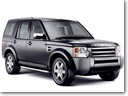 A new well-equipped limited edition Discovery 3, called the Pursuit, will be on sale in March 2007, for under £30,000 OTR. Only 300 Discovery 3 ‘Pursuits’ will be available from Land Rover dealerships across the country. Based on the TDV6 GS model, the Pursuit also features Java Black paint work with Ebony interior, 19” alloy wheels, body coloured wheel arch surrounds, manual leather seats and chrome finish mirror caps.
Land Rover’s multi-award winning Discovery 3 is a technology-packed, premium 4×4 designed to deliver outstanding performance both on the road and off-road. The bold, versatile design is distinctively Land Rover and offers exceptional space, comfort and flexibility, for up to seven adults.
All Pursuit limited editions are powered by the Discovery’s acclaimed TDV6 diesel engine and feature standard technologies including Hill Descent Control, air suspension and Terrain ResponseTM, all industry-firsts for Land Rover.
“Since launch, the Discovery 3 has brought new levels of ability, comfort and refinement to the large 4×4 market. Winning 95 awards worldwide is a testament to its class-leading diesel engine, its versatility and its all-round package,” commented John Edwards, Land Rover UK managing director.

Land Rover Discovery 3 Pursuit “The limited-edition Discovery 3 Pursuit gives customers the opportunity to buy an exclusive specification for the exceptional price of £29,995 OTR for the TDV6 manual and £30,995 OTR with automatic transmission. We think this represents incredible value for money”.
All Land Rover vehicles include a CO2 offset for the first 45,000 miles within the on-the-road price. Administered by Climate Care, an independent CO2 offset provider, the programme ensures that the average amount of CO2 produced by a Land Rover is offset by investments in a mixed portfolio of projects, including renewable energy, technology change and energy efficiency initiatives.
The Discovery 3 has sold nearly 30,000 units in the UK and 115,000 units globally since launch in 2004, and continues to collect critical accolades the world over.
-
Mercedes-Benz G-Class
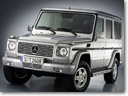 Mercedes-Benz has refined its G-Class yet again. The interior has been injected with fresh appeal courtesy of a new, high-grade instrument cluster, an attractively styled steering wheel which is also new, as well as a modified centre console with redesigned switches plus a new-look control unit for the air conditioning. Outside, the latest generation of the G-Class can be identified by the design of its tail light units with their sophisticated LED look. These facelift measures see Mercedes-Benz hold true to its philosophy of making sure that this classic vehicle – which has been in production for over quarter of a century now – is equipped with a comfortable, up-to-date interior on a par with the best saloons, along with state-of-the-art technology. By so doing, it preserves the exclusive status of the G-Class as a full-blooded cross-country vehicle blended with the very finest lifestyle qualities.
The first Mercedes-Benz G-Class unveiled in 1979 was designed predominantly with tough off-road terrain in mind. Over the many years of its production, Mercedes engineers have adapted the G-Class to changing customer requirements. It boasted outstanding off-road capabilities right from the outset, but its all-terrain prowess has been continuously improved on by the addition of the latest electronics. Its exceptional performance off the beaten track, excellent towing abilities and balanced handling characteristics combined with its saloon-like ambience have resulted in the G-Class enjoying an extraordinarily long production career, which now extends to 28 years.

Mercedes-Benz G-Class 


With its most recent facelift, Mercedes-Benz has added further touches of class to its cross-country classic. This is particularly true inside the G-Class where a new instrument cluster gives the interior a sophisticated look. Four circular analogue dials with chrome-ring surrounds form the nerve centre for driver information. Also sporting a new design is the elegant four-spoke multifunction steering wheel, whose illuminated buttons drivers can simply press with their thumbs to call up various data or control certain functions without being distracted from the road. The G 320 CDI comes with a leather-trimmed steering wheel as standard, whilst the luxurious wood/leather version awaits G 500 and G 55 AMG drivers.
Common to all three G-Class models is the modified centre console with its new controls and switches for the air conditioning and convenience functions. Not only does the new centre console give the cockpit added visual appeal, it is designed to make operating the controls more foolproof. The standard specification for the G 500 and G 55 AMG models includes the COMAND APS control and display unit featuring DVD navigation system, built-in radio, CD player and telephone keypad. A compass function has also been integrated to allow drivers to easily get their bearings even when they have left the signposted routes far behind them. The compass can be set to show the current heading in either the new instrument cluster’s display or on the COMAND screen.
The COMAND APS system can also be specified as an option for the G 320 CDI. This model is fitted as standard with the Audio 20 radio featuring CD player and telephone keypad instead of the previous Audio 10 unit. The entry-level model now also comes with heated front seats at no extra cost. The new 12V power socket in the front-passenger footwell of all models in the G-Class range allows for straightforward connection of auxiliary electrical appliances.
From outside, the newest generation of the Mercedes-Benz G-Class can be recognised from its tail lights, which have been remodelled by the designers to give them a fresh, new, LED-style look.
New attractive optional extras available
To coincide with the facelift, Mercedes-Benz has added some new enticing items to its list of optional extras for the G-Class. These include the following highlights: the “ARTICO” interior package with robust man-made leather appointments, plus the new “Cognac” leather upholstery which extends the previous choice of leather appointments in either black or grey by adding a third, brown tone (no-cost option for G 500 model)
In light of these facelift measures, the claim that the Mercedes-Benz G-Class is now more comfortable and innovative than ever has never rung so true. For not only does the G-Class excel by virtue of a luxurious interior ambience, its technology is absolutely state of the art too. The permanent all-wheel drive is complemented by the electronically controlled traction system 4ETS which boosts vehicle grip when pulling away and accelerating on slippery surfaces. What’s more, the G Class comes equipped with three engageable differential locks as well as a low-range ratio for tackling tough terrain.
The current G-Class model line-up comprises three engines and three different body variants. The engine power spectrum ranges from the 165 kW/224 hp of the G 320 CDI to the 368 kW/500 hp developed by the G 55 AMG.
The new-look G-Class is available to order now, with deliveries starting in mid April.
-
Kia Cee’d Sporty Wagon
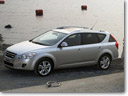 The all-new Kia cee’d Sporty Wagon will make its world premiere at the 77th Salon de l’Automobiles in Geneva on 6 March, in production-ready form with a unique extended tailgate for maximum accessibility to the luggage area.
“The new Kia cee’d Sporty Wagon retains all the attributes of the cee’d hatchback and offers consumers extra practicality and versatility, with a unique extended tailgate design, while keeping stylish stand-alone good looks with a truly sporty feel,” enthused Mr Jean-Charles Lievens, Senior Vice President Kia Motors Europe. “With ride, handling and performance every bit as responsive as the hatchback, the Sporty Wagon will be available with a similar choice of engines and specifications. The Sporty Wagon is sure to delight existing Kia customers and to attract European consumers who have not yet considered our brand.”
The 4.5-metre long cee’d Sporty Wagon has an unusually long wheelbase and will offer class-leading passenger and luggage space, plus highly competitive levels of equipment and state-of-the-art active and passive safety. Customers in Europe will be able to choose from a line-up of 18 Sporty Wagons, with three equipment levels (LX, EX and TX), five engines, with manual or automatic transmissions, and an extensive range of optional equipment.

Kia Cee'd Sporty Wagon 


To boost load carrying ability and versatility, the wagon’s overall length is increased by 235 mm, with all of that increase behind the rear wheels, and overall height is up by 10 mm. Luggage capacity goes up to a total of 534 litres – loaded up to the bottom of the rear windows – almost 200 litres more than the cee’d hatchback.
The tailgate on the cee’d Sporty Wagon is unique in the C-segment, and designed to give excellent access to the load area. The top hinges have been moved forward by 225 mm (compared to the cee’d hatchback), so the tailgate has reduced outswing and upswing, allowing users to stand closer to the car and the tailgate to be fully opened, even in restricted parking spaces.
For its new cee’d Sporty Wagon, Kia will be offering most customers the same choice of five Euro4 compliant engines and transmissions as the hatchback model – depending on individual markets. Power outputs range from 90 to 143 ps, including an all-new, highly responsive 1.6-litre 115 ps diesel engine designed, engineered and manufactured by Kia in Slovakia.
The launch of the Kia cee’d family (five-door hatchback from December last year, five-door Sporty Wagon – from August and three-door Sporty Hatch – from December) marks a major turning point in Kia’s history. The bringing of this trio to the marketplace is the start of a new era. They are the first-ever Kia cars designed and manufactured in Europe and will introduce a qualitative revolution for the brand.
-
Opel Astra TwinTop / Sedan
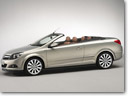 The upcoming Astra sets itself apart from the competition with an even more exciting, sporty look and sends a new signal in its segment. The design team further honed the distinctive face that was presented with the third-generation Astra in 2003 at the IAA and met with a positive response from customers and automotive specialists alike. Thanks to the evolutionary concept, it is still clearly recognizable as a member of the family, and designers were also able to sharpen both model and brand identity. Integrated organic elements such as the sharply drawn “eyebrows” above the imitation air intakes serve as a blueprint for future Opel models. Above these crafted features, the bumper is integrated into the Astra’s dynamic V-shaped front.
The dominant radiator mask also adds to the confident look. This impression is enhanced in the five-door and station wagon models by the widened upper chrome crossbar with integrated Opel logo. The distinctive decorative elements reduce the gap to the hood, as well as taking the characteristic crease and continuing it to the radiator grille vanes, which are also chrome-plated.
“ The gentle downward sloped tapering of the vanes and grille frame give the Astra a muscular appearance, and even when parked it appears raring to go. With its athletic proportions and aerodynamic bodyline, the Astra reminds you of the stance of a sprinter in the starting blocks.”

Opel Astra TwinTop 


The headlamp housings in stylish chrome look also convey an additional sense of quality. The Astra Sport, as well as the versions with xenon or curve and cornering light are recognizable by their dark-tinted headlamp housings.
Other features of the new edition Astra include the front bumper with integrated impact protection bars (five-door and station wagon models) as well as tail lights in 3-D block design (five-door model), which already make the GTC’s rear so eye-catching. The Astra station wagon features flowing, practical roof rails in aluminum look. The Astra GTC now boasts a honeycomb grille that highlights its sporty look even further.
New Equipment
Exclusivity and individuality in series production
The panorama windshield is the best example of an Astra component which remains unrivalled in this class. For the first time in a series production car, the new edition of the Astra Cosmo GTC offers a field of view never seen before. The around 1.8 square meter glass panel extends from the end of the hood, over the front occupants’ heads to the middle of the roof. Unlike contemporary glass roof designs, there is no crossbeam to obstruct the view, enabling driver, front and rear passengers to enjoy an unrestricted view similar to that in the cockpit of a sport airplane. This makes journeys a special experience, be they across country or at night through a brightly-lit city.
The rigid panorama windshield is made from 5.5 mm-thick laminated safety glass. Numerous crash simulations and real tests showed that the passive safety is equal to that of the steel roof model, thanks to the GTC’s strong A and B-pillars and an additional cross-member between the B-pillars. The foil integrated in the panorama windshield prevents it from splintering or penetrating into the passenger compartment in the event of an accident. The same foil as in the lightly green-tinted panorama windshield, called Solar Protect Glass, also plays the role of a warmth-absorbing layer. In addition, a sophisticated shading system helps keep interior temperatures regulated: the steplessly adjustable shade is easy to operate via a knob in the ceiling. It disappears into the rear roof section when not in use. In total, 11 patents were registered for this system.
Interiors in feel-good quality
The new-edition Astra’s interior boasts surfaces with an even more high-quality look for the center console, additional chrome rings for the air conditioning and radio controls, as well as new trim for the instrument panel and doors.
The top Cosmo variant, for example, is enhanced with luxurious piano lacquer surfaces and inlays on the center console and steering wheel. Usually reserved for upper-class vehicles, these applications create additional personalization options. With cashmere beige upholstery designs, or saddle brown leather in the GTC, the Astra interior can be completely customized in exclusive feel-good quality. The CD 30 MP3 infotainment system, the most popular choice among Astra customers, is available from February with steering wheel remote controls and a stereo connection for external audio equipment, such as an iPod.

Opel Astra Interior Other standard equipment enhancements include the IDS sport chassis for the Astra Sport and Board Info Display (BID) for the Astra Sport, Cosmo and OPC variants, new 16-inch design wheels for the Edition equipment line, new 16-inch alloy wheels for Astra Sport and Cosmo, as well as new wheel caps for the 16-inch steel wheels. The Cosmo variant now also features fog lamps as standard.
Step-by-step to dream car
Astra customers who wish to configure their dream car down to the last detail now have even more choice. The range of carefully selected Opel accessories extends from fitted sun blinds for the rear window and rear side windows to the mobile DVD player with seven-inch screen. The robust fiberglass roof box with a volume of 480 liters and the Opel DUO ISOFIX child seat for children weighing between nine and 18 kilograms are also easy to mount. The OPC line package 1 is exclusively available with the Astra GTC and includes a front and rear spoiler, side sills, rear apron and alloy wheels in various designs.
Five-star safety for maximum passenger protection
When it comes to safety equipment the new-edition Astra is at the top level, just like its predecessor. The consumer protection organization Euro NCAP (European New Car Assessment Programme) rated the passive safety of the new-edition Astra at the highest level – just like the predecessor model. The Astra was awarded the top rating of five stars for passenger protection. With a total of 34 points, Euro NCAP classified it as one of the safest sedans in the compact class (small family cars). The Astra also achieved very good results for child protection: the five-door model was awarded four stars and 39 points.
The Astra comes standard with the extensive SAFETEC safety package, including shape-optimized thorax/pelvis side airbags in front. These complement the two front airbags and the head curtain airbags that stretch along the entire length of the interior in the left and right roof pillars. Both outer rear seats come with ISOFIX mountings for child seats as standard.
New chassis electronics
Top marks for agility, safety and comfort
The new edition of the Astra offers driving performance with pronounced agility and precise handling with a high level of driving safety. These qualities helped the Astra win numerous comparison tests by the European specialist press and in customer polls. The basis for this agility is the IDS (Interactive Driving System) chassis with McPherson front axle and patented torsion-beam rear axle. Every Astra comes standard with the Electronic Stability Program ESPPlus, Traction Control TCPlus, front and rear disk brakes, Anti-lock Braking System (ABS), Cornering Brake Control (CBC), Brake Assist and electro-hydraulic power steering.
An exceptional dimension of balance between driving comfort and active safety is once again provided by the optional adaptive IDSPlus chassis with electronic Continuous Damping Control (CDC). This integrated chassis control system, in which the control units and sensors of ESPPlus, ABS and CDC exchange data constantly, was introduced to the compact class for the first time in the Opel Astra. Owners also benefit from IDSPlus when it comes to driving fun: the sport mode is activated at the touch of a button, resulting in more direct suspension, steering and gas pedal response, as well as modified shift points in the automatic and Easytronic transmission variants for greater sportiness.
Enhanced Trailer Stability Assist prevents instability
The Opel Astra’s chassis is already among one of the best in its class, but this was no reason for engineers to rest on their laurels. They found potential for improvement in details such as the control system for the Trailer Stability Assist (TSA). The newest generation of this safety system is available for the first time in this class as an option in the Astra five-door, GTC and station wagon models.
Compared to the earlier generation of TSA, real-time calculations are conducted more accurately and with greater sensitivity. This helps reduce instability in car-trailer combinations earlier and more effectively, as well as eliminating the risk of any abrupt emergency stopping situations in normal driving conditions which might disrupt the traffic behind. The cleverly devised system works together with the standard ESPPlus, recognizing possible trailer yaw movements and actively counteracting them with regulated braking. Be it swinging due to side wind, lane ruts, exaggerated maneuvering or too high speed, the control electronics have an answer for every eventuality. In the initial decisive reaction phase, TSA counters the swinging movements by braking either the left or right front wheel. Should this measure be insufficient, regulated braking is applied at all four wheels and engine output reduced.
“ The new generation of Trailer Stability Assist not only ensures more active safety in Astra-trailer combinations. The traffic behind also benefits, as the system reacts in a regulated and calculated fashion, further reducing the risk of rear-end collisions.”
Jürgen Schöwer, Project Leader, Control Systems in new Astra
Pioneer in curve light continues to lead the way
The Astra also leads the way when it comes to visibility and lighting. Opel was the first automaker in this vehicle class to offer Adaptive Forward Lighting (AFL), a steering-linked headlamp system with bi-xenon headlamps, dynamic curve light function and adaptive highway light. The curve light turns the headlamps into the curve depending on speed and steering angle, increasing street illumination by up to 90 percent compared to fixed headlamps. At higher speeds along a straight path, an automatic beam width regulator prevents the light from blinding oncoming highway traffic, enabling the low beam lights to project further ahead.


