Blog

  • Fiat Panda Aria

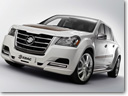
    The Concept car Panda Aria represents the most advanced frontier achievable, in terms of emissions and consumption, associating in synergy existing sustainable technologies or those in future production. In a nutshell, we’re dealing with a “demonstration” which synthesizes Fiat‘s commitment to the environment.

    The Concept car, combines an innovative powertrain architecture – represented by the new SGE 900 cc Turbo twin-cylinder engine, equipped with the Multiair® system for dual petrol/methane-hydrogen fuel management, MTA gearbox and Stop&Start device – with the adoption of eco-compatibile materials (recycled, recyclable or from natural sources) both for the interiors and exteriors.

    The interior is upholstered with natural fibres (cotton and linen), woven coconut fibre and biodegradable elements, whilst the exterior panelling is made of semi-transparent eco-resin and the structure is treated in opaque “totouch” paint.

    Even better, the energy absorbed by the auxiliary units is minimised on the vehicle and the engine (for example, the low consumption climate control unit) by a reduction in the vehicle’s weight (by a downsizing of the engine, and the use of new generation high tensile steel, methane storage cylinders made of high-performance steel and carbon fibres) and the adoption of experimental Pirelli ‘ultra-green’ tyres with new compounds and new AOF (Aromatic Oil Free) textile weaves guaranteeing limited drag but without detracting from dynamic safety performance (stopping distances and good handling on wet and dry roads).

    Fiat Panda Aria
    Fiat Panda Aria

    Lastly, the Panda Aria is fitted with a data transmission, based on the use of Blue&Me technology, ready for the implementation of new info-mobility services. Furthermore it is equipped with a unique application that, via the USB port of the Blue&Me system, allows to record on a key the consumption and emmissions of every journey. Subsequently, this can be looked at on a computer to receive advice on how to drive more “ecologically”.

    In detail, Panda Aria is fitted with the new 900 cc turbo 80 CV engine, belonging to the family of SGE twin-cylinder engines (Small Gasoline Engine), in this version it is equipped with the Multiair® system for dual petrol/methane fuel management. The sophisticated fuel management system is already primed for the use of a methane (70%) and hydrogen (30%) mixture. The engine is matched to a Stop&Start device and the innovative MTA (Manual Transmission Automated) gearshift.

    In particular, the innovative 900 turbo engine, developed by Fiat Powertrain Technologies, is fruit of a philosophy focused on the reduction of costs (and consequently CO2 emissions), and the respecting of future Euro 5 and Euro 6 emission limits yet with comparable performance to higher horse-power engines.

    The concept underlining this new engine, is the downsizing of a traditional engine with 4 cylinders to a twin-cylinder one, which has been fitted with the innovative electronic valve control Multiair® system. In addition to the reduction in consumption costs, the twin-cylinder engine allows a 20% reduction of the weight and a 25% reduction in the engine compartment, in comparison to a 4 cylinder with similar power. Furthermore, the SGE family of motors adopts a system of balancing the engine spindle , which guarantees reduced vibrations and noises in comparison to petrol engines with three cylinders.

    The innovative Multiair® system allows to control the air in the motor with electronic ignition (petrol engines) without having to use the traditional throttle-valve, therefore with higher flexibility in comparison to mechanical distribution systems.

    The implemented electro-hydraulic technology is based on the inter positioning, between the cams and the suction-valve engine of a volume of oil (high pressure chamber) which can be varied across the use of a valve which is controlled in turn by an apposite electronic junction box.

    In this manner, the valve opening can be varied in different modes according to the the engine’s need for air and the vehicle use. Different strategies (Early Valve Shut-Off – EIVC – Deferred Valve Opening – LIVO or Multi-Lift) can be used for optimising the efficiency of the combustion with remarkable benefits in terms of power, torque, consumption and emissions. Another advantage of this system is that the air pressure around the valves is always constant. This characteristic, combined with a raised dynamic system of implementation (from partial load to full load in one engine cycle) allows raising the engine’s torque response without any delay, either when the engine is overloaded or not, heightening the so-called Fun-to-Drive.

    In the Panda Aria the new 900 turbo engine is combined to the dual petrol/methane fuel management methane (70%) hydrogen (30%); this solution brings a further contribution to the reduction of polluting emissions, assuring a more efficient and complete combustion. Furthermore, it allows the incrementation of the thermodynamic performance of the engine, allowing it to reach, in particular conditions, combustion stability values superior even to those obtainable by only using methane. Therefore, the vehicles running on methane-hydrogen mixtures are a gradual evolution of an already existing system and open to further refining and applications. The methane-hydrogen mixtures, in fact, represent a bridge, which would allow in the short term development of infrastructures for the future supply of hydrogen.

    Panda Aria is fitted with the “Stop&Start” system, a device which operates the temporary shut-off of the engine and it’s subsequent ignition, when the vehicle is stationary. In these situations, typical of urban traffic and during waits at the traffic-lights, the system automatically shuts-off the engine allowing a marked saving of fuel. Afterwards, as soon as the car is put in gear or the brake is released, the system sees to promptly igniting the engine, assuring the user an immediate response to their commands.

    Furthermore, the “Stop & Start” system, is mated to the MTA gearshift which allows optimal use of the gears, and is characterized by a high mechanical efficiency. In detail, the automatic transmission lays the foundation for an “intelligent” management of the on/off state of the engine. More so, via the use of the clutch, the system allows the uncoupling of the three-phase motor from the transmission whenever traction is not required and the engine can be turned off.

    The combining of the “Stop & Start” system and the MTA gearshift allows the concept car Panda Aria to reduce consumption by over 10% in urban journeys.

    Lastly, the combination of these solutions, which have been developed by the Fiat Group(Fiat Group Automobiles, Fiat Powertrain Technologies and Centro Ricerche Fiat), are already in existence or will soon be available on regular and future production models, guaranteeing a drastic reduction in CO2 emissions. The Panda Aria emissions have been cut to a record low of 69 g/km.
  • Cobra Suzuki SX4

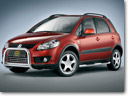
    Exclusive accessories for the Suzuki SX4 are the latest additions to the extensive product line-up from Cobra Technology & Lifestyle. To make the front of the Japanese Cross-Over from compact car and SUV even more striking Cobra Technology & Lifestyle offers a high-gloss stainless-steel front guard with a tube diameter of 60 millimeters. This accessory part successfully passed the crash test which is necessary to meet all current EG guidelines for pedestrian protection. The part, which has flexible mounts and is designed to absorb energy, comes with an EG operation certificate, eliminating the need for a technical inspection and for amending the vehicle papers.

    Additionally the Suzuki can be refined with a bumper grate made from high-gloss stainless steel. The exactly fitting and easy-to-mount accessory can be alternatively mounted with or without the Cobra Technology & Lifestyle front guard.

    The Cobra Technology & Lifestyle 60 millimeter stainless-steel tubular sill guards with integrated step are attractive and practical since they also facilitate entering and exiting the vehicle. They also round out the Off Road look.

    Cobra Suzuki SX4
    Cobra Suzuki SX4

    The tire/wheel combinations from Cobra Technology & Lifestyle are custom-tailored for all versions of the Suzuki SX4: Altogether there are three different wheel designs in sizes ranging from 7.5Jx16 to 8Jx17. The most exclusive wheel is the multi-piece Cobra Grenada five-spoke wheel in size 8Jx17 with 225/45 R 17 tires.

  • Opel Grand Turismo Coupe Concept

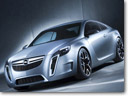
    On the eve of the 77th Geneva Motor Show, Opel illuminated the night. Supported by a dramatic light show, the Opel GTC Concept (Gran Turismo Coupé) made its spectacular debut at the “GM Premiere Night.”

    Heralding a new design era for the brand, the GTC Concept gives an insight into how Opel’s design language will look in the future. Adding to progressive shapes and surfaces, the four-seat coupé features unique LED lighting concepts in the front and rear, providing a new signature lighting style for the brand. (more…)

  • Tramontana a.d.

    Tramontana a.d.It has never been seen in the automotive history a street sports car which resembles so much a Formula 1 like the Tramontana does. It is the first time in the sports car market that it has been incorporated a 100 % carbon fibre monocoque chassis inspired in the design of a Formula 1 and manufactured with the same criteria, guaranteeing a high protection for its passengers. Moreover, it introduces a new structural system that combines an indeformable central zone (cockpit) with a weight of 128kg with other 8 deformable zones calculated for the absorption of the impact energy. In fact, the results extracted of the Crash Test (according to the FIA regulation) confirm that the structural calculation guarantees the integrity of its passengers displacing the lateral components toward the outside. This shows the high impact resistance of the carbon fibre used in the vehicle.

    On the other hand, this monocoque, especially developed for the Tramontana, contributes a lightness and maximum rigidity to the whole, factor that together with its suspension system, unique on its market of double wishbones with pushrod and a great length of arms, improves the dynamical aptitudes of the vehicle. All this elaborated with materials of last generation of aerospace technology like the steel to the cromolibdenium, magnesium and duraluminium. Without doubt in the Tramontana the efficiency of the geometry and the weight has been tested, obtaining as result an unequalled performance.

    The structure of the monocoque carried out in carbon fibre offers a high torsion resistance, which makes the driver feel like going on a rail.

    In the assembly process have been adopted handcraft techniques like the obsession by pre-impregnate and cured in autoclave to 120 ºC, that provides an exceptional finish level and makes the construction of light and strong pieces easier.

    Engine, from the competition to the asphalt

    Lubrication system Dry sump Fuel Unleaded 98 Octane

    Among the final solutions of the Tramontana, we find a new electronic system and a central gasoline engine V12 Biturbo capable to offer a power from 550 Hp to 720 Hp, selectable through a switch situated in the dashboard.

    Associated to a 6-speed gearbox, specially developed for the Tramontana, this 12 cylinders propeller in V reaches the 720 Hp to 5.750rpm with a maximum pair torque of 920nm at 4.000rpm. The result, 345 km/h of top speed and 3,7 seconds to reach the 100 km/h from stopped departure.

    The weight-power relation is elevated to the 1,7 Kg/Hp, significant data that allow us to discover the kind of sensations that this fantastic assembly of chassis and engine can offer us.

    The development of the electronic switchboard is made to measure, in a craft process of more than 2000 hours, that includes full silver wiring and a power map capable to obtain the maximum performance of the engine. Moreover, for the first time in a street car, lifelong relays, fuses and protections have been replaced by a module with just one connector that has only one terminal that brings together all the functions of a conventional device. This innovative system has reduced the wiring, the complexities of the consoles of relays and the fuses, avoiding any electromechanical deterioration.

    Car body, beauty and functionality

    Without doubt, the design of the Tramontana combines the curves of a fighter with a narrow front and a wider rear of big dimensions and finished in first quality leather and wood imported of the classics of the Spanish automotive industry. This aesthetics remains totally clear thanks to the design of the hardtop, which covers and protects the passengers, and to the rear and front spoilers, in the form of an airplane wing, that assures a great beauty and an excellent support at the same time. In short, a perfect harmony between sensuality, fine materials and elegant lines, an authentic jewel for the collectors.
    All the pieces of the Tramontana car body are also elaborated in carbon fibre, assuring the maximum lightness of the vehicle with a total weight of 1.250 kg.

    Thanks to the dynamic study carried out by a.d. Tramontana, the pieces that form part of the car body have been created by considering its functionality and the important vehicle performance.

    The result is some compacted forms, an expressive front and a suggestive aerodynamic outline with a marked silhouette. Everything in the Tramontana transmits force, character, personality and, above all, sportsmanship, nevertheless the new model is a worthy heir of the sports tradition of the Formula 1.

    Suspensions, balance between sportsmanship and comfort

    One of the key items of the Tramontana is its system of suspensions of double wishbones with push-rod and its great length of arms, elaborated with a sort of steel of aeronautical and competition specifications of the latest generation.

    Two special programs have been used for the development, which have permitted the static and dynamic simulation of the whole vehicle. Different defined adjustments in theoretical calculations have been projected and experienced on it in order to analyze the performance before proceeding to the validation and arriving this way to the definition of the suspensions rates. Finally, a.d. Tramontana has bet on a suspension system that provides a better control, driving comfort, smaller oscillation and better speed cornering, due to the distance between axes, identical to that of a Formula 1.

    In the same way, the Tramontana has a system of double electronic height regulation especially developed for the Tramontana, which allows the driver to raise or to lower the height of the vehicle according to the driving needs. It has been looked for a balance between the performance of a street car (at 130mm) and a sports car (at 85mm) considering the different driving styles.

    Tyres

    To put “shoes” to the Tramontana it has been determined an intermediate solution of standard tyres with asymmetric design with wide longitudinal channels and very hard radial silent block. Together with a low tread pattern, allows the Tramontana to avoid the drift of the tyre and facilitates a perfect performance in the cornering. The running band is side divided in three distinctive elements to satisfy the most demanding performance that the Tramontana requires.

    Steering, very sport sensations

    The steering column with double cardan system is adjustable in reach and lift, permitting the drivers to adapt the driving position according to their preferences. Also the a.d. Tramontana engineers have modified the parameters of steering assistance to increase the sport feeling, fact that added to the easy access to the cams on the gear change, situated behind the steering wheel, facilitates the driver the execution of layout you need in any situation. All this contributes to a better driving precision and permits to enjoy all the sports qualities of the model.

    Brakes

    a.d. Tramontana has developed an ABS system that allows, by means of braking distributor, to distribute between the front and the rear train the power of braking obtained by the discs of carbon-ceramic.

    Likewise, the rear and front brake discs are elaborated with carbon-ceramic that do not need of high temperatures for their maximum efficacy of braking. It is referred to a material that combines the most innovative aerospace technology with the know-how of the Formula 1, providing thus a purely sports performance and a high durability of the brakes. To the advantages of the carbon-ceramic it is important to add other benefits of great benefit for the performance of the Tramontana, like the weight reduction up to a 70%, the improvement of the friction coefficient or the high energy absorption capacity and the scarce possibility to suffer fatigue in the braking system.

    The effectiveness is spectacular. Combining the lightness of the monocoque with the power of the six pistons per disc on the 4 wheels it permits to minimize the braking distance to beyond incredible limits.

    Ensured safety

    To get the best mark in the subject of security, the Tramontana has been submitted to a Crash Test whose demands have followed the dictations of the official regulation of the FIA. The car, built with a carbon fibre monocoque, has needed a software developed especially to be adapted to the characteristics of the Tramontana. In this study all the pieces passed through a side, front and rear crash test.

    The Tramontana emphasizes for offering a double security. First, all the exterior pieces are designed and distributed so that in case of impact they never get inside. On the other hand, the chassis has been strength with a security arch that protects the passengers. Moreover, the security of the Tramontana is guaranteed thanks to its private structure that combines an undeformable central zone (cockpit) with other eight collision absorption zones.

    Aerodynamics, the exigency of the geometry

    The engineers team from a.d.Tramontana has worked very hard to find the maximal exigency and perfection regarding the aerodynamic performance of the Tramontana, an aesthetical reasoning as similar as possible to a Formula 1.

    The aerodynamic performance is though to great speed cornering and, at the same time, get a minimum air penetration coefficient Cx=0,4.

    The air intakes and cooling of the motor they have been designed with the objective to minimize the friction of the air and to optimize the performance of the motor. Moreover, the vehicle has a laminated sheet situated under the vehicle, that eliminates turbulences and improves the drag.

    In the same way, the wishbones, designed in the form of drop of water, they help to minimize this coefficient. In fact, all the external elements that stand out from the vehicle are thought to obtain the minimum air resistance. This is the reason of the airplane wing profile of the wishbones.

    The front spoilers offer a higher lift compared with the rear ones to avoid loss direction sensations. In this sense, there is an important work to obtain a ground effect thanks to the air flow that penetrates in the lower part of the vehicle. This generates a negative lift toward the ground, making driving to high speeds easier.

    Finally, another remarkable factor, has been the study to situate the centre of gravity of the Tramontana as low as possible to increase the cornering speed.

    Seats

    The Tramontana also surprises for its interior, where the sportsmanship and the comfort breathe in all the details.

    The first thing that we notice when we get in a Tramontana is, without doubt, the seating position in tandem, the same as in a fighter. In fact, in its development has collaborated, among others, Manuel Brown, an engineer in the field of aeronautics, member of Euro Fighter design team in Germany.

    As opposed to the normal position of the passengers, side by side, the tandem position of the seats of the Tramontana has permitted to centre the weight in an excellent way. Technically, a 42-58 weight distribution has been designed, obtaining thus an entrance in curve with a stable relation of 50-50.

    On the other hand, the visibility of the Tramontana is superior to that of a conventional vehicle, due to the privileged position of the driver. The position of the seats can be personalized for each client.

    Source: Tramontana

  • Audi Q7 4.2 TDI

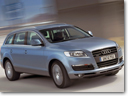
    240 kW/326 bhp and 760 Nm of torque – Audi proudly presents the most powerful diesel SUV on the world market. A state-of-the-art eight-cylinder engine with common rail fuel injection and Piezo injectors not only stands out on account of its sheer output but also demonstrates outstanding efficiency: the 4.2 TDI has an average fuel consumption of just 11.1 litres of diesel per 100 kilometres. (more…)
  • Bentley BIG BANG

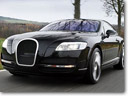
    The design study BIG BANG by LEW DESIGN which was presented first at the Motorshow in Essen in December 2006 will be developed further because of the ongoing particular national and international inquiry.
    The Leonhardt Group is an authorized contract dealer for Bentley and Lamborghini brands and is going to proceed on the manufacturing of the design study on basis of the Bentley Continental GT with a BODYKIT BY LEW DESIGN to a limited edition of only 50 items in an one plan period of 2 years.

    (more…)

  • Lamborghini Gallardo Superleggera

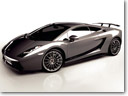
    With the Gallardo Superleggera, Automobili Lamborghini presents an uncompromisingly high-performance sports car. Thanks to increased power (an additional 10 hp) and a 100 kg reduction in weight (USA 70 kg), the new range-leading Gallardo Superleggera is even more dynamic than the already very sporty Gallardo. The weight/power ratio of the Lamborghini Gallardo Superleggera is only 2.5 kg/hp, which puts it unquestionably at the top.

    The Superleggera also has the fastest acceleration in its class. It needs only 3.8 seconds to go from 0 to 100 km/h (0-62 mph); 0.2 seconds less than the basic model, and boasting speed and grit under other driving conditions.

    The Lamborghini Gallardo Superleggera is an extremely high-performance car: it includes a standard robotized mechanical “e-gear” gearbox that guarantees shifting without removing hands from the steering wheel. The new Gallardo Superleggera can be ordered through the dealer network starting March 2007: production volumes will be restricted to lower numbers than the standard Gallardo.

    Lamborghini Gallardo Superleggera
    Lamborghini Gallardo Superleggera

    More power thanks to technological developments

    The Lamborghini Gallardo Superleggera’s engine is the latest version of Lamborghini’s well-known 4,961 cm3 V10. Now 530 hp is reached in 8,000 min-1. The increase in power was made possible by the engine’s improved volumetric efficiency through reduced intake load losses and by exhaust backpressures, together with optimized electronic control. Naturally, emission levels observe the strict EURO 4 and LEV II standards.

    Higher power thanks to lighter construction

    Lamborghini engineers decreased the Lamborghini Gallardo’s already low weight when empty (1,430 kg) by another 100 kg using advanced materials and technologies. The engine hood is made of visible carbon fiber and transparent polycarbonate, a type of material that guarantees lightness and also shows off the magnificent V10. The rear diffuser and underbody covering, the rearview mirrors, door panels and the central tunnel’s covering are also made of carbon fiber. Further reductions in weight were achieved by replacing certain glass surfaces with transparent polycarbonate. For the interior, monocoque carbon fiber sports seats covered in Alcantara® were chosen to ensure restraint of the driver and passenger during the intense lateral accelerations that the Gallardo Superleggera is capable of achieving around curves.

    Exclusive specification and options range

    A comprehensive specification and extensive range of options will be available, with some exclusive to the Superleggera. The Lamborghini Gallardo Superleggera comes with robotized mechanical e-gear as standard; a sports package including shock absorbers; and special suede-covered steering wheel. The car is available in four colors: Midas Yellow, Borealis Orange, Telesto Gray and Noctis Black. Pirelli P Zero Corsa tires (standard) on new Scorpius forged rims accentuate the Lamborghini Gallardo Superleggera. A few of the options that can be requested include the multimedia system with navigator and CD-changer; a rear video camera to make parking easier (with optional rear wing only); a Carbon accessories kit for the interior; a fixed rear spoiler; a four-point seatbelt (not for USA); tubular rear frame or fitting points for later inclusion (not for USA, Japan or Middle East); and carbon-ceramic brakes.

  • Pagani Zonda R – Ultimate Racetrack Performance

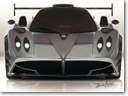
    While we certainly cannot say the Zonda F lacks performance figures, driving around the Nürburgring in 7:32 and achieving lateral G forces of almost 1.5 G, it is however a road car, easy to drive, intuitive and setting the benchmark for comfort, safety and lightweight. Paired with a quality finish and the attention to detail this made the Zonda F one of the most desirable supercars resulting in the 25 Coupé models being sold out in record time. (more…)
  • Hyundai i30

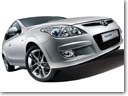
    A European C-segment 5-door hatchback, codenamed FD, a new nomenclature and a concept Crossover Utility Vehicle (CUV) made of alternative materials that help save fuel and offer enhanced pedestrian safety are the highlights to be presented at Hyundai’s press conference at this year’s Geneva Motor Show.

    With the FD Hyundai introduces a new model range firmly positioned in the mainstream European C-segment. Cultivated dynamics, a sleek, sophisticated styling, and a generous convenience and safety package are the FD’s main characteristics. A choice of three gasoline and three diesel power options, combined with manual or automatic transmission means the FD can meet virtually every driving, or powertrain preference. It can also match above average occupant space with generous, easy access luggage capacity.

    The FD’s styling is a continuation of the recent “wave-like and sculpted” showcar design. Flowing curves, emphasised by strong character lines highlight the broad stance and long wheelbase of the FD. The clearly defined unbroken waistline unifies the classic proportions. The sculpted rear appearance is achieved by a combination of qualified curves that extend the waistline and reflect the curvaceous front and side styling. Says Thomas Bürkle, Hyundai European Chief Designer: “The FD offers a dynamic and sporty styling, although it has kept the chic and elegant touch of the Arnejs concept car.”

    Hyundai i30
    Hyundai i30

    Hyundai plans to launch the modern understatement FD in summer of 2007. Initially available as a 5-door hatchback and later on as an estate car the FD opens a new chapter for Hyundai in Europe, as it is the first dedicated European C-segment vehicle made by Hyundai.

    Along with the FD, Hyundai will launch a new alpha-numerical nomenclature. While in the past, names had been chosen to express the values inherent in or associated with individual Hyundai models, Hyundai is now taking a more holistic approach to its nomenclature. The new nomenclature will display a clearer technology-orientation and be closely linked to Hyundai’s brand promise of “Quality, Self-assurance, and Inspiring”.

    A third highlight of its press conference, Hyundai will present a concept Crossover Utility Vehicle (CUV), code-named HED 4. As a joint project with GE Plastics, the HED 4 endowed designers with greater expressive freedom to create complex three-dimensional shapes that could not have been achieved with conventional production methods and materials such as metal and glass.

    Current composite technology is usually thought too expensive and too difficult to fabricate to be of use anywhere but the aerospace and motor racing industries. Hyundai’s CUV is physical proof that this need not be so.

    The wrap-around GE Lexan™ windscreen and extensive use of GE polycarbonate glazing materials provides a weight saving of up to 50 percent in relation to glass, while simultaneously allowing more adventurous shapes than flat glass. The glazing features a unique technology from Exatec™ which deposits a thin protective layer of glass on the Lexan™ to add protection from scratching and the effects of weathering.

    The HED 4 also introduces new curved and moving side glazing in Lexan. As well as allowing such advanced applications, the impact resistance and other properties of this material also helps increase both occupant and pedestrian safety. Improving the latter is of utmost importance to Hyundai, due to its high percentage of European SUV sales.

    HED 4’s Elastic Front™ safety system, which encompasses the whole front end of the vehicle, is arguably the world’s first global pedestrian protection solution on a CUV. Three energy-absorbing structures are fully integrated underneath the futuristic styling of the HED 4 and this system takes advantage of several advanced materials that offer inherent energy absorbing properties. The HED 4’s body panels have been designed to work in concert with energy-absorbing systems on the underside of these panels to manage and dissipate the force of a pedestrian/CUV collision. The Elastic Front™ has been engineered to meet EEVC WG17 Phase2, Euro NCAP, and JNCA pedestrian impact requirements and is currently undergoing testing for final validation.

  • Jaguar XJ

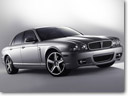
    The 2008 Model Year XJ revealed today has again raised the standard for luxury cars offering customers a range of visual changes, technological advances and additional features on all models. The flagship of the Jaguar range, the XJ continues to be respected and admired by customers throughout the world. Already renowned for its all-aluminium body construction, state-of-the-art technologies, outstanding craftsmanship and build quality, the new XJ is now even more desirable. Since its launch, the model line-up has been extended to include the XJ long wheelbase, the special edition XJR Portfolio, the XJ armoured vehicle and the recently introduced XJ long wheelbase diesel.

    A range of four engines – from the highly acclaimed 2.7-litre twin-turbo V6 diesel engine that offers outstanding performance and economy, through to the mighty 4.2-litre supercharged V8, gives customers a choice of rewarding powertrains. Every XJ has automatic transmission and includes many of Jaguar’s latest technical features, and of course craftsmanship and quality are high on the list of attributes.

    Jaguar XJ
    Jaguar XJ (2008)

    An all-new, distinctive design for the XJ’s front includes a new bumper with revised upper and lower mesh grilles and a new Jaguar Growler badge, giving the 2008 model an unmistakably purposeful appearance. This look is complemented by new side power vents to match those introduced on the beautiful XK, lower body sills and a subtle rear aero spoiler. Over the vents new door mirrors carry integrated indicator lights while upgraded alloy wheels add to the sporting appearance of the 2008 Model Year cars. A 19-inch Carelia wheel is now standard on the Executive models, while all Sovereign models now feature the new 19-inch Polaris wheel. The top-of-the-range XJR now comes with aluminium finish power vents and black painted brake callipers. Additionally, customers will benefit from six new exterior paint colours to choose from for all models – Emerald Fire, Pearl Grey, Crystal Blue, Botanical Green, Vapour Grey and Azure Blue.

    The 2008 Model Year XJ also enjoys significant improvements to its interior thanks to new heated front seats standard across the range which have been extensively redesigned to offer even more comfort and support. All Executive models now come with a heated front screen as standard while the XJR features an ‘R’ gearknob as well as heated front seats with air-cooling, an optional choice for the Executive, Sovereign and Sport Premium models. Rear-seat passengers will appreciate greater leg and foot room following revisions to the backs and lower cushions of the front seats. All 2008 Model Year cars feature an upgraded BluetoothTM Connectivity system that allows users to connect up to five approved mobile phones to the car’s own in-car telephone system.

    UK Managing Director, Geoff Cousins, said: “XJ sales results in 2006 showed a 25% increase versus 2005 and with these specification enhancements, our customers can benefit from an even better value-for-money proposition. The long wheelbase XJ is now available with a 2.7-litre diesel engine making it an even stronger competitor in the ever-growing chauffeur market and even though an all-new Mercedes S-Class has been launched this year, Business Car readers voted the XJ ‘Luxury Car of the Year’ for the second year running.”

    Excellent value-for-money across the range

    Enhancements to the XJ product range in the UK simplify the line-up to four trim levels, all offering customers improved value-for-money: Executive, Sovereign, Sport Premium and XJR.

    XJ Executive (2.7-litre diesel and 3.0-litre petrol) – The entry level to the range will be the 2.7 diesel and 3.0 petrol Executive models. In addition to the other changes being made to the whole range, these cars now feature a heated front screen as standard, body-coloured power vents and 19” Carelia wheels – a ten-spoke alloy first seen on the XK. Importantly the XJ 08MY Executive models remain competitively priced with the 3.0 petrol starting from £43,540 and the 2.7 diesel from £45,520.

    XJ Sovereign (3.0-litre V6 petrol and 2.7-litre diesel, 4.2-litre V8) – The Sovereign adds to the Executive specification with 16-way electric heated front seats, soft-grain leather, satellite navigation system and Bi-Xenon headlights. Additions to the 08MY Sovereign models are body-coloured power vents and an all-new five spoke 19” Polaris wheel. The 3.0 Sovereign XJ will be priced from £49,540 – the 2.7 diesel will be £51,520 while the 4.2-litre naturally aspirated XJ will be priced from £58,040.

    XJ Sport Premium (2.7-litre diesel) – The Sport Premium benefits from the styling changes across the range with the addition of body-coloured power vents. Adding to the Executive specification, the Sport Premium features ‘R’ seats with leather seat facings as standard, aluminium veneer, black side window surrounds, Cremona 20” alloy wheels and satellite navigation. The 2.7-litre diesel will be priced from £51,520.

    XJR (4.2 Supercharged V8) – Adding to the styling changes across the range, the XJR offers increased value through aluminium finish power vents, a new ‘R’ logo gearknob, black painted brake callipers and heated front seats featuring a cooling option as standard. The XJR will be priced from £60,150.

    Mike Cross, Chief Engineer, Vehicle Integrity commented: “Like the new XK, the XJ is engineered to provide relaxing and refined ride quality, yet can deliver highly capable dynamic qualities when required. The stiff lightweight aluminium structure allows for increased performance and great agility, particularly in our XJR which is a true performance car, yet is inherently quiet, refined and comfortable.”

    In summary, XJ 08MY provides a series of stylish specification enhancements across the range that deliver an excellent value-for-money proposition for customers.

  • Edag Luv

    The new concept car from EDAG Engineering + Design AG will be making its first appearance on March 6, 2007, in Geneva – the “EDAG LUV“. The design concept of the “LUV” is based on an luxury-class SUV and incorporates a maritime look from bow to stern: oiled teakwood on the hood, as the flooring on the interior, and on the elegant cargo area conveys a maritime flair. But the “EDAG LUV” is a real eye-catcher in other respects as well: the cargo area, behind the two rows of seats with plenty of room for 5 passengers, has been outfitted with teakwood and distinctly resembles a quarterdeck – in keeping with the maritime look of the concept car.

    The Module Concept of the “EDAG LUV” – An Economical Approach to Vehicle Derivatives

    But the maritime design of the “EDAG LUV” is just the covering for a modular concept which makes it possible to turn vehicles into derivatives or niche vehicles at reasonable expenditures of time and money.

    In coming up with their shell concept, the EDAG team of engineers, headed by project manager Andreas Funk, set themselves the goal of using the greatest possible number of carry-over parts.

    Edag Luv
    Edag Luv

    The group can certainly be proud of the results of the intelligent module concept: 90% of the parts required to perform the metamorphosis of a luxury-class SUV into the “EDAG LUV” come off the parts shelf of the basic vehicle. For example, the extension of the floor pan by 512 mm was realized using original parts. The wheelhouses were also used without any modifications, as were the parts for the rear-end finish, which includes integration of the standard power-lift system from the sedan.

    “In addition to our efforts to use a maximum number of identical parts, we were especially careful to keep the existing production concept of the basic vehicle in mind during the development of the “EDAG LUV”,” explains Andreas Funk. “The self-supporting body can be completely welded using standard tongs. It goes without saying that we used simulation models during the development of the entire body concept to test crash behavior and rigidity so that we could guarantee the highest level of quality and safety.”

    The advantages of the EDAG module concept are obvious. Thanks to the use of identical parts and taking into account the production concept, a vehicle concept which is visually completely new can be realized under economically interesting conditions.

    “More and more end customers are asking for niche vehicles, and this type of design turns the production of such cars into a “business case” for the manufacturers,” points out Johannes Barckmann, Head of Design at EDAG, in describing the concept.

    The “EDAG LUV” – A New Vehicle Segment

    “LUV”, the name of the concept car, is not only a term used by sailors (it is German for “luff”, the windward side of a vessel), but also defines a new vehicle segment – the luxury utility vehicle.

    “In taking the maritime world as a leitmotif for the design of the “EDAG LUV”, we deliberately selected a niche theme. We wanted to demonstrate in exemplary fashion that it is possible to create a distinctive vehicle class and not only to give a vehicle a new look. And to do that with as little technical effort as possible,” is how Johannes Barckmann explains the intentions behind the design concept. So the cargo area of the “EDAG LUV” is elegantly tied in with the passenger cell by the harmonious lines of the body design. The utility vehicle character so often evident in pick-up models is no longer discernible in the “EDAG LUV”. On the contrary, the “EDAG LUV” radiates elegance and autonomy and cannot be classified by any of the vehicle segments existing today.

    Yet the luxury image which has been created is only one example for the idea of a versatile vehicle concept. Speaking of versatile: the pick-up module can be exchanged for a convertible or coupe module simply by releasing a catch mechanism integrated into the body of the “EDAG LUV”. A clever move by the EDAG developers so that additional derivative variants can be realized flexibly and at low cost.

    Innovation in the Interior – The PC Takes Its Place in the Vehicle
    The “EDAG LUV” has innovative solutions on the inside as well. The EDAG development team has integrated two UMPCs (UltraMobile PCs) into the headrests, bringing the PC world into the vehicle. The user can use a specially developed mechanism to insert the fully operational PCs easily into the headrests. Passengers in the rear seat can use their Office applications such as PowerPoint, Excel, and Word in the vehicle, plus WLAN and UMTS provide them with Internet access, enabling them to download and answer their e-mails during the trip. Furthermore, integrated Webcams even make it possible to hold Net meetings during the trip. Users can also access their music or DVD collection from the car. The trick: The UMPCs are connected to the vehicle”s audio system so that the MP3 files or videos stored on the computer can also be used in the vehicle. The integration of the computer keyboards into the interior of the “EDAG LUV” has also been handled elegantly: modern form-fitting foil keyboards have been embedded in the folding tables available for use by rear-seat passengers. Background lighting makes it possible to work even while traveling at night and is yet another futuristic design element in the interior.

    “The integration of so-called consumer devices into the vehicle architecture is a highly interesting topic for the manufacturers. This can result in a genuine additional value for the end customers by making the functionality of the PC world usable in the vehicle as well,” notes Dr. Robert Hentschel, Director of EDAG Electrics/Electronics.

    “Being a full-range developer of vehicles and an integrator in the field of electrics/electronics, we are determined to develop solutions in this area which are stylish, geometrically and functionally high-quality, and practical.”

    EDAG is currently pursuing two solution approaches:
    1. A second integration stage will tie the UMPCs into the vehicle architecture for luxury-class vehicles. The advantage: the driver can use operating elements – e.g., on the steering wheel – to access directly the functions or data of the UMPC.
    2. The EDAG developers are planning the UMPC as an after-market product for compact and midsize cars. The aim here is to develop concepts for various models produced by car-makers so that the devices can be integrated ergonomically and geometrically into the interior without a jarring visual effect. What makes this especially enticing is the possibility of utilizing the UMPC as an on-board computer and high-quality display device by connecting it to the vehicle architecture, providing yet another service, as well as making the complete functionality of a PC available in the car.

    With this as a goal, EDAG is working closely with the Intel Corporation on the development of solutions for the electrical and electronic connection as well as on the integration of “nomadic devices” in the vehicle interior. EDAG will rely on the latest in Intel technology, processors, and chip sets. Especially small dimensions for the chips and low energy consumption are only some of the criteria for their use in cars.

    The Company is planning to present the “EDAG LUV” at the upcoming IAA in Frankfurt in the second integration stage, i.e., with access to the UMPCs via operating elements of the car.

    Innovative Development Competence by EDAG
    EDAG will be presenting the “EDAG LUV” in Geneva as proof of its competence, underscoring the capabilities of the world”s largest independent development partner to develop economically sound innovative vehicle concepts optimized for production. The project has been realized in only three months, from definition of the concept and design process to the development to the ready-to-roll prototypes, and is on the verge of being realized as a Premium Edition.

    BRABUS is one of the partners in this project. The tuner from Bottrop contributed not only the 462 hp / 340 kW high-performance BRABUS 6.1 displacement engine for the EDAG LUV that allows this all-wheel-drive vehicle to accelerate to 100 km/h in a little more than six seconds for a speed of 250 km/h.

    BRABUS also provides the classy 10Jx22 monoblock S wheels fitted with 295/35 ZR 22 YOKOHAMA tires, the air suspension module as well as the high-performance brake system from its product line-up. The 12-piston aluminum fixed calipers and ventilated, perforated 380 x 36 millimeter front brake disks and the 6-piston fixed calipers and 355 x 28 mm rear brake disks reach a braking performance typically achieved only by genuine sports cars.

    Exclusive all-leather appointments and attractive interior accessories are an additional BRABUS specialty. The BRABUS saddlery combined the finest white leather with black seams and cords for a superior interior finish of the EDAG LUV that leaves nothing to be desired.

    Source: Edag

  • Mercedes-Benz SL Sport Package

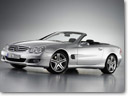
    The Mercedes-Benz SL-Class is now available to order with a sports package comprising exclusive details that inject a new and thrilling sense of flair. Inside, it is primarily the silver-coloured contrast stitching, perforated leather and aluminium trim in a fresh new look that set the tone for the sporty and luxurious ambience. Outside, large wheels in a thrilling five-spoke design dominate the picture, while setting off the silver-painted front brake callipers to particularly stunning effect. Perforated brake discs at the rear wheels help endow the Roadster with excellent stopping power. Finally, the 7G-TRONIC Sport transmission with steering-wheel shift paddles further intensifies the sports car sensation felt when sitting inside the Roadster bearing the mystical letters “SL”.

    Ever since the world-famous 300 SL Gullwing Coupé was premiered over 50 years ago, the Mercedes-Benz SL-Class has ranked as one of the most fascinating and coveted cars in the world. Now in its fifth generation, the current SL-Class has lost none of this mystique and excels in all the same ways as its predecessors, by offering sophisticated design, groundbreaking technology, exceptional comfort and immense driving pleasure. A new equipment package from Mercedes-Benz, which is available to order now, gives the two-seater an even sportier, individualised look thanks to a host of refined details both inside and out.

    Mercedes-Benz SL Sport Package
    Mercedes-Benz SL Sport Package

    The new large 19-inch wheels (8.5 inches at the front with 255/35 ZR19 Y tyres, 9.5 inches at the rear with 285/30 ZR19 Y tyres) are the most striking visual feature and deftly underscore the extra-special status of the SL-Class with sports package. Their sensational, newly devised design comprising five twin spokes with very straight lines and a hubcap cover featuring the Mercedes star and laurel wreath instantly attracts the gaze of any onlookers. The wheels’ visual impact is reinforced by the fact that they afford an unimpeded view of the attractively styled front brake callipers, which have been specially painted in silver for the sports package and marked with the Mercedes-Benz lettering. The high-performance brake system lives up to these sensational looks, assisted by perforated brake discs at the rear wheels too. Dark-tinted tail light units form a further distinguishing feature.

    Innovations on the technical side include a sports air cleaner that produces a richer sporty sound in the SL 350. The chief technical highlight of the new sports package is, however, the 7G-TRONIC Sport seven-speed automatic transmission, the only passenger car transmission of its type in the world. Apart from a manual shift program, the new transmission also comes with steering-wheel shift paddles in both the SL 350 and the SL 500. The paddles allow drivers to shift through the seven gears without having to take their hands off the multifunction steering wheel, just like in a racing car. What’s more, 7G-TRONIC Sport is capable of shortening gearshift times by as much as 30 per cent.

    In the interior, silver-coloured contrast stitching on the seats, steering wheel, dashboard, centre console, selector lever gaiter, armrest as well as the door linings (and in the rear of models with Exclusive nappa leather appointments) creates an unmistakable emphasis. The same applies to the borders of the high-grade velour floor mats. A roof liner trimmed in black fabric, new-look aluminium trim as well as the perforated leather adorning the steering wheel and selector lever further underline the car’s sporty aspirations.

    Mercedes-Benz SL Sport Package Interior
    Mercedes-Benz SL Sport Package Interior

    When the model received its most recent facelift one year ago, the engine line-up, driveline and suspension were all tuned for even sportier performance. Ever since, a new V6 and V8 power unit together with even more powerful V8 AMG and V12 engines have been delivering yet more dynamic motoring pleasure in the Mercedes-Benz SL-Class, allied to an even greater sense of effortlessly superior fun at the wheel. The second-generation “Active Body Control” suspension in the SL and its more direct steering for that extra touch of sportiness are equally as impressive.

    The new sports package offers customers an enticing way of further enhancing and personalising this legendary dream car. It is only available for the SL 350 and the SL 500 in conjunction with black leather appointments (standard in the SL 500). It is priced at € 2975 (incl. VAT).