 General Motors today outlined a comprehensive plan of action to help communities get ready for plug-in electric vehicles such as the upcoming Chevrolet Volt. GM announced details of the plan at the Washington Auto Show. (more…)
Category: Redirect
-
Chevrolet Volt
-
Aston Martin V12 Vantage
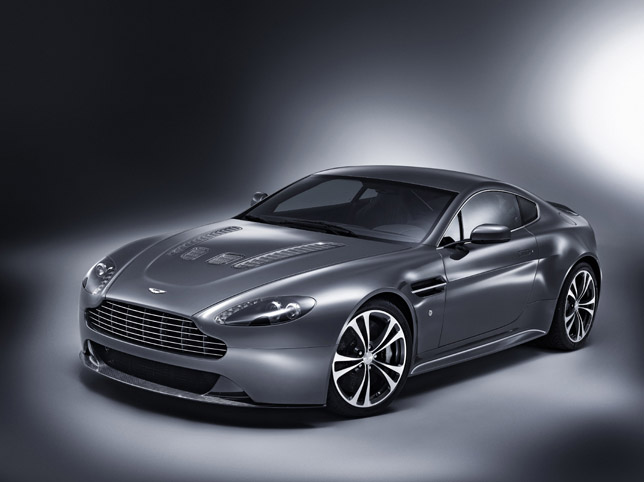
Aston Martin will present the most potent production sports car in the marque’s 95-year history at the Geneva motor show on 3rd March. Based on the hugely successful V8 Vantage, the V12 Vantage will feature a 6.0-litre V12 engine producing 510 bhp (380 kW / 517 PS), and 570 Nm (420 lb ft) of torque with a top speed of 190 mph (305 km/h) and 0-62 mph (0-100 km/h) time of 4.2 seconds.The latest incarnation of the Vantage family has been designed to provide a unique character, appealing to different driver tastes and complementing the other models in the Aston Martin line-up.
The original V12 Vantage concept was unveiled to guests at the opening of the Aston Martin Design Studio in December 2007. Continuing the marque’s impressive record of bringing concepts to market in their original form, Aston Martin engineers have brought the V12 Vantage to market in an incredible 12 months.
Aston Martin Chief Executive Officer, Dr Ulrich Bez said: “This is the ultimate performance interpretation of the Vantage range, combining our most agile model with our most powerful engine. It represents the definitive driving package; providing spectacular performance to ensure a dynamically thrilling and everyday useable driving experience.
“The V12 Vantage has a unique character, unlike our other cars. This will appeal to different people with different tastes, allowing more people to enjoy the Aston Martin experience.
“This also illustrates one of Aston Martin’s key strengths – the ability to act quickly and turn concepts and ideas into reality.”
Designed for the focused driver, every component of the V12 Vantage has been honed with pure driving enjoyment in mind. Benefitting from race-developed materials and components, and featuring lightweight carbon fibre; performance and agility have been tuned to perfection.
Visually enticing, the V12 Vantage expresses its performance potential through its purposeful stance created by enhanced aerodynamic and cooling aids optically widening the car. Equally inviting, the cosseting interior permits the driver to extract maximum performance ability from the car while also enjoying customary levels of Aston Martin comfort on longer journeys. High levels of power and torque are available at all engine speeds making the V12 Vantage responsive and tractable in any driving situation.
The V12 Vantage will be built at Aston Martin’s global headquarters in Gaydon, Warwickshire joining the DBS, DB9 and V8 Vantage model lines which are built in the state-of-the-art production facility combining hi-tech manufacturing processes with traditional hand-craftsmanship. Production will be limited to between just 300-500 examples per year, making the V12 Vantage a truly exclusive driver’s car.
Deliveries of the V12 Vantage are expected to commence during quarter three 2009 with prices to be confirmed at the Geneva motor show.
Aston Martin V12 Vantage: Specification
Body:
- Two door, two seat coupe body
- Bonded aluminium structure
- Aluminium, magnesium alloy, composite and steel body
- Extruded aluminium door side impact beams
- High Intensity Discharge Headlamps (dipped beam)
- Halogen projector headlamps (main beam)
- LED rear lamps
Engine:
- All alloy quad overhead cam 48 valve 5935cc V12
- Compression ratio 10.9:1
- Front mid-mounted engine, rear wheel drive
- Fully catalysed stainless steel exhaust system with active bypass valves
Maximum Power
- 510 bhp (380 kW / 517 PS) at 6500 rpm
Maximum Torque
- 570 Nm (420 lb.ft) at 5750 rpm
Acceleration
- 0-62 mph (100 km/h) in 4.2 seconds
- 0-60 mph in 4.1 seconds
Maximum Speed
- 190 mph (305 km/h)
Fuel Economy
- Urban 11.64 mpg 24.26 l/100km
- Extra Urban 24.05 mpg 11.74 l/100km
- Combined 17.28 mpg 16.35 l/100km
CO2 388 g/km
Transmission:
- Rear mid-mounted six speed manual gearbox. Alloy torque tube with carbon fibre propeller shaft
- Limited slip differential
- Final Drive Ratio 3.71:1
Steering:
- Rack and pinion
- Column tilt and reach adjustment
Suspension:
- Front: Independent double wishbone incorporating anti-dive geometry, coil springs, anti-roll bar and monotube dampers
- Rear: Independent double wishbones with anti-squat and anti-lift geometry, dual-rate coil springs, anti-roll bar and monotube dampers
Wheels
- Front: 9” x 19”
- Rear: 11” x 19”
Tyres:
- Front: Pirelli P Zero Corsa 255/35 ZR19
- Rear: Pirelli P Zero Corsa 295/30 ZR19
Brakes:
- Front: Ventilated Carbon Ceramic discs 398 mm diameter with six piston callipers
- Rear: Ventilated Carbon Ceramic discs 360 mm diameter with four piston callipers
- Dynamic Stability Control (DSC) with Track mode
- Anti-lock braking system (ABS)
- Electronic Brakeforce Distribution (EBD)
- Emergency Brake Assist (EBA)
- Traction Control
Length:
- 4380 mm (172.5”)
Width:
- 1865 mm (73.5”) (excluding door mirrors)
- 2025 mm (80”) (including door mirrors)
Height:
- 1241 mm (49“)
Wheelbase:
- 2600 mm (107.9”)
Fuel tank capacity:
- 80 litres (17.6 Imp. Gal. / 21.1 US Gal)
Weight:
- 1680 kgs (3704 lb)
Interior:
- Carbon fibre door pulls
- Memory seats and exterior mirrors (3 positions)
- Sports seats with 10 way electric adjustment, including height, tilt and lumbar
- adjustment
- Dual stage driver and passenger front airbags
- Side airbags (Sports seats only)
- Heated rear screen
- Automatic temperature control
- Organic Electroluminescent (OEL) displays
- Trip computer
- Cruise control
- Hard Disk Drive (HDD) satellite navigation system*
- Bluetooth telephone preparation*
- Powerfold exterior mirrors
- Rear parking sensors
- Auto dimming interior rear view mirror
- Tyre pressure monitoring*
- Alarm and immobiliser
- Remote-control central door locking and boot release
- Battery disconnect switch
- Tracking device (UK only)
In Car Entertainment
- 160W Aston Martin Audio System
- MP3 player connectivity
Options
- Lightweight seats with 6 way adjustment, including front and rear height adjust. (Does not include side airbags or Passenger Airbag Cut-Off Switch)
- 700W Aston Martin Premium Audio System with Dolby® Pro Logic II®
- Piano Black facia trim
- Graphite Alloy facia trim
- Personalised sill plaques
- Garage door opener (Europe only)
- Tracking device**
- First aid kit
- Ashtray and cigar lighter
- Boot mounted umbrella
- Front parking sensors
- Heated seats (Sports seats only)
- ISOFIX and fixed-height passenger seat (Sports seat only)
- Battery conditioner
*Not available in all markets
**Complies with UK Thatcham Category 5 requirements. Excludes subscription. Standard in UK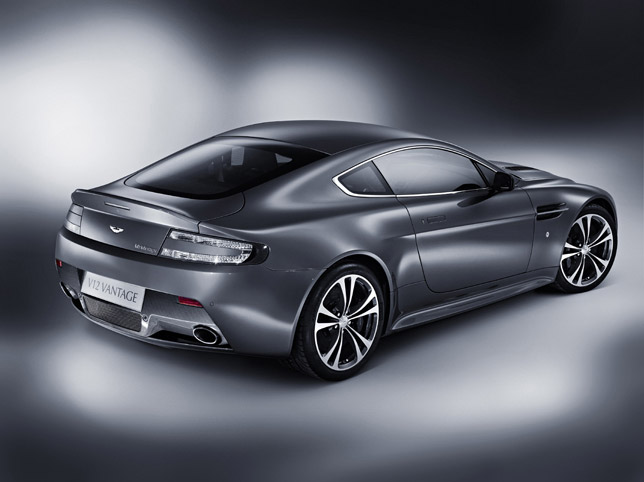
Aston Martin V12 Vantage: Performance
Agility and outright performance formed the basis of design for the V12 Vantage to produce the most exciting incarnation of the Vantage model line-up to date. Aston Martin’s most powerful engine is fused with its most agile model to produce a truly exhilarating sports car.
The V12 power plant has been intelligently packaged into the Vantage’s compact form preserving its perfect proportions. While the external dimensions of the V8 Vantage remain unchanged, the internal front structure has been extensively revised forward of the suspension towers to house the larger engine, brake cooling system, and twin air intake system.
The engine was designed at Aston Martin’s headquarters in Gaydon, Warwickshire, and is hand-built at the company’s dedicated engine facility in Cologne, Germany. To achieve the power output, the engine features a number of enhancements over the standard 6.0-litre V12 found in the DB9. These include a ‘by-pass’ engine air intake port that opens up at 5500 rpm, a revised induction system and re-profiled air inlet ports that further improve airflow into the combustion chamber to improve performance.
The naturally aspirated 6.0-litre V12 hand-built engine produces 510 bhp (380 kW / 517 PS) at 6500 rpm and 570 Nm (420 lb ft) of torque giving the driver access to high levels of power and torque at all engine speeds. Unique to the V12 Vantage is a ‘Sport’ button which allows the driver to choose between two powertrain modes.
The default ‘normal’ provides a more progressive, throttle response, suited to more everyday situations, such as driving in urban areas, heavy traffic, or in challenging weather conditions. Selecting ‘Sport’ mode delivers a sharper throttle response together with a sportier exhaust note. This mode is designed for use in more dynamic driving situations where sharper responses are required, extracting the maximum performance from the car.
The V12 Vantage benefits from Aston Martin’s class leading all-alloy VH (Vertical Horizontal) architecture: a lightweight bonded platform that provides outstanding strength, rigidity and weight benefits.
Although the V12 engine weighs 100 kg more than the standard car’s engine, intelligent use of lightweight materials and components including carbon ceramic brakes, lighter forged aluminium wheels, lightweight inner rear quarter panels and optional lightweight seats have resulted in the overall kerb weight being only 50 kg heavier than its V8 sibling. The ensuing weight distribution provides for balance that is near perfect (51:49).
Exclusively available with a six-speed manual transmission, the gearbox uses a transaxle configuration to aid weight distribution. The V12 Vantage’s final drive ratio has also been modified from 3.909:1 to 3.71:1. This allows the Vantage to take full benefit of the high torque levels delivered by the engine to provide both flexibility at lower engine speeds as well as a high top speed of 190 mph.
For a car possessing such racing pedigree, the V12 Vantage surprises with its day to day usability. Featuring a luggage capacity of 300 litres and a traditional tailgate, coupled with ample stowage space to the rear of the seats, touring and trips away are made easy. Gear changes are light and precise requiring minimum effort from the driver and a longer final drive ratio extracts the most from the power and torque available to improve driveability. The communicative chassis provides comfort on long journeys and thrilling feedback with energetic driving.
Aston Martin V12 Vantage: Control
Aston Martin is the only sports car manufacturer to offer a race car for every GT category. The DBR9 has enjoyed year-on-year success all over the world in the GT1 category including class wins at Le Mans two consecutive years running. Customer teams are consistently achieving podium finishes with the DBRS9 in GT3 while 2008 was a test and development year for the newly-launched Vantage GT2. The Vantage N24 achieved GT4 class wins all over Europe since its launch in 2006. Common to both road and race cars is the VH architecture platform upon which the V12 Vantage is based. Consisting of extruded, pressed and cast aluminium alloy, bonded together with aerospace-grade adhesive, the backbone of the car works collaboratively with the powertrain and suspension to create an exceptionally responsive driving experience.
Near-perfect weight distribution is achieved with a transaxle-mounted gearbox which sees 85% of the car’s weight lying between the front and rear axles. Aston Martin engineers have positioned the engine as far back and as low as possible in the car to contribute to the 51:49 weight distribution. Containing the weight within the V12 Vantage’s wheelbase results in a low polar moment of inertia, creating a car which has a natural agility.
Superb handling characteristics are at the heart of the V12 Vantage; the rear suspension has been modified, with a more compact dual-rate spring design, in order to accommodate a wider wheel and tyre combination, improving grip and traction. The ride height of the V12 Vantage has also been lowered by 15 mm, while the spring rates have been stiffened by 45% and the anti-roll bars are 15% (front) and 75% (rear) stiffer than the standard car. These measures serve to lower the car’s centre of gravity and reduce the amount of roll experienced during cornering, further increasing the V12 Vantage’s dynamic capabilities.
V12 Vantage’s diamond-turned 19” alloy wheels are manufactured using a forging process, saving a total of 5 kg, which reduces the overall weight of the car, as well as enhancing both ride and handling characteristics.
The new 10 spoke wheels are clad with wider Pirelli P Zero Corsa tyres which have been specifically designed for the V12 Vantage enabling it to generate the highest cornering forces of any Aston Martin; up to a peak of 1.3g is possible.
The V12 Vantage comes as standard with Carbon Ceramic Matrix (CCM) brakes, providing immense stopping power. Benefitting from carbon fibre’s inherent properties, CCM brakes are not only tougher than conventional cast iron discs but also dissipate heat more rapidly resulting in less fade during sustained dynamic driving.
Air ducts positioned within the lower front grille feed air directly onto the discs to aid cooling and optimise braking performance.
The V12 Vantage’s CCM discs are 398 mm in diameter at the front and 360 mm at the rear while the brake callipers feature six pistons at the front, four at the rear and have a larger brake pad area compared to the V8 Vantage. The CCM brakes are some 12.5 kg lighter than conventional brakes reducing not only the overall weight of the car but also the unsprung mass specifically. This benefits ride and handling and lower rotational mass helps improve acceleration.
In line with the character of the V12 Vantage, a revised Dynamic Stability Control (DSC) system permits the driver, through three modes of operation, to manage how the system intervenes during more challenging driving situations.
In default operation, the DSC is automatically switched on. Depressing the DSC button for two seconds selects ‘track mode’ which raises the manner and threshold at which the system intervenes allowing the driver to explore the limits of the car’s considerable handling capabilities. Depressing the button for four seconds will switch off DSC completely.
Aston Martin V12 Vantage: Design
Based on the stunning V8 Vantage originally launched in 2005, the V12 Vantage subtly hints at its sporting intent with its controlled aggression and lower, purposeful stance. It is manufactured at Aston Martin’s global headquarters in Gaydon, Warwickshire where all Aston Martins benefit from class leading levels of craftsmanship fused with cutting-edge technology.
Avoiding purely cosmetic changes, each modified panel on the V12 Vantage has been altered to enhance the vehicle’s dynamics. Knowledge gained from the N24 race car programme has led to body revisions designed to improve downforce while not increasing the drag coefficient of the car. Each form follows its functional requirements, while also contributing to stunning design – a revised front splitter channels cooling air to the brakes and to the radiator while also producing increased down force. Bonnet louvres remove heat from the engine bay and help increase front-end down force by limiting the built up air pressure under the bonnet. New side sills derived from the N24 race car channel air towards the rear of the car rather than under it, reducing rear-end lift. A more pronounced boot ‘flip’ and the new rear carbon fibre diffuser work in harmony with a redesigned rear under floor to channel air through the new high-capacity oil cooler and maintain an area of low pressure under the rear of the car producing increased down force and aiding grip.
Complementing the taught exterior, the V12 Vantage’s interior hints at the car’s dynamic capabilities. The optional carbon fibre and Kevlar® composite seats cosset the driver providing support during spirited driving while remaining comfortable on long journeys. Saving 17 kg per car, the seats which are manufactured by a supplier to the motorsport and aviation industries are hand-trimmed by craftsmen at the Gaydon production facility.
The interior of the V12 Vantage provides the ideal environment for the focused driver to extract the very best from every element of the car. The extensive use of high quality materials with exceptional attention to detail placed throughout the cabin results in an unparalleled level of finish. The instrument cluster has been revised with even clearer dials to allow the driver to completely focus on the information being relayed from the car. The door pulls are made from beautifully-prepared carbon fibre where even the carbon weave has been meticulously aligned – a sign of exceptional craftsmanship. Additional light weight materials in the form of Alcantara are used to save valuable weight throughout the cabin. The unique ambience of the V12 Vantage interior beautifully marries the functional requirements of a driver-focussed sports car with the comfort of an everyday practical car.
-
Ford Focus RS
In the 40-year story of Ford RS, the marque has been applied sparingly, merited by only the most high-performance Ford machines of the time.
Six years have passed since the last Ford RS – the Mk1 Focus RS – finished its strictly limited production run. Now the famous badge has returned for its league of devoted fans and a new generation of performance car enthusiasts.
RS – A Significant Event
This new Focus RS is the product of Ford Team RS, headed by Jost Capito, a committed car enthusiast and racer. Alongside Capito is a small team of dedicated performance car and motorsport engineering specialists, led by Chief Programme Engineer, John Wheeler, whose own expertise stretches over 20 years of Ford performance and motorsport vehicles.
Team RS works hand-in-hand with Ford of Europe experts from across the engineering spectrum to create Ford’s performance road car range. More than 100 engineers have been involved in Focus RS and every one understood the weight of expectation that greets a new Ford RS model.
States Capito: “A new Ford RS is a significant event; the badge is not applied to a new car very often and when it is, it has to be a great car. I know this Focus RS will be thoroughly deserving of the name.”
From early in its development programme, the team set a target to create a car with the poise, power, performance and precision to trade lap times with far more exotic vehicles and be a benchmark for performance and value for money.
Their result is a car capable of lapping the legendary 20.8km (12.3 mile) Nuerburgring Nordschleife repeatedly at speed and equally adept at cruising home afterwards; blending Ford Focus practicality with bespoke engineering, dynamics and a turbocharged, 305PS (300 bhp) 2.5-litre Duratec engine.
-
ABT on the Tokyo Auto Salon 2009
Simultaneously to the Detroit Auto Show Asia’s leading trade show in the automobile sector took place from January 9th through 11th: the Tokyo Auto Salon. With over 600 cars being presented and more than 300 exhibitors, the convention is the worldwide biggest of its kind.
Promptly to the beginning of the year ABT Sportsline was able to present two of the main sellers from Bavaria. Together with the Lager Cooperation the leading tuner for cars of the Volkswagen group presented its ABT Touareg together with the ABT AS4. “The participation on the Tokyo Auto Salon represents the significant role the Asian market is playing for ABT Sportsline”, says ABT ASIA CEO Wolfgang Kitzeder. “Apart from the economic trend worldwide, ABT Sportsline is going to take the chances the Asian market is giving us for extending our market share”, Kitzeder completes.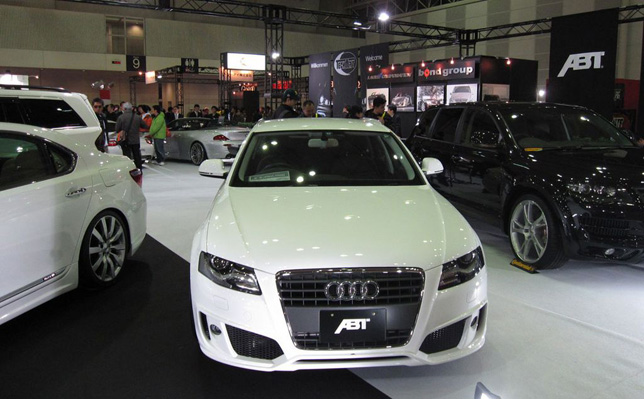
-
Honda Fury
On Friday, January 16th at the New York International Motorcycle Show, American Honda introduced to the world what many have deemed the most radically styled production Honda ever built: the 2010 Fury. The Fury radiates attitude and delivers a total riding experience approaching the outer limits of motorcycling.
The Fury opens the door to the most extreme level of custom looks. But once you’re rolling, the Fury experience is all about that special bond between rider and machine: the unmistakable big V-twin pulse, the characteristic Vee engine note and the no-nonsense riding stance bring you back to the core elements of riding.
Destined to become a milestone machine, the Fury captures the pure, undiluted chopper essence, places it within easy reach of nearly every rider and then backs it up with the same quality and reliability built into every Honda. It’s a radical concept in a unique package, a combination never before offered- until today.
Fury Key Features:
* Full-on chopper styling
* Longest wheelbase ever in a production Honda motorcycle
* Muscular V-twin power, sound and feel
* Clean looks, superior attention to detail
* Spacious riding position
* Low seat height
* Single-shock rear suspension features “hard tail” look
* Extra-wide 200-series rear tire
* Slim-look 21-inch front tire
* Legendary Honda fit, finish and reliability
* Unrivaled value


Fury Specifications:
Engine Type: 1312cc liquid-cooled 52° V-twin Bore and Stroke: 89.5mm x 104.3mm Compression Ratio: 9.2:1 Valve Train: SOHC; three valves per cylinder Induction: PGM-FI with automatic enricher circuit, one 38mm throttle body Ignition: Digital with three-dimensional mapping, two spark plugs per cylinder Transmission: Five-speed Final drive: Shaft Suspension Front: 45mm fork; 4.0 inches travel
Rear: Single shock with adjustable rebound damping and five-position spring preload adjustability; 3.7 inches travelBrakes Front: Single 336mm disc with twin-piston caliper
Rear: Single 296mm disc with single-piston caliperTires Front: 90/90-21
Rear: 200/50-18Wheelbase: 71.24 inches Rake
(Caster Angle):38.0° Trail: 3.5 inches Seat Height: 26.7 inches Fuel Capacity: 3.4 gallons Colors: Dark Red Metallic, Metallic Silver, Ultra Blue Metallic, Black, Matte Silver Metallic (2010 special color- limited production) Curb Weight*: 663 pounds *Includes all standard equipment, required fluids and full tank of fuel- ready to ride.
(All figures are preliminary and subject to change.) -
MINI One Clubman
 New basic models of the MINI and MINI Clubman, new equipment package with attractive price benefit – world premiere at the International Automobile Salon in Geneva, market launch in March 2009.
Munich. The MINI Clubman provides additional ways of enjoying driving pleasure so typical of the brand. Now the capabilities of this model can be experienced in a particularly economical way. The MINI One Clubman is to be launched as the new basic model. It is powered by a 70 kW/95 bhp 4-cylinder petrol engine which already impressively demonstrated its efficiency in the MINI One. Parallel to this, a new entry-level version is also being presented for this model: the MINI One with 55 kW. With these two new models, presented for the first time at the International Automobile Salon 2009 in Geneva, entry into the MINI world is now even more attractive. Both models combine the fascination of MINI’s characteristically agile handling and the unmistakable style of the brand with maximum economy. With fuel consumption and CO2 emission levels as per EU test cycle of 5.4 litres per 100 kilometres and 130 grams per kilometre for the MINI One Clubman and 5.3 litres and 128 grams for the MINI One with 55 kW, the two models highlight the brand’s aspiration to combine product substance, safety and driving fun at premium level with ecological and economical qualities which are in line with contemporary needs.
The market launch of the two new models will take place in March 2009. The MINI One with 55 kW will then be offered in Germany at the price of 15,200 euros. The price for the MINI One Clubman is 18,200 euros.
With the market launch of the MINI One Clubman and the MINI One with 55 kW in March 2009, a new equipment package will also be presented. The Earl Grey Package includes a metallic paint finish in Dark Silver, sporty decor stripes at the body sides, specially designed wheel trim panels and white direction indicators. It is offered at a particularly attractive price not just for the MINI One with 55 kW, but also for the MINI One, the MINI Cooper and the MINI Cooper D as well as for the MINI One Clubman, the MINI Cooper Clubman and the MINI Cooper D Clubman.


MINI One Clubman: perfect entry – in both senses of the word.The MINI Clubman has become established as a member of the MINI model family within a short period of time. Its unique body concept offers completely new ways of enjoying characteristic MINI driving fun. The MINI Clubman re-interprets the classic shooting brake concept in a modern way, highlighting sporty flair and functionality with its strikingly elongated roof line and unique door arrangement. As compared to the MINI, the MINI Clubman has a wheelbase which is 80 cm longer. At the rear of the vehicle, passengers enjoy exactly this amount of additional leg space. Entry into this “lounge” is facilitated by an additional door, the Club door at the rear on the right-hand side of the vehicle. The rear seat is offered as a three or two-seater for the MINI One Clubman, too. At the rear of the MINI One Clubman, the dual section split door with wings opening to the right and left enables very easy loading of the generous luggage compartment.
The 4-cylinder engines available for the MINI Clubman are in line with the current status of engine development. In the vehicle segment of the MINI and the MINI Clubman, they set worldwide standards for impressive power delivery and efficiency. This also applies to the 1.4 litre 4-cylinder in-line engine now used in the MINI One Clubman. It was derived from the 1.6 litre engine of the MINI Cooper Clubman and like the latter has a fully variable valve control system which was developed on the basis of the unique VALVETRONIC technology of the BMW Group. What is more, in order to increase efficiency the aluminium engine has been fitted with a volume-flow-controlled oil pump and a coolant pump which can be deactivated and is only powered when the engine of the new MINI One Clubman has reached optimum operating temperature. As in the MINI One, the 4-cylinder of the MINI ONE Clubman reaches its maximum output of 70 kW/95 BHP at an engine speed of 6 000 rpm. Its maximum torque is 140 Newton metre as is available at 4 000 rpm.
As standard the, the new MINI One Clubman is fitted with numerous measures to increase efficiency which have a positive effect on fuel consumption and exhaust emission levels as well as on driving performance. This includes brake energy regeneration, where the generation of electrical power for the vehicle power supply is focused on periods during which the vehicle is braking and coasting, the Auto Start/Stop Function which switches off the engine when the vehicle comes to a halt at traffic lights and at crossroads, and shift point display. For acceleration from zero to 100 km/h the MINI ONE Clubman requires 11.6 seconds. Its forward thrust ends at a top speed of 183 km/h. The average fuel consumption based on the EU test cycle is 5.4 litres per 100 kilometres, with CO2 output at 130 grams per kilometre.
6-speed automatic transmission as an option for the MINI One Clubman.
The new MINI One Clubman is fitted as standard with a precise and smooth 6-speed manual transmission. For the market launch, a 6-speed automatic transmission is also available as an option. The automatic transmission is characterised by a particularly direct link to the engine, providing sporty and sharp gear shifts. In manual mode it gives the driver the opportunity to influence gear selection by use of the selector lever.
The MINI One Clubman gains its visual distinctiveness from the individual design of its front section. Like the MINI One it has a specific version of the characteristic hexagonal radiator grille. The frame of the grille is in chrome, and the MINI One Clubman is also distinguished from other models by its black cross ribs. Its air intake is the same as that of the MINI Cooper Clubman. It is three-dimensional in style and shows a slight upward incline. As standard, the exterior mirror caps of the MINI One Clubman are in black.
With the market launch of the new model version, new colour variations of the MINI Clubman are also offered for all engine types. In future it will be possible to combine a rear door surround either in black or silver with the relevant body colour. This means that a more homogeneous colouring is now available as an alternative to the attractive contrast effect which was previously obligatory. In terms of interior design and special equipment features, extensive and high-quality individualisation options are available for the MINI One Clubman which enable every MINI to be turned into a personally configured, unique specimen.


MINI One with 55 kW: maximum efficiency in a new performance category.
The new MINI One with 55 kW likewise lines up for its market launch offering genuine driving fun in the unmistakable style of the brand. In addition to its visual appearance it also shares the chassis technology and all other equipment features of its 70 kW/95 bhp sibling in the same model series. Only the 6-speed automatic transmission, optionally available for the MINI One and the MINI One Clubman, is not available for the MINI One with 55 kW. The new entry level model thus not only provides even greater variety in the MINI World, it also places a new emphasis on efficiency in yet another performance category of the small car segment. Among the comparable petrol engine models of its class, the MINI One 55 kW has the lowest fuel consumption and the lowest level of exhaust emissions, combining this leading position with the unique qualities of a premium automobile.
The MINI One with 55 kW is powered by 4-cylinder petrol engine whose technical components are identical to those of the engines in the MINI One and MINI One Clubman. High revving qualities, low weight and an outstandingly high level of efficiency are typical of this 1.4 litre aluminium engine. Its technical features also include fully variable valve control, a volume-flow-controlled oil pump and a coolant pump which operates according to needs. In this new specification, the engine achieves its maximum output of 55 kW/75 bhp at an engine speed of just 4 000 rpm. The maximum torque of 120 Newton metres is available at 2 500 rpm.
In order to optimise its efficiency level, the MINI One with 55 kW is also fitted as standard with brake energy regeneration, Auto Start/Stop Function and shift point display. A 6-speed manual transmission is provided to transfer engine power to the front wheels in characteristic MINI style. The MINI One with 55 kW accelerates in 13.2 seconds from zero to 100 km/h, its maximum speed is 175 km/h. With these performance figures together with an average fuel consumption on the EU test cycle of 5.3 litres per 100 kilometres and a CO2 output level of 128 grams per kilometre, it is not only the sportiest but also the most economical representative of its performance category.
Attractive combination: the equipment package Earl Grey.
The standard fittings of the new entry-level model are the same as those of the MINI One. The wide range of special equipment features and accessory options enables individualisation of the MINI One with 55 kW, too. Parallel to the market launch of the MINI One with 55 kW, the new equipment package Earl Grey is also available. In this package, attractive individual options are combined at particularly low prices. In addition to a metallic paint finish in Dark Silver, the Earl Grey Package includes specially designed wheel trim panels and white direction indicators. A striking addition is provided by the black-and-white decor stripes at the body sections which were exclusively designed for the Earl Grey Package. They emerge from the side direction indicators and stretch dynamically to the rear light clusters, with the two black stripes tapering off into the area of the rear side panel.
The Earl Grey Package is a particularly attractive way of individualising the MINI and the MINI Clubman. It is not only available for the MINI One with 55 kW, but also for the MINI One, the MINI Cooper and the MINI Cooper D as well as for the MINI One Clubman, the MINI Cooper Clubman and the MINI Cooper D Clubman.
-
Audi Is “Light” Years Ahead With World’S First Led Headlights
 The order book opened in Britain for the V10 engined Audi R8 this month (1 January) and with it the German car manufacturer demonstrated another element of its pioneering Vorsprung durch Technik technology.
The range-topping R8 is the first car in the world to be equipped with all-LED (light emitting diode) headlamps. For the first time the high intensity diodes have been used for low beam and high beam settings, as well as for daytime running lights and indicators, intensifying the sports car’s visual drama. (more…)
-
Ford Hits Vital Co2 Targets
 Ford’s latest C-MAX MPV delivers the lowest CO2 emissions in its segment. Engineering developments to Ford C-MAX 1.6 TDCi models have resulted in emissions of just 119g/km of CO2.
As a result vehicle excise duty (VED) for these models reduces immediately from £120 to £35. There will be a further reduction to £30 from April 2009, when new VED bands come into force. The official European Drive Cycle combined fuel consumption figure for these models is improved to 62.8mpg*. (more…)
-
Rare cars and bikes get ready to excite Classic Motor Show fans this weekend
 A lovingly restored Panther 6, one of only two produced; the only Unipower GT on the road in Europe. Prefer two wheels? How about the Texas Cee-Gar or Little Miss Dynamite, the ace Café racer? Just a few of the extremely rare cars and motorcycles that will be on display at the Classic Motor Show, which starts Friday 14th and runs until Sunday 16th November at Birmingham’s NEC. (more…)
-
Audi A3 (Euro spec)
 The Audi Q7 earned recognition as the best luxury SUV and the Audi A3 claimed the top ranking among luxury multi-function vehicles in the just-released 2008 Total Value Index® produced by the consumer research firm Strategic Vision. (more…)
-
Cobra Jet Returns To Drag Racing; Latest Mustang In FR500 Series Of Race Cars
 Forty years after its debut, a legend of drag racing is back.
In honor of the 40th anniversary of the release of the first Ford Cobra Jet Mustang in 1968, Ford Racing is introducing the 2008 Cobra Jet Mustang, now available for customers to race in NHRA sportsmen classes during the 2009 season. (more…) -
smart Fortwo Mhd
At the Paris Motor Show 2008 smart is presenting the latest generation smart fortwo with electric drive to an international audience for the first time. In future, the advantages of the smart fortwo electric drive, which produces no local emissions, will be demonstrated in everyday service in the project “e-mobility Berlin” which Daimler AG presented together with the energy provider RWE at the beginning of September 2008. This project underlines the pioneering role of the young car brand in developing environmentally friendly and sustainable concepts for the individual mobility of the future. The current models already boast low fuel consumption and minimum carbon dioxide emissions. The smart model range includes the CO2 world champion, the smart fortwo cdi, with CO2 emissions of just 88 g/km – the lowest figure of any production car worldwide. Moreover, since October 2008 the two petrol smart fortwo models with 52 kW/71 bhp and 45 kW/61 bhp engines have been equipped with an intelligent and user-friendly start/stop system which further reduces their fuel consumption.
The two-seater car is celebrating its tenth anniversary this year and its unique concept has now become firmly established. Thanks to new ideas and a design that combines functionality with joie de vivre, the smart fortwo has become a cult car. Since the launch of the first model in 1998, more than a million models of the two-seater car have been produced. Today it is on sale in 37 countries around the world – including the USA since January 2008. From mid 2009 the smart fortwo will also be available in China. The smart fortwo therefore already has an impressive track record on its way to a green future.
Since 1998 economical cars from smart have offered innovative solutions to the great challenge of our time: how can individual mobility be made environ-mentally sound and sustainable in future? The latest generation smart fortwo electric drive provides a new possible answer to this question as electric drive is quiet, highly efficient and produces no local emissions.


100 electric smarts in everyday service in London since 2007
At the end of 2007 smart leased 100 electric smarts of the old seriesto be used in a pilot project in Londonin order to gain real-world experience with electric drive. Customers gave very encouraging feedback on the zero emission cars that were still equipped with conventional batteries. And the authorities in the English capital reward this commitment to electricity by exempting drivers of electric smarts from the expensive Londoncongestion charge.
“e-mobility Berlin” – smart fortwo ed to be equipped with a lithium-ion battery in future
smart is consistently working on the further development of electrically driven vehicles. With the support of the German government and the state of Berlin, at the beginning of September 2008 Daimler AG and the energy provider RWE presented the project “e-mobility Berlin”. This is the largest initiative in this field to date, and the two companies aim to jointly create the conditions for zero emission motoring with battery electric drives. RWE is providing 500 electricity charging stations and Daimler is contributing 100 electric cars. The aim is to create an intelligent overall system.
Dr. Dieter Zetsche, President and CEO of Daimler AG says “As the capital and Germany’s largest city, Berlinis the right place for this project. The future will see an ever-increasing proportion of traffic on the roads in urban centres around the world. Zero-emission electric cars could shape the image of environmentally aware cities because zero local emission motoring is no longer science fiction – and also when seen as a whole emissions will be further reduced as the proportion of “green” electricity increases. The future of mobility is green. We invented the car – and we will do it again!”
Daimler AG, the parent company of the cult smart brand, has been working hard to develop solutions for the important challenges presented by battery electric driven cars for years. These are the range and charging times, but also the charging station infrastructure, the additional energy requirement and, of course, the costs.
smart is presenting important solutions in Berlin. The latest smart fortwo ed series will be equipped with state-of-the-art lithium-ion batteries. Lithium-ion technology has decisive advantages over other types of batteries, including extremely compact dimensions, much higher performance, shorter charging times, a long life and high reliability.
Moreover, an “on-board unit” is being developed for the project “e-mobility Berlin” which communicates with the charging station. Among other things, this will contribute to ensuring that the battery is automatically charged with low-priced electricity when the network is not used to full capacity, forexample at off-peak times. Or when more electricity is available from alternative energy sources than is needed at this point in time. This benefits the environment and offers customers real savings.
The development and tuning of the components needed are already well underway. At the beginning of next year the system will initially undergo internal testing and optimisation. Small series production of the electric two-seater will start at the end of 2009 and smart will then deliver the first vehicles to selected customers.
Success story – ten years of the smart fortwo
As early as the early 1970s developers at Mercedes-Benz started working on the “car of the future” and considering new revolutionary approaches that eventually led to the concept of an ultra-compact car two and a half metres long. Several years passed until the pioneering safety concept was developed that allowed the high level of safety typical of Mercedes to be realised in an extremely short car.
In 1989 Nicolas G. Hayek, the inventor of the Swatch watch, announced plans to launch a small city car on the market. To realise this idea Nicolas Hayek turned to Mercedes-Benz as an experienced partner. Together, both partners founded Micro Compact Car AG with headquarters in Biel, Switzerland. Finally, in 1997 the smart city coupé celebrated its world premiere at the Frankfurt International Motor Show. Production and sales started in 1998. In the same year, smart became a wholly-owned subsidiary of Daimler-Benz AG (now Daimler AG).
Ten years ago a car started to change our focus and our way of thinking and feeling: the smart. The name is a reference to the car’s intelligence and attractiveness and the smart city coupé, later renamed smart fortwo, lived up to its name. It was new and excitingly different to conventional cars. This is because it was available solely as a two-seater – an extremely compact car barely longer than two and a half metres that could also fit in a parking space perpendicular to the flow of traffic if necessary. In addition, the smart was characterised by a new, sophisticated design language and showed that even a small car can be attractive, safe and grown-up.
Even then the two-seater smart provided a unique answer to many questions concerning individual urban mobility. For not only does it take up very little road and parking space, it also boasts impressively low fuel consumption and minimum carbon dioxide emissions. Nevertheless, it transports two people and their luggage to their destination very comfortably and with maximum safety.
smart – a passionately discussed idea
When sales of one of the world’s most unusual production cars started in October 1998, the newcomer that was at variance with many prevalent ideas of how a car should be, immediately became a subject of passionate, and often controversial, discussion. Now, ten years later, the smart idea has long since taken hold. The intelligent two-seater has become a cult car. The weekly journal” Die Zeit” called the vehicle concept an “urban icon”. The smart consistently implements technical innovations for the mobility of the future and also uses constructional details as design features.
smart stands for innovation, functionality and joie de vivre
As one of the youngest car makes, smart stands for innovation, functionality and joie de vivre. smart especially appeals to customers who seek new, intelligent and trend-setting solutions in the automotive sector. smart fortwo drivers can be categorized in terms of their attitude rather than their age, profession or gender. They are open-minded individuals who question the status quo and live life consciously. They opt for a smart fortwo because it is something special and because it sets them apart from the masses. And also because it is quite simply fun to drive.
Further models and series
In the following years the smart brand launched the sports cars smart roadster and smart roadster-coupé (2003) and the four-seater smart forfour (2004) on the market.
The innovative car brand has demonstrated its creative energy time and again with special vehicle models. These include the smart crossblade in 2002 that had neither doors, a roof nor a windscreen, and the smart crosstown show car in 2005 which was equipped with forward-looking hybrid drive.Concentration on the smart fortwo
Following the decision to stop production of the smart roadster at the end of 2005 and of the smart forfour mid 2006, everything concentrated on the smart fortwo. Ten years after the first pilot production vehicles rolled off the production line, in 2007 the new smart fortwo was launched on the market. This model builds on the strengths of the visionary classic and further develops its virtues. Since 2007 smart has been fully integrated in the organisation of the Daimler business division Mercedes-Benz Cars, which also comprises the Mercedes-Benz, Maybach and AMG brands in addition to smart.
Already a classic
It is undisputed that the smart fortwo’s unique character already makes it an automotive classic, despite its young years. As early as 2002 a smart fortwo was the only vehicle to be included in the permanent collection of the world-famous Museumof Modern Artin New Yorkwhilst still in series production as a “contemporary design classic of the last decade of the last century”.
More than one million vehicles produced – the international cult car has become firmly established
After ten years on the market the smart fortwo can be proud of its achievements. Since the first model was launched in 1998, more than a million two-seater smarts have been produced. Whereas the smart fortwo was initially only offered for sale in Germanyand eight further European countries, today it is available in 37 countries worldwide – since January 2008 also in the USA. From mid 2009 the smart fortwo will also go on sale in Chinaas the car is practically tailor-made for the growing number of lifestyle-oriented small car customers in a country with numerous megacities . In China, too, fashion-conscious young people want an agile, trendy vehicle for their flexible urban lifestyles in order to set themselves apart from others.
The second generation continues the success story
The second generation of the smart fortwo has been on the market since the spring of 2007. It clearly continues the tradition of its predecessor and the fascinating smart story. The car continues to focus on the core brand values of innovation, functionality and joie de vivre – a kind of declaration of automotive independence for many smart drivers . Anders Sundt Jensen, responsible for the smart brand says “The new fortwo is even more comfortable, agile, safe and environmentally friendly than its successful predecessor was. The new fortwo does not only appeal to smart fans as a lifestyle-oriented vehicle, but also on account of its unparalleled economy.”
A trend-setting appearance with new ideas
The smart fortwo embodies a completely new, intelligent concept for automotive individuality and this is also reflected in its appearance with a fresh, young, modern yet sophisticated design language. Unusual ideas gave the two-seater its trend-setting appearance and enabled it to establish its own class. In the past ten years the smart has become an automotive icon and it combines extremely varied demands on function, aesthetics and safety technology to create something completely new. The result is a bold design that confidently makes structural elements such as the tridion safety cell a significant part of the car’s styling. There could hardly be a more eloquent expression of that most basic principle of design, that form must follow function. A further feature is the mix of materials consistently realised in a production vehicle for the first time with a hard core (tridion) and a flexible and functional shell with thermoplastic bodypanels. In this way smart sets new trends and its shape alone gives it a likeable appearance whilst still being taken seriously.
Safety – a hard shell for the passengers
The smart fortwo is seen as a real trendsetter in terms of safety equipment in small cars. The tridion safety cell protects its occupants like the hard shell around a nut. In this way the smart fortwo meets the extremely strict standards of Mercedes-Benz Cars. Furthermore, it complies with the requirements of Euro-NCAP and US crash regulations.
The basic equipment of the smart fortwo includes full-size airbags for driver and passenger, belt tensioners and belt-force limiters. Head/thorax side airbags are available as an option. esp® also comes as standard; in many other small cars this is not even available for an additional charge. The esp® includes hill-start assist and the anti-lock braking system abs. A hydraulic brake assist function is also included in the standard spec.
The diesel version of the smart is the current CO2 champion
State-of-the-art compact three-cylinder petrol engines with a capacity of 999 cc are installed at the rear of the smart fortwo. In Western Europecustomers can currently choose from two naturally aspirated engine versions with mhd (micro hybrid drive technology) delivering 45 or 52 kW (61/71 bhp) respectively, and a supercharged turbo engine rated at 62 kW (84 bhp). A 72 kW (98 bhp) three-cylinder turbo engine is also at the heart of the smart fortwo BRABUS.
In addition, a diesel variant is available – the smart fortwo cdi – which is the world champion in low CO2 emissions. The 33 kW/45 bhp two-seater car consumes just 3.3 litres of fuel (NEDC) per 100 kilometres on average, which means that it can travel approximately 1000 kilometres without refuelling. This has been confirmed by the Italian car magazine ” Quattroruote” which conducted a fuel consumption test over 1000 km between Romeand Salzburg. At just 88 grams per kilometre the smart fortwo cdi has the lowest CO2 emissions of a production car worldwide!
To further reduce the CO2 emissions of the petrol-driven models, both the 45 kW/61 bhp and the 52 kW/71 bhp smart fortwo variant come with mhd (micro hybrid drive) as standard in Europe. This intelligent and user-friendly start/stop system automatically shuts down the engine as soon as the car’s speed falls below 8 km/h and the brake pedal is pressed. The engine starts again as soon as the driver releases the brake pedal. This further reduces the standard consumption and the average CO2 emissions.
Award-winning climate friendliness and economy
Protection of the environment is an integral part of all the fields of activity of the smart brand. This does not only apply to the vehicle’s operational period, but also to its development, production and later recycling. The internationally renowned “Öko-Trend” environmental institute has acknowledged the smart fortwo’s top position in matters relating to environmental friendliness and awarded it the coveted environmental certificate for cars. Moreover, the smart fortwo has been awarded the “ÖkoGlobe” by one of Germany’s largest insurance companies.
What’s more, several renowned trade journals have certified the innovative two-seater’s unparalleled economy and environmental friendliness. They came to the unanimous conclusion independently of one another: no other car is as cheap to run!


