Category: Redirect

  • Toyota Corolla Hatchback

    The Toyota Corolla Hatchback takes all the reliable hardware from the Corolla Sedan and mixes it with a bit of mischievous fun to make a stylish yet practical sporty machine. For 2023, the Corolla Hatchback shares all the safety and multimedia upgrades from the Sedan and adds a few of its own.

    Starting with the look, Corolla Hatch’s striking design is revved up for 2023 with an updated front grill and rear bumper with available silver accents. The new premium large daytime running light (DRL) headlights and taillights are borrowed from the new GR Corolla super hatch. The SE model features new-design 10-spoke 16-inch aluminum wheels, while the XSE gets new 18-inch graphite-colored aluminum wheels.

    All 2023 Corolla models upgrade to new Toyota Safety Sense 3.0 with new Proactive Driving Assist, including Obstacle Anticipation Assist and Deceleration Assist. The SE grade joins the XSE in featuring standard Smart Key, while both grades add enhanced Sport driving mode tuning and red interior accents replacing blue.

    The new 8-inch Toyota Audio Multimedia system offers more versatility than ever, including standard wireless Apple CarPlay® and Android Auto™ compatibility. Both model grades also gain two rear-seat USB-C ports, bringing the total in the car to four. The XSE piles on the value by making Qi-compatible wireless device charging standard, along with the sonically stunning JBL Premium Audio with an 800-watt 8-speaker System. What’s more, all 2023 Corolla models deliver added value with Safety Connect and Service Connect with up to a 10-year trial subscription.

    The Many Colors of Fun

    In tandem with styling updates for 2023 come two standout new colors for the Corolla Hatchback. Blue Crush Metallic replaces Galactic Aqua Mica, while Inferno replaces Blue Flame. Colors that carry over from 2022 include Midnight Black Metallic, Classic Silver Metallic, Finish Line Red, Magnetic Gray Metallic, Wind Chill Pearl and Ice Cap. Two-tone color combinations using a Midnight Black Metallic roof are available to further heat up Corolla Hatch’s striking good looks.

    Solid Core, Dynamic Lines

    Corolla Hatchback’s bold look begins with a rounded, muscular physique accented by chiseled character lines and simple, condensed three-dimensional highlights. Combined with the 16- or 18-inch wheels, the shape gives the Hatchback an active, well-planted attitude. Slim, aggressive LED headlamps, updated for 2023, wrap deeply into the front fenders and give Corolla Hatchback a distinct expression. The LED taillamps feature a diffusing inner lens designed to highlight the Hatchback’s stout stance. The XSE adds LED fog lights to the front fascia accented by chrome fog bezels.

    Naturally, the Hatchback is practical, starting with the hatch itself. Made from TSOP (Toyota Super Olefin Polymer) and ABS (Acrylonitrile Butadiene Styrene), the car’s lightweight hatch is easy to open and close. The available Enhanced Cargo Space option adds six cubic feet of space by lowering the cargo floor, made possible by switching out the spare tire for a tire repair kit.


    Tech + Comfort

    The standard 4.2-inch display is located between the tachometer and speedometer. The available 7-in Fully Digital Gauge Cluster allows the driver to choose between multiple digital speedometer styles customizing their driving experience.

    Featuring rich graphics, the easy-to-read MID can be custom configured by the driver and offers intuitive operation to access information for the audio and multimedia systems. This includes hands-free phone operation, navigation and vehicle information including fuel efficiency and tire pressure and TSS 3.0 functions. Other important parameters and system settings are also available, and the driver can operate the system via steering wheel-mounted controls and voice command.

    The Corolla Hatchback cabin is equal parts sporty, elegant and, as always, Corolla-comfortable and durable. Minimized gaps between buttons and switches and consistency in all materials and elements’ shape, color, grain and gloss help maximize continuity and aesthetic quality. High-gloss materials are paired with matte elements – silver accents with Piano Black and available contrast stitching – to accentuate a premium look and feel.

    The center console incorporates a tray ahead of the gearshift that can hold small items such as a smartphone or wallet. When the car is so equipped, the tray serves as the Qi wireless device charging area. A 5.5-inch smartphone can easily fit inside the center console box.

    Seating comfort, always a Toyota strength, is optimized in the Corolla Hatchback to provide a natural body posture and position. Ample front door storage includes cup holders that can fit 24-ounce bottles. Rear seat passengers have upper door cup holders that hold 16-ounce bottles.

    The Corolla Hatchback SE grade comes standard with single-zone automatic climate control, an electronic parking brake, automatic up/down power windows and two front and two rear USB ports.

    Both the XSE and SE grades come with Paddle Shifters standard. The XSE grade comes with dual-zone climate control, fabric/SofTex trimmed seating, unique stitching on the instrument panel and doors, heated front seats and an eight-way power driver’s seat standard.


    A Driver’s Hatchback

    Toyota designed the Corolla Hatchback as a complete driver’s package, with a seamless combination of comfort and sporty controllability that begins at its TNGA-C platform. The structure employs extensive use of aluminum and high- and ultra-high tensile steel. A mixture of adhesives, spot welding and additional bracing – top to bottom, side to side – to create a super-strong, super-tight platform for ride comfort and handling agility.

    The MacPherson strut front suspension employs sophisticated techniques, including a strut bearing mounted coaxially with the kingpin axis. This feature allows smoother upward suspension travel, especially while traversing bumps, resulting in a more comfortable steering feel. The multi-link rear suspension is highly adept at comfortably absorbing bumps while prioritizing agility. The result: A Corolla Hatchback that delivers an uncanny blend of balance, composure and feel that invites the driver to seek out twisty roads.

    Powertrain and road noise are hushed thanks to drivetrain efficiencies and the widespread deployment of sound-absorbing materials, including Thinsulate®, sealants, foams and silencer pads. As one example, the floor silencer pad is one large piece, instead of many smaller elements. The TNGA structure employs additional seals in body gaps to insulate noise penetration and enhance air-sealing performance. Even Corolla Hatchback’s Aero Stabilizing Fins on the taillights help by combatting wind drone.

    Dynamic-Force Engine Aptly Named

    The 2.0-liter Dynamic-Force direct-injection inline four-cylinder engine delivers exuberant performance from 169 horsepower at 6,600 rpm and 151 lb-ft. peak torque at 4,800 rpm. Its features read like those of a sports car: very high compression ratio (13:1), ultra-low internal friction, Toyota D4-S fuel injection combining direct injection and secondary port injectors, high-speed combustion and VVT-iE intelligent variable valve-timing on the intake side and VVT-i on the exhaust. (VVT-iE uses an electric motor instead of oil pressure to control the variable valve timing.)

    Features like a rigid crank case with integrated stiffener, a lightweight resin camshaft cover and a ribbed oil pan help to make the engine a smooth operator. With all the fun comes the bonus of low fuel consumption, with EPA-estimated 32 city / 41 highway / 35 combined MPG for SE grade with CVT and 30 city / 38 highway / 33 combined for XSE grade with CVT. Automatic Stop/Start reduces fuel usage in urban driving.

    A continuously variable-capacity oil pump and a variable cooling system with electric water pump help maximize engine performance and efficiency. The 2.0-liter Dynamic Force engine can achieve 40% thermal efficiency, among the highest in the world for a gas-fueled passenger vehicle engine and a true measure of how well the engine converts fuel to energy.


    Next-Gen Multimedia

    All 2023 Corolla models debut a new standard next generation 8-inch Toyota Audio Multimedia system designed and engineered by Toyota’s Texas-based Connected Technologies team. The new system provides a wide range of enhanced connectivity and convenience features and is Over-the-Air (OTA) updatable.

    Users can interact with the new system’s design through intuitive touch and voice activation controls. With available Drive Connect, users have access to Intelligent Assistant, Cloud Navigation and Destination Assist (Active Drive Connect trial or subscription required).

    With Intelligent Assistant, speaking simple phrases like “Hey Toyota” awaken the system for voice activated commands to search for driving directions, find Points of Interest (POI), adjust audio controls, change the cabin temperature and more. Cloud Navigation is the available onboard navigation solution that utilizes the cloud to download the latest available map, traffic and routing information.

    To ensure the most up-to-date search capabilities, POI search is provided by Google Points-of-Interest data. Destination Assist also gives access to 24/7 live agent assistance to locate your next destination.

    The new Toyota Audio Multimedia system allows dual Bluetooth phone connectivity, with support for standard wireless Apple CarPlay® and Android Auto™ compatibility. An available Wi-Fi Connect subscription offers 4G connectivity for up to five devices, turning the car into an AT&T Hotspot, along with the ability to link customers’ separate Apple Music® and Amazon Music subscriptions to the vehicle with the new Integrated Streaming feature. This augments the already robust audio playback ability that includes HD Radio, USB data and a SiriusXM® Platinum Plan 3-month trial subscription.

    The SE audio system includes six speakers. The audio experience goes to a higher level with the JBL® Premium Audio system with 8 speakers including an 800-watt amplifier. For 2023, it’s made standard for the XSE.

    All Corolla models offer a host of Connected Services available on all grades (trial or subscription required1). Safety Connect™, now with up to a 10-year trial subscription for 2023, includes an Emergency Assistance Button (SOS), 24/7 Enhanced Roadside Assistance, Automatic Collision Notification, Stolen Vehicle Locator and Collision Assistance. Service Connect, also with up to a 10-year trial subscription for 2023, offers drivers the capability of receiving Vehicle Health Reports, Maintenance Alerts and reminders. With the Toyota app, users can stay connected to their Toyota with the available Remote Connect service.

    Standard Smart Key System with Push Button Start works on the front doors and hatch and also for remote keyless entry with lock, two-stage unlock, panic and trunk-release functions.


    14G network dependent. Certain features include a trial period at no additional cost upon original date of new vehicle purchase or lease. After the trial period ends, a paid subscription is required. More details on trial periods and subscription-based features can be found at https://www.toyota.com/connected-services/.

    Upgraded Safety Tech: TSS 3.0

    Toyota became an early leader in equipping its vehicles with safety systems featuring automatic emergency braking. For 2023, Toyota Safety Sense technology in Corolla evolves to version 3.0 and includes enhanced versions of the following:

    • Pre-Collision System with Pedestrian Detection (PCS w/PD)
    • Lane Departure Alert with Steering Assist (LDA w/SA)
    • Dynamic Radar Cruise Control (DRCC)
    • Lane Tracing Assist (LTA)
    • Road Sign Assist (RSA)
    • Automatic High Beams (AHB)

    New features are Proactive Driving Assist, Obstacle Anticipation Assist and Deceleration Assist. In addition, Blind Spot Monitor (BSM) is standard on XSE and available on SE.

    The 2023 Corolla Hatchback has 10 standard airbags and Toyota’s Star Safety System, which includes Enhanced Vehicle Stability Control, Traction Control, Electronic Brake-force Distribution, Brake Assist, Anti-lock Braking System and Smart Stop Technology. Corolla Hatchback also comes equipped with a standard backup camera.

  • Lucid Air Sapphire

    Lucid Group, setting new standards with the longest-range, fastest-charging electric car on the market with the award-winning Lucid Air, today introduced Sapphire, Lucid’s new ultra-high-performance brand, led by the new Lucid Air Sapphire – the world’s first fully electric luxury super-sports sedan.

    “Last year, Lucid rocked the world with the launch of Lucid Air, a fusion of unsurpassed range, efficiency, superior driving dynamics, and interior space, uniquely enabled by our in-house technology.” said Peter Rawlinson, CEO and CTO, Lucid Group. “Today, with the introduction of the Sapphire line, we take the next logical step of advancement. Lucid Air Sapphire, being the very first Lucid product to bear the Sapphire name, builds upon our technical prowess to take electric high-performance on to next level. Sapphire represents the pinnacle of electric performance; finally achieving the performance that I’ve so long searched for. After painstaking development work, I am able to confirm Lucid Air Sapphire has achieved a satisfactory performance, and I trust the most discerning drivers will agree.”

    “Sapphire is the embodiment of what ultra-high-performance luxury means to Lucid,” said Derek Jenkins, SVP of Brand and Design, Lucid Group. “Sapphire is among the most valued gemstones, prized for their brilliance, color, and hardness. Imperial Blue has long been the de facto national color for American motorsports teams engaged in international competitions. As Lucid’s dedicated ultra-high-performance brand, Sapphire references this history while setting new standards for innovation and technology.”

    Lucid Air Sapphire: The World’s First Luxury Electric Super Sedan

    At the heart of Lucid Air Sapphire lies a three-motor powertrain – the first from Lucid – featuring a new twin motor rear-drive unit and a single motor front-drive unit.

    “With three state-of-the-art electric motors – all developed and manufactured in-house by Lucid – Lucid Air Sapphire reaches an entirely new level of performance,” said Eric Bach, SVP of Product and Chief Engineer, Lucid Group. “And because a three-motor Lucid Air was always part of the development program, it retains all the strengths of Lucid Air variants already on the market – including limo-like rear legroom, a voluminous trunk and frunk, and impressive efficiency.”

    These technically innovative electric motors incorporate Lucid’s microjet stator cooling and wave winding. The twin rear-drive unit also introduces new heat exchanger technology and heightened coolant flow rate. The battery system is also upgraded for higher power and more precise thermal logic.

    As expected, Lucid Air Sapphire’s three-motor powertrain delivers even more horsepower than the car’s dual-motor siblings, including the 1,050-hp Lucid Air Grand Touring Performance. With over 1,200 hp, Lucid Air Sapphire is not only the most powerful electric sedan in the world, it is the most powerful sedan in the world.

    With this vast power and the enhanced delivery afforded by the twin rear-drive unit, Lucid Air Sapphire will accelerate from a standstill to 60 mph in less than two seconds, from zero to 100 mph in less than four seconds, and the standing quarter mile in under 9 seconds. These figures are achievable with no extra-cost equipment upgrades or protracted preconditioning routines. Additionally, massive carbon ceramic disc brakes come as standard, endowing Air Sapphire with a stopping power to match its prodigious performance.

    Final horsepower ratings will be announced later, along with instrumented demonstrations of the incredible performance capabilities of the vehicle.

    Performance in Perfect Harmony: Track-Capable Handling and Braking as Standard

    As with other Lucid Air variants, Lucid’s engineers followed a holistic approach to development of the first Sapphire model. In practice, this meant devoting exacting attention to every facet of performance.

    “Our aim with this, our first Sapphire model, is to complement the exceptional powertrain with sharper, more responsive driving dynamics and increased body control,” said David Lickfold, Director of Chassis and Vehicle Dynamics, Lucid Group. “At the same time, it was important to retain the exceptional ride quality for which Lucid Air has come to be known.”

    Lucid Air Sapphire features stiffer front and rear springs, unique damper settings, stiffer bushings, and a unique tuning for ABS, traction, stability control, and electronic power steering. Standard carbon ceramic brakes provide exceptional stopping power and contribute to Lucid Air Sapphire’s endurance in high-performance driving. This advanced chassis setup is conceived to maximize the benefits of the torque-vectoring capabilities of the three-motor powertrain, as well as the wider, more aggressive wheels and tires. The car rides on ultra-high performance staggered Aero Sapphire wheels, with specially developed Michelin PS4S tires, sized 265/35R20 at front and 295/30R21 in the rear. These unique wheels also feature removable carbon-fiber aero disk wheel covers, which further optimize the aerodynamic efficiency of the car.

    In addition to delivering prodigious power to the rear of the vehicle, the twin rear-drive unit allows for torque vectoring that extends the capabilities of the car beyond that achievable with a passive all-wheel-drive system.

    For example, the twin rear-drive unit can effectively pivot the rear of the vehicle, providing torque to the rear wheels in opposite directions to promote either turn-in or straight-line stability – similar to a brake-based setup and a rear-wheel steering system, but faster, quieter, and more seamless. In tight corners, the system is able to apply regenerative braking on the inside wheel while powering the outside, greatly enhancing vehicle turn-in rotation and with much quicker response times than rear-wheel steering systems.

    The benefits for drivers are wide-reaching, with improvements to turn-in, cornering balance across all speeds, corner exit, and high-speed stability and disturbance rejection. The driving experience differs across drive modes to give multiple characters in conjunction with steering, suspension, powertrain, and brake settings.

    A New Shade of Speed: Sapphire Design, Inside and Out

    Lucid Air Sapphire is designed to be as functional as it is beautiful.

    Special attention has been given to refining the aerodynamic character of the body for Lucid Air Sapphire. The outcome of this effort is a balance between added downforce, which enhances vehicle stability at higher speeds, and reducing drag, which affects both performance and efficiency.

    The launch of the Sapphire brand from Lucid also marks the introduction of a new Sapphire Blue exterior paint, a radiant color that will be exclusive to Sapphire vehicles. Initially, all Lucid Air Sapphires will be finished exclusively in the new Sapphire Blue color to mark the brand introduction.

    Lucid Air Sapphire is augmented with the recently announced Stealth Look as standard, bringing a more sinister, sporting character to the exterior of the vehicle.

    The cabin of Lucid Air Sapphire extends the purposeful beauty of the exterior with a new interior theme called Sapphire Mojave. This includes new highly bolstered 18-way power sport seats, upholstered in black leather trimmed with black Alcantara and Sapphire Blue contrast stitching. Though designed for spirited driving, the seats still provide decadent comfort, with heating, cooling and massage functionality. The headrest showcases a debossed Lucid bear logomark, one of the icons of the Lucid brand identity reflecting the California origins of the brand. Dash and doors are decorated with Mojave darkwood veneers, while the steering wheel and upper roof structure for the standard Glass Canopy roof are trimmed in black Alcantara.

    Lucid Air Sapphire also features a unique Sapphire-themed on-screen display, with specially configured drive modes and performance settings.

    The Future is Faster

    Lucid Air Sapphire makes its public debut at the Quail Lodge during Monterey Car Week. Lucid Air Sapphire will be offered as a limited-production model, with deliveries planned in the US and Canada next year. The price is $249,000 USD and $325,000 CAD.1 Reservations go live Tuesday, August 23, 2022 at 9 AM Pacific time.

    Information about availability for markets outside of North America will be communicated in the future.

    What’s more, Lucid Air Sapphire is just the beginning, representing the launch of an entirely new performance-focused brand within Lucid. Additional Sapphire models will be available for all Lucid models moving forward, continuing to set new standards for what luxury performance can look and feel.

    1 US price excludes tax, title, license, options, and destination fees. Canadian excludes $2,200 CAD Destination Fee, $200 CAD Documentation Fee and $100 CAD Federal Air Conditioning Tax; excludes sales tax and provincial levies & fees.

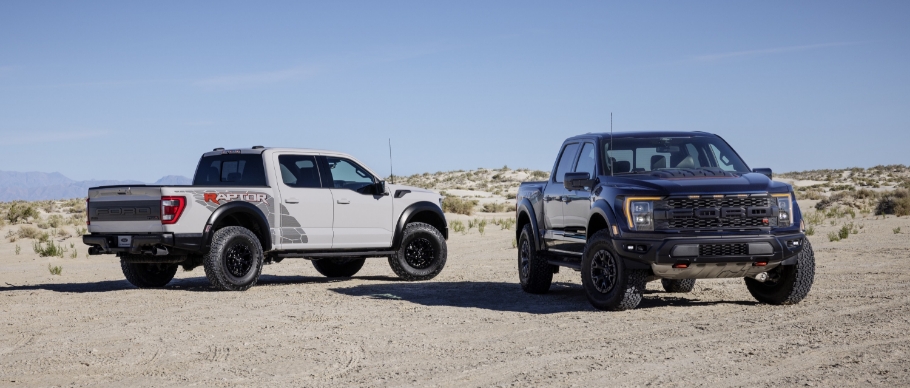
  • 700 horsepower! New Ford F-150 Raptor R is most powerful raptor ever

    2023 Ford F-150 Raptor R

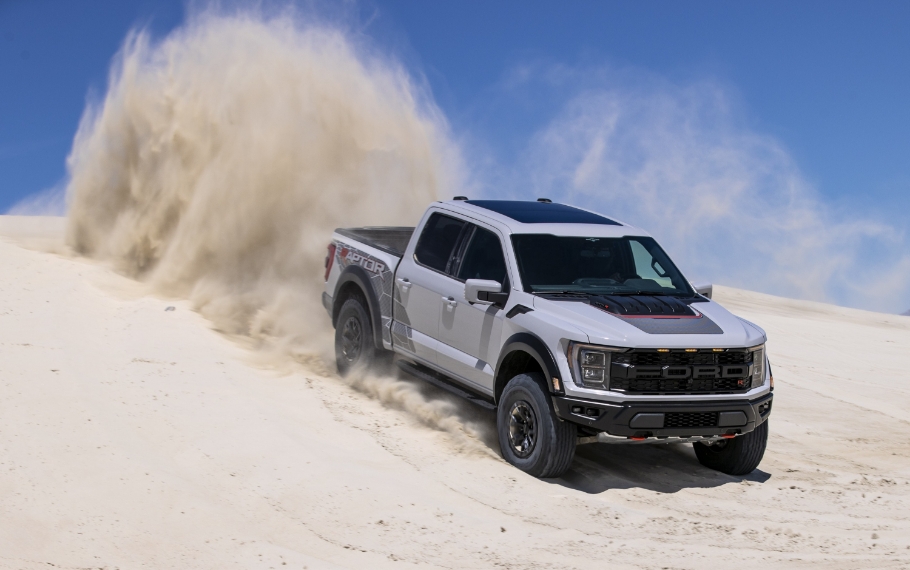
    After more than a decade spent braving harsh conditions and conquering massive desert dunes over three generations of off-road trucks, Ford unleashes the new F-150® Raptor R™ – the fastest, most powerful, most extreme high-performance off-road desert Raptor yet.

    All three generations of F-150 Raptor have been inspired by the extreme desert-racing trophy trucks that compete in the Baja 1000. Designed and engineered by Ford Performance, the 2023 F-150 Raptor R is the closest yet to delivering this type of performance.

    “Raptor R is our ultimate Raptor,” said Carl Widmann, Ford Performance chief engineer. “When customers experience Raptor R in the desert and beyond, it will make the hairs on the back of their necks stand up – and they’ll love every second of it.”

    The heart of Raptor R

    The heart of Raptor R is a new 5.2-liter supercharged V8 engine that delivers 700 horsepower and 640 lb.-ft. of torque to give it incredible desert-running power. Ford Performance enlisted the most powerful engine in its lineup – previously seen in the Mustang Shelby GT500® – optimizing it for Raptor-level off-road performance and Built Ford Tough® durability. The result is the most torque-dense supercharged V8 yet in a production pickup.

    Ford Performance recalibrated this V8 engine’s supercharger and installed a new pulley to optimize its power for off-road use, increasing torque delivery at the low-end and mid-range. These changes help Raptor R offer more performance at the speeds where customers spend most of their time driving.

    To maintain the extreme off-road durability the Raptor brand is known for, Ford Performance upgraded the original engine’s exhaust manifolds to a cast stainless steel design, including a unique oil cooler and filter, plus a deeper oil pan enabling it to tackle aggressive grades while keeping the engine oil cool. To help the engine breathe better, air intake volume is increased 66% via a wider air intake inlet and a higher-flow, higher-efficiency conical air filter.

    Built Ford Tough to conquer the desert

    F-150 Raptor is about more than going fast – it must conquer brutal off-road environments. Its capability and durability comes from more than a decade of Ford expertise in engineering and torture testing high-performance trucks. Ford Performance upgraded the base truck’s transmission and driveline to help ensure Raptor R can smoothly handle what this V8 can throw at it.

    Raptor R delivers a 10-speed SelectShift® transmission with improved calibration. The truck features a new front axle with a more robust, higher-strength carrier casting and an aluminum-ribbed structural cover to manage the powertrain’s added torque, as well as a unique larger-diameter aluminum driveshaft. A new, specially tuned torque converter with heavy-duty turbine damper and four-pinion rear output assembly makes the truck even better equipped to transfer torque and provide a smoother powertrain feel when driving both on- and off-road.

    Drivers get even more control over how their Raptor R expresses its additional power, courtesy of a unique dual exhaust system with a true pass-through muffler and active valve system, with modes for Normal, Sport, Quiet and Baja. These can be adjusted in the MyMode™ feature, allowing drivers to customize multiple settings – including drive, steering, suspension modes and others – and save one as a single mode easily accessed with the press of the “R” button on the steering wheel.

    Ford F-150 Raptor R Desert

    If the heart of Raptor R is the supercharged V8, the soul remains its incredibly capable suspension. The five-link rear suspension features extra-long trailing arms to better maintain axle position on rough terrain, a Panhard rod and 24-inch coil springs – all optimized for outstanding stability while traversing desert terrain at high speeds. Advanced FOX Live Valve shocks are tuned to balance ride quality and roll control on- and off-road. These electronically controlled dampers use suspension height sensors and other sensors to monitor terrain conditions independently, hundreds of times a second, while adjusting suspension tuning accordingly. Wheel travel of 13 inches in front and 14.1 inches in back facilitates Raptor R’s ability to traverse sand and rocks with outstanding capability.

    “We’ve heard our customers demanding the sound and power of a V8 back in Raptor,” said Widmann. “That’s not something we were going to rush. This supercharged 5.2-liter V8 is the ideal fusion of high-density power paired with the third generation Raptor’s all-new rear suspension and shocks to deliver a one-two punch that goes far beyond the sum of its parts.”

    Each drive mode is tuned to account for the added power of the supercharged V8, including an optimized Baja mode for maximum performance and control in high-speed off-roading. A 5% increase in the front spring rate helps maintain comfortable ride quality, while Raptor R boasts class-leading* 13.1-inch ground clearance and standard class-exclusive* 37-inch tires straight from the factory for improved obstacle clearing.

    Iconic Raptor styling taken to the next level

    The most powerful Raptor yet takes the off-road truck’s purpose-built design legacy up a notch, with unique styling that further drives home its supercharged capability. A larger, more aggressively styled power dome on the hood sits nearly 1 inch taller than on the base Raptor, helping extract warm air from underneath. Iconic F O R D grille, bumpers and fender flares painted black underscore its menacing looks.

    “Raptor R is visually designed like a desert predator to catch the attention of Raptor customers and off-road enthusiasts,” said Tom Liu, Raptor R lead designer. “There are details big and small – from the more aggressive hood air extractor to the Code Orange ‘R’ badges – that visually communicate next level off-road performance under the Raptor R banner.”

    Ford Performance-exclusive Code Orange accents include a unique “R” badge on the grille, power dome and tailgate. A special graphics package on the rear fenders feature a unique design that mirrors the harsh, cracked desert earth, reinforcing the type of environment Raptor R is built to conquer.

    That aggressive feel carries over to a black interior. Standard Recaro® seats sport a combination of black leather and Alcantara® suede – cleverly placed for added grip when the terrain gets nasty. Genuine carbon fiber adorns the doors, media bin door and upper parts of the instrument panel, featuring a unique tri-axial weave designed to convey Raptor R’s combination of performance, toughness and durability.

    Like the rest of the Raptor family, Raptor R comes standard with a suite of smart technology to make off-roading easier. Trail Turn Assist** allows drivers to shrink their turning radius on tight turns and go even further off-road. Ford Trail Control™ – think cruise control for off-roading – lets drivers select a set speed and steer through challenging conditions while the truck handles throttle and braking. Trail 1-Pedal Drive† allows customers to control throttle and braking with just one pedal to make extreme off-roading like rock crawling even easier.

    Keeping you connected is a standard 12-inch touch screen with SYNC® 4 technology, Apple CarPlay® and Android Auto™ compatibility††. Raptor R also benefits from Ford Power-Up over-the-air software update capability‡. These wireless updates can offer improvements throughout the vehicle – from the SYNC system to enhanced quality, capability and convenience upgrades that improve the ownership experience over time.

    F-150 Raptor R will be available in eight color options, including new Avalanche and Azure Gray Tri-Coat exterior paint offered on the Raptor lineup for the first time.

    Ordering for F-150 Raptor R opens today and production starts late 2022 at Dearborn Truck Plant. Contact your dealer for more information.

  • Leasing Vans the Simple Way


    Whether you are going to lease a van for personal use or getting multiple for an entire company, understanding the basics behind leasing as a whole should be your first step. It doesn’t matter why you are looking to lease a van: the best way to do it is usually over the internet. But why does leasing vans online make such a difference compared to the older ways of leasing?

    Choosing a Van

    Vans come in all shapes and sizes, and this will matter to some people more than others. Aside from the capacity of the van itself, which can often be important when you are using it to move large loads around, the style and visual design can matter more than you might think.

    For example, if you are deciding how to create an awesome Instagram video about van leasing (or something else that needs a certain ‘look’), then you might need to choose a van that has a particular shape or color. In some cases, this might make it harder to find exactly what you are looking for, but in others, it might actually help you narrow down a certain van that fits your needs perfectly.

    Sometimes, sorting by manufacturers or looking at popular options can be enough, especially when you are only using your van for a single job. Moving furniture from point A to point B doesn’t usually take anything special, so you have more freedom with what you can choose.

    Finding Your Options

    The best way to find vans that are available for leasing is through internet searches. Some sites allow you to get a full list of vans in a particular area or of a certain type, which can make it much easier to compare finance options, leasing prices, and overall vehicle details without having to juggle multiple listings from different places.

    In many cases, sites will also let you filter through different modifications or upgrades, allowing you to choose a van that has been upgraded to fill a certain role. This can make it far easier to find a van for passenger transport, camping, hauling, off-road driving, or carrying a built-in fridge and freezer system. Even better, this can help you narrow down the vans according to your own finance options, and you can get quotes or estimated prices with far more certainty.

    Leasing vs. Buying

    Another great reason to use websites like this is the fact that they are focused on properly leasing the vehicle to you. While you can lease a van from a person you know in real life, there might not be any kind of formal document involved, which can cause problems if something goes seriously wrong. Leasing sites are also far less likely to push a purchase on you, especially if they don’t offer the option of buying a van outright.

    Delivery

    While delivery and collection methods vary by company, most online sites will serve areas beyond their local one. This usually means that they will have an option for the van to be delivered by a driver, sometimes even to your front door, which can make the process much easier if you don’t have a lot of free time.

    If you are leasing vans for a business, you can have them drive to the business premises rather than needing to take a day off and meet with the leaser yourself. Even if this isn’t an option, most professional leasing companies will make it easy for you to collect the vehicle, usually by having it stored at their nearest property.

    Finance Options

    Compared to an individual person who is renting out their personal vans, a leasing company can have a range of finance options to help you afford both the vans and the upgrades they come with. This can be invaluable to smaller businesses or sole traders, giving you a way to make the payments easier without necessarily having to downgrade the vehicle you are using. This can even include options like lease purchases or the ability to pre-approve full van purchases using a credit limit.

    Some of these options will only be helpful to people who are planning on buying the van at some point, but others can benefit everybody and might make it easier to get hold of a van that you otherwise wouldn’t be able to completely buy right away.

  • Hyundai Ioniq 6

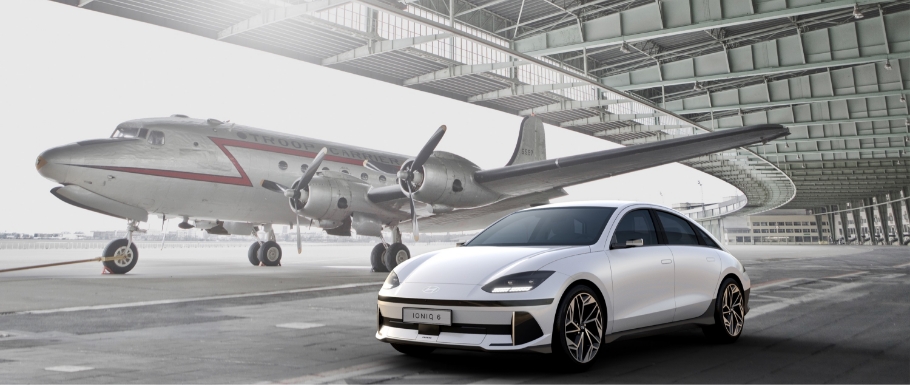
    2023 Hyundai Ioniq 6

    Hyundai Motor Company today revealed the streamlined and timeless design of the highly anticipated IONIQ 6, the second model in its IONIQ dedicated all-electric-vehicle line-up brand. IONIQ 6, which Hyundai describes as an Electrified Streamliner, is aerodynamically sculpted and makes innovative use of sustainable materials to reflect today’s EV customers’ values.

    Inspired by Hyundai’s Prophecy EV Concept, IONIQ 6 is characterised by clean, simple lines and a pure aerodynamic form that Hyundai designers describe as Emotional Efficiency. IONIQ 6’s electrified streamliner typology and mindful cocoon-like interior embody a silhouette for the new era of electric mobility, while the overall design theme of Ethical Uniqueness reflects Hyundai’s customer-centric commitment to energy efficiency and environmental responsibility.

    “IONIQ 6 connects an emotional convergence of functionality with aesthetics,” said SangYup Lee, Executive Vice President and Head of Hyundai Design Centre. “The distinctive streamlined design is the result of close cooperation between engineers and designers, with obsessive attention to detail and customer-centric values at the core. We have created the IONIQ 6 as a mindful cocoon that offers personalised place for all.”

    IONIQ 6’s human-centric design is both ethical and unique

    IONIQ 6 demonstrates ethical and unique design through energy efficiency and sustainable material usage. IONIQ 6 design was human-centric from the start, with the interior space developed simultaneously with the exterior form. Efforts were made to maximize and optimise the interior space, stretching it at the front and rear, resulting in a unique streamliner silhouette and spacious interior.

    Like the award-winning IONIQ 5 before it, IONIQ 6 implements the Hyundai Look design strategy that gives each model a unique appearance, like chess pieces. By taking a customer-centric direction, Hyundai designs with diverse lifestyles in mind rather than with a one-style-fits-all approach.

    Single-curved streamliner with sleek yet functional aesthetics

    IONIQ 6 is an electrified streamliner that realises the idea of Emotional Efficiency by simultaneously satisfying the customer’s aesthetic and functional needs. The aerodynamically sculpted silhouette with simple yet sensuous curves offer a new typology for the EV mobility era.

    IONIQ 6 has an ultra-low drag coefficient of just 0.21, assisted by its low nose, active air flaps at the front, wheel gap reducers, and optional slim digital side mirrors[2]. Further aiding IONIQ 6’s enviable aerodynamic aptitude is its elliptical wing-inspired spoiler with winglet, slight boat-tail structure, and separation traps on both sides of the rear bumper. Even underneath the car, the endeavour to achieve better aerodynamics is evident in the full cover of the undercarriage, optimized deflectors and reduced wheel-arch gap.

    IONIQ 6 also integrates over 700 Parametric Pixels in various places, such as headlamps, rear combination lamps, front lower sensors, air vent garnishes and centre console indicator, to reinforce the IONIQ brand’s identity throughout the vehicle.

    The rear wing’s Parametric Pixel High-Mounted Stop Lamp (HMSL) delivers an eye-catching light execution when the brakes are applied. To further highlight IONIQ 6’s uniqueness, the newly designed Hyundai ‘H’ badge is applied on the front and rear of the vehicle.

    Cocoon-inspired interior accommodates a mindful personal space on wheels

    IONIQ 6’s cocoon-shaped interior serves as both a comfortable hideaway and personal space, replete with practical features and sustainable materials to facilitate a mindful, eco-friendly mobility experience and lifestyle.

    Hyundai Motor Group’s Electric Global Modular Platform (E-GMP) enabled the designers to stretch the interior, front and rear, to create optimized legroom and spaciousness that lets passengers stay comfortable in the vehicle. The Platform also allows for a completely flat floor, giving expansive feeling.

    The user-centric interior architecture is exemplified by an ergonomically designed control unit that is centrally located to reduce distraction and spur safe, intuitive driving. The modular touchscreen dashboard integrates a 12-inch full-touch infotainment display and 12-inch digital cluster. A bridge-type centre console provides convenient and generous in-car storage.

    Dual Colour Ambient Lighting provides overall illumination for IONIQ 6 interior. Users can choose from a spectrum of 64 colours and six dual colour themes developed by colour experts to help drivers and passengers feel relaxed and comfortable. The 4-dot Interactive Pixel Lights on the steering wheel enable easy communication between the driver and vehicle.

    The removal of buttons from the front doors provided more breathing room and more storage. Transparent accents on the crash pad garnish, door map pocket and console lower cover further accentuate the sense of spaciousness and uniqueness.

    Eco-friendly materials applied to various touchpoints for sustainability

    In line with IONIQ 6’s Ethical Uniqueness theme and inspired by today’s eco-conscious consumers, the designers applied sustainable materials to the exterior, including recycled pigment paint from end-of-life tires to the cladding and bamboo charcoal pigment paint to the body.

    IONIQ 6’s interior is also trimmed in sustainable materials and colours. Depending on the trim level, these include eco-process leather (seats), recycled PET fabric (seats), bio TPO skin (dashboard), bio PET fabric (headliner), bio paint derived from vegetable oils (doors), and recycled fishing net carpet — the latter is a first for the IONIQ brand.

    IONIQ 6 on digital billboard and World Premiere

    Upon the design reveal, Hyundai Motor releases immersive and impactful design 3D digital film at three global landmark billboard sites simultaneously. The film, featuring IONIQ 6’s streamlined design and flexible interior space, can be viewed at K-POP Square in Seoul, Piccadilly Circus in London, and the Big Kahuna in New York Times Square.

    The IONIQ 6 world premiere will take place in July, when Hyundai will reveal the full specifications, including the electrified streamliner’s features and advanced technologies.

  • Lamborghini Espada

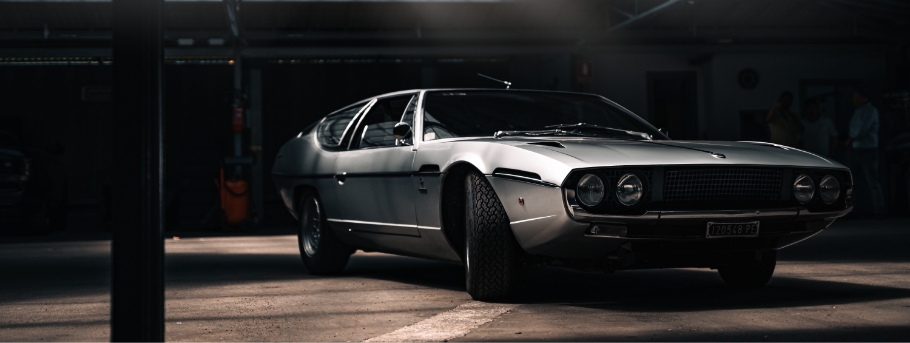
    1968 Lamborghini Espada

    In 2022 Lamborghini is celebrating the V12: the legendary 12-cylinder engine that has powered its most iconic cars for almost 60 years. They include the Espada 400 GT, which was the first four-seat vehicle by Lamborghini and was its biggest selling model for years. Encapsulating an exceptional approach to technical innovation, thanks to the front-mounted 4-liter Lamborghini V12 engine it was always an extremely fast grand tourer despite the step up in size.

    The “pure” V12 combustion engine in its final form will go out of production before the end of 2022, when the last Aventador Ultimae is made. From next year, the heir to the Aventador will be fitted with a new plug-in hybrid version of the V12 engine.

    Ferruccio Lamborghini aimed to produce the fastest, most luxurious and comfortable grand tourer

    Ever since the start of his venture into automobile manufacturing, company founder Ferruccio Lamborghini stated his objective very clearly. He wanted to make the best grand tourer around: a sports car that was not only fast but also comfortable and luxuriously finished. Presented at the Geneva Motor Show in March 1968, the Espada 400 GT perfectly embodied this idea for over a decade. The Espada could comfortably seat four adults and had more space for both luggage and passengers than the 400 GT 2+2 (its predecessor) and the Islero 400 GT 2+2. In addition, the Espada featured truly outstanding finishing, with generous amounts of leather and other refined materials, as well as the option of fitting air conditioning. Power steering was introduced as an option in 1969 and it was included as standard from 1972 onwards. A version with automatic transmission was available from 1974.

    Taking the V12 engine to 4 liters

    The technical cornerstone of the Espada was the 60° V12 engine that was first produced in 1963 with a displacement of 3.5 liters, which had already been increased to 4 liters (3929 cc) in 1964. It is a remarkable example of engine development technologies, and it was capable of delivering 325 hp at 7200 rpm when it was first fitted in the Espada. This increased to 350 hp at 7500 rpm in the Espada Series II, which was presented in 1970.

    Fed by six Weber 40 DCOE side-draft carburetors, the V12 had a compression ratio of 9.5:1 (which increased to 10.7:1 from the Series II onwards) and two chain-driven overhead camshafts per bank. It weighed just 232 kg thanks to substantial use of aluminum to make not only the cylinder head but also the crankcase and the pistons. It was front-mounted in a position that was slightly further forward compared to the previous Lamborghini 350/400 GT engines, in order to make the interior roomier. Thanks to the large opening below the aluminum hood, it was easily accessible.

    The chassis was based on that of the 400 GT but it was lengthened so that the wheelbase reached 2650 mm and it was also widened, with the wheel track increasing to 149 cm. It had four-wheel independent suspension, with double wishbones and coil springs. In November 1968, an Espada “Lancomat” with hydropneumatic suspension went on display at the Turin Motor Show. The system was made available on demand, but in the end it was chosen by very few owners.

    The Espada was an extremely fast grand tourer that was capable of reaching a top speed of between 245 and 260 km/h and keeping up with the sportier Miura in most conditions.

    The Espada’s commercial success

    When it was first unveiled, the Espada was the fastest four-seat car in the world.  Featuring boxy shapes as part of a highly innovative design by Carrozzeria Bertone, it proved to be a long-lasting commercial success. Its versatility and roomy interiors – despite a height of just 119 cm – meant that it was suitable for much more frequent use, thus significantly expanding the customer base. A total of 1226 cars were produced across the three series: 176 of the Espada 400 GT Series 1 between 1968 and 1969, 578 of the Espada 400 GTE Series II between 1970 and 1972, and 472 of the Espada 400 GTS Series III between 1972 and 1978.

    The Espada VIP with a mini-bar and a Brionvega television

    The Espada VIP was presented in 1971. It was based on the Espada 400 GTE Series II and just 12 of the vehicles were made. The first models in this special series of cars came in a special orange hue and had orange and black leather upholstery. Later vehicles were made in other color combinations. Inside, the Espada VIP had a mini-bar and a refrigerator in the rear side panels and a Brionvega Algol 11 television on top of the transmission tunnel to keep the passengers in the rear seats entertained. The VIP is one of the most sought-after models among Espada collectors today.          

    Paul McCartney’s Espada made a splash

    One of the most famous Lamborghini Espada owners is Sir Paul McCartney. The former Beatle was a Lamborghini enthusiast and he bought a right-hand-drive 1972 Espada Series III with manual transmission, red paintwork and a red leather interior. His wife Linda often drove the car, but one time it rolled into a nearby pond after she left it in neutral and forgot to put on the handbrake. It was hauled out of the water after three days and later sold to new owners, who went on to use it for a number of years. Subsequently, it ended up being part of the “decor” in an English pub. It was sold to an unknown enthusiast in 2005 and it is thought that it may now be in Austria.

    From VIP owners to the silver screen

    Many celebrities have expressed their fondness for the Espada over the years. For example, since 1986 the famous American television host Jay Leno – who has always been a car enthusiast – has owned one of the very first Espada Series 2 models, which was made in 1969. EVO magazine founder Harry Metcalfe has also owned an Espada for many years. It is a right-hand-drive 1970 Series II and he took part with it in the Espada and Islero 50th Anniversary initiative organized by Automobili Lamborghini Polo Storico in 2018.

    There have been numerous films featuring an Espada, including around 50 significant titles. The most famous among fans of the model is the 1973 Italian movie “Flatfoot” starring Carlo Pedersoli, who was better known as Bud Spencer. Largely filmed in Naples and the surrounding area, it sees the protagonist pursuing an Espada uphill around a series of hairpin bends in a long chase sequence that ends outside the Church of Sant’Antonio a Posillipo.

  • BMW M3 Touring

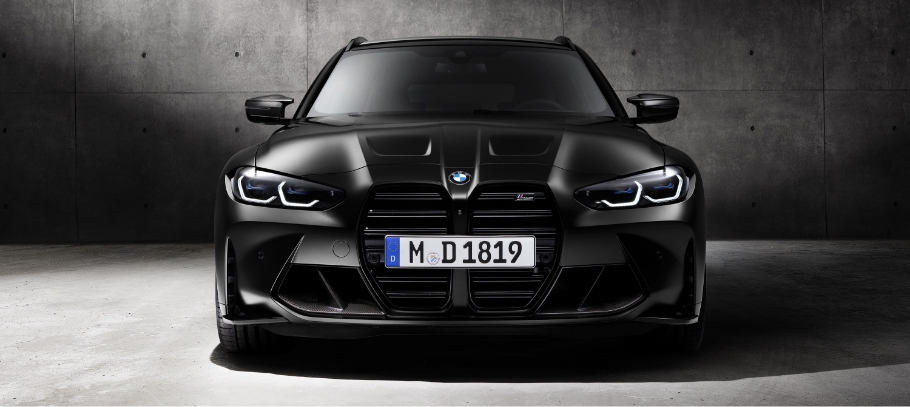
    2023 BMW M3 Touring - Front View

    The BMW M GmbH model offensive continues in its 50th anniversary year with the addition of a fourth model type to the BMW M3/M4 range alongside the Sedan, Coupé and Convertible. The BMW M3 Touring will celebrate its world premiere at the Goodwood Festival of Speed in June 2022. Orders for the new BMW M3 Touring can be taken from September 2022, ahead of a market launch that will get underway with the start of production in November 2022. The BMW M3 Touring will be produced alongside the BMW M3 Sedan at BMW Group Plant Munich.

    Standalone vehicle concept with extravagant design.

    The first BMW M3 Touring goes to particularly impressive lengths to deliver on the traditional M promise of dynamic flair, agility and precision combined with unrestricted everyday practicality and mile-covering ability. Extravagant exterior design shines a particularly vivid spotlight on its unique vehicle concept, ensuring clear differentiation within the line-up and a dynamic aura unmatched by any rival.Cleanly designed surfaces and athletic forms signal the standout performance potential of the BMW M3 Touring, as do the M-specific design cues firmly invested in the functional requirements of cooling air routing and aerodynamic balance.

    Chief among these are the vertically arranged, frameless BMW kidney grille, large side air intakes, powerfully sculpted wheel arches and prominently extended side skirts which, together with the attachment parts for the front and rear aprons, form a Black high-gloss band around the whole of the car. Other distinctive features are the M gills in the front side panels and the exhaust tailpipes integrated into the rear apron to the left and right of centre.Whatever exterior colour is specified for the BMW M3 Touring, its roof will be finished as standard in Black high-gloss. The standard roof rails and the model-specific Gurney air-directing flap on the roof spoiler are painted in the same shade. The roof can also be finished in body colour as an option, and an M Carbon exterior package can also be found on the options list.

    High-revving six-cylinder in-line engine.

    The version of the six-cylinder in-line engine with M TwinPower Turbo technology developed for the Competition models in the BMW M3/M4 line-up produces maximum output of 375 kW/510 hp and peak torque of 650 Nm (479 lb-ft). Distinguished by the appetite for revs for which M engines are renowned, plus linear power delivery sustained into high load ranges, the 3.0-litre straight-six forms the basis for the unit in the new BMW M4 GT3 endurance racing car. Its cooling and oil supply systems are designed to handle extremely high longitudinal and lateral dynamic forces on the track.

    And the M-specific exhaust system with electrically controlled flaps generates an emotionally arresting soundtrack that brings an extra layer to the performance experience.The engine joins forces with an eight-speed M Steptronic transmission with Drivelogic, which offers three gearshift programs and can be operated using shift paddles on the steering wheel. The engine’s power is channelled through to the road via the M xDrive all-wheel-drive system, which teams up with the Active M Differential at the rear axle. The need-based distribution of power across all four wheels optimises the traction of the BMW M3 Competition Touring with M xDrive, as well as its agility and directional stability. Acceleration from 0 to 100 km/h (62 mph) takes 3.6 seconds and the sprint from 0 to 200 km/h (124 mph) requires just 12.9 seconds.

    Opting for the M Driver’s Package increases the electronically limited top speed from 250 km/h (155 mph) to 280 km/h (174 mph).As well as the basic 4WD setting, the driver can also select 4WD Sport mode via the Setup menu. This provides an even more intense experience of the M xDrive system’s rear-biased tuning. Switching off DSC (Dynamic Stability Control) brings 2WD mode – a.k.a. pure rear-wheel drive – into play.

    Ideal balance of performance and long-distance comfort.

    Chassis technology tuned both to the performance profile of the powertrain and to the specific vehicle concept of the BMW M3 Touring creates an ideal balance of sports performance and majestic ride comfort in everyday use and over longer-distance journeys. Detailed fine-tuning has been carried out as part of intensive testing on race circuits, country roads and urban routes. The high torsional stiffness of the body structure and chassis mountings imbues the car with even greater agility, dynamics and precision, and is further enhanced by model-specific bracing elements in the underfloor section and load compartment.Both the double-joint spring strut front axle and the five-link rear axle have M-specific kinematics and combine lightweight design with particularly high rigidity.

    Adaptive M suspension with electronically controlled shock absorbers and M Servotronic steering with a variable ratio come as standard on the BMW M3 Touring. The integrated braking system offers two settings for pedal feel. Optional M Carbon ceramic brakes can be ordered as an alternative to the standard M Compound braking system. Meanwhile, forged M light-alloy wheels in 19-inch (front) and 20-inch (rear) format are fitted as standard and can be specified with track tyres as an option.The DSC system includes wheel slip limitation integrated into the engine control unit.

    As well as M Dynamic Mode, the BMW M3 Touring also has the M Traction Control function as standard. In the M xDrive system’s 2WD mode, the driver can adjust the intervention thresholds for wheel slip limitation through ten stages in order to carefully approach the physical limits under hard cornering on the track.

    Racing feeling in the cockpit, highly versatile rear compartment.

    The BMW Curved Display will be fitted as standard in the BMW M3 Touring from launch. It provides a fresh interpretation of the cockpit design focused on providing an intense performance experience. The fully digital screen grouping is made up of a 12.3-inch information display and a control display with a screen diagonal of 14.9 inches. It is positioned behind a single glass surface that is angled towards the driver. The information display behind the steering wheel presents all relevant driving information with new graphics and in an M-specific style.

    M-specific widgets with information on the car setup and tyre condition can be shown on the control display’s home screen. A BMW Head-Up Display with M-specific content is offered as an option.Electrically adjustable M Sport seats with memory function and seat heating plus Merino leather trim come as standard in the BMW M3 Touring. The optional M Carbon bucket seats for the driver and front passenger offer a unique symbiosis of motor sport feeling, lightweight design, sumptuous workmanship and long-distance comfort.

    The use of carbon-fibre-reinforced plastic (CFRP) in the structural elements of the seat cushion and backrest, together with cut-outs in the side bolsters and below the head restraints, saves 9.6 kilograms over the standard M Sport seats.

    The rear compartment of the BMW M3 Touring has three full-size seats. The rear-seat backrest can be split 40 : 20 : 40. Folding down individual seat sections or all of them at the same time allows the car’s load capacity to be expanded from 500 litres to a maximum 1,510 litres, as required.

    Automatic tailgate operation and the separately opening rear window are both standard. A storage compartment underneath the boot floor provides space for the luggage compartment cover and boot partition net. Anti-slip rails that rise up automatically from the boot floor can be ordered as an option. These prevent items of luggage from sliding around in dynamic driving situations.

    M Drive Professional and BMW Maps navigation system as standard.

    Comfort-enhancing features fitted as standard in the BMW M3 Touring include three-zone automatic climate control, the BMW Live Cockpit Plus including BMW Maps navigation system, ambient lighting, the hi-fi speaker system, and the interior and exterior mirror package. Customers can also benefit from a broad selection of automated driving and parking systems. Front Collision Warning, Speed Limit Display with no-overtaking indicator, Lane Departure Warning and Park Distance Control come as standard.

    Among the available options are the Driving Assistant Professional with Steering and Lane Control Assistant, Active Cruise Control with Stop&Go function, traffic light detection and Active Navigation, plus the Parking Assistant with Reversing Assistant.The M-specific control/operation system includes the Setup button, which provides direct access to the settings options for the engine, chassis, steering, braking system and M xDrive. Two overall vehicle setups can be stored and called up using the M buttons on the steering wheel.

    As well as M Traction Control, the likewise standard M Drive Professional also contains the M Drift Analyser and the M Laptimer.The M Mode button on the centre console can be used to adjust the responses of the driver assistance systems and the content shown in the information display and Head-Up Display. BMW M3 Touring drivers can also choose from the ROAD, SPORT and TRACK settings.The latest-generation BMW iDrive vehicle experience system in the BMW M3 Touring represents the embodiment of progressive digitalisation.

    It is based on BMW Operating System 8 and, together with the BMW Intelligent Personal Assistant and BMW Curved Display, has been designed squarely to deliver intuitive interaction between the driver and car using natural speech and touch control. The new BMW iDrive enables personalisation via the BMW ID and My BMW App, plus in-car use of the Personal eSIM.

    Smartphone integration for using CarPlay® and Android Auto™ is also part of standard specification. A 5G-compatible antenna system provides optimised connectivity.

    CO2 emissions & consumption.

    The first-ever BMW M3 Touringfuel consumption combined: 10.4 – 10.1 l/100 km [27.2 – 28.0 mpg imp]; CO2 emissions combined: 235 – 229 g/km in the WLTP cycle; NEDC figures: –

  • PEUGEOT 408

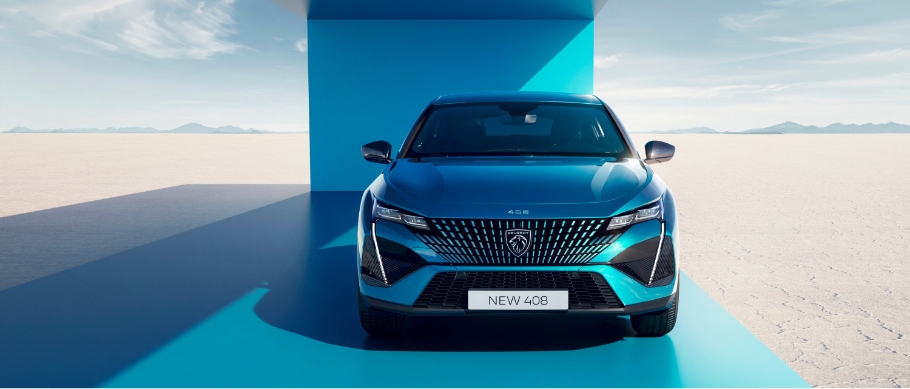
    2023 PEUGEOT 408 - Front View

    The new PEUGEOT 408 is the first of its kind – a new fastback silhouette at the top of the C segment. This new age PEUGEOT combines a unique design and feline stance with engineering excellence focused on efficiency and intelligent electrification, with cutting-edge technologies dedicated to creating an instinctive driving experience.

    The mould-breaking PEUGEOT 408 stands out first and foremost for its dynamic fastback silhouette and unmistakable style. The feline stance is typical of the latest PEUGEOT models, with its sharp lines and colour-coded grille, the latter of which blends in perfectly with the front end and showcases the new PEUGEOT emblem.

    At the front, a distinctive fang-shaped light signature brings the 408 into line with the rest of the PEUGEOT family, as do the three-claw LED lights at the rear. An inverted cut-out in the rear bumper also gives the profile a distinctive look.

    With a height of 1.48m, a length of 4.69m and a long wheelbase of 2.79m, the new PEUGEOT 408 provides spacious second row seats with 188mm of knee room. The boot is also generously sized, with a maximum volume of 536 litres, which can be increased to 1,611 litres with the rear seats folded down.

    For its driver and passengers, the new 408 offers the latest generation PEUGEOT i-Cockpit®, recognisable by its compact steering wheel, which is dedicated to driving pleasure and controlled agility. Emphasis is placed on the quality of the interior space and on connectivity, with the latest technologies making the driving and travelling experience more intuitive and rewarding.

    Powered by six cameras and nine radars, a suite of 30 advanced driver assistance systems provide peace of mind and safety. These include:

    • Adaptive Cruise Control with Stop and Go function
    • Night Vision, which warns of animals, pedestrians or cyclists in the lane before they appear in the high beam
    • Long-range blind spot monitoring (75 metres)
    • Rear Traffic Alert, which warns of potential hazards when reversing

    The PEUGEOT 408 will be available with a range of powertrains, including two rechargeable Plug-in Hybrids with 180 and 225hp respectively, as well as a PureTech 130 hp petrol version. All three are coupled to an eight-speed EAT8 automatic gearbox. An all-electric 408 will follow.

    Efficiency was a key concern for the designers of the new PEUGEOT 408, since the combination of efforts in terms of aerodynamics, weight reduction (from 1396kg) and low-emission engines means that the vehicle can now boast remarkably low average energy consumptions (under homologation), both for the hybrids as well as for the 130bhp petrol version.

    The new PEUGEOT 408 will hit showrooms at the beginning of 2023 and will be sold in global markets. Initially it will be produced for the European market, at the Mulhouse production facility in France, and subsequently in the Chengdu factory, in China, for the local market.

    Linda Jackson, CEO of PEUGEOT, said: “At PEUGEOT, we believe that life is better with allure. With its unique looks, innovative fastback silhouette and unbridled elegance, the new 408 is the perfect expression of PEUGEOT’s philosophy and inventiveness. Unexpected from every angle, it has been designed for lovers of cars and of life, who want to break free from the traditional while seeking responsible pleasure. It encompasses all of PEUGEOT’s technological demands – controlled efficiency and a connected digital experience – and all the emotions associated with instinctive driving pleasure and a peaceful journey.”

    1. Efficiency, connectivity and instinctive driving pleasure: the market and customers

    The new 408 completes PEUGEOT’s line-up in the highly strategic C segment of compact family vehicles and is positioned at the top end of the C-segment saloon range. PEUGEOT has taken a leading position in this segment over the last few years, with the success of the 3008 and 5008 and three generations of 308 hatchbacks and 308 SW estate cars, the latest of which has just been launched.

    The new PEUGEOT 408 addresses the values and concerns of a population at the cutting edge of modernity: dynamic and hyper-connected, it contributes to the energy transition, without sacrificing fun. Customers here are looking for uniqueness, appreciate creativity and the audacity of new combinations that break away from established categories.

    Most of the new PEUGEOT 408’s customers will be active couples, who will use their car for personal and professional purposes. Some will want to move upmarket within the C-segment and buy a larger, more spacious car. Others will be looking for a more original and innovative silhouette than a more common or family-oriented compact SUV. And others will appreciate the stature of a large car. All of them will be looking for a contemporary motoring experience, whether for everyday use or for long, comfortable and peaceful journeys with others.

    2. Dynamic and innovative fastback design

    Combined with PEUGEOT’s feline characteristics, the design language of the new 408 is perfectly in keeping with its innovative concept as a top-of-the-range C-segment fastback. It is characterised by a particularly sharp treatment of the surfaces, which is particularly noticeable at the rear, at the end of the roof, the boot lid and at the base of the wings, creating a multifaceted design that plays with the light.

    The 408 is based on PEUGEOT’s multi-energy EMP2 V3 (Efficient Modular Platform) architecture, with a long wheelbase of 2.787m providing generous rear seat space. Its overall length is 4.690m and the 408 measures 1.859m wide, with the mirrors folded in.

    The tracks are wide, measuring 1.599m at the front and 1.604m at the rear, with rim sizes up to 20 inches. Although raised, the PEUGEOT 408 nevertheless has a slim and sporty profile, thanks to a height of just 1.48m.

    At the front, the long bonnet is set between raised wings, which is characteristic of the latest PEUGEOT models. This stylistic choice reinforces the look at the front end while streamlining the profile. It also simplifies the outline of the bonnet, allowing the body parts to fit with absolute precision.

    Advanced Matrix LED lighting technology has made it possible to design very slim headlights, while guaranteeing a very high level of performance. The light signature extends downwards with two strips of LEDs in the shape of fangs that plunge into the bumper.

    The grille is focused around the new PEUGEOT emblem, which conceals the radar required for many of the driving assistance systems and is a sign of the 408’s identity. The body-colour treatment “hides” the grille by blending into the overall volume of the bumper – a sign of a generational change and of the electrification of the PEUGEOT range.

    Large black scoops characterise the graphic theme of the front end, visually accentuating its width and robustness. They surround and protect the light fangs by joining the black protections that encircle the body and enhance the distinctive light signature

    The profile of the new PEUGEOT 408 is characterised by a clever division between the black and painted body parts, designed to refine its silhouette and add dynamism. It also emphasises the generosity of the passenger compartment, particularly in the side window design, which highlights the fastback shape behind the rear door.

    The body and wheel arch side guards extend into a black rear bumper which, by cutting the body colour at an angle, accentuates the inverted effect of the tail. It also helps to visually absorb the rear overhang, which provides a large luggage compartment.

    Disruptively styled 20-inch wheels (optional on GT Hybrid versions only) feature a geometric shape that is striking when stationary and creates a dramatic visual effect at low speeds. Their unusual design is in keeping with the new 408’s distinctive design.

    The rear of the roof is a particularly aerodynamically sensitive area. Here, the air flow is optimised and guided by two “cat ears” which optimise airflow towards the boot lid spoiler. The angular elements enhance efficiency and are distinctive hallmarks of the new PEUGEOT 408’s style.

    The new PEUGEOT 408 will come in a choice of six colours:

    • Obsession Blue (new colour, selected to mark the launch of the model)
    • Titanium Grey (new colour)
    • Cumulus Grey (Allure trim only)
    • Elixir Red
    • Pearl White
    • Nera Black

    3.  Exciting driving experience: PEUGEOT i-Cockpit®

    For a decade, the PEUGEOT i-Cockpit® has been refined and improved with each new generation. With the new PEUGEOT 408, it sets new standards for ergonomics, quality, practicality and technology using a new infotainment system – PEUGEOT i-Connect®.

    A compact steering wheel is a feature of the PEUGEOT i-Cockpit® and increases driving pleasure by enhancing the sense of agility and providing precision of movement. The steering wheel of the new 408 has been ergonomically optimised to accommodate controls for the multimedia system (radio, telephone, music playback) and selected driving aids, and is available with heating for ultimate comfort in cold conditions.

    Located close to eye level, just above the steering wheel, the new digital instruments incorporate a 10-inch digital screen from Allure level. In GT trim, it is available with 3D technology. The digital cluster can be fully customised and has several display modes (TomTom Connected Navigation, Radio/Media, Driving Aids, Energy Flow, etc.) that can be changed directly from the control panel, so drivers can personalise the driving experience to suit an individual journey.

    The construction of the new PEUGEOT 408’s dashboard is based on a “high wind” architecture, which places the air vents in raised positions, at face level, to improve comfort.

    This architecture also allows the central 10-inch touchscreen, which is positioned slightly lower than the digital instruments, to be brought closer to the driver. The system features fully configurable i-toggle switches, which are arranged below the central screen like an open book and provide an aesthetic and level of technology unique in the segment. Each i-toggle is a touch-sensitive shortcut to climate settings, a phone contact, a radio station, an application launch – these can be set to the user’s preference.

    One of the objectives of PEUGEOT’s Interior Design team when designing the passenger compartment of the new 408 was to balance the space between the two front occupants. The PEUGEOT i-Cockpit® is faithful to the principle of a “driver-oriented” central screen, which optimises driving ergonomics without excluding the passenger.

    The centre console is deliberately open towards the passenger so they can access media and navigation controls, while the car’s dynamic controls are grouped together in an arch on the driver’s side. The driver can choose between the various modes (Reverse, Neutral and Drive) provided by the eight-speed EAT8 automatic gearbox with a single touch.

    Two remote buttons complete the functions:

    Parking (P), puts the gearbox in park

    • For hybrid engines, the Brake button (B) activates regenerative braking. For the petrol version, it is replaced by a Manual button (M), which allows the gear to be selected manually using the shift paddles located behind the steering wheel.
    • In addition, there is a Driving Mode selector, which allows the driver to select different modes (Electric, Eco, Hybrid, Normal and Sport) depending on the engine

    4. Connected excellence: PEUGEOT i-Connect Advanced

    New PEUGEOT 408 offers a comprehensively connected experience. Its new infotainment system is ergonomically optimised and intuitive in everyday use, offering each driver the best of the smartphone and automotive worlds combined. Each driver can define, maintain and select his or her own display, cabin atmosphere and setting preferences using one of the eight profiles that can be stored in the system.

    The mirroring function wirelessly connects smartphones to the infotainment system, and it is now possible to connect two phones via Bluetooth at the same time for added convenience. Four USB-C sockets complete the PEUGEOT 408’s connected set-up.

    The high-definition 10-inch central touchscreen is fully and easily customisable, with multiple windows and intuitive widgets or shortcuts that respond just like a tablet. It’s easy to swipe through the different menus from left to right, or up and down for notifications, or with a three-finger tap to bring up the application wall.

    Just like on a smartphone, it is easy to return to the homepage at any time by pressing the touch-sensitive “Home” button.  At the top of the screen, a permanent banner displays outdoor temperature information, air conditioning settings, connectivity data and notifications.

    PEUGEOT i-Connect Advanced provides the ultimate infotainment experience. It is equipped with a powerful and efficient TomTom connected navigation system. The map is displayed on the entire 10-inch screen to make it easy to read and the system is updated “over the air”, directly by transmitting the data via the telecoms network, so updates can be installed without the need to visit a PEUGEOT retailer.

    The “OK PEUGEOT” natural language voice recognition improves safety and is easy to use. It provides access to all infotainment functions. To assist users and answer their questions, the system includes on-board documentation and tutorials.

    5. Efficiency at its heart

    Efficiency has been at the heart of the new PEUGEOT 408’s design and development to minimise fuel consumption and CO₂ emissions.

    Particular attention has been paid to the aerodynamics. Every body part has been optimised thanks to close collaboration between PEUGEOT’s designers and aerodynamics engineers, from the bumpers, boot flap and diffuser to the body pillars, mirrors and underbody screens. In the same vein, the design of the wheels allows for superior aerodynamic efficiency and contributes significantly to the car’s overall performance. These measures, combined with its low stance, contribute to a reduced frontal area (SCx) of 0.654 m2 and a low drag coefficient of 0.28.

    Body rigidity has been optimised by bonding the structural elements to improve vibration comfort. Driving pleasure is part of the new PEUGEOT 408’s DNA, with exemplary road holding, top-of-the-range ride comfort, rewarding driving dynamics and perfect handling in town, made possible by a compact turning radius between kerbs of 11.18m.

    Wheels sizes on the new PEUGEOT 408 range from 17 to 20 inches while the tyres are Class A rated to improve efficiency by reducing rolling resistance, without sacrificing PEUGEOT’s instinctive handling and benchmark road holding.

    Two plug-in electric hybrid powertrains are available on the new PEUGEOT 408:

    • HYBRID 225 e-EAT8: Combination of a 180 hp (132 kW) PureTech engine and an 81 kW electric motor coupled with the e-EAT8 eight-speed automatic gearbox (currently undergoing homologation)
    • HYBRID 180 e-EAT8: Combination of a 150 hp PureTech engine (110kW) and an 81 kW electric motor coupled with the eight-speed e-EAT8 automatic gearbox (currently under homologation)

    The Li-ion battery on both plug-in hybrid versions has a capacity of 12.4kWh and an output of 102kW. Two types of on-board charger are available: a 3.7kW single-phase charger as standard and an optional 7.4 kW single-phase charger.

    Estimated charging times are as follows:

    • From a 7.4kW Wall Box (32 A) with the optional 7.4kW single-phase on-board charger – fully charged in 1 hour 55 minutes
    • From a 7.4kW Wall Box (32 A) with the standard 3.7kW single-phase on-board charger – fully charged in 3 hours 50 minutes
    • From a domestic 3-pin socket using an accessory charging cable and with the standard 3.7kW single-phase on-board charger – fully charged in approximately 7.5 hours

    PEUGEOT’s 130hp 1.2-litre PureTech three-cylinder petrol engine is also available. It complies with the latest Euro 6.4 emissions regulations and combines with the eight-speed EAT8 automatic gearbox and a Start & Stop system.

    All the engines of the new PEUGEOT 408 are equipped with the eight-speed automatic gearbox, a guarantee of peace of mind and efficiency.

    6. Technological excellence

    The new PEUGEOT 408 features a comprehensive range of 30 state-of-the-art driving assistance systems, fed by information gathered by a network of six cameras and nine radars, to make driving, manoeuvring and travelling smoother and safer.

    These include:

    • Adaptive Cruise Control with Stop and Go function and adjustable distance setting
    • Automatic emergency braking with collision warning: detects pedestrians and cyclists, day and night, from 4mph (7km/h) and up to 87mph (140 km/h) depending on version
    • Active lane departure warning with lane correction
    • Driver Attention Alert, which detects impaired alertness over long periods of driving and at speeds of over 40mph (65 km/h), by analysing the micro-movements of the steering wheel
    • Extended recognition and display of road signs in the instrument cluster: stop signs, one-way signs, no overtaking signs and end of overtaking signs, in addition to the usual speed-related signs
    • Night Vision system, which detects pedestrians and animals ahead of the vehicle at night or in poor visibility. The range of the system ensures detection up to 200-250m, beyond the range of the high beam, with a central infrared vision display in the instrumentation located directly in the driver’s field of vision
    • Long-range blind spot monitoring (75m)
    • Rear traffic alert. When reversing, alerts the driver to a nearby hazard
    • 180° high-definition reversing camera with integrated cleaning nozzle
    • 360° parking assistance with four high-definition cameras (front, rear and side)
    • Mirror indexing when engaging reverse gear
    • Matrix LED headlamps for maximum use of high beam power without dazzling preceding or approaching vehicles
    • Automatic high beam switching

    The Drive Assist 2.0 package is a further step towards semi-autonomous driving, which will be available later this year. It comprises Adaptive Cruise Control with Stop and Go and Lane Keeping Assist and adds two new functions, which are available on dual carriageways:

    • Semi-automatic lane change, which allows the driver to overtake vehicles ahead and then return to the original lane position, operational at speeds from 43 to 112mph (70 to 180 km/h)
    • Anticipated speed recommendation, which suggests when the driver should adapt their speed (acceleration or deceleration) according to the speed limit signs

    Other equipment is available to enhance every journey in the new PEUGEOT 408:

    • Hands-free entry
    • Automated motion-activated boot opening
    • Fully defrostable heated windscreen and heated steering wheel
    • Perimeter and volumetric alarm with deadlocking
    • Electric parking brake as standard
    • Panoramic electric sunroof with manual sunshade blind, available as an option

    Lastly, the new PEUGEOT 408 is equipped with the e-call assistance system:

    • E-call+ emergency call with information on the number of passengers and location including the vehicle’s direction on the road

    7. Calm, peaceful and relaxing journeys

    The new PEUGEOT 408 is a top-of-the-range C-segment fastback that offers a wide range of equipment to enhance every journey.

    The driver‘s seat has been awarded the AGR (Aktion für Gesunder Rücken) label by an independent German association of ergonomics and back health experts. The label recognises both the ergonomics and the range of adjustment provided on this seat.

    The seats are also available with 10-way power adjustment with two memory settings for the driver, six-way power adjustment for the passenger, as well as an eight-pocket air massage with five different programs and seat heating.

    Their design highlights the quality of the materials, which include mottled fabric, technical mesh, Alcantara, embossed leather and coloured Nappa leather. On GT versions, the seats are adorned with a signature Adamite-coloured thread, which also features on the dashboard, door panels and centre console.

    Between the front seats, the arch of the centre console extends to a wireless phone charging pad. The rest of the console is entirely dedicated to storage and practicality, with an armrest, two USB-C sockets (for charging and data connectivity), two large-diameter cup holders and up to 34 litres of miscellaneous storage.

    Rear space is particularly generous, thanks to the long wheelbase of 2.787m, which makes the new 408 the most spacious PEUGEOT for rear passengers: with 188mm of knee room. The rear footwell provides space for passengers to stretch their legs under the front seats and is designed to maximise freedom of movement; the design of the seats and the seat angle are intended to give passengers the opportunity to make the most of their space for optimum comfort on long journeys.

    Two USB-C charging sockets at the rear of the centre console provide additional connectivity from Allure level.

    The new PEUGEOT 408 features a two-part bench seat (split 60/40) equipped with a ski hatch as standard. On GT models, the two sections can be folded down immediately using controls easily accessible at the sides of the boot.

    The luggage compartment of the new 408 is particularly spacious. When both rear seatbacks are folded, the load capacity increases from 536 to 1,611 litres (including 36 litres of storage space under the boot floor for the 130bhp PureTech petrol model). And with the backrests folded, objects up to 1.89m long can be loaded.

    For everyday practicality, the boot area is equipped with a 12V socket on the right-hand side, LED lighting, a storage net, strap and bag hooks. The boot shelf is directly attached to the boot lid, making it easy to load and an unload luggage.

    The boot lid is automated for easy access carrying items in both hands and can be activated in the following ways:

    • By sweeping your foot under the rear bumper
    • By pressing the button on the remote-control key
    • By pressing the external control of the tailgate
    • By pressing a push button on the dashboard

    Inside the new 408, ambient LED lighting (eight colours to choose from) releases a soft light and contributes to the sophisticated atmosphere. The same light extends to the door panels, which are either covered in fabric, Alcantara® or made up of genuine pressed aluminium parts depending on trim level.

    The new PEUGEOT 408’s temperature and acoustic comfort is enhanced by the technologies used in the design and construction of its windows:

    • Windscreen is fully heated, as an option
    • Increased front and rear window thickness (3.85 mm)
    • Laminated front side windows (from the Allure Pack level) for better sound insulation and increased safety (3.96 mm)

    The air conditioning system also contributes to comfort. The vents that deliver fresh air to the cabin are located high up in the front, while rear passengers benefit from two air vents located at the rear of the centre console.  To ensure a healthy inside atmosphere, the new PEUGEOT 408 is equipped with an AQS (Air Quality System), which constantly monitors the quality of the air entering the passenger compartment and is capable of automatically activating air recycling. From GT level upwards, this is complemented by Clean Cabin – an air treatment system that filters out polluting gases and particles. The air quality is displayed on the central touchscreen.

    Developed in partnership with Focal, a French audio specialist, the FOCAL® Premium Hi-Fi system in the new PEUGEOT 408 is the result of more than three years of co-design work. Complete with ARKAMYS digital sound processing, the FOCAL® Premium Hi-Fi system includes 10 speakers with exclusive patented technologies:

    • 4x TNF aluminium inverted dome tweeters,
    • 4x woofers/mediums with Polyglass membrane and 165mm TMD (Tuned Mass Damper) suspension
    • 1x Polyglass centre channel
    • 1x Power Flower™ triple coil ovoid subwoofer

    They are connected to a new 12-channel 690W amplifier. The PEUGEOT and Focal teams worked together to establish the optimum location for each speaker, in order to offer all passengers an immersive sound experience. On board, the soundscape is stable and precise, voices are clear and detailed, and the bass is deep and impactful.

    8. Everyday enjoyment: services

    The new PEUGEOT 408 will be available to purchase online, for a 100% digital purchasing experience using PEUGEOT Buy Online. Customers can purchase, trade-in their old car and finance their new vehicle all from the comfort of their own home or office using a smartphone, tablet or PC. Customers can also opt to have their vehicle delivered to their home.

    In order to support its customers in the energy transition, the PEUGEOT brand offers a range of services based on several pillars:

    PEUGEOT Easy-Charge provides easy access to different charging solutions:

    • A range of home or workplace charging solutions using a range of options (reinforced socket, Wall box, Smart Wall box, etc.), a diagnosis to assess the electrical installation and the best charging solution, as well as the final installation, using recommended partners
    • A public recharging offer via Free2Move eSolutions, providing access to a network of more than 260,000 charging points across Europe: selection of charging points according to distance, speed and recharging price

    PEUGEOT Easy-care is designed to reassure and help customers enjoy their car with complete peace of mind with:

    • New simulators and digital journeys to help uncover the secrets of electric mobility on PEUGEOT websites
    • Adapted service contracts and roadside assistance, which can be included in a single financing package to allow customers to enjoy their vehicle with complete peace of mind
    • A battery capacity certificate after a service to make it easier to resell an electrified vehicle by guaranteeing the level of capacity of its battery
    • Battery guarantee for eight years or 100,000 miles (160,000 km)

    Finally, from the smartphone application MyPeugeot® or from the central screen, it is possible to:

    • Launch or schedule cabin pre-conditioning. Beyond comfort, this feature optimises the range (achieves the desired cabin temperature prior to start-up without depleting the battery) by anticipating the optimal temperature of the battery when it is plugged in
    • Check, schedule, launch or defer the battery charge

    The new PEUGEOT 408 will be the latest model to contribute towards the brand’s aim of providing an electrified variant for every model in the range by 2024.

  • Mercedes-Benz GLC

    The new Mercedes-Benz GLC is even more dynamic, powerful and sustainable. It is available only as a hybrid: either as a plug-in hybrid or as a mild hybrid with 48-volt technology and integrated starter generator. The plug-in hybrids offer a range of more than 100 kilometres (WLTP). The GLC thus sets new standards in the all-wheel drive SUV segment. Systematic electrification of the GLC, the company’s best-selling model series, makes a significant contribution to reducing the CO2 balance over the entire lifecycle. The new GLC is on the way to climate-neutral mobility, which is the goal of “Ambition 2039”. The technical highlights of the GLC also include special equipment such as DIGITAL LIGHT, rear-axle steering and new assistance systems. Its pronounced off-road suitability is underlined by features such as electric off-road driving in the plug-in hybrids, or the “transparent bonnet”. The GLC will be in the showrooms of our western European sales partners from autumn 2022.

    The new GLC is immediately recognisable as a member of the Mercedes-Benz SUV family. Standard equipment includes the AVANTGARDE Exterior line with Chrome package and 18-inch light-alloy wheels. This adds striking design features and enhances the unique proportions of the vehicle.

    Exterior design: Expressive highlights

    One of the defining design highlights of the GLC is the redesigned front end, with headlamps that connect directly to the radiator grille to emphasise the vehicle’s width. DIGITAL LIGHT headlamps with additional daytime driving light ellipses and new blue trim, plus active ground lighting, also in blue, are available as optional extras. The typical Mercedes SUV radiator grille with redesigned cut-out has a chrome surround. This frames a sporty louvre in matt grey with chrome trim and the grille with vertical louvres in high-gloss black. From AMG Line upwards, a radiator grille with Mercedes-Benz pattern is available: a three-dimensional star pattern with high-gloss chrome surfaces. The new simulated underguard in chrome at the front emphasises the vehicle’s width and accentuates the off-road look.

    The body design is characterised by a full, spanned surface design enriched with precisely shaped edges in the sides. These emphasise the proportions as well as the muscular wheel arches, and also create a balance between elegance and off-road performance. Wheel arch liners in the vehicle colour are available from AMG Line upwards for the first time. These accentuate the sportiness of AMG Line. Also available as an optional extra are easy-entry running boards and the Night package.

    Other features of the sporty, confident appearance are the wide track and flush wheels in 18 to 20-inch size. Several of the wheels available ex factory not only feature a modern design with a high-sheen finish and bicolour surfaces, but are also aerodynamically optimised.

    The new two-section rear lights with a handle strip in high-gloss black emphasise the width of the rear. Their interior has a three-dimensional look, and as an optional extra they are available with an animation. The rear end also has a simulated chrome underguard, which encases the simulated chrome-look tailpipes.

    Interior design: modern, sporty luxury

    Welcome to the modern, sporty luxury of Mercedes-Benz: this is the message the interior of the new GLC with AVANTGARDE line already sends out in its standard configuration. It continues the familiar, successful concept, adopting highlights and developing them further with its own keynotes.

    The dashboard is clearly structured: the upper section has a wing-like profile with new, flattened round nozzles reminiscent of the engine nacelles of an aircraft. The lower section has a generous trim area that flows harmoniously into the curved centre console. Its orientation towards the driver contributes to sportiness: the dashboard is slightly angled towards the driver by six degrees.

    There is a free-standing, high-resolution LCD screen in front of the driver. It appears to float in front of the wing profile and trim area. This sets the driver’s display apart from traditional cockpits with classic dial instruments. It has a size of 12.3 inches (31.2 centimetres).

    A high-quality chrome insert divides the centre console into a rear, softly padded area for the armrest and a front area in glossy deep black. The central display rises seamlessly and seemingly without joints from this three-dimensional surface. It appears to float above the trim area.

    The central display also makes the paradigm shift towards digitisation clear: the vehicle functions can be controlled using the high-quality touchscreen. Its portrait orientation is particularly advantageous for navigation. Like the dashboard, the screen surface is slightly angled towards the driver. The central display has a screen diagonal of 11.9 inches (30.2 centimetres). Ergonomically located below the central display is a fingerprint scanner. A colour head-up display can be ordered as optional equipment.

    The modern, highly reduced design of door panels frames both ends of the dashboard. The door centre panel with integrated armrest evolves from a vertical surface into a horizontal orientation. Reflecting the design of the centre console, the front section takes the form of a metallic high-tech element. It can be used as a grab or closing handle, and houses the power window controls. Another highlight is the floating control cluster, into which the door opener and seat adjustment controls are integrated.

    The avant-garde seat design of the new GLC plays with layers and contoured surfaces, lending them visual lightness. The head restraints and their connection to the backrest with an enclosed cover have been redesigned. The new GLC is available with a leather-lined dashboard with nappa-look beltlines (optional, standard for AMG Line). Some trim elements have innovative surfaces. These include new interpretations of open-pored veneers in brown tones, as well as an open-pored, black wood veneer featuring fine, form-following inlays in real aluminium. On request, direct ambience lighting with light guides replaces the standard indirect ambience lighting.

    Intuitively operated and learn-capable: Latest generation of MBUX

    After the S-Class and C-Class, the new GLC also has the second generation of the MBUX (Mercedes-Benz User Experience) infotainment system. The vehicle interior becomes even more digital and intelligent, as both the hardware and software have made great strides: On the LCD screens, brilliant images make it easy to control vehicle and comfort functions.

    The driver and central display offer a holistic, aesthetic experience. The information is presented in a clearly structured way. The appearance can be individualised with a total of three display styles (classic, sporty, discreet) and three modes (navigation, assistance, service). In addition, the GLC offers the off-road mode.

    • In “Classic” style, the driver is welcomed with a familiar display environment. The proven display of two tubes and alternating content in between provides all driving-related information.
    • In “sporty”, the colour red dominates and the central rev counter is dynamically presented.
    • In “discreet” style, the content is reduced to what is essential. In addition, both screens can be shown in seven colour schemes with the ambience lighting. This creates an impressive colour experience in the interior.
    • The “assistance mode” displays the traffic situation in real time and supplements it with important display information.
    • The new “off-road mode” makes specific content such as gradient, inclination, compass and steering angle visually tangible and, in conjunction with the optional 360-degree camera, offers the “transparent bonnet” function.

    The full-screen navigation offers the driver the best possible guidance while driving. Augmented Video is available as optional equipment. A camera registers the surroundings in front of the vehicle. The central display shows the moving images and also superimposes virtual objects, information and markers. These include, e.g. traffic signs, directional arrows, lane-change recommendations and house numbers. This can make navigation much easier, especially in urban areas.

    Hey Mercedes: the increasingly sharp voice assistant

    The voice assistant “Hey Mercedes” becomes more interactive and capable of learning by activating online services in the Mercedes me App. Moreover, certain actions can be performed even without the activation keyword “Hey Mercedes”. These include taking a telephone call, for example. “Hey Mercedes” also explains vehicle functions with the voice command “Help”, and provides assistance e.g. when wanting to connect a smartphone via Bluetooth or looking for the first-aid kit. Hey Mercedes even recognises vehicle occupants by their voices.

    Tourguide: audio travel guide in MBUX

    As part of the “MBUX Voice Assistant” from Mercedes me, the audio “Tourguide” adds an interesting and entertaining feature to the previous travel information functions. In response to the voice command “Hey Mercedes, start Tourguide”, the MBUX infotainment system reads out extensive information about points of interest along the route. The system responds to the approximately 3400 brown signs along German motorways. The new audio Travelguide is initially available exclusively in Germany, but will later be rolled out in other countries.

    Smart Home: Mobile intelligence for maximum operating convenience from a distance

    With the MBUX Smart Home function, the GLC now becomes a mobile control centre for the home. Because Smart Home refers to WLAN, sensors and actuators making the home increasingly intelligent and communicative: temperature and lights, shutters and electrical appliances can be remotely monitored and controlled. Motion detectors and window contacts inform the user of welcome or unwelcome visitors.

    “Hey Mercedes, is there anybody in my home right now?” “I checked. The last movement detected was in the kitchen one hour ago.” In future, for example, dialogues can be conducted via the MBUX (Mercedes-Benz User Experience) voice assistant between the driver or passenger in the GLC and the user’s smart home. At the market launch, the MBUX Smart Home function will support numerous devices offered by important smart home providers – corresponding contracts have already been concluded with Bosch Smart Home and Samsung SmartThings. Further providers will follow, and be announced at a later stage. Right from the start, Hey Mercedes understands questions and commands in four languages (German, Chinese, US and British English). Lamps, sockets, thermostats, shutters and blinds, motion detectors, door and window contacts and temperature sensors can be addressed. So the system can also answer this question: “Did I remember to turn the heating down?” Depending on the response and the thermostats installed in the home, it is possible to change the setting: “Set the temperature to 18 degrees in the whole house!” It also enhances comfort, because the heating can also be remotely turned up again in good time.

    Music: Streaming and sound systems

    With the “Online Music” service, Mercedes-Benz has fully integrated the largest music streaming providers into the MBUX infotainment system. MBUX allows seamless access to the personal user profile at the linked music provider. In this way, customers not only have convenient access to their favourite songs and their own playlists, but also the opportunity to discover millions of songs and curated playlists. Operation is intuitive using the MBUX voice assistant, touch controls on the steering wheel or directly on the central display. In addition to the standard sound system with a front bass woofer and four mid-range speakers, optional extras are available:

    • Advanced Sound System. This comprises nine speakers – five midrange, two tweeters, two front bass speakers with 2 x 50 watts from an auxiliary amplifier and a total output power of 225 watts.
    • Burmester® surround sound system, specially configured for the GLC by this sound specialist. It comes with a total of 15 premium speakers: seven 50-watt midrange speakers, four 20-watt tweeters, two 20-watt 3D speakers and two premium front bass speakers at 120 watts each. A 15-channel amplifier drives all speakers fully actively with a total output of 710 watts. In addition, high-quality sound presets, optimisation via a digital signal processor, individual sound settings and staged operation bring the system to life. The metal speaker grilles bear the Burmester® lettering.

    Further highlights: Head-up display and fingerprint sensor

    A colour head-up display can be ordered as optional equipment. The driver is presented with a virtual image measuring 9 x 3 inches (around 23 x 8 centimetres) floating a good 3 metres ahead of the bonnet. This is roughly equivalent to a 25-inch monitor. The head-up display consists of a full-colour display module with a native resolution of 800 x 480 pixels, illuminated by high-power LEDs. A mirror optics unit projects the virtual image onto the windscreen and into the driver’s field of vision. Sensor-controlled, the display brightness automatically adjusts to the outside conditions.

    With the fingerprint scanner, users can log in to MBUX quickly, conveniently and securely. Because personal settings and data such as favourites, last destinations, behaviour-based predictions, professional calendar entries or emails are protected. Payment processes via Mercedes me are also restricted to authenticated users.

    “Over-the-air” (OTA) updates: The very latest software

    As soon as a new software update is available from Mercedes-Benz, a message appears in MBUX. Download and installation take place in the background. The user must then explicitly agree to activation of the update. This means that the vehicle always remains up to date. New features can also be uploaded to already sold vehicles by over-the-air updates. For data transmission, Mercedes-Benz relies on the high security standard provided by mobile radio technology and the communication module installed in the vehicle.

    Another way to an updated and improved user experience is to add new features in the Mercedes me Store, such as music streaming or in-car office functions. Subscription services can also be renewed or rebooked directly online via the Mercedes me Store.


    Powertrain: More electric than ever

    The new GLC is available only as a hybrid: either as a plug-in hybrid or as a mild hybrid with 48-volt technology and integrated starter generator. The engine range has four-cylinder units from the current FAME (Family of Modular Engines) Mercedes-Benz engine family. Accordingly, the engine range plays a major role in the flexibility of the international production network, with needs-based electrification. The power spectrum of the four-cylinder engines ranges up to 190 kW and 400 Nm of torque in the petrol models, and up to 195 kW and 550 Nm in the diesel models, each plus up to 17 kW and 200 Nm of electrical support from the ISG.

    Systematic electrification means:

    • All the drive systems available for the GLC are hybrids.
    • Four of these are mild-hybrid units, which receive intelligent support in the low rpm range with a second-generation integrated starter-generator (ISG) in conjunction with a 48-volt electrical system.
    • Three further engine variants are plug-in hybrids, including an all-electric driving mode and a range of more than 100 kilometres.

    The integrated starter-generator with the petrol and diesel engines provides intelligent support in the low rpm range. In combination with turbocharging, this ensures excellent power delivery. The system includes the 48-volt electrical system, which enables functions such as “gliding”, boost or recuperation and thus significant fuel savings. In addition, the engines start very quickly and comfortably with the help of the ISG, so that the start-stop function is almost imperceptible to the driver, as is the transition from “gliding” with the engine stationary to powerful propulsion with engine power. When idling, the intelligent interaction between the ISG and the combustion engine ensures outstandingly smooth running.

    Transmission: Automatic is standard equipment

    The 9G-TRONIC automatic transmission is standard equipment in all GLC models. This has been developed further for ISG adaptation: the electric motor and the power electronics are accommodated in the transmission housing, and thermal management of both components is carried out via the transmission cooling system. Previously necessary lines are therefore no longer required, which offers advantages in terms of installation space and weight. In addition, the gearbox has a higher efficiency. Among other things, optimised interaction with the electric auxiliary oil pump reduces the delivery volume of the mechanical pump by 30 percent compared to its predecessor – good for efficiency. Furthermore, it uses a new generation of the fully integrated transmission control with multi-core processor and new design and connectivity technology. In addition to the increased computing power, the number of electrical interfaces has been drastically reduced.

    All-wheel drive: Mercedes-Benz 4MATIC

    All models of the new GLC come with the latest 4MATIC all-wheel drive system. The new front-axle drive allows higher torque levels to be transferred, with an ideal axle load distribution for driving dynamics. This also has a considerable weight advantage compared to the axle drive of the preceding series. The longitudinal transfer case, which is also new, further reduces friction losses. It also has a closed oil circuit and does not require any additional cooling measures.

    Diesel with integrated second-generation starter-generator

    The OM 654 M with integrated second-generation starter-generator and 48-volt onboard power supply is at the forefront of efficient drive technology. Recuperation and the possibility to “glide” with the engine switched off further increase efficiency. Apart from electrification including an electric refrigerant compressor for the air conditioning system, these are the most important changes for the output of up to 198 kW plus a boost of 17 kW by the ISG:

    • Stroke of 94.3 millimetres and displacement of 1993 cc (previously: 92.3 and 1950) thanks to new crankshaft.
    • 2700 bar injection pressure (previously 2500).
    • Particularly fast response and smooth power delivery thanks to two water-cooled turbochargers, now both with variable turbine geometry.
    • Cooling channel in the steel piston filled with sodium for effective reduction of temperature peaks in the piston crown.

    These are the exhaust aftertreatment components for the diesel:

    • A close-coupled NOx storage catalytic converter to reduce nitrogen oxides.
    • A diesel particulate filter (DPF) with special coating, also to reduce the nitrogen oxides.
    • A near-engine mounted SCR (Selective Catalytic Reduction) catalytic converter with metered injection of AdBlue®).
    • an additional SCR catalytic converter in the vehicle’s underbody, with a separately metered injected quantity of AdBlue®

    Four-cylinder petrol engine with second-generation ISG.

    After the C-Class, the new GLC is the second Mercedes-Benz model series to receive the four-cylinder M 254 petrol engine with integrated second-generation starter-generator (ISG). The ISG provides up to 17 kW of additional power and 200 Nm more torque, can recuperate higher electrical outputs than a belt-driven starter generator, shifts the load point of the combustion engine and allows hybrid functions such as “gliding” with the engine switched off, boosting and recuperation. This makes the petrol engines very efficient. In the M 254, Mercedes-Benz has also combined all the innovations of the modular engine family of four and six-cylinder petrol and diesel engines in a single unit. They include NANOSLIDE® cylinder coating, CONICSHAPE® cylinder honing (trumpet honing) and the exhaust aftertreatment system positioned directly at the engine. All the engines are characterised by superior power delivery, smooth running and excellent noise comfort.

    The segmented dual-flow turbocharger has been completely redeveloped as a further development of the twin-scroll technology, for an even more spontaneous response. This turbocharger is the result of collaboration between Mercedes-Benz turbocharger development and the Mercedes-AMG Petronas Formula 1 team. The technology transfer to series production sets new standards in terms of performance combined with maximum efficiency.

    Plug-in hybrids: more than 100 kilometres electric range (WLTP)

    The GLC also receives the fourth-generation plug-in hybrid drive in three power levels. Using the identical basic engines, electrification has taken another big step. With an electric drive power of up to 280 kW (381 hp) and an all-electric range of more than 100 kilometres (WLTP), the plug-in hybrid models of the GLC will in many cases and on many days be on the road purely electrically, without the use of the combustion engine. Whether with one of the two petrol engines or the diesel: as plug-ins, they are not only very efficient but also extremely dynamic on the road.

    The new high-voltage system is more compact and more powerful. The number of high-voltage interfaces is significantly reduced. Integration of the power electronics into the transmission housing reduces the required installation space and simplifies assembly processes in production. In addition, a higher system voltage increases the drive power without the need for larger cable cross-sections.

    The high power density of the hybrid drive unit comes courtesy of a permanently excited internal rotor synchronous motor. The 440 Nm peak torque of the electric motor is ready to go right from the start, resulting in high agility when moving off, along with dynamic driving performance. The full electric power is available up to 140 km/h.

    The high-voltage battery is an in-house development by Mercedes-Benz. In particular, the total capacity of 31.2 kWh in combination with more efficient recuperation and improved aerodynamics allow an all-electric range of more than 100 kilometres. To accommodate the high power density, the high-voltage battery has an internal cooling system. The thermal management system can therefore control the operating temperature irrespective of the climate control in the vehicle interior. In addition to continuous operation in hot and cold regions, this also allows quick charging with direct current.

    Even when the battery is completely discharged, it can be fully charged in around 30 minutes with the optional 60 kW DC charger. A standard-fit 11 kW charger (depending on the market) is available for three-phase charging at a Wallbox connected to the domestic AC mains. The standard charging cable can be stored within easy reach in a floor compartment just behind the tailgate.

    Charging at public charging points becomes a pleasant secondary matter with Mercedes me Charge. The charging network with around 300,000 charging points in Europe offers three charging tariffs that are tailored to the individual driving distances. This makes charging with Mercedes me Charge even easier and more transparent. Drivers of a plug-in hybrid from Mercedes Benz receive an exclusive price advantage for public charging, with fixed price rates per kilowatt hour of electricity in the first year after registration. In addition, the monthly standing charge of 4.90 euros in the M tariff is waived in the first year for new car buyers. This appeals to city commuters, for example.

    Mercedes me Charge gives customers access to a wide range of public charging stations located in cities and in places like shopping centres, hotels or service stations. The Mercedes me App indicates the exact position, current availability and price at the selected charging station in advance.

    Recuperate instead of braking

    Also thanks to improved recuperation, the new GLC offers significantly higher overall efficiency of the hybrid system compared to its predecessor: The amount of recovered electrical energy has increased significantly.

    Recuperation recovers electricity for the e-drive from the vehicle’s kinetic energy. It is based on an interlocking interaction between the components: while the electric motor receives electrical energy during acceleration to generate mechanical energy, it is mechanically driven by the vehicle’s kinetic energy on the overrun and during deceleration, thus working as a generator and generating electrical energy. This is fed into the vehicle’s high-voltage battery and is available for the drive system.

    A decisive factor for efficiency in recuperation is the interaction of the hydraulic service brake with the electric motor. In addition, the automatic transmission performs several gearchanges during deceleration. The use of a vacuum-independent braking system in the new GLC has significantly optimised the entire interaction. Depending on the driving situation and the driver’s braking requirements, this braking system automatically controls the flexible transition between hydraulic braking and recuperation. This allows the maximum recuperation power of up to 100 kW to be achieved more frequently, and over a longer period of time. For this purpose, the system variably reduces the braking power of the hydraulic brake, even at constant pedal pressure, so that the high recuperation power is maintained as speed decreases. A further, pleasant effect for the driver is that he/she does not perceive this automatic transition.

    The graph below illustrates the advantages of the hybrid drive in the new GLC.

    The curves in the diagram compare example braking of the new GLC and its predecessor from 100 km/h to standstill with constant deceleration. The diagram clearly shows that the initial braking power is significantly higher than the maximum recuperation power. The recuperation time with maximum recuperation power is significantly longer in the new GLC, as the new system can flexibly reduce the contribution made by hydraulic braking. This is where the new GLC scores: significantly higher recovery of electrical energy from kinetic energy than in the preceding model. This has a positive effect on the electric range.

    The optimised driving modes of the new GLC plug-in hybrid support the management of recuperation and optimal use of the available electrical energy. Based on the information from the route guidance of the navigation system, the hybrid driving programme provides the electric driving mode for the most appropriate route sections in each case. Electric driving is prioritised on journeys in urban areas, for example.

    A driver wishing to influence the energy recovery rate can do so directly in three stages controlled by rocker switches behind the steering wheel. This is possible in all driving modes except SPORT. In the driving mode  D-, for example, the driver can experience the “one-pedal feeling”: when the driver takes his/her foot off the accelerator, the vehicle slows down purely electrically to the extent that the hydraulic operating brake is often not needed. In addition the operating strategy communicates with the sensors of the assistance systems, efficiently supporting the driver in many situations.

    Two driving modes allow the driver to use the possibilities of the plug-in drive in a particularly targeted manner:

    BATTERY HOLD: Priority is given to preserving the charge state of the high-voltage battery, for example when planning to drive in a city centre or low emission zone later on. The hybrid drive system selects the appropriate drive depending on the driving situation and distance.

    ELECTRIC: Electric driving up to 140 km/h, activation of the combustion engine via the pressure point of the accelerator pedal.

    If the route-based operating strategy is activated, data on the expected route is evaluated when route guidance is active. This takes into account factors such as navigation data, topography, speed limits and the traffic conditions for the entire planned route. With the route-based operating strategy, the two forms of energy of the hybrid vehicle can be distributed in the best possible way. The drive control automatically selects the most suitable operating mode so that the state of charge of the high-voltage battery can be specifically influenced. For example, electrical energy can be saved for e-driving so as to drive all-electrically in inner-city areas or in environmental zones later on.

    In the HYBRID and ELECTRIC driving modes, as well as in BATTERY HOLD, the ECO Assistant also evaluates the route data and supports the greatest possible efficiency and recuperation energy according to the route. If the navigation map or sensors and cameras detect e.g. a roundabout ahead, a hairpin bend, a tight bend, a T-junction, a gradient, a vehicle in front or a speed limit, the ECO Assistant calculates the optimum vehicle speed from the distance, speed and gradient. For any necessary deceleration, the hybrid system primarily uses the electrical resistance of the electric motor for recuperation.

    The plug-in hybrid variants of the new GLC have a haptic accelerator pedal module. In the ELECTRIC driving mode, this signals the change from electric driving to driving with the combustion engine by means of a perceptible pressure point. If the pressure point is exceeded, the combustion engine is switched on and provides additional drive torque.

    All in all, driving with the new GLC plug-in hybrid becomes significantly more electric. Thanks to the increase in electric range to more than 100 kilometres, everyday journeys can largely be covered purely electrically.

    The mild hybrid model range:

    GLC 200 4MATIC GLC 300 4MATIC GLC 220 d 4MATIC GLC 300 d 4MATIC
    Displacement cc 1999 1999 1993 1993
    Output kW/hp 150/204 190/258 145/197 198/269
    Add. output (boost effect) kW/hp 17/23 17/23 17/23 17/23
    Peak torque Nm 320 400 440 550
    Add. torque (boost effect) Nm 200 200 200 200
    Combined fuel consumption (WLTP)[1] l/100 km 8.2-7.3 8.2-7.3 5.9-5.2 6.2-5.6[2]
    Combined CO2 emissions (WLTP)1 g/km 186-167 186-167 155-136 163-1462
    Acceleration
    0-100 km/h
    s 7.8 6.2 8.0 6.3
    Top speed km/h 221 240 219 243
    Price from [3] euros 57,631.70 68,240.55* 60,237.80 n.n.

    [1] The figures shown are the WLTP CO2 figures measured according to Art. 2 No. 3 of Implementing Regulation (EU) 2017/1153. The fuel consumption figures were calculated on the basis of these figures.
    [2] Figures for fuel consumption and CO2 emissions are provisional and were obtained in accordance with the WLTP test procedure. EC type approval and a certificate of conformity with official figures are not yet available. Differences between the stated figures and the official figures are possible.
    [3] Recommended retail price in Germany including 19% VAT.

    The model range of plug-in hybrids:

    GLC 300 e 4MATIC GLC 400 e 4MATIC GLC 300 de 4MATIC
    Petrol engines Diesel
    Displacement cc 1999 1999 1993
    Rated output petrol/diesel engine kW/hp 150/204 185/252 145/197
    at rpm 6100 5800 3600
    Rated torque petrol/diesel engine Nm 320 400 440
    at rpm 2000-4000 2000-3200 1800-2800
    Rated output, electric motor kW 100 100 100
    Rated torque, electric motor Nm 440 440 440
    System output kW/hp 230/313 280/381 245/335
    System torque Nm 550 650 750
    Rated battery capacity kWh 31.2 31.2 31.2
    Top speed km/h 218 237 217
    Top speed, electric km/h 140 140 140
    Acceleration
    0-100 km/h
    s 6.7 5.6 6.4
    Combined consumption, weighted (WLTP)[4] l/100 km 0.6-0.5 0.6-0.5 0.5-0.4
    Combined CO2 emissions, weighted (WLTP)4 g/km 15-12 15-12 14-11
    Combined power consumption, weighted (WLTP)4,[5] kWh/100 km 22.5-20.4 22.5-20.4 22.9-20.5
    All-electric range (combined EAER) (WLTP)4,5 km 118-130 118-130 112-128

    [4] Figures for fuel consumption, CO2 emissions, power consumption and range are provisional and were obtained in accordance with the WLTP test procedure. EC type approval and a certificate of conformity with official figures are not yet available. Differences between the stated figures and the official figures are possible.
    [5] Power consumption [and range] was [were] determined on the basis of Directive 692/2008/EC.

    Suspension: comfort and agility

    Key components of the GLC’s dynamically designed suspension system are a new four-link suspension at the front and a multi-link independent rear suspension mounted to a subframe. The standard suspension already provides a high level of suspension, ride and noise comfort, agile handling and driving enjoyment. It is equipped with an amplitude-dependent damping system.

    As an option, the new GLC is available with the Engineering package which includes AIRMATIC air suspension and rear-axle steering. AIRMATIC is equipped with variably adjustable damping for compression and rebound. The plug-in hybrids have air suspension and level control at the rear axle as standard. Another optional extra is the Offroad Engineering package, which increases ground clearance by 20 millimetres and has an underride guard at the front and underbody protection. In conjunction with AMG Line Exterior, the GLC has a sport suspension.

    Rear-axle steering: more agile and dynamic

    The new GLC is particularly agile and stable with the optional rear-axle steering combined with a more direct steering ratio at the front axle. The steering angle at the rear axle is up to 4.5 degrees. This reduces the turning circle by 90 centimetres to 10.9 metres. The driver also needs fewer turns of the steering wheel from lock to lock.

    At speeds of less than 60 km/h, the rear wheels steer in the opposite direction to the front wheels – when parking, by up to 4.5 degrees counter to the front axle angle. Depending on the situation, this virtually shortens the wheelbase, and the vehicle is more light-footed and agile as a result. When the speed reaches 60 km/h or more, the rear wheels steer in the same direction as the front wheels by up to 4.5 degrees. The resulting, virtually extended wheelbase offers noticeable advantages in handling stability and driving safety at high speeds, and during fast lane changes or sudden evasive manoeuvres.

    In addition, during dynamic manoeuvres such as driving on a country road, significantly less steering movement is required – and the vehicle responds more directly to steering commands. This is supported by the integrated dynamic control function of ESP®.

    Driving assistance systems: stress-relief and support in hazardous situations

    The latest generation of the Driving Assistance package Plus contains additional and improved functions. These reduce driver workload in day-to-day situations for more comfortable and safe driving. When danger threatens, the assistance systems are able to respond to impending collisions as the situation demands. The operating principle of the systems is visualised on the driver display by a new display concept.

    Further improved assistance systems – some examples:

    • On all types of roads – motorways, country roads or in town – Active Distance Assist DISTRONIC can automatically maintain a preset distance from vehicles in front. A new feature is the ability to react to stationary vehicles on the road at speeds up to 100 km/h (previously: 60 km/h).
    • Active Steering Assist helps the driver to stay in lane at speeds up to 210 km/h. New features: lane detection using an additional 360-degree camera, with particular advantages in the low speed range, for example when forming an emergency lane; significantly increased availability and cornering performance on country roads; increased lane centring on motorways.
    • In addition to conventionally posted speed limits, Traffic Sign Assist recognises signs on overhead gantries and at roadworks. The system recognises even conditional signs, for example “in wet conditions”, by evaluating all vehicle sensors. The stop sign and red traffic light warning functions (as part of the Driving Assistance package Plus) are new.
    • The new Parking package with 360-degree camera offers the best all-round visibility and facilitates the parking process e.g. with assisted parking and unparking. The “transparent bonnet” now included as a new function makes slow manoeuvring easier, and makes for more precise driving on rough terrain.

    Sophisticated parking systems: Support during slow manoeuvres

    Thanks to more powerful environment sensors, the parking systems can better support the driver when manoeuvring, thus improving safety and comfort. Integration into MBUX makes operation more intuitive and is supported by the visual display. The optional rear-axle steering is integrated into the parking assistants, and calculation of the lanes (trajectories) is coordinated accordingly. Emergency braking functions also serve to protect other road users, and can increase road safety.

    The Parking package with 360-degree camera and “transparent bonnet” and the functions of Active Parking Assist with PARKTRONIC is available as an optional extra. It offers the best possible all-round visibility and facilitates the parking process. The central display clearly shows the direct vehicle surroundings during the parking or manoeuvring process. The display is composed of four individual camera images from the front, rear and both sides of the vehicle, and includes a virtual bird’s eye view. In addition, the display shows different viewing angles such as front, rear or trailer mode. The driver decides whether to park manually or hand control over to Active Parking Assist.

    Over hill and dale: Off-road with the GLC

    Like its predecessor, the new GLC is explicitly designed for driving on rough terrain: it is prepared for this use in numerous details, and also offers several new features and systems. Standard equipment includes an off-road driving mode and DSR (Downhill Speed Regulation). The new off-road screen has easier operation, there is clearer information thanks to the “transparent bonnet” and outstanding traction and handling safety by virtue of improved control systems. With the plug-in hybrid models, purely electric off-road operation is possible even over long distances. With these, the driver can choose between off-road driving with purely electric or conventional drive.

    The new off-road screen uses both displays for clearly arranged information. Among other things, the driver’s display shows, inclination, gradient, topographical altitude, geo-coordinates and a compass, as well as road speed and engine speed when operating with an internal combustion engine. The central display additionally shows e.g. the current position of the SUV on the terrain with uphill/downhill gradient and inclination, the steering angle of the front wheels and, if rear-wheel steering is available, the steering direction of the rear wheels as well as – with AIRMATIC – the current suspension level and the current wheel deflection. It also shows the tyre pressure, tyre temperature, current torque and output, and the engine and transmission oil temperature.

    The Engineering package (optional) with AIRMATIC air suspension including level control and rear-axle steering also brings its comfort advantages to bear when off-road, where it offers additional benefits. For example, AIRMATIC allows a high ground clearance off-road, regardless of the load, and a long suspension travel for the best possible traction. The rear-axle steering increases off-road manoeuvrability even further. Alternatively, the off-road suspension (part of the Offroad Engineering package) with 20 millimetres more ground clearance is also available as an optional extra.

    If the vehicle is equipped with DIGITAL LIGHT, an off-road light is also included. This provides maximum, wide illumination when driving in rough terrain, and makes for accurate and safe manoeuvring around obstacles in unfamiliar environments.

    View beneath the vehicle: “Transparent bonnet”

    The GLC also offers a “transparent bonnet”: when the off-road mode is active, the central display shows a virtual view under the front of the vehicle, including the front wheels and their steering position. The view is composed of the images from the 360-degree camera. There are two views: under the vehicle and looking ahead. At speeds up to 8 km/h the “transparent bonnet”, i.e. the view under the vehicle, is shown. From 8 to 20 km/h the system shows the view ahead. The camera image is switched off at higher speeds. The “transparent bonnet” is extremely helpful: it enables the driver to recognise obstacles such as large stones or deep potholes in the vehicle’s path at an early stage. The optional Parking package with 360-degree camera is a prerequisite for the “transparent bonnet”.

    Off-road electric: Very powerful and efficient

    The plug-in models of the new GLC already offer a driving experience of the future: all-electric off-road driving. This has many advantages: since the electric motor’s full torque of 440 Nm is available from the very first engine revolution, its power is very easy to control at all times. This allows highly precise, controlled driving even in difficult terrain. In addition, because the electric motor only consumes energy when it is actually moving the vehicle, and the power demand is comparatively low when driving slowly as is usual when off-road, a long all-electric driving time is possible even in demanding terrain. In keeping with the nature of the electric drive, noise emissions are also very low when driving slowly. All this makes for a completely new off-road experience.

    Trailer menu and towing route planner

    The GLC is a popular towing vehicle, and the new edition is specifically designed for this purpose. The new trailer menu and the towing route planner in MBUX are two highlights of the GLC for towing operations. The aim of these and numerous further advanced functions for operation as a towing vehicle is to make towing as safe and pleasant as possible. Moreover, the 4MATIC all-wheel drive provides outstanding traction on any surface. In trailer mode, the ESP® trailer stabilisation is activated: This can compensate for dynamic instabilities while driving.

    in the central display, routes can be planned that are suitable for driving with the previously defined trailer. The system also takes into account e.g. passage widths and passage heights. As soon as the ballhead is engaged and an electrical connection exists, the system inquires about the intended use of the trailer coupling: Is it a small trailer? Or something larger, such as a caravan or horsebox? Or is a bicycle carrier installed? The towing route planner takes the information into account.

    The trailer hitch (optional equipment) has a fully electrically swivelling ball head. The socket is located in the trailer hitch. The image from the reversing camera includes the trailer coupling and the area directly behind it, so that the hitching process can be observed on the central display.

    The enhanced Trailer Manoeuvring Assist (optional) in the new GLC makes manoeuvring with a trailer even easier, more comfortable and safer. The system automatically regulates the steering angle of the towing vehicle up to a speed of 5 km/h and an uphill gradient of up to 15 percent. It is also integrated into MBUX and can be operated intuitively. In addition to stabilising the combination when reversing, the system can for the first time also guide it around freely selectable bends of up to 90 degrees. The steering of the towing vehicle is operated automatically so that the selected angle is maintained. This allows more precise positioning of the trailer. The driver can also select the “pull straight” function once the trailer has reached the desired direction and needs to reverse in a straight line. The entire manoeuvring process can be followed from different camera perspectives on the central display. Dynamic guide lines show the trajectory and the vehicle width.

    Weight specifications for towing operations:

    GLC 200 4MATIC GLC 300 4MATIC GLC 220 d 4MATIC GLC 300 d 4MATIC
    Tongue weight (kg) 100 100 100 100
    Towing capacity
    (kg, braked)
    2400 2400 2500 2500

    High passive safety

    The GLC is available on all continents. Whether in right or left-hand drive, with petrol engine, diesel engine or as a plug-in hybrid: When it comes to crash safety, all models meet the typically high Mercedes safety standards.

    Together with the familiar PRE-SAFE® protection concepts for frontal and rear impacts, PRE-SAFE® Impulse Side (available in conjunction with the Driving Assistance package Plus) forms a virtual crumple zone around the vehicle. As only a limited crumple zone is available in a side impact, PRE-SAFE® Impulse Side (availability depending on selected equipment) can move the affected driver or front passenger away from the danger even before the crash as soon as the system detects that a side collision is immediately imminent. For this purpose, air chambers in the side bolsters of the front seat backrest are inflated in fractions of a second.

    All in all, the GLC’s safety concept is based on an intelligently designed body with a particularly rigid passenger cell, selectively deformable crash structures and situational interaction between the seat belts, belt tensioners and airbag systems. In addition to legal requirements, the vehicle also fulfils internal Mercedes-Benz test requirements and test criteria that are derived from real accidents.

    Extensive crash simulations were used to configure the vehicle structure in such a way that the occupants are particularly well protected in the event of a crash. The bodyshell concept incorporates all areas – front structure, passenger cell, side walls and floor assembly. It is implemented through the design and construction of the body components, a stress-related material mix and appropriate wall thicknesses in highly stressed areas. The overall concept leads to homogeneous load distributions and high energy absorption with moderate deceleration acting on the occupants. In addition, sufficient protective space can be provided for the occupants.

    Aerodynamics: Now Cd = 0.29

    From around 60 km/h, air resistance exceeds the total of all other driving resistances and is a main control factor for saving fuel and reducing CO2 emissions. The air resistance is significantly influenced by the drag coefficient (Cd) and the frontal area (A). The noise level in the vehicle is also increasingly dominated by wind noise at higher speeds. Optimisation of the vehicle with respect to aerodynamic drag and wind noise was carried out with the help of extensive digital flow simulations (CFD – Computational Fluid Dynamics), as well as tests with real vehicles in the aeroacoustic wind tunnel.

    In its aerodynamically most favourable configuration, the minimal drag coefficient of the GLC is Cd = 0.29. This makes it two hundredths better than its predecessor (Cd = 0.31) – a notable advance for an SUV with conventional drive. The frontal area is 2.60 square metres. Purely battery-electric vehicles have more possibilities for an even lower level in terms of aerodynamics. Among other things, they have a different cooling air concept for the powertrain, so that an airflow through the bodywork can be largely avoided.

    Many factors contribute to the improved aerodynamics of the new GLC. The most important measures include the following:

    • air control system with two levels (radiator grille and front apron) with aerodynamically optimised basic ventilation position for maximum aerodynamic performance
    • ideally positioned and aerodynamically/aeroacoustically optimised beltline mirror
    • aerodynamic design of the roof spoiler and integrated side spoilers
    • side spoiler lips in the rear lights
    • optimised wheel spoilers at front and rear
    • aerodynamic cladding on the spring control arms (if steel suspension)
    • an optimised underbody panelling concept that is as uniform as possible for the different engine variants
    • aerodynamically optimised wheels
    • aerodynamically optimised suspension lowering in Eco driving mode

    Noise comfort: Quiet and pleasant acoustics

    The electrification of vehicles means that wind noise is increasingly noticeable, as it is no longer masked by noise from a combustion engine. The influence of wind noise on homogeneous acoustics in the vehicle interior is therefore increasing. An optimised airflow around the outer skin of the vehicle, plus high-quality seals and sound insulation, are key factors in reducing wind noise.

    The new GLC is a pleasantly quiet vehicle with a serene sound signature and very low rolling and wind noise. This was achieved with acoustic optimisation of the bodyshell and sophisticated sound insulation. An acoustic membrane in the windscreen is standard equipment, for example. The optionally available, acoustically effective thermal insulation glass meets even higher comfort expectations. The driver’s door window is of acoustically effective laminated glass. Detailed fine-tuning further enhances the level of “Noise – Vibration – Harshness” (NVH). All the acoustic measures jointly contribute to the “welcome home” atmosphere that is typical of Mercedes-Benz. Three examples:

    • Large parts of the upper bodyshell structure are filled with very light and highly effective acoustic foam. Elimination of the cavities noticeably reduces the noise level compared to the preceding model.
    • The metal sheets of the drive tunnel cover and flanks are lined with acoustic material. This NVH technology in the bodyshell particularly reduces noise from the drive system.
    • The development work on the bodyshell particularly focussed on rigidity and strength. Among other things, the proportion of ultra-high-strength and hot-formed steels and sheet blanks with variable wall thicknesses (tailored rolled blanks) has been increased compared to the preceding series.

    Discreet acoustic feedback indicating the current power delivery additionally enhances the harmonious character of the vehicle. The low, well-balanced exterior noise as well as the acoustics in the interior underline the high perceived value of the new GLC.

    General noise optimisation, especially in the high-frequency range, was also achieved through numerous detailed measures. A few examples: modified door and window seal sections; flexible inner door cavity struts for optimum contact with the adjacent window guide rail; reduction of component vibrations in the doors by increasing the structural rigidity of the door body.

    Spotlight The new exterior mirror

    As a particularly good example, the exterior mirror illustrates the high development standard of the new GLC with respect to aerodynamics and aeroacoustics. The GLC now has beltline mirrors instead of the previous door mirrors. The most favourable mirror position on the exterior door panel was identified, and the mirror base was aerodynamically and aeroacoustically improved. The effects are manifold: the air flows around the vehicle with even less turbulence, which improves the Cd figure. In addition, the wind noise at the new exterior mirror is lower, so that the side acoustics in the interior are even more pleasant.

    What sounds simple as a result required extensive consultations about every detail between the departments involved, for example design, material choice, position and sealing. Right from the early development phase, simulations made a major contribution and provided findings that were directly adopted in the hardware design. Further improvements to the weather seals were made by computer tomography when prototype vehicles became available. The aim was to offer the smallest possible surface to the slipstream, and therefore ensure significantly better overall aerodynamics and aeroacoustics compared to the preceding model.

    DIGITAL LIGHT: Extremely powerful with optional projection functions

    The new GLC has LED High Performance headlamps as standard. DIGITAL LIGHT is available as an optional extra. This revolutionary headlamp technology allows new functions such as the projection of auxiliary markings and warning symbols onto the road. DIGITAL LIGHT contains a light module in each headlamp, with three extremely powerful light-emitting diodes (LEDs) whose light is refracted and directed with the help of 1.3 million micro-mirrors. This corresponds to a total resolution of more than 2.6 million pixels.

    With its dynamics and precision, DIGITAL LIGHT creates almost unlimited possibilities for high-resolution and targeted light distribution according to the ambient conditions. The technology in the headlamp is controlled highly dynamically depending on the situation. Camera and sensor systems in the vehicle recognise other road users, while powerful computers evaluate the data and digital maps in milliseconds and give DIGITAL LIGHT the commands for adapted light distribution in all situations. The result is excellent visibility for the driver, without impairing that of other road users or dazzling oncoming traffic. This also applies to the ULTRA RANGE high beam. The aim here is not to set new records for headlamp range, but to achieve the best possible visibility and brilliance without glare thanks to an innovative overall concept.

    DIGITAL LIGHT with projection function is available as an option. This innovation offers extra safety for the driver, especially when driving at night, and allows communication with other road users. A few examples:

    • DIGITAL LIGHT can make driving safer by projecting guidance lines, symbols and animations, and e.g. project two guiding lines when passing through roadworks. This marking approximately indicates the width of the vehicle, enabling the driver to negotiate the narrowed lane more easily.
    • The intelligent technology highlights pedestrians in the danger zone with a spotlight function and clarifies their position with projected direction points.
    • Customers driving the wrong way on motorway entry ramps or in one-way streets are warned by a symbol.
    • The same warning symbol appears before running red lights or stop signs.

    The DIGITAL LIGHT projection functions that are allowed in different countries can vary. The integrated geofencing helps the driver to comply with legal regulations in every country. When the vehicle crosses a national border, the functions of DIGITAL LIGHT are automatically adapted to the applicable regulations. While the corresponding projections can still be activated in the multimedia system, the function is suppressed while the vehicle remains in that country.

    DIGITAL LIGHT’s digital intelligence also communicates with the driver. For example, when unlocking the vehicle the driver is greeted with a light display by the headlamps and rear lights (“Coming home”), and when locking the vehicle it bids him/her farewell (“Leaving home”). The customer can switch the animation function on and off via MBUX, and choose between different animations.

    DIGITAL LIGHT also offers a special function for off-road driving. When driving off-road, an off-road light automatically switches on to illuminate the way ahead as broadly as possible to better detect obstacles. It is activated as soon as the off-road driving mode is selected.

    Comfort appointments: Improvements in many details

    The massage function in the optional multicontour seat has been extended and covers the entire back area: Eight inflatable air chambers in the backrest provide an improved deep-massage effect. A vibration massage is also possible on the driver’s side, and the cushion contains four corresponding motors. Up to six massage programmes are available. Three-stage seat heating for the rear seats is another new feature.

    The holistic “Fit & Healthy” approach of the optional ENERGIZING package Plus makes it possible to experience the various comfort systems at the touch of a button or by voice command, and bundles them into worlds of experience in up to seven comfort programmes. At the same time, the system creates a matching atmosphere in the interior – for example, invigorating in case of fatigue or relaxing in case of an elevated stress level. The ENERGIZING COACH suggests an appropriate fitness or wellness program based on vehicle and trip data. It also factors the information about sleep quality and stress level into its intelligent algorithm if the driver has a suitable wearable. In conjunction with the plug-in hybrids, the “Power Nap” programme is available as a useful function e.g. during a break at a service station or when charging the battery en route. The programme has three phases – falling asleep, sleeping, waking – and can increase performance and provide new energy.

    The AIR-BALANCE package is also part of the ENERGIZING package Plus. It offers an individual, subtle fragrancing experience in the interior – according to personal preference and depending on the mood. The fragrance intensity can be regulated in three stages, and different aromas are available. Thanks to refreshing ionisation and purifying filtration of the outside and inside air, the AIR-BALANCE package simultaneously contributes to improved air quality on board and to an increased sense of well-being. Active ionisation is modelled on the natural oxygen ionisation of the ambient air, for example by the earth’s magnetic field. This can inactivate certain viruses, bacteria and spores, and therefore increase well-being. The fine particle filter based on a fleece with activated carbon can reduce exposure to e.g. pollen or gaseous emissions.

    The optional ENERGIZING AIR CONTROL intelligently monitors the air quality of the vehicle interior. It uses air quality and fine particle sensors for this purpose. If defined limits are exceeded, it switches the air conditioning to air recirculation mode. If the values fall below the limit values, the system switches back to fresh air operation. A two-stage filter concept can additionally filter fine dust and a large proportion of pollutants from the air.

    The ambience lighting available for the GLC creates an individual feel-good atmosphere in the vehicle interior by day and night. New functions improve comfort and safety compared to the preceding model. Standard equipment includes premium ambience lighting with optical fibres. The functions also include the following:

    • high-quality interior light, for example after unlocking the vehicle
    • dimming of the interior light when opening a door, to allow for the different brightness perceptions of passengers
    • ambience lighting extending from the dashboard to the rear doors
    • 64 colours
    • ten brightness levels
    • three brightness zones
    • additional variations using programmes, colour themes and effects
    • ambience lighting in conjunction with ENERGIZING COMFORT

    The optional Premium Plus ambience lighting also provides direct ambience lighting. In contrast to indirect lighting, no surfaces are illuminated here, as precise light lines emphasise the contour of the corresponding area.

    The new GLC is available with a new panoramic sunroof as an optional extra. The lined cross-strut is slimmer than in the previous version, providing an almost uninterrupted view through the larger glass roof area. If required, the panoramic sunroof can be covered with a roller blind.

    Standard equipment: significantly upgraded

    Based on the luxury strategy of Mercedes-Benz, the standard equipment of the new GLC has been significantly upgraded, and offers the customer a highly attractive vehicle right from the start. The AVANTGARDE line is standard, for example, as are popular features such as the large displays, Smartphone Integration, wireless charging and heated front seats.

    In addition, the packaging logic has been considerably simplified to reduce the effort of choosing from numerous individual options. functional features that are frequently ordered together are now bundled into equipment packages on the basis of actual buyer behaviour. There are only very few functional options available beyond this. Where design options such as paint finish, upholstery, trim and wheels are concerned, customers can configure their vehicles individually as before.

    GUARD 360°: Intelligent vehicle protection

    The GUARD 360° vehicle protection package provides all-round monitoring. It comprises an anti-theft alarm system plus tow-away protection which is able to detect changes in position. Movement in the vehicle interior also triggers visual and acoustic warnings. Mercedes me theft and parking collision detection informs the owner via an app. GUARD 360° vehicle protection Plus also includes vehicle locating in the event of theft, as well as emergency key deactivation.

    Dimensional concept and practical details: great day-to-day operating convenience

    The key dimensions of the new GLC emphasise the SUV’s even more dynamic and powerful appearance. With a length of 4716 mm, it is 60 mm longer and 4 mm lower than its predecessor. The track widths have been increased by 6 mm at the front (now 1627 mm) and 23 mm at the rear (now: 1640 mm). The increased vehicle length benefits the wheelbase (plus 15 mm to 2888 mm) and the overhangs at the front (plus 12 mm) and rear (plus 33 mm).

    The vehicle width has remained the same at 1890 mm. The new beltline exterior mirrors make a major contribution to overall vehicle aerodynamics. The minimum drag coefficient of the GLC in its aerodynamically best configuration is now Cd = 0.29, two hundredths better than its predecessor (Cd = 0.31).

    The luggage capacity benefits from the larger rear overhang and has increased significantly to 620 litres (+ 70 litres compared to the preceding model). This is noticeable in day-to-day driving, also during holiday journeys with the family or for everyday transport requirements. The rear seat backrest can be split-folded in a 40:20:40 ratio. Electrically operated unlocking of the rear seat backrest is done by push-button switches on the left and right side of the rear seat backrest, or via controls in the load compartment. After unlocking, the backrest sections can be folded forward. They can then be folded back into the sitting position by hand. In addition, the rear seat backrests can be adjusted to a 10-degree steeper cargo position. In conjunction with the optional Load Comfort package, the rear seat backrests can be folded electrically and the load compartment roller blind can be opened and closed electrically

    The GLC has the EASY-PACK tailgate as standard. This opens or closes conveniently at the touch of a button: using the button on the ignition key, the switch in the driver’s door or the unlocking handle on the tailgate. More operating convenience: as in the preceding model, the roller blind and the dividing net are in two sections. The roller blind can now be stowed under the load compartment floor and the folded dividing net in a bag.

    Key dimensions:

    GLC X 254 Preceding model Difference
    Exterior dimensions (mm)
    Length 4716 4656 +60
    Width 1890 1890   0
    Width incl. exterior mirrors 2075 2096 -21
    Height 1640 1644 -4
    Wheelbase 2888 2873 +15
    Track, front 1627 1621 +6
    Track, rear 1640 1617 +23
    Interior dimensions (mm)
    Max. headroom, front, driver 1048 1064 -16
    Headroom, rear 1.007 1006 +1
    Legroom, front 1036 1037 -1
    Legroom, rear 950 948 +2
    Elbow room, front 1499 1499   0
    Elbow room, rear 1480 1474 +6
    Shoulder room, front 1456 1455 +1
    Shoulder room, rear 1438 1436 +2
    Luggage capacity acc. to VDA (l) 620 550 +70
  • Kia Soul

    2023 Kia Soul - Front Angle

    The new 2023 Kia Soul, arriving later this summer, features refreshed design elements inside and out, a simplified lineup, new smile-inducing colors, and two option packages brimming with technology and convenience. Soul redefined the boxy small-car segment when it was first launched in 2009 and has evolved steadily since, appealing to customers across generations with its edgy good looks, practicality, and efficiency. Pricing will be announced closer to the vehicle’s on-sale date.

    “The Soul defined a whole new segment of small cars when it first entered the Kia lineup and it continues into the 2023 model year with as much fun, practicality and style as ever,” said Steve Center, COO & EVP, Kia America. “The basic form remains, which is what more than 75,000 happy Soul owners loved so much about the funky runabout last year, representing a nearly 5 percent increase over sales in 2020. The new 2023 Soul is set to continue that trend with its refreshed design inside and out, advanced technology and feature-packed trims.”

    Soul has always been set apart by its bold yet functional design and the 2023 model year continues that tradition with an all-new front fascia. The new grill is set off with available LED headlights and redesigned fog lights. New Daytime Running Lamps and turn signals round out the front-end redesign. New available 17- and 18-inch alloy wheels and a redesigned rear fascia and taillights complete the exterior enhancements. A multitude of solid and two-tone exterior paint schemes remain and are complemented by new two-tone paint programs: Clear White with Fusion Black roof, and Surf Blue with a Fusion Black roof.

    Inside, what worked best remains and what has changed has made a good thing better. Logically placed switchgear falls readily to-hand while the 10.25-inch (standard on all but LX trim) touchscreen with navigation is a welcome addition to the tech-forward cabin.

    Simplifying the lineup for 2023, the Soul is offered in LX, S, EX, GT-Line, GT-Line Tech trimlines, each featuring a long list of standard and available equipment. The X-Line and Turbo have been discontinued, although many of the features are found in the new variants. The new LX Technology Package includes Blind Spot Collision Avoidance (BCA), Rear Cross Collision Avoidance (RCCA), and 16-inch alloy wheels; neatly bundling sought-after features in an already well-equipped offer.

    The GT-Line Technology Package ups the ante with a wide range of sought-after features and driver-assist systems. A Harman/Kardon premium audio is accessed through the 10.25-inch color touchscreen and features an external amplifier, subwoofer, and door-mounted tweeters. Multi-colored LED speaker lights pulse in time with the tunes and the heated front seats offer a warm embrace during cold-weather drives.  The GT-Line Technology Package also includes:

    • Forward Collision Avoidance Assist with Junction Turning capability (radar + camera type)2
    • Highway Drive Assist3
    • Navigation based Smart Cruise Control
    • Electronic Parking Brake
    • Power driver seat
    • High-gloss interior trim
    • LED headlights and taillights
    • Cargo Cover
    • Dual-level cargo floor

    Highlighting Kia America’s commitment to safety and security, a number of previously optional features are now standard across all trims, including:

    • Forward Collision Avoidance Assist-Pedestrian (FCA-Ped; camera type)4
    • Lane Keeping Assist + Lane Following Assist5
    • Driver Attention Warning6
    • Lane Departure Warning7
    • High Beam Assist
    • Rear Occupant Alert (door logic)

    For 2023, Soul is powered by a single powertrain. The efficient 2.0-liter inline four cylinder produces 147-horsepower at 6,200 rpm and lays down 132 lb.-ft- of torque at 4,500 rpm through the front wheels. Kia’s Intelligent Variable Transmission is standard across all variants.

  • BMW 7 Series

    2023 BMW 7 Series

    BMW is leading the luxury segment into a new era that will be shaped by innovations in the fields of sustainability and digitalization. With the new BMW 7 Series, the world’s most successful manufacturer of premium vehicles is creating forward-looking ways to enjoy pure driving satisfaction, unsurpassed long-distance comfort, and a top-end digital experience. Central to this reinterpretation is the BMW i7. The all-electric luxury sedan is a fully integrated member of the 7 Series line, and clearly demonstrates how an exclusive driving experience and the ultimate feeling of on-board wellbeing can be combined with an unwavering commitment to sustainability.

    The models at the pinnacle of BMW’s luxury range are wrapped in a new definition of luxury that focuses on the individual and their personal attitudes, needs and emotions. In addition to presence, elegance and exclusive premium quality, there is a progressive approach characterized by innovations that directly enhance the user experience, wide-ranging connectivity, and standard-setting sustainability of the new 7. In this way, the new BMW 7 Series has been designed to meet the needs of a clientele that sees itself as committed to meeting challenges in a responsible manner – and one that views personal mobility as a way to experience unique moments in everyday life and on trips away.

    Three models available at launch, including the first purely electric 7 Series.

    The 2023 BMW 740i is powered by a thoroughly upgraded version of the iconic B58 3-liter TwinPower Turbo inline six-cylinder engine. Now dubbed B58TU2, the new Miller cycle six-cylinder features redesigned intake ports and combustion chambers, electronically controlled VANOS variable camshaft timing, and 48-volt mild hybrid technology.  All of this adds up to a typical BMW outcome: more power, lower emissions.

    The 760i xDrive combines the relentless power of the 4.4-liter TwinPower Turbo V8 with BMW xDrive intelligent all-wheel drive. The new V8 borrows technology from BMW Motorsport, and features a new exhaust manifold, external oil cooling, and further developed turbocharging.  The V8, too, gains 48V mild hybrid technology, and with the electric motor integrated into the new eight-speed Steptronic Sport transmission delivers the twin benefits of optimized response and power delivery under acceleration, and greater efficiency thanks to adaptive recuperation.

    And for the very first time in its history, the 7 Series is now available fully electric. Featuring two highly efficient current-excited electric motors with a combined output of 536 horsepower and 549 lb-ft of instantaneous torque, the i7 xDrive60 will sprint from 0-60 in about 4.5 seconds while returning an estimated range of up to 300 zero-emission miles in utter silence and profound luxury (estimated range of up to 300 miles according to preliminary BMW AG tests based on the EPA’s test procedure standards).

    Building on the success of previous programs, BMW is excited to announce that customers will be able to pre-order the first-ever BMW i7 starting Wednesday, April 20, at 8:01 AM ET / 5:01am PT.  Pre-orders require a $1,500 deposit, and details may be found on bmwusa.com.

    A time-honored blend of elegance, dynamic excellence, and innovation.

    Ever since the first generation made its debut in 1977, the BMW 7 Series has embodied the definition of highly exclusive individual mobility in its very distinct, very BMW way. A design exuding prestigious elegance has gone hand-in-hand with supreme interior comfort and the exhilarating driving experience for which the brand is celebrated. From the outset, this combination has delivered a level of dynamic handling without equal in the luxury sedan segment. And with each new generation, the 7 Series takes its outstanding driving qualities and the levels of comfort and well-being to new heights.

    Now, 45 years on from the debut of the BMW 7 Series, the seventh generation takes the stage as the most advanced and innovative vehicle in the luxury segment. At the same time, the new edition captures the imagination with an overall design coherence unmatched by any rival. The BMW 7 Series is therefore once again a symbol of the BMW Group’s innovative strength.

    Exterior design. A new dimension in presence, expressive power, and exclusivity.

    The expressive design features created for the exterior of the new BMW 7 Series authentically reflect its place atop the BMW luxury class and the promise of an extraordinary on-board experience. The vertically prominent front end, with the combination of the optional illuminated BMW kidney grille presiding as its centerpiece and two-piece split headlight units, give the new 7 Series a powerful and distinctive presence. The front-end design, developed specifically for BMW’s flagship models, enables clear differentiation from the brand’s other models.

    The brand’s hallmark twin circular headlights and BMW kidney grille have been newly interpreted. The light functions are now divided into two separate areas, with the upper elements acting as the more prominent focal point, especially when highlighted by optional Swarovski crystal details. This gives the front end of the new BMW 7 Series a progressive and memorable appearance. The low-beam and high-beam headlights are positioned in the dark lower units set deep into the front apron. These lights only become visible when switched on after dark. The new BMW 7 Series comes standard with Adaptive LED Headlights including cornering light and high beam assistant.

    The slim strip of lights set high up in the front end brings together the daytime driving lights, side marker lights, and turn indicators. Their crisp graphic replicating a pair of upturned “L”s projects a technically sophisticated feel. The optional crystal headlights create an all-new light effect that is both highly dramatic and completely functional. Crystals from Swarovski – again arranged in L-shapes and each backlit by 14 LED units – function as side marker lights and daytime driving lights. Whether the lights are switched on or off, the crystals reflect the available light in a multitude of facets. Even sunshine sparks a unique aesthetic in the crystal structure and brings the front end to life. At night, 22 LED units light up the crystals from behind and join with the kidney grille’s contour lighting to create an unmistakable light signature. Two LED elements below the crystals provide the striking daytime driving light signature, integrate the turn indicator and enhance the sparkle of the crystals in each function and color.

    The crystal headlights also play a role in a visually expressive Welcome and Goodbye Scenario. When the customer approaches their car, first the illuminated surround of the BMW kidney grille is activated, followed by the enhanced sparkle of the BMW crystal headlights. Then the standard-fit dynamic light carpet is revealed. LED lights integrated into the door sills project four graphics, one after the other, onto the ground just outside the doors of the new BMW 7 Series. This welcome display continues in the interior as part of a neatly composed choreography that enhances the luxury-infused digital experience.

    The clean surfacing of the front apron, with only a small number of contour lines, underscores the muscular and solid appearance of the new BMW 7 Series. The car’s width is also emphasized by the single-piece lower air intake and slim side intakes positioned at the outer edges of the front end. Another unique design cue for the new-generation car is the chiseled hood with a dynamic streak down its centerline.

    Familiar proportions with maximized comfort in the rear seats.

    The presence of the front end is complemented by a clear and monolithic surface design for the flanks of the new BMW 7 Series. The profile exudes sublime visual elegance. This impression is reinforced by the virtually flush-fitted side windows with invisible seals. A shoulderline running from the daytime driving lights into the rear lights subdivides the taut bodywork. The long hood, a second character line above the side skirts rising slightly towards the rear, and the powerfully sculpted surfaces below the flush door handles convey an understated sense of dynamism.

    The side window surround is bordered towards the C-pillar by an elegant chrome element, which stays in place as part of the body when the rear door is opened. This creates a new interpretation of the Hofmeister kink counter-swing. The long doors provide ease of entry and exit for the rear passengers, while the broad C-pillars and a pattern graphic on the rear section of the side windows protect their privacy from prying eyes.

    The exterior measurements of the new BMW 7 Series have expanded in a discreet and harmonious way, so it retains the familiar proportions of the outgoing model. Those dimensions are more closely aligned with the long-wheelbase version of the previous-generation car, showing a three per percent increase in its length, height, and wheel diameter respectively.

    The new BMW 7 Series has grown by 5.1 inches in length to 212.2, by 1.9 inches in width to 76.8, and by 2 inches in height to 60.8. Its wheelbase is now 0.2 inches longer at 126.6, which also helps bring about a further improvement in seating comfort in the rear. The headroom in the interior of the new BMW 7 Series has also been noticeably improved. The luggage capacity of the conventionally powered model variants is 13.7 cu ft while the i7 provides 11.4 cu ft of luggage space.

    Eye-catching design at the rear with precise contours.

    Like the front end of the new BMW 7 Series, the rear is also shaped by a clearly divided surface design. Here, too, horizontal lines accentuate the car’s width. Embedding the license plate mount in the lower section of the rear apron creates vibrant light and shadow effects.

    The slim LED rear light units exude pure elegance and extend well into the car’s flanks. This progression into the side surfaces is accentuated by a discreet patterning in the glass lenses. The “L” shape familiar from other BMW models is formed by an integrated chrome strip and the rear light bars positioned below it. The brake lights and turn indicator lights are generated by two slim strips below the main rear lights.

    Bold exterior colors, exclusive BMW Individual two-tone paint finish.

    One non-metallic and ten metallic exterior colors can be ordered for the new BMW 740i and 760i xDrive.  The new i7 xDrive60 offers three additional metallic shades: Dark Graphite metallic, Sparkling Copper metallic, and Space Silver metallic. A new addition to the spectrum of colors for series-produced cars is the first-ever BMW Individual two-tone paint finish, which gives the luxury sedan a strikingly exclusive appearance. Two colors are offered for the section of the body above the shoulderline, while five shades are available for the lower section. An exquisite, precisely drawn coach line separates the two color zones from one another like a delicate signature.

    Interior design. Exceptional travelling comfort in a rejuvenating setting.

    Luxury at its most progressive awaits the driver and passengers inside the new BMW 7 Series. A select choice of materials, precision craftsmanship of the highest order and a clearly structured, minimalist interior design underpin the exclusive on-board experience for both the driver and passengers. Here, generous amounts of space meet innovative equipment features and the clever interplay of high-tech control/operation, connectivity, driver assistance, infotainment, and digitalization solutions.

    And then there is the artfully stylish selection of materials, which capture the imagination in terms of both looks and tactile appeal. A new optional feature is the use of exquisite cashmere for a portion of the seat surfaces. The soft and pleasantly warm feel of this sumptuously refined natural material comes together with the standard glass applications for selected controls, the optional open-pore fine wood of the interior trim strip, and the stainless steel speaker covers to create a luxurious sense of wellbeing.

    Progressive cockpit design with BMW Curved Display and BMW Interaction Bar.

    The brand-typical driver-focused cockpit design in the new BMW 7 Series has been re-interpreted in a progressive style. Digitalization enables the number of buttons, switches, and controls in the cockpit to be significantly reduced. Standard specification includes an interior trim strip for the instrument panel in Fineline Black with Metallic Inlay on 740i and 760i xDrive and Mirror Oak High Gloss on i7 xDrive60. They provide an elegant stage for the BMW Curved Display. The fully digital screen grouping consists of a 12.3-inch information display behind the steering wheel and a 14.9-inch control display screen. Arranged beneath a shared glass surface, the displays are directed ergonomically towards the driver, making the already intuitive touch control even more straightforward.

    The BMW Curved Display’s state-of-the-art graphics and the operating system’s menu structure have been designed with a smartphone-style appearance. The user interface impresses with its striking forms, dynamic light effects, strong depth of color and modern color palettes that change depending on the selected My Mode. The graphical layout of the information display and the content shown in the percenter of the display can both be adapted to suit the situation and requirements. The clearly structured arrangement of widgets on the control display’s home screen provides a simple overview of the menu options and can be configured by the driver, as desired. Frequently used functions can be added to a favorites bar.

    The BMW Interaction Bar debuts in the new 7 Series as a new breed of control/operation and design element. This functional unit, which boasts a crystalline surface structure with dramatic backlighting, extends from below the trim strip across the full width of the instrument panel and well into the door panel trim. It houses touch-sensitive control panels for adjusting the ventilation and climate control, activating the hazard warning lights and opening the glove compartment. The light design of the BMW Interaction Bar takes its cues from the color palette of the My Mode setting selected or can be set as desired by the user.

    The BMW Interaction Bar brings a whole new dimension to the interaction between the driver and vehicle. It combines function control, ambient lighting, and the ability to adjust its decorative appearance as desired into one fully integrated component. Entry into and exit from the vehicle are accompanied by a welcome/goodbye production incorporating lights on the BMW Interaction Bar. From the ambient lighting menu, the driver can decide which events the BMW Interaction Bar reacts to with dynamic light animations, e.g., incoming phone calls. The BMW Intelligent Personal Assistant can also appear on the BMW Interaction Bar in an artistic glow.

    New design for the steering wheel and gear selector.

    The newly designed steering wheel also plays its part in the exclusive driving experience. It has two spokes and a flat-bottomed rim. Its control panels contain rocker switches and scroll wheels as well as buttons offering haptic feedback when pressed. In vehicles specified with the M Sport package, drivers are presented with a classical three-spoke, flat-bottom design.

    An exquisitely designed percenter console control panel hosts the iDrive Controller, Start/Stop button, volume control for the audio system and buttons to control vehicle functions. Also positioned here are the My Modes buttons, which replace the Driving Experience Control switch, and the newly designed gear selector.

    Discreet backlighting brings greater visual emphasis to the control panel. Exclusive glass applications for selected controls are standard. This stylistically appealing design feature is applied to the gear selector, the Controller, the Start/Stop button, the volume control for the audio system on the percenter console and the seat adjustment controls integrated into the doors.

    Interior surfaces and door trim imbued with modern elegance.

    The clear structure of the instrument panel continues into the design of the door trim. This creates a harmonious coordination of the surfaces around the seats. The line of the BMW Interaction Bar progresses into the front door trim. From the control panel integrated here, users can activate the seat heating and store their preferred seat position. High-quality accents also come in the form of perforated metal covers for the speakers integrated into the doors and the subtly backlit storage compartments.

    A digital control unit is integrated into the trim of each rear door. This 5.5-inch color display with touchscreen functionality allows passengers to select their choice of entertainment program, the image display, and the volume when using the BMW Theater Screen in vehicles so equipped. The touchscreens also control adjustment of the audio system, climate control functions, seat adjustment settings, ambient lighting, and rear sunshades.

    New comfort seats fitted as standard, multifunction seats and Executive Lounge available as options.

    Newly developed multi-contour seats are standard in the new BMW 7 Series. They offer wider seat surfaces than the outgoing model, as well as extensive electric adjustment, seat heating and lumbar support for the driver and front passenger. The driver and passengers can select their desired seat position using the controls on the door panels or by touch on the control display via the relevant menu in the iDrive system. Active front seat ventilation with optimized cooling is standard on 760i xDrive and i7 xDrive60, optional on 740i, and a massage function with nine programs and a noticeably increased vitalizing and relaxation effect is optional across the range. The backs of the head restraints have stylish decorative wood trim with electroplated accent strips.

    Multifunction rear seats are standard on the i7 xDrive60, optional on the other models, while active seat ventilation and a massage function for the rear seats may be specified on every new 7 Series. Here, the seats are adjusted from the digital touch-control panels integrated into the door trim. The padded side sections of the backrests ease entry into and exit from the vehicle. The standard speakers in the outer head restraints provide particularly intense listening pleasure. In the multifunction seats, the audio experience is further enhanced by bass shakers in the backrests in vehicles equipped with the optional Bowers & Wilkins Diamond Surround Sound system.

    First-class appointments in the second row.

    The Executive Lounge option brings unmatched seating comfort to the rear compartment. It includes a reclining function with integrated leg rest for the space behind the front passenger seat, plus an optionally quilted and heated armrest with high-quality glass insert and integrated smartphone tray for inductive charging. Coordinated adjustment of the backrest angle and backrest upper section angle, forward/back position and seat surface tilt enables an extremely comfortable reclining position. The backrest can be reclined up to 42.5°, which sets the benchmark in the segment. Individually adjustable neck cushions and significantly increased headroom compared with the outgoing model also enhance travelling comfort.

    Also unique is the design principle for the leg rest, which allows passengers to perfect the relaxed resting position. Here, the calf support, extending from seamlessly from the seat surface, is paired with a heel rest extending out from the back of the front passenger seat. To create the ideal seating position and legroom for the rear passenger, the front passenger seat can be moved fully forward, and its backrest tilted forward to the greatest possible degree. In addition, the front passenger seat also offers the multifunction seat’s full selection of comfort-enhancing features and adjustment range.

    Carefully coordinated interior appointments.

    Customers looking to bring a personal touch to the interior design of their new 7 Series can choose from the host of equipment variants and color combinations included in a newly structured offering. This approach sees the elements of the interior matched and blended with one another to stylish effect. While the 760i xDrive and i7 xDrive60 feature elegant extended Merino leather as standard, the new BMW 740i is upholstered with seat surfaces in the new Veganza material, available in a choice of four colors. The high-quality surface material with leather-like qualities stands out with its particularly pleasant feel and offers a high level of comfort. The seat surfaces are perforated and have prominent quilting in a diamond pattern. Extended Merino leather is optional on 740i, and full Merino leather is optional on all 7 Series models.

    The optional BMW Individual Composition takes the feeling of wellbeing on board the new BMW 7 Series to another level. This specification adds the BMW Individual Alcantara headliner in a color coordinated to the specified BMW Individual Merino extended leather trim, which is available in Amarone, Smoke White, Mocha, Black or Tartufo. Clients may also choose from three open pore wood trims, Mirror Oak High Gloss trim, Fineline Black trim with a metallic inlay, or a dazzling combination of carbon fiber with silver thread inlay complimented by piano black accents.

    New from BMW Individual: seat surfaces in leather and cashmere.

    The BMW Individual Composition generates an exclusive yet warm and inviting atmosphere inside the new BMW 7 Series – especially when BMW Individual Merino leather/cashmere wool in the Smoke White/Light Grey combination is specified. The highly exclusive wool/textile surfaces bring a whole new tactile quality to the interior and combine sustainability with luxury.

    The light-colored leather in the upper section of the seats and the darker cashmere-rich cloth in the lower section, elaborate quilting and fine perforation create a unique impression – both visually and tactilely. Their intricate, symmetrically embroidered pattern makes these seats a particularly attractive feature of the interior. The color contrast between the leather and cashmere surfaces creates a horizontal band that wraps around the interior and envelopes the passengers.

    Four-zone automatic climate control fitted as standard, radiant heating available.

    Standard equipment for the new BMW 7 Series includes four-zone automatic climate control with further developed control logic. In place of conventional air vents, the instrument panel incorporates slot-type outlets arranged along the full width of the BMW Interaction Bar. This also contributes to the clear, minimalist style of the cockpit design in the new BMW 7 Series. It is now also possible to adjust the temperature in the front footwells separately. Meanwhile, a standard nanoparticle filter removes virus-sized particles and allergens from the air inside the cabin. The BMW i7 comes with a model-specific climate control unit featuring extremely efficient heat pump technology.

    Like the driver and front passenger, those in the second row of seats can also set the temperature in their area of the car to their personal preferences thanks to separate controls in the rear compartment. An additional solar sensor optimizes temperature adjustment in the rear. The climate control unit also uses the seat heating and, if fitted, the seat ventilation function to match the interior temperature to the specifications of those on board.

    Customers can adjust the overall temperature in their car more accurately with the Radiant Heating Package, which is standard on 760i xDrive and i7 xDrive60 and included as part of the optional Executive Package on 740i. This includes steering wheel heating and panel heating for the armrests in the door trim and percenter console. In cold outside temperatures, the panel heating allows a pleasant on-board climate to be achieved much more quickly than when using warm air alone.

    Panoramic Sky Lounge LED roof with new light effects.

    The Panoramic Sky Lounge LED roof is standard on the new BMW 7 Series. The roof now consists of a single fixed glass surface framed by a steel surround. The roof’s transparent surface is much larger than on the outgoing 7 Series in its rear section, creating a light-filled ambience in the rear compartment as well. The sliding shade for the panoramic glass sunroof is electrically operated.

    The Panoramic Sky Lounge LED roof delights with a newly designed light show using light threads backlit by LEDs. The structure this creates replicates the pattern of the quilting on the seat surfaces. The color palette of the light effects, which are also part of the Welcome Scenario, either compliments the chosen My Mode or can be selected independently.

    Unmatched in-car entertainment with BMW Theater Screen and Amazon Fire TV.

    One of the highlights of the options available for the new BMW 7 Series is the BMW Theater Screen with built-in Amazon Fire TV. This system includes a 31.3-inch 8K touchscreen display with Bowers & Wilkins Diamond Surround Sound system with optional in-seat bass drivers, built-in touch screen remotes in the door panels (BMW Touch Command), and an automated rear shade system that closes when the BMW Theater Screen is turned on.

    The BMW Theater Screen with Amazon Fire TV lets passengers enjoy content in up to 4K/UHD resolution from popular apps (subscriptions may be required). Stream videos, play games, listen to music, get information, and watch downloaded programs – all while on the road.

    Amazon Fire TV brings together the content customers value most in one place by combining popular streaming originals, live sports, and news into a single experience that they can search, browse, and filter. Customers can also enjoy personalized streaming using Profiles, with recommendations, viewing history, and watch lists. Profiles also allow rear seat passengers to start a film or TV show at home and pick up where they left off once on the road.

    An authentic cinematic experience.

    Rear seat passengers can watch films and TV shows in 16:9, 21:9, or 32:9 cinemascope aspect ratio for an immersive experience (may crop content when zoomed). The screen folds into the roof when not in use, and can be moved closer or further from the viewers to put it within arm’s reach for touch controls or to put it at the preferred viewing distance.

    Audio is enjoyed either through the vehicle’s Bowers & Wilkins speakers or by connecting up to two Bluetooth headphones with independent volume controls.

    The BMW Theater Screen is revealed to the accompaniment of a sound composition created exclusively for this purpose as part of the collaboration between the BMW Group and renowned film score composer and Academy Award winner Hans Zimmer. At the same time, the sunshades for the side windows, rear window and panoramic glass sunroof are closed and the ambient lighting in the rear compartment is dimmed. The sequence unfolds to a choreography developed with a sharp eye for detail and which brings all the functions and digital content together into an all-encompassing user experience. The BMW Theater Screen spreads out horizontally across virtually the full width of the interior and extends down from the headliner to the front seat backrests.

    Unique sound experience with 4D audio system and BMW Iconic Sounds Electric.

    The standard Bowers & Wilkins Surround Sound audio system in the new BMW 7 Series delivers a superlative sound experience, with a seven-band equalizer, up to 18 speakers with intricately precision-etched metal grilles, and 655 watts of crystal-clear power.

    The optional Bowers & Wilkins Diamond Surround Sound System adds an extremely high-quality and multi-faceted sound experience to the theater environment in the rear of the new BMW 7 Series. It sets new standards in its segment not only with up to 36 speakers, of which four are integrated into the headliner, and amplifier output of 1,965 watts, but also in terms of sound quality. The fully active audio system with seven-band equalizer offers microphone-assisted sound control based on dynamic performance and four sound modes. Two surround speakers are integrated into the head restraints of both the front seats and outer rear seats. The new Bowers & Wilkins Diamond Surround Sound System also has a 4D audio function generated using exciters in the front and rear seat backrests. Their precise, magnetically controlled vibrations result in improved perception of bass frequencies, even at low volumes. The Audio Demo Mode, included here for the first time, allows the customer to call up a video – around a minute in length – from the iDrive menu which explains the extraordinary sound potential of the audio system and the functions and adjustment settings available to deliver a captivating sound experience.

    Whatever the entertainment being enjoyed, BMW i7 customers will be greeted by another unmistakable sound experience in the form of BMW Iconic Sounds Electric. Pressing the Start/Stop button sparks an inspiring acoustic accompaniment that builds anticipation for the all-electric driving experience to come. This distinctive sound production is again the result of the collaboration between the BMW Group and Hans Zimmer. If desired, a drive sound developing a strikingly transparent timbre with spherical components delivers authentic feedback to every movement of the accelerator. The character of the sound alters according to the vehicle setting chosen with the My Modes button. This means that in SPORT mode the car’s aural spectrum is more dominant and powerful.

    Automatic doors bring a sense of occasion to any journey.

    Another comfort-enhancing feature of the new BMW 7 Series is the optional automatic doors. To open or close the front and rear doors, passengers simply touch the handles set flush into the body or the buttons in the BMW Interaction Bar at the front of the cabin or the rear door trim. The opening and closing sequence can also be activated using the key fob.

    New technology includes a helpful Safe Exit function. Utilizing the data from 12 ultrasound sensors on either side of the vehicle, occupants are warned when an approaching pedestrian, cyclist, or vehicle would be endangered if a door were opened.  Visual and audible cues alert the occupants and the door will not open until the hazard has passed. An integral servo mode allows the doors to be opened and closed manually with minimal effort.

    Drive system and charging technology. Flexible choice, unwavering efficiency.

    The models in the new BMW 7 Series range are based on a flexible vehicle architecture that has been devised for three different drive types from the outset. This has made it possible to equip the luxury sedans not just with the new modular generation of BMW Group Efficient Dynamics engines – all of which now come with the latest 48V mild hybrid technology – but also plug-in hybrid systems and even an all-electric powertrain. Despite these differences, all model variants are manufactured on a single assembly line at BMW Group Plant Dingolfing. As a result, purely electric mobility now also plays a key role at the very top of the BMW luxury class. No model captures the range’s forward-looking premium character with its strong emphasis on sustainability better than the new BMW i7.

    BMW i7: pure luxury and dynamic performance with zero emissions.

    An emotional driving experience, passenger comfort and a luxurious ambience without compromise – and with zero local emissions: the BMW i7 xDrive60 has it all. Its fifth-generation BMW eDrive technology comprises highly integrated drive units at the front and rear axles that bring together the electric motor, power electronics and transmission within a single, very compact housing, plus the accompanying charging technology and high-voltage battery.

    Control of the adaptive recuperation function has been further refined in the BMW i7 to increase range. The efficiency with which the BMW i7 receives charging and the durability of its high-voltage battery both benefit from the latest advances in the field of charging technology. Compared with the BMW iX and BMW i4 models, the charging software has undergone further improvement, the temperature of the high-voltage battery is controlled more precisely and there is also an innovative facility for saving charging profiles. In addition to this, the BMW Maps navigation system displays the charging-optimized route even faster and in even greater detail in the BMW i7.

    Electric motors with no rare earth materials.

    The electric motors work according to the principle of an electrically excited synchronous motor, where it is a precisely controllable electrical feed that sets the rotor in motion rather than fixed permanent magnets. This design precludes the need for rare earth metals altogether in the manufacture of the rotor.

    The virtually silent power delivery of the BMW i7 xDrive60, and the luxurious sense of driving comfort this instils, are further helped by improvements to the electric drive units’ acoustics, a model-specific mounting concept and newly developed noise encapsulation for the electric motors. The motor driving the rear wheels generates peak output of 308 bhp, while the unit at the front axle produces 255 bhp. The drive units combine to deliver a maximum output of 536 bhp and overall torque of 549 lb-ft. All of which enables the new BMW i7 xDrive60 to surge from 0 to 60 mph in an estimated 4.5 seconds. The top speed of the new BMW i7 xDrive60 is electronically limited to 149 mph.

    The experience when accelerating is defined not just by the car’s electrifying, instantaneous power delivery, but also by its supreme traction and directional stability. Underpinning the dynamic prowess of the BMW i7 xDrive60 are its electric all-wheel drive and its precisely tuned driving stability systems headlined by the near-actuator wheel slip limitation. The fully variable drive system is intelligently connected with the system of powertrain and chassis control functions, whose extremely quick and precise responses help to sustain thrilling forward momentum even in adverse road and weather conditions.

    Innovation: adaptive recuperation of an even higher standard.

    The adaptive recuperation feature familiar from the BMW iX and BMW i4 models has been further honed for the BMW i7 and is now also able to take downhill sections and information from the traffic light recognition function into account. Adaptive recuperation generally allows the intensity of brake energy regeneration during deceleration and braking to be automatically optimized for the road situation, as detected using data from the navigation system and the driver assistance systems’ sensors. When approaching an intersection, for example, the level of recuperation can be increased – even if route guidance isn’t activated – thereby feeding energy back into the high-voltage battery while harnessing the deceleration effect at the same time. On the open road, meanwhile, the coasting function can take over, allowing the car to “freewheel” with no drive power whenever the driver eases off the accelerator. Energy is no longer supplied to the two electric motors in this state, meaning no battery power is consumed.

    Adaptive recuperation is the default setting in driving position D. Alternatively, the driver can choose a high, medium, or low brake energy regeneration setting for all driving situations in the BMW iDrive menu. The highest recuperation setting is automatically activated in driving position B, which also produces the characteristic one-pedal feeling.

    Information on the energy flow can be viewed in the control display no matter which driving position is selected. The range horizon clearly illustrates the impact of driving style on the high-voltage battery’s charge level.

    Innovation: more rounded charging curve thanks to new charging process.

    The charging software from the BMW i4 and BMW iX models has been further refined for the new BMW i7. Once the high-voltage battery reaches a higher charge level, the new charging process aims to ensure the charging rate drops smoothly instead of following the previous “stepped” curve. This produces a more rounded charging curve overall, resulting in shorter charging times. Following an initial, temperature-dependent phase of constant power supply, the new process now also controls charging based on a continuous nominal voltage curve that makes allowance for the variables of temperature, recharged capacity, and charge level at start of charging.

    Innovation: automated charging profile settings.

    For the first time, the BMW i7 makes it possible to store customized charging settings for multiple individual charging points. These settings will then be automatically restored the next time the car returns to a memorized charging point. In addition to this, preheating of the high-voltage battery can also now be started manually in the BMW i7 when approaching a high-power charging station without the navigation system’s route guidance function activated.

    Besides the improved charging software on board the new BMW i7, the cloud-based BMW Maps navigation system also helps to further enhance its performance on long journeys. For instance, a charging-optimized route is calculated as soon as the destination has been entered if the vehicle’s current range is not enough to reach the destination. Further improvements have been made to both the calculation algorithm used here and the speed of calculation for charging-optimized routes.

    Innovation: improved temperature control for long high-voltage battery life.

    An optimized cooling strategy while DC charging is in progress further improves the durability of the high-voltage battery. Alternating phases of full and partial cooling power are used during fast charging of the BMW i7 to avoid excessive cooling of the battery. This prevents cell temperatures from dropping too low in the process, particularly at higher charge levels, thereby opening up potential for short charging times and reduced ageing of the high-voltage battery’s cells.

    Innovation: BMW Maps navigation system with improved functions for charging-optimized route planning.

    The cloud-based BMW Maps navigation system boasts even better performance, enhanced accuracy and more intuitive destination entry in the new BMW 7 Series. Forming part of the standard BMW Live Cockpit Plus, the new-generation BMW Maps system enables very fast and dynamic route calculation based on precise real-time traffic data transmitted at short intervals combined with forecasting models.

    As soon as the destination has been entered in the BMW i7, a charging-optimized route will be calculated if the vehicle’s current range is not enough to reach the destination. Further improvements have been made to both the calculation algorithm and the speed of calculation for charging-optimized routes. Important additional information about the charging stops has been added in the route summary, such as the estimated charge level upon arrival, the recommended charging time, and the target charge level for the onward journey. Live data is processed during the journey, allowing new charging stations to be automatically added to the itinerary if any of the stations originally planned for charging stops no longer have any availability. The driver is also now offered alternative charging-optimized routes, where available. By default, the system is set to ensure that the vehicle reaches both the final destination and the charging stops with a charge level of at least 10 percent. Drivers are now able to adjust this spare charge setting if required.

    Go the distance in purely electric performance and comfort

    The outstanding efficiency of the current BMW eDrive technology results in an anticipated EPA range of up to 300 miles for the i7 xDrive60 (estimated range of up to 300 miles according to preliminary BMW AG tests based on the EPA’s test procedure standards). A broad selection of standard and optional wheel and tire combinations, whose efficiency has been optimized across the range of available sizes, gives customers plenty of scope when designing their vehicle with only a limited impact on range.

    The car’s impressive long-distance credentials are also down to the high-voltage battery’s excellent energy density. The extremely slim high-voltage battery with a cell height of just 4.3-inches is located low down in the vehicle floor and provides 101.7 kWh of usable energy. The heat pump technology used in the integrated heating and cooling system for the cabin and drive system also helps boost efficiency, as does the adaptive or individually adjustable recuperation feature. The high-voltage battery is heated using a dedicated 5.5 kW electric flow heater.

    The Combined Charging Unit in the BMW i7 xDrive60 allows AC charging at a rate of up to 11 kW, while DC power can be taken on board at a rate of up to 195 kW. This means the range can be extended by as much as 80 miles in just ten minutes during a mid-journey stop at a high-power charging station.

    Three years of no-cost charging with Electrify America.

    For three years, owners of the new i7 xDrive60 will enjoy unlimited charge sessions at Electrify America charging stations across the United States at no cost.

    Electrify America operates the largest open network of DC fast chargers in the U.S. The company’s ultra-fast chargers are capable of charging rates up to 350kW – the fastest charging speed available today. Electrify America currently has 800 charging stations and about 3,500 individual ultra-fast chargers open or under construction in the U.S. By 2026, the company plans to more than double its infrastructure with 1,800 charging stations providing 10,000 individual chargers in the United States and Canada.

    Enhanced efficiency across all variants: combustion engines benefit from new 48V mild hybrid technology.

    Besides the locally emission-free driving offered by the new BMW i7, the remaining powertrain variants for the brand’s new flagship model are also shining examples of efficiency through electrification. All engines available for the new BMW 7 Series range are members of a new modular generation of the BMW Group Efficient Dynamics engine family and will be equipped with 48V mild hybrid technology worldwide.

    Playing a key role here is the world premiere of the new 8-speed Steptronic Sport transmission, which is standard in all combustion-engine model variants and is unique in this segment. Now installed in a compact housing as part of a 48V mild hybrid system is an electric motor, complete with the necessary power electronics, which acts as a crankshaft-mounted starter generator and helps the combustion engine to deliver a smooth, dynamic, and, at the same time, efficient drive. The mild hybrid system generates torque of 147 lb-ft and an output boost of up to 12 hp, depending on the driving situation. This additional drive torque translates into remarkably instantaneous response to the slightest movement of the accelerator, both when pulling away and when putting in a sudden burst of speed.

    The energy required for providing the electric power boost is stored in a 48V battery located under the luggage compartment. It is charged via recuperation in overrun and braking phases. This provides an efficient means of recuperating braking energy that went unused in the past. Besides supplying the electric motor, the 48V battery also feeds power to the vehicle’s 12V electrical system via a voltage transformer.

    BMW 760i xDrive: new eight-cylinder unit technological highlights.

    Under the hood of the new BMW 760i xDrive is a 4.4-liter V8 engine with TwinPower Turbo technology, channeling its power to the road through an eight-speed Steptronic Sport transmission and BMW xDrive intelligent all-wheel drive. The new V8 boasts a number of technological highlights that are designed to enhance both its sporty power delivery and its efficiency. It utilizes the thermodynamic benefits of a cross-bank exhaust manifold and external engine oil cooling. In addition, a reinforced crankshaft drive, further developed turbocharging with a blow-off valve, a new oil pump and a weight-minimized oil sump all play their part in increasing the engine’s efficiency.

    The controlled intervention of the electric motor also noticeably increases comfort levels when the Auto Start Stop function cuts in and in idling and coasting situations. The coasting function with deactivated combustion engine comes into play in the My Mode Efficient.

    With an increased output of 536 hp (and peak torque of 553 lb-ft, the eight-cylinder engine propels the new BMW 760i xDrive from 0 to 60 mph in an estimated 4.2 seconds.

    BMW 740i gains a thoroughly reengineered inline six-cylinder engine.

    The BMW 740i is powered by a substantially upgraded 3.0-liter inline 6-cylinder engine with TwinPower Turbo technology. The new engine is now rated at 375 hp, a 40-horsepower increase over the previous generation, and peak torque of 383 lb-ft, which can be briefly boosted to as much as 398 lb-ft with a lift from the 48-volt mild hybrid system.

    The innovations that contribute to both the output of the straight-six engine and its efficiency and emissions performance include the application of a Miller cycle (which shortens the opening time of the intake valves), redesigned intake ports and combustion chambers, and an ignition system featuring an active coil with integrated electronics. The effectiveness of the turbocharging system and intercooler has also been increased.

    The VALVETRONIC fully variable valve control on the intake side is now complemented by switchable rocker arms on the exhaust side, allowing gas exchange to be interrupted, if required. In this way, the engine’s frictional torque on the overrun can be reduced by around two thirds. Therefore, when the driver releases the accelerator, a higher proportion of the braking energy can be absorbed by the mild hybrid system’s generator and fed into the 48V battery by means of recuperation.

    Furthermore, the VANOS variable camshaft timing now works electrically and a cylinder head with integrated exhaust manifold is now fitted. Mixture preparation also takes place using a new dual injection system. In addition to the existing high-pressure injection system, some of the fuel is now injected into the combustion chambers via a low-pressure system. The resultant flow behavior inside the inlet ports and the cylinders results in reduced particulate formation and lower CO2 emission levels.

    The new BMW 740i puts this increase in power and efficiency to exhilarating use, with an estimated 0-60 time of five seconds flat.

    Chassis technology and driving experience.  The perfect blend of sporting prowess and driving comfort.

    The chassis technology for the new BMW 7 Series range has been engineered and tuned to make allowance for both varying customer preferences and the increased diversity of the powertrain portfolio. Wheel suspension, the spring and damping systems, the steering, and the braking system are all designed to ensure the latest generation of the BMW 7 Series delivers the blend of dynamic performance and ride comfort for which it is renowned. Intensive testing and the integrated application of all powertrain and chassis systems have ensured all model variants are able to produce a spectrum of handling qualities unrivalled in this segment. As a result, they are equally adept at delivering a high performance driving experience behind the wheel and outstanding passenger comfort.

    The increased body rigidity, larger wheels and wider tires of the new BMW 7 Series combine with its wider tracks of 65.6 inches at the front (an increase of 1.9 inches) and 64.9 inches at the rear (an increase of 0.16 inches) to provide remarkable agility, precise steering, and high lateral acceleration. The sedan’s double-wishbone front suspension and five-link rear suspension have also undergone an extensive upgrade. An elastic steering gear mounting has been fitted on the front axle subframe to improve acoustic properties. This is supplemented by a model-specific motor mount on the BMW i7. In all-wheel-drive models, an aluminum shear panel now increases torsional rigidity at the front end. The new hydro mounts for the rear axle subframe (bi-directional on the BMW i7) are another factor contributing to the vehicle’s enhanced ride comfort.

    Adaptive two-axle air suspension with electronically controlled dampers as standard.

    All model variants in the new BMW 7 Series range are fitted with a standard adaptive two-axle air suspension with automatic self-levelling as well as adaptive suspension with electronically controlled dampers. The suspension’s air supply is controlled individually for each wheel, making it possible to balance out an unevenly loaded car. This enables the adaptive two-axle air suspension to constantly maintain the optimum ride height at all speeds, resulting in comfortable, assured handling.

    The system also allows the ride height to be adjusted to suit the driving situation. The height automatically drops by 0.4 inches in Sport Mode, while in all other My Modes the body is lowered in the same way once the speed passes 87 mph or, in the BMW i7, 75 mph. The body can also be raised by 0.8 inches at the touch of a button on rough roads, for example, or on steeply angled ramps at garage entrances. A larger pressure reservoir and a new mounting for the air compressor serve to improve the system’s working acoustics compared with the previous model generation.

    The dampers are controlled electronically for each individual wheel, endowing the new BMW 7 Series with sharper handling abilities. New rod end bearings for the rear dampers bring a significant improvement in ride quality over small bumps and ridges in the road. The dampers respond adaptively both to road surface conditions and to driving style, with their compression and rebound stages adjusting smoothly and independently of one another. The basic damper setting also varies depending on the selected My Mode. Sport Mode activates optimal damper responses for dynamic handling, creating a noticeable contrast to the more comfort-oriented damper setting in all other My Modes.

    Integral Active Steering gives the 7 Series greater poise and makes maneuvering easier.

    The new BMW 7 Series is fitted with a new version of the Electric Power Steering system.  The steering ratio now varies with the steering angle, and the system includes Servotronic speed-sensitive power assistance. The various My Modes again offer a choice of two settings for either very sporty or more comfort-oriented steering response.

    The Integral Active Steering (standard on 760i xDrive and i7 xDrive60, optional on 740i) makes even lighter work of maneuvering, increases agility at moderate speeds and enhances poise and assurance when changing lanes and cornering at high speeds. To this end, the rear wheels are turned in either the same or the opposite direction to the front wheels – depending on road speed – by up to 3.5°.

    Steering the rear wheels in the opposite direction to the front wheels at low speeds enables easy maneuvering by reducing the 7 Series’ turning circle by about 2.5 ft.

    Active roll stabilization and comfort drive with road preview.

    The optional Autobahn Package for the 760i xDrive offers customers another way of maximizing not just the ride comfort of the new BMW 7 Series but also its agility and steering precision. It includes an active roll stabilization feature, which employs electric swivel motors to smooth out – exceptionally quickly and precisely – the lateral forces inducing body roll through dynamically taken corners. The latest version of the system uses a 48V electric motor for this purpose.

    Active roll stabilization improves agility, directional accuracy, and handling precision, and enables highly dynamic steering response thanks to its ability to stabilize body roll more effectively. As a result, the driver enjoys extremely precise reactions from the steering and particularly fleet-footed performance. The potential for lateral acceleration and dynamic handling is also increased due to the optimum distribution of roll moment as a function of the driving state and the resulting balance between the contact forces at the front and rear wheels.

    The active roll stabilization also increases comfort when driving in a straight line by decoupling the fixed connection between each axle’s wheels provided by a conventional anti-roll bar. As a result, suppression of body vibrations is also improved when driving straight ahead or at low levels of lateral acceleration: since the adaptive two-axle air suspension with self-levelling function maintains the full range of spring travel even when the vehicle is heavily laden, the addition of active roll stabilization makes it possible to activate a softer air spring setting and increase ride comfort. The amount of body roll caused by surface imperfections on one side of the vehicle is reduced thanks to the decoupled anti-roll bars. This has the effect of lessening the lateral acceleration forces and the obtrusive “head toss” they can cause.

    Comfort drive with road preview in the BMW 7 Series goes further still by factoring in additional information from the navigation system, driving style analysis, and camera-based anticipation data to maximize both dynamic response and ride comfort.

    Extremely quick and precise: near-actuator wheel slip limitation.

    The new BMW 7 Series also now comes with near-actuator wheel slip limitation to maximize the car’s agility and poise in challenging driving situations. This traction control system is integrated into the engine management system, eliminating the long signal paths to the DSC control unit. This allows corrective inputs to be applied up to ten times faster than in conventional systems and with exceptional precision.

    Near-actuator wheel slip limitation ensures optimum traction, even on slippery roads, and superb directional stability. Because this function reacts almost instantly to any loss of traction, especially when accelerating hard or taking corners at speed, the DSC system has to intervene far less frequently to maintain composed and assured handling with selective applications of the brakes at individual wheels.

    Exclusive dynamism: M Sport and M Sport Professional packages.

    The seventh generation of the BMW 7 Series again elevates itself above its rivals with a sporting appeal rooted deeply in the brand’s history. All the model variants stand out with their impressive agility and handling, and these qualities are further heightened by the M Sport package, which is now standard on 740i and 760i xDrive and available at no cost on the i7 xDrive60. M-specific design features for the exterior and interior highlight the dynamic side of the 7’s character.

    The M Sport Package available on the i7 xDrive60 adds M-specific geometry to the front apron including a three-section lower air intake. The side intakes, like the low-beam and high-beam headlights, are set deep into the front apron, which ensures the visual focus is squarely on the daytime driving light units and the BMW kidney grille. The indented sweep running down the percenter of the hood extends into the upper section of the bumper and frames the BMW roundel. The side skirts and rear apron also have an M-specific design.

    Other features designed to enhance the sense of sportiness are 20 or 21-inch M Aerodynamic wheels on mixed high-performance or all-season tires, Shadowline trim, a three-spoke, flat-bottomed M Steering wheel, and illuminated threshold plates bearing the M logo.

    The M Sport Professional Package can be specified for the 740i or 760i xDrive and added as an enhancement to the M Sport Package on i7 xDrive60.  M Sport Professional adds M Sport Brakes with calipers painted either black or blue, a discreet rear spoiler, and Extended Shadowline Trim on the kidney grille (deleting the grille’s illumination).

    A range of wheel and tire options, and a sophisticated tire condition monitor.

    The 740i and 760i xDrive are fitted with 20-inch M Aerodynamic bi-color wheels on mixed all-season non-runflat tires as standard.  21-inch wheels on mixed performance tires are optional.

    The i7 xDrive60 arrives with 20-inch Aerodynamic gunmetal grey wheels on mixed all-season non-runflat tires. Other 20-inch wheels on mixed performance tires are available as no-cost options as are 19-inch Aerodynamic wheels on all-season non-runflat tires.  Various 21-inch wheels on performance tires are available as optional upgrades.  The performance tires for the 20 and 21-inch light-alloy wheels have foam absorbers inside them for sound insulation, further increasing acoustic comfort in the cabin.

    As well as its tire pressure indicator for each individual wheel, the new BMW 7 Series also features a standard digital tire condition monitoring system. Unique in this segment, this function uses a cloud-based algorithm to detect pressure loss far sooner than the vehicle’s Tire Pressure Monitor can. The driver is notified of any pressure loss together with the recommended course of action via the My BMW App. Statistical information and AI methods can also be employed to predict wear performance for the vehicle’s tires and thereby forecast the when the recommended minimum tread depth will be reached. The digital tire diagnosis function can be set to automatically inform the customer of any tire-related technical issue requiring action.

    Driver assistance systems. Intelligent assistance for automated driving and parking.

    The new 7 Series also marks the cutting edge of technological development at BMW when it comes to driving and parking assistance systems. Its innovative technology suite featuring the latest generation of cameras and ultrasonic and radar sensors, a new software stack, a powerful computing platform and a 5G connection to the BMW Cloud lays the foundation for both the outstanding functionality of all current systems and the implementation of future driving assistance functions.

    BMW runs one of Europe’s most sophisticated computing percenters to help with the development of driver assistance functions. Highly advanced software algorithms are employed for analyzing data and creating an environment model, as well as for visualization and control functions. 8-megapixel automotive cameras with leading-edge technology from Mobileye are being fitted for the first time anywhere in the world, making it possible to reduce the number of front cameras while still doubling the amount of measurement points. Existing functions can be improved or expanded through Remote Software Upgrades, which also let customers add new functions at a later stage in vehicles suitably equipped. Consequently, the new BMW 7 Series will be kept right up to date with the latest software.

    Assistance systems designed to optimize collaboration between driver and car.

    The driver assistance functions available in the all-new 7 Series adhere to the BMW philosophy of providing the driver with the best possible support in all traffic situations. Their harmonious integration with the powertrain and chassis technology helps to ensure a safe and assured driving experience under all circumstances. All functions are collaborative in nature and can be overridden by the driver at any time. Drivers also have the option of customizing the steering and braking functions by adjusting their comfort- and safety-enhancing settings. In this way, the vehicle is able to replicate the customer’s personal driving style more closely, always acting and reacting just how the driver would intuitively expect and providing optimum assistance in every situation.

    Interaction between driver and vehicle is further supported by the intuitive operation of the assistance functions and the way they are depicted clearly in the vehicle. This is done using advanced forms of visualization, such as the Augmented View function, which appears in the information display – i.e., directly in the driver’s line of sight – for the first time in the new BMW 7 Series.

    A single button on the steering wheel’s left-hand spoke allows both Active Cruise Control with Stop & Go function and the Steering and Lane Control Assistant to be activated with ease.

    Front-collision warning for improved safety.

    The standard front-collision warning system in the new BMW 7 Series comes with numerous additional functions and serves to improve safety in urban traffic and many other driving situations. Comprising features such as City Collision Mitigation with braking function, the system now reacts to oncoming traffic. And it can also warn the driver of pedestrians and cyclists who are parallel to the road and approaching the vehicle from the front or rear when turning right, reducing the risk of a collision.

    The front-collision warning system also helps to increase safety when turning left. If a vehicle is approaching on the side of the road the driver needs to cross, visible and acoustic warnings are triggered, and the brakes are applied to prevent the driver from continuing with their maneuver. Speed Limit Info with manual Speed Limit Assist and the Evasion Assistant are likewise all fitted as standard, as is Lane Departure Warning.

    Customized level of automated driving for added comfort and safety.

    Another new feature is the Safe Exit function, which provides additional safety when the vehicle is stationary. If a vehicle or cyclist is approaching the new 7 Series at speed resulting in a risk of collision on either side of the car if a door were to be opened, the occupants are alerted to the danger by an acoustic signal and either flashing LEDs in the mirror or the ambient lighting and BMW Interaction Bar. The doors are also prevented from opening automatically.

    Driving Assistance Professional with Highway Assistant and Augmented View.

    The new Highway Assistant, part of the optional Driving Assistance Professional Package ushers in a new dimension of assisted driving, bringing with it new levels of convenience and stress-free travel over long distances. It allows the driver to take their hands off the steering wheel when driving on highways or other roads with structurally separated roadways at speeds up to 80 mph – double what was previously possible. They must, however, always maintain focus on the road ahead and be prepared to assume responsibility for steering.

    Assisted View in the instrument cluster gives the driver an overview of the activated systems and their functionality. The central area of the information display is reserved for a three-dimensional mock-up of the vehicle and its surroundings. Here, the driver can see an image of the cars, trucks and motorcycles detected by the cameras and sensors in the driver’s current lane, along with those in any adjacent lanes

    The new Augmented View function included as part of the optional BMW Live Cockpit Professional forms a perfect complement to the navigation system’s instructions in crucial situations, enabling exceptionally accurate guidance while driving. For this purpose, a live video stream from the driver’s perspective is shown on the information display behind the steering wheel in the new BMW 7 Series and augmented by supplementary information that matches the context. When dealing with confusing intersections, for instance, an animated directional arrow is integrated into the video image to help the driver take the best turn-off for the planned route. In addition to this, information on applicable local parking regulations also appears in the live video stream in augmented reality form.

    Automated parking: remote control and Maneuver Assistant.

    With the arrival of the new 7, BMW is also reinforcing its pioneering role in the field of automated parking and maneuvering. BMW’s Reversing Assistant, standard in the new 7 Series, was the first system of its kind anywhere in the world when it was brought out in 2018. Models fitted with Parking Assistant Professional, part of the optional Parking Assistance Package, are able to store steering movements over distances of up to 200 meters and subsequently reproduce them in reverse, relieving the driver of the stress of having to navigate tricky driveways and other challenging paths in reverse.

    Parking Assistant Professional also brings further automated parking innovations with it. Instead of just using other vehicles as reference points to help it select a parking space and straighten the vehicle when parking, for instance, the system is now also able to use the curb and any road lines as guides. More impressively, the new remote functionality gives drivers the ability to also control all maneuvers into and out of parking spaces from outside the vehicle using the My BMW App on their smartphone. It is possible to switch between in-vehicle and remote control at any point during the maneuver.

    This remote functionality applies when using the Maneuver Assistant, another new feature that uses GPS data and the trajectory data from steering movements to record and store up to ten scenarios in different locations, each covering a distance of up to 200 meters. When the vehicle next arrives at a stored starting point, such as the entrance to a narrow, curving driveway, the Maneuver Assistant will be able to carry out all the tasks required to complete the maneuver, controlling the accelerator, brakes and steering as well as changing gear to move forward or reverse. If necessary, the system can switch between Drive and Reverse repeatedly while carrying out the corresponding steering, throttle, and brake inputs, for example when negotiating its way through a parking garage with little space and sharp corners. While the automated maneuver is being performed, the driver can focus on monitoring the vehicle’s surroundings. The remote functionality will also give drivers the option of stopping the maneuver at any point and exiting the vehicle in order to control the remainder of the maneuver from their smartphone. This can be done from a distance of up to 20 feet from the car.

    The new vehicle experience: BMW iDrive and innovative digital services.

    The standard BMW Live Cockpit Professional includes the new-generation BMW iDrive 8 software along with exceptionally powerful connectivity and data processing capabilities. It takes the interaction between the driver and vehicle into the digital future. The new, multi-sensory BMW iDrive system offers many more options for drivers to enjoy easy, intuitive, multimodal control of vehicle, navigation, infotainment, and communication functions as well as digital services.

    The user experience aboard the new BMW 7 Series is underpinned by intuitive, multimodal operation using the touch-focused BMW Curved Display, voice control, the iDrive Controller, the multifunction buttons on the steering wheel and the BMW gesture control. The fully digital BMW Curved Display and the continually expanding capabilities of the BMW Intelligent Personal Assistant mean the new vehicle experience BMW iDrive has been primarily geared towards interaction using touch and voice control. The customizable displays also help to create a close connection between driver and vehicle. Besides the BMW Curved Display and BMW Interaction Bar, the latest-generation BMW Head-Up Display – also fitted as standard – and the Augmented View feature now shown in the information display behind the steering wheel for the first time also help maximize comfort and safety by providing exactly the right information and optimum guidance in all driving situations.

    BMW Digital Key Plus is turning into a full-function vehicle key.

    BMW Digital Key Plus enables customers to automatically lock and unlock their new BMW 7 Series with their Apple iPhone when close to the vehicle by means of security-enhanced ultra-wideband (UWB) radio technology, making a conventional car key superfluous. There is no need to even remove the iPhone from their pocket or bag as they approach the car or walk away. Once inside, the iPhone can be left in the user’s pocket or bag or placed in the smartphone tray. At a later stage, the Digital Key Plus will be capable of enabling additional functions to be performed in the vicinity of the vehicle via the My BMW App using UWB technology. These will include automatic opening and closing of the doors and boot as well as partial activation of the alarm system.

    The BMW Digital Key Plus can be set up using the My BMW App. The car owner can also share it – and therefore access to the vehicle – with up to five other users.

    “Great Entrance Moments”: emotional connection with vehicle starts on the approach.

    “Great Entrance Moments” is the name given to the user experience from the point when the driver first approaches the new BMW 7 Series until the journey begins. Once the distance between vehicle and driver drops below about 10 feet, the vehicle carries out a choreographed sequence of steps. This begins with an orchestrated lighting effect using the exterior and interior lights, including the BMW illuminated kidney grille, the dynamic light carpet in the entrance area, the Panoramic Sky Lounge LED roof, and the BMW Interaction Bar. When the driver is six feet away, the greeting scenario proceeds to automatically unlock and open the doors at the same time as playing a start-up animation on the BMW Curved Display. This shows a personal greeting in a welcome window as well as handy suggestions and information, all with distinctive acoustic accompaniment.

    The security-enhanced ultra-wideband (UWB) radio technology included with the standard Comfort Access feature allows precision location pinpointing between the vehicle and the key or compatible smartphone.

    Personalized driving experience with up to seven My Modes.

    The new My Modes create an all-encompassing interplay of vehicle functions, displays and interior ambience. They can be selected easily by voice command or by using the button on the percenter console that replaces the Driving Experience Control switch previously located there. The new BMW 7 Series offers a choice of up to seven My Modes, depending on specification. They each activate specific settings for the powertrain and chassis, the appearance of the readouts on the BMW Curved Display and the interior lighting including BMW Interaction Bar. In the case of the BMW i7, the tone of Iconic Sounds Electric likewise changes to suit the selected My Mode. And, for the first time, the content shown in the BMW Head-Up Display also adapts when either Sport or Efficient is activated.

    Personal Mode, Sport Mode and Efficient Mode are joined in the new BMW 7 Series by three new My Modes as standard. Expressive Mode blends the driving experience with a dramatic interior mood. Expressive colors and abstract patterns set the tone for visualization of content on the BMW Curved Display. When combined with the BMW Iconic Sounds Electric created for the BMW i7 as part of a collaboration between the BMW Group and film score composer Hans Zimmer, switching to Expressive Mode also produces an unconventional soundtrack inside the car that captures the prevailing driving situation with remarkable intensity. In Relax Mode, the focus shifts to well-being, harmony, and relaxation, accompanied by graphics on the BMW Curved Display inspired by natural landscapes. The seats’ massage function is also activated if fitted, while the BMW i7 generates a subtle and harmonious interior soundscape to match.

    Theater Mode features as part of the new in-car entertainment system with BMW Theater Screen in the rear. When activated, the rear compartment of the cabin is transformed into a private cinema lounge by gracefully lowering the 31-inch BMW Theater Screen, closing the sunshades, and adjusting the seat position and interior lighting accordingly. Passengers in the rear are also able to select the different My Modes using the BMW Touch Command units in either armrest.

    BMW Intelligent Personal Assistant with new skills.

    The BMW Intelligent Personal Assistant in the new BMW 7 Series comes with additional skills and new features for enhanced interaction, meaning the perfect digital companion for every journey has gotten even better. Information can now be processed faster, while an instant text display underneath the Intelligent Personal Assistant graphic also now indicates the command that has just been understood and processed by the voice assistant. Naturally formulated spoken instructions can also be used in the new BMW 7 Series to activate driver assistance systems, for instance, or open the doors (on models fitted with the automatic doors option). And for the first time, the Intelligent Personal Assistant now reacts to instructions from passengers in the rear seats.

    Communicating with the voice assistant has been made even more interactive and dynamic thanks to its new ability to transform into some 20 different icons. In addition to this, the Intelligent Personal Assistant can now assume a more animated “Expressive” look when required, featuring a pair of eyes that brings it even more to life.

    Optimum connectivity with 5G and Personal eSIM.

    The new BMW 7 Series moves into the era of 5G. The standard Personal eSIM integrated into the vehicle alongside the Vehicle SIM allows the two SIMs to be active simultaneously, and both are designed for the new 5G mobile technology. The Personal eSIM essentially turns the 7 Series into another connected device in the customer’s digital world. Mobile reception is significantly improved by the vehicle’s own 5G antenna system when using a 5G capable phone on a compatible network.

    The Personal eSIM allows the customer to use the communications and connectivity functions covered by their mobile agreement from their car with ease – even in situations where they don’t have their smartphone with them. Users can extend an existing mobile agreement by activating the Personal eSIM via one of the available network operators. What’s more, the Personal eSIM isn’t linked to just one car, but the user’s BMW ID – meaning it can be transferred to other BMW vehicles with Personal eSIM functionality.

    Front-seat entertainment: YouTube streaming on the BMW Curved Display.

    The new BMW 7 Series will allow the driver and front passenger to watch video on demand services on the control display for the first time. This means they can pass the time while waiting for the vehicle to charge or fuel, for example, by enjoying a diverse program of in-car entertainment.

    Starting with YouTube, the range of available services is set to expand continually as BMW adds further third-party apps. The Personal eSIM in the vehicle must be activated for video streaming.

    Improved telecommunications access for rear seat passengers.

    The new BMW 7 Series also allows passengers in the rear to use the integrated audio system for making phone calls. The Touch Command units in the rear doors enable them to both access their contacts and place or accept calls. The built-in head rest speakers that are optionally available as part of the Bowers & Wilkins Diamond Surround Sound System ensure premium audio quality for hands-free phone calls. Calls can either be kept within the occupant’s personal audio zone or shared with the rest of the vehicle. The microphones filter out unwanted background noise, guaranteeing outstanding audio quality.

    Interior camera for snapshots and taking a glance inside the car using the My BMW App on a smartphone.

    Customers are also able to have pictures from the interior camera sent to their smartphone using the My BMW App’s remote function if they wish to glance inside the car to check whether bags or other items have been left there, for example. The interior camera is also activated together with the anti-theft recorder, which starts a recording of the interior the instant the vehicle’s anti-theft alarm system is triggered.

    BMW ConnectedDrive Store: digital interface for BMW ConnectedDrive Upgrades.

    Customers can use the BMW ConnectedDrive Upgrades service to have selected functions activated in the new BMW 7 Series at a later stage. The new BMW ConnectedDrive Store provides a central interface for adding these functions. Customers can call up an overview of functions they have already added in the control display and add further functions at any time. For greater flexibility, functions can be added for a selected period of one month, one year, three years or permanently. Some functions are even available for a free trial.

    Sustainability in product design and manufacturing. Driving pleasure and prestige against the backdrop of responsibility.

    The BMW Group is relentlessly pursuing its goal of being the most successful and also the most sustainable manufacturer of premium cars. Continuous improvements to efficiency and systematic electrification enabled the company to cut its brands’ fleet CO2 emissions by 53 percent between 1995 and 2020. The BMW Group continued in very much the same vein in 2021, beating its CO2 emissions targets in the EU. According to its own calculations, the company undercut the target fleet value of around 126 g/km for the 27 EU countries plus Norway and Iceland by some ten grams.

    Improving sustainability is not just about drive systems with minimal or zero local emissions. Instead, consideration is given to the complete lifecycle of a vehicle, from development and procurement of raw materials through manufacturing and the use phase to subsequent recycling. The BMW Group has set itself the target of reducing carbon emissions throughout the value chain by 40 percent by 2030. It is also the first German carmaker to have joined the Business Ambition for 1.5°C campaign led by the Science Based Targets initiative (SBTi). The company’s roadmap to climate neutrality is therefore following a scientifically validated and transparent route that is in tune with the Paris Agreement’s most ambitious objectives. At the same time, the company has also undertaken to meet the target of complete climate neutrality throughout the value chain by 2050 at the latest.

    New BMW 7 Series plays a distinct role in helping to achieve the sustainability goals.

    The new BMW 7 Series range makes its own individual contribution to efforts to reduce the ecological footprint throughout the product lifecycle. Consequently, the brand’s new flagship model delivers the ultimate in driving pleasure and prestige against a backdrop of a responsible corporate strategy that sets ambitious sustainability targets for each model and each model range. Implementation of the appropriate measures at all stages of the value chain makes the new BMW 7 Series a unique proposition within its segment.

    This is particularly true of the BMW i7 with its purely electric drive system. The premiere of a fully electrified model variant represents the new BMW 7 Series range’s most valuable contribution to accomplishing the sustainability goals and underlines how the company is endeavoring to cut carbon emissions in the use phase of the entire fleet and across all segments by a further 50 percent by 2030 (compared with the figure for 2019).

    Carbon footprint for the new BMW i7.

    The global warming potential of the BMW i7 xDrive60 throughout its lifecycle is around 33 / 39 per percent lower respectively than that of the new BMW 740i xDrive / BMW 740i when using the current EU electricity mix. If renewable power is used for charging, the difference in lifecycle global warming potential increases even further to around 60 / 64 percent respectively. The carbon footprint for the new BMW i7 will be stated in a validation certificate endorsed by independent auditors by the time production starts in July 2022.

    A particularly rigorous approach is taken to reducing the CO2 emissions released during production of the fifth-generation BMW eDrive technology fitted in the new BMW i7. In the supply chain alone, utilizing green electricity for battery cell production and making increased use of secondary raw materials cuts CO2 emissions by around 20 per percent compared with a vehicle where these measures are not deployed.

    Responsible raw materials production.

    The sustainability targets defined for all model variants in the new 7 Series range also include the upstream production chains. The BMW Group has undertaken to create the most sustainable supply chain anywhere in the automotive industry. The focal points on the purchasing side are compliance with environmental and social standards, respect for human rights, conservation of natural resources and reduction of CO2 emissions. Measures for optimizing sustainability are therefore established in consultation with suppliers, such as using secondary raw materials and harnessing renewable energy.

    Besides an eco-friendly manufacturing process, consideration is also given here to the recyclability of the component in question and to health-related aspects. The checks also include ensuring that potentially allergenic materials, such as nickel, are not used in areas where they could be touched by customers.

    This holistic approach to improving sustainability also embraces those technological developments that make it possible to reduce the use of critical materials, or even dispense with them altogether. For instance, a design principle has been devised for the electric motors forming part of the fifth-generation BMW eDrive technology in the BMW i7 (which are also manufactured at BMW Group Plant Dingolfing alongside the car) that eliminates the need to use rare-earth metals in the rotor. Instead of the customary magnets for which these raw materials are needed, an electrically excited rotor is used to ensure both instantaneous and precisely controllable actuation of the electric drive. The BMW Group has thereby capitalized on its industry-leading development and production expertise in the field of drive systems to enable it to manufacture electric motors irrespective of the availability of critical raw materials.

    The BMW Group procures the cobalt required to manufacture the battery cells itself, before making it available to the battery cell suppliers. This gives the company complete transparency with regard to the material’s origin and the mining methods used.

    Although no cobalt from the Democratic Republic of the Congo (DRC) is being used in the battery cells for fifth-generation BMW eDrive technology, the BMW Group is following the principle of “empowerment before withdrawal” by participating in a local project there. The company, together with its partners, has commissioned the German Agency for International Cooperation (GIZ) to develop measures aimed at improving working and living conditions for both artisanal mine workers and the inhabitants of nearby communities. If the project is successful, having cobalt supplied directly from the DRC could become an option for the BMW Group once more.

    Lithium is another raw material that is vital for the production of high-voltage batteries but classified as critical. The BMW Group again sources this raw material directly before supplying it to battery cell manufacturers. This ensures complete transparency regarding its origin. In 2019, the BMW Group already signed a supply agreement for lithium from hard-rock deposits in Australian mines. Since 2022, the company has additionally been procuring lithium from Argentina, where this raw material is extracted from the saline water in salt lakes using an innovative technique, minimizing the impact on local ecosystems and communities.

    The BMW Group has also commissioned two prestigious American universities to carry out a study into sustainable lithium extraction in Latin America. The aim of the study is to investigate the impact of lithium extraction on local water supplies.

    Use of secondary materials and renewable raw materials.

    Among other sustainability goals set out by the BMW Group is the increased use of secondary raw materials in vehicle production. The company is pursuing the vision of a circular economy with the aim of keeping raw materials within a loop for as long as possible, thereby reducing the input of primary materials as well as the associated potentially environmentally harmful mining of raw materials and their often energy- and carbon-intensive processing. At present, vehicles are manufactured using nearly 30 percent recycled and reused material on average. The ‘secondary first’ approach is intended to gradually increase this figure to 50 percent.

    To reduce the input of primary aluminum, which leads to a particularly energy-intensive manufacturing process, the BMW Group has decided to make targeted use of secondary material for this high-grade lightweight metal. The proportion of secondary aluminum used in manufacturing the castings for the models in the new 7 Series range is already up to as much as 50 percent.

    The BMW Group has created closed loops for steel and aluminum between the plants responsible for the new BMW 7 Series in Dingolfing and Landshut as well as its suppliers. Using secondary materials instead of primary materials brings about a substantial reduction in CO2 emissions of around 80 percent for aluminum and up to 70 percent for steel (depending on the exact alloy/material composition). Utilizing secondary materials has the additional benefits of preserving natural resources and helping to prevent infringement of environmental and social standards along the entire supply chain.

    All steel waste from the BMW Group’s press shops is supplied to steel companies and reused. Aluminum waste from the Dingolfing and Munich plants is likewise sent to aluminum companies, with some 70 percent of the residual material eventually being reused as part of a direct closed-loop system.

    The cabin of the new BMW 7 Series features carefully selected materials combining top standards of quality with a high sustainability factor. The key considerations here are conservation of resources, energy efficiency in manufacture and suitability for recycling. The floor coverings in the new BMW 7 Series are made from a synthetic yarn that is produced from recycled nylon waste material in a specially developed process. The source material for this includes fishing nets recovered from the sea along with worn flooring and residual waste from plastics manufacturing. Using this material, which is known by the name of Econyl, helps to both preserve resources and reduce climate-damaging emissions. The process for manufacturing the recycled plastic emits around 80 percent less CO2 than conventional production of petroleum-based nylon.

    High-quality recycled material is also featured in a multitude of other components in the new BMW 7 Series. The substructure of the door paneling, the cowl panel cover, the bumper guides, and the surround for the front grille, for example, are all made from up to 100 percent reused plastic. Meanwhile, the fibers used for the surface material of both the headliner and the A-, B- and C-pillar trim originate entirely from recycled PET bottles. The cable ducts are manufactured using between 60 and 100 percent recycled plastic.

    The new high-quality upholstery material Veganza offers properties similar to leather as far as seat comfort and surface feel are concerned. At the same time, this material heralds a CO2 saving of around 85 percent compared with full leather trim. The materials used for leather upholsteries come from controlled sources either in Europe or the USA, Canada, and Mexico.

    The use of natural-fiber materials likewise has a positive effect on the environmental footprint of the new 7 Series. Not only do they weigh around 30 percent less than the equivalent plastic materials, they also result in deductions from the calculated CO2 figure, as they absorb CO2 while growing and release oxygen. Natural fibers are used for various components in the new BMW 7 Series, including the support for the percenter console’s substructure.

    Electricity from renewable resources for component and vehicle manufacture.

    CO2 emissions from vehicle production have been lowered by over 70 percent since 2006. All plants in the BMW Group’s international production network have been operating a net carbon-neutral policy since 2021. The electricity purchased for production of the new BMW 7 Series at BMW Group Plant Dingolfing is fully renewable.

    Electricity from renewable sources represents one of the most important levers for cutting CO2 emissions in the supply chain too. The BMW Group has signed over 400 contracts with suppliers agreeing the use of green power, encompassing not just manufacturers of battery cells for the fifth-generation BMW eDrive technology, but also aluminum suppliers and manufacturers of aluminum components. Since February 2021, the BMW Group has been procuring aluminum manufactured in the United Arab Emirates with the help of solar power. Electricity generated in a vast solar park located in the desert outside Dubai is used for producing the lightweight metal. The quantity of aluminum acquired that has been produced using solar power covers nearly half the annual requirements of the light metal foundry at BMW Group Plant Landshut, whose output includes the casings for the latest-generation electric motors fitted in the BMW i7.

    Starting in 2024, the new BMW 7 Series will also benefit from the switch to cast aluminum wheels manufactured entirely using green electricity. This will see the BMW Group take another step towards its target of establishing the most sustainable supply chain in the entire automotive industry. The switch will apply to both the extremely energy-intensive electrolysis stage during aluminum manufacture and the process of casting the wheels. The necessary agreements for this have been reached with all the BMW Group’s wheel suppliers.

    Wheels have hitherto accounted for some five per percent of the CO2 emissions produced in the supply chain. This figure will be more than halved by the switch to more sustainable production using green electricity. The BMW Group is supplied with around 10 million light-alloy wheels every year, 95 per percent of which are cast aluminum wheels. The company will be able to ensure that the aluminum material is handled in a conscious and sustainable way by the contracted manufacturers by conducting independent inspections and will save as much as 500,000 tons of CO2 per year.

    Sustainable production at BMW Group Plant Dingolfing.

    All model variants in the new BMW 7 Series range will be built at BMW Group Plant Dingolfing. The plant in Lower Bavaria is the first facility in the BMW Group’s international production network to manufacture all-electric, plug-in hybrid and combustion-engined models on a single assembly line. Besides being the lead plant for luxury models, BMW Group Plant Dingolfing is also home to the company’s competence percenter for electric drive system production, whose tasks include manufacturing both the electric motors and the high-voltage batteries for the BMW i7 directly on site. As part of the ongoing transformation to electric mobility, manufacturing capacity and the workforce at the competence percenter for electric drive system production have both been expanded significantly in repercent times – from around 600 employees at the start of 2020 to over 2,000 now.

    Many other measures have been implemented with a view to making production of the new BMW 7 Series at BMW Group Plant Dingolfing sustainable besides purchasing green energy. The plant succeeded in integrating body production for the new models into the body shop’s existing facilities, despite them not having been originally designed to be adaptable for successor production. This means that much of the machinery there can continue to be used, along with several hundred production robots. Tens of millions of euros are currently being invested in the paint shop to reduce its resource consumption. New cathodic dip coating lines and a dry separation system are being installed there that will reduce both water and energy requirements significantly. Rather than being recycled as process heat as in the past, the waste heat given off by the drying processes will be used for generating electricity in future.

    Energy-efficient machinery, packaging planning and transport logistics form further aspects of sustainable production, as do recycling and water management. The plant is piloting the use of electric trucks for internal goods transport. The recycling rate at the Dingolfing plant exceeds 90 per percent, while the recovery rate is even higher at over 99 per percent. As a result, BMW Group Plant Dingolfing produced a mere 580 grams or so of residual waste per manufactured vehicle in 2021. And over 40 percent of the water needed is sourced from the plant’s own wells, reducing the burden on the region’s drinking water reserves.

    Systematic reduction of CO2 in the use phase.

    The BMW 7 Series is a technology flagship and driver of innovation for the BMW Group’s entire product range, and this also applies to technological innovations designed to increase efficiency during the use phase. All model variants come with the latest generation of the all-electric, plug-in hybrid or combustion-engined drive system that powers them.

    The new BMW i7 is fitted with an upgraded version of adaptive recuperation for increased efficiency and range. When combined with an anticipatory style of driving, this adaptive recuperation function allows more than 90 percent of all deceleration to be performed using brake energy regeneration alone, without any need to engage the braking system. Optimized control of the high-voltage battery’s temperature prolongs its service life. BMW Charging customers are able to replenish the high-voltage battery purely with carbon-neutral energy from all power suppliers.

    On all other models, combustion engines from the new BMW Group Efficient Dynamics engine family are combined with the latest 48V mild hybrid technology. This has the effect of compensating for the additional fuel consumption caused by the car’s far more extensive standard specification, and actually more than cancels out the difference on some model variants. This is further helped by the intelligent lightweight design measures for the body and chassis of the new BMW 7 Series as well as its optimized aerodynamic properties. The flush-fitting door handles and aerodynamically optimized light-alloy wheels are two of the new features that serve to streamline airflow.

    Digital technology is also used to boost efficiency on all model variants. The new Efficiency Trainer keeps the driver permanently informed of the driving state and energy flow as well as encouraging them to drive in the most efficient way possible. At the same time, the new My Modes provide a complete efficiency experience. The driver receives advice on throttle control for the situation at hand in both the information display and the optional BMW Head-Up Display. A power meter displays tips for accelerating, decelerating, or driving at a constant speed efficiently. In the process, camera and navigation system data is also used to assist with anticipatory driving when approaching a junction, a built-up area or a change of speed limit. The driving style analysis provides an evaluation of acceleration behavior and anticipatory use of the accelerator. The reward for efficiency-optimized driving is extra range.

    Specifications

    740i 760i xDrive I7 xDrive60
    Seats — 5 5 5
    Number of Doors — 4 4 4
    Drive type — RWD AWD AWD
    Length inches 212.2 212.2 212.2
    Width inches 76.8 76.8 76.8
    Width including mirrors inches 86.3 86.3 86.3
    Height inches 60.8 60.8 60.8
    Wheelbase inches 126.6 126.6 126.6
    Ground clearance inches 5.8 5.8 5.4
    Turning radius feet 39.7 40.4 40.4
    Weight distribution front / rear percent 53.2 / 46.8 54.6 / 45.4 49.2 / 50.8
    Curb weight pounds 4,594 4,969 5,917
    Payload pounds 1,098 1,124 1,005
    Headroom front / rear inches 39.7 / 38.6 39.7 / 38.6 39.7 / 38.6
    Legroom front / rear inches 41.2 / 43.3 41.2 / 43.3 41.2 / 42.8
    Shoulder room front / rear inches 61.0 / 56.3 61.0 / 56.3 61.0 / 56.3
    Trunk volume, EPA cubic feet 13.7 13.7 11.4
    Engine type — 5th gen. electric synchronous
    Front motor output hp 375 @ 5,200 – 6,250 rpm 536 @ 5,200 – 6,500 rpm 255
    Front motor torque lb-ft 383 @ 1,850 – 5,000 rpm 553 @ 1,800 – 5,000 rpm
    269 @ 0 rpm
    Rear motor output hp 308
    Rear motor torque lb-ft – – 280 @ 0 rpm
    Combined output hp – – 536
    Combined torque lb-ft – – 549
    Transmission – 8-speed Sport Steptronic 8-speed Sport Steptronic Single-speed
    Gear ratio :1 3.077 3.077 9.374
    High-voltage battery – – Lithium-ion
    Nominal Voltage V – – 376
    Battery capacity Ah – – 281
    Energy capacity, gross kWh – – 105.7
    Energy capacity, net kWh – – 101.7
    Charging time, 0-100% hours – – 10.5 (11 kW)
    Charging time, 10-80% minutes – – 34 (DC fast)
    Charging, in 10 minutes miles – – 80 (DC fast)
    Maximum charging, single-phase kW – – 11
    Maximum charging, DC kW – – 195
    Power-steering type — EPS EPS EPS
    Steering ratio :1 15.4 15.6 15.6
    Wheels, standard, front / rear inches 20 x 9.0 / 20 x 10.5 20 x 9.0 / 20 x 10.5 20 x 9.0 / 20 x 10.5
    Tires, standard, front / rear 255/45R20 / 285/40R20 255/45R20 / 285/40R20 255/45R20 / 285/40R20
    Wheels, optional, front / rear inches 19 x 8.5
    Tires, optional, front / rear 245/50R19
    Wheels, optional, front / rear inches 21 x 9.0 / 21 x 10.5 21 x 9.0 / 21 x 10.5 21 x 9.0 / 21 x 10.5
    Tires, optional, front / rear 255/40R21 / 285/35R21 255/40R21 / 285/35R21 255/40R21 / 285/35R21
    Track, front inches 66.5 66.5 66.4
    Rear, track inches 66.3 66.5 67.2
    0-60 mph seconds 5.2 4.1 4.5
    Top speed, AS tires / HP tires mph 130 / 155 130 / 155 130 / 149
    EPA range miles TBD
  • Mercedes-Benz EQS SUV: Redefined SUV luxury

    2023 Mercedes-Benz EQS SUV front angle

    With the luxury saloon EQS and the sporty executive saloon EQE, Mercedes-Benz has entered a new, all- electric era in the upper market segments as well. The EQS SUV, the third model series with this architecture developed for electric vehicles, will soon follow. The SUV offers plenty of space, comfort and connectivity for up to seven passengers in its avant-garde, luxurious interior. Thanks to powerful electric motors, responsive 4MATIC all-wheel drive and an intelligent OFFROAD driving mode, the EQS SUV is also capable of tackling light terrain with ease.

    The new EQS SUV shares the long wheelbase (3210 millimetres) with the EQS Saloon, but is over 20 centimetres higher. The dimensions in detail: 5125/1959/1718 millimetres (length/width2/height3). The interior dimensions benefit from these generous SUV dimensions and from the advantages of the purpose design tailored to the electric platform. The second row of seats can be electrically adjusted as standard. Up to four golf bags fit in the boot. A third row of seats with two additional individual seats and extensive comfort features for all passengers is available as an option.

    The EQS Saloon is the current aerodynamics world champion for production cars4. Its purpose design with smooth underbody and usually closed radiator shutter was a good starting point for aerodynamic measures on the EQS SUV. The optimisation of SUV-typical flow details led to a hitherto unique combination of spaciousness and aerodynamic efficiency.

    All EQS SUVs have an electric drive train (eATS) on the rear axle, and the versions with 4MATIC also have an eATS on the front axle. In the 4MATIC models, the Torque Shift function ensures intelligent, continuously variable distribution of drive torque between the rear and front electric motors and thus the use of the most efficient eATS in each case. The electric motors on the front and rear axles are permanently excited synchronous motors (PSM). The advantages of this design include high power density, high efficiency and high power constancy.

    The EQS Saloon was the first model series from Mercedes-Benz in which completely new vehicle functions can be activated in several areas via over-the-air updates (OTA). With the EQS SUV, this offer is significantly expanded. For example, Trailer Manoeuvring Assist or MBUX (Mercedes-Benz User Experience) Augmented Reality Navigation can be activated at a later date.

    With the EQS SUV, Mercedes-Benz is taking a major step towards zero-emission mobility and is moving a step closer to fulfilling Ambition 2039. The model is produced in a completely CO2-neutral way. The EQS SUV puts real solutions for emission-free mobility, intelligent resource conservation and responsible circular economy on the road.

    The chassis of the new EQS SUV has a four-link axle at the front and an independent multi-link suspension at the rear. The AIRMATIC air suspension with continuously adjustable damping ADS+ is standard equipment.

    The vehicle level can be raised by several centimetres. In addition to the DYNAMIC SELECT modes ECO, COMFORT, SPORT and INDIVIDUAL, the 4MATIC versions feature OFFROAD, a further mode for off-road driving. Furthermore, rear-axle steering with a steering angle of up to 4.5 degrees is standard. It provides plenty of manoeuvrability in the city and agility over land. Optionally and also via an OTA update, a version with up to 10 degrees steering angle is available.

    The principles of Integral Safety, in particular accident safety, apply regardless of the platform. Like all other Mercedes-Benz models, the EQS SUV therefore has a rigid passenger cell, special deformation zones and modern restraint systems. The European version of the EQS SUV is the first Mercedes-Benz model to be able to detect whether rear seats are actually occupied. If a passenger in the rear is not wearing a seat belt, the driver receives a specific warning. Another new feature at Mercedes-Benz is what is known as the occupant presence reminder. This system can indicate children who may have been overlooked in the rear of the vehicle. In vehicles for Europe, Australia and New Zealand, the reminder is on board as standard.

    Mercedes me Charge5 is one of the largest charging networks worldwide: it currently comprises over 700,000 AC and DC charging points, including around 300,000 are in Europe. Since 2021, Mercedes-Benz has ensured a subsequent offset with green electricity when customers use Mercedes me Charge to charge their cars in Europe. High-quality guarantees of origin ensure that as much green power from renewable energies is fed into the grid as is withdrawn via Mercedes me Charge. The new Mercedes me Charge function Plug & Charge makes charging the EQS SUV at public charging stations that support Plug & Charge convenient.

    Navigation with Electric Intelligence plans the fastest and most convenient route, including charging stops, based on numerous factors and reacts dynamically to traffic jams or a change in driving style, for example. This includes a visualisation in the MBUX infotainment system as to whether the state of charge of the battery is sufficient to return to the starting point without charging. Charging stations along the route that have been added manually are given preference in the route calculation. Proposed charging stations can be excluded.

    The estimated charging costs per charging stop are calculated.

    With ENERGIZING AIR CONTROL Plus, Mercedes-Benz thinks holistically about air quality in the EQS SUV. The system is based on filtration, sensors, a display concept and air conditioning. The HEPA (High-Efficiency Particulate Air) filter has a very high filtration level to trap fine particles, microparticles, pollen and other substances entering with the outside air.

    With intelligent software, MBUX fully adapts to its users and provides them with personalised suggestions for numerous infotainment, comfort and vehicle functions. With what is known as the zero layer, the most important applications are always offered on the topmost level within the field of vision, according to situation and context.

    The highlight of the interior is the MBUX Hyperscreen (special equipment). This large, curved screen unit spans almost from A-pillar to A-pillar. Three screens sit under a common cover glass and merge visually. The 12.3-inch OLED display for the front passenger gives them their own display and control area. In Europe, and in a growing number of countries, the front seat passenger is also able to watch dynamic content while the vehicle is on the move. This is because Mercedes-EQ is able to rely on an intelligent, camera-based blocking logic: If the camera detects that the driver is looking at the passenger display, the system automatically dims the dynamic content.

    The Dolby Atmos sound system® takes the audio experience in the EQS SUV to a new level. Individual instruments or voices of the studio mix can be placed all around the listening area. A new kind of sound animation thus becomes possible: This is because while conventional stereo systems usually have a left-right dynamic, Dolby AtmosÒ can use the entire space and create a 360-degree experience.

    Key technical data6

    EQS 450+ EQS 450 4MATIC EQS 580 4MATIC
    Drive system Rear-wheel drive All-wheel drive All-wheel drive
    Electric motor(s): Type Permanently excited synchronous motor(s) (PSM)
    Output kW 265 265 400
    Torque Nm 568 800 858
    Rated voltage Volts 396 396 396
    On-board charger (standard/option) kW 11/22 (USA: 9,6)
    AC charging time, three-phase
    (11/22 kW)
    h 5/10 (USA: 11,5)
    DC charging capacity, max. kW 200
    DC charging time at fast charging station7 min 31
    DC charging: max. range after 15 minutes8 (WLTP) km 250 n/a n/a
    Vehicle
    Length/width/height mm 5125/1959/1718
    Length/width/height (USA) mm 5125/1959/1718
    Wheelbase mm 3210
    Turning circle (with rear-axle steering 4.5°/10°) m 11.9/11.0
    Luggage capacity VDA (five/seven-seater) l 645-2.100/565-2.020
    Electrical consumption and range
    Electrical consumption (WLTP) kWh/100 km 23,0 – 18,6 24,0 – 20,0 24,0 – 20,0
    CO2 emissions (WLTP) g/km 0 0 0
    Range (WLTP) km 536 – 660 507 – 613 507 – 613