Category: Redirect

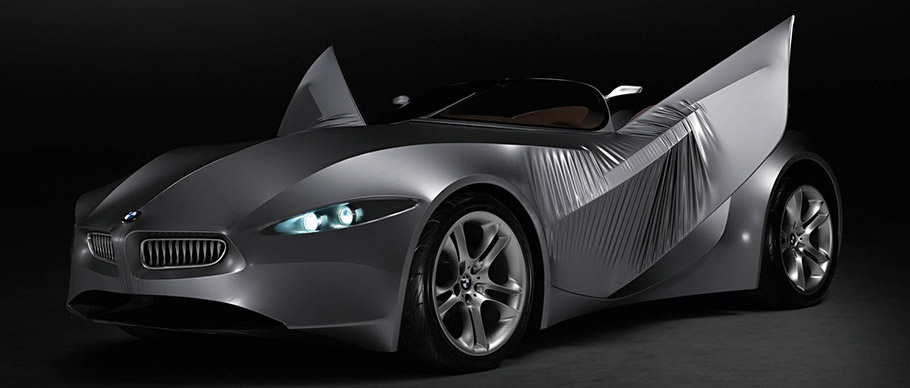
  • BMW Gina

    BMW Gina - Front Angle

    Successful design arouses desire. In order to achieve this, it is more crucial than ever before that car manufacturers create the conditions that allow customers to establish a close relationship with their cars. Therefore, designers seek ways to promote and intensify people’s identification with their car that reach beyond pure aesthetics. In the premium segment in particular, customers demand cars that stir emotions and allow them to express their individuality.

    BMW Group Design has set another deepened objective for designing new cars that moves today’s consumers and their demand for enhanced utility and more versatility to the top of their agenda. An innovative concept introduced by BMW Group Design prepares the ground for this new approach: the GINA (Geometry and Functions In “N” Adaptions) principle grants more freedom for car design. It allows the creation of products with a design and functional range that express individuality and meet the wide variety of requirements of those who are using them.

    In the 21st century, customers approach their purchasing decision with a high degree of assertiveness, clearly defined requirements and subjective concept-tions – particularly when it comes to selecting their means of transport.

    In recent years, the interests and priorities that motivated them have changed and, more importantly, they have become considerably more diversified. This development will continue in the future. Today, the BMW Group is already responding to the highly diversified range of customer requirements and heightened expectations by providing services such as a substantially more varied product range, ever increasing possibilities for personalization and requirement-oriented production among others.

    Future customer requirements as a benchmark.

    By introducing the GINA philosophy, BMW Group Design presents ways of meeting these challenges in the future. The philosophy expresses the readiness and ability of BMW Group Design to consider individual customer requirements as an integral part of car development. Christopher E. Bangle, Head of BMW Group Design, speaks with conviction when he says: “Personal customer requirements will broaden the context of our products and change the core values that define our industry along the way.” For more than ten years now, these issues have inspired Bangle’s ideas. Time and time again, these ideas have been motivating the BMW Group Design team to break new ground and to find pioneering solutions. These results have spawned new customer expectations which in turn inspires designers to develop further innovations.

    GINA: Geometry and Functions In “N” Adaptions.

    The GINA philosophy offers designers as well as development and production specialists an opportunity to challenge existing principles and conventional processes. Solutions that will benefit the car of the future are examined without predefined rules and from as many perspectives as possible. This also involves questioning what is believed to be set in stone. Does a car roof really have to rest on pillars and be bordered by windows? Do all functions have to be visible at all times, even when they are not needed? How many personalization options does my car offer? Are there any possible alternatives to the rigid body shell made of steel or plastic?

    Questions like these lead to groundbreaking, cross-segmental solutions – and visions of the future of individual mobility. An essential principle of the GINA philosophy is to deliberately integrate the potential of new materials and pioneering, innovative constructions into the creative design process, and
    the idea of challenging existing manufacturing methods and material concepts. BMW Group DesignworksUSA, a subsidiary of the BMW Group that operates globally and caters to companies across the industry, has greatly inspired the design team at BMW Group Design. The design agency’s extensive experience with projects for a number of industrial partners outside of automotive engineering, predominantly in the field of material development and production.

    It is in the nature of such visions that they do not necessarily claim to be suitable for series production. Rather, they are intended to steer creativity and research into new directions. This approach helps to tap into formerly inconceivable, innovative potential that reaches far beyond the appearance of future cars and takes into account not only materials and structures but also functions and manufacturing processes. The potential requirements of tomorrow’s customers serve as a benchmark. In addition to aesthetics, the GINA philosophy also deals with ergonomics, the functional range and all other factors that rule customers’ emotional relationship with their car.

    With the development of the GINA Light Visionary Model, the BMW Group presents examples of visionary solutions. For the first time, exemplary adaptations of various approaches described by the GINA philosophy are brought to life to illustrate the potential impact of this concept on the future of automotive engineering. The limits of current material properties and manufacturing processes are projected far into the future. All innovations that these cars present focus on the variable adaptation of form and function based on individual and situation-related driver requirements as well as the demands of the driving situation itself. Therefore, both the exterior and the interior are equipped with a variety of components that differ significantly from conventional solutions, not only by the way they look but also in terms of their basic properties.

    For example, the GINA Light Visionary Model presents features such as a virtually seamless outer skin made of a textile fabric that stretches across a moveable substructure. Functions are only offered if and when they are actually required. The drastic re-interpretation of familiar functionality and structure means that drivers have a completely new experience when they handle their car. Reducing the car to its essentials and adapting it to the driver’s requirements enhances the car’s emotional impact and achieves a crucial objective of the GINA philosophy.

    Visions spawn innovative concepts.

    The strategy of challenging what is established, exploring new possibilities and focusing on customer demands and requirements has inspired the BMW Group to implement a wide variety of innovative concepts. It has also affected the design of production cars in ways that are completely new and unprecedented by any other car manufacturer. A wide range of innovations that have been acclaimed for their virtually revolutionary character is actually based on the GINA philosophy. On the way from vision to production model, visionary ideas have been turned into new concepts.

    Both the sculptural design presented by the BMW X Coupé concept car, for example, and the interplay of convex-concave surfaces that has affected the design of all production vehicles, are derived from visions with an innovative power. This power is generated by the unrestricted freedom that characterizes the quest for wider design possibilities. In the example mentioned above, the natural material properties of the outer skin have been deliberately incorporated into the design process. The design process has integrated the twisted surfaces and has used the specific sculptural aesthetics of the convex-concave elements that are created by the material’s reaction. The design of the BMW Z4, which has been modeled on the BMW X Coupé concept car, is a striking example.

    These visions could only be implemented because of the development of completely new manufacturing technologies. As before, the objectives defined by the GINA philosophy have been achieved thanks to the special expertise of production engineers and their ability to move beyond traditional methods. Their effort has allowed the creation of a form language that has not only significantly enhanced aesthetic standards and the significance of design as an expression of product substance, but also the manufacturing processes themselves.

    Versatility in function and form stirs emotions.

    Some of the pioneering visions that are based on the GINA philosophy have also been implemented in the interior design of concept cars such as the BMW CS1 concept car of 2002. This car’s interior is equipped with control and functional elements that become visible only if and when the driver wishes to avail of them. Thanks to a flexible, Neoprene-covered instrument panel, the driver’s attention can focus on the required functions. This situation-oriented variability of form and function invites the driver to engage in a dialogue with his car. Using these functions, the driver experiences an emotional reaction. This is caused by the fact that he can adapt the car’s appearance to suit his personal wishes. In this application, the intelligent deployment of flexible material dispenses with the need for complex mechanical features. At the same time, the versatile appearance has a natural aesthetic appeal.

    The control concept iDrive, first demonstrated by the BMW Z9 and refined in the BMW CS1 concept car has long since become established as part of BMW production models. It is a perfect enhancement to the spirit of the GINA philosophy, as it is guided by the principle of displaying only those functions to the driver that are relevant to the individual driving situation. The cockpit adjusts to the driver’s needs. As he handles the car by interacting with it, the driver forms a strong emotional bond.

    Integration of meaningful functions that are relevant to the customer.
    It is one of the GINA principles to challenge existing solutions in order to broaden the context, thus extending the scope of possibilities for customers. In the engine compartment of the BMW CS1 concept car, the engine cover has been replaced by flexible stretch material. A graphical display panel provides information on the particular arrangement of the service functions, integrated zip fasteners facilitate easy, hands-on access to the filler caps of the cooling water and wiper water tanks. A number of functions – cover, orientation and access to service points – are integrated into one component in a logical and attractive manner. This deliberately minimalist approach to the deployment of components is an active contribution to the protection of resources.

    Rapid Manufacturing for more versatility.

    As a result of our interdisciplinary cooperation, we have developed a method that allows manufacturers to decorate outer skin components that have been preformed by conventional methods with individually configured high-precision contour lines prior to their reintegration into the manufacturing process. The GINA design philosophy has been applied to Rapid Manufactu-ring to create an unparalleled method of manufacturing single components fast, cost-efficiently and with a focus on individual requirements.

    This combination of processes was first used during the production of hoods for the BMW Z4 M Roadster and the BMW Z4 M Coupé. These models received their distinctive contour lines at a separate production stage which differed significantly from conventional sheet metal processing. The lines were embossed into the hood with pin-point precision by a robot-guided steel pin. This approach allows for entirely new ways of individualized production.

    With Rapid Manufacturing, customer preferences can be implemented when car body elements and other components are designed to the specifications of designers.

    New materials and manufacturing processes create a natural aesthetic appeal.

    The cockpit surface of the BMW Concept Coupé Mille Miglia 2006, which has been influenced by the technology of industrial origami, is another example of vision-based, revolutionary design. It has produced solutions that reflect several guiding principles of the GINA Philosophy. The number of components is significantly reduced compared to conventional cockpits while completely new methods of combining different materials have provided valuable stimulation
    for the conception of innovative production technologies. The manufacturing process has deliberately relied on the expertise and technical skills of highly-qualified specialists, whose competence is a prerequisite for the practical implementation of design visions.

    The exterior design of concept cars also reflects innovative concepts resulting from the practical implementation of visionary ideas. Both the sculptural design presented by the BMW X Coupé concept car, for example, and the interplay of convex-concave surfaces that has affected the design of all produc-tion vehicles (introduced for the first time in the Z4), are derived from visions with an innovative power. This power is generated by the unrestricted freedom that characterizes the quest for wider design possibilities. The design deliberately uses the interplay of splines as character lines and the natural flow of stretched convex-concave surfaces.

    The designer’s metal processing ideas for the interior of the BMW Mille Miglia Concept Coupé were inspired by the traditional Japanese art of paper folding. An inherently stable, three-dimensional structure was created from two-dimensional V2A sheets of metal by means of a special laser cutting and folding processes.
    This technique produced joints which were strategically employed for integrating ventilation functions into the cockpit without the need for additional elements. The result was an innovative solution with a natural aesthetic appeal that was produced with a minimum amount of tools.

    The GINA principle: Priority for sustainable solutions.

    The GINA philosophy objective also includes the quest for sustainability on different levels. The search for new materials and production technologies favors solutions that work with less raw material and energy. A minimalist approach to the use of components and production stages yields ecological and economic benefits. As part of our endeavor to create social sustainability, we are looking for production methods that rely on the expertise of highly qualified specialists instead of expensive manufacturing tools.

    With its goal-oriented research into new materials, the assessment of production processes without tools such as Rapid Manufacturing and the incentive to incessantly challenge existing solutions, the BMW Group is already equipped with a variety of tools that bring the implementation of the GINA philosophy to life for the customer. Research objects such as the GINA Light Visionary Model demonstrate that the principles of the GINA philosophy grant designers maximum freedom for approaching their subject with visionary thinking. This approach is used for finding solutions that offer customers new possibilities of adapting forms and functions to suit a variety of personal requirements and the driving situation in hand.

    They pave the way for innovative ideas that can be implemented in concept cars in order to stimulate series production.

    This way, visions can create products that allow drivers to interact with their vehicle in ways that reach far beyond the conventional individualization potential established thus far. The GINA philosophy allows BMW Group Design to support and steadily enhance this interaction and help drivers build a strong emotional relationship with their car. With its sensible and careful use of resources for products and their development, the GINA principle contributes to the sustainability of future car generations. After all, the social significance of the GINA philosophy is a product of its heightened application of social aspects both to the development processes and to the conscious reflection of customer requirements.

  • Cadillac XLR V

    Since its inception in 2004, Cadillac’s XLR has been a fresh face in the elite club of the world’s finest luxury roadsters. Today Cadillac revealed the new 2009 edition of the XLR Roadster, featuring styling and model enhancements providing more dramatic design and technology.

    Only the finest editions of Cadillac’s retractable hardtop roadster will be offered in 2009: The luxurious XLR Platinum and the high-performance XLR-V. The XLR Platinum is equipped with a 320-horsepower (239 kW) 4.6L Northstar V-8 engine. The XLR-V, part of Cadillac’s V-Series of high-performance models, is powered with a 443-horsepower (330 kW) 4.4L Supercharged Northstar V-8 engine.

    The 2009 XLR includes a new front fascia, new rear fascia and new side fender vents. The revised design is inspired by the award-winning CTS sport sedan, delivering more detail and aggressiveness to Cadillac’s roadster. The front fascia includes new fog lamps and specific upper and lower grilles for the Platinum and V-Series models. Also, both ’09 models feature the distinctive hood with a raised center section that was previously exclusive to the V-Series.

    2009 Cadillac XLR

    “XLR has been a catalyst for the dramatic design and technology driving Cadillac’s ongoing renaissance,” said Jim Taylor, Cadillac general manager. “The enhanced 2009 model exemplifies the continued development of Cadillac’s approach to design, performance and craftsmanship.”

    The ultra-luxury XLR Platinum model receives additional exterior identifiers, including a revised rear fascia with more pronounced new exhaust tips and a new 18-inch wheel design (painted wheel finish is standard; chrome is optional).

    Inside, the ’09 XLR lineup delivers more luxury and technology. Alcantara™ – a suede-like microfiber material – is used for the headliner material, in either Ebony or Cashmere color. Also new is hand-cut and sewn leather used on the upper instrument panel. This hand-stitched and wrapped leather lends tailored elegance to the cabin, representing Cadillac’s new approach to modern and elegant interior craftsmanship.

    The updated cabin includes new instrument cluster trim rings and graphics, new wood grain trims (Natural Olive Ash Burl for XLR Platinum and Black Olive Ash Burl for XLR-V) and new metal trims (Quartz for XLR Platinum and Bermuda for XLR-V.)

    Advanced technology has always been a trademark of XLR, and that legacy continues in 2009. This includes Cadillac’s acclaimed Magnetic Ride Control system and amenities such as Keyless Access with push-button start, DVD navigation and entertainment, heated and cooled seats, head-up display and heated steering wheel. XLR’s advanced technologies also include Adaptive Forward Lighting that enables the headlamps to swivel in concert with vehicle steering, and Adaptive Cruise Control.

    XLR is factory-equipped with OnStar 8.0 with Bluetooth capability. The next-generation OnStar 8.0 system (OnStar subscription is not required for Bluetooth) features enhanced hands-free voice commands, Turn by Turn navigation and Emap powered by MapQuest. This includes the industry-first Destination Download feature, in which directions can be downloaded from OnStar directly to the car’s navigation system – eliminating the need to stop the car to manually enter a destination.

  • Mazda 5

    Coming on the heels of best-ever sales in April and May, the 2008 MAZDA5 has been named Ward’s AutoWorld’s “Interior of the Year” in the “Popular Priced Truck” category.  Thirty-six outstanding vehicle interiors representing 13 manufacturers competed for top honors in the annual competition. (more…)

  • BMW X6

    In 1999 BMW broke the four-wheel-drive mould when it launched the X5 Sports Activity Vehicle. With a bias towards excellent on-road performance combined with a dynamic design and a premium interior, the BMW X5 was an instant success. And it’s a winning formula that has, unlike most other models, led to increasing sales during its lifecycle with the biggest annual UK sales coming in its penultimate year. The timing of the BMW X5 was perfect and it reflected buyers’ lifestyles and their desire for something unique in the marketplace.

    The introduction of the BMW X6 is a logical next step in the process of anticipating customer demand. The BMW X6 sets a new performance benchmark with the world debut of its innovative Dynamic Performance Control rear differential and advanced stability systems to ensure a new dimension in 4×4 car-like driving capabilities. The drivetrain, incorporating BMW EfficientDynamics technologies, ensures the X6 delivers excellent emissions and fuel consumption figures in conjunction with impressive output and acceleration figures. All that in a dynamic coupe-like body shape and interior that is unique in the premium segment. The BMW X6 is a bespoke proposition, but one that competitors look set to copy…just like the BMW X5.

    Model

    Price OTR

    Power
    (hp)

    Torque (Nm)

    0 – 62mph (secs)

    Top Speed (mph)

    Combined
    mpg

    CO2
    (g/km)

    VED Band

    BMW X6 xDrive30d

    £41,965

    235

    520

    8.0

    137*

    4

    217

    F***

    BMW X6 xDrive35d

    £44,145

    286

    580

    6.9

    147

    34.0

    220

    F***

    BMW X6 xDrive35i

    £42,730

    306

    400

    6.7

    149

    25.9

    262

    G

    BMW X6 xDrive50i

    TBC

    408

    600

    5.4

    155**

    22.6

    299

    G

    *Fitted with dynamic package. ** Electronically-limited. ***VED Band F vehicles qualify for £8-a-day London Congestion Charge.

    The concept of the new BMW X6 is best considered in relation to the link between the BMW 3 Series Saloon, Touring, Coupe and Convertible. People buy all four versions of the 3 Series depending on their circumstances and needs. The same will be the case for the BMW X6 compared to other BMW X models.
    The BMW X6 is undeniably a niche car with BMW UK expecting to sell approximately 1,600 X6s in its first year – by comparison an average of 7,000 X5s are sold every year. Research has shown that three key buyer profiles exist:

    • Buyers who want the command driving position an X product provides, but who also aspire to the sporting style of a Coupe.
    • Early adopters. BMW broke the mould when it launched the X5 and the interest for that model came from early adopters looking for something unique in the market. Early BMW X6 customers are expected to come from a similar demographic.
    • The BMW X5 or other Sports Activity Vehicle owner whose family has left home and still desires a similar car, but one that doesn’t scream ‘family’.

    Klaus Kibsgaard, the new Managing Director of BMW (UK) Ltd, said: “People have questioned why we should launch such a car, but these doubters are the same who said a BMW X5 wasn’t a true BMW and that we shouldn’t produce that. The BMW X5 3.0d has gone on to be the third biggest selling new car in our portfolio* and is one of the most searched for used cars too.

    “While we intend the X6 to be a niche product, BMW is leading the way in introducing new vehicles that challenge convention but are borne out of evolving customer demands. The BMW Z4 Coupe, the BMW 635d and the BMW 1 Series Coupe are all examples of this. The BMW X6 caters for a more discerning sector of the market which wants a specific product and won’t compromise.”

    A quartet of turbocharged engines

    For the first time in BMW’s history a model range has been launched solely powered by turbocharged engines. The BMW X6 xDrive35i is powered by the twin-turbocharged 2007 and 2008 International Engine of the Year winner that produces 306hp. This powerplant is capable of propelling the X6 xDrive35i from zero to 62mph in 6.7 seconds and on to a top speed of 149mph. The 2,979cc-engined X6 is still capable of achieving a combined 25.9mpg and a CO2 figure of 262g/km.

    The BMW X6 xDrive30d and the BMW X6 xDrive35d also both have award-winning powerplants under their bonnets. The former, a single turbocharged unit produces 235hp from its 2,993cc block, while the latter ups the ante by offering 286hp from the same capacity engine but aided by twin-turbochargers.
    The BMW X6 xDrive30d, which is likely to become the biggest selling X6 variant over time, reaches 62mph from zero in 8.0 seconds before going on to a top speed of 137mph*. Emissions and economy figures are equally impressive, recording 217g/km and 34.4mpg respectively. The low CO2 output is enough for the car to qualify for a lower Vehicle Excise Duty band, compared to rival products, and continue to be an ?8-a-day Congestion Charge vehicle in London should current proposals become statute.
    *Note: In 2007 the BMW 320d Saloon accounted for 12,015 sales, BMW 520d Saloon 8,365 sales and the BMW X5 3.0d 6,233 sales.

    The BMW X6 xDrive35d sprints from zero to 62mph in 6.9 seconds before going on to a top speed of 147mph. It too sits under the 225g/km higher Vehicle Excise Duty and Congestion Charge strata. The twin-turbocharged diesel records an emissions figure of 220g/km, while also being capable of 34.0mpg.
    Completing the awesome foursome of powerplants is a new twin-turbocharged, high-precision direct injection, 4.4-litre V8 engine producing 408hp. This all-new engine, not seen in any other BMW product before, is the most powerful production non-M BMW V8 engine ever and makes the flagship X6 the most powerful production X product. It can reach 62mph from standstill in 5.4 seconds – quicker than a Porsche Boxster – before going on to an electronically-limited top speed of 155mph.

    All four X6 models utilise facets of BMW EfficientDynamics technologies. Brake Energy Regeneration is standard across the range and combines with active aerodynamics and low viscosity fluids in the steering and transmission systems. Third-generation common-rail technology diesel-engined cars and high-precision direct injection on the petrol models both serve to optimise the combustion process.

    *Note: In conjunction with dynamic package.

    A new high in dynamic capability

    The power of the BMW X6 is harnessed by an advanced chassis that incorporates Dynamic Performance Control for the first time on a BMW. Dynamic Performance Control offers drivers class-leading cornering ability courtesy of a complex multi-clutch differential that, effectively, helps drive the vehicle around a bend.

    A conventional differential wastes power through wheelslip during cornering. A limited-slip differential locks out an unloaded wheel to transfer drive to the wheel with most grip – but the locked wheel can act as a drag on performance. However, Dynamic Performance Control improves on the traditional, performance oriented limited-slip differential. It allows an inside wheel to still deliver power and provide drive, while at the same time sending more drive to the outside wheel that has more grip. The result, combined with one of the most advanced stability control systems available, is a vehicle that out performs the current benchmark BMW X5 and some sports cars in terms of dynamic capability.
    The BMW X6 range goes on sale on 31 May, 2008. The diesel-engined models and the X6 xDrive35i will initially be offered with the xDrive50i going on sale in November 2008.

    Drivetrain

    BMW’s heritage of producing class-leading, high performance and efficient engines is unrivalled. To highlight this fact, no other manufacturer has won the overall honour at the International Engine of the Year awards more times than BMW. 2008 sees BMW retain the title through the 3.0-litre twin-turbo petrol engine in the X6 xDrive35i meaning that BMW has scooped the outright title six times in the last 10 years, winning more categories than any other manufacturer.

    The BMW X6 is the latest model to benefit from BMW engineers’ technological prowess. The all-new range is offered with a quartet of turbocharged engines – the first time an entire BMW model range has been turbocharged. Three of these are award-winning powerplants, while the 4.4-litre twin-turbocharged V8 petrol engine is new to BMW. All four variants come as standard with a sport-oriented six-speed automatic transmission and all models use elements of BMW EfficientDynamics to achieve impressive performance, economy and emissions statistics.

    BMW X6 xDrive30d

    Powered by a 2,993cc engine, the BMW X6 xDrive30d offers the driver the optimum combination of performance and economy which is unmatched by any other performance-oriented Sports Activity Vehicle.
    The in-line six-cylinder diesel powerplant comes with a single turbocharger and third-generation common-rail injection system with piezo injectors for efficient fuel combustion. This latest incarnation of common-rail diesel operates at 1,600bar pressure. Such an arrangement helps the unit produce 235hp at 4,000 rpm. With peak torque of 520Nm available from 2,000rpm through to 2,750rpm, the BMW X6 xDrive30d provides effortlessly smooth, swift acceleration. It accelerates from zero to 62mph in 8.0 seconds before going on to a top speed of 137mph.

    The BMW X6 xDrive30d’s unique balance of economy, emissions and performance is why BMW expects the model to become the biggest selling variant in the UK. The vehicle records a CO2 emissions figure of 217g/km – low enough for the vehicle to qualify for Band F Vehicle Excise Duty and to remain classed as an ?8-a-day London Congestion Charge vehicle in the future if current proposals become statute. It also records 34.4mpg on the combined cycle. An all-aluminium engine block, the weight of which has been reduced by 25kgs compared to the previous, similar 3.0-litre BMW diesel engine, aids the overall performance statistics.

    Compared to conventional 4×4 competitors, none can offer the all round capability of the BMW X6 xDrive30d. While the Audi Q7 records marginally higher horsepower and torque output, this advantage is not translated to on-road performance as the table below indicates. Meanwhile, the Audi, the Range Rover Sport and the Mercedes fall short on all other counts.

    Model

    Power
    (hp)

    Torque (Nm)

    0 – 62mph (secs)

    Top Speed (mph)

    Combined
    mpg

    CO2
    (g/km)

    VED Band

    BMW X6 xDrive30d

    235

    520

    8.0

    137

    34.4

    217

    F

    Range Rover Sport TDV6

    190

    440

    11.9

    120

    28.3

    265

    G

    Audi Q7 3.0TDI S line

    240

    550

    8.5

    134

    28.8

    260

    G

    Mercedes ML 320CDI Sport

    224

    510

    8.6

    134

    29.4

    254

    G

    BMW X6 xDrive35d

    With its twin turbochargers and third generation common-rail diesel technology, the 3.0-litre engine that propels the xDrive35d is the most powerful six-cylinder production diesel engine in the world. Weighing just 210kgs, this high-performance diesel weighs some 50kgs less than a comparable eight-cylinder engine with a similar output. This weight and power advantage serves to maximise the dynamic driving qualities of the BMW X6 xDrive35d, which accelerates from zero to 62mph in 6.9 seconds before going on to a top speed of 147mph.

    It achieves these benchmark performance figures, in part, due to the unique way its brace of turbochargers operate. The first, small turbocharger functions at low engine speeds, developing superior power and torque with the slightest movement of the accelerator. Then, with engine speed increasing, the second, larger turbocharger spools into action. At higher engine revolutions a flap in the exhaust system closes off the smaller turbocharger so that the larger one can operate alone. This process delivers a seamless wave of acceleration and power from low revs with one turbocharger passing the performance baton to the other at the point its peak operational capability falls away.

    The technology means the BMW X6 xDrive35d produces 286hp at 4,400rpm, while peak torque of 580Nm is available from 1,750rpm to 2,250rpm. Despite this impressive performance and like the X6 xDrive30d, this model falls below the 225g/km higher Vehicle Excise Duty and London Congestion Charge tiers. The 2,993cc engine records an emissions figure of 220g/km while also being capable of 34.0mpg on the combined cycle. So, not only is the xDrive35d rapid transport it also makes financial sense for the personal and company car buyer, and challenges the environmental assumptions of the anti-4×4 brigade.

    Model

    Power
    (hp)

    Torque (Nm)

    0 – 62mph (secs)

    Top Speed (mph)

    Combined
    mpg

    CO2
    (g/km)

    VED Band

    BMW X6 xDrive35d

    286

    580

    6.9

    147

    34.0

    220

    F

    Audi Q7 4.2TDI S line

    326

    760

    6.4

    146

    25.4

    294

    G

    Range Rover Sport TDV8 HSE

    271

    640

    9.2

    130

    25.5

    294

    G

    BMW X6 xDrive35i

    The twin-turbocharged petrol engine that powers the BMW X6 xDrive35i has retained its International Engine of the Year award in 2008. This 2,979cc unit is capable of propelling the X6 from zero to 62mph in 6.7 seconds and on to a top speed of 149mph. It achieves this through a combination of twin-turbocharger technology and a high-precision direct injection system.

    Compared to the twin-turbocharged diesel engine in the X6 xDrive35d, the forced-induction technology operates in a different way. It is more efficient for the engine to operate with two same-sized turbochargers with each one helping to supply three cylinders due to the characteristics of petrol power. This sees the X6 xDrive35i produce a diesel-engine style flat torque curve courtesy of its variable vane turbo technology. The engine’s output is 306hp at 5,800rpm while peak torque is attained at just 1,300rpm through to 5,000rpm.

    The advanced turbocharging system on the BMW X6 xDrive35i enables it to deliver class-leading performance figures. The 2,979cc-powered X6 is still capable of achieving 25.9mpg and a CO2 figure of 262g/km.

    Model

    Power
    (hp)

    Torque (Nm)

    0 – 62mph (secs)

    Top Speed (mph)

    Combined
    mpg

    CO2
    (g/km)

    VED Band

    BMW X6 xDrive35i

    306

    400

    6.7

    149

    25.9

    262

    G

    Porsche Cayenne

    290

    385

    8.5

    141

    21.9

    310

    G

    BMW xDrive50i

    Completing the quartet of forced-induction engines is an all-new twin-turbocharged, high-precision direct injection 4.4-litre V8 powerplant. This engine makes its debut in a BMW product and is the most powerful non-M V8 engine the marque has ever offered. It is also unique as the two turbochargers and the catalytic converter are located within the vee of the engine for the first time. This reduces the length of the ducts while also allowing for a wider cross-section, so pressure loss is significantly minimised both on the intake and exhaust side. This enhances engine performance and benefits packaging too.

    The BMW X6 xDrive50i produces 408hp from 5,500rpm to 6,400rpm from its 4,395cc engine. Peak torque is an impressive 600Nm and this is attained from 1,750rpm to 4,500rpm. The breadth of the engine’s flexibility and power ensures the flagship in the X6 range reaches 62mph from standstill in 5.4 seconds and can hit an electronically-limited top speed of 155mph.

    This is the first time that the use of two turbochargers has boosted output on a BMW eight-cylinder petrol engine. Each of the two turbochargers supplies compressed air to four cylinders, ensuring unparalleled spontaneity and an instantaneous response to the accelerator. A further, important, point is that the engine develops its high torque from low speeds and then maintains this superior torque plateau over an unusually broad speed range.

    The new V8 is the most efficient power unit in its class. Combined with a wide range of BMW’s EfficientDynamics features, it gives the BMW X6 xDrive50i a standard of fuel economy and emission management far better than rivals. Average fuel consumption is 22.6mpg and CO2 emissions are 299g/km. The table below underscores the competitive advantage this BMW X6 model enjoys. Neither the Porsche Cayenne nor the Range Rover Sport can match the BMW X6’s all round capability.

    Model

    Power
    (hp)

    Torque (Nm)

    0 – 62mph (secs)

    Top Speed (mph)

    Combined
    mpg

    CO2
    (g/km)

    VED Band

    BMW X6 xDrive50i

    408

    600

    5.4

    155

    22.6

    299

    G

    Porsche Cayenne GTS

    405

    500

    6.5

    156

    20.3

    332

    G

    Range Rover Sport Supercharged

    396

    550

    7.6

    140

    17.8

    374

    G

    EfficientDynamics

    All four BMW X6 models utilise facets of BMW’s award-winning EfficientDynamics technologies. Brake Energy Regeneration is standard across the range in conjunction with active aerodynamics and low viscosity fluids in the steering and transmission systems. Third generation common-rail systems for the diesel-engined vehicles and high-precision direct injection on the petrol models serve to optimise the combustion process.

    On-demand management of ancillary units likewise serves to further optimise the efficiency of the BMW X6. The power required to drive the fuel and steering assistance pumps has been significantly reduced by matching the uptake to current driving conditions, saving substantial energy in the process. In addition, the clutched air-conditioning compressor automatically disconnects the compressor as soon as the air conditioning is switched off to save energy.

    The X6’s aerodynamics also serve to enhance efficiency, with the cooling air flaps behind the BMW kidney grille and air intake open and close electronically as required in all but the X6 xDrive50i. The flaps reduce air resistance when closed and open only in response to a greater demand for cooling air.

    Transmission

    Power in the BMW X6 is transmitted to the road via a standard fit six-speed automatic transmission with an emphasis on sporting gear change characteristics. Gear changes can be delivered using the ergonomically designed gear selector or by the gearshift paddles behind the steering wheel.

    The gearbox’s default setting is a fully automatic drive mode. However, manual gear changes can be instigated by either moving the gear selector to the left or using the steering wheel paddles. Pulling one of the paddles backwards serves to shift up gears and pressing the paddle forwards changes to a lower gear. Using this paddle gearshift is the quickest way for the driver to change gears.

    Chassis

    The BMW mantra of ‘the ultimate driving machine’ is delivered, in most part, by class-leading drivetrains and innovative chassis technologies. Award-winning engines, BMW’s intelligent xDrive four-wheel-drive technology, Dynamic Stability Control + and optional equipment such as Active Steering and Adaptive Drive, set the foundation for benchmark driving dynamics. Adding to this already impressive line-up on the BMW X6 is the world debut of Dynamic Performance Control – a highly advanced differential that enhances the performance of the X6 as standard across the range.

    Dynamic Performance Control

    New to BMW, Dynamic Performance Control marks the introduction of a new standard in drivetrain capability. Available only in the BMW X6, Dynamic Performance Control is unique in its ability to make a four-wheel-drive vehicle, with its inherently mild understeer characteristic, to perform with the responsiveness of a rear-wheel-drive car.

    It works by switching power between the left and the right rear wheels to stabilise the vehicle within milliseconds to help increase traction and lateral acceleration. Handling is lighter and more precise as a consequence during all driving conditions.

    To visualise how it works, the mechanics of canoeing provides a good analogy. If you want to turn right when canoeing, you can brake the paddle on the right side of the canoe. This is how most common electronic stability programmes work. Alternatively, you could use the left-hand paddle powerfully to deliver more control in moving forwards and turning right. This is the principle behind Dynamic Performance Control.

    The new system links the standard rear differential with a mechanical planetary gear set and an electronically-controlled multi-plate clutch for each rear wheel. This system combines advanced electronics and precise mechanics to process complex data such as the yaw rate, wheel speeds, steering angle and engine torque so it can react immediately. When required, the system ensures that drive power distribution to the rear wheels can be freely varied and increased on either side as needed.

    Dynamic Performance Control increases directional stability when accelerating out of bends and provides the driver with extra support in difficult driving conditions. Before under- or oversteer can take place, lateral guided force is used to keep the vehicle on track.

    The system is also effective when the vehicle is coasting. If the rear wheels are on different types of surface, Dynamic Performance Control improves traction by supplying more power to the wheel with more grip. This increases driving stability and allows for much faster acceleration should it be needed. A wheel torque difference of up to 1,800Nm can be actively created between the left and the right rear wheels.
    As a logical addition to the xDrive all-wheel-drive system, Dynamic Performance Control can be matched to all drive concepts and engines. Whereas xDrive variably controls the power distribution between the front and rear axles, Dynamic Performance Control intelligently distributes power between the two rear wheels for precise handling, whatever the driving conditions.

    The power distribution can be displayed on the onboard computer screen located between the speedometer and the rev counter.

    Integrated Chassis Management

    To allow Dynamic Performance Control to work it has to be co-ordinated by the Integrated Chassis Management (ICM) system. This high-performance electronic control network uses high capability computing power to control the drive and suspension functions of the X6 to deliver maximum dynamic capability regardless of driving condition. ICM controls the xDrive, Dynamic Stability Control + and Dynamic Performance Control actuators and, when fitted, the Active Steering and Adaptive Drive functions.
    To enable ICM to function to the desired level, FlexRay technology, the fastest method of data transmission currently available in a production car, is employed. Through the use of more powerful computer processors, offering what is essentially a greater bandwidth, FlexRay is able to cope with far greater amounts of data than previous car electronic systems.

    The result of ICM featuring FlexRay technology is that all the technological features of the BMW X6 respond near instantaneously to inputs to deliver a large Sports Activity Vehicle with sportscar-like handling and performance.

    Suspension

    The BMW X6 front suspension consists of a double wishbone arrangement similar to that of an open-wheeled racing car. This allows engineers to fine-tune the suspension for the best kinematic configuration which, in turn, delivers outstanding lateral acceleration and directional stability. At the same time, it minimises the impact forces transmitted back through the car. The rear suspension of the new X6 features BMW’s patented Integral IV rear axle.

    The standard sport suspension configuration can be enhanced by specifying Adaptive Drive. This optional system uses active hydraulic anti-roll bars to counteract the cornering forces of the car to keep the body from leaning too heavily in a corner and unsettling the occupants. In addition to this, Adaptive Drive incorporates Electronic Damper Control (EDC) that uses sensors to continuously adjust the damper setting for the optimum comfort. The driver can adjust EDC to one of two settings, Normal and Sport, dependent on required ride performance.

    A unique four-wheel-drive system

    xDrive is BMW’s unique four-wheel-drive system which first appeared on the revised first-generation BMW X5 in 2003. xDrive works by ensuring that drive forces are instantly delivered to the axle that needs them most. The xDrive concept has two key ingredients – a centrally mounted, electronically activated, multi-plate clutch to distribute drive between axles, and the DSC+ system outlined below.

    The electronically controlled clutch in the BMW X6 is superior in all but extreme off-roading to rival all-wheel drive systems, simply because it is able to respond more quickly. Many conventional four-wheel drive systems require the build-up of hydraulic pressure to change drive distribution. With xDrive being allied to the DSC+ system, it is more predictive. The DSC+ sensors constantly monitor individual wheel speed, steering angle, lateral acceleration, throttle input and yaw rate angles, and feed this back to enable xDrive’s multi-plate clutch to switch power between axles.

    The result of this class-leading technology, allied to Dynamic Performance Control, is a vehicle that offers predictable, safe handling but one that still feels as nimble as a sports car.

    Dynamic Stability Control+

    Dynamic Stability Control+ (DSC+) is standard on the new X6 and offers four additional functions for added safety and comfort:

    • Brake Pre-tensioning shortens stopping distances during an emergency stop by priming the brakes should the car detect the driver lifting off the accelerator sharply in reaction to an incident ahead.
    • Brake Drying improves braking performance in the wet by periodically applying the brake pads to scrub away the film of water that can build up on the brake discs.
    • Hill-start Assistant allows a car to pull away smoothly on a steep gradient without rolling backwards. The brakes are held for the short time it takes the driver to apply the accelerator after releasing the foot or handbrake.
    • Brake Fade Compensation applies additional braking without any extra effort from the driver should sensors detect that the brake pads are starting to lose ‘bite’ due to heat build up.

    The driver of a BMW X6 is also able to select the Dynamic Traction Control (DTC) function of DSC+. DTC allows for a greater degree of wheel slip to enable a driver to pull away on loose surfaces such as snow or gravel without the DSC+ intervening through a loss of grip. DTC allows for more spirited driving in the dry without interruption and can be selected via a button on the centre console.

    Steering

    The BMW X6 comes as standard with a performance-oriented steering rack for precise, short steering inputs. Drivers wishing to build on this can opt for BMW’s unique Active Steering system. This varies the steering ratio depending on road speed. It does this by way of an electronically operated planetary gear that intersects the steering shaft. The planetary gear, in conjunction with an electric motor, is able to add more lock than provided by the driver at slow speeds to make parking and slow speed maneouvres effortless. When driving at higher speeds the opposite occurs with Active Steering actually retarding the input from the driver ensuring a smoother, more composed, drive. It also makes a larger car feel more nimble than its outward dimensions might suggest.

    Safety

    A body structure conceived and designed for maximum occupant safety underpins the BMW X6. In combination with the car’s passive safety systems, it fulfils all prerequisites for excellent results in all crash-tests. Occupant safety is ensured by front and side airbags, as well as head airbags all-round, and crash-activated headrests at the front. Bi-xenon dual headlights including a daytime light function, fog lamps, two-stage brake lights, and Run-flat tyres all come as standard.

    Design

    The design and concept of the new BMW X6 sets a new course for Sports Activity Vehicles. Never before in the premium segment has the command driving position of a 4×4 model been combined with the sporting, elegant lines of a coupe. The reason? The same reason that the BMW 3 Series Coupe and Touring models can happily co-exist together to deliver a bespoke design solution to those with specific motoring requirements. Hence the birth of the Sports Activity Coupe.
    In its design the BMW X6 showcases all the typical BMW design signatures while adding a new distinctive look. It has been crafted to be stylish, sporting and with a powerful presence. At 1,983mm, the BMW X6 is 50mm wider than a BMW X5 and it is 23mm longer at 4,877mm. Its dimensions give the model a dramatic footprint and create a striking appearance.

    At the front, large air intakes positioned far to the outside clearly indicate the cooling requirements of the powerful engines. The air intakes are split horizontally by bars in aluminium colour surrounding the round fog lamps to visually enhance the width of the car. The traditional BMW kidney grille is the largest of any previous or current BMW, and needs to be to feed the engine with the required volume of air. This, combined with the pronounced contours on the bonnet and large, standard specification xenon headlights, enhances the imposing on-road presence.

    At the rear, the view is split by horizontal lines and broad shoulders giving the back of the BMW X6 a wider, hunkered down look. Even the rear lights highlight the unique character of the BMW X6, re-interpreting the typical L-shape of a BMW X model and adding a dynamic, flowing look. Extra ground clearance, strikingly-designed wheel arches, four doors, the large rear tailgate as well as the high waistline, bear a clear resemblance in style to BMW’s other X models.
    The unique proportions of the BMW X6 stand out particularly from the side. The short front body overhang emphasises the dynamic character of the vehicle, the roofline tapering out gently to the rear and the long body overhang at the rear end give the BMW X6 its stretched coupe silhouette. The roof is at its highest point directly over the front row of seats.

    Inside, the coupe ethos is carried over with the BMW X6 having accommodation for the driver, front passenger and dedicated two seats for passengers in the rear. A storage compartment separates the two rear seat passengers. Like all BMW X models, the new Sports Activity Coupe offers an elevated, command seating position giving the driver an even better feeling of security and visibility.

    The BMW X6 offers a sports steering wheel with shift paddles as standard. Another interior sporting feature is the knee pads on the centre console that offer both the driver and front passenger additional support and stability.
    The coupe lines might indicate a lack of interior headroom, but that assumption would be wrong. An unusually generous feature for a coupe is the substantial headroom at the rear of 946mm giving even tall passengers maximum comfort at all times. Part of the design teams’ challenge was to ensure that BMW’s Head of Design, Adrian van Hooydonk, could comfortably fit his 6ft 4inch frame into the rear seats. Incidentally, the BMW X6 has more headroom in the back seats than the Mercedes Benz C Class Saloon. (946mm vs 942mm).

    The boot offers a capacious 570 litres, far more than the space usually available in a coupe and more than many conventional 4×4 competitors. This enables four passengers in a BMW X6 to each take along a set of golf bags in the boot. The boot contents are covered by a concertina cover to offer security and easy access. It can also be folded flat and stored if needed. To increase luggage capacity even further, the rear seat backrest folds down in a 60:40 split to offer a maximum of 1,450 litres.

    A two-stage gas spring featured as standard allows the driver and his passengers to determine the final position of the tailgate when open according to their requirements. This avoids the risk of damage, for example, when opening the hatch in an indoor car park with a low ceiling.

    Dimensions

    Q & A

    This is a new section to a BMW press pack, the content of which is based on an interview between a journalist and Martin Sloan, the Product Manager for BMW X products in the UK. The aim of the section is to provide you with the answers to pointed questions that may not be outlined elsewhere in the press pack and for quotes that can be used in your articles.

    What is the point of the X6?

    An X3, X5, 3 Series Touring and 5 Series Touring between them cover off practicality, four-wheel-drive, dynamic driving and the high up driving position.

    The sales growth at BMW in the last 10 years has been all about bringing to market new, niche vehicles that specifically target what certain customers are after. The BMW X6 is just another step in this philosophy. The models you mention all cater to different people even though there might be some cross over. The BMW X6 is aimed at customers who like the high up, command driving position, but appreciate the attributes of styling and performance that are synonymous with a coupe. The BMW X5 is closest to the X6 in terms of positioning, but the X6 has several unique selling points aside from styling – namely Dynamic Performance Control, a more sports-oriented gearbox and a full range of turbocharged engines, two of which don’t feature on the X5.

    Why does the X6 only have four seats?

    The BMW X6 is part coupe and all of our coupes have four seats. The other main consideration is that the buyer profile is different too. For example, the BMW X5 can come with five or possible seven-seat configurations. The BMW X6 will be bought more by two person households so the number of seats is not a high factor in the purchasing decision. They are more like to be taking friends to the cinema, than ferrying children to football training.

    The BMW X5 is a big car already, but the BMW X6 has an even bigger footprint. Is there really a need to build and sell such cars in the UK?

    The BMW X6 might appear an imposing car but that is more down to the styling. By comparison it is smaller in length than an Audi A6 and occupies a footprint barely 500 cm2 larger than that car.

    You say this is the first time a range has been produced that is all powered by turbocharged engines. Why is this?

    This is partly to do with packaging requirements, but the main reason is to achieve our targets for lowering emissions while still improving other performance figures. Additionally, BMW no longer regards turbocharging petrol engines with suspicion, having mastered the art using innovative technology such as high-precision direct injection to great critical acclaim.

    Dynamic Performance Control makes an obvious difference to the performance of an X6. What is the weight penalty and will it appear on any other products?

    The extra weight of the system is 12kgs and that includes all the extra wiring and control unit. This is a small price to pay for the on-road benefits achieved. We are rightly proud of this new differential, but there are no plans, as yet, for it to be introduced onto other models.

    Is Dynamic Performance Control better than the variable M differential that is fitted as standard to all M cars and, if so, will these models get this feature in future?

    The unique differential fitted to all M cars is still superior when it comes to pure traction as it can develop up to 100 per cent locking action. Dynamic Performance Control is nearly as good though in regards to this, but it performs better on a four-wheel-drive platform which has a natural tendency to understeer. Dynamic Performance Control eliminates this for a truly responsive feel.
  • Magna Steyr Mila Alpin

    MAGNA STEYR presents the third concept vehicle in the MILA innovation family at the 2008 Geneva Motor Show. The MILA Alpin is a compact off-roader with a body specially designed for integrating various different types of alternative drives. This means: Excellent all-terrain capability, wide-ranging uses and emissions of under 100 g CO2 per kilometer. Creating an attractive vehicle was by no means MAGNA STEYR’s only priority in the MILA Alpin project. The entire product development process was also designed always to make assembly as cost-efficient as possible – whatever the market demands. (more…)

  • Ford Kuga

    The all-new Ford Kuga is Ford of Europe’s first entry into the highly competitive crossover market and promises a blend of rewarding on-road driving quality and surprising off-road capability.

    The genesis for Kuga was first seen in the dramatic iosis X Concept vehicle which made its debut at the 2006 Paris Motor Show. John Fleming, the company’s President and CEO confirmed that Ford of Europe would be developing a production vehicle inspired by the iosis X Concept for launch within two years. At the 2007 Frankfurt Motor Show, Ford demonstrated that this commitment was soon to become reality with a preview of the production model. Signalling its significance as a new direction for Ford of Europe, the new model was given its own name; the Ford Kuga was born and destined to join the Ford of Europe model portfolio during the first half of 2008.

    “With the new Ford Kuga we are keeping the promise we made at Paris in 2006, and delivering a highly capable, expressive and charismatic vehicle which will extend the Ford model range further,” said John Fleming. “I firmly believe Kuga will appeal to many loyal Ford customers looking for something a bit different, but will also be capable of repeating the success of S-MAX in bringing new customers to the Ford brand. A distinctive ‘kinetic design’ exterior, Ford’s acclaimed on-road vehicle dynamics and premium-like product quality are just some of the highlights Kuga will bring to this fast-growing market segment.”

    Sound Foundation

    he new Ford Kuga is based unashamedly on Ford’s acclaimed C-car architecture – well proven in both the Ford Focus and the Ford C-MAX.

    “We have an established portfolio to use as a basis and our shared technologies initiative within Ford Motor Company allows us even more possibilities to develop niche vehicles like Kuga,” said Gunnar Herrmann, C-Car Vehicle Line Director, Ford of Europe.

    Available with a proven powertrain and two series levels the full-time Haldex intelligent AWD system is complemented by a front-wheel-drive (FWD) version that is perfect for those drivers that are attracted by the style and presence of Kuga but do not require AWD capability. The Ford Kuga is available in a choice of two distinct series levels with further options available that enable the driver to personalise the car exactly to their needs. The standard Electronic Stability Programme (ESP) with combined Anti Rollover Mitigation (ARM), and ABS with Electronic Brakeforce Distribution (EBD) are just two of the significant driver assistance technologies of the new Kuga.

    Taking a New Direction

    The stylish and charismatic Kuga is a further demonstration of the exciting new direction Ford of Europe’s products are taking. The fresh and modern styling is the starting point with the substance of the car matching this styling promise. This is delivered by leading driving dynamics, a strong and competent safety pedigree, high quality and craftsmanship and a competitive crossover package. A high seating position, the intelligent AWD option and large stowage volumes make the Kuga a very attractive proposition.

    “Kuga’s arrival will raise the bar in the crossover segment,” said Stephen Odell, Ford of Europe’s vice president for Marketing, Sales and Service. “Our ‘kinetic design’ styling has given the car great personality and this gives it tremendous showroom appeal to potential customers.”

    A carefully selected palette of ten body colours is available for Kuga. A specially developed and brand new metallic colour – Chill – is available for both Kuga series options and drive choices. As a reflection of its iosis X Concept roots the production Kuga is available in two shades of white; solid Frozen White and a brand new metallic Electric White. This colour was first seen on the iosis X Concept car and the pre-production Kuga shown at Frankfurt. The Kuga is the first Ford of Europe production model to use Electric White which uses a specialised application method.

    The exterior design features of Kuga naturally incorporate a wealth of practicality that provides much more than first meets the eye. The ‘liftgate in liftgate’ tailgate offers maximum flexibility and convenience with separate access via micro switches to either the upper tailgate section only or both sections simultaneously.

    The materials chosen for Kuga’s interior also demonstrate the close links to the iosis X Concept. The eye-catching and lavish Kuga interior incorporates fine leathers and gloss finishes on key areas that were first seen on the iosis X Concept car in piano white but now have a choice of shades depending on the series chosen. Colour-matched details of the interior design and integrated trim colours highlight the instrument panel and door trims, creating a complete, unified look of design-led quality and premium sportiness.

    Kuga offers comfortable and spacious seating for up to five adults. The second row seating has a 60/40 split and has been designed to fold completely flat to maximise the usefulness of the available load compartment in two-seat mode. Underseat storage is a practical feature beneath the second row with further storage under the floor of the luggage compartment area which is divided into compartments to offer maximum practicality.

    A luggage compartment sill height of 758mm aids the loading of heavy items into the car. The Kuga has a generous luggage capacity of 1355 litres when in two-seat mode, while the enclosed luggage compartment achieves a volume of 360 litres.

    The Kuga offers customers two distinct series; Trend and Titanium. These have been developed to provide a clear customer choice of a well-equipped cool and colourful series – the Trend – and the modern, techno premium-feel Titanium.

    Trend and Titanium series offer customers a wide range of equipment, technology and styling options. They also provide a strong platform for further personalisation and items to tailor the car exactly to each customer’s needs. These needs are further-enhanced and satisfied by the provision of dedicated Packs which provide additional protection, transport, stowage, styling and aftersales products.

    The Ford Kuga features some technologies first showcased on Ford’s large and luxury segment – and more recently seen on the new generation Ford Focus – while also bringing new features to the segment and the Ford of Europe portfolio for the first time, such as a ‘liftgate in liftgate’ tailgate.

    Capability and Performance

    The Kuga will be made available with a 2.0-litre Duratorq TDCi 136 PS 100kW engine mated to a six-speed manual transmission. Applicable to both FWD and intelligent AWD derivatives the torque, performance and pulling power under all engine and vehicle load conditions have been perfectly calibrated to the new Ford Kuga. This engine provides high levels of torque – 320 Nm at 2,000rpm and 340 Nm in transient overboost. FWD and intelligent AWD variants return favourable fuel economy figures of 6.3 and 6.4 litres of fuel per 100 km respectively, using the combined fuel consumption figures. The intelligent AWD figure of 169 g/km of CO2 is class-leading.

    “Kuga has a ‘can-do’ attitude and ‘go-anywhere’ ability and the powertrain perfectly plays its part.” Said Herrmann.

    The Ford Kuga has been engineered for class-leading on-road driving dynamics and exceptional off-road capabilities for expanded leisure time use.

    Using proven and established Ford C-car chassis components and technology as a solid basis, Ford’s engineers tailored, tuned and calibrated each component and aspect of the ride and handling to ensure Kuga carries the blue oval family pedigree for strong driving dynamics.

    The key overall target was to ensure that Kuga achieved the highest levels of ride, handling, braking and steering performance within the segment. The all-new Kuga uses many new systems and components in order to achieve the programme’s targets.

    The Ford Kuga joins a highly acclaimed and successful portfolio that is recognised for its safety standards as being a key attribute. The first element contributing to Kuga’s safety is the stiff and rigid passenger cell designed and built to resist deformation. A host of active, passive and dedicated pedestrian safety features further contribute to Kuga’s safety story. Integrated electronic systems including Trailer Stability Assist (TSA) add to the Kuga’s safety and instil driver confidence.

    “We put a lot of resources into making our cars as safe as possible for our customers and all other road users,” adds Herrmann. “We employ a whole-vehicle holistic and no-compromise approach.”

  • Lamborghini Gallardo LP560-4

    With the new Gallardo LP560-4, Lamborghini once again sets a higher standard for super sports cars. With its new engine, permanent four-wheel drive transmission and new suspension, it delivers clearly improved performance and dynamics. In parallel, its innovative design takes the classic lines unique to the Lamborghini brand one step further. Powerful elegance has never been so defined before. The Gallardo LP560-4 is the successor of the most successful Lamborghini model of all time. Approximately 7100 Gallardo models have left the Sant’Agata Bolognese production plant since its launch in 2003. “The LP560-4 will consolidate this success story,” states Stephan Winkelmann, President and CEO of Automobili Lamborghini. “It will outclass its predecessor in every aspect; its dynamics are distinctly breathtaking and its design sets new standards. With the introduction of the Gallardo LP560-4, we will consistently continue Lamborghini’s growth strategy”.

    The powerful heart of the Gallardo LP560-4 is the new 5.2 litre V10 engine with an output of 560 PS (412 kW) at 8000 rpm. The increase of 40 PS compared with that of the previous Gallardo, and the approximate 20 kilogram reduction in weight, improves the power weight ratio to 2.5 kilograms per PS (hp) and thus enhances performance. The LP560-4 accelerates from 0-100 km/h in 3.7 seconds, its speed at 11.8 seconds is 200 km/h and its top speed lies at 325 km/h. At the same time the new, highly efficient engine enthrals its driver with its direct fuel injection system – “Iniezione Diretta Stratificata”. Despite its clearly increased power, fuel consumption and CO2 emissions have been reduced by a staggering 18 per cent.

    The engineers in the Sant’Agata-based Technical Department have also improved traction, handling and stability at high speeds. The redesigned four-wheel drive transmission, the new suspension and the optimised aerodynamics as well as the reduced weight and decreased friction between the components, all contribute to the overall improvements in the vehicle. Thus the Gallardo LP560-4 presents itself as a cutting edge super sports car also suitable for the race-track. The car is also surprisingly suited to long-distance driving and despite its extreme performance capabilities is easy to control whilst maintaining utmost stability.

    The Style

    Powerful elegance

    A Lamborghini is and always will be a highly efficient athlete. Its extreme sensuality is based upon precision, performance and on spontaneous action. A Lamborghini’s elegance is that of stark, purist strength. This DNA of the Lamborghini brand is being continuously developed by the Centro Stile in every new car. Thus the Gallardo LP560-4 displays the precise lines and clean surface edges in its distinctly minimalist design. Ornaments or embellishments of any form are alien to it.

    Evolution of form systematically follows the demands of function: the newly designed front of the LP 560-4 squats deeply to the ground which contributes to its aerodynamic efficiency. The enlarged and clearly accentuated cooling intakes meet the demands of augmented engine power thus increasing the air circulation vital to a vehicle as powerful as this. The spoiler, positioned low between the air intakes, improves aerodynamic equilibrium at high speeds.

    Characteristic LED – Daytime running light

    The new headlights have a characteristic ‘daytime’ running light integrated beneath the Bi-Xenon lamps: 15 diodes (LED) have been positioned in a Y structure. The same motif appears again in the rear tail-lights. The stop and brake lights have been inspired by the Miura Concept, the Murciélago LP640 and the Reventón and display the Y form three times over.

    The completely redesigned rear gives the definition “powerful elegance” a new meaning: rear lights, air cooling vents, bumper and diffuser are arranged in precise positions on the car’s exterior, which make the LP560-4 appear extremely wide and bonded to the road surface. In addition, the streamlined covers left and right of the engine hood accentuate the powerful shoulders and lengthened, stretched lines of the new Gallardo.

    Clearly improved aerodynamics

    The rear diffuser has been newly designed, is more efficient with respect to its predecessor and, together with the smooth underbody, contributes to the excellent steering stability even at extremely high speeds. In sum, the aerodynamic efficiency with regard to output compared to that of its predecessor has been increased by 31 %. The Gallardo LP560-4 takes fast curves even more supremely.

    The designers in Sant’Agata Bolognese have excelled themselves with the clear-cut, pure, stark lines of the Gallardo LP 560-4. They also have demonstrated distinct attention to detail; the elaborate aluminium cap for petrol and motor oil are testimony to this, as is the rear camera which has been integrated in a small fin in the independent rear spoiler as well as the finely-crafted grille in the exhaust pipes.

    The body

    Weight is undesirable in a sports car and a lightweight model encourages the dynamics of such a vehicle. Aluminium is much lighter than sheet steel and this is why the Gallardo LP560-4 is produced with a body in a much lighter but nevertheless more stiff structure: the two-seater car measures 4.34 metres in length, 1.90 metres in width and a mere 1.16 metres in height. It weighs in dry at 1410 kilograms – which is, effectively, 20 kilograms less that that of the previous Gallardo.

    The construction of the Gallardo LP560-4 utilises what is known as a ‘spaceframe construction method’. Integrally moulded node elements and extruded parts create its frame, and sheet metal plates made out of aluminium have been neatly and securely integrated to form the body. The body is not only extremely light but also torsionally stiff and displays the highest safety characteristics. Thus the basis for the extraordinary handling characteristics of the LP560-4 is formed.

    Integrated Pedestrian Protection system

    The body of the car also demonstrates extremely high levels of ‘passive security’. The Gallardo LP560-4 fulfils the not yet obligatory European directives regarding the protection of pedestrians. Furthermore, the geometry of the entire front of the car has been optimised with the addition of a special combination of materials behind the front bumper which serve to absorb any impact energy.

    The Interior


    Luxurious individuality

    Despite its low exterior height, the Gallardo LP560-4 welcomes its passengers with a spacious interior. The sports seats are covered with either fine leather or Alcantara® (upon request) and provide secure adherence and support. The position of the seats is very low, typical for sportscars. There is space behind the seats for luggage which complements the 110 litre front trunk.

    The wide middle console is one of the elements which characterizes the impression of sporty dynamism in the interior. It accommodates the standard Lamborghini multimedia system as well as the air conditioning which can be regulated on both the driver’s and passenger’s sides. Between both of these elements lies a newly designed module consisting of classically elegant flip switches. Seven round instruments in the cockpit with a new graphic provide the driver with essential engine data and a multifunctional display between the speedometer and revolution counter provides the driver with important information.

    Workmanship of the highest quality

    The Miura and the other models of the 60s were already characterized by the excellent quality of workmanship which lay far and above the general standards of that time. Lamborghini has continued this tradition and even today delivers automobiles of the highest standards. The Gallardo LP560-4 indulges with the highest quality, aesthetically pleasing materials. With regard to the leather interior, an array of different colours and stitching (also in contrasting colours) are available. As an optional, Lamborghini can deliver the Gallardo LP560-4 with a further choice of leather and Alcantara® interiors as well as Carbon Fibre Packages. Here, elements such as the air-conditioning surrounds, the control panel, the handbrake handle and the gear-stick surrounds are available in carbon fibre.

    Furthermore, the individualisation program, Ad Personam, enables the customer to create any combination of colour and trim, thus creating a highly personalised vehicle. After all, the new Lamborghini should perfectly reflect the owner’s lifestyle.

    The Engine

    Extreme power in every situation

    The engine of the Gallardo LP560-4 is a completely new development. All that remains of the original V10 is the number of cylinders which, in this performance category, create a perfect and unique synthesis of torque, force of movement, sporty nimbleness, compact size and low weight.

    The engine has a 5204 cm3 volumetric displacement which, with 8.000 rpm creates the extreme 560 PS (412 kW). This results in the excellent performance per litre of 107.6 PS/lt. At maximum torque output, the engine yields 540 Newtonmeter at 6.500 rpm. The ample torque curve guarantees outstanding thrust from every engine speed. With an acceleration of 3.7 seconds from 0-100 km/h and a maximum speed of 325 km/h, the Gallardo LP560-4 shoots into the orbit of the most extreme and powerful sports cars.

    Despite the clearly improved driving performance of this super sports car, Sant’Agata’s engineers were nevertheless able to achieve a reduction in fuel consumption and CO2emissions by 18 per cent. Measured by engine power and performance, the Gallardo LP560-4 e-gear’s average fuel consumption of 13.7 litres per 100 kilometers, is extremely low.

    Perfect weight distribution, class-leading dynamics

    The engine in this new model lies lengthways in front of the rear axle – hence the model description Longitudinale Posteriore. The concept of the mid – rear engine is unbeatable in sports car production, with the centre of gravity being displaced next to the vertical axis, thus creating the car’s exceptional dynamics. Furthermore, it creates the basis for the Gallardo LP560-4’s perfect weight distribution with 43 per cent on the front axle and 57 per cent on the rear. In combination with the permanent four-wheel drive transmission, superior driving stability and road adherence are guaranteed in all situations.

    Reduced weight for inspirational torque

    The crank case of the new ten cylinder of Lamborghini Gallardo is produced with an aluminium alloy. Separate cylinder liners are not necessary with this technology: instead, the liners, due to their exposure to the hard silicone crystals during the production phase, are bored directly out of the material. The connecting rods are made out of wrought steel and the pistons are produced from an aluminium alloy. The consequent reduction in weight, inertia and in friction losses contributes to the car’s inspirational torque.

    The engine is unusually wide for a V10, with a cylinder angle of 90 degrees. A definite advantage of this construction is the low centre of gravity. The reduction of the gravity centre height comes also from the dry sump layout of the lubrication system which also guarantees the reliability of the oil supply even during lateral acceleration and on the race-track.

    Direct fuel injection improves efficient combustion

    The new V10 uses the direct fuel-injection system “Iniezione Diretta Stratificata” as an innovative way to optimize performance results in part-load conditions. Here, the fuel is injected directly into the combustion chamber through the laterally positioned injector. Combined with the use of a ‘tumble flap’ in the intake manifold runners, this solution guarantees an optimized distribution of the gasoline in the combustion chamber (higher gasoline density around the spark plug, leaner mixture close to piston and cylinder liners) and delivers the basis for a highly efficient combustion system even with stoichiometric mean mixture composition. The direct injection boosts the extremely efficient ‘full load’ performance of the V10, reduces its knock sensitivity and thus enables the very high compression ratio of 12.5:1. The cylinder heads have been optimised to deliver a very quick gas exchange and the variable valve control system on all four camshafts improves the charge efficiency across the entire engine speed range.

    Transmission

    Superior control four-wheel drive

    Such extreme power must be brought onto the streets with extreme reliability. The driver of a Gallardo LP560-4 can thus rely on the four-wheel drive Viscous Traction (VT) system, with the ‘4’ in the model name a reminder of this. Lamborghini already introduced this system with the Diablo VT in 1993 – and for good reason: four actuated wheels achieve more grip than two and permit acceleration earlier in the curve exit.

    The protagonist in the transmission is the central viscous-coupling which requires no electronic control. In this special Lamborghini configuration, the driving torque is distributed between front and rear – generally with a 30:70 front to rear ratio and, within milliseconds, adapts to even the slightest variations in road conditions. A mechanical differential on the rear axle provides up to 45% limited slip and an electronic differential lock at the front complete the four-wheel drive system.

    Superior traction and handling

    Not only does the maximum traction take advantage of the permanent four-wheel drive system, but also the car’s clearly superior handling. Each wheel can only transfer a certain amount of torque to the road. As the propulsion power is distributed onto all four wheels through the viscous traction system, more potential for directional control remains – and reserves in every situation distinguish a perfectly made sports car.

    Despite all the engine thrust, changing gears in the Gallardo LP560-4 is one of the most exciting experiences of driving this vehicle. It is still the customer’s personal preference as to whether he wishes to change gears manually through the exact ‘gate’ guides of the six-speed gearbox via the short gear stick, or whether he prefers to let his fingertips control the e.gear’s paddle-shift system located behind the steering wheel: the latter solution becoming the preference of the majority of Lamborghini customers.

    Gear change time reduced by 40 per cent

    The automated e-gear transmission has been completely redesigned and improved in all aspects. The complete system has not only been reduced in weight, but the time employed to change gears has also been reduced by 40 per cent in “CORSA” mode. The driver may choose between five different driving and changing programs: in addition to the ‘normal’ mode, the Gallardo LP560-4 offers a SPORT programm with its even more rapid gear changing times and increased number of revolutions.

    The CORSA program directs the engine to optimum acceleration. It permits a greater slip angle and also allows – with maximum safety – the full dynamism of the LP560-4 to be enjoyed even on a race-track. The ‘Thrust Mode’ ensures maximum acceleration from neutral while the angle of the throttle valve and the clutch are here optimally adjusted to one another. Finally the Automatic mode: here the engine changes gear in total independence and permits a particularly comfortable mode of driving.

    The Suspension

    High-tech parts with Lamborghini know-how

    Even the Gallardo LP560-4’s predecessor was one of the world’s best super sports cars with regard to handling, precision and driving stability. However, the latest model provides an even more intense driving experience: the new suspension improves the car’s handling, its driving comfort and its directional stability at high speeds.

    The Gallardo LP560-4’s space frame is uncompromisingly high tech. Its technical production was conceived from motor sport technologies. The double wishbones made out of aluminium with newly designed kinematics, while the springs and shock absorbers are tightly adjusted for grip.

    The rear axle now has an additional track rod which further improves the excellent control of this super sports vehicle. Newly developed elements are the rubber-metal bearings – authentic high-tech parts – which clearly improve the special Lamborghini driving dynamics with well-chosen material combinations and cleverly defined assembly.

    Extreme road adherence

    The steering rack works with relatively little assisted steering support, thus bonding the driver closely to the road. This in turn provides him with an intense experience of power and impulse. The steering has its own cooling system for the power steering fluid.

    Precise, breathtakingly fast, whilst stable and free from surprises, the Gallardo LP560-4’s dynamics assures a sensuous experience. The LP560-4’s tyres (format 235/35 ZR 19 front and 295/30 ZR 19 rear) appear to bond with the asphalt. Specially developed Pirelli P-Zero series tyres are fitted: these have a particularly low roll resistance which also maintains tyre wear at a minimum without, of course, any reduction in their performance quality. At a speed of over 120 km/h an independently extended rear spoiler increases the downforce on the rear axle It acts in association with the specially formed underbody which directs the airstream under the car.

    Optional Carbon Ceramic Brake system

    The new braking system acts with brute force. At the front, eight ‘Brembo specialist’ cylinder callipers grasp the 365 mm diameter brake discs. At the rear, four cylinder callipers act on the 356 mm brake discs. In addition, the new disc ventilation system improves the stability in extreme situations. Optionally, discs made out of Carbon Ceramic are offered. At the front the CCB (Carbon Ceramic Brakes) discs measure 380mm in diameter and at the rear 356mm. They deliver much improved performance at a reduced weight. In total, the CCB braking system is lighter in weight that, at the wheel, improves driving dynamics and comfort.

    The interior and trim

    With the Gallardo LP560-4 Lamborghini provides its customers with a generous and sporty standard equipment package. Direct from the production line, a customer will find included in his vehicle passenger and lateral air-bags; a two-zone air-conditioning system with sun regulation; The Lamborghini Multimedia System including an USB connector; and sports seats with an electronically operated backrest. In addition to this, the interior trim includes fine leather and Bi-Xenon headlights with LED daytime running light. The car is supplied with new Apollo wheels as standard.

    A large variety of options increases the interior comfort of the vehicle, including a navigation system and a module for TV reception, a hands-free Bluetooth® phone set, an anti-theft device and a rearview camera. A further option is the lifting system control of the front of the vehicle which, at the touch of a button, is raised to enable driving over obstacles. The new polished cross wheel rims ‘Cordelia’ or the black Y-rims ‘Callisto’ complete the options range. Finally, the engine hood made from glass creates a showcase for the heart of the Gallardo LP560-4..

    The possibilities and different combinations available in the Individualisation Program Ad Personam are almost inexhaustible. Behind this program stands the philosophy that a super sports car of this nature should, after all, reflect the personality of its owner by enabling him to completely indulge his expectations and wishes. As a consequence, extreme exclusivity is the trademark of Lamborghini’s individualisation program. “Think the Impossible” states the motto. Ad Personam offers a host of options in order that a customer may give the car an imprint of his own style with respect to the interior trim and exterior. A new highlight in the program are the following three exclusive matt colours: Nero Nemesis (matt black), Bianco Canopus (matt white), Marrone Apus (matt brown). The new matt colours underline the clearly defined and purist precision of the Lamborghini design.

  • Chevrolet Beat

    2007 Chevrolet Beat ConceptDesigned to evoke the mood of a speedy micro import tuner, the Beat is a front-wheel-drive, three-door hatchback concept built to be personalized, and powered by a 1.2-liter turbocharged gasoline engine mated to an automatic transmission. It’s loaded with technology, including a navigation system and premium stereo.

    Three Chevrolet minicar global concepts designed to appeal to young car buyers in urban markets prove that art needn’t take a back seat just because the canvas is small. Revealed today at the New York Auto Show, the highly creative Chevrolet Beat, Chevrolet Groove and Chevrolet Trax concepts drive the energy, diversity and excitement of urban life into cars that deliver good-looking fun, fuel economy and value.

    All three concepts were designed at GM’s Design Studio in Inchon , South Korea . One of GM’s 11 Global Design Studios, the designers in the Korean center are experts in small car product development.

    Built on GM’s global mini architecture, these concepts demonstrate the flexibility, creativity and innovative focus of design in GM’s Asia Pacific region. The Chevrolet Beat concept, a running prototype of a micro import tuner, was built in India ; while the Chevrolet Groove and Trax micro urban crossover concepts were built at the GM Tech Center in Warren , Mich.

    “The Chevrolet Beat, Groove and Trax concepts highlight the strength and diversity of GM’s Global Design capabilities, as well as the ability of our Global Product Development team to anticipate and quickly meet the evolving needs of our diverse markets around the world,” said Ed Welburn, vice president, GM Global Design.


    Chevrolet Beat Concept (2007)

    2007 Chevrolet Beat Concept


    “The design team was so enthused about being given the assignment to develop the perfect small car for urban commuters that they created not one, but three interpretations of how this car may be developed for Chevrolet customers around the world.”

    Chevrolet is one of four GM global brands, meeting diverse customer needs in 120 countries with vehicles that range from subcompacts and family sedans to full-size pickups and SUVs and iconic sports cars such as the Corvette. The concepts revealed in New York , for example, offer three different fuel-efficient engines, including a diesel.

    “The Chevrolet Beat, Groove and Trax concepts have the potential to expand the reach of Chevrolet – already a beloved brand around the world – even further, connecting with young buyers on multiple continents who desire fun-yet-efficient transportation,” said Chevrolet General Manager Ed Peper. “These are the same brand attributes that made Chevrolet a household name in the U.S. ”


    Chevrolet Beat Concept (2007)

  • Koenigsegg CCGT

    DOWN TUNED TO 600+ HP in order to comply with race regulations. Koenigsegg has created a new race car – the CCGT, based on the production CC-model range. The CCGT complies with the ACO and FIA GT1 regulations.

    The CCGT engine is based on the Koenigsegg CCX production engine with the superchargers removed but enlarged to 5.0 litre.

    The reliability of the race engine is expected be exceptional as it is based on the proven strength and durability of the signifi cantly more powerful road car engine.

    The minimum weight allowed for a GTI race car is 1,100 kg and most manufacturers struggle to meet this target, having to undergo massive weight saving programs.

    Due to the fact the Koenigsegg CC cars are very light and stiff in road confi guration, the racing CCGT weighs in at just under an astounding 1,000 kg. This gives the possibility to place 100 kg of ballast freely within the car structure, still following the set rules. This should give Koenigsegg an interesting advantage over the competition.

    Koenigsegg CCGT
    Koenigsegg CCGT

    The CCGT has very short overhangs, which could be seen as an issue when it comes to generating enough downforce. However, by further developing the clever and “slippery” design concept of the CC range, Koenigsegg believes they have created a unique package incorporating a surprising amount of down-force combined with a very compact package and optimal weight distribution. Since the CCGT has a short overall length and low overall height, whilst still maintaining adequate track width and length, it is thereby gifted with superior agility compared to most of the competition, which should be evident in future heated racing combats.

    The Koenigsegg CCGT development team, headed by Dag Bölenius, has done a superb job by refi ning the CC into the CCGT.

    The race engine is being developed in-house in parallel with the production units by Koenigsegg engineers, supported by Anders Hoglund from Cargine engineering and JP Motorsport.

  • Univers Concept

    English Version will follow…
    Der europaweite Erfolg des Dacia Logan aus Rumanien hat es deutlich gezeigt: Preisgunstige Kompaktwagen liegen voll im Trend. Das Nachbarland Bulgarien ist seit dem 1. Januar 2007 nicht nur Mitglied in der EU: Seit mehr als zwei Jahren arbeiten die Studenten der Technischen Universitat von Sofia am ersten “Automobil Made in Bulgaria“. Anfang Februar enthullten der Rektor der Fakultat, Prof. Kamen Vesselinow, und seine Studenten im Nationalen Museum Man and Earth von Sofia das erste 1:1 Concept Car.

    Dabei war der Rahmen fur die Hochschuler eng gesetzt: Um sowohl auf dem heimischen als auch auf dem internationalen Markt erfolgreich sein zu konnen, muss das Auto nicht nur Platz fur vier bis funf Personen bieten, sondern auch zu einem Verkaufspreis zwischen 7.500 und 8.500 Euro realisierbar sein.

    Das Ergebnis erstaunte nicht nur die zur Premiere geladenen Gaste, zu denen auch so prominente Vertreter der deutschen Autoindustrie wie Mercedes-Benz Designchef Peter Pfeiffer gehorten: Der “Univers“ besticht durch sein aufregendes Design und konnte durchaus auch aus einem italienischen oder kalifornischen Designstudio stammen.

    Die optische Umsetzung der Aufgabenstellung ist dem Team der TU Sofia schon einmal hervorragend gegluckt. Die markante Front mit den tropfenformigen Hauptscheinwerfern und der durch die Formgebung der Lufteinlasse “lachelnden“ Frontschurze verleiht dem feuerroten Concept Car sein charakteristisches Gesicht.

    Die gleiche Formensprache findet sich an der fur ein optimales Raumangebot steil abfallenden Heckpartie wieder. Von der Seite wirkt der Prototyp durch die Kombination aus einer langen, stark geneigten Frontscheibe, einer nach hinten abfallenden Dachlinie und einer tief nach unten gezogenen Schwellerparte betont sportlich. Attraktive Details wie die Spiegelblinker und die in die Fensterrahmen der Turen integrierten Griffe zeigen deutlich, dass man sich bei der Formgebung modern orientierte.

    Initiiert wurde dieses Projekt von Prof. Sasho Draganov, Leiter des Bereichs Industrial Design an der Technischen Universitat von Sofia, und seinem deutschen Kollegen Prof. Harald Leschke, Direktor Advanced Design Projekte bei DaimlerChrysler.

    Schnell konnten Partner aus der Industrie gefunden werden, um die Studenten tatkraftig zu unterstutzen. Aus Deutschland sagten spontan DaimlerChrysler sowie Reifenhersteller Fulda zu. Mit Samsung und seinem Chefdesigner Harry Choi begeisterte sich sogar ein koreanischer Konzern fur die Vision eines bulgarischen Autos. Den gesamten Bereich des Business-Plans sowie Market Research und Marketing Strategien entwickelten die Studenten in den 2-jahrigen Vorlesungen von Prof. h.c. Bodo Buschmann an der Wirtschaftsfakultat der Uni Sofia.

    Nachdem Sliven, die achtgro?te Stadt des Landes, nicht nur ein traditioneller Industriestandort ist, sondern auch eine Zweigstelle der TU Sofia beherbergt, konnte der Burgermeister schnell uberzeugt werden, das Projekt zu unterstutzen. Und der ist nicht nur in Bulgarien alles andere als ein Unbekannter: Yordan Letchkov, fruher Nationalspieler und Profi beim Fu?ballbundesligisten Hamburger SV, setzt sich mit gro?em Enthusiasmus dafur ein, die Idee zu verwirklichen und wenn moglich auch die Produktion in die Stadt an der wichtigsten Verkehrsader des Landes zwischen Burgas am Schwarzen Meer und Sofia zu holen.

    In den letzten zwei Jahren lernten die beteiligten Studenten von der Pike auf, wie man das Design eines Autos entwickelt und bis zum fertigen 1:1 Modell ausarbeitet. Die Prasentation des Univers Concept Car war aber nur ein weiterer Schritt auf dem Weg zu einem fertigen Auto. Bis zum Fruhsommer 2007 soll der erste fahrfertige Prototyp aufgebaut werden.

    Damit werden die Studenten von der reinen Designphase in den Engineering-Prozess wechseln. Hier ist die hohe Hurde zu nehmen, die heutigen Sicherheitsstandards mit relativ einfacher und damit preisgunstiger Technik zu erfullen. Parallel werden an der Universitat die Studien weiter vorangetrieben, wie man das Projekt bis hin zum Aufbau einer Produktion des ersten Autos aus Bulgarien weiter vorantreiben kann.

    Wenn sich Investoren finden und es auch gelingt, die notigen EU-Fordergelder aus Brussel zu bekommen, konnte der Traum wahr werden. Denn ein Auto, das gut aussieht, preisgunstig und sparsam ist und dennoch vor allem in Sachen Sicherheit auf dem Stand der Zeit ist, hatte nicht nur auf dem heimischen Markt eine reelle Chance.

    Text and photos courtesy of Univers

  • Scion tC

    The Scion tC, the best-selling vehicle in the Scion lineup, raises the bar in the sports coupe segment as it receives sharp styling revisions, new standard equipment and safety features for 2008.

    Freshened Exterior and Enhanced Interior

    The 2008 tC is distinguished by the new Scion family front fascia, a menacing horizontal combination of headlights and grille. For the tC this includes a new upper mesh grille, lattice lower grille and projector-type low beam headlights with black trim. The tC also receives eye-catching rear tail lights similar in style to the headlights with round combination lamps.

    Inside, the tC receives a deep orange combination meter on the instrument panel, silver-colored accents on the door assist grips and center cluster, updated seat fabric and Pioneer subwoofer.

    Azure Pearl and Black Cherry Pearl exterior colors were replaced with Sizzling Crimson Mica and Wave Line Pearl.

    Standard iPod Connectivity

    Apple iPod connectivity is standard across the Scion lineup for 2008. Scion’s standard 160-watt maximum output Pioneer AM/FM/CD audio system features a head unit with iPod control. This head unit integrates track, artist and album information from the iPod into a one-line display on the head unit’s screen. Connectivity is achieved by simply plugging the iPod into a port via a connector cable, providing outstanding sound quality through the car’s stereo system and constant power to the iPod. Music is controlled through the head unit and steering wheel audio controls. A standard mini-jack port also allows users to listen to their portable music collection through the tC’s Pioneer speakers.

    Scion tC
    Scion tC (2008)

    Since many Scion customers add in-car entertainment systems to their vehicle, the tC comes standard with rear head unit outputs allowing for the addition of external amps to boost power to the front and rear speakers, and subwoofers.

    The tC’s optional premium audio system adds one more feature to the standard head unit, the ability to download “skins” to play on the LCD faceplate. Customers can download images, four-second video clips and eight-second movies from Pioneer’s website. In addition, Pioneer software allows customers to burn their own images and movies onto a CD and upload them onto the available head unit.

    Both the standard and premium head units retain key Scion audio system features such as Scion Sound Processing (SSP) where listeners can choose from three pre-set equalizer settings, satellite radio compatibility, a user-customizable welcome screen, MP3 and WMA capability, Automatic Sound Leveling (ASL) and Sound Retouch Technology (SRT), which provides clearer CD sound quality. Both systems will also feature six speakers: two tweeters and speakers in each door panel.

    Advanced Safety

    Like all 2008 Scions, the tC comes standard with front dual stage airbags, front seat-mounted side airbags, front and rear side curtain airbags, tire pressure monitor system, headrests, three-point seatbelts in all five seating positions and a first aid kit. The tC also features a driver’s knee airbag.

    Sporty Package

    The tC’s roominess and ride comfort can be attributed to its 106.3-inch wheelbase and 69.1-inch wide stance. In addition the tC has four-wheel independent suspension, strut-type front suspension and double-wishbone rear suspension, for responsive handling.

    A four-wheel disc brake system is standard on the tC. A two-step brake booster increases power assist in proportion to pedal force to provide precise pedal feel. The tC comes equipped with standard anti-lock brakes (ABS) with electronic brake-force distribution (EBD). ABS helps to prevent the wheels from locking during severe braking maneuvers, and EBD monitors differences in front- and rear-wheel speeds and distributes optimal braking force to all four wheels.

    Fun-To-Drive Performance

    The tC is powered by a 2.4-liter double overhead-cam four cylinder engine with Variable Valve Timing with intelligence (VVT-i). This CARB-certified Ultra Low Emission Vehicle (ULEV) produces 161 horsepower at 6,000 rpm and 162-lb.ft. of peak torque at 4,000 rpm. The tC features a five-speed manual transmission or an available electronically controlled four-speed automatic transmission.

    Fully Equipped

    All Scion models come well-equipped in a “mono spec” trim. The tC offers full standard equipment so the customer only needs to choose between manual or automatic transmissions and vehicle color.

    Standard features include the panorama glass power moonroof (a first in this segment), air conditioning, cruise control, exterior mirrors with integrated turn signal lights, power door locks and mirrors, rear cargo tonneau cover, auto up/down power windows with jam protection, in-key remote keyless entry, rolling-code engine immobilizer security system, auto-off headlamps, electronic hatch release, chrome-plated exhaust tip and a unique audio unit cover.

    All Scion models come with complimentary factory-recommended maintenance services for the first 5,000 mile and 10,000 mile intervals, to be performed by an authorized Scion or Toyota dealership.

    The standard tC model is available in a choice of seven colors: Flint Mica, Super White, Black Sand Pearl, Classic Silver Metallic, Sizzling Crimson Mica, Wave Line Pearl and Nautical Blue Metallic. Exterior colors are complemented by a high-quality dark charcoal fabric interior in the standard tC model.

    Blank Canvas

    Toyota Racing Development (TRD) offers many parts to enhance tC performance, including performance suspension kits, a high-performance clutch, quick shifter, leather-wrapped shift knob and sequential shift light kit.

    It’s easy for customers to take the tC to the next level with Scion Genuine Accessories. Customers can change the tC’s look with the approximately 40 available accessories including EMX Super seven-spoke 18-inch alloy wheels with Pirelli PZero Nero P255/40Z R18 all-season tires, polished stainless steel muffler, color-keyed ground effects and a rear lip spoiler. The Optomize accessory program, available at Scion dealers, also offers customers the convenience of cutting-edge, well-known name-brand accessories.

    For those who really want to express their creativity, Scion also offers the tC Spec Package model aimed at the tuner segment with a lower price point than the standard model. Since wheel changes are so popular in the tuner community, the tC Spec Package model comes standard with steel wheels, P205/55 R16 tires and seven-spoke wheel covers. The tC Spec Package also features a fixed glass panorama roof, unique upholstery, a urethane steering wheel, and a grille and headlight garnish with special treatment. The color pallet for this model includes Super White, Flint Mica, Black Sand Pearl and Classic Silver metallic, compared to the standard model’s seven colors.

    Comfort and Class

    A Scion would not be complete without unexpected utility and content for its class. The tC offers this and more with its unique attention to detail.

    The tC’s comfortable front sport bucket seats feature driver’s side height and thigh support adjustments, along with a walk-in function with memory for both the seat and backrest. The push of a convenient lever at the top of the seat back yields a wide step-in space for easy access to the rear seats.

    The metal-tone center console features a genuine cast-aluminum temperature control dial flanked by soft-touch electronic buttons and an LCD display showing exterior temperature, seven fan speeds and a clock. Shutter-type flush-closing dash vents complement the center console’s waterfall design.

    The dash and upper door panels are covered with unique trim that was inspired by the texture of Japanese paper, while the front-passenger airbag is seamlessly integrated into the dash. Dampers are used for the interior moving parts and ensure smooth operation. The tC’s low NVH levels are maintained with extensive use of sound absorption materials.

    The tC’s rear seats deliver utility and comfort. The rear can recline to 45 degrees and can be adjusted into 10 different positions. The 60/40-split rear seats fold forward for a nearly flat cargo floor, and when both are folded flat provide more than 8.5 feet of length for cargo. Standard tie down hooks in the rear seat and cargo areas provided added convenience.

    Storage is abundant in the tC with four roomy map pockets, bag hooks in side panels, numerous CD, bottle, cup and cell phone holders, and a two-tiered fabric-covered center console. Additional storage can be found under the right rear cargo area for securing valuables.

  • Peugeot 4007 Holland & Holland

    To coincide with the public world premiere of the 4007 at geneva, peugeot Is unveiling a highly exclusive exercise in style produced in collaboration With luxury manufacturer holland&holland, recognised for its spirit of Adventure.
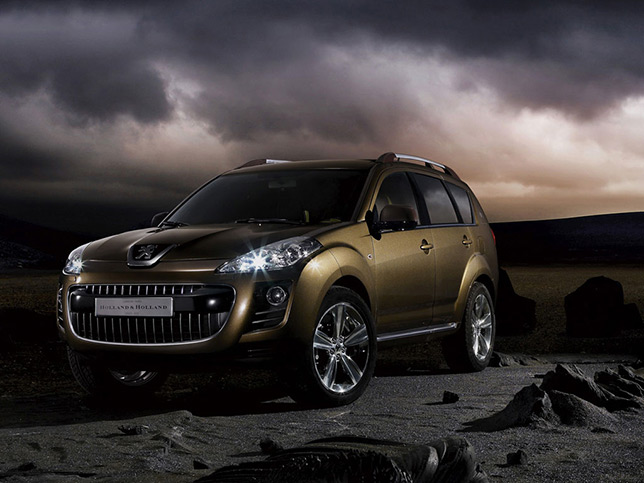
    Exterior

    The pearlescent Hagénias Bronze body colour paintwork combines harmoniously with the vehicle’s chrome detailing to accentuate the exclusive nature of this 4007 by emphasising its power and feline qualities combined with the presence of its style and ‘all-terrain’ character.

    Peugeot 4007 Holland & Holland
    Peugeot 4007 Holland & Holland

    Water-resistant leather features on the door mirror casings and roof bars, while the “Holland&Holland” logo, the hood of a royal falcon, is applied to the rear quarter panels. Large 20″ alloy wheels, machined from a single block in a unique fourfold design, add presence to the vehicle’s exclusivity.

    Interior

    Only when you are in the vehicle does the creative alliance between the Peugeot Style Centre and Holland&Holland teams become more apparent. A blend of “Ebony” and “Chartreuse Green” leathers (Holland&Holland colour codes) enhanced by smooth leather edging and original stitching, creates a natural, exclusive and innovative feel.

    The leather trim covering the passenger compartment is entirely hand-crafted by leather craftsmen from the Peugeot Style Centre. It blends harmoniously with the shape of the fascia panel, the special finish of the seats and the design of the door panels.

    Peugeot 4007 Holland & Holland Interior
    Peugeot 4007 Holland & Holland Interior

    The Ebony wool felt floor and its embroidered carpets create a soft and warm environment. Ruthenium styled parts in dark chrome reinforce the exclusivity of the vehicle, particularly around the console and drive mode selector (two-wheel drive, 4×4 or “lock” modes).

    At the rear, behind the split tailgate which opens in two sections, a large boot concealing two retractable seats houses a fantastic luggage compartment specially made by Holland&Holland. Posted on Babez.de! Under the bonnet of this exclusive 4007 lies the 2.2-litre HDi engine developing a power of 115 kw (156 bhp) and a high torque of 380 Nm. A Diesel Particulate Filter System (DPFS) is also included as standard.