Nissan brand has just released their third video clip which offers additional insight on the bold new design of long-expected new 2013 Nissan Altima. The vehicle is going to make its world debut at the 2012 New York Auto Show in April. The brand however, didn’t release much information about their upcoming product, but on the contrary teases the public with “teaser” video clips and thus making the interest grow. What Nissan has done until the present moment is to disclose two exclusive video clips of the new car, which show it from two different perspectives: from the front and from above. There seems to be a lot of gossip around the new Altima and how it is going to perform in terms of fuel efficiency, power, etc. What we can undoubtedly expect is a premium design and technologies focused on enhancing the driving experience. What we see in this video is an additional glimpse – this time on the rear. No doubt, that thus image gives as a hint of the all-new Altima’s design and forward-thinking innovations: Nissan promises that they will bring outstanding fuel economy, premium design inside and out, and driver-focused technologies to this midsize sedan.
This year, the Audi S5 Coupe roams the streets with a facelift… and a new engine coincidentally. The engine itself is not new new but it is a first in the S5 – The TFSI 3.0 liter V6 unit has been around for the Cabriolet and Sportback versions. Another techy addition that is not your typical facelift is a stop-start system for better fuel efficiency. Other than that, we have new bumpers, a new radiator grille, aluminum wing mirror caps and a different four-pipe exhaust system. Now, while the updated S5 is still hot, the German based Senner company is among the first to pump up the value.
The standard TFSI 3.0 liter V6 brings 329 hp – that’s only 20 hp less than the one found in the pre 2012 S5 models, the FSI 4.2 liter V8. Senner engineers however, have managed to eliminate that small gap. In fact, by being fitted with a power converter and some sports air filters, the TFSI gets further ahead with 377 hp and 500Nm of torque. The exhaust pipes now size up to 100 mm in diameter each, which helps the S5 reach a tone most desirable.
The car sits on a Variant 3 Inox Line-KW coilover suspension, fully adjustable when it comes to height, rebound and pressure. The suspension itself relies on a set of 8,5×20 inch Corniche Challenge wheels with red undercut trim, wrapped in Vredestein Wintrac Extreme 245/30R2090W. Kind of late for winter tires.
Inside, a steering wheel from the R8 had been lift off complete with its paddle shifters. Trough its nicely flat figure, one can glance at the carbon speedometer panel. A DVD system on the other hand will keep the passengers busy (the driver has some corners to bend, so he/she doesn’t need much multimedia).
The whole project is still in process so who knows what Senner might offer in the near future.
Reifen Coch is yet another German based company that customizes performance cars and such. The target car here however is not at all German. The name they gave their product is the “Konquistador” and it is actually an American icon – a Ford Mustang V. It’s “V” for “Fifth generation” but it might as well be for V8 as this untamed pony moves about with a V8 4.6 liter309 kW heart.
So not much room for improvement in the engine compartment. No worries, as Reifen Coch have focused on other aspects of customizing. A flamboyant Cervini-Bodykit has been installed which has holes on the back of the side skirts. These wholes are for the custom made exhaust system. Yes, the Konquistador has side exhaust pipes – a kid’s dream come true. The suspension boasts KW-coilovers with electrically lifting axles and an HLS (Hydraulic Lift System) Kit. The brakes too have been replaced with some “Brembos”.
However, it would seem that Reifen Coch are most satisfied with what they have done to the wheels – 9Jx20H2 Gotham rims at the front and 11Jx20H2 of the same brand at the back. The wrapping comes in the form of four Dunlop tires in sizes 265/35R20 and 305/30R20, front and back respectively.
Ford Fiesta Zetec 1.4 TDCi is the best small car winner of Diesel Car magazine’s Used Car of the Year Awards 2012.
It is powered by a 1.4 liter turbo-diesel with 67BHP (49 kW) at 4000RPM and 160Nm (118 lb-ft) of torque at 1750RPM. IT is mated to a 5-speed manual gearbox.
0-100 km/h in 14.9 seconds and a top speed of 162 km/h (101 mph). It returns 67.2 mpg on combined cycle and emits just 110 g/km CO2. The overall weight of the vehicle is 1152 kg.
The new Fiesta is quite spacious inside, despite its small size – 3950 mm in length, 1722 mm in width and 1481 mm in height.
Actually, the small car is very good in every aspect. It rides good and handles well and the wind noise is not very loud. The vehicle is very well isolated, so you can go on long trips without any concerns of inconvenience.
The 1.4 TDCi Fieste Zetec is priced from £13 745 for the 3-door variant and goes up to £14 345 for the 5-door variant.
Seat has announced their super-hot hatchback Leon FR+ Supercopa. It comes with a powerful engine, FR+ looks and some other very nice upgrades.
The exterior features Supercopa badges, re-worked front and rear bumpers, smart side skirts, a more pronounced tailgate spoiler, bespoke BBS 18-inch alloy wheels and unique chrome-tipped, twin exhausts.
It is available in three special colours – Nevada White, Emoción Red and Speed Blue.
The engine range includes a 2.0 liter TSI with 211PS or 2.0 liter TDI CR with 170PS.
The FR+ trim level includes 18” alloy wheels; the SEAT Media System 2.2 which includes satellite-navigation with five-inch colour touchscreen and dynamic route guidance, DAB radio, Bluetooth audio streaming and SD card slot; Bluetooth phone connection; bi-xenon headlights with AFS (Adaptive Front-lighting System) and rear parking sensors.
The prices for 2012 Seat Leon FR+ Supercopa start at £22 530 OTR for the 2.0 TDI with 6-speed manual gearbox.
“This stunning car represents many of the very best elements of SEAT. Gorgeous styling, superb levels of standard equipment and unrivalled value for money are the hallmarks of our cars, and they come together to exceptional effect in the Leon FR+ Supercopa.”, commented SEAT UK Head of Marketing, Chris Stevens.
“I’m sure this special edition model will, quite rightly, quickly become one of our most highly sought-after vehicles.”, Mr. Stevens finished.
One of the most important automotive highlights of the last year was the introduction of the two-door Volkswagen up! Now, Volkswagen is a four-door version to the model range, which will be at dealership in Europe by early summer. The four-door doesn’t differ much from the two-door version- it has the same engines (44 kW/60 PS and 55 kW/75 PS), equipment versions (take up!, move up!, high up!, black up!, white up!) and dimensions (3,540 mm long, 1,641 mm wide without mirrors, 1,478 mm high).
Of course, the four doors have influenced and changed the appearance of the up! As the lower window line of the two-door rises towards the rear near the C-pillars, it forms a straight line on the four-door car. Other distinctive features are the crisp and short body overhangs. Nevertheless, the front and rear sections are identical on both body versions: the bootlid’s outer skin consists of a continuous glass surface. Beneath the bootlid, there is a boot with a volume of 251 litres; cargo capacity can be extended to up to 951 litres by folding down the rear backrest (60:40 split bench from the move up!).
2012 Volkswagen up! 4-door
The four-door model offers the same spacious interior as the two-door: headroom in the rear is 947 mm, and in the front is 993 mm. Legroom in the second row is a comfortable 789 mm. The seat height on the rear is 378 mm in the rear, which is higher than in front (306 mm). This allows the rear passengers to have a better view over the shoulders of the driver and front passenger. Furthermore, the car includes clever systems such as City Emergency Braking, which is automatically brake function working in a tight situation. The function is active over a speed range from 5 to 30 km/h. In addition, as an option there is also available a portable navigation and infotainment system with touchscreen, which offers navigation system, hands-free telephone unit, display of various vehicle parameters and media player. A highlight here as well is the enormous panoramic tilt/slide sunroof that Volkswagen decided to include in the up!
The standard version of the 2012 Volkswagen up! Is equipped with 14-inch wheels, body-colored bumpers and green tinted heat-insulating glass. The body of the car is partially galvanized. The interior includes details such as the folding rear bench seat, color contrasting air vent surrounds, carpeted floors and a fabric-lined bootspace cover. Furthermore, there are also featured rear windscreen wiper, electromechanical power assisted steering, height-adjustable steering column, convenience direction indicators and daytime running lights. The gloss black panel in the middle of the dashboard shows the sophistication of the interior design. And when it comes to passive and active safety, standard features include front airbags and head-thorax side airbags, seatbelt fastening reminder, belt tensioners in front, ABS with ASR, ESP electronic stabilization program, ISOFIX fixtures, top-tether fittings for mounting suitable child seats in the rear, deactivation function for the front passenger airbag.
Of course, there is no second thought on the great fuel economy that this car delivers. In fact, bith fuel economy and driving performance values are the same for both up! body versions. This means that they both use three-cylinder petrol engines with 44 kW/60 PS or 55 kW/75 PS. In addition both engines fulfill the Euro 5 emissions standard and drive the front wheels. In particular, the combined fuel consumption is 4.1 l/100 km (60 PS) and 4.2 l/100 km (75 PS), respectively. However, what is new here is the 5-speed automatic gearbox, mated to these two petrol engines. Nonetheless, both engines will be still offered with 5-speed manual gearbox.
GMC is currently expanding the Denali sub-brand through the debut of the all-new 2013 GMC Terrain Denali, which undoubtedly will bring even more style and power to the luxury small SUV range. The reason for this is that the with the introduction of the Terrain Denali, GMC also announced the simultaneous introduction of the new 3.6-liter V-6 engine with direct injection and continuously variable valve timing, which will replace the current 3.0-liter V-6 engine in Terrain lineup. In details, the engine delivers the exciting 301 horsepower (224 kW) at 272 lb.-ft. (369 Nm) of torque. And although it makes more power and torque, it is expected to deliver fuel economy equal to its predecessor. How is that possible? Well, the answer lies in the use of new lightweight components in the V-6 engine, which in contribute to the fuel efficiency. In addition, an integrated cylinder head/exhaust manifold design saves about 13 pounds compared to a non-integrated design. Next, a composite intake manifold saves about 5.5 pounds vs. an aluminum intake. And eventually, there’s the lightweight structural front cover and high-strength connecting rods, which save further from the weight of the SUV.
Terrain Denali will be offered with its standard Ecotec 2.4-liter I-4 with direct injection and continuously variable valve timing as well. It will also include front-wheel drive as a standard on Terrain Denali, with all-wheel drive available for both engines. However, what is exclusive to the Terrain Denali’s suspension system are the new dual-flow dampers. In particular, this technology delivers a smoother ride and improved handling by means of control on the suspension dampening across a broader range of driving conditions.
2013 GMC Terrain Denali includes high-end details. The models with the 2.4L engine feature 18-inch wheels, while the V-6 engine model sides on 19-inch wheels. Further exterior features are: signature chrome grille, satin chrome accents, body color front and rear fascias, body color rocker panels with satin chrome molding, new headlamp and taillamp designs, dual chrome finish exhaust outlets (single outlet on 2.4L). How about the interior – Terrain Denali’s includes the soft-touch of Jet Black leather, which lines the seats and door inserts. In addition, a contrast stitching and red accent lighting contribute to an inviting interior. Additionally to the interior are exclusively included: soft-touch instrument panel with French stitching, leather-wrapped steering wheel with smoked mahogany wood accents, embossed Denali logos on front seatbacks, smoked mahogany wood trim accents, Denali illuminated front sill plates, Eight-way power driver and passenger seat.
2013 GMC Terrain Denali 3.6L V-6
Of course, this SUV can’t go without class-leading technology: Terrain Denali comes standard with color touch radio with IntelliLink. This is a new infotainment system that includes reconfigurable home screen, intuitive voice commands, Bluetooth smartphone integration, control of streaming internet radio, and iPod controls with Gracenote music database technology. Furthermore, a forward collision alert and lane departure warning are standard on Terrain Denali. What is special about them is that they use the industry’s first single-camera crash-avoidance system to visually and audibly warn drivers when a collision is imminent or the vehicle crosses a lane marker. Additionally, Terrain Denali also comes with Automatic Crash Response, Turn-by-Turn Navigation, roadside assistance, emergency services link, stolen vehicle assistance and remote door unlock.
2013 GMC TERRAIN DENALI SPECIFICATIONS
Models:
GMC Terrain Denali; FWD and AWD
Body style / driveline:
5-passenger, 4-door SUV , front-engine, front- or all-wheel drive
Construction:
welded galvanized steel (except roof) monocoque
EPA vehicle class:
compact sport utility vehicle
Manufacturing location:
Ingersoll, Ontario, Canada
Key competitors:
Ford Edge, Mazda CX-7, Nissan Murano, Hyundai Santa Fe
Engines
Type:
2.4L DOHC I-4 DI
3.6L DOHC V-6 DI
Displacement (cu in / cc):
145 / 2384
217 / 3564
Bore & stroke (in / mm):
3.46 x 3.86 / 88 x 98
3.70 x 3.37 / 94 x 85.6
Block material:
cast aluminum
cast aluminum
Cylinder head material:
cast aluminum
cast aluminum
Valvetrain:
DOHC, four valves per cylinder; continuously variable valve timing
DOHC, four valves per cylinder; continuously variable valve timing
Fuel delivery:
direct sequential fuel injection with electronic throttle control
direct sequential fuel injection with electronic throttle control
Compression ratio:
11.2:1
11.5:1
Horsepower (hp / kW @ rpm):
182 / 136 @ 6700*
301 / 224 @ 6500*
Torque (lb-ft / Nm @ rpm):
172 / 233 @ 4900*
272 / 369 @ 4800*
Recommended fuel:
regular unleaded or E85 ethanol with federal emissions
regular unleaded or E85 ethanol with federal emissions
At the 2012 Geneva Auto Salon the brand Koenigsegg have launched the new 2013 Koenigsegg Agera R model, which features the industry first Aircore™ wheel technology, Triplex suspension and the astonishing 1140 horsepower output. An important highlight here is that the 2013 Agera R features the world’s first hollow, one piece, super light carbon fiber wheel. It was made through the method named Aircore™ Technology, which is unique technology developed by the brand. Thank to it, the Aircore™ wheels save close to 20kg in mass, while at the same time providing great integrity and safety. In particular, the only metal part in the wheel is the tire valve; all rest is once piece hollow carbon. Secondly, the Agera and the Agera R include the first production engines in the world which use nano-surfaced cylinder sleeves, which in addition are used for reduction of friction and fuel consumption. Next, it is important to mention that the new in-house developed engine management system provides added functionality and meets all OBD II regulations.
2013 Koenigsegg Agera R at Geneva Motor Show
To go further into details, the rev limiter has been raised from 7250rpm to 7500rpm, which allows the power to be raised from 940 (691 kW) to 960hp (706 kW) on 98 Ron (93 din) fuel for the Agera; and from 1115 (820 kW) to 1140hp (838 kW) for the Agera R on E85. In addition, the unique Triplex suspension (which now comes as a standard on 2013 Agera R) was developed by the work of collaboration between Koenigsegg and the Swedish shock manufacturer Öhlins Racing. Furthermore, in the vehicle is also featured as a standard the one of a kind Koenigsegg Electronic Stability (KES). What is more, a new and significantly lighter rear exhaust section has been developed for the Agera R. It improves as well the performance of the rear diffuser. At last, the the new front and side winglets of the Agera R provide 20kg more downforce at 250km/h, as well as reduced drag.
Recent record achieved by 2013 Koenigsegg Agera R:
It’s been a lengthy wait but it was worth it. It’s the Pininfarina Cambiano – the design house’s latest automotive top model. The idea behind it is to sort of celebrate the Pininfarina establishment. 2012 is a dual anniversary for them: 30 years with the Style Centre, set up in Cambiano in 1982 as “Pininfarina Studi e Ricerche”, and 10 years of technological innovation with the Engineering Center that was put in motion in 2002. So this one had to be special. It had to blend genuine good looks with awe inspiring technological advancements. And the end product does exactly that actually: It’s a Plug in hybrid with four electric motors and a turbine. At the same time it is utterly simplistic and elegant, baring fluidic lines and has little to no details in excess on its body. It is all about sustainability, eco-conscious thinking, efficiency, grace and a bit of flash.
By flash I do mean the mad scissor doors on the right side of it, don’t I? There’s no pillar between them and it all seems quite functional but you can’t help but thinking: “Cool”. On the other hand…side, the driver’s door is kind of lonely which creates a sporty coupe feel. Then there’s the panoramic roof – part translucent, part transparent, it supports itself on a rather futuristic frame that resembles a honeycomb structure. The whole car is meant to be slippery as it has spent quite a while in Pininfarina‘s wind tunnel. Weight reduction is also a priority – the cabin cell is from carbon fiber, while the front and rear frames that support all the techy bits are from aluminum. All and all, the Cambiano weighs 1695 kg which is astonishingly light for a hybrid.
Inside, light channels carved trough the ceiling, the doors and the floor remind you of those emergency paths you are supposed to follow upon evacuation in commercial airplanes. The floor itself is made up from recycled wooden pieces – one of the Cambiano‘s many sustainable traits.
Most sustainable of all is the drivetrain. Or should I say drivetrains? It’s got four electric motors (one for each wheel, two at the front frame, two at the rear one). They are a product of the Magnet Marelli company and each one of them provides a continuous supply of 60 kW with peaks of 150 kW. Simple math tells us then, that the Cambiano has an overall maximum power output of 600 kW. Torque is 640 Nm. All motors operate independently and incorporate things such as energy regeneration upon braking, electronic stability control with a Vectoring Stability Program (sends different lumps of torque to each wheel) and ABS. On Sport Mode, zero to a hundred takes 4.2 seconds and the top speed ends up being 250 km/h.
Pininfarina Cambiano Concept
The Cambiano however, doesn’t stop with the electric motors. It also has an APU (Auxiliary Power Unit) which is basically a 50 kW micro turbine made by Bladon Jets. It runs on sips of diesel and charges the batteries when needed. On the flip side, it can also provide power directly to the motors. Although it weights only 40 kg and is Euro 6 complaint, the idea is to avoid running it as much as possible. When the battery charge falls bellow 20%, it automatically kicks in. At speeds of 50 km/h or less it shuts down as it assumes you are in a traffic jam. Of course the driver has the power to override these processes with a fully manual control on the turbine. The whole system is so smart, that it will learn from the GPS system on what kind of road the Cambiano is. After doing so, it will optimize the usage of the APU in what seems the best and most frugal way.
The lithium ion batteries are provided by FAAM and are placed in between the rear seats and rear axle. The pack has a capacity of 50 kW/h and a peak power delivery of 500 kW. At a 6 Kw/h grid, recharging takes 6h while APU recharging takes only 52 minutes. On a single charge, the Cambiano will run for 250 km. With the turbine running, that range goes up to 800 km. The packs are also temperature regulated so no external factors should play a role on the efficiency.
It really is a master piece this car – it has the looks, it has the clever insides, it will soften up even the most skeptical environmentalist while putting a smile on a demanding gear head. If the Cambiano becomes a prime example of future motoring, very soon there won’t be any faults with the mainstream cars and we won’t have anything to talk about with our friends.
The all-new Ford Escape will pamper itself with a clever EcoBoost engine. It develops 237 horsepower and 250 lb.-ft. of torque and provides 3,500 pounds of towing capability.
Smaller is better these days. Especially when we take into account the soaring gas prices. That’s why, as an alternative to the 3.0-liter V6 engine in the current Escape, the 2.0 liter EcoBoost seems the logical choice.
Escape’s greater towing capability is roughly equal to two jet skis or a snowmobile on a trailer. And chances are that you are going to link a trailer behind, even if it is only to make use of Ford’s trailer sway control.
Besides the 2.0 EcoBoost, there will be a 1.6 liter unit of the same line that returns 177 horsepower and lastly, a 2.5 naturally aspirated engine with a 171 horsepower ability. All three engines are mated to a fuel-saving six-speed automatic transmission. Another good thing for the economy will be the electric power-assist steering.
Interested? Well, the all-new Escape arrives at showrooms sometimes later this spring. Until then, we’ll have to wait and read frugal figures.
Kia has released full details about their all new 2013 Sorento CUV (crossover utility vehicle). For 2013, Sorento’s utility and functionality are boosted further by adjusting content to suit consumer needs more than ever before.
Among the upgrades, the 2013 model now features leather upholstery as standard for the EX trim level and standard third-row seat for the LX V6 trim. Furthermore, the entry-level LX now offers the optional UVO powered by Microsoft®4 voice-activated infotainment system based on the Windows®4 Embedded Automotive platform. The LX Convenience Plus Package includes an 8-way power driver’s seat, leather-wrapped steering wheel and shift knob, and a First Aid Kit for family-minded consumers.
The exterior of 2013 Sorento is also changed. It has a new front fascia, some body color accents and 17” alloy wheels fitted with 235/65R17 tires. If the customer opts for the top-of-range SX model, he or she can also enjoy to LED taillights, a set of nice ten-spoke 18” alloy wheels with 235/60R18 tires and a chrome exhaust tip.
The Sorento CUV is available in four trim levels – LX, EX and SX. The engine range includes three different engines – a 2.4 liter MPI four-cylinder petrol with 177PS (131 kW) and 229Nm (169 lb-ft) of torque, a 2.4 liter GDI four-cylinder petrol with 194PS (142 kW) and 245Nm (181 lb-ft) and a mighty 3.5 liter V6 with 280PS (206 kW) and 336Nm (248 lb-ft). All are mated to a 6-speed automatic transmission as the FWD is standard and AWD is available as an option.
The safety is at very high level. The 2013 Sorento comes with driver and passenger advanced front airbags, front seat-mounted side airbags, first and second row side curtain airbags and front active headrests, four-wheel Antilock Brake System (ABS), Electronic Stability Control (ESC) and Electronic Brake Distribution (EBD). Hill Start Assist Control (HAC) and Downhill Brake Control (DBC).
2013 Kia Sorento is covered by comprehensive warranty program11, which offers consumer protection at an exceptional value.
Included in this program are a 10-year/100 000-mile limited powertrain warranty, a five-year/60 000-mile limited basic warranty and a five-year/100 000-mile anti-perforation warranty. A five-year/60 000-mile roadside assistance plan also is part of the comprehensive vehicle coverage.
Hartge has announced their tuning program for the astonishing BMW 1-Series M Coupe – E82 model. The sports car comes with stayling and performance package.
The 3.0 liter twin-turbocharged inline-six cylinder petrol engine is boosted to 401PS (295 kW) and 530Nm (391 lb-ft), which is an increase of 61PS and 30Nm of torque. These results are thanks to an ECU re-map and new stainless steel sport exhaust system. 0-100 km/h is not mentioned, but 0 to 200 km/h is in 11.34 seconds, which is ful 2.18 seconds faster than the normal version of 1-Series M.
The exterior upgrades include a new black paint, a set of lowering sport springs, which drop the ride with 30 mm closer to the ground improving not only stance, but the handling of the car. There is also a nice boot lip spoiler, a roof-mounted spoiler and enormous Hartge wheels fitted with low-profile performance tires. The interior boasts a set of aluminium pedals and HARTGE floor mats in black velour.
Hartge BMW 1-Series M CoupeHartge BMW 1-Series M CoupeHartge BMW 1-Series M Coupe
 Nissan brand has just released their third video clip which offers additional insight on the bold new design of long-expected new 2013 Nissan Altima. The vehicle is going to make its world debut at the 2012 New York Auto Show in April. The brand however, didn’t release much information about their upcoming product, but on the contrary teases the public with “teaser” video clips and thus making the interest grow. What Nissan has done until the present moment is to disclose two exclusive video clips of the new car, which show it from two different perspectives: from the front and from above. There seems to be a lot of gossip around the new Altima and how it is going to perform in terms of fuel efficiency, power, etc. What we can undoubtedly expect is a premium design and technologies focused on enhancing the driving experience. What we see in this video is an additional glimpse – this time on the rear. No doubt, that thus image gives as a hint of the all-new Altima’s design and forward-thinking innovations: Nissan promises that they will bring outstanding fuel economy, premium design inside and out, and driver-focused technologies to this midsize sedan.
 This year, the Audi S5 Coupe roams the streets with a facelift… and a new engine coincidentally. The engine itself is not new new but it is a first in the S5 – The TFSI 3.0 liter V6 unit has been around for the Cabriolet and Sportback versions. Another techy addition that is not your typical facelift is a


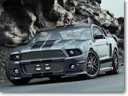 Reifen Coch is yet another German based company that customizes performance cars and such. The target car here however is not at all German. The name they gave their product is the “Konquistador” and it is actually an American icon – a Ford Mustang V. It’s “V” for “Fifth generation” but it might as well be for V8 as this untamed pony moves about with a V8 4.6 liter 309 kW heart.


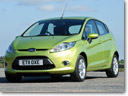 Ford Fiesta Zetec 1.4 TDCi is the best small car winner of Diesel Car magazine’s Used Car of the Year Awards 2012.

 Seat has announced their super-hot hatchback Leon FR+ Supercopa. It comes with a powerful engine, FR+ looks and some other very nice upgrades.


 It’s been a lengthy wait but it was worth it. It’s the Pininfarina Cambiano – the design house’s latest automotive top model. The idea behind it is to sort of celebrate the Pininfarina establishment. 2012 is a


 The all-new Ford Escape will pamper itself with a clever EcoBoost engine. It develops


 Kia has released full details about their all new 2013 Sorento CUV (crossover utility vehicle). For 2013, Sorento’s utility and functionality are boosted further by adjusting content to suit consumer needs more than ever before.


 Hartge has announced their tuning program for the astonishing BMW 1-Series M Coupe – E82 model. The sports car comes with stayling and performance package.


