Category: Auto News

Auto news – automobile industry news. Articles about all the latest car models and concepts. Breaking news, uncovered secrets.

  • Gordon Murray Automotive reveals the all-new T.33 – a timeless Supercar

    2024 Gordon Murray T.33

    Gordon Murray Automotive has unveiled the exciting all-new T.33. It is the second newly developed model from GMA and joins the T.50 and T.50s Niki Lauda in the line-up. The two-seat, mid-engined T.33 has been conceived, designed, and engineered without compromise to offer the ultimate blend of performance, comfort, on-road driving experience and everyday usability.

    The T.33 will be powered by a specially reconfigured version of the T.50 3.9-litre V12, co-designed with Cosworth, and already regarded as the finest-ever twelve-cylinder road car engine. The beautifully proportioned, aerodynamically efficient, timeless design of the T.33 will be built around a newly developed carbon and aluminium superlight architecture. Its overall targeted weight is less than 1100kg.

    Professor Gordon Murray CBE: “With the T.33, our second all-new car, we gave ourselves a very clear brief: to create another timeless design. It has been designed and engineered to the same exacting standards as our T.50, with the same emphasis on driver focus, performance, lightweight and superlative, pure design, but the outcome is a very different motor car. This is a car where comfort, effortless performance and day to day usability are even more front and centre in its character.”

    As with all current and future GMA cars, the T.33 adheres to the seven key principles of the brand.

    Driving perfection The ambition and intent to deliver the very best driving experience.

    Exclusivity GMA will never produce more than 100 of any one model or variant.

    Lightweight At GMA lightweight design is much more than just an engineering goal, it is a state of mind. This approach delivers supercars with unmatched levels of efficiency and vehicle dynamics.

    Premium GMA is a car company like no other. We produce hand-built British cars to the highest possible standards. It is where engineering innovation meets premium quality.

    Engineering art Every single component is a bespoke design and a piece of engineering art, all adhering to the beauty of simplicity.

    A return to beauty Our cars will always be timeless, balanced and perfectly proportioned – every part of our car has a purpose.

    A personalised customer journey With only 100 examples of each model of each variant, when you join the GMA family, you are joining an unrivalled and unique experience. While other manufacturers can offer you a paddock club ticket, we provide an access all areas pit pass.

    Professor Gordon Murray CBE: “Gordon Murray Automotive is a brand that is pushing the boundaries of automotive innovation. We are already developing a global reputation that we are unlike every other car manufacturer. We are not chasing trends. We are not chasing headline performance figures. We are not chasing sales. Nor will we ever be. Which is why now, and in the future, GMA vehicles will always abide by our seven core principles. Principles that represent the cornerstone of our brand, our world-leading vehicles and the legacy that we are creating.”

    Design

    The T.33 has been designed by Gordon Murray and his team with strict adherence to the company’s guiding seven principles. Based upon an entirely new carbon/aluminium superlight architecture, the T.33’s carbon fibre body represents a triumphant return to beauty.

    GMA spared neither time nor resources to pursue a perfectly proportioned, balanced beyond compare shape. Crafted through obsessive attention to detail, the T.33 exudes a spirit of purity and an aura of utterly timeless beauty.

    The T.33 represents the highest expression of automotive art that quite simply, no other company, no other car designer could have created.

    Each owner will be welcome to collaborate with the GMA design team to personalise their T.33 through their choice of colours and liveries, thus ensuring that no two cars will be alike.

    Professor Gordon Murray CBE: “The beauty of simplicity is the key to the design of every GMA model, and the new T.33 is no exception. As with the T.50 and T.50s, each component and every curve and radius is a bespoke design on the T.33 and is there because it has a function to perform. Our slavish adherence to the concept of engineering art extends far beneath the surface of the T.33’s body. Every part, no matter how small and no matter that the owner may never see it, is designed to the same exacting standards as the body.”

    Engine and transmission

    The T.33’s new GMA.2 V12 engine is based upon the exceptional building blocks of the greatest road-going V12 the world has ever seen. The 3.9-litre V12 that powers the GMA T.50 road car has been significantly re-configured to deliver performance that is even more accessible than the extreme T.50 V12.

    Once again, GMA has turned to its Technical Partner, Cosworth, leveraging a relationship that has stood the test of decades and predates Gordon Murray’s first Grand Prix victory with Cosworth in 1974 at Kyalami with Carlos Reutemann in a Brabham BT44. The world-leading engine company’s 60 plus years of experience has been mustered to meet GMA’s brief.

    Derived from the all-aluminium Cosworth GMA V12 and denoted by bespoke T.33 yellow cam covers, the beautifully crafted GMA.2 further embodies GMA’s guiding principles, including Exclusivity, Lightweight, Engineering Art and, of course, Driving Perfection. Every element of the engine has been reassessed, with numerous components and systems re-designed and re-engineered to ensure optimum compatibility with the new T.33’s driving characteristics.

    Weighing a mere 178kg, the 3.9-litre V12 revs to 11,100rpm and produces 615PS @ 10,500rpmand 451Nm @ 9,000rpm. Incredible ultra-rapid engine response combined with 75 per cent torque delivery at just 2,500rpm and an incredible 90% of maximum torque available from 4,500rpm to 10,500rpm, and a power to weight ratio of 564PS per tonne results in superlative performance.

    While GMA and Cosworth chose to retain the V12 cylinder heads, albeit in modified form, completely new camshafts, variable valve timing, and engine mapping have been introduced to ensure perfection in response and power delivery. Along with a new ram induction intake system, a new exhaust system has been developed, which delivers a spine-tingling GMA signature sound unmatched by any other car on the road today. The engine mountings, water cooling, and oil cooling systems are also entirely new and were developed specifically for the GMA.2 V12.

    World-renowned British transmission experts Xtrac have created a totally bespoke six-speed transmission of exceptional quality for the T.33, which will be offered to customers with a manual gearchange or an Instantaneous Gearchange System (IGS) paddle shift actuation. The transmission is combined with a low inertia clutch and a Limited-Slip Differential (LSD).

    As standard, the GMA T.33 has a six-speed manual gearbox with a paddle shift transmission as an option.

    The manual gearbox is derived from the T.50 Xtrac manual unit, weight at 82kg, is the world’s lightest supercar unit.

    The paddle shift gearbox is designed around Xtrac’s instantaneous gearchange system (IGS) which delivers a seamless shift with no torque interrupt making it the world’s fastest supercar gearchange, without resorting to multiple clutches or dog rings. At 78kg it is the world’s lightest supercar paddle shift gearbox.

    In keeping with GMA’s determination to continually push the boundaries of automotive innovation, the powertrain of the T.33 is semi-structural, with the engine and transmission carrying all the traction, braking and cornering forces. GMA’s innovative IASM (Inclined Axis Shear Mounting System) incorporates anti-vibration mountings to ensure that excellent cabin Noise, Vibration and Harshness (NVH) isolation is delivered alongside precise handling.

    Professor Gordon Murray CBE: “The engine is the heart and soul of any supercar. And to ensure driving perfection, it must be bespoke, and it must be normally aspirated. We were fortunate that we had the world’s greatest V12 from the T.50 as a starting point. Yet, nothing was taken for granted, and no part was automatically carried over without due diligence and consideration. When we once again joined forces with our technical partner Cosworth to create a bespoke engine for the T.33, every single detail was pored over in painstaking depth. Numerous systems and components were re-engineered and re-designed to pursue excellence, and we are 100 per cent confident that the GMA.2 V12 provides the perfect match for the T.33’s driving characteristics.”

    Chassis body and suspension

    The T.33 is built around a unique, superlight carbon fibre monocoque and iFrame® featuring cored carbon fibre panels. This solution delivers the perfect balance of torsional rigidity, and lightness, resulting in a car which is 300kg lighter than the average supercar.

    The extremely lightweight nature of the T.33’s construction ensures impressive agility on the road. Its strength and stiffness deliver exceptional occupant safety, with precision-engineered deformable areas. Occupant safety is further bolstered by a Formula One inspired ‘safety cell’.”

    To deliver exemplary handling and ride comfort, GMA’s chassis engineers have developed an entirely new suspension package for the T.33. Lightweight double wishbones are deployed front and rear in conjunction with coil springs over aluminium alloy dampers. The front suspension configuration features an anti-roll bar and aluminium alloy uprights. At the rear of the chassis, aluminium alloy uprights and toe control links are deployed, along with an Inclined Axis Shear Mounting (IASM) system.The IASM system has the rear suspension mounted directly to the transmission casing with the torsional loads supported by the chassis and the entire powertrain mounted on anti-vibration bushes.

    Steering and brakes

    The T.33 features a newly developed, bespoke rack and pinion, hydraulically assisted steering system calibrated to impart class-leading levels of feel and feedback.

    The Brembo Carbon Ceramic Material (CCM) brake discs of the T.33 (370mm x 34mm front/340mm x 34mm rear) feature six-piston aluminium Monobloc alloy front callipers and
    four-piston aluminium Monobloc alloy rear callipers. The braking system and aerodynamics combine to produce incredible deceleration.

    Wheels and tyres

    The T.33 rides on unique and exceptionally light forged aluminium alloy 19-inch front and
    20-inch rear wheels, weighing less than 7kg each. The wheels are wrapped in Michelin Pilot Sport 4 S tyres (235/35 R19 front, 295/30 R20 rear). The Michelin 4 S tyres provide superior
    all-round performance, with significantly lower replacement costs than bespoke tyres. They also offer further weight saving by being much smaller and narrower than those required by a conventional supercar due to the T.33’s low weight.

    Professor Gordon Murray CBE: “Like its T.50 and T.50s predecessors, the T.33 is all about the driving experience. We have engineered the T.33 to provide exceptional levels of highly tactile and deeply immersive involvement to elevate the driver to a higher plane behind the wheel. Of course, safety is equally paramount, as is everyday usability in all weather conditions.
    Our judiciously calibrated, non-invasive traction and stability systems are designed not to detract from the driving experience but are there to provide an additional level of confidence when called upon.”

    Aerodynamics

    When it launched in 2020, the GMA T.50 rewrote the supercar rulebook with the most advanced and effective aerodynamics ever seen on a road car, enabled by its unique rear-mounted fan. Now, it is the turn of the equally innovative T.33 to create a new era of road car ground effect aerodynamics. This time there is no rear fan involved, but nevertheless, deploying numerous lessons learnt with the T.50 project Gordon Murray and his team have once more again raised the bar with the T.33’s Passive Boundary Layer Control (PBLC) system.

    At the front of the car, a ground effect inlet channels air underneath the floor. A diffuser with a boundary layer removal duct activated by the base suction behind the car enables a level of aerodynamic efficiency that is 30 per cent more effective than the conventional ground effect supercar.

    The ground effect dynamics provided by the PBLC system freed Gordon Murray and his design team from the need to equip the T.33 with the wings, skirts and vents that adorn most
    modern-day supercars. The only concession is the active rear spoiler, which deploys automatically, but can also be activated by the driver. The rear spoiler also provides a high downforce mode, increasing downforce and an aero enhanced braking function.

    The boundary layer control ensures the most effective interaction of airflow on top of, and below the car, harmonising drag, downforce, and stability at all speeds and negates the need for aggressive front end aerodynamics devices.

    Uniquely the RAM induction airbox is attached directly to the engine and is separate from the chassis.

    Interior

    To enter the cabin of many modern-day supercars is to enter a world of large touchscreens and endless sub menus that cause confusion and distraction. No touchscreens are found within the exquisitely, yet simply designed cabin of the T.33. As with the exterior, nothing is included unless it serves a purpose and if there was a danger it would dilute the driving experience, then it was simply deleted from the development programme. The car is even devoid of column stalks, and instead, the indicators are operated by thumb-buttons on the carbon fibre steering wheel’s horizontal spokes.

    The T.33’s cabin, as with T.50 is absolutely driver focused and represents a return to beauty. And while all of the main controls are rotary and analogue, Apple CarPlay and Android Auto are included as standard.

    2024 Gordon Murray T.33 Interior

    The beautifully designed, flood-lit, 120mm diameter rev counter is gloriously, defiantly analogue, as are the remaining driver centric controls such as the aero, lights, aircon and HMI.All primary and secondary controls are machined from the highest quality aluminium alloy providing a wonderfully tactile feel. The pedals are crafted from aluminium alloy, providing a perfect combination of strength and lightness that delivers exceptional control and sensitivity to the driver.

    Further confirmation, if needed, of the T.33’s pure driver focus takes the form of a unique carbon steering wheel and the multi-adjustable iStream® carbon seats utilising GMD’s patented cored, honeycomb carbon structure. The provision of a front stowage compartment and twin side luggage lockers offering a combined 280litres of space, large enough for 6 cases, endows the T.33 with the practicality to undertake continent-crossing adventures.

    Professor Gordon Murray CBE: “Our focus from day one of this project has been to deliver absolute driving perfection. And while the engine may be the heart and soul of a supercar, the cabin and its controls provide the conduit through which the driver engages with the engine and the car’s other attributes. The T.33’s driver-focussed cabin enables each journey, no matter how short, to be relished free of distraction and it also provides the practicality for longer trips to be undertaken.”

    Customer experience

    The T.33 is truly a global car which will be homologated worldwide including full federal homologation. With just 100 examples being hand built by Gordon Murray Automotive at the company’s new global headquarters in Windlesham, Surrey, every single part of the car is bespoke, and each car can be personalised to meet the owner’s specific requirements.

    The specification process includes GMA’s unique ergonomic seating buck where each car is tailored to the owner. Beyond this, GMA’s Special Vehicle (SV) department can deliver a unique T.33 supercar to a specification that is only limited by the owner’s imagination.

    Customers can choose between right-hand or left-hand drive and manual or IGS paddle shift transmissions. They can collaborate with the GMA design team to configure their own bespoke ergonomic and interior specification and choice of body colour. A broad range of options, including an SVS sports pack, further expand the potential for personalisation.

    The attention to detail in GMA’s unique customer journey goes beyond the personalisation and delivery process. GMA supercar ownership is an invitation to join the Gordon Murray Automotive family. The company’s ultra-experienced after sales team is set-up to support owners globally wherever they choose to drive their cars.

    GMA cars are designed with sensible servicing costs in mind, through a global network of service centres and authorised workshops.

    Professor Gordon Murray CBE: “I am extremely proud of our team who have relentlessly applied our core principles to deliver this amazing motor car.”

  • Mercedes-AMG G 63 BRABUS 800 Adventure XLP Superblack

    Mercedes-AMG G 63 BRABUS 800 Adventure XLP Superblack -Front Angle

    The BRABUS 800 Adventure XLP is the exclusive high-performance pickup in the range of BRABUS supercars. BRABUS is the largest manufacturer-independent automotive refinement specialist in the world and an accredited vehicle producer in the eyes of the German Federal Motor Transport Authority in Flensburg to boot. The SUPERBLACK edition now adds a variant of this all-terrain high-performance pickup that is solid black inside and out following the best tradition of the brand. A host of exposed-carbon elements adds sporty highlights. To make it abundantly clear what an extravagant supercar this pickup is, the 800 logos on the vehicle body and the BRABUS signet on the rear end appear on a white background. The signature stripes in the carbon radiator grille feature the identical contrasting color.

    The BRABUS engineers employed state-of-the-art design and construction software for the creation of the XLP. Extensive calculations, simulations and tests resulted in a special module for the ladder-type steel frame of the G-Wagon. It is part of the reason why the wheelbase is stretched by 50 centimeters due to positioning the mounts for the rear wheel suspension further aft. It goes without saying that the high torsional rigidity of the G-Class is fully retained.

    However, the BRABUS developers focused not only on the pickup body for the BRABUS 800 Adventure XLP, but also on superior off-road capability thanks to a large ground clearance and maximum axle articulation. To this end, the BRABUS engineers and technicians developed a special suspension with portal axles.

    At the front, the new construction for the G-Class was designed as an independent suspension. All components required for this, such as the completely newintegral subframe and the control arms, are milled out of solid blocks using cutting-edge CNC technology. At the rear, the principle of the rigid axle as in the base vehicle is retained. It also required redesigning numerous parts for the portal axle setup, which are produced from high-strength aluminum. They include all control arms of the suspension and the reinforced axle housing. This results in a new axle geometry, which plays a crucial part in the outstanding off-road capabilities of the BRABUS pickup.

    Another special design is the titanium-plated, height-adjustable BRABUS Ride Control coilover suspension for the BRABUS 800 Adventure XLP SUPERBLACK, which was calibrated specifically to the large ground clearance provided by the portal axles. The suspension setup can be selected in the cockpit with the standard DYNAMIC SELECT suspension adjustment of the latest Mercedes G-Class. It also allows choosing different setups for the engine, transmission, steering and the assistance systems.

    The BRABUS 800 Adventure XLP SUPERBLACK runs on black BRABUS Monoblock HD wheels with eight-bolt pattern specifically designed for the portal axles. The size 9.5Jx22 alloys are designed for maximum strength and with Pirelli Scorpion ATR all-terrain tires of size 325/55 R 22 make optimal use of the available space under the exposed-carbon fender flares.

    To match the longer chassis of the pickup, BRABUS developed a longer, special drive shaft and a new rear end with pickup bed that harmoniously joins the spacious cab of the G-Class. This results in an overall length of 5.31 meters (17.4 ft.).

    To this end, the company fabricates elements from sheet steel such as the new rear wall of the cab, of course with heated rear window, the robust cargo bed and the side-opening tailgate. The bedsides are produced from carbon using the complex prepreg process. The likewise black Flexiteek bed liner is a direct technology transfer from the construction of high-performance boats by BRABUS Marine. The sophisticated material mix for the vehicle body guarantees a perfect fit, maximum strength and a high load capacity. Of course, the BRABUS 800 Adventure XLP is independently safety-certified by TÜV.

    The carbon components for the cargo bed of this pickup are not the only parts manufactured from this hi-tech compound by CSP, a business division of BRABUS Group. The BRABUS hood cowl with two power bulges and the BRABUS wind deflector above the windshield with four additional LED lights are also produced there.

    The fender flares come off this production line, too. They were adapted from the BRABUS WIDESTAR widebody version for the current Mercedes G-Class models. On the BRABUS 800 Adventure XLPSUPERBLACK, they are naturally painted blackand additionally fitted with exposed-carbon wheel arches. They add 11.6 centimeters (4.6 in) to the width of the pickup over the base car. The side rub strips made from that same material add further attractive highlights.

    The WIDESTAR fascia with large air intakes for the BRABUS 800 Adventure XLP SUPERBLACK was also adopted from this styling package. It is upgraded with a front brush guard and a winch with a pulling power of 4,500 kilograms (9,920 lbs.) The robust carbon-fiber skid plate features high-gloss coating like all other exposed-carbon components on this supercar.

    The dual bars behind the cab of the BRABUS 800 Adventure XLP SUPERBLACK are also painted black and effectively round off the thrilling pickup look of this supercar. The bracket for the naturally black painted fuel can and the spare wheel carrier on the cargo bed are likewise color-coordinated. Those planning to head out on a major expedition will appreciate the massive roof rack on the cab, which for outdoor campers can also be upgraded with a roof tent.

    To make getting in and out easier in light of the large ground clearance, the BRABUS 800 Adventure XLP SUPERBLACK has black-coated running boards. They were adapted to the extended wheelbase of the pickup and can optionally be supplemented with power-retractable steps. LED lights in the flares, which are activated by pulling on a door handle or by the Keyless-Go signal when approaching the vehicle, ensure a safe step also in the dark. They illuminate the ground to the left and right of the vehicle as well as the running boards of the rocker panels.

    The rear view is characterized by the pickup tailgate that reveals the origin of this supercar with an exposed-carbon panel with recessed BRABUS logotype. The WIDESTAR rear fascia with stylized exposed-carbon skid plate rounds off the view from the rear. The handles with inlaid BRABUS logotypes on doors and tailgate demonstrate the great love of detail.

    As is best BRABUS supercar tradition, an especially powerful engine drives the BRABUS 800 Adventure XLPSUPERBLACK. BRABUS gave the four-liter, twin-turbo eight-cylinder engine of the latest Mercedes-AMG G 63 a thorough performance upgrade. The BRABUS 800 PowerXtra + treatment includes replacing the two production turbos with two newly configured BRABUS high-performance turbos. In addition to a larger compressor unit, they have a modified core assembly with reinforced axial bearing and produce a maximum boost pressure of 1.6 bar.

    BRABUS programmed new mapping for injection, boost pressure control and ignition to match the turbo replacement, which is supplied by an adapted plug-and-play BRABUS PowerXtra module. In line with the model designation BRABUS 800 Adventure XLPSUPERBLACK, the engine produces 588 kW / 800 hp (788 bhp) at 6,600 rpm in this configuration. The peak torque of 1,000 Nm (737 lb-ft) is on tap at a low 3,600 rpm.

    As a result, the exclusive pickup from Bottrop effortlessly delivers a performance on the road that is outstanding for a vehicle that does after all tip the scales at 2,936 kilograms (6,473 lbs.) In perfect interplay with the nine-speed automatic transmission, which can also be shifted manually with the black BRABUS RACE aluminum paddle shifters on the steering wheel, and the all-wheel-drive system, the supercar with pickup bed heaves itself to a speed of 100 km/h in just 4.8 seconds. The top speed is electronically limited to 210 km/h (130 mph) due to the all-terrain tires.

    However, the high-performance engine thrills not only with its enormous power. It also has acoustic qualities. The BRABUS Boost Xtra sound kit for the bypass valve of the turbocharged engine generates a clearly audible blow-off noise when the driver lifts off the gas.

    Another special treat and not only for the ears is the BRABUS high-performance exhaust system. The integrated actively controlled butterfly valve makes it possible to choose between a discreet “Coming Home” mode and a decidedly sporty V8 sound. The side-pipe system with two tailpipes exiting on the left and right in front of the rear wheels also features a very special visual detail: The exhaust pipes are framed by an exposed-carbon surround with integrated ‘Launch Ambience Light’ that lights up red when the interior lights are activated.

    Black on black is of course also the motto in the interior of the BRABUS 800 Adventure XLPSUPERBLACK. The company upholstery shop created a particularly exclusive BRABUS Masterpiece interior that perfectly combines the finest black leather with sporty carbon elements. The headliner is made from black Alcantara.

    This high-end refinement includes covering the entire interior and the vehicle floor with the finest black leather. What is more: the center sections of the seats feature seashell diamond quilting and perforations applied with pinpoint precision. Many interior elements were enhanced with the ‘Heritage’ brand pattern, which pays tribute to the BRABUS founding year with its embossed “77” signets.

    Carbon elements on steering wheel, dashboard, center console and door panels add decidedly sporty touches in the cockpit. They are complemented with aluminum components such as the pedals, door lock pins and the ergonomic BRABUS RACE paddle shifters on the steering wheel. Overall, 206 cockpit elements such as trim panels, handles, switches, loudspeaker covers and air vents were glazed in “Shadow Chrome” to match the interior design, demonstrating the great BRABUS love of detail.

    Prices for the BRABUS 800 Adventure XLPSUPERBLACK start at 725,900 euros (price including statutory VAT in Germany).

    Fuel economy, CO2 emissions and efficiency class:

    BRABUS 800 Adventure XLPSUPERBLACK based on the Mercedes-AMG G 63: city 16.7 l/100 km, highway 13.8 l/100 km, combined: 14.5 l/100 km. Combined CO2 emissions: 345 g/km, efficiency class F.

  • The 2022 Porsche 911 Edition 50 Years Porsche Design

    2022 Porsche 911 Edition 50 Years Porsche Design - Side View

    A special milestone deserves a special car. Today, Porsche announces the 2022 Porsche 911 Edition 50 Years Porsche Design.

    This special car commemorates the 50th anniversary of Porsche Design, the firm founded in 1972 by Ferdinand Alexander (F. A.) Porsche, designer of the 911 and son of Ferry Porsche. Based on the 911 Targa 4 GTS, the new model is limited to 750 units globally and features special aesthetic elements inspired by the first product his new company designed: the Chronograph 1.

    Exterior Design

    All examples of the limited model will be finished in black as an acknowledgement of the Porsche Design Chronograph 1 – the first all-black watch.

    Additionally, several sections of the exterior are finished in Satin Platinum. These include 20/21-inch center-locking 911 Turbo S wheels, the Targa bar and PORSCHE DESIGN logos on the doors. Brake calipers in high gloss black and a special “50 Years Porsche Design” badge on the engine grille are included.

    Interior Design

    The interior also has several special touches including a silver, numbered badge on the dashboard trim indicating that this is a limited production vehicle. The center console lid also bears the signature of Ferdinand Alexander Porsche, founder of Porsche Design and son of Ferry Porsche.

    Sport-Tex seat centers with a checked pattern in Black and Cool Grey, headrests embossed with the 50 Years Porsche Design logo and a center marker on the GT Sport steering wheel in Slate Grey are also all special to this model.

    Standard Equipment

    An elevated level of standard equipment also sets this model apart from the 911 Targa 4 GTS that it is based on. That list includes 18-way Adaptive Sport Seats Plus, seat belts in Slate Grey, and the Sport Chrono Package with Porsche Design Subsecond Clock, distinguished in this case by a red second hand.

    At the heart of this very special 911 Targa 4 GTS is a 3.0-liter, twin-turbo flat-six engine that’s unchanged from the conventional model, with 473 hp and 420 lb.-ft. of torque, standard Porsche Traction Management (PTM) all-wheel drive, a standard eight-speed Porsche Doppelkupplung (PDK) transmission with the option for a seven-speed manual at no additional cost, and Sport Exhaust. Porsche Torque Vectoring Plus (PTV+) is also included as standard with the eight-speed PDK, while the seven-speed manual transmission includes a mechanically locking rear differential (PTV).

    2022 Porsche 911 Edition 50 Years Porsche Design Timepieces

    Two new Porsche Design Timepieces

    Porsche Design also announces two new timepieces today: the Chronograph 1 – 911 50 Years of Porsche Design, and the Chronograph 1 -1972 Limited Edition.

    The former represents the first instance of a Chronograph 1 true to the design of the original Chronograph 1 first released by Porsche Design in 1972, and is an accompanying accessory to the new 911 Edition 50 Years Porsche Design. In place of the historic brand design, the current logo and lettering were used, and it includes a sapphire crystal case back to reveal a winding rotor that shares its design with the wheel of the special edition 911. This version of the watch is also engraved with the same number out of 750 as its corresponding vehicle. The car and watch are sold together for an MSRP of $195,850 excluding $1,350 for delivery, processing and handling.

    The latter is limited to 500 units worldwide and is available for customer purchase individually for an MSRP of $7,700. This version of the watch remains completely unchanged from the original in terms of size and design, and features a solid titanium case back with the historic Porsche Design logo.

    The 911 Edition 50 Years Porsche Design is expected to begin arriving in U.S. dealers in spring of 2022.

  • The Final V12

    BMW V12 Logo

    In June 2022, BMW will produce the very last V12 engine ever to be fitted to a BMW series production road vehicle. To mark the occasion, BMW will offer The Final V12; a limited series of 12 vehicles for customers in the US.  Based on the BMW M760i xDrive, these will be 12 of the last V12 BMW vehicles crafted for the US market and will be distinguished by unique badging, wheels, and a choice from the vast collection of exterior colors and upholstery offered by BMW Individual.

    BMW introduced their first roadgoing V12 in 1987. The naturally-aspirated, five-liter M70 V12 engine featured single overhead camshafts, two valves per cylinder, and an innovative drive-by-wire electronic throttle.  The effortless thrust produced by the 295 hp V12 was key to the original BMW 750iL becoming the standard by which all other luxury sedans of the time were measured.

    Today, the V12 engine in The Final V12 displaces 6.6 liters and features BMW M TwinPower Turbo technology.  Two mono-scroll turbochargers combine with infinitely variable valve control (Double VANOS and Valvetronic) and high-precision direct injection to produce 601 bhp between 5,500-6,500 rpm.  This engine together with an 8-speed Sport Automatic transmission moves The Final V12 from 0-60 mph in a shattering 3.6 seconds.

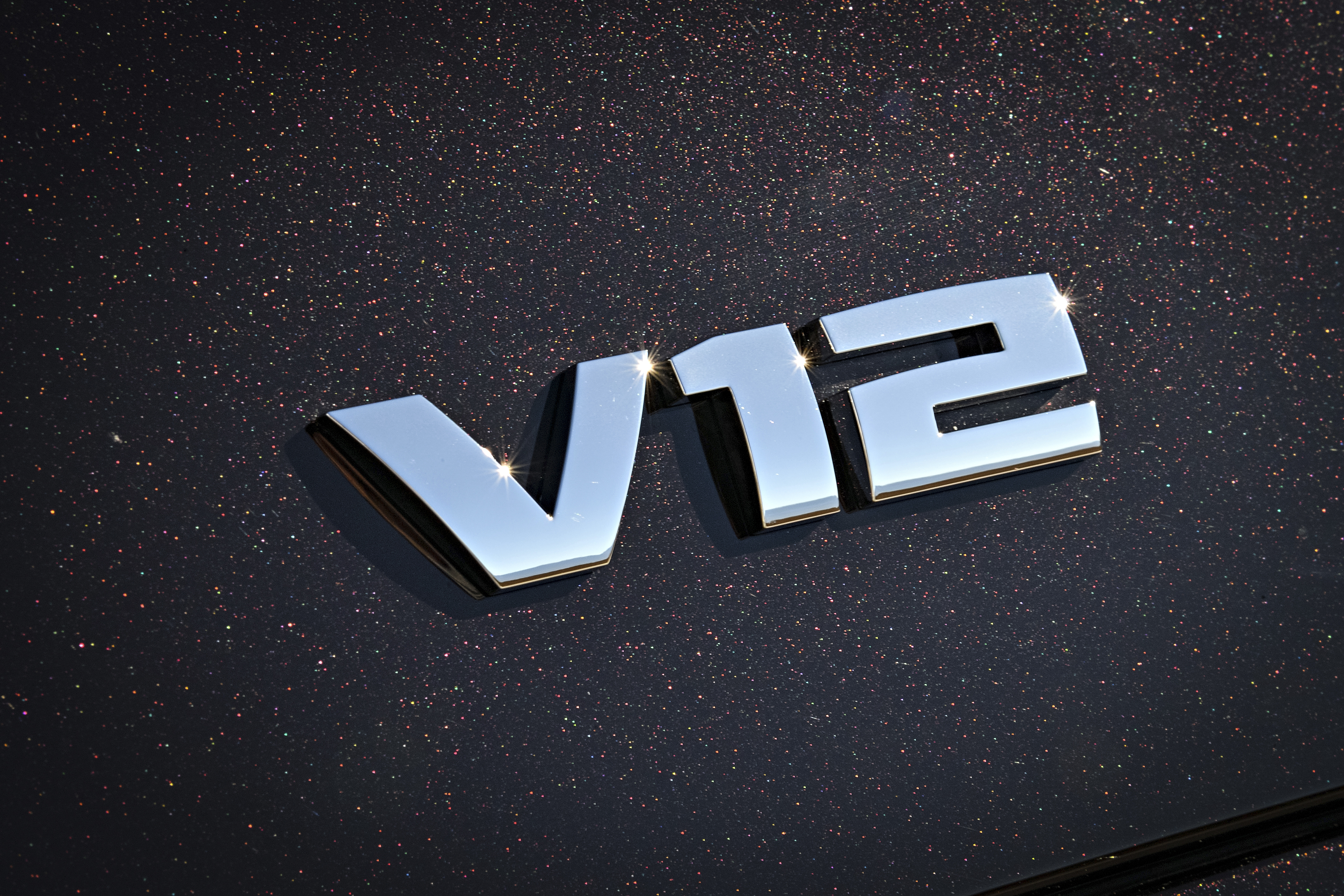
    Externally, The Final V12 will be discernable from other 7 Series models by a simple, bold “V12” icon at the rear.  Special 20-inch Style 760M double-spoke light alloy wheels are uniquely painted the customer’s choice of either Window Grey or Jet Black, then burnished to reveal a dark silver surface highlight.  The wheels surround formidable M Sport brakes with a choice of blue or black calipers.

    Moving inside, threshold plates at each door sill are inscribed with “THE FINAL V12” as is a plate on the cover atop the almighty 12-cylinder engine.  BMW Individual Piano Black Finish trim surrounds the interior and features a console-mounted plaque commemorating the vehicle as “1 OF 12”.

    The Final V12 will be offered only in a fully-equipped configuration, including BMW’s Driving Assistance Professional Package, Luxury Rear Seating Package, Panoramic Sky Lounge LED Roof, Icon Adaptive LED Headlights with Laserlight, and Bowers & Wilkins Diamond Surround Sound Audio System.  To make their vehicle a uniquely personal statement, customers may select from over eighty exterior colors and several tones of opulent Full Merino leather from BMW Individual.

    Soon after the customer has taken delivery, they will receive a custom-built desk trophy to commemorate their specific vehicle, recognizing the special order paint, leather, and vehicle identification number as one of The Final V12 vehicles.

    With The Final V12, BMW has a unique opportunity to recognize and appreciate a group of enthusiasts who over the years have shown their enduring passion for the ultimate luxury sports sedan.  In the coming days, clients with a long history of V12 7 Series ownership will be approached through their preferred BMW centers with an invitation to purchase the vehicle.  Production will commence in June 2022, with deliveries expected in July.

    Equipment and Specifications

    The Final V12 includes the following exclusive content:

    • 20-inch M Double-Spoke wheels, Style 760M in Window Grey or Jet Black with burnished accent on performance run-flat tires
    • Center console-mounted plaque “THE FINAL V12” and “1 OF 12”
    • Threshold plates “THE FINAL V12”
    • Engine cover plaque “THE FINAL V12”
    • “V12” badge replacing “M760i” badge on decklid
    • Commemorative gift customized specifically for the customer’s vehicle

    The Final V12 also includes the following notable equipment:

    • Choice of any available BMW Individual paint color
    • Choice of any available BMW Individual Full Merino leather tone
    • BMW Individual Piano Black Finish interior trim
    • M Sport brakes with black or blue calipers
    • Driving Assistance Professional Package
    • Luxury Rear Seating Package
    • Panoramic Sky Lounge LED Roof
    • Remote Control Parking
    • Extended Shadowline Trim
    • Bowers & Wilkins Diamond Surround Sound System
    • Icon Adaptive LED Lights with Laserlight
  • M-Sport Ford Puma Hybrid Rally1

    2022 M-Sport Ford Puma Hybrid Rally1 - Front Angle

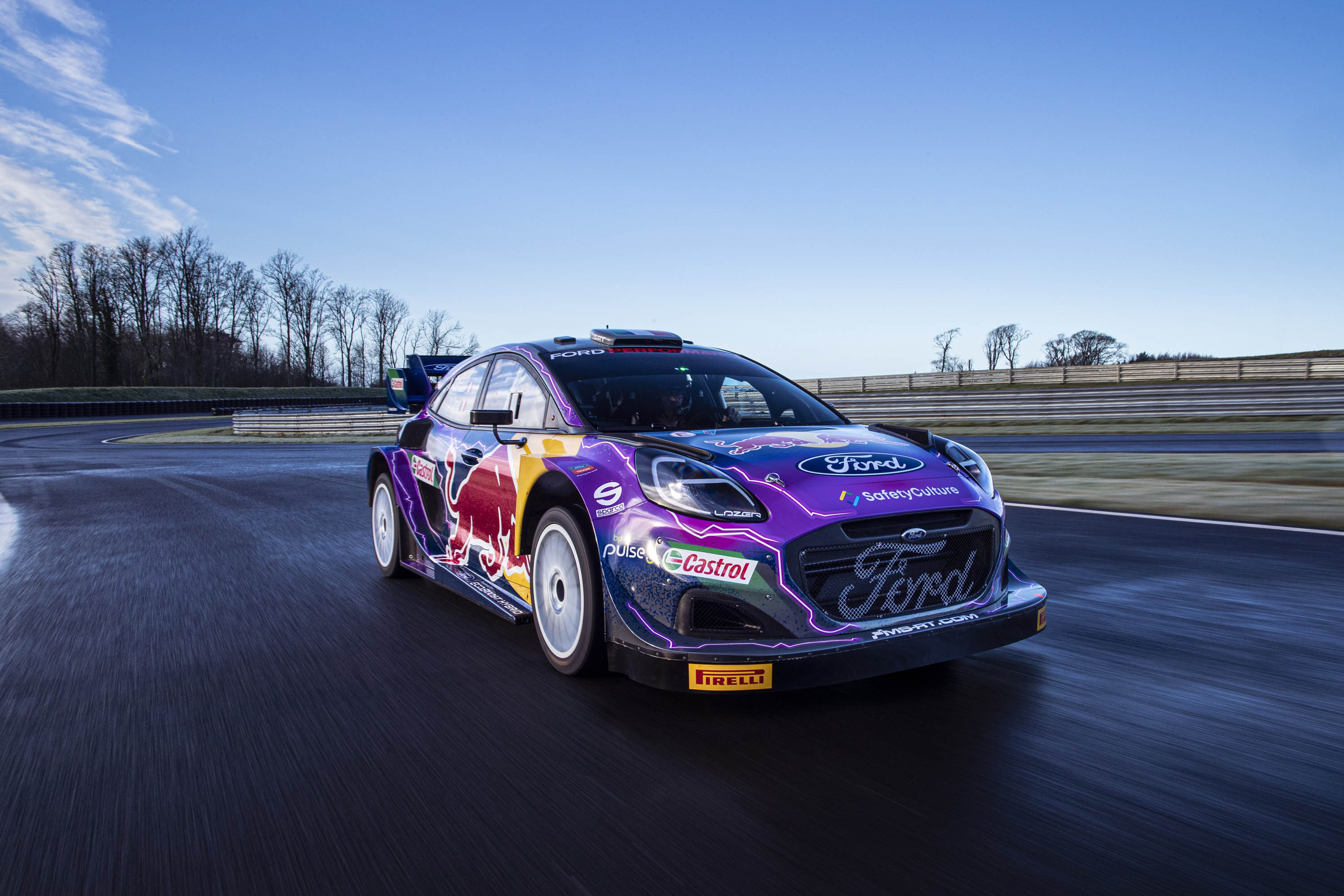
    The M-Sport Ford World Rally Team (WRT) today gave motorsport fans their first look at the exciting competition livery that will help the new M‑Sport Ford Puma Hybrid Rally1 car electrify the 2022 FIA World Rally Championship (WRC).

    The M‑Sport Ford Puma Hybrid Rally1 makes its competitive debut at the Monte Carlo Rally, January 20-23. Three cars will be campaigned throughout the 2022 WRC season by drivers Craig Breen, Adrien Fourmaux and Gus Greensmith. In addition, nine-time FIA World Rally Champion, Sébastien Loeb, will join the M‑Sport Ford World Rally Team to compete at this year’s Monte Carlo Rally, an event he has won seven times previously.

    The 2022 WRC season marks the 25th anniversary of a hugely successful partnership between Ford and M-Sport that has delivered seven championships and more than 1,500 stage wins in iconic rally cars including the M-Sport Ford Fiesta WRC and the Ford Focus RS WRC. Since the partnership began, M-Sport and Ford have delivered a record-breaking 268 consecutive manufacturer points scoring results.

    M-Sport Ford World Rally Team Monte Carlo Rally line-up:

    Driver Co-driver Driver WRC career highlights
    Craig Breen Paul Nagle First rally: 2009 Rally de Portugal
    22 stage wins
    69 rallies
    288 points
    Adrien Fourmaux Alex Coria First rally: 2019 Monte Carlo Rally
    1 stage win
    26 rallies
    45 points
    Gus Greensmith Jonas Andersson First rally: 2014 Wales Rally GB
    58 rallies
    91 points
    Sébastien Loeb Isabelle Galmiche First rally: 1999 Rally Catalunya
    9 championships
    925 stage wins
    180 rallies
    1,727 points

    “One of the most captivating aspects of WRC down the years has been the clear link between the ultra-high performance rally cars and their road-going equivalents,” said Mark Rushbrook, global director, Ford Performance. “That’s why it’s so important that this new era of WRC reflects our industry’s shift to electrification. At Ford, we’re fully committed to an electrified future, and campaigning the M-Sport Ford Puma Hybrid Rally1 car in the toughest conditions is going to help us develop even more exciting electrified powertrains for our customers.”

    Powered using similar principles to the Puma EcoBoost Hybrid road car on which it is based1,  the new M‑Sport Ford Puma Hybrid Rally1 is Ford’s first electrified competition car. A next-generation hybrid powertrain captures energy during braking and coasting, and stores it in a 3.9 kWh battery. The energy is then used to supplement the championship-winning performance of the turbocharged 1.6-litre EcoBoost petrol engine with repeated boosts of up to three seconds from a 100 kW electric motor.

    The car can also use its electrified powertrain to travel through towns, cities, service parks and chosen sections between stages using pure-electric power. The battery pack can be recharged using an external power source at the dedicated service points between stages, with a recharge taking approximately 25 minutes.

    In addition, FIA WRC Rally1 competitors will use a fossil-free fuel from the 2022 season, blending synthetic and bio-degradable elements to produce a fuel that is 100 per cent sustainable.

    “It has been a very busy time getting the cars and team ready for next weekend’s Monte Carlo Rally and the opening of the 2022 World Rally Championship season, but one that will be worth the effort,” said Richard Millener, M-Sport Team principal. “With the help and support of Ford colleagues all over the globe we have produced a fantastic car with huge potential and we cannot wait to showcase it during the year. A big thank you to everyone involved with getting to this stage and helping us meet such tight deadlines and we feel very proud to represent Ford on the world stage in our 25th year of partnership!”

    M-Sport Ford Puma Hybrid Rally1 technical specification:

    Power unit Internal combustion engine (ICE) Ford 1.6-litre EcoBoost, turbocharged, petrol, four‑cylinder in-line
    Max power: 380 hp
    Max torque: 420 Nm
    Engine Restrictor: 36 mm
    Battery electric system Max boost output: 100 kW
    Max regen input: 30 kW
    Max boost period: 3 seconds
    Max boost energy per acceleration: 250 kJ (determined by FIA according to stage length and surface type)
    Weight: 95 kg
    Cooling: Liquid- and air-cooled
    ICE and battery electric system combined Max power: > 500 hp
    Max torque: > 500 Nm
    Transmission Five-speed sequential manual
    50/50 torque split four-wheel drive
    Front and rear mechanical limited-slip differentials
    Spool centre differential
    Double-plate, sintered clutch
    Braking Gravel: 300 mm brake discs, air-cooled
    Tarmac: 370 mm brake discs, air-cooled
    Four-piston callipers
    Performance Tarmac and gravel acceleration: approx. 3.2 sec 0-100 km/h
    Weight and dimensions Minimum Weight: 1,260 kg
    Wheelbase: 2,600 mm

    The M‑Sport Ford Puma Hybrid Rally1 car reflects Ford’s commitment to going all-in on electrification. The company last year announced that 100 per cent of its passenger vehicle range in Europe will be zero-emissions capable, all-electric or plug-in hybrid by mid-2026; moving to all-electric by 2030.

    ###

    1 Puma 1.0-litre EcoBoost Hybrid homologated CO2 emissions 119-143 g/km and homologated fuel efficiency 5.3-6.3 l/100 km WLTP.

    CO2 emission and fuel efficiency ranges may vary according to vehicle variants offered by individual markets.

    The declared WLTP fuel/energy consumptions, CO2-emissions and electric range are determined according to the technical requirements and specifications of the European Regulations (EC) 715/2007 and (EU) 2017/1151 as last amended. The applied standard test procedures enable comparison between different vehicle types and different manufacturers.

  • Ringbrothers unveils custom 1969 Dodge Charger

    1969 Dodge Charger CAPTIV by Ringbrothers - Side View

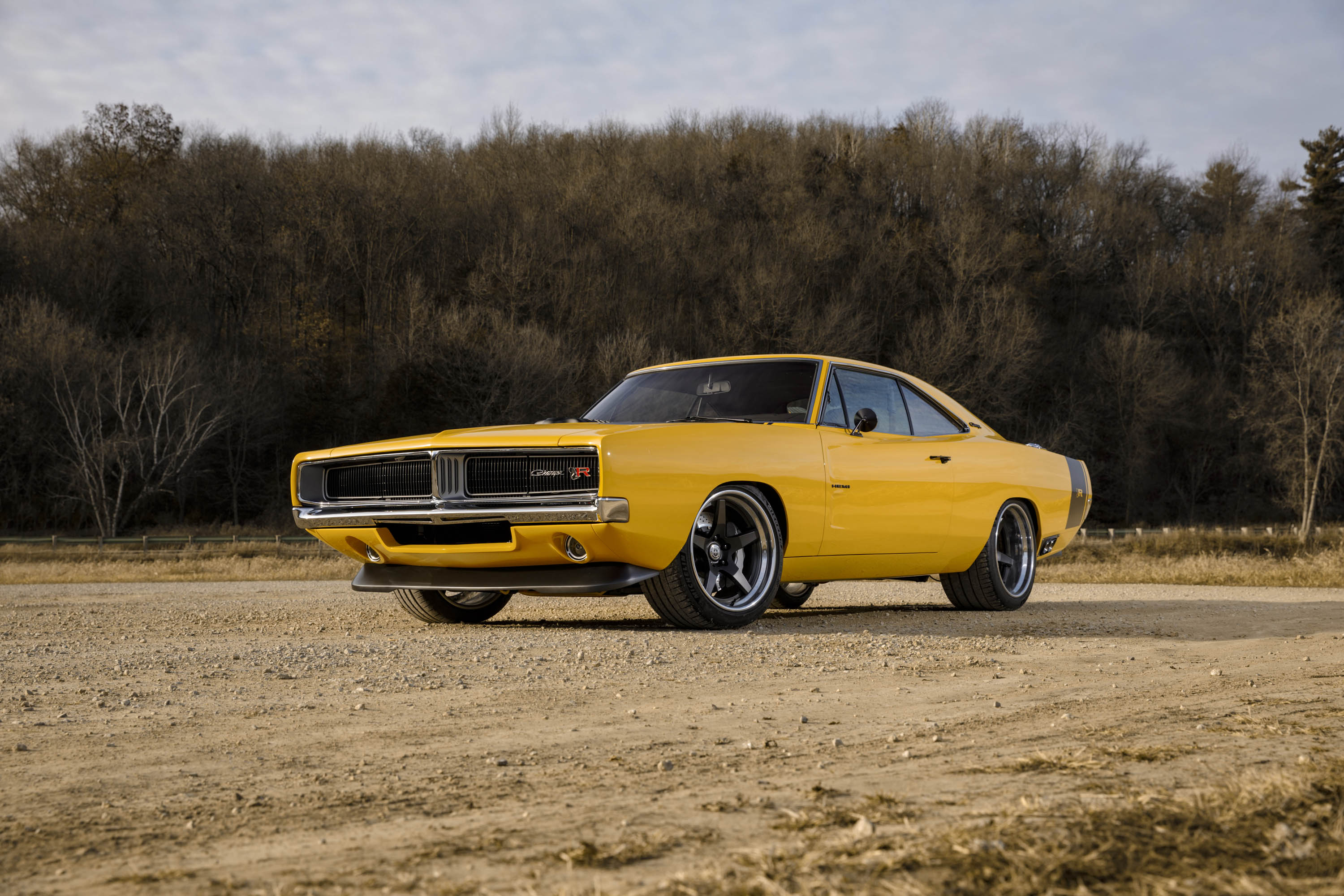
    Ringbrothers, the world-renowned custom car builder and parts manufacturer, today unveiled its latest creation — a custom 1969 Dodge Charger known as “CAPTIV.” The Charger makes an impressive yet “streetable” 707 horsepower from its Mopar Hellcat crate engine mated to a Tremec six-speed manual transmission. The build was completed for New Zealand-based motorsports legend and TV personality Greg Murphy.

    Disassembly and prep began in New Zealand before the build made its way to Ringbrothers to bring Murphy’s vision to life. The Ringbrothers team completed the extensive metalwork, including making the Charger unibody and integrating the Flowmaster exhaust system. A custom BASF “Pile Up Yellow” paint job was then applied and the Hellcat crate engine was installed and filled with Motul engine oil for protection and performance. Other highlights of the build include custom HRE wheels, a QA1 carbon fiber driveshaft and adjustable shocks, Baer six-piston brakes, and a set of Michelin Pilot Sport 4S tires. The build was also fitted with a top-of-the-line MoTeC engine management system and gauges.

    “This project has been years in the making,” said Ringbrothers co-owner Jim Ring. “The project was started more than 8,000 miles from where it was finished with work being carried out on either side of the Pacific. Greg and his team did phenomenal work before it came here, and it was a joy to work on such an amazing build together.”

    “This marks the second time this car was built in America, first in Detroit in 1969 and now in Spring Green, Wisconsin in 2021,” Mike continued. “We couldn’t have pulled this off without the help of our partners at Motul, Holley, BASF, HRE Wheels, GFS, and so many more.”

    Among a litany of Ringbrothers billet parts incorporated into the build was the newest product to come from their shop: a custom Ringbrothers steering wheel. The new line of steering wheels incorporates the latest in materials technology, including a 3D-printed horn button, carbon fiber hoops and billet aluminum spokes and hub.

  • All-New Capstone Grade Elevates 2022 Toyota Tundra to New Heights

    2022 Toyota Tundra - Front Angle

    With enthusiasm for the all-new 2022 Toyota Tundra already at a fever pitch, full-sized trucks now have a new entry at the upper echelon of the segment. The new Tundra Capstone grade provides a premium collection of features and upgrades for those looking to elevate their truck experience. As the new halo grade in the Tundra lineup, Capstone builds on the already impressive features of Toyota’s all-new full-sized truck. Tundra Capstone will be arriving at dealerships this spring.

    Capstone: Loaded with Luxury

    The new flagship of the Tundra lineup seamlessly crafts together premium, plush and power into an exceptionally loaded package. Eyes will certainly be drawn to the largest wheels ever offered on Tundra thanks to the standard 22-inch chrome rims. At its ruggedly handsome front, Capstone’s unique grille features a color-keyed outer frame and a chrome inner mesh pattern complemented with subtle-yet-eye-catching chrome mirror caps, chrome “TUNDRA” tailgate inserts and chrome trim accents.

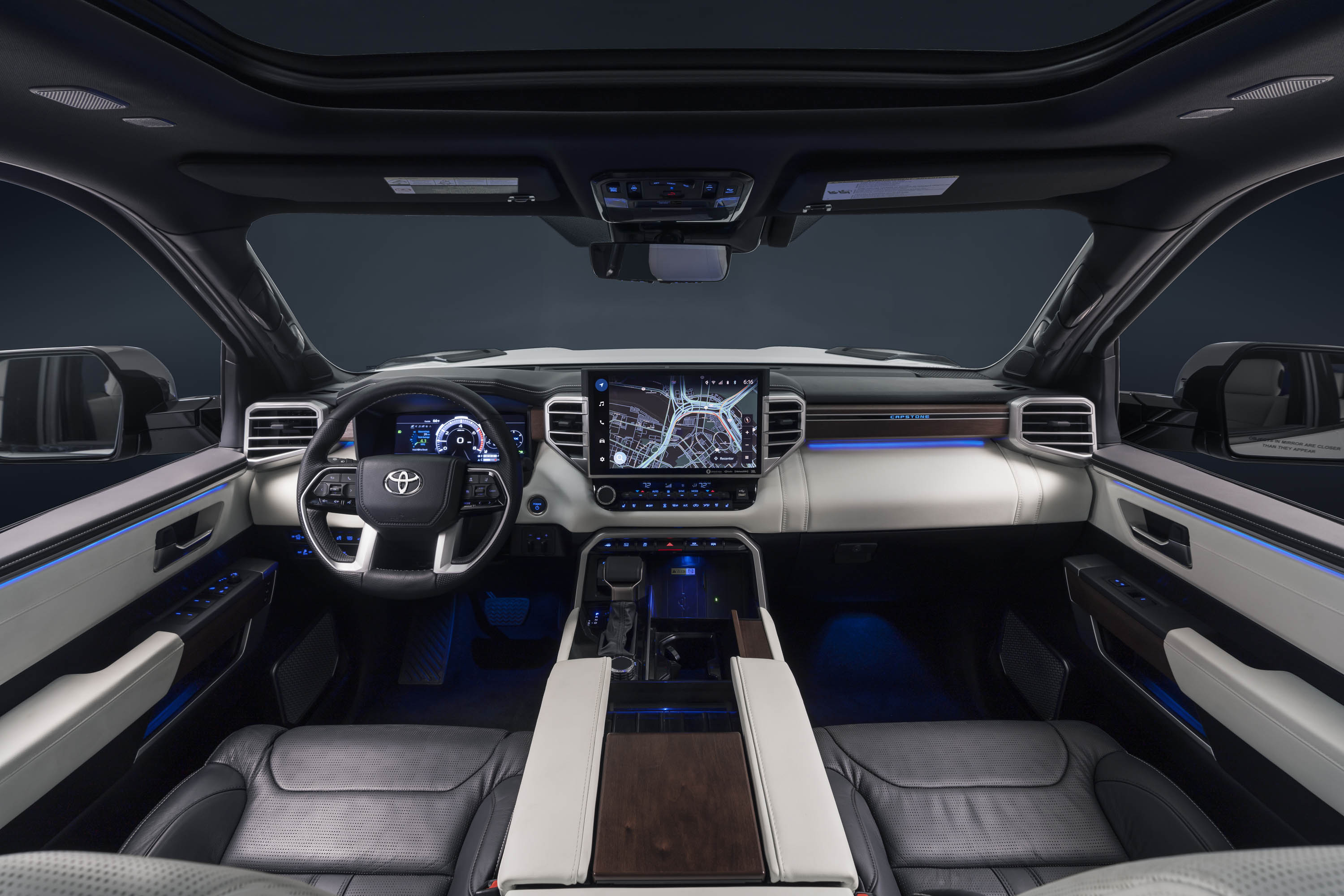
    Automatic running boards welcome everyone into the premium cabin experience that is no doubt highlighted by standard semi-aniline leather-trimmed seats. Not only are the seats luxury-grade, but they also tout stylish perforation and a Capstone-only black-and-white color combination. The center console and passenger-side dash are accented with authentic Dark American Walnut with an open-pore finish that highlights the wood grain. On the dash the Walnut inlay surrounds a Capstone logo which illuminates when the doors are opened. Speaking of letting a little light in, a panoramic moonroof is standard on Tundra Capstone. To help provide an even quieter cabin, Capstone is the only Tundra grade to feature acoustic glass on the front doors for more exterior sound deadening.

    Drivers will appreciate the leather-trimmed heated steering wheel and large 12.3-inch digital Multi-Informational Display. The standard 10-inch color Head-Up Display provides an option that drivers can keep eyes in line with the road ahead.

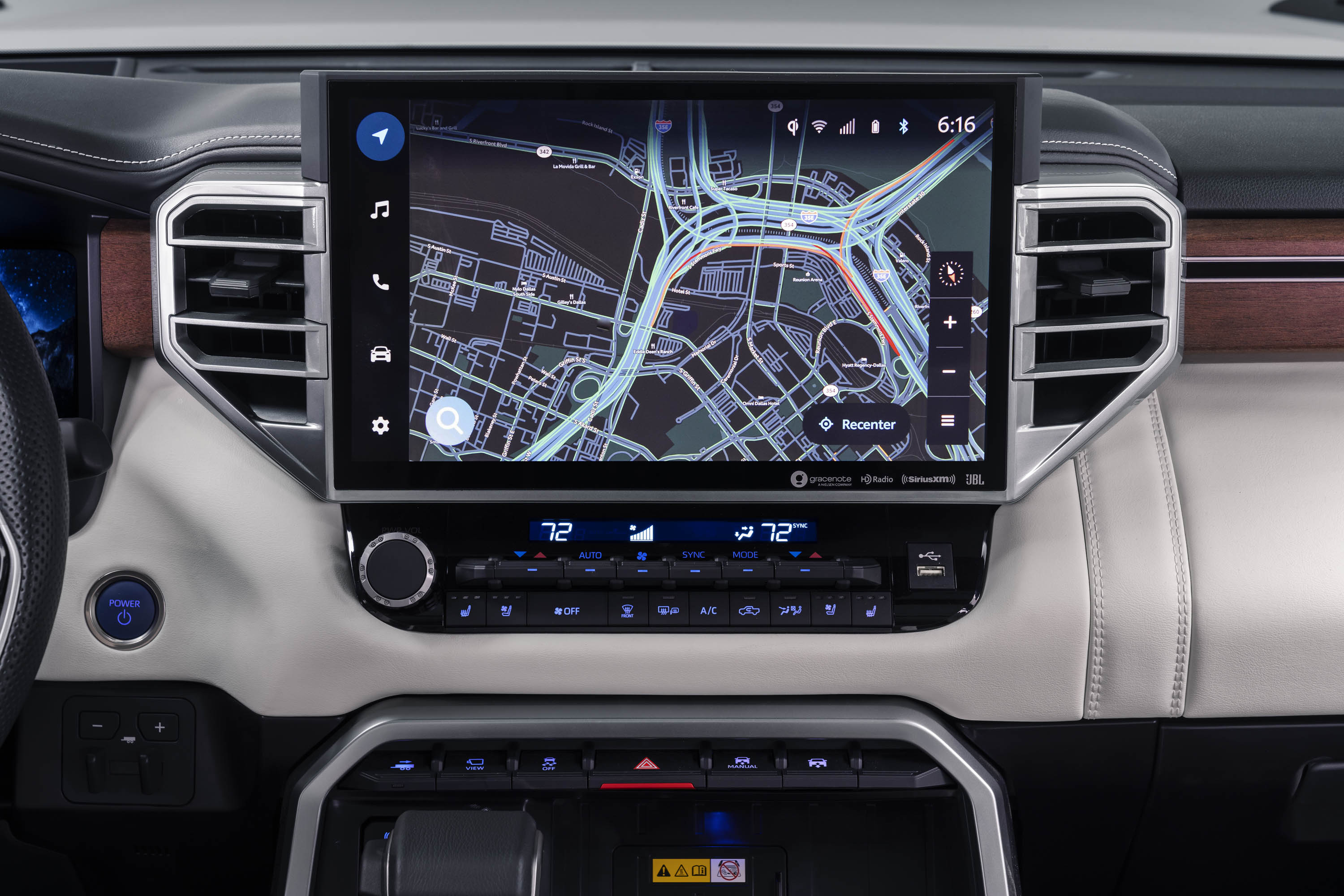
    The large, 14-inch multimedia touchscreen display comes standard on Capstone, controlling the all-new Toyota Audio Multimedia system designed and engineered by Toyota’s Texas-based Connected Technologies team. The new system offers an improved user experience thanks to new sight, touch and voice activation. With Intelligent Assistant available through Drive Connect*, simple phrases like “Hey Toyota” awakens the system for voice-activated commands to search for directions, find Places of Interest (POI), adjust audio controls, change the cabin temperatures and more. The cloud-based native navigation system, aptly named Cloud Navigation, offered through Drive Connect allows for real-time Over the Air updates for mapping and POI, and Google POI data is integrated to ensure up-to-date search capability. The new system also supports standard wireless Apple CarPlay® and Android Auto™ compatibility.

    The new Toyota Audio Multimedia allows for simultaneous dual Bluetooth phone connectivity. A Wi-Fi Connect subscription offers 4G connectivity for up to five devices by turning Tundra into an AT&T Hotspot* and also the ability to link your separate Apple Music® and Amazon Music subscriptions to the vehicle with Integrated Streaming. Speaking of audio, Capstone offers an impressive 12-speaker JBL Premium Audio system for auditory delight.

    For ease of entry and exit, Capstone offers standard power running boards, and it also boasts a standard power bed step for ease of entry in the truck bed. Complementing the Tundra’s new multilink rear suspension system, Capstone offers available Adaptive Variable Suspension (AVS) and load-leveling rear height control air suspension.

    The 2022 Capstone grade will be offered in one body configuration: CrewMax with a 5.5-foot bed. Available colors include Wind Chill Pearl, Magnetic Gray Metallic, Celestial Silver Metallic, Midnight Black Metallic, Supersonic Red and Blueprint.

    2022 Toyota Tundra Capstone Interior

    Plush, But Still Tough

    An elevated cabin and loaded-to-the-gills truck sitting on 22s doesn’t mean performance and toughness need to be sacrificed. Capstone is powered by the impressive new i-FORCE MAX hybrid powertrain that produces 437 horsepower and 583 lb.-ft. of torque. i-FORCE MAX relies on a twin-turbo V6 engine but features a unique motor generator within the bell housing between the engine and 10-speed automatic transmission designed to provide maximum performance and maximum efficiency.

    Resting on a new fully boxed, high-strength-steel frame, Capstone has a maximum towing capacity of 10,340 pounds. During towing applications, the hybrid system provides additional power and torque, while during city driving it focuses on a quiet ride with improved efficiency. For highway driving, responsive linear power delivery is the name of the game, and off-highway exploration is further enhanced thanks to peak torque performance being achieved early in the RPM range.

    The new Sheet-Molded Compound (SMC) bed construction features reinforced aluminum cross members under the bed and offers added protection against dents, impact dings and rust compared to traditional steel decks. Maximum payload for Capstone is 1,485 pounds.

    For added cushion for the crew, the cabin is mounted to the frame with hydraulic cab mounts. Drive Mode Select offers the driver the ability to select a driving mode depending upon preference, and standard features include settings for Eco, Normal and Sport. With available Load-Leveling Rear Height Control Air Suspension and Adaptive Variable Suspension settings expand to include Comfort, Sport S, Sport S+ and Custom. For example, using the SPORT or SPORT+ settings i-FORCE MAX makes use of the electric motor’s instantaneous responsiveness. While the electric motor does the bulk of the work at lower speeds, once above 18 mph the gasoline engine assumes primary operation for excellent performance in the mid- and high-speed range. When in TOW/HAUL mode, the i-FORCE MAX system is constantly in tandem operation to provide impressive acceleration and torque for towing needs.

    2022 Toyota Tundra Capstone Multimedia Touchscreen Display

    The view around this great looking truck is improved as well due to Tundra’s plethora of cameras, displaying multiple exterior angles that are viewable from the available 14-inch touchscreen or the standard Digital Display Rearview Mirror. Whether pulling into a parking spot or trailering, drivers will appreciate Panoramic View Monitor that displays a top-down view of the truck. Views include the rear truck bed to check on cargo, a rear split view to show what’s nearby on each side of the trailer and a hitch view to assist with trailer connecting.

    The Towing Technology Package comes standard on Capstone, and it includes Trailer Back Guidance, which aids in overall maneuvering of trailers, as well as the Straight Path Assist feature, which is designed to ensure your truck and trailer will back up in a straight line. The available 360-degree cameras aid with visibility and tough-to-see areas around the truck and trailer. When connected with Toyota’s integrated trailer brake controller, the Blind Spot Monitor can recognize blind spots for not just the truck but the trailer as well.

    Toyota Safety Sense

    Capstone, like all Tundra grades, comes standard with Toyota Safety Sense 2.5, Toyota’s active safety system. It includes Pre-Collision System with Pedestrian Detection that features multiple enhancements over the previous generation, including not only detecting the vehicle ahead but also a pedestrian in low light, bicyclist in daytime, an oncoming vehicle and a pedestrian at intersections when making a turn. At intersections, the system is designed to detect an oncoming vehicle or pedestrian when performing a left-hand turn and provide audio/visual alerts and automatic braking in certain conditions. Emergency steering assist is an additional function designed to detect pedestrians and stabilize the driver’s emergency evasive steering maneuvers and help prevent lane departure.

    Tundra will be equipped with Dynamic Radar Cruise Control (DRCC). Lane Departure Alert is designed to notify the driver via audible alert if it senses the vehicle is leaving the lane without engaging a turn signal. When DRCC is set and engaged, Lane Tracing Assist is designed to assist the driver by providing a slight steering force to help center the vehicle in its lane using visible lane markers or a preceding vehicle.

    Automatic High Beams are designed to detect preceding or oncoming vehicles and automatically switch between high beam and low beam headlights. Road Sign Assist is designed to recognize certain road sign information using a forward-facing camera and display them on the multi-information display (MID).

    Toyota’s Rear Seat Reminder comes standard on Capstone and all 2022 Tundras. The feature can note whether a rear door was opened within 10 minutes of the vehicle being turned on, or at any time after the vehicle has been turned on, with a reminder message in the instrument cluster after the engine is turned off, accompanied by multitone chimes.

    In addition to the TSS 2.5 system, other standard safety features include Blind Spot Monitor which is designed to help detect and warn you of vehicles approaching or positioned in the adjacent lanes. Rear Cross Traffic Alert can offer added peace of mind by helping to detect vehicles approaching from either side while backing out and alerting you with a visual and audible warning. The Parking Support Brake is designed to implement brake control when there’s a possibility of a collision with a stationary object, approaching vehicle, or while parking.

    Limited Warranty and ToyotaCare

    Toyota’s 36-month/36,000-mile basic new-vehicle warranty applies to all components other than normal wear and maintenance items. Additional 60-month warranties cover the powertrain for 60,000 miles and corrosion with no mileage limitation. Toyota dealers have complete details on the limited warranty. Tundra also comes with ToyotaCare, a plan covering normal factory-scheduled maintenance and 24-hour roadside assistance for two years or 25,000 miles, whichever comes first.

  • The pickup reimagined: Introducing the 2024 all-electric Chevrolet Silverado

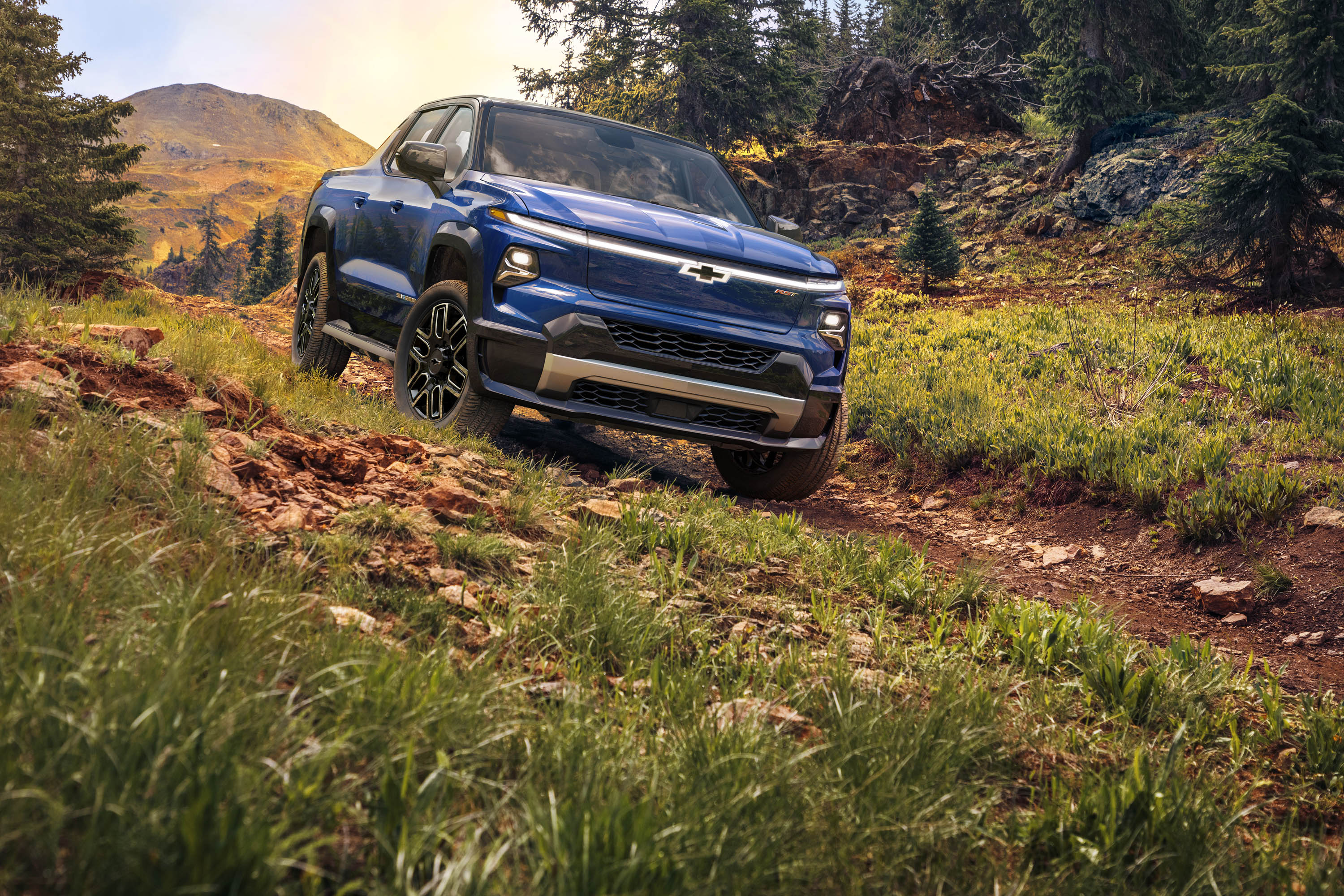
    2024 Chevrolet Silverado EV RST - Front View

    Developed from the ground up as a fully-electric truck on GM’s advanced Ultium EV Platform, the Silverado EV offers a boundary-breaking combination of capability, performance and versatility, along with advanced technologies that can evolve the vehicle over time.

    “Chevrolet has constantly revolutionized the Silverado franchise to make it the powerhouse it is today,” said Steve Hill, vice president of Chevrolet. “The Ultium Platform is a critical enabler of next-level pickup truck performance for both fleet and retail customers, whether they are currently driving a Silverado or are considering a pickup for the first time.”

    At launch, the Silverado EV will be available in two configurations, an RST First Edition and a fleet-oriented WT model. Each will offer a comprehensive suite of standard and available safety technologies.

    The flagship RST First Edition includes:

    • Four-wheel steering
    • Automatic Adaptive Air Suspension
    • Multi-Flex Midgate that expands the truck’s cargo capability while maintaining seating for a rear row passenger
    • Available Multi-Flex Tailgate with power release
    • Large, 17-inch-diagonal LCD freeform infotainment screen paired with a neighboring 11-inch-diagonal reconfigurable driver instrument display and a multi-color driver head-up display with a field of view over 14 inches
    • Trailering-capable Super Cruise5, the industry’s first true hands-free driver-assistance technology, allowing drivers to travel hands-free on more than 200,000 miles of compatible roads across the U.S. and Canada

    The WT will launch first for fleet customers and offer impressive capability to meet the needs of organizations with sustainable transportation goals, including 510 hp and 615 lb-ft of torque. The WT will offer 8,000 pounds of towing and 1,200 pounds of payload4. After initial launch, Chevrolet will introduce a fleet model with up to 20,000 pounds max trailering with the max tow package4.

    “GM Fleet has long provided customers with great products and services, an exceptional customer experience and innovative solutions to meet their unique business needs,” said Ed Peper, vice president of GM Fleet. “We’re excited to launch the Silverado EV, providing customers with a true work-capable truck to help them begin the transition to an electric fleet and assist them in achieving their own sustainability goals.”

    Ultium-powered propulsion

    The Silverado EV harnesses the power of the Ultium Platform, which is the foundation of GM’s EV strategy and the driver of the company’s vision for a zero-emissions future.

    “The Ultium Platform enabled our design and engineering teams to start from a clean slate and create a pickup with impressive performance and capability,” said Nichole Kraatz, Silverado EV chief engineer. “The result is a truly impressive testament to the creativity and innovation our teams can bring to market with speed and at scale.”

    A new body architecture, which efficiently leverages the available 24-module Ultium battery pack as a part of the fundamental structure, enables the vehicle’s impressive range. This structural design integrates the capability Silverado customers have come to expect from a full-size pickup in terms of strength, durability and performance, while also providing a more comfortable, confident ride both on- and off-road.

    Additionally, the chassis is designed with independent front and rear suspensions, with power transferred to the available 24-inch wheels on RST via front- and rear-drive motors that compose the e4WD system. Automatic Adaptive Air Suspension enables the vehicle to be raised or lowered up to 2 inches (50 mm).

    Four-wheel steer capability reduces the turning radius at lower speeds for greater maneuverability in parking lots, and enhances handling and stability at higher speeds, particularly when trailering.

    The RST and WT models also come with Tow/Haul mode, trailer hitch provisions, and an integrated trailer brake controller and Hitch Guidance. The RST also includes Chevy’s Advanced Trailering System.

    Phenomenal performance

    The RST and WT feature public DC fast charging capabilities of up to 350kW enabling approximately 100 miles of range to be added in 10 minutes based on GM estimates.

    When combined with the available accessory power bar, the Silverado EV’s PowerBase charging system offers up to 10 outlets, to provide a total of 10.2kW of all-electric power for countless worksite or recreational needs, including powering your home, with the required equipment.

    The Silverado EV is also capable of charging another EV using the available accessory charge cord, sharing its power in times of need.

    With the growing North American network of chargers and the Energy Assist feature in the myChevrolet Mobile App, drivers can create energy-efficient route planning even while trailering.

    RST owners also have access to Ultium Charge 360, GM’s holistic approach to EV charging, which is designed to simplify the overall charging experience, including access to more than 100,000 publicly available charging points in the U.S. and Canada.

    WT customers have access to Ultium Charge 360 Fleet Service, which offers one of the industry’s most comprehensive charging solutions for businesses, whether drivers take their vehicles home or return to a central depot.

    Designed for performance and functionality

    Inside and out, the Silverado EV RST and WT are thoughtfully designed for functional flexibility.

    “We had no constraints when it came to designing the Silverado EV with dramatic style and flexible utility because we didn’t need to work around a traditional propulsion system,” said Phil Zak, executive director of Chevrolet Design. “The Ultium Platform allowed us to redefine what it means to offer expansive new storage and utility possibilities.”

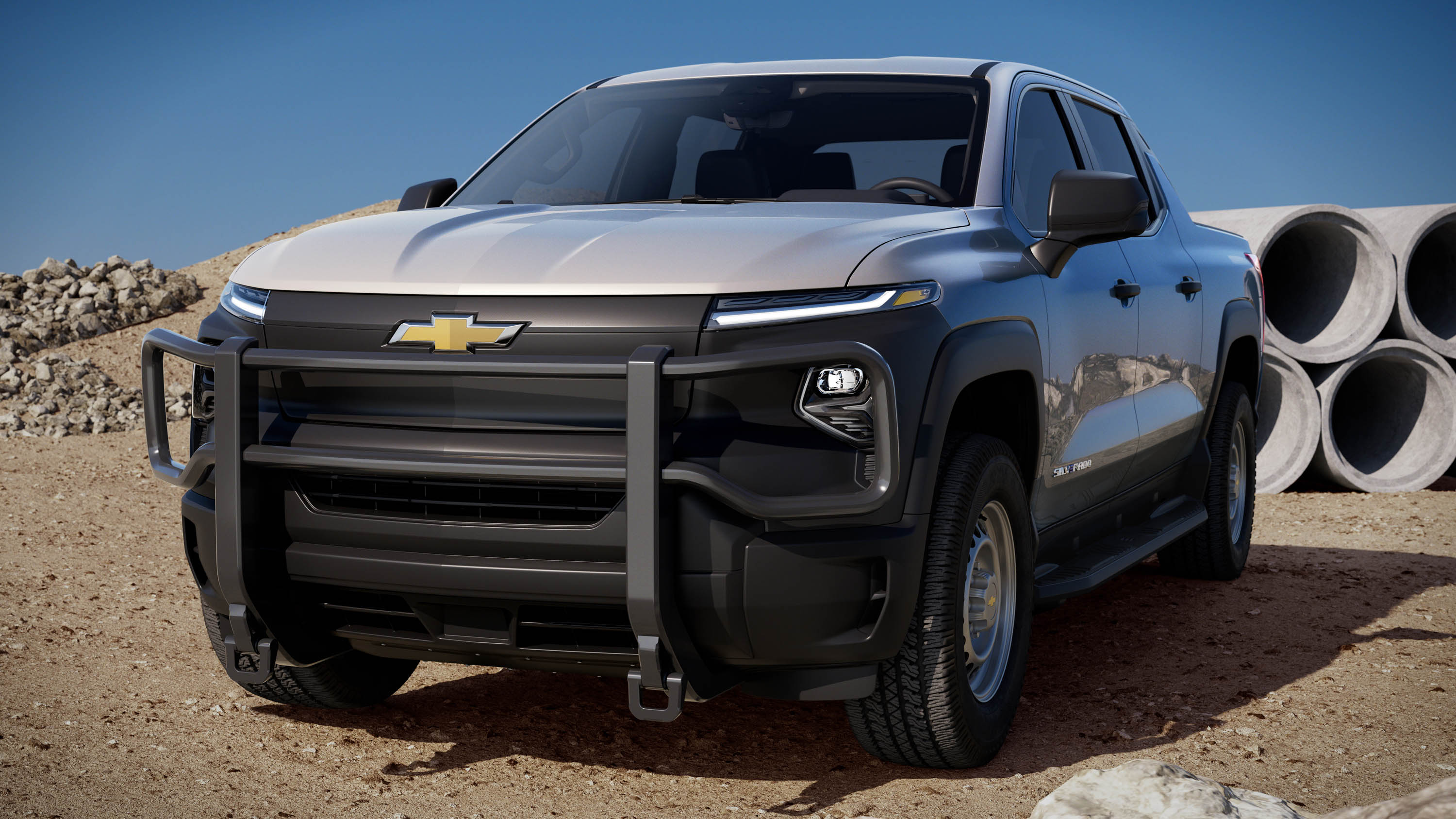
    2024 Chevrolet Silverado EV WT - Front Angle

    Exterior proportions and surfacing convey the truck’s capability and athletic performance. The front-end design has been sculpted to efficiently direct air down the body side, significantly reducing drag and turbulence. As a result, the Silverado EV WT is estimated to have one of the lowest drag coefficients of any available production full-size pickup truck, which helps enable the impressive range.

    The Silverado EV will be offered exclusively in Crew Cab models, with a shorter front overhang that gives the truck a more aggressive stance, more spaciousness and enhances forward downvision. The second row is pushed rearward, meaning passengers over 6 feet tall will be comfortable no matter where they sit.

    Customizable first row storage on both RST and WT models makes the most of the interior space and provides functional solutions for a variety of customer needs.

    The eTrunk – a lockable, weatherproof compartment in the front of the vehicle – provides enough space to fit a large hardside suitcase and a multitude of accessory options for both fleet and retail customers to load gear based on the unique needs of the customer.

    The RST’s modular console features a capacity of just over 7 gallons, meaning a lunch cooler can easily fit inside. The RST features a fixed-glass roof, which offers expansive visibility, increased headroom and an enhanced experience for both front and rear passengers.

    On the RST, the storage capacity of the 5-foot-11-inch bed is maximized thanks to the innovative available Multi-Flex Midgate, which provides just over 9 feet of storage between the cab and the tailgate when the Midgate is open.

    A 40/60 second row seat offers four configurations that allow users to haul gear or equipment while still accommodating a passenger in the second row. With the addition of the available Multi-Flex Tailgate the Silverado EV RST enables up to 10 feet, 10 inches of load floor and storage capability. An available tonneau cover allows items such as lumber or a kayak to be loaded into a fully lockable, weatherproof storage compartment.

    Technologies for today and tomorrow

    The Silverado EV is packed with the latest technology, including an advanced software system that enables vehicle technologies to evolve over time.

    As a driver approaches the RST with an enabled cell phone or key fob, a distinctive lighting animation greets them.

    Upon entering the vehicle, a bold 3D animation appears on the RST’s large 17-inch- diagonal LCD freeform infotainment screen, which is paired with a neighboring 11-inch-diagonal driver instrument display. Together with a driver head-up display with a field of view over 14 inches, a driver can’t ask for more information at their disposal. With new, hands-free start, the vehicle turns on automatically after the driver enters with an enabled device, leaving hands free to buckle up and get on the road.

    A major enabler of the Silverado EV’s technologies will be the brand’s first application of Ultifi, a new Linux-based software platform. Developed in-house at GM, it separates the vehicle’s software from the hardware to enable rapid and frequent software updates. This will give drivers the opportunity to evolve their vehicles over time, enhancing both the capabilities and accessing cloud services in a flexible and fast way.

    Production, availability, and reservations
    The Silverado EV will be assembled with domestically and globally-sourced parts at GM’s Factory ZERO, Detroit-Hamtramck Assembly Center — a facility repurposed and retooled with a $2.2-billion investment devoted to EV production.

    In spring 2023, the Silverado EV will debut a WT model offering GM’s longest range battery with an expected GM-estimated range of over 400 miles on a full charge. In fall 2023, a fully loaded RST First Edition model, also delivering a 400-mile range, will debut with an MSRP of $105,000 + DFC. After production ramps up, Chevrolet will unleash the full Silverado EV portfolio, including WT (with a starting at MSRP of $39,900 + DFC), RST, Trail Boss and more. Customers will have the ability to content the truck across various price ranges, with MSRPs around $50,000, $60,000, $70,000, $80,000 and more, allowing them to choose the truck that meets their capability and pricing needs.

  • BMW iX Flow featuring E Ink.

    2022 BMW iX Flow E Ink - Front View

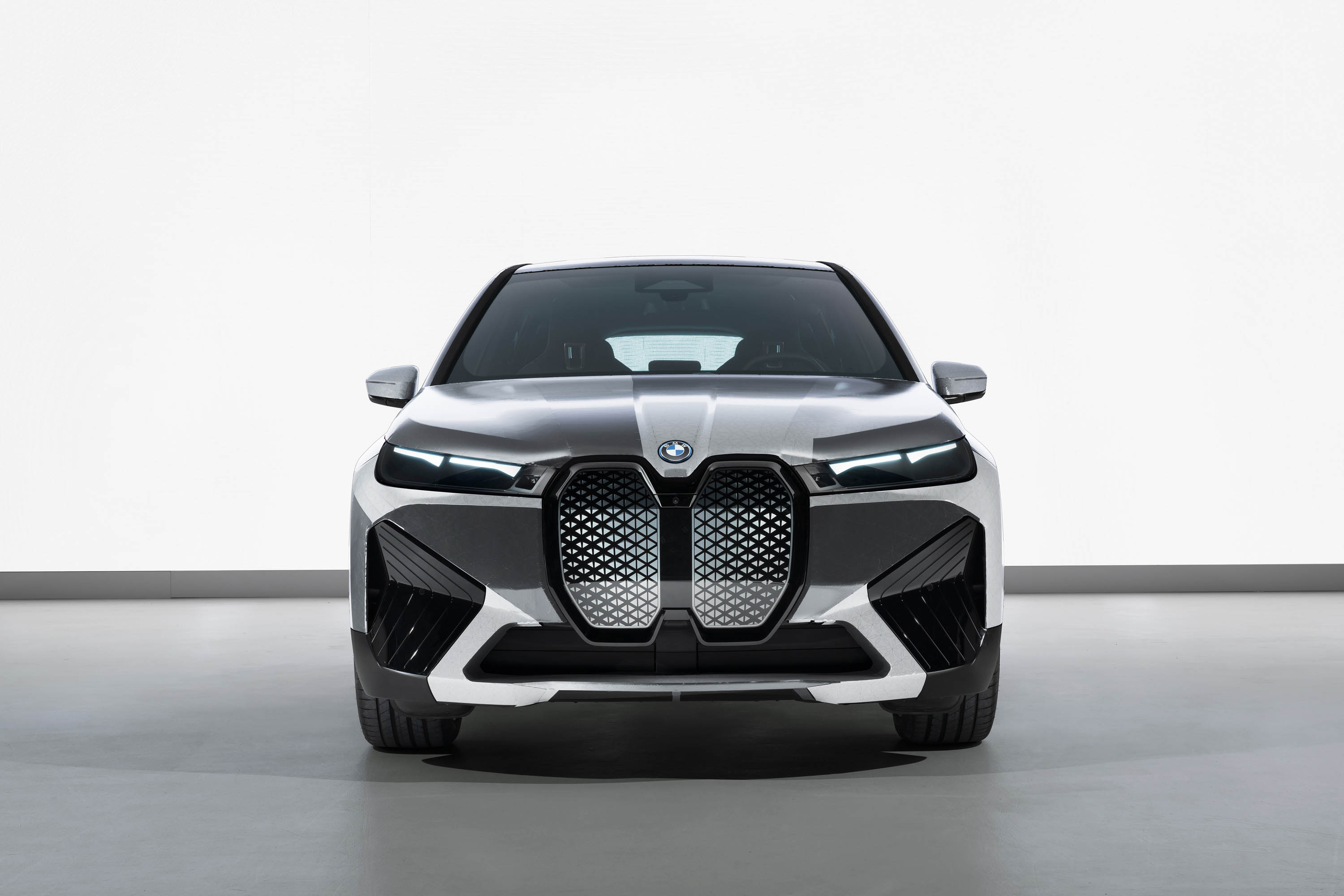
    Digitisation is delivering an integrated user experience characterised by individuality and emotionalisation in the interior of current BMW models. The My Modes allow the driver to tailor the atmosphere in the interior entirely to their personal mood and the driving experience they want. With the BMW iX Flow featuring E Ink being presented at CES 2022, the Munich-based premium car manufacturer is offering the prospect of a future technology that uses digitisation to also adapt the exterior of a vehicle to different situations and individual wishes. The surface of the BMW iX Flow featuring E Ink can vary its shade at the driver’s prompting.

    Frank Weber, Member of the Board of Management of BMW AG, Development: “Digital experiences won’t just be limited to displays in the future. There will be more and more melding of the real and virtual. With the BMW iX Flow, we are bringing the car body to life.”

    The fluid colour changes are made possible by a specially developed body wrap that is tailored precisely to the contours of the all-electric Sports Activity Vehicle from BMW. When stimulated by electrical signals, the electrophoretic technology brings different colour pigments to the surface, causing the body skin to take on the desired colouration. Adrian van Hooydonk, Head of BMW Group Design: “The BMW iX Flow is an advanced research and design project and a great example of the forward thinking that BMW is known for.”

    The innovative E Ink technology opens completely new ways of changing the vehicle’s appearance in line with the driver’s aesthetic preferences, the environmental conditions or even functional requirements. The technology thus offers unprecedented potential for personalisation in the area of exterior design. The BMW iX Flow featuring E Ink demonstrates this potential to impressive effect. Against this background, the BMW Group is driving the development of the technology so that a new form of personalisation can be experienced both on the outside and in the inside of future production vehicles.

    Already today, the colour chosen for a car is an expression of the driver’s personality. The choice of exterior paints available for current BMW models covers a wide colour spectrum. In this way, the longing for a wildly expressive, extravagant, or sporty appearance on the outside can be taken into account as well as the desire for an understated, subtle or elegant appearance. New variants are added each year that reflect the characteristics of the model in question and that allow the brand to keep setting trends in the area of exterior design.

    New technologies will provide a whole new level of decision-making freedom in the future. “This gives the driver the freedom to express different facets of their personality or even their enjoyment of change outwardly, and to redefine this each time they sit into their car,” says Stella Clarke, Head of Project far the BMW iX Flow featuring E lnk. “Similar to fashion or the status ads on social media channels, the vehicle then becomes an expression of different moods and circumstances in daily life.”

    How a variable exterior colour can increase efficiency.

    A variable exterior colour can also contribute to wellness in the interior and to the efficiency of the vehicle. This is done by taking account of the different abilities of light and dark colours when it comes to reflecting sunlight and the associated absorption of thermal energy. A white surface reflects a lot more sunlight than a black one. By implication, heating of the vehicle and passenger compartment as a result of strong sunlight and high outside temperatures can be reduced by changing the exterior to a light colour. In cooler weather, a dark outer skin will help the vehicle to absorb noticeably more warmth from the sun.

    In both cases, selective colour changes can help to cut the amount of cooling and heating required from the vehicle’s air conditioning. This reduces the amount of energy the vehicle electrical system needs and with it also the vehicle’s fuel or electricity consumption. In an all-electric car, changing the colour in line with the weather can therefore also help to increase the range. In the interior, the technology could, far example, prevent the dashboard from heating up too much.

    E lnk technology itself is extremely energy efficient. Unlike displays or projectors, the electrophoretic technology needs absolutely no energy to keep the chosen colour state constant. Current only flows during the short colour changing phase.

    Millions of paint capsules in a custom wrap.

    Electrophoretic colouring is based on a technology developed by E lnk that is most well­ known from the displays used in eReaders. The surface coating of the BMW iX Flow featuring E lnk contains many millions of microcapsules, with a diameter equivalent to the thickness of a human hair. Each of these microcapsules contains negatively charged white pigments and positively charged black pigments. Depending on the chosen setting, stimulation by means of an electrical field causes either the white or the black pigments to collect at the surface of the microcapsule, giving the car body the desired shade.

    Achieving this effect on a vehicle body involves the application of many precisely fitted ePaper segments. Generative design processes are implemented to ensure the segments reflect the characteristic contours of the vehicle and the resulting variations in light and shadow. The generative design algorithms enable the necessary formability and flexibility required to tailor the ePaper exactly to the design lines of the vehicle.

    Laser cutting technologies guarantee high precision in generating each segment. After the segments are applied and the power supply far stimulating the electrical field is connected, the entire body is warmed and sealed to guarantee optimum and uniform colour reproduction during every colour change.

  • Chrysler Unveils Airflow Concept

    2022 Chrysler Airflow Concept - Side View

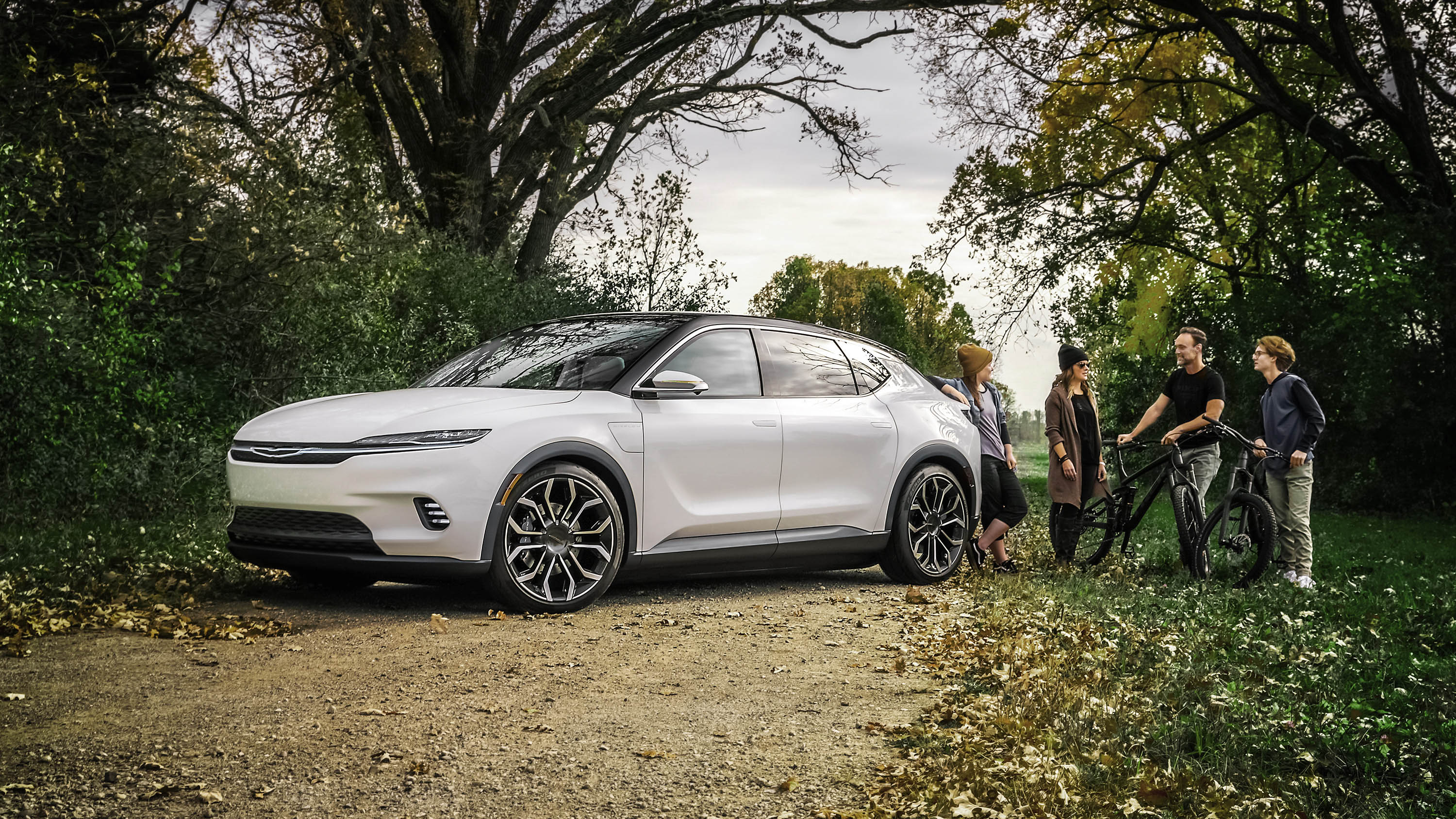
    The Chrysler brand revealed today the Chrysler Airflow Concept at CES 2022, giving a glimpse at the leading-edge drive-system technology, fully connected customer experiences and advanced mobility features, wrapped in inspiring, dynamic design, which will fuel the Chrysler brand’s future.

    Chrysler also announced that the brand’s transformation will include the launch of its first battery-electric vehicle (BEV) by 2025 and a future all-electric Chrysler vehicle lineup.

    “The Chrysler Airflow Concept represents the future direction of the Chrysler brand, providing a peek at the dynamic design, advanced technologies and seamless connectivity that will characterize the full-electric portfolio we plan to reach by 2028,” said Chris Feuell, Chrysler brand CEO – Stellantis. “Chrysler is an iconic American automotive brand, with a heritage in creating new advanced technologies and product segments. Our brand will serve at the forefront as Stellantis transforms to deliver clean mobility and connected customer experiences.”

    Through more than 96 years, the Chrysler brand has earned a reputation for innovative engineering, groundbreaking style and affordable luxury. One recent innovation, the Chrysler Pacifica Hybrid, the first and only plug-in hybrid minivan, served as a springboard to the brand’s electrified future.

    The new connected vehicle isn’t simply about moving from point A to point B. The Chrysler Airflow Concept reinvents the customer experience by integrating the STLA Brain platform and STLA SmartCockpit to deliver seamless connectivity to transform the experience for driver and passengers. The concept creates a connected hub that brings a consumer’s digital lifestyle into the vehicle, using advanced technology to create a customized space for each occupant.

    “The Chrysler Airflow Concept represents the start of the brand’s journey toward a fully electrified future. It is the result of a thoughtful synthesis of the full arsenal of Stellantis’ connected vehicle technology – inside and out,” said Ralph Gilles, chief design officer – Stellantis. “The design features a decisively elegant aerodynamic exterior and a modern, sophisticated interior that takes the customer on a new level of digital delight.”

    Seamless Connectivity Optimizing Customer Experiences

    The Chrysler Airflow Concept is designed as a space to bring people together, both physically and virtually.

    Enabled by STLA Brain and STLA SmartCockpit, the user experience in the Airflow Concept is agile, intuitive and always fresh. The interior showcases ideas for giving every passenger a personalized experience that seamlessly connects them with their digital lives, as well as the other passengers.

    The Airflow Concept unifies these advanced technologies, communicating through advanced visualization and thoughtful interaction. The Airflow Concept user experience employs multi-layered, high-contrast graphics and thoughtful details to provide a clean, sophisticated appearance that is safe, easy to use and easy to understand.

    Using a menu-based format, screens throughout the Airflow interior can be personalized, simplified and grouped based on individuals and interests. Information on the screens can be shared with all passengers by swiping. Customization and personalization are key, whether driving or acting as a co-pilot.

    Each screen is a personalized space to access the digital world via connected entertainment, apps and downloads. Each seat also features a built-in camera, enabling occupants to participate in a group video conference call from the comfort of the Airflow cabin.

    Over-the-air (OTA) updates keep Airflow Concept services current and let passengers quickly and easily add new and innovative features. That functionally keeps the vehicle fresh, exciting and capable, enhancing the overall ownership experience.

    The backbone of the Airflow Concept user experience is the new electrical/electronic (E/E) and software architecture, STLA Brain. This architecture is highly flexible, breaking today’s bond between hardware and software generations. It enables software developers to create and update features and services quickly, taking advantage of capabilities built into the cockpit without waiting for a new hardware launch.

    The STLA SmartCockpit, demonstrated in the Airflow Concept and built on top of STLA Brain architecture, seamlessly integrates with the digital lives of vehicle occupants to deliver AI-based applications, such as navigation, voice assistance, e-commerce marketplace and payment services.

    Fully Electrified + Fully Connected

    Along with the fully connected ultimate user experience, the Chrysler Airflow Concept previews the brand’s commitment to delivering a fully electric vehicle lineup by 2028, produced using clean manufacturing processes and made with recyclable and renewable materials. Through the use of industry-first technologies, the Chrysler brand will delight customers and influence the industry to make the world better, cleaner and safer.

    The Chrysler Airflow Concept is equipped with STLA AutoDrive, which delivers Level 3 autonomous driving capabilities and will be upgradable via OTA updates.

    The concept features all-wheel-drive capability and is powered by two 150 kW electric drive motors (EDMs), one in the front and one in the rear. The concept is designed to accommodate larger capacity EDMs, offering the potential for future high-performance applications. Drive motors are located toward the front and rear of the vehicle, maximizing interior space and enabling the large wheel size and wide stance of the Airflow Concept. The battery is designed to achieve between a 350- and 400-mile range on a single charge.

    Dynamic Design Language

    The sculptural, expressive design of the Chrysler Airflow Concept envisions the next generation of premium transportation and user experience. The concept reimagines how the driver and passengers interact with advanced technologies while delivering a first-class travel experience that balances technological needs within a serene environment.

    The Airflow Concept features a dynamic design proportion, with a low ride height and streamlined, two-tone roof line that achieves an elegant yet athletic profile while increasing EV range. A long wheelbase and wide track, along with large 22-inch wheels and tires, are enhanced visually with Celestial Blue accent color cladding. The design elements work together to enable a dramatic stance and deliver excellent handling and performance dynamics.

    The Airflow’s silent electric ride harmoniously supports the sleek design aesthetic, with the concept’s dramatic expression completed by an Arctic White body color that conveys a sense of calm and serenity. Up front, the Airflow announces its electric aesthetic with the Chrysler wing logo tied into a cross-car grille/light blade illuminated with crystal LED lighting. A crystal LED taillight runs the full width of the vehicle, accentuating the wide stance. The Airflow Concept features welcome, departure and animated lighting, including a unique aqua that signifies the vehicle is charging. The diffuser shape of the lower rear fascia highlights the aerodynamic, smooth underbody, a key to achieving optimum driving range.

    The modern and spacious interior is also accented by a light and calming color palette, evoking an open, airy lounge area that delivers a comfortable space between home and work. The interior design is made to sooth and relax occupants, surrounding those inside with flowing lines that move throughout the space, creating a greater feeling of spaciousness and comfort. Technology is integrated seamlessly into the interior in the form of dark glass sculptures. The central control area integrates individualized climate controls near the C-shaped air slots. Crystalized textures throughout the vehicle add a sense of precision, providing an intricate transition from the exterior and aligning with the advanced interior design highlighted by premium refinement.

    Redefined interior touchpoints support ideas of tranquil, serene comforting spaces and combine illusionary weightlessness and grounding metals to give the Airflow Concept a dynamic, dreamy design. Soft leather-wrapped seats help achieve a lighter, smoother atmosphere. Materials, including vegetable-tanned leather, as well as floor mats, fabric and carpeting made of recycled materials, imagine a future of sustainable design.

    Infotainment screens appear as gloss black sculptures, seamlessly integrating technology within the overall interior composition. Seating uses a unique slim structure that rests on a pedestal base, enhancing comfort and roominess while allowing for maximum legroom, shoulder space and personal storage for each passenger.

    Functional and ambient lighting helps the driver and passengers create a personalized inner sanctum, augmented by the Airflow Concept’s panoramic roof that allows daylight to stream into the cabin. The ambient lighting reveals itself in direct lines, adding modernity, and indirectly through perforations in the upper door bolsters and a cascade of light spilling out from under the armrests in all four doors. The lighting syncs to the mood of the interior and changes based on the passengers’ preferences and the content on the displays. Subtle design choices create an overall feeling of serenity with craftsman-like attention to detail in accent points, such as the perforation and embossed pattern on the seats, unifying the refined interior.

  • Cadillac Introduces InnerSpace Autonomous Concept

    2022 Cadillac InnerSpace Concept - Front Angle View

    Two-person electric luxury concept offers vision of future personal mobility focused on elevating the passenger experience, grows Cadillac Halo Concept Portfolio

    Today, Cadillac expanded its vision of personal autonomous future mobility with the InnerSpace concept — a dramatic, two-passenger electric and autonomous luxury vehicle.

    Leveraging cutting-edge technologies designed to enhance the passenger experience along with the increased personal time enabled by fully autonomous mobility, InnerSpace grows the Cadillac Halo Concept Portfolio of vehicles envisioned to not only move passengers in a luxurious environment but enhance their well-being. The Cadillac Halo Concept Portfolio represents future possibilities with a range of personal autonomous options and advanced connected vehicle features.

    “The vehicles of the Cadillac Halo Concept Portfolio are designed to provide effortless travel through extraordinary means,” said Bryan Nesbitt, GM executive director, Global Advanced Design and Global Architecture Studio. “They are visions for the next decade and beyond, showing the possibilities enabled by General Motors’ comprehensive approach to autonomous drive technology with the goal of a world with zero crashes, zero emissions and zero congestion.”

    Cadillac introduced the first two Halo concepts last year at CES: the PersonalSpace, a single-seat, personal vertical takeoff and landing concept designed to literally move its passenger above the din and congestion of ground traffic, and the SocialSpace, a roomy, autonomous vehicle for up to six, designed to help passengers relax and recharge.

    Conceptually, the portfolio repurposes how passengers use their time while traveling, providing a space for solace and respite. Full autonomy relinquishes the responsibility of vehicle control while dramatic design and advanced technologies maintain the sensation of arriving in a Cadillac.

    In fact, technologies such as biometric input and AI machine learning are harnessed and complement Cadillac’s signature luxury environment to support unique wellness experiences. Through software-defined features and advanced vehicle connectivity, the Cadillac Concept Halo Portfolio could offer each passenger a truly personalized experience made possible by GM’s Ultifi software platform. Ultifi enables seamless delivery of software updates to customers over the air. The experiences showcased within the Halo Portfolio demonstrate the potential as both Ultifi and autonomous technology continue to evolve.

    The PersonalSpace and SocialSpace will join the InnerSpace in GM’s virtual CES experience this week, along with a video glimpse of future luxury travel with another concept — the OpenSpace — to be introduced later.

    “Electrification and autonomous driving will fundamentally change the role of vehicles and the experiences customers have with them,” said Nesbitt. “We’re exploring where that will go with these innovative concepts, envisioning mobility as an ally of wellness, giving customers the ultimate luxury, more personal time rather than taking it.”

    Reimagining the luxury experience

    Early in Cadillac’s history, compact and personal Runabout models enabled customers to explore new and wider horizons. The new InnerSpace concept reimagines that vision, with a fully autonomous experience that allows two passengers to focus on their journey and not driving.

    The vehicle’s fully autonomous capability means they could explore more of the world around them, as well as inside the vehicle, with more personal and tailored experiences that add new dimensions to Cadillac’s signature luxury experience. AI-driven biometric input and interfaces, accessible via a large, immersive and panoramic SMD LED display, allow passengers to select from Augmented Reality Engagement, Entertainment and Wellness Recovery themes for their drive. Thanks to Ultifi, Cadillac engineers and authorized third parties will be able to innovate additional themes and features that can be added over the air.

    With the Ultium Platform’s wireless battery management system, the battery modules are spread about the concept vehicle, which allowed designers to optimize the cabin for spaciousness and serenity. This design freedom also allowed for a low-profile floor, providing an extremely low, sports car-like seating position.

    On the exterior, the dramatically designed InnerSpace features expansive, panoramic glass on the roof and part of the body sides for almost unimpeded views. The roof opens with the doors for more comfortable entry and egress, and the seats also pivot outward when the doors are opened, enhancing the effect.

    Even the InnerSpace’s tires are designed to contribute to its solace. Developed by Goodyear for electrified vehicles, they feature SoundComfort technology designed to help mitigate soundwave resonance within the tire for a quiet ride, while soybean oil and rice husk-based silica replaces petroleum-based oil as a key ingredient in their construction. And because autonomous driving takes away some of the driver’s connection with the road, Goodyear SightLine, Goodyear’s tire intelligence technology, conveys important information about pressure, temperature, load and other performance factors.


  • The 2023 BMW iX M60 – the best of three worlds: i, X, and M

    2023 BMW iX M60 - Front View

    BMW announced their first high-performance SAV designed for purely electric mobility. The even more powerful variant of its technology flagship: the 2023 BMW iX M60.  With a total system output of up to 610 bhp and 811 lb-ft of torque (when Launch Control is activated), and a unique M-enhanced adaptive dual-axle air suspension, it adds an outstanding performance experience to the world of emission-free driving.

    By integrating a vehicle concept geared towards sustainability with the design of a modern Sports Activity Vehicle and thrilling dynamic driving characteristics, the BMW iX M60 embodies the best of three worlds; BMW i, the BMW X models and BMW M GmbH.

    Fully electric mobility in hallmark BMW M style starts here.

    With Sport Mode engaged to unleash 610 bhp and Launch Control activated to release all 811 lb-ft of instantaneous torque, the BMW iX M60 will hit 60 mph from a standstill in only 3.6 seconds. The intense power delivery of its M-specific electric drive continues steadily into high load ranges, so acceleration remains almost constant up to the electronically-limited maximum speed of 155 mph when properly equipped.

    The two motors of the BMW iX M60 operate on the principle of a current-energized synchronous machine. That is, instead of permanent magnets, the excitation of the rotor is triggered by the precisely metered supply of electrical energy. This design method makes it possible to completely dispense with the rare earth metals required for magnetic components when manufacturing the rotor.

    The M-specific design of the current-energized synchronous machine principle enables the electric motor of the BMW iX M60 – especially in the case of the rear motor – to achieve an extremely high power density. The drive unit is six-phase operated and has a double inverter. This makes it possible to achieve a particularly significant increase in peak power, which is available up to high speeds and enables typical BMW M power delivery.

    The debut of the BMW iX M60 marks a milestone in the history of BMW M GmbH, which began 50 years ago. Together with the BMW i4 M50, it signifies the entry of BMW M into the segment of electrified performance cars. The extreme power and precise control of the electric all-wheel-drive, the highly responsive actuator-based traction control system, and suspension technology that includes a dual-axle air suspension with automatic level control provide the hallmark BMW M driving experience:  power, agility, and precision.

    Balanced vehicle concept, extremely sporty orientation.

    The vehicle concept of the BMW iX provides an ideal basis for an all-electric SAV with high-performance characteristics. The body structure and suspension design are geared towards combining superior ride comfort with sporty handling characteristics. The aluminum spaceframe and carbon cage with carbon fiber reinforced plastic (CFRP) in the roof, side and rear sections are an intelligent mix of materials that combines increased rigidity with optimized weight.

    The BMW iX M60’s performance, efficiency and range also benefit from its optimized aerodynamic properties, which give it a drag coefficient (Cx) of 0.26. The high-voltage battery is located low in the vehicle’s structure and within the wheelbase, lowering the vehicle’s center of gravity and ensuring agile handling as well as balanced weight distribution. The result is that the performance of the BMW iX M60 is not characterized solely by ferocious acceleration, but also by outstanding cornering dynamics and handling that can be precisely controlled at all times, even in highly dynamic situations. The perfectly balanced driving characteristics give the BMW iX M60 a confident and nimble feel at all speeds and provides the driver clear feedback in typical BMW M style.

    The suspension technology of the BMW iX M60 is comprised of a double-wishbone front axle, a five-link rear axle, and electric steering with Servotronic assist and a variable ratio. In addition, the BMW iX M60 comes as standard with an M-calibrated adaptive dual-axle air suspension with electronically controlled shock absorbers. This ensures particularly comfortable handling combined with increased agility and dynamic performance. The dual-axle air suspension ensures the optimum vehicle height at any speed, regardless of the load. The air supply to the suspension is regulated individually for each wheel and can therefore compensate for uneven loading. In addition, the height of the vehicle body can be adjusted manually using a button on the center console. The damper forces are adaptively controlled with continuously adjustable valves, which take into account longitudinal and lateral acceleration, road speed and steering angle as well as body and wheel acceleration on the front axle to provide the required damper force within a few milliseconds. The respective damper mapping is part of the overall vehicle setting, which can be activated by the driver using the My Modes button on the center console.

    First BMW M vehicle based on the new future modular system.

    The BMW iX M60 combines its typical M performance characteristics with the exceptionally advanced technology of the BMW Group’s new future modular system in the areas of automated driving, operation, connectivity, and digital services. Like the other model variants, the BMW iX M60 features a vast range of standard equipment in the field of driver assistance systems as well as numerous innovations. A new generation of sensors, new software, and a powerful computing platform also provide considerable potential for consistently advancing automated driving and parking.

    Powerful proportions, impressive luxury: enhanced by M.

    The powerful proportions of a modern SAV, clean surface design and precise details characterize the uncluttered exterior look while special M details give the BMW iX M60 its distinctive presence. The formidable brakes feature blue painted calipers and the M logo. The optional BMW Individual Titanium Bronze Exterior and M logos in a new High Gloss Black/Titanium Bronze finish on the rear of the vehicle clearly announce the high-performance character of the BMW iX M60. Unique 22-inch aerodynamic wheels featuring an exclusive Titanium Bronze design are optional.

    The exclusive character of the BMW iX M60 is further emphasized by its truly comprehensive level of equipment. Included as standard are BMW Live Cockpit Professional and BMW Natural Interaction, which allows functions to be operated using speech and gestures, a Bowers & Wilkins Diamond Surround Sound System, BMW Laser Light, Comfort Access, Active Seat Ventilation for the driver and front passenger, and the Radiant Heating Package, which warms the seats, steering wheel, and armrests and features innovative radiant heating of the door panels and dashboard to surround the occupants in warmth in cold weather.

    Exterior Colors

    Alpine White (STD)

    • Dark Graphite Metallic
    • Phytonic Blue Metallic
    • Blue Ridge Mountain Metallic
    • Storm Bay Metallic
    • Oxide Grey Metallic
    • Aventurin Red Metallic


    Interior colors and materials

    Oyster Perforated SensaTec

    • Mocha Perforated SensaTec
    • Black Perforated SensaTec
    • Amido Perforated Leather
    • Castenea Chestnut Perforated Leather


    Standard Equipment

    Integral Active Steering

    • 2-axle Air Suspension
    • Sport Package
    • M Sport Brakes with Blue Calipers
    • AC Fast Charging
    • Ambient Lighting
    • Park Distance Control
    • Dynamic Cruise Control
    • Automatic High Beams
    • SiriusXM with 360L + 1 Year Platinum Plan Subscription
    • BMW Assist eCall
    • BMW TeleServices
    • ConnectedDrive Services
    • 21-inch Aero Bi-color Wheels Style 102 with All-Season Non-Runflat Tires
    • Power Tailgate
    • Comfort Access Keyless Entry
    • Panoramic Sky Lounge LED Roof
    • Privacy Glass
    • Front Ventilated Seats
    • Headliner in Anthracite
    • Multi-Function Seats
    • Heated Steering Wheel with Front and Rear Heated Seats and Armrests
    • 4-zone Automatic Climate Control
    • Interior Camera
    • DC Fast Charging
    • Acoustic Protection for Pedestrians
    • Iconic Sounds Electric
    • Icon Adaptive LED Headlights with Laserlight
    • Parking Assistant Plus
    • Bowers & Wilkins Diamond Surround Sound System
    • Wireless Device Charging
    • Personal eSIM 5G
    • Live Cockpit Professional including Navigation
    • Natural Interaction
    • Surround View with 3D View

    Specifications

    iX M60
    Seats — 5
    Number of Doors — 4
    Drive type — AWD
    Length inches 195.0
    Width inches 77.4
    Width with mirrors Inches 87.8
    Height inches 66.8
    Wheelbase inches 118.1
    Curb weight lbs. 5,769
    GVWR lbs. 6,878
    Payload lbs. 1,003
    Weight distribution, front / rear percent 47.5 / 52.5
    Ground clearance inches 8.8
    Turning diameter feet 20.2
    Head room, front / rear inches 42.0 / 39.5
    Shoulder room, front / rear inches 61.5 / 58.3
    Legroom, front / rear inches 40.2 / 38.9
    Luggage capacity cu. ft. 35.5 – 77.9
    Engine type — 5th generation electric synchronous
    Combined output 532 hp / 749 lb-ft
    Max combined output / Sport Boost 532 / 610 bhp
    Max combined torque, Launch mode lb-ft 811
    Output, front motor / rear motor hp 255 / 483
    Transmission Single-speed automatic
    High-voltage battery Lithium-Ion
    Voltage V 369
    Capacity Ah 303
    Energy capacity, gross / net kWh 111.5 / 106.3
    Charging time, 0-100% AC hours 33 @ 3.7 kW / 16A
    Charging time, 0-100% AC hours 16 @ 7.4 kW / 32A
    Charging time, 0-100% AC hours 12.25 @ 9.6 kW / 40A
    Charging time, 0-100% AC hours 10.25 @ 11 kW / 48A
    Charging time, 10-80% DC minutes 97 @ 50 kW / 25A
    Charging time, 10-80% DC minutes 49 @ 100 kW / 250 A
    Charging time, 10-80% DC minutes 35 @ 250 kW / 500 A max.
    Maximum charging, AC kW 11
    Maximum charging, DC kW 195
    Wheels, standard, 21-inch inches 9.0 x 21
    Tires, standard, 21-inch 255/50R21 109H or 109Y XL
    Wheels, optional, 22-inch inches 9.5 x 22
    Tires, optional, 22-inch 275/40R22 107Y XL
    Steering type EPS
    Steering ratio :1 16.0
    Track, front / rear inches 66.0 / 67.2
    Cx — 0.26
    0-60 mph seconds 3.6
    Top speed (w/ all-season / summer perf. tires) mph 130 / 155
    EPA range with 21-inch wheels miles 280
    EPA range with 22-inch wheels miles tbd