Category: Auto News

Auto news – automobile industry news. Articles about all the latest car models and concepts. Breaking news, uncovered secrets.

  • 2022 Nissan Altima pricing starts at $24,550

    2022 Nissan Altima

    The 2022 Nissan Altima is available now with a starting MSRP of $24,5503 for the Altima S FWD grade. Altima is offered with a choice of two engines, front-wheel or Intelligent All-Wheel Drive and five well-equipped grade levels.

    For 2022, a special Midnight Edition Package with unique “black-out” exterior trim is available on the popular Altima SR grade (2.5L models only). The package includes LED fog lights, heated front seats, 2-way driver power lumbar, single panel moonroof, gloss black painted sport grille, gloss black painted spoiler, Satin black Midnight Edition badge, gloss black painted 19-inch aluminum-alloy wheels and black painted heated outside mirrors with LED turn signal indicators.

    Standard on all grade levels is a 2.5-liter DOHC inline 4-cylinder direct injection engine rated at 188 horsepower, while the optional 2.0-liter VC-Turbo inline 4-cylinder is rated at 236 horsepower. Both engine configurations come equipped with a standard Xtronic transmission. Paddle shifters are available with the Altima SR grade.


    Manufacturer’s Suggested Retail Prices3 for the 2022 Nissan Altima Sedan:

    Model Engine/Drive

    MSRP3

    Altima S 2.5-liter / FWD

    $24,550 USD

    Altima SV 2.5-liter / FWD

    $25,550 USD

    Altima SR 2.5-liter / FWD

    $26,550 USD

    Altima SL 2.5-liter / FWD

    $29,990 USD

    Altima SV 2.5-liter / AWD

    $26,950 USD

    Altima SR 2.5-liter / AWD

    $27,950 USD

    Altima SL 2.5-liter / AWD

    $31,390 USD

    Altima Platinum 2.5-liter / AWD

    $34,250 USD

    Altima SR 2.0-liter VC-Turbo / FWD

    $30,900 USD

    Destination and Handling $975.

  • 2022 Lincoln Zephyr

    2022 Lincoln Zephyr

    Lincoln today debuted its first locally-produced sedan – the all-new Lincoln Zephyr – in China at Auto Guangzhou. The highly anticipated Zephyr highlights the future direction of Lincoln’s design and intelligent technology, and is expected to contribute to Lincoln’s growth in China.

    “For nearly a century, Lincoln has been redefining luxury with stunning design, advanced technologies and world-class products,” said Joy Falotico, president, Lincoln. “We are committed to listening to the needs of our customers and the all-new Zephyr is a perfect example of this. The all-new Lincoln Zephyr is specifically designed for the young, Chinese customer and continues our tradition of reimagining design and technology for the future.”

    Mao Jingbo, president, Lincoln China said “The Lincoln Zephyr is a true masterpiece that brings together the expertise of our global team in California and the exceptional talent of our local team in China. Every detail from the inside out is crafted based on a deep understanding of our, young Chinese clients, and I am confident that the Lincoln Zephyr fully features intelligent experiences of the future.”

    The all-new Lincoln Zephyr will be built in China for the China market and is expected to go on sale in the first quarter of next year.

    The Design Philosophy

    Lincoln Zephyr inherits the brand’s Quiet Flight DNA centered on the tenets of Beauty, Gliding, Human and Sanctuary, while also expressing a strong, contemporary aesthetic that signals the future face of Lincoln design. The exterior embodies Lincoln’s signature horizontal design language that expands the vehicle’s visual width and presents a striking and dynamic effect.

    For the first time, the Lincoln Zephyr integrates Lincoln’s characteristic full-width light bar into the fascia. Integrated full-width horizontal stripes traverse the Lincoln Star grille and extend to the headlamps on both sides. The tail lamp also applies a new 3D floating effect, echoing the Zephyr’s front with its unique red design and embedded luminous “Lincoln” text.

    The Zephyr is nearly close to mid-large-sized sedans. Thanks to a wheelbase of more than 2,900mm, the Lincoln Zephyr provides ample rear seating space and legroom. On the side of the sedan, the Lincoln star flows seamlessly to the flush handles which emphasize its sleek design lines.

    To satisfy Gen Z’s demands for connectivity, the Lincoln Zephyr tailored its interior design to create an intelligent digital cockpit and a relaxing sanctuary with lightweight design elements. Nearly all buttons in the console are equipped with a smart, natural surface – an innovative, digital design detail that speaks to the evolving customer need for quiet, human-centric solutions.

    Intelligent Technologies

    A 12.3-inch digital cluster with 27-inch coast-to-coast touch screen make a stunning visual impact and is configured to support an array of multi-touch gestures and customizable displays, enabling customers to choose between full or split-screen views.

    Inspired by the cosmos and the calming night sky, the full-width coast-to-coast screen also brings the Lincoln Constellation HMI to life. Pioneering in luxury brands, the Constellation HMI applies Dashcard interactive design. Solo, Co-pilot and Individual intelligent operation modes are also available.

    The Lincoln Zephyr’s phase-4 SYNC+ system is exclusive for Chinese customers, enabling over-the-air capability to continuously update Zephyr. Debuting in Lincoln Zephyr, the advanced Lincoln Co-Pilot 360TM 2.0 System and the Lincoln ActiveGlideTM are offered to help enable L2+ Driving Assist capability.

    Sense of Ceremony

    Lincoln Zephyr offers a tailored luxury experience with an elevated sense of ceremony for customers. The new Embrace and Farewell signature feature illuminates the Lincoln Star first and gently lights up the headlamp as owners approach their Lincoln Zephyr. This is followed by Lincoln’s largest ever Welcome Mat that illuminates the ground.

    Four Relaxing Modes, digital scents, and 128-color interior ambient lighting options combine to enhance the customers’ feeling of exclusivity and personalization.

    Another unique feature in the Lincoln Zephyr is “The Future Letter.” After customizing content on the full-width coast-to-coast screen, customers can schedule content to appear on screen at designated moments and add a sense of joy for passengers.

    “I am extremely proud that Lincoln Zephyr brings so many advanced innovations to our young customers in China,” said John Jraiche, global product director, Lincoln.

    The all-new Zephyr will launch with a standard 2.0-liter gas powertrain with an 8-speed transmission and is expected to go on sale in the first quarter of 2022.

  • 2023 Genesis Electrified GV70

     2023 Genesis Electrified GV70

    Genesis introduced the new model by hosting a world premiere event at the Guangzhou International Automobile Exhibition (Auto Guangzhou 2021) in China, which takes place at the China Import and Export Fair Complex from November 19–28, 2021.

    Appearing via video at the world premiere event, Jay Chang, Global Head of the Genesis brand, introduced the brand’s vision for electrification, after which SangYup Lee, Head of Genesis Global Design, discussed the Electrified GV70’s design. Markus Henne, Chief Executive Officer of Genesis Motor China, punctuated the event onsite by presenting Genesis’ market strategy for the country.

    “Our global vision to create a sustainable future through electrification is a natural extension of our original commitment that dates back to the launch of Genesis in 2015: the commitment to creating a positive impact in our customers’ lives,” said Jay Chang, Global Head of the Genesis Brand. “I am pleased to reveal another new EV model in China that celebrates our audacious step toward a sustainable future.”

    “We are presenting the Electrified GV70 to engage with youthful and energetic Chinese customers,” said SangYup Lee, Head of Genesis Global Design. “This is more than just a new electrified SUV. It is a statement for Genesis design that marks new territory.”

    The Electrified GV70 sets a new standard for electric SUVs

    The Electrified GV70 is built on the heritage of GV70, inheriting its predecessor’s spacious interior and adding outstanding performance and a host of new technologies designed exclusively for electric vehicles.

    During the event, Genesis showcased an Electrified GV70 with an Atacama Copper matte paint exterior. The front fascia displays a careful consideration for aerodynamic efficiency and function. Genesis’ signature Crest Grille has evolved into an aerodynamic crest that features an inverted G-Matrix pattern and incorporates a hidden EV charging port, creating a minimalist yet sophisticated look. The minimalist horizontal shape of the rear bumper completes the model’s modern image. A simplified, tailpipe-free skid plate emphasizes the SUV’s electric nature, while the iconic and progressive Two-Line Quad Lamps put the finishing touch on the electric model of GV70 with Genesis’ signature Two Lines architecture.

    The interior boasts a driver-focused design, offering an intuitive and dynamic driving experience. Inspired by the ‘Beauty of White Space’ interior design concept, the Electrified GV70 offers customers the opportunity to write their own story with an interior that reflects the sustainable ambitions of this electric vehicle, as well as Genesis’ commitment to future sustainability. A variety of eco-friendly materials have been used to furnish the model, and each material features a high-quality finish, completing a design that embodies Genesis’ vision for sustainable luxury from the inside out. Genesis will offer the model with a Glacier White interior.

    As an athletic and dynamic vehicle, the Electrified GV70 offers competitive and powerful performance to satisfy drivers. It will be available only as an AWD (All-Wheel Drive) model, and details on output and performance for North American models will be available closer to launch. This powerful model is expected to reach 60 MPH in 4.5 seconds with Boost Mode.

    Range estimates for the North American market will be available closer to launch. The addition of 350kW rapid charging, meanwhile, enables the battery to charge from 10% to 80% in under 20 minutes.

    Furthermore, Genesis’ application of a 400V/800V multi-rapid charging system will allow drivers to utilize various forms of charging infrastructure. The multi-rapid charging system enables fast and stable charging by raising the voltage supplied by typical chargers from 400V to 800V. The technology is optimized for the vehicle’s system thanks to the model’s driving motors and inverters. Customers can use the 800V rapid charging system to utilize both 400V and 800V charging infrastructure without the need for an additional converter.

    The electric version of the GV70 also includes a V2L (Vehicle to Load) feature that supports a 3.6kW charge, which is higher than the power supply in the average home, enabling customers to conveniently use electric appliances outside of the vehicle.

    Moreover, the Disconnector Actuator System (DAS) can automatically connect or disconnect the motor and drive shaft, considering various driving conditions. Such conditions include vehicle speed and driving mode, enabling seamless switching between 2WD and AWD – reducing unnecessary power loss while increasing efficiency.

    The new model’s driving experience is further enhanced with a variety of cutting-edge technologies. The Smart Regenerative Braking System 2.0 regenerates energy through the braking system based on driving habits, real-time navigation, and road conditions. In driving mode, the i-Pedal (Intelligent Pedal) allows the driver to accelerate, decelerate and stop using just the accelerator pedal.

    Genesis also equipped the vehicle with ANC-R (Active Noise Control-Road) to achieve a comfortable driving experience. The technology significantly reduces the level of noise by measuring and analyzing road noises utilizing four sensors and eight microphones and simultaneously creating sounds at opposite phases.

    The Preview Electronic Control Suspension (Pre-view ECS) has been applied to support an optimal driving experience. This suspension system can be controlled based on information collected through the SUV’s front camera and navigation system.

    * Specifications and features noted are only confirmed for the Korean market at this time and are subject to change for international models. More information on North American market specifications and deliveries will be available at a later date.

  • Jaguar XJC by Carlex Design

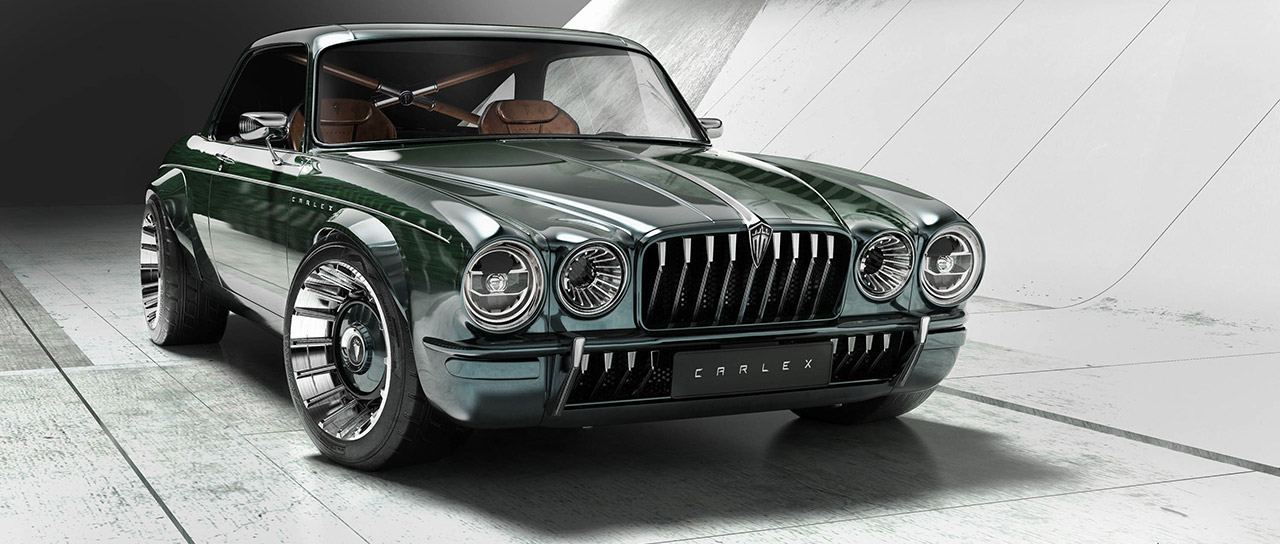
    Jaguar XJC by Carlex Design

    The jaguar is a night predator. This quiet, roaring beauty has enough moxie to take on a croc. It is the firmest cat of the Western Hemisphere. Which car symbolises this unique beast? It is obviously the iconic Jaguar XJ, created by William Lyons, the follower of the great 240/340.

    It was definitely a great challenge to amend the car’s perfect predecessor – the essence of elegance and prestige. In 1968, though, the follower was presented, which remained virtually unchanged for almost 25 years – 11 years as Mk I and Mk II, and the next 13 years after a slight makeover by Pininfarina. It was still all about the same, beautiful and slender silhouette. The car’s crowning version was the XJC – the XJ Coupé, manufactured only as Mk II from 1975 to 1978 in the quantity of almost 10,500 vehicles. A true black panther among Jaguars, made only in Coventry with its twin Daimler. It is elegant, fast and absolutely outstanding, and has always been the showcase of the brand and the object of desire of drivers, willing to sit at the steering wheel rather than on the back seat.

    My name is XJ… XJ Coupé 2.0 – sounds like a perfect line introducing the 2021 XJC by Carlex Design. It’s the same character but the latest technology: the 400 HP V8 engine, the new gearbox, brakes, rims and suspension. The best genes of the Jaguar family. A smooth ride, comfort and luxury – the essence of the 21st century, topped with exotic wood, top quality leather and carefully mastered details. It will definitely meet the requirements of the most demanding fans of classic cars and… those who simply enjoy a great ride. Carbon makes the car body tougher and relatively light, and the rollbar protects the driver and the passenger and provides greater durability. The British Racing Green shade perfectly complements the car’s unique style and look. What is missing? Plastic and repeatability of most contemporary cars. It will be an exceptional Jag. The one everybody would like to have in their garage.

  • 2022 Porsche 718 Cayman GT4 RS

    2022 Porsche 718 Cayman GT4 RS

    Born in Flacht with the genes of a race car, the new 718 Cayman GT4 RS shares naturally aspirated heart with the 911 GT3 making the most thrilling and focused 718 yet.

    The naturally aspirated flat-six engine used in the 911 GT3 Cup car and the road-going 911 GT3 represents the heart of this uncompromising driver’s car. The engine revs up to 9,000 rpm. Power increases by 79 hp compared to the 718 Cayman GT4 to a total of 493 hp, resulting in a weight-to-power ratio of 6.55 lbs. per hp. Maximum torque increases from 317 lb.-ft. to 331 lb.-ft.

    Accompanying the new engine and significantly enhanced performance are many changes to the appearance of the car, driven by functional demands. Among the many design changes applied to the 718 Cayman GT4 RS are the air intakes behind the side windows on the driver and passenger side where other 718 Cayman models would usually have a small window. The new RS-specific air intakes improve the flow of intake air, which can be clearly heard due to the proximity to the driver’s and passenger’s ears. Side intakes in the rear quarter panels – a long-running design feature of all Cayman models – are still present albeit revised to meet the greater cooling demands of the new engine.

    Like every modern RS variant, the new 718 Cayman GT4 RS will be offered exclusively with the seven-speed dual-clutch transmission (PDK): It changes gears with lightning-quick speeds and contributes to the high degree of performance that the car offers. Using shift paddles mounted on the steering wheel, drivers can change gears manually as they choose without taking their hands off the wheel. Alternatively, they can also change gears manually using the newly designed shift lever in the center console.

    The Sport-PDK features shorter gearing than what is found in a PDK-equipped 718 Cayman GT4, and contributes to the impressive acceleration. The 718 Cayman GT4 RS accelerates from 0 to 60 mph in 3.2 seconds – half a second quicker than the 414 hp 718 Cayman GT4 with PDK. Top track speed is 196 mph (GT4 with PDK: 187 mph), which the GT4 RS reaches in seventh gear.

    In common with its RS model predecessors, the 718 Cayman GT4 RS was constructed with a focus on lightweight materials. The U.S. curb weight is 3,227 lbs. – 49 lbs. less than a 718 Cayman GT4 with PDK. For example the front fenders and hood are formed out of carbon fiber reinforced plastic (CFRP). The rear window is made of lightweight glass. Lightweight door panels with fabric door opening loops and storage nets round off the focus on lowering weight.

    The new, fixed rear wing with a swan neck mounts and aluminum supports represents a marked difference to other 718 models, including the GT4. This particularly efficient wing designed was adopted from the Porsche 911 RSR race car and was first used on a Porsche road car on the 2022 911 GT3. Combined with a ride height that is 30 millimeters lower than a standard Cayman, front wheel well ventilation, an aerodynamically optimized underbody with a rear diffusor, an adjustable front diffusor and a new front spoiler lip with flow-around side-blades, the GT4 RS generates up to 25 percent more downforce in the racetrack-only Performance mode than the 718 Cayman GT4.

    Enhancements to the suspension also contribute to the even higher level of performance. Ball joints connect the suspension to the body and contribute to an even higher level of precision and responsiveness. The adjustable and track-focused suspension received an RS-specific damper setup as well as revised spring and anti-roll bar rates. Additionally, 20-inch forged aluminum wheels with center locks are used for the first time on a 718 Cayman model.

    The optional Weissach Package enhances the performance-focused appearance of the GT4 RS even further. When this option is selected, the front luggage compartment lid, process air intakes, cooling air intakes, air box lid, exterior mirrors caps and the rear wing are made of carbon fiber. Exhaust tips made of titanium are inspired by the exhaust of the Porsche 935/19. The upper part of the dashboard is upholstered in Race-Tex with this option, while the rear window features a large Porsche logo type. Magnesium wheels are available as an addition to the Weissach Package for an additional cost.

    The sum of these enhancements compared to the 718 Cayman GT4 make the GT4 RS the most uncompromised and exciting member of the 718 family. Its performance on the Nürburgring-Nordschleife underscore this particularly well. During final testing and evaluation drives, Porsche brand ambassador Jörg Bergmeister completed a lap of the 20.832 kilometer (12.944 mile) track in 7:09.300 minutes. On the shorter track variant, which was formerly used as a benchmark (20.6 km in length), the GT4 RS set a time of 7:04.511 minutes – 23.6 seconds quicker than the 718 Cayman GT4.

    To celebrate this impressive car, Porsche Design has created a Porsche Design Chronograph 718 Cayman GT4 RS, which will be offered exclusively to buyers of the vehicle. Like the car itself, the timepiece features a lightweight concept with a performance focused character by using high-tech titanium materials. The winding rotor design takes on visual cues from the wheels of the car and is available in different colors to match the vehicle.

    The new 2022 Porsche 718 Cayman GT4 RS is celebrating its world premiere at the Los Angeles Auto Show and has an MSRP of $141,700, not including a $1,350 delivery, processing and handling fee. It is expected to reach U.S. dealers in the course of summer 2022. The racing version 718 Cayman GT4 RS Clubsport is also being debuted in L.A., which will be competing in many national and international racing series next year.

  • 2022 Porsche Taycan GTS Sedan and Taycan GTS Sport Turismo

    2022 Porsche Taycan GTS Sedan and Taycan GTS Sport Turismo

    No matter the form of motive power, the GTS variant of any Porsche is the optimal combination of performance and luxury, without sacrificing everyday usability. The Taycan GTS sedan and Taycan GTS Sport Turismo exemplifies this distinction. Enhanced styling and performance as well as unique suspension tuning and Electric Sport Sound among an array of changes that denote that this is the first electric GTS.

    Pricing for the Taycan GTS sedan starts at $131,400, while the pricing for the Taycan GTS Sport Turismo will start at $133,300. Neither price includes $1,350 delivery, processing, and handling fee. Both Taycan GTS models are available to order now and U.S. deliveries will start in Q2 of 2022. EPA range and consumption figures will be available closer to delivery.

    Similarities

    The Taycan GTS sedan and GTS Sport Turismo feature the same permanent magnet single-speed front motor, larger permanent magnet rear motor with a diameter of 245 mm and an active length of 210 mm, and two-speed rear transmission. This setup provides a total power output of 590 hp with Launch Control, slotting the GTS models in between the Taycan 4S (462 hp) and Taycan Turbo (670 hp).

    Much like the Taycan Turbo and Taycan Turbo S, the Taycan GTS comes standard with the 93.4 kWh Performance Battery Plus and its 800-volt architecture means it can handle continuous demand while minimizing heat build-up. This translates to high charging speeds of up to 270 kW and is part of the reason it can charge from 5 to 80 percent in 22.5 minutes, while accelerating both variants from 0-60 mph in 3.5 seconds.

    Inside the Taycan GTS, the familiar multi-screen dash and ergonomic and sporty seating position remains. And many of the standard technology and comfort features from the other Taycan sports cars, such Apple CarPlay and Android Auto, automatic climate control, Porsche Connect with Porsche Charging Planner also come standard in the GTS variants.

    Differences

    Although numerous components of the Taycan GTS family are inherited from the top-model Taycan, there are notable differences. Visually, the GTS wears the SportDesign front fascia, and the SportDesign side skirts and side window trim in high-gloss black. The rear diffuser features a high-gloss black inlay. The side skirts feature GTS logos, and the badging on the rear is in matte black. The standard 20-inch Taycan Turbo S Aero Design wheel features an exclusive satin-black finish, and the rear light strip features the Porsche logo in black. Finally, the LED-Matrix-Design headlights with PDLS Plus are tinted in black, and the exterior mirror cap-bottoms are painted in body color while the base is in black.

    Though the suspension and performance equipment is carried over from the top-model Taycan, the calibration and tuning are all bespoke to the GTS. All the standard and optional performance features have been massaged to make the car even more responsive and connected to the road than before. The standard braking system shares the same red six-piston front caliper and four-piston rear caliper as the 4S, but is equipped with larger 390 mm front rotors (vs 360 mm on the Taycan 4S). The rear rotor size is the same as the 4S, at 358 mm. Porsche Surface Coated Brakes, with tungsten carbide coating, and Porsche Ceramic Composite Brakes are also available. Even the Porsche Electric Sport Sound has been tuned to be deeper and louder for both bystanders and passengers alike.

    Standard performance features include Adaptive Air Suspension with Smart Lift and Porsche Active Suspension Management, Porsche Torque Vectoring Plus and Sport Chrono Package including the GT Multifunction Steering Wheel and Mode Dial. Optionally available performance equipment includes Porsche Dynamic Chassis Control Sport, Rear-Axle Steering, and 21-inch RS Spyder Design wheels in satin black.

    Interior

    The Taycan GTS features a unique Race-Tex interior package that reflects similar treatments from other GTS model lines. Driver and passenger seats feature 18-way electric adjustability and memory functions with “GTS” logos on the front and rear headrests. The door sill guards and interior trim is in brushed black aluminum and the accent package is in black. Roof lining and steering-wheel are also covered in Race-Tex.

    Optionally, an available GTS Interior Package includes deviated stitching in either Carmine red or Chalk on the dashboard, doors, armrests, steering wheel and seats, with matching seat belts, “GTS” embroidery on the front and rear headrests, Sport Chrono instrument dial and the Porsche logo on the floor mats. The trim on the steering wheel, center console and door trim are in matte carbon.

    New Sport Turismo

    If the Taycan Cross Turismo exemplifies all-weather, all-road capability, the Taycan GTS Sport Turismo sharpens the focus for the road. With the same interior dimensions as the Taycan Cross Turismo, the Taycan GTS Sport Turismo maintains the 15.7 cubic feet of rear cargo volume in the rear. Fold the rear seats forward, and a total of 42.8 cubic feet is available. Like the sedans and Cross Turismo, the GTS Sport Turismo also features a 2.9 cubic foot front trunk.

    Like the Cross Turismo, the Taycan GTS Sport Turismo will also feature a glass roof and hard points to mount a Tequipment bike rack on the rear of the vehicle. Optional equipment includes roof rails, and an all-new Panoramic Roof with Variable Light Control. This system allows the driver to adjust the amount of light by activating nine liquid crystal film segments in the roof, much like a digital clock. There are four preset patterns, clear, matte, 40% (Semi), and 60% (Bold). Or each individual segment can be activated from the PCM. When the vehicle is switched off, the roof automatically switches to matte, and once restarted, the system will remember the previous roof setting. This option is also available on the sedan as well.

    Visually, there are additional cues that separate the Taycan GTS Sport Turismo from the existing Cross Turismo family. The rear spoiler is paint matched to the body color, and there is no cladding over the wheel arches. The ride height for the Taycan GTS Sport Turismo is shared with the sedan, lowering the center of gravity even further.

  • 2022 Subaru Solterra Electric SUV

    2022 Subaru Solterra Electric SUV

    Subaru today revealed its first-ever all-electric SUV, the 2023 Subaru Solterra, at the Los Angeles Auto Show. The highly anticipated Solterra is packed with new electrification and in-vehicle technology while staying true to its Subaru heritage with industry-leading safety and go-anywhere capability.

    The name Solterra was created using the Latin words for “Sun” and “Earth” to represent Subaru’s commitment to deliver traditional SUV capabilities in an environmentally responsible package.

    Adventurous and Versatile

    Solterra comes standard with a new Subaru Symmetrical All-Wheel Drive system that now channels smooth linear output from Subaru StarDrive® Technology, providing outstanding traction and capability in all kinds of weather and terrain. Subaru StarDrive delivers substantial on-demand torque at all speeds with power and driver-selectable regenerative modes.

    Like other Subaru SUVs, Solterra is equipped with X-MODE® offering increased performance in low-friction and off-road conditions. The all-new model features Grip Control that incorporates Hill Ascent and Descent Assist. With 8.3 inches of ground clearance and 215 horsepower from front and rear electric motors, Solterra provides versatility in both off-road and city driving.

    With up to 126 cubic feet of passenger and cargo space, generous leg room, and a nearly flat floor, the 5-passenger SUV gives occupants the airy, open feel of a much larger vehicle. The Solterra offers up to 30 cubic feet of useable cargo space behind the rear seats, and also features a 60/40 folding seatback and two-position load floor for maximum cargo and passenger flexibility. The wide 41.3-inch rear gate opening with low liftover height allows easy loading and unloading. Available raised roof rails add more cargo-carrying options for owners’ adventures.

    Safety Technology

    The new Subaru Solterra offers a comprehensive suite of active safety technology including EyeSight® Driver Assist Technology; Blind Spot Monitor with Lane Change Assist and Rear Cross-Traffic Alert.  Also standard is Parking Support Brake which can apply the vehicle’s brakes if an obstacle is detected while reversing.

    For the first time in a Subaru, a 360-Degree Surround-View Camera system allows for better all-around situational awareness. Also new for Subaru, Solterra is equipped with standard Safe Exit Assist. The new safety feature notifies occupants, before exiting the vehicle, of approaching vehicles with an audible and visual warning.

    Unique to Solterra is the new e-SUBARU Global Platform that has been engineered to bring together Subaru’s all-wheel drive capability, superior driving dynamics, and world-leading passive safety.

    Standard multi-element LED Headlights include High Beam Assist, encouraging drivers to maximize the use of high beams without worry of impairing oncoming traffic. The new SUV comes standard with driver and front passenger frontal airbags, side curtain airbags, side pelvis/torso airbags, and a driver and front passenger knee airbag.

    Eco-Friendly Made Easy

    Solterra’s high-capacity lithium-ion battery pack provides plenty of daily range. The electric SUV can quickly charge just about anywhere with its Level 2 AC and DC fast charging capability. With DC fast charging, Solterra is capable of charging up to 80-percent of total battery capacity in under an hour.

    To simplify the charging experience while traveling, mobile apps work with the vehicle’s multimedia system to help local thousands of charging options nationwide, including more than 3,000 DC fast-charging stations, and 38,000 Level 2 charging stations. Charging at home is also made easy and affordable with Level 1 or Level 2 compatibilities.

    Solterra owners can explore the city streets and the open road with confidence because the all-wheel drive SUV has an estimated range of more than 220 miles, convenient home charging capability, and access to a national network of charging stations.

    Bold Design

    The Solterra is an evolution of the Subaru Dynamic X Solid design concept, rendered with the design flexibility of the e-Subaru Global Platform.  At the front, Subaru’s signature hexagonal grille has been tightly integrated with the front fascia. Thin and wide LED headlights complement this design motif. A low hood line also contributes to the SUV’s sleek styling, aerodynamic performance, and excellent forward visibility while retaining pedestrian impact safety.

    On the side, short front and rear overhangs and bold wheel arch moldings provide a confident stance and visually communicate the vehicle’s off-road capability.  The aerodynamically sloped rear glass has a dual-spoiler at the top and ducktail spoiler at the bottom. At the back of the vehicle, the rear combination lamps are positioned high, with a trapezoidal theme that strengthens the design.

    The interior for the new SUV is a clean, minimalist design centered around an intuitive, high resolution touchscreen with multifunction display, multimedia, and climate control. Combined with an available panoramic glass roof and generous storage options, Solterra delivers an interior that is not just spacious, but also inviting.

    Advanced Comfort and Convenience

    Solterra is equipped with an all-new multimedia system with an available 12.3-in touchscreen. The new system comes standard with wireless Apple CarPlay® and Android Auto™ and an available wireless charging phone dock in the center console.

    Smartphone app connectivity includes remote climate control and remote lock/unlocking, both contributing to a more convenient and connected drive. The remote climate control system can automatically warm up or cool down the vehicle before departure, even when garaged.

    Solterra joins the award-winning line-up of Subaru SUVs, including Outback, Forester, Crosstrek and Crosstrek Plug-in Hybrid. The all-new Solterra will go on sale mid-2022.

    Specification 2023 Solterra
    EV Range (estimated miles) More than 220
    Horsepower 215
    Torque (lb.-ft.) 248
    Passenger volume (cu.ft) 95.7
    Cargo volume upper/lower cargo floor position (cu.ft.) 27.7/ 30.3
    Cargo volume from lower row (cu.ft.) 30.3
    Total passenger & cargo volume (cu.ft.) 126
    Rear cargo opening width (in.) 41.3
    Wheelbase (in.) 112.2
    Length (in.) 184.6
    Height (in.) 73.2
    Width (in.) 65.0
    Seating Capacity 5 passenger
    Ground clearance (in.) 8.3

    * Vehicle specifications and vehicle features are preliminary and are subject to change without notice to improve performance, reliability, function, design, or otherwise.

  • 2023 Kia Sportage Hybrid

    2023 Kia Sportage Hybrid

    After recently debuting the all-new fifth generation Sportage, Kia has unveiled an electrified version of the brand’s longest running nameplate at the Los Angeles Auto Show (LAAS).  The 2023 Kia Sportage Hybrid (HEV) is the third model in an ongoing cadence of eco-minded offerings guided by Kia’s global EV strategy, ‘Plan S.’  This newest Kia follows in the footsteps of the recently launched EV6 and the Sorento PHEV to serve as another example of Kia’s multiple pathways to electrification.

    Arriving early next year, the Sportage Hybrid will deliver an ideal mix of fuel efficiency and power along with an abundance of room for gear.  Significantly larger than the previous generation Sportage, the Hybrid will allow owners to enjoy class-leading rear seat legroom and rear cargo capacity2.  The “Opposites United” design language employed on Sportage brings a bold blend of modern styling and sporty visual elements, while its interior offers the latest in technology, including an expansive list of ADAS features and dual panoramic display screens (12.3-inch instrument panel display and 12.3-inch infotainment touchscreen display) for nearly 25 inches of viewing.

    This Sportage’s electrified performance comes from a seamless hybrid powertrain combining a 1.6-liter turbocharged engine with a 44-kilowatt motor to achieve up to 39 mpg (targeted).  Together, engine and motor make 226 horsepower channeled to either the front wheels or an active all-wheel-drive system.  The result is a fuel-sipping compact SUV that delivers an engaging driving experience.

    “The new Sportage Hybrid SUV marks yet another step in Kia’s advance on sustainable mobility, as part of our global ‘Plan S’ efforts,” said Sean Yoon, president and CEO, Kia America, Kia North America. “In addition to paving a new pathway to electrification, the Sportage Hybrid also delivers superb driving dynamics, cutting-edge design, and a vast array of technology for a world-class in-car experience.”

    The Sportage Hybrid is offered in three trim levels: LX, EX, and SX-Prestige.

    New Foundation

    Underpinned by the same all-new 3rd generation “N3” platform found in the Sorento line of vehicles, the Sportage Hybrid chassis provides a rigid base to achieve:

    • Better driving dynamics via expanded use of hot-stamped parts and ultra-high-strength steel for increased average tensile strength and torsional stiffness
    • Minimized road, wind, and engine noise via greater application of sound-absorbing and insulating materials

    The Sportage has gone from one of the smallest SUVs in its class to one of the largest:

    • Overall length is 7.1 inches longer than the previous generation, with a 3.4-inch longer wheelbase
    • Taller and wider by a half inch compared to the previous generation
    • Class-leading rear legroom with 41.3 inches of room1
    • Best-in-Class rear cargo capacity of 39.5 cu-ft. of space1
    • Dual level cargo floor

    Best of Both Worlds Power and Efficiency

    The Sportage Hybrid blends performance and efficiency with an optimized powertrain:

    • 1.6-liter turbo GDI engine
    • 44kW permanent magnet electric motor
    • High-output 1.49 kWh lithium-ion battery
    • 6-speed automatic transmission with rotary style shifter
    • Combined 226 horsepower (targeted)
    • Up to 39 mpg in FWD (targeted)
    • Class-leading 2,000 lb towing capacity
    • Active AWD is standard on EX and SX-Prestige trims, while LX is available with a choice of FWD and Active AWD
      • Active AWD system2 uses electro-hydraulic coupling with center-locking differential to actively distribute power between front and rear wheels depending on road and driving conditions
      • E-Handling uses the hybrid motor to deliver a confident driving experience
    • Standard paddle shifters and Drive Mode Select with ECO, Sport, Smart and Snow modes

    “Opposites United” Design

    Closely mimicking the exterior of its gas-powered counterpart, the Sportage Hybrid bears all the elements of Kia’s new “Opposites United” design philosophy, developed as part of the Kia global brand transformation, “Movement that Inspires.”

    • Tiger nose grille gets more technical with floating design
    • Distinct “boomerang” daytime running lights
    • Angular fenders
    • Crisp shoulder line
    • Muscular shoulders around the rear flow into futuristic “notch-shaped” taillights, which are seamlessly connected by a thin black graphic across the tailgate
    • Unique 17- and 18-inch HEV wheel designs
    • HEV badging

    A Modern, Spacious, Tech-Savvy Interior

    Inspired by high-end outdoor products, furniture, and modern architecture, the interior of the Sportage highlights a new concept for Kia, transforming the cabin into a pleasant living space, complete with near-luxury, thoughtful features:

    • Available dual panoramic curved display3 seamlessly connects two screens for nearly 25-inches of viewing (12.3-inch digital instrument cluster, 12.3-inch infotainment screen)
    • Angular air vents
    • Asymmetrical console puts controls and buttons at driver’s hand with ease
    • Real stitching and detailed pattern on the seats create a feeling of luxury (SX-Prestige), along with animal-free leather (EX and above)
    • Innovative coat hanger molded behind front headrests with integrated hook for shopping bags or for organizing charging cables4

    To match the high-tech interior, the Sportage Hybrid is packed with standard and available infotainment to keep drivers connected and informed of what’s going on around them:

    • Standard Wireless Android Auto5 and Apple CarPlay6 on all trims
    • Intuitive new touchpad with climate and audio controls sits beneath the infotainment screen
    • Available 360-degree Surround-View Monitor with 3D view (first time on Sportage) provides a bird’s-eye view of vehicle surroundings7
    • Available Harman-Kardon8 premium audio system
    • Multi-connection Bluetooth9 simultaneously links two smartphones (EX and SX-Prestige trims)
    • Personalized profile to remember seat position, outside mirror location (SX-Prestige only); infotainment preferences, phone connection pairings (EX only)
    • Available wireless charging10 pad built inside the upper tray
    • Available Kia Connect11 services (first Kia application) provide advanced embedded connectivity:
      • Wi-Fi Hotspot12 connects up to five devices to 4G LTE-based internet
      • Includes over the air map updates for eligible vehicles
      • Refreshed Kia Access App with newly added compatibility through Apple- and Android-based smartwatches to access features like remote climate control, door lock/unlock and more13
      • Peace of mind with the recently introduced stolen vehicle tracking and immobilization capability
      • Connected Routing: Cloud-based system calculates the optimal route using real-time maps and predicted traffic info based on historical information and AI to learn the preferred routes of users
      • Smart Speaker Integration lets customers use Amazon Alexa14 or Google Assistant15 enabled smart speakers or devices to remotely control some functions (such as remote start)

    Advanced Driver Assistance Technology

    The Sportage Hybrid has no shortage of standard Advanced Driver Assistance Systems:16

    • Driver Attention Warning (DAW)17: Analyzes the driver’s attention level and provides a warning if a break is recommended. It may also provide a leading vehicle departure alert, if the leading vehicle departs from a stop and the driver does not react within a certain time period.
    • LED Headlights with High Beam Assist (HBA): Engineered to automatically dim the headlights when an oncoming or leading vehicle is detected, then return to high beams when vehicles are no longer detected
    • Lane Following Assist (LFA): Helps detect lane markings and vehicles ahead and provides steering inputs to help center the vehicle in the lane
    • Lane Keeping Assist (LKA): Helps detect lane markings and provides steering inputs to help prevent the vehicle from leaving the lane while driving
    • Forward Collision Avoidance (FCA) with Cyclist detection capability: Warns if there is risk of a collision with a vehicle, pedestrian, or cyclist in front of the vehicle while driving and may automatically assist with braking
    • Rear Occupant Alert (ROA)18: Provides a warning to the driver to check the rear seat before exiting the vehicle
    • Rear View Monitor (RVM) with Dynamic Parking Guidance: Provides view behind the vehicle, with guidelines that adjust to follow the direction the vehicle is turning
    • Reverse Parking Distance Warning: Detects certain objects behind the vehicle, issuing an audible warning when an obstruction is detected. The warning tone chimes faster as the vehicle gets closer to the detected object

    Available Advanced Driver Assistance Systems:

    • Blind-Spot View Monitor (BVM)19: Projects live video view of adjacent lanes in the instrument cluster when activated via the turn signal
    • Blind Spot Collision Avoidance-Assist (BCA): May help avoid a collision with rear-side vehicles in changing lanes
    • Blind Spot Collision Avoidance (BCA-PE) with Parallel Exit (first Kia application): May help avoid collisions with rear-side vehicles when exiting parallel parking spot by automatically assisting with braking
    • Rear Cross-Traffic Collision Avoidance-Assist (RCCA): Helps detect approaching cross traffic when in reverse. When approaching cross traffic is detected, the system alerts the driver and may apply brakes
    • Forward Collision Avoidance (FCA-JT) with Junction Turning capability: Helps avoid collisions with an oncoming vehicle while turning left at an intersection
    • Forward Parking Distance Warning (PDW-F): Detects certain objects in front of the vehicle, issuing an audible warning when an obstruction is detected. The warning tone chimes faster as the vehicle gets closer to the detected object
    • Highway Driving Assist (HDA)20: Uses federal highway speed limit information from the navigation system and, under certain conditions, will automatically adjust speed to be within the posted speed limit and maintain distance with the vehicle detected in front and helps center the vehicle in the lane
    • Intelligent Speed Limit Assist (ISLA): Uses speed limit information detected through the front camera or GPS navigation information (when activated) and issues warning if the speed is over the speed limit
    • Navigation-based Smart Cruise Control-Curve (NSCC-C): Leverages the navigation system to help lower the vehicle’s speed proactively before upcoming curves
    • Navigation-based Smart Cruise Control-Zone (NSCC-Z): Leverages the navigation system to help lower the vehicle’s speed proactively before upcoming changes in speed limits
    • Reverse Parking Collision Avoidance (PCA-R): May help avoid collisions with rear pedestrians or objects detected during reverse parking, potentially automatically assisting with emergency braking if the risk of a collision increases after warning
    • Safe Exit Warning (SEW)21: Provides a warning when a vehicle is approaching from the rear-side while someone is exiting the vehicle
    • Smart Cruise Control (SCC) with Stop and Go: Helps maintain distance from the vehicle ahead and drive at a speed set by the driver, including in certain stop-and-go driving conditions

    The following systems are new to Sportage: BCA, BVM, FCA-Cyclist, FCA-JT, LFA, HAD, NSCC-Curve, NSCC-Zone, PCA-R, ROA, and SEW.

  • 2021 Kia Concept EV9

    2021 Kia Concept EV9

    Having just launched the EV6 to great international acclaim, Kia Corporation has stunned onlookers at the AutoMobility LA with the reveal of its all-electric SUV concept, the Kia Concept EV9.

    Seen as the clearest signal yet from Kia as to what might be the next addition to its new-generation EV lineup, the Concept EV9 epitomizes the brand’s recent leadership in designing and developing desirable, high-tech, zero-emissions vehicles.

    Just like the EV6, the Concept EV9 is known as a dedicated EV from Kia, having been carefully developed and optimized on the company’s advanced Electric Global Modular Platform (E-GMP).

    Concept EV9 embodies Kia’s commitment to sustainable mobility solutions, having recently showcased the company’s future vision at the ‘Kia Sustainability Movement’ digital presentation. The design of the vehicle was inspired by nature and uses upcycled materials developed from waste deposited into the fragile marine ecosystem.

    The SUV also offers striking visual aesthetics thanks to Kia’s ‘Opposites United’ design philosophy.

    The Kia design team was especially influenced by the ‘Bold for Nature’ pillar of Opposites United. This has helped the all-electric SUV concept to take on an iconic and bold form, meshing logical and emotional qualities with playful, rugged features and styling cues.

    Concept EV9’s extensive tech capabilities and all-round flexibility ensures that it feels at home when tackling traffic in densely populated urban areas; at the same time, it offers families the freedom to experience leisure pursuits away from city centers.

    “The Kia Concept EV9 is yet another important marker for us in what has been an incredible journey since the start of the year. Having made our intentions clear – to become a global leader in sustainable mobility solutions – today we are proud to show the world our all-electric SUV concept, which fuses together an advanced zero-emissions powertrain, a cutting-edge exterior design and a contemporary and innovative tech-based interior space,” said Karim Habib, Senior Vice President and Head of Kia Global Design Center.

    “Kia’s goal to lead the industry in sustainable mobility solutions grows ever clearer with the introduction of Concept EV9. This concept identifies Kia’s deep understanding of our customers here in the US and the types of products and services that will help them lead the way into this important and pivotal era,” said Sean Yoon, president and CEO, Kia North America, Kia America.

    The shape of things to come

    Concept EV9 represents a next possible iteration for the SUV. Developed on the advanced E-GMP architecture – the Concept EV9 is a high-tech, family-friendly vehicle that is powered by a zero-emissions all-electric powertrain.

    It blends a stunning exterior profile with a modern and sleek interior space that is influenced with state-of-the-art tech. The incredible aesthetics of the Concept EV9 – both inside and out – have been carefully honed from Opposites United, Kia’s new design philosophy.

    Taking inspiration from the ‘Bold for Nature’ design pillar of Opposites United, the Concept EV9 embodies an adventurous, outgoing and recreational form with its rugged and upright stance. From the outside, such proportions help outline a three-row SUV footprint, signifying a vehicle that is highly capable, practical and ready for action.

    From the side, this modernistic angular profile gives the all-electric SUV a simple but distinctive outline that is deeply rooted in the ‘Bold for Nature’ pillar of Opposites United.

    A low gravity side body creates maximum and instant impact with the sharp crystalline inspired fender volumes that sit high up on the vehicle. This low side body profiling effect makes the fender volumes of the Concept EV9 pop out, resulting in a strong SUV stance.

    Contrasting with its muscular on-road presence, soft and welcoming volumes across the body of the Concept EV9 are offset with sharp and neatly edged elements. Solid rock geometry is expressed through a sophisticated design distribution of mass, while the volume of the soft fuselage cabin has been made to feel welcoming and approachable.

    Concept EV9 measures 194 inches in length, 81 inches in width, 70 inches in height and has a wheelbase of 122 inches. The concept also combines its stunning SUV form with state-of-the-art engineering. The all-electric SUV delivers driving range of up to 300 miles. It also features next-generation ultra-fast charging technology with a 350-kW charger that allows its advanced battery electric powertrain to replenish energy from 10% to 80% in 20-30 minutes.

    Tiger Face goes digital

    Kia’s iconic Tiger Face facade has been reinterpreted for the BEV era and is showcased on the Concept EV9.

    The new Digital Tiger Face benefits from the fact that all-electric vehicles don’t need the traditional grille that ICE vehicles rely upon, resulting in the Concept EV9 having a full body colored front that clearly conveys sustainability values.

    The new BEV-focused grille houses an intricate star cloud pattern display that is completely hidden behind the body panel of the Concept EV9 when not in use. This stylish lightshow further highlights the high-tech nature of the all-electric SUV while still paying homage to the natural world. Sequential patterns create a ‘welcome light’ for the driver and also function to appropriately position lights during driving. The star cloud pattern inspired the Kia design team to create standout vertical Daytime Running Lamps (DRLs) for both the front and rear of the car, in-turn creating a unique signature look from start to finish.

    The opportunities afforded with a re-styled grille and the Digital Tiger Face have resulted in a new air vent design that reduces the frontal mass of the vehicle and greatly improves aerodynamics.

    The hood vent duct area is utilized as a solar panel that helps recuperate some of the electric energy that the Concept EV9 uses. This gives BEV owners an alternative source of energy when they are not close to a charging station.

    Further enhancing aero efficiency are retractable roof rails that close inward into the roof of the Concept EV9 when not in use, creating smooth airflow over the vehicle. When needed, the roof rails can be raised by a simple touch of a button, further emphasizing the all-action and all-go nature of the Concept EV9. A next-gen camera monitoring system that replaces the conventional wing mirrors further improves aerodynamic properties while also enhancing the spatial awareness of the driver.

    Natural light

    At the rear of the Concept EV9 is a compelling yet beatifically delicate triangular d-pillar treatment that acts as a visual focal point and resonates with the SUV’s angular design elements. The innovative d-pillar design also creates a unique Daylight Opening (DLO) signature.

    The machined 22-inch wheels further add to the geometric appearance and robust nature of the Concept EV9. A triangular aero design piece controls the airflow around the wheel and creates a visual contrast to the circular nature of the wheel to fully express the Opposites United design philosophy, making sure a balance in harmony extends into every element and section.

    To stay in tune with the environment – and tapping back into the ‘Bold for Nature’ design pillar – the Concept EV9 has an all-encompassing DLO panoramic sky roof. This not only offers passengers relaxing views from above but also opens the potential for positive impact on wellness and mood.

    The beautifully sleek glass structure creates a direct connection to the outside environment, be that sunshine flooding into the cabin on a blue-sky day, the tranquil sound of rain during a weekend drive in autumn or the calming feel of the luminous glow of moonlight and the stars on a cloudless evening.

    Transformative interior space

    Against a wellbeing, wellness and mindfulness backdrop, the Concept EV9 has been carefully crafted to offer the driver and passengers a transformative interior space as the journey experience evolves.

    Mirroring the exterior design, the interior of the Concept EV9 has also been greatly influenced by the ‘Bold for Nature’ design pillar of Opposites United.

    Inside the all-electric SUV is a design undertaking that integrates the qualities of nature, movement and stillness as part of a scenic, first-class lounge. The panoramic roof, with its sky-gazing views, further adds to the sense of lightness and being in contact with the environment.

    An interactive 27-inch ultra-wide display connects the Concept EV9 from the real-world to the virtual one, while serving as the nerve center for all driver and passenger requirements, including media, climate control and comfort functionality features.

    This sense of ‘tomorrow’ extends from the visionary interior design and into the steering wheel. The automotive industry today treats the steering wheel like a separate product – a total standalone subsystem; the Concept EV9, however, takes a radically different approach in which the pop-up steering pad is an extension of – and integrated and harmonized within – the interior space.

    Innovative interior modes when not moving

    The interior of the Concept EV9 explores new perspectives as the journey experience evolves. The all-electric SUV has three forward-thinking interior modes that capture different journey situations and requirements.

    Active Mode is when the Concept EV9 is on the move, making sure the driver and passengers have an optimal driving experience from within the all-electric SUV.

    The two other modes relate to when the Concept EV9 is not moving.

    Pause Mode modifies the interior space to be more akin to a first-class lounge, giving occupants the opportunity to directly interact with each other while benefiting from the light streaming in from the wide panoramic roof. In this mode, the seats switch around to enable occupants seated in the first-row and third-row to face each other. The second-row seats fold down and become a table, completing the first-class lounge arrangement.

    The second stationary mode is Enjoy Mode, which opens the interior into a downtime breakout space by turning around the three-row seat configuration. In this mode, the tailgate opens, giving all occupants the opportunity to connect with the outside environment and gaze ahead and beyond the vehicle while sitting comfortable inside the all-electric SUV.

    Inspired by water

    The Concept EV9 features a design inspired by taking note of the simplicity and perfection of nature, and how it contrasts and works together in perfect harmony. In this respect, the Concept EV9 took further inspiration from the ‘Water Element’ of Opposites United, taking on characteristics that relate to serenity, calmness and wellbeing. For example, the exterior color mimics the expansive depth of the ocean; this is then balanced by a soothing and clear blue sky that radiates throughout the interior.

    The ‘Water Element’ ethos also came to the fore when the Kia design team was looking at sustainable and ecological materials for use in the Concept EV9. Recycled fishnets have been used to help create the flooring of the vehicle and seating fabric is made from recycled plastic bottles and recycled wool fibers. Also, vegan leather, which is far more ethical and sustainable compared to conventional animal leather, was used throughout the interior space. Kia plans to gradually reduce the use of animal leather in all its vehicles.

    Sustainable Mobility Solutions Provider

    Kia recently announced its corporate vision to become a “Sustainable Mobility Solutions Provider,” along with the intention to achieve carbon neutrality throughout the company’s value chain by 2045 at the ‘Kia Sustainability Movement’ event on November 11. The three-pillared carbon neutrality goal consists of commitments to “Sustainable Mobility,” “Sustainable Planet” and “Sustainable Energy”. The strategy encompasses processes from logistics, vehicle production, vehicle use and the disposal of waste. The Concept EV9 embodies an important part of this strategy as the next possible addition to Kia’s high-tech BEV line-up.

  • 2022 Porsche 718 Cayman GT4 RS Clubsport

    2022 Porsche 718 Cayman GT4 RS Clubsport

    Porsche has revealed the new 718 Cayman GT4 RS Clubsport at the Los Angeles Auto Show. The mid-engine race car from Weissach is based on the new, and recently revealed, 718 Cayman GT4 RS road car.

    As with its road-going sibling, the new 718 Cayman GT4 RS Clubsport is equipped with a mighty 4.0 liter six-cylinder boxer engine. This high-revving power plant is taken directly from the 911 GT3 Cup race car and develops 500 hp in the 718 Cayman GT4 RS Clubsport – 75 hp more than the previous GT4 Clubsport model.

    Fitted as standard is a seven-speed dual-clutch transmission (PDK), replacing the GT4 Clubsport’s six-speed version. All gears feature shorter ratios than on the GT4 Clubsport.

    The homologated 718 Cayman GT4 RS Clubsport is track-ready from the factory and can be used in SRO racing series around the world without further modifications. The starting price of the new 718 Cayman GT4 RS Clubsport, which will be sold and distributed through Porsche Motorsport North America in the U.S., is $229,000, not including tax.

    “We thrive on competition, and will always push for improvements,” said Volker Holzmeyer, President and CEO of Porsche Motorsport North America. “This is what our customer teams expect of us and what we demand of ourselves at Porsche. Acting on their feedback, we’ve made the new 718 Cayman GT4 RS Clubsport more capable than ever. It’s quicker, even more rewarding and confidence inspiring to drive – exactly what drivers competing in the IMSA Michelin Pilot Challenge and SRO series need to be successful.“

    Porsche began offering the Cayman GT4 Clubsport of the 981 generation in 2016, entering into this new customer racing format early with a competitive car, and 421 units were built up to 2018. In 2019, the next generation model debuted based on the 718 Cayman GT4. It was also a success: Around 500 units have been produced to date. The strong demand for these vehicles is also due to the low running costs. The use of proven series production technology combined with racing-specific components reduces the cost for customer teams.

    “The GT4 Clubsport has a special place in my heart,” adds Holzmeyer. “As I’ve been deeply involved with the car from the start, ever since it first began development. Therefore, it’s also a personal ambition for me to continuously improve it, to make it better and better.”

    The 718 Cayman GT4 RS Clubsport in detail

    The 500 hp 4.0 liter six-cylinder boxer engine is taken directly from the current 911 GT3 Cup racing car and is 18 percent more powerful than the 3.8 liter engine used in the previous model – the 718 GT4 Clubsport. Thanks to an optimized air intake, maximum power is achieved at 8,300 rpm – 800 rpm higher than previously. The new engine can rev up to 9,000 rpm and develops 343 lb.-ft. at 6,000 rpm, while the previous engine generated 313 lb.-ft. at 6,600 rpm. The result is a much wider, more usable power band of the new engine, improving the drivability of the car for pro-racers as well as amateur drivers alike.

    The suspension of the 718 Cayman GT4 RS Clubsport was also extensively enhanced. The damper technology was revised from the ground up to offer an optimized responsiveness and a further improvement in body control, making a significant impact on track performance and handling. Two-way racing adjustable shock absorbers with further improved valve characteristics as well as adjustable double-blade anti-roll bars, front and rear, are among the updates. Ride height, camber and toe are also adjustable. Additionally, three different spring rates for front and rear axle are available. Special NACA ducts in the front lid feed air efficiently to the large race braking system with 380 mm multi-piece rotors that are vented and slotted. The Porsche Stability Management-System (PSM) is programmed specifically for the track and includes a switch for traction control, ABS and an updated stability control programming.

    The aerodynamics of the 718 Cayman GT4 RS Clubsport have also been enhanced in great detail. Front dive planes as well as an enlarged front spoiler lip increase downforce at the front axle. Fender vents inspired by the 911 GT3 R and special air curtains calm the air flow around the front wheels, while the enclosed underbody optimizes air flow to the diffusor at the rear of the car. The swan neck rear wing has been fitted with a 20 millimeter long Gurney flap and gains two further stages of adjustability.

    The previous 718 Cayman GT4 Clubsport was the first series production race car to use body panels made of sustainable natural fiber composites. This material is being used even more extensively on the new GT4 RS Clubsport. In addition to the doors and the rear wing, the front lid, fenders, aerodynamic components at the front and the steering wheel consist of this material. The use of this flax-based fiber as an alternative to carbon-fiber composite can be tested in racing for a potential future use in road cars. Porsche has been using motorsport as a test bed for technology, processes and materials potentially capable of being used in road cars for more than 70 years.

    The 718 Cayman GT4 RS Clubsport is equipped to compete straight out of the box. This begins with the welded-in roll cage, as well as the longitudinally-adjustable Recaro racing seat, and extends to six-point harnesses with 2023 FIA standard, all the way to the fire extinguisher system and built-in air jack system with three jacks. The new foam on the driver’s side meets the international requirements of the SRO racing series. The FT3 fuel cell can accommodate up to 115 liters (30.4 gallons) of fuel, making it suitable for endurance racing. Additionally, Porsche offers two different exhaust systems, allowing the GT4 RS Clubsport to compete at tracks with stricter noise limits. Special Fitment preparations for homologated additional headlights or openings in the front lid for quick refueling allow a quick conversion to suit nighttime endurance racing.

  • 1982 Lamborghini Jalpa

    1982 Lamborghini Jalpa

    This year, Lamborghini celebrates the 40th anniversary of the Jalpa, presented for the first time at the Geneva Motor Show in March 1981.

    In keeping with Lamborghini tradition, the Jalpa takes its name from a breed of fighting bulls, the Jalpa Kandachia, and is the Sant’Agata Bolognese carmaker’s last evolution of the grand touring sedan concept with 8-cylinder engine mounted in a rear-mid position. The Jalpa is the final development of the Urraco and Silhouette project, retaining the general architecture, but equipped with a larger engine, increased to 3.5 liters. The line, with the Targa opening roof, was designed by Frenchman Marc Deschamps of Carrozzeria Bertone, where he was style director from 1980, and directly influenced and partially designed by Giulio Alfieri, who was General Manager and Technical Director of Lamborghini at the time.

    The most significant technical innovation on the Jalpa is the final evolution of the 90° V8 engine, made completely of aluminum, with four chain-controlled overhead camshafts, originally installed on the Urraco and Silhouette. Thanks to the increased bore, the 3.5-liter displacement (3485 cc), powered by 4 Weber 42 DCNF twin carburetors, and a compression ratio of 9.2:1, this engine delivers a maximum power of 255 HP at 7000 rpm and a maximum torque of 32 kgm at 3500 rpm, enabling the Jalpa to reach a maximum speed of 248 km/h (155 mph).

    The Jalpa prototype, the car presented in Geneva, has a special story. It is based on a Silhouette which, once produced, was never sold. It went back to the factory and was used as the basis for the new model. The Jalpa presented in Geneva in 1981 is easily recognizable by its special metallic bronze color and has some unique aesthetic features that were not used on the production car. The Jalpa, which entered into production in 1982, has a semi-supporting steel body, and black bumpers and engine air intakes, as well as horizontal rear lamps and 16” alloy wheels, taken directly from the Athon prototype, with Pirelli P7 low-profile tires. The interior of the Jalpa is luxuriously finished, with the extensive use of leather and carpeting. The opening roof, designed to facilitate removal and reassembly, can be stored in a special space behind the rear seats.In the numerous road tests that appeared in specialist magazines at the time, experts enthusiastically described its straightforward, engaging, and uncompromising road handling.

    At the 1984 Geneva Motor Show, the “second series” Jalpa was presented, featuring some aesthetic modifications, such as the bumpers and air intakes in the same color as the bodywork, rounded rear lamps, and revamped interior. The commercial life of the Jalpa ended in 1988 after the production of 420 cars. It was the last Lamborghini sedan produced with a V8 engine and historically it is the last sports car of this class to feature this particular engine displacement and positioning. Conceptually, the Jalpa is the direct predecessor of the 2003 Gallardo, which was to become one of the most sold Lamborghini cars in history.

    Units produced

    Lamborghini Jalpa: 1981-1987, 420

    Lamborghini , inaugurated in 2015, is the division of Automobili Lamborghini responsible for preserving the historic identity of the company from Sant’Agata Bolognese. The main services provided by Polo Storico include the certification and restoration of all Lamborghini cars produced up to 2001. In addition, it is responsible for the preservation and acquisition of new sources for the company archives, which makes it possible to establish and preserve the value of all classic Lamborghinis. Finally, because of the requests made by classic Lamborghini enthusiasts, particular attention is given to reconstructing spare parts that are no longer available on the market.

  • 2022 Dodge Charger and Challenger SRT Hellcat Redeye Widebody Jailbreak models

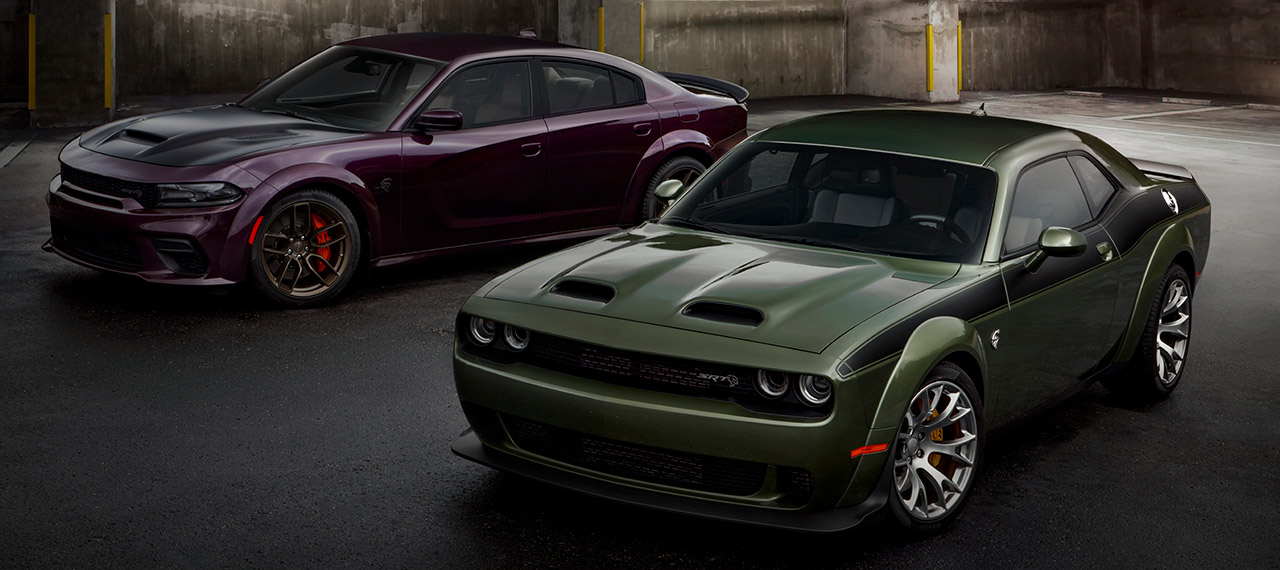
    2022 Dodge Charger and Challenger SRT Hellcat Redeye Widebody Jailbreak models

    Dodge brand is breaking all the rules, unlocking new, unrestricted, personalization options with new Jailbreak models for 2022 Dodge Charger and Challenger SRT Hellcat Redeye Widebodies. The Jailbreak models unlock color-combination ordering restrictions and add new factory-custom options to deliver enthusiasts the freedom to create a Dodge performance vehicle that perfectly fits their individual style.

    “Roughly half of all Dodge customers modify their vehicles,” said Tim Kuniskis, Dodge Brand Chief Executive Officer – Stellantis. “For those looking for increased performance, we will launch Direct Connection next month. But for those looking for a unique appearance, we are going to let customers run free through the styling archives. We’re taking most of the parts and pieces we’ve used over the years, adding a few new ones and letting customers build their own ‘One of One.’ So, if you’re dreaming about owning a Stinger Yellow Challenger with Brass Monkey wheels, Hammerhead Grey seats, blue Brembos and red badges, I’m not sure we should, but we’ll build it for you.”

    https://www.youtube.com/watch?v=GvdnYmfyco4

    The new Jailbreak option package for 2022 Dodge Charger and Challenger SRT Hellcat Redeye Widebody models unlocks ordering restrictions, freeing owners to mix and match from a full menu of features. Jailbreak models also include a unique Jailbreak badge on the instrument panel, and output on the SRT Hellcat Redeye Widebody is bumped to 807 horsepower thanks to a revised powertrain calibration.

    The Jailbreak model for the Dodge Challenger SRT Hellcat Redeye Widebody lets option combinations run wild in more than 20 categories, including seven options for seats, stripes and wheels; six brake caliper color options; five exterior badging finishes; four choices each of steering wheels; seat belt colors and floor mats; and much more.

    In addition to unlocking previously restricted color combinations, Challenger SRT Hellcat Redeye Widebody Jailbreak also unleashes new Jailbreak-exclusive content options, including:

    • Hammerhead Grey Laguna leather seats
    • Hammerhead Grey floor mat accents
    • Hammerhead Grey, sepia and Demonic Red seat belts
    • Leather steering wheel and Alcantara steering wheel options, with white SRT logo
    • Copper Weaver carbon fiber bezel finish
    • Decklid stripe and Widebody side stripe
    • Brass Monkey, Satin Chrome and red exterior badging finish
    • Chrome fuel door finish
    • Blue and yellow brake calipers
    • 20-by-11-inch Warp Speed Satin Carbon and lightweight Low Gloss Granite wheels

    For the Dodge Charger SRT Hellcat Redeye Widebody Jailbreak model, option and feature combinations are also plentiful. Personalization paths run through seven wheel options, six exterior stripe and brake caliper color offerings, five varieties of seats and exterior badging finishes, and four options of steering wheels, seat belt colors and floor mats.

    Exclusive Jailbreak content options for the Charger SRT Hellcat Redeye Widebody Jailbreak include:

    • Hammerhead Grey Laguna leather seats
    • Hammerhead Grey floor mat accents
    • Hammerhead Grey, Sepia and Demonic Red seat belts
    • Leather steering wheel and Alcantara steering wheel options, with white SRT logo
    • Hood, roof and decklid vinyl stripes
    • Brass Monkey, Satin Chrome and red exterior badging finish
    • Black Nickel exhaust tip finish
    • Blue and yellow brake calipers
    • 20-by-11-inch Warp Speed Satin Carbon and lightweight Low Gloss Granite wheels

    Those who can’t decide from among the wide array of features can opt for order combinations created by the Dodge Product Design Office, such as Old School and Brass Funky.

    The Old School Challenger Jailbreak model features an F8 Green exterior dressed up with 20-by-11-inch Warp Speed Satin Carbon wheels; Satin Chrome Hellcat grille, fender and decklid badging; Gunmetal Grey brake calipers; a Chrome fuel door; Hammerhead Grey floor mat accents and seat belts; Dark Engine Turned aluminum bezels; leather steering wheel with a white SRT logo and a twill headliner.

    The Brass Funky Charger Jailbreak combines a Hellraisin exterior with sepia Laguna leather seats, sepia floor mat accents, carbon fiber bezels, suede headliner and an Alcantara steering wheel with a white SRT logo on the interior. The exterior also includes 20-by-11-inch Brass Monkey wheels; Brass Monkey Hellcat grille, fender and decklid badging; orange brake calipers; carbon dual stripes and black exhaust tips.

    Additional recommended order combinations include Red Dawn, The Classic, Yin Yang and more.

    The 2022 Dodge Charger and Challenger SRT Hellcat Redeye Widebody Jailbreak option package will be available for customer orders through dealerships in late Q4 2021 at a U.S. manufacturer’s suggested retail price (MSRP) of $995.

    Dodge Power Brokers dealers will be able to order and display Jailbreak models in their showrooms. The new Dodge Power Brokers program, recently announced in tandem with the new Direct Connection performance parts line, will build a network of dealerships equipped with staff trained to deliver a performance-focused customer service experience.

    Dodge//SRT

    For more than 100 years, the Dodge brand has carried on the spirit of brothers John and Horace Dodge. Their influence continues today as Dodge shifts into high gear with muscle cars and SUVs that deliver unrivaled performance in each of the segments where they compete.

    Dodge drives forward as a pure performance brand, offering SRT versions of every model across the lineup. For the 2022 model year, Dodge delivers the drag-strip dominating 807-horsepower Dodge Challenger SRT Super Stock, the 797-horsepower Dodge Charger SRT Redeye, the most powerful and fastest mass-produced sedan in the world, and the Dodge Durango SRT 392, America’s fastest, most powerful and most capable three-row SUV. Combined, these three muscle cars make Dodge the industry’s most powerful brand, offering more horsepower than any other American brand across its entire lineup.