SKODA will present a world-premier design concept called MissionL at this year’s Frankfurt International Motor Show. Close to the final production-ready design, this concept car reveals the look of SKODA’s upcoming model line that is to become symbolic of the Czech carmaker’s planned model offensive.
The new compact five-door vehicle will be launched in Europe, Russia and China. In line with the brand’s internationalisation principles, this compact ‘liftback’ will feature specific modifications in each of these regions. In addition, the Indian market will have its own version, a compact sedan. These steps are in line with the goals of SKODA’s 2018 growth strategy that was set last year in which the brand intends to increase its sales to 1.5 million vehicles by 2018.
“Revealing the look of our new compact model, the MissionL shows exactly the direction our brand is going to take,” says SKODA Board Chairman Prof. Dr. h.c. Winfried Vahland. “The world premiere in Frankfurt gives a clear signal that SKODA is going full steam ahead now. We are going to present a new vehicle every six months over the next two or three years.”
Skoda MissionL Concept
In line with its 2018 growth strategy, the brand is gearing up, investing heavily in new models, markets and production capacities. Starting in mid 2013, the Yeti will be launched in the Chinese market and will be produced locally. Furthermore, SKODA, in cooperation with Shanghai Volkswagen, will produce a new compact model for this market from 2013, increasing the number of models produced in China to five.
The brand will also expand production in Russia through the Volkswagen Group’s partnership with the Russian-based car manufacturer GAZ Group. The GAZ plant in Nizhny Novgorod will start producing the Yeti in the fourth quarter of 2012. In India, SKODA will start production of a brand new compact sedan this year. The brand also remains focused on its traditional markets – Europe and the Czech Republic, its home market. Beside the Fabia and Octavia, SKODA’s main plant in Mladá Boleslav will produce a third model; the brand is already increasing the capacity of its production lines. Starting in late 2012, SKODA will also manufacture the automatic twin-clutch gearbox DQ200 in its plant in Vrchlabí.
Ford Mustang appeared in 1964 and became the ancestor of the Pony-Car-Class (Pony-Car-Klasse). Until now, the varieties of such bodies as Coupé, Fastback and Cabriolet is still a sensation due to their appearance.
Design-World Company in Sundern which is, incidentally, for more than six years is responsible for modeling station of CarFilmComponents (CFC-Styling Station), gave the originally equipped, a free-living prairie no weak engine with 412 hp an additional power impetus. Now the engine hasas 435 hp with 5-liter capacity. V8 with 6 speed manual transmission of 2011 model year is fully equipped, including Shaker 1000 CD/MP3 sound system. The above mentioned increase in the capacity is achieved byopen air filter with air box (Airbox), as well as software optimization.
At the same time, the car speed has been limited, but not as in previous versions. This condition is mandatory for such a wild horse.
Ford Mustang by Design World
The alloy wheels of 8,5×20 inches with 255/35ZR20 tires on the front axle, and of 10×20 inches with 285/30ZR20 tires on the back axle are actively supported by the thread undercarriage from H&R.
But let’s move on to the main accomplishment of the Design-World in Sundern: for example, the fact that this company can make your car look different, so no one will confuse it with other models. . For the beginning – the varnishing, including grinding of the plastic parts that were not varnished, such as channel bar, diffuser, radiator and bumper. The black painting of the Mustang GT remained unchanged. The foil finish with contrasting color nuances in metallic black, metallic orange, white, and the carbon foil (CFC-Black-metallic, CFC-Orange-metallic, CFC-White, as well as CFC-Carbon-Strukturfolie-Black).: Who can imagine this free animal in a fast gallop? Without the use of fantasy.
The total cost of the reconstruction of the “CFC-Sundern Mustang Project” is 12.150,00 euro.
Citroеn will present a brand new, highly innovative concept vehicle at this year’s Frankfurt Motor Show. Called Tubik, this eye-catching model is a high-tech executive shuttle based on one key idea – travel should be fun.
Building on Citroеn’s Multicity project – an online portal and route finder, currently live in France, which covers all available means of transport (car, train, plane, etc.) – Tubik takes mobility solutions to the next level. Featuring the very best of Citroеn’s ‘Créative Technologie’, Tubik is specifically designed to make travel meaningful and enjoyable.
Inspired by Citroеn’s renowned Type H or ‘TUB’ van, but with all the prestigious styling and characteristics of modern Citroеn design, Tubik is a 9-seater packed with entertaining technology. Exceptionally striking both inside and out, Tubik boasts offbeat, distinctive styling with colours and materials designed to meet the highest standards of sophistication and comfort.
As part of its design philosophy, Tubik responds to a changing society where extended families and groups of friends travel together, often in numbers exceeding four or five, with plenty of room for luggage.
Citroen Tubik Concept
To make travel enjoyable for its passengers, Tubik incorporates a lounge-style cocoon dedicated to comfort and relaxation. The modular seats are designed to be arranged in many different ways (semi-reclined, face-to-face, etc.), and the onboard technology – which includes a giant semi-circular screen and high-definition surround sound – turns the cabin into an area that is perfect for sharing over long distances. With the Citroеn Tubik concept, the journey becomes as important as the destination.
Offering generous space whilst minimising fuel consumption, Tubik is powered by Citroеn’s innovative Hybrid4 technology. With this full-hybrid diesel drivetrain and optimised aerodynamics, Tubik maintains CO2emissions at a level comparable to a conventional saloon.
CITROЕN TUBIK IN MORE DETAIL
The design lines of Tubik are a nod to the Citroеn ‘TUB’ (from the French acronym for low front-wheel drive commercial vehicle) and its ingenious upgrade, the Type H, whose versatility and styling made it a best seller with half a million units produced over 34 years.
At 4.80m long, 2.08m wide and 2.05m tall, Tubik is big enough to carry up to nine passengers. The front end, which stands apart from the main body, brings to mind the corrugated metal of the Type H van with its distinctive ribbing, while the windscreen pillars are reminiscent of the Type H’s two characteristic ridges. Making Tubik look even more protective, Citroеn’s designers have combined two contrasting colours – the metallic grey of the body shell enveloping the pearlescent white at either end – which also mark the position of the diesel engine (at the front) and electric motor (at the rear) used by the full-hybrid diesel drivetrain.
The simple, yet attractive exterior subtly incorporates two large doors with access to the driving position and the ‘living area’, which are barely visible when closed. The huge cabin door opens upwards and incorporates the entire side of the vehicle. As journeys with larger groups of people generally involve luggage, the rear end conceals a cleverly designed hold.
Citroеn Tubik creates a high-tech world designed around the driving position, an area dominated by what the designers call the ‘cyclotron’ – a module that groups the seat, pedal assembly, steering wheel and curved head-up display in one circular form. The aluminium grey of the bodywork is also present in the cyclotron to accentuate its robust, protective appearance.
Sitting in the black full-grain leather seat, the driver is identified by a fingerprint recognition system. The head-up display screen, mounted immediately in front of the steering wheel, provides all the information required for navigation. For all-round visibility, Tubik also features reversing and rear-view cameras.
Tubik’s ‘living area’ is a lounge-style cocoon with materials borrowed from the worlds of architecture and interior design – including felt seats, silken backrests and door panels, and a leather floor. The ambient lighting in the cabin highlights the colours and materials. To create an atmosphere of privacy, the moucharaby and large panoramic window are an original way for passengers to see out easily, without others looking in.
Passengers can arrange the three rows of seats as they wish. Each seat is independent for maximum comfort.
The first row of seats lets two people sit facing the road or facing the other passengers. The middle row can seat up to three people or, alternatively, can be converted into a small table, be folded onto the last row to free up an area of almost 2m², or be folded out completely to create a meridienne-style seat – a configuration ideal for relaxation. Passengers then become spectators, taking advantage of the large multimedia screen in a semi-reclined position.
Tubik is both exceptionally spacious and environmentally conscious. With its Hybrid4 technology, CO2 emissions are close to those of a conventional saloon. The full-hybrid diesel drivetrain also offers more range than a stand-alone internal combustion engine and maximises traction in four wheel drive mode – the front wheels being driven by the diesel engine and the rear wheels by the electric motor. The 22” wheels feature deep, narrow, very low rolling resistance tyres to further help optimise fuel consumption.
For the best combination of comfort and road-holding, Tubik features Citroеn’s exclusive Hydractive suspension technology, which keeps the vehicle level regardless of load. At high speeds, Tubik is automatically lowered to promote aerodynamic performance, further reducing fuel consumption and CO2 emissions.
Eterniti is an independent, boutique British luxury carmaker, uniquely based in London. The company aims to satisfy a growing demand for additional luxury, personalised specifications and exclusivity among car buyers, particularly in major cities and global wealth centres.
The company’s first car will reflect this. The Hemera will be the world’s first Super-SUV, providing new levels of luxury, space and performance in an SUV to create a new niche. It will feature a limousine-like rear cabin, including twin reclining seats, iPads and a drinks chiller, giving customers the option of being chauffeured as well as driving. But with compact dimensions, 4×4 ruggedness and dynamic performance, it is also both practical and retains driver appeal.
The Hemera will be shown in Frankfurt as a prototype, with production and deliveries to start in 2012. It is based on the latest generation of the best large SUV platform available, which will undergo a chassis-up rebuild, with a new, repackaged interior, carbon-composite body panels and additional performance.
Eterniti Hemera
Eterniti is backed by a group of international investors and has been established by people who have a passion for cars. The team has extensive experience in retailing some of the most prestigious British and European luxury and high-performance car brands, in markets from the UK to Asia-Pacific. It has further experience in the development and manufacture of high-end components and motor sport.
The engineering team is led by Alastair Macqueen, who was responsible for the development of the Jaguar XJ220 supercar to production and has won the Le Mans 24-Hour race with both Jaguar and Bentley. Eterniti also has its very own F1 driver, Johnny Herbert, like Macqueen victorious at Le Mans but in addition a winner of three Grands Prix during a 10-year Formula 1 career. Johnny will have an active involvement in developing Eterniti vehicles as well as serving as an ambassador for the brand.
Eterniti is establishing a London hub featuring a showroom, car build and service centre, and a separate atelier where customers can discuss their requirements and create a bespoke specification for their cars, which will be hand-built on site by British craftsmen and technicians. The London facilities will open later this year, with further showrooms in key international cities to follow from 2012.
The Subaru XV was developed under the concept of “Urban Adventure” as a new type of crossover vehicle featuring a sporty and casual design. The XV projects the unique value Subaru aims to bring to the C-segment crossover market. With overall proportions conveying a sense of stylishness and lightness, the XV design also displays the confident presence of a crossover vehicle. Its superior drive performance and fuel efficiency are warranted by the Subaru’s next generation power unit and Subaru core technologies – the symmetrical All-Wheel-Drive and advanced Subaru Dynamic Chassis Control Concept – making the XV incredibly safe and secure to drive. Subaru has made it possible to truly provide “Enjoyment and Peace of Mind” as defined in its new brand statement, “Confidence in Motion,” in this new Subaru XV.
Subaru XV
Specifications
Body size (Overall: Length x Width x Height): 4,450 x 1,780 x 1,570mm,
Wheelbase: 2,635 mm
Power Unit: New generation Subaru Boxer engine (2.0-litre 4-cylinder Horizontally-Opposed engine) plus Lineartronic (CVT)
The launch of the 2012 Honda Insight at Frankfurt Motor Show (IAA) 2011 in September reaffirms Honda’s commitment to reducing CO2 emissions.
The 2012 Insight is now even more environmentally friendly producing just 96 g/km* of CO2. Fuel economy and emissions have been improved by means of enhanced aerodynamics and powertrain efficiency. Reduced engine friction , Continuous Variable Transmission (CVT) and better air conditioning, benefiting from a new cold storage system, all contribute to lower fuel consumption.
The Insight also receives a fresh exterior design including a new front grille. The slimmed tail spolier allows for a wider rear glass area, and combining this with a modified tail gate garnish and a reduction in the size of the wiper motor unit results in overall increased rear visibility.
Adjustments have been made to the engine and suspension for an overall improvement to ride comfort and stability. The features within the interior have also been enhanced for a superior quality.
With the electric-only powertrain of the A2 concept, Audi is offering another peek into the future of electric mobility at the 64th International Motor Show (IAA) in Frankfurt. The technical study features a classic, premium-standard space concept that offers plenty of room for four people.
The Audi A2 concept is just 3.80 meters (12.47 ft) long, 1.69 meters (5.54 ft) wide and 1.49 meters (4.89 ft) high; even so, it makes an elegant, powerful and sporty impression on the street. Its clean appearance concentrates on the essentials; all details are subtle but shaped for visual impact. The dark glass roof of the white-painted show car switches to transparency with the push of a button.
With its headlights, Audi is presenting the next phase in LED technology, known as matrix beam. A package of LEDs and microreflectors generate a high-resolution and non-glaring high-beam light. Delicate daytime running light fibers frame the highly efficient LED low-beam light module. Intelligent tail lights adapt their illumination to the visibility conditions. The rear fog light, produced by laser diodes, is seen as a beam of light in fog and projects a red triangle onto the road as a warning.
The dynamic light runs below the edge of the window from the front to the rear of the A2 concept – a band of light that contains a multitude of innovative, dynamic light functions. Integrated approach sensors detect the owner and unlock the doors via gesture control. While driving, the dynamic light functions as a continuous side marker light. If the car’s indicator is activated, light impulses run throughout the entire band of light.
Audi A2 Concept
In addition, a red bar of light flows forward from the tail lights when braking and demonstrates the strength of the brakes intuitively for other road users.
The dynamic light is also located in the cockpit area of the show car, structured in two separate arches. Like the entire interior, the dash panel has a light and clean look and intuitive controls. The driver manages many important features via touch-control areas on the inside of the steering wheel. Two additional control surfaces fold up at the driver’s right when starting the vehicle. An open profile serves as the steering column; a seven-inch display and two secondary displays are located at its end.
The Audi A2 concept has a flat interior floorboard. The center console is attached to the driver’s seat; the rear console extends forward between the two rear seats. The four individual seats add lightness, and there is storage space under the fold-up seat cushions. There is room between the rear seats for a city bicycle with its front wheel removed. The load area has two levels; a frame with functional nets creates the upper level.
The colors and materials in the interior support the impression of lightness and functionality. The large areas from the door top shoulders to the floor bear a new and innovative covering material made of polyurethane with a neoprene surface feel; a ribbed material made from recycled polyester covers the central floor area. The seat shells are made with a plastic blow molding technique. Aluminum elements create highlights the cockpit.
NILS, a single-seat electric concept vehicle that offers a glimpse of a new form of minimalist mobility, has been unveiled ahead of its public debut at the Frankfurt Motor Show later this month. This concept car – which features an aluminium space frame, wing doors and free-standing wheels – has the dynamic performance of a sports car, yet travels silently, and with zero emissions.
The NILS project is supported by the German Federal Ministry of Transport, Building and Urban Development, and is designed to be both technically realistic and economically supportable.
‘NILS anticipates the future. The goal of the NILS project is to research a technically concrete and economically feasible vehicle concept for micromobility which restructures individual transportation to make it more efficient and environmentally compatible based on electric drive technology,’ said Dr Ulrich Hackenberg, member of the Board of Management and Head of Development for the Volkswagen Brand.
With a range of 65 kilometres (40 miles) and a top speed of 130 km/h (80 mph) NILS would be the ideal vehicle for the majority of commuters in Germany. According to the German Bureau of Statistics, 73.9 per cent of all commuters residing between Berlin and Munich cover less than 25 kilometres (15.5 miles) on their way to work.
Volkswagen NILS Concept
Cars have always been mirrors of their times – their design styles and technological standards reflecting a particular era – and NILS is no different. It uses emissions-reducing electric drive technology to fulfil the specific requirements of commuters. In Germany, for example, about 60 per cent of all commuters travel by car, according to the Federal Bureau of Statistics; of these over 90 per cent travel alone. Zero-emissions vehicles like NILS will offer these frequent drivers a new eco-friendly mobility solution.
NILS is a very compact car that requires extremely little space in traffic. It is only 3.04 metres long – making it about 50 cm shorter than the new Volkswagen up! – just 0.39 metres wide from wheel to wheel, and a mere 1.2 metres tall.
NILS has the same basic layout as a Formula 1 race car, with the driver in the middle, the engine in back, and free-standing outboard wheels. The 17-inch alloy wheels are equipped with 115/80 (front) and 125/80 (rear) tyres optimised for low rolling resistance.
Though its inspiration may come from Formula 1, the styling has its origins at the Volkswagen Design Centre in Potsdam, Berlin. Designer Thomas Ingenlath, the centre’s director, said: ‘NILS was designed to make a visual statement and transport a vision of the automotive future to the present. I am especially pleased that we managed to implement the concept of the two glass wing doors. This allowed us to create large transparent surfaces and simultaneously to make entering and exiting the vehicle very comfortable, even in the most cramped of parking spaces.’
Because NILS is so compact and lightweight (460 kg), it is a lot of fun to drive. It has a top speed of 130 km/h, and can accelerate to 100 km/h in less than 11 seconds. This is achieved using an electric motor with a reasonably small 15 kW nominal power and short-term peak power of 25 kW. A lithium-ion battery supplies the electric motor with energy. The battery capacity (5.3 kWh) enables driving ranges of up to 65 km, depending on the style of driving. A battery of this size is relatively inexpensive, and can be charged either via a conventional 230-volt electrical outlet (maximum charging time two hours) or at an electric vehicle charging station. The socket is located at the back underneath the rear lighting module.
The centrepiece of the electric drive system is the lightweight 19 kg electric motor together with its transmission and battery. Energy management is via a high-voltage pulse inverter, which – together with the 12-Volt DC/DC converter for the vehicle electrical system and the charger – forms an integral drive unit. All drive unit components are located compactly in an aluminium housing at the rear of NILS; drive is to the rear wheels.
The motor, battery and all other components are so compact that there is still space for a small but practical bootspace. The body-coloured area above the rear lighting module swings upward, revealing space suitable for items such as a case of drinks and a bag.
Optimal weight distribution helps to ensure that NILS allows drivers not only to commute with zero emissions, but also to have fun while doing so. The lightweight NILS drives like a go-kart. The steering is purely mechanical (the low weight means power assistance is unnecessary), while the electric motor produces its maximum torque of 130 Nm from standstill, via a one-speed transmission. Suspension is by double wishbones front and rear; while ESP (Electronic Stabilisation Programme) helps to tame any over-exuberance on the part of the driver.
Safety is of course even more important than fun, and NILS is fitted with an automatic distance control system. This uses radar sensors to scan the space in front of the vehicle over a distance of about 200 metres and uses brake interventions to ensure that the distance to vehicles in traffic in front of the car does not drop below a specified minimum value. The system can even automatically brake the car to a stop, depending on the situation. Not only are the four disc brakes used to brake; electric traction by electric motor and battery regeneration can be used to brake as well. Last but not least, Front Assist is integrated in the automatic distance control system. This continually active system warns the driver of a potential collision; at speeds below 30 km/h (18 mph), automatic braking can avoid a collision under some circumstances.
The instrument cluster is a seven-inch TFT display. The vehicle’s speed is shown digitally in the middle, while energy flow is represented by bars. Another graphic display offers information on the driving range. The second central instrument is a mobile multifunctional device like the one used in the new up!: the Portable Infotainment Device (PID). It is snapped into theA-pillar to the right of the instrument cluster. Via touchscreen, the driver controls functions related to Navigation, Radio, Media, Telephone, Trip computer and – to preconfigure the driving range – ‘Eco. The PID computes the expected driving range, then it not only displays the route on the map display, but also the radius and thereby the destinations that can be reached using the current battery charge.
To save on weight and costs, certain functional elements and controls do without electrical assistance. The side mirrors, for example, are adjusted manually. The heating and ventilation system has full electronic control, and there is seat heating. Located to the right of the steering column is the motor start-stop switch; this round switch is also used to select D, N or R.
The aluminium space frame body was designed to be a highly effective safety cell. The body in white is produced from extruded aluminium, cast aluminium and sheet aluminium. The roof frame together with the door mounts, a roll bar, the bootspace and the front bulkhead consist of high-strength sheet aluminium. Extruded aluminium is used in the side sills, the transverse profiles and the front and rear car sections. The front and rear side body are aluminium. Parts made of high-strength plastic include the bumpers and the trim panels on the side sills.
The frames of the wing doors consist of three main elements: an inner section, a crash reinforcement section and an exterior part. When closed, they offer optimal crash safety. The door windows are made of lightweight, scratch-resistant, layered polycarbonate, while the front window is made of laminated safety glass.
The headlights are striking bi-xenon modules, while the indicator lights and daytime running lights are white and yellow LEDs. In the acrylic glass of the rear lights – integrated in the rear section like small wings – the light generated by LEDs is routed via transparent semiconductors which (appropriately for an electric vehicle) consume minimal amounts of power.
New BMW 1 M Coupe should logically be named M 1, but of course it can’t have such a name because M 1 usually refers to super sport cars made by BMW in 1980-s and expected new variants are excluded.
APP Europe adopted the 1 M Coupe in Igling, Bavaria which was called the most “uncompromisingly intensive” BMW and designed a car for everyday use with a unique combination of performance characteristics and light construction; this car is suitable for both track events and personal use and pleasure.
Basic parameters were aimed at lightweight construction and suitability for everyday use, better performance characteristics and good handling. In cooperation with System and Technology APP was able to create a new hit.
MR. Car Design from Erfstadt is responsible for “received” power increase from 340 hp (production cars) to 410 hp. Larger intercooler, silicon tires as well as appropriate software make it possible. Undoubtedly, a crucial role in the power increase is played by the lightweight titanium exhaust system with a new muffler inlet pipe, Metallkats with larger diameter. 50% weight saving compared to mass production is a good example of effectiveness of the abovementioned system.
APP Europe BMW 1 M
The steam hammer is equipped with 6 piston cramps of disk wheel braking system on the front axle and 4 piston cramps on the rear axle due to the optimization of the weight of the braking system Movit Cer Ceramic and therefore it is able for the forced braking power which is evident.
ATS super light wheel rims with a set of P Zero tires by Pirelli perfectly fit into the whole picture and contribute to the weight savings and better maneuverability.
A new car Variante 3 + suspension system with the direct digital control from iPhone/iPod touch App – muffler creates a link between daily comfort and absolute suitability for fast driving. An interesting processing of the tires with foil which repeats the interior color (orange, black and gray) is made by ZFZ Weilheim.
The interior design offers lightweight seats covered with BMW-Performance artificial leather and BMW-Performance steering wheel with a display. Thanks to APP Company the car was manufactured without any hustle or time economy. It is inevitable that this car is faster than similar production models but it can comfortably be used for everyday driving. An outstanding maneuverability has been reached due to the savings made by reducing chassis especially of bare masses.
Conversion costs without brakes: 14.000 Euro
Brake: 20.000 Euro
The fastest and most efficient production Jaguars ever created go on-sale today.
The new XF 2.2, capable of travelling in excess of 800-miles on a single tank of diesel while emitting just 149 g/km of CO2 is joined by the XKR-S – a car that can accelerate from rest to 100 mph in 8.7 seconds before reaching an electronically limited 186 mph.
Each model forms part of the new Jaguar 12MY programme of upgrades and improvements that sees the XF take on an elegant new look with extensive panel changes including the bonnet, front and rear lights and bumpers, front wings and improvements to the interior switchgear, the navigation system and seats. The relentless programme of engineering and design enhancements help ensure the XF, named ‘Car of the Decade’ by owners contributing to the Auto Express Driver Power survey, remains highly competitive in its class.
Similarly, the XK range benefits from a series of changes. A new, larger front grille is framed by a set of slim new headlight units, new horizontal front wing vents, new wheel designs and changes to the rear lights. For the first time bucket seats will be offered on the car while the interior features new trim finishes to further raise the levels of comfort and refinement.
2012 Jaguar XK
The highly successful XJ also benefits from subtle revisions. A rear-seat comfort option pack has been introduced that includes reclining seats, four-way adjustment for the lower back, a massage feature, footrests and winged headrests.
The new 12MY range is launched at an exciting time for Jaguar as it prepares to unveil the next stage in its bold, product-led strategy for growth at the Frankfurt Motor Show.
EcoVelocity visitors can be among the first in the world to experience future travel in a hydrogen-powered car, with passenger rides available in the ix35 FCEV. The vehicle is Hyundai’s third-generation FCEV and it demonstrates the company’s work on cutting-edge alternative fuels.
Boasting the same convenience as today’s vehicles powered by traditional internal combustion engines, the ix35 FCEV has a driving range of 360miles (580 Km), a maximum speed of 100 mph and zero-to-62mph time of 12.8 seconds. The fuel cell stack can operate at sub-zero temperatures as low as -25 degrees Celsius, and unlike a combustion-engined car, the ix35’s only emissions are water vapour.
This vehicle moves Hyundai closer to the commercialisation of fuel cell electric vehicles, and the aim is to bring an FCEV to market in the next few years.
Earlier this year, the Hyundai Motor Group signed a memorandum of understanding with four Northern European countries to operate test fleets of FCEVs. Test drives have already been carried out in Korea and Copenhagen.
Hyundai ix35 FCEV
Hyundai UK’s managing director, Tony Whitehorn, commented: “We are extremely excited to be showcasing the ix35 FCEV in the UK for the first time at EcoVelocity. Hyundai is a world leader in the development of hydrogen-powered technology and is constantly researching and developing modes of transportation that use alternative fuels at the Eco-technology research institute in Mabuk, Korea.
“The ultimate goal would be to see zero-emission vehicles on UK roads within the next few years; however, the market and local infrastructure will be the real determinant of this. In the interim, Hyundai is working hard to make internal combustion engines as efficient as possible.”
Also featuring on the Hyundai stand will be the sub-100g/km CO2 i10 Blue and the recently launched i20 Blue. The i10 Blue is powered by a 1.0-litre Kappa three-cylinder petrol engine returning an impressive 67.3mpg combined. The i20 Blue is powered by a 1.4-litre CRDi four-cylinder engine with76.4mpg on a combined cycle. Due to their low emissions, both vehicles offer exemption from VED and the London Congestion Charge.
Visitors will also be able to see Hyundai’s two newest models on the stand – the all-new i40 Tourer, due to go on-sale on September 8 and the Veloster coupe due to launch later this year.
EcoVelocity will run from September 8 -11th at Battersea Power Station and will feature the latest green models, including electric, hybrid and low CO2-emitting cars, as well as providing test drives on a specially-constructed circuit in the shadow of the famous power station.
Making its global debut at the 2011 Frankfurt Motor Show in September, the Ford Evos Concept represents the ultimate expression of Ford’s new global design language, and explores key future powertrain and vehicle technologies.
Created as a bespoke concept vehicle, the fastback introduces Ford’s first truly global design language as the momentum of the company’s One Ford product plan continues to build.
“The Ford Evos Concept unites three key elements which are at the core of our One Ford global product strategy: outstanding design, smart technologies and fuel economy leadership,” said Derrick Kuzak, group vice president of Global Product Development.
“With its compelling design and innovative technology experience, this is a clear demonstration of the exciting vision we have for the Ford brand. While you will never see this car on the road, the next generation of Ford products around the world will display many of the distinctive design ideas and advanced technologies it showcases.”
Technology vision for enriched customer experience
Ford Evos Concept is not just a design-led exercise. It also embodies the global Ford product development team’s move to design and develop vehicles as more than just an interior and exterior, or a collection of attributes.
“Our goal is to focus on enriching a customer’s every experience with their vehicle – by personalising it, adapting it, and creating unique, unexpected features that surprise and delight them,” said Kuzak. “In the Ford Evos Concept, this objective is explored and extended to the area of connectivity, where the intent is not to convert the vehicle into a smartphone, but rather to provide personalised and safe connection to the outside world in an enriching manner designed totally for the vehicle context.”
Ford’s global Research and Innovation team, led by Paul Mascarenas, was tasked with building Evos Concept around a technology experience as visionary as the design. The result signals how Ford intends to build on the momentum of innovations like the SYNC in-car connectivity system.
Ford Evo Concept
“At Ford, the future of technology in the car will be defined by the experience that it delivers to the driver and passengers,” said Paul Mascarenas, chief technical officer and vice president of Ford Research and Innovation. “We see technology as more than just an impressive list of microprocessors, sensors and software; it’s about the application of that technology to create an experience that enhances the driver’s time behind the wheel.”
The concept’s technology experience embraces a new generation of driver interaction and awareness currently under development in the Ford Research and Innovation laboratories. Seamless connectivity between the vehicle and the driver’s ‘personal cloud’ of information is at the heart of the vision for its capabilities.
“The possibilities are fascinating when we explore how to enable a seamless lifestyle between home, office and car linked by access to the driver’s personal information,” Mascarenas said.
With information from the cloud, the vehicle can provide the same connected lifestyle the driver experiences at home or office. The car knows the driver, and automatically adapts handling, steering and engine controls to deliver an exceptionally dynamic driving experience.
Ford researchers are focusing their efforts in this area to deliver on four key customer benefits: personalisation, seamless enhancement of the driving experience, looking after the driver’s well-being and delivering smart electrified powertrain optimisation.
The personalised, cloud-connected lifestyle
While today’s Ford products provide drivers with many personalisation options, cloud connectivity will enable future Ford vehicles to take the experience to the next level.
Drawing from a detailed understanding of the driver’s preferences and driving habits, the Ford Evos Concept combines this personal information with additional data from the cloud, such as the driver’s work schedule and local traffic or weather conditions. This information provides a personalised and seamless experience as the driver transitions in and out of the car.
“We’re researching how we can use patterns or preferences set by the driver to make life simpler,” said Mascarenas. “The car gets to know you and can act as a personal assistant to handle some of the usual routines of a daily commute.”
It could automatically play the same music or news program that was just streaming at home, or heat or cool the interior to an ideal temperature before the driver gets in without having to be requested by predicting departure time based on his calendar. Wirelessly communicating with devices in the home, it could close the garage door and switch off the lights automatically as it pulls away.
“This cloud-connected vision shows the enormous potential of tailoring the driving experience to suit the exact personal tastes and moods of the driver,” said Mascarenas. “From recommending a great driving road from friends on your social networks or resetting your alarm clock to let you sleep in when a morning meeting gets cancelled!”
Enhanced driving experience
Ford Evos Concept explores adaptive vehicle technologies to redefine the driving experience.
Current technology requires vehicle chassis settings to be defined based upon the abilities and tastes of a cross-section of drivers and the topography of typical roads. The concept foresees tuning handling and performance to the road ahead and the specific individual behind the wheel.
Learning driver habits and capabilities, the technology can overlay map and weather data sourced from the cloud to adjust powertrain, steering, suspension and braking systems for optimum enjoyment, comfort and safety. Because the vehicle is adaptive and honed to maximum performance based on the situation, it takes driving engagement to a new level.
Driver wellness
Ford researchers have already developed technologies focused on driver wellness, such as the heart-rate monitoring seat and certified allergy-free interiors. With a seamless connection to the cloud, the Ford Evos Concept monitors the physical state and workload of the driver and adjusts the driving experience accordingly.
“Our wellness research and technologies are focused on relieving driver stress and enhancing their situational awareness,” said Mascarenas. “Drivers around the world are spending more time behind the wheel, and the car should not be another stress point in their lives.”
The Ford Evos Concept is also equipped with advanced air quality sensors and filtration systems to help allergy sufferers. Location aware, it can access air quality data from the cloud and proactively suggest a healthier route to the destination.
In dynamic driving situations, the vehicle may simplify the appearance of the instrument panel to display only necessary gauge information and switch the driver’s connected smartphone to “Do Not Disturb” mode to help keep the focus of attention on the road.
Cloud-optimised hybrid powertrain
Completing the vision for the Ford Evos Concept is a state-of-the-art lithium-ion plug-in hybrid (PHEV)powertrain providing the same next-generation performance and fuel economy as the Ford C-MAX Energi scheduled for introduction in North America in 2012 and Europe in 2013.
Ford ‘powersplit’ hybrid architecture allows the electric motor and petrol engine to work together or separately to maximise efficiency. The advanced powertrain typically runs in all-electric mode before switching to charge-sustaining hybrid mode for continued optimal fuel efficiency.
Cloud connectivity would provide further opportunities to enhance performance and efficiency by selecting the optimum combination of powertrain modes for any given journey.
“Access to historical driver behaviour and travel patterns allows us to calculate the optimal fuel and energy efficiency by predicting the destination,” said Mascarenas. “Our researchers are working to increase understanding of driver behaviour, develop accurate protocols to predict it and enhance the trip by providing the smartest use of fuel or battery for the situation.”
The cloud-optimised powertrain would automatically ‘know’ when to save energy and switch modes, using information about the vehicle’s predicted travel route, any emission zone restrictions during the journey and current weather conditions.
In the future, communities may place firm restrictions on the types of vehicles allowed to use certain roads or highway lanes, and some city centres may choose to be open only to full electric vehicles. Helping drivers comply with such regulations could therefore be among the benefits of this technology. For example, the French government is considering creating zones mandating lower emissions, while cities such as London, Berlin, and Stockholm already have them in place.
This capability would further enhance the performance of Ford’s advanced PHEV technology, which offers an overall driving range of more than 500 miles (800 kilometres) using the battery and engine – more than any other plug-in or extended-range electric vehicle.
“With its leading-edge ‘cloud-optimised’ PHEV powertrain offering outstanding efficiency and range with supreme driving enjoyment, the Ford Evos Concept highlights our vision for greener, smarter vehicles with outstanding customer appeal,” said Kuzak.
Ford’s new design direction
The Ford Evos Concept was specifically developed to introduce the new Ford design direction. Key design elements will be applied to forthcoming Ford vehicles.
The new global design DNA provides the company’s worldwide design teams with a common framework to guide the creation of new products, enabling them to shape a coherent family of distinctive vehicles sharing the same fundamental design character.
“We wanted the Ford Evos Concept to give a clear message about where Ford design is heading – shaping vehicles that are fun to drive, have a strong premium visual appeal, and above all, are stunningly beautiful,” said J Mays, group vice president, Design and chief creative officer.
“Our exciting new design DNA has been developed and refined by an intensive effort by all of our talented global design team,” said Mays. “As a team, we wanted to create a more technical design vocabulary to help communicate the smart technology that is now core to the Ford brand. In addition, we worked particularly hard on meeting the high-expectations of a new generation of buyers – a group of consumers who have grown up surrounded by beautiful, premium design work on even the most affordable products.”
Dramatic fastback design with unique proportions
To provide a fitting vehicle to introduce the new design language, the Ford Evos Concept was conceived as a dramatic fastback concept, combining a striking new profile with innovative proportions. Attention-grabbing lines conceal a unique new format, with a four-door, four-seat layout which combines dynamic appearance with surprising practicality.
“This is an exciting new interpretation of the fastback bodystyle, with a really innovative silhouette as well as dramatic and very modern proportions,” Mays said.
With the length of a typical C-car, but with width of a CD-car, the Ford Evos Concept has a powerful, sporting stance. The forward position of the cowl, the strongly rounded front screen and the A-pillars set further to the rear enabled the designers to create the impression of a classic GT car, but with a very contemporary feel.
The concept’s spectacular hinged gullwing-style doors, both front and rear, provide outstanding access to the spacious four-seat cabin.
The concept car measures 4.50m (177in) long, 1.97m (77in) wide and 1.36m (53in) high, with a wheelbase of 2.74m (108in).
Distinctive evolution
Shaped as the ultimate expression of the new design DNA, the Ford Evos Concept highlights key elements of Ford’s distinctive new global design language.
“The new design DNA marks a bold evolution of the kinetic design language featured on existing global Ford products and is characterised by a number of important elements that will contribute to an unmistakable future Ford look,” said Mays.
From the front, the Ford Evos Concept immediately signals the arrival of something new – a new face for Ford featuring the signature trapezoidal grille mounted higher on the car and creating a confident, more premium look.
Bold, technical shapes, such as the extremely slim ‘laser cut’ front lamps or the dramatic graphic created by the front and rear screens connected by the thin glazed section of the roof, add a distinctive character to the design. Sculptured flanks highlight attention to detail on the surfacing, which lends a refined quality and a tauter, more muscular character.
“The Ford Evos Concept embodies the core elements of the new global design language, while capturing the dynamic, fun-to-drive spirit which is central to the Ford DNA,” said executive design director Martin Smith. “Most notable is the brand new ‘face of Ford’, with its higher mounted trapezoidal grille, and the design is characterised by the use of very bold, technical graphics. We have also created much more refined and precise surfacing, and these elements together give a strong visual sense of premium quality.
The vehicle was sculpted with the same purity of surface sculpture and attention to detail which characterise premium vehicles. Around the world, a new generation of buyers have come to expect premium design in all products, regardless of the purchase price.
Built around the driver
Reflecting the fun-to-drive spirit of its exterior design, the interior of the Ford Evos Concept is built around the driver. A stylish and innovative cockpit promises new levels of driving pleasure and driver interaction.
The interior architecture features clean and simple surfaces, with a muscular, athletic character to the slim upper instrument panel, enhanced by bold trapezoidal cut-outs. Contrasting these muscular forms, curvaceous cockpit display surfaces sweep down either side of the driver, providing secondary information about vehicle and infotainment systems.
The concept features a bold red driver’s seat and the vision of unprecedented driver interaction via an advanced driver interface. The two rear seat passengers get an equally special experience, with dedicated touch-screen displays to interact with the vehicle and individually adjustable sports seats.
“Both the exterior and interior of the Ford Evos Concept clearly communicate that this is a driver’s car, so that as soon as people see the vehicle, they will immediately want to get in and drive,” said executive design director Moray Callum.
 SKODA will present a world-premier design concept called MissionL at this year’s Frankfurt International Motor Show. Close to the final production-ready design, this concept car reveals the look of SKODA’s upcoming model line that is to become symbolic of the Czech carmaker’s planned model offensive.


 Ford Mustang appeared in 1964 and became the ancestor of the Pony-Car-Class (Pony-Car-Klasse). Until now, the varieties of such bodies as Coupé, Fastback and Cabriolet is still a sensation due to their appearance.


 Citroеn will present a brand new, highly innovative concept vehicle at this year’s Frankfurt Motor Show. Called Tubik, this eye-catching model is a high-tech executive shuttle based on one key idea – travel should be fun.


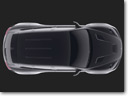 Eterniti is an independent, boutique British luxury carmaker, uniquely based in London. The company aims to satisfy a growing demand for additional luxury, personalised specifications and exclusivity among car buyers, particularly in major cities and global wealth centres.


 The Subaru XV was developed under the concept of “Urban Adventure” as a new type of crossover vehicle featuring a sporty and casual design. The XV projects the unique value Subaru aims to bring to the C-segment crossover market. With overall proportions conveying a sense of stylishness and lightness, the XV design also displays the confident presence of a crossover vehicle. Its superior drive performance and fuel efficiency are warranted by the Subaru’s next generation power unit and Subaru core technologies – the symmetrical All-Wheel-Drive and advanced Subaru Dynamic Chassis Control Concept – making the XV incredibly safe and secure to drive. Subaru has made it possible to truly provide “Enjoyment and Peace of Mind” as defined in its new brand statement, “Confidence in Motion,” in this new Subaru XV.

 The launch of the 2012 Honda Insight at Frankfurt Motor Show (IAA) 2011 in September reaffirms Honda’s commitment to reducing CO2 emissions.

 With the electric-only powertrain of the A2 concept, Audi is offering another peek into the future of electric mobility at the 64th International Motor Show (IAA) in Frankfurt. The technical study features a classic, premium-standard space concept that offers plenty of room for four people.


 NILS, a single-seat electric concept vehicle that offers a glimpse of a new form of minimalist mobility, has been unveiled ahead of its public debut at the Frankfurt Motor Show later this month. This concept car – which features an aluminium space frame, wing doors and free-standing wheels – has the dynamic performance of a sports car, yet travels silently, and with zero emissions.


 New BMW 1 M Coupe should logically be named M 1, but of course it can’t have such a name because M 1 usually refers to super sport cars made by BMW in 1980-s and expected new variants are excluded.


 The fastest and most efficient production Jaguars ever created go on-sale today.


 EcoVelocity visitors can be among the first in the world to experience future travel in a hydrogen-powered car, with passenger rides available in the ix35 FCEV. The vehicle is Hyundai’s third-generation FCEV and it demonstrates the company’s work on cutting-edge alternative fuels.

 Making its global debut at the 2011 Frankfurt Motor Show in September, the Ford Evos Concept represents the ultimate expression of Ford’s new global design language, and explores key future powertrain and vehicle technologies.


