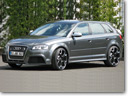
The latest development from B&B is the current Audi RS3, for the B&B retrofit program has now been completed. The engine power increases in the strongest expansion phase up to 510 hp and 680 Nm. Hereby performance values on super sports car level are achieved: 0-100km/h 3.5 sec – 0-200km/h 12.5 seconds – top speed 310km/h.
The 4-stage B&B engine program begins with a change in the electronics and a slight increase in boost pressure to raise the power of the 2.5ltr. TFSI engine for only 1,950€ to 410 hp and 560 Nm.
In Stage 2 for 2950.- € 425 hp and 580 Nm are reached. Here, the air induction, airflows and charge air cooling will be optimized, the boost pressure is increased by about 0.25bar and the electronic injection code fields are adjusted to these changes.
Level 3 (450 hp / 600 Nm / 7.950.- €) includes in addition to Level 2 a special sport exhaust system to decrease the exhaust back pressure and exhaust temperature. Furthermore, a special charge air cooling system is installed. This results in a higher power output while reducing the thermal load of the engine and exhaust gas turbocharger is achieved.
B&B Audi RS3
To reach the final performance in Stage 4 to 510 hp and 680 Nm of torque, the technicians from B&B in addition to Level 3 change the exhaust gas turbocharger to a larger special turbocharger. In addition to this, the installation of a racing exhaust system with metal catalysts, a high pressure pump and a special sports clutch is made. Finally, adjustments in the intake and engine management are carried out. The price of the power stage 4 is 15.950.- €.
In order to reduce exhaust back pressure and exhaust temperature and improve the sound, B&B built a sports exhaust system made ??of solid stainless steel, which causes an additional power increase of approximately 6-8 horsepower. By using this sport exhaust system with a higher power output is achieved while reducing the thermal load of the engine and exhaust gas turbocharger.
In addition to the increased performance, are 20mm lower sports suspension springs (398 – €) and adjustable coilover suspension, in comfort or sport setup (from € 1.298.-), as well as exclusive wheels in 19 “and 20” (from € 2998.-) available.
For the high performance a special 4 – or 6-piston high performance brake system (from € 4698.-) provides corresponding delay, which gives the Audi RS3 driver each time a comforting feeling of superior security.
The new 458 Spider joins the 458 Italia, widening the range of Ferrari’s mid-rear engined V8s and offering the same uncompromising technological solutions, handling and performance in a refined open-top configuration. It is equipped with a Ferrari patented, fully retractable hard top, a world first for a sports car with this lay-out.
The 458 Spider is powered by Ferrari’s naturally-aspirated, direct-injection 4.5 litre V8 which was nominated as the 2011 International Engine of the Year for its engineering excellence in terms of driveability, performance, economy and refinement. The power is transferred to the road by Ferrari’s class-leading dual-clutch F1 paddle-shift transmission through the sophisticated E-Diff, itself integrated with the F1-Trac traction control and high-performance ABS for maximum handling dynamics.
Certain features, such as its accelerator pedal mapping and the damping of the multilink suspension, have been calibrated to guarantee maximum sportiness and absolute driving pleasure with the top down, in line with Maranello’s exclusive spider tradition. Even the engine soundtrack has been honed to ensure that the car’s occupants are completely captivated by the drop-top driving experience.
2012 Ferrari 458 Spider
Entirely in aluminium, the hard-top solution adopted for the 458 Spider offers a number of advantages over the traditional folding soft-top, including a reduction of 25 kg in weight and a deployment time of just 14 seconds. Fully integrated into the styling of the car, the hard-top was engineered to fit neatly ahead of the engine bay without compromising aerodynamics or the performance of the car. The small space needed to house the roof enables the designers to include a generous rear bench for luggage behind the seats.
The rear of the car is characterised by innovative forms with the buttresses designed to optimise the flow of air to the engine intakes and the clutch and gearbox oil radiators. For maximum comfort whilst driving top down the 458 Spider features a generously-sized adjustable electric wind stop. The design was perfected to slow and diffuse the air in the cockpit, enabling normal conversation to be held even at speeds over 200 km/h.
New technical solutions adopted for the chassis guarantee identical levels of structural rigidity with the roof up or down. The result is a car that is truly exciting to drive, blending extreme performance with the responsiveness that has always characterised Ferrari’s open-top berlinettas.
The Maserati GranCabrio Fendi designed by Silvia Venturini Fendi was born from the union of two iconic brands of the made in Italy, which share common values such as craftsmanship and tradition.
A masterpiece of technology and craftsmanship, the Maserati GranCabrio Fendi will be introduced at the Frankfurt MotorShow in September 2011.
The Maserati GranCabrio Fendi is crafted at the historical Maserati headquarters in Modena, with exclusive materials bespokely created in various colours for this project.
The three-layered body colour named Grigio Fiamma Fendi is a special dark grey with an iridescent golden finish on the surface. The wood trim Pergamena Fendi runs across the width of the dashboard, on the doors and on the top of the gear lever, all in the iconic FENDI yellow, like the brake callipers and the embroidered yellow trident on the headrests.
Adding a stronger yet elegant character to the GranCabrio is FENDI’s unmistakable double F-logo, stitched on the seat, also appearing in the centre of the 19-inch Trident design alloy wheels, and the FENDI logo along the rocker panel.
Maserati Grancabrio Fendi
Cuoio Romano, Fendi’s most precious leather of its Selleria line, has been used for such details as the instrument cluster cover, for the gear lever and for the profiles of the floor mats. It also features in the Limited Edition Travel Set of luggage and accessories.
The Maserati GranCabrio Fendi represents a perfect marriage between the art of a handmade product with the ultimate technology and research of its 4.7-litre V8 engine coupled with automatic transmission, which brings out to life a unique roar, music to the ears of car connoisseurs.
Silvia Venturini Fendi’s specially crafted logo seals this collaboration. A silver oval plaque with the engraving of the Maserati trident, Fendi logo and the 5-digit series number (five being an iconic number for Fendi) is located on the dashboard, in front of the passenger seat, and on both sides of the black cloth folding roof.
A special black car cover with a ton-sur-ton double F logo dresses the GranCabrio, hiding this marvellous secret from indiscreet eyes until the very last moment.
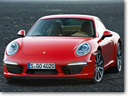
Porsche is proud to present the new 911 Carrera, a completely new generation of the iconic coupe that has been acclaimed as one of the world’s benchmark sports cars since its launch in 1963.
Tradition meets modernity
True to the 911 tradition, the distinctive Porsche design language exudes power and elegance. The unmistakable silhouette still catches the eye while incorporating new, exciting contours and precisely designed details; a 100mm longer wheelbase for improved stability and greater interior space; front and rear overhangs are shorter, maintaining the compact footprint that has been a longstanding 911 attribute; the sporting stance is emphasised by the lower roof line and a wider front track increases on-road presence further still while raising the renowned chassis dynamics.
The rear-mounted, flat six cylinder engine is an equally symbolic component of the 911 identity; and behind the rear axle of the new car lies an uprated range of powerful, efficient and evocative ‘boxer’ engines. The 911 Carrera is powered by a new 3.4-litre engine developing 350 hp, and the Carrera S features a 400 hp version of the familiar 3.8-litre. These new engines offer performance improvements for both models. The 3.4-litre Carrera with PDK accelerates from 0-62mph in 4.6 sec, 0.1 sec quicker than the prior model. Pressing the Sport Plus button on the optional Sport Chrono Pack cuts that to 4.4 sec. The 3.8-litre Carrera S with PDK can accelerate from 0- 62 mph in 4.3 sec (Sport Plus 4.1 sec), 0.2sec quicker than its predecessor.
All-new lightweight body
Principle among the innovative steps forwards is the all-new, lightweight body, featuring intelligent aluminium-steel composite construction. It is responsible for a significant proportion of the vehicle weight reduction of up to 45 kg. The body structure also delivers significantly greater rigidity, and aerodynamic optimisation – including a wider, variably extending rear spoiler – has reduced the lift generated by the new 911 Carrera while retaining an impressive overall drag factor.
Innovative chassis technology
That the new 911 offers better acceleration in a straight line goes without saying, but it also offers top performance at an unprecedented level across the entire dynamic repertoire. In addition to the longer wheelbase, the greater agility, precision and driving stability are based, among other things, on the wider front track, a new rear axle and new electro-mechanical power steering.
Depending on the model, there are other standard or optional active control systems available as well that further enhance the driving dynamics. That is especially true for the Porsche Dynamic Chassis Control (PDCC) active roll stabilisation system, available for the first time on the 911 Carrera S. The system reduces body roll when cornering, with the result that the tyres are always in the optimal position relative to the road surface and thus able to transmit higher lateral forces. Consequently, maximum cornering speeds are increased, and even faster lap times on racing circuits are possible.
Exterior design
The familiar athletic appearance of the 911 is given further dynamism with a 100mm longer wheelbase, reduced height, and up to 20-inch diameter alloy wheels. At the same time, the typically compact exterior dimensions have been retained. Seen from the front, the eye is drawn to the trademark wide-arched wings, emphasising the wider front track and making the new 911 Carrera models adopt a particularly sporting stance on the road. The redesigned exterior mirrors are now mounted on the upper edge of the door and not as before on the mirror triangle. Not only is this aerodynamically advantageous, it also emphasises the new design line and visual impression of width.
2012 Porsche 911 Carrera
Interior design
To complement the modern exterior, the Porsche designers created an interior style which takes its cue from that of the Porsche Carrera GT. The driver is now even more closely integrated with the cockpit thanks to the centre console rising up to the front with the high-mounted shift lever – or PDK gear selector – located close to the steering wheel in typical motorsport fashion. Classic Porsche style elements are also to be found inside, just as they are on the outside. For example, the instrument cluster with five round instruments, with the central dial naturally the rev counter. On the right is a new, high resolution multi-function screen, just one of the comfort features added to meet evolving customer demands.
2012 Porsche 911 Carrera Interior
Porsche Intelligent Performance
Setting the standard in its class, as it has for generations, the new 911 Carrera and Carrera S raise the performance and efficiency standard to new levels. Fuel consumption and emissions of all versions are up to 16 per cent lower compared with its predecessors. Among other things, this is achieved by systems and functions such as auto start/stop, thermal management, electrical system recuperation, the world’s first seven-speed manual transmission and – in conjunction with the Porsche-Doppelkupplungsgetriebe (PDK) – a ‘coasting’ function that decouples the engine for enhanced fuel efficiency when the throttle is closed.
The new electro-mechanical power steering system offers not only the typical precision and feedback expected of a Porsche, but also helps to increase efficiency and reduce fuel consumption. For example, the 911 Carrera with the new 350 hp (257 kW) 3.4-litre direct injection engine and optional PDK returns 34.4mpg Combined based on the New European Driving Cycle (NEDC) – 6mpg less than its predecessor. Also, at 194 g/km CO2, it is the first Porsche sports car to sit below 200 g/km CO2. In the case of the Carrera S, with its 400 hp 3.8-litre direct injection engine, economy when paired with the optional PDK is increased by 14 per cent, or 5 mpg, to 32.4mpg Combined despite 15 hp more power. That equates to CO2 emissions of 205 g/km.
Evidently, it has therefore been possible in the new 911 Carrera to extend yet further the span of apparently contradictory attributes such as performance and efficiency, sportiness and everyday usability that has always typified the Porsche 911. It could be said that the new 911 Carrera is thus more of a 911 than ever.
In the UK from December 2011
The new Porsche 911 Carrera celebrates its world premiere at the 2011 IAA Frankfurt Motor Show and the new 911 models will be in UK Porsche Centres from December 17 2011.
The 911 Carrera is priced from ?71,449 and the 911 Carrera S is priced from ?81,242. Standard equipment on all models is leather interior, sports seats, automatic climate control, Bi-Xenon headlights, 7-inch colour touch-screen Porsche Communication Management with satellite navigation, a universal audio interface offering MP3 connectivity, Porsche Stability Management (PSM) and a three year warranty.
The Carrera S adds 20-inch alloy wheels, Porsche Active Suspension Management (PASM) and Porsche Torque Vectoring (PTV) with rear limited slip differential, in addition to the power advantage of the larger 3.8-litre engine.
Fitted to every 911 is a Porsche Vehicle Tracking System (VTS), a sophisticated vehicle security package approved to Thatcham Category 5 standard, and customers will also be able to explore the potential of their new car by participating in a complimentary course at the Porsche Experience Centre, Silverstone.
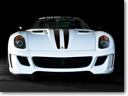
The debut of the Ferrari 599-VX marks Vorsteiner’s first official foray into the Ferrari line of cars. This 599 will only be the very beginning of what is to come for our product applications for Ferrari models.
The concept for the 599-VX project was to create a comprehensive conversion package that encompasses the perfect marriage between lightweight aerodynamics, performance exhaust and wheels.
In typical Vorsteiner fashion, our designers set out to create something that would not take away from the existing bodylines of the Ferrari, but rather to enhance it and take it one step closer to a race car without compromising any functionality, quality and performance.
The 599-VX aerodynamic package is not only aesthetically pleasing, but is also fiercely technologically advanced. It is 70% lighter than the factory pieces which basically consists of a front fascia, louvered racing hood, side sill extension blades, rear fender intake covers, rear deck lid wing and finally a rear bumper with diffuser.
All of the 599-VX aerodynamic components will be made from our latest pre preg autoclave carbon technology for incredible weight savings and uncompromising quality.
Vorsteiner Ferrari 599-VX
The 599-VX package also includes a limited edition 1-Piece Forged Monoblock wheel that is specifically manufactured for this car. It is a twin 7-spoke racing mesh face that features a true I-Beam spoke profile in conjunction with our latest under cutting pocketing to yield maximum weight savings without any compromise in strength.
The entire exterior skin of the body has been re-masked courtesy of Meguiars & Wraptivo. It consists of the latest in flex vinyl film technology in matte glacier white color with contrasting matte black roof line with red racing accents to pay homage to the grass roots race cars of Ferrari.
Lastly, the 599-VX exhaust was a joint venture between Vorsteiner and BBI and was developed from the ground up in order for it to work harmoniously with our fully redesigned 599-VX rear bumper replacement.
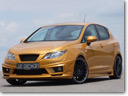
JE DESIGN gives the Seat Ibiza (model 6J) an air of sporty self-confidence. The car tuner from the town of Leingarten in Baden-Württemberg has made improvements to all versions of the Spanish car with its new aerodynamics package, filigree alloy wheels and stylish interior.
As usual, the new aerokit displays the two JE DESIGN hallmarks: design and quality. The bodykit elements don’t just give the Seat Ibiza a sporty appearance; they’re also distinguished by their first-class workmanship and perfect fit. Using high-quality ABS or composite materials, JE DESIGN manufactures the CNC-milled attachments to OEM standards. The fact that the tuned cars have passed the pedestrian protection test is further evidence of the high quality standards.
The racy look of the JE DESIGN Ibiza is due largely to its new front. The front apron with the sports radiator grille (without the Seat logo), available for EUR 654.50 including VAT, frame the car’s striking LED daytime running lights, each with six light emitting diodes at each side (EUR 238 for the complete set). The cleaning system for the headlamps retains its full functionality. In addition, the headlamp covers (available for EUR 89) give the Seat that menacing appearance. The curved side skirts (available for EUR 299) and the rear apron attachment (also available for EUR 299) complete the car’s aerodynamics package, the components of which can also be fitted individually. The body parts can be purchased for all Seat Ibiza versions, in other words for the 3-door, 5-door and Estate ST models as well as for the sports versions, the FR and the Cupra.
JE Design Seat Ibiza 6J Gold
In keeping with the car’s sporty appearance, the suspension lowering springs (available for EUR 149) lower the Ibiza by around 35 millimetres, giving the Multispoke alloy wheels a particularly dynamic looking edge. The complete wheel sets are available from JE DESIGN either in size 7 x 17 inches ET 35 with sports tyres of size 215/40 or in size 7.5 x 18 inches ET 35 with tyres of size 215/35. The wheels’ surface comes in either Shadow Silver or in Matte Black with silver wheel rims. Complete wheel sets cost EUR 1,809 (for the 17-inch versions) or EUR 2,260 (for the 18-inch versions).
The car’s sporty transformation by JE DESIGN is not just about appearances though. The power of the 1.6 TDI CR engine for example is boosted from 105 hp (77 kW) to 121 hp (89 kW). This is made possible by the additional electronics box (available for EUR 1,399), which is connected by way of a plug-and-play system and reduces the time taken for the car to go from 0 to 100 km/h from 10.9 to 10.2 seconds. With torque of 282 instead of 250 Newton metres, the JE DESIGN tuned Seat Ibiza can attain a maximum speed of 194 km/h (compared with 188 km/h in the standard models).
The car’s interior is first rate too. The Elegance leather upholstery (available for EUR 1,599) rarefies the Ibiza’s interior with its exclusive luxury. The steering wheel (EUR 399), the gear lever and the handbrake sleeve (available together for EUR 179) are also covered with fine rawhide. The colour of the stitching and of the leather can be chosen by the customer at no extra charge from JE DESIGN. If desired, JE DESIGN can even add an individualised, stitched on logo to the backrests of the front seats for EUR 79. The Ibiza can be made really comfortable with the two-level heating system for the seats (available for EUR 379), the electrically adjustable lumbar support system for backache-free driving (available for EUR 319) and the massage system with its 12 different programmes.
Infiniti today announced that it will double its Infiniti Performance Line lineup of premium performance vehicles in spring 2012 with the addition of a new 2013 IPL G Convertible. More than just focusing on engine power and acceleration, the Infiniti Performance Line, or IPL, product design philosophy focuses on “total vehicle performance,” including unique driving attributes and exclusive exterior and interior features at highly attractive price points.
The IPL G Convertible announcement was made by Infiniti Americas Vice President Ben Poore at the Pebble Beach Concours d’Elegance where the IPL G Convertible Concept is currently on display. The IPL G Convertible Concept features unique aerodynamic styling, the dynamic performance of an IPL-tuned V6, exhaust and suspension, 19-inch IPL aluminum-alloy wheels, three-piece retractable hardtop and a unique red leather-appointed interior set against a Malbec Black exterior – a level of equipment and performance modification expected to be shared with the production IPL G Convertible.
2013 Infiniti IPL G Convertible Concept
“The Infiniti Performance Line, as demonstrated by our first offering, the IPL G Coupe, challenges the concept of an ultra-high cost sports series. IPL pushes the premium performance envelope for buyers seeking a higher level of exclusivity and driving exhilaration, but does so with an Infiniti twist,” said Poore. “The IPL G Convertible will deliver the goods, just like the current IPL G Coupe does. Plus, the new IPL G Convertible offers the added pleasure of open-air motoring.”
The new IPL G Convertible is based on the foundation of the Infiniti G37 Convertible, which features an advanced 3.7-liter V6 and three-piece power retractable hardtop that’s designed to look as good with the top up as it does down.
“Like every Infiniti, the new IPL G Convertible will take a different path from its established competitors,” added Poore. “It’s a terrific addition to the Infiniti Performance Line, taking the dramatic Infiniti G Convertible to an even higher level.”
Additional information on the 2013 IPL G Convertible will be available during the production version debut at the Los Angeles Auto Show in November.
Setting yet another milestone in the year of its 30th Anniversary, GEMBALLA is proud to announce the debut of GEMBALLA racing. The new team will enter two McLaren MP4-12C GT3 cars in the 2012 motorsport season.
Team owner and GEMBALLA investor, Steffen Korbach, has hired Sascha Bert to manage his new motorsport venture. A well-known racing driver and instructor, Bert is a former German kart champion, Formula 3 and FIA GT driver, and has stood on the winners’ podium at the Nürburgring VLN 24-hour race amongst others. As Korbach said in Frankfurt today, “Sascha Bert is an absolute pro, and is ideally qualified to manage our new racing team.”
“We chose the McLaren MP4-12C GT3 because we think this car has the potential to be one of the season’s leaders,” Korbach explained. “We have also put together a team of drivers and mechanics who are proven winners. Racing is in our blood! We want to win!”
The GEMBALLA name has been synonymous with high performance, reliability and extraordinary qualities for 30 years. Now, 17 years after the McLaren F1 GTR won the gruelling 24-hours of Le Mans on its debut outing, GEMBALLA racing will capitalise on McLaren’s competition pedigree to mount its own challenge.
Race bred by a marque that has always been a front-runner in Formula 1, the McLaren MP4-12C GT3 incorporates world-class technology. Based on the recently launched MP4-12C supercar, the GT3 racecar features a 3.8-litre, twin-turbo V8 engine, bespoke racing gearbox, carbon safety cell, race front splitter, large fixed rear wing, optimised air vents at the front and a racing diffuser at the rear. The steering wheel with integrated display is an ode to Formula 1.
Gemballa Racing McLaren MP4 12C GTGemballa Racing McLaren MP4 12C GTGemballa Racing McLaren MP4 12C GT
The Mercedes-Benz SLK 55 AMG is the most powerful SLK of all time. Its newly developed AMG 5.5-litre V8 engine featuring cylinder shut-off combines the ultimate in performance with the best possible fuel consumption. With a peak output of 422 hp and maximum torque of 540 Nm, the SLK 55 AMG outperforms all of its direct competitors. Its fuel consumption of 33.6 mpg on the combined cycle and CO2 emissions of 195 grams per kilometre are around a 30 percent improvement of that of its predecessor. High levels of driving dynamics are ensured thanks to the AMG sports suspension with Direct-Steer system, Torque Vectoring Brakes and 3-stage ESP®, as well as the AMG high-performance braking system.
Forming part of the third-generation of the SLK launched in March, the new top-of-the range AMG model already demonstrates its individuality even at first glance: distinctive AMG light-alloy wheels, specific AMG bodystyling with AMG spoiler lip and two chrome-plated twin tailpipes at the rear complement the classic roadster proportions, while adding a markedly athletic touch. The expressive design of the SLK 55 AMG is both eye-catching and unmistakable.
2012 Mercedes Benz SLK 55 AMG
The SLK 55 AMG is the perfect embodiment of the new AMG brand claim of “Driving Performance”: in the compact high-performance roadster segment there is nothing to compare to its combination of tangible driving dynamics, superior sportiness, unique high-technology and low fuel consumption. The SLK 55 AMG accelerates from 0-62 mph in 4.6 seconds, and reaches
a top speed of 155 mph (electronically limited).
SLK 55 AMG
Displacement
5461 cc
Bore x stroke
98.0 x 90.5 mm
Compression ratio
12.6 : 1
Output
422 hp at 6800 rpm
Max. torque
540 Nm at 4500 rpm
Engine weight (dry)
187 kg
Fuel consumption,
NEDC combined
33.6 mpg
CO2 emissions
195 g/km
Acceleration 0 – 62 mph
4.6 s
Top speed
155 mph**
* provisional figures; ** electronically limited
The world’s most fuel-efficient V8 engine combines the lowest consumption figures with the superior power delivery and the typical sound experience which only a large-displacement eight-cylinder engine can provide.
In line with its “AMG Performance 2015” strategy, with the new V8 unit Mercedes-AMG is meeting its promise to continue to reduce both the fuel consumption and emissions of new models over the next few years – while reaching new heights with the central brand claim of “Driving Performance”. At the same time, AMG is also demonstrating its social responsibility with the M152.
New naturally aspirated eight-cylinder closely related to the V8 biturbo
The new M152 is based on the AMG M157 5.5-litre V8 biturbo engine presented in 2010, which powers the E 63 AMG, CLS 63 AMG, S 63 AMG and CL 63 AMG. Numerous design features are identical, such as the displacement, bore/stroke, distance between cylinders, start/stop system and direct petrol injection technology. Distinguishing features versus the M157 include the new intake air ducting, new cylinder heads, the modified valve drive, an adapted oil supply system and an optimised crankcase.
Exclusive combination of advanced technologies
The high-tech M152 powerpack enthrals with a combination of advanced technologies which is unequalled anywhere in the world. No other petrol engine features direct injection at a pressure of 200 bar, spray-guided combustion and piezo injectors, all in conjunction with map-controlled cylinder shut-off, an all-aluminium crankcase with “spectacle” honing, four-valve technology with continuous camshaft adjustment, a high compression ratio of 12.6 : 1, a start/stop system and generator management – while revving to a maximum speed of over 7000 rpm. All of these measures lead to high thermodynamic efficiency, which is a precondition for high fuel efficiency and low exhaust emissions. Moreover, deciding in favour of a large-displacement, naturally-aspirated eight-cylinder unit with cylinder shut-off resolves the conflict of aims between high output/torque delivery and improved fuel consumption figures.
AMG Cylinder Management
It is the AMG Cylinder Management cylinder shut-off system in particular – completely newly developed by Mercedes-AMG – that significantly improves efficiency: cylinders two, three, five and eight are cut off under partial load, which lowers fuel consumption considerably. In similar form this technology is also used in the approx. 750 hp V8 engines used in Formula 1. As efficiency also plays a major role at the pinnacle of motor racing, two or four of the eight cylinders are cut off e.g. when cornering at slow speed, in the Safety Car phases or for pit stops. With a fuel consumption of 33.6 mpg and CO2 emissions of 195 grams per kilometre (NEDC combined), the naturally-aspirated AMG V8 engine comes in at or below the level of its competitors, however these are unable to match either the output or torque of the SLK 55 AMG – and above all, they do not use large-displacement eight-cylinder engines.
The cylinder shut-off function is available over a wide engine speed range from 800 to 3600 rpm if the driver has selected transmission mode “C” – Controlled Efficiency. The AMG main menu in the instrument cluster informs the driver whether cylinder shut-off is active, and whether the engine is currently running in four or eight-cylinder mode. No less than 230 Nm of torque is still available in four-cylinder mode – enough power to ensure plenty of acceleration in most driving situations. As soon as the driver has a need for more power and leaves the partial load range, cylinders two, three, five and eight are activated. The switch from four to eight-cylinder operation
is immediate and imperceptible, leading to no loss of occupant comfort whatsoever. At an engine speed of 3600 rpm the activation process takes
no more than 30 milliseconds.
Valves closed, fuel delivery and ignition deactivated
This is made possible by intelligent interaction within the highly effective engine management system, with 16 hydraulically compensating elements and a complex oil supply system in the cylinder head. The compensating elements are integrated into the cylinder head, and keep the intake and exhaust valves of cylinders two, three, five and eight closed when cylinder shut-off is active. At the same time their fuel supply and ignition are deactivated. This not only enables the load-change losses of the four deactivated cylinders to be reduced, but also increases the efficiency of the four remaining cylinders. This is because the operating point is transferred to the higher load range. The compensating elements are compact and lightweight, allowing taut valve train operation and engine speeds up to 7,200 rpm.
All-aluminium crankcase with Silitec cylinder liners
The crankcase of the new AMG 5.5-litre V8 engine features a diecast all-aluminium construction. The low (dry) engine weight of just 187 kilograms is the result of uncompromising lightweight construction methods. The bearing covers for the main crankshaft bearings are of grey cast iron, and are bolted
to the crankcase, as well as on the sides, for high rigidity.
The piston rings are carbon-coated to minimise internal friction and optimise the wearing characteristics. Cast-in Silitec cylinder liners ensure low friction for the eight pistons. So-called “spectacle” honing is another measure to reduce friction and therefore fuel consumption: in this sophisticated and complex process, the cylinder liners receive their mechanical surface treatment when already bolted in place. As honing would no longer be possible with the cylinder head installed, a jig resembling spectacles is bolted to the crankcase. The cylinder liners distort as if the cylinder head were in place, and are only then given their mechanical surface treatment. As a result, any static distortion of the cylinder liners caused by tightening the cylinder head bolts can be completely eliminated.
Other measures to optimise efficiency:
weight-optimised cast aluminium pistons with special piston skirt coating
special ventilation holes in the crankcase
oil pump with electrically controlled pressure stage
separate oil pump for cylinder shut-off as a controllable, low-friction vane cell pump
engine cooling on the particularly efficient cross-flow principle
electronically controlled fuel pressure, fully variable and demand-related between 100 and 200 bar
The forged crankshaft of high-grade 38MnS6BY steel alloy rotates in five main bearings, has eight counterweights and has been optimised with respect to torsional rigidity, inertia, low rotating masses and a long operating life. A two-mass viscous damper mounted at the front reliably eliminates vibrations. Each connecting rod journal on the crankshaft carries two forged, cracked connecting rods.
Four-valve technology with variable camshaft adjustment
Perfect charging of the combustion chambers is ensured by large intake and exhaust valves, of which there are four per cylinder. The exhaust valves, which are subject to high thermal loads, are hollow and sodium-cooled. Four overhead camshafts operate the 32 valves via low-maintenance, low-friction cam followers. The infinitely variable camshaft adjustment within a range of 40 degrees on the intake and exhaust sides depends on the engine load and engine speed, leading to high output and torque values. This also results in consistent idling at a low speed. Depending on the engine speed, valve overlap can be varied for the best possible fuel/air supply to the combustion chambers and efficient removal of the exhaust gases. The variable camshaft adjustment is carried out hydraulically via four pivoting actuators. These are electromagnetically actuated and controlled by the engine control unit. The camshafts are driven by three high-performance silent chains, which have considerable advantages in terms of noise comfort compared with cylinder roller chains.
Controlled Efficiency start/stop function as standard
The Controlled Efficiency start/stop function further contributes to the low fuel consumption. This system is standard equipment on the SLK 55 AMG, and active in the fuel economy transmission mode “C”. Once the driver comes to a halt e.g. at a red traffic light, the V8 engine is automatically switched off. Once the brake pedal is released or the accelerator is depressed, the engine is immediately restarted and the car is able to move off quickly. Intelligent technology guarantees a comfortable and immediate starting procedure: a crankshaft sensor which recognises the direction of rotation registers the resting position of all eight pistons. For an automatic engine start, the cylinder with the most favourable piston position receives an injection of fuel into its combustion chamber. The precise piezo-electric injectors greatly assist this process, as they make particularly fast starts possible. The M152 always starts in eight-cylinder operation.
A framed “ECO” symbol in the AMG main menu shows the driver that the Controlled Efficiency start/stop function is active. When cylinder shut-off is active, the driver is informed by the symbol “ECO4”, while “ECO8” stands for eight-cylinder operation. In the two more performance-oriented driving modes “S” (Sport) and “M” (Manual), the start/stop function is always deactivated. If required, the driver can also switch it off while in “C” mode as well. In this case neither a “start/stop” nor an “ECO” symbol appears.
Generator management helps to save fuel
A generator management system makes a further contribution to fuel economy: whenever the V8 engine is on the overrun or when braking, kinetic energy is used to charge the battery rather than being wasted as heat in the usual way. In all other operating modes a combination of onboard network and generator management enables the generator to be kept at a low voltage. This reduces the load on the engine and enhances fuel efficiency in city traffic with its frequent overrun and braking phases.
New AMG sports exhaust system with integrated exhaust flaps
For the first time AMG is using a sports exhaust system featuring an exhaust flap on each side. This technology resolves the conflict of aims between an emotional sound when driving in a sporty manner and a more discreet engine note in the partial load range. The main focus of the sound design was on achieving a perfect synthesis of perceptible dynamism and the long-distance comfort that is a hallmark of Mercedes.
Each of the two rear silencers has a flap which is variably activated on a logic-controlled basis depending on the driver’s power requirement and the engine speed. At low loads and engine speeds below 2000 rpm the flaps remain closed. This causes the exhaust gases to cover a longer distance and flow through an additional damping element, so that the engine sound is pleasantly subdued and irritating frequencies are effectively suppressed – resulting in a harmonious sound impression especially in four-cylinder operation when cylinder shut-off is active.
When the driver accelerates, the flaps open at an angle of 15, then 30 and up to 50 degrees so that some of the exhaust gases cover the longer, acoustically dampened distance and some the shorter distance. This produces a sonorous engine note. Under full load at higher engine speeds in eight-cylinder mode, both flaps are fully opened so that the occupants are able to enjoy the decidedly muscular sound typical of an AMG V8. In short, they are left in no doubt about the performance potential of the 422 hp naturally aspirated AMG eight-cylinder engine.
The two-pipe AMG sports exhaust system with two chromed twin tailpipes has a pipe diameter of 65 millimetres from the manifolds to the pre-silencer. The diameter is reduced to 60 millimetres from the pre-silencer to the rear silencers.
Effective emissions technology with new catalytic converter boxes
Low exhaust emissions, compliant with country-specific standards and a characteristic engine sound – the requirements for the exhaust system of the new, naturally aspirated AMG 5.5-litre V8 engine were complex. The SLK 55 AMG complies with the current Euro-5 emission standard, as well as meeting all the requirements of the US market (LEV-III standard, On-Board Diagnosis II).
Air gap-insulated manifolds ensure a rapid catalytic converter response. For efficiency and to save space, this concept has a tandem catalytic converter housing on each side of the vehicle: adjacent to the firewall, two thin-walled ceramic substrates are grouped into each housing. This solution makes the previous, additional underbody catalytic converters unnecessary. The two ceramic substrates differ to ensure rapid and efficient emissions control: the front one is coated with palladium, while the rear one has a bimetal coating of palladium and rhodium. One lambda sensor per row of cylinders is located in front of each catalytic converter housing, and there is a lambda diagnostic sensor between each of the two thin-walled substrates.
Highly variable: the AMG SPEEDSHIFT PLUS 7G-TRONIC
Power is transferred to the rear wheels by means of the AMG SPEEDSHIFT PLUS 7G-TRONIC automatic transmission which features three transmission modes: “Controlled Efficiency” (C), Sport (S) and Manual (M). The automatic double-declutching function when downshifting as well as the brief, precisely defined interruption of ignition and injection when upshifting under full load shorten shifting times and increase emotional appeal when adopting a sporty driving style. A double turbine torsional damper with centrifugal pendulum which adapts to engine speed helps to minimise vibrations in four-cylinder operation and enhances the impression of comfort experienced by the vehicle occupants.
Perfect combination: highly dynamic driving style and comfortable cruising
The AMG sports suspension with Torque Vectoring Brakes and AMG Direct-Steer system provides both impressive lateral dynamics as well as agile handling. Looking for a highly dynamic driving style or comfortable cruising? The new SLK 55 AMG is able to offer both. Independent suspension struts with stiffer spring/damper tuning, torque strut bearings on the front axle featuring higher rigidity, stiffer stabilisers all round as well as a more negative camber on the rear axle result in high cornering speeds and a low body roll in fast S-shaped bends.
In critical cornering conditions, the Torque Vectoring Brakes produce a defined rotational movement of the vehicle about the vertical axis in fractions of seconds, through selective brake actuation at the rear wheel on the inside of the bend. This results in the SLK 55 AMG steering into the bend precisely and under full control, without any compromises where dynamism is concerned. Complementing this feature perfectly is the AMG Direct-Steer system: it enhances handling and agility compared with the standard steering, whilst also reducing the amount of physical effort required when parking. A new power steering pump helps to improve fuel consumption. The reason behind this: the power assistance for the steering only requires energy when the driver is actually steering. In addition, the AMG Direct-Steer system has a parameter function adapted to match the AMG sports suspension. This results in optimum response from the central position, outstanding road feel and dynamic handling in all driving situations.
The AMG-exclusive 3-stage ESP® gives individual control strategies at the touch of a button: the ESP® button in the centre console allows the driver to choose between “ESP ON”, “SPORT Handling Mode” and “ESP OFF”. The AMG high-performance brake system has internally ventilated and perforated brake discs on all wheels, measuring 360 x 36 mm at the front and 330 x 22 mm at the rear. The system is characterised by outstanding responsiveness, short stopping distances and excellent fatigue strength.
Optional AMG Handling package for even greater driving dynamics
The optionally available AMG Handling package enhances the vehicle’s sportiness even further. It comprises an AMG Performance suspension with stiffer tuning, an AMG rear axle differential lock, composite brake discs at the front and a three-spoke AMG Performance steering wheel finished in nappa leather with Alcantara® inserts in the grip areas.
Unmistakable: uniquely styled design and appointments
Classic roadster proportions with typical AMG design characteristics as well as a hint of the SLS AMG – these are the striking visual highlights of the new SLK 55 AMG. The AMG designers have complemented the exciting basic forms of the long bonnet, the greenhouse positioned well to the rear and crisp rear section with typical AMG styling at the front, sides and rear. The new AMG front apron has large air inlets and AMG-specific LED daytime driving lights. Inspired by the SLS AMG super sports car, the wide radiator grille features a large, centrally-positioned Mercedes star. In the case of the SLK 55 AMG, the slats in the radiator grille and the lower cross strut on the front apron are painted in a high-gloss black finish. Darkened clear-lens headlamps and darkened bicolour tail lamps also come as standard exclusively on the top-of-the-range V8 model. The Intelligent Light System (ILS) is also available as an optional extra.
The vent grilles with chrome-plated fins in the front wings are not only reminiscent of the SLS AMG, but also evoke memories of the famous Mercedes-Benz 300 SL Roadster from the 1950s. The “V8 AMG” lettering beneath the grilles points to the top-of-the-range eight-cylinder model from the SLK model series. AMG-specific, distinctively styled side sill panels continue the design of the front apron through to the new rear apron. With its own unique shape, black diffuser insert with three fins as well as the two chrome-plated twin tailpipes of the AMG sports exhaust system, it gives a distinctive finishing touch to the vehicle. The spoiler lip on the boot lid, painted in the vehicle body colour, reduces lift at the rear axle and thereby increases driving stability at high speeds.
Inspired by the SLS AMG: high-quality, stylish interior
Functional, stylish, high-quality: the interior design of the SLK 55 AMG is also reminiscent of its bigger brother, the SLS AMG Roadster. Associations with the super sports car are evoked courtesy of the four air vents in the style of jet engines, as well as the centre console finished in brushed aluminium. An optional addition to the centre of the dashboard is an AMG-specific analogue watch featuring an IWC design. The AMG Performance steering wheel, with its flattened top and bottom sections, also boasts metal trim, aluminium shift paddles and grip areas finished in perforated leather. The clearly-arranged AMG instrument cluster is positioned perfectly in the driver’s field of vision and features four circular instruments, distinctive dials and the AMG main menu. The switch for the transmission modes C, S and M is also located in the centre console.
The AMG sports seats with individual seat upholstery layout and optimised lateral support come as standard with the upholstery combination ARTICO man-made leather/black fabric and high-quality AMG badges in the backrests. Nappa leather and Exclusive nappa leather are both available as optional extras. As in the previous model, the AIRSCARF neck-level heating system is also available as an optional extra. This creates a flow of warm air around the neck and shoulder areas of the occupants from a vent in the front of each head restraint.
Magical: the panoramic vario-roof with MAGIC SKY CONTROL
The standard vario-roof opens and closes in less than 20 seconds, transforming the open-top Roadster into a closed-top Coupe with rigid roof at the touch of a button. Alternatively, a panoramic vario-roof in tinted polycarbonate can also be chosen. The third variant is a world premiere – the panoramic vario-roof with MAGIC SKY CONTROL. This glass roof switches to light or dark as required at the press of a button. When light it is virtually transparent, offering an open-air experience even in cold weather. In its dark state the roof provides welcome shade and prevents the interior from heating up when the sun’s rays are very intense. In other words: a feel-good atmosphere at the touch of a button
The frames of the three roof variants are made of magnesium. This makes each roof around six kilograms lighter than in the previous model, giving the car a lower centre of gravity – which benefits its agility. A comfortable alternative to the standard draught-stop is the new AIRGUIDE pivoting draught-stop. It consists of pivoting transparent plastic layers which are attached to the reverse of the roll-over bars. This is the world’s first draught-stop system that enables different comfort levels to be selected for two occupants, as the driver and passenger can individually pivot the units to the centre of the vehicle in a flash, thus taming turbulent air flow from the rear. The advantage: no installation or removal effort required.
More individuality: designo and the AMG Performance Studio
Designed to meet the needs of those with even more individual tastes are the optional appointments “designo leather” and “designo Exclusive leather”, offering eleven single-tone and ten two-tone upholstery variants. With designo the AMG sports seats feature a specific design which distinguishes them from the standard sports seats. Available matching elements include “AMG carbon-fibre trim” and “designo trim in black piano lacquer” for the centre console. The designo Alcantara® windscreen frame, seat belts in silver or red and also five attractive paint finishes – including two matt paint finishes – round off the stylish appearance perfectly.
Other attractive optional appointments are also exclusively available for the SLK 55 AMG from the AMG Performance Studio:
AMGmulti-spoke light-alloy wheels, painted in titanium grey with a
high-gloss finish, with 235/40 R 18 (front) and 255/35 R 18 (rear) tyres
AMGmulti-spoke light-alloy wheels, painted in matt black with a
high-gloss finish on the rim flange, with 235/40 R 18 (front) and
255/35 R 18 (rear) tyres
AMGHandling package (AMG Performance suspension, AMG rear axle differential lock, composite brake discs on the front axle, AMG Performance steering wheel with Alcantara® inserts in the grip areas).
AMGdoor sill panels, illuminated in white using LED technology
AMGfloor mats
AMGPerformance steering wheel with Alcantara® inserts in the grip areas
Exceptional position: modern assistance systems on board
The SLK 55 AMG sets new standards when it comes to safety: a whole host of the latest assistance systems support the driver and have helped to secure the new AMG Roadster’s exceptional position in its segment. Standard equipment includes new, fibre-reinforced roll-over bar, two-stage driver and front passenger airbags, headbags, thorax airbags, seat belt tensioner with degressive belt force limiters, NECK-PRO crash-active head restraints, automatic child seat recognition, three-stage ESP®and also ATTENTION ASSIST drowsiness detection.
Further assistance systems are available on request:
DISTRONIC PLUS: this proximity control system automatically maintains a set distance from the vehicle ahead, braking the SLK 55 AMG to a standstill if necessary and also accelerating the Roadster again.
The Intelligent Light System (ILS) provides five lighting functions (cornering light function, country mode, motorway mode, active light function and enhanced fog lamps), which are activated depending on the driving conditions
Speed Limit Assist is able to detect speed limit signs using a camera on
the inside of the windscreen, and indicate the detected speed limit in the instrument cluster or central display.
The anticipatory and reversible PRE-SAFE® occupant protection system is able to activate protective measures for the car’s passengers as a precaution. The aim is to prepare the occupants and the vehicle for an imminent collision so that the seat belts and airbags are able to fulfil their protective function to the full during an impact.
The PRE-SAFE® Brake detects the acute danger of a rear-end collision and prepares for autonomous braking. The system is active at speeds of between 30 and 200 km/h when moving vehicles are detected in front
of the car.
Three generations: the SLK made by AMG
The new SLK 55 AMG is already the third generation of the exclusively dynamic Roadster model made by AMG. It all started in 2001 with the SLK 32 AMG. Its AMG V6 supercharged engine with a displacement of 3.2 litres produced 354 hp and maximum torque 450 Nm – as such, the SLK 32 AMG
was the most powerful vehicle among the competition.
At the end of 2004 this was followed by the SLK 55 AMG. With its AMG 5.5-litre V8 engine, which developed 360 hp and 510 Nm of torque, it also assumed the leading position in its segment. No other vehicle in this class offers a large-displacement eight-cylinder engine – and Mercedes-AMG has remained consistently true to this philosophy with the successor model. The new SLK 55 AMG will launch in the UK in January 2012, specification and pricing are still to be confirmed.
It is a regularly recurring process: if a car manufacturer presents a new model, its predecessor generation often seems outdated and old-fashioned all of a sudden, even though there was no reason for complaint previously. This happens at a time when the model usually has already gone through more or less intense model care. Although this kind of “spontaneous aging” is rather below average for the first-generation-BMW Z4, JM Cardesign from Bergheim performed a very special kind of face-lifting on the E85-Roadster presented here. The tuner fitted the “old” Z4 with the front pieces of the new E89 model. The front bumper and grille were modified in extensive handiwork to match the headlights, mudguards and bonnet of the E85. The result is very harmonious: even MBMW enthusiasts will take a moment to entirely identify the cross-generation transformation. JM Car Design also applied some classic craftsmanship in the area of the rear wheel runs.
JM CarDesign BMW Z4 E85
The sheet was extended by about 30 millimetres on each side, and the wheel running edge was then re-built in the “original” look. Of course, this widening also required adjustment of the rear apron and side sills to the new situation. The latter also had ventilation openings integrated that facilitate the cooling air flow to the rear brake system (in connection with the corresponding ducts). Before the vehicle was re-painted from silver to solid black in the in-house paint shop, JM Cardesign made the antenna, which is usually located on the rear left mudguard, vanish. It is now invisibly placed in the rear bumper. The door handles, side mirrors and side indicator lights in a BMW logo shape at the doors were also equipped with coming-home-lighting LEDs by JM Cardesign.
The car is lowered by a 3-thread chassis version KW, adjustable in several parameters (height, pressure and tensile dampening), which also provides for fresh driving dynamics. The three-part screwed Work VS XX-light-metal wheel rims with their stars in matte “Gunmetal” are also put in the best light this way; at the front, the 9×20 inches ET32 size is used – at the rear even a full 11×20 inches ET32. The fine wheels were equipped with Dunlop Sport Maxx high-performance tyres in 245/30R20 and 285/25R20 respectively. The long front end of the vehicle is given added stiffness by the Wiechers dome rod installed under the bonnet. The Eisenmann end muffler with its 76 millimetre double-end tube emphasises the deep six-cylinder sound of the Z4 3.0i audibly. JM Cardesign took action in the interior as well. Various interior parts like the dashboard cover, entrance bars, steering wheel spokes and the gear knob were painted the same colour as the car.
The first photos of the Volkswagen up! have been released, ahead of the new small car making its debut at the Frankfurt motor show in September.
The up! is an entirely new design, offering maximum space on a minimal footprint (3.54 x 1.64 m), making it ideal for driving in the world’s cities. It will be launched in Europe in December. There are three versions for different budgets and needs: take up! is the entry-level car, move up! the comfort-oriented model and high up! the top version. At the car’s market launch, there will also be two models based on the high up!: up! black and up! white.
Making its debut in the up! is a new generation of three-cylinder petrol engines, with outputs of 60 PS and 75 PS. Combined fuel consumption as a BlueMotion Technology version (including a Stop/Start system) is 4.2 l/100 km (60 PS), and CO2 emissions for this version are less than 100 g/km. There are also plans for an up! with electric drive.
2012 Volkswagen Up
An important new safety technology in the up! is the optional City Emergency Braking system. It is automatically active at speeds under 18mph, and uses a laser sensor to detect the risk of an impending collision. Depending on speed and situation, City Emergency Braking can reduce accident severity by initiating automatic brake interventions that can even avoid a crash. So far, the up! is the only vehicle in the segment to be offered with this function.
At 3.54 metres in length and 1.64 metres in width and 1.48 metres in height, the up! is one of the smallest four-seater cars. Its overall length consists of short body overhangs and a long wheelbase of 2.42 metres. Use of space in the car is exceptionally good, because of the wheelbase, which is one of the longest in the segment, combined with an engine that is mounted well forward. The 251-litre boot is also significantly larger than is typical in this class. When the rear seat is fully folded, cargo space is increased to 951 litres.
The interior is as colourful as it is capacious, with either decor paint or body colour (depending on the equipment line) used in the interior, including across the dashboard facia. The clean and well-organised layout of the interior of the up! also offers clever details, fun styling and a level of quality that will enhance the market segment.
2012 Volkswagen Up Interior
For the first time in a Volkswagen, the maps + more system is now being offered, which is a mobile Personal Infotainment Device (PID). In the economically priced up!, this is an equally economical system that was developed to organise navigation, telephone, information and entertainment, and was designed in cooperation with Navigon, one of the world’s leading suppliers of navigation systems. The user simply snaps the PID into place above the centre console. Unlike many other similar systems of this type, maps + more melds with the car’s network of systems more effectively: navigation, telephone and infotainment can be controlled and viewed via the maps + more touchscreen, which can also be used to view vehicle information, such as the display of the parking sensors (where fitted). Apps specially developed for the up! also let users extend maps + more to meet their specific needs.
How important is your car to you? I am pretty sure there are thousands of people’s girlfriends around the world like mine claiming you love your car more than you love her.
There is a huge chance you might be going to bed with the set instead of your wife/girlfriend.
OZ wheels were first manufactured in 1971 by Silvano Oselladore and Pietro Zen. The company itself was actually established 7 years later with some external financing.
The actual rise of the company started in 1992 when it moved to the new headquarters in San Martino di Lupari. So, we are 2011, meaning OZ is quite a young company, at the same time it is one of the most vigorously developing ones. Since 1999 OZ have been manufacturing motorcycle wheels in collaboration with Aprillia, also car alloy wheels for Sparco. In 1982 OZ became the sole supplies to Lamborghini!
OZ Superturismo GT Black
Just 12 years after the company was created, in 1990 OZ won a title in WRC put on Carlos Sainz’s Toyota. Furthermore, in 1996 Damon Hill and his team Williams became F1 champions using OZ wheels. OZ wheels nowadays can be found in DTM series, GP3, IndyCar, WRC and so on and so on.
So what pushed the brand to the top? On the first place it is the quality – the most titled wheel brand needs to create products to last – the TUV certificate and the wins come to prove this pretty much every day. Being an Italian manufacturer, it is somehow natural OZ makes some of the most beautiful alloys.
Still, if you have any doubts about OZ, keep in mind all alloys are Xray tested , impact tested and so and so on, so that you can be sure you have the best piece of quality fitted – No matter if you need just beautiful alloys for a daily driver, lightweight for your track toy, or vintage looking wheels for your Capri, OZ has something available!
 The latest development from B&B is the current Audi RS3, for the B&B retrofit program has now been completed. The engine power increases in the strongest expansion phase up to 510 hp and 680 Nm. Hereby performance values on super sports car level are achieved: 0-100km/h 3.5 sec – 0-200km/h 12.5 seconds – top speed 310km/h.


 The Maserati GranCabrio Fendi designed by Silvia Venturini Fendi was born from the union of two iconic brands of the made in Italy, which share common values such as craftsmanship and tradition.


 Porsche is proud to present the new 911 Carrera, a completely new generation of the iconic coupe that has been acclaimed as one of the world’s benchmark sports cars since its launch in 1963.




 JE DESIGN gives the Seat Ibiza (model 6J) an air of sporty self-confidence. The car tuner from the town of Leingarten in Baden-Württemberg has made improvements to all versions of the Spanish car with its new aerodynamics package, filigree alloy wheels and stylish interior.


 Infiniti today announced that it will double its Infiniti Performance Line lineup of premium performance vehicles in spring 2012 with the addition of a new 2013 IPL G Convertible. More than just focusing on engine power and acceleration, the Infiniti Performance Line, or IPL, product design philosophy focuses on “total vehicle performance,” including unique driving attributes and exclusive exterior and interior features at highly attractive price points.

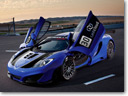 Setting yet another milestone in the year of its 30th Anniversary, GEMBALLA is proud to announce the debut of GEMBALLA racing. The new team will enter two McLaren MP4-12C GT3 cars in the 2012 motorsport season.


 The Mercedes-Benz SLK 55 AMG is the most powerful SLK of all time. Its newly developed AMG 5.5-litre V8 engine featuring cylinder shut-off combines the ultimate in performance with the best possible fuel consumption. With a peak output of 422 hp and maximum torque of 540 Nm, the SLK 55 AMG outperforms all of its direct competitors. Its fuel consumption of 33.6 mpg on the combined cycle and CO2 emissions of 195 grams per kilometre are around a 30 percent improvement of that of its predecessor. High levels of driving dynamics are ensured thanks to the AMG sports suspension with Direct-Steer system, Torque Vectoring Brakes and 3-stage ESP®, as well as the AMG high-performance braking system.


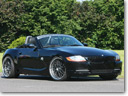 It is a regularly recurring process: if a car manufacturer presents a new model, its predecessor generation often seems outdated and old-fashioned all of a sudden, even though there was no reason for complaint previously. This happens at a time when the model usually has already gone through more or less intense model care. Although this kind of “spontaneous aging” is rather below average for the first-generation-BMW Z4, JM Cardesign from Bergheim performed a very special kind of face-lifting on the E85-Roadster presented here. The tuner fitted the “old” Z4 with the front pieces of the new E89 model. The front bumper and grille were modified in extensive handiwork to match the headlights, mudguards and bonnet of the E85. The result is very harmonious: even MBMW enthusiasts will take a moment to entirely identify the cross-generation transformation. JM Car Design also applied some classic craftsmanship in the area of the rear wheel runs.


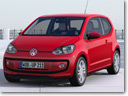 The first photos of the Volkswagen up! have been released, ahead of the new small car making its debut at the Frankfurt motor show in September.


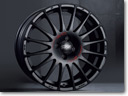 How important is your car to you? I am pretty sure there are thousands of people’s girlfriends around the world like mine claiming you love your car more than you love her.
