The motto of the concept is simple: “Take 3!” and it is all about taking three axels instead of two. However this modification is based on the thinking “but only if you need them”! This third axle with two wheels is the main feature of the brand new modular mobility system from Swiss automotive visionary Frank M. Rinderknecht. Under the name “Dock+Go” the Swiss will present the vehicle from 8th till 18th of March at the 2012 Geneva Motor Show. What is so special about this concept lies in the aim of docking “backpacks on wheels.” Moreover these single-axle “packs” can be used in different ways depending on what the driver has to do during the day. In addition they also have an insightful resolution for the so commonly met operating range problem of electric vehicles. The highlight is that neither unneeded space nor superfluous weight is carried along if it is not necessary.
As a basis “Dock+Go.” could be used any electric car: for example you can have the two-seated smart. Furthermore there is a great range of “packs” thank to which you can turn the electric-powered mini car into a dream car of any pizza delivery driver (additionally completed with an integrated heated box). As it goes for the craftsmen – there is a very special thing prepared: a toolbox pack with well-organized spaces for every tool! Eventually after the day has gone and all the work is done everything could e docked to the rear of the mini-mobile.
Rinspeed Dock+Go (2012)
And here is the great news for all “high-speed” admirers. When you want to accelerate the kilometers per hour more than just 120, there have been provided an “energy pack” with a combustion engine or range extender, packed with batteries or powered by a fuel cell. Thank to it, there is an added range for reaching more distant destinations. Additionally manufacturers have shared a simple but clever trick: the docked third axle drives the rotating second axle and thus recharges the on-board battery of the city car; hence thus the first Vario-Hybrid is born! If you wonder how you can charge the batteries you can do it at home using the energy pack. The last one is recharged with solar power from the roof, thus making living and driving without any CO2 emissions a reality. A perfect car for any environmentalist isn’t it
With gull-wing door plates by LSD, the VW Scirocco (type 13) becomes a real head-turner. LSD offers the hinges as a complete set for both doors including hinges, cable set fitting materials and attachments for only 1549 Euro including VAT.
The plates are equipped with the new GRS (Guided Roller System). It offers an adjustment possibility with the roller guidance of the roller bearing integrated in the hinges. This results in more safety and more precise opening and closing of the door.
LSD plates are delivered with a part certificate by the German Technical Control Board which ensures that the LSD gull-wing doors fulfil all security standards.
Compared to other retrofit-sets for gull-wing doors, the LSD plates “made in Germany“ impress with a fully developed technology and the highest-possible quality standard. Moreover, a test laboratory accredited by the Federal German Transport Authority confirmed in a side crash-test that the LSD-solution which is patented in Germany is as safe as any serially fitted door. That means that passenger safety in a side crash is guaranteed according to guideline 96/27/EG by the LSD hinge system. LSD enables an easy and quick assembly without welding or painting works and impresses by its perfect fitting accuracy due to its three-dimensional adjustment.
LSD Volkswagen Scirocco
The LSD plates are fitted to the original door attachment points of the dismantled original plates. After the assembly, the otherwise unchanged original door first opens outwards and then securely guided and damped upwards. Adjustable plates stop doors from opening too far or from falling inwards or downwards when opened. And also, it only takes one grip to close the doors. The LSD gull-wing doors render a sensational look to any car and are the ideal solution of fans of extraordinary tuning- and show cars. The LSD door plates can be obtained directly from LSD or from a specialist dealer.
M3, M5, M6 … What was really lacking in this sequence was a smaller M1, which – with due respect to its famous predecessor of the same name – has now been officially called “1 Series M Coupe” by BMW. The engineers at BMW M GmbH are mighty proud of their smallest M-Racer, which thanks to an in-line six cylinder engine with TwinPower Turbo-charging and direct fuel injection, sends out a whopping 340 hp on the crankshaft. Alongside so much power, even a Porsche Cayman R must back off.
As one of the foremost engine tuners in Germany, the Manhart Racing Company, led by the engine tuning icon, Günter Manhart, will offer from now on a completely remodelled 1 Series M Coupe. The Manhart MH1 Biturbo stands out with its standard consistent increase in power to 415 hp, which catapults it directly into the same league as the M3 Coupe and the Porsche 997 Carrera GTS. The in-house sports exhaust system, including down pipes and stainless steel silencers, ensures not only a few extra horsepower, but also an aggressive sound.
Manhart MH1 Biturbo
This is of course still by no means the end, for, so that high performance can also be efficiently reached without large losses in traction propulsion, Manhart Racing built an in-house specially tuned coilover suspension and a magnificent Concave One wheel-set. The exclusive MHR forged wheels rotates with 9×20 inch turn forward, on the drive axle in 10.5 x20 inch turns, in combination with a 245 and 295 Continental Sport contact 5 set of tyres. For more down-force on the front axle, there is also a fine, handmade carbon-fibre front splitter, including a central bar. In the rear section, Manhart has built in a diffuser on the 1M Coupe, made also of course from high-quality carbon fibre fabrics. A set of quality carbon mirror covers completes perfectly the changes to the exterior.
For the interior of the MH1 Coupe, the experts form Geilenkirchen offer sports performance seats in the front and an Alcantara rear seat at the back, both enhanced with red stitching.
Prices:
MHR full carbon fibre front splitter
1,990 Euro
MHR full carbon rear diffuser
1,820 Euro
MHR coilover suspension
2,580 Euro
MHR Concave One forged wheels in 9×20 and 10.5×20 with 245 and 295 tyres
The SLS 63 AMG is a living legend even now – there is no doubt about it. Of course, it is anything but simple for any Mercedes-Benz refiner. The Berlin refiner MEC Design thought long and hard about the subject of the SLS and specifically had one imported from American Orlando. Now they present a breathtakingly beautiful complete conversion
Of course, this masterpiece includes a customised body kit. The front bumper is either a single- or two-part construction with attached spoilers, with optional LED inserts (if desired also in carbon) being available as well. The SLS owner must make a difficult decision for the tail bumper, which is offered with three different diffusor inserts. Alternatively, it is also available in carbon. The customer can choose between “Extreme”, “Formula” or “GT3”. A side sill cover that can be equipped with four LEDs each if desired makes for a more attractive silhouette.
A tail spoiler and a two-part pane spoiler, as well as a roof scoop complete the car body set – all three elements also available in carbon.
MEC Design Mercedes-Benz SLS 63 AMG
The four mecxtreme3 wheel rims are perfectly elegant and exclusive at once. The front ones are 10.5×20 with 265/30 ZR20 and the rear ones 11.5×21 with 295/25 ZR21 tyres. If desired, they can be combined with 11 or 11.5×20 in front and 12.5×20 in the rear. The chassis of the SLS offers a lift-up system that permits height adjustment of the chassis by 30 mm at the front and rear axle by the push of a button to conquer obstacles like garage entrances or traffic obstacles. The threaded chassis also warrants maximum lowering by up to 70 mm.
A specialty of MEC Design is certainly production of exclusive exhaust systems. The system installed here is a true highlight as well. The stainless steel sport end muffler has a gigantic, very deep and low sound in particular at higher speeds. Of course, the original AMG system can be retained as well – in combination with the four MEC design end pipes.
For the interior of the SLS, MEC Design presents a dedicated collection. The entire carbon interior covers the centre console, the door strips, the entry bars, the seat cover, the seat casing and the compartment between the rear seats with exclusive carbon fibre. Added to this is a set of MEC design rugs with nubuck edge and double seams, as well as a carbon/alcantara sports steering wheel. Finally, the entire trunk of the SLS was edged in alcantara and applied with a double seam and a logo.
In matters of individualisation the traditional tuning house Kicherer has taken on the new AMG Mercedes SLS Roadster.
True to the company‘s philosophy to consistently only supplement the AMG‘s basic shape and to retain its basic lines, a new, more sporty version of the Roadster was in essence created. Especially the aerodynamics benefited from the high quality final touch. For this the developers created and mounted a sporty front spoiler, side skirts and a specially hand-made GT front grill. More accents are provided by the small aerodynamic fins that can be mounted on the bonnet and on the wings. All the new add-on components created by KICHERER are, of course, made of high quality carbon.
A further highlight on the sports car is provided by the three-part 20 inch RS-1 lightweight complete wheels.The classic double-spoke design harmonises perfectly with the equally classic sports car silhouette of this retro-sports car.
KICHERER SLS Roadster Supersport GT/R
In addition, a coilover suspension with a socalled „Front Up“ system is mounted on the car. This not only makes driving more sporty but also suits the vehicle perfectly. Moreover, it also makes it possible to raise the front of the car by just pressing on a button, so that obstacles such underground carpark entry ramps and speed bumps can be more easily overcome.
On the rear of the car a stainless steel exhaust with four oval endpipes controlled by dynamic pressure sonorously allows the exhaust fumes out into the open. An integrated valve control gives the driver – depending on the occasion – the opportunity of choosing between a sonorous and discrete tone.
The KICHERER developers have also tightened the performance screw a little and , thanks to the sports air filter exclusive to KICHERER, managed to achieve an actual every day performance of 630 PS – instead of the standard 571 PS. Those who like it even more sporty can order the second performance level. This possesses in addition an exhaust manifold system and a sports catalysor that combined with the modification from the first level guarantee a top performance of 650 PS at 720 Nm torque.
This means the open air SLS sprints to 100 km/h in just 3.5 seconds and reaches a sealed-off top speed of 320 km/h.
Offering all the robust, high value, high quality attributes of SsangYong vehicles in a new pick-up opens up the brand’s strengths to a whole new area of the global new vehicle market.
Making its world debut at the IAA International Motor Show, Frankfurt 2011, SsangYong’s SUT-1 is ready to enter mass production. Having debuted in concept form at the Geneva Motor Show in March 2011, the truck has now evolved into a showroom ready model.
Applying modern design techniques to the traditional pick-up body has resulted in a stylish Sports Utility Truck that perfectly presents the dynamism and strength of SsangYong Motor. Balancing the needs of load volume with attractive lines, SUT-1 is the ideal vehicle for a wide variety of drivers, whether they enjoy leisure activities such as camping, skiing and cycling or they just need a hard working truck.
Far from being a stripped out commercial model, SUT-1 offers the cabin comfort and luxury of a premium SUV. Equipment includes a sunroof, RDS & Bluetooth audio, rear view camera, hinge sprung tailgate and a trip computer. Safety equipment hasn’t been forgotten either, with functions such as ESP and dual airbags fitted to make SUT-1 a genuine alternative to a conventional 4×4.
Efficiency has also been at the forefront of SUT-1’s engineering, with the 2.0 Active Diesel Engine complying with Euro 5 emissions standards and offering highly competitive economy. CO2 emissions have been reduced to 186g/km, representing a nine per cent improvement over the engine’s previous performance.
SsangYong SUT-1
This impressive efficiency is achieved without any compromise in performance. Peak torque of 360Nm is maintained across a wide range of 1,500 to 2,800rpm, while 190Nm is delivered at a near-idle 1,000rpm.
Styling
When penning the SUT-1’s distinctive lines, designers had in mind SsangYong’s corporate product development philosophy, ‘Robust, Specialist, Premium’. Expressing the company’s latest design language, SUT-1 takes on a dynamic appearance displayed through the bird-wing shaped radiator grille and headlamp silhouette.
The SsangYong’s stylish body houses a spacious five-seat cabin, enabling both the driver and passengers to travel in comfort en route to their chosen activity. A large 2m2 deck provides ample space for all types of extreme sports equipment, making SUT-1 the ideal companion for anyone with a growing sense of adventure.
New eco-friendly powertrain
Drivers have the option of either rear wheel drive or on demand four wheel drive in their SUT-1, coupled to six speed manual or automatic transmissions. The 2.0 Active Diesel Engine fitted to all variants is impressively efficient despite its 155ps power output. Buyers of the automatic model also benefit from a sixth cruising gear for maximum comfort and economy at motorway speeds.
Strong safety specifications
The ultra-rigid frame body is equipped with front seat dual airbags and seatbelt pretensioners with load limiters. Passenger safety is further prioritised through the installation of ISOFIX attachments for a child seat and ESP (Electronic Stability Program), including various functions such as Active Rollover Protection and Brake Assist System (ABS).
Comfort and handling
SsangYong has engineered SUT-1 to offer all the dynamic appeal of a premium SUV. The truck’s combination of double wishbone and five-link suspension is more commonly found on full-sized SUV models, while the optimal tuning of engine mounts has minimised vibration in all driving conditions.
EQUIPMENT
Mechanical
155ps 2.0-litre diesel engine with particulate filter
Part-time 4WD
6 speed manual transmission
6 speed automatic transmission
Double wishbone front suspension
5 link rear suspension
Seats
Electric driver’s seat
Electric passenger seat
Leather upholstery
Heated front seats
Climate control
Manual air conditioning
Fully automatic air conditioning
Appearance
16” alloy wheel
18” alloy wheel
Leather steering wheel
Sunroof
Convenience
Cruise control
Power folding rear view mirrors
Electro chromatic inside rear view mirror
Steering wheel audio systems controls
2DIN MP3 CDP with RDS function
Bluetooth system
Trip computer
Safety
Ultra-rigid frame
Dual airbags
Immobiliser
Reversing warning system
Disc brakes on all 4 wheels
Front and rear fog lamps
Daytime running lights
ISOFIX child seat attachments
Electric windows
Electronic stability program (ESP)
TECHNICAL DATA
Engine
FR 2.0 Active Diesel Engine
Driven Wheels
RWD
Part Time 4WD
Transmission
6MT
6AT
6MT
6AT
Dimensions
Overall length
mm
4,990
Overall width
mm
1,910
Overall height
mm
1,790
Wheelbase
mm
3,060
Min. turning radius
m
6.2
Weight
Gross vehicle weight
Kg
2,640 ~ 2,740
Kerb weight
Kg
1,873 ~ 1,995
Engine
Fuel
–
Diesel
Capacity
cc
1,998
Bore X Stroke
mm
86.2 X 85.6
Compression ratio
–
16.5 : 1
Number of cylinder
–
In-line 4
Performance
Max. power
kW/rpm
114 / 3,400 ~ 4,000
ps/rpm
155 / 3,400 ~ 4,000
Max. torque
Nm/rpm
360 / 1,500 ~ 2,800
Low end torque
Nm/rpm
190 / 1,000
Max. speed
Km/h
171*
170*
171*
170*
Fuel Consumption
CO2 (combined)
g/km
186*
201*
195*
211*
Combined
L/100km
7.1*
7.6*
7.4*
8.0*
* Target data (Actual Certification data can vary depending on conditions)
Stephan Winkelmann, President and CEO of Automobili Lamborghini S.p.A., is presenting at the Volkswagen Group Night in Frankfurt the most extreme Gallardo ever: the Gallardo LP 570-4 Super Trofeo Stradale. Automobili Lamborghini is bringing motor racing excitement directly to the road. This new and most extreme top model in the Gallardo lineup is based on the successful race car from the Lamborghini Blancpain Super Trofeo, the world’s fastest singlemake series.
The car will be produced in a limited run of 150 numbered units.
The Lamborghini Blancpain Super Trofeo championship brings professional racers and gentlemen drivers face-to-face in fiercely fought battles on Europe’s most challenging racetracks such as Monza, Silverstone and Hockenheim. There are many similarities between the racing and road versions of this super sports car. For example, they both share the same V10 powerplant, which is used in the racing version with no modifications.
An enormous and manually variable rear spoiler for increased dynamic load
Right from first glance, these similarities are even more evident in the new Gallardo LP 570-4 Super Trofeo Stradale. In fact, it is equipped with the same rear spoiler that offers greater aerodynamic load – reaching in the best aerodynamic condition 3 times the load of the Gallardo LP 560-4 – for increased dynamic stability during tight, high-speed driving. As in the race cars, the rear spoiler can be varied manually in order to let the driver optimize the car’s performance according to the track or road characteristics.
2012 Lamborghini Gallardo LP 570-4 Super Trofeo Stradale
Another element taken directly from the racing version is the removable engine hood with quick-release system. Both the spoiler and the hood are of course made of carbon composite material, as are a host of other components on the SuperTrofeo Stradale. Together with aluminum, carbon fiber is the basis behind the extremely lightweight construction of Gallardo’s new top model.
Lightweight construction through consistent use of carbon fiber
The Gallardo LP 570-4 Super Trofeo Stradale boasts a maximum dry weight of 1340 kilograms. It beats the already lean Gallardo LP 560-4 by 70 kilograms, which gives the Gallardo LP 570-4 Super Trofeo Stradale a stunning power-toweight ratio of 2.35 kilograms per HP for breathtaking performance. It sprints from 0 to 100 km/h in a mere 3.4 seconds and reaches 200 km/h just 10.4 seconds later. Its forward thrust finally tops out at 320 Km/h.
“Rosso Mars” stands for Italy’s racing tradition
The Gallardo Super Trofeo Stradale sports a brand new “Rosso Mars” finish that underscores the special connection between ultimate race track performance and Lamborghini’s “Italianness”. The “Rosso Mars” color symbolizes Italy’s traditional racing red, as established at the beginning of last century in motor racing, when the home nations of the competitors were indicated by the color of the paint on the vehicles. Dark green stood for Great Britain, blue was for France, white (and silver later on) represented Germany, white and blu stripes for USA, and red was the color of all race cars from Italy.
Red, black and carbon fiber characterize the exterior
The exterior appearance of the Gallardo LP 570-4 Super Trofeo Stradale is perfectly accentuated by a matte black finish on the large rear spoiler, the engine hood and the front air intakes, which contrasts with the “Rosso Mars” paint. The forged wheels are painted in high-gloss black, a color that is also available on the roof as an option. The rocker panel covers, impressive rear diffuser and outside mirror housings are made of carbon fiber polished to a high gloss, while the brake calipers are accented in red for the first time on a Lamborghini. It’s a perfect match with the exterior color and racing concept of this new super sports car. And besides the historically suggestive “Rosso Mars”, the new Gallardo Super Trofeo Stradale is also available upon request in “Grigio Telesto” or “Bianco Monocerus” with the roof available in gloss black as an option, as mentioned above.
Minimalist sporty interior
Black and red, the perfect combination of sporty minimalism, are the dominant shades inside the Super Trofeo Stradale. The most broadly used materials are Alcantara – in “Rosso Mars” on the underside of the dashboard, the central part of the seat cushion and the backrest – and extremely lightweight carbon fiber. Black Alcantara with contrasting red top-stitching is used to finish the other parts of the interior. The steering wheel is upholstered in black suede and also features red top-stitching. The door panels, the monocoque racing seats and the center console cover are made of carbon fiber, the construction of which
Lamborghini has achieved a world-leading expertise. Discreet sporty accents are provided by dark chrome visible metal parts.
Upon request, an interior layout including elements made of carbon fiber, such as the handbrake frame, the middle of the center console, the lower rim of the steering wheel, the decorative frames around the main and secondary instrument panels, the door handles, and the handle for opening the glove box (also available upon request), can be ordered.
Phenomenal powerplant
Like the Super Trofeo competition version, the new Super Trofeo Stradale is based on the Gallardo Superleggera technical approach. The V10 powerplant generates 570 HP, equivalent to 419 kW, which is fully available at 8000 RPM. The maximum torque is equally impressive, with the torque curve peaking at 540 Nm at 6500 RPM. The V10’s unique firing order delivers the striking sound you hear in motor racing.
Transmission “race tested” in the Lamborghini Blancpain Super Trofeo championship series
Like the race car, the Gallardo Super Trofeo Stradale offers the robotized egear six-speed transmission controlled by steering wheel paddles as standard equipment. This electronically controlled system shifts through its six gears smoothly and much faster than any human being could. And for maximum acceleration from a standing start, the transmission can be set to the “Thrust Mode” – a program that allows to reach the best performance possible executing a racing start with minimal tire slippage at an initial engine speed of approximately 5000 rpm.
Permanent all-wheel drive for maximum traction in any situation
Every kilometer in the Gallardo LP 570-4 Super Trofeo Stradale is packed with sheer excitement, in part due to its unrelenting grip in virtually all situations thanks to all-wheel drive. At the end of the day, the Lamborghini Super Trofeo is the only single-brand racing series in the world that features all-wheel drive race cars. The Gallardo Super Trofeo Stradale is a highly concentrated driving machine offering a truly stunning driving experience with breathtaking cornering speeds and fast, immediate response. Its road manners are always precise, stable and completely safe.
Suspension with unmatched precision
The layout of the suspension is directly derived from motor racing, with a double aluminum wishbone guiding the wheels. Precise rack-and-pinion
steering gives the driver a very close connection to the road. As is true for the Gallardo Superleggera, the vehicle is specially set up to take full advantage of its dynamic potential. No other model in the Gallardo line is as close to being a true race car. Another great feature is the ultra-lightweight 19-inch wheels, which alone save some 13 kilograms. The lightweight and sturdy wheel bearings and bolts are made from titanium and high performance Pirelli P Zero Corsa tires are fitted.
Brakes with unmatched stopping power
Behind the massive wheels are brakes designed for unmatched stopping power, as controlled by the ESP stability control system, which is standard equipment. The front axle is equipped with aluminum calipers with eight pistons each, and the calipers on the rear axle have four pistons each. The ventilated discs on the front and rear measure 365 and 356 millimeters, respectively. Upon request, Lamborghini will install a carbon-ceramic brake system. The carbon-ceramic discs measure 380 mm for the front wheels and 356 mm for the rear wheels.
Racing-type options
The optional equipment designed with racing in mind includes not only the carbon-fiber ceramic brake discs, but also a tubular interior roll cage, 4-point safety belts and fire extinguisher. On the other hand, those who want comfort can equip their Super Trofeo Stradale with a satellite navigation, with Bluetooth connection for mobile phones, an anti-theft system, and a lifting system that raises the front axle.
Lamborghini Gallardo LP 570-4 Super Trofeo Stradale
Technical Data
CHASSIS AND BODY
Frame
Structural aluminium space frame, based on aluminium extruded parts welded to cast aluminium joint elements
Body
Aluminium with thermoplastic “hang-on” parts and diffuse use of Carbon Fiber
Suspension
Double-wishbone front and rear suspension system, anti-roll bar, anti-dive and anti-squat
ESP
Full ESP system with ABS, ASR and ABD
Steel brakes
Power vacuum, aluminium alloy callipers: 8 cylinder front callipers and 4 cylinder rear callipers
Ventilated discs (front – rear)
EU: Ø 365 x 34 mm front – Ø 356 x 32 mm rear
US : Ø 14.37 x 1.34 front – Ø 14 x 1.26 rear
Steering
Power-assisted rack and pinion
Tires (front – rear)
Pirelli P ZERO CORSA 235/35 ZR 19 – 295/30 ZR 19
Wheels (front – rear)
Aluminium alloy: 8.5″ x Ø 19″ – 11″ x Ø 19″
Kerb-to-kerb turning circle
11.5 m (37,7 ft)
Mirrors
External mirror manually foldable
Rear spoiler
Manually variable wing set up
Airbags
Front “dual-stage” driver and passenger airbags. Nur bei OPTKopf- Thorax-Seitenairbags
ENGINE
Type
10 cylinders V 90°, DOHC 4 valves, common-pin crankshaft
Displacement
5204 cc (317,6 cu in)
Bore and stroke
Ø 84.5 mm x 92.8 mm (Ø 3,33 in x 3,65 in)
Valve gear
Chain-driven, intake and exhaust continuously variable valve
timing, electronically controlled
Compression ratio
12,5:1
Maximum power
419 kW (570 CV) at 8000 rpm
Maximum torque
540 Nm at 6500 rpm (398,3 ft lbs at 6500 rpm)
Emission class
EURO 5 – LEV 2
Emission control system
Catalytic converters with lambda sensors
Cooling system
Two water radiators + oil-to-water cooler, engine and gearbox radiator
Engine management system
Bosch MED 9
Lubrication system
Dry sump
DRIVETRAIN
Type of transmission
Permanent 4-wheel drive with viscous traction system
Gearbox
6-speed + reverse
Standard robotised sequential e gear system with actuation by paddles on the steering column
BRABUS has been building the world’s fastest street-legal sedans for many years. This tradition started in 1996 with the BRABUS E V12 that had a top speed of 330 km/h (205 mph), and continued in 2003 with the E V12 Biturbo that reached 350.2 km/h (217.6 mph). In 2006 the BRABUS ROCKET, built in small-series production based on the first edition of the Mercedes CLS, improved the world record to 365.7 km/h (222.7 mph). The BRABUS E V12 “one of ten” based on the latest E-Class, pushed the record to 370 km/h (230 mph).
The world debut of the new BRABUS ROCKET 800 from BRABUS at the 2011 IAA in Frankfurt/Main now continues this unique success story. The high-performance automobile based on the new Mercedes CLS generation is powered by a BRABUS 800 V12 Biturbo engine that produces 800 hp (788 bhp) / 588 kW of power and a peak torque of 1,420 Nm (1,047 lb-ft), which in the car is limited to 1,100 Nm (811 lb-ft). The exclusively appointed BRABUS ROCKET 800, built to order starting at EUR 429,000, reaches a top speed in excess of 370 km/h (230 mph) and accelerates from 0 to 300 km/h (186 mph) in just 23.8 seconds.
Like its predecessors the new BRABUS ROCKET 800 is also powered by a 12-cylinder high-capacity engine that was converted to 800 V12 Biturbo specifications in the BRABUS engine-building shop. Using state-of-the-art machining processes and with utmost precision in every last detail the engine, based on the latest Mercedes 600 engines, underwent a displacement increase from 5.5 to 6.3 liters (336 to 384 cu. in.).
The displacement increase comprises a special crankshaft with longer stroke, larger, forged pistons and an increase in cylinder bore across the board. Intake and outlet ports of both cylinder heads are optimized for mixture flow, and fitted with sports camshafts.
BRABUS ROCKET 800
The intake side was also completely reworked: the hood of the ROCKET 800 features a carbon-fiber ram-air intake system that gets its combustion air through slits in the BRABUS front element.
Another custom development is the BRABUS 800 Biturbo system. It comprises two special exhaust manifolds with integrated high-performance turbochargers, and four water-to-air intercoolers. The stainless-steel high-performance exhaust system with free-flow metal catalysts and butterfly valve was also created specifically for the CLS floorpan.
Just as elaborate was the implantation of the V12 engine and all its peripherals into the modified engine bay of the sedan. Numerous components such as the engine mounts had to be custom designed.
Another engineering masterpiece of the BRABUS engineers is the newly configured on-board electronics system. It includes newly programmed engine mapping that contributes equally to achieving maximum power yield and to meeting the current EURO V emission standards. Just as important is the adaption to the driving dynamics systems such as traction control, ESP, ABS and Brake Assist.
The BRABUS 800 V12 Biturbo engine is lubricated with high-tech motor oil from technology partner ARAL and produces 800 hp (788 bhp) / 588 kW at 5,500 rpm. The even more enormous peak torque of 1,420 Nm (1,047 lb-ft), available from a low 2,100 rpm, is limited electronically in the car to 1,100 Nm (811 lb-ft).
For the first time the BRABUS engine specialists combine this high-end engine with a seven-speed quick-shift gearbox. Gears are shifted by means of shift paddles on the steering wheel or automatically. The BRABUS limited-slip differential, available with various final drive ratios, optimizes traction of the rear-wheel-drive car.
The BRABUS 800 V12 Biturbo engine and the entire powertrain are operated with high-performance lubricants from technology partner ARAL.
With the longest available final-drive ratio the BRABUS ROCKET 800 reaches a top speed of more than 370 km/h (230 mph), making it the world’s fastest street-legal sedan. But this exclusive high-performance automobile is tops in other areas as well: 0 – 100 km/h (62 mph) in 3.7 seconds, 0 – 200 km/h (124 mph) in 9.8 seconds and 0 – 300 km/h (186 mph) in 23.8 seconds are figures that are as unique as this BRABUS automobile itself.
To keep the enormous performance of the world’s fastest sedan safely in check at all times, the vehicle’s aerodynamic properties, suspension and brakes were modified extensively.
Like all other BRABUS body components for the new CLS, the ROCKET 800 front element that includes the front spoiler and the radiator frame was developed in the wind tunnel. The aerodynamic-enhancement components for the ROCKET 800 are manufactured form ultra-light yet high-strength carbon fiber.
The front spoiler features large air inlets and side air vents to ensure optimal air supply of radiators, oil coolers and front brakes. Just as important is that it also minimizes lift on the front axle while improving drag. The air inlets above the radiator cutout provide the ram-air intake system of the 12-cylinder engine with ample combustion air.
The air vents in the front fenders are part of the sporty-elegant yet understated appearance of the four-door car. BRABUS side skirts with integrated LED entrance lights calm the airstream along the vehicle’s sides. They also form a transition to the carbon-fiber fender flares on the rear axle, which add 40 millimeters (1.6 in.) to the width of the ROCKET 800 compared to a stock CLS.
To achieve an optimal aerodynamic balance, the BRABUS design studio has developed a rear wing and a rear diffuser for the CLS body. Side air vents in the rear bumper round out the sporty appearance.
A high-performance vehicle such as the BRABUS ROCKET 800 naturally also has a precisely calibrated high-end suspension. A height-adjustable coilover suspension was developed in cooperation with technology partner BILSTEIN. In addition to an adjustable ride height the gas-pressure shocks on front and rear axle feature ten selectable settings each for bound and rebound. Sport sway bars give the car even more agile turn-in and reduce body roll during fast cornering.
Maximum stopping power and absolutely fade-resistant brakes are further active safety features of the ROCKET 800. The BRABUS high-performance brake system was adapted to work with the Brake Assist system of the CLS. On the front axle it consists of vented and grooved steel brake discs that measure 380 x 37 millimeters (15.0 x 1.45 in.) and 12-piston aluminum fixed calipers. Vented and grooved steel discs measuring 360 x 28 millimeters (14.2 x 1.1 in.) and six-piston fixed aluminum calipers on the rear axle complete the extremely efficient and durable brake system.
The immense top speed of the BRABUS ROCKET 800, for street operations limited electronically to 350 km/h (217 mph), necessitates special high-performance tires. Technology partners Continental, Pirelli and YOKOHAMA mount the 19-inch one-piece BRABUS Monoblock F wheels with high-speed-capable tires. The front axle features size 9.5Jx19 wheels and tires in size 255/35 ZR 19. Tires in size 285/30 ZR 19 mounted on identically sized wheels on the rear axle provide excellent traction.
The ergonomically shaped BRABUS sport steering wheel with aluminum shift paddles always guarantees perfect, close contact with the suspension. Aluminum pedals, footrest and shifter add further sporty highlights. The BRABUS speedometer with 400-km/h (250-mph) dial is also part of the custom-tailored interior as are stainless-steel scuff plates with backlit ROCKET 800 logo.
They welcome driver and passengers to the exclusive atmosphere of a BRABUS fine leather interior. The company upholstery shop has created an all-leather gray interior crafted with utmost precision from the finest supple leather. The leather is combined with high-gloss-polished black piano wood and a headliner made from black Alcantara. The headrests are embroidered with a BRABUS and a ROCKET 800 logo. BRABUS ROCKET 800 – Technical Data
Body
Four-door sedan based on C 218-series Mercedes-Benz CLS-Class.
Steel unibody welded to floorpan, widened by 40 millimeters with BRABUS carbon-fiber fender flares.
BRABUS ROCKET 800 aerodynamic-enhancement kit for reduced lift on front and rear axle and reduced drag. Consists of front element with integrated front spoiler and air inlets for the ram-air intake, air vents in the front fenders, side skirts with integrated entrance lights, rear wing and rear diffuser, rear fascia with side air vents.
BRABUS hood with integrated ram-air intake system.
Dimensions:
Length 4.996 mm (196.7 in.)
Width 1.881 mm (74.1 in.)
Height 1.371 mm (54.0 in.)
Curb weight 1.980 kg (4,365 lbs.)
Gross vehicle weight 2.415 kg (5,324 lbs.)
Tank capacity/reserve 66 l / 14.0 l (17.4 / 3.7 gal.)
Engine
BRABUS 800 V12 Biturbo high-capacity engine based on Mercedes 600.
BRABUS 800 V12 Biturbo engine conversion consisting of:
Displacement increase to 6.3 liters (384 cu. in.) by means of a special crankshaft with longer stroke, larger cylinder bore and corresponding larger pistons. Mixture-flow-optimized intake and outlet ports of both cylinder heads, including installation of high-performance camshafts.
BRABUS 800 V12 Biturbo system with two high-performance turbochargers with optimized exhaust manifolds and integrated turbine housings, more efficient intercooling system with four water-to-air intercoolers and ram-air intake integrated into hood.
BRABUS stainless-steel twin exhaust system with free-flow metal catalysts and butterfly valve. Newly programmed mapping for engine and on-board diagnostics.
V12-cylinder three-valve alloy engine with two turbochargers
Displacement 6.233 cc (380.4 cu. in)
Compression ratio 9.0 : 1
Rated power output 800 hp (788 bhp) / 588 kW at 5,500 rpm
Peak torque 1,420 Nm (1,047 lb-ft) from 2,100 rpm (electronically limited to 1,100 Nm / 811 lb-ft)
max. CO2 emissions 372 g/km (595 g/mile)
Fuel type: Super plus (98 ROZ)
Motor oil: ARAL
Power Transfer
Rear-wheel drive with limited-slip differential and ESP
BRABUS limited-slip differential with a locking rate of 40 percent
Final drive ratio 2.65 : 1
Suspension
Independent front and rear suspension with height-adjustable BRABUS coilover sport suspension developed in cooperation with BILSTEIN.
Front axle:
Three-link suspension, anti-dive geometry, Height-adjustable BRABUS struts with gas-pressure shocks with 10-way adjustable bound and rebound, coil springs, BRABUS sport sway bar.
Rear axle:
Multi-link suspension, anti-dive and anti-squat geometry. Height-adjustable BRABUS struts with gas-pressure shocks with 10-way adjustable bound and rebound, coil springs, BRABUS sport sway bar.
Wheels:
One-piece BRABUS Monoblock F alloy wheels with YOKOHAMA ADVAN Sport high-performance tires.
Front: 9.5J x 19 H2 with size 255/35 ZR 19 tires
Rear: 9.5J x 19 H2 with size 285/30 ZR 19 tires
Brake System
Dual circuit brake system with Brake Assist and BRABUS high-performance brake system.
Front: BRABUS 12-piston fixed aluminum calipers with vented and grooved steel discs measuring 380 x 37 mm (15.0 x 1.45 in.)
Rear: BRABUS six-piston fixed aluminum calipers with vented and grooved steel discs measuring 360 x 28 mm (14.2 x 1.1 in.)
Performance
0 – 100 km/h (62 mph): 3.7 sec.
0 – 200 km/h (124 mph): 9.8 sec.
0 – 300 km/h (186 mph): 23.8 sec.
Top speed: more than 370 km/h / 230 mph (for on-road operations electronically limited to 350 km/h / 217 mph due to tires)
Fuel Economy
Max. city 23.8 l / 100 km (9.9 mpg)
Max. highway 11.1 l / 100 km (21.2 mpg)
Max. combined 15.7 l / 100 km (15 mpg)
Following on from the reveal of the Concept Universe earlier in the year, the Frankfurt Motorshow marks the debut of an evolution to the Concept Universe – Concept You – and gives another insight into Volvo Cars future. Both concept cars are being used as design studies to obtain input from the global car buying public to find the ultimate design of the next large sedan from Volvo.
“Concept You gives a good indication of what you can expect from our next large sedan. The blend of contemporary Scandinavian design, exquisite craftsmanship and intuitive technology will appeal to luxury car buyers all over the world,” says Stefan Jacoby, President and CEO of Volvo Car Corporation.
The Concept You, combines a sleek coupé-like exterior with a luxurious high-tech interior that keeps the driver in command via intuitive smart pad technology. Concept You’s luxurious interior gives luxury sedan customers a full experience of the craftsmanship and intuitive technology that will be the hallmark of future Volvos.
Global Feedback
The company has collected global feedback on Concept Universe, both through surveys and by closely monitoring social media comments.
“The most valuable input has been used in the development of the Concept You. This car features a more daring, coupé -like profile than the Concept Universe, while the front moves towards a more classic Volvo look,” explains Peter Horbury, Vice President Design at Volvo Car Corporation.
He added, “The fastback profile mirrors a strong trend among European buyers. With growing signs that Chinese “taste buds” are moving rapidly in the same direction, our main aim is to explore how daring our next large sedan should be in order to be a global success. We are very eager to hear what people think about the Concept You.”
Volvo Concept You
Cars Designed Around People
Volvo Car Corporation’s strategy is to achieve profitable growth by being a truly global company with products designed around customers’ needs and lifestyle.
“With our hearts in Sweden and our eyes and ears all over the world, we intend to be the brand that best interprets what buyers of modern luxury cars want,” says Stefan Jacoby. He adds:
“The Concept You reflects how people’s perception of luxury is moving beyond the traditional perspective. There is a growing appreciation for the ingenious blend of elegant design, superior craftsmanship and smart technology.”
Several aspects of the new strategy
The Concept You radiates several aspects of Volvo Car Corporation’s new, customer focused “Designed Around You” strategy:
It is a large, luxurious sedan with a new, sculpted Scandinavian form language that also honours the sweeping, elegant lines of classic Volvo models.
The inspiration from – and cooperation with – a number of world famous brands demonstrates the level of exquisite craftsmanship customers can expect from future Volvo models.
The concept car reveals how Volvo’s new Scalable Platform Architecture (SPA) opens up dynamic design possibilities – on top of the technological and industrial advantages.
By bringing the latest intuitive smart pad technology into the car, Volvo Car Corporation emphasises its ambition to lead the development of super-functional connectivity features in cars.
Volvo makes life less complicated and more enjoyable
Volvo Car Corporation aims to make people’s lives less complicated and more enjoyable while strengthening the company’s established commitment to safety and the environment.
“We will compete with the best with our special kind of luxury. Volvo’s cars are intuitive and uncomplicated. Our customers don’t have to give away driving pleasure to drive safely. They can be environmentally conscious and still indulge the pure joy of owning a luxury car,” Stefan Jacoby concludes
Touch-control cockpit and pure craftsmanship
The luxurious interior of the Concept You features a blend of intuitive smart pad technology and first-class craftsmanship.
“The Concept You explores new territories in our search for the ultimate intuitive car that makes the owners manual a thing of the past. Smart phones and smart pads have brought mobile infotainment into a new era. Here, we use a number of touch-screens to replace buttons and controls in order to make the driver totally connected, totally in control. The technology also helps us to create a refreshingly uncluttered interior,” explains Peter Horbury.
The Concept You control centre consists of four main areas; a digital Driver Information Monitor (DIM), a head-up display on the windscreen, a touch-screen in the upper part of the centre console and a touch-screen between the two individual rear seats. The wood/leather steering wheel has aluminium and glass paddles with integrated touch-screens.
The touch-screen in the upper part of the centre console remains in sleep mode until the driver looks at it. A hidden infrared camera registers the eye movements and information is displayed on the screen.
Another sensor registers hand movements and triggers the Infotainment system’s control mode. The possibilities vary depending on whether the screen is approached by the driver or by the front passenger.
“Certain functions, such as surfing the Web, are only accessible from the passenger side while the car is rolling. The technology knows who is the present operator and adapts itself automatically,” says Peter Horbury.
The driver can “flip” data from the central touch-screen to the head-up display and can exchange data with the rear passengers. A light guide in the free-floating centre console indicates file transfer.
Unique air-powered sound system
The Infotainment system also integrates a high-end sound system from Alpine. It features the unique “FreshAir” subwoofer – a not yet released technology that uses the air outside the car to create the ultimate listening experience.
The sound system consists of small, optimised units that considerably cut weight – while still producing a better sound than today’s systems.
Comfortable and cultivated
The interior is dedicated to offer design-driven customers a comfortable, cultivated, Scandinavian inspired environment that is also user-focused and refreshingly uncomplicated. Every detail has been chosen with the customer experience in focus.
The interior is driver-orientated at the front and comfortably relaxed in the rear. The dark colour scheme in the front seats fades seamlessly towards the rear until it fully transforms into a light rear seating area. The interior moulds into the rear seat and becomes part of the seating environment.
Volvo Car Corporation has partnered with several other famous brands in order to create a genuine feeling of luxury with the right Scandinavian touch.
Leather, suede and suit fabric
The four individual seats blend chrome-free leather from Bridge of Wear with Dinamica ecological suede. The off-black front seats have suede in the centre to create optimal grip. The soft beige rear seats are designed for pure comfort with leather in the centre and suede on the sides.
The Concept You design also integrates the luxurious qualities of a tailor made suit into the car. The back of the front seats and the door panels feature exclusive Italian fabric and designs from Swedish fashion house Oscar Jacobson.
The designers have also been generous with large, handcrafted pieces of walnut – accompanied by leather panels, Dinamica suede roof lining and carefully chosen aluminium details.
Hand-tufted wool carpets
The wooden floor, which echoes Scandinavian homes, is covered with a specially designed hand-tufted carpet from world-famous Swedish brand Kasthall. Just like the rest of the interior, it fades from dark in the front to light in the rear. The front texture has a sporty firmness, while the rear part of the carpet is luxuriously soft.
Inspiration from Georg Jensen
The Concept You is finished in a light blue, liquid metal paint from DuPont. The ventilated disc brakes are developed by Volvo’s racing specialists Polestar.
The car’s fastback silhouette is emphasised by the 21-inch polished aluminium wheels with a twisted twin-spoke design and tyres from Pirelli (275/30/21).
Up front, the Concept You grille – which has a more classic appearance than the Concept Universe – features details with the same beautifully polished craftsmanship.
“The design of the wheels, the grille and details in the innovative headlamps have been inspired by the exquisite works of world-famous Danish design house Georg Jensen. Their precious items capture the essence of Scandinavian design. Uncluttered, organic surfaces and superb craftsmanship that radiate timeless luxury,” says Peter Horbury. He adds:
“This eternal beauty of Georg Jensen design is what we are aiming for with the whole concept car. Just like the finest luxury goods, this design should feel handcrafted and durable enough to stand the test of time.”
While the all-new Kia Rio five-door hatchback is generating positive media coverage around the world and arriving in dealer showrooms across Europe this month, Kia is celebrating the world premiere of its new Rio three-door model at the Frankfurt Motor Show.
Designed primarily for the European market, the new Rio three-door will expand the appeal of Kia’s latest B-segment model to attract a new group of consumers to the brand for the first time – boosting conquest sales after its introduction during the first quarter of 2012. Ultimately, Kia expects the Rio three-door to account for approximately 20 to 25 per cent of total Rio sales.
Rio three-door has the same key dimensions as the five-door model (length 4,045 mm, width 1,720 mm, height 1,455 mm and wheelbase 2,570 mm) and retains the same roofline that is one of the lowest in Kia’s European product range, emphasising its purposeful, sporty stance.
In most European markets, Rio three-door will be available with the same range of powertrains, equipment and options as the five-door. The new model will offer customers a choice of four highly efficient three- and four-cylinder engines – with a 75 to 109 ps power range.
2012 Kia Rio three door
The fastest Rio three-door will accelerate to 62 mph in 11.5 seconds and be able to reach a top speed of 114 mph. Fuel consumption will be as low as 88.2 mpg for the newly-introduced EcoDynamics diesel model, which will also deliver an industry-leading CO2 rating of just 85 g/km – the lowest emissions of any non electric vehicle, including hybrid vehicles.
With two bodystyles for new Rio, plus the already-popular five-door Soul and Venga B-segment models, Kia is confident of capturing an even larger share of the increasingly popular compact car market in Europe. The three-door Rio will go on sale from early 2012.
The new Toyota Avensis makes its world debut at the 2011 Frankfurt motor show, a substantially revised model that builds on the spaciousness, practicality and fuel efficiency of the current, third-generation car. It features a bolder, more refined exterior design and improvements to the finish quality, comfort and NVH in the cabin. Driving dynamics have been improved and a new grade structure (UK details to be announced later) will provide even more value for money.
The 2.0-litre D-4D engine has been revised to give significant improvements in fuel consumption and CO2 emissions. With a tax threshold at 120 g/km in almost a third of European countries, the 2.0 D-4D’s 119 g/km will attract generous tax benefits for both private and fleet buyers.
Designed and engineered in Europe and built exclusively at Toyota’s Burnaston factory in the UK, Avensis was launched in 1997 and is now firmly established in the European D-segment, selling 70,585 units across the region in 2010 to take a 5.8 per cent segment share.
2012 Toyota Avensis
EXTERIOR DESIGN
New Toyota design direction
Bolder, more dynamic styling
Restyled rear for the saloon
The overall dimensions of the Avensis saloon and tourer remain unchanged, but both have been extensively restyled.
A bolder, more refined frontal treatment displays the new Toyota family ‘face’. A key element in this is a change in the proportions of the upper and lower grilles, with the emphasis now on making the lower grille larger for a more assertive, dynamic look.
The new grille design is flanked by narrower headlamps which emphasise the elegant proportions of the new styling. The headlamps now incorporate daytime running lights.
The lower bumper is sculpted with a strong, protruding centre section that houses a large air intake, focusing attention on the lower half of the vehicle. Together with the crisp detailing of integral foglamp housings at each corner, the design gives Avensis a wider, more purposeful stance and ground-hugging appearance.
At the rear there is new rear bumper, which incorporates a centre guard on saloon models. The combination lamp clusters and foglamps have been redesigned, making them more prominent and improving visibility. A new chrome trim for the licence plate adds a further touch of elegance.
The 16-inch steel wheels have new-design covers and the 17-inch Fuji alloys have new colour and machine facings. The other 17 and 18-inch wheels available for Avensis gain a new, darker finish treatment.
INTERIOR DESIGN
Improved quality in touch and appearance
Introduction of Toyota touch and Go Plus
Avensis’s cabin is already notable for its comfort, roominess and practicality. Now it benefits from higher perceived quality across the range, with upgraded upholstery offered in new colours, and the introduction of Toyota Touch and Go Plus, the most advanced yet affordable touch-screen satellite navigation system in the D-segment.
The appearance and feel of the entire dashboard have been improved. The centre console has been redesigned to improve the layout and operability of the switchgear. The central air vents have also be re-shaped and share the same new metal paint finish of the centre console, and the side vents gain a chrome trim.
The tactile quality of frequently handled parts such as the door grips, switchgear and front console all gain higher quality trim. The instrument dial backlighting has been changed for amber to white, and leather has been introduced to cover the rear console box lid.
The front seatbacks have been redesigned to offer better lateral support and comfort, and the upholstery has been upgraded across the range, with new colours available, too.
Multimedia system
New Avensis benefits from Toyota’s range of affordable, touch-screen multimedia equipment: Toyota Touch, and the Toyota Touch and Go and Toyota Touch and Go Plus navigation systems.
Toyota Touch and Go Plus
Making its world debut in new Avensis, Touch and Go Plus adds numerous, additional advanced technology features to Toyota’s touch-screen multimedia system.
It features advanced voice recognition for navigation address input, one-shot destination entry, music search and play, and phone contact search and call. It also incorporates email send and receive, a text-to-speech message readout facility, a calendar and, through a Gracenote database, a ‘Play More Like This’ music function.
Enhanced satellite navigation mapping incorporates 3D city modelling and landmarks, and an additional Traffic Patterns database showing the average speed on road sections of a programmed route, according to the time, day and month. The system includes three years’ free map and software updating.
Audio
Navigation
ENTRY AUDIO
TOYOTA TOUCH
TOYOTA TOUCH AND GO
TOYOTA TOUCH AND GO PLUS
Functions
Additional functions
Additional functions
Additional functions
Radio-CD
USB port
6 speakers
6.1” touch-screen
Bluetooth
Rear-view camera
Automatic phone book access and audio streaming
iPod album cover display
Vehicle settings*
A/C pop-up display
Full map navigation
Advanced multimedia
Speed and safety camera warning
Online points of interests search**
Applications
SMS***
(send and receive)
Contact picture display***
11 speakers
Traffic Patterns
3D landmarks and city models
Email and Calendar***
‘Play More Like This’ music search
Advanced Voice Recognition
Text to speech
3-year map and software updates/upgrades
* Vehicle settings availability varies according to model and grade
** Requires Bluetooth® DUN or PAN profile, a data plan and a network operator allowing tethering
*** Bluetooth Message Across Profile required on the mobile phone
SPECIFICATIONS AND EQUIPMENT
New specifications and grade structure
Increased level of standard equipment
Every grade in the new Avensis range will be revised to deliver greater value for money through higher levels of standard equipment and quality.
Specific details of UK grades and equipment will be announced later, but all models will adopt integral daytime running lights. As detailed in the interior design section (above), cabin trims and upholstery have been upgraded with new finishes, designs and colour choices.
IMPROVED 2.0 D-4D ENGINE AND DRIVING DYNAMICS
2.0 D-4D engine CO2 emissions reduced by 20g/km to 119g/km without compromising performance
Lower emissions level attracts tax benefits in several European countries
The 124bhp 2.0 litre D-4D turbodiesel engine has been extensively revised, with the introduction of a new turbocharger, extensive combustion chamber modifications and improved glow control. As a result, torque delivery is more linear, fuel efficiency has improved and CO2 emissions have been reduced by about 15 per cent – from 139 to 119 g/km – in both saloon and tourer models.
This marked reduction in CO2 emissions has significant total ownership cost implications. A taxation threshold of 120g/km is established in almost a third of all European countries, and the revised 2.0 D-4D unit’s 119 g/km CO2 figure will thus deliver tax benefits for both private and fleet drivers.
In addition to the revised 124bhp 2.0 D-4D, the new Avensis’ powertrain range further comprises a 148bhp, 2.2 D-4D unit available with either a Diesel Particulate Filter (DPF) or a Diesel Particulate and NOX Reduction filter (DPNR); a 145bhp 1.8-litre Valvematic petrol engine is also available.
All engines are matched to six-speed manual transmissions. The 148hp 2.2 D-4D DPNR unit may be optionally equipped with a six-speed automatic transmission, and both 1.8 and 2.0-litre petrol engines may be fitted with Toyota’s Multidrive S continuously variable transmission with steering wheel mounted paddle shifts.
New Avensis retains the proven front MacPherson strut and rear double wishbone suspension layout of its predecessor, but improvements to the platform, chassis and powertrains deliver greater ride comfort and handling agility.
SAFETY AND DRIVER ASSISTANCE TECHNOLOGIES
New Avensis equipped to meet the highest safety standards
Advanced safety technologies, including Adaptive Cruise Control (ACC)
New Avensis shares the world-class safety performance of the previous generation model, which was awarded a maximum, five-star rating in the 2009 Euro NCAP crash test programme.
Toyota is committed to achieving the highest levels of active, passive and pedestrian impact safety, and took the lead in the development of advanced safety technologies such as pre-crash safety, lane departure warning and lane keeping assistance systems.
Advanced Pre-Crash Safety System
An Advanced Pre-Crash Safety (PCS) system is available as an option on new Avensis (according to grade). It uses a millimetre-wave radar sensor to scan the road ahead, recognising potential hazards and assisting the driver in reducing the chances of a collision.
If there is a high possibility of a collision, PCS will alert the driver and, when he or she begins to brake, provide braking assistance to supplement the braking effort, simultaneously activating the seatbelt pretensioners. If the driver does not brake and a collision is inevitable, the system will automatically apply the brakes to reduce impact speed.
Adaptive Cruise Control
Adaptive Cruise Control (ACC) works in tandem with the PCS system. It will automatically maintain a selected distance from the vehicle in front. Once the road ahead is clear, the vehicle automatically returns to its original cruising speed.
Lane Departure Warning and Lane Keeping Assist
PCS is further complimented by Lane Departure Warning (LDW) and Lane Keeping Assist (LKA) systems.
Using digital camera technology mounted behind the rear-view mirror, these systems can help to prevent unintended lane changes by first giving an audible and visual warning and then applying corrective steering torque to help the driver remain within a chosen lane.
Additional Active Safety Systems
All new Avensis versions are fitted, as standard, with ABS, Electronic Brakeforce Distribution (EBD), Brake Assist (BA), Traction Control (TRC) and Vehicle Stability Control (VSC+).
Adaptive Front Lighting
New Avensis models equipped with High Intensity Discharge (HID) headlamps are fitted with an Adaptive Front Lighting System (AFS). Calculating where the vehicle will be in three seconds’ time according to steering operation and vehicle speed, the system swivels the low beam projector headlamps in response to steering input, helping to light up a bend as the driver steers into it.
AFS is also equipped with a dynamic levelling function, which automatically maintains a constant beam height. The combination of these two functions achieves optimum light distribution in all driving conditions.
As the all-new Focus ST road car makes its global production debut, Ford is giving a European welcome at the Frankfurt Motor Show to a special motorsport counterpart – the race-tweaked, production-based Focus ST-R.
Despite its close resemblance to the Focus ST road car, the Focus ST-R is purpose-built for the track by Ford Racing in North America as a fully-prepared competition car. It features a powerful 2.0-litre EcoBoost engine, FIA regulation roll cage, uprated brakes and track-tuned suspension.
It will be available to teams soon, starting in North America, to race in a variety of series.
The all-new Focus ST-R has been crafted by engineers at Ford Racing – with technical support from Ford’s Global Performance Vehicles group – to allow it to compete in a huge variety of series, including Grand-Am ST, World Challenge TC and Canadian Touring Car Series. Ford also hopes teams will race the car in key European motorsport series and major national events such as the 24 Hours of Nürburgring.
2012 Ford Focus ST-R
Its linkage to the new Focus ST road car is no accident.
“From the beginning, the Focus and new Focus ST were designed to be driver’s cars,” saidJost Capito, director of Global Performance Vehicles and Motorsport Business Development.“The road-going Focus features best-in-class brakes, handling and powertrains and thedesign and functionality of the various vehicle systems have helped us to develop a global technical specification for teams wanting to race the new Focus cost effectively. Ford Racing in North America has taken this effort and developed the new Focus ST-R and is a perfect example of how a great production car inspires a competitive race car for enthusiasts.”
Initially homologated for American and Canadian touring car racing, Focus ST-R will be available to order from Ford dealers in North America by seasoned hardcore professional drivers, amateur racers and track day enthusiasts as well. Ford’s vision is to broaden availability to additional regions in the future.
“We’re thrilled to be taking the Focus ST-R from concept to reality for motorsport enthusiasts initially in North America and potentially around the world,” said Jamie Allison, director, Ford Racing. “The previous turn-key race cars we developed for North American racing have been hugely successful, so we are hopeful that the ST-R will be the first such vehicle for global series and as a direct result of the company’s global platform strategy and our technical support program for motorsport applications of Focus and Fiesta models.
“This is a competitive turn key race car that will allow our customers to compete successfully in multiple series around the world with minor modifications. And it shows the on-going alignment of Ford Racing with our Performance Vehicles development group.”
“Because the Focus ST-R is a production-based road race car, it features stock body panels and production parts where possible,” added Allison. “People who buy one will get will get a fully prepared race car that will only need communications equipment and the customer’s decals to go racing. We’ve already had significant interest in this vehicle from numerous established race teams.”


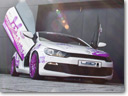 With gull-wing door plates by LSD, the VW Scirocco (type 13) becomes a real head-turner. LSD offers the hinges as a complete set for both doors including hinges, cable set fitting materials and attachments for only 1549 Euro including VAT.

 M3, M5, M6 … What was really lacking in this sequence was a smaller M1, which – with due respect to its famous predecessor of the same name – has now been officially called “1 Series M Coupe” by BMW. The engineers at BMW M GmbH are mighty proud of their smallest M-Racer, which thanks to an in-line six cylinder engine with TwinPower Turbo-charging and direct fuel injection, sends out a whopping 340 hp on the crankshaft. Alongside so much power, even a Porsche Cayman R must back off.


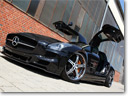 The SLS 63 AMG is a living legend even now – there is no doubt about it. Of course, it is anything but simple for any Mercedes-Benz refiner. The Berlin refiner MEC Design thought long and hard about the subject of the SLS and specifically had one imported from American Orlando. Now they present a breathtakingly beautiful complete conversion


 In matters of individualisation the traditional tuning house Kicherer has taken on the new AMG Mercedes SLS Roadster.


 Offering all the robust, high value, high quality attributes of SsangYong vehicles in a new pick-up opens up the brand’s strengths to a whole new area of the global new vehicle market.


 Stephan Winkelmann, President and CEO of Automobili Lamborghini S.p.A., is presenting at the Volkswagen Group Night in Frankfurt the most extreme Gallardo ever: the Gallardo LP 570-4 Super Trofeo Stradale. Automobili Lamborghini is bringing motor racing excitement directly to the road. This new and most extreme top model in the Gallardo lineup is based on the successful race car from the Lamborghini Blancpain Super Trofeo, the world’s fastest singlemake series.


 BRABUS has been building the world’s fastest street-legal sedans for many years. This tradition started in 1996 with the BRABUS E V12 that had a top speed of 330 km/h (205 mph), and continued in 2003 with the E V12 Biturbo that reached 350.2 km/h (217.6 mph). In 2006 the BRABUS ROCKET, built in small-series production based on the first edition of the Mercedes CLS, improved the world record to 365.7 km/h (222.7 mph). The BRABUS E V12 “one of ten” based on the latest E-Class, pushed the record to 370 km/h (230 mph).


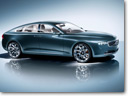 Following on from the reveal of the Concept Universe earlier in the year, the Frankfurt Motorshow marks the debut of an evolution to the Concept Universe – Concept You – and gives another insight into Volvo Cars future. Both concept cars are being used as design studies to obtain input from the global car buying public to find the ultimate design of the next large sedan from Volvo.


 While the all-new Kia Rio five-door hatchback is generating positive media coverage around the world and arriving in dealer showrooms across Europe this month, Kia is celebrating the world premiere of its new Rio three-door model at the Frankfurt Motor Show.


 The new Toyota Avensis makes its world debut at the 2011 Frankfurt motor show, a substantially revised model that builds on the spaciousness, practicality and fuel efficiency of the current, third-generation car. It features a bolder, more refined exterior design and improvements to the finish quality, comfort and NVH in the cabin. Driving dynamics have been improved and a new grade structure (UK details to be announced later) will provide even more value for money.


 As the all-new Focus ST road car makes its global production debut, Ford is giving a European welcome at the Frankfurt Motor Show to a special motorsport counterpart – the race-tweaked, production-based Focus ST-R.


