Tag: suv

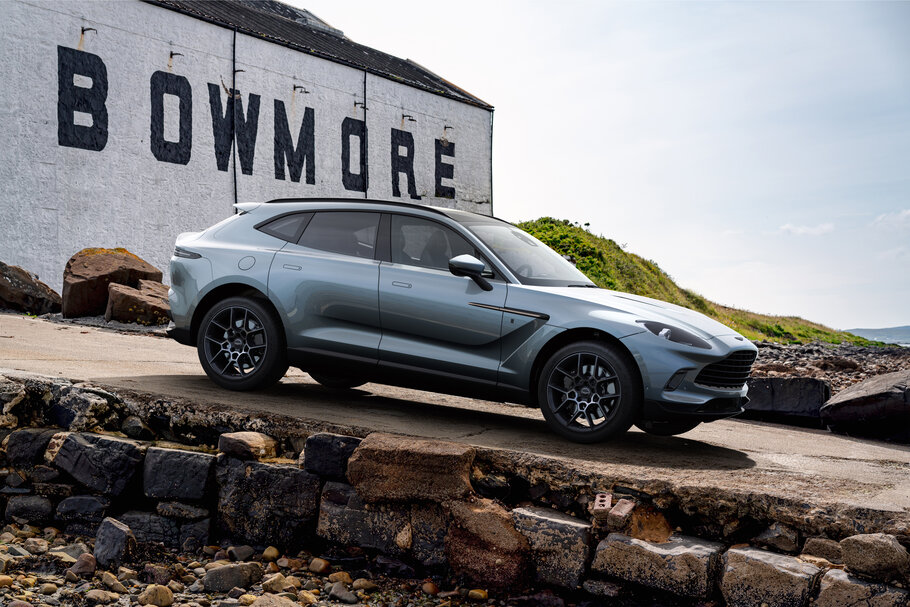
  • Aston Martin DBX Bowmore Edition

    2021 Aston Martin DBX1

    Aston Martin’s SUV, the DBX, has been revealed in an exclusive ‘Q by Aston Martin’ specification to celebrate the brand’s innovative partnership with legendary single malt whisky distillery, Bowmore.

    The striking Aston Martin DBX Bowmore Edition has been created by the marque’s personalisation service, Q by Aston Martin, in celebration of the partnership between the two British luxury brands. Just 18 special edition Bowmore DBX’s will be built before they are delivered to customers at a private lifestyle experience in Scotland.

    Marek Reichman, Aston Martin Executive Vice President & Chief Creative Officer said: “Aston Martin DBX has provided the perfect canvas for the highest level of Q by Aston Martin customisation. The Aston Martin and Bowmore brands share the same vision of creating timeless beauty and a lasting legacy, loyal to their heritage but also embracing new methods and this is reflected in the DBX Bowmore edition. Strips from the copper whiskey stills are inlayed into the side strakes and Bowmore Tweed accents the interior, Q by Aston Martin has once again created a beautiful, limited edition Aston Martin.”

    The Bowmore DBX is enrobed in a striking paint colour, named Bowmore Blue, an existing archive colour which has been brought back exclusively by Q by Aston Martin for this car. Customers will have the option to choose an alternative exterior paint colour should they so wish. Xenon Grey paint, which displays a blue metallic fleck throughout, will be offered as an additional exterior option. Bowmore-branded copper inlays using copper from the original whisky still have been used to accent the side strakes of the DBX, as a nod to the traditions maintained by the company.

    Optional black brake calipers provide a subtlety to the smoked wheels and the overall elegance of the exterior is highlighted by both script and wing Aston Martin badges and Q by Aston Martin fender badges.

    Customers can choose either the Obsidian Monotone or Copper Tan Metallic/Obsidian Duotone interior, both choices accented throughout by flashes of Bowmore Tweed, reflecting the company’s Islay ancestry. Created by the world-renowned Islay Woollen Mill, which was first established in 1883, the subtle and sophisticated design, incorporates copper and blue inspired by the island’s terroir and lochs, making it inherently unique to Bowmore and its island home.

    In addition, the interior holds many Q by Aston Martin design details such as polished copper cupholders, and sill plaques, made of recycled copper from the original Bowmore still. The gloss black centre console trim inlay features bespoke hand-laid, copper foil detailing. Each car comes with a selection of specially designed Q by Aston Martin accessories such as a Bowmore tweed picnic blanket and leather holdall.

    Launched in 2019, DBX celebrates the Aston Martin design language in a new form. With a unique body architecture engineered just for DBX, the design and proportions reflect unmistakable style. The 5-seater SUV provides a world of luxury, and features a 4.0-litre twin-turbo V8, tuned to deliver 550PS and 700Nm of torque, providing the exhilaration of a modern GT. While it’s not a traditional Aston Martin sports car, the DBX is everything an Aston Martin should be: beautiful, hand-built and technologically-advanced.

    Each of the 18 Bowmore DBX owners will be invited to an exclusive Aston Martin Art of Living experience in Scotland.  Guests will travel to Edinburgh where they will be presented with their own special edition DBX, before embarking on a 170-mile road trip through the spectacular Scottish countryside, taking in Loch Lomond and the Trossachs National Park before driving onto the ferry bound for Islay.

    Alongside a trip to Islay Woollen Mill and fine-dining throughout their three-night stay, owners will be treated to a private tour of the Bowmore Distillery. During this very special tour they will have the opportunity to hand-fill their own bottle of a 39 year-old, specially selected Bowmore straight from the cask.  They will also be given exclusive access to the No 1 Vaults the oldest maturation warehouse in the world which has played host to a number of VIP’s over the years, including members of the Royal Family.

    Aston Martin’s unique partnership with Bowmore has already created ‘Black Bowmore DB5 1964’, bringing together an exceptional single malt and a genuine piston from the legendary Aston Martin DB5. As the two iconic brands continue to collaborate, further luxury products and incredible lifestyle experiences will follow.

    Francois Bazini, Global Managing Director of Scotch at Beam Suntory, owners of Bowmore, commented: “Our partnership with Aston Martin continues to be an exciting and enthralling collaboration and the unveiling of this special edition Bowmore DBX is another exciting step on our collective journey.  We cannot wait to welcome each of the owners of this beautiful car to our distillery on Islay and show them all that Bowmore and our island home have to offer. Although we make entirely different products, our shared values and passion are very much aligned so you can expect more exciting announcements in the future.”

    The Q by Aston Martin DBX Bowmore Edition is on sale globally now and customer deliveries will take place in Q4 2021.

  • Hybrid drive finds another new home at Audi as Q3 SUV joins the TFSI e family

    Audi Q3 Sportback 45 TFSI e / Audi Q3 45 TFSI e

    Another convert to the zero local emissions movement is confirmed today as the new Q3 45 TFSI e stakes its claim as the first ever plug-in hybrid Audi model in the compact SUV class. The eighth member of the flourishing electrified TFSI e family will be available to order in the UK next spring in Q3 and coupé-inspired Q3 Sportback forms, the former featuring Technik, S line, Black Edition and particularly sumptuous Vorsprung specification options and the latter starting at S line level. In both a 1.4-litre TFSI petrol engine and an 85 kW electric motor generate a system output of 245PS to enable travel without tailpipe emisions for up to 31 miles* between charges.

    “TFSI e models are a perfect stepping stone on the path to electrification for Audi customers who are keen to play their part in the decarbonisation of our environment, but who are perhaps delaying making the leap of faith to a full EV due to lingering concerns about charging and range,“ says Director of Audi UK Andrew Doyle. “Like our other PHEV models, the new Q3 TFSI e can help to allay those concerns by proving how easily an EV can be assimilated into life, while also offering the safety net of an economical combustion engine which can greatly expand its range and refuelling possibilities if required. It’s a great way to begin gradually embracing the future of mobility.“

    245 PS of system output, 13 kWh of energy capacity: the drive and the battery
    The four-cylinder 1.4 TFSI petrol engine powering both new Q3 models contributes a healthy 150PS output, and this is supplemented by the 85 kW of power delivered by the permanently excited synchronous motor (PSM). Together, they generate 180 kW of system power (245 PS) and system torque of 400 Nm (295.02 lb-ft), on the strength of which both variants can reach 62mph from a standing start in 7.3 seconds and top out at 130mph.

    The PSM is integrated into the housing of the six-speed S tronic transmission together with the separating clutch. This dual-clutch transmission transfers the power to the front wheels, and integrates an electric oil pump which maintains supply even when the TFSI engine is switched off to enable normal functioning and gear selection to continue.

    The high-voltage battery is located under the vehicle floor in front of the rear axle and belongs to a new generation of compact and relatively lightweight units with enhanced storage capacity. Its 96 prismatic cells store 13.0 kWh of energy and maintain optimal performance with help from their own cooling circuit, which can also be coupled to the circuit used by the air conditioning system to ensure effective cooling even when requirements are at their highest.

    Focus on efficiency: the drive management system
    Optimal efficiency at every stage of a journey and in every scenario is naturally the overriding aim of the drive management system, so both new SUVs are always started in electric mode, except in extremely cold conditions.  At low speeds, their AVAS (Acoustic Vehicle Alert System) emits an e-sound to warn other road users of their presence. Both versions can cover up to 31 miles* at speeds of up to 87mph in electric-only mode with zero local emissions according to the WLTP test.

    In “Auto-Hybrid” mode, the main operating mode, the drive management system divides the tasks between the 1.4 TFSI and the electric motor intelligently and efficiently. The electric motor supports the four-cylinder engine in a wide range of situations, such as when overtaking or when accelerating from low speeds, when it uses its strong and rapidly produced torque to imperceptibly bridge the few tenths of a second needed by the turbocharger to build up pressure.

    Drivers can prioritise electric drive at a touch of the EV button. The drive management system constantly evaluates data from numerous sources, including the route information from the navigation system and feedback on the immediate surroundings from the vehicle sensors, to enable it to identify when the car is approaching a town sign, a speed limit or a roundabout, or is getting too close to the vehicle ahead. When the accelerator pedal is released, the Audi Q3 45 TFSI e and the Q3 Sportback 45 TFSI e start to coast with the TFSI engine switched off in most situations.

    The right mode for the right requirements: “Hold”, “Charge” and dynamic
    While the drive management system intelligently exerts its influence in the background, the driver always remains in control. Pushing the EV button determines which of the auto hybrid and electric-powered driving modes is active, and at the same time provides access to others  –  “Battery Hold” and “Battery Charge” – offered by menus that open up in the MMI operating system at the same time. These serve to keep the battery charge at the current level or to increase the state of charge. The driver can also fine tune the response of elements including the steering, engine and transmission using the Audi drive select dynamic handling system. It offers Comfort, Auto , Dynamic and Individual profiles, and in the Dynamic setting can make the full 330Nm (243.4 lb-ft) torque reserve of the electric motor available to the driver for up to 10 seconds if the S tronic is set to “S” mode and the accelerator is fully depressed. As soon as the pedal is released again, the electric motor switches to recuperation and recovers energy in generator mode. In this way, the vehicle can also decelerate quickly thanks to its electric motor.

    Irrespective of the driving profile, both models always recuperate when the driver applies the brakes. Up to around 0.3 g – i.e. in the vast majority of braking situations encountered in everyday driving – the electric motor performs the deceleration alone. It is only when the brake pedal is applied more heavily that the hydraulic wheel brakes come into play, activated by an electric brake servo. Thanks to the precise blending, the transition is practically undetectable, and the recuperation remains active. During braking, the system can recover up to 40 kW of power through the electric motor and store this in the battery.

    Conveniently versatile: charging at home and on the go
    The Audi Q3 45 TFSI e and the Q3 Sportback 45 TFSI e can be charged using alternating current via a domestic AC wallbox using the Type 2 cable supplied. The process can be completed in 3h 45 minutes, and can be remotely controlled using the free myAudi app, which enables the driver to define activation and deactivation times and also to remotely activate the climate control via a smartphone or tablet to pre-heat or cool the cabin before a journey begins. A mode 3 cable is also supplied for charging at public AC charging terminals, a process which can be expedited through the use of the e-tron Charging Service, which gives TFSI e drivers the opportunity to recharge at more than 155,000 charging points across Europe with just a tap of a single RFID card that generates one convenient monthly invoice.

    To make light work of long journeys the comfort suspension that is standard for Technik (Q3 only), S line and Black Edition versions of the Q3 45 TFSI e and Q3 Sportback 45 TFSI e provides suppleness and absorbency for smooth, serene electric-only travel but also a good degree of agility for more press-on driving. Vorsprung versions are equipped with an electronically controlled suspension system with adaptive damping which smoothes surfaces and straightens out corners even more impressively. The standalone Q3 Technik model rides on 17-inch alloy wheels, while the SUV and Sportback move up to 19-inch rims when equipped to S line and Black Edition level, and to a 20-inch design in Vorsprung form.

    From S line level upwards all models benefit from privacy glass and the exclusive S line design for the bumpers, sill trims and diffuser, while Black Edition and Vorsprung versions add a black styling pack which darkens elements such as the grille surround, window cappings, roof rails (SUV only) and door mirror housings. LED lighting is standard across the board, with Vorsprung versions upgrading to Matrix LED units for even more precisely targeted illumination. S line interior detailing is common to all specification options bar the entry level Technik, with Piano Black inlays and a flat-bottomed multifunction steering wheel setting apart the Black Editions.

    True to form in the Q3 range the seats offer excellent comfort, and the rear bench is notable for offering forward and backward adjustability to prioritise luggage or passengers. Its backrests are also divided into three sections and recline at seven different angles. The luggage compartment has a basic volume of 380 litres which increases to 1,375 litres in the Q3 45 TFSI e and 1,250 litres in the Q3 Sportback 45 TFSI e when the seats are folded down.

    Experts in networking: Infotainment and Connectivity
    Two displays form the basis of the operating and display concept in the new TFSI e models. Centrally positioned in the instrument panel, the MMI touch unit with its 10.1 inch screen shows the operating status of the hybrid drive system and is the access point for the top-of-the-line MMI navigation plus, which is a standard feature of all UK versions. Its functions are displayed on the MMI Touch display and in the instrument binnacle by the Audi virtual cockpit with its 10.25-inch screen, which is also standard. An expanded version with additional functions – the 12.3-inch Audi virtual cockpit plus – is fitted to Vorsprung models. In both formats a powermeter can be called up to show the drive system’s operating status, output and recuperation phases, the battery’s state of charge, and the range. Functions can be activated via the central touch screen, through the multi-function steering wheel or using natural-language voice control, which can source information stored in the cloud when formulating its responses to commands.

    Access to the Audi connect portfolio is included for all versions on a three-year subscription basis and supplements the navigation with Google Earth mapping, traffic information online, points-of-interest search functionality and Car-to-X services based on the principle of swarm intelligence. These include updates on available roadside parking spaces in the vicinity and notifications of upcoming hazards and speed limits sourced through the networking of the Audi fleet. Audi connect also includes media streaming, online news and access to e-mail.

    The Audi smartphone interface is standard, and enables a handset‘s Apple Car Play or Android Auto environment to be reproduced on the MMI display. Vorsprung versions also feature upgrades including the Audi phone box for inductive wireless charging of mobile handsets and the Bang & Olufsen Premium Sound System with virtual 3D sound, as well as enhancements such as a panoramic glass sunroof, Alcantara and Twin leather-upholstery, front electric seat adjustment and heating and a host of additional driver assistance aids. A particular highlight among these is adaptive cruise assist, which supports the driver with acceleration, steering and braking within the limits of what is currently legally permissible, substantially enhancing comfort on long journeys in particular. These features add to a core package of assistance features for all models that includes Audi pre sense basic, pre sense front, Audi side assist blindspot monitoring and lane departure warning.

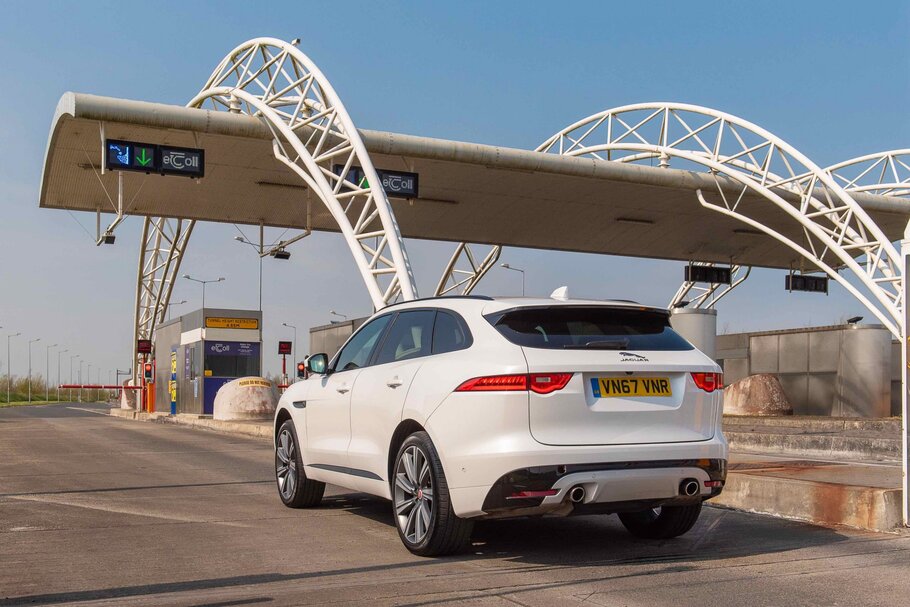
  • New Jaguar F-PACE SVR: Performance SUV is faster, more luxurious and more refined than ever

    2021 Jaguar F-PACE SVR1

    Sitting at the pinnacle of the Jaguar performance SUV range, the new F-PACE SVR is faster than ever and features motorsport-inspired exterior design, a luxurious interior and the latest connected technologies.

    Jaguar SV has refined the F-PACE flagship with a range of enhancements, providing sharper responses and heightened composure to accompany the latest Pivi Pro infotainment and connectivity technologies available across the rest of the performance SUV line-up.

    Michael van der Sande, Managing Director, Jaguar Special Vehicle Operations, said:“The original F-PACE SVR was incredibly characterful, well received by our customers and has gone on to become the highest-selling Jaguar SV product ever. The new version builds on this success, by making numerous detailed improvements that combine to raise the bar in the high-performance SUV segment. With a wide range of technological enhancements from our team of expert engineers and a comprehensively improved exterior and interior finish, the new F-PACE SVR is more focused, inspires more confidence and is even more captivating than ever before.”

    Pinnacle of performance
    The new F-PACE SVR is available exclusively with Jaguar’s 550PS 5.0-litre V8 Supercharged petrol engine, now with 700Nm torque – an increase of 20Nm. This uplift in torque delivers enhanced performance, with the F-PACE SVR capable of 0-60mph in 3.8 seconds (0-100km/h in 4.0 seconds), three-tenths of a second faster than before, and a top speed of 178mph (286km/h), an increase of 2mph. The powertrain now features the same torque converter used in the record-breaking Jaguar XE SV Project 8 sedan, to withstand the higher loads produced. As well as the improved torque and acceleration, CO2 emissions are also reduced from 281g/km to 275g/km with fuel economy now up to 23.1mpg (12.2l/100km)**.

    Enabled by Jaguar’s advanced new Electronic Vehicle Architecture, dubbed EVA 2.0, the transmission and dynamics systems have also benefitted from incremental tweaks. The uprated Dynamic mode features unique tuning, delivering a focused and honed driving experience. Jaguar SV’s engineers have recalibrated the software to provide sharper throttle response, stiffen the suspension set up, optimise steering weighting and enhance the exhaust mapping. A new Dynamic Launch feature also uses driveline inertia to maintain power to the wheels during gear changes, contributing to the SVR’s sharper acceleration from a standstill. At the same time, F-PACE SVR is now more comfortable and enjoyable to drive at a relaxed pace, without compromising its high-speed dynamics, further underlining the new model’s duality of purpose.

    The steering system is enhanced with a new electronic power-assistance system delivering greater immediacy, providing a heightened connection between the vehicle and driver. There is a more defined difference to the steering feel between Comfort and Dynamic modes, to give these settings more focus.

    Modified tuning of the adaptive damping provides a more refined ride at low speeds, which is further improved by revised chassis bushes. This tuning change has again allowed for greater definition of the ride between Comfort and Dynamic drive settings, demonstrating the F-PACE SVR’s dual capabilities as a luxurious and refined SUV with exceptional performance available in an instant.

    Drivers also benefit from improved brake feel in the new F-PACE SVR. The 395mm (front) and 396mm (rear) two-piece disc brakes are now supported by a new Integrated Power Booster which, along with a recalibration of the system, delivers a sportier and shorter brake pedal. This tuning is specific to the SVR performance flagship, while the brake system uses an electric booster, rather than a vacuum system. The improved cooling and aerodynamics of the vehicle also improve the performance of the brakes, giving the driver even greater confidence.

    The 5.0-litre V8 Supercharged petrol engine is paired with Jaguar’s ultra-responsive, smooth-shifting eight-speed automatic transmission which delivers rapid gearshifts for effortless performance, while adapting the way power is delivered to suit the driving situations.

    Paul Barritt, F-PACE SVR Chief Programme Engineer, Jaguar SV, said:“As a team, we’re incredibly proud of the F-PACE SVR, so trying to improve on the original was always going to be a difficult task. The move to Jaguar’s new Electrical Vehicle Architecture gave us the opportunity revisit the calibration of every single component, so we took the chance to fine-tune the driving experience to make it feel even more focused and even more refined. Those thousands of detail changes take the F-PACE SVR to the next level.”

    Jaguar’s All-Wheel Drive with Intelligent Driveline Dynamics is fitted as standard. The technology has a rear-wheel drive bias for enhanced driver engagement and performance, with predictive and reactive software that can distribute torque to the front and rear axles independently, and almost instantly, to provide greater control and stability in low traction conditions. The retuned rear Electronic Active Differential delivers enhanced performance and greater confidence when required.

    Adaptive Dynamics suspension technology ensures a precise, dynamic set-up coupled with a supple ride. In order to achieve this, the technology constantly analyses acceleration, steering, throttle and brake pedal inputs. Height sensors at each corner of the vehicle measure the vertical body movement, roll and pitch 100 times a second, while steering inputs are measured 500 times a second. Adaptive Dynamics uses these inputs to continually adjust the damper stiffness to maximise comfort and control.

    Configurable Dynamics provides enhanced driver appeal by enabling the driver to set up the vehicle to suit their personal preferences, with a choice of Comfort or Dynamic settings applied to the throttle mapping, gear shift points, steering effort and suspension. A stopwatch, G-Meter and pedal graph also help the driver to monitor performance in Dynamic mode while Adaptive Dynamics continuously adjusts the dampers for enhanced comfort and refinement depending on road and driving conditions.

    The new F-PACE chassis now supports the introduction of the latest JaguarDrive Control and new Auto Vehicle Hold function. JaguarDrive Control features Comfort, Eco, Rain-Ice-Snow and Dynamic modes, which can be chosen manually by the driver based on the road conditions. The settings, selected through a new rotary dial next to the all-new Drive Selector, optimise the F-PACE SVR’s steering, transmission, throttle and (when specified) Adaptive Dynamics settings accordingly.

    Auto Vehicle Hold provides added convenience and smoother operation than conventional Automatic Hill Hold. The new technology holds the brakes for an unlimited period of time when stationary on a gradient, only releasing the brakes when the driver depresses the accelerator to drive away.

    Purposeful race-inspired exterior
    The design of the new F-PACE SVR is inspired by SV’s motorsport experience, with enhanced airflow and aerodynamic benefits delivered through new apertures and vents for improved powertrain and brake cooling. The changes deliver superior aerodynamic performance including 35 per cent reduced lift and drag reduced from 0.37Cd to 0.36Cd. As well as the performance enhancements, these elements also provide a more purposeful aesthetic.

    Surrounding the new SVR-badged grille, the revised bumper design features X-shape and blade-like elements intersecting the lower side air vents and intakes. An enlarged lower intake improves airflow, to cool the F-PACE SVR’s 550PS powertrain. While the new-look design delivers performance benefits, it also provides a more athletic appearance by visually lowering the front of the vehicle.

    The larger aperture is framed by enlarged side vents, which help to direct air to the wheelarches for enhanced brake cooling. The openings are finished with a grille mesh design inspired by the record-breaking Jaguar XE SV Project 8, reflecting the lineage of high-performance Jaguar SV models. A new stretched diagonal blade element feeds further airflow to the brakes and engine, and adds to the dynamic stature of the vehicle, giving the F-PACE SVR a wider and lower stance.

    New diagonal blades below the lower bumper, shaped in partnership with the SV aerodynamics team, ensure every design detail has a functional purpose, while also helping to visually plant the F-PACE SVR closer to the road.

    The super-slim all-LED quad headlights with ‘Double J’ Daytime Running Light (DRL) signatures are available with optional Pixel LED technology* and deliver increased resolution and brightness. Adaptive Driving Beam capability* evaluates the road ahead and automatically adapts the high beam light to mask oncoming traffic or traffic signs, the system can create varying light beam patterns by selecting different LED segments to optimise visibility and minimise risk of distracting other drivers.

    The new front-end design is finished by a longer bonnet design which features a wider power bulge flanked by air vents to help extract hot air from the engine bay.

    New slimline rear lights feature Jaguar’s trademark double chicane graphic – first seen on the all-electric I-PACE – which accentuate the width of the vehicle. The new look is completed with the addition of the updated SVR logo, while quad tailpipes feature in the lower bumper, giving a visual reminder of the performance potential on offer.

    The new F-PACE SVR is also available with a new 22-inch forged alloy wheel design. The five-spoke design is finished in Gloss Black with Satin Grey inserts, with the grey tone matching other exterior finishes on elements such as the side air vents and wheel arch trim, for a stealth-like appearance. This is all finished off with the new SVR logo printed on the wheel.

    Precision crafted interior
    The interior of the new F-PACE SVR is comprehensively redesigned, with materials enhanced to heighten the dynamic character of the revised cabin and its controls.

    Seat and door inserts are finished in Alcantara, with elements such as the central cubby and leather midroll wrapped in luxurious Windsor leather. The 12.3-inch HD Interactive Driver Display is wrapped in Alcantara with ebony stitching, while aluminium patterned finishers feature as standard with open-pore carbon fibre available as an option.

    Optional slimline semi-aniline leather sports seats with heritage logo-inspired diamond embroidery across the front shoulder section, feature a unique perforation across the backrest, while the same pattern is used on the leather on the seatbacks An embossed SVR logo on the headrests adds a final flourish.

    Jaguar’s new Drive Selector has a more performance-focused feel for the F-PACE SVR, finished in dimpled leather with heritage logo-inspired detailing and debossed SVR logo underlining the new model’s attention to detail. The outer rim of the bespoke SVR split-rim steering wheel wears the same leather finish, while the inside of the wheel features a unique Mars Red SVR stitch detail. Tactile zinc-alloy shift paddles provide heightened driver engagement when making manual gear changes.

    Beside the Drive Selector sits the Start button and a new metallic rotary dial – for the JaguarDrive Control settings – which features knurled edging for a premium look and feel.

    At the heart of the precision crafted and luxurious interior, with its new sporty centre console, incorporating an optional wireless device charger and improved console stowage, is the seamlessly integrated centrally-mounted 11.4-inch curved-glass HD touchscreen, which sits within an elegant magnesium alloy casing and provides access to the intuitive new Pivi Pro infotainment.

    A series of advanced technologies ensure the health and wellbeing of all occupants. Cabin Air Ionisation improves interior air quality through Nanoe technology, which removes allergens and unpleasant odours. The system now also features PM2.5 filtration, which captures ultra-fine particles to improve occupant health and wellbeing. Customers activate the system simply by pressing the ‘Purify’ button within the infotainment.

    Cutting-edge connected technologies
    The new F-PACE SVR features Jaguar’s advanced Electronic Vehicle Architecture, dubbed EVA 2.0, which supports a range of new technologies to ensure the future-ready vehicle is connected and up to date.

    The latest Pivi Pro infotainment technology is accessed through the all-new 11.4-inch curved glass HD touchscreen. Key benefits include enhanced clarity – the display is three times brighter and 48% larger – and the simplified menu structures allow drivers to access or view up to 90 per cent of common tasks from the homescreen in two taps or less.

    To help drivers access vital information quickly, new F-PACE SVR also features a new 12.3-inch HD Interactive Driver Display with enhanced SV-specific graphics and a configurable layout which can show full-screen navigation mapping with turn-by-turn instructions, digital dials, media, contact list or infotainment details. Working in conjunction with optional Head-up Display technology, new F-PACE SVR gives drivers all the information they need with minimal distraction.

    To enable instantaneous start-up, Pivi Pro has a dedicated power source, so it’s ready to use as soon as customers get behind the wheel. The intuitive new infotainment system features Apple CarPlay® as standard and allows customers to connect two phones simultaneously via Bluetooth. Android Auto™ is also available as standard depending on market applicability.

    Optional wireless device charging with phone signal booster allows occupants to fast charge their compatible smartphone. The system also provides clearer calls through the help of an external aerial.

    The collection of new convenience technologies includes Software-Over-The-Air (SOTA) capability, which ensures the performance SUV is always using the latest software. The technology means that owners don’t have to visit retailers to receive software updates for the vehicle.

    Pivi Pro connectivity is provided by the latest embedded dual-sim technology with two LTE modems enabling the system to carry out multiple functions at the same time, such as streaming media and downloading SOTA updates, without compromising performance. The cutting-edge connectivity also ensures minimal interruptions caused by coverage blackspots as it roams across network providers for the strongest signal.

    Segment-first Active Road Noise Cancellation technology constantly monitors vibrations from the road surface and calculates the opposite phase soundwave needed to remove the sound from the cabin. This delivers a more refined cabin.

    For enhanced convenience, an updated, second-generation wearable Activity Key can be used to lock, unlock and start the vehicle without the need for the conventional key fob to be present in the vehicle. The rechargeable device incorporates a watch and has a battery life of up to seven days between charges.

    Security is enhanced by the new Guardian Mode (UK only), which uses a timer to provide added security and peace of mind when using the Secure app. It allows customers to identify times when the vehicle will be inactive, for example through the night, and receive alerts to their smartphone if it is driven during this window – giving immediate warning of unauthorised movements.

    The new F-PACE SVR also benefits from a selection of Advanced Driver Assistance Systems. This includes Clear Exit Monitor, which alerts both front and rear occupants to the presence of an approaching car or cyclist when exiting the vehicle. Adaptive Cruise Control automatically maintains a set distance from the vehicle in front.

    Jaguar’s latest 3D Surround Camera technology delivers advanced 3D functionality using the latest camera technology to deliver more detail and a choice of real-time viewing when manoeuvring the vehicle. The selection of settings include Junction View, 3D Perspective View, and ClearSight Plan View.

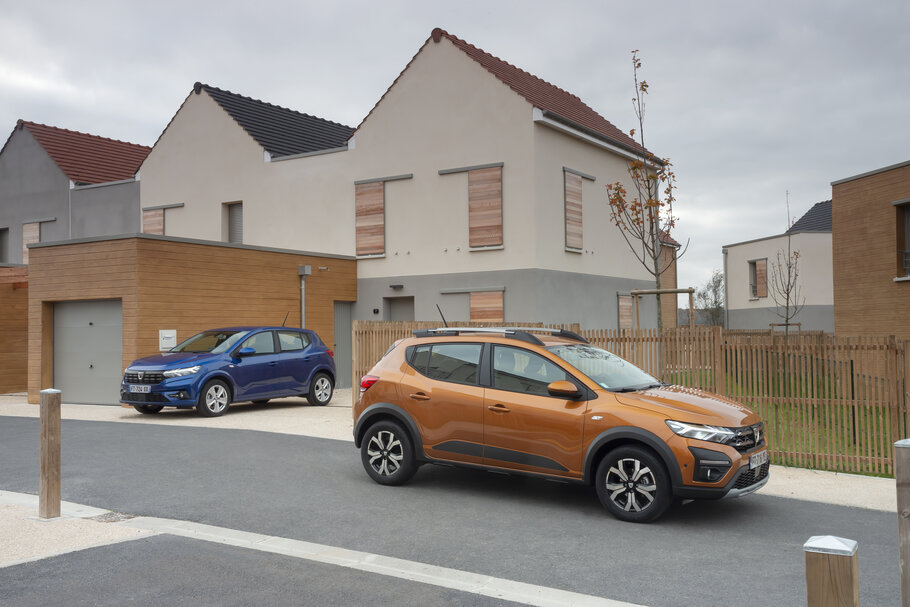
  • Dacia Sandero

    DACIA SANDERO III (BJI), DACIA SANDERO STEPWAY III (BJI CROSS)

    Dacia has announced full pricing and specifications for the most affordable new car on sale in the UK, the All-New Sandero, and the rugged best-selling version – the All-New Sandero Stepway.

    Debuting a mature new exterior design and an all-new interior, both models benefit from a significant uplift in quality. They feature the latest in connected technology, whilst still maintaining Dacia’s undisputed practicality credentials, the All-New Sandero and Stepway models go on sale in the UK from 1 February 2021.

    For customers keen to get hold of the new model, pre-ordering for the All-New Sandero and Stepway opens on 2nd December via a dedicated online portal for just £99. Those who order via the portal will receive 3 years’ free servicing and will be first to receive their car when deliveries begin in April 2021.

    Priced from just £7,995 OTR, the All-New Sandero remains the UK’s best-priced new car, while the All-New Sandero Stepway offers desirable crossover style and rugged charm from as little as £10,995 OTR.

    All-New Sandero and Stepway models feature more equipment than ever, but remain loyal to Dacia’s ethos of offering simple, no frills, quality motoring with everything a driver could need at an affordable price. All models boast new LED lights, the latest multimedia systems for enhanced convenience and low running costs.

    Keeping things even simpler, the Sandero and Stepway models come with just two options to choose from depending on the specification – metallic paint and a spare wheel.

    There’s also more interior space, wrapped up in a grown up package with new design details that make Dacia’s best-selling models more desirable than ever.

    EXTERIOR STYLING

    Built on an all-new efficient CMF modular platform, the All-New Sandero and Stepway feature an evolved contemporary exterior design with new details giving it greater presence and a more premium look on the road.

    The overall lines are smoother and wheel arches more pronounced, this combined with a lower roof and angled windscreen give the Sandero the impression of sitting lower to the road, while Dacia’s new signature Y-shaped LED daytime running lights – linked via decorative chrome trim – give the car a recognisable presence from the front.

    Innovative Flexwheels, featured on Comfort models, provide the look of an attractive alloy wheel but the convenience of a trim being more affordable and more robust, while small details around the vehicle complete the more grown-up look. The door handles are shaped for greater comfort and convenience, an electric boot release features on most models and revised wing mirrors ensure improved aerodynamics and less wind noise – for a more refined cabin.

    The All-New Sandero Stepway takes all of these changes and adds a number of rugged elements befitting of its Stepway name. Instantly recognisable by the Stepway logo beneath the unique front grille, extra cladding and metal skid plates around the car, the Stepway is undeniably ready for action.

    It sits 174mm higher than the regular Sandero and features innovative adjustable roof bars that can be easily converted into a roof rack, meaning all kinds of loads up to 80kg can be accommodated without fuss. Wheelarch cladding and textured reinforced lower door sections complete the exterior style enhancements for its go-anywhere look.

    The versatile All-New Stepway also features the clever Flexwheels while newly introduced Prestige specification features attractive 16-inch diamond-cut alloy wheels.

    All versions of the All-New Sandero and Stepway feature bright LED lights as standard, delivering enhanced night-time visibility by up to 37% in beam length and 9% in beam width. At the rear, Dacia’s distinctive light signature has evolved and ensures the Sandero stands out.

    INTERIOR

    The All-New Sandero and Stepway’s interiors have seen a significant uplift over the previous model, introducing a range of new technologies, superior quality, and greater comfort and convenience features than ever.

    The dashboard design is completely new to both models, with new fabric inserts on the doors and across the dashboard, plus a sleek new air vent design, making the interior look and feel more upmarket. On All-New Stepway models, the more adventurous theme is carried over from the outside with unique upholstery featuring Stepway logos and exclusive orange trim on the air vents plus orange stitching to the door trims and seats.

    Redesigned seats feature on all Sandero models offering greater comfort and support, including the availability of premium upholstery and an adjustable armrest on selected models. A repositioned, smaller gearlever and a steering wheel with greater reach and height adjustment ensures drivers of all sizes can find a comfortable position.

    The All-New Sandero and Stepway offer the space and practicality of a supermini at city car prices. A 1/3-2/3 split-folding rear bench is available (depending on the version), expanding the generous 328-litre boot space even further. With the rear seats in place, the large boot features an adjustable boot floor, giving customers a choice of two positions, while rear seat passengers get an extra 42mm of space over the previous Sandero, providing best-in-class rear legroom.

    There’s more space for smaller items too, thanks to 21 extra litres of storage space in cubby holes and pockets throughout the cabin.

    TECHNOLOGIES AND SAFETY

    The All-New Sandero and Stepway offer more technology and features than ever before, continuing to give customers desirable and useful equipment at an affordable price.

    All versions offer smartphone connectivity, with a versatile new Media Control docking station for mobile devices that sits neatly on top of the dashboard. Operated using the new free Dacia Media Control app and Bluetooth or USB connection, the driver’s smartphone becomes the multimedia system that can be easily removed.

    On Sandero Comfort and Stepway Comfort and Prestige, an eight-inch Media Nav touchscreen system comes as standard, including navigation, media, Bluetooth, plus smartphone mirroring via wireless Apple CarPlay and Android Auto. The screen sits on top of the dashboard angled slightly towards the driver, making it simple to operate, with an easy-to-use interface and four speakers throughout the vehicle.

    A designated ‘Car’ tab gives access to the vehicle’s driver assistance and safety systems. All Sandero and Stepway models are fitted with Automatic Emergency Braking System (AEBS) that identifies the distance to the car in front (between 4-106mph) and triggers an audible and visual warning if there’s a risk of a collision. Brake force can be applied if not enough action – or none at all – is taken by the driver to slow down.

    Blind spot warning – standard on Sandero Stepway Prestige – warns the driver of a risk of collision with another vehicle located next to or behind the car during lane changing. Four sensors around the vehicle monitor the driver’s blind spot area, and activates a flashing LED in the door mirror if another vehicle is detected.

    Useful features such as hill start assist and park assist provide even more driver convenience. Hill start assist prevents the vehicle from rolling back when pulling away on a hill, while park assist uses sensors around the vehicle – plus a reversing camera on selected models – to aid with tricky parking manoeuvres.

    The first Dacia to be based on the CMF modular platform, all Sandero and Sandero Stepway models now offer superior strength and structural rigidity, increasing protection in the event of a collision. The structure is reinforced and collisions can be detected more quickly, deploying new curtain and side airbags more rapidly. An E-Call emergency call system is also standard on all models, operated using an SOS button placed next to the interior light.

    UK SPECIFICATIONS AND PRICING

    The All-New Sandero and All-New Sandero Stepway’s trim line-ups mirror Dacia’s brand ethos of being simple and no-nonsense while delivering quality at an affordable price. The All-New Sandero is available in Access, Essential and Comfort trims, while the All-New Sandero Stepway comes in Essential, Comfort and Prestige specifications.

    To keep things simple, just two options are available across Sandero and Stepway models, depending on the version. A spare wheel can be added to models powered by the SCe 65 and TCe 90 engines for £175, and metallic paint is available on all models excluding the Sandero Access for £560.

    All-New Sandero is available in Access trim from just £7,995, and includes automatic LED headlights with Y-shaped LED daytime running lights, 15-inch steel wheels, front electric windows, speed limiter, phone docking station, Automatic Emergency Braking System (AEBS) and six airbags.

    From £8,995, the All-New Sandero Essential adds 15-inch wheel covers and body coloured bumpers, while inside there’s a height-adjustable driver’s seat with armrest, plus a fully adjustable steering column and centre console with open storage. Manual air conditioning, cruise control and remote central locking with automatic locking when driving away also feature. Media Control is also standard, featuring DAB radio, Bluetooth and USB connectivity.

    Available from £11,595, Comfort adds 15-inch Flexwheels, electric mirror adjustment, electric front and rear windows, body coloured mirrors, keyless entry, an eight-inch Media Nav touchscreen display with navigation, DAB radio and smartphone replication, plus automatic wipers. On the outside there’s also chrome surround to the front fog lights, plus parking sensors and a reversing camera at the rear.

    For the rugged All-New Sandero Stepway, the core specification remains strong, with Essential models the entry point to the range. Available from £10,995, it comes with 16-inch Flexwheels, tinted windows, LED headlights, front foglights and black roof bars on the outside.

    Inside, a height-adjustable driver’s seat and armrest, adjustable steering column, open centre console storage and manual air conditioning are all standard, along with Media Control with smartphone app. Automatic lighting and rear parking sensors boost convenience, while Automatic Emergency Braking System (AEBS) and an E-Call function are also standard fit.

    Building on this is Comfort trim, available from £12,595 and adding electric windows front and rear, modular roof bars, electric adjustment for the door mirrors (finished in body colour), a leather steering wheel, keyless entry, cruise control and automatic lights and wipers.

    On the outside there’s also chrome surround for the fog lights, rear parking sensors and a reversing camera, plus an eight-inch Media Nav infotainment system inside for navigation, media and smartphone replication via Apple CarPlay or Android Auto.

    Sitting at the top of the range is the newly introduced Prestige trim boasting a generous equipment list on top of Comfort, available from £13,395. It builds on Comfort specification with 16-inch alloy wheels, centre console with integrated armrest and storage, an automatic parking brake, heated front seats, climate control, front parking sensors and blind spot warning.

    Every model comes with an inflation kit as standard, but can be fitted with an emergency spare wheel at extra cost.

    ENGINES

    All Sandero and Sandero Stepway models come with a range of Euro 6D-Full-compliant engines, the stringent emissions standard that comes into effect on 1 January 2021.

    Following its introduction earlier in 2020, Dacia’s TCe 100 Bi-Fuel powertrain is available on
    All-New Sandero and Stepway models. Using an LPG bi-fuelled 1.0-litre three-cylinder engine paired with a six-speed manual transmission, the Bi-Fuel powertrain delivers lower CO2 emissions when running on LPG, and longer overall driving range of more than 800 miles when both fuel tanks are full and used in parallel. The LPG tank is located in the spare wheel well.

    Also available on Sandero is the SCe 65 – a naturally aspirated 1.0-litre engine with a five-speed manual transmission and a turbocharged TCe 90, available with a choice of six-speed manual or newly introduced CVT automatic for added ease-of-use.

    Stop&Start – which automatically turns the engine off at a standstill – is standard on all Sandero and Stepway models to reduce emissions and boost efficiency.

  • Hyundai Motor announces name of its all-new SUV: Hyundai Bayon

    Hyundai Bayon1

    Hyundai Motor has revealed the name of a new crossover SUV model: Hyundai Bayon. Coming to the European market in the first half of 2021, Bayon will be a fully-new model and an important addition to the current Hyundai SUV line-up.

    “Hyundai is strongly established in the European SUV market already, in terms of our model range as well as our sales success,” says Andreas-Christoph Hofmann, Vice President of Marketing & Product. “By launching a new, additional B-segment model as the entry point into our SUV line-up, we see a great opportunity to cover European customers’ demand even better and to increase our offering in a highly popular segment.”

    Hyundai Bayon will join the Kona, Tucson, NEXO and Santa Fe, becoming the latest member of the Hyundai SUV line-up in Europe.

    The name Bayon was inspired by the city of Bayonne in the southwest of France. As Hyundai Bayon is primarily a European product, Hyundai decided to name it after a European city. Positioned between the Atlantic coast and the Pyrenees mountains, the French town is a great location for those who enjoy activities such as sailing and hiking, fitting with the lifestyle character of the new model.

    During the last 20 years, the company has frequently taken inspiration from locations around the world to generate some of the best-known nameplates among SUVs. These include not only the Tucson and Santa Fe, named after cities in the states of Arizona and New Mexico respectively, but also the Kona – whose name is derived from the Kona district on the Big Island of Hawaii. Even the pioneering fuel-cell electric vehicle NEXO has a geographic connection, taking its name from Nexø – one of the largest towns on the popular Danish holiday island of Bornholm.

    More details about the Hyundai Bayon will be revealed soon.

  • Hagerty asks what road pricing could mean for the classic vehicle community

    Hagerty2

    Hagerty is best known as a classic vehicle insurer, but with a 600,000-member strong Drivers Club, an 800,000-circulation printed magazine and 1.5m subscribers on YouTube they are one of the world’s largest automotive lifestyle brands.

    McKeel Hagerty, Hagerty CEO, is a lifelong car enthusiast, restoring his first classic car, a 1967 Porsche 911S, aged just 12. As a result of that passion Hagerty has always been there for the classic vehicle community and champions the statement – Hagerty exists to save driving.

    Hagerty UK regularly shines a spotlight on challenges faced by classic vehicle enthusiasts, from E10 fuel to the damage caused by government-led scrappage schemes. Now Hagerty UK reports on road pricing and the affects this could have for classic vehicle owners in the future.

    At the last count, there were more than 20 toll roads in the UK, including 18 river crossings, but also the M6 toll road and congestion road pricing in Durham and London. UK motoring taxes raise almost £40 billion a year, 70 per cent of it in fuel tax. In the last 20 years, fuel duty had dropped from 2.2 per cent of gross domestic product to 1.3. And it will drop to effectively zero as the government heads to ‘net zero carbon emissions” by 2050.

    Road pricing isn’t just about money, congestion is also a factor. In 2018, transport consultant INRIX published a report showing the average British driver spent 178 hours stuck in jams a year, costing each one £1,317 in lost time, which annually loses the British economy £7.9 billion.

    Classic and many modern classic cars don’t have connectivity, some don’t even have electrics to speak of, which means to make something like a national road-pricing scheme work, owners of cars without the necessary communication equipment will have to carry a tracker or pay up front before driving their cars – or we adopt nationwide automatic numberplate recognition technology. While proponents of road pricing point out that mobile telephones, fitness trackers and even credit cards monitor our movements, there is a general unease with the idea of tracking our every journey.

    “We might have bigger fish to fry with this issue,” says Wayne Scott spokesman for the Federation of British Historic Vehicle Clubs (FBHVC), “such as how we get fuel after 2030 and whether it will still be made.”

    That said, however, the general assumption is that since classic vehicles registered before 1980 are exempt from road tax and the requirement to have an annual MoT test (if more than 40-years old), they could well be exempt from road pricing as well.

    “That’s what you might expect,” says Scott, “especially as classic vehicles are responsible for less than 0.2 per cent of all road miles, but we are very keen to be seen as paying our way and not an exception as that might affect our freedom to drive on the roads.”

    The Queen’s Highway is a peculiarly precious idea in British Society; freedom of movement and association have been hard won in our society and are not easily or simply returned back to our masters. Do we really want to establish such an overwhelming level of surveillance and control by governments as well as the sheer embuggerance and cost of road pricing?

    The full report can be viewed on the Hagerty UK website

    Lee Mathewson, Vice President of International Insurance Products and Managing Director of Hagerty UK concludes “There are many factors affecting the classic car world, not least the planned phasing out of new combustion driven vehicles in 2030, and now road pricing. The UK classic car industry is misunderstood, far from being old and decrepit it is modern and dynamic and adapts fast to provide innovative ways for owners to enjoy their vehicles in an ever-changing world. Hagerty champions the cause for the classic motorist and will continue to do all we can to protect the industry and keep classic vehicles on the road.”

  • New Kuga hybrid SUV powers into production offering even more choice to customers joining Ford’s electric revolution

    2021 Ford Kuga Hybrid1

    Ford has further expanded its unprecedented line-up of electrified all-new Kuga SUVs with the new Ford Kuga Hybrid – able to deliver over 600 miles 1 of petrol-electric and pure-electric driving between fill-ups and without ever having to plug in to recharge.

    Effortless to own, the self-charging Kuga Hybrid’s 1.1 kWh battery is automatically replenished both by the 2.5-litre Atkinson cycle petrol engine and using regenerative charging when coasting or braking. Stored energy powers an electric motor to enhance performance, support petrol engine fuel efficiency, or deliver pure-electric driving. Kuga Hybrid automatically switches seamlessly between power configurations according to the driving scenario.

    The new model’s sophisticated full hybrid powertrain is unique in the Ford Kuga line-up – delivering the ultimate efficiency and refinement of pure-electric power with no need to charge from an external power source, alongside the diesel-rivalling convenience of over 600 miles total driving range.

    “Each of our electrified Kuga models brings a unique set of benefits. For our new Kuga Hybrid that includes fuel efficiency and driving range to rival diesel, and the effortless refinement of charging cable-free, pure-electric driving,” said Roelant de Waard, vice president, Marketing, Sales & Service, Ford of Europe. “Ford is committed to offering a choice of electrified vehicles so that every customer can find the perfect solution to fit seamlessly into their life. No model demonstrates that better than Kuga”.

    One of 17 Ford electrified vehicles to be introduced for customers in Europe before the end next year, production of the new Kuga Hybrid is now underway at the company’s manufacturing plant in Valencia, Spain. Kuga Hybrid’s advanced lithium-ion battery packs are also assembled at the Valencia plant following a €24 million investment in a new state-of-the-art battery assembly facility to support Ford’s electrification strategy in Europe.

    Kuga Hybrid completes the most electrified line-up for a single nameplate ever offered by Ford, and joins Kuga Plug-In Hybrid and EcoBlue Hybrid 48-volt mild hybrid variants, alongside traditional petrol and diesel engines for a comprehensive range of powertrain options.

    Kuga practicality, Hybrid flexibility
    The new Ford Kuga was developed from the ground up to incorporate a petrol-electric full hybrid powertrain, using efficient packaging to maximise SUV spaciousness and practicality, and support driving refinement.

    Silent key start capability enables the Kuga Hybrid to pull away from a standstill using electric power alone for a truly relaxing driving experience, particularly in city and stop-start driving scenarios. The full-hybrid powertrain supports pure-electric driving for short periods while eliminating range anxiety.

    The ability to travel over 600 miles on a single tank of fuel makes Kuga Hybrid a compelling alternative to diesel powertrains. Delivering fuel efficiency from 48.7mpg and CO2 emissions from 130 g/km WLTP3 alongside a 54-litre fuel tank, Kuga Hybrid total driving range is also more than 30 per cent greater than that of the Kuga Plug-In Hybrid, which offers a greater pure-electric driving range of up to 35 miles.3

    With no need for customers to use an external power source to charge the battery, Kuga Hybrid offers an attractive choice for customers desiring an electrified powertrain, but who have limited access to external charging solutions at home or places of work.

    The 60-cell, 1.1 kWh battery pack uses a liquid cooling system that eliminates the need for a cooling fan, helping reduce noise levels for greater cabin refinement. Optimised cooling also allows battery cells to be packaged closely together – helping retain spacious interior dimensions including more than 1 metre of headroom for front row occupants and up to 1,481 litres of cargo space behind the front seats. 4

    In addition, an exhaust gas heat exchanger system helps bring the engine more quickly to its most efficient operating temperature, enabling Kuga Hybrid to engage pure-electric driving sooner following a cold start and helping quickly warm the cabin for passenger comfort. Enhanced battery performance also contributes to towing capacity of up to 1,600 kg. 5

    The Kuga Hybrid powertrain delivers a smooth, linear response to acceleration demand while automatically switching between pure-electric, hybrid and petrol power, supported by a redesigned motor-generator controller. The latest generation of Ford’s power-split transmission is designed specifically to work with the 2.5-litre petrol engine – seamlessly adjusting ratios for optimum performance and fuel efficiency across a range of driving conditions. 0-62 mph acceleration takes 9.1 seconds.

    The simulated gear-shift function – activated in Normal or Sport drive modes – automatically adjusts engine rpm as the vehicle’s speed changes to reduce the “rubber band” effect often associated with continuously-variable transmissions.

    “We’ve listened hard to customers to make sure the Kuga Hybrid really delivers when it comes to driving appeal,” said Glen Goold, Kuga chief programme engineer. “The simulated gear-shift function makes the SUV more engaging to drive with the familiarity of traditional ‘cog swaps’, plus the added benefit of limiting engine noise.”

    More relaxing journeys
    Kuga Hybrid is available to order in ST Line Edition, ST Line X Edition and Vignale variants, offering a wide range of driver assistance, comfort and convenience technologies.

    A standard FordPass Connect modem 6 allows drivers to plan faster, less stressful journeys with Live Traffic updates for the navigation system and enables a range of features for a more convenient ownership experience via the FordPass mobile app, including Door Lock Unlock, Remote Start 7 and Vehicle Locator.

    A wireless charging pad is also standard, and further sophisticated optional features include Ford’s SYNC 3 infotainment system 8 supported by an 8‑inch central touchscreen, and a premium B&O sound system.

    Available driver assistance technologies designed to deliver greater confidence, make driving less demanding and enhance safety include Adaptive Cruise Control with Stop & Go, Speed Sign Recognition and Lane Centring 2 for effortlessly negotiating stop-start and highway traffic. Active Park Assist 2 2 enables fully automated parking manoeuvres at the push of a button.

    New Lane-Keeping System with Blind Spot Assist 2 makes its global debut on Kuga. The optional technology monitors the driver’s blind spot for vehicles approaching from behind and can apply counter-steering to warn the driver and discourage a lane change manoeuvre if a potential collision is detected.

    Also making its global debut on the new Ford Kuga, optional Intersection Assist 2 technology monitors for potential collisions with oncoming vehicles in parallel lanes and can automatically apply the brakes to help prevent or mitigate the effects of accidents in scenarios where a driver is turning across traffic.

  • Nissan all-new Qashqai breaks cover

    2021 Nissan All-New Qashqai1

    The final preparations are well under way for the introduction of the third generation of the compact crossover that changed the face of the European car market and spawned many imitators – the Nissan Qashqai.

    Prototypes of the all-new model are racking up the testing kilometres on European roads in anticipation of it again resetting what customers can expect from a compact crossover when it goes on sale in 2021.

    The all-new Qashqai will build on its position as the pioneer of and benchmark in the medium-crossover segment in Europe since 2007. Underpinning the new Qashqai is the new Alliance CMF-C platform, a showcase of advanced engineering, innovation and advanced technology.

    The current Qashqai, which went on-sale in Europe in 2014, has sold over one million units since its introduction.

    “The new Qashqai is going to change what customers can expect from a family car. Comfort, refinement and technology will be from higher categories of car, while the driving experience will satisfy drivers and passengers alike. With Nissan’s bold e-POWER technology, we feel that customers will fall in love with the feeling of an electric powertrain, without the range concerns,” said Gianluca de Ficchy, Chairman, Nissan Africa, Middle East, India, Europe and Oceania (AMIEO) Region.

    For this new iteration, Nissan has retained the guiding principles that have driven the concept, design and development of the two previous generations of Qashqai: elegant design, enhanced packaging and efficient powertrain, combined with elevated quality and a driving experience from a higher segment. The new Qashqai will again raise the bar in the crossover segment and customers will savour those attributes.

    Like its predecessors, the styling of the new Qashqai was led by the team at Nissan Design Europe, based in central London (UK), while its engineering was led by Nissan Technical Centre Europe, situated in Cranfield, Bedfordshire (UK).

    CMF-C platform

    The new Qashqai is the first new model in Europe to use the CMF-C platform, which represents a state-of-the-art automotive structure and technology architecture.

    Central to the engineering concept was to retain the current Qashqai’s proportions, which are “just right” and key in its success, meaning it comfortably navigates urban roads and fits comfortably in parking spaces, while also giving excellent interior space.

    In terms of construction, the body in white makes use of more lightweight material, as well as advanced stamping and welding techniques to increase strength but to also reduce weight. For the first time, the rear hatchback door on the Qashqai is now made of a composite material, which saves 2.6kg.

    The use of Nissan’s Ultra High Strength Steel application (UHSS) has increased by 50% in the structure of the new Qashqai. The UHSS material ensures the highest possible tensile strength in the body structure where it is needed, as part of the crash structure, for example – but without a significant weight penalty. Traditionally, higher tensile strength materials pose problems in welding or joining to other parts of the structure. With the Qashqai’s body in white, structural bonding has been used to form a high strength reinforcement and bond where the A-, B- and C-pillars join the roof and floor pan.

    The front and rear doors, front fenders and hood, are all now made of aluminium, which offers a weight-saving, when taken all together, of 21kg over the out-going Qashqai’s body in white.

    The base structure – the “back bone” – of the CMF-C platform has been updated to a more homogenous shape, in order to better transmit an impact through the structure. This will have the effect of the structure absorbing the energy more effectively in the crumple zones, reducing the potential load transmitted to the occupants in the event of an accident.

    The net advantage for customers, thanks to the advanced manufacturing techniques, is that the overall body in white is lighter by 60kg and 41% stiffer than the out-going model. This translates to refinement, ride comfort and driving response from a higher segment, plus exceptional security in the event of an accident – as well as having benefits to the car’s overall efficiency.

    New suspension and steering design

    The new Qashqai will continue to offer a rewarding driving experience – building on its reputation as a refined and cossetting drive, but nevertheless, enjoyable when the road turns twisty.

    The new CMF-C platform boasts torsional rigidity of vehicles from a higher segment, allowing the suspension to remain precisely located, ensuring positive and confidence-inspiring responses to steering inputs and a more solid feel when driving on rough roads.

    Thanks to the CMF-C platform, the new Qashqai has an updated Macpherson strut set-up at the front and at the rear. For two-wheel drive Qashqai specified up to and including 19” wheels, rear suspension is a torsion beam configuration. For 20” wheels and all-wheel drive versions, it will be equipped with an advanced multi-link set-up.

    The torsion beam installation offers improved bump absorption and road-noise suppression, resulting in a composed and quiet drive on all road surfaces. Key to its wide-ranging abilities is the change in spring and damper to a vertical alignment. This allows the spring and damper to work in their optimal stroke range, maximising their effectiveness for more controlled response to bumps and shocks in the road and to minimise rebound for a settled, composed ride, while maintaining excellent anti-roll performance through changes of direction.

    The advanced multi-link rear suspension configuration offers a best-in-segment balance between ride comfort and dynamic response. It is now mounted to the sub-frame by bushes, which reduce road noise and vibrations transmitted from the road.

    The power-steering set-up has been upgraded, offering improved response, better feeling around the central part of the steering range and reduced friction.

    David Moss, Region Senior Vice President Research and Development, Africa, Middle East, India, Europe and Oceania (AMIEO): “Our engineering team has benchmarked a cross-section of C-segment hatchbacks, as well as direct competitor vehicles, and through thousands of kilometres of testing on roads and test facilities throughout Europe, have achieved a ride and handling balance which places driving pleasure at the heart of the experience.”

    Innovation for efficiency

    The new Qashqai stands within the wider Nissan electrification strategy and will offer customers two powertrain solutions – a flexible and efficient 1.3-litre petrol engine with mild hybrid technology, while Nissan’s innovative e-POWER electric motor driven system will bring the exciting instant and linear acceleration EV feeling to the Qashqai, without the range concerns.

    With the more torsionally rigid body-in-white structure, the drive for optimal efficiency in the new Qashqai has been at the heart of the entire development process. And that drive for efficiency extends to the use of the flexible 1.3-litre petrol engine which will be available in two power outputs, both combining responsive characteristics with frugality and low emissions. [Full technical details and specifications of this powertrain will follow closer to its market introduction.]

    Two additional examples of the lengths Nissan’s engineers have gone to in order to optimise the new Qashqai’s efficiency are the flat floor, which ensures the smoothest possible airflow underneath the car – and also the active grille shutter, which remains closed to ensure the air passes around the front of the car as cleanly as possible. It only opens when the cooling needs of the engine require it, allowing extra air to enter the radiators in order to cool it.

    The front styling of the car also generates an air curtain that directs the air flow around to reduce the drag generated by the front wheels.

    The 1.3-litre petrol engine has been extensively updated to include a mild hybrid system. The 12v system incorporates a separate lithium battery installation mounted under the floor and belt driven generator to harvest braking energy. This allows the engine’s systems to run on harvested energy, extending the duration of the stop/start function which reduces the engine’s overall CO2 emissions. Additionally, it allows coasting and also offers torque support under acceleration.

    e-POWER

    The new Qashqai will represent the best of Nissan’s innovative spirit – which we call Nissan Intelligent Mobility. It will bring the first deployment of Nissan’s innovative e‑POWER drive system to Europe. A unique Nissan innovation, the e-POWER system offers full electric motor drive, meaning that the wheels are completely driven by the electric motor. e-POWER is comprised of a high-output battery and the powertrain which is integrated with petrol engine, power generator, inverter and a motor. In conventional hybrid systems, the wheels are driven by an electric motor and a petrol engine. However, in the e-POWER system, the petrol engine is not connected to the wheels; it simply charges the battery. And unlike a full EV, the power source is the engine, rather than just the battery. [Full technical details and specifications of the e-POWER installation will follow closer to its market introduction.]

    The key difference compared with other conventional hybrids is that the electric motor is the size of one typically found in a pure EV, giving the instant acceleration response which is so popular among EV customers. The engine-driven generator maintains the battery charge, but can also provide electricity directly to the motor for additional power. The engine operates at an optimal RPM range promoting maximum fuel efficiency while being carefully tuned to minimise noise and provide a natural, connected feel during hard acceleration.

    For customers, e-POWER brings that distinctive instant and linear acceleration feeling, delivering a fun-to-drive experience but without the range anxiety. This is the perfect transition into EV driving especially for high mileage drivers who will love the combination of convenience and refinement, as well as the car’s eco-efficiency.

    “The advanced and efficient powertrain options represent Nissan’s innovative spirit – none more so than the e-POWER system. It brings all the driving benefits of an EV powertrain without compromise. When we talk about Nissan Intelligent Mobility, e‑POWER is a perfect example,” said David Moss.

    Upgraded ProPILOT driver assistance

    The new Qashqai will be equipped with the next generation of ProPILOT driver assistance, bringing greater driver support in a wider array of circumstances. Called ProPILOT with Navi-link, the system has been designed to reduce fatigue and stress while driving, while being very intuitive to use.

    ProPILOT with Navi-link is able to accelerate and brake the vehicle within a single-lane on a highway. The system can accelerate the vehicle to cruise at a set speed, and can brake the vehicle down to 0 km/h in heavy stop-start traffic. The system is able to resume automatically if the vehicle has been stationary for less than three seconds and the traffic in front of the car moves away.

    The steering system and the camera are constantly updating the vehicle’s position, helping the car to stay centred within the lane while maintaining a pre-determined speed but with the capability to adapt and maintain a safe distance to the car in front.

    On the all-new Nissan Qashqai, the updated system is now able to adapt the car’s speed according to additional external circumstances: when the car crosses to a lower speed limit zone on the highway, the system is able to read road signs and take into account navigation system speed limit data to slow the Qashqai to the appropriate speed, meaning the driver doesn’t need to adjust the cruise control speed manually.

    The system can also use data from the navigation system to adjust the speed for approaching curves or exit ramps that have a tighter radius.

    Furthermore, ProPILOT with Navi-link can now communicate with the Qashqai’s blind-spot radars to help intervene with a steering input correction to help prevent a lane-change manoeuvre if there is a vehicle in the blind-spot zone.

    Other upgrades include a “flank protection” warning for urban situations, which alerts the driver of the risk of contact with an object on the side of the vehicle, typically when turning into a supermarket parking space. And the new Qashqai can also intervene to prevent a collision upon reversing from the space thanks to an upgrade on the existing Moving Object Detection alert, applying the brakes to stop the car if a moving obstacle is detected nearby.

    ProPILOT with Navi-link will be available from the mid-level N-Connecta grade to enable the majority of Qashqai drivers to enjoy this unique advanced technology, epitomising Nissan’s brand promise of “innovation for excitement”.

    “ProPILOT is one of our most well appreciated innovations on the current Qashqai. Customers love how it seamlessly supports the driver in maintaining a smooth, precise and secure drive, particularly in busy traffic conditions, at night or in bad weather. We are excited to elevate that feeling of convenience and confidence thanks to the great additional functions of ProPILOT with Navi-link on the forthcoming Qashqai”, said Marco Fioravanti, Vice President, Product Planning, Nissan Europe.

    Intelligent LED headlights

    The current Qashqai has been equipped with LED lights on upper grades since its launch in 2014, and those on the top-grade Tekna version swivel to follow the road in response to steering wheel inputs, with exceptional clarity thanks to the powerful projectors that provide a strong, even beam.

    For the new Qashqai, Nissan’s engineers have developed an advanced headlight system that adapts the shape of the beam according to the road conditions and other road-users. The beam is divided into 12 individual elements that selectively deactivate upon detection of an oncoming vehicle. Thanks to this innovation, it can project a brighter beam further and wider, but the shape effectively changes so oncoming road-users will not be dazzled.

    “The starting point for the design and development of the all-new Qashqai was a deep analysis of the relationships we’ve had with all of our Qashqai customers over the last 13 years. It has enabled us to understand their needs and, in particular, what they value in the crossover that they use and rely on daily,” said Marco Fioravanti.

    Qashqai: A crossover pioneer

    In 2007, when the Qashqai was introduced there was nothing else like it on the road.

    Its seating position was a little higher, allowing a better view down the road, but its overall footprint was the same as its C-segment hatchback peers. Its petrol and diesel engine options were frugal and efficient, but there was an all-wheel drive version for those customers who needed the extra traction in challenging conditions. In summary, it offered an excellent balance between the compact dimensions of a hatchback, with the sense of robustness and elevated view afforded by a traditional four-wheel drive, without the size, weight or efficiency penalty. In doing so, it delivered the best of both worlds by breaking down the barriers to SUV ownership.

    Forecasting sales of a new vehicle which wasn’t a direct replacement of an existing model and for which there were no direct competitors was a challenge. Overall, the internal sales estimates were in the region of 100,000 units per year in Europe.

    The estimates fell short of the reality. Within months, an additional shift was added at Nissan’s factory in Sunderland, UK, to meet demand.

    Its sales continued to increase year on year – and its appeal was extended when the Qashqai+2 was released in 2008, adding a foldable third row of seats in a larger trunk thanks to its longer wheelbase.

    An extensive facelift took place in 2010 which upgraded the exterior, particularly from the frontal aspect, reflecting that a high proportion of Qashqai customers were coming from upper segments. By the time of its replacement in 2014 by the second generation Qashqai, 17 direct competitors had followed Nissan to market with their own crossovers.

    Despite the arrival of many European competitors, the first generation Qashqai sold in excess of 200,000 units per year on average throughout its life.

    The second generation Qashqai went on sale in Europe in 2014, with a more striking design and more efficient engines, more refinement and more convenient technology. The second generation Qashqai broke a UK record, being the fastest UK-produced vehicle to reach the landmark of 500,000 units produced.

    To date, over 3m units of Qashqai have been sold in Europe – and over 5m globally.

    There are now 26 direct competitors to the current Qashqai. Where Qashqai was the pioneer of this automotive formula, it is now a segment in its own right – a segment which continues to grow annually. When it arrives in 2021, the all-new Qashqai will elevate the bar again and set the standard in the segment with striking design, comfort, refinement, efficiency and convenient technology.

    “With the unmatched experience, expertise and customer relationships we’ve formed since the first Qashqai was introduced, Nissan is in a unique position to reinforce our status as Europe’s favourite crossover with the all-new Qashqai. It is set to elevate the driving and ownership experience for our customers through elegant and dynamic design, innovative and useful technology, while offering outstanding efficiency,” said Marco Fioravanti.
  • Car and smartphone merge into one: Touareg now parks by remote control

    Volkswagen Touareg special model ONE Million

    Already familiar: the basis of the new system is Park Assist, which Volkswagen still offers for the Touareg. Park Assist permits semi-automatic parking in parking spaces; the car also drives semi-automatically out of parallel parking spaces (spaces that are parallel to the road) again. Here, the SUV takes over steering, while the driver presses the accelerator and brake pedals. Completely new: Volkswagen is now going a decisive step further, because the new Park Assist with remote control now works fully automatically for the first time – in other words, it also controls the engine and the brake. The new system offers two operating modes: in the first mode, the driver remains sitting in the vehicle and operates the system from there; in the second mode, the driver gets out of the Touareg and controls the parking manoeuvre using their smartphone. In both cases, the SUV independently drives into or out of the parking space in forward or reverse direction. What is more, it does this in all types of parking spaces.

    In the first mode – without activated remote control – the driver remains sitting in the Touareg as usual. When driving into a parking space for example: the driver activates the search for a parking space by tapping on the “P” field on the infotainment system screen. As soon as the Touareg detects one or more suitable parking spaces, it shows these on the infotainment system screen. The driver now selects one of the offered parking spaces. The display “Depress the brake and press and hold the button or select Park Assist with remote control” is now shown in the digital instruments (Digital Cockpit) of the Touareg. The driver now chooses the first option and continuously presses the “Drive” button (P AUTO) under the gear knob on the centre console – parking then starts. The technology used by the Touareg for this comprises twelve ultrasound sensors and the four cameras of the Area View 360-degree system. The cameras are located in the windscreen, exterior mirrors and boot lid. Volkswagen uses what is known as “sensor fusion” to ensure optimum object detection. The SUV can therefore even park automatically in garages. The Touareg stops instantaneously if the “Drive” button is released.

    In the second mode, the driver gets out of the vehicle before the actual parking manoeuvre. The driver then uses their smartphone and the VW Remote Park Assist Plus app as a remote control. This is how it works: here too, the driver activates the search for a parking space by tapping on the “P” field on the infotainment system screen. The driver again selects one of the offered parking spaces. When the display “Depress the brake and press and hold the button or select Park Assist with remote control” appears, they then choose the second option: Park Assist with remote control. The driver taps on the option, takes the vehicle key, gets out of the vehicle and then activates the parking manoeuvre via the app. To do this, the driver presses the “Drive” button on the smartphone – this button is virtually transferred from the car to the app – and parking now starts. Here also, the “Drive” button must be pressed continuously for safety reasons. The SUV now carries out the process of driving into a parking space fully automatically.

    If the driver would like to drive the parked Touareg out of a tight parking space, they no longer have to squeeze into the car to do this. To activate automatic driving out of the parking space, the driver simply starts the engine via the VW Remote Park Assist Plus app by pressing the START/ENGINE/STOP button on the smartphone. When the engine is started, available manoeuvres for driving out of the parking space are displayed on the mobile phone, such as “Forward left” or “Forward right”. The driver now simply selects the direction and activates the manoeuvre for driving out of the parking space by pressing the “Drive” button icon. In this case also, the driver must continuously press the digital button for safety reasons. The manoeuvre for driving out of a parking space is visually displayed in parallel on the smartphone. The luxury-class Touareg SUV is the first Volkswagen that is capable of assisted manoeuvring without a driver on board.

  • Update for a TDI titan – the new generation Audi SQ5

    Audi SQ51

    Its mighty V6 TDI engine, and the advanced electrically powered compressor which so compellingly quickens its responses, have already earned the SQ5 TDI the distinction of being the first Audi SUV to wear the evocative S badge. Now both key elements have raised their game yet again in the new generation model, which combines improvements to that already highly acclaimed powerhouse with extensive modifications inside and out. These include the introduction to the cabin of the latest Audi touch-screen MMI Touch control and the availability of new next generation digital OLED rear lighting as part of an exterior rework that brings the top tier SUV back up to speed with contemporary Audi design principles. On arrival in the UK in early 2021 the new generation model will be offered in two formats – SQ5 TDI and SQ5 TDI Vorsprung – the latter featuring a particularly comprehensive selection of indulgences and practical driver aids.

    “It’s the immediacy of the power delivery as much as the sheer force of the acceleration that makes such a lasting impression in the SQ5 TDI,” says Director of Audi UK Andrew Doyle. “Now that the formidable engine and independent electric compressor have been primed to perform even more readily and even more efficiently, and the successful SUV they power has been updated inside and out, the SQ5 TDI promises to be even more crushingly effective as a driver’s car and as an ownership proposition.”

    In its latest incarnation, the 3.0-litre V6 at the heart of the new generation SQ5 TDI delivers 341PS and 700 Nm (516.3 lb-ft) of torque, the latter across a wider engine speed range between 1,750 rpm and 3,250 rpm. Peak power is also produced earlier than before, helping to propel the mid-size performance SUV from rest to 62mph in 5.1 seconds and on to an electronically limited top speed of 155mph. An actuator in the exhaust system gives the V6 a particularly sonorous sound.

    3.0-litre TDI with extensive modifications
    Numerous detail enhancements have been made to the V6 3.0 TDI. Its original aluminium pistons have been replaced with stronger, lighter forged steel equivalents that not only reduce heat losses but also ensure combustion is faster and more efficient thanks to their newly introduced stepped recesses. The solenoid injectors used to inject the fuel operate with consistently high precision thanks to a new piezo sensor that monitors the closing of the needle. They can perform up to eight injections per work cycle, with injection quantities that are scalable with even greater precision. The maximum injection pressure is 2,500 bar.

    The direct air/air intercooler that was originally located in the bumper has been replaced by an indirect water/air cooler in the inside V of the engine. The shortened intake air paths this permits help to build up boost pressure quickly. The indirect intercooler is more effective and can even heat the intake air shortly after the engine is started in cold ambient conditions in order to reach the ideal combustion temperatures more quickly. This means that the exhaust gas cleaning system can respond more quickly to further optimise emission control.

    The turbocharger now features a smaller and lighter compressor wheel that spools up with exceptional speed – a key factor in the engine’s spontaneous and high torque build-up – while the exhaust manifold also benefits from improved insulation, enabling the exhaust gas to reach the optimum temperature more quickly after a cold start.

    MHEV and EPC: even greater efficiency and response
    As before, the SQ5 TDI is able to strike its remarkable compromise between performance that more than warrants the S badge and efficiency that is in step with modern day demands thanks to its 48-volt mild hybrid system (MHEV) and electrically powered compressor (EPC).

    The MHEV integrates a belt alternator starter (BAS), a lithium-ion battery that provides buffer storage and a 48/12-volt voltage converter. When the car decelerates, the MHEV system recovers up to 8 kW of power. It also enables the SUV to coast for up to 40 seconds with the engine switched off, after which time it is unintrusively restarted by the powerful BAS.. The MHEV system has the potential to reduce fuel consumption by up to 0.7 litres for every 62 miles driven.

    The EPC intervenes whenever the exhaust gas flow provides too little energy to drive the turbocharger. A compact electric motor, which also uses the compact 48-volt system, accelerates the compressor wheel of the EPC to 65,000 rpm in roughly 300 milliseconds. In the latest generation SQ5 TDI the EPC is now used more frequently and across a broader engine map, and it makes its presence felt particularly strongly during step-off acceleration and when pulling away from low engine speeds. Its interaction with the MHEV, the turbocharger, the engine itself and the tiptronic transmission has been further optimised in this latest application to make the abundant power and torque even more readily accessible.

    Two SCR catalytic converters interact: the exhaust gas aftertreatment
    For exhaust gas aftertreatment, Audi uses twin-dosing technology based on two SCR catalytic converters working together. The first of these is located directly behind the manifold in the exhaust gas system, where it also functions as a particulate filter. The second is located further away from the engine under the vehicle floor. Each of the converters covers different operating situations and exhaust gas temperature windows, and each is supplied with the AdBlue urea solution from a 24-litre tank. Thanks to twin-dosing technology, the SQ5 TDI substantially undercuts the limits of the new “Euro 6d ISC-FCM AP” emissions standard, which also stipulates a dramatic reduction in NOx emissions in the real driving test conducted on public roads in everyday traffic situations. In the official tests, the latest generation SQ5 TDI proved capable of returning up to 34.4 MPG with CO2 output from 216g/km.

    Shifting gear quickly and conveniently: the eight-speed tiptronic
    The significant modifications to the engine and ancillaries have been taken into account when configuring the new shift strategy for the eight-speed tiptronic transmission, which delivers fast and smooth shifts and incorporates a clutch that interrupts the power flow when the SQ5 TDI is in coasting mode with the engine switched off.

    As with all S models, output is channelled to the quattro permanent all-wheel drive system, which in normal driving conditions distributes it between the front and rear axles in a 40:60 ratio. In the event that grip is compromised, the majority of the available torque is directed to the axle with the better traction. Up to 70 percent can flow to the front wheels and a maximum of 85 percent to the rear. During fast cornering, the wheel-selective torque control makes minor brake interventions at the wheels on the inside of the bend to maintain the best possible trajectory.

    Sport differential: more torque, greater adjustability
    As a further aid to adjustability, the sport differential which is standard for the SQ5 TDI Vorsprung actively controls the distribution of torque between the rear wheels. It sends more torque to the wheel on the outside of the bend that has better grip, literally pressing the car into the curve and reducing understeer considerably. The outer rear wheel also receives more torque when the car is accelerating out of tight-radius corners to further improve driving dynamics. A high performance braking system, including six-piston S-embossed aluminium brake calipers on the front axle which grip discs with a diameter of 375 millimetres, provides consistently reassuring stpping power during more committed driving.

    Supreme precision: the suspension
    The suspension that supports quattro and the sport differential is no less sophisticated. The five-link front and rear set-up, which lowers the body by 30 millimetres versus the standard Q5, naturally has S-specific tuning and also features adaptive damper control with with exceptionally wide operating parameters that enable it to very effectively prioritise cruising comfort, challenging cornering and everything in between.

    Together with the sport differential (where fitted) and the engine, steering and tiptronic transmission, the controlled dampers are networked into the Audi drive select dynamic handling system, which is fitted as standard. The driver can choose from six profiles which influence the operating characteristics of these systems: auto, comfort, efficiency, dynamic, offroad, and individual. A seventh profile, allroad, is available to drivers of the SQ5 TDI Vorsprung, which features S-specific adaptive air suspension – this air suspension adjusts the ride height of the body through five levels depending on the driving situation.

    Audi SQ5 TDI

    New accents: the exterior design
    Sat low on its standard 20-inch wheels the remodelled Audi SQ5 TDI has a powerful stance, with striking details that give it an even more rugged appearance. Vertical fins provide structure to the large side air inlets on the front bumpers, and in the octagonal Singleframe grille that is specific to the S models, large octagonal honeycomb sections are linked by narrow bars. These have an aluminium finish, as do the fins on the air inlets. At the rear, a matte aluminium strip is integrated in the lower bumpers, below which are the diffuser insert and four chromium-plated oval tailpipe trims. SQ5 TDI Vorsprung models, with their larger 21-inch alloy wheels and additional black body detailing, are even more distinctive.

    The latest lighting technology: Matrix LED headlights and digital OLED rear lights
    Matrix LED headlights with automatic high beam and dynamic indicators are fitted as standard to both models, and the rear lights in SQ5 TDI Vorsprung versions also feature new digital OLED technology. The OLED rear lights are split into three tiles of six segments each, and at the point of order customers can select the light signatures these display from a choice of three, each with its own specific design for coming and leaving home. When the Audi drive select mode “dynamic” is activated, the lights also display a signature that is specific to this setting. The OLED rear light also has a proximity detection function that activates all the OLED segments if a road user approaches a stationary SQ5 from the rear to within a distance of less than two metres. The OLED lighting technology is also available as an option for SQ5 TDI models.

    Black, grey or red: the interior
    Inside, the SQ5 TDI can be finished in black, dark grey or red. Its electrically adjustable sport seats featuring embossed S logos offer a three-mode massage function and are upholstered in fine Nappa leather with a rhombus pattern in contrasting stitching which is carried through to the seat edges and steering wheel. Brushed aluminium inlays bisect the dashboard and doors in SQ5 TDI models, while the SQ5 TDI Vorsprung is trimmed in carbon which is also optionally available for its standard counterpart.

    At the rear, the standard “plus” version of the seat bench not only features a base that can be moved backwards and forwards to give priority to luggage or passengers, but also tilt adjustable seat backrests. Via the electrically operated tailgate the luggage compartment has a basic capacity of 520 litres, increasing to 1,520 litres with the rear seat backs folded down. Roof rails in either aluminium in standard models or black in Vorsprung versions also maximise versatility, as does the SQ5 TDI’s capacity to tow trailers weighing up to 2.4 metric tons (braked, on a 12 percent gradient).

    Operating system, infotainment and Audi connect
    The new 10.1-inch MMI touch display, a central element of the MIB 3 modular infotainment platform, serves as the nerve centre of the new generation SQ5 TDI models. As an alternative to fingertip entry via the touch screen, the state-of-the-art system can also accept commands made via the multifunction steering wheel and using the spoken word thanks to advanced natural language voice control. If several drivers use the car, they can store their personal settings in up to six individual profiles. The 12.3-inch Audi virtual cockpit is naturally also standard and provides three different graphic layouts: Dynamic, Sport and Classic. In SQ5 TDI Vorsprung models it is also supplemented by a head-up display projecting important information onto the windscreen in the driver’s field of vision.

    The internet-enabled Car-to-X services available as part of the standard Audi connect package can help drivers find parking spots on the roadside and warn of hazards such as slippery roads and fog on the route ahead. The Audi phone box is also on hand in both versions to connect smartphones with the vehicle’s aerial and charge them inductively. A digital connection between the car and the user’s smartphone can also be established using the myAudi app, which enables a number of features to be controlled remotely using the handset.

    Convenient and precise: the driver assist systems
    SQ5 TDI Vorsprung models feature a wealth of upgrades such as a Bang & Olufsen 3D Premium Sound System, a panoramic glass sunroof and electric steering wheel adjustment, as well as virtually the full complement of driver assistance features available across the Q5 range. Chief among these is the Tour Pack, which incorporates an adaptive cruise assist system that can assume responsibility for accelerating, decelerating and keeping in lane over long distances, and predictive efficiency assist to foster a predictive driving style with the goal of lowering fuel consumption, plus turn assist and collision avoidance assist functions.

    Audi offers post Brexit price protection peace of mind
    The announcement of the new SQ5 comes at a time when Audi UK is now offering added peace of mind to customers. Sections of the retail automotive industry in England had to close from November 5, however Audi’s showrooms remain virtually available to customers, while ‘click and collect’ and home delivery services are in operation. Service departments also remain open to customers to provide essential servicing, maintenance and MOT work. Retails in Scotland and Northern Ireland continue to be open, while those in Wales reopened this week following a national lockdown.

    In addition to this while there is continuing uncertainty over Brexit negotiations Audi has stepped up and now guarantees it will not pass on any potential post Brexit tariffs for all orders placed before 17:30 on December 2, 2020. The move is aimed at giving buyers confidence and offering certainty in uncertain times*.

  • Better by design – the new generation Audi SQ2

    Audi SQ21

    It is already adept at quickening the pulse, and now the 300PS Audi SQ2 is even more capable of catching the eye as it adopts the sharper new look and upgraded lighting technology already favouring the other members of the compact SUV range. Enhancement of the S model that first brought sub-five-second acceleration potential to the Audi Q family’s singularly stylish lead-in SUV two years ago has also taken place beneath the skin. The cabin now benefits from additional equipment, improved infotainment and web-based Audi connect functionality and an expanded portfolio of driver assistance systems. When they become available in the UK from November 19, 2020 the latest generation SQ2 and even more striking SQ2 Black Edition models will also be joined by a newly inroduced SQ2 Vorsprung with a particularly exhaustive equipment list. Deliveries of all variants will begin here early in 2021.

    “For the SQ2 we took the basic template set so successfully by high performance hatchbacks like our S3 Sportback and used it to create a version of our already capable compact SUV that has a great deal to offer fans of both formats,“ commented Director of Audi UK, Andrew Doyle. “The carefully considered design and technology updates it receives here as part of the improvement programme for the entire Q2 model line will only increase its appeal further still, as wlll the installation of the very appealing new Vorsprung model at the head of the range.“

    Impressive all-rounder in peak form: the 2.0 TFSI
    The 2.0-litre TFSI engine powering the new generation SQ2 draws its 300PS output from 1,984 cm3 of displacement, and makes peak torque of 400 Nm (295.0 lb-ft) available to the driver across a broad swathe of the rev range from 2,000 to 5,300 rpm. The turbocharged four-cylinder always responds keenly to throttle inputs, and its sound becomes fuller as speed increases thanks in part to the switchable flaps in the exhaust system. The key figures it delivers speak for themselves: 0 to 62mph in 4.9 seconds, a top speed of 155mph, the potential for up to 34.0 MPG and CO2 emissions from 188 g/km based on the official test cycle.

    A number of key enablers support the delivery of thrills with relative thrift in the SQ2. The Audi valvelift system (AVS) switches the stroke of the outlet valves between two levels to continually optimise the flow of exhaust gas to the turbocharger and therefore enhance response, particularly in the lower reaches of the rev range; sophisticated thermal management ensures highly effective coolant flow; and integration of the exhaust manifold integrated into the cylinder head helps the engine to warm up quickly, ensuring that exhaust gas aftertreatment can be activated as early as possible. Needless to say, thanks to these and other measures the Audi SQ2 complies with the limits of the new Euro 6 AP emission standard.

    Driving pleasure and driving safety: the seven-speed S tronic and quattro drive
    The 2.0 TFSI works in harmony with a seven-speed S tronic transmission in the top-tier Q2. Its lower gears feature closely spaced ratios while the seventh gear is long to maximise fuel economy. The super-fast dual-clutch transmission features D or even more performance-focused S modes, and also enables manual shifting via the lever or the steering wheel-mounted shift paddles. If the standard Audi drive select system is in “efficiency” mode, the clutch disengages when coasting, allowing the compact performance SUV to freewheel.

    Like every Audi model that has ever borne the evocative S badge the updated SQ2 is firmly affixed to the road by quattro all-wheel-drive, in this case based on an electro-hydraulic multi-plate clutch that distributes torque smoothly between the axles. In the event that the front wheels break traction, the clutch redirects output completely to the rear within a few milliseconds. It features here in latest generation form including many improvements to elements such as the bearings and oil supply which increase its efficiency. The entire clutch weighs just under one kilogram less than its equivalent in the previous model, due in part to the fact that the control unit is now integrated in the clutch housing.

    During faster driving on more challenging roads, the electronically controlled quattro system can direct a proportion of the torque to the rear axle in the interest of agility, and enables precise turn-in during load reversal. Its highly intelligent reactions are also supported by wheel-selective torque control, which makes minor brake interventions at the wheels on the inside of a corner to maintain the best line through to the exit.

    Dynamic character: suspension and steering
    The ideal operating conditions for quattro drive are provided by S sport suspension which lowers the body by 20 millimetres versus the Q2, and by standard progressive steering whose ratio becomes more direct as lock is applied. This makes the SQ2 even more agile when manoeuvring, in urban traffic and through the hairpins.

    Audi drive select allows the driver to influence how the updated SQ2 responds to inputs. The dynamic handling system features “auto,” comfort,” “dynamic,” “efficiency” and “individual” modes that can fine-tune the operating profile of the steering, the S tronic transmission, the engine and other systems. For driving a little further off the beaten track, the driver can also activate an off-road mode for the Electronic Stabilisation Control (ESC) at the touch of a button.

    Sizeable brakes with S-branded calipers and a diameter of 340 millimetres at the front axle and 310 millimetres at the rear guarantee reassuringly forceful stopping power. In the SQ2 they sit behind 18-inch alloy wheels with 235/45 tyres, and in the SQ2 Black Edition they are housed within 19-inch wheels with a contrasting grey diamond-cut finish and 235/40 section tyres

    Strong character with high definition lines: the exterior design
    With its crisp, precisely defined corners and edges the SQ2 is a car full of character. The frontal styling is now even more striking, particularly in the area below the upgraded headlights. Its octagonal Singleframe is slightly lower, making the front section appear wider, and its insert now also references the polygon motif that characterises the entire car. The design of the large implied air intakes surrounded by wide frames in selenite silver is also more expressive, and narrow slits between the radiator grille and the bonnet pay homage to the design of the iconic Audi Sport quattro.

    LED headlights are standard for SQ2 and SQ2 Black Edition models, while the SQ2 Vorsprung takes a step up to Matrix LED units. Each of their modules houses seven individual LEDs that deliver an intelligently controlled high beam light that always illuminates the road as brightly as possible without blinding other road users. Ten further light-emitting diodes installed behind rhomboid optical components generate the daytime running light, while seven LEDs generate the dynamic indicators that are incorporated in conjunction with Matrix LED. The SQ2 also features LED lights at the rear, which are also paired with dynamic rear indicators in Vorsprung versions. These top specification headlights and rear lights also offer dynamic light sequencing when the car is locked and unlocked.

    In profile, the revised SQ2 highlights its membership of the S series through its aluminium-look mirror housings, while its pronounced sill inserts, roof edge spoiler and platinum grey C-pillar blades add to its distinctive visual appeal. At the rear, the pentagonal polygon treatment is now carried through into the bumper, within which is a diffuser insert framing two sets of twin exhaust tailpipes. Raising the standard powered tailgate reveals a minimum of 355 litres of luggage capacity, which can be expanded to 1,000 litres if the rear seat backrests are folded.

    The latest generation SQ2 can be specified in a choice of seven colours, and its C-pillar is offered in two contrasting shades – the standard platinum grey or brilliant black – or alternatively in the chosen body colour. Upgrading to the SQ2 Black Edition adds gloss titanium black detailing for the the Singleframe surround, the strips on the air inlet grille and the rear diffuser, and a matt titanium black finish for the radiator grille, the underbody protection, the air inlet surrounds and the rear diffuser. The exhaust tailpipes are also trimmed in black chrome and the exterior mirror housings and C-pillar blades in solid Brilliant black.

    Dark tones, upscale materials: the interior
    As is the case with all Audi S models, the interior of the SQ2 features high quality materials presented in a dark colour scheme. Front sport seats upholstered in a black leather and Alcantara mix in the SQ2 and SQ2 Black Edition or in full Fine Nappa leather in the SQ2 Vorsprung provide ample support and also now feature electrically adjustable lumbar support. The headlining is also finished in black. In the latest models the door panels are crafted from a new, more tactile soft-touch material, and the air vents and S tronic selector lever have a new look.

    In terms of equipment, the already extensive core list for all versions expands for this latest generation to include a rear view camera to complement the rear parking sensors, which are now also joined by front sensors for enhanced perimeter monitoring. Protection of the SQ2, its occupants and other road users was already cutting edge in the class thanks to the inclusion as standard of Audi pre sense front, which uses radar to observe the area in front of the car in order to avoid accidents or reduce their severity.

    On-board infotainment technology is also significantly enhanced across the board, not only by the addition of the fully digital virtual cockpit with its 12.3-inch binnacle display but also by MMI navigation plus with its 8.3-inch monitor controllable via rotary pushbutton or natural language voice control. As before, the Audi smartphone interface also features as standard to enable key apps from a handset to be displayed and controlled by the MMI system.

    MMI navigation plus includes an LTE module for fast data transmission, and a three-year subscription to the web-based services of Audi connect, granting access to online traffic, weather and local fuel pricing information and Google Earth navigation mapping. It also now includes the new features Audi connect emergency call & service and Audi connect remote & control, which via the smartphone-based myAudi app allow the owner to lock the vehicle remotely or check the fuel fill level and range, for example.

    Exceptionally inclusive: the new SQ2 Vorsprung
    As elsewhere in the Audi range, Vorsprung specification offers the ultimate pre-defined equipment package for the SQ2. Taking the Black Edition model as its basis, but marked out externally by its exclusive alloy wheels and Matrix LED lighting, the top tier SQ2 is further enhanced by features such as front seat heating for the upgraded Fine Nappa leather sport seats, a panoramic sunroof, Bang & Olufsen audio and the Audi phone box enabling wireless charging and connection of smartphones to the vehicle’s aerial.

    Its driver assistance capability also increases considerably thanks to the inclusion of systems such as park assist for automatic ‘hands-free’steering into and out of parking spaces, Audi side assist blindspot monitoring, the cross traffic assist reversing aid and adaptive cruise assist, the latter making its SQ2 debut as part of the model update. Adaptive cruise assist enables the driver to let the system largely take over the tasks of accelerating, decelerating and steering within a lane with the help of its frontal camera and sophisticated sensors. In order to maintain automatic lateral guidance, the driver need only gently touch the steering wheel, which is part of the system, to prove that they are paying attention.

  • New Sorento accessories to take on everything life throws at it

    KIA Sorento1

    The All-New Kia Sorento was designed and engineered to take on everything life could throw at it, from rugged terrain driving to family travelling. Starting from £38,845 with an abundance of cutting-edge technology and interior luxuries as standard, the Sorento is already a solid, comfortable and capable family vehicle.

    With more and more motorists taking to ‘staycationing’ in the UK, Kia provides all the accessories necessary for a successful getaway, further improving the comfort and usability of the flagship SUV.

    Kia has introduced a brand-new electrically retracting tow bar for the Sorento. Deployed and retracted via a switch located in the boot, the fully-electric tow bar conveniently folds up and sits invisibly behind the lower bumper when not in use. This new feature keeps the sleek and refined exterior design of the Sorento whilst boosting its usability as a towing car. The diesel powered Sorento with a 2.2-litre CRDi ‘Smartstream’ engine boasts an impressive braked towing capability of up to 2,500kg, and this addition makes the Sorento one of the most competitive tow cars on the market. The electrically retracting tow bar costs £1,615, including fitting costs, VAT and the tow bar wiring kit.

    Kia also offers a traditional, non-retractable tow bar for the Sorento that will fulfil the needs of any towing enthusiast, priced at £436.50 including fitting costs and VAT.

    For active owners Kia offers the option of fitting a choice of two bike racks to the Sorento, offering space for one adult bike with prices starting from £90 including VAT and installation costs. Both bike racks feature a lock frame holder, smart wheel holders and adjustable quick-release straps making it a safe and convenient way to store and transport a bike.

    For customers who prefer winter sports, Kia offers two Ski Carriers: the larger model being capable of securing six pairs of skis or four snowboards. The Ski Carriers start from a price of £130, and would be a game-changer for any snow sports enthusiasts.

    Should extra luggage space be needed, Kia offers two roof boxes starting from £325 including installation and VAT, which provide 390- and 330-litres of additional space respectively.

    To make life easier Kia recommends a folding boot organiser, ideal for quickly organising and securing any kind of supplies up to 30kg. With practical carrying straps and handholds for convenient transport outside of the vehicle and branded with the Kia logo, the boot organiser is both a smart and safe way to transport everyday items.

    For customers who wish to use their Sorento to the maximum of its abilities and make use of the All-New ‘Terrain Mode’, Kia offers a range of accessories to aid exploration. Front and rear mud flaps are available to minimise mud flicking on to the vehicle, as well as a foldable boot liner, should any dirty equipment need to be placed in the boot of the car.

    The Sorento is also offered with robust side steps, aiding access to the vehicle’s cabin. Bumper protection foils and front and rear bumper mouldings can be added to protect the bumpers and to lessen the chance of damage.

    The combination of comfort and utility available on the Sorento really confirms it as a “go anywhere, do anything” vehicle.