Tag: suv

  • Mercedes-Benz EQS SUV Maybach

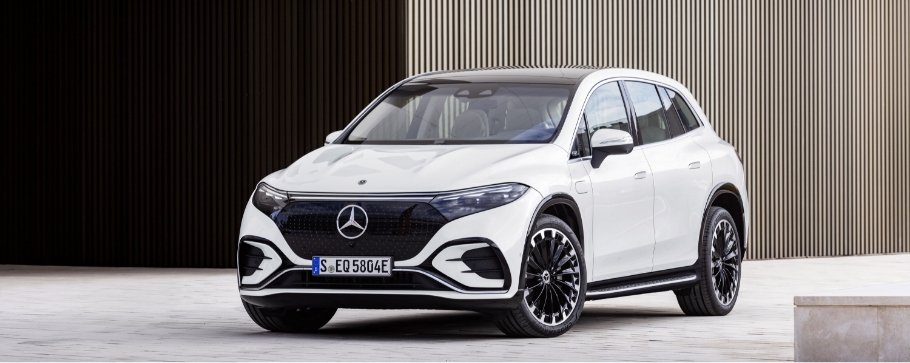
    Mercedes-Maybach has unveiled its first all-electric series model, the EQS 680 SUV, which combines the technology of the Mercedes-EQ with the exclusivity of Maybach. The car has a special exterior with a black panel front and a Maybach radiator grille. The interior is spacious and comfortable with luxurious materials and exclusive details. The Mercedes-Maybach EQS SUV sets a new standard in the all-electric top-end luxury SUV segment.

    The exterior

    Mercedes-Maybach has added exclusive elements to the EQS SUV from Mercedes-EQ to give it a unique character. The car has a special exterior with a smooth black panel front, featuring the Mercedes star on the hood and a Maybach radiator grille with chrome-plated trim strips. The air intake of the bumper also has chrome-plated slats. The side windows have bold chrome surrounds, and the B-pillar trim is chrome-plated. The car rolls on exclusive 21 or 22-inch alloy and forged wheels with Maybach lettering on the hub caps. The rear lights have a continuous light strip with a two-part helix, and the rear apron, spoiler lip, and tailgate have chrome trim elements. The car also has a brand-typical two-tone paintwork with a filigree pinstripe, available in five color combinations.

    The interior

    The interior design of the Mercedes-Maybach EQS SUV follows the motto “What is good must also be beautiful”. The front passengers can enjoy the standard MBUX Hyperscreen with “zero layer” and Mercedes-Maybach-specific start-up animations on all three displays. The instrument cluster in “MAYBACH” mode has animated display and the pointers are designed like a silk scarf that moves elegantly according to speed and driving style. The surrounds for the round instruments are in rose gold, and an alternative display form is the sporty “Pure EV” style.

    The central display starts with the home screen, and the driver can perform 80% of the common interactions directly. The system is personalised with intelligent suggestions and forward-looking offers. The three displays have three display styles (discreet, sporty, MAYBACH) and three modes (navigation, assistance, service), and the content can be customised with selected ambient lighting.

    The rear passengers have two 11.6-inch displays on the backrests of the front seats and can use the MBUX High-End Rear Seat Entertainment to share content. The MBUX rear tablet can also be used outside the vehicle, and the MBUX Interior Assist recognises passengers’ operating requests from body and hand movements.

    The Mercedes-Maybach EQS SUV has natural materials with perfect craftsmanship to create a stylish contrast to the high-tech look. The interior comes standard with Maybach Exclusive Nappa leather, and natural woods are available as decorative parts. The Maybach emblem is integrated at various points as a design element, and it adorns the stainless steel pedal system, the cushions on the headrests, and the front seat backrests. The brand lettering differentiates the steering wheel, and it is illuminated on the stainless steel door sills to welcome all passengers.

    Resource-saving luxury

    Mercedes-Benz AG has introduced vegetable-tanned leather in its Mercedes-Maybach EQS SUV model. Coffee bean shells are used for tanning, and water used in the process is recycled in a closed circuit system before being released back into natural bodies of water. The fatliquoring agents used in tanning are also plant-based, and the leather is not preserved with salt, which saves about 45 kilograms of salt per vehicle. By-products from the tanning process are upcycled into new products such as compostable flowerpots, insulating foams, and decking boards. Coffee farmers benefit from selling the coffee bean shells.

    Mercedes-Benz has set strict criteria for sustainably processed real leather, including no illegal deforestation in the leather supply chain and no grazing areas that contribute to the loss of natural forests. The entire supply chain from farm to end product must be disclosed, and the leather must come from animals kept in a species-appropriate manner. Only vegetable or chrome-free tanning agents may be used, and eco-balance must be carried out across all stages of the value-added process.

    The Mercedes-Maybach EQS SUV uses resource-saving materials, including secondary steel and recycled aluminium. The aim is to at least halve CO2 emissions per passenger car in the new vehicle fleet over the entire life cycle by the end of this decade compared to 2020 levels. From 2039, the new car and van fleet should be net carbon-neutral over their life cycle and the entire value chain.

    The rear

    The rear of the Mercedes-Maybach EQS SUV provides a self-contained and comfortable atmosphere for passengers. The Executive seats come with ventilation, massage function, neck and shoulder heating, and calf massage. There is also a Chauffeur Package that moves the front passenger seat forward when the rear passenger reclines. Massage programmes are available with ENERGIZING COMFORT.

    The redesigned First-Class Rear equipment includes a wooden trim in the rear storage compartment, which matches the trim on the front seat backrests and between the rear seats. A discreet Maybach emblem is projected onto the floor. Two thermal cup holders, a shelf for the MBUX rear tablet, four USB-C ports, and two HDMI interfaces are also included. Folding tables, a cooling compartment, and silver-plated champagne goblets can be added upon request.

    Diverse possibilities for individual lighting moods

    Each C-pillar of the Mercedes-Maybach EQS SUV has a designer lamp integrated into it. The adaptive rear lighting system provides additional reading lights in the grab handles and light strips in the headlining. The brightness, size, and position of the light spots can be adjusted, providing a wide range between precise work and relaxed lounge lighting. The light color follows the human daily rhythm but can also be manually adjusted. The Ambient Lighting runs throughout the vehicle, up to the roof liner and behind the rear seats. Active Ambient Lighting has 253 individually controllable LEDs and 64 individually selectable colors, including Maybach-specific color schemes. The lighting options offer diverse choices for individual moods and reinforce the cocooning effect. The passengers are welcomed with a special light play that sets the scene for the rear doors.

    The air quality

    ENERGIZING AIR CONTROL Plus comes with a HEPA filter to ensure good air quality. An air quality sensor supports the fresh air recirculation switch. The HEPA filter effectively cleans the incoming outside air of fine dust, small particles and pollen. Both the HEPA filter and the cabin filter contain activated carbon that filters sulfur dioxide, nitrogen oxides, and odours. Fresh air is regularly circulated, and the interior air can be cleaned before boarding through pre-air conditioning. MBUX displays particulate matter values inside and outside the vehicle in detail in its own air quality menu. The system can also recommend closing the side windows or sunroof if the quality of outside air is low.

    Active scenting, which is part of the standard AIR BALANCE Package, is also available. No. 12 MOOD Ebony, an exclusive scent, was created for the Mercedes-Maybach EQS SUV. Stimulating sandalwood and spicy notes combine to create a unique composition that aims to seduce rather than please.

    The sound experience

    The Mercedes-Maybach EQS SUV has a standard Burmester® 4D surround sound system that offers an exceptional audio experience. The system includes 15 speakers, two bass speakers in the front footwell, one midrange and one tweeter in each door, two 3D speakers in the headliner, two surround speakers in the luggage compartment cover, and a center speaker in the instrument panel. There are also two exciters in each seat that make the listening experience four-dimensional by directly reproducing structure-borne noise in the seats.

    Passengers can enjoy the Dolby Atmos immersive audio experience, which gives music more space, clarity, and depth. It makes it possible to place discrete audio elements in a three-dimensional sound field and adapt them to any playback environment, providing the clarity equal to the artist’s original studio composition.

    Passengers in the front and rear can also apply the 4D sound to the audio content of their headphones, and the sound can be individually adjusted for each MBUX user profile. Additionally, the driving sound named “Aerial Grace” was created for the all-electric Mercedes-Maybach model, and it can be heard in the interior. It is interactive and reacts to a dozen different parameters, including accelerator pedal position, speed, and recuperation, providing an acoustic experience. The sounds are calculated in real-time on the amplifier of the Burmester® 4D surround sound system and played back by the loudspeakers.

    Noise comfort

    The Mercedes-Maybach EQS SUV enhances the noise and vibration comfort of the EQS SUV from Mercedes-EQ. The electric drive train is encapsulated at the front and rear, and the support frame on the front axle and drive units are doubly decoupled via rubber mounts. The SUV also features acoustic foams in selected body shell profiles and ramps in the underbody paneling, which reduce noise from grit in the wheel arches.

    The measures taken for noise, vibration, and harshness are mainly focused on the rear of the SUV. A transverse bulkhead covered with ARTICO man-made leather seals off the trunk up to the lower edge of the rear window, providing effective noise suppression. The new Disconnect Unit (DCU) automatically decouples the electric motor on the front axle to increase the range, contributing to noise reduction. Additional insulation materials and acoustically effective laminated glass panes are also used.

    Various wind deflection measures on the panorama roof, such as wind deflectors, covers, and seals with improved geometry, ensure a high level of noise comfort. The Mercedes-Maybach EQS SUV provides maximum noise comfort in the rear, making it perfect for enjoying music or simply relaxing in silence. The rear passengers can also adjust how much of the surroundings they want to perceive with the electrically operated roller blinds on the rear side windows.

    The suspension

    The driving comfort of the Mercedes-Maybach EQS SUV meets the highest standards. The AIRMATIC air suspension comes with continuously adjustable damping ADS+ and is a standard feature. The vehicle level can be raised by up to 35 millimetres to increase ground clearance. Standard rear-axle steering enables a turning circle of 11.0 metres. Additionally, the Mercedes-Maybach EQS SUV has the special MAYBACH drive programme for maximum driving comfort for the rear passengers. It ensures minimal body movements under the rear seats and comes as a standard setting, replacing the classic COMFORT programme. The vehicle also includes the DYNAMIC SELECT driving programmes ECO, SPORT, OFFROAD and INDIVIDUAL.

    Technical data

    The standard 4MATIC all-wheel drive of the Mercedes-Maybach EQS 680 SUV gives an output of 484 kW and a range of up to 600 kilometres (provisional figure).

    EQS 680 SUV
    Drive system and battery
    Drive All-wheel drive
    Two permanently excited synchronous motors (PSM)
    E-motors Type
    Output2 kW 484
    Torque Nm 950
    Rated voltage volts 396
    Onboard charger kW 22 (USA: 9.6)
    AC charging time, three-phase 22 kW h 6,15 (USA: 12,45)
    DC charging capacity max. kW 200
    DC charging time at fast charging stations3
    min 31
    DC charging: range after 15 minutes4 (WLTP)
    km Up to 220
    Acceleration 0-100 km/h s 4.4
    Top speed km/h 210
    Vehicle
    Length/width/height mm 5,125/2,034/1,721
    Length/width/height (USA) mm 5,125/2,034/1,725
    Wheelbase mm 3,210
    Turning circle with rear-axle steering 4,5°/10°
    m 11.9/11.0
    Luggage capacity VDA L 440
    Consumption and range
  • Toyota bZ Compact SUV Concept

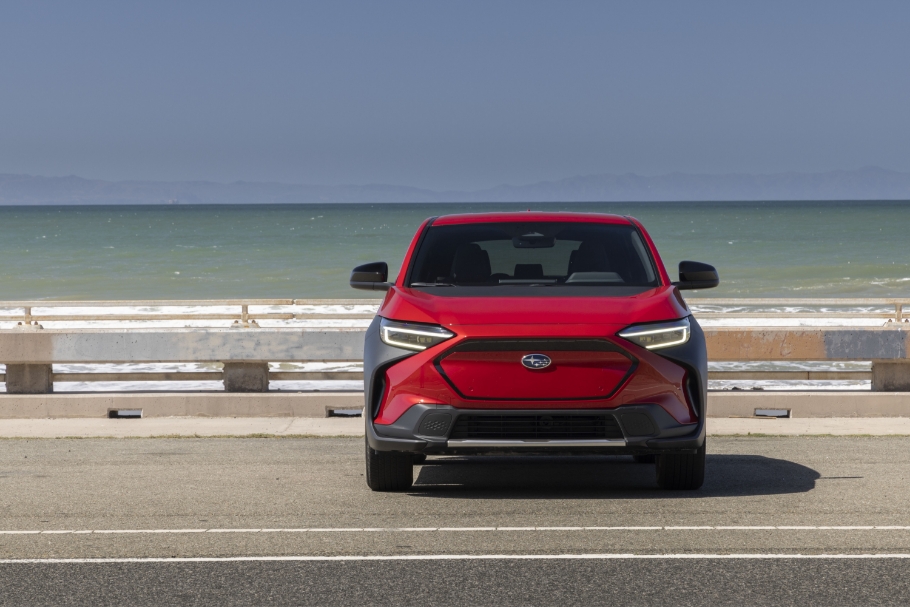
    The new Toyota bZ Compact SUV Concept is making its global debut at the 2022 Los Angeles Auto Show. Toyota is giving a glimpse of what the future could be with the bZ Compact SUV Concept, extending the company’s vision under the “bZ” (Beyond Zero) brand umbrella.

    The Toyota bZ Compact SUV Concept is designed as a full battery-electric vehicle (BEV), using a clean-vital design approach. This approach celebrates the duality of the vehicle that achieves both the minimalistic design one would expect from a BEV with the vitality of the future. The concept represents a vehicle with zero emissions, utilising low-impact, sustainable materials, that also brings dynamic performance, leading tech, and a stylish appearance.

    The aerodynamic form of the concept enhances its futuristic look which includes the wheels pushed to the corners for an aggressive stance – making it appear as if it’s moving even when standing still. The short overhangs and sweepback angles make it stand out as an advanced technology vehicle, while a narrowed-down cabin design gives it an agile appearance for low drag.

    The edgy styling extends to the interior with premium finishes resulting in a distinctive look. Notably, the design team included several eco-friendly touches, like seating made from plant-based and recycled materials to follow the Beyond Zero theme. An in-car personal assistant connects the driver and passengers with the vehicle through audio and visual lighting cues that move around the cabin, responding to requests or commands from front or rear passengers.

    Through its Beyond Zero message, Toyota envisions a future in which carbon neutrality is achieved through the practical introduction of a portfolio of products with advanced, alternative fuel and zero-emissions powertrain technologies. A diverse portfolio of electrified products will help propel Toyota towards its global goal of carbon neutrality by 2050.

  • Mercedes-Benz EQE53 AMG SUV

    Mercedes-AMG presents the EQE SUV, a further milestone in its electrification strategy – the first all-electric SUV from the performance and sports car brand. With its variable interior and performance-oriented drive concept, it is the most versatile electric vehicle in the Mercedes-AMG portfolio. The new model also offers generous space for passengers and luggage. Like the AMG EQS Saloon and AMG EQE Saloon, the AMG EQE SUV is based on the electric platform from Mercedes-EQ. Two powerful electric motors and the fully variable all-wheel drive form the basis for the hallmark AMG dynamic driving experience. The Mercedes-AMG developers have also designed many other parameters independently.

    These include the AMG RIDE CONTROL+ air suspension with Adaptive Damping System, rear-axle steering and AMG ACTIVE RIDE CONTROL – an AMG-specific roll stabilisation system. Added to this are the AMG SOUND EXPERIENCE and the exterior and interior design. Two variants of the new performance SUV are available: The entry-level Mercedes-AMG EQE 43 4MATIC (provisional WLTP combined power consumption: 25.1-22.0 kWh/100 km; provisional WLTP CO2 emissions: 0g/km)1 and the even sportier Mercedes-AMG EQE 53 4MATIC+ (provisional WLTP combined power consumption: 27.8-22.6 kWh/100 km; provisional WLTP CO2 emissions: 0 g/km)1.

    “The AMG EQE SUV is another milestone in our Future of Driving Performance. The new model is our first all-electric SUV. And, after the AMG EQS and AMG EQE Saloon models, this is already the third performance model that we have realised as a derivative on the Mercedes-EQ electric platform. With its variable interior and high-performance all-wheel drive, it is Mercedes-AMG’s most versatile electric vehicle. A real all-rounder – a real AMG!” says Philipp Schiemer, CEO of Mercedes-AMG GmbH.

    “The compact format of the EQE SUV, the short wheelbase and the performance-oriented drive concept form the perfect starting point for realising an agile, highly emotional and luxurious driving experience with our AMG-specific solutions. This particularly applies to the drive system, suspension, brakes and sound. It ensures that our customers can look forward to the Driving Performance that is a hallmark of our brand,” says Jochen Hermann, Chief Technical Officer of Mercedes-AMG GmbH.

    Exterior design with characteristic AMG features

    The exterior design is characterised by generously modelled surfaces, reduced joints and seamless transitions. Dynamic proportions emphasise the sporty character. Many AMG characteristic features guarantee a high recognition value and help strengthen the brand. These include the AMG-specific black panel radiator grille with hot-stamped vertical struts in chrome, integrated Mercedes star and “AMG” lettering. A new feature is the brand-specific badge on the bonnet with the AMG emblem instead of the Mercedes star: It now also adorns a purely electric vehicle from Mercedes-AMG for the first time. Another front-end feature is the AMG-specific front apron, painted in the body colour with A-wing in high-gloss black and a chrome trim. The same look characterises the front splitter in high-gloss black with chrome trim and flics and fins on the simulated air inlets. The air diffusers in high-gloss black on the left and right allow the AIR CURTAIN effect, which guides the air around the front wheels in a streamlined manner. The standard DIGITAL LIGHT headlamps feature a specific AMG projection when opening and closing the vehicle.

    In the side view, AMG-specific wheel arch claddings in the body colour and the seamlessly integrated, fully recessed door handles add visual accents. Added to this are aerodynamically optimised 21 or 22-inch AMG light-alloy wheels. The rear apron in the body colour with aerodynamically optimised diffuser and longitudinal fins as well as the tail lights in a helix design round off the dynamic appearance.

    Interior design with a particularly sporty touch

    The interior is also dominated by style-defining AMG features. Here, the new models offer a sporty ambience including seats with individual graphics and special seat covers in ARTICO man-made leather with MICROCUT microfibre and red topstitching. Alternatively, seat upholstery in nappa leather is optionally available, also with AMG-specific seat graphics. In addition, the AMG badge on the backrests of the front seats and the embossed AMG emblems in the front headrests emphasise the brand identity. There are numerous other features that underline the distinctive style of the interior:

    • Instrument panel and beltlines in space grey ARTICO man-made leather with NEOTEX grain and red topstitching
    • Door centre panels and also transition from centre console to instrument panel in black MICROCUT microfibre with red topstitching
    • AMG Performance steering wheel in nappa leather, flattened at the bottom, perforated in the grip area with silver-coloured aluminium paddles for setting various recuperation levels, and the standard steering wheel buttons for individual assignment of vehicle-specific settings
    • AMG sports pedals, AMG floor mats and door sill panels with “AMG” lettering (illuminated with interchangeable cover)

    The AMG Performance steering wheel with its striking twin-spoke design and seamlessly integrated buttons combines visual stability with lightness. The steering wheel rim, which is flattened at the bottom and covered in nappa leather, can be heated as an option. The standard AMG steering wheel buttons impress with brilliant displays. This allows important driving functions and the drive programs to be controlled without the driver’s hands leaving the steering wheel. Numerous parameters can be selected directly. The menus on the left steering wheel button can be individually supplemented, exchanged or reduced. For this, there is a list in the Multimedia Touch Display or in the optional Hyperscreen with more than 15 information and setting options as direct selection for the steering wheel buttons.

    Optional Hyperscreen with AMG-specific functions and displays for the MBUX infotainment system

    Both new models can be optionally equipped with the innovative MBUX Hyperscreen. This large, curved screen unit extends from A-pillar to A-pillar. Three screens sit under a single glass cover and appear to merge into one. With adaptive software, MBUX adapts completely to its user and offers personalised suggestions for numerous infotainment, comfort and vehicle functions. With the zero layer, the most important applications are always displayed situationally and contextually on the top level in the field of vision.

    In Europe and China, dynamic content is also permitted on the passenger display while driving. Unrestricted viewing of films, text messages or presentations, plus internet surfing, are therefore possible. This is made possible by the “blanking function”, which prevents the driver from seeing the content. But even without dynamic content, the passenger display remains an attractive eye-catcher because then a new, AMG-specific screensaver appears.

    MBUX offers a range of additional AMG functions that emphasise the performance character. This is particularly true of the distinctive displays in the instrument cluster, as well as the multimedia display and the head-up display. Quick access to the AMG DYNAMIC SELECT drive programs is provided by the corresponding direct-entry button in the centre console.

    The Dolby Atmos® sound format takes the audio experience in the EQE SUV to a new level. Individual instruments or voices in the studio mix can be positioned all around the listening area. A new kind of sound animation thus becomes possible: Because while conventional stereo systems usually have left-right dynamics, Dolby Atmos® can use the entire range and create a 360-degree experience.

    With the premium digital entertainment platform from Californian specialist ZYNC integrated into a vehicle for the first time, customers enjoy a seamless digital entertainment experience. The advantages of the MBUX Hyperscreen are fully exploited. Through ZYNC, customers gain access to a wide range of renowned global and local streaming services. The ZYNC platform focuses exclusively on vehicle interiors, and integrates seamlessly with vehicle hardware and operating systems. This enhances the audio-visual experience, interaction and user-friendliness. ZYNC offers video streaming, on-demand content, interactive experiences, local video programmes, sport, news, games, and much more besides, via a single user interface.

    Performance-oriented drive concept with two electric motors

    Both new Mercedes-AMG EQE SUV models offer a performance-oriented drive concept with two electric motors. The powerful electric powertrain (eATS) with a motor at the front and rear axle also offers fully variable all-wheel drive, which optimally transmits the drive power to the road in all driving conditions. The power spectrum ranges from 350 kW (476 hp) in the EQE 43 4MATIC to 505 kW (687 hp) in the EQE 53 4MATIC+ with optional AMG DYNAMIC PLUS Package with Boost function. The maximum torque ranges from 858 to 1000 Nm.

    The AMG-specific electric motors at the front and rear axles are permanently excited synchronous motors (PSM). The decided emphasis on performance is already evident in the output and torque values. In addition, the electric motors are characterised by an optimal balance of power increase, efficiency and noise comfort. The electric motors of the EQE 43 4MATIC SUV feature AMG-specific tuning and control. The EQE 53 4MATIC+ SUV uses AMG-specific electric motors with adapted windings, different laminations, higher currents and adapted inverters. This allows higher motor speeds and thus even more power, which is particularly noticeable during acceleration and in the top speed.

    The electric motor on the rear axle is particularly powerful thanks to its six-phase design, based on two windings with three phases each. The stator with pull-in winding ensures a particularly strong magnetic field.

    Added to this is the highly resilient thermal concept, which allows repeated acceleration manoeuvres with consistently high performance. The centrepiece of the sophisticated design is the so-called water lance in the shaft of the rotor, which cools it. Other AMG-specific cooling elements in the cooling circuit include special ribs on the stator and the needle-shaped pin-fin structure on the inverter, which is made of high-performance ceramics. In addition, there is the transmission oil heat exchanger: In addition to cooling, the oil is also preheated during cold starts to increase efficiency.

    Fully variable all-wheel drive AMG Performance 4MATIC and 4MATIC+

    The power of the engines is brought to the road by the standard-fit AMG Performance 4MATIC (EQE 43) or 4MATIC+ (EQE 53) fully variable all-wheel drive. In contrast to previous usage, the “+” in 4MATIC+ stands not only for the fully variable all-wheel drive that EQE 43 and EQE 53 both have, but for the entire additional performance and dynamism that the EQE 53 offers. In both models, the system continuously distributes drive torque between the front and rear axles depending on the driving situation: compared to a mechanical all-wheel drive system, the electric-specific system ensures a significantly faster response. The torque is checked 160 times per second and adjusted if necessary. The torque distribution depends on the selected drive program: in the “Comfort” program the focus is on maximum efficiency, while in “Sport” and “Sport+” the torque is more rear-biased in the interests of greater lateral dynamics.

    AMG RIDE CONTROL+ suspension with Adaptive Damping System

    The AMG RIDE CONTROL+ suspension with air suspension and Adaptive Damping System is based on four- link suspension at the front and multi-link independent suspension at the rear, each optimised with AMG-specific wheel carriers, suspension links and anti-roll bars with greater rigidity. In its basic features it corresponds to the suspension of the AMG EQS and the AMG GT four-door Coupé, but its set-up has been adapted to the AMG EQE SUV. The rear axle carrier is connected to the bodyshell with 50 per cent stiffer bearings and reduced bearing clearance to create even more direct road contact. The AMG engineers have specifically tuned all components to meet the special requirements of Mercedes-AMG customers. This applies to ride comfort as well as driving dynamics.

    The Adaptive Damping System uses two pressure limiting valves. These continuously variable control valves located outside the damper allow the damping force to be adjusted even more precisely to different driving conditions and drive programs: one valve controls the rebound phase, i.e. the force generated when the wheel rebounds; the other controls the compression phase when the wheel compresses. The rebound and compression phases are controlled independently of each other. This technology makes it possible to increase comfort on the one hand, but also to make the driving dynamics even sportier on the other hand.

    The suspension control unit analyses data – including data from the acceleration and wheel path sensors – to adjust the damping force for each wheel in a few milliseconds to suit the situation. The AMG developers were able to significantly increase the spread between sportiness and comfort. Among other things, by widening the spread between minimum and maximum damping force characteristics, as well as even greater flexibility in characteristic mapping. By using the two adjustment valves, the damper is able to provide damping force adjustment across the full range of wheel vibrations. Thanks to the special design of the valves, the damper reacts quickly and sensitively to changing road surfaces and driving conditions.

    Efficiency also feeds into the intelligent driving level control, which enables better aerodynamics and lower power consumption. In the S and S+ drive programs, the Mercedes-AMG EQE SUV models already adopt the low suspension level from 0 km/h (-15 mm). In drive program C, speed-dependent control takes place with lowering from 120 km/h and raising from 80 km/h.

    The special tyres, which are specifically adapted to the requirements of the all-electric AMG Performance vehicles, also contribute to the high dynamic potential. Among other suppliers, the MICHELIN Pilot Sport EV MO1 tyre specifically designed for electric-drive performance vehicles is worth mentioning. It is available in 21 or 22 inch size and features low rolling resistance combined with very high grip levels on wet and dry roads.

    With active rear-axle steering as standard

    Both Mercedes-AMG EQE SUV models are equipped with active rear-axle steering as standard. The steering angle of up to 9.0 degrees promotes agile handling and allows a turning circle of 10.9 metres. The interaction between front-axle and rear-axle steering is designed to achieve agile response with little steering effort when driving in town or on country roads. At speeds below 60 km/h, the rear wheels steer in the opposite direction to the front wheels. As a result, the Mercedes-AMG EQE SUV is agile, light-footed and nimble. The effect is particularly positive when making a turn, changing direction quickly or manoeuvring slowly. At speeds above 60 km/h, the rear wheels steer in the same direction as the front wheels. The resulting virtually extended wheelbase offers increased handling stability and driving safety at high speeds, and during fast lane changes or sudden evasive manoeuvres.

    AMG ACTIVE RIDE CONTROL: electromechanical active roll stabilisation  (AMG EQE 53 4MATIC+ SUV only)

    Instead of using conventional anti-roll bars, the active roll stabilisation in the AMG EQE 53 4MATIC+ SUV compensates body movements electromechanically. For this purpose, the anti-roll bars on the front and rear axles are divided into two parts. In the centre is an electromechanical actuator in which a three-stage planetary gear is integrated. If the road surface is uneven, the actuator actively separates the stabiliser halves, which increases ride comfort. During dynamic driving, the halves join together and are twisted against each other. This significantly reduces rolling movements In order to meet the high performance requirements of Mercedes-AMG, the system is based on an additional 48-volt auxiliary power system The AMG developers redesigned the rear section of the vehicle to accommodate the roll stabilisation system.

    Advantages of the electromechanical roll stabilisation:

    • Greater spread between comfort and sportiness than with a mechanical solution
    • Precisely compensates for body movements. Even in sporty situations near the limits, the handling remains precisely controllable and direct
    • Not only reduces rolling movements when cornering, but also allows more precise tuning of the cornering and load change characteristics
    • Increased ride comfort when driving in a straight line because excitations due to one-sided road bumps are balanced out
    • Significantly faster response than hydraulic systems
    • Lower weight of components compared to hydraulic solutions.

    For an individual driving experience: AMG DYNAMIC SELECT drive programs

    The driving characteristics can be changed by the driver at the touch of a button to suit the respective situation or their own preferences. This is made possible by the five AMG DYNAMIC SELECT drive programs “Slippery”, “Comfort”, “Sport”, “Sport+” and “Individual”. The drive programs cover a wide spectrum, from high comfort to pronounced sportiness. Important parameters such as drive and performance characteristics, suspension settings, AMG DYNAMICS with, among other things, steering torque characteristics and AMG SOUND EXPERIENCE are modified to suit the selected drive program. The maximum drive power can be called up in the Sport+ drive program, or in all drive programs by kick-down. In the drive programs (except Sport+), the maximum power is adjusted to increase efficiency and reduce fuel consumption.

    EQE 43 4MATIC SUV EQE 53 4MATIC+ SUV
    Slippery 50% output (=175 kW) 50% output (=230 kW)
    Comfort 85% output (=300 kW) 80% output (=368 kW)
    Sport 90% output (=325 kW) 90% output (=414 kW)
    Sport+ 100% output (=350 kW) 100% output (=460 kW)
    RACE START without Boostfunction 100% output (=350 kW) 100% output (=460 kW)
    RACE START with Boost function
    (included in AMG DYNAMIC PLUS Package)
    not available 110% power (=505 kW)

    The driver can also pre-select the basic suspension setup via the AMG DYNAMIC SELECT drive programs: at the touch of a button, the driving style varies from maximum dynamics in “Sport+” mode to smooth gliding in the “Comfort” setting, for example. In addition, the tuning can be adjusted in three stages independently of the drive programs via a dedicated button.

    Depending on the drive program, the central drive control unit automatically activates different de-rating and cooling strategies: in “Sport” and “Sport+”, the cooling system is activated sooner and the cooling capacity is increased to maintain delivered power for longer. The driver has the option of even more driving pleasure – for example on dedicated race tracks – by using the ESP OFF function.

    AMG high-performance brake system

    The AMG high-performance brake system with six-piston brake callipers and 415×33 millimetre brake discs at the front and single-piston brake callipers and 378×22 millimetre brake discs at the rear delivers first-class deceleration values with high fade-resistance and endurance. The optional AMG ceramic high-performance composite brake system uses even larger brake discs measuring 440×40 millimetres at the front. Another high-tech feature is the intelligent, electromechanical brake booster iBooster. It ensures that the brake system combines electric recuperation with the hydraulic brake highly efficiently. For the authentic driving experience, the iBooster is specially tuned to the typical AMG pedal response and the AMG brake system.

    AMG SOUND EXPERIENCE: unique sound experience with a wide bandwidth

    With AMG SOUND EXPERIENCE, the performance and sports car brand is giving a new voice to electric mobility – a soundtrack for outside and inside that emotionally enhances the dynamic driving experience. Like the drive programs, the acoustic composition has a wide bandwidth: in the standard basic version “Authentic”, the customer can regulate the sound and its intensity depending on the driving status and the selected drive program. The hallmark AMG driving sounds are generated with the help of additional hardware, including special speakers, a bass actuator and a sound generator. Another option for even more individuality: using the AMG steering wheel buttons or the central display, the driver can select the sound characteristics “Balanced”, “Sport” and “Powerful” in each drive program. During RACE START, the vehicle produces a unique sound to match the dynamic acceleration.

    The AMG DYNAMIC PLUS Package also includes the AMG SOUND EXPERIENCE “Performance”, which creates an even more emotional soundscape, also optionally “Balanced”, “Sport” or “Powerful”. In addition to the drive sounds, it also includes most of the so-called event sounds – suitable sounds for all vehicle functions that emit a sound. This includes locking the vehicle, as well as starting and stopping the motor. The program even simulates the click of the indicators, because many drivers are unwilling to do without the familiar sound. A brand new feature is the AMG-specific event sound that is heard when the vehicle is locked. The event sounds can be deactivated at any time via the multimedia system settings – separately for the exterior and interior.

    AMG DYNAMIC PLUS Package with dynamic driving extras

    The AMG DYNAMIC PLUS package available as an option for the EQE 53 4MATIC+ SUV combines extra dynamic features – including the powerful boost for RACE START, an increase in maximum speed to 240 km/h and the emotional AMG SOUND EXPERIENCE “Performance”. Sounds composed especially for this sound world – for charging or infotainment functions, for example – round off the AMG experience.

    The driving dynamics deliver what the sound promises: if the temperature and state of charge are suitable, the maximum power and torque for RACE START can be briefly increased. The

    Mercedes-AMG EQE 53 4MATIC+ SUV then takes just 3.5 seconds to sprint from 0 to 100 km/h. The onboard bass actuator and speakers make the power of the electric motors clear even when stationary, and provide an emotionally charged sound backdrop to the high acceleration. The AMG-specific graphics in the displays also visually underscore the driving performance. The AMG Sound Experience can also be deactivated at any time via the settings of the multimedia system, and separately for the outside and inside.

    Further options for even more dynamism

    Numerous AMG options enhance the dynamic impression if required. These include design features such as the AMG Night package with elements in black and black chrome, red brake callipers or the AMG carbon trim. The high-performance AMG EQE SUV models can also be further refined in terms of driving dynamics, for example with the AMG ceramic high-performance composite brake system. There is also a choice of aerodynamically optimised 20- and 21-inch AMG light-alloy wheels.

    AMG TRACK PACE, the virtual race engineer, is also available as an option: the software is part of the MBUX infotainment system and permanently records more than 80 vehicle-specific data (e.g. speed,

    acceleration), for example while driving on a race track. On top of this, lap and sector times are displayed, as well as the respective difference from a reference time. Because specific display elements are shown in green or red, drivers are able to see at a glance without reading numbers whether they are currently faster or slower than the best time. The data are displayed on the multimedia display, in the instrument cluster and on the optional head-up display.

    High-performance drive battery with a capacity of 90.6 kWh

    The new Mercedes-AMG EQE SUV models are equipped with a powerful 328-volt high-performance drive battery manufactured using the latest lithium-ion technology. It has a usable energy content of 90.6 kWh and consists of ten modules with a total of 360 pouch cells. The battery management system in the EQE 53 SUV is also tuned specifically for AMG. In the Sport and Sport+ drive programs the focus is on performance, in the Comfort drive program the focus is on operating range. The battery generation is characterised by a high energy density and has a high charging capacity. Another new feature is the possibility to install updates for the battery management system over-the-air for continuous improvements over the life cycle. The EQE 53 4MATIC+ SUV also features an AMG-specific wiring harness adapted to the higher performance capability. A major advance in sustainability has been achieved in the cell chemistry: the cobalt content is reduced to ten percent, while the optimised active material consists of nickel, cobalt and manganese in a ratio of 8:1:1.

    Short charging times through intelligent thermal management

    Another advantage of the new battery generation is the short charging times. The energy storage system can charge with up to 170 kW at fast charging stations with direct current. In this case, electricity for up to 170 kilometres (WLTP) can be recharged in just 15 minutes2. Thanks to the onboard charger, the electrified AMG can be conveniently charged at home or at public charging stations with 11 kW or optionally 22 kW with alternating current. In Japan, bidirectional charging will also be possible, i.e. charging in both directions. In addition, there are intelligent charging programs that can be activated automatically depending on the location. Functions such as battery-saving charging make operations even more efficient.

    The efficient thermal management also plays a part in shortening charging times. If the intelligent navigation with Electric Intelligence is activated, the battery is preheated or cooled while driving to reach the optimal temperature for fast charging at the charging point. The desired temperature range of the battery is achieved with the aid of the cooling circuit and a PTC (Positive Temperature Coefficient) booster heater integrated into it.

    The battery design aims to ensure the optimum battery operating temperature under all operating conditions. The aluminium extrusions of the battery frame have defined cavities through which the coolant flows. All in all, the intelligent temperature and charging management ensures that high charging currents can be maintained for a long time. The standard heat pump uses the waste heat from the electric drive (inverter and electric motor) and the high-voltage battery to heat the interior. This reduces the need for battery power for interior heating, and thus increases the range. Another function is pre-entry climate control.

    The battery also stands out for its durability. The ECO Charging function makes a significant contribution to this: the intelligent control reduces the battery load during charging, and thus slows down the natural ageing process of the battery. Customers can also benefit from the “charging interruption” function: the charging process can be paused at freely selectable times so as to use cheaper off-peak electricity at a later time, for example. The battery certificate stands for the long service life of the high-voltage batteries. It is valid for up to ten years or up to 250,000 kilometres.

    Intelligent recuperation for efficient energy recovery

    The battery can also be charged through efficient energy recovery using recuperation. The recuperation power reaches up to 260 kW3. The driver can adjust the level of recuperation in three stages via switches on the steering wheel, and receive situation-optimised support from ECO Assist. Here, one-pedal driving and combined braking to a standstill are possible in recuperation levels D and D-. In DAuto, up to 5 m/s² deceleration is achieved, 3 m/s² of which is due to recuperation (2 m/s² via the AMG high-performance brake system). With the help of the optional DRIVE PILOT, deceleration is automatic in response to detected vehicles ahead until they come to a standstill, for example at traffic lights.

    Sustainable use of electrical power thanks to Mercedes me Charge

    With Mercedes me Charge, customers can always be sure of “green” charging at every public charging station throughout Europe as of 2021. High-quality guarantees of origin ensure that as much green power from renewable energies is fed into the grid as is withdrawn via Mercedes me Charge. In the first three years after the purchase, there is no basic fee for Mercedes me Charge and thus Green Charging for customers. Another advantage is IONITY Unlimited: All European EQE SUV customers can use the IONITY fast charging network free of charge for one year via Mercedes me Charge. The new Plug & Charge function makes charging the AMG EQE SUV particularly convenient.

    Mercedes me Charge is currently the largest charging network worldwide: It currently has more than 500,000 AC and DC charging points in 31 countries, including over 200,000 in Europe. Also included are the 336 fast-charging stations of the IONITY fast-charging network co-founded by Mercedes-Benz. In addition, the functionality of Mercedes me Charge in MBUX has been expanded to include functions such as filtering and forecasting the availability of charging stations.

    Mercedes me App: easy to use on smartphone and tablet

    The Mercedes me App offers many improved and new functions since the last revision. These include a filtering option that allows the charging points to be sorted according to criteria such as availability or charging capacity. The app now also shows how busy the respective charging station is likely to be during the course of the day, based on a probability calculation.

    Predictive route planning and efficient driving with Electric Intelligence

    When it comes to navigation with Electric Intelligence, the name says it all. Because it plans the fastest and most convenient route, including charging stops, based on numerous factors and reacts dynamically to traffic jams or a change in driving style, for example. Electric Intelligence plans a fast and comfortable route in advance, including charging stops based on numerous factors such as the calculated energy requirement. The system includes all relevant data in the calculation, from topography and route to driving speed and heating/cooling requirements.

    With Electric Intelligence, the new AMG EQE SUV models also react dynamically to the traffic situation on the planned route. The AMG vehicle records traffic tailbacks and road closures, as well as changes in energy demand. For its calculations the system uses information from the cloud, which it combines with onboard data. The planned route can be edited individually. For example, the customer can set the additional reserve at the destination and at the charging station (SoC, State of Charge) – ten percent SoC is standard. If the “Charge at destination” function is selected, the set reserve may be undercut until the destination is reached. MBUX indicates whether the available battery capacity is sufficient to drive back to the starting point without charging.

    Further options for individual route planning:

    • The route calculation prefers manually added charging stations along the route
    • The driver can exclude suggested charging stations
    • Calculation of the expected charging costs per charging stop

    If there is a risk of not reaching the destination or the charging station with the chosen settings, MBUX informs the driver in good time with a note to activate the ECO driving functions, thanks to “Active range monitoring”.

    Comprehensive safety concept: Battery is crash-protected in the underbody

    The battery sits in a crash-protected area in the underbody, embedded in the bodyshell structure and including an extruded aluminium profile to the side. During extrusion, a heated block of metal is pushed through the dies and turns into an endless section, which is then cut to fit. This makes highly complex profiles that are precisely tailored to the requirements possible. The housing with energy absorbing structures at the front and side, as well as a rigid, double-walled base plate, provide additional protection for the modules. In addition, there is a separate, multi-level safety system for everyday operation. This includes, for example, temperature, voltage or insulation monitoring. If a fault occurs, the battery switches off. Crash monitoring when stationary is also standard.

    Technical data

    Mercedes-AMG EQE 43 4MATIC SUV

    Drive system and battery
    Electric motors Type Two permanently excited synchronous motors
    Rated output kW (hp) 350 (476)
    Rated torque Nm 858
    Drive system Fully variable all-wheel drive AMG Performance 4MATIC
    Battery type Lithium-ion
    Rated voltage V 328
    Battery energy content, usable kWh 90.6
    Recuperation capacity, max. kW 260
    AC charging capacity, max. (series/optional) kW 11/22
    DC charging capacity, max. kW 170
    Suspension
    Front axle AMG RIDE CONTROL+ with four-link front suspension, air suspension strut, Adaptive Damping System
    Rear axle AMG RIDE CONTROL+ five-link independent rear suspension, air suspension strut, Adaptive Damping System
    Brake system Dual-circuit hydraulic brake system; front: 415×33 mm brake discs, internally ventilated and perforated, 6-piston aluminium fixed calliper; rear: 378×22 mm brake discs, internally ventilated and perforated, 1-piston aluminium sliding calliper; electric parking brake, ABS, Brake Assist, 3-stage ESP®
    Steering Electromechanical speed-sensitive power steering with rack and pinion, variable steering ratio (12.8:1 at dead centre) and variable power assistance, standard rear-axle steering (9.0°)
    Wheels front 9.5 J x 21 ET42; rear 9.5 J x 21 ET 42
    Tyres front Michelin Pilot Sport EV MO1 275/40 R21; rear Michelin Pilot Sport EV MO1 275/40 R21
    Dimensions and weights
    Number of doors/seats 4/5
    Length/width4/height mm 4879/1931/1672
    Wheelbase mm 3030
    Track, front/rear mm 1654/1659
    Turning circle m 10.90
    Boot capacity, VDA l 520-1675
    Kerb weight/perm. gross vehicle weight/max. payload kg 2600/3195/595
    Perm. towing capacity (braked/unbraked) kg 1800/750
    Performance, consumption and range
    Acceleration 0-100 km/h s 4.3
    Top speed km/h 210
    Combined power consumption (WLTP)5 kWh/100 km 25.1–22.0
    Combined CO2 emissions (WLTP) g/km 0
    Range (WLTP)5 km 431–488

    Mercedes-AMG EQE 53 4MATIC+ SUV

    Drive system and battery
    Electric motors Type Two permanently excited synchronous motors
    Rated output kW (hp) 460 (626)/505 (687) with AMG DYNAMIC PLUS Package
    Rated torque Nm 950/1000 with AMG DYNAMIC PLUS Package
    Drive system AMG Performance 4MATIC+fully variable all-wheel drive
    Battery type Lithium-ion
    Rated voltage V 328
    Battery energy content, usable kWh 90.6
    Recuperation capacity, max. kW 260
    AC charging capacity, max. (series/optional) kW 11/22
    DC charging capacity, max. kW 170
    Suspension
    Front axle AMG RIDE CONTROL+ with four-link front suspension, air suspension strut, Adaptive Damping System and active roll stabilisation AMG ACTIVE RIDE CONTROL
    Rear axle AMG RIDE CONTROL+ five-link independent rear suspension, air suspension strut, Adaptive Damping System and active roll stabilisation
    Brake system Dual-circuit hydraulic brake system; front: 415×33 mm brake discs, internally ventilated and perforated, 6-piston aluminium fixed calliper; rear: 378×22 mm brake discs, internally ventilated and perforated, 1-piston aluminium sliding calliper; electric parking brake, ABS, Brake Assist, 3-stage ESP®
    Steering Electromechanical speed-sensitive power steering with rack and pinion, variable steering ratio (12.8:1 at dead centre) and variable power assistance, standard rear-axle steering (9.0°)
    Wheels front 9.5 J x 21 ET42; rear 9.5 J x 21 ET 42
    Tyres front Michelin Pilot Sport EV MO1 275/40 R21; rear Michelin Pilot Sport EV MO1 275/40 R21
    Dimensions and weights
    Number of doors/seats 4/5
    Length/width6/height mm 4879/1931/1672
    Wheelbase mm 3030
    Track, front/rear mm 1654/1659
    Turning circle m 10.90
    Boot capacity, VDA l 520-1675
    Kerb weight/perm. gross vehicle weight/max. payload kg 2690/3195/505
    Perm. towing capacity (braked/unbraked) kg 1800/750
    Performance, consumption and range
    Acceleration 0-100 km/h s up to 3.5 (with AMG DYNAMIC PLUS package)
    Top speed km/h 220 / 240 (with AMG DYNAMIC PLUS Package)
    Combined power consumption (WLTP)7 kWh/100 km 27.8–22.6
    Combined CO2 emissions (WLTP) g/km 0
    Range (WLTP)7 km 375–470

    1 Data on electrical consumption and range are provisional and were determined internally in accordance with the “WLTP test procedure” certification method. Confirmed TÜV figures, EC type approval and certificate of conformity with official figures are not yet available. Differences between the stated figures and the official figures are possible.
    2 Charging time at DC fast-charging stations with 500 amperes. Figures for charging times are provisional and were obtained internally in accordance with the certification method “WLTP test procedure”. Confirmed TÜV figures, EC type approval and certificate of conformity with official figures are not yet available. Differences between the stated figures and the official figures are possible.
    3 This value refers to the electrical power fed into the electric battery due to recuperation. It can be achieved under optimal environmental conditions, depending on, among other things, state of charge and temperature. Deviations are possible.
    4 Without exterior mirrors
    5 Data on electrical consumption and range are provisional and were determined internally in accordance with the “WLTP test procedure” certification method. Confirmed TÜV figures, EC type approval and certificate of conformity with official figures are not yet available. Differences between the stated figures and the official figures are possible.
    6 Without exterior mirrors
    7 Data on electrical consumption and range are provisional and were determined internally in accordance with the “WLTP test procedure” certification method. Confirmed TÜV figures, EC type approval and certificate of conformity with official figures are not yet available. Differences between the stated figures and the official figures are possible.


  • Mercedes-Benz EQE SUV

    The EQE SUV is the multi-purpose variant of the EQE executive saloon. Like the latter, it is available with the essential innovations of the EQS and at the same time is more dynamic than the EQS SUV. The EQE SUV is one of the most spacious representatives of its class. Yet it is more compact than the EQE Saloon and, at 3030 millimetres, has a wheelbase that is nine centimetres shorter. The external dimensions are 4863/1940/1686 millimetres (length/width1/height). As the fourth model after the two EQS and EQE Saloons as well as the EQS SUV, the EQE SUV uses the new all-electric platform.

    Up to 590 kilometres2 range

    The modular drive concept enables the EQE SUV to offer a wide range of maximum total drive outputs from 215 to 300 kW. Depending on the vehicle equipment and configuration, the European vehicles can achieve WLTP ranges of up to 590 kilometres2. In the EQE SUV, the lithium-ion battery consists of ten modules. In certain cases the innovative battery management software, which was developed in-house, can be updated over-the-air (OTA).

    Extensive range of driving assistance systems

    The current generation of driving assistance systems includes numerous functions that support the driver. The general standard equipment of the EQE SUV includes ATTENTION ASSIST, Active Brake Assist, Active Lane Keeping Assist, Parking Package with reversing camera and Speed Limit Assist. The status and activity of the systems are shown in a full-screen view in the assistance display in the driver’s display. Further options are available in the Assistance Package and also the Driving Assistance Plus Package.

    Particularly manoeuvrable and agile

    The chassis of the new EQE SUV comprises a four-link suspension at the front and an independent multi-link suspension at the rear. Due to the comparatively short wheelbase of 3030 millimetres and the corresponding suspension tuning, it feels particularly agile and manoeuvrable even with the basic set-up. The AIRMATIC air suspension with ADS+ continuously adjustable damping is available as an optional extra. To increase ground clearance, the vehicle level can be raised by up to 30 millimetres3. In addition to the DYNAMIC SELECT programs of ECO, COMFORT, SPORT and INDIVIDUAL, the EQE SUV models with 4MATIC also boast the OFFROAD program for off-road driving. A rear axle steering system with a maximum steering angle of 10 degrees is available as an option.

    Always up to date

    The EQE SUV offers the possibility of activating additional vehicle functions via over-the-air technology (OTA) in a number of functional areas. This means that after purchase and having chosen the original new car configuration, some of the EQE SUV’s equipment can be individually customised. The OTA functions are available in the Mercedes me Store, and the range will be successively expanded.

    MBUX Hyperscreen on request

    With adaptive software, the MBUX display and operating system makes personalised suggestions for numerous infotainment, comfort and vehicle functions. A highlight of the interior is the optional MBUX Hyperscreen. With the zero-layer design, the user does not have to scroll through submenus or give voice commands. Situational and contextual applications are offered at the top level in the field of view. With the MBUX Hyperscreen (optional extra), three displays merge almost seamlessly into one another to create a screen band over 141 centimetres wide. The front passenger in the EQE SUV has the option of a 12.3-inch OLED display with its own user interface. The system uses an intelligent, camera-based blocking logic that recognises if the driver is looking toward the front passenger display. If this is the case, the system automatically dims the dynamic content for security reasons (see separate chapter).

    Clever route planning

    When it comes to Navigation with Electric Intelligence, the name says it all. For on the basis of numerous factors it plans the fastest and most convenient route including charging stops. It also reacts dynamically to traffic jams or a change in driving style, for example. Navigation with Electric Intelligence is clever; it calculates the estimated charging costs per charging stop. Furthermore, the customer can edit the planned routes individually. They can edit the planned routes individually by adding in preferred charging stations along the route or excluding proposed charging stations.

    Heat pump as standard

    The EQE SUV features a sophisticated thermal architecture with a heat pump as standard. This makes the system work very efficiently: the waste heat from the electric drive (inverter and electric motor) and also the high-voltage battery can be used to heat the interior. This reduces drastically the draw on battery power for the heating system, thus increasing the range. Another pleasant and efficient function is pre-entry climate control. The THERMATIC automatic climate control system with two climate zones is fitted as standard, while the THERMOTRONIC with four zones is available as an option.

    New sound experience

    “Serene Breeze” is the name of the new, fourth soundscape that makes its debut in the EQE SUV. It offers a relaxed and natural sound. With the holistic sound staging, the paradigm shift from combustion engine to electric car becomes audible for the occupants in the Mercedes-EQ models. A variety of soundscapes allows for an individual acoustic set-up. An optional interior driving sound is available. This adjusts adaptively to the driving style.

    Tailor-made charging rates

    Since June 2022, Mercedes me Charge4 has been offering three new charging tariffs in Europe that are tailored to individual driving performance. Mercedes me Charge S for occasional chargers, Mercedes me Charge M for normal chargers and Mercedes me Charge L for frequent chargers. With the introduction of the new, transparent tariff system, customers have access in part to fixed prices that apply regardless of the operator. With the Plug & Charge function, the EQE SUV can also be conveniently charged.

    A host of high-tech features

    DIGITAL LIGHT headlamp technology (special equipment) makes innovative functions possible, such as the projection of auxiliary markings or warning symbols onto the road. Another equipment highlight is ENERGIZING AIR CONTROL Plus. A HEPA (High Efficiency Particulate Air) filter cleans the incoming outside air at its very high filtration level. ENERGIZING COMFORT links together various comfort systems in the vehicle. The individual ENERGIZING COMFORT programmes enable a special feel-good programme depending on the mood or needs of the customer. This enhances physical comfort and performance while driving and during a break. The Dolby Atmos sound formatÒ takes the audio experience in the EQE SUV to a new level.

    Distinctive purpose design

    The proportions of the EQE SUV combine function and aesthetics with the sporty character of the SUV. The new model, with its unmistakable purpose design, marks a turning point in its class. The overhangs and the front-end assembly have been kept compact. The wheels in sizes from 19 to 22 inches are positioned flush with the outer edge of the body and lend a commanding stance.

    A great deal of aerodynamic fine tuning

    The EQE SUV shares some aerodynamic measures with its model brothers. The underbody with its numerous aerodynamic details plays a central role in a very good Cd  value from 0.255, which was achieved despite the large load volume and short rear overhang. But the dimensional concept with the flat windscreen, sweeping roof line and indents were also important factors.

    MBUX Hyperscreen and leather-free equipment available

    The EQE SUV is based on the large electric platform from Mercedes-EQ. On top of this it boasts an interior that has been consistently digitalised. The optionally available MBUX Hyperscreen implements this vision to impressive effect. The standard Electric Art interior does not make use of any leather at all.6

    High level of passive safety

    The principles of Integral Safety apply regardless of the type of drive system. Like all other Mercedes-Benz models, the EQS SUV therefore has a rigid passenger compartment, special deformation zones and state-of- the-art restraint systems. The European version of the EQE SUV can detect whether the rear seats are actually occupied. If a passenger in the rear is not wearing a seat belt, the driver receives a specific warning. The so- called occupant presence reminder can indicate children who may have been overlooked in the rear of the vehicle. In vehicles for Europe, Australia, New Zealand, USA and Canada, this system is on board as standard.

    CO2-neutral production as part of the eco-balance

    Production of the EQE SUV will start at the Mercedes-Benz plant in Tuscaloosa, Alabama (USA) in December. The battery factory in nearby Bibb County supplies the batteries for this model as well as for the EQS SUV. Since this year, all of Mercedes-Benz’s own passenger car and van plants worldwide have achieved CO2– neutral production as part of their eco-balance – including the two Mercedes-Benz plants in Alabama.

    Key technical data

    EQE 350+ EQE 350
    4MATIC
    EQE 500
    4MATIC
    Drive system and battery Rear-wheel drive All-wheel drive
    Electric motor(s) Type Permanently excited synchronous motor(s) (PSM)
    Output kW 215 215 300
    Torque Nm 565 765 858
    System voltage Volts 400
    On-board charger (standard/optional) kW 11/22 (USA: 9.6)
    DC charging capacity, max. kW 170
    DC charging: max. range after 15 minutes7 (WLTP) km 220
    Vehicle
    Length/width/height mm 4863/1940/1686
    Wheelbase mm 3030
    Turning circle (without/with rear axle steering, 10°) m 12.3/10.5
    Boot capacity, VDA8 l 520/580-1675
    Perm. trailer load kg 750 1800
    Electric energy consumption and range9
    Electric energy consumption (WLTP) kWh/100 km 21,8-17,7 22,5-18,5 22,7-19,0
    CO2 emissions (WLTP) g/km 0 0 0
    Range (WLTP) km 480-590 459-558 460-547

    1 With conventional door handles. With flush-fitting door handles: 1918 mm.

    2 Data on electrical consumption and range are provisional and were determined internally in accordance with the “WLTP test procedure” certification method. So far there are no confirmed figures from an officially approved testing organisation, nor any EC type approval or certificate of conformity with official figures. There may be differences between the stated figures and the official figures.

    3 Depending on the country

    4 In order to allow use of the Mercedes me connect service “Mercedes me Charge”, a separate charging contract with a selected third-party provider is required for charging payment and billing purposes. A personal Mercedes me ID and agreement to the Terms of Use for the Mercedes me connect services are required for use of the Mercedes me connect services.

    5 The EQE SUV achieves an outstanding C d value of 0.25 with AIRMATIC, 19-inch wheel/tyre combination (optional equipment Code R17) and running- boards. Power consumption figures are provisional and were determined internally in accordance with the “WLTP test procedure” certification method. So far there are no confirmed figures from an officially approved testing organisation, nor any EC type approval or certificate of conformity with official figures. Differences between the stated figures and the official figures are possible.

    6 Leather-free equipment available from the beginning of 2023.

    7 With conventional door handles. With flush-fitting door handles: 1918 mm.
    8 Data on electrical consumption and range are provisional and were determined internally in accordance with the “WLTP test procedure” certification method. So far there are no confirmed figures from an officially approved testing organisation, nor any EC type approval or certificate of conformity with official figures. There may be differences between the stated figures and the official figures.
    9 Depending on the country


  • 2023 Chevrolet Tahoe RST Performance Edition with more horsepower, speed

    Chevrolet Tahoe RST Performance Edition (2023)

    Chevrolet’s most popular full-size SUV has been specially tuned for performance with the new 2023 Tahoe RST Performance Edition. With more horsepower and speed than ever before for retail customers, this special edition four-wheel-drive Tahoe is ready to impress performance enthusiasts who still want to sport around town in a full-size SUV.

    “The 2023 Tahoe RST Performance Edition is designed for those who want the best of both worlds — the everyday comfort and capability of a full-size SUV along with the driving excitement of a true performance vehicle,” said Scott Bell, Chevrolet vice president. “It leverages the proven capability of Chevy’s pursuit-rated police vehicle packages and motorsports success to offer a confident, engaging driving experience for our customers.”

    In fact, the new Tahoe RST Performance Edition leverages a number of chassis, suspension and other elements from the pursuit-rated Tahoe PPV package for police, with many of the vehicle’s dynamics calibrated by the same engineering team.

    Chevrolet delivers more power than any other Tahoe by introducing Chevrolet Performance induction and exhaust systems to this package that increase output of the standard 6.2L V-8 to 433 horsepower and 467 lb-ft of torque. That’s an increase of 13 hp and 7 lb-ft over the current RST’s available 6.2L engine. On the special edition, the 6.2L V-8 engine continues to be exclusively paired with the 10-speed automatic transmission.

    https://www.youtube.com/watch?v=z4l3-SDqsVk

    Standard components the RST Performance Edition borrowed from the pursuit-rated Tahoe include:

    • Police-spec springs, retuned dampers and police-spec chassis calibrations
    • Police-spec lower ride height of 0.4 inch (10 mm) in front and 0.8 inch (20 mm) in the rear
    • Brembo® front and rear brakes with unique Torch Red calipers. The front brake rotors are nearly 25% larger in diameter than the standard RST system
    • Performance-calibrated brake pedal feel
    • Police-spec Firestone Firehawk Pursuit 275/55R20 tires with specific 20-inch aluminum wheels in black

    “We have carefully tuned this vehicle to handle speed with confidence and control that is immediately apparent behind the wheel,” said Dominique Lester, chief engineer. “The pursuit-rated driving dynamics inspire excitement and confidence on the road, and we’re proud to have achieved this level of ride and handling in a full-size SUV largely through performance calibration and tuning.”

    The RST Performance Edition also has the numbers1 to back up its carefully calibrated systems:

    • 0-60 mph in 5.78 seconds (compared to 5.95 seconds on base RST)
    • Quarter mile in 14.2 seconds at 97 mph on the test track (compared to 14.4 seconds at 97 mph on base RST)
    • 60-0 mph braking in 133 feet (compared to 139.4 feet on base RST)
    • Top speed of 124 mph on the test track (compared to 112 mph on base RST)

    That performance does not come at the expense of true SUV capability, as the Performance Edition offers the same 7,600-pound trailering capacity2 as the base RST when equipped with the 6.2L engine.

    In addition to the unique powertrain, chassis and suspension upgrades, the Tahoe RST Performance Edition comes standard with the Luxury Package, which includes a host of active safety features3 and driver convenience features.

    The special edition Tahoe will sport a black “RST” badge on the rear tailgate. On the interior, standard sport pedals elevate the performance look and feel.

    The Tahoe RST Performance Edition will make its public debut at the North American International Auto Show in Detroit. The package is priced at a starting MSRP4 of $8,525 and will be exclusively available on the 2023 Tahoe RST with the 6.2L V-8 engine. Production begins in Q4 2022 with U.S. and globally sourced parts at GM’s Arlington Assembly in Texas.

  • Ferrari Purosangue

    After years of anticipation by the international automotive fraternity, Ferrari today unveiled the Purosangue, the first ever four-door, four-seater car in the Prancing Horse’s 75-year history, in the magnificently atmospheric surroundings of the Teatro del Silenzio in Lajatico (Pisa).

    Since the marque’s earliest years, 2+2 cars (i.e. with two front and two smaller back seats) have played a significant role in its strategy. Many Ferraris have made combining benchmark performance with first class comfort one of the pillars of their success. Now, in the culmination of 75 years of leading-edge research, Ferrari has created a car that is unique on the world stage: not only do performance, driving pleasure and comfort coexist in perfect harmony, but it is also a peerless encapsulation of the Prancing Horse’s iconic DNA. This is the reason why the name Purosangue, Italian for ‘thoroughbred’, was chosen.

    To enable the company to achieve the ambitious goals set for this project and create a car worthy of a place in its range, a completely different layout and innovative proportions compared to modern GT archetypes (so-called crossovers and SUVs) were adopted. The average modern GT’s engine is mounted forwards in the car, almost straddling the front axle with the gearbox coupled directly to it; this results in less than optimal weight distribution that delivers driving dynamics and driving pleasure well short of the standards of excellence to which Prancing Horse clients and enthusiasts have become accustomed.

    The Purosangue, on the other hand, has a mid-front-mounted engine with the gearbox at the rear to create a sporty transaxle layout. The Power Transfer Unit (PTU) is coupled in front of the engine to provide a unique 4×4 transmission. This delivers exactly the 49:51% weight distribution that Maranello’s engineers deem optimal for a mid-front-engined sports car.

    The Purosangue stands head and shoulders above the rest of the market thanks to its performance and comfort. It is the only car with these proportions to sport a mid-front-mounted, naturally-aspirated V12. Maranello’s most iconic engine debuts in this brand new configuration to ensure the car unleashes more power than any other in the segment (725 cv) whilst guaranteeing the most enthralling Ferrari engine soundtrack. Furthermore, it can deliver 80% torque even at low revs for unique driving pleasure at all times.

    The Purosangue’s aero development focused on making the bodywork, underbody and rear diffuser as efficient as possible. New solutions include synergy between the front bumper and wheelarch trim which generates an air curtain that aerodynamically seals the front wheels, preventing turbulent transverse air flows being generated.

    Ferrari has also given the Purosangue the very latest iterations of the vehicle dynamic control systems introduced on its most powerful and exclusive sports cars, including independent four-wheel steering and ABS ‘evo’ with the 6-way Chassis Dynamic Sensor (6w-CDS). Making its world debut is the new Ferrari active suspension system. This very effectively controls body roll in corners as well as the tyre contact patch over high-frequency bumps to deliver the same performance and handling response as in one of the marque’s sports cars.

    The all-new chassis has a carbon-fibre roof as standard to keep weight down and lower the centre of gravity. Redesigning the bodyshell from scratch also meant the designers could incorporate rear-hinged back doors (welcome doors) to make ingress and egress easier while keeping the car as compact as possible. The cabin has four generous heated electric seats that will comfortably accommodate four adults. The boot is the largest ever seen on a Ferrari and the rear seats fold to increase the luggage space. Naturally enough, the Purosangue has a more commanding driving position than other Ferraris, but the configuration is the same as on every other Ferrari. As a result, the driving position is still intimate and close to the floor to provide greater connection to the car’s dynamic capabilities.

    The Purosangue offers class-leading performance figures (from 0 to 100 km/h in 3.3 s and from 0 to 200 in 10.6 s); the driving position and the heady, naturally-aspirated V12 soundtrack deliver an entirely new yet also entirely Ferrari driving experience. The fact that a vast array of comfort-focused content is provided as standard, such as the Burmester© audio system, and that the many optional extras including the brand-new Alcantara® upholstery, derived from certified recycled polyester, make the Purosangue the most complete four-door, four-seater in the segment.

    POWERTRAIN

    The Purosangue’s engine (code-named F140IA) maintains the architecture that made the Prancing Horse’s most recent 12-cylinders so successful i.e. a 65° angle between its cylinder banks, a 6.5-litre capacity, dry sump and high-pressure direct injection. It was designed, however, to produce the highest amount of torque at low revs possible without losing the feeling of linear, never-ending power typical of Ferrari’s naturally-aspirated V12s. 80% of the maximum torque is on tap at just 2100 rpm and it peaks at 716 Nm at 6250 rpm. Maximum power of 725 cv is reached at 7750 rpm and throttle response is characteristic of a real sports car.

    Intake, timing and exhaust systems have been completely redesigned, while the cylinder heads are derived from the 812 Competizione. Huge attention was lavished on improving mechanical and combustion efficiency, employing Formula 1-inspired calibration concepts. The result is that the most powerful engine ever developed by Ferrari for a four-seater car is also the most powerful in its segment, as well as the only one capable of delivering that instantly recognisable Ferrari V12 soundtrack.

    To guarantee maximum mechanical efficiency, the rotating masses have been redesigned. The nitrided steel crankshaft was modified to lengthen the stroke and the internal oil passageways have been redesigned to improve oil flow to the big-end bearings. Lower bearing clearance tolerances improve consumption. The coolant and oil pump assembly was also redesigned focussing on the scavenge section to reduce friction and mass thanks to the adoption of smaller diameter rotors and optimising the inlets and outlets as well as the rotor seals.

    The valve train timing is all new, while the new finishing process for the camshafts has considerably reduced the surface roughness and the friction coefficient between the lobes, the shafts themselves and the hydraulic tappets.

    To optimise the torque curve and ensure a continual increase across the rev range, the geometry of the intake ducts and plenums was revised. The geometry of the exhaust system was also optimised to increase permeability reduce back pressure. There are specific pistons with a redesigned crown to increase combustion efficiency.

    The engine’s direct injection system comprises two high-pressure fuel pumps (350 bar) that deliver petrol to the injectors in the combustion chambers. The ignition system, comprising 12 coils and spark plugs, is constantly monitored by the ECU which has an ion-sensing system that measures ionising currents to control ignition timing. It has a single- and a multi-spark function to make the combustion as efficient as possible at all revs. The ECU also controls combustion in the chamber to ensure that the engine is always working at peak thermodynamic efficiency, thanks to a sophisticated strategy that recognises the octane rating (RON) of the fuel in the tank and adjusting the advance to suit. The engine strategy includes a new patented function derived from Ferrari’s Formula expertise that optimises the torque during transient acceleration manoeuvres in the low and mid-range.

    The F140IA’s soundtrack is a superb example of integration between the glorious symphony created by the engine’s combustion sequence and Ferrari’s ability to control the acoustics in the cabin. The equal-length exhaust manifolds are tuned to guarantee the 12 cylinders are in perfect harmony. The new plenum with optimised intake duct accompanies the V12’s high notes with the body of the medium frequencies. The two progressive silencers, the response of which is now included in the Manettino settings, cater for in-town and performance driving. The resulting soundtrack is typical Ferrari, with that unmistakable V12 harmonics that are present, yet subtle, until the driver accelerates hard: as the engine approaches the 8250 rpm red-line, there’s an enthralling crescendo that reaches its pinnacle at the kind of high revs only Ferrari’s engines can deliver.

    The layout of the 8-speed, oil-bath dual-clutch transmission was optimised through the adoption of a dry sump and a significantly more compact clutch assembly, shaving 15 mm off the installed height in the car which, in turn, lowers the centre of gravity by the same amount. The new clutch’s performance is 35% higher, transmitting up to 1200 Nm in dynamic torque during gear shifts. Thanks to new-generation actuation hydraulics, clutch fill times are now faster so that total gear shift times have been reduced compared to the previous 7-speed DCT. New gear ratios mean that the spacings are shorter and very progressive, and a longer top ratio is geared for greater economy in motorway driving. Down shifts have been calibrated to optimise smooth shifting with a specific focus on driving pleasure and emphasising the sound of the new V12 engine.

    CHASSIS AND BODY

    The Purosangue’s chassis is completely new and was designed from scratch with the aim of producing a structure of uncompromising rigidity. The lower chassis structure is made entirely from high-strength aluminium alloy and draws on Ferrari’s enormous experience in the optimal use of these light alloys. Together with the structural elements of the upper body, it makes up a spaceframe chassis comprised of closed-section extrusions connected by castings into which load-bearing aluminium sheet metal elements are integrated.

    The chassis is thus lighter than Ferrari’s previous four-seaters’ despite being larger. Improved torsional rigidity (+30%) and beam stiffness (+25%) figures are both fundamental in improving NVH characteristics and thus comfort by smoothly and silently absorbing asperities in road surfaces as well as providing an exceptional feeling of structural integrity.

    The extensive use of hollow castings with thin walls – made using internal cores – helped optimise the structure, maximising performance and guaranteeing improved continuity in the stress lines which, in turn, guarantees all-important occupant safety requirements. Furthermore, this particular technology improves assembly quality thanks to more precise integration, fewer components and the consequent reduction in weld lines.

    The bodyshell is made from materials ranging from aluminium to carbon-fibre, with the introduction of high-strength steel in important areas and flanking the mechanical joins with structural adhesive. Combining these different materials guaranteed maximum strength where required and also light weight in areas not subject to stress.

    High-strength steel is used for the anti-intrusion bars, the reinforcements on the main nodes and the B-pillar. Our meticulous attention to detail at the design stage also resulted in the use of different materials within individual components. One example is the single rear door hinge: the fixed part is an aluminium casting while the mobile part is constructed from hot-stamped steel.

    The single-shell carbon-fibre roof with integrated soundproofing is completely new and delivers rigidity levels on a par with a glass roof while weighing 20% less than an aluminium roof with soundproofing. From an ergonomic perspective, we focused on offering as much ingress space as possible whilst still keeping the wheelbase compact. To do this, we opted for traditional opening for the front doors with a 63-degree opening (five degrees wider than on our other models) – combined with a brand-new electric, rear-hinged back door with a 79-degree opening. Aside from referencing the bonnet opening on the Ferrari Monza SP1/SP2 and other legendary Ferraris from the past, the Purosangue’s front-hinged bonnet also allowed us to craft extreme forms in the A-pillar area. The gooseneck hinge assembly for the bonnet is made from aluminium for solidity and stability when being opened.

    The aluminium rear hatch is electrically activated: two electric Stabilus tailgate lifters allow it to be opened to 73 degrees for easy access to the boot, and to make loading and unloading even the largest of luggage simple. The gooseneck hinge assemblies allowed us to craft unconventional aesthetic forms in the upper spoiler area.

    AERODYNAMICS

    The very different volumes and constraints of the truly unique Purosangue posed a completely new challenge for Ferrari’s aerodynamic department, so a radical rethink of both methods and solutions was demanded. The extremely ambitious drag reduction target, the specific usability and accessibility demands of this particular model, and the need to cool the imposing V12 and ancillaries demanded hundreds of hours in the wind tunnel and thousands of CFD (Computational Fluid Dynamics) simulations. The kind of development work dedicated to the fastest and most powerful sports cars in the range, in fact.

    The primary focus of the Purosangue’s aero design was the car’s centreline section, essential to both the air flow design and to reduce the drag coefficient (Cd), as well as minimising the frontal surface area. The car’s front silhouette was designed to create the most seamless continuity of profile possible between the area of maximum curvature of the bonnet and the windscreen header rail. The rear area of the roof, the rear screen and the spoiler, on the other hand, demanded most work because it is fundamental to managing flow separations and pressure fields.

    The best possible compromise between the need for the smoothest design possible for the roof-rear screen line and the need to reduce the height of the tail itself was achieved by using two elements that complete the aero package for the rear of the car: the suspended spoiler and the nolder on the lip of the boot. While the suspended spoiler helps neutralise the curvature of the roof downstream of the area over the heads of the rear-seat passengers, the nolder, which is barely 7mm high, channels the wake vortices to create a slight recompression at the tail of the car.

    Moving from the centreline section to the rear volume, a scoop can be seen starting at the rear of the roof and extending onto the rear screen which creates two crests, one on each side of it. This solution helps to maintain the headspace required for the rear-seat passengers whilst still correctly separating the flows from the upper part of the roof and those along the greenhouse area.

    Also important to the aero development of the Purosangue was the wake from the wheels: several aero solutions were implemented to tackle this issue, including integrating louvres into the floating wheelarch trim front and rear. The most complex system, however, is at the front where both the bumper and louvre work in synergy to create a powerful air curtain that aerodynamically seals the front wheels, preventing the generation of transverse turbulence. A duct has been created between the front bumper on the outside of the side air intakes and the vertical fin. This duct is calibrated to accelerate the flow towards the blown area in the louvre and create an energised blade of air at an angle to the outer shoulder of the tyre. The outer surface of the louvre then deflects the flow along the flank.

    At the rear of the front wheelarch trim there is a further duct that is profiled to maximise air extraction from inside the wheel housing. The same solution is adopted on the rear wheelarches with a vent in the rear wheelarch trim. Its exterior surface has also been profiled to optimise the management of the rear detachment point of the flow, which runs along the flanks and wheels.

    The suspended wing on the bonnet, just ahead of the A-pillar, dubbed the aerobridge in reference to a similar element introduced on the F12berlinetta, plays a very different role to its namesake. While the latter’s aerobridge deflected the air flow from the bonnet downwards to boost downforce, the one on the Purosangue is designed to reduce drag.

    The air passing under the wing on the bonnet is energised locally to reduce the negative impact of the vortex at the base of the windscreen, and to accelerate the flow to increase the amount of air being evacuated from a vent hidden by the aerobridge, which is part of a complex system of air ducts fed by the intake located over the headlights. This mass of air is channelled towards the front wheelarch. These flows coming from the front of the car are naturally vented through the louvres at the top of the front wheel housing, and then continue on into the engine compartment until they reach the vent under the aerobridge. Similarly, to reduce overpressure inside the rear wheel housing, a vent has been added just beneath the taillights (in an area of natural suction) that leads from a duct inside the rear wheelarch.

    A blown channel from the lower part of the front bumper towards the underbody reduces the areas naturally under compression on the front bumper, maximising the quantity of air being channelled towards the underbody, an element already used on other Ferraris. In this case, however, it is put to a different use: the energised flow channelled along the underbody by the blown area meets the surfaces of the underbody specifically designed to generate suction near the evacuation point of the central radiators on the front underbody. This maximises cooling of the central radiating masses as efficiently as possible and also allowed the design of a much smaller radiator intake. The Purosangue’s higher ground clearance means that the exposed area of the wheels makes a significant contribution to drag: as a result, negative ramps were integrated ahead of the front wheels to maximise the car’s downforce.

    The curves of the body’s surfaces were designed to fair in the front wheels and wishbones, thereby limiting the amount of air entering the wheelarch as much as possible. Pivotal to this effect is a small flap fitted on the lower suspension wishbone. The low pressure areas that occur naturally behind the front wheels were used to create two areas of evacuation that boost the efficiency of radiating masses by reducing overpressure in the engine compartment and reduce drag.

    The rear diffuser design is, once again, the result of in-depth optimisation that focused principally on the synergy between the diffuser itself, the upper body and the rear bumper. The air flow that strikes the diffuser is gradually expanded and controlled. At the end of this expansion, a subtle nolder detaches the flow after slightly recompressing it. This boosts the system’s efficiency, simultaneously maximising hot air extraction from the area around the gearbox and exhaust system compartments.

    The Purosangue doesn’t have a rear windscreen wiper, so the rear screen is cleaned by the air flow along the glass surfaces at the rear. The lower surface of the suspended spoiler is curved to guarantee the air flow is at the right speed and direct it towards the rear screen. There are two pairs of vortex generators at each end of the lower surface of the spoiler, which optimise the uniformity of the scrubbing. These counteract the vorticity naturally caused by the C-pillar, and also work in synergy with the specific shape of the rear screen itself.

    The unconventional location of the headlights made it possible to create two air intakes above and below the DRL. The upper one is used to channel air into the complex blown system which vents underneath the front aerobridge. The lower one, on the other hand, is used to channel air to the brake cooling system. The design of the vertical outside surfaces of both air intakes includes an air-catcher which maximises the quantity of air channelled through them.

    Lower down are the intakes for the radiating masses. Seen from the front, the one on the right is the radiator for the active dampers, which guarantee superb occupant comfort even on very rough surfaces, while the one on the left feeds air into the radiator for the Power Transfer Unit (PTU) circuit, a torque vectoring electronic differential. Lastly, the central intake cools both the condenser for the air conditioning circuit, to guarantee optimally comfortable cabin temperatures, and the iconic, naturally-aspirated V12’s oil and coolant radiators.

    VEHICLE DYNAMICS

    Development of the Purosangue’s dynamic performance focused on creating a car that was completely unprecedented on the world stage: a model offering usability and comfort standards that would position it at the very top of the market as well as delivering signature Ferrari vehicle dynamics and performance on a par with the rest of the range.

    The Purosangue boasts a unique, innovative system that is a world first: Ferrari active suspension technology enabled by Multimatic’s True Active Spool Valve (TASV) System. Compared to other solutions on the market, this new suspension architecture offers numerous advantages by combining electric motor actuation with a high-precision spool valve hydraulic damper into one fully integrated system. The electric motor ensures that body and wheels can be controlled actively with more force authority and at higher frequencies than traditional adaptive or semi-active systems.

    One advantage of Ferrari’s active suspension system is the speed at which the TASV 48-volt motor actuators apply force in the direction of the damper’s stroke. The high-power density, three-phase brushless electric motor was co-developed for this application by Ferrari. The motor uses “slotless” stator winding technology to minimize radial dimensions and maximize power density. From a mechanical point of view, the motor force is transmitted in a novel way via a twin-lead ball screw connected directly to the hydraulic damper piston rod which enables high-frequency response and reduces friction, inertia and package space.

    The active suspension system uses accelerometers and position sensors on each suspension corner and interfaces with the Side Slip Control (SSC) 8.0 and the 6w-CDS sensor. Ferrari’s proprietary control logic, together with the TASV dampers supplied by Multimatic, electronically manages every performance element of the fully active suspension system.

    This technology optimises maximum cornering performance thanks to the variable and continual distribution of roll stiffness and the actively lowered roll centre (reduced by up to 10mm), to the benefit of the side force acting on the tyres and the balance between over and understeer. The high-frequency control regulates both body motion and wheel movement, thus reducing roll and pitch as well as absorbing road surface irregularities.

    As well as the active suspension technology, the Purosangue is equipped with a new generation front semi-virtual, high wishbone suspension where the lower wishbone has two attachment points on the hub carrier. This solution means the virtual lower kingpin attachment point created by the two arms is very close to the wheel centre, thereby drastically reducing the scrub radius, i.e. the distance between the point of intersection of the extension of the kingpin axis and the centre of the tyre contact patch at ground level. This makes the steering wheel less sensitive to road irregularities and braking.

    The Purosangue is equipped with the new ABS ‘evo’ controller co-designed with Bosch® and integrated with the brake-by-wire system that debuted on the 296 GTB. For the Purosangue its function has been further developed to cope with low grip surfaces and in all Manettino settings, thus optimising performance and repeatability in all road conditions. This new controller uses information from the Electronic Stability Control (ESC) to much more precisely estimate the car’s speed in order to determine the slip target for the four wheels under braking. This improved accuracy means that the longitudinal force of the four tyres can be better exploited while more accurate estimation also means that repeatability of the manoeuvre around its target value can be maximised, reducing dispersion due to natural variations caused, for instance, by the condition of the tarmac.

    The EPS-based grip estimation system, originally developed for the 296 GTB, has also been honed for driving in the snow or on other low-grip surfaces. Using the data in the ECU and the slip angle calculated by the SSC 8.0, the logic can calculate the level of grip between the contact patch of the tyre and the road during steering inputs. This provides an accurate estimation even when the car is not being driven on the limit, thus making the self-learning function of grip faster and the grip estimation in all grip conditions more precise.

    On the Purosangue, the 4RM-S system developed for the GTC4Lusso has been further evolved and now inherits the innovations made to the control logic developed for the SF90 Stradale’s 4WD system, coupled with the new independent 4WS seen on the 812 Competizione. Yaw management in cornering when accelerating is therefore optimised by a combination of Torque Vectoring on the front axle, distribution of torque to the rear tyres by the E-Diff and the generation of lateral force by the 4WS. The new electronic management delivers a significant increase in performance in relation to precision of control of the position of each single actuator, faster axle response time and consequent improved precision of the lateral force generated.

    All the above technologies are incorporated in the 8.0 version of the Side Slip Angle Control which feeds a shared language to all the controllers to identify the best way to maximise performance. The SSC 8.0 in fact integrates all the car’s controls (steering, traction and vertical control) active on all four corners of the car and creates a natural synergy with the new ABS evo.

    Particular emphasis has been placed on new objective longitudinal indicators of driving thrills specific to the Purosangue’s performance targets. Alongside traditional constantly increasing acceleration figures and reduced response times, in-gear acceleration when in manual has been honed to emphasise the superb elasticity and pick-up that are most definitely unique to the Purosangue.

    The Purosangue exploits the new 8-speed DCT’s potential from all angles: mechanical, power and control. The ratios are the same as on the SF90 Stradale and 296 GTB. With larger tyres, this solution gives ratios that are shorter than on previous Ferrari 4-seaters to the benefit of more progressive performance under acceleration. The eighth gear is designed for a more relaxed experience in long-distance driving.

    The transmission’s software control benefits both in terms of performance contents (reduction in Up and Down shift times of around 18%) and the “Sailing” function which allows the engine and gearbox to be automatically decoupled to guarantee greater smoothness in driving situations where traction isn’t required (and thus also under braking). The Purosangue’s Manettino strategies were also redesigned to suit the project’s specifications.

    The Purosangue offers an impressive array of driver assistance (ADAS) features as standard, many of which were developed in collaboration with Bosch®, including Adaptive Cruise Control (ACC), Automatic Emergency Brake System (AEB), Auto High Beam (HBA/HBAM), Lane Departure Warning (LDW), Lane Keeping Assist (LKA), Blind Spot Detection (BSD), Rear Cross Traffic Alert (RCTA), Traffic Sign Recognition (TSR), Driver Drowsiness and Attention (DDA), and rear-view parking camera (NSW).

    A function being made available for the first time on a Ferrari is HDC (Hill Descent Control), which helps the driver to maintain and control the car’s speed, shown on the dash, on steep descents. When HDC is activated, it controls the braking system to guarantee that the car’s speed does not exceed that set on the display. It can, however, be manually overridden by using the accelerator pedal.

    STYLING

    The Purosangue has created a new market segment in which the Prancing Horse opens entirely unprecedented new frontiers. Thanks to its unique modern architecture, the Purosangue is a versatile car that melds unparalleled comfort with Ferrari’s signature performance and driving pleasure. Translating Prancing Horse DNA into a car that is not only innovative for Maranello, but the entire automotive world, was a huge but exhilarating challenge for the Ferrari Styling Centre headed by Flavio Manzoni.

    The Purosangue name beautifully describes the car’s architecture. Its sleek, athletic exterior sets it apart from other four-door, four-seater cars on the market, and the mid-front-mounted naturally-aspirated V12 combine with a sublimely comfortable, luxuriously roomy and impeccably appointed cabin. This is not just an incredibly fast, agile car but it also offers the space on board to ensure exceptional comfort for all four occupants.

    EXTERIOR

    The Purosangue’s bodywork has been deftly sculpted and chiselled to create its unique shape. The design features two separate and distinct levels: the lower more technical underbody and the gloriously sinuous, imposing upperbody. This division is underscored by the fact that the upper volume seems to float on the wheelarches.

    Despite the fact that the Purosangue’s volumes are more imposing than Ferrari’s most powerful sports cars, the way the height is treated stylistically creates an impression of overall lightness. At the same time, to give the Purosangue a powerful stance of its own, the Ferrari Styling Centre opted to craft boldly original forms.

    The Purosangue’s form was conceived as a sculpture that showcases and heightens its stunning aerodynamic development. Physical evidence of this lies in various details including, for instance, the pontoon effect of the aerobridge between front and flanks. Every single aero element was seen as an opportunity to further hone that original sculptural look, underscoring the car’s stylistic message. The concept of lightness and compactness was also applied to the roof with its characteristics emphasised by the imposing rear wings which give the car’s silhouette its unique proportions.

    The front of the car flows back seamlessly into the flanks and develops on several levels developing a dynamic, horizontal language. The Purosangue doesn’t have a front grille – this is been replaced by a dihedral suspended on the lower section delivering a more technical aesthetic. Two shells create a suspended disc form with a slot that houses the camera and parking sensors, so that they are integrated seamlessly into the car’s shape. At each side of the bonnet are the DLRs which are set between two pairs of air intakes which meld into the upper part of the flanks, underscoring the styling theme. The result is that the Purosangue’s front styling is dominated by blown aero ducts rather than headlights.

    The upper section of the disc is supported by an element comprising a central area that cools the engine radiator and two side sections that encircle the central splitter. Above the technical radiator grille treatment, the long sculpted bonnet extends, rippling with gently rounded muscles which flow into wing-profile surfaces. These aerobridges create a sense of continuity between bonnet and flanks.

    The aerobridge theme characterises the flanks as the form runs along the side, becoming the main styling theme and creating a dihedral shape which ends in the imposing rear muscle. The wheelarch trim treatment reveals the Purosangue’s second skin beneath the bodywork. The functional and technical elements become a second visual layer and this creates the impression almost of a floating coupé.

    When the front and rear doors are opened together, the interior seems bigger than imagined when they are closed, thanks to the meticulous work lavished on keeping the roof proportions compact.

    The rear muscles dive into the tail where a horizontal cut line incorporates the taillights at its tips. Beneath the latter, two scoops converge into two vents. An imposing diffuser and the large rear wings combine to make the tail look impressively wide with the sporty cabin sitting low over this volume. Its compact dimensions were pivotal to lending the car a sporty bearing without sacrificing occupant space and comfort. The cabin profile is characterised by the slanted windscreen and the A-pillars arches flowing into the rear spoiler beneath which are two very distinctive crests, a theme that carries over onto the rear screen.

    Specific forged wheels were designed for the Purosangue based on the same aero concept as those on the SF90 Stradale, in which radial elements on the outer channel facilitate hot air extraction from the wheelarch. These aero appendages emerge from three-dimensional surfaces and are highlighted with an elegant diamond-cut finish.

    CABIN

    The Purosangue’s cabin demanded absolutely meticulous design of both the space and furnishings as well as careful selection of the materials used to offer unprecedented occupant space and comfort for a Ferrari four-seater. The cabin looks and feels like an extremely elegant, sporty lounge. When the doors are opened, a surprisingly generous amount of space is revealed. Equally surprising is the sophisticated luxury of the interior which exudes a sense of both elegance and modernity. Modern design languages harmoniously combine with Ferrari’s signature GT sports car aesthetic. All of the forms are deliberately compact to optimise both the available space and its ergonomics.

    The driver’s cockpit is inspired by the SF90 Stradale and is almost exactly mirrored on the passenger side. This creates an unparalleled feeling of emotional engagement for the front passenger, aided and abetted by a 10.2” display that provides all the information required to help them participate in the driving experience. The Purosangue features the entirely digital interface already adopted for the rest of the range.

    The Purosangue’s interior architecture is based on the dual cockpit dashboard concept which has been extended and replicated in the back of the car, creating four areas quite distinct in terms of their functionality, volumes, materials and colours. This principle drove the cabin’s composition which develops horizontally and seamlessly between the furnishings, making the space seem larger and keeping the volumes light and dynamic.

    The wraparound forms converge towards the centre embracing the occupants and, through the dialogue between the upholstered volumes and the functional technical areas, underscore the dual cockpit concept both at the front and at the rear. Comfort-related controls are located on a hideaway rotary interface in the central section of the dash, and the rear passengers have access to the same functions via a second rotary interface.

    The tunnel, which has been given a luxury trim, is combined with a Y-shaped structural element dominated by the metal gear-shift gate. Less obvious but equally well-designed elements are the window lifter buttons, the rather elegant double cup holder made of glass and the key compartment combined with the wireless device charging zone. The lower area has small oddments compartments and, thanks its colours and materials, creates a sense of seamless continuity with the floor. The cockpit extension elements, from the iconic shell shape, integrate and highlight the most powerful audio system ever offered by Ferrari. The comfort-focused upholstered areas integrate armrests and door handles.

    For the first time in Ferrari history, the cabin has four separate and independently adjustable seats. The integration of comfort-focused components, the use of variable density foams, and the new suspension system mean that the Purosangue delivers unprecedented occupant comfort and a layout that exudes the sportiness and elegance typical of Ferrari’s design language. The heated backseats can be adjustable and reclined independently. When fully raked forwards, they significantly increase the Purosangue’s luggage capacity.

    Ferrari’s pursuit of luxury did not distract it for a second from its environmental and sustainability responsibilities. Sustainable materials have been used extensively throughout the Purosangue, opening up the possibility for new combinations. In fact, 85% of the launch trim for the car was sustainably produced: the fabric roof-lining is recycled polyester, the carpet is made from polyamide recycled from fishing nets retrieved from the oceans and newly formulated Alcantara®, also derived from recycled polyester. In fact, the Purosangue is the very first car in the world to use this special version of Alcantara® made of 68% of post-consumer recycled polyester. For this version of the material, Alcantara obtained the Recycled Claim Standard (RCS) certification from ICEA, a leading international standard that verifies recycled material and tracks it from the source to the final product.

    Instead of the traditional carpeting or leather used to trim the floor, owners can opt for a high-strength fabric used in military uniforms, because of its exceptional toughness and durability. A new very elegant and contemporary dark brown semi-aniline leather has also been introduced. Lastly, trim sporting the optional new carbon-fibre weave integrating very fine copper wire offers a highly sophisticated take on traditional carbon-fibre.

    The Burmester® 3D High-End Surround Sound System also makes its debut in a Ferrari vehicle as standard equipment. This audio system delivers ultimate performance from low to high frequencies, achieved by innovative technologies. The ribbon tweeter makes its first appearance in any production car, and the subwoofer is housed in its own closed cabinet for ultimate bass clarity, power and speed combined with breathtakingly low frequencies. 3D sound, plus additional pre-sets, offers an immersive, exciting and high-quality sound experience that mirrors the car’s unique character and thus the very essence of the automotive masterpieces produced in Maranello.

    Among the launch colours, Nero Purosangue was developed specifically for this car using pigments that, in certain lighting conditions, create very intense red reflections that beautifully enhance the car’s volumes.

    OPTIONAL EQUIPMENT AND PERSONALISATION

    The Purosangue offers a vast range of optional content and personalisation choices that will allow every owner to strike the perfect balance between comfort and performance. Aside from a huge array of exterior and interior colours, including some specific to the model, further innovative solutions have been introduced that are new to the Ferrari range or indeed the market as a whole.

    In a Ferrari first, owners are being offered the opportunity to personalise the roof of their car: they can opt for a full-length electrochromic glass roof instead of the carbon-fibre version offered as standard. The glass is coated on its lower surface with an electro-sensitive film. When a small electric current is passed through the film, it changes its tint level to either flood the cabin with sunlight or provide shade where necessary.

    The massaging front seats feature 10 air bags that deliver a relaxing, targeted massage with a choice of five different types of massage and three levels of intensity.

    In an absolute first for the Ferrari range, the Purosangue also has an air quality sensor that can check the air outside the car and improve quality in the cabin by smart air recirculation control and use of filters that can prevent particles of up to PM2.5 from entering the car.

    For the first time the car also offers compatibility with Android Auto and Apple CarPlay systems as standard. These substitute the traditional built-in navigation system.

    7-YEAR MAINTENANCE

    Ferrari’s unparalleled quality standards and increasing focus on client service underpin the extended seven-year maintenance programme offered with the Purosangue. Available across the entire range, the latter covers all regular maintenance for the first seven years of the car’s life. This scheduled maintenance programme for Ferraris is an exclusive service that allows clients the certainty that their car is being kept at peak performance and safety over the years. This very special service is also available to owners of pre-owned Ferraris.

    Regular maintenance (at intervals of either 20,000 km or once a year with no mileage restrictions), original spares and meticulous checks by staff trained directly at the Ferrari Training Centre in Maranello using the most modern diagnostic tools are just some of the advantages of the Genuine Maintenance Programme. The service is available on all markets worldwide and from all Dealerships on the Official Dealership Network.

    The Genuine Maintenance programme further extends the wide range of after-sales services offered by Ferrari to meet the needs of clients wishing to preserve the performance and excellence that are the signatures of all cars built in Maranello.

    TECHNICAL SPECIFICATIONS

    POWERTRAIN

    • Type : V12 – 65° – dry sump
    • Overall displacement: 6496 cc
    • Bore and stroke:  94 mm x 78 mm
    • Max. power output*: 725 cv at 7750 rpm
    • Max. torque: 716 Nm at 6250 rpm
    • Max. revs: 8250 rpm
    • Compression ratio: 13.6:1
    • Specific power output: 111 cv/l

    DIMENSIONS AND WEIGHT

    • Length: 4973 mm
    • Width: 2028 mm
    • Height: 1589 mm
    • Wheelbase: 3018 mm
    • Front track: 1737 mm
    • Rear track: 1720 mm
    • Dry weight**: 2033 kg
    • Dry/power ratio: 2.80 kg/cv
    • Weight distribution:  49% front / 51% rear
    • Fuel tank capacity: 100 litres
    • Boot capacity: 473 litres

    TYRES AND WHEELS

    • Front: 255/35 R22 J9.0
    • Rear: 315/30 R23 J11.0

    BRAKES

    • Front: 398 x 38 mm
    • Rear: 380 x 34 mm

    TRANSMISSION AND GEARBOX

    • 8-speed F1 DCT

    ELECTRONIC CONTROLS

    • SSC 8.0: 4RM-S evo, Ferrari active suspension technology, F1-Trac, ABS ‘EVO’ with Grip Estimation 2.0, ECS

    PERFORMANCE

    • Max. speed: > 310 km/h
    • 0-100 km/h: 3.3 s
    • 0-200 km/h: 10.6 s
    • 100-0 km/h: 32.8 m
    • 200-0 km/h: 129 m

    FUEL CONSUMPTION AND CO2 EMISSIONS

    • Under homologation

    * with 98 RON petrol, including 5 cv of dynamic ram
    ** With optional lightweight content

  • Lamborghini Urus Performante

    Automobili Lamborghini announces the Urus Performante, raising the bar on Super SUV sportiness and performance with design emphases that reflect the new Urus’ prowess on street, track and loose surfaces. The Urus Performante establishes itself on first sight with a new level of powerful styling that asserts the super sports engineering within.

    Ahead of its premiere the Urus Performante set a new record in the production SUV category on the Pikes Peak International Hill Climb Road, crossing the finish line at 4302 meters (14,115 ft) in 10:32.064 and beating the previous 2018 record of 10:49.902.

    “The Urus Performante takes the supreme performance and distinctive looks of Lamborghini’s ground-breaking Super SUV to the next level, retaining its luxurious versatility and delivering the most engaging driving experience: not only on road but in every environment, distinguished through an alluring design that denotes new benchmarks for driving dynamism in what is already a remarkable car,” says Stephan Winkelmann, Lamborghini Chairman and CEO. “The Urus set a new standard at its launch, taking Lamborghini’s design DNA and technological talent and delivering the world’s first Super SUV for a new era: the Urus Performante sets the bar even higher for the SUV segment.”

    Designed for performance

    The Urus Performante resounds with bold, aeronautical dynamism, from first glance, at every angle: it’s not just from the front that the Performante commands the road. A pure, sharper, more prominent bonnet and bumper design immediately highlights the Performante’s super sports genetics yet retains the Urus’ innate elegance. The Urus Performante’s extensive use of composite materials makes it the car with the highest number of carbon fiber parts in its segment.

    “The Urus Performante’s very bold and characterful design perfectly integrates the improved aerodynamics incorporating the front bumper’s air curtain, with significant visual differentiation including the new lightweight carbon fiber engine bonnet and extensive use of carbon fiber throughout reminding of its ‘Performante’ heritage. This benchmarking Urus is designed as a unique driver-oriented Super SUV,” says Mitja Borkert, Head of Design.

    With deep cuts in the hood lines down to the new front bumper, the bonnet including air outlet is forged from lightweight carbon fiber in body colour or partially visible carbon fiber as an option. A roof in optional carbon fiber references Lamborghini super sports models such as Huracán Performante and Super Trofeo.

    The front bumper and splitter in carbon fiber sport assertive new lines: new black front air-intakes deliver increased engine cooling and maximum expression of the SUV’s super sports heritage. A new air curtain draws airflow over the front wheels, within an aerodynamic design theme that decreases drag the new bonnet’s air outlet contribute to the overall aerodynamics efficiency and helps the engine cooling. The newly-designed rear spoiler, increases rear downforce of the Urus Performante by 38%.

    New steel springs lower the Performante’s chassis by 20 mm, with a wheel track that is broader by 16 millimeters, over which wider carbon fiber wheel arches embrace new optional 23” or forged 22” lightweight wheels with titanium bolts and specially developed Pirelli tires.

    In profile, the Urus Performante’s lowered stance is accented by its prominent front, and rear wing and bumper, increasing its overall length by 25 mm. The rear of the Urus Performante is equally distinctive by its purposeful high-performance design. A rear spoiler with carbon fiber fins takes design inspiration from the Aventador SVJ and contributes to the increased downforce.

    The lower rear bumper and diffuser is also in carbon fiber with a lightweight titanium Akrapovič sports exhaust as standard, developing its characteristic Lamborghini resonance depending on the drive mode selected. The bi-color livery scheme accentuates the dynamism of this Performante model: against the body color, features such as black painted door handles, CFK air outlets over the bonnet and CFK spoiler lip.

    Inside, the cockpit features Nero Cosmus black Alcantara as standard with a new hexagonal seat stitching design, the “Performante trim”, and further options including a leather interior. Dedicated color and trim options include extension of the Performante trim on doors, roof-lining, seat backrest and rear wall, with further Ad Personam customization including interior matt carbon fiber details, red door handles, and a customized kickplate with Ad Personam logo. The black Alcantara/leather steering wheel is trimmed in matt black as well as the Aluminum interior trim in black anodized. With the optional “Dark Package”, the matt black treatment can be extended to other interior details including the lever of the Urus’ central ‘TAMBURO’, hosting controls such as the start/stop button and drive mode selector. A new HMI graphic, with a dedicated design for the Urus Performante, features on both the center console screen and in a large arc across the main display.

    Engineered for driving

    “The Urus Performante takes to the road as a lightweight, honed athlete. Its muscular stance, distinctive design, V8 twin turbo powerplant and lightweight sports exhaust establish it through sight, sound and experience as the most exciting contender on every road, track and loose surface. This is a super sports car driver’s SUV,” says Rouven Mohr, Chief Technical Officer.

    The Performante’s power is increased by 16 CV to 666 CV, and its weight reduced by 47 kg, giving it a best-in-class weight-to-power ratio of 3,2. Accelerating from 0-100 km/h in just 3.3 seconds, and braking from 100 km to standstill in 32.9 m, the Urus Performante produces 850 Nm of torque at 2,300 to 4,500 rpm, with its benchmarking longitudinal abilities including a top speed of 306 km/h matched by its responsiveness, handling and stability. Aerodynamic efficiency is improved, and overall downforce increases by 8%. Torque distribution is optimized thanks to a new differential, delivering a ratio increase from 3.16 to 3.4 in drive conditions and from 3.02 to 3.33 when coasting.

    The tires Pirelli P Zero (sizes 285/40 R22 and 325/35 R22) come alongside with an evolution of the Urus Pirelli P Zero Trofeo R: for the first time, the Pirelli semi-slick tire has been developed to meet the characteristics of an SUV, with this particular variant developed in co-operation with Lamborghini. The result of the collaboration is a tire with increased versatility, returning high performance both on dry asphalt with high ambient temperatures and on wet surfaces with colder temperatures.

    At the wheel, the Urus Performante allows the driver a new intimacy with the road beneath him, with enhanced agility, feedback and sports orientation. A recalibration of the front wheel steering enhances connection with the road with precise inputs and direct feedback. The rear-wheel steering’s faster intervention increases turn-in agility complemented by torque vectoring of the rear differential both on-road and in off-road mode.

    The re-engineered drive modes allow the Urus Performante pilot to select the perfect set-up for every environment: in STRADA, the Urus provides a comfortable and luxurious ride with smooth damping. In SPORT mode the driver enjoys enhanced throttle response, with the rear-wheel steering more agile at low speeds and stable at high speed, with oversteer fun-to-drive characteristics and a faster gear-shift: the sportier chassis set-up including new stiffer steel springs and specific dampers’ tuning, maximizes feedback to engage the pilot in serious driving fun.

    In CORSA, the Urus Performante’s race car persona is let loose with supreme handling: high-speed stability, flat cornering supported by the active anti-roll bars and maximum damping, while the sports exhaust reminds those inside and out that this is a Lamborghini built on super sports heritage.

    Alongside the standard drive modes, the Urus Performante introduces a new RALLY selection, elevating the Super SUV’s fun-to-drive sportiness to a thrilling new level on dirt tracks. Its oversteer character is amplified with anti-roll and damping systems optimized for steel springs on rough and more extreme surfaces, raising the bar for a new level of Super SUV performance.

    The Chinese market will enjoy the technical upgrades delivered by the new Urus Performante, with engine power set at 640 CV for homologation reasons.

    Prices without taxes and delivery

    First delivery to customer within end of 2022

    Italy 215,261 €
    UK 170.260 GBP
    Europe 218,487 €
    USA 260,676 $
    China 3,297,290 RMB (including VAT)


    Technical Data

    CHASSIS AND BODY
    Chassis Integral lightweight body in aluminum composite design
    Body shell Outer skin made from aluminium and composite material
    Suspension Multi-link front and rear
    Springs and dampers Steel springs and dampers, electromechanical active roll stabilization, electronic damper control
    Electronic Stability Control (ESC) ESC/ABS characteristics can be adjusted via TAMBURO, ESC can be deactivated
    Steering Electromechanical power steering, steering gear with different servotronic characteristics and Lamborghini Rear-wheel Steering (LRS), managed by the Tamburo drive modes
    Steering wheel ratio 13.3:1
    Brakes Front and Rear carbon-ceramic brakes discs with front monoblock aluminum 10 piston brake calipers and rear cast iron floating 1 piston brake calipers with integrated electric parking brake
    Brake discs Carbon ceramic discs, ventilated Ø 440 x 40 mm front Ø 370 x 30 mm rear
    Tires (standard) PIRELLI PZERO 285/40 ZR22 (front) – 325/35 ZR22 (rear)
    Wheels (standard) 10Jx22″ ET20 (front) 11,5Jx22″ ET14 (rear)
    Mirrors Electrically controlled exterior mirrors
    Airbags Up to 8 Airbags: front driver and passengers airbag, front and rear side airbags, curtain airbag for head protection
    Type Eight -cylinder V, 90°
    Displacement 3.996 cm3
    Bore / stroke Ø 86 mm x 86 mm
    Valve control Intake and exhaust camshafts with continually variable adjustment
    Turbocharger Bi-turbo twin-scroll
    Compression 9.7: 1
    Max. power 490 kW / 666 CV at 6,000 rpm
    Max. torque 850 Nm at 2,300-4,500 rpm
    Emissions class EURO 6
    Exhaust treatment 4 catalyst with lambda regulation
    Cooling system Water cross flow cooling
    Engine Management Bosch
    DRIVETRAIN
    Type 4WD with integrated front differential, central differential (Torsen) and active torque vectoring rear differential
    Transmission 8-speed automatic gearbox, characteristic depending on TAMBURO drive mode
    PERFORMANCE
    Top Speed 306 km/h
    0–100 km/h 3.3 s
    0–200 km/h 11.5 s
    Braking (100-0 km/h) 32.9 m
    DIMENSIONS
    Wheelbase 3,006 mm
    Length 5,137 mm
    Width 2,026 mm
    Width
    (incl. ext. mirrors)
    2,181 mm
    Height 1,618 mm
    Track front 1,711 mm
    Track rear 1,718 mm
    Kerb-to-kerb turning circle 11.8 m – average value, variable due to dynamic condition, thanks to Lamborghini Rear-wheel Steering (LRS)
    Weight (DIN) 2,150 kg
    Weight/power 3.23 kg/CV
    Weight Distribution 58% (front) – 42% (rear)
    CAPACITIES
    Fuel 85 liters
    Trunk 616 liters
    CONSUMPTION The vehicle is not yet offered for sale and is therefore not subject to Directive 1999/94/EC. The fuel consumption and emissions data are in the type of approval stage
  • Acura Precision EV Concept

    Acura today debuted the Acura Precision EV Concept previewing the performance brand’s future design language as it prepares to enter the electrified era starting in 2024 with a dynamically styled all-electric SUV. Once again showcasing the performance brand’s design direction during Monterey Car Week, one of the world’s top gatherings of automotive and motorsports enthusiasts, the concept model was created by the Acura Design Studio in Los Angeles to push the boundaries of Acura design and technology, showcasing Acura’s future vision of electrified vehicles with distinct manual and full driving automation experiences.

    “The Acura Precision EV Concept is a design study that will shape the direction of future Acura products in the electrified era including our first all-electric SUV in 2024,” said Emile Korkor, assistant vice president of Acura National Sales. “We are committed to delivering Precision Crafted Performance in every facet of the Acura client experience which includes a powerful and very exciting direction for the next generation of electrified Acura models.”

    Inspired by the elegance, artistry and harmony of form and function unique to luxury Italian power boats, the Acura Precision EV Concept expresses Acura’s intense focus on performance with a wide, athletic stance, expressive silhouette and sharp character lines dressed in eye-catching Double Apex Blue with a matte finish.

    “The Acura Precision EV Concept is a look into our future direction and continues Acura’s Precision Crafted Performance design language with a modern expression of performance” said Dave Marek, Acura executive creative director. “The Acura Precision EV Concept will be our North Star as we move into an exciting electrified future, and you will see these design cues translate over to future production models.”

    The Acura Precision EV Concept features a theatrical lighting approach that previews an electrified powertrain through a dramatic illuminated evolution of Acura’s Diamond Pentagon grille, Chicane DRL signature and new “Particle Glitch” lighting on the front and rear facias. The emotional “Particle Glitch” design theme is repeated on the spokes of the Concept’s striking 23-inch wheels.

    “The Acura Precision EV Concept continues to build on Precision Crafted Performance ‘Seamless and Dynamic’ exterior design language with a pronounced front fascia to emphasize the next-generation Seamless Illuminated Fascia for an EV,” said Andy Foster, exterior chief designer. “The ‘Particle Glitch’ lower detailing explores what EV performance could look like as Acura shifts toward its electrified future.”

    Stimulating, visceral and premium, the performance-focused interior design of the Acura Precision EV Concept reveals Acura’s vision of an immersive experience that engages the driver’s senses. Inspired by the cockpit of a Formula 1 race car with a low-slung driving position, high-performance driver sightlines and a two-grip yoke-style steering wheel, the hyper-modern EV interior space features dual experiences – an exhilarating Instinctive Drive mode that heightens the performance experience and a calming Spiritual Lounge mode during autonomous operation.

    • Instinctive Drive mode maximizes the joy of performance driving by elevating the dynamic connection with the machine with racing-style digital instrumentation and invigorating red ambient and pipe lighting.
    • Spiritual Lounge mode retracts the steering wheel as it transforms the cabin into a warm, calming experience with soothing scents and restful “under water” animated projection so the driver can relax and recharge.

    A sanctuary of speed and spirit, the cabin is beautifully crafted with sustainable, environmentally-responsible materials creating premium, unique finishes including marbled recycled plastic trim and 100% biomass leather. All the aluminum used, as well as the dimensional green cast acrylic that forms the steering wheel secondary controls, were made from recycled materials. Milled FSC certified wood, harvested from responsibly managed forests that provide environmental, social and economic benefits, adds warmth and a connection to nature.

    “As the definition of premium and performance evolves to include the application of sustainable materials, we are looking at new and innovative material technologies to inspire our customers while both reducing our carbon footprint and enabling the Acura brand to reshape the perception of quality,” said Gypsy Modina, principal designer: color, materials and finish.

    Acura’s third design concept since 2016, the Acura Precision EV Concept also previews the next generation of Acura HMI with an intuitive and easy to use hyper-wide, curved transparent display and haptic touch response. “Particle Glitch” boot up graphics mirror the Concept’s signature exterior detail, visually harmonizing the experience. Life advancing new technologies create an emotional union with the user, automatically identifying and matching the driver’s state with the optimal driving dynamics settings.

    “The Acura Precision EV Concept gives a sneak peek of our future Dual Experience interior design philosophy,” said Simon Yu, senior interior designer. “We want to provide exhilarating performance driving control with a sophisticated and invigorating lounge environment that immerses the driver’s senses.”

  • Lexus GX 460 Black Line Special Edition

    The Lexus GX 460 is assembled with the versatility required of modern luxury SUVs. The balance of sophistication and impressive capability make it ready for practically any occasion, whether it be a luxurious evening out on the town or traversing the rugged trails for a weekend at the cabin. The GX comes standard with four-wheel drive capability, and it offers three-row seating with room for up to seven passengers to ensure no one gets left behind. Most importantly, the GX is assembled with the quality, craftmanship and attention to detail for which Lexus vehicles are known.

    For the 2023 model year, GX 460 will return with key changes. The exterior color palette receives a few updates, as Eminent White Pearl replaces Starfire Pearl and Claret Mica is removed for 2023 models. The Luxury grade also receives a key upgrade with the addition of standard Mark Levinson Premium Surround Sound Audio.

  • Subaru Announces Pricing on 2023 Solterra Electric SUV

    2023 Subaru Solterra Electric SUV - Front View

    Subaru of America, Inc. today announced pricing on its first-ever all-electric SUV, the 2023 Subaru Solterra. The highly anticipated Solterra is packed with new in-vehicle technology while staying true to its Subaru heritage with industry-leading safety and go-anywhere capability.  The 2023 Solterra is offered in three trim levels, Premium, Limited, and Touring, and will begin arriving in limited numbers at Subaru retailers this summer.

    Pricing for the 2023 Solterra starts at $44,995 MSRP for the Premium trim level, before a potential Federal tax credit of up to $7,500. 1, 2 In addition, the Solterra may qualify for additional state incentives, including single rider carpool lane access in California. 3 The Limited trim carries a starting manufacturer’s suggested retail price of $48,495. The top-of-the-line Touring trim is priced from $51,995. The destination and delivery charge for the 2023 Solterra is $1,225. 1

    Solterra comes standard with a new Symmetrical All-Wheel Drive system that now channels smooth linear output from Subaru StarDrive® Technology, providing outstanding traction and capability in all kinds of weather and terrain. Subaru StarDrive delivers substantial on-demand torque at all speeds with driver-selectable power and regenerative modes.

    The all-new electric SUV delivers a total of 215 horsepower and 249 lb.-ft. of torque from front and rear electric motors. Solterra is equipped with Dual-Function X-MODE® with Snow / Dirt and Deep Snow / Mud modes on all trim levels. The system also features Grip Control and Downhill Assist Control for increased performance in low-friction and off-road conditions. With 8.3 inches of ground clearance, Solterra is best in its class. Standard Active Cornering Assist and Vehicle Stability Control provide better stability and handling. This combination provides versatility in both off-road and city driving.

    Solterra’s high-capacity lithium-ion battery pack provides plenty of daily range. The electric SUV can quickly charge just about anywhere with its Level 2 AC and DC fast charging capability. With DC fast charging, Solterra can charge up to 80-percent of total battery capacity in under an hour. 4

    To simplify the charging experience while traveling, mobile apps work with the vehicle’s multimedia system to help locate thousands of charging options nationwide, including thousands of DC fast-charging stations and Level 2 charging stations. Charging at home is also made easy and affordable with Level 1 or Level 2 compatibilities. 4 With up to a 228-mile range for the AWD SUV, owners can explore the city streets and the open road with confidence. 5

    The all-electric SUV offers a suite of standard EyeSight® driver assist technologies including Emergency Steering Assist, Intersection Collision Avoidance Support, Pre-Collision Brake Assist, Lane Departure Prevention, and Dynamic Radar Cruise Control with Lane Tracing Assist.

    An all-new multimedia system debuts on Solterra with an available 12.3-inch high-resolution horizontal touchscreen (the largest screen for Subaru ever). The new system comes standard with wireless Apple CarPlay® and wireless Android Auto™. A wireless charging phone dock in the center console is standard on Limited and Touring trim levels.

    Solterra Premium

    The well-equipped Solterra Premium has a value driven starting price of $44,995 and comes with an extensive list of standard features including heated front seats and exterior mirrors; windshield wiper de-icer; 18-inch aluminum alloy wheels paired with 235/60 R18 tires; 7-inch LCD gauge display; Automatic Climate Control with S-FLOW; Rear Seat Reminder; and LED headlights (multi-beam low and single beam high).

    The Premium trim comes standard with an all-new multimedia system featuring an 8-inch high-resolution touchscreen; smartphone integration with wireless Apple CarPlay®, wireless Android™ Auto; AM/FM HD stereo; SiriusXM All-Access Radio (4-month audio trial subscription); integrated streaming (30-day free trial); and Bluetooth hands-free phone and audio. A wireless charging phone dock for the center console is also available as an accessory.

    SUBARU SOLTERRA CONNECT (SSC) offers connected services for safety, remote access, service, navigation, and Wi-Fi (all services come with a free trial subscription). SSC features include Remote Climate Control and Remote Lock/Unlocking via smartphone; cloud-based navigation; and more. New Intelligent Assist for SSC allows voice control for the driver and front passenger for features including dual-zone climate control; cloud navigation operation; and integrated streaming operation.

    The Premium comes equipped with Blind Spot Monitor; Rear Camera Detection with Pedestrian Warning; and Parking Support Brake (PKSB). The PKSB system can apply the vehicle’s brakes if an obstacle is detected while reversing. Also standard is Safe Exit Assist, a safety feature that provides an audible and visual warning if it detects approaching vehicles before driver and/or passengers open their door.

    For added convenience, the Premium comes equipped with power door locks, power exterior mirrors, and power windows with one-touch auto up/down. The vehicle charge port on the left front fender includes a power lock and automatic charging cable lock. The center console is equipped with five USB ports including a USB A input/charge port in the front, upper section; (dual) USB C charge ports in the front, lower section; (dual) USB C charge ports in the rear.

    Solterra Limited

    The Solterra Limited starts at $48,495 and includes all the standard equipment from the Premium and adds the all-new multimedia system featuring a 12.3-inch high-resolution horizontal touchscreen; smartphone integration with wireless Apple CarPlay®, wireless Android™ Auto; AM/FM HD stereo; SiriusXM All-Access Radio (4-month free subscription); integrated streaming (30-day free subscription); Bluetooth hands-free phone and audio; and available cloud-based navigation system (one-year free subscription). A wireless charging phone dock in the center console is also standard on Limited.

    For the first time in a Subaru, a 360-degree Panoramic View Monitor provides an overhead view of the vehicle for better all-around situational awareness while parking. Advanced Park, a parking assist feature that parks the vehicle (parallel or perpendicular) using a system of cameras and sensors. For the Limited trim, the Parking Support Brake system adds Rear Cross-Traffic Alert. The new Digital Key allows the driver to access and start the vehicle with their smartphone. This feature works through the SUBARU SOLTERRA CONNECT app.

    The Limited also adds comfort and convenience features including a 10-way power driver’s seat; heated rear seats (outboard positions); heated steering wheel; Harman Kardon premium audio system; LED fog lights; power rear door with automatic close and height memory; rain-sensing wiper system; and roof rails. The Limited comes standard with a roof spoiler (split) and 20-inch aluminum alloy wheels paired with 235/50R 20 all-season tires.

    Solterra Touring

    The Touring trim level, with a starting price of $51,995, includes all the standard equipment of the Limited, plus a digital rear-new mirror with view position adjustment and HomeLink®; ventilated front seats; panoramic moonroof with power sunshade; and front and rear LED footwell lighting. The Touring trim also has a two-tone exterior paint option.

    SOA has partnered with EVgo to provide customers with access to a public charging network of more than 46,000 locations across the U.S. This includes access to 800+ public fast charging locations and 1,200+ L2 charging stalls spanning 68 metropolitan areas and 35 states. 6  Plus, EVgo is the first public EV fast charging network in the U.S. to be powered by 100% renewable energy. For more information, please visit www.evgo.com.

    Solterra reservation holders will receive a Charging Choice Offer in anticipation of their upcoming vehicle delivery. Subaru is finalizing two possible offers for reservation holders including a EVgo Charging Credit or money towards the purchase and installation of a Home Level 2 Charger by QMerit.

    With the purchase or lease of a new Solterra, customers will also receive up to 10 days of Subaru Just DRIVE Rental at no-charge from their participating Subaru retailer. This program allows the rental of Subaru vehicles though participating Subaru retailers.

    2023 Subaru Solterra 
    Model/Trim Transmission Applicable Option MSRP 1 MSRP plus Destination and Delivery ($1,225)
    Solterra Premium CVT 11 $44,995 $46,220
    Solterra Limited CVT 31 $48,495 $49,720
    Solterra Touring CVT 41 $51,995 $53,220
    2023 Subaru Solterra Paint Options
    Color Paint Charge Paint Charge + Two-Tone
    Harbor Mist Gray Pearl $395 $890
    Elemental Red Pearl $395 $890
    Cosmic White Pearl $395 $890
    Galactic Black $0 NA
    Smoked Carbon $0 $495
  • Mercedes-Benz EQS SUV: Redefined SUV luxury

    2023 Mercedes-Benz EQS SUV front angle

    With the luxury saloon EQS and the sporty executive saloon EQE, Mercedes-Benz has entered a new, all- electric era in the upper market segments as well. The EQS SUV, the third model series with this architecture developed for electric vehicles, will soon follow. The SUV offers plenty of space, comfort and connectivity for up to seven passengers in its avant-garde, luxurious interior. Thanks to powerful electric motors, responsive 4MATIC all-wheel drive and an intelligent OFFROAD driving mode, the EQS SUV is also capable of tackling light terrain with ease.

    The new EQS SUV shares the long wheelbase (3210 millimetres) with the EQS Saloon, but is over 20 centimetres higher. The dimensions in detail: 5125/1959/1718 millimetres (length/width2/height3). The interior dimensions benefit from these generous SUV dimensions and from the advantages of the purpose design tailored to the electric platform. The second row of seats can be electrically adjusted as standard. Up to four golf bags fit in the boot. A third row of seats with two additional individual seats and extensive comfort features for all passengers is available as an option.

    The EQS Saloon is the current aerodynamics world champion for production cars4. Its purpose design with smooth underbody and usually closed radiator shutter was a good starting point for aerodynamic measures on the EQS SUV. The optimisation of SUV-typical flow details led to a hitherto unique combination of spaciousness and aerodynamic efficiency.

    All EQS SUVs have an electric drive train (eATS) on the rear axle, and the versions with 4MATIC also have an eATS on the front axle. In the 4MATIC models, the Torque Shift function ensures intelligent, continuously variable distribution of drive torque between the rear and front electric motors and thus the use of the most efficient eATS in each case. The electric motors on the front and rear axles are permanently excited synchronous motors (PSM). The advantages of this design include high power density, high efficiency and high power constancy.

    The EQS Saloon was the first model series from Mercedes-Benz in which completely new vehicle functions can be activated in several areas via over-the-air updates (OTA). With the EQS SUV, this offer is significantly expanded. For example, Trailer Manoeuvring Assist or MBUX (Mercedes-Benz User Experience) Augmented Reality Navigation can be activated at a later date.

    With the EQS SUV, Mercedes-Benz is taking a major step towards zero-emission mobility and is moving a step closer to fulfilling Ambition 2039. The model is produced in a completely CO2-neutral way. The EQS SUV puts real solutions for emission-free mobility, intelligent resource conservation and responsible circular economy on the road.

    The chassis of the new EQS SUV has a four-link axle at the front and an independent multi-link suspension at the rear. The AIRMATIC air suspension with continuously adjustable damping ADS+ is standard equipment.

    The vehicle level can be raised by several centimetres. In addition to the DYNAMIC SELECT modes ECO, COMFORT, SPORT and INDIVIDUAL, the 4MATIC versions feature OFFROAD, a further mode for off-road driving. Furthermore, rear-axle steering with a steering angle of up to 4.5 degrees is standard. It provides plenty of manoeuvrability in the city and agility over land. Optionally and also via an OTA update, a version with up to 10 degrees steering angle is available.

    The principles of Integral Safety, in particular accident safety, apply regardless of the platform. Like all other Mercedes-Benz models, the EQS SUV therefore has a rigid passenger cell, special deformation zones and modern restraint systems. The European version of the EQS SUV is the first Mercedes-Benz model to be able to detect whether rear seats are actually occupied. If a passenger in the rear is not wearing a seat belt, the driver receives a specific warning. Another new feature at Mercedes-Benz is what is known as the occupant presence reminder. This system can indicate children who may have been overlooked in the rear of the vehicle. In vehicles for Europe, Australia and New Zealand, the reminder is on board as standard.

    Mercedes me Charge5 is one of the largest charging networks worldwide: it currently comprises over 700,000 AC and DC charging points, including around 300,000 are in Europe. Since 2021, Mercedes-Benz has ensured a subsequent offset with green electricity when customers use Mercedes me Charge to charge their cars in Europe. High-quality guarantees of origin ensure that as much green power from renewable energies is fed into the grid as is withdrawn via Mercedes me Charge. The new Mercedes me Charge function Plug & Charge makes charging the EQS SUV at public charging stations that support Plug & Charge convenient.

    Navigation with Electric Intelligence plans the fastest and most convenient route, including charging stops, based on numerous factors and reacts dynamically to traffic jams or a change in driving style, for example. This includes a visualisation in the MBUX infotainment system as to whether the state of charge of the battery is sufficient to return to the starting point without charging. Charging stations along the route that have been added manually are given preference in the route calculation. Proposed charging stations can be excluded.

    The estimated charging costs per charging stop are calculated.

    With ENERGIZING AIR CONTROL Plus, Mercedes-Benz thinks holistically about air quality in the EQS SUV. The system is based on filtration, sensors, a display concept and air conditioning. The HEPA (High-Efficiency Particulate Air) filter has a very high filtration level to trap fine particles, microparticles, pollen and other substances entering with the outside air.

    With intelligent software, MBUX fully adapts to its users and provides them with personalised suggestions for numerous infotainment, comfort and vehicle functions. With what is known as the zero layer, the most important applications are always offered on the topmost level within the field of vision, according to situation and context.

    The highlight of the interior is the MBUX Hyperscreen (special equipment). This large, curved screen unit spans almost from A-pillar to A-pillar. Three screens sit under a common cover glass and merge visually. The 12.3-inch OLED display for the front passenger gives them their own display and control area. In Europe, and in a growing number of countries, the front seat passenger is also able to watch dynamic content while the vehicle is on the move. This is because Mercedes-EQ is able to rely on an intelligent, camera-based blocking logic: If the camera detects that the driver is looking at the passenger display, the system automatically dims the dynamic content.

    The Dolby Atmos sound system® takes the audio experience in the EQS SUV to a new level. Individual instruments or voices of the studio mix can be placed all around the listening area. A new kind of sound animation thus becomes possible: This is because while conventional stereo systems usually have a left-right dynamic, Dolby AtmosÒ can use the entire space and create a 360-degree experience.

    Key technical data6

    EQS 450+ EQS 450 4MATIC EQS 580 4MATIC
    Drive system Rear-wheel drive All-wheel drive All-wheel drive
    Electric motor(s): Type Permanently excited synchronous motor(s) (PSM)
    Output kW 265 265 400
    Torque Nm 568 800 858
    Rated voltage Volts 396 396 396
    On-board charger (standard/option) kW 11/22 (USA: 9,6)
    AC charging time, three-phase
    (11/22 kW)
    h 5/10 (USA: 11,5)
    DC charging capacity, max. kW 200
    DC charging time at fast charging station7 min 31
    DC charging: max. range after 15 minutes8 (WLTP) km 250 n/a n/a
    Vehicle
    Length/width/height mm 5125/1959/1718
    Length/width/height (USA) mm 5125/1959/1718
    Wheelbase mm 3210
    Turning circle (with rear-axle steering 4.5°/10°) m 11.9/11.0
    Luggage capacity VDA (five/seven-seater) l 645-2.100/565-2.020
    Electrical consumption and range
    Electrical consumption (WLTP) kWh/100 km 23,0 – 18,6 24,0 – 20,0 24,0 – 20,0
    CO2 emissions (WLTP) g/km 0 0 0
    Range (WLTP) km 536 – 660 507 – 613 507 – 613
  • Subaru debuts refreshed 2023 Outback SUV

    2023 Outback SUV - Side Angle

    Subaru of America, Inc. today debuted the 2023 Outback at the New York International Auto Show. The legendary SUV receives updated styling as well as new safety and in-vehicle technologies. Also new for 2023, the Onyx Edition trim level will be available with two engine options.

    For 2023 model year, Outback will be available in Base, Premium, Onyx Edition, Wilderness, Limited, and Touring trim levels when it arrives in Subaru retailers this fall. The XT models and Wilderness come standard with the powerful 2.4-liter turbo engine. Also, a new Wide-Angle Mono Camera is added to Touring models.The Outback lineup (except the recently released Wilderness) receives a bolder look thanks to a new front fascia incorporating a more prominent grille; redesigned LED headlights and fog lights; and a more rugged front bumper cover. On the sides, the expanded wheel arch cladding adds to the vehicle’s bolder new look while providing additional protection.The 2023 Outback comes standard with the latest version of EyeSight Driver Assist Technology. The enhanced system operates more smoothly and under a greater range of conditions. These improvements are thanks to a wider field of view, updated control software, and the addition of an electric brake booster.

    The top-level Touring trim adds a Wide-Angle Mono Camera that works together with the dual-camera EyeSight system. The additional camera further expands the field of view to recognize pedestrians and bicycles sooner when the vehicle enters an intersection at low speed. EyeSight gives an alert to the driver, and, when necessary, applies brakes to avoid collisions with crossing bicycles and pedestrians.  Also new for Touring is a full LCD Smart Rear-View Mirror with auto-dimming, compass, and Homelink®.

    On models equipped with Blind-Spot Detection with Lane Change Assist and Rear Cross-Traffic Alert, EyeSight includes Automatic Emergency Steering. The new feature works in conjunction with the Pre-Collision Braking System to help avoid a collision at speeds less than 50 mph.

    ONYX EDITION UPDATES

    The Onyx Edition is now available with the 2.5-liter naturally aspirated SUBARU BOXER® engine. The Onyx Edition features black-finish exterior elements, 18-inch alloy wheels, and badging as well as an exclusive gray two-tone interior. Further, the seats are wrapped in a water-repellant durable StarTex® material. The Onyx Edition builds on the Premium trim and adds Hands-Free Power Gate; Front View Monitor; Dual-Mode X-MODE; and full-size spare tire.

    PERFORMANCE AND CAPABILITY

    The 2023 Outback delivers the optimal blend of SUV capability and car-like ride and handling with standard Subaru Symmetrical All-Wheel Drive, Active Torque Vectoring, Vehicle Dynamics Control and X-MODE with Hill Descent Control. The 8.7 inches of ground clearance (9.5 inches for Wilderness) is greater than that of many SUVs, yet the Outback maintains a comfortably low step-in height for both front and rear passenger entry.

    Standard on XT models, the 2.4-liter turbocharged BOXER engine delivers robust all-around performance with 260 horsepower at 5,600 rpm and 277 lb-ft of torque at 2,000 rpm. Meanwhile, the standard naturally aspirated 2.5-liter BOXER has a responsive 182 horsepower at 5,800 rpm and 176 lb-ft of torque at 4,400 rpm.

    All 2023 Outback models are paired with a Lineartronic CVT featuring an 8-speed manual mode function with steering wheel paddle shifters. The 2.4-liter turbo delivers an estimated 23/30 mpg city/highway and has a 3,500-lb. towing capacity, the most of any Outback in history. The 2.5-liter achieves up to an estimated 33 mpg and a range of more than 600 miles on a single tank.

    STRUCTURE AND SAFETY

    Introduced for 2017, the Subaru Global Platform has been optimized for the Outback, boasting a structure that is 70-percent stiffer in both torsional and front-suspension rigidity.  It is also 100-percent stiffer in both front lateral flexural and rear subframe rigidity compared to the previous Outback’s platform. Crash protection is improved, as the new body absorbs over 40-percent more energy in front/side crashes than the prior model. When a crash is unavoidable, the Outback protects driver and passengers with eight standard airbags, including a driver knee airbag. Subaru expects the 2023 Outback will achieve top safety scores when it is tested later this year, including a TOP SAFETY PICK+ rating from the Insurance Institute for Highway Safety (IIHS).

    Standard EyeSight Driver Assist Technology includes Advanced Adaptive Cruise Control with Lane Centering, which provides steering assist when the vehicle veers toward the outside of its lane, helping the driver maintain a direct path. The DriverFocus™ Distraction Mitigation System uses a dedicated infrared camera and facial recognition technology to identify signs of driver fatigue or distraction and provides audio and visual warnings to alert the driver and passengers. Additional available driver-assist technologies include Reverse Automatic Braking; and EyeSight Assist Monitor with head-up display.

    An available Front View Monitor captures images within the driver’s blind spots in front of the vehicle and displays a 180-degree view on the 11.6-inch display, providing safety and assistance when checking road conditions ahead, parking, and off-roading.

    COMFORT, CONVENIENCE, AND VERSATILITY

    All trim levels feature power door locks, windows and side mirrors; Welcome Lighting; Sound Insulation Windshield; and One-Touch Folding Rear Seats. Moving up to the Premium trim adds the All-Weather Package; a 10-way power front driver seat with lumbar support; and LED rear gate light.  The Limited trim gains Keyless Entry with Push-Button Start and heated rear seats (outboard position). The Touring trim adds ventilated front seats and a heated steering wheel (360-degree) to its roster of standard features.

    For powering and pairing personal devices, Outback provides front and rear USB A ports and two 12-volt DC power sockets as standard. Front and rear USB C ports are added to Premium trim and higher.

    With a cargo floor length of 75 inches with the rear seatbacks folded, the 2023 Outback offers up to 75.6 cu ft of cargo. And with a wide rear gate opening, the Outback can comfortably accommodate long items such as camping gear, golf clubs or strollers. For added convenience while loading the vehicle, an available Hands-Free Power Gate allows the owner to open the rear gate by simply waving in front of the Subaru emblem (positioned in the center of the rear gate), and a single-touch lifting cargo cover provides easier access. For additional cargo versatility, the Outback offers standard roof rails with tie-down points and integrated and retractable cross bars. Outback Wilderness retains its stronger roof rails that allow for roof tent capability.

    BOLD DESIGN

    The Outback’s exterior emphasizes ruggedness and functionally while evoking a sense of adventure. For 2023, the Outback lineup (except Wilderness) receives a new front fascia that includes an aggressive front bumper cover; larger grille; and redesigned LED headlights and fog lights. The wheel arch cladding has been updated to improve functionality.

    The interior design uses a wide windshield and long lines from the center of the instrument panel to the door panels to create an open environment. The tablet-style 11.6-inch Full HD center information display (dual 7.0-inch display on base) offers direct touch controls for multimedia, HVAC, X-MODE, and vehicle settings.
    The top-of-the-line Touring trim leverages luxurious appointments inside and out, including new Black Nappa leather with contrasting tan stitching, high-gloss black molding for the pillars, chrome plating decorated door handles and satin tone plated side mirrors.

    SUBARU IN-VEHICLE TECHNOLOGY

    The 2023 Outback debuts the latest version of the STARLINK 11.6-inch Multimedia Plus system with standard wireless Apple CarPlay® and Android™ Auto with full screen display. The system features an 11.6-inch high-resolution touchscreen with combination meter integration and improved on-screen controls for audio, HVAC, X-MODE and vehicle features. Additional standard features include new Valet Mode; Bluetooth® hands-free phone and audio streaming connectivity; AM/FM stereo; rear vision camera; SiriusXM® All-Access Radio and SiriusXM Travel Link® (4-month free subscriptions); HD Radio®; and over-the-air updates.

    The 11.6-inch Multimedia Navigation system includes voice -activated navigation powered by the latest version of TomTom® and SiriusXM Travel Link (3-year free subscription).

    The 2023 Outback is the first vehicle in the Subaru model line up to integrate what3words (W3W), an innovative location technology that provides a simple way to communicate precise locations using just three simple words. W3W has divided the world into a grid of 10-foot squares and given each square a unique combination of three words — a what3words address. Customers can navigate to and share trailheads, scenic overlooks and other hard to find places with precise accuracy using just three words. The feature is standard on models equipped with the STARLINK 11.6-inch Multimedia Navigation system.

    The Outback is built at Subaru of Indiana Automotive (SIA) in Lafayette, Indiana along with the Ascent, Impreza, and Legacy.