Tag: Renault

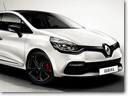
  • Renault Clio RS Monaco GP Edition

    First official picture of the Renault Clio RS Monaco GP has published in the internet. The small hot hatchback is expected to make its official debut at the 2014 Geneva Motor Show in March.

    The Monaco GP Edition comes with few styling upgrades like an exclusive White Frost Pearl exterior with gloss black front grille, mirror casings, window surrounds and on the lower section of the front bumper. There is also a new set of 18” five-spoke alloy wheels.

    The interior boasts some white elements on the dashboard and door panels as well as an RS Monitor showing all kinds of information and performance data.

    The Clio RS Monaco GP is powered by a 1.6 liter turbocharged gasoline engine – 200HP (147 kW) and 234Nm (177 lb-ft) of torque. 0-100 km/h in 6.7 seconds and a top speed of 230 km/h (143 mph). The engine is connected to a dual-clutch 6-speed automatic transmission sending the power to the front wheels.

    Source: Renault

  • 2014 Renault Twingo Revealed!

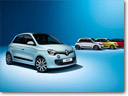
    2014-Renault-Twingo-THUMBThe firs generation Renault Twingo was introduced two decades ago. Now the brand has taken a fresh look at its urban car, which has a design inspired by the legacy left by the original Twingo and the Renault 5. As a result, we have a new, innovative and agile car.

    The 2014 model will be offered in a choice of four striking colours, rear-mounted engine and extra cabin space. Positioning the engine at the rear is an advantage for a small city car since it considerably enhances the maneuverability. In addition, the position of the engine also frees up extra cabin space.

    Just like the Twin’Z and Twin’Run concept cars, 2014 Twingo exudes personality. First to mention is the choice of four exterior paint colours, namely light blue, white, yellow and red. The other characteristics of the model are heavily inspired by the Renault 5, including the rear screen and its prominent shoulders.

    The front end includes Renault’s new trademark styling, big head lights, topped by the direction indicators and LED daytime running lights. At the rear, we have rear lights which are a natural prolongation of the tailgate. Other styling cues include a sleek profile, concealed rear door handles, available features such as door mirrors, side protective mouldings and decals.

    At the Geneva Auto Show Renault will show the vehicle to the general public for the first time and also will reveal 2014 Twingo’s interior.

    Source: Renault

  • Renault KWID Concept And The Flying Companion

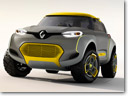
    Renault-KWID-Concept-shadowRenault-KWID-Concept-mediumWouldn’t you know it, the playful-looking KWID actually does have a complementary drone with it. Not that Renault are planning to actually really make it in the near future, but we are quite stumped. Unveiled at the Delhi Auto Show, this is the French company’s first ever concept outside of the European continent. It had to be good, then. And it is. By good, of course, we mean outlandish.

    It was sort of designed locally: input from Renault Design India played a big part in the process. It’s pretty short and has almost no overhangs and thus Renault describe it as a “bouncing vehicle”. Add the freakishly big tires into the equation and you’ve got yourself a buggy-like car. It’s still two-wheel driven though.

    The one that can be seen at the Auto expo has a 1.2-liter turbocharged petrol engine and a dual-clutch EDC transmission with a touch pad for shifting gears (yuck). The original idea, however, is to slot in the company’s Z.E. (electric) drivetrain. There’s place for the batteries and a plug behind the Renault logo.

    Inside, the KWID is appropriately fitted with an electrically operated front bench seat, electric opening doors, LED lighting, and -instead of a dashboard – a vertically-mounted TFT touchscreen display offering the latest in connectivity.

    And speaking of connectivity, we can’t neglect the fact that the KWID has a drone mounted on its top. It’s called the Flying Companion and it has two modes of operation. One is the automatic mode that uses a pre-progarammed flying sequence and GPS location to keep itself out of trouble. The second mode involves a tablet and you as a pilot. Renault say that the companion can be used for scouting traffic, taking aerial pictures and detecting obstacles, but wouldn’t that be a bit distracting from, you know, the main act of driving?

    “Customers in new markets are much younger. Their expectations are different and customers are basically gamers. They tend to take a closer interest in technology and want to enjoy themselves. This concept car meets those needs in a variety of ways, but mainly thanks to the Flying Companion which makes driving both safe and fun. This is the very first time in the long automotive history we can drive on earth with an eye in the sky. It’s an amazing feature!” says Serge Mouangue, Brand Manager and Innovative Cooperative Laboratory Manager.

    Apparently not.

  • Renault Tease Concept Car Ahead Of Delhi Auto Expo [VIDEO]

    Renault-Concept-Teaser-shadowRenault-Concept-Teaser-mediumLadies and gentlemen, this is how you tease a product without defacto showing it. No, this is not a CGI student’s course project, but it’s not the real thing either. It’s supposed to be, however, an up-and-coming Renault concept car.

    The New Delhi Motorshow kicks off in one week’s time and whatever this turns out to be is supposed to represent the “brand’s ambitions for new markets”. Are we being forced to assume that if this thing gets into production, it will rival the Tata Nano in such respects as affordability, simplicity and compactness?

    Well, the concept (or what we see of it) sure doesn’t look simple. And what’s with the nano quadrotor thing (the correct term for these demonic mecha-wasps)? It’s a concept, though, so we shouldn’t act so shocked that they want to wow us.

    What we did manage to pick up from the 22-second clip, is that those wheels have sort of borrowed the design of the wheels on the Renault Frendzy. These ones seem a lot smaller though. That’s why our money is on a funky city car.

    For the rest we’ll just have to wait and see.

    httpv://youtu.be/mPN3lPQxfyU

    Video Source: Renault via YouTube

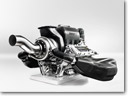
  • Renault Spices Up F1 With The Introduction Of Energy F1-2014 Power Unit

    Renault-Energy-F1-2014-Power-Unit-THUMB2014 FIA Formula One World Championship is introducing a radical technical regulation changes. The cars that will compete will be powered by new powertrain technology, with a powerful turbocharged internal combustion engine coupled with energy recovery systems.

    Furthermore, the power output will be increased up to unseen levels in over five years. Two types of energy will propel the cars – internal combustion and electrical energy. The first unit will produce power through consumption of traditional carbon-based fuel, while the second will be harvested from exhaust and braking by two motor generator units. Of course, both will work in harmony. Such engines are to be called now “Power Units”.

    Since these announcements have been made, Renault came up with the statement that it is entirely prepared for this technical revolution by introducing the Energy F1-2014 Power Unit.

    The new Power Unit key elements include the following:

    • 1.6-litre turbocharged V6 internal combustion engine
    • Direct injection
    • Maximum engine speed of 15,000rpm
    • Potent Energy Recovery Systems incorporating two motor generator units – the MGU-H, recovering energy from the exhaust and the MGU-K recovering energy from braking
    • Electrical energy recovered stored in a battery
    • Combined maximum power output of 760 hp (559 kW), on a par with previous V8 generation
    • Double restriction on fuel consumption: fuel quantity for the race limited to 100 kg (-35% from 2013) with fuel flow rate limited to 100 kg/hr max (unlimited under V8 regulations)
    • Engine development is frozen during the season, only changes for fair and equitable reasons are permitted
    • 5 Power Units permitted per driver per year

    To go further into details, the internal combustion V6 engine includes cylinders arranged in two banks of 3 cylinders arranged in a ‘V’ configuration over a common crankshaft. It has a displacement of 1.6 litres and will make around 600 hp (441 kW) alone.

    Furthermore, all Power Units must include direct fuel injection (DI). This is a key sub-system at the heart of the fuel efficiency and power delivery of the power unit. Here fuel is sprayed directly into the combustion chamber and not into the inlet port upstream of the inlet valves. The fuel-air mixture is formed within the cylinder.

    Next, the turbocharger utilizes exhaust gas energy to enhance the density of the engine intake, thus producing more power. In addition, it allows smaller engine to make much more power than its size would normally permit, while the exhaust energy is converted to mechanical shaft power by an exhaust turbine. The mechanical power from the turbine is then used by the compressor and the MGU-H.

    You might ask what is MGU-H. The answer is simple: on the Renault Energy F1, the turbo rotation speed is primarily controlled by the MGU-H, however a wastegate is needed to keep full control in any circumstance. In comparison, on conventional turbo engines, a wastegate is used in combination with a turbocharger to control the high rotation speeds of the system. In fact, the wastegate is a control device that allows excess exhaust gas to by-pass the turbine and matches the power produced by the turbine to that needed by the compressor.

    MGU-H is connected to the turbocharger and acts like a generator by absorbing power from the turbine shaft to convert heat energy from the exhaust gases. The electrical energy can be later directed to the MGU-K or stored in the battery.

    On the other hand, the MGU-K operates as a generator that recovers some of the kinetic energy during braking. In addition, it also converts it into electricity. When the car accelerates, the MGU-K is powered by the Energy Store and the MGU-H. In these cases it acts as a motor and propels the car.

    At last, the Battery or Energy Store consumes recovered Heat and Kinetic Energy. The stored energy can be utilized by the vehicle with the MGU-K or can be also utilized to accelerate the turbocharger with the MGU-H. The result is two times more power and the energy contributing to performance is ten times greater.

    Renault Energy F1-2014 Power Unit Technical Specifications

    ENERGY F1-2014
    Engine
    Displacement 1.6L V6
    Number of cylinders 6
    Rev limit 15,000rpm
    Pressure charging Single turbocharger, unlimited boost pressure (typical maximum 3.5 bar abs due to fuel flow limit)
    Fuel flow limit 100 kg/hr (-40% from V8)
    Permitted Fuel quantity per race 100 kg (-35% from V8)
    Configuration 90° V6
    Bore 80mm
    Stroke 53mm
    Crank height 90mm
    Number of valves 4 per cylinder, 24
    Exhausts Single exhaust outlet, from turbine on car centre line
    Fuel Direct fuel injection
    Energy Recovery Systems
    MGU-K rpm Max 50,000 rpm
    MGU-K power Max 120kW
    Energy recovered by MGU-K Max 2MJ/lap
    Energy released by MGU-K Max 4 MJ/lap
    MGU-H rpm >100,000rpm
    Energy recovered by MGU-H Unlimited (> 2MJ/lap)
    General
    Weight Min 145 kg
    Number of Power Units permitted per driver per year 5
    Total horsepower 600hp (ICE) + 160hp (ERS)

    Source: Renault

  • 2014 Renault Clio Graphite Special Edition – Price €17,100

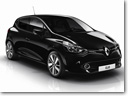
    Renault is now offering a 2014 Clio Graphite Special Edition. It is priced from €17,100 and is available as a hatchback and estate models.

    The Graphite Special Edition is based on the Zen trim level. It boasts grey accents, tinted windows and 17” alloy wheels with a grey diamond-effect finish. There is also a gloss black paint on the side moldings, door mirrors and rear skirt.

    The interior boasts two-tone fabric seats and grey accents on the steering wheel, gear lever surround and window switches. It also comes with the R-Link infotainment system and a three-month subscription to live services – standard HD Traffic and Coyote applications.

    The engine range includes TCe 90, Energy TCe 90, TCe 120 EDC, dCi 75, dCi 90, Energy dCi 90 90g and Energy dCi 90 EDC. The Stop&Start system tops its class in terms of low fuel consumption and CO2 emissions.

    Five body colours are available: Glacier White, Platine Grey, Cassiopée Grey, Flamme Red and Pearlescent Black.

    Source: Renault

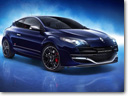
  • Renault Megane RS 265 Red Bull RB8 Limited Edition

    Renault has announced Megane RS 265 Red Bull RB8 Limited Edition to celebrate team’s drivers’ and constructors’ triumph for the 4th consecutive season in Formula 1. The series will be produced in just 120 units and all of them will have an exclusive Dusk Blue paint scheme with platinum detailing.

    Packed with cutting edge technology, the only thing missing is wings. The striking hot hatch includes Recaro seats, R-Link Multimedia system and TomTom Live navigation system, Bridgestone Potenza RE050A tyres, plus the latest on-board Renaultsport Monitor v2.0 featuring a more user-friendly interface, GPS-tracked lap timing, 0-62 mph times, G-force diagram, power output data and other information.

    It is powered by a 2.0 liter turbocharged four-cylinder petrol with 265HP (197 kW) and 360Nm (267 lb-ft) of torque. 0-100 km/h in under 6 seconds and a top speed of 250 km/h (155 mph) – eletronically limited.

    The Renault Megane RS 265 Red Bull RB8 Limited Edition is already available on the Australian market – $49,990 AUD.

    Source: Renault

  • Renault Captur RS [render]

    Here is a nice render picture of Renault Captur RS. It is created by antoine51, who published it in Devianart web page.

    Renault Sport Technologies CEO Patrice Ratti has recently announced company’s plans to expand the RS line-up, so the Captur RS is a very possible decision.

    The exterior boats a new front bumper featuring larger air intakes and carbon fiber accents. There are also LED DRLs and a set of unique alloy wheels fitted with low-profile tires. Behind them are hidden red-painted brake calipers.

    Powering the Capture RS will be a tuned version of the 1.2 liter TCe, which currently have 120HP (88 kW) and accelerates the crossover from 0-100 km/h in 10.9 seconds and a top speed of 192 km/h (119 mph).

    Source: deviantart

  • Renault Duster Detour Concept

    Renault has announced Duster Detour Concept at the Johannesburg International Motor Show.

    It boasts an increased ride height and wears a two-tone pearl yellow and matte grey paint complemented by tinted windows and black pillar masks. There are also widened wheel arches and a set of 18” bespoke alloy wheels fitted with all-terrain tires.

    The custom front grille has a chrome Renault diamond logo and comes together with special headlamp clusters and daytime running lights. There are also “Duster” graphics while the back features a roof-mounted spoiler and black LED taillights.

    Last, but not least is the double exhaust system and a new diffuser.

    Boasting rugged good looks, loads of space (475 litres of boot space for starters) and real off-road capabilities, New Renault Duster is the perfect companion for active families.

    Source: Renault

  • 2013 Renault Scenic Lounge Limited Edition

    Renault has announced the new 2013 Lounge Limited Edition available for the Scenic and Grand Scenic Facelift models.

    The upper-spec model is based on the ZEN trim level and includes , cruise control with speed-limiter, dual-zone climate control, electronic parking brake, automatic rain and light sensors, in-dash connected Renault R-Link multimedia tablet complete with European mapping, video system built into the back of the front head rests (DVD, USB port, SD card port, two seven-inch screens with headsets and remote controls), front and rear parking assist, reversing camera, key card for hands-free entry and starting, electrically-folding door mirrors, family Pack (sun blinds, aviation-style folding tables for rear passengers, under-seat drawers, front and rear reading lights, child surveillance mirror, forward-tipping front seat for carrying long items, etc.).

    The engine range includes TCe 130 petrol and three diesels: dCi 110, dCi 110 EDC and dCi 130.

    2013 Renault Scenic Lounge Limited Edition will be available until January 2014.

    RENAULT SCENIC LOUNGE

    RENAULT GRAND SCENIC LOUNGE

    Energy TCe 130 €27,200 Energy TCe 130 €28,300
    Energy dCi 110 €29,300 Energy dCi 110 €30,400
    dCi 110 EDC €30,100 dCi 110 EDC €31,200
    Energy dCi 130 €30,100 Energy dCi 130 €31,200

    Options (tax-paid prices in France)

    • Spare wheel: €120
    • Metallic paint: €570

    Source: Renault

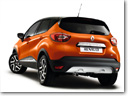
  • 2014 Renault Captur Arizona Edition – Price €20,200

    Renault has announced the Captur Arizona Edition, which is currently available with pricing starting from €20,200. Renault Captur Arizona places the emphasis firmly on adventurer looks.

    The exterior boasts an Orange paint finish with Etoile Black accents on the roof and window pillars. There are also tinted windows, skid plates and a set of 17” black diamond-effect alloy wheels.

    Inside, the seats come with removable black and orange upholstery with a special ‘Captur’ pattern, while orange-edged mats protect the carpet from becoming soiled.

    The limited edition Renault Captur Arizona is equipped with the connected R-Link in-dash multimedia tablet, and the Techno Pack incorporates a reversing camera.

    Equipment

    The limited-edition Renault Captur Arizona = Captur Intens, plus:

    • Captur Theme Pack
    • Techno Pack (including reversing camera)
    • Metallic orange paint
    • Armrest
    • Orange-edged carpet mats
    • Front and rear skid plates
    • Stainless steel boot sill guard

    Source: Renault

  • 2014 Renault Clio RS Gordini [render]

    Forum-Clio has given some information about the upcoming Clio RS Gordini, which is expected to hit the market next year with a starting price of around €28,000.

    Renault Clio RS Gordini will be powered by a 1.6 liter turbocharged petrol with 230HP (169 kW) and 285Nm (210 lb-ft) of torque. This is 30HP and 51Nm more than the Clio RS. 0-100 km/h in 5.9 secondsa and a top speed of 250 km/h (155 mph). The Clio RS is much slower – 6.7 seconds to 100 km/h and 230 km/h (143 mph) – top speed. The main difference is the weight reduction of Gordini. It is lose around 25kg (55 lbs), so it will be 1,175kg (2,588 lbs).

    The exterior can be finished in Blue Gordini, Glacier White with blue stripes, Red Flame with platinum white stripes and Platinum Gray with Gordini blue stripes. Mirror caps will be either white or black, while inside it will have Recaro Sportster seats covered in black leather/Alcantara with white stitching and blue Gordini embroidered logo.

    Other highlights include alloy pedals, Gordini-branded floor mats, real carbon fiber inserts, R-Link with RS Monitor, black or blue seatbelts and black leather/Alcantara steering wheel.
    Source: forum-clio