Tag: Renault

  • Renault 5 E-Tech

    The All-New Renault 5 E-Tech Electric: A Fusion of Retro Charm and Modern Innovation

    The Renault 5 nameplate, synonymous with innovation and style since the 1970s, is back with a thrilling electric twist. The Renault 5 E-Tech electric seamlessly blends the iconic design elements of its predecessor with cutting-edge technology, creating a compact EV that’s as fun to drive as it is easy on the environment.

    A Legacy of Pushing Boundaries:

    The original Renault 5, a sales phenomenon from 1972 to 1985, was known for its impressive fuel efficiency, even achieving sub-5 liter/100km consumption at highway speeds. It also remarkably offered an electric version as early as 1974, demonstrating Renault’s commitment to sustainable mobility long before it became mainstream.

    A Design Language Steeped in History:

    The Renault 5 E-Tech electric evokes a sense of nostalgia with its design cues that pay homage to the original. The evocative rectangular headlights and taillights, the characteristic wheel arches, and the vibrant color palette instantly connect the car to its heritage. However, the 18-inch wheels, sleek lines, and spacious interior firmly place it in the modern automotive landscape.

    Beyond the Captivating Looks:

    The Renault 5 E-Tech electric isn’t just a pretty face; it boasts impressive performance and functionality:

    • Range: With two battery options (52 kWh and 40 kWh), drivers can choose between a range of up to 400 km (248 miles) on a single charge (WLTP), making it perfect for everyday commutes and weekend getaways.
    • Performance: Experience the thrill of electric driving with two motor options (110 kW or 90 kW) offering instant torque and exhilarating acceleration. The 110 kW motor propels the car from 0 to 62 mph in under 8 seconds.
    • Charging: The car seamlessly integrates with both AC and DC charging infrastructure. DC fast charging allows you to reach 80% battery level in just 30 minutes, perfect for quick top-ups on the go.
    • Tech-Savvy Interior: The cabin features the latest in-car technology, including the OpenR Link multimedia system with Google built-in, a digital instrument cluster, and a comprehensive suite of driver assistance systems to enhance safety and comfort.
    • Express Yourself: Unleash your individuality with a wide range of unique accessories. Customize the interior with 3D-printed storage compartments and add a personal touch with the interchangeable “e-pop shifter” tip – a playful nod to a lipstick case.

    More Than Just a Car, It’s a Statement:

    The Renault 5 E-Tech electric is more than just a transportation solution; it’s a statement piece for the environmentally conscious driver who appreciates timeless design and a touch of personality. With its sustainable credentials, innovative features, and playful spirit, the Renault 5 E-Tech electric is poised to become a beloved icon of the electric era, just like its legendary predecessor.

    Specifications

    Dimensions and weight

    Length: 3.92m
    Width: 1.77m
    Height: 1.50m
    Wheelbase: 2.54m
    Front overhang: 749mm
    Rear overhang: 633mm
    Ground clearance: 145mm
    Weight: from 1,450kg (52 kWh version) and 1,350kg (40 kWh version)
    Boot capacity: 326 litres

    Motors and batteries

    Wound rotor synchronous electric motor

    • 90 kW (120hp / 225Nm)
    • 110 kW (150hp / 245Nm)

    Lithium-ion battery

    • Comfort range 52 kWh (range up to 400km / 248 miles WLTP)
    • Urban range 40 kWh (range up to 300km / 186 miles WLTP)

    Chargers

    • 11 kW AC bidirectional for both the 90 and 110 kW motors
    • up to 80 kW DC for the 90 kW motor
    • up to 100 kW DC for the 110 kW motor

    Performance (110 kW / 52 kWh version)

    0 to 62 mph                  < 8 sec
    50 to 75 mph                < 7 sec
    Top speed                     93 mph

  • Renault Rafale

    Since the campaign to reconquer the C-segment – one of the main goals in the Renaulution strategic plan – is well under way with the Megane E-Tech 100% electric, Arkana E-Tech full hybrid and Austral E-Tech full hybrid success stories, it’s time for Renault to make its next move on the D-segment with a completely new and daring model: the all new Renault Rafale.

    Now that Renault has revamped its arsenal of technology for hybrid powertrains, chassis’, and electronic equipment, it was time to use that engineering knowledge to create a new vehicle born and bred for driving pleasure and launch its new flagship: the all new Renault Rafale.

    Rafale is a French word that derives from natural energy: wind, and is also an aeronautical reference. Aviation has played an important part in Renault’s history: the Caudron-Renault Rafale, which flew at a record-breaking 277 mph in 1934, is only one example.

    The all new Renault Rafale is the first production vehicle entirely designed according to the new visual language that Gilles Vidal has brought in as Head of Design Renault. It is ushering in a new era in Renault’s design: it is visionary, daring, perfectly in tune with its time and tailor-made for a period when everything is moving ever faster.

    The all new Renault Rafale also features up-to-the-minute connectivity and a 200 hp E-Tech full hybrid powertrain that is as efficient as it is frugal and uses recycled materials.

    It was born to take driving pleasure to ever new heights and will be enhanced with technological breakthroughs that will rank it high up in the high-performance automotive universe with a new E-Tech 4×4 300 hp powertrain.

    Renault has crafted its DNA around optimal driving pleasure – but not the self-centred kind; pleasure that the driver enjoys alongside passengers in a “car for life and living.” Driving pleasure is a priority, but never at the expense of passengers, who have plenty of space and amenities to enjoy as well. The all new Renault Rafale is an advanced coupe SUV, it looks as vibrant as it feels when you drive it, and it is an opportunity to share an intense driving experience with friends or children – however grown-up they may be.

    The all new Renault Rafale 200 hp E-Tech full hybrid will reach markets in spring 2024.

    “The all new Renault Rafale is central in the Renaulution, symbolises our move upmarket and shows that we belong in every customer segment. With its captivating coupe SUV design crafted for intense experiences, it provides unprecedented driving pleasure with its hybrid powertrains and a standard-setting chassis brimming with passion and know-how from Renault engineers.” Fabrice Cambolive, CEO, Renault brand

    “The all new Rafale is a powerful illustration of the Renault brand’s new design language. It is in keeping with its DNA through generous curves, treated with great precision, combined with lines of tension and technical details that bring character and sophistication to the whole. With its unprecedented style, quality craftsmanship and proportions, the all new Renault Rafale asserts its power and personality on the road.” Gilles Vidal, VP Design, Renault brand

    EXTERIOR

    The all new Renault Rafale is built on the Alliance’s latest-generation CMF-CD platform. The car’s design is unprecedented, and its designers created its original, bold exterior from a blank sheet of paper. This approach led to a new visual language that captures the brand’s identity and shines freely, with meaning, in a natural yet premium way.

    A powerful status-symbol coupe SUV

    Its slightly raised fastback-style body ranks the all new Renault Rafale in the coupe SUV category.

    The vehicle’s silhouette is vibrant and sporty. Its long horizontal bonnet points to power. The bow beneath it is chiselled and features the new radiator grille and signature light pattern that Renault introduced on New Clio E-Tech full hybrid. The protruding bonnet and sculpted front bumper seem to impel the car forwards.

    The muscular shoulders carry presence around the rear wheels, hinting at the power propelling the car. The skid plate emerging from under the rear bumper also shows the car’s presence while the sloping roofline with one last jut points to speed.

    “To work, design has to be just as powerful and effective if you are standing 50 metres, 10 metres or 50 centimetres away. From a distance, what strikes you is the all new Renault Rafale’s forceful face and proportions. When you draw nearer, it’s the flowing line that wows you. And, close-up, it’s the attention to detail that catches your eye and sparks your interest.” Alexis Martot, Head of Exterior Design, Renault

    Ideal proportions

    The all new Renault Rafale is 4.71 metres long and 1.86 metres wide, squarely placing it in the D-segment. Added to which,  it’s 1.61 metres high, making it a quintessential sporty SUV.

    The car has a long wheelbase at 2.74 metres, while the roofline is flawlessly curved to provide plenty of headroom in the back seats and doesn’t impinge on the rear windscreen.

    The rear windscreen tilts 17 degrees, which is exactly right for aerodynamic efficiency. And it renders rear wipers unnecessary, which keeps the car’s lines pure.

    Meanwhile, its wider wheel track solidly grounds the vehicle and makes the most of the black parts of the wheels both from a vertical perspective (the wheels crop out slightly) and from a horizontal perspective (the 20-inch wheels fill the wheel arches).

    “The all new Renault Rafale is sized to give it a status-symbol aura, its design is vibrant, and it has a powerful personality. So, it naturally stands out as the Renault brand’s new flagship.” Agneta Dahlgren, CMF-CD Design Project Director

    New visual language

    The all new Renault Rafale’s design unfolds the brand’s new visual language by Gilles Vidal, which was first seen through the Scenic Vision concept car in 2022 and first applied to a road-going car, the New Clio, in 2023. It encapsulates Renault models’ DNA in its chiselled shapes and generous curves and features a variety of technical details. This now includes character lines that seem to stretch the skin over the body, creating folds, fanning out and fading into the car’s contours.

    In the all new Rafale, the supple volumes combined with the body colours create an interesting contrast with the fiercely geometric, faceted black surfaces.

    The new lines and ridges in the curves add meticulously calibrated rays of light to the body, which blend into a thoroughly pleasing visual impression.

    “We created surprising effects everywhere we could. Wherever you look on the body, there is always something going on. Everywhere your eye falls, there is a special attraction.” Alexis Martot, Head of Exterior Design, Renault

    A moving radiator grille

    The all new Renault Rafale’s novel radiator grille is built around the brand’s hallmark diamond. It is made up of a constellation of small diamonds that arrange space in three dimensions around the emblem in the middle.

    This diamond black coloured pattern is a nod to the all new Rafale’s premium credentials. It stands out against the iron blue or shadow grey hues (depending on the version) that appear and disappear in the background depending on where you look at it from – like works of optical art in the 1970s. This is Renault tipping its hat to Victor Vasarely, the Op Art movement’s high priest, and to a surname that has left its mark in Renault’s history: Victor’s son Yvaral Vasarely designed the 1972 logo – to which the brand pays a “moving” tribute with its new Nouvel’R logo.

    “The all new Rafale’s grille moves the way clothes move over skin; the interplaying shadows, reflections and colours animate it, it looks like it’s alive.” Alexis Martot, Head of Exterior Design, Renault

    The radiator grille’s design, which has a very complex structure, was created using artificial intelligence in a parametric modelling software application. This technology makes it possible to try out a plethora of patterns and interactions in space, by modifying dimensions, angles, situations, and other parameters.

    This type of software is used extensively in architecture. It for example helped to design the “Bird’s Nest” Olympic stadium in Beijing.

    A new signature light pattern

    The New Clio E-Tech full hybrid was the first vehicle in Renault’s line-up to feature the brand’s new signature lights, and the all new Rafale is the second. The pattern unambiguously points to Renault: it’s diamond-shaped, forceful and robust, and visually enhances the car.

    “There is something jubilant about the way the diamond theme appears, and there’s also a lot of freedom. It’s everywhere in the design. The lights follow the same visual pattern as our logo and the oblique lines naturally bring the brand to mind.” Agneta Dahlgren, CMF-CD Design Project Director

    Expanding lights

    To visually enhance car’s width and add poise, the two rear lights are as far apart as they can be. They look like sculptures embedded in the edges.
    Their shape was inspired by Chinese tangram puzzles (a large square divided into five triangles, a parallelogram, and a smaller square). The micro-optic technology in them makes them spring to life when they are on, and they create a “floating ice-cube” effect when they are off.

    Two new colours

    The all new Renault Rafale will be available in five body colours including two previously unreleased ones: a new satin White Pearl and a new Alpine Blue tone.

    The first adds clarity by directing your gaze to the body’s lines. It uses the same innovative technology as Austral’s Shale Grey Satin, which derives its satin-matte look exclusively from the varnish and makes it resistant to UV rays, carwash rollers and other aggressions the car withstands day after day.

    The all new Rafale is the first Renault brand model to feature Alpine Blue. This tone has never quite stood still in the Dieppe-base brand’s history. And it has changed again, if ever so slightly; on the all new Rafale, it is a shade deeper than on the Alpine A 110.

    The three other colours available for the all new Rafale are Flame Red, Diamond Black and gloss Ceramic Grey.

    THE PLATFORM AND POWERTRAINS : DRIVING PLEASURE AT ITS SOURCE

    The all new Renault Rafale is built on the Alliance’s modular CMF-CD platform, which offers unparalleled possibilities for technological content, across the running gear, powertrains and technological equipment. Its 200 hp E-Tech full hybrid petrol powertrain, combined with its multimode automatic transmission, put its range among the longest and its CO2 emissions among the lowest in its segment. It will soon feature a new high-performance variant E-Tech 4×4 300 hp.

    Chassis: precision for pleasure

    Driving pleasure, one of the overarching goals when Renault was developing the all new Rafale’s running gear, has reached new heights in this car that combines a multi-link rear axle with the latest upgrade to the 4CONTROL Advanced 4-wheel-drive system.

    Multi-link suspension enables the most efficient settings for road holding without hampering comfort, and muffles more of the noise from the undercarriage.

    The 4CONTROL Advanced 4-wheel-drive system significantly improves handling at low speeds, and boosts agility and vigour at average and high speeds.

    When you negotiate a turn at less than 30 mph, the rear wheels turn very slightly (up to 1 degree) in the same direction as the front wheels, reducing the rear wheels’ inertia and improving the car’s stability. At low speeds, the rear wheels turn up to 5 degrees in the opposite direction, providing unrivalled agility and shortening the all new Renault Rafale’s turning radius to 10.4 metres (the same as a city car).

    While the all new Austral E-Tech full hybrid also come with a multi-link rear axle and 4CONTROL Advanced, the all new Rafale additionally features Vehicle Motion Control 2 (VMC 2), an upgraded electronic system governing the rear wheels. It anticipates loss of hold more effectively, so you can negotiate bends faster and know that all four wheels are in the optimal position on uneven and damaged roads. The all new Rafale also has a wider track, wider wheels (245 mm) and specific spring, shock-absorber and roll-bar settings, which optimise comfort as much as verve.

    Lastly, the agility of the chassis – with or without 4CONTROL Advanced – is amplified by the calibration of the steering and its very direct ratio (13), so you can enjoy a thrilling experience from the system’s surgical precision on bends.

    “The all new Renault Rafale is the result of a textbook case. When Luca de Meo took over as Renault’s CEO, he asked us to extract the full potential from each platform. The all new Rafale does exactly that: it makes the most of the CMF-CD platform in terms of the car’s dimensions, technology, and emotional power.” Grégory Launay, Product Performance Leader, Renault Rafale

    Powertrain: hybrid at its highest

    Like the all new Austral, the all new Renault Rafale will launch with the 200 hp E-Tech full hybrid petrol powertrain linked to a clutchless multimode automatic dog box.

    This powertrain is powerful, economical, automatic and self-charging. It provides the best mpg figures in its segment (60.1 mpg and 105 g. CO2/km, pending certification) and a range that makes you want to hit the road (up to 683 miles of range). You can enjoy an optimal driving experience every time, and even enhance it with your own choice of MULTI-SENSE settings.

    “The all new Rafale interlinks two Renault lineages: its motorsports heritage from the high-performance saloons like the R21 Turbo and Safrane Baccara Biturbo on one side, and the innovative spirit that brought about concepts like people carriers, turbo technology and E-Tech hybrid powertrains on the other.” Grégory Launay, Product Performance Leader, Renault Rafale

    High-tech mechanisms

    The 200 hp E-Tech full hybrid powertrain has a “series-parallel” architecture. It encompasses a 3 cylinder 1.2 litre turbocharged 130 hp (96 kW) petrol internal combustion engine delivering 205 Nm of torque, and two electric motors. Even on its own, the internal combustion engine a technological gem, combining a Miller combustion cycle, low-pressure exhaust gas recirculation, a variable-geometry turbocharger and a diesel-engine-like long-stroke architecture. The result is an extraordinary 41% energy efficiency ratio. The main electric motor delivers 50 kW (70 hp) and 205 Nm. It is powered by a 2 kWh/400V lithium-ion battery for full-electric driving. The secondary electric motor is a 25 kW and 50 Nm High-voltage Starter Generator (HSG) that starts the engine and powers gear changes in the clutchless dog box.

    Efficient and long-lasting charges

    With its all-electric ignition and energy regeneration system that kicks in automatically when you slow down or brake, you can drive in electric mode 80% of the time in cities and use 40% less fuel than with an equivalent internal-combustion engine with this E-Tech full hybrid powertrain. You get the whole electric driving experience and none of the charging constraints.

    Charging is managed automatically by the smart gearbox, which taps into the engine and motors to top up the battery. The driver, however, can override the smart gearbox with a choice of four regenerative braking levels, using the paddles on the steering wheel.

    The multimode box

    The multimode automatic dog box derived from Formula 1 technology combines the main electric motor’s two ratios and the internal combustion engine’s four ratios. The 15 possible ways of combining the motors and engine will optimise driving pleasure, consumption or CO2 emissions depending on which you choose.

    The smart multimode box automatically selects the powertrain’s mode, which can be all-electric, all-combustion, dynamic hybrid (the engine and motors move the wheels together), e-drive (the motor moves the wheels and the engine charges the battery) or regeneration (the motor taps into the kinetic energy).

    “Our new 200 hp E-Tech full hybrid powertrain uses the electric motors as much as possible, whatever the circumstances, to optimise consumption. The fact that you can use the electric motor up to 80% of the time in cities ranks the car among the best in its category.” Gwenaël Le Merrer, Head Engineer, Renault Rafale

    A high-performance E-Tech 4×4 300 hp version in the pipeline

    The all new Renault Rafale, which is designed for driving pleasure and performance levels never seen before in Renault’s line-up, will later be enhanced with a substantially upgraded hybrid powertrain with all its settings optimised to unleash 300 hp.

    Optimising a variety of features will help to reach 300 hp, but most of the boost will come from two technical adjustments. The first is an additional electric motor on the rear axle, that will move the wheels directly, making the all new Rafale a 4-wheel-drive coupe-SUV. Then it will be a plug-in hybrid, so you can use the all new Rafale in full-electric mode for practically all your everyday outings and enjoy its ample range on long journeys without a worry in the world – and without missing out on any of the fun behind the wheel.

    In addition to four driving wheels and four turning wheels (with 4CONTROL Advanced), this high-performance E-Tech 4×4 300 hp version of the all new Renault Rafale will come with a chassis fine-tuned for intelligent new-generation undercarriage management.

    LIFE ON BOARD
    A HIGH-TECH PASSENGER COMPARTMENT EVERYONE WILL ENJOY

    Inside, the all new Renault Rafale features the brand-new Solarbay darkening glass roof with cutting-edge technology plus new interface graphics on the two OpenR screens. Additionally, the seats are in a class by itself: they include a high-tech rear armrest for passengers in the back and a trailblazing choice of colours and materials. The cockpit is 100% geared for driving pleasure but the car is nevertheless true to Renault’s DNA and accordingly pampers all its passengers.

    Solarbay, a new darkening glass roof

    The pioneering, spectacular 1,470 mm by 1,117 mm Solarbay panoramic glass roof was developed by Saint-Gobain and the all new Renault Rafale is the first car in the world to use this iteration of it. Its AmpliSky technology replaces standard screens with a full active system that darkens each of its segments on demand, using electric fields to displace molecules. It provides maximum protection from the sun in seconds, and the sequential darkening of the nine segments across the glass surface is exhilarating to watch. This smart glass roof can be voice-controlled via Google Assistant and has a switch by the ceiling light to control it manually.

    The driver and passengers can choose between four roof settings: all light, all dark, light in the front and dark behind, and the reverse. It is more practical than a standard sunshade because the passengers in the back can let the sunlight in even if the people in the front prefer not to. The Solarbay roof also provides an extra 30 mm of headroom, which makes a significant difference – especially for passengers in the rear of a coupe. The car doesn’t feel like a hothouse or icebox: Saint-Gobain’s laminated glass keeps the temperature comfortable in summer and winter, like automatic sunshades. And the glass darkens automatically when you step out of the car.

    Solarbay darkening glass roofs use Polymer Dispersed Liquid Cristal (PDLC) technology derived from the construction industry and tweaked for car occupants. So far, only ultra-premium carmakers have fitted it, plus the all new Renault Rafale is the first car from a full-line automotive manufacturer to use it with the partial roof darkening feature.

    “This Solarbay darkening glass roof is the perfect example of the useful, simple-to-use technology we wanted for the all new Renault Rafale. It is more efficient than a standard sunshade on every score. Plus, it’s smarter and easier to use. And it produces that wow effect!” Gwenaël Le Merrer, Head Engineer, Renault Rafale

    Sporty seats

    The all new Renault Rafale’s completely new seats have reinforced sides to match the car’s dynamic behaviour with thorough lateral and longitudinal support. Among other upsides, they make the chassis’ road holding on turns even more exciting.

    The Alcantara upholstery helps to keep the driver upright, adds to the sporty feel and is eco-friendly (it is the first 61% recycled Alcantara interior).

    “To bolster the Grand Tourisme effect, the side reinforcements on the seats are gadrooned, like the reinforcements on biker jackets.” François Farion, Design Director, Colour & Trim, Renault Group

    A light logo on the seats

    In the all new Renault Rafale’s esprit Alpine trim, the Alcantara on the seats is perforated so you can catch a glimpse of the blue fabric lining and its iridescent effect – which will remind you of the radiator grille. The A-and-Arrow logo at the top of the seat back literally lights up and flashes in synch with a beating human heart – an allegory for the surging excitement you feel when you draw near the car. The lighting adjusts to match the colour you selected in the MULTI-SENSE settings. The lights are embedded in a completely flexible fabric, so they don’t stiffen the seat back in the slightest. This technology is being used for the first time worldwide here.

    “The all new Renault Rafale recognises its driver coming towards it and the lights in the Alpine logo on the seats beat like a heart, signifying the close connection between them. An invitation to driving pleasure has never been expressed with so much passion.” Agneta Dahlgren, CMF-CD Design Project Director

    Three-colour overstitching

    Producing the red, white and blue overstitching in the passenger compartment of the the All new Renault Rafale’s esprit Alpine trim involved building a new three-head machine to sew three threads simultaneously.

    A steering wheel like nothing you have felt before

    The all new Renault Rafale’s steering wheel is derived, with only minor tweaks, from the Megane E-Tech electric’s and Austral’s. Here, the Renault emblem’s oblique lines are smithed into the centre and the bright black medallion is gone. The esprit Alpine trim has an Alcantara inlay inside the lower part of the steering wheel. And Renault has used a TEP-like material (including 34% of recycled material on the reverse side), that feels even better than leather, to replace all animal products without affecting driving pleasure or watering down the tantalising sensation. Renault has reasserted its aim of no longer using leather by 2024.

    Natural, innovative materials

    The all new Renault Rafale is the first car worldwide to include dyed cork and slate in its passenger compartment. In the esprit Alpine trim, the slate evokes the Alpine universe in a very real way. It clads the dashboard on the passenger side and the hand-rest. These extra-thin slate sheets are not rough in the slightest and bend around shapes as effortlessly as a sheet made from wood. The Techno trim has cork dyed black – providing a premium feel – on the dashboard. Besides serving a decorative purpose, it is extremely lightweight and non-reflective.

    Generously sized

    Driving pleasure may be driver-centred, but journeys are more enjoyable with others. The all new Renault Rafale is uncompromising on the former doesn’t cut corners when it comes to indulging passengers: its passenger compartment is generously sized all around. The car’s lengthy 2.74 metre wheelbase opens up a comfortable 302 mm knee radius in the back. The long wheelbase also makes for more headroom under the sloping roof – 880 mm in the back seat – without affecting the coupe silhouette.

    As long journeys often involve lots of luggage, the all new Rafale has a very roomy 647-litre boot.

    “After driving your family around in an SUV or people carrier, the all new Rafale is the car you choose when you want to thoroughly enjoy driving – and seat two young adults comfortably in the back.” Grégory Launay, Product Performance Leader, Renault Rafale

    A high-tech rear armrest

    One example of all the care that went into keeping back-seat passengers comfortable and connected is the all new Renault Rafale’s innovative centre armrest, which is designed for the multimedia devices that make life on board more enjoyable. This high-tech armrest has two USB power outlets, storage space for tablets and smartphones, and two foldout screen stands for comfortable viewing.

    New screen graphics

    The all new Renault Rafale’s OpenR digital cockpit – which was introduced in the Megane E-Tech 100% electric then tweaked for all Austral E-Tech full hybrid, is made up of two adjacent tiles arranged into an L shape: a horizontal TFT 321 sq. cm. 12.3 inch diagonal display on the dashboard (1920 x 720 pixels, landscape format) and a vertical 453 sq. cm. 12 inch diagonal touchscreen in the middle of the console (1250 x 1562 pixels, portrait format).

    OpenR is precisely positioned to be easy to see and reach, so the driver can enjoy the multimedia system without taking their eyes off the road. The navigation experience enhanced by the Google ecosystem has been extensively tried and tested and has emerged as a benchmark in its field. The system’s visual interface is brand new, befits the all new Rafale’s unprecedented, spectacular looks, and underlines the car’s character and technology.

    The user-interface designers created a new, trailblazing visual atmosphere. Like the vehicle’s exterior and interior design, it stems from the brand’s new emblem and captures its visual force. The diamond is there subliminally, in the form of a 28° rising diagonal segment. This diagonal line is everywhere, providing the pattern to display information on the dashboard and centre tile that combine to form the OpenR screen.

    On the dashboard display facing the driver, the usual circle has been replaced by the 28° diagonal line – the speed line – that changes colour when the engine increases in revs or the car speeds up. The new font on the screens is bold and flattened, so the display blends beautifully with the latest digital universes on smartphone and laptop screens. The colours are pop – which the Renault brand loves – with silky shading, made possible by the OpenR screen’s fantastic display.

    The centre display uses Google’s system for natural, intuitive navigation. It looks and feels a lot like browsing around a smartphone. Each MULTI-SENSE setting displays a new dashboard, with its own distinct colours, and the vehicle’s shape on the screen is the same colour as the car’s body.

    “When we introduced the OpenR Link multimedia system on the Megane E-Tech 100% electric, it redefined the driving experience and became a benchmark in its field. On the all new Rafale, we adjusted the style and soundscape to match the car’s compelling personality. The subtle colour shading is not something you see often in human-machine interaction. The experience in this car is bigger than the journey!” Romain Mottier, Head of Experience Design, Renault Group

    An upgraded head-up display

    The all new Renault Rafale pays tribute to its name and to the aviation world with a new, improved and extra-large (9.3 inch) head-up display. The car’s speed, active driver assistance systems, speeding warning and driving directions are projected directly onto the windscreen, for optimal visibility in all circumstances. The driver can thus remain fully focused on the road – for even more intense driving pleasure.

    Adjustable lighting moods

    To enhance the experience in the passenger compartment, the all new Renault Rafale provides a variety of fun and friendly possibilities in its MULTI-SENSE settings. You can for example select the Living Lights colour you prefer, which stretches across the LED strip on the dashboard and door panels.  Meanwhile, for a relaxing experience, the lighting includes an automatic mode that adjusts every 30 minutes to suit your 24-hour circadian clock and the time of day (with cold colours during the day and warm ones at night).

    CONNECTIVITY AND SAFETY
    CUTTING-EDGE AND INTUITIVE TECHNOLOGY

    The all new Renault Rafale comes with the full array of technology for the Alliance’s ultramodern CMF-CD platform – the platform used on the all new Austral E-Tech full hybrid. It includes advanced driver assistance systems (ADASs) and OpenR Link. OpenR Link comes with several new features, and artificial intelligence provides new services for the driver and passengers. Its universe is open and scalable, to always keep the car at the leading edge of technology.

    Seamless connectivity

    With the all new Renault Rafale, there are no borders between your digital life outside and inside the car, and between your smartphone and the car’s OpenR Link multimedia system with built-in Google capabilities.

    The system comes with Google Maps, Google Assistant and many other apps (up to 35 apps for UK markets) from the Google Play catalogue. It’s exactly like using a smartphone. The interface is also fully customisable, connects by wire or wirelessly, and is compatible with smartphones running Android Auto or Apple Carplay.

    In addition to its new design, the OpenR Link multimedia system on the All new Rafale uses Android Automotive 12 (instead of Android Automotive 10), which among other improvements makes it easier to pair devices via Bluetooth and simplifies navigation in some menus. The predictive maintenance feature is also more advanced: it can now warn the driver when the wheels will need aligning and when the air conditioning mechanism will need servicing.

    OpenR Link is scalable and connects to the cloud to automatically download recommended updates using FOTA (Firmware Over The Air) technology. So there’s no need to stop at a garage or dealership to stay up to date.

    Useful artificial intelligence

    There are several AI-powered capabilities inside the all new Renault Rafale, and they are all there to help the driver and passengers. In many cases, the system proactively makes suggestions – for instance to switch off the air conditioning if a window is open or to switch it on if it is too warm inside. These proactive recommendations are based on “routine” patterns that the AI system picks up and analyses as time goes by.

    Added safety without diminishing pleasure

    For optimal, stress-free driving pleasure, the all new Renault Rafale comes with 32 advanced driver assistance systems (ADASs) divided into three categories: driving, safety and parking. And it now includes Intelligent Speed Assist (ISA), a system that automatically alerts the driver if the car’s speed exceeds the limit it reads on road signs.

    What’s more, Safety Score and Safety Coach are there to provide added peace of mind for the driver.

    Smart, efficient lighting

    The all new Renault Rafale’s headlights are powered by technology that optimises them in all circumstances. All versions come with LED Adaptative Vision technology, which adjusts dipped headlights according to driving conditions. With LED Matrix Vision technology, available higher up the range, the driver can keep the full-beam lights on all the time, improving their visual comfort without dazzling drivers in other vehicles.

    The Active Driver Assist system

    This new-generation motorway and traffic assistant equates to Level 2 autonomous driving on all types of roads (no longer only expressways). It does this by combining Adaptive Cruise Control with Lane Keeping Assist and factors in geolocation data and specific maps enabling the car to adapt predictively to the road.

    The Active Driver Assist system’s built-in technology to read traffic signs and warn the driver if they are driving over the speed limit (Over Speed Prevention, OSP) can also be used by itself. For extra peace of mind, the driver can also let OSP take over the car’s cruise control.

    For full control over the Active Driver Assist system, a real-time model of the vehicle’s position in its lane, along with and other people, cars and objects on the road, can also be displayed on the dashboard.

    Other ADASs

    • Driving: Cruise control / Adaptative Cruise Control (ACC) with Stop & Go / Distance Warning (DW) / Around View Monitor (AVM, providing 3D, 360° vision) / Hill Start Assist (HSA)
    • Safety: Active Emergency Braking System (AEBS) and Rear AEB, including cross-traffic warning / Blind Spot Warning (BSW) / Lane Keeping Assist (LKA) / Lane Departure Warning (LDW) / Lane Change Warning (LCW) / Driver Attention Alert (DAA) / Trailer Stability Assist (TSA)
    • Parking: Front, rear and side parking assistance, Rear Cross Traffic Alert (RCTA) / Bird’s Eye View / Occupant Safe Exit Alert (OSE)

    QUALITY
    A TOP PRIORITY THROUGHOUT DEVELOPMENT

    Alongside the Megane E-Tech  100% electric and all new Austral E-Tech full hybrid, the new Rafale is part of the Renault brand’s Renovation in the C and D segments, which centres on extraordinary products offering quality craftsmanship and up-to-the-minute technology.

    Intensive and varied tests

    The all new Renault Rafale is built on the CMF-CD platform, which has been enhanced based on the experience gathered over the two years it has been used by Austral.

    Like all other new Renault models since the Megane E-Tech electric, the all new Rafale will undergo Confirmation Runs, a complementary real-life test-drive protocol introduced under the Quality strategic plan. These tests are conducted in addition to the certification cycles by professional test drivers on the tracks at the Aubevoye Test Centre and external tests in extreme hot and cold weather. The goal with the Confirmation Runs is to anticipate customer feedback by entrusting several vehicles to a large number of Renault Group employees before the model reaches the market. This new process generates a wide array of feedback covering an ample variety of use cases, to identify the final opportunities to fine-tune the car and ensure it meets the highest driving-pleasure, quality and reliability standards.

    Over 100 employees will drive the car in all kinds of weather and cities across Europe, and on all kinds of roads and motorways. Engineering and test drivers will have driven all new Austral E-Tech full hybrid and all new Rafale a total of nearly 2 million miles on these Confirmation Runs. They are tasked with providing precise feedback using an app on their smartphone, so the brand’s engineers and experts can collect and analyse data practically in real time. This way, they can identify possible anomalies long before they occur with a customer behind the wheel, and ensure the car’s lifelong quality, reliability and durability.

    Palencia, a plant at the forefront

    The all new Renault Rafale will be produced at the Palencia plant in Spain. The Group invested substantially in this plant in preparation for the all new Austral E-Tech full hybrid launch. These investments ensure top production and operation quality for the three vehicles and their equipment. Two new ultramodern calibration benches were for example installed to make sure the latest-generation technological equipment works properly and reliably.

    At the Palencia plant, the all new Renault Rafale’s roof is braze-welded onto the car. This weld is completely invisible on the body, so it is an improvement on the usual welding spots (there is no need to add a plastic cover around the roof to hide the spots). Combined with the roof’s extra-slim and extra-modern design, this technique improves the car’s perceived quality. You can also sense the quality inside, for example in the new felt fabric covering the glove compartment and the storage bins in the doors.

    TECHNICAL DATA

    Dimensions and weight

    • Overall length: 4.71 m
    • Overall width: 1.86 m
    • Height: 1.61 m
    • Wheelbase:  2.74 m
    • Front overhang:  942 mm
    • Rear overhang: 1,029 mm
    • Ground clearance: 180 mm
    • Weight: from 1,653 kg
    • Boot volume: 647 litres

    Powertrains

    E-Tech full hybrid 200 hp

    • ICE engine: 1.2 L 96 kW (130 hp) and 205 Nm
    • Electric engines: 50 kW and 205 Nm / 25 kW and 50 Nm
    • Battery: 2 kWh / 400 V
    • Gearbox: multimode automatic dog box


  • Renault H1st Vision Concept

    An open innovation ecosystem created by six large companies (Atos, Dassault Systèmes, Orange, Renault Group, STMicroelectronics and Thales), Software République has set itself clear objectives to help create a European ecosystem for sustainable, sovereign and safe mobility. Its roadmap sets out the ambition of launching 10 new services and products, incubating 50 or more startups, and offering services in more than 50 geographies around the world by 2025.

    Created only two years ago, Software République is staging the world premiere of a collaborative concept at the Viva Technology 2023 exhibition. It incorporates functional and innovative technologies which illustrate its human-centred visions of the mobility of the future. Its name is H1st vision (Human First vision).

    It’s a revolution in mobility, bringing together 20 concrete, operational innovations.

    This physical vehicle doubles up as a virtual replica, a virtual twin in a digital universe where systems that are currently independent (infrastructure, energy, public services, users of different categories) communicate. This makes it possible to model, visualise and simulate the different use cases that could arise in the real world. Thanks to its interconnection with its environment, H1st vision is in constant dialogue with digital and physical ecosystems. A true experience beyond automotive mobility, H1st vision is not just a concept car: it is a tangible vision of tomorrow’s mobility experience.

    The 20 innovations in this technology demonstrator are centred on people. They are all operational: they take care of the driver, their passengers and other road users.

    H1st vision for example features:

    • all-new and secure biometric access control
    • a one-of-a-kind sound experience inside
    • optimised vehicle range and charging
    • a driver and vehicle health monitor and assistant
    • predictive alerts to protect occupants and other people on the road, using predictive alerts

    H1st vision is packed with the expertise of Software République’s members, which are all major players, and promising startups selected for their unique contributions. It was developed by a team of 100 people in a record six months. With this functional virtual and real concept, Software République is demonstrating the relevance of the open innovation model for incubating true industrial projects that are helping to make Europe a prominent hub for the mobility of the future.

    The H1st vision concept car is a connected, physical and virtual object that demonstrates both a robust method for collaboration between the partners and how the technologies of Dassault Systèmes, Orange, ST Microelectronics, Renault Group and Thales complement each other to build the mobility of the future. Eric Feunteun, Chief Operating Officer, Software République

  • Renault 4Ever Trophy Concept

    The Renault 4 is much more than a car: it is a true icon. With over 8 million units sold in more than 100 countries, it has been crossing generational and social gaps for the past 60 years. It is as comfortable in cities as far out in the countryside, and multipurpose – you can drive it to work and on long journeys, use it to carry loads, and a lot more.

    It is unpretentious yet in, chic yet a car for everyone, and appeals to men and women alike.

    Production was discontinued 30 years ago but the 4L has never left the limelight. It is one of the original young-timer vintage cars and the past 25 years have seen the 4L Trophy prove time and again its worth as a versatile car built to last. This explains why it is still a crowd pleaser, especially with the younger generations.

    The 4EVER Trophy show car that Renault is unveiling at the 2022 Paris Motor Show is its second iconic model to get an electric reboot, following Renault 5 Prototype, during the Renaulution. Renault, in other words, is tapping into its illustrious past to better electrify its future.

    A MODERN TWIST AND A LOT OF DARING

    The Renault 4EVER Trophy show car creates new memories while bringing back old ones. Under a muscular exterior, the stylistic ties to its 4L predecessor are evident. The original car’s main features have been revived:

    • The silhouette with the prominent bonnet, bumper, and hallmark angled rear section, are readily recognisable
    • The rear, trapezoidal side windows with their rounded corners are located just above the rear wheels
    • The front flanks have been left bare (no lights or stylish markers)
    • The wings sit atop the wheel arches and reach through to the shield

    The retro style blends harmoniously with the rest of the otherwise sophisticated and technological lines.

    The show car has generous curves and a very elaborate grille. The ‘ultra tech’ connections between the spokes and bodywork bring an added layer of precision and modernity. The same can be said for the meticulously honed rim around the roof.

    “The 4L is a legend. And legends never die! Today, it is this universal dimension of the 4L, a car that everyone can love, that we want to find through a modern and electric reinterpretation of the Renault 4.”
    Luca de Meo, Chief Executive Officer of RENAULT S.A

    “To bring 4EVER Trophy into the modern era, we have infused its streamlined shape with technological sophistication. All these ingredients have been carefully crafted so that the design resonates with those who are familiar with the 4L and its illustrious history, and with younger generations.”
    Gilles Vidal, VP, Renault Brand, Design

    A UNIQUE LIGHT SIGNATURE

    4EVER Trophy puts a new twist on the Renault 4’s iconic wide horizontal grille featuring the round, built-in lamps, now with Matrix LED lights. The innovative lights give the vehicle a strong identity. While the recognisable pill-shaped rear lights have also been entirely redesigned, they remain readily recognisable and are a clear nod to the iconic 4L. 

    A LIGHTWEIGHT OFF-ROADER EAGER TO EXPLORE

    An electric vehicle that ventures off the beaten track: that is what the rugged 4EVER Trophy show car conveys at first glance. The electric motor reflects the future production model.

    The low section on 4EVER Trophy, painted Gun Metal Silver, has been designed for the great outdoors. An open invitation to explore new horizons, this show car exudes a clearly adventurous spirit. It has a certain flair to its look with the silver coat, and magenta highlights on the roof straps, suspension springs and wheel emblems.
    The dune-buggy vibe gives 4EVER Trophy a competitive look. The hollowed-out bonnet has a huge air exhaust that vastly improves the efficacy of the radiator located in the centre of the shield. The front overhang has been shortened considerably for a greater clearance capacity.

    With a spare tyre located on the carbon fibre roof, and a shovel and waffle boards on the upper section of the rear door, the car is ready to tackle any situation.

    The vast body protection panels on the lower section are made with a considerable 20 cm clearance around the wheel arches. The high-seated body highlights the width of the 753 mm wheels mounted on 19 inch rims. The underbelly has been reinforced to provide greater protection for the battery located in the middle of the chassis.

    Each wheel on 4EVER Trophy has a visible compressor that can be readily adjusted from inside the car to adapt the tyre pressure to suit the terrain.

    While 4EVER Trophy is clearly an off-road car by nature, it was also designed to be enjoyed on any road, fuss-free. The future electric 4L aims to be as versatile as its predecessor once was – or rather has always been since 1962.

    A FUTURE B SEGMENT SUV

    The 4EVER Trophy show car paves the way for the future all-electric B Segment SUV that will be at ease on urban and rural roads alike.

    Like the Renault 5, it will be made using the new CMF-BEV platform for B segment electric vehicles. The platform will guarantee the best performance in terms of range, acoustics, and on-road behaviour, without compromising on the design.
    The market positioning of the future Renault 5 and Renault 4 will be much like that of Clio and Captur. The 4EVER Trophy and Renault 5 Prototype on display at the Renault stand during the Paris Motor Show embody Renault’s nouvelle vague.

    Like its predecessor, the future vehicle built off 4EVER Trophy’s design will be made in France. Thanks to their shared traits, all vehicles using the CMF-BEV platform will be built in the ElectriCity hub in northern France.

    TECHNICAL SPECS RENAULT 4EVER TROPHY

    Length: 4,160 mm
    Width: 1,950 mm
    Height: 1,900 mm
    Wheelbase: 2,570 mm
    Front and rear tyres: 255/55R19
    Powertrain:  full-electric, wound rotor
  • Renault 5 R5 Turbo 3E

    Renault promised “a pop year full of surprises” when it kicked off the 50th anniversary celebrations in January 2022 for the Renault 5, one of its most prominent icons. Renault took part in the Rallye Monte-Carlo Historique, Rétromobile motor show, Le Mans Classic and other festive jamborees before then unveiling its Renault 5 Diamant electric show-car. Now the brand will stage the R5 TURBO 3E’s worldwide premiere at the Chantilly Arts & Elegance 2022 contest, taking place on 25th September.

    This all-electric show car’s contribution to the Renault 5’s 50th anniversary celebrations is a contemporary take and tribute to the most celebrated sports versions – the Renault 5 Turbo and Turbo 2. It has been named R5 TURBO 3E because it follows the Turbo 2 with the “E” standing for electric.

    Renault’s Vice-President Design, Gilles Vidal said, “Renault 5 TURBO 3E combines ultra-tech design and wilful exuberance with numerous references to the world of car racing and video games. This combination propels the show car into modernity and technology, and it’s at the frontier between the real and virtual realms. This pure electric “drifter” demonstrates that electric cars can also be fun with incredible performance!”

    R5 TURBO 3E is another example, alongside the Renault 5 Prototype, of the “electric rebirth” of a flagship model of the brand. Renault is electrifying its history to better prepare its all-electric future in Europe by 2030.

    This reinterpretation of the Renault 5 Turbo 2 is deliberately exuberant and its performance is at the top of its class. It will be a show-stopper at the elegance contest  in Chantilly, and a perfect fit for this gathering’s ethos, a blend of “the automobile of the future and fashion.”

    During the parade, the model and driver accompanying the R5 TURBO 3E will wear previously unreleased suits created by La Fameuse, a fashion designer that has built a name for himself by turning existing garments into one-of-a-kind sporty and classy apparel. These suits use Renault’s vintage signs and colours and will feature original logos and branded T-shirts, combined with today’s style. They were designed as contraries and counterparts: white for the woman and black for the man, with the opposite colour on the arm and leg bands; with X-shaped insets on the woman’s legs and diamond-shaped insets on the man’s legs. The fabric is padded to befit the sportwear universe and combined with a printed Renault monogram.

    A HIGH PERFORMER DESIGNED TO DRIFT

    R5 TURBO 3E is engineered for performance and tracks. It’s an all-electric, rear-wheel drive, pure drifter. Like its iconic predecessor, it is strictly a two-seater. However, the rear now houses the powertrain – two electric motors, each moving one of the wheels, with the batteries in the middle under the floor.

    R5 TURBO 3E is built on a tubular chassis, protected by a flat base and shielded by roll bars approved by the Fédération Internationale de l’Automobile (FIA). The motor has 280 kW (eq. 380 hp) of total power and 700 Nm of instantly available torque.

    This new-generation R5 Turbo 2 can reach a top speed of 124mph. Its 42 kWh battery has plenty of capacity for several laps or a raging gymkhana. In these situations, it has a 50-plus steering angle so it’s easier to dodge obstacles.

    To record the R5 TURBO 3E performance, it comes with 10 mounting brackets for cameras inside and outside – for instance in the slots for the headlights and for the exterior mirrors, which are perfect to get the best footage of its drifting prowess.

    EXUBERANCE, FUN AND ICONIC REFERENCES

    “A work of art with exaggerated lines, inspired by the videogame universe, with hints at the Renault 5 and Renault 5 Turbo inside as much as out.” This was the brief handed to the teams working with Sandeep Bhambra, Chief Designer for Renault concept cars, for the R5 TURBO 3E show car.

    The bonnet, doors and cockpit are the same shape as their predecessors – but this time the body is made of carbon fibre. R5 TURBO 3E, in other words, is unmistakably part of the dynasty. It also has a fresh take on the Turbo 2’s iconic air inlets on the rear fenders. It is 2.02 metres wide (25 cm more than its forbear), 4 metres long and 1.32 metres high. Its most striking feature is its huge rear spoiler that pulls the car to the ground, even on the wildest drifts.

    The large air inlets on R5 TURBO 3E’s front bumper cool the engine and add downforce. The three vertical sections are instantly reminiscent of the Renault 5 Turbo 2’s bumper. The square fog lights look a lot like the ones “back in the day” – but now there are four and each contains 16 LEDs.

    There are also pink, blue and yellow LED strips at the front and rear, which flash when the car drifts, adding a 1980s and 1990s videogame vibe. Retro videogames also provided the inspiration for the camouflage stickers adorning the body. Lastly, the Plexiglass windows are pink and a sticker reading “La vie en rose” on the rear left window adds a sweet je-ne-sais-quoi to this show car’s appearance.

    The hints at history in R5 TURBO 3E’s design are the opposite of nostalgic. On the contrary, by their contemporary and playful treatment, they propel the show car into modernity.For example, the air inlet on the bonnet – another wink at the Renault 5 Turbo 2 – houses the opening for the battery charging socket. And the see-through parts of the body – especially the ones above the taillights – provide windows to admire the show car’s electric mechanism.

    POP AND GAMING MOOD

    Inside the R5 TURBO 3E show car, the mood is a present-day and cheerful combination of hallmarks from motorsports, videogames and, of course, the Renault 5 and Renault 5 Turbo 2 icons and their time.

    The carbon fibre racing bucket seats, safety harness and steering wheel are the result of teamwork with Sabelt1 . The imposing upright handbrake lever – a drifter car mainstay – in the middle of the centre console that is eminently “pop” yellow. The same yellow intertwines with pink to add sparkle to the grey and black tartan – a tip of the hat to the 1980s – on the seats and dashboard. The tartan in turn produces a visual effect based on the Renault logo. There is also a logo – which lights up this time – on the steering wheel hub. All these colourful touches also contrast with the black cork floor and Alcantara lines the top of the dashboard and the door panels.

    In a modern twist on one of the Renault 5 Turbo 2’s instantly recognisable features, the 10 analogue dials facing the driver have been replaced by 10 digital screens on R5 TURBO 3E’s dashboard. They work like widgets and look a lot like Pixel Art2  and Glitch Art3 , which seem to have leapt out of the retro gaming universe. For example, to start the car, you have to push the “Free play” button on the centre console. Likewise, the various driving modes have been renamed “Turbo” (for drifting), “Track invader” (for playing), “Donut” (for 360° spins) and so forth.

    The final touch showing that R5 TURBO 3E doesn’t take itself too seriously is a teddy bear called Drifty. He is there to relax and comfort passengers overwhelmed by the show car’s muscle.

    A REAL OBJECT IN VIRTUAL WORLDS

    Besides being a very real car, the R5 TURBO 3E show car is also a sign of its times. Its digital double will spring to life in the universe of virtual games in the Web3, the decentralised Internet where online platforms and services use a model based on blockchain. A collection of NFTs (Non Fungible Tokens) based around the vehicle will also be available and people who own these digital assets will be offered exclusive advantages and rewards.

    After the elegant contest in Chantilly, R5 TURBO 3E will be on display on Renault’s stand at the 2022 Paris Motor Show (from 17th to 23rd October). More details on this show-car’s symbolism will be provided at the event.

    R5 TURBO 3E TECH SPECS

    • Length: 4.006 m including the rear spoiler
    • Width: 2.02 m
    • Height: 1.32 m
    • Wheelbase: 2.54 m
    • Front overhang: 625 mm
    • Rear overhang: 740 mm
    • Chassis: tubular (+ flat base + FIAapproved roll bar)
    • Weight: 980 kg (+ 520 kg of batteries)
    • Front tyres: 225 x 35 R19
    • Rear tyres: 325 x 25 R20
    • Powertrain: All-electric
    • Power: 280 kW (eq. 380 hp)
    • Torque: 700 Nm
    • Battery: 42 kWh lithium-ion
    • Full charge: 2 hours with a 380V/32A charger
    • Top speed: 200 km/h
    • 0 to 100 km/h: 3.5 sec (3.9 sec in Drift mode)
  • Renault expands the Captur lineup and presents R.S. Line and SE Limited trim levels

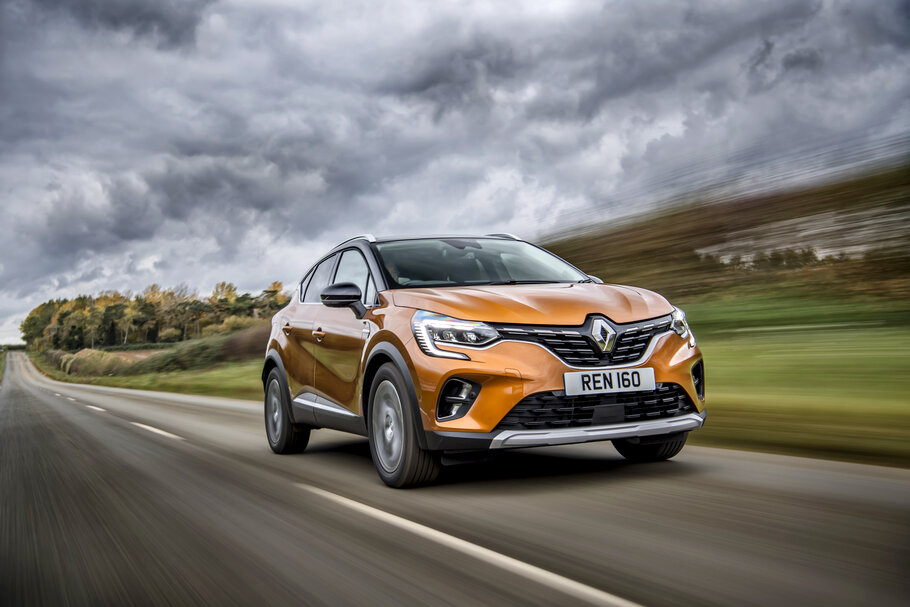
    2021 Renault CapturRenault further expands and enhances the popular Captur crossover lineup with the addition of two new versions – RS Line and SE Limited. Both trim levels are available on the Captur model for the first time and join the already appealing Play, Iconic and S Edition trim levels.

    Captur R.S. Line

    This trim level is characterized by high-performance and Formula 1 styling. This means that the vehicle comes with a more muscular bumper and a new honeycomb grille design with elegant LED front headlamps and a distinctive C-shaped shape. Furthermore, the model proudly showcases a revised air diffuser, RS Line badges, and exclusive 18-inch “Le Castellet” alloys.

    In terms of equipment, the standard list of goodies includes a 9.3-inch EASY LINK media display, Bluetooth connectivity, DAB and USB connectivity, and Android Auto and Apple CarPlay functionality.

    2021 Renault Captur Interior

    R.S. Line models also benefit from hands-free keycard with keyless entry and start, front and rear parking sensors with reversing camera, auto-dimming rear-view mirror, automatic air conditioning, automatic lights and wipers, sliding rear bench, modular boot floor, and MULTI-SENSE driving modes with eight ambient lighting colors.

    In terms of safety features, the vehicle is geared with Lane Departure Warning, Lane Keep Assist, Active Emergency Braking System (AEBS), and Traffic Sign Recognition.

    Powering the Captur R.S. Line is the latest range of efficient powertrains, including the advanced E-Tech plug-in hybrid offering up to 31 miles of zero tailpipe emissions, electric-only driving, up to 188.3mpg and as little as 34g/km in CO2 emissions.

    Captur SE Limited

    2021 Renault Captur

    This trim level is placed right between the Play and Iconic and offers unique exterior and interior features.

    For the outside, SE Limited showcases a two-tone paint scheme with a contrasting black roof and 17-inch alloys, “LIMITED” badges, and more. The interior is characterized by 7.0-inch EASY LINK touchscreen infotainment system offering navigation, live traffic information, and Google search capability on top of the usual DAB radio, Bluetooth connectivity, and Apple CarPlay and Android Auto functionality.

    SEE ALSO: Jaguar presents the special R-Dynamic Black Edition lineup

    mild-hybrid technology, bringing electrification to a wider range of Captur models for enhanced responses and superior economy. This engine is also available with a choice of six-speed manual or seven-speed EDC automatic transmissions, while the TCe 90 use a six-speed manual transmission.

    Captur SE Limited customers can choose between the TCe 90 fitted with a manual gearbox or the optional  TCe 140 with EDC automatic transmission.

    2021 Renault Captur Details

    Source: Renault 


  • Saietta’s new motor technology contribute to more agility and efficiency

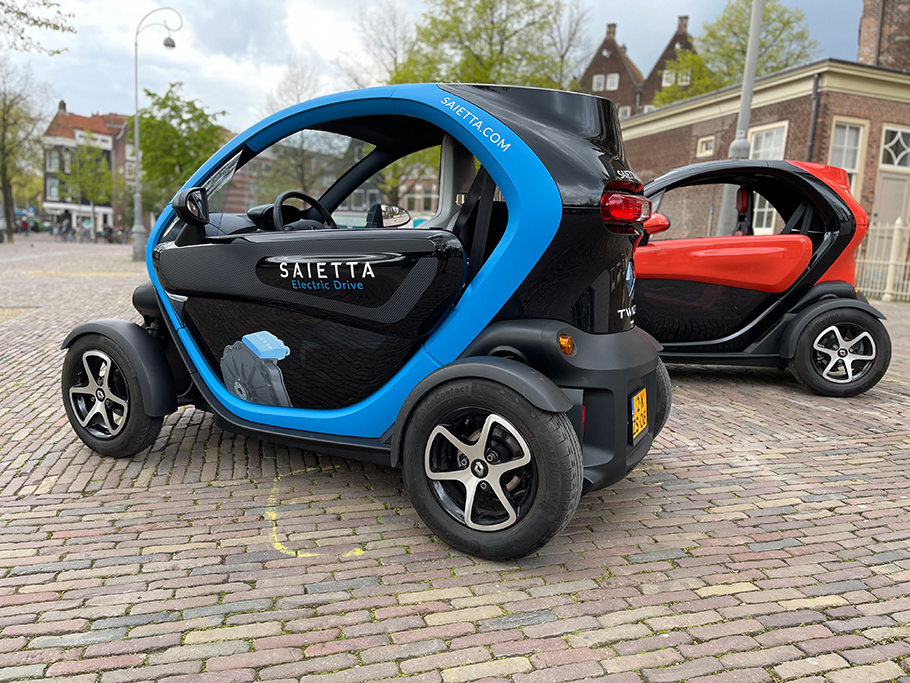
    2021 Saietta AFT 140Some real-world efficiency testings of the Saietta Group’s advanced AFT 140 electric motor have demonstrated that the technology can dramatically improve the driving range of lightweight electric vehicles.
    The tests included two Renault Twizy demonstration vehicles that were put in a head-to-head comparison experiment on public roads in Amsterdam, Netherlands.

    The first vehicle was a standard and stock Renault model, and the second one was geared with Saietta AFT 140. Everything else was left original and didn’t undergo any aftermarket upgrades or changes.

    All tests took place across two days in different road settings, and with different weather, temperature, and traffic conditions. The examination team concluded that the Saietta AFT 140 Twizy showed about 10 percent increased efficiency over the standard Renaut Twizy.

    Also, the conclusions point at the great opportunities that the electrified technologies offer for the two-, three-, and four-wheel lightweight vehicles and the flexibility they offer in terms of other drivetrain technologies.

    SEE ALSO: CUPRA and Primavera Sound join forces for mutual benefits

    The AFT 140 is the first liquid-cooled axial flux motor from Saietta that will go into mass production. The unique design ensures some class-leading performance and high torque density at low voltage and efficient urban duty tasks. The motor itself is compact and lightweight and is specially designed to retain a class-leading performance-to-efficiency ratio. The AFT 140 motor in the Twizy vehicle is an in-wheel variant of the AFT technological concept and showcases the full flexibility and modularity of Saietta’s motor tech advancements.

    Source: Saietta

  • 2021 Renaut Arcana come with an award-winning safety suite and beautiful exterior

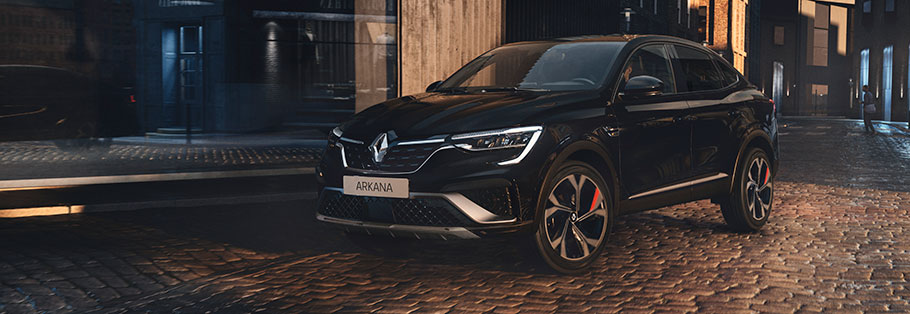
    2021-Renault-Arkana-910The new Renault Arkana has been awarded the maximum five-star rating by Euro NCAP for its crash safety capabilities. The vehicle offers a wide array of passive and active safety equipment, including the Advanced Driver Assistance Systems.

    New Arkana is based on the advanced CMF-B modular platform which brings tons of benefits. For example, the platform allows for redesigned seat composition, seatbelts fasteners with pyrotechnic pre-tensioners and load limiters that altogether offer maximum support for driver and passengers. Also, the Renault team has included its Fix4sure technology that promotes the best occupant restraint and avoids drivers and passengers sliding under the seatbelt in the result of a crash. At the same time, the child seats can easily and securely be installed on the outer rear seats.

    In addition to the strong CMF-B platform, the new Arkana comes with the latest ADAS technology. It includes Motorway and Traffic Assistant with Adaptive Cruise Control with Start & Go function. Traffic Sign Recognition, Blind Spot Warning, Lane Departure Warning and Lane Keep Assist are also available.

    The vehicle also comes with an Active Emergency Braking System, which alerts the driver in terms of a dangerous situation and initiates braking when needed.

    All these systems blend in a well-machinated suite which ensures peace of mind to the driver and passengers. Furthermore, all the systems are complemented by Arkana’s extensive equipment list, including new automatic lighting and a 360-degree camera with an auto-dimming rear-view mirror.

    SEE ALSO: Four Subaru models earn Kelley Blue Book’s 2021 Best Resale Value award

    In fact, the vehicle also comes with a menacing silhouette, elegant design and sporty spirit. Customers have the chance to specify their vehicle with a wide choice of engines, including the latest E-TECH hybrid, with an extended driving range.

    In terms of interior, the new Arkana is characterised by elegant design, premium materials and tons of hi-tech gadgets like the 10-inch TFT Driver Information Display and 9.3-inch EASY LINK infotainment display, both of which are highly customizable.

    Orders can be done from July, with the first deliveries in September 2021. More details will be announced soon.

  • Renault 5 Prototype

    2021 Renault 5 Prototype1

    Renault will continue its leadership in the transition to cleaner and more sustainble energy through electrified and hydrogen solutions, offering the greenest mix of vehicles in Europe by 2025. As for technology, Renault will take advantage of the “Software République”, an open ecosystem dedicated to software, data, cybersecurity and microelectronics. This will fuel the Renault line-up with enhanced connected services. Value will come through a wider variety of vehicles in the C-segment, the development of cutting-edge technologies and new lifecycle business opportunities.

    Innovation has been at the heart of the Renault brand for 120 years and the brand has the assets to support its ambition to be the ‘Nouvelle Vague’. It is the leader in the European EV market with more than 10 years of in-depth experience in electric mobility, services and more than 300,000 vehicles sold.

    In this time, Renault also invented E-TECH, a hybrid technology including more than 150 patents and drawing on the brand’s electrical and F1 experience. Then there is  the Software Factory, which is home to more than 1,000 engineers specialising in software, data and cloud services, soon to be joined by many others. Meanwhile, the recently-repurposed Flins Re-Factory is Europe’s first
    mobility-specific circular economy plant which further embodies Renault’s modernity. But all this is just the beginning.

    “At Renault, we embrace the waves of disruption and create our own ‘Nouvelle Vague’. It’s about bringing modernity to the automotive industry. We’ll move to an energy brand, strengthening our EV leadership with the Electro Pole project and investing in Hydrogen, aiming at achieving the greenest mix in Europe by 2025. We’ll also be a tech brand, through in-house innovation and through the Software République, an open ecosystem dedicated to develop a European expertise in key fields such as data or cybersecurity. This will give us a competitive edge as a service brand, with high-tech connected services, onboard and offboard. And this vision of modernity, we anchor it in France. Because as a brand, we know our soul and our strength lie in our origins. The new R5 is the Nouvelle Vague: it’s strongly connected to its history, and yet it’s the future, making electric cars popular.”
    Luca de Meo, CEO Groupe Renault

    Three fields of competitiveness

    Renault will evolve into:

    – A Tech brand, with an ecosystem approach aimed at creating world-leading, next-generation mobility OEMs and suppliers. This ecosystem called “Software République” will allow Renault, other founding members and future partners to develop joint expertise, build European know-how and ensure control and protection in key technologies from big data to electronics. It will also allow Renault to equip its vehicles with leading artificial intelligence and cyber-security systems.
    – A Service brand, offering the best connectivity and high-tech services embedded natively in vehicles. In 2022, Renault will be introducing My Link, a new infotainment system with Google built-in. Renault will be the first carmaker to bring Google services to mass-market car.

    Becoming more intelligent everyday, Renault vehicles will gain value over time. Renault will try to break the consumerist cycle and generate value up until a vehicle’s end-of-life, all thanks to its Re-Factory in Flins (France). The plant will recondition more than a 100,000 used cars per year, repurpose Diesel LCV and convert them into biogas and pure EV. Renault also has a clear advantage within second life and end of life of batteries. The control of these parts of the value chain has the potential to generate new business cases and value.

    – A Clean Energy brand, becoming a leader of the energy transition. Challenging leaders in the hybrid market thanks to its revolutionary E-TECH technology, Renault will ensure its leadership on the electric market with new families of products based on our two dedicated electric platforms CMF-EV and CMF-B EV. The brand will also offer market-ready, end-to-end hydrogen solutions for LCVs. The target is to deliver the greenest mix in European market.

    A repositioned line-up will help the brand win back its place amongst C-segment leaders whilst maintaining its B-segment leadership. A total of 14 models will be launched by 2025 (seven electric and seven C and D segment vehicles) with the ambition to have upper segments accounting for 45 per cent of sales by the same year.

    Renault 5 Prototype: The rebirth of a cult car, more modern than ever
    The soul of the Renault brand is firmly in its roots, and Gilles Vidal’s design team were inspired by the iconic cult model from Renault’s past, the R5. The Renault 5 prototype looks to reconnect with this past and draw inspiration to find the spirit of those glorious times without merely replicating it. Instead, it demonstrates how Renault will democratise the electric car in Europe with a modern approach influenced by one of the most popular and essential cars of its era.

    The Renault 5 Prototype is a charming, compact, city car which takes one of Renault’s timeless successes and develops it to be fit for the future with a modern, 100 per cent electric twist. It has retained the fun and mischievous character, with the pop of yellow highlights. The Renault 5 prototype takes strong features from the original design. The modern approach is evident in the chosen finishes and materials, which are inspired by various electronics, furniture and sports.

     “The design of the Renault 5 Prototype is based on the R5, a cult model of our heritage. This prototype simply embodies modernity, a vehicle relevant to its time: urban, electric, attractive.”
    Gilles Vidal, Renault Design Director

    The R5 is immediately recognisable, but thanks to a modern treatment of lines and flush surfaces with futuristic detailing, the result is in keeping with current times. Additonally, the styling elements taken from the original design hide some of the more modern features, for example: the bonnet air intake hides the charging hatch, the rear lights include aero flaps and the fog lamps in the bumper are daytime running lights. There is even a nod to the original ‘5’ on the side vent, the wheels and rear logo.

    The front end and the textile roof are influenced by the world of furniture and are full of ‘French charm’, with a hint of mischief and character that pulls on the heartstrings. The front and rear logos light up, bringing the car ‘to life’. The French flag situated in the rear-view mirrors underline the “invented in France” ethos of the vehicle, and the name displayed on the small transparent screen on the dashboard provides that final flourish.

    About Renault
    Renault, a historic mobility brand and leader of electric vehicles in Europe, has always developed innovative vehicles. With the ‘Renaulution’ strategic plan, Renault has embarked on an ambitious, value-generating transformation moving towards a more competitive, balanced and electrified range. Its ambition is to embody modernity and innovation in technology, energy and mobility services in the automotive industry and beyond.

  • Renault Clio 30 years

    2021 Renault Clio 30 years1

    This year marks the 30th anniversary of the iconic Renault Clio supermini, the company’s most successful model and best-selling French car of all time.

    The Clio was first shown in 1990 at the Paris Motor Show as the replacement to the successful and popular Renault 5. Light, efficient, spacious and comfortable, the Clio’s arrival marked a pivotal moment for Renault and would go on to become a multiple award-winner spanning five generations. More than 15 million Clios have left production lines around the world over the last 30 years, with more than 1.2 million making their way to UK roads and into the hearts of drivers and passengers alike.

    The Clio has caught the attention of buyers over the years through a series of emotive, exciting and sensitive advertising campaigns – the iconic Papa and Nicole story for Clio I, Thierry Henry’s ‘Va Va Voom’ campaign for the second-generation car and the most recent advert for Clio V that details the story of the Clio over 30 years on sale, depicting a relationship story with a tone and message that reflects the times. It proved to be an award-winning viral hit that tugged at the heartstrings of the viewing public.

    It’s not just the UK, though – the Clio is the second best-selling car in Europe and has been France’s most popular car for 21 of its years on sale.  Over the last 30 years, the Clio has been enhanced with every generation delivering greater comfort, more space, stronger performance, improved efficiency and the latest advanced technology. What’s remained consistent is the Clio’s identity. It provides the kind of refinement and appeal of a larger car but delivered in a small package that represents impressive value.

    The model line-up has also expanded with each version, with a range of distinct models offering something for everyone. From great-value entry level models and luxurious variants to racers for the road engineered by the experts at Renault Sport and practical estate body styles, there’s been a Clio to suit all tastes throughout the last three decades.

    Clio I

    Introduced in 1990, the first-generation immediately stood out. Officially presented as a small, versatile car designed and manufactured following the exact same stringent criteria as a ‘big little car’ as it was referred to at its launch at the Paris Motor Show in October of that year.

    The Clio I was the replacement for the beloved and iconic Renault 5. It ushered in a new naming convention for the brand, replacing numbers with more emotive and memorable names.

    The move from 5 to Clio also brought with it a significant step change in overall quality and refinement with a noticeable shift upmarket. It was a successful move as the Clio topped the sales rankings in France and achieved eight consecutive years of sales growth until it was replaced by the second-generation version.

    It also went on to win European Car of the Year in 1991 where it was recognised for its “remarkable styling, strong quality levels, generous cabin space and unprecedented equipment for a model of this size.”

    Following its triumphant win, the Clio clocked up 21,124 sales in the UK in 1991, increasing to 34,701 in 1992. The first full year on sale saw a 1.8-litre 16v RSi hot hatch and 1.9-litre diesel join the RL 1.2-litre 3-door and RT 1.4-litre 5-door models. RT models boasted electric front windows, remote central locking and a stereo radio/cassette – keeping Renault’s promise of offering big car equipment and refinements in a much smaller vehicle. The Clio I was also available as a two-seat van variant.

    By 1994, the Clio made up 49% of all Renault UK sales, and a ‘phase 2’ arrived featuring subtle styling tweaks for a freshened look. A further ‘phase 3’ model came in 1996 with improved safety, design enhancements and mechanical changes to keep it in the UK top ten best sellers’ lists. 1997 was the final production year for the first-generation Clio but also its best sales year – notching up 58,033 sales in the UK for a total of more than 300,000 in its time on sale.

    Clio II

    The Clio II would have big shoes to fill – the first-generation Clio was a sales hit and was found in the top 10 best sellers’ list for five years in a row before it went out of production. Launched in 1998, the Clio II debuted a curvy new look and a small increase in overall length, resulting in a more spacious and accommodating interior with an increase in the comfort thanks to larger seats and suspension engineered for comfort and refinement.

    The Clio II was also the subject of a focused weight-saving regime, with the introduction of several advanced engineering solutions to help reduce the weight of the car. An aluminium bonnet featured on some models, while there were polycarbonate headlamp covers and composite front wings also available.

    Safety was key to the Clio II’s appeal, with a suite of features available for the first time. ABS was fitted on 50 per cent of the Clio range or could be specified as an option, and front side airbags were available too. Both were firsts in the supermini segment. Up to four airbags in total could be specified, as could seatbelt pretensioners, while fingertip control for the stereo and power steering upped the convenience stakes.

    At launch, the engine line-up was similar to the Clio I, with 1.2, 1.4 and 1.6-litre petrols and a 1.9-litre diesel. In 2000, a 16V
    1.6-litre petrol was introduced, and the rest of the line-up was upgraded to 16V engines for enhanced performance and economy.

    The Clio II received its first set of minor updates in 2000, including a revised instrument cluster and standard passenger airbag. This contributed to a class-leading four-star Euro NCAP crash safety rating, while a ‘phase 2’ version debuted in 2001 with changes to the front and rear styling for a sharper look, upgraded interior quality and a new 1.5-litre common rail injection turbo diesel engine.

    Alongside the more angular front end and revised bumpers, the ‘phase 2’ Clio debuted further luxuries like digital climate control, xenon headlights and satellite navigation on the options list, equipment that was also available on the unique mid-engined, rear-wheel drive 3.0-litre V6 model and the lightweight Clio Renault Sport 172.

    In 2002, the Clio achieved its highest sales ever, finding 86,335 homes in the UK.

    By 2004 the Clio II benefitted from another update, with minor styling tweaks and specification changes to the interior. The Clio Renault Sport became the 182 thanks to an increase in power, while a choice of chassis options was available for the first time – standard and Cup.

    Clio III

    Unveiled at the 2005 Frankfurt Motor Show, the Clio III represented a significant change over its hugely successful predecessor – a car that carried on life in various forms, living on in the UK for a few years as the Clio Campus. The new third-generation car brought in some big changes for the Clio name. Interior quality stepped up once again, with more finesse, more space and more equipment.

    Familiar Expression, Dynamique and Privilege trim levels were the core models available to customers, with a host of unique special edition derivatives joining the range throughout the car’s life cycle, ranging trendy Rip Curl and I-Music to luxurious Initiale and warm GT hatch.

    For the first time, the Clio was available with Renault’s handsfree key card and starter button, an advanced GPS system and cruise control with speed limiter. The choice of specifications was broad as well, with a comprehensive selection of engines and trim levels, including Renault Sport versions available in several forms throughout its production.

    The Renault Sport version of the Clio III boasted 197hp and was made available in a variety of forms, with a dedicated Cup chassis and specification for enthusiasts, or Lux models for added everyday refinement.

    The Clio III was the first car in the supermini category to be awarded a five-star Euro NCAP crash safety rating, scoring top marks in active and passive safety. It was available with up to eight airbags throughout.

    A practical Estate version was also available for the first time, boasting a versatile load area and generous interior space making full use of the Clio III’s longer wheelbase and larger footprint.

    In 2006 – its first full year of sales – the Clio III was awarded the European Car of the Year award, making it the first time a vehicle had ever been awarded the prestigious title twice.

    Clio IV

    The fourth-generation Clio made its debut in 2012 featuring a striking new design by Laurens van den Acker, inspired by the stunning DeZir concept car – a model that previewed Renault’s future design direction with a more emotive look.

    The Clio IV introduced a range of new technologies, including Renault’s R-LINK media system which made a touchscreen system available for the first time, with a range of advanced settings and customisations features. The theme of customisation was also key with a total of four different interior design schemes available alongside a broad choice of exterior design components to giving owners more choice than ever –  a theme which has continued to later vehicles in the form of exterior and interior colour packs.

    The Clio IV was powered by a range of TCe petrol and dCi diesel engines all majoring on economy, while the first automatic Clio R.S. was introduced with paddle shifters and a powerful turbocharged petrol engine.

    The Clio IV was enhanced over time with the addition of a range of new technologies, including handsfree parking and full LED front lighting. The appeal of Clio IV’s desirable exterior style is evident in the Clio V – a subtle yet sophisticated evolution of its predecessor’s concept car style.

    Clio V

    Ahead of its 30th year, Renault introduced the All-New Clio – its most advanced, premium and accomplished Clio ever. As with all new versions of Clio, the fifth-generation model represents a remarkable advance in its capabilities while retaining the characteristics that have ensured its enduring popularity with each generation. For Clio V, the exterior evolved from the previous generation, while the interior design and quality received a revolutionary change, featuring more technology and innovative features than ever.

    The All-New Clio boasts technology and features found on larger and more expensive models in the Renault line-up, bringing the very best of the brand to a wider range of buyers, with advanced driver assistance systems, the very latest infotainment systems and the most accomplished driving experience, backed up by a five-star Euro NCAP crash safety rating.

    Clio hallmarks of high standards of comfort and interior space are found in the All-New Clio, with the largest boot in its class at 391 litres, a spacious interior compartment and supremely comfortable seats.

    The revolutionary interior has delivered exceptional progress, not only for Renault, but across the entire supermini class, offering a 9.3-inch touchscreen infotainment system and up to 10-inch TFT Driver Information Display, wrapped up in a high-quality design engineered to be as refined, ergonomic and engaging for the driver and passengers as possible.

    Following Renault’s line-up of Play, Iconic, S Edition and R.S. Line models, the All-New Clio boasts the most expansive range of engine options than ever before, with efficient TCe and dCi powertrains bolstered by the advanced new E-TECH hybrid powertrain.

    The All-New Clio E-TECH Hybrid uses advanced technologically inspired by engineering used in Formula 1 race cars, utilising high-tech energy optimisation systems, brake regeneration and clutchless multimode automatic transmissions. These advanced features contribute to the All-New Clio E-TECH Hybrid’s ability to travel up to 80 per cent of urban journeys in zero tailpipe emissions electric mode.

    The latest Clio is available to order now via a range of Renault’s latest online sales tools or in retailers. The Renault Virtual Showroom allows customers to view a particular car in a one-to-one tour with a Renault guru, while the Online Stock Reservation tool and Select & Collect enable customers to reserve and their car all from the comfort of their home before collecting from their chosen retailer.

  • All-new Renault Captur e-tech plug-in hybrid – press kit now available

    2021 Renault Captur PHEV1

    Renault has introduced an E-TECH plug-in hybrid powertrain into its most popular car in the UK: the Captur. It gives buyers of this best-selling model more choice than ever with a broad choice of engine and powertrain options, with an E-TECH hybrid version also following in 2021.

    The Captur is a strong competitor in the UK. Since it went on sale in 2013, is has become the best-selling Renault model in the country with more than 150,000 sales.

    Comprehensively redesigned for its second generation, the All-New Captur comes with a range of petrol, hybrid and plug-in hybrid powertrains across several trim levels. This offers crossover buyers an enticing family car with flexible, high-quality interior, strong performance and low running costs.

    Further enhancing the appeal of the Captur are its advanced new E-TECH powertrains, introducing plug-in hybrid power to the Renault range for the first time, with a full hybrid joining the range in 2021.

    Debuting advanced technology inspired by the Renault DP World F1 team for energy optimisation and brake regeneration, all models fitted with E-TECH technology offer customers strong performance with low running costs, enhancing the driving experience and refinement of Captur models.

    Renault’s best-selling model in the UK now features the latest technology to boost performance and efficiency. It comes in three high-specification trim levels: S Edition, Launch Edition and R.S Line.

    Powertrain
    The electrification of Renault models has been easy thanks to the versatile CMF-B modular architecture that was designed from the start to accept electric capabilities.

    The advanced E-TECH powertrain has been created with knowledge gained from the Renault DP World F1 team, inspiring the energy use and recovery systems that are key in ensuring all Renault E-TECH hybrid and E-TECH plug-in hybrid vehicles are as efficient and effective as possible.

    Technology that’s found in an E-TECH powertrain can be broken down into two categories; the first is the way in which energy use and recovery can be optimised, while the other is the application of an innovative multi-mode dog gearbox for the first time in a production vehicle.

    E-TECH powertrains are designed to use the optimal energy output to recharge the battery whenever the energy created is more than the required power. Then, kinetic energy recovered during deceleration or braking can be transformed into electrical energy to recharge the battery. The electrical energy is then in reserve to assist with acceleration, or for all-electric operation at lower speeds in urban areas, later in a journey.

    The E-TECH powertrain architecture is paired with a multi-mode dog gearbox. In operation, it allows the vehicle to start in 100 per cent electric mode, significantly reducing the gap in acceleration during gear changes. This means a smoother, more refined drive in production vehicles, as well as better performance.

    The Captur’s plug-in hybrid powertrain offers three levels of energy regeneration and regenerative braking:

    Battery regeneration during deceleration: When the driver lifts their foot off the accelerator and the gear selector is in D (Drive), the main electric motor works as a generator by recovering kinetic energy produced by the deceleration, turning it into electrical energy that is sent back to the battery.

    B Mode: To recover more energy, the gear selector can be put into B (Brake) mode by nudging the gear selector backwards, allowing one pedal driving when driving in full electric mode, increasing the level of regeneration allowed by the battery, up to an idling speed of around 4mph.

    Regenerative braking: When the brake pedal is depressed, braking is triggered electrically, with mechanical braking support from the brake pads if necessary. The electric motor provides additional braking here, recovering excess energy and returning it to the battery that can be deployed again later on.

    Using the same 1.6-litre petrol engine as the All-New Clio E-TECH Hybrid, and two electric motors, the Captur E-TECH Plug-in hybrid also features a higher capacity 9.8kWh (400V) battery.

    Like all E-TECH powertrains, the Captur E-TECH Plug-in hybrid starts up in all-electric mode for optimum efficiency and immediately available torque, making it a perfect compact SUV for use in town.

    Model Maximum power (hp) Torque (Nm) Acceleration (0-62mph) Fuel economy (mpg) CO2 emissions (g/km) Electric range (miles)
    E-TECH Plug-in Hybrid 160 Auto 160 144 (Engine)205 (Electric Motors) 10.1 188.3 34 31


    Performance, economy
     and driving
    The most powerful in the range, the E-TECH plug-in hybrid powertrain delivers 160hp and 144Nm (engine) and 205Nm (electric motor) of torque that, in combination, deliver a 0-62mph time of 10.1 seconds and a top speed of 108mph (84mph in electric mode).

    The E-TECH powertrain boasts CO2 emissions of as little as 34g/km with fuel economy of up to 188.3mpg.

    MULTI-SENSE driving mode selection is standard on all E-TECH-equipped models, to alter the driving experience to the situation.

    The following modes are available:

    Pure: A new mode for the CAPTUR E-TECH Plug-in hybrid, Pure engages all-electric mode (when there’s enough battery charge) via the screen selection or a dedicated EV button on the centre console. This is the default mode when the vehicle is first switched on.

    MySense: The standard driving mode, MySense automatically adapts the hybrid powertrain to the driver’s inputs and driving conditions, operating in the most efficient and suitable way necessary for the situation by intelligently switching between electric power and the engine.

    Sport: Sport makes use of the powertrain’s full potential, engaging the petrol engine and both electric motors for the most responsive drive when the accelerator pedal is fully depressed.

    A dedicated E-Save function is available too. By selecting this mode, the E-TECH system limits the use of the electric motor and uses the petrol engine to power the vehicle, saving at least 40 per cent of battery charge that can be used at another time, for example when driving in more urban areas at a later point in the journey to reduce emissions in built-up areas. This can be selected via MULTI-SENSE menus.

    Fitted to all Captur E-TECH Plug-in hybrids with EASY LINK navigation, the E-NAV function is selected via the same MULTI-SENSE menus as E-Save. E-NAV analyses the route in the navigation system and decides the most appropriate driving mode for the journey.

    By anticipating the journey and factors such as live traffic, the E-TECH powertrain is constantly operating in the most efficient way possible – using the Pure electric mode in the most appropriate situations and as often as possible.

    The Captur E-TECH Plug-in hybrid majors on fuel efficiency and economy. It can run for up to 31 miles on electric power alone which, if charged regularly, is enough for most urban journeys, making it a compelling proposition for those living in urban areas with regular access to charging.

    Captur E-TECH Plug-in hybrid retail buyers also receive a free home charging wallbox, so charging is quick and easy at each end of the journey, meaning the E-TECH powertrain can be utilised as effectively as possible. Charging from zero to 100 per cent takes approximately three hours using the wallbox, ideal for use overnight.

    Provided by BP Chargemaster, the complimentary wallbox is sleek and unobtrusive with key access for security. Both a domestic charging cable and Type 2 charger cable are provided on all Captur models, with space beneath the boot floor to tidy them away out of sight.

    The charging port is located on the right-hand side of the vehicle on the opposite side to the fuel filler flap. An LED indicator light shows the state of charge: blue (charging), green (charged), orange (waiting) and red (no charge).

    Charging times, heating and ventilation (while the car is plugged in) can be scheduled via the EASY LINK touchscreen, or via the MY Renault app, giving customers ultimate convenience to schedule charging and check the status of the vehicle from anywhere.

    Safety and Driver Assistance
    All-New Captur has been awarded the maximum 5-star Euro NCAP safety test rating.

    For a safe and reassuring driving experience, All-New Captur is equipped with the latest suite of safety and driver assistance technologies.

    Adaptive Cruise Control with Stop & Go: All-New Captur maintains a safe following distance from the vehicle in front. In traffic jams, the vehicle stops and restarts when the traffic lane starts moving again.

    360-degree camera: With its panoramic view, the 360-degree camera helps to guide the driver into the tightest spots.

    Renault Pure Vision LED headlights with automatic high/low beam: The Pure Vision full LED headlights and automatic high and low beam improve safety and visibility at night. All-New Captur will automatically switch to low beam as the driver enters a built-up area or approaches another vehicle.

    Traffic and Motorway Assistance: Active from 0 to 100mph, the system regulates speed and maintains a safe following distance from the vehicle in front, while ensuring the car is kept in the centre of the lane. This system lets the driver stop and restart automatically within three seconds without any input from the driver.

    Blind Spot Warning: An indicator light located in each of the door mirrors warns the driver when a vehicle is in their blind spot, for example when changing lanes on the motorway.

    Lane Departure Warning and Lane Keeping Assist: All-New Captur alerts the driver and corrects their trajectory in the event of a lane departure without using the indicator. This is standard across the range.

    Automatic Emergency Braking System: All-New Captur watches over the driver and the surroundings. If there is sharp braking ahead or a pedestrian crossing the road, the car warns the driver and can automatically perform emergency braking if they do not.

    Traffic Sign Recognition: A camera constantly monitors and reads traffic signs to inform the driver of the speed on that road, so the driver can always adapt their speed accordingly.

    Warranty
    All new Renault cars are covered by a five-year warranty. It features an unlimited mileage limit in the first two years and up to 100,000 miles in the remaining three. E-TECH models are covered by an additional eight-year and 100,000-mile traction battery warranty for extra peace of mind.

    Manufacturing
    The Captur – using the same modular CMF-B platform as the latest Clio – is manufactured at Renault’s Valladolid facility in Spain. In 2019, the 1,500,000th Captur rolled off the production line ahead of the All-New Captur arriving in showrooms, but the facility has a long history dating back to the 1950s where production of the Renault 4CV began in 1953. Alongside the All-New Captur, the Renault Twizy is also produced at the Valladolid plant.

    Model history

    2011
    Renault presents the Captur concept car at the Geneva Motor Show. A design study created under the leadership of Laurens van den Acker, it featured carbon fibre bodywork, 21-inch wheels and butterfly-action doors.

    2013
    Renault announces production version of the Captur in January, a new urban crossover that sustains the company’s reputation for innovation. The production car is revealed to the public at the Geneva Motor Show in March, and features advanced connectivity, intelligent packaging and wide market appeal.

    2014
    A range-topping Signature Nav trim joins the existing Captur line-up, alongside the existing choice of models.

    2015
    1.5-litre dCi engines with EDC transmission become available, while Renault’s MediaNav and R-LINK infotainment systems are updated to include DAB radio, Bluetooth streaming, TMC traffic information and SIRI Eyes-Free for compatible iPhones.

    In December, the Captur becomes the best-selling B-SUV in Europe for 2015, with 194,720 sales.

    2017
    Captur receives an update with tweaked styling, and the addition of a new range-topping Signature S Nav specification.

    2018
    Line-up adjusted to comprise Play, Iconic and GT Line specifications.

    2019
    Style-focused Captur S Edition is added to the line-up, becoming the fourth trim level for buyers to choose from.

    2020
    Customers take first deliveries of the second-generation Captur in March. It’s based on the new CMF-B modular platform and debuts a new look and revolutionary interior.

    Standard features

    Driving Assistance

    • Full C-shape LED front signature lighting (daytime running lights)
    • Automatic high beam headlights
    • Font and rear parking sensor with rear view camera
    • Blind Spot Warning
    • Electronic parking brake with auto-hold function
    • Auto-dimming rear view mirror

    Exterior

    • 17-inch Bahamas diamond cut alloy wheels with grey inserts
    • Shark fin antenna

    Interior

    • Black and grey cloth upholstery with synthetic leather and grey stitching

    Communication and On-board Technology

    • EASY LINK : 9.3” portrait touchscreen with, Bluetooth, DAB radio, USB ports and compatible with Apple CarPlay™ & Android Auto™
    • MULTI-SENSE: 3 driving modes and 8 ambient lighting
    • 7” TFT Driver information display
    • Wireless phone charger

    E-TECH Plug-in specific equipments

    • Exterior E-TECH badge on B-Pillarand tailgate
    • Interior E-TECH badge on central console
    • 10” TFT Driver information display
    • Flying console with e-shifter
    • Type 2 (mode 3) charging cable
    • 3-pin socket charging cable
    • EV button to activate ‘PURE’ mode (100% electric drive)

    Captur E-TECH Plug-in hybrid Launch Edition, includes:

    • 18-inch Pasadena alloy wheels with grey inserts and copper and blue detail
    • Exterior blue and copper details on front bumper, front wing and c-pillar
    • Cloth upholstery with blue stitching
    • Specific white dashboard insert with blue line

    Optionally available on S Edition models are range of exterior colour packs in orange or grey as well as blue or red interior colour packs or a Luxury Pack with black heated leather seats and steering wheel. A useful Parking Pack Premium composed of 360-degree around view monitor and hands-free parking is also available to aid with parking manoeuvres.

    Specific exterior design enhancements include E-TECH plug-in hybrid badges located on the boot-lid and B-pillar to denote the PHEV powertrain, while the 10-inch Smart Cockpit features E-TECH-specific details and personalisation options to display eco features.

    Standard on all models fitted with E-TECH powertrain is an e-shifter gear selector with a Brake function allowing one pedal driving when driving in full electric mode to adjust the level of regenerative braking to conserve energy. The specification of the Launch Edition can be enhanced further with a BOSE® premium audio upgrade and the Parking Pack Premium.

  • All-new Renault Clio e-tech hybrid – press kit now available

    2021 Renault Clio E-TECH1

    Renault has introduced an advanced E-TECH powertrain to one of its most successful models ever, giving buyers of the best-selling Clio more choice than ever with a broad spectrum of engine and powertrain options.

    The Clio, Renault’s popular supermini, is the definition of a success story with 30 years of providing excellent value, comfort and enjoyment. More than 650,000 Clios have been sold in the UK in the last 30 years, and the latest All-New Clio is the most advanced yet with a choice of efficient petrol, diesel and hybrid engines, a five-star Euro NCAP crash safety rating and a broad range of well-equipped specifications.

    The first Renault to be built on the modular CMF-B platform, the All-New Clio boasts evolutionary exterior design with a revolutionary interior featuring premium materials and the latest technology – including 9.3-inch EASY LINK touchscreen and crisp TFT Driver Information Display.

    Further enhancing the appeal of the Clio is the advanced new E-TECH powertrain, introducing hybrid power to the Renault range for the first time. Debuting technology inspired by the Renault F1 team for energy optimisation and brake regeneration, all models fitted with E-TECH technology offer customers strong performance with low running costs, enhancing the driving experience and refinement of existing Clio models.

    Powertrain
    The All-New Clio range has expanded with the new E-TECH hybrid powertrain, making full use of the expertise gained from the Renault Formula 1 Team in its application.

    Available across all Clio trim levels, the E-TECH hybrid powertrain offers a flexible option to customers looking for both efficiency and performance.

    Technology that’s found in an E-TECH powertrain can be broken down into two categories; the first is the way in which energy use and recovery can be optimised, while the other is the application of an innovative multi-mode dog gearbox for the first time in a production vehicle.

    The electrification of Clio has been easy thanks to the versatile CMF-B modular architecture that was designed from the start to accept electric capabilities. In addition, the compact E-TECH powertrain can also be mounted in the engine compartment of the Clio E-TECH Hybrid, ensuring there’s no compromise in practicality elsewhere.

    The hybrid series-parallel architecture ensures there’s a wide range of combinations relating to engine operations and the most effective CO2 gains while in use on the road. All E-TECH powertrains offer three levels of energy regeneration and regenerative braking.

    The Clio E-TECH Hybrid makes use of a new-generation 1.6-litre petrol engine accompanied by two electric motors – an “e-motor” and a High-voltage Starter Generator (HSG) with aninnovative multi-mode clutchless gearbox. This revolutionary combination provides smoother gear changes that results in superior fuel efficiency.

    A 1.2kWh (230V) lithium-ion battery also features, allowing significant reductions in fuel consumption and CO2 emissions, delivering the ability to complete 80 per cent of urban journeys in 100 per cent electric mode – selected via the MULTI-SENSE driving modes or a dedicated ‘EV’ button positioned on the dashboard.

    The E-TECH powertrain automatically starts the car in electric mode, as the gearbox is clutchless – this means the engine does not need to be engaged when starting the vehicle. On start-up, the All-New Clio E-TECH Hybrid is responsive and refined with maximum torque but also maximum efficiency operating in electric mode.

    The All-New Clio E-TECH Hybrid’s powertrain automatically adapts to the driving conditions and the way in which it is being driven – managing its power supply accordingly, as well as the battery regeneration opportunities.

    The change from one mode to another is barely noticeable and requires no input from the driver – the E-TECH powertrain automatically decides the most appropriate mode for the situation to optimise efficiency and emissions, while continuing to deliver responsive and enjoyable driving.

    Performance, economy and driving
    Compared with an internal combustion engine, the All-New Clio E-TECH Hybrid saves up to 40 per cent in fuel and is capable of travelling up to 80 per cent of the time in electric mode.

    This makes it an ideal companion for urban journeys as it will travel at speeds of up to around 27mph in electric mode. Emitting as little as 98g/km of CO2 (WLTP), the All-New Clio E-TECH Hybrid returns fuel economy of up to 64.2mpg.

    A total output of 140hp makes this the most powerful All-New Clio in the range, completing the 0-62mph sprint in 9.9 seconds. A choice of modes selectable via the MULTI-SENSE menus, or buttons on the centre console,allow the driver to tweak the driving experience to one of the following modes:

    • MySense: Best for everyday use, My Sense offers the best compromise in terms of performance and economy, using as much electric power as possible, but in the most efficient way.
    • Eco: Uses a more measured mapping of the accelerator pedal and adapted gear changing for the most economical drive.
    • Sport: Engages the full system’s potential all the time for faster responses and the most rapid performance.

    Information is constantly fed back to the driver via the main EASY LINK touchscreen display as well as the instrument panel showing the energy flow to the drive system. A power meter on the driver display shows how aggressively the power is being requested – and by what means – while the battery meter on the other side shows the charge level in real time along with consumption figures.

    All-New Clio retains the model’s trademark agility and driving fun. For starters, the steering has been made more responsive thanks to a reduction in ratio from 15.2 to 14.4, while the electrical assistance has been calibrated to provide more natural feedback. There’s also a more solid and stable mounting of the front suspension that helps boost steering accuracy, while a reduction in the turning circle from 10.8 to 10.5 metres improves agility around town.

    What’s more, the overall chassis balance and location of the torsion beam rear axle have been improved for greater high-speed stability, promoting agile and assured handling. At the same time, optimised suspension travel means a more controlled ride with less bouncing around for passengers. Brake pedal travel has also been reduced for improved vehicle response.

    Exterior
    The All-New Clio E-TECH Hybrid is available across all main trim levels: Play, Iconic, S Edition and R.S. Line, plus an exclusive Launch Edition. That means buyers have ultimate choice over the level of equipment they desire.

    However, all Clio E-TECH Hybrid models offer some unique features to mark it out from the rest of the range.

    On top of the Clio’s distinctive, evolutionary exterior, features specific to those with an E-TECH powertrain under the bonnet include E-TECH badging on the B-pillar and boot-lid, plus the option of a Hybrid Blue pack that features blue detailing to exterior – such as across the front grille, on the lower edges of the doors and rear bumper and the centre of the alloy wheels. A unique graphic below the front fog lights distinguishes the E-TECH Launch Edition models.

    Interior
    E-TECH-specific features extend to the interior of Clio models fitted with the new hybrid powertrain, with subtle blue detailing running the width of the cabin in the air vents, around the gearlever, plus E-TECH badging. A unique light cabin environment is also available on S Edition and Launch Edition spec.

    As with the rest of the Clio range, E-TECH Hybrid comes with the revolutionary interior that sets new standards in the supermini class with large, crisp display screens and premium finishes.

    The Clio strikes a fine balance of comfort, technology and practicality, with eye-catching features. These include the large 9.3-inch EASY LINK touchscreen display, enveloping seats and striking ambient lighting in a choice of eight colours, with an ergonomic layout and driving position, enabling the driver to benefit from the superior refinement on offer.

    All-New Clio E-TECH Hybrid models also come with a 7.0-inch TFT Driver Information Display, complemented by a 7.0- or 9.3-inch EASY LINK touchscreen display, dependent on trim level. The digital instrument cluster is unique to Clio E-TECH Hybrid models, displaying specific hybrid animations such as battery levels and energy flow, with a larger 10-inch version available. Everything from economy information to the full navigation map function can be displayed, giving the driver various options to personalise the interior experience.

    The quality of materials is the best ever in the Clio, with a soft-touch dashboard top with a customisable centre panel that can be selected in a choice of colour packs. Premium materials for the heating and ventilation controls are found with satin finishes, while piano key buttons running along the bottom of the touchscreen give an upmarket lift and ease of access to key functions. A floating centre console gives the Clio’s interior a modern look with practicality benefits, housing a wireless smartphone charger and storage areas beneath.

    The advanced hybrid’s clever packaging does not impede on the car’s overall practicality. The boot remains a versatile 300 litres, the rear bench folds flat and there’s room for a spare wheel too.

    Technologies
    For the best part of three decades the Renault Clio has been leading the way for high specification and cutting-edge technology. More often than not the Clio has been the first car in its class to include features that had previously been the preserve of larger and more expensive models.

    All-New Clio is no exception in this regard, delivering a raft of technologies aimed at making driving safer, simpler and more enjoyable. From advanced driver assistance systems through to three different infotainment options and a powerful BOSE hi-fi system, All-New Clio is packed with premium touches rarely seen on a B-segment model.

    Renault is committed to delivering the latest connectivity and online services to its vehicles, and on Play models All-New Clio benefits from its tried and tested R&GO infotainment system, which allows drivers a straightforward and intuitive link between their smartphone and the car.

    Using a universal cradle and a free-to-download app, owners can quickly access the four most frequently used functions – navigation, phone, multimedia and trip computer functions. In addition, there’s Bluetooth connectivity for phone and music streaming, plus both USB and aux-in sockets.

    For All-New Clio Iconic, S-Edition and R.S. Line versions there’s the latest EASY LINK infotainment system. Boasting a seven-inch touchscreen display on the Iconic, and an even larger 9.3-inch portrait screen on the other versions, the EASY LINK screen is mounted centrally on the dashboard, within easy reach of both the driver and front seat passenger.

    Grouping a number of connected services, platforms and apps, including Android Auto and Apple CarPlay, the system simplifies connected mobility by offering remote vehicle management, more precise and easily configurable sat-nav routes, and simpler in-car integration of the connected worlds of the driver and passengers.

    At its heart is an all-new smartphone-inspired interface that is user-friendly and functional, users are able to customise various screens using widgets to directly access their favourite functions. Crisp and clear graphics make it easy to view information at a glance, while intuitive pinch and swipe functionality offers quick and simple operation on the move. Of course, there’s always the voice control option for some of the programmes, allowing drivers to keep both hands on the wheel and their eyes on the road.

    There’s also 3D sat-nav mapping for even clearer route-finding. It works in conjunction with the seven-inch TFT display in the instrument cluster to beam useful information, such as sat-nav directions, directly into the eye line of the driver for even safer use on the move. The optional 10-inch Smart Cockpit instrument pack offers even greater opportunities for customisation of the data the driver can access.

    On top of this the EASY LINK platform offers 4G connection to directly integrate services, including an automatic emergency call in the event of an accident. It also allows for a constantly refreshed platform of automatic updates, navigation integrating real-time information on traffic and danger areas provided by TomTom, as well as new functions such as Google Places. There’s also an electronic ecosystem of familiar services that are updated and continually enhanced by our partners including Google, TomTom and Coyote.

    Safety and driver assistance
    Once again All-New Clio leads the way for pioneering safety, with both a five-star Euro NCAP rating and a range of hi-tech driver assistance systems that are more usually seen on bigger and far more expensive models. With everything from semi-autonomous driving functionality to a simple speed limiter, All-New Clio puts the safety of its occupants and other road users front and centre.

    Leading the charge is the Traffic and Motorway Assistance Pack – a Level 2 autonomous driving aid, which is a first in this sector. This system combines adaptive cruise control (with Stop & Go) and lane centering. Active from 0 to 100 mph, the system controls the speed of the vehicle and maintains safe distances with vehicles ahead while keeping the vehicle centred in its lane. Particularly useful in heavy traffic, the driver assistance system also stops and starts All-New Clio automatically if the driver does not respond within three seconds.

    Across the rest of the range the level of standard safety equipment is incredibly high. All models get lane departure warning and lane keep assist, plus traffic sign recognition with speed alert is also included, as is cruise control with a speed limiter function. Active Emergency Braking is also featured and is bolstered by the latest cyclist and pedestrian detection functionality.

    Front, rear and side parking assist is standard on S Edition and R.S. Line models, as is a rear-view camera and automatic high and low beam for the LED headlamps. R.S. Line versions can be ordered with a Techno Pack that includes a 360-degree camera, wireless smartphone charging and Easy Park Assist, which automatically scans the side of the road for a parking space then takes control of the wheel for stress-free parking.

    Warranty
    All new Renault cars are covered by a five-year warranty. It features an unlimited mileage limit in the first two years and up to 100,000 miles in the remaining three. E-TECH models are covered by an additional eight-year and 100,000-mile traction battery warranty for extra peace of mind.

    Manufacturing
    The Clio is manufactured at the cutting-edge factory in Bursa, Turkey and was the first Renault model to benefit from new processes that make the company the number one large scale manufacturer for quality. Advanced computer modelling enabled prototypes to be closer to production form than ever before, while new technologies were introduced to improve the quality of the vehicle, including invisible chassis welds and extensive use of lasers for greater attention to detail and more accurate measurements. There were more validation tests for electronic components than previous Clios, while over 930,000 development miles ensure a rigorous and extensive development programme.

    30 Years of Clio
    This year marks the 30th anniversary of the iconic Renault Clio supermini, the company’s most successful model and best-selling French car of all time.

    The Clio was first shown in 1990 at the Paris Motor Show as the replacement to the successful and popular Renault 5. Light, efficient, spacious and comfortable, the Clio’s arrival marked a pivotal moment for Renault and would go on to become a multiple award-winner spanning five generations.

    More than 15 million Clios have left production lines around the world over the last 30 years, with more than 1.2 million making their way to UK roads and into the hearts of drivers and passengers alike. It’s not just the UK, though – the Clio is the second
    best-selling car in Europe and has been France’s most popular car for 21 of its years on sale.

    Over the last 30 years, the Clio has been enhanced with every generation delivering greater comfort, more space, stronger performance, improved efficiency and the latest advanced technology. What’s remained consistent is the Clio’s distinct identity – providing the kind of refinement and appeal of a larger car but delivered in a small package.

    The first-generation Clio will bring back memories for many of the iconic Papa and Nicole TV adverts. The first ever Clio brought a new level of French flair and sophistication to small car buyers, and immediately became a hit thanks to its clever packaging and the kind of comfort many would expect from a much larger vehicle. It – along with every model that has followed it – reached such a large number of drivers, passengers, individuals and families who would all go on to have some kind of Clio experience or memory. It’s a story that our latest Clio advert explored with a hugely emotional response as a result.

    The second-generation Clio arrived a more rounded design that was befitting the late 1990s. It grew in size and continued to offer all Clio hallmarks of comfort, space and refinement.

    Of particular note for this model were power steering and fingertip controls for the stereo, while a range of airbags made it safer too. It had its work cut out as the previous model was a sales hit. No problem, the second-generation model received several updates and had its biggest sales year of any Clio in 2002 with more than 86,000 sales in the UK alone.

    By the Clio III, there were high standards to maintain. The previous Clio II went through several updates and was a huge success. Luckily, the same approach was made as last time with a new look, a more spacious interior and advances in technology and interior quality. Another hit, the third-generation Clio was awarded European Car of the Year in 2006, 15 years after the original Clio received the same award. In fact, the Clio was the first car to ever drive off with the prestigious title twice.

    The Clio IV was a striking departure for Clio design, inspired by the DeZir concept car which stole the show at the 2010 Paris Motor Show, introducing a new design language to the brand. The fourth-gen model featured attractive styling and majored on personalisation – owners could specify a range of colour packs for the interior and exterior. Inside, an entirely new interior layout debuted with Renault’s R-Link touchscreen media system and a world-first bass reflex sound system.

    Such was the success of the Clio IV’s design; its replacement features an evolutionary style that adds Renault’s latest design touches with C-shaped lights and full LED lighting for even more emotion. Inside, a revolution has taken place with a new digital experience including a large 9.3-inch portrait screen complemented by the availability of a 10-inch Driver Information Display. As always, the Clio’s refinement and interior quality has been enhanced for the new generation, bringing higher levels of driver comfort and advanced technology to supermini buyers, with all the makings of a great vehicle – just like the original.

    Standard features
    The All-New Clio E-TECH Hybrid specifications are as follows:

    Clio Play:
    • Multimedia system with Bluetooth, DAB and USB connection
    • Advanced Driver Assistance Systems (ADAS) with lane departure warning, lane keep assist, autonomous emergency braking and traffic sign recognition
    • Full LED headlamps with automatic illumination
    • Air-conditioning
    • Cruise control and speed limiter
    • Flex 16-inch wheels
    • Body coloured door handles and mirrors with automatic folding mirrors

    Clio Iconic adds:
    • 16-inch diamond cut alloy wheels with black inserts
    • 7-inch Easy Link touchscreen with sat-nav, Apple CarPlay and Android Auto
    • Handsfree key card
    • Rear parking sensors
    • Front LED fog lights
    • Tinted rear windows

    Clio S Edition builds on this with:
    • 17-inch Viva Stella grey alloy wheels
    • 9.3-inch infotainment screen with satellite navigation, Apple CarPlay and Android Auto
    • Front parking sensors and rear-view camera
    • Automatic high and low beam with automatic wipers
    • Climate control • Full C-shape signature lighting
    • 7-inch TFT driver information display
    • Vision Grey interior styling

    Clio R.S. Line gives a sportier look and feel with:
    • 17-inch R.S. diamond cut alloys with grey inserts
    • R.S. Line exterior pack with specific front bumper with F1 blade painted gunmetal and beehive lower grille, chrome badges with R.S. Line signature
    • Gunmetal grey lower door protectors and rear spoiler
    • R.S. interior trim
    • Perforated leather steering wheel

    Finally, the Clio E-TECH Hybrid Edition features some unique extras to mark it out, including a central armrest with storage, with electric parking brake with auto hold and the option of adding the Tech Pack. This adds 360-degree Around View Monitor with handsfree parking and wireless phone charging. There’s also an optional BOSE® premium audio upgrade available. Standard features Grey fabric upholstery with blue stitching.