Tag: Mercedes-Benz

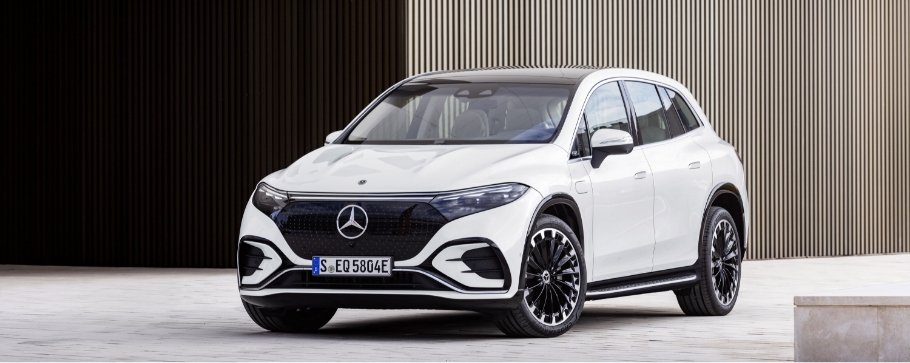
  • Mercedes-Benz EQS SUV: Redefined SUV luxury

    2023 Mercedes-Benz EQS SUV front angle

    With the luxury saloon EQS and the sporty executive saloon EQE, Mercedes-Benz has entered a new, all- electric era in the upper market segments as well. The EQS SUV, the third model series with this architecture developed for electric vehicles, will soon follow. The SUV offers plenty of space, comfort and connectivity for up to seven passengers in its avant-garde, luxurious interior. Thanks to powerful electric motors, responsive 4MATIC all-wheel drive and an intelligent OFFROAD driving mode, the EQS SUV is also capable of tackling light terrain with ease.

    The new EQS SUV shares the long wheelbase (3210 millimetres) with the EQS Saloon, but is over 20 centimetres higher. The dimensions in detail: 5125/1959/1718 millimetres (length/width2/height3). The interior dimensions benefit from these generous SUV dimensions and from the advantages of the purpose design tailored to the electric platform. The second row of seats can be electrically adjusted as standard. Up to four golf bags fit in the boot. A third row of seats with two additional individual seats and extensive comfort features for all passengers is available as an option.

    The EQS Saloon is the current aerodynamics world champion for production cars4. Its purpose design with smooth underbody and usually closed radiator shutter was a good starting point for aerodynamic measures on the EQS SUV. The optimisation of SUV-typical flow details led to a hitherto unique combination of spaciousness and aerodynamic efficiency.

    All EQS SUVs have an electric drive train (eATS) on the rear axle, and the versions with 4MATIC also have an eATS on the front axle. In the 4MATIC models, the Torque Shift function ensures intelligent, continuously variable distribution of drive torque between the rear and front electric motors and thus the use of the most efficient eATS in each case. The electric motors on the front and rear axles are permanently excited synchronous motors (PSM). The advantages of this design include high power density, high efficiency and high power constancy.

    The EQS Saloon was the first model series from Mercedes-Benz in which completely new vehicle functions can be activated in several areas via over-the-air updates (OTA). With the EQS SUV, this offer is significantly expanded. For example, Trailer Manoeuvring Assist or MBUX (Mercedes-Benz User Experience) Augmented Reality Navigation can be activated at a later date.

    With the EQS SUV, Mercedes-Benz is taking a major step towards zero-emission mobility and is moving a step closer to fulfilling Ambition 2039. The model is produced in a completely CO2-neutral way. The EQS SUV puts real solutions for emission-free mobility, intelligent resource conservation and responsible circular economy on the road.

    The chassis of the new EQS SUV has a four-link axle at the front and an independent multi-link suspension at the rear. The AIRMATIC air suspension with continuously adjustable damping ADS+ is standard equipment.

    The vehicle level can be raised by several centimetres. In addition to the DYNAMIC SELECT modes ECO, COMFORT, SPORT and INDIVIDUAL, the 4MATIC versions feature OFFROAD, a further mode for off-road driving. Furthermore, rear-axle steering with a steering angle of up to 4.5 degrees is standard. It provides plenty of manoeuvrability in the city and agility over land. Optionally and also via an OTA update, a version with up to 10 degrees steering angle is available.

    The principles of Integral Safety, in particular accident safety, apply regardless of the platform. Like all other Mercedes-Benz models, the EQS SUV therefore has a rigid passenger cell, special deformation zones and modern restraint systems. The European version of the EQS SUV is the first Mercedes-Benz model to be able to detect whether rear seats are actually occupied. If a passenger in the rear is not wearing a seat belt, the driver receives a specific warning. Another new feature at Mercedes-Benz is what is known as the occupant presence reminder. This system can indicate children who may have been overlooked in the rear of the vehicle. In vehicles for Europe, Australia and New Zealand, the reminder is on board as standard.

    Mercedes me Charge5 is one of the largest charging networks worldwide: it currently comprises over 700,000 AC and DC charging points, including around 300,000 are in Europe. Since 2021, Mercedes-Benz has ensured a subsequent offset with green electricity when customers use Mercedes me Charge to charge their cars in Europe. High-quality guarantees of origin ensure that as much green power from renewable energies is fed into the grid as is withdrawn via Mercedes me Charge. The new Mercedes me Charge function Plug & Charge makes charging the EQS SUV at public charging stations that support Plug & Charge convenient.

    Navigation with Electric Intelligence plans the fastest and most convenient route, including charging stops, based on numerous factors and reacts dynamically to traffic jams or a change in driving style, for example. This includes a visualisation in the MBUX infotainment system as to whether the state of charge of the battery is sufficient to return to the starting point without charging. Charging stations along the route that have been added manually are given preference in the route calculation. Proposed charging stations can be excluded.

    The estimated charging costs per charging stop are calculated.

    With ENERGIZING AIR CONTROL Plus, Mercedes-Benz thinks holistically about air quality in the EQS SUV. The system is based on filtration, sensors, a display concept and air conditioning. The HEPA (High-Efficiency Particulate Air) filter has a very high filtration level to trap fine particles, microparticles, pollen and other substances entering with the outside air.

    With intelligent software, MBUX fully adapts to its users and provides them with personalised suggestions for numerous infotainment, comfort and vehicle functions. With what is known as the zero layer, the most important applications are always offered on the topmost level within the field of vision, according to situation and context.

    The highlight of the interior is the MBUX Hyperscreen (special equipment). This large, curved screen unit spans almost from A-pillar to A-pillar. Three screens sit under a common cover glass and merge visually. The 12.3-inch OLED display for the front passenger gives them their own display and control area. In Europe, and in a growing number of countries, the front seat passenger is also able to watch dynamic content while the vehicle is on the move. This is because Mercedes-EQ is able to rely on an intelligent, camera-based blocking logic: If the camera detects that the driver is looking at the passenger display, the system automatically dims the dynamic content.

    The Dolby Atmos sound system® takes the audio experience in the EQS SUV to a new level. Individual instruments or voices of the studio mix can be placed all around the listening area. A new kind of sound animation thus becomes possible: This is because while conventional stereo systems usually have a left-right dynamic, Dolby AtmosÒ can use the entire space and create a 360-degree experience.

    Key technical data6

    EQS 450+ EQS 450 4MATIC EQS 580 4MATIC
    Drive system Rear-wheel drive All-wheel drive All-wheel drive
    Electric motor(s): Type Permanently excited synchronous motor(s) (PSM)
    Output kW 265 265 400
    Torque Nm 568 800 858
    Rated voltage Volts 396 396 396
    On-board charger (standard/option) kW 11/22 (USA: 9,6)
    AC charging time, three-phase
    (11/22 kW)
    h 5/10 (USA: 11,5)
    DC charging capacity, max. kW 200
    DC charging time at fast charging station7 min 31
    DC charging: max. range after 15 minutes8 (WLTP) km 250 n/a n/a
    Vehicle
    Length/width/height mm 5125/1959/1718
    Length/width/height (USA) mm 5125/1959/1718
    Wheelbase mm 3210
    Turning circle (with rear-axle steering 4.5°/10°) m 11.9/11.0
    Luggage capacity VDA (five/seven-seater) l 645-2.100/565-2.020
    Electrical consumption and range
    Electrical consumption (WLTP) kWh/100 km 23,0 – 18,6 24,0 – 20,0 24,0 – 20,0
    CO2 emissions (WLTP) g/km 0 0 0
    Range (WLTP) km 536 – 660 507 – 613 507 – 613
  • The EQE: the new business avant-garde

    2023 Mercedes-Benz EQE - Front

    Hot on the heels of the EQS, Mercedes-EQ is already presenting the next model series to be based on the electric architecture developed specifically for electric vehicles, the new EQE. The sporty business saloon offers all the essential functions of the EQS in a slightly more compact format. At market launch in late April 2022, the model line-up will initially comprise two variants: the EQE 350+ (WLTP: combined electrical consumption: 18.7-15.9 kWh/100 km; combined CO2 emissions: 0 g/km)[1] with 215 kW and the Mercedes-AMG EQE 43 4MATIC (WLTP: combined electrical consumption: 22.5-19.7 kWh/100 km; combined CO2 emissions: 0 g/km)[1]. With 350 kW, this is the entry-level model for electric Driving Performance from Mercedes-AMG. The EQE 500 4MATIC (provisional figures WLTP: combined electrical consumption: 21.1-17.8 kWh/100 km; combined CO2 emissions: 0 g/km) [2] and Mercedes-AMG EQE 53 4MATIC+ (provisional figures WLTP: combined electrical consumption: 23.2 – 20.3 kWh/100 km; combined CO2 emissions: 0 g/km) will follow. Production of the EQE takes place at two locations of the Mercedes-Benz Cars global production network: at the German Mercedes-Benz plant in Bremen for the global market and at the German-Chinese joint venture BBAC in Beijing for the local market.

    Compared to the luxury liner EQS, the EQE is even more streamlined, with a slightly shorter wheelbase, shorter overhangs and more recessed flanks – it carries the concept of the business saloon into the future. Sensual Purity is reflected in generously modelled surfaces, reduced joints and seamless transitions (seamless design). The overhangs and the front end are kept short, the rear provides the dynamic accent with a sharp rear spoiler. Flush with the outer edge of the body, the 19- to 21-inch wheels, together with a pronounced muscular shoulder section, give the EQE an athletic character.

    In its outer dimensions (length/width/height: 4946/1961/1512 millimetres), the EQE is comparable to the CLS. Like the latter, it has a fixed rear window and a boot lid. The interior dimensions even exceed those of today’s E-Class (213 model series) quite significantly, e.g. in terms of the shoulder room in the front (plus 27 mm) or the interior length (plus 80 mm).

    Unconventional interior design and high operating convenience

    With the optionally available MBUX Hyperscreen, the entire instrument panel is a single, ultimate widescreen. This determines the aesthetics of the entire cockpit and interior. The high-resolution screens merge seemingly seamlessly under the shared glass cover. The graphic appearance of their MBUX content is perfectly coordinated. The MBUX Hyperscreen is integrated into the instrument panel in minimalist fashion.

    The 12.3-inch OLED display for the front passenger gives them their own display and control area. In Europe and in a growing number of countries, the passenger is allowed to watch dynamic content such as videos, TV or the internet even while on the move. This is because Mercedes-EQ is able to rely on an intelligent, camera-based blocking logic: if the camera detects that the driver is looking at the front passenger display, this is automatically dimmed for certain content.

    The vent band spans across the entire width at the top and is very slim at the same time. These extreme proportions, together with the glass wave of the MBUX Hyperscreen, create the avant-garde architecture of the cockpit. The outer nozzles feature a turbine design. They play on the theme hyperanalogue through the contrast between high-tech precision mechanics and digital, glass display world.

    The latest MBUX generation, recently introduced in the EQS, is also on board the EQE. With adaptive software, the control and display concept completely adapts to its user and makes personalised suggestions for numerous infotainment, comfort and vehicle functions. With the zero-layer design, the user does not have to scroll through submenus or give voice commands. The most important applications are offered situationally and contextually on the top level in the field of view. In this way the EQE driver is relieved of certain operating steps.

    Efficient drive system

    The first models to come onto the market at the end of April 2022 will be the EQE 350+ with 215 kW and the Mercedes-AMG EQE 43 4MATIC with 350 kW. The EQE 500 4MATIC with 300 kW and the Mercedes-AMG EQE 53 4MATIC+ with up to 505 kW will follow. All EQE models have an electric drivetrain (eATS) on the rear axle. The versions with 4MATIC are also equipped with an eATS at the front axle. The electric motors are permanently excited synchronous motors (PSM). With the PSM, the rotor of the AC motor is fitted with permanent magnets and therefore does not need to be supplied with power. The advantages of this design include high power density, high efficiency and high power constancy. The motor on the rear axle is particularly powerful due to its six-phase design: it has two windings with three phases each.

    In the EQE 350+, the lithium-ion battery is made up of ten modules and has a usable energy content of 90 kWh. The innovative battery management software, developed in-house, allows updates over the air (OTA). In this way, the energy management of the EQE remains up-to-date throughout the life cycle.

    With this generation of batteries, a major step has been achieved in terms of the sustainability of the cell chemistry: The optimised active material consists of nickel, cobalt and manganese in a ratio of 8:1:1. This reduces the cobalt content to less than ten percent. The continuous optimisation of recyclability is part of Mercedes-Benz’s holistic battery strategy.

    Key technical data

    EQE 350+[3] EQE 500 4MATIC[4]
    Drive system
    Electric motor Type Permanently excited synchronous motor Permanently excited synchronous motor
    Output kW 215 300
    torque Nm 565 858
    Rated voltage Volts 328.5 328.5
    On-board charger (standard/optional) kW 11/22 11/22
    AC charging time, three-phase (11/22 kW) h 8,25/4,25 8,25/4,25
    DC charging capacity, max. kW 170 170
    DC charging time at quick-charging station[5] min 32 32
    DC charging: max. range after15 minutes[6] (WLTP) km 250 230 (provisional)
    Vehicle
    Length/width/height mm 4.946/1.961/1.510 4.946/1.961/1.510
    Length/width/height (USA) mm 4.995/1.961/1.511 4.995/1.961/1.511
    Wheelbase mm 3120 3120
    Turning circle (without/with rear-axle steering 4.5°/10°) m 12.5/11.6/10.7 12.5/11.6/10.7
    Boot capacity, VDA l 430 430
    Power consumption and range
    Power consumption (WLTP) kWh/100 km 18.7-15.9 21.1-17.8 (provisional)
    CO2 emissions (WLTP) g/km 0 0
    Range (WLTP) km 567-654 503-590 (provisional)

    Consistently high performance and multiple accelerations without a drop in power characterise the EQE’s drive philosophy. This includes a sophisticated thermal concept and several variants of energy recovery by means of recuperation. In this process, the high-voltage battery is charged by converting the mechanical rotary motion into electrical energy during overrun or braking mode. The driver can manually select the deceleration in three stages (D+, D, D-) as well as the gliding function via shift paddles behind the steering wheel. Also available: DAuto.

    ECO Assist also offers situation-optimised recuperation – deceleration is so strong or weak that it ultimately results in the most efficient driving style. If possible, recuperative deceleration is also used for vehicles detected ahead. This even occurs until they come to a standstill, for example at traffic lights. The driver does not need to press the brake pedal for this – literally one-pedal driving.

    Navigation with Electric Intelligence plans the fastest and most convenient route, including charging stops, based on numerous factors and reacts dynamically to traffic jams or a change in driving style, for example. This includes a visualisation in the MBUX infotainment system as to whether the available battery capacity is sufficient to return to the starting point without charging.

    High noise and vibration comfort, Sound Experiences as a contrast

    As a saloon with a boot lid, the EQE’s concept is well equipped to offer a high level of NVH comfort Noise, Vibration, Harshness) into account. Numerous measures contribute to this. In the electric drivetrains (eATS), the magnets are arranged inside the rotors in an NVH-optimised way (known as ‘sheet metal cut’). In addition, the eATS have a special foam mat all around as an NVH cover. The inverter cover is a sandwich construction. The eATS are double-decoupled from the body via elastomeric bearings:

    Highly effective spring/mass components provide continuous sound insulation from the crossmember under the windscreen to the floor of the boot. Acoustic foams are inserted into many carriers during body-in-white construction.

    If desired, the ride in the EQE nevertheless becomes an acoustic experience: if the Burmester® 3D surround sound system is fitted, the EQE features the two soundscapes Silver Waves and Vivid Flux. Silver Waves is a sensuous and clean sound. Aimed at EV enthusiasts, Vivid Flux is crystalline, synthetic yet humanly warm. They can be selected or switched off as sound experiences on the central display. The additional soundscape Roaring Pulse can be activated as an over-the-air update. This sound experience is reminiscent of powerful machines, and is sonorous and extroverted.

    Air suspension and rear-axle steering as options

    The suspension of the new EQE, with four-link front suspension and multilink rear suspension, is closely related in design to the new S-Class. As an option, the EQE is available with AIRMATIC air suspension with ADS+ adaptive damping system. With rear-axle steering (optional extra), the EQE feels as manoeuvrable as a compact car in the city. The steering angle at the rear axle is up to ten degrees. The turning circle is reduced from 12.5 to 10.7 metres with rear-axle steering.

    New vehicle functions can be activated via over-the-air technology (OTA). Available from launch: the additional sound experience “Roaring Pulse”, two special driving modes for young drivers and service personnel, small games, the highlight mode as well as DIGITAL LIGHT with projection function and DIGITAL LIGHT individualisation. In Highlight mode the vehicle presents itself and its equipment highlights – this can be activated via the “Hey Mercedes” voice assistant. In addition to the light animation “Digital Rain”, DIGITAL LIGHT individualisation includes other coming-home/leaving animations such as “Brand World”. The OTA functions are available in the Mercedes me Store, and the range will be successively expanded.

    Convenient charging in a large charging network

    With the new Mercedes me Charge Plug & Charge function, the EQE can be charged even more conveniently at Plug & Charge-enabled public charging points: when the charging cable is plugged in, the charging process starts automatically; no further authentication by the customer is required. The vehicle and the charging station communicate directly via the charging cable.

    What’s more, Mercedes me Charge customers continue to benefit from the integrated payment function with automatic payment. The customer chooses the preferred payment method only once. Every charging process is then automatically debited – including abroad. The individual charging processes are clearly listed in a monthly invoice.

    Mercedes me Charge is one of the largest charging networks worldwide: it currently comprises around 700,000 AC and DC charging points worldwide, of which more than 300,000 are in Europe. By means of high-quality certificates of origin, Mercedes-Benz guarantees that energy from renewable energy sources is fed into the grid for charging current sourced via Mercedes me Charge.

    High level of passive and active safety

    The principles of Integral Safety, in particular accident safety, apply regardless of the platform. Like all other Mercedes-Benz models, the EQE therefore has a rigid passenger cell, special deformation zones and modern restraint systems with PRE-SAFE®.

    The fact that the EQE is based on an all-electric architecture also opened up new design possibilities for its safety concept. It meant, for example, that a favourable location could be chosen for the installation of the battery, in a crash-protected area in the underbody. And because there is no large crankcase on board, the behaviour in a frontal crash could be modelled even better. In addition to the standard crash tests, the car’s performance in various additional load situations was verified and extensive component tests carried out at the Vehicle Safety Technology Centre (TFS).

    The latest generation of driving assistance systems includes numerous driver support functions. One new function is the additional microsleep warning from ATTENTION ASSIST (in conjunction with MBUX Hyperscreen). It analyses the driver’s eyelid movements using a camera in the driver display. The assistance display within the driver’s display shows the operation of the driving assistance systems in a comprehensible full-screen view.

    Mercedes management on the EQE

    “After the EQS, the EQE is already the second model to be built on our new platform for electric vehicles. This speed of innovation shows the advantages of the scalable architecture: With the new EQE, we can quickly make the high-tech solutions of our electric flagship EQS available to a wider group of buyers. And our production flexibility reaches new heights with the EQE: at the Bremen plant, where the versions for the world market roll off the production line, ten other models are already in production.“
    Markus Schäfer, Member of the Board of Management of Mercedes-Benz Group AG and COO of Mercedes-Benz Cars

    “With its dynamic driving experience and comprehensive range of Connected Services, the EQE is a perfect fit for the desires of a modern generation of customers. We reconcile innovation and emotionality with sustainability: with Green Charging, we are actively contributing to the reduction of CO2 emissions. In addition, there are numerous intelligent functions that make everyday life easier for our customers. This includes Plug & Charge, for example – plug in and the EQE is charged without further authentication or registration.”
    Britta Seeger, Member of the Board of Management of Mercedes-Benz Group AG and Mercedes-Benz AG, responsible for Mercedes-Benz Cars Marketing and Sales

    “The Mercedes EQE is the next electric luxury saloon. The hallmark one-bow design, finely sculpted lines and silhouette together create a very aerodynamic and futuristic look. It all adds up to make the EQE a more extravagant, more entertaining and more exceptional car, while at the same time defining the next luxury class for the Mercedes-EQ brand.“
    Gorden Wagener, Chief Design Officer Mercedes-Benz AG

    “The Mercedes-EQ brand is pursuing an ambitious and equally clear goal: We want to build the most sustainable and technically most advanced cars in the world. By bringing responsible innovations onto the road, we are driving forward this process of transition. The EQE is the latest example of this – and its contribution will be significant.”
    Christoph Starzynski, Vice President Electric Vehicle Architecture & Head of Mercedes-EQ

    [1] Range and electrical consumption have been determined on the basis of Commission Regulation (EC) No. 2017/1151/EU.

    [2] Data on electrical consumption and range are provisional and were determined internally in accordance with the “WLTP test procedure” certification method. Confirmed TÜV figures, EC type approval and certificate of conformity with official figures are not yet available. Differences between the stated figures and the official figures are possible.

    [3] Range and electrical consumption have been determined on the basis of Commission Regulation (EC) No. 2017/1151/EU.

    [4] Data on electrical consumption and range are provisional and were determined internally in accordance with the “WLTP test procedure” certification method. Confirmed TÜV figures, EC type approval and certificate of conformity with official figures are not yet available. Differences between the stated figures and the official figures are possible.

    [5] The charging times are for a 10-80% charge at a DC fast charging station of category “K” or “L” pursuant to EN17186 with 500 A charging current

    [6] At DC fast charging stations with 500 amps based on provisional WLTP range

  • Mercedes-AMG SL 43: Attractive entry-level model with innovative engine technology

    Mercedes-AMG SL 43 - Front View

    Following the two variants with V8 engines, Mercedes-AMG presents the SL 43 (combined fuel consumption 9.4-8.9 l/100 km, combined CO2 emissions 214-201 g/km),[1]a technically innovative entry-level model of the newly developedroadster icon. Under the bonnet of the open-top 2+2-seater with fabric soft top is an in-line four-cylinder petrol engine with two litres displacement that provides the befitting propulsion. This is the first time in the world that an electric exhaust gas turbocharger is being used in a production vehicle. This technology comes from Formula 1™. The system in the SL 43 is a direct derivative of the development successfully used by the Mercedes-AMG Petronas F1 Team for many years in the premier class of motorsport. The new form of turbocharging guarantees particularly spontaneous throttle response across the entire rev range, thereby offering an even more dynamic driving experience while increasing efficiency at the same time. The turbocharger is operated via the 48-volt electrical system, which also feeds the belt-driven starter-generator (RSG). As a result, the Mercedes-AMG SL 43 has an output of 280 kW (381 hp) and a maximum torque of 480 Nm, plus an additional short-term boost of 10 kW (14 hp) from the RSG in certain driving situations. The new entry-level model in the SL family also shines with extensive standard equipment. In addition, numerous options that enhance comfort and safety offer a wide range of possibilities for individualisation.

    In the 70 years of its development history, the SL experienced the transformation from a thoroughbred racing car to an open-top luxury sports car – and has long enjoyed legend status, not least for this reason. The new Mercedes-AMG SL now marks another milestone in the model’s history. It combines the distinct sportiness of the original SL with the unique luxury and technological excellence of the modern Mercedes-AMG models. As the new entry-level model in the series, the SL 43 is a particularly good example of this. It is the world’s first series-produced vehicle to feature an electric exhaust gas turbocharger. This technology comes directly from Formula 1™ and solves the trade-off between a small, fast responding supercharger that nevertheless achieves comparatively low peak power and a large supercharger with high peak power that only responds delayed. With its innovative engine concept, the new entry-level model of the 2+2-seater roadster is aimed more at particularly tech-savvy buyers. With its combination of a comparatively light four-cylinder engine on the front axle and rear-wheel drive, the SL 43 also displays distinctly discrete handling characteristics.

    “In its long history, the SL has repeatedly set technological milestones. For example, while the legendary 300 SL Gullwing in 1954 was the world’s first series-produced passenger car with direct petrol injection, the new Mercedes-AMG SL 43 is now the very first series-produced vehicle with an electric exhaust gas turbocharger. With this technology, the SL also has an outstanding performance range in its entry-level version. This means that our seemingly smallest SL combines the typical AMG Driving Performance with luxury and comfort at the absolute top level. What’s more, with this innovative engine we are undoubtedly also appealing to a wider clientèle”, says Philipp Schiemer, Chairman of the Board of Management of Mercedes-AMG GmbH.

    “The electric exhaust gas turbocharger is a fascinating example of the extensive transfer between Formula 1 technology and the development of production vehicles. In implementing this in conjunction with our powerful M139 four-cylinder, we were also able to draw on the enormous wealth of experience of our colleagues at Mercedes-AMG High Performance Powertrains. The technology increases agility and thus driving fun, while at the same time improving the efficiency of the drive system. We are pursuing ambitious goals with a view to our electrified future. Innovative components such as the electric exhaust gas turbocharger help us to achieve this”, says Jochen Hermann, Chief Technical Officer of Mercedes-AMG GmbH.

    Electric exhaust gas turbocharger improves engine responsiveness

    The operating principle of the electric exhaust gas turbocharger is based on the same technology used by the Mercedes-AMG Petronas F1 Team. An electric motor around four centimetres thin is integrated directly on the turbocharger shaft between the turbine wheel on the exhaust side and the compressor wheel on the intake side. Electronically controlled, this drives the shaft of the turbocharger directly and thus accelerates the compressor wheel before the exhaust gas stream starts to drive it conventionally.

    This significantly improves immediate response from idle speed and across the entire engine speed range. The combustion engine responds even more spontaneously to accelerator pedal input, while the overall driving experience is more dynamic. In addition, the electrification of the turbocharger enables higher torque at low revs. This also increases agility and optimises acceleration from a standstill. Even when the driver takes their foot off the accelerator or applies the brakes, the technology of the electric turbocharger is able to maintain the boost pressure at all times. This ensures so that a continuous immediate response.

    The turbocharger, which is operated via the 48-volt on-board electrical system, works at speeds of up to 170,000 rpm, which enables a very high airflow rate. The turbocharger, electric motor and power electronics are connected to the combustion engine’s cooling circuit to create an optimal temperature environment at all times. In combination with the internally named M139 two-litre, in-line four-cylinder engine, the innovative technology in the SL 43 produces a rated output of 280 kW (381 hp) at 6750 rpm. The maximum torque of 480 Nm is available between 3250 rpm and 5000 rpm. Depending on the situation, the system also guarantees an additional boost of 10 kW (14 hp) for a short time from the belt-driven starter generator (RSG).

    The second-generation RSG also functions as a mild hybrid in the 48-volt on-board electrical system, which in addition to the temporary power boost enables functions such as gliding mode and energy recovery for maximum efficiency. At the same time, the 48-volt technology also increases comfort, as the transitions between the start-stop function and the gliding mode function are almost imperceptible.

    AMG SPEEDSHIFT MCT 9G transmission with wet start-off clutch and rear-wheel drive

    The four-cylinder engine known as the M139, which has long been used transversely in Mercedes‑AMG compact models without an electric exhaust turbocharger, is positioned longitudinally in the SL 43. In the entry-level model in the SL series, which always features rear-wheel drive, it is also combined with the AMG SPEEDSHIFT MCT 9G transmission (MCT = Multi-Clutch Transmission) for the first time. A wet start-off clutch replaces the torque converter. It reduces weight and, thanks to its lower inertia, optimises response to accelerator pedal input, especially during spurts and load changes. The elaborately calibrated software ensures extremely short shift times as well as fast multiple downshifts if required. In addition, the intermediate throttle function in the “Sport” and “Sport+” driving modes delivers a particularly emotionally appealing gearshift experience. There is also the RACE START function, which ensures optimal acceleration from a standstill.

    The driving performance is up to par: from a standstill, the SL 43 accelerates to 100 km/h in just 4.9 seconds if required, and the top speed is 275 km/h. In addition to the performance it offers, the entry-level model of the series is also distinguished by comparatively low consumption and emission figures.

    Roadster architecture with aluminium composite structure for typical AMG Driving Performance

    The new SL of the R232 series is based on a completely new vehicle architecture developed by Mercedes‑AMG. The new dimensional concept allows a 2+2 seating configuration for the first time since 1989 (Mercedes SL model series R129). This makes the new SL even more versatile. The rear seats increase daily practicality and offer space for people up to 1.50 metres tall (up to 1.35 metres with a child seat). If the extra seating is not needed, an insertable draft stop behind the rear seats can protect front-seat occupants from draughts on the back of their necks. Or the second row of seats can be used as additional stowage space and accommodate a golf bag, for example.

    Constructed from lightweight aluminium composite, the chassis consists of an aluminium space frame with a self-supporting structure. The design guarantees maximum rigidity and is thus the perfect basis for precise driving dynamics, high comfort, optimal packaging and sporty body proportions. The aim of the body shell architecture is to realise the typical AMG Driving Performance with a focus on lateral and longitudinal dynamics, while at the same time meeting the high standards on comfort and safety.

    In the new SL, the intelligent material mix enables the highest possible rigidity at a low weight. The materials used include aluminium, magnesium, fibre composites and steel, from which the windscreen frame is made, for example. This serves as roll-over protection in conjunction with the roll bar system behind the rear seats, which pops up at lightning speed when needed.

    Compared to the previous model series, the torsional rigidity of the body shell structure was increased by 18 percent. The transverse rigidity is 50 percent higher than the already outstanding value of the AMG GT Roadster. The longitudinal rigidity is 40 percent higher. The weight of the body shell per se is only around 270 kilograms. Together with the low centre of gravity, the systematic lightweight construction ensures optimal driving dynamics.

    Entry-level model with subtle distinguishing features in the exterior design

    The exterior design of the SL 43 differs in individual details from the two eight-cylinder models. For example, it has differentiated front and rear aprons as well as round instead of angular double tailpipe trim. The defining features of the SL body design include the long wheelbase, the short overhangs, the long bonnet, the passenger compartment set further back with steeply raked windscreen, and the powerful rear end. This results in the typical SL proportions. They give the roadster its powerful, dynamic appearance – together with the voluminously modelled wheel arches and the large light-alloy wheels that are flush with the outer skin. The SL 43 runs on 19-inch light-alloy wheels as standard. In addition, the same range as for the eight-cylinder models is available as an option: aerodynamically optimised light-alloy wheels with diameters of 20 or 21 inches, which reduce air resistance through low turbulence. Particularly sophisticated are 20-inch wheels with plastic aero rings that save additional weight.

    Active aerodynamics to increase dynamics and efficiency

    A technical highlight for improving aerodynamics is the AIRPANEL active air control system. The horizontal louvres behind the upper air intake are electronically controlled and can be opened and closed with actuator motors. In this way, the airflow is directed according to demand, thus improving aerodynamic performance.

    Normally the louvres are closed – even at top speed. This position reduces air resistance. Only once predefined components have reached certain temperatures and the demand for cooling air is particularly high do the louvres open and allow the maximum amount of cooling air to flow to the heat exchangers. This calls for highly intelligent and fast control.

    The same applies to another active component of the aerodynamics: the retractable rear spoiler seamlessly integrated into the vehicle profile. It changes its position depending on the driving status. In doing so, the control software takes into account numerous parameters: It factors the driving speed, the longitudinal and lateral acceleration and the steering speed into the calculation. The spoiler assumes five different angle settings from 80 km/h to either optimise the handling stability or reduce drag.

    The optional Aerodynamics Package for the Mercedes-AMG SL 43 includes larger flics on the front and rear bumpers and a larger rear diffuser. This improves both downforce and aerodynamic drag even further. The modified speed thresholds of the rear spoiler and its steeper angle of attack of 26.5 degrees (instead of 22 degrees) in the Dynamic position also contribute to this.

    Fabric soft top for less weight and lower centre of gravity

    The sportier positioning of the new SL also suggested the decision for an electric soft top instead of the previous metal vario-roof. The 21-kilogram reduction in weight and the resulting lower centre of gravity have a positive effect on driving dynamics and handling. The Z-fold saves space and weight, and makes it possible to dispense with a conventional soft-top compartment cover. The front header bow ensures that the open soft top is flush in its final position. At the same time, the developers were faced with the task of maintaining the high suitability for everyday use and the exemplary quiet-running. The three-layer design consists of a tightly stretched outer shell, a precisely finished roof liner and an acoustic mat made of high-quality 450 g/m² PES fleece inserted in between.

    Opening and closing takes only about 15 seconds and is possible up to a speed of 60 km/h. The soft top is operated using the switch panel in the centre console or the multimedia touch screen, on which an animation shows how the process is progressing.

    Interior with “hyperanalogue” cockpit and standard luxury seats

    The interior of the Mercedes-AMG SL 43 also features an exciting combination of analogue geometry and the digital world – known as “hyperanalogue”. This is exemplified by the fully digital instrument cluster, which is integrated into a three-dimensional visor. The standard MBUX infotainment system offers a choice of several specific display styles and different modes. The symmetrical instrument panel is designed as a powerful wing and structured into an upper and lower section. The highlight are the four galvanised turbine nozzles. Their surfaces merge into the instrument panel in the form of powerful power domes. The lower section of the instrument panel evolves fluidly from the centre console, seamlessly connecting the two elements.

    Despite symmetry, the cockpit design creates a clear focus on the driver: The high-resolution 12.3-inch LCD screen of the instrument cluster is not designed to be free-standing, but integrated into a high-tech visor that prevents reflections caused by sunlight. In order to avoid disturbing light reflections caused by different sun positions when the soft top is open, the tilt of the touch screen on the centre console can also be electrically adjusted from 12 degrees to 32 degrees.

    2023 Mercedes-Benz SL 43 AMG Interior

    The latest generation MBUX (Mercedes-Benz User Experience) is intuitive to operate and capable of learning. It offers a host of functional content and the operating structure of the second-generation MBUX system, which debuted in the new Mercedes-Benz S-Class. In the SL, extensive AMG-specific content in five display styles is added. Exclusive menu items such as “AMG Performance” or “AMG TRACK PACE” also emphasise the sporty character.

    The SL 43 is equipped as standard with a wide range of electrically and manually adjustable luxury seats in a combination of ARTICO man-made leather and fabric. Seat covers in leather, NAPPA leather and NAPPA AMG leather are optionally available, as are AMG sports seats and AMG Performance seats with their sculptural design. The optionally available upholstery in MANUFAKTUR macchiato beige/titanium grey or in MANUFAKTUR truffle brown/black ensures a particularly exclusive touch. The AMG Performance seats can also be upholstered in a combination of nappa leather and DINAMICA microfibre with yellow or red decorative topstitching.

    In addition to the standard high-gloss black, the trim elements and centre console are also available in aluminium or carbon and in MANUFAKTUR chrome black. The AMG Performance steering wheel with optional steering wheel heater is available in nappa leather and nappa leather/MICROCUT microfibre.

    Newly developed chassis with multi-link front axle and innovative lightweight construction measures

    As standard, the SL 43 is equipped with a newly developed AMG RIDE CONTROL steel suspension with particularly powerful aluminium shock absorbers and lightweight coil springs. The new SL is the first production vehicle ever from Mercedes-AMG to feature a multi-link front axle with five links arranged entirely within the rim. This significantly improves the kinematics. At the rear axle, a 5-link design likewise controls the wheels.

    To reduce unsprung masses, all suspension links, steering knuckles and wheel carriers on the front and rear axles of the new SL are made of forged aluminium. The multi-link concept controls each wheel with the least amount of elastic movement. The high camber and track stability not only enables high cornering speeds, it also provides the driver with optimal road contact at the high cornering limit. This is reflected in excellent lateral dynamics and driving stability at high speeds as well as in the good-natured reaction to external influences such as crosswinds, bumps or jumps in friction coefficients.

    The lightweight coil springs are a new development: special tempering allowed their weight to be lowered without reducing their performance. In the manufacturing process, the spring pad is glued onto the spring for the first time. This firm connection prevents wear and tear caused by dirt such as sand over the course of a vehicle’s life. The spring does not corrode over the life cycle, and the maximum component load can consequently be increased at less weight. This saves around 0.2 kilograms per spring.

    Another lightweight construction measure concerns the torsion bar stabilisers on the front and rear axles of the SL 43. Thanks to a variable wall thickness, their weight can be reduced. The maximum wall thickness is now only used where it is required due to the maximum load, in this case in the area of the rubber mounts.

    The latest generation of AMG adaptive adjustable damping is available as an option for the SL 43. The suspension control unit uses data analysis – including acceleration and wheel travel sensors – to adjust the damping force for each wheel in a few milliseconds to suit the situation. The driver can pre-select the basic set-up via the AMG DYNAMIC SELECT driving modes: at the touch of a button, the handling characteristics change, for example, from full dynamics in “Sport+” mode to smooth cruising in the “Comfort” setting. In addition, the tuning can be adjusted in three stages independently of the driving modes via a dedicated button.

    AMG high-performance composite brake system for short braking distances

    The newly developed AMG high-performance composite brake system guarantees excellent deceleration values and precise control. It impresses with short braking distances, sensitive response and last but not least with high stability and durability – even under extreme stress. Comfort functions include Hill Start Assist as well as pre-filling and dry braking in wet conditions. When the ignition is switched off and the vehicle is stationary, the parking position “P” is also activated. When starting off, the electric parking brake is released automatically.

    The composite brake discs are particularly light: Driving dynamics and turn-in behaviour benefit from the reduced unsprung masses. Brake disc (made of cast steel) and brake disc pot (made of aluminium) are now connected with special pins. This design saves space, which is used for even better brake cooling. The directional perforation is also new: In addition to the weight saving and better heat dissipation, this solution scores points with a faster response in wet conditions as well as better pad cleaning after braking.

    Optional rear-axle steering combines agility and stability

    The Mercedes-AMG SL 43 can be equipped with active rear-axle steering (HAL) as an option. Depending on the speed, the rear wheels steer either in the opposite direction (up to 100 km/h) or in the same direction (faster than 100 km/h) as the front wheels. The system thus enables both agile and stable driving characteristics. The front-wheel steering ratio is more direct, making it easier to steer the vehicle at the limit with less steering effort.

    Six driving modes and AMG DYNAMICS: from comfortable to dynamic

    The five AMG DYNAMIC SELECT driving modes “Slippery”, “Comfort”, “Sport”, “Sport +” and “Individual”, as well as the “RACE” mode included in the optional AMG DYNAMIC PLUS Package, enable a wide spread of vehicle characteristics from comfortable to dynamic. The distinct driving modes offer an individual driving experience, precisely tailored to different driving conditions. As a feature of the AMG DYNAMIC SELECT driving modes, the SL models also feature AMG DYNAMICS. This integrated vehicle dynamics control expands the stabilising functions of ESP® with interventions that enhance agility in the steering characteristic and in ESP® additional functions. When cornering at speed, for example, brief braking intervention at the inner rear wheel generates a defined yawing moment around the vertical axis for responsive and precise turn-in.

    SL equipment programme: great variety for an individual look

    With the details of its extensive standard equipment as well as many additional options available, the Mercedes-AMG SL 43 offers a broad individualisation spectrum for a wide range of customer wishes – from sporty and dynamic to luxuriously elegant. This includes twelve paint finishes including the two exclusive SL colours hyper blue metallic and MANUFAKTUR monza grey magno, three roof colour variants and several new wheel designs.

    Three exterior design packages are available to sharpen the look further and make it more elegant or more dynamic.

    • The AMG Exterior Chrome Package contains elegant high-gloss chrome accents on the front apron, the side sill trim and the rear.
    • In the AMG Night Package, selected exterior elements are finished in high-gloss black, such as the front splitter, the side sill trims, the mirror caps and the trim element in the rear diffuser. Added to this are darkened tailpipe trims. Depending on the chosen paint finish, this results in striking contrasts or flowing transitions.
    • The AMG Night Package II includes additional elements in high-gloss black, including radiator grille, typography and Mercedes star at the rear.
    • With the AMG Exterior Carbon Package, lightweight components made of carbon fibre evoke the SL’s motorsport history. The carbon parts include the front splitter and the flics in the front bumper as well as the trim strip in the side member trim. Furthermore, there are tailpipe trims in high-gloss black and the trim strip in the diffuser in carbon or high-gloss black.

    AMG DYNAMIC PLUS Package for maximum driving pleasure

    The AMG DYNAMIC PLUS Package, which combines numerous high-performance components, is optionally available for the SL 43:

    • Dynamic AMG engine mounts connect the engine more rigidly or more flexibly to the body, depending on the driving situation. In every driving situation, this results in the best possible balance between driving dynamics and comfort.
    • The electronically controlled AMG limited-slip rear differential distributes the required power to the wheels even more promptly and precisely during dynamic cornering and rapid acceleration, thus guaranteeing maximum traction.
    • The “RACE” driving mode delivers race track performance at the touch of a button with even more spontaneous engine response and a more direct accelerator pedal characteristic. Selectable as an additional driving mode via the AMG steering wheel buttons.
    • The lowering by ten millimetres lowers the vehicle’s centre of gravity and additionally stabilises the vehicle.
    • The yellow-painted AMG brake callipers visually underline the increased driving dynamics potential.

    Driving assistance systems and MBUX: intelligent helpers in the background

    With the aid of numerous sensors, cameras and radar, the driving assistance systems, some of which are optional, monitor the traffic and surroundings of the new SL 43. If necessary, the intelligent helpers can intervene at lightning speed. As in the current generations of the Mercedes C-Class and S-Class, the driver is supported by several new and enhanced systems. This is done in everyday situations, for example, by helping with speed adaptation, distance control, steering and lane changes. This makes it easier to react to impending collisions. The functioning of the systems is visualised by a new display concept in the instrument cluster.

    The new assistance display in the instrument cluster shows comprehensibly and transparently how the driving assistance systems work in a full-screen view. The driver can see their car, lanes, lane markings and other road users such as cars, trucks and two-wheelers in an abstracted 3D way there. The system status and operation of the assistants are visualised in this depiction of the surroundings. The new, animated assistance display is based on a 3D scene generated in real time. This dynamic, high-quality representation makes the operation of the driving assistance systems transparent as an augmented reality driving experience.

    Numerous connectivity services available

    The MBUX (Mercedes-Benz User Experience) infotainment system enables extensive operating options and many digital services from Mercedes me connect. The strengths include the intuitive operating concept via touch screen or touch control buttons on the steering wheel, Smartphone Integration of Apple CarPlay and Android Auto as well as hands-free operation via Bluetooth connection and Digital Radio (DAB and DAB+). In conjunction with MBUX, customers already have access to connectivity services such as Live Traffic Information. Mercedes me connect makes the new SL altogether more intelligent: Additional functions can be used before and after the journey or while on the road. All that is required is to link the roadster to a Mercedes me account in the Mercedes me Portal and accept the Terms of Use. Thanks to navigation with Live Traffic Information and Car-to-X communication, the customer drives with real-time traffic data. This way, traffic jams can be avoided efficiently and valuable time can be saved. Networked vehicles exchange information about traffic events by means of car-to-x communication.

    Technical data1

    Mercedes-AMG SL 43

    Engine
    Number of cylinders/arrangement 4/in-line
    Displacement cc 1991
    Rated output kW/hp 280/381
    at engine speed rpm 6750
    Additional output (Boost) kW/hp 10/14
    Rated torque Nm 480
    at engine speed rpm 3250-5000
    Compression ratio 10.0
    Mixture formation combined direct petrol injection and intake manifold injection, turbocharging by means of electrically assisted exhaust gas turbocharger
    Power transmission
    Drive system layout Rear-wheel drive
    Transmission AMG SPEEDSHIFT MCT 9G (automatic transmission with wet multi-disc start-off clutch)
    Gear ratios
    1st/2nd/3rd/4th/5th/6th/7th/8th/9th gear 5.35/3.24/2.25/1.64/1.21/1.00/0.87/0.72/0.60
    Reverse 4.80
    Chassis
    Front axle AMG RIDE CONTROL suspension with aluminium double wishbones, anti-squat and anti-dive geometry, lightweight coil springs and stabiliser bar
    Rear axle AMG RIDE CONTROL suspension with aluminium double wishbones, anti-squat and anti-dive geometry, lightweight coil springs and stabiliser bar
    Brake system Hydraulic dual-circuit brake system; 390 mm composite brake discs at front, vented and perforated, 6-piston aluminium fixed calliper; 360 mm composite brake discs at rear, vented and perforated, 1-piston aluminium floating calliper; electric parking brake, ABS, Brake Assist, 3-stage ESP®
    Steering Electromechanical speed-sensitive power steering with rack and pinion, variable steering ratio (12.8:1 at dead centre) and variable power assistance
    Wheels front: 9.5 J x 19; rear: 11 J x 19
    Tyres front: 255/45 ZR 19; rear: 285/40 ZR 19
    Dimensions and weights
    Wheelbase mm 2700
    Front/rear track mm 1665/1629
    Length/height/width mm 4705/1359/1915
    Turning circle m 12.84
    Boot capacity l 213-240
    Kerb weight acc. to EC kg 1810
    Payload kg 335
    Tank capacity/of which reserve l 70/10
    Performance, consumption, emissions
    Acceleration 0-100 km/h 4.9
    Top speed km/h 275 (electronically limited)
    Combined fuel consumption, WLTP l/100 km 9.4-8.9
    Combined CO2 emissions, WLTP g/km 214-201

    [1] The stated figures are the measured “WLTP CO₂ figures” in accordance with Article 2 No 3 Implementing Regulation (EU) 2017/1153. The fuel consumption figures were calculated on the basis of these figures.

    [1] The stated figures are the measured “WLTP CO₂ figures” in accordance with Article 2 No 3 Implementing Regulation (EU) 2017/1153. The fuel consumption figures were calculated on the basis of these figures.


  • Mercedes-AMG G 63 “Edition 55” – exclusive model to mark “55 years of AMG” anniversary

    Mercedes-AMG G 63 Edition 55 - Front Angle

    For 55 years these three letters have signified top-level performance, exclusivity, and high driving dynamics worldwide. The G-Class has held a unique position in the AMG portfolio for over two decades and represents the pinnacle of off-road driving performance. Its cult status makes it the ideal ambassador to ring in the 55th anniversary of the performance luxury brand with the Mercedes-AMG G 63 “Edition 55.” Exquisite details underline Mercedes-AMG’s claim to offer customers the highest possible individuality and exclusivity. Limited to 55 units in the U.S., the anniversary model will be available later this year.

    “From a two-man start-up in 1967 to a state-of-the-art development site including its own engine manufacturing facility for high-performance vehicles and more than 2000 excellently qualified employees in 2022, the success story of Mercedes-AMG over the past 55 years is simply impressive. The same applies to the G-Class, which has remained true to itself for over four decades in the course of its unique career. Its storied history and genuine character makes it the perfect first well-wisher for me on our 55th birthday. And just as the G-Class will lose none of its original character in its future all-electric variant, Mercedes-AMG is also ensuring the hallmark driving performance made in Affalterbach in its electrified future. The departure into the next 55 years of the company’s history will certainly be as exciting and challenging as the task our company founders Hans Werner Aufrecht and Erhard Melcher set themselves back then,” says Philipp Schiemer, Chairman of the Board of Management of Mercedes-AMG GmbH.

    The 2022 Mercedes-AMG G 63 “Edition 55” is finished in Obsidian Black metallic and features the AMG emblem. 22-inch AMG forged wheels in a cross-spoke design with a matte grey paint finish and a high-sheen rim flange, as well as the AMG Night Package and AMG Night Package II provide visual contrast. The fuel filler cap in silver chrome with AMG lettering further exemplifies the exceptional attention to detail.

    The interior is characterized by contrasting black and red elements. Stainless steel door sill trims with red illuminated AMG lettering welcome the driver. To match, the black AMG floor mats made of high-quality velour feature red contrasting stitching and “Edition 55” lettering woven in red. The AMG Performance steering wheel in Microfiber also commemorates the anniversary with the “AMG” and “55” badges, making this special model an exclusive collector’s item. AMG seats are finished in two-tone Nappa Leather in Classic Red/Black. The exclusive ambience of the interior is rounded off by AMG matte carbon trim elements.

    The G 63 “Edition 55” also includes a customized AMG Indoor Car Cover, made from a breathable, tear- resistant synthetic fiber fabric with an antistatic inner fabric made of flannel.

    55 years of the Mercedes-AMG success story

    Founded in 1967 by engineers Hans Werner Aufrecht and Erhard Melcher, the company has continued to build on its position as a highly successful performance and sports car brand through numerous successes in motorsport and the development of unique road cars. Today the Affalterbach-based company is a wholly owned subsidiary of Mercedes-Benz Group AG and is the Group’s sporting spearhead. For each of the more than 2,000 employees the focus is on the brand promise of “Driving Performance,” which unites the core strengths of AMG: cutting-edge technology and a passion for dynamic, emotionally-appealing products.

    The current Mercedes-AMG portfolio comprises more than 50 vehicles with a power range from 302 hp (AMG CLA 45 Coupe and GLA 45) to 831 hp of system power in the first performance hybrid from Affalterbach, the Mercedes-AMG GT 63 S E PERFORMANCE. The selection ranges from performance vehicles in various body styles to completely independently developed sports cars such as the Mercedes-AMG GT 4-Door Coupe and the new Mercedes-AMG SL. The range of powertrains has also been continuously developed in line with market requirements and customer wishes, and currently offers efficiency-optimized combustion engines with four, six or eight cylinders. In addition, Mercedes-AMG is consistently pursuing the path of the Future of Driving Performance: under the label E PERFORMANCE, performance hybrids are offered with an independent drive layout and technology derived from Formula 1. The portfolio also includes the all-electric AMG EQS and EQE, derivatives based on the Group’s “EVA2” platform. In the near future, completely independently developed battery-electric AMG models will also follow, which will be based on a new electrical architecture (AMG.EA) that has been developed completely in-house.

    With 145,979 vehicles delivered globally in 2021 and growth of 16.7 percent, Mercedes-AMG has started the anniversary year with a record figure.

    Over two decades of the high-performance G-Class

    The first production model of an AMG variant of the G-Class was launched globally in 1999 to mark the 20th anniversary of the off-road legend. The G 55 AMG marked the beginning of a new, highly successful chapter in G-Class history. The 5.5-liter naturally aspirated eight-cylinder engine with three-valve technology and dual ignition produced 349 hp and 387 lb-ft of torque at 3,000 rpm. In 2004 the high-performance model received an even more powerful V8 supercharged engine with 469 hp. Another highlight was the 2015 introduction of the G 65 AMG. Its 621 hp V12 engine achieved an impressive 738 lb-ft of torque.

    The current Mercedes-AMG G 63 continues the success story. Its unique position among performance SUVs is underpinned by the powerful drive, AMG RIDE CONTROL suspension, AMG-specific driving programs and luxurious interior. The Handcrafted AMG 4.0L V8 Biturbo engine with 577 hp and 627 lb-ft of torque, 40:60 ratio all-wheel drive with three differential locks, extremely fast-shifting nine-speed automatic transmission, double-wishbone independent front suspension and adaptive adjustable damping deliver on the AMG brand promise of “Driving Performance” on- and off-road.

  • Mercedes-AMG GT Track Series: limited edition, unlimited performance

    Mercedes-AMG GT Track Series

    The most powerful customer sports car ever developed by Mercedes-AMG: the Mercedes-AMG GT Track Series, conceptualized for use during track day events. With the exclusive limited edition, the Mercedes-AMG motorsport department is celebrating the 55th anniversary of the Affalterbach- based company. Limited to 55 units, the Mercedes-AMG GT Track Series serves as a memento to AMG founders Hans Werner Aufrecht and Erhard Melcher and their philosophy: making the best even better yet. The result is an uncompromised, exclusive performance car that reflects the automotive constructors’ art of Mercedes-AMG in a unique way.

    1. New Mercedes-AMG GT Track Series is limited to 55 units
    2. Most powerful customer sports car ever to be developed by Mercedes-AMG
    3. Extension of AMG portfolio by an exclusive member for track day events

    The Mercedes-AMG GT Track Series is extending the GT legacy with a new iconic model. The legendary top performer, Mercedes-AMG GT Black Series, served as the basis for the development. Similar to the GT Black Series, the GT Track Series stands out for its unique vehicle concept aimed at top-level performance, combined with the racetrack-proven qualities of the GT3 and GT4 models. Ineligible for road use approval, the GT Track Series underlines its high exclusivity by means of numerous unique technical and visual features.

    Fascinating performance offer

    The heart of the Mercedes-AMG GT Track Series is the Handcrafted AMG 4.0L V8 Biturbo engine from the Mercedes-AMG GT Black Series, the engineers from Affalterbach enhanced its impressive performance figures even further. For instance, thanks to custom motorsport injectors and a specific engine application, the power unit equipped with a flat-plane crankshaft now delivers 778 hp and 627 lb-ft.

    The sequential Hewland HLS 6-speed racing gearbox with adjustable differential transfers the power to the rear axle. Like in all the models from the GT family, it has been installed on the rear axle in transaxle configuration and has a torsion and torque resistant connection to the engine by means of a carbon fiber torque tube. The suspension of the Mercedes-AMG GT Track Series features comprehensively adjustable four-way Bilstein dampers. As is common in motorsport, they each have a high-speed and low-speed setting in the rebound and compression levels and allow for adjustments of the ride height. In addition, the anti-roll bars are individually adjustable.

    In combination with the underlying car concept, these high-performance components result in highly precise handling with unmistakable feedback. This allows drivers of all skill levels to quickly build up confidence in the vehicle.

    Optimized aerodynamics combined with a powerful design

    The design and aerodynamics of the Mercedes-AMG GT Track Series strictly follow the performance philosophy. The hood, fenders, side sills, trunk lid and rear bumper are made of carbon fiber and largely contribute to the high driving dynamics. Another important effect of the material mix is the reduction of the curb weight of the vehicle to 3,086 lb.

    The integrated louvers of the carbon wing on the front axle provide a higher downforce. The side sills with elements of black visible carbon, transitioning into vertical blades both at the front and the rear, significantly contribute to an optimal airflow around the vehicle. To ensure effective cooling of the rear brakes, the sills also incorporate cooling air ducts. The rear bumper with double diffuser and lateral wheel arch air outlets also speaks to the racing DNA of the Mercedes-AMG GT Track Series.

    The front of the exclusive model is characterized by the AMG specific radiator grille, which ensures optimum air flow to the radiator. The high-downforce front splitter was developed exclusively for the GT Track Series. It is complemented by a modified, mechanically adjustable racing rear wing that is based on the aero element of the GT Black Series. It was further developed to improve the downforce on the rear axle.

    Another direct motorsport derivative is the exclusive characteristic hood with large air outlet. It guides the hot air from the engine bay, increases the overall downforce while contributing to the cooling of the engine at the same time.

    Another special development for the Mercedes-AMG GT Track Series are the exclusive high-sheen milled and forged 18-inch wheels, the common wheel rim size for GT race cars. All the usual competition tire types can be used.

    A special visual highlight is the exclusive semi-gloss special finish in MANUFAKTUR Cirrus Silver Magno with design elements in red and anthracite. Another highlight that emphasizes the exclusivity of this GT model is the integration of the AMG emblem in the upper area of the front fascia.

    Comprehensive safety package and motorsport specific interior

    Like in the GT3 and GT4, user and service friendly racing electronics have been installed in the GT Track Series as well. They include a racing specific traction control and a motorsport ABS, each adjustable across 12 levels (level 1: maximum TC/ABS activity, level 11: minimum TC/ABS activity, level 12: off).

    The brake components are motorsport-proven as well. The GT Track Series comes with steel brakes (front axle: 15.4″/rear axle: 14″). A brake beam has been installed for adjusting the brake balance. The carbon brake air ducts and the dimensionally stable brake air lines guarantee optimal cooling of the performance brake system in the process.

    Proven within the GT family, the safety concept has been applied in the interior: the roll cage of high-tensile steel is bolted to the aluminum space frame and an extrication hatch has been placed in the roof. The carbon driver safety cell has large dimensions and is even offering taller drivers sufficient room to move. Moreover, it has a five-point safety harness and customizable ergonomic seat. As a result, the driver safety cell meets the latest FIA standards and offers a considerably higher protection level than usual race seats. A powerful motorsport fire extinguisher system and driver safety nets complement the comprehensive safety concept of the GT Track Series.

    During the design process of the interior, the Mercedes-AMG engineers have paid particular attention to the purpose of the vehicle: the GT Track Series has been assembled as a thoroughbred motorsport vehicle and therefore does without any typical comfort elements. To achieve the 3,086 lb curb weight, the search for any components like padding materials, interior fairing or electric windows is in vain.

    The steering wheel, exclusively developed for the GT Track Series in cooperation with the sim racing experts at Cube Controls, has a wide adjustment range and numerous control opportunities. The pedals can also be adjusted and can be individually adapted to the driver’s physique. The dashboard with visible carbon and a matte finish includes a fully programmable BOSCH DDU 11 Driver Display Unit, designed for intuitive operation and user-friendliness. Moreover, it incorporates a comprehensive data logging system for motorsport purposes, for instance a lap trigger to keep track of lap times. The GT Track Series is one of the first cars around to feature the newly developed system.

    55 years of Mercedes-AMG – 55 Mercedes-AMG GT Track Series

    The Mercedes-AMG GT Track Series stands for maximum exclusivity. The special series is limited to 55 units, each of them built by hand in Affalterbach. Thus, Mercedes-AMG reminisces about the founding of the company by Hans Werner Aufrecht and Erhard Melcher in 1967, exactly 55 years ago. A high-quality embossed “1 of 55” plaque in the interior identifies every Mercedes-AMG GT Track Series as a unique piece from the special edition. The “Track Series” embroidery on the driver’s seat and on the limited car cover also refer to the exclusivity of the GT Track Series.

    Comprehensive service and support included

    Mercedes-AMG GT Track Series owners benefit from a comprehensive service and support range that is continually being developed and expanded. It also includes such privileges that normally are exclusive to the Mercedes-AMG Motorsport customer teams: a technical training prior to delivery of the vehicle, individual engineer support during track days and club sport activities upon request, a service hot line during race weekends as well as logistical services such as an optimal spare parts supply.

    Technical support is guaranteed by the motorsport experts at HWA AG, carrying out services and rebuilds as Mercedes-AMG’s development and production partner. The exclusive online-based ordering and information system “Customer Service Portal” is in place for ordering accessories and spare parts as well as providing all technical documentation.

    Direct sales from Affalterbach

    Worldwide sales of the Mercedes-AMG GT Track Series is being handled from Affalterbach where Mercedes-AMG has its headquarters. Customer delivery of the special edition starts in the second quarter of 2022. The list price of the Mercedes-AMG GT Track Series including air conditioning is € 369,000 plus VAT. A spare parts starter set, seat and helmet ventilation system, drinking system and passenger safety cell are available as options. Further equipment options are available upon request.

    The Mercedes-AMG GT Track Series at a glance:

    Engine Handcrafted AMG 4.0L V8 Biturbo engine
    Displacement 3,982 cc
    Output 778 hp
    Torque 627 lb-ft
    Drive Transaxle configuration: front engine, gearbox on the rear axle, connected by Torque Tube
    Gearbox Sequential AMG 6-speed competition gearbox with mechanical (adjustable) self-locking differential and magnesium casing as well as
    shift paddles on the steering wheel, pneumatically operated
    Bodywork Aluminum space frame;
    roll cage of high-tensile steel
    Safety Carbon driver safety cell to latest FIA standards, individualized seat and integrated headrest as well as extrication hatch in the roof;
    powerful motorsport fire extinguisher system
    Suspension Aluminum double wishbones front and rear;
    shock absorbers with adjustable rebound and compression
    Electronics Motorsport electronics with torque control;
    optimized driver aid systems: AMG TRACTION CONTROL, competition ABS, Race-Start Control; service-friendly durable motorsport wiring
    Steering Electro-mechanical power steering
    Brakes Competition brake system with adjustable ABS; self-ventilating composite brake discs with special cooling air guidance; brake calipers with 6 pistons at the front and 4 pistons at the rear; brake
    disc diameter: 15.4″ (390 mm) front / 14″ (355 mm) rear
    Wheels AMG light alloy wheels, front: 12×18″, rear: 13×18″, forged
    Tires front: 325/660-18 / rear: 325/705-18
    Weight 3,086 lb (1,400 kg)
    Fuel tank capacity 31.7 gal (motorsport safety tank)
    Price 369,000 Euros (ex Affalterbach, VAT not included)

    Christoph Sagemüller, head of Mercedes-AMG Motorsport: “Everything on the GT Track Series is subordinated to the performance philosophy that has been the dominating theme in the conception of our cars since the founding of Mercedes-AMG 55 years ago. Our customers require the suitable vehicle for every kind of activity. Therefore, expanding our portfolio with an exclusive club sport car was logical. But we have even gone one step further, offering our customers not just an outstanding product with excellent performance and quality, but also a strictly limited special edition model.”

    Stefan Wendl, head of Mercedes-AMG Customer Racing: “For the development of the Mercedes-AMG GT Track Series, we set ourselves the aspiring goal of being able to provide ambitious motorsport customers with a matured and highly exclusive track tool. Our engineers and motorsport experts have accomplished this in an impressive way. I am looking forward to our customers setting new personal records with the
    GT Track Series at racetracks around the world.”

  • Progressive and luxurious: the interior of the new EQS SUV

    Mercedes-Benz EQS SUV Interior

    The new EQS SUV will be the third model on Mercedes-Benz’s dedicated electric vehicle architecture and is set to redefine an entire segment. Its interior combines the progressive design, luxury and comfort that customers love about the EQS with the space and versatility of the popular large-SUV concept. The look- and-feel is a sumptuous fusion of digital luxury and innovative new trim elements, while the purpose design of the electric-vehicle architecture delivers exceptionally generous SUV interior dimensions. Paired with the optional third-row seating and electrically adjustable second row, this offers a level of flexibility to fit the full breadth of customer needs with luxury and style.

    The interior design pursues a consistent vision of digitalization, expressed most impressively by the optional MBUX Hyperscreen, first launched in the EQS sedan. This 56-inch curved screen sweeps nearly the entire width of the vehicle cabin. The MBUX Hyperscreen includes the instrument cluster, infotainment and passenger display in a seamless design. This blends perfectly with the extreme proportions of the band above it incorporating the distinctive air-conditioning vents, and the seemingly free-floating center console below.

    The 12.3-inch OLED display provides the front passenger with their own display and control area, making journeys more enjoyable and entertaining. Within the framework of the country-specific legal regulations, passenger are able to watch content such as video-streaming or TV when the vehicle is in motion. This is because Mercedes-EQ uses an intelligent, camera-based blocking logic: if the camera detects the driver looking at the front passenger display, the display will automatically dim dynamic content.

    A blend of innovative and traditional materials and colors give the interior of the EQS SUV an exceptionally progressive, lounge-like ambience. Seven carefully balanced color combinations enhance the generous feeling of space, while fine leather and genuine wood create a warm tactile experience. One particular highlight is the innovative hybrid trim made from magnolia wood and stainless steel. Tiny holes shaped like Mercedes-Benz stars are laser-cut into the wood, with the steel sheet pressed into them from behind to produce a beautiful and modern inlay effect. The level of precision and high-end finish marks a first for this sector.

    The versatility of the interior underscores its SUV credentials: The interior of the EQS SUV accommodates the multi-faceted lifestyles of families, hobbyists and adventurers alike. Highlights include rear-seat entertainment, a wealth of storage space and, of course, two individual third-row seats. In fact, the height of the third-row seats means the seating position is even more comfortable than in the GLE. Depending on whether it is the five- or seven-seat version, the luggage compartment of the EQS SUV offers room for up to four golf bags.

    The Dolby Atmos sound system takes the audio experience in the EQS SUV to a new level. Individual instruments or voices from the studio mix can be placed around the listening area. This results in an unprecedented level of transparency.

    The interior ambience is further enhanced by the clean air provided by ENERGIZING AIR CONTROL Plus, which eliminates fine particulates, pollen and other contaminants. Its HEPA filter (High Efficiency Particulate Air) uses active carbon to achieve an exceptionally high level of filtration. And for those wanting to add something special to the super-clean air inside the EQS SUV, Mercedes- Benz has developed a new scent especially for its all-electric luxury seven-seater. Called No.6 MOOD mimosa, it has an earthy fragrance tinged with subtly sensual hints.

    2023-mercedes-benzeqs-suv-interior-02
    2023-mercedes-benzeqs-suv-interior-03
    2023-mercedes-benzeqs-suv-interior-04
    2023-mercedes-benzeqs-suv-interior-05
    2023-mercedes-benzeqs-suv-interior-06

  • V8 models of the Mercedes AMG GT 4 Door Coupe further upgraded and available to order now

    Mercedes-Benz AMG GT63 S 4-Door - Front Angle

    Following on from the six‑cylinder models, the Mercedes‑AMG GT 63 4MATIC+ (fuel consumption combined 13.5–12.5 l/100 km; CO2 emissions combined 308–284 g/km)[1] and the Mercedes‑AMG GT 63 S 4MATIC+ (fuel consumption combined 13.5–13.0 l/100 km; CO2 emissions combined 308–295 g/km) now also receive a technical and visual upgrade. In addition to design modifications, these include the AMG RIDE CONTROL+ suspension, which is fitted as standard on the V8 models. With the facelift, customers have an extended choice of equipment details at their disposal. This allows them to adapt their desired model even more specifically to their personal requirements. A wider range of wheels, upholstery, trim and exterior colours offer more customisation options. As with the first performance hybrid from Mercedes‑AMG, the GT 63 S E PERFORMANCE (fuel consumption weighted, combined: 7.9 l/100 km; combined weighted CO2 emissions: 180 g/km)1, the attractive model range is rounded off by two exclusive editions. The new models can be ordered immediately at a base price starting at 158,162.90 euros[2]. The market launch will take place in Europe from April 2022.

    At first glance, the facelifted eight‑cylinder models of the AMG GT 4‑Door Coupé can be recognised by the individually designed front apron, which was launched with the new top model of the series, the GT 63 S E PERFORMANCE. It now appears even more to be cast from a single mould and blends homogeneously into the dynamic design of the overall vehicle. The outer air intakes are wider and more pointed towards the centre of the car. The airflow is now channelled through three vertical fins to the radiators.

    “In the 4‑door coupé segment, the Mercedes‑AMG GT offers the perfect balance between everyday practicality and sportiness. On the one hand, it is the superior Gran Turismo for the whole family and, on the other, the current record holder on the Nürburgring-Nordschleife in the Executive‑cars category. As the fastest and most powerful medical car in Formula 1® history, the GT 63 S is also celebrating its debut this season and is ready to provide rapid emergency care with maximum race track performance. The diversity is also reflected in the wide range of drive options. In addition to six- and eight‑cylinder engines, we also offer the first AMG hybrid in the E PERFORMANCE drive layout in this model series. To further sharpen our profile as a Performance Luxury brand, we have also expanded the options for individualisation, thus offering our customers an even higher level of lifestyle and exclusivity,” emphasises Philipp Schiemer, Chairman of the Board of Management of Mercedes‑AMG GmbH.

    With the facelift of the six‑cylinder models, the exterior colours spectral blue metallic and spectral blue magno were newly offered. These are also available for the V8 models. This gives the customer a choice of a total of four matt paints, four metallic shades and two solid colours. In addition, there are two exclusive paint finishes for the Editions models. The expressive exterior design can be further accentuated with the new AMG Night Package II or a combination of the Night Package and Carbon Package, for example. New colours and trims have also been added to the range for the interior, including the AMG Performance steering wheel.

    The standard‑fit AMG RIDE CONTROL+ suspension, with its continuously adjustable pressure relief valves, adjusts the damping force for each wheel to suit the situation in just a few milliseconds. The AMG DYNAMIC SELECT drive programs are used to preselect the basic set-up – from “Sport+” mode for particularly dynamic driving to the “Comfort” setting for smooth gliding. The AMG developers were able to significantly increase the spread between sportiness and comfort. In addition, the tuning can be adjusted in three stages independently of the drive programs via a button.

    With the AMG Special Edition in AMG green light magno paint, the V8 models show their sportiest side. The exclusive colour provides an exciting contrast to the AMG Night Package with its selected exterior elements in high‑gloss black and dark chrome as well as the black foiling above the side sills. The 21‑inch AMG forged wheels in a 5‑twin‑spoke design strikingly emphasise the expressive look. They are painted black and accentuated with a high‑sheen rim flange. The AMG Aerodynamics Package and the AMG Exterior Carbon package are available as options for further individualisation. The panoramic roof (optional) lets plenty of light into the interior. Thanks to numerous highlights, the atmosphere here is unfiltered motorsport. These include the sports seats in Exclusive nappa leather in two‑tone titanium grey pearl/black with yellow contrasting stitching or optionally the AMG Performance seats and the AMG trim elements in black piano lacquer look or, on request, carbon. The Edition also appears exclusive thanks to the Edition badge in the interior and illuminated door sill panels in green matching the exterior paintwork.

    The luxurious AMG Special Edition with paintwork in the dark gemstone shade MANUFAKTUR rubellite red metallic is also available as an option for the AMG GT 4-Door Coupé with an eight-cylinder engine. This includes, among other things, the AMG Exterior Chrome package as well as silver-painted, high‑sheen and 21‑inch AMG forged wheels in a 5‑twin‑spoke design. The optionally available High‑Class rear suite complements the vehicle’s outstanding performance with a particularly luxurious interior: with comfortable individual seats, high-quality ambience and easy access to comprehensive infotainment functions and comfort features. Seat upholstery in MANUFAKTUR Exclusive nappa leather in neva grey/black and trim elements in open‑pore grey ash wood also lend the interior an individual look. The AMG‑specific MANUFAKTUR steering wheel is finished in two colours of fine nappa leather.

    The MANUFAKTUR label stands for the highest degree of individuality and luxury with selected materials that are predominantly processed by hand. For the AMG GT 4‑Door model, this includes exclusive paintwork and high‑quality interiors. Since the facelift of the six‑cylinder models in the middle of last year until today, the range of additional colours in the AMG GT portfolio has grown to 10 MANUFAKTUR special paint finishes, including MANUFAKTUR copper orange magno and MANUFAKTUR Kalahari gold magno, two completely new colour shades. AMG sports stripes in three different colours enable even sportier visual positioning. For the interior, thanks to the MANUFAKTUR range, there are five additional choices with exclusive nappa leather in diamond quilting, including a two‑tone AMG Performance steering wheel and AMG high‑pile floor mats with embroidered AMG lettering.

    Technical data at a glance

    Mercedes-AMG GT 63 4MATIC+ Mercedes-AMG GT 63 S 4MATIC+
    Price1 €158,162.90 €175,179.90
    Surcharge for Edition rubellite red1 €18,135.60 €16,826.60
    Surcharge for Edition AMG green light magno1 €23,086.00 €21,777.00
    Engine 4.0-litre V8 with direct injection and exhaust gas turbocharging 4.0-litre V8 with direct injection and exhaust gas turbocharging
    Displacement 3982 cc 3982 cc
    Max. output 430 kW (585 hp) at 5500-6500 rpm 470 kW (639 hp) at 5500 – 6500 rpm
    Peak torque 800 Nm at 2350-5000 rpm 900 Nm at 2500 – 4500 rpm
    Drive system AMG Performance 4MATIC+ all-wheel drive with fully variable torque distribution AMG Performance 4MATIC+ all-wheel drive with fully variable torque distribution and Drift Mode
    Transmission AMG SPEEDSHIFT MCT 9G AMG SPEEDSHIFT MCT 9G
    Combined fuel consumption2combinedcombined 13.5–12.5 l/100 km 13.5–13.0 l/100 km
    Combined CO2 emissions2 308–284 g/km 308–295 g/km
    Acceleration 0-100 km/h 3.4 s 3.2 s
    Top speed 310 km/h 315 km/h
    Kerb weight acc. to EC 2105 kg 2135 kg

     1 MSRP for Germany including 19% VAT.

    2 The values stated are the determined “WLTP CO2 values” in the sense of Article 2 No. 3 Implementing Regulation (EU) 2017/1153. The fuel consumption figures were calculated on the basis of these figures.


  • Mercedes-AMG EQE: New all-electric performance sedan

    Mercedes-Benz EQE 53 AMG (2023) - Front Angle View

    Mercedes-AMG is consistently pushing ahead with the Future of Driving Performance and expanding its product portfolio with battery-electric performance models. New to the range is the Mercedes-AMG EQE sedan, which is based on the electric-exclusive Mercedes architecture of the luxury and premium class (EVA2). AMG-specific solutions – particularly reflected in the areas of drive, suspension, brakes, sound, exterior and interior design, and equipment – ensure a dynamic and emotively appealing AMG driving experience.

    “With the new model, we are expanding our range with a purely electrically powered performance vehicle and are thus addressing additional target groups. The AMG EQE focuses on sportiness and impressive driving dynamics. And that’s not the end of our Future of Driving Performance: After performance hybrids and allelectric AMG derivatives based on EVA2, stand-alone AMG electric vehicles will follow in the not too distant future. These are based on AMG.EA, our new, completely in-house-developed platform,” says Philipp Schiemer, Chairman of the Board of Management of Mercedes-AMG GmbH.

    “The compact format of the EQE forms the perfect starting point for realizing a highly agile and very emotional driving experience with our AMG-specific solutions. This applies in particular to the areas of drive, chassis, brakes and, above all, sound. This ensures that our customers can also look forward to our brand’s hallmark Driving Performance in our second all-electric model series,” says Jochen Hermann, Chief Technical Officer of Mercedes-AMG GmbH.

    The new Mercedes-AMG EQE offers a performance-oriented drive concept with two electric motors. The powerful electric drivetrain (eATS), with a motor on each of the axles, also offers fully variable all-wheel drive, which optimally transmits the drive power to the asphalt under all driving conditions. The AMG EQE produces an impressive power output of 677 hp and 738 lb-ft when equipped with the AMG DYNAMIC PLUS Package and boost function.

    AMG EQE 

    Maximum total output:
    (without/with AMG DYNAMIC PLUS Package)

    617 hp/  677 hp

    Maximum total torque
    (without/with AMG DYNAMIC PLUS Package)

    701 lb-ft/ 738 lb-ft

    Acceleration
    0-60 mph
    (without/with AMG DYNAMIC PLUS Package)

    3.4 / 3.2 seconds
    (min. 70% state-of-charge; est.)

    Top speed
    (without/with AMG DYNAMIC PLUS Package)

    137 mph/ 149 mph

    AMG SOUND EXPERIENCE: emotional sound spectrum for a unique driving experience

    Mercedes-AMG models have always stood for emotionality. The vehicle sound has always been an important part of the hallmark AMG driving experience – including all-electric AMG Performance vehicles. The sound system creates a unique sound experience with the help of special speakers, a bass actuator and a sound generator. There are “Authentic” and optional “Performance” sound programs available for selection. Both are available in three variants each: “Balanced”, “Sport” and “Powerful”. The tonality and intensity of this exclusive AMG SOUND EXPERIENCE is tuned to the current driving status, selected drive program or driver’s preference, both inside and out.

    AMG-specific electric motors for perfectly balanced Driving Performance

    The AMG-specific electric motors at the front and rear axles are permanently excited synchronous motors (PSM). The decided emphasis on performance is already evident in the output and torque values. In addition, the electric motors are characterized by an optimal balance of power increase, efficiency and noise comfort. The AMG EQE uses AMG-specific electric motors with adapted windings and laminations, higher currents and a specific inverter. This enables higher engine speeds and even more power, which is particularly noticeable during acceleration and at top speed.

    The electric motor on the rear axle is particularly powerful thanks to its six-phase design, based on two windings with three phases each. The stator with pull-in winding ensures a particularly strong magnetic field.

    Added to this is the highly resilient thermal concept, which allows repeated acceleration maneuvers with consistently high performance. The centerpiece of the sophisticated design is the water lance in the shaft of the rotor, which cools it. Other AMG-specific cooling elements in the cooling circuit include special ribs on the stator and the needle-shaped pin-fin structure on the inverter, which is made of high-performance ceramics. In addition, there is the transmission oil heat exchanger: In addition to cooling, the oil is also preheated during cold starts to increase efficiency.

    New battery generation with a capacity of 90.6 kWh

    The new Mercedes-AMG EQE model is equipped with a powerful 328-volt high-performance drive battery manufactured using the latest lithium-ion technology. It has a usable energy content of 90.6 kWh and consists of ten modules with a total of 360 pouch cells. The battery management system is also tuned specifically for AMG. In the Sport and Sport+ drive programs the focus is on performance, in the Comfort drive program the focus is on operating range. The battery generation is characterized by a high energy density and has a high charging capacity. Another new feature is the possibility to install updates for the battery management system over-the-air for continuous improvements over the life cycle. The AMG EQE also features an AMGspecific wiring harness adapted to the higher performance capability. A major advancement in sustainability has been achieved in the cell chemistry: the cobalt content is reduced to ten percent. The optimized active material consists of nickel, cobalt and manganese in a ratio of 8:1:1.

    Quick charging times through intelligent thermal management

    Another advantage of the new battery generation is the quick charging times. The energy storage system can charge with up to 170 kW at fast charging stations with direct current. In this case, electricity for 180 kilometers or 112 miles (WLTP) can be recharged in just 15 minutes . Thanks to the onboard charger, the electrified AMG can be conveniently charged at home or at public charging stations with alternating current. In addition, there are intelligent charging programs that can be activated automatically depending on the location. Functions such as battery-saving charging make operations even more efficient.

    The efficient thermal management also plays a part in shortening charging times. If Navigation with Electric Intelligence is activated, the battery is preheated or cooled while driving to reach the optimal temperature for fast charging at the charging point. The desired temperature range of the battery is achieved with the aid of the cooling circuit and a PTC (Positive Temperature Coefficient) booster heater integrated into it.

    The battery design aims to ensure the optimum battery operating temperature under all operating conditions. The aluminum extrusions of the battery frame have defined cavities through which the coolant flows. All in all, the intelligent temperature and charging management ensures that high charging currents can be maintained for a long time.

    The battery also stands out for its durability. The ECO Charging function makes a significant contribution to this: the intelligent control reduces the battery load during charging, and thus slows down the natural ageing process of the battery. Customers can also benefit from the “charging interruption” function: the charging process can be paused at freely selectable times to use cheaper off-peak electricity at a later time, for example. The battery certificate stands for the long service life of the high-voltage batteries.

    2023 Mercedes-Benz EQE 43 AMG - Front Angle

    Intelligent recuperation for efficient energy recovery

    The battery can also be charged through efficient energy recovery using recuperation. The recuperation power reaches up to 260 kW2. The driver can adjust the level of recuperation in three stages via switches on the steering wheel, and receive situation-optimized support from ECO Assist. Here, one-pedal driving and combined braking to a standstill are possible in recuperation levels D and D-. In DAuto, up to 5 m/s² deceleration is achieved, 3 m/s² of which is due to recuperation (2 m/s² via the AMG high-performance brake system). With the help of the Driver Assistance Pkg., deceleration to detected vehicles ahead is automatic until they come to a standstill, for example at traffic lights.

    Variable all-wheel drive AMG Performance 4MATIC+

    The power of the engines is brought to the road by the standard-fit AMG Performance 4MATIC+ variable allwheel drive. In contrast to previous usage, the “+” in 4MATIC+ stands not only for the variable all-wheel drive but for the entire additional performance and sportiness that the AMG EQE offers. The system continuously distributes drive torque between the front and rear axles depending on the driving situation: compared to a mechanical all-wheel drive system, the electric-specific system ensures a significantly faster response. The torque is checked 160 times per second and adjusted if necessary. The torque distribution depends on the selected drive program: in “Comfort” mode the focus is on maximum efficiency, while in “Sport” and “Sport+” the torque is more rear-biased for greater lateral dynamics.

    AMG RIDE CONTROL+ suspension with adaptive adjustable damping

    The AMG RIDE CONTROL+ air suspension with adaptive adjustable damping is based on a four-link front axle and multilink rear suspension. Both are optimized with AMG-specific wheel carriers, suspension links and antiroll bars

    with higher rigidity. It corresponds in its basic features to the suspension of the AMG EQS and the AMG GT Four-Door Coupe, but its setup has been adapted for the AMG EQE. The rear axle carrier is connected to the body shell with 50 percent stiffer bearings and reduced bearing clearance to create even more direct road contact. The AMG engineers have specifically tuned all components to meet the special requirements of AMG customers. This applies to ride comfort as well as driving dynamics.

    The adaptive adjustable damping uses two pressure limiting valves. These continuously variable control valves located outside the damper allow the damping force to be adjusted even more precisely to different driving conditions and drive programs: one valve independently controls the rebound phase while the other independently controls the compression phase. This technology makes it possible to increase comfort, while also creating sportier driving dynamics.

    The suspension control unit analyzes data – including data from the acceleration and wheel path sensors – to adjust the damping force for each wheel in a few milliseconds to suit the situation. AMG developers were able to significantly increase the spread between sportiness and comfort by, among other things, widening the spread between minimum and maximum damping force characteristics as well as providing even greater flexibility in characteristic mapping. By using two adjustment valves, the damper is able to provide damping force adjustment across the full range of wheel vibrations. Thanks to the special design of the valves, the damper reacts quickly and sensitively to changing road surfaces and driving conditions.

    Efficiency also feeds into the intelligent driving level control, which enables better aerodynamics and lower power consumption. In the S and S+ drive programs, the Mercedes-AMG EQE drives at the low level (0.6″) from 0 mph. In drive program C, speed-dependent control takes place with lowering from 78 mph and raising from 50 mph.

    Rear axle steering as standard

    The Mercedes-AMG EQE is equipped with rear axle steering as standard. The steering angle of up to 3.6 degrees promotes agile handling. The interaction between front axle and rear axle steering is designed to achieve agile response with little steering effort when driving in town or on country roads. At speeds below 37 mph, the rear wheels steer in the opposite direction to the front wheels. This makes the Mercedes-AMG EQE maneuverable, light-footed and nimble. The effect is particularly impressive when making a turn, changing direction quickly and maneuvering slowly. At speeds above 37 mph, the rear wheels steer in the same direction as the front wheels. The resulting virtually extended wheelbase offers increased handling stability and driving safety at high speeds, during fast lane changes or sudden evasive maneuvers.

    For an individual driving experience: AMG DYNAMIC SELECT drive programs

    The driving characteristics can be changed by the driver at the touch of a button to suit the situation or their own preferences. This is made possible by the five AMG DYNAMIC SELECT drive programs “Slippery”, “Comfort”, “Sport”, “Sport+” and “Individual”. The programs cover a broad spectrum from high comfort to pronounced sportiness. Important parameters such as drive and performance characteristics, suspension settings, AMG DYNAMICS with, among other things, steering torque characteristics, and AMG SOUND EXPERIENCE are included in the selected drive program accordingly. The maximum drive power can be selected through the Sport+ drive program, or in all drive programs via kick-down. In the other drive programs (except Sport+), the maximum power is adjusted to increase efficiency and reduce consumption.

    AMG EQE

    Slippery 50% output (=308 hp)
    Comfort 80% output (=493 hp)
    Sport 90% output (=555 hp)
    Sport+ 100% output (=617 hp)
    RACE START without boost function 100% output (=617 hp)
    RACE START with boost function (included in AMG DYNAMIC PLUS Package) 110% power (=677 hp)

    The driver can also pre-select the basic suspension setup via the AMG DYNAMIC SELECT drive programs: at the touch of a button, the driving style varies from maximum dynamics in “Sport+” mode to smooth gliding in the “Comfort” setting. In addition, the tuning can be adjusted in three stages independently of the drive programs via a dedicated button.

    Depending on the drive program, the central drive control unit automatically activates different de-rating and cooling strategies: in “Sport” and “Sport+”, the cooling system is activated sooner and the cooling capacity is increased to maintain delivered power for longer. The driver has the option of even more driving pleasure – for example on dedicated race tracks – by using the ESP OFF function.

    AMG high-performance brake system

    The AMG high-performance brake system with six-piston brake calipers and 16.3″x1.3″ brake discs on the front axle delivers first-class deceleration values with high resistance to fading and excellent durability. The rear axle has single-piston brake calipers and 14.9″x0.87″ brake discs. The optional AMG ceramic highperformance compound brake system uses even larger brake discs measuring 17.3″x1.6″ at the front (only in conjunction with 21″ wheels). Another high-tech feature is the intelligent i-Booster brake booster. It ensures that the brake system combines electric recuperation with the hydraulic brake highly efficiently. For that really authentic driving experience, the i-Booster is specially tuned to the characteristic AMG pedal feel and AMG brake system.

    AMG SOUND EXPERIENCE: unique sound experience with a wide bandwidth

    With the AMG SOUND EXPERIENCE, AMG is giving a new voice to electric mobility – a soundtrack for outside and inside that emotionally enhances the dynamic driving experience. Like the drive programs, the acoustic composition has a wide bandwidth: in the standard basic version “Authentic”, the customer can regulate the sound and its intensity depending on the driving status and the selected drive program. The hallmark AMG driving sounds are generated with the help of additional hardware, including special speakers, a bass actuator and a sound generator.

    Another option for even more individuality: using the AMG steering wheel buttons or the central display, the driver can select the sound characteristics “Balanced”, “Sport” and “Powerful” in any drive program. During RACE START, the vehicle produces a unique sound to match the dynamic acceleration.

    The AMG DYNAMIC PLUS Package also includes the AMG SOUND EXPERIENCE “Performance”, which creates an even more emotional soundscape. In addition to the drive sounds, it also includes most of the event sounds – fitting sounds for all vehicle functions that emit a sound. This includes locking the vehicle, as well as starting and stopping the motor. The program even simulates the click of the indicators, because many drivers are unwilling to do so without the familiar sound. A brand new feature is the AMG-specific event sound that is heard when the vehicle is locked. The event sounds can be deactivated at any time via the multimedia system settings – separately for the exterior and interior.

    Exterior design with characteristic AMG features

    With its one-bow lines and cab-forward design with fastback, the new Mercedes-AMG EQE model is clearly distinguishable from vehicles with combustion engines. The design philosophy is reflected in generously modelled surfaces, reduced joints and seamless transitions. The exterior design also picks up on characteristic AMG elements.

    The AMG-specific black panel grille with hot-stamped vertical struts in chrome, integrated Mercedes star and “AMG” lettering characterizes the front view. The DIGITAL LIGHT headlamps feature a specific AMG projection when opening and closing the vehicle. The distinctive design idiom continues in the front bumper, which is painted in the vehicle color. This is contrasted by the front bumper in the typical AMG A-wing design, which is painted in high-gloss black and features chrome trim. The same look characterizes the front splitter in highgloss black with chrome trim and flics and fins on the optical air intakes. In addition, there are air diffusers on the left and right in high-gloss black for an AIR CURTAIN effect. AMG side sill panels in high-gloss black, rear bumper in the vehicle color with an aerodynamically optimized diffuser, and larger rear spoiler round off the dynamic appearance. The measures improve the driving dynamics and efficiency: rear lift is reduced without significantly changing drag. All AMG light-alloy wheels are aerodynamically optimized.

    Mercedes-Benz EQE 53 AMG Interior view

    Interior design with a particularly sporty touch

    The interior is also dominated by style-defining AMG features. Here the new model offers a sporty ambience, including AMG seats with individual graphics and special seat covers in MB-Tex with microfiber and red decorative topstitching. Alternatively, seat upholstery in nappa leather is optionally available, also with AMGspecific seat graphics. In addition, there are AMG badges on the backrests of the front seats and embossed AMG emblems in the front head restraints.

    Numerous other details underline the independent style of the interior:

    • Instrument panel and beltlines in space grey MB-Tex with red topstitching
    • Door center panels and also transition from center console to instrument panel in black microfiber with red topstitching
    • AMG Performance steering wheel in nappa leather, with flattened lower section, perforated in the grip area with silver-colored aluminum paddles for setting various recuperation levels, in addition to standard AMG Drive Unit steering wheel buttons
    • AMG sports pedals, AMG floor mats and door sill trims with AMG lettering (illuminated with exchangeable cover)

    The AMG Performance steering wheel with its striking twin-spoke design and seamlessly integrated buttons combines visual stability with lightness. The steering wheel rim, which is flattened at the bottom and covered in nappa leather, can be heated. The standard AMG Drive Unit steering wheel buttons impress with brilliant displays and allows important driving functions and drive programs to be controlled without having to take your hands off the steering wheel. The menus on the left steering wheel button can be individually supplemented, exchanged or reduced. For this, there is a list in the Multimedia Touchscreen Display or in the optional Hyperscreen with more than 15 information and setting options, allowing for direct selection for the steering wheel buttons.

    Optional Hyperscreen with AMG-specific functions and displays for the MBUX infotainment system

    The AMG EQE can be optionally equipped with the innovative MBUX Hyperscreen. This large, curved screen unit extends from A-pillar to A-pillar. Three screens sit under a glass cover and appear to merge into one. With adaptive software, MBUX adapts completely to its user and offers personalized suggestions for numerous infotainment, comfort and vehicle functions. With the innovative zero layer, the most important applications are always displayed situationally and contextually on the top level in the field of vision.

    MBUX offers a range of additional AMG functions that emphasize the performance character. This is particularly true of the distinctive displays in the instrument cluster, as well as the multimedia display and the head-up display. Quick access to the AMG DYNAMIC SELECT drive programs is provided by the corresponding direct-entry button in the center console.

    AMG DYNAMIC PLUS Package with dynamic driving extras

    The AMG DYNAMIC PLUS Package, combines driving dynamics extras – including the powerful boost for RACE START, the increase in maximum speed to 87 mph, and the emotional AMG SOUND EXPERIENCE “Performance”. Sounds composed especially for this sound world – for charging or infotainment functions, for example – round off the AMG experience.

    The driving dynamics deliver what the sound promises: if the temperature and state of charge are suitable, the maximum power and torque for RACE START can be briefly increased. The Mercedes-AMG EQE needs just 3.2 seconds to sprint from 0 to 60 mph (est.). The onboard bass actuator and speakers make the power of the electric motors clear even when stationary, and provide an emotionally charged sound backdrop to match the high acceleration. The AMG-specific graphics in the displays visually underscore the driving performance. The AMG Sound Experience can also be deactivated at any time via the settings of the multimedia system, and separately for the outside and inside.

    Further options for even more dynamism

    Numerous AMG options enhance the dynamic impression if required. These include design features such as the AMG Night Package with elements in black and black chrome, red brake calipers, or AMG carbon-fiber trim elements. The high-performance electric sedans can also be further refined in terms of driving dynamics, for example with the AMG ceramic high-performance compound brake system. There is also a choice of aerodynamically optimized 20- and 21-inch AMG light-alloy wheels.

    AMG TRACK PACE MBUX app, the virtual race engineer, is also available: the software is part of the MBUX infotainment system and permanently records more than 80 vehicle-specific data (i.e. speed, acceleration), for example while driving on a race track. On top of this, lap and sector times are displayed, as well as the respective difference from a reference time. Because specific display elements are shown in green or red, drivers are able to identify them at a glance, without reading numbers to see whether they are currently faster or slower than the best time. The data is displayed on the multimedia display, in the instrument cluster and on the optional head-up display.

    Predictive route planning and efficient driving with Electric Intelligence

    As far as Navigation with Electric Intelligence is concerned, the name says it all. The sophisticated system plans the fastest and most convenient route, including charging stops, based on numerous factors and reacts dynamically to traffic jams or a change in driving style. Electric Intelligence plans a fast and convenient route in advance, including charging stops, based on numerous factors such as the calculated energy demand. The system includes all relevant data in the calculation, from topography and route to driving speed and heating and cooling requirements.

    With Electric Intelligence, the new AMG EQE is able to react dynamically to traffic situations on the planned route. The AMG vehicle records traffic jams and road closures, as well as changes in energy demand. For its calculations the system uses information from the cloud, which it combines with onboard data.

    The planned route can be edited individually. For example, the customer can set the additional reserve at the destination and at the charging station (SoC, State of Charge) – ten percent SoC is standard. If the “Charge at destination” function is selected, the set reserve may be undercut until the destination is reached. MBUX indicates whether the available battery capacity is sufficient to drive back to the starting point without charging.

    Further options for individual route planning:

    • The route calculation prefers manually added charging stations along the route
    • The driver can exclude suggested charging stations
    • The estimated charging costs per charging stop are calculated

    If the destination or charging station cannot be reached with the selected settings, MBUX informs you ahead of time thanks to the “Active range monitoring” with a message to activate the ECO driving functions.

    Comprehensive safety concept: Battery is crash-protected in the underbody

    The battery sits in a crash-protected area in the underbody, embedded in the body shell structure including an extruded aluminum profile on the side. During extrusion, a heated block of metal is pushed through the dies and turns into an endless section, which is then cut to fit. This makes highly complex profiles that are precisely tailored to the requirements possible. The housing with energy absorbing structures at the front and side as well as a rigid, double-walled base plate provide additional protection for the modules. In addition, there is a separate, multi-level

    seconds to sprint from 0 to 60 mph (est.). The onboard bass actuator and speakers make the power of the electric motors clear even when stationary, and provide an emotionally charged sound backdrop to match the high acceleration. The AMG-specific graphics in the displays visually underscore the driving performance. The AMG Sound Experience can also be deactivated at any time via the settings of the multimedia system, and separately for the outside and inside.

    Further options for even more dynamism

    Numerous AMG options enhance the dynamic impression if required. These include design features such as the AMG Night Package with elements in black and black chrome, red brake calipers, or AMG carbon-fiber trim elements. The high-performance electric sedans can also be further refined in terms of driving dynamics, for example with the AMG ceramic high-performance compound brake system. There is also a choice of aerodynamically optimized 20- and 21-inch AMG light-alloy wheels.

    AMG TRACK PACE MBUX app, the virtual race engineer, is also available: the software is part of the MBUX infotainment system and permanently records more than 80 vehicle-specific data (i.e. speed, acceleration), for example while driving on a race track. On top of this, lap and sector times are displayed, as well as the respective difference from a reference time. Because specific display elements are shown in green or red, drivers are able to identify them at a glance, without reading numbers to see whether they are currently faster or slower than the best time. The data is displayed on the multimedia display, in the instrument cluster and on the optional head-up display.

    Predictive route planning and efficient driving with Electric Intelligence

    As far as Navigation with Electric Intelligence is concerned, the name says it all. The sophisticated system plans the fastest and most convenient route, including charging stops, based on numerous factors and reacts dynamically to traffic jams or a change in driving style. Electric Intelligence plans a fast and convenient route in advance, including charging stops, based on numerous factors such as the calculated energy demand. The system includes all relevant data in the calculation, from topography and route to driving speed and heating and cooling requirements.

    With Electric Intelligence, the new AMG EQE is able to react dynamically to traffic situations on the planned route. The AMG vehicle records traffic jams and road closures, as well as changes in energy demand. For its calculations the system uses information from the cloud, which it combines with onboard data.

    The planned route can be edited individually. For example, the customer can set the additional reserve at the destination and at the charging station (SoC, State of Charge) – ten percent SoC is standard. If the “Charge at destination” function is selected, the set reserve may be undercut until the destination is reached. MBUX indicates whether the available battery capacity is sufficient to drive back to the starting point without charging.

    Further options for individual route planning:

    • The route calculation prefers manually added charging stations along the route
    • The driver can exclude suggested charging stations
    • The estimated charging costs per charging stop are calculated

    If the destination or charging station cannot be reached with the selected settings, MBUX informs you ahead of time thanks to the “Active range monitoring” with a message to activate the ECO driving functions.

    Comprehensive safety concept: Battery is crash-protected in the underbody

    The battery sits in a crash-protected area in the underbody, embedded in the body shell structure including an extruded aluminum profile on the side. During extrusion, a heated block of metal is pushed through the dies and turns into an endless section, which is then cut to fit. This makes highly complex profiles that are precisely tailored to the requirements possible. The housing with energy absorbing structures at the front and side as well as a rigid, double-walled base plate provide additional protection for the modules. In addition, there is a separate, multi-level safety system for everyday operation. This includes, for example, temperature, voltage or insulation monitoring. If a fault occurs, the battery switches off. Crash monitoring when stationary (during DC charging) is also standard.

    Materials cycle

    The components weigh over 175 lbs and are made of resource-saving materials (recycled and renewable raw materials). A new yarn made of regenerated nylon is sewn into the floor coverings of the all-electric AMG model. One ton of this yarn saves over 6.5 tons of CO2 compared to new material. The steel for the vehicle body consists of 80 percent secondary steel, most of which is obtained from recycled steel scrap.

    After use in the vehicle, a second life is also possible for the batteries: for example, in an energy bank operated by Mercedes-Benz Energy GmbH. Together with its partners, the company has already brought three large-scale energy banks with a total of around 50 MWh of energy from automotive battery systems into the German electricity grid. The first 2nd-life battery storage system was connected to the grid in October 2016 in Lünen, Westphalia.

    Technical data

    Mercedes-AMG  EQE 

    Electric motors Type Two permanently excited synchronous motors (PSM)
    Max. drive output
    (without/with AMG DYNAMIC
    PLUS Package)
    Hp 617 / 677
    Max. drive torque
    (without/with AMG DYNAMIC
    PLUS Package)
    Lb-ft 701 / 738
    Drive system layout Variable all-wheel drive AMG Performance 4MATIC+
    Acceleration 0-60 mph
    (without/with AMG DYNAMIC
    PLUS Package)
    s 3.4 / 3.2 (est.)
    Maximum speed
    (without/with AMG DYNAMIC
    PLUS Package)
    mph 137 / 149
    Battery energy content, usable kWh 90.6
    Rated voltage Volts 328
    Max. recuperation power kW 260
    On-board charger (standard/optional) kW 11/22
    Max. DC charging output kW 170
    Range (WLTP) km 444-518 (provisional)*
    Length/width/height in 195/75/58*
    Trunk capacity, VDA l 430*

    *U.S.-Specific measurements to be announced closer to launch

  • OPUS Mercedes-AMG GT Black Series

    OPUS Mercedes-AMG GT Black Series - Fornt Angle View

    Almost exactly a year ago, OPUS Automotive GmbH was the first tuner in the world to fine-tune the AMG GT Black Series with performance levels over 1000hp and other products. However, this fact should not bring the impression that OPUS has forgotten the “civil” brothers called GT R and GT R PRO or even the GT S. On the contrary!

    The Black Series was only available to around 1700 selected customers worldwide via an application process (rumours are, that there were over 4 times as many interested parties for the vehicle), while the GT R and GT R PRO were available for purchase by anyone with a more reasonable budget.

    Above all, the interest of trackday customers who regularly drive the GT R on the racetrack has increased. This is exactly where OPUS comes in and has used the “winter break” at the Nuerburgring to test new packages in sunny Portugal in cooperation with TIL Motorsport and to be able to offer them from spring on.

    OPUS is located close to the Nurburgring racetrack, in the same business park where racing teams and well-known vehicle manufacturers have settled. In fact, OPUS moved into the former test centre of Mercedes-AMG GmbH on Gottlieb-Daimler-Street.

    The cooperation with TIL Motorsport Portugal allows further testing and development of tuning parts during winter-breaks around the Nuerburg-castle.

    At first glance, this particular matt gray AMG GT R PRO with the OPUS R777 package may appear to be quite standard, but details that deviate from the stock car only catch the eye at second glance. This is actually intended, after all, OPUS has clearly opted for functional refinements, based on the motto “form follows function”.

    The big appearance on the “promenade” is therefore left to body-kits from other companies, even if the GT R and GT R PRO are anything but “inconspicuous” vehicles in the standard condition already.

    The visually unobtrusive rear wing, which is significantly larger than the stock part, is based on the design of the rear wing of the AMG GT 4 racing car and ensures a significant increase in downforce on the rear axle.

    The Öhlins TTX suspension, which is available exclusively from OPUS and has four-way adjustable rebound and compression damping, ensures perfect stability in every driving condition. A perfect suspension setup also improves the traction and braking behaviour of the vehicle.

    The engine performance kit has been tested since 2018 in “endurance” on the Nuerburgring and other racetracks around the world as a 760hp performance pack and has been installed in well over 100 customer vehicles since then. Fine tuning has now allowed the power to be increased by a further 17hp without compromising the durability.

    In order to achieve the performance of 777hp and 850Nm / 625 ft lbf, upgraded turbochargers were installed in combination with sports cats, there are also upgraded intercoolers and adapted software for the engine and transmission control.

    In combination with the improved aerodynamics, the performance is by no means over-proportioned.

    While OPUS limits the torque for best traction as well as the drivetrain-longevity, they promise a NA-like characteristic without a “turbo lag” and a linear power curve, i.e. increasing power in parallel to the rpms.

    To round it off, there is an exhaust-flap control system called EFC, which allows the standard exhaust flaps to be actuated using a remote control as required.

    In order to get the OPUS R777 GT R to standstill permanently, especially on the racetrack, OPUS high-performance brake pads are installed on the front and rear axles in addition to steel braided brake lines and racing brake fluid. Furthermore, an effective brake cooling system was installed.

    The Michelin Cup2 R tyre set known from the AMG GT Black Series ensures the right grip.

    The front fenders are ventilated via carbon-fibre louvers, which originally consist of plastic. The packages mentioned above will be rounded off in just a few weeks by their own super-light wheels, but OPUS does not want to give any further details on this yet.

    One detail that OPUS is willing to share in the meantime, is the estimated Nuerburgring lap time with the full kit: “Well over 10 seconds faster than the factory laptime of the GT R PRO, even faster with a PRO driver”, says the OPUS managing director Lukas Domogalla. Which would mean an astonishing low 6:5X min time for a lap of the Nordschleife.

    BTW: OPUS is a newcomer only by name. The development team around the managing director and automotive engineer, is one that has been active in the industry for over 20 years. The team has worked as a sales representative for a well-known American company as well as an independent development and test centre.

    Perhaps one more thing: Customers who think that 777hp is “underpowered” can purchase further GT R performance kits with over 900hp.

  • Vision EQXX – taking electric range and efficiency to an entirely new level

    2022 Mercedes-Benz Vision EQXX Concept

    Range and efficiency are set to define the electric era. Exceptional range will make electric cars suitable for every journey and help to increase overall adoption. Reduced battery size and weight will improve efficiency, allowing us to go further with less. Mercedes-Benz is determined to lead the way. We are already leading the way in terms of real-world range with the EQS with 245 kW, as evidenced by the recent Edmunds test where an EQS 450+ travelled 422 miles on one charge, 77 miles further than any other car previously tested.

    However, Mercedes-Benz is not stopping there. Driven by the idea of zero impact on our planet and a highly responsible use of green energy, we encouraged our engineers to go above and beyond. They are working intensively to take range and efficiency to a completely new level. The VISION EQXX is the result of a mission we set to break through technological barriers and lift energy efficiency to new heights. It demonstrates the gains that are possible through rethinking the fundamentals from the ground up. This includes advances across all elements of its cutting-edge electric drivetrain as well as the use of lightweight engineering and sustainable materials. Complete with a barrage of innovative and intelligent efficiency measures, including advanced software, the VISION EQXX allows us to explore new frontiers of efficiency.

    “The Mercedes-Benz VISION EQXX is how we imagine the future of electric cars. Just one-and-a-half years ago, we started this project leading to the most efficient Mercedes-Benz ever built – with an outstanding energy consumption of less than 10 kWh per 100 kilometers. It has a range of more than 1,000 kilometers (620 miles) on a single charge using a battery that would fit even into a compact vehicle. The VISION EQXX is an advanced car in so many dimensions – and it even looks stunning and futuristic. With that, it underlines where our entire company is headed: We will build the world’s most desirable electric cars.” Ola Källenius, Chairman of the Board of Management of Daimler AG and Mercedes-Benz AG.

    VISION EQXX – designed for the road trip to electromobility

    There’s a reason why road trips have been a cultural benchmark for at least 70 years, telling stories from the highway in books, movies and music. The road trip defines freedom, individuality, the very spirit of the automobile and the passing world. Stick a pin in the map – and drive. Be in tune with the road, and with the car. This urge to explore, discover and revel in the world beyond our horizon is part of what it is to be human. It’s the pioneering spirit that pairs vision with the tenacity to make it happen.

    The journey to electric mobility is a road trip; as exhilarating as it is challenging, as unknown as it is certain. The Mercedes-Benz VISION EQXX is a vehicle designed for that road trip. It answers the progressive demands of a modern generation of customers for and emotionality through innovation. Part of an advanced technology program, this software-defined research prototype was engineered by women and men with the creativity, ingenuity and determination to deliver one of the planet’s most efficient cars – in every respect.

    They did so using the latest digital technology, the agility of a start-up and the speed of Formula 1.

    The result is an efficiency masterpiece that, based on internal digital simulations in real-life traffic conditions, will be capable of exceeding 1,000 kilometers (620 miles) on a single charge with an outstanding energy consumption of less than 10 kWh per 100 kilometers (efficiency of more than 6 miles per kWh).

    By ripping up the automotive engineering rulebook, Mercedes-Benz has built a software-driven electric car that re-imagines the road trip for the electric era. At the same time, it presents a highly progressive interpretation of the fundamental Mercedes-Benz principles of modern luxury and Sensual Purity. Rather than simply increasing the size of the battery, the cross-functional, international team focused on maximizing long- distance efficiency. They pulled out all the stops in drivetrain efficiency, energy density, aerodynamics and lightweight design.

    “The technology program behind the VISION EQXX will define and enable future Mercedes-Benz models and features,” says Markus Schäfer, Member of the Board of Management of Daimler AG and

    Mercedes-Benz AG, Chief Technology Officer responsible for Development and Procurement. “As a halo car, the VISION EQXX firmly establishes Mercedes-Benz as the brand that pairs luxury with technology in the automotive world and beyond. And the way we developed it is as revolutionary as the vehicle itself. VISION EQXX has seen the best minds from our R&D centers work together with engineers from our Formula 1 and Formula E programs. They are proving that innovations from motorsport – where powertrains are already highly electrified – have immediate relevance for road car development. We are challenging current development processes with innovative spirit and outside-the-box thinking. This truly is the way forward.”

    The VISION EQXX is an exciting, inspirational, yet completely realistic way forward for electric vehicle technology. In addition to its groundbreaking energy efficiency, it offers meaningful answers to pressing issues. For instance, sustainable materials throughout decreases the carbon footprint considerably. Its UI/UX features a radical new one-piece display that comes to life with responsive real-time graphics and spans the entire width of the vehicle. Other elements of the UI/UX help the car and driver work together as one, and even use technology that mimics the workings of the human brain. And the software-led development process that delivered it revolutionizes the way electric cars are designed.

    This car is one outcome of an ongoing program that is delivering a blueprint for the future of automotive engineering. Many of its features and developments are already being integrated into production, including the next generation of the MMA – the Mercedes-Benz Modular Architecture for compact and medium-sized cars.

    VISION EQXX: main points at a glance

    A car with a mission – the most efficient Mercedes-Benz ever built

    Efficiency means achieving more from less. The VISION EQXX is packed with efficiency improvements that push the envelope with a mixture of advanced technology and talented teamwork. The outcome will be a road-legal research prototype that delivers more range from less energy, more tangible luxury and convenience with less impact on the environment, and more electric mobility with less waste. A raft of digital tools and a software-led approach also delivered more car in less time.

    #EnergyWizard: Across the board, efficiency engineering achievements delivered an astounding energy consumption of less than 10 kWh per 100 km (efficiency of more than 6 miles per kWh)

    #ElectricDrive: Radical new system designed and built in-house – it achieves benchmark efficiency of 95% from battery to wheels

    #RangeBuster: More than 1,000 km (over 620 miles)   on a single charge on public roads puts an end to range anxiety

    #EnergyDensity: With expert engineering and Formula 1 thinking, our battery chemists squeezed the energy of the EQS into the dimensions of a compact car. The battery pack in the VISION EQXX holds almost 100 kWh of energy yet has 50% less volume and is 30% lighter than the already benchmark pack in EQS.

    #AeroChamp: Exterior designers and aerodynamicists delivered a #benchmark drag coefficient of cd 0.17

    #SustainableMaterials: Innovative recycled and plant-based materials remove waste from landfill and lower carbon footprint

    #UpliftMindset: A pioneering team of Mercedes-Benz engineers worked with the world’s fastest race lab at High Performance Powertrains (HPP) and Mercedes-Benz Grand Prix (MGP) to engineer a highly efficient and compact electric drivetrain and lightweight battery case

    #BionicEngineering: Inspired by natural forms and in partnership with innovative start-ups, engineers used advanced digital tools to lower weight and reduce waste by removing excess material assisted by 3D printing

    #RollingEfficiency: Ultra-low-rolling-resistance tires with optimized aerodynamic geometry combine with lightweight magnesium wheels for increased range

    #BrakingLightly: Lightweight brake discs made from aluminum alloy are a great fit for the VISION EQXX and help keep weight down

    #EfficiencyOnTheRoad: Electric-only chassis with lightweight F1 subframe brings racing efficiency to the road

    #SolarPower: Ultra-thin roof panels feed the battery system for up to 25 km of extra range

    #HumanMachineMerge: Intuitive and intelligent user interface and user experience with guidance and assistance for efficient driving brings even closer harmony for the electric age

    #SensualPurity: Totally focused EV exterior/interior design ethos underlines role as halo car for the all- electric future. Mercedes-Benz will build the most desirable cars

    #FastTechProg: From clean sheet to on the road in just 18 months. The VISION EQXX is part of a technology program that can adapt innovative technologies for series production faster than ever before

    #Transformation: VISION EQXX demonstrates Mercedes-Benz transformation into an all-electric and software-driven company

    #SoftwareDriven: Software-driven approach key to success in achieving efficiency goals and a rapid development process, including groundbreaking battery management system.

    #GlobalResponsibleLeadership: VISION EQXX accelerates Mercedes-Benz goal to “Lead in Electric” and set benchmarks in sustainable mobility.

    VISION EQXX: key technical data at a glance

    Battery energy content, usable kWh <100
    Max. system voltage Volts >900
    Energy consumption kWh/100 km
    (miles/kWh)
    <10
    (>6)
    cd value 0.177
    Max. power output kW ~150
    Wheelbase in 110
    Gross vehicle weight lbs ~3,858

    Efficiency is the new currency

    At its heart, efficiency means achieving more from less. For Mercedes-Benz, this is nothing new – Mercedes-Benz has always strived for efficiency in its vehicles, achieving massive technological strides over the decades. These have benefitted consumers through consistent improvements in fuel consumption, comfort and convenience. However, the imperatives of electric mobility and sustainability have shifted the framework for efficiency.

    The most familiar expression of automotive efficiency is that of fuel consumption or fuel economy. This is expressed in different ways depending on where we are in the world (i.e., liters per 100 kilometers, miles per gallon or kilometers per liter). Regardless of convention, they all relate units of fuel (energy) with units of distance. Electric mobility is no different in that respect.

    By making efficiency the new currency, Mercedes-Benz has created a common denominator for quantifying technological development across the board – beyond fuel efficiency alone. Meaning, more range from less energy, it also means more tangible luxury and convenience with less impact on nature, and more electric mobility with less waste.

    The VISION EQXX demonstrates that this is all within reach in a real-world vehicle that pushes the envelope on all fronts. It gives Mercedes-Benz customers a clear insight into what premium efficiency for the electric and digital era looks like and feels like. Beautiful design and intuitive operation enhanced by advanced digital technologies deliver sustainable, long-haul electric mobility that has Mercedes-Benz written all over it.

    “The XX suffix augments the Mercedes-Benz brand with the X-factor of electric mobility that thinks beyond limitations, and an agile, X-divisional collaborative development approach,” explains Markus Schäfer,”This enhances the breadth and depth of development skills within Mercedes-Benz AG with highly advanced digital tools as well as industry-leading expertise from a diverse array of partner companies, start- ups and institutions around the world.”

    From its innovative drivetrain to its lightweight “bionic” structure, and from its ingenious thermal management to its serenely slipstreaming exterior, the efficiency engineering in every single detail adds up to the remarkable energy consumption and real-world range of the VISION EQXX.

    “Electric range sounds easy but is a complex technical challenge. The easiest way is to put a bigger battery in the car. However, this leads to diminishing returns due to size and weight. This is definitely not the smartest route and it’s also not the best use of scarce resources. With the VISION EQXX, we’re presenting the results of an extraordinary challenge: we pushed efficiency to a totally new level. And we explored new ways to increase the range of an electric car.” Joerg Bartels, Vice President for Vehicle Engineering and Overall Vehicle Functions.

    This remarkable project went from white paper to completed vehicle in just 18 months. It drew talent not only from Stuttgart but also from Formula 1 and a diverse array of start-ups, partners and institutions from around the world into a cross-functional, multi-disciplinary team. Sparring with one another, they applied the latest technologies and thinking to develop advanced, high-efficiency solutions with real-world potential for the near future.

    Pioneering drivetrain for the electric era – waste not, want not

    On any road trip, it’s the car that does the work – soaking up the miles and leaving the driver and passengers to experience the journey. In the long-haul mindset that makes the VISION EQXX so special, efficiency is king.

    With output of around 150 kW, the super-efficient electric drivetrain (encompassing everything from battery to electric drive unit to wheels) in the VISION EQXX provides the power and stamina underpinning this exceptional long-distance runner. More than a composition of individual parts, it is a work of engineering art in its own right. Tasked with a very clear and specific set of targets, the team set out to create an electric drivetrain with a world-beating combination of efficiency, energy density and lightweight engineering. So, let’s throw in a figure here – 95% efficiency. That means up to 95% of the energy from the battery ends up at the wheels – pure and simple. Compare that to just 30% from even the most efficient ICE drivetrain or around 50% from an average human long-distance runner.

    The Formula 1 experts at Mercedes-AMG High Performance Powertrains (HPP) in Brixworth (United Kingdom) know a thing or two about making every kilojoule of energy count. In an intense collaboration, Mercedes-Benz R&D worked with them hand-in-hand to redesign the drivetrain and slash the system losses.

    “One of the best ways to improve efficiency is to reduce losses,” explains Eva Greiner, chief engineer of the electric drive system at Mercedes-Benz. “We worked on every part of the system to reduce energy consumption and losses through system design, material selection, lubrication and heat management. And our fantastic simulation tools helped us find out quickly what works and what doesn’t.”

    The electric drive unit in the VISION EQXX is a dedicated unit consisting of the electric motor, transmission and power electronics featuring a new generation of silicon carbides. The power electronics unit is based on the upcoming Mercedes-AMG Project ONE hypercar.

    Battery development at its best in collaboration with HPP

    Rather than simply increasing the size of the battery, Mercedes-Benz and the HPP team developed a completely new battery pack for the VISION EQXX, achieving a remarkable energy density of close to 400 Wh/l. This benchmark figure is what made it possible to fit a battery pack with just under 100 kWh of usable energy into the compact dimensions of the VISION EQXX.

    “In effect, we fitted the energy of the EQS into the vehicle dimensions of a compact car,” says Adam Allsopp, Advanced Technology Director from HPP. “The battery has almost the same amount of energy but is half the size and 30% lighter. The battery management system and power electronics have been designed with an absolute focus on reducing losses. In achieving this efficiency milestone, we learned a lot that will flow into future development programs.”

    The substantial increase in energy density comes in part from significant progress in the chemistry of the anodes. Their higher silicon content and advanced composition mean they can hold considerably more energy than commonly used anodes. Another feature that contributed to the impressive energy density is the high level of integration in the battery pack. This platform, developed jointly by Mercedes-Benz R&D and HPP, created more room for cells and helped reduce the overall weight. The separate compartment for the electrical and electronic (EE) components, called the OneBox, likewise made more room for cells, with added benefits for installation and removal. The OneBox also incorporates novel safety devices with energy efficient operations that consume significantly less energy than the equivalent component in a production EV.

    Tasked with pushing the envelope of technical feasibility on all levels, the battery development team also decided to experiment with an unusually high voltage. Increasing the voltage to more than 900 volts proved an extremely useful research tool for the development of the power electronics. The team was able to gather a great deal of valuable data and is currently assessing the potential benefits and implications for future series production.

    Several more aspects of the battery design add to its exceptional efficiency. For instance, its lightweight lid was engineered jointly by Mercedes-AMG HPP and their chassis partners at Mercedes-Grand Prix. The lid is made from a unique, sustainable composite material derived from sugar-cane waste, reinforced with carbon fiber, as used in Formula 1. The battery also features active cell balancing, which means drawing the energy evenly from the cells while the car is driving – in effect, giving it greater stamina. Overall, the battery weighs around 1,091 lbs, including the OneBox.

    Taking the heat – the innovative thermal management system

    Those who paid attention in physics class will know that heat is an energy form in a new guise. The VISION EQXX has an advanced thermal-management system that preserves the thermal energy and significantly reduces cooling drag. Both contribute to maximum efficiency.

    How? The Mercedes-Benz “cooling-on-demand” concept has been further developed for the VISION EQXX not only for optimal cooling based on the prevailing circumstances. The exceptional efficiency of the electric drive unit means it generates only minimal waste heat. This helped keep the thermal management system extremely small and lightweight. The carefully engineered interaction of aero-shutters, coolant valves and water pumps ensures the electric drive unit, comprising the power electronics, electric motor and transmission, maintains the most efficient temperature balance at minimum energy cost. Technically, this system is a combination of an innovative air-flow management system and a cooling plate.

    The cooling plate is installed in the vehicle floor, enabling it to take advantage of the air flowing along the underside of the VISION EQXX. This is the most aerodynamically efficient way of keeping the electric drive unit cool under normal conditions, allowing the vehicle to gain about 20 kilometers (12 miles) of range in the most aerodynamic mode.

    Only when the weather is hot, or the driving style is “lively” does the cooling system ramp up a notch. Shutters that are normally closed at the front of the VISION EQXX open when things heat up and send extra cooling air along a system of air guides. The inlets for these air guides are cleverly located along the front bumper’s highest-pressure zone. Conversely, the outlets are in low-pressure zones along the top of the hood.

    The beauty of this “cooling-on-demand” approach is that when the shutters are open, it adds only seven points (0.007) to the drag coefficient. If cooling is required when the vehicle is at a standstill, a backup cooling fan kicks in (thermal-efficiency mode).

    Keeping the heat – a heat pump makes the most of ambient and waste heat

    The innovative heat pump in the VISION EQXX sucks up heat generated by the drive system and from the ambient air outside to keep the cabin cozy. Its impressive efficiency is a major boost for battery range in colder parts of the world.

    This multi-source heat pump recovers waste heat from the drivetrain and has an external heat exchanger that draws heat from the ambient air. Not available in previous Mercedes-Benz heat pumps, this feature increases the operating temperature range. This is especially handy for heating up the cabin quickly and is highly effective at lower temperatures. And to squeeze out every last bit of heat, it even uses the “evaporator enthalpy” when dehumidifying moist ambient air. Enthalpy is the latent energy released as heat when water vapor in the air changes state from gas to water.

    Let the sunshine in – more range thanks to solar power

    The sun is the original source of all energy on Earth, but it can take a very circuitous path. So, it made perfect sense for the Mercedes-Benz development engineers to cut out the “middleman” and go straight to the big boiler in the sky for some extra oomph.

    The electric system that powers many of the ancillaries in the VISION EQXX draws additional energy from 117 solar cells on the roof. It was developed in collaboration with the Fraunhofer Institute for Solar Energy Systems ISE – Europe’s largest solar energy research institute. The net result of reducing the energy drain on the high-voltage system is an increase in range. On a single day and under ideal conditions, this can add up to 25 km (15 miles) of range on long-distance journeys.

    The solar energy is stored in a lightweight lithium-iron-phosphate battery, which supplies a climate blower, the lights, the infotainment system and other ancillaries. Mercedes-Benz and its partners are working towards using solar power to charge the high-voltage system, too.

    Design and aerodynamics – a masterclass in conflict resolution

    Over long distances on the open road, one of the biggest obstacles to efficiency is staring us in the face – yet we can’t see it. The air may be fresh and inviting, but it wants to hold us in its grasp. Aerodynamic drag can have a big impact on range. On a regular long-distance drive, a typical electric vehicle dedicates almost two- thirds of its battery capacity to cutting its way through the air ahead, which is why the VISON EQXX has an ultra-sleek and slippery drag coefficient of 0.17.

    However, the disciplines of aerodynamics and design often have opposing interests as Gorden Wagener, Chief Design Officer Daimler AG and Mercedes-Benz AG explains: „The VISION EQXX is a vision of the future that embodies the desire for the next level of luxury from Mercedes. As designers, we always think in terms of technology and aesthetics. The aerodynamics of the VISION EQXXembodythisfusionof tech andaesthetic for us as designers. In line with our philosophy of Sensual Purity, we created spectacular proportions that combine beauty with efficiency. Theresultingbody flow delivers revolutionary aerodynamics. Thefactthat the end result is as beautiful as it is bears testament to the skill of our design team working in close collaboration with the aerodynamics experts.”

    The team at Mercedes-Benz has a long tradition of working closely together to achieve stunning design with class-leading aerodynamics, from the W 125 in 1937 and the 1938 540K Streamliner to the Concept C111 from the 1970s to the current EQS. Another prime example is the Concept IAA of 2015, which provided significant inspiration for the VISION EQXX. It was, for instance, the first Mercedes-Benz vehicle to make extensive use of active aerodynamic features to achieve notable improvements in drag coefficient paired with the distinctively elegant lines of Mercedes-Benz design.

    A huge amount of work went into integrating the painstaking passive and active aerodynamic features into the external form of the VISION EQXX. The remarkable result was achieved on an impressively short timescale.

    The inter-disciplinary team used advanced digital modeling techniques to reach a compromise that reduces drag while retaining the sensual purity of the Mercedes-Benz design language and the practicalities of a road car.

    “It usually takes around a year to finalize the form,” says head of aerodynamics at Mercedes-Benz Teddy Woll. “We had less than half of that for the VISION EQXX. Lean, agile processes and mature digital tools make collaborative work far easier, with faster decision-making and more nimble compromises. We also needed fewer models and less time in the wind tunnel.”

    Despite the practical challenges and the compressed timescale, the success of the collaboration is evident in the sophistication and poise of the exterior design. The surfaces of the VISION EQXX run smoothly from the front, developing powerful yet sensual shoulders above the rear wheel arches. This natural flow concludes with a cleanly defined, aerodynamically effective tear-off edge accentuated by a gloss-black end trim, punctuated by the rear light clusters.

    Painted in a striking Mercedes-Benz alubeam silver appearance, the body of the VISION EQXX cradles the smooth dome of the greenhouse as it flows elegantly like a water droplet towards the rear. The retractable rear diffuser is a powerful example of the collaboration between design, aerodynamics and engineering – deploying only at higher speeds when the air becomes a considerably tougher opponent. When retracted, it fits seamlessly into the bodywork, preserving the balance, proportions and lightweight aesthetic of the rear end.

    However, it presented a significant engineering challenge. Standing toe-to-toe with the laws of physics, the development engineers working on it had to ensure this seemingly simple mechanism ticked a number of boxes. As well as functioning in all conditions, it also had to weigh next-to-nothing and instantly retract in event of a rear-ender.

    The VISION EQXX has a number of less visually obvious, but equally important, active and passive aerodynamic details, such as its small frontal area. It is actually less than that of today’s CLA or even the vehicles from smart. And how many would notice that the rear track is 2 inches less than at the front?

    Another is the air curtain at the front bumper. This ingenious layout pairs with the wheel covers to remove almost every last whisper of aerodynamic separation from the front wheels. And while all that is going on, air pathways guide additional cooling air over the hood, opening the cooling shutters if necessary. This reduces the interference drag around the mirrors and lowers overall drag compared with a conventional outlet into the underbody.

    Despite its small frontal area, the front of the VISION EQXX packs a big design punch. A band of light above the gloss-black grille with rose-gold highlights flows effortlessly into the energy-efficient headlights, reminiscent of those from the EQS. Each headlight consists of two star-shaped elements, the larger one housing both the low-beam and high-beam light arrays behind a glossy center lens. This arrangement, paired with the 2D star pattern on the front bumper, offers a preview of front-end design detailing that will feature in future Mercedes-Benz models.

    Efficient wheels and tires – optimized for rolling resistance and aerodynamics

    On every car, it is the tires that form the all-important interface with the road. For the VISION EQXX Mercedes-Benz engineers worked in cooperation with Bridgestone. Together, they took advantage of Bridgestone’s Turanza Eco tire combined with lightweight and environmentally friendly ENLITEN and ologic technology enabling ultra-low-rolling-resistance.

    The tire design also features aerodynamically optimized sidewalls to match the covers mounted on the 20-inch, lightweight, forged-magnesium wheels. The semi-transparent double-spoke design of these covers meets all aerodynamic requirements while at the same time retaining a view of the rose-gold accents adorning the wheels.

    The beautiful simplicity of lightweight interior design


    Marking the launch of a new, super-purist design style, the VISION EQXX represents a new expression of efficiency in interior design. In a departure from the conventional design approach, the interior layout focuses

    on just a few modules and the beautiful simplicity of lightweight design. This is expressed through the absence of complex shapes and the integration of lightweight structures into the interior aesthetic in a wholly organic way, making traditional trim elements unnecessary.

    From mushrooms to vegan silk, nature’s influence continues when we step inside the VISION EQXX. The lightweight luxury feel of the interior comes from extensive use of lightweight, sustainable materials and organic-inspired design detailing. The basic principle is maximum comfort and style with minimum weight – and absolutely no animal-derived products.

    The interior features a large number of innovative materials sourced from start-ups around the world. For example, the door pulls are made from AMsilk’s Biosteel fiber. This high-strength, biotechnology-based and certified-vegan silk-like fabric comes from the inventor of biofabricated (nature-identical) fiber. Combining revolutionary science with true environmental integrity, its use here marks a first in the automotive sector.

    Another sustainable material gracing the interior of the VISION EQXX is MyloTM, a verified vegan leather alternative made from mycelium, which is the underground rootlike structure of mushrooms. It is certified bio-based, which means it is made predominantly from renewable ingredients found in nature. This completely new material category created by the power of biotechnology is designed to be less harmful to the environment and is used for details of the seat cushions in the VISION EQXX.

    The animal-free leather alternative called Deserttex® is a sustainable cactus-based biomaterial made from cactus fibers combined with a sustainable bio-based polyurethane matrix. In this combination, the leather alternative has an exceptionally supple finish that is extremely soft to the touch. Forthcoming versions have a higher cactus content, giving this material the potential to halve the ecological footprint associated with conventional artificial leathers.

    On the floor, the carpets in the VISION EQXX are made from 100% bamboo fiber. In addition to being fast- growing and renewable, this natural raw material offers an extremely luxurious look and feel. Mercedes-Benz chose these sustainable, innovative, high-performance materials because they, and others like them, have the potential to replace all sorts of petroleum- and animal-based products currently used in automotive applications. Together, they show a way forward for luxury design that conserves resources and is in balance with nature.

    Elsewhere, the VISION EQXX makes extensive use of recycled waste materials, such as the recycled PET bottles used in a shimmering textile to enhance the floor area and door trim. Higher up in the interior, the designers used Dinamica made from 38% recycled PET to create a wrap-around effect linking the upper edge of the screen with the doors and headliner. The interior also features UBQ material, a sustainable plastic substitute made from household and municipal landfill waste.

    “Working with these innovative, sustainable materials to design the interior of the VISION EQXX was a hugely liberating and exhilarating experience,” says Gorden Wagener, Chief Design Officer Mercedes-Benz AG. “They open up completely new avenues of creativity, and the visual and tactile finishes are exquisite. The upscale feel of the interior through the use of ambient lighting as well as silver, rose-gold and gloss black accents is a highly progressive interpretation of modern luxury for the all-electric era.”

    Body-in-white – intelligent, efficient and sustainable through bionic engineering and advanced materials When it comes to lightweight engineering, the best on Earth is Mother Nature. No one else comes close. Over millions of years, she has honed the finest examples of high-efficiency long-distance travelers – from the Monarch butterfly to the Arctic Tern.

    With a considerably shorter timescale for the VISION EQXX, Mercedes-Benz engineers drew inspiration from her creations and pulled in some lateral-thinking external expertise to assist. The result is a weight efficient design derived from engineering excellence paired with a sustainable combination.

    This intelligent use of sustainable advanced materials and methods inspired by nature is dubbed bionic engineering and was facilitated by a digital process called bionic mesh design. Mercedes-Benz has a long history of applying bionic engineering techniques dating back to its “bionic car” concept study from 2005.

    BIONEQXXTM casting

    Currently the largest aluminum structural casting at Mercedes-Benz, BIONEQXX is the major structural component at the rear end of the VISION EQXX – the rear floor. It was developed in-house by Mercedes-Benz using entirely digital techniques and a software approach that is utterly unique within the automotive sector. The result is optimum functionality packaged within the compact dimensions of the available space. Furthermore, the team created this impressive and manufacturable one-part casting in just four months.

    Taking their cues from organic forms, the development engineers sought to use material only where necessary for structural function, i.e., where loads are exerted. In line with the laws of nature, where there is no load there is no need for material.

    The most important of the structural criteria is the need for very high rigidity and excellent crash performance. The beauty of the one-part BIONEQXX casting is the ability to pair this with functional integration within an extremely lightweight single component rather than an assembly of multiple parts joined together.

    Bionic simulation with a touch of Hollywood magic

    So, how did they achieve this in such a short time? By applying a completely digital vertical process that provides a blueprint for the future development of production vehicles. In addition to classic optimization techniques, the team also applied a unique collaboration model that included graphics and polygonal modeling tools used in the 3D gaming industry and Hollywood animations.

    Used by Mercedes-Benz engineers in the automotive context, these tools help identify stresses and load paths in a component. All of this happens digitally, before anything is cast in metal, speeding up the development process considerably, and enabling a bionic shell structure to be created in half the time.

    The resulting one-part casting has a web-like appearance with gaps where there is no need for structural elements. However, the rear floor of a vehicle is subject to more than just physical loads in everyday use. It has to withstand attempts by nature to get inside the car in the form of water and dirt. To address this, Mercedes-Benz engineers turned once more to external partner UBQ Materials. The sustainable plastic substitute developed by the Israel-based start-up is made from the kind of waste that typically ends up in landfill. This includes food and garden waste as well as mixed plastics, cardboard and even baby diapers. Two pounds of UBQ removes 3 lbs of trash from landfill, of which around 0.6 lbs is water. The cooperation between Mercedes and UBQ won the Sustainability Award in Automotive 2021 in the “best start- up” category. UBQ is not just suitable for prototype applications; it also offers very strong potential for transfer into series production in the near future.

    The openings in the BIONEQXX rear-floor casting were closed using patches made from UBQ produced on a 3D printer. A total of 42 UBQ patches were designed using shape optimization to achieve extremely high stiffness and sound-dampening qualities. Once inserted into the BIONEQXX casting using a special bonding process, the final unit is fully sealed against the effects of water and dirt. The resulting part indicates that this innovative engineering approach has the potential to achieve weight savings of between 15 and 20% compared to a conventionally produced component. It marks a milestone in lightweight design that meets the exacting Mercedes-Benz quality requirements.

    BIONICASTTM damper dome

    BIONICAST is a Mercedes-Benz registered trademark applied to structural castings engineered according to the principles of nature. In addition to the BIONEQXX rear-floor casting, another BIONICAST component that features in the VISION EQXX is the damper domes which accommodate the suspension components at the front of the car. Like the BIONEQXX casting, they too contribute significantly to keeping weight to a minimum, saving around 9 lbs compared with conventional pressed domes. The bracket carrying the windshield wipers and motor on the VISION EQXX was likewise designed using principles of bionic engineering. Here, too, the pioneering technique proved invaluable in keeping weight to a minimum while maximizing functionality within the tight packaging constraints.

    This technology has already been transferred to Mercedes-Benz production models. For instance, the chassis components in the new EQS have been modified to reduce weight by increasing stiffness.

    Advanced bodyshell materials deliver progress in lightweight design, safety and sustainability

    The VISION EQXX features a raft of advanced materials that deliver practical functionality and safety to exacting Mercedes-Benz standards. Several of these materials are currently being used in the development of future production models.

    The MS1500 ultra-high strength martensitic steel used in the VISION EQXX marks a first for a Mercedes-Benz body-in-white application. The exceptional strength of this material offers excellent occupant protection in the event of a crash, while keeping weight to a minimum.

    The body-in-white of the VISION EQXX is one of the first Mercedes-Benz applications of low-CO2 flat steel produced with 100% scrap using an electric-arc furnace technique. These low-CO2 steel grades have been introduced recently in Mercedes-Benz production vehicles and represent a blueprint for future models. In fact, the cooperation between Mercedes-Benz AG and Salzgitter Flachstahl GmbH won the MATERIALICA Design + Technology Gold-Award 2021 in the category “CO2-Efficiency”.

    The doors of the VISION EQXX are made from a hybrid of CFRP and GFRP (carbon- and glass-fiber reinforced plastics) components with aluminum reinforcements. As well as the weight benefits, this design also achieves a careful balance of stiffness and ductility in the event of a crash. Meanwhile, a new polyamide foam reinforces the lower edge of the door and optimizes energy absorption in a side-on collision.

    Lightweight design thinking was applied throughout the VISION EQXX. On the chassis, aluminum brake discs reduce the mass significantly compared with cast steel discs. As well as being completely corrosion-free, this brake system designed by Mercedes-Benz Advanced Engineering also reduces brake dust emissions by up to 90% thanks to an innovative coating. Meanwhile, new advanced glass-fiber-reinforced plastic springs developed in partnership with Rheinmetall Automotive remove further weight compared with conventional coil springs.

    Neuromorphic computing – a car that thinks like you

    Another key efficiency feature of the VISION EQXX that takes its cue from nature is the way it thinks. It uses an innovative form of information processing called neuromorphic computing. The hardware runs spiking neural networks. Information is coded in discrete spikes and energy is only consumed when a spike occurs, which reduces energy consumption by orders of magnitude. Working with California-based artificial intelligence experts BrainChip, Mercedes-Benz engineers developed systems based on BrainChip’s Akida hardware and software. The example in the VISION EQXX is the “Hey Mercedes” key-word detection. Structured along neuromorphic principles, it is five to ten times more efficient than conventional voice control.

    Although neuromorphic computing is still in its infancy, systems like these will be available on the market in just a few years. When applied on scale throughout a vehicle, they have the potential to radically reduce the energy needed to run the latest AI technologies.

    UI/UX in the VISION EQXX – the non-judgmental road trip sidekick

    On a road trip, it’s good to have someone along for the ride. A road trip sidekick helps with the navigation. They might be in charge of the music selection. Or perhaps they’re clutching the travel guide, pointing out places of interest and fascinating nuggets of information along the way. They might even offer the occasional “tip” on driving style. Admittedly, however, this kind of “help” can also be a source of friction. In the VISION EQXX, all of this and more is handled by the car, allowing the driver and passenger to relax and enjoy each other’s company.

    The VISION EQXX shows us the potential of game-engine-powered interfaces, with graphics as they’ve never been seen before and a highly adaptive design. The UI demonstrates how real-time graphics enables new digital worlds which instantly respond to the driver’s needs and bring the real-world into the car.

    The user interface and user experience inside the VISION EQXX catapults us into a highly responsive, intelligent and software-driven future. Stunning to look at, intuitive to work with and in tune with the human mind, the first ever completely seamless display in a Mercedes-Benz spans 47.5 inches from one A-pillar to the other. With an 8K (7680×660 pixels) resolution, the thin, lightweight mini-LED display acts as a portal connecting the driver and occupants with the car and the world outside. A star-cloud avatar, reminiscent of our name-sake Mercedes Jelinek, is the ethereal guide. Shape-shifting in response to the driver’s needs and taking care of the passengers, she makes the journey into a luxury experience. The system manages information to ensure the driver has what they need when they need it – on their terms.

    The Mercedes-Benz team worked with navigation experts NAVIS Automotive Systems, inc. (NAVIS-AMS) to develop the first real-time 3D navigation system on a screen of this size. It performs seamless zoom and scroll functions from satellite view down to a height of 33 feet in the 3D city representation. Executed on the one-piece display, it offers the user stunningly clear, accurate and intuitive route guidance.

    The road trip sidekick in the VISION EQXX is also fun to talk to. The further development of the “Hey Mercedes” voice assistant is emotional and expressive thanks to a collaboration between Mercedes-Benz engineers and the voice synthesis experts from Sonantic. With the help of machine learning, the team has given “Hey Mercedes” its own distinctive character and personality. As well as sounding impressively real, the emotional expression places the conversation between driver and car on a completely new level that is more natural and intuitive, underscoring the progressive feel of the modern luxury conveyed by the UI/UX in the VISION EQXX.

    Efficient use of energy and information

    2022 Mercedes-Benz Vision EQXX Concept Interior

    The one-piece display is also highly energy efficient. Its mini-LED backlight consists of more than 3000 local dimming zones, meaning it consumes power only as and when needed in specific parts of the screen.

    The 3D navigation screen adapts to the type of content being shown. For instance, if you’re driving in an urban area, abstract visualization of the surrounding buildings helps provide orientation amid densely packed streets. However, if you are traveling on the highway or open road, the level of detail diminishes to provide a clearer overview of the journey. This has the added efficiency benefit of reducing the energy consumption of the display.

    As well as providing seamless navigation, the intelligence in the VISION EQXX can mine for data based on the car’s route, with the avatar on hand to function as an intelligent tour guide. It can even help you manage your music library and offer local suggestions.

    There is also a system to help you drive more efficiently. From energy flow to terrain, battery status and even the direction and intensity of the wind and sun, the efficiency assistant curates all the available information and suggests the most efficient driving style. This actually enhances the driver’s own senses by providing input on external conditions that the driver themselves is unable to feel directly – in the way that, for instance, a cyclist can feel the force of the wind or the extra effort involved to pedal uphill. This sensorial support is further augmented by the ability of the VISION EQXX to use the map data to “see into the future”, anticipating what lies ahead to help the driver take advantage of it in a way that maximizes efficiency. A cool orb graphic in the display provides an instinctive overview, underpinned if desired by sound.

    And if more detailed information is what you want, a series of screens will tell you all you need to know with easy-to-follow visuals and infographics. The influence of current acceleration, gradient, wind and rolling resistance on energy consumption are shown in real time. If it’s a full analysis you want – you got it. Equally, if you’re someone who prefers to travel on a “need to know” basis, the VISION EQXX will remain silent.

    The simplicity of the interface is a further development of the Zero Layer concept first used in the EQS, which eases driver-vehicle interaction by removing submenus. The interface is efficient and effective, thanks to intelligence and personalization. Highly proactive, it shows you what you need when you need it, with an intuitive zoom feature providing access to all functions. Your human road trip sidekick has their own dedicated zoom feature and entertainment zone. And if you prefer to travel alone, this part of the display powers down to save energy.

    Weaving sound into the equation

    Lastly, the sound system in the VISION EQXX is interwoven into the UI/UX to deliver an impressive 4D experience with exceptional energy efficiency. A typical sound system can be a significant energy consumer, so Mercedes-Benz engineers looked closely at how to optimize the sound experience while minimizing energy consumption. This can be done by reducing the degradation that sound waves experience when they are absorbed by or bounce off interior surfaces.

    Reducing the overall number of speakers and positioning them very close to the individual occupants dramatically reduces the distance the sound travels. Two broadband speakers installed in each headrest are paired with a bass exciter in each seat. The VISION EQXX uses the exciters for regular audio output as well as for vehicle sounds, haptic feedback and auditory warning. The efficient pairing of sound and haptic feedback is a energy-efficient way of increasing perception and awareness through the use of more stimuli.

    As well as reducing energy consumption, the layout of sound system in the VISION EQXX also facilitates multiple different sound zones. The efficiency assistant takes advantage of the sound system to communicate its recommendations to the driver via a series of intuitive audio “cues”. These were inspired by the cues used by Formula E motor racing to help the drivers perform more efficiently.

    The development and testing process – a digital journey driven by software

    The global road trip to electric mobility is fueled by advanced software and digital processes. The highways and byways are many and varied, the attractions and connections along the way inspiring.

    Pulling together such a diverse array of expertise and innovative ideas from around the world to create the VISION EQXX in half the time was a masterclass in software management. The team made extensive use of open-source technology, augmented by elements created in-house. Agile working practices and monthly release planning ensured a continuous flow of end-to-end functions and early integration of solutions.

    The scale of the digital development work involved in designing and engineering the VISION EQXX is truly groundbreaking. Highly advanced digital tools such as augmented and virtual reality dispensed with the need for time-consuming physical mock-ups. It also facilitated simultaneous development work by remote teams working in different parts of the world – from Stuttgart (Germany) to Bangalore (India) and from Brixworth (UK) to Sunnyvale (California). This massive uplift in digital power slashed the time spent in the wind tunnel from more than 100 hours to just 32. It also meant more than 186,411 miles of test driving was covered virtually.

    The digital development made extensive use of Software in the Loop (SiL) systems. This kept the commissioning phases with the real hardware extremely short and enabled us to drive large-scale tests early on in the project. Using this approach, the team was able to install the drive unit, flash the software and get the wheels turning on the VISION EQXX within the space of just two hours. This extremely nimble, efficient and responsive teamwork was made possible by a combination of a motorsport mindset and intelligent use of the comprehensive testing options at Mercedes-Benz.

    This highly effective and efficient digital development approach means that many of the innovations in the VISION EQXX could be quickly adapted for production applications.

    DID YOU KNOW, THAT THE VISION EQXX…

    …achieves more with less

    Being efficient is all about cutting waste to an absolute minimum to make the most of what you have, be that energy, time or resources. In the Mercedes-Benz VISION EQXX, efficiency means more range from less energy, more tangible luxury and convenience with less impact on nature, and more electric mobility with less waste. It also means radically shorter development times through the application of advanced digital tools and cross-functional teamwork.

    …can get from Berlin to Paris on a single charge

    A single charge of the VISION EQXX would take you from Berlin to Paris, from New York City to Cincinnati, Ohio, or from Beijing to Nanjing. Not because it has a big battery, but because it’s highly efficient. Based on average distances driven per year, a driver in the U.S. or China would have to fully recharge the VISION EQXX only twice per month and in Europe just once per month

    …is the electric equivalent of a “1-litre car”

    The VISION EQXX uses less than 10 kWh of electrical energy to travel 100 km. That equates to traveling 6 miles on 1 kWh of electrical energy. But what does that mean? Translated into fossil-fuel consumption, this is around the golden figure of 1 liter per 100 kilometers (235 mpg).

    Here are a few examples of what 10 kWh of energy delivers in other areas of life:

    • Run a tumble dryer for just over 3 hours
    • Run an average domestic air conditioner for around 3 hours
    • Use an iron for 5 hours
    • Watch a 50-inch LED TV for 100 hours
    • Run the conventional (non-LED) floodlights at a major sports stadium for around 3 minutes

    …is more aerodynamic than a football

    On a long-distance journey, a typical EV uses around two-thirds of its energy just pushing its way through the air. At 0.17, the ground-breaking cd figure of the VISION EQXX can make a big difference at highway cruising speeds. A reduction of just 0.01 adds around 2.5% to the range. Let’s put that into context with a few other drag coefficients:

    1. Penguin – 0.05
    2. VISION EQXX – 0.17
    3. EQS – 0.20
    4. Football – 0.18 to 0.2
    5. Cyclist –0.6 to >0.8
    6. Person – 0.8 to 1.2
    7. Parachute – 1.1 to 1.3
  • 2022 Mercedes-Benz AMG SL

    2022 Mercedes-Benz AMG SL

    The new Mercedes-AMG SL, the new edition of an icon, returns to its roots with a classic soft top and sporty character. At the same time, the luxurious roadster as a 2+2 seater is particularly suitable for everyday use and puts its power down on the road with all-wheel drive for the first time. High-tech components such as the AMG ACTIVE RIDE CONTROL suspension with active anti-roll stabilisation, rear-axle steering, the optionally available AMG ceramic high-performance composite brake system and the standard-fit DIGITAL LIGHT with projection function sharpen the sporty profile. In combination with the AMG 4.0-litre V8 biturbo engine, this results in a driving experience of the highest order. As a consistent Performance Luxury model, Mercedes-AMG in Affalterbach has developed the SL completely independently. Two models with AMG V8 engines will kick off the market launch.

    Almost 70 years ago, a sports car launched in Stuttgart immediately became a legend. The vision of expanding the potential of the Mercedes-Benz brand through motor racing successes produced the first SL as a result – a road-going racing sports car. Shortly after its début in 1952, the 300 SL (internal designation W 194) reaped success after success on the race tracks of the world. In its first year, it achieved, among other things, a spectacular one-two victory in the legendary 24 Hours of Le Mans and even took the first four places in the Nürburgring Grand Jubilee Prize for sports cars. Its successes quickly make the SL a legend.

    The successful racing car was followed in 1954 by the 300 SL production sports car (W 198), which is called the “Gullwing” because of its unusual doors. In 1999, a jury of motoring journalists voted it the “Sports Car of the Century”. Other highlights of the model history include the “Pagoda” (W 113, 1963-1971), the evergreen R 107 (1971-1989), which was built for 18 years, and its successor, the R 129, which is considered an automotive sculpture because of its striking wedge shape. The abbreviation “SL” to this day thus stands for one of the few genuine automotive icons in the world.

    In the decades-long development history from full-blooded racing car to open-top luxury sports car, the new Mercedes-AMG SL now sets another milestone. It combines the sportiness of the original SL with the unique luxury and technological excellence that characterise modern Mercedes models.

    “The SL is an icon: For almost 70 years, the distinctive sports car has delighted Mercedes customers of every generation around the world. With the rebirth of the roadster from Mercedes-AMG, the new SL more than ever remains the symbol of this timeless fascination”, says Britta Seeger, Member of the Board of Management of Daimler AG and Mercedes-Benz AG, responsible for Mercedes-Benz Cars Marketing and Sales.

    “The new SL combines the sporty genes of the original SL with the driving performance typical of AMG. At the same time, it offers luxury and comfort at the absolute top level. This combination is unique in the sports car segment and is also reflected in the interior – where the highest levels of comfort and quality meet the right helping of sportiness. The high-quality combination of analogue world and state-of-the-art digital equipment makes it clear that the new SL is the rebirth of an icon for the modern era”, says Philipp Schiemer, Chairman of the Board of Management of Mercedes-AMG GmbH.

    “With the new SL, we have created a repositioning of the iconic SL design. The expressively modelled exterior conveys a light and purist impression and brings sensual beauty and extravagant design into perfect harmony”, says Gorden Wagener, Chief Design Officer Daimler Group. 

    “We at Mercedes-AMG consider it a great honour to have had the privilege to develop the new edition of this sports car icon. When we were tasked with the overall development of the new SL, we were able to start from scratch without building on an existing structure. We are proud of the result, which once again demonstrates the high level of engineering expertise in Affalterbach. The new 2+2 concept combines agile driving dynamics with a high level of comfort and unrestricted suitability for everyday use”, says Jochen Hermann, Chief Technical Officer of Mercedes-AMG GmbH. 

    With its exciting design, state-of-the-art technology and outstanding driving characteristics, the new Mercedes-AMG SL sets standards in the luxury sports car segment. The exterior design fascinates with a perfect triad: It combines the modern Mercedes-Benz design philosophy of sensual purity with the sportiness typical of AMG and characteristic details. The two power bulges on the bonnet are just one of numerous reminiscences of the first SL generation. The interplay of light and shadow makes the overall appearance visually light and low. So it is clear at first glance that the new SL has returned to its sporty roots.

    Exterior design: balanced design with sporty genes

    Characteristic features of the body design are the long wheelbase, the short overhangs, the long bonnet, the passenger compartment set back with a strongly raked windscreen and the powerful rear end. This results in the typical SL proportions. Together with the voluminously sculpted wheel arches and the large alloy wheels flush with the outer skin, they give the roadster its powerful, dynamic appearance. When closed, the seamlessly integrated soft top underscores the purist, sporty impression.

    The AMG-specific radiator grille emphasises the effect of width of the front and, with its 14 vertical slats, cites the ancestor of all SL models, the legendary 300 SL racing sports car of 1952. Other distinctive design elements include the slim, sharply outlined DIGITAL LIGHT LED headlamps and the equally extremely slim LED rear lamps.

    Interior design: Performance Luxury with “hyperanalogue” cockpit

    The interior of the new Mercedes-AMG SL transforms the tradition of the first 300 SL Roadster into the modern era. The new edition perfectly combines sporting virtues and luxury. Fine materials and meticulous workmanship underline the standard of the highest level of comfort. The cockpit design, right down to the adjustable central display in the centre console, is focused on the driver. At the same time, the completely new interior space concept with 2+2 seats offers more room and functionality than before. The rear seats increase the daily practicality and offer space for people up to 1.50 metres tall.

    The minimalist interior of the 300 SL Roadster, equipped with high-quality materials, inspired the designers in the interior design of the new model: The result is an exciting combination of analogue geometry and digital world – called “hyperanalogue”. This is exemplified by the fully digital instrument cluster, which is integrated into a three-dimensional visor. The standard MBUX infotainment system offers a choice of several specific display styles and different modes.

    2022 Mercedes-Benz AMG SL Interior

    One of many highlights in the interior of the new SL is the sculptural seat design of the standard, electrically adjustable AMG sports seats. The head restraints are integrated into the backrest and emphasise the sporty character. The AIRSCARF is on board as standard: Warm air flows into the passenger compartment from air outlets in the head restraints and wraps around the head and neck area of the driver and front passenger like a scarf. Perfect ergonomics and various progressive seam and quilting patterns complete the symbiosis of high-tech, performance and luxury. AMG Performance seats are available as an option.

    The latest generation MBUX (Mercedes-Benz User Experience) is intuitive to operate and capable of learning. It offers numerous functional contents and the operating structure of the second-generation MBUX system, which debuted in the new Mercedes-Benz S-Class. In the SL, AMG-specific content is added extensively in five display styles. Exclusive menu items such as “AMG Performance” or “AMG TRACK PACE” also emphasise the sporty character.

    Body shell: new roadster architecture with composite aluminium structure

    The 2021 SL is based on a completely new 2+2-seater vehicle architecture developed by Mercedes-AMG. The chassis is designed as a lightweight composite aluminium structure and consists of an aluminium space frame with a self-supporting structure. The design guarantees maximum rigidity and is thus the perfect basis for precise driving dynamics, high comfort, optimal packaging and sporty body proportions. The new body shell was created – as with the first SL in 1952 – literally on a blank sheet of paper: Not a single component comes from the predecessor SL or any other model such as the AMG GT Roadster.

    The aim of the body shell architecture is to realise the driving performance typical of AMG with a focus on lateral and longitudinal dynamics, while at the same time meeting the high standards on comfort and safety. In the new SL, the intelligent material mix enables the highest possible rigidity at a low weight. Optimised material cross-sections and sophisticated component shapes create space for the comprehensive comfort and safety features as well as the soft top. The materials used include aluminium, magnesium, fibre composites and steel, from which the windscreen frame, for example, is made. This serves as roll-over protection in conjunction with the roll bar system behind the rear seats, which can be extended at lightning speed when needed.

    Compared to the previous model series, the torsional rigidity of the body shell structure increased by 18 percent. The transverse rigidity is 50 percent higher than the already outstanding value of the AMG GT Roadster. The longitudinal rigidity is 40 percent higher. The weight of the plain body shell is around 270 kilograms. Together with the low centre of gravity, the targeted lightweight construction ensures outstanding driving dynamics.

    Active aerodynamics: for perfect balance and high efficiency

    A key development focus of the new SL was high aerodynamic efficiency, specifically: a perfect balance between low drag and reduced lift. Here, the luxurious roadster benefits from Mercedes-AMG’s wide-ranging motorsport expertise and from extensive active aerodynamic elements at the front and rear. All streamlining elements are seamlessly integrated into the exterior design. Further detailed measures reduce the drag coefficient to Cd 0.31 – an excellent figure for open-top sports cars.

    The SL’s aerodynamics meet the complex requirements of handling stability, drag, cooling and wind noise. Regardless of whether the top is down or up, the vehicle character and driving characteristics remain unchanged. The even aerobalance helps to defuse critical driving situations, such as a sudden evasive manoeuvre at high speed.

    AIRPANEL air control system: two-piece for the first time

    A technical highlight in the aero development: the two-piece, active air control system AIRPANEL. The first piece operates with vertical louvres hidden behind the lower air intake in the front apron. The second piece is located behind the upper air intake and has horizontal louvres. Normally all louvres are closed. This position reduces drag and allows the air to be directed specifically towards the underbody. This further reduces front lift. Only when certain temperatures on predefined components are reached and the demand for cooling air is particularly high do the louvres open (the second system only from 180 km/h) and allow maximum cooling air to flow to the heat exchangers.

    Another active component is the retractable rear spoiler seamlessly integrated into the boot lid. It changes its position depending on the driving status. In doing so, the control software takes into account numerous parameters: It factors the driving speed, the longitudinal and lateral acceleration and the steering speed into the calculation. The spoiler assumes five different angular positions from 80 km/h to either optimise handling stability or reduce drag.

    The optional active aerodynamic element, which is hidden in the underbody in front of the engine, also contributes to the improved handling. This carbon profile, which weighs around two kilograms, reacts to the setting of the AMG driving modes and automatically extends downwards by around 40 millimetres at a speed of 80 km/h. The AMG driving modes are then activated. This creates the so-called Venturi effect, which sucks the car additionally to the road surface and reduces front-axle lift. The driver feels this positively in the steering: The SL can be steered even more precisely into bends and tracks even more stably.

    A range of aerodynamically optimised alloy wheels with diameters of 19, 20 or 21 inches is available for the SL, reducing drag through less turbulence. Particularly sophisticated are 20-inch wheels with plastic aero rings, which also save weight.

    The soft top: less weight and low centre of gravity

    The sportier positioning of the new SL also suggested the decision for an electric soft top instead of the previous metal vario roof. The 21-kilogram reduction in weight and the resulting lower centre of gravity have a positive effect on driving dynamics and handling. The space- and weight-saving Z-fold makes it possible to dispense with a conventional soft-top compartment cover. The front roof cap ensures that the open soft top is flush with the surface in its final position. At the same time, the developers were faced with the task of maintaining the high suitability for everyday use and the exemplary noise comfort. The three-layer design consists of a tightly stretched outer shell, precisely crafted roof liner and the acoustic mat made of high-quality 450 g/m² material inserted in between.

    Opening and closing takes only about 15 seconds and is possible up to a speed of 60 km/h. The soft top is operated using the switch panel in the centre console or the multimedia touchscreen, on which an animation shows how the process is progressing.

    Engine, transmission and all-wheel drive: great variety and more choice than ever before

    At market launch, the new SL starts with two output levels of the AMG 4.0-litre V8 biturbo engine. The engines are assembled purely by hand at the company’s site in Affalterbach according to the “One Man, One Engine” principle. In the top model SL 63 4MATIC+ (combined fuel consumption 12.7-11.8 l/100 km, combined CO2 emissions 288-268 g/km)[1] the engine develops 430 kW (585 hp) and provides a maximum torque of 800 Nm over a wide rev range from 2500 to 4500 rpm. Accelerating from 0 to 100 km/h takes only 3.6 seconds, the top speed is 315 km/h. In the SL 55 4MATIC+ (combined fuel consumption 12.7-11.8 l/100 km, combined CO2 emissions 288-268 g/km), the V8 unit develops an output of 350 kW (476 hp) and a peak torque of 700 Nm. The sprint from standstill to 100 km/h takes 3.9 seconds, the top speed is 295 km/h.

    For use in the SL, the engine received a new oil pan, repositioned intercoolers and active crankcase ventilation. The intake and exhaust ducts have been optimised for even more effective gas exchange, and the exhaust gas routing for the catalytic converter box and petrol particulate filter has been enlarged. The developers achieved the increased output of the SL 63 4MATIC+ primarily through higher boost pressure and greater air flow, as well as modified engine software. To sum up, the eight-cylinder engine thrills with its exceptional power delivery and powerful acceleration in all engine speed ranges combined with maximum efficiency for low consumption and emission values.

    Performance hybrid in development

    At a later date, we will also offer the SL as a powerful Performance hybrid drive. The AMG E PERFORMANCE drive strategy is based on the guiding principle of offering an electrified powertrain that further enhances driving dynamics while also being highly efficient.

    Wet start-up clutch for the transmission

    The AMG SPEEDSHIFT MCT 9G transmission combines an emotionally appealing gearshift experience with extremely short shift times and is specially adapted to the requirements of the new SL. A wet start-off clutch replaces the torque converter. It reduces weight and, thanks to its lower inertia, optimises response to accelerator pedal commands, especially during spurts and load changes.

    More traction and handling stability: fully variable AMG Performance 4MATIC+ all-wheel drive

    For the first time in its almost 70-year history, the SL is available with a drive system acting on all four wheels. The two V8 models are equipped with AMG Performance 4MATIC+ all-wheel drive technology as standard. This intelligent system combines the advantages of different drive concepts: the fully variable torque distribution to the front and rear axles ensures optimal traction right up to the physical limit. The driver is also able to rely on high handling stability and a high level of safety under all conditions.

    Suspension and brakes: Multi-link front axle, active anti-roll stabilisation and optimal deceleration

    The SL 55 4MATIC+ is equipped as standard with a newly developed AMG RIDE CONTROL steel suspension with particularly capable aluminium shock absorbers and lightweight coil springs. For the first time, a series-production Mercedes-AMG vehicle is fitted with a multi-link front axle with five links arranged entirely within the rim. This significantly improves the kinematics. At the rear axle, a 5-link design likewise controls the wheels.

    The innovative AMG ACTIVE RIDE CONTROL suspension with active, hydraulic anti-roll stabilisation makes its début in the SL 63 4MATIC+. Biggest innovation: Active hydraulic elements replace the conventional mechanical anti-roll bars and compensate for rolling movements of the new SL in fractions of a second. The system enables optimal steering and load-change behaviour with AMG-typical driving characteristics in terms of dynamics, precision and feedback for the driver. At the same time, it increases ride comfort when driving in a straight line and over bumps.

    The newly developed AMG high-performance composite braking system guarantees excellent deceleration values and precise control. It impresses with short braking distances, sensitive response and high stability – even under extreme stress. The new composite brake discs are lighter than before and take up less space, which is used for even better brake cooling. The directional perforation is also new: In addition to the additional weight saving and better heat dissipation, this solution scores points with a faster response in wet conditions as well as better pad cleaning after braking manoeuvres.

    Active rear-axle steering: combines agility and stability

    For the first time in its long history, the SL is equipped with active rear-axle steering as standard. Depending on the speed, the rear wheels steer either in the opposite direction (up to 100 km/h) or in the same direction (faster than 100 km/h) as the front wheels. The system thus enables both agile and stable handling – characteristics that are in contrast to each other without rear-axle steering. Other advantages include easier vehicle control at the limits and less steering effort because the front-wheel steering ratio is more direct.

    Six driving modes and AMG DYNAMICS: from comfortable to dynamic

    The six AMG DYNAMIC SELECT driving modes “Slippery”, “Comfort”, “Sport”, “Sport +”, “Individual” and “RACE” (standard for SL 63 4MATIC+, included in the optional AMG DYNAMIC PLUS package for SL 55 4MATIC+) enable a wide spread of vehicle characteristics from comfortable to dynamic. The individual driving modes offer an individual driving experience, precisely tailored to different driving conditions. As a feature of the AMG DYNAMIC SELECT driving modes, the SL models also feature AMG DYNAMICS. This integrated vehicle dynamics control extends the stabilising functions of ESP® with agility-enhancing intervention in the all-wheel control, steering characteristics and additional ESP® functions. When cornering at speed, for example, brief braking intervention at the inner rear wheel generates a defined yawing motion around the vertical axis for responsive and precise entry into the bend. The spectrum ranges from extremely stable to highly dynamic.

    SL range of equipment: great variety for an individual appearance

    The equipment details and the numerous options offer a wide range of individualisation for the most diverse customer wishes – from sporty-dynamic to luxurious-elegant. Twelve paint colours including the two exclusive SL paints Hyper Blue metallic and MANUFAKTUR Monza Grey magno, three roof colour variants and numerous new wheel designs make the choice a pleasure. Three exterior design packages are available to further sharpen the look and make it either more elegant or more dynamic. The SL 55 4MATIC+ runs on 19-inch AMG multi-spoke alloy wheels as standard, optionally in silver or matt black. The SL 63 4MATIC+ sits on 20-inch AMG 5-twin-spoke alloy wheels. The range of wheels includes a total of nine different variants. They include two aerodynamically optimised 20-inch options in 5-twin-spoke or multi-spoke design. The range is rounded off with 21-inch AMG alloy wheels in a 10-spoke design and 21-inch AMG forged wheels in a 5-twin-spoke design, both in two colour variants.

    Driving assistance systems and MBUX: intelligent helpers in the background

    With the help of numerous sensors, cameras and radar, the driving assistance systems observe the traffic and the surroundings of the new roadster. If necessary, the intelligent helpers can intervene at lightning speed. As in the current generations of the Mercedes C-Class and S-Class, the driver is supported by numerous new or enhanced systems – in everyday situations, for example, by assistance for speed adaptation, distance control, steering and lane changes. When danger threatens, the assistance systems are able to respond to impending collisions as the situation demands. The functioning of the systems is visualised by a new display concept in the instrument cluster.

    The new assistance display in the instrument cluster shows comprehensibly and transparently how the driving assistance systems work in a full-screen view. The driver can see their car, lanes, lane markings and other road users such as cars, trucks and two-wheelers in an abstracted 3D way there. The system status and operation of the assistants are visualised in this depiction of the surroundings. The new animated assistance display is based on a 3-D scene generated in real time. This dynamic, high-quality representation makes the operation of the driving assistance systems transparent as a tangible augmented reality experience.

  • Mercedes team reveals new EQS lineup

    2021 Mercedes-Benz EQSMercedes-EQ redefines the electric vehicle segment with the introduction of the new EQS. The groundbreaking all-electric luxury sedan blends perfectly the industry-leading standards of Mercedes and the advanced next-gen technologies.

    Coming with a powerful engine system and highly intelligent and adaptive functions, the new EQS combines performance, luxury and sustainability in a single beautiful package.

    Also, in order to enhance the capabilities of the vehicle, Mercedes will offer the new EQS Sedan in three well-geared trim levels: Premium, Exclusive and Pinnacle. Each of these features some neat technologies and luxurious features, along with tons of customization options.

    In terms of visuals, the new EQS reveals an innovative and complex exterior design based on a new vehicle architecture. The shape is definitely inspired by motorsport and features low stance, tight rear-end, and an overall cab-forward design: the overhangs and the front-end assembly are short, the rear is smoothly rounded.

    Furthermore, the EQS lineup comes with a power tilt and sliding panoramic roof with two modules that form a large glass surface, resulting in a light and airy ambience in the interior. Additional interior elements including rapid-heating and ventilating front seats, leather seating surfaces, active multicontour front seats with enhanced massage and comfort headrests, wireless smartphone integration, wireless charging in the front and the air balance cabin fragrance system with a new HEPA (High-Efficiency Particulate Air) filter.

    SEE ALSO: SKODA Team announces the development plan for the new Fabia Rally vehicle

    With a range of up to 784 kilometers (WLTP) and an output of up to 516 hp, the highly advanced powertrain of the EQS exceeds every expectation of a progressive electric sedan in the flagship S-Class segment. To further enhance the S- Class segment experience for customers, Mercedes-Benz USA is offering EQS customers complimentary 30-minute DC Fast charging with the Electrify America Network for 24-months from account activation, and two years of free maintenance.

    The fully electric 2022 EQS Sedan will arrive at U.S. dealerships in the fall of 2021 and marks a new era for the brand as the first model of the new Mercedes-EQ rollout in North America.