Tag: Mercedes-Benz

  • Mercedes-Benz A-Class

    With perfectly balanced overall proportions, a loving and high-quality attention to detail in its design, the latest generation of MBUX and a model range that is rigorously geared to customer wishes, the new Mercedes-Benz A-Class brings something special to the compact segment and offers customers class for every day. The A-Class remains available both as a Hatchback and as a Saloon.

    Sporty, muscular exterior

    Even from the front, the new A-Class conveys power and dynamism. The front view is dominated by the forward-sloping bonnet with its two power bulges and steep ‘shark nose’, the redesigned radiator grille with star pattern and the flat headlamps, available as an option in an LED variant. The sporty character is underlined by externally flush wheels with four additional rim designs in sizes up to 19 inches, including optional high-gloss black painted light-alloy wheels in multi-spoke design and with a high-gloss rim flange for the AMG Line. The new rear diffuser and the standard LED rear lights ensure a fascinating and emotionally appealing appearance by both day and night. The high-class exterior is perfectly complemented by an attractive choice of exterior paintwork: A variety of non-metallic/metallic and MANUFAKTUR paint finishes are available.

    Individual interior with high-tech: Exclusiveness is also reflected in the interior of the new A-Class. The absolute highlight is the standard freestanding dual-screen display with a 7-inch and the larger 10.25-inch display taking centre stage. Optional are two 10.25-inch displays that seem to float with their wide-screen look. The internal architecture, which is unique in this class, gives rise to a very special lighting ambience that is perhaps reminiscent of the illumination of a futuristic building at night. The three round turbine-look air vents, so typical of Mercedes-Benz, are a homage to the world of aviation. The revised steering wheel of the current steering wheel generation, in nappa leather as standard, is compact and matches the high-tech character of the redesigned centre console.

    Inside, too, the model range covers all individualisation wishes

    even in the base variant of the new A-Class, Mercedes-Benz offers a high-quality comfort seat whose new, three-dimensionally embossed ARTICO upholstery further emphasises the sportiness of the vehicle. The Progressive trim level offers three different interior colours: black, a luxurious-looking beige and the new, zeitgeisty sage grey. A new, dark carbon-fibre look trim element further enhances both the instrument panel and the doors in these models. The AMG Line is designed for performance and features bright brushed aluminium trim and red contrasting topstitching in the ARTICO/MICROCUT seats.

    In its Ambition 2039, Mercedes-Benz has set itself the goal of launching a CO2-neutral fleet of new passenger cars and vans from 2039 across the entire value chain and life cycle. The aim is to at least halve CO2 emissions per passenger car in the new vehicle fleet over the entire life cycle compared to 2020 by the end of this decade. One measure is the use of recycled materials. For this reason, the composition of all materials to be used was also reviewed during the design of the new B-Class and possibilities for more sustainable alternatives examined. The comfort seats feature fabrics in the centre section that are made from 100 percent recycled material. In the case of ARTICO/MICROCUT seats, this proportion is 65 percent in the surface of the seat and 85 percent in the material underneath.

    Significantly upgraded equipment: Even in its standard specification, the new A-Class offers many included features, for example a reversing camera, the USB Package or the steering wheel in nappa leather. From the Progressive trim level upwards, customers can also look forward to LED headlamps, a seat with lumbar support, the Parking Package and the Mirror Package as standard.

    Overall, Mercedes has again significantly simplified the offer logic for the equipment packages in order to reduce the time-consuming selection of many individual options. Functional features that are frequently ordered together are now bundled into equipment packages on the basis of actual buyer behaviour. Further functional options are available in addition. Where design options such as paint finish, upholstery, trim and wheels are concerned, customers can still configure their vehicles individually as before.

    More digital, smarter, safer:

    In the new A-Class, both hardware and software have taken a major leap forward: the latest generation of MBUX is intuitive to operate and capable of learning. The driver and central displays create a holistic, aesthetic experience and can be customised as desired with the help of the newly designed display styles (Classic with all relevant driver information, Sporty with the dynamic rev counter, Discreet with reduced content), three modes (Navigation, Assistance, Service) and seven colour worlds. The central display offers all previous functions such as navigation, media, phone, vehicle, etc. and can be operated directly and conveniently as a touchscreen.

    The telematics system has been revised and impresses with its new design and improved performance. Another new feature is the integration of a fingerprint sensor (expected to be available from the 1st quarter of 2023) for the identification and authorisation of the driver. Of course, connectivity with smartphones is possible via Apple Carplay or Android Auto Wireless, and for further connectivity an additional USB-C port has been added and the USB charging capacity increased once again.

    With the activation of online services in the Mercedes me App[1] the Hey Mercedes voice assistant in the new A-Class is now even more capable of dialogue and learning. For example, certain actions can also be triggered without the activation term “Hey Mercedes”. The MBUX voice assistant can also explain vehicle functions and provides support when you want to connect your smartphone via Bluetooth or search for the first-aid kit.

    Initially available exclusively in Germany, the new audio travel guide “Tourguide”, part of the “MBUX Voice Assistant” from Mercedes me, adds an exciting feature to the previous travel information functions. In response to the voice command “Hey Mercedes, start Tourguide”, the MBUX infotainment system reads out extensive information about points of interest along the route and reacts to the approximately 3400 brown tourist information signs along the German motorways, among other things.

    The new A-Class has also been given an update in terms of safety assistance. With the upgrade of the Driver Assistance Package, for example, the control of the Lane Keeping Assist is much more comfortable by using the Active Steering Control. The next generation of the Parking Package supports longitudinal parking and offers, among other things, 360-degree visualisation for camera-assisted parking using 3D images.

    Electrified and powerful drives

    The new A-Class has also received an update with respect to its engines. The petrol engine range has been electrified throughout and includes four-cylinder units with a 7- or 8-speed DCT automatic as standard. As mild hybrids, these are equipped with an additional 48-volt electrical system that supports agility when starting off with 10 kW more power.

    The new belt-driven starter-generator (RSG) noticeably improves the comfort and experience for customers of the new A-Class. During starting operations, for example, the RSG ensures a lower-vibration and quieter start than conventional starters. In addition, it allows ‘sailing’ with the combustion engine switched off during steady cruising. During braking and overrun, the RSG recuperates and thus supplies the 12-volt on-board network and the 48-volt battery. The energy thus generated can be used during acceleration processes to support the combustion engine. Through the differentiated evaluation of the various driving phases, the ECO Score 3.0, newly introduced for some engines, also motivates the driver to drive in a more fuel-efficient way.

    More power for plug-in hybrids

    The new A-Class takes another big step with the plug-in hybrid drives (Mercedes-Benz A 250 e Hatchback: Fuel consumption combined, weighted (WLTP) 1.1-0.8 l/100 km, electrical consumption combined, weighted (WLTP) 17.0-15.0 kWh/100km, CO2- emissions combined, weighted (WLTP) 25-18g/km; Mercedes-Benz A 250 e Saloon: Fuel consumption combined, weighted (WLTP) 1.0-0.8 l/100 km, electrical consumption combined, weighted (WLTP) 16.7-14.8 kWh/100km, CO2 emissions combined, weighted (WLTP) 24-17 g/km) [2]. The high-voltage battery has been improved once again, so that the higher usable energy content leads to an increase in the electric range. The power of the electric motor has been increased by 5 kW and now reaches a driveline power of 80 kW. As far as charging is concerned, there are still three options available: in addition to the 3.7 kW standard, the improved battery can now also be charged with alternating current and up to 11 kW, instead of only 7.4 kW as before. The new A-Class also continues to offer the option of charging the battery with direct current and up to 22 kW. A DC charge from 10% to 80% takes around 25 minutes, providing a versatile charging experience suitable for everyday use.

    The engines at a glance:

    A 250 e Hatchback A 250 e Saloon
    Displacement cc 1332 1332
    Rated output, petrol engine kW/hp 120/163 120/163
    at rpm 5500 5500
    Rated torque Nm 270 270
    Rated output, electric motor kW/hp 80/109 80/109
    Rated torque, electric motor Nm 300 300
    System output kW/hp 160/218 160/218
    System torque Nm 450 450
    Rated battery capacity kWh 15.6 15.6
    Combined consumption, weighted (WLTP)² l/100 km 1.1 – 0.8 1.0 – 0.8
    Combined CO2 emissions, weighted (WLTP)² g/km 25.0 – 18.0 24.0 – 17.0
    Combined power consumption, weighted (WLTP)² kWh/100 km 17.0 – 15.0 16.7 – 14.8
    All-electric range (combined EAER) (WLTP)² km 70.0 – 81.0 72.0 – 82.0
    Acceleration 0-100 km/h s 7.4 7.5
    Top speed km/h 225 230


    A 180 Hatchback A 200 Hatchback A 220 4MATIC Hatchback A 250 4MATIC Hatchback
    Displacement cc 1332 1332 1991 1991
    Rated output kW/hp 100/136 120/163 140/190 165/224
    at rpm 5500 5500 5500 5500
    Add. output (boost effect) kW/hp 10/14 10/14 10/14 10/14
    Rated torque Nm 230 270 300 350
    Fuel consumption combined (WLTP)² l/100 km 6.4 – 5.8 6.4 – 5.8 7.5 – 6.9 7.5 – 6.9
    Combined CO2 emissions (WLTP)² g/km 145.0 – 133.0 145.0 – 133.0 170.0 – 157.0 170.0 – 157.0
    Acceleration 0-100 km/h s 9.2 8.2 7.1 6.3
    Top speed km/h 215 225 235 250


    A 180 d Hatchback A 200 d Hatchback A 220 d Hatchback
    Displacement cc 1950 1950 1950
    Rated output kW/hp 85/116 110/150 140/190
    at rpm 3.400 3.400 3800
    Rated torque Nm 280 320 400
    Fuel consumption combined (WLTP)2 l/100 km 5.5 – 5.0 5.4 – 4.9 5.5 – 5.0
    Combined CO2 emissions (WLTP)² g/km 145.0 – 132.0 143.0 – 128.0 144.0 – 131.0
    Acceleration 0-100 km/h s 9.7 8.3 7.2
    Top speed km/h 202 220 235


    A 180 Saloon A 200 Saloon A 220 4MATIC Saloon A 250 4MATIC Saloon
    Displacement cc 1332 1332 1991 1991
    Rated output kW/hp 100/136 120/163 140/190 165/224
    at rpm 5500 5500 5500 5500
    Add. output (boost effect) kW/hp 10/14 10/14 10/14 10/14
    Rated torque Nm 230 270 300 350
    Fuel consumption combined (WLTP)² l/100 km 6.3 – 5.7 6.3 – 5.7 7.4 – 6.8 7.4 – 6.8
    Combined CO2 emissions (WLTP)² g/km 143.0 – 130.0 143.0 – 130.0 167.0 – 154.0 168.0 – 155.0
    Acceleration 0-100 km/h s 9.3 8.3 7.2 6.4
    Top speed km/h 216 230 237 250


    A 180 d Saloon A 200 d Saloon A 220 d Saloon
    Displacement cc 1950 1950 1950
    Rated output kW/hp 85/116 110/150 140/190
    at rpm 3.400 3.400 3800
    Rated torque Nm 280 320 400
    Fuel consumption combined (WLTP)² l/100 km 5.5 – 5.0 5.4 – 4.8 5.4 – 5.0
    Combined CO2 emissions (WLTP)² g/km 143.0 – 130.0 141.0 – 127.0 143.0 – 131.0
    Acceleration 0-100 km/h s 9.9 8.4 7.3
    Top speed km/h 206 227 246

    [1]To use the Mercedes me connect services, you must create a Mercedes me ID and accept the Terms of Use for the Mercedes me connect services. The services shown and their availability and functionalities depend in particular on the vehicle model, year of manufacture, selected special equipment and country.
    [2]The figures shown are the WLTP CO2 figures measured according to Art. 2 No. 3 of Implementing Regulation (EU) 2017/1153. The fuel consumption figures were calculated on the basis of these figures. Power consumption and range were determined on the basis of Commission Regulation (EU) No. 2017/1151. 

    Mercedes-AMG A-Class

    Power and style in a compact format – the new A-Class also makes its debut at Mercedes-AMG and thus forms the sporty top end of the model series. The top model Mercedes-AMG A 45 S 4MATIC+ (fuel consumption combined 9.2-8.8 l/100 km, CO2 emissions combined 208-200 g/km)2 and especially the Mercedes-AMG A 35 4MATIC (Hatchback fuel consumption combined 8.6-8.2 l/100 km, CO2 emissions combined 196-188g/km; Saloon fuel consumption combined 8.5-8.1 l/100 km, CO2 emissions combined 192-184g/km)2 benefit from the refresh from Affalterbach. With its revised look, the A 35 moves even closer to the AMG family and is still available as a Hatchback and as a Saloon, while the A 45 S is available as a Hatchback as before.

    Exterior

    The revised front headlamps, the AMG-specific radiator grille and the new, round badge with the AMG emblem instead of the Mercedes star with a laurel wreath, immediately stand out when looking at the new Mercedes-AMG A-Class. In addition, a new front apron and the power bulges familiar from the A 45 provide the A 35 with a new, coherent AMG face. The AMG look is underlined by the new wheel design, the rear spoiler lip, revised rear headlamps and the hallmark round exhaust pipes (twin-flow on the Mercedes-AMG A 45 S 4MATIC+).

    Interior

    As standard, the new Mercedes-AMG A-Class offers the AMG Performance steering wheel including AMG steering wheel buttons, with which the driver can control AMG-specific features such as the three-stage ESP or AMG Dynamics – without taking their hand off the steering wheel. In addition, the familiar AMG performance seat is now also available in the trendy sage grey colour.

    Technology

    There is also an engine update in the Mercedes-AMG A-Class. In line with the production models, the Mercedes-AMG A 35 is equipped with a 48-volt auxiliary power supply and belt-driven starter-generator (RSG) and achieves an output of 225 kW/306 hp with a maximum torque of 400 Nm. As a mild hybrid, the RSG supports agility with 10 kW more power at start-up. In addition, an AMG SPEEDSHIFT DCT 8-speed transmission is now on board and the new front radiator facilitates temperature management at the limit.

    Infotainment & connectivity: The new Mercedes-AMG A-Class also benefits from the latest MBUX generation: Increased performance, the integration of the fingerprint sensor (expected to be available from the 1st quarter of 2023) for profile authorisation in the central display, more USB charging power and the new hallmark AMG screen design make driving in the new AMG A-Class an interactive pleasure.

    AMG Street Style Edition: For the market launch of the new Mercedes-AMG A-Class, a very special version of the Mercedes-AMG A 45 S 4MATIC+ will also be available exclusively and for a limited time: The AMG Street Style Edition impresses with extrovert and exclusive equipment elements. With the base paint in mountain grey magno and the edition-specific foiling with colour gradient in black/anthracite matt and colour accents in fluorescent orange, it emphasises the elements of the Aerodynamics Package. The look is perfectly complemented by the newly designed 19-inch wheels in matt black and the bright red brake callipers.

    In keeping with all this, the interior of the AMG Street Style Edition is also unmistakable: the AMG Performance seat in black MICROCUT microfibre is adorned with seams and highlights in bright orange. The orange label on the headrest quickly makes it clear which edition from Mercedes-AMG we are talking about here. The AMG Performance steering wheel in leather/MICROCUT with contrasting orange stitching and the AMG trim elements in aluminium with the same pattern as the exterior foiling add further accents to the interior.

    With its four cylinders, the AMG Street Style Edition produces 310 kW (421 hp) and comes with the AMG Aerodynamics Package, the AMG Night Package I and II and the stand-alone AMG fuel filler cap.

    The engines at a glance:

    Mercedes-AMG A 35 4MATIC(Saloon) Mercedes-AMGA 35 4MATIC(Hatchback) Mercedes-AMGA 45 S 4MATIC+(Hatchback)
    Displacement cc 1991 cc 1991 cc 1991 cc
    Rated output kW/hp 225/306 225/306 310/421
    at rpm 5800 5800 6750
    Rated torque Nm 400 400 500
    at rpm 3000–4000 3000–4000 5000–5250
    Consumption combined (WLTP)² l/100 km 8.5–8.1 8.6–8.2 9.2–8.8
    Combined CO2 emissions (WLTP)² g/km 192–184 196–188 208–200
    Acceleration 0-100 km/h s 4.8 4.7 3.9
    Top speed km/h 250 250 270

    ²The figures shown are the “WLTP CO2 values” measured according to Art. 2 No. 3 of Implementing Regulation (EU) 2017/1153. The fuel consumption figures were calculated on the basis of these figures.

  • BRABUS 600 Mercedes-Maybach S 580 4MATIC

    BRABUS MASTERPIECE: This label is exclusively reserved for high-end automobiles whose every detail has been refined in the Manufaktur, the hand-finished production shop of the world’s largest manufacturer-independent automotive refinement specialist. In the new BRABUS 600 MASTERPIECE, BRABUS created a sporty-elegant, high-end luxury sedan in a class of its own that combines high performance with luxury at its finest.

    As a result of the BRABUS PowerXtra B40S-600 performance upgrade, the four-liter, twin-turbo V8 engine produces a new peak output of 441 kW / 600 hp (591 bhp) and a peak torque of 800 Nm (590 lb-ft). With that much power under the hood, the luxury liner accelerates from zero to 100 km/h (62 mph) in a mere 4.5 seconds. Due to the high vehicle weight, the top speed is electronically limited to 250 km/h (155 mph).

    The looks of the BRABUS 600 MASTERPIECE match the sporty performance it delivers. The designers of BRABUS developed carbon components that give the luxury car an even more dynamic appearance and further optimize the aerodynamics. In addition, the BRABUS Monoblock “PLATINUM EDITION” hi-tech forged wheels with diameters up to 22 inches also play a significant role in the extravagant appearance.

    The BRABUS MASTERPIECE interiors are created in the company upholstery shop and tailored to the wishes of the vehicle owner in every detail.

    Ever since the company was founded in 1977, powerful engines have been among the most important building blocks of the BRABUS DNA. It goes without saying that the power unit engineers and technicians in Bottrop also developed a tailor-made performance upgrade for the four-liter, twin-turbo eight-cylinder engine of the Mercedes-Maybach S 580 4MATIC.

    The modifications include two high-performance turbochargers with larger compressor unit and special core assembly with reinforced axial bearings. In addition, two plug-and-play BRABUS PowerXtra modules are adapted to the electronic engine control system of the luxury vehicle. They introduce custom maps for injection, ignition and electronic boost pressure control. BRABUS recommends high-performance lubricants from Motul.

    The result is impressive: The BRABUS PowerXtra B40S-600 performance upgrade delivers an increase in peak power by 71 kW / 97 hp (95 bhp) and bumps peak torque by 100 Nm (74 lb-ft). As the name indicates, the BRABUS 600 MASTERPIECE produces an output of 441 kW / 600 hp (591 bhp) at a low 5,700 rpm. At the same time, peak torque grows to 800 Nm (590 lb-ft), available on a flat plateau between 2,500 and 4,500 rpm.

    These performance figures are also reflected in an even more superior driving experience. In concert with the nine-speed automatic transmission, the BRABUS supercar weighing about 2.3 metric tons (5,070 lbs.) catapults itself from rest to 100 km/h (62 mph) in just 4.5 seconds. The top speed remains electronically limited to 250 km/h (155 mph) as in standard specification.

    BRABUS also offers a stainless high-performance exhaust system which is specifically calibrated to the turbocharged eight-cylinder and fits the engine tuning. Its actively controlled butterfly valves offer the possibility to manage the sound at the touch of a button. On the steering wheel, drivers can choose whether to drive the luxury car unobtrusively in the quiet “Coming Home” mode or enjoy a markedly powerful exhaust note in the “Sport” position.

    However, this supercar from BRABUS not only offers outstanding performance on the road, it also compels on account of its athletic looks. The designers and modelers have sculpted tailor-made aerodynamic-enhancement components to add some decidedly sporty touches to the current Mercedes-Maybach sedan, which are made from carbon and come with a choice of glossy or matt surface finish. Their perfect complement is the BRABUS Shadow Chrome glazing on all bodywork trim elements that sport an ex-factory mirror chrome finish.

    The product range for the exterior starts with the BRABUS front lip spoiler and the attachments for the front fascia that give the production bumper a visual upgrade. What is more: Adding the finishing touches to these components in the wind tunnel resulted in a reduction in front-axle lift, which further optimizes the handling stability at high speeds. In addition, they route the airflow even more purposefully to the radiators and the front brakes.

    The BRABUS exposed-carbon diffuser with custom-tailored cutouts for the two rectangular tailpipes of the BRABUS sport exhaust system and the subtle spoiler at the rear of the BRABUS 600 MASTERPIECE harmoniously round off the styling concept.

    The exquisite looks of this supercar also include generously sized wheels that make perfect use of the available space under the wheel arches of the four-door car. BRABUS offers various designs up to 22 inches in diameter for this purpose.

    The BRABUS 600 MASTERPIECE shown here runs on BRABUS Monoblock M “PLATINUM EDITION” 22-inch forged wheels. Their distinctive, large disc design with ten openings of two different sizes and shapes each is the perfect fit for the powerful appearance of this luxury vehicle. In addition to all chromed bodywork components, the forged wheels of this specific show car feature Shadow Chrome glazing. The wheels of sizes 9Jx22 at the front and 10.5Jx22 on the rear axle carry Pirelli P Zero high-performance tires of sizes 265/35 ZR 22 and 305/30 ZR 22.

    In order to improve the driving dynamics even further, BRABUS developed a special module for the air suspension of the Mercedes-Maybach. It lowers the ride height of the vehicle by up to 20 millimeters (0.8 in) without impairing the superb ride quality.

    Another BRABUS specialty is exclusive personalization of the interior. The company upholstery shop creates BRABUS “MASTERPIECE” interior appointments for the Maybach models that are distinguished by consummate workmanship and tailored to the personal wishes of the vehicle owner in every detail.

    This includes an endless variety of leathers and microfiber materials in any desired color, which can be turned into a host of different upholstery designs finished with pinpoint precision. What is more: The range of precious-wood and carbon inlays in any desired color and with different surface finishes offers just as many individual options.

    The BRABUS 600 MASTERPIECE presented here was fitted in the company upholstery shop with a particularly exquisite Turquoise Blue BRABUS “MASTERPIECE” interior. The steering wheel, seats, dashboard, center console, door panels, floor and headliner were wrapped in a combination of particularly skin-friendly leather and Dinamica microfiber. The precise perforations of the exquisite material on the seat surfaces ensures optimal functioning of the seat ventilation. The shell-shaped quilting of the leather on select sections of the interior and the trunk was applied with the same meticulous precision.

    To add contrast to the turquoise leather, the interior features black piping. BRABUS carbon elements on the dashboard and center console add markedly sporty touches in the interior.  In addition, the pedals were fitted with BRABUS pads made from carbon. They have integrated rubber nipples to ensure particularly safe operation.

    Each BRABUS 600 MASTERPIECEis built to individual customer specification. Alternatively, customers who already own a Mercedes-Maybach S 580 4MATIC can have their luxury sedan elevated to this level all at once or in stages.

    Fuel economy, CO2 emissions and efficiency class:

    BRABUS 600 MASTERPIECE based on the Mercedes-Maybach S 580 4MATIC:

    • city 15.7 l/100 km (15 mpg)
    • highway 8.1 l/100 km (29 mpg)
    • combined: 10.9 l/100 km (22 mpg)
    • Combined CO2 emissions: 248 g/km, efficiency class E.
  • BRABUS P 900 ROCKET EDITION One of Ten

    The broad range of BRABUS supercars now has a new and particularly special attraction: The German company accredited with the Federal Motor Transport Authority in Flensburg as a vehicle manufacturer presents a high-performance pickup in a class of its own with an output of 662 kW / 900 hp (888 bhp) and a top speed of 280 km/h (174 mph) – the BRABUS P 900 ROCKET EDITION “One of Ten.”

    The basis is provided by a Mercedes-AMG G 63 fresh from the factory, which BRABUS transforms into an equally exclusive, extremely powerful and fast all-wheel drive vehicle with truck bed. The tailor-made rear-end module behind the four-seat cab has bedsides made from high-strength, ultra-light carbon.

    The BRABUS WIDESTAR ROCKET EDITION widebody version with specially designed BRABUS Monoblock Z 24-inch hi-tech forged wheels featuring BRABUS Aero-Discs made from exposed carbon further amplify the spectacular looks. Technology partner Continental developed the fitting high-performance street tires for the pickup up to size 355/25 R 24 on the rear axle.

    The BRABUS RideControl aluminum coilover suspension is another custom development. Thanks to the lowered center of gravity and the different levels of the damping selectable from the cockpit, it makes the handling significantly sportier and safer than one would expect of a pickup.

    This enables the BRABUS P 900 ROCKET EDITION “One of Ten” to safely translate the superior power of its high-performance engine into driving fun par excellence at any time. The power is provided by the currently most potent engine from the world’s largest manufacturer-independent automotive tuner. The BRABUS ROCKET 900 V8 increased-displacement engine originates in the hi-tech engine shop of the company. After increasing the displacement to 4.5 liters, upgrading the twin-turbo system with specially developed high-end components, and calibrating of the electronic engine management system with custom maps, this powerplant puts out 662 kW / 900 hp (888 bhp) and produces a peak torque of 1,250 Nm (922 lb-ft), which is capped at 1,050 Nm (774 lb-ft) in the car.

    Despite a curb weight of 2,720 kilograms (5,997 lbs.), the exclusive pickup’s performance on the road equals that of many sports cars. From rest, the BRABUS P 900 ROCKET EDITION “One of Ten” shoots to 100 km/h in a mere 3.7 seconds. The electronic speed governor does not stop the forward thrust before a speed of 280 km/h (174 mph) is reached.

    The supercar of the “One of Ten” edition pictured here sports a “Rocket Grey” special paint finish. The BRABUS MASTERPIECE interior, crafted with maximum precision in the company upholstery shop, presents itself in the finest, royal black leather. In addition, there are contrasting elements in that same bright red color that also adds striking highlights on the bodywork and wheels. Furthermore, the exclusive interior appointments include sporty carbon inlays and bucket seats in the rear, complete with tailor-made center console and retractable tables.

    The variant of the BRABUS P 900 ROCKET EDITION “One of Ten” presented here sells for exactly 649,638 euros (export price in Germany excluding 19 percent VAT).

    Since its presentation, the BRABUS XLP pickup based on the Mercedes-AMG G 63 has found many proud owners around the world. The use of specially developed portal axles and the tremendous ground clearance of 49 centimeters (19.2 in) achieved as a result trim these BRABUS supercars for maximum off-road capabilities. However, BRABUS also received requests for a spectacular, high-performance road-going version of the pickup from Bottrop at the same time. A wish that now comes true with the BRABUS P 900 ROCKET EDITION “One of Ten.”

    The bodywork refit of this variant of the pickup likewise includes stretching the wheelbase by 50 centimeters (19.7 in), which entails moving the rear suspension further aft. The special module required for the steel ladder-type frame of the G-Class is the result of the use of state-of-the-art design and construction software, as well as productionaccording to the most stringent quality standards. This fully preserves the torsional rigidity of the frame despite the lengthening. The roomy passenger cab also remains as robust as ever. It is separated from the new truck bed by a new sheet steel component with integral heated rear window, which is installed behind the rear seats. The bed is an all-new design, whose bedsides are produced from carbon using the complex pre-preg process.

    Sheet steel is used to manufacture the side-swing tailgate and the robust bed floor. The latter is enhanced with soft teak paneling. The dual steel bed bar with matt black coating installed behind the cab adds to the thrilling pickup look of this supercar and allows safely tying down bulky and heavy cargo. The BRABUS P 900 ROCKET EDITION “One of Ten” is 5.38 meters (212 in) long. A stock G 63 without spare wheel at the rear is precisely 68.9 centimeters (27.1 in) shorter.

    The complex pickup bodywork refit is made even more spectacular by a tailor-made variant of the BRABUS WIDESTAR widebody version with additional ROCKET EDITION exposed-carbon accents. The front fascia seamlessly merges with the fender flares and was fitted with air intakes with integral daytime running lights and an additional front spoiler that features bright red side flaps.

    Just as essential for the awe-inspiring front view of the P 900 is the BRABUS exposed-carbon radiator grille. It has integral ram-air intakes with red ROCKET Launch Ambience Light and a similarly illuminated BRABUS logo. The BRABUS “PowerView” hood with its integrated glass pane offers a view of the V8 engine.

    The ROCKET EDITION style also includes upgrading the front and rear fender flares with carbon elements and air outlets. The custom fenders offer space for the currently largest hi-tech wheels in the BRABUS range. The BRABUS Monoblock Z “PLATINUM EDITION” rims with a diameter of 24 inches are manufactured using high-end forging and machining technology, resulting in maximum strength. They were painted black for this high-performance pickup and adorned with red pinstriping on the outer flange. The exposed-carbon BRABUS ROCKET 900 Aero-Discs give the ten-spoke design a markedly sporty upgrade.

    In line with the beefy appearance of the high-performance pickup truck, these wheels perfectly fill out the space created by the flares. Technology partner Continental developed high-performance street tires specifically for this BRABUS supercar. Despite the high weight, they make sporty handling and a top speed of 280 km/h (174 mph) possible. The rims at the front are ten inches wide and fitted with tires of size 295/30 ZR 24. Wheels of size 12Jx24 with 355/25 ZR 24 tires turn under the rear fender flares.

    The BRABUS RideControl aluminum coilover suspension with billet-aluminum front struts and shock absorbers with integral heat sinks at the rear axle was calibrated specifically to the low-profile tires, the vehicle weight and the long wheelbase. It allows lowering the ride height of the pickup by up to 45 millimeters (1.8 in) compared to the production car. The firmness of the damping can be selected with the standard DYNAMIC SELECT switch in the cockpit.

    The extravagant view from the sides is also characterized by the running boards, which were adapted to the longer wheelbase. A BRABUS Light Carpet in their underside comes on when the central locking system is activated or a door handle is pulled and illuminates the ground next to the vehicle on both sides to facilitate getting in and out safely. Two chrome tailpipes of the BRABUS high-performance exhaust system exit in front of the rear wheels on both sides of the vehicle. They are framed by an exposed-carbon surround with integrated red ROCKET Launch Ambience Light. The exposed-carbon exterior mirror housings and door handles are further extravagant design elements. The roof-mounted carbon wing with its red side sections at the rear end of the cab is yet another eye-catcher.

    An exposed-carbon panel with inlaid BRABUS logotype at the rear documents the noble origin of this supercar. The WIDESTAR fascia with integral carbon diffuser highlights the sporting talents of this supercar, as do the red flaps at the rear of the left and right wheel arches.

    In keeping with the tried-and-true tradition established during the 45 years the company has now been in existence, what is under the hood indeed delivers on the promises made by the thrilling, sporty looks of the BRABUS P 900 ROCKET EDITION “One of Ten.”. The red engine cover manufactured from exposed carbon immediately catches the eye. The 900 label reveals that this is the most powerful powerplant the BRABUS hi-tech engine shop currently builds.

    That is where the eight-cylinder engine of the G 63 is first disassembled completely and then subjected to a comprehensive performance upgrade to BRABUS 900 ROCKET V8 Biturbo specifications. The road to the targeted 900 horsepower, 315 more than in stock configuration, starts with increasing the displacement from standard 3,982 cc to 4,407 cc (243 to 269 cu in). This operation comprises more than simply increasing the cylinder bore to 84 millimeters (3.3 in) using state-of-the-art machinery. The BRABUS increased-displacement engine also includes eight forged pistons with this larger diameter and special profile, as well as a special, precision-balanced crankshaft milled from a single solid piece with a stroke increased to 100 millimeters (3.9 in) and the likewise precision-balanced high-performance connecting rods. Afterwards, each engine is reassembled with meticulous precision by an engine specialist.

    However, this redesign of the inner workings alone would not produce the desired performance increase. Thus, the turbocharging system of the V8 was completely revised as well. The production turbos have to give way to two BRABUS special turbochargers with larger compressor unit and custom core assembly with reinforced axial bearings. They increase the boost pressure to 1.4 bar. Two BRABUS BoostXtra valves produce a thrilling blow-off noise when the driver lifts off the gas.

    Special high-pressure pumps optimize the fuel supply. In order to let the engine exhale more freely, the exhaust side was also thoroughly revised. This includes downpipes with a diameter of 76 millimeters (3 in), metal catalysts and the BRABUS stainless high-performance exhaust system with actively controlled butterfly valves. At the touch of a button on the center console, drivers can choose between an extremely powerful V8 exhaust note in “Sport” mode and a subtle whisper in “Coming Home” mode.

    BRABUS programmed new maps for injection, ignition and boost pressure control to coordinate the high-performance components perfectly. The BRABUS power unit engineers and electronics specialists used not only the company’s hi-tech test benches to do so, but also conducted extensive test drives. The result is superior power delivery paired with durability beyond reproach. BRABUS recommends quality lubricants from MOTUL.

    The BRABUS 900 ROCKET V8 Biturbo increased-displacement engine establishes the exclusive pickup among the most powerful members of its species. The engine produces its peak power of 662 kW / 900 hp (888 bhp) at a low 6,200 rpm. The massive peak torque of 1,250 Nm (922 lb-ft) is already on tap at 2,900 rpm. To protect the power transmission components, the torque is electronically limited to 1,050 Nm (774 lb-ft) in the vehicle.

    As a result, the BRABUS P 900 ROCKET EDITION “One of Ten” can keep up with many full-blooded sports cars. In perfect interplay with the nine-speed automatic transmission and permanent all-wheel drive, the sprint from zero to 100 km/h (62 mph) takes a mere 3.7 seconds, despite the high vehicle weight. The top speed is electronically limited to 280 km/h (174 mph) to protect the tires. The BRABUS supercar is therefore equipped with a speedometer with 300-km/h (186 mph) scale.

    However, BRABUS supercars captivate not only with superior performance, but also with maximum individuality, a fact also documented by the “Rocket Grey” special paint finish on the vehicle pictured here. Just like customers can order their vehicle in any color they like, BRABUS can also tailor the interior to their personal wishes in every detail.

    That is the specialty of the experts in the BRABUS upholstery shop. To provide contrast to the exterior color, they used especially soft, royal black leather to create a BRABUS MASTERPIECE interior for this pickup with consummate craftsmanship. The particularly exclusive appointments compel with their perfect finish that features precisely applied, crest-shaped quilting on seats, trim panels and in the footwells. The latter also are covered with leather. In addition, the stitching incorporates the bright red of the bodywork components for contrast. All in all, 206 cockpit elements from switches and speaker grills to air vents and every trim piece were glazed in “ROCKET RED.” Another BRABUS specialty is the ambient lighting for the air vents.

    Carbon elements with high-gloss sealer add decidedly sporty highlights in the cockpit. These also include the BRABUS RACE paddle shifters on the steering wheel, which allow manual shifting of the automatic transmission, and the grab handles in the interior. Also part of the pickup interior are carbon scuff plates with backlit BRABUS logo that changes colors in sync with the ambient lighting, as well as aluminum pedals and door lock pins.

    In the rear, the passengers can relax on two bucket seats with a host of comfort functions such as multicontour adjustment, memory and integral seat ventilation and heating. The BRABUS center console made from black leather and carbon sits between them and perfectly blends in with the luxury interior appointments. Its retractable tables are perfect for working on a tablet or notebook computer and for reading a book or magazine.

    The console also houses an integrated 4.3-inch BRABUS Touch Control Panel, which in standby mode shows an analog clock dial with BRABUS P 900 illustration. It allows to operate the seat adjustment and also to control the COMAND system, making it possible, for example, to turn the sound system up or down or mute it from the rear compartment. The rear reading spots are also turned on or off the same way. The integrated USB multimedia interface connects a smartphone or tablet to the COMAND system and charges the device at the same time. In addition, the center console houses two cup holders with heating and cooling function, as well as an integral small refrigerator to cater to the occupants’ physical well-being. It is accessible from both rear seats.

    The BRABUS instrument panel harmoniously integrated into the headliner has two round touchscreen displays on which the passengers can see the vehicle and engine speed, outside temperature, G-forces, time and date.

    The BRABUS P 900 ROCKET EDITION “One of Ten” is built in a limited edition of just ten vehicles.

    Fuel economy, CO2 emissions and efficiency class:

    BRABUS P 900 ROCKET EDITION “One of Ten” based on the Mercedes-AMG G 63: city 17.1 l/100 km (13.8 mpg), highway 12.9 l/100 km (18.2 mpg), combined: 14.4 l/100 km (16.3 mpg). Combined CO2 emissions: 330 g/km, efficiency class G. 

    Technical Data

    BRABUS P 900 ROCKET EDITION “One of Ten”

    Bodywork

    4-door pickup based on the Mercedes-AMG G 63 of the G 463 A series.

    Limited edition of ten vehicles.

    BRABUS bodywork refit into pickup.

    All-steel cab and steel/carbon truck bed on steel frame.

    BRABUS WIDESTAR ROCKET EDITION widebody version with exposed-carbon components, 100 mm (3.9 in) wider than in standard specification.

    Consisting of front fascia with integrated front spoiler, radiator grille with integral air intakes for ram-air intake system, hood cowl, fender flares front and rear, air outlets on the back of all flares, running board corners with LED lights front and rear, roof-mounted wing and rear fascia with diffuser.

    Dimensions:

    • Length: 5,385 mm        (212 in)
    • Width: 2,063 mm        (81.2 in)
    • Height: 2,055 mm        (80.9 in)
    • Curb weight: 2,720 kg  – (5,997 lbs.)
    • Gross vehicle weight rating: 3,200 kg  – (7,055 lbs.)
    • Tank capacity/reserve: 100 l / 12 l – (26.4 gal. / 3.2 gal.)

    Engine

    BRABUS 900 V8 Biturboincreased-displacement engine based on Mercedes-AMG G 63.

    BRABUS 900 V8 Biturbo engine modification comprising:

    Displacement increase to 4.5 liters by means of custom billet crankshaft with longer stroke and enlarged cylinder bores in conjunction with corresponding pistons and connecting rods.

    BRABUS 900 V8 Biturbo system with two high-performance turbochargers with larger compressor unit and special core assembly with reinforced axial bearings. Ram-air intake system. Maximum boost pressure 1.4 bar.

    BRABUS stainless high-performance exhaust system with free-flow metal catalysts and actively controlled butterfly valves.

    Newly programmed maps for injection, ignition and boost pressure control of the electronic engine management system.


    V8-cylinder, 4-valve aluminum alloy engine with two turbochargers.

    • Displacement:  4,407 cc (269 cu in)
    • Bore: 84 mm (3.3 in)
    • Stroke: 100 mm (3.9 in)
    • Compression: 8.6 : 1
    • Rated power: 662 kW / 900 hp (888 bhp) at 6,200 rpm
    • Peak torque: 1,250 Nm (922 lb-ft) at 2,900 rpm (electronically limited to 1,050 Nm (774 lb-ft))
    • Fuel type : Super plus (102 RON)
    • Motor oil: MOTUL

    Power transmission

    Permanent all-wheel drive with electronically controlled locking differentials, ESP.

    W9T 900 9G-TRONIC 9-speed automatic transmission.

    Chassis

    Front axle with double wishbones, coil springs and tubular torsion bars.

    Rigid axle at rear with trailing arms, coil springs and solid torsion bars.

    Damping: BRABUS RideControl aluminum coilover suspension. Front axle struts and rear axle shock absorbers with integral heat sinks, milled from a single solid piece. Material: aluminum 6082.Ride-height lowering: 0 – 45 mm (0 – 1.8 in), adjustment range: 30 mm (1.2 in), plug-and-play adaptation to automatic damper adjustment. Selection of damper settings with standard Dynamic Select switch on the center console, proportional valves for rebound and compression.

    Wheels and tires:

    Wheels: One-piece BRABUS Monoblock Z “PLATINUM EDITION” ten-spoke forged wheels with exposed-carbon BRABUS Aero-Discs

    Dimensions:

    • Front: 10Jx24 with 295/30 ZR 24 tires
    • Rear: 12Jx24 with 355/25 ZR 24 tires

    Brake system

    Dual-circuit brake system with vented and cross-drilled steel brake discs, ABS. Electrical parking brake, automatic & manual.

    • Front: Brake rotors with 400 mm (15.7 in) diameter and fixed calipers
    • Rear: Brake rotors with 370 mm (14.5 in) diameter and floating calipers

    Performance

    • 0 – 100 km/h (62 mph): 3.7 s
    • Top speed: 280 km/h/174 mph (electronically limited)

    Price

    • € 649,638
  • Mercedes-Benz C63 S AMG E Performance

    The new 2024 Mercedes-AMG C 63 S E PERFORMANCE is a game-changer in the 55-year history of AMG. It brings state-of-the-art technologies derived directly from Formula 1™ to the road. A two- speed electric motor positioned on the rear axle supports the most powerful production four-cylinder in the world, a Handcrafted AMG 2.0-Liter turbocharged engine that is mounted longitudinally at the front.

    Power delivery and torque build-up occur spontaneously and without delay: as in Formula 1™, the electric support of the exhaust gas turbocharger eliminates the turbo lag of the combustion engine, while the electric motor at the rear axle pushes powerfully from a standstill. The electric powertrain and 400-volt high-performance battery are AMG-exclusive, in-house developments and underline the engineering prowess of the Affalterbach-based developers. Just like in Formula 1™, the battery is specifically designed for fast power output and draw with innovative direct cooling of the cells. The combined system output is 671 hp and 752 lb-ft of torque. These are new benchmarks for the C-Class.

    For the first time in a C 63, the fully variable AMG Performance 4MATIC+ all-wheel drive transfers power to the road and includes a Drift Mode for even more driving pleasure. Added to this is the standard-fit active rear axle steering, another unique feature in this segment.

    “With the C 63 S E PERFORMANCE, we are opening a new chapter in our brand history. Even 55 years after our company was founded, we at AMG continue to show the courage and the will to realize the creative, the special things. The new C 63 in particular is a real game-changer. With its revolutionary concept, it brings a completely new approach to the segment, which until now has been primarily characterized by the promise of pure performance. With a maximum system output of 671 hp, we do indeed keep this promise. But the intelligent P3 hybrid concept offers much more. I am sure that with this technology, which incorporates a lot of know-how from Formula 1, we will also appeal to a new group of customers,” says Philipp Schiemer, Chairman of the Board of Management of Mercedes-AMG GmbH.

    “With its performance hybrid drive and electrically assisted exhaust turbocharger, the new C 63 S E PERFORMANCE is a technological masterpiece that takes a new approach. The electrified powertrain offers a whole new driving experience. The immediate response of the electric drive at the rear axle, the rapid torque build-up as well as the fast power output and also draw of our battery are very special features. Add to this the standard-fit rear axle steering and the fully variable AMG Performance 4MATIC+ all-wheel drive with Drift Mode – the new C 63 once again illustrates the high level of technical expertise that AMG possesses,” says Jochen Hermann, Member of Executive Board – Chief Technical Officer of Mercedes-AMG GmbH.

    Expressive design with powerful proportions and striking details

    Form follows function: the design of the new C 63 S differs from the Mercedes-Benz C-Class in its more muscular proportions. The performance sedan is based on an extensively modified AMG bodyshell. The front end is 2 inches longer and the front fenders are wider. In terms of length, the sedan measures an extra 3.3 inches. The wider track width at the front axle results in 3 inches more overall width at the front. And the wheelbase has grown by 0.4 inches.

    A new distinguishing feature, and one that is exclusive to the C 63 S, is the narrow air outlet in the center of the hood that transitions elegantly into the two power domes. A small but particularly fine detail: for the first time ever on a Mercedes-AMG production model, a round badge with a black AMG emblem replaces the Mercedes star with laurel wreath on the hood. Further typical elements include the AMG-specific radiator grille with vertical struts and the AMG front fascia with a “jet-wing” design. Two electronically controlled AIR PANELS (behind the radiator grille and in the front fascia) allow the air to be regulated as required.

    Matching side skirts, rear fascia with large diffuser as well as two trapezoidal, externally ribbed dual tailpipe trims round off the design. Exclusive details at the rear include the special airflow breakaway edge on the trunk lid, plug-in charging flap and model designation set against a red background. The C 63 S is fitted with 19-inch AMG alloy wheels and staggered tires as standard. Optional 20-inch wheels, also with staggered tires, are available, including a forged wheel design.

    Stylish interior, new generation of the AMG Performance Seat

    In the interior, AMG sports seats with special upholstery and distinctive stitching pattern add refinement, and many options for individualization are available. Optional redesigned second-generation AMG Performance Seats feature side bolsters with weight-saving openings that also allow for better ventilation. The shape of the backrest tapers towards the bottom.

    MBUX multimedia system with hybrid-specific displays

    The MBUX infotainment system includes various AMG- and hybrid-specific displays and functions that can also be extensively personalized. These include special displays in the instrument cluster, on the portrait- orientation multimedia central display in the center console and on the optional head-up display.

    The AMG-specific E PERFORMANCE hybrid drive: combustion engine in the front, electric motor in the rear

    In the new Mercedes-AMG C 63 S E PERFORMANCE, the Handcrafted AMG 2.0-liter four-cylinder turbo engine is combined with a permanently-excited synchronous electric motor, a high-performance battery developed in Affalterbach and fully variable AMG Performance 4MATIC+ all-wheel drive. The system output of 671 hp and the maximum system torque of 752 lb-ft enable impressive driving performance: the vehicle accelerates from 0-60 mph in an estimated 3.3 seconds.

    The 201 hp (150 kW) electric motor is positioned at the rear axle, where it is integrated with an electrically- shifted two-speed gearbox and the electronically controlled limited-slip rear differential in a compact electric drive unit (EDU). Experts refer to this layout as a P3 hybrid. The lightweight high-performance battery is also located in the rear above the rear axle.

    This compact design has numerous advantages:

    • The electric motor acts directly on the rear axle and can therefore convert its power more directly into propulsion – for that extra boost when starting from a standstill, accelerating or overtaking.
    • The inherent design of the electric motor means that full torque is available near instantaneously, making particularly agile starting possible.
    • In addition, the driver immediately experiences a noticeable performance increase thanks to the integrated, electronically-controlled limited-slip rear differential. The hybrid model is highly agile when accelerating out of corners, offers optimal traction and, therefore, a high level of driving agility.
    • If slip occurs on the rear axle, the drive power of the electric motor is also transferred to the front wheels as needed for more traction. The mechanical connection of the fully variable all-wheel drive makes this possible by means of a drive shaft and the axles of the front wheels.
    • The positioning on the rear axle improves weight distribution as well as axle load distribution in the vehicle and thus forms the basis for agility and handling.
    • The AMG system offers very high recuperation efficiency, as the system allows only minimal mechanical and hydraulic losses from the engine and transmission.
    • The automated two-speed transmission at the rear axle, with its specially calibrated gear ratio, ensures both high wheel torque for agile starting to safe continuous output at higher speeds. An electric actuator engages second gear at up to 87 mph, which corresponds to the electric motor’s maximum speed of around 13,500 rpm.

    Inspired by Formula 1, developed in Affalterbach: the AMG high-performance battery

    When the electrification strategy was being defined, it was clear from the outset that all essential components would be developed in Affalterbach. At the heart of this is the AMG high-performance battery (HPB). The development of the lithium-ion energy storage system is inspired by technologies that have already been proven in the Mercedes-AMG Petronas F1 Team’s Formula 1 hybrid racing cars. The AMG high- performance battery combines high power that can be utilized frequently in succession with low weight to increase the overall performance of the vehicle. Added to this are the fast energy draw and high power density.

    94 hp continuous output and 201 hp peak output

    The high-performance battery offers a capacity of 6.1 kWh, a continuous output of 94 hp and a peak output of 201 hp for ten seconds. The low weight of only 196 lbs (89 kg) helps to deliver the very high power density. Charging takes place via the installed 14V on-board charger with alternating current at a charging station, wallbox or household outlet. The battery is designed for fast power delivery and draw rather than longest possible range.

    The continual push for innovation: direct cooling of the battery cells

    Every battery needs a defined temperature for optimum power delivery. The basis for the high performance AMG 400-volt battery is its innovative direct cooling system: a high-tech coolant flows around all 560 cells and cools them individually. The result is the battery is always in a consistent, optimal, operating temperature window, no matter how often it is charged or discharged. Should the average temperature be exceeded when driving at high speeds, protection mechanisms are configured so that maximum performance can be obtained from the battery, with the temperature level subsequently lowered by direct cooling.

    Operating strategy: electrical power always available

    The basic operating strategy is derived from the hybrid powerpack of the Mercedes-AMG Petronas Formula 1™ racecar. As in the premier class of motorsport, maximum power is always available when the driver accelerates aggressively – for example, to accelerate powerfully out of corners or when overtaking. The electric power can always be accessed and frequently reproduced via high recuperation performance and needs-based recharging.

    Eight AMG drive programs

    The eight AMG DYNAMIC SELECT drive programs “Electric,” “Comfort,” “Battery Hold,” “Sport,” “Sport+,” “RACE,” “Slippery” and “Individual” are precisely tailored to the new drive technology and offer a wide range of driving experiences – from efficient to dynamic. The drive programs adjust important parameters such as response of the drive system and transmission, steering characteristics, suspension damping and sound. The boost power of the electric motor also depends on the selected drive program. The peak output of the electric motor, providing a boost of up to 201 hp, can be called up at any time via the kick-down function.

    • “Electric” drive program: the focus is on the electric driving experience. All-electric driving is possible from a standstill up to 81 mph, with the combustion engine always switched off. The mechanical connection to the AMG Performance 4MATIC+ components means that all-wheel drive is always available: if the rear wheels suddenly lose grip, the power of the electric motor is also transmitted to the front wheels via the drive shaft and axles. If the battery has run down or the driver requests more power, the intelligent operating control system automatically switches to the “Comfort” drive program and the combustion engine starts up to provide propulsion.
    • “Comfort” drive program: Starting off is mostly undertaken in electric mode. Combustion engine and electric motor run as the situation demands – with electric drive at low speeds, for example during city driving, hybrid driving with combustion engine and electric motor at speed during highway driving. The boost power of the electric motor is a maximum of around 25 percent. Overall, the result is a harmonious and consumption-optimized driving experience, thanks in part to the early upshifts of the AMG SPEEDSHIFT® MCT 9G transmission. Suspension and steering are set up to emphasize comfort.
    • “Battery Hold” drive program: As in the “Comfort” driving mode, the combustion engine and electric motor run based on the driver demand with a maximum boost of around 25 percent. The biggest difference is that the operating strategy keeps the battery state of charge constant. For example, if the battery is at 75 percent charge, it remains in this range in “Battery Hold.” The use of the electric motor is then limited and optimized for low power draw, which is compensated for by recuperation. Drivers can decide when to make full use of the battery charge again, simply by changing the drive program.
    • “Sport” drive program: starting off with combustion engine and electric motor and interaction of the two drives based on the situation. More boost from the electric motor is enabled, up to approximately 65 percent. More agile accelerator response, shorter shift times, earlier downshifts, as well as a more dynamic suspension and steering setup provide a sporty driving experience.
    • “Sport+” drive program: starting off with combustion engine and electric motor and interaction of the two drives based on driver demand. Even higher boost performance of up to 80 percent. Extremely sporty character thanks to even more agile throttle response and targeted torque intervention during upshifts with cylinder deactivation for optimum shift times. Increased idle speed for faster acceleration. An even more dynamic setup for suspension, steering and powertrain.
    • “RACE” drive program: for highly dynamic driving on closed race tracks. In this mode, all the parameters are configured for maximum performance. Starting off with combustion engine and electric motor and situational interaction of the two drives. Electric boost power of the electric motor up to 80 percent. Strong battery recharging at low power demand for maximum energy availability. In addition, the “Boost Mode” can be called up via the left steering wheel button. The boost power is then limited to a maximum of 30 percent in order to conserve energy reserves. These can then be used specifically on the race track for spontaneous power demand via kick-down and 100 percent boost performance for powerful acceleration.
    • “Slippery” drive program: optimized for slippery road conditions, with reduced power and a flat torque curve. Electric-only driving and recuperation adjustment are deactivated.
    • “Individual” drive program: individual customization of the drive, transmission, AMG DYNAMICS, chassis, steering and exhaust system.

    New sound experience in all driving conditions: electric, hybrid and internal combustion engine

    When driving on all-electric power, the Acoustic Vehicle Alerting System informs others that the AMG C 63 S E Performance hybrid is approaching. A specially composed, low-frequency and speed-modulated AMG sound is emitted to the outside via a loudspeaker at the front and a soundbar with two loudspeakers at the rear.

    In addition, the AMG developers also use the external speakers for a more advanced sound experience. For this purpose, they pick up the real sound of the combustion engine via a pressure sensor in the exhaust system and enrich it further before it’s emitted in the interior via the entertainment sound system, thus making it possible to experience the signature AMG sound. In addition, the sound is modulated via the existing external loudspeakers.

    Recuperation selectable in four stages

    Because the high-performance battery is always in the optimum temperature window of around 113 degrees Fahrenheit due to direct cooling, recuperation can also be optimized. Normally, a battery heats up strongly at a high recuperation rate so the energy recovery level needs to be limited. Recuperation starts when the driver takes their foot off the accelerator pedal. The driver can select four different levels of recuperation using the right-hand AMG steering wheel button, with the energy recovery being designed differently according to the driving mode.

    • Level 0: The vehicle behaves similarly to a conventional combustion-engine model with manual transmission, where the clutch is disengaged, and rolls on with the least resistance when the accelerator is released. The recuperation level is very low, and only serves to maintain the vehicle’s power supply. With the combustion engine switched off, friction losses in the drivetrain are reduced to a minimum.
    • Level 1: This is the standard setting, at which recuperation is already noticeable to the driver, and corresponds approximately to the deceleration of a conventional combustion engine when the clutch is engaged.
    • Level 2: Stronger recuperation, the brake pedal hardly needs to be used when driving in traffic.
    • Level 3: Maximum energy recovery, making so-called “one-pedal” driving possible much like an all- electric vehicle. Depending on the driving conditions, more than 100 kW of power can be fed back into the battery.
    • Special feature of the “RACE” drive program: On the racetrack, the driver wants to squeeze the maximum time possible out of any braking action. In the “RACE” drive program, recuperation is automatically set at level 1 to allow the most reproducible vehicle behavior possible at the limits.

    Handcrafted AMG 2.0-liter engine with electrically assisted exhaust gas turbocharger

    The Handcrafted AMG 2.0-liter four-cylinder engine was developed entirely at the company’s headquarters in Affalterbach and is manufactured according to the “One Man, One Engine” principle. In doing so, Mercedes- AMG combines the craftsmanship of its highly qualified employees with the modern production methods of “Industry 4.0” and a high degree of digitization.

    The hand-built engine, with the internal designation M139l, is the world’s first production engine with an electric exhaust gas turbocharger. This innovative system is derived directly from the technology that the Mercedes-AMG Petronas F1 Team has been using so successfully in the premier class of motorsport for many years. The new form of turbocharging guarantees particularly spontaneous response across the entire rev range. This leads to an even more dynamic driving experience, while at the same time increasing efficiency.

    Compared to the AMG C 43 Sedan, the turbocharger in the C 63 S is significantly larger enabling a higher airflow rate and thus more power. In addition, the integrated electric motor is powered by the 400-volt high- voltage system (48 volts in the C 43 Sedan).

    In the C 63 S, the four-cylinder unit produces 469 hp at 6,750 rpm. This makes it the most powerful series- produced four-cylinder in the world. The maximum torque of 402 lb-ft is available at 5,000 – 5,500 rpm. A belt-driven starter-alternator (RSG) combines the alternator and starter in one component and is integrated into the 400-volt high-voltage system. The RSG starts the combustion engine and ensures the basic supply of the ancillary components such as air conditioning or driving lights.

    Power is transmitted via the AMG SPEEDSHIFT® MCT 9G transmission (Multi-Clutch Transmission), in which a wet start-off clutch replaces the torque converter. It reduces weight and, thanks to its lower inertia, optimizes response to accelerator pedal input, especially during sprints and load changes.

    AMG RIDE CONTROL suspension with Adaptive Damping System

    The standard AMG RIDE CONTROL steel sprung suspension with Adaptive Damping System combines sporty driving dynamics with a high level of long-distance comfort. The basis for this is provided by the front axle with specially developed steering knuckles and supporting joints for the spring link, as well as by the rear axle, which also features elastokinematics designed for dynamic handling. Based on this, the damping at each individual wheel is continuously adjusted to the current demand – always taking into account the preselected suspension level, the driving style and the condition of the road surface. In addition to an improvement in ride quality and comfort, this leads, above all, to an increase in driving safety. There is a choice of three different damping maps (“Comfort,” “Sport” and “Sport+”).

    Rear axle steering combines agility with stability

    The standard rear axle steering operates with a maximum steering angle of 2.5 degrees. At speeds of up to 62 mph the rear wheels turn in the opposite direction to the front wheels (variable depending on the AMG DYNAMICS setting). This leads to a virtual shortening of the wheelbase, which in turn results in significantly more agile turn-in, less steering effort and improved maneuverability. At speeds above 62 mph (variable depending on the AMG DYNAMICS setting), the rear wheels turn in parallel to the front wheels – up to a maximum of 0.7 degrees. This virtual extension of the wheelbase has a positive effect on driving stability, leads to a faster build-up of lateral force when changing direction and thus to a more direct reaction of the vehicle to steering commands.

    Good control and fade-resistant: the AMG high-performance composite brake system

    In keeping with the extreme output figures and the associated performance, the AMG high-performance iron rotor composite brake system with an aluminum hat and 6-piston fixed calipers at the front and 1-piston floating calipers at the rear is fitted as standard. The brake system impresses with short braking distances as well as maximum stability and fade-resistance under heavy use.

    At a Glance

    Technical Data Mercedes-AMG C 63 S E PERFORMANCE
    System output 671 hp
    System torque1 752 lb-ft
    Combustion engine 2.0-liter inline-4 with electrically assisted exhaust gas turbocharging
    Displacement 1,991 cc
    Max. output, combustion engine 469 hp at 6,750 rpm
    Max. torque, combustion engine 402 lb-ft at 5,000-5,500 rpm
    Max. output, electric motor 201 hp
    Max. torque, electric motor 236 lb-ft
    Drive system AMG Performance 4MATIC+ all-wheel drive with fully-variable torque distribution and Drift Mode
    Transmission AMG SPEEDSHIFT® MCT 9G
    Energy capacity 6.1 kWh
    Electric range TBA
    Acceleration 0-60 mph 3.3 s (est.)
    Top speed 155 mph, optionally 174 mph
    Weight TBA

    1 Overall system, depending on gear combination

  • Mercedes-Benz AMG GT3 Edition 55

    For its 55th anniversary, AMG presents a highly exclusive race car, the Mercedes-AMG GT3 EDITION 55. Only five units of the special series will be hand-built at the race car manufactory in Affalterbach. Next to its limitation, the GT3 shines with unique technical characteristics and many specific equipment features, making it a coveted collectors’ piece, from the striking edition design via high-quality visible carbon elements up to the optimised engine performance. Moreover, the special edition comes with an EDITION 55 – 1 OF 5 box, containing an exclusive IWC time piece with engraved chassis number.

    “Motorsport is what drives us.” The words by AMG founder Hans Werner Aufrecht have been a leitmotiv for the performance and sports car brand from Affalterbach for 55 years. Accordingly numerous and legendary are the race track achievements from the past five decades, from the sensational class win of the Mercedes-Benz 300 SEL 6.8 AMG in the 24 Hours of Spa in 1971 up to the historic 1-2 by the Mercedes-AMG GT3 in this year’s running of the same race. As a homage to its rich motorsport heritage, Mercedes-AMG now presents its current GT3 Customer Racing car in a strictly limited EDITION 55.

    The quantity of the Mercedes-AMG GT3 EDITION 55 has been limited to five. To guarantee and to document the minimal production run, a specific range of numbers (“GT3.190-55”) was created for the chassis numbers of the five units. Beyond that, the special series has numerous specific characteristics compared to the car it is based on. Among others, the EDITION 55 isn’t FIA homologated and can therefore come up with more engine power: the optimised AMG 6.3 litre V8 engine delivers 650 hp, amounting to around 100 hp more than in the FIA version. Appropriately, the performance exhaust system made of Inconel comes without a silencer, generating an even more characteristic sound pattern as a result.

    A maximum of exclusivity is also in place when it comes to the colour and the design of the Mercedes-AMG GT3 EDITION 55: its special finish in MANUFAKTUR alpine grey uni with red accents perfectly complements the matte finish of the aero components in visible carbon (front diffuser, rear diffuser, rear wing including end plates, flicks, louvre, radiator grille, side skirts). The Affalterbach crest has been painted on the doors of the slick-shod special edition. Next to the AMG logo, the 55 year anniversary logo also adorns the rear wing.

    In the functional racing cockpit, the Mercedes-AMG GT3 EDITION 55 shows exclusive details. The seat embroidery includes the anniversary symbol and plaques with “EDITION 55 – 1 OF 5” inscription can be found on the centre console and the carbon seat. The matte Anthracite metallic is characteristic for the interior with the high-quality visible carbon elements harmoniously blending in, from the door sills, door covers and centre console to the dashboard. Another optical feature in the interior are the seat belts with silver accents.

    As a technical highlight, the cockpit of the Mercedes-AMG GT3 EDITION 55 includes a Data Display Unit (DDU) of the latest generation. The Bosch DDU 11 has a high-resolution graphic display to show relevant information like speed, engine speed, operating temperatures, lap times, gear and shift indication and additional information. A special eye-catcher is the appearance of the 55 year anniversary logo when the Mercedes-AMG GT3 EDITION 55 is started.

    Next to the numerous special equipment features, the exclusive AMG GT3 also comes with a tailor-made and specially designed car cover. Another highlight comes from Mercedes-AMG co-operation partner IWC Schaffhausen: exclusively for the launch of the car, the Swiss luxury watch maker has created a limited EDITION 55 box that contains a Pilot’s Watch Chronograph Edition “AMG” (Reference IW377903). The chassis number of the corresponding Mercedes-AMG GT3 EDITION 55 has been engraved on the back of the watch case made of grade 5 titanium. The box also contains a black textile strap. The high-quality time piece will be handed over in an IWC Boutique near the buyer’s residence.

    With the Mercedes-AMG GT3 EDITION 55, Mercedes-AMG is expanding its portfolio of special series at the occasion of the brand’s 55th anniversary. Next to the GT3, there are further Edition cars based on various Mercedes-AMG production models. The sales price of the Mercedes-AMG GT3 EDITION 55 is 625,000 Euros (VAT not included).

    Christoph Sagemüller, head of Mercedes-AMG Motorsport: “With the Mercedes-AMG GT3 EDITION 55, we acknowledge the 55-year history of our brand once again this year. It is a reverence to the many unforgettable motorsport moments we have been able to collect in over five decades at the race tracks of this world. We have strictly limited the production of this special edition: there are only five unites, all equipped with high-quality special features and added elements. That makes the Mercedes-AMG GT3 EDITION 55 to a collector’s piece that can hardly be exceeded in terms of exclusivity.”

    Mercedes-AMG GT3 EDITION 55*:

    Special features interior Special finish chassis: Anthracite metallic matte
    Bosch DDU 11 display with anniversary logo
    Seat embroidery with anniversary logo
    Seat belts with silver accents
    Plaque “EDITION 55 – 1 OF 5“
    Visible carbon with matte finish for dashboard, door sills, door covers, air duct, centre console, fuel tank cover
    Special features exterior Special finish: MANUFAKTUR alpine grey uni (956)
    Performance exhaust made of Inconel without silencer
    Optimised engine performance
    Painted Affalterbach crest on the doors
    Painted rear wing with AMG logo and anniversary logo
    Visible carbon with matte finish for front diffuser, rear diffuser, rear wing incl. end plates, flicks, louvre, radiator grille, side skirts
    Limited car cover with anniversary logo
    Delivery with slick tyres
    IWC Pilot’s Watch Chronograph Edition “AMG” Limitited EDITION 55 box with plaque “EDITION 55 – 1 OF 5”
    Engraved chassis number
    Additional strap
    Handing over at an IWC Boutique in the buyer’s country

    * upon specific customer request, a production with FIA homologation is possible

  • Brabus Mercedes-Benz C300d Estate D30

    Mercedes-Benz offers the C-Class of the W/S 206 series ex-factory with an AMG Line body styling kit as an option. In order to give the bodywork components of this sporty line an even more dynamic appearance, the BRABUS design team has developed tailor-made components that are manufactured in OEM quality from high-grade PUR. The detachable parts add further sporty character to both body styles. What is more: the BRABUS front spoiler corners, which attach to the left and right end of the front bumper, are shaped like flaps and reduce front-axle lift at high speeds, resulting in further optimized handling stability.

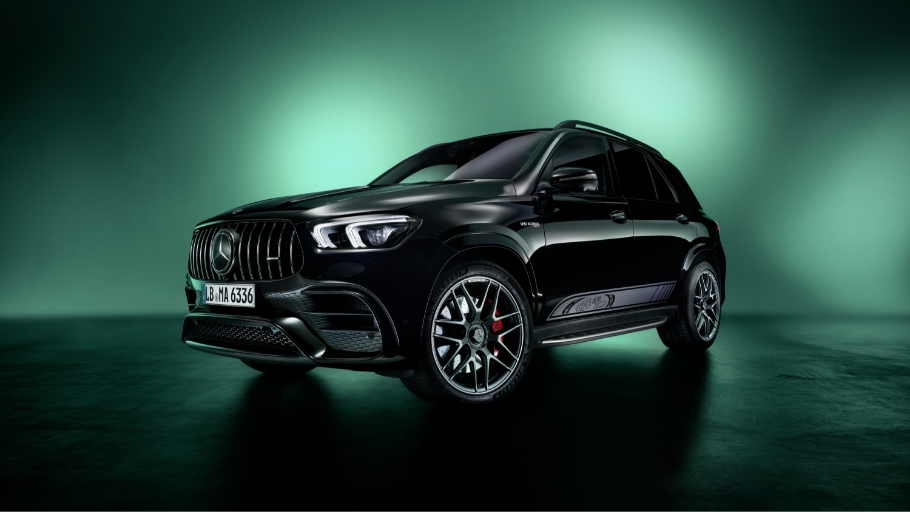
  • Mercedes-AMG GLE “Edition 55” – four special models to mark the “55 years of AMG” anniversary

    2023 Mercedes-AMG GLE 'Edition 55' - Front Angle

    Mercedes-AMG is celebrating its 55th anniversary with four “Edition 55” special models based on the 2023 AMG GLE SUV and AMG GLE Coupe. Exquisite equipment and details, including Obsidian Black Metallic or MANUFAKTUR Diamond White Metallic paint, special contrasting foil, 22-inch AMG forged wheels and unique interior touches, underscore the exclusive design. For the U.S. market, 55 units of each model will be available at U.S. dealerships later this year.

    As a special identifying feature of the “Edition 55,” both sides of the vehicle feature special contrasting foil highlighting the AMG crest on each side of the vehicle. Further exciting contrasts are provided by the 22-inch forged AMG cross-spoke wheels finished in matte grey with a high-sheen rim flange. “Edition 55” lettering and laurel wreath adorning the wheel center caps testify to the superb attention to detail.

    With the AMG Night Package, select exterior elements are finished in high-gloss black. Depending on the specific paint color, this results in bold contrasts or fluid transitions. High-gloss black is used for the front splitter and the trim strip of the AMG front fascia, exterior mirror housings, window surrounds and trim strip of the AMG rear fascia. Added to this are heat-insulating dark-tinted glass aft of the B-pillar and two black chrome twin tailpipe trims.

    Another exclusive detail is the unique fuel filler cap in silver chrome with AMG lettering, which is only revealed once the fuel filler door is opened.

    The interior is characterized by the contrast of black and red. Stainless steel door sill trims with red illuminated AMG lettering welcome driver and passengers. To match, the black AMG floor mats feature red contrasting stitching and “Edition 55” lettering woven in red. The AMG Performance steering wheel wrapped in microfiber also commemorates the anniversary with “AMG” and “Edition 55” badges and underscores the exclusivity of the anniversary models. The seats are upholstered in two-tone Classic Red/Black Nappa leather. This color combination also extends to the door panels and center console. The palm rest in the center console is enhanced with an embossed AMG crest. The luxurious, sporty ambience of the interior is rounded off with AMG trim elements in matte carbon black.

    Each AMG GLE SUV and AMG GLE Coupe “Edition 55” model includes a tailor-made AMG Indoor Car Cover featuring breathable outer paneling made of tear-resistant synthetic fiber fabric and an antistatic inner fabric made of flannel.

    At a Glance

    Mercedes-AMG GLE 53 SUV Mercedes-AMG GLE 63 S SUV
    Engine AMG-enhanced 3.0L Inline-6 Turbo with 48-Volt Mild Hybrid System and Electric Auxiliary Compressor Handcrafted AMG 4.0L V8 Biturbo with 48-Volt Mild Hybrid System
    Displacement (cc) 2,999 3,982
    Performance 429 hp (ICE) @ 6,100 rpm (+21 hp from ISG)
    384 lb-ft (ICE) @ 1,800 – 5,800 rpm
    (+184 lb-ft from ISG)
    603 hp @ (ICE) 5,750 – 6,500 rpm
    (+21 hp from ISG)
    627 lb-ft (ICE) @ 2,500 – 4,500 rpm
    (+184 lb-ft from ISG)
    Drive Config. AMG Performance 4MATIC+ all- wheel drive with fully variable torque distribution AMG Performance 4MATIC+ all- wheel drive with fully variable torque distribution
    Transmission AMG SPEEDSHIFT® TCT 9G
    transmission
    AMG SPEEDSHIFT® TCT 9G
    transmission
    0-60 mph (sec) 5.2 (est.) 3.7 (est.)
    Top Speed (mph) 155 (electronically limited) 174 (electronically limited)


    Mercedes-AMG GLE 53 Coupe Mercedes-AMG GLE 63 S Coupe
    Engine AMG-enhanced 3.0L Inline-6 Turbo with 48-Volt Mild Hybrid System and Electric Auxiliary Compressor Handcrafted AMG 4.0L V8 Biturbo with 48-Volt Mild Hybrid System
    Displacement (cc) 2,999 3,982
    Performance 429 hp (ICE) @ 6,100 rpm (+21 hp from ISG)
    384 lb-ft (ICE) @ 1,800 – 5,800 rpm
    (+184 lb-ft from ISG)
    603 hp @ (ICE) 5,750 – 6,500 rpm
    (+21 hp from ISG)
    627 lb-ft (ICE) @ 2,500 – 4,500 rpm
    (+184 lb-ft from ISG)
    Drive Config. AMG Performance 4MATIC+ all- wheel drive with fully variable torque distribution AMG Performance 4MATIC+ all- wheel drive with fully variable torque distribution
    Transmission AMG SPEEDSHIFT® TCT 9G
    transmission
    AMG SPEEDSHIFT® TCT 9G
    transmission
    0-60 mph (sec) 5.2 (est.) 3.7 (est.)
    Top Speed (mph) 155 (electronically limited) 174 (electronically limited)
  • Mercedes-Benz GLC

    The new Mercedes-Benz GLC is even more dynamic, powerful and sustainable. It is available only as a hybrid: either as a plug-in hybrid or as a mild hybrid with 48-volt technology and integrated starter generator. The plug-in hybrids offer a range of more than 100 kilometres (WLTP). The GLC thus sets new standards in the all-wheel drive SUV segment. Systematic electrification of the GLC, the company’s best-selling model series, makes a significant contribution to reducing the CO2 balance over the entire lifecycle. The new GLC is on the way to climate-neutral mobility, which is the goal of “Ambition 2039”. The technical highlights of the GLC also include special equipment such as DIGITAL LIGHT, rear-axle steering and new assistance systems. Its pronounced off-road suitability is underlined by features such as electric off-road driving in the plug-in hybrids, or the “transparent bonnet”. The GLC will be in the showrooms of our western European sales partners from autumn 2022.

    The new GLC is immediately recognisable as a member of the Mercedes-Benz SUV family. Standard equipment includes the AVANTGARDE Exterior line with Chrome package and 18-inch light-alloy wheels. This adds striking design features and enhances the unique proportions of the vehicle.

    Exterior design: Expressive highlights

    One of the defining design highlights of the GLC is the redesigned front end, with headlamps that connect directly to the radiator grille to emphasise the vehicle’s width. DIGITAL LIGHT headlamps with additional daytime driving light ellipses and new blue trim, plus active ground lighting, also in blue, are available as optional extras. The typical Mercedes SUV radiator grille with redesigned cut-out has a chrome surround. This frames a sporty louvre in matt grey with chrome trim and the grille with vertical louvres in high-gloss black. From AMG Line upwards, a radiator grille with Mercedes-Benz pattern is available: a three-dimensional star pattern with high-gloss chrome surfaces. The new simulated underguard in chrome at the front emphasises the vehicle’s width and accentuates the off-road look.

    The body design is characterised by a full, spanned surface design enriched with precisely shaped edges in the sides. These emphasise the proportions as well as the muscular wheel arches, and also create a balance between elegance and off-road performance. Wheel arch liners in the vehicle colour are available from AMG Line upwards for the first time. These accentuate the sportiness of AMG Line. Also available as an optional extra are easy-entry running boards and the Night package.

    Other features of the sporty, confident appearance are the wide track and flush wheels in 18 to 20-inch size. Several of the wheels available ex factory not only feature a modern design with a high-sheen finish and bicolour surfaces, but are also aerodynamically optimised.

    The new two-section rear lights with a handle strip in high-gloss black emphasise the width of the rear. Their interior has a three-dimensional look, and as an optional extra they are available with an animation. The rear end also has a simulated chrome underguard, which encases the simulated chrome-look tailpipes.

    Interior design: modern, sporty luxury

    Welcome to the modern, sporty luxury of Mercedes-Benz: this is the message the interior of the new GLC with AVANTGARDE line already sends out in its standard configuration. It continues the familiar, successful concept, adopting highlights and developing them further with its own keynotes.

    The dashboard is clearly structured: the upper section has a wing-like profile with new, flattened round nozzles reminiscent of the engine nacelles of an aircraft. The lower section has a generous trim area that flows harmoniously into the curved centre console. Its orientation towards the driver contributes to sportiness: the dashboard is slightly angled towards the driver by six degrees.

    There is a free-standing, high-resolution LCD screen in front of the driver. It appears to float in front of the wing profile and trim area. This sets the driver’s display apart from traditional cockpits with classic dial instruments. It has a size of 12.3 inches (31.2 centimetres).

    A high-quality chrome insert divides the centre console into a rear, softly padded area for the armrest and a front area in glossy deep black. The central display rises seamlessly and seemingly without joints from this three-dimensional surface. It appears to float above the trim area.

    The central display also makes the paradigm shift towards digitisation clear: the vehicle functions can be controlled using the high-quality touchscreen. Its portrait orientation is particularly advantageous for navigation. Like the dashboard, the screen surface is slightly angled towards the driver. The central display has a screen diagonal of 11.9 inches (30.2 centimetres). Ergonomically located below the central display is a fingerprint scanner. A colour head-up display can be ordered as optional equipment.

    The modern, highly reduced design of door panels frames both ends of the dashboard. The door centre panel with integrated armrest evolves from a vertical surface into a horizontal orientation. Reflecting the design of the centre console, the front section takes the form of a metallic high-tech element. It can be used as a grab or closing handle, and houses the power window controls. Another highlight is the floating control cluster, into which the door opener and seat adjustment controls are integrated.

    The avant-garde seat design of the new GLC plays with layers and contoured surfaces, lending them visual lightness. The head restraints and their connection to the backrest with an enclosed cover have been redesigned. The new GLC is available with a leather-lined dashboard with nappa-look beltlines (optional, standard for AMG Line). Some trim elements have innovative surfaces. These include new interpretations of open-pored veneers in brown tones, as well as an open-pored, black wood veneer featuring fine, form-following inlays in real aluminium. On request, direct ambience lighting with light guides replaces the standard indirect ambience lighting.

    Intuitively operated and learn-capable: Latest generation of MBUX

    After the S-Class and C-Class, the new GLC also has the second generation of the MBUX (Mercedes-Benz User Experience) infotainment system. The vehicle interior becomes even more digital and intelligent, as both the hardware and software have made great strides: On the LCD screens, brilliant images make it easy to control vehicle and comfort functions.

    The driver and central display offer a holistic, aesthetic experience. The information is presented in a clearly structured way. The appearance can be individualised with a total of three display styles (classic, sporty, discreet) and three modes (navigation, assistance, service). In addition, the GLC offers the off-road mode.

    • In “Classic” style, the driver is welcomed with a familiar display environment. The proven display of two tubes and alternating content in between provides all driving-related information.
    • In “sporty”, the colour red dominates and the central rev counter is dynamically presented.
    • In “discreet” style, the content is reduced to what is essential. In addition, both screens can be shown in seven colour schemes with the ambience lighting. This creates an impressive colour experience in the interior.
    • The “assistance mode” displays the traffic situation in real time and supplements it with important display information.
    • The new “off-road mode” makes specific content such as gradient, inclination, compass and steering angle visually tangible and, in conjunction with the optional 360-degree camera, offers the “transparent bonnet” function.

    The full-screen navigation offers the driver the best possible guidance while driving. Augmented Video is available as optional equipment. A camera registers the surroundings in front of the vehicle. The central display shows the moving images and also superimposes virtual objects, information and markers. These include, e.g. traffic signs, directional arrows, lane-change recommendations and house numbers. This can make navigation much easier, especially in urban areas.

    Hey Mercedes: the increasingly sharp voice assistant

    The voice assistant “Hey Mercedes” becomes more interactive and capable of learning by activating online services in the Mercedes me App. Moreover, certain actions can be performed even without the activation keyword “Hey Mercedes”. These include taking a telephone call, for example. “Hey Mercedes” also explains vehicle functions with the voice command “Help”, and provides assistance e.g. when wanting to connect a smartphone via Bluetooth or looking for the first-aid kit. Hey Mercedes even recognises vehicle occupants by their voices.

    Tourguide: audio travel guide in MBUX

    As part of the “MBUX Voice Assistant” from Mercedes me, the audio “Tourguide” adds an interesting and entertaining feature to the previous travel information functions. In response to the voice command “Hey Mercedes, start Tourguide”, the MBUX infotainment system reads out extensive information about points of interest along the route. The system responds to the approximately 3400 brown signs along German motorways. The new audio Travelguide is initially available exclusively in Germany, but will later be rolled out in other countries.

    Smart Home: Mobile intelligence for maximum operating convenience from a distance

    With the MBUX Smart Home function, the GLC now becomes a mobile control centre for the home. Because Smart Home refers to WLAN, sensors and actuators making the home increasingly intelligent and communicative: temperature and lights, shutters and electrical appliances can be remotely monitored and controlled. Motion detectors and window contacts inform the user of welcome or unwelcome visitors.

    “Hey Mercedes, is there anybody in my home right now?” “I checked. The last movement detected was in the kitchen one hour ago.” In future, for example, dialogues can be conducted via the MBUX (Mercedes-Benz User Experience) voice assistant between the driver or passenger in the GLC and the user’s smart home. At the market launch, the MBUX Smart Home function will support numerous devices offered by important smart home providers – corresponding contracts have already been concluded with Bosch Smart Home and Samsung SmartThings. Further providers will follow, and be announced at a later stage. Right from the start, Hey Mercedes understands questions and commands in four languages (German, Chinese, US and British English). Lamps, sockets, thermostats, shutters and blinds, motion detectors, door and window contacts and temperature sensors can be addressed. So the system can also answer this question: “Did I remember to turn the heating down?” Depending on the response and the thermostats installed in the home, it is possible to change the setting: “Set the temperature to 18 degrees in the whole house!” It also enhances comfort, because the heating can also be remotely turned up again in good time.

    Music: Streaming and sound systems

    With the “Online Music” service, Mercedes-Benz has fully integrated the largest music streaming providers into the MBUX infotainment system. MBUX allows seamless access to the personal user profile at the linked music provider. In this way, customers not only have convenient access to their favourite songs and their own playlists, but also the opportunity to discover millions of songs and curated playlists. Operation is intuitive using the MBUX voice assistant, touch controls on the steering wheel or directly on the central display. In addition to the standard sound system with a front bass woofer and four mid-range speakers, optional extras are available:

    • Advanced Sound System. This comprises nine speakers – five midrange, two tweeters, two front bass speakers with 2 x 50 watts from an auxiliary amplifier and a total output power of 225 watts.
    • Burmester® surround sound system, specially configured for the GLC by this sound specialist. It comes with a total of 15 premium speakers: seven 50-watt midrange speakers, four 20-watt tweeters, two 20-watt 3D speakers and two premium front bass speakers at 120 watts each. A 15-channel amplifier drives all speakers fully actively with a total output of 710 watts. In addition, high-quality sound presets, optimisation via a digital signal processor, individual sound settings and staged operation bring the system to life. The metal speaker grilles bear the Burmester® lettering.

    Further highlights: Head-up display and fingerprint sensor

    A colour head-up display can be ordered as optional equipment. The driver is presented with a virtual image measuring 9 x 3 inches (around 23 x 8 centimetres) floating a good 3 metres ahead of the bonnet. This is roughly equivalent to a 25-inch monitor. The head-up display consists of a full-colour display module with a native resolution of 800 x 480 pixels, illuminated by high-power LEDs. A mirror optics unit projects the virtual image onto the windscreen and into the driver’s field of vision. Sensor-controlled, the display brightness automatically adjusts to the outside conditions.

    With the fingerprint scanner, users can log in to MBUX quickly, conveniently and securely. Because personal settings and data such as favourites, last destinations, behaviour-based predictions, professional calendar entries or emails are protected. Payment processes via Mercedes me are also restricted to authenticated users.

    “Over-the-air” (OTA) updates: The very latest software

    As soon as a new software update is available from Mercedes-Benz, a message appears in MBUX. Download and installation take place in the background. The user must then explicitly agree to activation of the update. This means that the vehicle always remains up to date. New features can also be uploaded to already sold vehicles by over-the-air updates. For data transmission, Mercedes-Benz relies on the high security standard provided by mobile radio technology and the communication module installed in the vehicle.

    Another way to an updated and improved user experience is to add new features in the Mercedes me Store, such as music streaming or in-car office functions. Subscription services can also be renewed or rebooked directly online via the Mercedes me Store.


    Powertrain: More electric than ever

    The new GLC is available only as a hybrid: either as a plug-in hybrid or as a mild hybrid with 48-volt technology and integrated starter generator. The engine range has four-cylinder units from the current FAME (Family of Modular Engines) Mercedes-Benz engine family. Accordingly, the engine range plays a major role in the flexibility of the international production network, with needs-based electrification. The power spectrum of the four-cylinder engines ranges up to 190 kW and 400 Nm of torque in the petrol models, and up to 195 kW and 550 Nm in the diesel models, each plus up to 17 kW and 200 Nm of electrical support from the ISG.

    Systematic electrification means:

    • All the drive systems available for the GLC are hybrids.
    • Four of these are mild-hybrid units, which receive intelligent support in the low rpm range with a second-generation integrated starter-generator (ISG) in conjunction with a 48-volt electrical system.
    • Three further engine variants are plug-in hybrids, including an all-electric driving mode and a range of more than 100 kilometres.

    The integrated starter-generator with the petrol and diesel engines provides intelligent support in the low rpm range. In combination with turbocharging, this ensures excellent power delivery. The system includes the 48-volt electrical system, which enables functions such as “gliding”, boost or recuperation and thus significant fuel savings. In addition, the engines start very quickly and comfortably with the help of the ISG, so that the start-stop function is almost imperceptible to the driver, as is the transition from “gliding” with the engine stationary to powerful propulsion with engine power. When idling, the intelligent interaction between the ISG and the combustion engine ensures outstandingly smooth running.

    Transmission: Automatic is standard equipment

    The 9G-TRONIC automatic transmission is standard equipment in all GLC models. This has been developed further for ISG adaptation: the electric motor and the power electronics are accommodated in the transmission housing, and thermal management of both components is carried out via the transmission cooling system. Previously necessary lines are therefore no longer required, which offers advantages in terms of installation space and weight. In addition, the gearbox has a higher efficiency. Among other things, optimised interaction with the electric auxiliary oil pump reduces the delivery volume of the mechanical pump by 30 percent compared to its predecessor – good for efficiency. Furthermore, it uses a new generation of the fully integrated transmission control with multi-core processor and new design and connectivity technology. In addition to the increased computing power, the number of electrical interfaces has been drastically reduced.

    All-wheel drive: Mercedes-Benz 4MATIC

    All models of the new GLC come with the latest 4MATIC all-wheel drive system. The new front-axle drive allows higher torque levels to be transferred, with an ideal axle load distribution for driving dynamics. This also has a considerable weight advantage compared to the axle drive of the preceding series. The longitudinal transfer case, which is also new, further reduces friction losses. It also has a closed oil circuit and does not require any additional cooling measures.

    Diesel with integrated second-generation starter-generator

    The OM 654 M with integrated second-generation starter-generator and 48-volt onboard power supply is at the forefront of efficient drive technology. Recuperation and the possibility to “glide” with the engine switched off further increase efficiency. Apart from electrification including an electric refrigerant compressor for the air conditioning system, these are the most important changes for the output of up to 198 kW plus a boost of 17 kW by the ISG:

    • Stroke of 94.3 millimetres and displacement of 1993 cc (previously: 92.3 and 1950) thanks to new crankshaft.
    • 2700 bar injection pressure (previously 2500).
    • Particularly fast response and smooth power delivery thanks to two water-cooled turbochargers, now both with variable turbine geometry.
    • Cooling channel in the steel piston filled with sodium for effective reduction of temperature peaks in the piston crown.

    These are the exhaust aftertreatment components for the diesel:

    • A close-coupled NOx storage catalytic converter to reduce nitrogen oxides.
    • A diesel particulate filter (DPF) with special coating, also to reduce the nitrogen oxides.
    • A near-engine mounted SCR (Selective Catalytic Reduction) catalytic converter with metered injection of AdBlue®).
    • an additional SCR catalytic converter in the vehicle’s underbody, with a separately metered injected quantity of AdBlue®

    Four-cylinder petrol engine with second-generation ISG.

    After the C-Class, the new GLC is the second Mercedes-Benz model series to receive the four-cylinder M 254 petrol engine with integrated second-generation starter-generator (ISG). The ISG provides up to 17 kW of additional power and 200 Nm more torque, can recuperate higher electrical outputs than a belt-driven starter generator, shifts the load point of the combustion engine and allows hybrid functions such as “gliding” with the engine switched off, boosting and recuperation. This makes the petrol engines very efficient. In the M 254, Mercedes-Benz has also combined all the innovations of the modular engine family of four and six-cylinder petrol and diesel engines in a single unit. They include NANOSLIDE® cylinder coating, CONICSHAPE® cylinder honing (trumpet honing) and the exhaust aftertreatment system positioned directly at the engine. All the engines are characterised by superior power delivery, smooth running and excellent noise comfort.

    The segmented dual-flow turbocharger has been completely redeveloped as a further development of the twin-scroll technology, for an even more spontaneous response. This turbocharger is the result of collaboration between Mercedes-Benz turbocharger development and the Mercedes-AMG Petronas Formula 1 team. The technology transfer to series production sets new standards in terms of performance combined with maximum efficiency.

    Plug-in hybrids: more than 100 kilometres electric range (WLTP)

    The GLC also receives the fourth-generation plug-in hybrid drive in three power levels. Using the identical basic engines, electrification has taken another big step. With an electric drive power of up to 280 kW (381 hp) and an all-electric range of more than 100 kilometres (WLTP), the plug-in hybrid models of the GLC will in many cases and on many days be on the road purely electrically, without the use of the combustion engine. Whether with one of the two petrol engines or the diesel: as plug-ins, they are not only very efficient but also extremely dynamic on the road.

    The new high-voltage system is more compact and more powerful. The number of high-voltage interfaces is significantly reduced. Integration of the power electronics into the transmission housing reduces the required installation space and simplifies assembly processes in production. In addition, a higher system voltage increases the drive power without the need for larger cable cross-sections.

    The high power density of the hybrid drive unit comes courtesy of a permanently excited internal rotor synchronous motor. The 440 Nm peak torque of the electric motor is ready to go right from the start, resulting in high agility when moving off, along with dynamic driving performance. The full electric power is available up to 140 km/h.

    The high-voltage battery is an in-house development by Mercedes-Benz. In particular, the total capacity of 31.2 kWh in combination with more efficient recuperation and improved aerodynamics allow an all-electric range of more than 100 kilometres. To accommodate the high power density, the high-voltage battery has an internal cooling system. The thermal management system can therefore control the operating temperature irrespective of the climate control in the vehicle interior. In addition to continuous operation in hot and cold regions, this also allows quick charging with direct current.

    Even when the battery is completely discharged, it can be fully charged in around 30 minutes with the optional 60 kW DC charger. A standard-fit 11 kW charger (depending on the market) is available for three-phase charging at a Wallbox connected to the domestic AC mains. The standard charging cable can be stored within easy reach in a floor compartment just behind the tailgate.

    Charging at public charging points becomes a pleasant secondary matter with Mercedes me Charge. The charging network with around 300,000 charging points in Europe offers three charging tariffs that are tailored to the individual driving distances. This makes charging with Mercedes me Charge even easier and more transparent. Drivers of a plug-in hybrid from Mercedes Benz receive an exclusive price advantage for public charging, with fixed price rates per kilowatt hour of electricity in the first year after registration. In addition, the monthly standing charge of 4.90 euros in the M tariff is waived in the first year for new car buyers. This appeals to city commuters, for example.

    Mercedes me Charge gives customers access to a wide range of public charging stations located in cities and in places like shopping centres, hotels or service stations. The Mercedes me App indicates the exact position, current availability and price at the selected charging station in advance.

    Recuperate instead of braking

    Also thanks to improved recuperation, the new GLC offers significantly higher overall efficiency of the hybrid system compared to its predecessor: The amount of recovered electrical energy has increased significantly.

    Recuperation recovers electricity for the e-drive from the vehicle’s kinetic energy. It is based on an interlocking interaction between the components: while the electric motor receives electrical energy during acceleration to generate mechanical energy, it is mechanically driven by the vehicle’s kinetic energy on the overrun and during deceleration, thus working as a generator and generating electrical energy. This is fed into the vehicle’s high-voltage battery and is available for the drive system.

    A decisive factor for efficiency in recuperation is the interaction of the hydraulic service brake with the electric motor. In addition, the automatic transmission performs several gearchanges during deceleration. The use of a vacuum-independent braking system in the new GLC has significantly optimised the entire interaction. Depending on the driving situation and the driver’s braking requirements, this braking system automatically controls the flexible transition between hydraulic braking and recuperation. This allows the maximum recuperation power of up to 100 kW to be achieved more frequently, and over a longer period of time. For this purpose, the system variably reduces the braking power of the hydraulic brake, even at constant pedal pressure, so that the high recuperation power is maintained as speed decreases. A further, pleasant effect for the driver is that he/she does not perceive this automatic transition.

    The graph below illustrates the advantages of the hybrid drive in the new GLC.

    The curves in the diagram compare example braking of the new GLC and its predecessor from 100 km/h to standstill with constant deceleration. The diagram clearly shows that the initial braking power is significantly higher than the maximum recuperation power. The recuperation time with maximum recuperation power is significantly longer in the new GLC, as the new system can flexibly reduce the contribution made by hydraulic braking. This is where the new GLC scores: significantly higher recovery of electrical energy from kinetic energy than in the preceding model. This has a positive effect on the electric range.

    The optimised driving modes of the new GLC plug-in hybrid support the management of recuperation and optimal use of the available electrical energy. Based on the information from the route guidance of the navigation system, the hybrid driving programme provides the electric driving mode for the most appropriate route sections in each case. Electric driving is prioritised on journeys in urban areas, for example.

    A driver wishing to influence the energy recovery rate can do so directly in three stages controlled by rocker switches behind the steering wheel. This is possible in all driving modes except SPORT. In the driving mode  D-, for example, the driver can experience the “one-pedal feeling”: when the driver takes his/her foot off the accelerator, the vehicle slows down purely electrically to the extent that the hydraulic operating brake is often not needed. In addition the operating strategy communicates with the sensors of the assistance systems, efficiently supporting the driver in many situations.

    Two driving modes allow the driver to use the possibilities of the plug-in drive in a particularly targeted manner:

    BATTERY HOLD: Priority is given to preserving the charge state of the high-voltage battery, for example when planning to drive in a city centre or low emission zone later on. The hybrid drive system selects the appropriate drive depending on the driving situation and distance.

    ELECTRIC: Electric driving up to 140 km/h, activation of the combustion engine via the pressure point of the accelerator pedal.

    If the route-based operating strategy is activated, data on the expected route is evaluated when route guidance is active. This takes into account factors such as navigation data, topography, speed limits and the traffic conditions for the entire planned route. With the route-based operating strategy, the two forms of energy of the hybrid vehicle can be distributed in the best possible way. The drive control automatically selects the most suitable operating mode so that the state of charge of the high-voltage battery can be specifically influenced. For example, electrical energy can be saved for e-driving so as to drive all-electrically in inner-city areas or in environmental zones later on.

    In the HYBRID and ELECTRIC driving modes, as well as in BATTERY HOLD, the ECO Assistant also evaluates the route data and supports the greatest possible efficiency and recuperation energy according to the route. If the navigation map or sensors and cameras detect e.g. a roundabout ahead, a hairpin bend, a tight bend, a T-junction, a gradient, a vehicle in front or a speed limit, the ECO Assistant calculates the optimum vehicle speed from the distance, speed and gradient. For any necessary deceleration, the hybrid system primarily uses the electrical resistance of the electric motor for recuperation.

    The plug-in hybrid variants of the new GLC have a haptic accelerator pedal module. In the ELECTRIC driving mode, this signals the change from electric driving to driving with the combustion engine by means of a perceptible pressure point. If the pressure point is exceeded, the combustion engine is switched on and provides additional drive torque.

    All in all, driving with the new GLC plug-in hybrid becomes significantly more electric. Thanks to the increase in electric range to more than 100 kilometres, everyday journeys can largely be covered purely electrically.

    The mild hybrid model range:

    GLC 200 4MATIC GLC 300 4MATIC GLC 220 d 4MATIC GLC 300 d 4MATIC
    Displacement cc 1999 1999 1993 1993
    Output kW/hp 150/204 190/258 145/197 198/269
    Add. output (boost effect) kW/hp 17/23 17/23 17/23 17/23
    Peak torque Nm 320 400 440 550
    Add. torque (boost effect) Nm 200 200 200 200
    Combined fuel consumption (WLTP)[1] l/100 km 8.2-7.3 8.2-7.3 5.9-5.2 6.2-5.6[2]
    Combined CO2 emissions (WLTP)1 g/km 186-167 186-167 155-136 163-1462
    Acceleration
    0-100 km/h
    s 7.8 6.2 8.0 6.3
    Top speed km/h 221 240 219 243
    Price from [3] euros 57,631.70 68,240.55* 60,237.80 n.n.

    [1] The figures shown are the WLTP CO2 figures measured according to Art. 2 No. 3 of Implementing Regulation (EU) 2017/1153. The fuel consumption figures were calculated on the basis of these figures.
    [2] Figures for fuel consumption and CO2 emissions are provisional and were obtained in accordance with the WLTP test procedure. EC type approval and a certificate of conformity with official figures are not yet available. Differences between the stated figures and the official figures are possible.
    [3] Recommended retail price in Germany including 19% VAT.

    The model range of plug-in hybrids:

    GLC 300 e 4MATIC GLC 400 e 4MATIC GLC 300 de 4MATIC
    Petrol engines Diesel
    Displacement cc 1999 1999 1993
    Rated output petrol/diesel engine kW/hp 150/204 185/252 145/197
    at rpm 6100 5800 3600
    Rated torque petrol/diesel engine Nm 320 400 440
    at rpm 2000-4000 2000-3200 1800-2800
    Rated output, electric motor kW 100 100 100
    Rated torque, electric motor Nm 440 440 440
    System output kW/hp 230/313 280/381 245/335
    System torque Nm 550 650 750
    Rated battery capacity kWh 31.2 31.2 31.2
    Top speed km/h 218 237 217
    Top speed, electric km/h 140 140 140
    Acceleration
    0-100 km/h
    s 6.7 5.6 6.4
    Combined consumption, weighted (WLTP)[4] l/100 km 0.6-0.5 0.6-0.5 0.5-0.4
    Combined CO2 emissions, weighted (WLTP)4 g/km 15-12 15-12 14-11
    Combined power consumption, weighted (WLTP)4,[5] kWh/100 km 22.5-20.4 22.5-20.4 22.9-20.5
    All-electric range (combined EAER) (WLTP)4,5 km 118-130 118-130 112-128

    [4] Figures for fuel consumption, CO2 emissions, power consumption and range are provisional and were obtained in accordance with the WLTP test procedure. EC type approval and a certificate of conformity with official figures are not yet available. Differences between the stated figures and the official figures are possible.
    [5] Power consumption [and range] was [were] determined on the basis of Directive 692/2008/EC.

    Suspension: comfort and agility

    Key components of the GLC’s dynamically designed suspension system are a new four-link suspension at the front and a multi-link independent rear suspension mounted to a subframe. The standard suspension already provides a high level of suspension, ride and noise comfort, agile handling and driving enjoyment. It is equipped with an amplitude-dependent damping system.

    As an option, the new GLC is available with the Engineering package which includes AIRMATIC air suspension and rear-axle steering. AIRMATIC is equipped with variably adjustable damping for compression and rebound. The plug-in hybrids have air suspension and level control at the rear axle as standard. Another optional extra is the Offroad Engineering package, which increases ground clearance by 20 millimetres and has an underride guard at the front and underbody protection. In conjunction with AMG Line Exterior, the GLC has a sport suspension.

    Rear-axle steering: more agile and dynamic

    The new GLC is particularly agile and stable with the optional rear-axle steering combined with a more direct steering ratio at the front axle. The steering angle at the rear axle is up to 4.5 degrees. This reduces the turning circle by 90 centimetres to 10.9 metres. The driver also needs fewer turns of the steering wheel from lock to lock.

    At speeds of less than 60 km/h, the rear wheels steer in the opposite direction to the front wheels – when parking, by up to 4.5 degrees counter to the front axle angle. Depending on the situation, this virtually shortens the wheelbase, and the vehicle is more light-footed and agile as a result. When the speed reaches 60 km/h or more, the rear wheels steer in the same direction as the front wheels by up to 4.5 degrees. The resulting, virtually extended wheelbase offers noticeable advantages in handling stability and driving safety at high speeds, and during fast lane changes or sudden evasive manoeuvres.

    In addition, during dynamic manoeuvres such as driving on a country road, significantly less steering movement is required – and the vehicle responds more directly to steering commands. This is supported by the integrated dynamic control function of ESP®.

    Driving assistance systems: stress-relief and support in hazardous situations

    The latest generation of the Driving Assistance package Plus contains additional and improved functions. These reduce driver workload in day-to-day situations for more comfortable and safe driving. When danger threatens, the assistance systems are able to respond to impending collisions as the situation demands. The operating principle of the systems is visualised on the driver display by a new display concept.

    Further improved assistance systems – some examples:

    • On all types of roads – motorways, country roads or in town – Active Distance Assist DISTRONIC can automatically maintain a preset distance from vehicles in front. A new feature is the ability to react to stationary vehicles on the road at speeds up to 100 km/h (previously: 60 km/h).
    • Active Steering Assist helps the driver to stay in lane at speeds up to 210 km/h. New features: lane detection using an additional 360-degree camera, with particular advantages in the low speed range, for example when forming an emergency lane; significantly increased availability and cornering performance on country roads; increased lane centring on motorways.
    • In addition to conventionally posted speed limits, Traffic Sign Assist recognises signs on overhead gantries and at roadworks. The system recognises even conditional signs, for example “in wet conditions”, by evaluating all vehicle sensors. The stop sign and red traffic light warning functions (as part of the Driving Assistance package Plus) are new.
    • The new Parking package with 360-degree camera offers the best all-round visibility and facilitates the parking process e.g. with assisted parking and unparking. The “transparent bonnet” now included as a new function makes slow manoeuvring easier, and makes for more precise driving on rough terrain.

    Sophisticated parking systems: Support during slow manoeuvres

    Thanks to more powerful environment sensors, the parking systems can better support the driver when manoeuvring, thus improving safety and comfort. Integration into MBUX makes operation more intuitive and is supported by the visual display. The optional rear-axle steering is integrated into the parking assistants, and calculation of the lanes (trajectories) is coordinated accordingly. Emergency braking functions also serve to protect other road users, and can increase road safety.

    The Parking package with 360-degree camera and “transparent bonnet” and the functions of Active Parking Assist with PARKTRONIC is available as an optional extra. It offers the best possible all-round visibility and facilitates the parking process. The central display clearly shows the direct vehicle surroundings during the parking or manoeuvring process. The display is composed of four individual camera images from the front, rear and both sides of the vehicle, and includes a virtual bird’s eye view. In addition, the display shows different viewing angles such as front, rear or trailer mode. The driver decides whether to park manually or hand control over to Active Parking Assist.

    Over hill and dale: Off-road with the GLC

    Like its predecessor, the new GLC is explicitly designed for driving on rough terrain: it is prepared for this use in numerous details, and also offers several new features and systems. Standard equipment includes an off-road driving mode and DSR (Downhill Speed Regulation). The new off-road screen has easier operation, there is clearer information thanks to the “transparent bonnet” and outstanding traction and handling safety by virtue of improved control systems. With the plug-in hybrid models, purely electric off-road operation is possible even over long distances. With these, the driver can choose between off-road driving with purely electric or conventional drive.

    The new off-road screen uses both displays for clearly arranged information. Among other things, the driver’s display shows, inclination, gradient, topographical altitude, geo-coordinates and a compass, as well as road speed and engine speed when operating with an internal combustion engine. The central display additionally shows e.g. the current position of the SUV on the terrain with uphill/downhill gradient and inclination, the steering angle of the front wheels and, if rear-wheel steering is available, the steering direction of the rear wheels as well as – with AIRMATIC – the current suspension level and the current wheel deflection. It also shows the tyre pressure, tyre temperature, current torque and output, and the engine and transmission oil temperature.

    The Engineering package (optional) with AIRMATIC air suspension including level control and rear-axle steering also brings its comfort advantages to bear when off-road, where it offers additional benefits. For example, AIRMATIC allows a high ground clearance off-road, regardless of the load, and a long suspension travel for the best possible traction. The rear-axle steering increases off-road manoeuvrability even further. Alternatively, the off-road suspension (part of the Offroad Engineering package) with 20 millimetres more ground clearance is also available as an optional extra.

    If the vehicle is equipped with DIGITAL LIGHT, an off-road light is also included. This provides maximum, wide illumination when driving in rough terrain, and makes for accurate and safe manoeuvring around obstacles in unfamiliar environments.

    View beneath the vehicle: “Transparent bonnet”

    The GLC also offers a “transparent bonnet”: when the off-road mode is active, the central display shows a virtual view under the front of the vehicle, including the front wheels and their steering position. The view is composed of the images from the 360-degree camera. There are two views: under the vehicle and looking ahead. At speeds up to 8 km/h the “transparent bonnet”, i.e. the view under the vehicle, is shown. From 8 to 20 km/h the system shows the view ahead. The camera image is switched off at higher speeds. The “transparent bonnet” is extremely helpful: it enables the driver to recognise obstacles such as large stones or deep potholes in the vehicle’s path at an early stage. The optional Parking package with 360-degree camera is a prerequisite for the “transparent bonnet”.

    Off-road electric: Very powerful and efficient

    The plug-in models of the new GLC already offer a driving experience of the future: all-electric off-road driving. This has many advantages: since the electric motor’s full torque of 440 Nm is available from the very first engine revolution, its power is very easy to control at all times. This allows highly precise, controlled driving even in difficult terrain. In addition, because the electric motor only consumes energy when it is actually moving the vehicle, and the power demand is comparatively low when driving slowly as is usual when off-road, a long all-electric driving time is possible even in demanding terrain. In keeping with the nature of the electric drive, noise emissions are also very low when driving slowly. All this makes for a completely new off-road experience.

    Trailer menu and towing route planner

    The GLC is a popular towing vehicle, and the new edition is specifically designed for this purpose. The new trailer menu and the towing route planner in MBUX are two highlights of the GLC for towing operations. The aim of these and numerous further advanced functions for operation as a towing vehicle is to make towing as safe and pleasant as possible. Moreover, the 4MATIC all-wheel drive provides outstanding traction on any surface. In trailer mode, the ESP® trailer stabilisation is activated: This can compensate for dynamic instabilities while driving.

    in the central display, routes can be planned that are suitable for driving with the previously defined trailer. The system also takes into account e.g. passage widths and passage heights. As soon as the ballhead is engaged and an electrical connection exists, the system inquires about the intended use of the trailer coupling: Is it a small trailer? Or something larger, such as a caravan or horsebox? Or is a bicycle carrier installed? The towing route planner takes the information into account.

    The trailer hitch (optional equipment) has a fully electrically swivelling ball head. The socket is located in the trailer hitch. The image from the reversing camera includes the trailer coupling and the area directly behind it, so that the hitching process can be observed on the central display.

    The enhanced Trailer Manoeuvring Assist (optional) in the new GLC makes manoeuvring with a trailer even easier, more comfortable and safer. The system automatically regulates the steering angle of the towing vehicle up to a speed of 5 km/h and an uphill gradient of up to 15 percent. It is also integrated into MBUX and can be operated intuitively. In addition to stabilising the combination when reversing, the system can for the first time also guide it around freely selectable bends of up to 90 degrees. The steering of the towing vehicle is operated automatically so that the selected angle is maintained. This allows more precise positioning of the trailer. The driver can also select the “pull straight” function once the trailer has reached the desired direction and needs to reverse in a straight line. The entire manoeuvring process can be followed from different camera perspectives on the central display. Dynamic guide lines show the trajectory and the vehicle width.

    Weight specifications for towing operations:

    GLC 200 4MATIC GLC 300 4MATIC GLC 220 d 4MATIC GLC 300 d 4MATIC
    Tongue weight (kg) 100 100 100 100
    Towing capacity
    (kg, braked)
    2400 2400 2500 2500

    High passive safety

    The GLC is available on all continents. Whether in right or left-hand drive, with petrol engine, diesel engine or as a plug-in hybrid: When it comes to crash safety, all models meet the typically high Mercedes safety standards.

    Together with the familiar PRE-SAFE® protection concepts for frontal and rear impacts, PRE-SAFE® Impulse Side (available in conjunction with the Driving Assistance package Plus) forms a virtual crumple zone around the vehicle. As only a limited crumple zone is available in a side impact, PRE-SAFE® Impulse Side (availability depending on selected equipment) can move the affected driver or front passenger away from the danger even before the crash as soon as the system detects that a side collision is immediately imminent. For this purpose, air chambers in the side bolsters of the front seat backrest are inflated in fractions of a second.

    All in all, the GLC’s safety concept is based on an intelligently designed body with a particularly rigid passenger cell, selectively deformable crash structures and situational interaction between the seat belts, belt tensioners and airbag systems. In addition to legal requirements, the vehicle also fulfils internal Mercedes-Benz test requirements and test criteria that are derived from real accidents.

    Extensive crash simulations were used to configure the vehicle structure in such a way that the occupants are particularly well protected in the event of a crash. The bodyshell concept incorporates all areas – front structure, passenger cell, side walls and floor assembly. It is implemented through the design and construction of the body components, a stress-related material mix and appropriate wall thicknesses in highly stressed areas. The overall concept leads to homogeneous load distributions and high energy absorption with moderate deceleration acting on the occupants. In addition, sufficient protective space can be provided for the occupants.

    Aerodynamics: Now Cd = 0.29

    From around 60 km/h, air resistance exceeds the total of all other driving resistances and is a main control factor for saving fuel and reducing CO2 emissions. The air resistance is significantly influenced by the drag coefficient (Cd) and the frontal area (A). The noise level in the vehicle is also increasingly dominated by wind noise at higher speeds. Optimisation of the vehicle with respect to aerodynamic drag and wind noise was carried out with the help of extensive digital flow simulations (CFD – Computational Fluid Dynamics), as well as tests with real vehicles in the aeroacoustic wind tunnel.

    In its aerodynamically most favourable configuration, the minimal drag coefficient of the GLC is Cd = 0.29. This makes it two hundredths better than its predecessor (Cd = 0.31) – a notable advance for an SUV with conventional drive. The frontal area is 2.60 square metres. Purely battery-electric vehicles have more possibilities for an even lower level in terms of aerodynamics. Among other things, they have a different cooling air concept for the powertrain, so that an airflow through the bodywork can be largely avoided.

    Many factors contribute to the improved aerodynamics of the new GLC. The most important measures include the following:

    • air control system with two levels (radiator grille and front apron) with aerodynamically optimised basic ventilation position for maximum aerodynamic performance
    • ideally positioned and aerodynamically/aeroacoustically optimised beltline mirror
    • aerodynamic design of the roof spoiler and integrated side spoilers
    • side spoiler lips in the rear lights
    • optimised wheel spoilers at front and rear
    • aerodynamic cladding on the spring control arms (if steel suspension)
    • an optimised underbody panelling concept that is as uniform as possible for the different engine variants
    • aerodynamically optimised wheels
    • aerodynamically optimised suspension lowering in Eco driving mode

    Noise comfort: Quiet and pleasant acoustics

    The electrification of vehicles means that wind noise is increasingly noticeable, as it is no longer masked by noise from a combustion engine. The influence of wind noise on homogeneous acoustics in the vehicle interior is therefore increasing. An optimised airflow around the outer skin of the vehicle, plus high-quality seals and sound insulation, are key factors in reducing wind noise.

    The new GLC is a pleasantly quiet vehicle with a serene sound signature and very low rolling and wind noise. This was achieved with acoustic optimisation of the bodyshell and sophisticated sound insulation. An acoustic membrane in the windscreen is standard equipment, for example. The optionally available, acoustically effective thermal insulation glass meets even higher comfort expectations. The driver’s door window is of acoustically effective laminated glass. Detailed fine-tuning further enhances the level of “Noise – Vibration – Harshness” (NVH). All the acoustic measures jointly contribute to the “welcome home” atmosphere that is typical of Mercedes-Benz. Three examples:

    • Large parts of the upper bodyshell structure are filled with very light and highly effective acoustic foam. Elimination of the cavities noticeably reduces the noise level compared to the preceding model.
    • The metal sheets of the drive tunnel cover and flanks are lined with acoustic material. This NVH technology in the bodyshell particularly reduces noise from the drive system.
    • The development work on the bodyshell particularly focussed on rigidity and strength. Among other things, the proportion of ultra-high-strength and hot-formed steels and sheet blanks with variable wall thicknesses (tailored rolled blanks) has been increased compared to the preceding series.

    Discreet acoustic feedback indicating the current power delivery additionally enhances the harmonious character of the vehicle. The low, well-balanced exterior noise as well as the acoustics in the interior underline the high perceived value of the new GLC.

    General noise optimisation, especially in the high-frequency range, was also achieved through numerous detailed measures. A few examples: modified door and window seal sections; flexible inner door cavity struts for optimum contact with the adjacent window guide rail; reduction of component vibrations in the doors by increasing the structural rigidity of the door body.

    Spotlight The new exterior mirror

    As a particularly good example, the exterior mirror illustrates the high development standard of the new GLC with respect to aerodynamics and aeroacoustics. The GLC now has beltline mirrors instead of the previous door mirrors. The most favourable mirror position on the exterior door panel was identified, and the mirror base was aerodynamically and aeroacoustically improved. The effects are manifold: the air flows around the vehicle with even less turbulence, which improves the Cd figure. In addition, the wind noise at the new exterior mirror is lower, so that the side acoustics in the interior are even more pleasant.

    What sounds simple as a result required extensive consultations about every detail between the departments involved, for example design, material choice, position and sealing. Right from the early development phase, simulations made a major contribution and provided findings that were directly adopted in the hardware design. Further improvements to the weather seals were made by computer tomography when prototype vehicles became available. The aim was to offer the smallest possible surface to the slipstream, and therefore ensure significantly better overall aerodynamics and aeroacoustics compared to the preceding model.

    DIGITAL LIGHT: Extremely powerful with optional projection functions

    The new GLC has LED High Performance headlamps as standard. DIGITAL LIGHT is available as an optional extra. This revolutionary headlamp technology allows new functions such as the projection of auxiliary markings and warning symbols onto the road. DIGITAL LIGHT contains a light module in each headlamp, with three extremely powerful light-emitting diodes (LEDs) whose light is refracted and directed with the help of 1.3 million micro-mirrors. This corresponds to a total resolution of more than 2.6 million pixels.

    With its dynamics and precision, DIGITAL LIGHT creates almost unlimited possibilities for high-resolution and targeted light distribution according to the ambient conditions. The technology in the headlamp is controlled highly dynamically depending on the situation. Camera and sensor systems in the vehicle recognise other road users, while powerful computers evaluate the data and digital maps in milliseconds and give DIGITAL LIGHT the commands for adapted light distribution in all situations. The result is excellent visibility for the driver, without impairing that of other road users or dazzling oncoming traffic. This also applies to the ULTRA RANGE high beam. The aim here is not to set new records for headlamp range, but to achieve the best possible visibility and brilliance without glare thanks to an innovative overall concept.

    DIGITAL LIGHT with projection function is available as an option. This innovation offers extra safety for the driver, especially when driving at night, and allows communication with other road users. A few examples:

    • DIGITAL LIGHT can make driving safer by projecting guidance lines, symbols and animations, and e.g. project two guiding lines when passing through roadworks. This marking approximately indicates the width of the vehicle, enabling the driver to negotiate the narrowed lane more easily.
    • The intelligent technology highlights pedestrians in the danger zone with a spotlight function and clarifies their position with projected direction points.
    • Customers driving the wrong way on motorway entry ramps or in one-way streets are warned by a symbol.
    • The same warning symbol appears before running red lights or stop signs.

    The DIGITAL LIGHT projection functions that are allowed in different countries can vary. The integrated geofencing helps the driver to comply with legal regulations in every country. When the vehicle crosses a national border, the functions of DIGITAL LIGHT are automatically adapted to the applicable regulations. While the corresponding projections can still be activated in the multimedia system, the function is suppressed while the vehicle remains in that country.

    DIGITAL LIGHT’s digital intelligence also communicates with the driver. For example, when unlocking the vehicle the driver is greeted with a light display by the headlamps and rear lights (“Coming home”), and when locking the vehicle it bids him/her farewell (“Leaving home”). The customer can switch the animation function on and off via MBUX, and choose between different animations.

    DIGITAL LIGHT also offers a special function for off-road driving. When driving off-road, an off-road light automatically switches on to illuminate the way ahead as broadly as possible to better detect obstacles. It is activated as soon as the off-road driving mode is selected.

    Comfort appointments: Improvements in many details

    The massage function in the optional multicontour seat has been extended and covers the entire back area: Eight inflatable air chambers in the backrest provide an improved deep-massage effect. A vibration massage is also possible on the driver’s side, and the cushion contains four corresponding motors. Up to six massage programmes are available. Three-stage seat heating for the rear seats is another new feature.

    The holistic “Fit & Healthy” approach of the optional ENERGIZING package Plus makes it possible to experience the various comfort systems at the touch of a button or by voice command, and bundles them into worlds of experience in up to seven comfort programmes. At the same time, the system creates a matching atmosphere in the interior – for example, invigorating in case of fatigue or relaxing in case of an elevated stress level. The ENERGIZING COACH suggests an appropriate fitness or wellness program based on vehicle and trip data. It also factors the information about sleep quality and stress level into its intelligent algorithm if the driver has a suitable wearable. In conjunction with the plug-in hybrids, the “Power Nap” programme is available as a useful function e.g. during a break at a service station or when charging the battery en route. The programme has three phases – falling asleep, sleeping, waking – and can increase performance and provide new energy.

    The AIR-BALANCE package is also part of the ENERGIZING package Plus. It offers an individual, subtle fragrancing experience in the interior – according to personal preference and depending on the mood. The fragrance intensity can be regulated in three stages, and different aromas are available. Thanks to refreshing ionisation and purifying filtration of the outside and inside air, the AIR-BALANCE package simultaneously contributes to improved air quality on board and to an increased sense of well-being. Active ionisation is modelled on the natural oxygen ionisation of the ambient air, for example by the earth’s magnetic field. This can inactivate certain viruses, bacteria and spores, and therefore increase well-being. The fine particle filter based on a fleece with activated carbon can reduce exposure to e.g. pollen or gaseous emissions.

    The optional ENERGIZING AIR CONTROL intelligently monitors the air quality of the vehicle interior. It uses air quality and fine particle sensors for this purpose. If defined limits are exceeded, it switches the air conditioning to air recirculation mode. If the values fall below the limit values, the system switches back to fresh air operation. A two-stage filter concept can additionally filter fine dust and a large proportion of pollutants from the air.

    The ambience lighting available for the GLC creates an individual feel-good atmosphere in the vehicle interior by day and night. New functions improve comfort and safety compared to the preceding model. Standard equipment includes premium ambience lighting with optical fibres. The functions also include the following:

    • high-quality interior light, for example after unlocking the vehicle
    • dimming of the interior light when opening a door, to allow for the different brightness perceptions of passengers
    • ambience lighting extending from the dashboard to the rear doors
    • 64 colours
    • ten brightness levels
    • three brightness zones
    • additional variations using programmes, colour themes and effects
    • ambience lighting in conjunction with ENERGIZING COMFORT

    The optional Premium Plus ambience lighting also provides direct ambience lighting. In contrast to indirect lighting, no surfaces are illuminated here, as precise light lines emphasise the contour of the corresponding area.

    The new GLC is available with a new panoramic sunroof as an optional extra. The lined cross-strut is slimmer than in the previous version, providing an almost uninterrupted view through the larger glass roof area. If required, the panoramic sunroof can be covered with a roller blind.

    Standard equipment: significantly upgraded

    Based on the luxury strategy of Mercedes-Benz, the standard equipment of the new GLC has been significantly upgraded, and offers the customer a highly attractive vehicle right from the start. The AVANTGARDE line is standard, for example, as are popular features such as the large displays, Smartphone Integration, wireless charging and heated front seats.

    In addition, the packaging logic has been considerably simplified to reduce the effort of choosing from numerous individual options. functional features that are frequently ordered together are now bundled into equipment packages on the basis of actual buyer behaviour. There are only very few functional options available beyond this. Where design options such as paint finish, upholstery, trim and wheels are concerned, customers can configure their vehicles individually as before.

    GUARD 360°: Intelligent vehicle protection

    The GUARD 360° vehicle protection package provides all-round monitoring. It comprises an anti-theft alarm system plus tow-away protection which is able to detect changes in position. Movement in the vehicle interior also triggers visual and acoustic warnings. Mercedes me theft and parking collision detection informs the owner via an app. GUARD 360° vehicle protection Plus also includes vehicle locating in the event of theft, as well as emergency key deactivation.

    Dimensional concept and practical details: great day-to-day operating convenience

    The key dimensions of the new GLC emphasise the SUV’s even more dynamic and powerful appearance. With a length of 4716 mm, it is 60 mm longer and 4 mm lower than its predecessor. The track widths have been increased by 6 mm at the front (now 1627 mm) and 23 mm at the rear (now: 1640 mm). The increased vehicle length benefits the wheelbase (plus 15 mm to 2888 mm) and the overhangs at the front (plus 12 mm) and rear (plus 33 mm).

    The vehicle width has remained the same at 1890 mm. The new beltline exterior mirrors make a major contribution to overall vehicle aerodynamics. The minimum drag coefficient of the GLC in its aerodynamically best configuration is now Cd = 0.29, two hundredths better than its predecessor (Cd = 0.31).

    The luggage capacity benefits from the larger rear overhang and has increased significantly to 620 litres (+ 70 litres compared to the preceding model). This is noticeable in day-to-day driving, also during holiday journeys with the family or for everyday transport requirements. The rear seat backrest can be split-folded in a 40:20:40 ratio. Electrically operated unlocking of the rear seat backrest is done by push-button switches on the left and right side of the rear seat backrest, or via controls in the load compartment. After unlocking, the backrest sections can be folded forward. They can then be folded back into the sitting position by hand. In addition, the rear seat backrests can be adjusted to a 10-degree steeper cargo position. In conjunction with the optional Load Comfort package, the rear seat backrests can be folded electrically and the load compartment roller blind can be opened and closed electrically

    The GLC has the EASY-PACK tailgate as standard. This opens or closes conveniently at the touch of a button: using the button on the ignition key, the switch in the driver’s door or the unlocking handle on the tailgate. More operating convenience: as in the preceding model, the roller blind and the dividing net are in two sections. The roller blind can now be stowed under the load compartment floor and the folded dividing net in a bag.

    Key dimensions:

    GLC X 254 Preceding model Difference
    Exterior dimensions (mm)
    Length 4716 4656 +60
    Width 1890 1890   0
    Width incl. exterior mirrors 2075 2096 -21
    Height 1640 1644 -4
    Wheelbase 2888 2873 +15
    Track, front 1627 1621 +6
    Track, rear 1640 1617 +23
    Interior dimensions (mm)
    Max. headroom, front, driver 1048 1064 -16
    Headroom, rear 1.007 1006 +1
    Legroom, front 1036 1037 -1
    Legroom, rear 950 948 +2
    Elbow room, front 1499 1499   0
    Elbow room, rear 1480 1474 +6
    Shoulder room, front 1456 1455 +1
    Shoulder room, rear 1438 1436 +2
    Luggage capacity acc. to VDA (l) 620 550 +70
  • The new Mercedes-AMG ONE: Formula 1 technology for the road

    2023 Mercedes-Benz AMG ONE - Front View

    Highly exclusive hypercar with E PERFORMANCE hybrid drive and system performance of more than 1000 hp

    Affalterbach.  AMG’s foundation stone was laid back on 1st of June 1967. To mark the 55th anniversary of the performance and sports car brand, the production version of the Mercedes-AMG ONE (combined weighted fuel consumption: 8.7 l/100 km; combined weighted CO2 emissions: 198 g/km; combined weighted electrical consumption: 32 kWh/100 km)[1] is celebrating its world premiere. The two-seater super sports car brings the world’s most modern and efficient Formula 1 hybrid drive technology from the race track to the road for the first time. The performance hybrid produces a total output of 782 kW (1063 hp) from one combustion engine and four electric motors, with a top speed capped at 352 km/h. The extremely complex development was carried out in close cooperation with the Formula 1 experts at Mercedes-AMG High Performance Powertrains in Brixworth. The Mercedes-AMG ONE will also officially be seen in action for the first time in the UK, as part of the Festival of Speed at Goodwood (23 to 26 June 2022).

    The unique hypercar inspires not only with its E PERFORMANCE Formula 1 hybrid drive, but also with further motorsport technology. This ranges from the carbon-fibre monocoque and carbon-fibre body to the load‑bearing engine/transmission unit, active aerodynamics and the push-rod suspension. With its complex technology, the two-seater Mercedes-AMG ONE offers even more than a Formula 1 racing car in some cases. It features the AMG Performance 4MATIC+ fully variable all-wheel drive with hybrid-driven rear axle and electrically driven front axle with torque vectoring. It can also drive purely electrically.

    “With the Mercedes-AMG ONE, we have more than pushed the envelope. The immense technical challenges of making a modern Formula 1 powertrain suitable for everyday road use have undoubtedly pushed us to our limits. Over the duration of the development period, many may have thought that the project would be impossible to implement. Nevertheless, the teams in Affalterbach and the UK never gave up and believed in themselves. I have the highest respect for all those involved and am proud of this team achievement. To put such a hypercar on wheels is certainly unique. This applies to us as Mercedes-AMG not only from a technical point of view, but also in terms of the close exchange with our loyal customers. Together with us, they have gone through ups but also downs in the course of development. They were an integral part of Project One from the very beginning and can now look forward to the highly exclusive and unique Mercedes-AMG ONE, which has now also been able to clear the next hurdle and passed all ECE certification tests”, says Philipp Schiemer, Chairman of the Board of Management of Mercedes-AMG GmbH.

    “The performance data of the Mercedes-AMG ONE are ultimately only a small excerpt of what technology is in this vehicle. Apart from a Formula 1 powertrain that generates 1063 hp from a relatively small, highly efficient internal combustion engine in combination with four electric motors, the monumental task was above all the exhaust gas aftertreatment. The Mercedes-AMG and Mercedes-AMG High Performance Powertrains teams have really done a great job here. This project was partly a curse and a blessing at the same time. But we have walked the stony path, and as a technician you naturally get carried away with all the details. From the materials used, the exceptional chassis components to the aerodynamic refinements – in terms of complexity, the Mercedes-AMG ONE is hard to beat. In a Formula 1 car, a team of engineers with laptops makes sure that the powertrain starts. With our hypercar, all it takes is the push of a button. This also illustrates the immense software know-how that has gone into this vehicle”, says Jochen Hermann, Technical Managing Director of Mercedes-AMG GmbH.

    Exceptional E PERFORMANCE hybrid drive with 1.6-litre V6 engine and four electric motors

    The E PERFORMANCE hybrid drive of the Mercedes-AMG ONE comes directly from Formula 1 and has been realised in close cooperation with the experts at Mercedes-AMG High Performance Powertrains in Brixworth. It consists of a highly integrated and intelligently networked unit comprising one hybrid, turbocharged combustion engine with a total of four electric motors. One has been integrated into the turbocharger, another has been installed directly on the combustion engine with a link to the crankcase and the two remaining motors drive the front wheels.

    The 1.6-litre V6 hybrid petrol engine with electrically assisted single-turbocharging corresponds in its technology to the current Formula 1 power unit. The four overhead camshafts are driven by spur gears. To achieve high engine speeds, the mechanical valve springs have been replaced by pneumatic valve springs. The engine, mounted in mid-engine position in front of the rear axle, revs up to 11,000 rpm. However, for longer durability and the use of commercial super plus petrol, it deliberately stays below the F1 rev limit.

    The high-revving power unit is boosted by a high-tech turbocharger. The exhaust gas turbine and compressor turbine are positioned at a distance from each other and connected by a shaft. This allows a lower installation position for the turbocharger. On the shaft is an approx. 90 kW electric motor. Electronically controlled, this drives the turbocharger shaft directly, accelerating the compressor wheel up to 100,000 rpm before the exhaust gas flow takes over. The Formula 1 designation for this unit is MGU-H (Motor Generator Unit Heat).

    Lightning-quick response, faster than a naturally aspirated V8 engine

    The major advantage: the response improves significantly, immediately from idle speed (when the exhaust flow is still weak) across the entire rev range. The 1.6-litre V6 engine responds even more spontaneously to accelerator pedal commands, while the overall driving experience is highly dynamic. In addition, the electrification of the exhaust gas turbocharger enables higher torque at low engine speeds. This also increases agility and optimises acceleration. Even when the driver takes their foot off the accelerator or brakes, the technology is able to maintain boost pressure at all times. This ensures a continuously direct response.

    The electric exhaust gas turbocharger in the Mercedes-AMG ONE has yet another advantage: it uses part of the surplus energy from the exhaust gas flow to generate electrical energy as a generator. This is either stored in the high-voltage lithium-ion battery or fed to the electric front axle or the electric motor (MGU-K = Motor Generator Unit Kinetic) on the combustion engine. The MGU-K has an output of 120 kW, is positioned directly on the combustion engine and is connected to the crankshaft via a spur gear system – another technology that ensures maximum efficiency and performance in Formula 1.

    Turbocharging and direct injection with spray-guided combustion not only enable high power output, but also increase thermodynamic efficiency, thus reducing fuel consumption and exhaust emissions. The high‑performance six-cylinder engine has two injection systems. Direct injection delivers the fuel into the combustion chambers at up to 270 bar pressure. This is a multiple process at times, and is controlled by the engine management system as required. The additional port injection is needed to achieve the high specific power of the engine and at the same time comply with the exhaust emission limits.

    Added to this is the very complex and effective exhaust gas cleaning system with four preheated metal catalytic converters, two ceramic catalytic converters and two petrol particulate filters. The four heating elements with a combined output of 16 kW make it possible to comply with the EU6 exhaust emission limits under real driving conditions (RDE). The exhaust gas cleaning system is also backpressure-optimised to avoid power losses. This also applies to the large rear silencer made of lightweight titanium.

    Technical data – powertrain

    Bore x stroke 80.0 x 53.03 mm
    Displacement 1599 cc
    Max. system output 782 kW (1063 hp)
    Max. speed, combustion engine 11,000 rpm
    Max. output, combustion engine 422 kW (574 hp) at 9000 rpm
    Specific output, combustion engine 359 hp/l
    MGU-K (electric motor on the crankshaft) 120 kW (163 hp)
    MGU-FL/MGU-FR (electric motors on the front axle) 2 x 120 kW = 240 kW (326 hp)
    MGU-H (electric motor of the electric exhaust gas turbocharger) 90 kW (122 hp)
    Max. turbocharger boost pressure 3.5 bar

    New all-wheel drive with purely electrically driven front axle

    The two 120 kW electric motors on the front axle reach rotor speeds of up to 50,000 rpm. They are each connected to the front wheels via a reduction gear. The front axle, which is thus driven purely electrically, operates wheel-selectively in each case and thus enables individual torque distribution for particularly high driving dynamics (“torque vectoring”). In addition, the two electric motors also allow the braking energy to be optimally used for recuperation – up to 80 percent under everyday driving conditions. This energy is stored in the battery and is available for a longer electric range or for more drive performance. Each electric motor is controlled by its own power electronics located in close proximity to the electric motors in the floor assembly.

    High Performance Battery with Formula 1 technology

    The lithium-ion energy storage system is also a special Mercedes-AMG development. Its technology has already proven itself in the Mercedes-AMG Petronas F1 Team’s Formula 1 hybrid racing cars under the toughest conditions and can also be found in the battery of the Mercedes-AMG GT 63 S E PERFORMANCE. The AMG High Performance Battery combines high power that can be called up frequently in succession with low weight to increase overall performance. Added to this are the fast energy draw and the high power density. This means that during a brisk drive in hilly terrain, for example, drivers can immediately call on the full power potential on uphill stretches, while recuperation is strong when driving downhill.

    The arrangement of the battery cells and the cell cooling mirror the Mercedes-AMG Formula 1 racing car. For everyday use, however, their number is many times greater in the Mercedes-AMG ONE. The capacity of 8.4 kWh is sufficient for a purely electric range of 18.1 kilometres. Charging is via alternating current and the integrated 3.7 kW on-board charger. In addition, the battery can be supplied with fresh energy via recuperation or from the combustion engine. The lithium-ion, high-voltage battery and the DC/DC converter supporting and charging the 12 V onboard electrical system are accommodated in space-saving configuration in the vehicle floor behind the front axle.

    Innovative direct cooling of the high-voltage battery

    The basis for the high performance of the battery is the innovative direct cooling: A high-tech coolant flows around all the cells and cools them individually. Background: Every battery needs a defined temperature for optimum power delivery. If the battery becomes too cold or too hot, it noticeably loses power at times, or has to be regulated to avoid damage if the heat becomes excessive. The even temperature of the battery therefore has a decisive influence on its performance, service life and safety.

    The coolant circulates from top to bottom through the entire battery past each cell with the help of a high‑performance electric pump and also flows through a heat exchanger attached directly to the battery. The system is designed to ensure even heat distribution in the battery. The result is that the battery is always in a consistent, optimal operating temperature window of 45 degrees Celsius on average – no matter how often it is charged or discharged. It may well be that the average temperature is exceeded when driving at high speeds. The protection mechanisms are therefore configured so that the maximum performance can be obtained from the battery, with the temperature level subsequently lowered by direct cooling.

    Only direct cooling makes it possible to use cells with very high power density. Thanks to this individual solution, the battery system is particularly light and compact. The low weight is also due to the material‑saving busbar concept, and the lightweight yet strong crash structure of the aluminium housing. It ensures the highest level of safety. Another feature is the high voltage of the drive system, which operates at 800 volts instead of the usual 400 volts. Thanks to the higher voltage levels it is possible to significantly reducing the cable diameters, for example, thereby saving design space and weight.

    Intelligent operating strategies for optimum output and efficiency

    All in all, the High Performance Plug-in Hybrid Drive System offers numerous intelligent operating strategies that are optimally adapted to different application scenarios. The drive programs range from purely electric operation to a highly dynamic mode (Strat 2), which corresponds to a setting used in Formula 1 qualifying for the best possible lap times. Despite the high system complexity, the driver will always receive the optimal combination of performance and efficiency – depending on the current requirement.

    Six drive programs – from purely electric driving to race track mode

    The Mercedes-AMG ONE starts silently at first by switching on the electric motors on the front axle. In parallel, the catalytic converters are preheated. The combustion engine will not start until the correct catalytic converter temperature is reached.

    • Race Safe: standard program with on-demand hybrid driving mode and all-electric start-up. Only when higher power is required does the combustion engine switch on.
    • Race: hybrid driving mode with special charging strategy. The combustion engine runs continuously and can charge the high-voltage battery more so that full electric power is always available.
    • EV: all-electric driving.
    • Race Plus (race track only): active aerodynamics, chassis lowering by 37 mm (front)/30 mm (rear), firmer chassis tuning, special performance management.
    • Strat 2 (race track only): active aerodynamics, even firmer suspension tuning and vehicle lowering by 37 mm (front)/30 mm (rear). Full power from all motors as in Formula 1 qualifying.
    • Individual: settings according to personal preferences for the road modes.

    Impressive acceleration values are possible with the RACE START function in the Race, Race Plus and Strat 2 drive programs: the sprint from a standstill to 200 km/h is completed in just 7.0 seconds.

    Completely new, automated 7-speed manual transmission

    Power is transmitted to the rear wheels by means of a 7-speed manual transmission completely newly developed for the Mercedes-AMG ONE. The lightweight transmission design saves weight, while integration into the body-in-white enhances rigidity and takes up little space. It is specifically designed for the high torque and speed capacity of the powerful Formula 1 hybrid powertrain. Shift rods and the 4-disc carbon‑fibre clutch are hydraulically controlled. The gear ratios are designed to minimise the power difference after upshifting and keep the combustion engine at high revs. The locking differential is integrated into the transmission.

    Multi-link suspension with innovative push-rod suspension

    The basis for the outstanding driving characteristics of the Mercedes-AMG ONE is the lightweight and high‑strength carbon-fibre monocoque, the technology of which also originates from Formula 1. The same applies to integration of the engine and transmission: both fulfil load-bearing functions and completely support the rear suspension.

    The chassis is an aluminium construction at the front and rear, each with five links and two adjustable suspension struts. The coil-over suspension has several special features: both push-rod spring struts have been installed across the direction of travel. The innovative arrangement of the spring and damper unit replaces the function and use of a conventional tubular cross stabiliser. This solution reliably prevents rolling movements, even during very rapid directional changes, without being uncomfortable. Roll stiffness and roll damping are completely independent of lift stiffness and lift damping. Wheel bearings with ceramic ball bearings for less friction reflect the attention to technical detail.

    The adaptive damping adjustment can be adapted via the drive program: the C (Comfort) and S (Sport) suspension settings are available in the EV, Race Safe, Race and Individual drive programs; the S (Sport) and S+ (Sport+) suspension settings are available in the Race Plus and Strat 2 drive programs. As part of the active aerodynamics, the chassis can be lowered hydraulically: by 37 millimetres on the front axle and by 30 millimetres on the rear axle. In addition, a lifter for the front axle (can only be activated in the road drive programs) prevents the Mercedes-AMG ONE from touching down on underground parking ramps, for example.

    The overall tuning of springs and dampers has been designed for perfectly balanced, easily controllable and highly dynamic handling. This is also assisted by the all-wheel drive and torque vectoring. Unlike in Formula 1, ABS is on board as standard, while ESP® can be regulated in three stages, as is customary at Mercedes-AMG. ESP® ON stands for high safety and is always activated in “Highway” mode. ESP® SPORT HANDLING MODE allows higher yaw angles before system intervention for sporty driving. ESP® OFF switches the system off for extremely dynamic driving on closed-off circuits. All three settings are possible in “Track” mode.

    Exclusive forged wheel with carbon-fibre partial cover

    A new development is the 10-spoke forged aluminium wheel with centre lock, which is exclusive to the Mercedes-AMG ONE. This has a radial carbon-fibre partial cover with an aerodynamically sophisticated shape: it improves the aerodynamic efficiency of the vehicle by enhancing the flow around the wheel. This is another example of how the AMG development team has paid the utmost attention to even the smallest aspects, so as to improve the efficiency of the hypercar.

    Newly developed 9-spoke magnesium forged wheels designed exclusively for the Mercedes-AMG ONE are also available as an option. In addition to the centre-lock technology, they feature a patented bionic design to maximise lightweight construction and rigidity. The aerodynamically designed carbon-fibre partial cover is a good example of the combination of low weight, optimised brake cooling and aerodynamic efficiency. At the same time, nine air vanes per wheel ensure active ventilation of the wheel arch and thus improved heat dissipation from the brakes.

    At the front, the Mercedes-AMG ONE runs on 10.0 J x 19 wheels with 285/35 ZR 19 Michelin Pilot Sport Cup 2R M01 tyres, which were developed exclusively for the hypercar, and at the rear on 12.0 J x 20 wheels, with Michelin Pilot Sport Cup 2R M01 tyres in size 335/30 ZR 20. The exclusivity of the tyres is reflected in the design of the sidewall, which incorporates the vehicle silhouette and the number 1.

    A special, weight-optimised AMG carbon-fibre ceramic high-performance composite brake system is used for deceleration. The front axle sports 6-piston fixed callipers and also internally ventilated and perforated brake discs measuring 398 x 38 millimetres. The rear axle is fitted with 4-piston fixed callipers. In addition, it has internally ventilated and perforated brake discs measuring 380 x 34 millimetres. The low weight of the system reduces the unsprung masses and thus increases driving dynamics and agility. Furthermore, the ceramic brake features a longer service life, higher corrosion resistance and higher thermal stability. The “AMG Carbon Ceramic” lettering and the specially painted brake callipers visually distinguish this unique brake system.

    Exterior design: fascination and function

    The design of the carbon-fibre body is inspired by the top class of motorsport. But above all, it embodies the Mercedes-AMG principle that fascination is always linked with function. Each component fulfils a task. The mid-engine concept based on a carbon-fibre monocoque plus a load-bearing engine/transmission unit provides the extremely muscular proportions: the cockpit is positioned far forward, as is typical for racing, combined with voluminous wheel arches, a wasp waist and a wide tail.

    Designers and aerodynamics experts worked closely together on the design. Even the basic body has been aerodynamically designed for maximum downforce and balance. And this move has been a successful one: the Mercedes-AMG ONE generates downforce from as low as 50 km/h, which becomes increasingly stronger as the speed increases.

    Front view: powerful and functional

    The front view is characterised by the large front apron, the various air intakes of which extend across the entire vehicle width. The trapezoidal centre section bears a large, white AMG logo. Above it, on the vehicle body, is the Mercedes star. It is designed in the form of an artistically and technically perfect airbrush motif – by a specialist in the UK. The AMG-typical A-wing under the centre section adds another characteristic highlight and merges seamlessly into the wings.

    Large air intakes dominate on the left and right, framed by U-shaped air deflectors and each divided by two black transverse fins. Flat LED headlamps blend seamlessly into the body contours. The black air outlets in the bonnet guide the hot airflow around the sides of the driver compartment. This allows the flow of fresh air to pass unhindered across the driver compartment and into the intake tract on the roof. The active flaps on the front diffuser influence the aerodynamic performance at the front axle and ensure excellent aerodynamic balance. The active air vents (so-called louvres) in the front wheel arches also increase the downforce on the front axle.

    Taut flanks, voluminous wheel arches

    The low, dynamic greenhouse has an unmistakable, spherical architecture with a distinctive window pattern. The large, dark area stands for important technical functions. These technical components form a visual contrast to the clean overall lines of the vehicle.

    The roof is dominated by the air intake derived from Formula 1, through which the engine draws in fresh air as needed. The black intake transitions elegantly into the black, vertical shark fin: it prevents cross-flow and/or a breakaway of airflow at the rear and thus improves cornering stability. Overall, this also means more performance and safety at high speeds. The power unit is hidden under two removable carbon-fibre covers. Large NACA air intakes are integrated into each of these, guaranteeing optimum guidance of the airflow for the radiators placed below.

    The side view shows a sensual and clear surface design, equally combined with functional features. The vehicle flanks are tautly recessed, with black carbon-fibre surfaces redirecting the airflow around the vehicle body as in motorsport. The airbrush design on the flanks was created by the same artist who designed the paintwork for the Formula 1 racing cars. Tight-fitting wheel arches stretch over all four wheels like muscles, ready to leap into action.

    The doors open diagonally forwards and upwards. The fuel filler flap is at the rear right, and the charging socket for the plug-in hybrid battery is at the rear left.

    Rear end: fascination and function

    The sharp spoiler lip and the two-part rear diffuser bring aerodynamic efficiency and performance advantages at high speeds. This also applies to the specially shaped underbody with longitudinal fins and openings for cooling ducts. The rear wing is a two-piece retractable blade plus integrated adjustable flap. The design of the exhaust tailpipe with its large, round outlet and two further small, round apertures has been adopted directly from the Formula 1 cars. The muscular appearance is further enhanced by the rear apron with its large, black mesh and carbon-fibre components. The tail lights each feature three diamond-shaped lighting elements to echo the graphic design of the AMG brand logo, and therefore also the design of the headlamps.

    The high-tech materials and colour combinations of the outer skin are transferred directly from racing. Functional exterior components are presented in exposed carbon fibre and contrasted with sculpturally sensual paint surfaces.

    Active aerodynamics: three interpretations to choose from

    The active, hydraulically controlled aerodynamics increase downforce on the front and rear axles and also improve aerodynamic efficiency. Depending on the driver’s preference and the selected drive program, three different aerodynamic setups are available:

    • “Highway” in the “Race Safe”, “Race”, “EV” and “Individual” drive programs:
      the louvres are closed, the active flaps on the front diffuser are extended and the rear wing including flap is retracted.
    • “Track” in the drive programs “Race Plus” and “Strat 2” (both only allowed on the race track):
      the front diffuser flaps fold up to shape the front diffuser contour to maximum efficiency. The rear wing extends fully, as does the rear wing flap. The louvres are opened to increase the downforce on the front axle and to increase the negative pressure in the wheel arches. The vehicle is lowered by 37 millimetres at the front axle and 30 millimetres at the rear axle. The consequence of all these measures: the total downforce increases up to five times compared with the road drive programs, depending on the speed.
    • “Race DRS” (Drag Reduction System), can be activated at the touch of a button as in Formula 1, in the race track drive programs:
      the rear wing flap retracts completely and the louvres are closed. Although this reduces downforce by around 20 percent, the Mercedes-AMG ONE reaches high speeds even faster. DRS can be deactivated manually or is automatically deactivated as soon as the driver brakes or lateral acceleration is measured.

    Interior: Formula 1 for two

    The interior design concept follows function on the racetrack and is expressed in the radical design idiom. In this way, Formula 1 technology can be experienced authentically on the race track and on the road. Here, too, every detail has a function. “No styling” is the design consequence resulting from the requirements for this driving machine. The design is a synthesis of sculptural form language and uncompromising racing design. In the bold minimalism of the monocoque interior, the reduced components are emphasised and showcased in terms of design and function.

    The ergonomically contoured interior has room for two occupants. The firmly fixed racing seat-pan sculpture combines aesthetically with the footwell to form a single unit. It also merges smoothly into the sill area at the side and becomes an integral part of the highly sculptural monocoque landscape. The backrests of the AMG Motorsport seat pans can be adjusted to two positions: 25o and 30o. The steering wheel is electrically adjustable and the pedal box mechanically adjustable (in eleven steps) so that the driver can adopt an optimal driving position. The passenger footrest is also individually adjustable.

    The centre tunnel is also a functional part of the carbon-fibre support structure. It blends fully into the seat sculpture and follows the principle of minimalism with its gently rising contour. A high-quality stowage compartment, a reduced switch panel and the Engine Start button form a single unit. The compartment is designed with a transparent lid. Two mini-USB ports for external audio devices enhance everyday usability. The Start/Stop button is prominently positioned on the tunnel and forms the end of the controls towards the front. The cylindrical housing body, made of real metal, is held laterally by two lugs that protrude organically from the basic volume of the tunnel.

    Interior with functional structural parts

    The slim wing profile of the instrument panel appears light as if floating. As a functional structural component, it also stiffens the monocoque of the hypercar. The two high-resolution, free-standing 10-inch displays with individual Mercedes-AMG ONE graphics are finished with high-quality real-metal parts and adapted to the instrument panel. The instrument cluster display is in a slightly raised position in front of the driver. The multimedia monitor on the right of the centre console is tilted towards the driver. The double-nozzle ventilation unit is suspended under the centre screen like a gondola. Screen and nozzles merge into one unit and underline the purist design concept. The ventilation nozzles repeat the basic rectangular shape of the displays.

    The door panels are in functional, high-grade carbon fibre, and integrate smoothly into the sporty interior. A cassette of solid metal combines the air vents and power window switches, which are integrated as deeply recessed rectangles. Like a muscle, a contour drawn far forward in the door runs out to the rear and creates space for the characteristic course of the exterior window line.

    Formula 1-style steering wheel

    In the radically designed and high-quality race steering wheel, operating and functional elements are combined with original race car components to ensure safe operation in extreme driving situations. The “shift light” is displayed at the top of the steering wheel rim, as is usual in racing cars. The steering wheel, which is flattened at the top and bottom and has an integrated airbag, offers further motorsport trim elements: the two integrated AMG steering wheel buttons can be used to activate various functions without having to take your hands off the wheel. For example, the drive programs, the nine-stage AMG Traction Control, the activation of the DRS or the suspension settings.

    Screen instead of interior mirror, colours and materials from the racing car

    The Mercedes-AMG developers have also thought about suitability for everyday use and further ease of operation: air conditioning and electric windows are on board as standard, and the infotainment system ensures seamless connectivity. The user interface is integrated as an autonomous concept. The most important information is displayed on the road in the line of vision above the steering wheel, so that the driver is not distracted. To ensure optimal rearward visibility despite the vertical wing on the rear, the interior mirror is replaced by a screen. It shows real-time footage from a MirrorCam integrated into the rear. The screen housing is fully integrated into the roof and accommodates further controls.

    Inspired by the Formula 1 racing car, the material contrasts are also consistently and authentically continued in the interior. Here, too, the exposed carbon fibre of the monocoque forms a delightful contrast with the material/colour combination of the seat pans in magma grey nappa leather and black DINAMICA microfibre. With their special design, the seat inlays support air circulation at the driver’s back. Yellow contrasting topstitching adds further highlights as standard, but other colours are also available.

    Material-appropriate and high-quality details, such as the ventilation nozzles in silver shadow and dark chrome, create further individual highlights. The seat belt straps and contrasting topstitching in the typical AMG yellow underscore the performance claim. Customers also have extensive options for very personal individualisation, which can be specified in close consultation with the experts at Mercedes-AMG.

    Technical data

    Mercedes-AMG ONE.

    Engine
    Number of cylinders/arrangement 6/V
    Displacement cc 1599
    Max. system output kW/hp 782/1063
    Max system torque Nm Specification not possible due to complex drive train
    Max. output, combustion engine kW/hp 422/574 at 9000 rpm
    Max. speed, combustion engine rpm 11,000
    Mixture formation Microprocessor-controlled petrol injection, combination of direct and intake manifold injection
    Combined output, electric motors kW/hp 450/611
    Power transmission
    Drive system AMG Performance 4MATIC+ fully variable all-wheel drive with hybrid-driven rear axle, electrically driven front axle and torque vectoring
    Transmission 7-speed automated manual gearbox
    Gear ratios
    1st/2nd/3rd/4th/5th/6th/7th gear 12.803 / 9.267 / 7.058 / 5.581 / 4.562 / 3.878 / 3.435
    Reverse 14.599
    Suspension
    Front axle Five-link aluminium coil-over suspension with two transverse adjustable push-rod spring struts and adaptive damping adjustment
    Rear axle Five-link aluminium coil-over suspension with two transverse adjustable push-rod spring struts and adaptive damping adjustment Aerodynamically shaped lower links
    Brake system Hydraulic AMG carbon-fibre ceramic high-performance composite brake system, front 398 x 38 mm composite brake discs, internally ventilated and perforated, 6-piston aluminium fixed callipers; rear 380 x 34 mm composite brake discs, internally ventilated and perforated, 4-piston aluminium fixed callipers; electric parking brake, ABS, Brake Assist, 3-stage ESP®
    Steering not specified
    Wheels front: 10 J x 19 H2; rear: 12 J x 20 H2
    Tyres front: 285/35 ZR 19; rear: 335/30 ZR 20
    Dimensions and weights
    Wheelbase mm 2720
    Front/rear track mm 1721/1669
    Length/height/width mm 4756/1261/2010
    Turning circle m not specified
    Boot capacity l not specified
    Kerb weight according to DIN kg 1695
    Payload kg not specified
    Tank capacity l 55
    Performance, consumption, emissions
    Acceleration 0-100 km/h s 2.9
    Acceleration 0-200 km/h s 7.0
    Acceleration 0-300 km/h s 15.6
    Top speed km/h 352
    Fuel consumption, weighted,comb.1 l/100 km 8.7
    CO2 emissions, weighted, comb.1 g/km 198
    Electrical consumption, weighted, comb. 1 kWh 32
    Electrical range km 18.1

    [1] The figures for fuel consumption and CO2 emissions are provisional and were determined internally in accordance with the “WLTP test procedure” certification method. Confirmed values from the technical service or an EC type approval or certificate of conformity with official values are not yet available. Differences between the stated figures and the official figures are possible.

  • Vision AMG show car offers glimpse of all-electric future of Mercedes-AMG

    2022 Mercedes-Benz Vision AMG Concept

    Spectacular proportions defined by a long wheelbase and emphasised by short overhangs, powerful shoulders, large wheels, a distinctive rear spoiler and star-shaped headlamp signature – the Vision AMG makes an emotional statement from every perspective. This extraordinary show car from Mercedes-AMG offers a glimpse of the all-electric future of AMG Driving Performance. Beneath the breath-taking exterior design of the four-door coupé is the equally extraordinary dedicated AMG.EA platform, which is currently under development in Affalterbach for all-electric performance models.

    “AMG is reinventing itself. As was once the case with our founding fathers, there has been an amazing feeling of new beginnings here in Affalterbach for quite some time now. The course has been well and truly set for an electrified future, and we’ve set the bar high. That’s because our customers expect something very special from all-electric cars. We have already well and truly proven our expertise in this regard with the SLS AMG Electric Drive, our own E PERFORMANCE hybrid technology and the first Mercedes-EQ derivatives. With this study, we are now offering a first glimpse of how we are transferring the AMG DNA into the all-electric future, starting in 2025. Gorden and his team are pointing the way from a visual perspective with this extraordinary design. At AMG, we have always stood for that extra shot of emotion, driving fun, handling, ingenious aerodynamic features and other innovative solutions. And that’s what we continue to stand for with our first BEV developed entirely in Affalterbach. We’re developing everything from scratch, from the dedicated AMG.EA platform to the revolutionary drivetrain technology with which we will take performance electric mobility to a whole new level,” says Philipp Schiemer, CEO of Mercedes-AMG GmbH.

    “The Vision AMG shows in spectacular style what electrification could look like at Mercedes-AMG, while staying true to the brand aesthetic. The study’s extreme proportions create fascination and passion for performance – that’s what AMG is all about. The Vision AMG is an impressive embodiment of the brand’s dual polarity – the interplay of beauty and the extraordinary. At the same time, elements from the future, such as the light signatures with the illuminated high-tech grille, underscore the progressive evolution of our design language of Sensual Purity,” says Gorden Wagener, Chief Design Officer of Mercedes-Benz Group AG. “With its contrasting modern surfacing and radical proportions, this car showcases the next design step, building on the VISION EQXX and moving further towards performance luxury. The seamless flow of beautifully formed surfaces and the monolithic sculpture complete the powerful aesthetic of the Vision AMG. The result is an electric supercar, a style icon that stimulates desire – and that’s exactly what sets a luxury sports car apart.”

    Monolithic sculpture and radical proportions

    The concept car is characterised by flowing, beautifully formed surfaces. Joints and shut lines are reduced to a minimum, and the rear and side windows are painted in the same Alubeam silver as the car itself. The result is an overall look that reinforces the impression of a monolithic sculpture.

    The sporty proportions are particularly evident from the side, and are defined by the technical layout – long wheelbase, sharply raked A-pillar positioned far forward, short front overhang and slightly longer, aerodynamically optimised rear overhang. It clearly expresses the design language of Sensual Purity with distinctive sports car cues such as the widely flared wheel arches and broad, muscular shoulders at the rear.

    The graceful greenhouse is integrated into the flowing overall form and blends seamlessly into the low-lying silhouette. The roof tapers as its line drops elegantly towards the rear, flowing directly into the rear spoiler. The overall effect is a visually fascinating and aerodynamically advantageous teardrop form, not unlike that of the VISION EQXX. The sensual surfacing and the powerfully defined sculpture are representative of the hallmark Mercedes design language. Similarly, the brand’s aspiration to the extraordinary is realised through the radical proportions and sharply chiselled shark nose. The Vision AMG is thus an impressive example of the dual polarity of the brand’s design approach embracing “Beauty & the Extraordinary”.

    The sharply angled tear-off edge at the rear incorporates an active spoiler, elongating the side view while at the same time improving the aerodynamics. It is framed by a precisely cut band of light that accommodates a variety of different light installations, providing an effective contrast with the large black AMG logo on the rear of the car.

    Breathtaking technology for hallmark performance

    The technology of the Vision AMG tributes the spectacular design in many ways. All of its drivetrain components are developed entirely from scratch: not only the AMG.EA platform itself, but also the dedicated high-performance high-voltage battery and the revolutionary drive technology. The powerful heart of the Vision AMG is its innovative Axial Flux Motor developed by Mercedes-Benz’ wholly owned subsidiary YASA. With its compact and lightweight design it delivers substantially more power than conventional electric motors.

    Closed-off AMG grille with illuminated bars

    The AMG-specific grille with vertical bars is retained as a distinctive brand feature – despite the fact that an all-electric drivetrain does not require a classic radiator at the front. The high-tech development of the grille is therefore closed off, painted in body colour and fully integrated into the front end. As the visual focal point, the grille emphasises the futuristic look of the Vision AMG with its illuminated bars and three-dimensional exterior contour. The three-pointed star is positioned prominently on the bonnet – as on the Mercedes-AMG Project ONE.

    Extraordinary star-shaped light signature

    The headlamp light signature points directly into the future. Three LED elements form a stylised, three-dimensional Mercedes star, ensuring the Mercedes and AMG branding is immediately apparent and unmistakable by night and day. The two headlamps are visually connected via the horizontal band of light above the grille. This light band can display a variety of animations – ranging from a welcome signature to constant light.

    The round lights at the rear have a light design that is new yet familiar. On each side, three LED rings are positioned in cylindrical tubes. Here, too, small stars offer a nod to the Mercedes brand. By way of contrast, the expressive rear diffuser is painted deep black.

    Connection to Formula 1 through form and colour cues

    The direct connection to the successful Mercedes-AMG Petronas F1 team is evident in further visual details. These include the silver paintwork with a large-format star pattern across the shoulders and rear wings, functional elements in exposed carbon-fibre, the aerodynamic design of the 22-inch wheels with aero claddings, the AMG logo and elements on the sills and diffuser in the Petronas colours.

    The sporty high-tech seamless design and the breath-taking proportions give the Vision AMG a futuristic character. The four-door configuration also makes clear that the show car offers a taste of a functional all-Mercedes-Benz Vision AMG Conceptelectric sports car of the future. Despite the battery pack in the floor of the car between the axles, the study sits considerably lower than the EQS and, thanks to its intelligently designed interior floor, offers plenty of space for four.

  • Mercedes-AMG C 43 4MATIC: more power and efficiency for Saloon and Estate models

    2023 Mercedes-AMG C 43 4MATIC - Front Angle View

    With technology derived directly from Formula 1, the latest generation of the Mercedes-AMG C 43 4MATIC sets new standards for innovative drive solutions both as a Saloon (combined fuel consumption 9.1-8.7 l/100 km, combined CO2 emissions 206-196 g/km)[1] and as an Estate (combined fuel consumption 9.2-8.8 l/100km, combined CO2 emissions 209-199 g/km). Following its premiere in the Mercedes-AMG SL 43, the AMG 2.0-litre four-cylinder engine, the world’s first series-production unit to feature an electric exhaust gas turbocharger, is now also being used in the C-Class. The new form of turbocharging guarantees particularly spontaneous response across the entire rev range and thus offers an even more dynamic driving experience. The turbocharger is operated via the 48-volt electrical system, which also feeds the belt-driven starter-generator (RSG). In the Mercedes-AMG C 43 4MATIC the unit produces 300 kW (408 hp) and, in certain driving situations, is able to call upon a brief additional boost of 10 kW (14 hp) from the RSG. The standard rear-axle steering, the AMG Performance 4MATIC permanent all-wheel drive with rear-biased torque distribution, the AMG SPEEDSHIFT MCT 9G transmission with wet start-off clutch and the AMG RIDE CONTROL suspension with Adaptive Damping System also contribute to the dynamic driving experience. In keeping with this, brand-specific features in the equipment and appointments as well as in the exterior and interior design emphasise the performance-oriented character of the new Mercedes-AMG C 43 4MATIC.

    “The C-Class has always been an absolute success story for Mercedes-AMG. With the innovative technology of the electric exhaust gas turbocharger, we are once again significantly increasing the attractiveness of this latest generation. The new turbocharging system and the 48-volt on-board electrical system not only contribute to the outstanding driving dynamics of the C 43 4MATIC, but also improve its efficiency. In this way, we are demonstrating the tremendous potential that lies in electrified combustion engines. The standard all-wheel drive, the active rear-axle steering and the quick-shifting transmission all serve to enhance the Driving Performance that is the hallmark of AMG”, says Philipp Schiemer, Chairman of the Board of Management of Mercedes-AMG GmbH.

    At the heart of the new Mercedes-AMG C 43 4MATIC is the AMG 2.0-litre four-cylinder engine, which combines innovative technologies and high performance with exemplary efficiency. At the same time, it remains true to a tradition typical of the brand: not only was it developed entirely at the company’s site in Affalterbach, but it is also manufactured there in accordance with the principle of “One Man, One Engine”. In this process, Mercedes-AMG combines the craftsmanship of its highly qualified employees with the latest production methods of Industry 4.0 and a high degree of digitalisation.

    The internally named M139l engine (l for longitudinal installation) is the world’s first series-production engine to be turbocharged with an electric exhaust gas turbocharger. The innovative system is a direct derivative of the technology that the Mercedes-AMG Petronas F1 Team has been using so successfully in the premier class of motorsport for many years. The new form of turbocharging guarantees particularly spontaneous response across the entire rev range. This leads to an even more dynamic driving experience, while at the same time increasing efficiency.

    The functional principle of the electric exhaust gas turbocharger in detail

    An electric motor around four centimetres thin is integrated directly on the turbocharger shaft between the turbine wheel on the exhaust side and the compressor wheel on the intake side. Electronically controlled, this drives the shaft of the turbocharger directly and thus accelerates the compressor wheel, before the exhaust gas flow takes over the drive in the conventional way.

    This significantly improves the response directly from idle speed and across the entire rev range. The combustion engine responds even more spontaneously to accelerator pedal input, while the entire driving feel is significantly more dynamic. In addition, the electrification of the turbocharger enables higher torque at low revs. This also increases agility and optimises acceleration from a standstill. Even when the driver takes his foot off the accelerator or brakes, the technology is able to maintain boost pressure at all times, so ensuring a continuously direct response.

    Powered by the 48-volt on-board electrical system, the electric exhaust gas turbocharger operates at speeds of up to 175,000 rpm, which enables a very high air flow rate. The turbocharger, electric motor and power electronics are connected to the combustion engine’s cooling circuit to create an optimal temperature environment at all times.

    The closed-deck design of the M139 – adopted from the world of motorsport – ensures maximum rigidity in conjunction with low weight and allows peak combustion pressures of up to 160 bar. The areas around the cylinders are mostly solid, and the cover plate is penetrated only by smaller ducts for the coolant and engine oil. Other design highlights of the engine include NANOSLIDE technology, with which the linings are coated so as to reduce the friction between piston and cylinder. This gives the linings a mirror-like surface for minimal friction, is twice as hard as conventional grey cast-iron liners and therefore makes them much more durable. The coating made its debut in the AMG V8 engine M156, has been used to refine other AMG engines for many years and can also be found in the Formula 1™ engine of the Mercedes-AMG Petronas Formula 1 Team.

    Another outstanding feature is the two-stage petrol injection. In the first stage, particularly fast and precise piezo injectors deliver the fuel into the combustion chambers at pressures of up to 200 bar. The second stage adds intake manifold duct injection with solenoid valves, which is needed to achieve the engine’s high specific power output.

    The high output also necessitates a sophisticated cooling system that can cool the cylinder head and crankcase to different temperature levels. This measure makes it possible to maintain a cold cylinder head for maximum power with efficient ignition timing, along with a warm crankcase to reduce internal engine friction. The cylinder head is cooled by a mechanical high-performance water pump; the crankcase is cooled by a second, electrically driven water pump. After a cold start, this pump remains passive until the engine has warmed up. In operation it is regulated by the engine control unit so that the crankcase is always cooled according to need.

    300 kW (408 hp) and 500 Nm enable sporty driving performance

    In the 2.0-litre four-cylinder in-line engine, innovative technology helps the Mercedes-AMG C 43 4MATIC to achieve a rated output of 300 kW (408 hp) at 6750 rpm. The maximum torque of 500 Nm is available at 5000 rpm. Depending on the situation, the system also briefly provides an additional boost of 10 kW (14 hp) through the belt-driven starter generator (RSG). The second-generation RSG acts as a mild hybrid, providing this temporary power boost as well as functions such as gliding and recuperation for maximum efficiency. At the same time, the 48-volt technology also increases comfort, as the transitions between the start-stop function and the gliding mode function are almost imperceptible.

    The C 43 4MATIC Saloon accelerates from a standstill to 100 km/h in just 4.6 seconds, while the C 43 Estate takes only slightly longer for the same exercise, at 4.7 seconds. The top speed is electronically limited at 250 km/h in both models. By adding the optional AMG Driver’s Package, it can be raised to 265 km/h in each case. The great efficiency potential of the innovative turbo technology is revealed by the combined consumption figures according to WLTP of 9.1-8.7 l/100 km for the Saloon and 9.2-8.8 l/100 km for the Estate.

    AMG SPEEDSHIFT MCT 9G transmission with wet start-off clutch and AMG Performance 4MATIC

    Power is transmitted via the AMG SPEEDSHIFT MCT 9G transmission (MCT = Multi-Clutch Transmission), in which a wet start-off clutch replaces the torque converter. It reduces weight and, thanks to its lower inertia, optimises response to accelerator pedal input, especially during spurts and load changes. The elaborately calibrated software ensures extremely short shift times as well as fast multiple downshifts if required. In addition, the intermediate throttle function in the “Sport” and “Sport+” driving modes delivers a particularly emotionally appealing gearshift experience. There is also the RACE START function, which ensures optimal acceleration from a standstill. The ECO start/stop function is automatically activated in the “Comfort” drive program; the “Glide” function can be activated in “Individual”.

    The AMG Performance 4MATIC permanent all-wheel drive features an AMG-specific torque distribution between the front and rear axles of 31 to 69 percent. The rear-biased configuration provides for enhanced dynamic handling, including higher lateral acceleration and improved traction when accelerating.

    AMG DYNAMICS standard component of the AMG DYNAMIC SELECT drive program selection

    The five AMG DYNAMIC SELECT drive programs “Slippery”, “Comfort”, “Sport”, “Sport +” and “Individual” permit a wide range of vehicle characteristics, from comfortable to dynamic. The distinct driving modes offer an individual driving experience, precisely tailored to different driving conditions. In the “Sport” and “Sport+” programs, the engine’s responsiveness, the transmission’s shifting behaviour and the suspension and steering are tuned to be particularly agile.

    The C 43 4MATIC also features the integrated “AMG DYNAMICS” driving dynamic control system as a component of the AMG DYNAMIC SELECT drive programs. This enhances the stabilising functions of the Electronic Stability Program ESP® with interventions to add agility to the steering characteristics and additional ESP® functions. When cornering at speed, for example, brief braking intervention at the inner rear wheel generates a defined yawing moment around the vertical axis for responsive and precise turn-in.

    The extent and effectiveness of these interventions depend on the AMG DYNAMIC SELECT program selected, whereby drivers using “Individual” mode can determine the settings for the AMG DYNAMICS levels “Basic”, “Advanced” and “Pro” for themselves. The ESP® can be adjusted in three stages. “On” is the standard selection that offers high safety, adapted to the sporty character of the overall vehicle. “Sport”, on the other hand, allows higher drift angles, while “Off” allows the system to be switched off completely for a particularly sporty driving style on closed-off race tracks.

    AMG RIDE CONTROL suspension with Adaptive Damping System

    The AMG RIDE CONTROL steel-spring suspension with Adaptive Damping System, which is standard on the C 43 4MATIC, combines decidedly sporty driving dynamics with the long-distance comfort typical of the brand. The basis for this is provided by the front axle, with specially developed steering knuckles and suspension joints on the spring control arm, and by the rear axle, which also features elastokinematics designed for driving dynamics. Complementing this, the Adaptive Damping System continuously adapts the damping at each individual wheel to the current demand – always taking into account the preselected suspension level, the driving style and the condition of the road surface. In addition to an improvement in ride quality and comfort, this leads, above all, to an increase in driving safety. There is a choice of three different damping maps (“Comfort”, “Sport” and “Sport+”).

    Three-stage AMG parameter steering and standard rear-axle steering

    The steering layout of the C 43 4MATIC contributes to the improvement in both dynamics and comfort. The three-stage AMG parameter steering system, for example, features a variable steering geometry ratio that adapts to the selected drive program. At high speeds, the steering power assistance decreases; at low speeds it is steadily increased. As a result, comparatively little steering effort is required at low speeds, as well as when manoeuvring and parking, while the best possible control over the vehicle is maintained when driving faster. In the “Sport” and “Sport+” suspension settings, the driver also experiences significantly more feedback about the driving condition via the steering wheel.

    The new Mercedes-AMG C 43 4MATIC brings rear-axle steering to the best-selling model series from Affalterbach as standard. It operates with a maximum steering angle of 2.5 degrees. Up to this point, the rear wheels turn in the opposite direction to the front wheels at speeds of up to 100 km/h (variable depending on the AMG DYNAMICS setting). This leads to a virtual shortening of the wheelbase, which in turn results in significantly more agile turn-in, less steering effort and improved manoeuvrability. For example, the turning circle is noticeably reduced when turning or parking. At speeds above 100 km/h (variable depending on the AMG DYNAMICS setting), on the other hand, the rear wheels turn in parallel to the front wheels – up to a maximum of 0.7 degrees. This virtual extension of the wheelbase has a positive effect on driving stability, leads to a faster build-up of lateral force when changing direction and thus to a more direct reaction of the vehicle to steering commands. The response of the rear-axle steering depends on the selected AMG DYNAMIC SELECT drive program.

    AMG sports braking system and AMG exhaust system with sporty engine sound

    The AMG sports braking system with silver-painted brake callipers and black “AMG” lettering guarantees outstanding deceleration values and optimum control. On the C 43 4MATIC, internally ventilated and perforated brake discs measuring 370 x 36 millimetres with 4-piston fixed callipers are fitted at the front axle, and discs measuring 320 x 24 millimetres with 1-piston floating callipers at the rear.

    The AMG exhaust system with its sporty engine sound provides the appropriate acoustic background. Depending on the drive program selected, the noise level ranges from balanced and discreet to emotionally sporty. The sound characteristics are controlled via an exhaust gas flap, depending on engine speed and load. For the occupants, the listening pleasure can be further enhanced by the addition of the option AMG Real Performance Sound. The actual engine sound is picked up by a sensor in the exhaust system and fed into the interior for a particularly emotive sound experience.

    Characteristic AMG elements for the exterior and interior ensure a sporty, refined appearance

    Outside as well as inside, numerous AMG-specific details underscore both the dynamic and the luxurious character of the C 43 4MATIC. In terms of exterior design, these include the AMG-specific radiator grille with vertical struts in chrome, the AMG front apron with flics, sporty air intakes and chrome-plated trim element, the matching side sill panels, the diffuser-look rear apron and the two round twin-tailpipe trim elements. The C 43 4MATIC is fitted with AMG light-alloy wheels and 18-inch tyres as standard, with 19- and 20-inch tyres available as options.

    In the interior, such features as AMG seats with a distinctive upholstery layout and seat covers in ARTICO man-made leather/MICROCUT microfibre in black with red contrasting stitching and red seat belts provide a particularly sporty touch. Further options include leather and nappa leather seat covers. Added to this is the AMG Performance steering wheel in nappa leather, with flattened bottom section, perforated in the grip area and with silver-coloured aluminium gearshift paddles. The two round AMG steering wheel buttons allow fast and unerring operation of various dynamic driving functions and of the AMG DYNAMIC SELECT drive programs. The instrument panel and the beltlines are upholstered in ARTICO man-made leather with red topstitching. The sporty-luxurious atmosphere is rounded off by AMG sports pedals, AMG floor mats and illuminated door sill trims with AMG lettering.

    The MBUX infotainment system includes various AMG-specific displays and functions. These include special displays in the instrument cluster, in the portrait-format multimedia central display in the centre console and in the optional head-up display. Added to this is the shortcut button for the AMG DYNAMIC SELECT drive programs. AMG TRACK PACE, the data logger for use on the race track, is also integrated. The software records more than 80 vehicle-specific data such as speed, acceleration, steering angle and brake pedal actuation ten times per second while the car is being driving around a race track. In addition, there is a display of lap and sector times as well as additional training and analysis tools.

    Technical data

    Mercedes-AMG C 43 4MATIC

    Engine
    Number of cylinders/arrangement 4/in-line
    Displacement cc 1991
    Rated output kW/hp 300/408
    at engine speed rpm 6750
    Additional output (Boost) kW/hp 10/14
    Rated torque Nm 500
    at engine speed rpm 5000
    Compression ratio 10.0
    Mixture formation combined direct petrol injection and intake manifold injection, turbocharging by means of electrically assisted exhaust gas turbocharger
    Power transmission
    Drive system All-wheel drive with rear-biased torque distribution
    (31:69 percent)
    Transmission AMG SPEEDSHIFT MCT 9G (automatic transmission with wet multi-disc start-off clutch)
    Gear ratios
    1st/2nd/3rd/4th/5th/6th/7th/8th/9th gear 5.35/3.24/2.25/1.64/1.21/1.00/0.87/0.72/0.60
    Reverse 4.80
    Suspension
    Front axle AMG RIDE CONTROL suspension with aluminium double wishbones, anti-squat and anti-dive control, lightweight coil springs and stabiliser bar as well as Adaptive Damping System
    Rear axle AMG RIDE CONTROL suspension with aluminium double wishbones, anti-squat and anti-dive control, lightweight coil springs and stabiliser bar as well as Adaptive Damping System
    Braking system Hydraulic dual-circuit brake system; 370 mm brake discs at front, internally ventilated and perforated, 6-piston aluminium fixed calliper; 320 mm brake discs at rear, internally ventilated and perforated, 1-piston aluminium floating calliper; electric parking brake, ABS, Brake Assist, 3-stage ESP®
    Steering Electromechanical speed-sensitive power steering with rack and pinion, variable steering ratio (12.8:1 at dead centre) and variable power assistance
    Wheels front: 8.0 J x 18; rear: 8.0 J x 18
    Tyres front: 245/45 ZR 18; rear: 245/45 ZR 18
    Dimensions and weights
    Wheelbase mm 2865
    Front/rear track mm 1.591/1.602
    Length/width/height mm 4.791/1.824/1.450
    Turning circle m 11,98
    Boot capacity l 455
    Kerb weight acc. to EC kg 1765
    Payload kg 515
    Tank capacity/of which reserve l 50/7
    Performance, consumption, emissions
    Acceleration 0-100 km/h sec. 4.6
    Top speed km/h 250 (electronically limited; 265 km/h with opt. Vmax increase)
    Combined fuel consumption l/100 km 9.1-8.71
    Combined CO2 emissions g/km 206-196

    [1] The stated figures are the measured “WLTP CO₂ figures” in accordance with Article 2 No 3 Implementing Regulation (EU) 2017/1153. The fuel consumption figures were calculated on the basis of these figures.

    Mercedes-AMG C 43 4MATIC Estate

    Engine
    Number of cylinders/arrangement 4/in-line
    Displacement cc 1991
    Rated output kW/hp 300/408
    at engine speed rpm 6750
    Additional output (Boost) kW/hp 10/14
    Rated torque Nm 500
    at engine speed rpm 5000
    Compression ratio 10.0
    Mixture formation combined direct petrol injection and intake manifold injection, turbocharging by means of electrically assisted exhaust gas turbocharger
    Power transmission
    Drive system All-wheel drive with rear-biased torque distribution
    (31:69 percent)
    Transmission AMG SPEEDSHIFT MCT 9G (automatic transmission with wet multi-disc start-off clutch)
    Gear ratios
    1st/2nd/3rd/4th/5th/6th/7th/8th/9th gear 5.35/3.24/2.25/1.64/1.21/1.00/0.87/0.72/0.60
    Reverse 4.80
    Suspension
    Front axle AMG RIDE CONTROL suspension with aluminium double wishbones, anti-squat and anti-dive control, lightweight coil springs and stabiliser bar as well as Adaptive Damping System
    Rear axle AMG RIDE CONTROL suspension with aluminium double wishbones, anti-squat and anti-dive control, lightweight coil springs and stabiliser bar as well as Adaptive Damping System
    Braking system Hydraulic dual-circuit brake system; 370 mm brake discs at front, internally ventilated and perforated, 6-piston aluminium fixed calliper; 320 mm brake discs at rear, internally ventilated and perforated, 1-piston aluminium floating calliper; electric parking brake, ABS, Brake Assist, 3-stage ESP®
    Steering Electromechanical speed-sensitive power steering with rack and pinion, variable steering ratio (12.8:1 at dead centre) and variable power assistance
    Wheels front: 8.0 J x 18; rear: 8.0 J x 18
    Tyres front: 245/45 ZR 18; rear: 245/45 ZR 18
    Dimensions and weights
    Wheelbase mm 2.865
    Front/rear track mm 1.591/1.602
    Length/width/height mm 4.791/1.824/1.466
    Turning circle m 11,98
    Boot capacity l 490-1.510
    Kerb weight acc. to EC kg 1.810
    Payload kg 515
    Tank capacity/of which reserve l 50/7
    Performance, consumption, emissions
    Acceleration 0-100 km/h sec. 4.7
    Top speed km/h 250 (electr. limited; optional: 265 km/h)
    Combined fuel consumption l/100 km 9.2-8.81
    Combined CO2 emissions g/km 209-199

    [1] The stated figures are the measured “WLTP CO₂ figures” in accordance with Article 2 No 3 Implementing Regulation (EU) 2017/1153. The fuel consumption figures were calculated on the basis of these figures.

  • Mercedes Benz T-Class: The premium-small van for active lifestyles

    2023 Mercedes-Benz T-Class - Front Angle

    Room for the whole family – with up to three child seats on the rear bench seat. Plenty of loading space for leisure and sports enthusiasts. Sliding doors provide quick boarding and disembarking and flexible loading options. Contemporary design, extensive range of safety equipment and versatile connectivity. “Life gets big”: With the new T-Class, Mercedes-Benz is bringing comfort into the private small van segment whilst also offering an entry route into the world of the brand with the star to all those who need lots of space. This completely new model combines multifunctionality and a huge amount of space with a high-end level of equipment: Whether it be the standard MBUX infotainment system and electric parking brake, the optional 17-inch light-alloy wheels, KEYLESS-GO or ambient lighting, or even the ARTICO man-made leather/MICROCUT seat upholstery, the new T-Class boasts a versatile range of equipment highlights in its segment. A comprehensive range of standard safety equipment, including seven airbags and numerous driving assistance systems, makes it a state-of-the-art, reliable companion for families and active leisure enthusiasts. Prices start at under 30.000 euros[1] for the T 160 (combined fuel consumption in accordance with WLTP: 6,7 – 7,2 l/100 km, combined CO2 emissions: 153 – 162 g/km)[2] with 75 kW (102 hp) petrol engine, manual transmission and basic specification.

    “With the new T-Class we are extending our portfolio with a true premium small van that combines roominess and functionality with style and comfort like no other vehicle in this segment, says Mathias Geisen, Head of Mercedes-Benz Vans. The T-Class is perfect for everyone who needs plenty of space – from active families to sports enthusiasts. With it, we are steadily pursuing our strategic course of growth in the premium segments.”

    The private small van segment has grown significantly in the last few years. The T-Class has been developed specifically for families and leisure enthusiasts who need plenty of space for their everyday lives as well as for weekend trips or sports activities, but who also set great store by comfort and style.

    Multifunctionality elegantly packaged

    The new T-Class is instantly recognisable as a member of the Mercedes-Benz family. Its design is distinguished by balanced proportions and a sensual surface design with reduced lines. Muscular shoulders and striking wheel wells underline the vehicle’s power and emotive appeal. The standard chrome-plated radiator grille and body-coloured outside mirror housings, door handles and front bumper add premium-character touches. There are also door sill panels with Mercedes-Benz lettering and optional 17-inch light-alloy wheels. The elegant paint shade rubellite red metallic is also available for the T-Class.

    The small van combines compact exterior dimensions with a huge amount of space. The five-seater T-Class is 4498 millimetres long, 1859 millimetres wide and 1811 millimetres tall[3]. A long-wheelbase variant with up to seven seats will follow.

    Further benefits of the T-Class which make everyday life for families and active leisure enthusiasts easier and more comfortable: the low loading sill of just 561 millimetres makes it easier to load heavy objects. Wide-opening sliding doors on both sides of the vehicle allow comfortable access to the rear passenger compartment. This enables children to get in and out of the vehicle quickly and safely in narrow streets and parking spaces. It also provides a choice of loading from three sides, including the tailgate. The sliding doors provide an opening measuring 614 millimetres wide and 1059 millimetres high. The rear seat bench folds down as standard to create a virtually flat loading area with the luggage compartment floor. This allows the vehicle interior to be adapted as needed to the specific requirements of the day. The luggage compartment features a tailgate with heated rear window as standard. A two-section rear door is available as an alternative. Both sections of the door can be locked in the 90-degree position and can be pivoted to the side at an angle of up to 180 degrees.

    New high-value appeal in the small van segment

    As far as the interior is concerned, Mercedes-Benz is bringing a whole new high-value appeal to the small van segment. It is on par with that of the successful compact car family. Even the standard equipment specification includes the following: MBUX infotainment system with 7-inch touchscreen and smartphone integration, multifunction steering wheel with Touch Control buttons, air conditioning, KEYLESS Start, instrument cluster with 5.5-inch colour display, height-adjustable driver’s seat, an enclosed glove compartment, a luggage compartment cover and pockets on the front seat backrests. Plus there is LED interior lighting and, depending on equipment specification, ambient lighting with up to eight colours (Style and Progressive Line).

    The choice of materials also reflects the premium character. The centre armrest is covered in black ARTICO man-made leather as standard. For the door armrests and door centre panels, the T-Class has adopted the contemporary finely structured NEOTEX from the Mercedes EQ all-electric models. It combines the appearance of nubuck leather with high-tech neoprene. All models have a high-gloss black trim element in the instrument panel. The interior and load compartment are carpeted. Two equipment lines are available to enhance the high-quality appeal even further.

    “Style” and “Progressive” equipment lines for an individual touch

    The Style Line focuses on refined styling with dynamic touches. Hallmarks of exclusivity include the standard seat covers in black ARTICO man-made leather/MICROCUT microfibre with double topstitching, and high-gloss black trim elements on the doors and centre console. As an option, these trim elements are available in matt limonite yellow and the seat covers in black ARTICO man-made leather with white contrasting topstitching. Both the front and rear door centre panels are covered in the contemporary NEOTEX imitation leather. Providing additional touches are the chrome highlights on the air vents, loudspeakers and door handles. The driver’s seat has a lumbar support and the front passenger seat is also height-adjustable.

    Practical folding tables are installed on the back of the front seat backrests. Items such as smartphones, tablets or children’s toys can be conveniently placed here. Exterior features of the T-Class Style include 16-inch, 5-spoke design wheels and dark tinted windows for the rear and tailgate.

    The Progressive Line places even greater emphasis on elegance and luxury equipment. One unmistakable element is the high-end NEOTEX trim with contrasting topstitching on the upper section of the instrument panel. Seats in black ARTICO man-made leather with white topstitching and trim elements in matt silver on the centre console and doors further accentuate the vehicle’s high quality character. The sliding doors have electric windows. The exterior makes a visual statement with a chrome trim strip on the tailgate, 16-inch 10-spoke light-alloy wheels and LED High Performance headlamps.

    Intuitive MBUX display and operating concept as well as digital services from Mercedes me

    The T-Class is equipped as standard with the MBUX (Mercedes-Benz User Experience) infotainment system. Among its strengths are the self-teaching software, the high-resolution display, smartphone integration with Apple Car Play and Android Auto, the Bluetooth hands-free system and digital radio (DAB and DAB+). Equally pioneering is the intuitive operating concept via 7-inch touchscreen, Touch Control buttons on the steering wheel or – in conjunction with the optional Navigation Package – via the “Hey Mercedes” Voice Assistant. The latter even understands colloquial speech. Users therefore no longer need to learn specific expressions.

    The T-Class is already prepared ex works for the use of many digital services from Mercedes me connect1. These include remote services such as Remote Retrieval of Vehicle Status or Remote Door Locking and Unlocking. These services allow users to conveniently check the most important information about their vehicles at any time from home or while out on the road. Equally practical: Thanks to Navigation with Live Traffic Information and car-to-X communication, customers drive with the latest real-time data. This allows them to avoid traffic congestion efficiently, thereby saving valuable time.

    Destinations can also be entered as three-word addresses using the what3words system (w3w). what3words is the easiest way to specify a location. As part of this system, the world is divided into 3×3-metre squares with an unmistakable three-word address. This can be a great help when searching for a destination.

    High level of safety features: numerous driving assistance systems and seven airbags as standard

    In matters of safety features the new T-Class has a lot to offer as well. Numerous driving assistance systems come as standard alongside a tyre pressure loss warning system and the Mercedes-Benz emergency call system. These include Hill Start Assist, Crosswind Assist, ATTENTION ASSIST, the fatigue warning system, Active Brake Assist with cross-traffic function, Active Lane Keeping Assist, Blind Spot Assist and Speed Limit Assist. The Driving Assistance Package is available as an option and additionally includes Active Distance Assist DISTRONIC (also available as an individual option) and Active Steering Assist2. For additional convenience and safety when entering and exiting parking spaces, there’s the optional Active Parking Assist with PARKTRONIC and reversing camera. In combination with the optional trailer coupling, the T-Class also has Trailer Stability Assist. Also contributing to the high level of active safety are the optional LED High Performance headlamps (standard for the Progressive Line). They increase safety at night due to their wide beam pattern and light of a colour similar to daylight. They also use less power.

    The T-class also meets the high safety standards set by Mercedes-Benz where restraint systems are concerned. A total of seven airbags are installed as standard to protect vehicle passengers. In the event of a severe side impact, the centre airbag for example is deployed between the driver’s seat and the front passenger seat and thus serves to reduce the risk of the two occupants coming into contact with one another.

    When it comes to safety, every little detail has been well thought out: iSize standard child seat fixings with ISOFIX anchorages and TopTether are fitted on the outer rear seats as well as on the front passenger seat. For safety reasons, automatic child seat recognition is installed to ensure that the front passenger airbag is deactivated when your mini co-pilot is on board. A mat integrated in the seat surface detects the weight distribution on the seat in order to determine whether a child seat is fitted. Special child seats equipped with a transponder are not required. To accommodate a fourth child, a booster seat can be installed on the centre seat of the rear bench seat. As additional protection for the little ones, the sliding doors and the optional power windows in the rear compartment are equipped with child safety locks.

    Modern, high-torque, fuel-efficient engines

    At market launch, one diesel and one petrol engine, each offered with two output ratings, will be available. The four-cylinder engines are noted for their plentiful pulling power, even in the low rev range, and for their optimized consumption figures. For even swifter acceleration, for example when overtaking, the 85 kW diesel model features an overpower and overtorque function. Up to 89 kW of power and 295 Nm of torque can be called upon briefly. All engines are combined with an ECO start/stop function. Alongside the six-speed manual transmission, the two diesel models and the more powerful of the two petrol models are also available with the seven-speed dual-clutch transmission (DCT).

    An overview of the engine range

    Model T 160 d T 180 d T 160 T 180
    Cylinders Arrangement/number 4, inline
    Displacement cc 1461 1332
    Output kW/hp 70/95 85/116 75/102 96/131
    at rpm 3750 3750 4500 5000
    Max. torque Nm 260 270 200 240
    at rpm 1750 1750 1500 1600
    Fuel consumption, combined WLTP[4] l/100 km 5,3 – 5,9 5,5 – 5,9 6,7 – 7,2 6,6 – 7,3
    CO2 emissions, combined WLTP1 g/km 138 – 154 144 -154 153 – 162 150 – 165
    Acceleration
    0-100 km/h
    s 15,1-15,3 13,2-13,6 14,7 11,6-12,85
    Maximum speed km/h 164-165 175-177 168 183-184

    Focus on sustainability: the new all-electric small van

    Sustainability is firmly anchored in the Mercedes-Benz business strategy. A key element here is emission-free mobility. As part of the “Ambition 2039” initiative, the company is aiming to offer a CO2-neutral vehicle fleet by 2039 and to ensure that it will have no relevant effects on urban air quality. As early as the end of this year, Mercedes-Benz is set to have battery-electric vehicles available in all segments in which the brand is represented. From 2025 onwards, all new vehicle architectures will be exclusively electric. Customers will thus have a choice of a fully electric alternative for each model. As a result, sustainability is a key aspect of vehicle development. The T-Class platform has therefore been designed with powertrain flexibility in mind, enabling both combustion engines and a battery-electric drive to be used. Following on the heels of the eVito, eSprinter, EQV and the upcoming eCitan, the future EQT2 (currently still in development) completes the electric van line-up and will enable Mercedes-Benz to offer both business and private customers an alternative electric version in all van categories – from the small van to the large van.

    The EQT[5] will combine the multifunctionality and high-end appeal of the T-Class with locally emission-free mobility – and in so doing also has its own unique character. This is evident in the Concept EQT unveiled last year. The vehicle’s distinctive exterior appearance, with aesthetically pleasing black panel front grille gives a foretaste of the production vehicle to come.