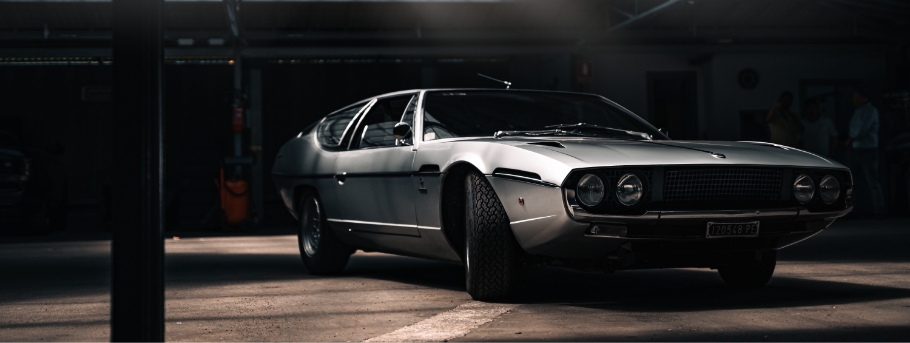
Tag: GT

  • Lamborghini Espada

    1968 Lamborghini Espada

    In 2022 Lamborghini is celebrating the V12: the legendary 12-cylinder engine that has powered its most iconic cars for almost 60 years. They include the Espada 400 GT, which was the first four-seat vehicle by Lamborghini and was its biggest selling model for years. Encapsulating an exceptional approach to technical innovation, thanks to the front-mounted 4-liter Lamborghini V12 engine it was always an extremely fast grand tourer despite the step up in size.

    The “pure” V12 combustion engine in its final form will go out of production before the end of 2022, when the last Aventador Ultimae is made. From next year, the heir to the Aventador will be fitted with a new plug-in hybrid version of the V12 engine.

    Ferruccio Lamborghini aimed to produce the fastest, most luxurious and comfortable grand tourer

    Ever since the start of his venture into automobile manufacturing, company founder Ferruccio Lamborghini stated his objective very clearly. He wanted to make the best grand tourer around: a sports car that was not only fast but also comfortable and luxuriously finished. Presented at the Geneva Motor Show in March 1968, the Espada 400 GT perfectly embodied this idea for over a decade. The Espada could comfortably seat four adults and had more space for both luggage and passengers than the 400 GT 2+2 (its predecessor) and the Islero 400 GT 2+2. In addition, the Espada featured truly outstanding finishing, with generous amounts of leather and other refined materials, as well as the option of fitting air conditioning. Power steering was introduced as an option in 1969 and it was included as standard from 1972 onwards. A version with automatic transmission was available from 1974.

    Taking the V12 engine to 4 liters

    The technical cornerstone of the Espada was the 60° V12 engine that was first produced in 1963 with a displacement of 3.5 liters, which had already been increased to 4 liters (3929 cc) in 1964. It is a remarkable example of engine development technologies, and it was capable of delivering 325 hp at 7200 rpm when it was first fitted in the Espada. This increased to 350 hp at 7500 rpm in the Espada Series II, which was presented in 1970.

    Fed by six Weber 40 DCOE side-draft carburetors, the V12 had a compression ratio of 9.5:1 (which increased to 10.7:1 from the Series II onwards) and two chain-driven overhead camshafts per bank. It weighed just 232 kg thanks to substantial use of aluminum to make not only the cylinder head but also the crankcase and the pistons. It was front-mounted in a position that was slightly further forward compared to the previous Lamborghini 350/400 GT engines, in order to make the interior roomier. Thanks to the large opening below the aluminum hood, it was easily accessible.

    The chassis was based on that of the 400 GT but it was lengthened so that the wheelbase reached 2650 mm and it was also widened, with the wheel track increasing to 149 cm. It had four-wheel independent suspension, with double wishbones and coil springs. In November 1968, an Espada “Lancomat” with hydropneumatic suspension went on display at the Turin Motor Show. The system was made available on demand, but in the end it was chosen by very few owners.

    The Espada was an extremely fast grand tourer that was capable of reaching a top speed of between 245 and 260 km/h and keeping up with the sportier Miura in most conditions.

    The Espada’s commercial success

    When it was first unveiled, the Espada was the fastest four-seat car in the world.  Featuring boxy shapes as part of a highly innovative design by Carrozzeria Bertone, it proved to be a long-lasting commercial success. Its versatility and roomy interiors – despite a height of just 119 cm – meant that it was suitable for much more frequent use, thus significantly expanding the customer base. A total of 1226 cars were produced across the three series: 176 of the Espada 400 GT Series 1 between 1968 and 1969, 578 of the Espada 400 GTE Series II between 1970 and 1972, and 472 of the Espada 400 GTS Series III between 1972 and 1978.

    The Espada VIP with a mini-bar and a Brionvega television

    The Espada VIP was presented in 1971. It was based on the Espada 400 GTE Series II and just 12 of the vehicles were made. The first models in this special series of cars came in a special orange hue and had orange and black leather upholstery. Later vehicles were made in other color combinations. Inside, the Espada VIP had a mini-bar and a refrigerator in the rear side panels and a Brionvega Algol 11 television on top of the transmission tunnel to keep the passengers in the rear seats entertained. The VIP is one of the most sought-after models among Espada collectors today.          

    Paul McCartney’s Espada made a splash

    One of the most famous Lamborghini Espada owners is Sir Paul McCartney. The former Beatle was a Lamborghini enthusiast and he bought a right-hand-drive 1972 Espada Series III with manual transmission, red paintwork and a red leather interior. His wife Linda often drove the car, but one time it rolled into a nearby pond after she left it in neutral and forgot to put on the handbrake. It was hauled out of the water after three days and later sold to new owners, who went on to use it for a number of years. Subsequently, it ended up being part of the “decor” in an English pub. It was sold to an unknown enthusiast in 2005 and it is thought that it may now be in Austria.

    From VIP owners to the silver screen

    Many celebrities have expressed their fondness for the Espada over the years. For example, since 1986 the famous American television host Jay Leno – who has always been a car enthusiast – has owned one of the very first Espada Series 2 models, which was made in 1969. EVO magazine founder Harry Metcalfe has also owned an Espada for many years. It is a right-hand-drive 1970 Series II and he took part with it in the Espada and Islero 50th Anniversary initiative organized by Automobili Lamborghini Polo Storico in 2018.

    There have been numerous films featuring an Espada, including around 50 significant titles. The most famous among fans of the model is the 1973 Italian movie “Flatfoot” starring Carlo Pedersoli, who was better known as Bud Spencer. Largely filmed in Naples and the surrounding area, it sees the protagonist pursuing an Espada uphill around a series of hairpin bends in a long chase sequence that ends outside the Church of Sant’Antonio a Posillipo.

  • The swiftest, most dynamic and most luxurious Continental GT yet created

    2023 Bentley Continental GT Mulliner - Front Angle

    Bentley’s refreshed model portfolio is being crowned with a new ultimate version of the Continental GT Mulliner to sit at the pinnacle of the Continental family and two-door grand tourers. With enhancements to both its W12 engine and its advanced chassis shared with the GT Speed, the GT Mulliner W12 becomes the most powerful, fastest, most dynamic and most luxurious Continental GT yet created.

    The new GT Mulliner W12 takes the best of all worlds to create the ultimate Continental GT combining the performance and dynamism of the Speed, the comfort of the recently-announced Azure and the magic touch and artistic flair of Mulliner handcraftsmanship.  Its W12 TFSI engine, handcrafted at Bentley’s carbon neutral factory in Crewe, delivers 659 PS (650 bhp) resulting in a top speed of 208 mph (335 km/h) and 0-60 mph in 3.5 seconds (0-100 km/h in 3.6 seconds).  Electronic All-Wheel Steering enhances the dynamic nature of the Continental GT Mulliner W12 in each of the driving modes.  The Mulliner-unique 22” wheel design features self-levelling badges which ensure the Bentley ‘B’ remains vertical at all times.

    The cabin of the Continental GT Mulliner W12 is one defined by luxury, and showcases a level of choice and customisation that only Mulliner can provide. A unique colour split is exclusive to the car, with a new combination of primary and secondary hide joined by a third colour through a flowing design line.  Eight different three-colour combinations are proposed by Mulliner, using Bentley’s palette of hides and threads to create striking yet elegant contrast throughout the cabin. A choice of 88 Piano wood veneers encourage further personalisation.  “Diamond in Diamond” quilting to the seats, door trims and rear quarter panels is made up of almost 400,000 stitches with each diamond containing exactly 712 individual stitches. Naturally these are available in a spectrum of coloured threads, too.

    To the outside, a suite of exclusive exterior design features separate the Continental GT Mulliner from the rest of the family.  At the front, the new ‘Double Diamond’ matrix grille defines the new Mulliner signature style, complemented by matching front fender vents echoing the same silver and black design and with Mulliner branding. All of these features are available either with a bright chrome or with the more contemporary gloss black appeal of Mulliner Blackline Specification. Approaching and opening either door reveals the other Mulliner design features – mirror caps in either satin silver or black with Mulliner Welcome Lamps beneath, and illuminated outer door sills with Mulliner text.

    The GT family now spans a range of models each with a different emphasis, to make customer choice easier. The Azure range  is for those prioritising wellbeing and on-board comfort, while those customers wishing to concentrate on driving pleasure can specify the new V8-powered GT S. Going one step further, the W12-powered Speed is the pure drivers car, delivering exceptional dynamic performance and no expense to grand touring ability. Above all these sits the Mulliner.

    The new GT Mulliner W12 will be on display at this year’s Goodwood Festival of Speed, where it will take to the hill along with three members of the new S range. Joining these modern road-going products on the hillclimb will be the first car in Bentley’s Blower Continuation Series, Blower Car Zero.

    Physics-Bending Performance

    The Continental GT Mulliner W12 is equipped with an uprated version of Bentley’s renowned 6.0-litre W12 TSI engine, delivering 659 PS (650 bhp) – a 4 per cent increase of 24 PS over the standard W12 model – whilst maintaining an extraordinary 900 Nm (664 lb.ft) of torque.

    With exceptional handling, this results in a top speed of 208 mph (335 km/h) and 0-60 mph in 3.5 seconds (0-100 km/h in 3.6 seconds), a reduction of 0.1 seconds. A combination of four chassis technologies give the new Mulliner model a level of agility, performance and ride quality that has been stretched to new levels.

    Bentley Dynamic Ride and three-chamber active air suspension with adaptive damping play a key role in the balance of the car and provide a formidable foundation to build upon.  The optional and newly-developed Carbon Ceramic Brakes, Variable Electronic Stability Control, All Wheel Steering, and an Electronic Limited Slip Differential bolster the agility and performance even further.

    Combining the new systems delivers Bentley’s philosophy that a vehicle should feel progressive and secure, yet still be dynamic. To achieve this philosophy in BENTLEY and COMFORT mode, overall grip is balanced between the front and rear wheels, while in SPORT this mode has been calibrated with a more rear-biased torque–split in all driving scenarios.

    The Best of Both Worlds

    Whether travelling across continents or over mountain passes, Bentley’s three-chamber active air suspension with adaptive damping, and Bentley Dynamic Ride provide control and comfort in abundance. The 48V active anti-roll control system was originally pioneered on the Bentayga and third-generation Continental GT and now tuned even further with the knowledge and learning since the systems introduction.

    This innovative system features powerful electric motors within each anti-roll bar to resist body roll. In their firmest setting, the motors can deliver 1300 Nm in 0.3 seconds to counteract cornering forces and keep the body level.

    Dynamic Ability

    The Electronic All-Wheel Steering enhances the dynamic nature of the Continental GT Mulliner W12 in each of the driving modes. This is even more apparent in SPORT mode, as the steering combines with Bentley Dynamic Ride and the electronic limited slip differential for a level of agility unlike any other Bentley road car, utilising up to 4° of steering lock on the rear wheels.

    At low and medium speeds, the GT Mulliner’s rear wheels are steered in the opposite direction to the front wheels to aid a rapid change of direction, noticeably increasing the feeling of nimbleness. The steering feels sharper and with a quicker ratio, and a commensurate increase in steering feel provides even more driver confidence. At high speeds, the rear wheels steer in the same direction as the front, to improve stability.

    The eLSD allows true active torque vectoring across the rear axle, which is then fine-tuned with torque-vectoring by brake systems. Together, these technologies improve turn-in and provide exception traction on corner exit – and, of course, allow the keen driver to induce slip angles and to balance the car on the throttle.

    Unrivalled Luxury And Attention To Detail

    The cabin of the Continental GT Mulliner is one defined by luxury, and showcases a level of choice and customisation that only Mulliner can provide. A unique colour split is exclusive to the car, with a new combination of primary and secondary hide joined by a third colour through a flowing design line.

    Eight different three-colour combinations are proposed by Mulliner, using Bentley’s palette of hides and threads to create striking yet elegant contrast throughout the cabin. A customer can, of course, choose their own set of colours or specify the cabin colours and materials from the full suite of Bentley hide colours, veneers and stitching.

    The Mulliner Driving Specification is fitted as standard, bringing the “Diamond in Diamond” quilting to the seats, doors trims and rear quarter panels, now with both contrast and accent stitching running through the diamonds design.

    It takes almost 400,000 stitches to deliver this quilting across the cabin of the car, with each diamond containing exactly 712 individual stitches – each one precisely aligned to point to the centre of the diamond it creates. Developing the embroidery process to deliver this process alone took 18 months.

    The seats themselves are finished with embroidered Mulliner logos. The floor mats are edged with micro-piping to match the rest of the colour theme of the interior and chrome Bentley ‘B’ retention caps are an example of the fine details that separate the Continental GT Mulliner.

    The roof of the cabin is trimmed along its full length with indented hide, or smooth hide to match the seat backs if the fixed glass roof is selected.

    The centre console is dressed in a unique diamond milled technical finish that uses precision machining to form a perfect pattern of facets, flanked either side by Grand Black walnut veneer with chrome overlays. A unique Breitling clock sits in the centre of the console, while the passenger side fascia is finished with a silhouette of the car’s exterior profile and the Mulliner logo. The veneer flows into the doors, where it is completed by a discreet Bentley ‘B’ motif.

    For the driver, the brushed-metal finish of the Breitling clock is carried through from the physical world to the digital, with a unique design to the main gauges of the LED main instruments cluster where careful skeuomorphic design and the application of digital textures makes the virtual dials look like real metal.
    The Continental GT Mulliner W12 truly is the ultimate combination of craftsmanship and performance. Available as both a coupe and a convertible, the car is the pinnacle definition of everything Bentley knows about making the best grand tourers in the world. For those wanting the luxury and comfort of a Mulliner model but with the character of a V8, the Continental GT Mulliner V8 remains available.

    Continental GT Mulliner W12 – WLTP drive cycle: fuel consumption, mpg (l/100km) – Combined 20.6 (13.7). Combined CO₂ – 311g/km.

  • New Continental GT and GTC S – a sharper edge

    2023 Bentley Continental GTC S - front view

    Bentley is bringing contrast and depth to its Continental GT family with the launch of a new S range, focused on driving performance and visual presence. Through a multitude of enhancements to the exterior design, interior specification and dynamic system, the new S range adjusts the Bentley grand touring recipe to center on the pleasure of driving – an opposing yet complementary emphasis to the “Wellbeing behind the Wheel” concept of the recent, comfort-centric Azure range launch.

    Owners of Bentley’s two-door models long appreciated the breadth of choice available to them, from the towering performance of the 6.0-liter W12 Continental GT Speed to the characterful beat of the 4.0-liter Continental GT V8. Now, with the arrival of the Continental GT and GTC S, owners can choose to emphasize the sporting character of the 4.0-liter V8-powered Bentley Continental GT, thanks to a package of performance-focused design and engineering features.

    Agile and Exhilarating

    The new S range retains the 542 bhp (550 PS) and 568 lb.ft (770 Nm) 4.0-liter V8 engine that’s proved incredibly popular with customers around the world, delivering a time of just 4.0 seconds for 0-62 mph (100 km/h). For the GT and GTC S, the engine is enhanced by the fitment as standard of a Sports Exhaust to amplify the crossplane V8 beat.

    The eager, free-revving and lighter 4.0-liter V8 engine gives the Continental GT S models a responsive and agile character, and this is amplified by Bentley Dynamic Ride – the advanced 48 V electric active anti-roll control system first pioneered by Bentley. By generating up 959 lb.ft (1300 Nm) in 0.3 seconds, motors within the anti-roll bars actively compensate for cornering forces to minimize body roll under hard cornering, while also improving ride comfort at cruising speeds by decoupling the left- and right-hand wheels from each other.

    Exterior Design: Assertive and Purposeful

    From the black gloss radiator grille and black brightware to distinctive S badging on the front fenders, the new S models make an instant and dramatic impact. Headlamps and rear lights are dark tinted, while all exterior brightware is specified in gloss black – with only the winged Bentley badge and lettering being finished in bright chrome. Gloss black wing build on the darker exterior look. The effect of these features is dramatic, giving the GT and GT S a more assertive stance regardless of the limitless choice of exterior colors they’re paired with.

    The S range is offered with an all-new 22” wheel option, with five Y-shaped spokes finished in gloss black and also available in a new Pale Brodgar Satin finish. Red-painted brake calipers sit behind the wheels to provide a perfect sporting contrast.

    A second wheel option for the S models is a 21” tri-spoke wheel design that combines gloss black and bright machined finishes – also unique to S.

    Finishing touches for the exterior include S badging on the front fenders, quad exhaust tailpipes (in black, naturally) and sill extenders in black as featured on the Continental GT Speed.

    Interior Design: Tactile, Dramatic and Individual

    Complementing the dynamic and purposeful exterior design is an interior that’s striking and performance-focused, with a two-tone color split that’s unique to the S models.

    In the early days of Bentley, competitors at Brooklands and Le Mans would wrap steering wheels in cord for extra cushioning and a more secure grip. Today’s sporting Bentley drivers are rather better served, with the suede-like properties of Dinamica proving ideal for the steering wheel, gear lever, seat cushion and seat backrest of the Continental GT and GTC S range. Leather hide is employed on the seat bolsters, door pads, along the instrument panel and around the console. The pairing of Dinamica with Bentley’s incomparable leather brings an interior that offers the tactile contrast of smooth hide and the soft napped finish of Dinamica.

    Driver instrumentation continues the sporting theme with the same performance-focused graphics as the Continental GT Speed. The S design seats are fluted, with quilting available as an option, and the ‘S’ emblem is embroidered on the headrest of each seat; embroidered Bentley wings are a no-cost alternative. Finishing touches include a metal S signature badge on the fascia and illuminated Bentley treadplates with the ‘S’ device replacing the Bentley Motors Ltd plaque.

    Customer Choice – Sports and Wellness in Differing Blends

    The combination of striking design, performance and agility gives the Continental GT S and Continental GTC S strong appeal for all those who love powerful, extrovert performance cars. With the recent launch of the wellness-focused Azure range alongside the S models, Bentley is providing customers with easier ways to choose the emphasis of their Bentley – centering on either onboard comfort and wellbeing through Azure, or dynamic performance and visual presence through the S and Speed options.

  • Ford GT Holman Moody Heritage Edition Honors 1-2-3 Ford Sweep At 1966 Le Mans

    Ford GT Holman Moody Heritage Edition

    In a special nod to the debut of the original Ford GT40 prototype at the 1964 New York Auto Show, Ford is returning to the Big Apple for the first public appearance of its new GT Heritage Edition – the 2022 Ford GT Holman Moody Edition.

    This marks the final 2022 Heritage Edition paying tribute to the GT40 MK II race car that completed the famous 1-2-3 sweep at the 24 Hours of Le Mans in 1966.

    “Of all the Ford GT Heritage Edition liveries we’ve done, the Holman Moody Heritage Edition’s can’t-miss signature gold and red theme is an epic tribute to our 1966 Le Mans finish,” said Mike Severson, Ford GT program manager. “Inspired by one of the most well-known Ford GT40 race cars, this latest Ford GT honors the Holman Moody race team’s knowhow and ability to out-innovate global competitors.”

    The Holman Moody team played a critical role in the GT40’s race success. Following the 1965 Le Mans race, Ford’s newly formed Le Mans committee tasked Holman Moody (and Shelby American) to rework the GT40 MK II. Driven more than 265 laps over eight days in January 1966, chassis No. P/1016 became a laboratory on wheels as the teams worked to redesign brakes, suspension and tire setups to be more competitive, even trying an experimental automatic transmission. They had one goal – to win at the 1966 Le Mans race.

    This spirit of innovation continues today, with the 2022 Ford GT’s track-capable hardware, paddle-shifting 7-speed dual-clutch transmission and carbon fiber body.

    The ultra-limited-production GT Holman Moody Edition supercar will be on display at the 2022 New York International Auto Show side-by-side with the podium-placing Holman Moody Ford GT40 MK II, chassis No. P/1016.\

    Final 2022 Heritage Edition to pay tribute to the original race car that completed Ford’s 1-2-3 sweep

    The unique gold and red livery of the limited-edition supercar includes signature Oxford White roundels with No. 5 stamped on the doors, hood and rear wing – all matching the appearance of the 1966 Ford GT40 raced by Holman Moody. Exposed gloss carbon fiber components are prominent, including on the 20-inch wheels, front splitter, side sills, mirrors, engine louvers and rear diffuser. Brembo® brake calipers lacquered in black with silver graphics, plus black lug nuts further modernize the aesthetic.

    Carbon fiber carries into the cabin, appearing on door sills, console and registers, and even features a cleaver matte No. 5 roundel on the door panels. Ebony Alcantara®-wrapped carbon fiber seats feature gold accent stitching, while embossed seating surfaces and head restraints carry a debossed GT logo. The instrument panel is wrapped in Ebony leather and Ebony Alcantara, while pillars and headliner are wrapped exclusively in Ebony Alcantara.

    Gold appliqués on the instrument panel, door register bezels and seat X-brace are paired with the matte carbon fiber on the registers, door sills, lower A-pillars and console. The steering wheel is finished in Ebony Alcantara with black stitching, while dual-clutch paddle shifters are finished in exterior-matching Holman Moody Gold.

    Further building on the Heritage Edition series

    The Ford GT Heritage Edition series celebrates the supercar’s landmark moments in motorsports history, including, of course, its Le Mans titles. In all, the series includes nine ultra-limited-edition supercars, with two still in production. These include:

    • 2022 Ford GT Alan Mann Heritage Edition honoring the No. 16 Alan Mann Ford GT MK I lightweight experimental prototype that helped pave the way for the 1-2-3 sweep at the 1966 24 Hours of Le Mans; currently in production
    • 2022 Ford GT ’64 Prototype Heritage Edition honoring Ford GT’s roots and the earliest five original Ford GT prototypes; currently in production
    • 2021 Ford GT ’66 Daytona Heritage Edition honoring the Ford GT MK II No. 98 race car that gave Ford a 1-2-3-5 domination at Daytona in 1966, kicking off a magical season for the Ford GT40 MK II; only 50 built
    • 2020 Ford GT ’69 Gulf Livery Heritage Edition honoring the Ford GT40 MK I No. 6 race car that was victorious at Le Mans in 1969; only 50 built
    • 2019 Ford GT ’68 Gulf Livery Heritage Edition honoring Ford GT40 MK I No. 9 race car that was victorious at Le Mans in 1968; only 50 built
    • 2018 Ford GT ’67 Heritage Edition honoring Ford GT40 MK IV No. 1 race car that was victorious at Le Mans in 1967; only 39 built
    • 2017 Ford GT ’66 Heritage Edition honoring Ford GT40 MK II No. 2 that won 1966 Le Mans race; only 27 built
    • 2006 Ford GT Gulf Livery Heritage Edition commemorating GT40’s back-to-back 24 Hours of Le Mans titles in 1968 and 1969; only 343 built

    The 2022 Ford GT Holman Moody Heritage Edition is available for approved Ford GT customers, with first deliveries taking place this spring.

  • Mercedes-AMG GT Track Series: limited edition, unlimited performance

    Mercedes-AMG GT Track Series

    The most powerful customer sports car ever developed by Mercedes-AMG: the Mercedes-AMG GT Track Series, conceptualized for use during track day events. With the exclusive limited edition, the Mercedes-AMG motorsport department is celebrating the 55th anniversary of the Affalterbach- based company. Limited to 55 units, the Mercedes-AMG GT Track Series serves as a memento to AMG founders Hans Werner Aufrecht and Erhard Melcher and their philosophy: making the best even better yet. The result is an uncompromised, exclusive performance car that reflects the automotive constructors’ art of Mercedes-AMG in a unique way.

    1. New Mercedes-AMG GT Track Series is limited to 55 units
    2. Most powerful customer sports car ever to be developed by Mercedes-AMG
    3. Extension of AMG portfolio by an exclusive member for track day events

    The Mercedes-AMG GT Track Series is extending the GT legacy with a new iconic model. The legendary top performer, Mercedes-AMG GT Black Series, served as the basis for the development. Similar to the GT Black Series, the GT Track Series stands out for its unique vehicle concept aimed at top-level performance, combined with the racetrack-proven qualities of the GT3 and GT4 models. Ineligible for road use approval, the GT Track Series underlines its high exclusivity by means of numerous unique technical and visual features.

    Fascinating performance offer

    The heart of the Mercedes-AMG GT Track Series is the Handcrafted AMG 4.0L V8 Biturbo engine from the Mercedes-AMG GT Black Series, the engineers from Affalterbach enhanced its impressive performance figures even further. For instance, thanks to custom motorsport injectors and a specific engine application, the power unit equipped with a flat-plane crankshaft now delivers 778 hp and 627 lb-ft.

    The sequential Hewland HLS 6-speed racing gearbox with adjustable differential transfers the power to the rear axle. Like in all the models from the GT family, it has been installed on the rear axle in transaxle configuration and has a torsion and torque resistant connection to the engine by means of a carbon fiber torque tube. The suspension of the Mercedes-AMG GT Track Series features comprehensively adjustable four-way Bilstein dampers. As is common in motorsport, they each have a high-speed and low-speed setting in the rebound and compression levels and allow for adjustments of the ride height. In addition, the anti-roll bars are individually adjustable.

    In combination with the underlying car concept, these high-performance components result in highly precise handling with unmistakable feedback. This allows drivers of all skill levels to quickly build up confidence in the vehicle.

    Optimized aerodynamics combined with a powerful design

    The design and aerodynamics of the Mercedes-AMG GT Track Series strictly follow the performance philosophy. The hood, fenders, side sills, trunk lid and rear bumper are made of carbon fiber and largely contribute to the high driving dynamics. Another important effect of the material mix is the reduction of the curb weight of the vehicle to 3,086 lb.

    The integrated louvers of the carbon wing on the front axle provide a higher downforce. The side sills with elements of black visible carbon, transitioning into vertical blades both at the front and the rear, significantly contribute to an optimal airflow around the vehicle. To ensure effective cooling of the rear brakes, the sills also incorporate cooling air ducts. The rear bumper with double diffuser and lateral wheel arch air outlets also speaks to the racing DNA of the Mercedes-AMG GT Track Series.

    The front of the exclusive model is characterized by the AMG specific radiator grille, which ensures optimum air flow to the radiator. The high-downforce front splitter was developed exclusively for the GT Track Series. It is complemented by a modified, mechanically adjustable racing rear wing that is based on the aero element of the GT Black Series. It was further developed to improve the downforce on the rear axle.

    Another direct motorsport derivative is the exclusive characteristic hood with large air outlet. It guides the hot air from the engine bay, increases the overall downforce while contributing to the cooling of the engine at the same time.

    Another special development for the Mercedes-AMG GT Track Series are the exclusive high-sheen milled and forged 18-inch wheels, the common wheel rim size for GT race cars. All the usual competition tire types can be used.

    A special visual highlight is the exclusive semi-gloss special finish in MANUFAKTUR Cirrus Silver Magno with design elements in red and anthracite. Another highlight that emphasizes the exclusivity of this GT model is the integration of the AMG emblem in the upper area of the front fascia.

    Comprehensive safety package and motorsport specific interior

    Like in the GT3 and GT4, user and service friendly racing electronics have been installed in the GT Track Series as well. They include a racing specific traction control and a motorsport ABS, each adjustable across 12 levels (level 1: maximum TC/ABS activity, level 11: minimum TC/ABS activity, level 12: off).

    The brake components are motorsport-proven as well. The GT Track Series comes with steel brakes (front axle: 15.4″/rear axle: 14″). A brake beam has been installed for adjusting the brake balance. The carbon brake air ducts and the dimensionally stable brake air lines guarantee optimal cooling of the performance brake system in the process.

    Proven within the GT family, the safety concept has been applied in the interior: the roll cage of high-tensile steel is bolted to the aluminum space frame and an extrication hatch has been placed in the roof. The carbon driver safety cell has large dimensions and is even offering taller drivers sufficient room to move. Moreover, it has a five-point safety harness and customizable ergonomic seat. As a result, the driver safety cell meets the latest FIA standards and offers a considerably higher protection level than usual race seats. A powerful motorsport fire extinguisher system and driver safety nets complement the comprehensive safety concept of the GT Track Series.

    During the design process of the interior, the Mercedes-AMG engineers have paid particular attention to the purpose of the vehicle: the GT Track Series has been assembled as a thoroughbred motorsport vehicle and therefore does without any typical comfort elements. To achieve the 3,086 lb curb weight, the search for any components like padding materials, interior fairing or electric windows is in vain.

    The steering wheel, exclusively developed for the GT Track Series in cooperation with the sim racing experts at Cube Controls, has a wide adjustment range and numerous control opportunities. The pedals can also be adjusted and can be individually adapted to the driver’s physique. The dashboard with visible carbon and a matte finish includes a fully programmable BOSCH DDU 11 Driver Display Unit, designed for intuitive operation and user-friendliness. Moreover, it incorporates a comprehensive data logging system for motorsport purposes, for instance a lap trigger to keep track of lap times. The GT Track Series is one of the first cars around to feature the newly developed system.

    55 years of Mercedes-AMG – 55 Mercedes-AMG GT Track Series

    The Mercedes-AMG GT Track Series stands for maximum exclusivity. The special series is limited to 55 units, each of them built by hand in Affalterbach. Thus, Mercedes-AMG reminisces about the founding of the company by Hans Werner Aufrecht and Erhard Melcher in 1967, exactly 55 years ago. A high-quality embossed “1 of 55” plaque in the interior identifies every Mercedes-AMG GT Track Series as a unique piece from the special edition. The “Track Series” embroidery on the driver’s seat and on the limited car cover also refer to the exclusivity of the GT Track Series.

    Comprehensive service and support included

    Mercedes-AMG GT Track Series owners benefit from a comprehensive service and support range that is continually being developed and expanded. It also includes such privileges that normally are exclusive to the Mercedes-AMG Motorsport customer teams: a technical training prior to delivery of the vehicle, individual engineer support during track days and club sport activities upon request, a service hot line during race weekends as well as logistical services such as an optimal spare parts supply.

    Technical support is guaranteed by the motorsport experts at HWA AG, carrying out services and rebuilds as Mercedes-AMG’s development and production partner. The exclusive online-based ordering and information system “Customer Service Portal” is in place for ordering accessories and spare parts as well as providing all technical documentation.

    Direct sales from Affalterbach

    Worldwide sales of the Mercedes-AMG GT Track Series is being handled from Affalterbach where Mercedes-AMG has its headquarters. Customer delivery of the special edition starts in the second quarter of 2022. The list price of the Mercedes-AMG GT Track Series including air conditioning is € 369,000 plus VAT. A spare parts starter set, seat and helmet ventilation system, drinking system and passenger safety cell are available as options. Further equipment options are available upon request.

    The Mercedes-AMG GT Track Series at a glance:

    Engine Handcrafted AMG 4.0L V8 Biturbo engine
    Displacement 3,982 cc
    Output 778 hp
    Torque 627 lb-ft
    Drive Transaxle configuration: front engine, gearbox on the rear axle, connected by Torque Tube
    Gearbox Sequential AMG 6-speed competition gearbox with mechanical (adjustable) self-locking differential and magnesium casing as well as
    shift paddles on the steering wheel, pneumatically operated
    Bodywork Aluminum space frame;
    roll cage of high-tensile steel
    Safety Carbon driver safety cell to latest FIA standards, individualized seat and integrated headrest as well as extrication hatch in the roof;
    powerful motorsport fire extinguisher system
    Suspension Aluminum double wishbones front and rear;
    shock absorbers with adjustable rebound and compression
    Electronics Motorsport electronics with torque control;
    optimized driver aid systems: AMG TRACTION CONTROL, competition ABS, Race-Start Control; service-friendly durable motorsport wiring
    Steering Electro-mechanical power steering
    Brakes Competition brake system with adjustable ABS; self-ventilating composite brake discs with special cooling air guidance; brake calipers with 6 pistons at the front and 4 pistons at the rear; brake
    disc diameter: 15.4″ (390 mm) front / 14″ (355 mm) rear
    Wheels AMG light alloy wheels, front: 12×18″, rear: 13×18″, forged
    Tires front: 325/660-18 / rear: 325/705-18
    Weight 3,086 lb (1,400 kg)
    Fuel tank capacity 31.7 gal (motorsport safety tank)
    Price 369,000 Euros (ex Affalterbach, VAT not included)

    Christoph Sagemüller, head of Mercedes-AMG Motorsport: “Everything on the GT Track Series is subordinated to the performance philosophy that has been the dominating theme in the conception of our cars since the founding of Mercedes-AMG 55 years ago. Our customers require the suitable vehicle for every kind of activity. Therefore, expanding our portfolio with an exclusive club sport car was logical. But we have even gone one step further, offering our customers not just an outstanding product with excellent performance and quality, but also a strictly limited special edition model.”

    Stefan Wendl, head of Mercedes-AMG Customer Racing: “For the development of the Mercedes-AMG GT Track Series, we set ourselves the aspiring goal of being able to provide ambitious motorsport customers with a matured and highly exclusive track tool. Our engineers and motorsport experts have accomplished this in an impressive way. I am looking forward to our customers setting new personal records with the
    GT Track Series at racetracks around the world.”

  • V8 models of the Mercedes AMG GT 4 Door Coupe further upgraded and available to order now

    Mercedes-Benz AMG GT63 S 4-Door - Front Angle

    Following on from the six‑cylinder models, the Mercedes‑AMG GT 63 4MATIC+ (fuel consumption combined 13.5–12.5 l/100 km; CO2 emissions combined 308–284 g/km)[1] and the Mercedes‑AMG GT 63 S 4MATIC+ (fuel consumption combined 13.5–13.0 l/100 km; CO2 emissions combined 308–295 g/km) now also receive a technical and visual upgrade. In addition to design modifications, these include the AMG RIDE CONTROL+ suspension, which is fitted as standard on the V8 models. With the facelift, customers have an extended choice of equipment details at their disposal. This allows them to adapt their desired model even more specifically to their personal requirements. A wider range of wheels, upholstery, trim and exterior colours offer more customisation options. As with the first performance hybrid from Mercedes‑AMG, the GT 63 S E PERFORMANCE (fuel consumption weighted, combined: 7.9 l/100 km; combined weighted CO2 emissions: 180 g/km)1, the attractive model range is rounded off by two exclusive editions. The new models can be ordered immediately at a base price starting at 158,162.90 euros[2]. The market launch will take place in Europe from April 2022.

    At first glance, the facelifted eight‑cylinder models of the AMG GT 4‑Door Coupé can be recognised by the individually designed front apron, which was launched with the new top model of the series, the GT 63 S E PERFORMANCE. It now appears even more to be cast from a single mould and blends homogeneously into the dynamic design of the overall vehicle. The outer air intakes are wider and more pointed towards the centre of the car. The airflow is now channelled through three vertical fins to the radiators.

    “In the 4‑door coupé segment, the Mercedes‑AMG GT offers the perfect balance between everyday practicality and sportiness. On the one hand, it is the superior Gran Turismo for the whole family and, on the other, the current record holder on the Nürburgring-Nordschleife in the Executive‑cars category. As the fastest and most powerful medical car in Formula 1® history, the GT 63 S is also celebrating its debut this season and is ready to provide rapid emergency care with maximum race track performance. The diversity is also reflected in the wide range of drive options. In addition to six- and eight‑cylinder engines, we also offer the first AMG hybrid in the E PERFORMANCE drive layout in this model series. To further sharpen our profile as a Performance Luxury brand, we have also expanded the options for individualisation, thus offering our customers an even higher level of lifestyle and exclusivity,” emphasises Philipp Schiemer, Chairman of the Board of Management of Mercedes‑AMG GmbH.

    With the facelift of the six‑cylinder models, the exterior colours spectral blue metallic and spectral blue magno were newly offered. These are also available for the V8 models. This gives the customer a choice of a total of four matt paints, four metallic shades and two solid colours. In addition, there are two exclusive paint finishes for the Editions models. The expressive exterior design can be further accentuated with the new AMG Night Package II or a combination of the Night Package and Carbon Package, for example. New colours and trims have also been added to the range for the interior, including the AMG Performance steering wheel.

    The standard‑fit AMG RIDE CONTROL+ suspension, with its continuously adjustable pressure relief valves, adjusts the damping force for each wheel to suit the situation in just a few milliseconds. The AMG DYNAMIC SELECT drive programs are used to preselect the basic set-up – from “Sport+” mode for particularly dynamic driving to the “Comfort” setting for smooth gliding. The AMG developers were able to significantly increase the spread between sportiness and comfort. In addition, the tuning can be adjusted in three stages independently of the drive programs via a button.

    With the AMG Special Edition in AMG green light magno paint, the V8 models show their sportiest side. The exclusive colour provides an exciting contrast to the AMG Night Package with its selected exterior elements in high‑gloss black and dark chrome as well as the black foiling above the side sills. The 21‑inch AMG forged wheels in a 5‑twin‑spoke design strikingly emphasise the expressive look. They are painted black and accentuated with a high‑sheen rim flange. The AMG Aerodynamics Package and the AMG Exterior Carbon package are available as options for further individualisation. The panoramic roof (optional) lets plenty of light into the interior. Thanks to numerous highlights, the atmosphere here is unfiltered motorsport. These include the sports seats in Exclusive nappa leather in two‑tone titanium grey pearl/black with yellow contrasting stitching or optionally the AMG Performance seats and the AMG trim elements in black piano lacquer look or, on request, carbon. The Edition also appears exclusive thanks to the Edition badge in the interior and illuminated door sill panels in green matching the exterior paintwork.

    The luxurious AMG Special Edition with paintwork in the dark gemstone shade MANUFAKTUR rubellite red metallic is also available as an option for the AMG GT 4-Door Coupé with an eight-cylinder engine. This includes, among other things, the AMG Exterior Chrome package as well as silver-painted, high‑sheen and 21‑inch AMG forged wheels in a 5‑twin‑spoke design. The optionally available High‑Class rear suite complements the vehicle’s outstanding performance with a particularly luxurious interior: with comfortable individual seats, high-quality ambience and easy access to comprehensive infotainment functions and comfort features. Seat upholstery in MANUFAKTUR Exclusive nappa leather in neva grey/black and trim elements in open‑pore grey ash wood also lend the interior an individual look. The AMG‑specific MANUFAKTUR steering wheel is finished in two colours of fine nappa leather.

    The MANUFAKTUR label stands for the highest degree of individuality and luxury with selected materials that are predominantly processed by hand. For the AMG GT 4‑Door model, this includes exclusive paintwork and high‑quality interiors. Since the facelift of the six‑cylinder models in the middle of last year until today, the range of additional colours in the AMG GT portfolio has grown to 10 MANUFAKTUR special paint finishes, including MANUFAKTUR copper orange magno and MANUFAKTUR Kalahari gold magno, two completely new colour shades. AMG sports stripes in three different colours enable even sportier visual positioning. For the interior, thanks to the MANUFAKTUR range, there are five additional choices with exclusive nappa leather in diamond quilting, including a two‑tone AMG Performance steering wheel and AMG high‑pile floor mats with embroidered AMG lettering.

    Technical data at a glance

    Mercedes-AMG GT 63 4MATIC+ Mercedes-AMG GT 63 S 4MATIC+
    Price1 €158,162.90 €175,179.90
    Surcharge for Edition rubellite red1 €18,135.60 €16,826.60
    Surcharge for Edition AMG green light magno1 €23,086.00 €21,777.00
    Engine 4.0-litre V8 with direct injection and exhaust gas turbocharging 4.0-litre V8 with direct injection and exhaust gas turbocharging
    Displacement 3982 cc 3982 cc
    Max. output 430 kW (585 hp) at 5500-6500 rpm 470 kW (639 hp) at 5500 – 6500 rpm
    Peak torque 800 Nm at 2350-5000 rpm 900 Nm at 2500 – 4500 rpm
    Drive system AMG Performance 4MATIC+ all-wheel drive with fully variable torque distribution AMG Performance 4MATIC+ all-wheel drive with fully variable torque distribution and Drift Mode
    Transmission AMG SPEEDSHIFT MCT 9G AMG SPEEDSHIFT MCT 9G
    Combined fuel consumption2combinedcombined 13.5–12.5 l/100 km 13.5–13.0 l/100 km
    Combined CO2 emissions2 308–284 g/km 308–295 g/km
    Acceleration 0-100 km/h 3.4 s 3.2 s
    Top speed 310 km/h 315 km/h
    Kerb weight acc. to EC 2105 kg 2135 kg

     1 MSRP for Germany including 19% VAT.

    2 The values stated are the determined “WLTP CO2 values” in the sense of Article 2 No. 3 Implementing Regulation (EU) 2017/1153. The fuel consumption figures were calculated on the basis of these figures.


  • OPUS Mercedes-AMG GT Black Series

    OPUS Mercedes-AMG GT Black Series - Fornt Angle View

    Almost exactly a year ago, OPUS Automotive GmbH was the first tuner in the world to fine-tune the AMG GT Black Series with performance levels over 1000hp and other products. However, this fact should not bring the impression that OPUS has forgotten the “civil” brothers called GT R and GT R PRO or even the GT S. On the contrary!

    The Black Series was only available to around 1700 selected customers worldwide via an application process (rumours are, that there were over 4 times as many interested parties for the vehicle), while the GT R and GT R PRO were available for purchase by anyone with a more reasonable budget.

    Above all, the interest of trackday customers who regularly drive the GT R on the racetrack has increased. This is exactly where OPUS comes in and has used the “winter break” at the Nuerburgring to test new packages in sunny Portugal in cooperation with TIL Motorsport and to be able to offer them from spring on.

    OPUS is located close to the Nurburgring racetrack, in the same business park where racing teams and well-known vehicle manufacturers have settled. In fact, OPUS moved into the former test centre of Mercedes-AMG GmbH on Gottlieb-Daimler-Street.

    The cooperation with TIL Motorsport Portugal allows further testing and development of tuning parts during winter-breaks around the Nuerburg-castle.

    At first glance, this particular matt gray AMG GT R PRO with the OPUS R777 package may appear to be quite standard, but details that deviate from the stock car only catch the eye at second glance. This is actually intended, after all, OPUS has clearly opted for functional refinements, based on the motto “form follows function”.

    The big appearance on the “promenade” is therefore left to body-kits from other companies, even if the GT R and GT R PRO are anything but “inconspicuous” vehicles in the standard condition already.

    The visually unobtrusive rear wing, which is significantly larger than the stock part, is based on the design of the rear wing of the AMG GT 4 racing car and ensures a significant increase in downforce on the rear axle.

    The Öhlins TTX suspension, which is available exclusively from OPUS and has four-way adjustable rebound and compression damping, ensures perfect stability in every driving condition. A perfect suspension setup also improves the traction and braking behaviour of the vehicle.

    The engine performance kit has been tested since 2018 in “endurance” on the Nuerburgring and other racetracks around the world as a 760hp performance pack and has been installed in well over 100 customer vehicles since then. Fine tuning has now allowed the power to be increased by a further 17hp without compromising the durability.

    In order to achieve the performance of 777hp and 850Nm / 625 ft lbf, upgraded turbochargers were installed in combination with sports cats, there are also upgraded intercoolers and adapted software for the engine and transmission control.

    In combination with the improved aerodynamics, the performance is by no means over-proportioned.

    While OPUS limits the torque for best traction as well as the drivetrain-longevity, they promise a NA-like characteristic without a “turbo lag” and a linear power curve, i.e. increasing power in parallel to the rpms.

    To round it off, there is an exhaust-flap control system called EFC, which allows the standard exhaust flaps to be actuated using a remote control as required.

    In order to get the OPUS R777 GT R to standstill permanently, especially on the racetrack, OPUS high-performance brake pads are installed on the front and rear axles in addition to steel braided brake lines and racing brake fluid. Furthermore, an effective brake cooling system was installed.

    The Michelin Cup2 R tyre set known from the AMG GT Black Series ensures the right grip.

    The front fenders are ventilated via carbon-fibre louvers, which originally consist of plastic. The packages mentioned above will be rounded off in just a few weeks by their own super-light wheels, but OPUS does not want to give any further details on this yet.

    One detail that OPUS is willing to share in the meantime, is the estimated Nuerburgring lap time with the full kit: “Well over 10 seconds faster than the factory laptime of the GT R PRO, even faster with a PRO driver”, says the OPUS managing director Lukas Domogalla. Which would mean an astonishing low 6:5X min time for a lap of the Nordschleife.

    BTW: OPUS is a newcomer only by name. The development team around the managing director and automotive engineer, is one that has been active in the industry for over 20 years. The team has worked as a sales representative for a well-known American company as well as an independent development and test centre.

    Perhaps one more thing: Customers who think that 777hp is “underpowered” can purchase further GT R performance kits with over 900hp.

  • Ford GT Alan Mann Heritage Edition Celebrates Experimental GT Race Car Prototypes from 1966 at Chicago Auto Show

    Ford GT Alan Mann Heritage Edition (2022) - Front Angle View

    As a tribute to Alan Mann Racing’s 1966 Ford GT lightweight experimental prototypes, Ford is introducing the Ford GT Alan Mann Heritage Edition. The limited-edition vehicle celebrates the role the prototypes played in the history of the development of the Ford GT.

    “Whether it’s going like hell at the racetrack or out-innovating the competition, the Ford GT Alan Mann Heritage Edition honours the vehicles that helped lead Ford to its wins,” said Mike Severson, Ford GT program manager. “With its red and gold livery, this Ford GT is inspired by Alan Mann Racing’s contribution to our Le Mans-winning story.”

    In 1965-66, Alan Mann Racing used lighter materials to create AM GT-1, along with a second car, based on the GT Mk I. While neither prototype won a major race, the use of lightweight materials was similar to what helped Ford win Le Mans with the GT Mk II in 1966.

    This spirit continues in today’s Ford GT supercar, with its lightweight carbon fibre body cloaked as a GT Heritage Edition for 2022 in colors and stripes inspired by the AM GT-1.

    Limited-edition run pays tribute to the original

    In addition to wearing unique Alan Mann red exterior paint with gold graphics, this limited-edition GT includes a dual over-the-roof racing stripe, Frozen White signature accent stripes and roundels with No. 16 on the doors, hood and underside of the rear wing.

    Exposed gloss carbon fibre components are prominent, including on the 20-inch wheels, front splitter, side sills, mirrors, engine louvers and rear diffuser. Brembo® brake calipers lacquered in black with red graphics, plus black lug nuts further modernise the aesthetic.

    Carbon fibre carries into the cabin, appearing on door sills, console and registers. Ebony Alcantara®-wrapped carbon fibre seats feature gold and red accent stitching, while embossed seating surfaces and head restraints carry the GT logo. The instrument panel is wrapped in Ebony leather and Alcantara, while pillars and headliner are wrapped in Ebony Alcantara.

    Gold appliqués on the instrument panel, door register bezels and seat X-brace are paired with the matte carbon fibre registers, door sills, lower A-pillars and console. The steering wheel is finished in Ebony Alcantara with black stitching, while dual-clutch paddle shifters are finished in exterior-matching Alan Mann red.

    Honouring early Ford GT racing efforts

    Wrapping up its final year of production, the 2022 Ford GT Alan Mann Heritage Edition pays tribute to Alan Mann Racing and the support the team provided in 1965. Lessons learned from Alan Mann Racing improved the capabilities of the Ford GT40 and led to its third- and fourth-fastest times in the 1966 Le Mans trials.

    Ultimately, the Le Mans committee chose to run the heavier and more powerful 7.0-litre V8 race cars for the rest of the 1966 season, which culminated in a 1-2-3 podium sweep for Ford at Le Mans, ending the run of the English team’s lightweight version.

    “It’s a great honour for Alan Mann Racing and the Mann family to celebrate the epic motorsports heritage of Ford GT with this fantastic limited-edition car,” said Henry Mann, director, Alan Mann Racing Ltd. “To see the red and gold colours of our team’s livery come back to life, and to debut this new GT alongside one of our original GT40s in Chicago, will be a magical occasion.”

    Further building on the Heritage Edition series

    The Ford GT Heritage Edition series celebrates the supercar’s landmark moments including, of course, its Le Mans-winning titles. The 2022 Ford GT Alan Mann Heritage Edition marks the seventh in the ultra-limited-production series. These include:

    • 2022 Ford GT ’64 Prototype Heritage Edition honoring GT roots and the earliest five original Ford GT prototypes
    • 2021 Ford GT Heritage Edition honoring No. 98 Ford GT Mk II co-driven by Ken Miles and Lloyd Ruby to Ford’s 1-2-3-5 domination at Daytona in 1966, kicking off a magical season for the Ford GT40 Mk II
    • 2020 Ford GT ’69 Heritage Edition honoring No. 6 Ford GT40 Mk I that was victorious at Le Mans in 1969
    • 2019 Ford GT ’68 Heritage Edition honoring No. 9 Ford GT40 Mk I that was victorious at Le Mans in 1968
    • 2018 Ford GT ’67 Heritage Edition honoring No. 1 Ford GT40 Mk IV that was victorious at Le Mans in 1967
    • 2017 Ford GT ’66 Heritage Edition honoring No. 2 Ford GT40 Mk II co-driven by Bruce McLaren and Chris Amon at Le Mans in 1966
    • 2006 Ford GT Heritage Edition commemorating GT40’s back-to-back 24 Hours of Le Mans titles in 1968 and 1969
  • Global deliveries of Pikes Peak Continental GT limited edition

    2021 Bentley Continental Pikes Peak GT1

    The 15 striking Pikes Peak Continental GT by Mulliner limited edition cars have made their way around the world to their new owners. Celebrating Bentley’s record-breaking run up the world-renowned Pikes Peak course in Colorado, USA, this unique and exclusive run has already sold out, with buyers across four different continents testament to its truly global appeal.

    The Pikes Peak Continental GT Limited Edition is part of Bentley Mulliner’s new ‘Collections’ portfolio and is restricted to just 15 vehicles, hand-built at Bentley’s carbon-neutral factory in Crewe, England.

    Owners are spread around the world, in locations as far apart as Japan, the United Arab Emirates, Germany, New Zealand, Latvia and the United Kingdom. Five of the new owners come from the USA, home to the world-renowned course in Colorado, with cars arriving across the country – from New York (Manhattan), to Florida (Fort Lauderdale), to Michigan (Troy), California (Rancho Mirage) and Nebraska (Omaha).

    Eighteen months ago, a race-prepared version of a standard W12-powered Continental GT beat the coveted time for a production car by more than eight seconds, climbing almost 5,000 ft through Pikes Peak’s 156 bends in just 10 minutes, 18.4 seconds. The world’s finest Grand Tourer was driven on that occasion by three-time Pikes Peak champion, former ‘King of the Mountain’, Rhys Millen.

    To match the look of the record-breaking car, a third of customers have opted for the Mountain Decal Event Livery for their Limited Edition Continental GTs, whilst three owners have chosen a subtle gloss black exterior paint finish.

    All 15 Pikes Peak Continental GT by Mulliner cars honour Bentley’s achievements on the world’s most demanding hill climb. Bentley first achieved the record for fastest production SUV with the Bentyaga in 2018, and then the outright production car record with the Continental GT the following year.

    Eye-Catching Detail

    The Pikes Peak Continental GT Limited Edition is distinguished by exclusive Radium by Mulliner paintwork, complemented by a lightweight, carbon fibre body kit. Acid Green brake calipers and Pirelli P Zero Colour Edition tyres add to the eye-catching detail.

    The front, lower bumper inserts are enhanced with gloss black detailing, mirrored on the roof panel, wing mirrors and rear surfaces. Combined with a Pikes Peak decal on the front fender, the distinctive appearance hints at the Limited Edition’s record-breaking lineage.

    Mulliner’s 22-inch Driving Specification wheels in Gloss Black are standard, while an optional ‘100’ grille celebrates the fact that the record-breaking Pikes Peak run took place in Bentley’s centenary year.

    The sporting theme continues inside the luxurious cabin, where Alcantara with contrasting Radium thread stitching adorns much of the soft trim areas. A honeycomb Radium stitching design to the steering wheel is complemented by a radium strip across the middle, matching the Pikes Peak race car.

    The fascia design on the passenger side sports a graphic design showing a section of the famous Pikes Peak track itself, with five different graphics being used across the 15-car run, along with the record-breaking time of 10:18.488.

    Pikes Peak Radium embroidery continues on the headrest stitching, contrast binding on the overmats, with Pikes Peak treadplates and exclusive B&O speaker covers in Black Anodised and Radium finish. The superlative cabin includes the Continental GT’s innovative Bentley Rotating Display.

    The Pikes Peak Continental GT by Mulliner is equipped with the same, advanced 12-cylinder petrol engine as the car that broke the record last year. The twin-turbocharged Bentley W12 develops 626 bhp and 900 Nm of torque, accelerating the Continental GT from 1-100 km/h in 3.7 seconds (0-60 mph in 3.6 seconds) with a top speed of 333 km/h (207 mph).

  • Ferrari 488 GT Modificata

    2021 Ferrari 488 GT Modificata1

    Ferrari presents the new 488 GT Modificata, a limited edition car that incorporates the technology developed for the 488 GT3 and 488 GTE, transcending the limits imposed by technical and sporting regulations to exploit its full potential. The 488 GT Modificata is exclusively for use during track days and at Ferrari Club Competizioni GT events.

    Greater power. The car’s name includes the word “Modificata”, which in Ferrari jargon means designs that have been evolved for better performance. It maximises the already outstanding performance of the 488 GT3 and the 488 GTE by combining their most effective and innovative solutions, as well as developing new technologies linked mainly to a powertrain no longer limited by the FIA Balance of Performance. The legendary twin­ turbo V8 was subject to advanced research, which resulted in specific components and the carry-over of materials from the racing engine. The maximum power delivered by the engine is now around 700 cv, due to the use of innovative solutions and more extreme and high-performance mapping. All this without compromising Ferrari’s proverbial reliability. The gearbox, available with different transmission ratios, and the carbon-fibre clutch, help to manage the increased power and torque delivered by the engine.

    Noble origins. The 488 GT Modificata is a perfect synthesis between the 488 GTE that competes in the World Endurance Championship and the 488 GT3, queen of GT racing. These are some of the most successful models in the history of the Prancing Horse. This is clear from the over 350 wins and 630 podiums in national and international races secured by the 488 GT3 along with the FIA World Endurance Championship Drivers’, Teams’ and Manufacturers’ titles, and the 488 GTE’s triumph in the 24 Hours of Le Mans and the Petit Le Mans. After intense development work on the Nordschleife the

    488 GT Modificata benefits from completely revamped high-downforce aerodynamics, shifting the pressure centre forward. This generates higher downforce at the front without increasing overall drag, making for better efficiency and sensitivity to changes in rear wing angle. Apart from the aluminium roof and uprights, the bodywork is entirely in carbon-fibre like the 488 GTE. This contributes to a downforce of over 1000 kg at 230 km/h.

    Winning dynamics. When defining the vehicle dynamics of the 488 GT Modificata the engineers opted to use the 488 GTE’s suspension. The braking system was developed in partnership with Brembo. It features the low residual torque callipers that are fitted to world championship cars, coupled with an ABS system borrowed from the 488 GT3 Evo 2020, with specific settings. This synergy provides drivers with formidable handling and powerful, stable braking with limited fading.

    Unique equipment. The extensive standard equipment of the 488 GT Modificata includes a V-Box acquisition system, which is combined with Bosch’s telemetry data acquisition system. The expandable system allows data to be downloaded directly onto a USB stick. The high-resolution rear-view camera, second seat and TPMS system for measuring tyre temperature and pressure also all come as standard.

    Full personalisation. Like all Ferraris, the 488 GT Modificata offers customers a wide range of customisation options for both the exterior and interior. The car, produced in a very limited series, will initially only be for drivers who, in recent years, have participated in Competizioni GT with Ferrari or Club Competizioni GT.

    Club Competizioni GT. The 488 GT Modificata will be admitted to Club Competizioni GT events, an initiative that is carving out an increasingly prominent place among Ferrari’s track activities. The aim of Club Competizioni GT is to bring back to the track the most significant and successful cars in the recent history of Prancing Horse closed­ wheel racing, from the F40 Competizione to the more recent 488 GT3 and GTE. In 2021, customers will have the chance to participate in five events on tracks that bring out both the handling and dynamic qualities of the cars, such as the Virginia International Raceway, Monza, Watkins Glen, Suzuka and Nurburgring, as well as the Finali Mondiali

  • Mercedes-AMG GT black series is fastest production car on the Nurburgring-Nordschleife

    Mercedes-AMG GT Black Series, 2020

    How close the new Mercedes-AMG GT Black Series (fuel consumption combined: 12.8 l/100 km; CO2 emissions combined: 292 g/km)[1] actually is to motorsport has now been impressively demonstrated by GT3 racer Maro Engel on the Nordschleife of the Nürburgring. With an officially measured and notarized certified time of 6:43,616 min for the 20,6 kilometre-long track (measured without the straight at track section T13) and 6:48,047 min for the 20,832 kilometre-long total track (measured with the straight at track section T13), the new V8 meteor is placed in the top group of the street-legal “sports cars” category and number one among the fully standard, unmodified models.

    Maro Engel made full use of all the possibilities offered by the new Mercedes-AMG GT Black Series as standard: such as the most powerful AMG V8 series engine ever with 537 kW (730 hp), the sophisticated aerodynamics and extensive suspension adjustment options. For example, the front splitter made of visible carbon fibre was extended to the “Race” position, and the lower and upper wing blades of the rear spoiler were each adjusted in the middle position. The adjustable AMG coilover suspension with adaptive adjustment damping was lowered by five millimetres at the front and three millimetres at the rear to further enhance the venturi effect of the front diffuser. The camber was adjusted to the maximum possible values of negative 3.8 degrees at the front axle and negative 3.0 degrees at the rear. In the case of the adjustable anti-roll bars, racing professional Engel opted for the hardest of the three possible settings, and the 35-year-old adjusted the nine-stage AMG traction control between positions six and seven -depending on the section of the track. AMG GT Black Series customers can also take advantage of all these settings and variations.

    This also applies to the MICHELIN Pilot Sport Cup 2 R MO tyres with “soft compound,” which are completely standard equipment and were developed in collaboration with development partner Michelin especially for the top sports car in the AMG GT series. The highest possible level of safety was ensured not only by the standard AMG ceramic high-performance composite brake system, but also by the Track Package with rollover protection system and four-point safety belts offered as standard equipment.

    “That was a really impressive ride,” said Maro Engel after completing the record lap. “With speeds of up to almost
    270 km/h in the Kesselchen section of the track or well over 300 km/h on the long Döttinger Höhe straight, the
    AMG GT Black Series is significantly faster than my GT3 race car. To finally drive around the Nordschleife in 6:48.047 minutes with a production road car in these track conditions is really awesome. Like my GT3 race car, the AMG GT Black Series offers a lot of adjustment possibilities, all of which enabled me to create a setup that was tailor-made for me.”

    Also in terms of aerodynamic efficiency, the Mercedes-AMG GT Black Series takes a great deal from the race car.
    A direct derivation from motorsport, for example, is the carbon-fibre hood with two large exhaust outlets. These specifically guide the warm air that flows from the slanted radiator setup out of the engine compartment. This increases overall downforce, as does the sophisticated rear wing concept and the largely enclosed underbody.

    “It’s really impressive how much downforce the Black Series generates and how confident and reliable it can be driven, even at the absolute limit. My hat is off to the developers from Affalterbach for what they have put on wheels here. And I’m very pleased that I was able to demonstrate these fascinating engineering skills with this great lap time,” said Engel.

    Just as they were for AMG development engineer Demian Schaffert, who set a new lap record with the Mercedes-AMG GT 63 S 4MATIC+ (fuel consumption combined: 12.5 l/100 km; CO2 emissions combined: 286 g/km)1 on the same day, the conditions were not quite ideal for Maro Engel either. Because when the GT3 professional drove through the light gate of the timing system on November 4, 2020 at 5:02 p.m., not only were 20.832 kilometres of Green Hell behind him in the dim light – the GT3 professional also set the fastest time at an outside temperature of seven degrees Celsius and ten degrees Celsius on the asphalt. In addition, some passages of the extremely demanding track were not yet totally dry.

  • Mercedes-AMG GT 63 s 4matic+ is the fastest luxury class vehicle on the Nordschleife

    Mercedes-AMG GT 63 S 4MATIC+, 2020

    With the 2021 model year, in production since September 2020, the Mercedes-AMG
    GT 63 S 4MATIC+ (fuel consumption combined: 12.5 l/100 km; CO2 emissions combined: 286 g/km) is even faster on the legendary Nordschleife of the Nürburgring. Thanks to newly tuned elastokinematics and other fine-tuning measures, AMG development engineer Demian Schaffert set a new record time, putting the four-door coupé from Affalterbach impressively in first place on the official list of best cars in the “luxury class” category. The former racing driver beat his own previous lap record set in the fall of 2018 by 2.3 seconds. The officially measured and notary-certified values are: 7:23,009 min for the 20.6-kilometre-long version (without straight-line measurement for track section T13) and 7:27,800 min for the 20.832-kilometre-long complete track (with straight-line measurement for track section T13). Exactly this variant and this lap time is officially listed by Nürburgring GmbH on their homepage. Mercedes-AMG has thus impressively regained the crown in this class after only three months.

    The 470 kW (639 hp) Mercedes-AMG GT 63 S 4MATIC+ looked to set a new record in its completely standard form, and it is outfitted particularly well for this: Its equipment includes dynamic driving highlights such as the fully variable AMG Performance 4MATIC+ all-wheel drive, active rear-axle steering, an electronically controlled rear-axle limited-slip differential and the AMG DYNAMICS agility programme. The Michelin Pilot Sport Cup2 tyres fitted during the record-breaking drive, which every customer can also order as an option, provided the final bit of grip for optimum traction and powerful acceleration out of the total of 73 curves in the “Green Hell”. The aero package, which is also optionally available and mounted on the record-breaking vehicle, also increases stability at higher speeds and reduces the cd value.

    “Even though I’ve been accompanying our GT 63 through its development for several years now, it’s always impressive to see the wide spread we have been able to achieve with this exclusive vehicle. This is especially true after the recent slight revision. On the one hand, the four-door coupé is comfortable and equipped with many intelligent safety features for everyday driving, and on the other hand it offers this extremely high level of driving dynamics and precision, which we have now been able to demonstrate once again on the demanding Nordschleife,” said Demian Schaffert.

    The conditions on the extremely demanding course in the Eifel were anything but optimal, as some sections of the course even had wet spots. At outside temperatures of seven and asphalt temperatures of ten degrees Celsius, Schaffert made optimum use of the full potential of the top model in the AMG GT four-door vehicle family. In the RACE driving programme, the AMG RIDE CONTROL+ suspension specifically tightens the damper characteristics, and the steering characteristic curve becomes more direct. In the “Master” position, the AMG DYNAMICS agility programme also utilises all the possibilities of the fully variable all-wheel drive system – as well as the rapid-response control of the electronic limited-slip differential – to ensure the highest possible dynamic response. As an additional safety measure for the driver, the vehicle was equipped with a bucket seat and four-point seat belts.

    The record lap was precisely measured by the neutral experts of “wige SOLUTIONS”. An independent notary also certified the conditions of the vehicle and the lap time. You can watch the record drive via a video here: http://amg4.me/GT_63_ring_lap

    Background: Why there are two differently timed laps on the Nürburgring-Nordschleife

    The Nürburgring-Nordschleife is regarded as the most difficult racetrack in the world and is included in every new development by Mercedes-AMG. A record lap is therefore the most demanding test of the qualities of a sports car. The times are determined for two track alternatives – 20.6 and 20.832 kilometres long.

    Since 1997, the 20.6-kilometre circuit has been the measure of all things. The specialist magazine sport auto from the Motor Presse Stuttgart publishing house drives this circuit as part of their so-called “Supertest”. For historical reasons, the short straight at the T13 grandstand – from the turnoff from the Nordschleife to the Grand Prix circuit to the exit of the Grand Prix circuit onto the Nordschleife – was not included in the timing. The starting line is therefore at the end of the T13 grandstand in a northerly direction and the finish line is at the beginning of the T13 grandstand in a southerly direction. Therefore, no complete lap is measured after the flying start. The total length of the course is exactly 20.6 kilometres.

    In 2019 the official Nürburgring lap was added. It was organised by the operating company “Nürburgring 1927 GmbH & Co. KG” and is 232 metres longer, because the start and finish line are identical here, also on the T13 section, so a full Nordschleife lap of 20.832 kilometres is driven and measured with a flying start.

    Numerous conditions must be met for both record times to be recognised: In addition to timekeeping with calibrated photoelectric sensor technology, official record attempts and attempts to achieve a lap time are always accompanied by a notary. In addition to monitoring the timekeeping, the vehicles and the tires are also inspected and approved by the notary. The classification of the vehicle classes is based on the official categories of the German Federal Motor Transport Authority (“Kraftfahrtbundesamt” KBA).