Tag: GT

  • Porsche Taycan Turbo GT


    Porsche is amplifying the Taycan’s performance capabilities with the introduction of the Taycan Turbo GT and Taycan Turbo GT with Weissach Package. These new additions represent the pinnacle of electric sports car design, boasting exceptional power, lightweight construction, and advanced aerodynamics.

    Unparalleled Performance from the Start

    Demonstrating their track prowess even before customer deliveries, the Taycan Turbo GT with Weissach Package shattered the record for the fastest series-production electric car at Laguna Seca Raceway. Development driver Lars Kern piloted the car to a staggering lap time of 1:27.87 minutes, solidifying the Taycan’s position as a leader in electric vehicle performance. Additionally, the model established a new electric car record on the Nürburgring Nordschleife circuit, further cementing its dominance.

    Enhanced Driving Dynamics with Attack Mode

    The Taycan Turbo GT models offer an exhilarating driving experience, amplified by the innovative Attack Mode. This driver-selectable function delivers an additional 120 kW of power for 10 seconds, ideal for overtaking maneuvers or unleashing bursts of acceleration. The intuitive paddle-shifter activation ensures seamless control while maintaining focus on the track.

    Cutting-Edge Powertrain Technology

    Porsche has significantly upgraded the Taycan powertrain for these high-performance models. New rear-axle pulse inverters featuring silicon carbide semiconductor technology deliver increased power and torque compared to previous iterations. Additionally, the transmission has been reinforced to handle the augmented power figures.

    Lightweight Design Meets Striking Aesthetics

    Intelligent lightweight construction measures contribute to the Taycan Turbo GT’s impressive weight reduction of 75 kg compared to the Taycan Turbo S. Extensive use of carbon fiber components, from B-pillars and mirror housings to side skirt inlays, exemplifies Porsche’s commitment to weight reduction. Lightweight bucket seats and a focus on eliminating unnecessary amenities further optimize the car’s weight-to-power ratio.

    The exterior design emphasizes the Taycan Turbo GT’s performance aspirations. The front spoiler with integrated aeroblades and the adaptive rear spoiler with a Gurney flap in carbon fiber create a visually aggressive stance. Exclusive paint finishes and customizable decal options allow for a personalized touch.

    Sporty Interior with Standard Bucket Seats

    The Taycan Turbo GT’s interior reflects its racing pedigree. Standard Race-Tex upholstery with black leather accents establishes a sporty yet luxurious ambiance. Lightweight bucket seats finished in a glossy carbon weave offer exceptional support during spirited driving. The GT sports steering wheel with a 12 o’clock marker underlines the car’s performance focus.

    Weissach Package: The Ultimate Track-Focused Variant

    The Taycan Turbo GT with Weissach Package further elevates the performance envelope. Additional aerodynamic enhancements and weight-saving measures transform this variant into a dedicated track weapon. The Weissach Package sheds an additional 70 kg compared to the standard GT model by incorporating a lightweight carbon fiber rear section in place of rear seats and through other purposeful omissions. This translates to a phenomenal 0-100 km/h acceleration time of just 2.2 seconds and a top speed of 305 km/h.

    The Weissach Package further distinguishes itself with a fixed rear wing in carbon fiber for maximized downforce, and an optional striped wrap for a true motorsport aesthetic.

    The Taycan Turbo GT and Taycan Turbo GT with Weissach Package represent the vanguard of electric vehicle performance. These exceptional models offer a thrilling driving experience, unparalleled by any other electric car on the market today.

  • AC Cobra GT Roadster

    The amazing AC Cobra GT Roadster has just made its debut in London, delighting confirmed buyers and customers who were specially invited to the exclusive event. The iconic sports car has returned in spectacular fashion.

    The impressive event was held at the world-renowned Tottenham Hotspur Stadium, just a short distance away from the company’s original location. The all-new design was revealed to VIPs and customers, leaving them in awe.

    This highly exclusive car is available in both left and right-hand drive, and is powered by a thunderous 5.0-litre V8 engine that can deliver up to 663PS. The innovative extruded aluminum spaceframe chassis and carbon-composite bodywork offer a one-of-a-kind driving experience in this extremely limited-production vehicle.

    Customers were treated to a glimpse of the amazing bodywork and bespoke interior during the premiere of the new AC Cobra GT Roadster. They had the opportunity to admire the car’s stunning styling, get a feel for the interior design and meet the team behind the famous name to ensure the new sports car upholds its legacy.

    Speaking at the premiere, David Conza, Chief Executive Officer of AC Cars, said: “Our goal was to surpass the expectations of our esteemed clientele, who have grown accustomed to the finest in automotive luxury. The overwhelmingly positive feedback we received from the attendees confirms that we have well and truly exceeded those expectations. The AC Cobra GT Roadster is a testament to our unwavering commitment to excellence. We are delighted that customers could join us from around the world, and thank them for placing the upmost faith in us.”

    The brand new AC Cobra GT Roadster

    The AC Cobra GT Roadster is a brand-new sports car that’s been designed from scratch, using the most advanced technology and engineering techniques available today, while still staying true to the original AC Cobra’s spirit from the 1960s.

    It took nearly four years and a huge investment of millions of Euros to create this amazing new roadster. It’s been designed to be not just beautiful, but also practical and fun to drive. The company plans to produce only 250 of these GT Roadsters each year, and the first year’s production is already spoken for.

    The GT Roadster is fully street legal and can be ordered with either left or right-hand drive, and it has been built with the latest safety features in mind. Every detail of the car has been carefully considered, from the exterior design to the ergonomic layout of the interior.

    Compared to the original AC Cobra, the new GT Roadster is significantly larger, incorporating 50 years of design evolution. The cabin is incredibly spacious, even for drivers who are over six feet tall, thanks to the car’s modern ergonomics. The car’s drivetrain and control technologies have been updated to ensure it meets the standards of a true grand tourer.

    The new chassis has a wheelbase of 2570mm, which is 284mm longer than the AC Cobra Mk. VI, but the overall length of the car has only grown by 110mm, to a total length of 4225mm. The car’s track has been widened to provide better handling and agility, and the weight distribution and centre of gravity have been optimised to improve performance.

    The new AC Cobra boasts an incredibly lightweight and impressively rigid extruded aluminum spaceframe chassis, originally intended for an open-top car. The vehicle’s curb weight remains under 1450kg, even with a sleek carbon-composite body that weighs less than 50kg.

    Powering the AC Cobra is a formidable V8 engine that provides the speed and sound revered by fans worldwide. The new GT Roadster offers two engine options, including a naturally aspirated 5.0-liter V8 and a supercharged version of the same modular engine that can deliver up to 654bhp (663PS) and 575lb ft (780Nm) – or 454bhp (460PS) and 420lb ft (570Nm) in standard configuration. The supercharged GT Roadster can achieve 0-60mph in just 3.4sec. You can choose from two available gearboxes, a 6-speed manual or an advanced 10-speed automatic with steering-wheel mounted shift paddles.

    The AC Cobra GT Roadster’s cabin is as advanced and exclusive as the car itself, featuring bespoke details and unique hand-finished elements never before seen in the automotive world. The leatherwork and upholstery blend highly resilient fabrics with traditional materials, paying homage to the car’s heritage. AC Cars is committed to delivering exceptional vehicles, and the GT Roadster’s cabin underlines their devotion to that commitment.

  • Bentley Continental GT Le Mans Collection

    Bentley celebrates its sixth victory at the 24 Hours of Le Mans and the race’s centenary with a limited edition collection of Continental GT Coupés and Continental GTC’s. The Le Mans Collection offers unique features inside and out, echoing the design of the Speed 8 #7 that won in 2003. This heartfelt tribute is a collaboration between Bentley and its personal commissioning division, Mulliner.

    Exterior

    Mulliner’s designers studied the winning Speed 8 of 2003 to create the Le Mans Collection. Each of the Continental GT’s and Continental GTC’s in the collection is finished in Verdant green, with a Moonbeam racing stripe across the bonnet (and Coupé roof). The Blackline specification pays homage to the black and green livery of the Speed 8, while the carbon-fibre Styling specification body components are finished in black with a subtle pinstripe in Moonbeam. The lower front bumper, wing mirror caps, and rear ‘horseshoe’ area beneath the bootlid spoiler are all in Beluga black. The cars also feature black 22-inch ten-spoke wheels covering carbon ceramic brakes and red brake calipers.

    Interior

    The interiors of the Le Mans Collection Continental GT and Continental GTC are luxurious and sporty. The bespoke 2003 wreath welcome lamp greets passengers into a cockpit trimmed in Beluga hide. Performance-bred napped Dynamica fabric covers the seat faces, while contrast seat stitching and seatbelts in Hotspur add relief to the interior’s monochrome color scheme. The steering wheel, trimmed in hide and Dynamica, features Hotspur contrast stitching and a six o’clock accent tab.

    The dual-finish veneer on the fascia and door waist rails are Piano Black and high-gloss carbon fiber, with a fine chrome pinstripe separating the two. The pinstripe flows seamlessly from one side to the other, a testament to the exceptional craftsmanship in every Bentley.

    Bespoke Details

    The Le Mans Collection Bentleys are replete with bespoke details. Speed 8 sill plates and six-wreath treadplates greet occupants on entering the interior. The fascia displays the six-wreath emblem inlaid into high-gloss carbon fiber, marking each of the six outright victories recorded by Bentley at Le Mans between 1924 and 2003.

    Performance

    The Le Mans Collection Continental GT and GTC boast Bentley’s renowned 6.0-litre W12 TSI engine, delivering 659 PS (650 bhp) and an extraordinary 900 Nm (664 lb.ft) of torque. With exceptional handling, this results in a top speed of 208 mph (335 km/h) and 0-60 mph in 3.5 seconds (0-100 km/h in 3.6 seconds). The limited edition features Bentley Dynamic Ride and three-chamber active air suspension with adaptive damping, providing a formidable foundation to build upon. The new Carbon Ceramic Brakes, Variable Electronic Stability Control, All Wheel Steering, and an Electronic Limited Slip Differential give this collection of ultimate Grand Tourers a level of agility, performance, and ride quality as expected from a car with such heritage.

  • Audi RS e-tron GT project 513-2

    Audi of America announced a limited offering of just 75 units of the 2023 Audi RS e-tron GT project_513/2. Developed in collaboration between Audi of America and Audi exclusive, customers now have the opportunity to drive a version of the e-tron GT that most closely resembles the prototype car. This limited edition leverages the original design used for global prototype testing with “e-tron” camouflage script on both the exterior and interior, and is exclusive to the U.S. market.

    Exterior design

    The RS e-tron GT project_513/2 is the first Audi to offer a camouflage graphics-skinned and wrapped exterior from the factory. Camouflage graphics are often used by Audi for initial testing, and are designed to create confusion for onlookers that may be looking to capture the latest glimpse into automotive exterior design and technology before it is made public.

    The exclusivity of the project is underlined by leveraging the internal code name as a special edition.

    The project_513/2 represents the project naming convention which defines the product’s segment, generation, and body style. This naming is crafted early in the development process and is typically kept internal.

    Audi exclusive leveraged the red and black color theme from the original prototype test mules, and presents for the first time “red” Audi rings on the front and rear of the exterior. Unique 21-inch aero wheels finished in black are framed with both front and rear ceramic brakes painted in red. Furthermore, the rear quarter glass is etched with the “project_513/2” logo that underlines its exclusivity.

    Interior Design

    The interior is inspired by its exterior colors and design elements using red and black colored accents as well as Audi exclusive interior elements unique to the edition. The air vents have been painted in the exact red color used for the exterior Audi rings, while red also appears on other details such as the steering wheel, floor mats, and the Fine Nappa leather honeycomb stitched seats.

    The dashboard introduces an Audi design first – Carbon fiber inlays with camo graphics that mimic the exterior design. These graphics include an innovative “partial matting” patented process, which is just a few thousandths of a millimeter deep, all primarily created by hand. The overall process includes the first component to be masked with a special foil, followed by glass media material that is pulled over the component using a suction jet method creating a distinctive, consistent look.

    For the first time on an Audi, the center armrest leather is embossed with the name of a special edition with “project_513/2”. In addition, the RS e-tron GT project_513/2 introduces an innovative e-tron background on the standard 10.1” MMI infotainment screen that includes an exclusive “project_513/2” logo in the bottom corner.

    Additionally, the RS e-tron GT project_513/2 presents an extensive list of standard equipment:

    • Fine Nappa leather seats with honeycomb stitching
    • 18-way front sport seat with ventilation and massage
    • Ceramic brakes with red caliper
    • Rear wheel steering
    • Power steering plus
    • Audi exclusive interior
    • 21“ 5-double-spoke concave design wheels in black finish
    • Dinamica headliner
    • HD Matrix-design LED headlights with Audi laser light
    • Carbon fiber roof
    • Carbon fiber exterior door inlays
    • Carbon fiber mirror caps
    • Illuminated Carbon fiber door sills inlays with RS logo

    Pure performance

    The Audi RS e-tron GT project_513/2 leverages the thrilling performance of the RS e-tron GT – Audi’s fastest 0-60 mph accelerating production model. Performance comes from two different motors (one on the front axle, and one on the rear axle) producing a combined 637 horsepower – making acceleration to 60 mph possible in just 3.1 seconds.

    Enhancing performance and precision handling at all speeds, the project_513/2 comes with standard rear wheel steering. This unique system allows the rear wheels to turn up to 2.8 degrees in the opposite direction of the front wheels at speeds up to about 30 mph for a tighter turning radius, while above 30 mph they turn in the same direction for greater stability and dynamics.

    Already have an e-tron GT? Audi has you covered

    Last year, Audi of America introduced the e-tron GT camouflage Indoor car cover for sale at audi-collection.com. The Indoor car cover holds the same camouflage wrap available on the RS e-tron GT project_513/2 made from a breathable and anti-static material, tailored specifically to fit your e-tron GT. The e-tron GT camouflage cover features black and white “e-tron” nomenclature underlined with elements of red and black color just like the limited edition model. For those customers that may not be fortunate enough to get one of the 75 limited edition units, the car cover will make anyone’s e-tron GT or RS e-tron GT look like they have the prototype in their garage.

    To further celebrate the exclusivity of each individual project_513/2, customers will receive a never before offered special edition VIN art. The VIN art portraits are printed on a thin aluminum plate with a high-gloss surface and are derived from the Vehicle Identification Number – exhibiting a detailed art print expression of the customer’s vehicle in high-resolution for display.

    The 2023 Audi RS e-tron GT project_513/2 is slated to be on sale this spring.

    MSRP pricing detail

    Model
    2023 RS e-tron GT project_513/2 $179,900

    Price excludes $1,495 destination charge, $595 metallic paint charge, sales taxes, title, options, and dealer charges. Dealer sets actual price.

  • Audi R8 GT RWD

    Audi of America pays tribute to the first generation Audi R8 GT from 2012 by announcing the arrival of the all-new R8 GT. The naturally aspirated 5.2-liter V10 engine now comes with 602 horsepower – making it the most powerful rear-wheel drive series production model in the brand’s history. A new Torque Rear drive mode was developed exclusively for the R8 GT to provide for more precise and controlled oversteering when driven on a track. The R8 GT demonstrates the consistent transfer of technology from motorsports to series production. The R8 GT will be limited to just 333 units worldwide, of which 150 units will come to the United States market.

    A motorsport legend: 5.2-liter V10 engine

    No other Audi is closer to motorsports than the R8. The R8 V10 engine is nearly identical to the R8 LMS racecar engine developed in parallel with only specific regulation adjustments made on the racecar. Compared to the R8 V10 performance RWD model with 562 horsepower, Audi Sport GmbH engineers heightened the performance of the R8 GT model to 602 horsepower – now matching the R8 performance quattro model.

    An unmistakable engine tone resonates from the high revving 5.2-liter 10-cylinder engine that produces 413 lb-ft. of torque and a max engine speed of up to 8,700 rpm. As a result, the new R8 GT accelerates to 60 mph in just 3.3 seconds and reaches a top track speed of up to 199 mph. One unique design element of the R8 GT is the valve covers of the engine that are painted in black.

    New Torque Rear Drive Mode

    For the first time, Audi Sport GmbH is offering a Torque Rear mode on the R8. Drivers can access seven characteristic curves stored in the traction control system (ASR) offering different levels of support – Level 1 provides maximum support with reduced engine torque, which leads to a low level of wheel spin, while Level 7 provides only minimum support with increased engine torque, which leads to a high level of wheel spin.

    The desired Torque Rear mode level can be set by turning the control satellite on the Alcantara® wrapped steering wheel. This function adapts to the progressive driving skills and road conditions presented on the road or on the track, while rapidly calculating data from the wheel speed sensors, steering angle, accelerator pedal position, and the selected gear. The incremental adjustment allows the drivers to gradually increase their own skills.

    Another distinctive addition to the R8 GT is a 7-speed dual-clutch transmission with even faster shift times – allowing drivers to choose their personalized level of ESC support, enabling controlled and simultaneously precise oversteering. The gearbox allows for an even more impressive acceleration in all gears thanks to an altered gear ratio compared to the R8 performance RWD models.

    Lightweight engineering

    The R8 GT remains largely produced by hand at Böllinger Höfe, and shares the same assembly line and similar engine as the R8 LMS racecar. Compared to the R8 V10 performance RWD Coupe, various weight saving measures have resulted in an overall weight reduction of around 55 pounds, producing a total curb weight of 3,516 pounds. The LMS racecar inspired lightweight 20-inch 10-spoke milled-cut forged wheels in high-gloss black, are combined with high-performance Michelin Pilot Sport Cup 2 tires designed for road and racetrack use. The forceful ceramic braking system with red calipers, which is standard equipment in the R8 GT also saves additional weight compared to steel brakes.

    Additionally, lightweight R8 GT bucket seats are finished in leather and Dinamica and feature integrated speakers as part of the Bang & Olufsen sound system. The standard sport suspension features a CFRP anti-roll bar, made from carbon fiber reinforced plastic, while the two coupling rod connections are made of red anodized aluminum to protect against corrosion. This dynamic suspension reduces weight, while increasing road-holding and cornering dynamics.

    A conspicuous presence

    In order to differentiate the new Audi R8 GT from its relatives, the special model is equipped with exclusive add-on parts. First, all of the exterior emblems are painted in black including the distinctive “R8 GT” lettering in the rear. The track inspired Carbon aero kit is finished in high gloss, and was initially developed in the wind tunnel to improve aerodynamics and increase down force at the front and rear axle – generating better stability and faster cornering speeds on the track. In total, the Carbon aero kit consists of the following attachments: front splitter, flics, side skirt covers, cW-elements on the sides of the rear bumper, a diffuser, and a rear wing with gooseneck suspension, which ensures optimum wing underflow improving aerodynamic efficiency.

    The new R8 GT is available in three colors, totaling 50 of each: Tango Red Metallic, Daytona Gray Metallic, and Mythos Black metallic. For the interior, Audi Sport GmbH continues to praise its homage to the first R8 GT from the 2012 model year. The interior is crafted with an Audi exclusive interior in a combination of black and red. This includes red seatbelts – only previously available in the R8 GT from 11 years ago. The floor mats and the R8 bucket seats feature the lettering of the special model in black and red. Customers can also find the sequential numbering of their R8 GT in the middle of the selector lever, partially matted in the carbon inlay.

    Compared to the global setting, the U.S. market adds several components that amplify the performance character and equipment level of the R8 GT. Carbon side blades, door side sill inlays, and exterior mirrors housings complete the motorsport touch to the exterior. Further added equipment includes a sport exhaust system, Audi laser lights, dynamic steering, Bang & Olufsen sound system, and an Audi exclusive diamond stitched headliner with red contrast stitching.

    The Price

    The new Audi R8 GT will start arriving at dealerships in early 2023. The MSRP starts at $249,900 plus destination, paint, and gas guzzler tax.

  • Ford Mustang GT Gen3 Supercar

    Ford has today revealed the first race-prepared seventh-generation Mustang, with the 2023 Mustang GT ‘Gen3’ Supercar uncovered at Mount Panorama ahead of the famous Bathurst 1000.

    Ford’s challenger for the 2023 Australian Supercars Championship was shown in pit lane this afternoon, in a global first appearance of the seventh-generation Mustang in racing guise.

    The road-going variants of the seventh-generation Mustang were revealed in Detroit last month, with computer-generated images of the race cars shown at the same time.

    “It is fantastic to be able to show, for the very first time globally, the seventh-generation Mustang in racing form,” said Mark Rushbrook, Global Director, Ford Performance Motorsports.

    “The reveal of the Mustang Supercar is the first of many, with Mustang to race in GT3, GT4, NASCAR and NHRA competition globally.

    “Mustang has been an iconic brand on and off the track for 58 years and its legend will continue around the world. We always say Mustang was born to race, and that is more true today than ever. The Mustang GT Supercar is ready to race in 2023.”

    The Mustang Supercar has been built by Ford’s homologation team Dick Johnson Racing, in conjunction with Ford Performance, in preparation for the 2023 season when a new era of Supercars racing begins.

    The Gen3 Mustang GT Supercar more closely resembles its road-going counterpart, with production-based Coyote V8 engine, low roofline and long hood that makes Mustang the world’s favourite sports car.

    Ford supported teams in 2023, who will race the new Mustang, include Dick Johnson Racing, Tickford Racing, Grove Racing, Blanchard Racing Team and new to the Mustang stable, Walkinshaw Andretti United.

    Johnson, the Ford legend whose namesake team is celebrating the incredible milestone of 1000 races this weekend, will drive the car for the first time this afternoon.

    “We’re very proud to be showing the world our new Mustang Supercar, and what better place to do it than at the Great Race here at Mount Panorama,” said Andrew Birkic, president and CEO, Ford Australia and New Zealand.

    “It’s a special moment to be able to uncover this car in front of passionate Ford fans, alongside all of our Supercars drivers. It’s very fitting that Dick will take the car for its first laps this afternoon. He’s a legend of the sport, and an incredible ambassador for Ford.

    “This car looks sensational, it’s loud, it’s fast and we can’t wait to see it hit the track,” said Birkic.

  • Audi R8 Coupe V10 GT RWD

    12 years after the premiere of the first Audi R8 GT, Audi Sport GmbH is launching the second edition of this exclusive super sports car: the new Audi R8 Coupé V10 GT RWD. The 5.2-litre, naturally-aspirated V10 engine’s output is boosted to 620PS (Combined fuel consumption in l/100 km**: 15.0 (18.8 UK mpg); combined CO2 emissions in g/km: 340), making it the most powerful rear-wheel drive unit in the history of the brand. A new seven-speed dual-clutch transmission for faster shifts and the new Torque Rear driving mode allows drivers to choose their own level of ESC support. This enables controlled and simultaneously precise oversteering. The seven-stage torque rear can be adjusted via the control satellite on the steering wheel. The new R8 GT is limited to 333 units worldwide with just 15 allocated for the UK market – pricing is to be confirmed. New and exclusive exterior and interior features pay homage to the first generation of the R8 GT such as sequential numbering, special light alloy wheels, and an interior in a combination of black and red.

    The R8 GT Says Goodbye to the V10 Engine

    Compared with the R8 V10 performance RWD with 570PS, which forms the basis for the second edition of the R8 GT, Audi Sport GmbH is increasing the performance of the special model to bring it up to the same level as the quattro model. Specifically, this means: 620PS from 10 cylinders, 5.2 litres of displacement, and 565Nm, available from 6,400 until 7,000rpm (max: 8,700 rpm). As a result, the new R8 GT accelerates from 0-62mph in 3.4 seconds, covers 0-124mph in 10.1 seconds, and reaches a top speed of up to 199mph.

    Another decisive difference: a new seven-speed dual-clutch transmission with even faster shift times. Thanks to an altered gear ratio and the associated higher speed, the new gearbox allows even more impressive acceleration in all gears. On top of that, there’s an exclusive design feature for the R8 GT: the intake manifold is painted in black.

    New Torque Rear Drive Mode

    For the first time, Audi Sport GmbH, which manufactures the new R8 GT largely by hand at Böllinger Höfe, is offering Torque Rear mode. Slippage is controlled on the rear axle by the traction control system (ASR). It is part of the ESC. Seven characteristic curves are stored in the ASR, offering different levels of support. Level one allows little slippage, while level seven allows a lot of slippage. The desired torque rear level can be set by turning the control satellite on the steering wheel. This function also enables a different adaptation as driving skills and road conditions develop. Depending on how that progresses and taking into account information from wheel speed sensors, steering angle, accelerator pedal position, and the selected gear, the engine control unit measures engine power on the rear axle.

    Less Is More

    Compared with the R8 Coupé V10 performance RWD, various measures resulted in a weight reduction of around 20kg to a total of 1,570kg (without driver). The exclusive 20-inch, 10-spoke wheels, which can be combined with high-performance Michelin Sport Cup 2 tires, designed for road and racetrack use, play a key role in reducing weight. The lightweight forged wheels are based on Audi’s motorsport vehicles. The extremely powerful ceramic braking system, which is standard equipment in the R8 GT, saves additional weight.

    In addition, there are R8 bucket seats and the performance sports suspension with the CFRP anti-roll bar. The front anti-roll bar is made from carbon fiber reinforced plastic. Together with the two coupling rod connections made of red anodized aluminium (which protects against corrosion), it reduces weight and increases road-holding and cornering dynamics. Even sportier R8 GT coilover suspension is available as an option. This allows you to individually adjust the trim position and the compression and rebound levels for your R8 GT. On delivery, R8 GT customers receive adjustment instructions and the corresponding tools.

    A Look to Fit Its Status

    To differentiate the new Audi R8 V10 GT RWD from its relatives, the special model is equipped with exclusive add-on parts. The first distinguishing feature is the black “R8 GT” lettering on the rear. All other emblems are in black. With the Carbon Aerokit in high gloss Black, which was developed in the wind tunnel, the package generates better stability on the road, and therefore also faster cornering speeds. In all, the Carbon Aerokit consists of the following attachments: front splitter, flics, side skirt covers, cW-elements on the sides of the rear bumper, a diffuser, and a rear wing with gooseneck suspension. This insert ensures optimum wing underflow and thus improves aerodynamic efficiency.

    A carbon fibre engine cover and side blade, and door mirror housings in carbon high gloss will be further standard features on UK R8 GTs. Additional spec also includes the B&O sound system, an Alcantara diamond headlining and dark tinted laser headlamps.

    In the style of its predecessor, the new R8 GT comes in matte Suzuka Gray. Alternatively, Tango Red Metallic, Mythos Black Metallic and Daytona Gray Metallic are available.

    In the interior, Audi Sport GmbH continues its homage to the first R8 GT from 2010. The interior is crafted in a combination of black and red. This includes red belts – only available in the R8 GT from 12 years ago. The floor mats and the R8 bucket seats feature the lettering of the special model in black and red. One highlight: Customers can find the sequential numbering of their R8 GT in the middle of the selector lever, partially matted in the carbon inlay

  • 2022 Skoda Vision GT Concept

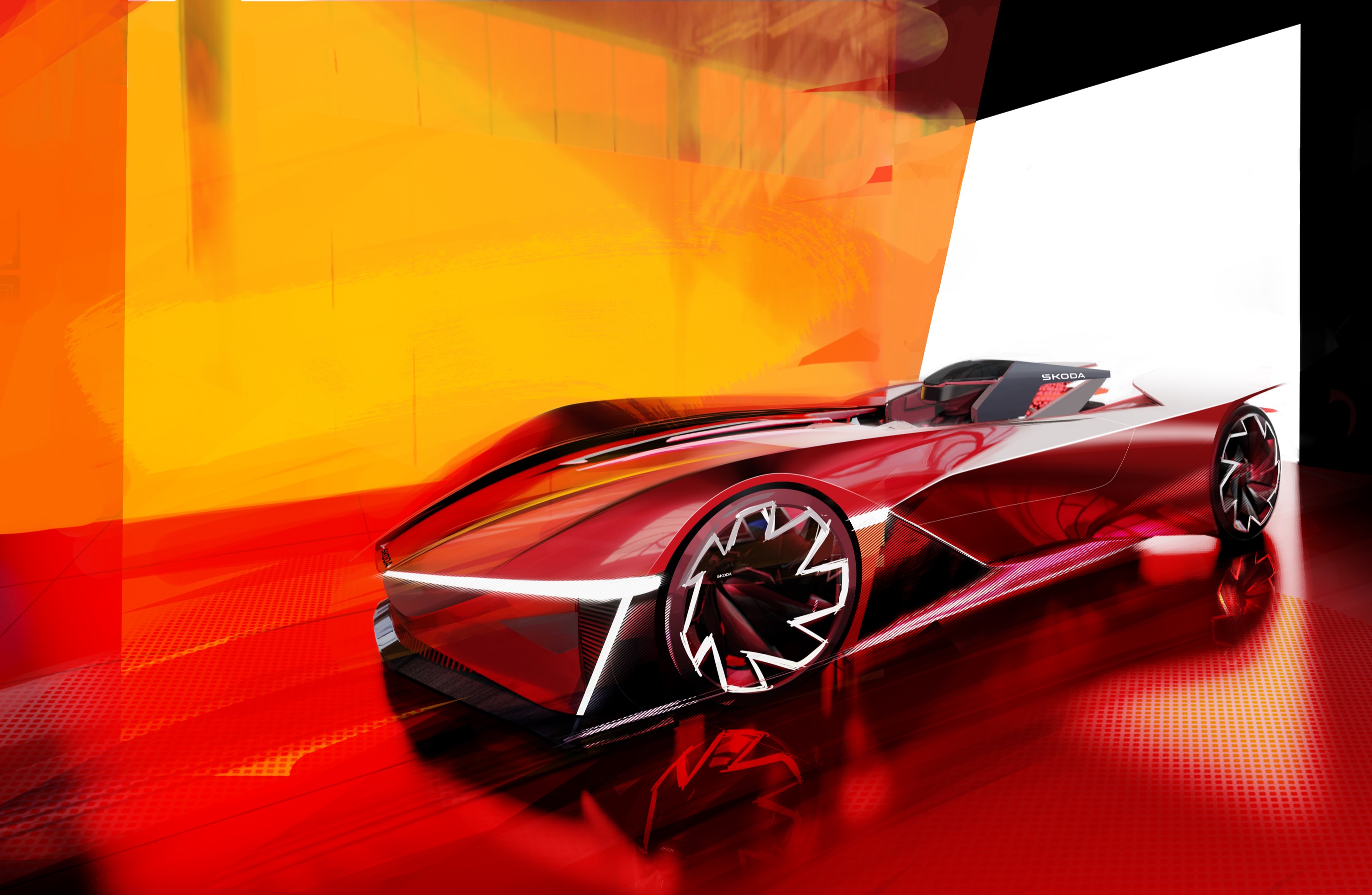
    Skoda Vision GT Concept - Exterior Sketch

    SKODA Design has introduced a new design concept, the VISION GT, which is an all-electric racing car in the form of a computer-generated model. It is currently being showcased at the ‘Design and Transformation’ exhibit in Brussels, as part of the Czech Republic’s EU Presidency. The VISION GT draws inspiration from SKODA’s 1100 OHC concept from 1957 and is part of the ‘Icons Get a Makeover’ series that reinvents iconic models from SKODA’s past, such as the 130 RS, FELICIA, and RAPID MONTE CARLO.

    The ŠKODA VISION GT is a featured exhibit at the ‘Design and Transformation’ exhibition in Brussels. It is an all-electric racing car in the form of a computer-generated model that draws its inspiration from SKODA’s 1100 OHC concept from 1957. The exhibit showcases Czech products and designs from 1990 to 2020, in alignment with the Czech Republic’s EU presidency. The SKODA design team has infused the VISION GT with the company’s commitment to sustainable sportiness and emotion in the digital age.

    The VISION GT’s single-seater design, with the driver placed in the center, is based on the SKODA 1100 OHC, featuring a futuristic carbon steering wheel that is flattened at the top and bottom, and a red, open-top design. The active cockpit with a flexibly suspended seat aims to offset g-forces for a superior driving experience. The on-screen bar, located above the wheel, serves as a windshield and displays critical information on the driver’s helmet visor, similar to a head-up display.

    2022 Skoda Vision GT Concept

    The VISION GT’s design is flat, with clear lines and sharp edges, inspired by the design of Formula E racing cars. The two-piece rear wing is a standout feature, with active aerodynamics to maximize performance. The holographic SKODA wordmark is situated between the upper wing profiles and on the front of the car, referencing the curved SKODA line.

    In conclusion, SKODA Design’s VISION GT concept, a computer-generated all-electric racing car, has been displayed at the ‘Design and Transformation’ exhibit in Brussels. Drawing inspiration from the 1100 OHC and featuring a red, open-top design, the VISION GT’s flat and sharp design is inspired by Formula E racing cars. The VISION GT is part of SKODA’s ‘Icons Get a Makeover’ series, reinventing iconic models from the company’s history with a commitment to sustainable sportiness and emotion in the digital age.

  • McLaren Solus GT

    McLaren Automotive today reveals the McLaren Solus GT, the stunning realization of a concept car from the screens of virtual racing into an extreme expression of track driving engagement that will exhilarate in the real world.

    A special commission for just 25 customers – with all cars already sold – the single-seat, closed-cockpit track car was unveiled during Monterey Car Week in California by Michael Leiters, McLaren Automotive Chief Executive Officer.

    Engineered to reality by drawing on the full range of McLaren’s experience and expertise across the highest levels of motorsport and supercar and hypercar development, the Solus GT brings to life the futuristic McLaren concept that featured in the Gran Turismo SPORT video game.

    At less than 2,205lbs in weight and with aerodynamic performance including downforce in excess of 2,645lbs, the Solus GT – which is powered by a naturally aspirated 5.2-liter V10 engine – is capable of the fastest lap times of any McLaren outside of single-seater racing and delivers a driving experience close to the engagement and sensation of driving a Formula 1 car.

    “The McLaren Solus GT is the realization of a radical McLaren concept vehicle originally created for the world of virtual racing. Engineered free of any restrictions from road or race regulations, but with the full spectrum of McLaren’s expertise to bring it to reality, it epitomizes our pioneering spirit.”
    Michael Leiters, Chief Executive Officer, McLaren Automotive

    The striking exterior design, which is remarkably faithful to its virtual inspiration, is based on proven aerodynamic principles and McLaren’s ‘everything for a reason’ design ethos, honed by additional CFD (Computational Fluid Dynamics) and wind-tunnel aerodynamic research.

    The list of distinctive external features is lengthy, with the sliding canopy above the single, central seat being one of the most striking. The wheels are shrouded in aerodynamic pods and located by suspension arms. A large front splitter feeds air into ground-effect tunnels before it exits the car via a full diffuser. A motorsport-inspired intake above the cockpit integrated into the design of the roll hoop cover feeds cold air into the engine, while also providing an engaging induction sound. Race car design also inspired the sidepods which house the Solus GT’s radiators.

    A twin-element, fixed rear wing is key to a downforce figure that exceeds the overall weight of the car. The downforce to drag ratio is also optimized, aiding straight-line performance as well as enhancing cornering abilities.

    The Solus GT experience begins even before the engine is started, with the driver opening the distinctive cockpit canopy that slides forward through a shallow arc to allow access. This is nothing like a conventional car door, or even the signature dihedral doors of other McLaren cars, rather more like stepping into a jet fighter plane.

    The means of getting into the car adds to the sense of occasion provided by the single seat that dominates an interior focused solely on the driver and performance. The seat position is fixed – the 25 Solus GT owners experience their own motorsport-style ‘seat fitting’ – with the pedal box adjustable as in a race car, although with the convenience of a remote system operated from the seating position.

    The steering wheel – the design of which is unique among McLaren production cars – takes its inspiration from Formula 1, with dash display and essential controls integrated to suit the tight confines of a single-seater track car. Beyond the steering wheel is a view through the glass ‘bubble’, with integrated halo-style cockpit protection – mounted to which is a rear-view display fed by a wide-angle camera placed within the roll hoop. The perfectly symmetrical 180-degree line of sight provided by the central driving position is further aided by the dramatically styled wheel pods in helping the driver to position the car on a track.

    To further enhance the exhilaration for Solus GT customers, McLaren is offering a full ‘racing driver experience’. This includes a driving seat molded to the driver’s individual body shape; an FIA-homologated race suit, helmet and HANS device bespoke to each owner, and radio-enabled ear inserts. A full driver-development coaching program will also be available to help customers fully exploit the potential of their new track hypercar.

    The Solus GT is powered by a unique 5.2-liter V10, constructed using low-volume, machined components, that revs to more than 10,000rpm and delivers extreme performance and thrilling driver engagement. The engine’s responsiveness is enhanced by the use of barrel-driven throttles for each cylinder – a system only suitable for track application – and is entirely gear-driven, with no chains or belts for camshaft or ancillary systems.

    In addition to having power and torque outputs in excess respectively of 829bhp and 479lb ft, the engine was also chosen for its structural qualities; for the first time in a McLaren production car, the engine is an integral part of the chassis. Conventional practice in race car construction, this design approach optimizes weight reduction by negating the need for additional chassis structures or subframes behind the carbon fibre monocoque.

    The race-derived seven-speed sequential gearbox, which features a bespoke casting and casing – the latter manufactured from aluminum with magnesium panels – is mounted to the back of the engine with the rear suspension fixed to the gearbox casing. Internally, straight-cut gears engaged via a multi-plate carbon fibre clutch are ideally suited to the aggressive shifts demanded in a track application. The system is fully automated and software controlled, removing the need for the driver to operate the clutch, aiding pit-lane pull-away.

    In common with every McLaren since 1981, the Solus GT is based around a carbon-fibre monocoque, in this case one created using specialist low-volume production methods including a carbon ‘pre-preg’ process for higher structural strength and a high uniformity of finish to the material. The front and rear chassis structures are also made from carbon fibre, with the engine and gearbox forming the rest of the chassis.

    Carbon fibre is not the only high-value material in the Solus GT. Further embracing technologies used in the top tiers of motorsport, 3D-printed titanium components have been used for the halo cockpit protection structure and roll hoop. This is the first time the approach has been adopted for structural elements in a McLaren production car, allowing a tailored design as well reducing weight.

    The suspension system incorporates double wishbones with inboard torsion bar damping, operated via pushrods at the front and pullrods at the rear. Both axles are linked by anti-roll bars, with tuning options available to the driver. Fabricated from steel for enhanced durability, the front suspension links are encased in aerodynamic carbon fibre shrouds similar to the approach in Formula 1.

    Housed within the distinctive wheel pods are 18-inch forged aluminum wheels with center locking nuts, shod with Le Mans Prototype-specification tires available in both slick and wet compounds. Braking is provided by 6-piston monobloc machined aluminum calipers and carbon brake discs and pads. Bias between the front and rear brakes can be adjusted in the cockpit by the driver.

    Traditional performance metrics are not as relevant for a track car, but with a target time of 2.5 seconds for 0-62mph acceleration and a maximum speed of more than 200mph – in combination with the car’s light weight and strong aerodynamic abilities – the McLaren Solus GT has the performance credentials needed for an extreme track machine.

    In incorporating every element that has made McLaren a world-beating automotive force, the Solus GT is also a showcase for the craftmanship available to McLaren customers from McLaren Special Operations (MSO). With a project such as this, the MSO service goes beyond the car itself to a level of luxury customer engagement and accessibility unique to McLaren. A bespoking process ensures every Solus GT is unique and regular updates on the development program, including access to prototype drive sessions that can influence the driving characteristics of the car ahead of production, are offered.

    Solus GT track events are planned, and all cars will be delivered with a flight case to allow owners to support their own track activities. This includes a comprehensive set of tools, vehicle jacks, stands, radio sets and a coolant pre-heater.

    The McLaren Solus GT is currently at the track-testing stage of its development process. The first of 25 customer cars – all of which are sold – will be delivered in 2023.

    The McLaren Solus GT in detail

    A concept for the virtual world becomes reality

    • Originally a virtual concept driven by millions in the Gran Turismo SPORT video game; now a reality as the astonishing McLaren Solus GT
    • Striking single, center-seat cockpit and strong focus on aerodynamic principles throughout
    • Showcases McLaren signature design features, including ‘hammerhead’ front, teardrop-shaped cabin and ‘shrink-wrapped’ bodywork

    The roots of the McLaren Solus GT are in a stunning concept that featured in the  Gran Turismo SPORT video game.

    From the original design sketches through to the virtual gaming triumph and now the astonishing machine that an exclusive few customers will enjoy on track, this is a car that epitomizes the ‘everything for a reason’ design philosophy and relentless pursuit of engineering excellence within every McLaren. From the outset, the concept was based on proven aerodynamic principles, with a sports-prototype racecar package as its foundation.

    The bodywork is very much a technical sculpture, shrink-wrapped over the high-performance engineering package and the two full-length ground effect tunnels. These contain distinctive air intakes at the front and a NACA duct – a low-drag air inlet – which also acts as a step, accelerating the airflow into the radiators.

    From the front, the distinctive McLaren ‘hammerhead’ nose helps to separate airflow from the underbody ground effects and the full-length diffuser. The visibility from the wraparound canopy screen of the teardrop cockpit is outstanding, with an uncluttered, 180-degree view of a track. The wheel pods in each corner are not only a dominating design feature, they also allow overall weight-reduction and individually ‘work’ the airflow with a distinctive tear-drop shape that ends in a dramatic blade-like rear edge to calm the turbulent air in the wake of each tire and mitigate pressure build-up within the wheel well.

    The rear of the car features a full clam that provides easy access to the engine bay, with super-low trailing bodywork edges that employ the same principles as the Speedtail in order to minimize base pressure across the back of the car, reducing drag.

    Engineering a virtual design into extreme reality

    • Naturally-aspirated V10 engine chosen to optimize performance, driver engagement and packaging
    • Aerodynamic performance integrated into bodywork surfaces to preserve overall shape using CFD and wind-tunnel research
    • Heavily optimized structural work includes monocoque geometry

    The original engineering brief for the McLaren Solus GT was to turn a prestigious virtual gaming concept into an extremely powerful and highly exclusive McLaren hypercar. This was to be a track-only car, with motorsport engineering expertise and a V10 powertrain coming together to deliver the supreme driver engagement demanded for a no-compromises experience.

    The racing-derived engine was chosen for reasons of packaging as well as performance; a pared-down track car with minimal weight and shrink-wrapped bodywork meant having the engine as part of the chassis was a natural choice. This construction technique is rarely seen in production cars for NVH (Noise, Vibration, Harshness) reasons, but in a focused track car it gives many benefits, not least added feedback and exhilarating engagement for the driver.

    Once the program parameters were set, the engineering team faced the challenge of integrating real-world aerodynamic performance into the original design surfaces. This was resolved with extensive CFD and wind-tunnel work to prove the aerodynamic, cooling and efficiency properties of the concept.

    Racing-inspired chassis design and construction

    • Bespoke monocoque structure employs Formula 1 chassis technologies, with front and rear carbon structures
    • Low-volume, carbon ‘pre-preg’ process provides strength, rigidity and quality of finish
    • Engine and gearbox are stressed chassis members; carbon crash structure is incorporated into gearbox
    • 3D printing techniques used for structural components – titanium halo protection and rollover bar

    Like every McLaren built in the last 40 years, the Solus GT features a carbon-fibre monocoque at its heart. However, the single-seat cockpit and production-based engineering processes demanded a bespoke approach embracing the differing disciplines of competition and road car construction and the resulting design takes greater inspiration from motorsport than other McLaren Automotive products, with the monocoque using Formula 1 and sportscar racing chassis technologies. The front and rear impact structures are made from carbon fibre – traditionally McLaren Automotive chassis structures feature aluminum structures fixed to the passenger cell – and with the engine and gearbox both stressed chassis members, there is no requirement for a rear subframe.

    The construction of the chassis employs specialist low-volume production methods including a carbon ‘pre-preg’ process whereby the carbon fibre is pre-impregnated with a resin system that simplifies the curing process. The material is ready to lay into the mold before heat and pressure treatment is applied, allowing the higher structural strength demanded by a track-only car. The process also allows a high uniformity of finish to the material that enhances visual appeal.

    The chassis of the Solus GT also features 3D-printed titanium components, including the halo cockpit protection structure and roll hoop. While previously used by McLaren Automotive– notably for the exhaust system of the Elva – this is the first use of the technology for structural components in a McLaren production car and demonstrates the absolute focus applied to finding the best solutions for the Solus GT.

    Refined and optimized bodywork and aerodynamics

    • Carbon fibre bodywork incorporates aerodynamic surfaces including front splitter, individual wheel pods, structural floor with ground-effect tunnels and fixed, twin-element, high-downforce rear wing
    • Huge downforce generated – at 2,645lbs, greater than the weight of the car – with drag penalty minimized for straight-line speed
    • Formula 1-inspired, carbon fibre suspension aero shrouds, air intakes and sidepod-mounted radiators

    Despite the freedom the development team enjoyed in exploring the boundaries of possibilities for the Solus GT as a track car, the exterior design of the virtual reality concept did impose restrictions on what could be done if the real car was to retain the ‘wow factor’ of the car that featured in Gran Turismo SPORT.

    As befits an ultra-lightweight track-only car, the bodywork of Solus GT is made from carbon fibre; the complex shapes and swooping lines achieved without the weight penalties that would come from the use of conventional metal panels. The form of these has been finely honed – ironically in virtual reality – to ensure stability and maximize aerodynamic efficiency for both straight line-speed and downforce.

    A large front splitter feeds air into ground-effect tunnels in the full structural floor, which has been designed to accept high aerodynamic loads. The air exits the car via a full diffuser. The front wheels are outboard of the main bodywork, with the suspension wishbones exposed to the airflow and shrouded in aerodynamically-shaped carbon fibre that directs air towards the sidepod-mounted radiators. The sidepod-siting of the high-temperature radiators is directly inspired by motorsport, providing a direct cooling solution for engine fluids and reducing frontal surface area.

    A motorsport-inspired air intake above the cockpit, which is integrated into the design of the roll hoop cover, takes in cold and flow-conditioned air above the car while also creating a pleasingly engaging engine induction sound.

    The twin-element, fixed rear wing is one of the more distinctive visual features of Solus GT. Designed to maximize downforce over the rear of the car, it works alongside the combination of high-downforce ground effect and low pitch sensitivity from the motorsport-derived suspension system, to negate the need for active front or rear wings and so help to keep weight down.

    Overall, the aerodynamic package downforce exceeds the total weight of the car, but the downforce to drag ratio is also optimized, aiding straight-line performance and enhancing cornering speeds.

    Unique, single central seat interior

    • Driver enters car via sliding canopy incorporating Formula 1-style halo cockpit protection device
    • Single-seat cockpit with fixed seat and adjustable pedals
    • Main driver controls and TFT instrument display mounted on carbon-fibre-structured steering wheel
    • Rear wide-angle camera located above roll-hoop, linked to driver view screen

    The Solus GT McLaren driving experience begins even before the V10 engine is started – simply stepping into the cockpit is an event in itself. Instead of signature McLaren dihedral doors, a sliding canopy – more akin to that of a fighter jet – is opened using a mechanical lever. The spring-loaded canopy moves through a shallow arc, lifting clear of the cockpit and sliding forwards to allow easy access to the driving seat.

    Recent technological safety innovations from the top tiers of motorsport are integrated in the design, with the canopy reinforced by a halo-style structure to protect the driver. An escape hatch is also built into the canopy to allow safe departure from the cockpit should the sliding mechanism be obstructed.

    The interior is purpose-built for extreme track performance; an owner can specify their car with an entirely bespoke environment, but it will remain focused on the driving experience. The molded seat is fitted with a 6-point harness and is fixed in position; instead, the pedal box is adjustable as in a race car, but with the convenience of being able to be operated from a sitting position.

    To ensure the single seat is a perfect fit for the customer, MSO has adopted a process taken from motorsport which is yet another example of the full range of McLaren expertise being available for the Solus GT. A phenolic resin-based system with advanced micro-bead technology is used to create a mold from which the seat is created, ensuring in turn that the driver remains comfortable in the car throughout the most intense track driving sessions.

    Almost all controls are concentrated on the steering wheel, which is constructed from carbon fibre. Inspired directly by motorsport, all essential functions are easily reached with both hands on the wheel. A full HVAC air system also keeps the driver fully alert throughout the driving experience.

    Above the driver’s head are switches for vehicle ignition and the fully plumbed-in emergency fire extinguisher. This area also houses the rear-view display, streamed in real-time from a camera located on the roll hoop behind the driver’s head. The wide-angle camera provides a comprehensive rear view of the track to allow traffic to pass on a slowing-down lap or aid pit-lane maneuvering.

    Powertrain with a proven motorsport pedigree

    • Motorsport-derived, naturally-aspirated 5.2 liter V10 engine that revs to over 10,000rpm
    • McLaren-specific engine, with crank, cylinder capacity, air intake and exhaust system all bespoke to Solus GT
    • Gear-driven camshaft and ancillary systems, with no chains or belts in the engine
    • Barrel throttles for individual cylinders sharpen throttle response

    The 5.2-liter V10 engine specified to power the McLaren Solus GT is incorporated into the vehicle chassis structure. The engine capacity is unique to the Solus GT, as are the air intake and exhaust system. The induction system directs air towards barrel throttles that are individual to each cylinder – a technology that is not suitable for road use but offers clear advantages in engine performance, including improved throttle response.

    The engine also incorporates low-volume machined components optimized for performance and is entirely gear-driven; there are no chains or belts for ancillary systems. Output is greater than 829bhp, with the full benefit of the ram effect provided by the high air intake and the engine revving past 10,000rpm. Maximum torque is in excess of 479lb ft.

    The resulting performance is a target acceleration time of 2.5 seconds from standstill to 62mph and a maximum speed in excess of 200mph, despite the Solus GT generating downforce that exceeds its weight.

    Competition gearbox

    • Seven-speed sequential gearbox
    • Incorporates bespoke casting and aluminum casing with magnesium panels; rear suspension locates to gearbox
    • Uses motorsport-derived straight-cut gears
    • Carbon fibre clutch with automated software control for combination of both aggressive shift strategy and user-friendly operation

    The Solus GT has a seven-speed sequential gearbox, with race-proven internals located within a bespoke casting and casing, designed as a mounting point for the rear suspension. The casing is made from aluminum, with magnesium panels optimizing weight.

    Originally designed for LMP sportscar applications, the gearbox internals include straight-cut gears, a technology not usually incorporated in production cars for reasons of NVH refinement but acknowledged as providing greater efficiency than helical-cut gears in a high-performance track car.

    The gearbox is engaged by a carbon fibre clutch, designed to complement aggressive gearshift strategy demanded in a track application. It is though also fully automated and controlled by software – removing the need for a pedal or lever-operated clutch control – to aid the driver when pulling away from the pit-lane.

    Track-focused suspension design

    • Formula 1-inspired suspension design incorporates double wishbones and front pushrod and rear pullrod activated torsion bars
    • Manually adjustable four-way dampers
    • Incorporates anti-roll bars, ride-height springs and a heave spring and damper system

    The McLaren Solus GT was designed from the outset as a track-only car and its suspension follows the principles of motorsport engineering, starting with the wheels located via double wishbones. With the front wheels mounted outboard of the main body, the front damping is inboard with pushrods operating torsion bars and corner dampers. At the rear, the bars are linked to pullrods, and the rear suspension is mounted to the gearbox casing.

    The wishbones and rods are fabricated from steel for enhanced durability, but the front suspension links are encased in carbon fibre shrouds for aerodynamic efficiency. The system also incorporates ride height springs and a heave spring and damper system. This is employed to provide stiffness at speed by limiting vertical movement, the effect of this is to create a more aerodynamically stable profile, making the car’s dynamic behavior at speed more predictable and therefore increasing driver confidence on high-speed tracks.

    Housed within the distinctive wheel pods are 18-inch forged aluminum wheels with center locking nuts, shod with Le Mans Prototype-specification tires available in both slick and wet compounds. Braking is provided by 6-piston monobloc machined aluminum calipers with carbon brake discs and pads. Bias between the front and rear brakes can be adjusted by the driver in the cockpit.

    Each axle is linked by anti-roll bars, which are connected via drop links. Both bars are adjustable.

    The complete – and bespoke – MSO customer journey

    • Complete customer journey includes involvement in product development
    • Fully bespoke product – each car is unique
    • Full racing driver experience available, including bespoke driver-wear and tailored seat

    Solus GT showcases the level of craftmanship available to McLaren customers through McLaren Special Operations.

    From the beginning of the development process, individual presentations were given to customers wishing to secure one of the 25 cars available. This has previously taken place only for purchasers of the McLaren Sabre, a car homologated for the US market only, whereas with Solus GT being a track-only product, the customer base is global.

    The 25 Solus GT depositors have also been involved throughout in the finer details of the car’s development from the virtual world to the real world, with new, MSO-developed software at the core of realizing the vision of each customer. This bespoke, individual approach reflects an intimate accessibility to McLaren that goes beyond even the usual levels of luxury experience and engagement.
  • Hennessey Venom F5 Roadster

    Hennessey Special Vehicles, the Texas-based hypercar manufacturer, has released details of its Venom F5 Roadster ahead of the new car’s global debut at The Quail, A Motorsports Gathering in Monterey, California.

    The Venom F5 Roadster is based on the Hennessey Venom F5 Coupe – the two are nearly identical mechanically – yet distinguishing the Venom F5 Roadster from its fixed-roof sibling are several attributes that set the open-air model apart – physically, cosmetically, and emotionally.

    Mid-mounted in the carbon-fiber monocoque chassis is Hennessey’s celebrated twin-turbocharged, 6.6-liter, ‘Fury’ V8 engine rated at an astonishing 1,817 bhp. Power is sent to the rear wheels through a robust automated single-clutch gearbox. With a dry weight of under 3,100 pounds, the Venom F5 Roadster promises phenomenal performance… and an engineered top speed exceeding 300 mph.

    Hennessey expects the Venom F5 Roadster to surpass the company’s own ‘world’s fastest convertible’ record – 265.6 mph – currently held by the Hennessey Venom GT Spyder.

    John Hennessey, company founder, and CEO: “We created the Venom F5 to be the ultimate expression of a hypercar. The Roadster version takes the Coupe’s speed, exhilaration, and awe, plus a sprinkling of respect-inducing fear, to a new, truly visceral level that brings owners closer to the Venom F5’s extreme performance. Our 1,817 bhp ‘Fury’ engine screams behind the exposed cockpit, with its roar unobstructed by a roof – it is an unmatched automotive experience.”

    Most conspicuous is the hypercar’s new roofline. In contrast to the F5 Coupe, the F5 Roadster’s roof has been re-engineered with a removable panel crafted from rigid carbon fiber composites. The single-piece roof is fully insulated against the elements and lined with soft Alcantara upholstery. The weatherproof panel is secured with four quick-release bolts and a pair of high-strength latches to withstand the hypercar’s staggering acceleration capabilities and aerodynamic forces at extreme speed. The lightweight roof panel weighs a mere 18 lbs (8 kg), making removal and installation easy for one person.

    Owners may choose to store the panel in a bespoke Merino wool travel bag or as a standalone work-of-art on a custom-made, sculptural pedestal – devised by Hennessey’s in-house design team to enhance the ownership experience. The roof pedestal, crafted in carbon fiber like the roof panel, mirrors design themes from the Venom F5 Roadster. Viewed from above, its ‘blade legs’ trace the shape of the car’s rear decklid, while the side profile uses the hypercar’s bodyside air intake form for inspiration. In addition, the sharply angled, streamlined stand displays the ‘Venom F5 Roadster’ script on the front face of the base in the same eight-microns thin aluminum as the car’s ‘H’ nose badge.

    The Venom F5 Roadster features a new tempered glass engine viewing window. This panel, in the middle of the rear engine cover, spotlights the massive ‘Fury’ V8 engine in all its glory. Its engineering was no simple task – developed and certified for use in jet aircraft. The sizeable glass panel can withstand aerodynamic forces exceeding 300 mph and temperatures beyond 1,000 degrees Fahrenheit (540 degrees Celsius). The detail is extraordinary – the engine viewing window is encapsulated within a removable carbon fiber engine cover that features intricately-milled heat extraction holes that match those in the rear bumper. Additional heat extraction is achieved by dual aluminum air vents, four on each side of the glass panel, which match the vents behind each front wheel.

    The Roadster is further distinguished from its coupe sibling by its unique wheels. Forged from aluminum alloy and then milled to perfection, the lightweight wheels feature seven pairs of spokes, each resembling an elongated Hennessey ‘H’. Milled into the outer face of each wheel rim is the ‘Hennessey’ script, mirrored by the ‘Roadster’ script on the opposite side. Owners may opt to upgrade the Hyper Silver wheels to highly polished aluminum – this exclusive finish requires a painstaking process of hand polishing that takes weeks to complete. The wheels are secured with five titanium nuts, an alloy revered for its strength, heat tolerance, corrosion resistance, and extremely low mass.

    Hennessey’s Venom F5 Coupe was engineered from the outset with an open-top version in mind, so only minor adjustments were required to deliver coupe-rivaling chassis rigidity, strength, and stiffness – this ensures that drivers may access the same crisp handling characteristics as the Venom F5 Coupe with or without the roof in place.

    As with the Venom F5 Coupe, discerning Roadster buyers may specify any exterior and interior color combination or leave areas of the Venom F5’s carbon fiber chassis and body panels exposed. Opting for either a gloss or satin finish allows the stunning woven composite to be appreciated fully (pre-exposed areas of carbon fiber on the Venom F5 Roadster are standard, as they were on the Coupe). The same minimalist yet high specification of the coupe model is retained within the passenger cabin.

    “It’s exciting to see the continued innovation from Hennessey from the test track to the road,” said Steve Reindl, President of Shell Lubricants Americas. “We share a passion for performance, and our co-engineering alliance provides us with an extreme testbed for Pennzoil in some of the fastest road cars.”

    The Venom F5 Roadster will be manufactured in Texas in an exclusively low volume of just 30 units (this approach of guaranteeing a unique ownership experience saw the 24-unit Venom F5 Coupe production run sell out shortly after its appearance at Monterey Car Week in 2021). Roadster production begins in late 2022, with validation of the model’s high-speed capabilities set to occur as the production rate levels out.

    Hennessey Special Vehicles has priced the new Venom F5 Roadster at $3 million, with each of the 30 personalized examples individually commissioned to its owner.

    Hennessey Venom F5 Roadster – Technical Specifications

    Name Hennessey Venom F5 Roadster
    Construction Bespoke carbon-fiber monocoque
    Carbon-fiber body panels
    Suspension Double-wishbone independent
    Fully adjustable coilover dampers
    Engine Hennessey ‘Fury’ 6.6L twin-turbo V8
    Transmission 7-speed single-clutch automated gearbox
    Rear-wheel drive
    Power 1,817 bhp @ 8,000 rpm
    1,193 lb-ft @ 5,000 rpm
    Top Speed 300+ mph*
    Power-to-Weight Ratio 0.59 hp/lb
    Weight 1.29 hp/kg3,098 lbs
    1,405 kg
    Dimensions 183.7 in / 77.6 in / 44.5 in
    4,666 mm / 1,971 mm / 1,131 mm
    Production RunWarranty 30 units4 Years
    (* Top speed limited with roof panel removed)
  • Dodge Hornet GT

    Dodge introduced the all-new 2023 Dodge Hornet, delivering the quickest, fastest, most powerful compact utility vehicle (CUV) under $30,000. The 2023 Dodge Hornet disrupts the fast-growing CUV segment, building buzz with a distinctive Dodge combination of muscular styling wrapped around best-in-class standard performance from a multi-energy powertrain roster and a swarm of class-exclusive performance features.

    The all-new 2023 Dodge Hornet was revealed today at M1 Concourse in Pontiac, Michigan, with three vehicles showcasing the Dodge brand’s new entry in the CUV segment: the “Head of the Hive” Dodge Hornet R/T; the Dodge Hornet GT, the industry’s quickest, most powerful utility vehicle under $30,000; and the Dodge Hornet GT GLH Concept, which showcases available Direct Connection performance parts upgrades for the newest entry in the four-car Dodge vehicle lineup.

  • Dodge Hornet GT GLH Concept

    Dodge introduced the all-new 2023 Dodge Hornet, delivering the quickest, fastest, most powerful compact utility vehicle (CUV) under $30,000. The 2023 Dodge Hornet disrupts the fast-growing CUV segment, building buzz with a distinctive Dodge combination of muscular styling wrapped around best-in-class standard performance from a multi-energy powertrain roster and a swarm of class-exclusive performance features.

    The all-new 2023 Dodge Hornet was revealed today at M1 Concourse in Pontiac, Michigan, with three vehicles showcasing the Dodge brand’s new entry in the CUV segment: the “Head of the Hive” Dodge Hornet R/T; the Dodge Hornet GT, the industry’s quickest, most powerful utility vehicle under $30,000; and the Dodge Hornet GT GLH Concept, which showcases available Direct Connection performance parts upgrades for the newest entry in the four-car Dodge vehicle lineup.