Tag: Ferrari

  • Ferrari 812 GTS and SF90 Stradale win Awards from BBC TopGear Magazine

    Ferrari SF90 Stradale1

    Ferrari’s long-standing success in the BBC TopGear Magazine awards continues with two awards in 2020 for the Ferrari 812 GTS (Noise of the Year) and Ferrari SF90 Stradale (Eco-Warrior of the Year). This brings Ferrari’s impressive tally of BBC TopGear Magazine Awards to 18 Awards in 17 years. When deciding on the awards, the judges passed the following comments on two of Ferrari’s latest models:

    Noise of the Year: Ferrari 812 GTS
    This open-air 812 GTS is a certifiable psychopath. Any car with this engine – a baleful, wailing, soaring 9,000rpm V12 that fellates your ego while it pulverises your senses – would be remarkable. But when it’s matched to steering this reactive, a turn-in appetite that’s outrageous for such a girthy beast and a gearbox that somehow sends lightning bolts of dopamine down your spine just from a quick tug of the paddles, it’s a driving experience that beggars belief.

    Eco-warrior of the Year: Ferrari SF90 Stradale
    The hybrid LaFerrari was a toe in the water, but the SF90 Stradale makes a bigger splash. As years go, 2020 has been many things, but a new Ferrari halo car in which you can commute to work on electric power, with something explosive in reserve for the weekend, tips the scales right back to annus marvellous.

    Both the 812 GTS and SF90 Stradale are not limited-series cars but are completely new additions to the Ferrari range: the 812 GTS is the first series production convertible V12 since the 365 GTS4, while the SF90 Stradale has created a completely new segment for the brand, with a 1000hp hybrid supercar now available within the standard Ferrari product range. Both cars are also covered by the Ferrari Genuine Maintenance package which covers all servicing costs for 7-years.

  • Ferrari 488 GT Modificata

    2021 Ferrari 488 GT Modificata1

    Ferrari presents the new 488 GT Modificata, a limited edition car that incorporates the technology developed for the 488 GT3 and 488 GTE, transcending the limits imposed by technical and sporting regulations to exploit its full potential. The 488 GT Modificata is exclusively for use during track days and at Ferrari Club Competizioni GT events.

    Greater power. The car’s name includes the word “Modificata”, which in Ferrari jargon means designs that have been evolved for better performance. It maximises the already outstanding performance of the 488 GT3 and the 488 GTE by combining their most effective and innovative solutions, as well as developing new technologies linked mainly to a powertrain no longer limited by the FIA Balance of Performance. The legendary twin­ turbo V8 was subject to advanced research, which resulted in specific components and the carry-over of materials from the racing engine. The maximum power delivered by the engine is now around 700 cv, due to the use of innovative solutions and more extreme and high-performance mapping. All this without compromising Ferrari’s proverbial reliability. The gearbox, available with different transmission ratios, and the carbon-fibre clutch, help to manage the increased power and torque delivered by the engine.

    Noble origins. The 488 GT Modificata is a perfect synthesis between the 488 GTE that competes in the World Endurance Championship and the 488 GT3, queen of GT racing. These are some of the most successful models in the history of the Prancing Horse. This is clear from the over 350 wins and 630 podiums in national and international races secured by the 488 GT3 along with the FIA World Endurance Championship Drivers’, Teams’ and Manufacturers’ titles, and the 488 GTE’s triumph in the 24 Hours of Le Mans and the Petit Le Mans. After intense development work on the Nordschleife the

    488 GT Modificata benefits from completely revamped high-downforce aerodynamics, shifting the pressure centre forward. This generates higher downforce at the front without increasing overall drag, making for better efficiency and sensitivity to changes in rear wing angle. Apart from the aluminium roof and uprights, the bodywork is entirely in carbon-fibre like the 488 GTE. This contributes to a downforce of over 1000 kg at 230 km/h.

    Winning dynamics. When defining the vehicle dynamics of the 488 GT Modificata the engineers opted to use the 488 GTE’s suspension. The braking system was developed in partnership with Brembo. It features the low residual torque callipers that are fitted to world championship cars, coupled with an ABS system borrowed from the 488 GT3 Evo 2020, with specific settings. This synergy provides drivers with formidable handling and powerful, stable braking with limited fading.

    Unique equipment. The extensive standard equipment of the 488 GT Modificata includes a V-Box acquisition system, which is combined with Bosch’s telemetry data acquisition system. The expandable system allows data to be downloaded directly onto a USB stick. The high-resolution rear-view camera, second seat and TPMS system for measuring tyre temperature and pressure also all come as standard.

    Full personalisation. Like all Ferraris, the 488 GT Modificata offers customers a wide range of customisation options for both the exterior and interior. The car, produced in a very limited series, will initially only be for drivers who, in recent years, have participated in Competizioni GT with Ferrari or Club Competizioni GT.

    Club Competizioni GT. The 488 GT Modificata will be admitted to Club Competizioni GT events, an initiative that is carving out an increasingly prominent place among Ferrari’s track activities. The aim of Club Competizioni GT is to bring back to the track the most significant and successful cars in the recent history of Prancing Horse closed­ wheel racing, from the F40 Competizione to the more recent 488 GT3 and GTE. In 2021, customers will have the chance to participate in five events on tracks that bring out both the handling and dynamic qualities of the cars, such as the Virginia International Raceway, Monza, Watkins Glen, Suzuka and Nurburgring, as well as the Finali Mondiali

  • SF90 Spider: lifting the roof on Ferrari’s most powerful series-production supercar

    2021 SF90 Spider1

    The spider version of the SF90 Stradale, the SF90 Spider, was unveiled today during a dedicated digital event. This special online event provided Ferraristi from all over the world with an exclusive introduction to the car’s innovative features and in-depth information on its development.

    As the Prancing Horse’s first production plug-in hybrid spider, the SF90 Spider sets new performance and innovation benchmarks not only for the marque’s range, but for the entire sports car sector. The new convertible has the same extreme supercar specification and record-breaking performance as the SF90 Stradale yet also adds further driving pleasure and versatility to the mix, thanks to latest iteration of Ferrari’s signature retractable hard top architecture. This makes the SF90 Spider the ideal car for owners that demand the very pinnacle of Ferrari technology, but still want the thrill of open-top driving.

    The retractable hard top (RHT) was again adopted because it guarantees optimal noise insulation and protection from the elements when raised, does not deform at high speeds and provides exceptional occupant space and comfort. The RHT is so compact, simple and light it can be actioned in just 14 seconds and can be deployed when the car is on the move. The key to the success of the Ferrari RHT, which premiered on the 458 Spider in 2011, and which has been constantly evolved in the intervening years, is that it takes up just 100 litres of space rather than the 150-200 litres required by a traditional system. The use of aluminium in its construction also means that it is around 40 kg lighter than a conventional retractable hard top. An adjustable electric rear window guarantees superb occupant comfort even at high speeds when the RHT is lowered.

    As is the case with the SF90 Stradale, the SF90 Spider is also available with an additional specification option for owners that want to push its track car vocation to the extreme. The Assetto Fiorano pack includes a list of exclusive upgrades that set it apart from the standard car, not least Multimatic shock absorbers derived from the Ferrari’s GT racing experience and optimised for track use. Others include the adoption of high performance materials (such as carbon-fibre and titanium) that have shaved 21 kg off the car’s weight, a carbon-fibre rear spoiler and road-homologated Michelin Pilot Sport Cup 2 tyres designed to improve track performance in the dry, thanks to a softer compound and fewer grooves. Lastly, the Assetto Fiorano offers an optional two-tone livery that further underscores the car’s racing vocation.

    POWERTRAIN
    In a first for a Ferrari production spider, the SF90 Spider has plug-in hybrid architecture in which the internal combustion engine is integrated with two electric motors at the front, which comprise the RAC-e (Cornering Angle Regulator, Electric) system, and one at the rear derived from and named after a Prancing Horse Formula 1 innovation, the MGUK (Motor Generator Unit, Kinetic). The synergy between the internal combustion engine and the electric motors allow the car to unleash a maximum of 1,000 cv and put the SF90 Spider not only at the very top of the Ferrari range of road cars, but also its category, .

    The SF90 Spider’s powertrain architecture features the V8 turbo ICE, an 8-speed DCT with E-diff, the RAC-e electric front axle with two independent electric motors that also provide all-electric propulsion, the MGUK electric motor located at the rear between the engine and the gearbox, the high voltage battery and electric motor control system ((inverter).

    In addition to a massive 780 cv (and 195 cv/l specific power output), the V8 also unleashes 60 cv more than any other V8 turbo ever built by Ferrari. To deliver this extraordinary result, Ferrari’s engineers completely redesigned the intake and exhaust systems. To improve internal fluid dynamics, the ducts are now all horizontally lined up at engine head height, the turbo charger assembly has been lowered, and the exhaust line is higher. This rationalisation also produced both a lower centre of gravity and a reduction in overall weight thanks to the use of Inconel instead of steel for the exhaust manifold.

    The SF90 Spider sports the completely redesigned 8-speed, oil-bath, dual-clutch gearbox launched on the SF90 Stradale. An optimised layout, achieved through the adoption of a dry sump and a significantly more compact clutch assembly with a 20% smaller exterior diameter than the one in the 7-speed gearbox, has shaved 15 mm off the installed height in the car. This, in turn, lowers the centre of gravity of the running gear by the same amount. Despite the addition of an eighth gear and the need to transmit a maximum torque of 900 Nm (an increase of more than 20% on the current 7-speed), the gearbox’s overall weight is actually 10 kg lower than its predecessor. The clutch’s performance is 35% higher than the 7-speed, transmitting up to 1,200 Nm in dynamic torque during gear shifts. Thanks to new-generation actuation hydraulics, clutch fill times are now 30% faster and total gear shift times have been slashed to 200 ms, an improvement of 30% on the previous 7-speed DTC.

    Meticulous attention was lavished on sound quality when redesigning the exhaust system as the soundtrack is one of the pivotal factors in the exhilarating pleasure of driving a Ferrari. The introduction of a “hot tube system”, which transfers sound more directly to the cockpit, has produced fuller, richer harmonics across the entire frequency range, improving both in-car sound quality and intensity as rev rise compared to previous Ferrari V8s.

    The power flow of the SF90 Spider’s hybrid system can be divided into two main areas:

    1. Power delivery, based on driver input via the accelerator pedal, processed by the engine control system and the hybrid control system, and constantly monitored by the electronic control systems. The power delivery modes can be divided up as follows:
    • Electric mode, entrusted to front axle (FWD mode)
    • Hybrid mode, entrusted to the ICE and the MGUK (RWD configuration)
    • 4WD hybrid mode, with electric front axle available on-demand for traction requirements exiting corners and energy recovery in lift-off/ braking
    1. Energy recovery (battery charging), managed entirely by the hybrid system’s control logic using three strategies:
    • Regenerative braking, available on both axles both under standard braking and when ABS is active
    • Overbraking, active on both axles when accelerator pedal is lifted, managed independently on right and left front wheels
    • ICE recharge: battery-charging function achieved by load point shifting between the ICE and the rear MGUK electric motor.

    Under normal braking conditions, energy recovery using the electric motors is the priority: the hydraulic braking system intervenes to support the electric one in all sharp deceleration conditions. At high speeds and in high gears, the combined contribution of the electric motors in high grip conditions helps lower the ICE’s response times, thus significantly improving longitudinal acceleration and thus performance.

    Because of the pivotal role hybrid system power management plays in the SF90 Spider driving experience, the traditional Manettino is now flanked by an additional steering wheel-mounted selector, dubbed the eManettino, which manages the power flows from and to the high voltage battery and the wheels (traction). It offers the driver a choice of four modes:

    • eDrive: the internal combustion engine remains off and traction is entrusted entirely to the electric front axle. Starting with a fully charged battery (with a capacity of 9 kWh), the car can cover up to 25 km in this mode which is ideal for city-centre driving or any other situation in which the driver wishes to eliminate the sound of the Ferrari V8. The 135 km/h speed limit means the car can also be used on out-of-town roads;
    • Hybrid: this setting optimises the system’s overall efficiency. The control logic autonomously decides whether to keep the internal combustion engine running or turn it off. Power flow from the electric motors is limited to conserve battery power;
    • Performance: this mode keeps the ICE running because the priority is more on charging the battery than on efficiency. This guarantees that power is instantly and fully available when required. This mode is best suited to situations in which driving pleasure and fun behind the wheel are the main focus.
    • Qualify: this mode allows the system to achieve maximum power output by letting the electric motors work at their maximum potential (162kW). The control logic prioritises maximum performance over battery charging.

    VEHICLE DYNAMICS
    To make full use of the powertrain unit’s power, the engineers developed vehicle dynamics systems that guarantee improvement not just in terms of pure performance and lap times, but also simultaneously ensure that drivers of all kinds can fully enjoy the car’s potential and have fun behind the wheel. The new hybrid architecture required extensive integration work on the car’s many different control logics, including the high-voltage system controls (battery, RAC-e, MGUK, inverter), the powertrain, and vehicle dynamics controls (traction, braking, Torque Vectoring).

    Integrating these areas with the existing vehicle control logics led to the development of the new eSSC (electronic Side Slip Control) vehicle dynamics control system. Its principle new features are three innovative dynamic regulation and distribution strategies for engine torque to all four wheels:

    – Electronic Traction Control (eTC): optimally manages the availability of the torque – both ICE and electric – distributing it to the individual wheels to suit driving conditions and grip requirements

    – Torque Vectoring: available on the front axle to manage electric traction on outside and inside wheel in cornering to maximise traction exiting the corner and help ensure easy, confident, high-performance driving

    – Brake-by-wire control with ABS/EBD: splits braking torque between the hydraulic system and the electric motors (brake torque blending), allowing regenerative recovery under braking which boosts performance and brake feel.

    The hybrid architecture proved a challenge in terms of weight management: while the extra 270 kg of the hybrid system was amply compensated for by the extra power delivered (220 cv, with a weight/power ratio of the system alone of 1.23 kg/cv), extensive optimisation and weight reduction work was also required on the rest of the car to keep overall weight down to 1,670 kg and thus guarantee a weight/power ratio of 1.67 kg/cv. The RAC-e electric axle also further mitigates the feeling of weight as, by significantly improving stability and traction in cornering, it helps drivers to drive confidently on the limit and delivers an “equivalent weight reduction” of around 200 kg.

    The chassis was completely redesigned to deal with the extra stresses associated with the new power unit and the introduction of AWD. A number of leading-edge technologies and innovations have been introduced, not least an all-carbon-fibre bulkhead between the cabin and the engine. The SF90 Spider chassis also boasts 30% higher torsional rigidity than previous platforms without any increase in weight, a fact that has significantly influences the car’s dynamic prowess.

    AERODYNAMICS
    Just as the SF90 Stradale redefined the aerodynamic performance levels of the Ferrari range, the SF90 Spider is pushing the limits of the results delivered still further. The goals that drove the aerodynamic development of the car from the very earliest stages of the platform design were threefold: maintaining the SF90 Stradale’s performance levels with the RHT deployed, minimising aerodynamic turbulence and noise with the RHT retracted, and optimising flows in the engine bay.

    The synergic relationship between the aerodynamics department and Ferrari Design produced downforce and efficiency figures unmatched by any other car in the category. Once again, they were achieved in typical Ferrari fashion: by sculpting the car’s forms into an effortless embodiment of sportiness. The main features in the SF90 Spider’s aero design include the shut-off Gurney at the rear, an active control system that varies downforce over the rear axle, the front underbody with vortex generator strakes, and forged wheels with wing profiles (blown geometry). The results in terms of performance are impressive indeed: a massive 390 kg of downforce generated in cornering at 250 km/h with the special Assetto Fiorano specification.

    To ensure that SF90 Spider drivers enjoy the massive 1,000 cv available to them, efficiently and uncompromisingly without any negative impacts on aerodynamic drag and downforce coefficients, it was essential to focus on the effective management of hot air flows coming from the engine, gearbox, turbochargers, battery pack, electric motors, inverter, charging system, and, of course, brakes.

    The engine bay, for example, houses both the usual internal combustion engine that generates temperatures of nearly 900°C, and highly temperature-sensitive electronic components. The RHT compartment radically changes the management of the heat flows in the engine bay: it is essential therefore that the hot air channelled upwards is correctly evacuated, and that the route it takes does not interfere with the temperature-sensitive electronic components.

    Given that the RHT compartment would have impeded the functioning of the vents located immediately behind the roof in the SF90 Stradale, transverse louvres have been inserted in the SF90 Spider’s rear screen. These have been very precisely dimensioned to act as an efficient ‘chimney’ without interfering with the car’s aerodynamics at speed.

    The internal combustion engine and the gearbox are cooled by two radiators located ahead of the front wheels. The hot air flow coming off those radiators is channelled into the side areas of the underbody rather than along the car’s flanks. This means that the air flow along the flanks is cooler when it enters the air intakes ahead of the rear wheels, thereby boosting the efficiency of the intercooler radiators. The electric motors and the inverters are cooled by a separate circuit with its own radiator at the front of the car with a central intake on the front bumper.

    Lastly, the cooling circuit for the brakes was completely redesigned to meet the demands of the SF90 Spider’s additional performance. A new brake calliper was developed for the front and has an integrated aerodynamic appendage that more efficiently distributes the highly charged airflow from the special air intake directly under the headlights on the front bumpers, to the brake pads and disc. The rear brakes are cooled by the flow from two air intakes on the underbody near the rear wheels.

    The downforce generated by the SF90 Spider is largely determined by the patented aero device on the car’s tail: the shut-off Gurney. In order to guarantee the same performance as the coupé, the Ferrari team had to work on the volumes and surfaces of the roof to manage the direction of the aerodynamic flow towards the car’s tail. The shut-off Gurney is a suspended element comprising two sections: one fixed and one mobile with a wedge-shaped front area. The system is controlled by a sophisticated logic that controls parameters such as speed, acceleration, steering wheel angle and pressure on the brake pedal, hundreds of times a second in order to identify dynamic conditions requiring more downforce and then promptly activates the system, which can adopt either of two configurations:

    • Low Drag: the two sections are aligned and suspended above the engine cover, with the mobile wedge acting as an efficient fairing to the fixed element, allowing the air to flow both above and beneath the shut-off Gurney which has almost no effect on the flow
    • High Downforce: the mobile element lowers and closes the lower blown area, which in low drag conditions allowed air to pass through. The mobile and fixed elements now create an aerodynamic profile capable of deflecting the flows striking it and generating a significant amount of extra downforce.

    Rear downforce is balanced at the front of the car by a complex and optimised system of vortex generator strakes. The system has been honed to new extremes on the SF90 Spider: the front section of the chassis is 15 mm higher than the central section of the chassis at the point where the vortex generator strakes are located, thus increasing the amount of air channelled towards them and boosting their effect. In fact, the SF90 Spider’s underbody generates more downforce than any other ever made by Ferrari. The two diffusers ahead of the front wheels and the bonnet shape also contribute to generating downforce over the front axle.

    Specific aerodynamic research went into the geometry of the forged wheels that are made using a construction technology that allows greater freedom when it comes to aerodynamic solutions. The wheels incorporate radial elements on the outer channel, which are equally spaced between the spokes and designed to act as wing profiles. The geometry of these profiles mean that the wheel works like a rotor blade, very efficiently boosting air evacuation from the wheelarch, creating suction that also benefits the flow that passes through the front diffusers. Furthermore, the flow exiting the wheel rim is lined up with the longitudinal flow running along the sides, thereby reducing deviations caused by the air mass exiting at an angle to the direction of movement, thus reducing the car’s Cd.

    Specific to the SF90 Spider are two aerodynamic elements in the cockpit to guarantee an excellent level of protection from air flows with the roof down. There is a central trim section between the driver and passenger seats that channels the air flow away from the head and shoulders and into a double layer of trim on the upper part of the tunnel. Both of these solutions are essentially drag neutral and guarantee the same level of comfort as Ferrari’s other mid-rear-engined spiders.

    DESIGN

    EXTERIOR
    The crafting of the SF90 Spider’s exterior forms was inspired by same principle as influenced the development of the SF90 Stradale: to create a futuristic, innovative design that communicates both the car’s racing vocation and the series production supercar concept.

    When the RHT is deployed, the sides, front and tail of the SF90 Spider have the same distinctive styling as the SF90Stradale. This is no small achievement given that the architecture incorporates stowage for the RHT, which is moved by a complex lever system, but also that it was vital to maintain the same chassis rigidity levels. This was achieved by re-sculpting the car’s surfaces so that the tonneau cover seamlessly integrates with the B-pillars of the coupé, preserving the original styling theme. Even the buttresses behind the passengers’ head rests, which are a signature of all Ferrari spiders, integrate harmoniously as if they were emerging from a structure beneath the car’s skin.

    The result is that the proportions of the SF90 Stradale transfer easily to the SF90 Spider even when the RHT is stowed and without any formal concessions. This is even more surprising given that the engine is just as visible through the rear window despite the bulk of the roof. As the jewel in the car’s crown, the V8 is clearly visible both when the RHT is deployed and retracted. Seen from above, it is clear that the buttresses also line up with the seats, which improves rear visibility when the RHT is stowed, in addition to further underscoring the car’s two-seater configuration.

    The greenhouse area and roof feature stylistic solutions from the coupé that reduce drag and underscore its fiery temperament without impacting on on-board comfort. The cockpit has been shifted forwards, the roof is 20 mm lower, the A-posts are more slender and the windscreen is more raked.

    Aside from having the same silhouette as the SF90 Stradale, the SF90 Spider has a unique dynamic allure when its top is down: the absence of the roof seems to visually lower the car’s centre of gravity, an impression further strengthened by the difference in colour of the trim on the roll-hoops that give rise to the buttresses.

    The front of the car is dominated by a very pronounced profile which underscores its extremely aggressive character. The three air intakes in this area cool the electric motors (front) and the internal combustion engine (sides). The SF90 Spider also uses matrix LED headlight technology to improve visibility in all driving conditions thanks to active beam control.

    The rear of the car is dominated by high exhaust pipes, which are the result of optimisation of the exhaust line layout. Their competition car vibe has been cleverly exploited to underscore the SF90 Spider’s track-inspired personality. This effect is further enhanced by the low tail area. More elongated luminous rings create a more horizontal perception of the tail lights, which are a radical break from the iconic round shape normally used on Ferrari’s mid-rear-engined berlinettas.

    INTERIOR
    The look and feel of the cabin was driven in large part by the complete redesign of the HMI, which marked such a major leap forward on the SF90 Stradale. The instrumentation is now predominantly digital with all the screens going completely black when the car is not running, lending the cabin a very minimalist look. However, once the Engine Start button on the steering wheel is pushed, a “ceremony” of sorts begins that sees all the digital components in the driver cockpit gradually springing to life until the whole cockpit is aglow.

    The central instrument cluster comprises a single 16” HD screen, which is curved towards the driver to make it easier to read and emphasise the wraparound cockpit effect. In the default screen, everything is dominated by a large circular rev counter, framed by the battery charge indicator. The navigation screen is on one side of the rev counter with the audio controls on the other. The screen’s large dimensions mean that there is huge flexibility in terms of personalising the displays, which are also very easy to navigate using the steering wheel controls. It is, for example, possible to select a full-screen version of the navigation map.

    Thanks to the introduction of the head-up display, the main information can be projected onto the section of windscreen within the driver’s field of vision. This means less distraction in line with the “Eyes on the road, hands on the wheel” philosophy that has always driven the development of the HMI used on every Ferrari Formula 1 car and that has gradually been transferred to our road-going sports cars.

    The SF90 Spider’s steering wheel completes that transfer process from the competition world and also ushers in a new era by introducing a series of touch commands that allow the driver to control virtually every aspect of the car without ever taking their hands off the wheel. The traditional controls include the now iconic Manettino, steering-wheel mounted headlight control, windscreen wipers, indicators. Of the new touch controls, the pad on the right-hand spoke allows the driver to navigate the central cluster screens, while voice and cruise controls are on the left-hand spoke. In the bottom left section of the central area, there are four buttons the driver uses to select the power unit mode.

    The F1 bridge, a signature on the previous models, has now disappeared from the central tunnel and been replaced by a modern take on the gearshift gate, an iconic feature of Ferrari’s manual gearboxes. In the new gate, however, the gearshift grille is digital as befits an automatic transmission. At the bottom of the tunnel is the compartment for stowing the new ignition key, which is an exact replica of the Ferrari Prancing Horse badge found on the bonnet, adding an authentic finishing touch to the cabin’s styling. The key works in full keyless mode so that the driver can not only start the ignition but also open the doors without taking it out of their pocket.

    7-YEARS MAINTENANCE
    Ferrari’s unparalleled quality standards and increasing focus on client service underpin the extended seven-year maintenance programme offered with the SF90 Spider. Available across the entire range, the programme covers all regular maintenance for the first seven years of the car’s life.

    This scheduled maintenance programme for Ferraris is an exclusive service that allows clients the certainty that their car is being kept at peak performance and safety over the years. This very special service is also available to owners of pre-owned Ferraris.

    Regular maintenance (at intervals of either 20,000 km or once a year with no mileage restrictions), original spares and meticulous checks by staff trained directly at the Ferrari Training Centre in Maranello using the most modern diagnostic tools are just some of the advantages of the Genuine Maintenance Programme. The service is available on all markets worldwide and from all Dealerships on the Official Dealership Network.

    The Genuine Maintenance Programme further extends the wide range of after-sales services offered by Ferrari to meet the needs of clients wishing to preserve the performance and excellence that are the signatures of all cars built in Maranello.

  • Lightning bolt…EV driving experiences overtake petrol supercars with faster acceleration a major draw

    EV driving1

    Shows that electric vehicle (EV) driving experiences are gradually overtaking their petrol supercar equivalents in popularity, with faster acceleration a major draw.

    It also follows news that the fastest accelerating car on the planet has just arrived, with the first customer deliveries of the Aspark electric hypercar, which has managed to hit 60 mph in just 1.72 seconds.

    Meanwhile, the latest TrackDays.co.uk data shows the inexorable rise of the superfast accelerating EVs on the track for a driving experience, with bookings for these models outpacing conventional supercars such as Ferrari’s, Lamborghinis, Porsches and Aston Martins.

    Indeed, bookings for its fastest accelerating EV, the Tesla Model S ‘Ludicrous’ P90D, have grown by around 10% over the last three months alone.

    It can accelerate from 0 – 60 mph in a mere 2.6 seconds, compared to other supercars it has available to drive, such as the Ferrari 458 Italia in 3.3 seconds, Lamborghini Gallardo Spyder in 4.2 seconds, Porsche GT3 RS in 4.1 seconds and Aston Martin V8 Vantage in 4.8 seconds.

    Dan Jones, operations manager at TrackDays.co.uk, commented: “Whether it’s on the road or on the track, there’s no stopping the EV charge.

    “The lightning quick acceleration is a major draw, and quite often it takes people by surprise. No wonder, given the Tesla can reach 60 mph in a fraction over 2.5 seconds.

    “Obviously, on the road there are legal driving and speed restrictions, but by enjoying a driving experience on a track, then it is possible to witness first-hand the real thrill and potential of these lightning quick EVs in a safe environment.”

    Youngsters also have the chance to drive a BMW i8, a turbocharged hybrid that is quicker from 0 to 60 than some M3s, and bookings for these have also risen by 20% over the last three months.

  • The Ferrari Roma wins 2020 car design award

    Ferrari Roma1

    The Ferrari Roma has won the Production Cars category of the prestigious Car Design Award, which ran from 1984 to 1997 before being relaunched in its current form in 2016. The remote 2020 prize-giving ceremony was held today on the Car Design Award’s YouTube channel. The plaudit is an acknowledgement of the work of the design teams responsible for the automotive sector’s finest production designs of the year.

    Launched in 1984 by Auto&Design magazine, the Car Design Award is aimed at projects that have contributed to the evolution of car design. This year’s winners were selected by an expert jury of 12 journalists from the leading international car publications, including Auto&Design itself. In assigning the Production Cars to the Ferrari Roma, the jury stated that “The Ferrari design team, led by Flavio Manzoni, did an incredible job with the Roma. This car reinterprets the classical lines of a Gran Turismo car and projects them into the 21st century thanks to sensual, evocative and cutting-edge design”.

    The Ferrari Roma is Maranello’s new 2+ coupé, a model with sublimely refined, timeless design and all the power and agility required to guarantee a unique driving experience. Its signature Italian styling is a contemporary reinterpretation of the carefree lifestyle of 1950s and ‘60s Rome, from which it takes its evocative name, Roma. Stylistically, the Ferrari Roma is characterised by clean, symbiotic forms. Its beautifully harmonious proportions and elegantly pure, balanced volumes are very much in line with the Ferrari mid-front-engined grand touring tradition of which the 250 GT Berlinetta lusso is the most iconic example, and from which the car takes its inspiration. It embodies an extremely modern design language, which underlines its authentic, refined styling. Equally, however, its sleek lines retain the sporty vocation shared by all Ferraris.

  • Lightweight V8 trio of sought-after Ferrari models now available from bell sport & classic

    BSC Ferrari1

    Bell Sport and Classic is excited to welcome three iconic modern Ferrari models to its dealership. Available for sale now from its Hertfordshire showroom are three incredible lightweight and V8-powered examples from Maranello – a 360 Challenge Stradale, a 458 Speciale and a 488 Pista – representing some of the most driver-focused performance cars to come from the iconic Italian brand in recent years.

    The first is an extremely desirable and sought after 2003 Ferrari 360 Challenge Stradale, one of a limited number of examples supplied new to the UK dealer network in right-hand drive. The car is one of 119 UK examples from a global run of 1,288 units, making it one of the most desirable of the special series, eight-cylinder Ferrari models ever made. Inspired by the 360 Modena Challenge championship, the Challenge Stradale is the track-focused iteration of the 360 Modena, designed with a focus on handling, braking and weight reduction measures. This example is finished in Argento Nurburgring with Nero Leather, having covered only 27,900 miles and supported with a full service history, together with original books, tools, car cover and battery charger.

    The 2015 Ferrari 458 Speciale offered by Bell Sport & Classic captures the spirit of the 360 Challenge Stradale, taking the standard model into new performance territory. The carbon fibre underbody saves 90kg compared to the original 458, while power comes from a 4.5-litre V8 engine that produces 597bhp at 9,000rpm. Extra weight saving measures include a thinner windscreen and side windows, a Lexan engine cover, lighter ceramic brakes, forged wheels and a minimalistic interior. This example has covered only 3,800 miles from new, finished in Bianco Avus with Nera and Rosso Alcantara seats.

    Joining its incredible two lightweight and V8 sister models in the Bell Sport & Classic showroom is a 2019 Ferrari 488 Pista, presented in almost new condition having only covered 290 miles since leaving the Maranello factory. Equipped with the most powerful V8 engine in Ferrari’s history, the 488 Pista benefits from the highest level of technological transfer from the Italian brand’s enviable racing pedigree. The twin-turbo V8 of this 488 Pista produces 711bhp at 8,000rpm and is connected to Ferrari’s latest evolution of the seven-speed, twin-clutch gearbox. This car is finished in Rosso Fiorano with Nero and Bordeaux Alcantara carbon fibre racing seats.

    Tim Kearns, Managing Director of Bell Sport and Classic said: “The addition of these three incredible cars to our showroom speaks volumes for Bell Sport & Classic as a leading Ferrari specialist – they really are three of the very best. It’s rare to see any one of these sought after cars on the road, so customers have a genuine chance to own an exclusive part of recent Ferrari history, focused intensely on the performance side of the famous marque.”

  • Ferrari Omologata

    2021 Ferrari Omologata1

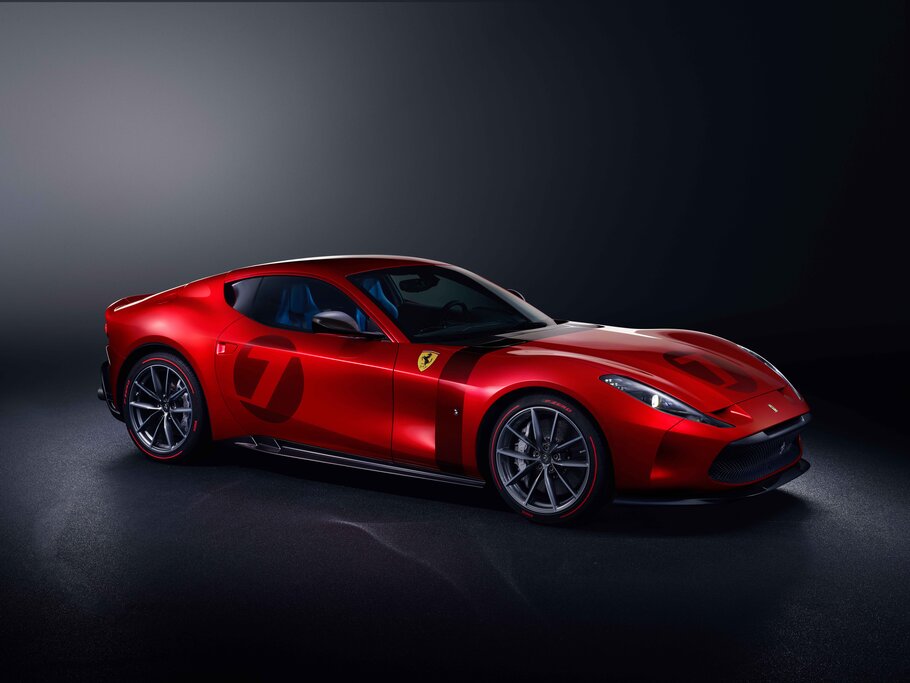
    A unique Ferrari has been seen lapping Fiorano today during a brief yet intense shakedown. While the V12 engine note reverberating around the track may have sounded familiar, the car’s arresting looks are unique although guaranteed to strike a chord with the marque’s aficionados. With its Rosso Magma finish and sophisticated racing livery, the new Ferrari Omologata is a clear descendent of Ferrari’s great GT tradition spanning seven decades of history.

    Commissioned by a discerning European client, the latest offering in Ferrari’s line of unique coachbuilt one-off models is a vibrant evocation of the values that define Ferrari in relation to GT racing: a car that is equally at ease on the road as it is hitting the apex on the track in the hands of a true gentleman driver.

    The Ferrari Omologata project took a little over two years to complete from the initial presentation of sketches, starting with images that covered a variety of inspirations, from racing heritage to sci-fi and references to modern architecture. The idea from the onset was to create a futuristic design with distinctive elements reinterpreted in a fresh manner to provide the potential for a timeless shape that is certain to leave a lasting impression.

    To achieve this, the designers unlocked every possible area of freedom from the underlying package of the 812 Superfast, keeping only the windscreen and headlights as existing bodywork elements. The objective was to exploit the proportions of the potent, mid-front layout to deliver a very sleek design defined by smooth volumes and undulating reflections, uplifted by sharp graphics with sparingly distilled surface breaks wherever dictated by aerodynamic functions. The trickiest aspect was striking the ideal balance between expressiveness and restraint: the Omologata had to ooze street presence whilst maintaining a very pure formal language.

    The designers carefully studied the stance and attitude of the car from all angles, defining a tapering front volume from the flattened oval grille. The rounded section over the front wheel arches, emphasized by a contrasting stripe wrapping across the bonnet, seems to naturally extrude from the grille. The rear of the door, the flank develops into a very potent rear muscle that neatly blends upwards into the three-quarter panel. The entire volume is rendered deliberately imposing through the elimination of the rear quarter light, while three horizontal transversal cuts in the fastback volume visually lower the rear mass. The tail is surmounted by a prominent spoiler which adds not only downforce but a more aggressive, sporty stance. Overall, the car appears to be poised to attack the tarmac even at a standstill, and, seen from the rear, the deeply set single taillights underline the tension.

    Uniqueness in more than name
    Satisfying every safety constraint for road homologation without interfering with any of the usability and tractability of a Ferrari is always a huge challenge for the design team led by Flavio Manzoni, the more so when starting from an existing platform. Omologata was indeed a keyword that resonated throughout the development of this, the 10th front-engined V12 one-off Ferrari has delivered since the 2009 P540 Superfast Aperta. Beyond the clear instructions coming from the client and down to every detail on the car, the designers effectively took into account countless variables to make this a bespoke model through and through, one which could easily find its place in any Ferrari showroom. The quest for the ultimate touch went as far as developing a new shade of red just for the livery, to match the fiery triple-layer Rosso Magma over darkened carbon-fibre finish.

    Inside the car, a plethora of trim details suggests a strong link to Ferrari’s rich racing heritage. The electric blue seats, finished in a tasteful combination of leather and Jeans Aunde® fabric with 4-point racing harnesses, stand out against a full black interior. In the absence of rear quarter lights and screen, the atmosphere in the cabin is purposeful, reminiscent of a bygone era. Metal parts on the dashboard and steering wheel are finished with the crackled paint effect associated with the great GT racers of the 1950s and 1960s as well as with Ferrari’s engine cam covers. A hammered paint effect so often used in cars such as the 250 LM and 250 GTO finds its way on details such as the inner door handles and on the Ferrari F1 bridge.

    A fitting one-off exercise, the Omologata manages to encompass a range of subtle Ferrari signature design cues without falling into nostalgia. Its hand-crafted aluminium bodywork is sprinkled with almost subliminal details, in a way that challenges the enthusiast to identify the various sources of inspiration that played a part into its inception.

  • Ferrari Portofino M

    2021 Ferrari Portofino M1

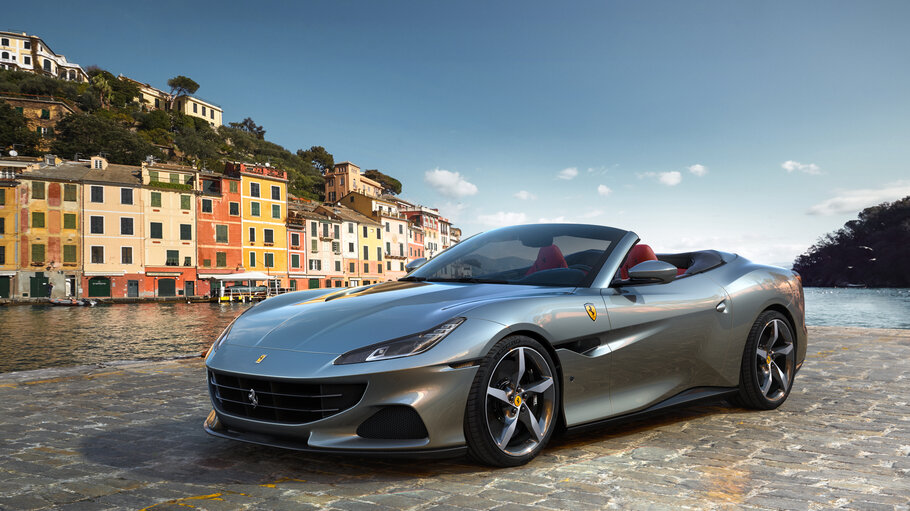
    The Ferrari Portofino M, the evolution of the Prancing Horse’s 2+ GT spider, the Ferrari Portofino, was unveiled today. In a move unprecedented in the Maranello marque’s 70-year-plus history, the new car’s premiere took place entirely online. The build-up to the unveiling included the sending out of a series of newsletters to clients over recent weeks at the end of which they were given access to a platform containing exclusive videos illustrating the concept behind the car, its restyling and main technical contents.

    The Portofino M is the first Ferrari to be presented in the wake of the company’s temporary closure due to the Covid-19 crisis, making it the symbol of a voyage of rediscovery. It is the (re)starting point for Prancing Horse’s pursuit of innovation whilst fully respecting its heritage, passion and constant search for perfection. All of these values are reflected in the new Portofino M. In fact, the ‘M’ in its moniker stands for ‘Modificata’, which in Ferrari nomenclature refers to cars that have undergone an evolution that has significantly boosted their performance.

    There is no shortage of technical innovation in the stunning new evolution of the Ferrari Portofino, the most notable being its redesigned powertrain, a brand-new eight-speed gearbox and the five-position Manettino that includes a Race mode, an absolute first for a Maranello GT spider. As a consequence of these and many other new features, the Portofino M guarantees an unprecedented combination of authentic GT performance, driving pleasure, agility and exceptional versatility in everyday driving contexts.

    This latest design and engineering masterpiece from the Prancing Horse is the perfect evolution of the Ferrari Portofino. Sportier in character than its predecessor, it also delivers superior handling whilst not only maintaining but enhancing on-board comfort, courtesy of specific new optional features, such as ADAS, and ventilated and heated seats. The Ferrari Portofino M thus retains the Ferrari Portofino’s twin soul and is the only car on the market that can rightfully be described as an authentic coupé with its top closed and a genuine spider when it is open. This is thanks, of course, to the Retractable Hard Top (RHT), the signature feature of all the Prancing Horse’s convertibles.

    The Portofino M’s compact dimensions also make it ideal for all occasions. In fact, its unparalleled versatility and on-board comfort turn every trip into a voyage of (re)discovery.

    POWERTRAIN
    The Ferrari Portofino M’s 3855cc engine belongs to the V8 turbo family voted “International Engine of the Year” on four consecutive occasions (2016-2019). The power unit can punch out 620 cv at 7,500 rpm, 20 cv more than the Ferrari Portofino. To achieve these performance levels, the Ferrari engineers used new cam profiles to increase valve lift and optimise combustion chamber filling.

    A speed sensor was also added to the turbocharger assembly to measure the turbine revolutions. This in turn allowed the maximum revolutions per minute of the turbine to be increased by 5,000 rpm.

    Lastly, to comply with the strictest pollution emissions standards, a Gasoline Particulate Filter has been included in the exhaust system. The GPF allows the car to comply with the strictest European anti-pollution standards (Euro-6D) without compromising driving pleasure.

    This result comes thanks to a control logic that continuously regenerates the filter, limiting the amount of accumulated particulate matter. This is achieved by using two dedicated sensors per cylinder bank to accurately measure differential pressure deltas up- and down-stream of the GPF.

    The 8-speed gearbox is a completely new unit compared to the previous 7-speed version and is based on a dual-clutch oil bath architecture. It differs from the SF90 Stradale’s 8-speed transmission in its longer gear ratios and the introduction of a mechanical reverse gear. The new layout and integration of its components have also optimised the gearbox’s size and its installation in the car.

    Like all the other turbo cars in the range and in line with the “zero turbo lag” concept, the Ferrari Portofino M delivers instantaneous throttle response throughout the rev range. The car boasts Variable Boost Management, a control software developed by Ferrari that adjusts torque delivery to suit the gear selected. The result is increasingly powerful pick-up as revs rise, whilst optimising fuel consumption. As the car goes up through the gears (from 3rd to 8th), the amount of torque delivered by the engine increases all the way up to 760 Nm in 7th and 8th gear.

    On the one hand, this has allowed Ferrari to use longer gear ratios in the higher gears, which helps keep fuel consumption and emissions down, while on the other, adopting a steeper torque curve through the rev range in the lower gears for a feeling of smooth and powerful pick-up.

    The introduction of the eighth gear and the improvement in transmission efficiency have resulted in a significant reduction in fuel consumption in urban and motorway contexts in addition to noticeably improving performance even under sportier, more press-on driving.

    The new clutch module is 20% smaller but delivers 35% more torque, with up to a maximum 1,200 Nm of dynamic torque transmitted when gear shifting. The transmission software strategy has also been evolved with a more powerful ECU.

    Lastly, particular attention was focused on gear change strategies aimed at improving the power unit’s fuel consumption and emissions levels. Due to more efficient clutch torque control, the car is now also easier to drive in urban contexts during Start&Stop cycles. This guarantees that the car is smoother to drive at low speeds in traffic, as well as delivering a more intuitive experience and improved responsiveness.

    By tradition, every single Ferrari engine has its own particular soundtrack that makes it unique. The Ferrari Portofino M is no exception. In addition to the flat-plane crankshaft, the geometry of the entire exhaust line is new. The two rear silencers have been eliminated (which in addition to boosting sound also significantly reduces backpressure in the tailpipes) and the by-pass valves are now oval in shape to enhance the exhaust sound. Both solutions significantly reduce exhaust backpressure and improve sound quality. The last notable modification is “proportional” by-pass valve control, which is continuous and progressive depending on the driving situation.

    VEHICLE DYNAMICS
    The Portofino M sports the vehicle dynamics control system known as Side Slip Control (SSC), which incorporates an algorithm that delivers an estimate in real time of the side slip angle to all the various on-board control systems. The SSC coordinates all the vehicle dynamics interventions as the systems are all integrated using shared data.

    Now in its sixth generation, the SSC integrates the E-Diff, F1-TCS, SCM-E Frs and the Ferrari Dynamic Enhancer (FDE) control systems. The FDE is a lateral dynamics control system that uses Ferrari software to adjust the hydraulic brake pressure at the callipers on all four wheels. On the Ferrari Portofino M, it is available only when the Manettino is in Race mode. The FDE is designed to make the car’s lateral dynamics more predictable both through and exiting corners by ensuring the steering wheel and throttle are more intuitive for the driver to use. That said, the FDE is not a stability control system and flanks rather than replaces the traditional VDC and stability control system (ESC).

    Another noteworthy factor is the more modulable brake pedal pressure which, when combined with a reduction in pedal travel of around 10%, delivers more precise, instantaneous responsiveness to inputs during braking.

    The aim of the five-position Manettino, a first on a Prancing Horse GT spider, is to make the Ferrari Portofino M’s handling and grip even more accessible by extending the setting ranges still further with the introduction of the Race position. Supported by the introduction of the Ferrari Dynamic Enhancer, that position focuses on maximising driving pleasure.

    Below are the five positions on the Ferrari Portofino M’s Manettino and their respective performance goals:

    Position Performance goal
    Wet Maximum stability and control
    Comfort Normal use on dry roads
    Sport Sporty driving
    Race Maximises driving pleasure
    ESC-Off VDC and F1-TCS both deactivated


    DESIGN
    The new Ferrari Portofino M’s harmonious styling is the product of a global approach to design in which all the various elements are treated as part of a single whole and builds on the success of the Portofino design. This applies both to the bodywork, where the front, flanks and tail are part of a single seamlessly sculptural design, as it does to the cabin where the general arrangement of the volumes and lines is stylistically consistent. This approach can be seen in the interaction between the car’s exterior and interior.

    EXTERIOR
    The fact that the Portofino M’s performance is more powerful than the Portofino resulted in the Ferrari Styling Centre’s designers making very precise, targeted adjustments to highlight the model’s characteristics and underscore its sportiness.

    The wraparound front bumpers incorporate imposing, sculptural air intakes that lend a decisive, aggressive look to the front of the car. They also feature a new air vent at wheelarch height, added because of the need to reduce the car’s overall drag. Part of the air flow coming off the front radiating masses is directed towards the new vents and then accelerated up as it exits, boosting its extraction power. The resulting improvement in aerodynamic performance is underscored by a slash on the front bumper that flows into the design of the flanks, adding visual harmony to the side view of the car. Thus, the signature Portofino side scallop finds its visual counterpart on the Ferrari Portofino M’s front bumper, which has been sculpted to accentuate the car’s dynamic profile.

    The grille features new aluminium slats with contrasting faceted tips that highlight this noble material.

    At the rear, the new exhaust system has allowed the removal of the silencer assembly, making the Ferrari Portofino M’s tail more compact. The result is that the rear bumpers are now more streamlined and sculptural. Visually, their forms are lighter too and their styling more in harmony with the front bumpers, creating a much more coherent overall aesthetic.

    The rear diffuser has been completely redesigned and is now separate to the bumpers. This allows clients to be able to specify it in carbon-fibre, which further underscores the car’s sporty character.

    Specific diamond-finish wheel rims were designed for the Ferrari Portofino M. Their styling references that of the car’s flanks, a perfect marriage of elegance and sportiness. The unusually sculptural design of the spokes and their chiaroscuro look visually lightens the rim.

    INTERIOR
    With the top down the Portofino M reveals its stylish GT soul and occupants will appreciate how compact and organic the whole car feels. There is exceptional design coherency in the development of the cabin, in fact. The Styling Centre team began by pinpointing certain specific prerequisites essential to the success of the design, the foremost of these being formal and functional coherency between the car’s exterior and its interior, weight reduction and more occupant space.

    The crafting of the interior began with a multi-level dashboard structure comprising an upper half and then an intermediate gap designed to lighten the perceived mass of the lower half.

    Obtained by subtracting rather than adding volumes, this breaking up of the dash into different levels allowed the designers to organise the technical elements and in-car devices to very rational effect while simultaneously defining its signature full-width architecture. A central horizontal aluminium blade divides the instrument panel, air conditioning vents and passenger display into separate areas in the upper section. The other control functions are located in the scooped section below, with a 10.25” touchscreen at the centre. This type of layout hints at flawless ergonomics and highlights the construction quality of every single detail through its seamless marriage of ultra-high-tech elements and materials with handcrafted assemblies and trims.

    Seen in plan view, the cockpit’s symmetrical arrangement and the ample rear seat space are clear. From a construction perspective, the interior – and the dashboard architecture in particular – feature two shells incorporating all of the technical components and a bridge that visually connects the instrument panel area with the central tunnel.

    This layout is designed to involve the passenger and is underscored in the styling of the door panels, handles and various controls and devices available, including the central and passenger touchscreens.

    The seats are the product of a special research project and have an innovative magnesium structure. Different density padding and an ultra-compact seatback profile have freed up space for rear occupants too.

    Also available is three-level ventilation for the seat and backrest, and the very popular neck warmer for use in winter months. The latter offers a choice of three heat levels and the system constantly adapts the speed of the warm air flow from the headrest to ensure it is proportional to the car’s speed, outside temperature and the position of the retractable top.

    INFOTAINMENT AND HMI
    The Ferrari Portofino M’s HMI (Human-Machine Interface) centres on a digital cluster with dual TFT displays arranged around the analogue rev counter in a generous circular, anti-glare binnacle. Located on exactly the same axis as the multifunctional steering wheel, this cluster allows the driver to interact more easily and intuitively, both visually and physically, with the car by delivering optimal driving feedback.

    The infotainment system functions are controlled via the touchscreen handily located at the centre of the dash within easy reach of both driver and passenger. Designed to be as quick and accessible as possible in terms of both use and content, it includes a full HD multi-touch capacitive screen with Split View to allow different types of content to be viewed simultaneously. Both Apple Car Play and Android Auto are also available.

    The passenger has an optional dedicated capacitive display on the dashboard. It is directly linked to the main screen providing all information relating to car speed, rpm and gear engaged. This 7” colour full HD and Full Touch display also allows the passenger to interact with the car’s on-board systems. They can, for instance, select music to listen to, view sat nav information or select a new point of interest (POI), such as a restaurant, which is then automatically integrated into the route. So essentially, the passenger becomes a co-driver.

    The advanced driver assistance systems (ADAS) available as optionals for the Ferrari Portofino M are:

    • Adaptive Cruise Control with Stop&Go function for driving in traffic
    • Predictive Emergency Brake System that can alert the driver to potential collision risks readying the car to lessen the consequences of a frontal impact
    • Blind Spot Monitoring to alert driver to vehicles in the blind spot
    • Lane Departure Warning with acoustic and/or visual alert that the car has strayed out of its lane
    • Automatic High Beam, which automatically turns on and off high beams when driving at night
    • Traffic Sign Recognition, which constantly displays the speed limits on the particular road/street vehicle
    • Surround View with 3D display
    • Rear Cross Traffic Alert, which warns driver of moving obstacles hidden in the car’s rear blind spot, when reversing.

    7 YEARS MAINTENANCE
    Ferrari’s unparalleled quality standards and increasing focus on customer service underpin the extended seven-year maintenance programme offered with the Ferrari Portofino M. Available across the entire range, the latter covers all regular maintenance for the first seven years of the car’s life. This scheduled maintenance programme for Ferraris is an exclusive service that allows clients the certainty that their car is being kept at peak performance and safety over the years. This very special service is also available to owners of pre-owned Ferraris.

    Regular maintenance (at intervals of either 20,000 km or once a year with no mileage restrictions), original spares and meticulous checks by staff trained directly at the Ferrari Training Centre in Maranello and using the most modern diagnostic tools are just some of the advantages of the Genuine Maintenance Programme. The service is available on all markets worldwide and from all Dealerships on the Official Dealership Network.

    The Genuine Maintenance programme further extends the vast range of after-sales services offered by Ferrari to meet the needs of clients wishing to preserve the performance and excellence that are the signatures of all cars built in Maranello, itself long synonymous with leading-edge technology and sportiness.

  • Ferrari GTO Engineering 250 SWB

    2021-Ferrari-GTO-Engineering-250-SWB1

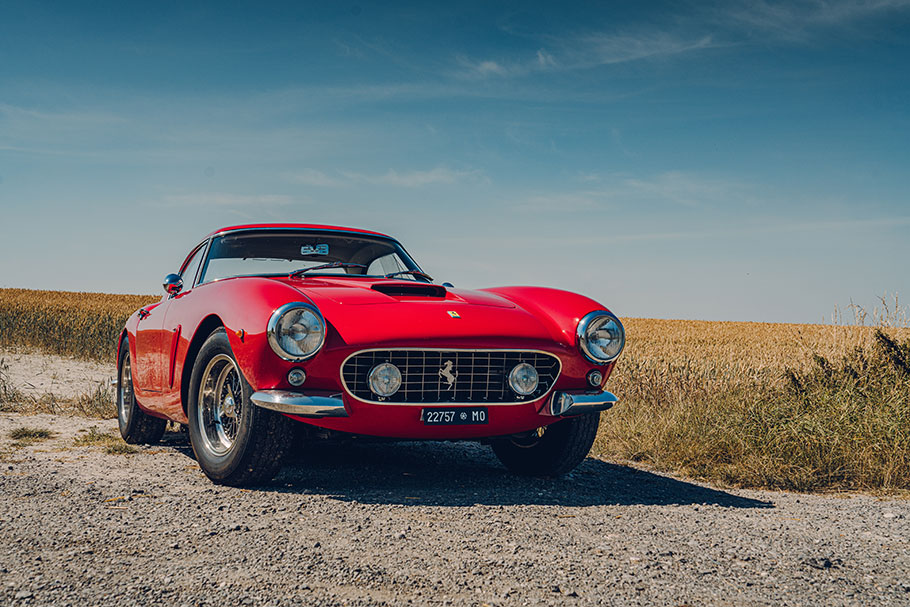
    With over half a million miles under their belt driving some of the most special Ferraris of all time, and over 200 years’ combined experience working on Ferraris, the team at GTO Engineering has created what they believe to be the ultimate interpretation of a legendary Sixties, Ferrari. Named the 250 SWB Revival, based upon the 1960 Ferrari 250 GT SWB Berlinetta Competizione, GTO Engineering has revived a legend with its modern experience and given it ultimate road and track customization opportunities.

    From the chassis to the cockpit, every element of the 250 SWB Revival has been strictly enhanced, improved, or rebuilt at the GTO Engineering UK headquarters, using the team’s extensive knowledge, know-how, historical technical drawings, and industry insight. The result is a visceral experience of a high-revving Columbo V12, enjoyable chassis, lightweight aluminum body with a classic exterior and interior design, plus some modern touches to make it a pleasure to drive daily, on track, or save for Sunday best.

    Inspired by the legendary 1960 Ferrari 250 GT SWB Berlinetta Competizione, which is one of the most successful Ferrari race cars of the period, the GTO Engineering team offers the 250 SWB Revival as a more usable, customizable, and bespoke variant of the highly collectible original Competition car. Driven in period by the likes of Sir Stirling Moss who hailed it as “the greatest GT car in the world” as it took wins at Le Mans (1960 class win), Tourist Trophy (1960), and Spa GP (1960), today it’s regarded one of the most notable, collectible and appreciating cars of its type, this is rarely seen on the road and occasionally at historic race meetings.

    “The 1960 Competition car is the one to have – not only is it the shorter chassis, improving drivability and handling, it has disc brakes [the 250 SWB was the first to have them on a Ferrari GT car], and an aluminum body rather than steel. But it has one major drawback. Because it was made in so few numbers, it’s not really a car you can take to the shops or drive on the lock-stops without fearing damaging the body or destroying originality. The 250 SWB Revival is a ‘best of’, based on original drawings and knowledge, with an added usability, driveability and the option to make it as road or race-focused as you’d like,” explains GTO Engineering Managing Director Mark Lyon.

    Utilizing original drawings, measurements, and knowledge, the GTO Engineering 250 SWB Revival uses a hand-built tubular frame underneath a hand-beaten aluminum body. It’s based on the shorter format of the 1960 Ferrari 250 GT SWB Berlinetta Competizione specifications, which is eight inches shorter than the 250 GT. Each GTO Engineering 250 SWB Revival is created as a bespoke build, with a plethora of options designed for enjoying the car on the road, used for rallying, touring, sprinting, and racing.

    “It’s hard to beat perfection [the 250 SWB], but you can make it more drivable, liveable, and easier to use on a daily basis. You can also provide drivers the option for different V12 engines and gearboxes, which you can’t with an original. We wanted to give flexibility to owners who either want a grand tourer, a faster set-up road car, or full race car that you can drive to and from events. The 250 SWB Revival was designed to be versatile, usable but also completely customizable,” further comments GTO Engineering Managing Director Mark Lyon.

  • Mecum Auctions Event has generated approximately $40 million

    2019 Mecum AuctionsMecum’s recent collector car auction, held between August, 15-17 in Monterey, California, brought $32.2 million in overall sales by auction close and totals have since reached $38 million with the additional post-auction Bid Goes On events.

    The GTB/4 was far from the only Ferrari at the event – top sales were dominated by brand’s fines vehicles. While the vintage Ferraris came out on top, as expected, the second highest seller hailed a contemporary machine – a 2014 Ferrari LaFerrari, sold for $2,64 million. Other seven-figure sales have included a 2015 Porsche 918 Spyder with low miles and an exclusive Weissach Package, all for $1,43 million. Other notable sales include a 1966 Ferrari 275 GTS for $1.1 million and the last 289 Cobra for $1.05 million.

    2019 Mecum Auctions

    As it comes to vintage collectables, Monterey audience has witnessed six examples of deals that brought six-figures to the sellers. Two include coveted Crocker small-tanks topped all motorcycle sales an unrestored 1936 model, bought for $825,000 and a restored 1937 example for $715,000.

    SEE ALSO: Four unique vintage Ferraris will be showcased at Salon Privé. Details here!

    The complete top 10 collector-car sales at 2019 Mecum Monterey event include:

    • 1967 Ferrari 275 GTB/4 (Lot F119) at $2,750,000
    • 2014 Ferrari LaFerrari (Lot S102) at $2,640,000
    • 2015 Porsche 918 Spyder (Lot F91.1) at $1,430,000
    • 1966 Ferrari 275 GTS (Lot F122) at $1,100,000
    • 1965 Shelby 289 Cobra CSX2588 (Lot F139) at $1,045,000
    • 1936 Crocker Small Tank (Lot S103) at $825,000
    • 1935 Auburn 851 SC Boattail Speedster (Lot S131) at $742,500
    • 1973 Ferrari 365 GTB/4 Daytona (Lot S113) at $715,000
    • 1937 Crocker Small Tank (Lot S142) at $715,000
    • 1933 Stutz DV-32 Dual Cowl Phaeton (Lot S126) at $495,000

    2019 Mecum Auctions

    Source: Mecum Auctions


  • Four unique vintage Ferraris will be showcased at Salon Privé. Details here!

    1967 Ferrari 365 California SpyderBack in the day, when Enzo Ferrari began producing sexy new vehicles, he immediately identified the US as a potential and profitable market. By starting production there, he managed to create some of the most amazing and expressive machines in the entire Ferrari lineup.

    Four of these exceptional and super-rare machines will grace the grounds of Blenheim Palace with a dedicated Salon Privé Concours d’Elégance by Chubb Insurance. The foursome is consistent of a pair of early 1950s 342 Americas, a mid-1960s Ferrari 500 Superfast and a 365 California Spider.

    At the time of production, the 342 America was brand’s flagship machine and a forerunner to the 375 America lineup – the super-ultra-mega luxurious and powerful GT models for Ferrari’s most prestigious and pretentious customers.

    1966 Ferrari 500 Superfast

    In fact, there are only six 342 Americas created and Salon Privé gathers two of these unique units together. One of these is the first only three cabrios made and the only one in Carrozzeria Vignale body concept. The second model, the 1953 Geneva Motor Show car features a high-performance engine, an extra-large fuel tank and a rally timer. Sweet!

    SEE ALSO: Beaulieu’s First Mercedes Event Exceeds Expectations!

    As it comes to the 1960s models, the first one, the 500 Superfast is the last of just 36 examples built and the one of two “Series 2” RHD cars created. Present at the event will be a 1967 365 California Spider, delivered new to Luigi Chinetti Motors in the USA. This machine is one of the most luxurious vehicles from the era and mere 14 examples have been produced between 1966 and 1967.

    1953 Ferrari 342 America

    1952 Ferrari 342 America Cabriolet

    These four units will join other classic examples of Maranello’s finest models, along with 18 additional rare machines.

    2019 Salon Privé Concours d’Elégance by Chubb Insurance at Blenheim Palace on Thursday 5th September.

    Stick with us for further details!

    Source: Salon Privé

  • Ferrari announces details for the new F8 Tributo model

    2019 Ferrari F8 Tributo Ferrari has revealed the first official photographs of F8 Tributo, a mid-rear engine sports car, which represents the highest expression of the brand’s classic two-seater berlinetta. In fact, the name pays homage to both the model’s uncompromising layout and to the engine – it is a massive 720cv and delivers titanic amounts of power. In fact, this is by far the most powerful V8 unit that Ferrari has ever used.

    What is more, this unit’s output of 720cv is delivered without a hit of turbo lag or some kind of overdrive. This is due to the new version of Ferrari Dynamic Enhancer, which can be activated with a touch of a button. The steering wheel rim is also smaller and contributes to better agility and road behavior. In addition, the entire body structure is with 40kg lighter, compared to the 488 GTB, which further enhances the responsiveness and overall driving pleasure.

    2019 Ferrari F8 Tributo

    As it comes to expression and design features, Ferrari team has done what it is best at: delivering us an extremely beautiful vehicle. The entire exterior concept is especially created in order to ensure excellent aerodynamic features and reward drivers with pleasure of driving and feel.

    Indeed, the machine was designed by the Ferrari Styling Centre and this contemporary design serves as a bridge between all these notable Ferrari features and homage to the future.

    The front of the vehicle is characterized by a redesigned S-Duct, which suits neatly the extensive modifications. It not only adds styling points, but also contributes to the impressive 15 per cent increase in downforce, compared to the 488 GTB. There are new and more compact horizontal LED headlights that allow the designers to add new brake cooling intakes in combination with the new bumper.

    2019 Ferrari F8 Tributo

    At the rear, a new Lexan screen reveals the engine compartment and brings a modern twist to the distinctive design of Ferrari’s models. The louvers aid extract hot air from the engine compartment without sacrificing efficiency and performance rates.

    SEE ALSO: Volkswagen reveals details about new Jetta. Check ’em out!

    And as it comes to the interior, the cabin design retains classic driver-oriented ambience, but with a redesign and change to all components. There’s a next-gen HMI (Human Machine Interface) and round air vents, new steering wheel and controls, all along with a new 7-inch passenger touchscreen display.

    2019 Ferrari F8 Tributo

    So, how do you like Ferrari’s approach towards the future? Write down in the comment section!

    Source: Ferrari