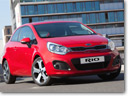
While the all-new Kia Rio five-door hatchback is generating positive media coverage around the world and arriving in dealer showrooms across Europe this month, Kia is celebrating the world premiere of its new Rio three-door model at the Frankfurt Motor Show.
Designed primarily for the European market, the new Rio three-door will expand the appeal of Kia’s latest B-segment model to attract a new group of consumers to the brand for the first time – boosting conquest sales after its introduction during the first quarter of 2012. Ultimately, Kia expects the Rio three-door to account for approximately 20 to 25 per cent of total Rio sales.
Rio three-door has the same key dimensions as the five-door model (length 4,045 mm, width 1,720 mm, height 1,455 mm and wheelbase 2,570 mm) and retains the same roofline that is one of the lowest in Kia’s European product range, emphasising its purposeful, sporty stance.
In most European markets, Rio three-door will be available with the same range of powertrains, equipment and options as the five-door. The new model will offer customers a choice of four highly efficient three- and four-cylinder engines – with a 75 to 109 ps power range.
2012 Kia Rio three door
The fastest Rio three-door will accelerate to 62 mph in 11.5 seconds and be able to reach a top speed of 114 mph. Fuel consumption will be as low as 88.2 mpg for the newly-introduced EcoDynamics diesel model, which will also deliver an industry-leading CO2 rating of just 85 g/km – the lowest emissions of any non electric vehicle, including hybrid vehicles.
With two bodystyles for new Rio, plus the already-popular five-door Soul and Venga B-segment models, Kia is confident of capturing an even larger share of the increasingly popular compact car market in Europe. The three-door Rio will go on sale from early 2012.
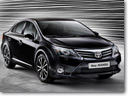
The new Toyota Avensis makes its world debut at the 2011 Frankfurt motor show, a substantially revised model that builds on the spaciousness, practicality and fuel efficiency of the current, third-generation car. It features a bolder, more refined exterior design and improvements to the finish quality, comfort and NVH in the cabin. Driving dynamics have been improved and a new grade structure (UK details to be announced later) will provide even more value for money.
The 2.0-litre D-4D engine has been revised to give significant improvements in fuel consumption and CO2 emissions. With a tax threshold at 120 g/km in almost a third of European countries, the 2.0 D-4D’s 119 g/km will attract generous tax benefits for both private and fleet buyers.
Designed and engineered in Europe and built exclusively at Toyota’s Burnaston factory in the UK, Avensis was launched in 1997 and is now firmly established in the European D-segment, selling 70,585 units across the region in 2010 to take a 5.8 per cent segment share.
2012 Toyota Avensis
EXTERIOR DESIGN
New Toyota design direction
Bolder, more dynamic styling
Restyled rear for the saloon
The overall dimensions of the Avensis saloon and tourer remain unchanged, but both have been extensively restyled.
A bolder, more refined frontal treatment displays the new Toyota family ‘face’. A key element in this is a change in the proportions of the upper and lower grilles, with the emphasis now on making the lower grille larger for a more assertive, dynamic look.
The new grille design is flanked by narrower headlamps which emphasise the elegant proportions of the new styling. The headlamps now incorporate daytime running lights.
The lower bumper is sculpted with a strong, protruding centre section that houses a large air intake, focusing attention on the lower half of the vehicle. Together with the crisp detailing of integral foglamp housings at each corner, the design gives Avensis a wider, more purposeful stance and ground-hugging appearance.
At the rear there is new rear bumper, which incorporates a centre guard on saloon models. The combination lamp clusters and foglamps have been redesigned, making them more prominent and improving visibility. A new chrome trim for the licence plate adds a further touch of elegance.
The 16-inch steel wheels have new-design covers and the 17-inch Fuji alloys have new colour and machine facings. The other 17 and 18-inch wheels available for Avensis gain a new, darker finish treatment.
INTERIOR DESIGN
Improved quality in touch and appearance
Introduction of Toyota touch and Go Plus
Avensis’s cabin is already notable for its comfort, roominess and practicality. Now it benefits from higher perceived quality across the range, with upgraded upholstery offered in new colours, and the introduction of Toyota Touch and Go Plus, the most advanced yet affordable touch-screen satellite navigation system in the D-segment.
The appearance and feel of the entire dashboard have been improved. The centre console has been redesigned to improve the layout and operability of the switchgear. The central air vents have also be re-shaped and share the same new metal paint finish of the centre console, and the side vents gain a chrome trim.
The tactile quality of frequently handled parts such as the door grips, switchgear and front console all gain higher quality trim. The instrument dial backlighting has been changed for amber to white, and leather has been introduced to cover the rear console box lid.
The front seatbacks have been redesigned to offer better lateral support and comfort, and the upholstery has been upgraded across the range, with new colours available, too.
Multimedia system
New Avensis benefits from Toyota’s range of affordable, touch-screen multimedia equipment: Toyota Touch, and the Toyota Touch and Go and Toyota Touch and Go Plus navigation systems.
Toyota Touch and Go Plus
Making its world debut in new Avensis, Touch and Go Plus adds numerous, additional advanced technology features to Toyota’s touch-screen multimedia system.
It features advanced voice recognition for navigation address input, one-shot destination entry, music search and play, and phone contact search and call. It also incorporates email send and receive, a text-to-speech message readout facility, a calendar and, through a Gracenote database, a ‘Play More Like This’ music function.
Enhanced satellite navigation mapping incorporates 3D city modelling and landmarks, and an additional Traffic Patterns database showing the average speed on road sections of a programmed route, according to the time, day and month. The system includes three years’ free map and software updating.
Audio
Navigation
ENTRY AUDIO
TOYOTA TOUCH
TOYOTA TOUCH AND GO
TOYOTA TOUCH AND GO PLUS
Functions
Additional functions
Additional functions
Additional functions
Radio-CD
USB port
6 speakers
6.1” touch-screen
Bluetooth
Rear-view camera
Automatic phone book access and audio streaming
iPod album cover display
Vehicle settings*
A/C pop-up display
Full map navigation
Advanced multimedia
Speed and safety camera warning
Online points of interests search**
Applications
SMS***
(send and receive)
Contact picture display***
11 speakers
Traffic Patterns
3D landmarks and city models
Email and Calendar***
‘Play More Like This’ music search
Advanced Voice Recognition
Text to speech
3-year map and software updates/upgrades
* Vehicle settings availability varies according to model and grade
** Requires Bluetooth® DUN or PAN profile, a data plan and a network operator allowing tethering
*** Bluetooth Message Across Profile required on the mobile phone
SPECIFICATIONS AND EQUIPMENT
New specifications and grade structure
Increased level of standard equipment
Every grade in the new Avensis range will be revised to deliver greater value for money through higher levels of standard equipment and quality.
Specific details of UK grades and equipment will be announced later, but all models will adopt integral daytime running lights. As detailed in the interior design section (above), cabin trims and upholstery have been upgraded with new finishes, designs and colour choices.
IMPROVED 2.0 D-4D ENGINE AND DRIVING DYNAMICS
2.0 D-4D engine CO2 emissions reduced by 20g/km to 119g/km without compromising performance
Lower emissions level attracts tax benefits in several European countries
The 124bhp 2.0 litre D-4D turbodiesel engine has been extensively revised, with the introduction of a new turbocharger, extensive combustion chamber modifications and improved glow control. As a result, torque delivery is more linear, fuel efficiency has improved and CO2 emissions have been reduced by about 15 per cent – from 139 to 119 g/km – in both saloon and tourer models.
This marked reduction in CO2 emissions has significant total ownership cost implications. A taxation threshold of 120g/km is established in almost a third of all European countries, and the revised 2.0 D-4D unit’s 119 g/km CO2 figure will thus deliver tax benefits for both private and fleet drivers.
In addition to the revised 124bhp 2.0 D-4D, the new Avensis’ powertrain range further comprises a 148bhp, 2.2 D-4D unit available with either a Diesel Particulate Filter (DPF) or a Diesel Particulate and NOX Reduction filter (DPNR); a 145bhp 1.8-litre Valvematic petrol engine is also available.
All engines are matched to six-speed manual transmissions. The 148hp 2.2 D-4D DPNR unit may be optionally equipped with a six-speed automatic transmission, and both 1.8 and 2.0-litre petrol engines may be fitted with Toyota’s Multidrive S continuously variable transmission with steering wheel mounted paddle shifts.
New Avensis retains the proven front MacPherson strut and rear double wishbone suspension layout of its predecessor, but improvements to the platform, chassis and powertrains deliver greater ride comfort and handling agility.
SAFETY AND DRIVER ASSISTANCE TECHNOLOGIES
New Avensis equipped to meet the highest safety standards
Advanced safety technologies, including Adaptive Cruise Control (ACC)
New Avensis shares the world-class safety performance of the previous generation model, which was awarded a maximum, five-star rating in the 2009 Euro NCAP crash test programme.
Toyota is committed to achieving the highest levels of active, passive and pedestrian impact safety, and took the lead in the development of advanced safety technologies such as pre-crash safety, lane departure warning and lane keeping assistance systems.
Advanced Pre-Crash Safety System
An Advanced Pre-Crash Safety (PCS) system is available as an option on new Avensis (according to grade). It uses a millimetre-wave radar sensor to scan the road ahead, recognising potential hazards and assisting the driver in reducing the chances of a collision.
If there is a high possibility of a collision, PCS will alert the driver and, when he or she begins to brake, provide braking assistance to supplement the braking effort, simultaneously activating the seatbelt pretensioners. If the driver does not brake and a collision is inevitable, the system will automatically apply the brakes to reduce impact speed.
Adaptive Cruise Control
Adaptive Cruise Control (ACC) works in tandem with the PCS system. It will automatically maintain a selected distance from the vehicle in front. Once the road ahead is clear, the vehicle automatically returns to its original cruising speed.
Lane Departure Warning and Lane Keeping Assist
PCS is further complimented by Lane Departure Warning (LDW) and Lane Keeping Assist (LKA) systems.
Using digital camera technology mounted behind the rear-view mirror, these systems can help to prevent unintended lane changes by first giving an audible and visual warning and then applying corrective steering torque to help the driver remain within a chosen lane.
Additional Active Safety Systems
All new Avensis versions are fitted, as standard, with ABS, Electronic Brakeforce Distribution (EBD), Brake Assist (BA), Traction Control (TRC) and Vehicle Stability Control (VSC+).
Adaptive Front Lighting
New Avensis models equipped with High Intensity Discharge (HID) headlamps are fitted with an Adaptive Front Lighting System (AFS). Calculating where the vehicle will be in three seconds’ time according to steering operation and vehicle speed, the system swivels the low beam projector headlamps in response to steering input, helping to light up a bend as the driver steers into it.
AFS is also equipped with a dynamic levelling function, which automatically maintains a constant beam height. The combination of these two functions achieves optimum light distribution in all driving conditions.
320 kW of power and a peak torque of 3,200 Nm (2,360 lb-ft) from four electric wheel hub motors point the way to the powerful, efficient and ecofriendly luxury sedan of the future. Based on the latest Mercedes E-Class, BRABUS ZERO EMISSION, a business division of BRABUS, has developed the fully operational BRABUS High Performance 4WD Full Electric concept car. The all-wheel-drive vehicle, which celebrates its world debut at the 2011 IAA, accelerates from 0 – 100 km/h (62 mph) in just 6.9 seconds and reaches a top speed of 220 km/h (137 mph) – and all without emitting as much as a single gram of CO2. A powerful 56-kWh lithium-ion battery pack provides an operating range of up to 350 kilometers (217 miles). There are plans for a small-series production run of this unique automobile.
For more than three decades BRABUS has ranked as one the top addresses worldwide for exclusive high-performance automobiles. Since 2008 the BRABUS ZERO EMISSION business division of BRABUS, recognized by the German Federal Motor Vehicle Department as an automobile manufacturer, deals with the development of vehicle concepts for alternative-drive cars.
For the electric drive of the BRABUS High Performance 4WD Full Electric the BRABUS vehicle and electrical engineers decided on four wheel hub motors from English manufacturer Protean ELECTRIC.
A low weight of just 31 kilograms (68 pounds), a compact diameter of only 42 centimeters (16.5 inches) and a thickness of merely 11.5 centimeters (4.5 in.) make these motors perfectly suited for this project. They are positioned in the BRABUS Monoblock Q wheels in size 8.5Jx19 front and back.
BRABUS Technologie Projekt HYBRID
With a peak power of 80 kW and a peak torque of 800 Nm (590 lb-ft) in Sport mode these motors are ideal for meeting the high-performance requirements that BRABUS is renowned for. In recuperation mode under braking each of the motors contributes up to 70 kW to the energy recovery system and therefore to recharging the batteries.
The concept car is equipped with an electro-hydraulic BRABUS brake system that was custom developed for this type of drive layout. The four vented bake discs are attached to the rear of the wheel hub motors, and gripped by two internal brake calipers each.
Controlling the four wheel hub motors presented a special challenge. They are coordinated by a high-tech electronic control unit and give the E-Class sedan an innovative all-wheel-drive system that defies any kind of weather and all road surface conditions. But that’s not all: the independent drive of each wheel provides the vehicle with torque vectoring capabilities, the active controlling of the yaw angle, for impressive driving dynamics and particularly safe handling.
The power output of the four electric motors adds up to a peak output of 320 kW and a whopping peak torque of 3,200 Nm (2360 lb-ft). In comparison: the 6.3-liter V12 Biturbo engine of the new 370-km/h plus (230-mph) BRABUS ROCKET 800, one of the most powerful gasoline car engines in the world, produces a peak torque of “just” 1,420 Nm (1,047 lb-ft).
Despite its enormous performance potential the wheel hub drive is particularly ecofriendly because of its carbon neutrality. Based on the NEDC (New European Driving Cycle), energy consumption of all four motors combined is a low 0.24 kWh/km (0.38 kWh/mile), giving the car an NEDC operating range of some 240 kilometers (150 miles). In Eco mode, which is more than sufficient for normal operations, a continuous output of 200 kW allows operating ranges of up to 350 kilometers (217 miles) without recharging.
This substantial operating range is the credit of the powerful 56-kWh lithium-ion battery pack. The individual cells, connected via state-of-the-art power electronics, were placed in various locations throughout the entire Mercedes E-Class body to achieve optimal weight distribution. The space gained under the hood by eliminating the conventional engine is utilized for the cells as is the now superfluous driveshaft tunnel and the areas that normally house the fuel tank and the spare wheel.
External charging of the battery pack is handled by two separate systems. For the garage at home there is a quick charger for ecofriendly eco electricity from German energy company RWE. After one-and-a-half hours of being plugged into the 380 V three-phase grid with a charging capacity of 50 kW the eco sedan again has an operating range of 350 km (217 miles). For charging on the road at any normal 220 V AC outlet or on a 380 V three-phase outlet the car is equipped with an integrated charger that recharges the batteries fully in five hours.
On the road the BRABUS High Performance 4WD Full Electric exhibits the dynamic performance one can rightfully expect from a BRABUS high-performance automobile and one that has been unheard of in an electrically powered sedan of this size until now.
The electrically powered sedan delivers excellent performance: the four-door car weighing 2,190 kilograms (4,828 pounds) accelerates from 0 to 100 km/h (62 mph) in just 6.9 seconds. The BRABUS High Performance 4WD Full Electric also delivers superior pulling power: the intermediate sprint from 60 to 120 km/h (37 to 74 mph) takes just 5.0 seconds. In comparison: a Mercedes E 500 4MATIC takes 5.2 seconds.
The wheel hub motors’ redline speed of 2,000 rpm effectively limits the car’s top speed to 220 km/h (137 mph).
The strong performance and low energy consumption also benefit from the aerodynamic efficiency of the BRABUS aerodynamic-enhancement components, which were fine-tuned in the wind tunnel. The BRABUS front fascia lends the E-Class sedan a more slipstreamed nose and reduces lift on the front axle, contributing to outstanding directional stability. The integrated LED daytime running lights are extremely economical but ensure that the BRABUS High Performance 4WD Full Electric is recognizable from afar.
BRABUS aluminum front sport fenders with integrated clear-coated carbon-fiber inserts create a distinctly sporty look. The BRABUS side skirts calm the airflow between the wheel wells and feature highly convenient, visually striking LED entrance lights.
Another custom development is the suspension of BRABUS High Performance 4WD Full Electric. A height-adjustable coilover suspension calibrated to the higher vehicle weight was developed in cooperation with technology partner BILSTEIN. It offers individual ride-height settings and a sporty yet comfortable ride.
The BRABUS Monoblock Q 19-inch wheels are mounted with high-performance tires from technology partners Continental, Pirelli or YOKOHAMA in size 245/35 ZR 19 front and back.
The interior of the concept car is supplemented by a special instrument cluster, which provides the driver with the most essential information about the battery, the electric motors and other driving parameters such as speed etc. A new center console housing the controls an electric vehicle requires was manufactured as well.
The ergonomically shaped BRABUS sport steering wheel and aluminum pedals and footrest add sporty highlights. Stainless-steel scuff plates with backlit BRABUS High Performance 4WD Full Electric logo and velour floor mats sporting the identical marks are further exclusive accessories.
BRABUS High Performance 4WD Full Electric
Technical Data
Body
Four-door sedan based on the Mercedes-Benz W 212 series E-Class.
Steel unibody with mounts for lithium-ion batteries in engine bay, trunk and driveshaft tunnel. BRABUS aerodynamic-enhancement kit with front fascia, air vents in the front fenders, side skirts, rear spoiler lip and rear diffuser.
Dimensions:
Length 4.868 mm (191.6 in)
Width 1.841 mm (72.4 in)
Height 1.464 mm (57.6 in)
Curb weight 2,190 kg (4,828 lbs.)
Electric Drive
Four electronically controlled Protean ELECTRIC wheel hub motors and 56 kWh lithium-ion battery pack. Charging by external or on-board charger.
Peak power in Sport mode 4 x 80 kW = 320 kW system power
Continuous power in Eco mode 4 x 50 kW = 200 kW system power
Maximum recuperation power 4 x 70 kW = 280 kW total recuperation power
Peak torque 4 x 800 Nm (590 lb-ft) = 3,200 Nm (2,360 lb-ft) system torque
Maximum rpm 2,000
CO2 emissions 0 g/km
Power supply Lithium-ion (LiCoMn) battery pack
Nominal voltage 355 V
Capacity 56 kWh
External charger RWE Combi Station, 380 V three-phase current
Charging capacity: 50 kW (limited)
Charging time: 1.5 hours (limited)
Internal charger Delta ES three-phase on-board charger, 220 V AC or 380 V three-phase current
Charging capacity 12.4 kW (limited)
Charging time: 5 hours
Suspension
Independent front and rear suspension with height-adjustable BRABUS coilover sport suspension.
Front axle:
Three-link suspension, anti-dive geometry. Height-adjustable BRABUS struts with gas-pressure shocks with 10-way adjustable bound and rebound, and coil springs.
Rear axle:
Multi-link suspension, anti-dive and anti-squat geometry. Height-adjustable BRABUS struts with gas-pressure shocks with 10-way adjustable bound and rebound, and coil springs.
Wheels:
BRABUS Monoblock Q 8.5J x 19 H2 alloy wheels with Continental, Pirelli or YOKOHAMA high-performance brake system.
Front: 8.5J x 19 H2 with 245/35 ZR 19
Rear: 8.5J x 19 H2 with 245/35 ZR 19
Brake System
Dual-circuit brake system with BRABUS high-performance brake system assisted by the wheel hub motors in each wheel.
Performance
0 – 100 km/h (62 mph): 6.9 sec.
60 – 120 km/h (37 – 74 mph): 5.0 sec.
Top speed Eco mode: 190 km/h (118 mph)
Top speed Sport mode: 220 km/h (137 mph)
Energy Consumption and Operating Range
Energy consumption based on NEDC incl. recuperation: 0.24 kWh/km (0.38 kWh/mile)
Operating range based on NEDC: 240 km (150 miles)
Operating range at a constant 100 km/h (62 mph): 350 km (217 miles)
Jaguar has released details of the C-X16 concept ahead of its world debut at the 2011 Frankfurt Motor Show.
Looking firmly to the future, the C-X16 marks a new chapter for Jaguar. The two-seater concept has inspired new advances in design, in engineering and in vehicle technology to create the most compact and responsive Jaguar in a generation. A hybrid, the C-X16 combines searing performance with beautifully realised styling.
Adrian Hallmark, Global Brand Director, Jaguar Cars: “The C-X16 embodies the established Jaguar strengths of sensual design, animal-like agility and inspirational performance and combines these with attributes that set us on a course to create sustainable sports cars of the future.”
Ian Callum, Director of Design, Jaguar Cars: “Jaguars have always been dramatically different. With the C-X16 we have moved the current award-winning design language on to the next generation, creating a car that is the very essence of future Jaguar performance.”
Under the muscular clamshell bonnet is a next-generation supercharged V6 petrol engine producing 380 PS (280kW) and 332 lb ft (450 Nm) of torque. Already boasting a high specific power output of 126 PS-per-litre, the performance of the C-X16 is further supplemented by a Formula 1-inspired hybrid boost system with a steering-wheel mounted button for on-demand acceleration.
Integrated into the eight-speed gearbox is a motor generator which draws power from a 1.6kWh battery pack mounted behind the seats for ideal 50:50 weight distribution. Charged through a brake energy regeneration system, the batteries allow the motor to provide an additional 95 PS (70 kW) and173 lb ft (235 Nm).
Mounted in an aluminium chassis structure, the result is 0-62 mph acceleration in 4.4 seconds, a top speed of 186 mph and acceleration from 50-75 mph of 2.1 seconds. The C-X16 is also able to travel at speeds of up to 50 mph under electric power alone and has CO2 emissions of 165 g/km.
The C-X16 measures 4,445 mm in length, 2,048 mm in width and 1,297 mm in height and has a wheelbase measuring 2,622 mm. In terms of overall length, the C-X16 is the smallest Jaguar created since 1954 and the XK120.
Citroеn will present a brand new, highly innovative concept vehicle at this year’s Frankfurt Motor Show. Called Tubik, this eye-catching model is a high-tech executive shuttle based on one key idea – travel should be fun.
Building on Citroеn’s Multicity project – an online portal and route finder, currently live in France, which covers all available means of transport (car, train, plane, etc.) – Tubik takes mobility solutions to the next level. Featuring the very best of Citroеn’s ‘Créative Technologie’, Tubik is specifically designed to make travel meaningful and enjoyable.
Inspired by Citroеn’s renowned Type H or ‘TUB’ van, but with all the prestigious styling and characteristics of modern Citroеn design, Tubik is a 9-seater packed with entertaining technology. Exceptionally striking both inside and out, Tubik boasts offbeat, distinctive styling with colours and materials designed to meet the highest standards of sophistication and comfort.
As part of its design philosophy, Tubik responds to a changing society where extended families and groups of friends travel together, often in numbers exceeding four or five, with plenty of room for luggage.
Citroen Tubik Concept
To make travel enjoyable for its passengers, Tubik incorporates a lounge-style cocoon dedicated to comfort and relaxation. The modular seats are designed to be arranged in many different ways (semi-reclined, face-to-face, etc.), and the onboard technology – which includes a giant semi-circular screen and high-definition surround sound – turns the cabin into an area that is perfect for sharing over long distances. With the Citroеn Tubik concept, the journey becomes as important as the destination.
Offering generous space whilst minimising fuel consumption, Tubik is powered by Citroеn’s innovative Hybrid4 technology. With this full-hybrid diesel drivetrain and optimised aerodynamics, Tubik maintains CO2emissions at a level comparable to a conventional saloon.
CITROЕN TUBIK IN MORE DETAIL
The design lines of Tubik are a nod to the Citroеn ‘TUB’ (from the French acronym for low front-wheel drive commercial vehicle) and its ingenious upgrade, the Type H, whose versatility and styling made it a best seller with half a million units produced over 34 years.
At 4.80m long, 2.08m wide and 2.05m tall, Tubik is big enough to carry up to nine passengers. The front end, which stands apart from the main body, brings to mind the corrugated metal of the Type H van with its distinctive ribbing, while the windscreen pillars are reminiscent of the Type H’s two characteristic ridges. Making Tubik look even more protective, Citroеn’s designers have combined two contrasting colours – the metallic grey of the body shell enveloping the pearlescent white at either end – which also mark the position of the diesel engine (at the front) and electric motor (at the rear) used by the full-hybrid diesel drivetrain.
The simple, yet attractive exterior subtly incorporates two large doors with access to the driving position and the ‘living area’, which are barely visible when closed. The huge cabin door opens upwards and incorporates the entire side of the vehicle. As journeys with larger groups of people generally involve luggage, the rear end conceals a cleverly designed hold.
Citroеn Tubik creates a high-tech world designed around the driving position, an area dominated by what the designers call the ‘cyclotron’ – a module that groups the seat, pedal assembly, steering wheel and curved head-up display in one circular form. The aluminium grey of the bodywork is also present in the cyclotron to accentuate its robust, protective appearance.
Sitting in the black full-grain leather seat, the driver is identified by a fingerprint recognition system. The head-up display screen, mounted immediately in front of the steering wheel, provides all the information required for navigation. For all-round visibility, Tubik also features reversing and rear-view cameras.
Tubik’s ‘living area’ is a lounge-style cocoon with materials borrowed from the worlds of architecture and interior design – including felt seats, silken backrests and door panels, and a leather floor. The ambient lighting in the cabin highlights the colours and materials. To create an atmosphere of privacy, the moucharaby and large panoramic window are an original way for passengers to see out easily, without others looking in.
Passengers can arrange the three rows of seats as they wish. Each seat is independent for maximum comfort.
The first row of seats lets two people sit facing the road or facing the other passengers. The middle row can seat up to three people or, alternatively, can be converted into a small table, be folded onto the last row to free up an area of almost 2m², or be folded out completely to create a meridienne-style seat – a configuration ideal for relaxation. Passengers then become spectators, taking advantage of the large multimedia screen in a semi-reclined position.
Tubik is both exceptionally spacious and environmentally conscious. With its Hybrid4 technology, CO2 emissions are close to those of a conventional saloon. The full-hybrid diesel drivetrain also offers more range than a stand-alone internal combustion engine and maximises traction in four wheel drive mode – the front wheels being driven by the diesel engine and the rear wheels by the electric motor. The 22” wheels feature deep, narrow, very low rolling resistance tyres to further help optimise fuel consumption.
For the best combination of comfort and road-holding, Tubik features Citroеn’s exclusive Hydractive suspension technology, which keeps the vehicle level regardless of load. At high speeds, Tubik is automatically lowered to promote aerodynamic performance, further reducing fuel consumption and CO2 emissions.
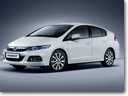
The launch of the 2012 Honda Insight at Frankfurt Motor Show (IAA) 2011 in September reaffirms Honda’s commitment to reducing CO2 emissions.
The 2012 Insight is now even more environmentally friendly producing just 96 g/km* of CO2. Fuel economy and emissions have been improved by means of enhanced aerodynamics and powertrain efficiency. Reduced engine friction , Continuous Variable Transmission (CVT) and better air conditioning, benefiting from a new cold storage system, all contribute to lower fuel consumption.
The Insight also receives a fresh exterior design including a new front grille. The slimmed tail spolier allows for a wider rear glass area, and combining this with a modified tail gate garnish and a reduction in the size of the wiper motor unit results in overall increased rear visibility.
Adjustments have been made to the engine and suspension for an overall improvement to ride comfort and stability. The features within the interior have also been enhanced for a superior quality.
EcoVelocity visitors can be among the first in the world to experience future travel in a hydrogen-powered car, with passenger rides available in the ix35 FCEV. The vehicle is Hyundai’s third-generation FCEV and it demonstrates the company’s work on cutting-edge alternative fuels.
Boasting the same convenience as today’s vehicles powered by traditional internal combustion engines, the ix35 FCEV has a driving range of 360miles (580 Km), a maximum speed of 100 mph and zero-to-62mph time of 12.8 seconds. The fuel cell stack can operate at sub-zero temperatures as low as -25 degrees Celsius, and unlike a combustion-engined car, the ix35’s only emissions are water vapour.
This vehicle moves Hyundai closer to the commercialisation of fuel cell electric vehicles, and the aim is to bring an FCEV to market in the next few years.
Earlier this year, the Hyundai Motor Group signed a memorandum of understanding with four Northern European countries to operate test fleets of FCEVs. Test drives have already been carried out in Korea and Copenhagen.
Hyundai ix35 FCEV
Hyundai UK’s managing director, Tony Whitehorn, commented: “We are extremely excited to be showcasing the ix35 FCEV in the UK for the first time at EcoVelocity. Hyundai is a world leader in the development of hydrogen-powered technology and is constantly researching and developing modes of transportation that use alternative fuels at the Eco-technology research institute in Mabuk, Korea.
“The ultimate goal would be to see zero-emission vehicles on UK roads within the next few years; however, the market and local infrastructure will be the real determinant of this. In the interim, Hyundai is working hard to make internal combustion engines as efficient as possible.”
Also featuring on the Hyundai stand will be the sub-100g/km CO2 i10 Blue and the recently launched i20 Blue. The i10 Blue is powered by a 1.0-litre Kappa three-cylinder petrol engine returning an impressive 67.3mpg combined. The i20 Blue is powered by a 1.4-litre CRDi four-cylinder engine with76.4mpg on a combined cycle. Due to their low emissions, both vehicles offer exemption from VED and the London Congestion Charge.
Visitors will also be able to see Hyundai’s two newest models on the stand – the all-new i40 Tourer, due to go on-sale on September 8 and the Veloster coupe due to launch later this year.
EcoVelocity will run from September 8 -11th at Battersea Power Station and will feature the latest green models, including electric, hybrid and low CO2-emitting cars, as well as providing test drives on a specially-constructed circuit in the shadow of the famous power station.
Diesel-electric hybrid and distinctive ‘high-end’ appeal combine to offer an original view of the world of all-wheel drive vehicles with enhanced driving pleasure: introducing the new Peugeot 508 RXH.
RXH demonstrates the modern, enhanced ‘top-of-the-range’ vision for Peugeot, and has its world premiere at the Frankfurt Motor Show. The style of the 508 RXH and its innovative HYbrid4 drive unit provide features that allow it to combine new levels of driving freedom and pleasure in a form not seen before in its segment:
200 bhp
ZEV – 100% electric mode
Four-wheel drive
CO2 emissions of 109 g/km
After the successful launch of the 508 Saloon and SW in spring 2011, where they were highly acclaimed for their styling elegance, on-the-road presence, high levels of build quality and attention to detail, the 508 RXH further elevates the profile of the entire Peugeot brand reinforcing its technological and environmental leadership.
The 508 RXH has a road presence and specific design that immediately places it in the environment of ‘top-level’ all road vehicles. Unique, refined, higher and wider, it is also distinguished by a singular visual identity, characterised by its distinctive LED daytime running lights that give an impression of having three vertical ‘lion claws’ on each side of its ‘floating’ grille, the combined style of which is all the more striking.
To reinforce its exclusive character, the interior of the 508 RXH benefits from special features with distinctive colours and the use of luxurious materials.
Its unique level of finish and equipment is coherent with the ‘top-of-the-range’ and technological positioning of the vehicle. Richly equipped as standard with electric front seats, head up display, 18″ wheels, panoramic glass roof, dark-tinted acoustic laminated side windows, half leather trim, head up display, latest generation audio and satellite navigation RXH welcomes its occupants with care, refinement and a high level of comfort features.
Equipped with the 2.0 l HDi FAP HYbrid4 powertrain, a world first when featured in the 3008 HYbrid4, the diesel-electric hybrid in the 508 RXH extends driving freedom and pleasure to traverse all roads. With a maximum power of 147 kW (200 bhp), four-wheel drive and a maximum torque of 450 Nm, the 508 RXH has been designed to adapt to all uses, in a wide spectrum of conditions. Furthermore, it opens up new perspectives in the segment, offering a ZEV (100% electric) mode, ideal for driving in town and capable of delivering, in the Combined Drive Cycle, 67.2 mpg with CO2 emissions of 109 g/km.
Following the launch of the 3008 HYbrid4 in the autumn, the Peugeot Marque continues its innovative strategy, combining enhanced driving sensations and advanced environmental developments by extending HYbrid4 technology to other models.
The 508 RXH will be unveiled as a world premiere at the Frankfurt International Motor Show in September 2011, and goes on sale in spring 2012.
2012 Peugeot 508 RHX
Peugeot 508 RXH
The 508 RXH represents the new, up market positioned Peugeot.It sees the launch of an identity that combines the traditional designation of Peugeot models, incorporating the central zero, and three letters that characterise the Marques specialist vehicles. This new model both heads up and extends the 508 range, with an original design silhouette, justifying its exclusive designation – RXH.
A distinctive appeal
The 508 RXH styling has its own distinctive character within the 508 range. Its elegance and style place it immediately in an exclusive world that combines premium-positioning, technology with the ability to experience adventure and promises of a new and unparalleled driving experience.
With a 40 mm wider track and its height increased by 50 mm, this new Peugeot has an individual stance, without sacrificing the characteristics of the 508 range – poise, elegance and status. The use of new, 18” forged wheel rims allowed designers to create a very fine wheel design with an internal diameter increased by 10 mm in comparison with conventional wheel rims. The result is a dynamic and elegantly enhanced body style.
Its adventurous side profile is illustrated through the bodywork extensions in satin stealth grey that envelope the lower body of the car. From the bottom of the front bumper, the line extends over the wheel arches, along the sill panels to meet the rear bumper. The choice of the satin trim finishers contribute to position this estate car within a refined world, as do the satin chrome inserts, with ‘HYbrid4’ badging, that adorns the sill panel, and front and rear protective trims. Fully integrated, they reflect the integrity applied to the cohesive design of the 508 RXH.
This individual personality is more striking at the front end, which has become even more expressive while maintaining the strength of the brand’s new style aesthetics. Accompanying a wider and taller body silhouette, the grille is extended on its lower edge. More strikingly, the new grille accentuates the illusion that it is ‘floating’ within the aperture. To achieve this, designers have taken influence from aviation reference points, notably taking inspiration from aircraft jet engine cowls. The air therefore seems to be well-channelled around the grille, which stands out distinctly from the bonnet line.
Its distinctive style lines give the 508 RXH a very individual visual identity. It is the first Peugeot to use the iconic theme of the ‘claw’ on the front. Its LED daytime running lights illuminate to form three ‘lion claws’, instantly recognisable by day and by night to reinforce the characteristic ‘feline’ appearance of the head lamps. This unique and dynamic signature is complemented with the illumination of seven orange LEDs, from within the LED tube that is an original directional indicator function.
Like the 508 SW, the lines flow together in a harmonious and dynamic manner, falling back to a rear that is well seated on its haunches. The extensive panoramic glass roof has the benefit of being a continuation of the windscreen, with the profiled aluminium roof bars merging with the bodywork to enhance the exclusivity of the car. In this spirit, there are flush surfaces, highlighted by its high build quality finish. At the rear, the lights portray an elegant red band that glows brightly when the lights are on.
Refined interior styling and technology
The styling of the dashboard is centred heavily around the qualities evoked by the exterior design of the vehicle, with continued illustrations of high quality, purity, elegance, etc. Its design supports a multiplex centre console with switchgear that is equipped with technology designed to provide easy control to a host of features.
This purity and simplicity of design and integration is best demonstrated on the HYbrid4 drive mode selection knob and the gear selector lever. It has the design that combines the traditional gear selector lever and a computer mouse called the ‘manettino’ – it fits perfectly into this pure and technological environment.
White backlighting is available throughout the 508 RXH interior (on the instrument panel, displays and the various lighting zones within the car), showing great care in detail and finish. It is this and the attention to detail that illustrates the hallmarks of the latest Peugeot range.
The car’s internal trim and decor have been created in harmony, evoking elegance without ostentation. The use of natural materials and colours, sometimes exclusively, enhance the distinctive character of the 508 RXH. Brushed aluminium and shaded lacquers are used on the dashboard for the first time in this way. A spectacular treatment in keeping with the electricity supplied by HYbrid4 technology, this decor is specified in tinted shades of copper. This theme, again unprecedented, is subtly continued throughout the interior with matching trim stitching in this copper shade. The exterior is also themed with a copper colour theme through the colouring of the lock tumblers in Calern Brown, a shade exclusive to the 508 RXH.
The choice of light-coloured alcantara leather and an innovative laser-printed fabric creates a two-tone upholstery that reinforces the refined image of the car. Depending on preference, the customer may opt for full leather or half-leather upholstery.
A generously-proportioned, high-quality boot
In keeping with the vehicle’s interior, the boot of the 508 RXH has been fitted out with care, using materials that continue to reflect a high level of quality with the materials specified. The aluminium rails and four solid chrome hooks elegantly decorate the functional boot floor, while a loading sill guard in the same material offers protection for the rugged ‘adventurer’ potential of this new Peugeot.
The 508 RXH boot has a capacity of 423 litres beneath the parcel shelf (or 400 dm3 in accordance with the VDA 210 standard). Its rectangular shape, with motorised tailgate and the storage compartments located under the flat floor (11 litres) make it easy to use. It is also possible to compartmentalise the boot using partition bars available as accessories, which attach to the aluminium rails inside the boot.
Finally, the loading volume can be increased easily by folding the 1/3 – 2/3 split rear bench seat in a single movement.
Enhancement through technological equipment
The 508 RXH is offered in a single trim finish, generously-equipped, in accordance with its distinctive high-end positioning. All of the high-tech equipment available either as standard or as an option accentuates its exclusive character: ‘Open and Go’ Stop Start, Colour Head Up Display (that includes the display of the navigation system information), main beam head lamps assistance, automatic electric parking brake, new telematics, JBL hi-fi stereo, Peugeot Connect SOS and Assistance, Xenon lights, etc.
A high level of comfort
Quality of comfort aboard the 508 RXH has been the focus of particular care to ensure that each passenger can benefit from individual treatment. In addition to the generous space given to each seat, notably in the rear with excellent leg room and the panoramic glass roof, dedicated equipment allows everyone to have a high-level of comfort: with quad-zone air conditioning, driver’s seat electric lumbar massage, electrically-adjustable driver and passenger seats with adjustable cushion edge and laminated acoustic rear side windows for road noise reduction, etc.
Benchmark for road handling
The suspension and wheel design also contribute to onboard comfort: with a Pseudo-McPherson type front axle and specific HYbrid4 technology, modular multi-arm rear axle. While cleverly incorporating the hybrid architecture and taking into account a new weight distribution, the Peugeot engineers have retained the recognised dynamic characteristics of the 508 range with an excellent synthesis of suspension comfort, light steering and good handling. The 508 RXH is one of the latest generation of vehicles that expresses driving pleasure, due to its Peugeot chassis ‘genetics’ and full diesel hybrid technology.
HYbrid4 technology: A logical combination
Offering the 508 RXH with a HYbrid4 technology powertrain that combines diesel and electric motors, is a logical choice primarily because it provides a level of functionality that is perfectly matched to the various customer expectations in this segment:
High performance combined with first-rate handling;
Freedom to travel on all roads with confidence, with all-wheel drive;
Ease of use with four unique drive modes available (Zero Emission Vehicle, 4WD, Sport, Auto) and battery charging which is carried out automatically;
Quiet operation, with the ability to drive in the all-electric (ZEV) mode.
The next generation enhances driving emotion
HYbrid4 technology also opens up new perspectives in the segment with a breakthrough in improved fuel consumption – 67.2 mpg and CO2 emissions of less than 109 g/km in the Combined Drive Cycle with a completely silent electric mode with zero emissions; ideal for driving around town efficiently.
In terms of performance, 508 RXH benefits from the efficiency and power of its internal combustion engine combined with the electric motor during acceleration phases for an immediate increase in power (the ‘boost’ function maximises performance and available power in the Sport mode). The maximum combined power can reach 147 kW (200bhp) by combining the 120 kW (163 bhp) from the 2.0 l HDi FAP diesel engine and the ‘on-demand’ peak power of the 27 kW (37 bhp) electric motor. Up to 300 Nm of torque is delivered to the front wheels by the HDi diesel unit and up to 200 Nm to the rear wheels with the electric motor. The maximum combined value however is 450 Nm at lower road speeds, which guarantees excellent traction in most driving conditions including low-grip surfaces like snow and dirt roads, providing customers of this all-wheel drive estate car to comfortably go much further than ever before.
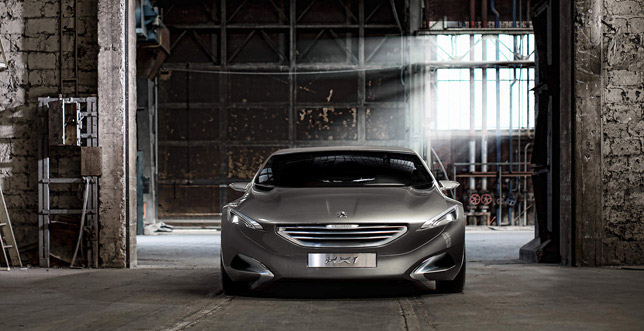
The HX1 Concept Car gives Peugeot the opportunity to once again illustrate the marque’s ability to reflect on new ideas, learn how to evolve and to continually reinvent itself.
The brief for this concept was to produce a vehicle for up to six people, offering strong styling, that is sporty and efficient and at the same time giving a unique driving sensation.
To achieve this, the HX1 transcends the notions of adaptability in all areas, with its extreme aerodynamics (‘flaps’ are deployed to optimise aero efficiency according to vehicle speed), its tapered, low MPV architecture and its HYbrid4 power plant integrating ‘plug-in’ technology.
A unique and transformable concept, aiming for maximum efficiency
Adaptive
The HX1 is a prospective concept designed to help envisage future solutions in numerous fields: architecture, aerodynamics, modularity, equipment, interior materials and the environment, not forgetting, of course, powerplants. These considerations have led to very strong bias that breaks from the norm and guided by a theme: ‘Metamorphosis’, to give the vehicle the capability to adapt itself to its environment, to life’s conditions, driving conditions, etc. and at any time.
Architecture
To meet specifications, the HX1 has been designed with an MPV architecture with unique dimensions: low (1.373 m) and wide (1.990 m overall) and with a length of 4.954 m.
This allows for a volume suited to pure, elegant and sleek lines that delivers a low Cd figure for maximum overall efficiency.
Four reverse-opening ‘half-scissor’ doors can be opened wide for ease of access to the HX1 passenger compartment. These kinematics have also been researched in terms of practicality and to allow accessibility under all circumstances.
The passenger compartment is structured so as to offer maximum comfort for the two passengers in the rear row and maximum sensation for the occupants of the first row. If required, two retractable seats can be configured in a centre row due to a clever system of “pull-out seats”, based on the same principle used on the HR1 Concept Car (First shown at the 2010 Paris Motor Show); these additional seats are integrated behind the front seats.
Peugeot Hx1 Concept
Aerodynamics
Designers have taken aerodynamics to the extreme with HX1. When stationary and at low speeds the HX1’s styling makes it appear sculpted from a solid form as the moving parts have been adapted to optimise air flow and to enhance the car’s environmental performance. The seven ‘spokes’ in each wheel rim spike, fashioned like a turbine blade, open to create a flat disc surface. At the same time, a spoiler and two side skirts located at the top of the tailgate are deployed above 62.1mph. When moving, the HX1 therefore adapts itself ‘physically’ to its environment.
The vehicle has a Cd of 0.28; an outstanding value for a vehicle with an MPV silhouette.
All of these aerodynamic devices have evolved thanks to the free rein given to the immense creativity of Stylists.
Styling not restricted by norms
Futuristic exterior styling, sculpted through aerodynamics
The HX1 is a vehicle that is pure in style; sculptured, upmarket and exuding dynamism and exclusivity. Aerodynamic, its sleek, elegant and fluid lines seem to have been tailored by the wind itself. They subtly underline the athletic, even muscular, character of the vehicle. Each surface is sculpted with precision, each detail is crafted intricately: mirrors with integral rear view cameras, brushed aluminium window surrounds, millimetre-perfect panel gaps and flush fittings, etc.
At the front, the HX1 enhances Peugeot’s latest design identity. The theme of a unique ‘floating’ front grille, which appears ‘detached’ from the bodywork has been designed to harmonise with the car’s tapered lines. The precisely-carved feline head lamps give it an appearance that is evocative of the Marque’s badge and history: the lion, proudly displayed on the front of the bonnet. This look is refined by an LED lighting signature, easily recognisable in the daytime or at night. This visual signature is also found in the rear lights, the boomerang shape of which follows the lines of the rear design.
A high-tech and range-topping interior that refines the ‘Motion & Emotion’ brand signature
The pure and futuristic design of the dashboard and seats, the materials used (floor and fittings in natural oak with inlaid fibre optics, brushed metal, leather, etc.), existing equipment (digital displays, touch-sensitive screens, etc.), designed lighting (LED spotlights, strips backlit by the natural lighting on the headlining, etc.); all of these contribute to create an environment where modernity meets refinement, natural materials meet technology, and so on. This all symbolises the Marque’s vision of an upmarket, range-topping interior.
The passenger compartment reflects the Peugeot signature:
‘Emotion’
The front has been designed to provide the driver with maximum sensation. The environment is very sensory and high-tech, with its use of brushed metal and digital components. Here again, the vehicle will adapt itself in the real life situation of the driver. Indeed, the steering column can be moved backwards and forwards electrically in line with the seat adjustment for complete ease of access. The steering wheel movement loads up automatically when the car is put into ‘cruising’ mode for enhanced driver stability and comfort. Finally, the central multifunctional display can be adjusted, leaving only the essential information visible on its edge.
The instrument panel is designed to create the experience of having complete control over the vehicle, like the ‘head-up display’ which presents all of the information to the driver without them having to take their eyes off the road ahead.
“Motion”
At the rear, maximum attention is dedicated to ‘added value’ of features and passenger comfort. The environment and the materials used are bright and natural, a mixture of folded and stitched leather. The two sculpted rear seats recline, a set of controls are grouped in the centre armrest. The centre console includes a minibar and a coffee machine, a discreet acknowledgement to the extensive history of Peugeot products. This console is adorned with white Carrare marble, specially milled ‘by hand’, which contributes to the exclusive and modern environment.
HYbrid4 ‘plug-in’ power plant: even better suited to its surroundings
The HX1 integrates HYbrid4 technology, an innovative modular architecture that figures in the Peugeot range on the 3008 HYbrid4, the first diesel hybrid in the world; technology which will also be present on the 508 RXH in 2012.
The principle behind HYbrid4 is clever, yet simple: With an internal combustion diesel engine at the front (powering the front wheels) and an electric motor to the rear (powering the rear wheels), this technology enables all four wheels to be driven when the engine and motor work together, for increased safety and traction in extreme conditions. It also enables the vehicle to be driven at low speeds powered just by the electric motor in ‘Zero Emissions Vehicle’ mode.
Under the bonnet of the HX1 the engine is a 204 bhp, 2.2 litre HDi diesel, linked to an automatic
6-speed gearbox; the same powertrain as that used on the 508’s range-topping GT version. Coupled with a 70 kW (95 bhp) electric motor, the combined output can develop a potential 220 kW (299 bhp).
However, one of Peugeot’s priorities is to maintain its position as environmental leader in the years to come. The HX1 therefore takes us one step further. It is equipped with ‘plug-in’ functionality: the lithium-ion batteries can be recharged by ‘plugging in’ the vehicle to a standard 240V mains electric socket. This means that it can have a longer ‘ZEV’ range, i.e.: it can cover up to 18.6 miles in all-electric drive mode. The HX1 thus obtains a combined fuel consumption of 88.2mpg with CO2 emissions of 83 g/km.
Luxury class grandeur meets compact class efficiency in the Audi A8 hybrid, which this week has been given the green light for series production beginning in 2012, and will reach the UK late next year. Employing a four-cylinder petrol engine for the first time in an Audi model at this level, the Vorsprung durch Technik brand’s latest paragon of economy will offer performance befitting its 245PS and 480Nm outputs, despite delivering more uncharacteristic sub-148g/km CO2 output and all-electric, completely local emissions-free running at speeds of up to 62mph.
The Audi flagship model is designed as a highly efficient parallel hybrid. Its 2.0-litre TFSI engine, which has been modified in some areas, generates an output of 211PS and makes a 350 Nm torque peak available between 1,500 and 4,200 rpm. The combustion engine works together with a disc-shaped electric motor which generates 40 kW (54 PS) and 210 Nm.
The permanent magnet synchronous motor is mounted in the space usually occupied by the torque converter in front of the modified eight-speed tiptronic transmission. A multi-plate clutch that operates in an oil bath connects or disconnects the electric motor and the TFSI engine, and does so ultra-precisely and gently in all situations. The smooth and fast-shifting hybrid transmission guides the torque to the front wheels, and its wide gear spread contributes to the efficiency of the Audi A8 hybrid.
2012 Audi A8 Hybrid
The short-term system output of 245PS and the system torque of 480 Nm serve to provide impressively strong response. According to the provisional figures generated by early-stage tests, the Audi A8 hybrid will be capable of reaching 62mph from rest in 7.7 seconds and continuing to a top speed of 146mph while returning in excess of 44mpg in the EU combined cycle test, along with CO2 emissions of less than 148 g/km.
The Audi A8 hybrid can drive at up to 62mph purely on electric power and has a range of up to 1.86 miles at a constant 37mph. This gives the driver the choice of three modes: The ‘EV’ setting gives priority to the electric drive, while the ‘D’ option efficiently controls both the engine and the electric motor. The ‘S’ mode and the tiptronic gate place the emphasis on optimal acceleration. The hybrid saloon has five operating states: with the TFSI engine alone, with electric drive only or in hybrid mode; recuperation and boosting are also possible. Two displays show the driver all operating modes in detail.
The lithium-ion battery, which weighs 36.7 kilograms, is located in a crash-proof area in the boot. It provides 1.3 kWh of nominal energy and up to 40 kW of power. Two different methods are used to air-cool the battery, depending on need: air is either blown from the passenger compartment by a fan or via a separate cooling circuit coupled to the automatic air conditioning system. The battery is thus kept within the temperature window required for it to perform to its full potential over a wide range. The electric motor and the compact power electronics which serve as a controller between the electric motor and the battery are water-cooled.
In visual terms, the Audi A8 hybrid is distinguishable by subtle details such as its 18-inch or optional 19-inch ten spoke alloy wheels which resemble turbine blades, hybrid badges and an exclusive Arctic Silver paint finish. The metallic paint finish is a standard feature, as are three-zone automatic air conditioning, LED headlights and a BOSE sound system.
Thanks to the brand’s ultra-lightweight construction expertise, the Audi A8 hybrid will be one of the lightest saloons in its category. Its ASF (Audi Space Frame) body is made almost entirely of aluminium, with ultra-high-strength steel used only for the B –pillars to optimise rigidity. Weighing just 231 kilograms, it is roughly 40 per cent lighter than a comparable steel construction.
Citroen and GQ have revealed a unique and exciting automotive project – the GQbyCITROEN.
The GQbyCITROEN is a concept car born through a unique partnership between the UK’s market-leading quality men’s monthly and a team of Citroen designers, collaborating to create the ultimate gentleman’s drive. This is the first time a British magazine has collaborated with a car company in this way.
Responding to a brief by GQ’s editor, Dylan Jones, Citroen’s team, headed by British designer – and the man responsible for the new Citroen DS3 – Mark Lloyd, took a new look at the GT theme and integrated it with a typical Citroen design approach bringing GQbyCITROEN from design outline to concept reality.
GQbyCITROEN combines classically sophisticated features and contemporary styling with a sculpted front end, rounded rear, strong body contours and sleek concave rear windscreen – a signature Citroen design.
The car’s cabin is accessed by rear coach doors and reveals a spacious, comfortable and futuristic cabin. Completing the car’s bespoke styling, the interior detailing and upholstery selections were provided by Patrick Grant, the Creative Director of prestigious Savile Row tailors, E.Tautz, who commented: “Savile Row is all about balance and Tautz’s simple military inspired interior is the perfect counterpoint to the Gallic flair of the exterior.”
Dylan Jones commented: “I wanted something practical, something cool, and something idiosyncratic – i.e. something surprising that didn’t just look like a concept car. The GQ car needed to have the ‘want’ factor, but it also needed to look, feel and ‘drive’ like the sort of car no sane man could choose to ignore. We think it looks very very special.”
Dynamic performance and environmental responsibility were also key requirements for the project. The GQbyCITROEN concept car is powered by a plug-in Hybrid with a 1,598cc, 4-cylinder direct injection petrol engine offering a sporty 0-60mph time of just 4.5seconds, an electronically limited top speed of 155mph and CO2 emissions of just 80g/km.
Mark Lloyd, Chief Designer of Citroen’s International Projects added: “Where this car works so well with GQ is that it fits with the current attitudes of conspicuous consumption. It is understated rather than in-your-face and sleek rather than too macho. With the skills of a Savile Row tailor on the car’s interior we have also achieved that bespoke, fitted feel, both inside and out.
“For me, the car that has always represented the pinnacle of automotive excellence and refinement is the GT – the Grand Tourer. It is not the all-out sports car, rather it is something gentlemanly, it has performance and it is for travelling, not racing. We wanted to create something that, like GQ, was aspirational, but also retained the classic automotive ideals. We didn’t want a car for the mass market. We wanted a car for GQ.’”
Toyota’s RAV4 gets a fresh new look for 2010, with a redesign that blends contemporary urban style with the durability for which Europe’s original recreational compact SUV is renowned.
Unveiled this week at the Geneva motor show, the 2010 RAV4 has an all-new front-end treatment that not only looks good, but is also more aerodynamically efficient. A wider grille, with horizontal bars and chrome accents displays the new Toyota family look that has been established on the latest Avensis, Verso and Auris models. The grille is flanked by new headlights, with projector-type low beam lamps. (more…)
 While the all-new Kia Rio five-door hatchback is generating positive media coverage around the world and arriving in dealer showrooms across Europe this month, Kia is celebrating the world premiere of its new Rio three-door model at the Frankfurt Motor Show.


 The new Toyota Avensis makes its world debut at the 2011 Frankfurt motor show, a substantially revised model that builds on the spaciousness, practicality and fuel efficiency of the current, third-generation car. It features a bolder, more refined exterior design and improvements to the finish quality, comfort and NVH in the cabin. Driving dynamics have been improved and a new grade structure (UK details to be announced later) will provide even more value for money.


 320 kW of power and a peak torque of 3,200 Nm (2,360 lb-ft) from four electric wheel hub motors point the way to the powerful, efficient and ecofriendly luxury sedan of the future. Based on the latest Mercedes E-Class, BRABUS ZERO EMISSION, a business division of BRABUS, has developed the fully operational BRABUS High Performance 4WD Full Electric concept car. The all-wheel-drive vehicle, which celebrates its world debut at the 2011 IAA, accelerates from 0 – 100 km/h (62 mph) in just 6.9 seconds and reaches a top speed of 220 km/h (137 mph) – and all without emitting as much as a single gram of CO2. A powerful 56-kWh lithium-ion battery pack provides an operating range of up to 350 kilometers (217 miles). There are plans for a small-series production run of this unique automobile.


 Citroеn will present a brand new, highly innovative concept vehicle at this year’s Frankfurt Motor Show. Called Tubik, this eye-catching model is a high-tech executive shuttle based on one key idea – travel should be fun.


 The launch of the 2012 Honda Insight at Frankfurt Motor Show (IAA) 2011 in September reaffirms Honda’s commitment to reducing CO2 emissions.

 EcoVelocity visitors can be among the first in the world to experience future travel in a hydrogen-powered car, with passenger rides available in the ix35 FCEV. The vehicle is Hyundai’s third-generation FCEV and it demonstrates the company’s work on cutting-edge alternative fuels.

 Diesel-electric hybrid and distinctive ‘high-end’ appeal combine to offer an original view of the world of all-wheel drive vehicles with enhanced driving pleasure: introducing the new Peugeot 508 RXH.




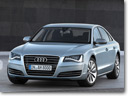 Luxury class grandeur meets compact class efficiency in the Audi A8 hybrid, which this week has been given the green light for series production beginning in 2012, and will reach the UK late next year. Employing a four-cylinder petrol engine for the first time in an Audi model at this level, the Vorsprung durch Technik brand’s latest paragon of economy will offer performance befitting its 245PS and 480Nm outputs, despite delivering more uncharacteristic sub-148g/km CO2 output and all-electric, completely local emissions-free running at speeds of up to 62mph.


 Citroen and GQ have revealed a unique and exciting automotive project – the GQbyCITROEN.


 Toyota’s RAV4 gets a fresh new look for 2010, with a redesign that blends contemporary urban style with the durability for which Europe’s original recreational compact SUV is renowned.