Citroen have decided to add a little “funk” to the functional Picasso C3 so welcome to the Picasso C3 Code special edition. Underneath it is basically a HDi 90 manual VTR+ trim with added spice.
Besides air conditioning, curtain airbags and cruise control which naturally accompany the VTR+, the Code has some visual touches such as :
Chrome lower bumper inserts
Black painted door handles with chrome inserts
Obsidian Black painted front & rear bumpers
Obsidian Black door mirrors
Longitudinal roof bars
Shiny black vent surrounds
Most distinguishing however are the 17 inch “Clover” alloy wheels which come in Polar White or Cherry Red, depending on the overall colour scheme of the C3. The body colours are Polar White, Thorium Grey, Cherry Red and Belle Ile Blue. The Polar White wheels are available with the latter two while the Cherry Red wheels come with the former two body colours.
The engine is as efficient as ever with 61.4mpg combined and with its sub-120g/km CO2 emissions is eligible for free VED in the first year of usage.
The overall coast of the Code stands at £15,695 which is just £300 more than the VTR+ trimline.
The first Chevrolet Volt has made its debut this month in China at the HaiTong Port in Shanghai. The car is part of a 10-vehicle General Motors demonstration fleet which is going to be presented in Beijing, Tianjin and Shanghai. All of the exhibited electric vehicles will give customers the chance to experience an industry-leading electric vehicle in daily use. Moreover GM will use information taken from the test drives and charging experience in order to understand better the application of electric vehicles in China. Therefore the company will provide consumers with hands on exposure to the extended range vehicle concept. This is very important step that GM will undertake to prepare for an expansion of offerings of vehicles powered by electricity. In addition GM will also work closely with government and industry officials. The aim is to help develop a public vehicle charging infrastructure.
The award-winning Volt will be sold through thirteen especially selected dealerships in eight substantial cities in the country. To conquer one of the first global markets such as China, Volt provides drivers with no compromises in performance or driving range, having in mind that it is the first extended range electric vehicle. Moreover Volt provides up to 80 kilometers of electric driving. And then after battery consumption it can drive another 490 kilometers using an on-board engine generator! Therefore there will be no fear of being stranded by a spent battery. The car is the best electric vehicle solution for China nowadays, because it is not limited by range or a public charging. More importantly the Volt is also very economical to operate. For instance when it is charged during off-peak hours it costs less than one-tenth of the amount of driving on petrol vehicle alone.
Volt models for retail sale, priced at RMB 498,000, will arrive in early 2012 at thirteen selected dealerships in Beijing, Shanghai, Hangzhou, Suzhou, Wuxi, Guangzhou, Shenzhen and Foshan.
Bridge of Weir Leather and Fisker Automotive are bringing together the combination of low carbon leather and a sustainable luxury! The vehicle is the world’s first luxury, range-extended electric car – called the Fisker Karma. All this comes in a formidable package. Top Gear has already put a high evaluation on it giving it the title “Luxury Car of the Year”.
The quality of the interior is set as high as possible: the bulk of the Fisker Karma’s luxurious interior material on the EcoStandard™ and EcoSport™ models comes from Bridge of Weir, with seats, steering, dash, door-casings and the centre-console trim all wrapped in the Scottish company’s locally produced Low Carbon Leather™.
Not only is this car powerful, beautiful, exotic, exciting and fun-to-drive car, but also the Karma drives its wheels with electricity. Not a surprise it got the award! The success is due to the mix of high-octane, internal combustion engine the Low Carbon Leather™ interior! This was definitely the factor that secured Karma’s title the 2011 Luxury Car of the Year.
Fisker Karma Interior (Front)
To go further into details, Bridge of Weir boasts the most environmentally friendly leather in the world. Most of the world’s leather is sourced from South America several thousand kilometers away. However, the Bridge of Weir’s hides from abattoir to tannery traveled just 96 kilometers and it is one of not so many industries that have thermal energy plant converting waste to energy.
The award-winning automobile, similarly to the rest of the Fisker range, can accelerate from 0-100 km/h in only 5.9 seconds. Yet, it can also achieve the equivalent of more than 100 miles per gallon. Moreover it has just 83 g/km CO2 emissions in real world driving on an annual basis. The electric car is now on-sale across Europe, priced from around €85,500. And don’t worry – the price of the Low Carbon Leather™ is included.
Kia Motors is proud to introduce today Korea’s first electric vehicle today – the brand new Kia Ray EV! This zero-emissions city car has lively performance and a range of up to 139 km (86 miles) on a single charge. The vehicle is produced exclusively for the Korean market. The new electric car is a close relative of Kia’s 1.0-liter gasoline powered Ray CUV, which went on sale in Korea last month. The front-wheel drive Ray EV is powered by a 50kW electric motor and a high-capacity 16.4 kWh lithium ion polymer battery pack that is engineered for a 10-year life cycle and skillfully packaged under the rear seat and cabin floor. The electric motor ensures responsive performance with torque of 167 Nm (123 lb-ft) (an increase of 77%). Furthermore the acceleration from 0-100 km/h of this model is 15.9 seconds, while top speed is 130 km/h (81 mph). If you buy this car you will need six hours of recharging time and you have to use a 220V household supply. But if you are in a hurry, then there is a fast-charge mode, which requires only 25 minutes.
Furthermore the Ray EV’s automatic transmission offers the driver a choice of two modes while in ‘D’ drive. Namely they are ‘E’ (or ‘eco’) mode, which optimizes the delivery of the motor’s torque to achieve minimum battery consumption and maximum driving range; and the ‘B’ (or ‘brake’) mode – which can be selected when driving downhill on highways and on mountain roads to maximize braking power.
2012 KIA Ray EV
The exterior of Kia Ray EV looks very similar to Ray CUV, with the following differences: a flap in the front radiator grille which covers an electricity inlet for a 220V supply for the slow recharge mode; another inlet (for the fast recharge mode) fitted in the same location as the fuel intake of the regular models; special ‘Zero Emissions EV’ decals on each front door; super-smooth 14-inch alloy wheels which improve aerodynamic performance by minimizing drag. On the other hand the interior of the new electric vehicle includes a unique instrument cluster, displaying electric motor operation, battery status and distance to recharge. It is also equipped with the first-ever EV-specific navigation system. This system features a 7-inch screen and provides important information for EV drivers. For example, it can show the nearest locations of the slow/fast recharging stations. Moreover the display shows a circular shaped area in which the model can travel with its current level of battery power, so that drivers can see which destinations are reachable without a recharge. In Korea there are 500 slow/fast recharge stations, but the government is taking steps to increase this number to 3100 by the end of 2012.
In addition there are further innovations included in the design of this car. Firstly the electric motor achieves 93% efficiency, which is the best in its segment! Secondly, the lithium ion polymer battery’s cell is optimized and highly integrated, which has enabled its weight to be reduced by 13% and its energy density to be increased by 15% compared to competitors’ systems. Next, the on-board charger, current inverter, high-low voltage converter and EV-specific VCU (vehicle control unit) feature advances over previous equipment. Moreover Ray EV is also equipped with a new type of regenerative braking system. This unique system features an Active Hydraulic Booster that utilizes the electric motor, instead of the gasoline engine in the regular model. The goal is to create hydraulic pressure for the brake system. Hence, the result is consistent brake pedal force throughout a wide variety of driving conditions and the ability to harvest excess energy and use it to recharge the car’s battery. Unlike regular gasoline vehicles, Ray EV makes no engine noise. Therefore to prevent accidents, Kia has fitted Ray EV with a VESS (Virtual Engine Sound System). When driven at speeds below 20 km/h (12 mph) this system delivers a sound of recorded gasoline engine noises, which are also produced whenever the car is backing up.
Kia has thought for the safety and security of the passenger and the driver too. This has been achieved with six air-bags and electronic stability features – VDC (Vehicle Dynamics Control) and HAC (Hill Assist Control, to prevent roll-back) coming as a standard.
Furthermore Kia is planning to manufacture 2,500 units of the Ray EV in the forthcoming 2012. Firstly they will be provided to government departments and public offices as part of Kia’s long-term real-world research and development program to provide environmentally friendly transport to Kia customers around the world during the next decade.
Kia Ray EV – Technical Specifications DIMENSIONS
Length 3593 mm Width 1595 mm
Height 1700 mm Wheelbase 2520 mm
Kerb weight 1185 kg
POWERTRAIN
Electric motor 50 kW
Max power 68 ps Max torque 167 Nm (17.0 g/km)
BATTERY
Power 330V Lithium ion polymer
Capacity 16.4 kWh
Charge time 6.0 hrs (slow) / 25 minutes (fast)
PERFORMANCE
0-to-100 kph 15.9 sec (to 62 mph)
Max speed 130 kph (81 mph)
Max range 139 km (86 miles)
HyundaiMotor America has just announced the pricing for the 2012MY Sonata Hybrid, which is featuring the Hybrid Blue Drive technology. The 2012MY Sonata Hybrid will come equipped with standard Blue Link® telematics. The latter provides a host of features accessible through multiple applications. For example you can use it in the car, on your smartphone, or over the web. In addition new for 2012MY is an optional Leather Package which includes leather seating surfaces, leather steering wheel and shift knob, heated front and rear seats, and auto-dimming rearview mirror with HomeLink® and compass. More importantly all 2012MY Sonata Hybrid models deliver a segment-leading 40-mpg highway fuel economy rating, which is higher than any other mid-size sedan, hybrid or non-hybrid! In details, in city driving, Sonata Hybrid delivers 35 mpg, yielding a 37 mpg combined city/highway rating from the EPA.
2012 HYUNDAI SONATA HYBRID
The Sonata Hybrid MSRP costs $25 850. In this price is excluded $760 freight cost, but includes the following standard equipment: 2.4L Atkinson Cycle 4-cylinder hybrid engine, Hybrid starter-generator (HSG), permanent magnet high-power density motor, 270V lithium polymer battery, 6-speed automatic transmission w/ SHIFTRONIC®, electronic stability control with traction control system, ABS with electronic brake-force distribution and brake assist, front active head restraints, front and front seat side and curtain airbags, 16-inch Eco-spoke alloy wheels, headlight LED accents, LED taillights, front fog lights, side mirror-mounted turn signal indicators, tinted chrome front grille, bodyside molding tinted chrome inserts, chrome exterior door handles, proximity entry with push-button start, remote keyless entry, alarm and immobilizer, electroluminescent instrument cluster (Supervision), 4.2-inch TFT multi-function trip computer with hybrid technology display, Steering Wheel Mounted Cruise, Audio & Phone Controls, dual automatic temperature control, floor console mounted rear vents, power driver seat with lumbar support, chrome interior door handles, leatherette interior door panel inserts, tilt and telescopic steering wheel with cruise and audio controls, metalgrain interior accents, AM/FM/SiriusXM/CD/MP3 with iPod®/USB & Aux input jacks, power windows, locks, heated mirrors, integrated Bluetooth® with phonebook transfer, Hyundai Blue Link Telematics system, automatic light control, Virtual Engine Sound System (VESS), solar control glass.
The optional Leather Package costs the additional $1500 and includes leather seating surfaces, heated front seats and rear seat bottom cushions, leather-wrapped steering wheel and shift knob, auto-dimming rearview mirror with HomeLink® and compass.
And if you add the amount of $5500, you will get the Unlimited Package which includes the Leather Package plus the additional extras such as panoramic sunroof with tilt and slide, 17-inch Eco-spoke alloy wheels with unique finish, navigation system with high-resolution touch-screen display, rear backup camera, Infinity® premium speakers, subwoofer and external amplifier (400-watt), HD Radio® Technology with multicasting, SiriusXM, NavTraffic, NavWeather and Sports & Stocks w/ 90-Day Trial, HVAC multi-mode button, Premium door sill plates, Glossy black door surround and outside mirror housing.
Today we have very special and „ecological“ news from one of the most famous luxury brands. Mercedes-Benz launches hybrid offensive, starting with a world’s most economical luxury-class model. Mercedes-Benz is beginning a new chapter in its brand’s core segment, while at the same time making new standards for luxury-class business vehicles. Firstly, there is the E 300 BlueTEC HYBRID, which will be available as a Saloon and Estate. More importantly it impresses with new record values concerning the efficiency. Its consumption levels are 4.2 l/100 km, thank to the impressive performance of the 4-cylinder diesel engine. The engine has 150 kW (204 hp) and 500 Nm (369 lb-ft). In addition it works along with an electric motor producing 20 kW and 250 Nm. Hence this results in a coherent overall concept: the E 300 BlueTEC HYBRID – the most economical luxury-class vehicle in the world!
On the other hand the V6-cylinder petrol engine in the E 400 HYBRID produces 225 kW (306 hp) and 370 Nm (273 lb-ft). Additionally it is enhanced by a further 20 kW and 250 Nm from the electric motor. The consumption figures based on the American CAFE standard are: City 24 mpg, Highway 31 mpg, Combined 27 mpg.
As usual and having in mind that the new vehicles are Mercedes-Benz brand, they offer great comfort for both passengers and driver. There is enough space in terms of the interior or luggage compartment. Moreover there are additional benefits to the intelligent modular hybrid concept, which represents a comprehensive enhancement of the Mercedes-Benz S 400 HYBRID. It has advanced to the position of clear market leader since 2009. In this hybrid model no changes to the vehicle body are required, and the hybrid module is both flexible and modular. Hence, this allows its use in other model series, and in addition to diesel and petrol variants there will also be right-hand drive variants.
The new hybrid models debut at the Detroit Motor Show, which will take place between 14th and 22d of January 2012. Their appearance on the market will be over the course of the year. An important detail here is that the E 300 BlueTEC HYBRID is initially planned to be launched on the European market, while the E 400 HYBRID will be made available on the American market first, followed by other countries such as Japan and China later.
E 300 BlueTEC HYBRID at a glance:
Compact, intelligent and modular hybrid concept: no changes to the body of the base vehicle are necessary
Also available as an Estate
Space, safety and comfort remain unchanged
No compromises in terms of space, safety and comfort
Significant increase in comfort with start/stop operation; noiseless start, complete climatic comfort
Top marks for consumption in the luxury-class business vehicle segment: 4.2 litres/100 km, 109 g CO2/km
Part of the intelligent downsizing strategy of Mercedes-Benz: increase in the engine output of the E 300 BlueTEC HYBRID with 150 kW + 20 kW electric motor/500 Nm + 250 Nm, compared with the E 250 CDI (150 kW/500 Nm), positioning it at the same level as the E 300 CDI (170 kW/540 Nm)
Fuel savings of around 15 percent compared with the E 250 CDI – even in actual road traffic conditions
Impressive hybrid driving experience (start/stop function, regenerative braking, boost effect, purely electric motoring and “sailing” function)
2012 Mercedes-Benz E 300 BlueTEC HYBRID
E 400 HYBRID at a glance:
Compact, intelligent and modular hybrid concept: no changes to the body of the base vehicle are necessary
No compromises in terms of space, safety and comfort
Significant increase in comfort with start/stop operation; noiseless start, complete climatic comfort
Consumption combined (CAFE): 27 mpg
Part of the intelligent downsizing strategy of Mercedes-Benz: increase in the engine output of the E 400 HYBRID by some 20 kW and 250 Nm thanks to the electric motor
Impressive hybrid driving experience (start/stop function, regenerative braking, boost effect, purely electric motoring and “sailing” function)
The finalist at the 2012 North American Truck of the Year – namely the all-new 2012 Honda CR-V is going to make a debut today at all United States dealers. More importantly the manufacturer has suggested a retail price (MSRP) ranging from $22,295 for the value-oriented CR-V LX 2WD to $28,295 for the luxurious CR-V EX-L AWD, plus a destination and handling charge of $810 per vehicle.
Undeniably the CR-V keeps the great pricing, adding between $400 and $1000 worth of standard features and technologies to each trim. And compared to the last model it replaces the increase of the price is maximum $181 and this is for the vehicle loaded with feature content. It is really great news, almost unbelievable, that the models equipped with navigation has a decrease of $300 in the price (compared to the models from 2011).
2012 CR-V’s have exciting upgrades. Not only it has this excellent value, but also it has new features, improved fuel economy and enhanced utility. To be more precise the all-new CR-V features more efficient engine design with improved horsepower and torque. Furthermore an innovation that has been added in the model is the all-new Real Time All-Wheel-Drive (AWD) with Intelligent Control System™. All CR-Vs are powered by a 2.4-liter i-VTEC 4-cylinder engine with 185 horsepower (136 kw) and 163 lb-ft (221 Nm) of torque. And all this comes with the standard 5-speed automatic transmission. Another highlight is the EPA: the estimated fuel economy is rated at 23/31/26 mpg city/highway/combined (2WD) (an increase of +2/+3/+2 mpg compared to the 2011 CR-V), and a compact SUV-class leading 22/30/25 mpg city/highway/combined (AWD) (an increase of +1/+3/+2 mpg compared to the 2011 CR-V).
2012 Honda CR-V
Brand new for 2012 features is the Easy Fold-Down 60/40 Split Rear Seat. Moreover it has a lower cargo floor and a range of standard technology features. Additional high-tech features are also included as a standard on all models: For example they will include a Bluetooth® HandsFreeLink® phone interface, a full-color intelligent Multi-Information Display (i-MID) and a multi-angle rearview camera with guidelines. The absolute innovation for Honda is the SMS text messaging function. This function can read received texts from compatible cell phones aloud over the audio system. Speaking about the “firsts”, there has also been included an introduction of standard Pandora® Internet Radio interface, which is compatible with the Apple® iPhone®. It works with the vehicle’s audio controls and intelligent Multi-Information Display (i-MID). Furthermore a new addition is the Rear Entertainment System (RES).
2012 Honda CR-V
To acknowledge the achievements of the model we have to remember that the previous-generation CR-V was recognized as a “Top Recommended Vehicle” and received “Best Retained Value SUV under $25,000” by Edmunds.com. Additionally it was also named Top compact crossover SUV in dependability by J.D. Power and Associates. With the new CR-V we have a continuation of this winning formula: the model has already earned Kelley Blue Book Best Resale Value award for the 2012 model year.
The 2012 Honda CR-V is covered by a 3-year/36,000-mile Limited Vehicle Warranty, a 5-year/60,000-mile Powertrain Limited Warranty, and a 5-year/unlimited-mile Corrosion Limited Warranty.
The CR-V is sold globally in more than 160 countries throughout North America, South America, Europe, Asia, Australia and Africa. In the U.S., CR-Vs are manufactured at the Honda of America Manufacturing, Inc., East Liberty Auto Plant in Ohio from domestic and globally sourced parts.
The new 2012 Fiat Panda is a continuation of an invention has its 31-year successful history. Now the third generation of the Panda model springs forth from this heritage. It offers more quality in terms of space, comfort, functionality, technology and safety features. In addition it combines the best features of the first- and second-generation cars. The car will definitely bring satisfaction to customers who want to combine the practical handling of a city car with the space and comfort of a five-door compact car. All this is further improved by the modern and harmonious appearance of the Panda.
Now the third generation Panda has enhanced each of its elements both functionally and with attention to every detail. The result is of great overall harmony, due to applying signs consistent with one another that increase its usability and pleasing design values. First of all, the new car makes maximum use of the interior space, rationalising the dimensions. Nevertheless the car continues to be a very compact one but with slight grow with a few centimetres. This will unquestioningly ensure the attainment of the highest standards of safety and improve the generous level of passenger room.
We are speaking here about a length of 365 centimetres, a width of 164 and a height of 155, and with five doors. In this way the new Panda can comfortably accommodate up to five people. Moreover it has one of the most spacious boots in its segment: 225 litres which become 260 with the sliding rear seat in the fully forward position up to the point of reaching 870 litres with the backrest of the rear seats folded down. The new Fiat Panda conveys freshness and appeal in addition to a strong “Italian style” that makes it instantly recognisable from the very first glance: the slightly convex bonnet joins with the elegant horizontal grille and the new front headlamps with are made this time with rounded shape. Additionally to the interior has been added few graphic patterns which are decorating the door panels and roof of the car.
The Fiat Panda offers maximum freedom of use with its roomy, functional and comfortable passenger compartment that is in no way inferior to that of cars of a higher class. Besides, flexibility has always been one of the model’s strong points, as the new dashboard, various seat configurations and large number of storage compartments. First of all, the new dashboard is designed as a practical multipurpose shell containing a roomy storage “pocket”. Additionally there is a classic glovebox stored in the lower part of the dashboard. To be more precise the dashboard is wrapped up in a colourful frame, radio and main controls. Furthermore is something new around the seats, which make the model more flexible. Firstly, the driver’s seat is available with height adjustment, whereas the front passenger seat can be fitted with a backrest that folds down to form a table. Next, the rear seat is available in the standard 2-seater version with fold-down split backrest or, upon request, in the configurations: 2 seats sliding longitudinally with fold-down 50/50 split backrest, 3 seats with fold-down backrest and 3 seats with fold-down 60/40 split backrest.
The new Panda includes innovative features that simplify and improve life on-board accessible to everyone. Specifically, the vehicle offers sophisticated technological solutions: the “Low Speed Collision Mitigation” braking system and the “Blue&Me TomTom 2 LIVE” navigation system. Furthermore it also includes features such as Start&Stop, Gear Shift Indicator (GSI), ecoDrive and ECO mode of the TwinAir Turbo engine.
What has to be highlighted in this new Panda are the brand new two-cylinder engines equipped with the Start&Stop system as standard: 85 HP 0.9 TwinAir Turbo, named “International Engine of the Year 2011”, and the brand new 65 HP 0.9 aspirated TwinAir, adopted for the first time. The renewed 69 HP 1.2 Fire petrol engine and the 75 HP 1.3 Multijet II, also with Start&Stop supplied standard, complete the range of engines.
To go further into details, the 85 HP 0.9 TwinAir Turbo is the first of a new family of two-cylinder engines developed by Fiat Powertrain This 0.9 TwinAir Turbo engine develops 85 HP (63 kW) at 5500 rpm of full power and a torque of 145 Nm/107 lb-fr at 1900 rpm (constant up to 3000 rpm). Moreover, if you prefer to be “eco” friendy and lower the fuel consumption, you can press the ECO key on the dashboard to limit torque to 100 Nm/74 lb-ft at 2000 rpm. This engine records 4.2 litres/100 km and CO2 emission equal to 99 g/km in the combined cycle. No surprise it was the “International Engine of the Year 2011”. Next is the 65 HP 0.9 aspirated TwinAir. Interesting here is that this is Fiats world debut in the “aspirated” version of the TwinAir engine that delivers maximum power of 65 HP (48 kW) at 6250 rpm and a torque of 88 Nm/65 lb-ft at 3500 rpm. All with a reduction in fuel consumption and CO2 emissions – the values recorded in the combined cycle are 4.2 l/100 km and 99 g/km, respectively. What is more important is that the performance is comparable to engines of the same power. The thid version is 69 HP 1.2 Fire EVO II, which is the latest evolution of the FIRE family that boasts over 10 million units produced. Thanks to the continuous updates and its flexible architecture, this family of engines remains a point of reference in the category as use of the continuously variable valve timing unit shows, able as it is to optimize valve timing (opening and closing) at all engine speeds. Hence not only the fuel consumption and CO2 emissions are reduced (5.2 litres/100 km and 120 g/km, respectively), but also the performance is increased to ensure torque availability at low rpm (102 Nm/75 lb-ft at 3000 g/min) and power at high rpm (69 HP/51 kW at 5500 g/min). At last comes the 75 HP 1.3 Multijet II, which has been made with a respect to the environment! The all-new Panda offers the 1.3 MultiJet II (Euro5) with DPF standard will also deliver a driving satisfaction with its maximum output of 75 HP/ 55 kW at 4000 rpm and a torque of 190 Nm/140 lb-ft at just 1500 rpm.
The new model of the car will be available with front-wheel drive. Next, the Panda 4×4 will make a debut offering 3 trim levels – Pop, Easy and Lounge – 10 body colours, 9 interior environments, 2 hub caps and 2 14″ and 15″ alloy wheels. Of course, the new contents will include the “Blue&Me TomTom LIVE”. The innovative optional LSCM (Low Speed Collision Mitigation) braking system will become also available. In details, this system can detect an obstacle present nearby and automatically brake at speeds slower than 30 km/h.
Fiat has though for the safety and security of the driver and the passengers too. To guarantee them, the new Panda combines a body designed according to the most modern criteria with active and passive safety content that ensures its optimum performance. The safety performance was designed by the designers and the Fiat Safety Centre after examining all possible types of collisions: front and side impacts, roll-over, pile-up and collisions with pedestrians. Various speeds at which impact may occur were also taken into consideration as well as different types of obstacles and different types of occupants with greatly varying physical characteristics. And to guarantee the protection of the occupants, the new Panda offers 4 airbags standar, ABS complete with B.A.S. (Brake Assist System), front seat belts with pretensioner and load limiter. Depending on the markets and versions, the ESC (Electronic Stability Control) complete with Hill Holder system. At last, the new “Low Speed Collision Mitigation” system is an innovative active safety feature, which is capable of recognising obstacles in front of the car and of braking automatically when the driver fails to avoid the collision. The control unit of this LSCM system is designed to activate automatic braking, following a request by the laser sensor, in addition to being designed to request a reduction in the torque from the engine control unit if the accelerator pedal has not been released. The aim of Fiat is with the help of this LSCM system to guarantee maximum safety in all conditions of use!
Pop / Easy / Lounge
1.2 8v 69 HP
1.3 MultiJet 75 HP Stop&Start
0.9 85 HP TwinAir Stop&Start
0.9 65 HP TwinAir Stop&Start
ENGINE
No. of cylinders and arrangement
4L
4L
2L
2L
Diameter x stroke (mm)
70.8 x 78.9
69.6 x 82
80.5 x 86
83.5×88.0
Displacement (cm3)
1242
1248
875
964
Compression ratio
11.1
16.8
10
11.2
Max EC power: kW (HP)
at rpm
51 (69)
at 5500 rpm
55 (75)
at 4000 rpm
63 (85)
at 5500 rpm
65 (48) at 6250 rpm
EC max. torque: Nm at rpm
102
at 3000 rpm
190
at 1500 rpm
145
at 1900 rpm
88 at 3500 rpm
Timing system (drive)
Belt
Chain
Chain
Chain
Power supply
P
DS
P
P
Ignition
Controlled
Through compression
Controlled
Controlled
TRANSMISSION
Drive
C514 MT
C510 DS MT
C514 MT
C514 MT
Clutch
Mechanical
Hydraulically operated
Hydraulically operated
Mechanical
Transmission: 1st
4.100
4.273
4.100
4.100
2nd
2.158
2.238
2.158
2,158
3rd
1.480
1.444
1.345
1.345
4th
1.121
1.029
0.974
0.974
5th
0.897
0.767
0.766
0.766
6th
–
–
–
–
Reverse
3.818
3.909
3.818
3.818
Final reduction ratio
3.438
3.150
3.867
4.500
STEERING SYSTEM
Type
Rack and pinion with electric power steering
Rack and pinion with electric power steering
Rack and pinion with electric power steering
Rack and pinion with electric power steering
Turning circle (m)
9.3
9.3
9.3
9.3
BRAKES – D (disc) – T (drum)
Front: mm
D257X12
D257X22 self-ventilating
D257X22 self-ventilating
D257X12
Rear: mm
T203
T203
T203
T203
SUSPENSION
Front
Independent wheels, McPherson type with lower crosswise wishbones secured to an auxiliary crossmember
Independent wheels, McPherson type with lower crosswise wishbones secured to an auxiliary crossmember
Independent wheels, McPherson type with lower crosswise wishbones secured to an auxiliary crossmember
Independent wheels, McPherson type with lower crosswise wishbones secured to an auxiliary crossmember
Another huge manufacturer to go “green” is no surprise – FORD. The all-new, gasoline-free Ford Focus Electric is the first Ford model which is all-electric passenger car with zero-CO2-emissions. This version of Ford’s popular small car has the ability to achieve the equivalent of 100 miles per gallon fuel efficiency rating with seating for five persons. In addition the vehicle is also a pioneer in the class of all-electric cars which is going to feature a faster charging technology, allowing it to fully recharge in three to four hours. In comparison the Nissan Leaf charges for a double time! Hence, this technology can help double the car’s range during a busy day of driving and recharging numerous times. Another advantage of the above mentioned improvement is that it can help clients save money! A benefit to be seriously considered, isn’t it?
For the 2012 Ford Focus Electric orders have already being taken. They have started in November through Certified Electric Vehicle Dealers in California and New York/New Jersey markets. But don’t worry if you want to purchase it, because in the forthcoming 2012 the availability of the vehicle will expand to another 15 markets.
Ford had put 20 years of research of the innovations in electrified cars, some of which can be seen in the presented one. The aim of the manufacturers however, is to bring the customers fuel-efficient vehicles without sacrificing performance, capability or dynamic driving experience. Moreover Ford Focus Electric is expected to be competitive with other comparable all-electric vehicles.
First to be highlighted here is Focus Electric’s advanced lithium-ion (li-ion) battery system with an advanced active liquid cooling and heating system to precondition and regulate the temperature in its larger, more complex battery system. To be more precise the active liquid system heats or chills a coolant before pumping it through the battery cooling system. What this loop does is to regulate the temperature throughout the system against the external conditions. For instance on hot days, chilled liquid absorbs heat from the batteries, dispersing it through a radiator before pumping it through the chiller again. On the other hand, on cold days, heated liquid warms the batteries, gradually bringing the system’s temperature number, which allows it to efficiently accept charge energy and provide enough discharge power for the car’s performance. Another innovation that is to be mentioned is the endurance and the long life of the batteries. Interesting is that exactly around this feature Ford has made numerous tests and developments since 1980s. Up to nowadays, among the nearly 43 million battery cells Ford has tested or seen put to work in customer vehicles, only five issues have been documented.
2012 Ford Focus Electric
To keep up with the trend, which is to go green and be more fuel efficient, Ford has developed Focus Electric. Moreover it has a unique option “set it and forget it”, which concerns the value charging and is powered by Microsoft. What it does is to notify owners to charge their cars when the utility rates are lower. The goal here is to help customers avoid unnecessary expenses by providing an improved charging solution. The highlight here is that Ford Focus Electric is the first all-electric vehicle which offers a faster charging technology, allowing a full recharge in three to four hours with the 240-volt charge station! Next innovation that has been included in the vehicle is a result of the collaboration between Ford and SunPowerCorp. They offer customers a rooftop solar system that can provide enough clean, renewable energy to offset the electricity used to charge the car. No doubt that this brand new technology is going to be very appealing to all concerned about the environment! Furthermore the car’s charge port, which is located on the left front fender, activates a light ring that illuminates the port twice when plugged in. Then the light ring illuminates in quadrants as the car charges, where each quadrant represents 25 percent of the maximum battery charge. You can plug off the car when the entire ring is solidly lit, then the car is fully charged and ready to be driven.
Another benefit comes from Focus Electric’s SYNC®with MyFord Touch® driver connect technology, which was specifically developed for electric car owners and shows important information. Next, the system’s MyView feature allows the accessibility of more vehicle data. Drivers can also enter destinations, including their next charge point, into the car’s MyFord Touch map-based navigation system. In this way the car will instruct drivers on the perfect way to access the desired range, or will give an advice if travel plans need to be changed. Furthermore the on-board navigation system provides an EcoRoute option based on characteristics of efficient electric vehicle driving. Going further into the innovations, we have to mention the Focus Electric’s next-generation SmartGauge® with EcoGuide fuel economy coaching system. It features a cluster display that uses blue butterflies to represent the surplus range beyond the driver’s charge point destination. For example, the more butterflies there are, the more surplus you have to get to your final destination. An easy and fun way to be reminded, isn’t it? And at the end of each trip, a display screen provides the distance driven, miles gained through regenerative braking, energy consumed and a comparative gasoline savings.
As every up-to-date car, Ford Focus Electric has a remote control with which the owners will have constant contact with the car anywhere they have a mobile phone signal. This is going to be possible through the use Ford-developed MyFord® Mobile application, which enables access via a smartphone or Web-based interface. For example, with this feature you can receive instant vehicle status information or perform key functions remotely, monitor the car’s state of charge and current range or get alerts when the car requires charging or has finished charging. You can even locate charge stations and plan routes to find them! Furthermore the feature also allows the owner to program the car to use electricity from the grid to heat or cool the cabin while plugged in. As an instance, during hot days, the car can be programmed the evening before to be fully charged and fully cooled to a particular temperature by a specific time the next morning. Using the MapQuest®, MyFord Mobile can access charge station information and other points of interest to Focus Electric.
And if you wonder about the driving experience here are some details you need to know. First of all, the all-electric powertrain and single-speed transmission provide immediate responsiveness and smooth acceleration. The maximum speed you can achieve is 84 mph (136 kmh). Furthermore the steering, handling and braking feel is shared with the agile, sporty, fuel-powered five-door hatchback Focus model upon which it’s based. Having all this in mind and along with it, the vehicle’s absence of gasoline or diesel engine and its outstanding aerodynamics result to a quiet, comfortable driving experience. Ford of course have thought about the safety, and has featured in the vehicle six airbags, electronic traction control and MyKey® for North America. Moreover the vehicle is a pioneer in the100 percent sustainable clean technologies, used in interior materials. They include seat fabrics with REPREVE®–branded fiber made from recycled plastic bottles in the seat fabric. Another feature that comes as a standard are the 15-spoke 17-inch aluminum wheels, a 60/40 split rear bench seat, push-button start, AM/FM/CD/MP3 Sony® Audio with nine speakers, SiriusXM Satellite Radio and HD Radio™. There is a free, three-year subscription to SYNC Services as well. They will provide every driver with the access to information about traffic, news, sports, weather, horoscopes, stock quotes and movie listings, along with business searches and turn-by-turn directions.
Probably the new 2012 Volvo V60 Diesel Plug-in Hybrid is the most technically advanced Volvo model ever! And not only comparing to Volvo, but also it is extremely more advanced compared to other hybrids on the market! If you ask why, well the reasons for this are numerous. Firstly, the Volvo V60 Plug-in Hybrid is the world’s first diesel plug-in hybrid. It is a technical achievement because it is an electric car, hybrid car and muscle-car all rolled into one. And here’s the catch: at the mere touch of a button you can choose which of your three cars you want to drive at any given moment in time! Isn’t that almost magical!
The manufacturers have decided that this car will be offered just production in just one colour, which is Electric Silver. If you plan to order this unique Hybrid, you can do it in the start of 2012, and the first cars will be built in the autumn of that year. The hybrid was firstly unveiled at the Geneva Motor Show in 2011, and since then received a lot of attention, due to its spectacular silver colour, exclusive interior and generous standard equipment!
2012 Volvo V60 Plug-in Hybrid
For example the first 1,000 units of the Volvo V60 Plug-in Hybrid are only available in Electric Silver. The vehicle is also distinguished by aero-designed 17-inch wheels, integrated exhaust tailpipes and a number of bodywork features in glossy black, such as the grille and the aerodynamic front spoiler. Moeover, the chromed “Plug-in Hybrid” emblem is found both on the lower part of the tailgate and in a smaller version on the front wings.
To go further into details, the interior of the V60 Plug-in Hybrid is exclusively designed! It features black leather upholstery with contrasting stitching and inlays of blue-grey wood. In addition to make it more distinctive, the interior includes details of a leather-covered steering wheel, specially designed mats and a gear lever knob with integrated indicator. Furthermore in the list of standard equipment have been included features such as speed-dependent power steering, electrically adjustable driver’s seat, parking sensors front and rear, Bluetooth phone link and Volvo on Call. As standard equipment you will also get the High Performance Multimedia DVD audio system with its 4×40 W amplifier, eight loudspeakers and seven-inch screen! And all this in order to have the best drive!
Next to be mentioned is that the V60 Plug-in Hybrid is the first model to be launched with an entirely digital Driver Information Monitor (DIM). Here the conventional analogue gauges have been replaced by a one-piece LED screen with large number of display options. Therefore the driver can choose which information to show via the car’s menu setup. Further innovation is that the driver can communicate with the car via a mobile app, thus giving the owner access to a number of smart functions such as air conditioning, pre-cooling and after-cooling, and a reminder to connect the charge cable if this has not been done by a predetermined time.
Moreover this Volvo is also the first to be “wearing” the D6 badge on its tailgate. The reason is that the combined performance of the five-cylinder turbodiesel and electric motor puts the car firmly within the same horsepower range as the petrol powered T6. In addition the front wheels of the V60 Plug-in Hybrid are powered by a five-cylinder 2.4-litre turbodiesel producing 158 kW (215 hp) and maximum torque is 440 Nm (325 lb-ft). Another detail is that the car has a six-speed automatic transmission. Next o be highlighted about the hybrid is the rear axle, which is powered by an electric motor producing 70 horsepower. Additionally the electric motor is supplied with power from an 11.2 kWh lithium-ion battery pack installed under the floor of the load compartment. To be more precise the sophisticated and exceptionally compact battery pack consists of 10 modules each containing 20 cells. Moreover, an integrated computer monitors the system and compares temperature and charge level in each of the 200 cells. The battery pack also has an integrated water-cooling system driven by the car’s climate unit.
What is very special about the new V60 Plug-in Hybrid is that it offers three driving modes, which makes possible the car to “include” three other cars in itself. This happens when the driver selects the required driving mode via three buttons that give the car three entirely different temperaments: Pure, Hybrid or Power. Through the first mode, the Vehicle is powered solely by its electric motor as much as possible. Note that if the battery pack has been recharged with electricity from renewable sources, its range is up to 50 kilometers! You’ll also go “eco” all the way because of the carbon dioxide emissions which are zero. The electric range varies with terrain, climate and driving style. In the next “Hybrid” mode, which is also the standard setting whenever the car is started, the diesel engine works along with the electric motor and thus way ensuring optimal balance between driving pleasure and environmental footprint. Here CO2 emission (NEDC, mixed driving cycle for certification) is 49g/km, corresponding to diesel consumption of 1.9l/100km. This time the car has a total range of up to 1,000km. The last mode named “Power” is the technological optimization utilized by the manufacturers. The aim was to provide the car with the maximum possible power. Here the diesel engine and electric motor have a total power output of 215+70 horsepower and maximum torque of 440+200Nm. The electric motor’s lightning-quick torque delivery contributes to the car’s acceleration from 0 to 100km/h in 6.2 seconds.
Additional option in the Hybrid concerns the battery, in which the driver can choose to save its power in order to drive on pure electricity later on. For example this is a good idea when one is in an urban green zone or in the heart of a city. When Save is activated, the on-board system ensures that there is always sufficient charge for driving later in “Pure” mode. And of course if it is necessary, the high-tension generator will charge the battery pack so there is sufficient capacity for driving in “Pure” mode. The goal is ensure there is sufficient battery power for about 20 kilometers of driving on electricity alone.
Great news about the V60 Plug-in Hybrid is that it can be recharged from a regular power outlet (230V/6A, 10A or 16A). This can happen at home or in a parking lot, where the recharging time varies with the amperage. For example a full charge with 10A takes 4.5 hours, or 3.5 hours with 16A, while a 6A charge takes 7.5 hours.
Additionally of you want to feel more comfortable, there is an option which is heating or cooling the passenger compartment while recharging the car. This also means that more battery power is used for actually propelling the car. The pre-conditioning function can also cool the batteries. The perfect temperature for the battery pack is 20-30°C. This means that cooling prior to driving is very important in order to maximize battery charge and thus also range. The V60 Plug-in Hybrid has two heating systems: in electric mode the car uses a PTC (Positive Temperature Coefficient) air heater, and on the other hand it also has a diesel-powered heater.
The vehicle has a special AWD button, which activates the electrical four-wheel drive. Instead of the mechanical power transfer of conventional four-wheel drive, the central control unit distributes power between the diesel-driven front wheels and the electrically-driven rear axle. The aim is to be provided a better grip when starting and when driving on slippery roads. Nevertheless, owing to the electric motor’s lower power, torque to the rear wheels is limited and four-wheel drive is active up to 120 km/h. When four-wheel drive is activated, the diesel engine operates continuously and the generator ensures that the charge level in the battery pack is sufficient to supply the rear axle with the necessary power. The electric four-wheel drive is more economically efficient because it is an option which is being activated by the driver when necessary.
At last in the vehicle is included a two-stage braking system. This is another smart feature of the Volvo Plug-in Hybrid. The reason for this is because when the driver presses the brake pedal, the system starts breaking the rear axle’s electric motor. This braking energy is then used to recharge the car’s battery pack. Hence the mechanical brakes are activated only when the situation requires more braking power than the rear axle can provide.
The new Elantra Touring will give the customers all the difference they want to make in their lives. This is possible thank to the five-door versatility, and all the changes in the features, packages and options for 2012. Hence, the 2012 Elantra Touring continues to add value in the compact car segment!
Elantra Touring GLS continues to offer exclusive options as a standard. For example there are standard air conditioning, EZ Lane Change Assist, headlight welcome function, power windows, heated mirrors, power door locks, remote keyless entry with alarm and plenty of storage compartments. Furthermore it offers as a standard advanced safety technologies including Electronic Stability Control (ESC). And to make it more exciting the audiosystem included is an integrated 172-watt AM/FM/XM/CD/MP3 with six speakers and iPod/USB/Auxiliary inputs. And to repeat: all of this is standard!
Of course there is an optional package, called Preferred Package. It includes 16-inch alloy wheels with P205/55R16 tires. In addition the Preferred Package also features silver roof rails, a telescopic steering wheel, trip computer, steering wheel mounted audio controls, eight-way driver’s seat with lumbar support, dual illuminated vanity mirrors, sliding sunvisors, seatback pockets, retractable cargo cover, illuminated ignition and premium cloth interior.
For the customers who are keen on sport cars, there is a sport-oriented SE. It includes all the equipment in the GLS Preferred Equipment Package, but also adds new standard leather seats, heated front seats, a power sunroof with tilt and slide functions, leather steering wheel and shift knob, B&M Racing sport shifter (M/T), fog lights and 17-inch alloy wheels with P215/45R17 low profile tires.
The designers have made the exterior with flowing curves and strong character lines, thus highlighting the broad stance and long wheelbase of the Elantra Touring. The clearly defined, unbroken, rising beltline unifies the vehicle’s functional proportions. As a result therefore we have an exciting shape that provides a dynamic impression of performance and capability. Moreover Elantra Touring has a low coefficient of drag for optimal fuel efficiency at highway speeds and minimal interior noise. To complete the contemporary design there has been included sharp projection headlamps, available fog lights and available 17-inch alloy wheels.
The long wheelbase of the vehicle provides more spacious interior. Furthermore the interior was made with the aim to provide class-leading comfort, which is both functional and practical. In fact, Elantra Touring cargo capacity is 65.3 cubic feet (with the rear seats folded down), thus making more space in the cargo than any other five-door in its class.
And in order to have an exciting driving experience there’s an optional B&M Racing sport shifter (M/T) and tilt, and telescopic steering wheel. contribute to a superior driving experience. On the other hand the duotone beige interior trim, delivers a first class feel. The customers have two options to choose the color of the interior: black or beige.
2012 Hyundai Elantra Tourong
Furthermore the Elantra Touring includes a telescopic steering wheel, conveniently located steering wheel audio/cruise controls and column stalks, easy-to-reach heating and air conditioning knobs, as well as conveniently positioned power windows and mirror controls. Moreover, even the positioning and precise feel of the automatic gearshift has been improved. The front seats are designed to complement the driving dynamics of the vehicle, and carefully contoured rear seats provide long distance comfort and support.
Elantra Touring has extraordinary exterior dimensions: 176.6 inches long, 69.5 inches wide and 59.8 inches high, thus providing the vehicle a good place in the compact five-door segment cars. On the other hand its long wheelbase (106.3 inches) means that Elantra Touring offers class-leading interior volume. In addition, every Elantra Touring has 60/40 split folding rear seats for added storage, functionality and practicality. Furthermore the Elantra Touring includes a number of convenient and standard storage features such as sunglass holder, two front and two rear cupholders, door bottle holders, dash storage, central console storage, front storage tray, and a cargo area under-floor storage. For tailgaters, the cargo area also has a 12-volt outlet for using portable electronic devices, even when the vehicle is not on.
To go further into details, Elantra Touring is powered by a 2.0-liter, in-line four-cylinder. This sophisticated 16-valve powerplant employs Dual Overhead Camshafts (DOHC) and Continuously Variable Valve Timing (CVVT) for a very broad power band, coupled with high fuel efficiency and low emissions. Having all this in mind you won’t be surprised that the Elantra Touring is certified as an Ultra Low Emission Vehicle (ULEV). In addition, an ergonomically located gated gear shift controls the Elantra Touring’s four-speed automatic transmission delivering confident mode selection. A unique-in-segment optional B&M Racing sport shifter delivers smooth, short-throw shift control for the standard five-speed manual transmission.
With the Hyundai Elantra Touring the experience while driving is dynamic and exciting! The reason for this is the MacPherson strut front suspension and multi-link rear suspension, which have been fitted to perfectly complement the body structure’s high rigidity. The excellent stopping power with added handling control is provided thank to the ventilated 11.8-inch front and solid 10.3-inch rear discs with ABS and Electronic Stability Control (ESC).
As usual Hyundai has though for the safety and has made improvement in this technology. For example a key development goal for the Elantra Touring was the top-tier safety, which is fully equipped to protect driver and passengers. In addition it also includes dual front, side and curtain airbags, for a total of six protective airbags in the vehicle. The Elantra Touring also features active front head restraints, seatbelt pretensioners and a seatbelt reminder. For instance the combination of side and curtain airbags can reduce fatal accidents by more than 52 percent, according to the Insurance Institute for Highway Safety (IIHS).
The third model in the BMW 6 Series line-up is offered as Convertible and Coupe, and more importantly it is the first four-door Coupe in the history of the brand. Of course it keeps the athletic elegance of the car’s outlook and adds more to its appeal. Furthermore in it has been included powerful engines and sophisticated chassis technology, which in combination are producing an impressively dynamic driving experience. In addition the BMW 6 Series Gran Coupe makes its mark with exclusive equipment features and a level of practicality unmatched by its premium four-door Coupe rivals.
The first thing to be mentioned about the BMW 6 Series Gran Coupe is the design, which mixes the athletic elegance and an exclusive appearance. With a sporty package and outstanding look it will make an impression on everyone. Brand new for these series is the car’s four-door construction. Moreover it has a sweeping, powerfully contoured bonnet, a long wheelbase adding more to the vehicle elegance. In addition, its low height and a roof line that flows in a shallow arc into the rear allow the BMW 6 Series Gran Coupe to set a new aesthetic benchmark for four-door cars.
The BMW 6 Series Gran Coupe comes with 4+1 seats, thus making it with a 113-millimetre longer wheelbase than the BMW 6 Series Coupe. Additionally, a through-loading facility and folding rear seat backrests give a further improvement to practicality and increase boot capacity from 460 litres to 1,265 litres.
2013 BMW 6 Series Gran Coupe
Moreover the BMW TwinPower Turbo engines are making the car more sporty and efficient. The six-cylinder in-line petrol engine in the BMW 640i Gran Coupe develops 235 kW/320 hp, while the straight-six diesel powering the BMW 640d Gran Coupe serves up 230 kW/313 hp. More importantly the BMW 650i Gran Coupe comes with its 330 kW/450 hp V8 powerplant. The BMW TwinPower Turbo technology of the new-generation eight-cylinder unit also includes VALVETRONIC fully variable valve timing. To go further into details the new technology package increases the maximum power to 330 kW/450 hp, which is available between 5,500 and 6,000 rpm, and maximum torque to 650 NM (479 lb-ft) between 2,000 and 4,500 rpm. Furthermore this affects of course the fuel consumption and emissions performance in a positive manner. The BMW 650i Gran Coupe accelerates from 0 to 100 km/h (62 mph) in 4.6 seconds and its average fuel consumption lies between 8.6 and 8.8 litres per 100 kilometres (32.1 – 32.9 mpg imp), with CO2 emissions of between 199 and 206 grams per kilometer. All variants of the engine work with an eight-speed sports automatic transmission, while measures such as the Auto Start-Stop function and ECO PRO mode, thus making the fuel consumption less. This latter mode is activated with the help of the Driving Experience Control switch thus modifying the engine management characteristics, the accelerator mapping and the shift characteristics of the automatic transmission, and supporting a low-rpm driving style for optimized fuel consumption.
Furthermore the chassis technology built into the BMW 6 Series Gran Coupe includes a double-wishbone front axle, an integral rear axle, Electric Power Steering and a high-performance braking system. Additionally there is a Servotronic function and Dynamic Damper Control, which come as standard. Uniquely in this class, the BMW 6 Series Gran Coupe can also be optionally equipped with Integral Active Steering, which not only steers the front wheels and provides speed-sensitive power assistance but also steers the rear wheels.
To continue with the extras, the equipment relies on exclusive features and innovations in technology. There has been provided a high-quality and extensive range of standard equipment, which includes electrically adjustable leather seats, 2-zone automatic climate control, xenon headlights, 18-inch light-alloy wheels, the Radio Professional with HiFi loudspeaker system, and automatically dimming exterior and rear-view mirrors. If you want to make the car even more individual then there is a selection of exclusive options such as adaptive LED headlights and Bang & Olufsen High-End Surround Sound System.
The vehicle will be produced at BMW Plant Dingolfing alongside the BMW 6 Series Coupe and Convertible, BMW 5 Series and BMW 7 Series Luxury Sedan.
 Citroen have decided to add a little “funk” to the functional Picasso C3 so welcome to the Picasso C3 Code special edition. Underneath it is basically a HDi 90 manual VTR+ trim with added spice.


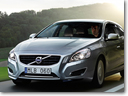 Probably the new 2012 Volvo V60 Diesel Plug-in Hybrid is the most technically advanced Volvo model ever! And not only comparing to Volvo, but also it is extremely more advanced compared to other hybrids on the market! If you ask why, well the reasons for this are numerous. Firstly, the Volvo V60 Plug-in Hybrid is the world’s first diesel plug-in hybrid. It is a technical achievement because it is an electric car, hybrid car and muscle-car all rolled into one. And here’s the catch: at the mere touch of a button you can choose which of your three cars you want to drive at any given moment in time! Isn’t that almost magical!


 The new Elantra Touring will give the customers all the difference they want to make in their lives. This is possible thank to the five-door versatility, and all the changes in the features, packages and options for 2012. Hence, the 2012 Elantra Touring continues to add value in the compact car segment!


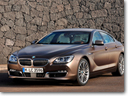 The third model in the BMW 6 Series line-up is offered as Convertible and Coupe, and more importantly it is the first four-door Coupe in the history of the brand. Of course it keeps the athletic elegance of the car’s outlook and adds more to its appeal. Furthermore in it has been included powerful engines and sophisticated chassis technology, which in combination are producing an impressively dynamic driving experience. In addition the BMW 6 Series Gran Coupe makes its mark with exclusive equipment features and a level of practicality unmatched by its premium four-door Coupe rivals.


