Tag: CO2

  • Škoda Greenline

    Another product to receive a world premiere at IAA 2007 is GreenLine, a new model line designed to offer highly economical and environmentally-friendly operation and maximum possible minimisation of emissions of solid particles and CO2.

    The first vehicles of this brand new line are the Fabia GreenLine and the Fabia Combi GreenLine (1.4 TDI PD DPF/59 kW). Although the choice of extras has not been limited substantially, the new cars’ CO2 emissions do not exceed 110 g/km. Another GreenLine model is the Octavia Combi FlexFuel, a vehicle that is going to be launched in the Swedish market later this year.

    This new vehicle is equipped with an E85-ready 1.6 MPI/75 kW engine (E85 is a fuel mixture made up of bio-ethanol (85 %) and petrol (15 %).

    Skoda Greenline

  • Toyota iQ concept

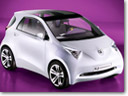
    The Toyota iQ concept, unveiled today at the Frankfurt Motor Show, marks a step change in small car design, challenging conventional thinking by being small, yet spacious and high in premium quality features. It’s an ultra-compact vehicle that achieves exceptional space efficiency and is perfectly tailored to the lifestyle needs and environmental concerns of Europe’s modern metropolitans. The iQ concept was created at ED2, Toyota’s European design studio in the South of France, following the principles of Toyota’s ‘vibrant clarity’ design philosophy – forward-looking, intelligent and energetic, with clarity of purpose and function. (more…)

  • Opel Flextreme

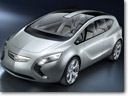
    Opel’s Flextreme concept car, which makes its premiere at the International Motor Show (IAA) in Frankfurt (September 13 – 23, 2007), boasts the body of a dynamic monocab, as well as the completely new environmentally friendly E-Flex electric propulsion concept and a host of innovative details. Flextreme is part of GM’s ongoing commitment to develop vehicles that reduce CO2 emissions and the automobile’s dependency on petroleum. In contrast to conventional vehicles and hybrids, GM’s E-Flex system uses an electric motor, powered by a lithium-ion battery, to propel the Opel Flextreme concept for up to 55 km of electric-drive-only range. A 1.3 turbo-diesel onboard engine generates additional electricity to replenish the battery and extend the vehicle’s driving range fully charged, the Flextreme’s 55-km all-electric driving range is enough for most daily commuters in Europe to travel without using any diesel fuel or emitting any CO2. (more…)

  • AC Schnitzer GP3.10

    Driving pleasure has been written large at AC Schnitzer for 20 years. And happily, nothing will change for the 62nd IAA. But this goal can be reached in a totally alternative way, as the launch of the superb AC Schnitzer GP3.10 GAS POWERED shows. This high-performance coupé has LPG (Liquified Petroleum Gas) drive, where power and efficiency, economy and ecology, meet in an exciting study.

    (more…)

  • Citroen C-Cactus

    Citroen C-CactusCitroen is unveiling C-Cactus at the 2007 Frankfurt Motor Show. This ingenious concept is a new take on vehicle design, centered on essential values. The Marque’s ambitious aim is to market an ecological hatchback with cheerful, attractive styling, equipped with a hybrid HDi drivetrain and sold at the same price as an entry-level C4.

    To square this complex equation, Citroen is exploring new forms of design. It has decided to abandon features that are not essential to comfort and to focus instead on technology, styling and equipment that are positive, ecological and valued by users.

    Essential, intelligent and ecologically aware

    C-Cactus is an ecological car. It includes a significant proportion of recycled or recyclable materials and, like the plant it is named after, it is low on consumption. Weighing just 1,306 kg and featuring a hybrid HDi drivetrain, C-Cactus consumes 3.4 l/100 km for CO2 emissions of 78 g/km. At the same time, C-Cactus is no more expensive than a mid-range family car. Its low production cost can be attributed to the use of new materials and to a rational design process using a smaller number of parts. The cabin is made up of just over 200 parts, i.e. almost half the number used by a conventional hatchback of identical size.

    An attractive and modern vehicle

    C-Cactus is an essential car, with sharp styling and attractive features. Its curves give it a fun look and strong appeal, while the angles and rounded lines of the bodywork underline its dynamic character. C-Cactus sets high standards of onboard comfort with a roomy interior that is worthy of a family car. It is 4.2 metres long and 1.8 metres wide with a wide range of equipment including air conditioning with automatic temperature control, a high-quality audio system, a panoramic glass sunroof, cruise control and a speed limiter.

    The economic and ingenious solutions adopted for C-Cactus keep production costs down and make it possible to fit a diesel hybrid drivetrain, all for the price of an entry-level C4. To achieve this result, C-Cactus places the emphasis on equipment that is essential to passenger comfort. At the same time, it explores new design processes in order to show that economy and ecology need not be synonymous with a rough ride.

    New avenues in design

    C-Cactus is the result of an intelligent design process pursuing new objectives. By exploring new forms of expression and new technical solutions, Citroën’s engineers cut the number of parts required to build the car.

    The dashboard has gone, and its usual functions are now grouped on the central console and the fixed hub of the steering wheel. The central console thus includes the active loudspeakers, gearbox controls and tactile screen giving access to the onboard computer, navigation system and air conditioning controls. The controls for the indicators, lights, wipers, horn and cruise control/speed limiter are on the fixed hub of the steering wheel, as are the tachometer and lights for the indicators, headlamps and warning signals.

    Another example of simplification: the part used for the front bumper, which includes the headlamps and chevrons is the same as the part making up the lower part of the tailgate at the rear. This contributes to the assertive design of C-Cactus while bringing economies of scale in production.

    This simplicity is also reflected in the design of the front end, which comprises just two parts: a fixed bonnet comprising the front wings, and a flap giving access to the vehicle maintenance functions (oil, windscreen washer, etc.).

    Reflecting a similar approach, using the air conditioning makes it virtually unnecessary to open the windows. A simple sliding mechanism is therefore provided, since this is sufficient in normal use. Engineers were thus able to get rid of both the window frames and the opening mechanism.

    At the same time, a number of monoblock units are used for C-Cactus to reduce the overall number of parts.
    The door panels, for example, are made of two parts, compared with twelve in a conventional hatchback.
    The seats also comprise two parts: a highly comfortable, moulded, coloured, integral-skin foam part for the seat, and a solid monoblock frame to hold the foam in place and fix the seat to the floor rails. The ergonomics are excellent and – here again – the number of components is limited.

    Advanced ecological features

    To achieve real environmental impact, Citroen’s objective has always been to market technologies and vehicles that are affordable to the greatest number. The objective with C-Cactus is to go one step further, by bringing out a car whose hybrid HDi drivetrain makes it truly ecological car, but that can be sold at the same price as an entry-level family car.

    With its diesel hybrid drivetrain combining a 70 bhp DIN HDi diesel engine with a particulate filter and an electric motor providing additional power of 30 bhp DIN, C Cactus consumes just 3.4l/100 km with CO2 emission levels of 78 g/km over a combined cycle. In urban use, ZEV (Zero Emission Vehicle) mode provides silent, all-electric operation. On journeys involving successive acceleration and deceleration, the hybrid system limits fuel consumption by using both types of energy.

    Other points also help to make C-Cactus a car that respects the environment.

    The solutions adopted for the design of C-Cactus also contribute to bringing down fuel consumption and CO2 emissions. Using fewer parts makes the vehicle 15% lighter than a C4 Hybride HDi for a total weight of 1,306 kg.
    The tyre width has also been kept down (205/45 R21) on C-Cactus, which adds to environmental performance.

    Fewer parts also means smaller quantities of raw materials. In additon, a significant part of the materials used are recycled or recyclable. The windscreen and windows, for example, are made of recyclable glass. The tyres are also recyclable, as is the crude steel used for the door panels. This metal is unpainted and unvarnished but has been treated for corrosion.

    The protective mats are made of recycled leather, taken from leather cut-offs that cannot be used by conventional tanneries. Many parts are made of cork, a natural material made from the bark of oak trees. The felt used for the door panels and fascia stowage compartments is made from wool. This material uses no chemical additives and is both recyclable and biodegradable.

    The top speed of C-Cactus has deliberately been capped at 150 kph. This choice not only contributes to the car’s good environmental performance, it also reflects Citroën’s efforts to develop a green vehicle illustrating a new approach to the car, in which the motorist is in harmony with his/her surrounding environment.

    Through this attractive concept with its appealing offbeat styling, Citroën has developed a new take on the economical and ecological car. A vehicle at ease with its original and ingenious design. At the same time, this is a car that brings the occupants all the features essential for their comfort.

    Looking for simplicity: intelligent, fun exterior design

    C-Cactus has a unique personality: appealing, modern and offbeat, with its simple shapes and mix of round, curving lines. The original styling also reflects ingenious design choices. Throughout the design process, the focus was very much on simplicity. This led to the development of ingenious solutions that contribute to the attractive offbeat design of C-Cactus.

    At the front, the headlamps of C-Cactus give the vehicle an appealing air with their rounded and slightly angular forms. They are underlined by two cylindrical air intakes cut out of the bumper, above an air intake grille of modern design which, while contributing to the vehicle’s rounded forms, also adds a muscular energetic touch. The raised bonnet and two air intakes also contribute to the dynamic looks of C Cactus.

    The vehicle’s rounded forms are reflected in its profile. The dynamic design lines are accentuated by the forward flowing roof line and the asymmetric doors made of crude steel that has been treated for corrosion.
    The doors feature an original cut-out since the fixed windows remove a number of the constraints that usually apply to design. Shaped to provide easy access to the interior, they give C-Cactus a curving, sleekly muscled appearance. The use of crude steel treated for corrosion, but without paint or varnish, contributes to savings in production costs while giving a strong, contemporary look.

    The high waistline and 21-inch wheels also underline the strong character of C Cactus.

    The wheels were the focus of particular attention. Large-diameter wheels and low-profile tyres have become key styling features in vehicles of strong, contemporary design.

    Citroën worked with Michelin on the development of low-profile tyres with a large diameter and limited width. The low ground friction area limits fuel consumption and, at the same time, tyre production costs are kept under control since the manufacturing process requires only a small amount of rubber. For new and even more original styling, these specially designed tyres feature a green pattern on a white background printed inside a wide groove spanning the entire tread.

    The same styling codes can be seen at the rear, where a combination of curves and taut lines illustrate the car’s dynamic and appealing personality. The chevrons identify this car as a Citroën. The name “Cactus” appears in relief on the bottom of the tailgate, in a young, smooth, modern printface.
    The rear lights, which resemble the headlamps in shape, boast an innovative feature: cut-outs in the interior plastic that let the driver see through. This innovation considerably increases the driver’s field of vision and may be particularly useful in manoeuvres, for example.

    Fewer features for greater impact: a welcoming, attractive and cleverly designed interior

    C-Cactus is also an original and ingenious car on the inside. The design cut-outs, choice of materials, patterns and colours give the cabin a minimalist, attractive and airy look.

    The cabin materials reflect innovative choices. Their quality is immediately visible. Looking beyond their appearance, they are also economical and ecological. For example, cork is used for many decorative parts, as well as for the air vents and air conditioning panel. The floor features a pattern in recycled leather. The white lacquer finish of some parts and the visual effects created by the materials used contribute to the original design and perceived quality of the cabin.

    Another key idea was to enhance the offbeat styling of C-Cactus by reducing the number of parts and the quantity of materials used for the decor.
    Non-essential parts, such as the dashboard, are absent, while some of the parts that are usually hidden have been included in the decor. This is the case, for example, of the steering column, air conditioning ducts and the grid for fore-and-aft adjustment of the front seats. These features add a modern and original touch to the cabin. The refill for the scented air freshener is also visible. It contributes to the attractive appearance of the cabin, while enabling the driver to see how much is left.

    Citroen C-Cactus Interior

    The decor has not been put in. It has been created by removing material. This idea of decorating “in a vacuum” is reflected in the patterns present on the door panels and seat frames. The patterns cut-out in the door panels show the apple green felt inserted between panel and metal. The main role of this part is to soundproof the vehicle, but its colour and cut-outs make it an integral part of the décor.
    The same flower, plant and butterfly patterns – symbolising the environment, purity and well-being – are also found on several other cabin features. They are cut out, for example, in the white lacquer seat frame. These cut-outs show the coloured foam used for the seat cushions and give it a decorative quality.

    Pertinent choices for an easy and enjoyable ride

    C-Cactus boasts advanced equipment, optimised on-board space and modular design at an affordable price. Passengers have all the comfort essential to their well-being.

    First, the ignition key of C-Cactus is a portable MP3 player with a touch screen. When it is plugged into the fixed hub of the steering wheel, it is recognised by the vehicle which can then be started.
    The fixed-hub steering wheel includes a wide variety of functions. In addition to the usual controls, it also includes the speedometer, which is of an unusual design. The figures, placed in relief around the hub, rotate according to speed and are positioned with respect to a fixed point.

    A second touch screen on the central console includes a navigation system to guide the driver on the road. It also serves as an onboard computer. This equipment endows C-Cactus with high-tech advanced features while also keeping costs down, since functions are grouped together.

    The central console features two powerful high-quality active loudspeakers that provide C-Cactus with an excellent sound system. Their ingenious layout limits both wiring and installation costs.

    Generous interior space ensures passenger comfort. C-Cactus boasts the dimensions of a family car (4.2 metres long and 1.8 metres wide) with a generous and modular boot (between 500 and 1,100 litres).
    The rear seat, placed on a rail, slides up against the front seats. The floor pan, which is integral with the rear bench, also slides forward to reveal a subfloor. This reveals a virtually flat surface area to load bulky objects.

    Another ingenious feature is a clip-on bag on the passenger side. This replaces the glovebox and can be used to carry objects outside the car.

    For comfort and styling, C-Cactus features a panoramic glass sunroof that lets the light flood into the cabin.

  • Renault Laguna

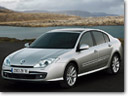
    Renault lagunaRenault Laguna : born under the sign of quality Since it was fi rst launched in January 1994, more than 2.3 million of the fi rst two generations of Laguna have been sold. Laguna is manufactured in the Sandouville factory in France with a level of quality never seen before.

    Preparing for Renault’s return to the luxury car segment, Laguna has been manufactured to be both robust and reliable. The stated objective is to be in the top three of its segment for product and service quality.

    Driving pleasure…

    Laguna was designed from the outset to give true driving pleasure. It has a dynamic, streamlined and elegant form, positioning it naturally in the realm of grand tourers, with an even more exclusive and distinctive profi le for the Sport Tourer. Its class-leading dynamic performance is a benchmark. Its chassis is responsive and its steering is particularly precise. Whilst being bigger and more spacious than its predecessor, Renault Laguna is notably lighter by an average of 15 kg and is available with a wide range of powerful and economical engines from launch, all with six-speed manual and automatic gearboxes.

    …complete peace of mind

    Laguna provides a real sense of peace of mind for all its occupants. In terms of protection, it benefi ts from Renault’s acclaimed real-world accident knowledge and all of the latest technologies, in particular, side impact with an innovative thorax double airbag. The sophisticated air conditioning system offers class-leading thermal comfort. Equally, much attention has been focused on Laguna’s acoustics which are again top-of-the-class. With an economical and ecological ‘Renault eco2’ version, Laguna dCi 110 hp only consumes 5.1 litres per 100 km on a combined cycle, or 136 g of CO2 emissions per km. Laguna is respectful of the environment right from its production through to the end of its lifecycle. Laguna will be launched from 12 October 2007 as the future reference point for the family saloon segment in terms of usage, maintenance and repair costs.

    Driving pleasure…

    Renault Laguna has been manufactured with the aim of offering real driving pleasure. Its benchmark performance on the road is fi rst class. The car offers top driving comfort through its fi ne-tuned chassis and needle-sharp steering. It has an optimal weight distribution with a range of engines and gearboxes which offer high performance while being economical with fuel.

    A reactive chassis

    Developed to go beyond the dynamic qualities for which its predecessor was recognised, the Laguna’s chassis offers outstanding roadholding around bends. The steering is more sensitive to the touch, while maintaining its suspension quality through its vertical dampening. Renault’s engineers have paid particular attention to the exact nature of the trajectory and the roadholding qualities of the car’s body.

    One characteristic of its turning capability is the specifi c roll which characterises the turning angle taken by the car visà- vis the road. With the Laguna, it is 1.9° (the segment average is 2.2°) for a transversal acceleration of 5m/s2. This situation corresponds to driving conditions on a winding road or at a roundabout outside of the city with a diameter of 400 m, driven at a speed of 60 km per hour.

    The front axle is the pseudo McPherson type. The diameter of its anti-roll bar has been increased from 19.5 to 24 mm. Light and compact, the supple rear axle is in the form of an H, with anti-roll bars varying in diameter from 28.8 to 30.5 mm. The springs are 20% stiffer at the front and 50% stiffer at the rear, resulting in better control during vertical movements – without the vehicle being too sporty.

    Renault Laguna is still astonishingly comfortable, thanks to greatly improved suspension: in association with helicoidal springs of varying fl exibility, the dampeners are pressurised at the front and in the form of bi-tubes at the rear. The reinforcements are situated at the appropriate points in the body, strengthening the body mass and increasing the capacity to withstand impact: in short, impeccable reliability.

    Three tyre sizes are available according to the engine size : 16 inches in three widths: (195 and 205/60, as well as 215/55), 17 inches in 215/50 and 18 inches in 225/45, for heightened performance.

    Precise steering

    The accuracy of the steering is based on a reduced steering ratio and a stiffened steering column, with an aim to offer the driver more driving pleasure through the steering.

    With a ratio of 1/16e (i.e. a 16° angle of the wheel for a 1° angle of the steering wheel), driving movements are rendered easier and the car becomes more agile. The increased stiffness and the systematic tracking and reduction of clearance give the driver more direct, accurate contact with the road, reducing response time between the steering wheel and the change of direction. The reduction of vibration arising from imperfections on the road surface has improved driving pleasure as a consequence. All the powerful engines or those equipped with particulate fi lter offer variable hydraulic assistance.

    As a fi rst for Renault in the segment, Laguna inaugurates a new generation of assistance, through the utilisation of a driven electric pump unit (PEG). Available with the main petrol and diesel engines with manual gearbox, it allows the driver to obtain assistance through the use of the electric pump output, in accordance with the driving conditions. This output depends on the speed and the level of assistance required (speed and angle of the steering wheel) which allows an optimal fuel consumption, by driving the pump electrically when necessary. For the 1.6 16v petrol version, there is constant hydraulic steering assistance.

    Even lighter and more aerodynamic

    Lighter, on average by 15 kg (up to 65 kg on the 110 hp eco² diesel version), Laguna benefi ts from an outstanding weight distribution. It is the fi rst Renault vehicle to be lighter than its predecessor. A key ingredient in its driving pleasure, the weight distribution is a key factor on several different levels: dynamic performance (road holding, acceleration, roll during bends), fuel consumption and CO2 emissions, active safety (shorter braking distance) and passive safety (resistance in the case of impact). More than 300 actions have been listed and carried out by engineers, qualifi ed in their various fi elds, to attain this result.

    New Laguna’s performance, both dynamic and economic, is also linked to work carried out on mock-ups to optimise its aerodynamics. This was carried out in the wind tunnel and by digital simulation. These efforts have resulted in New Laguna’s position at the top of the saloon market, with an SCx of 0.645 m² and a Cx of 0.293. (The SCx is the product of the frontal S surface of the vehicle by the air penetration coeffi cient, Cx). This progress is especially impressive for vehicles with raised modularity (hatchback) compared with a “saloon” or “notchback”.

    It is all the more signifi cant for Renault Laguna Sport Tourer, with a SCx of 0.696 and a Cx of 0.316, bearing in mind that the average SCx of all saloon cars on the market is 0.70 and the Cx, 0.315. These achievements have been rendered possible by the quality of the changes made and the work on the design of the rear lateral line and the door mirrors, which are, however, bigger in order to comply with the new regulations. As a fi rst for Renault, there is a discreet, integral fairing on the undercarriage which optimises the air fl ow while protecting the chassis.

  • Opel Agila

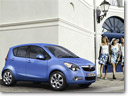
    Opel AgilaWhen it comes to the lifestyle of active women today, the watchword is balance. Job, fitness, shopping, meeting friends and getting around – a car makes everything easier to manage, and preferably one that is as versatile as its owner. This is precisely what designers and engineers had in mind when developing the latest generation Opel Agila. The result is a stylish urban car which is compact and maneuverable for tight parking spaces, yet boasts an interior that is spacious enough even for bulky sport and hobby gear. It also has enough seats to ensure comfort for family and friends.

    Even with its compact length of 3.74 meters, the new Agila offers room for five occupants and provides them with easy entry through the four doors. The quality of the materials, a fresh interior and exterior color collection, versatile storage compartments and ample headroom project a feel-good ambience right from the word go. The enjoyable driving experience is enhanced by details such as the separate rev counter on the instrument panel, high placed gear stick and remote controls on the steering wheel for the radio.

    The high seating position makes getting into and out of the Agila easier and ensures good visibility even in heavy urban traffic. The rear seat backs can be folded down at a flick of the wrist to create a completely flat load floor, with a compartment beneath providing additional storage space. In total, the Agila has a luggage capacity of more than 1100 liters accessible through its large trunk lid – the top figure in this segment. The new Agila also comes with a safety package comprising four airbags, as well as optional Electronic Stability Program (ESP) and head curtain airbags.

    New engines with up to 86 hp (two lively gasoline engines and a top-of-the-line common-rail diesel for high pulling power) combine performance with low emissions. As an alternative to the standard manual transmission, an automatic gearbox is also available – a distinctive feature in this class. The second-generation Opel Agila makes its world premiere at the IAA Frankfurt (September 13 – 23, 2007) and will be available at dealerships as of next spring.

    Opinions on new Agila

    Hans Demant, Opel Managing Director: “The new Agila cuts a fine figure in all situations. Its agile chassis and lively engines make it fun to drive – with low consumption and CO2 levels.”

    Belinda Müller, Designer: “The boring days are over. Who says a nimble urban car can’t also look cool? A wide selection of fresh colors and bold styles create an ambience that’s enhanced even more by the spacious headroom.”

    Sara Nicholson, Opel European Marketing Manager: “The Agila, the new Baby-Opel, is a clever package of fun and versatility for the girl about town.”

  • Citroen Cruise Crosser

    Andre Citroen organised the first motor crossing of the Sahara in 1922. Five half -track vehicles, tough enough to cross rocky and inhospitable terrain, were the first to journey from Algeria to French West Africa. Galvanised by this exploit, André Citroën followed it up with the Croisière Noire in 1924 and the Croisière Jaune in 1931. The public was thoroughly captivated by these truly adventurous Asian and African expeditions, which were recognised at the time as important economic, humanitarian, scientific and cultural missions.

    Citroen is alluding to this past with Cruise Crosser, a rough and ready all-terrain concept car produced by the Espera Sbarro School in partnership with Citroen Styling. This off-road concept, based on Citroen’s first luxury SUV, the C-Crosser, is fitted with three axles and six wheels that, just like those first half -track vehicles, give it traction in the harshest possible conditions, come snow, sand or mud.

    Citroen Cruise Crosser
    Citroen Cruise Crosser

    Off-road adventure and recreation

    The orange-coloured Citroen Cruise Crosser is easily spotted wherever it roams. The large red compasses on each side of the vehicle underline its mission to travel everywhere and anywhere, north, south, east or west.

    2007 Citroen Cruise Crosser has a big open space at the back to provide seating for extra passengers (removable row 3) or a vast loading area for trouble -free transport of luggage, shovels, tents and other accessories. The opening mechanism of the tailgate makes loading easier, while step plates on both sides of the vehicle facilitate access to the rear compartment.

    The Cruise Crosser is equally impressive inside. The leather seats in rows 1 and 2 boast a particularly high-tech design, with mesh-style hide confirming both the vehicle’s sporting vocation and the care that went into providing passengers with total travelling comfort. The orange body colour is stylishly echoed in the seat contours, on the dashboard and on the door panels. These and other details bring a generous dose of visual and tactile pleasure to Cruise Crosser’s efficient and functional cabin.

    Technology with minimal environmental impact Citroen Cruise Crosser is fitted with high-performance technology for serious off-road adventure.

    Passengers can rest assured that Cruise Crosser will never let them down. On poorly surfaced mountain roads and other uncivilised terrains, drivers can activate the third electric axle for outstanding traction. The vehicle also has sand boards at the rear for extrication. Finding your way around is a cinch with the navigation system, and Cruise Crosser also features a DVD player that makes for more pleasurable journeys.

    These escapades do not come at the expense of the environment. Faithful to its commitment to cutting fuel consumption and CO2 emissions, Cruise Crosser has a hybrid diesel drivetrain combining a combustion diesel engine with an electric motor located under the tipper bed.

    Traction is boosted by the third axle, used along with the other drive wheels on harsh terrainfeaturing rocks, sand or snow. Used alone, this third axle makes it possible to drive in “Zero Emission Vehicle” mode. In this mode, the silent and non-aggressive Cruise Crosser is in perfect harmony with its environment and enables occupants to wholeheartedly enjoy the journey.

    Cruise Crosser can journey in the farthest flung regions and get from A to B in the roughest possible conditions. It embodies a new kind of adventure. An adventure made possible by efficient, cutting-edge technology. An adventure that is sporting and daring, full of vitality and energy – but one that is intelligent, too, made in the greatest respect for the environment.

  • Fiat Panda Aria

    The Concept car Panda Aria represents the most advanced frontier achievable, in terms of emissions and consumption, associating in synergy existing sustainable technologies or those in future production. In a nutshell, we’re dealing with a “demonstration” which synthesizes Fiat‘s commitment to the environment.

    The Concept car, combines an innovative powertrain architecture – represented by the new SGE 900 cc Turbo twin-cylinder engine, equipped with the Multiair® system for dual petrol/methane-hydrogen fuel management, MTA gearbox and Stop&Start device – with the adoption of eco-compatibile materials (recycled, recyclable or from natural sources) both for the interiors and exteriors.

    The interior is upholstered with natural fibres (cotton and linen), woven coconut fibre and biodegradable elements, whilst the exterior panelling is made of semi-transparent eco-resin and the structure is treated in opaque “totouch” paint.

    Even better, the energy absorbed by the auxiliary units is minimised on the vehicle and the engine (for example, the low consumption climate control unit) by a reduction in the vehicle’s weight (by a downsizing of the engine, and the use of new generation high tensile steel, methane storage cylinders made of high-performance steel and carbon fibres) and the adoption of experimental Pirelli ‘ultra-green’ tyres with new compounds and new AOF (Aromatic Oil Free) textile weaves guaranteeing limited drag but without detracting from dynamic safety performance (stopping distances and good handling on wet and dry roads).

    Fiat Panda Aria
    Fiat Panda Aria

    Lastly, the Panda Aria is fitted with a data transmission, based on the use of Blue&Me technology, ready for the implementation of new info-mobility services. Furthermore it is equipped with a unique application that, via the USB port of the Blue&Me system, allows to record on a key the consumption and emmissions of every journey. Subsequently, this can be looked at on a computer to receive advice on how to drive more “ecologically”.

    In detail, Panda Aria is fitted with the new 900 cc turbo 80 CV engine, belonging to the family of SGE twin-cylinder engines (Small Gasoline Engine), in this version it is equipped with the Multiair® system for dual petrol/methane fuel management. The sophisticated fuel management system is already primed for the use of a methane (70%) and hydrogen (30%) mixture. The engine is matched to a Stop&Start device and the innovative MTA (Manual Transmission Automated) gearshift.

    In particular, the innovative 900 turbo engine, developed by Fiat Powertrain Technologies, is fruit of a philosophy focused on the reduction of costs (and consequently CO2 emissions), and the respecting of future Euro 5 and Euro 6 emission limits yet with comparable performance to higher horse-power engines.

    The concept underlining this new engine, is the downsizing of a traditional engine with 4 cylinders to a twin-cylinder one, which has been fitted with the innovative electronic valve control Multiair® system. In addition to the reduction in consumption costs, the twin-cylinder engine allows a 20% reduction of the weight and a 25% reduction in the engine compartment, in comparison to a 4 cylinder with similar power. Furthermore, the SGE family of motors adopts a system of balancing the engine spindle , which guarantees reduced vibrations and noises in comparison to petrol engines with three cylinders.

    The innovative Multiair® system allows to control the air in the motor with electronic ignition (petrol engines) without having to use the traditional throttle-valve, therefore with higher flexibility in comparison to mechanical distribution systems.

    The implemented electro-hydraulic technology is based on the inter positioning, between the cams and the suction-valve engine of a volume of oil (high pressure chamber) which can be varied across the use of a valve which is controlled in turn by an apposite electronic junction box.

    In this manner, the valve opening can be varied in different modes according to the the engine’s need for air and the vehicle use. Different strategies (Early Valve Shut-Off – EIVC – Deferred Valve Opening – LIVO or Multi-Lift) can be used for optimising the efficiency of the combustion with remarkable benefits in terms of power, torque, consumption and emissions. Another advantage of this system is that the air pressure around the valves is always constant. This characteristic, combined with a raised dynamic system of implementation (from partial load to full load in one engine cycle) allows raising the engine’s torque response without any delay, either when the engine is overloaded or not, heightening the so-called Fun-to-Drive.

    In the Panda Aria the new 900 turbo engine is combined to the dual petrol/methane fuel management methane (70%) hydrogen (30%); this solution brings a further contribution to the reduction of polluting emissions, assuring a more efficient and complete combustion. Furthermore, it allows the incrementation of the thermodynamic performance of the engine, allowing it to reach, in particular conditions, combustion stability values superior even to those obtainable by only using methane. Therefore, the vehicles running on methane-hydrogen mixtures are a gradual evolution of an already existing system and open to further refining and applications. The methane-hydrogen mixtures, in fact, represent a bridge, which would allow in the short term development of infrastructures for the future supply of hydrogen.

    Panda Aria is fitted with the “Stop&Start” system, a device which operates the temporary shut-off of the engine and it’s subsequent ignition, when the vehicle is stationary. In these situations, typical of urban traffic and during waits at the traffic-lights, the system automatically shuts-off the engine allowing a marked saving of fuel. Afterwards, as soon as the car is put in gear or the brake is released, the system sees to promptly igniting the engine, assuring the user an immediate response to their commands.

    Furthermore, the “Stop & Start” system, is mated to the MTA gearshift which allows optimal use of the gears, and is characterized by a high mechanical efficiency. In detail, the automatic transmission lays the foundation for an “intelligent” management of the on/off state of the engine. More so, via the use of the clutch, the system allows the uncoupling of the three-phase motor from the transmission whenever traction is not required and the engine can be turned off.

    The combining of the “Stop & Start” system and the MTA gearshift allows the concept car Panda Aria to reduce consumption by over 10% in urban journeys.

    Lastly, the combination of these solutions, which have been developed by the Fiat Group(Fiat Group Automobiles, Fiat Powertrain Technologies and Centro Ricerche Fiat), are already in existence or will soon be available on regular and future production models, guaranteeing a drastic reduction in CO2 emissions. The Panda Aria emissions have been cut to a record low of 69 g/km.

  • Smart fortwo Brabus

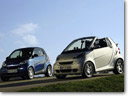
    At the Geneva Motor Show smart will be presenting the two BRABUS variants of the new smart fortwo to the public for the first time.

    Rated at 72 kW / 98 bhp, the smart fortwo BRABUS and smart fortwo BRABUS Xclusive have more than 30 percent more engine power than the BRABUS variant of the predecessor model. At the same time the low consumption and low CO2 emissions demonstrate that this does not have to come at a cost to the environment and customers’ wallets.

    In addition, the two BRABUS variants boast an extremely low weight to power ratio: at just 7.8 kg/bhp this is 24 percent lower than that of the previous BRABUS variant.

    smart fortwo BRABUS: Greater power and sports suspension

    The smart fortwo BRABUS places the primary focus on sportiness. Its three-cylinder petrol engine with capacity of one litre delivers 72 kW (98 bhp) and together with maximum torque of 140 Newton metres this lends the 770 kilo two-seater remarkably lively agility. The sprint from zero to 100 km/h takes less than ten seconds and the maximum speed (electronically limited) is 155 km/h.

    The exterior of the smart fortwo BRABUS is first and foremost characterised by “Monoblock VI” alloy wheels, wider rear wheel arches, a sports exhaust system and fog lights. Furthermore, it has a firmer suspension setup and is lowered by 15 millimetres.

    The interior of the smart fortwo BRABUS is distinguished from that of standard smart fortwo models by a number of BRABUS styling elements, for example for the gear knob, hand-brake handle and pedals. The speedometer, rev counter and clock also bear the BRABUS signature.

    The same range of exterior colours is available for the smart fortwo BRABUS as for other smart fortwo models.

    Smart fortwo Brabus
    Smart fortwo Brabus

    smart fortwo BRABUS Xclusive: Luxurious equipment

    Sportiness combined with a level of luxury that is unusual in this vehicle class – that’s the smart fortwo BRABUS Xclusive. It does not differ from the BRABUS model in terms of drive and performance but it comes with additional equipment that leaves almost nothing to be desired.

    Although it also sports wide “Monoblock VI” alloy wheels, wider rear wheel arches, a sports exhaust system and rear apron, it is nevertheless immediately recognisable as a BRABUS Xclusive. This is first and foremost due to the BRABUS front spoiler, BRABUS side skirts and the tinted clear glass headlights.

    The interior of the smart fortwo BRABUS Xclusive additionally features heated leather seats embossed with the BRABUS logo. A modified three-spoke leather sports steering wheel with steering wheel gearshift and BRABUS velour floor mats are also included in the standard spec. The instrument panel and door trim have a leather effect. Head/thorax side airbags, otherwise available as an option, are a standard feature in this model. These special side airbags protect the head and chest areas.

    The paintwork of the smart fortwo BRABUS Xclusive further underlines the exclusiveness of this model. It is exclusively available in the combinations (tridion safety cell/bodypanels) silver/silver or black/black.

    The two BRABUS variants will be launched on the market in the autumn of 2007. The prices will be announced around the middle of the year.

  • BMW 1 Series

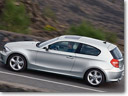
    New technology cuts emissions by up to 21 per cent and improves fuel consumption by up to 24 per cent Tax-busting 60.1mpg 118d is BMW‘s most economical production car. The new BMW 1 Series goes on sale in spring 2007 and features a model line up that includes the most fuel efficient production vehicle BMW has ever produced. The introduction of a three-door model and a revised five-door come as a raft of new fuel-saving innovations are rolled out across the range.

    Technologies such as Brake Energy Regeneration, Automatic Start-Stop function and Electric Power Steering are combined with lower rolling resistant tyres and a gearshift change indicator to encourage economical motoring. These innovations are in addition to the use of variable valve technologies and High-Precision Direct Injection engines on some 1 Series models that boost power output but cut fuel consumption and emissions.

    The BMW 118d, BMW’s most economical car, manages its record 60.1mpg figure courtesy of these features in conjunction with the use of further lightweight engineering. The car now has an aluminium crankcase to save weight. Aside from the BMW Hydrogen 7, the BMW 118d also posts the lowest ever CO2 emissions of any BMW recording 123g/km (putting it into the Band C category for Vehicle Excise Duty).

    BMW 1 Series
    BMW 1 Series

    Other engines in the new 1 Series range record economy improvements of up to 24 per cent compared to the previous model, while emissions have also been cut by up to 21 per cent. These improvements have not been to the detriment of driving pleasure. The new 1 Series is powered by a range of engines whose outputs have increased by up to 20hp with a consequential improvement in performance figures.

    New fuel saving technology
    Brake Energy Regeneration (iGR) makes its debut on the 1 Series. The system uses an Intelligent Alternator Control (IAC) and an Absorbent Glass Mat battery to recycle previously lost energy, in turn saving fuel. This is achieved as the IAC reduces drag on the engine by only engaging when required to charge the battery, whereas a traditional alternator is always pulling power from the engine. Additionally, the energy generated by the engine on over-run (under braking or descending a hill) was previously wasted. Now this lost energy is utilised by the IAC to charge the battery. iGR alone is responsible for a three per cent improvement in fuel economy.

    The new 1 Series comes with Automatic Start-Stop function to cut fuel consumption. Standard on all manual transmission models (except 130i), the system automatically switches the engine off when the vehicle is stationary and the driver puts the car into neutral. To restart the driver only need engage the clutch again before pulling away in the normal manner. Should he not want to use the Automatic Start-Stop function it can be manually switched off.

    The use of Electric Power Steering results in a 90 per cent energy saving compared to a conventional mechanical hydraulic steering system. Power assistance is now provided by an electric motor that works only when required, such as turning a corner. Other fuel saving enhancements have been made courtesy of various ancillary devices, such as the air-conditioning power supply being disconnected from the drivetrain when not in use. Even flaps behind the kidney grille improve economy, closing up for improved aerodynamic efficiency should the engine require less airflow. The feature also improves cold starting times.

    Low running costs
    The plethora of new technology showcased in the BMW 1 Series will have a significant impact on cost of ownership for customers. For the company car driver all but two engine variants now sit in the Band C category for Vehicle Excise Duty. This results in a saving of up to £505 for someone paying 40 per cent tax and up to £278 for those in the 22 per cent tax bracket. For all owners fuel consumption improvement means a 12,000 miles-a-year driver will save approximately £250 off the fuel bill.

    Traction and safety
    All BMW 1 Series models come with Dynamic Stability Control with Dynamic Traction Control for the best combination driving pleasure and safety. DSC allows drivers to make the most of the 1 Series’ 50:50 weight distribution and rear-wheel drive configuration for the best on-road performance. The BMW 130i comes with five additional functions with its DSC+ system for enhanced convenience and driver safety: Hill Start Assistant, Brake Pre-tensioning, Brake Drying, Brake Fade Compensation and Soft Stop.

    All BMW 1 Series have six airbags as standard, the Brake Force Display function on the rear lights to highlight sharp braking and Run-flat tyres with Tyre Puncture Warning System.

    A new style of BMW 1 Series
    To herald the introduction of the latest generation of engines, BMW’s designers have refreshed the interior and exterior styling of the five-door model. The 1 Series now features a larger kidney grille for improved airflow to the engine. The lower front spoiler has also been reprofiled to create a larger air intake, while the spoiler protrudes further for a more pronounced, sporting look. The headlamp cluster remains the same size but a darker cover gives a subtle, more distinguished front end.

    At the rear a restyled bumper gives the impression of a wider, lower car. The rear lamp cluster now features a new arrangement of lights, but retains its original shape.

    The new three-door 1 Series features the same styling cues but its side view is naturally different. The passenger doors are longer than those on the five-door model and are also frameless in the style of a coupé. Inside, customers will also be able to choose between either a four-seat or a five-seat configuration. In the four-seat arrangement rear passengers are separated by a central storage compartment and sit in more sculptured seats. As a no-cost option the five-seat layout offers the traditional bench seat standard on the five-door 1 Series. The introduction of higher quality materials and minor changes to the layout of the interior enhance customer comfort and practicality.

    Optional highlights
    The new 1 Series comes with MP3 and USB stick capability for the best in in-car entertainment. Customers with their favourite music loaded on an Apple iPod or a USB stick can now plug these into the car to continue their listening. Tracks are selected via steering wheel controls or the iDrive system.

    The optional Adaptive Headlights that turn to follow the intended course of the car have been improved on the 1 Series. Cornering light function is added to the package as standard. This means two additional lights turn at speeds of between 22 and 40mph to further illuminate the direction of travel on a twisting road.

  • Mini Cooper D

    The new MINI hatch line-up will soon be complete, when the new MINI One and MINI Cooper D models are unveiled to the public at the International Geneva Motor Show on 8 March 2007. The entry-level One features a perky 95hp 1.4-litre petrol engine, while the Cooper D boasts performance and fuel efficiency from an all-new 1.6-litre 110hp turbodiesel powerplant.

    (more…)